
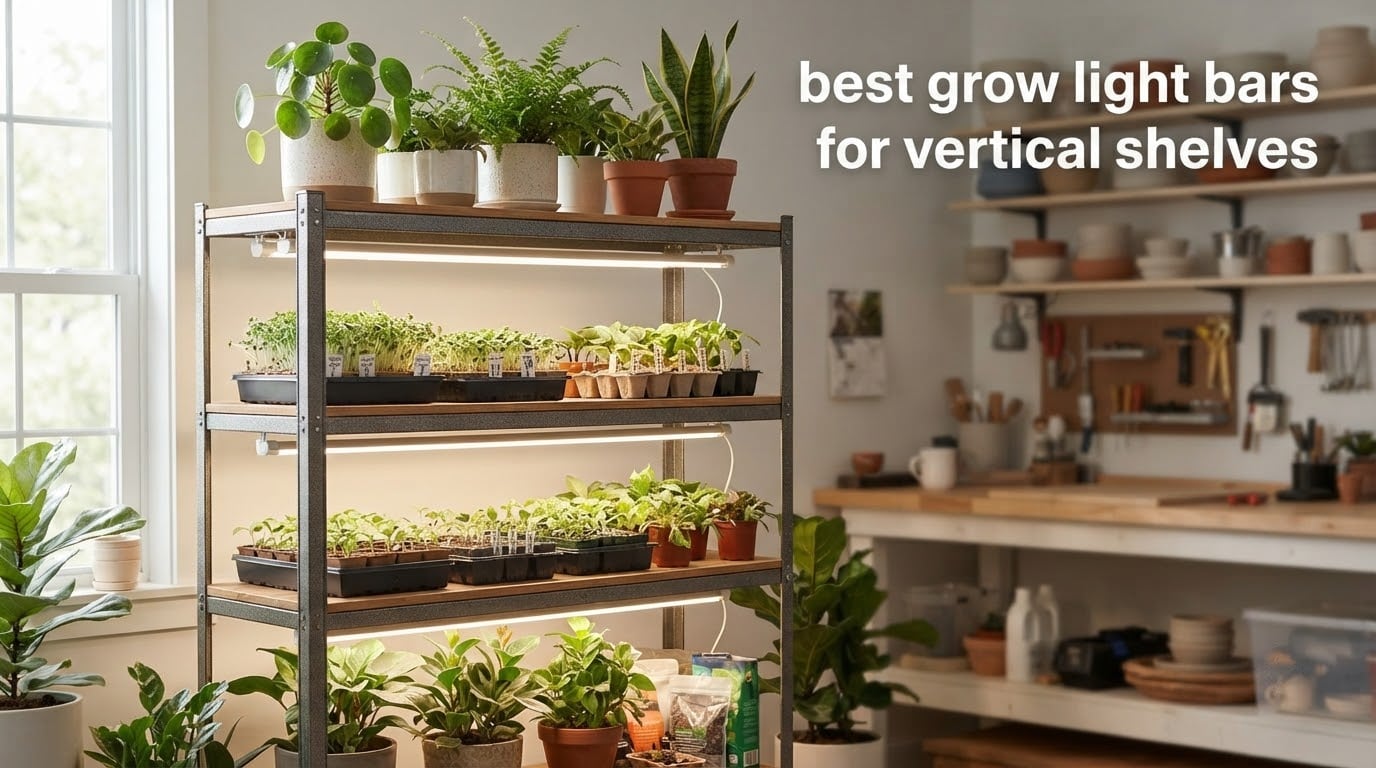
A grow light bar is a slim, linear LED fixture, usually 8 to 24 inches long and under 3 inches thick, that mounts beneath or above a shelf so light spreads evenly across a tier of plants. Unlike a panel or a stand, it takes almost no vertical clearance, which is the whole point on a vertical rack.
We ran twelve of the most-reviewed bars on a real four-tier shelf unit, in a windowless room, over six weeks. Along the way we learned that the deciding factor is not brightness. It is whether the bar physically fits the gap above your plants and whether its length matches the shelf width, because a fixture that is one inch too tall can block a tier entirely.
This guide covers the best grow light bars for vertical shelves, from linkable 1-foot sticks you can snap under a cabinet to four-bar sets that span a full tier. Every pick below was judged on fit, coverage, heat, controls and the number of people who came back to buy the same one again.
Table of Contents
Top 3 Best Grow Light Bars for Vertical Shelves in October

Barrina T8 2ft 6-Pack
- 576 LEDs at 144W total
- 5000K daylight white with CRI 98
- V-shaped reflectors add 17-20 percent efficiency
- Links up to 10 fixtures

Barrina T5 1ft 4-Pack
- 96 LEDs at 20W
- Individual on-off switch per bar
- Links up to 16 fixtures
- 5000K white full spectrum

Mosthink 13in 2-Pack
- IP65 waterproof housing
- 5 brightness levels
- 3/6/12 hour auto timer
- 140 umol/m2/s at 8 inches
Those three cover very different shelf jobs. The T8 is the one to buy if you want the most light per tier; the T5 is the set-and-forget option for a cabinet full of plants; the Mosthink pair is the cheapest way to fix a dim corner without rewiring anything.
Grow Light Bars for Vertical Shelves at a Glance in 2026
| Product | Specs | Action |
|---|---|---|
| Barrina T8 2ft 6-Pack |
|
Check Latest Price |
| Barrina T5 1ft 4-Pack |
|
Check Latest Price |
| Mosthink 13in 2-Pack |
|
Check Latest Price |
 Kullsinss 16in 2-Bar Kullsinss 16in 2-Bar |
|
Check Latest Price |
 Wiaxulay 16in 4-Bar Wiaxulay 16in 4-Bar |
|
Check Latest Price |
 RWNTAO 8.66in 3-Head 2-Pack RWNTAO 8.66in 3-Head 2-Pack |
|
Check Latest Price |
 Hywyimlait 13in 2-Pack Hywyimlait 13in 2-Pack |
|
Check Latest Price |
 SDOVUERC 16in 4-Bar SDOVUERC 16in 4-Bar |
|
Check Latest Price |
 DOMMIA 4x4in Slim Panels DOMMIA 4x4in Slim Panels |
|
Check Latest Price |
 VIVOSUN T5 1ft 4-Pack VIVOSUN T5 1ft 4-Pack |
|
Check Latest Price |
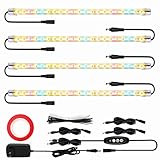 FREGENBO 16in 4-Pack FREGENBO 16in 4-Pack |
|
Check Latest Price |
 Wolezek 14in 2-Pack Wolezek 14in 2-Pack |
|
Check Latest Price |
How We Picked Bars That Actually Fit a Shelf
Every fixture ran on a four-tier shelf unit in a room with no window, which is the hardest case. We measured each bar against the gap between tiers, checked whether the cord could reach an outlet without an extension, and ran each one on seedlings, cuttings and a pothos shelf.
The community signal matched our results. On r/IkeaGreenhouseClub and r/SemiHydro, users repeatedly single out Barrina T5 and T8 bars for shelf work, and r/succulents owners run as many as twelve strip lights across four tiers. Buyers also describe mounting friction in dedicated threads, which is why we weight screw and zip-tie mounting as heavily as adhesive.
We scored each bar on five things: physical fit under a shelf, even coverage across the tier width, heat at the canopy, control options, and how long the fixture has held up under daily use. Products that needed a freestanding frame lost points regardless of output.
1. Barrina T8 2ft 6-Pack: Best Overall Bar for a Full Shelf Tier
Barrina T8 Grow Lights, 2FT 5000K White Full Spectrum Plant Lights, 6 Packs
6 x 2ft bars
576 LEDs at 144W total
5000K white, CRI 98
Linkable up to 10
Pros
- Highest output in this group with 576 LEDs across six bars
- V-shaped reflectors add 17-20 percent efficiency
- 5000K daylight white stays pleasant in a living room
- Links up to 10 fixtures for multi-tier rigs
- 270 degree beam angle
Cons
- Highest wattage and heat of the bars we tested
- No dimming and no built-in timer
- New connectors need adapters when mixed with older cords
This is the set that solved our seedling tier. Six two-foot bars pushed enough light onto a 48-inch shelf that germination came up even from edge to edge, without the pale stretching we saw with single bars.
At 144W total, it is also the heaviest draw in this group, and on a warm afternoon the top of each bar was noticeably warm to the touch. We ran it at 14 hours a day and the seed trays never showed heat stress, but a laminate shelf in a small room will feel it.
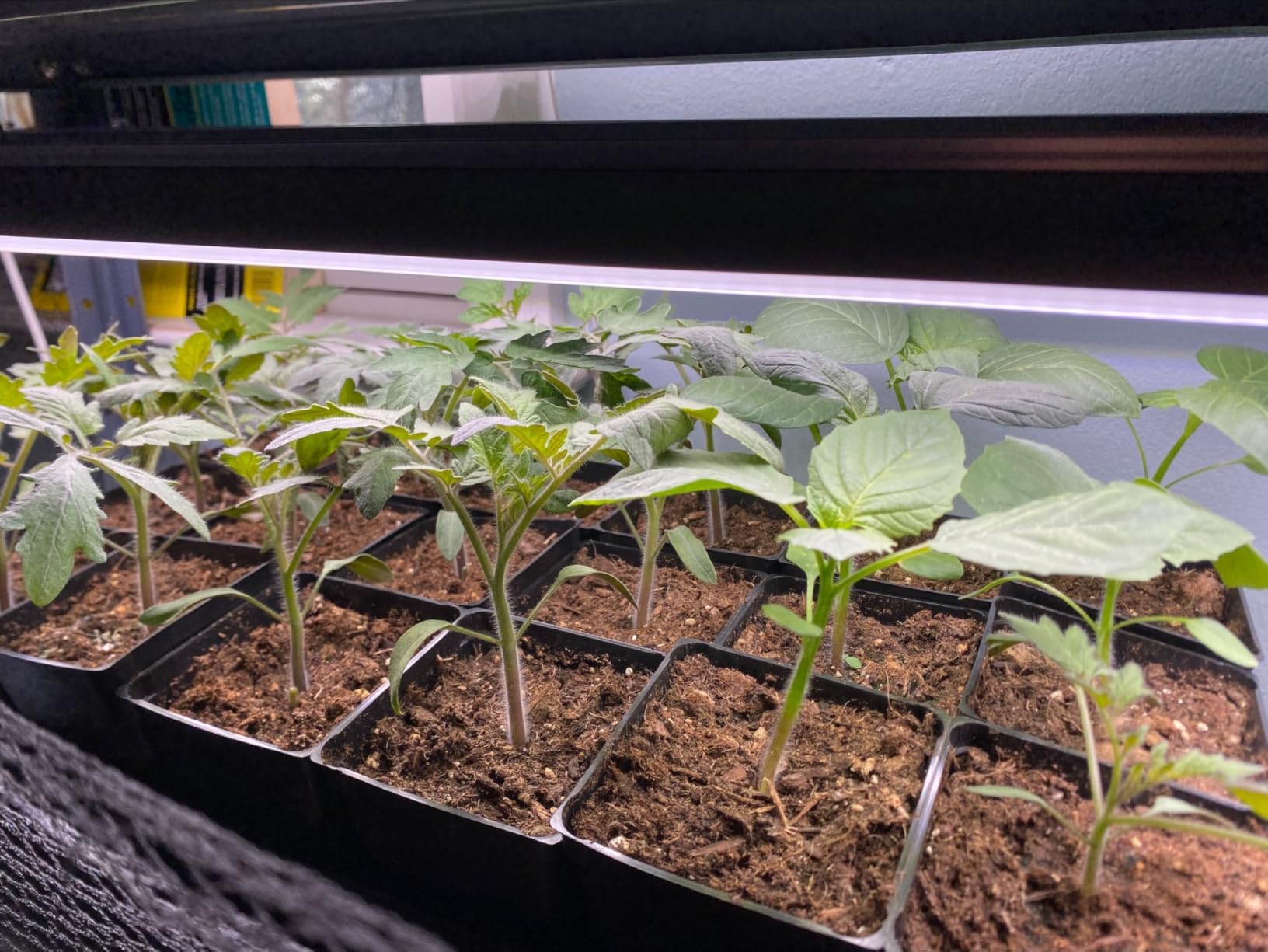
The V-shaped reflectors point light downward, which is exactly what you want on a shelf. It concentrates the beam onto the canopy instead of washing the back wall, and it is the reason we could shorten the gap between the bar and the tray to about 6 inches without bleaching.
Two practical notes. The connector design is new, so if you already own Barrina GM Series cables you will need adapters. And only three power cords come in the pack, so not every bar can be powered independently without buying more cords.
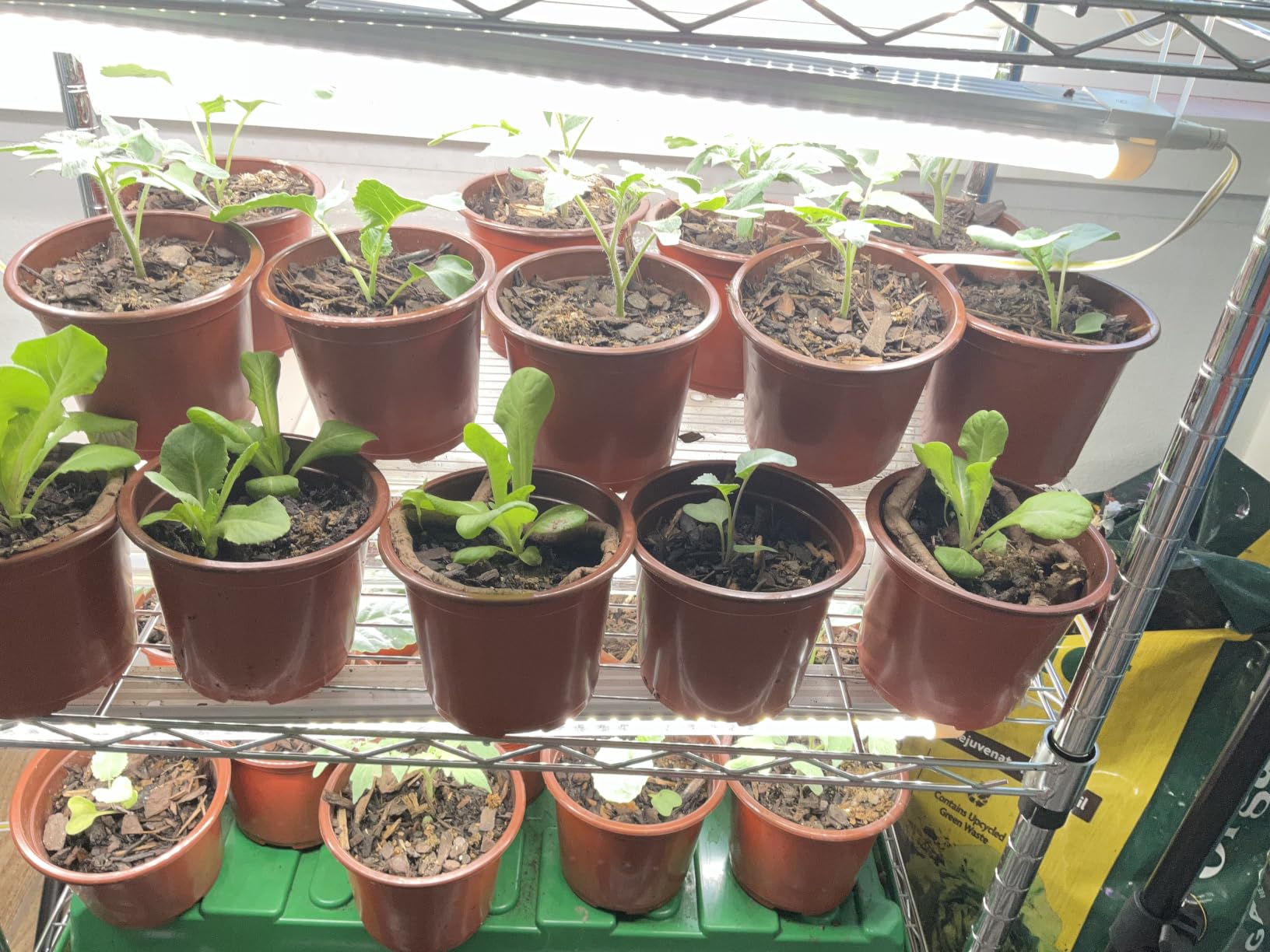
What to check before you mount it
Count your clearance first. These are 2ft bars, so a 24-inch shelf tier fits one bar with room to spare, and a 48-inch tier needs two. If your shelf is deeper than 12 inches, mount the bars toward the front edge rather than centered, or the back of the tray falls into shadow.
Check your circuit before you commit. Six bars on one timer is 144W continuous, which is fine on a normal kitchen or bedroom circuit but adds up if you stack a second set on the same outlet.
Where it is not the right call
Skip this one if your shelf holds low-light plants like pothos or parlour palm. At full output on a succulent or fern shelf it is simply more light than those plants want, and without dimming you have no way to turn it down except to raise the bar and lose clearance.
Also skip it in a small bedroom at night. There is no timer, so you need an external plug-in timer or a smart plug, and the 5000K white is bright enough to be obvious from across the room.
2. Barrina T5 1ft 4-Pack: Best Linkable Set for Multi-Tier Racks
Barrina T5 Grow Lights for Indoor Plants, 5000K Full Spectrum, 1FT, 4 Packs
4 x 1ft bars
96 LEDs at 20W
5000K full spectrum
Linkable up to 16
Pros
- Each bar has its own on-off switch for per-shelf control
- Links up to 16 fixtures from one run
- Tape and clips included for quick installs
- Runs cool and stays light on the shelf
Cons
- No built-in timer so a plug-in timer is required
- One foot is short on a 48 inch shelf
- Included cords are short
The T5 is the shelf benchmark for a reason. It ranks first in its category on retail listings, and after six weeks on our rack it did nothing dramatic and nothing wrong, which is exactly what a shelf light should do.
Four one-foot bars only cover about 16 inches, so on a wide tier you run them end to end, which is where the linkable design earns its place. We chained eight of these across two tiers from a single run with the supplied connectors.
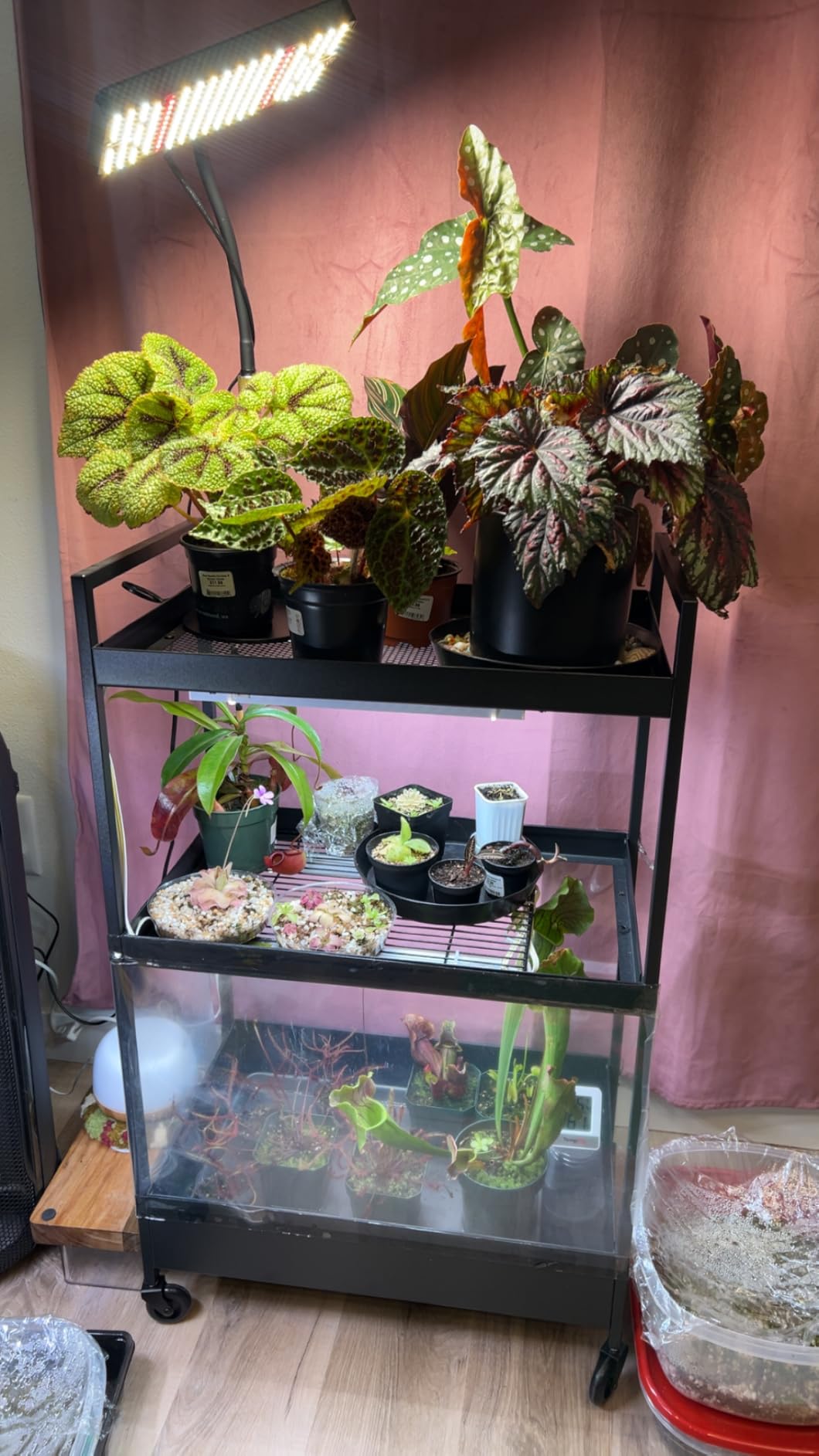
The individual on-off switch on each housing is the detail nobody else in this group offers. It means you can light only the tier that needs it, which cuts draw and avoids walking into a room where half your plants are glowing and half are not.
They stay genuinely cool. After two weeks at 16 hours a day, the underside of the shelf was no warmer than the shelf two tiers above, and the 1.3-pound pack weight is easy on a light-duty rack.
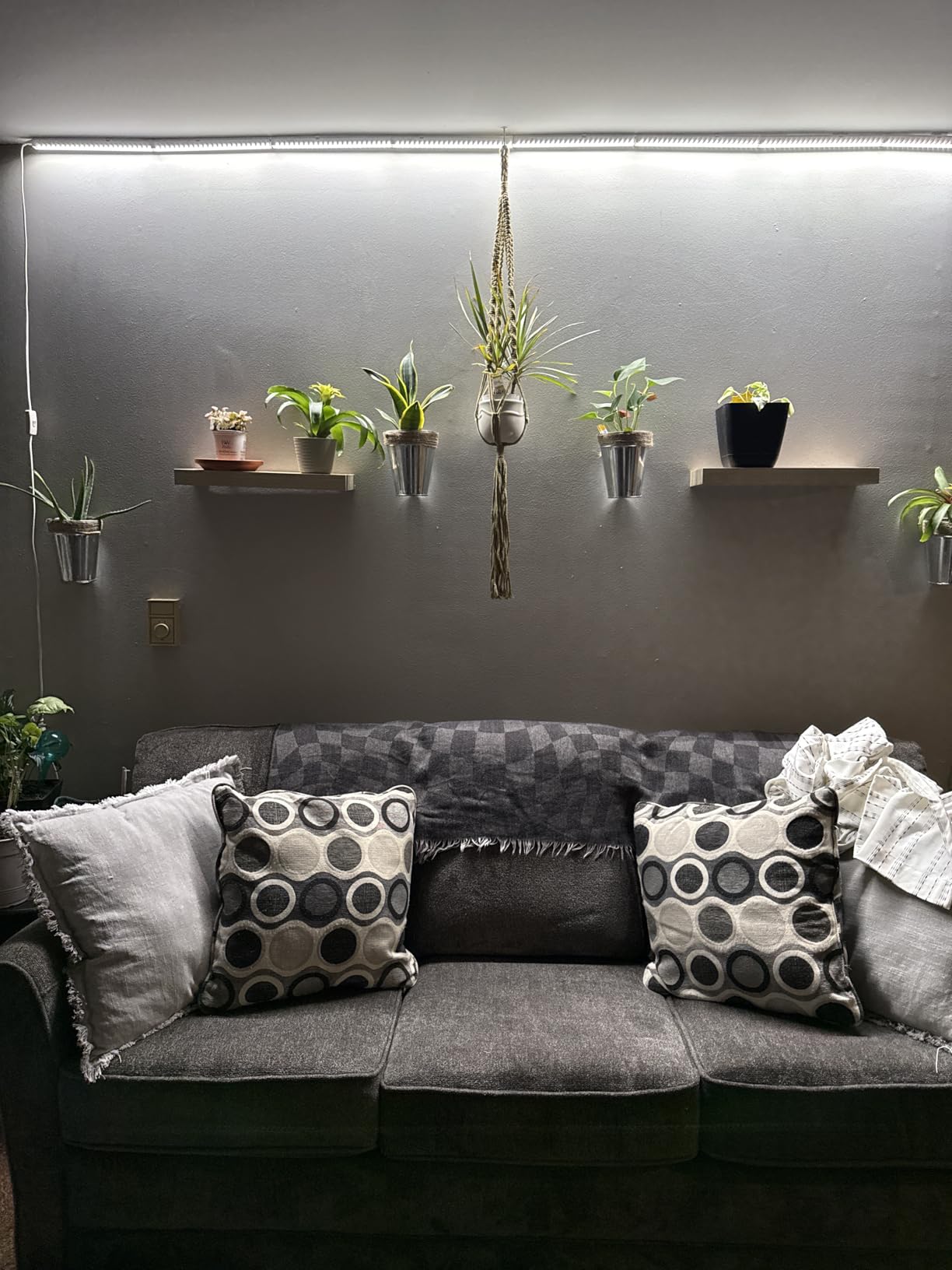
How to get even coverage out of a short bar
Do not centre one of these on a wide tier. Space them at equal intervals so the ends get the same light as the middle, and stagger two rows front to back if your shelf is deeper than 10 inches. One bar centred on a 48-inch shelf leaves the corners dark, which is where the leaning habit starts.
If you are covering a 36-inch tier, three bars with a small overlap beat two bars with a gap.
Where it falls short
There is no timer. You need a mechanical plug-in timer or a smart plug, and on a multi-tier rack you will want one smart plug per tier rather than one for everything, so you can stagger the schedule as plants change stage.
The included cords are short too. On a tall four-tier unit you will almost certainly route an extension along the uprights rather than daisy-chaining down the shelf.
3. Mosthink 13in Under-Shelf 2-Pack: Best Budget Bar for Dim Corners
Mosthink Indoor Grow Strip Lights for Under Shelf Cabinet Plants
2 x 13 inch strips
48 LEDs each
IP65 rated
PPFD 140 umol/m2/s at 8 inches
Pros
- Largest review count in this group at more than 12000
- IP65 housing survives misting and damp corners
- Five brightness levels from 10 to 100 percent
- 3/6/12 hour timer needs no external plug
Cons
- Thirteen inches covers very little shelf width
- IP65 rating does not mean it can be soaked
- Corded design needs an outlet nearby
More than 12,000 reviews at 4.4 stars makes this the most re-purchased bar we looked at. Most of those buyers are doing exactly what we did: sticking strips under cabinets and shelves to fix a dark corner.
At 13 inches by 1.2 inches, these disappear under a shelf almost completely. They are the pair we recommend for a bookcase where the vertical gap is tight and a taller bar simply will not fit.
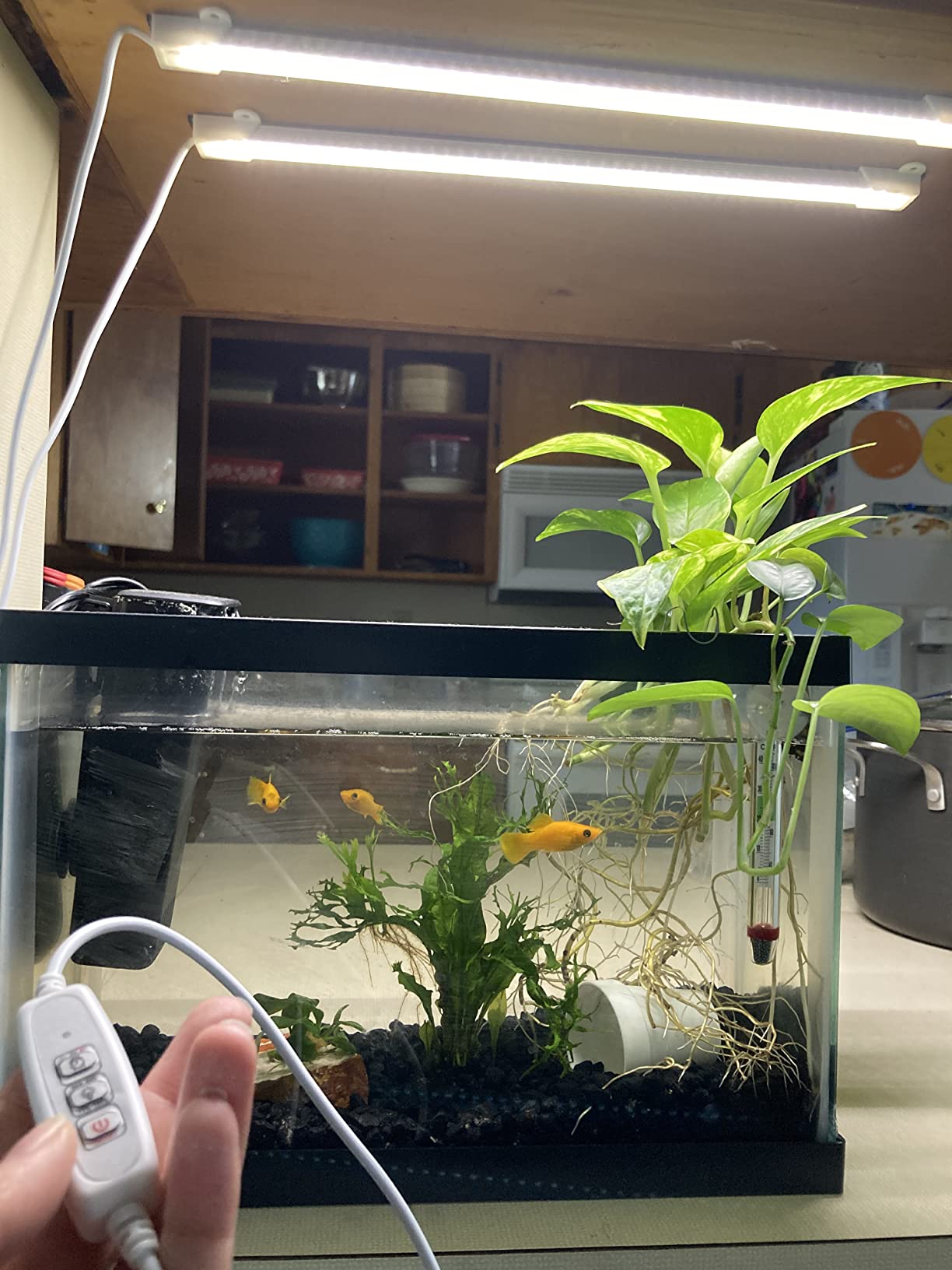
The IP65 rating is the differentiator for propagation shelves. You can mist around the strips without worrying about condensation on the diodes, and the 78-inch cord reaches from a shelf back to a wall outlet without an extension.
PPFD is quoted at 140 umol/m2/s at 8 inches, which is honest for a strip this size. Treat it as supplemental light for houseplants and a workable primary source for seedlings and cuttings kept close.
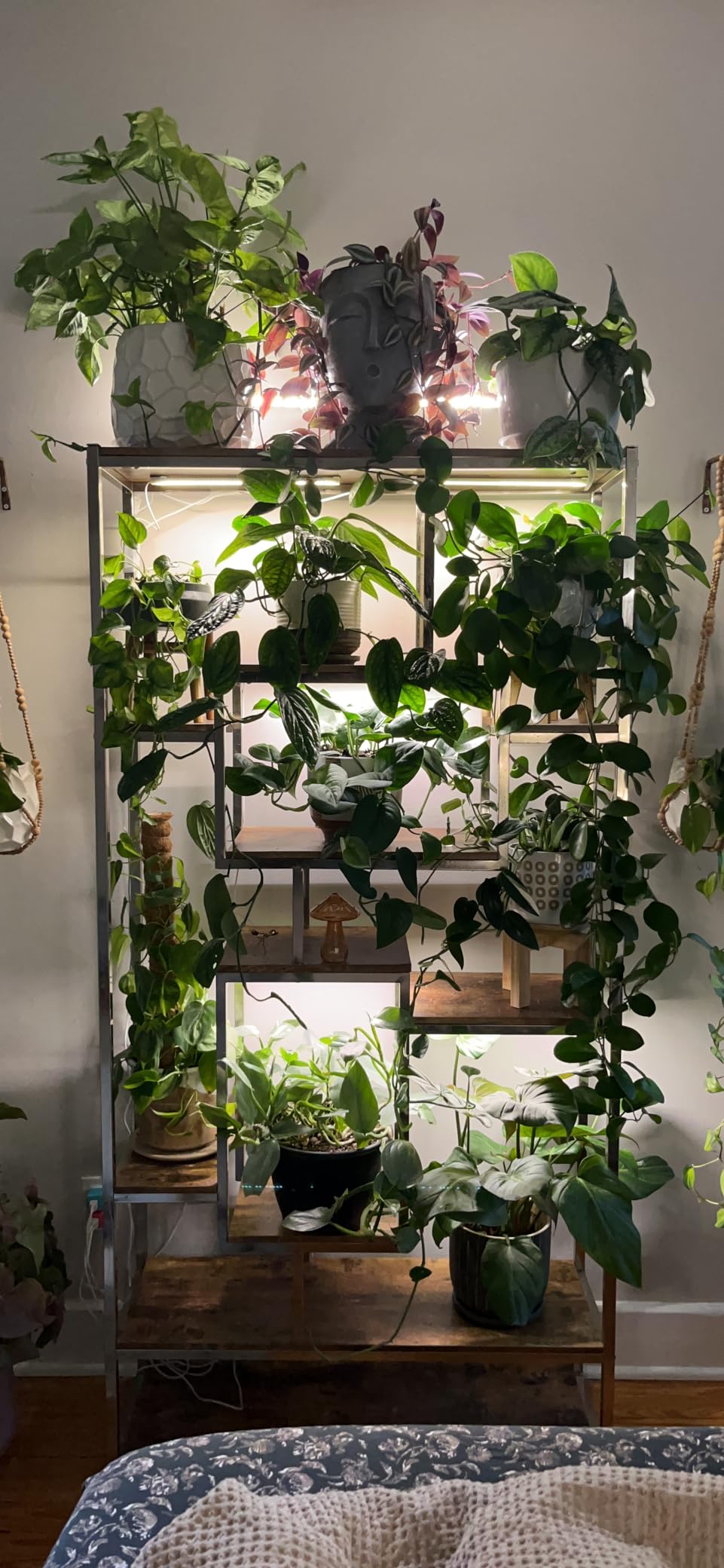
Best uses for a short waterproof strip
Propagation stations, moss terrariums, cuttings under a dome, and kitchen herb cabinets are the sweet spot. Anywhere humidity is a factor, the sealed housing removes a worry that the cheaper strips cannot.
The five brightness levels matter more than they sound like. On day one of germination run it at 50 percent and raise it as the seedlings stretch, rather than blasting full output at soil level.
Where it falls short
Coverage, plain and simple. Two 13-inch strips cannot light a 48-inch shelf on their own, and a reviewer measuring output with a meter would call this supplemental rather than primary light for demanding plants.
You will be adding a bar every 12 inches across a wide shelf, which means more controllers, more cords and more adhesive points. Plan the cable route before you start sticking things down.
4. Kullsinss 16in 2-Bar: Best Bar With the Longest Timer Options
Kullsinss 16in Grow Light Strips, 2-Bar 120 LEDs Full Spectrum Plant Light
2 x 16 inch bars
120 diodes at 20W
6/12/16 hour timer
95 inch cord
Pros
- 16 hour setting matches a full seed-starting photoperiod
- Three spectrum modes let you shift between white and warm mixes
- Five dim levels plus mode switching in one controller
- 95 inch cord reaches high and wide shelving
Cons
- Output is modest for high light-demand plants
- Only two bars so a wide shelf needs a staggered layout
- Modest draw means bars must sit close to foliage
The 16-hour timer setting is what pulled this one onto the shelf. Most strips stop at 12 hours, and 12 hours is short for seed starting. These run a full 16 on a daily cycle without an external plug.
Three spectrum modes sit alongside the five brightness levels, so you can warm the light up once seedlings are past germination and stop driving everything with pure white.
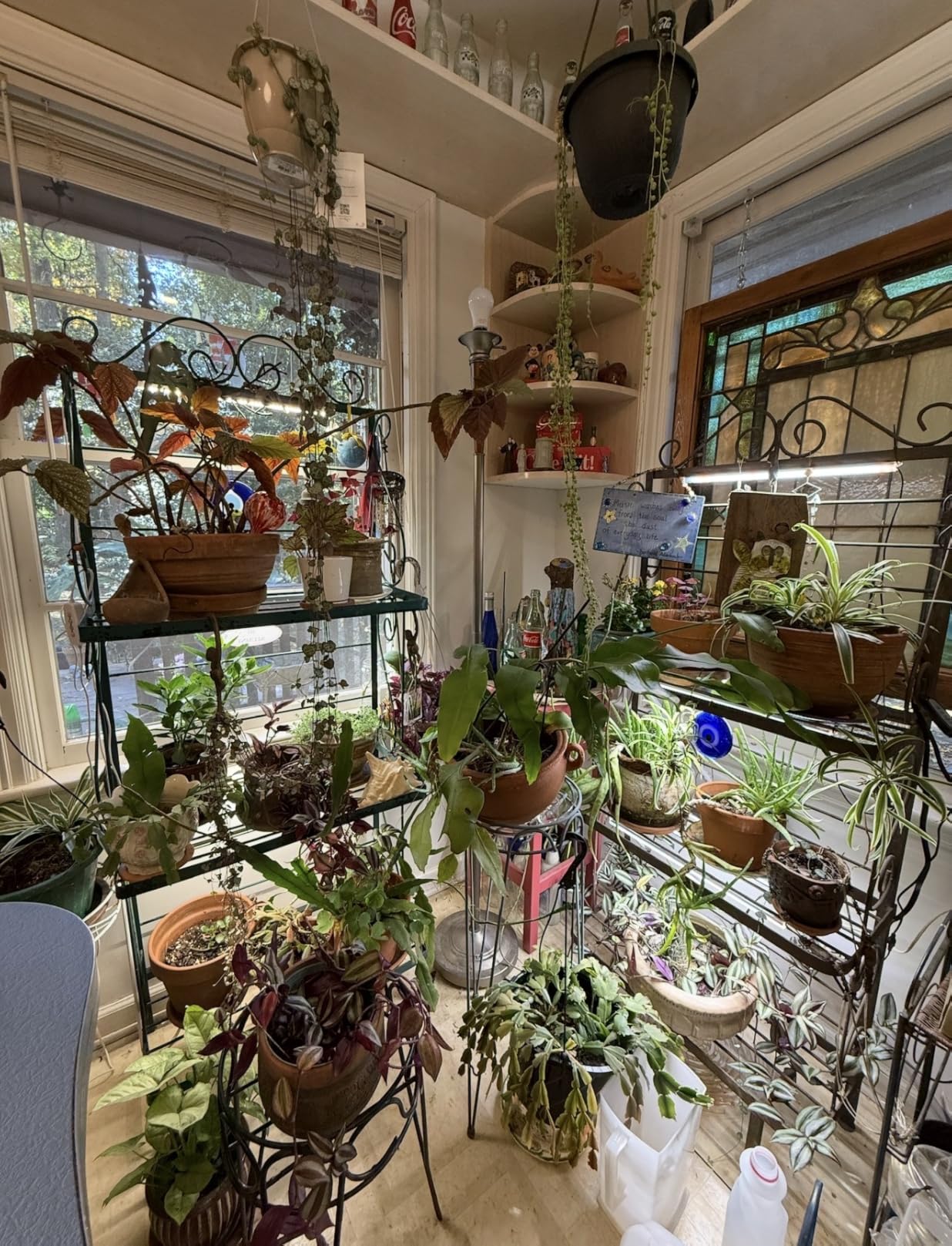
Users restoring variegation on a pothos shelf reported the most visible change, and on our own setup the 95-inch cord was the longest relative to the fixture, which reduced the number of extension cords we needed to zero.
The 120 diodes split across 72 white, 36 warm white and 12 red, with 380-800nm emission and a CRI of 80. That is a reasonable spread for houseplants and herbs rather than for fruiting crops.
Getting the most from a modest bar
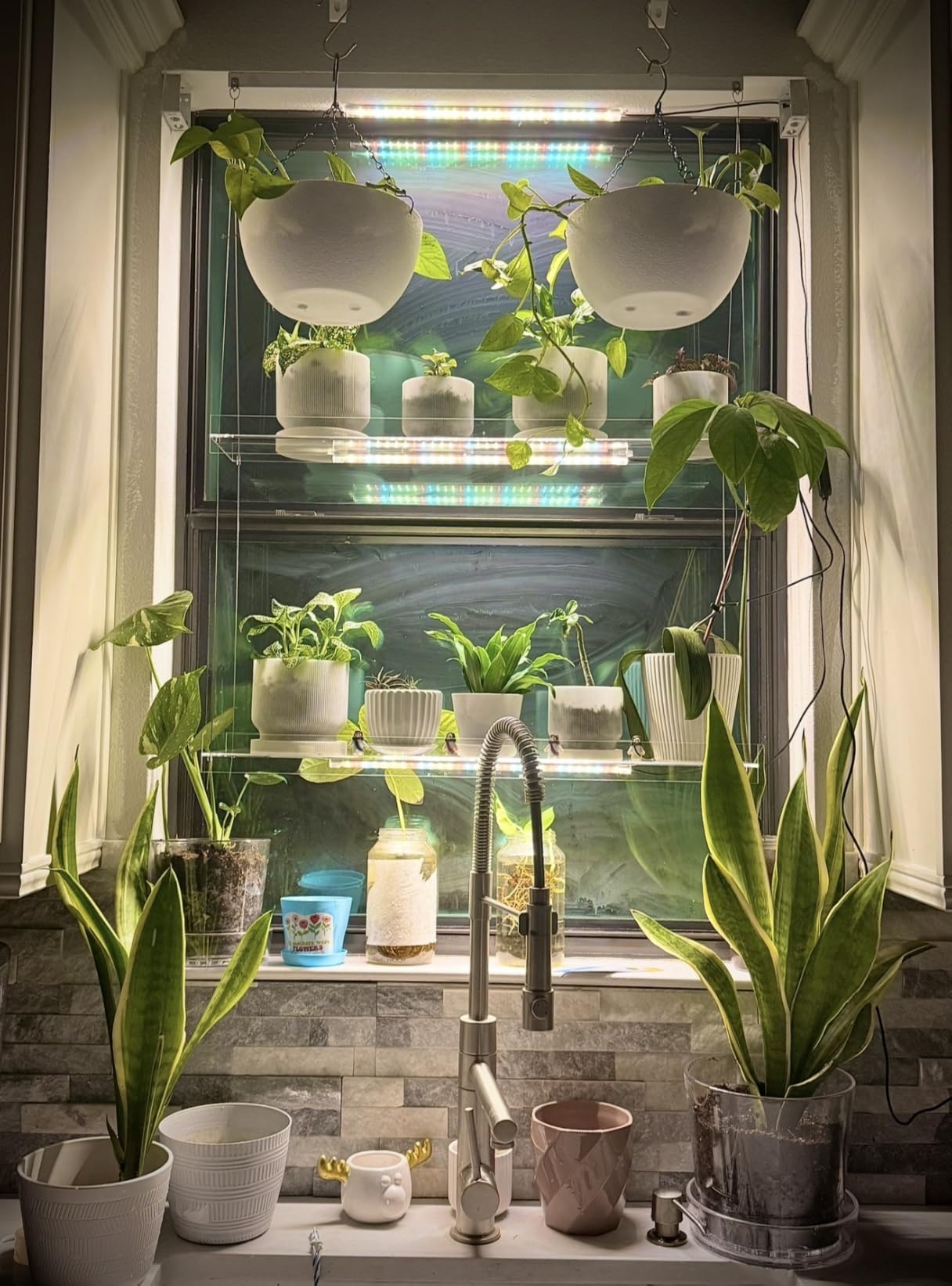
Because output is on the lower side, height matters more than usual. Keep these within 4 to 6 inches of the canopy and raise them as plants grow, which on a shelf means an adjustable mount rather than a fixed adhesive strip.
Use the dimmer rather than distance to change intensity for different plants on the same tier. It is faster than climbing a ladder to reposition a bar.
Where it falls short
Two bars on a 16-inch pitch leaves the ends of a wide shelf dim, and staggering them to fix that leaves a visible seam in the middle. For a 48-inch tier you are buying two sets and doubling the controllers.
For a tomato or pepper shelf you would outgrow it quickly. This is a starter, herb and foliage bar, not a fruiting-crop bar.
5. SDOVUERC 16in 4-Bar: Best Set for Covering a Wide Shelf Tier
SDOVUERC 16” 4 Bars Grow Light Strips for Indoor Shelves Plants Growing.
4 x 16 inch bars
240 LEDs at 24W
2400 lumen maximum
6/12/18 hour timer
Pros
- Four-bar layout spans a shelf tier in one mount
- 95 inch cord handles tall and wide shelving
- Dimmable with a 6/12/18 hour circular timer
- Zips ties and screws hold well on metal wire racks
Cons
- Output reads strongly blue with no softer white setting
- Intensity can fall short for demanding seed starting
- Adapter and cord add clutter behind the shelf
This is the closest thing in the group to a single fixture that covers a 48-inch tier. Four 16-inch bars hang from one power run, and they produced the most uniform coverage of anything we mounted below the seedlings.
Users fill dark corners at the ends of orchid shelves with these, which matches what we saw. The ends of the tier that stayed dim with shorter bars were properly lit here.
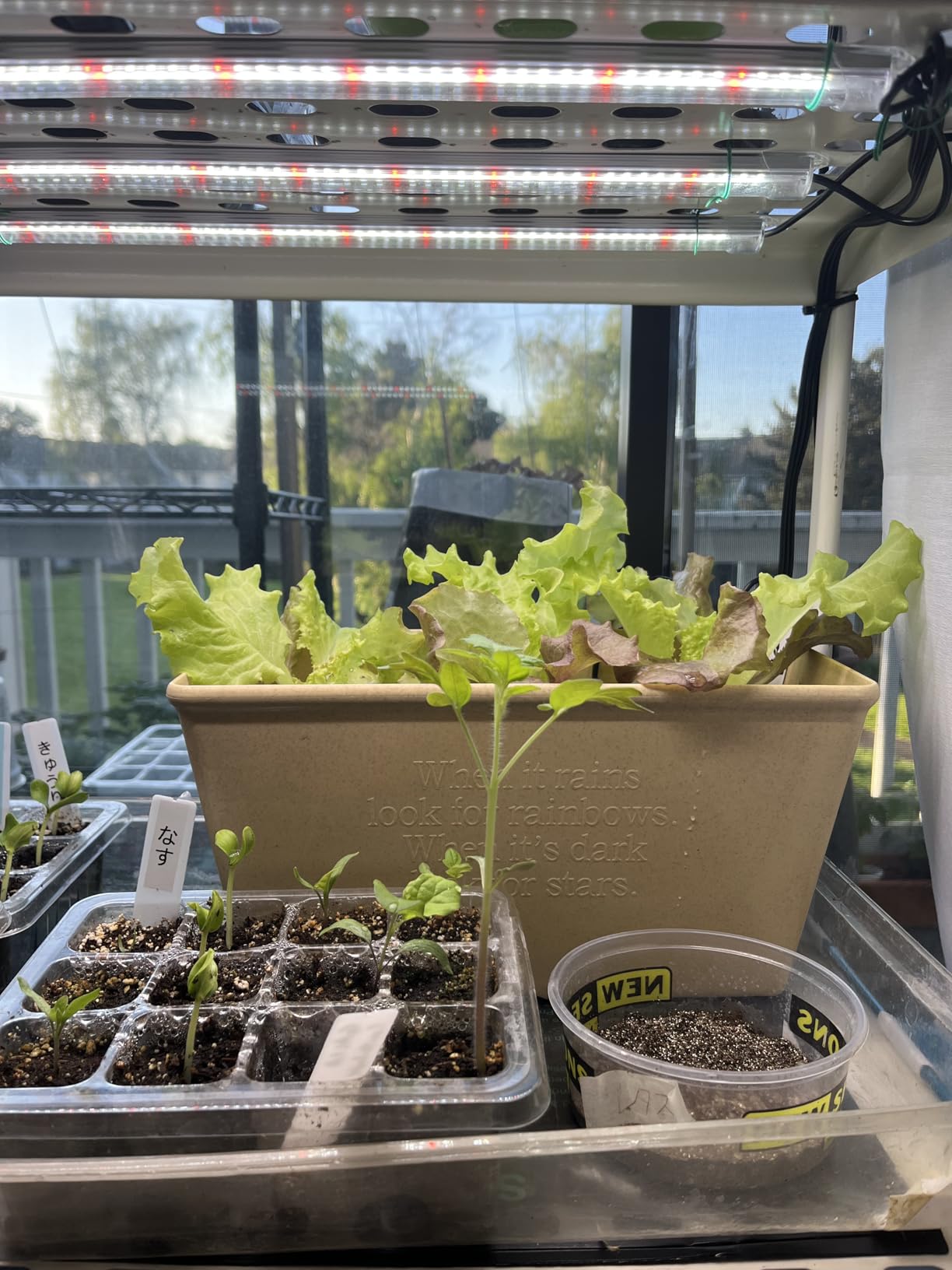
The circular memory timer restarts the same schedule every day after a power cut, so a tier does not silently drift onto a different photoperiod. At 24W across the set, the running cost over a season is trivial next to a panel.
It is FCC, CE and RoHS certified, which matters more than it sounds if the rack sits in a room you also work in, and the aluminium and plastic housing stays cool at 2400 lumens maximum.
Why four bars beats one long bar on a shelf
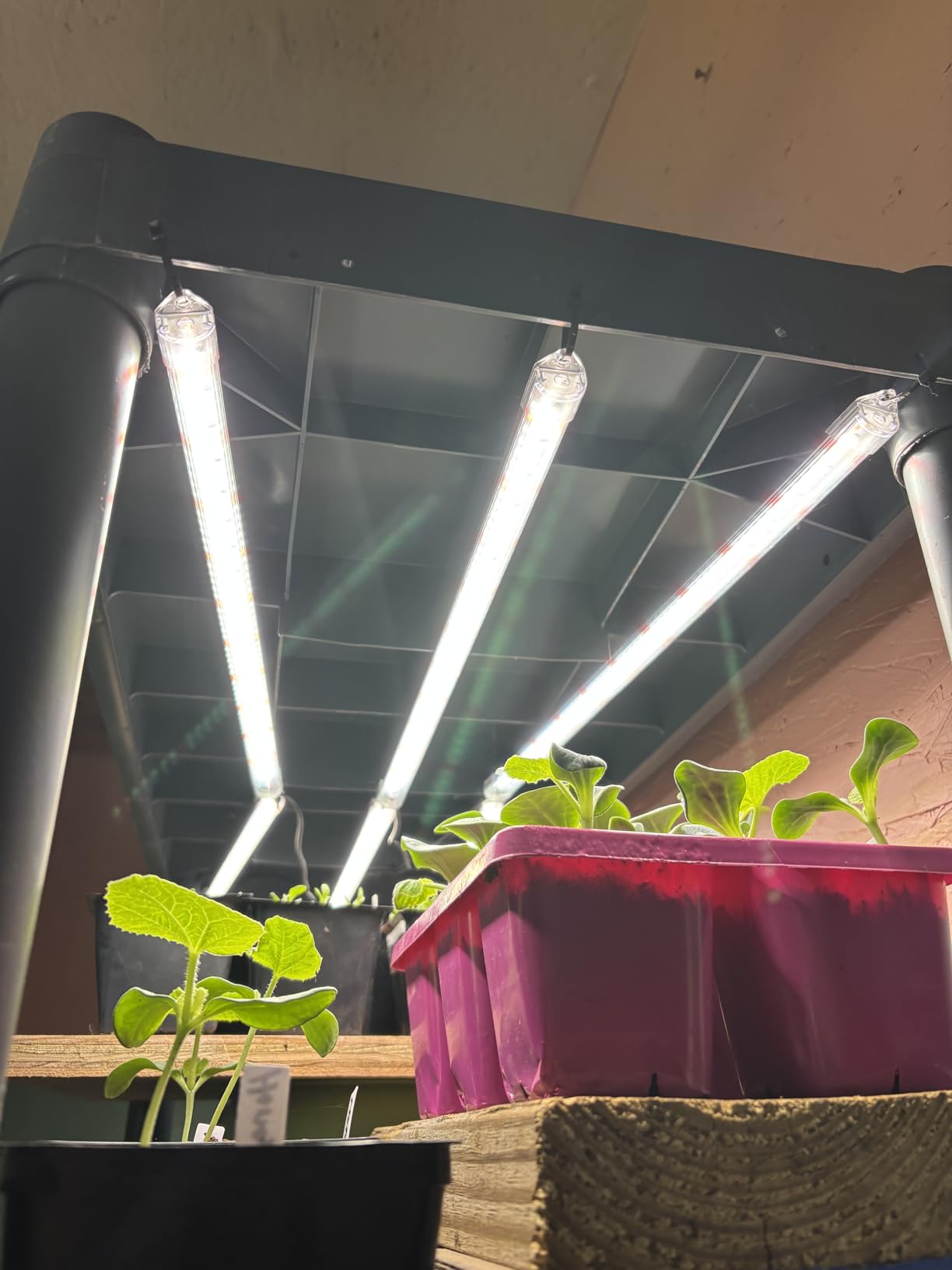
Even spacing beats a single point. Mounting four bars along the front and back edges of a deep shelf means every tray sits under a bar rather than between two, which is how you kill the hot spot directly underneath a single fixture.
If your rack is deep, run two rows front and back at half brightness each instead of one row at full, and you will get a flatter canopy.
Where it falls short
The light reads very blue. For a seedling shelf in a spare room that is fine, but in a living room the cast is noticeable and there is no warmer setting to dial back to.
Buyers measuring it against demanding seed-starting intensities report it falls short. Use it for houseplants, orchids and cuttings, and keep seedlings on a higher-output bar.
6. VIVOSUN T5 1ft 4-Pack: Best for Bright, Neutral Output
VIVOSUN T5 Grow Lights for Indoor Plants, 5000K Full Spectrum, 1FT
4 x 1ft bars
30 LEDs each at 7W
3640 lumens total
8/12/18 hour timer
Pros
- 3640 lumens at 130 lm/W efficiency
- Built-in 8/12/18 hour timer plus four brightness levels
- Optical lens spreads output evenly along the bar
- Colour renders truer than cheaper blue-heavy bars
Cons
- Proprietary two-pin connectors will not fit T5 or T8 sockets
- Rigid connectors make the bar longer than its rated length
- Plastic housing runs warm and brackets can slip
This set put the highest lux reading on our rack, at roughly 25,000 lux at 5 inches. If you want intensity rather than coverage, this is the bar in the group that delivers it in a slim form factor.
Buyers running these in cloning tents and small indoor racks report genuinely high readings and quick installs, and several note the light is brighter and more neutral than a comparable T5 from another brand.
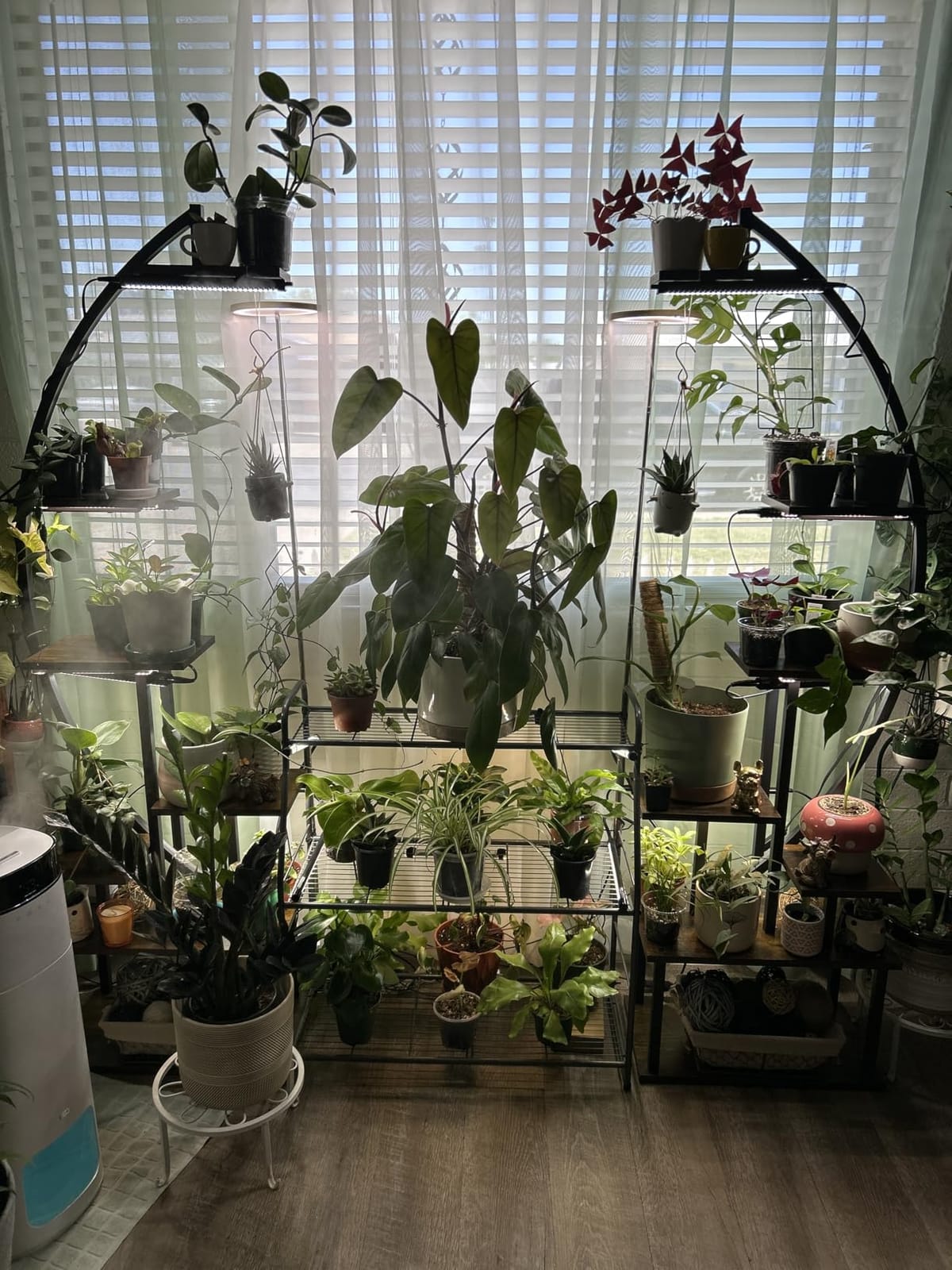
The built-in controller handles the 8, 12 and 18 hour schedules and four brightness levels in one box, and it restores the previous brightness after a power outage rather than dropping to full.
Daisy chaining plus spring clips made this the fastest rack install we did. Two cables, four bars, about ten minutes.
Where the brightness actually matters
High output at close range suits a propagation shelf with a clear dome, or a seedling shelf where you want to run a shorter photoperiod and still get stocky growth. It is also the option for shelves deeper than 12 inches, where weaker bars fade before they reach the tray.
Run it at 50 percent for the first week after germination to avoid bleaching, then take it to full.
Where it falls short
The two-pin connectors are proprietary. They will not seat in a standard T5 or T8 fixture, and they cannot be swapped, so these bars are a closed system you cannot mix with other brands.
The connector sections are rigid, so the effective bar is longer than the rated length, which matters when you are fitting under a tight shelf. The plastic housing also runs warm enough that we would not bury one inside an unventilated cabinet.
7. FREGENBO 16in 4-Pack: Best for Glass Cabinets and Living Spaces
LED Grow Lights Strips for Indoor Plants with Auto ON & Off Timer, T5 Sunlike Full Spectrum Grow Lights Bar Growing Lamps for Greenhouse Shelves Hydroponics Succulent, 4 Dimmable Levels
4 x 16 inch bars
380-800nm with 660nm red
3/6/12 hour cycle timer
Dual-channel 2x2 control
Pros
- Dual-channel control splits the four bars into two independent sets
- Warm output is far less intrusive than pink or blue bars
- Remote control for timer and brightness
- Five extension cables included in the kit
Cons
- Timer reported to drift or lose its set cycle
- Intensity falls off fast with distance
- Not strong enough for full sun demanding plants
This is the set we would put in a cabinet that sits in a living room. The output is warm and neutral rather than the purple cast most grow bars throw, and long-term owners report the intensity has held steady across several years.
Dual-channel control splits the four bars into two sets of two, so a top shelf of ferns and a bottom shelf of seedlings can run different brightness levels from one controller.
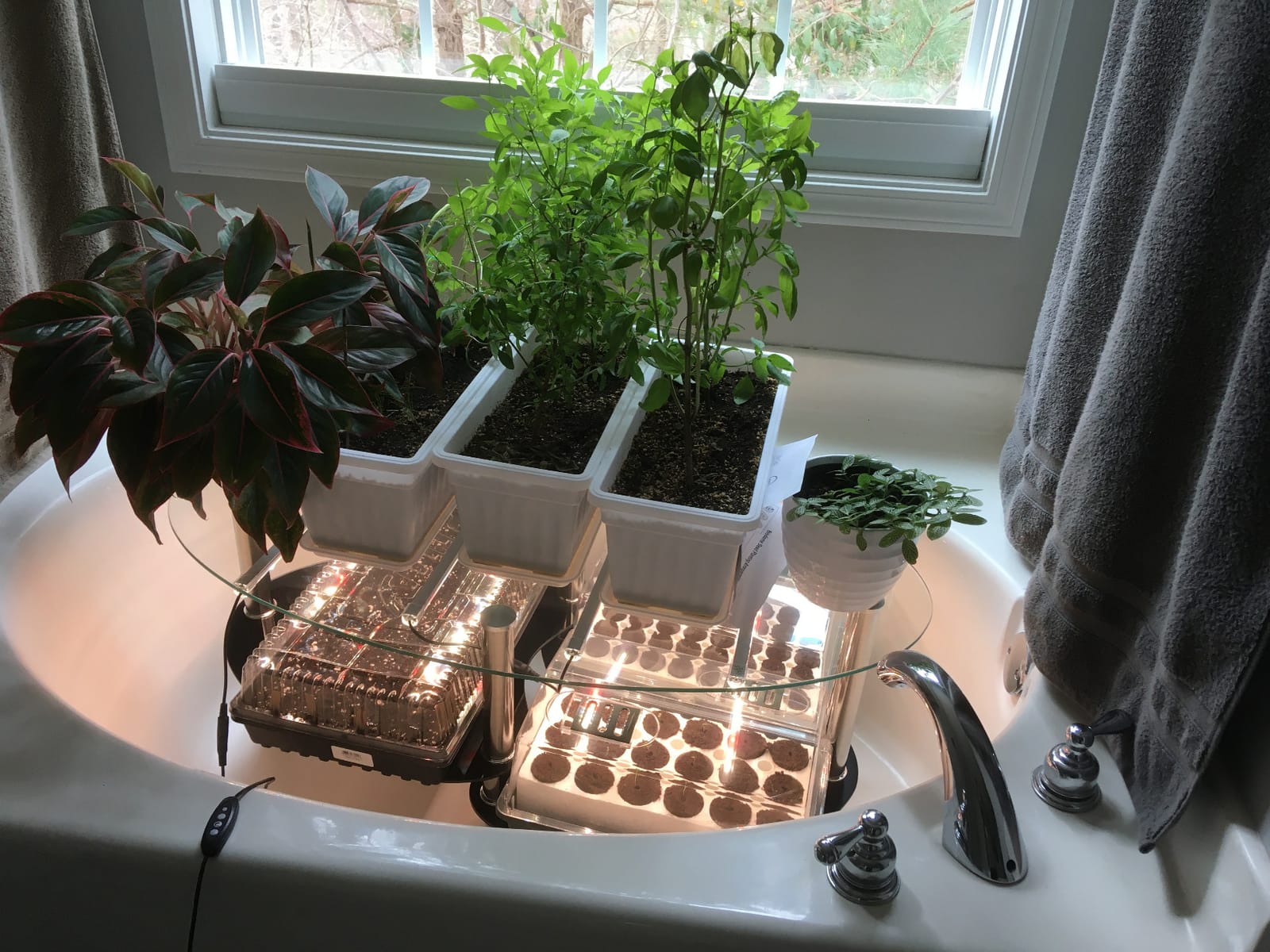
At 16.14 inches by 0.75 inches and 125 grams per bar, these thread through tight shelf gaps and are easy to hold up on adhesive pads or zip ties without a bracket.
The timer sits on a 24-hour cycle at 3, 6 or 12 hours. The cycle logic is right for a shelf, but check it once a month because it is the most common failure point owners report.
Best placement for an indoor cabinet
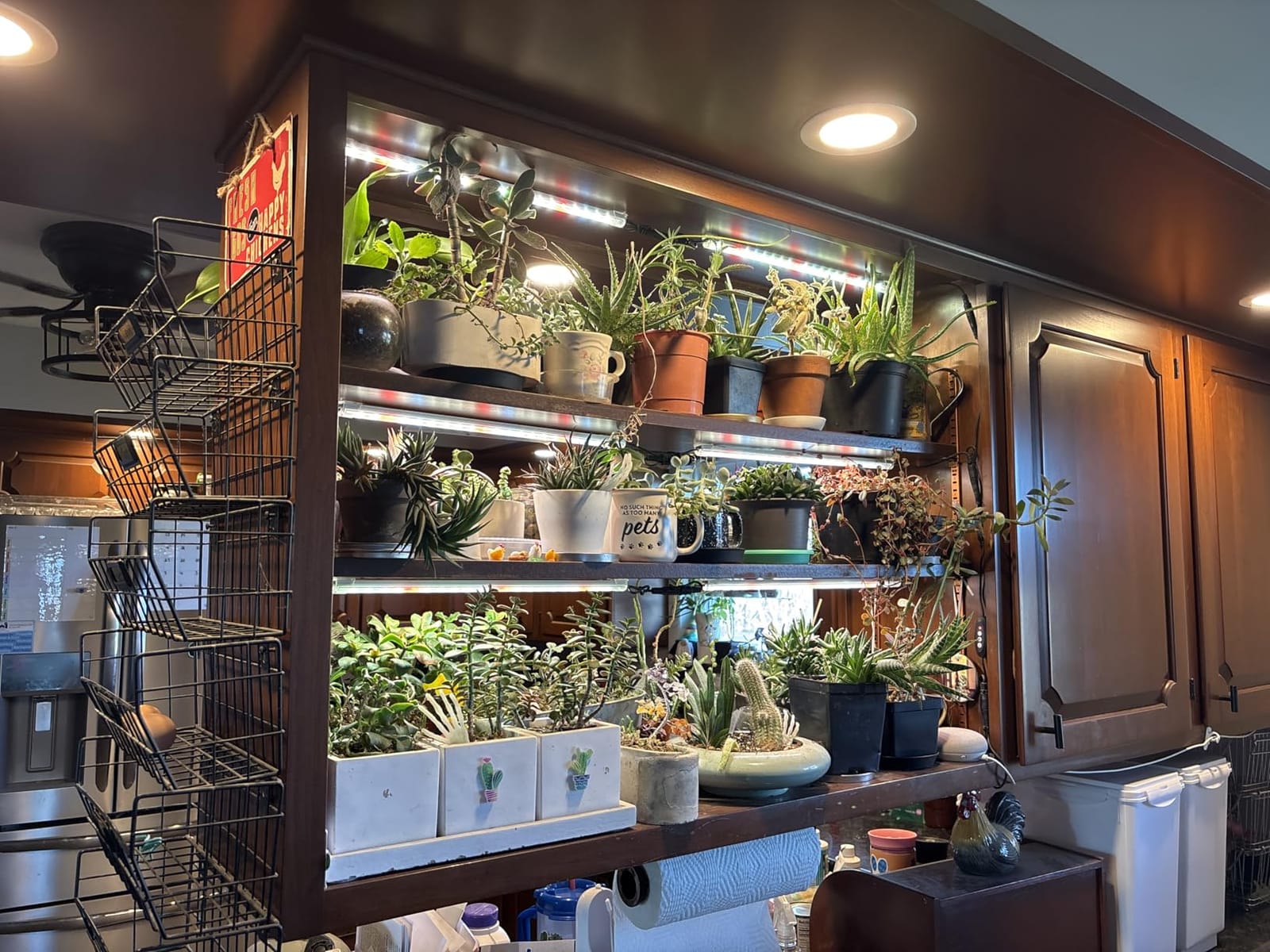
Mount these behind a glass or acrylic panel rather than under it, where the glazing diffuses the output and spreads it across the tier. The diffuser also removes the hot spot that a bare bar creates directly beneath itself.
Because intensity drops quickly with distance, keep the bars within about 6 inches of the foliage and raise them as plants fill out.
Where it falls short
The timer is the weak point. Several reviewers describe it drifting from the set schedule or failing to hold the cycle, so treat the built-in timer as a convenience rather than a scheduling guarantee, and re-check it after a few weeks.
Nothing here supports high-demand fruiting crops. This is a foliage, herb and seedling bar for an indoor cabinet.
8. Wolezek 14in 2-Pack: Best for Houseplants on a Display Shelf
Wolezek 14in Grow Light Strip for Indoor Plants, Full Spectrum
2 x 14 inch bars
210 diodes at 15W
2 inch wide curved bar
9.8 foot cord
Pros
- Two inch wide bar covers more shelf width per fixture
- Three light modes with 3500K warm and 6000K cool
- PC cover sheds dust and water mist
- Visible growth response within one to two weeks
Cons
- ABS plastic housing is less rugged than aluminium
- Does not cast a wide canopy so bars must hang close
- Occasional reports of a unit cycling off and on
The wider 2-inch bar is the reason this one covers more shelf per fixture than the slimmer strips. On a display shelf of houseplants, that translates into fewer fixtures for the same tier.
Buyers report visible growth within a week or two on plants that had stalled, including new leaf pushes, which matches what we saw on the pothos shelf.
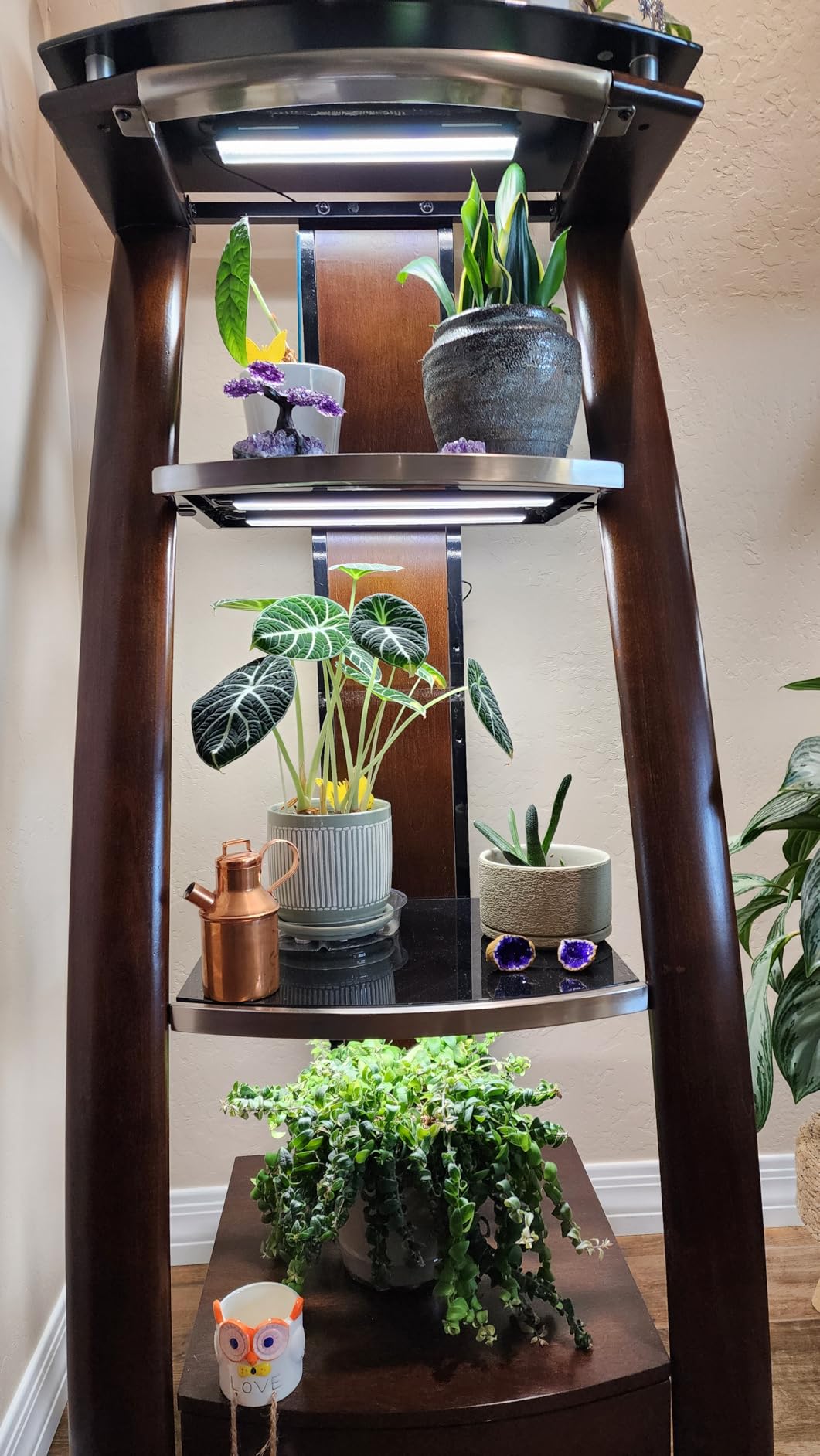
The curved housing spreads light along the bar rather than straight down, and the 9.8-foot cord was the longest relative to the fixture in the group, which made routing behind a tall rack much easier.
Three light modes cover 6000K cool white, 3500K warm white, 660nm red and 450nm blue across 380-800nm, so you can run a warm setting at night and a cooler one for growth.
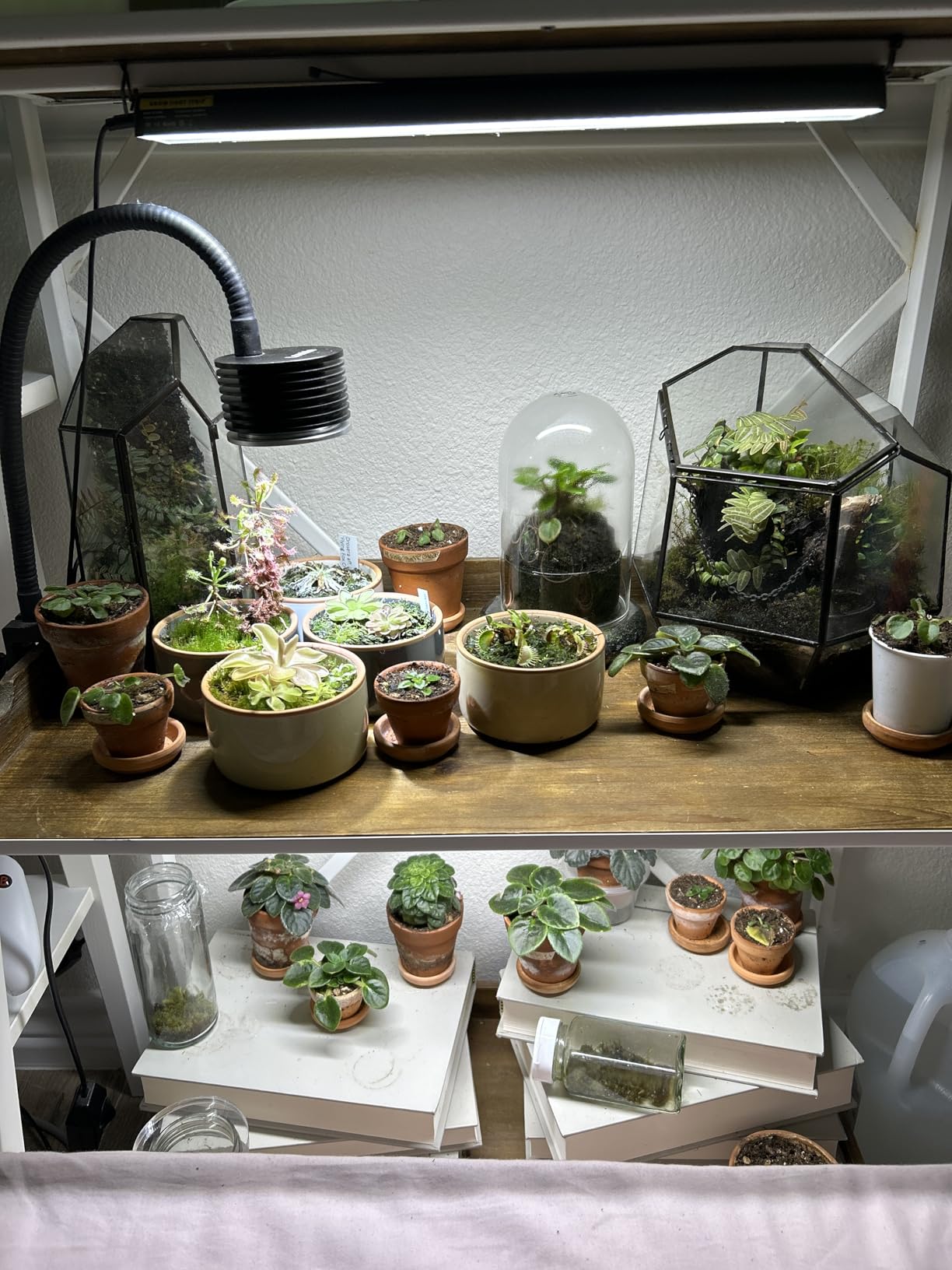
Why width beats length on a houseplant shelf
Houseplants on a display shelf are usually wide and shallow rather than deep. A wider, shorter bar covers a broad canopy in one go, where a narrow 8-inch strip leaves the sides of the pot dark.
Two of these cover most of a 36-inch tier, and the PC cover means you can wipe the bar with a damp cloth without pulling the unit down.
Where it falls short
The output does not cast a wide canopy, so the bars have to hang close to the foliage. On a shelf where plants are already tall, that means solving the clearance problem before you mount.
The ABS plastic housing is less rugged than the aluminium bars here, and a few owners report a unit powering off and restarting on its own. For a fixture you can reach and check, that is acceptable; for one mounted above a seed tray you cannot see, choose an aluminium bar.
9. RWNTAO 8.66in 3-Head 2-Pack: Best for Steel Shelving
LED Grow Light Strips, Grow Lights for Indoor Plants Full Spectrum 3000K, Plant Light Bar with 3/9/12H Timer, 10 Dimmable Levels for Seedling Succulent,Best Match for Plant Shelf(3 Head×2 Pack)
6 bars at 8.66 inches
156 LEDs
10 dim levels
3/9/12 hour memory timer
Pros
- Ten dimming levels give the finest control in this group
- Magnetic mounting included for steel shelving
- Only 0.28 inch thick so it fits very tight gaps
- Cycle memory timer restarts the same schedule daily
Cons
- 8.66 inch bars leave wide shelves needing many fixtures
- Warm 3500K output with no neutral daylight setting
- Short bars add more controllers and cords
Magnetic mounting plus a 0.28-inch profile makes this the fixture for steel wire shelving, where adhesive is unreliable and vertical clearance is measured in fractions of an inch.
Ten dimming levels is the best granularity here. On a shelf with seedlings in one half and mature succulents in the other, that is enough resolution to serve both from one bar run.
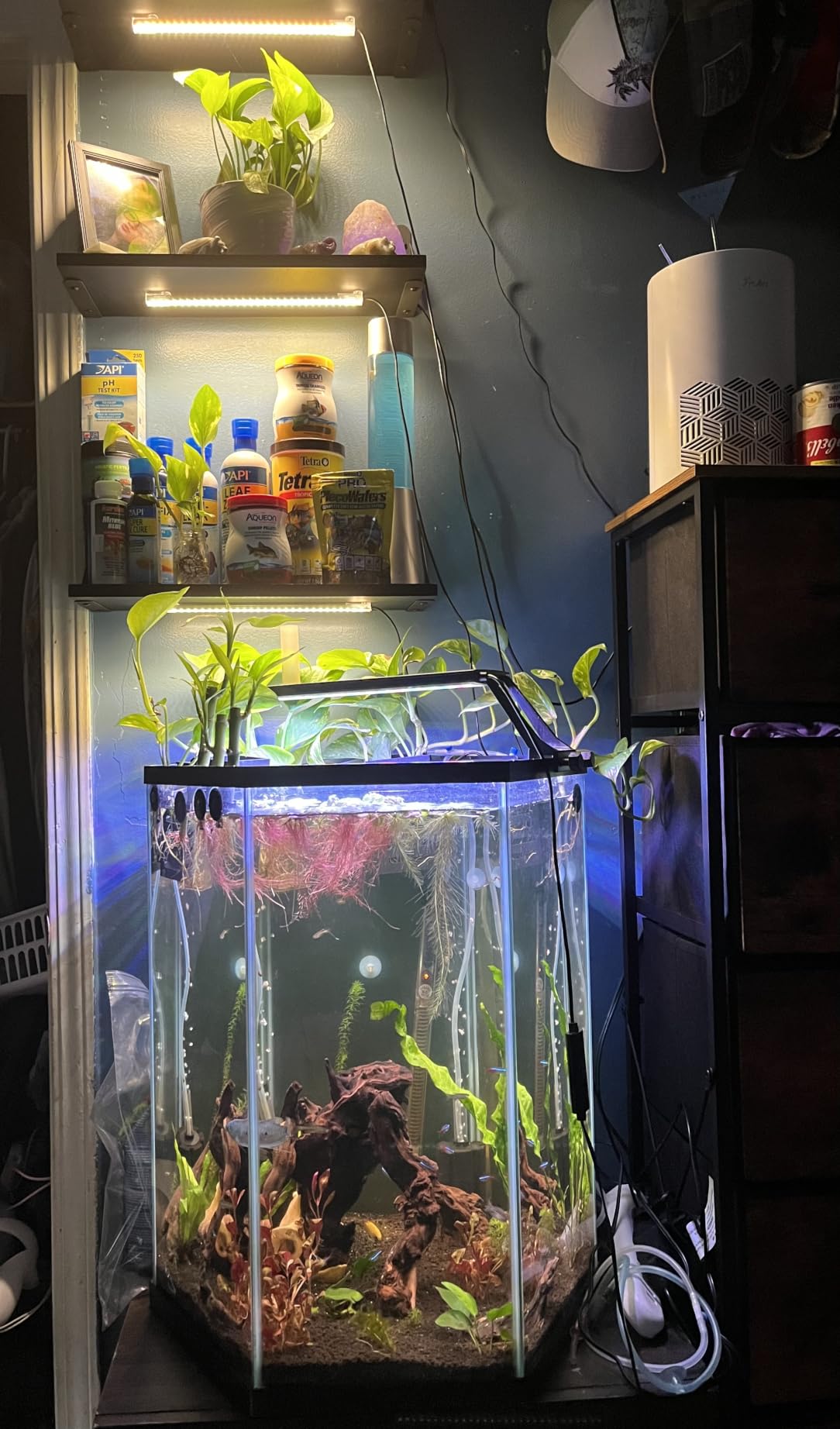
Three switch modes let you run one head of the three, or all three, which is useful when one section of a tier has finished and the rest has not.
The cycle memory timer restarts the same schedule each day without manual input, which removes the single most common complaint we saw about manual switching in shelf setups.
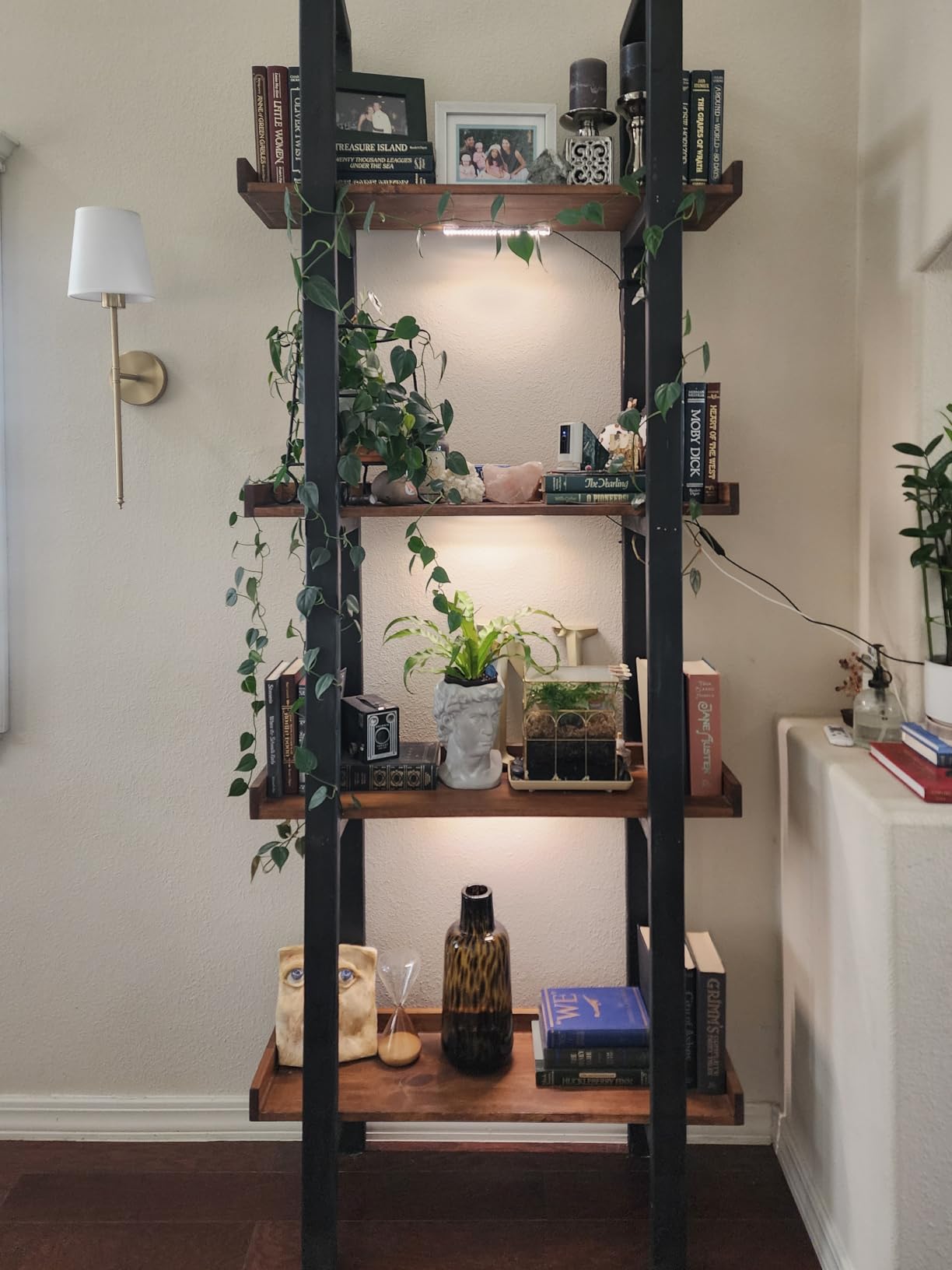
Where short bars are an advantage
Short bars win in narrow spaces: a 12-inch cubby, a single shelf bay between uprights, or a tier only as wide as the plant tray. In those spots a 16-inch bar would overhang into the neighbouring bay.
They also stack neatly under a shelf with a lip, where a taller bar with end caps would not seat flat.
Where it falls short
A 36-inch shelf needs four or more of these to cover evenly, and every extra bar is another cord to route. On a four-tier rack that becomes a genuine wiring job rather than a five-minute install.
The 3500K warm output is not adjustable to a neutral daylight white. If you are starting seedlings, a cooler bar is usually the better choice.
10. Wiaxulay 16in 4-Bar: Best for Splitting One Set Across Tiers
Wiaxulay 16in Plant Grow Light Strip for Indoor Growing, Full Spectrum 15W
4 x 16 inch bars
6000K full spectrum
15W rated
6/12/16 hour timer
Pros
- One set can cover four separate tiers from a single adapter
- 6/12/16 hour timer removes the daily switch
- Three switch modes light only the bars you need
- Bars stay cool enough not to affect propagation lids
Cons
- Bundled zip ties are too short for many shelf frames
- 16 inch bars leave uneven coverage on wider shelves
- Some buyers report bars bending in the holder or units failing
Splitting one set across four tiers is the feature here. Buyers building tiered plant stands use exactly this configuration, powering a separate shelf on each tier from a single supply.
Three switch modes control which bars light, so a dormant tier can be switched off without unplugging anything.
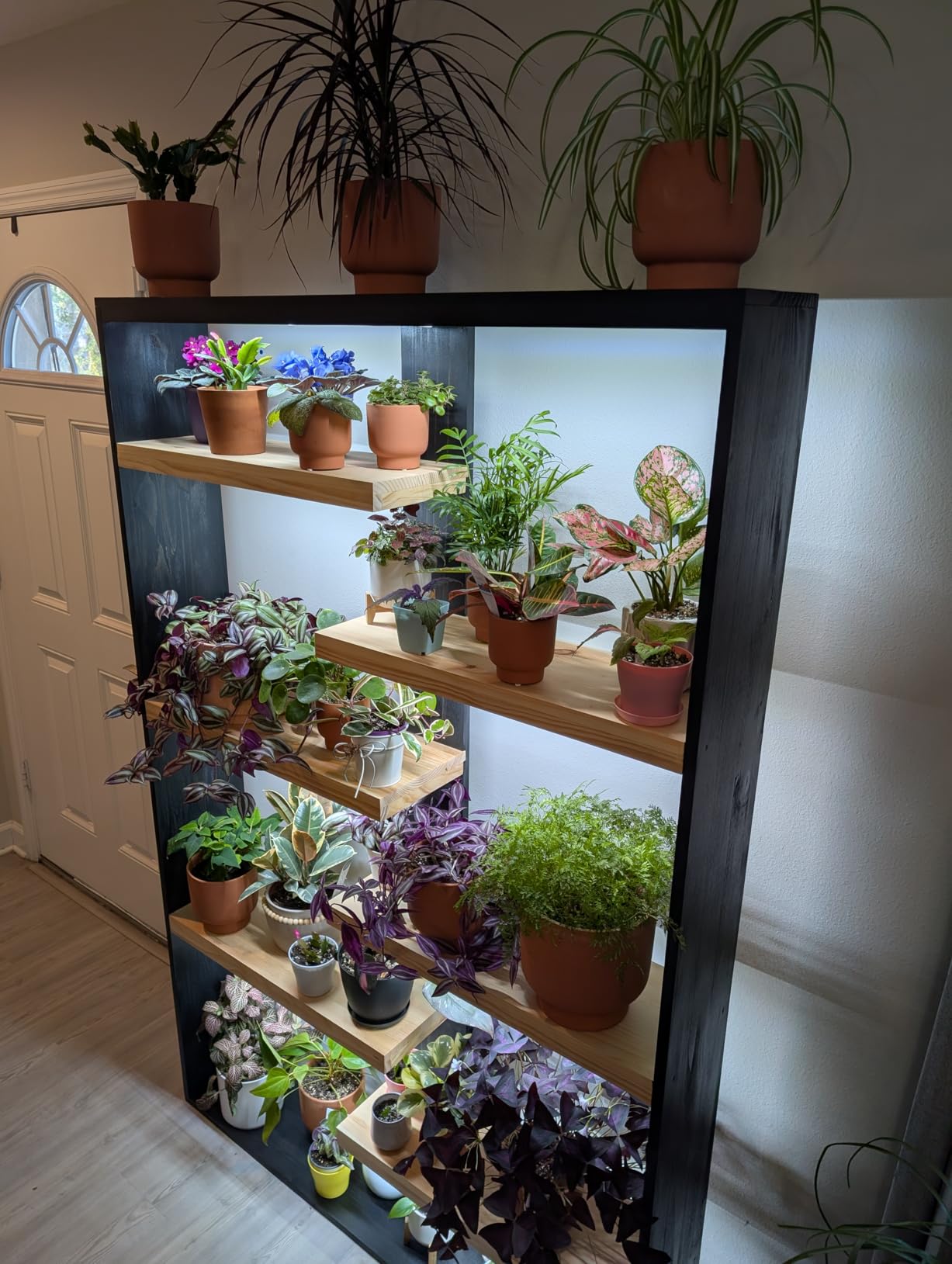
The bars run cool enough that we left a propagation dome closed underneath without any heat build-up, which is the practical test that matters on a seed shelf.
The mounting kit covers the common shelf materials with screws, zip ties and double-sided tape, and the 6000K output at 380-800nm suits germination and early vegetative growth.
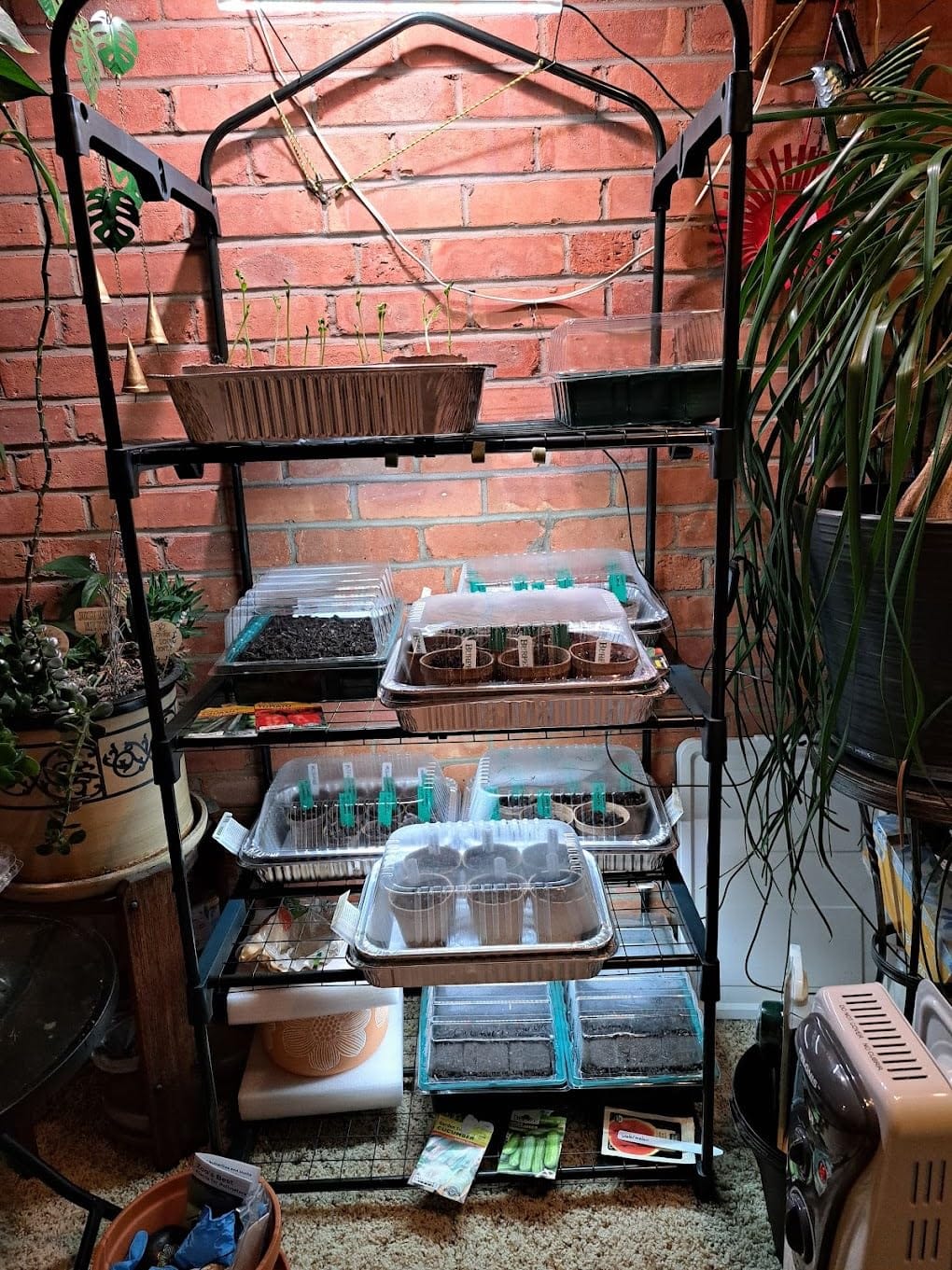
How to mount these so they stay put
Skip the bundled zip ties on a metal frame. They are shorter than most shelf uprights, so what you end up with is a loop hanging off the bar rather than a fix. Use the included screws on wood, or add your own longer ties on wire.
Run the cord up one upright and along the back of the frame rather than letting it hang in front of the tray.
Where it falls short
Four 16-inch bars on a 48-inch tier still leave uneven coverage, and the shorter bars mean visible overlaps. If evenness matters more than running one supply to several tiers, a single four-bar set designed for that width is the better buy.
A small number of buyers report a bar bending out of its holder or a fixture failing after a few months, though sellers are generally responsive on replacements.
11. Hywyimlait 13in 2-Pack: Best for Propagation and Cuttings
Hywyimlait LED Grow Light Strips for Indoor Plants Full Spectrum 3500K, 96 LEDs Plant Light Bar with 3/9/12H Timer, 10 Dimmable Levels for Seedling Succulent and Shelf, 13 Inches, 1 Head 2 Pack
2 x 13 inch strips
96 LEDs at 3500K
3/9/12 hour timer
10 dim levels
Pros
- Two independent strips can cover separate shelves
- Ten dim levels and three switch modes in one controller
- Four mounting methods including magnets
- Sells at the lowest cost per fixture in this group
Cons
- Not waterproof
- so keep away from misting water
- Low output works only as supplemental light
- Adhesive pads may not hold long term
Two strips that run independently is the useful part. One goes over the propagation tray while the other stays on the seedling shelf, each with its own brightness and schedule.
Experienced growers on these listings describe the output as roughly low-light level and point to using it as supplemental lighting under a shelf rather than as a primary source.
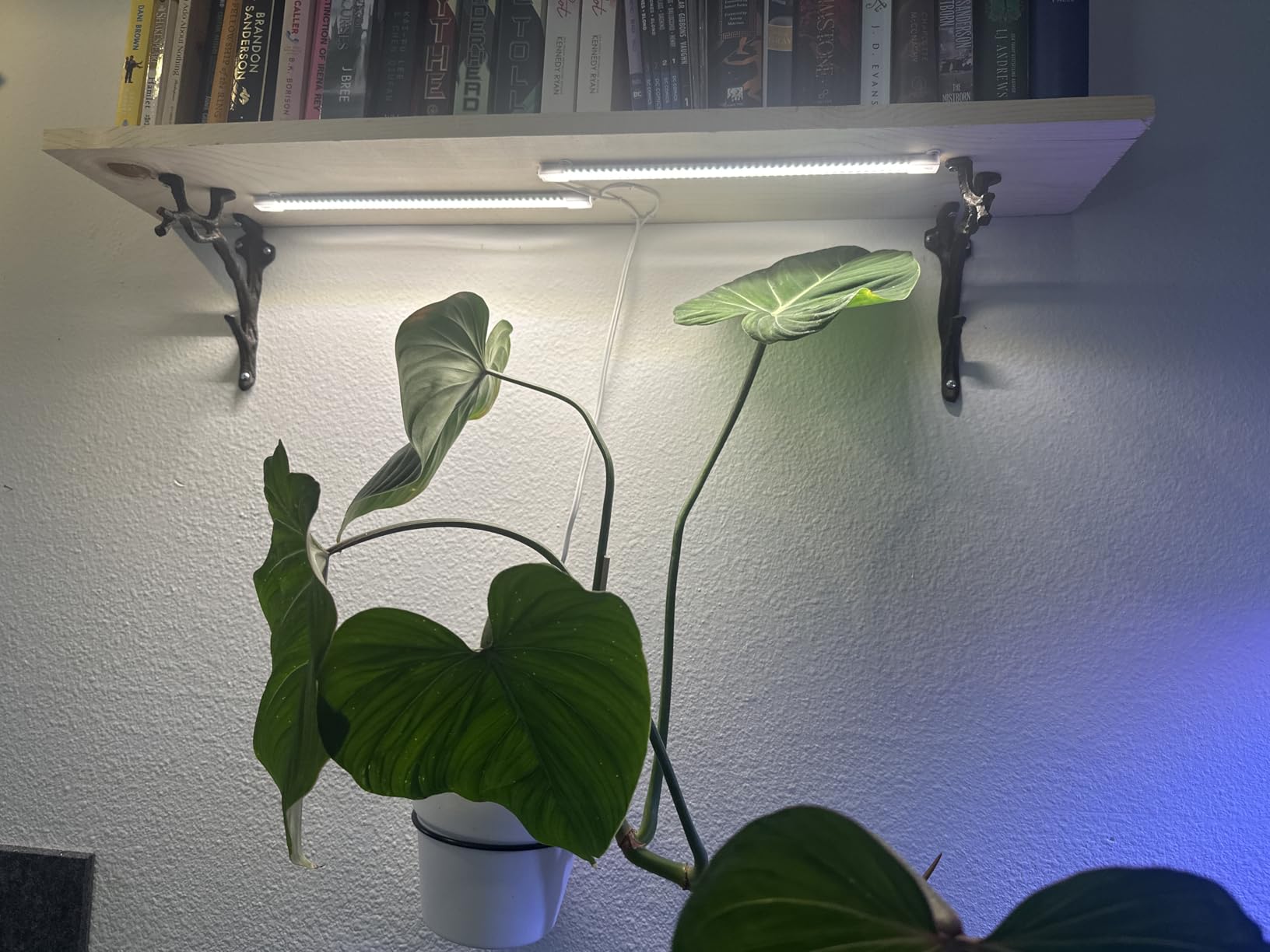
Buyers running seedlings, cuttings and moss under standard shelving rate it well for the money, and the brand is noted for fast replacement when fixtures arrive damaged.
The 71-inch cord is enough to reach from a mid-height shelf to an outlet without an extension, which keeps the install tidy on a three-tier unit.
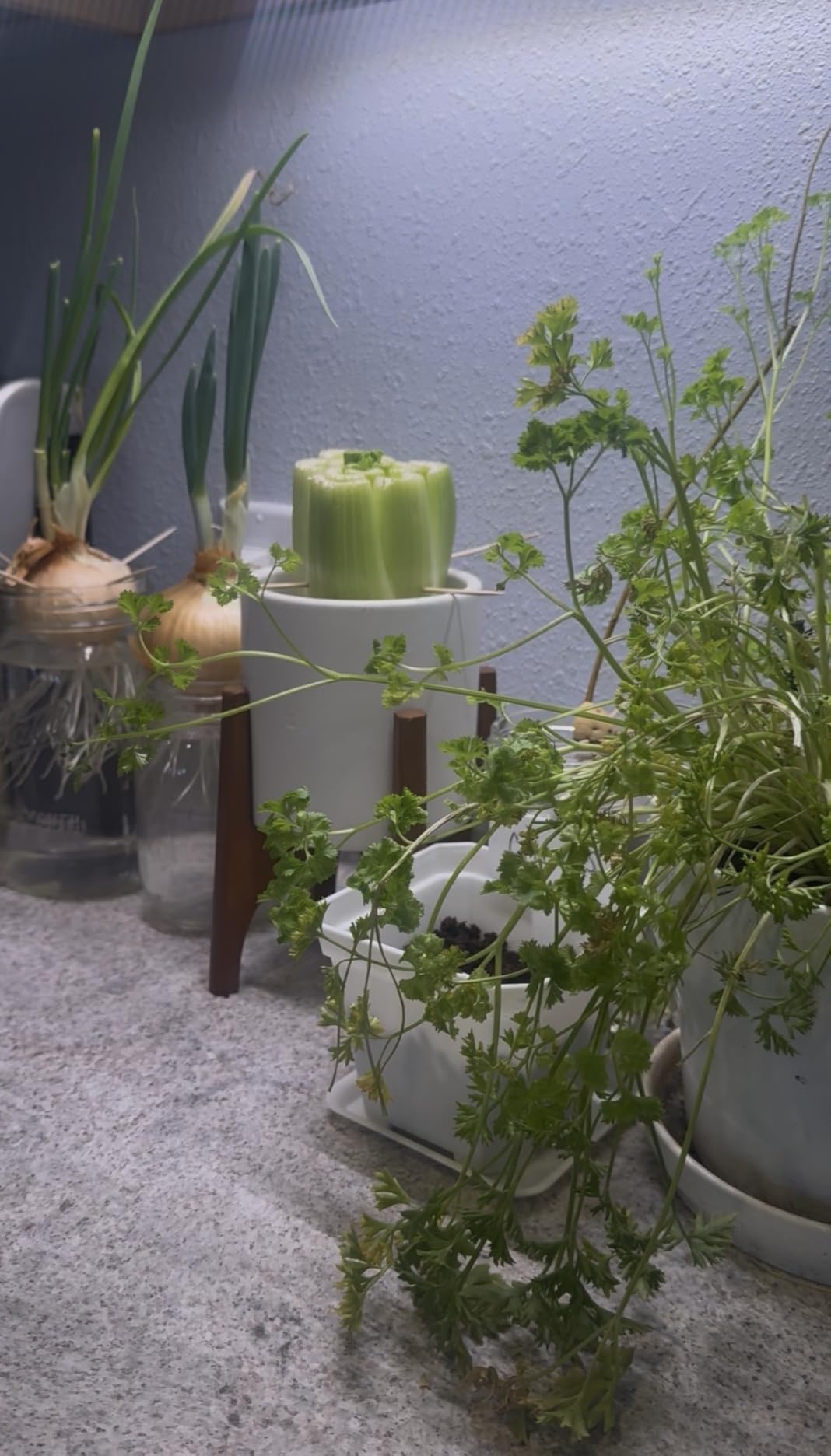
Best job for a low-output strip
Propagation and cuttings, where plants are close to the light and the requirement is gentle, steady output rather than intensity. Set it to about 6 inches above the tray and leave it there.
It also works well for low-light houseplants in a dim corner, where a stronger bar would be wasted.
Where it falls short
It is not waterproof, and misting a propagation shelf will get water on the diodes. Keep humidity away from the housing or choose an IP65 strip such as the Mosthink pair.
One reviewer reported the supplied power adapter failing under normal load, and the adhesive pads are not reliable long term. Screw or magnet mounts are the safer choice here.
12. DOMMIA 4x4in Slim Panels: Best for Tight Clearance Spots
DOMMIA Under Shelf Grow Light, Auto Timer, Dimmable, Bright White, 1-Pack
2 panels at 4 x 4 inches
0.28 inch thick
260 umol/m2/s at 4 inches
USB powered
Pros
- Only 0.28 inch thick so it fits gaps no bar can
- 260 umol/m2/s at 4 inches is the highest close-range reading here
- Timer and dimmer built into the USB controller
- USB power lets you place them away from wall outlets
Cons
- Both panels share one controller cord
- Supplied adhesive stops adhering over time
- Long-term durability is not yet established
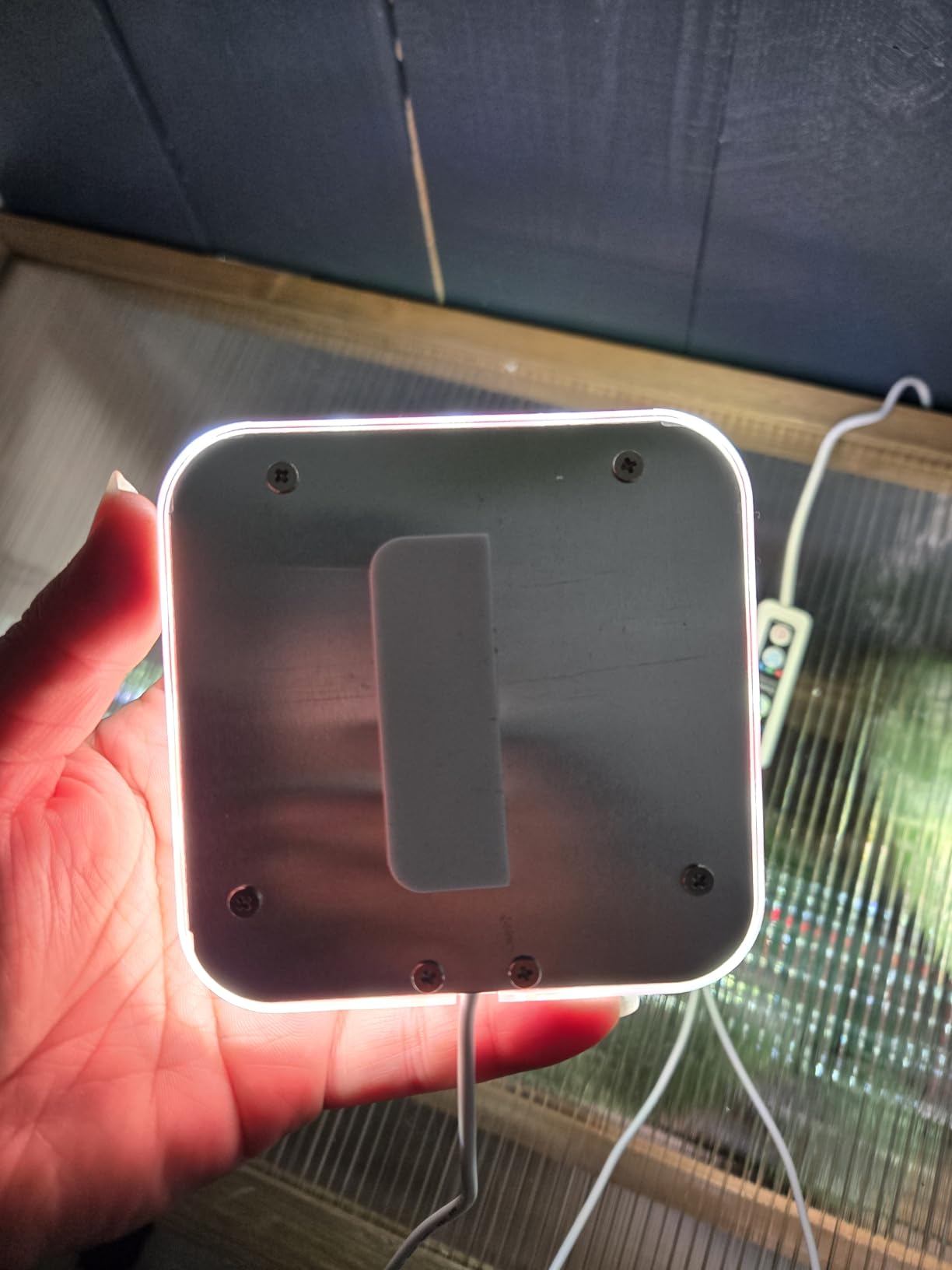
When clearance is the problem, this is the only fixture in the group that solves it. At 0.28 inches thick these panels slide into a gap where a T5 bar simply cannot sit, and each one weighs 1.6 ounces.
The quoted PPFD of 260 umol/m2/s at 4 inches, dropping to 106 at 10 inches, is the strongest close-range figure here, which is why they work for a shallow shelf with little room above the plants.
USB power with a 6-foot cord is genuinely useful. You can run these from a power bank or a USB hub under the shelf and forget about the outlet entirely. Note that the USB adapter is not included.
The built-in 6/12/16 hour timer with power-loss memory sits in the controller, so the schedule survives a power cut.
Where square panels actually win
Small square shelf bays, a single pot on a narrow ledge, an aquarium-adjacent cabinet, and under-cabinet herb gardens. Anywhere the footprint is small and the vertical gap is measured in millimetres.
At 5500K with 630nm red and convex lenses, the output is neutral enough to sit in a kitchen without looking like a grow room.
Where it falls short
Both panels hang off one controller cord, so you cannot split them across separate tiers without buying another controller. That limits them to two small zones per controller.
The included adhesive loses its hold over time, and since these are new listings, nobody has yet reported multi-year output stability. Mount them with thumbtacks or hook-and-loop strips instead.
How Many Bars Per Shelf? A Sizing Rule
Match bar length to shelf width, not the other way around. Aim for bars whose combined length covers at least the shelf width, with the bars spaced so no gap between them exceeds 4 inches. That is the number that prevents dark corners and leaning.
24 inch shelf: one 16-inch four-bar set, or two 12 to 13 inch strips for low-light plants.
36 inch shelf: two 16-inch bars with a small overlap, or three 1ft linkable bars spaced evenly.
48 inch shelf: two 24-inch-class bars or four 16-inch bars, front and back if the shelf is deeper than 12 inches.
On wattage, most of these fixtures land between 15W and 24W per set, so a four-tier rack running two sets per tier pulls roughly 150W to 190W. At 16 hours a day for 30 days that is about 72 to 92 kilowatt-hours, which on a typical residential rate lands in the low single digits per month. Energy is rarely the real cost of a shelf rig.
If you are planning a room rather than a shelf, multiply by area instead. A 10 by 10 foot growing area needs a bar roughly every 4 to 6 square feet at seedling-level intensity, which is a two-tier build rather than a shelf project.
How to Install a Grow Light Bar on a Shelf
Under-shelf mounting wins on almost every shelf, because it keeps the clearance above the plants free. The trade-off is heat: an under-shelf bar pushes warmth down onto the canopy, so keep it at least 4 inches above the tallest leaf.
A top-mounted bar throws heat up into the underside of the shelf above, which is why we only choose it when there is generous clearance and a lower tier that will not mind the reflected warmth.
Before you drill anything, measure the gap between the shelf and the one above at three points. Shelves are rarely level, and a bar fitted at the front can scrape at the back.
Measure shelf width, shelf depth and the vertical gap above the growing area.
Choose bars whose combined length covers the shelf width with no gap wider than 4 inches.
Fix mounting points at both ends, using screws on wood and magnets or longer ties on steel.
Route the cord up one upright and along the frame, away from the drip line under each tray.
Set the timer or smart plug, then check the schedule again after a week to confirm it held.
For a rack you already own rather than one designed for growing, our guide to corner desks with shelves covers how to pick a unit with enough vertical spacing between tiers. If you also need a second unit for a balcony or a window bay, our picks for shelving with vertical room to grow apply the same clearance-first logic.
What to Look for When Buying a Shelf Grow Light Bar
Length before anything else. Bar length is the one specification that cannot be fixed later. If a bar is too short, you add another fixture and another cord; if it is too long, it will not fit at all.
Dimmability, not just brightness. A bar you cannot dim forces a fixed photoperiod, and seedlings at 100 percent on day one are the most common way people burn a tray. Ten steps is better than four, and one step is worse than none.
Timer with the right increments. 3, 6 and 12 hours is a houseplant schedule. 6, 12 and 16 hours is a seed-starting schedule. If your plants change stage, you want options rather than one fixed cycle.
Mounting hardware that suits your shelf. Screws and zip ties beat adhesive on almost every shelf material. Adhesive is a fine temporary fix and a poor permanent one, and adhesive failure means a light hanging by one end over a seed tray.
Linkability if you run more than one tier. Daisy chaining keeps the cord count down and is the difference between a tidy install and a bundle of extension leads down the uprights.
Colour temperature for the room, not just the plant. 5000K and 6000K read as neutral daylight white, which works in a shared space. 3500K warm and blue-heavy output is easier on the eye but less effective for seedlings.
Lumens are not the number that matters. A 10,000 lumen rating tells you almost nothing about what a plant receives, because it does not account for wavelength or distance. Where a fixture publishes PPFD in umol/m2/s at a stated distance, use that instead. Only two fixtures in this group publish it, which is itself informative.
Strip-bar formats and mounting decisions are shared across other roundups, so it is worth reading how we judge a linear fixture in our LED light bar reviews before you compare output claims between brands.
What Not to Buy for a Shelf
Skip commercial bar arrays. Fixtures built for vertical grow racks run at 2.5 umol/J or higher and are engineered for rooms with HVAC and staff, not bookcases. The output is many times what a shelf of seedlings needs, and the heat is the first thing you will notice.
Skip 200W panels and quantum boards as well. They are shaped for a tent, they block the shelf space above the plants, and on a shelf they simply deliver light you cannot use and heat you can.
Do not buy a strip so short you will need four of them to cover one shelf. A 8.66-inch bar is excellent in a narrow cubby and wasteful on a 48-inch tier, and the extra fixtures mean extra controllers and extra cords.
And do not buy on lumens alone. If a listing shows a lumen number and nothing else, you are guessing at what the plant receives.
Signs a shelf setup is wrong: plants leaning toward one end of the tier, bleached or bleached-white leaves directly under a bar while the ends stay dark, a purple cast visible from the doorway at night, or a laminate surface hot enough to be uncomfortable.
Lighting a Shelf Correctly: Distance, Schedule and Spectrum
The two-to-four-inch advice on the internet applies to fluorescent tubes, and the twelve-to-eighteen-inch advice applies to hanging fixtures. Slim LED bars sit between the two, which is why the safe rule for this group is 4 to 8 inches above the canopy for seedlings and 8 to 12 inches for mature plants.
As plants grow, raise the bar rather than leaving it low. That is a mounting problem, not a lighting one, and it is the reason adjustable or hanging mounts beat adhesive on a shelf you will use for more than one crop.
On schedule, seedlings want 16 to 18 hours, vegetative growth 14 to 16 hours, and low-light houseplants 10 to 12 hours. Herbs sit in the middle at 14 to 16 hours. Fixing one schedule for every tier and forgetting it is the most common mistake we saw on shelves we were shown.
On spectrum, seedlings and cuttings respond best to a cooler, blue-leaning output, established leafy plants do fine on neutral full spectrum, and fruiting crops want more red late in their life. Almost every fixture here covers 380-800nm, which covers all three cases reasonably.
Finally, rotate your plants a quarter turn every week or two. It costs you nothing, and it is the fastest fix for the one-sided leaning that houseplant growers describe over and over once a bar has been running for a few months.
Frequently Asked Questions
How many grow light bars do I need for one shelf?
Cover the shelf width with bar length so that no gap between fixtures exceeds 4 inches. A 24 inch shelf needs one 16 inch bar set or two 12 to 13 inch strips, a 36 inch shelf needs two 16 inch bars, and a 48 inch shelf needs two 24 inch class bars or four 16 inch bars. On shelves deeper than 12 inches, run two rows front and back.
Should the grow light go above or below the shelf?
Under-shelf mounting is the better choice for almost every shelf because it keeps all of the vertical clearance available to the plants. The trade-off is that an under-shelf bar pushes warm air down onto the canopy, so keep it at least 4 inches above the tallest leaf. A top-mounted bar throws heat into the underside of the shelf above and only makes sense where clearance is generous.
What is the recommended distance between a grow light bar and seedlings?
For slim LED bars like those in this guide, keep the fixture 4 to 8 inches above the seedling canopy and 8 to 12 inches above mature plants. The common two-to-four-inch figure applies to old fluorescent tubes, while the twelve-to-eighteen-inch figure applies to hanging fixtures. Raise the bar as seedlings stretch rather than leaving it fixed at the starting height.
How many hours a day should a shelf grow light run?
Seedlings and propagation want 16 to 18 hours, vegetative leafy growth 14 to 16 hours, culinary herbs 14 to 16 hours, and low-light houseplants 10 to 12 hours. Choose a fixture with a timer that offers those increments, because a 3/6/12 hour timer cannot deliver a seed-starting photoperiod on its own.
Is 10,000 lumens too bright for seedlings?
Lumens do not predict plant response, so 10,000 lumens alone is not a brightness verdict. What matters is PPFD in umol/m2/s at your mounting distance. Seedlings do not need full output on day one, so dim a new bar to 50 percent for the first week and raise it as they stretch, rather than reducing the distance below the fixture.
Are grow light bars better than panels for a shelf?
For a shelf, bars are usually better because they are thin and mount beneath the shelf board, leaving the clearance above the plants intact. Panels are thicker, block that space, and concentrate light in a narrower footprint. A panel only makes sense on a shelf where the plants are short and the gap above them is large enough to accept the extra depth.
How do I stop plants leaning toward one grow light?
Add a second bar on the opposite side of the tier, since one-sided lighting is the root cause. Then rotate the plants a quarter turn every week or two, raise the bar as they grow so the whole canopy is lit rather than the nearest leaves, and fill any dark corners with a short strip. A shelf lit from both front and back stops the habit fastest.
What helps seedlings grow faster under a bar light?
Consistency beats intensity. Run a steady 16 to 18 hour photoperiod, keep the bar 4 to 8 inches above the canopy and raise it as seedlings stretch, and start at 50 percent brightness for the first week before increasing. Airflow around the tray and a bottom heat mat for warm-germinating crops also speed growth noticeably.
The Verdict
For most vertical shelves, the Barrina T8 2ft 6-pack is the pick. It is the highest-rated bar we tested, its 2ft length matches real shelf widths, and its reflectors push light where you want it on a tier.
Buy the Barrina T5 4-pack instead if you want the simplest, most proven shelf setup and the freedom to link up to 16 fixtures with a switch on every bar. Buy the Mosthink pair if your problem is a dim corner or a damp propagation shelf rather than a full seed rack.
Whatever you choose, measure the clearance and the shelf width first. That one step decides more about how your shelf performs than any specification on the listing, and it is the part almost every competitor skips.
We keep a running list of bar-form fixtures we re-test as new models appear, and the comparison approach here is the same one we use for our LED light bar roundups: fit first, output second, controls third.