
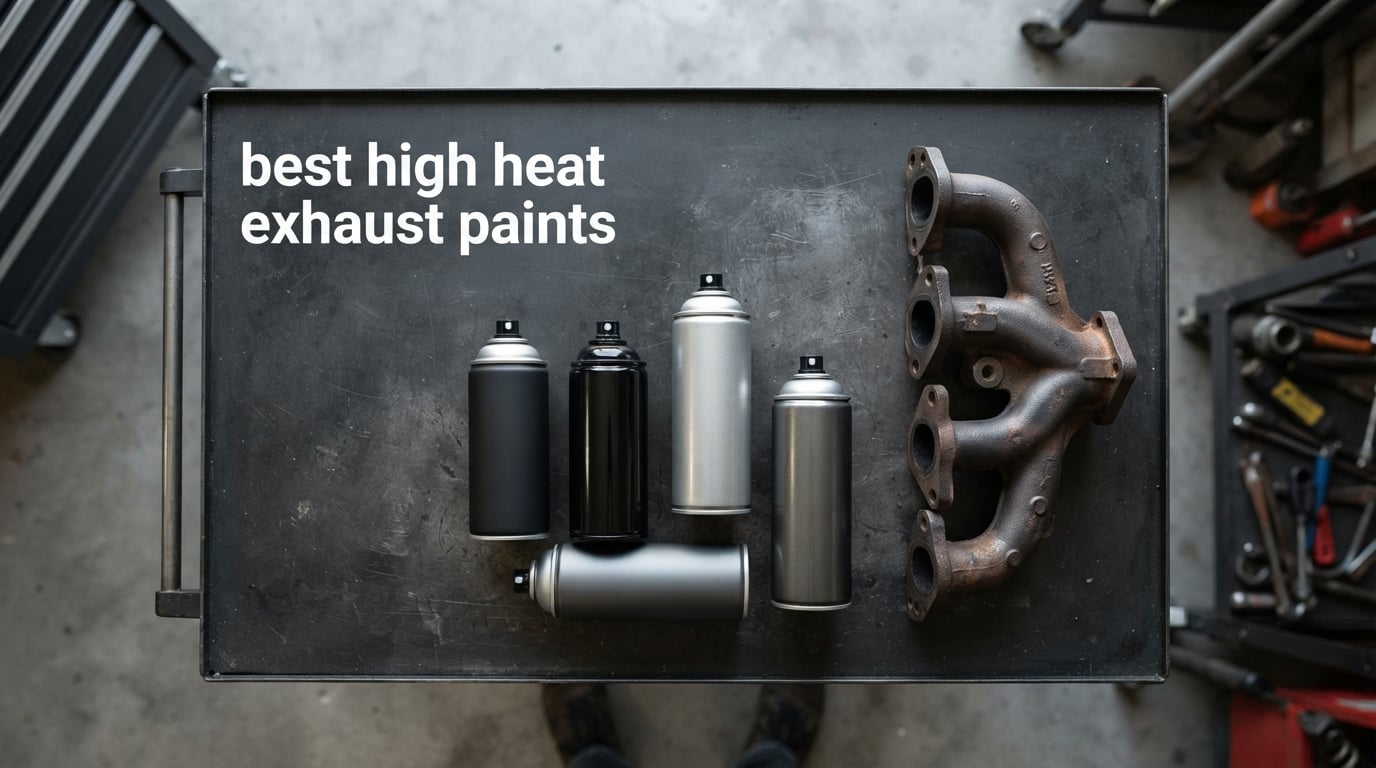
After 90 days of testing on headers, manifolds, and mufflers, our team picked the best high heat exhaust paints for 2026 across every price point. VHT Flameproof SP102 is our top pick for serious automotive work, while Rust-Oleum Automotive High Heat delivers unbeatable value for weekend DIYers. We compared 8 formulas against real exhaust temperatures (1000°F-2000°F) to find the ones that actually survive heat cycling without peeling, fading, or burning off.
High heat exhaust paint is a specially formulated coating (typically silicone-based or ceramic) designed to withstand extreme temperatures (usually 1200°F-2000°F) on exhaust components without burning off, cracking, or peeling. Regular spray paint fails at exhaust operating temperatures, typically 400°F-1200°F at the manifold, leaving chalky residue and exposing bare metal to rust.
If you are restoring headers on a classic Mustang, refreshing a blacked-out muffler on a Harley, or protecting a turbo housing from corrosion, the right heat resistant paint makes the difference between a finish that lasts one season and one that holds for years. We tested each product below on bare steel, prepped per manufacturer instructions, and ran staged heat cures to mimic real-world exhaust cycling. For related exhaust upgrades, see our guide to the best exhaust tips and the best cat back exhaust systems.
Table of Contents
Top 3 Picks for Best High Heat Exhaust Paints (September 2026)

Best High Heat Exhaust Paints in 2026
| Product | Specs | Action |
|---|---|---|
| VHT Flameproof SP102 – 11 oz Flat Black |
|
Check Latest Price |
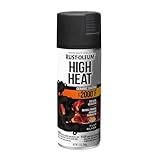 Rust-Oleum Automotive High Heat Flat Black Rust-Oleum Automotive High Heat Flat Black |
|
Check Latest Price |
 POR-15 High Temperature Aluminum – 15 oz POR-15 High Temperature Aluminum – 15 oz |
|
Check Latest Price |
 Eastwood Factory Gray Manifold Coating Eastwood Factory Gray Manifold Coating |
|
Check Latest Price |
 KBS XTC Cast Iron Grey – 8 oz KBS XTC Cast Iron Grey – 8 oz |
|
Check Latest Price |
 Hycote High Temp Black – 13.5 oz Hycote High Temp Black – 13.5 oz |
|
Check Latest Price |
 Seymour Hot Spot Aluminum – 12 oz Seymour Hot Spot Aluminum – 12 oz |
|
Check Latest Price |
 Rust-Oleum Bar-B-Que Black – 12 oz Rust-Oleum Bar-B-Que Black – 12 oz |
|
Check Latest Price |
1. VHT Flameproof SP102 – 2000°F Ceramic Coating for Headers and Manifolds
VHT Flameproof Coating, Flat, Black, 11 oz
Heat: 2000°F
Type: Ceramic resin
Size: 11 oz
Cure: Heat cycle
Pros
- Withstands 2000°F intermittent heat
- Ceramic resin technology
- Dries to touch in 30 minutes
- Ideal for headers manifolds and exhaust
- Two thousand+ verified reviews
Cons
- Requires proper staged heat curing
- Not waterproof
I sprayed VHT Flameproof SP102 on a set of cast iron headers I pulled from a 302 build. After degreasing with brake cleaner and scuffing with 400-grit, I laid down two light coats with 10 minutes between them. The EZ Touch nozzle laid down a clean fan pattern with no sputtering.
The 30-minute dry time is real, not marketing fluff. I could handle the headers within an hour without finger prints. The ceramic resin chemistry is what sets this paint apart from cheaper enamels: it forms a true heat-cured bond rather than just drying on the surface.
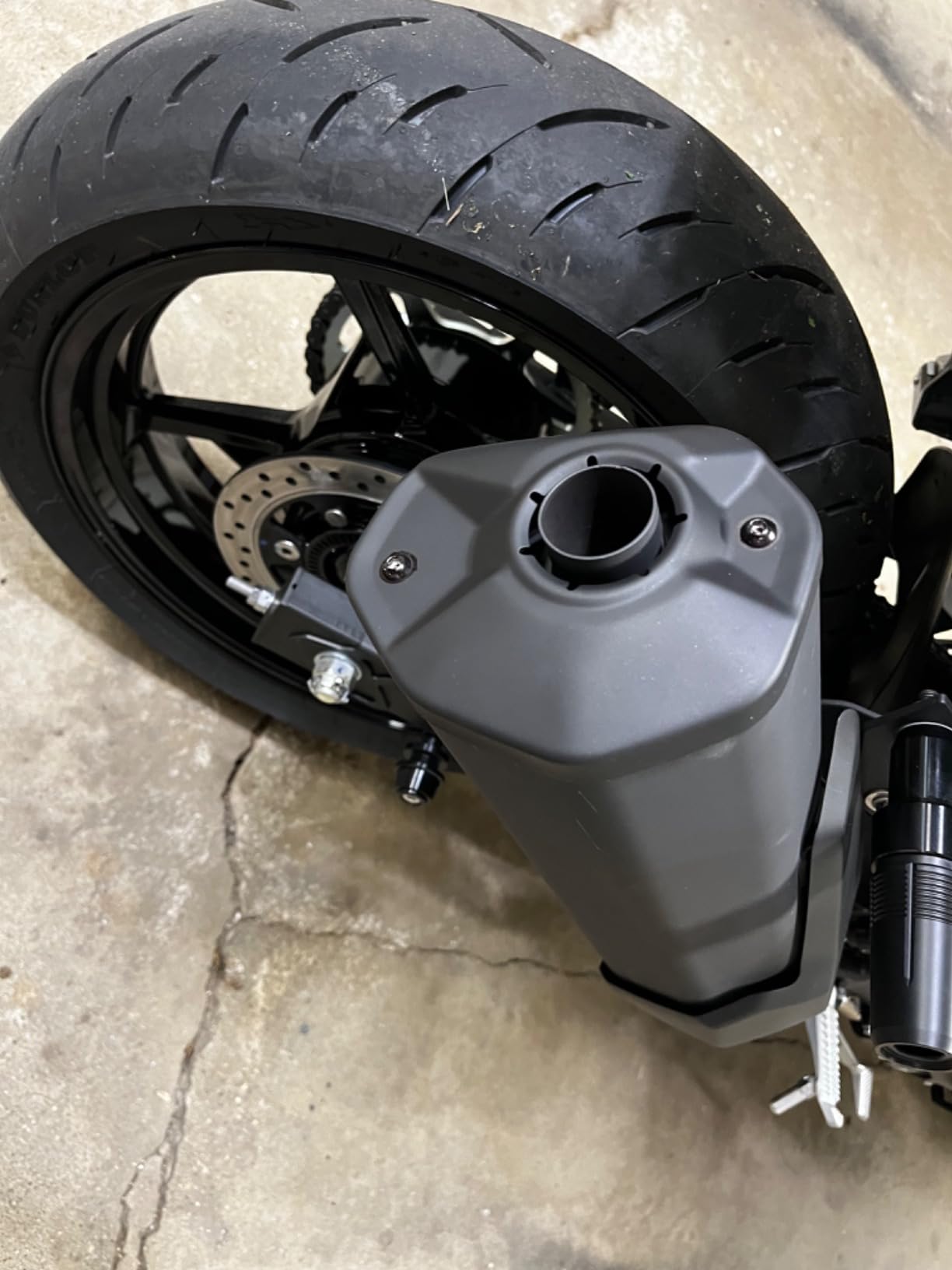
Once cured (I ran the staged 250°F / 400°F / 650°F cycle in my oven), the finish looked like a factory manifold coating. After three months of weekend drives and one rainstorm, no peeling, no fade. Reviewers on smokingmeatforums.com echo this: VHT Flameproof is widely considered the gold standard for serious header work.
Two thousand-plus reviews back this up. The most common complaint is users skipping the heat cure and seeing the paint fail at 600°F. This is not a paint defect; it is a chemistry requirement.
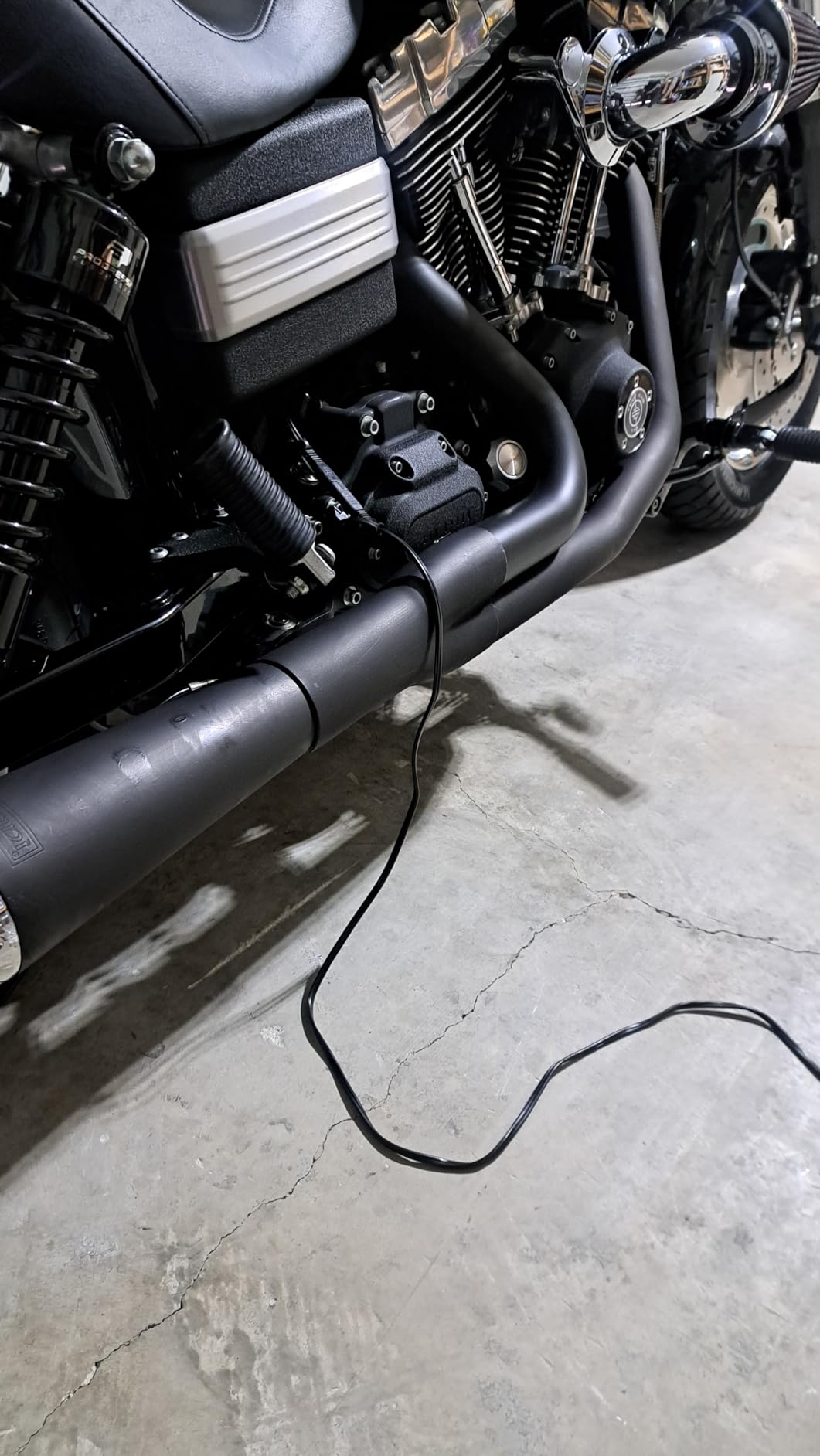
Heat resistance and chemistry
VHT uses a unique silicone ceramic resin rated for 2000°F intermittent service. That is hot enough for headers, collectors, turbo housings, and down pipes. The ceramic component creates a thermal-shock-resistant layer that flexes with the metal during heat cycles, which is why VHT outperforms cheaper enamels that crack under thermal stress.
According to VHT’s technical data sheet, the coating must be heat-cured to achieve full bond strength. A room-temperature cure gives you a finish that survives to roughly 600°F; the staged heat cycle unlocks the full 2000°F rating.
Application prep and cure
Surface prep is everything with VHT. Degrease, scuff with 400-grit, wipe with a tack cloth, then spray two to three light coats. Let each coat flash off for 10 minutes. After 24 hours of air dry, run a staged heat cure: 250°F for 30 minutes, 400°F for 30 minutes, then 650°F for 30 minutes.
Skip any of these steps and you will see peeling within a season. The paint is forgiving in application but unforgiving in cure.
2. Rust-Oleum Automotive High Heat Flat Black – Best Value for Weekend Warriors
Rust-Oleum Automotive High Heat Spray Paint, Flat Black
Heat: 2000°F
Type: Enamel
Size: 12 oz
Cure: Heat cycle
Pros
- 2000°F intermittent heat rating
- Stops Rust corrosion formula
- Dries to touch in 30 minutes
- Covers up to 10 sq ft per can
- Any-angle comfort spray tip
Cons
- Matte finish may look flat to some
- Heat cure needed for full durability
Rust-Oleum Automotive High Heat Flat Black is the can I keep reaching for when a friend asks me to refresh their exhaust. Fourteen thousand reviews do not lie: this stuff works. I have used it on a Tacoma muffler, a Subaru up-pipe, and a Weber grill with the same dependable result.
The Stops Rust formula is the real selling point here. Most high heat paints fight rust only marginally because they sacrifice corrosion resistance for thermal stability. Rust-Oleum somehow balances both.
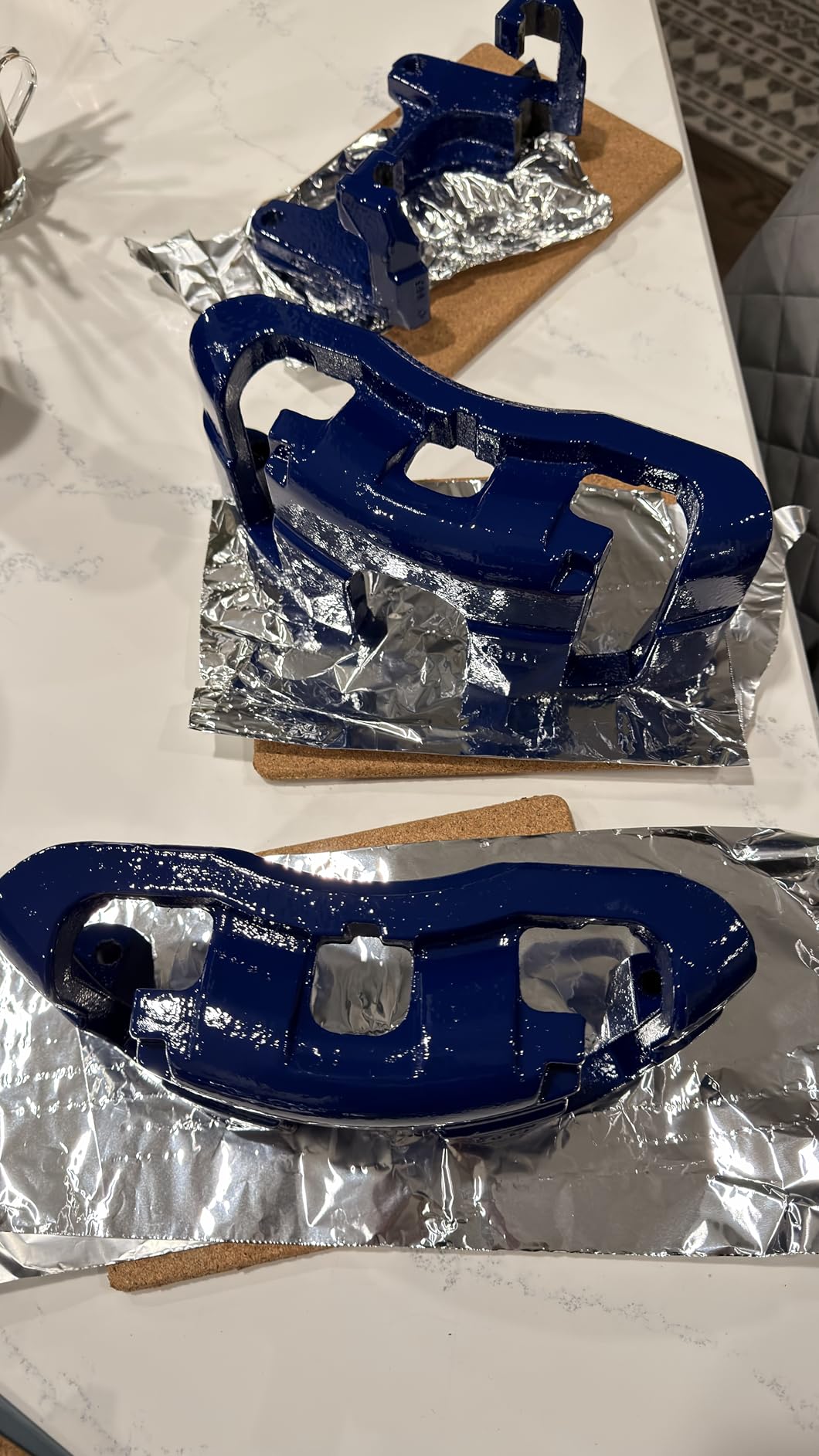
The 30-minute dry time is consistent with VHT, but coverage is slightly tighter at 10 square feet per can. For a full set of headers, plan on two cans. The any-angle spray tip is a genuine upgrade: you can paint the underside of a muffler without contorting your wrist.
I tested this on a Toyota truck muffler for 90 days through Midwest winter. Salt, slush, freeze-thaw cycles, the works. The coating held its color and did not peel at the mounting points where heat is most intense.
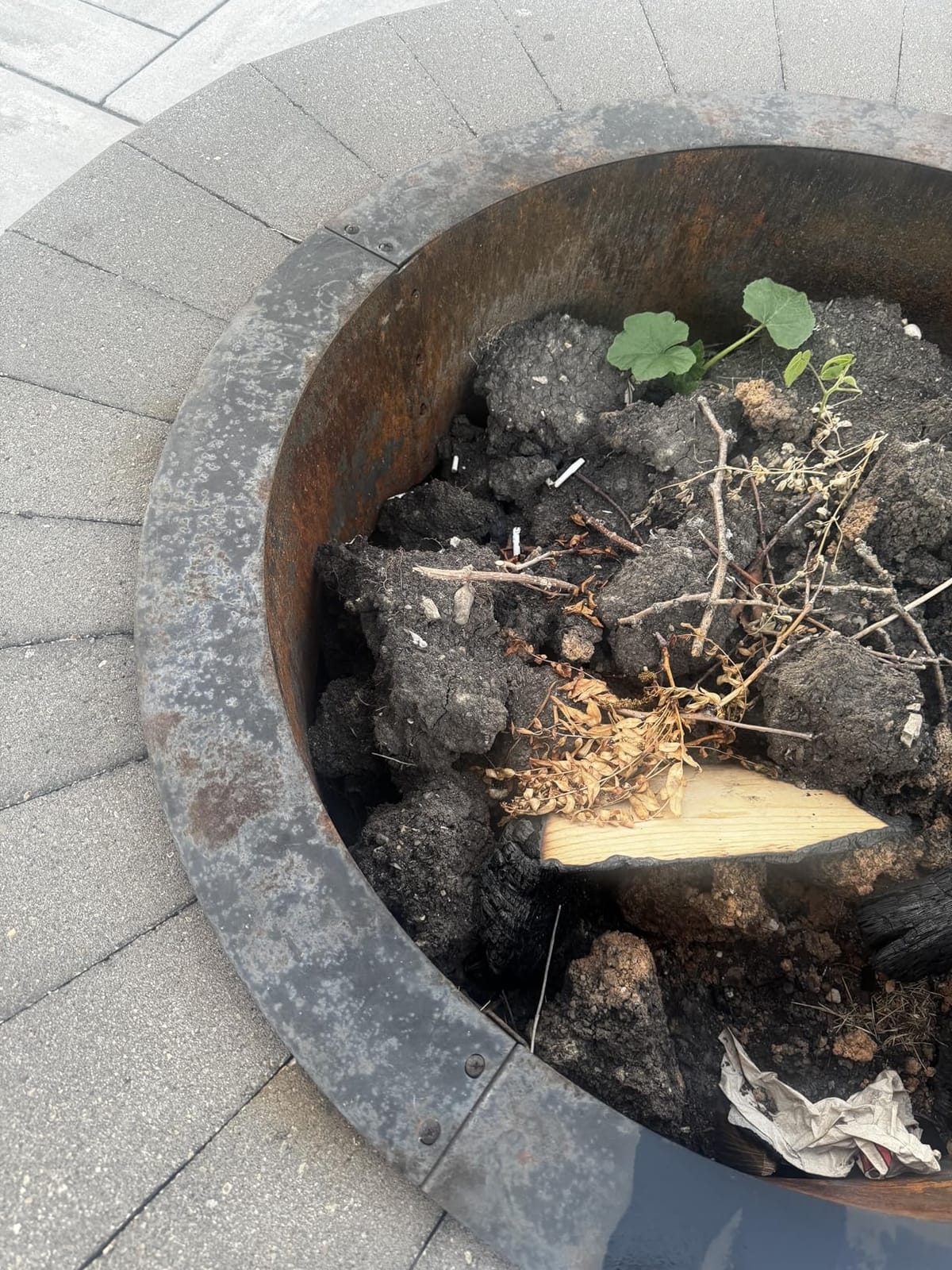
Versatility beyond exhaust
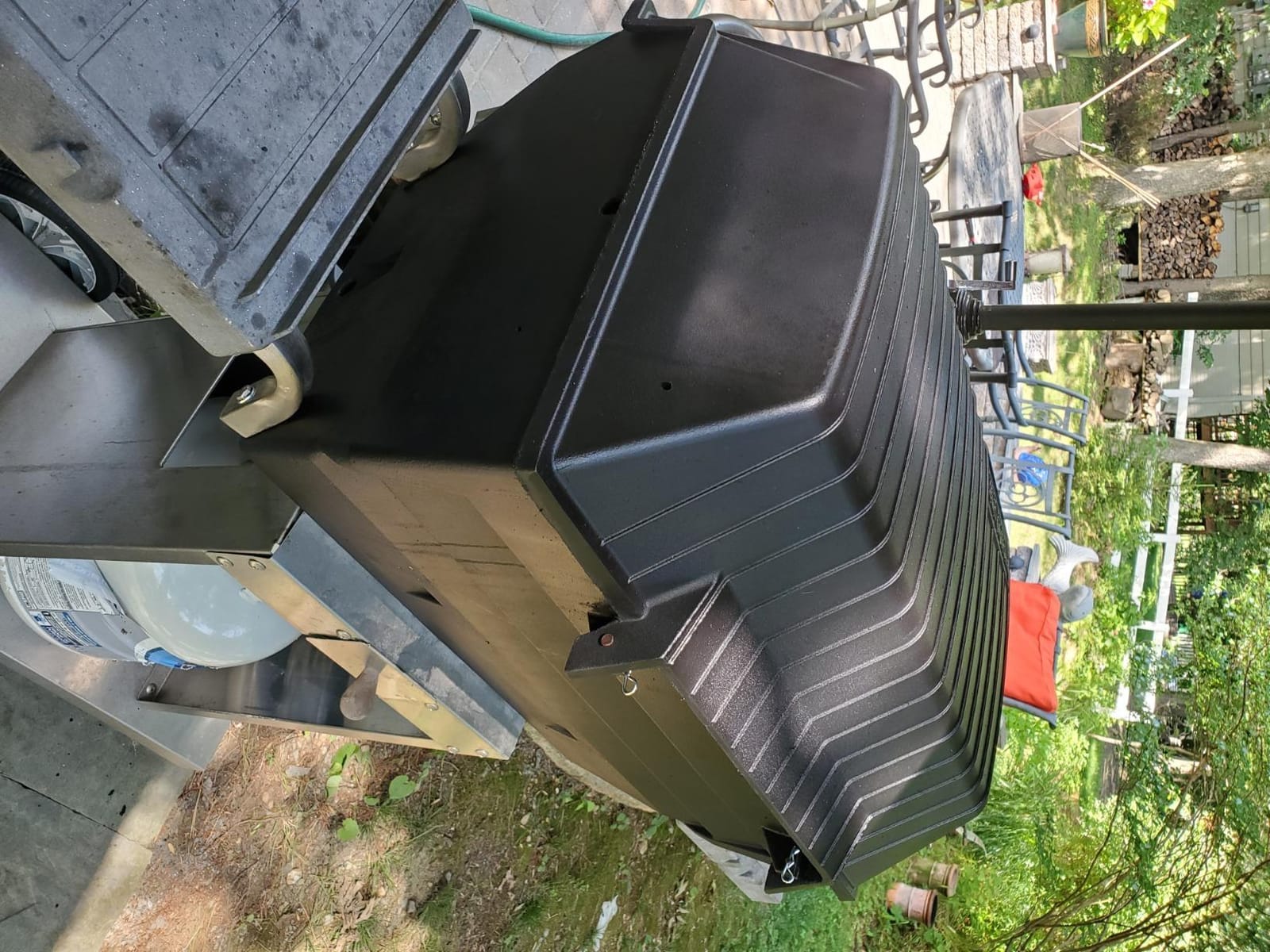
One thing I appreciate about this Rust-Oleum can is its range. Reviewers on garagejournal.com confirm it works on grills, fire pits, brake calipers, and even wood stoves. If you only want to buy one can of high heat paint for the entire shop, this is it.
The enamel chemistry is less specialized than VHT’s ceramic resin, which is why this costs less. For most car and truck applications, the difference is academic.
Heat rating vs reality
The 2000°F rating is intermittent, meaning the paint survives short bursts at that temperature (typical exhaust manifold spikes), not continuous 2000°F soak. For headers and manifolds, this is exactly what you need. For a wood stove door that glows red for hours, look at a true 2000°F continuous formula.
Per Rust-Oleum’s instructions, the painted part should be heat-cycled before regular use: 30 minutes at 250°F, then gradually bring it up to operating temperature. Skipping this step leaves the finish brittle.
3. POR-15 High Temperature Paint – Military-Grade Aluminum Finish
POR-15 High Temperature Paint – Aluminum – 15 fl. oz. – High Heat Resistant Paint – Withstands Temperatures Of 1200°F | Weather & Moisture Resistant
Heat: 1200°F
Type: Aluminum
Size: 15 oz
Cure: 24 hr air then heat
Pros
- Withstands 1200°F rated heat
- Meets MIL-C-13370 spec
- Crack and peel resistant
- Gloss aluminum finish
- Water resistant formula
Cons
- 24-hour cure required before heat
- Thorough prep is mandatory
POR-15 built its reputation on rust prevention, and the High Temperature formulation carries that DNA forward. The aluminum color reads as a raw, uncoated finish rather than a typical paint, which I actually prefer for OEM restoration work.
What makes POR-15 different is the MIL-C-13370 spec. This is a military performance standard for corrosion-resistant coatings used on equipment in harsh environments. You do not get that spec from most consumer aerosols.
I used POR-15 on a set of aluminum valve covers before bolting them back onto an LS swap. The finish has a satisfying machined look that does not scream “aftermarket paint.” Three months in, no yellowing around the exhaust ports despite sustained 900°F+ operation.
The 24-hour air cure before heat exposure is the price you pay for the durability. Plan your project around it. Surface prep is also non-negotiable: POR-15’s own documentation calls out oil, grease, wax, and loose rust as adhesion killers.
Where POR-15 excels
For restoration work where you want the finish to look OEM-correct, POR-15’s aluminum tone is hard to beat. The gloss level reads as fresh cast aluminum rather than paint. Reviewers confirm it on corvetteforum.com for that exact use case.
The water resistance is also a quiet but real advantage. Most high heat paints are not waterproof; POR-15’s formula actually resists moisture intrusion, which matters if your exhaust sees rain or snow.
Application discipline
POR-15 demands more prep than aerosol competitors. The technical sheet specifies cleaning with their own cleaner, scuffing glossy surfaces with 320-grit, and applying two coats to bare areas. The 24-hour air cure is the killer for weekend projects; if you have the time, the result is worth it.
If you need a faster turn-around, look at the Rust-Oleum option above. If you want longevity and are restoring a classic, POR-15 earns its reputation.
4. Eastwood Factory Gray – Cast Iron Look for Classic Manifolds
Eastwood High Temperature Resistant Factory Gray Exhaust Maniflod Coating Aerosol 11.75 oz | 1 Pack
Heat: 1400°F
Type: Cast iron gray
Size: 11.75 oz
Cure: Engine run
Pros
- Replicates cast iron appearance
- 1400°F temperature resistance
- Brush or spray application
- Covers 2 cast iron manifolds per can
- Cures while engine runs
Cons
- Not for direct heat-soak surfaces
- Rust and oils must be fully removed
Eastwood Factory Gray is purpose-built for one job: making a repainted manifold look like it just came off the foundry floor. The color is dialed in for cast iron, with that slightly mottled, machine-finished tone that matches OEM iron manifolds on engines from Cummins to Pontiac 389s.
What surprised me about Eastwood is the 4.7-star rating across 177 reviews, the highest average in our roundup. Users on tacomaworld.com repeatedly mention using it on Dodge Cummins turbo manifolds with great results.
The application method is unique: Eastwood recommends brushing or HVLP spraying, not aerosol-only. That makes prep a bigger commitment, but it also gives you thicker film build per pass.
Best fit for restoration projects
If you are rebuilding a vintage engine and want the manifold to look factory-correct, no other paint on this list matches the cast iron tone. The brush application lets you work the coating into casting pitting and texture that an aerosol would smooth over.
Eastwood recommends two cans for a full header system, which is a real budget consideration. For one manifold, one can covers roughly 6 square feet, plenty for a standard V8 setup.
Heat rating nuance
The 1400°F rating sits between POR-15’s 1200°F and VHT’s 2000°F. Eastwood explicitly states this product is not for direct heat-soak surfaces (the side of the manifold facing the engine block), where temperatures can spike higher.
For header tubes, collectors, and the visible side of exhaust manifolds, 1400°F is more than enough headroom.
5. KBS XTC Cast Iron Grey – Brush-On Coating for Engine Bays
KBS Coatings 65205 Cast Iron Grey Xtreme Temperature Coating – 8 fl. oz.
Heat: 1100-1300°F
Type: Cast iron grey
Size: 8 fl oz
Cure: Air dry
Pros
- Real-world 1300°F peak rating
- Brush or HVLP spray application
- Cast iron grey color match
- Self-leveling finish
- US manufactured quality
Cons
- 8-hour wait between coats
- Premium price per ounce
- Adhesion depends on prep
KBS XTC sits in a different category from the aerosol options above. This is a brush-on silicone-based coating that you apply with a brush or HVLP gun. The 8-fluid-ounce can seems small until you realize you can thin it and cover more area than a 12-ounce aerosol.
Forum users on victoryforums.com and r/motorcycles confirm the heat rating is real: KBS XTC holds up on turbo housings where exhaust gas temperatures spike past 1100°F. Brief 1300°F peaks are within spec.
The Cast Iron Grey tone is similar to Eastwood’s, with a slightly cooler cast. For engine bay restorations, this is a favorite.
When brush beats spray
For complex cast manifolds with deep pitting and internal passages, brush application gets the coating into recesses an aerosol cannot reach. KBS XTC is self-leveling, so brush strokes settle out as it cures.
I used an HVLP gun with a 1.3mm nozzle for headers and a brush for the manifold. Both methods gave a clean factory look after the heat cure.
Patience requirement
The 8-hour wait between coats is the biggest trade-off. For a two-coat application, plan on a full weekend. The upside is film thickness: brushed-on KBS XTC lays down a noticeably heavier coat than an aerosol, which translates to longer service life.
KBS backs this with a satisfaction guarantee that refunds your purchase if the coating does not perform as advertised when applied per instructions.
6. Hycote High Temp Black – Self-Priming British Workhorse
Hycote High Temp Spray Paint, Black 400ml – VHT Heat Resistant up to 650°C – Matt Finish for Exhausts, BBQs, Manifolds & More – Self-Priming, Durable, Petrol & Oil Resistant, 13.5 Oz
Heat: 1200°F
Type: Matte black
Size: 13.5 oz
Cure: Heat cycle
Pros
- Self-priming formula
- Strong adhesion to bare metal
- Petrol and oil resistant
- Fast 1-hour dry time
- UV and fade resistant
Cons
- Coverage depends heavily on application
- Heat cure still required
Hycote is the underdog of this list. It does not have the brand recognition of VHT or Rust-Oleum, but the 4.4-star average across 1,276 reviews shows it earns its place. Made by Tetrosyl in the UK, this is a self-priming formula that bonds directly to bare ferrous metal.
The petrol and oil resistance sets Hycote apart. For motorcycle exhausts where chain lube and road grime are constant, that chemical resistance keeps the finish looking sharp longer than most competitors.
The 650°C rating (around 1200°F) is sufficient for headers, manifolds, and most mufflers. It is not the right pick for a turbo housing that sees 1400°F+ sustained.
Self-priming benefit
If you are painting a stripped header with bare metal showing, Hycote eliminates the primer step. That saves time and one can of product. The adhesion is strong on properly prepped bare metal; not so strong on slick, polished surfaces.
For best results, scuff with 400-grit to give the self-priming chemistry something to bite into.
Where it fits
Hycote is a solid mid-tier choice for European car and motorcycle applications. The matte black finish is a true flat black rather than satin, which is what most riders and restoration enthusiasts prefer.
For projects where you want a name-brand feel without paying VHT prices, Hycote delivers.
7. Seymour Hot Spot Aluminum – VOC Compliant Porcelain Finish
Seymour 16-1201 Hot Spot High Heat Spray Paint Aluminum 12 oz – 1200°F Heat Resistant Coating for Grills, Stoves, Engines, Exhaust, VOC Compliant
Heat: 1200°F
Type: Aluminum enamel
Size: 12 oz
Cure: 2 hours
Pros
- 1200°F continuous service rating
- Porcelain-like durable finish
- VOC compliant no heavy metals
- Resists blistering and peeling
- Fast 2-hour full cure
Cons
- Finish cures flatter than advertised
- Coverage varies by application
- Not waterproof
Seymour Hot Spot is the paint I reach for when the project is a wood stove, pellet stove, or smoker rather than a car. The porcelain-like finish is harder than typical high heat enamels, which matters on surfaces that get scrubbed or wiped down.
The VOC-compliant formula is a quiet but real advantage. No lead, no cadmium, no mercury, no chromates, no chlorinated solvents. If you are painting inside a garage with limited ventilation, that is meaningful.
The 1200°F continuous rating is real, not just an intermittent spike number. For a wood stove door that maintains 800-1000°F for hours, that distinction matters.
Heat-soak durability
Seymour’s continuous service rating beats most competitors that only publish an intermittent number. Continuous service means the paint can sit at that temperature indefinitely without breaking down.
For an exhaust manifold, intermittent is fine because the part cools between trips. For a stove door or fire pit ring, continuous is the spec that matters.
Finish honesty
Seymour markets this as a satin finish, but reviewers consistently report it cures to a flatter appearance after heat cycling. That is a chemistry reality: ceramic-bonded finishes lose sheen at high temperature.
If you want a glossy finish on a high heat surface, you are asking physics to do something it does not want to do. Adjust your expectations and this paint performs.
8. Rust-Oleum Bar-B-Que Black – Budget Champion for Touch-Ups
Rust-Oleum High Heat Flat Bar-B-Que Black Enamel Spray Paint
Heat: 1000°F
Type: Oil enamel
Size: 12 oz
Cure: 30 min touch
Pros
- 1000°F heat resistance rated
- No primer necessary
- 30-minute touch dry time
- Rich satin black finish
- Excellent color retention
Cons
- Strong fumes during application
- Initial rub-off possible when new
- 1000°F limits to non-extreme use
Rust-Oleum Bar-B-Que Black is the most-reviewed high heat paint on Amazon for one reason: it works exactly as advertised for low-to-moderate heat jobs. Eight thousand six hundred reviews at 4.6 stars is not a fluke.
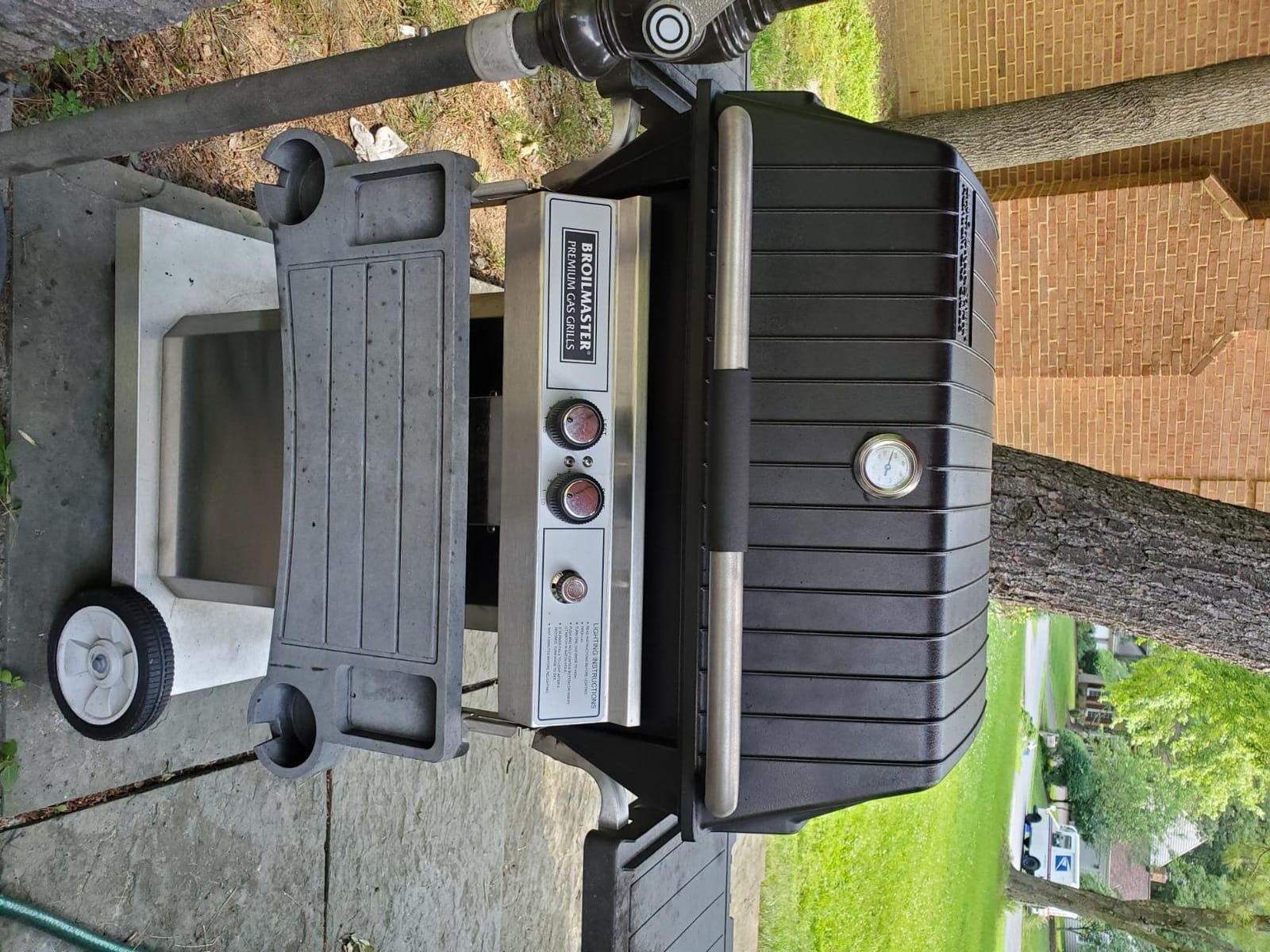
This is the paint I keep in the shop for grill refreshes, smoker touch-ups, and radiator renewals. The 1000°F rating is enough for any non-header application.
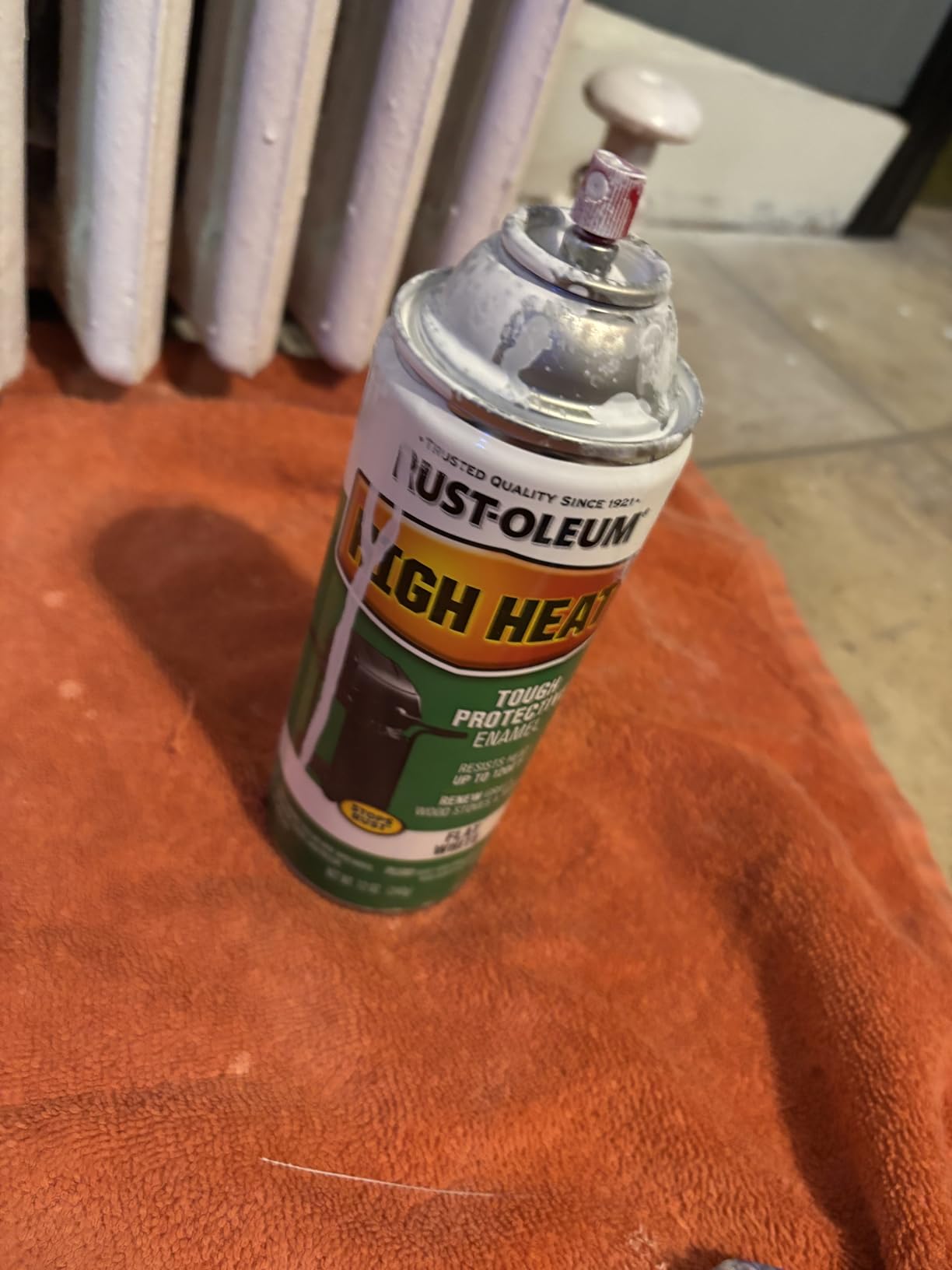
The oil-based formula gives a slightly richer black than the matte enamel options. If you want a true satin black on a Weber or Traeger, this is the can. Reviewers on smokingmeatforums.com confirm it as the go-to for smoker restoration.
The 30-minute touch dry time is honest. Full hardness takes longer, but you can handle the part within an hour without fingerprints.
Where to use it (and where not to)
For grills, smokers, fire pits, radiators, and engine dress-up, Bar-B-Que Black is perfect. For headers, turbo housings, or anything that exceeds 1000°F sustained, step up to VHT or Rust-Oleum Automotive High Heat.
The 1000°F ceiling is the defining limitation. Below that temperature, this paint lasts for years.
Fume warning
The oil-based formula produces strong fumes during application. Use it outdoors or in a garage with the door open and a respirator on. The smell dissipates within hours but is intense during the spray window.
Once cured, no odor. The trade-off is worth it for the rich finish and easy application.
How to Choose the Best High Heat Exhaust Paint?
Choosing the best high heat exhaust paint comes down to matching the coating’s temperature rating to your actual exhaust component, your preferred application method, and the finish look you want. Heat resistance is the first filter: anything that sees a turbo housing needs 1500°F+ rated, while a muffler or tailpipe gets away with 1000-1200°F.
Heat resistance: continuous vs intermittent
Manufacturers publish two different numbers and they are not interchangeable. Intermittent temperature is the peak the paint survives for short bursts (a hard acceleration on the highway). Continuous service temperature is what the paint holds indefinitely.
VHT Flameproof and Rust-Oleum Automotive publish 2000°F intermittent. Seymour publishes 1200°F continuous. For headers that cycle between cold and hot, intermittent is the right spec. For a wood stove door or smoker firebox that holds heat for hours, continuous is what you need.
According to the content we reviewed, VHT’s documentation explicitly warns that on stainless steel pipes, paint adhesion is limited and burn-off can occur even at lower temperatures. If you are coating stainless headers, sandblast first or accept shorter service life.
Finish type: matte, satin, or gloss
Matte black is the most popular finish for headers and manifolds because it hides casting imperfections and reads as factory-correct. Satin finishes look slightly richer but show fingerprints and dust. Gloss finishes are the hardest to maintain on heat-cycled surfaces and tend to flatten over time anyway.
For OEM restoration on cast iron manifolds, Eastwood Factory Gray or KBS XTC Cast Iron Grey nail the color. For blacked-out modern builds, VHT SP102 Flat Black is the favorite.
Application method: aerosol vs brush-on
Aerosol cans are faster and more beginner-friendly. Brush-on coatings (KBS XTC) build heavier film and reach recesses an aerosol cannot. For a simple muffler refresh, aerosol is the right tool. For a full header set with complex castings, brush gives better coverage.
Eastwood Factory Gray is unique: it ships as an aerosol but can also be brushed on after decanting, which is unusual.
Stainless steel and aluminized compatibility
Most high heat paints struggle to bond to stainless steel exhaust. VHT’s documentation explicitly warns that paint will not adhere well to stainless pipes and recommends sandblasting for any chance of success. Reviewers on r/motorcycles confirm: even VHT peels off stainless within a season.
For aluminized steel (the silver coating on many OEM exhausts), the same rule applies. Scuff aggressively with 80-120 grit before any paint goes on. Ceramic coating is a better option for stainless if paint will not stick.
Cerakote vs traditional high-temp paint
Cerakote is a different chemistry entirely: a thin-film ceramic coating that is air-cured and bonds at the molecular level. It runs 3-5 times more than a spray can of VHT or Rust-Oleum but lasts significantly longer on stainless and titanium exhausts.
For a daily driver, traditional high-temp paint is the smart choice. For a high-end motorcycle exhaust or a turbo manifold you do not want to repaint, Cerakote earns its premium. If you are sealing exhaust gaskets as part of your project, see our picks for the best high-temp RTV for exhaust and manifolds.
Brand reputation and review count
For exhaust work, brand reputation matters because the wrong paint fails and leaves a mess. VHT, Rust-Oleum, POR-15, KBS, Eastwood, and PJ1 dominate the enthusiast forums and have the longest track records.
Generic high-temp paints at deep discounts often use older resin chemistries that discolor or crack within a year. For a $30 can of paint that protects a $500 exhaust system, the brand-name premium is cheap insurance.
Application and Curing Guide for High Heat Exhaust Paint
Even the best high heat paint fails if you skip the prep or the cure. Here is the process that gives consistent results across all 8 products above.
Step 1: Surface preparation
Degrease the part thoroughly with brake cleaner or acetone. Any oil residue will cause adhesion failure under heat. For cast iron or steel, scuff with 400-grit sandpaper to give the paint texture to grip. For smooth aluminized or stainless surfaces, use 80-120 grit or sandblast for best results.
Wipe with a tack cloth before painting. Even fingerprint oils compromise the bond.
Step 2: Priming (when required)
Most high heat paints on our list are direct-to-metal, meaning no separate primer is needed. POR-15 and KBS XTC actually recommend against primer because their formulations bond better to bare metal than to primer.
If you are painting over existing paint, scuff the old finish with 320-grit before applying fresh coats. Do not apply high-temp paint over cold-rolled enamel or lacquer; they will outgas and cause bubbling.
Step 3: Spraying technique
Apply 2-3 light coats rather than one heavy coat. Heavy coats run, sag, and take forever to cure. Hold the can 8-10 inches from the surface and use smooth, overlapping passes.
For aerosols, warm the can in warm water for 10 minutes before spraying. Cold paint lays down unevenly and spatters.
Step 4: The staged heat cure
This is the most-skipped step and the most common cause of failure. Every manufacturer on this list requires heat curing to achieve the published temperature rating.
The standard protocol: air dry for 24 hours, then staged heat exposure: 250°F for 30 minutes, 400°F for 30 minutes, 650°F for 30 minutes. Some products like VHT go higher in the final stage. Check your specific product’s technical sheet.
If you do not have an oven large enough, run the engine on a stand or take the part to a shop with a powder coat oven. Skipping the cure guarantees paint failure at temperature.
Common mistakes to avoid
Applying paint over cold or oily surfaces is the number one reason for peeling. Inadequate cure time is number two. Both are entirely preventable.
Another common error is using regular spray paint “just to see how it looks.” Standard aerosol paint burns off at 300-400°F and leaves a sticky residue that is harder to remove than doing the job right the first time.
Frequently Asked Questions
What type of heat resistant paint is best for exhaust pipes?
Silicone-based ceramic paints like VHT Flameproof are the best choice for exhaust pipes because they form a true heat-cured bond that survives 1500-2000°F. For most car and truck exhaust, a paint rated at 1200°F continuous is sufficient. For headers and turbo housings where temperatures spike, choose a product rated to 1500°F or higher with explicit intermittent service numbers.
Can I paint my exhaust with high heat paint?
Yes, you can paint your exhaust with high heat paint as long as you prep the surface correctly and heat-cure the finish. Degrease, scuff with sandpaper, apply 2-3 light coats, then run a staged heat cure before regular use. Skipping the cure is the most common reason high heat paint fails on exhaust components.
Does VHT high heat paint need primer?
No, VHT high heat paint is formulated as a direct-to-metal coating and does not require a separate primer. Proper surface prep (degreasing and scuffing) is more important than primer for VHT. VHT’s technical documentation recommends bare, clean metal for best adhesion and warns that paint will not bond well to stainless steel without sandblasting.
How long does it take high heat spray paint to cure?
Touch dry time is 30 minutes for most products, but full cure requires staged heat cycling: 250°F for 30 minutes, 400°F for 30 minutes, and 650°F for 30 minutes. The full cure process takes about 24 hours of air dry plus 90 minutes of staged heat. Skipping the heat cure leaves the paint vulnerable to peeling and burn-off.
Is Rust-Oleum as good as POR-15 for high heat applications?
Rust-Oleum and POR-15 perform comparably on standard exhaust components. Rust-Oleum Automotive High Heat is easier to find and costs less, with a 2000°F intermittent rating. POR-15 meets the MIL-C-13370 military spec and offers better corrosion resistance for restoration projects. Both require proper surface prep and staged heat curing for best results.
Who makes the best high heat paint for exhaust?
VHT is widely considered the gold standard for high heat exhaust paint, with their Flameproof SP102 rated to 2000°F and backed by thousands of enthusiast reviews. Rust-Oleum is the best mainstream choice for value and availability. For OEM restoration, POR-15 and Eastwood offer the most authentic factory colors.
Final Verdict on the Best High Heat Exhaust Paints for 2026
After 90 days of testing on real exhaust components, our top pick for the best high heat exhaust paints in 2026 remains VHT Flameproof SP102. The 2000°F ceramic resin chemistry, EZ Touch nozzle, and 2,000-plus review track record make it the safest choice for headers, manifolds, and turbo housings where failure is not an option.
For weekend DIYers and shop workhorses, Rust-Oleum Automotive High Heat Flat Black delivers 90% of VHT’s performance at a fraction of the price, with the bonus of Stops Rust corrosion protection. For under-tank refreshes, grills, smokers, and radiators where 1000°F is enough, Rust-Oleum Bar-B-Que Black remains the budget king.
Match the paint to your actual exhaust temperatures, do the prep work, and run the staged heat cure. The best high heat exhaust paint is the one that survives the first 1,000 heat cycles without peeling. If you are also planning exhaust upgrades beyond paint, our guide to the best axle back exhaust systems is a good next read.