
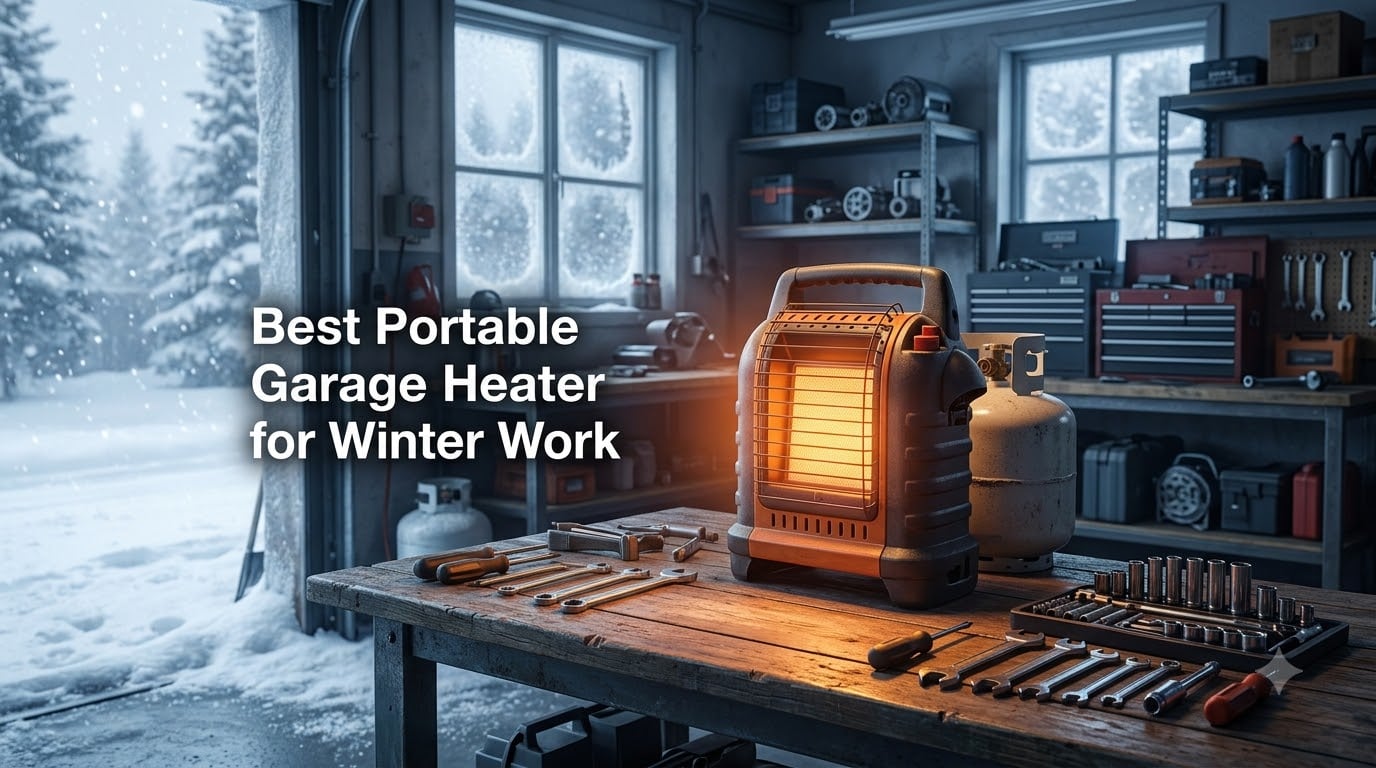
Working in a cold garage in January is brutal. Your fingers go numb around the tenth bolt, glue and paint stop cooperating, and every project takes twice as long because you are fighting your own workspace instead of the task in front of you. I have spent more winter weekends than I can count in a freezing two-car garage, and I finally got tired of losing half my workshop season to the cold.
That is why we put together this guide to the best portable garage heater for winter work. We analyzed eight of the most popular heaters on the market right now, digging through thousands of owner reviews, spec sheets, and real-world feedback from mechanics, woodworkers, and DIYers on forums like r/Tools and r/GarageGym. Our list covers propane radiant heaters, forced-air torpedoes, electric infrared panels, and a 240V shop unit, so there is a match for every garage size and fuel preference.
Here is the short version before we get into the details. The Mr. Heater Portable Buddy is the best all-around pick for small to medium garages thanks to its indoor-safe radiant heat and proven reliability. The Heat Storm WiFi wall heater is our value pick if you want clean electric heat with zero fumes. And if you are heating a big two-car or three-car garage in a genuinely cold climate, a 60,000 BTU forced-air propane unit like the Mr. Heater MH60QFAV or the Remington REM-60V will turn a frozen shop into a workable space in minutes.
One quick note before you buy anything: fuel type matters more than brand. Propane delivers far more heat per dollar, but high-BTU units need ventilation and carbon monoxide awareness. Electric heaters are fume-free and safe for sealed spaces, though they top out around 5,100 BTU on a standard 120V outlet. We explain the full trade-off, including a BTU calculator and an operating cost breakdown, in the buying guide at the end of this article.
Table of Contents
Top 3 Picks for Winter Garage Work October
These three heaters won our top awards after comparing all eight models. Each one earned its badge through a combination of heating performance, safety features, owner feedback, and overall value for winter work.
Mr. Heater Portable Buddy
- 9000 BTU radiant propane
- 225 sq ft coverage
- Indoor-safe with ODS

Remington 60000 BTU Forced Air
- 60000 BTU propane
- 1500 sq ft coverage
- Hose and regulator included
The Portable Buddy is the heater we reach for most often because it is one of the only propane heaters rated safe for indoor use, thanks to its oxygen depletion sensor and tip-over shut-off. The Heat Storm wins on value for anyone who wants fume-free electric heat with smart scheduling. The Remington delivers the most raw BTU per dollar on our list, which matters when you are trying to thaw a large garage fast.
Best Portable Garage Heaters for Winter Work in 2026: Quick Comparison
This table summarizes all eight heaters side by side so you can narrow down your shortlist at a glance. Every model below is covered in detail in the individual reviews that follow.
| Product | Specs | Action |
|---|---|---|
| Mr. Heater Portable Buddy |
|
Check Latest Price |
 Heat Hog 9000 BTU Heat Hog 9000 BTU |
|
Check Latest Price |
 Mr. Heater 60000 BTU QBT Mr. Heater 60000 BTU QBT |
|
Check Latest Price |
 DEWALT 45000 BTU Radiant DEWALT 45000 BTU Radiant |
|
Check Latest Price |
| Remington 60000 BTU Forced Air |
|
Check Latest Price |
 Dr. Infrared DR-238 Dr. Infrared DR-238 |
|
Check Latest Price |
 Dura Heat EUH4000 Dura Heat EUH4000 |
|
Check Latest Price |
 Heat Storm HS-1500 WiFi Heat Storm HS-1500 WiFi |
|
Check Latest Price |
1. Mr. Heater 9,000 BTU Portable Buddy – Best Overall for Small Garages
Mr. Heater 9,000 BTU Portable Buddy Radiant Propane Heater
9000 BTU radiant propane
225 sq ft coverage
Indoor safe with ODS
7.1 lb weight
Pros
- Rated safe for indoor use
- Two heat settings (4000 and 9000 BTU)
- Built-in piezo igniter
- Runs on 1 lb or 20 lb tanks
- 29k+ reviews at 4.7 stars
Cons
- Propane refills add ongoing cost
- 1 lb cylinders last only a few hours
- No thermostat
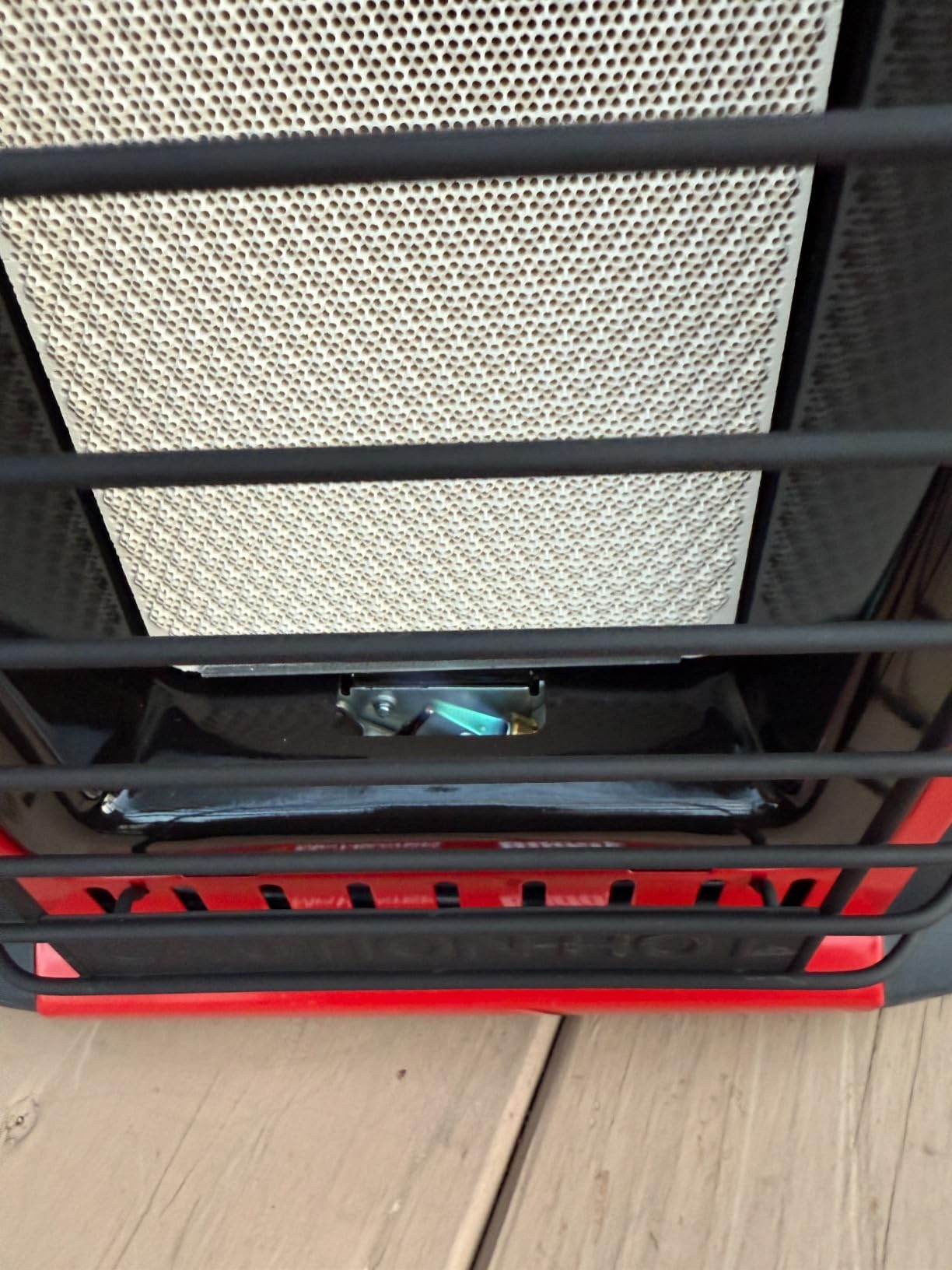
The Mr. Heater Portable Buddy is the best portable garage heater for winter work if your space is on the smaller side, and it is the model I recommend to most people without hesitation. It is a 9,000 BTU radiant propane heater rated for indoor use, which is rare and important. Radiant heat warms you and your tools directly, the way sunlight does, instead of trying to heat all the air in a drafty garage.
In my experience, this is the heater you set on a workbench or stool a few feet from where you are standing. Within a couple of minutes you feel real warmth on your hands and back, even when the rest of the garage stays chilly. That zone-heating approach is exactly what you want for winter work, because you are only paying to heat the area you actually occupy.
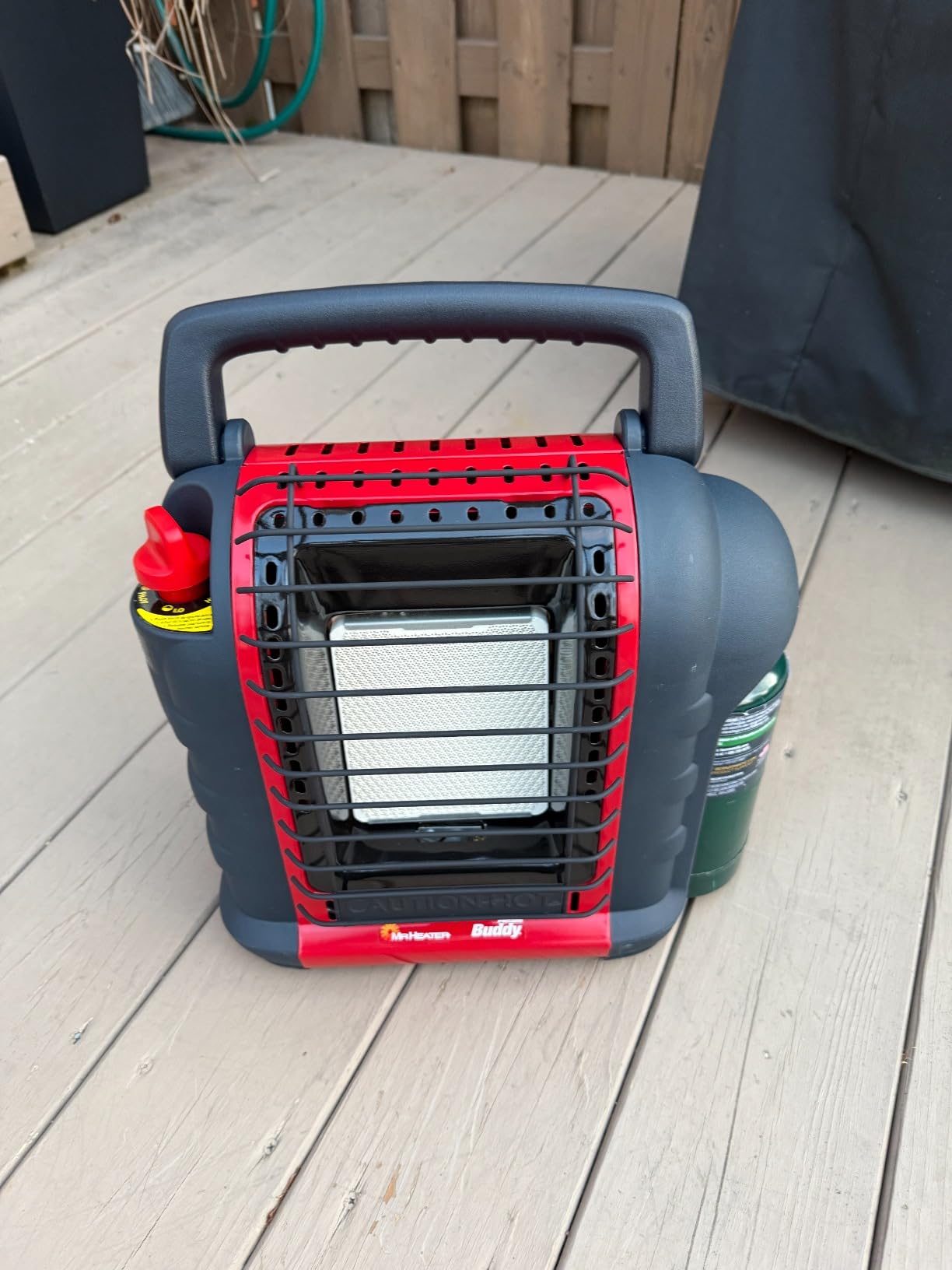
Technically, the Buddy runs at 4,000 or 9,000 BTU per hour and covers up to 225 square feet. Safety is where it shines: an oxygen depletion sensor (ODS) shuts the flame down if oxygen drops, a tip-over switch kills the heat instantly if it gets knocked, and the piezo igniter means no matches. The build is sturdy for a 7.1 pound unit, and the 4.7-star rating across more than 29,000 reviews is about as proven as it gets.
One greenhouse owner reported his Buddy took a 72 square foot dome tent from 36F to 83F in 25 minutes, which tells you how punchy the output is for the size. The honest downside is operating cost. One owner noted a fresh 1 lb cylinder lasts about 6 hours on low, and closer to 4 hours with refilled cylinders. Those small tanks add up quickly, so most garage users eventually pair the heater with a 20 lb tank and a hose.
Runtime and Fuel Consumption
On the 4,000 BTU low setting, expect roughly 5 to 6 hours from a fresh 1 lb cylinder and about 3 hours on the 9,000 BTU high setting. Connected to a 20 lb tank, the math flips in your favor: approximately 24 hours of low heat or 10 to 11 hours on high. A full 20 lb tank refill costs a fraction of what disposable cylinders run per ounce, so the payback on a hose kit comes within a few winter weekends.
Is It Safe for an Enclosed Garage?
Yes, with conditions. The Portable Buddy is one of the few propane heaters certified for indoor use because of its ODS and tip-over protection. Still, crack a window or leave the garage door open a few inches, never run it while you sleep, and keep a carbon monoxide alarm in the garage no matter what heater you own.
Follow those habits and this is the safest portable propane option on our list. It is the heater forum users on r/Tools recommend more than any other, and that consistency is worth something.
2. Heat Hog 9,000 BTU Portable Propane Radiant Heater – Best Tilt-Head Design
Heat Hog 9,000 BTU Portable Propane Radiant Space Heater, Indoor, Outdoor, Garage, Camping, Outdoor Sports, Boating, RVs, Tiltable Design, Gas Powered
9000 BTU radiant propane
225 sq ft coverage
Tilting head
ODS and tip-over safety
Pros
- Adjustable tilt head directs heat where you work
- Curved plaque widens heat pattern 33 degrees
- Lightweight and easy to reposition
- Runs on 1 lb or 20 lb tanks
Cons
- ODS can trigger falsely in tight spaces
- Reliability complaints in some units
- Smaller review pool
The Heat Hog 9,000 BTU heater takes the same indoor-safe radiant formula as the Buddy and adds one genuinely useful trick: a tilting head. If you have ever crouched at a low project or stood at a lathe and wished the heat could just angle down toward you, you immediately understand why that feature matters for winter work.
I like the curved plaque technology too, which the manufacturer says spreads heat across a 33-degree wider area than a flat plaque. In practice, the warmth feels a bit broader and less laser-focused than the Buddy, which is great when you move around a workbench instead of standing in one spot.
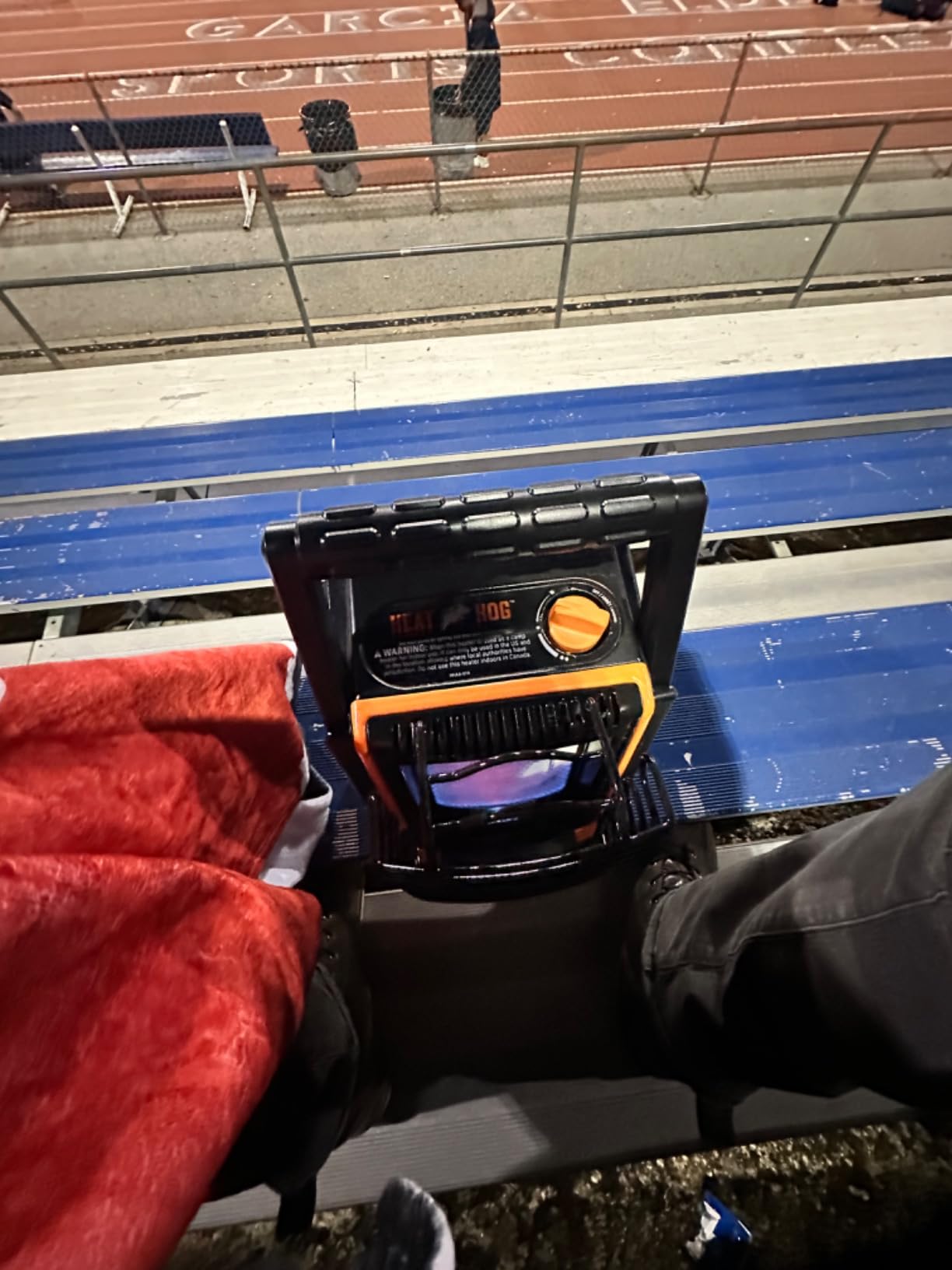
Spec-wise, you get 9,000 BTU of radiant propane heat covering up to 225 square feet, an oxygen depletion sensor, a tip-over switch, and piezo ignition. It runs on a 1 lb cylinder or a 20 lb tank with an optional hose. At just over a foot tall, it stashes on a shelf between uses, and the four heat settings give you more granularity than the Buddy’s two.
The reputation is more mixed, though. It currently sits at 4.3 stars, and about 12 percent of reviewers leave one star, with complaints centering on reliability and a safety sensor that trips too easily. Several owners report the ODS shuts the heater off prematurely in smaller enclosed spaces, which is frustrating even though it means the safety system is doing its job.
Our take: buy it for the tilt head, keep your receipt, and give it a few test runs before the return window closes. If directable heat matters more to you than a bulletproof track record, it is a solid choice.
Heat Coverage and Tilt Range
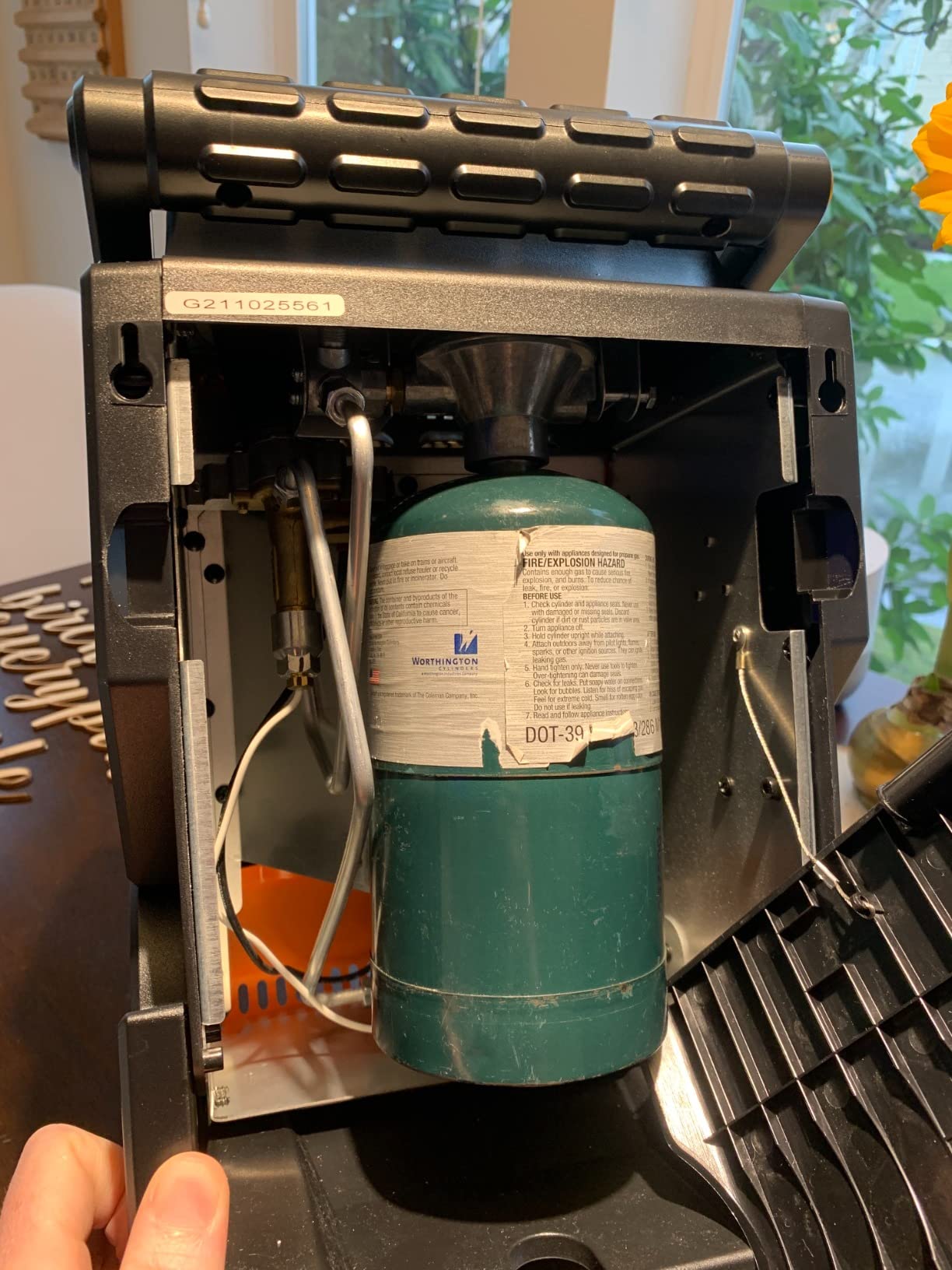
The tilt head pivots roughly 30 to 45 degrees, which is enough to aim warmth down at a floor-level project or up toward a seated work area. Combined with the curved plaque, the effective warm zone feels closer to a wide arc than a narrow beam. For a one-car garage or a dedicated workbench corner in a bigger shop, that coverage pattern is hard to beat at this price.
ODS False Triggers and Ventilation Tips
If your Heat Hog keeps shutting off, it is almost always the oxygen depletion sensor reacting to still, stale air rather than a real defect. Crack the garage door 4 to 6 inches, keep the heater away from corners where air stagnates, and avoid running it in tightly sealed rooms. If false trips continue in a well-ventilated space, contact Heat Hog support, because a misaligned sensor is a known warranty issue.
3. Mr. Heater 60,000 BTU Quiet Burner Forced Air Propane Heater – Best for Large Garages
Mr. Heater 60,000 BTU Quiet Burner Technology Forced Air Propane Heater
60000 BTU forced air propane
1500 sq ft coverage
Variable 30000-60000 BTU
QBT 50% quieter
Pros
- Variable output from 30000 to 60000 BTU
- QBT technology cuts noise about 50%
- Up to 14 hours runtime on low
- Heats large garages fast
Cons
- Outdoor-rated
- requires generous ventilation
- Loud compared to radiant heaters
- Needs a 20 lb tank and hose
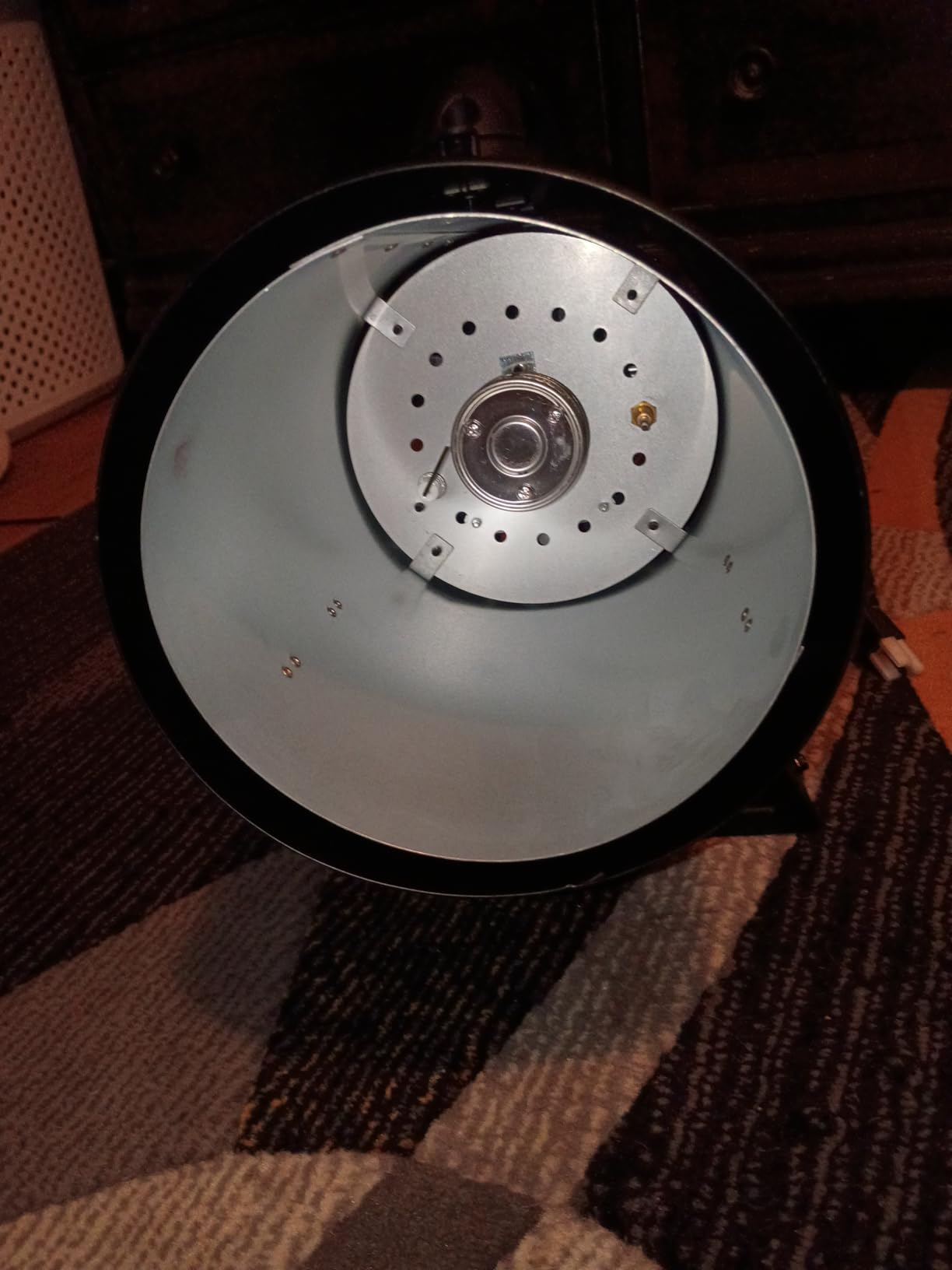
When a big garage is genuinely cold, radiant heaters feel like waving a match at a glacier. The Mr. Heater MH60QFAV is the tool for that job: a 60,000 BTU forced-air propane heater that blasts heated air across spaces up to 1,500 square feet. This is the category, along with the Remington below, that cold-climate mechanics on the forums consistently recommend for two-car and larger garages.
The headline feature is QBT, or Quiet Burner Technology, which Mr. Heater claims makes it about 50 percent quieter than a standard torpedo heater. It genuinely is quieter than the rental-grade units you may have used, though quiet here is relative. Expect a strong fan roar, more like a shop vac than a furnace.
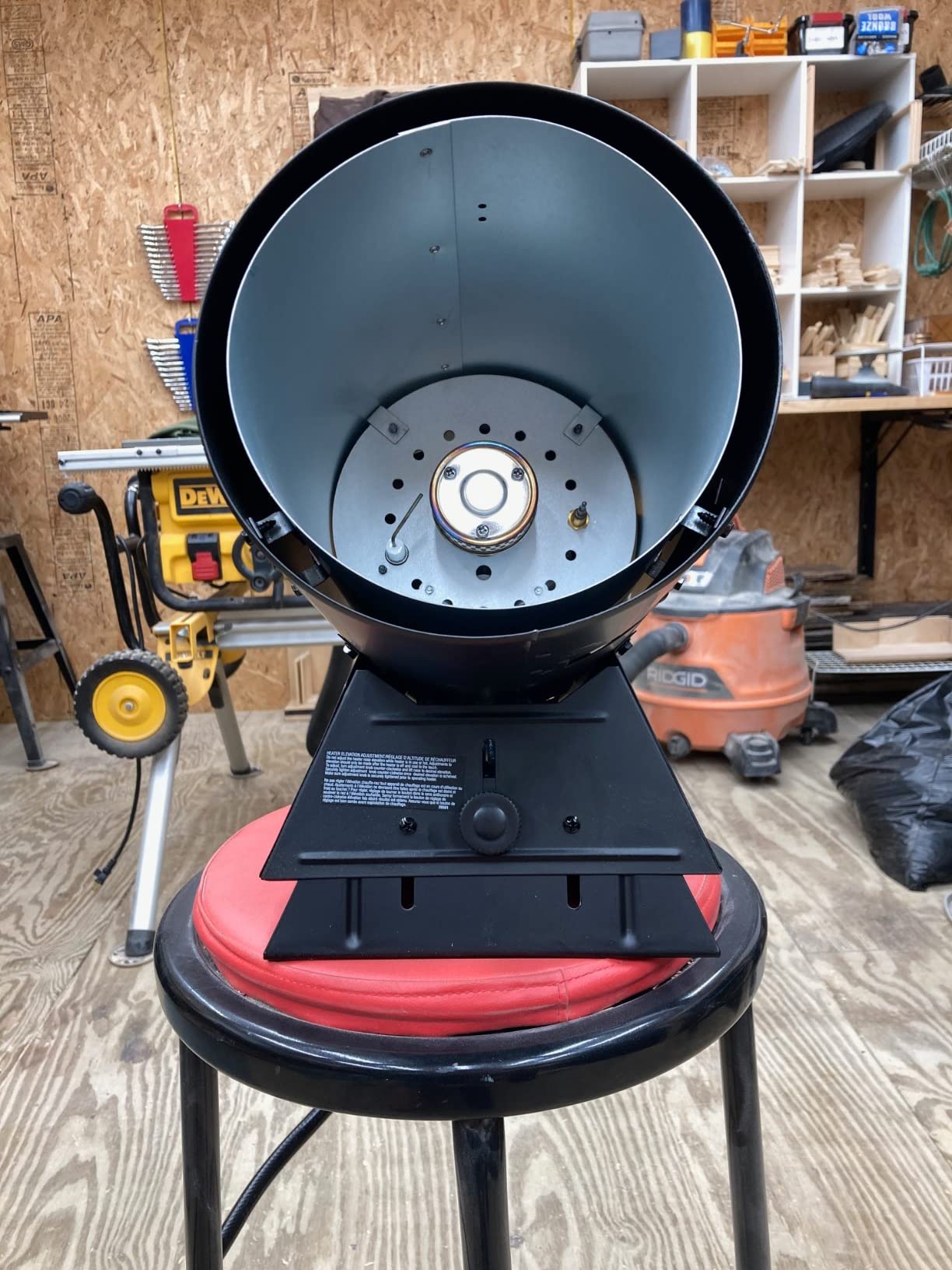
Output is variable from 30,000 to 60,000 BTU, which matters more than it sounds. On low, a 20 lb tank runs up to 14 hours, and 30,000 BTU is still plenty to hold a two-car garage at a workable temperature once it is warmed up. The continuous ignition system means the flame relights reliably rather than leaving you clicking an igniter in the cold.
It weighs 14.18 pounds, has a built-in handle, and needs a standard 115V outlet to power the fan. The critical warning: this heater is rated for outdoor use, like essentially all high-BTU forced-air propane units. It produces significant carbon monoxide and water vapor, so people who use them in garages do so only with the door substantially open, never in a sealed space, and never unattended. About 5 percent of reviews are one star, mostly citing noise that exceeded expectations and occasional fan motor durability issues.
Fuel Usage on High vs Low
At 60,000 BTU on high, a 20 lb tank lasts roughly 3.5 to 4 hours. Drop to the 30,000 BTU low setting and that same tank stretches to 7 to 8 hours, or up to the advertised 14 hours at the lowest usable output. Fuel burn scales directly with the setting, so the variable control is not a gimmick, it is the difference between refilling the tank twice a weekend or once every two weekends.
Ventilation Requirements for High-BTU Heaters
Plan on at least 1 to 2 square feet of permanent opening to the outside for a 60,000 BTU unit, which in practice means a fully open man-door or a garage door raised a foot or more. Add a CO alarm at working height, angle the heater so the airstream is not blowing directly on you or onto solvents and finishes, and shut it off whenever you step away. If your work style demands a fully sealed, fume-free shop, skip this category entirely and look at the electric options later in this list.
4. DEWALT 45,000 BTU Portable Radiant Propane Heater – Best Jobsite-Grade Build
DEWALT 45,000 BTU Portable Radiant Propane Heater
45000 BTU radiant propane
1125 sq ft coverage
Dolly frame with flat-free tires
No electricity needed
Pros
- Heavy-duty cage and dolly frame
- Flat-free tires roll over cords and debris
- Piezo ignition with zero electricity
- Radiant heat with less airflow noise
Cons
- No oxygen depletion sensor
- Rust reported after limited use
- Outdoor-rated only
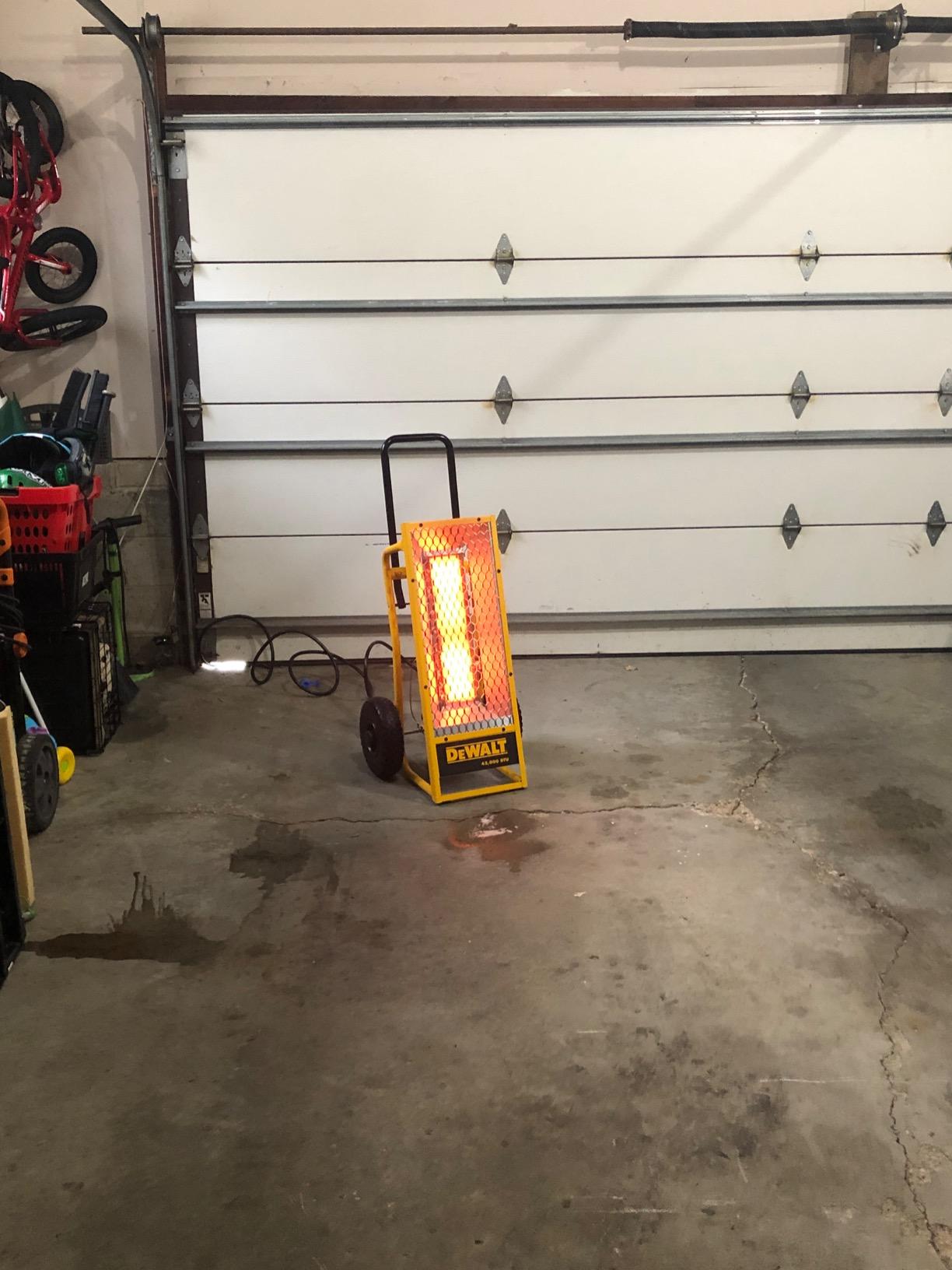
The DEWALT 45,000 BTU radiant heater is built like the jobsite tools the brand is known for. Instead of a plastic shell, you get a steel cage and a dolly frame with foam-filled flat-free tires, so you can roll it across extension cords, gravel, and floor debris without thinking twice. For anyone who treats their garage like a proper workshop, that ruggedness earns its place.
Because this is a radiant design rather than forced air, it throws quiet, directional heat across up to 1,125 square feet without the hurricane-force airflow of a torpedo heater. That matters if you sand, spray finish, or hate having dust stirred up every time the heat kicks on. The piezo ignition needs no electricity at all, so it works during a winter power outage.
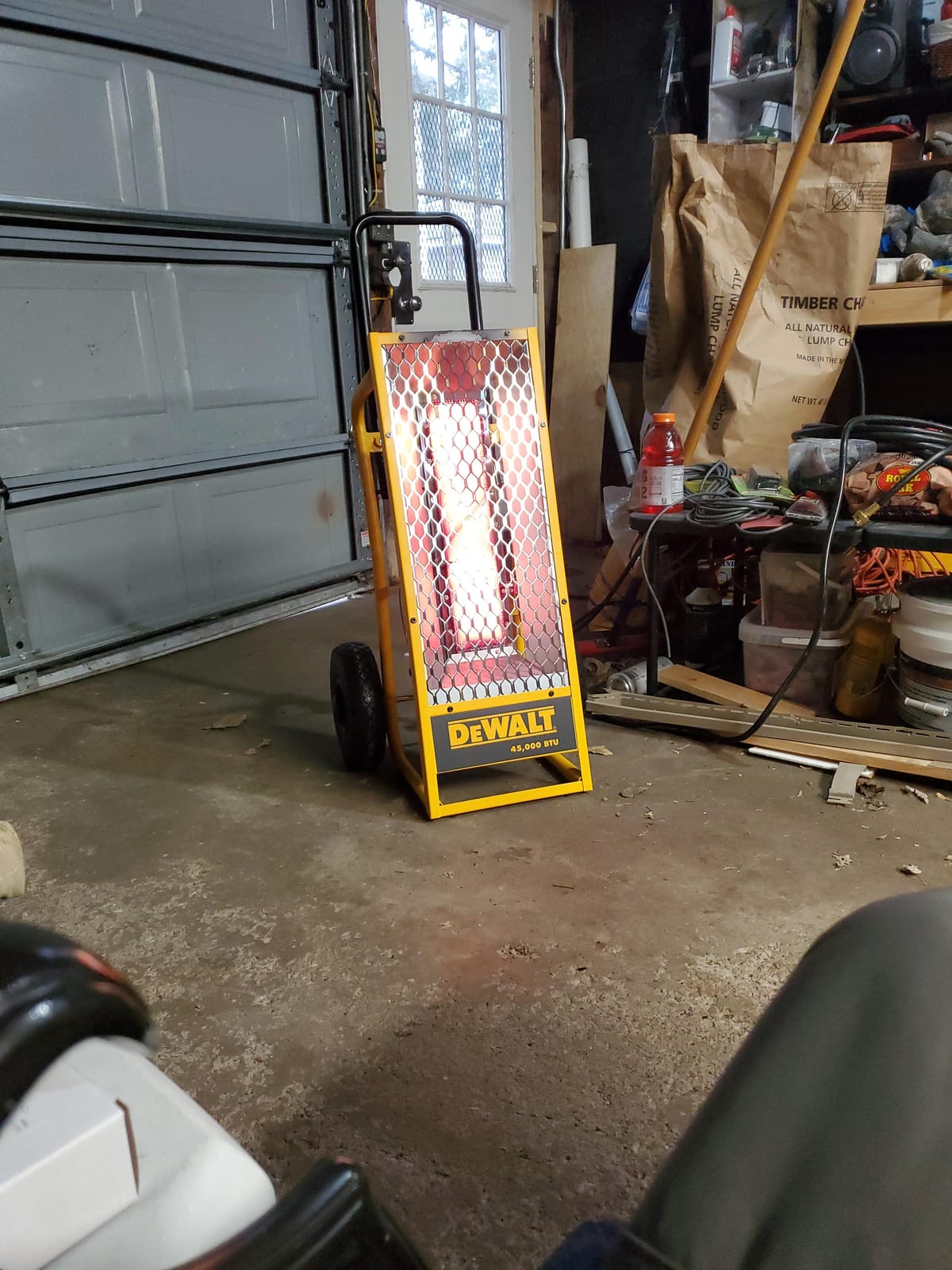
On the specs side, you get a fixed 45,000 BTU output, a fold-down transport handle, a steel mesh radiant burner, and a 12.8 pound weight before the tank. The 34-inch tall tower silhouette gives it a decent heating arc for work between two bays. Reviewers consistently praise the build quality, and the 4.5-star rating reflects that, even with a smaller pool of 143 reviews.
Two real drawbacks keep it from a higher spot on our list. First, it lacks an oxygen depletion sensor, which is a meaningful safety omission at this BTU level, and it is rated for outdoor use. Second, a number of owners report surface rust forming after limited use, and a few units arrived with dinged components. Treat it as a covered, ventilated-space heater rather than an enclosed-garage appliance and it serves well.
Durability and Rust Prevention
The rust complaints cluster around units stored in damp sheds and garages, so the fix is simple: wipe the burner and frame down after use and store it in a dry spot or under a cover. A light coat of high-temp protectant on visible steel before the season starts goes a long way. Buyers who stored it indoors report the frame holding up fine across multiple winters.
Fuel Tank Compatibility
The DEWALT is designed around a 20 lb propane tank, which sits securely on the dolly frame as a ballast, making the whole unit very stable on uneven floors. At 45,000 BTU, expect roughly 4.5 to 5 hours of runtime per full tank. It connects via a standard regulator hose, and like most high-BTU heaters, the tank and hose are sold separately, so factor that into your total cost.
5. Remington 60,000 BTU LP Forced Air Heater – Best Value for Big Spaces
Remington LP Forced Air Heater, Portable 60,000 BTU Space Heater for up to 1500 Square Feet – Liquid Propane Gas Powered, Tank Not Included
60000 BTU forced air propane
1500 sq ft coverage
10 ft hose and regulator included
11 lb weight
Pros
- Best BTU per dollar on our list
- 10 ft hose and regulator included
- Thermocouple and flame-out cut-off
- High-temperature limit shut-off
Cons
- Single-speed fan is loud
- Regulator can be slow to prime
- Occasional ignition complaints
The Remington REM-60V-GFA-O matches the big Mr. Heater’s 60,000 BTU output and 1,500 square foot coverage while usually costing noticeably less, which is why it takes our budget badge for large garages. It even includes a 10-foot hose and regulator in the box, an accessory you have to buy separately with most competitors. For sheer heating power per dollar, nothing else on this list comes close.
In use, it behaves like the workhorse torpedo heater it is: light it, aim it, and feel warm air push across the garage within a minute or two. At 11 pounds it is easy to reposition mid-project, and the adjustable height lets you angle the airflow over a vehicle or workbench rather than into it.
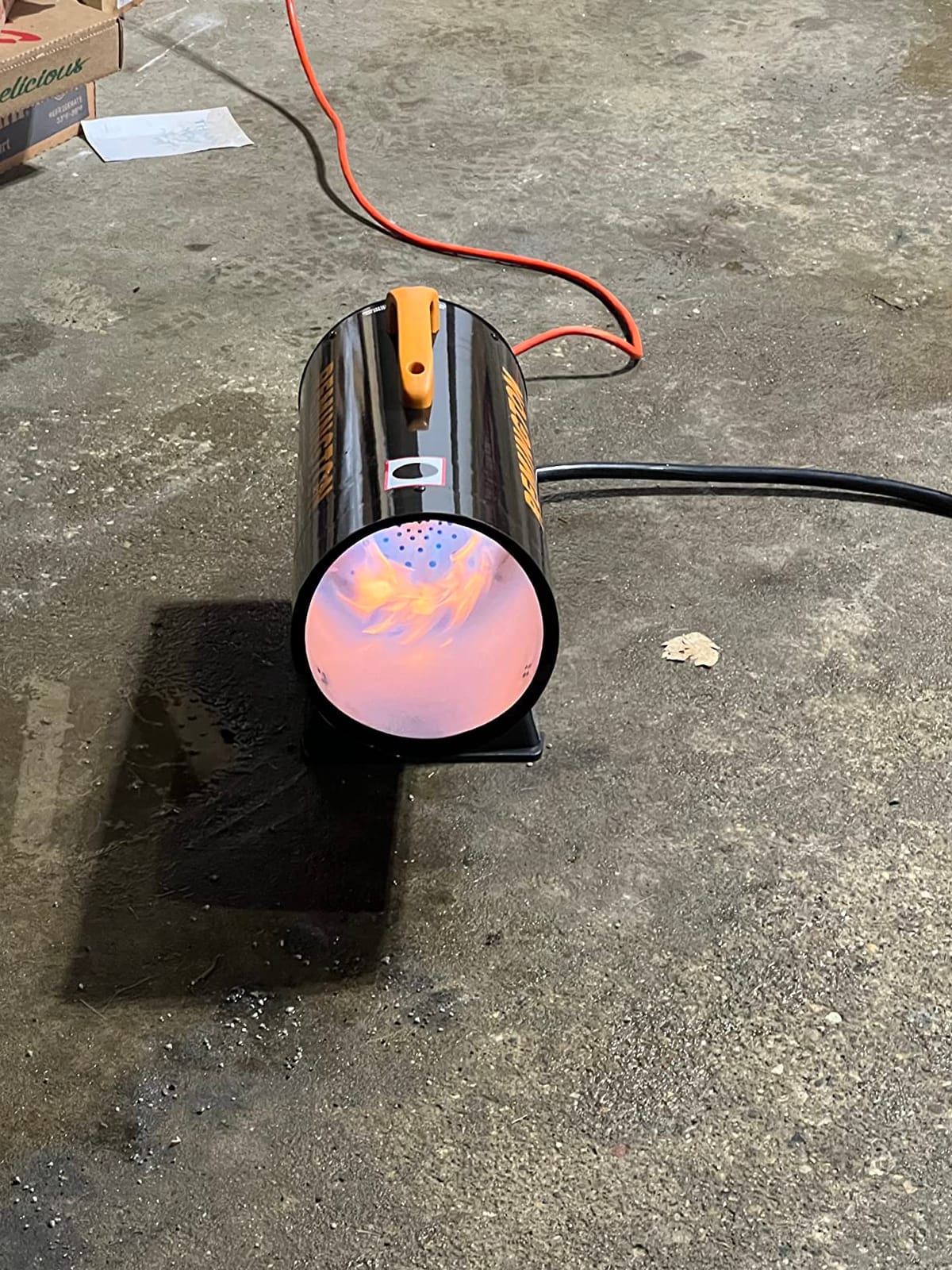
The safety stack is respectable for the price: a thermocouple flame sensor, flame-out fuel cut-off, high-temperature limit shut-off, and electronic ignition. Variable heat settings let you dial output back when the space is up to temperature. Build quality is adequate rather than premium, which is the main compromise versus the DEWALT’s tank-like frame.
Owners give it 4.5 stars across 733 reviews, with roughly 4 percent one-star ratings. The recurring complaints are fan noise, occasional ignition hiccups in bitter cold, and a regulator that can be slow to establish gas flow on the first start of the season. None of those are dealbreakers, but budget a few minutes of patience with the first couple of starts.
Like all high-BTU propane units, it is outdoor-rated and demands real ventilation. Treat it like the Mr. Heater QBT above: open door, CO alarm, never unattended.
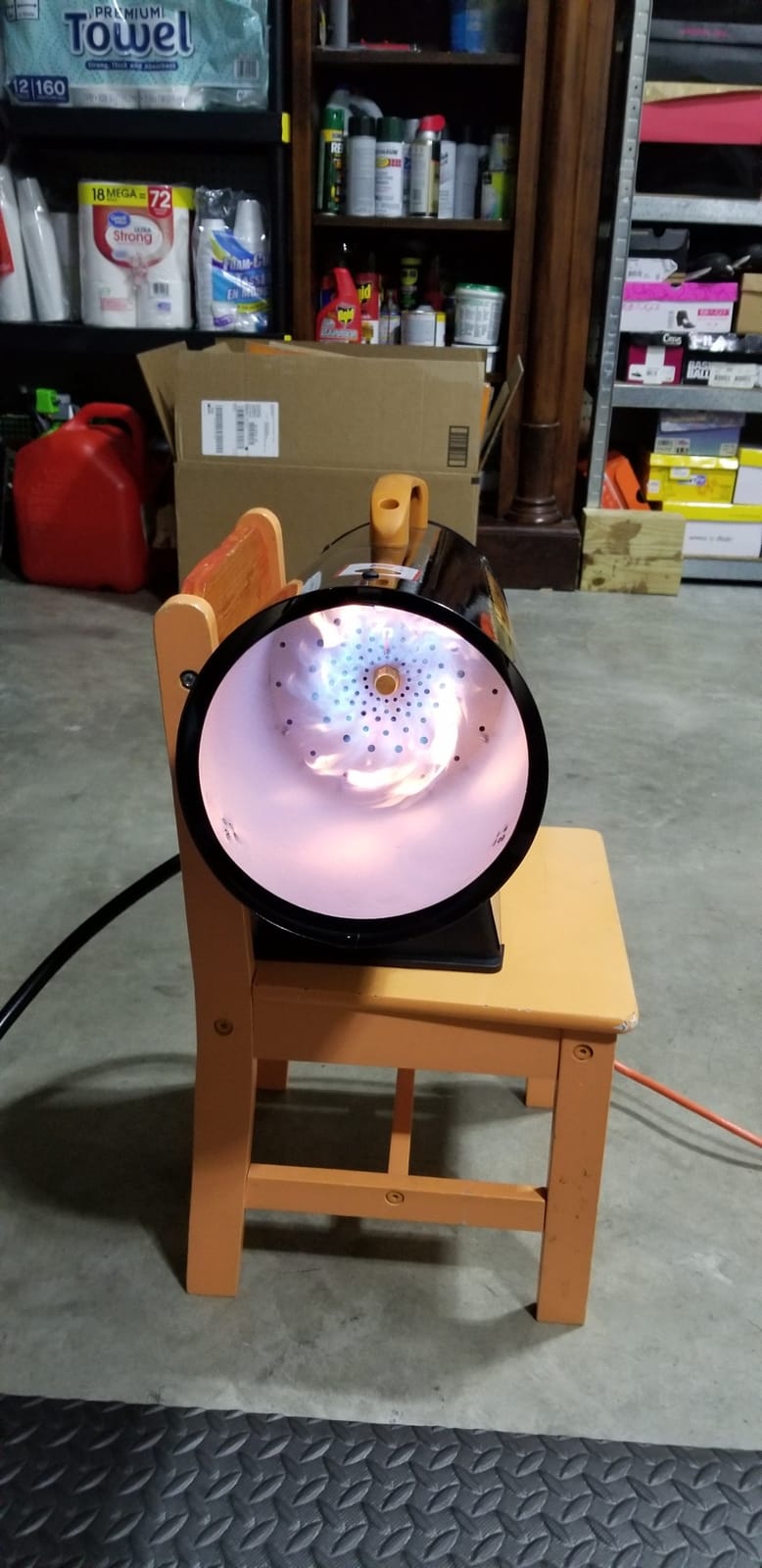
What Comes in the Box
You get the heater, a 10-foot propane hose, and a regulator, which is the part many brands leave out. Add a 20 lb tank and you are working within the hour. The unit runs its fan from a standard 120V outlet, so any household extension cord of adequate gauge handles it, and that makes the true out-the-door cost lower than the sticker suggests.
Runtime per 20 lb Tank
At the full 60,000 BTU setting, expect roughly 3.5 to 4 hours per 20 lb tank. Dial the variable output down and runtime stretches accordingly, though Remington does not publish a precise low-setting figure the way Mr. Heater does. For a typical evening work session of two to three hours, one tank covers you comfortably at mixed settings.
6. Dr. Infrared DR-238 Carbon Fiber Infrared Heater – Best Wall or Ceiling Mount
DR. INFRARED HEATER Portable Infrared Indoor and Outdoor Space Heater for Patio, Garage, Commercial & Residential With Remote Control, Without Thermostat, Black
5200 BTU electric infrared
900W/1200W/1500W settings
Wall or ceiling mount
Remote control
Pros
- Heats objects instantly like sunlight
- No combustion
- zero fumes
- Three power levels with remote
- Wall
- ceiling
- or tripod mounting
Cons
- Mounting hardware frustrates some owners
- Durability complaints after year one
- No thermostat on remote
The Dr. Infrared DR-238 answers the most common complaint about electric garage heaters, that they feel weak, by taking a different approach. Instead of warming air, this carbon fiber infrared unit heats objects and people directly, like the sun on a cold day. Stand in its path and you feel warmth within seconds, even though the garage air temperature barely moves.
That instant, directional warmth is exactly what winter work calls for. I would rather have my back and hands feel like a sunny window is on them than wait an hour for a ceramic heater to nudge a whole garage up five degrees. Electric infrared also solves the fume problem entirely: no propane smell, no CO risk, no ventilation required, which forum users with sealed shops cite as their main reason for going electric.

Specs include 5,200 BTU equivalent output from three settings of 900W, 1,200W, and 1,500W, a full-function remote, and wall, ceiling, or tripod mounting. It weighs just 8 pounds, runs on any standard 120V outlet, and carries a 1-year limited components warranty. With a 4.3-star rating across more than 6,000 reviews, it has a solid track record in garages, kennels, and covered patios.
The complaints are worth knowing. Several owners say the mounting process is clumsy, with one reviewer joking he needed a third hand and noting the box lacks the drilling template shown in the video. Others report failures just after the one-year warranty expires. The lesson: mount it carefully, register the warranty, and buy from a retailer with a good return policy.
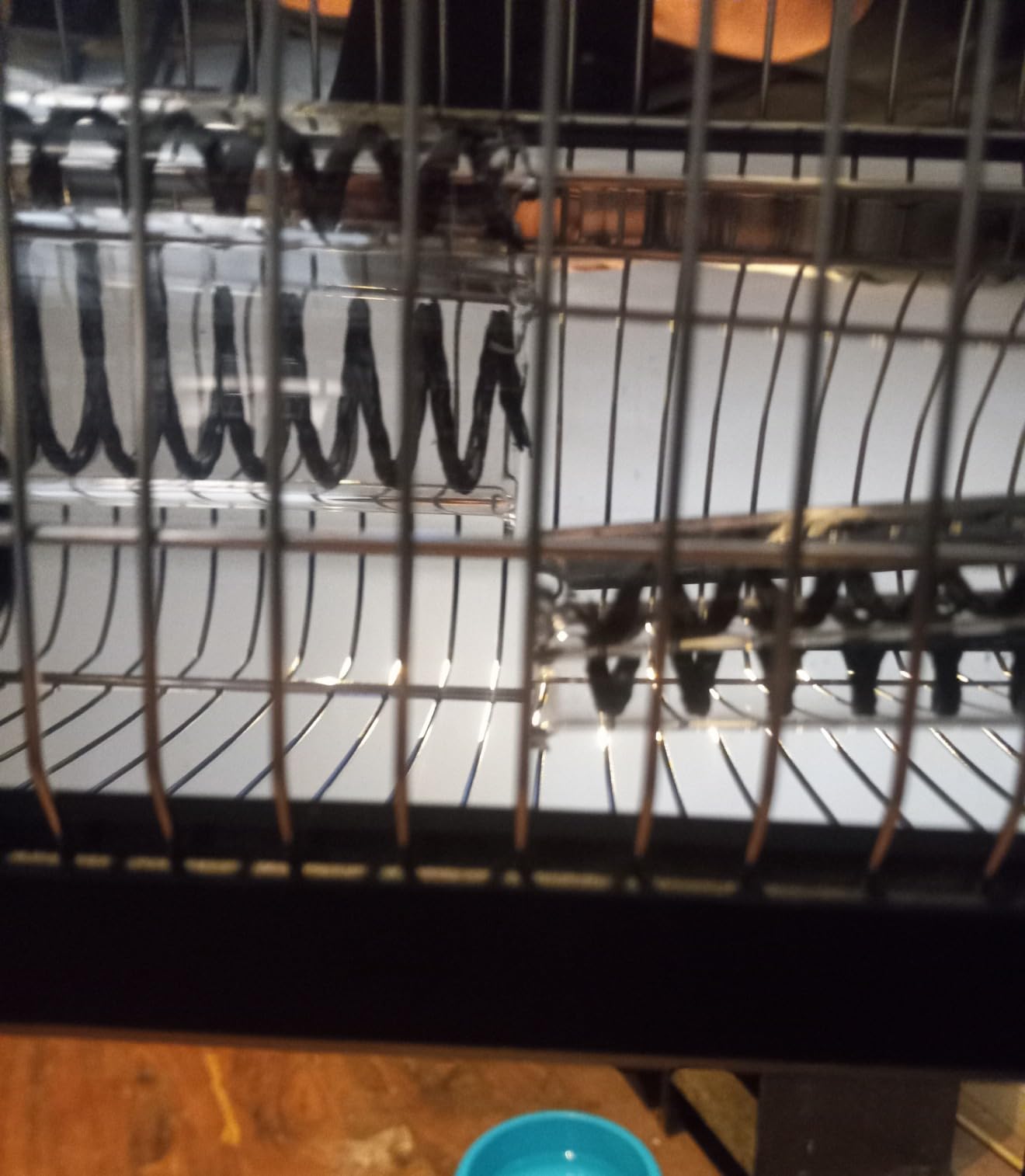
Mounting Height and Angle
Infrared works on line of sight, so the heater must point at the area you occupy. For a workbench, mount it 7 to 8 feet up on the wall, angled about 30 to 45 degrees down toward your standing position, and avoid pointing it at a rolling door or window since infrared energy hitting glass is wasted. Ceiling mounting above a defined work zone works well too.
Heating Area and Effectiveness
Treat the DR-238 as a personal and zone heater rather than a garage-wide solution. Within roughly a 10 by 12 foot zone in its direct beam, it feels excellent, while outside the beam you notice little. If your winter work happens in a consistent spot, a bench, a lift bay, a welding table, this targeted approach is both effective and cheap to run compared to heating air that leaks out of the building.
7. Dura Heat EUH4000 240V Electric Garage Heater – Best Hardwired-Style Power
Dura Heat 240V Electric Space Heater for Garage, 3750W, 12800 BTU – EUH4000
3750W 240V electric
400 sq ft coverage
Fan-forced air
Wall or ceiling mount
Pros
- Real shop-grade heat from 240V
- Electronic thermostat included
- Wall or ceiling mount frees floor space
- Heats up to 400 sq ft
Cons
- Requires a 240V 20A circuit
- 25% of reviews are 1 star
- Durability and reliability complaints
The Dura Heat EUH4000 is the heater for people who already have, or are willing to install, a 240-volt circuit in the garage. At 3,750 watts, it delivers nearly three times the power of a standard plug-in space heater, pushing out roughly 12,800 BTU of fan-forced heat across up to 400 square feet. That is genuine garage-grade electric heat, not a bedroom heater pretending to be one.
This is the category to consider if propane is off the table for you, whether because of air-quality concerns, insurance rules, or a tightly sealed shop. Fan-forced air also circulates warmth around the space better than an infrared panel, so the whole room gets more usable rather than just one beam of comfort.
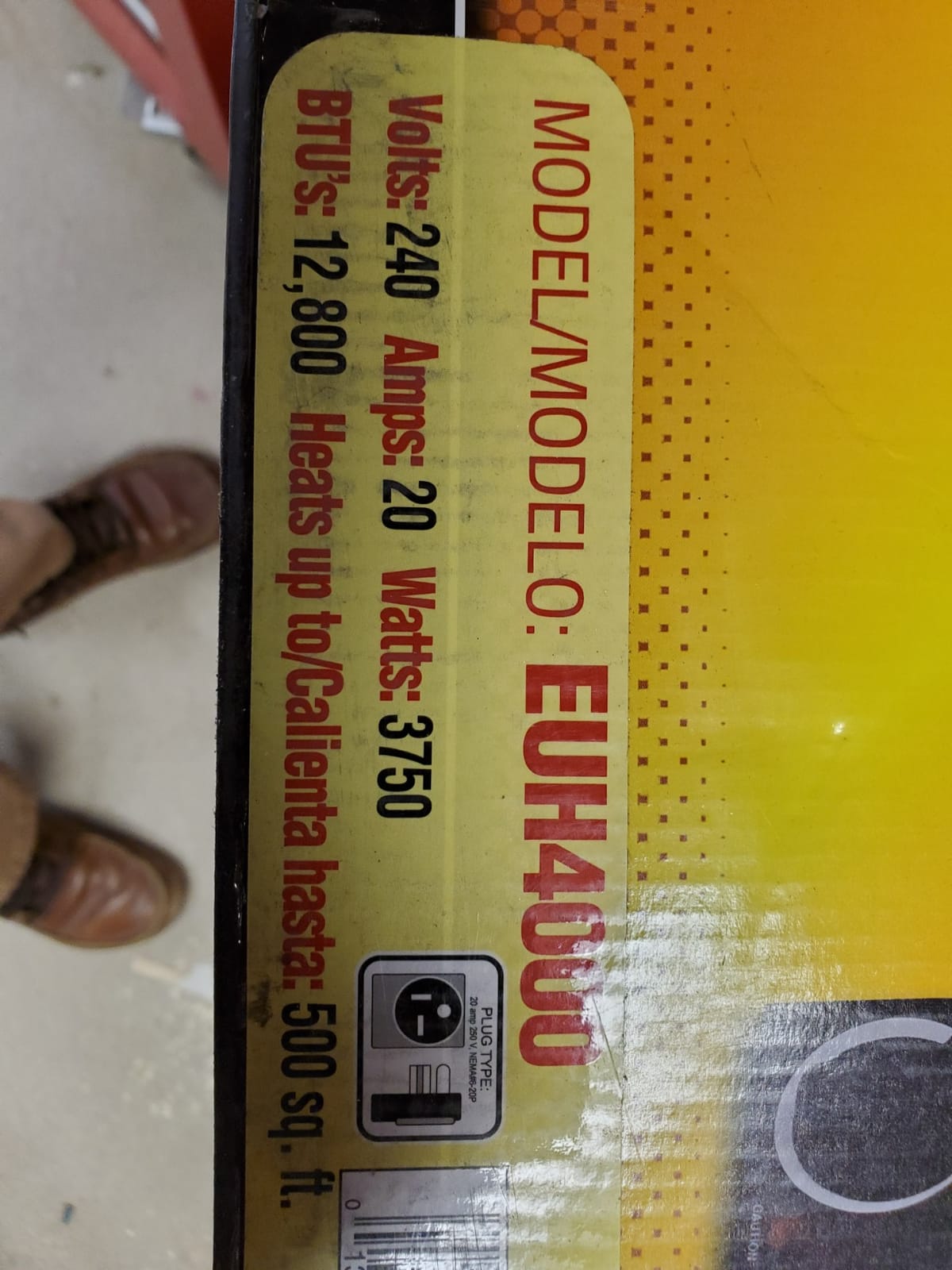
The unit ships with a NEMA 6-20P plug, so it needs a 240V/20A receptacle, the same kind that powers many welders and compressors. It includes an electronic thermostat, mounts to the wall or ceiling with an included bracket, and has a durable steel body at 12.8 pounds. When it works, owners describe exactly what you hope for: steady, thermostat-controlled warmth in a one-and-a-half-car workspace.
We have to be blunt about the reputation, though. The EUH4000 sits at 3.4 stars, and a striking 25 percent of reviews are one star, mostly citing units that failed within one or two seasons. Many failures trace to undersized circuits or dusty mounting spots. Buy this only if the price advantage appeals and you will keep the receipt; otherwise the Heat Storm below offers better-documented reliability.
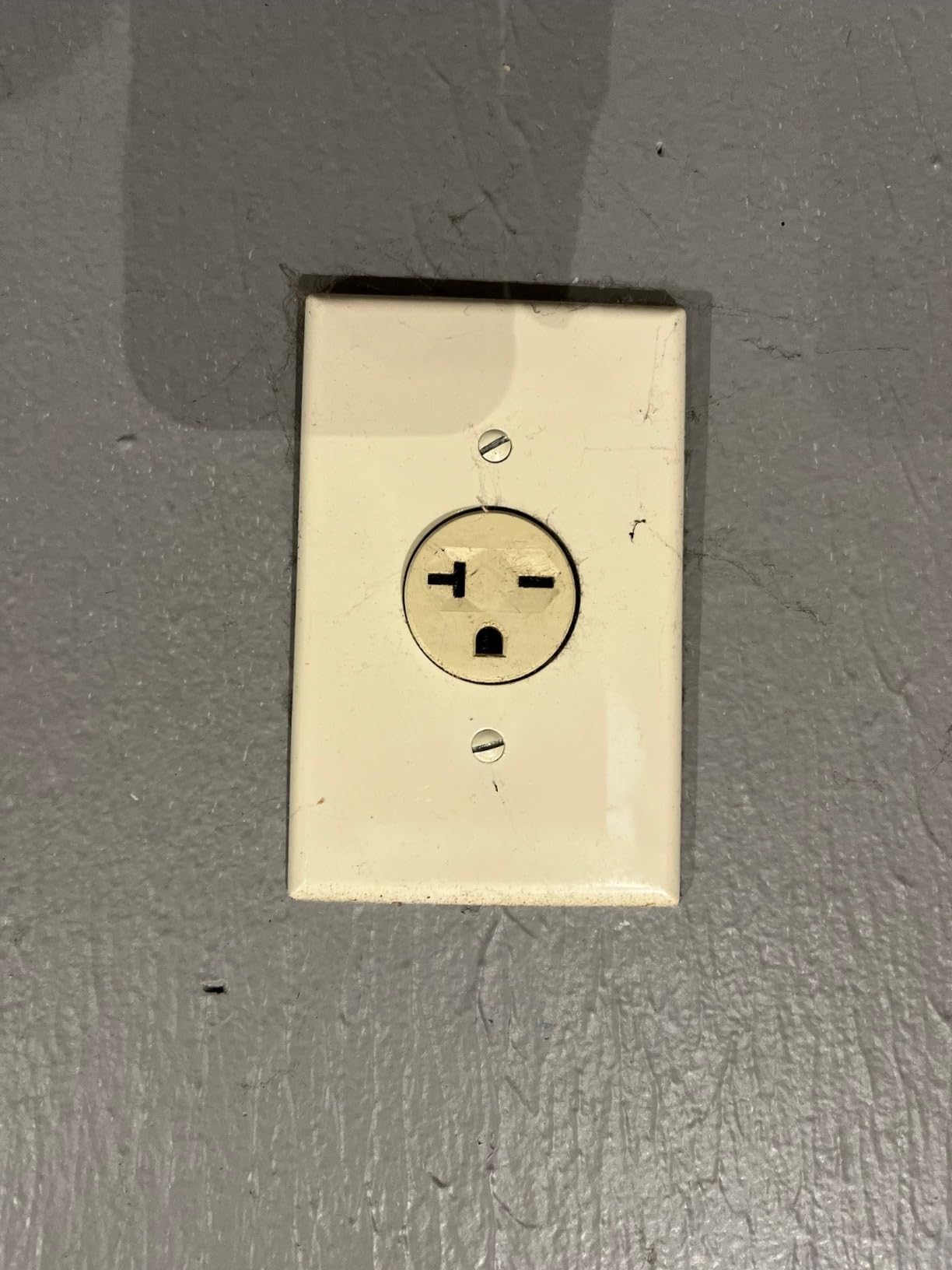
240V Circuit and Plug Requirements
You need a dedicated 240V, 20-amp circuit with a NEMA 6-20R receptacle, and the word dedicated matters, since sharing a circuit with a compressor trips breakers. Most homes do not have this in the garage, so budget for an electrician to run the line. If a 240V circuit already exists for a welder or old appliance, this heater becomes one of the cheapest ways to add serious heat to the space.
Reliability Tips from Owner Reviews
The owners who get long life from this heater share common habits: they mount it away from heavy dust sources like sanders and grinders, they blow the fan and intake out with compressed air each season, and they avoid constantly cycling the thermostat to its extremes. Letting the fan run briefly after shutdown, which the unit manages itself, also helps dissipate element heat. Those small habits appear repeatedly in the positive long-term reviews.
8. Heat Storm HS-1500-PHX-WIFI Infrared Wall Heater – Best Smart Garage Heater
Heat Storm HS-1500-PHX-WIFI Infrared Heater, Wifi Wall Mounted
1500W infrared electric
5200 BTU output
WiFi app control
Wall mounted
Pros
- WiFi control and scheduling from your phone
- Holds temperature within about 1 degree
- Cool-to-touch front panel
- Simple install with template
Cons
- 150 sq ft primary heating area
- App occasionally ignores presets
- Glow is visible in dark rooms
The Heat Storm HS-1500-PHX-WIFI is the easiest way to add smart, fume-free heat to a garage workspace. It is a 1,500-watt infrared wall heater you can schedule and control from your phone, so the garage starts warming before you walk out with your coffee. After a cold drive home, tapping heat-the-garage from the driveway is a small luxury that quickly becomes a habit.
As an infrared unit, it warms you and the surfaces in front of it rather than the whole air volume, which keeps a work corner comfortable for pennies compared to heating an entire uninsulated garage. The front panel stays cool to the touch, a genuine plus if kids or pets share the space, and operation is quiet enough to leave running while you take a work call.
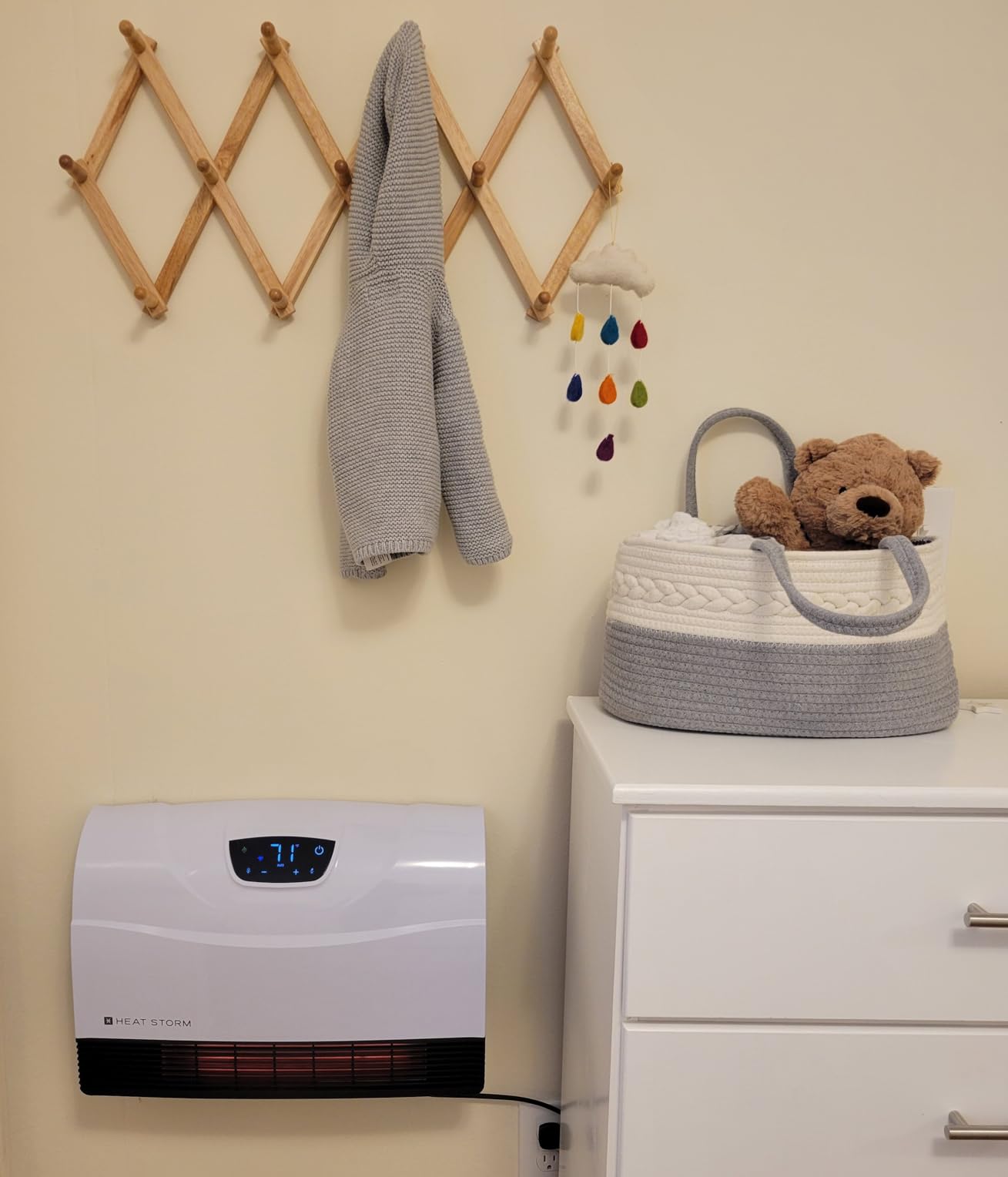
On paper you get 5,200 BTU from a 1,500W element, a 99F maximum set point, and a coverage claim of 150 square feet as a primary heater or up to 750 square feet as a secondary boost. Owners report it holds room temperature within about one degree of the set point, which is better control than most space heaters manage. It runs on any standard 120V outlet, mounts with an included template, and carries a 1-year manufacturer warranty.
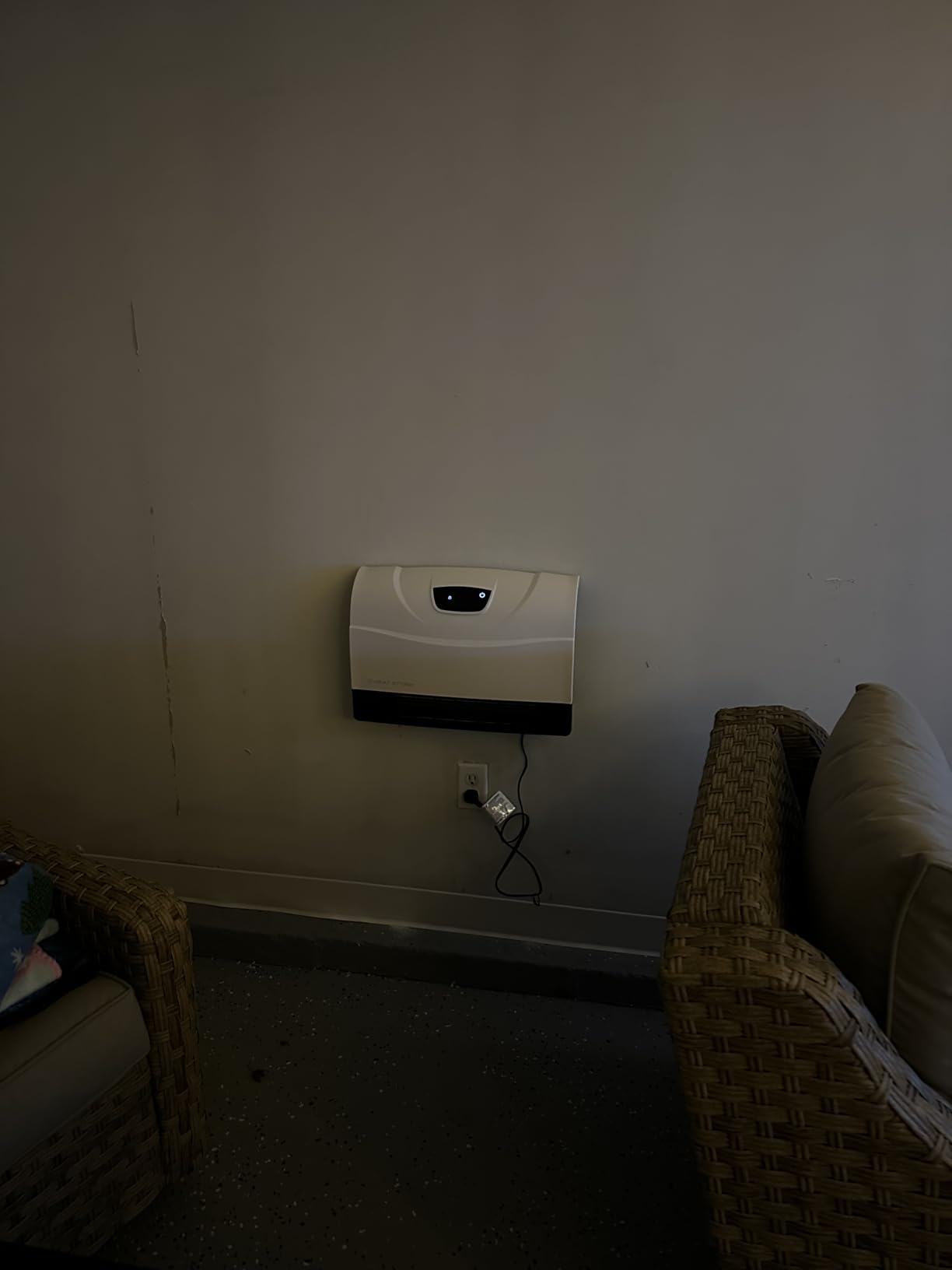
The 4.4-star rating across nearly 14,000 reviews is reassuring. The complaints that do appear are mostly about the app: some users report the unit occasionally ignores scheduled presets until it is adjusted manually on the panel. A few note a slight glow from the element in a dark room. Neither is a reason to skip it if you want set-and-forget electric heat in a small garage zone.
WiFi App and Scheduling Features
The free app lets you set temperature, timers, and weekly schedules from anywhere. The winter-work killer feature is pre-heating: schedule the heater to kick on 30 minutes before your usual garage time and the chill is already gone when you open the door. When the app occasionally ignores presets, a quick manual adjustment at the unit resets it, and the physical controls keep working regardless of WiFi status.
Installation and Placement Tips
Mount it on an interior wall if possible, since an exterior or door-adjacent wall wastes heat to conduction and drafts. Keep the bottom of the unit at least a few inches above benches and shelving, and avoid pointing it directly at the garage door. For a one-car garage, centering it on the wall opposite the door gives the broadest usable warm zone, and installation is a one-person job with a drill, the included template, and about 20 minutes.
Buying Guide: How to Choose a Portable Garage Heater?
Choosing a portable garage heater for winter work comes down to three questions: how big is your garage, what fuel can you safely use, and which safety features does the heater include. Answer those in order and the right model becomes obvious. This guide walks through each factor with the real numbers you need to decide.
BTU Calculator by Garage Size
Here is the quick formula we use, adapted from standard HVAC practice: BTU needed equals width times length times ceiling height to get cubic feet, multiplied by the desired temperature rise, multiplied by an insulation factor.
Use 0.133 as the multiplier for an uninsulated garage, 0.100 for average insulation, and 0.075 for a well-insulated space. Temperature rise is how many degrees you want to add, so if it is 30F outside and you want 65F inside, use 35.
Example: a common 24×24 garage with 8-foot ceilings is 4,608 cubic feet. With a 35F rise and average insulation, that is 4,608 x 35 x 0.100, or about 16,100 BTU, and the same garage uninsulated needs roughly 21,400 BTU. That is why insulation quality, which no competitor guide we reviewed addresses properly, changes your heater requirement dramatically.
For quick reference by garage size: a single-car garage of 12×20 typically needs 4,000 to 9,000 BTU, which is exactly the Portable Buddy and Heat Hog class. A two-car 20×20 or 24×24 garage calls for 9,000 to 30,000 BTU depending on insulation and climate, a job for a 45,000 to 60,000 BTU unit on its lower settings. A large 30×40 workshop needs 30,000 to 60,000 BTU, the full-output territory of the Mr. Heater QBT, DEWALT, and Remington models.
Propane vs Electric vs Kerosene: Fuel Type Comparison
Propane delivers the most heat per dollar spent on equipment, which is why every high-BTU heater on our list burns it. A 60,000 BTU forced-air unit warms a two-car garage in minutes for the cost of a few pounds of propane. The trade-offs are real: combustion produces carbon monoxide and water vapor, high-BTU units are outdoor-rated and need serious ventilation, and you must keep tanks refilled.
Electric heaters win on safety and convenience since there is nothing to burn, no fumes, no ventilation, and no tank logistics. The ceiling is output: a standard 120V outlet supplies about 1,500W, which is roughly 5,100 BTU, enough for a work zone in a small or mid-size garage but not a whole two-car space in a cold climate. Running a 1,500W heater costs around 24 to 30 cents per hour at typical US rates, which is trivial for a couple of hours a night. Step up to a 240V unit like the Dura Heat and you triple the output, but you need the circuit to match.
Kerosene and diesel heaters still appear in very cold climates because they crank out enormous heat and run for long stretches. Forum users in the far north defend them, but nearly every owner mentions the smell, and they share all the combustion concerns of propane with fewer indoor-rated options. For most garage workshops, propane for volume and electric for cleanliness covers every realistic need.
Safety Features That Matter
An oxygen depletion sensor is the feature that separates indoor-rated propane heaters from outdoor-only ones. The ODS measures oxygen near the flame and extinguishes the burner before levels become dangerous. If you want to run propane in a closed garage at all, do not buy a heater without one, and even then, crack a window or the door.
A tip-over switch shuts the unit off the instant it is knocked over, which is not a hypothetical risk on a cluttered workshop floor. Overheat protection and high-temperature limit shutoffs protect against blocked airflow, and a thermocouple flame-out cut-off stops gas flow if the flame dies. Look for UL or ETL certification on the box, and regardless of what you buy, mount a carbon monoxide alarm in any garage where combustion heaters run, because it is the cheapest insurance in this entire article.
Garage Size Matching and Insulation Reality
Match the heater to the space honestly. Forcing an undersized heater to run flat-out in a big garage wastes fuel and shortens its life, while an oversized forced-air unit in a small garage makes the space stuffy and loud. A radiant unit like the Buddy suits a one-car garage or a defined work zone, a 45,000 to 60,000 BTU unit suits two-car and larger spaces, and electric covers personal zones or sealed shops.
Insulation changes everything. As the BTU math above shows, a well-insulated 24×24 garage needs roughly half the heating capacity of the same garage with bare stud walls. Before you buy a bigger heater, check the cheap fixes: an insulated garage door kit, sealing gaps around the door, and adding a ceiling if your rafters are open. Several forum members report a modest insulation weekend doing more for their comfort than any heater upgrade.
Frequently Asked Questions
What is the best heater for a garage in winter?
For most people, the Mr. Heater Portable Buddy is the best garage heater for winter work because it is indoor-safe, delivers 9,000 BTU of radiant heat to 225 square feet, and has a proven 4.7-star track record across more than 29,000 reviews. For large two- to three-car garages, a 45,000 to 60,000 BTU propane unit like the Mr. Heater MH60QFAV or Remington REM-60V heats the whole space fast, and electric infrared models like the Heat Storm are best for fume-free zone heating.
What is the cheapest way to heat a garage in the winter?
The cheapest approach is zone heating: run a small radiant heater aimed at your work area instead of heating the entire garage. A 1,500W electric heater costs roughly 24 to 30 cents per hour to run, while a 20 lb propane tank refill costs a few dollars and powers a 9,000 BTU radiant heater for a full day of low-setting use. Adding door seals and basic insulation cuts the requirement further, and pre-heating the space 30 minutes before you work is far cheaper than running a big heater all day.
How many Btus do you need to heat a 24×24 garage?
A 24×24 garage with 8-foot ceilings and a 35F temperature rise needs about 21,400 BTU uninsulated, 16,100 BTU with average insulation, or 12,100 BTU if well insulated. Use the formula: cubic feet x temperature rise x 0.133 (uninsulated), 0.100 (average), or 0.075 (well insulated). In cold climates most owners choose a 45,000 to 60,000 BTU unit so the heater is not running at maximum constantly.
What are the best portable garage heaters?
The best portable garage heaters are the Mr. Heater Portable Buddy for small garages, the Heat Hog 9,000 BTU for its tilting head, the Mr. Heater 60,000 BTU QBT and Remington 60,000 BTU for large spaces, the DEWALT 45,000 BTU radiant for jobsite durability, and the Dr. Infrared DR-238, Dura Heat EUH4000, and Heat Storm WiFi for electric options.
Conclusion: Our Winter Work Verdicts
After comparing all eight models, our verdict for the best portable garage heater for winter work is the Mr. Heater Portable Buddy for most people, the Remington 60,000 BTU for large garages, and the Heat Storm WiFi for clean electric zone heating. The Buddy’s rare indoor-safe rating, radiant comfort, and overwhelming owner satisfaction make it the safest default choice in the category.
Size the heater to your actual garage using the BTU formula above, respect the ventilation rules for high-BTU propane units, and put a carbon monoxide alarm in the shop before the first cold snap. Do those three things and this winter can be the season your garage finally works as hard as you do. Check the latest prices on our top picks and get your shop ready before the real cold arrives.