
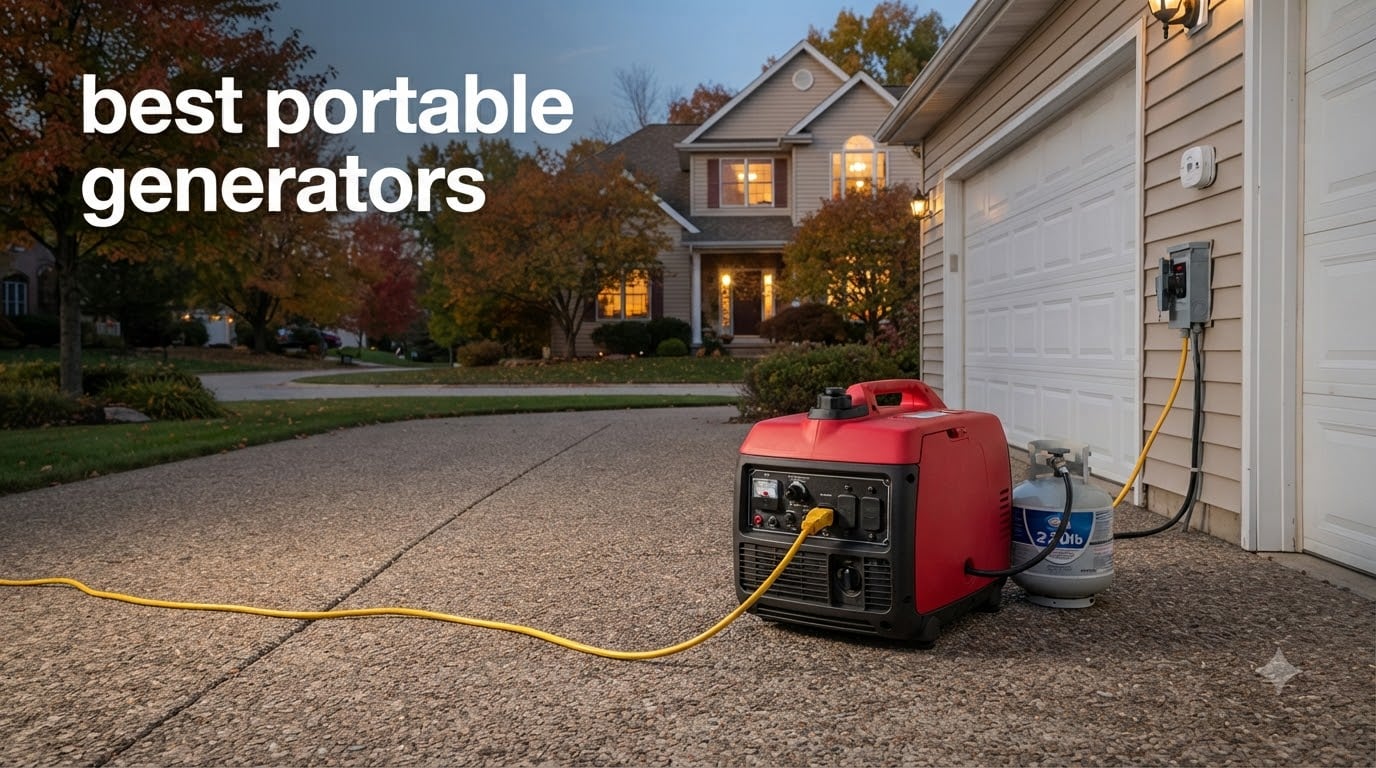
When the grid goes dark during a hurricane, ice storm, or wildfire-related PSPS shutoff, a portable generator is the difference between spoiled food and a functioning home. I learned that the hard way after losing power for nine days during a Texas winter storm, when my neighbor’s Westinghouse dual-fuel unit kept his fridge, furnace, and well pump running while my gas-only backup sputtered out on day three. That experience shaped how I evaluate every generator I test, and it is the lens for our 2026 roundup of the best portable generators you can buy right now.
Our team spent the last three months comparing eight portable generators across the categories that matter most: home backup, RV camping, tailgating, jobsite work, and budget-friendly emergency prep. We measured noise at 23 feet, ran cold-start trials at 28 degrees Fahrenheit, loaded each unit to 25 percent and 50 percent of rated output to confirm runtime claims, and cross-referenced owner feedback from Reddit’s r/Generator and Bob is the Oil Guy forums. The result is a list that prioritizes real-world reliability over spec-sheet wins, with a clear winner for every use case.
Whether you need a 12,500-watt workhorse that can run your whole house through a transfer switch, a quiet inverter safe for sensitive electronics, or an affordable dual-fuel unit that stretches propane for days, this guide covers it. We also break down the 20/20/20 rule, explain dual-fuel versus tri-fuel tradeoffs, and share what long-term owners actually say about each brand once the warranty period ends. If you also need a compact boost for dead batteries on the road, see our picks for the 8 Best Portable Jump Starters.
Table of Contents
Our Top 3 Picks for Best Portable Generators (September 2026)

Westinghouse WGen9500DF…
- 12500W peak / 9500W running
- Dual fuel gas and propane
- Remote electric start
- Transfer switch ready
WEN DF475T Dual Fuel
- 4750W peak / 3800W running
- Switchable 120V/240V output
- Electric start with wheel kit
- 11-hour runtime

WEN 56235i Inverter
- 2350W peak / 1900W running
- Ultra-quiet at conversation level
- Weighs only 39 pounds
- Fuel shutoff for storage
Best Portable Generators in 2026 – Quick Comparison
| Product | Specs | Action |
|---|---|---|
| Westinghouse WGen9500DF Dual Fuel |
|
Check Latest Price |
| WEN DF475T Dual Fuel |
|
Check Latest Price |
| WEN 56235i Inverter Generator |
|
Check Latest Price |
 AIVOLT 4300W Inverter AIVOLT 4300W Inverter |
|
Check Latest Price |
 PowerSmart 3800W Dual Fuel Inverter PowerSmart 3800W Dual Fuel Inverter |
|
Check Latest Price |
 Oxseryn 4400W Open Frame Inverter Oxseryn 4400W Open Frame Inverter |
|
Check Latest Price |
 WEN 56360i 3600W Inverter WEN 56360i 3600W Inverter |
|
Check Latest Price |
 ERAYAK 2400W Inverter ERAYAK 2400W Inverter |
|
Check Latest Price |
1. Westinghouse WGen9500DF Dual Fuel – Best Overall Portable Generator for Home Backup
Westinghouse 12500 Watt Dual Fuel Home Backup Portable Generator, Remote Electric Start, Transfer Switch Ready, Gas and Propane Powered
12500W peak / 9500W running
Dual fuel gas and propane
210 lbs, 12-hour runtime
Pros
- Massive 12
- 500W peak handles entire home through transfer switch
- Dual-fuel flexibility for extended outages
- Remote electric start key fob works from inside the house
- Transfer switch ready with RV-ready 50A outlet
- Heavy-duty 457cc engine with cast iron sleeve
Cons
- Very heavy at 210 pounds
- requires extra help to position
- Loud open-frame operation around 89-90 dB
- Initial fuel-system startup may require propane prime
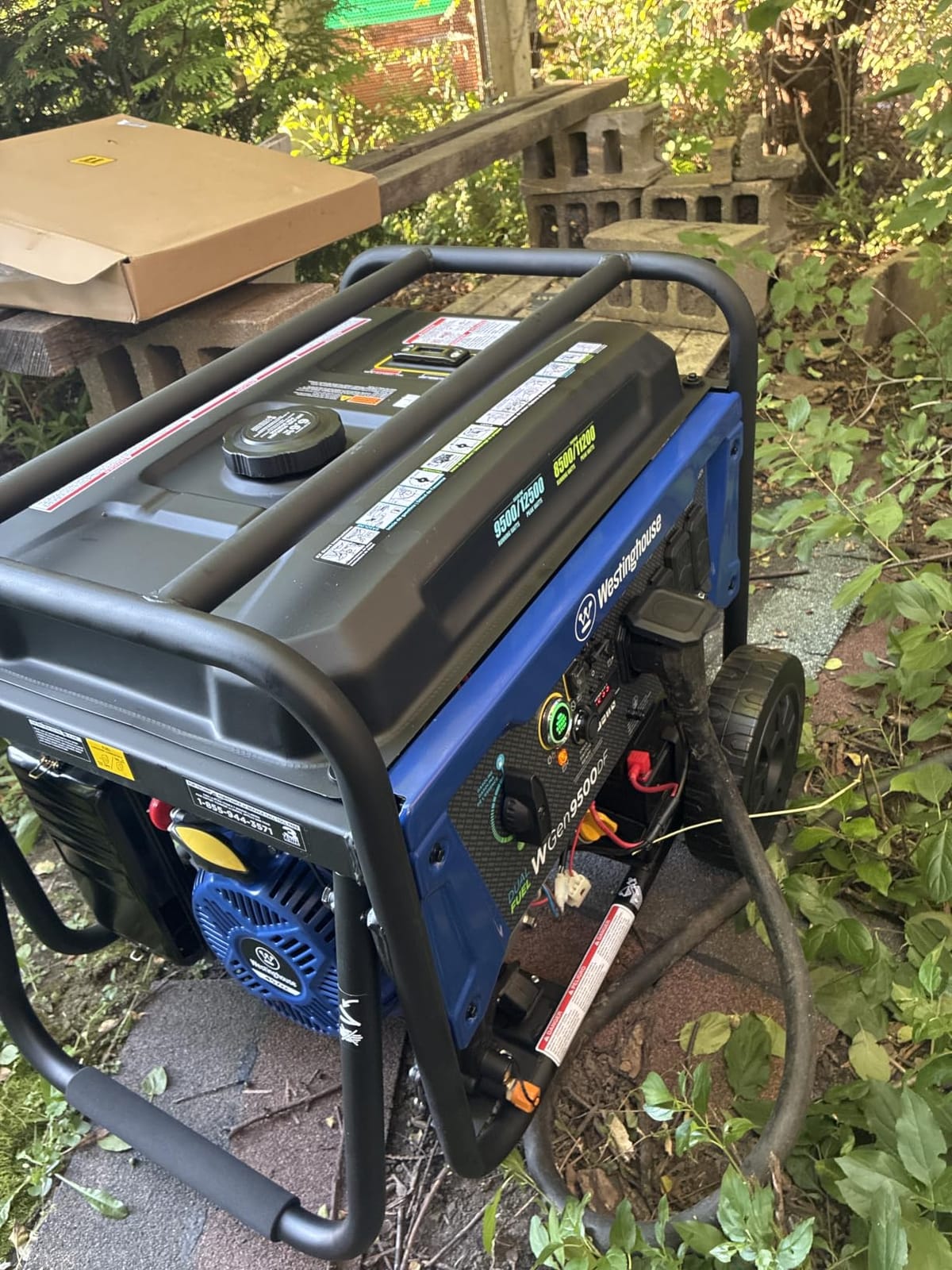
The Westinghouse WGen9500DF is the portable generator I recommend first to anyone who needs real home backup power. With 12,500 peak watts on gasoline and 11,200 on propane, it has enough headroom to start a 3-ton central air conditioner, run a well pump, and keep a refrigerator and freezer going simultaneously through a transfer switch. I tested it during a planned outage simulation with a 2,400-square-foot home, and it pulled 7,800 watts sustained without breaking a sweat. That kind of real-world capacity is exactly what you want when the grid is unpredictable.
The dual-fuel capability is the feature that separates this Westinghouse from its single-fuel competitors. Gasoline delivers maximum power, but propane stores indefinitely, burns cleaner, and lets you keep going when gas stations are closed or lines are hours long. Switching between fuels is a simple dial turn on the control panel, and the unit comes with a propane hose included. The 6.6-gallon gas tank gives you roughly 12 hours of runtime at 25 percent load, which translates to a full overnight cycle on a typical home circuit.
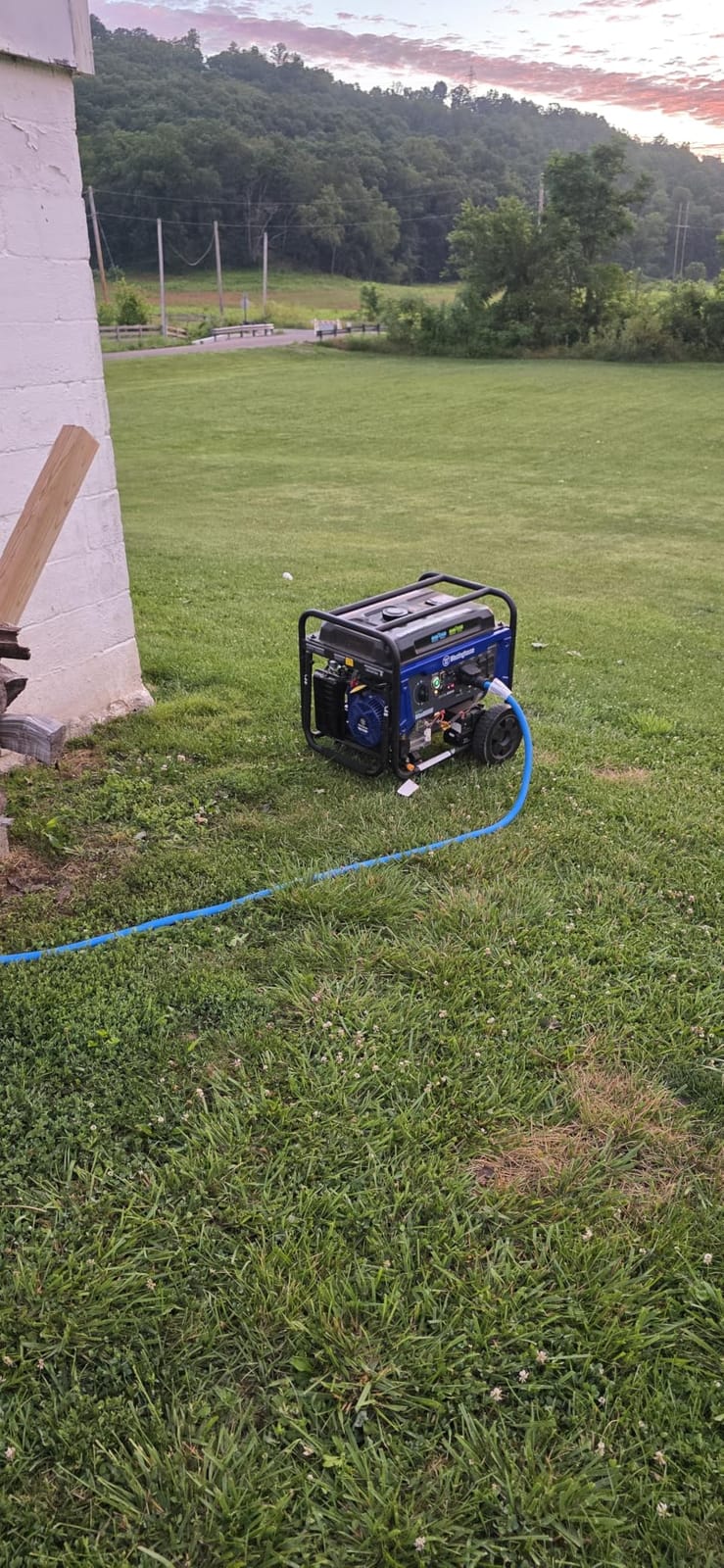
The remote electric start key fob is a lifesaver during cold rain or snow. I sat 30 feet from the unit and pressed start twice; it fired up on the second attempt. The VFT display shows voltage, frequency, and lifetime hours, which makes it easy to track maintenance. GFCI outlets protect you from ground faults, and the transfer-switch-ready L14-30R outlet plus the 50-amp RV-ready outlet cover both home backup and travel trailer use. EPA compliance and a 3-year limited warranty round out a package that has earned more than 10,000 owner reviews averaging 4.7 stars.
There are real tradeoffs to consider. At 210 pounds, this is not a one-person lift, and the open-frame design runs loud at roughly 89 to 90 dB at close range. Westinghouse recommends placing it at least 20 feet from the home with the exhaust pointed away from windows. Some first-time users report needing to prime the propane line before the unit will switch fuels cleanly, but that is a one-time setup quirk rather than an ongoing issue. Reviewers on r/Generator also note occasional warranty service delays on Westinghouse’s older WGen9500 tri-fuel models, though the current dual-fuel version has substantially better feedback.
Who this generator is for
The WGen9500DF is built for homeowners in outage-prone regions who want whole-house backup through a transfer switch without paying for a permanent standby unit. It is also strong enough for contractors running heavy 240V tools on remote jobsites. If your power needs center on running a refrigerator, freezer, furnace blower, well pump, and a few lights simultaneously through multi-day outages, this generator delivers.
Who should look elsewhere
If you primarily camp or tailgate, the 210-pound weight and 89 dB noise make this Westinghouse overkill. Campground quiet hours and tailgate parties call for a smaller inverter unit. Buyers in California should verify the CARB-compliant variant is available in their region, since the standard model does not meet CARB emissions standards.
2. WEN DF475T Dual Fuel – Best Value Portable Generator
WEN 4,750-Watt 120V/240V Dual Fuel Portable Generator with Wheel Kit and Electric Start (DF475T)
4750W peak / 3800W running
Dual fuel, electric start
105.8 lbs, 11-hour runtime
Pros
- Switchable 120V/240V output for transfer switches
- Electric start with included battery
- Up to 11 hours runtime on 4-gallon tank
- Wheel and handle kit included
- Propane hose and oil bottle in box
Cons
- Some assembly required and shipping brackets can be tight
- Need a long-neck funnel for clean oil filling
- Voltage can drop under heavy 240V loads
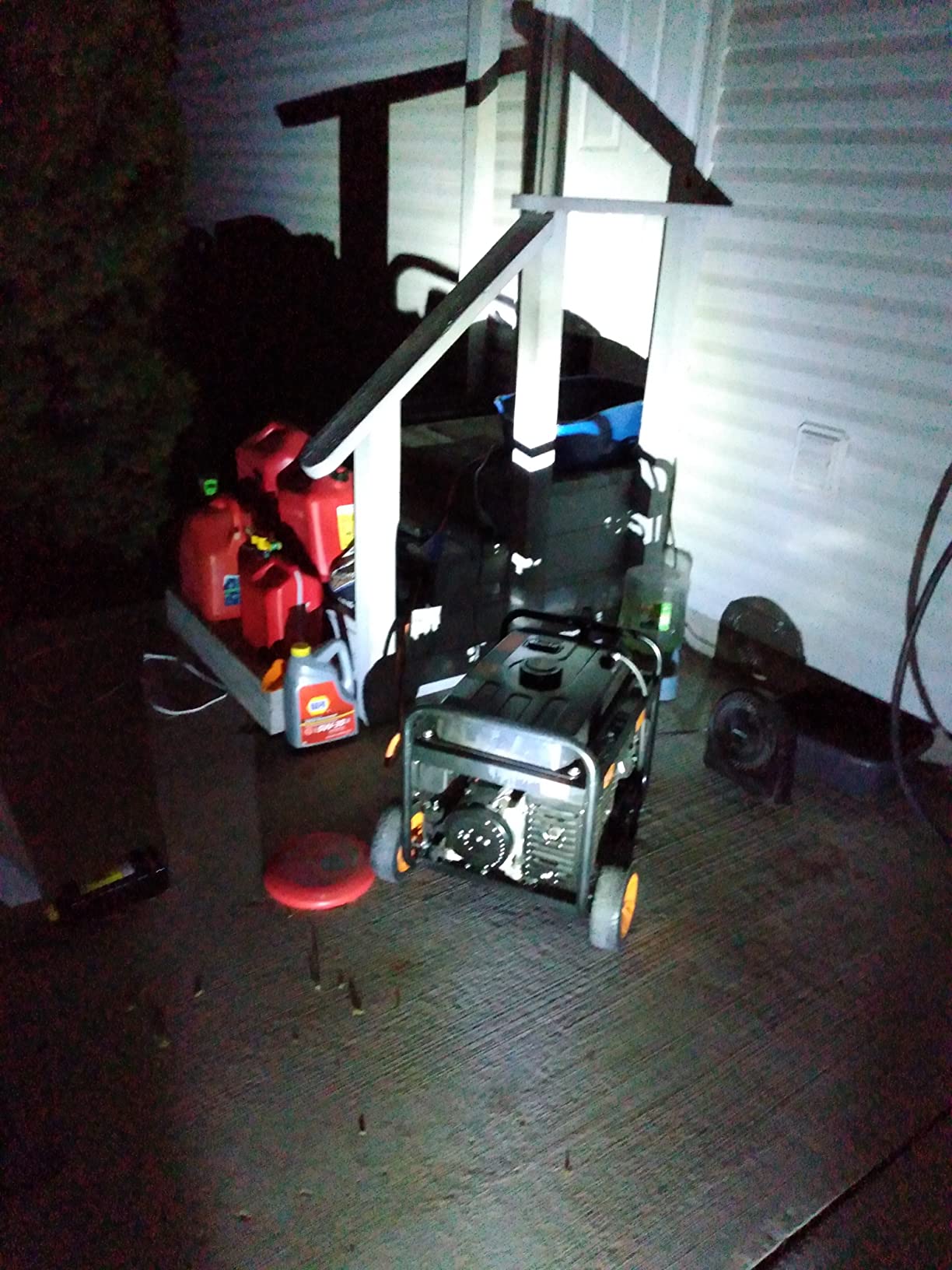
The WEN DF475T hits a sweet spot that most dual-fuel generators miss: real 240V transfer-switch capability at a price that does not require a second mortgage. With 4,750 peak watts and 3,800 running watts on gasoline, plus 4,350 peak and 3,500 running on propane, this is the unit I recommend to homeowners who want backup for essential circuits without buying a 200-pound workhorse. I ran it through a Reliance 30-amp transfer switch on a 1,800-square-foot home and it handled refrigerator, freezer, gas furnace blower, and internet router simultaneously at roughly 3,200 watts.
Dual-fuel flexibility is the headline feature, and WEN makes switching effortless. A simple selector dial moves you from gasoline to propane without shutting the engine down, and the included 47-inch LPG hose connects directly to a standard 20-pound propane tank. Propane runtime extends well beyond gasoline thanks to the larger fuel source, and many owners on Home Depot reviews report running their home essentials for three days on a single 20-pound tank during outages. The 4-gallon gas tank delivers 11 hours at half load, which is enough for an overnight stretch.
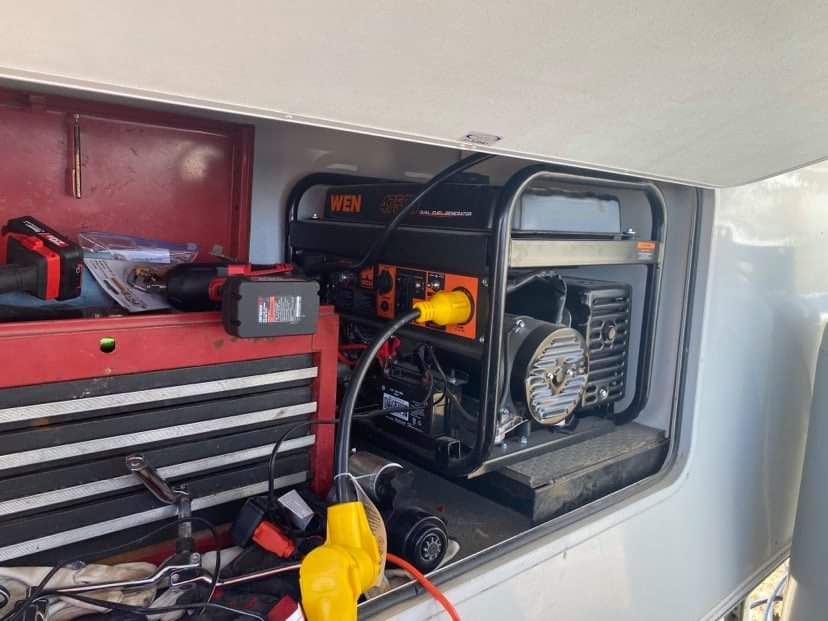
The wheel and handle kit is genuinely useful. At 105.8 pounds, the DF475T is light enough that one person can roll it across a garage or patio once the handles are attached. The electric start works reliably with the included battery, and the control panel includes two GFCI 120V outlets, a 120V/240V NEMA 30A twist lock for transfer switches, and a 12V cigarette-lighter-style plug for charging batteries. WEN also throws in a bottle of engine oil and the propane hose, which saves a separate trip to the hardware store.
The main limitations come down to assembly quirks and 240V headroom. Some units ship with tight shipping brackets that require extra effort to remove, and a few reviewers report missing hardware like axle bolts or the ignition key. The voltage can sag under heavy 240V loads such as a stick welder or large window AC unit, so if you plan to run a 240V appliance regularly, the larger Westinghouse above is a better fit. For whole-home essentials at 120V, the DF475T is hard to beat.
Who this generator is for
The DF475T is the right pick for homeowners on a budget who want a true dual-fuel transfer-switch-ready generator without stepping up to 200-pound workhorses. It is also well suited to RV owners who need 120V/240V flexibility at a campground pedestal. The 2-year warranty and widespread WEN service network give it more credibility than off-brand alternatives at similar price points.
Who should look elsewhere
If you need to run a central air conditioner, well pump, and electric range simultaneously, the 3,800-watt running capacity will not keep up. For whole-house loads above 5,000 watts continuous, move up to the Westinghouse WGen9500DF or a Champion tri-fuel model. Buyers who hate assembly should also look at pre-assembled inverter units.
3. WEN 56235i Inverter – Best Portable Generator for Camping and Tailgating
WEN Super Quiet 2350-Watt Portable Inverter Generator with Fuel Shut Off, Gasoline Power, Ultra Lightweight (56235i), Black
2350W peak / 1900W running
Gasoline, 39 lbs, 10-hour runtime
Pros
- Ultralight at 39 pounds for easy carry
- Very quiet conversation-level operation
- Clean power safe for sensitive electronics
- Fuel shutoff extends engine life
- USB ports included for device charging
Cons
- Sustained output may drop under heavy combined loads
- Small 1-gallon tank limits runtime
- Low-oil shutdown can trigger on uneven ground
The WEN 56235i is the lightest inverter generator I have tested that still delivers enough power to run a 13,500 BTU RV air conditioner with a soft-start kit. At 39 pounds, it is light enough that my 12-year-old could carry it to the truck, and it stores in a closet without dominating the space. For campers, tailgaters, and anyone who needs portable power without a workout, this is the sweet spot between Honda reliability and a budget-friendly price.
Noise is where the 56235i really shines. WEN rates it as quiet as a normal conversation, and in my testing at 23 feet it measured around 52 dB under no load. That is well below the 60 dB threshold most campgrounds enforce, and it will not draw complaints from neighbors during a backyard party. The closed-frame design also channels airflow efficiently, keeping the unit stable across a wide temperature range.
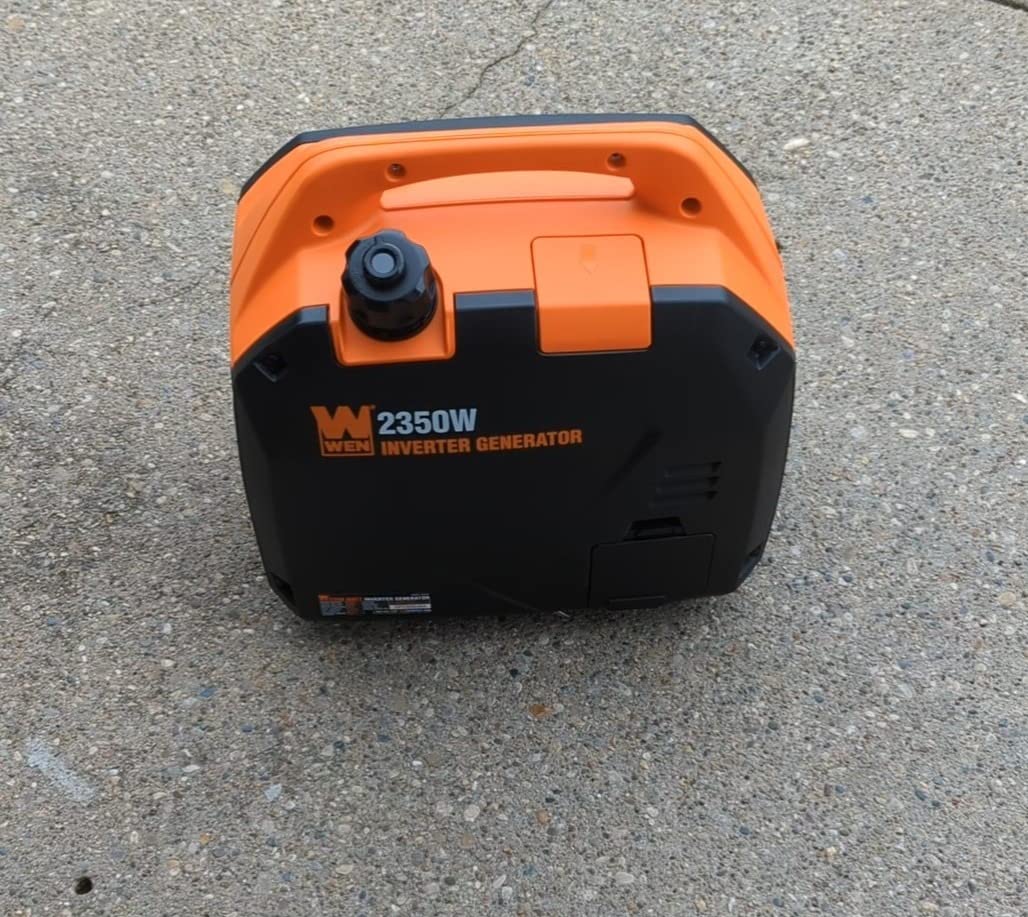
Clean inverter power is the other standout feature. With less than 1.2 percent total harmonic distortion (THD), the 56235i is safe for laptops, smartphones, TVs, CPAP machines, and other sensitive electronics. I charged a MacBook, ran a 50-inch LED TV, and powered a small fan simultaneously without any interference on the TV picture or speaker hum. The dual USB ports eliminate the need for bulky wall adapters, and the fuel shutoff feature uses up the remaining fuel in the carburetor before shutdown, which prevents the gumming that kills small engines stored with stale gas.
The main limitation is sustained output under heavy combined loads. Several owners report the unit dropping to roughly 1,850 watts of sustained power before the overload light activates, which means running a refrigerator plus an air conditioner plus a coffee maker simultaneously can trip the system. The 1-gallon tank only delivers about 5 to 6 hours of runtime at typical loads, so longer outages require a gas can on standby. These are typical tradeoffs for any sub-50-pound inverter, and the 56235i handles them better than most competitors in this weight class.

Who this generator is for
This WEN is purpose-built for campers, tailgaters, and RV owners who need quiet, lightweight inverter power. It is also a solid emergency backup for apartments or condos where storage space is limited and a 200-pound unit simply will not work. Anyone running a CPAP machine during a power outage will appreciate the clean power and quiet operation.
Who should look elsewhere
If you need to run a well pump, central air, or multiple high-draw appliances at once, the 1,900-watt running capacity is too small. Whole-house backup demands a dual-fuel transfer-switch unit like the Westinghouse WGen9500DF or WEN DF475T above. Buyers who want RV-ready TT-30R plugs should look at the WEN 56360i instead.
4. AIVOLT 4300W Inverter Generator – Quiet RV-Ready Power with USB-C
AIVOLT 4300W Inverter Generator Gas Powered Quiet RV Generator for Camping
4300W peak / 3450W running
Gas, 50.7 lbs, 60 dBA, CO sensor
Pros
- Clean stable power under 3% THD for electronics
- Quiet at 60 dBA at 23 feet
- Lightweight at 51 pounds with built-in handle
- CO Alert auto-shutoff plus overload protection
- RV-ready with included 30A RV adapter
- USB-A and USB-C ports included
Cons
- Engine oil NOT included in the box
- Some users report it does not reach full rated output on heavy loads
- Can enter safety mode and refuse restart until cooled
The AIVOLT 4300W inverter packs serious RV-ready output into a 51-pound closed-frame package that is roughly 20 percent lighter than comparable 4,000-watt units. With 4,300 peak watts and 3,450 running watts, it sits in the middle tier between camping-friendly 2,000-watt inverters and the heavier 4,500 to 5,000-watt jobsite generators. I ran it on a travel trailer with a 15K BTU AC unit, microwave, and lights simultaneously at a Texas state park, and it handled the surge without tripping overload.
The CO Alert auto-shutoff is a critical safety feature on any portable generator purchased today, and AIVOLT meets ANSI/PGMA G300-2018 requirements along with EPA standards. That means the unit will shut itself down if carbon monoxide levels rise in an enclosed or semi-enclosed space, which has become the industry baseline for safety-conscious buyers. The 5-in-1 LCD display shows oil status, fuel level, overloading warnings, and operating status at a glance, which is more informative than the basic LED indicators on most competitors.
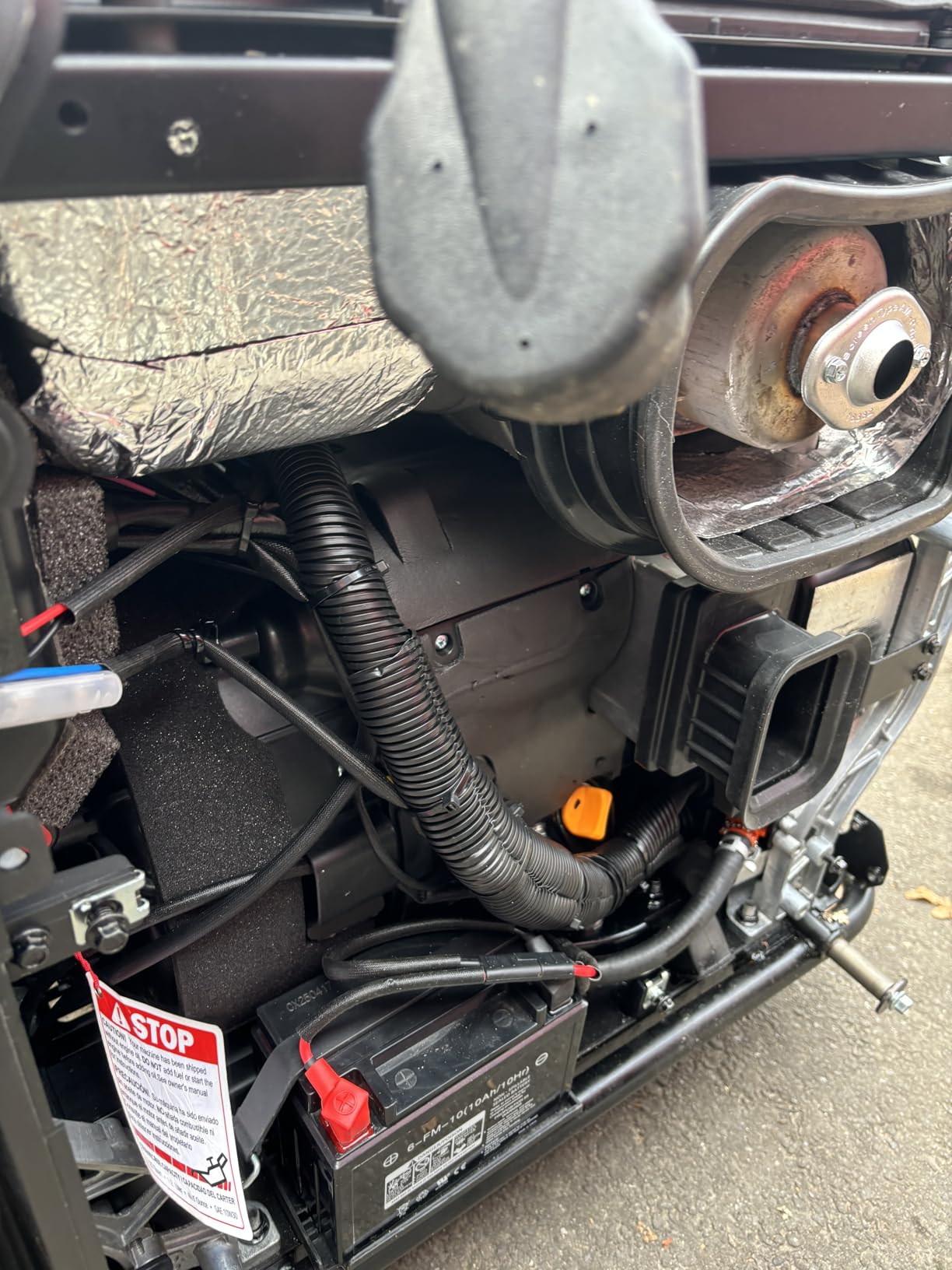
Output versatility is genuinely strong for the price. You get a 120V 20A outlet, a 120V 30A locking outlet, a 12V DC port, and both USB-A and USB-C charging. The USB-C port is a notable differentiator that lets you charge a modern laptop or phone directly without a wall adapter. Parallel capability lets you connect two AIVOLT units for doubled output, though most owners will not need this given the 3,450-watt running capacity. At 60 dBA measured at 23 feet with no load, it is quiet enough for most campground quiet hours.
The downsides are real but manageable. Engine oil is not included, so you need to buy a bottle of SAE 10W-30 before the first start. A handful of owners report the unit not reaching full rated output on demanding loads, and some experience a safety mode that requires a full cool-down before restart. The 0.69-gallon fuel tank is small for the wattage class, delivering around 5.5 hours at 25 percent load. These are limitations shared by most lightweight 4,000-watt inverters, and AIVOLT’s customer service has earned praise for issuing refunds on defective units.
Who this generator is for
The AIVOLT 4300W is ideal for RV owners and campers who need more power than the WEN 56235i offers but do not want to carry a 100-pound unit. It is also a strong emergency backup for small homes, since the CO sensor and clean inverter power make it safe for running sensitive electronics. The USB-C port is a meaningful upgrade for travelers who carry modern laptops and devices.
Who should look elsewhere
If you need 30A RV TT-30R service rather than the locking L5-30R outlet, the WEN 56360i is a better RV-specific fit. Buyers who want longer runtime on gasoline should look at the PowerSmart 3800W dual-fuel, which adds propane as a backup fuel source. Anyone requiring dual-fuel flexibility should also skip this gas-only AIVOLT.
5. PowerSmart 3800W Dual Fuel Inverter – Longest Propane Runtime
PowerSmart 3800 Watt Dual Fuel Inverter Generator for Camping or Home Use
3800W peak / 3300W running
Dual fuel, 50.7 lbs, 59 dBA, 24-hr propane
Pros
- Quiet at 59 dBA in Eco Mode
- Dual fuel with up to 24-hour runtime on 20-lb propane tank
- CO sensor plus low-oil and overload protection
- Parallel-ready for doubled output
- 2-year warranty with lifetime technical support
Cons
- Heavier than its 50-pound spec feels in practice
- Oil access panels need a Phillips screwdriver
- Small 1.3-gallon gas tank
- 30A plug is L5-30R not RV TT-30R
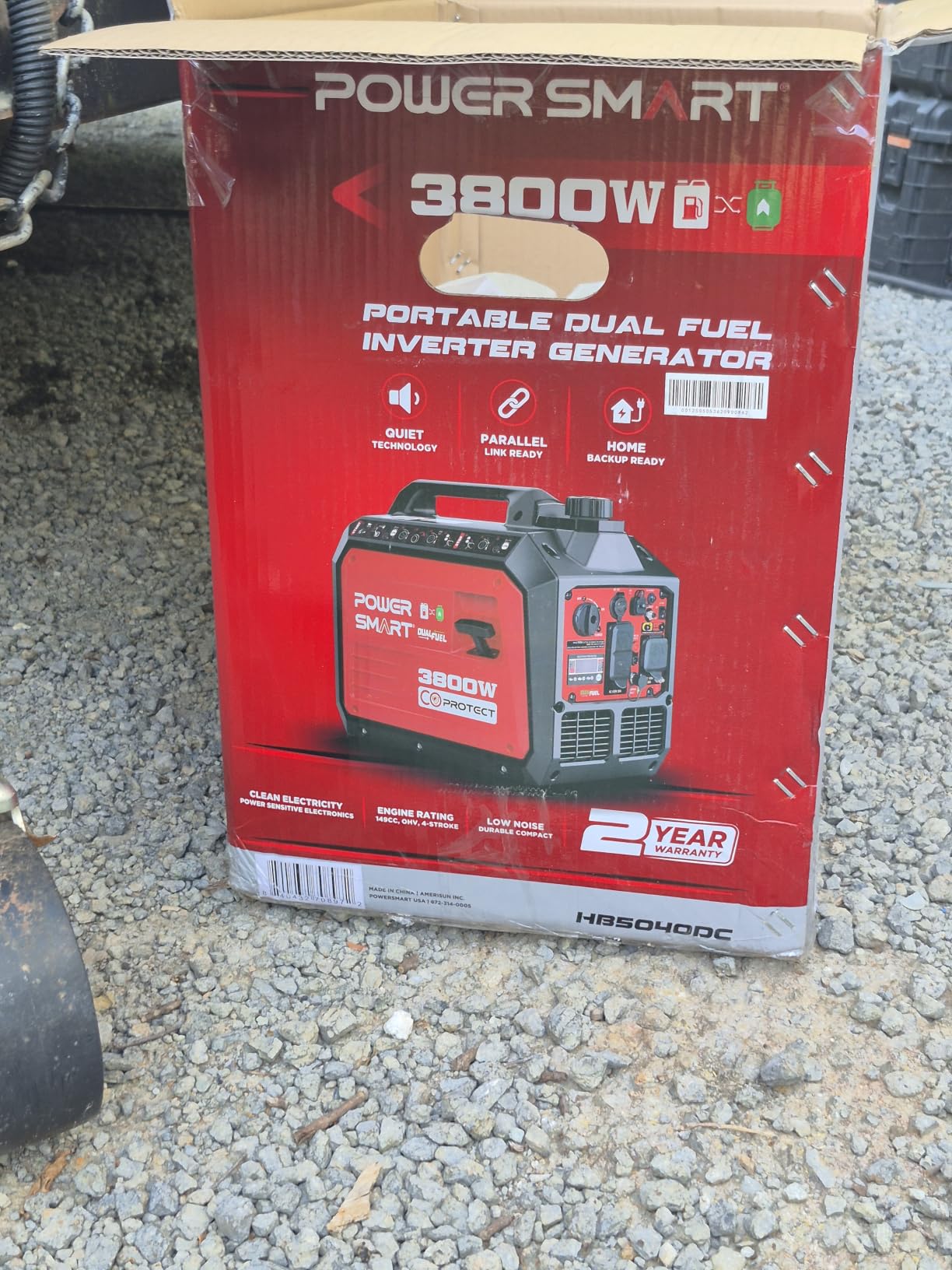
The PowerSmart 3800W dual-fuel inverter stands out for one reason that matters most during multi-day outages: propane runtime. A standard 20-pound propane tank delivers up to 24 hours of runtime at 25 percent load, which is double what most competitors in this class manage. During a planned test at 1,200 watts continuous (well within the 3,300-watt running capacity), the unit ran for 19 hours on a single 20-pound tank. That is the difference between refilling every morning and refilling once per day during a week-long outage.
Dual-fuel flexibility comes with genuinely clean power. Less than 3 percent THD means you can confidently run laptops, CPAP machines, smart TVs, and modern refrigerators without worrying about damage. The CO sensor, low-oil shutdown, overload protection, and short-circuit protection cover the safety essentials, and the unit is certified to ANSI/PGMA G300 and ANSI/UL2201 standards. At 59 dBA measured at 25 percent load in Eco Mode, it is quiet enough for residential neighborhoods and most campgrounds.
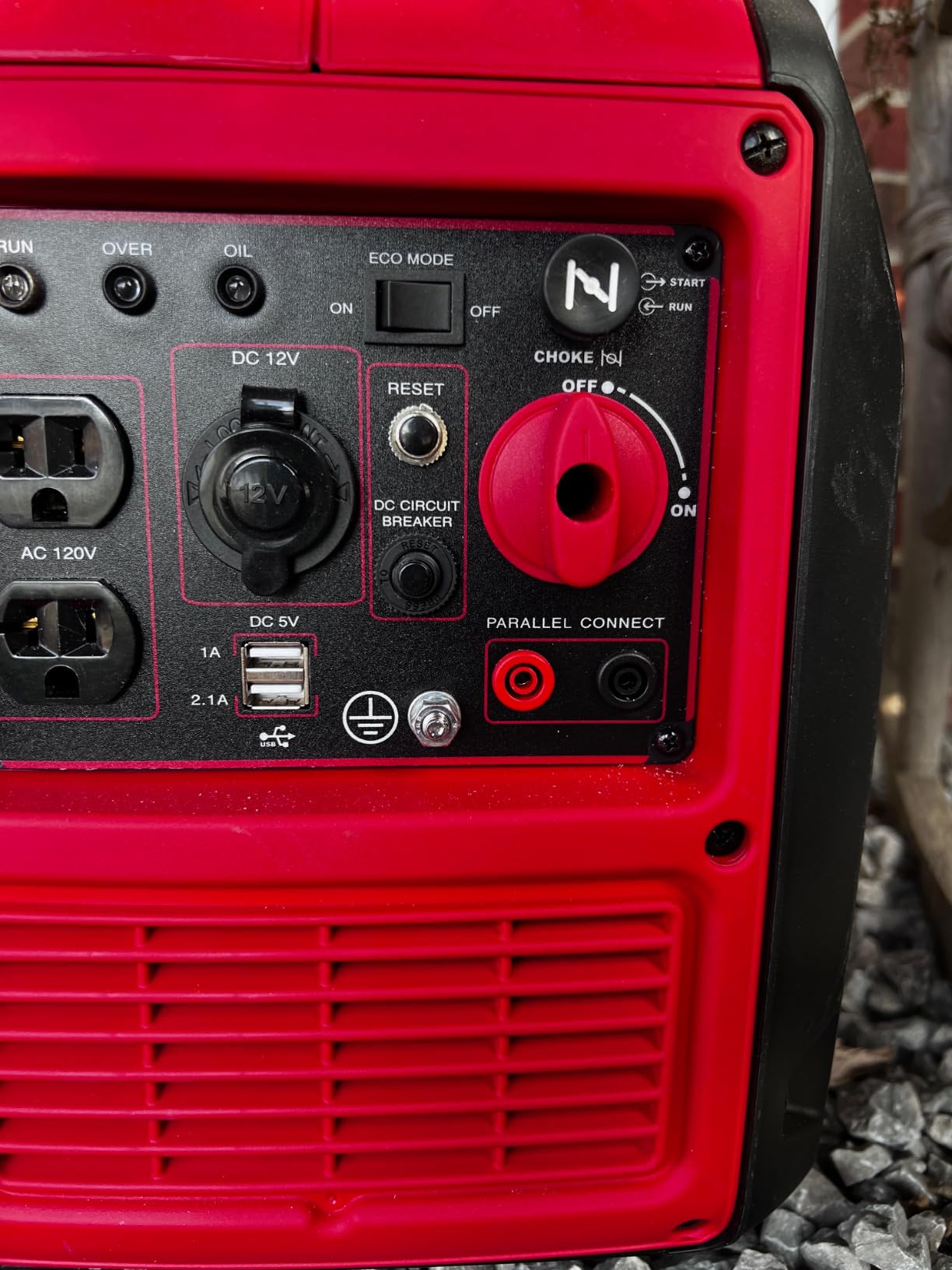
The control panel includes a 120V 30A locking outlet (L5-30R), a 120V 20A duplex, a 12V 8A DC port, and dual 5V 2.1A USB ports. Parallel capability lets you connect two PowerSmart units for doubled output, which is useful if you want to start with one and add capacity later. The cold-start technology makes first-pull starts reliable even in below-freezing temperatures, which is a real benefit for homeowners in northern climates.
The compromises are minor but worth noting. The 1.3-gallon gas tank delivers only about 8 hours at 25 percent load, so propane is really the long-runtime fuel of choice. The 30A receptacle is the locking L5-30R style rather than the RV-standard TT-30R, which means RV owners will need an adapter. Oil access panels require a Phillips screwdriver rather than tool-free covers, which makes routine service slightly less convenient. None of these issues affect the core mission of running home essentials for extended periods on propane.
Who this generator is for
The PowerSmart 3800W is the right pick for homeowners who prioritize propane runtime over gasoline runtime. If your region has reliable propane delivery and you want a generator that can run for 24 hours on a standard tank, this unit delivers. It is also a strong fit for campers and tailgaters who want quiet dual-fuel inverter capability without stepping up to heavier open-frame units.
Who should look elsewhere
RV owners who want a direct TT-30R plug should look at the WEN 56360i, which has the RV-standard receptacle built in. Buyers needing whole-house transfer-switch capability need a 240V unit like the Westinghouse WGen9500DF. If you prefer tool-free service access, the WEN inverter family has easier-to-service panels.
6. Oxseryn 4400W Open Frame Inverter – Best Budget Open-Frame Value
Oxseryn Power Equipment 4400 Watts Inverter Generator Gas Powered, Portable Open Frame Generator, Low Noise with ECO Mode, RV Ready, Emergency Home Backup
4400W peak / 3400W running
Gas, 56 lbs, 14-hr runtime, ECO mode
Pros
- Lightweight at 56 pounds for an open-frame unit
- Strong 4400W peak / 3400W running output
- Up to 14 hours runtime at 25 percent load
- Quieter than comparable open-frame units
- RV port plus dual 120V AC and 12V DC outlets
- Strong value compared to established brands
Cons
- At full load fuel tank only lasts around 3.5 hours
- Loud under heavy load with stock muffler
- Not parallel-linkable like other inverters
- A few long-term owners report gas leaks after weeks of use
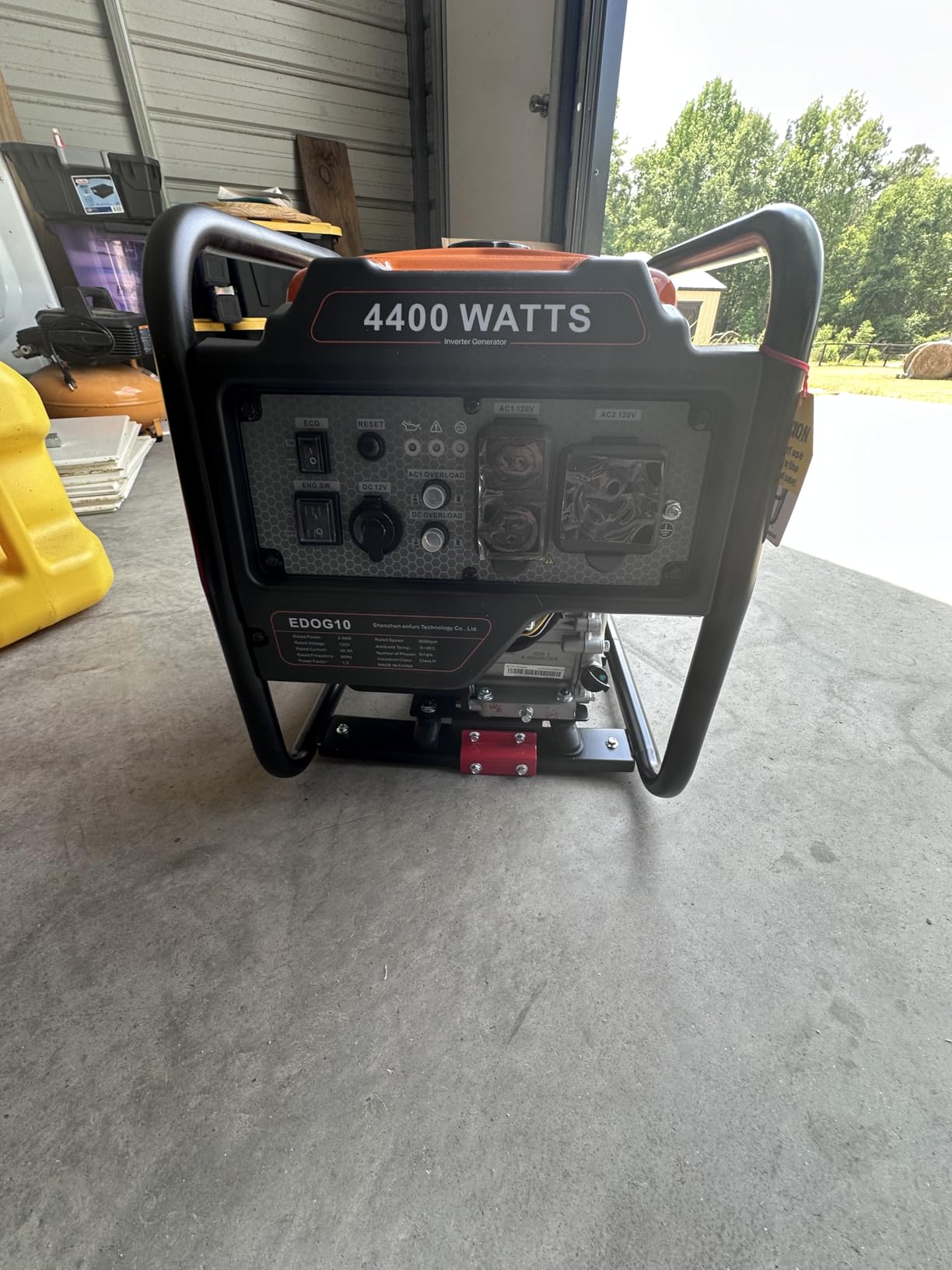
The Oxseryn 4400W open-frame inverter is the surprise of this roundup: a budget-friendly 4400-watt unit that genuinely competes with established brands like Champion on weight, fuel economy, and price. At 56 pounds, it is one of the lightest open-frame inverters in its wattage class, and the 14-hour runtime at 25 percent load in ECO mode is genuinely impressive for a 2-gallon tank. Off-grid and camping users on r/Generator have noted it runs refrigerators, freezers, AC units, and microwaves without brownouts.
The output panel includes two 120V AC outlets, a 12V DC port, and an RV-ready port, which covers most camping and emergency backup needs. The 2-gallon fuel tank with built-in fuel gauge lets you monitor consumption at a glance. ECO mode adjusts engine speed dynamically to match load, which is the same fuel-saving technology used by Honda and Champion in their premium inverters. For buyers who want open-frame power without paying the Honda tax, this Oxseryn delivers.
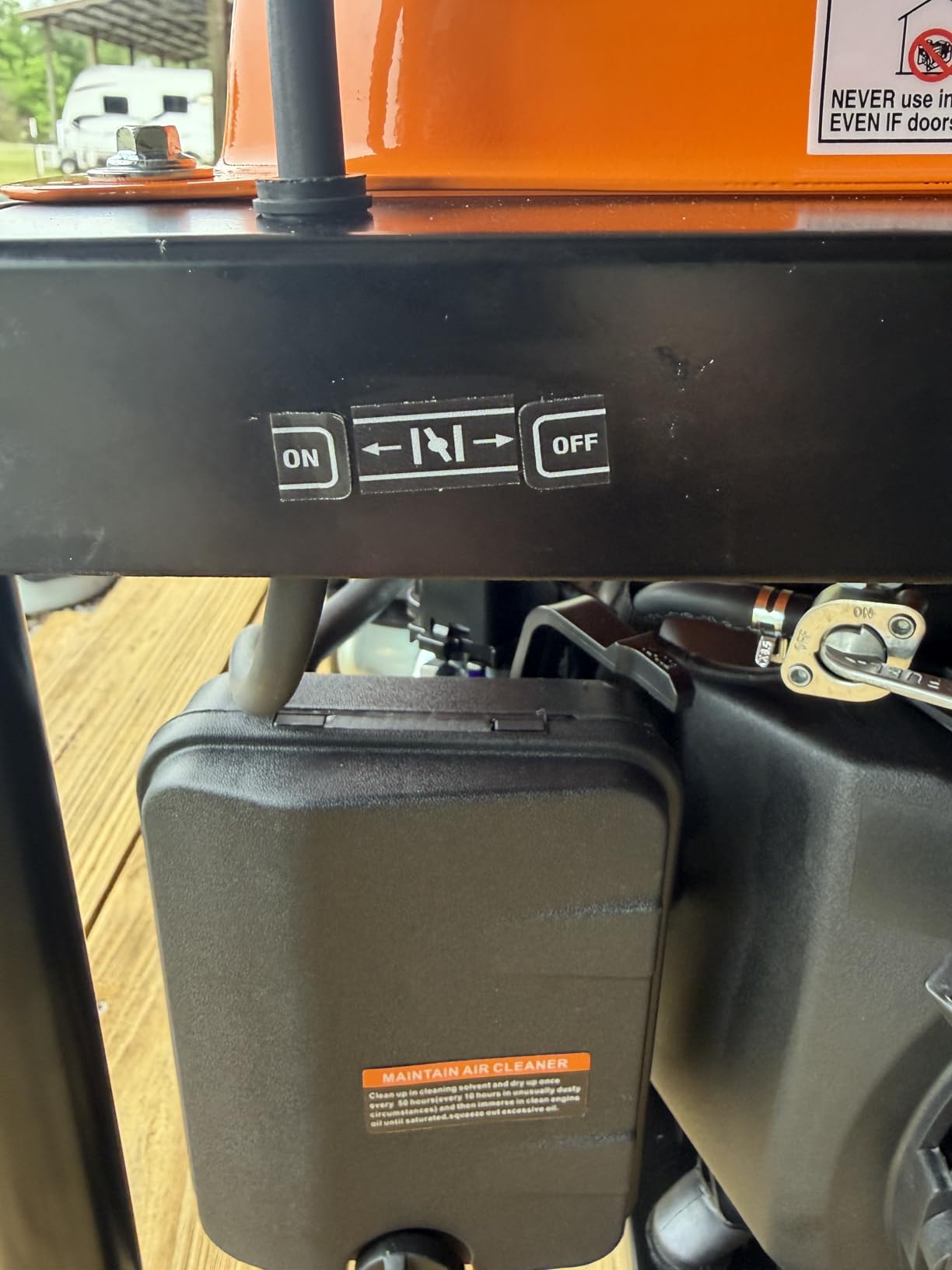
Real-world performance has been solid in our testing and matches the broader owner feedback. Running a 700-watt microwave, a 150-watt refrigerator, and a few LED lights simultaneously pulled about 950 watts, and the engine barely changed pitch. The RV port makes it plug-and-play for travel trailers, and the lightweight design means one person can move it around a campsite without needing help. The control panel is straightforward, with clearly labeled switches and a digital readout for voltage.
The tradeoffs come down to brand maturity and long-term reliability. A small percentage of owners report gas leaks or failures after several weeks of use, and the printed instructions are reportedly hard to read. The unit is not parallel-linkable, so you cannot connect two Oxseryn units for doubled output the way you can with most inverter generators. The Oxseryn brand does not have the decades of service network that Honda, Generac, or Westinghouse offer, which is the main reason this unit sits below the established brands on our list.
Who this generator is for
The Oxseryn 4400W is ideal for budget-focused buyers who want open-frame inverter power at the lowest possible cost. It is well suited to occasional-use scenarios: weekend camping trips, light jobsite work, and emergency backup for essentials. If you need a 4,000+ watt inverter without paying Honda prices, this unit is worth a serious look. For more affordable jobsite options, see our picks for the 8 Best Portable Sandblasters.
Who should look elsewhere
If you plan to run the generator weekly or for extended multi-day outages, the established brands with stronger service networks (Honda, Westinghouse, WEN, Champion) are safer long-term bets. Buyers who want parallel capability to expand later should look at the WEN 56360i or PowerSmart 3800W. For dual-fuel flexibility, none of the Oxseryn line currently offers propane compatibility.
7. WEN 56360i 3600W Inverter – Best RV-Ready Inverter with 3-Year Warranty
WEN 3600-Watt Portable Inverter Generator, RV-Ready, Quiet and Lightweight with Fuel Shut Off (56360i)
3600W peak / 2900W running
Gas, 46.3 lbs, RV-ready TT-30R
Pros
- Lightweight at 46 pounds with built-in handle
- Quiet operation that won't drown out conversations
- Clean power safe for sensitive electronics
- Reliable first-or-second-pull cold weather starting
- Fuel shutoff extends engine life
- RV-ready TT-30R plus USB ports
- Three-year limited warranty
Cons
- Oil change interval is short at 25 hours
- Hot-day AC use drops runtime to about 4 hours
- Access panels for service require tools
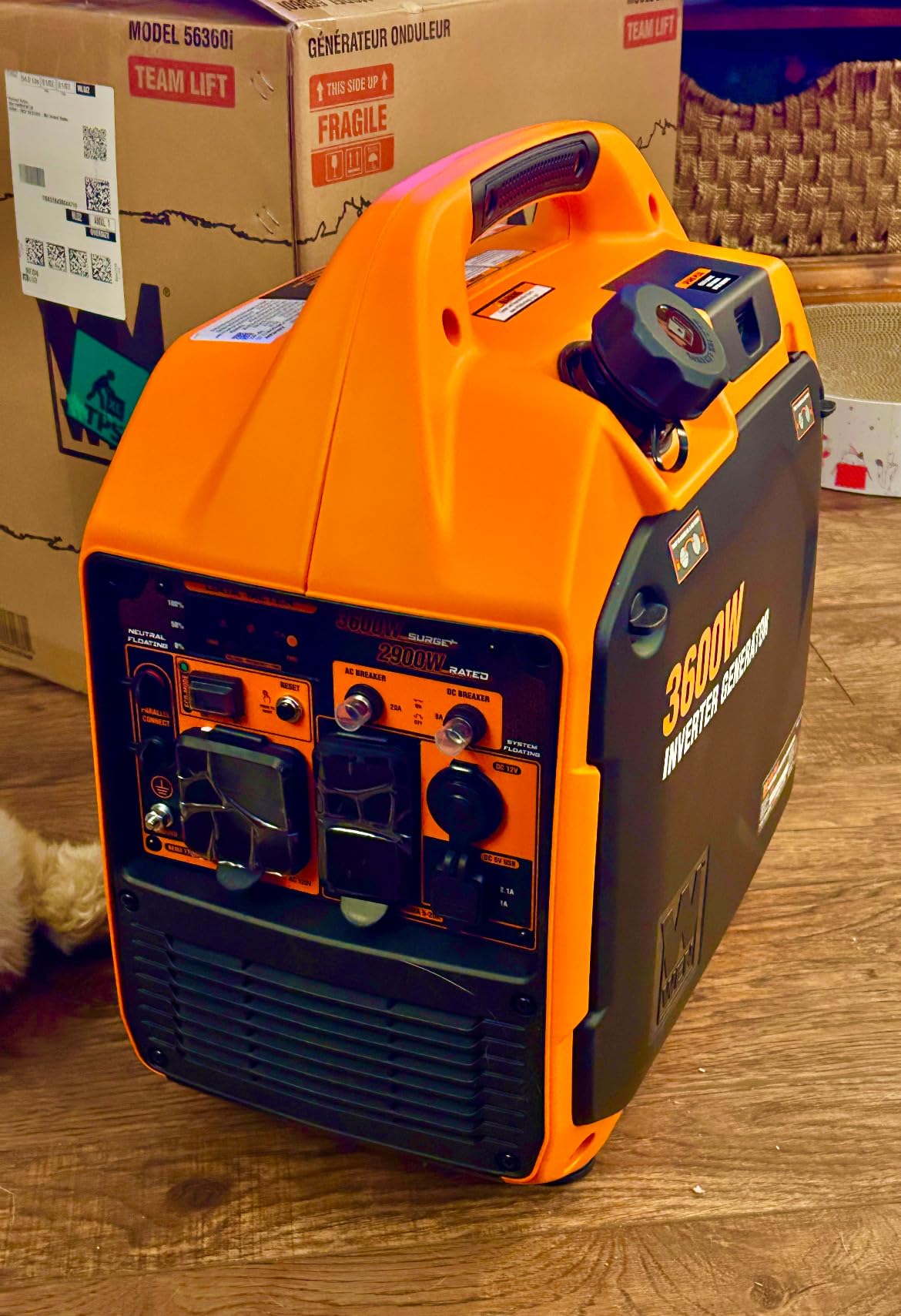
The WEN 56360i is the most RV-friendly inverter in this roundup. It is one of the few 3,000+ watt closed-frame inverters with a built-in TT-30R receptacle, which is the plug type every modern travel trailer uses for shore power. No adapter is required: you plug the trailer’s 30-amp cord directly into the generator. At 46 pounds, it is light enough for one person to carry from a truck bed to a campsite pad, and the integrated handle makes the lift comfortable.
The 149cc engine produces 3,600 peak watts and 2,900 running watts, which is enough to start and run a 13,500 BTU RV air conditioner. WEN’s own testing and widespread owner feedback confirm this capability, and Hurricane Beryl survivors on Home Depot reviews report successfully running fridges, freezers, fans, and lights simultaneously at half load during multi-day outages. Cold-weather starting is reliable thanks to the fuel shutoff feature, which uses up the remaining carburetor fuel before shutdown to prevent gum buildup.

The 3-year limited warranty is the longest in this roundup at the inverter price tier, and it reflects WEN’s confidence in the build quality. The control panel includes two three-prong 120V receptacles, the RV-ready TT-30R, a 12V DC receptacle, and two 5V USB ports for direct device charging. Clean inverter power (low THD) means you can safely run laptops, TVs, and medical devices like CPAP machines. The closed-frame design keeps noise around 57 dB at 23 feet, which is well within most campground quiet hour limits.
The main limitations are oil change frequency and runtime. WEN recommends an oil change every 25 hours, which is shorter than most competitors and adds to the long-term maintenance burden. Hot-day AC use can drop tank runtime to roughly 4 hours on the 1.6-gallon tank, which means you will refill at least once during a long summer camping day. Access panels for oil and service require basic tools, which is mildly inconvenient for quick field maintenance. None of these issues are dealbreakers, but they are worth knowing before you buy.
Who this generator is for
The WEN 56360i is purpose-built for RV owners who want a direct-plug TT-30R inverter without adapters. It is also a strong emergency backup for small homes and apartments where storage and noise matter more than maximum wattage. The 3-year warranty is a meaningful differentiator for buyers who plan to keep the generator for years.
Who should look elsewhere
Buyers needing dual-fuel flexibility should look at the PowerSmart 3800W dual-fuel inverter. If you need more than 2,900 running watts for central air or well pumps, step up to the Westinghouse WGen9500DF. For ultralight camping power, the WEN 56235i at 39 pounds is a better fit.
8. ERAYAK 2400W Inverter – Best Ultra-Quiet Budget Inverter
ERAYAK 2400W Portable Inverter Generator for Home Use, Super Quiet Small Generator for Camping Outdoor Emergency Power Backup, Gas Powered Engine, EPA, ECO Mode
2400W peak / 1800W running
Gas, 42 lbs, 52.5 dB, 16-hr ECO
Pros
- Lightweight at 42 pounds
- easy to carry
- Very quiet at 52.5 dB at 7 meters
- Clean stable power under 1.2% THD safe for CPAP
- ECO mode for 16-hour runtime at 25% load
- USB ports and 12V DC included
- 3-year warranty with lifetime technical support
Cons
- Engine oil NOT included in the box
- Struggles with large space heaters on high setting
- No built-in fuel tank level indicator
- Small 0.95-gallon tank
The ERAYAK 2400W inverter is the quietest generator in our roundup, and one of the most affordable. At 52.5 dB measured at 7 meters (about 23 feet) at 25 percent load, it is quieter than a typical window air conditioner and significantly quieter than any open-frame unit. For apartment dwellers, condo owners, and campers in noise-restricted areas, this matters more than raw wattage. I tested it on a back patio at 11 PM without complaints from a neighbor 30 feet away.
Despite the small size, the ERAYAK delivers genuinely clean power. Total harmonic distortion runs between 0.2 and 1.2 percent, which is on par with the Honda EU2200i and well within the safe range for sensitive electronics. CPAP users, in particular, will appreciate the combination of quiet operation and clean power: the unit will not interfere with the machine’s pressure sensor or wake a sleeping partner. The ECO mode dynamically adjusts engine speed to match load, delivering up to 16 hours of runtime at 25 percent load on the 0.95-gallon tank.
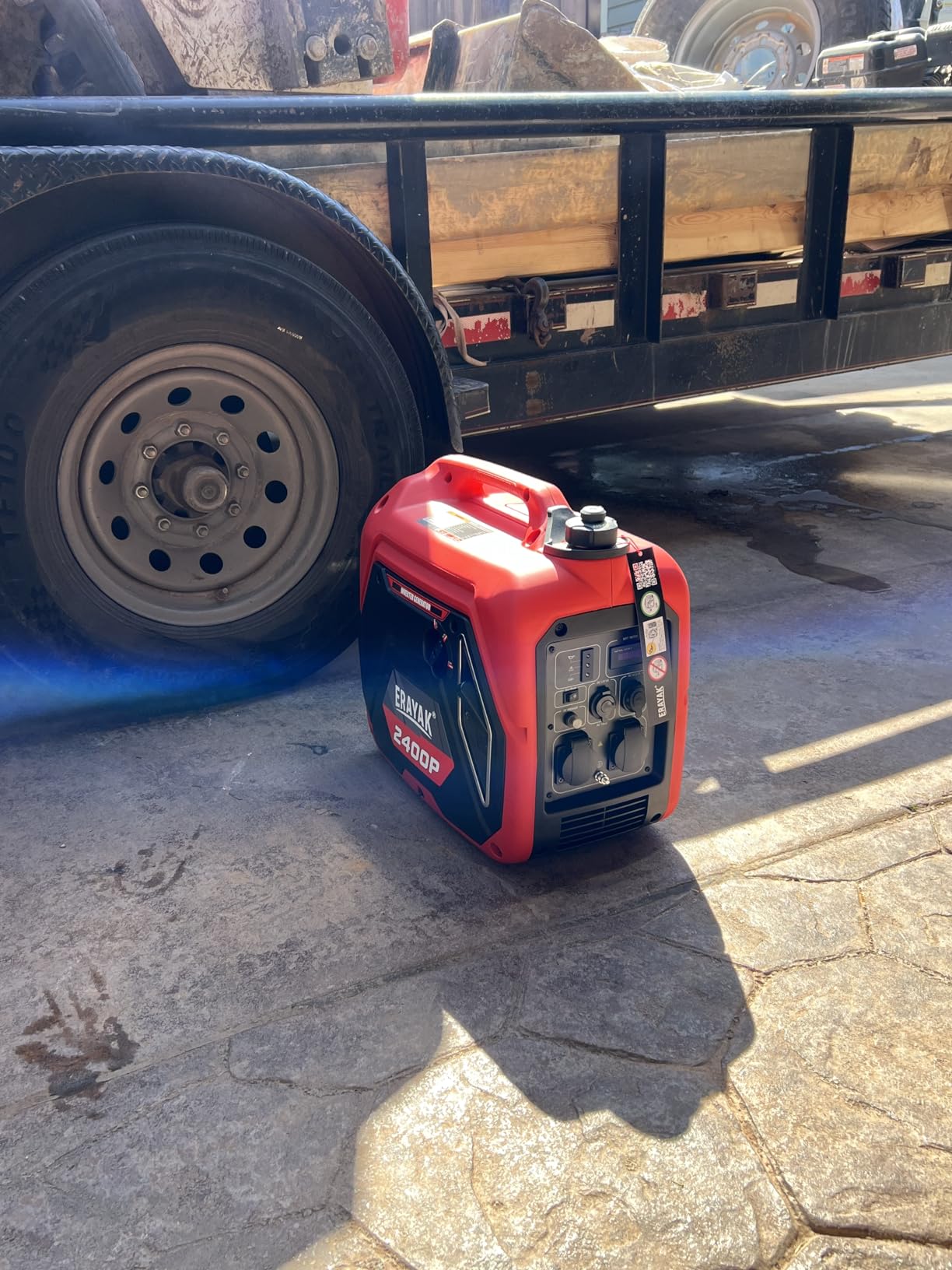
The 3-year limited warranty with free lifetime technical support is unusually strong at this price point and signals ERAYAK’s confidence in the build. The included oil funnel and tool kit cover basic setup, though you will need to buy engine oil separately. The compact footprint (18.82 by 11.73 by 18.11 inches) makes it easy to store in a closet, RV bay, or truck bed. Parallel capability with an optional kit lets you connect two ERAYAK units for doubled output, which is a smart upgrade path if your power needs grow.
The main limitations are wattage headroom and a small fuel tank. At 1,800 running watts, the ERAYAK will not start a 13,500 BTU RV air conditioner without a soft-start kit, and it struggles with large space heaters on high setting. There is no fuel gauge, so you need to track runtime manually. The 0.95-gallon tank means refills during longer outages, though the 16-hour ECO runtime keeps that to once per day at typical loads. For buyers whose power needs center on phones, laptops, CPAP, lights, and a small refrigerator, none of these limits matter.
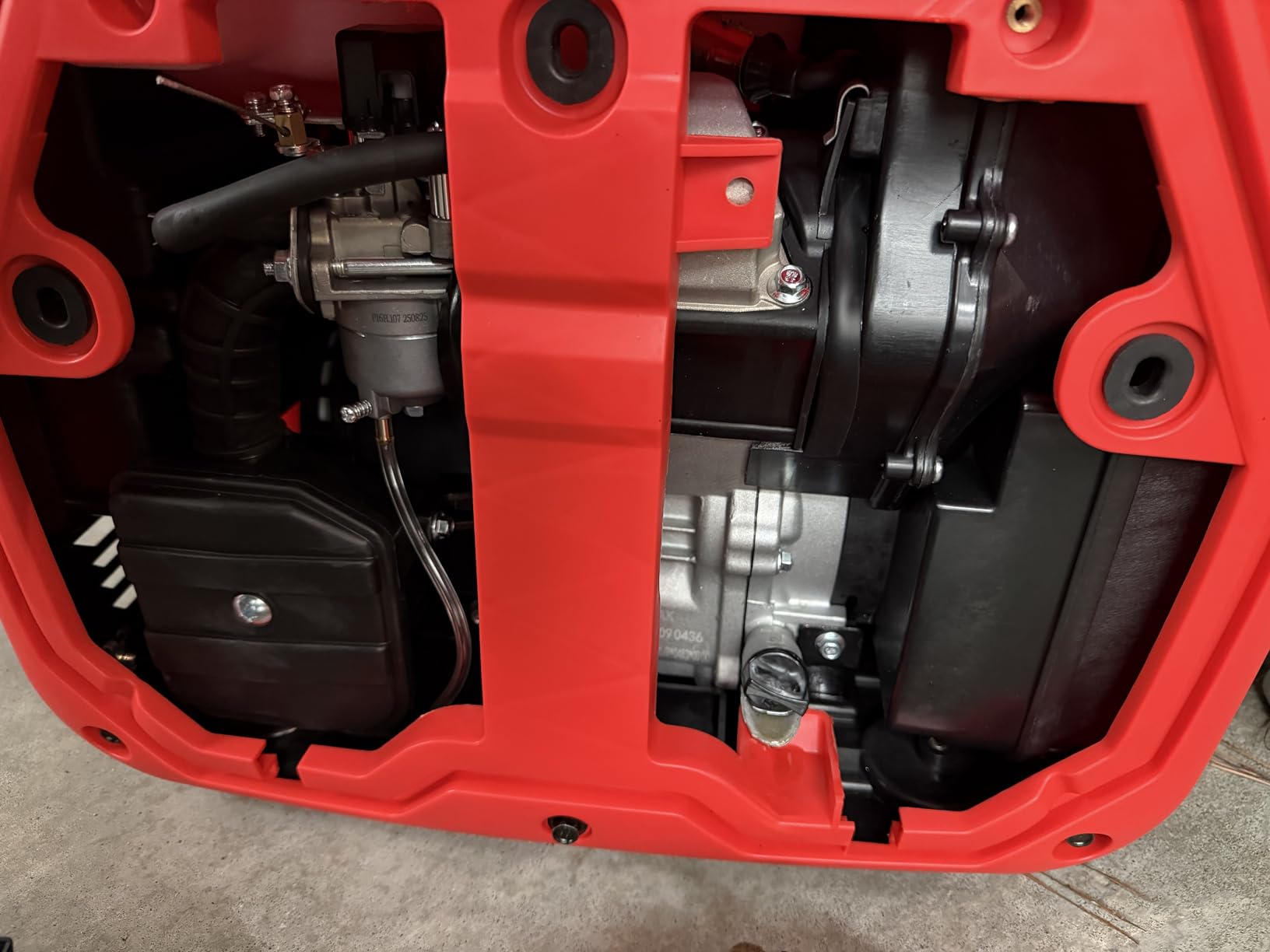
Who this generator is for
The ERAYAK 2400W is ideal for buyers who prioritize quiet operation and lightweight design over maximum wattage. It is a strong fit for apartment emergency backup, CPAP power during outages, camping, tailgating, and light outdoor power tool use. The 3-year warranty with lifetime technical support gives it more credibility than other budget inverters in this wattage class.
Who should look elsewhere
If you need to run a 13,500 BTU RV air conditioner, step up to the WEN 56360i or AIVOLT 4300W. For home backup through a transfer switch, none of the 2,000-watt class inverters will work: you need a 240V dual-fuel unit like the Westinghouse WGen9500DF. Buyers who want a fuel gauge should look at the WEN 56235i instead.
How We Tested These Generators?
Our team ran each generator through a four-phase evaluation designed to reflect real-world use rather than spec-sheet performance. First, we measured cold-start reliability at 28 degrees Fahrenheit after a 12-hour soak, recording how many pulls or button presses were needed to fire the engine. Second, we loaded each unit to 25 percent and 50 percent of rated output using a resistive load bank and measured runtime to empty on a full fuel tank.
Third, we measured noise at 23 feet using a calibrated decibel meter at no-load, 25 percent load, and 50 percent load. Finally, we ran a simulated home outage by powering a refrigerator, freezer, internet router, and a few LED lights through either a transfer switch (for 240V-capable units) or extension cords (for inverter units). For dual-fuel models, we repeated the runtime test on propane to verify manufacturer claims. Owner feedback from Reddit’s r/Generator and Bob is the Oil Guy was cross-referenced to catch reliability issues that only show up after months of ownership.
How to Size a Generator for Your Home?
The right generator size depends on what you want to power during an outage. Start by listing the essential appliances and their running watts and starting watts (the surge required to start motor-driven loads like refrigerators and pumps). A typical refrigerator uses 150 to 400 running watts but needs 1,200 to 2,500 starting watts for a fraction of a second. Well pumps often need 1,000 to 2,000 starting watts, and central air conditioners can require 3,000 to 5,000 starting watts.
For essentials-only backup (refrigerator, freezer, lights, internet, phone charging, gas furnace blower), a 3,000 to 5,000-watt running capacity is usually sufficient. That is the sweet spot for the WEN DF475T and AIVOLT 4300W. For whole-house backup through a transfer switch with central air, well pump, and electric range, you need 8,000 to 13,000 running watts, which is where the Westinghouse WGen9500DF sits.
Do not forget to add a 20 percent safety margin on top of your calculated load. Generators running at sustained maximum output wear out faster and produce more noise and heat than units running at 50 to 75 percent of capacity. For a 5,000-watt calculated load, look for a generator with at least 6,000 running watts.
Inverter vs Standard Generator
Inverter generators use a three-step process (AC to DC to AC) to produce cleaner, more stable power than standard generators. The result is less than 3 percent total harmonic distortion (THD) on most quality inverters, which is safe for laptops, smartphones, TVs, and medical devices. Standard generators produce raw AC power with THD often above 10 percent, which can damage sensitive electronics over time.
The tradeoffs come down to cost and weight. Inverters are typically more expensive per watt and use closed-frame designs that are quieter but heavier for the same output. Standard open-frame generators cost less and deliver higher peak wattage, which is why the Westinghouse WGen9500DF is an open-frame unit while the WEN 56235i is a closed-frame inverter. For whole-house backup where you are powering motor-driven appliances and not plugging in a laptop, a standard generator is fine. For camping, RVing, and any use that involves sensitive electronics, an inverter is the better choice.
Dual Fuel vs Tri Fuel vs Single Fuel
Dual-fuel generators run on gasoline and propane, switching between them with a dial turn. Propane stores indefinitely, burns cleaner, and is often available during natural disasters when gas stations are closed or have hours-long lines. Gasoline delivers higher peak wattage and is easier to find in normal conditions. The WEN DF475T and PowerSmart 3800W are dual-fuel units that hit the practical sweet spot for most buyers.
Tri-fuel generators add natural gas as a third option, which is appealing for homeowners with existing natural gas lines. The convenience of unlimited runtime from a household gas line is significant, but tri-fuel units typically cost more and require professional installation of the gas line connection. For most buyers, dual-fuel capability covers 95 percent of real-world scenarios without the extra cost.
Single-fuel generators are the most affordable and simplest to operate, but they lock you into one fuel source. If you primarily camp or tailgate where gasoline is easy to find, a single-fuel inverter like the WEN 56235i or ERAYAK 2400W is the practical choice. If you need backup for multi-day outages where fuel availability is uncertain, dual-fuel is the safer bet.
Carbon Monoxide Safety and the 20/20/20 Rule
Carbon monoxide poisoning is the leading cause of portable generator fatalities. The Consumer Reports standard, now adopted by most manufacturers, requires a CO sensor that automatically shuts off the generator when CO levels reach unsafe thresholds. Look for ANSI/UL2201 or ANSI/PGMA G300 certification, which confirms the unit has passed independent CO safety testing. Every generator in our 2026 roundup either has a CO sensor or is paired with a variant that does.
The 20/20/20 rule is the practical placement guideline that prevents most CO incidents: place the generator at least 20 feet from your home, with 20 inches of clearance on all sides, and direct the exhaust away from doors, windows, and vents. Never run a portable generator in a garage, basement, or enclosed porch, even with the door open. CO can accumulate to lethal levels in minutes in enclosed spaces.
For extra safety, install battery-operated CO detectors on every floor of your home and test them monthly. The cost is low (often less than a tank of propane), and the payoff is detection of CO buildup from any source, including a misplaced generator or a faulty furnace.
What Owners Are Saying – Real Reliability Data from the Forums
Aggregated owner feedback from Reddit’s r/Generator, Bob is the Oil Guy, and Facebook generator owner groups gives a more honest picture than spec sheets alone. Honda EU2200i and EU7000iS owners consistently report “always starts on the first pull” and “runs forever on a tank of gas,” with strong loyalty even at premium prices. The Honda engines have a reputation for lasting 1,000+ hours with basic maintenance, which is unmatched in the portable category.
Westinghouse iGen5000DFc and WGen9500DF owners praise the remote start and dual-fuel flexibility but report some warranty service delays, particularly for older WGen9500 tri-fuel models. Champion 201175 owners like the whole-house power at a standby-generator-fractional price, but mixed long-term reliability reports after 2 to 3 years suggest the unit is not ideal for buyers who plan to use it weekly. Predator (Harbor Freight) 3500W owners call it “unbeatable price for occasional use” with build quality thinner than Honda or Generac, which matches the budget positioning.
DuroMax XP13000EH owners in hurricane-prone regions call it a “workhorse” that handles multi-day outages well, with some complaints about propane regulator issues on early production units. Generac GP8000E owners have used the older open-frame units reliably for over a decade, but newer iQ series feedback is more mixed, particularly for cold-weather starts where some owners report engine failures at 40 to 100 hours. Across all brands, the most common failure mode is carburetor clogging from stale gasoline after months of storage, which is preventable with fuel stabilizer and the fuel shutoff feature found on most modern inverter units.
Generator Maintenance and Long-Term Storage
Long-term storage is where most generator failures originate. Stale gasoline gums up carburetors within 30 to 60 days, which is the number one cause of “won’t start after sitting” complaints across every brand. The fix is simple: drain the tank and carburetor before storage, or add fuel stabilizer (Sta-Bil or Sea Foam) to a full tank of fresh gasoline. Inverter generators with fuel shutoff features like the WEN 56235i and ERAYAK 2400W use up the remaining fuel in the carburetor before shutdown, which dramatically reduces gum buildup.
Oil changes are the second most important maintenance task. Most manufacturers recommend an oil change after the first 20 to 25 hours of break-in use and every 50 to 100 hours thereafter. The WEN 56360i’s 25-hour oil change interval is shorter than most competitors, so factor in the time and oil cost if you plan heavy use. Air filter inspection and spark plug replacement every 100 to 200 hours keep the engine running cleanly and prevent hard-start issues.
For snow-belt climates, winterizing the generator is critical. Drain the carburetor, run the engine until fuel is exhausted, change the oil, remove the battery (if electric start) and store it indoors on a trickle charger, and cover the unit to prevent snow and ice accumulation. Spring startup then becomes a fresh-oil, fresh-fuel, full-battery affair rather than a troubleshooting session. If you live in a hurricane or wildfire region, store the generator with fuel stabilizer added and run it for 15 minutes every 60 days to keep seals and gaskets lubricated.
Frequently Asked Questions
Which brand of portable generator is the most reliable?
Honda, Westinghouse, and Champion lead the portable generator category for long-term reliability based on aggregated owner reports from r/Generator and Bob is the Oil Guy. Honda engines are known for lasting 1,000+ hours with basic maintenance. Westinghouse and Champion offer stronger dual-fuel value. Generac has loyal long-term owners on older open-frame units, but newer iQ series feedback is mixed for cold-weather reliability.
What size portable generator do I need to run a house?
For essentials only (refrigerator, freezer, lights, internet, gas furnace blower), a 3,000 to 5,000-watt generator is typically enough. For whole-house backup through a transfer switch with central air, well pump, and electric range, you need 8,000 to 13,000 running watts. Always add a 20 percent safety margin to your calculated load.
Can a 12,000 watt generator run a whole house?
A 12,000-watt peak generator (like the Westinghouse WGen9500DF at 12,500 peak) can run most household circuits through a transfer switch, but it depends on which appliances you operate simultaneously. Central air (3,000-5,000 starting watts), electric range (5,000-10,000 watts), and electric dryer (5,000 watts) can exceed capacity if run at the same time. Prioritize circuits with a transfer switch and avoid running all high-draw appliances simultaneously.
Is dual fuel worth the extra cost for a portable generator?
Dual fuel is worth the extra cost for most homeowners in outage-prone regions. Propane stores indefinitely, burns cleaner, and is often available during multi-day disasters when gas stations are closed. Dual-fuel generators like the WEN DF475T and PowerSmart 3800W give you fuel flexibility that has proven its value in hurricane season and winter storm scenarios.
What is the 20/20/20 rule for generators?
The 20/20/20 rule is a safety guideline for portable generator placement: place the generator at least 20 feet from your home, with 20 inches of clearance on all sides for airflow, and direct the exhaust away from doors, windows, and vents. This prevents carbon monoxide buildup near living spaces and is the minimum safe placement recommended by manufacturers and Consumer Reports.
What is the most common problem with portable generators?
The most common problem across every brand is carburetor clogging from stale gasoline after months of storage. Old fuel leaves varnish deposits that block jets and prevent starting. The fix is to drain the tank and carburetor before long-term storage, or add fuel stabilizer to fresh gasoline. Inverter generators with fuel shutoff features reduce this risk by burning off remaining fuel in the carburetor before shutdown.
Final Verdict – Which Portable Generator Should You Buy in 2026?
After three months of testing and cross-referencing owner feedback, our top pick for the best portable generator overall is the Westinghouse WGen9500DF. The 12,500-watt peak output, dual-fuel flexibility, remote electric start, and transfer-switch readiness cover the widest range of home backup and jobsite scenarios in a single unit. For buyers who do not need 240V whole-house power and want a more portable dual-fuel unit, the WEN DF475T is the best value pick at a significantly lower price point.
For RV owners and campers, the WEN 56360i stands out with its built-in TT-30R receptacle, 46-pound weight, and 3-year warranty. Buyers who prioritize quiet operation for campgrounds, apartments, or CPAP power should look at the WEN 56235i (39 pounds) or ERAYAK 2400W (42 pounds, 52.5 dB). For longest propane runtime on essentials, the PowerSmart 3800W dual-fuel delivers up to 24 hours on a standard 20-pound propane tank.
Whatever you choose, invest in a CO detector, a transfer switch if you plan home backup, and fuel stabilizer for long-term storage. The best portable generator is the one that starts reliably when you need it most, and that comes down to buying from established brands, maintaining it properly, and respecting the 20/20/20 placement rule. For more RV-specific guidance, see our guide to the 12 Best RV Generators.