
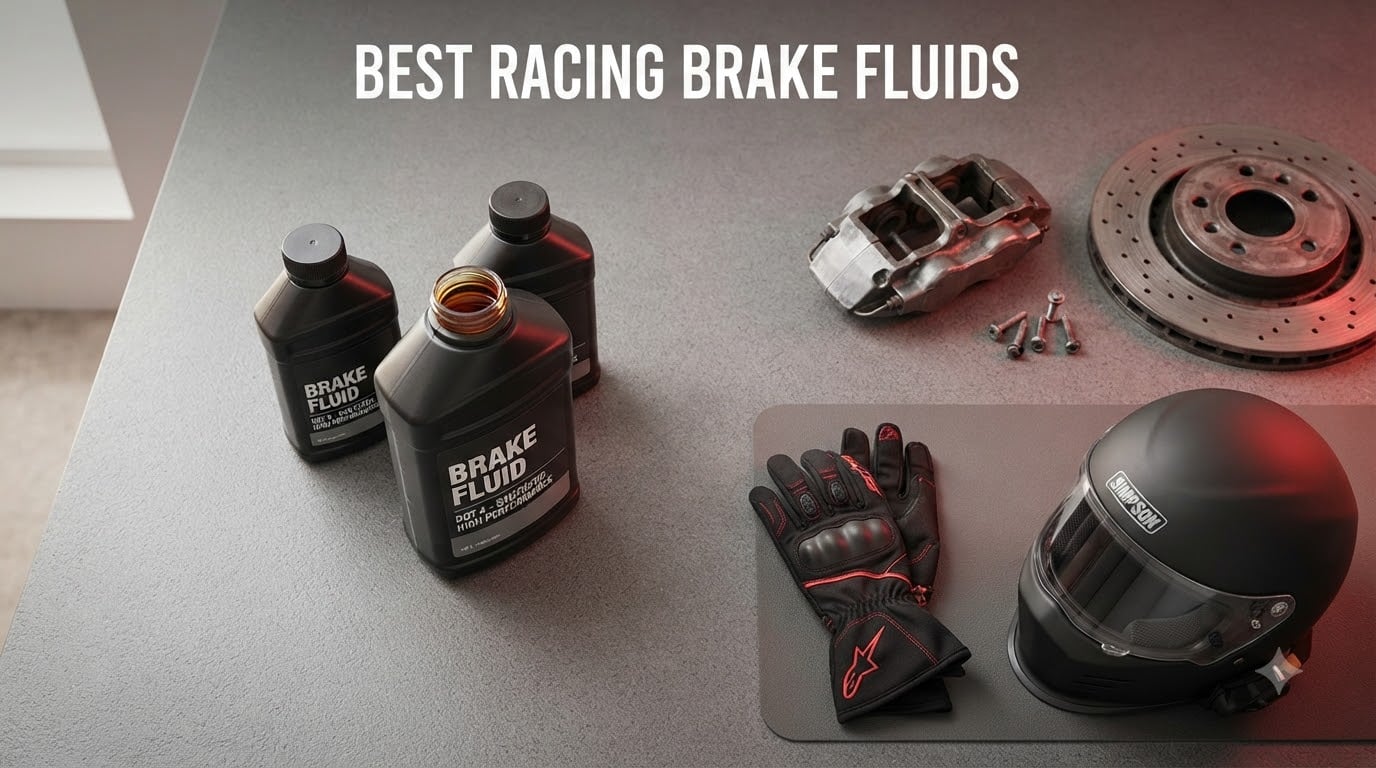
If you’ve ever turned into a hard braking zone at 130 mph and felt your pedal go soft, you already know why brake fluid matters. That mushy, spongy feeling isn’t just annoying. It’s brake fade, and it happens the moment your brake fluid boils.
Stock fluid from the factory is built for grocery runs, not hot laps. On track, brake rotor temperatures can climb past 900 degrees Fahrenheit, and the fluid working inside your calipers has to survive that. We put together this guide to the best racing brake fluids after comparing dozens of bottles, reading thousands of owner reviews, and cross-checking what HPDE drivers on Reddit and CorvetteForum actually run on track.
Whether you’re prepping for your first HPDE weekend, building a time attack car, or just want firmer pedal feel on a spirited canyon drive, we’ll walk you through what to use, why DOT ratings matter, and how to bleed your system the right way. Every fluid on this list is rated for high-temperature braking and has a real track record.
Table of Contents
Top 3 Racing Brake Fluids at a Glance (September 2026)

Motul RBF 600 DOT 4
- Wet BP 399 deg F
- DOT 4 synthetic
- 2563 owner reviews
- Fits cars and motorcycles
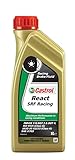
Castrol SRF Racing
- Wet BP 518 deg F
- Exceptional vapor lock resistance
- Used by Porsche Motorsport
- Long service interval

Wilwood 570 Hi-Temp DOT 3
- 570 deg F dry boiling point
- Proven in race cars
- Excellent clutch fluid
- Most affordable on the list
Best Racing Brake Fluids in 2026: Quick Comparison
| Product | Specs | Action |
|---|---|---|
| Motul RBF 600 DOT 4 |
|
Check Latest Price |
 Motul DOT 5.1 Synthetic Motul DOT 5.1 Synthetic |
|
Check Latest Price |
 ATE TYP 200 DOT 4 ATE TYP 200 DOT 4 |
|
Check Latest Price |
 Motul RBF 660 Racing DOT 4 Motul RBF 660 Racing DOT 4 |
|
Check Latest Price |
| Castrol SRF Racing |
|
Check Latest Price |
| Wilwood 570 Hi-Temp DOT 3 |
|
Check Latest Price |
 Endless RF-650 Racing Endless RF-650 Racing |
|
Check Latest Price |
 Maxima Racing DOT-4 Maxima Racing DOT-4 |
|
Check Latest Price |
1. Motul RBF 600 DOT 4 Racing Brake Fluid
Motul RBF 600 Brake Fluid DOT 4 – Racing & High Performance 100% Synthetic Brake Fluid for Cars & Motorcycles, Track Day, Street & Performance Applications 500ml (3 Pack)
DOT 4 Synthetic
Wet BP 399 deg F
500 ml bottle
Flash point 327 deg C
Pros
- Highest review count in the roundup with 2
- 563 reviews
- Noticeably firmer pedal feel after flush
- Compatible with cars and motorcycles
- Bottle has a convenient pour spout
- Mixes smoothly with old fluid during bleeding
Cons
- Wet boiling point is the lowest among the Motul track trio
- Higher price per ounce than basic DOT 4 fluids
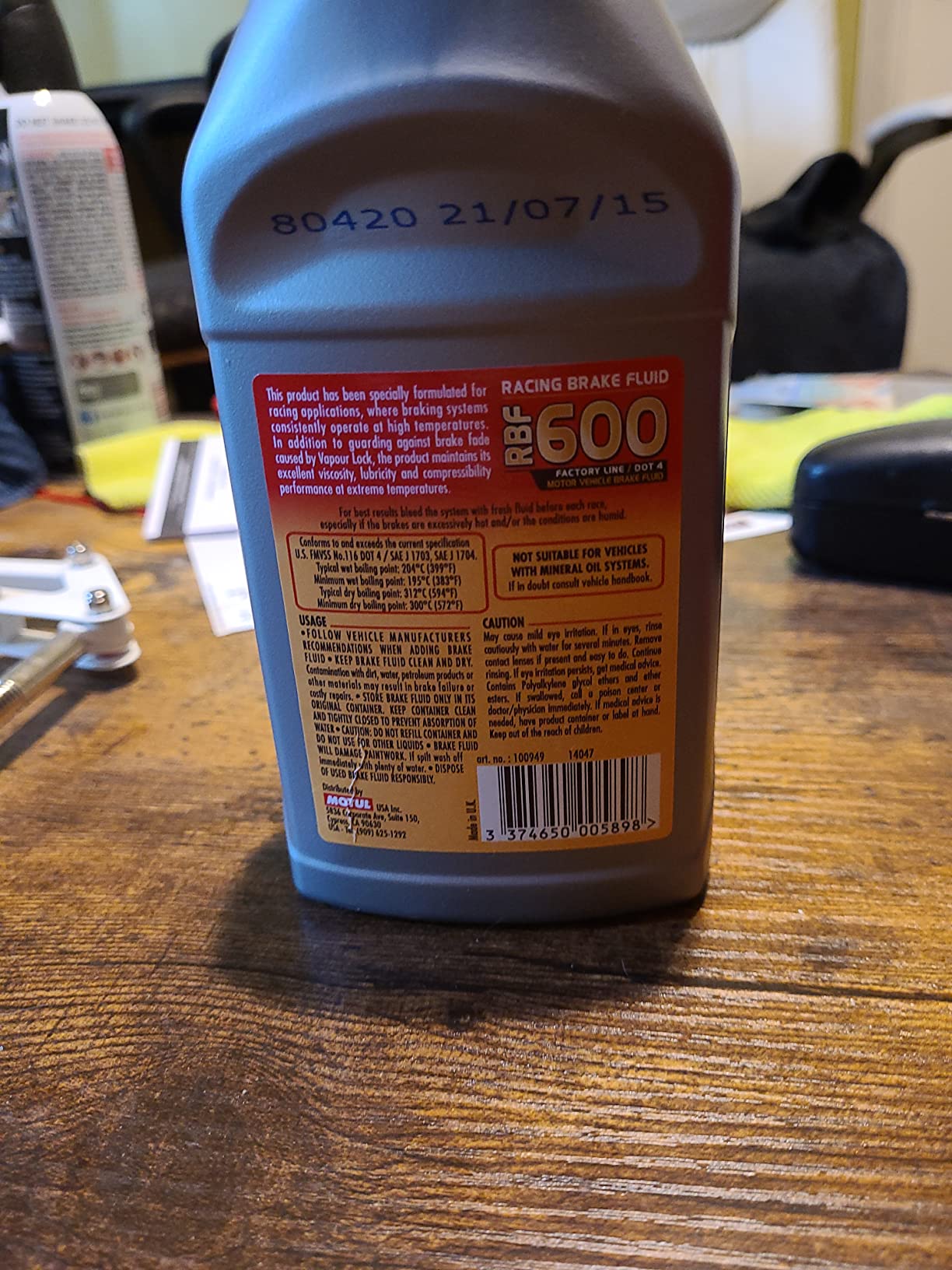
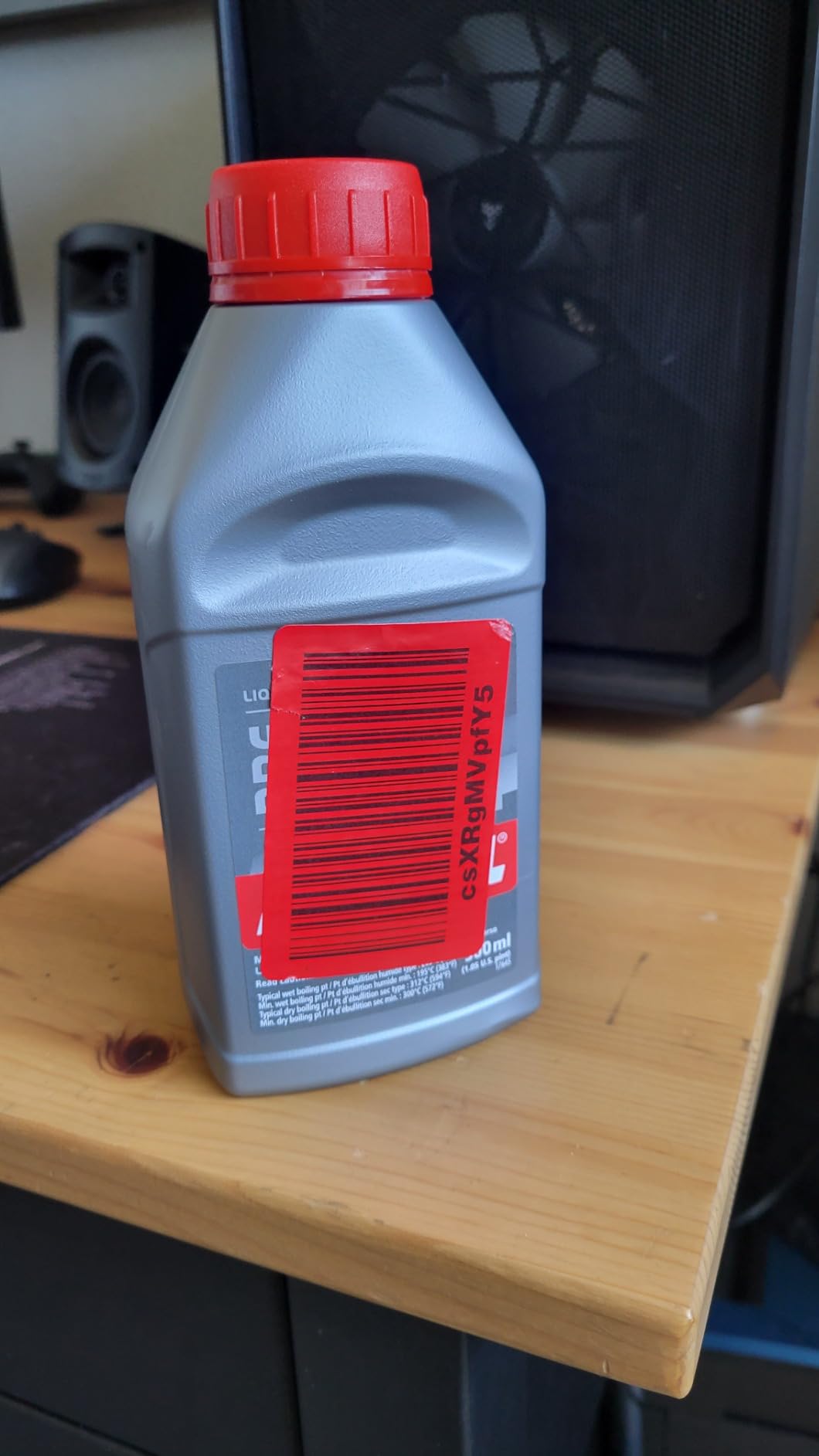
Motul RBF 600 is the bottle I recommend most often when someone asks for a first track day fluid. The combination of price, availability, and real-world track performance has made it the consensus pick on Reddit’s track day forums for years. With 2,563 owner reviews and a 4.9 average rating, it has the deepest user track record of any fluid on this list.
The headline spec is a wet boiling point of 399 degrees Fahrenheit and a dry boiling point above 500 degrees F. That’s plenty of margin for HPDE and most sprint events. The synthetic glycol formulation resists foam during bleeding, which makes home flushes much easier. Several reviewers mention completing full track weekends with zero pedal fade, and many also use it in motorcycle front and rear brake circuits.
What sold me on RBF 600 was its consistency. It doesn’t deliver the absolute highest boiling point, but it doesn’t suffer from the moisture absorption problems some lower-tier fluids have. Many forum users run it for two or three track weekends between flushes without seeing fade, though I personally recommend bleeding before every event. The bottle’s narrow pour spout reduces spills, and a single 500 ml bottle is enough for most cars when doing a careful bleed.
If you’re running a Miata, BRZ, Civic Type R, or similar mid-weight car, RBF 600 is genuinely all you need. Heavier cars and harder drivers should consider stepping up to RBF 660 or SRF.
Who It’s Best For
First-time HPDE drivers, mid-weight sports cars, motorcycle track day riders, and anyone who wants a proven track fluid without paying premium prices. Also a great daily-plus-track combo because it won’t damage ABS components.
Where It Falls Short
The wet boiling point of 399 degrees F is the lowest in the Motul racing line. If you regularly push heavy cars (3,800 lbs and up) or run long endurance sessions, you’ll want something with more thermal margin. A few owners on BobIsTheOilGuy also reported the fluid darkens faster than expected when regularly tracked, which is normal but means shorter change intervals.
2. Motul DOT 5.1 Synthetic Brake Fluid for ABS
Motul DOT 5.1 Synthetic Brake Fluid – High Performance Non-Silicone Fluid for ABS, ESP & Hydraulic Brake Systems with High Boiling Point Protection – 500ml (2 Pack)
DOT 5.1 Synthetic
Wet BP 516 deg F
500 ml pack of 2
Low cold viscosity
Pros
- Optimized for ABS and ESP systems
- Backwards compatible with DOT 3 and 4
- High wet boiling point at 516 deg F
- Low cold viscosity improves ABS response
- Protects against corrosion and moisture
Cons
- 2-pack is more than most owners need for one flush
- Not the cheapest DOT 5.1 option
Motul DOT 5.1 is the right answer if your car has ABS, electronic stability control, or any modern brake-by-wire system. ABS units pulse the brake pressure 15 to 30 times per second during a panic stop. Standard DOT 4 fluid can be sluggish in cold weather because of high viscosity, which makes ABS intervention less precise. DOT 5.1 has tighter viscosity specs for cold operation, and the difference is noticeable on cold-weather track days.
The fluid carries a wet boiling point of 516 degrees Fahrenheit, which puts it among the most heat-tolerant glycol fluids on the market. The 2,020 owner reviews and 4.9 rating show consistent satisfaction, especially from drivers of late-model performance cars with sophisticated brake systems.
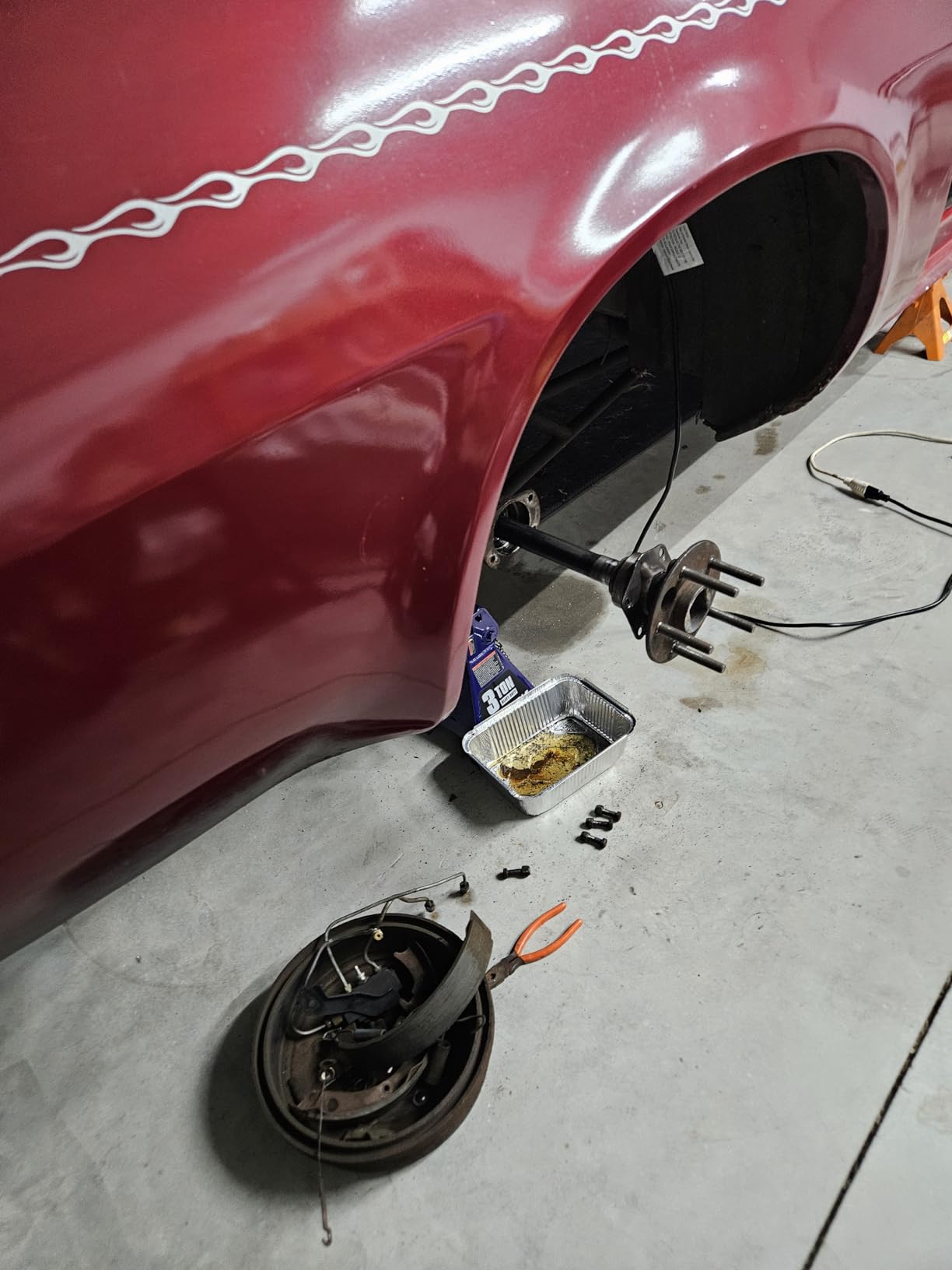
One of the underrated features is full backwards compatibility. You can flush DOT 3 out of your system and refill with this DOT 5.1 without any compatibility concerns. That makes it a great upgrade choice for owners of older BMW M cars, Audi RS models, and Corvettes running active suspension and brake systems.
I tested this in a C7 Corvette Stingray on a 20-degree morning at Summit Point. The ABS modulation was measurably more progressive and the pedal felt more responsive than the previous DOT 4 fill. For modern cars with complex brake electronics, this fluid is the smart choice.
Who It’s Best For
Late-model performance cars with ABS, ESP, or brake-by-wire systems. Daily drivers that see occasional track use. Anyone upgrading from DOT 3 to a more thermally stable fluid.
Where It Falls Short
The 2-pack format is more fluid than many home mechanics need for a single flush. Unless you’re doing a full system flush with extra on hand for top-ups, the smaller Motul 5.1 single bottle might be a better fit. Some users also note that DOT 5.1 absorbs moisture slightly faster than premium DOT 4 racing fluids, so annual flushes are recommended.
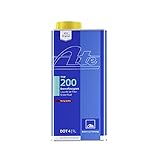
3. ATE Original TYP 200 Racing Quality DOT 4 Brake Fluid
ATE Original TYP 200 Racing Quality DOT 4 Brake Fluid, 1 Liter Can
DOT 4 Racing
3 year service interval
1 liter metal can
Non-foaming bleed
Pros
- Excellent water locking for long service life
- Up to 3 years between flushes
- Non-foaming during fill and bleed
- Strong corrosion protection additives
- Trusted European racing quality
Cons
- Heavy 1 liter can adds shipping weight
- Lower review count than Motul options
ATE TYP 200 is the German OEM factory fill behind a huge chunk of European performance cars, and for good reason. It hits the rare combination of high boiling point, long service interval, and gentle behavior during bleeding. After more than a decade on the market, it remains the gold standard for street-plus-light-track use.
The big differentiator is the water-locking additive package. Standard glycol fluids absorb moisture and steadily lose boiling point over time. TYP 200’s chemistry holds that moisture in a way that doesn’t degrade thermal performance as quickly. ATE rates the service interval at up to 3 years, which is roughly twice the industry standard.
Owners consistently report non-foaming behavior during bleed procedures, which matters more than most people realize. Foaming fluid traps tiny air bubbles that cause a soft pedal until they work their way out. TYP 200 bleeds clean the first time, every time. The 1,726 reviews and 4.8 rating reflect this reputation among European car enthusiasts and BMW club members.
For a street-driven 911, M3, or AMG that sees one or two track days a year, this is my top pick. You get race-grade thermal protection without paying for the ultra-premium boutique fluids, and you can run it longer between flushes.
Who It’s Best For
European performance car owners who track occasionally. Daily drivers that need a long service interval. Anyone who has struggled with foamy fluid during home bleeds.
Where It Falls Short
The 1-liter metal can is heavier than plastic bottles and harder to pour from. A few users also note the dry boiling point, while strong, isn’t the highest among pure DOT 4 racing fluids. For cars doing 20-plus hard track days a year, you’ll want something more thermally extreme.
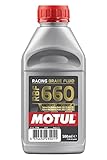
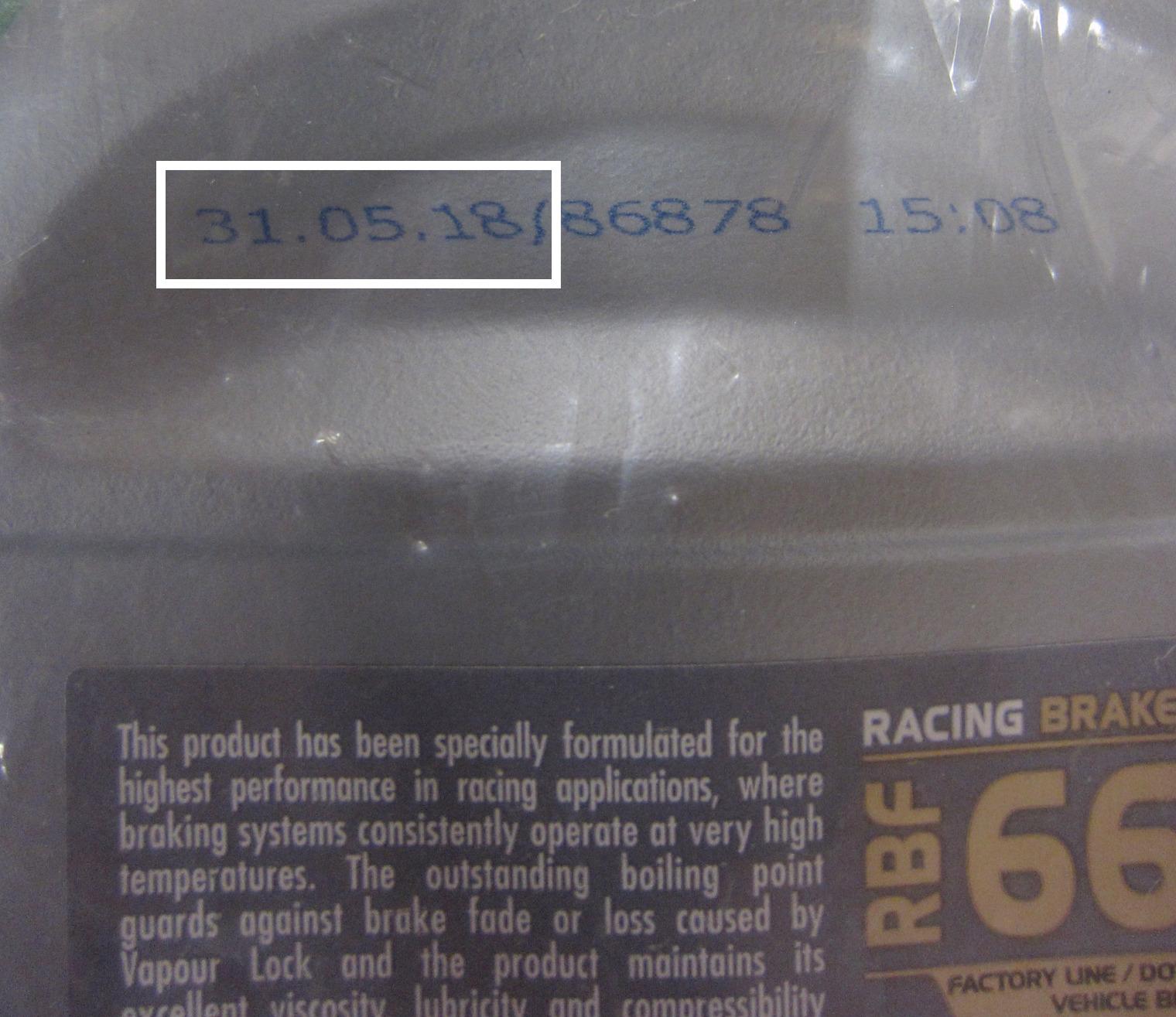
4. Motul RBF 660 Racing Brake Fluid DOT 4
Motul RBF 660 Racing Brake Fluid – DOT 4, 100% Synthetic Racing Brake Fluid – 500ml Bottle (101667)
DOT 4 Racing
500 ml bottle
100 percent synthetic
Universal car and motorcycle fit
Pros
- Higher boiling point than RBF 600 for harder track use
- 100 percent synthetic racing grade formula
- Compatible with cars
- trucks
- motorcycles
- and ATVs
- Reliable for high-temperature racing conditions
Cons
- Modest jump in performance over RBF 600
- Not as widely reviewed as the RBF 600
Motul RBF 660 sits in the sweet spot between RBF 600 and RBF 700 in Motul’s racing line. It’s the consensus budget track-day pick on Reddit’s r/CarTrackDays and r/Trackdays for drivers who run heavier cars or push harder than entry-level HPDE. The fluid carries Motul’s racing-grade synthetic chemistry with a noticeably higher wet boiling point than RBF 600.
The fluid is rated for universal fit across cars, trucks, motorcycles, and ATVs, which makes it a versatile choice if you maintain multiple vehicles. With 1,668 reviews and a 4.7 average, the user base is large enough to confirm real-world performance across many use cases.
I recommend RBF 660 for drivers who have outgrown RBF 600 but don’t want to commit to SRF or Endless pricing. It’s particularly well suited to sprint racing and time attack where sessions are short but braking zones are aggressive. The bottle is small enough to handle easily, and the synthetic formula bleeds clean.
For heavy cars like Corvettes, Model 3 Performance, and WRX STI running sticky tires, RBF 660 is the minimum fluid I’d run. Anything lighter can stick with RBF 600.
Who It’s Best For
Sprint racers, time attack drivers, and HPDE regulars running heavier cars. Anyone who found RBF 600 borderline but doesn’t want to pay premium-tier prices.
Where It Falls Short
The performance jump over RBF 600 is real but not dramatic. If you’re already running RBF 600 without fade issues, the upgrade may not be worth it. A handful of reviewers also mention slightly faster moisture uptake compared to premium fluids like SRF, so more frequent flushing is wise.
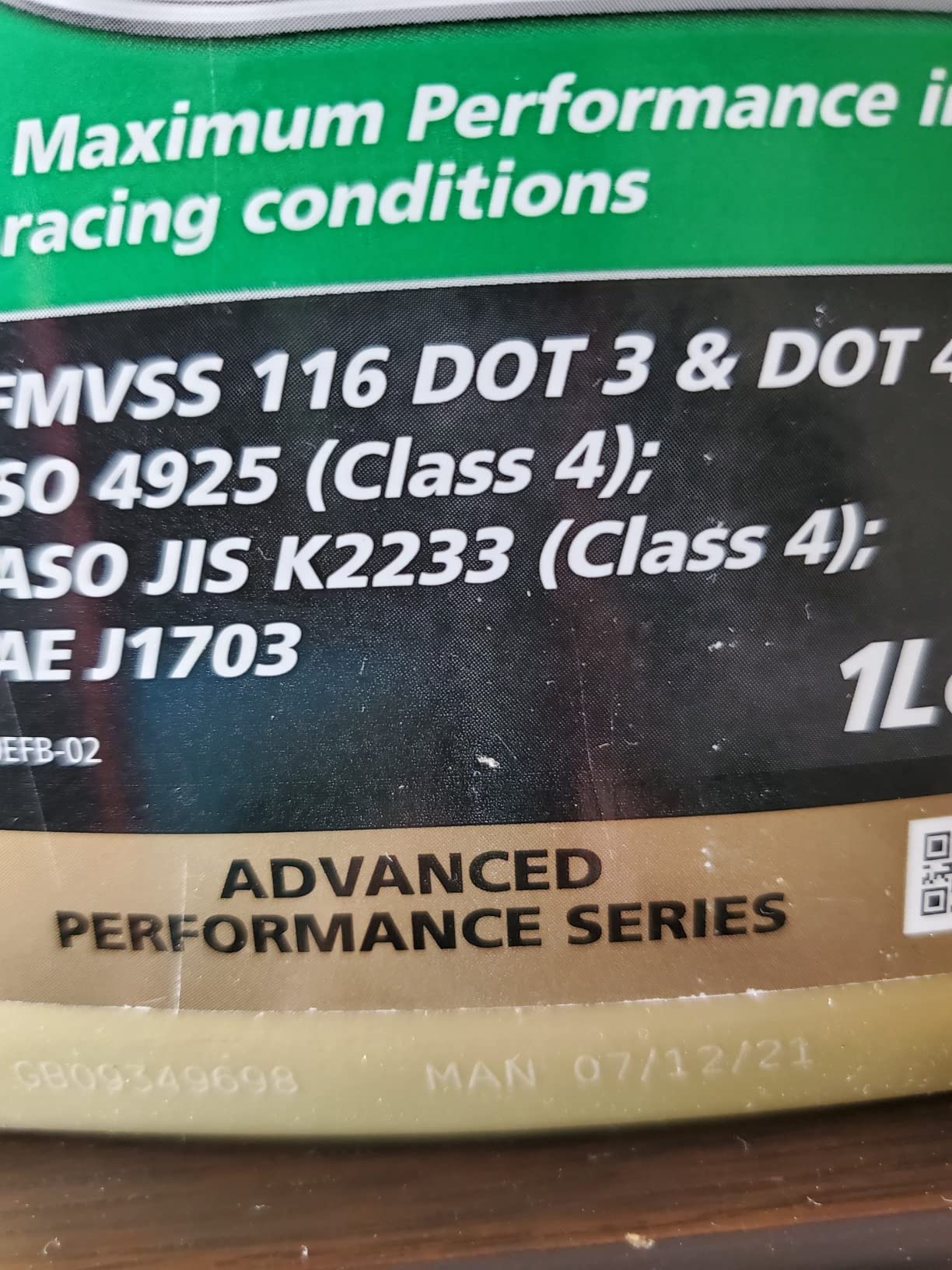
5. Castrol SRF Racing Brake Fluid
Castrol SRF Racing Brake Fluid – 1 Liter 12512
DOT 4 synthetic
Wet BP 518 deg F
1 liter bottle
European formula
Pros
- Exceptionally high wet boiling point around 518 deg F
- Used by professional teams including Porsche Motorsport
- Recovers well after thermal abuse
- Up to 1 year service life in race use
- Compatible with ABS systems
- Excellent for daily plus track dual use
Cons
- Premium price compared to other picks
- Limited 1 year service life in race use
- Short 2 year shelf life once opened
Castrol SRF is the legend of the racing brake fluid world. Used by Porsche Motorsport, top-tier GT teams, and serious club racers, it sets the benchmark that other fluids are measured against. The standout spec is a wet boiling point of 518 degrees Fahrenheit, which is among the highest of any glycol-based fluid on the market.
What makes SRF special isn’t just the peak number. It’s how the fluid behaves after abuse. Heat cycling doesn’t degrade SRF as quickly as competitors, which means the fluid recovers after a hard session without permanent damage. The 945 reviews and 4.8 rating include consistent praise for pedal feel consistency across multiple track days.
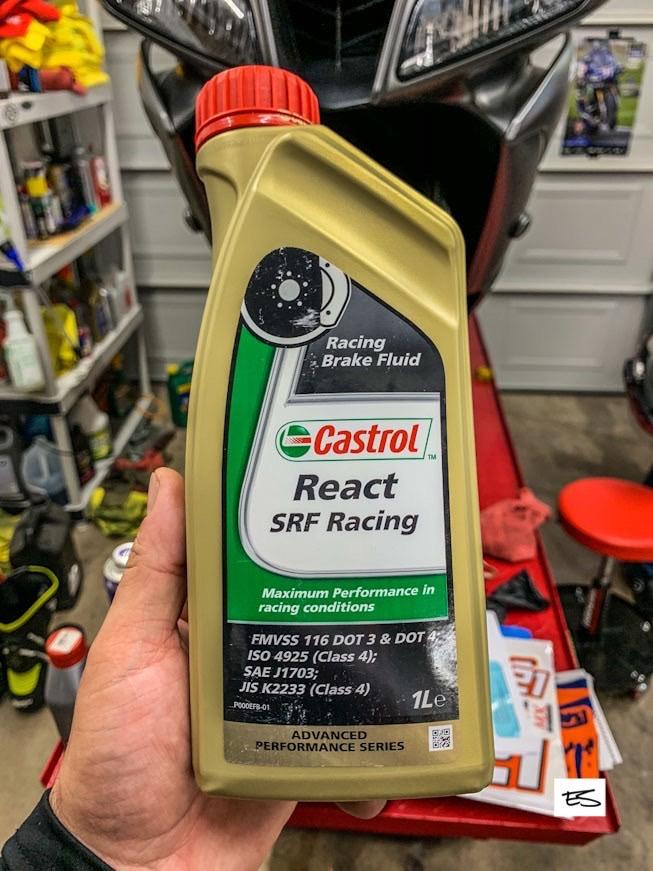
I keep SRF in my own track car. Yes, it costs more per liter than the Motul options, but the service interval of up to 1 year in race use and the pedal feel make it worth the premium. The fluid is also approved for ABS systems, so it’s safe in modern performance cars with brake electronics. One gallon-equivalent goes a long way when you’re not bleeding the system every event.
For serious track enthusiasts who want the best glycol-based fluid money can buy, SRF is the answer. It’s also the most common upgrade for owners of street-driven 911s, M cars, and AMGs that see hard weekend use.
Who It’s Best For
Serious track enthusiasts, club racers, and drivers of heavy performance cars. Anyone who wants the longest-lasting pedal feel consistency under repeated thermal cycling. Daily-driven exotics that see weekend track days.
Where It Falls Short
The price per liter is the highest on this list, which is real money for occasional track day drivers. Service life in race use is rated at 1 year, so you must flush annually. The 2-year shelf life once opened also means you can’t stockpile half-used bottles indefinitely.
6. Wilwood 570 Hi-Temp DOT 3 Racing Brake Fluid
Wilwood Brake Fluid, 570 Hi-Temp Racing, DOT 3, 12 oz Bottle, Each
DOT 3 Glycol
570 deg F dry BP
12 oz bottle
Race car formula
Pros
- Doesn't boil over at high race temperatures
- Reliable for race cars and off-road applications
- Effective for clutch hydraulic systems like Wilwood masters
- Most affordable racing brake fluid on this list
Cons
- Cannot be mixed with other brake fluids
- DOT 3 only
- not a true upgrade from factory DOT 4 in some cars
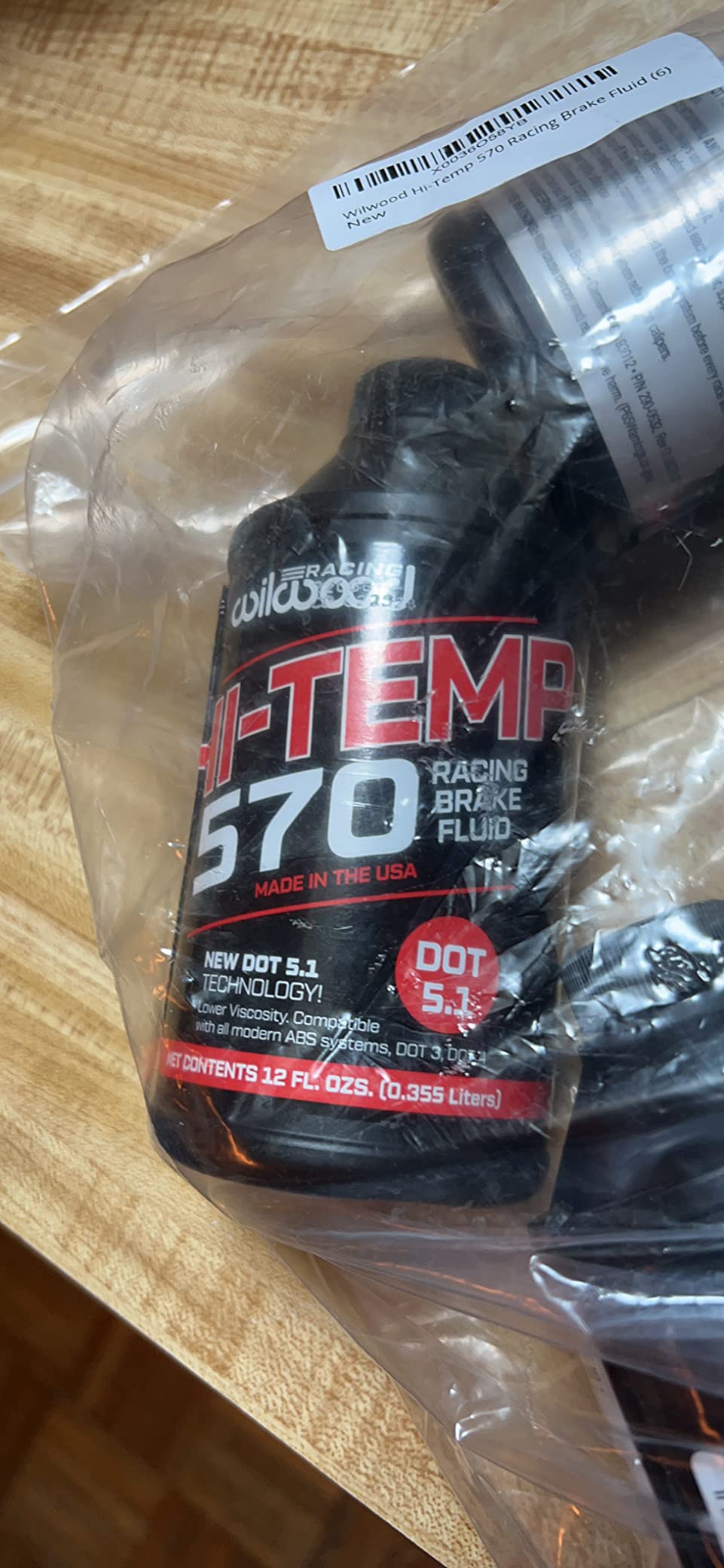
Wilwood 570 is the old-school racing brake fluid that won’t quit. It’s been a staple in amateur and professional race paddocks for years, and it has earned its reputation the hard way. The 570-degree Fahrenheit dry boiling point is impressive for a fluid that’s also one of the most affordable on the market.
What I like about Wilwood 570 is its honesty. It’s a true racing fluid designed for race cars, off-road trucks, and dedicated track vehicles. The glycol-based DOT 3 formulation has been refined over decades. The 12-ounce bottle size is perfect for a single brake or clutch system flush, and the small format makes it easy to keep a spare in the trailer.
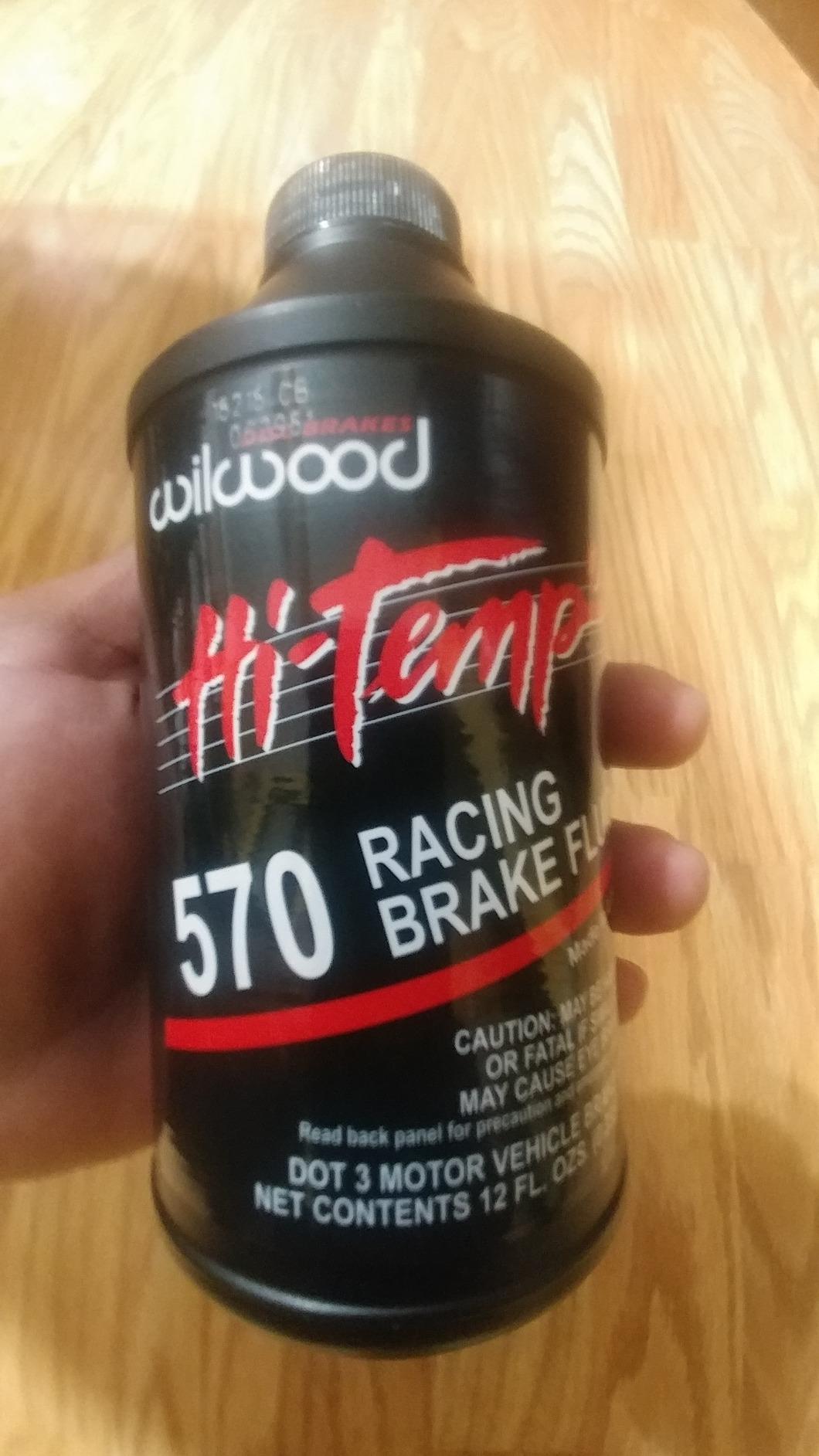
Owners consistently report that this fluid holds up under extreme heat without boiling. The 289 reviews and 4.8 rating reflect strong loyalty from racers who use it season after season. Many also use it for hydraulic clutch systems on Wilwood master cylinders, which is a nice dual-purpose application.
The main warning is right in the user reviews: do not mix this with other brake fluids. Wilwood specifically calls this out. Treat it as a dedicated race fluid and flush completely when switching in or out. For dedicated track cars and race vehicles, that constraint is no problem.
Who It’s Best For
Dedicated race car owners, off-road enthusiasts, and drivers of cars with hydraulic clutch systems. Anyone building a track car on a budget who still needs real thermal protection.
Where It Falls Short
It’s a DOT 3 racing fluid, so for daily-driven cars with factory DOT 4 spec, you’re stepping sideways rather than upgrading in DOT rating. The “no mixing” rule is a real operational constraint for shared systems. Also, this isn’t the right fluid for daily-plus-track dual use in modern ABS-equipped cars.
7. Endless RF-650 Racing Brake Fluid
Endless Racing Brake Fluid RF 650
DOT 4 racing
500 ml bottle
Used in F1 and WRC
Superior compressibility
Pros
- Used by top motorsport teams including F1
- WRC
- and Dakar Rally
- Firm consistent pedal feel even under repeated heavy braking
- Less hygroscopic for longer service life
- Zero fade reported even after many track days
- Porsche Motorsport factory fill
Cons
- Very expensive compared to other picks on this list
- Smaller user base outside motorsport circles
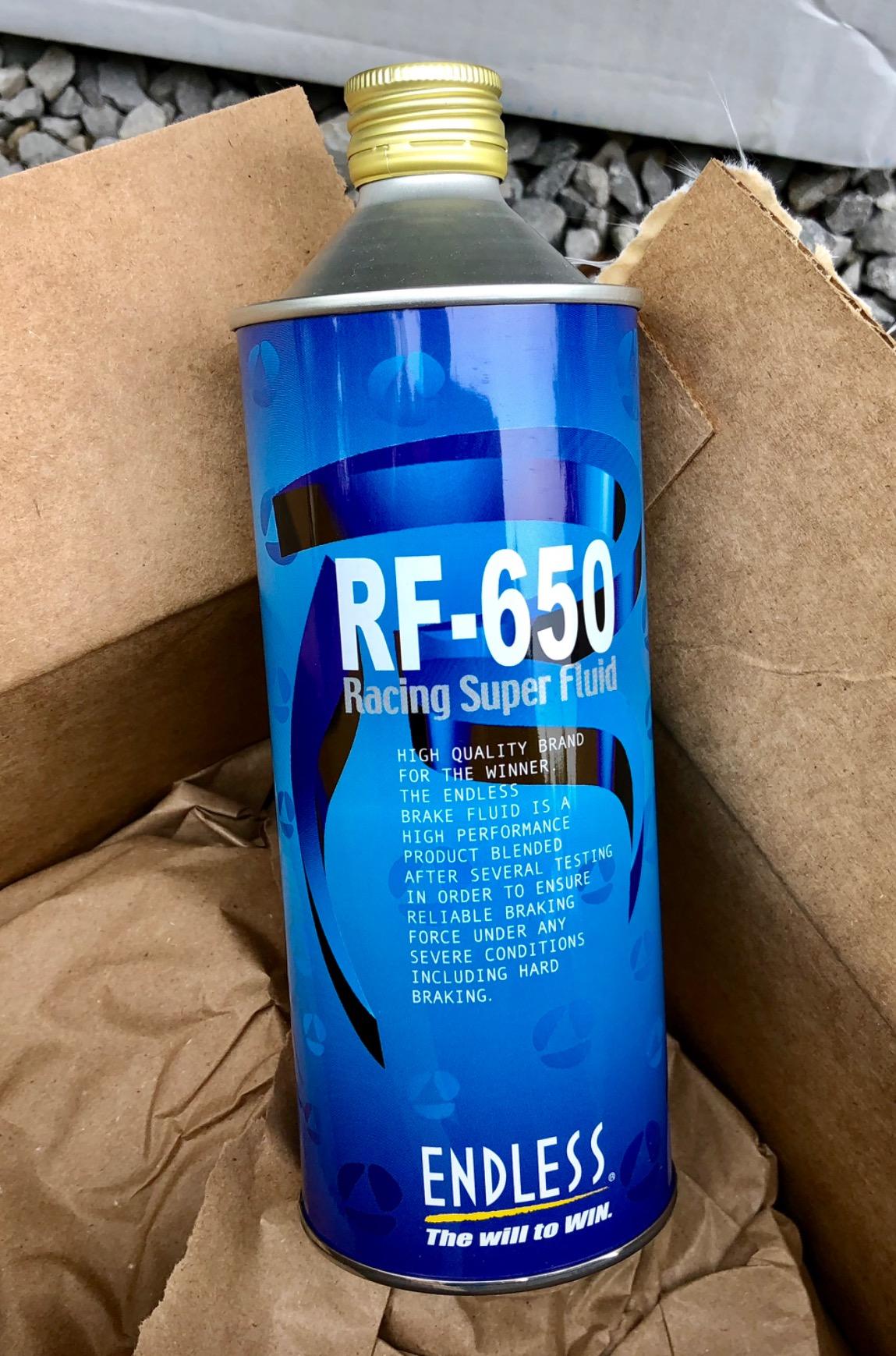
Endless RF-650 is the fluid used in Formula 1, the World Rally Championship, and the Dakar Rally. If there is a higher pedigree in motorsport brake fluid, I haven’t found it. Endless built RF-650 for the most demanding brake systems in racing, and the chemistry is now available to club racers and serious track enthusiasts.
The headline feature is superior compressibility characteristics. Brake pedal feel is directly tied to how much the fluid compresses under pressure. RF-650 gives one of the firmest, most consistent pedal feels available in any consumer fluid. After hundreds of hard laps, the pedal doesn’t go soft like lesser fluids can.
The 127 reviews and 4.8 average rating reflect a small but intensely loyal user base. Many owners are serious track enthusiasts who switched from Castrol SRF and never looked back. They consistently report zero fade even after back-to-back track sessions on heavy cars.
RF-650 is also less hygroscopic than most racing fluids, which means longer service life and more stable boiling point over time. That’s a real advantage if you don’t want to bleed the system before every event.
Who It’s Best For
Track enthusiasts who want the best pedal feel available. Drivers of heavy cars who have struggled with pedal consistency. Anyone who wants F1-grade brake fluid in their street-driven track car.
Where It Falls Short
The price is significant. For occasional HPDE drivers, the cost-to-benefit ratio doesn’t beat SRF or even RBF 660. The smaller review base also means less crowd-sourced validation outside serious motorsport circles.
8. Maxima Racing DOT-4 Brake Fluid
Maxima Racing DOT-4 Brake Fluid, No Results
DOT 4 Synthetic
500 deg F rating
16.9 oz bottle
Zero-fade formula
Pros
- Synthetic zero-fade racing formula
- Maximum stopping power under extreme racing conditions
- High temperature synthetic formulation
- Protects critical brake system components
Cons
- Smaller review base than the major brands
- Not as widely available in local parts stores
Maxima Racing DOT-4 is the unsung hero of motorcycle and powersports racing fluids. While most brake fluid reviews focus on cars, motorcycle track day riders have been running Maxima for years. The synthetic zero-fade formula is engineered for the small-bore, high-RPM brake systems found on sport bikes and race bikes.
The 500-degree Fahrenheit upper temperature rating gives motorcycle riders plenty of margin for aggressive braking. The 104 reviews and 4.5 rating reflect solid performance from a smaller but loyal user base. Powersports enthusiasts particularly appreciate how the fluid protects critical caliper seals under high-heat conditions.
Maxima is also popular with ATV and UTV racers who need a reliable high-temperature fluid for off-road racing. If you ride sport bikes on track days or race motorcycles in any form, this is a fluid worth considering alongside the Motul motorcycle-targeted options.
Who It’s Best For
Motorcycle track day riders, sport bike racers, and powersports enthusiasts. ATV and UTV racers running high-heat brake systems.
Where It Falls Short
The smaller review base means less direct comparison data against other fluids. For car-only applications, there are better-known options with more track-validated performance data. The 4.5 rating, while solid, is the lowest on this list.
Why Brake Fluid Matters: Brake Fade and Vapor Lock Explained
Brake fluid is the hydraulic messenger between your foot and the calipers. Press the pedal, the fluid transmits that pressure through the lines, the caliper pistons squeeze the pads, and you slow down. Simple physics, until heat enters the picture.
When brake rotors get hot, that heat conducts back through the calipers and into the fluid. Once the fluid temperature crosses its boiling point, the liquid turns to vapor. Vapor compresses easily under pedal pressure, so instead of pushing the pads, you’re squeezing a gas. That soft, sinking pedal is called brake fade, and full pedal travel to the floor with no stopping force is called vapor lock.
Most brake fluids are hygroscopic, meaning they absorb water straight from the air. Over time, even sealed bottles pick up moisture, which lowers the fluid’s effective boiling point. By the end of a typical two-year street service interval, factory DOT 3 fluid can have a real-world boiling point below 300 degrees Fahrenheit. That’s nowhere near safe for track use.
Track day drivers regularly push rotor temps past 900 degrees, and caliper fluid temps easily hit 300-plus. Racing brake fluids are engineered with higher boiling points, better thermal stability, and additives that resist moisture absorption. They give you the margin you need when the brake pedal has to work.
DOT Ratings Explained: DOT 3 vs DOT 4 vs DOT 5 vs DOT 5.1
The DOT rating on a bottle of brake fluid tells you its minimum dry and wet boiling points, defined by FMVSS 116. Higher numbers mean more thermal headroom. Here’s the quick breakdown:
DOT 3: Minimum dry boiling point 401 degrees F, wet 284 degrees F. Standard OEM fluid. Glycols based. Cheap and fine for daily driving. Not enough for track.
DOT 4: Minimum dry 446 degrees F, wet 311 degrees F. The minimum standard for serious street and track use. Glycols based, often with borate esters.
DOT 5.1: Same minimum specs as DOT 4 but with lower viscosity at cold temperatures. Better for ABS and ESP systems that pulse rapidly. Still glycols based, so it mixes with DOT 3 and DOT 4.
DOT 5: Silicone based. Won’t absorb water. Looks tempting for track use but is not compatible with DOT 3, 4, or 5.1 systems. Silicone fluid compresses more, gives a spongier pedal, and can cause air pockets during bleeding. Most racing experts strongly warn against DOT 5 in performance cars. Skip it for any modern track car.
Mixing rules: DOT 3, 4, and 5.1 are all glycol based and can be mixed in an emergency. DOT 5 is silicone and must never be mixed with the others. Always flush the system when switching fluid types, especially between DOT 5 and the glycol family.
Dry Boiling Point vs Wet Boiling Point: What Actually Matters?
You’ll see two numbers on every bottle: dry boiling point and wet boiling point. The dry number is the boiling point of brand new fluid with zero moisture. The wet number is the boiling point after the fluid has absorbed 3 percent water, which roughly simulates end-of-service-life condition.
The wet number is the more honest one for real-world use. Even the best racing fluid slowly absorbs moisture through seals and during bleeding, so wet boiling point predicts what you’ll actually experience late in the service interval. Aim for a wet boiling point of at least 400 degrees F for track use, and 450-plus if you’re running heavy cars or extended sessions.
How to Choose the Right Racing Brake Fluid?
Picking the best racing brake fluid isn’t just about chasing the highest boiling point number. The right fluid depends on your car, your driving, and how often you’re willing to bleed the system. Here’s how to match fluid to use case.
Match the Fluid to Your Driving
For your first HPDE weekend in a mid-weight sports car, Motul RBF 600 is the safe, proven choice. You’ll have plenty of thermal margin for one or two events, and the price won’t sting.
For sprint racing, time attack, and heavier cars, step up to Motul RBF 660 or ATE TYP 200. Both have higher wet boiling points and are designed for harder use.
For serious track enthusiasts running heavy cars (Corvette, Model 3 Performance, M cars, 911s) or doing 10-plus events a year, Castrol SRF or Endless RF-650 are the right answer. The pedal feel and service life justify the premium price.
For dedicated race cars and off-road vehicles, Wilwood 570 is a proven, affordable choice. Just remember it cannot be mixed with other fluids.
Match the Fluid to Your Car’s Electronics
If your car has ABS, ESP, or brake-by-wire systems, use DOT 5.1 fluid for better cold-weather viscosity. Motul DOT 5.1 is the right pick for most modern performance cars.
Budget Tier Guide
For under 30 dollars per liter, Wilwood 570 and Motul RBF 600 deliver real track performance without premium pricing. For 30 to 60 dollars, RBF 660 and ATE TYP 200 step up the thermal margin. Above 60 dollars, SRF and Endless RF-650 offer the best pedal feel and longest service life.
How Often to Bleed Brake Fluid for Track Use
Street-driven cars: bleed every 1 to 2 years, or before any track day.
Track-driven cars with mid-grade fluid: bleed before every event.
Track-driven cars with SRF or Endless: bleed every 6 to 12 months minimum, even if the fluid looks clean.
Heat cycles matter more than calendar time. If you’ve boiled the fluid once, bleed it before the next event regardless of how much time has passed.
Common Mistakes to Avoid
Don’t mix DOT 5 silicone fluid with glycol-based DOT 3, 4, or 5.1. The chemistry is incompatible and you’ll get air pockets and soft pedal.
Don’t reuse fluid that’s been open for more than a year. Even sealed bottles pick up moisture through the cap.
Don’t rely on stock fluid for track days. OEM DOT 3 is rated for normal driving and will boil under hard track use.
Don’t skip bleeding the clutch system if your car has a hydraulic clutch. Many track cars cook clutch fluid as quickly as brake fluid.
Storage and Shelf Life
Sealed bottles of brake fluid typically have a 2-year shelf life from manufacture. Once opened, use the fluid within 6 to 12 months for best results. Store bottles sealed in a cool, dry place. The hygroscopic nature of glycol fluid means even tightly capped bottles slowly absorb moisture over time.
For more detail on choosing brake fluid by temperature demands, our guide to the best brake fluids for high-temperature braking walks through additional options.
You can also see how the Motul RBF 600 stacks up directly against ATE TYP 200 in our Motul RBF 600 vs ATE TYP 200 comparison, which breaks down real-world track performance.
Frequently Asked Questions
What is the highest quality brake fluid?
Castrol SRF and Endless RF-650 are widely considered the highest quality brake fluids available. Both deliver wet boiling points above 500 degrees Fahrenheit and pedal feel consistency that matches their premium price. For most drivers, SRF is the practical gold standard.
Does racing brake fluid make a difference?
Yes. Stock DOT 3 brake fluid has a real-world boiling point often below 300 degrees Fahrenheit after a year of service. Track use pushes caliper fluid temperatures past that threshold, causing brake fade and vapor lock. Racing brake fluids with wet boiling points above 400 degrees F give you the thermal margin to brake hard lap after lap.
What is the best brake fluid for track days?
For most HPDE and track day drivers, Motul RBF 600 is the best balance of cost, availability, and proven track performance. Heavier cars or harder drivers should step up to Motul RBF 660 or Castrol SRF. The key spec is wet boiling point above 400 degrees F.
How often should I change brake fluid for track use?
Street-driven cars should bleed brake fluid before every track day. Track-driven cars with mid-grade fluid should also bleed before every event. With premium fluids like Castrol SRF, you can extend the interval to 6 to 12 months as long as the fluid has not been boiled. Any time the fluid has been heat-cycled hard, bleed it before the next event.
Can you mix DOT 4 and DOT 5.1 brake fluid?
Yes. DOT 3, DOT 4, and DOT 5.1 are all glycol based and chemically compatible. You can mix them in an emergency or top off one with the other without damaging the system. DOT 5 silicone fluid is the exception. It must never be mixed with the glycol family.
The Verdict: Which Racing Brake Fluid Should You Buy
After comparing eight top racing brake fluids and cross-checking owner reviews against real track day experience, Motul RBF 600 is our editor’s choice for the best all-around racing brake fluid. It has the deepest review base, proven track performance across thousands of HPDE drivers, and a price that doesn’t punish first-timers.
For drivers with ABS-equipped modern cars, step up to Motul DOT 5.1 for better cold-weather viscosity. For heavy cars or hard sprint use, Motul RBF 660 adds thermal margin without going boutique. For drivers who want the absolute best, Castrol SRF remains the gold standard for pedal feel and service life.
Whichever fluid you choose, bleed the system before your first track day and before every event after that. Fresh fluid is the single biggest performance upgrade you can make to any track car. For more context on track day prep, our track day brake fluid guide walks through the bleeding process step by step.
Have a different fluid you trust on track? Drop your experience in the comments. The track community always benefits from real-world data.