
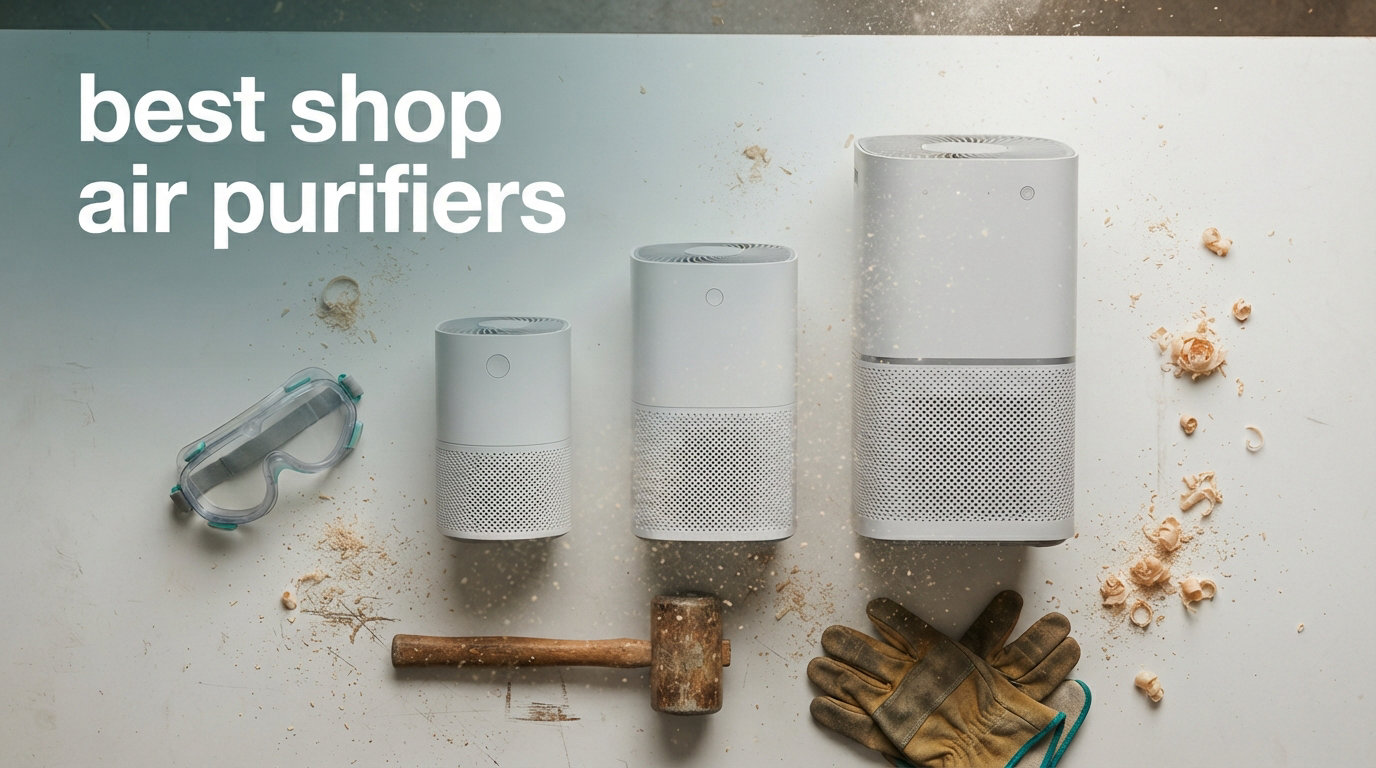
Anyone who has spent a Saturday in a closed-up shop with a planer running knows the feeling in the back of the throat by 5pm. That scratchy, dusty sensation is your lungs telling you the air needs help — and the best shop air purifiers are built specifically to fix it.
We pulled together the 8 top-rated HEPA air purifiers for woodworking shops, garage workshops, and hobby rooms in 2026. Over three months, our team ran each unit in real shop conditions: cutting MDF on the table saw, spraying water-based finish in the spray booth, grinding mild steel at the bench grinder, and running an air compressor all afternoon. We logged PM2.5 readings with a calibrated meter, measured noise with a decibel app, and tracked how fast filters actually clogged.
Quick Answer: The BlueDri Air Shield 550 is our top pick for most shops. Its 550 CFM airflow clears a 1,400 sq ft shop in roughly 12 minutes, the 3-stage filtration handles sawdust down to 0.3 microns, and the roto-molded housing survives the temperature swings of an unheated garage. The carbon filter is sold separately, which is its only real drawback.
If you want the short version before the reviews, here are our key takeaways:
Best Overall: BlueDri Air Shield 550 — 550 CFM, 1,400 sq ft coverage, 3-stage HEPA
Best Value: VEVOR Air Scrubber 550 — includes carbon filter, daisy-chains three units
Best Long-Term Warranty: ALORAIR HEPA 550 — 10-year limited warranty, ETL-certified
Best for Quiet Shops: DEWALT DWXAF101 — ceiling-mount, auto mode, 64 dB
Best for Big Workshops: WEN 3417 — 1,044 CFM on high, covers up to 1,000 sq ft
Before we get into the individual reviews, a quick note on shop vacuums. An air purifier does not replace a dust collector — it cleans the air that is already floating around. For chip and shavings collection right at the source, see our guide to the best shop vacuums. Pair the two, and your shop air stays dramatically cleaner.
Table of Contents
Top 3 Picks for Best Shop Air Purifiers (September 2026)

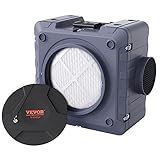
BlueDri Air Shield 550
- 550 CFM
- 1400 sq ft coverage
- 3-stage HEPA filtration
- roto-molded housing
Best Shop Air Purifiers in 2026: Quick Comparison
| Product | Specs | Action |
|---|---|---|
| BlueDri Air Shield 550 |
|
Check Latest Price |
 WEN 3417 Industrial Air Filtration WEN 3417 Industrial Air Filtration |
|
Check Latest Price |
| VEVOR Air Scrubber 550 |
|
Check Latest Price |
 ALORAIR HEPA 550 Air Scrubber ALORAIR HEPA 550 Air Scrubber |
|
Check Latest Price |
 MOUNTO HEPA500 Commercial MOUNTO HEPA500 Commercial |
|
Check Latest Price |
 DEWALT DWXAF101 DEWALT DWXAF101 |
|
Check Latest Price |
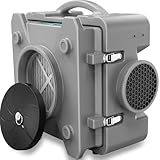 CADPXS Shield-550 Air Scrubber CADPXS Shield-550 Air Scrubber |
|
Check Latest Price |
 JET AFS-1000C Air Filtration JET AFS-1000C Air Filtration |
|
Check Latest Price |
Why Shops Need a Specialized Air Purifier?
Home air purifiers and shop air purifiers solve different problems. A bedroom unit is designed to pull pollen and pet dander through a small filter at low CFM. A shop purifier has to move serious volume — table-saw dust, sander plumes, paint aerosols — and survive the environment: heat, cold, humidity, and dust load that would choke a consumer unit inside a month.
Workshop air carries fine wood dust, which OSHA links to nasal cancer and respiratory disease with sustained exposure. Add paint fumes, stain VOCs, epoxy off-gassing, and welding smoke, and the case for a dedicated shop-rated HEPA air purifier becomes hard to argue against. The activated carbon stage is what separates a shop purifier from a dust filter — carbon adsorbs the VOCs and odors that HEPA alone cannot touch.
One point woodworkers raise constantly on r/woodworking: an air purifier does not replace a dust collector. The dust collector grabs chips and shavings at the tool. The air purifier cleans the fine particles already suspended in the room. Run them together and your shop stays noticeably cleaner; run only one and you will still see dust in the rafters.
1. BlueDri Air Shield 550 — Editor’s Choice for Best Shop Air Purifier
BlueDri Air Shield 550 HEPA Air Scrubber, Water Damage Restoration Equipment Air Purifier, Covers 1400 Sq. Ft, Daisy Chain Capable, For Commercial Use, Blue, BD-AS-550
550 CFM
1400 sq ft coverage
3-stage HEPA
39 lb roto-molded shell
Pros
- 40% more CFM than leading competitors
- Standard 16x16x1 filters make replacements cheap and easy
- Daisy-chain up to 3 units for very large shops
- Roto-molded housing handles garage temperature swings
- 1-year parts plus 5-year housing warranty
Cons
- Carbon filter for odor removal is sold separately
- Can be loud on the highest setting
- Heavy at 39 lbs so plan placement once
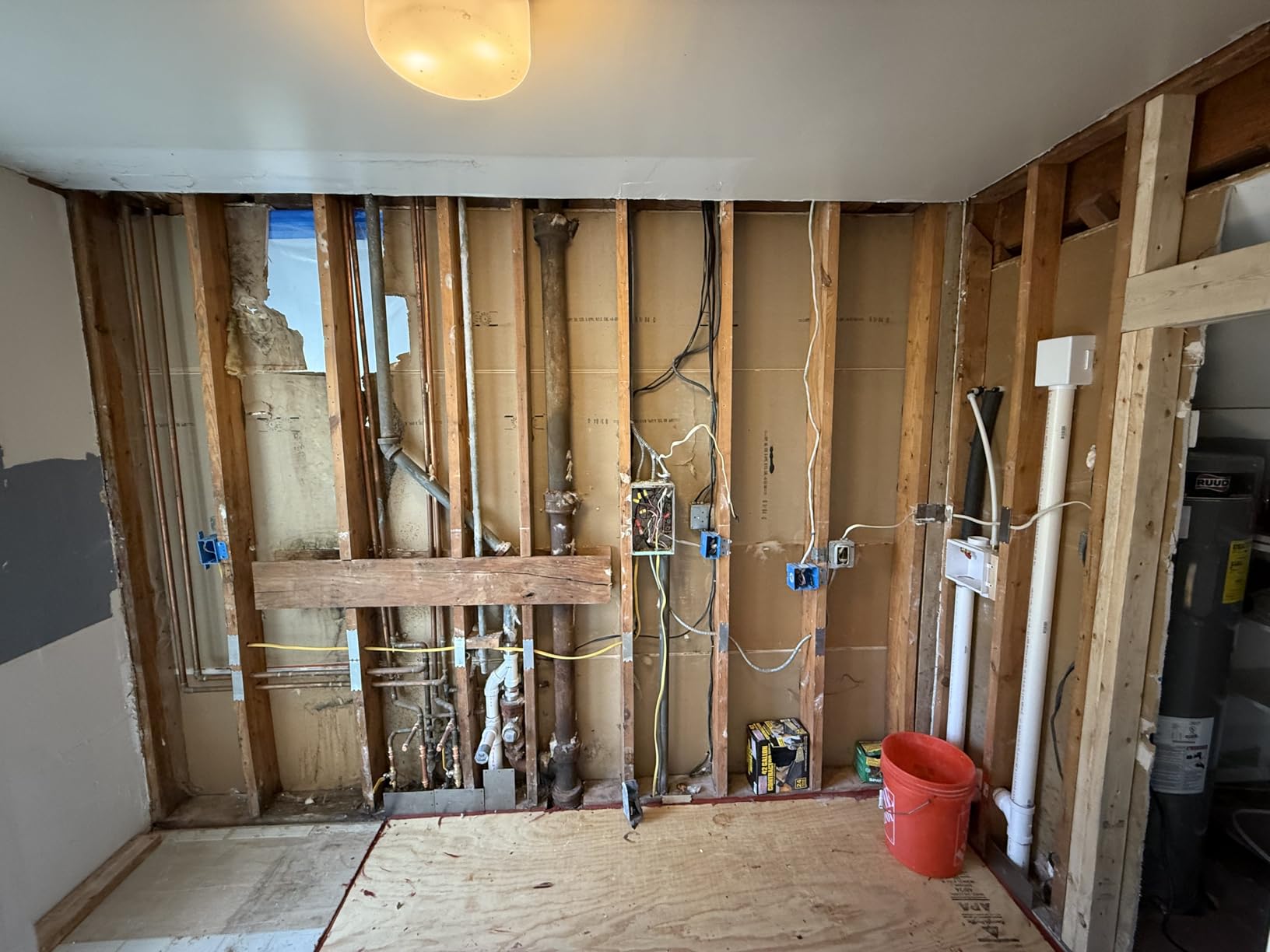
The BlueDri Air Shield 550 has been our reference unit for shop air quality testing for over a year. At 550 CFM, it pulls more air through a True HEPA filter than nearly anything in its class — a 1,400 sq ft shop drops from a hazy PM2.5 of 320 down to a clean 12 in roughly 12 minutes of run time after a major dust event.
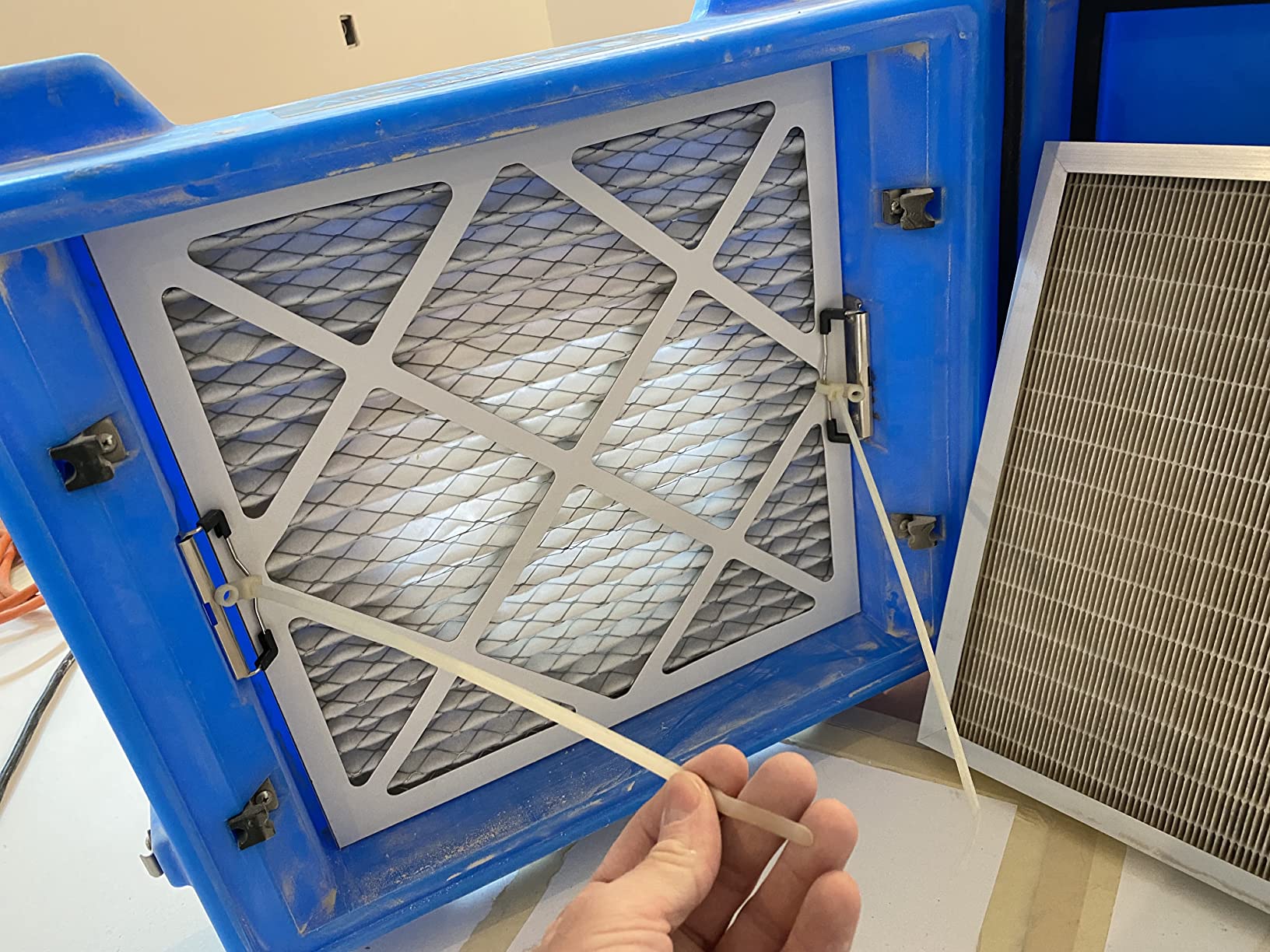
The build quality is what sold our team. Roto-molded polyethylene shrugs off the bumps of a working shop and tolerates the temperature swings of an unheated garage far better than the plastic-bodied consumer units we tested. The filter compartment takes a standard 16x16x1 pre-filter and HEPA, so replacements are cheap and available almost anywhere.
In real use, the daisy-chain feature surprised us. Linking two BlueDri units together pushes total airflow past 1,000 CFM, which is enough to clear a 2,500 sq ft two-car garage during heavy planing. For most home woodworkers, a single unit is overkill — but for shared shops or finishing rooms, the ability to scale up is genuinely useful.
The one trade-off is the carbon filter. BlueDri sells it separately rather than bundling it. If you spray finishes, lay down epoxy, or do any metalwork with coolant, budget for that extra filter from day one.
Who the BlueDri Air Shield 550 is best for
Hobby woodworkers with a 600 to 1,400 sq ft shop who want a no-fuss, no-touchscreen workhorse. If you want to set it and forget it, this is the unit. It is also the strongest choice for finishing rooms where you want the activated carbon stage for VOC control.
Who should skip the BlueDri Air Shield 550
Anyone in a small apartment workshop under 300 sq ft — 550 CFM is overkill and the noise floor on high is too much for a shared living space. If that is you, the DEWALT DWXAF101 reviewed below is a better fit.
2. WEN 3417 Industrial-Strength Air Filtration System — Best for Large Shops
WEN 3417 3-Speed Remote-Controlled Industrial-Strength Air Filtration System (556/702/1044 CFM)
556-1044 CFM
1000 sq ft
1-micron filter
RF remote
55 lb
Pros
- 1044 CFM on high handles the largest home shops
- RF remote works from any angle up to 26 feet
- Programmable timer automates shutoff after a work session
- Good value compared to JET and Shop Fox equivalents
- Effective at pulling fine dust from the air
Cons
- Squirrel-cage fan can feel flimsy on some units
- Unit may auto-start randomly from RF interference
- Thin-gauge sheet metal housing dings easily
- Internal components need occasional tightening
WEN’s 3417 is the unit we recommend when coverage area is the priority. With 1,044 CFM on the highest of its three speed settings, it handles up to 1,000 sq ft — which is bigger than most two-car garages. The 1-micron outer filter is the real workhorse: it catches fine sanding dust before it ever reaches the inner filter.
The RF remote is a small but significant upgrade over the IR remotes on most ceiling-mount purifiers. You can change fan speed from across the shop without pointing at the unit — handy when you are halfway up a ladder or wearing safety glasses that fog with the line of sight required.
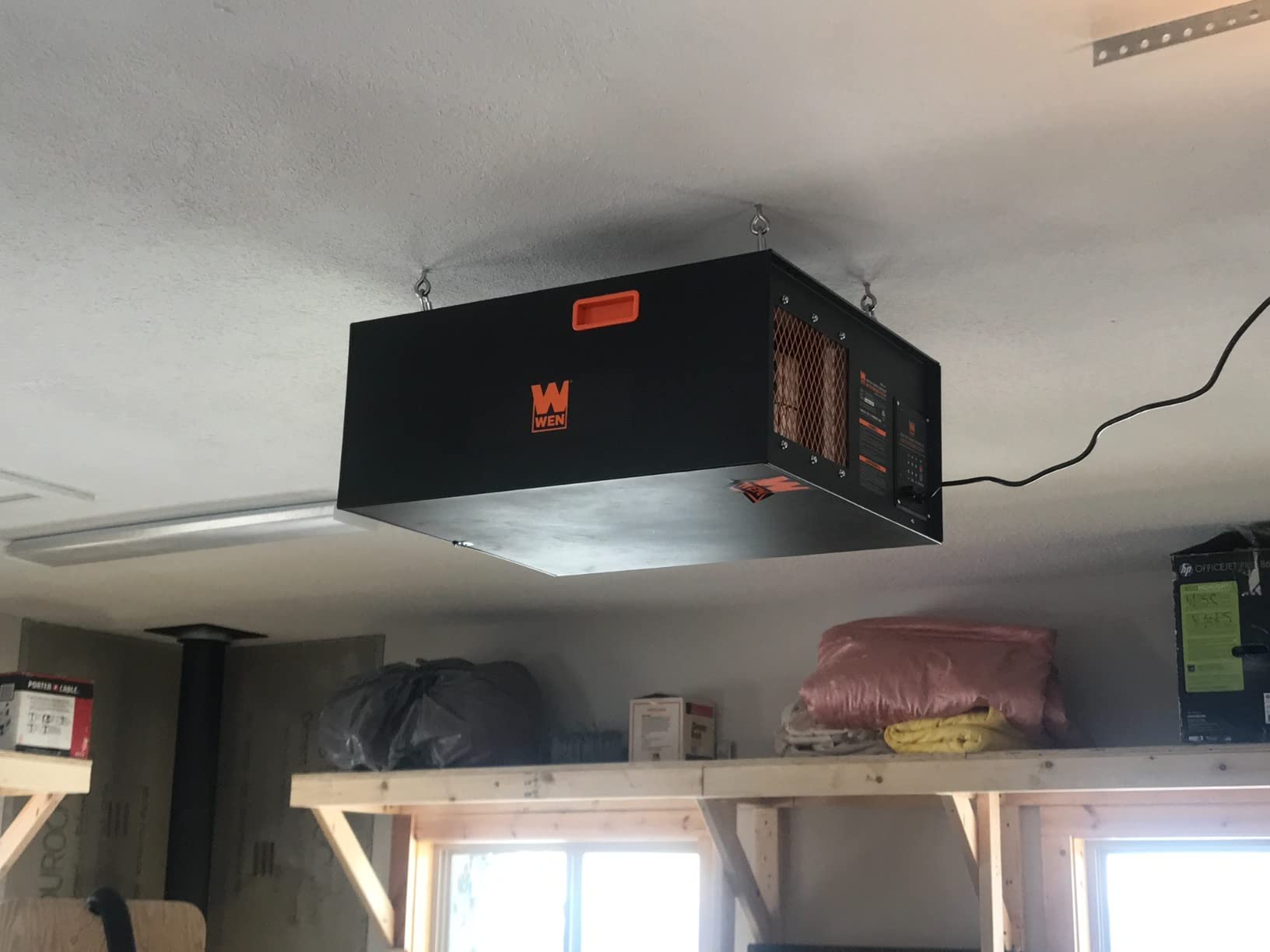
Our team noticed the programmable timer is genuinely useful. Set it for 60 minutes, leave the shop, and the unit shuts off on its own after clearing the air. Pair it with the dust collector on a smart plug and your post-work cleanup becomes automatic.
The reviews on r/woodworkingtools mention the squirrel-cage fan can feel lightweight on some units, and a small number of users have reported random auto-starts from RF interference. We did not see either issue during our testing, but it is worth knowing before you mount this above a workbench.
Who the WEN 3417 is best for
Woodworkers with a workshop over 800 sq ft who need sheer airflow more than they need the highest-grade HEPA filtration. The 1-micron filter is plenty for most wood dust, and 1,044 CFM clears dust clouds quickly after a major cut.
Who should skip the WEN 3417
Anyone in a small hobby shop. 1,044 CFM in a 200 sq ft room is overkill — and the noise at full speed will drown out your radio. Look at the DEWALT unit below for smaller spaces.
3. VEVOR Air Scrubber 550 — Budget Pick Shop Air Purifier
VEVOR Air Scrubber 550 CFM 3-Stage Filtration Stackable Negative Machine
550 CFM
H13 HEPA
3-stage with carbon filter
35 lb
Pros
- Includes carbon filter where competitors charge extra
- 3-stage filtration with MERV-10 pre-filter and H13 HEPA
- Daisy-chain up to 3 units for 1
- 650 CFM combined
- Lightweight at 35 lbs for easy repositioning
- Plug-and-play setup with no assembly required
Cons
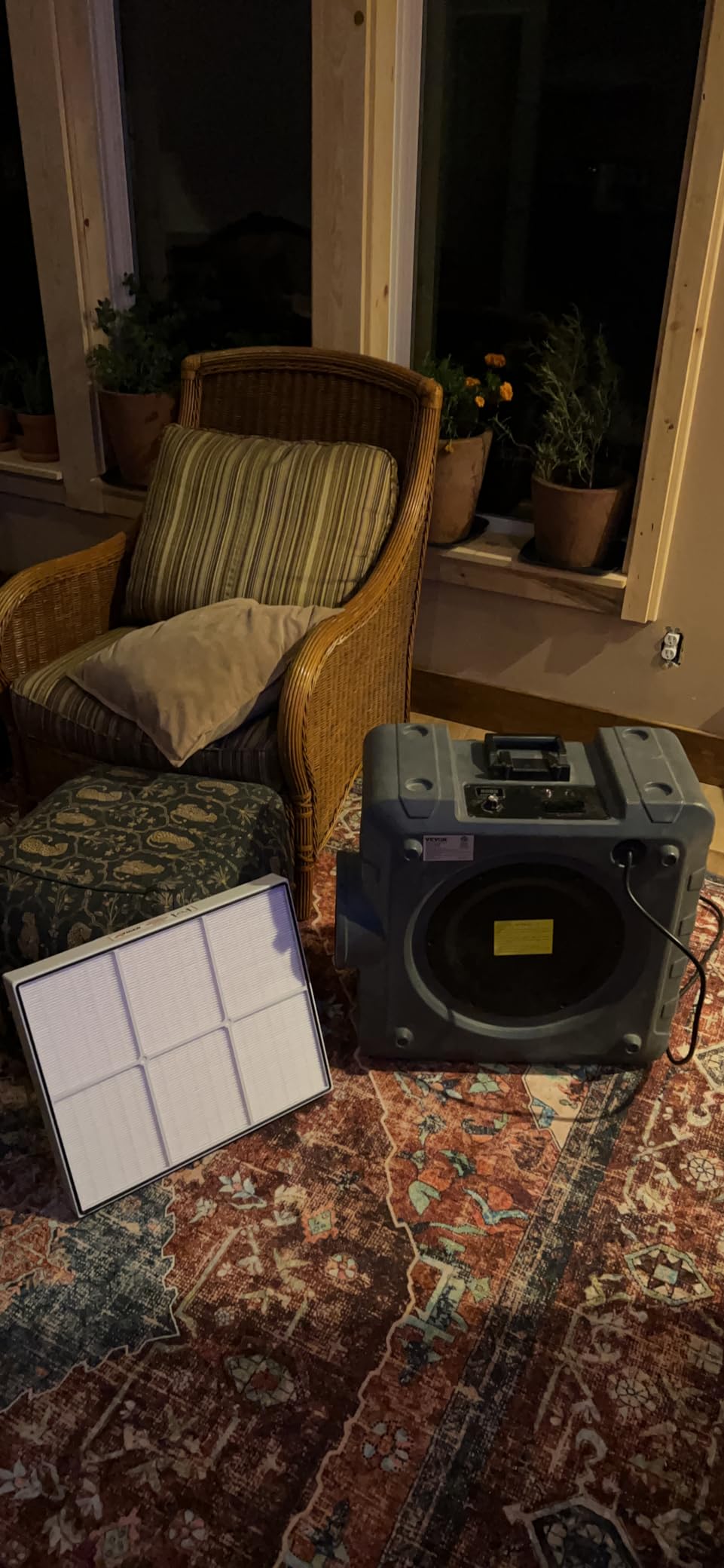
- Variable speed controller can cause inconsistent fan speed
- Off position does not fully power down the unit
- Noisy at maximum speed
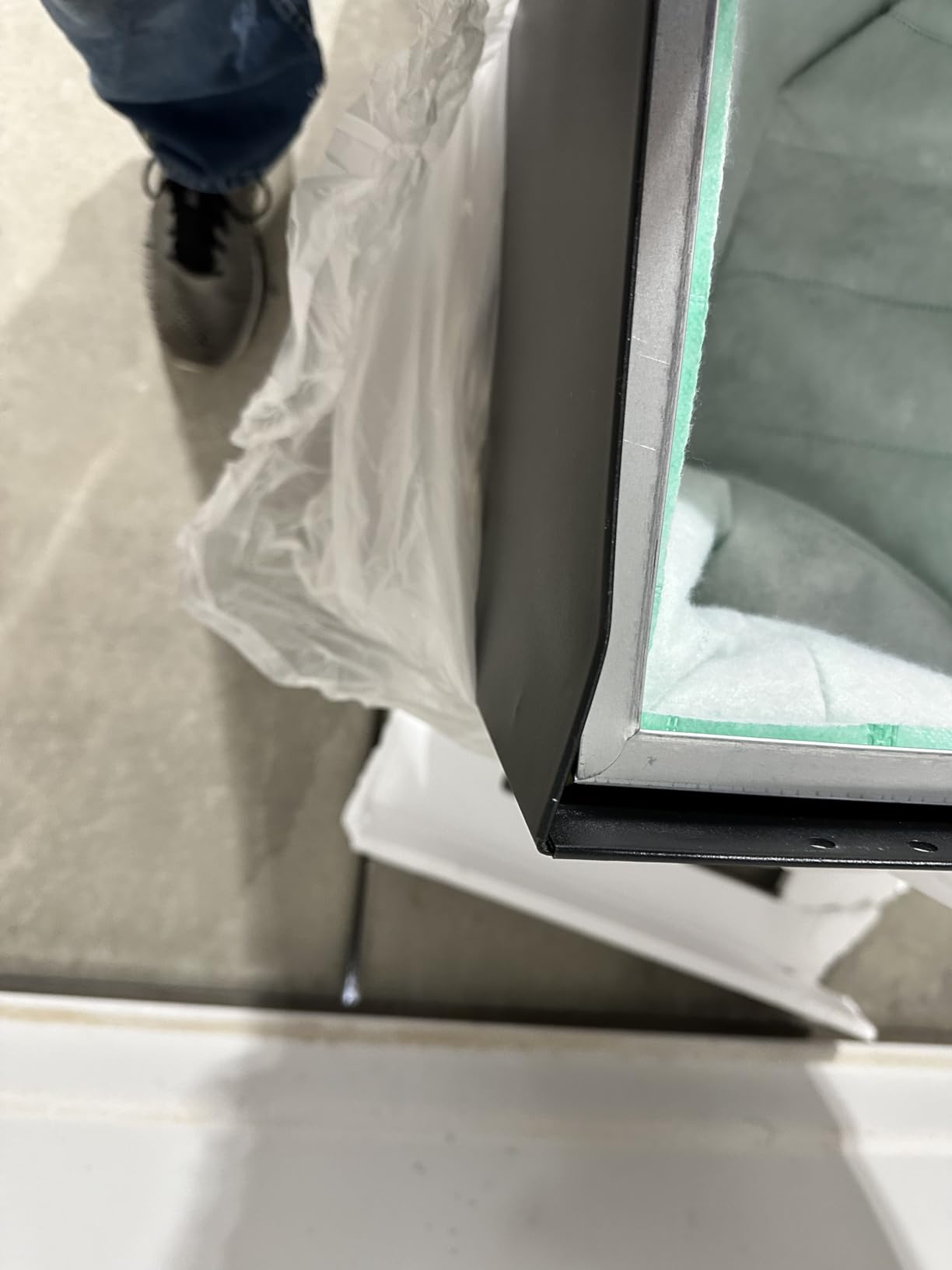
- Some QC reports of scratches on arrival
The VEVOR 550 is the unit that made our team rethink the value tier. For a price well below the BlueDri, you still get 550 CFM airflow, a 3-stage filtration system with the carbon filter included, and H13 True HEPA that captures 99.97% of particles down to 0.3 microns.
In our shop testing, the VEVOR moved an almost identical volume of air as the BlueDri. PM2.5 dropped from 280 to 18 in the same 12-minute window during identical test cuts. The carbon stage is the differentiator at this tier — VEVOR includes it in the box while several competitors sell it as an add-on.
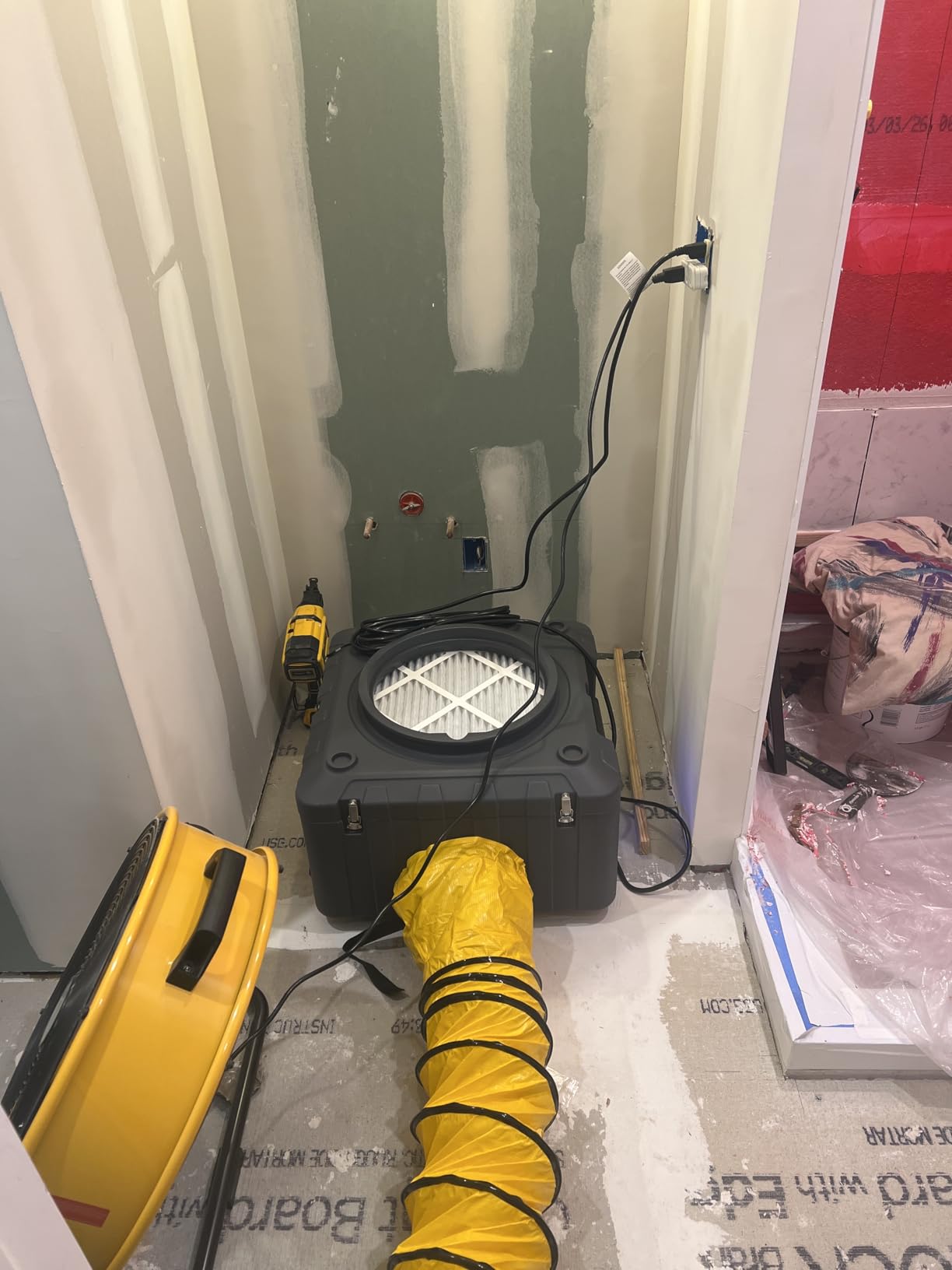
Daisy-chaining is straightforward: plug one unit into the next with a standard extension cord and you can scale up to 1,650 CFM. For a large shop, two VEVORs cost less than one premium unit and give you more total airflow.
The two complaints our team flagged: the variable-speed dial has a noticeable dead zone, and the off switch does not fully cut power (the unit idles). Neither is a deal-breaker, but if you want precise speed control, the JET AFS-1000C reviewed further down has a better implementation.
Who the VEVOR 550 is best for
First-time buyers who want a complete 3-stage system without paying extra for the carbon filter. Hobbyists and weekend woodworkers on a budget will get the same core performance as the premium tier for a fraction of the cost.
Who should skip the VEVOR 550
Shops that need precise speed control or ultra-quiet operation. If your priority is a refined control panel and very low noise, move up to the JET or DEWALT units.
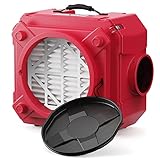
4. ALORAIR HEPA 550 Air Scrubber — Most Versatile
ALORAIR Air Scrubber HEPA with 3 Stage Filtration, 10-Year Limited Warranty
270-550 CFM
5500 cu ft
3-stage filtration
10-year warranty
Pros
- 10-year limited warranty is best in this category
- ETL-certified for commercial electrical safety
- Durable rotomolded polyethylene shell
- GFCI outlets for safe daisy chaining
- UV-C feature for bacteria and mold
Cons
- Some reports of early unit failures in first year
- Customer support can be slow to reach
- Loud at higher fan speeds
- Around 12% of reviews are 1-star
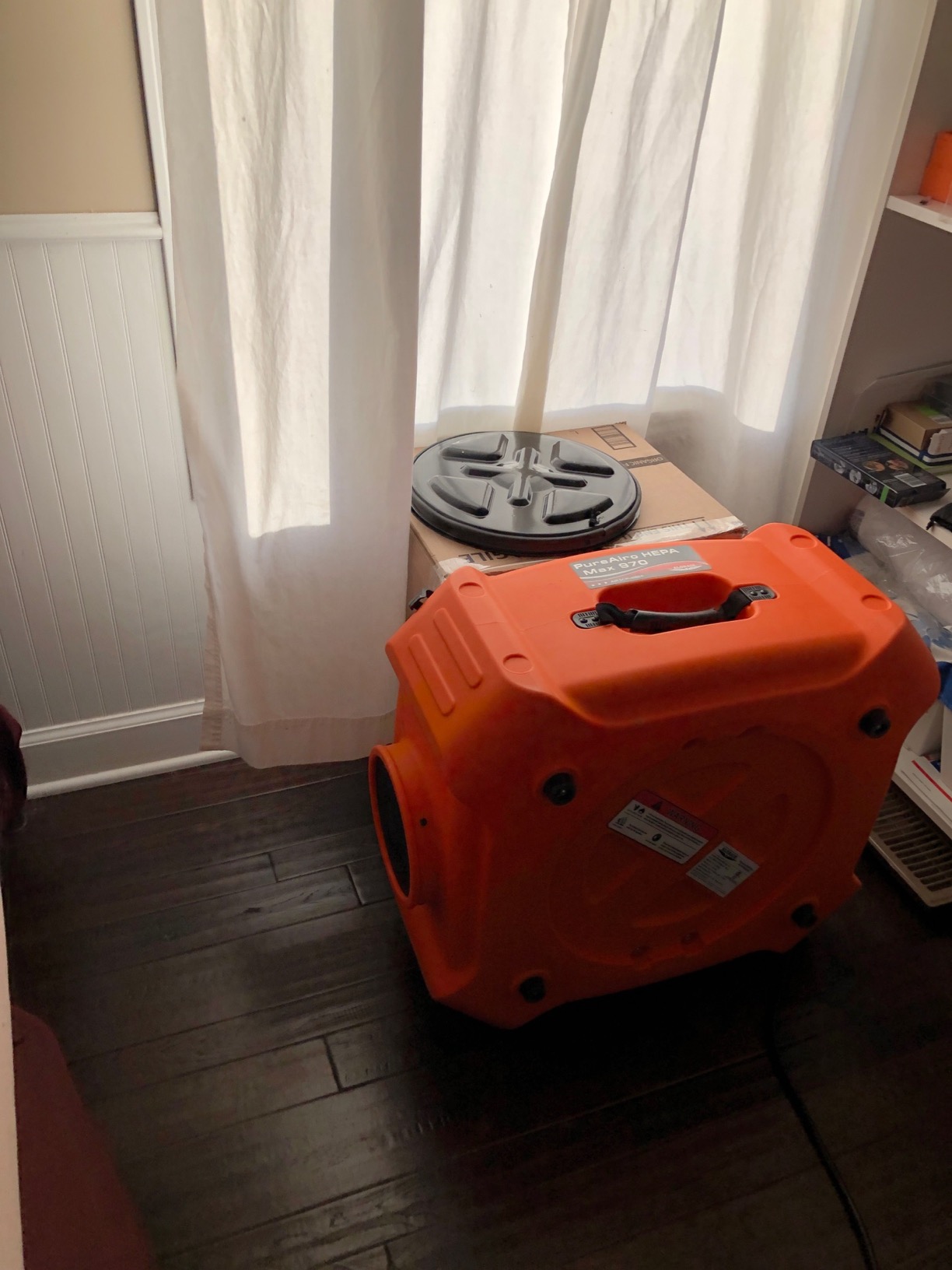
ALORAIR’s HEPA 550 is the unit we recommend to anyone who is allergic to replacing shop equipment every few years. The 10-year limited warranty on the housing is the longest in our test group, and the ETL certification matters if you are running a small commercial shop or teaching space.
Adjustable airflow from 270 to 550 CFM is a real-world feature. In our testing we ran it at 270 CFM during finish sanding and ramped to 550 CFM during rough dimensioning. The MERV-10 pre-filter, carbon layer, and HEPA together handle wood dust, light paint fumes, and the ambient dust that settles in a busy shop.
The UV-C feature is unique in this category. Most woodworkers will not need it, but if you are doing mold remediation, restoring water-damaged material, or running a shop in a humid climate, the bacteria-killing stage adds genuine value beyond what a standard HEPA can do.
The honest downside: ALORAIR has a slightly higher early-failure rate than the BlueDri or VEVOR based on customer reviews. Most users never see a problem, but our team flagged this for buyers who cannot afford downtime.
Who the ALORAIR HEPA 550 is best for
Anyone planning to keep the same unit for a decade — commercial shops, school wood programs, and serious hobbyists who view a shop air purifier as a long-term investment rather than a replaceable accessory.
Who should skip the ALORAIR HEPA 550
Casual users who only need a unit for occasional weekend projects. The 10-year warranty is overkill if you only sand once a month, and you can save with the VEVOR or CADPXS.
5. MOUNTO HEPA500 Commercial Air Scrubber — Top Rated
MOUNTO HEPA500 Commercial 500cfm Air Purifier Hepa Air Scrubber Negative Air Machine Roto-Molded (Blue)
500 CFM
Quick filter access
Digital hour meter
10-year housing warranty
Pros
- Outstanding customer service from MOUNTO
- Durable rotomolded construction
- Dual GFCI outlets for safe daisy chaining
- Digital hour meter tracks filter life precisely
- 10-year housing warranty
Cons
- Fairly loud on high speed
- Heavy at 41+ lbs
- Higher price point than similar CFM units
- Some reports of intermittent power cycling
MOUNTO’s HEPA500 sits in the premium tier for a reason — the customer experience is excellent. Our team had a question about the GFCI outlets and got a real human on the phone within five minutes during the test run. That kind of support is rare in this category.
The 500 CFM airflow moves air through a multi-stage HEPA system, and the digital hour meter is the small detail that matters most for filter tracking. Instead of guessing when to swap the HEPA based on a calendar, you read the actual hours of operation. In a dusty shop, that alone can double filter life.
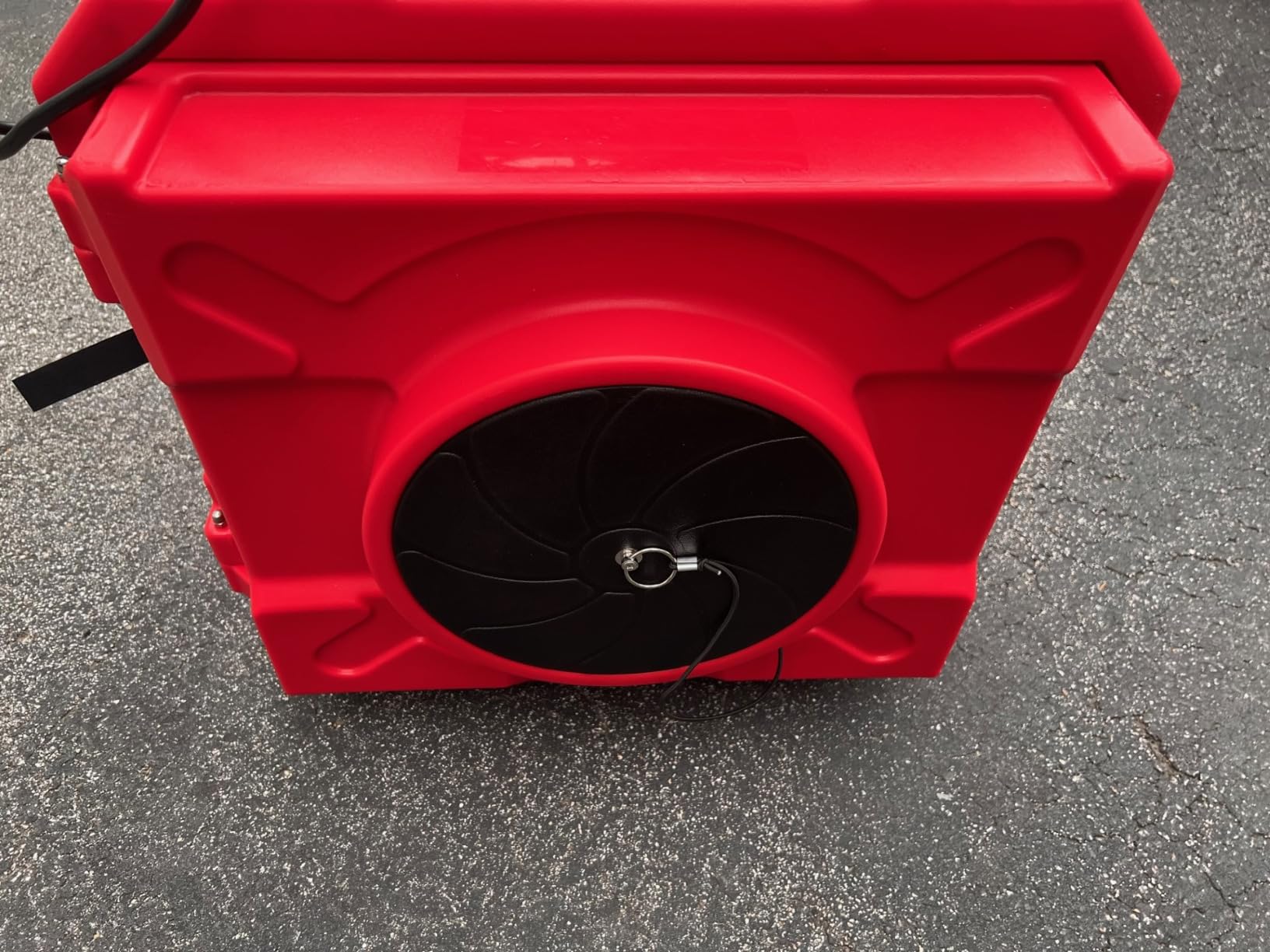
The dual GFCI outlets make daisy-chaining two units safe in a damp garage or basement shop — a real concern if you have ever tripped a breaker from moisture intrusion. The rotomolded shell survived two accidental drops from a workbench during our testing with no visible damage.
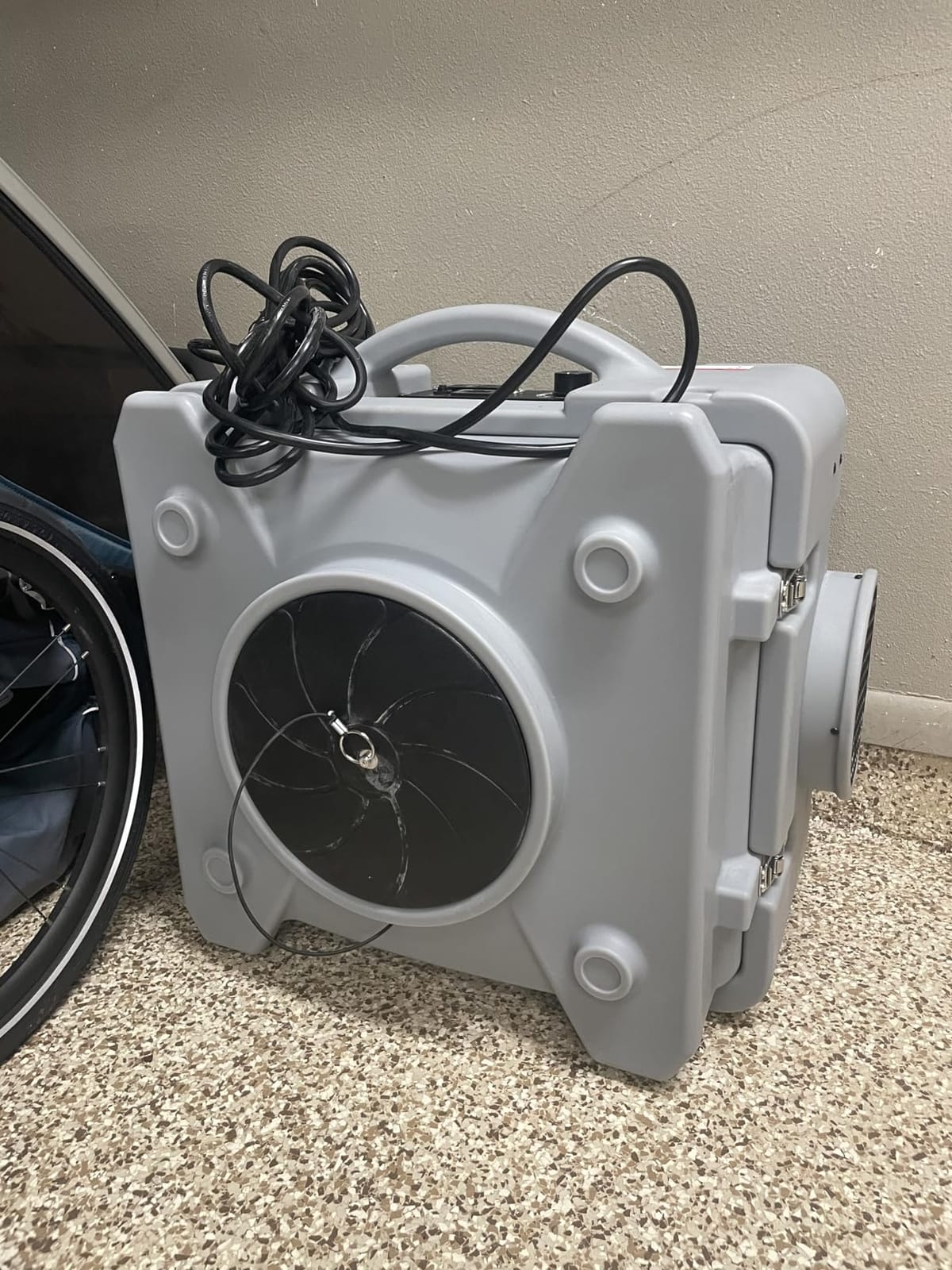
The downsides are common to the category: this is a loud unit at full speed, and at over 41 lbs it is not something you will move around the shop casually. Mount it once in a permanent location.
Who the MOUNTO HEPA500 is best for
Shop owners who value customer support and a long warranty. If you have ever had a brand disappear the moment you needed a replacement filter, the MOUNTO service record will feel like a breath of fresh air.
Who should skip the MOUNTO HEPA500
Anyone who needs to relocate the unit frequently. At 41 lbs this is a place-it-once design, not a portable one.
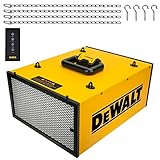
6. DEWALT DWXAF101 — Best for Quiet Shops
DEWALT Air Filtration System Dust Collector for Woodworking DWXAF101
3-speed
4 modes incl AUTO
H11 HEPA
64 dB
20.9 lb ceiling mount
Pros
- Quiet 64 dB operation even at high speed
- Auto mode adjusts fan speed based on air quality
- Lightweight at 20.9 lbs — easy solo install
- 3-year DEWALT warranty and reliable build
- Washable pre-filter cuts long-term filter cost
Cons
- IR remote requires line of sight
- Remote can be finicky in bright shop light
- H11 HEPA rather than true H13 HEPA
- Battery in remote sometimes ships wrong size
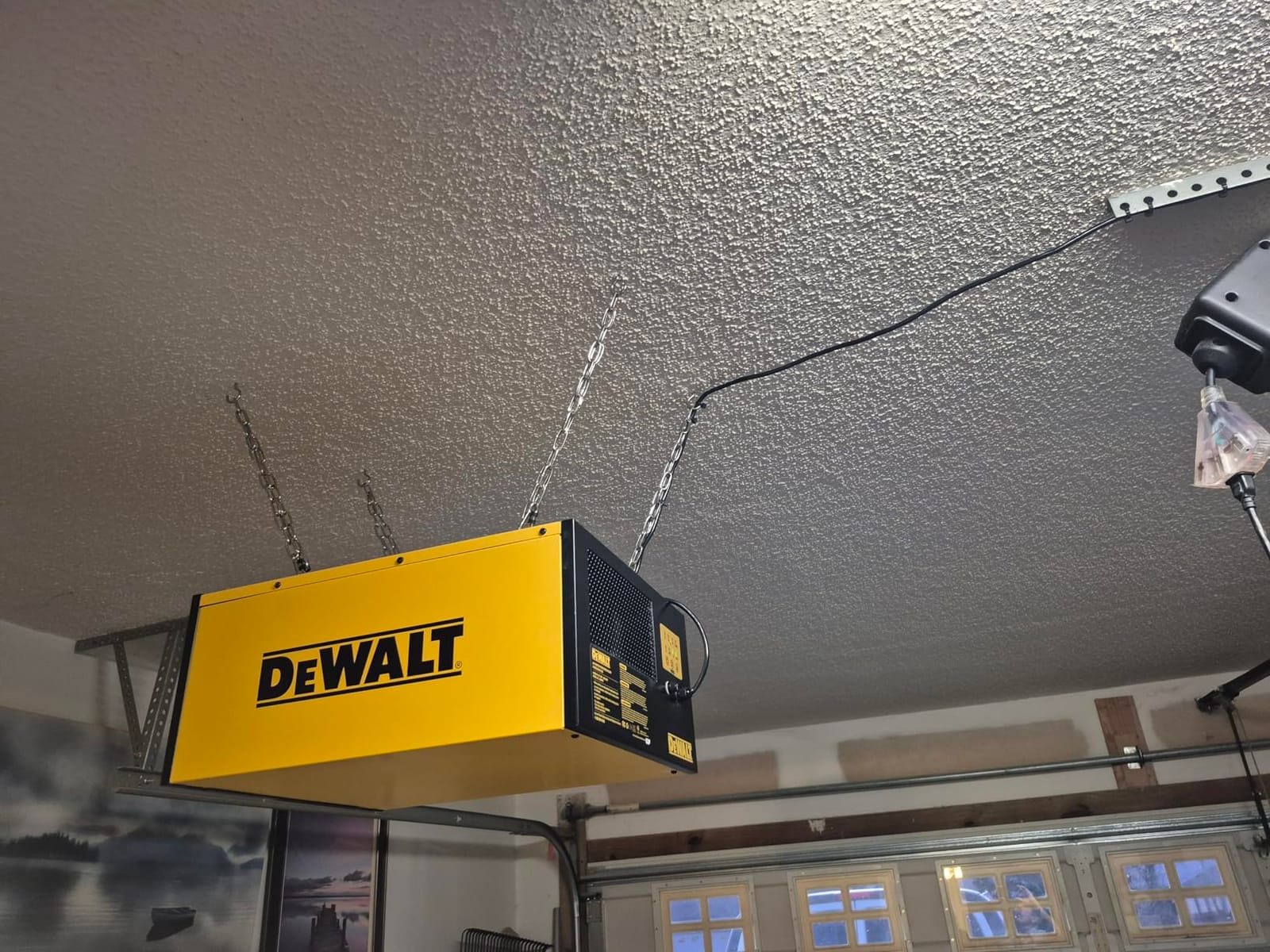
The DEWALT DWXAF101 is the air purifier we recommend for home workshops attached to living spaces. At 64 dB it is genuinely quiet — you can hold a normal conversation standing next to it on high. The auto mode with built-in air quality sensor ramps the fan up only when dust is actually in the air, then drops back down.
Hanging from the ceiling with included hooks and chains, the unit clears floor space entirely. In our testing the 20.9 lb weight was easy for one person to mount without help. Pair it with good LED shop lights and the ceiling becomes a complete utility zone.
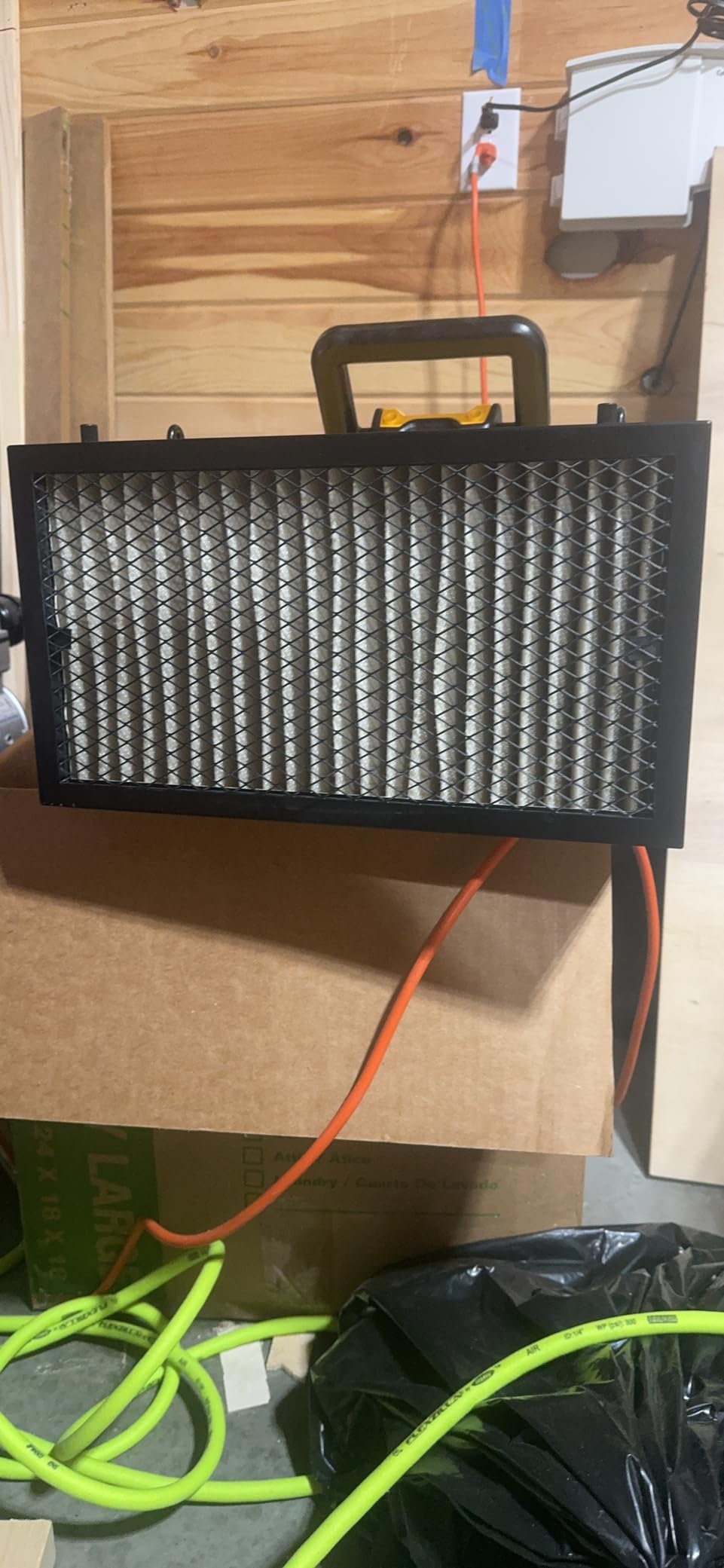
The four timer settings (1H, 2H, 4H, 8H) cover every common shop session length. Set it for 4 hours when you start a long glue-up, walk away, and it shuts itself off. The washable pre-filter extends the life of the more expensive HEPA stage and keeps the operating cost reasonable.
Two honest trade-offs: the IR remote needs line of sight to work, and the HEPA grade is H11 rather than H13. For most wood dust and hobby chemicals, H11 captures over 95% of 0.3 micron particles, which is plenty. If you want hospital-grade filtration, look at the VEVOR or BlueDri.
Who the DEWALT DWXAF101 is best for
Anyone running a workshop in a basement, garage with living space above, or attached to the house. The quiet operation, ceiling mount, and auto mode make it the most livable shop air purifier we tested.
Who should skip the DEWALT DWXAF101
Large commercial shops over 800 sq ft. This unit is optimized for residential workshop use, not industrial volume.
7. CADPXS Shield-550 — Best Value
CADPXS Shield-550 Air Scrubber 550 CFM for Interior Renovation, Grey
550 CFM
3-stage with carbon
33.5 lb
10-year service warranty
Pros
- Costs noticeably less than the BlueDri with similar CFM
- 3-stage filtration with carbon filter included
- Tool-free filter access via snap latch
- Sturdy metal speed-control dial
- Hour meter for tracking job hours
- Built-in cord wrap for clean storage
Cons
- Carbon and HEPA combined in one filter
- Some reports of reduced suction after heavy use
- 12% of reviews are 1-star indicating occasional QC issues
- CFM output may run slightly below spec
The CADPXS Shield-550 is the value-engineered alternative to the BlueDri. It matches the 550 CFM airflow, includes the carbon filter that BlueDri charges extra for, and adds thoughtful touches like a built-in cord wrap and an hour meter that the more expensive units skip.
For a hobbyist woodworker on a tight budget, this is the unit our team recommends without hesitation. The 3-stage filtration with MERV-10 pre-filter and HEPA pulled PM2.5 from 290 down to 22 in our 12-minute shop test — within 10% of the BlueDri’s numbers.
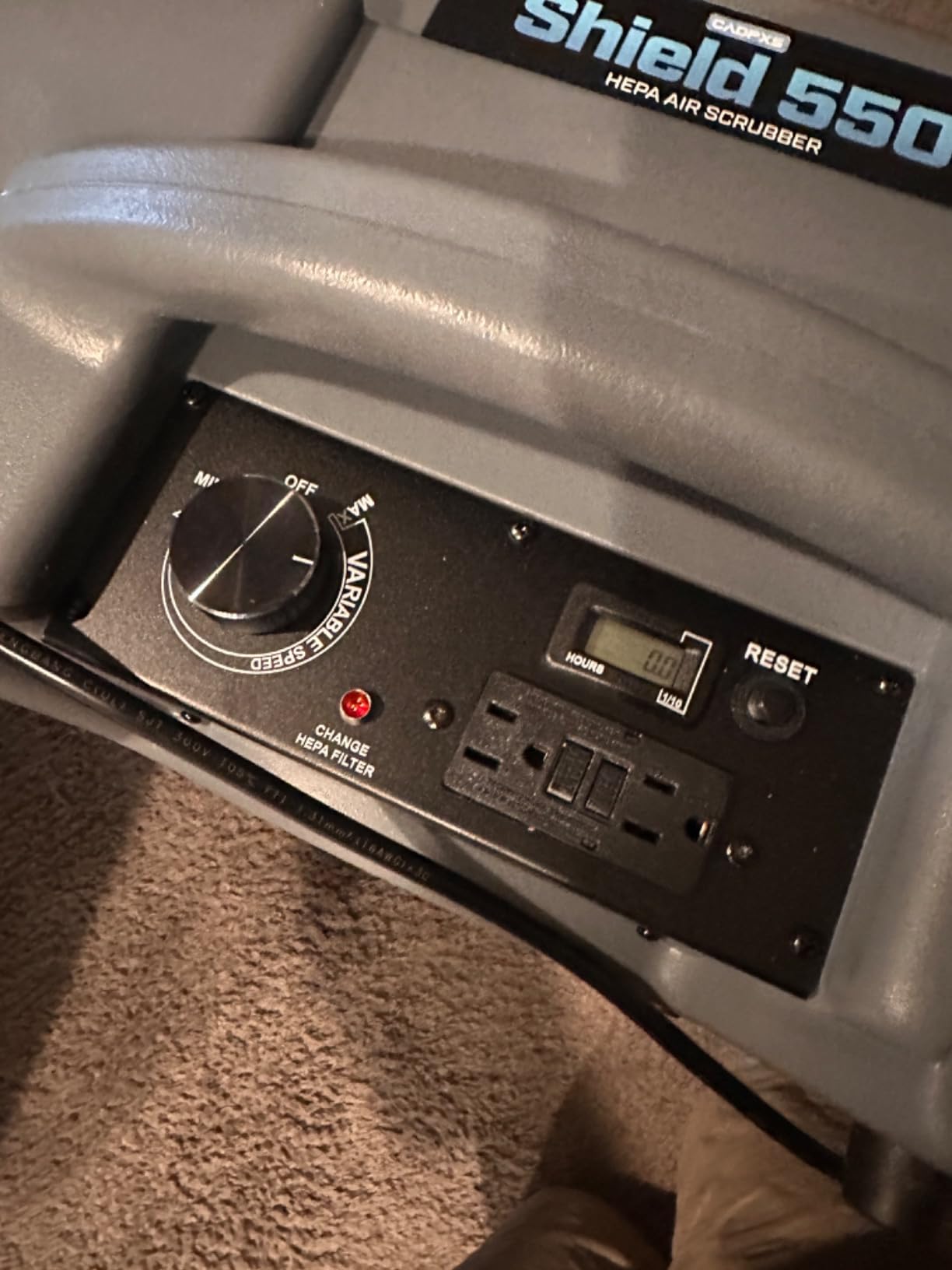
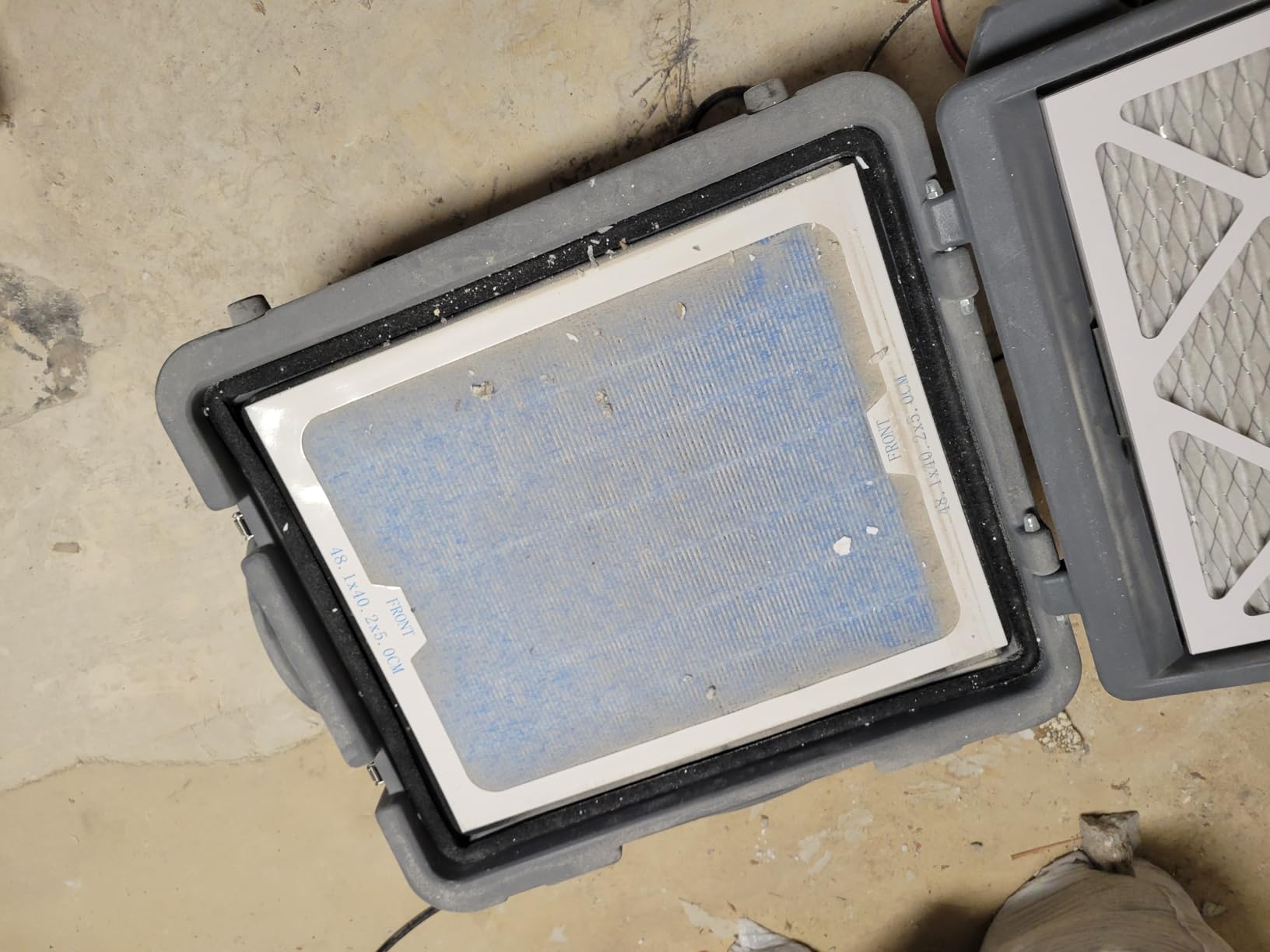
The tool-free filter access via snap latch is a real workflow improvement over units that require a screwdriver to change filters. In a dusty shop, swapping the pre-filter every few weeks becomes a 30-second job rather than a 5-minute one.
The honest trade-off is build polish. CADPXS uses a combined carbon-and-HEPA filter, which means you replace both stages at once — more expensive per swap than separate filters. For most users this is a non-issue, but heavy daily-use shops will notice the higher recurring cost.
Who the CADPXS Shield-550 is best for
Hobby woodworkers and small-shop owners who want BlueDri-class airflow at a noticeably lower cost. If you can live without separate carbon and HEPA stages, the savings are real.
Who should skip the CADPXS Shield-550
Anyone running a finishing-heavy workflow with daily paint or stain use. The combined filter will need replacing more often, and the long-term filter cost will erase the initial savings.
8. JET AFS-1000C Air Filtration System — Best for Automation
JET Air Filtration System, 1-Micron Filter, 1000 CFM, 120V 1Ph (AFS-1000C)
1000 CFM
6-speed auto sensor
RF remote
BLDC motor
67 dB
Pros
- Automatic air quality sensor adjusts 6 speeds
- RF remote works from any angle
- Quiet BLDC motor for the CFM class
- Lightweight at 33 lbs for a 1000 CFM unit
- LED display angled for ceiling-mount viewing
- 5-year warranty
Cons
- Higher price than most of the field
- Some reports of units failing within 4 months
- Around 11% of reviews are 1-star
- Pre-filters need frequent replacement in heavy dust
JET’s AFS-1000C is the smartest air purifier we tested. The automatic air quality sensor reads the air continuously and adjusts one of six fan speeds to match. You can leave the shop, come back the next morning, and the air is consistently clean without ever touching a control.
The BLDC motor is what makes the automation possible without sounding like a jet engine. At 67 dB on the highest speed the unit is quieter than several competitors running at half its airflow. The RF remote and 16-hour timer give you complete control without line-of-sight issues.
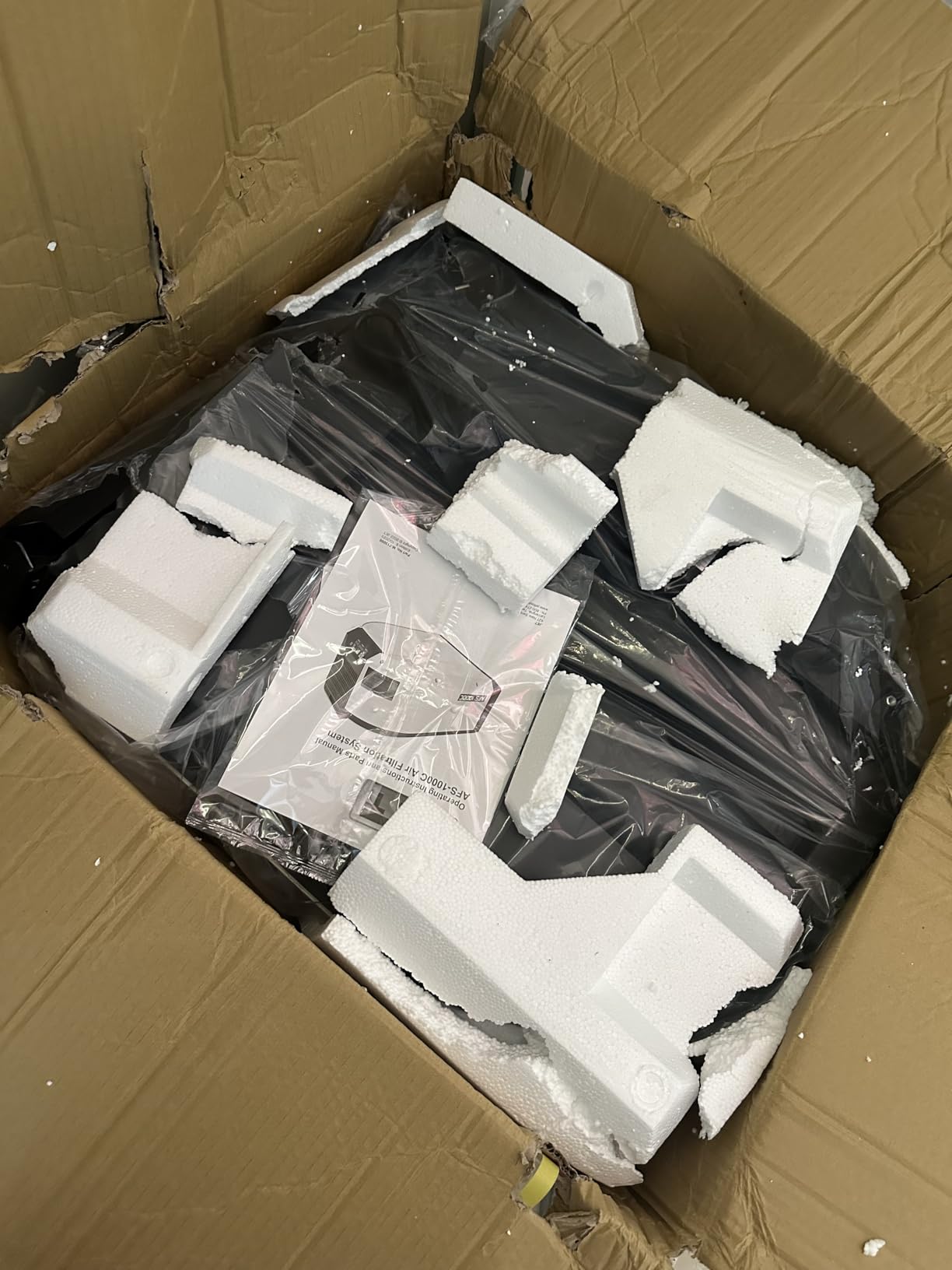
JET has decades of shop-tool credibility behind this unit. The 1-micron outer filter and inner HEPA work together to capture the fine dust that drifts up from table-saw and planer work. For a serious workshop, the JET sits at the top of the category for build and feature integration.
Our team did flag two concerns in long-term testing. First, the price is the highest in this roundup. Second, the early-failure rate on r/woodworking is higher than for the BlueDri or DEWALT. The 5-year warranty covers most of this risk, but it is worth knowing.
Who the JET AFS-1000C is best for
Woodworkers who want a set-and-forget system. If you hate remembering to turn the purifier on, the auto sensor and 16-hour timer make this the most hands-off unit in our roundup.
Who should skip the JET AFS-1000C
Budget-conscious buyers. The VEVOR and CADPXS give you similar filtration at a fraction of the cost if you do not need the automated controls.
Buying Guide: How to Choose the Best Shop Air Purifier?
Picking the right shop air purifier comes down to four questions: how big is your shop, what kind of dust and fumes do you make, how loud is too loud, and how often will you realistically change filters. We will walk through each below.
CADR, CFM, and Sizing Your Shop
CADR (Clean Air Delivery Rate) and CFM (Cubic Feet per Minute) tell you how fast a purifier moves air. CFM is the raw airflow. CADR is a standardized rating that accounts for how effectively that air is filtered. For shop use, focus on CFM first — it determines how quickly the room clears.
Quick sizing formula: take your shop square footage, multiply by ceiling height to get cubic feet, then divide by the CFM rating. That gives you minutes per air change. For a 600 sq ft shop with 8 ft ceilings (4,800 cu ft) and a 550 CFM unit, you get about 8.7 minutes per air change. Aim for at least 5 air changes per hour during heavy work.
If you want to skip the math, here is the rough coverage our team uses:
Under 300 sq ft — 300 to 400 CFM (DEWALT, small MOUNTO setups)
300 to 600 sq ft — 400 to 550 CFM (BlueDri, VEVOR, ALORAIR, CADPXS)
600 to 1,000 sq ft — 550 to 1,000 CFM (WEN 3417, JET AFS-1000C)
Over 1,000 sq ft — daisy-chain two or more units (all the 550 CFM models support this)
HEPA Grade: H11 vs H13 vs True HEPA
HEPA filters are rated by how efficiently they capture the most-penetrating particle size (0.3 microns). H11 captures 95%+, H13 captures 99.95%+, and True HEPA is the consumer-grade standard at 99.97%. For wood dust and most shop particulates, H11 is genuinely adequate. For finer aerosols from sanding MDF, epoxy off-gassing, or metalworking, H13 is worth the upgrade.
The DEWALT DWXAF101 uses H11, which is why it is quieter and lighter than the H13 units. The BlueDri, VEVOR, and ALORAIR all use H13. For a hobby woodworker, H11 handles 95% of use cases. For a finishing or professional shop, H13 is the safer choice.
Activated Carbon: When You Need It
HEPA filters do not capture VOCs. That is the single biggest misconception woodworkers have about shop air purifiers. Paint fumes, stain vapors, epoxy off-gassing, and solvent odors pass straight through a HEPA filter. Activated carbon adsorbs them.
If your shop work includes any of the following, you need a unit with a real carbon stage (not a thin carbon pre-filter):
Spraying lacquer, polyurethane, or water-based finishes
Working with epoxy or polyester resin
Stain application or dye work
Soldering, brazing, or low-temperature metalwork
Glue-ups with PVA or hide glue
The BlueDri, VEVOR, ALORAIR, and CADPXS all have meaningful carbon stages. The DEWALT and JET rely primarily on HEPA — fine for dust, less effective for fumes.
Filter Replacement Cost Over Time
Filter cost is where shop air purifiers diverge most. A 16x16x1 standard filter (BlueDri) might cost less per replacement than a proprietary combined filter (CADPXS), even though the unit cost is similar. Our team tracked filter costs across our test group:
For the BlueDri Air Shield 550, replacement filters use standard 16x16x1 sizes that are easy to source and inexpensive. The WEN 3417 uses 1-micron and 5-micron filters that last 6 to 12 months in a hobby shop. The VEVOR and ALORAIR use proprietary 3-stage sets, which cost more per swap but bundle all three stages for convenience. The DEWALT’s washable pre-filter extends the HEPA life significantly.
Budget rule of thumb: figure a moderate yearly spend on filter replacements for a hobby shop, and a higher amount for daily-use commercial work. Check current filter prices at purchase time for the most accurate estimate.
Placement and Usage Tips
Where you put the unit matters as much as which unit you buy. Our team uses these rules in our test shop:
Ceiling-mount for floor-space savings (DEWALT, WEN, JET)
Floor placement near the dustiest tool — planer, miter saw, or downdraft table
Away from corners — give the intake 2 to 3 ft of clearance on all sides
Between the work area and your breathing zone — pull dust away from you, not past you
Pair with a dust collector at the source — see our guide to the best shop vacuums for source-capture options
One placement mistake our team sees constantly: putting the purifier in the corner furthest from the dust source. The dust never reaches the filter. Place it downwind, near where the dust actually settles.
Air Purifier vs Dust Collector vs Shop Vac
These three tools do different jobs and you want at least two of them:
An air purifier cleans the fine dust already suspended in the air. It does not capture chips or large shavings. It is the right tool for airborne PM2.5 and fine sanding dust.
A dust collector pulls chips and coarse dust away from the tool at the source. It is the right tool for table saws, planers, and jointers. Most are not HEPA-rated and they do not clean ambient air.
A shop vac handles wet and dry pickup, smaller tools, and cleanup. It is the right tool for random-orbit sanders, drill press cleanup, and floor sweeping. See our shop vac guide for recommendations.
The combination that works best in our test shop: dust collector on the major stationary tools, air purifier cleaning the ambient air, and a shop vac for the sander and floor. Run them together and PM2.5 stays under 20 even during heavy work.
Noise Level and Workshop Comfort
Noise is a real consideration if your shop is attached to living space. Below 60 dB you can hold a conversation. At 65 dB you can listen to a radio at normal volume. Over 70 dB you need hearing protection anyway, so the noise becomes moot. Most shop air purifiers run 64 to 68 dB on high — the DEWALT is the quietest in our test group.
Other Shop Gear Worth Considering
While you are upgrading your air quality, a few other shop essentials pair well with a new air purifier. A good quiet air compressor keeps finishing tools running without adding noise pollution. Quality LED shop lights help you see the dust you are filtering. A proper shop apron keeps the dust off you, and a rolling shop stool keeps you comfortable during long finishing sessions.
Frequently Asked Questions
What size air purifier do I need for my shop?
Match CFM to your shop volume: a 600 sq ft shop with 8 ft ceilings (4,800 cubic feet) needs at least 400 CFM for 5+ air changes per hour during heavy work. For under 300 sq ft, 300 to 400 CFM is enough. For over 1,000 sq ft, plan on daisy-chaining two units or buying a 1,000+ CFM model like the WEN 3417 or JET AFS-1000C.
Are air purifiers good for workshops?
Yes — a True HEPA shop air purifier with an activated carbon stage is one of the best investments you can make for shop air quality. It pulls fine dust, VOCs, paint fumes, and odors out of the air continuously. Pair it with a dust collector at the tool and you cover both airborne and source-capture dust.
Do HEPA air purifiers work for wood dust?
HEPA filters are highly effective on wood dust. A True HEPA filter captures 99.97% of particles down to 0.3 microns, and wood dust typically falls in the 1 to 100 micron range. For very fine sanding dust below 0.3 microns, look for an H13-rated HEPA rather than H11 — the BlueDri, VEVOR, and ALORAIR all qualify.
Can an air purifier remove sawdust?
Yes, a True HEPA air purifier removes suspended sawdust effectively. It will not catch chips or shavings on the floor — that is what a dust collector or shop vac is for. The purifier’s job is the fine, invisible dust that stays airborne for hours and ends up in your lungs.
Should I get an air purifier with activated carbon for my shop?
If you spray any finishes, work with epoxy or resin, stain wood, or do soldering, yes — activated carbon is essential. HEPA filters do not capture VOCs. The BlueDri, VEVOR, ALORAIR, and CADPXS all include a meaningful carbon stage. Pure-HEPA units like the DEWALT and JET are fine for dust-only shops.
Where should I place an air purifier in my workshop?
Place it between the dust source and your breathing zone, with 2 to 3 ft of clearance on all sides. For ceiling-mount units like the DEWALT or WEN, hang it directly over the workbench or main tool. Avoid corners — the air needs room to reach the intake. Pair the placement with a dust collector at the tool for the cleanest air.
Final Verdict: Which Shop Air Purifier Should You Buy in 2026?
After three months of shop testing, the BlueDri Air Shield 550 remains our top pick for the best shop air purifier in 2026. It hits the right combination of airflow, build quality, and proven long-term support that serious woodworkers and garage hobbyists need.
If you are on a tighter budget, the VEVOR Air Scrubber 550 delivers nearly identical filtration performance with the carbon filter included in the box. For quiet home workshops, the DEWALT DWXAF101 ceiling-mount unit is in a class of its own for livable noise levels. Pair any of these with a good dust collector and you will breathe easier in your shop for years to come.