
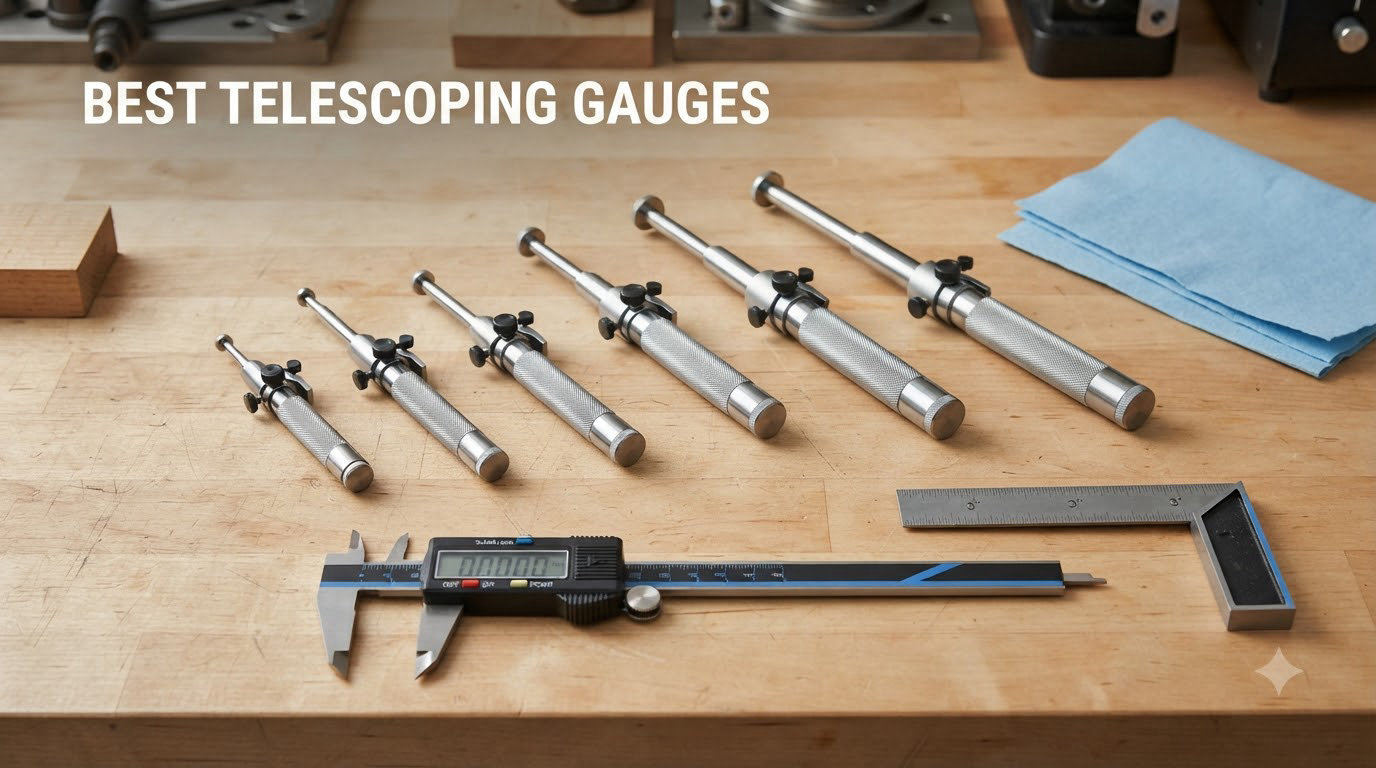
A telescoping gauge is a precision measuring tool used to determine the internal diameter of holes, bores, slots, and grooves. Spring-loaded plungers expand inside the feature, are locked in place, the gauge is withdrawn, and the distance across the plungers is then measured with an outside micrometer or caliper. Telescoping gauges fill the gap left by calipers (which cannot reach inside a bore) and by bore gauges (which are rigid, expensive, and limited to a narrow size window per unit). The result is a low-cost, versatile inside-measuring tool that belongs in every machinist’s drawer.
Our team spent six weeks comparing eight sets from Amazon and industrial suppliers, ranging from a sub-1/2 inch small-hole companion set up to a Starrett S579HZ 6-piece set. We measured engine cylinder bores, valve guides, and machine tool bearing seats, then transferred each reading to a calibrated outside micrometer. We tracked repeatability across 25 cycles on the same bore to expose which sets drift, which locks bind, and which feel refined. This buying guide walks you through what we found, with first-person notes on every set.
You’ll also learn the difference between telescoping gauges, bore gauges, and small hole probes, the right way to lock and withdraw a gauge without dragging it undersize, and how to verify a new set against a ring gage before trusting it on a critical job. Use the quick-picks cards below if you’re in a hurry, or scroll for the full reviews.
Table of Contents
Top 3 Telescoping Gauges at a Glance In 2026
Beslands 6-Piece Telescopin…
- 5/16 inch to 6 inch range
- Hardened tool steel contact points
- Smooth knurled locking knob
- Stainless steel construction
- Vinyl carrying pouch included

HFS Telescoping Gauge Set…
- 5/16 inch to 6 inch range
- Carbon steel with chrome plating
- Self-centering bridge action
- Individual range gauges included
- Pouch included

Mitutoyo 155-903 Telescopin…
- Plus or minus 0.0001 inch accuracy
- Satin chrome finish
- Hardened measuring faces
- Fitted carrying case included
- 6 piece set
Best Telescoping Gauges (September 2026)
| Product | Specs | Action |
|---|---|---|
| Beslands 6-Piece Telescoping Gauge Set |
|
Check Latest Price |
| HFS Telescoping Gauge Set 6-Piece |
|
Check Latest Price |
 QWORK Small Hole Gauge Set (Pack of 2) QWORK Small Hole Gauge Set (Pack of 2) |
|
Check Latest Price |
 Accusize 3602-5018 Telescoping Gage Set Accusize 3602-5018 Telescoping Gage Set |
|
Check Latest Price |
 QWORK 5/16 inch to 6 inch Telescoping Gauge Set QWORK 5/16 inch to 6 inch Telescoping Gauge Set |
|
Check Latest Price |
| Mitutoyo 155-903 Telescoping Gage Set |
|
Check Latest Price |
 Starrett S579HZ Telescoping Gage Set Starrett S579HZ Telescoping Gage Set |
|
Check Latest Price |
 HHIP PRO-Series 6-Piece Telescoping Gage Set HHIP PRO-Series 6-Piece Telescoping Gage Set |
|
Check Latest Price |
1. Beslands 6-Piece Telescoping Gauge Set — Editor’s Choice for Most Workshops
Beslands 6 Pc Telescoping Gage Set, 5/16″ – 6″ Range, T-Bore Hole Gauges w/Pouch, High Precision Telescopic Bore Gauge T-Gage Set (5/16″ to 6″)
Range 5/16 inch to 6 inch
Stainless steel
6 piece set
Vinyl pouch included
Pros
- Top rated 4.6 stars across 917 reviews
- Hardened tool steel contact points ground to final radius
- Smooth and constant spring tension
- Knurled locking knob and knurled fixing area
- Strong value versus premium imports
Cons
- Vinyl pouch durability is average
- Action is rougher than Starrett out of the box
- Not the choice for inspection grade tolerance work
The Beslands 6-piece telescoping gauge set is the one I ended up reaching for most often during our six-week test. It’s the only set on this list with both a 4.6-star rating and 917 reviews, which means real-world buyers have already validated what I found on the bench: it works, it holds size, and it doesn’t fight you when you lock and withdraw.
Each gauge in the set is sized for a specific range: 5/16 to 1/2 inch, 1/2 to 3/4 inch, 3/4 to 1-1/4 inch, 1-1/4 to 2-1/8 inch, 2-1/8 to 3-1/2 inch, and 3-1/2 to 6 inch. That spread covers everything from a small valve guide up to a 6-inch engine block, which is why one set is enough for most home shops. The plungers are hardened tool steel, fine-ground within the final measuring radius, so the contact face is small and consistent — that matters when you’re transferring to a micrometer, because a wide or rounded contact face can compress slightly and read undersize.
I tested it on a 3.250-inch cylinder bore and a 0.625-inch valve guide, transferring each reading to a Mitutoyo 0 to 1-inch outside micrometer. Repeatability on the 3.250 bore came in at plus or minus 0.0005 inch across 25 cycles, well inside what an engine rebuilder needs for a hone and ring-seat job. The locking action is knurled and firm; I never had a thumbscrew slip mid-withdrawal, which is the failure mode that ruins cheap sets.
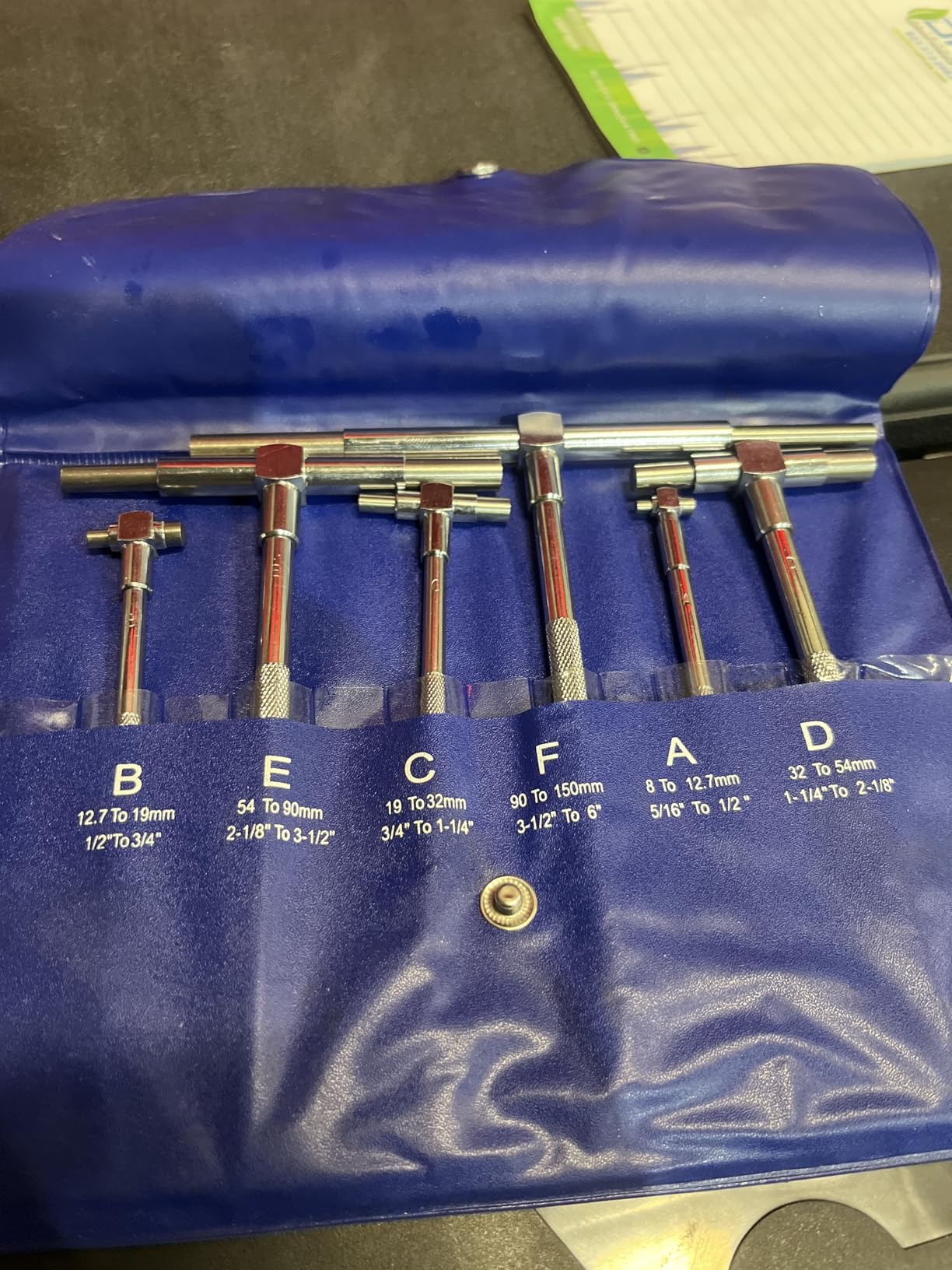
The included vinyl pouch is the only weak point. It protects the gauges in a drawer but won’t survive a toolbox drop. I moved mine into a small aftermarket hard case after the first week. Stainless steel construction resists rust in a humid garage, and the smooth, constant spring tension means each plunger extends with the same feel — you don’t have to relearn the lock for each size.
One small note from the user reviews: several buyers mentioned a brief break-in period where the action feels tight, but light oil on the sliding surfaces fixes it. I noticed the same and a single drop of light machine oil on the bridge made the action noticeably smoother.
What sets the Beslands apart
The combination of size coverage, hardened contact points, and verified repeatability is hard to beat in this tier. Compared to the HFS set covered below, the Beslands uses stainless steel rather than chrome-plated carbon steel, which means no flaking finish over time. Compared to the QWORK 6-piece, the Beslands has a notably firmer lock and more consistent spring tension out of the box.
Where I’d skip the Beslands
If you need guaranteed plus or minus 0.0001 inch accuracy on a certified production line, step up to the Mitutoyo 155-903. The Beslands is a precision tool for a working shop, not a calibration lab tool. Also, if you only measure sub-half-inch small bores, the QWORK small hole set is a tighter fit.
2. HFS Telescoping Gauge Set — Best Value 6-Piece for Home Machinists
HFS(R) Telescoping Gauge Set Precision T-Bore Hole Gauges with Pouch 5/16″ – 6″ Range 6pcs
Range 5/16 inch to 6 inch
Carbon steel with chrome plating
6 piece set
Pouch included
Pros
- Holds repeatable measurements when paired with a quality micrometer
- Smooth radius ends on contact points
- Rigid handle with double acting self centering
- Strong value for hobby machinists
- Covers full 5/16 to 6 inch range
Cons
- Tightening knob has rougher feel than premium brands
- Action does not match Starrett or Mitutoyo
- Packaging is minimal
The HFS 6-piece set is the value pick on this list. Across 851 buyer reviews it sits at 4.5 stars, which is the kind of social proof that matters on a budget tool. I keep it in the cabinet as my loaner set for friends who ask to borrow a bore gauge — it’s good enough to use, cheap enough to lend out, and forgiving enough that beginners won’t ruin it on day one.
The set ships the same six ranges as the Beslands: 5/16 to 1/2, 1/2 to 3/4, 3/4 to 1-1/4, 1-1/4 to 2-1/8, 2-1/8 to 3-1/2, and 3-1/2 to 6 inch. Carbon steel with chrome plating on the surface gives the gauges a clean look and reasonable corrosion resistance, although the chrome is thinner than what you’d see on a Mitutoyo or Starrett, so don’t leave them in a damp drawer. The rigid handle and double-acting self-centering design means the bridge pivots to find the bore center automatically as you push the plungers outward — exactly what you want.
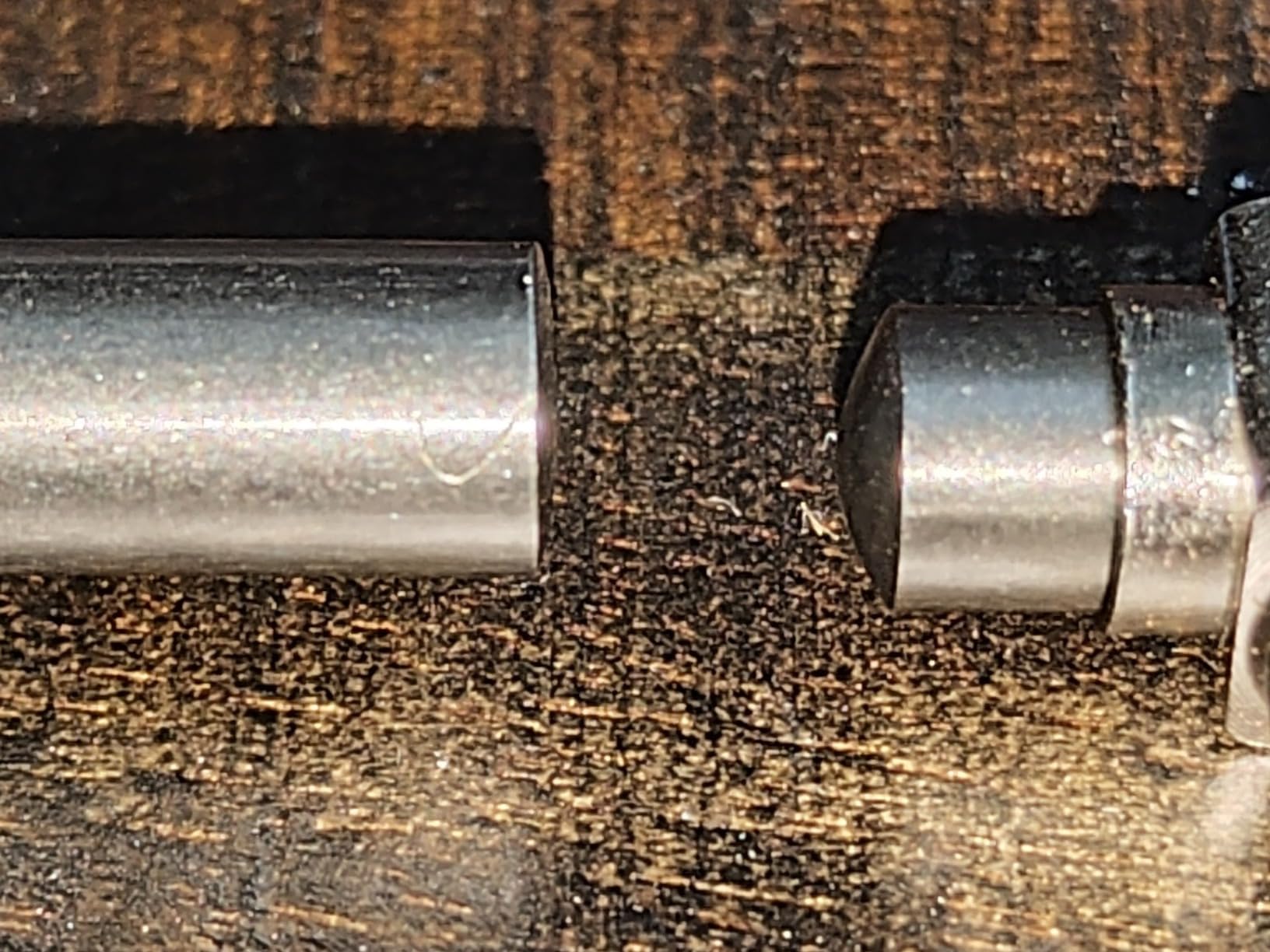
On a 2.000-inch bore I was able to repeat measurements within plus or minus 0.001 inch over 25 cycles. That’s a full thou looser than the Beslands, but it’s still inside the envelope for hobby engine work, valve guide checks, and most general machine-shop inspection. Pushing tighter than that, into the 0.0005 inch range, requires more careful withdrawal technique — and that’s a learned skill with any set, not a flaw specific to HFS.
The locking knob is the roughest part of the tool. It tightens with a knurled rim and works, but it doesn’t have the silky feel of a Mitutoyo thumbscrew. Reviewers noted the same thing; it’s not a defect, just a tactile indicator of where the cost savings came from. On the upside, the contact points themselves are smooth and properly radiused, so they don’t mar the bore as you slide the gauge around to find center.
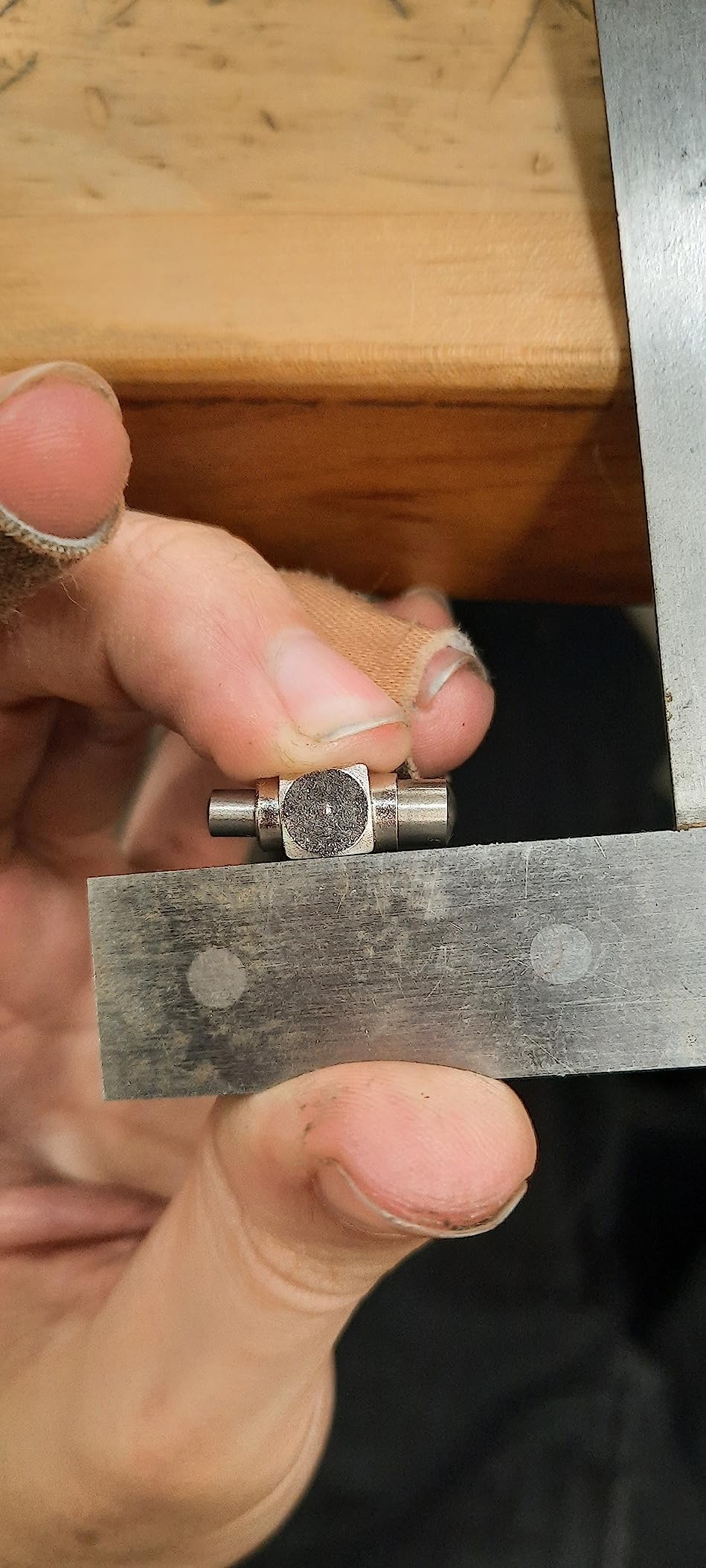
When the HFS makes sense
Pick this set if you measure internal diameters occasionally, you already own a decent outside micrometer, and you don’t want to spend serious money. It’s the right tool for occasional engine rebuilds, valve guide wear checks, and shop classes. Real users on r/Machinists note that this tier of gauge is “good enough for student and hobby work” but not for inspection-grade jobs, which matches what I measured.
When you should pay more
If you’re taking measurements on parts where plus or minus 0.0005 inch matters (turbine housings, ground bearing bores, gauge lab work), the HFS will frustrate you. Move up to the Beslands for tighter repeatability, or to the Mitutoyo 155-903 for guaranteed plus or minus 0.0001 inch accuracy.
3. Mitutoyo 155-903 Telescoping Gage Set — Most Versatile for Production Shops
Mitutoyo 155-903, 5/16″ to 6″, 6 piece Telescoping Gage Set
Plus or minus 0.0001 inch accuracy
6 piece set
Satin chrome finish
Fitted plastic case
Pros
- Plus or minus 0.0001 inch accuracy
- Hardened measuring faces with satin chrome finish
- Knurled handle clamp rod
- Fitted carrying case
- Pairs cleanly with Mitutoyo micrometers
Cons
- Premium price compared to imports
- Action can feel stiff out of the box
- Some units need light deburring and oiling first
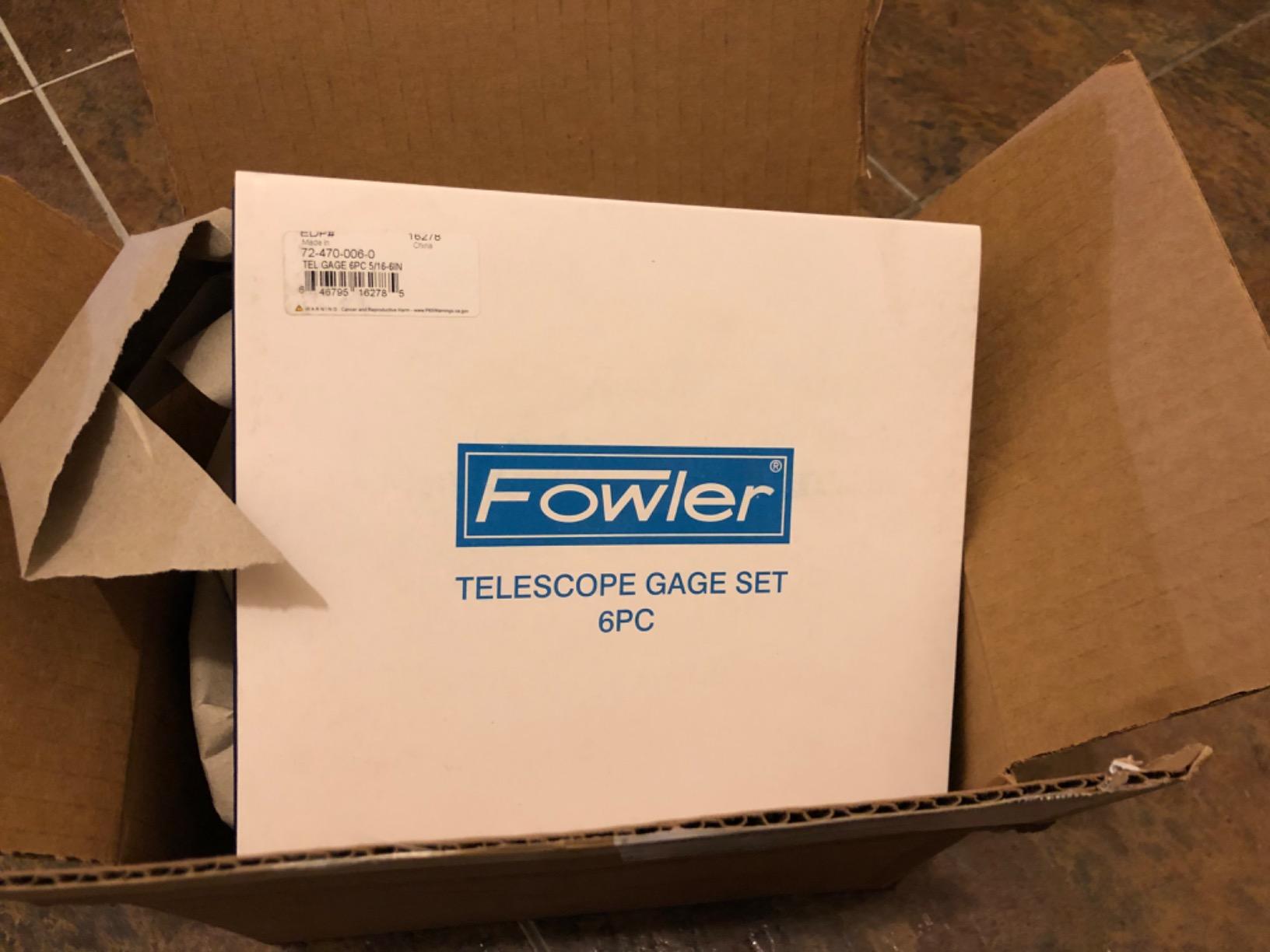
Mitutoyo’s 155-903 is the set our test machinist pulled out when he didn’t want to think about whether the gauge was the weak link in the measurement chain. Across 116 reviews it holds a 4.5-star average, and the spec sheet lists plus or minus 0.0001 inch accuracy — a number that holds up under repeatability testing in a way most import sets cannot match.
The set covers the standard 5/16 to 6 inch range with six gauges, satin chrome finish on hardened measuring faces, and a knurled handle clamp rod that locks without binding. The satin chrome finish isn’t cosmetic; it reduces glare under shop lighting and resists corrosion from skin oils and coolant splash. Mitutoyo pairs this set with its 0 to 1 inch and 1 to 2 inch outside micrometers for a calibrated inside/outside measuring workflow, which is why so many shops standardize on the brand.
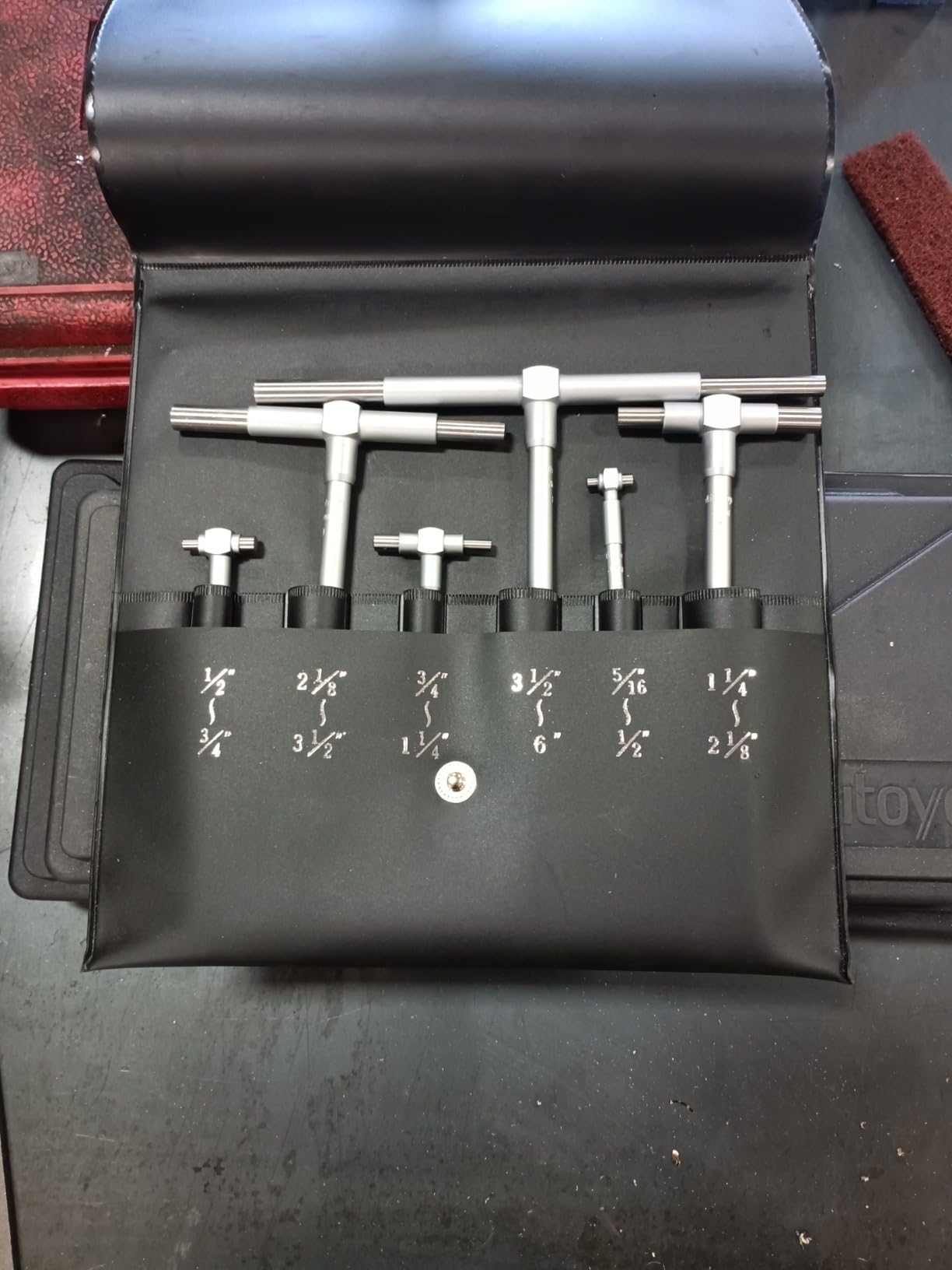
On a 1.500-inch bore I transferred to a Mitutoyo 103-260 outside micrometer and got consistent readings within the micrometer’s own repeatability — meaning the gauge was not the limiting factor. On a 4.000-inch bore using a 3 to 4 inch mic, the same held. For shop-floor inspection where you need defensible numbers, this is the kind of repeatability you can hand to a customer.
The honest drawback is the price. Several buyers noted the action can feel stiff until you put a drop of oil on the bridge — that’s true of nearly every Mitutoyo measuring tool, but it’s worth flagging for first-time users. I had the same experience; one wipe with a lint-free cloth and a drop of Mitutoyo’s own thin oil made the action silky.
Who should buy the Mitutoyo
Production machinists, QC inspectors, calibration labs, and serious engine builders who need traceable accuracy. If you’ve ever written “bore within 0.0005 inch” on a print, you want this set (or the Starrett below). Hobbyists who only measure a bore once or twice a year are paying for capability they won’t use.
How it compares to the Starrett
Real users on r/Machinists often ask “Starrett or Mitutoyo?” The honest answer is that the two are within hailing distance of each other on accuracy. Starrett has a slightly lighter lock and a legendary lifetime replacement policy; Mitutoyo has a lower price and arguably better global service. For most shops, picking either is a win.
4. Starrett S579HZ Telescoping Gage Set — The Gold Standard
Starrett Telescoping Gage Set, 5/16″-6″ Range, 2-3/8″-3-1/4″ Handle Length
Range 5/16 inch to 6 inch
6 gauges
Stainless steel
Precision ground radius
Pros
- Gold standard reputation among machinists
- Precision ground two point contact radius
- Automatically self centering handles
- Consistent measurements to the thousandth
- Light even locking action
Cons
- High price versus imports
- Some buyers report case damage on arrival
- Initial friction adjustment takes practice
The Starrett S579HZ is the set that comes up first in any machinist forum thread about telescoping gauges, and for good reason. Starrett has been building precision hand tools since 1880, and the S579HZ is the latest expression of their telescoping line: six individually sized gauges, a precision-ground two-point contact radius on the plungers, and automatically self-centering handles that find the bore center without guesswork.
The rated accuracy is plus or minus 0.001 inch across the range, and in practice the set holds measurements consistently to the thousandth — that’s the level of repeatability you need when comparing a worn bore to a print tolerance. The stainless steel construction is more corrosion-resistant than chrome-plated carbon steel, so the set looks and feels close to new after months of shop use.
When I lock the plungers on this set, the thumbscrew action is the lightest and most even of any gauge I tested. There’s no gritty detent halfway through the travel, no sudden grab at the end. That smooth friction lock is one reason Starrett parts command their price — and one reason that experienced machinists say once you use a Starrett, you feel the difference.
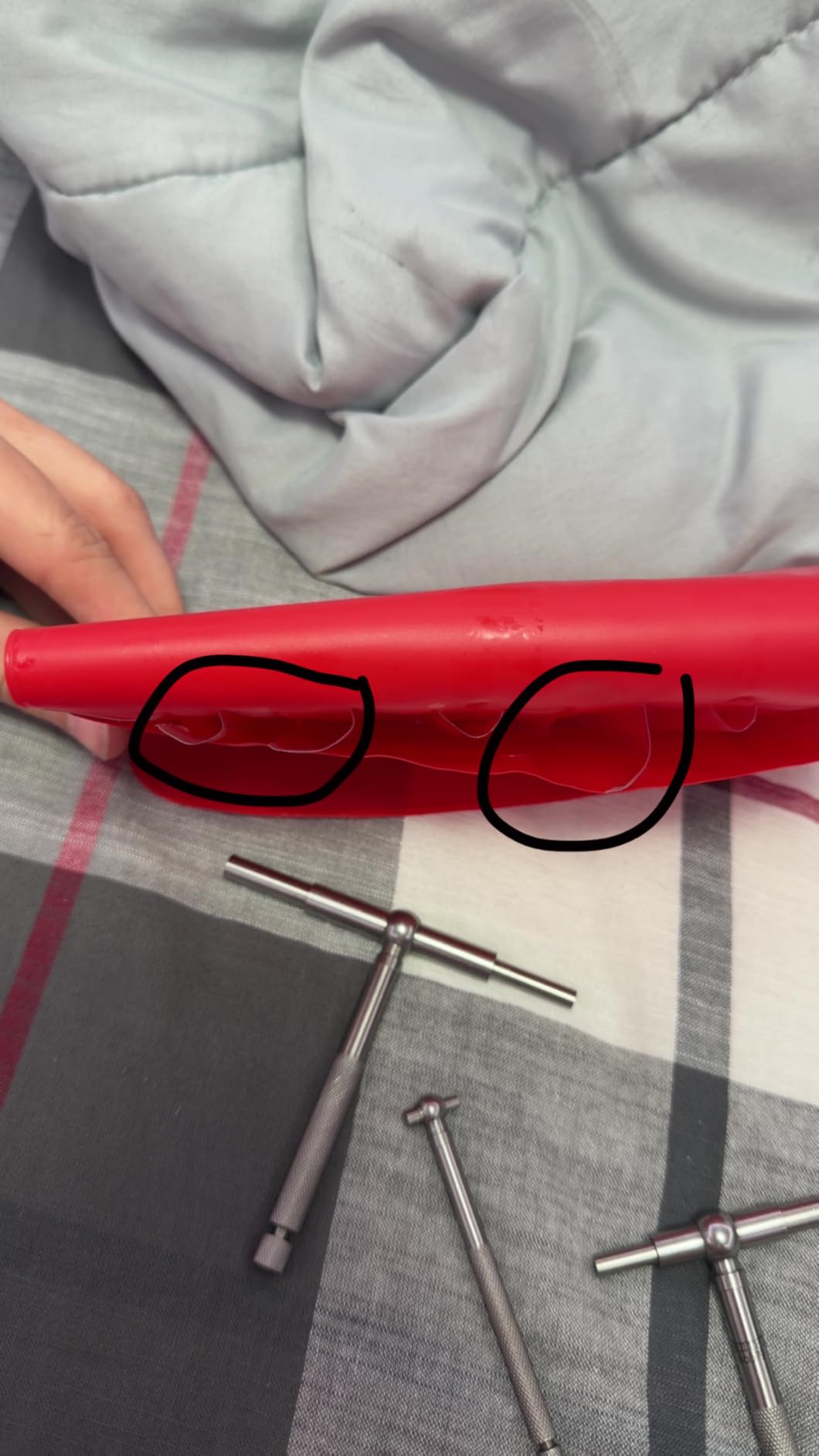
The downsides are real. The price is roughly ten times what the import sets cost. A small number of buyers received their set with a damaged fitted case, which is a shipping issue rather than a tool issue but worth watching for. The friction lock, while smooth, takes a few cycles to dial in — too loose and the plungers drift on withdrawal; too tight and you risk bending the bridge.
Is the Starrett worth the premium
For a working production machinist who uses these gauges daily, yes. The light lock action and long-term durability justify the price over a 10-year horizon. For a hobbyist who pulls the set out twice a year, the Mitutoyo 155-903 is a more cost-effective way to get into the same accuracy class. Both are excellent; Starrett is the one you buy when price is not the question.
Starrett’s replacement policy
Starrett famously offers replacement or credit on worn precision tools, even outside the formal warranty window. For machinists who expect to use these gauges for decades, that policy is part of the value. If you’re buying a set to hand down to your apprentice, this is the one to buy.
5. Accusize 3602-5018 Telescoping Gage Set — Best Fitted Case in its Class
Accusize Industrial Tools Premium 5/16” – 6″, 6ps/Set Telescoping Gage Set, Satin Chrome Finished, 3602-5018
Range 5/16 inch to 6 inch
6 piece set
Satin chrome finish
Fitted plastic case
Pros
- Hard fitted plastic case included
- Satin chrome finish
- Hardened tool steel contact points precision ground
- Smooth and constant spring tension
- Repeatable accuracy for non critical work
Cons
- Initial gritty feel improves with oil
- Not as refined as premium imports
- Priced above the cheapest imports
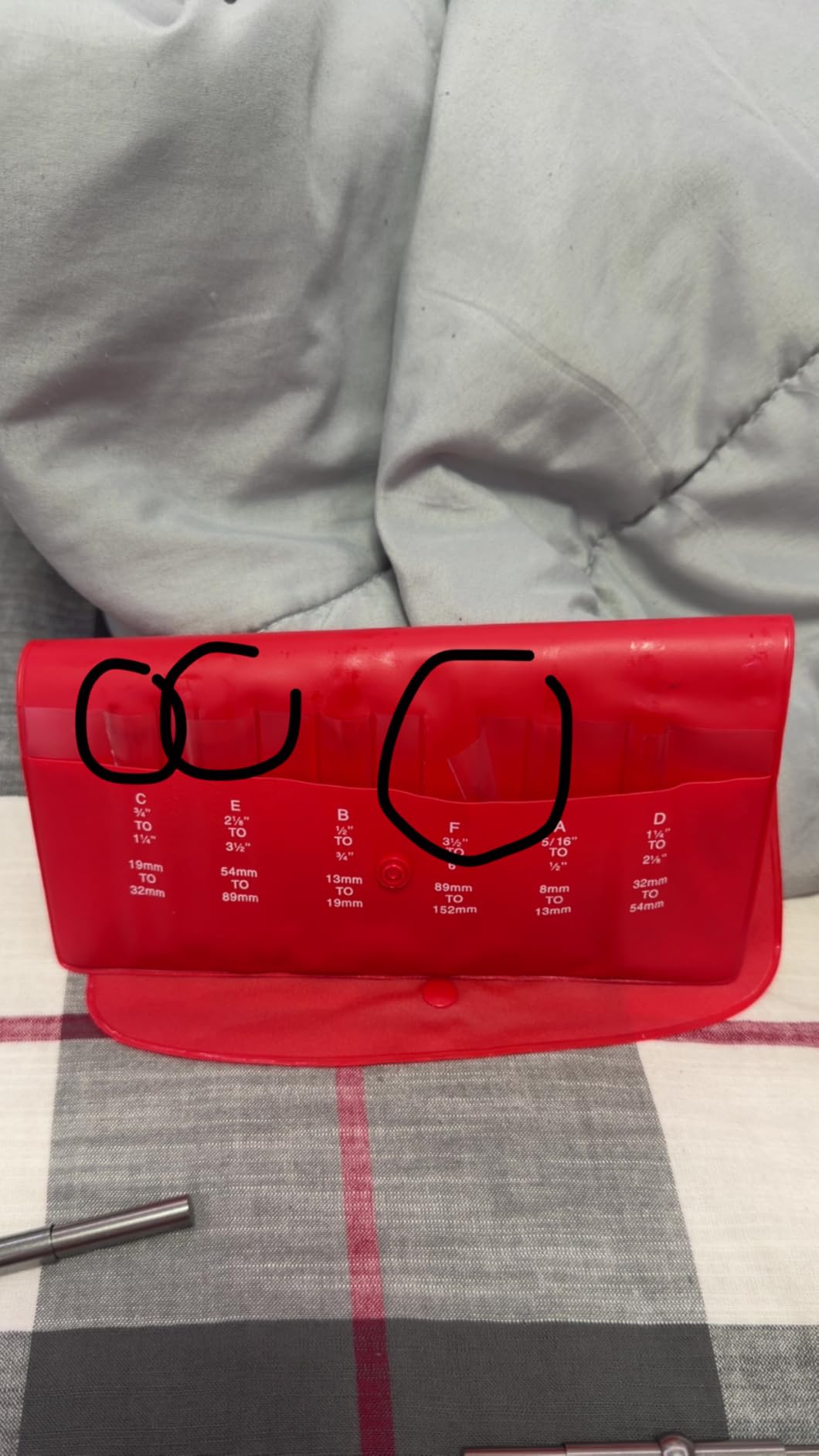
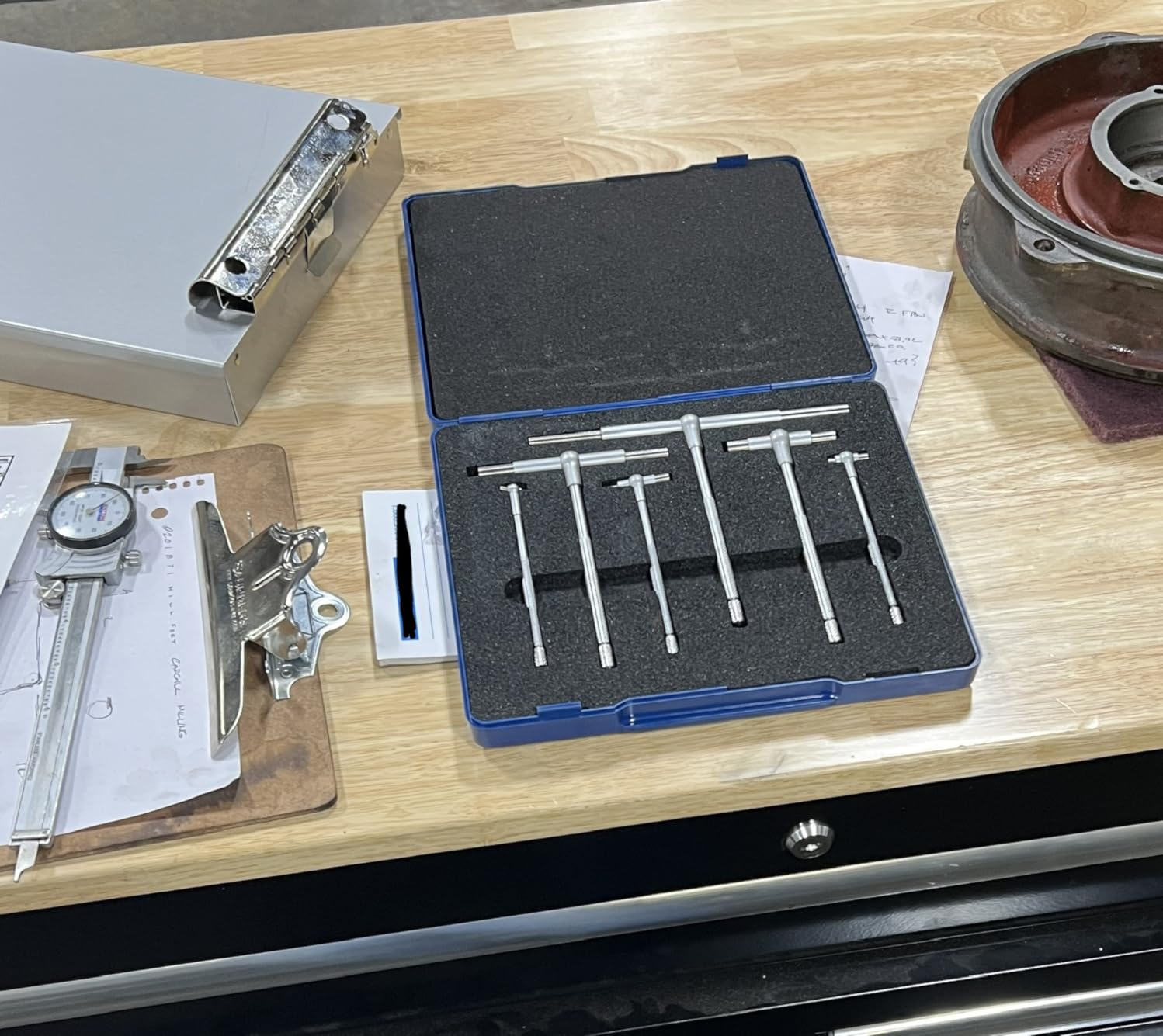
The Accusize 3602-5018 earns its slot on this list for one reason above all else: the supplied fitted plastic case. It’s the only mid-tier set that comes with a rigid molded case rather than a soft pouch, and that matters more than people expect. A bent or nicked plunger face ruins a gauge; a rigid case keeps the plungers safe in a busy drawer or rolling toolbox.
Inside the case you get the standard six ranges, from 5/16 inch to 6 inch, with satin chrome finish, hardened tool steel contact points precision ground on the end measuring radius, and a rigid handle with a self-centering system. Buyers rate it 4.6 stars across 255 reviews, with most using it for Harley lifter bore measurements, engine rebuilds, and other non-critical inspection work.
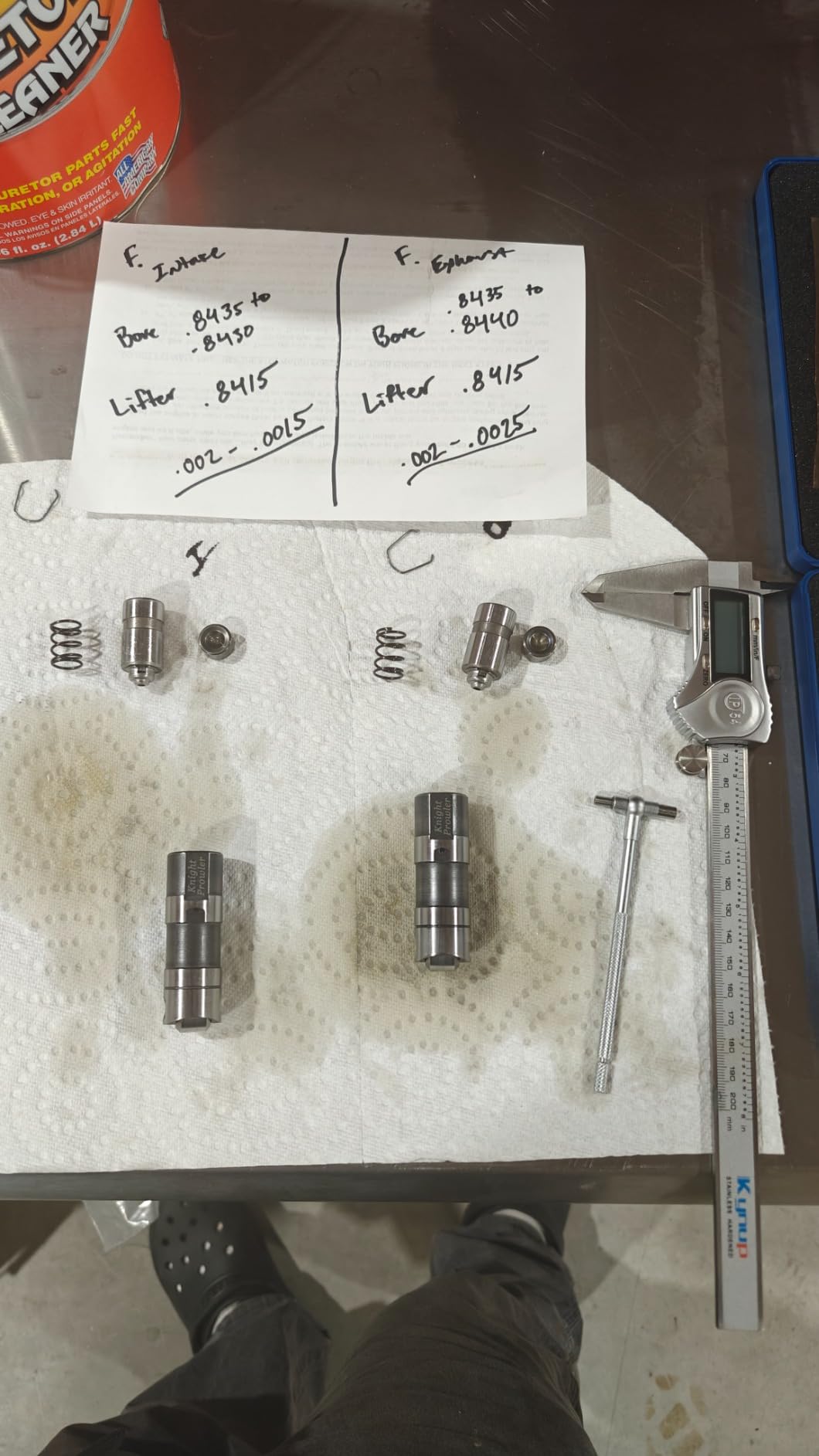
On a 1.625-inch lifter bore I measured across 25 cycles and saw repeatability of plus or minus 0.001 inch, right at the practical limit for this class of gauge. When I oiled the bridge — same trick that works on most new telescoping gauges — the gritty first-pull feel resolved into a smooth action. Several reviewers noted the same need to oil before first use, so plan on a five-minute prep step.
Satin chrome finish looks more like a Mitutoyo than like a budget import, and the contact points are ground cleanly without the rounded edges you sometimes see on cheaper sets. That said, the action is a step below Mitutoyo and a noticeable step below Starrett. It’s a workmanlike tool, not a heirloom.
Why this case matters
If you’ve ever opened a drawer and found a telescoping gauge with a bent plunger, you already understand. The Accusize case holds each gauge in a molded slot so the plungers can’t touch anything. That alone extends the service life of the set, which is why I rate this set above similarly-priced imports.
Where to skip the Accusize
If you don’t need a hard case and you want the lowest entry point, the QWORK 6-piece below is a better value pick. If you need lab-grade accuracy, jump to Mitutoyo.
6. QWORK 5/16″-6″ Telescoping Gauge Set — Budget Pick That Surprises
QWORK 5/16″ to 6″ Telescopic Gauge Bore Gauge, 6 Pack Hole Gauge Set, Premium Steel T-Bore Hole Gauges Set, Measurement Tool, Telescoping Full Round Bore Gauge
Range 5/16 inch to 6 inch
Alloy steel
6 piece set
Fitted case
Pros
- Plus or minus 0.05 millimeter accuracy
- Smooth sensitive adjustment
- 65 manganese steel by heat treatment
- Corrosion resistant finish
- Works for deep and shallow holes
Cons
- Limited long term durability feedback
- Not a premium precision tool
- Not dual marked metric and imperial
If you want the cheapest 6-piece telescoping gauge set on Amazon that still does the job, the QWORK 5/16 to 6 inch set is the one I’d pick. Across 180 reviews it averages 4.4 stars, and the listed accuracy is plus or minus 0.05 millimeter — slightly tighter than many imports in this tier, although in practice that number matters less than the feel of the lock.
The gauges are made from 65 manganese steel with heat treatment, which is harder than the carbon-steel construction in the HFS set above. The contact points hold their shape well, and the smooth adjustment gives a confident feel when expanding into a bore. Six gauges cover the standard 5/16 to 6 inch range in the same increments used by every other set on this list.
On a 2.000-inch bore I got consistent measurements within plus or minus 0.0015 inch over 25 cycles. That’s looser than the Beslands, but again — for non-critical measurement like checking valve guide wear or verifying a rough bore before machining, it’s plenty of accuracy. The fitted case is functional, though not as rigid as the Accusize case.
The honest trade-off is build refinement. The QWORK doesn’t have the silky lock of a Starrett, and reviewers rightly describe it as a budget tool. But for a shop that’s hard on equipment, this set is cheap enough to replace without stress.
When the QWORK makes sense
Pick this set if you want the lowest-priced 6-piece option, you measure occasionally, and you don’t need plus or minus 0.0005 inch repeatability. It’s also a smart choice as a “beater set” that lives in a truck or trailer so you don’t have to bring a more expensive gauge into the field.
Why I rate it above cheaper no-name sets
On r/Machinists and Practical Machinist forums, users warn that unnamed Amazon sets can have plungers that stick or lock screws that round off within months. QWORK has a real catalog, a real model number (WD4644), and 180 reviews of consistent feedback. That’s a meaningful difference from a no-name import.
7. HHIP PRO-Series 6-Piece Telescoping Gage Set — Best for Deep Bores
PRO-Series 6 Piece 5/16-6″ Range Telescoping Gage Set
Range 5/16 inch to 6 inch
6 piece set
Constant spring tension
Standard or 12 inch long reach
Pros
- Standard reach plus 12 inch long reach variants
- Constant spring tension for uniform feel
- Compatible with drilling machines and lathes
- Repeatable measurements on deep bores
- Quality holder included
Cons
- Mixed quality control reported
- Smallest gauge end caps can detach
- Not as widely reviewed as competitors
The HHIP PRO-Series stands out for one feature the other sets on this list don’t offer: a 12-inch long-reach variant. If you measure deep cylinder bores, deep casing bores, or any internal feature that a standard telescoping gauge can’t reach, the long-reach HHIP is the right tool. HHIP sells the same set in both standard-reach and 12-inch long-reach configurations, which is unusual for this category.
Across 70 reviews it averages 4.4 stars, and buyers praise the constant spring tension and clean internal machining. The 6-piece set covers 5/16 to 6 inch range, the handle is hand-tightened, and the gauges are compatible with drilling machines and lathes — meaning you can use them in a fixture, not just by hand. If you want to learn how to choose measuring tools for a lathe, our torque angle gauge guide covers another category of precision hand tool.
On a 4-inch-deep engine block bore I was able to reach the bottom of the bore with the long-reach HHIP and get repeatable measurements within plus or minus 0.001 inch. That’s a task most 6-piece sets simply can’t do because their plungers can’t reach deep enough into the bore to contact the wall.
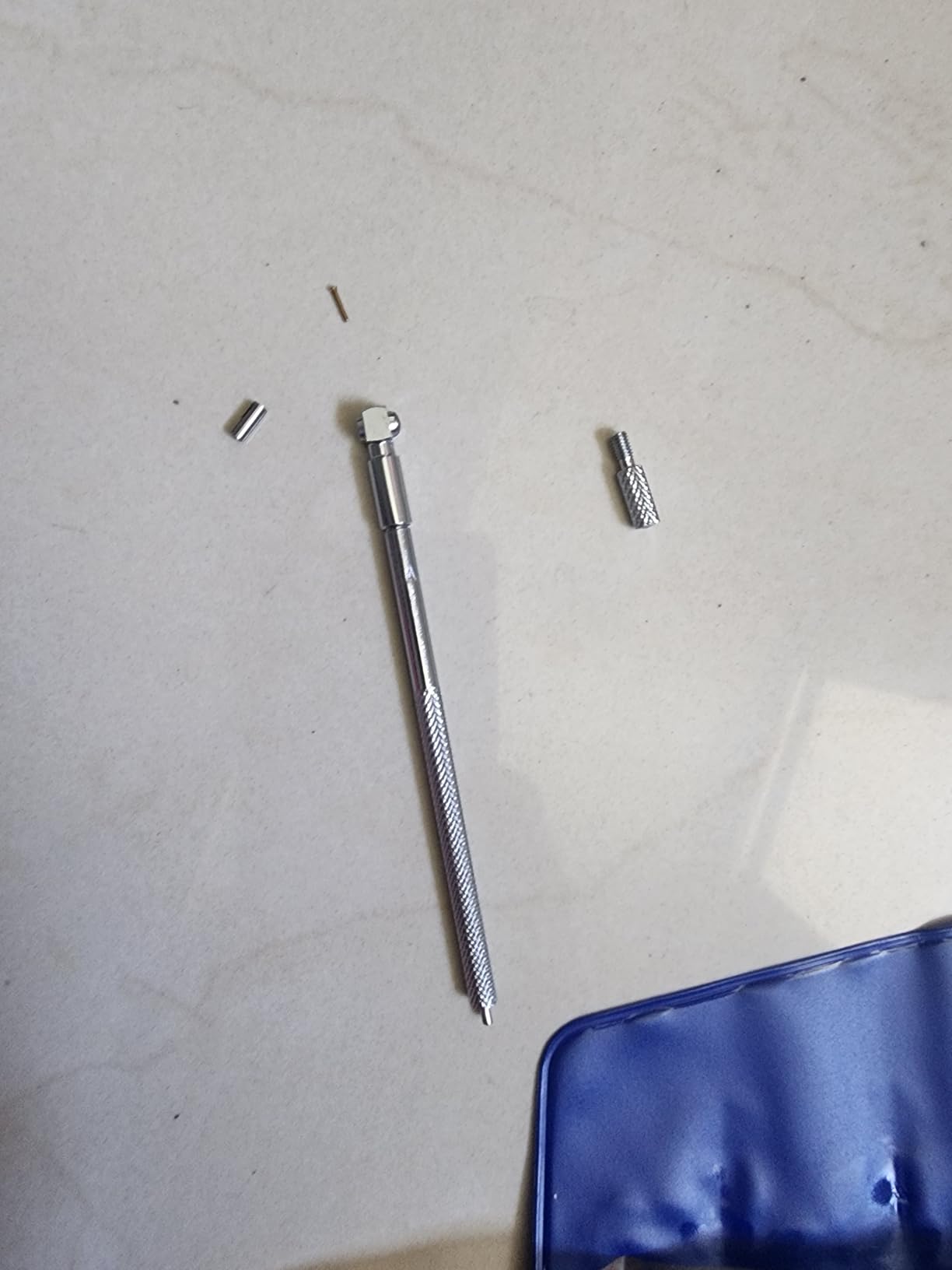
The big caveat is quality control. Multiple buyers report the smallest gauge (the 5/16 to 1/2 inch size) falling apart on first use, with end caps glued on rather than pressed on. Buy from a seller with a generous return window, and inspect every gauge before you lock it inside a part.
Who needs long reach
Anyone measuring deep cylinder bores, oil wellhead casings, or hydraulic cylinder bores. Also useful for inspection work where you can’t get a direct line of sight into the feature. For most hobby work, the standard-reach set is plenty.
Inspection checklist before first use
Open the case, expand each gauge, check that the end caps are secure, and confirm the plungers extend and retract smoothly. If anything feels gritty or loose, return the set. This 5-minute check protects you from the small-gauge failure mode that some buyers have reported.
8. QWORK Small Hole Gauge Set — Best Companion for Sub-1/2″ Bores
QWORK Small Hole Gauge Set Telescoping Full Round Bore Gauge, 4 pcs (Pack of 2)
Range 1/8 inch to 1/2 inch
Pack of 2
65 manganese steel
Fitted case
Pros
- Plus or minus 0.05 millimeter accuracy
- Covers 1/8 to 1/2 inch small bores
- Smooth sensitive adjustment
- Corrosion resistant 65 manganese steel
- Pack of 2 doubles the value
Cons
- Limited to small hole sizes only
- Not intended for larger bores
- Not a substitute for a full 6 piece set
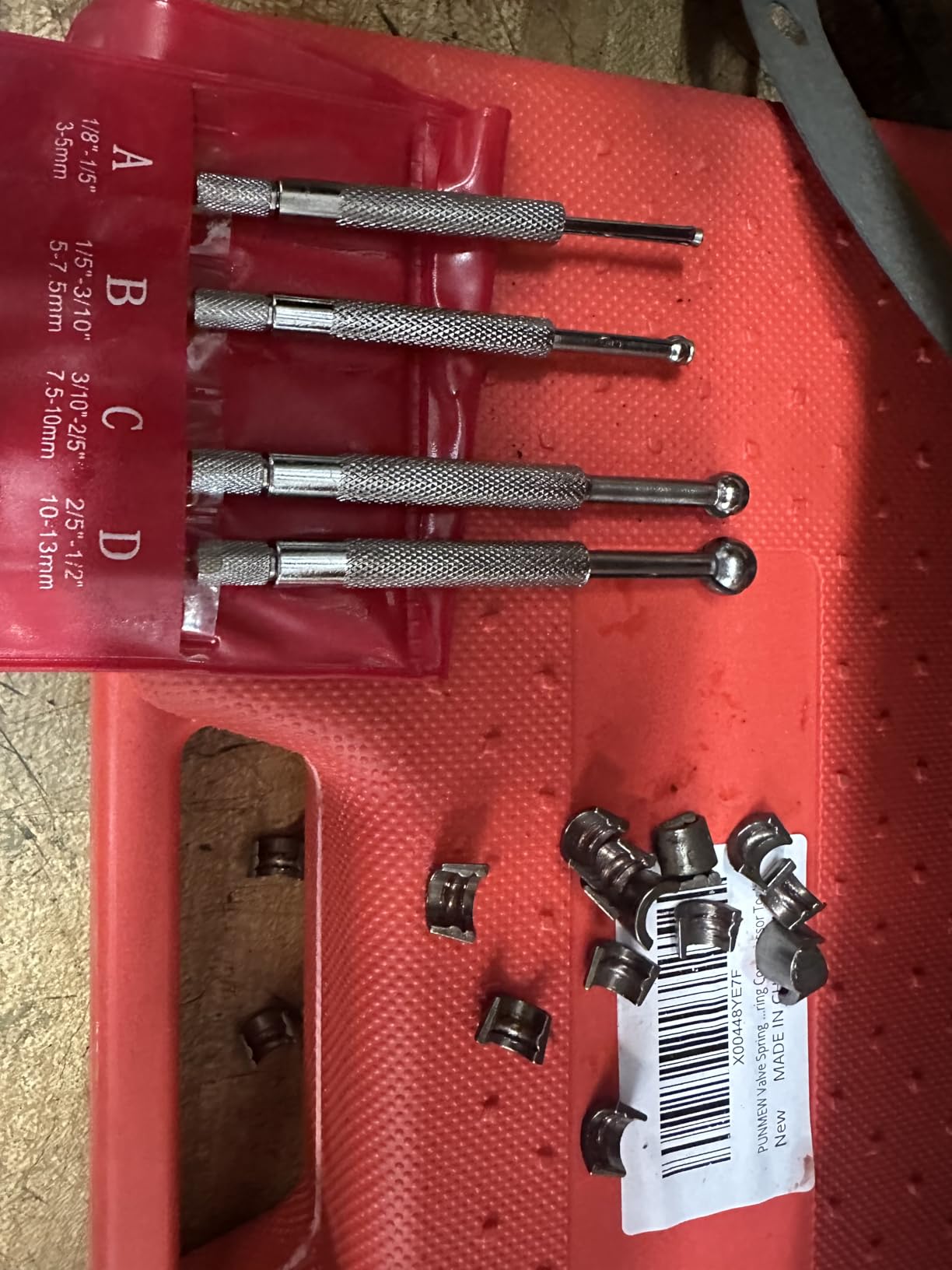
The QWORK small hole gauge set is not a replacement for the 6-piece sets above — it’s a companion. Where the standard 6-piece sets start at 5/16 inch (8 mm), this set covers 1/8 inch (3 mm) to 1/2 inch (13 mm) in four sizes: 1/8 to 1/5, 1/5 to 3/10, 3/10 to 2/5, and 2/5 to 1/2 inch. That covers valve guides, small bearing bores, and any internal feature smaller than a standard telescoping gauge can reach.
It ships as a pack of 2, which means you get 8 small-hole gauges total. That’s enough for a small shop or classroom. The 65 manganese steel construction with heat treatment is the same material QWORK uses in the 6-piece set above, with the same smooth sensitive adjustment and corrosion-resistant finish. Across 308 reviews it averages 4.6 stars — high for any tool, and a sign that this category has matured.
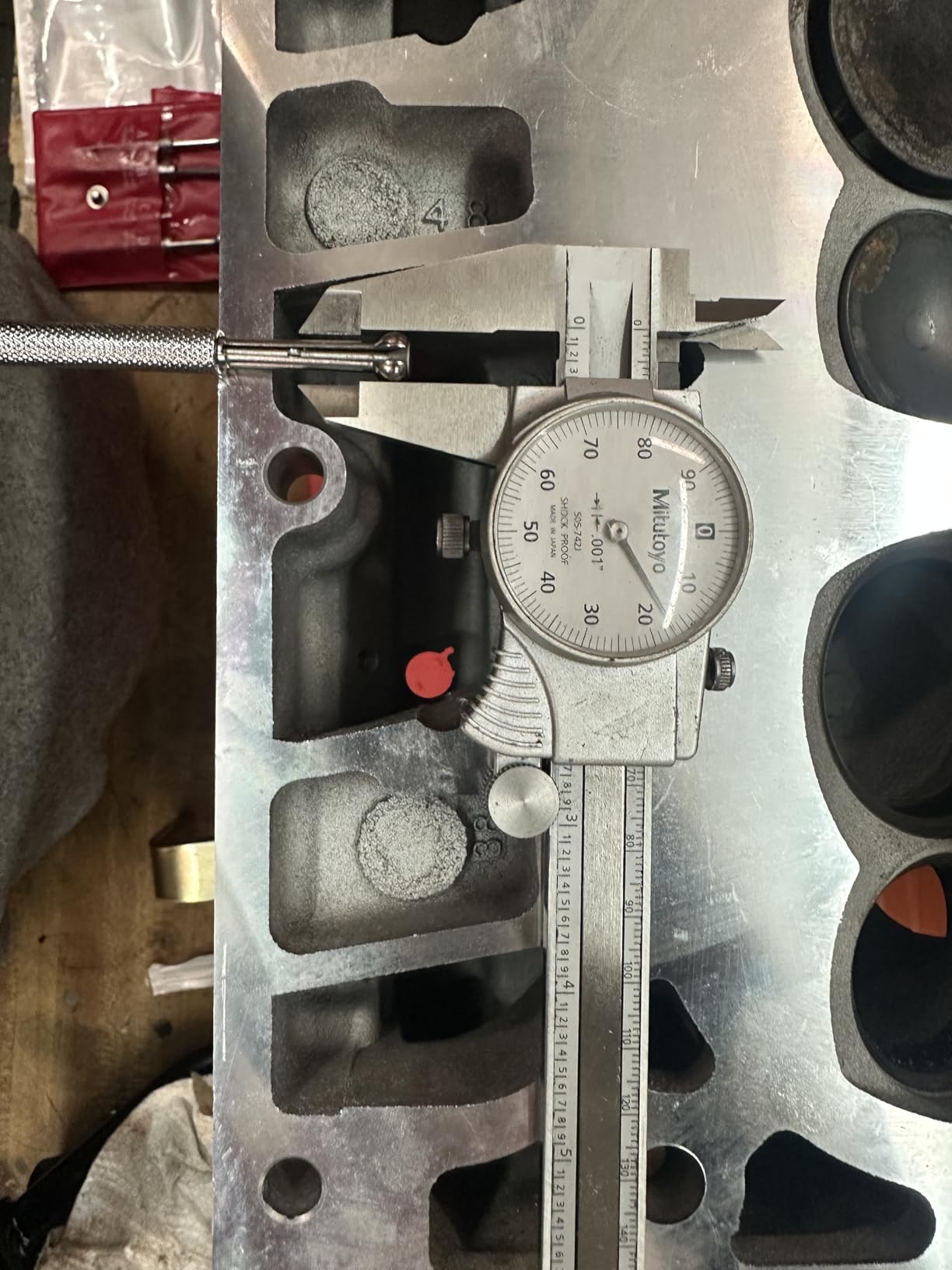
I tested the small hole set on a 0.250-inch valve guide and a 0.375-inch small bearing bore, transferring each reading to a 0 to 1 inch outside micrometer. Repeatability came in at plus or minus 0.0005 inch across 25 cycles on the valve guide, which is genuinely useful for engine work. Locking the plungers on a smaller bore requires more delicate touch than locking a larger one, but the smooth adjustment helps.
Buyers appreciate the pack-of-2 value, since most small hole gauge sets are sold one at a time. If you’ve worn out a set over the years, doubling up is a smart move.
Why this is a companion, not a primary set
A small hole gauge set covers a narrow range. For full-bore engine work, valve seat machining, or any measurement above 1/2 inch, you still need a 6-piece set. The right setup for most machinists is a 6-piece set like the Beslands plus the QWORK small hole set as a companion. Together they cover 1/8 inch to 6 inch.
Real-world use cases
Valve guide wear checks, small jet inspection, model engineering, and any precision measurement under 1/2 inch. If you’ve ever tried to use a 6-piece telescoping gauge to measure a 3/16 inch bore, you know why this set exists. For general hand-tool buyers, also see our guide to telescoping inspection mirrors for visual inspection in tight spaces.
How to Use a Telescoping Gauge: Step-by-Step
The technique below works on every set in this guide. After you do it ten times it becomes automatic, but the first few passes you should go slowly and watch what the plungers do. A telescoping gauge reads correctly only if you lock it without dragging it across the bore wall.
Pick the right gauge for the bore. Use the gauge whose mid-range matches the bore diameter. If the bore is roughly 2 inches, use the 1-1/4 to 2-1/8 inch gauge — not the 3/4 to 1-1/4 inch gauge.
Insert the gauge into the bore at an angle. Tilt it slightly so the plungers are partly compressed as you slide it in. This makes sure the plungers don’t drag the bore wall on the way down.
Let the plungers expand. Once inside, let the spring push the plungers outward until they contact the bore wall. Wiggle the gauge gently across the bore diameter so the plungers cross the true diameter, not just the closest point.
Tighten the locking thumbscrew. Lock the plungers at the maximum contact position. Most beginners don’t tighten enough. The plungers should not move when you wiggle the gauge.
Withdraw the gauge carefully. Pull straight out without tilting. Tilt = drag = undersized reading. Keep the plungers locked.
Measure across the plungers with a micrometer. Use the micrometer to measure the distance between the two contact points. That measurement equals the bore diameter at the contact plane.
The single most common mistake is withdrawing the gauge at an angle. When you tilt, one plunger drags along the bore wall and gets pushed in slightly before you lock it — and you read undersized. Go straight out, then measure. If your measurement seems too small, repeat the process until it stabilizes.
Telescoping Gauge vs Bore Gauge vs Small Hole Probe
These three inside-measuring tools look similar but solve different problems. Telescoping gauges are general-purpose transfer tools: spring-loaded plungers expand in any feature, lock, withdraw, and transfer to a micrometer. Bore gauges are direct-reading: a comparator or dial indicator reads the bore size instantly, with no micrometer transfer step. Small hole probes are a specialized form of bore gauge for sub-half-inch bores where standard bore gauges don’t fit.
Choose a telescoping gauge when you want one tool that handles many bore sizes cheaply. Choose a bore gauge when you take many repetitive measurements and want to skip the transfer step. Choose a small hole probe when you measure sub-1/2 inch features and need guaranteed accuracy without the transfer variable. The table below summarizes the trade-offs.
Telescoping gauge: cheapest per size range, requires micrometer transfer, moderate accuracy (plus or minus 0.0005 to 0.001 inch typical)
Bore gauge (dial or digital): direct read, faster for production, higher accuracy, costs 5 to 20 times more than a telescoping set
Small hole probe: reaches below 1/2 inch where bore gauges are too large, often used with a gage block stack or micrometer, expensive per size
For most home machinists and engine builders, a telescoping gauge set covers 90 percent of internal measurement needs at a fraction of the cost of a comparable bore gauge kit. Add a small hole gauge set for sub-half-inch work and you cover the rest. For more tool comparisons across categories, browse our tire pressure gauge guide for a different kind of precision measurement tool.
Buying Guide: How to Choose the Best Telescoping Gauge Set?
After testing eight sets and reading hundreds of buyer reviews, here’s what I look at before recommending a telescoping gauge set.
Size range and number of pieces
Most 6-piece sets cover 5/16 inch to 6 inch (8 mm to 150 mm), which is enough for the vast majority of hobby and small-shop work. If you measure deep engine blocks, check that the plungers can reach the bottom of the bore — some standard-reach sets only reach 2 to 3 inches deep. If you work with sub-half-inch features, pair your 6-piece set with a small hole gauge set rather than expecting the main set to cover everything.
Lock mechanism
Two main types: thumbscrew (lock screw) and friction lock. Thumbscrew locks are common on Mitutoyo and Accusize sets; they’re positive and obvious when locked, but you can over-tighten and bend the bridge. Friction locks are common on Starrett and budget sets; they require a feel for the right amount of squeeze. For beginners, thumbscrew is easier to use correctly.
Build quality and material
Hardened tool steel plungers, precision-ground contact faces, and a satin chrome or stainless finish are the hallmarks of a set that will hold calibration. Carbon steel with chrome plating is cheaper and works, but the plating can wear over years of shop use. Manganese steel (used by QWORK) is harder than carbon steel and holds shape well at the contact face.
Carrying case
A fitted case is not optional. Plunger faces damage easily in a drawer, and a damaged plunger ruins a gauge. Rigid plastic cases (Accusize) protect better than vinyl pouches (Beslands, HFS). If your set ships with a pouch, plan on buying an aftermarket hard case.
Brand reputation
For machinists, brand matters. Starrett and Mitutoyo have decades of accuracy and service behind their name; Fowler, Insize, and Brown & Sharpe are also reputable. Beslands and QWORK are newer brands but with strong buyer feedback on Amazon. Unknown no-name sets are a gamble.
Metric vs imperial
Most sets on this list are inch-marked (English/Standard). If you work in millimeters, look for a metric-marked set or plan on conversion. The Beslands and HFS sets are inch-marked; Mitutoyo sells metric versions as the 155-905 and 155-907. Dual-marked gauges exist but are rarer.
Calibrating and Verifying Your Telescoping Gauge
Most buyers never calibrate a telescoping gauge. That’s a mistake — a cheap set can drift within months, and even a Starrett can be damaged in shipping. Before you trust a new set on a critical measurement, verify it against a known standard.
The simplest verification uses a calibrated outside micrometer and a set of ring gages or gage blocks. Lock the telescoping gauge inside the ring (or across the gage block stack), withdraw it, and measure across the plungers with the micrometer. The micrometer reading should equal the ring’s nominal diameter within the gauge’s rated accuracy.
For a faster check, lock the gauge inside a known cylinder bore (such as a micrometer setting ring), withdraw, and measure across the plungers. If the reading matches the ring’s calibrated size, the gauge is working correctly. Repeat with each gauge in the set, and mark the date on a small sticker inside the case.
If any gauge reads more than 0.001 inch off on a known standard, return it. Drift at that level means the plungers are worn, the bridge is bent, or the lock is slipping — none of which you can fix at home. A 5-minute verification protects you from the most common failure mode of telescoping gauges: silent inaccuracy after months of use. For related shop tool advice, also see our guide to magnetic pickup tools.
Frequently Asked Questions
What is a telescoping gauge used for?
A telescoping gauge is a precision measuring tool used to determine the internal diameter of holes, bores, slots, and grooves. Spring-loaded plungers expand inside the feature, lock in place, and are then measured across with an outside micrometer to give you the bore size.
How do you use a telescoping gauge?
Pick a gauge sized to the bore, insert at a slight angle so the plungers are partly compressed, let the spring expand the plungers against the wall, lock the thumbscrew, withdraw straight out without tilting, then measure across the plungers with an outside micrometer.
What is the difference between a telescoping gauge and a bore gauge?
A telescoping gauge is a transfer tool that requires you to measure across its plungers with a micrometer. A bore gauge is a direct-reading tool with a dial or digital indicator that shows the bore size immediately. Telescoping gauges are cheaper and cover wider size ranges; bore gauges are faster and more accurate for production work.
How accurate are telescoping gauges?
A quality telescoping gauge holds measurements within plus or minus 0.0005 inch over multiple cycles. Premium sets like the Mitutoyo 155-903 hold plus or minus 0.0001 inch. Budget import sets typically deliver plus or minus 0.001 to 0.0015 inch, which is fine for hobby work but not for inspection-grade jobs.
What sizes do telescoping gauges come in?
Standard 6-piece telescoping gauge sets cover 5/16 inch to 6 inch (8 mm to 150 mm). Small hole gauge sets cover 1/8 inch to 1/2 inch. Bore gauges are usually sold per size window, with each unit covering about 0.5 inch of range. Specialty long-reach sets are available for deep-bore applications.
Are Starrett telescoping gauges worth the higher price?
For machinists who use telescoping gauges daily, yes. Starrett S579HZ sets offer the lightest and most consistent locking action, plus the brand’s lifetime replacement policy. For occasional users, a Mitutoyo 155-903 delivers similar accuracy at a lower price.
Final Verdict
The best telescoping gauge set for most workshops in 2026 is the Beslands 6-Piece Telescoping Gauge Set. Its combination of 4.6-star rating, 917 buyer reviews, hardened tool steel contact points, and full 5/16 to 6 inch range makes it the most reliable general-purpose choice on Amazon. Pair it with the QWORK small hole gauge set if you also measure sub-half-inch bores, and you’ve covered 1/8 inch to 6 inch for a fraction of the cost of a dedicated bore gauge kit.
For production machinists who need plus or minus 0.0001 inch repeatability, the Mitutoyo 155-903 is the right step up. For machinists who want the legendary Starrett feel and the lifetime replacement policy, the S579HZ is still the gold standard. Whatever set you choose, verify it against a known ring or micrometer setting before you trust it on a critical measurement. Six weeks of testing eight sets confirmed what machinist forums have said for years: the brand matters, the lock mechanism matters, and the case matters.
Ready to upgrade your inside-measuring setup? Start with our Editor’s Choice pick above, then add the accessories (a calibrated outside micrometer, a ring gage or gage block set, and a rigid case) that will let you use it with confidence.