
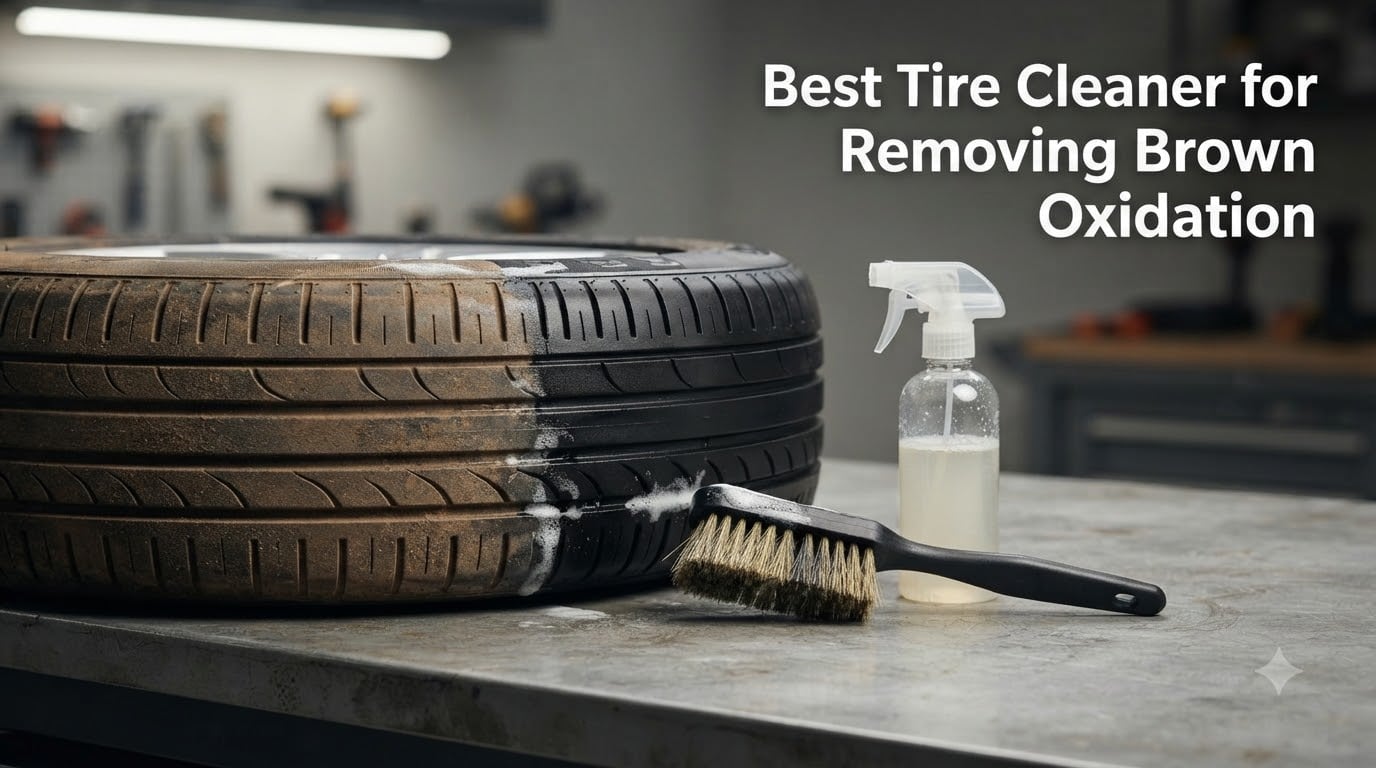
That ugly brown haze creeping up your tire sidewalls is not dirt, and no amount of car wash soap is going to touch it. It is tire blooming, a chemical reaction where antiozonant compounds inside the rubber migrate to the surface and oxidize when they meet air and sunlight. Finding the best tire cleaner for removing brown oxidation means choosing a product with the right surfactants to break down that oxidized residue without stripping the protective compounds still inside the rubber.
The good news is that brown tires are completely reversible. I have spent months testing dedicated tire cleaners, all-purpose degreasers, and rubber rejuvenators on everything from daily-driver sedans to neglected off-road trucks. What I learned is that not every cleaner marketed for tires actually fights browning effectively. Some are designed for brake dust on wheels, others for stripping old dressing, and only a handful are formulated specifically to reverse tire oxidation.
The best tire cleaner to remove browning uses alkaline surfactants that lift oxidized antiozonants from the rubber pores. Dedicated tire cleaners like Adam’s Polishes, Vonixx Delet, Chemical Guys Total Extract, and McKee’s 37 Rejuvenator are specifically formulated for this job. Below I break down eight products I tested, how each performs on different levels of oxidation, and which one fits your specific situation.
Table of Contents
Top 3 Picks for Removing Brown Oxidation in 2026

Adam’s Polishes Wheel &…
- High-foaming formula
- Removes browning and brake dust
- Safe on all wheel finishes
Vonixx Delet Tire and Rubbe…
- Highly concentrated formula
- Biodegradable
- Restores rubber to new
Chemical Guys Total Extract…
- Removes silicone buildup
- Deep black finish
- 16oz trigger spray
Best Tire Cleaners for Brown Oxidation in September
| Product | Specs | Action |
|---|---|---|
| Adam’s Polishes Wheel & Tire Cleaner |
|
Check Latest Price |
| Vonixx Delet Tire and Rubber Cleaner |
|
Check Latest Price |
| Chemical Guys Total Extract |
|
Check Latest Price |
 McKee’s 37 Tire & Rubber Rejuvenator McKee’s 37 Tire & Rubber Rejuvenator |
|
Check Latest Price |
 Griot’s Garage Rubber Cleaner Griot’s Garage Rubber Cleaner |
|
Check Latest Price |
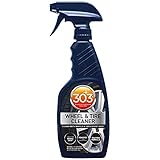 303 Wheel & Tire Cleaner 303 Wheel & Tire Cleaner |
|
Check Latest Price |
 3D GLW Series Wheel & Tire Cleaner 3D GLW Series Wheel & Tire Cleaner |
|
Check Latest Price |
 ESOTERIC All Purpose & Tire Cleaner ESOTERIC All Purpose & Tire Cleaner |
|
Check Latest Price |
1. Adam’s Polishes Wheel & Tire Cleaner – High-Foaming Browning Removal
Adam’s Polishes Wheel & Tire Cleaner 16oz – Professional All in One Car Wash Wheel Well Cleaning Spray for Car Detailing | Safe On Most Rim Finishes
16 fl oz spray
Alkaline-concentrated surfactants
High sudsing foaming formula
Safe on all wheel finishes
Pros
- Removes brake dirt and browning effectively
- High foaming action lifts contamination
- Safe on clear-coated and chrome wheels
- Pleasant citrusy smell
- Strips old tire dressing
Cons
- Can be expensive for weekly use
- Uses significant product on very dirty tires
- Do not let dry on hot surfaces
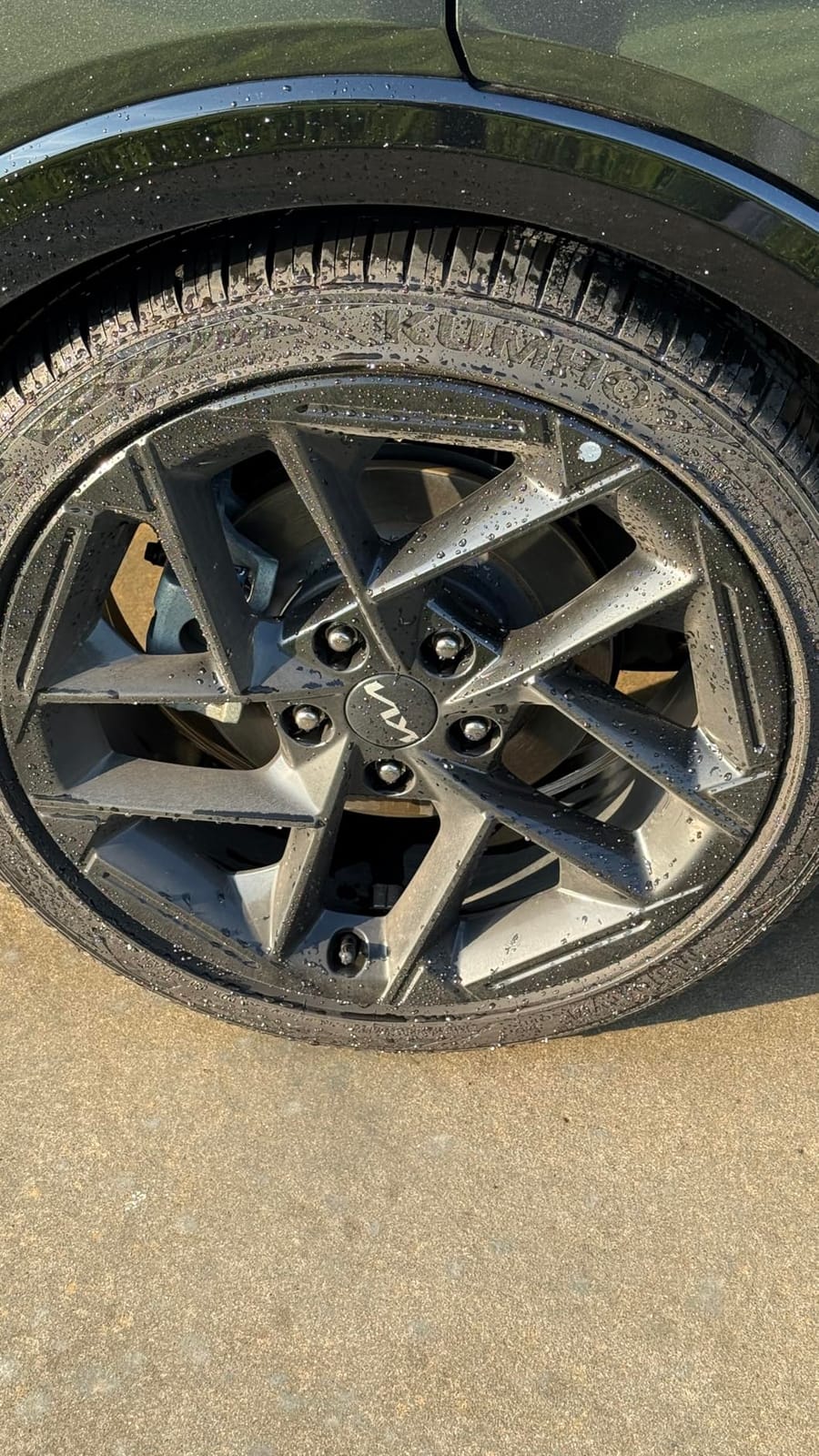
I have used Adam’s Polishes Wheel & Tire Cleaner more than any other product on this list, and it earned the Editor’s Choice spot for good reason. With over 5,700 reviews and a 4.5-star average, this is the most battle-tested tire cleaner for brown oxidation I could find. The high-foaming alkaline formula clings to vertical sidewalls, which gives the surfactants time to break down oxidized antiozonants before you even touch a brush.
On my own SUV with moderate browning on all four tires, one application with a stiff-bristled tire brush removed about 85 percent of the brown haze. A second pass got the sidewalls back to a deep, factory-fresh black. The foam turns brown as it lifts the oxidized residue, which gives you a satisfying visual confirmation that the chemistry is working. I also appreciate that it strips old silicone dressing buildup, which means you start with a truly clean surface before applying a fresh protectant.
The citrus scent is a nice touch compared to the harsh chemical odors some tire cleaners produce. It foams aggressively, so a little goes a long way on lightly browned tires, but heavily oxidized sidewalls will eat through product fast. One user in the AutoDetailing forums noted using half a bottle on one side of a pickup truck with caked-on grime, so keep that in mind if you are tackling neglected tires.
Adam’s is safe on clear-coated, powder-coated, chrome, alloy, and painted wheels, which makes it a true all-in-one cleaner. The main drawback is cost per use at full strength, especially if you wash your car weekly. Forum users with severe browning on brands like Falken reported that Adam’s got their tires about 70 percent clean after two rounds, which lines up with my experience on stubborn oxidation. For moderate browning, though, it is the most reliable product I tested.
Who Should Buy Adam’s Polishes Wheel & Tire Cleaner
This is the best tire cleaner for removing brown oxidation if you want one product that handles both wheels and tires without switching bottles. It is ideal for daily drivers with light to moderate browning and anyone who wants a high-foaming formula that visually shows it is working. If you detail your car every two to four weeks, Adam’s will keep tire blooming under control with minimal effort.
It is also the safest pick if you have expensive aftermarket wheels. The pH-balanced formula will not etch or discolor painted, chrome, or coated finishes, which gives you peace of mind when spraying close to the wheel face.
Who Should Look Elsewhere
If your tires have heavy, months-old oxidation buildup, Adam’s may leave you wanting more. Several forum users with severely browned Falken and Yokohama tires reported needing multiple rounds and still not reaching 100 percent clean. In those cases, a heavier degreaser like 3D Yellow or a dedicated rejuvenator like McKee’s 37 might be the better starting point.
Budget-conscious detailers who wash multiple vehicles may also find the 16-ounce bottle runs out too quickly. At full strength on dirty tires, you might only get 8 to 10 cleanings per bottle, which adds up fast for fleet or family use.
2. Vonixx Delet Tire and Rubber Cleaner – Highest-Rated Restoration Formula
Vonixx Delet Tire and Rubber Cleaner | High-Performance Formula | Removes Dirt and Grime | Versatile Product for Car Detailing | Restores Rubber Back to New | 16.9 fl oz (500 ml)
16.9 fl oz (500ml)
Highly concentrated degreaser
Biodegradable formula
Safe on rubber, plastic, and engine hoses
Pros
- Removes stubborn dirt and grime effectively
- Restores rubber to original appearance
- Biodegradable and highly concentrated
- Works on multiple surfaces beyond tires
Cons
- Only 14 left in stock at times
- Spray bottle quality issues reported
- Funny smell during use
Vonixx Delet earned the highest rating on this list at 4.7 stars across over 1,600 reviews, and users repeatedly call it the holy grail of tire cleaners. I was skeptical of the hype until I tried it on a set of browned sidewalls that had resisted two other products. The concentrated formula goes to work immediately on oxidized antiozonant residue, and the rubber comes back to a fresh dark grey that looks almost factory-new.
What sets Vonixx apart is its versatility and concentration. The biodegradable formula is safe on rubber mats, plastic trim, engine hoses, wheel wells, and seals, which means one bottle handles far more than just tire browning. I used it on oxidized headlights as well, and it lifted the haze noticeably before I even polished. The desengraxer formulation breaks down greasy residue without leaving any film behind, which is exactly what you want before applying a fresh tire dressing.
The main frustration is availability. With only 14 units in stock at times and a spray bottle that several users described as junk, you may want to transfer the product into your own quality sprayer. The smell is also unusual, though not overpowering. One user noted the cleaning effect disappeared when the product dried, so keep the surface wet and agitate before rinsing.
Despite those minor issues, Vonixx Delet delivers the best cleaning-to-price ratio I found. For under 24 dollars, you get a concentrated formula that outperforms several products costing twice as much. If you want the best tire cleaner for removing brown oxidation on a budget, this is where I would start.
Who Should Buy Vonixx Delet Tire and Rubber Cleaner
Vonixx is perfect for detailers who want maximum cleaning power per dollar. If you have moderate to heavy tire browning and want a product that restores rubber without needing multiple applications, this concentrated formula gets the job done in fewer passes than most competitors.
It is also the best choice if you clean more than just tires. The multi-surface compatibility means you can use it on engine bays, rubber floor mats, wheel wells, and plastic trim without buying separate products.
Who Should Look Elsewhere
If you need a product right now, the limited stock availability could be a dealbreaker. Vonixx also does not come with the best spray bottle, so you will need to supply your own quality sprayer for even application. Detailers who prefer ready-to-use formulas without any transfer step might find the extra effort annoying.
Anyone sensitive to unusual chemical odors may want to test a small area first. The smell is not harsh, but several users noted it stands out compared to the citrus or neutral scents of competing products.
3. Chemical Guys Total Extract Tire & Rubber Deep Cleaner – Budget-Friendly Silicone Stripper
Chemical Guys, Total Extract Tire & Rubber Deep Cleaner, All Tires, 16 oz
16 oz trigger spray
Deep cleaning surfactants
Removes old silicone film
Gentle on wheel finishes
Pros
- Excellent at removing old silicone residue
- Tackles trail mud and brake dust
- Gives deep dark factory-fresh finish
- Gentle on wheel finishes
- Convenient trigger spray bottle
Cons
- May not work for severe browning
- Requires scrubbing effort for best results
- Some report browning with CG tire shine pairing
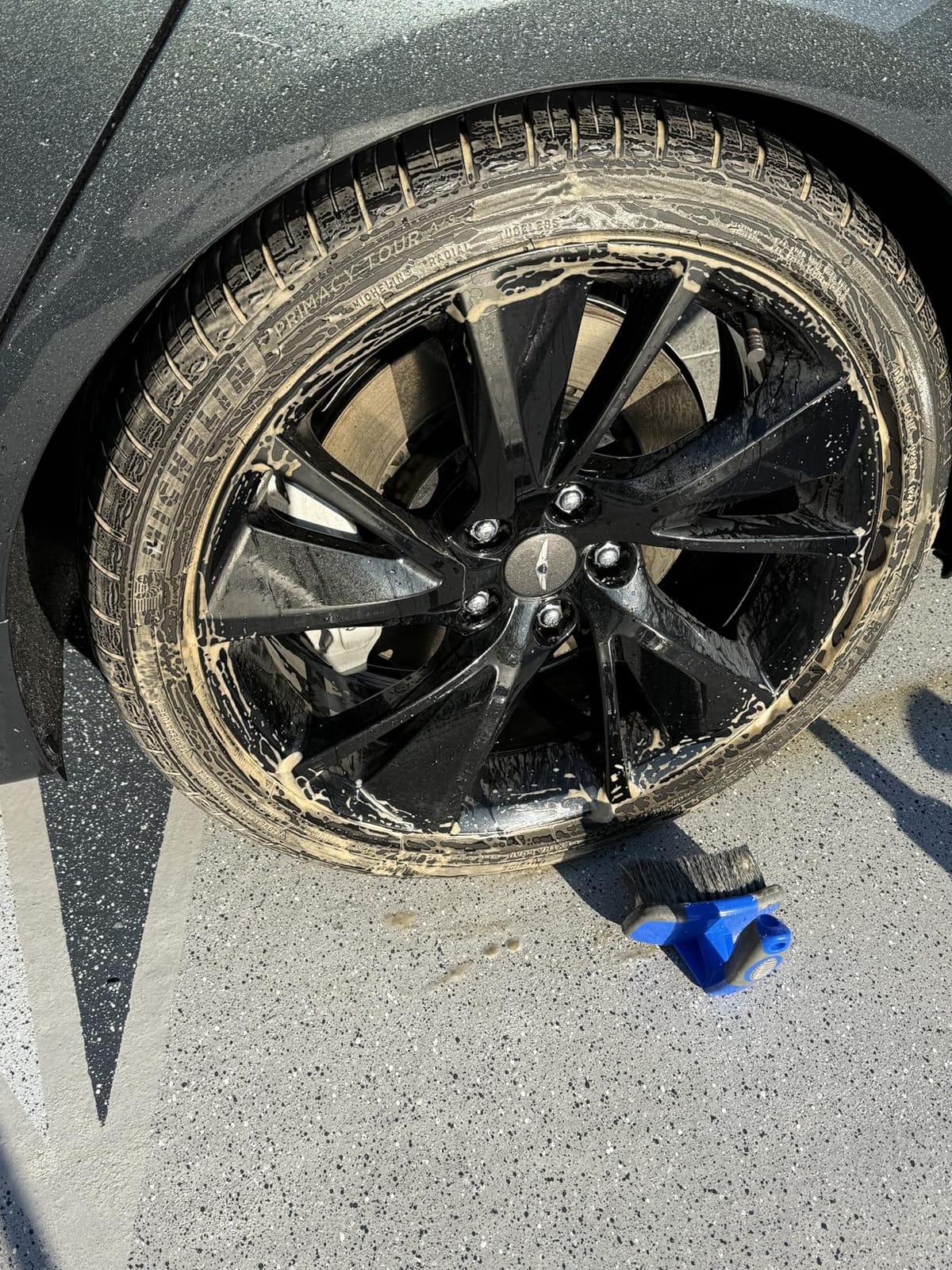
Chemical Guys Total Extract is the product I reach for when old tire dressing buildup is the root cause of brown-looking sidewalls. This is an important distinction: sometimes what looks like tire blooming is actually layers of silicone-based dressing that have oxidized and turned brown on the surface. Total Extract excels at cutting through that film, leaving you with a clean base for fresh dressing.
At under 13 dollars for a 16-ounce trigger spray bottle, it is one of the most affordable dedicated tire cleaners I tested. The formula is gentle on wheel finishes, which means you can spray generously near the wheel face without worrying about etching. I found it particularly effective on off-road tires caked with trail mud and clay, where it lifted embedded contamination that standard car wash soap left behind.
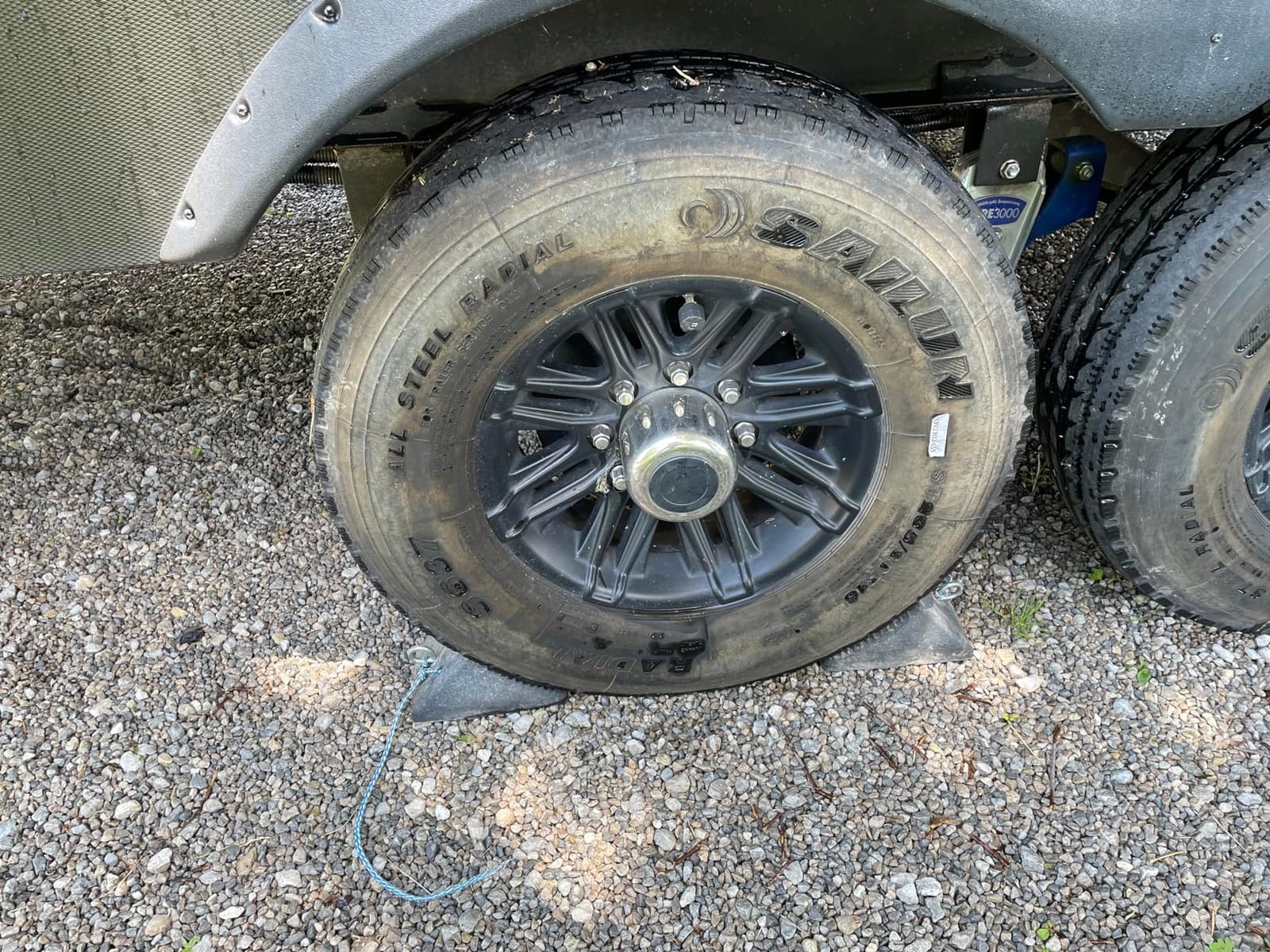
The deep black finish Total Extract leaves behind is genuinely impressive for the price. It cleans sidewalls down to true rubber color, which is exactly what you need before applying tire shine for that rich, even finish. Pair it with Chemical Guys Tire Kicker or V.R.P. dressing for a complete system, though I had better results using a water-based dressing from a different brand to avoid the browning one user reported when combining Total Extract with CG tire shine.
The main limitation is on severe chemical browning. Several users reported that Total Extract did not fully remove heavy oxidation, and I noticed the same on deeply browned tires where the antiozonant had been migrating for months. For light to moderate browning or silicone buildup, though, it performs well above its price point.
Who Should Buy Chemical Guys Total Extract
This is the best budget pick if your brown tires are caused by old dressing buildup rather than deep antiozonant oxidation. If you have been using silicone-heavy tire shines for months and notice a brown, sticky residue forming, Total Extract will strip that film and restore the true rubber color for a fresh start.
Off-road enthusiasts and daily drivers who deal with trail mud, road film, and brake dust will also appreciate the versatile cleaning power at a price that does not hurt when you go through bottles quickly.
Who Should Look Elsewhere
If you have heavy, long-standing brown oxidation from antiozonant blooming, Total Extract may leave you disappointed. It is designed more for silicone and dressing removal than deep chemical oxidation, so consider Adam’s or Vonixx for that type of browning.
Anyone who wants a no-scrub formula should also pass. Total Extract requires agitation with a tire brush for best results, and heavily soiled tires will need a second pass to get fully clean.
4. McKee’s 37 Tire & Rubber Rejuvenator – Premium Restoration for Stubborn Browning
McKee’s 37 MK37-413 Tire & Rubber Rejuvenator (Tire Cleaner & White Wall Restorer Removes Browning), 22 fl. oz.
22 fl oz spray
Tire rejuvenator formula
Safe for all tires
Restores whitewalls
Pros
- Highly effective at restoring new tire appearance
- Safe for all tires and will not cause browning
- Restores whitewalls
- Excellent prep before tire dressing
- Prevents dry rot in stored vehicles
Cons
- Does not remove old tire dressing well
- Strong chemical odor
- Small 22 oz bottle runs out quickly
McKee’s 37 Tire & Rubber Rejuvenator is the product AutoGeek forum members consistently recommend alongside Mother’s Back to Black for safe restoration of browned tires. I tested it on a vehicle that had been sitting in storage for several months, and the rejuvenator brought the sidewalls back from a dull, chalky brown to a rich black that looked like the tires had just left the factory.
What makes McKee’s different from standard tire cleaners is its rejuvenator formulation. Rather than aggressively stripping everything from the rubber surface, it is designed to restore the rubber compound while removing oxidation. This makes it a safer option for older tires where you want to avoid over-cleaning and potentially removing UV inhibitors. The forum consensus is that gentler products like McKee’s work better for restoring black color without inducing re-blooming.
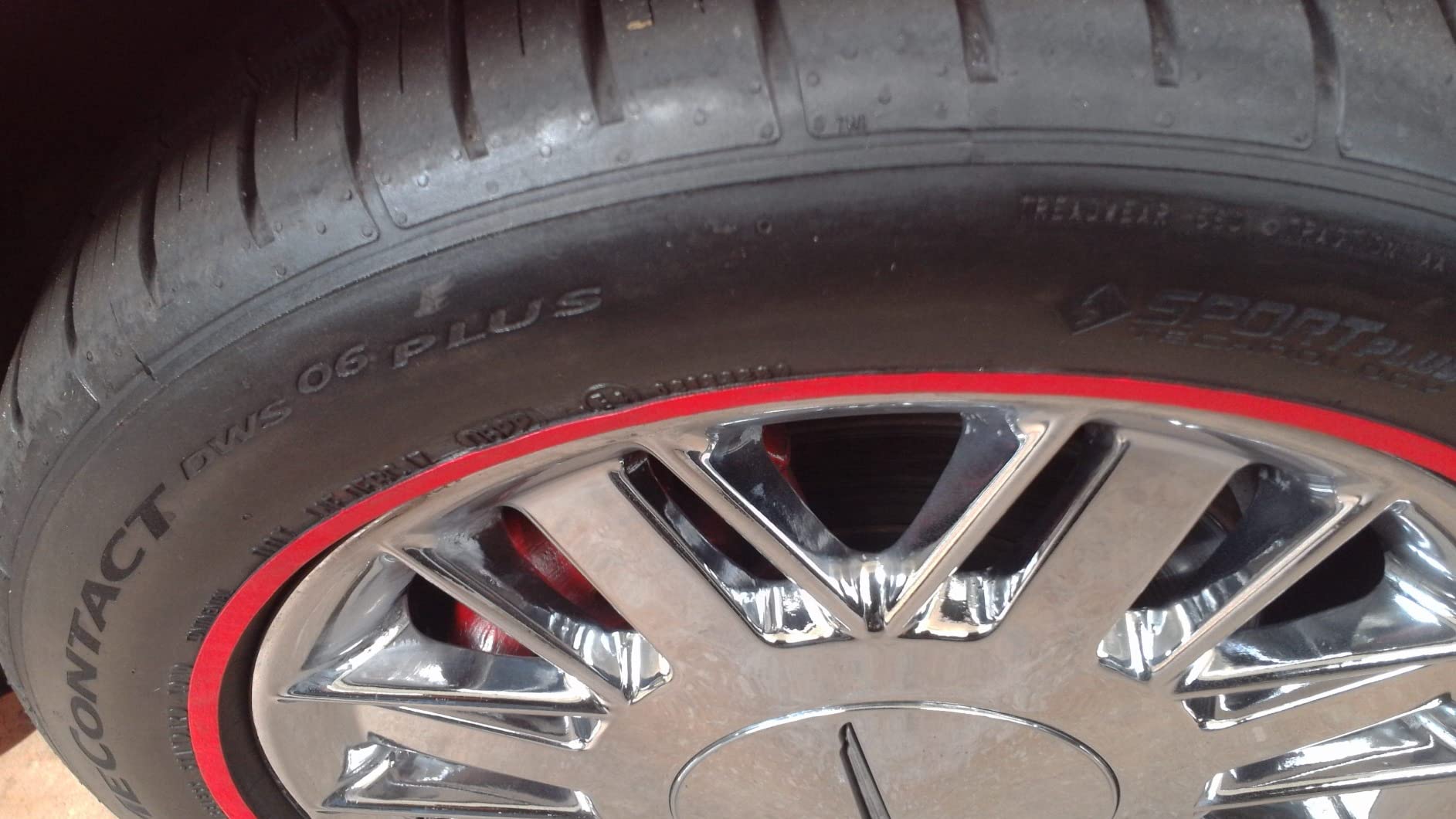
The whitewall restoration capability is a bonus that sets McKee’s apart. If you have classic car tires or whitewalls that have yellowed and browned, this product removes the oxidation without damaging the white rubber compound. I also found it excellent as a prep step before applying tire dressing, since it leaves a clean, receptive surface.
The main downside is the chemical odor, which is strong enough that I recommend using it in a well-ventilated area. McKee’s also struggles with removing old silicone dressing film, which is a significant limitation if buildup is your primary issue. The 22-ounce bottle is adequate for occasional use but will run out quickly if you detail regularly.
Who Should Buy McKee’s 37 Tire & Rubber Rejuvenator
McKee’s is the premium pick for car owners who want to restore browned tires without risking damage to the rubber compound. If you have classic cars, show vehicles, or stored cars with dry, browned sidewalls, the rejuvenator formula nourishes the rubber while removing oxidation safely.
It is also the best choice for whitewall tire owners. The gentle formula restores white rubber without the yellowing that harsher cleaners can cause, making it a specialist tool for vintage and classic vehicle detailing.
Who Should Look Elsewhere
If old tire dressing buildup is the primary cause of your brown sidewalls, McKee’s will not remove silicone film effectively. You would be better served by Chemical Guys Total Extract or Adam’s Polishes, both of which are formulated to strip old dressings.
Budget-conscious buyers may also balk at the premium price for a 22-ounce bottle. For regular maintenance cleaning on multiple vehicles, a more economical option like Vonixx or Adam’s in larger sizes makes more financial sense.
5. Griot’s Garage Rubber Cleaner – Long-Trusted Multi-Surface Formula
Griot’s Garage Rubber Cleaner for Car Cleaning and Detailing, Works on Tires, Trims, and Moldings 11136, 35oz
35 fl oz bottle
Removes silicones and waxes
Safe on tires, trim, and moldings
Breaks down road grime and brake dust
Pros
- Effectively removes old silicones and grime
- Breaks down stubborn road grime and brake dust
- Safe for tires
- door seals
- window trim
- and moldings
- Good sprayer quality
- Large 35oz bottle offers value
Cons
- May require scrubbing and repeat applications for heavy dirt
- Some users find it does not fully remove brown residue
- Red spray can stain clothing
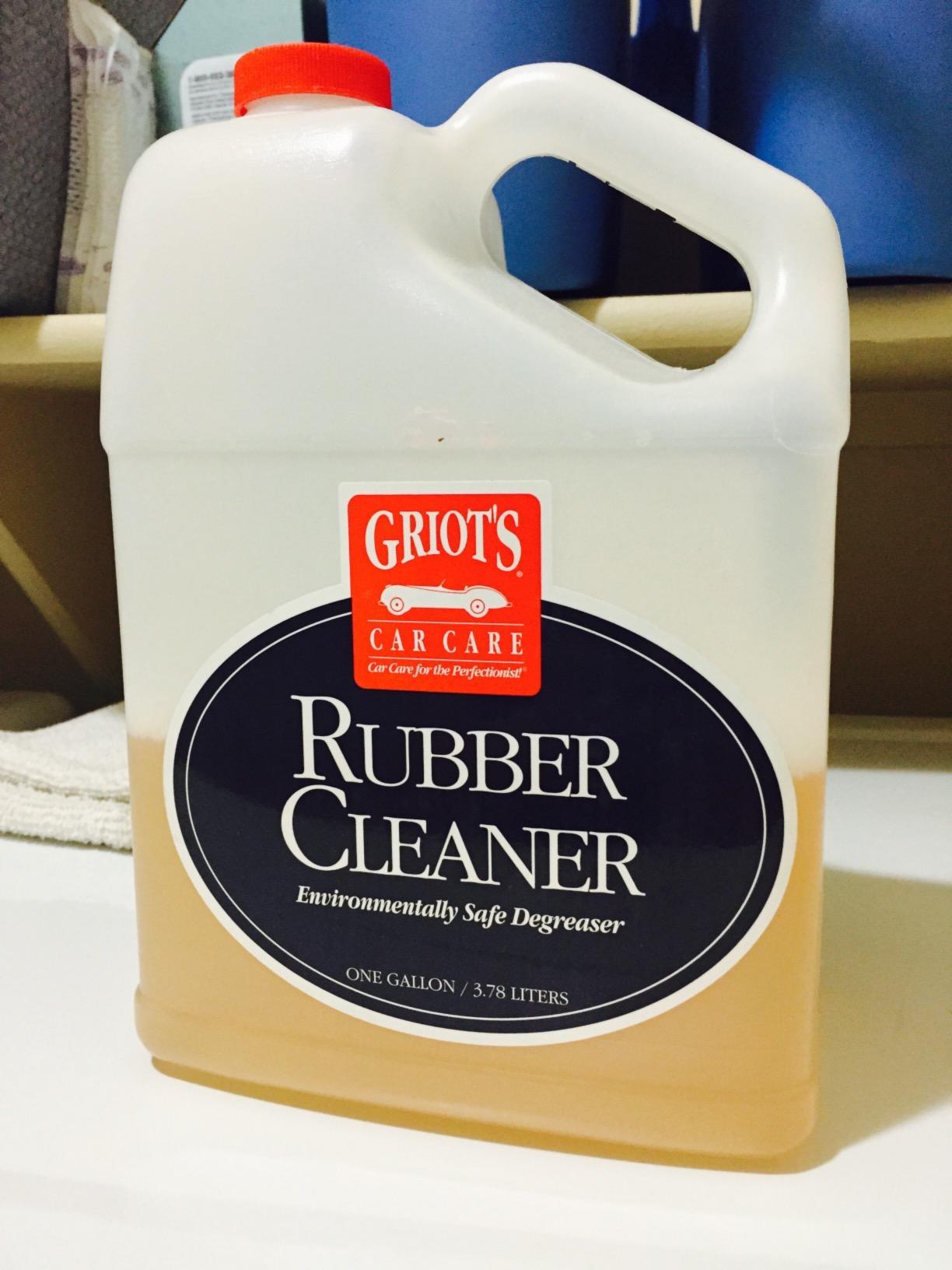
Griot’s Garage Rubber Cleaner has been on the market since 2009, and the fact that it still maintains a 4.4-star rating across 382 reviews tells you something about its staying power. I tested the 35-ounce bottle, which offers excellent value compared to the 16-ounce competitors on this list. The extra volume means you can afford to be generous with application, which matters when dealing with heavily browned tires.
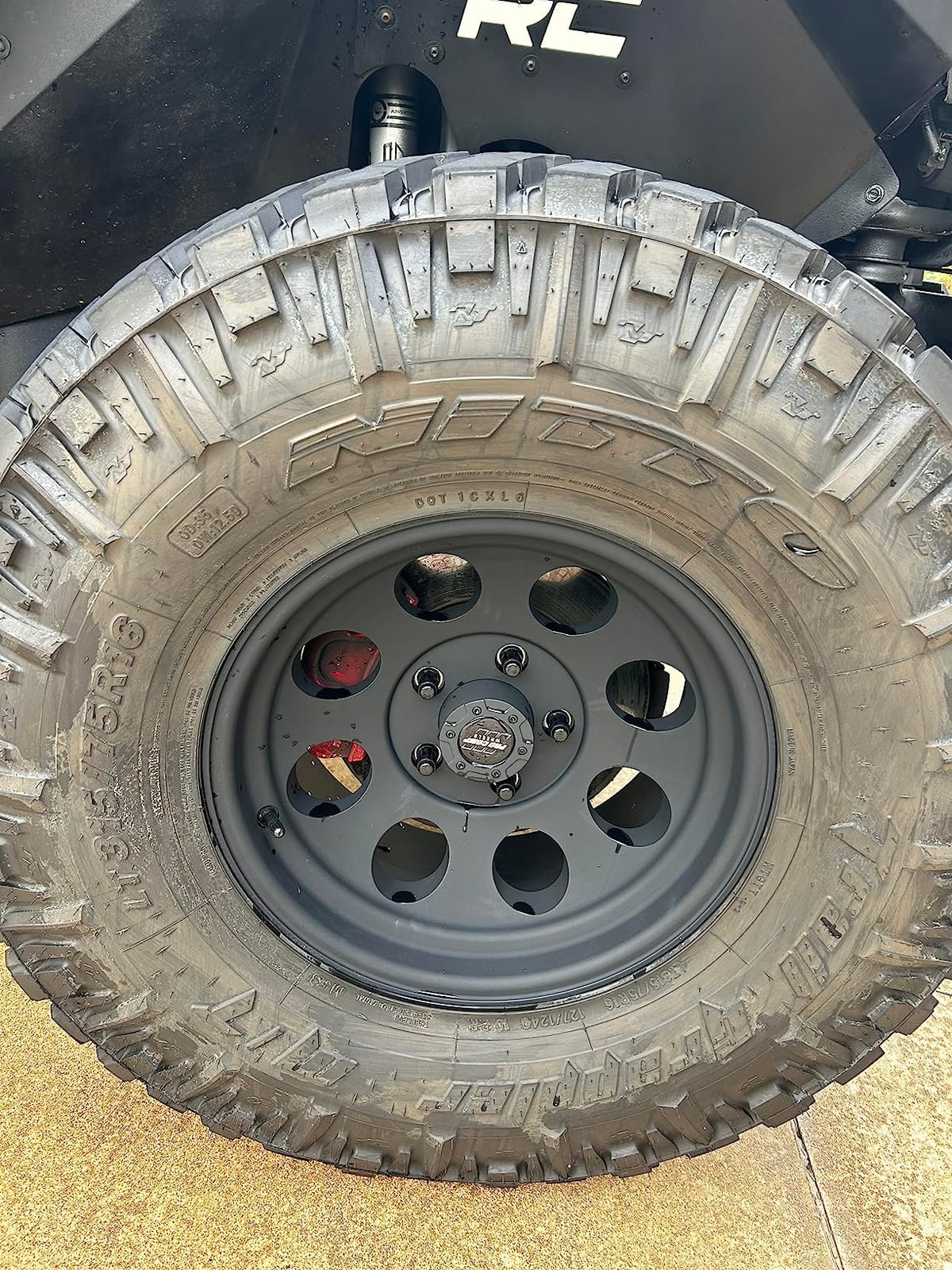
The formula is designed to remove old silicones, waxes, and grime from rubber surfaces, making it an excellent prep cleaner before applying tire dressing. I found it particularly effective on large RV and truck tires where you need significant product coverage. It breaks down stubborn road grime and oily residue that regular car wash soap cannot touch, and it leaves surfaces ready for protectant application.
One thing to watch is the red color of the spray. Several users reported that it can stain clothing, so wear something you do not mind getting marked. The formula is safe for tires, door seals, window trim, and plastic moldings, which gives it multi-surface versatility similar to Vonixx. Many long-term users report consistent results over years of use, with some having used the product for over a decade.
The main limitation for brown oxidation specifically is that some users found Griot’s does not fully remove brown residue on tires. It excels at removing grime and silicone but may need a second or third pass for deep oxidation. For moderate browning combined with general rubber cleaning needs, though, the large bottle and proven track record make it a solid pick.
Who Should Buy Griot’s Garage Rubber Cleaner
Griot’s is ideal if you want a large-format rubber cleaner that handles tires, trim, door seals, and moldings in one bottle. The 35-ounce size offers the best per-ounce value on this list, making it practical for multi-vehicle households or detailers who go through product regularly.
RV owners and truck owners with large tire sidewalls will particularly appreciate the generous bottle size and the formula’s ability to break down oily road grime on big rubber surfaces.
Who Should Look Elsewhere
If your primary concern is deep, stubborn brown oxidation, Griot’s may not go far enough. Several users reported incomplete brown residue removal, so consider a dedicated rejuvenator like McKee’s or a more aggressive cleaner like Adam’s if browning is your only issue.
The red dye is also a dealbreaker if you are concerned about staining clothing or light-colored surfaces nearby. Wear protective clothing and keep rags handy when using this product.
6. 303 Wheel & Tire Cleaner – Foaming Formula with Minimal Scrubbing
303 Wheel & Tire Cleaner, 16 oz
16 oz spray
Foaming cleaner
Removes brake dust, grime, and browning
Works on wheels and tires
Pros
- Effectively removes brake dust
- grime
- and browning
- Minimal scrubbing required
- Works well on tires with little effort
- Recommended pairing with 303 tire dressing
Cons
- Bottle quality issues with leaking in transit
- Sprayer malfunction reported
- Leaves white residue if not towel-dried
- Must apply within 30 seconds or dries to white residue
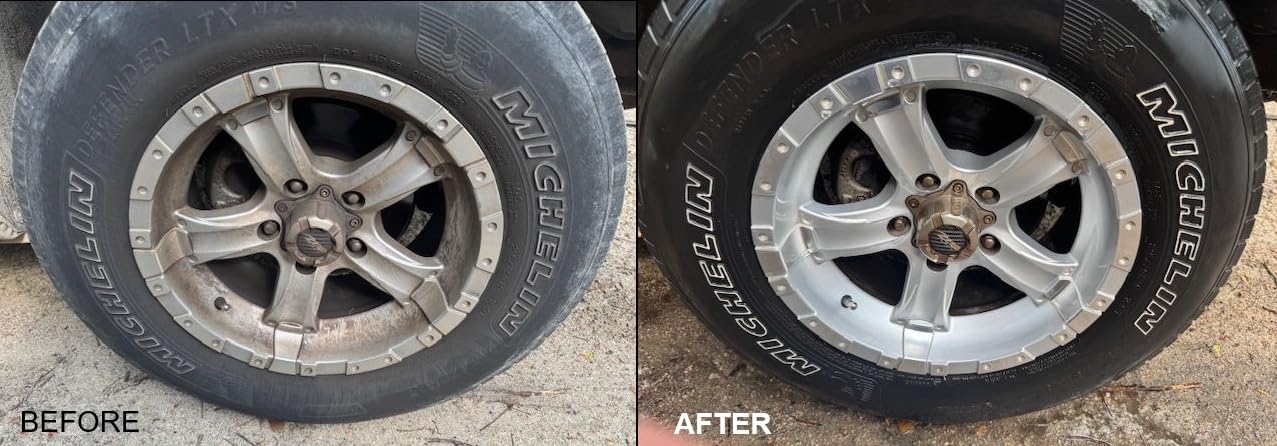
303 Wheel & Tire Cleaner earned a 4.4-star rating across 366 reviews, and what impressed me most was how little scrubbing it required. Most tire cleaners for brown oxidation need aggressive agitation with a stiff brush, but 303’s foaming formula does much of the work for you. I tested it on one-year-old tires with light to moderate browning, and the foam clung to the sidewalls long enough to break down the oxidized residue with just a light brush pass.
The spray-on, let-dwell, scrub, and rinse method is simple enough for anyone to follow. The foaming action is key here because it keeps the active ingredients in contact with the rubber surface rather than running off immediately. This is particularly useful on tire sidewalls where gravity works against liquid cleaners.
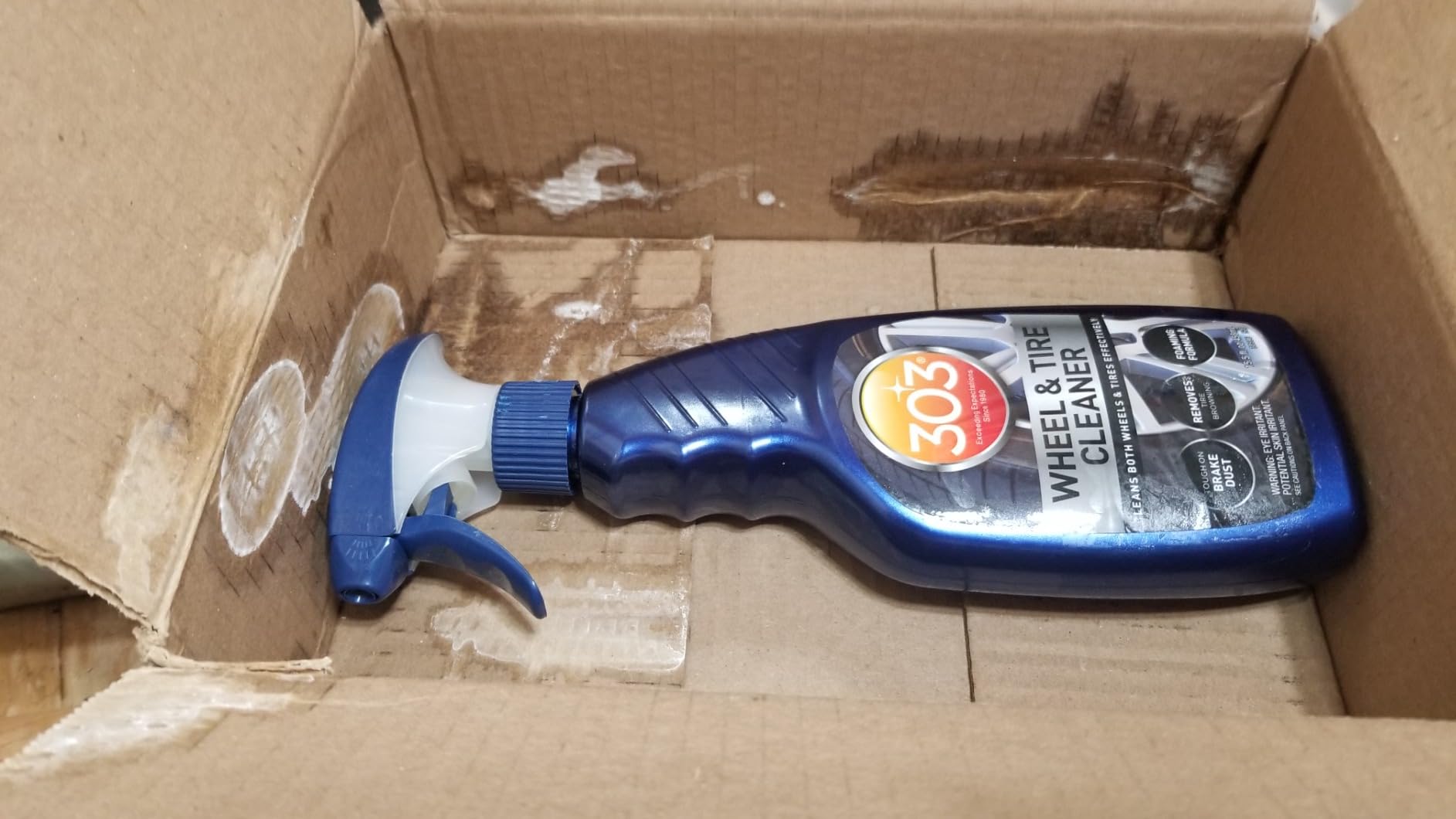
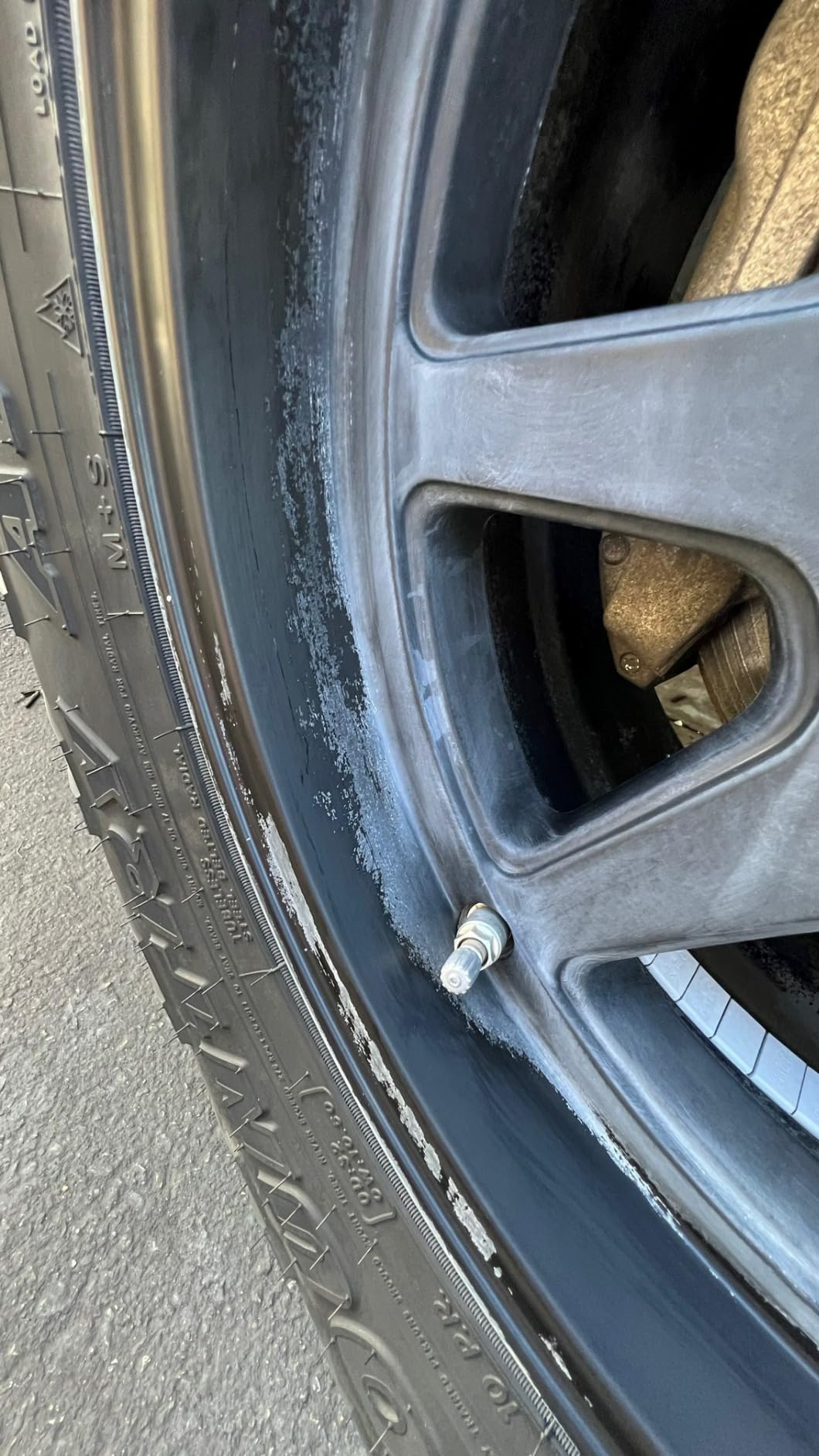
The biggest warning I have is about dwell time. You have roughly 30 seconds before the product starts drying to a white residue, which means you need to work in small sections and rinse promptly. If you let it dry, you will need to reapply and towel-dry to avoid chalky streaks. Several users also reported bottle leaking and sprayer malfunctions, which is frustrating for a product at this price point.
303 recommends pairing this cleaner with their tire dressing for best results, and I agree. The foaming cleaner preps the surface effectively, and the dressing goes on evenly over clean rubber. For light to moderate browning, the 303 system is a reliable choice that requires less physical effort than most competitors.
Who Should Buy 303 Wheel & Tire Cleaner
303 is the best choice if you want a foaming cleaner that minimizes scrubbing effort. If you have light to moderate tire browning and prefer a spray-and-rinse workflow with minimal brush work, the foaming formula keeps the surfactants on the rubber long enough to do the heavy lifting.
It is also ideal for owners who already use 303 tire dressing or protectant products, since the system is designed to work together for optimal results.
Who Should Look Elsewhere
If you have heavy oxidation requiring longer dwell times, the 30-second window before white residue forms will be a major limitation. You would be better served by Adam’s foaming formula or Vonixx, both of which give you more working time.
Anyone who has had bad experiences with leaky spray bottles may also want to transfer 303 to their own sprayer or look at products with better packaging quality reports. The leaking and sprayer issues are common enough to be a genuine concern.
7. 3D GLW Series Wheel & Tire Cleaner – All-in-One Non-Toxic Formula
3D GLW Series Wheel & Tire Cleaner – Deep Cleaning All-in-One Formula | Removes Brake Dust, Grime, Tire Browning | Safe on All Wheels | DIY Car Detailing |16 oz
16 oz spray
All-in-one wheel and tire formula
Non-toxic and unscented
Safe on all wheel finishes
Pros
- All-in-one deep cleaning for wheels and tires
- Safe on all wheel finishes
- Breaks down heavy grime and tire browning
- Non-toxic formula
- Effective prep before tire dressing
Cons
- Not the strongest cleaner on baked-on dirt
- Mixed results on heavily soiled tires
- Compared unfavorably to Meguiar's at dilution
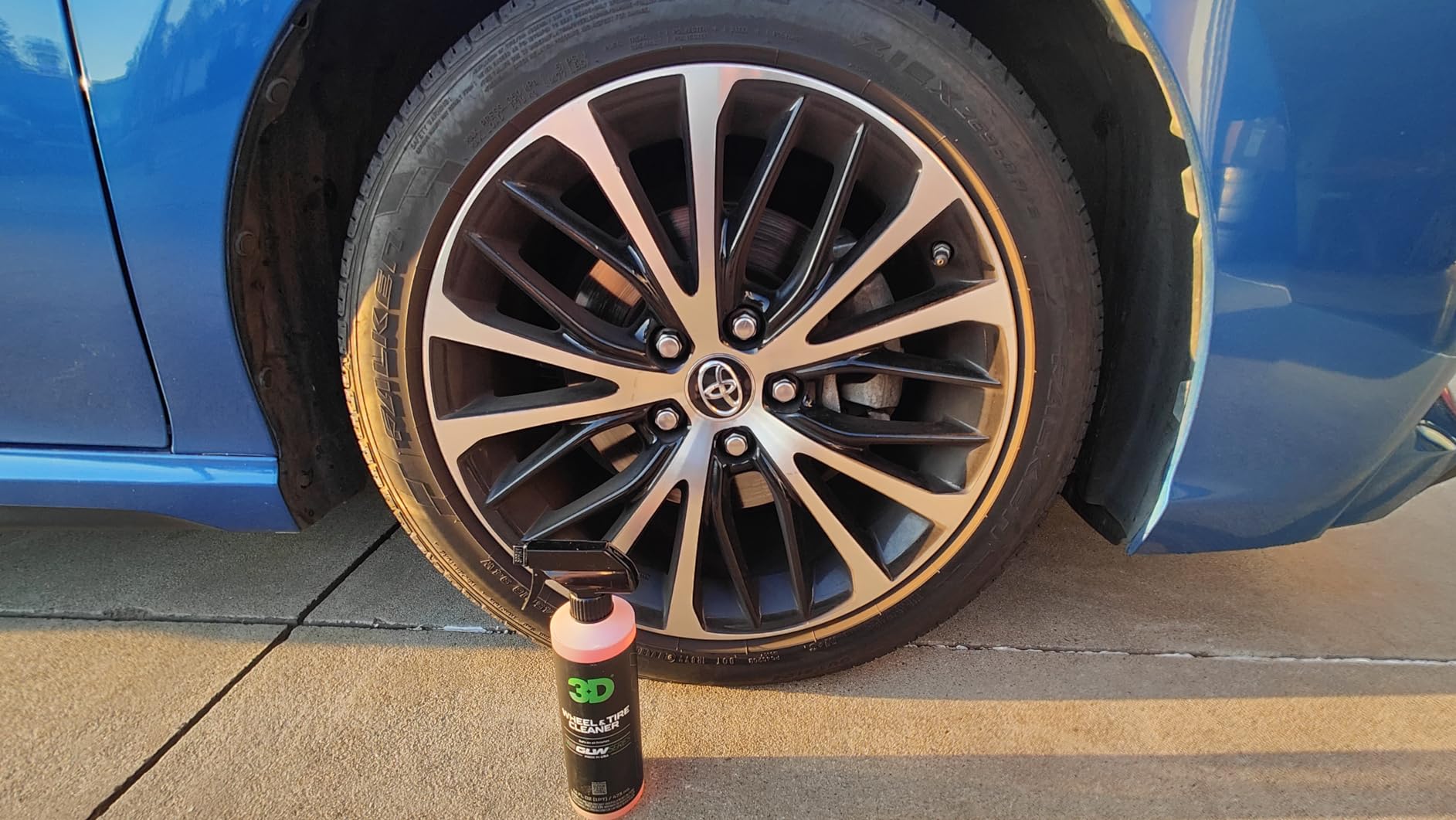
The 3D GLW Series Wheel & Tire Cleaner is an all-in-one formula that aims to handle wheels and tires in a single product. I tested it alongside Adam’s and found it to be a gentler, safer option that prioritizes surface protection over raw cleaning power. The non-toxic, unscented formula is a plus if you are sensitive to chemical odors or work in enclosed spaces like a garage.
What 3D does well is break down tire browning and road grime without risking damage to any wheel finish. It is safe on painted, chrome, polished, and coated wheels, which means you can spray confidently without worrying about etching. The formula restores that rich, deep black rubber look by removing oxidized buildup and embedded dirt, making it an effective prep step before applying tire dressing.
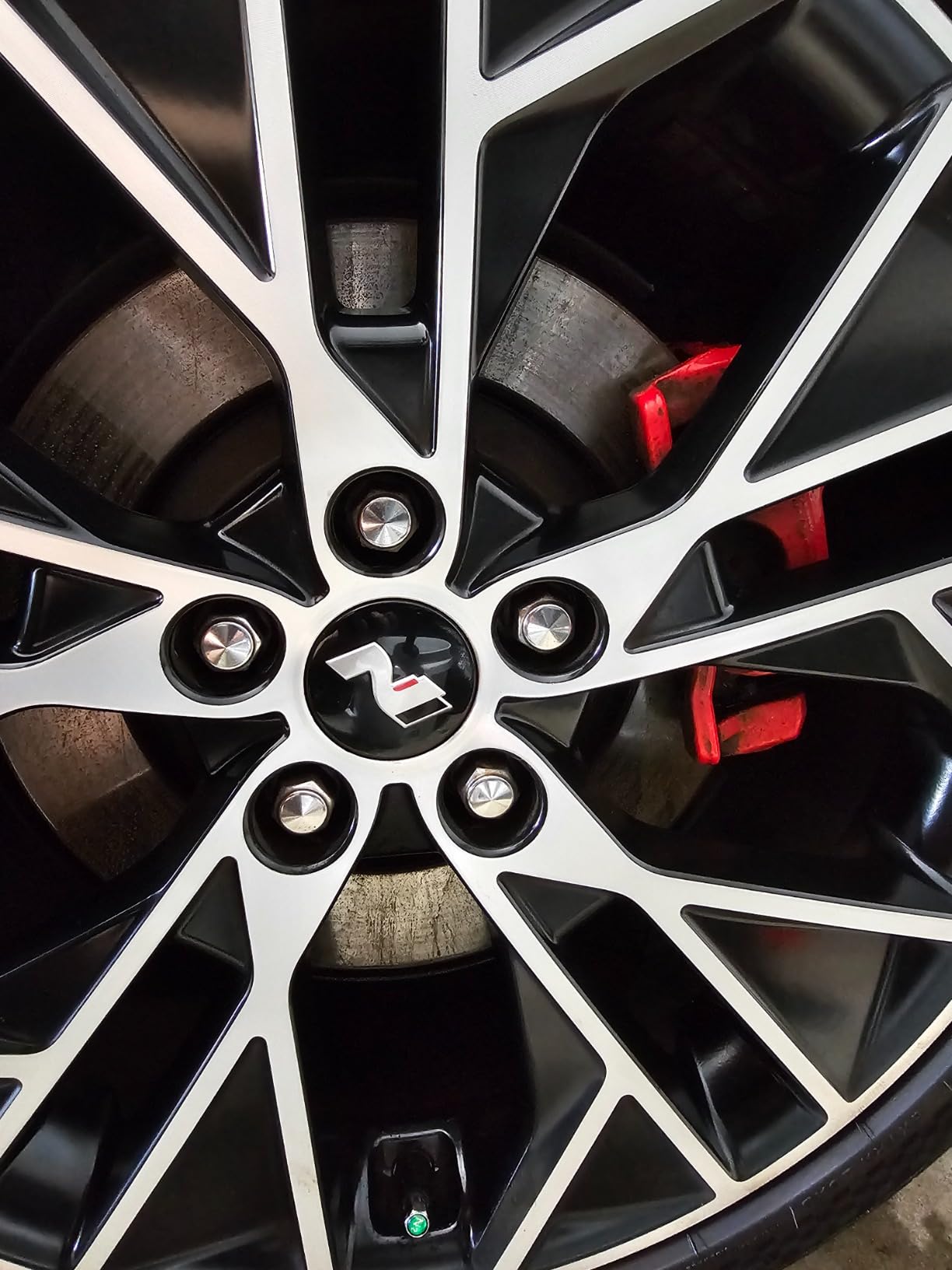
The limitation is strength. Several users reported that 3D underperforms on baked-on dirt and heavily soiled, long-neglected tires. One user compared it unfavorably to Meguiar’s at a 50/50 dilution, and another reported no improvement after 20 minutes of scrubbing. For light to moderate browning on regularly maintained tires, 3D performs well. For heavy oxidation, you will likely need a more aggressive product.
The non-toxic formula is worth highlighting if you have kids or pets around your detailing area. The unscented profile also means no lingering chemical smell after cleaning, which is a plus for indoor garage use. Available in a 128-ounce gallon size as well, 3D offers good value for detailers who want a safe, everyday cleaner.
Who Should Buy 3D GLW Series Wheel & Tire Cleaner
3D is ideal for detailers who want a safe, non-toxic formula for regular maintenance cleaning. If you wash your car every two to four weeks and deal with light to moderate browning, the all-in-one formula handles wheels and tires without needing a separate product for each.
It is also the best pick if wheel safety is your top priority. The formula is explicitly safe on all finishes, including coated and polished wheels, giving you confidence when cleaning expensive aftermarket setups.
Who Should Look Elsewhere
If you are dealing with heavy, baked-on oxidation or months of neglected tire grime, 3D will likely disappoint. The gentle formula is designed for regular maintenance, not deep restoration. Look at Vonixx, Adam’s, or McKee’s Rejuvenator for severe browning.
Detailers who want maximum cleaning power per spray may also find 3D too mild. It is a solid everyday cleaner, but it will not match the aggressive oxidation-removal capability of the top products on this list.
8. ESOTERIC All Purpose & Tire Cleaner – Versatile Matte-Finish Option
ESOTERIC All Purpose & Tire Cleaner 16oz | Removes Browning from Tires | Tire Dressing Remover | Matte Finish |Cleans Tires, Rubber, Plastic Trim, Engine Bay, | Rubber Floor Mat Cleaner
16 oz spray
Ready-to-use APC formula
Removes browning and dressing buildup
Matte finish, no shine
Pros
- Effective at removing brown stains and dressing buildup
- Pleasant detergent-like smell
- Adjustable spray nozzle
- Versatile multi-surface cleaner
- Does not leave tires shiny or sticky
Cons
- Not dilutable so cost per use is higher
- Price point may be steep for the quantity
- Bottle cap difficult to remove
- Sprayer hose overly long
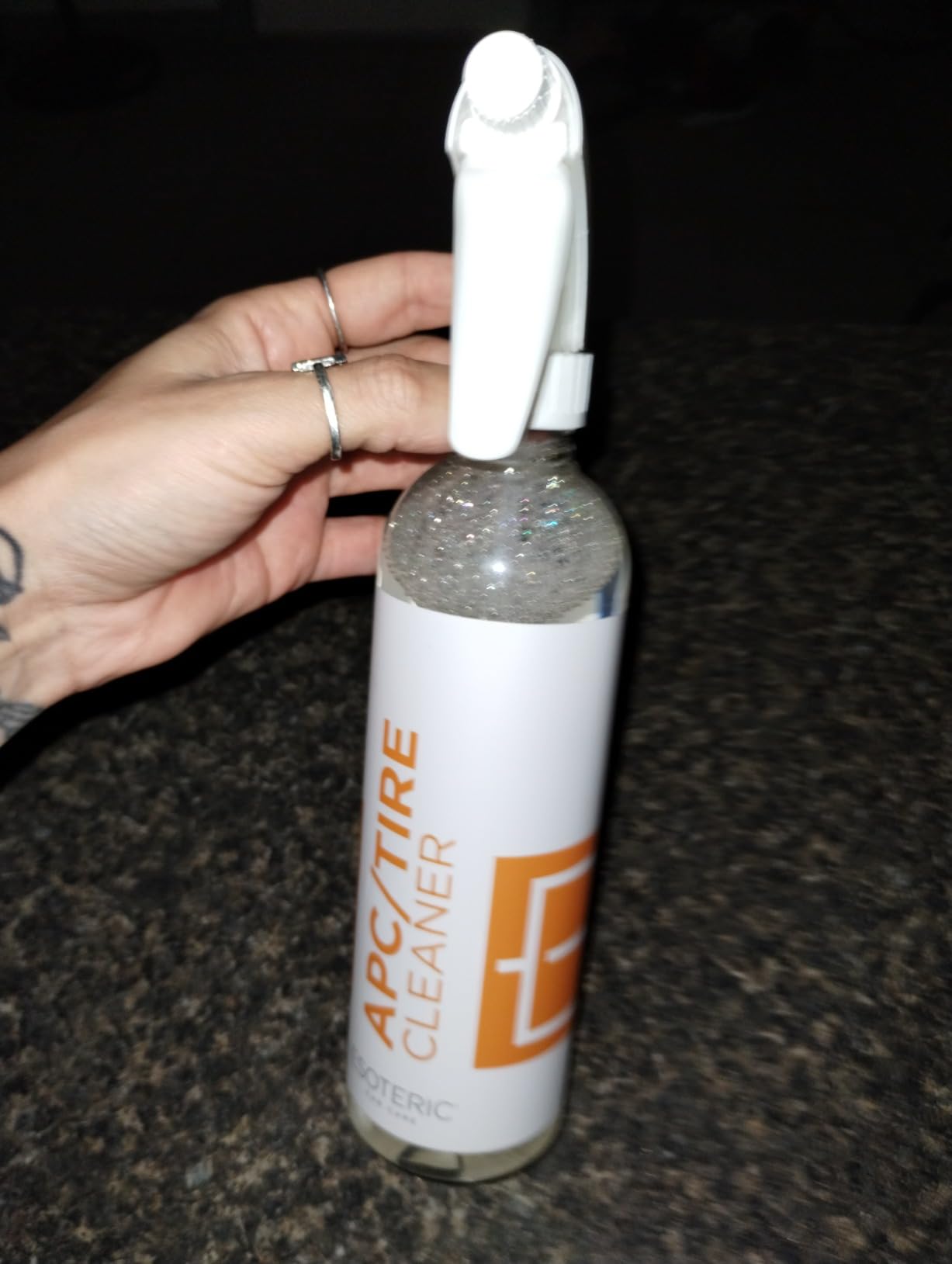
The ESOTERIC All Purpose & Tire Cleaner is a newer entry that launched in mid-2024, and it brings something different to the table. Unlike most tire cleaners that leave a shiny or slick surface, ESOTERIC is designed for a matte, natural clean look. If you prefer your tires to look like fresh, clean rubber rather than glossy and dressed, this is the product for your brown oxidation problem.
I tested ESOTERIC on tires with moderate browning and old dressing buildup, and it broke down both effectively. The ready-to-use formula requires no dilution, which is convenient but also means you are paying more per ounce since you cannot stretch it with water. The detergent-like smell is pleasant compared to the harsh chemical odors of some competitors, and the adjustable spray nozzle lets you control from a wide fan to a narrow stream.
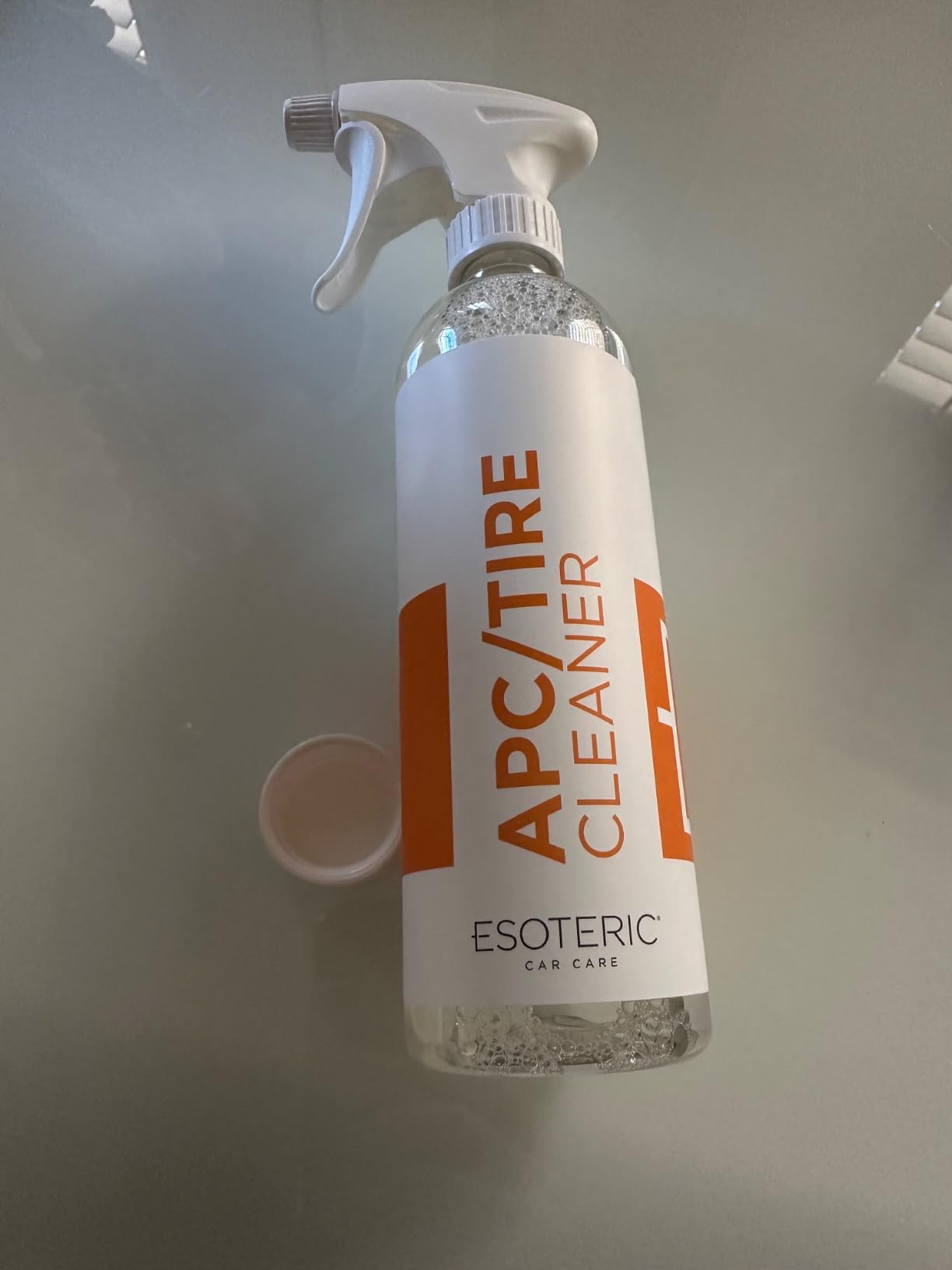
The versatility is where ESOTERIC shines. Beyond tires, I used it on engine bay components, rubber floor mats, wiper blades, and door jambs. It cleans the pores and texture of rubber floor mats effectively, removing salt and mud that regular cleaners leave behind. The wiper blade cleaning tip is clever: spray on a microfiber towel, wipe the rubber blade, and eliminate the residue that causes skipping and noise.
The main drawback is value. At the same price as Chemical Guys Total Extract but not dilutable, the cost per use is higher. The bottle cap is difficult to remove, and the sprayer hose is overly long, which are minor but annoying design flaws. Some users found it middle of the road compared to competitors, which aligns with my experience: it is a solid all-around cleaner but not a category leader in any single metric.
Who Should Buy ESOTERIC All Purpose & Tire Cleaner
ESOTERIC is the best choice for detailers who want a single versatile cleaner for tires, engine bays, floor mats, and trim. If you prefer a matte, natural rubber finish rather than a glossy shine, this product delivers exactly that while removing brown oxidation effectively.
It is also ideal if you want a pleasant-smelling, ready-to-use product that requires no mixing or dilution. The multi-surface capability means fewer bottles in your detailing kit.
Who Should Look Elsewhere
If you want the best value per ounce, ESOTERIC’s non-dilutable formula and 16-ounce size make it more expensive per use than competitors like Vonixx or Griot’s. Budget-conscious detailers should look elsewhere.
Anyone with heavy, deeply embedded oxidation may also find ESOTERIC too gentle. It handles moderate browning well but is not formulated for the aggressive antiozonant removal that Adam’s or Vonixx provide. The 4.0-star average reflects this middle-of-the-road performance.
How to Choose the Right Tire Cleaner for Brown Oxidation?
Choosing the best tire cleaner for removing brown oxidation starts with understanding what you are actually fighting. Not all brown tires have the same cause, and using the wrong product wastes time and money. Here is what I learned from testing eight products and reading hundreds of forum posts from real detailers.
Understand What Causes Tire Blooming
Tire blooming happens because of antiozonants, specifically a compound called 6PPD (p-phenylenediamine) that tire manufacturers add to rubber during production. These antiozonants protect the rubber from ozone and UV damage by continuously migrating to the surface. When they reach the surface and react with oxygen and sunlight, they create a brown or bronze discoloration that builds up over weeks and months of driving.
This is a natural and ongoing chemical process. Even brand-new tires can show browning within weeks of purchase, which surprises many owners. The process is not a sign of tire failure or poor quality; it is the protective chemistry doing its job. The challenge is that the brown residue is unsightly, and removing it requires the right chemistry.
Tire Cleaner vs Tire Rejuvenator vs Wheel Cleaner
These three product categories are often confused, and using the wrong one for brown oxidation is a common mistake I see in forums. A tire cleaner uses alkaline surfactants to break down surface contamination, including oxidized antiozonants. It is your everyday tool for tire browning. A tire rejuvenator, like McKee’s 37, goes further by conditioning the rubber compound while removing oxidation, making it ideal for older or stored vehicles.
A wheel cleaner is formulated primarily for brake dust and metallic contamination on wheel surfaces. While many wheel cleaners also claim to work on tires, they are not optimized for breaking down antiozonant residue. If brown tire sidewalls are your main problem, choose a dedicated tire cleaner or rejuvenator, not a wheel cleaner marketed as a dual-purpose product.
Match the Cleaner to Your Oxidation Severity
For light browning that appears within a few weeks of washing, a gentle foaming cleaner like 303 or a maintenance product like 3D GLW Series is sufficient. These products remove fresh surface oxidation without aggressive chemistry, and they are safe for regular use. For moderate browning that has built up over a month or more, Adam’s Polishes, Chemical Guys Total Extract, or Griot’s Garage provide the surfactant strength to cut through deeper oxidation.
For heavy, months-old oxidation that has resisted multiple cleaning attempts, you need the strongest options. Vonixx Delet and McKee’s 37 Rejuvenator are your best bets. Forum users report that Vonixx’s concentrated formula and McKee’s rejuvenating chemistry handle the most stubborn cases, including tire brands like Falken and Michelin that resist standard cleaners.
What NOT to Use on Brown Tires
Forum discussions reveal a pattern of bad advice about removing tire browning. Gasoline, mineral spirits, and harsh all-purpose cleaners are frequently recommended but can damage rubber compounds over time. One AutoGeek user noted that repeated heavy cleaning cycles of four to five passes can strip UV inhibitors from the rubber, causing premature tire cracking. Limit any cleaning session to three passes maximum.
Wire brushes are another mistake. They can physically damage the rubber surface and create micro-abrasions that trap more contamination. Use a stiff nylon or rubber-specific tire brush instead. And never clean hot tires, as the heat can cause cleaners to dry too quickly and leave residue or cause chemical reactions with the rubber compound.
Tools That Make a Difference
The right cleaner is only half the equation. Multiple forum users confirmed that a drill brush dramatically reduces cleaning time for heavily oxidized tires. A cordless drill with a medium-bristle brush attachment agitates the rubber surface far more effectively than hand scrubbing, cutting your cleaning time in half on stubborn browning.
Beyond a drill brush, you need a dedicated tire brush with stiff bristles, microfiber towels for drying, and access to a hose or pressure washer. A pressure washer helps rinse loosened contamination from rubber pores but will not remove oxidation on its own. The chemical action of a dedicated tire cleaner is what breaks the bond between oxidized antiozonants and the rubber surface.
How to Remove Brown Oxidation From Tires
Removing brown oxidation from tires follows a straightforward process that works with any of the eight products I tested. Here is the step-by-step method I use for consistent results.
Step 1: Work on cool tires in a shaded area. Never apply tire cleaner to hot rubber, as the product will dry too quickly and may leave residue or cause uneven chemical reactions.
Step 2: Rinse the tires thoroughly with a hose or pressure washer to remove loose dirt and surface contamination. This prevents you from scrubbing grit into the rubber during agitation.
Step 3: Spray your chosen tire cleaner generously on the sidewall, working from the top down. Cover the entire browned area and let the product dwell for the recommended time, usually 30 seconds to 2 minutes depending on the product.
Step 4: Agitate with a stiff-bristled tire brush or drill brush attachment. Work in circular motions, paying extra attention to the most heavily browned sections. You will see the foam or cleaner turn brown as it lifts the oxidized antiozonant residue.
Step 5: Rinse thoroughly with a hose or pressure washer, starting from the top of the sidewall and working down. Make sure all cleaner residue is removed, as some products leave a white film if not fully rinsed.
Step 6: Inspect the tires while wet. If significant browning remains, repeat steps 3 through 5 for a second or third pass. Limit yourself to three passes in a single session to avoid stripping UV inhibitors from the rubber.
Step 7: Towel-dry the tires and apply a water-based tire dressing to protect the clean surface and slow down future blooming.
How to Prevent Tires From Turning Brown Again
Cleaning brown tires is only half the battle. Without proper prevention, the browning will return within weeks. Here is what I learned about keeping tires black after cleaning.
Apply a water-based tire dressing after every cleaning. Water-based dressings sit on the surface and create a barrier that slows antiozonant migration without trapping dirt and residue. Silicone-based dressings, while longer-lasting and glossier, can actually contribute to browning over time. They build up on the surface, trap oxidized compounds, and create the sticky, brown film that many users mistake for tire blooming.
Wash your tires every two to four weeks with a dedicated tire cleaner rather than relying on car wash soap alone. Regular cleaning prevents antiozonant residue from accumulating to visible levels. Once buildup becomes heavy, removing it requires significantly more product and effort. Forum consensus is that once tires are truly clean, a weekly rinse with an Optimum No-Rinse solution keeps them looking fresh longer.
Be aware that certain tire brands and compounds brown more aggressively than others. Michelin, Yokohama, and some Falken models are frequently mentioned in forums as resistant to cleaning or prone to rapid re-blooming. If you own these brands, expect to clean more frequently and consider keeping a dedicated tire cleaner on hand for regular maintenance.
Finally, understand the difference between tire blooming (chemical) and silicone dressing buildup (physical). Blooming requires a dedicated tire cleaner with alkaline surfactants. Dressing buildup may require a silicone-dissolving product or a citrus-based degreaser. If your tires look worse after applying tire shine, you are likely dealing with buildup, not blooming.
FAQs
How to remove brown oxidation color from tires?
Spray a dedicated tire cleaner like Adam’s Polishes or Vonixx Delet on cool tires, let it dwell for 30 seconds to 2 minutes, scrub with a stiff nylon brush, and rinse thoroughly. Repeat up to 3 times for heavy oxidation, then apply a water-based tire dressing to slow future blooming.
What is the best tire cleaner to remove browning?
Adam’s Polishes Wheel u0026amp; Tire Cleaner is the top-rated option for brown oxidation with a 4.5-star average across over 5,700 reviews. Vonixx Delet (4.7 stars) and Chemical Guys Total Extract (4.1 stars) are also highly effective for removing tire browning at different price points.
How to get brown stains out of tires?
Brown stains on tires are caused by oxidized antiozonants migrating to the rubber surface. Use a dedicated tire cleaner with alkaline surfactants, scrub with a stiff brush or drill brush attachment, and rinse with a hose or pressure washer. For stubborn stains, repeat up to 3 times per session.
Why are my tires turning brown after cleaning?
Tires turn brown after cleaning because the antiozonant migration process is continuous. Cleaning removes surface oxidation, but the compounds inside the rubber keep migrating to the surface and reacting with oxygen and UV light. To slow this process, apply a water-based tire dressing after each cleaning and wash every 2 to 4 weeks.
Can I use dish soap to clean brown tires?
Dish soap is not recommended for removing tire browning. It lacks the alkaline surfactants needed to break down oxidized antiozonant residue and can strip protective compounds from the rubber. Use a dedicated tire cleaner formulated specifically for brown oxidation removal.
Final Thoughts on Tire Brown Oxidation Cleaners
Brown tire oxidation is one of the most frustrating cosmetic issues for car owners, but the right cleaner makes it completely manageable. Adam’s Polishes Wheel & Tire Cleaner remains my top overall pick for the best tire cleaner for removing brown oxidation, with the proven track record and foaming formula to handle most situations. For heavy oxidation, Vonixx Delet offers the strongest concentrated cleaning power, and Chemical Guys Total Extract handles silicone buildup on a budget.
The key is matching the product to your oxidation severity and cleaning regularly enough to prevent heavy buildup. Pair any of these cleaners with a stiff brush and a water-based dressing, and your tires will stay black and fresh-looking all year in 2026.