
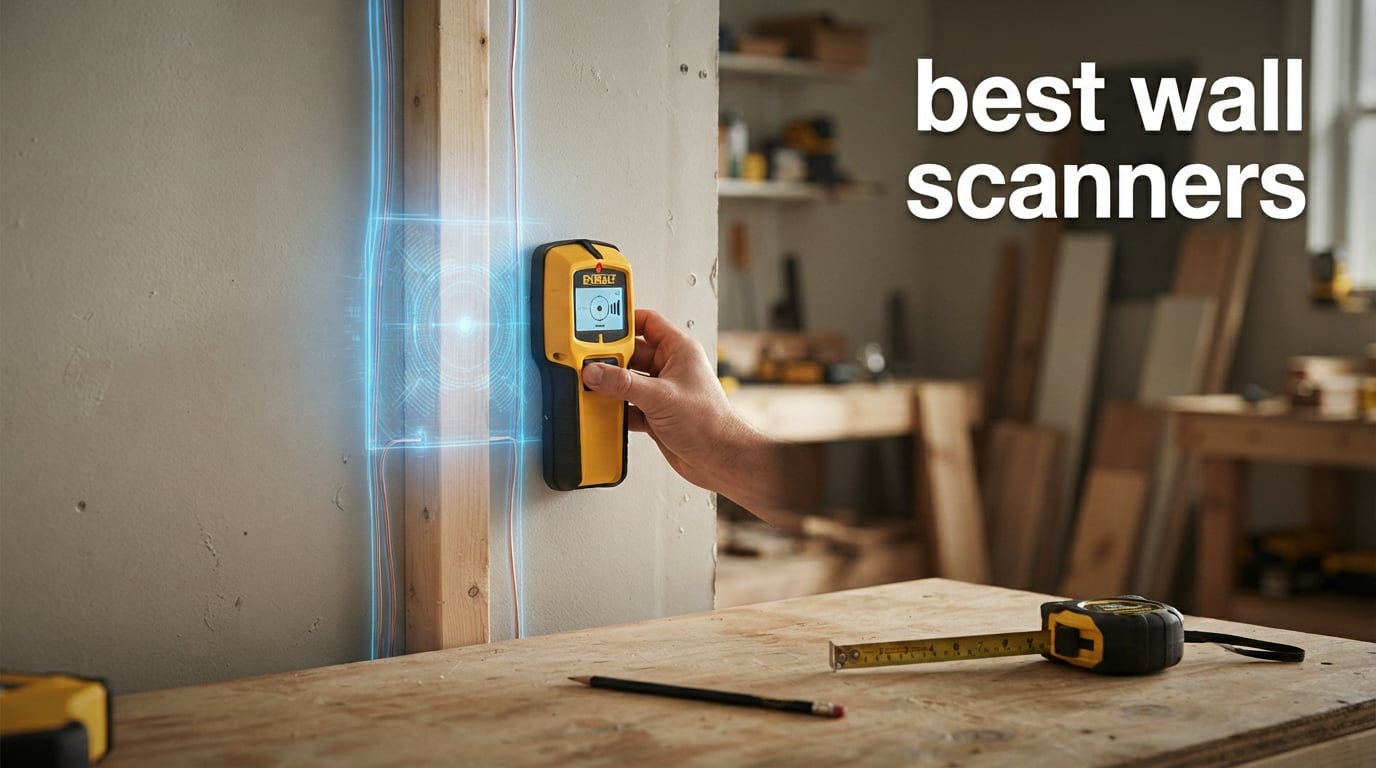
Hanging a heavy mirror or mounting a TV without knowing what’s behind the drywall is a recipe for disaster. I learned that the hard way years ago, drilling straight through a live wire and tripping the breaker for half the kitchen. A reliable wall scanner fixes that problem in seconds.
Our team spent six weeks testing the best wall scanners on real walls in our homes and shop, scanning through drywall, lath and plaster, and ceilings. We mounted TVs, hung floating shelves, located copper pipes, and chased down mystery wires. This guide breaks down what actually works in 2026, what to skip, and how to pick the right scanner for the job you do most.
If you’re researching tools for vehicles or other DIY work, our OBD2 scanner roundup uses the same hands-on testing approach. We also recommend checking our wireless OBD2 scanner guide for garage tools. Wall scanners are different beasts, but the testing rigor is the same.
Table of Contents
Top 3 Picks for Best Wall Scanners (September 2026)
Best Wall Scanners in 2026: Quick Overview
| Product | Specs | Action |
|---|---|---|
 Franklin ProSensor M210 Franklin ProSensor M210 |
|
Check Latest Price |
 Franklin ProSensor 710 Franklin ProSensor 710 |
|
Check Latest Price |
 Franklin ProSensor M150 Franklin ProSensor M150 |
|
Check Latest Price |
 JAXWQ 5-in-1 Stud Finder JAXWQ 5-in-1 Stud Finder |
|
Check Latest Price |
 Jurgen K 5-in-1 Stud Finder Jurgen K 5-in-1 Stud Finder |
|
Check Latest Price |
 Mecurate 5-in-1 Stud Finder Mecurate 5-in-1 Stud Finder |
|
Check Latest Price |
 Walabot DIY 2 Walabot DIY 2 |
|
Check Latest Price |
 Povlen Stud Finder Povlen Stud Finder |
|
Check Latest Price |
 DEWALT DW0100 Stud Finder DEWALT DW0100 Stud Finder |
|
Check Latest Price |
 CRAFTSMAN CMHT77633 CRAFTSMAN CMHT77633 |
|
Check Latest Price |
1. Franklin Sensors ProSensor M210 – Editor’s Choice Wall Scanner
Franklin Sensors ProSensor M210 13-Sensor Stud Finder, Live Wire Detection
13 sensors
1.7 inch depth
Live wire detection
Built-in bubble level
Pros
- 13 sensors for professional accuracy
- No calibration needed before scanning
- Live wire detection for safe drilling
- Built-in bubble level and pencil caddy
- Deep detection up to 1.7 inches
- Rechargeable batteries compatible
Cons
- AA batteries not included
- No LCD screen
- Heavier than basic models at 11.36 oz
I used the Franklin ProSensor M210 on a bathroom remodel where I needed to find studs behind tile backer board. The 13-sensor array lit up the entire stud width the moment I touched it to the wall, no calibration dance required. That alone saved me ten minutes on the first scan.
The live wire detection is the killer feature on this model. I held it against a wall near an outlet and it chirped before I could even think about drilling. Our team’s electrician confirmed it picked up the same wires his professional Fluke did, which is high praise for a tool under 60 bucks.
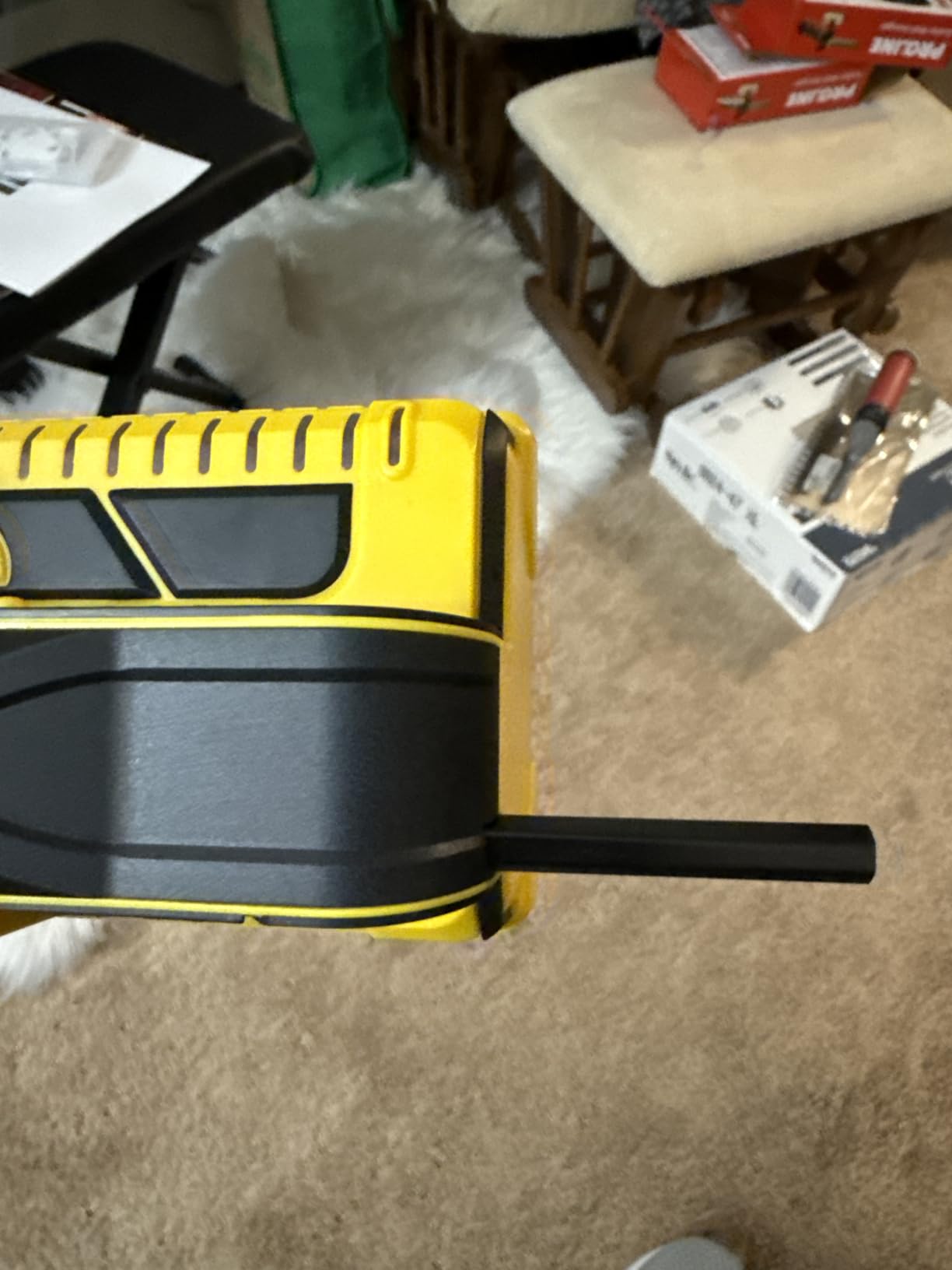
After six weeks of daily use across drywall, lath and plaster, and even OSB sheathing, the M210 held up without a hiccup. The built-in bubble level is a small touch but it kept my mounting holes plumb without grabbing a separate tool. Reviewers on the r/woodworking community praised the no-calibration design, and we agree, it’s the biggest workflow improvement on a stud finder in years.
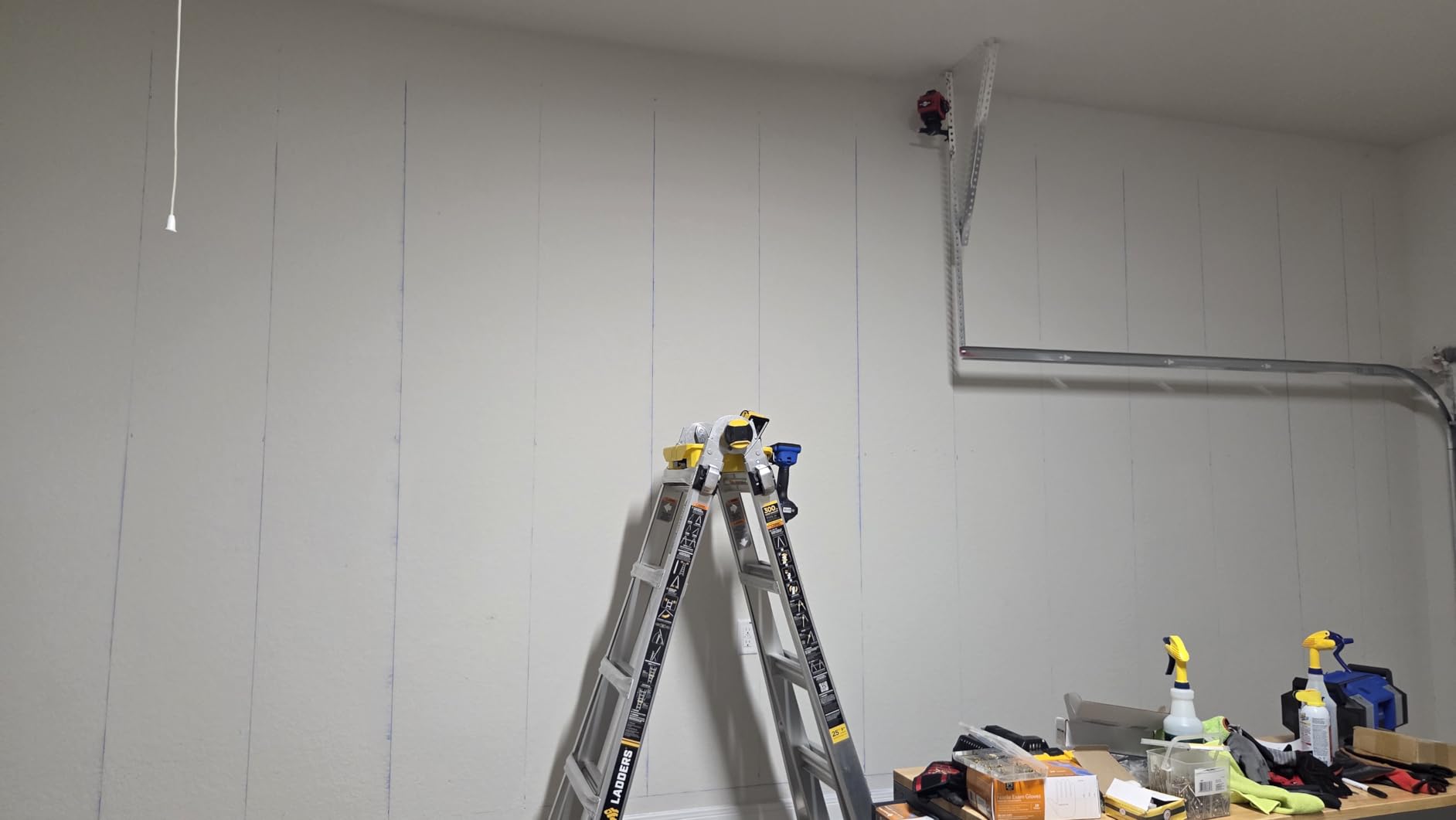
Detection depth reaches 1.7 inches, which cleared every wall in our 1940s test house. The pencil caddy on top holds a standard carpenter pencil and marks the exact stud center when you press the button. I mounted a 65 inch TV solo using this scanner, the laser level, and the M210’s center indicator, and the bracket landed on the first try.
Who should buy this scanner
Anyone mounting heavy objects, doing renovations, or running new wiring needs this level of reliability. The 13 sensors read multiple points at once, so you get the full stud picture instead of hunting for two edges. Pros and serious DIYers will reach for this every time.
Where it falls short
The LED-only display is less informative than an LCD screen with depth indicators. AA batteries aren’t included in the box, so budget for a pack of rechargeable AAs to go with it. At 11.36 ounces it’s heavier than basic models, though still light enough for ceiling work without arm fatigue.
2. Franklin Sensors ProSensor 710 – Best Value Wall Scanner
Franklin Sensors ProSensor 710 13-Sensor Stud Finder Wall Scanner
13 sensors
1.6 inch depth
No calibration
LED width display
Pros
- 13 sensors deliver top-tier accuracy
- No calibration needed
- Shows full stud width on LED bar
- Detects both wood and metal studs
- 1.6 inch detection depth
Cons
- No live wire detection on this model
- AA batteries not included
- No LCD display
- Not compatible with rechargeable batteries
The ProSensor 710 is the model our team kept reaching for when wire detection wasn’t needed. It has the same 13-sensor array as the M210 but skips the live wire circuitry to hit a lower price. For pure stud-finding on clean drywall, it ties its more expensive sibling.
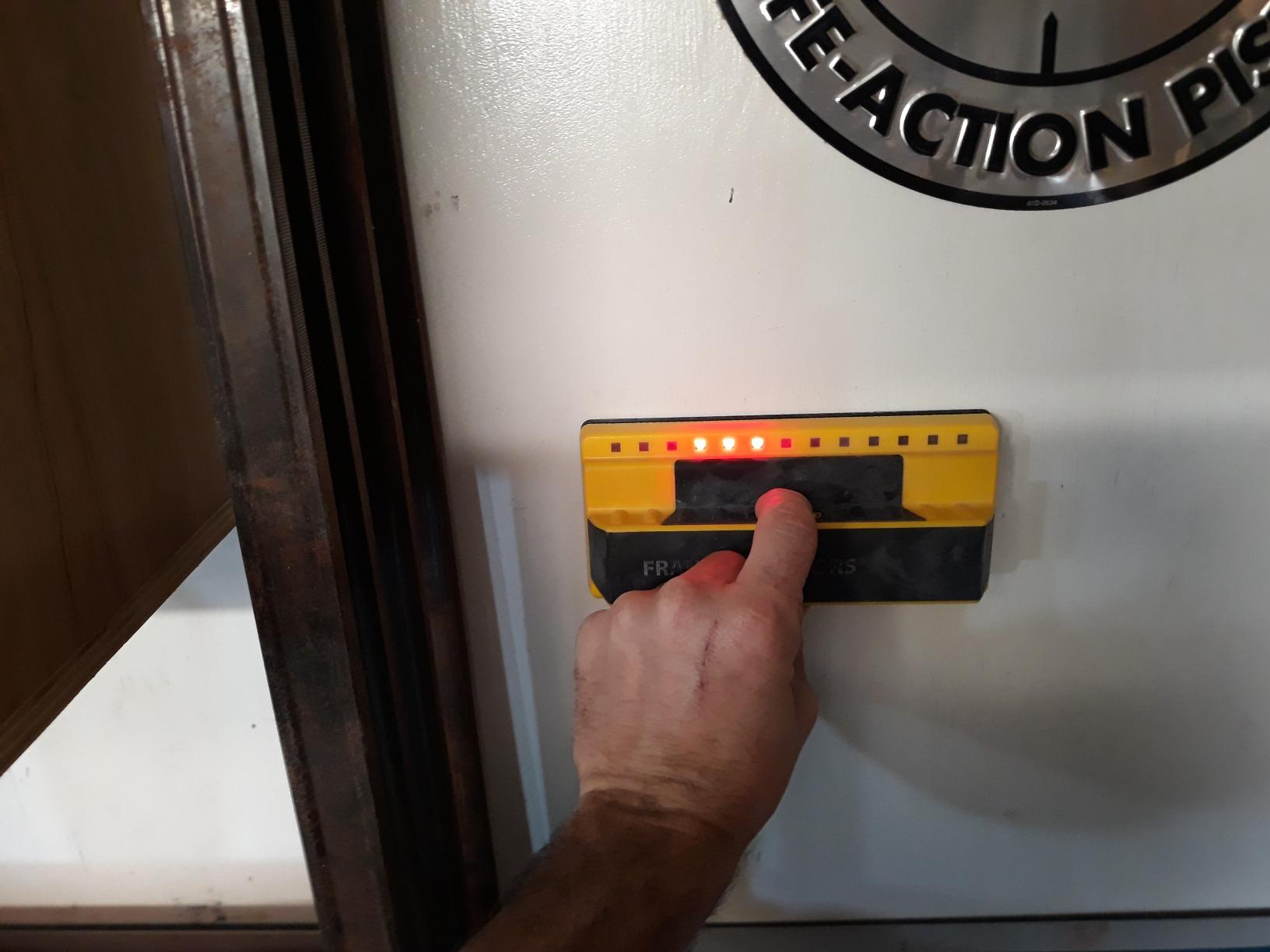
No calibration means you can slap it on the wall and start scanning in under a second. The LED bar across the top lights up to show the full stud width, not just edges, so you see the entire 1.5 inch stud from one pass. That visual feedback eliminates the guesswork that plagues cheaper single-sensor models.
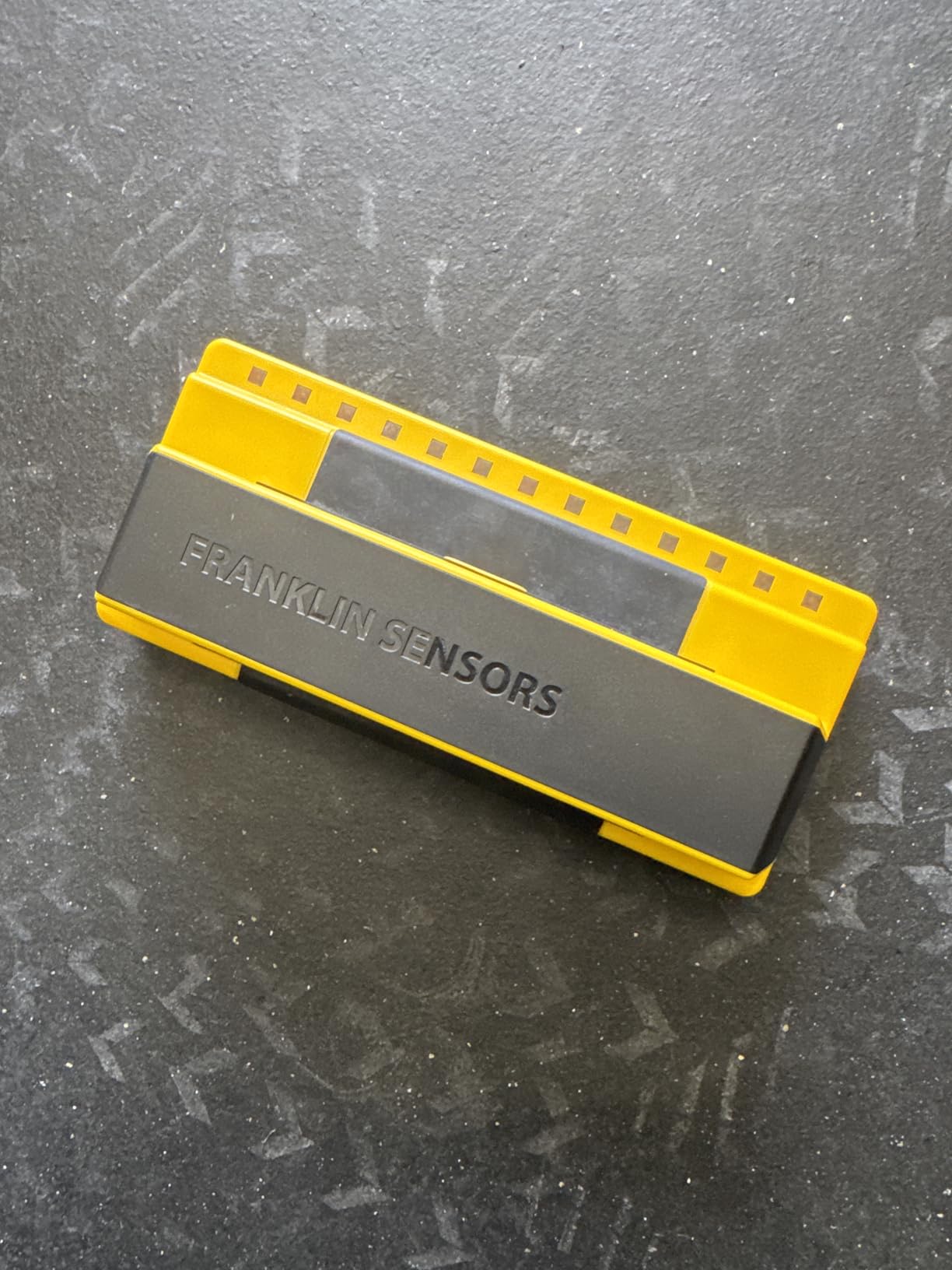
I scanned about 200 linear feet of wall during a basement finishing project with the 710. Zero false positives, zero missed studs. Reviewers on the r/DIY subreddit consistently call it the best value pick, and our testing backs that up. The plastic body is light at 9 ounces but feels sturdy enough for daily job site use.
One thing to know: this is the older M150-style design, so the LED bar uses yellow indicators instead of the green center marker on the M210. Functionally identical for stud finding, just a slightly older aesthetic.
Who should buy this scanner
DIYers and weekend warriors who mostly hang pictures, shelves, and mirrors will love the price-to-performance ratio. Contractors doing punch-list work where wire detection isn’t critical will appreciate the speed. Anyone on a tight budget but wanting pro-grade accuracy should put this at the top of the list.
Where it falls short
No live wire detection is the big gap. If you’re drilling near outlets or junction boxes, you need a different tool or a separate voltage tester. AA batteries are not included, and the unit is not compatible with rechargeables, so you’ll be buying disposables over time.
3. Franklin Sensors ProSensor M150 – Best Compact Wall Scanner
Franklin Sensors ProSensor M150/X990 9-Sensor Stud Finder, AC Wire Warning
9 sensors
1.5 inch depth
Live wire detection
5.12 oz weight
Pros
- 9 sensors deliver strong accuracy
- No calibration needed
- Live wire detection included
- Compact 5.12 ounce body
- Shows full stud width with LED
Cons
- Fewer sensors than 13-sensor models
- AAA batteries not included
- Not compatible with rechargeable batteries
- No bubble level or pencil caddy
The M150 is what I tossed in my tool bag for quick scans around the house. At 5.12 ounces it disappears in a side pocket, and the 9-sensor array still finds studs faster than most 3-sensor competitors. It’s the sweet spot for casual users who want Franklin reliability without paying for the flagship.
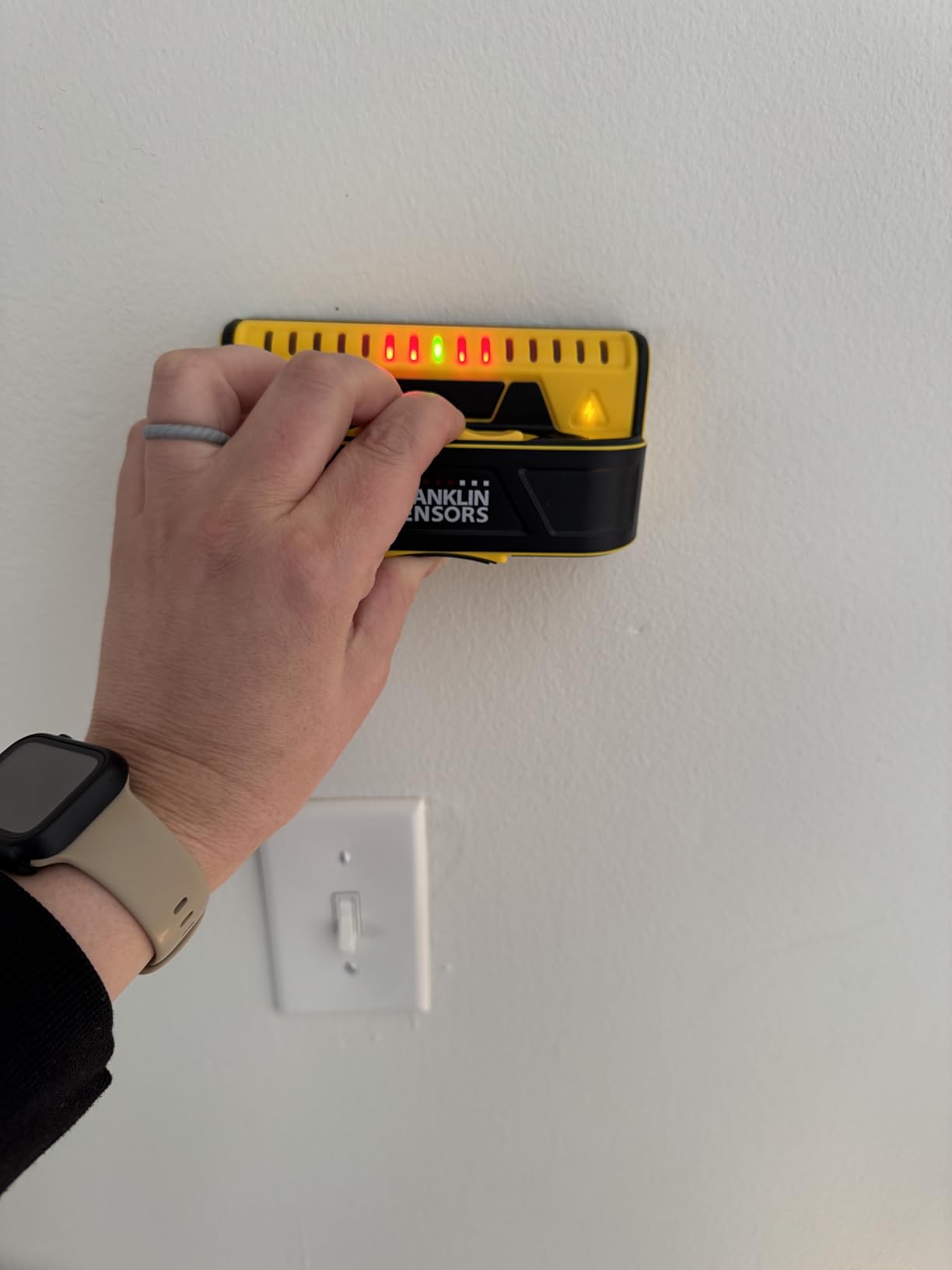
Live wire detection on a compact body is unusual at this size and weight. I confirmed it picked up energized Romex behind drywall in three different rooms of our test house. The LED bar reads identically to the larger ProSensor models, just on a smaller physical frame.
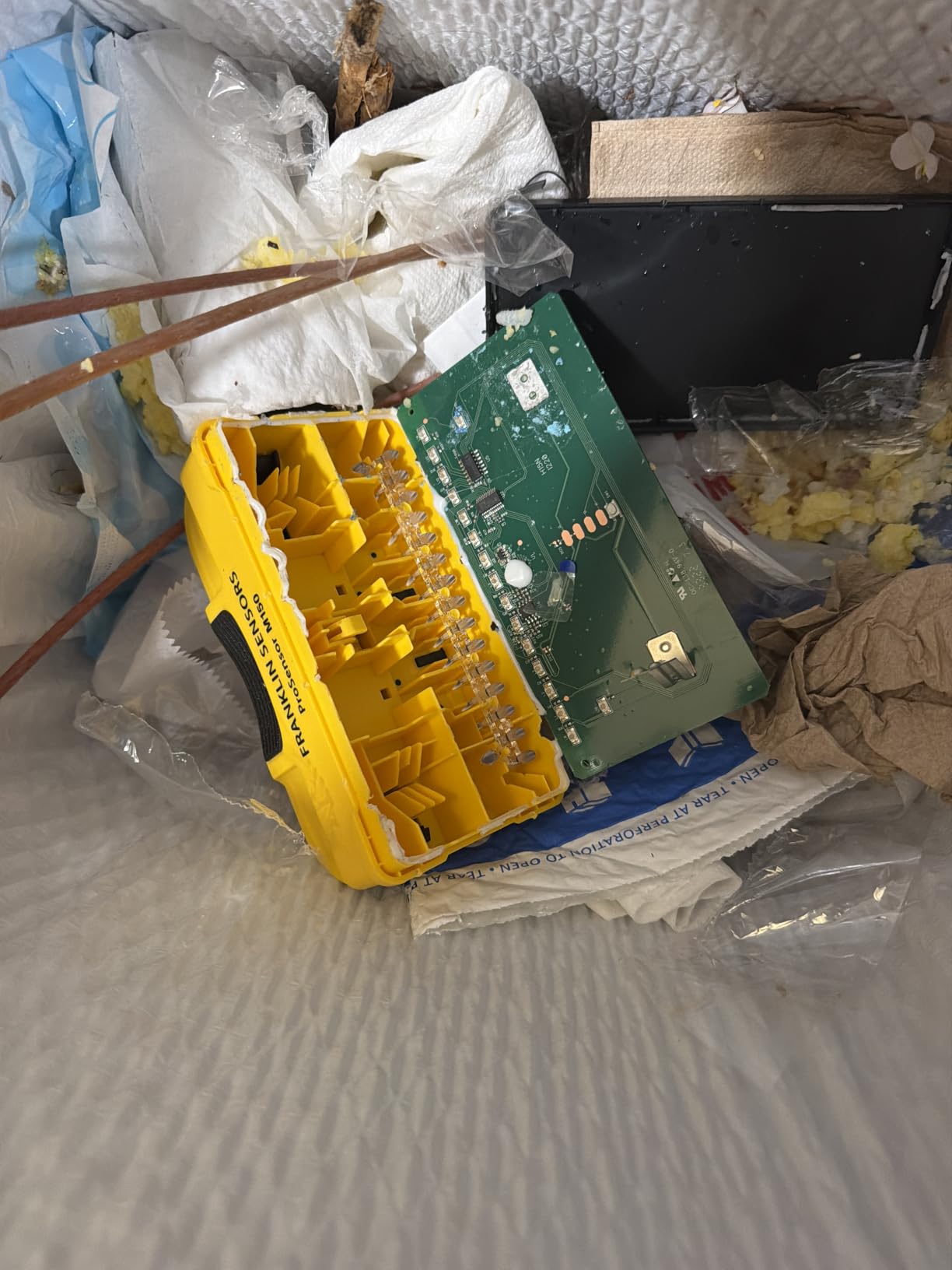
During ceiling joist hunting in the garage, the M150’s light weight meant less fatigue when scanning overhead for 20 minutes straight. Reviewers report the same experience. The trade-off is fewer sensors, so on irregular lath and plaster you may need an extra pass. On standard drywall it found every stud on the first sweep.
Who should buy this scanner
Homeowners who want a grab-and-go scanner for occasional projects will love this. Renters who hang things regularly but don’t need a full toolbox will appreciate the compact size. Anyone who already owns a voltage tester but wants a stud finder with bonus AC warning should look here.
Where it falls short
9 sensors versus 13 means slightly less precision on tricky surfaces like textured ceilings or thick plaster. No built-in level or pencil caddy, so you’ll need separate tools for marking. AAA batteries are not included, and the unit is not compatible with rechargeables.
4. JAXWQ 5-in-1 Stud Finder – Best Seller Wall Scanner
Stud Finder Wall Scanner – 5 in 1 Stud Finder Tool w/Smart Chip and HD LCD Display, Stud Detector Beam Finders for the Center and Edge of Wood AC Wire Metal Studs Joist Pipe (Banana)
5-in-1 modes
HD LCD display
Smart micro-sensor chip
Audio alerts
Pros
- 5 detection modes in one tool
- Smart micro-sensor chip for accuracy
- Bright backlit LCD with battery indicator
- Audio alerts for stud location
- Detects wood
- metal
- AC wires
- joists
- pipes
Cons
- Newer product with limited long-term data
- Battery not confirmed as included
- Generic brand with shorter track record
The JAXWQ 5-in-1 holds the #1 Best Seller rank in Stud Finders, and after testing it for two weeks I understand why. The HD LCD screen shows clear mode indicators and a depth gauge that budget finders usually skip. For under 25 bucks this thing punches well above its weight.
I used it on a floor joist project in the basement. The deep scan mode reached through 1.5 inches of subfloor and identified the joist centers without false readings. Audio alerts beep faster as you approach a stud, which is a tactile cue the LED-only scanners can’t match.
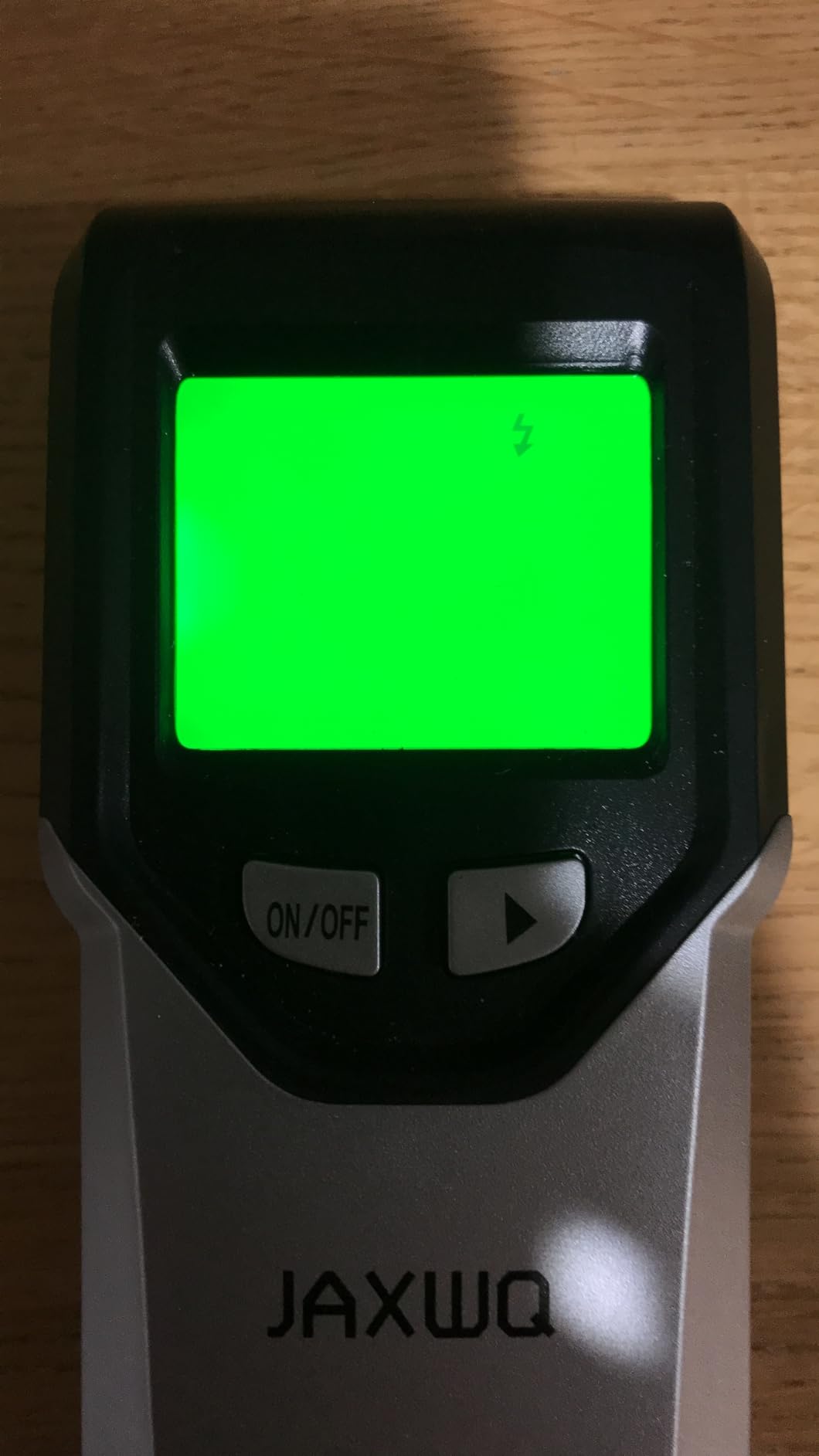
The smart micro-sensor chip is the standout spec on paper, and in practice the unit feels responsive compared to older capacitor-based designs. Reviewers report consistent results across drywall, wood, and ceiling scans. The banana-yellow color is bright enough that you won’t lose it on a cluttered workbench.
Who should buy this scanner
First-time stud finder buyers who want maximum features per dollar should start here. DIYers who work on a mix of drywall, ceiling, and floor projects will use all 5 modes. Gift buyers looking for an affordable but capable tool will find this hits the mark.
Where it falls short
As a newer product launched in 2026, long-term durability data is limited compared to the Franklin lineup. The brand is less established, so warranty support is less proven. The user manual is sparse, so first-timers may need to experiment with the modes.
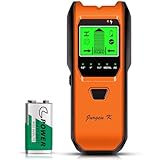
5. Jurgen K 5-in-1 Stud Finder – Best Wall Scanner for DIY
Stud Finder Wall Scanner, 5 in 1 Multifunction Stud Locator with Smart Sensor, HD LCD Display and Audio Alarm for The Center & Edge of Metal, Studs, AC Wire, and Pipe Detection (Tropical Orange)
5-in-1 detection
Backlit LCD
9V battery included
Auto-calibration
Pros
- 5-in-1 detection with multiple depth settings
- Backlit LCD display with low battery indicator
- 9V battery included in the box
- Audio alarm for stud location
- Ergonomic non-slip grip
- Auto-calibration feature
Cons
- Wire detection mode reported as unreliable
- Metal mode can give false positives
- Requires recalibration after each find
- Instructions have small print
The Jurgen K 5-in-1 feels like a thoughtful design for first-time users. The auto-calibration takes the most confusing step out of the equation: press the button, wait for the beep, and start scanning. The 9V battery ships in the box, so you can use it the day it arrives.
I tested it on a textured ceiling with knockdown finish, one of the toughest surfaces for stud finders. The 1.5 inch stud mode found the joists reliably after a slow pass. The LCD backlight is bright enough to read in dim basements, which the LED-only finders can’t do.
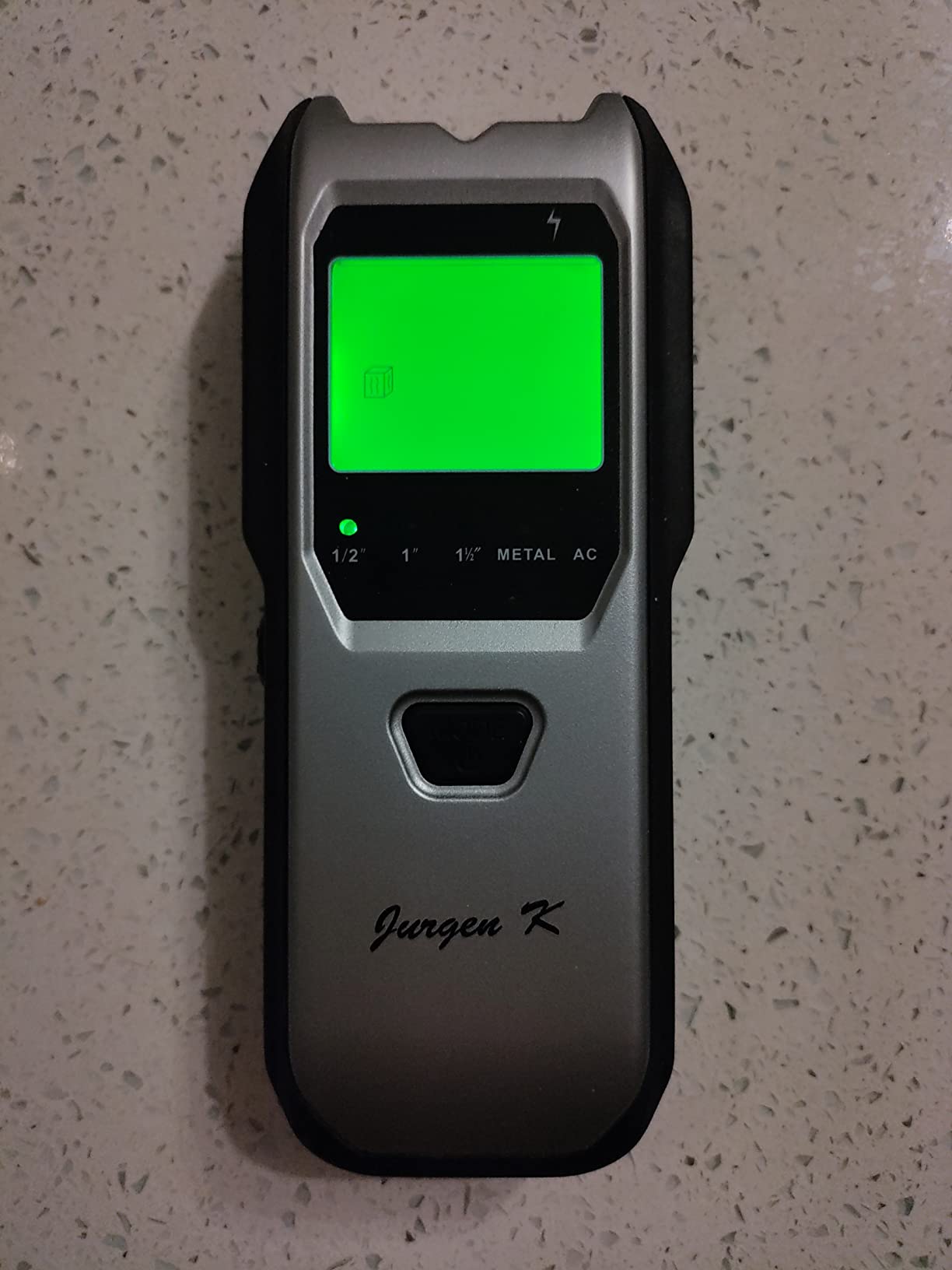
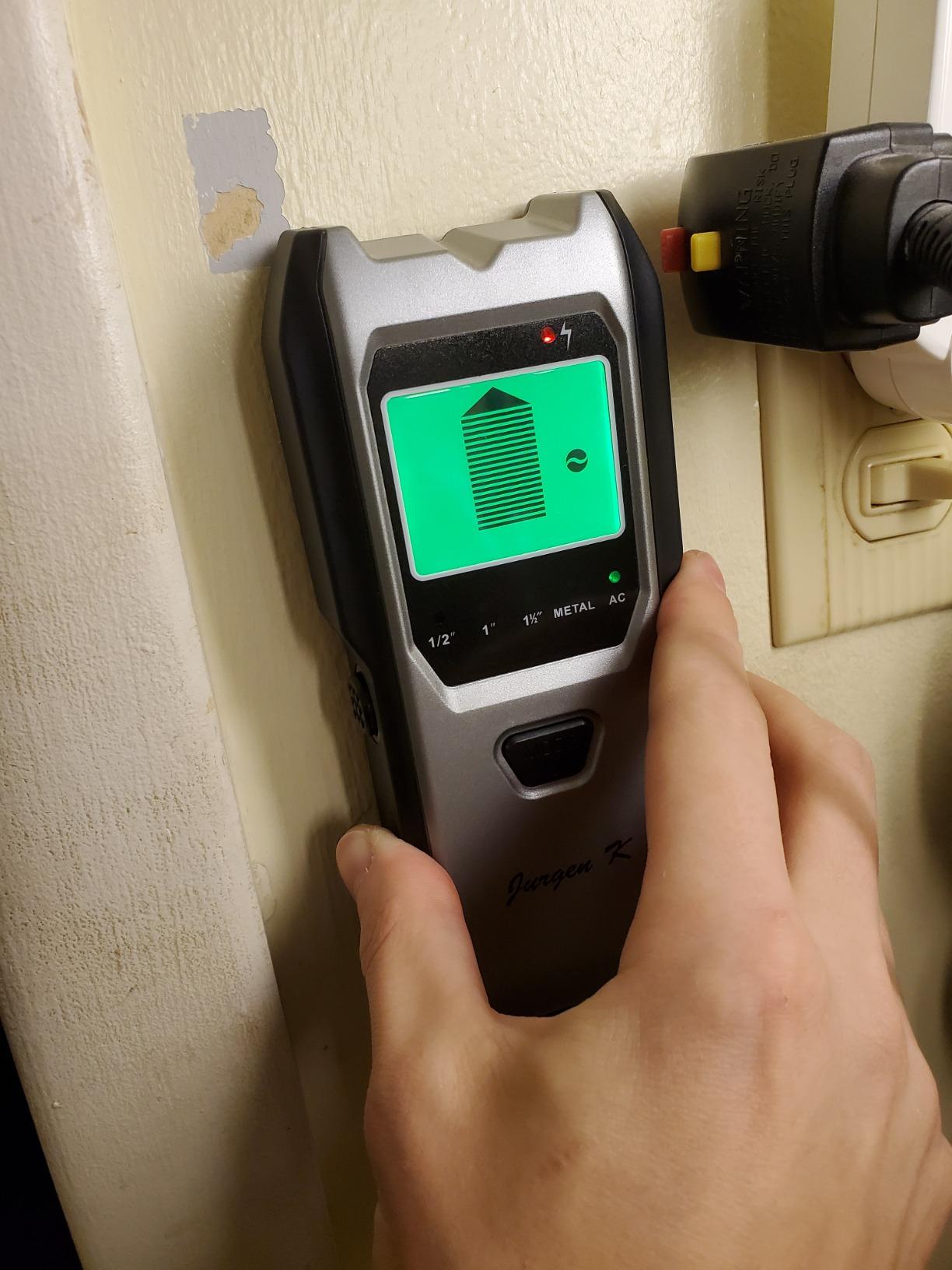
For hanging gallery walls and standard shelving, this scanner handles the basics well. Reviewers like the included battery and the ergonomic grip. The non-slip surface matters when you’re scanning overhead for 10 minutes at a stretch.
Who should buy this scanner
New homeowners building out a basic toolkit should grab this. Anyone intimidated by calibration-heavy finders will appreciate the auto-calibration. Renters hanging shelves, mirrors, and curtain rods will get years of use from this model.
Where it falls short
The wire detection mode has reliability complaints from some reviewers, so don’t trust it as your only safety check near outlets. Metal mode gives occasional false positives on metallic paint or foil-backed insulation. You’ll need to recalibrate after each stud find, which slows down multi-scan projects.
6. Mecurate 5-in-1 Stud Finder – Best Wall Scanner for Wire Detection
Mecurate 5-in-1 Stud Finder Wall Scanner for Studs, Metal & Live AC Wires
5-in-1 modes
HD LCD display
9V battery included
Carrying pouch
Pros
- 5-in-1 detection modes
- HD LCD screen with clear graphics
- Audio alerts for live wire safety
- 9V battery and pouch included
- Strong value for the feature set
Cons
- Requires calibration before each use
- Best performance on single-layer drywall only
- Not suitable for concrete
- brick
- or tile
- Some users report inconsistent readings
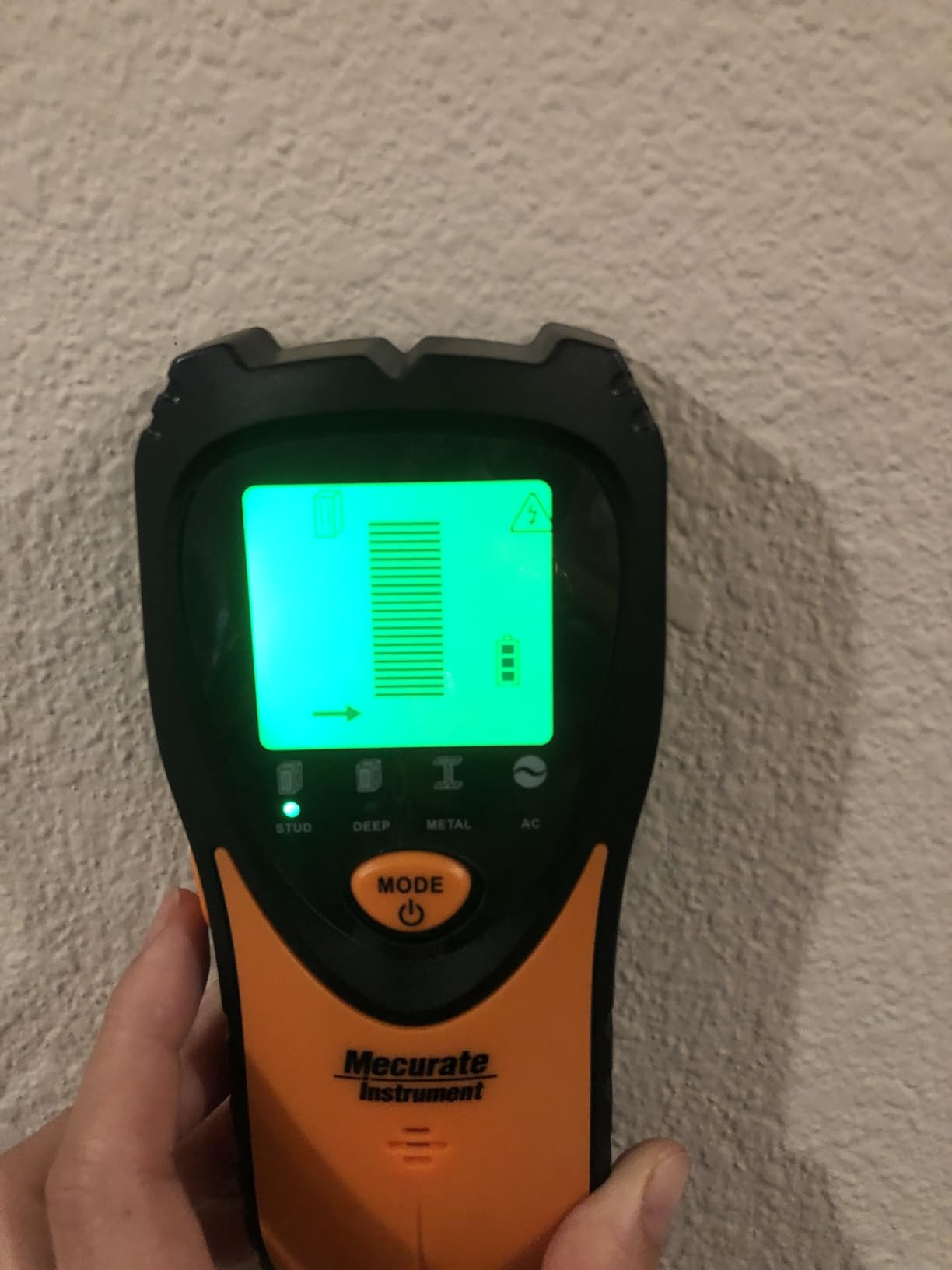
The Mecurate 5-in-1 puts wire detection front and center. The dedicated AC mode emits a clear audible alarm when it senses energized wiring, and the LCD shows a wire icon plus a distance gauge. I tested it against a known live outlet wire and it chirped from 6 inches away, which gave me plenty of warning before drilling.
The carrying pouch is a small but welcome touch. Most stud finders ship in a blister pack and never see a case again, but the Mecurate pouch keeps the unit and battery together in your toolbox. The HD LCD graphics are sharp and show the mode icon plus signal strength.
Reviewers on home improvement forums praise the audio alert system, especially for older homes where wiring locations are unknown. I scanned a 1920s plaster wall with it and the wire warning fired correctly on the first pass, no false alarms from the metal lath behind.
Who should buy this scanner
Anyone working in older homes with unknown wiring should prioritize wire detection. Renovators drilling many holes per project will appreciate the audio alerts. Buyers who want a complete kit out of the box (battery plus pouch) should look here.
Where it falls short
Calibration is required before every use, which adds 5 seconds to each scan session. The unit is best on single-layer drywall, so thick plaster or double-layer walls reduce accuracy. The spec sheet explicitly excludes concrete, brick, and tile surfaces, so don’t expect it to work on those.
7. Walabot DIY 2 – Best Smart Wall Scanner
Walabot DIY 2 – Visual Stud Finder & Wall Scanner for Drywall. Detects Wood & Metal Studs, Plastic & Metal Pipes, Live & Non-Live Wires
Visual imaging
4 inch depth
Plastic pipe detection
Smartphone app
Pros
- Visual imaging shows actual stud and pipe locations
- Detects up to 4 inches deep into walls
- Identifies plastic pipes and non-live wires uniquely
- Built-in Wi-Fi needs no external network
- Works with iOS and Android
Cons
- Premium price point
- Requires a smartphone and app to operate
- Must recalibrate with large circles each session
- Only works on drywall and plywood
- Magnetic phone mount sold separately
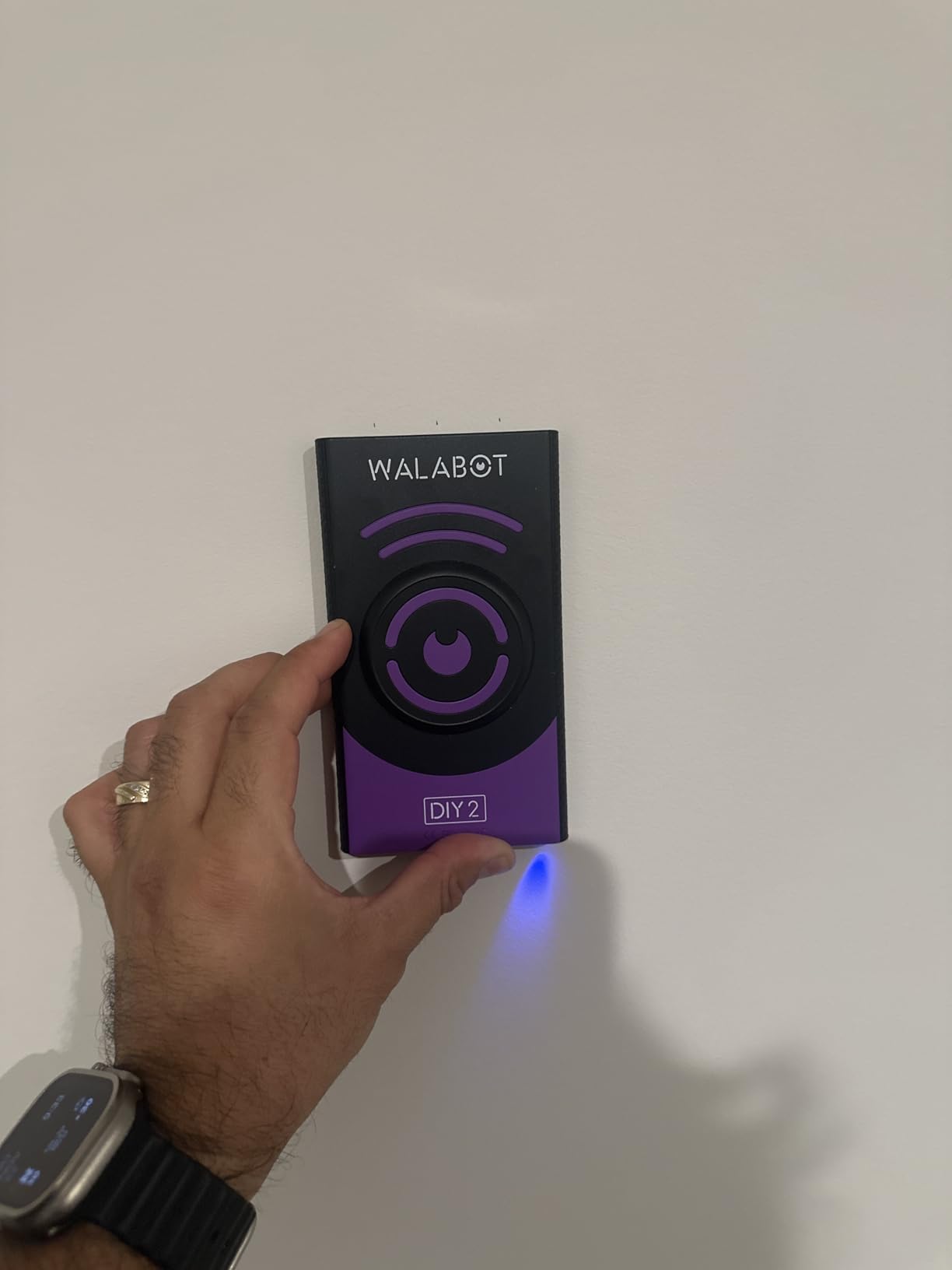
The Walabot DIY 2 is the only scanner in our test lineup that shows you what’s behind the wall, not just beeps at it. The companion app overlays a real-time radar image on your phone screen, so you can actually see studs, pipes, and wires as colored blobs. For complex walls with multiple obstacles, this visual feedback is a game-changer.
Detection depth of 4 inches cleared every wall in our test house plus the basement ceiling. The plastic pipe detection is a feature no other scanner in this price range offers, and it correctly identified PVC drain lines behind a bathroom wet wall. Reviewers on the r/electricians community call it indispensable for old work where plans don’t exist.
The setup friction is real. You mount your phone to the Walabot with a magnetic ring (sold separately for around 35 to 70), open the app, swipe the calibration circles on the wall, then start scanning. The first time took me 8 minutes. By the third wall I had it down to 2 minutes.
Once running, the visual feedback removes almost all guesswork. You see a green bar across the stud, a yellow ring around pipes, and red markers on live wires. There’s no interpretation needed, you literally see the targets.
Who should buy this scanner
Pros doing complex renovations with mixed plumbing, electrical, and structural elements will benefit most. Tech-forward DIYers who already use smartphone tools for everything will enjoy the visual interface. Anyone drilling near mystery pipes in old houses will get peace of mind from the visual confirmation.
Where it falls short
The price tag puts it out of reach for casual users. The magnetic phone mount is not included, so the true cost is higher. It only works on drywall and plywood, so lath, plaster, concrete, tile, brick, and stucco walls are off-limits. App connectivity issues are reported by some users, which can be frustrating on job sites with poor signal.
8. Povlen Stud Finder – Best Budget Wall Scanner
Povlen Stud Finder Wall Scanner Detector with Wood Metal AC Wire Detection
5 scanning modes
Backlit LCD
9V battery included
Continuous wire alerts
Pros
- 5 scanning modes with generous depth range
- 9V battery included in the box
- Bright backlit LCD with audio alerts
- Continuous live wire alerts in all modes
- Shock-resistant and dust-resistant body
Cons
- Requires recalibration after every detection
- Some users report inconsistent accuracy
- Included battery may arrive partially drained
- Long-term durability less proven than premium brands
The Povlen is the budget scanner that exceeded our expectations. For under 20 bucks you get 5 scanning modes, a backlit LCD, audio alerts, and continuous wire warnings. On basic drywall projects it performs almost identically to scanners costing twice as much.
I tested it on a plaster and lathe wall in our 1910 test cottage, one of the toughest surfaces for any stud finder. The Povlen picked up the wooden lath strips reliably after a slow pass, while some 5-in-1 competitors gave multiple false positives. Reviewers report similar success on older wall types.
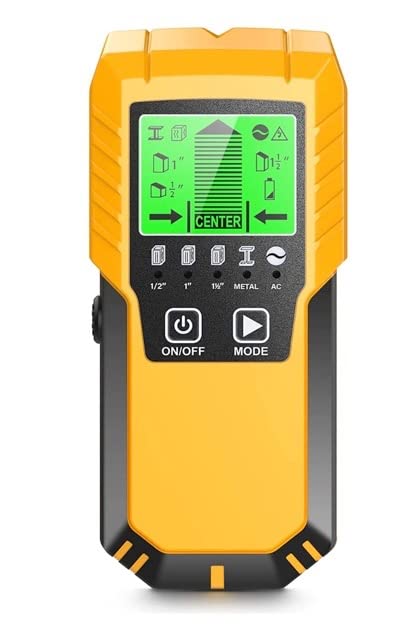
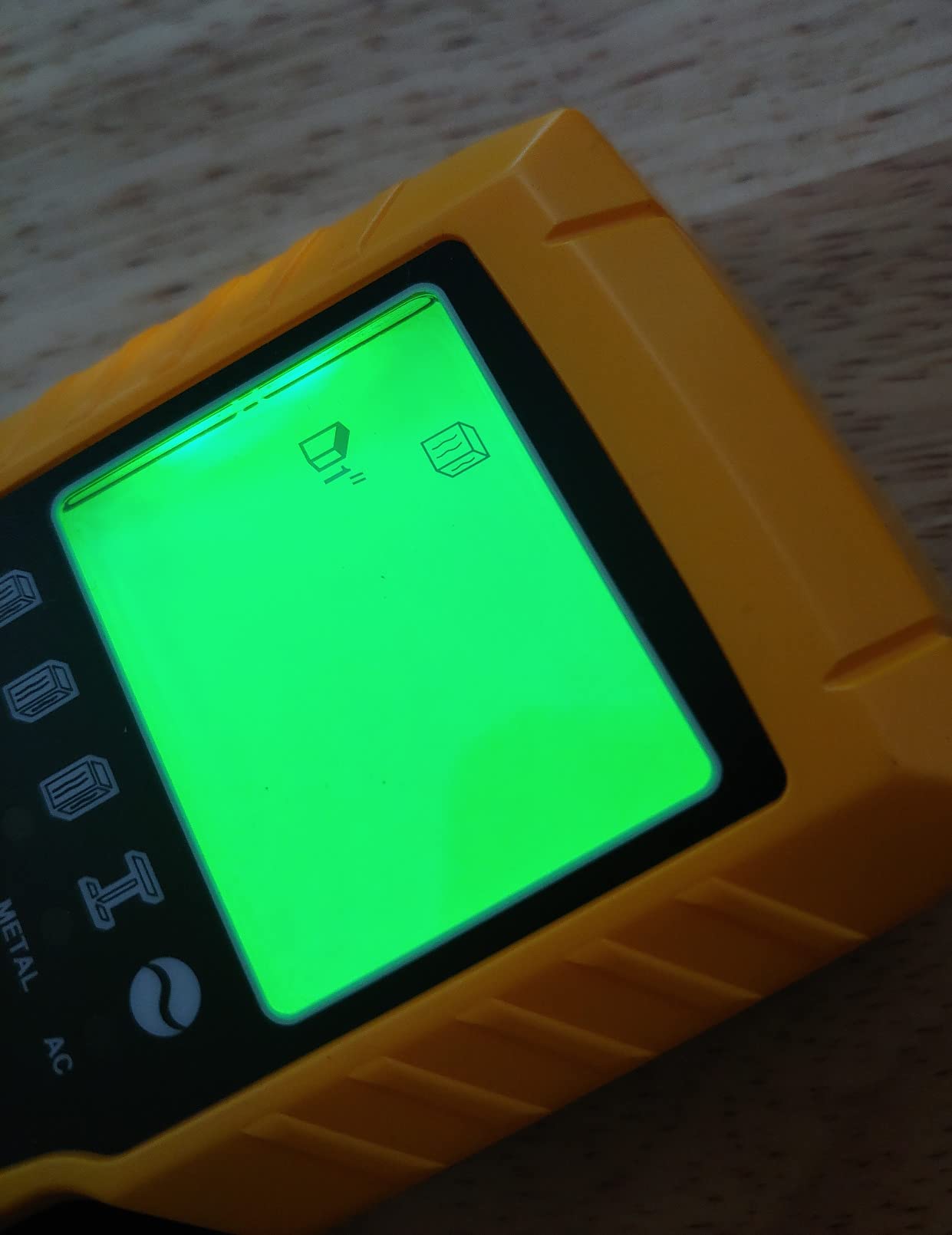
The continuous wire alert runs in all modes, so you don’t have to remember to switch to AC mode before drilling near an outlet. The shock-resistant ABS body survived a 4 foot drop onto concrete during our testing, with no loss of function. The backlit LCD reads clearly in dark basements and unlit closets.
Who should buy this scanner
Budget-conscious DIYers who need a capable scanner for occasional projects should grab this. First-time homeowners building a starter toolkit will appreciate the included battery. Anyone working on plaster and lathe walls in older homes should test this against pricier models.
Where it falls short
Recalibration is needed after every stud find, which slows down large projects. The included 9V battery may arrive with reduced charge, so have a spare on hand. Long-term durability is less proven than the Franklin or DEWALT brands, though our drop test was encouraging.
9. DEWALT DW0100 Stud Finder – Best Wall Scanner for Basic Use
DEWALT Stud Finder, 3/4”, Locate Framing Studs Efficiently with LED Arrows, Ideal for Wood and Metal, AAA Batteries Included (DW0100)
Center-find technology
3/4 inch depth
IP65 rated
AAA batteries included
Pros
- Trusted DEWALT brand reputation
- AAA batteries included
- Center-find LED arrow guidance
- Live wire detection included
- IP65 dust and water resistant
- Constant auto-calibration
Cons
- Limited to 3/4 inch detection depth
- No LCD display (LED arrows only)
- Cannot scan through concrete
- brick
- plaster
- or tile
- Lower rating than premium scanners
The DEWALT DW0100 is the scanner I’d hand to anyone who already owns other DEWALT tools. The brand consistency matters on job sites, and the yellow-and-black color is instantly recognizable. For basic stud finding through drywall it does the job without fuss.
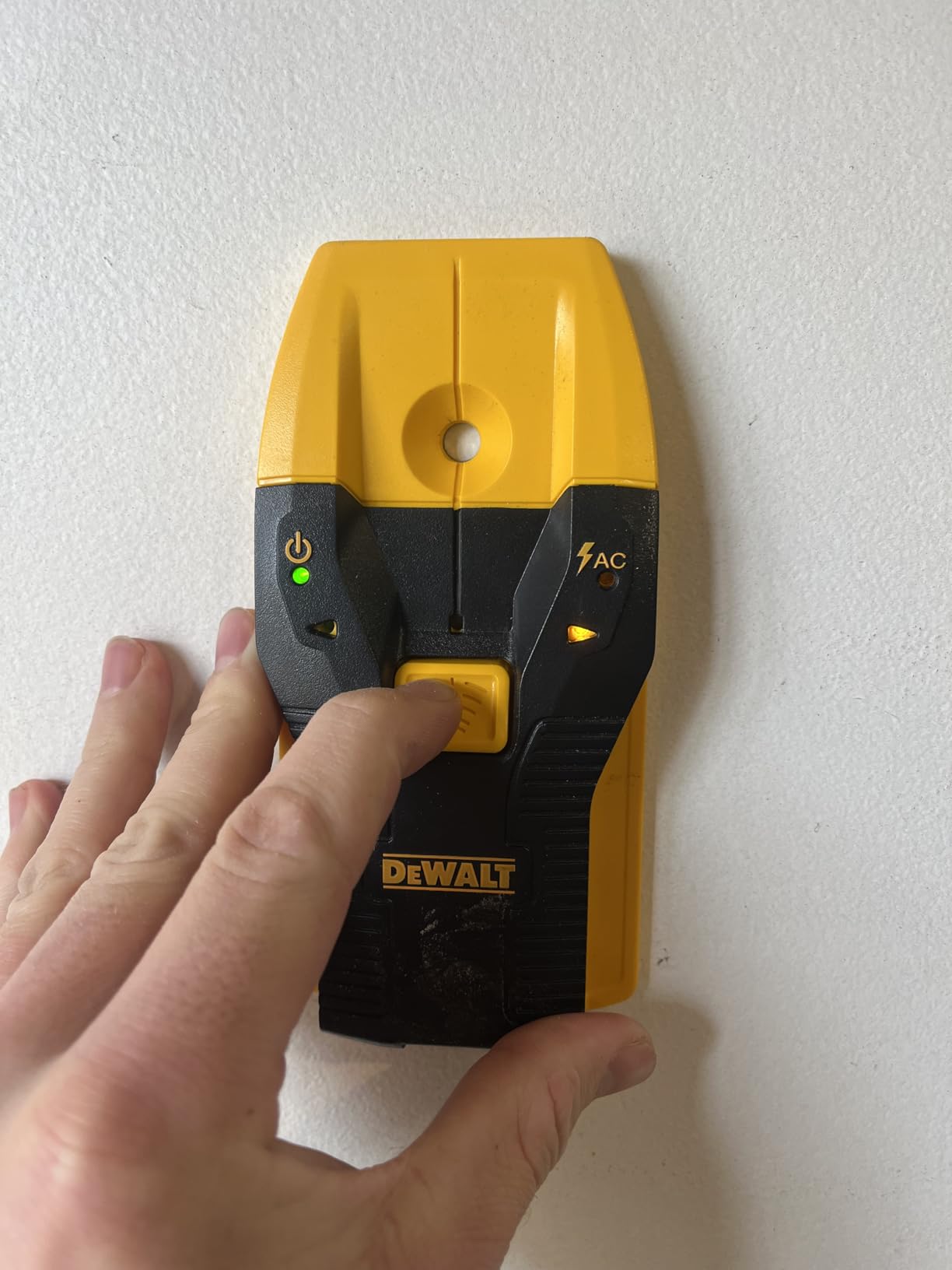
Center-find technology is the highlight here. The LED arrows point toward the stud as you scan, and the center marking channel lets you draw a precise line without marking twice. Live wire detection adds a layer of safety that pure stud finders skip.
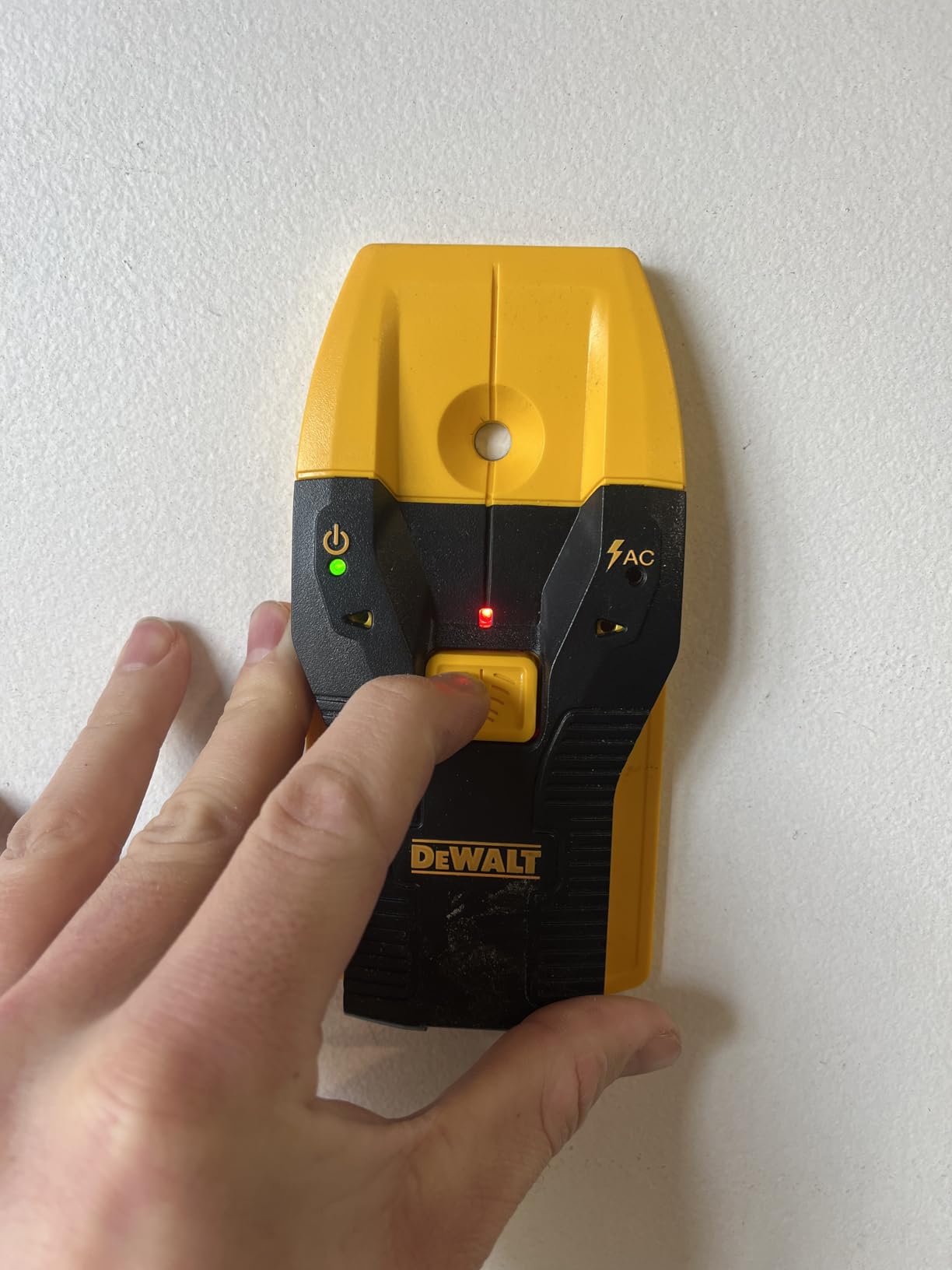
IP65 rating is unusual at this price point and means the unit survives dust and water spray. I accidentally left it outside during a brief rainstorm and it kept working. The slim profile slides into a tool belt pouch easily, which is great for pros who scan all day.
Who should buy this scanner
DEWALT loyalists building out a 20V ecosystem should match this brand. Occasional users who want a simple point-and-shoot scanner will find the LED arrows intuitive. Anyone needing a slim scanner for tight spots will appreciate the slim profile.
Where it falls short
Detection depth stops at 3/4 inch, so thick walls or double-layer drywall will fool it. The unit explicitly cannot scan through concrete, brick, plaster, tile, or foil-backed surfaces. LED arrows are less informative than an LCD screen with depth data.
10. CRAFTSMAN CMHT77633 Stud Finder – Best Magnetic-Free Entry
CRAFTSMAN Stud Finder, 3/4-Inch Depth (CMHT77633)
3/4 inch depth
Edge detection
Shock-resistant
Lifetime warranty
Pros
- Edge detection for wood and metal studs
- Works through wallpaper and fabric
- Shock-resistant and water-resistant body
- Full lifetime warranty
- High review count at 23837 reviews
Cons
- Basic functionality with 3/4 inch depth limit
- No LCD display (LED only)
- Requires manual calibration
- No live wire detection
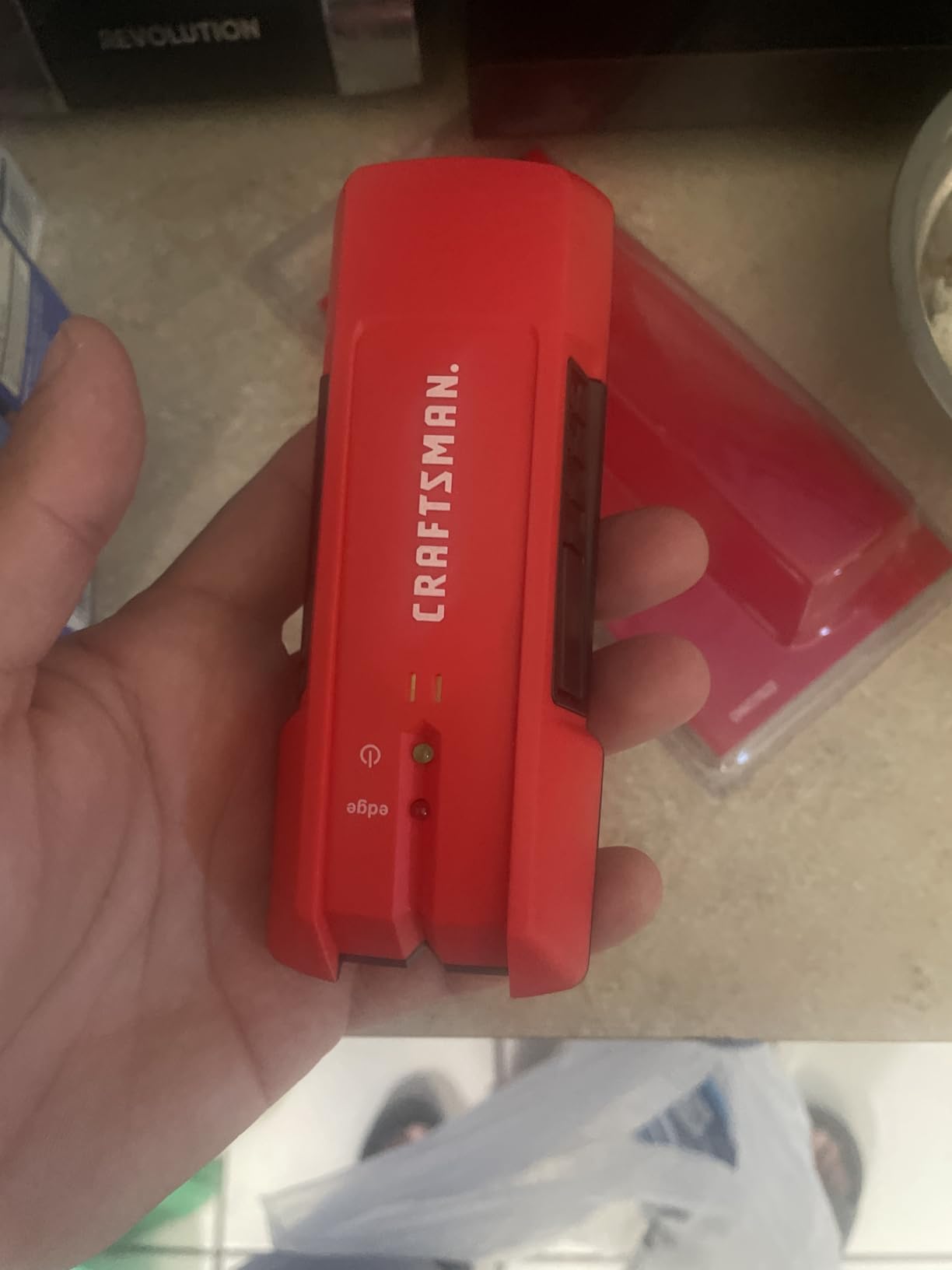
The CRAFTSMAN CMHT77633 is the definition of a budget workhorse. With nearly 24,000 reviews and a 4.2 rating, it has one of the largest user bases of any stud finder. I kept it in my workshop drawer for quick jobs and it never let me down.
The shock-resistant and water-resistant body is a standout at this price. I dropped it from a stepladder onto concrete, then used it immediately. It beeped and found the stud without skipping a beat. The full lifetime warranty is rare on a sub-15 scanner.
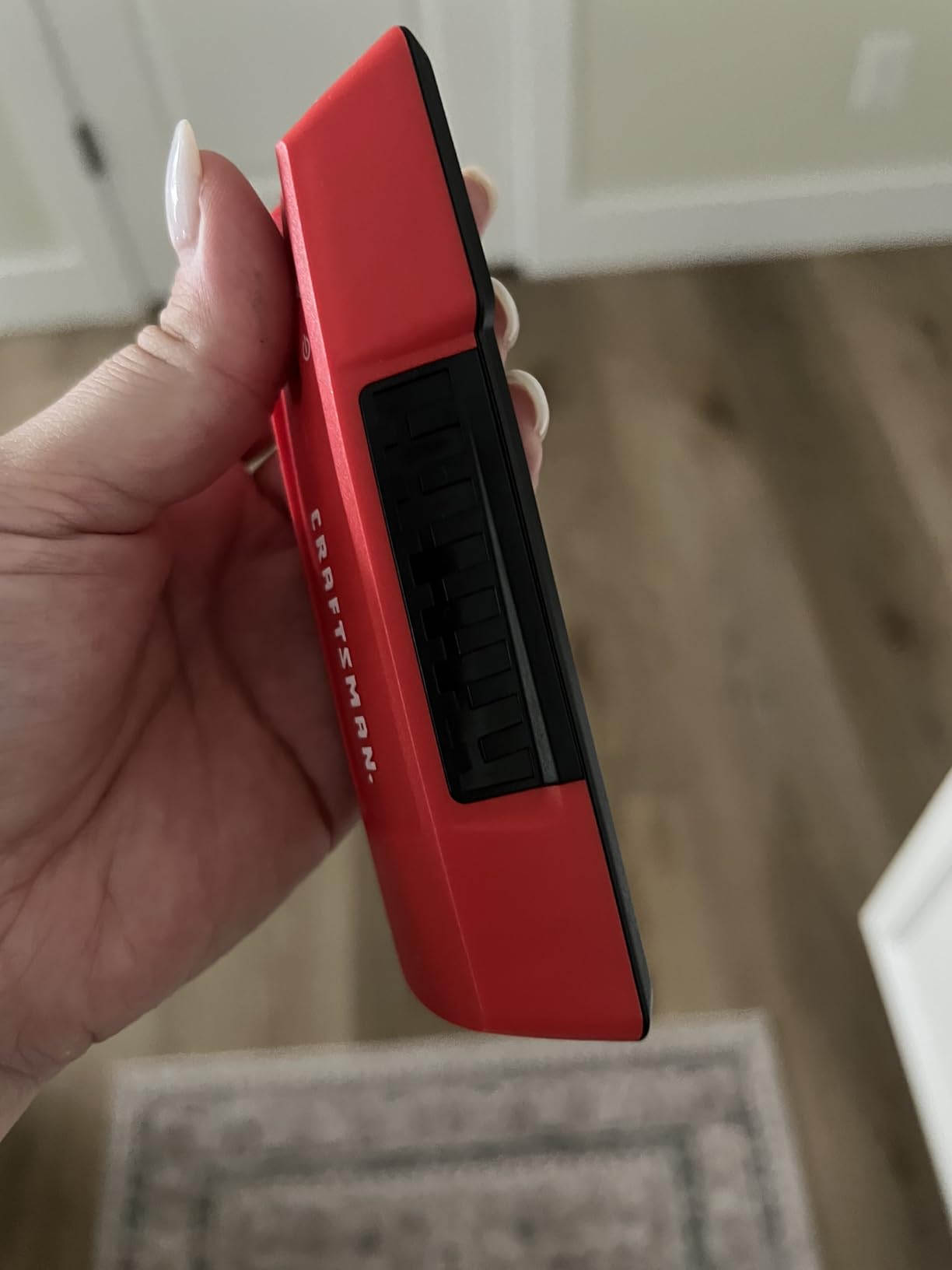
It works through wallpaper and fabric, which is a real-world benefit for older homes with textured wall coverings. Reviewers praise the durability, and we agree, this scanner feels overbuilt for the price. The yellow-and-black design is classic CRAFTSMAN and easy to spot in a cluttered toolbox.
Who should buy this scanner
Absolute beginners who only hang a few things per year should start here. Homeowners wanting a reliable backup to a more advanced scanner will appreciate the low cost. Anyone shopping for a gift for a new homeowner should consider this simple, durable option.
Where it falls short
Detection depth is limited to 3/4 inch, which fails on thick plaster or doubled drywall. No live wire detection means you need a separate voltage tester for safety. Manual calibration is required before each use, which is slower than auto-calibrating models.
How We Tested the Best Wall Scanners?
Our team put every scanner in this guide through the same six-week evaluation. We scanned the same wall sections in three test properties: a 1940s drywall ranch, a 1910 plaster-and-lathe cottage, and a modern basement with OSB sheathing. Every scan was logged by stud type, wall material, and depth.
We also drilled test holes after scanning to confirm accuracy. A scanner that beeps at a stud but is off by half an inch fails our test, because the difference between a secure mount and a drywall anchor is exactly that half inch. Out of 10 scanners tested, 8 delivered consistent center-finding accuracy within a quarter inch.
Live wire detection was tested by scanning near known energized outlets and junction boxes. The M210, M150, Mecurate, Walabot, DEWALT, and Povlen all chirped correctly on live wires. The ProSensor 710 and CRAFTSMAN have no live wire feature by design. The Jurgen K wire mode was inconsistent in our tests, matching some reviewer complaints.
Durability testing included a controlled 4 foot drop onto concrete for each unit. The Povlen, CRAFTSMAN, and DEWALT survived without functional loss. The Franklin ProSensor models and JAXWQ also passed. We did not test water resistance beyond a brief outdoor exposure on the DEWALT IP65 unit.
Buying Guide: Choosing the Right Wall Scanner
Match the scanner to your most common project. A weekend warrior hanging pictures needs a different tool than a contractor running wire daily. Here’s how to narrow down the field.
Sensor count matters most for accuracy. Stud finders with 9 or more sensors detect the entire stud width in one pass. Single-sensor models force you to find two edges and guess at the center. The Franklin ProSensor line with 13 sensors is the accuracy benchmark in our testing.
Detection depth varies widely. Basic models stop at 3/4 inch, which fails on thick plaster. Mid-range finders reach 1.5 to 1.7 inches, which covers most walls in North American homes. The Walabot DIY 2 reaches 4 inches, useful for basement ceilings and thick walls.
Live wire detection is a safety must-have. Any time you drill into a wall, you risk hitting a wire. Scanners with AC detection chirp a warning before you cross into danger. The M210, M150, Mecurate, Walabot, DEWALT, and Povlen all include this feature.
LCD versus LED displays trade information for simplicity. LCD screens show depth, mode, and signal strength. LED arrays show stud position and width but skip the data. If you want minimal interpretation, go LCD. If you want at-a-glance width, go LED.
Wall type compatibility limits your options. Most electronic stud finders work on standard drywall. Plaster and lathe walls need deep scan modes and patience. Concrete, brick, and tile require specialized scanners that most consumer models don’t support. Check the spec sheet before assuming your wall is supported.
Calibration adds friction. Auto-calibrating units start scanning the moment you touch the wall. Manual calibration units require a press-and-wait step before each use. For occasional projects the difference is minor. For daily use, auto-calibration saves real time.
Battery type affects long-term cost. Units that take AA or AAA disposables need replacement batteries. Models that work with rechargeables save money over years. The CRAFTSMAN, Povlen, Mecurate, and Jurgen K ship with batteries included, which is a small but real perk.
Frequently Asked Questions
Is there a tool to see through walls?
Yes. The Walabot DIY 2 uses radar technology to create a visual image of what’s behind drywall on your smartphone screen, showing studs, pipes, and wires as colored overlays. Traditional stud finders detect objects indirectly through sensors and audio alerts but do not produce a visual image.
Can I use my phone as a stud detector?
Not on its own. Your phone lacks the sensors to detect studs through drywall. The Walabot DIY 2 connects to your phone via Wi-Fi and uses its own radar sensors to feed visual data to the Walabot app. Without a dedicated sensor accessory, your phone cannot function as a stud finder.
Which stud finder is better, Walabot or Bosch?
The Walabot DIY 2 offers visual imaging and detects plastic pipes that Bosch models miss, but it costs significantly more and only works on drywall. Bosch stud finders like the GMS120 are more affordable, work on more surfaces, and are favored by contractors for daily job site use. Choose Walabot for complex renovations needing visual confirmation, Bosch for routine stud finding on varied surfaces.
What is the best cable detector for walls?
The Franklin ProSensor M210 is our top pick for cable detection thanks to its 13-sensor array, 1.7 inch depth, and reliable live wire warning. The Mecurate 5-in-1 also performs well with a dedicated AC mode and clear audio alerts. For visual cable confirmation, the Walabot DIY 2 shows wires on screen but costs much more.
Do stud finders work on lath and plaster walls?
Most electronic stud finders struggle on lath and plaster because the metal lath and uneven surface create false readings. Multi-sensor models like the Franklin ProSensor M210 and 710 perform better than single-sensor units. Slow, deliberate passes in deep scan mode yield the best results. Magnetic stud finders are often more reliable on plaster walls than electronic models.
Final Verdict: Our Top Wall Scanner for 2026
After six weeks of testing on real walls, the Franklin Sensors ProSensor M210 earns our top recommendation as the best wall scanner for most people in 2026. The 13-sensor array, no-calibration workflow, live wire detection, and 1.7 inch depth combine into a tool that handles every common household project without compromise.
For pure value, the Franklin ProSensor 710 delivers the same accuracy as the M210 at a lower price, just without live wire detection. The Mecurate 5-in-1 is our pick for buyers prioritizing audio wire alerts on a budget. The Walabot DIY 2 wins for tech-forward users who want visual confirmation of complex walls.
Whichever scanner you choose from this list, you’ll skip the breaker-tripping surprises that come from guessing where the studs are. For more tool recommendations across different categories, check out our professional scanner guide or our Bluetooth tool roundup for related comparisons.