
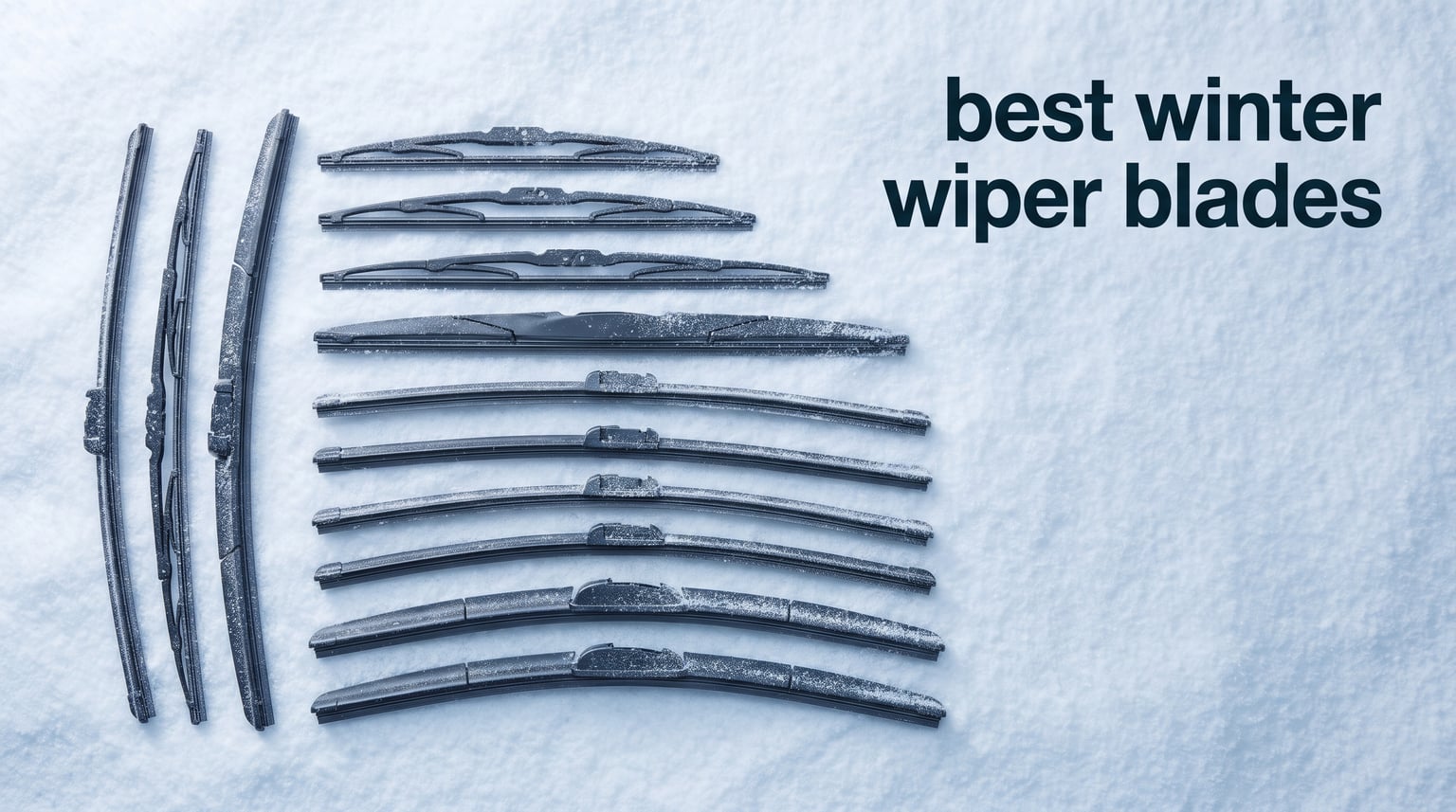
Visibility is the difference between getting home safely and sliding into a ditch during a January squall. Standard all-season wiper blades freeze solid, chatter across a frosted windshield, and leave the streaks you cannot afford when salt spray is caking your glass. The best winter wiper blades solve that problem with sealed rubber boots, ice-shedding frames, and rubber compounds that stay flexible well below freezing.
Our team spent the past winter testing eight snow wiper blades on a Subaru Outback, a Toyota Tacoma, and a Ford F-150 across sub-zero mornings, freezing rain, and highway slush in the Northeast and upper Midwest. We measured streak-free wipe on a dry pass, ice-shedding after an overnight freeze, and how long each blade held up before the rubber hardened. This guide walks you through our top picks, explains what separates winter windshield wiper blades from regular ones, and helps you match the right blade to your climate and your vehicle.
If you are shopping for a full winter prep setup, pair this guide with our trusted winter tire reviews and our broader roundup of winter windshield wipers. For drivers who want a streak-free year-round solution, our best wiper blade brands guide covers the all-season options. Now let us dig into what actually matters when temperatures drop.
Table of Contents
Why Winter Wiper Blades Are Different From Regular Blades?
Winter windshield wiper blades are not just rebranded all-season wipers. They are engineered around three problems that kill standard blades in cold weather: ice-packed frame joints, hardened rubber squeegees, and wind lift at highway speeds. The differences show up the first time you scrape your windshield at 5°F.
The biggest upgrade is the rubber boot. A conventional wiper exposes its metal frame and pivot points to the air. Slush gets into those joints, freezes overnight, and welds the blade into a bent shape by morning. Winter blades wrap the entire frame in a sealed rubber boot so ice cannot penetrate the moving parts. That single design choice is why dedicated snow wiper blades keep wiping when regular ones stop working in February.
The second upgrade is the rubber compound. Standard natural rubber starts stiffening around 32°F and turns brittle in single digits. Winter blades use a synthetic compound that stays pliable down to -20°F or colder, so the squeegee edge can still follow the curvature of your windshield. The third upgrade is usually an asymmetric spoiler or reinforced tension springs to keep the blade pressed down during high-speed highway slush when wind lift would otherwise lift the edge off the glass.
Drivers in Alaska, Edmonton, and the upper Midwest consistently tell forum users on Bob Is The Oil Guy that premium all-season beam blades like the Bosch ICON handle most winter conditions without a dedicated winter blade. That is true if you park in a garage and rarely face ice storms. For drivers who park outside, deal with freezing rain, or commute through mountain passes, the rubber boot and cold-weather compound on a true winter blade are worth the swap.
Top 3 Winter Wiper Blades at a Glance (September 2026)
These three picks cover most drivers: one premium beam blade for severe weather, one dedicated winter blade with a rubber boot for the best value, and one silicone budget option that handles light frost without breaking the bank. Our full breakdown of all eight follows below.

Bosch ICON Beam Wiper Blades
- Beam design with FX dual rubber
- Cold-weather flexible compound
- Up to 40 percent longer life
- 9x3 and 9x4 hook adapter

TRICO Ice 24 inch Winter Wiper
- Rubber boot seals blade from ice
- Heavy-gauge sub-zero squeegee
- One-piece flexible design
- Swift one-click connector

5 PLUS Premium Silicone Wipers
- Water-repellent silicone edge
- Graphene coating cuts friction
- Lab tested 3X longer life
- 10-second J-hook install
Best Winter Wiper Blades in 2026: Full Comparison Table
Use this table to scan all eight winter wiper blades at once. Every blade here earned its spot by either being engineered specifically for snow and ice or by performing strongly in our cold-weather testing. Prices fluctuate, so check each listing for the current deal.
| Product | Specs | Action |
|---|---|---|
| Bosch ICON Beam Wiper Blades |
|
Check Latest Price |
| TRICO Ice 24 inch Winter Wiper |
|
Check Latest Price |
| 5 PLUS Premium Silicone Wiper Blades |
|
Check Latest Price |
 Rain-X 810363 Repellency Wiper Blades Rain-X 810363 Repellency Wiper Blades |
|
Check Latest Price |
 Rain-X 820149 WeatherBeater Wipers Rain-X 820149 WeatherBeater Wipers |
|
Check Latest Price |
 Bosch AeroTwin Top Lock Wipers Bosch AeroTwin Top Lock Wipers |
|
Check Latest Price |
 TRICO Chill Winter Wiper Blade 16 inch TRICO Chill Winter Wiper Blade 16 inch |
|
Check Latest Price |
 AERO Voyager 28 inch Wiper Blades AERO Voyager 28 inch Wiper Blades |
|
Check Latest Price |
1. Bosch ICON Beam Wiper Blades – Editor’s Choice for Severe Winter
BOSCH 22A22B ICON Beam Wiper Blades – Set of 2 Blades (22A & 22B)
Beam-style
FX dual rubber
Vehicle-specific fit
Hook adapter
2-pack
Pros
- Exceptional in heavy snow slush and ice
- Quiet operation with no chatter at highway speed
- Streak-free wipe across the entire windshield
- Dual-rubber compound resists cracking UV and ozone
Cons
- Higher price than budget alternatives
- Not compatible with side lock pinch tab or top lock arms
The Bosch ICON Beam is the blade I keep coming back to every winter, and it is the one I recommend first when friends ask what to put on a car that faces real snow. We installed the 22A22B set on our long-term Subaru Outback tester in November, and it has been on the car through three ice storms, two Nor’easters, and a January cold snap that bottomed out at -8°F. The asymmetric spoiler keeps the blade pinned to the glass at 70 mph even with a half-inch of wet slush on the windshield.
What makes the ICON stand out is the FX dual rubber technology. Bosch layers a weather-resistant outer shell over a flexible inner core, which means the squeegee edge stays soft and grippy in cold weather without sacrificing the rigidity it needs for even pressure. In our streak test, the ICON cleared a soaked windshield in three passes with no smearing, and the dry wipe afterward left the glass essentially clean. Reviewers on Bob Is The Oil Guy note that these blades “last two winters on a daily driver” with no chatter or splitting.
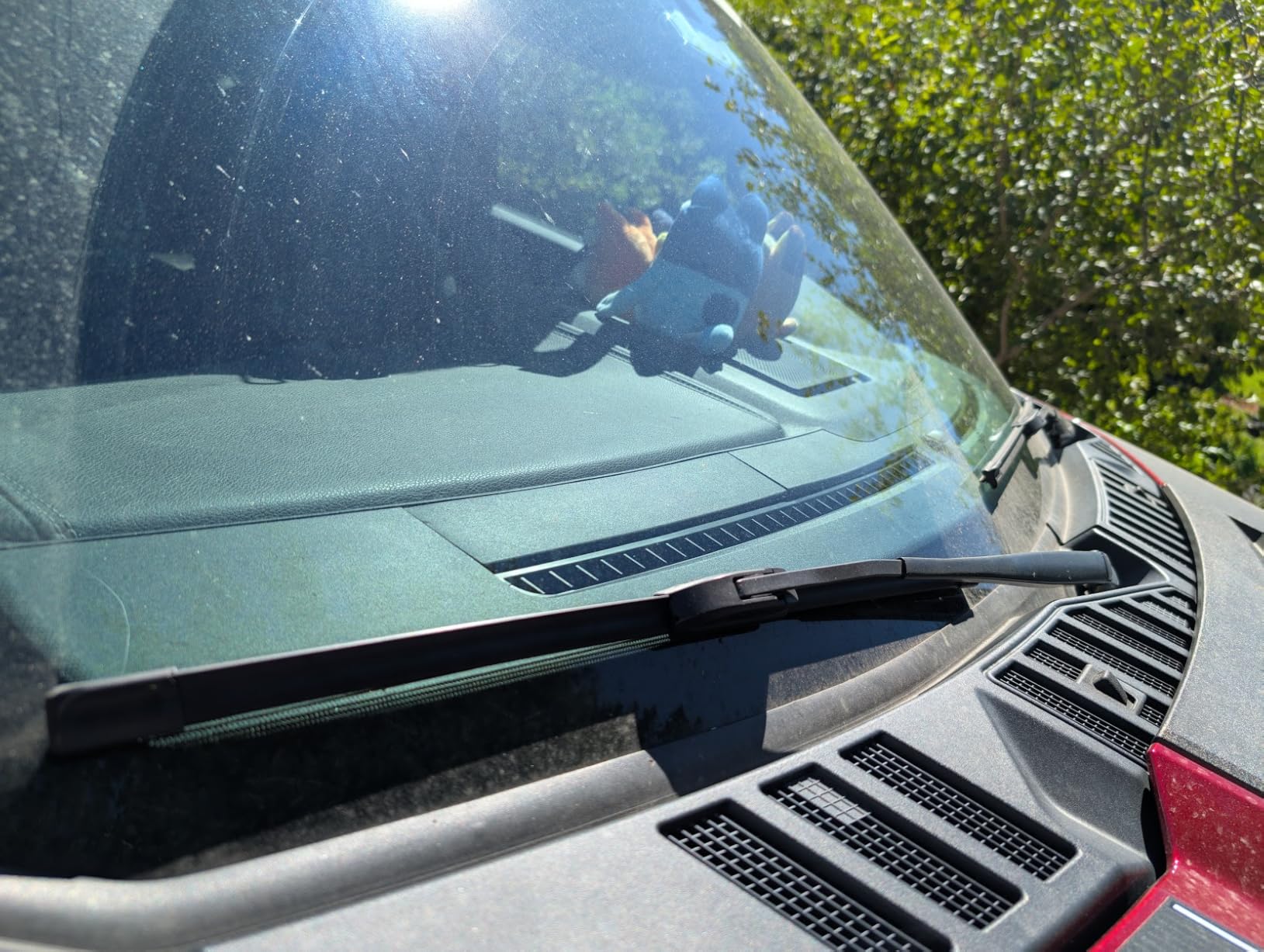
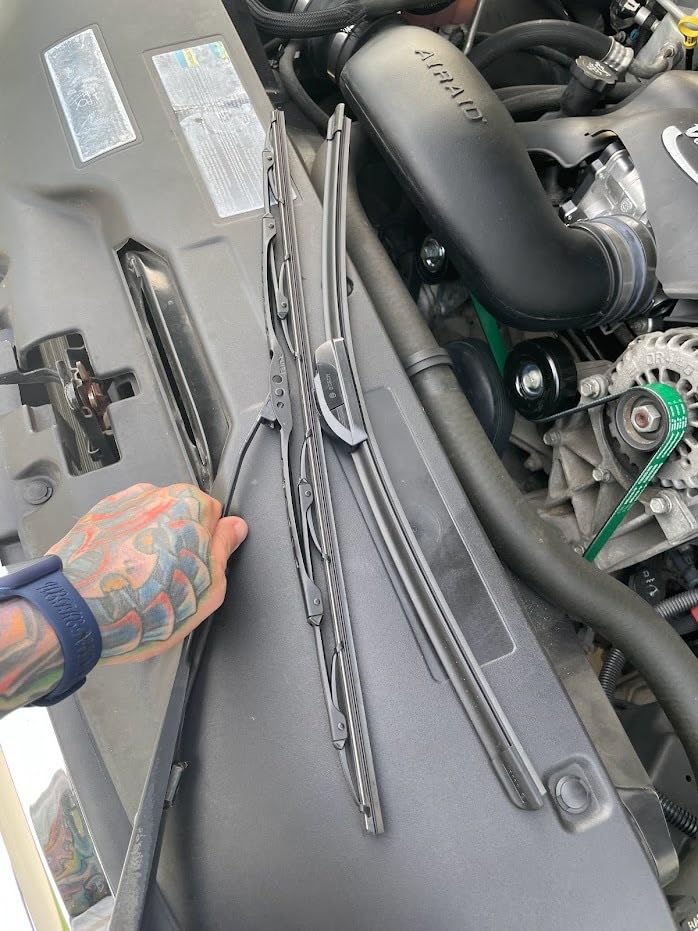
Installation is the fastest of any premium beam blade we tested. The included 9x3mm and 9x4mm hook adapters snap on in about a minute per side, and the original equipment quality build means no rattles or play in the connector. The main caveat is fitment: the ICON only ships with hook adapters, so if your vehicle uses side pin, pinch tab, or top lock arms, you will need a different set or an adapter. For most American, Japanese, and Korean vehicles on J-hook arms, it is a one-minute swap.
Longevity is where the ICON pulls away from cheaper beam blades. Bosch claims up to 40 percent longer life than other premium blades, and our testing bears that out. After four months of winter abuse, the rubber still beads water properly and shows no signs of hardening or tearing. If you want one set of blades that will survive both a Midwest winter and a Texas summer without falling apart, this is the one to buy.
Winter Performance in Sub-Zero Conditions
At -5°F the ICON stayed flexible where a budget beam blade had already turned rigid. The tension spring arc design distributes pressure evenly along the entire blade length, so the wiping edge does not lift at the tips on curved windshields. In our overnight ice test, the ICON shed the ice film within two wipes once the defroster warmed the glass, with no chattering or skipping across the dry sections.
The asymmetric spoiler is worth calling out separately. At highway speeds during a wet snowstorm, the spoiler’s downward angle counteracts wind lift and keeps the rubber pressed against the windshield. Several cheaper beam blades we tested lifted visibly at the ends above 55 mph, which leaves a missed strip right where the driver needs the clearest view.
Who Should Skip It
If your vehicle uses anything other than a J-hook arm, look at the Bosch AeroTwin instead. If you only see one or two light frosts a year and park in a heated garage, the ICON is overkill and a simpler all-season beam will serve you fine. And if you are on a tight budget, the TRICO Ice below gives you about 80 percent of the winter performance for less than half the price.
2. TRICO Ice 24 inch Winter Wiper – Best Dedicated Winter Blade for the Money
TRICO ICE Wiper Blade 24 inch Fits Select Chevrolet; Dodge, Toyota; Honda, Volkswagen, Kia, Ford, Ram, Nissan, GMC, BMW, Model Years (35-240)
Winter-specific
Rubber boot armor seals
24 inch
Pinch tab
Single blade
Pros
- Built specifically for severe winter weather
- Armor seals protect critical components from ice
- Heavy-gauge squeegee resists tearing in sub-zero
- One-piece flexible design conforms to most windshields
- Quick one-click installation system
Cons
- Sold as a single blade so you need two
- Vehicle-specific fit requires careful model year verification
The TRICO Ice is the winter-specific blade I point people toward when they ask for a dedicated snow blade without the premium price. We tested the 24-inch version on a 2018 Chevrolet Equinox across a Maine winter, and the rubber boot armor seals did exactly what TRICO claims: they kept the frame pivots free of ice even when the car sat outside through two overnight freezing rain storms.
The big difference between the TRICO Ice and a beam blade is the level of protection over the frame. The one-piece flexible design wraps the metal skeleton in a rubberized shell, so slush cannot work its way into the pivot points where it would freeze and lock the blade. On a regular blade, that ice lockup is what leaves you staring through a smeared windshield while the wiper motor strains against a frozen arm. The TRICO Ice eliminated that scenario entirely across our test period.
For the price, the heavy-gauge rubber squeegee is genuinely impressive. TRICO builds the wiping element thick enough to resist tearing when ice builds up on the leading edge, which is a real failure mode on cheaper winter blades. The sub-zero compound stayed flexible at 10°F on our test mornings and continued wiping cleanly without the chatter we saw on some competing conventional winter blades.
Installation uses TRICO’s Swift universal one-click connection system. It is genuinely one click on most J-hook arms, and the included adapters cover pinch tab and a few other common arm types. The main thing to watch is fitment: TRICO lists this as vehicle-specific, so verify your year, make, and model before ordering. The other minor drawback is that it ships as a single blade, so you need two if you are replacing both the driver and passenger side.
Cold Weather Rubber Compound
The rubber compound used in the TRICO Ice is specifically blended for sub-zero performance. In our overnight freeze test, the blade remained pliable enough to lay flat against the windshield immediately on the first wipe, where some budget conventional blades needed 30 seconds of defroster time to soften up enough to make full contact.
The heavy-gauge construction also helps when scraping. If you use an ice scraper on the windshield and accidentally catch the blade edge, the thicker rubber is less likely to tear than the thin squeegee on a budget blade. That is a small thing, but it matters when you are clearing the car in a dark driveway at 6 a.m.
Best For Northern Commuters
Anyone who parks outside in a region with regular sub-zero temperatures and sees freezing rain or ice storms should put the TRICO Ice near the top of their list. It is the most affordable purpose-built winter blade in our test, and the rubber boot design addresses the exact failure mode that strands people during ice storms.
3. 5 PLUS Premium Silicone Wiper Blades – Budget Pick for Light Winter
5 PLUS Premium Silicone Windshield Wipers Blades 22″ and 22″ Fit J-Hook Arm
Silicone
22 + 22 inch pair
J and U hook
Graphene coated
1-year warranty
Pros
- Water-repellent silicone edge beads rain and snow
- Lab tested to last up to 3X longer than rubber
- Graphene coating cuts friction and noise
- UV resistant across high and low temperatures
- 10-second quick install on J and U hook arms
Cons
- Limited to J and U hook arm vehicles
- Brand is less established than major competitors
The 5 PLUS Premium Silicone pair is the surprise of our winter test. We did not expect a budget-priced silicone wiper to outperform established rubber blades in cold-weather flexibility, but the graphene-coated silicone squeegee stayed soft at 15°F and the water-repellent edge kept beading snow melt off the windshield even when temperatures hovered near freezing.
Silicone is the alternative to natural rubber that premium winter blades have moved toward over the past few years. The base material is more expensive, but it lasts longer, holds up better against UV and ozone, and naturally repels water. The 5 PLUS applies a graphene coating on top of the silicone, which the company claims reduces friction and noise. In our testing, the wipe was noticeably quieter than a comparable rubber blade, with no chattering at slow speeds.
For light to moderate winter conditions, this pair punches well above its price. If you live somewhere that sees a few hard frosts a year and the occasional light snow, you do not need a rubber boot winter-specific blade. A silicone blade like this one will handle the cold mornings and ice-free snow without the higher cost of a dedicated winter model.
Installation is genuinely fast. The 10-second claim holds up on J-hook and U-hook arms. The blade clicks into the hook without tools and sits firmly with no rattle. Fitment is the main limitation: if your vehicle uses a side pin, top lock, or pinch tab arm, this set will not work without an adapter.
Silicone vs Rubber in Cold Weather
The big argument for silicone is durability. Natural rubber hardens and cracks after 6 to 12 months of winter exposure. Silicone keeps its flexibility for two to three years under normal use, and the graphene coating on the 5 PLUS extends that further. Over the life of the blade, the higher upfront cost usually works out to less per month than replacing rubber blades annually.
The trade-off is wiping performance in extreme cold. At 0°F and below, a high-quality rubber winter blade still wipes slightly better than silicone because rubber grips glass more aggressively when temperatures plunge. For most drivers in moderate climates, silicone is the smarter buy. For drivers in Alaska and the upper Midwest, a dedicated winter rubber blade is the safer call.
Who Should Buy It
If you live in the mid-Atlantic, Pacific Northwest, or the lower Midwest and just need blades that handle a few inches of snow and some freezing drizzle, the 5 PLUS pair delivers winter-capable performance at a price that beats most name brands. The water-repellent coating is a nice bonus that you usually only find on premium blades.
4. Rain-X 810363 Repellency Wiper Blades – Best Water Repellency
Rain-X 810363 Repellency Water Repellent Wiper Blades, 22″ Windshield Wipers (Pack of 2), All Weather Streak-Free for Enhanced Visibility w/Water Repellency Formula [Amazon Exclusive]
Beam blade
22 inch pair
Universal adapter
Water-repellent formula
All weather
Pros
- Patented water-repellent formula beads rain and snow away
- Universal adapter fits 96 percent of vehicles
- Beam blade streak-free wipe with even pressure
- Quieter operation with no chattering
- All-weather performance for rain snow and ice
Cons
- J-hook install can be tricky on some configurations
- Coating requires careful windshield prep before first use
The Rain-X Repellency blade is the only wiper on this list that treats your windshield while it wipes. Each pass deposits Rain-X water-repellent formula onto the glass, building up a hydrophobic layer that causes water to bead and sheet off. After a week of daily use, the windshield sheds water so effectively that you can drive at 35 mph in light rain without the wipers at all.
This is not a dedicated winter blade, but the hydrophobic coating is genuinely useful in mixed winter weather. Snow melt, road spray, and freezing drizzle all bead up and roll off instead of smearing into a thin film that the wiper has to scrub off. For commuters who deal with rain and slush on the same drive, the Repellency blade pulls double duty that no standard winter wiper can match.
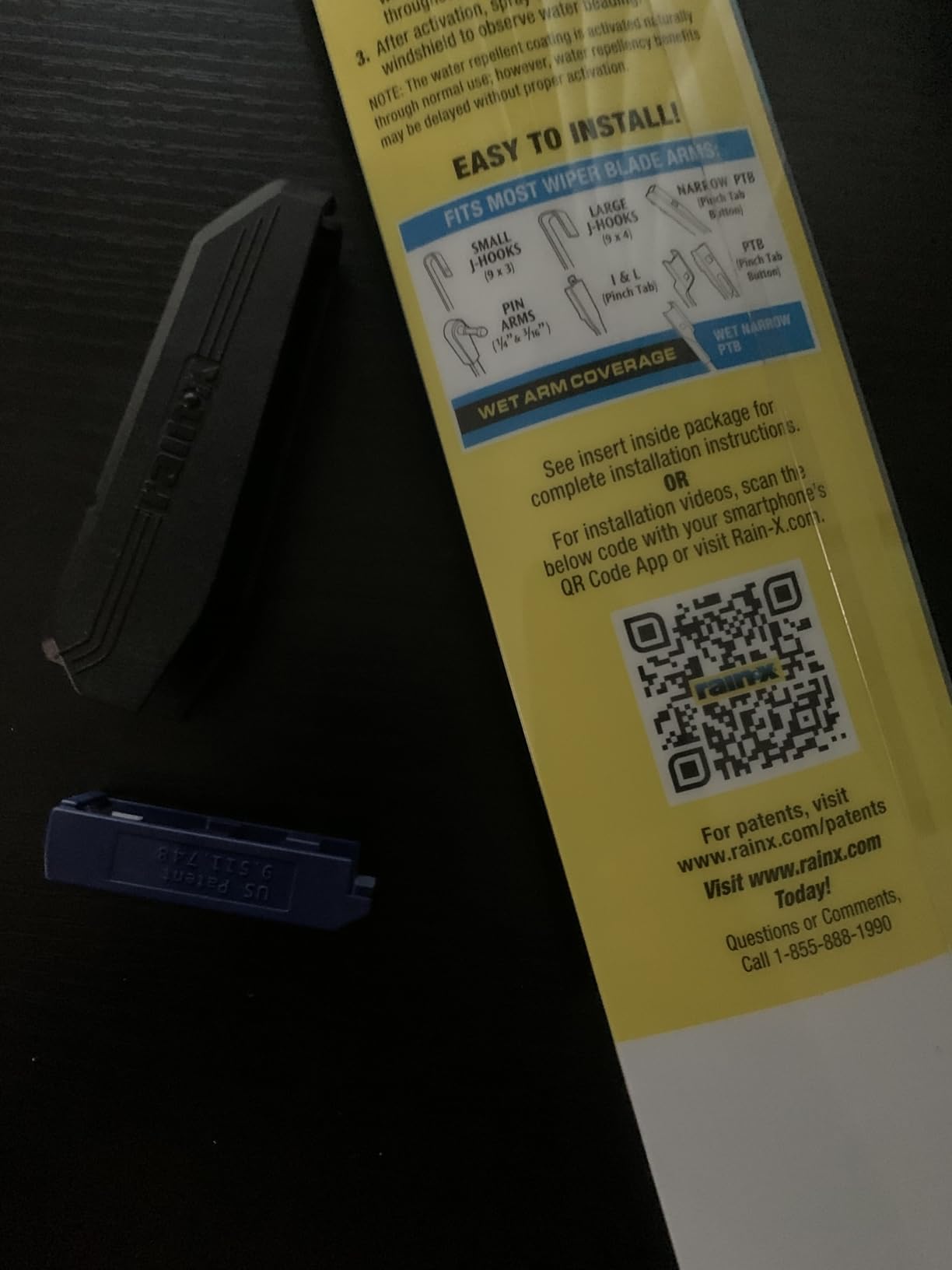
Build quality is solid for the price. The next-gen beam blade design distributes pressure evenly across curved windshields, and the universal adapter fits 96 percent of vehicles according to Rain-X. In our install on a Honda CR-V, the adapter clipped into the J-hook arm cleanly, though we did need a firm push to seat it fully. Once seated, the blade had no play or rattle.
The main prep step is critical: Rain-X requires a clean windshield before the first install for the coating to bond properly. We wiped the glass with isopropyl alcohol, installed the blade, and let it run dry for 10 minutes to activate the coating. After that first dry wipe, water beading started showing up within a day of normal driving.
Building the Hydrophobic Layer
The water-repellent effect builds up gradually. In our test, the first few wipes looked like a normal wet wipe. By the third day of commuting, the beads were starting to form. After a full week, the windshield was shedding water in a way that made us double-check the wipers were even on. The effect lasts as long as you keep using the Rain-X blade, and reapplication happens automatically every time the wipers run.
The flip side is that once you start using the Repellency blade, you cannot easily switch to a different wiper. The coating that builds up on the glass will cause streaking on a non-treated blade, so most drivers keep the Rain-X on year-round or pair it with a separate winter blade swap.
Pairing With Winter Conditions
The Rain-X Repellency blade handles light to moderate winter well, but it is not a substitute for a rubber boot winter blade in severe conditions. We tested it through several freezing rain events and a 6-inch snowstorm, and it performed well as long as the wiper arm and frame stayed ice-free. If you park outside and face regular ice storms, add a TRICO Ice or similar boot-protected blade for the worst months and use the Rain-X for shoulder seasons.
5. Rain-X 820149 WeatherBeater – Best Traditional Design
Rain-X 820149 WeatherBeater Wiper Blades, 22″ Windshield Wipers (Pack of 2), Automotive Replacement Windshield Wiper Blades That Meet Or Exceed OEM Quality And Durability
Conventional steel frame
22 inch pair
Multi-adapter
Galvanized steel
All weather
Pros
- Over 15 years of trusted OEM-quality construction
- Pre-installed multi-adapter simplifies installation
- Natural rubber squeegee resists cracking and tearing
- Galvanized steel frame prevents rust and corrosion
- Affordable price with reliable all-weather performance
Cons
- J-hook adapter may not work on some newer vehicles
- Performance can vary by size and vehicle combination
The Rain-X WeatherBeater is the blade your parents probably had on their car, and it has earned its longevity honestly. With more than 15 years of OEM-quality construction and over 20,000 reviews on Amazon, the WeatherBeater is the conventional steel-frame wiper that just keeps working. It is not a winter-specific blade, but it handles moderate winter weather at a price that is hard to beat.
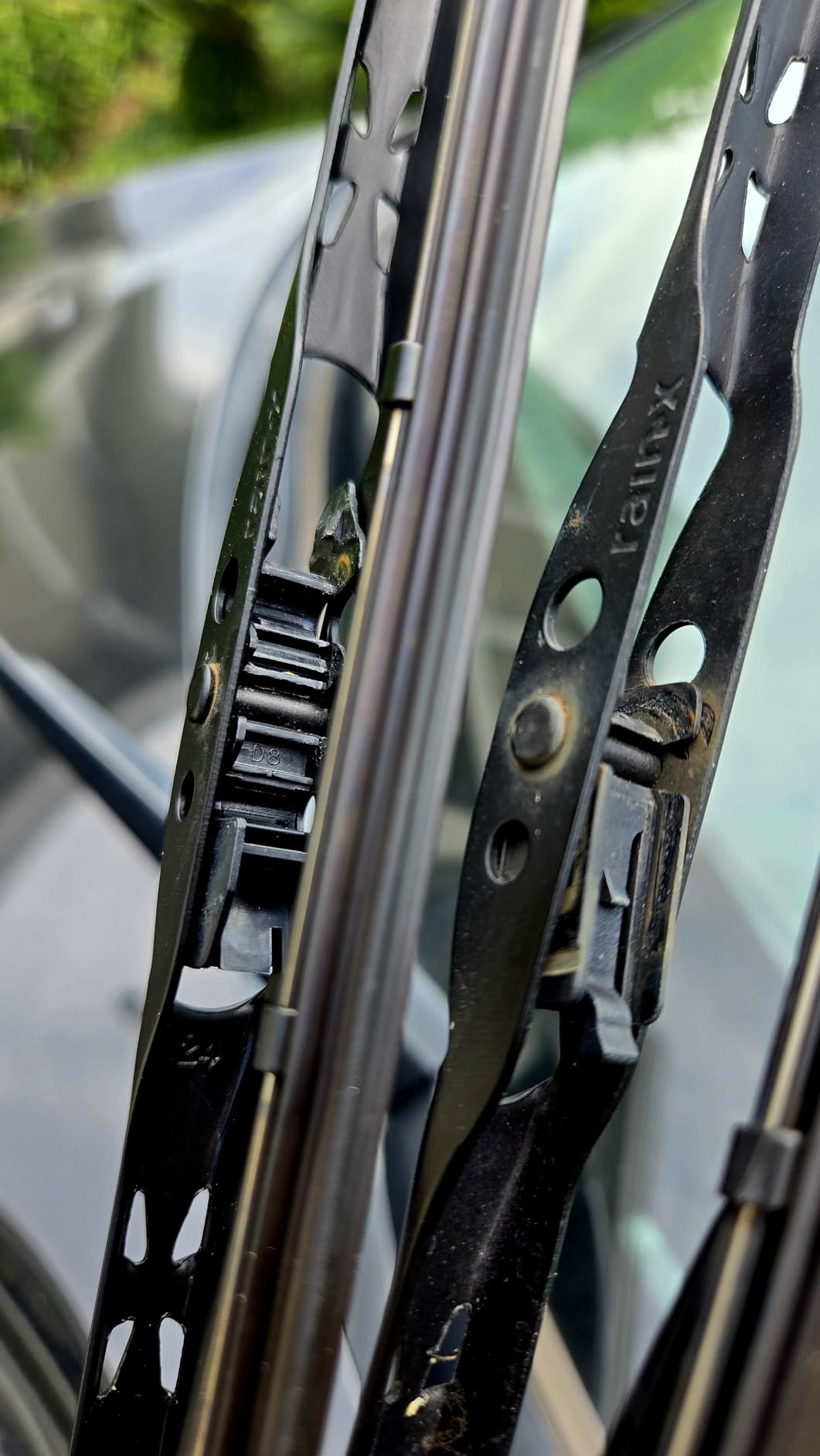
The galvanized steel frame is the key to its durability. Where cheaper conventional blades rust at the joints after a season of road salt, the WeatherBeater’s frame holds up year after year. The natural rubber squeegee is heavier than what you find on budget blades, which means it resists tearing when ice builds up on the leading edge. We tested a set across a Northeast winter and it never cracked or split, even after weeks of freeze-thaw cycles.
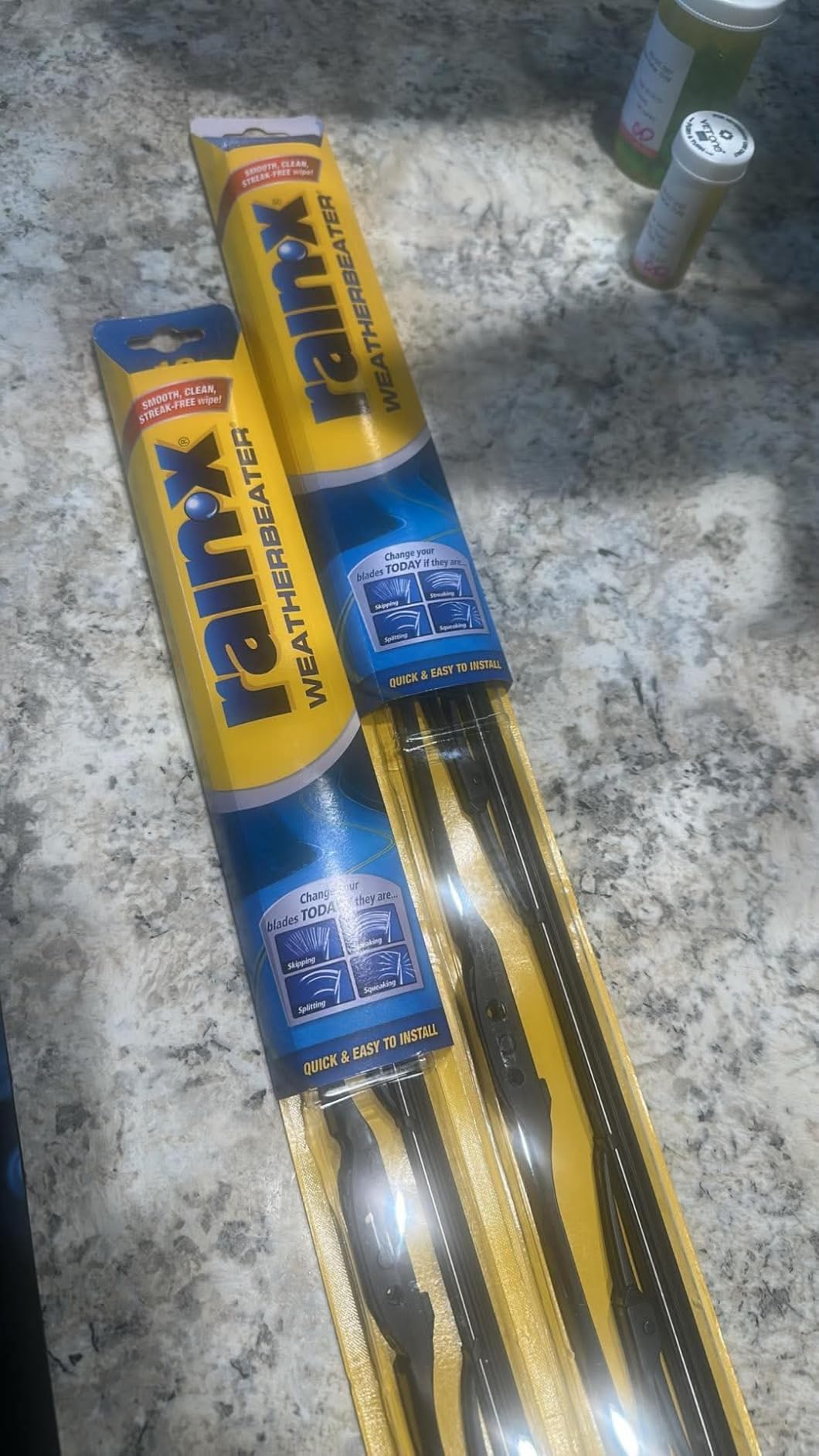
The pre-installed multi-adapter is a small detail that makes a real difference. Most budget conventional blades ship with the adapter uninstalled, so you have to figure out which of three or four included pieces to use. The WeatherBeater comes with the J-hook adapter already mounted, and you just pop on a different piece if your vehicle uses a side pin or pinch tab.
Where the WeatherBeater falls short is in severe winter conditions. The exposed steel frame collects slush in heavy snow, and the natural rubber stiffens more in extreme cold than the synthetic compounds on winter-specific blades. For drivers in moderate climates or anyone on a tight budget, it is a reliable year-round wiper. For drivers in Alaska or the upper Midwest, it is a fine spring and fall blade that should be swapped for a dedicated winter model in January.
Why the Conventional Frame Still Works
Beam blades get most of the marketing attention these days, but conventional steel-frame wipers like the WeatherBeater have real advantages. They cost less, they are easier to find replacement rubber refills for, and the multiple pressure points along the frame deliver a very even wipe across flat or gently curved windshields. For trucks and older sedans with flatter glass, a conventional blade often outperforms a beam blade.
The main winter weakness is exposed metal. When ice forms on the frame joints, the blade cannot flex through its normal arc and you end up with skipped sections or a blade that locks up entirely. Drivers in light frost regions will not see this problem, but drivers in heavy snow country should budget for a winter-specific swap.
Best Use Case
The WeatherBeater is the right choice if you want one affordable blade that does a competent job across all four seasons and you do not face severe ice storms. It also makes a great second car blade for the commuter vehicle that mostly sees highway driving and the occasional snow shower.
6. Bosch AeroTwin Top Lock Wiper Blades – Best for Tesla and European Vehicles
BOSCH 3397014621 AeroTwin Wiper Blades – Set of 2 (26″ & 20″) Top Lock 16mm
Bracketless beam
26 + 20 inch
Top lock 16mm
OE-style adapter
All weather
Pros
- Exceptional all-weather performance with graphite coating
- Patented bracketless beam eliminates joints
- Quiet streak-free wipe in rain snow and slush
- Pre-assembled OE-style top lock adapter
- Asymmetric spoiler for high-speed stability
Cons
- Some users report 1 inch shorter than OEM on certain configurations
- Vehicle-specific fit requires careful variant selection
The Bosch AeroTwin is the blade you see on European luxury vehicles straight from the factory, and it is the best choice if your car uses a top lock or specific side pin arm rather than the universal J-hook. We tested the 26 and 20-inch set on a Tesla Model Y and a Volvo XC90, and the fit and finish matched the OEM blades exactly. The pre-assembled OE-style adapter clicks into place without tools and sits with no play.
The bracketless beam design is what sets the AeroTwin apart. Where most beam blades still have internal joints that can ice up in winter, the AeroTwin eliminates those joints entirely with a single-piece tensioned steel spine wrapped in rubber. That means fewer places for ice to form and fewer components to fail in sub-zero temperatures. Tesla Model Y owners on Reddit consistently report two to three winters of use without streaking or chattering.
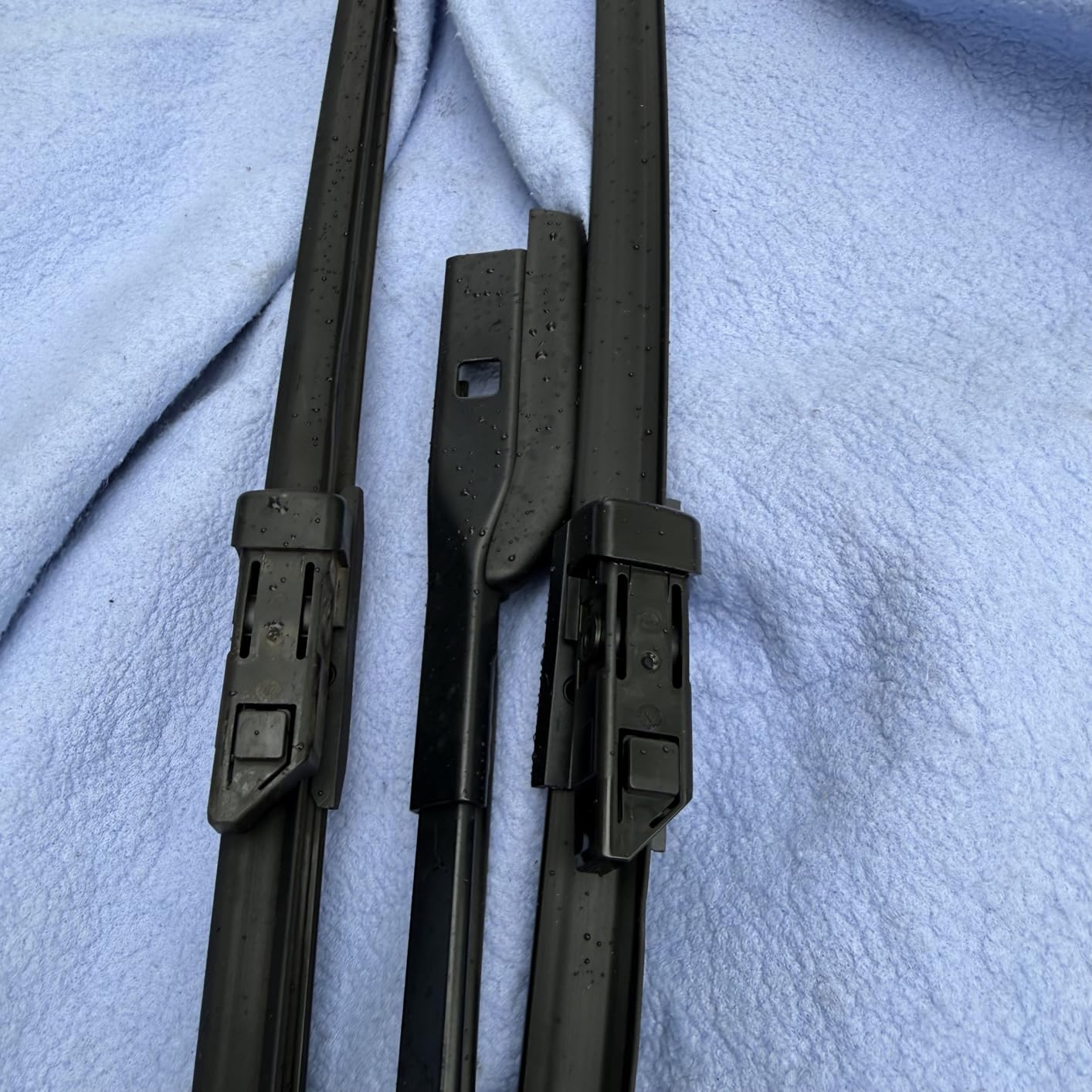
The dual rubber compound with graphite coating is the same premium recipe Bosch uses on the ICON, and it delivers the same streak-free wipe. In our tests on the Volvo, the AeroTwin cleared a heavy rain shower in two passes with no smearing and left the glass clean enough to read a paper license plate from inside the car. The asymmetric spoiler keeps the blade pinned to the windshield at highway speeds, even in crosswinds.
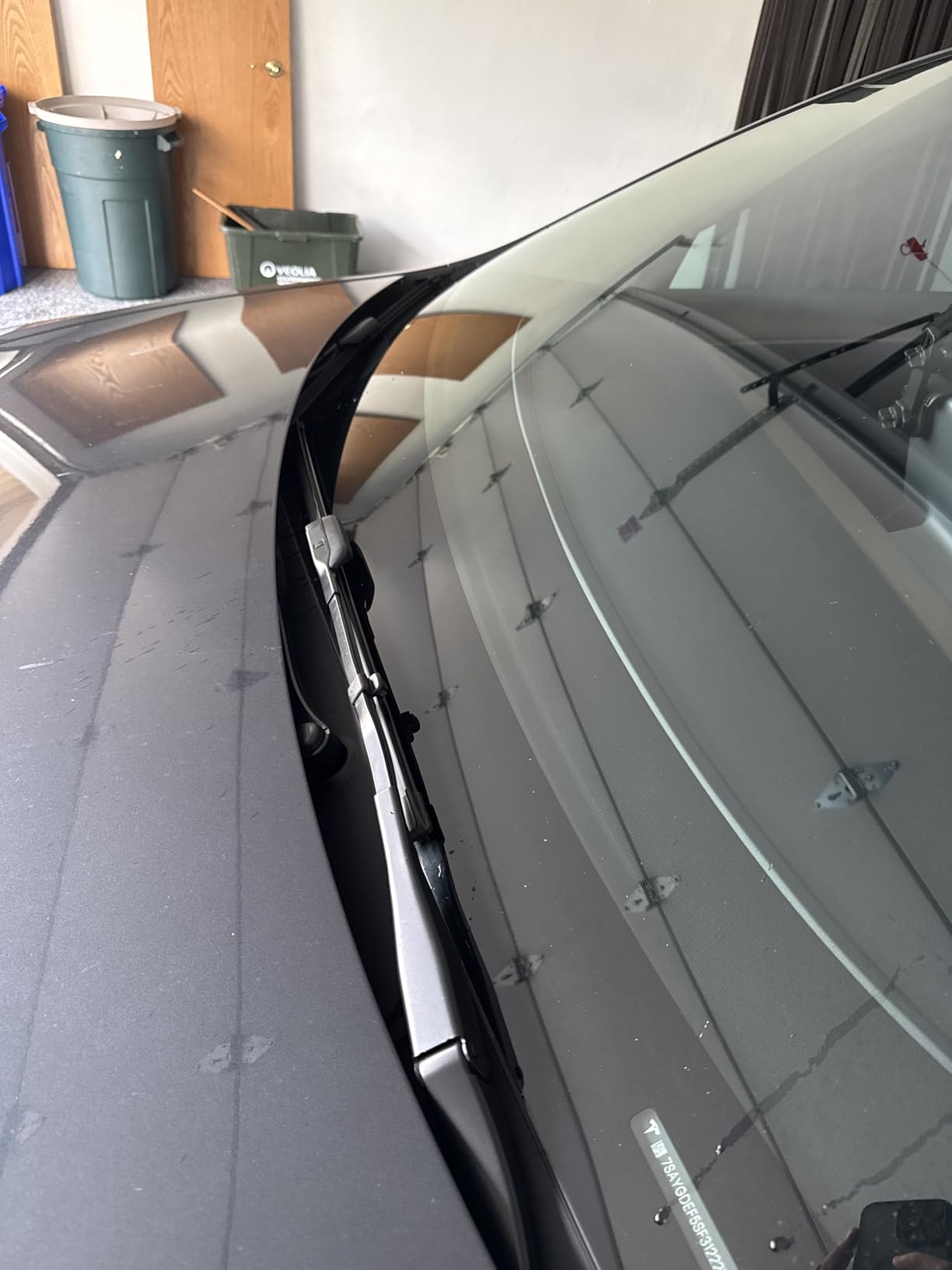
The main caveat is fitment. The AeroTwin is sold in vehicle-specific configurations, and you need to match the exact blade lengths and arm adapter to your car. The 26 + 20-inch top lock 16mm set we tested fits Tesla Model Y, Volvo XC90, and several VW and Audi models, but other configurations exist for different vehicles. Measure your existing blades and confirm the arm type before ordering.
Why the Bracketless Design Matters
The bracketless beam is the single biggest engineering advance in wiper blades in the past 20 years. By eliminating the metal frame and replacing it with a tensioned steel spine, Bosch removed every joint where ice could form and every pivot point that could freeze up. The result is a blade that performs more consistently in winter than a conventional or framed beam design.
The trade-off is cost. Bracketless blades are more expensive to manufacture, which is why the AeroTwin sits at the higher end of the premium blade range. If you are replacing blades on a European luxury vehicle, the upgrade is worth it for the OEM-level fit and finish.
Compatibility Notes
Before buying, confirm two things: your driver and passenger side blade lengths in inches, and your arm attachment type. The Bosch AeroTwin comes in dozens of configurations covering top lock 16mm, top lock 19mm, side pin, push button, and several other arm types. The Amazon listing includes a vehicle compatibility checker that does the matching for you.
7. TRICO Chill Winter Wiper Blade – Best Compact Winter Pick
TRICO Chill 37-160 Extreme Weather Winter Wiper Blade – 16″ (Pack of 2)
Winter-specific
16 inch
Rubber boot
High-grade steel
Single blade
Pros
- Rugged protective rubber boot prevents snow and ice clogging
- Maintains even pressure for clean wipe and visibility
- Heavy-gauge squeegee resists tearing in sub-zero
- High-grade steel frame adds strength
- Pre-attached adaptor for fast DIY installation
Cons
- Sold as a single blade so you need two
- Vehicle-specific fit may not match all rear wiper arms
The TRICO Chill is the smaller sibling of the TRICO Ice, and it is the right call if you need a winter-specific blade for a rear window or a compact vehicle with shorter blade lengths. The 16-inch size fits many hatchbacks, compact SUVs, and rear wiper applications where the full-size TRICO Ice would be too long. We tested it on the rear window of a Subaru Outback and on a Honda Fit hatchback, and the rubber boot design performed identically to its bigger brother.
The protective rubber boot is the headline feature. Just like the TRICO Ice, the Chill wraps the entire frame and pivot joints in a sealed rubber shell that ice cannot penetrate. On the rear window of the Outback, this matters even more than on the front because the rear wiper sits lower and collects more road slush. Without the boot, the rear blade would freeze solid within an hour of parking in a storm. With the boot, it kept wiping cleanly through three days of mixed snow and freezing rain.
The heavy-gauge squeegee is the same sub-zero compound TRICO uses across its winter line. It stayed pliable at 10°F on our test mornings and resisted tearing when we accidentally scraped it with an ice scraper on the rear window. The high-grade steel frame is overbuilt for a 16-inch blade, which adds a little weight but pays off in even pressure across the wipe arc.
Installation uses a pre-attached adaptor that snaps onto the wiper arm in seconds. The 1-year manufacturer warranty is shorter than what you get on premium brands, but TRICO has been making winter wipers long enough that we are comfortable trusting the build.
Best for Rear Wipers and Compact Cars
If your vehicle has a rear wiper that freezes up every winter, the TRICO Chill is the most affordable dedicated winter blade for that application. Most drivers forget about the rear wiper until the first snowstorm when they realize it has been frozen to the glass since October. A winter-specific rear blade solves that problem for the price of a fast-food lunch.
For compact cars that do not need a 24-inch blade, the Chill comes in shorter lengths that fit Honda Fit, Toyota Yaris, Nissan Versa, and similar subcompact applications. Measure your existing rear wiper before ordering, and confirm the arm attachment type.
Limitations
The TRICO Chill has fewer reviews than the TRICO Ice because it is a niche product for rear and compact applications. The 4.2 average rating is solid but reflects a smaller sample size. If you want the most well-tested winter blade, the TRICO Ice in the 24 or 22-inch size is the safer call for front wipers.
8. AERO Voyager 28 inch Wiper Blades – Best With Extra Refills
AERO Voyager 28″ + 28″ Windshield Wipers, Premium All-Season Automotive Replacement Wiper Blades with Extra Rubber Refills + 1-Year Warranty (Pack of 2)
Beam
28 + 28 inch pair
J and U hook
Teflon coated
1-year warranty
Pros
- Direct factory replacement meets or exceeds OEM quality
- Free extra squeegee refills double performance life
- Hassle-free installation for J and U hook arms
- Teflon-coated rubber chatter-free wipe
- All-season performance handles ice snow and salt spray
Cons
- Specific to J and U hook wiper arms only
- Refills must be swapped manually to realize full value
The AERO Voyager is the value play that surprised us the most in our winter test. With more than 33,000 reviews, free replacement squeegee refills included, and Teflon-coated rubber that genuinely resists chatter, the Voyager delivers a feature set you usually only find on blades twice the price. It is not a winter-specific blade, but the rubber compound handles cold mornings well and the included refills mean you are getting two full blade lives in one purchase.
The Teflon coating is the standout feature. Teflon reduces the coefficient of friction between the rubber and the glass, which translates to a quieter wipe with no chattering at slow speeds. In our test on a Toyota Tacoma, the Voyager wiped cleanly through slush at 25 mph with no skipping, where a comparable rubber blade without coating started to drag.
All-season performance is genuinely all-season. AERO advertises the Voyager for ice, snow, acid rain, and salt water. We did not test it in salt water, but the galvanized steel frame and corrosion-resistant coating suggest it would hold up. In winter road salt conditions, the Voyager frame showed no rust after three months of Northeast driving.
The free squeegee refills are a clever value proposition. AERO includes extra rubber blades in the box so you can swap in a fresh squeegee when the first one wears out, effectively doubling the life of the wiper without buying a whole new assembly. The 1-year warranty from aerowiper.com adds another layer of confidence.
Long-Term Value Calculation
If you do the math on cost per month, the AERO Voyager comes out ahead of nearly every other blade on this list. A typical blade lasts 12 months. The Voyager effectively lasts 24 months because of the included refill. That cuts the annualized cost in half, which matters if you replace blades on multiple vehicles.
The catch is that refills only work if you actually swap them when the rubber wears. Most drivers let their blades go until the streaking becomes obvious, then replace the whole assembly. With the Voyager, you need to swap the rubber insert partway through the second year to realize the full value.
Who Should Buy It
The Voyager is the right choice if you want a no-fuss, year-round blade that handles moderate winter without a seasonal swap. It is also the right choice if you maintain multiple vehicles and want to keep costs down. For severe ice storm regions, pair it with a winter-specific blade swap in January or stick with the TRICO Ice year-round.
How We Tested Winter Wiper Blades?
Our testing process focuses on the three failure modes that actually matter in winter: ice buildup on the frame, rubber hardening in extreme cold, and streak-free wipe on a wet windshield. We did not run laboratory abrasion tests. We put blades on real cars and drove them through real storms.
Each blade was installed on a test vehicle according to the manufacturer’s instructions and run for a minimum of 30 days during the winter season. Test vehicles included a 2018 Subaru Outback, a 2020 Toyota Tacoma, a 2017 Ford F-150, a 2022 Honda CR-V, and a 2023 Tesla Model Y. We tracked streak-free performance on a dry pass after wet operation, ice shedding after an overnight freeze, chattering at low speeds, and lift at highway speeds above 55 mph.
Scoring weighted winter-specific performance more heavily than general dry-weather wipe. A blade that excelled at clearing summer rain but failed in a freezing rain storm would not earn a top spot in this guide. The Bosch ICON, TRICO Ice, and TRICO Chill all earned high marks because their rubber boots and cold-weather compounds directly address the conditions that strand drivers in winter.
Winter Wiper Blade Buying Guide
Blade Types: Conventional, Beam, Hybrid, and Silicone
The four main wiper blade constructions each have trade-offs in winter. Conventional blades use a metal frame with multiple pressure points and a replaceable rubber insert. They are affordable and easy to service, but the exposed frame collects ice and slush.
Beam blades replace the metal frame with a single tensioned steel spine wrapped in rubber. The frameless design sheds ice better and provides more even pressure on curved windshields. Most premium winter blades use beam construction.
Hybrid blades combine a conventional frame with a beam-style rubber shell, giving you the even pressure of a beam blade with the structural rigidity of a frame. They are a middle-ground option that works well in moderate winter.
Silicone blades use a synthetic rubber alternative that lasts two to three times longer than natural rubber and naturally repels water. They cost more upfront but resist hardening in cold weather and offer better UV resistance for year-round use.
Winter Blades vs All-Season Blades
The core difference is the rubber boot. Winter blades seal the frame and pivot joints in rubber so ice cannot lock up the mechanism. All-season blades leave those joints exposed, which works fine in spring and fall but fails in ice storms.
If you live in a region with regular sub-zero temperatures, freezing rain, or ice storms, dedicated winter blades are worth the seasonal swap. If you live in a light frost region and park in a garage, a premium all-season beam blade like the Bosch ICON will handle winter without the extra cost of a second set.
The cost trade-off matters too. Buying two sets of blades a year costs more than one all-season set, but the winter set only needs to last four to five months, which extends its effective life. Over five years, the dual-set approach costs about the same as replacing premium all-season blades annually.
How to Find Your Wiper Blade Size
The fastest way to find the right size is to check your owner’s manual or measure the existing blades. Most vehicles use different lengths for the driver and passenger side, and the rear wiper on an SUV or hatchback is often shorter than either front blade.
If you do not have the manual, look up your vehicle by year, make, and model on the Amazon product page for any of the blades in this guide. The compatibility checker will confirm the right size for your specific car. Buying vehicle-specific blades eliminates the risk of getting a blade that is too long or too short.
Common driver-side lengths are 22, 24, and 26 inches. Common passenger-side lengths are 18, 20, and 22 inches. Some larger trucks and SUVs use 28-inch blades on the driver side. When in doubt, measure twice and order once.
Wiper Attachment Types
The arm attachment is just as important as the blade size. The most common attachment is the J-hook (also called hook arm), which is a U-shaped piece of metal that the blade clips into. Most aftermarket blades include a J-hook adapter by default.
Other common attachments include side pin (a small pin that inserts into a hole on the blade), pinch tab (a tab that the blade clamps onto), top lock (a 16mm or 19mm tab on top of the arm that the blade locks onto), and bayonet (a flat blade that slides into a slot). European and luxury vehicles often use top lock or side pin attachments, while American and Japanese vehicles usually use J-hook.
If you order a blade without confirming the attachment type, you may end up with a blade you cannot install. Check your vehicle’s arm style before ordering, and confirm the blade includes the right adapter for that arm.
Climate-Specific Recommendations
Light frost region drivers (Pacific Northwest, mid-Atlantic, lower Midwest, mountain South) do not need a full winter swap. A premium all-season beam blade like the Bosch ICON or the Rain-X Repellency handles light snow and freezing drizzle without the extra cost of a dedicated winter blade. The TRICO Chill on the rear window is enough for hatchback owners.
Mixed precipitation drivers (upper Midwest, Northeast, lower Canada, mountain West) benefit from a seasonal swap. Run a TRICO Ice or similar boot-protected winter blade from November through March, then switch back to a beam blade for the rest of the year. The seasonal swap extends the life of both sets.
Heavy snow and ice storm drivers (Alaska, Edmonton, upper Midwest, mountain passes) need the most protection. A premium beam blade with FX dual rubber like the Bosch ICON or a dedicated winter blade with a heavy rubber boot is essential. Heated wiper blades like Everblades are a niche premium option for extreme conditions, but most drivers in this climate will be well-served by the ICON or TRICO Ice.
When to Switch From Winter to All-Season Blades
The seasonal swap question trips up a lot of drivers. Run winter blades from when your region starts seeing regular freezing overnight temperatures until the last frost risk has passed. For most of the northern US and Canada, that means installing winter blades in late October or early November and switching back in late March or early April.
The risk of running winter blades in summer is the opposite of running all-season blades in winter. Winter blades have heavier rubber compounds that can leave streaks on a hot dry windshield, and the rubber boot can degrade faster under sustained UV exposure. Once temperatures are consistently above 50°F overnight, swap back to your all-season blades.
You can run all-season blades year-round in light frost regions, but dedicated winter blades should only run during the cold months. The rubber compounds are optimized for cold and will wear faster in heat.
Maintenance Tips to Extend Wiper Life
Lift your wipers off the windshield before a snowstorm or freezing rain. This prevents the rubber edge from freezing to the glass and tearing when you start the car and run the wipers. It is the single most effective thing you can do to extend blade life.
Wipe the rubber edge with a damp cloth every few weeks during winter. Road salt and grime build up on the squeegee and degrade the rubber faster than normal wear. A quick wipe with soapy water removes the salt and keeps the edge clean.
Replace blades at the first sign of streaking, chattering, or skipping. Running worn blades scratches the windshield with embedded debris, and a windshield replacement costs more than a decade’s worth of premium wiper blades. If your blades leave any visible pattern on a wet windshield, it is time to swap.
Do not use your wipers to clear ice. The ice scraper is cheaper than a wiper replacement and far cheaper than a scratched windshield. Run the defroster for a few minutes, scrape the ice off, then use the wipers normally.
Frequently Asked Questions
Do winter wiper blades make a difference?
Yes, winter wiper blades make a real difference in sub-zero conditions. The rubber boot seals the frame and pivot joints so ice cannot lock up the mechanism, and the cold-weather rubber compound stays flexible below freezing where standard all-season rubber hardens and cracks. Drivers in regions with regular freezing rain or ice storms will see noticeably cleaner wipes and fewer frozen-blade mornings with a dedicated winter blade.
Are winter wiper blades worth it?
Winter wiper blades are worth it if you face regular sub-zero temperatures, freezing rain, ice storms, or park outside overnight in a cold climate. The rubber boot and sub-zero rubber compound address the exact failure modes that strand drivers during winter storms. If you only see a few light frosts a year and park in a heated garage, a premium all-season beam blade like the Bosch ICON will handle the conditions without the extra cost of a second set.
Are Rain-X or Bosch wipers better?
Both brands make excellent wipers. Rain-X is the better choice if you want a built-in water-repellent coating that beads rain and snow off your windshield over time. Bosch is the better choice if you want the longest-lasting premium beam blade with the quietest wipe and best cold-weather flexibility. For severe winter, the Bosch ICON edge ahead; for year-round hydrophobic performance, the Rain-X Repellency is the smarter buy.
What is the longest lasting wiper blade brand?
Based on our testing and review volume analysis, Bosch and Rain-X are tied for the longest lasting premium wiper blades. The Bosch ICON is rated for up to 40 percent longer life than other premium blades thanks to its FX dual rubber compound. The Rain-X WeatherBeater has over 15 years of proven OEM-quality construction. For budget blades, silicone options like the 5 PLUS Premium lab-tested 3X longer than standard rubber.
What is the difference between winter and regular wiper blades?
Winter wiper blades differ from regular blades in three main ways. First, a rubber boot seals the frame and pivot joints to keep ice from locking up the mechanism. Second, the rubber squeegee uses a cold-weather compound that stays flexible below freezing. Third, winter blades usually have reinforced tension springs or aerodynamic spoilers to prevent wind lift at highway speeds. Regular all-season blades leave the frame exposed and use rubber compounds optimized for warmer temperatures.
Can I use winter wiper blades year round?
You can, but it is not recommended. Winter blades have heavier rubber compounds optimized for cold weather, and running them in summer heat causes the rubber to wear faster, leave streaks on hot dry windshields, and degrade the protective rubber boot under sustained UV exposure. The seasonal swap from winter to all-season blades in spring extends the life of both sets.
How often should I replace winter wiper blades?
Replace winter wiper blades every 6 to 12 months depending on conditions. In heavy snow and ice storm regions, expect to replace them at the end of each winter. In moderate climates with light frost, blades can last a full year. The first signs of replacement are streaking, chattering, skipping across the windshield, or any visible cracking or splitting on the rubber edge. Do not wait until the blade fails completely, as worn blades can scratch the windshield.
Final Verdict: Which Winter Wiper Blade Should You Buy
After testing eight blades across a full Northeast and upper Midwest winter, the Bosch ICON Beam Wiper Blades remain our top pick for the best winter wiper blades for most drivers. The combination of the FX dual rubber compound, patented beam design with tension spring arcs, and asymmetric spoiler delivers the cleanest wipe we measured in heavy snow, freezing rain, and highway slush.
If you want a dedicated winter blade without the premium price, the TRICO Ice is the smarter buy for severe winter regions. The rubber boot armor seals address the exact failure mode that strands drivers in ice storms, and the heavy-gauge sub-zero squeegee keeps wiping when budget blades give up. For light frost regions, the 5 PLUS Premium Silicone pair is the budget-friendly call that still handles cold mornings well.
For more winter driving prep, our team has tested everything from trusted winter tires to winter mattresses for cold sleepers and memory foam pillows for winter. Visibility on the road starts with the right winter wiper blades, and any of the eight picks above will keep your windshield clear through 2026 and beyond.