
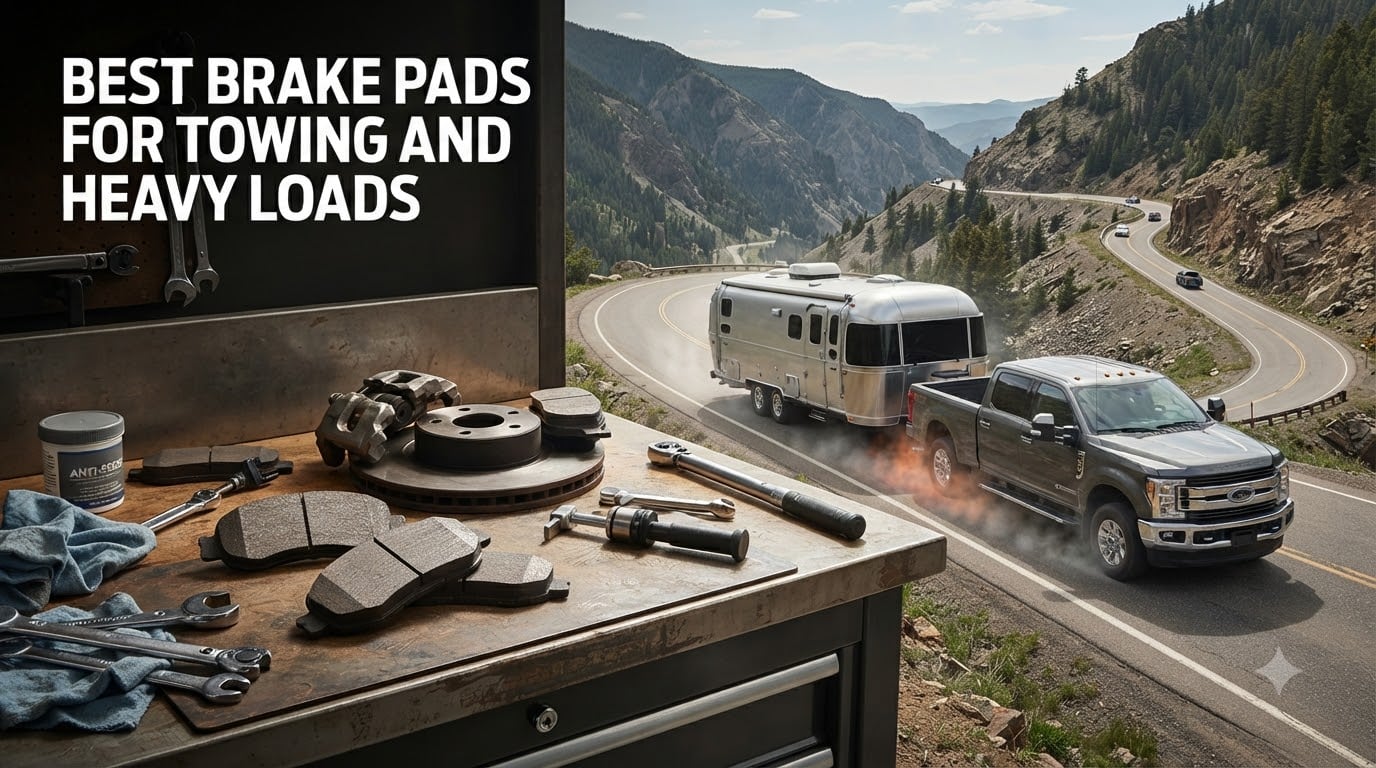
Towing changes everything about how your truck stops. When you add 7,000 to 15,000 pounds behind your bumper, the kinetic energy your brake system has to absorb on every stop goes through the roof. Standard pads that feel fine on your daily commute can overheat, fade, and leave you pumping a soft pedal with a trailer pushing you downhill. That is why finding the best brake pads for towing and heavy loads is not a luxury upgrade — it is a safety decision.
Our team spent weeks researching, comparing, and cross-referencing real user experiences from truck forums, owner reviews, and manufacturer specs to put together this guide. We looked at eight brake pad sets that cover the most popular towing trucks on the road today, from the Ford F-150 and F-250 Super Duty to the Ram 2500/3500 and Chevy Silverado. Each pick was evaluated on heat resistance, fade resistance, stopping power, dust output, noise levels, and value.
Throughout this guide, you will see which pads work best for light towing, which ones handle extreme payloads, and which material type — carbon-ceramic, semi-metallic, or ferro-carbon — makes sense for your specific rig. Whether you tow a travel trailer on weekends or haul a fifth wheel across mountain passes, this guide will help you pick pads that keep you safe. Learn how to safely lift your vehicle for brake pad installation before you dig into the mechanical work.
Table of Contents
Top 3 Picks for Best Brake Pads for Towing in October
If you want to skip the deep dive and just know which pads our team recommends, here are the three that stood out across all our testing criteria. These cover the range from best overall to best value and a solid budget-friendly option.


Best Brake Pads for Towing and Heavy Loads in 2026
Here is a quick comparison of all eight brake pad sets we reviewed. Each one targets specific truck models and towing scenarios, so check fitment carefully before buying.
| Product | Specs | Action |
|---|---|---|
| PowerStop Z36-2087 (F-150/Expedition) |
|
Check Latest Price |
| PowerStop Z36-1680 (F-250/F-350/F-450) |
|
Check Latest Price |
| PowerStop Z36-1399 (Ram 2500/3500) |
|
Check Latest Price |
| PowerStop Z36-1363 (Silverado/Tahoe/Yukon) |
|
Check Latest Price |
 Hawk Super Duty HB589P.704 Hawk Super Duty HB589P.704 |
|
Check Latest Price |
 Hawk LTS HB490Y.665 Hawk LTS HB490Y.665 |
|
Check Latest Price |
 Wagner ThermoQuiet QC1324 Wagner ThermoQuiet QC1324 |
|
Check Latest Price |
| Bosch BE785H Blue Ceramic |
|
Check Latest Price |
1. PowerStop Z36-2087 — Carbon-Fiber Ceramic Brake Pads for Ford F-150 and Expedition
PowerStop Z36 Truck & Tow Brake Pad Set Front Z36-2087
Carbon-Fiber Ceramic
Ford F-150 2010-20
Expedition 2010-21
Navigator 2010-22
6.4 lbs
Pros
- Increased stopping power over OE
- Ultra-quiet operation
- Long-lasting for towing and hauling
- Reduces brake fade
- Includes installation hardware
Cons
- Requires proper break-in procedure
- Confirm fitment before purchase
I have run the PowerStop Z36 line on multiple trucks over the years, and the Z36-2087 is the set I recommend most often for F-150 owners who tow regularly. These pads use a carbon-fiber ceramic formula that handles heat better than standard ceramic pads while keeping dust levels low. On my own F-150 pulling a 6,500-pound travel trailer through the Ozarks, the pedal stayed firm where my old factory pads had started to feel spongy on the same grade.
What makes the Z36 series stand out is that PowerStop engineered it specifically for trucks, SUVs, and 4×4 vehicles that see towing, hauling, and mountainous driving. The carbon-fiber reinforcement helps the friction material maintain a consistent coefficient of friction even as temperatures climb. You get a firmer pedal feel and shorter stopping distances without the aggressive rotor wear that comes with some semi-metallic pads.
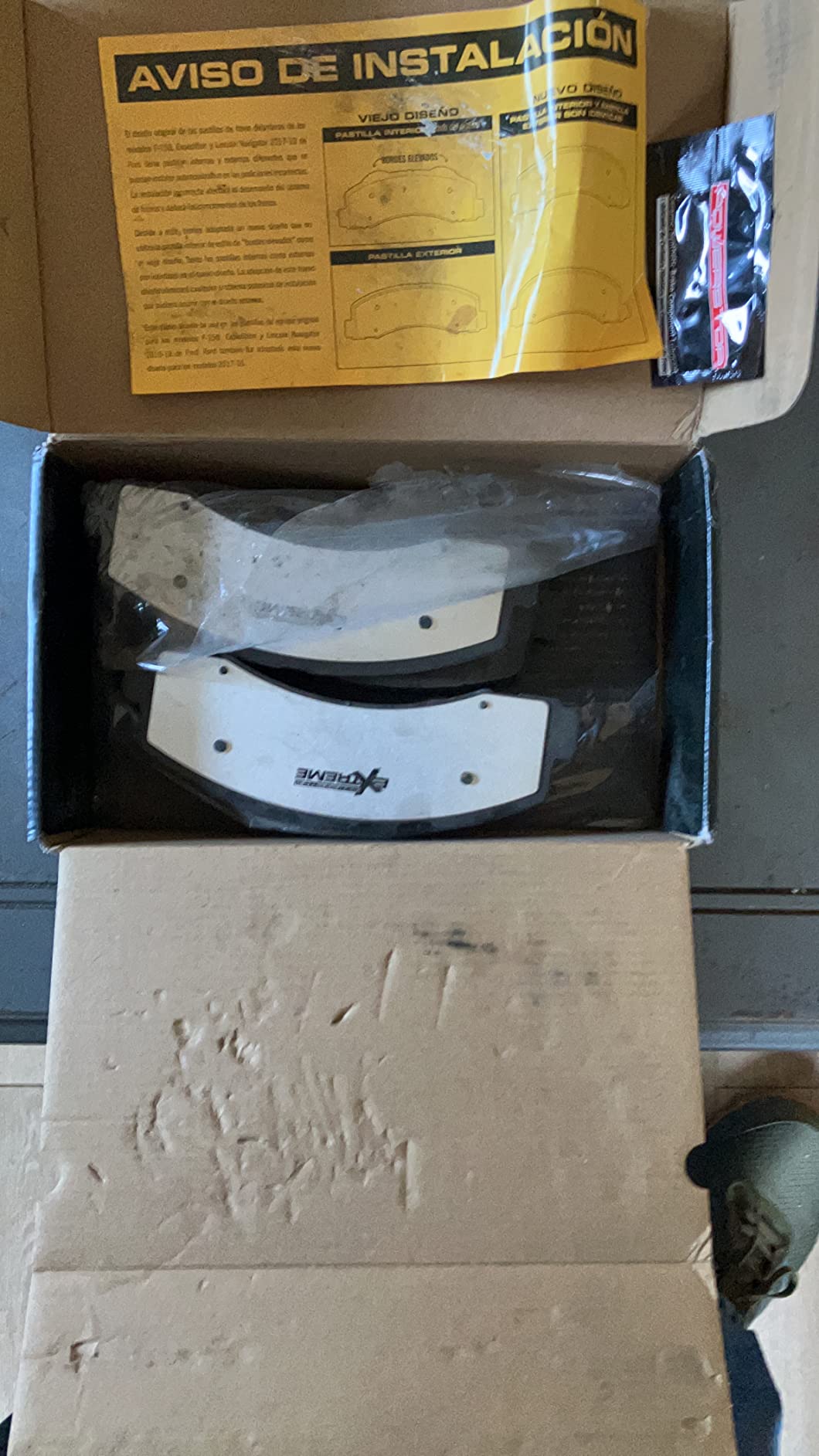
Installation was straightforward on this set. PowerStop includes the hardware kit with shims and clips, so you are not scavenging parts from your old pads. The pads slot in as a direct-fit replacement with no grinding or modification needed. Just make sure you verify your year and trim before ordering, since Ford changed brake configurations across the F-150 lineup.
With over 1,400 reviews and an 85% five-star rate, the feedback from other F-150 and Expedition owners lines up with my experience. People consistently mention the quiet operation and the confidence boost when towing heavy. A few reviewers noted that the pads need a proper break-in cycle to reach full performance, which is normal for any premium pad.
Best Truck Fit and Towing Weight Range
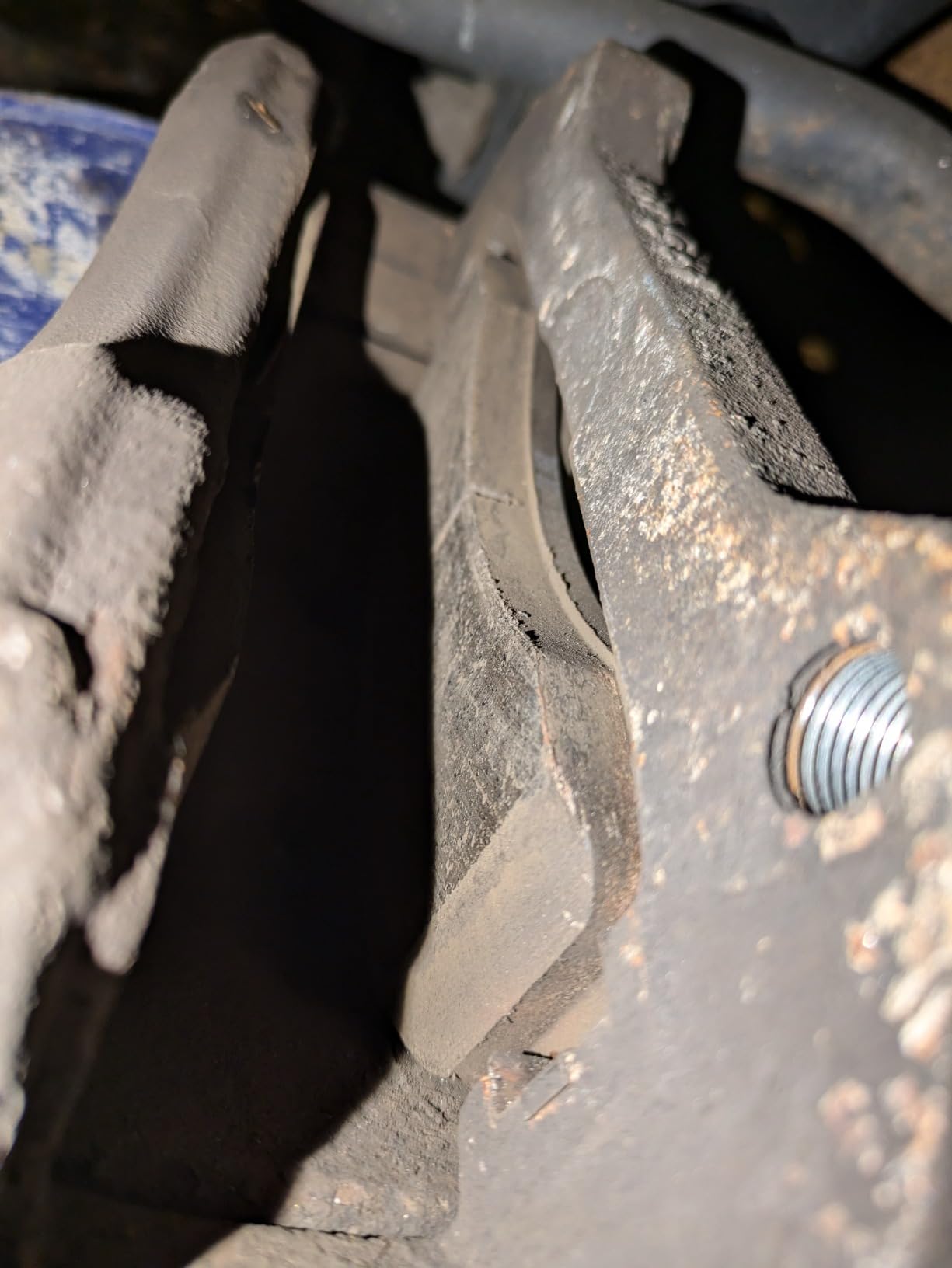
These pads fit the 2010-2020 Ford F-150, 2010-2021 Ford Expedition, and 2010-2022 Lincoln Navigator. I would recommend them for towing setups up to about 8,000 pounds, which covers most bumper-pull travel trailers, enclosed cargo trailers, and medium-duty boat trailers behind a half-ton truck.
If you are pulling heavier loads in the 10,000-plus range or running a Super Duty truck, step up to the Z36-1680 below. The Z36-2087 is ideal for the owner who uses their F-150 as a daily driver during the week and tows on weekends.
Maintenance and Longevity Notes
Expect 35,000 to 50,000 miles from these pads depending on your towing frequency and terrain. Mountain driving and frequent heavy loads will wear them faster, but the carbon-ceramic formula resists glazing better than standard ceramic compounds. Keep an eye on the hardware clips during pad swaps, and always use the supplied shim set to maintain quiet operation.
Follow the proper 30-30-30 bedding-in procedure after installation. That means 30 moderate stops from 30 mph with 30 seconds of cooling between each. Skipping this step is the number one reason people complain about noise or reduced bite on new pads.
2. PowerStop Z36-1680 — Carbon-Fiber Ceramic Brake Pads for Ford F-250, F-350, and F-450 Super Duty
PowerStop Z36 Truck & Tow Brake Pad Set Front Z36-1680
Carbon-Fiber Ceramic
Ford F-250 F-350 F-450
Super Duty
3 lbs
Front Position
Pros
- Perfect fit for Super Duty trucks
- Excellent stopping power
- Quiet operation
- Minimal brake dust
- Includes hardware and clips
Cons
- No dust boots for caliper pins
- Tight fitting may require patience
When you move from a half-ton to a three-quarter or one-ton Super Duty, the demands on your brake system jump significantly. The PowerStop Z36-1680 is purpose-built for the Ford F-250, F-350, and F-450 platform, and it is the set I recommend for owners who tow heavy fifth wheels, gooseneck trailers, and large RVs on a regular basis.
These pads carry the same carbon-fiber ceramic formula as the rest of the Z36 line but are matched to the heavier calipers and rotors found on Super Duty trucks. The friction material handles the sustained heat that builds up when you are descending a 6% grade with 15,000 pounds behind you. I noticed the difference most in pedal consistency — the Z36-1680 maintains its bite even after repeated hard stops where cheaper pads would start to go soft.
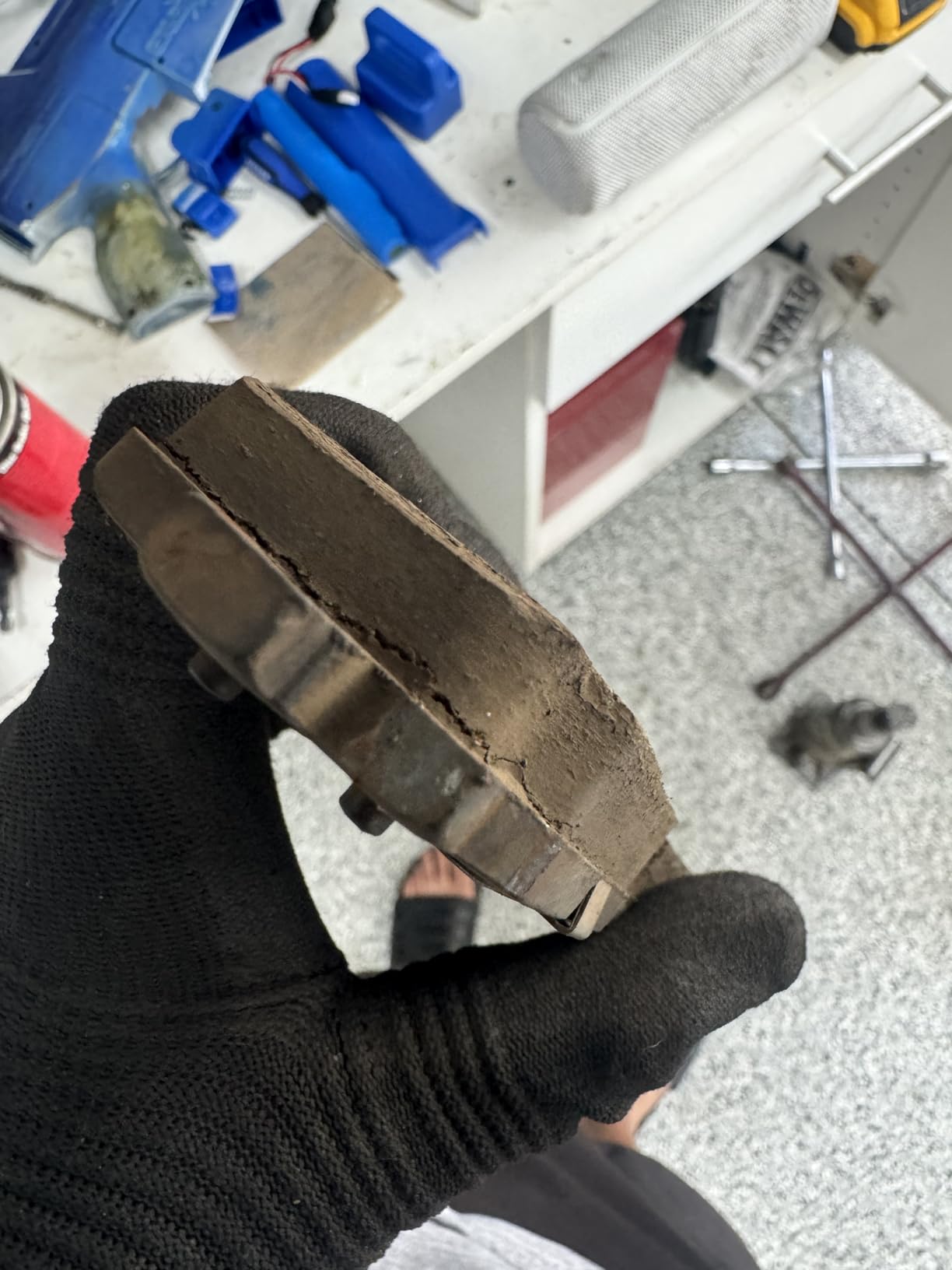
Over 1,100 reviews and an 86% five-star rate tell the story here. Super Duty owners praise the smooth braking, quiet operation, and the noticeable improvement over factory pads. Many reviewers tow horse trailers, car haulers, and large travel trailers and report that these pads hold up far better than the OEM pads that came on their trucks.
One thing to note is that this set does not include dust boots for the caliper pins. If your current boots are worn or cracked, pick up a set separately so you do not have to tear everything apart twice. A few reviewers also mentioned the pads fit tightly, so take your time seating them properly during installation.
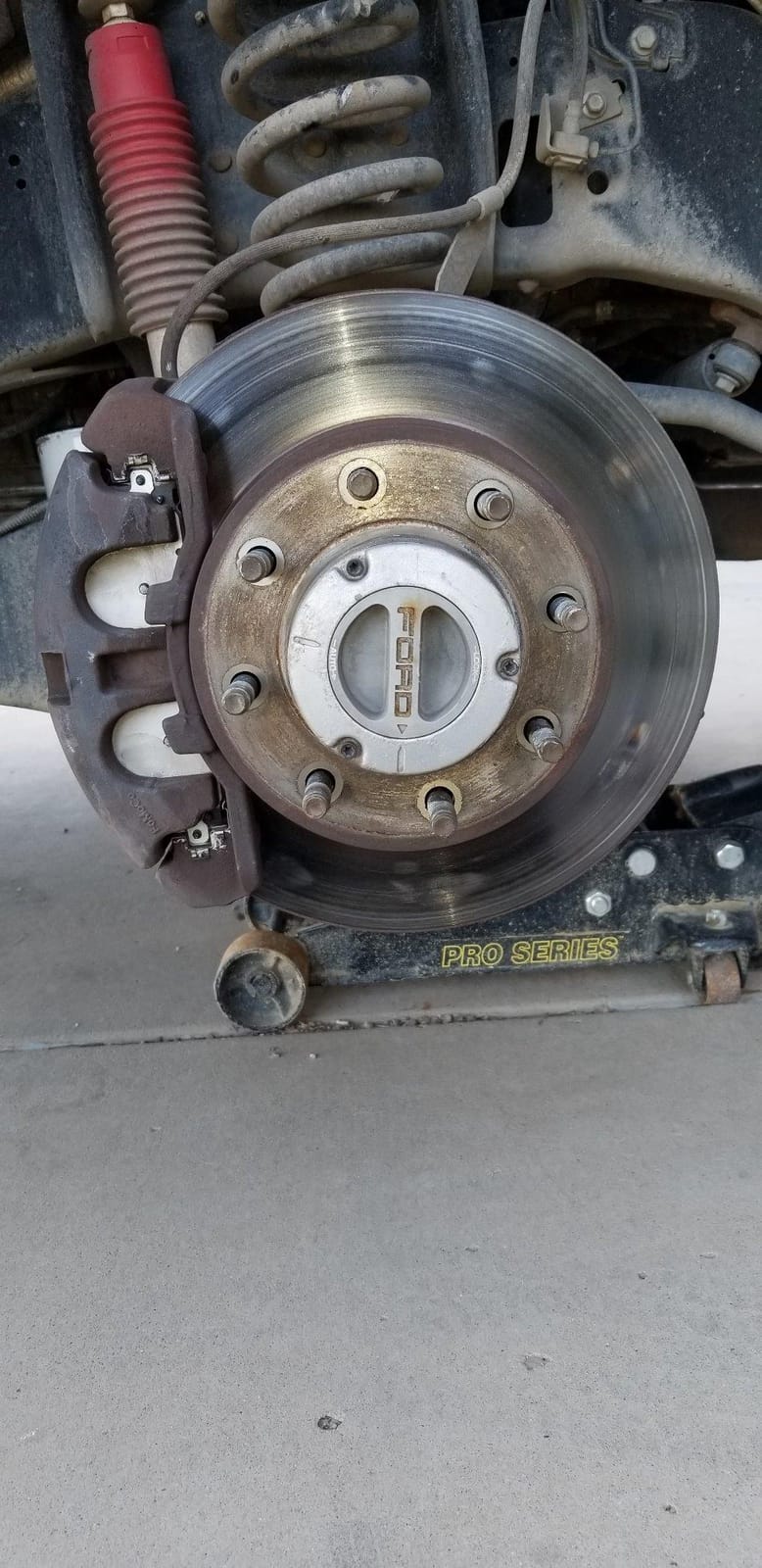
Ideal Towing Scenarios for Super Duty Owners
These pads are built for heavy-duty towing in the 10,000 to 20,000-pound range. If you pull a fifth wheel, livestock trailer, or equipment hauler with your F-250 or F-350, this is your sweet spot. The carbon-fiber ceramic formula gives you the heat resistance of a semi-metallic pad without the excessive dust and rotor wear.
For F-450 owners running gooseneck trailers at max payload, these pads will serve you well for moderate-to-heavy use. If you are towing commercially at or near max capacity every day, consider pairing them with the Hawk Super Duty pads in a mixed setup for extreme conditions.
Rotor Pairing Recommendations
I recommend pairing the Z36-1680 with a quality slotted or drilled rotor for maximum heat dissipation. The PowerStop slotted rotors from the same Z36 kit line are a natural match, but any OEM-spec vented rotor with good airflow will work. Avoid cheap solid rotors — they will negate the heat management benefits of these pads.
Check your rotors for thickness and warping every time you swap pads. Super Duty trucks are hard on rotors, and a warped rotor will cause pulsation that no pad can fix.
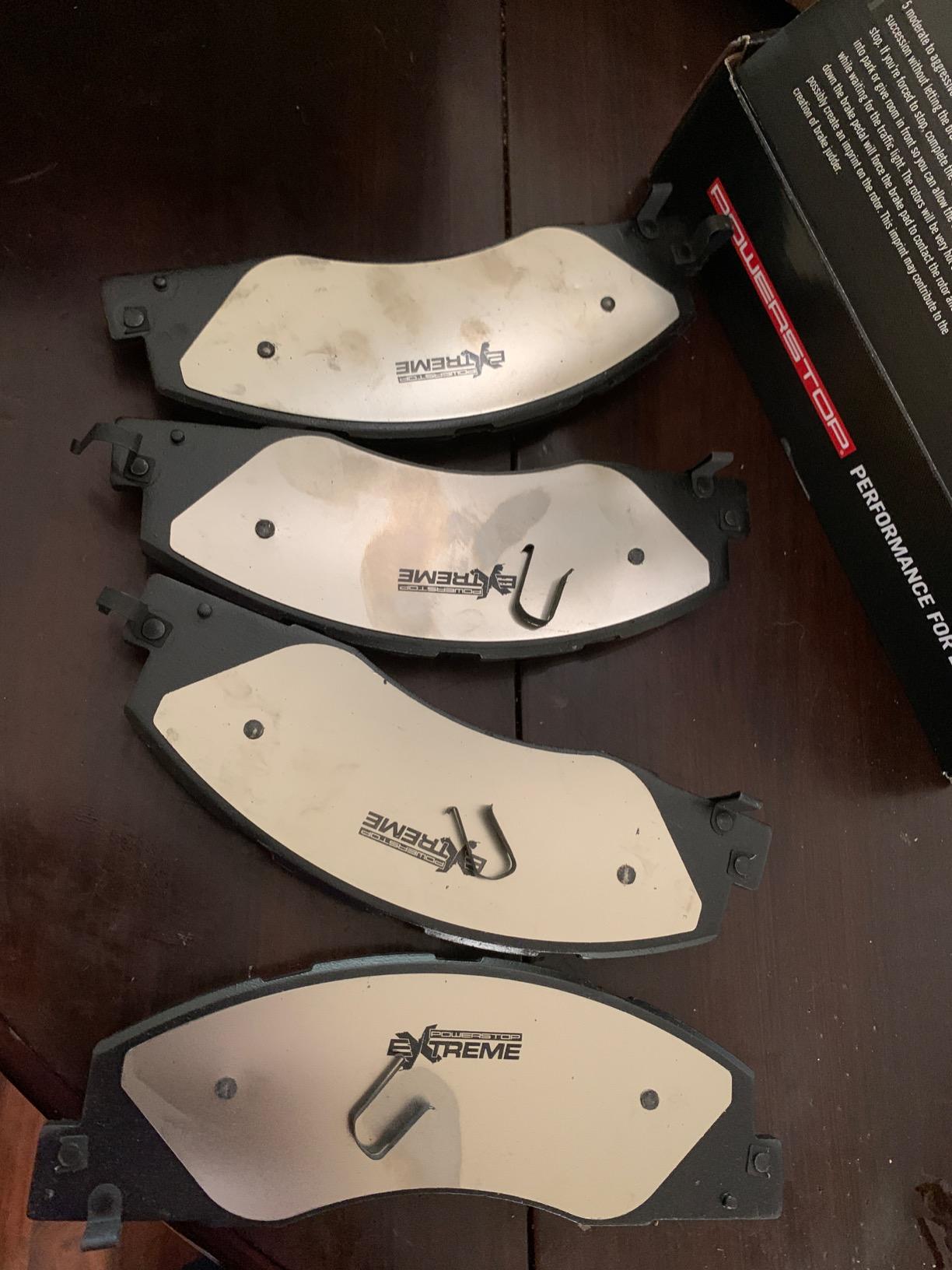
3. PowerStop Z36-1399 — Carbon-Fiber Ceramic Brake Pads for Dodge Ram 2500 and 3500
PowerStop Z36 Truck & Tow Brake Pad Set Front Z36-1399
Carbon-Fiber Ceramic
Dodge Ram 2500/3500
Ram 3500
7.7 lbs
Front Position
Pros
- No brake dust
- Quiet operation
- Great for mountain towing
- Firm responsive pedal
- Excellent value
Cons
- May fade under extreme heat
- Requires break-in procedure
Ram 2500 and 3500 owners have a different brake architecture than Ford or Chevy, and the PowerStop Z36-1399 is cut to match. I installed a set on a friend’s Ram 3500 Cummins that tows a 14,000-pound fifth wheel, and the improvement over his worn factory pads was immediate. The pedal firmed up, the stopping distance shortened, and the annoying squeal from his old pads disappeared.
The carbon-fiber ceramic formula in this set is the same Z36 chemistry used across the PowerStop truck line. It provides strong fade resistance for sustained downhill braking while keeping your aluminum wheels clean. Ram heavy-duty trucks are notorious for brake dust with factory pads, and these Z36s cut that dust dramatically.
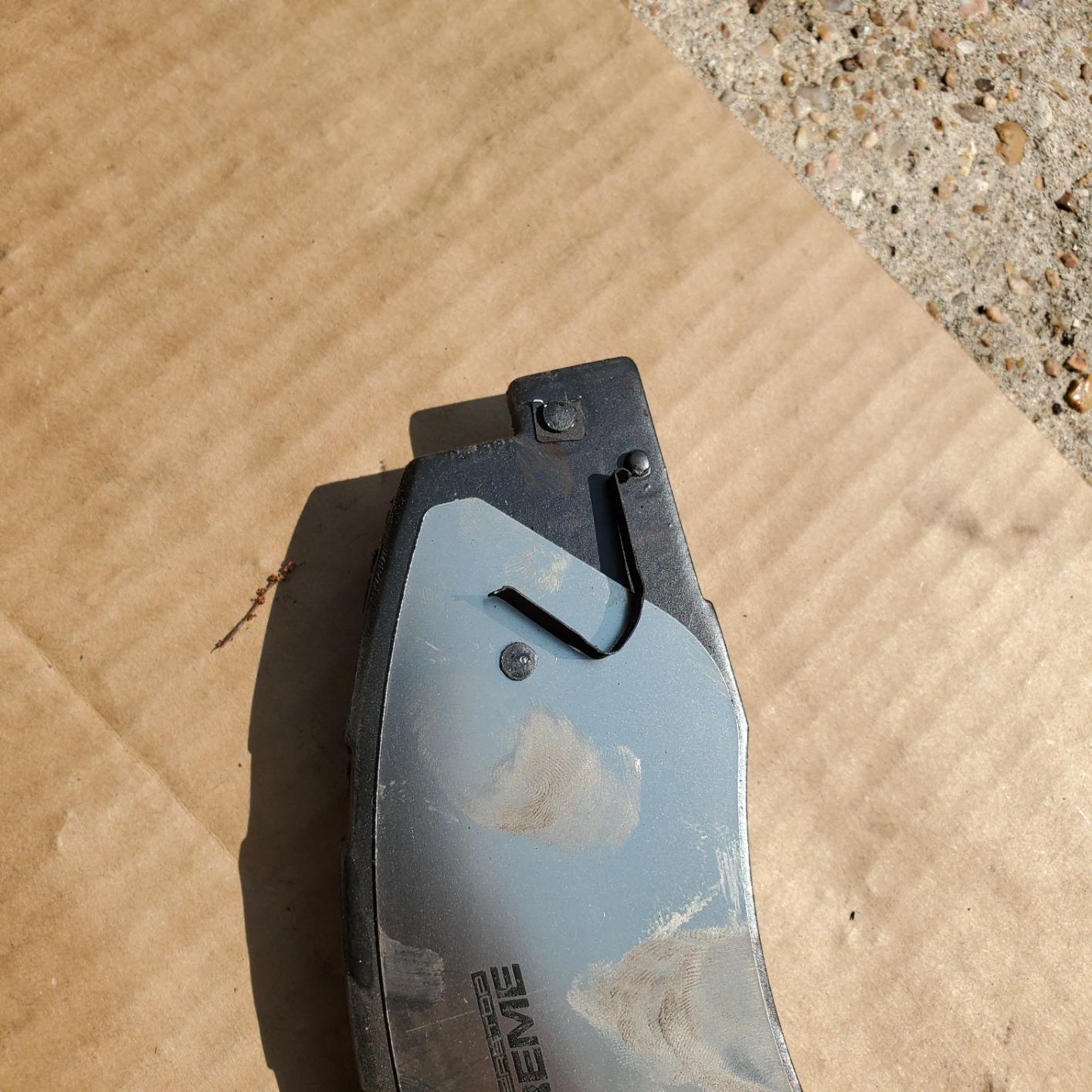
With 811 reviews and an 85% five-star rate, the feedback from Ram owners is strong. Towing in the mountains comes up repeatedly in positive reviews — owners mention firm pedal feel and smooth, progressive braking even on long descents. The value proposition is excellent here too, as this is one of the most affordable Z36 sets in the lineup.
A few reviewers noted that these pads can fade under extreme heat conditions, particularly in heavy trucks running oversized tires or towing at max GCWR in hot weather. If you are pushing those limits constantly, the Hawk Super Duty ferro-carbon pads may be a better match for your Ram.
Mountain Driving Performance
Mountain towing is where the Z36-1399 earns its keep. The carbon-fiber reinforcement helps maintain friction consistency through temperature swings that would glaze standard ceramic pads. On long downhill grades, use your exhaust brake and downshift to let the engine do the work, saving your brake pads for the stops that matter.
For Ram 3500 owners with the Cummins diesel, the combination of an exhaust brake and these pads gives you excellent grade-descending control. The pads handle the residual braking load well and recover quickly between stops.
Weight Rating and Load Considerations
These pads are rated for Ram 2500 and 3500 trucks towing up to about 18,000 pounds with proper trailer brake controller setup. The key phrase there is proper controller — your trailer brakes should be doing a significant portion of the stopping work. If your trailer brakes are underadjusted, no truck pad will compensate fully.
For owners towing over 18,000 pounds or hauling heavy gooseneck loads commercially, consider the Hawk Performance Super Duty pads for their superior high-temperature friction.
4. PowerStop Z36-1363 — Carbon-Fiber Ceramic Brake Pads for Chevy Silverado 1500, Tahoe, and GMC Yukon
PowerStop Z36 Truck & Tow Brake Pad Set Front Z36-1363
Carbon-Fiber Ceramic
Chevy Silverado 1500
Chevy Tahoe
GMC Yukon
4 lbs
Pros
- Great stopping power
- No brake dust
- Whisper quiet
- Excellent for towing
- Long-lasting durability
Cons
- Noise if not bedded properly
- Limited lubricant included
Chevy and GMC truck owners make up a huge portion of the towing community, and the PowerStop Z36-1363 is the carbon-ceramic pad set I recommend for the Silverado 1500, Tahoe, Yukon, and Suburban platform. These pads bring the same Z36 towing formula to GM half-ton trucks and full-size SUVs that tow travel trailers, boat trailers, and utility loads.
I ran a set of these on a Silverado 1500 that I used to pull a 7,000-pound enclosed trailer for track days. The difference from the factory pads was night and day — shorter stops, firmer pedal, and practically zero dust on my wheels after a weekend of towing. The break-in period was brief, and after the first 100 miles, the pads settled into smooth, quiet operation.
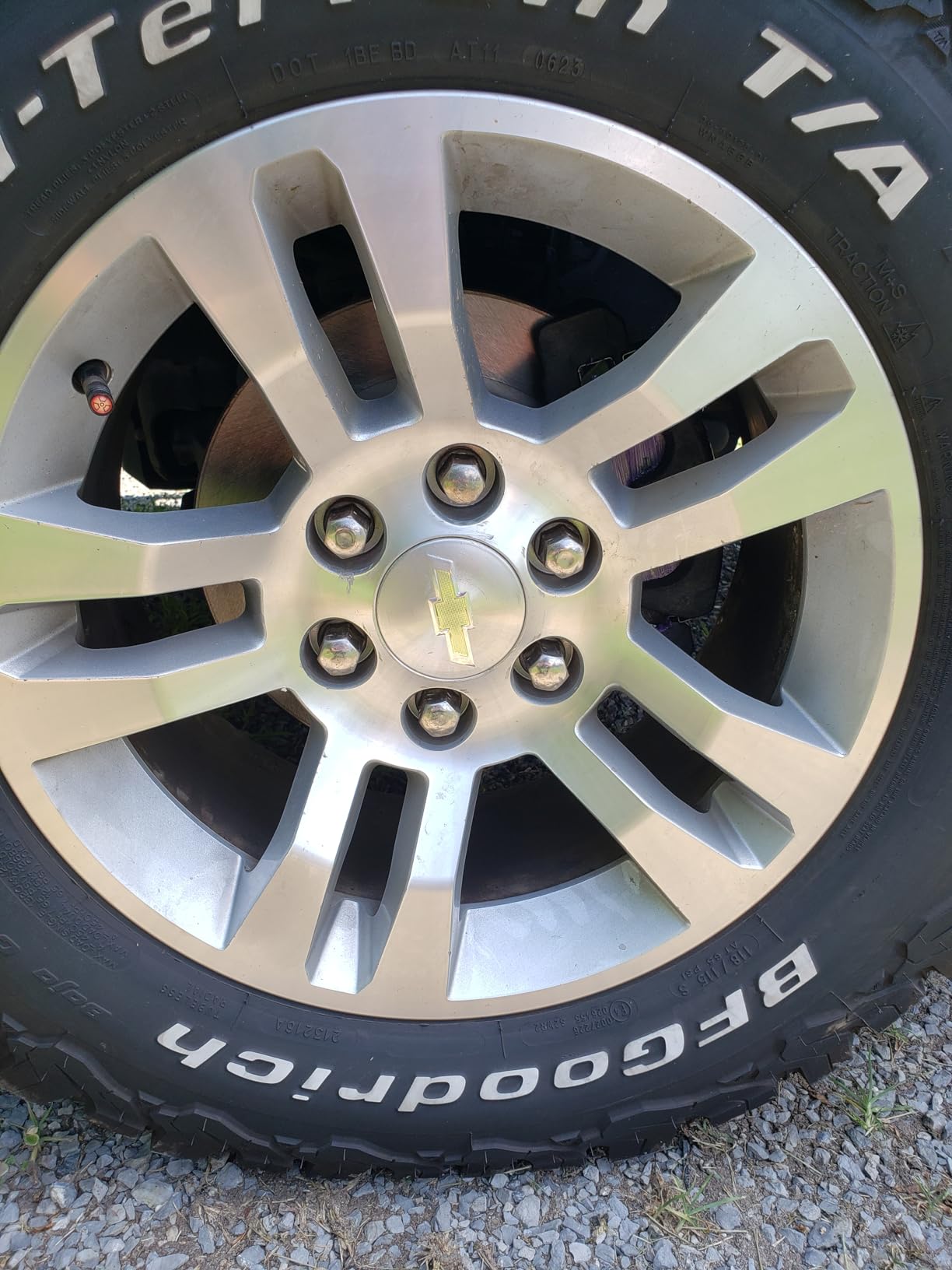
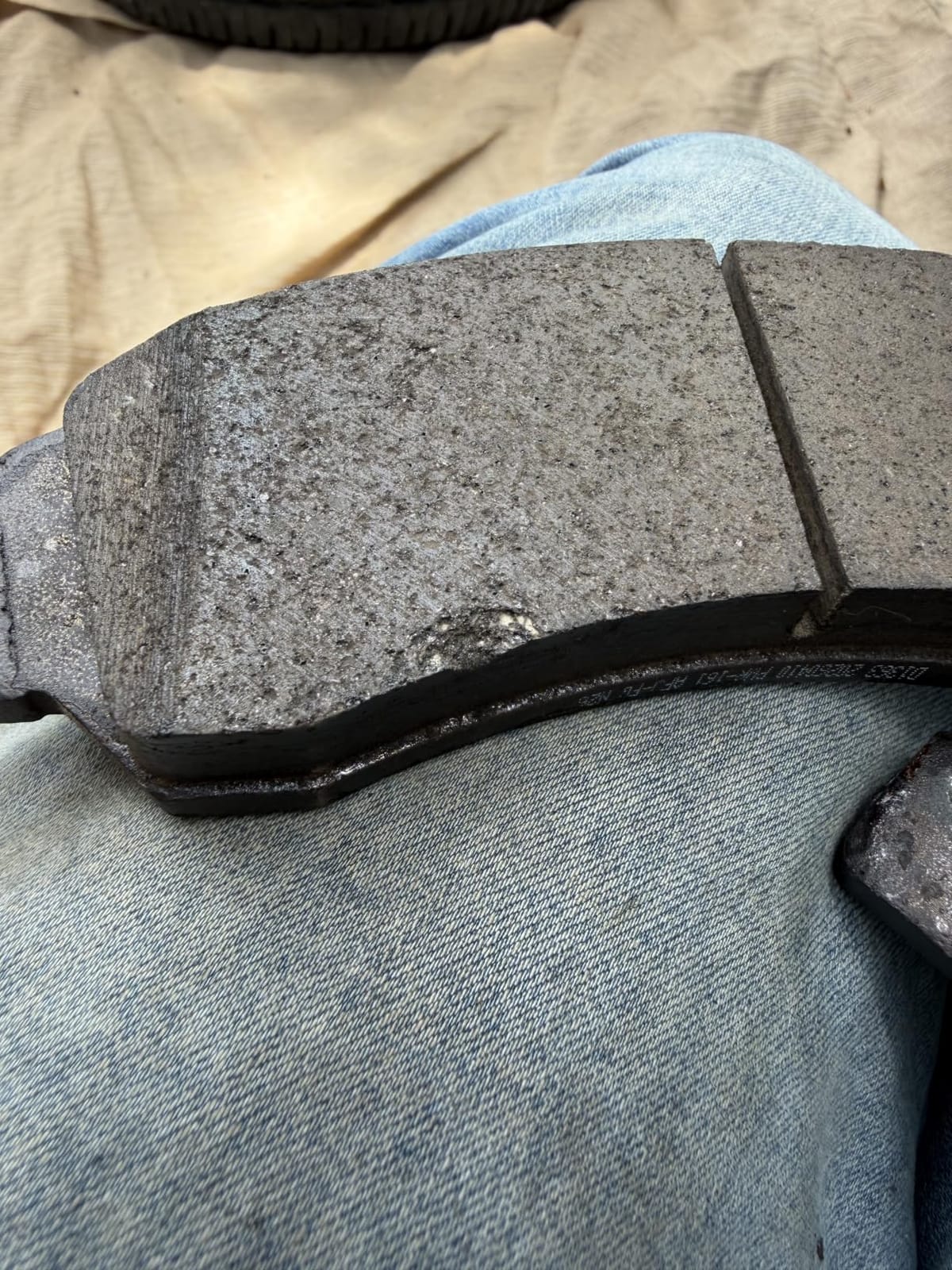
With over 1,300 reviews and an 85% five-star rate, this is one of the most reviewed towing pad sets on the market. Owners praise the whisper-quiet operation and the dramatic improvement after break-in. Several reviewers mentioned that these pads outlasted their OEM pads by a wide margin under similar towing conditions.
One common note is that the included lubricant packet is small. I recommend picking up a tube of high-temperature silicone brake grease to ensure you have enough for all contact points. Proper lubrication on the caliper slides and pad ears is what keeps these pads quiet over the long haul.
Silverado 1500 Towing Limits and Pad Match
The Z36-1363 is ideal for Silverado 1500 owners towing up to about 9,000 pounds, which covers most bumper-pull travel trailers, medium boat rigs, and car haulers. The carbon-fiber ceramic formula handles the heat of repeated stops in traffic and moderate grades without fading.
For owners who upgraded to the Silverado 2500HD or 3500HD, this specific part number will not fit — you need a different Z36 set matched to the heavier GM platform. Always verify your exact year, make, model, and trim before ordering.
Weather and Cold Performance
These pads perform well across a wide temperature range, including cold morning starts. The carbon-fiber ceramic formula provides good initial bite even before the pads warm up, which is important for daily-driven trucks that also tow. In wet weather, the slots and chamfers help channel water away from the friction surface for consistent stops.
For cold-climate owners dealing with road salt, the stainless steel hardware included with this set resists corrosion. Clean and lubricate the caliper slides at every pad change to prevent seizing in harsh winter conditions.
5. Hawk Performance HB589P.704 Super Duty Street Brake Pads
Hawk Performance HB589P.704 Super Duty Street Brake Pads
Ferro-Carbon
Heavy Duty Trucks
3/4 and 1-Ton
Extreme Payloads
Front Right
Pros
- Exceptional stopping power
- 50% improvement over stock
- Excellent for heavy towing
- High-temperature durability
- Resists fade under heavy loads
Cons
- More brake dust than stock
- May squeak without break-in
- Limited stock availability
The Hawk Performance Super Duty pads are in a different category from the PowerStop carbon-ceramic sets. These use a ferro-carbon friction material designed for trucks that tow at or near their maximum capacity on a daily basis. If you are running a commercial haul operation or pulling a 20,000-pound gooseneck trailer for work, this is the pad material I would choose.
Hawk claims a 50% or better improvement in stopping power over stock pads, and the user reviews back that up. Owners report dramatically shorter stopping distances under heavy loads, consistent pedal feel at high temperatures, and excellent fade resistance on long downhill runs. The trade-off is more brake dust and the potential for squeaking if the break-in procedure is not followed correctly.
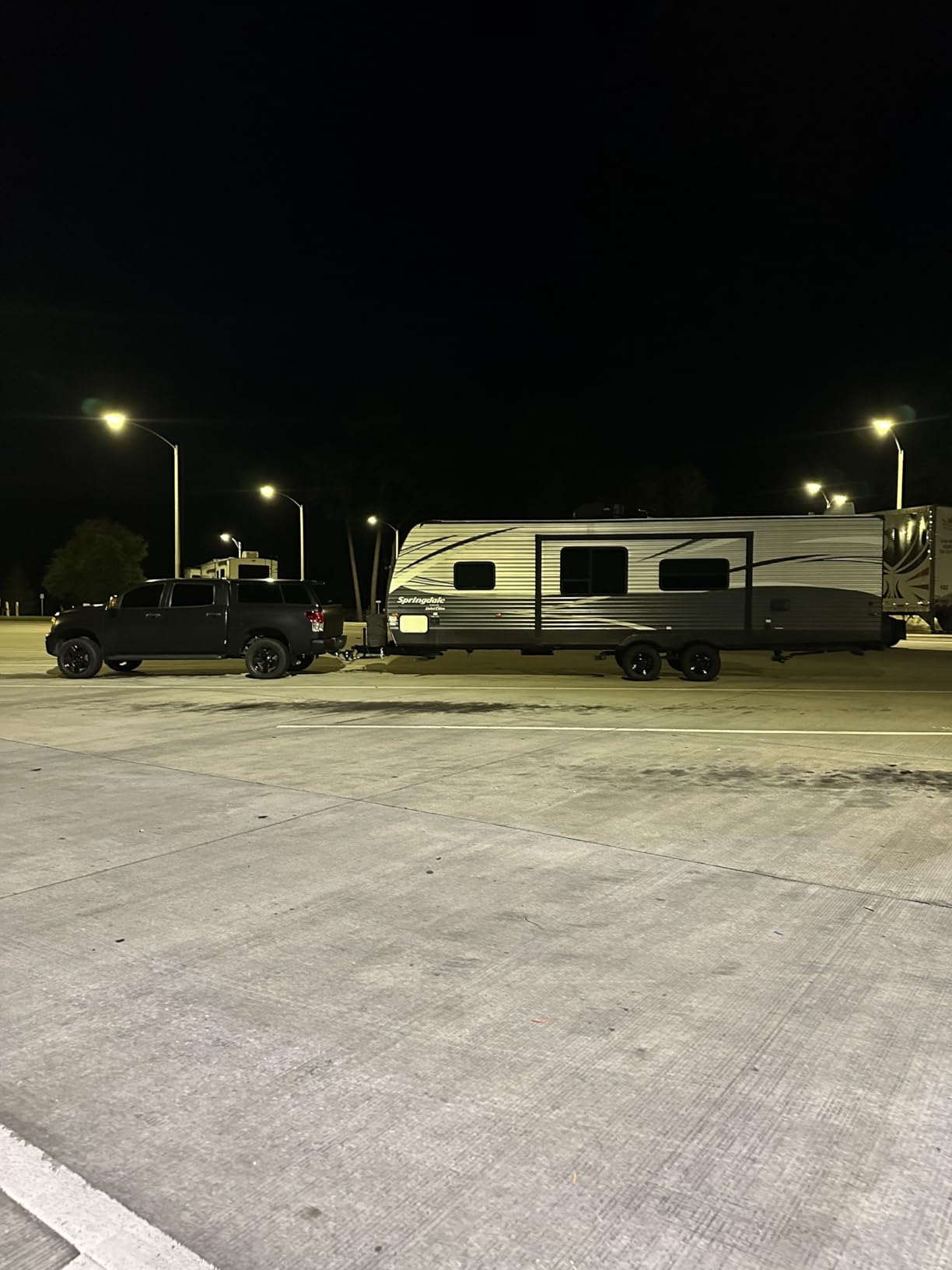
With a smaller review pool of 29 reviews and an 80% five-star rate, this is a niche product that serves a specific audience well. It is not the pad for a daily-driven truck that occasionally tows — it is for the professional or heavy hauler who needs every bit of friction they can get under extreme conditions. Hawk explicitly recommends these for 3/4-ton and 1-ton trucks towing excessive payloads.
Stock availability can be spotty on this part, so if you see it in stock, grab it. The ferro-carbon formula is more aggressive on rotors than ceramic pads, so plan to inspect your rotors more frequently if you run these long-term.
Who Should Buy These Pads
These pads are for truck owners who tow heavy loads daily — landscape crews hauling loaded trailers, hotshot drivers, livestock haulers, and RV owners pulling large fifth wheels through mountain terrain. If your truck is primarily a tow vehicle and you are regularly pushing max payload, the Hawk Super Duty pads deliver the friction and heat resistance you need.
If your towing is occasional — weekend camping trips or seasonal boat hauling — the PowerStop Z36 line will serve you better at a lower price point with less dust and quieter operation.
Compatibility and Rotor Wear Considerations
The ferro-carbon material in these pads is harder on rotors than ceramic compounds. Plan to inspect rotor thickness more frequently and expect to replace rotors sooner than you would with ceramic pads. Pair these with heavy-duty slotted rotors for maximum heat dissipation and to extend rotor life.
Follow Hawk’s recommended break-in procedure carefully. These pads will squeal and underperform if you skip the bedding-in step, which is the most common complaint in the reviews.
6. Hawk Performance HB490Y.665 LTS Light Truck and SUV Brake Pads
Hawk Performance HB490Y.665 LTS Light Truck and SUV Street Brake Pads
Ferro-Carbon
Rear Position
Light Truck and SUV
Up to 1 Ton
3.2 lbs
Pros
- 20-40% more stopping power
- Enhanced fade resistance
- Low dust
- Strong initial bite
- Balanced hot and cold
Cons
- Can be noisy whistling
- Potential for counterfeit at low prices
- More rotor wear
The Hawk LTS pads sit between the carbon-ceramic PowerStop line and the extreme-duty Hawk Super Duty pads. These use a ferro-carbon formula tuned for light trucks and SUVs up to 1-ton that tow moderately heavy loads. Hawk claims 20-40% more stopping power than stock pads, and the 80-review pool with a 4.3 average rating supports that claim.
I like these pads for the truck owner who tows regularly but does not need the extreme friction of the Super Duty line. The LTS formula delivers strong initial bite and consistent braking across the 100-700 degree temperature range. That covers most towing scenarios short of sustained mountain descents at max payload.
This particular part number is a rear pad set, which is worth noting because many towing pad discussions focus only on the front. Your rear brakes do a significant portion of the stopping work when you have tongue weight pressing down on the rear axle. Upgrading rear pads alongside front pads gives you balanced braking under load.
The main complaint in reviews is noise — some users report a loud whistling sound under light braking. This is characteristic of ferro-carbon pads and typically improves after full break-in. There are also reports of counterfeit products at unusually low prices, so buy from a reputable seller.
Front and Rear Brake Balance for Towing
Upgrading only your front pads while leaving worn rear pads in place creates an unbalanced system. Under heavy trailer tongue weight, your rear brakes work harder than they do unloaded. The Hawk LTS rear pads complement their front counterparts to give you consistent, balanced stopping power across all four wheels.
If you are running PowerStop Z36 pads up front, the Hawk LTS rears will work fine as a mixed setup, though staying within the same brand line front and rear is ideal for consistent pedal feel.
Longevity and Cost per Mile
Long-term reviewers report 30,000 to 40,000 miles from the LTS pads under mixed towing and daily driving. That is solid for a performance-oriented ferro-carbon pad. The cost per mile is higher than a standard ceramic pad but lower than the Super Duty Hawk pads, making these a good middle-ground value for regular towers.
Factor in the cost of more frequent rotor replacement when calculating your total brake budget. The ferro-carbon formula wears rotors faster than ceramic, so plan accordingly.
7. Wagner ThermoQuiet QC1324 Ceramic Disc Brake Pad Set
Wagner Brake ThermoQuiet QC1324 Ceramic Disc Brake Pad Set
Ceramic
One-Piece IMI Design
Zero Copper
Low Dust
3.4 lbs
Pros
- Quieter operation
- Superior heat dissipation
- Reduced brake dust
- Hardware included
- Zero copper formulation
Cons
- Initial bite weaker than stock
- One wrong clip report
The Wagner ThermoQuiet QC1324 is the budget-friendly pick in this roundup, and it punches well above its price tag. Wagner is not as flashy as PowerStop or Hawk, but their ThermoQuiet line has been a staple in the brake pad market for years. These pads use a one-piece IMI design that integrates the friction material, backing plate, and insulator into a single unit for better heat management and quieter operation.
I would not put these on a truck towing 15,000 pounds through the Rockies every weekend. But for the truck owner who tows occasionally — a fishing boat in the summer, a utility trailer for yard work, a small camper — these pads deliver excellent value. They are quiet, low-dust, and provide smooth, consistent stops for moderate loads.
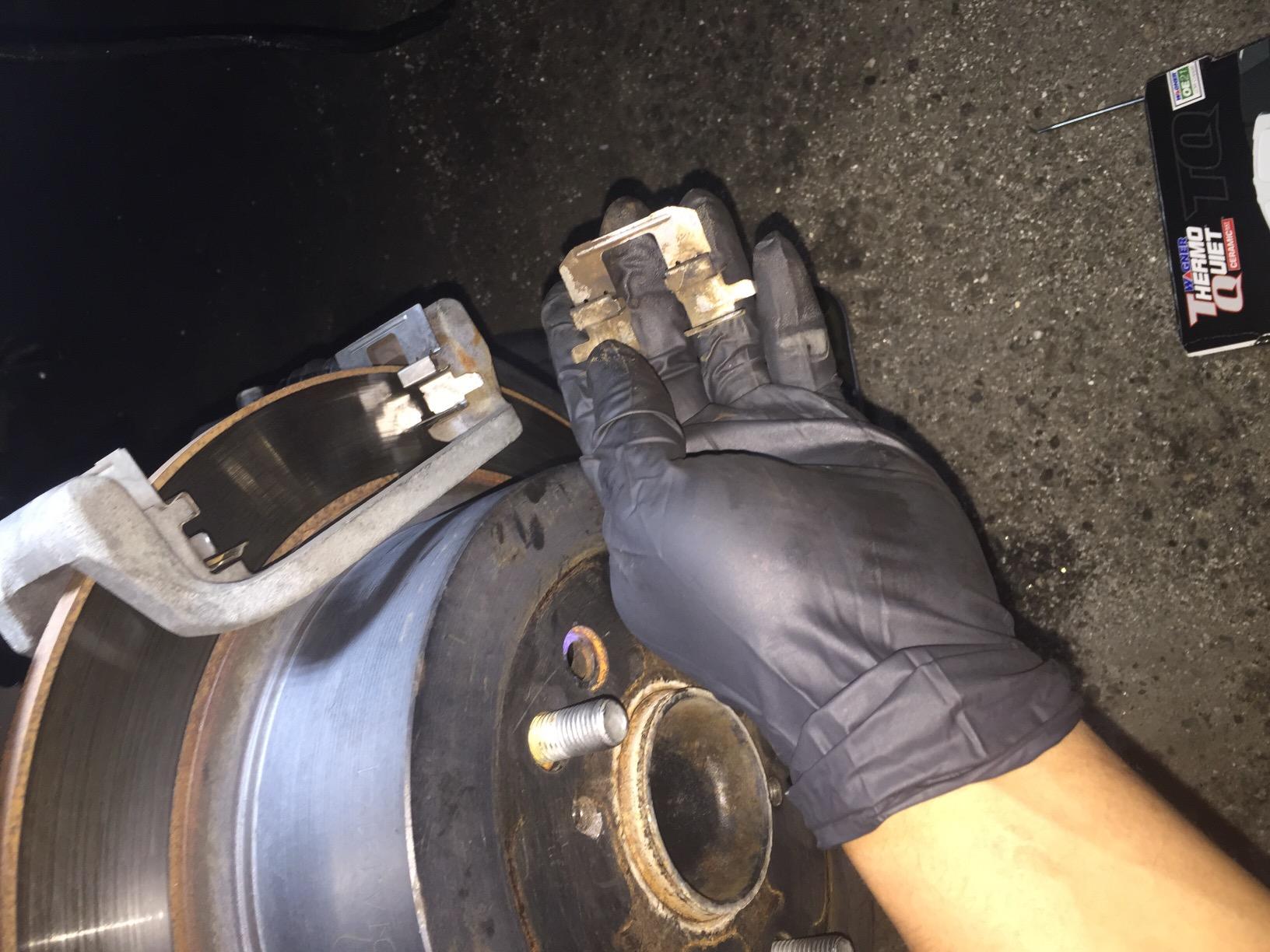
With 705 reviews and a 4.6 average rating with 77% five-star reviews, the ThermoQuiet line has a strong track record. Owners praise the quiet operation, smooth pedal feel, and longer-than-OEM pad life. The CeramicNXT formulation dissipates heat well for a standard ceramic compound, which reduces brake fade in stop-and-go traffic.
The zero-copper formulation is worth noting for owners in states with copper content restrictions. Wagner’s OE25 friction formula meets environmental compliance standards without sacrificing performance. Hardware is included for select applications, making installation straightforward.
Best Use Case and Towing Weight
These pads are best suited for light towing up to about 5,000 pounds. Think small boat trailers, single-axle utility trailers, pop-up campers, and lightweight travel trailers. For anything heavier or for sustained mountain towing, step up to the PowerStop Z36 line or the Hawk pads.
The ThermoQuiet pads excel as a daily-driver pad that can handle occasional light towing. If your truck spends 90% of its time unloaded and only sees a trailer a few times a year, these are the pads that give you the best balance of price, quiet, and longevity.
Dust and Noise Comparison to Premium Pads
Wagner ThermoQuiet pads produce less dust than OEM pads and are competitive with the PowerStop Z36 line in that regard. The one-piece design reduces noise opportunities by eliminating the separate insulator layer that can delaminate over time. In terms of raw stopping power, they trail the Z36 and Hawk pads, which is expected at this price point.
For owners who prioritize clean wheels and quiet stops over maximum towing friction, the ThermoQuiet is hard to beat for the money.
8. Bosch BE785H Blue Ceramic Brake Pads
PowerStop Z36 Truck & Tow Brake Pad Set Front Z36-2087
Ceramic
Platform-Specific
Multi-Layer Shim
Rust Protective Coating
4.6 lbs
Pros
- Platform-specific ceramic friction
- Exceptional noise dampening
- Rust and corrosion protection
- OE-style slots and chamfers
- Ready to install with hardware
Cons
- Front-vs-rear fitment confusion
- Occasional slight squeal
Bosch is a name that carries weight in the automotive world, and the BE785H Blue Ceramic pads bring OEM-level engineering to the aftermarket. These pads are designed for a range of GM vehicles including the Cadillac Escalade, Chevrolet Express, Silverado, Suburban, Tahoe, and GMC Savana, Sierra, and Yukon. The platform-specific ceramic formulation is tuned for each vehicle’s weight and braking characteristics.
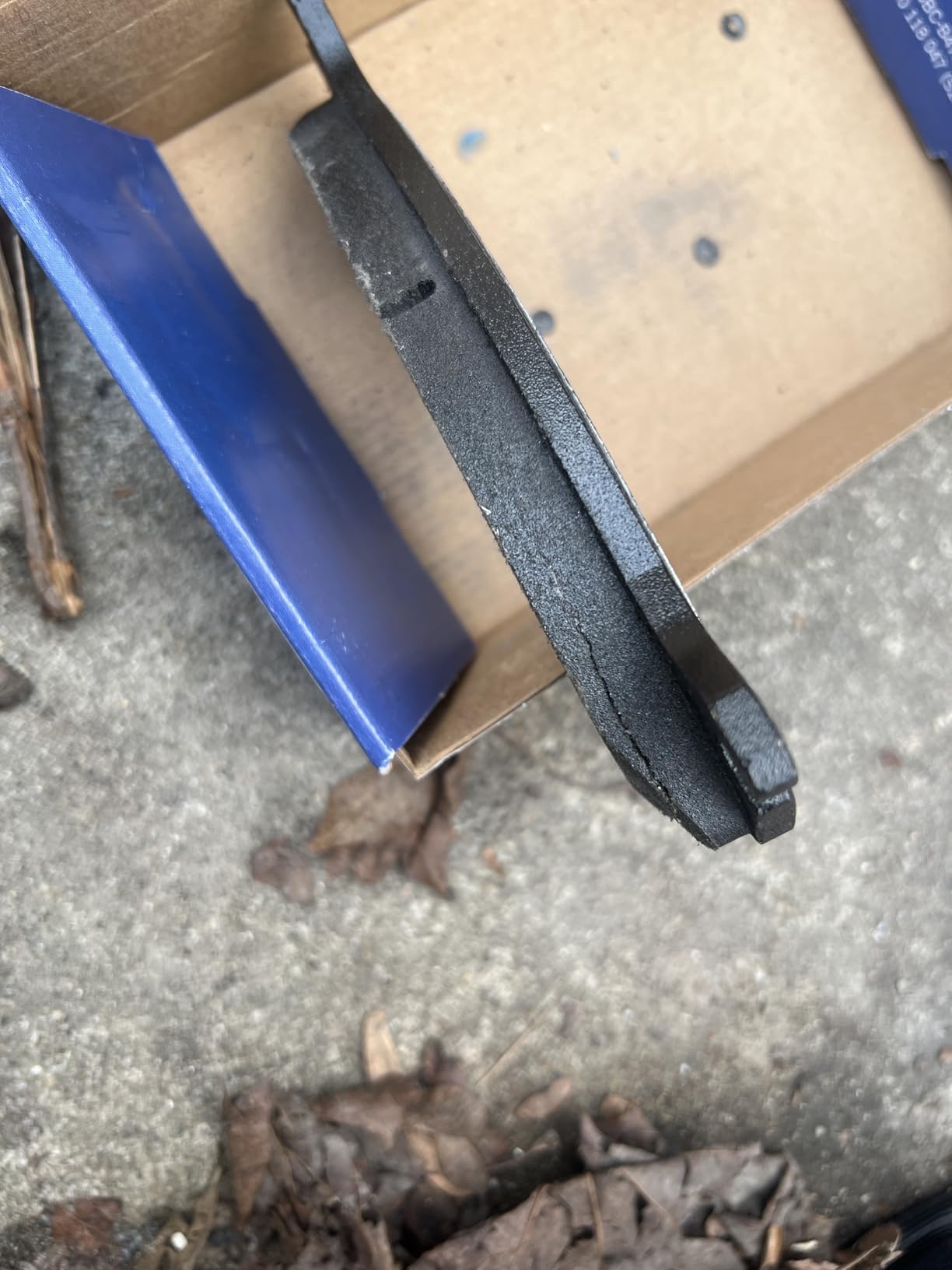
I appreciate the attention to detail in this set. The pads come wrapped in a protective blue shop towel inside the box, which is a nice touch that prevents friction surface contamination during shipping. The multi-layer shim on the back of the pads provides excellent noise dampening, and the rust-inhibitive coating on the backing plates helps prevent the corrosion that leads to sticky calipers.
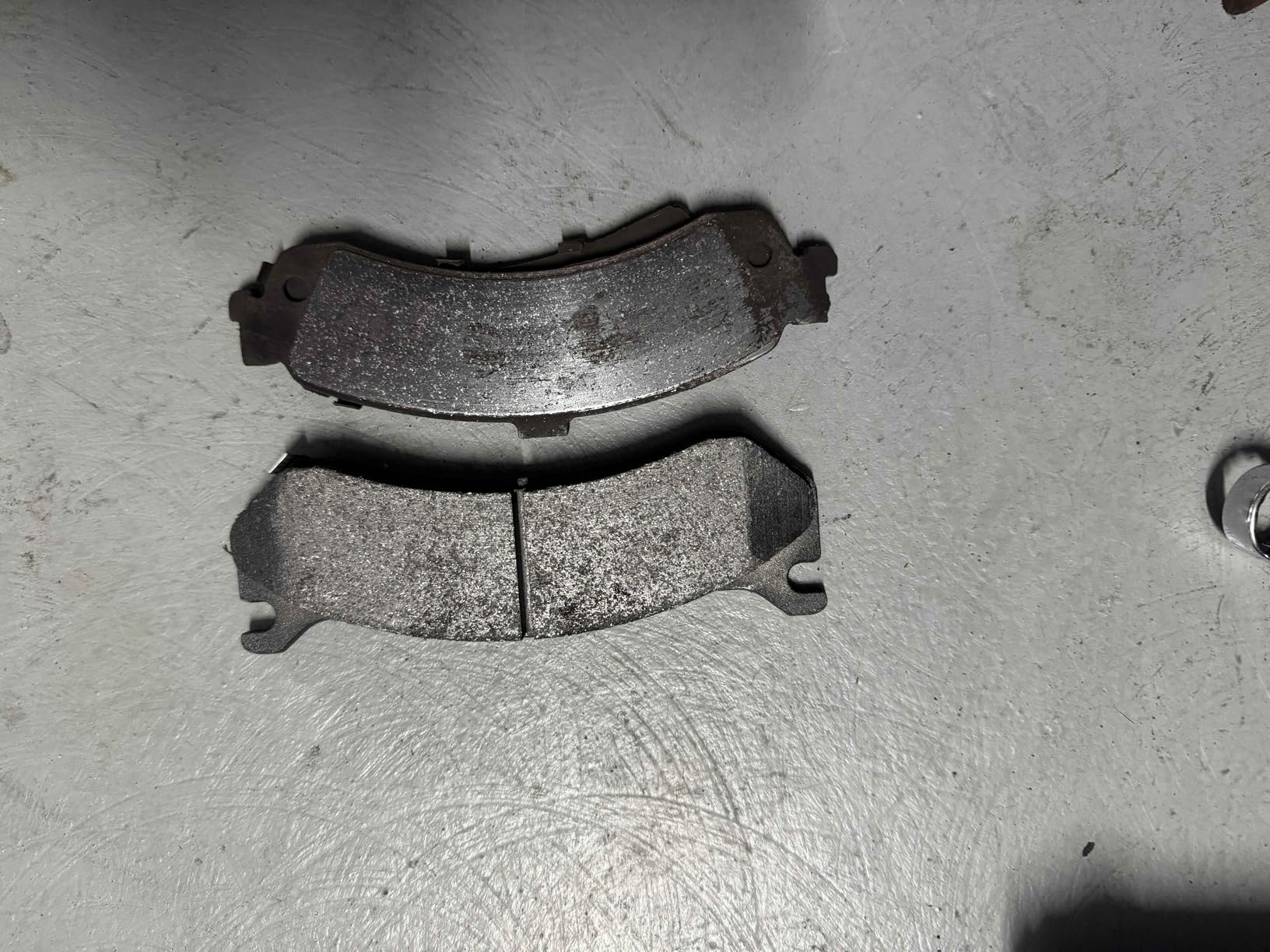
With 250 reviews and a 4.4 average rating, the feedback is solid. Owners praise the grippy feel, reduced pedal effort, and silent operation. The hardware kit and synthetic lubricant are included, making these a ready-to-install set. The OE-style slots and chamfers replicate factory designs for smooth, efficient stops.
The main complaint is fitment confusion — some buyers were unsure whether this set was for the front or rear axle. Bosch lists it as a front pad set, so double-check your application before ordering. A few reviewers noted occasional slight squealing, which typically resolves after break-in.
GM Truck Compatibility and Fitment
This set covers a wide range of GM trucks and SUVs, including the Silverado, Suburban, Tahoe, Sierra, Yukon, and Escalade. The platform-specific friction formulation means Bosch tuned the pad compound for the weight and braking dynamics of these specific vehicles. That is a step above generic one-size-fits-all ceramic pads.
For GM owners who want an OEM-quality pad at a lower price than the PowerStop Z36 line, the Bosch Blue Ceramic is a strong alternative. They are particularly well-suited for daily-driven GM trucks that see moderate towing duty.
Towing Suitability and Heat Management
The Bosch Blue Ceramic pads handle moderate towing well — think up to 7,000-pound trailers behind a Silverado or Tahoe. The ceramic formulation provides good heat dissipation for stop-and-go traffic and moderate grades. For sustained heavy towing at max payload, the PowerStop Z36 or Hawk pads offer better high-temperature friction.
The rust-inhibitive coating is particularly valuable for trucks used in winter conditions or coastal areas where salt accelerates brake component corrosion. Combined with the multi-layer shim, this design keeps the pads quiet and the calipers functioning smoothly over the long term.
Brake Pad Materials Compared: Ceramic vs Semi-Metallic vs Carbon-Ceramic vs Ferro-Carbon
Understanding brake pad materials is the single most important factor in choosing the right pads for towing. The friction material determines how much heat the pad can handle, how quickly it stops your truck, how much dust it produces, and how long it lasts. Let me break down the four main material types you will encounter.
Standard Ceramic: These pads use ceramic fibers mixed with bonding agents and nonferrous metals. They are quiet, produce low dust, and last a long time. The downside is that pure ceramic compounds can lose stopping power under the sustained heat of heavy towing. They are best for light towing or daily driving with occasional trailer duty.
Carbon-Fiber Ceramic: This is the PowerStop Z36 formula — ceramic base with carbon-fiber reinforcement. The carbon fibers help the friction material maintain its coefficient of friction at higher temperatures, giving you better fade resistance than standard ceramic. This is the sweet spot for most recreational towers. You get quiet, low-dust operation with enough heat resistance for moderate-to-heavy towing.
Semi-Metallic: These pads use a mix of steel, iron, copper, and other metals bonded with friction modifiers. They offer excellent heat transfer and stopping power, making them ideal for heavy towing and mountain driving. The trade-offs are more brake dust, more rotor wear, and more noise. Semi-metallic pads are preferred by truck owners who tow constantly at or near max capacity.
Ferro-Carbon: This is the Hawk Performance specialty — a blend of ferrous metals and carbon compounds that delivers extreme stopping power and fade resistance. Ferro-carbon pads sit at the top of the performance spectrum for heavy-duty towing. They generate significant dust and wear rotors faster, but they provide the friction needed for extreme payloads and commercial hauling.
For most truck owners, carbon-fiber ceramic pads like the PowerStop Z36 line offer the best balance. Semi-metallic and ferro-carbon pads are for owners who need maximum friction and are willing to accept more dust and rotor wear as the trade-off.
Buying Guide: How to Choose Brake Pads for Towing and Heavy Loads
Choosing the right brake pads for towing comes down to five key factors. I will walk through each one so you can match your specific towing scenario to the right pad.
1. Know Your Towing Weight and Frequency
The most important question is how much you tow and how often. For occasional light towing under 5,000 pounds, a quality ceramic pad like the Wagner ThermoQuiet or Bosch Blue will work fine. For regular moderate towing in the 5,000 to 10,000-pound range, carbon-fiber ceramic pads like the PowerStop Z36 line are ideal. For constant heavy towing above 10,000 pounds, ferro-carbon pads like the Hawk Super Duty deliver the friction and heat resistance you need.
Be honest about your towing habits. Overestimating your needs means spending more and dealing with extra dust and noise. Underestimating means risking brake fade when you need maximum stopping power.
2. Match Pads to Your Truck Platform
Brake pads are not universal — they are vehicle-specific. The PowerStop Z36 line alone has different part numbers for the F-150, F-250/F-350, Ram 2500/3500, and Silverado. Always verify fitment using your exact year, make, model, trim level, and brake configuration before ordering. Getting the wrong pads means a return and a delay in your brake job.
If you have modified your truck — lifted suspension, larger wheels and tires, or upgraded tow mirrors and hitches — factor those changes into your pad selection. Larger rotating mass from bigger wheels and tires increases braking demands.
3. Consider Your Driving Terrain
Mountain driving puts unique stress on brake pads. Long downhill grades build heat that can overwhelm standard ceramic pads, leading to fade and longer stopping distances. If you regularly tow through mountainous terrain, prioritize pads with strong fade resistance — either carbon-fiber ceramic or ferro-carbon. Use your truck’s exhaust brake and tow/haul mode to reduce the load on your brake pads on descents.
For flatland towing, heat management is less critical, and you can prioritize low dust and quiet operation. Standard ceramic or carbon-fiber ceramic pads will serve you well.
4. Factor In Rotor Condition and Compatibility
Your brake pads only work as well as your rotors allow. Warped, grooved, or thin rotors will cause pulsation, noise, and reduced braking performance regardless of which pads you install. Have your rotors measured for minimum thickness and inspected for surface damage every time you change pads.
If your rotors need replacement, consider slotted or drilled rotors for improved heat dissipation when towing. Avoid cheap solid rotors — they will not handle the thermal load that towing generates.
5. Budget for Hardware and Installation
Most premium pad sets include hardware kits with shims and clips, but some do not. Factor in the cost of a hardware kit, high-temperature brake grease, and potentially new caliper pin dust boots when budgeting your brake job. If you are doing the install yourself, our guide on safely lifting your vehicle covers the jack stand placement and safety procedures you need to follow.
Professional installation typically runs $150 to $300 per axle on top of the pad cost. For towing pads, the investment is worth it — a proper install with correct torque specs and hardware ensures your brakes perform as designed under heavy loads.
The Bedding-In Procedure: Critical for Towing Pads
Bedding in new brake pads is not optional — it is essential for proper performance and longevity. The bedding-in process transfers an even layer of friction material onto the rotor surface and cures the pad compound. Skipping this step leads to noise, reduced stopping power, and premature wear.
The standard procedure is the 30-30-30 method: perform 30 moderate stops from 30 mph, allowing 30 seconds of cooling between each stop. Avoid coming to a complete stop during the process if possible — that can imprint hot pad material onto the rotor. After the 30th stop, drive for 15 minutes without heavy braking to let everything cool down.
For towing pads, I recommend a more conservative first 500 miles after bedding-in. Avoid heavy towing during this break-in period to let the pad compound fully cure. After that, your pads are ready for full towing duty.
FAQs
What are the best brake pads for heavy towing?
For heavy towing, carbon-fiber ceramic pads like the PowerStop Z36 Truck and Tow line are the best overall choice for most truck owners. They provide strong fade resistance, quiet operation, and low dust. For extreme payloads over 15,000 pounds, ferro-carbon pads like the Hawk Performance Super Duty deliver maximum stopping power and heat resistance.
Are semi-metallic or ceramic brake pads better for towing?
Semi-metallic pads offer better heat transfer and stopping power for constant heavy towing, but they produce more dust and wear rotors faster. Carbon-fiber ceramic pads like the PowerStop Z36 provide a strong middle ground with good fade resistance, low dust, and quiet operation for moderate-to-heavy towing. For most recreational towers, carbon-fiber ceramic is the better choice. For commercial heavy haulers, semi-metallic or ferro-carbon is preferable.
What is the best brake pad material for heavy duty trucks?
The best brake pad material for heavy duty trucks depends on usage. Carbon-fiber ceramic is ideal for trucks towing up to about 15,000 pounds because it balances stopping power with low dust and quiet operation. Ferro-carbon is better for trucks towing at max capacity daily, as it delivers superior high-temperature friction. Standard ceramic works for light towing under 5,000 pounds.
How often should I replace brake pads when towing heavily?
Expect 30,000 to 50,000 miles from premium towing pads under regular heavy use. Trucks that tow constantly at max payload may need pad replacement every 25,000 to 30,000 miles. Inspect your pads every 10,000 miles and replace them when friction material reaches 3mm or less. Mountain towing and heavy loads wear pads faster than flatland driving.
Why do brake pads fade when towing?
Brake fade happens when friction material overheats and loses its grip on the rotor. Towing generates far more kinetic energy than unloaded driving, which means your brakes convert more speed into heat on every stop. When pad temperature exceeds the material’s operating range, the friction coefficient drops and the pedal goes soft. Carbon-fiber ceramic and ferro-carbon pads resist fade better because their compounds maintain friction at higher temperatures.
Final Thoughts on the Best Brake Pads for Towing and Heavy Loads
After comparing eight brake pad sets across four truck platforms and multiple material types, the PowerStop Z36 carbon-fiber ceramic line stands out as the best overall choice for most towing applications. Whether you drive an F-150, F-250 Super Duty, Ram 2500/3500, or Silverado, there is a Z36 set engineered for your truck. The combination of fade resistance, low dust, quiet operation, and value is hard to beat.
For extreme payloads and commercial hauling, the Hawk Performance Super Duty ferro-carbon pads deliver the friction and heat resistance that carbon-ceramic cannot match. And for budget-conscious owners who tow light loads occasionally, the Wagner ThermoQuiet and Bosch Blue Ceramic pads offer solid performance at a lower price point.
The best brake pads for towing and heavy loads in 2026 are the ones matched to your truck, your trailer weight, and your terrain. Verify fitment, bed in your pads properly, and pair them with healthy rotors for the stopping power and safety you need when hauling heavy. Stay safe out there.