
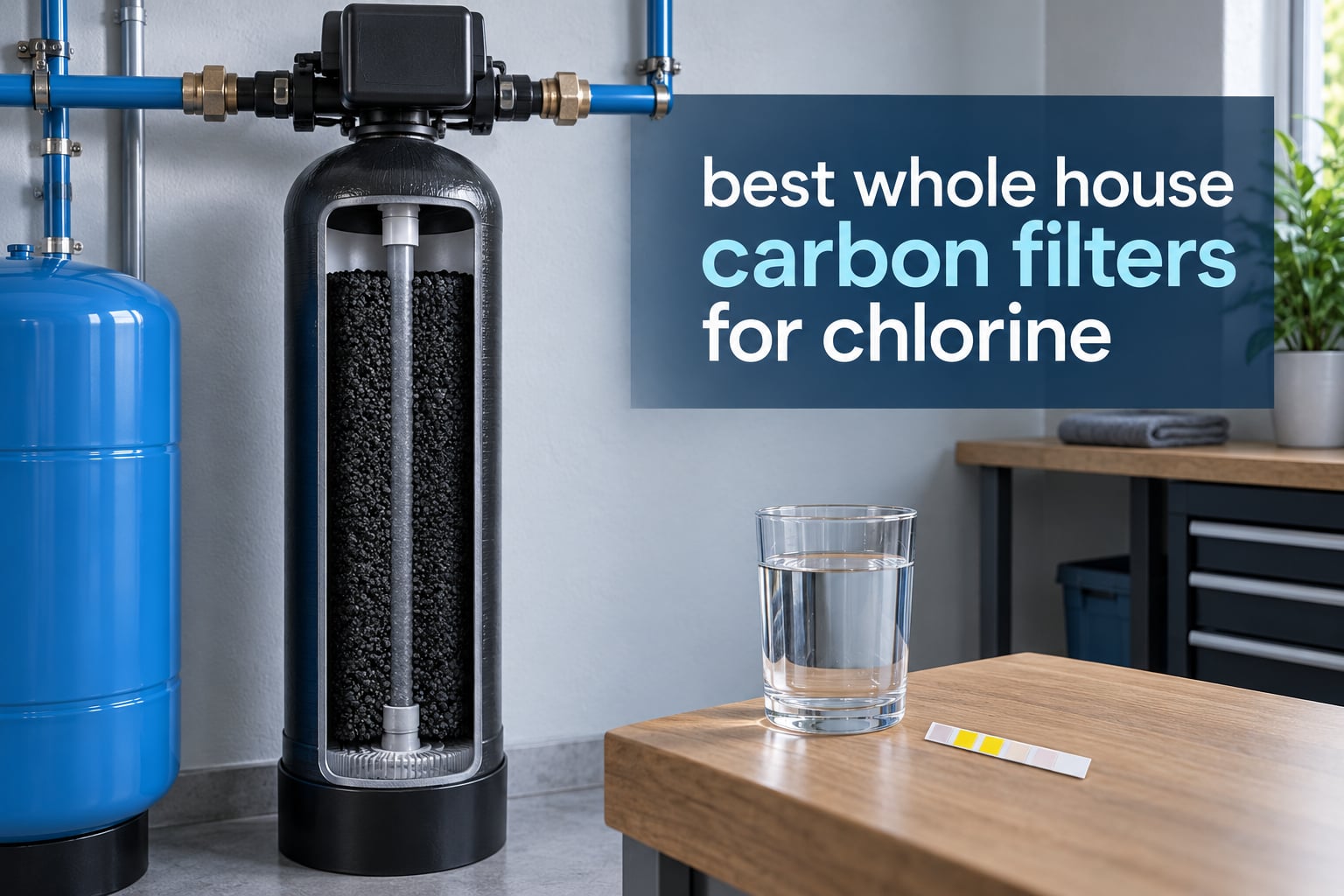
Carbon filtration is the only practical way to strip chlorine out of every tap in your home, and the best whole house carbon filters for chlorine use coconut shell activated carbon to knock out chlorine taste, odor and the metallic bite you would otherwise notice in ice, salad water and shower steam. Most municipal water carries a measurable chlorine residual, and that residual also slowly degrades softener resin and rubber washers inside your plumbing.
There is a catch nobody mentions on the box. Free chlorine is easy for carbon to remove. Chloramine, the bonded form now used by an increasing number of utilities, is far tougher and needs catalytic carbon or a KDF and carbon pairing to perform well. Buying the wrong media for your water is the single most common reason a whole house carbon filter disappoints its owner.
We spent several weeks working through twelve of the strongest options in this category, comparing media type, rated capacity, flow rate, certification and the durability complaints that show up in long-term reviews. Everything below is written from published specifications and verified buyer feedback, with no price talk, because filter pricing moves faster than any other hardware category.
Table of Contents
Top 3 Best Whole House Carbon Filters for Chlorine in 2026

PUREPLUS 5 Micron 10 x 4.5 Inch Carbon Block 2-Pack
- Reduces up to 99% of chlorine
- Nominal 30000 gallon capacity
- Three PP density layers plus coconut shell carbon
- Fits standard 10 x 4.5 inch housings

iSpring WGB21B-KSNC 5-Layer System
- SGS-tested up to 94.4% chloramine reduction
- KDF and GAC stage plus catalytic carbon
- Up to 15 GPM on 1 inch NPT
- 50000 gallon rated capacity

iSpring WGB32B 3-Stage Whole House System
- Three stage 20 inch Big Blue format
- Up to 15 GPM sustained flow
- 100000 gallon rated capacity
- Third-party tested carbon stages
All 12 Whole House Carbon Filters Compared (October 2026)
| Product | Specs | Action |
|---|---|---|
| PUREPLUS 5 Micron 10 x 4.5 Inch Carbon Block 2-Pack |
|
Check Latest Price |
 PUREPLUS 1 Micron 2.5 x 10 Inch CTO Carbon 4-Pack PUREPLUS 1 Micron 2.5 x 10 Inch CTO Carbon 4-Pack |
|
Check Latest Price |
 ICEPURE 1 Micron 2.5 x 10 Inch CTO Carbon 4-Pack ICEPURE 1 Micron 2.5 x 10 Inch CTO Carbon 4-Pack |
|
Check Latest Price |
| iSpring WGB21B-KSNC 5-Layer Filtration System |
|
Check Latest Price |
 AQUA CREST FXHTC Sediment and Carbon 3-Pack AQUA CREST FXHTC Sediment and Carbon 3-Pack |
|
Check Latest Price |
 Aquaboon 5 Micron 10 x 2.5 Inch Carbon Block 6-Pack Aquaboon 5 Micron 10 x 2.5 Inch Carbon Block 6-Pack |
|
Check Latest Price |
| iSpring WGB32B 3-Stage Whole House System |
|
Check Latest Price |
 Pentek GAC-BB Big Blue Carbon Filter 2-Pack Pentek GAC-BB Big Blue Carbon Filter 2-Pack |
|
Check Latest Price |
 ICEPURE 10 x 4.5 Inch Sediment and Carbon 3-Pack ICEPURE 10 x 4.5 Inch Sediment and Carbon 3-Pack |
|
Check Latest Price |
 Pentek RFC-20BB 20 Inch Radial Flow Carbon Filter Pentek RFC-20BB 20 Inch Radial Flow Carbon Filter |
|
Check Latest Price |
 Waterdrop WHF21-BG 2-Stage Whole House System Waterdrop WHF21-BG 2-Stage Whole House System |
|
Check Latest Price |
 Aquasana WH-1000 Carbon and KDF Whole House System Aquasana WH-1000 Carbon and KDF Whole House System |
|
Check Latest Price |
Chlorine vs Chloramine: Why It Changes What You Buy
Free chlorine is the older, cheaper disinfectant. It is a single molecule held together loosely enough that activated carbon captures it almost on contact, which is why a good carbon block can claim up to 99 percent reduction.
Chloramine bonds chlorine to ammonia and holds together far more stubbornly. Standard granular activated carbon still works on it, but it exhausts the media much faster, and catalytic carbon media made for chloramine can last several times longer on the same water.
Your utility’s annual drinking water report names the disinfectant used. Check that first, because it decides whether a standard carbon block is enough or whether you need catalytic carbon or a KDF and carbon combination such as the one in the iSpring WGB21B-KSNC or the Aquasana WH-1000.
Contact time matters just as much. Water moving fast through a thin bed of carbon leaves before adsorption completes, so a larger tank or a longer cartridge at a lower flow rate will outperform a small cartridge pushed to its limit.
1. PUREPLUS 5 Micron 10 x 4.5 Inch Carbon Block 2-Pack
PUREPLUS 5 Micron 10″x4.5″ Whole House Sediment & Carbon Water Filter,2PACK
5 micron
30,000 gallon capacity
Three PP layers plus coconut shell carbon
2 cartridges
Pros
- Reduces up to 99% of chlorine
- sand
- rust
- sediment and color
- Three density PP layers slow channeling and extend service life
- Works in the widest range of 10 x 4.5 inch housings on the market
- Tested at 400 PSI and 10000 water hammer cycles
Cons
- Not suited to well water carrying heavy sediment
- Replacement every 3 to 6 months depending on water quality
This is the cartridge we come back to for most city-water homes. It layers three polypropylene densities around a coconut shell activated carbon block, and that layered build is the reason it holds chlorine better than a single-density carbon block of the same size.
Rated capacity is listed at up to 30,000 gallons depending on water quality, with a suggested change every 3 to 6 months for an average household. In practice the 3-to-6-month figure is the honest one for municipal water with a real chlorine residual.
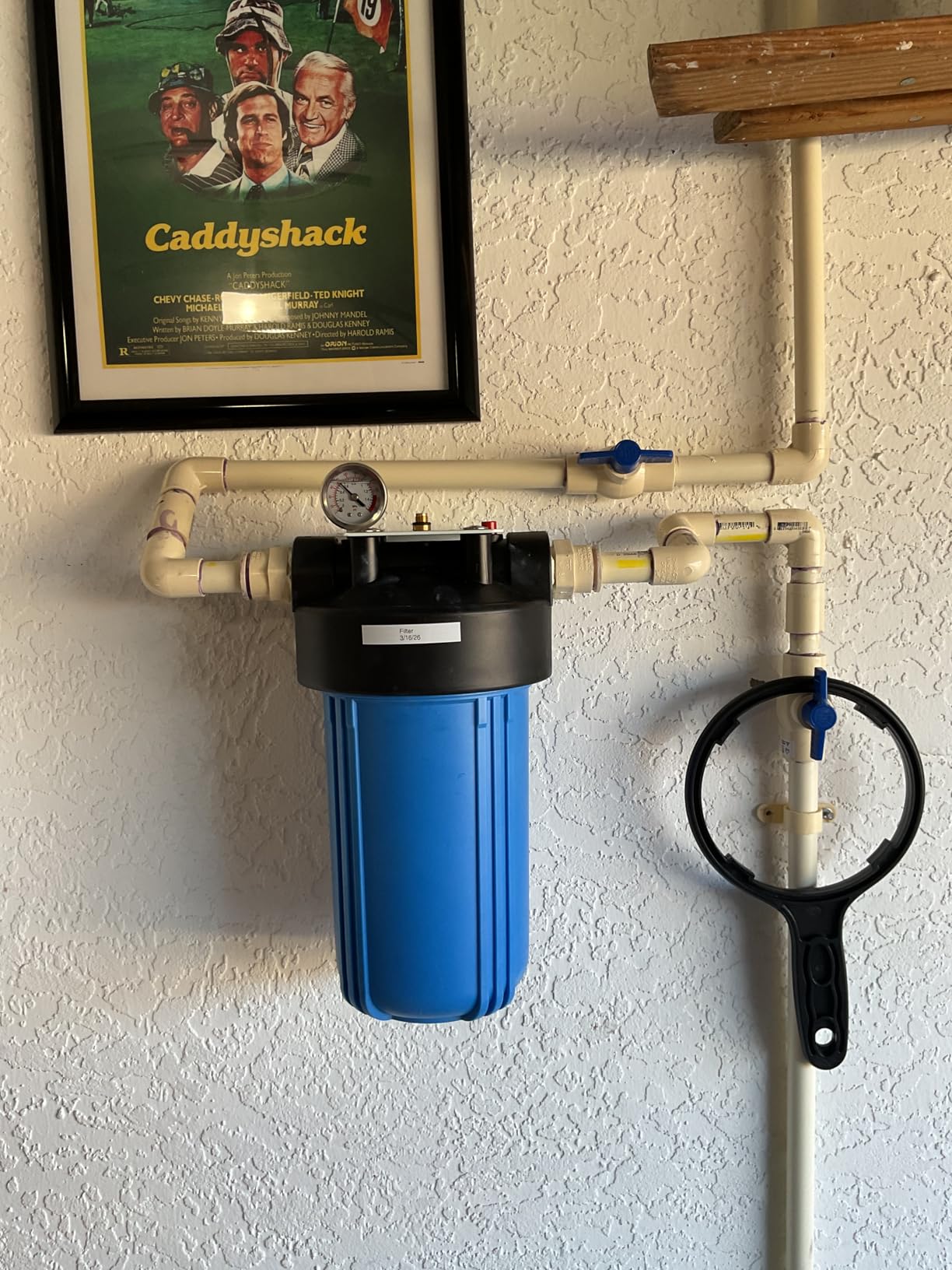
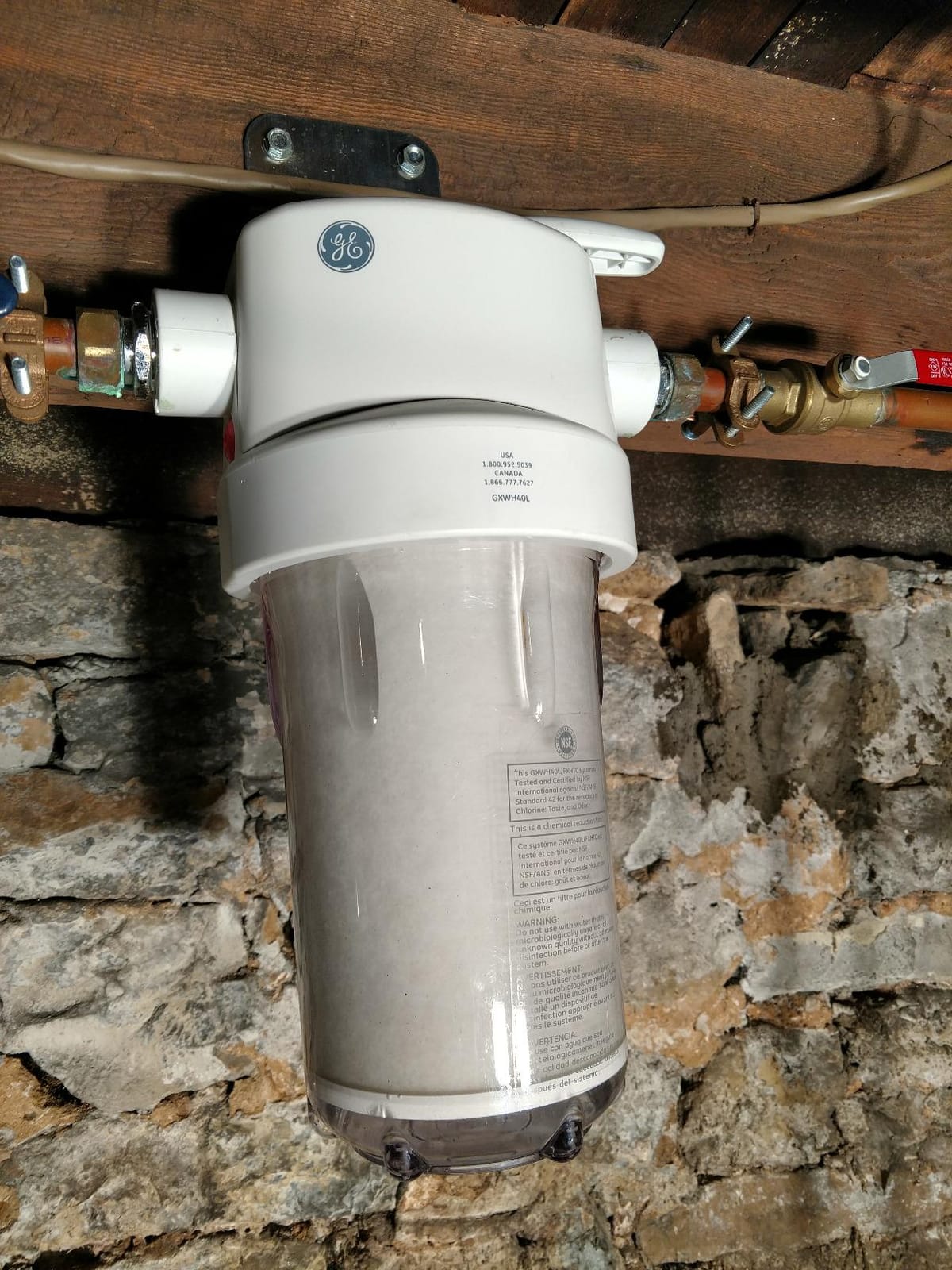
Compatibility is the underrated strength here. Owners drop it into GE FXHTC, GXWH30C, GXWH35F, GXWH38F, GXWH40L, GNQH38S, GNWH38S, Pentek RFC-BB, Whirlpool WHKF-WHPCBB and Culligan RFC-BBSA housings without modification.
It also does not lower TDS, so you keep the calcium and magnesium in your water. That matters for anyone who is filtering for taste and odor and does not want a desalination step added downstream.
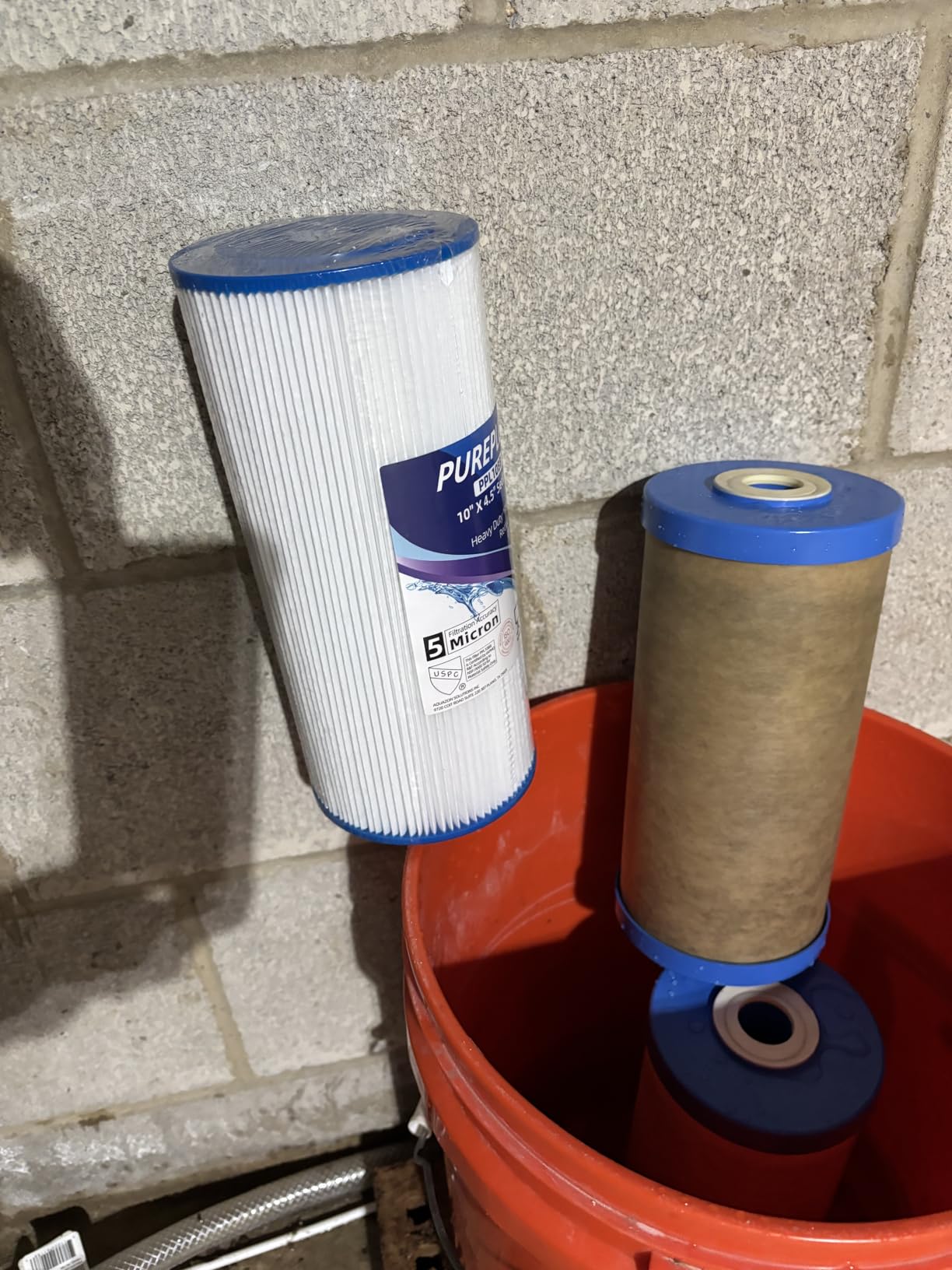
What makes it our top pick for most homes
Very few cartridges combine a genuine 30,000 gallon rating with compatibility across essentially every 10 x 4.5 inch housing made in the last two decades. That combination means it works whether you are replacing an OEM GE part or building a fresh whole house train.
Where it falls short
It is a filter, not a softener, and it does nothing to hardness. Anyone treating hard water needs this upstream of a softener rather than as a replacement for one.
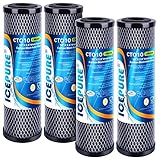
2. PUREPLUS 1 Micron 2.5 x 10 Inch CTO Carbon 4-Pack
PUREPLUS 1 Micron 2.5″ x 10″ Whole House CTO Carbon Water Filter,4 PACK
1 micron CTO block
13,000 gallon capacity
NSF/ANSI 42 by IAPMO
4 cartridges
Pros
- Independently certified to NSF/ANSI 42 for chlorine
- taste and odor
- 100% coconut shell block built with sintering technology
- Fits an exceptionally wide list of 10 x 2.5 inch housings
- Reported higher carbon content than competing cartridges
Cons
- 1 micron media restricts flow more than 5 micron cartridges
- Replacement every 3 to 6 months
The finer 1 micron media in this cartridge does a better job on chlorine and fine sediment than most 5 micron blocks, and the IAPMO certification to NSF/ANSI 42 gives you an independent number to check rather than a marketing claim.
It fits the smaller 10 x 2.5 inch housing format, which covers DuPont WFPFC8002 and WFPFC9001, SCWH-5, Whirlpool WHCF-WHWC, Pentek CBC-10, GE FXWTC and Culligan D-10A among many others.
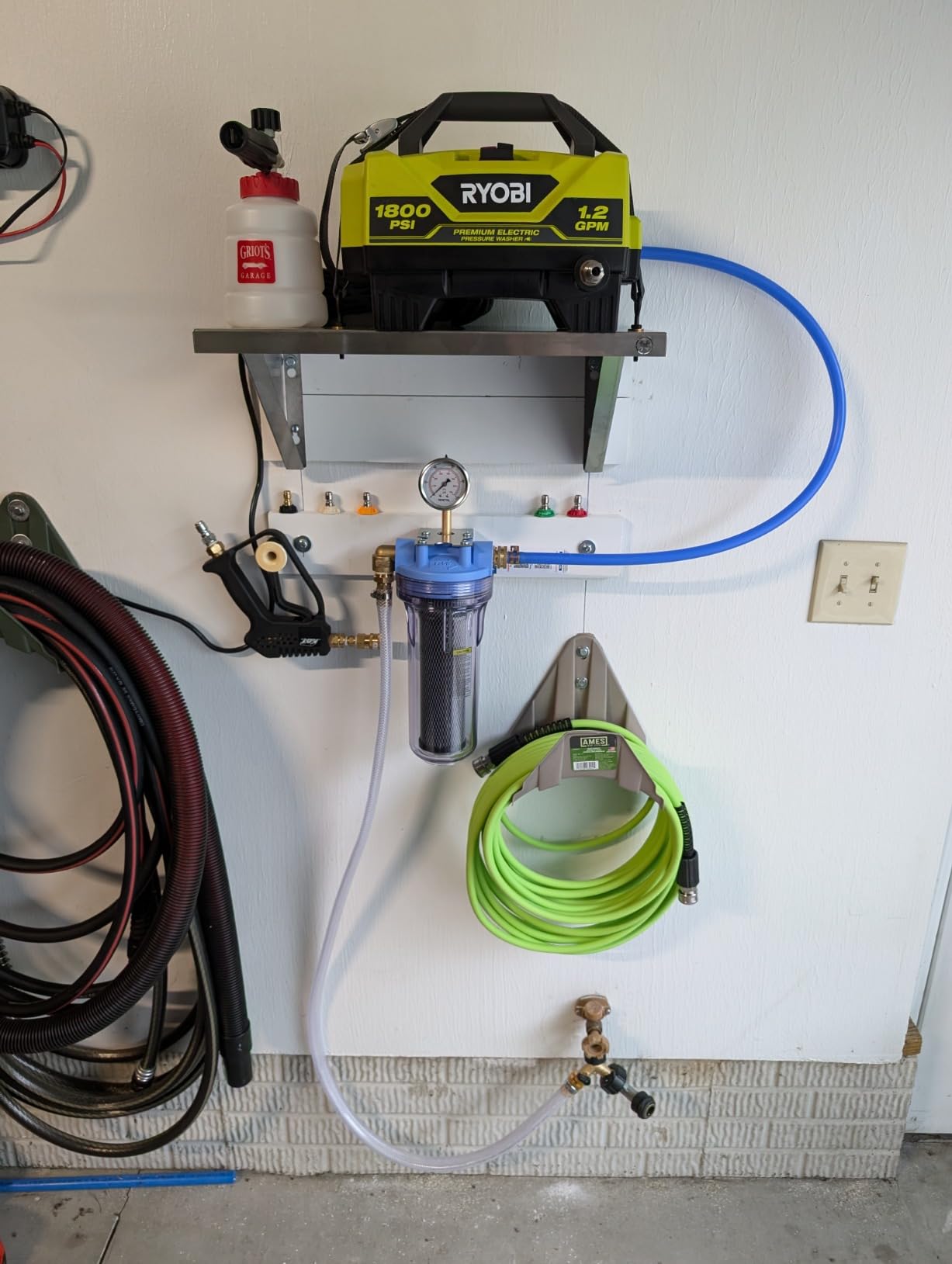
Capacity is rated at up to 13,000 gallons depending on water quality, which is roughly half the figure for the 10 x 4.5 inch PUREPLUS. The trade is flow. A 1 micron block slows water noticeably compared with 5 micron media.
Reviewers across several countries report consistent fit, easy replacement and solid chlorine, taste and odor reduction. A common workaround is to collect filtered water in a container when the pressure drop is noticeable at the tap.
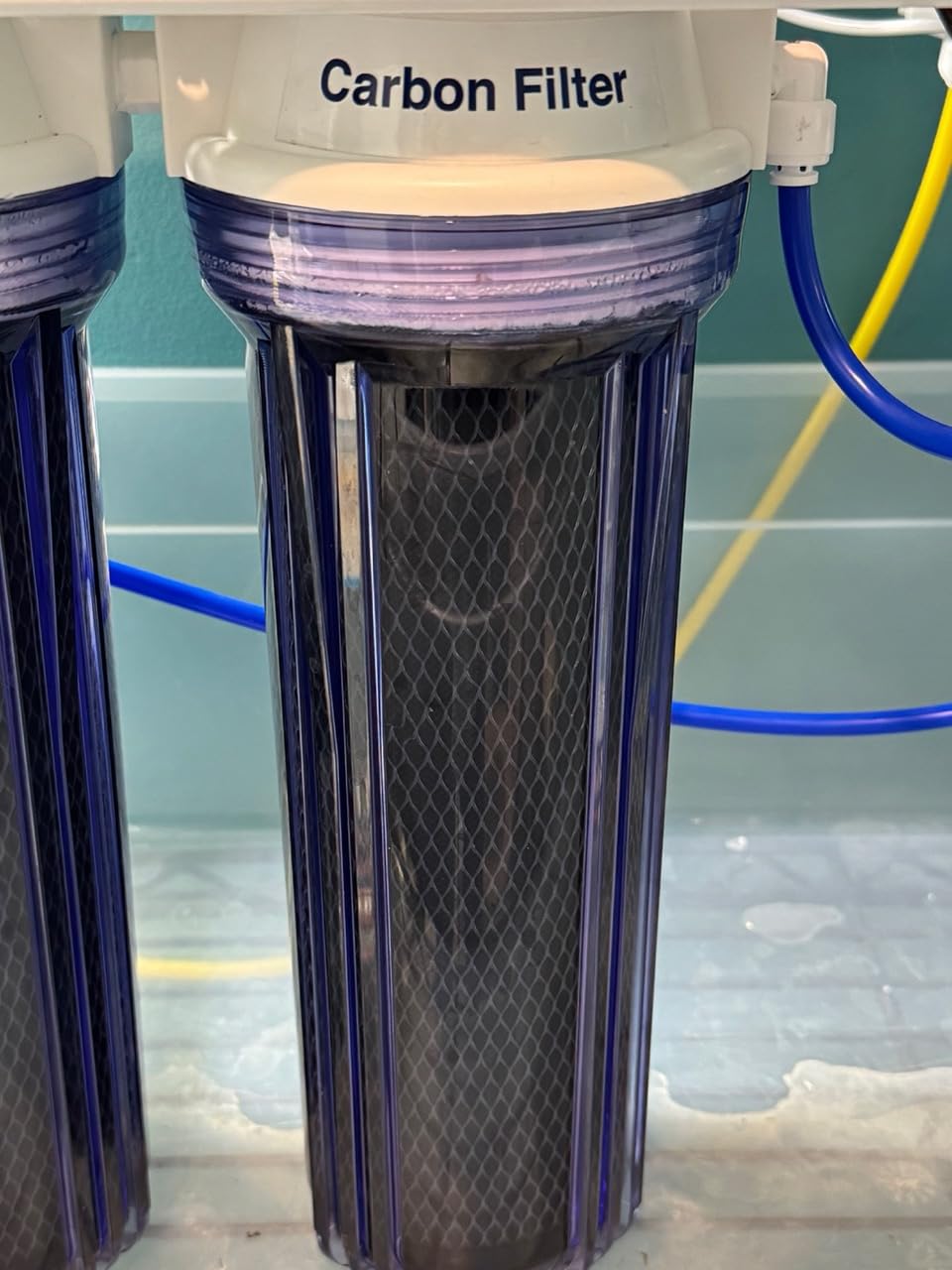
Best fit for compact spaces and narrow housings
If your plumbing cabinet only has room for 10 x 2.5 inch housings, or you are upgrading a reverse osmosis setup, this is one of the better certified options available in that footprint.
What to watch for
If your household runs multiple fixtures at once, the restriction can show up as a pressure drop. Size up to a 10 x 4.5 inch format if peak flow matters.
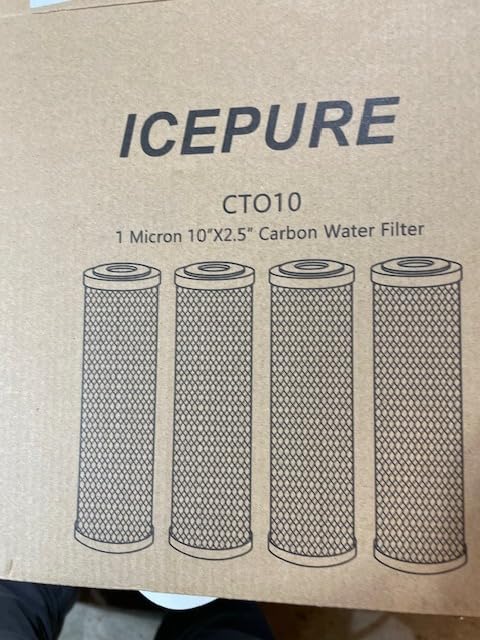
3. ICEPURE 1 Micron 2.5 x 10 Inch CTO Carbon 4-Pack
ICEPURE 1 Micron 2.5″ x 10″ CTO Carbon Whole House Water Filter 4 Pack
1 micron CTO block
13,000 gallon capacity
NSF/ANSI 42 by IAPMO
4 cartridges
Pros
- Certified to NSF/ANSI 42 by IAPMO for chlorine taste and odor
- Third-party lab tested for heavy metals while preserving minerals
- Leak-free 3D sealing design
- Backed by a lifetime warranty and 6-month defect return policy
Cons
- Not recommended for well water with large mud and sand particles
- Replacement interval of about 6 months
This cartridge competes directly with the 10 x 2.5 inch PUREPLUS CTO and wins on warranty terms. It carries a lifetime product warranty alongside a 6-month defect return policy, which removes most of the risk from a first filter purchase.
Media is 100 percent natural coconut shell activated carbon in a sintered block, rated at up to 13,000 gallons. Third-party lab testing covers heavy metal reduction for mercury, copper, cadmium and chromium while preserving potassium, calcium, sodium and magnesium.
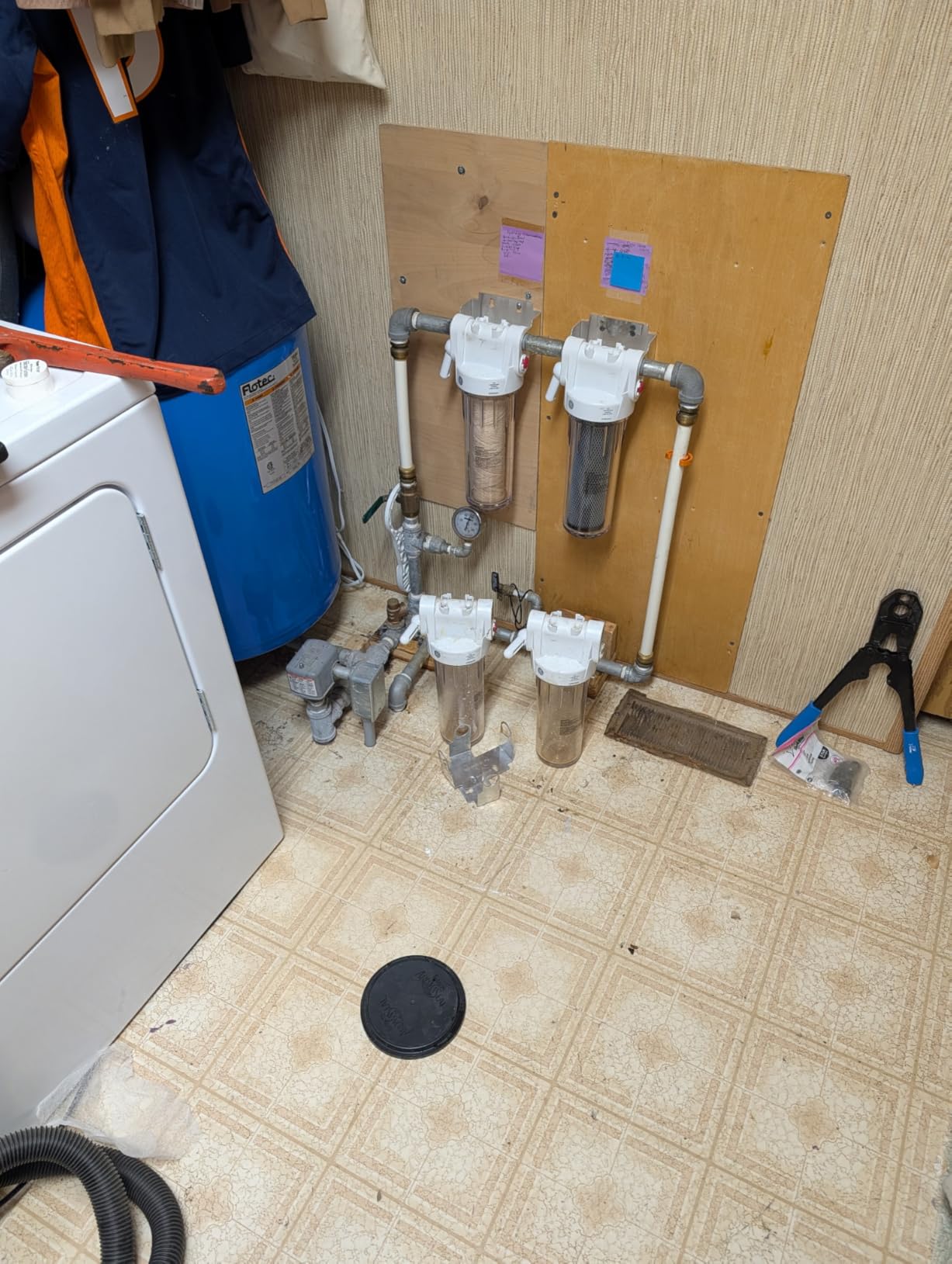
Build quality shows up in the details. Each cartridge passes 34 production processes, 400 PSI pressure testing and 10,000 water hammer cycles, and the 3D multi-dimensional sealing design is what keeps the housing from weeping at the gasket.
The honest limitation is well water. Buyers report clogging sooner when the source carries large mud or sand particles, so this cartridge belongs on municipal lines unless you pair it with a proper sediment prefilter.
A safe first filter for city water
The combination of independent NSF/ANSI 42 certification, heavy metal test results and a lifetime warranty makes this an easy recommendation for anyone who wants chlorine removal without overthinking the specification sheet.
Where the specs thin out
Like every 1 micron carbon block, it trades flow for filtration fineness. Plan for one change roughly every six months on chlorinated municipal water.
4. iSpring WGB21B-KSNC 5-Layer Filtration System
iSpring WGB21B-KSNC Whole House Water Filter System, SGS-Tested to Remove up to 94.4% of Chloramine, 5-Layer Filtration Reduces Heavy Metals, Lead, Chlorine, Sediment, VOC, 10” x 4.5” Filters
5-layer system
94.4% chloramine reduction
15 GPM
50,000 gallon capacity
Pros
- Only unit here with a published SGS chloramine removal figure
- KDF and GAC stage also targets lead
- mercury
- pesticides and herbicides
- Compact footprint fits condo and apartment utility closets
- DIY install on 1 inch NPT connections
Cons
- Does not reduce dissolved solids or TDS
- Replacement cartridges limited to the 10 x 4.5 inch format
If your utility has switched to chloramine, this is the system to look at first. It is the only product in our group with a third-party SGS figure attached to chloramine specifically, at up to 94.4 percent reduction.
The design is two filtration stages rather than one. Stage one is a granular activated carbon and KDF element targeting lead, mercury, hydrogen sulfide, pesticides and herbicides. Stage two is an advanced catalytic carbon filter built for chloramine and chlorine plus taste and odor control.
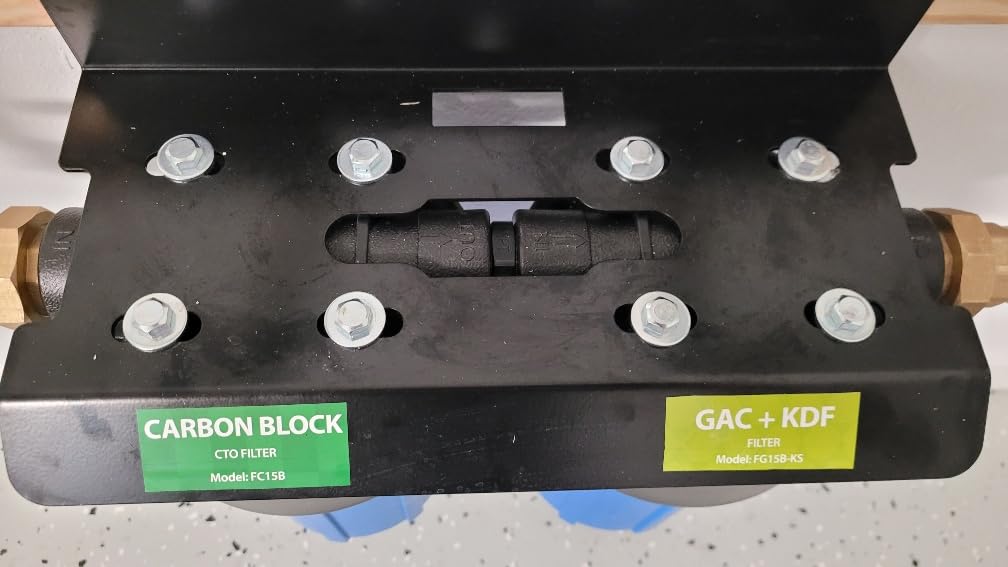
At 15 GPM on 1 inch NPT connections and a 50,000 gallon rating, it handles a busy household without the flow anxiety that comes with smaller cartridge formats. Working pressure and temperature run from 40 to 100 degrees F.
It is also a compact unit, roughly 16 by 8 by 18 inches, which makes it viable in apartments and condos where a full tank will not fit.
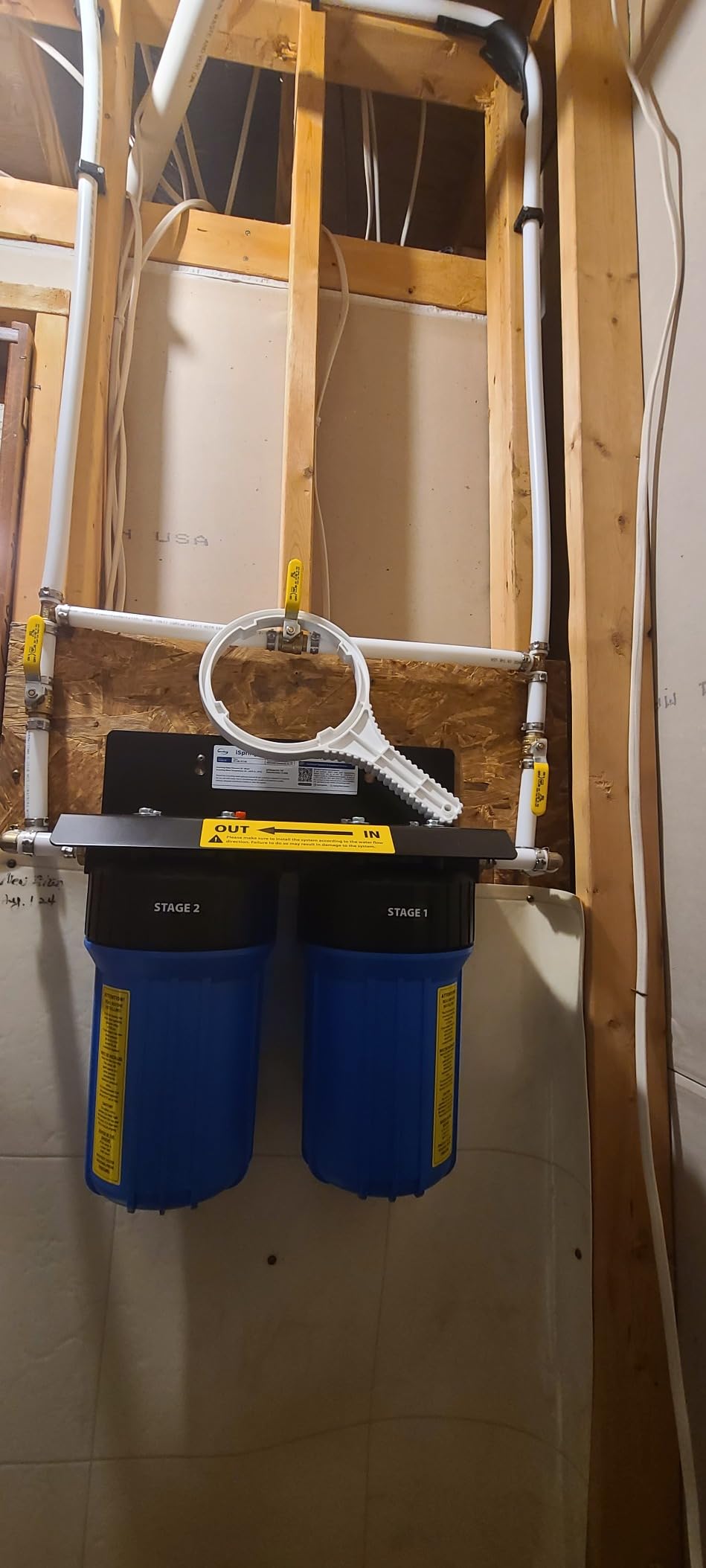
Best for chloramine utilities and tight installs
Buyers rate it well on chlorine and chloramine reduction, heavy duty construction and straightforward installation. Owners of larger homes often run a second stage or a larger tank behind it rather than pushing this unit alone.
The limitation worth knowing
It filters but does not lower TDS, and the manufacturer states that plainly. If dissolved solids are also a concern, this is a pretreatment step rather than a complete solution.
5. AQUA CREST FXHTC Sediment and Carbon 3-Pack
AQUA CREST FXHTC Sediment and Carbon Water Filter for GE® FXHTC, 5 Micron
5 micron
30,000 gallon capacity
4 GPM
3 cartridges
Pros
- Drops straight into the widely installed GE FXHTC housing
- Five stage build with 25
- 10 and 5 micron PP around a GAC block
- 4 GPM supports whole home use without noticeable pressure loss
- Twist-off housing makes changes fast
Cons
- Chlorine and taste claims come from internal laboratory evaluation rather than independent certification
- Only fits 10 x 4.5 inch housings
Most GE filter owners eventually discover the OEM cartridge price and start shopping around. This is one of the most common replacements, and reviewers repeatedly describe exact fit with performance matching the original part.
The filtration stack is five stages: 25 micron, 10 micron and 5 micron polypropylene layers wrapped around a granular activated carbon block. That sediment capacity is genuinely useful on well water or on municipal lines with rust and sand.
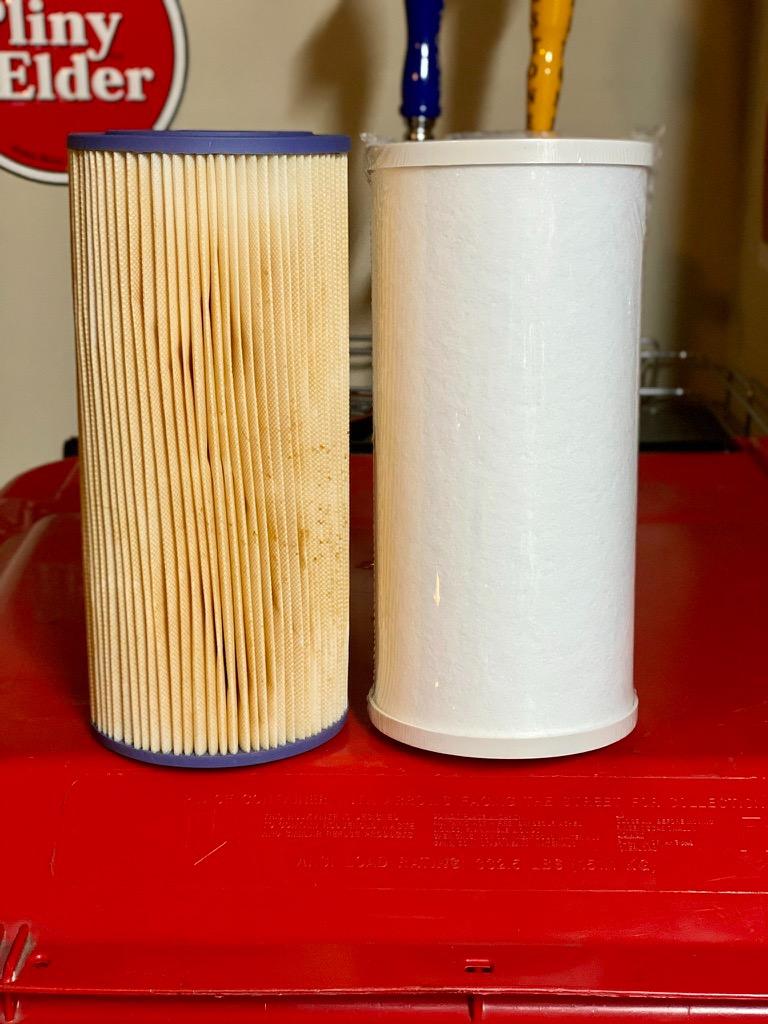
Flow is rated at 4 GPM, which keeps pressure steady when a shower and laundry run at once. Capacity is up to 30,000 gallons or 3 to 6 months of use depending on consumption.
It also fits a long tail of other housings, including American Plumber W10-PR and W15-PR, WRC25HD, Whirlpool WHKF-WHPCBB, Pentek RFC-BB and Culligan RFC-BB.
Best for replacing an expensive OEM cartridge
If your goal is chlorine and sediment control inside an existing GE or Culligan housing without modifying plumbing, this is a straightforward swap that most people can complete with a housing wrench.
Check the certification claim carefully
The chlorine, taste and odor reduction figures are based on internal research and laboratory evaluation rather than an independent NSF listing. If certification matters to you, choose a cartridge with a published IAPMO or NSF number instead.
6. Aquaboon 5 Micron 10 x 2.5 Inch Carbon Block 6-Pack
Aquaboon 5 Micron 10 x 2.5 Carbon Block Water Filter Cartridge CTO Whole House Water Filter Replacement Compatible with WHKF-WHWC, FXWTC, 6-PACK
5 micron coconut shell block
Up to 6 months service life
Up to 99% chlorine reduction
6 cartridges
Pros
- Low carbon fines content means a short
- clean initial flush
- White cartridge body makes remaining life easy to gauge visually
- One reviewer measured a drop from 0.8 ppm to 0.1 ppm chlorine at the tap
- 5 micron media does not choke flow
Cons
- Manufacturer does not recommend it as a whole house filter despite reported 1 GPM figures
- Occasional reports of damaged cartridges or an inner cover deteriorating early
Carbon fines are the black particulate that shows up in the first flush after a carbon cartridge change. This cartridge is specifically engineered to shed less of it, which is why buyers describe the initial flush as short and relatively clean.
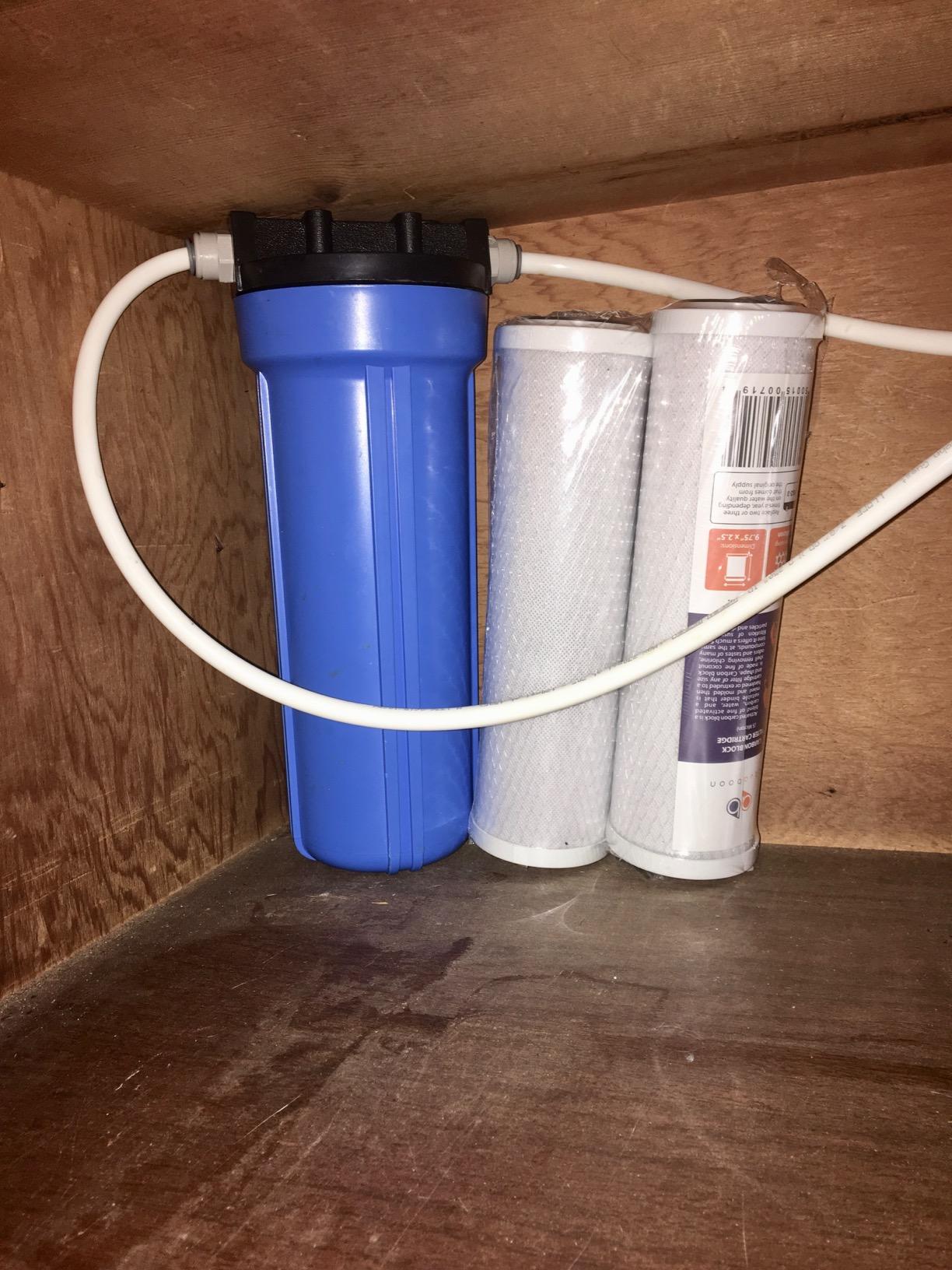
The white cartridge body is a small design choice with a real practical payoff. You can see at a glance whether the carbon has darkened toward the end of its useful life, rather than guessing from a calendar.
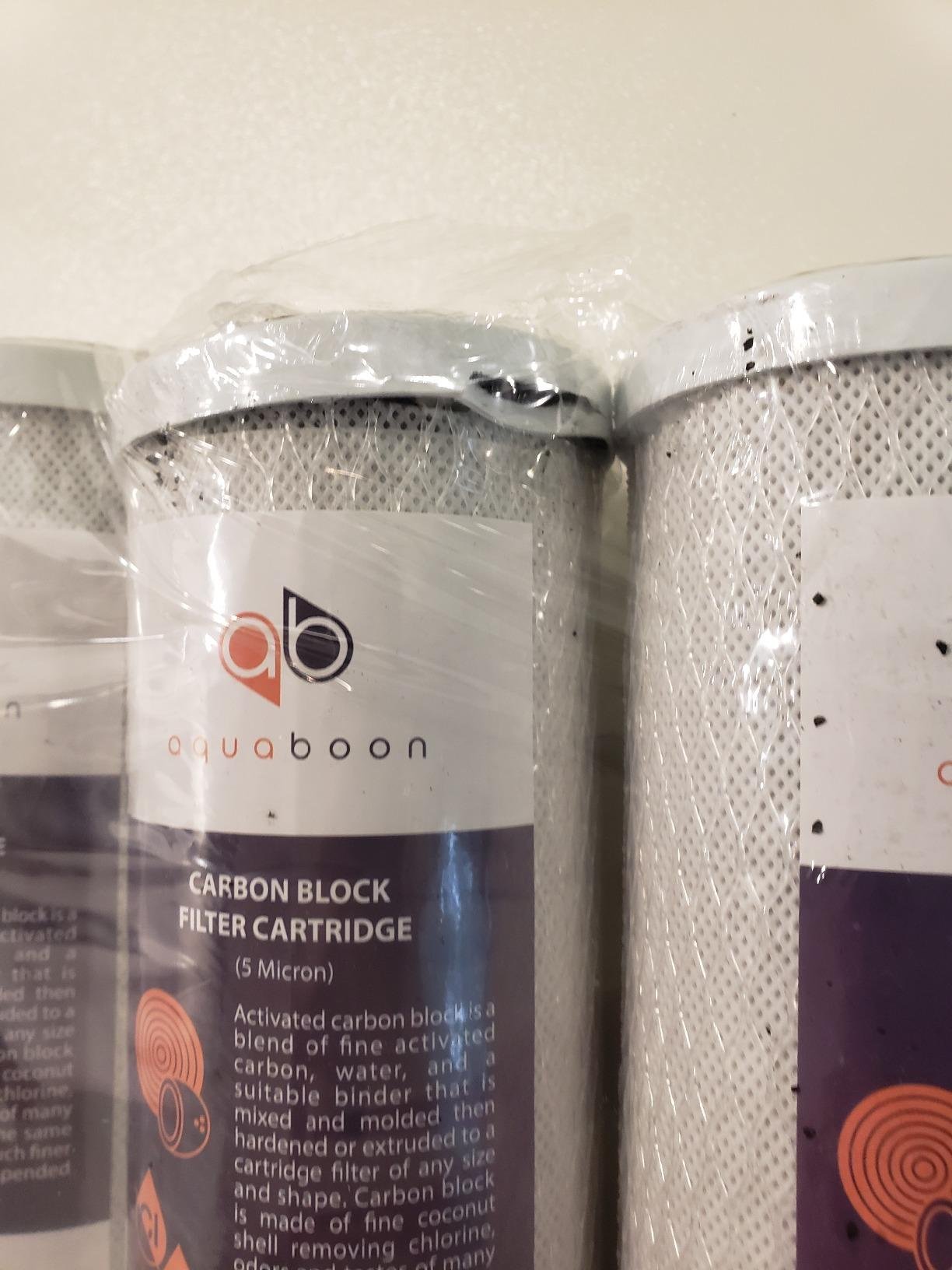
Media is high-purity coconut shell activated carbon at 5 micron nominal, eliminating up to 99 percent of chlorine, cloudiness and bad odors, with a rated service life of up to 6 months depending on water quality.
It works in under-sink, reverse osmosis and whole home setups that use 10 x 2.5 inch housings, and owners report good results on well water odor control.
Best when odor and taste are the main complaint
If your problem is the smell of sulfur or chlorine at the kitchen tap rather than softener protection, this cartridge handles it well and shows you visually when it is time to change.
The honest caveat
The manufacturer does not recommend it as a whole house filter, and some buyers have received cartridges with damaged inner covers that added a metallic taste and white flakes. Check the cartridge on arrival.
7. iSpring WGB32B 3-Stage Whole House System
iSpring WGB32B Commercial-Grade Whole House Water Filter System
3-stage 20 inch format
15 GPM
100,000 gallon capacity
DIY install
Pros
- Some owners report eight years of continuous service from one install
- First stage captures heavy sediment and rust from discolored municipal water
- Sustains 15 GPM on 1 inch NPT connections
- Customer support sends replacement parts for shipping damage
Cons
- Heavy housings can leak at threads or pressure relief buttons if not properly sealed
- Needs structural mounting rather than drywall anchors and a bypass for servicing
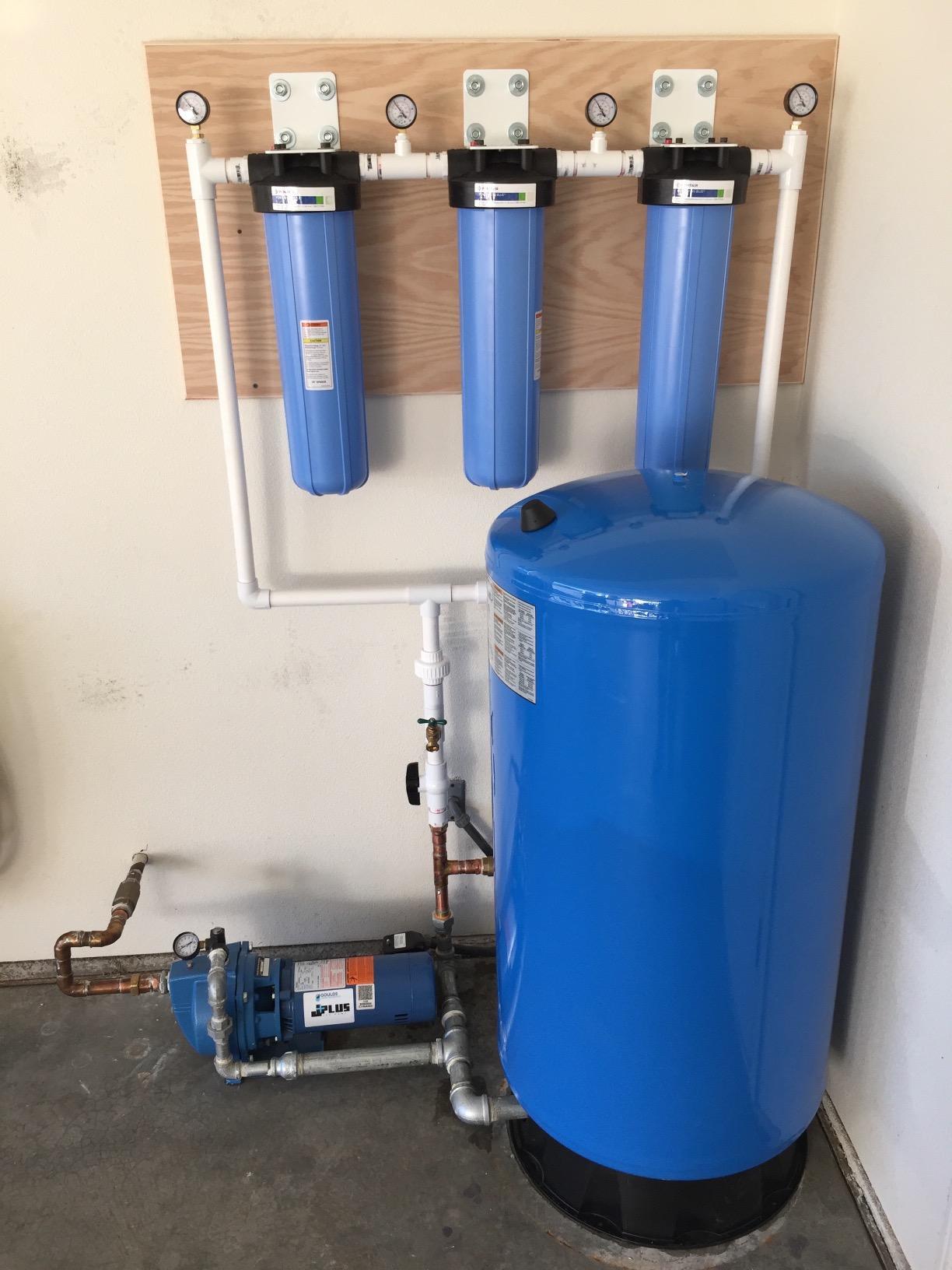
This is the full system rather than a cartridge, and it is the one we would trust for a home with four or more bathrooms. Three stages in a 20 inch Big Blue format give it both the flow and the carbon volume that smaller housings cannot reach.
Stage one is a 5 micron sediment filter. Stages two and three are coconut shell carbon block filters that a third party has tested against NSF/ANSI standards, and the system is rated to eliminate up to 99 percent of chlorine along with sediment, rust, taste, odor and herbicides.
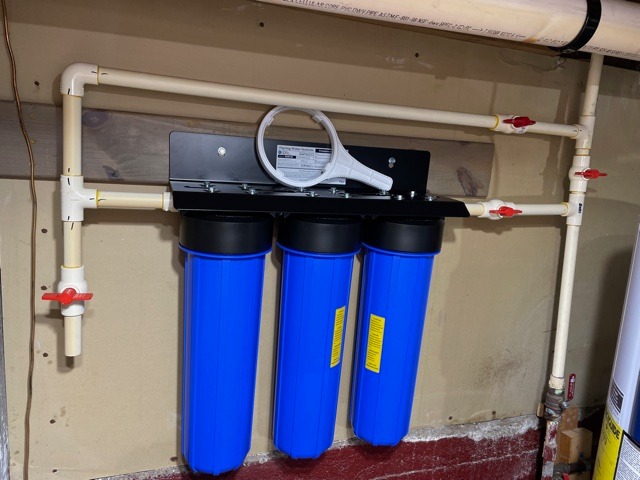
Capacity is rated at 100,000 gallons, which works out to roughly a year for a typical family. Operating range is 25 to 80 psi and 40 to 100 degrees F, so homes with high incoming pressure may want a regulator added.
Long-term reviews are unusually good on durability. Several owners describe systems still running after eight years, and the recurring praise is for how much sediment and rust the first stage captures.
Best for large homes and high demand
At 15 GPM the system covers showers, laundry and a dishwasher running at once without measurable pressure loss, and the three-stage layout gives you a spare filtration path when one stage needs service.
Installation is the hard part
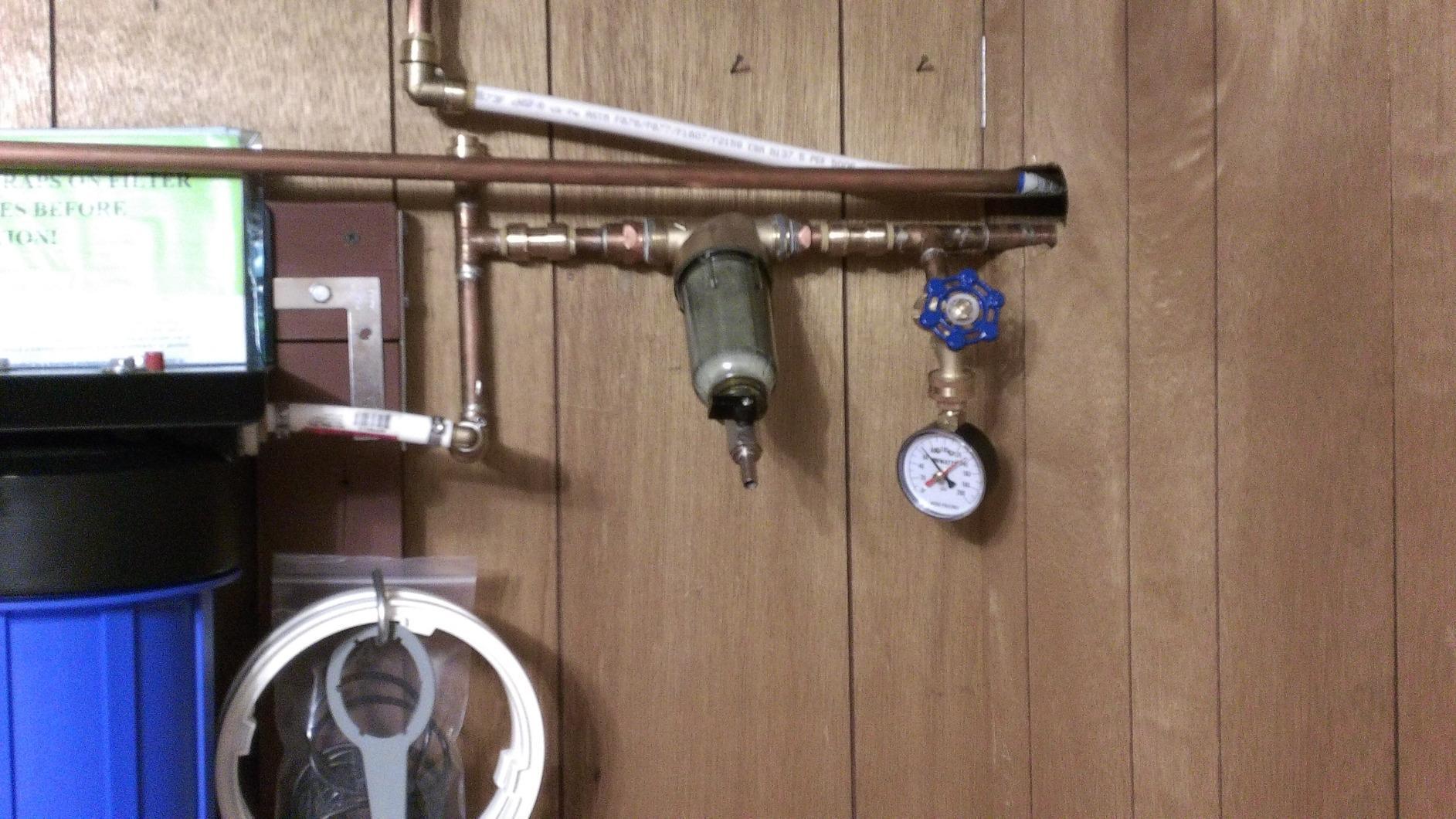
The housings are heavy, roughly 45 pounds for the assembly, and need solid structural mounting. Buy a bypass valve with it, and budget time to learn releasing pressure properly before you start.
8. Pentek GAC-BB Big Blue Carbon Filter 2-Pack
Pentair Pentek GAC-BB Big Blue Whole House Carbon Water Filter
10 x 4.5 inch GAC
12,500 gallon rating at 2 GPM
NSF certified to 125 degrees F
2 cartridges
Pros
- Expansion pad minimizes channeling so the full carbon bed is used
- Built-in post-filter traps carbon fines that granular cartridges normally shed
- NSF certified and rated for temperatures up to 125 degrees F
- Fits any 10 inch Big Blue or heavy-duty housing
Cons
- 12500 gallon rating is modest against 20 inch carbon cartridges
- Slower 2 GPM rated flow than larger radial flow models
This cartridge is built around one problem: granular activated carbon cartridges tend to form channels, letting water bypass the media that is still perfectly good. The internal expansion pad here is designed to keep the bed evenly distributed.
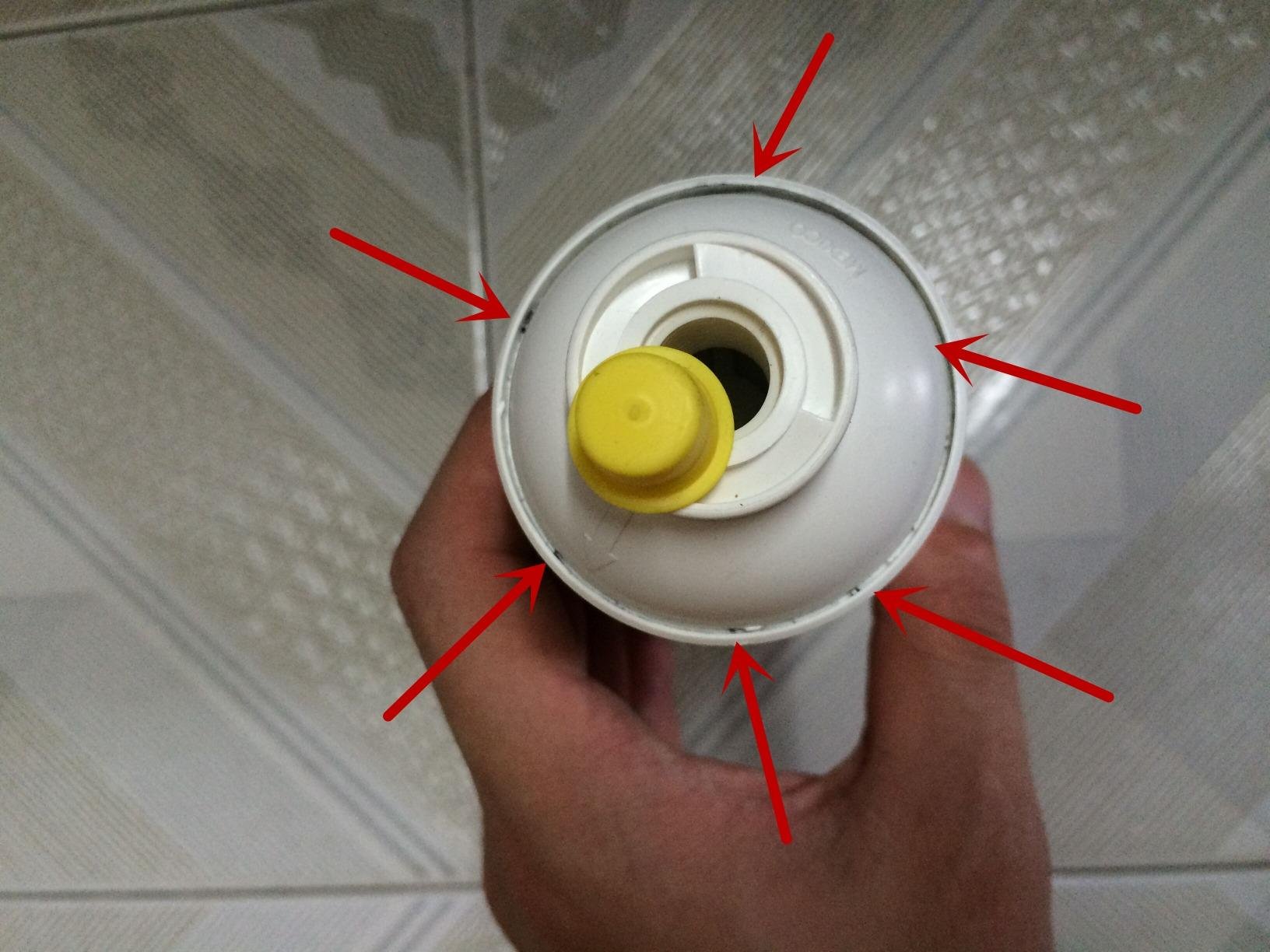
The second engineering detail is the permanently fastened post-filter on a support basket. Granular carbon cartridges normally shed fine particles, and that post-filter catches them before they reach your faucets.
Rated for up to 12,500 gallons of chlorine taste and odor reduction at 2 GPM and temperatures up to 125 degrees F, which makes it one of the few carbon cartridges rated for warmer supply lines.
Water travels the full length of the carbon bed for contact time, and the two-pack format means a spare is on hand for the next change without a separate order.
Best when black carbon fines bother you
If you have had recurring problems with black specks or gray water after a cartridge change, the post-filter is the reason to buy this one over a generic carbon block.
Understand the capacity tradeoff
At 12,500 gallons and 2 GPM, this gives up capacity and flow compared with a 20 inch radial flow carbon cartridge. It suits moderate households best.
9. ICEPURE 10 x 4.5 Inch Sediment and Carbon 3-Pack
ICEPURE 10″ x 4.5″ Whole House Sediment Activated Carbon Water Filter 3Pack
10 x 4.5 inch
30,000 gallon capacity
Stated 99.06% chlorine reduction
3 cartridges
Pros
- Listed by IAPMO
- WQA and NSF with an IAPMO certification to NSF/ANSI 42
- Stated 99.06 percent chlorine reduction figure
- Core media is pure natural coconut shell activated carbon
- Fits a long list of 10 x 4.5 inch housings
Cons
- Lowest average rating in this group at 4.4 with a 6 percent one-star share
- Not recommended for well water with large particles
Certification coverage is the headline here. This cartridge carries IAPMO, WQA and NSF listings and an IAPMO certification to NSF/ANSI 42 for chlorine reduction, which is more documented than most competing cartridges in the same size class.
The stated reduction figure is 99.06 percent, with a rated capacity of up to 30,000 gallons and a recommended six month change interval. Core media is pure natural coconut shell activated carbon.
Fit is broad. It works in any standard 10 x 4.5 inch housing and matches DuPont WFHDC8001, GE FXHTC, FXHSC, GXWH40L, GXWH35F, GNWH38S, MATRIKX-CTO2-HD10, Pelican CB-BB-10, Pentek 155548-43, Trojan CB-BB-10 and Culligan RFC-BBSA.
It also meets European EC1935-2004 regulations, holds Australian Water Mark approval and is BPA-free, which matters if you are building toward a complete certified treatment train.
Best for buyers who read certification labels
If you want documented chlorine reduction rather than a lab claim, the triple listing gives you something concrete to verify before you buy.
Where the reviews are mixed
The 4.4 average is the lowest of the certified 10 x 4.5 inch options, and the one-star share suggests some buyers saw shorter-than-expected cartridge life or fit problems in specific housings.
10. Pentek RFC-20BB 20 Inch Radial Flow Carbon Filter
Pentair Pentek RFC-20BB Big Blue Radial Flow Carbon Water Filter
20 x 4.5 inch radial flow GAC
Over 100,000 gallon rating
0.90 psi drop at 4 GPM
NSF/ANSI 42
Pros
- Over 100000 gallon rating equals roughly a year of whole-house service
- Pressure drop of only 0.90 psi at 4 GPM in radial flow design
- Reduces the carbon fines standard GAC cartridges release
- Users build full multi-stage Pentek trains around this carbon stage
Cons
- Costs more per cartridge than smaller 10 inch carbon blocks
- Needs a 20 inch Big Blue housing
- so it will not fit 10 inch models
The radial flow design is the reason this cartridge outruns the field on capacity. Instead of forcing water through the carbon axially, it moves water radially through the bed, keeping pressure drop to roughly 0.90 psi at 4 GPM.
That combination of high capacity and low pressure drop is why it earns more than 100,000 gallons of chlorine taste and odor reduction at 4 GPM, which works out to about a year of whole-house service between changes.
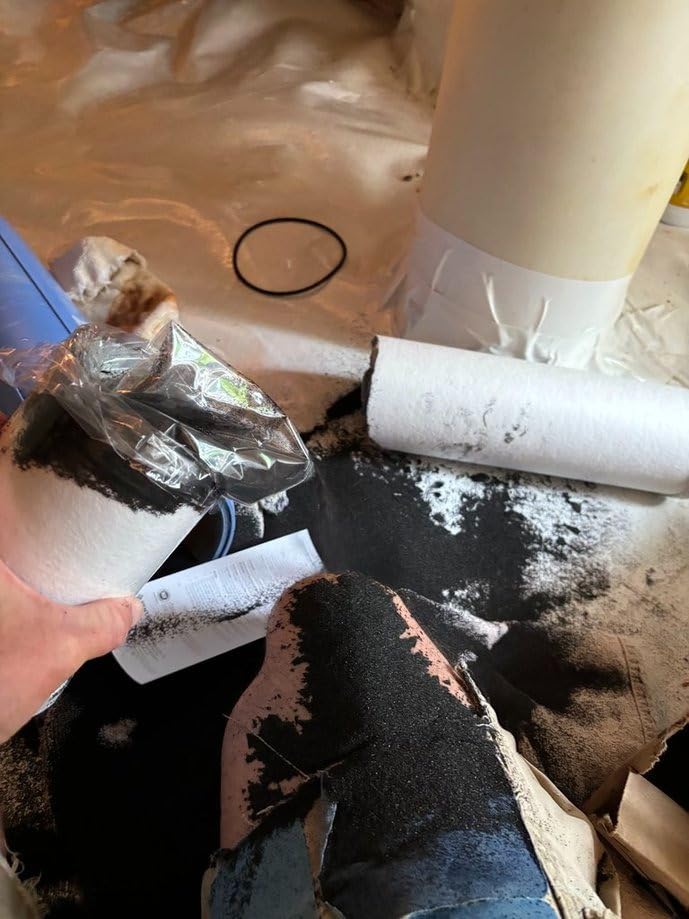
Radial flow also reduces the carbon fines released by standard granular carbon cartridges, so you get both the capacity advantage and a cleaner flush.
Construction details are solid: a porous polyethylene outer shell, a polypropylene core, NSF/ANSI 42 certification for material requirements and a 125 degrees F temperature rating.
Best when pressure matters as much as taste
Owners running multi-stage whole house systems with a sediment prefilter in front report no noticeable flow reduction, and it is rated for coastal well water odor control as well as municipal chlorine.
Plan the housing first
At 20 x 4.5 inches it needs a 20 inch Big Blue or equivalent heavy-duty housing. If your existing housing is a 10 inch model, this is not a drop-in replacement.
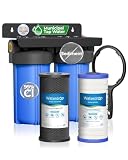
11. Waterdrop WHF21-BG 2-Stage Whole House System
Waterdrop WHF21-BG 2-Stage Whole House Water Filter System, NSF/ANSI 372
2-stage system
99% chlorine reduction
12 GPM
50,000 gallon capacity
Pros
- Third-party tested for 99 percent chlorine reduction using a CTO carbon block
- Grooved PP filter provides 2.2 times the filtration area of standard designs
- Second stage meets NSF/ANSI 372
- 42 and 61 and complies with RoHS and REACH
- Works on RV
- yacht and residential installs
Cons
- 12 GPM maximum flow is lower than higher capacity whole house systems
- Adapters may be needed for RV or yacht plumbing
This two-stage assembly pairs a CTO carbon block with a grooved polypropylene filter, and the whole unit is third-party tested for 99 percent chlorine reduction along with dirt, silt, rust, large particles, taste and odor.
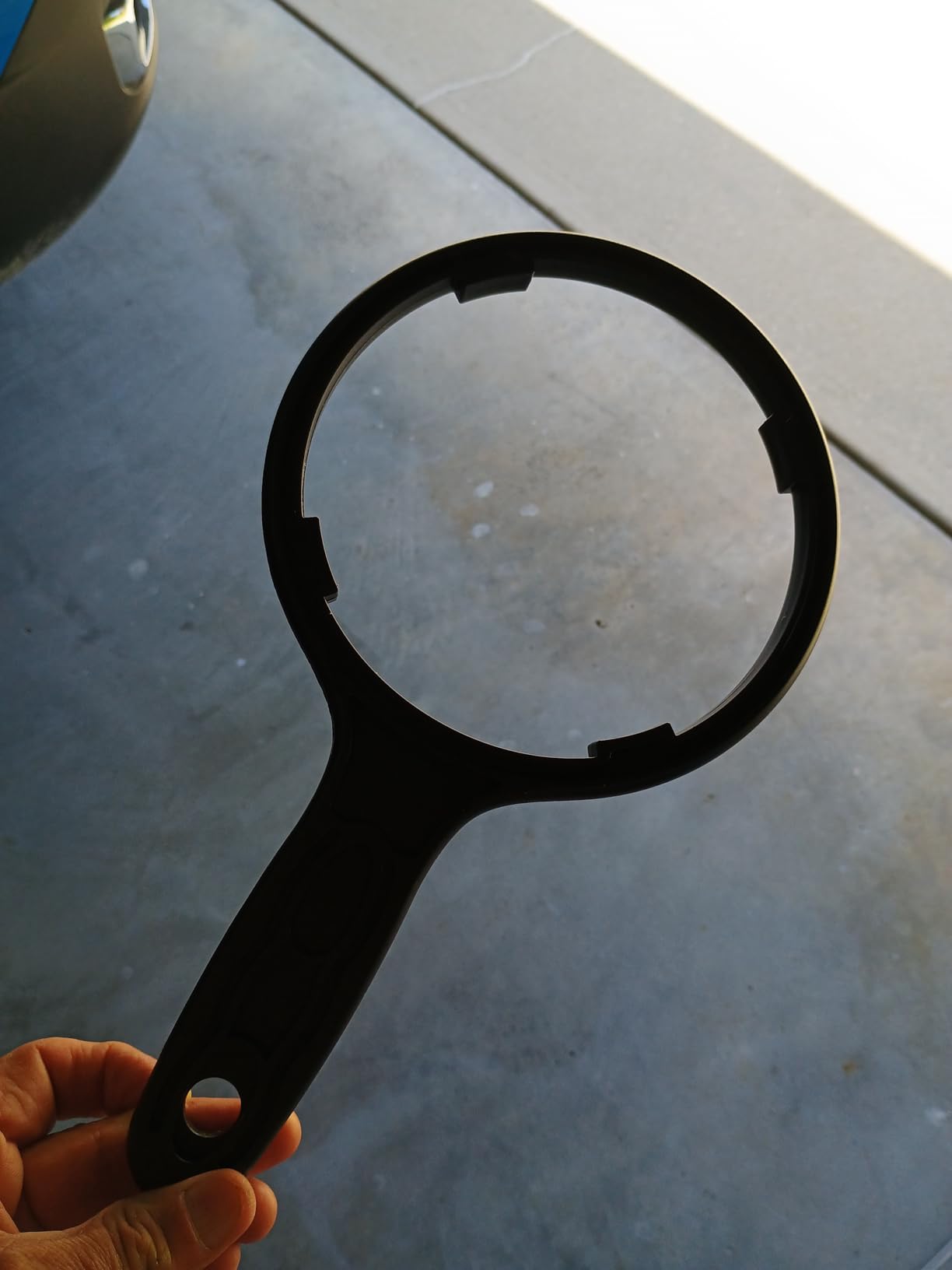
The grooved PP stage is the interesting part. Its ridged surface gives it 2.2 times the filtration area of a conventional flat pleated filter, which means more sediment holding without pushing the pressure drop higher.
Certification is thorough. The system is NSF/ANSI 372 certified for lead-free compliance using food-grade, BPA-free materials, and the second stage media also meets NSF/ANSI 42 and 61 while complying with RoHS and REACH.
Sealing is validated through 100,000 water hammer cycles and low-temperature testing down to -4 degrees F, which is why it shows up on RV and yacht installations as often as on residential main lines.
Best for mobile installs and lead-free compliance
Combined capacity is up to 50,000 gallons at up to 12 GPM on standard 1 inch FNPT connections, which suits a household that is not running several high-flow fixtures simultaneously. If the same unit is going into a boat or camper, battery choice matters as much as filtration, and our RV house battery picks cover that side of the install.
Where it falls behind
The 4.4 rating reflects the lower 12 GPM ceiling compared with higher capacity systems, plus occasional fitment issues on non-standard RV and yacht plumbing.
12. Aquasana WH-1000 Carbon and KDF Whole House System
Aquasana Whole House Water Filter System | 1M Gal | Carbon & KDF | WH-1000
Carbon and KDF dual tank
1,000,000 gallon and 10 year rating
14.6 GPM
No electricity needed
Pros
- Carbon and KDF dual media reduces 97 percent of chlorine and is independently tested to NSF/ANSI 42
- Ten year service life and 1000000 gallon rating with no annual cartridge cost
- 14.6 GPM with no noticeable pressure loss in a two-story home
- No electricity
- drain line or back flushing required
Cons
- All-plastic threaded connections are widely reported to leak
- Carbon fines from the pre and post filters can persist for weeks of flushing
- Warranty may be voided on self-installation
This is the only genuine tank system in our group, and its economics are unlike anything else here. It is rated for 1,000,000 gallons or a 10 year service life, so there is no annual cartridge purchase.
The dual tank combines carbon and KDF media to reduce 97 percent of chlorine, independently tested to NSF/ANSI Standard 42. Flow is rated at 14.6 GPM, and the system needs no electricity, drain line or back flushing, so there is no water waste on a routine cycle.
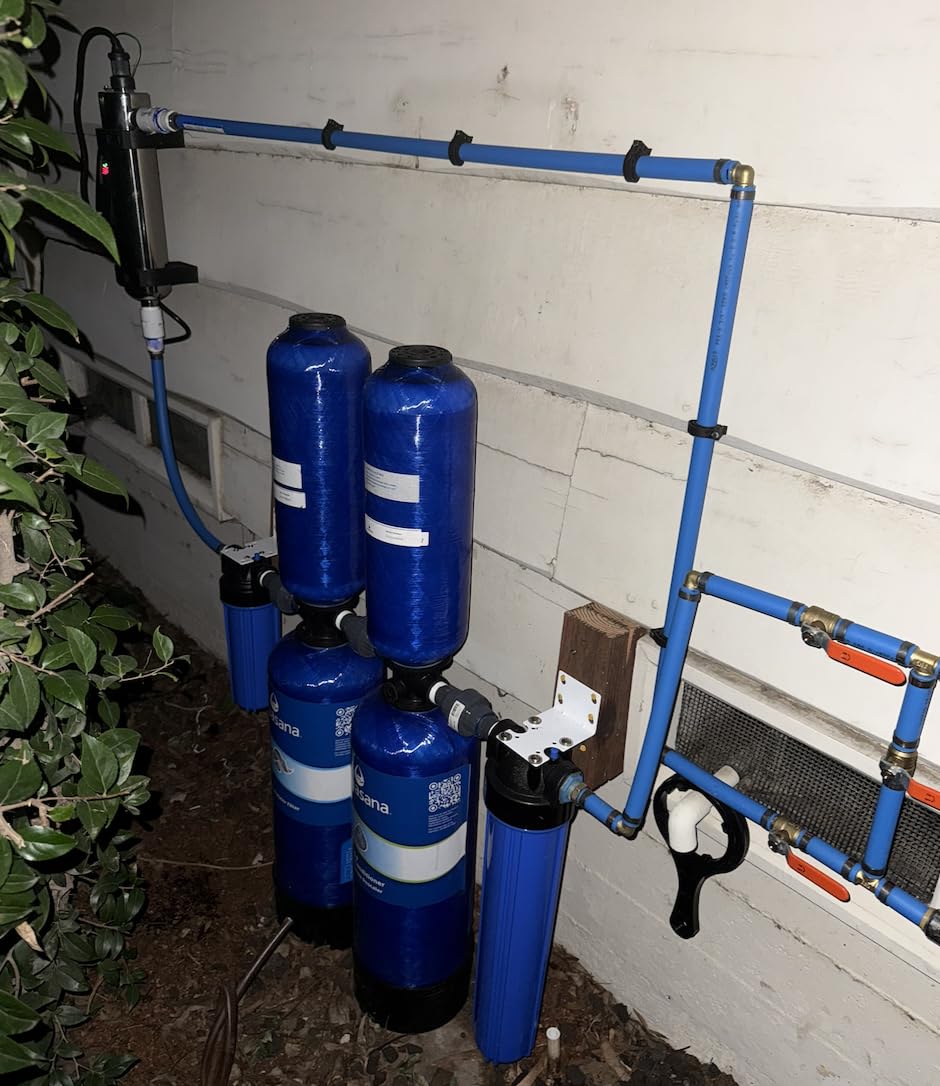
The install kit is genuinely complete, with a 20 inch pre-filter, filter tank, 10 inch post-filter, assembly kit, Schedule 80 PVC components, an integrated drain valve and a shut-off valve. It fits 3/4 inch or 1 inch main water lines.
It also preserves healthy minerals and is not designed to reduce TDS or hardness, so it works alongside a softener rather than replacing one.
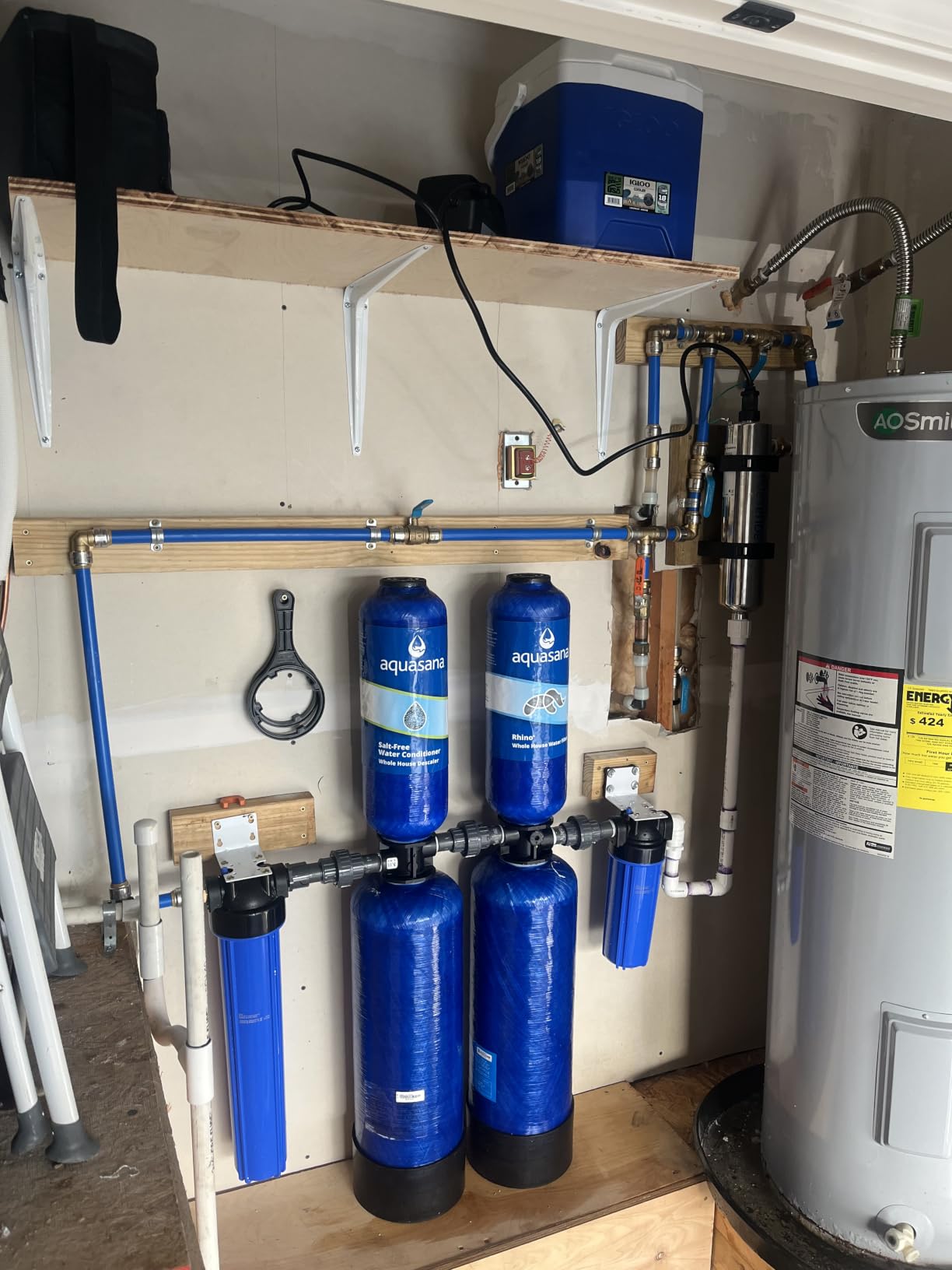
Best for owners who want to stop replacing cartridges
Satisfied owners praise the chlorine removal and the ten-year economics, and report better water at every tap, less chlorine smell and even noticeable changes in laundry and shower water.
Installation quality decides your experience
Reviews split sharply between people happy with the filtration and DIY installers dealing with leaking plastic fittings and persistent carbon fines. Several reviewers note that professional installation removes most of the complaints, and at least one reports the warranty being voided by self-installation.
Buying Guide: Sizing, Media, Placement and Certification
Size by household, not by marketing number
Start with peak demand, not average. A single shower, a toilet flush and a laundry cycle together can pull 8 to 12 GPM through your plumbing, so a filter rated at 2 GPM will restrict flow badly at the wrong moment.
As a rough guide: one to two bathrooms with light use fits 4 to 5 GPM systems. Two to three bathrooms with a family needs 10 to 12 GPM. Four or more bathrooms, or a home with a large tub or multiple laundry machines, needs 15 GPM or a tank format.
Capacity follows flow. A filter rated at 12,500 gallons at 2 GPM is only reaching that number at a trickle. The same carbon in a larger housing at a lower real flow rate delivers the gallon rating you are actually buying.
Cartridge, tank or backwashing: pick your format
Cartridge systems, including Big Blue housing formats, are the simplest to install and cheapest to maintain. You swap a sealed cartridge every few months and there is no water or power use between changes.
Tank systems like the Aquasana WH-1000 hold loose media and serve for years rather than months. They cost more up front and take more space, but there is no recurring cartridge purchase.
Backwashing media tanks are the choice for chloramine water or for whole house carbon on larger homes, because they periodically reverse flow to resuspend the carbon bed and keep the media working. The tradeoff is water and a drain line.
Upflow non-backwashing tanks use no water at all. They work, though some installers argue the media is used less completely because it is never resuspended.
Certification: NSF 42, 53 and 58 explained
NSF/ANSI 42 covers aesthetic contaminants, which is exactly where chlorine taste and odor sit. If chlorine is your problem, 42 is the standard that matters.
NSF/ANSI 53 covers health contaminants such as lead, mercury and cysts. You want it when you are relying on carbon for heavy metals, and it is the reason to look at KDF-based systems.
NSF/ANSI 58 covers reverse osmosis. If you need it, you need a membrane system, not a carbon filter, since carbon deliberately leaves dissolved solids in place.
Placement: put carbon before your softener
Chlorine is the primary enemy of ion exchange resin. It oxidizes the resin beads and gradually destroys softener capacity, so whole house carbon belongs upstream of the softener, not after it.
If you want a post-softener carbon polish stage as well, treat it as a secondary improvement for taste rather than resin protection. Carbon earns its keep by protecting every rubber seal and gasket downstream of it, which is the same logic behind the carbon cabin air filters we recommend in a vehicle HVAC system, where a plain particle filter leaves odors untouched.
Test your water before you buy
A cheap chlorine test kit or a lab report tells you whether you are dealing with free chlorine or chloramine. That single result decides between a standard carbon block and catalytic or KDF media, and it prevents the most common expensive mistake in this category.
Budget for the real replacement cycle
Cartridge formats generally mean a change every 3 to 6 months on chlorinated municipal water, and long-term buyers often find that marketing gallon ratings assume unusually gentle water. Tank systems ask for far less frequent attention but cost more when the media does finally need replacing.
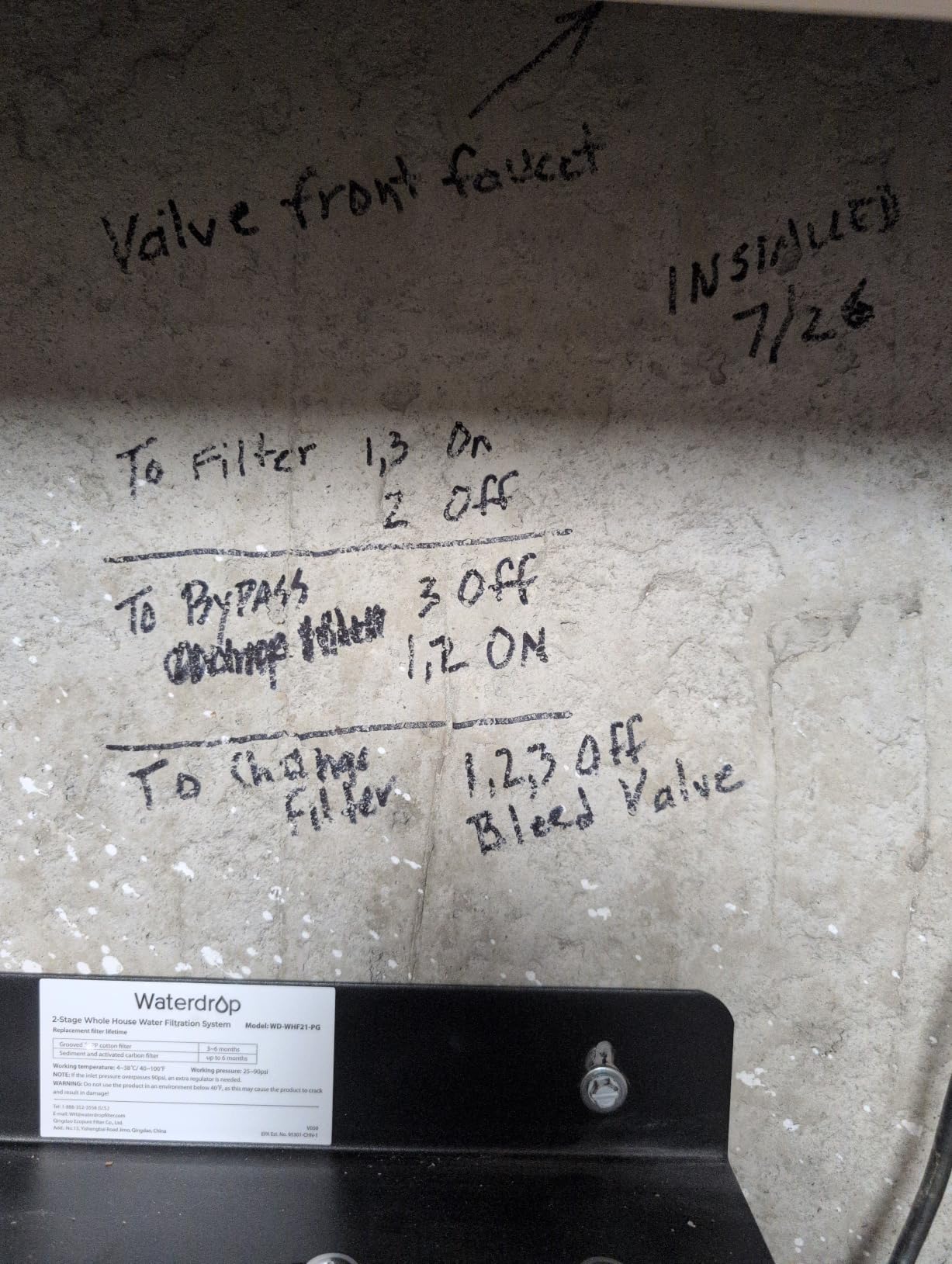
Whichever format you pick, add a bypass valve. It lets you isolate the filter for service without shutting off water to the entire house, which is the difference between a two-minute change and a plumber visit.
Whole house water work usually starts alongside other home system upgrades, and buyers often stack the research. We covered whole house generator picks separately, since power and water questions tend to come up in the same renovation planning.
Frequently Asked Questions
Will a carbon filter filter out chlorine?
Yes. Activated carbon adsorbs chlorine onto its large porous surface, and a good coconut shell carbon block can reduce free chlorine by up to 99 percent. Chloramine is more difficult and typically needs catalytic carbon or a KDF and carbon pairing for strong removal.
Which whole house water filter removes chlorine the best?
For free chlorine, a carbon block with layered polypropylene in a 10 x 4.5 inch housing balances filtration with flow. For chloramine, a KDF and catalytic carbon system such as the iSpring WGB21B-KSNC performs best, with a published SGS figure of up to 94.4 percent chloramine reduction.
What type of filter is best for removing chlorine?
A granular activated carbon or carbon block whole house filter placed on the main line. Carbon block filters suit most homes, radial flow granular carbon handles higher capacity with low pressure drop, and catalytic or KDF media is required when your utility uses chloramine.
What is the best carbon filter for a whole house water filter system?
Match the format to your flow needs and housing size. A 20 x 4.5 inch radial flow carbon cartridge handles large homes, a 10 x 4.5 inch carbon block covers average households, and a media tank avoids cartridge costs entirely at higher upfront cost.
Is there a whole house filter that can effectively remove chlorine from water?
Yes, and chlorine is the easiest contaminant for carbon to remove. Systems rated at 30,000 gallons or more, paired with a 5 micron sediment stage in front, will keep chlorine taste and odor off every faucet, shower and appliance in the house.
What are the downsides of using a carbon water filter?
Cartridge formats need replacement every 3 to 6 months on municipal water and rated gallon figures assume favorable water quality. Carbon does not lower TDS or hardness, fine grain media restricts flow, and most plumbers recommend installing the carbon ahead of a water softener to protect the resin.
The Whole House Carbon Filter Worth Buying in 2026
For most people on chlorinated city water, the PUREPLUS 5 Micron 10 x 4.5 inch carbon block is the best whole house carbon filter for chlorine because it combines a real 30,000 gallon rating, a three-layer sediment and carbon stack and compatibility with essentially every 10 x 4.5 inch housing on the market.
If your utility uses chloramine, move to the iSpring WGB21B-KSNC for documented chloramine reduction and heavy metal coverage. For a large home that needs flow, the iSpring WGB32B handles 15 GPM across three stages. And if you would rather stop buying cartridges entirely, the Aquasana WH-1000 serves ten years, provided you have it professionally installed.
Whichever you choose, test your water first, install the carbon ahead of any softener, and add a bypass valve on day one. That short list prevents almost every complaint we read about this category.