
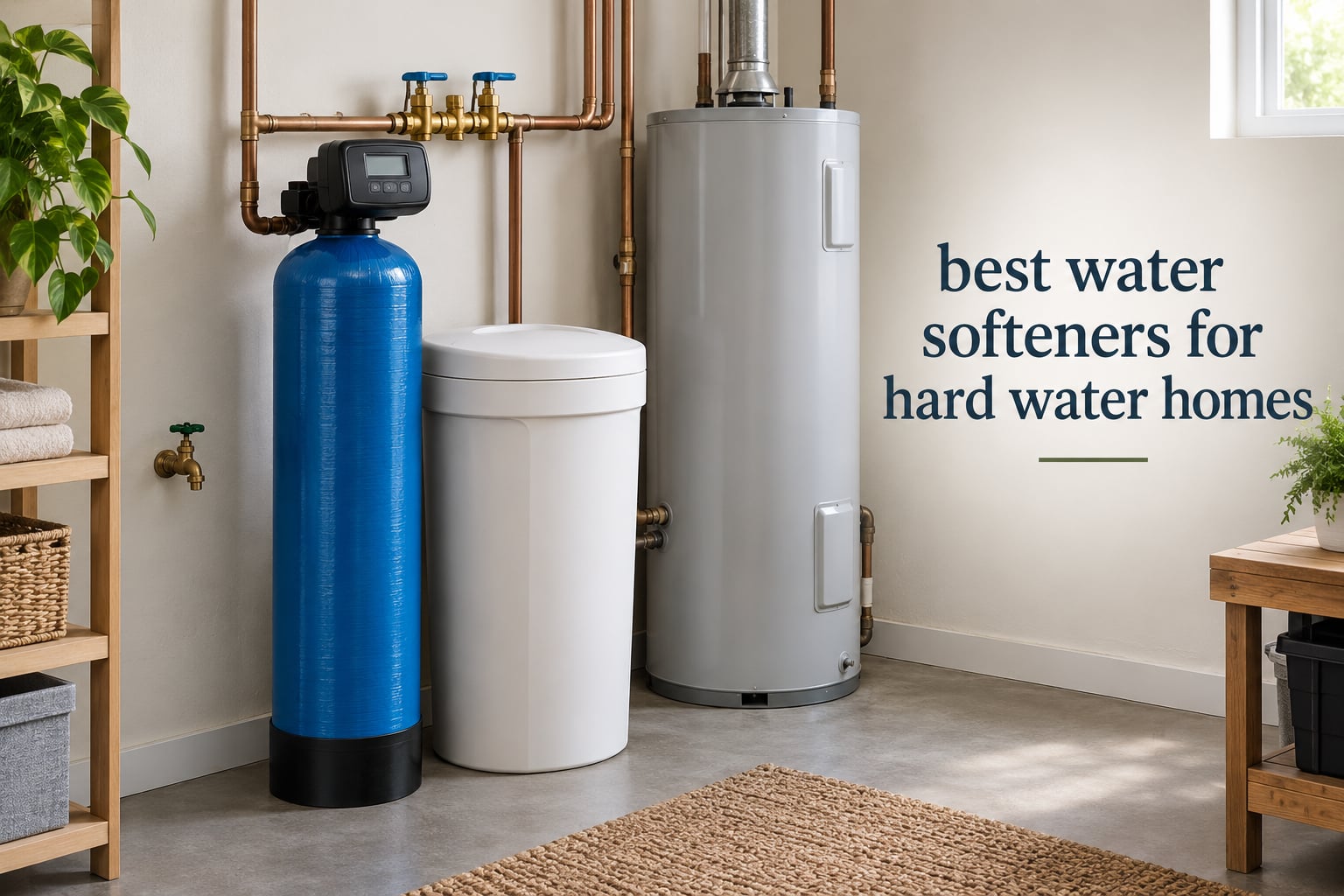
Hard water is the quiet problem that keeps showing up in the wrong places: crusty white rings on faucets, soap that never lathers, a dishwasher leaving spots on every glass, and a water heater working harder than it should. If you are shopping for the best water softeners for hard water homes, the honest answer is that a metered ion exchange system sized for your actual gallons and hardness level will beat every other option — and you can narrow the field in about ten minutes.
The best hard water softener for a typical three-to-four person home is a 45,000 to 48,000 grain metered ion exchange unit with a 1 inch control valve. That class of system handles water in the 10 to 25 grains per gallon range, which covers most of the municipal supply in the upper Midwest, Southwest, and parts of the Southeast. Below 7 GPG you have real flexibility and a salt-free conditioner becomes a legitimate option. Above 15 GPG, or if your water carries iron, you want a larger resin bed and a control valve that can handle the load.
We spent weeks comparing ten whole-house systems on the specs that actually predict performance: grain capacity, resin volume, maximum flow rate, control valve type, warranty length, and how each one behaves in reviews after a year or two of use. The list below covers true softeners, salt-free scale control, and one all-in-one bundle, because those three categories solve genuinely different problems and mixing them up is the single most expensive mistake a buyer makes.
One more thing worth saying up front: measure your hardness before you buy. A strip test or a hardness test kit takes five minutes and turns a guess into a number. Every sizing decision below depends on that figure, and a household that tests first routinely picks a smaller, cheaper unit that still does the job well.
Table of Contents
Top 3 Best Water Softener Picks for Hard Water Homes in 2026

Aquasure Harmony 48K Grain
- Metered digital control head
- Triple-purpose pre-filter
- 12 gpm flow
- Programmable flush intervals

AFWFilters Fleck 5600 SXT
- Fleck 5600SXT metered valve
- 10% crosslink resin
- 14 gpm flow
- Brine tank and bypass included
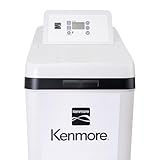
Kenmore 350 32,000 Grain
- Compact 48-inch footprint
- IntelliSoft adaptive regeneration
- NSF certified
- Built-in sediment shield
The Aquasure Harmony earns the top slot because it combines the largest review base in this group with the fewest meaningful complaints: strong scale reduction, efficient metered regeneration, and a pre-filter that handles sediment and chlorine so the resin lasts longer. The Fleck 5600 SXT carries the highest average rating here and the control valve most service technicians already know how to work on. The Kenmore 350 is the pick when the softener has to fit somewhere tight and you want a big-box warranty behind it.
Quick Comparison: 10 Best Water Softeners for Hard Water Homes (October 2026)
| Product | Specs | Action |
|---|---|---|
| Aquasure Harmony 48,000 Grain |
|
Check Latest Price |
| AFWFilters Fleck 5600 SXT |
|
Check Latest Price |
| Kenmore 350 32000 Grain |
|
Check Latest Price |
 Tier1 48000 Grain Tier1 48000 Grain |
|
Check Latest Price |
 Aquasure 72000 Grain Whole House Bundle Aquasure 72000 Grain Whole House Bundle |
|
Check Latest Price |
 A. O. Smith Whole House Salt-Free Descaler A. O. Smith Whole House Salt-Free Descaler |
|
Check Latest Price |
 Aquasana SimplySoft 40,000 Grain Aquasana SimplySoft 40,000 Grain |
|
Check Latest Price |
 iSpring WCSTB45KG 45,000 Grain iSpring WCSTB45KG 45,000 Grain |
|
Check Latest Price |
 PRO+AQUA 80000 Grain PRO+AQUA 80000 Grain |
|
Check Latest Price |
 WaterBoss 600K Gallon Salt-Free Descaler WaterBoss 600K Gallon Salt-Free Descaler |
|
Check Latest Price |
Two columns in that table matter more than the rest. Grain capacity tells you how much hardness the resin can absorb between regenerations, and maximum flow rate tells you whether the unit can keep up when a family showers at the same time. Ignore the brand name and read those two numbers.
1. Aquasure Harmony 48,000 Grain — Best Overall for Hard Water Homes
Aquasure Harmony Series 48,000 Grains Whole House Water Softener w/High Efficiency Digital Metered Control Head (48,000 Grains)
48,000 grains
Digital metered head
12 gpm flow
Fiberglass tank, 120 lb
Pros
- Largest review base of any unit here at 3199 ratings
- Triple pre-filter strips chlorine and sediment before the resin
- Programmable metered head cuts salt and water waste
- Handles 3 to 4 bathrooms comfortably
Cons
- 120 lb tank is awkward to move and position
- Setup and programming take longer than the manual suggests
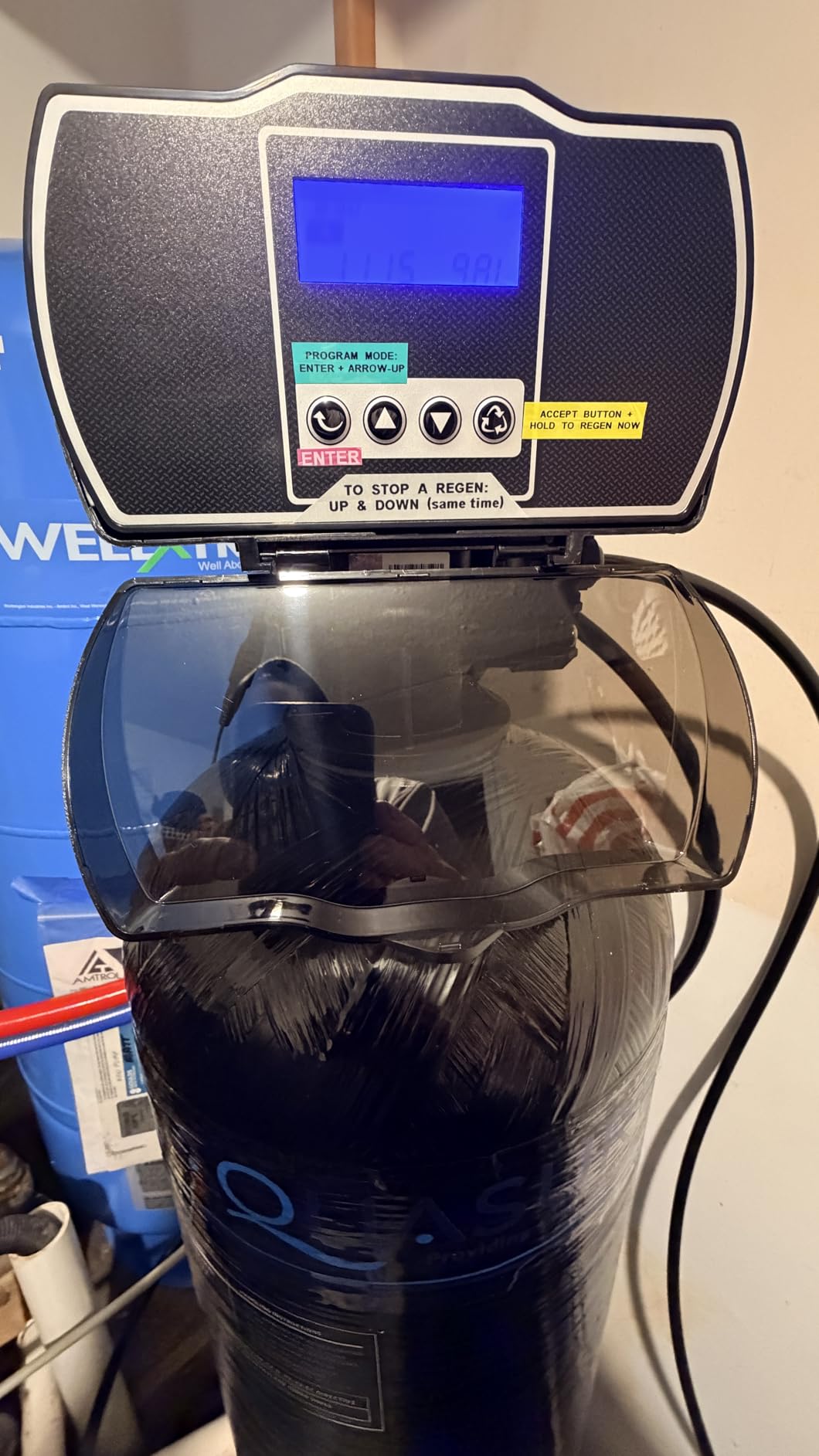
The Harmony is the unit I recommend to most households, and the reason is durability rather than headline specs. It sits at 48,000 grains with a 10 inch by 62 inch tank weighing 120 pounds, which is a normal full-size configuration that a two-person crew can install in an afternoon. Capacity lands in a useful middle band: enough for a family of four on genuinely hard water without pushing you into units that cost more and live in a bigger footprint.
Its distinguishing feature is the triple-purpose pre-filter on the inlet. Sediment, carbon, and zinc media sit ahead of the resin bed, stripping chlorine, odors, silt, sand, rust, and heavy metals before they reach the exchange media. That matters on municipal water, where chlorine gradually attacks resin and shortens its life, and it means you are not chasing a separate sediment filter cartridge for the first year.
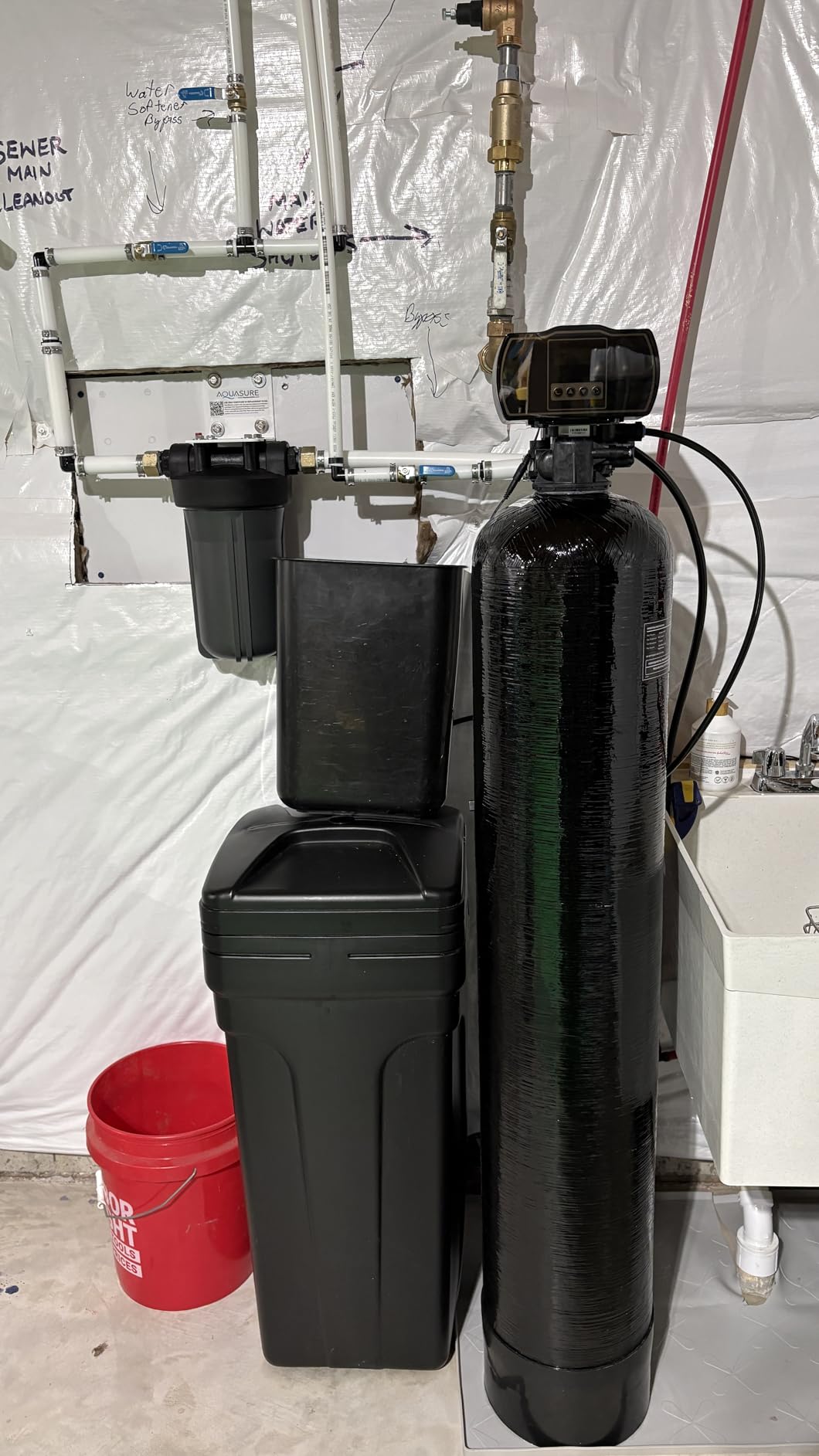
Across 3199 ratings averaging 4.4, the same three things keep coming up. Owners report noticeably softer water within days, metered regeneration that keeps salt use modest, and responsive US-based technical support that will talk a homeowner through programming. The 76 percent five-star share is the strongest in the roundup among units with thousands of reviews.
The honest criticism is handling. At 120 pounds this is not a unit you carry up basement stairs alone, and a minority of buyers found the initial programming less intuitive than they expected from a backlit digital display. Both are solvable problems, and neither touches softening performance.
What a 48,000-grain capacity actually covers
Run the standard sizing math: household size times 75 gallons a day times hardness in GPG. For four people on 20 GPG water that is 6,000 grains a day, which lands near 48,000 grains of capacity between regenerations with normal reserve. That is why this size shows up again and again in hard water homes.
It also explains the flow rate figure. Twelve gallons per minute handles a two-bathroom home running one shower, a dishwasher, and a laundry cycle without starving any of them, so you are not trading softness for weak pressure during peak morning use.
Where this system stops being the right pick
If your water measures above 20 GPG or carries more than about 2 ppm of iron, this size works hard and regenerates more often than it should. Step up to the 80,000-grain class in that situation. And if the installation area cannot take a 62 inch tall tank beside a brine tank, the compact options below fit better.
2. AFWFilters Fleck 5600 SXT 48,000 Grain — Best Control Valve for Serviceability
AFWFilters Fleck 5600 SXT Digital Water Softener with 10% Crosslink Resin
48,000 grains, 1.5 cu ft resin
Fleck 5600SXT valve
14 gpm flow
130 lb
Pros
- Highest average rating in the roundup at 4.6
- Fleck 5600SXT valve is a widely serviced platform
- 10 percent crosslink resin resists chlorine attack
- Brine tank
- bypass and drain fittings all included
Cons
- Heaviest unit in the group at 130 lb and 62 in tall
- Costs more than most comparable 48000-grain systems
This is the system I recommend to anyone who wants their softener to still be fixable in fifteen years. The Fleck 5600SXT digital metered valve is the industry workhorse control head, and nearly every plumber and water treatment shop in the country stocks parts for it. When something eventually fails, you replace a circuit board or a paddle rather than the entire assembly.
Resin volume is 1.5 cubic feet of 10 percent crosslink media, which resists chlorine degradation better than standard resin. On chlorinated municipal supply that is the difference between a resin bed that lasts ten years and one that starts channeling at six. Owners frequently single out the valve by name in reviews, calling it dependable and easy to service.
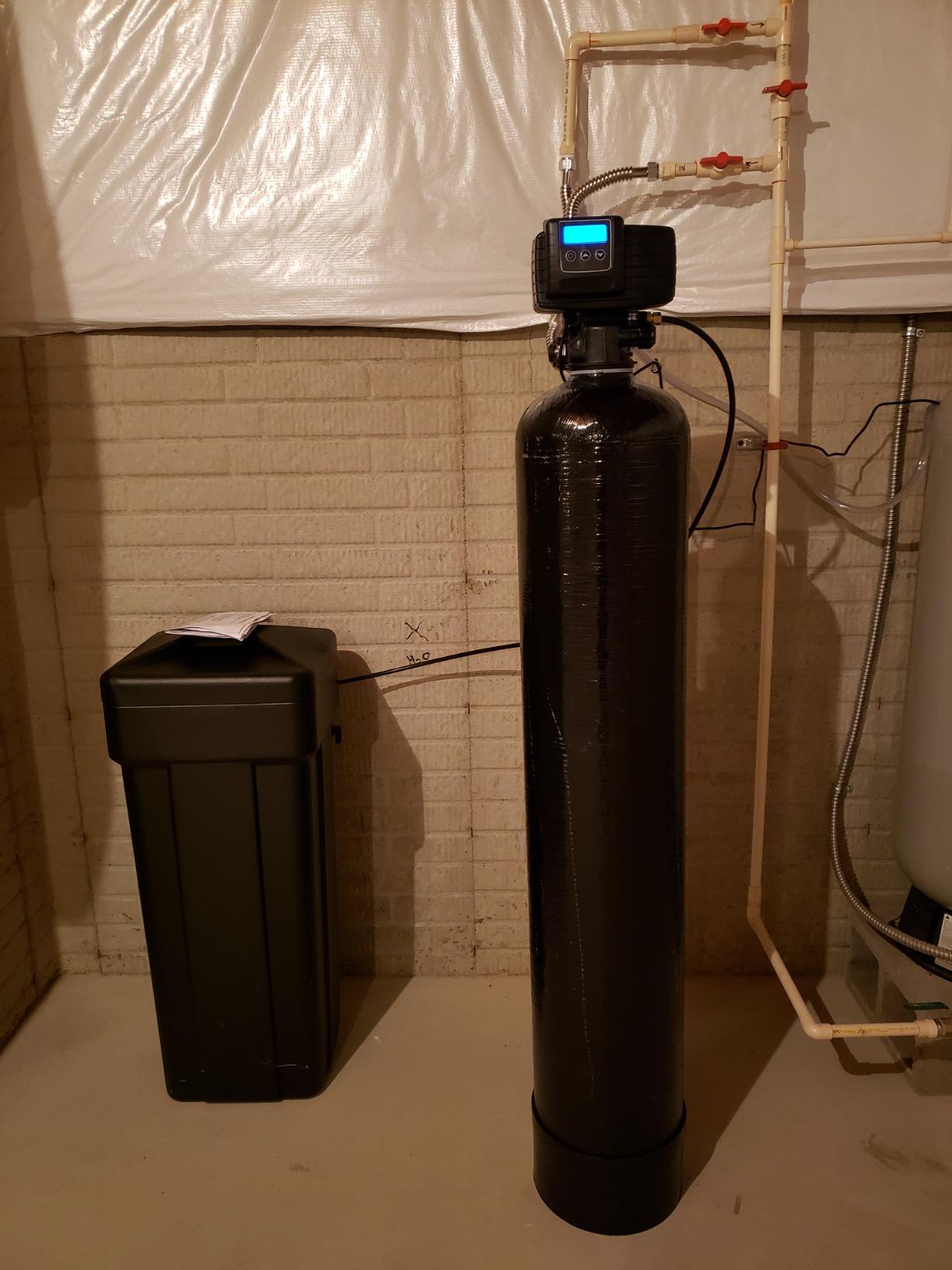
Flow rate is 14 gpm, comfortably above the category average, and the brine tank holds 250 pounds of salt so refills are infrequent. Ports are 1 inch NPT, matching standard residential supply lines, and the bypass valve and drain fittings ship in the box. That completeness is why installers describe it as a clean drop-in replacement for an existing loop.
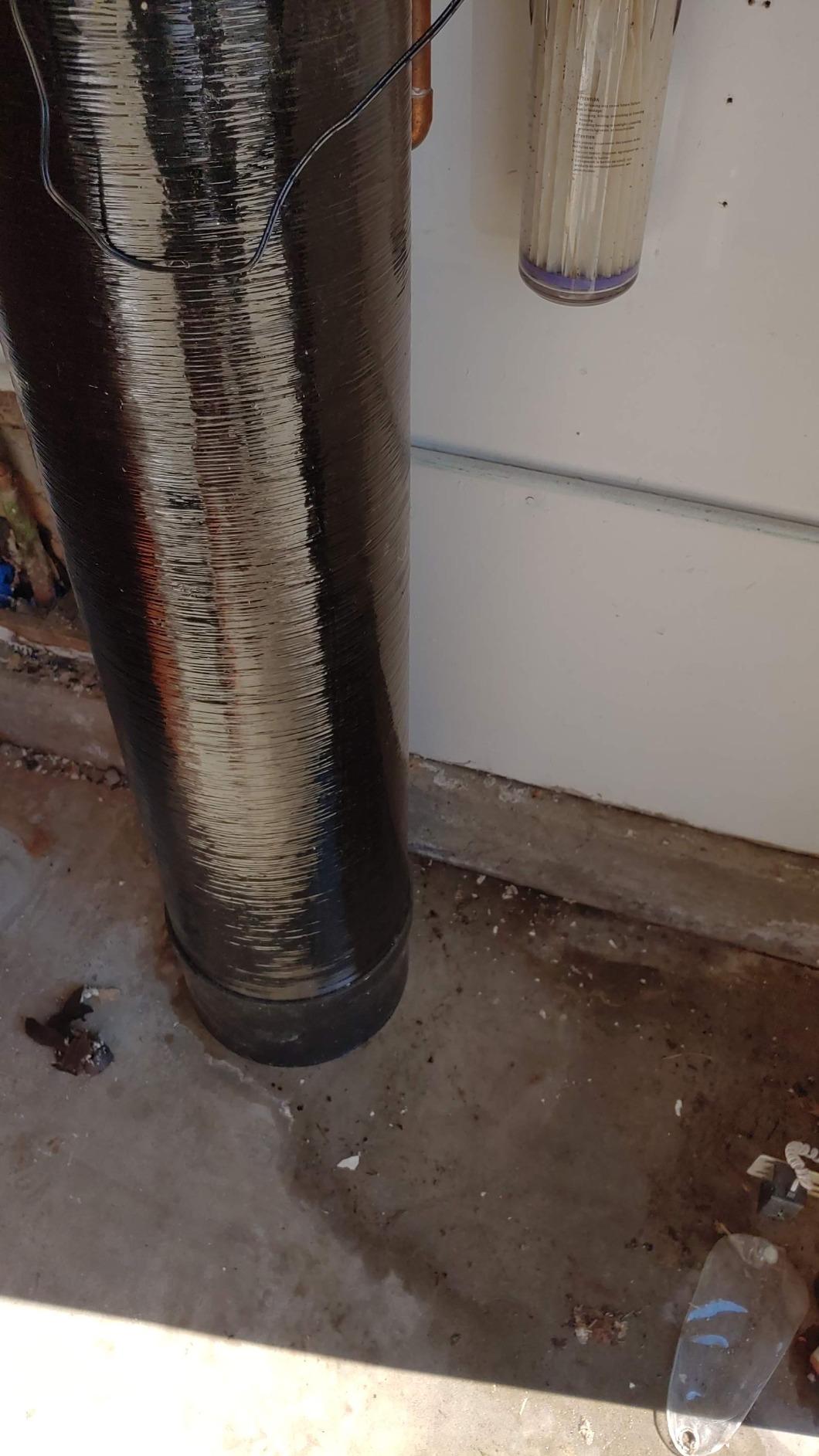
The two negatives are consistent across reviews. This is the heaviest unit in the group at 130 pounds, and it commands a premium against big-box softeners with similar grain ratings. The 5 percent one-star share, still the lowest here, centers on shipping damage to the large mineral tank rather than performance.
Why serviceability matters more than you think
Every ion exchange softener has wear parts: seals, pistons, brine float, and eventually the resin itself. When the control head is a design used across thousands of installations, replacement parts are on a shelf nearby and any plumber can source them. That shortens downtime from weeks to hours.
Owners of prior softeners switching to this model describe the swap as straightforward because the valve dimensions and brine line connections follow the same conventions their plumber had already worked with. For a long-lived appliance, that convention is worth real money.
Where the Fleck setup falls short
The 48,000-grain size still belongs to a three-to-four person household. A family of six on very hard water will regenerate continuously, and the 1.5 cubic feet of resin will not hold a useful reserve between cycles. Also note the 130-pound shipping weight — check your delivery path for stairs before you order.
3. Kenmore 350 32,000 Grain — Best Compact Softener for Condos and Mobile Homes
Kenmore 350 Whole House Water Softener System, 32,000 Grain, 1-4 People
32,000 grains, 0.83 cu ft resin
IntelliSoft control
7.2 gpm
48 in cabinet
Pros
- Smallest footprint at 20.5 x 15 x 48 inches
- Lightest full-size unit at 80 lb
- IntelliSoft learns usage and regenerates only when needed
- Longest tank warranty here at 10 years
- NSF certified
Cons
- Lowest capacity in the group at 32000 grains
- 7.2 gpm flow can feel limiting in a busy home
- Maximum supported TDS of 250 ppm is low versus rivals
Compact softeners come up constantly in forums and related searches, usually from people dealing with a condo, a mobile home, or a utility room where a 62 inch tank simply will not go. The Kenmore 350 answers that problem directly. At 20.5 by 15 by 48 inches it is roughly half the footprint of a standard 10 inch round tank, and at 80 pounds one person can reposition it.
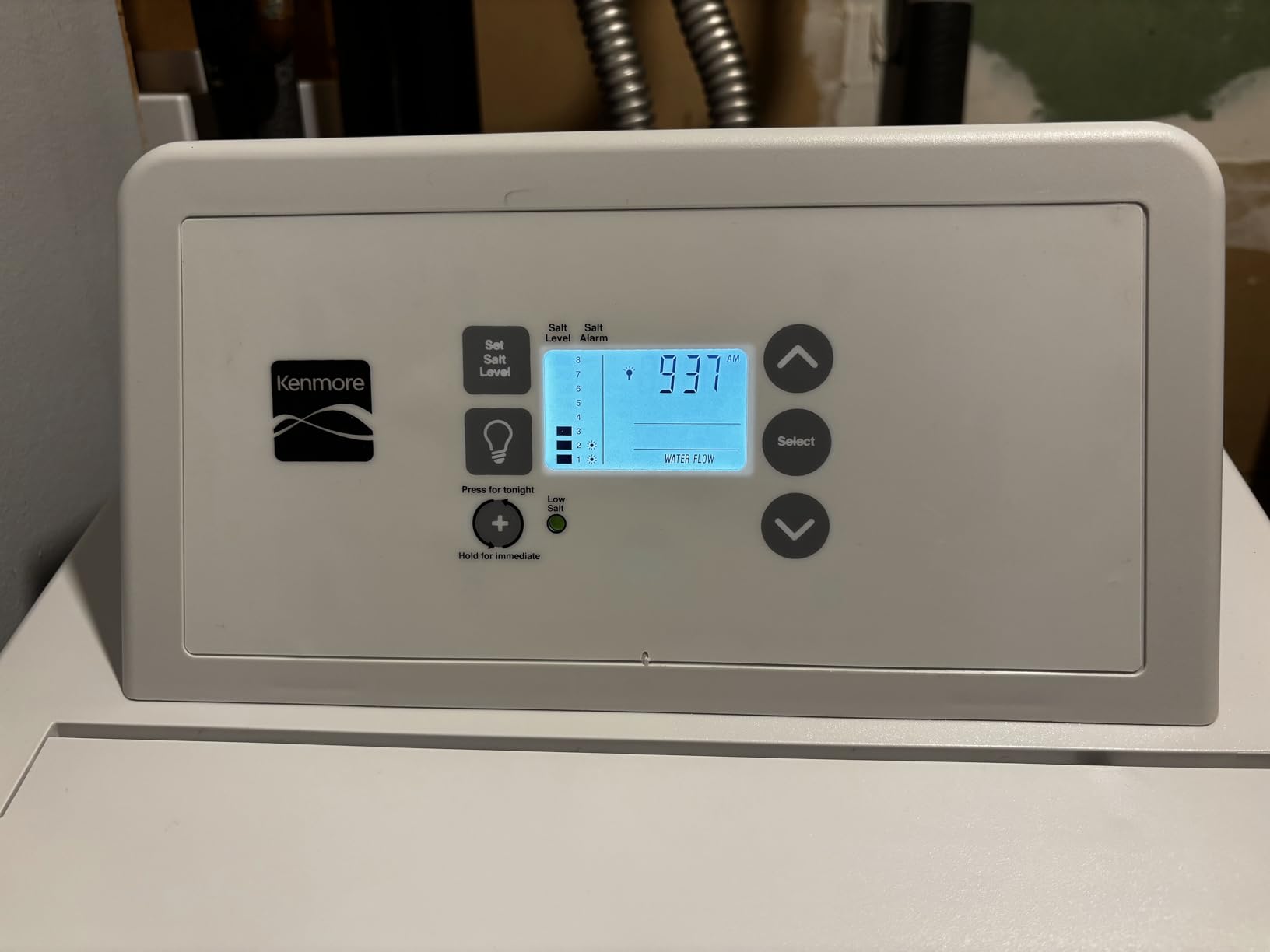
IntelliSoft is the part worth understanding. Instead of regenerating on a fixed clock, the control head measures actual household usage and triggers a cycle only when the resin bed genuinely needs refreshing, while monitoring salt level through the brine tank. Reviewers report that behavior as both quieter and cheaper to run than a timer-controlled unit of the same size.
The warranty stack is unusually generous for a compact unit: one year full, three years on electronics, and ten years on the tank. It is also NSF certified, which matters if you want an independently verified capacity claim rather than a marketing number. The digital display tracks flow rate and salt level at a glance.
Capacity is the trade. Thirty-two thousand grains and 0.83 cubic feet of resin suits a household of one to four people. Owners in larger homes report running out of softened water sooner than expected, and the 7.2 gpm ceiling means two showers plus a washer cycle will feel the limit.
When a compact unit is the right call
Small footprints win in mobile homes, condos, rentals where the utility closet is shared, and any home with a laundry sink rather than a floor drain nearby. If your hardness is under 12 GPG and you have two people, this size is genuinely generous and you are not leaving capacity unused.
It also has a 250 ppm maximum TDS rating, so if you are on a brackish or heavily mineralized private supply, check that number before committing. Municipal supplies across most regions sit comfortably inside that limit.
When to skip it
Skip the compact size for a family of five or more on hard water, and skip it if you run a lot of simultaneous flow. Both cases push you toward a full 10 inch tank where the resin volume and flow rate actually match the demand instead of constraining it.
4. Tier1 48,000 Grain — Best Value Ion Exchange System
Tier1 48,000 Grain Water Softener System for 4-5 Bathroom Homes
48,000 grains, 1.5 cu ft resin
Ceramic disc valve
18 gpm flow
120 lb
Pros
- Lowest cost among full 48000-grain units in this roundup
- Ceramic disc valve has no seals or rebuild kit
- 18 gpm flow is the highest in a standard tank size
- Quiet operation reported across multiple reviews
- 10-year limited warranty on the tanks
Cons
- Maximum supported TDS of only 120 ppm is the lowest here
- 120 lb unit is not portable once plumbed in
- Some owners dispute the on-demand regeneration claim
- Not trivial for a first-time installer
Tier1 lands in the value slot because it delivers the same core formula as units costing noticeably more: 48,000 grains, 1.5 cubic feet of prefilled certified resin, metered regeneration, and a sediment prefilter. For a household buying on a fixed budget, that combination is hard to argue with.
The control valve is the differentiator. A patented ceramic disc design has no elastomer seals and no rebuild kit, which removes the single most common repair in this category. Seals on conventional valves harden, and a disc that slides rather than seals simply does not have that failure mode. Ten-year limited coverage on the resin and brine tanks adds to that.
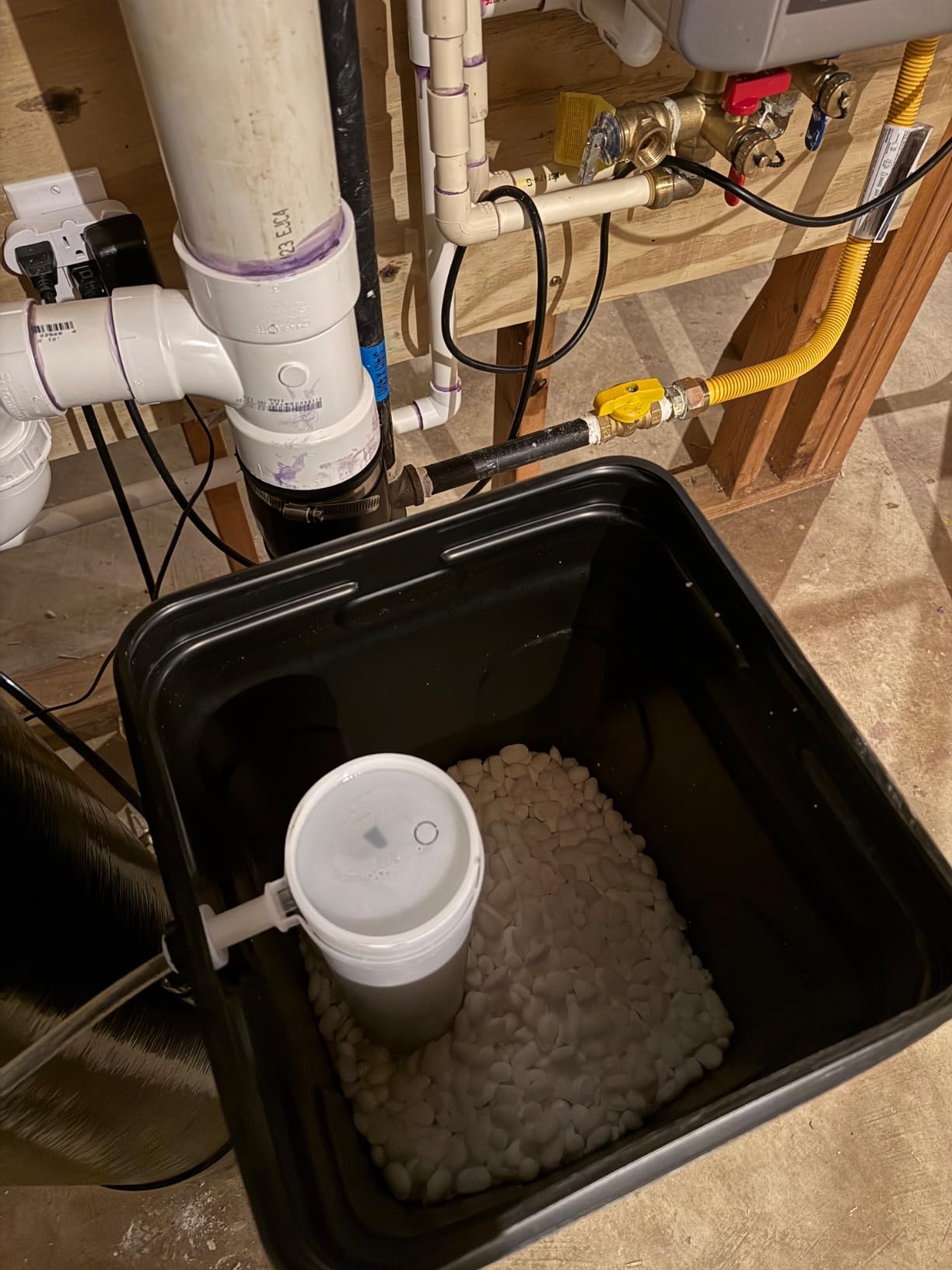
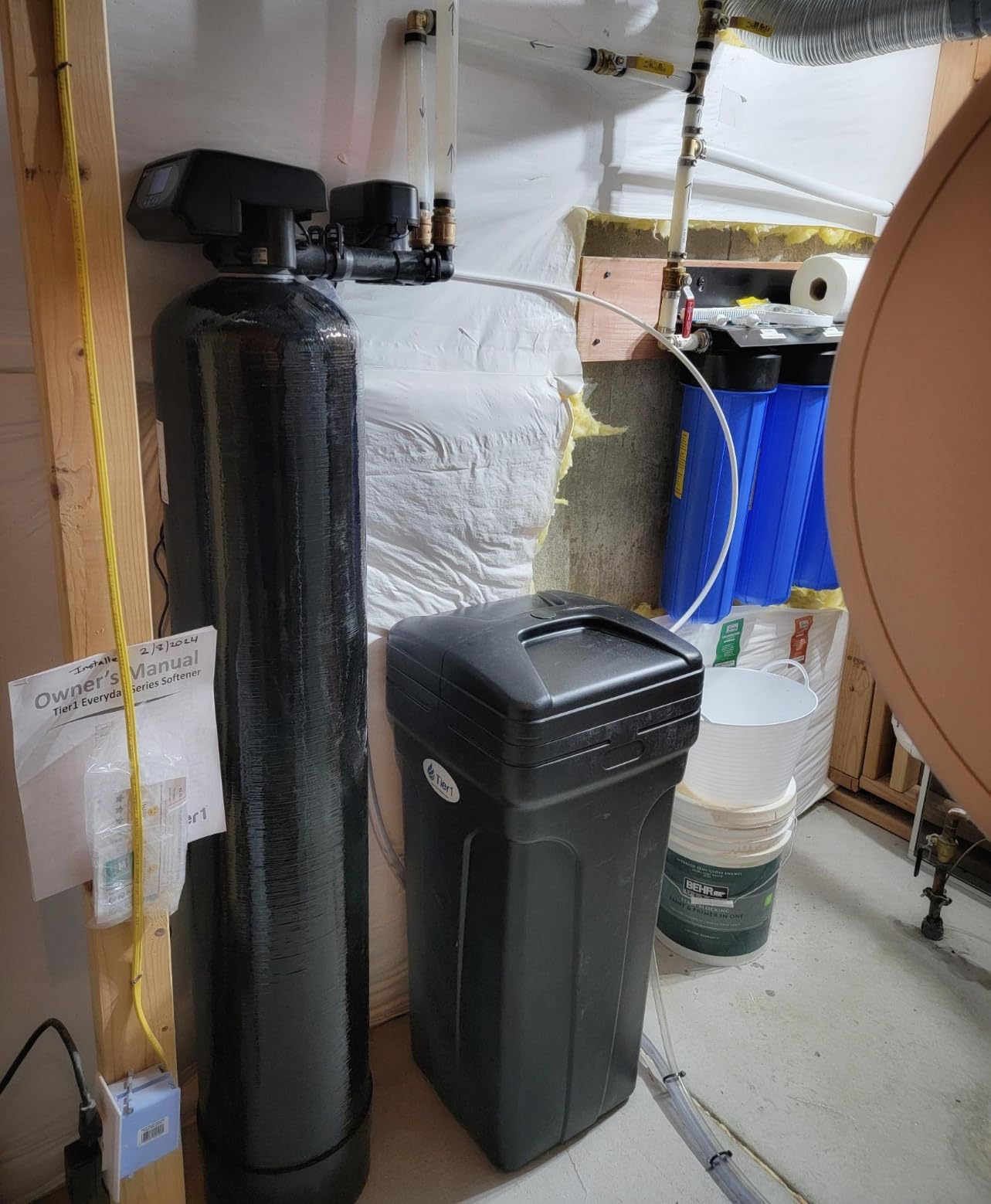
Flow rate is 18 gpm, the highest of any standard 10 inch tank here, which makes it a good match for a home with multiple bathrooms. Tank dimensions are 10 by 59 inches with a 13.5 by 32 inch salt tank, and resin arrives prefilled with NSF/ANSI 44 certified cation media.
Support is the quiet strength. Multiple reviews describe hours of phone troubleshooting, replacement parts shipped at no charge, and even a replacement unit dispatched after shipping damage. That kind of after-sales behavior is unusual in this price bracket and worth weighing heavily.
What the TDS limit rules out
The 120 ppm maximum supported TDS is the lowest in this roundup and it is a real constraint. If your private well carries high dissolved solids or you are on a reclaimed or brackish source, this unit is not rated for the load. City water across most of the country falls well within the limit.
One detailed critical review also argues the valve follows a fixed regeneration interval rather than true on-demand operation. If precise regeneration control is important to you, verify the behavior with a hardness test kit during the first weeks.
Who should buy this instead of a premium brand
Buy this if your hardness is under 15 GPG, you have a standard 10 inch footprint to work with, and you want capacity without paying for the Fleck or Aquasana tier. The price-to-grain ratio here is the best on the list, and the ceramic valve reduces the most likely future repair.
5. Aquasure 72,000 Grain Whole House Bundle with 75 GPD RO — Best All-in-One Setup
Aquasure Whole House Water Filtration Bundle w/Water Softener, 75 GPD RO System & Dual Purpose Sediment/GAC Pre-Filter (72,000 Grains)
72,000-grain softener + 75 GPD RO
GAC pre-filter
Programmable head
160 lb
Pros
- Only true all-in-one bundle here: softener
- pre-filter and reverse osmosis in one box
- Owners report RO output around 16 PPM on their own meters
- Video guides make a larger install approachable for DIYers
- Support has shipped free parts such as a manifold
- Clear improvement in glassware and laundry
Cons
- Longest install in the roundup at 56 in across a 160 lb total weight
- Missing adapters and fittings reported in the RO stage
- RO faucet and fittings are a known weak point
- Salt not included and must be ordered separately
Some households want two things: soft water at every tap and purified water at the kitchen sink. This bundle delivers both in one purchase, which removes the coordination problem of pairing a softener with a separate reverse osmosis system and matching the two flow rates.
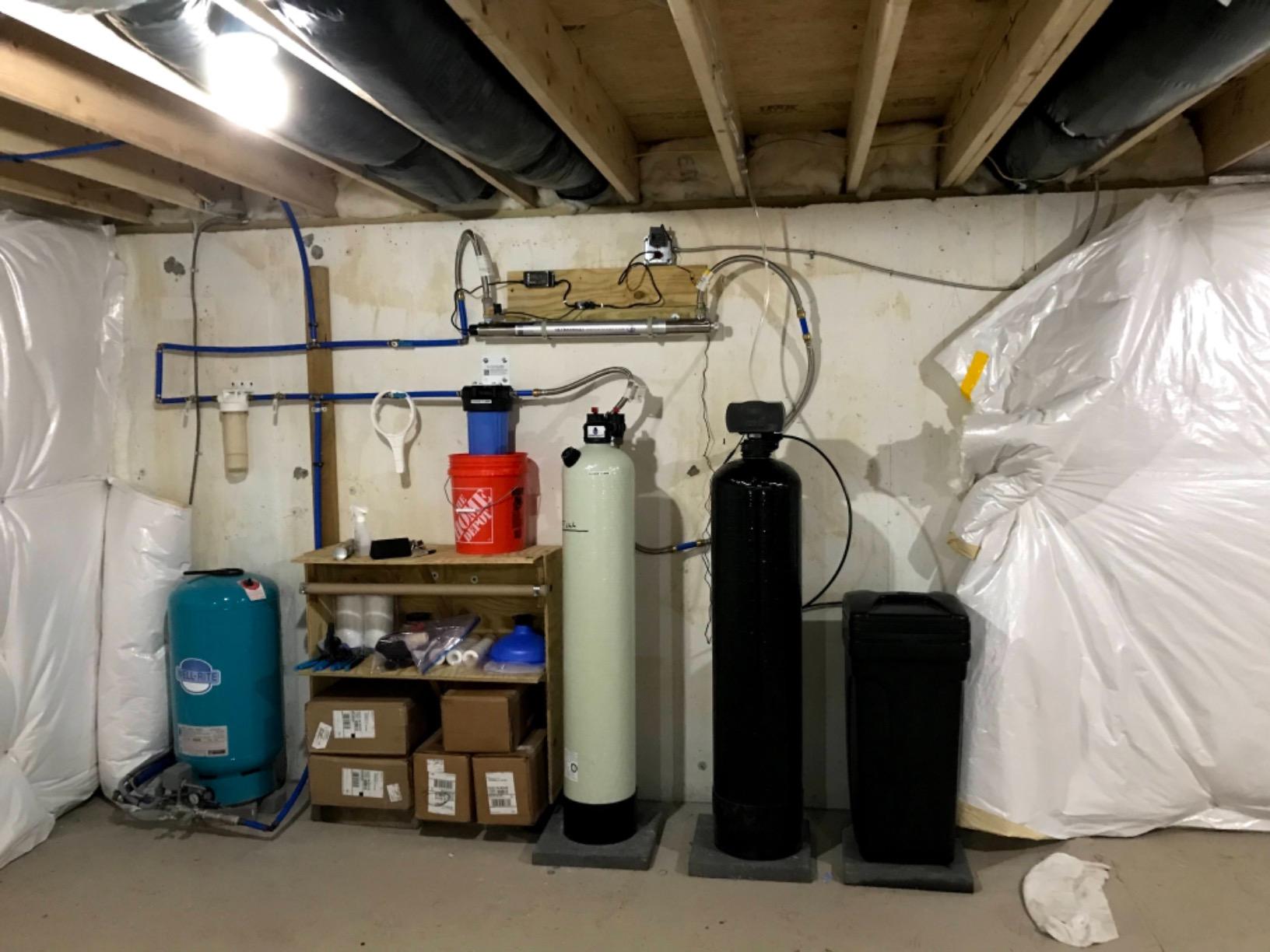
The softener half is a 72,000-grain ion exchange unit with a programmable backlit metered head and automatic backwash, fronted by the same dual-purpose sediment, GAC, and zinc pre-filter used on the Harmony. The drinking side is a four-stage 75 GPD reverse osmosis system with replaceable filters every six to twelve months. Owners measuring their own output report readings around 16 PPM.
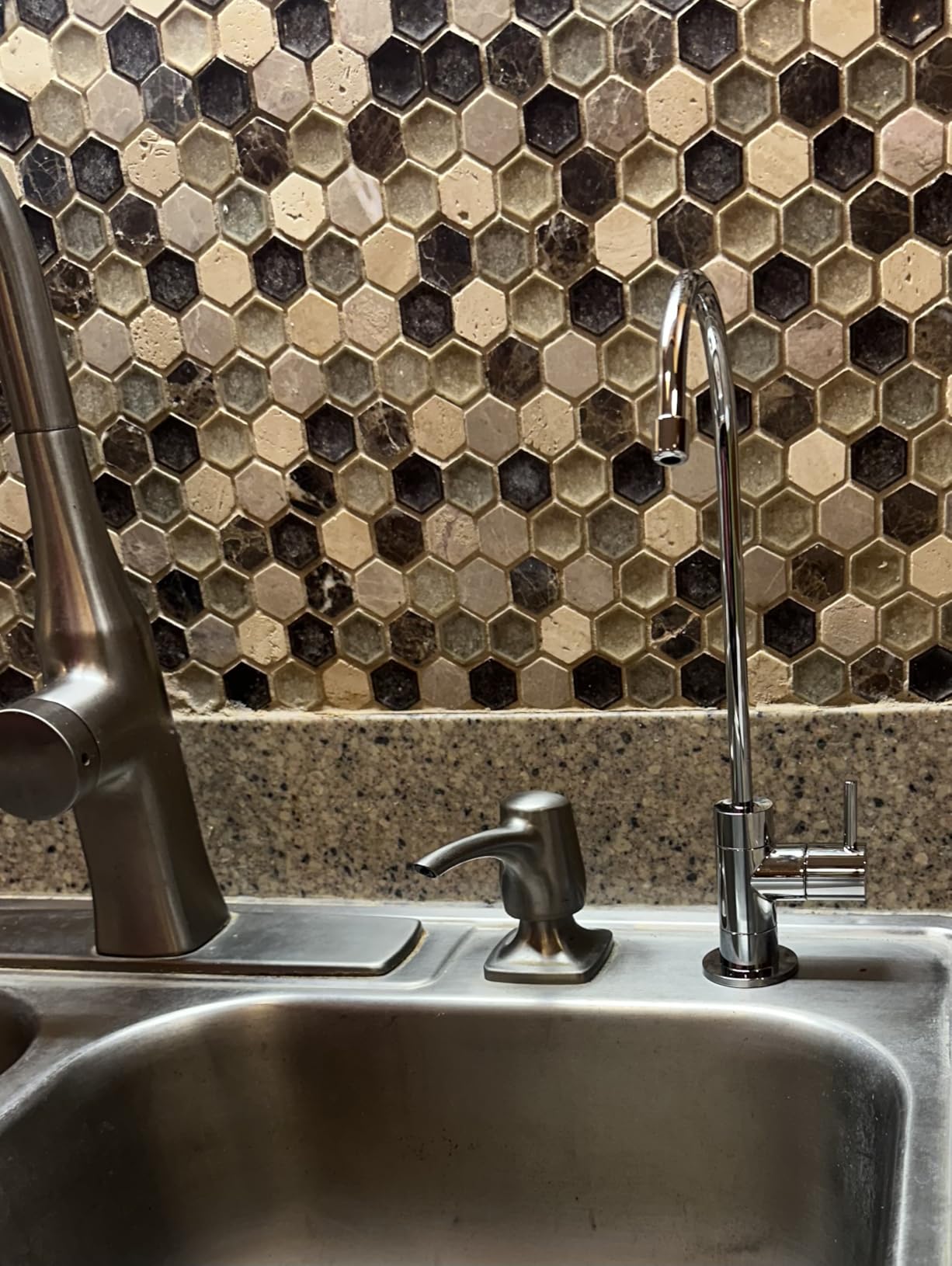
At 4.5 stars across 267 ratings, the softener side is well regarded. Several buyers mention long ownership spans with no problems, and the video installation guides make the setup feel approachable even though this is a bigger job than a softener alone.
The critical reviews concentrate on the reverse osmosis half rather than the softener. Reported issues include a missing feed-water adapter, a faucet that failed within months, and fizzy output from a faulty faucet. Salt is also not included, which surprises first-time buyers.
When an all-in-one bundle saves you real trouble
Buying the two halves together means one seller, one support line, and a matched installation plan. It also means the pre-filter protecting the softener resin is already specified, so you are not adding a third component later to handle sediment and chlorine.
Be realistic about the footprint. At 56 inches long and 160 pounds, this needs a floor area most small utility rooms cannot spare. Confirm your clearances before you order, especially around the sink cabinet where the RO faucet mounts.
When to buy the pieces separately
If your softener needs are modest and you only want purified drinking water, a standalone reverse osmosis unit paired with a smaller salt-free conditioner is the more sensible split. The reverse osmosis stage also creates a reject-water stream, which matters if you are on a septic system or a metered water supply.
6. A. O. Smith Whole House Salt-Free Descaler — Best Salt-Free Scale Control
A. O. Smith Whole House Salt-Free Scale Control | 600K Gal | AO-WH-DSCLR
Salt-free scale control
600,000 gal, 6-year media
No power or backwash
12 lb
Pros
- No salt to buy
- carry or refill and no brine plumbing
- Runs without electricity so it keeps working during an outage
- Lightest unit here at 12 lb with a compact 30 in footprint
- Owners measuring before and after report genuine scale reduction
- 6-year media life and 6-year warranty
Cons
- Does not actually soften water
- so skin and hair benefits are limited
- Only suited to hardness under 15 gpg
- Several owners reported slow leaks at the tank-to-fitting junction
- Warranty service described as a difficult multi-department process
Be clear about what this category is. A salt-free conditioner does not remove hardness minerals from your water. It changes how calcium and magnesium crystallize so they stay suspended instead of forming scale, which protects pipes, heaters, and fixtures without touching the hardness reading on your test kit. If lather on your skin is your goal, this is the wrong technology.
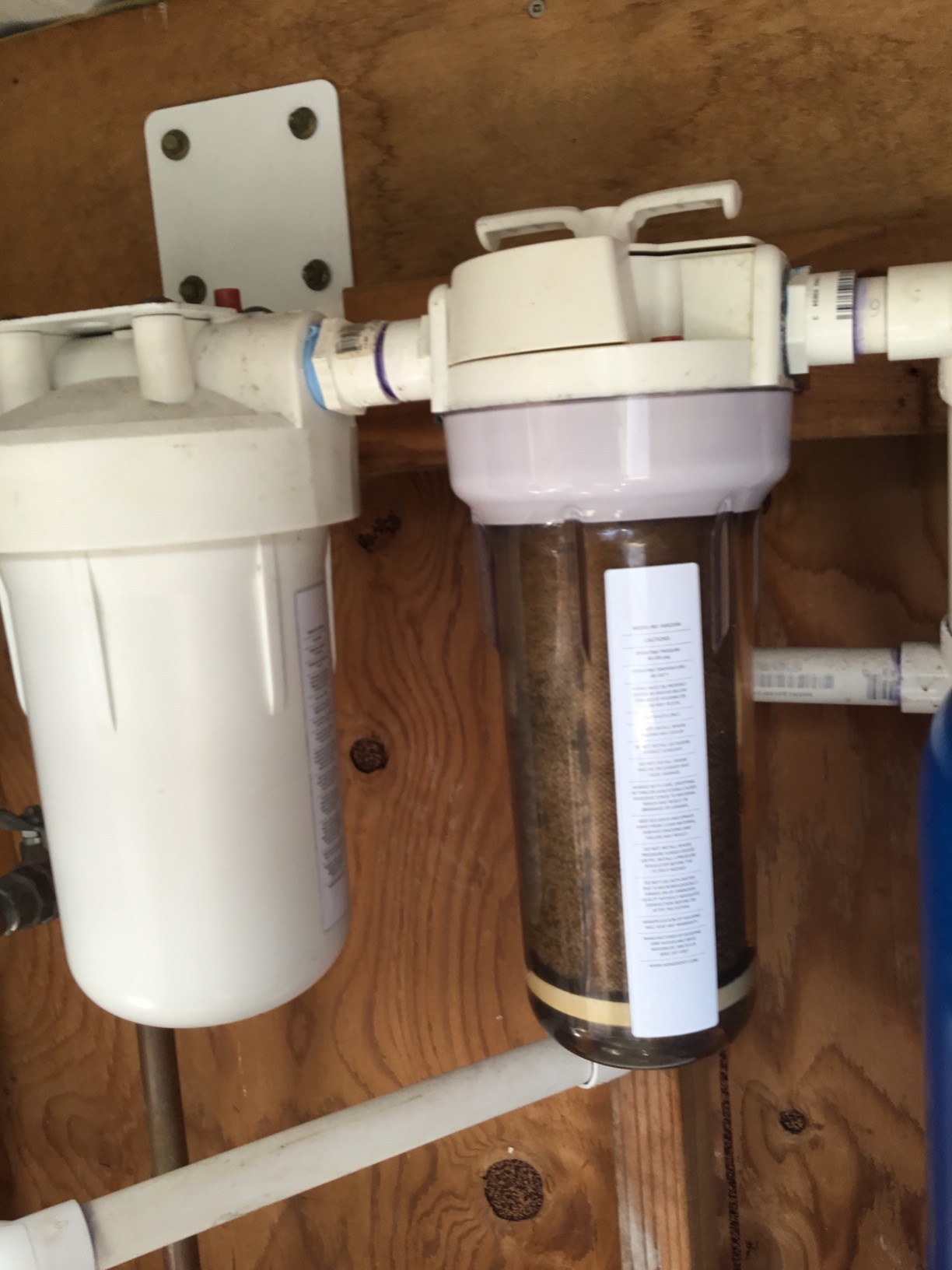
What it does deliver is a scale problem solved with almost no ongoing involvement. No salt bags, no brine tank, no drain line to plumb, no electricity, and no cleaning. At 12 pounds and 30 inches tall it installs faster than any softener on this list, and it keeps working through a power outage since there is nothing to power.
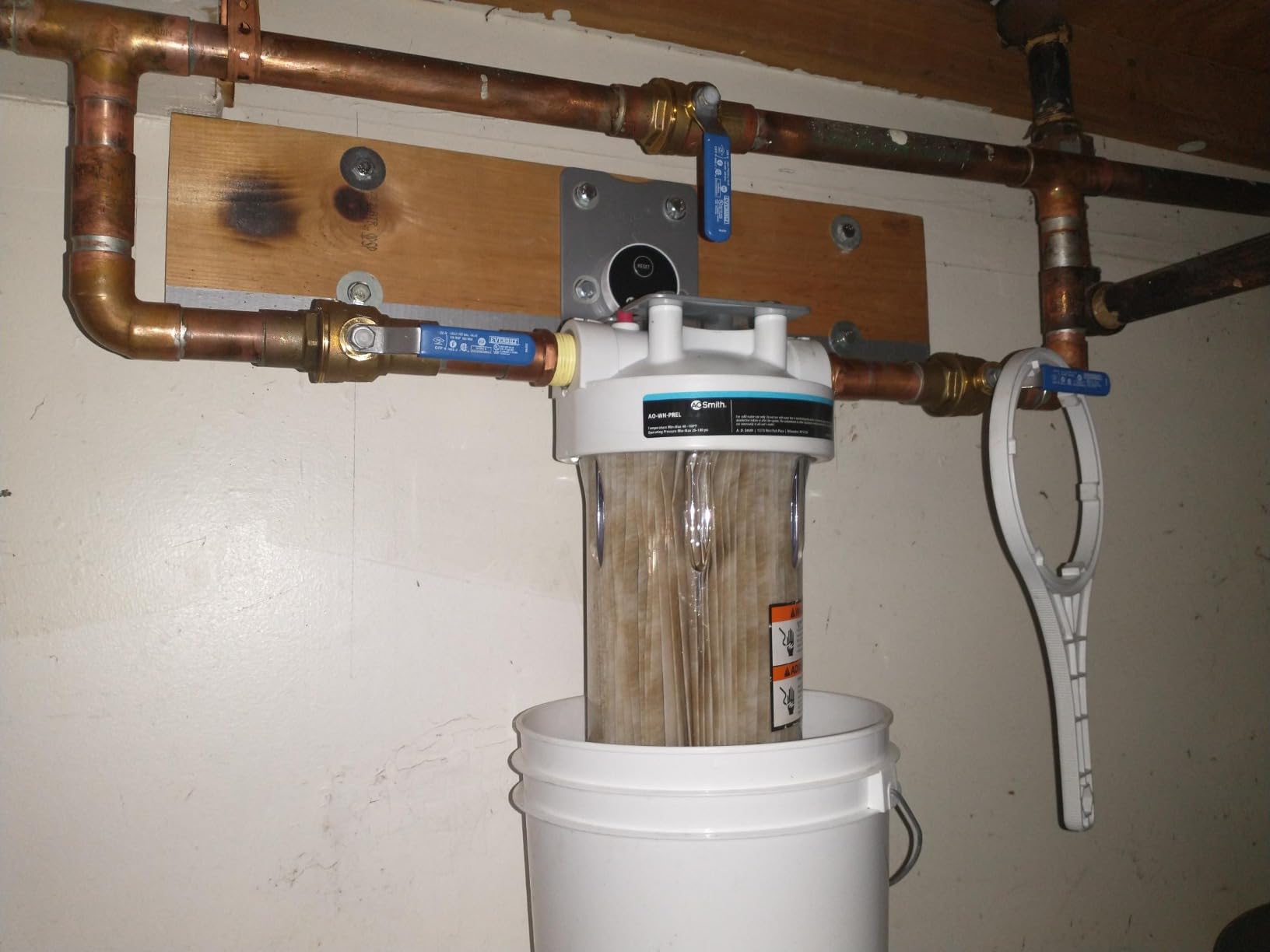
The rating record supports it. At 1963 ratings and a 4.4 average, this is the most heavily reviewed product in the roundup, and the language owners use is about scale rather than softness: one long review reports an 80 to 85 percent reduction in scale from 17 to 18 GPG source water, with white smudges that wipe away instead of caking.
Constraints are explicit on the spec sheet. It is rated for hardness under 15 gpg, alkalinity under 250 mg/L, pH under 8.3, and iron under 0.3 ppm, which is exactly why it belongs as a complement to a softener rather than a replacement in very hard water homes.
When scale control is genuinely enough
If your water measures under 10 GPG and your real frustration is white crust on faucets, shower glass, and a kettle, a descaler solves it. So does a household with no floor drain nearby, renters who cannot modify plumbing, and anyone on a sodium-restricted diet who would rather not add salt to their supply.
It is also the honest choice when the budget will not cover a softener. Homeowners in hard water forums routinely choose scale control as a first step, then upgrade to ion exchange later.
Where owners report problems
Leaks at the tank-to-fitting junction come up repeatedly, and several buyers point to weak thread sealing at the connection. Warranty service is described as a frustrating multi-department process, so keep your receipt and installation date. Plan the install so the shut-off and fittings are reachable rather than crammed into a corner.
7. Aquasana SimplySoft 40,000 Grain — Best Certified Pick for Well Water Homes
Aquasana SimplySoft Whole House Water Softener | 40K Grain | WH-SF40-BASE
40,000 grains
15.5 gpm flow
IAPMO certified NSF/ANSI 44
230 lb
Pros
- Very high flow rate for its size at 15.5 gpm
- Metered mode uses roughly 50 percent less salt and 28 percent less water
- IAPMO certified to NSF/ANSI 44 so capacity claims are independently verified
- Replaceable resin extends unit life
- Compact cabinet takes about a third less space than a standard 10 in tank
Cons
- No printed manual included
- Online manual and install video contradict each other on fittings
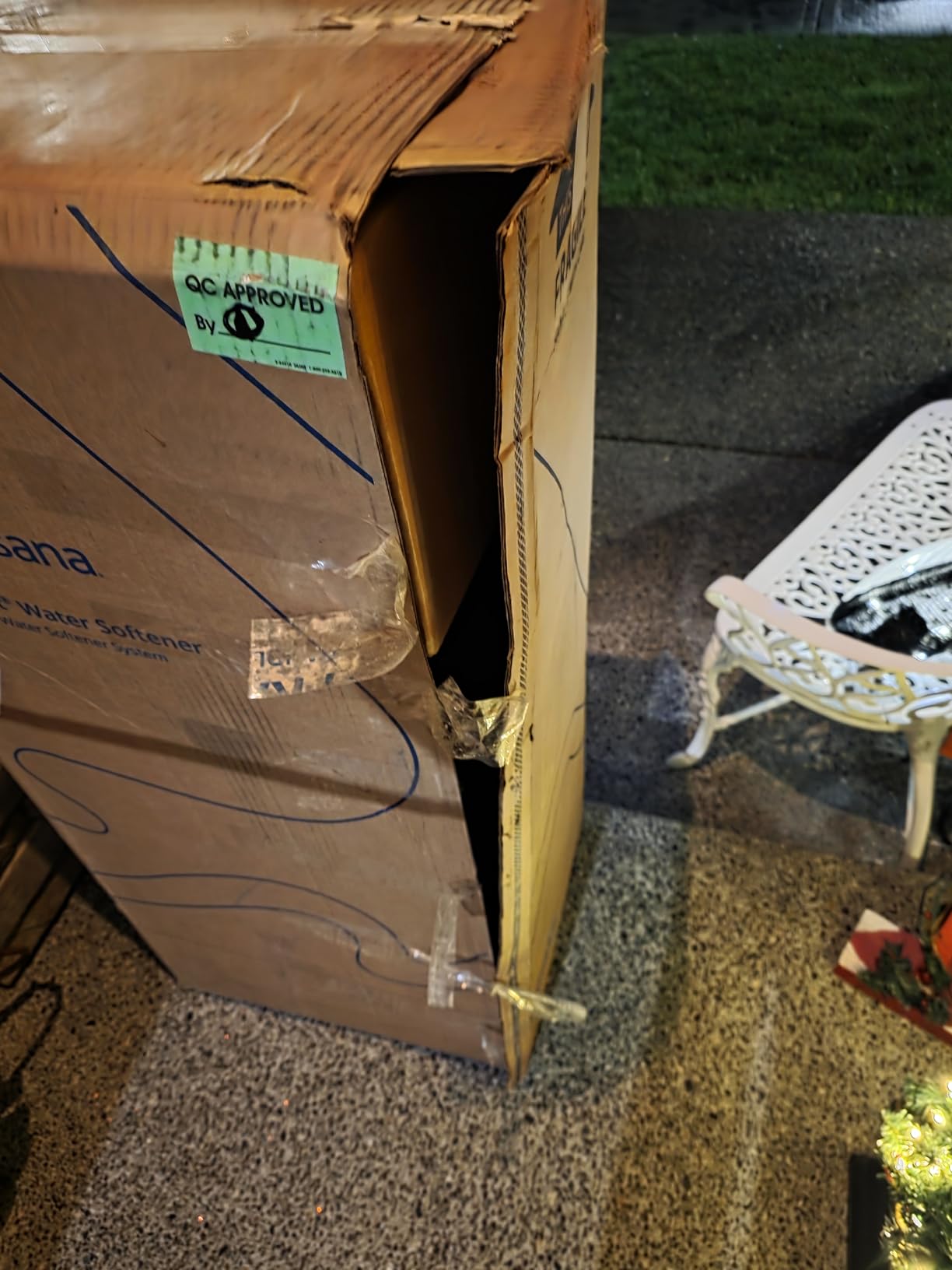
- Heaviest unit here at 230 lb and needs a hand truck
- Regeneration time cannot be changed so the clock must be offset
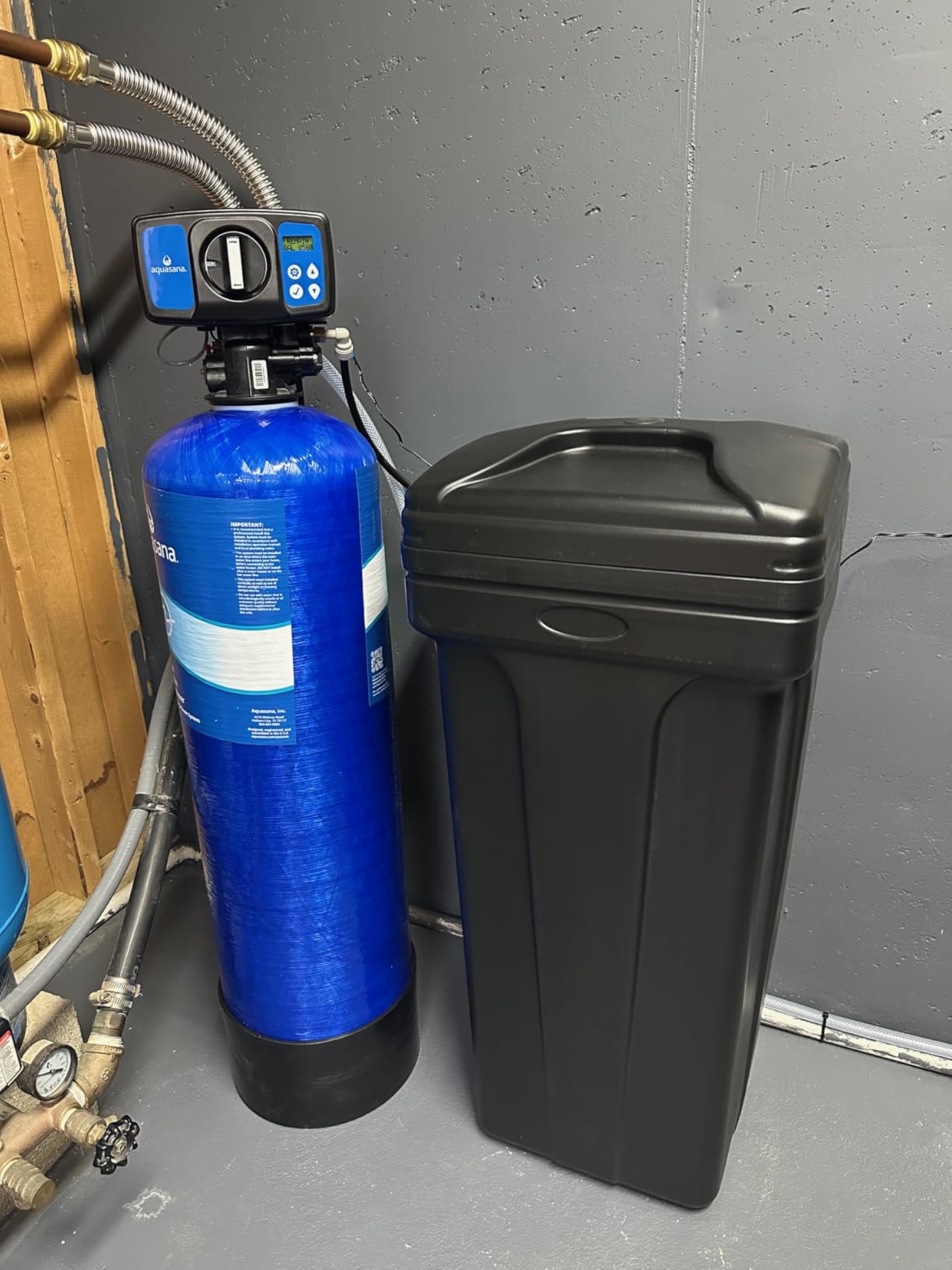
For a home on a private well, two things matter: iron tolerance and independent certification. This unit addresses both. It is IAPMO certified to NSF/ANSI Standard 44 for hardness reduction and to CSA B483.1, which means the capacity rating was verified by a third party rather than asserted by the manufacturer.
Flow rate is 15.5 gpm, unusually high for a unit this compact, and the metered regeneration mode is specified to use up to 50 percent less salt and 28 percent less water than a standard time-based control. Owners on heavily iron-bearing well water report a clear step change in softness and near-silent regeneration.
The cabinet-and-base-tank format is the quiet advantage. Reviewers note it takes roughly a third less space than the conventional 10 inch round tank it replaced, which matters in the tight closets typical of well homes built before utility rooms were common.
Documentation is the weak point, and it is a documentation problem rather than a performance one. The printed manual is not in the box, and multiple buyers report that the online manual and the installation video disagree about lubricant and thread tape on the fittings. Read both before you assemble.
What to check on a well before you buy
Get a full panel that includes iron, manganese, and pH, not just hardness. A standard softener handles ferrous iron up to roughly 2 ppm, and above that you want an iron filter or an iron-fused resin bed rather than a plain softener. Our guide to portable water tanks covers the storage side of private water systems.
Also confirm pressure. Operating range is 20 to 125 psi, which covers most wells, but a pump set too low will starve the control head and cause short cycling.
Where this unit is the wrong fit
At a listed 230 pounds it is the heaviest in this roundup and genuinely needs a hand truck and a clear path. If your access route is stairs or a crawlspace, the logistics will cost more time than the purchase. Resin is replaceable, which is a real plus, but plan for that service visit rather than a full unit swap.
8. iSpring WCSTB45KG 45,000 Grain — Best Lightweight High-Capacity System
iSpring WCSTB45KG 45,000 Grains Whole House Water Softener with Brine Tank
45,000 grains
Programmable digital valve
Auto backwash
75.6 lb
Pros
- Lightest ion exchange unit at 75.6 lb
- far easier to move
- Among the least expensive high-capacity options here
- Programmable digital valve with real-time monitoring and hardness adjustment
- Works on both city and well water
- Automatic backwash and regeneration extend resin life
Cons
- Only a 1-year manufacturer warranty
- Spare part availability listed at just one year
- Shipping damage to the large resin tank is the most common complaint
- Smaller review base at 99 ratings
Most full-size softeners land between 110 and 130 pounds, and that weight is the reason so many installs turn into a two-person job. At 75.6 pounds, this unit is the outlier. For a homeowner working alone in a crawlspace or a garage, that difference decides whether installation is a Saturday project or a call to a friend.
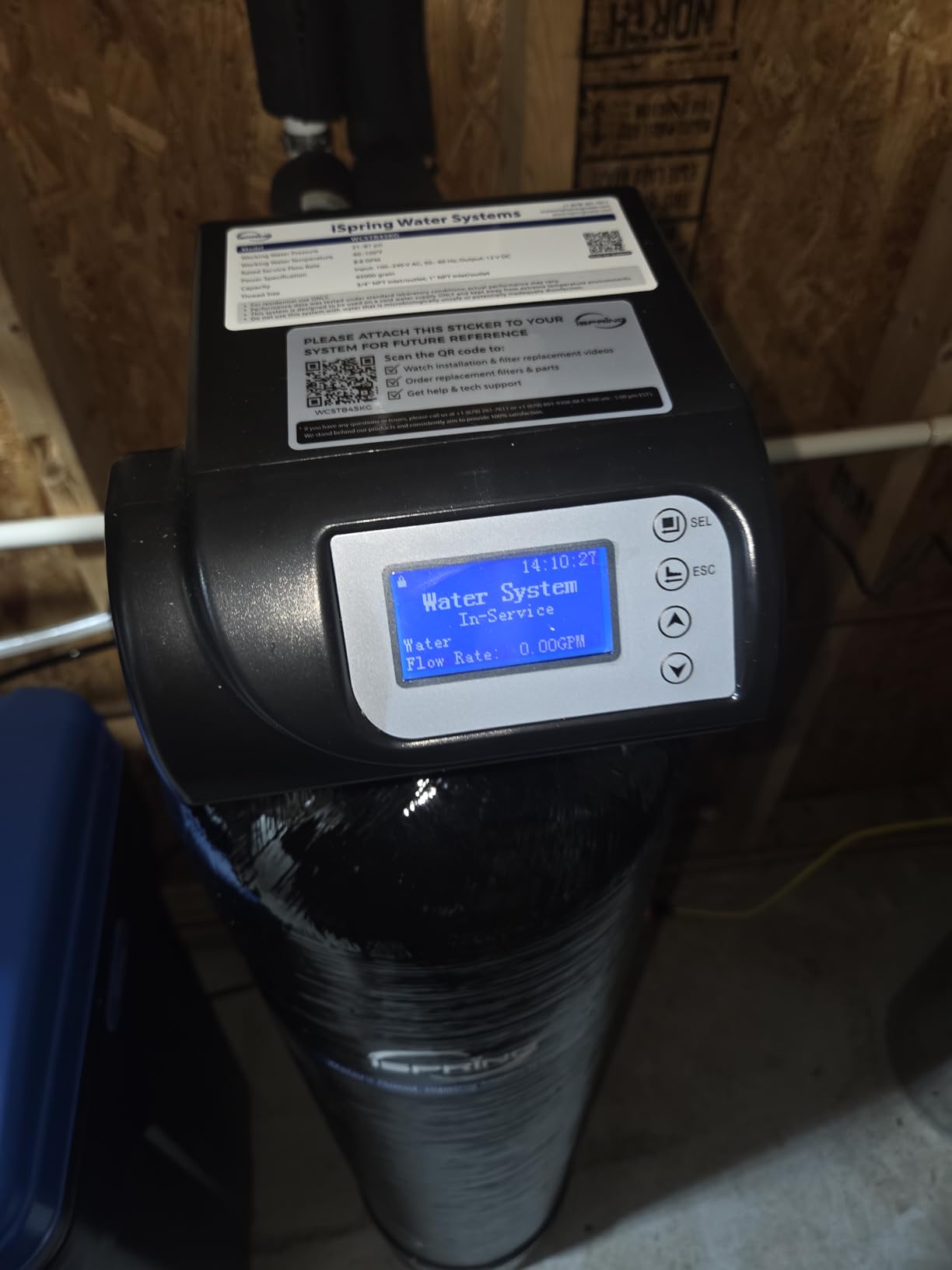
Capacity does not suffer for it. Forty-five thousand grains of ion exchange resin with a programmable automatic control valve that calculates regeneration cycles from water quality and usage, and a digital display for adjusting hardness. Third-party testing cited in the listing measured a 99.71 percent hardness reduction.
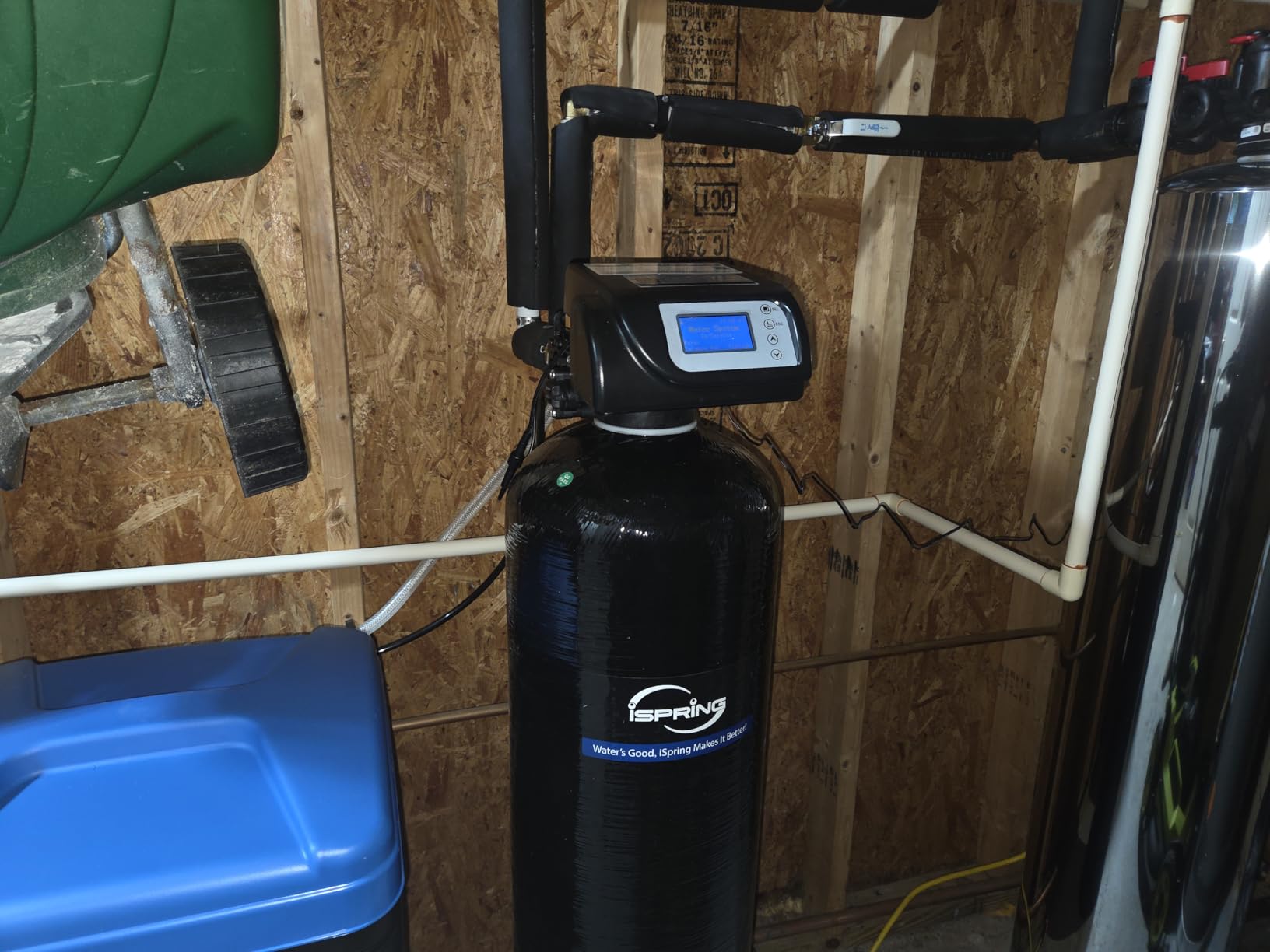
Automatic backwash and regeneration extend resin life, and the corrosion-resistant fiberglass tank handles the usual municipal pressure profile. Maximum supported TDS is 300 ppm, which is mid-range for the units here and comfortable for city supply.
The recurring complaint is not performance but transit. Several reviews describe the mineral tank arriving cracked from insufficient packaging, and support is generally described as responsive about shipping replacements. The other weakness is warranty depth: one year manufacturer coverage and spare parts listed at one year, the shortest in this roundup.
Who this weight advantage is really for
Single-person installs, renters, and anyone whose softener location is reached by ladder or over a knee wall should look here first. The control valve programming is also described as intuitive through the digital head, which lowers the odds of a first-week programming mistake.
At 300 ppm TDS ceiling and compatibility with both city and well water, it fits a broad middle range of American homes without a filter ahead of it.
Where the shorter warranty bites
Spare part availability of one year is the practical concern. Control valves and brine float assemblies are the parts most likely to need replacement past year five, so confirm you can source them later before you commit. The 30-day money-back guarantee and lifetime technical support partly offset the gap.
9. PRO+AQUA 80,000 Grain — Best for Large Homes and Light Iron
PRO+AQUA Heavy Duty Whole House Water Softener System – 80,000 Grain Capacity, Premium Long-Lasting Resin, 1″ Ports
80,000-grain capacity
1 inch ports
Reduces 2 ppm iron
167 lb
Pros
- Largest capacity here at 80000 grains for 6-8 people and up to 6 bathrooms
- Square 14 x 14 footprint rather than wide round tanks
- Handles clear-water iron up to 2 ppm at this level
- Digital valve meters salt and water demand automatically
- Multiple owners report years of trouble-free operation
Cons
- 1 inch ports mean existing 3/4 in plumbing cannot be reused
- Square tank is 17 in wide
- wider than a standard 10 in round softener
- One of the highest one-star shares here at 15 percent
- Programming interface described as confusing with unclear confirmation
- Written instructions are thin
This is the unit to size for when a round softener is simply too small. Eighty thousand grains covers a household of six to eight people with up to six bathrooms, and it carries a 10 percent resin bed in a fiber reinforced polymer tank. At 17 by 17 by 55 inches, the square footprint is unusual and useful in utility rooms where depth is easier to find than width.
It also reduces up to 2 ppm of clear water ferrous iron, which narrows reddish-brown staining on fixtures and laundry. That is a meaningful inclusion at this level, since most comparably sized softeners leave iron to a separate filter.
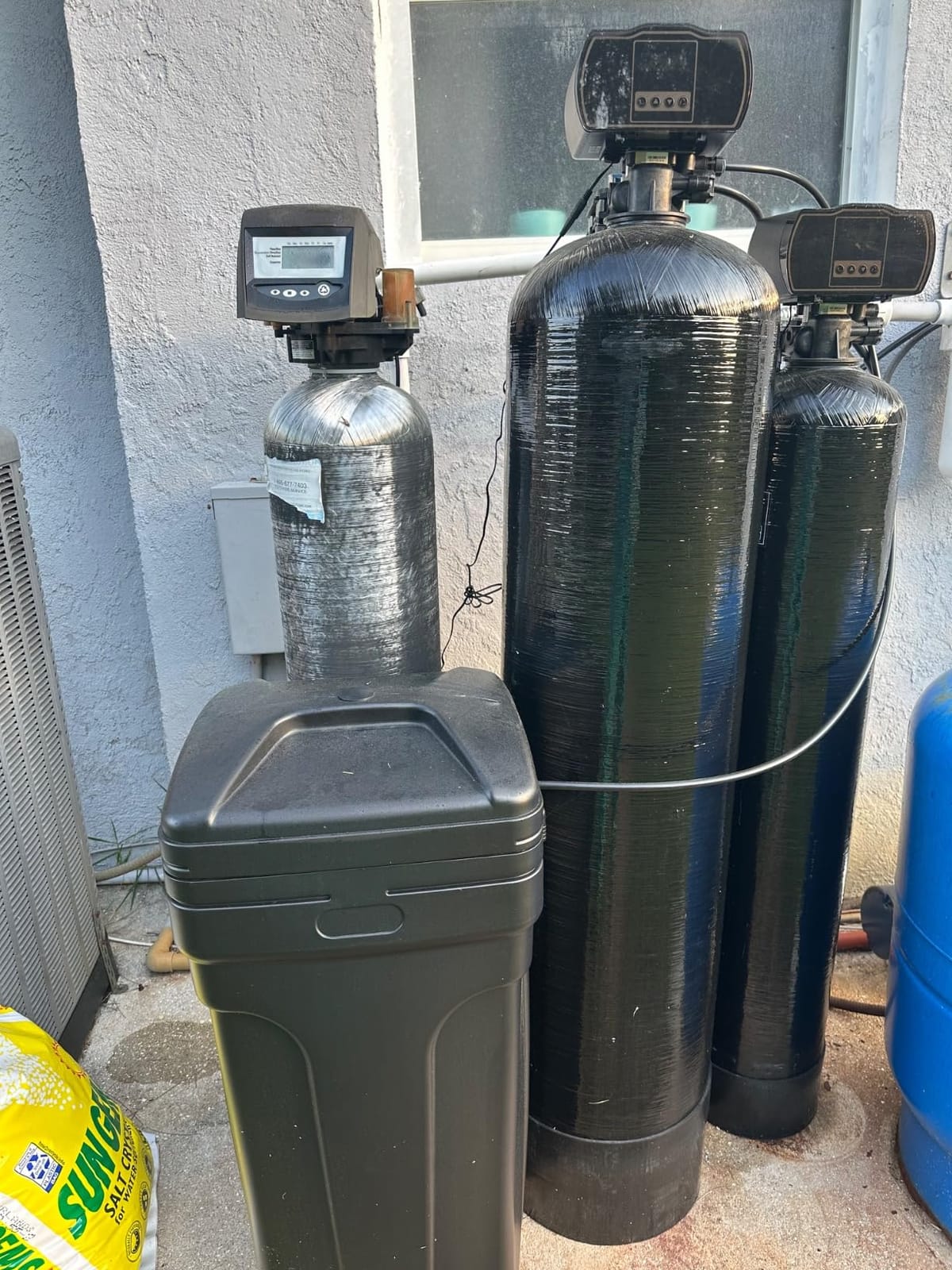
Owners running large homes and small commercial operations report very good results, including one installation that fixed persistent glassware spotting in a tasting room and another still running trouble-free after several years. The smart digital control valve calculates salt and water needs without manual scheduling.
Negative reviews split between product issues and after-sales issues. One owner reports the unit failed on well water and then had trouble obtaining a refund, and another describes an unresolved refund dispute. The 15 percent one-star share, highest in the roundup, tracks with those service experiences rather than softening performance.
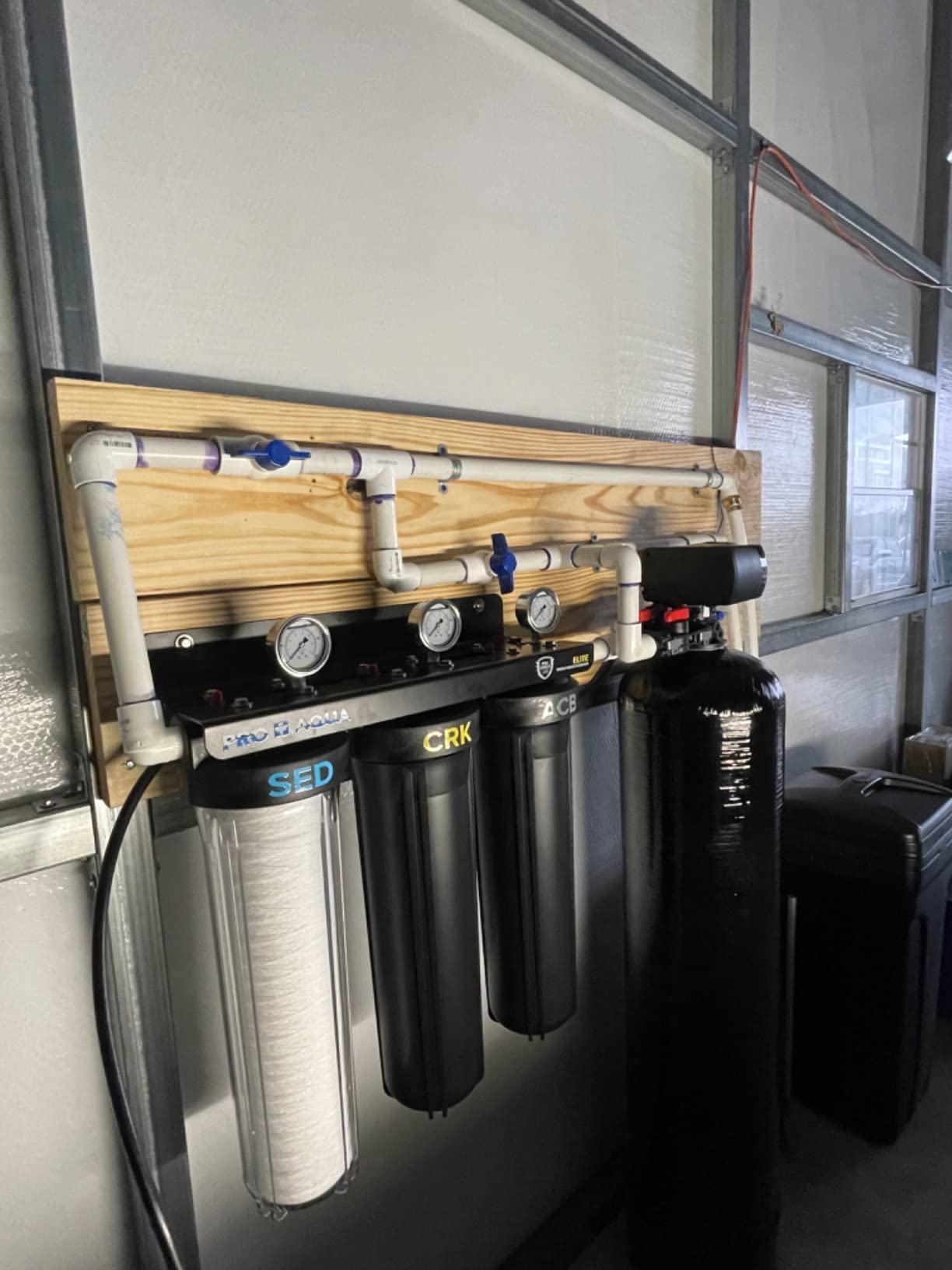
Plumbing changes you should plan for
The 1 inch inlet and outlet ports are the deciding detail. If your existing softener loop runs 3/4 inch, you will need 1 inch flex pipe and fittings, which means a plumber or a trip to the hardware store before the install can start. Measure your line size first.
Because the tank is 17 inches square and 167 pounds, floor space and a two-person lift are both required. Measure the doorway and stair width on the delivery path as well.
When a smaller unit is the smarter buy
If your household is four people or fewer on water under 15 GPG, this capacity is unnecessary and the 1 inch plumbing conversion is avoidable expense. The digital valve is also described as confusing to program with unclear confirmation, so budget time for setup rather than assuming it configures itself.
10. WaterBoss 600K Gallon Salt-Free Descaler — Budget Pick for Scale Control
Water Boss Whole House Salt-Free Scale Control | 600K Gal | WB-WH-DSCLR
Salt-free scale control
No salt, power or backwash
7 gpm flow
6-year media
Pros
- Least expensive way into whole-house treatment here
- Salt-free and chemical-free with no salt and no electricity
- Compact 27-inch vertical footprint fits tight utility rooms
- No noticeable pressure drop at up to 7 gpm
- 6-year media life with 6-year warranty
Cons
- Does not soften water at all
- Only rated for moderate hardness under 15 gpg
- Does not reduce TDS
- sulfur or iron
- Lowest average rating in the roundup at 4.0 with a 14 percent one-star share
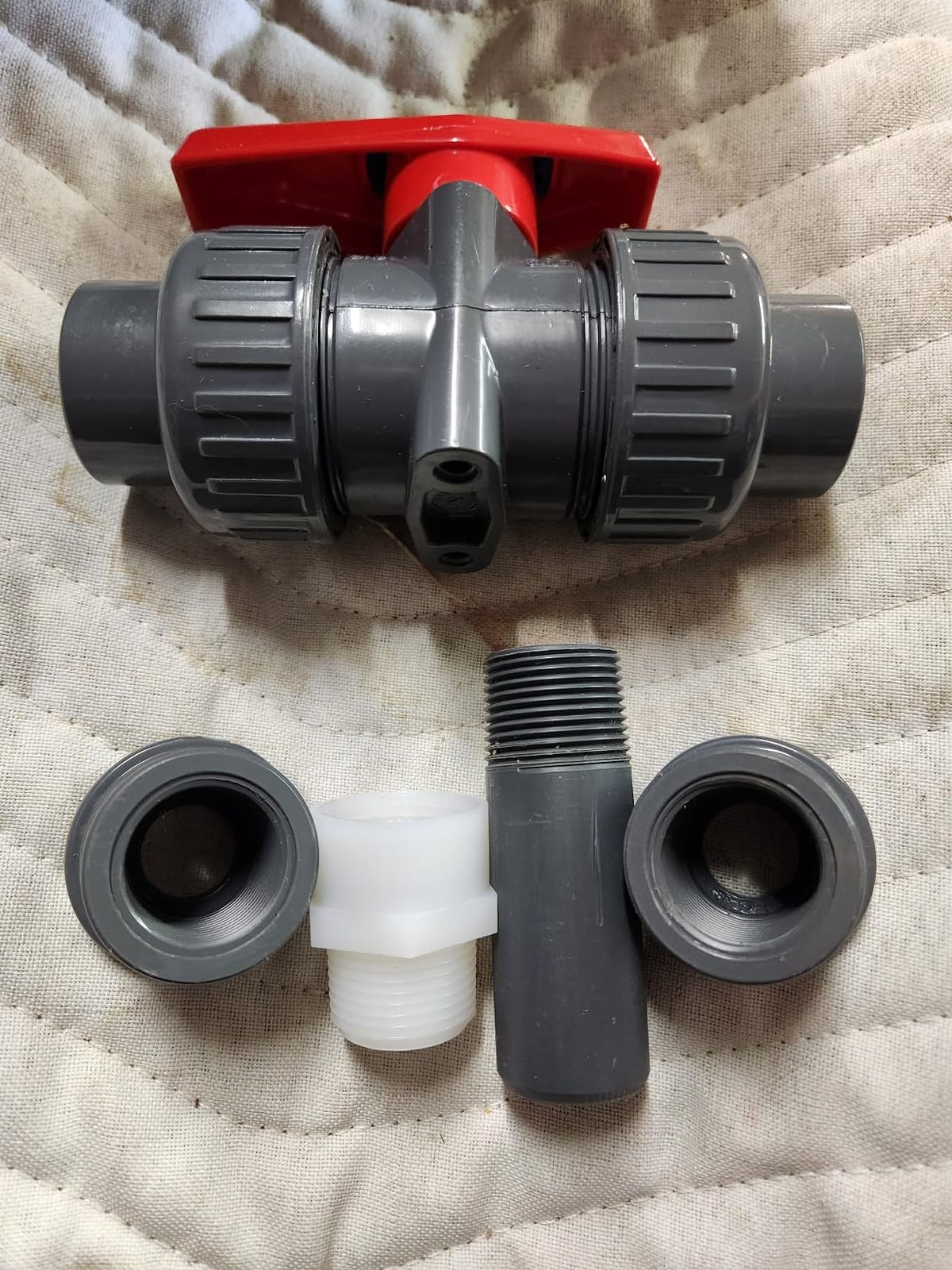
The WaterBoss is the same core idea as the A. O. Smith descaler in a smaller, cheaper package, and it is the lowest-cost way to stop scale forming inside a whole-house system. At 27 inches tall and 8.75 inches square, it disappears into utility spaces where a softener tank will not go.
It needs nothing from you: no salt, no backwashing, no cleaning schedule, no electricity, no filter cartridge. Media life and warranty are both six years, rated to 600,000 gallons, and flow holds at 7 gpm with no noticeable pressure drop. Buyers generally confirm it does its stated job of reducing scale in pipes and fixtures at minimal ongoing cost.
The critical reviews are about expectations rather than function. Because this is a descaler and not a softener, some buyers report that water still feels hard and spots persist. If you are buying this expecting soft water, you will be disappointed regardless of how well the unit performs.
At a 4.0 average across 204 ratings with a 14 percent one-star share, it is the lowest-rated unit here, and the 60 percent five-star share is correspondingly lower. Small leaks at the tank connection threads appear in reviews of this category generally.
Best used as a companion, not a replacement
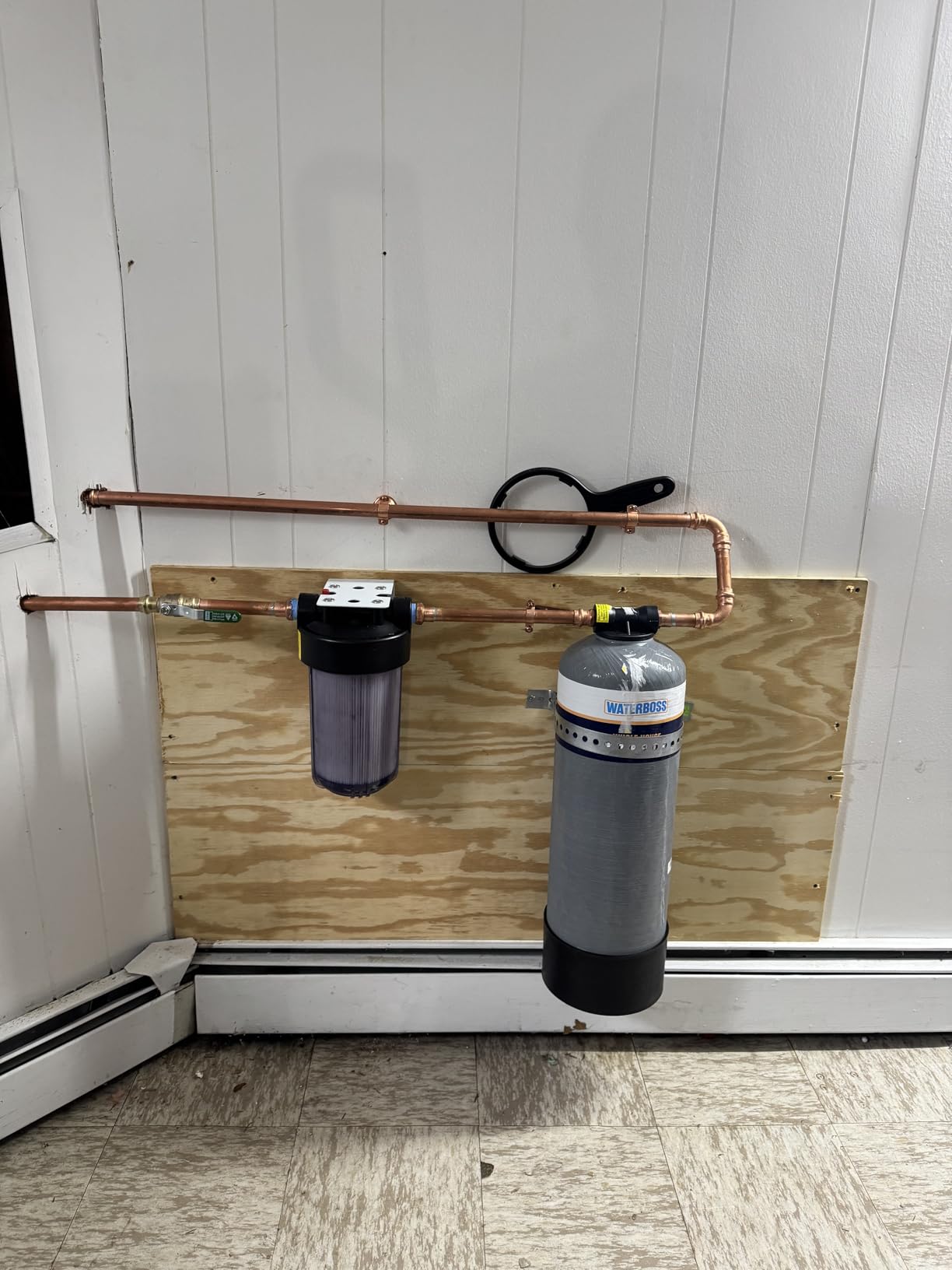
The most effective setup pairs a descaler ahead of or behind a softener: the softener handles hardness, and the descaler provides a backup layer against scale from residual minerals. Homeowners on a tight budget who rent their home often start here and upgrade later.
Like its competitor, it is specified for hardness under 15 gpg, alkalinity under 250 mg/L, pH under 8.3, and iron under 0.3 ppm. It does not reduce TDS, sulfur, or iron.
When you need real softening instead
If your water measures above 10 GPG, if your soap will not lather, or if you want noticeably softer skin and hair, no salt-free unit will deliver that. Move up to one of the ion exchange systems earlier in this list. The descaler is a scale tool, and treating it as a softener wastes money.
Salt-Based vs Salt-Free vs Descaler: Which Technology Fits Your Water
Pick the technology first, then the product. Three approaches show up in this category, and buyers regularly confuse them because the marketing language overlaps.
Ion exchange is the only one that actually softens water. Hardness ions bind to resin beads, sodium ions take their place, and a brine flush carries the displaced minerals away. That exchange is why the water feels softer and why soap lathers properly. The cost is salt, brine discharge, and periodic regeneration.
Salt-free conditioners and electronic descalers change crystal formation rather than removing ions. The minerals stay in solution, so scale stops forming, but a hardness test kit will still read high. One owner in r/WaterTreatment summarized the practical experience well: a small true softener outperformed a salt-free conditioner at the same house, which is why we list both categories separately here instead of merging them into one “salt-free” recommendation.
Map your hardness reading to the right approach. Above 10 GPG, or anything with meaningful iron, ion exchange is not optional. From 3 to 7 GPG you can choose either true softening or, if scale is your only complaint, a conditioner. Below 3 GPG a small softener or nothing at all will do.
Appliance lifespan is where the payoff lands. Water heaters, dishwashers, washing machines, and boilers all run hotter and work harder with scale on the heating element, and replacing one of those units costs far more than a softener ever will. That is the reason to size up rather than down.
How to Size a Water Softener for Your Home
Start with the multiplication everyone asks about: people in the house times 75 gallons per person per day times hardness in grains per gallon. That gives you grains of hardness removed per day.
Next convert daily grains into capacity. A general rule divides daily grains by four to get the grain capacity rating you want between regenerations, then add a reserve factor. For four people on 20 GPG water, that is 4 times 75 times 20 equals 6,000 grains per day, which lands in the 40,000 to 48,000 grain range — which is exactly where most of the units above sit.
Add for iron. Every 1 ppm of ferrous iron adds roughly 5 grains to the load, so 2 ppm of iron behaves like 10 additional GPG. If your well test shows iron, size up or plan on an iron filter in front of the softener.
Check three more numbers before you buy. Maximum flow rate should exceed your household peak, control valve size should match your plumbing so you do not pay to convert 3/4 inch lines, and certification is worth checking. A unit listed as IAPMO certified to NSF/ANSI 44, like the Aquasana here, has had its capacity claim verified by a third party rather than by the seller.
Metered versus timer control is the last decision. Metered heads regenerate on measured usage, so they adapt to a household that is busy on weekends and quiet on weekdays, and they cut salt and water waste compared with a fixed clock. Timer units are cheaper and can work fine on consistent usage, but they regenerate whether you need it or not.
Why Is Your Water Still Hard With a Softener Installed?
If water measures hard after installation, work through these causes in order. Most are cheap to check before you accept that the unit is undersized.
Start by testing at a sink after a full regeneration cycle, not at the first tap in the morning. Stagnant water in branch lines reads harder than it is. If the reading is low at the softener and high at a distant tap, the problem is in the household plumbing rather than the unit.
Next check the bypass valve. A bypass still sitting in the partially open position after installation sends some water straight past the resin. Confirm the handle position and the position of every valve on the loop.
Then check salt and brine. An empty or bridged salt tank stops regeneration entirely. Look for a salt bridge, break it up, and keep the level above the fill line.
After that, look at iron fouling. Iron coats resin beads and cuts capacity dramatically. On a well with more than about 2 ppm ferrous iron, expect an iron filter or an iron-rated resin bed.
Finally, re-run the sizing math with your real daily usage. Households that finished a vacation, added a second bathroom, or underestimated hardness end up with a unit that regenerates continuously and still runs out. If capacity checks out and the unit is fouled, a resin replacement is far cheaper than a new system.
Where to Buy and What Installation Involves
Big-box retail and specialty dealers suit different situations, and forum threads on this topic keep circling the same tradeoff. Big-box aisles give you a return policy you can use without shipping a 120-pound tank, and the brands there are serviceable by any local plumber. Specialty dealers cost more but will pressure-test your water, size the system properly, and stand behind it locally.
Online-only sellers give you the widest selection and the best prices on volume units, with the tradeoff that a shipping damage claim on a 130-pound mineral tank is a hassle to resolve. Our review of install hardware, including a swivel socket set for tight spaces, applies to the cramped corners where softener loops usually live.
DIY installation is realistic for most of these units if you can cut and reconnect 1 inch supply line, run a drain line, and work within your local plumbing code. Budget a full afternoon for a softener alone and most of a day for the bundle unit with its reverse osmosis stage.
Hire a plumber when the main shut-off is inconvenient, when you need the drain relocated, when your home is on a septic system and brine discharge is regulated locally, or when the loop requires converting existing 3/4 inch plumbing. The labor is the smaller cost compared with a leak inside a wall.
Whichever route you take, confirm the control valve and brine float are replaceable parts before you buy. That single check protects the value of the unit for the ten to fifteen year life you are buying into.
Frequently Asked Questions
What is the best hard water softener for a home?
For most homes, a metered ion exchange system in the 45,000 to 48,000 grain range handles a family of three to four on water up to 25 GPG. The Aquasure Harmony 48,000 grain is our overall pick, while the AFWFilters Fleck 5600 SXT is the choice if long-term serviceability matters most.
Which whole house water softener has the highest rating?
The AFWFilters Fleck 5600 SXT carries the highest average rating in our roundup at 4.6 across 541 reviews, with an 80 percent five-star share. The Aquasure Harmony has the largest review base at 3199 ratings and a 4.4 average, which tells you more about long-term consistency.
How do you know what size water softener to buy?
Multiply people in the home by 75 gallons per person per day by hardness in grains per gallon, then divide by four to get the grain capacity rating you need. Add 5 grains for every 1 ppm of iron. Check that the unit’s maximum flow rate exceeds your household peak usage.
How many grains per gallon is considered soft water?
Under 3 GPG is soft, 3 to 7 GPG is moderately hard, 7 to 10 GPG is hard, and 10 GPG or more is very hard. True ion exchange softening typically brings treated water down to 1 to 2 GPG. Salt-free conditioners do not lower the reading because they do not remove the minerals.
Why is my water so hard even with a water softener?
Test after a full regeneration cycle rather than on stagnant water, confirm the bypass valve is fully open, and check that the salt tank has no bridge. Iron above 2 ppm fouls resin and cuts capacity. If the sizing math checks out, a resin replacement is usually cheaper than a new system.
What is a 42,000 grain water softener?
Grain capacity measures how much hardness a softener can remove between regenerations. A 42,000-grain unit typically serves a household of three to four people, and with 75 gallons of daily use per person it is a common size for homes in the 10 to 20 GPG range.
Are salt-free softeners really as good as salt-based units?
They solve a different problem. Salt-free conditioners and electronic descalers change how minerals crystallize so scale stops forming, but they do not remove hardness, so skin, hair, and soap lather are unaffected. Above 10 GPG, or when iron is present, only ion exchange will soften the water.
Which is better, a water softener from Lowe’s or Home Depot?
Both stock serviceable brands with straightforward return policies, and both sell compact models for tight spaces. Specialty dealers cost more but will test your water and size the system correctly. For very hard water or any iron, a specialty dealer or a pro-grade online unit beats either big-box option.
Which Water Softener Should You Buy?
The best water softeners for hard water homes in 2026 come down to two questions: how hard is your water, and how much room do you have. For most households on municipal supply, the Aquasure Harmony 48,000 grain is the pick, with the built-in pre-filter protecting the resin and the largest body of long-term owner feedback behind it. Choose the AFWFilters Fleck 5600 SXT if a serviceable control valve and independent certification matter more than upfront cost.
Measure your hardness before ordering, size up if iron is present, and remember that salt-free units stop scale without softening anything. Whichever route you take, the right system for your water is the one that matches your measured GPG rather than the largest unit on the shelf.