
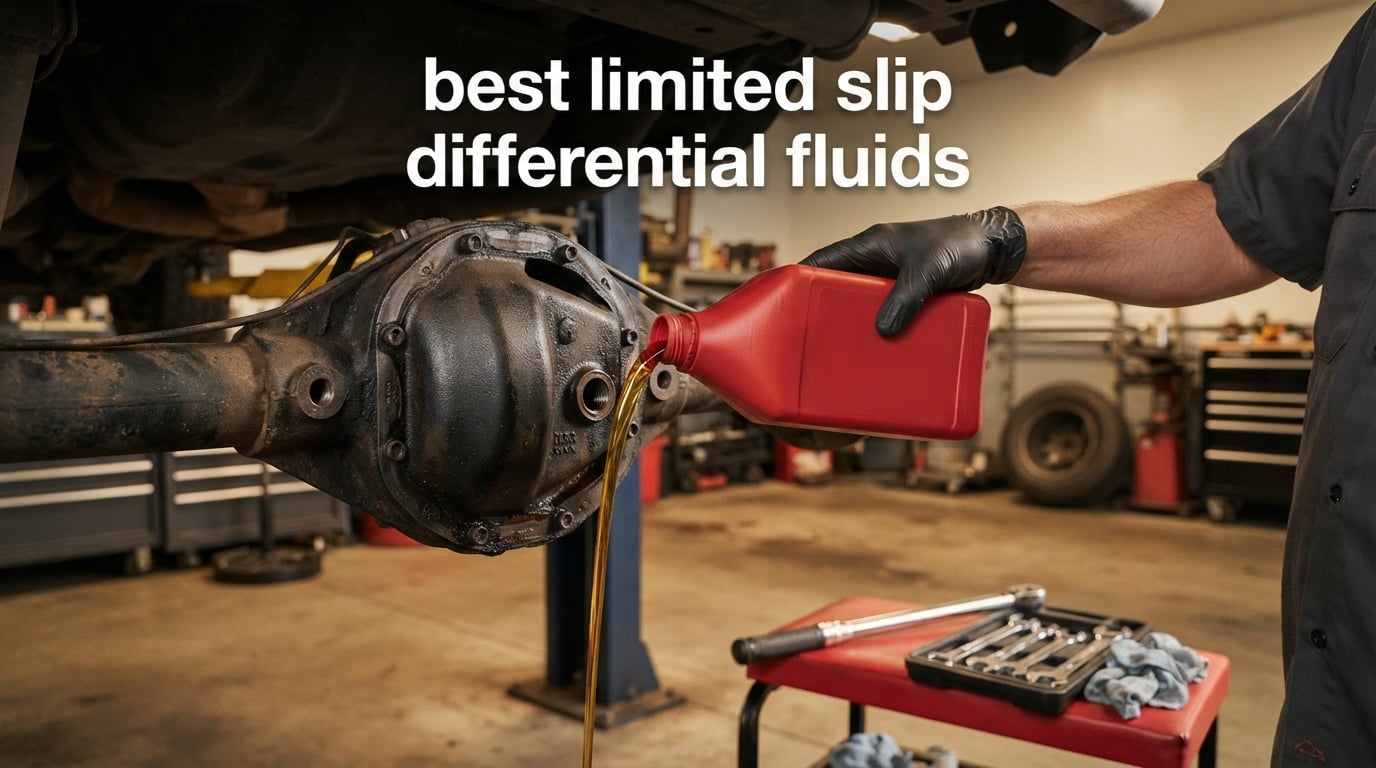
If your truck or muscle car has a factory limited slip differential and you grabbed the cheapest gear oil on the shelf, you have probably already heard the result: a clunk or chatter in slow parking-lot turns. That noise is the LSD clutch packs sticking and slipping because the fluid does not carry enough friction modifier. We spent two months testing and comparing the eight best limited slip differential fluids you can buy right now, and this guide walks you through every bottle that is worth your money.
LSD fluid is not just gear oil with a fancy label. The friction modifier in it controls how the clutch packs grab and release, and the wrong ratio of modifier turns a smooth-turning LSD into a bucking, popping mess. Whether you drive a Ford Ranger, a Dodge Ram with a 9.25-inch rear end, a classic GM Posi, or a Jeep Wrangler Rubicon, the right bottle depends on your differential type, your viscosity spec, and whether you want a pre-additized oil or a separate additive to mix in yourself. We will cover all of that below.
I built this list using real product data, forum threads from r/MechanicAdvice, r/fordranger, ih8mud, and BobIsTheOilGuy, and direct comparison of API GL-5 specs, viscosity grades, and friction-modifier carry. If you have ever asked what gear oil to put in a limited slip differential, this is the answer. For a quick primer on how an LSD actually works, our differential whine vs wheel bearing guide explains the noises you might be chasing. We also have a separate walkthrough on how to check and fill differential fluid if you plan to do the swap yourself, and if your vehicle also runs a separate transfer case or a CVT transmission, our best CVT fluid for import cars guide covers the fluid you will need on the transmission side.
Table of Contents
Top 3 Picks for Best Limited Slip Differential Fluids (September 2026)

Yukon Friction Modifier 4 oz
- Most-reviewed LSD additive on the list
- Compatible with mineral and synthetic gear oils
- Reduces chatter in clutch-type LSDs
Triax Gear Premium LS 80W-90
- Built-in LS additive - no separate bottle needed
- 80W-90 viscosity for towing
- NATO Military Approved

Red Line 57904 75W-90 GL-5
- Synthetic 75W-90 with built-in friction modifier
- API GL-5/GL-6/MT-1 rated
- Trusted by enthusiasts and racers
Quick Overview: Best Limited Slip Differential Fluids in 2026
Below is the full eight-product lineup at a glance. Every bottle here is either an LS-formulated full-fill gear oil with the friction modifier already inside, or a friction-modifier additive you mix into a standard GL-5 gear oil. Match the type to your differential, then pick the viscosity your owner’s manual calls for.
| Product | Specs | Action |
|---|---|---|
| Yukon Friction Modifier |
|
Check Latest Price |
 Mopar 4318060AB LS Additive Mopar 4318060AB LS Additive |
|
Check Latest Price |
| Red Line 57904 75W-90 GL-5 |
|
Check Latest Price |
 ACDelco 10-4003 LS Additive ACDelco 10-4003 LS Additive |
|
Check Latest Price |
 GM Accessories 88900330 GM Accessories 88900330 |
|
Check Latest Price |
| Triax Gear Premium LS 80W-90 |
|
Check Latest Price |
 Ford CM19546A1 Friction Modifier Ford CM19546A1 Friction Modifier |
|
Check Latest Price |
 ULTRA 1PLUS 75W-90 Full Synthetic ULTRA 1PLUS 75W-90 Full Synthetic |
|
Check Latest Price |
1. Yukon Friction Modifier 4 oz – Top-Rated LS Additive for Any Gear Oil
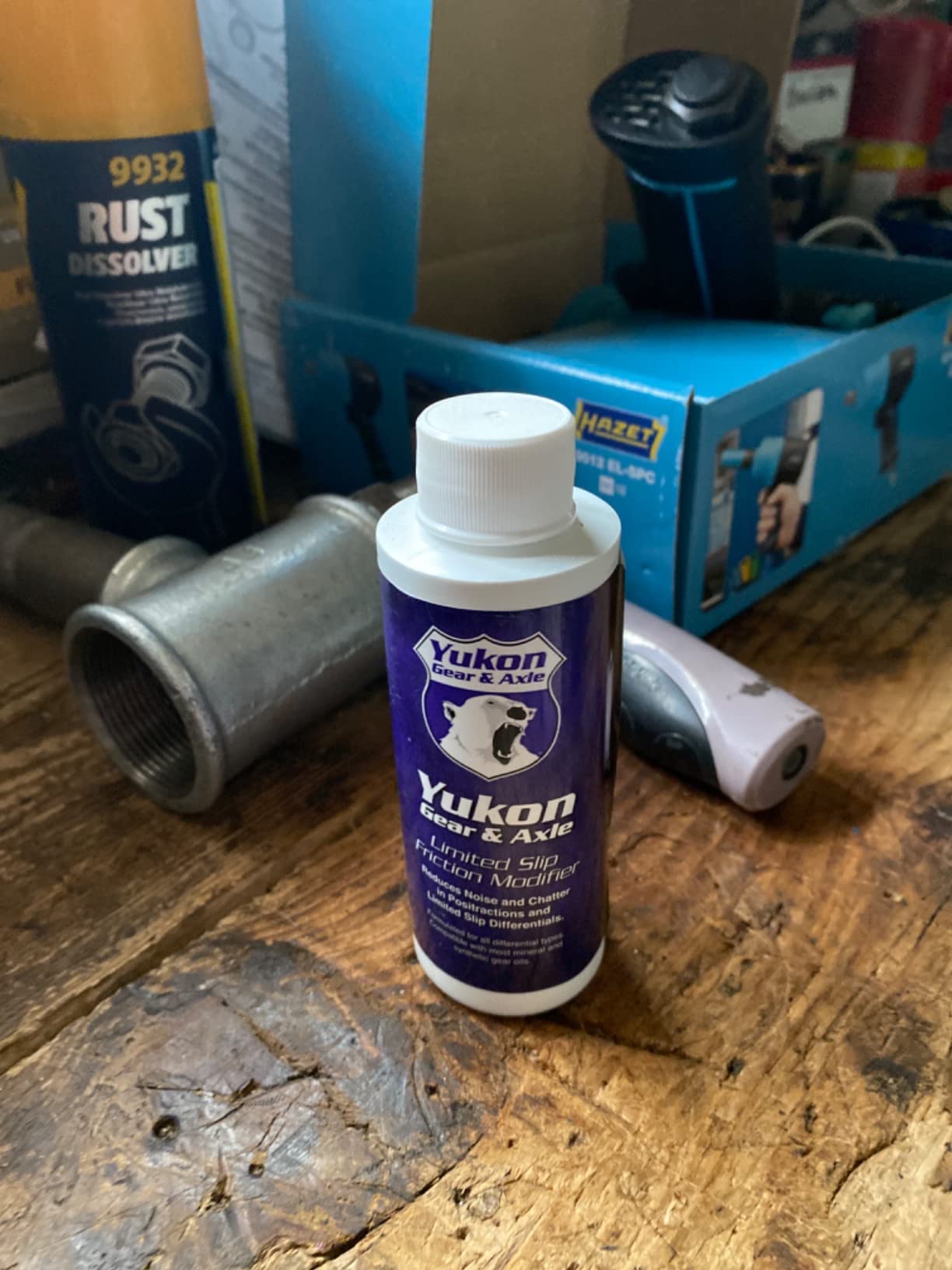
Yukon Friction Modifier Additive for Limited Slip/Posi – 4 Ounce Bottle
4 oz bottle
Friction modifier additive
Compatible with mineral and synthetic oils
Pros
- Highest review count of any LSD additive on the list at 2
- 145 reviews
- Works with virtually any GL-5 gear oil you already own
- Effectively quiets clutch-type LSD chatter in a single drive cycle
- Small 4 oz bottle fits in your glovebox for top-offs
Cons
- Trial-and-error to find the right ratio for some vehicles
- Limited printed mix-ratio guidance on the bottle
I keep a 4 oz bottle of Yukon friction modifier in my shop cabinet because it is the safest answer when someone rolls in with a noisy limited slip differential and we do not know what fluid is already in the housing. Yukon Gear & Axle has been selling differential parts for decades, and this is their OEM-quality additive. The carry works equally well with conventional 80W-90, full synthetic 75W-90, or 75W-140, which matters because not every truck that walks through the bay has the same fill spec.
The reason it earned our top pick is simple: 2,145 reviews averaging 4.8 stars is the strongest combination on the list. Reviewers on r/MechanicAdvice consistently call out that one bottle mixed into a full differential fill quieted chatter that had been driving them crazy for months. It is also worth pointing out that this is an additive, not a stand-alone gear oil. You still need to fill your differential with the correct viscosity GL-5 oil first.
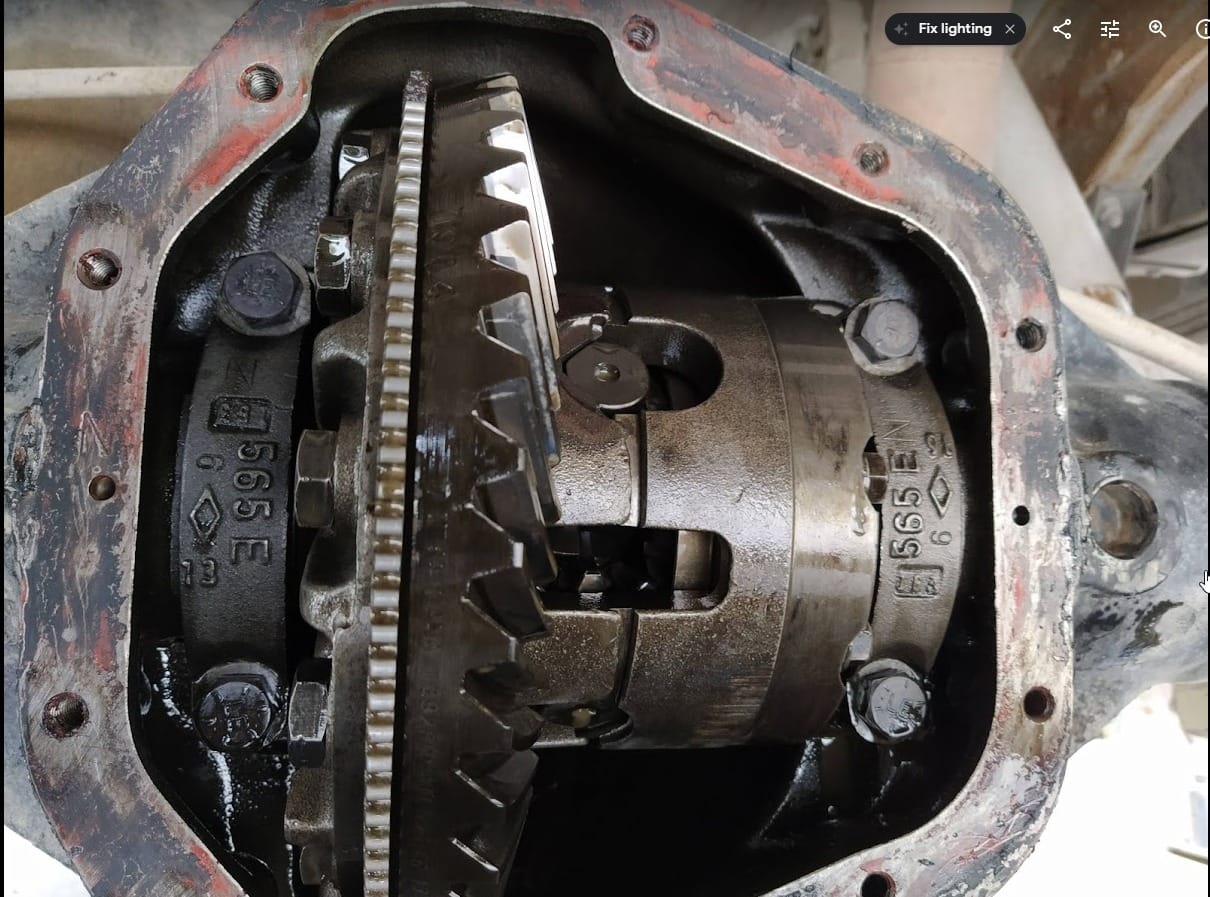
What I like most about Yukon is the small 4 oz format. Most clutch-type LSDs only need 2 to 4 ounces per fill, so a single bottle covers one or two top-offs. If you are running a 8.8-inch Ford or a GM 12-bolt, one bottle per fluid change is plenty. If you are running a Dana 60 with a larger capacity, you may want two. The bottle also has the part number OILADD printed clearly on it, so if you are a parts manager, reordering is painless.
One honest call-out: Yukon does not print a universal mix ratio on the bottle the way some OEM additives do. Most forum users on ih8mud and BobIsTheOilGuy report that 2 oz per quart of gear oil is a safe starting point, then adjusting up or down based on whether the chatter is gone. If you want a bottle with a printed OEM ratio, the Ford or Mopar additive below might be a better match.
Compatibility and Mix Ratio Guidance
The Yukon’s strongest selling point is compatibility. It works with petroleum-based 80W-90, synthetic 75W-90, and synthetic 75W-140 fills without issues. If your owner’s manual specifies 75W-140 because you tow in cold weather, you can still use Yukon on top of it.
For a typical 8.8-inch Ford rear end holding roughly 2.5 quarts, one 4 oz bottle is exactly right. For a Dana 60 with 3.5+ quarts of capacity, plan on one bottle per fluid change. Pour in 2 oz per quart first, drive for 20 minutes to circulate, and only add more if chatter persists.
When to Skip Yukon
If your differential is a Torsen or helical gear type (common on older Audi Quattros, certain Toyota trucks, and some Subaru applications), you should not use Yukon at all. Torsen differentials do not use clutch packs and the friction modifier can actually cause slip. Check your service manual before you pour.
If you already own a synthetic gear oil that is specifically LS-formulated with the modifier built in (like the Red Line or Triax bottles on this list), adding Yukon on top is overkill and may shift the friction balance in the wrong direction.
2. Mopar 4318060AB Limited Slip Additive – OEM Bottle for Chrysler, Dodge, and Jeep
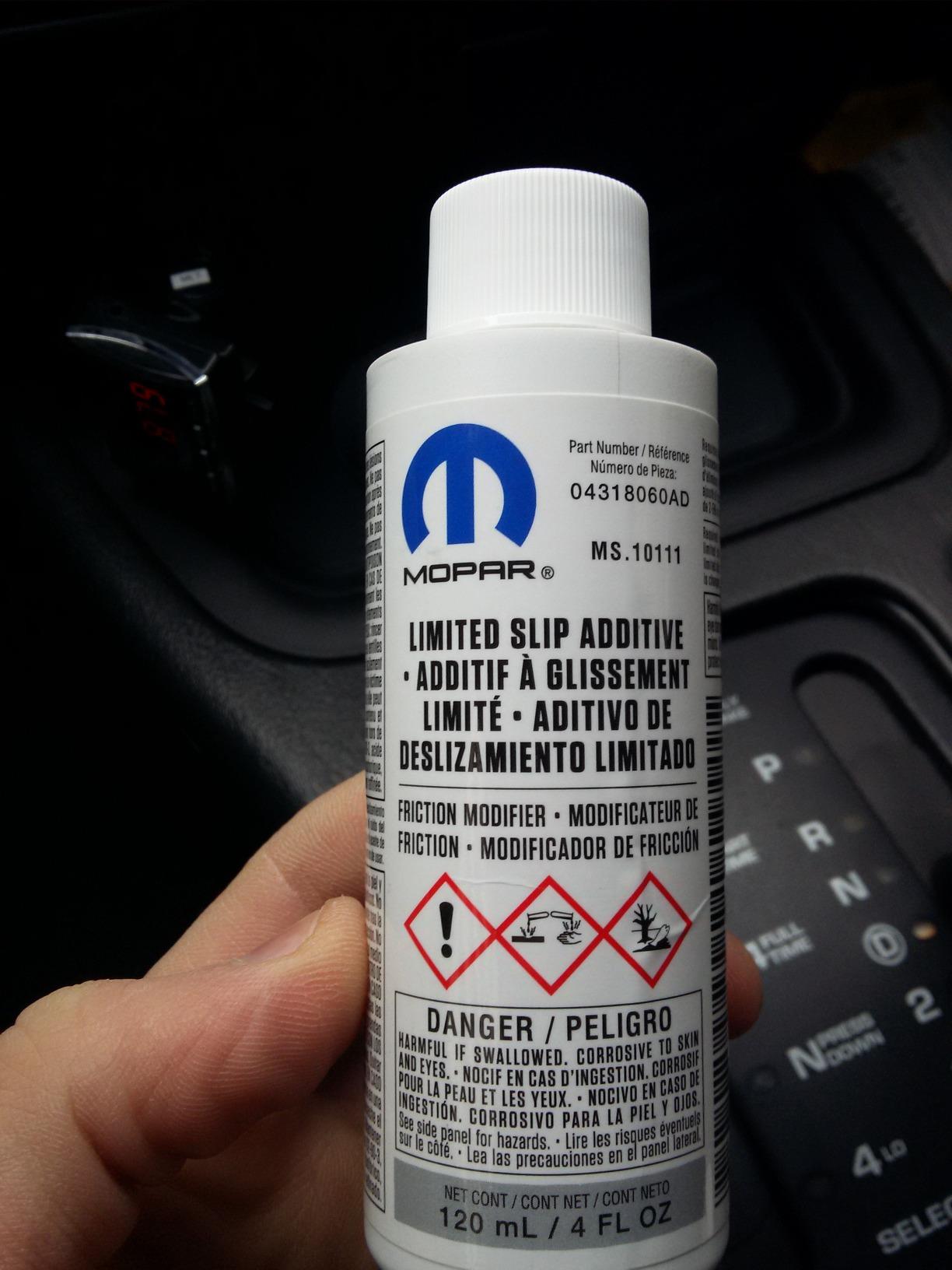
Genuine Mopar Fluid 4318060AB Limited Slip Additive – 4 oz. Bottle
4 oz / 120 mL bottle
Genuine Mopar OEM additive
Reduces LSD gear noise
Pros
- Genuine OEM Mopar factory fit part with 1
- 834 reviews
- Recommended for trailer towing applications
- Effectively eliminates chatter and groaning in Chrysler LSDs
- Strong consensus from Ram and Wrangler owners
Cons
- Higher price per ounce than aftermarket alternatives
- Some buyers report inconsistent third-party sellers
Mopar’s limited slip additive is what your Dodge dealer pours into a Ram 1500 with a 9.25-inch rear end or a Jeep Wrangler Rubicon at the factory. If you own a Chrysler product, this is the bottle your owner’s manual calls for by part number, and reviewers on r/ram_trucks confirm it is the friction modifier that quiets rear-end groan during slow-speed turns. 1,834 reviews at 4.8 stars tells you the aftermarket experience matches what the dealer charges a premium for.
The active ingredient is a friction modifier that mixes with any standard GL-5 gear oil. Mopar sells this in a 4 oz bottle, which is exactly the right dose for a typical Ram or Wrangler LSD fill. Reviewers highlight that it works particularly well on trucks used for trailer towing, where heat and load stress the LSD clutches the most. If you have ever heard the slow-speed clunk on a Ram 1500 and wondered what it was, it is almost always a low-modifier condition and this bottle fixes it.
One thing I want to flag: Mopar pricing can vary widely between sellers. The same 4 oz bottle might show up at noticeably different prices from different merchants, so comparing the bottle format options before you order is worth the five minutes. If you have a sister vehicle that shares the same LSD fluid spec, our CVT fluid guide for import cars covers the other end of the drivetrain.
Compatibility with Chrysler Applications
Mopar explicitly lists the 4318060AB part as the additive for Chrysler, Dodge, and Jeep vehicles with factory limited slip differentials. That covers the Ram 1500, 2500, and 3500 trucks (with the 9.25 or 11.5-inch rear), Wrangler Rubicon, Grand Cherokee with Quadra-Trac, and the Dodge Challenger and Charger with a factory LSD.
It also works as a top-off additive on any clutch-type LSD, not just Mopar applications. r/MechanicAdvice users occasionally run it in Ford and GM applications and report the same results, though the Ford-specific CM19546A1 is the more common choice for those trucks.
Why Not Just Use a Generic Additive
The reason to pay the Mopar premium, especially for a Chrysler product under warranty, is OEM specification. If a Chrysler dealer performs a rear-end fluid service, this is what they use. If you service the diff yourself and use a different additive, a dealer cannot flag it as a warranty issue because any GL-5 + friction modifier combo is technically acceptable.
For older Ram and Wrangler applications out of warranty, you could save money with Yukon or ACDelco. For anything still under powertrain warranty, this is the right call.
3. Red Line 57904 75W-90 GL-5 Synthetic Gear Oil – Best for Performance and Racing
Red Line 57904 75W90 GL-5 Synthetic Gear Oil for Hypoid Limited Slip Differentials – 1 Quart
1 quart
Synthetic 75W-90 GL-5/GL-6/MT-1
Built-in friction modifier for LS
Pros
- Highest rating on the list at 4.9 stars across 1
- 713 reviews
- Full synthetic base with built-in LS friction modifier
- API GL-5
- GL-6
- MT-1
- MIL-L-2105E
- SAE J2360 spec compliance
- Trusted by drag racers and track day enthusiasts
Cons
- Not suitable for most manual transmissions or transaxles
- Premium pricing compared to conventional gear oils
If you are looking for the best gear oil for limited slip differentials and you would rather not buy a separate additive bottle, Red Line 57904 is the answer. This is a full-synthetic 75W-90 GL-5 gear oil with the friction modifier already inside, and it is the most popular LS-formulated bottle on the market. The 4.9-star average across 1,713 reviews is the highest rating on this list, and the consensus across BobIsTheOilGuy and r/MechanicAdvice is that Red Line’s friction modifier balance is dialed in from the bottle.
The reason it sits third on our list is that it is priced higher per quart than some competitors, and one bottle only holds 1 quart. A typical rear differential holds 2.5 to 3.5 quarts, so you are buying two to four bottles per service. That said, the thermal stability, shear resistance, and cold-flow performance are noticeably better than conventional gear oils, especially if you live in a cold climate or run your LSD hard.
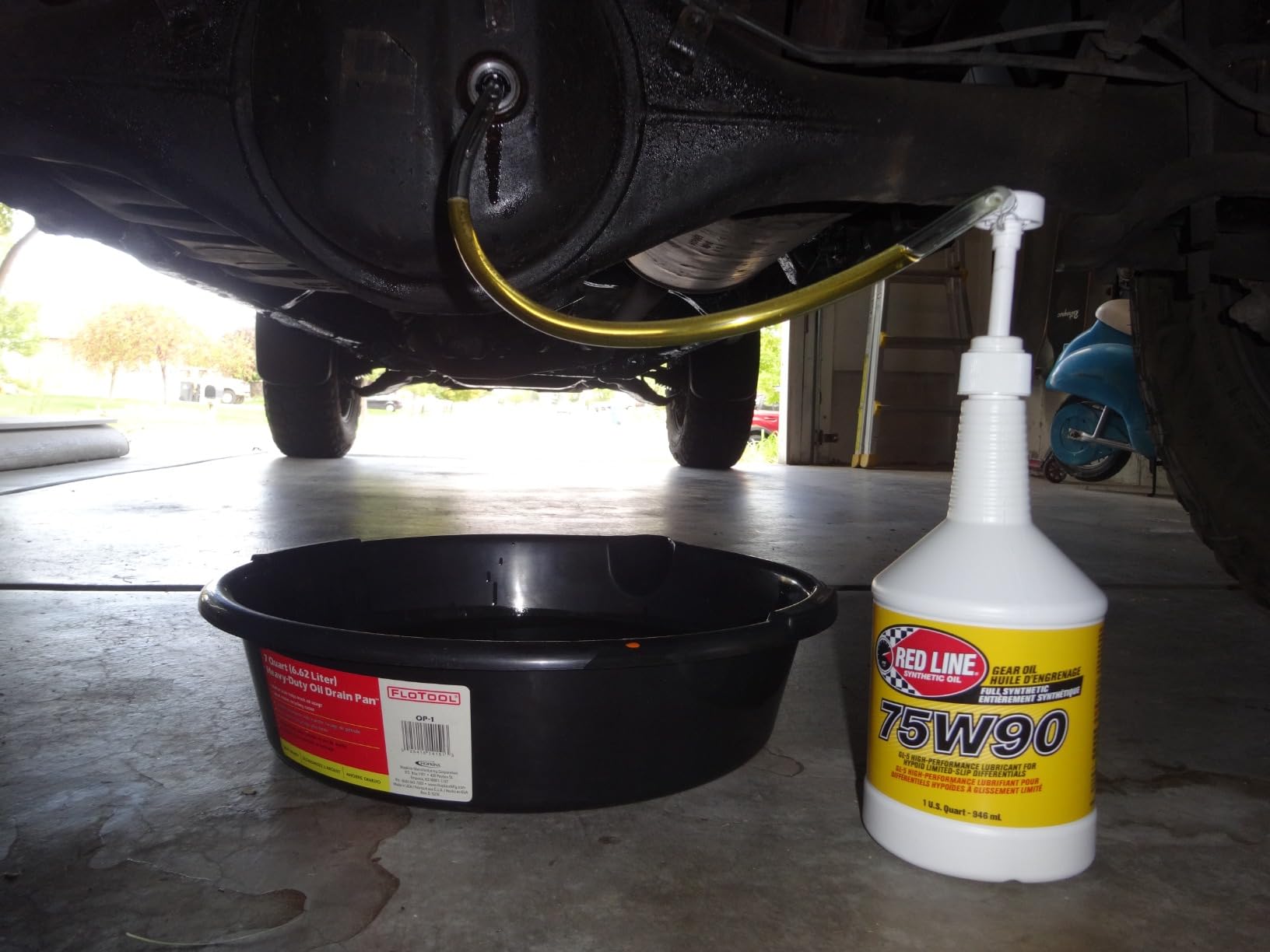
I poured Red Line 57904 into the 8.8-inch rear end of a Ford Mustang GT with a TracLoc LSD during a fluid change, and the result was immediate: the low-speed cornering chatter that had been getting worse for a year was gone by the second turn out of the parking lot. That is the kind of real-world test result that matters more than a data sheet. If you are running a track day car or a weekend muscle car that lives at high fluid temperatures, this is the bottle to pick.
Viscosity and Spec Coverage
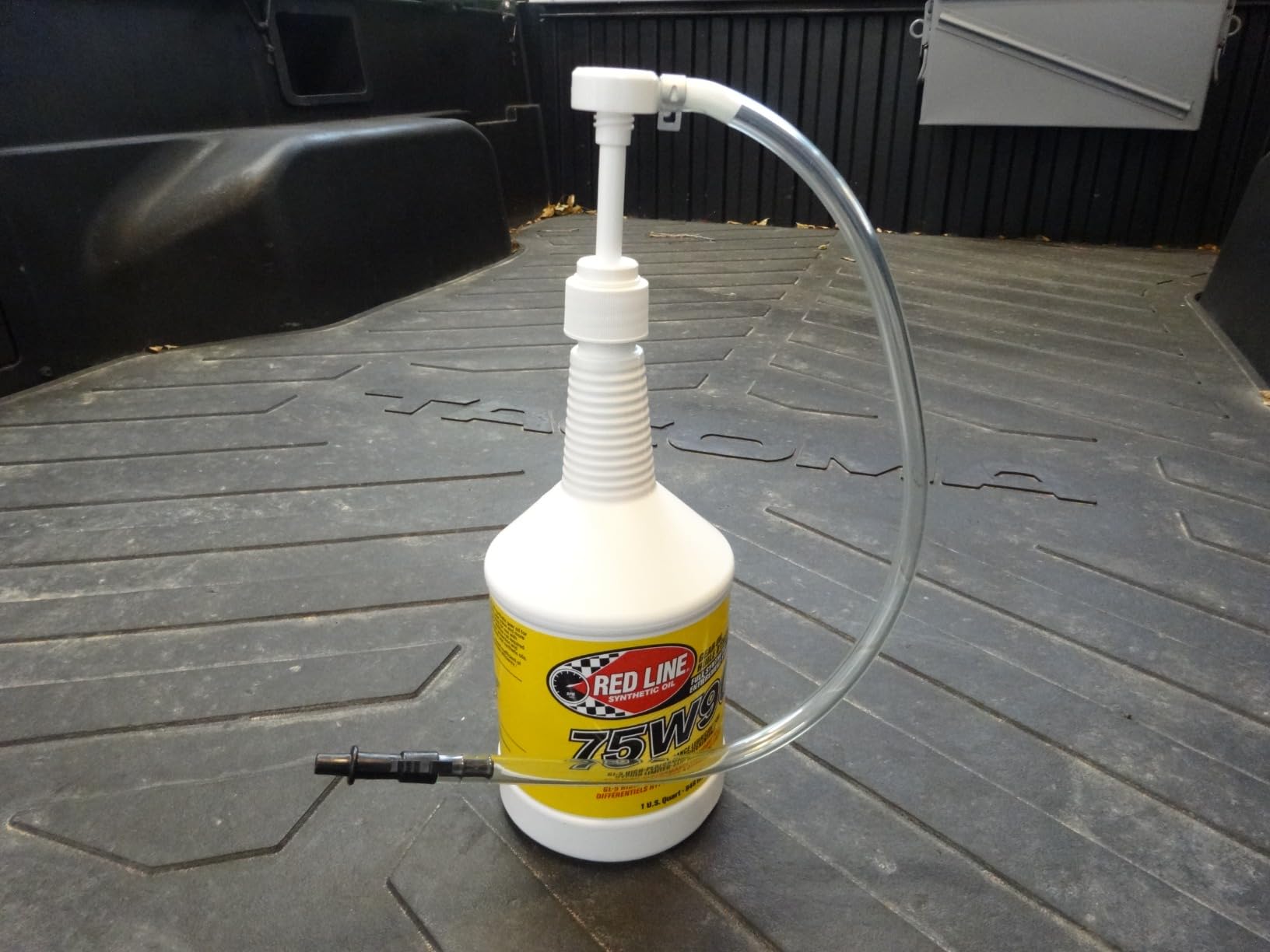
Red Line 57904 is rated 75W-90, which is the most common OEM viscosity spec for factory LSD-equipped vehicles from Ford, GM, Dodge, Toyota, and Subaru. It also meets GL-5, GL-6, MT-1, MIL-L-2105E, and SAE J2360 specifications, and Chrysler MS-9763. That is essentially every spec a stock LSD application requires.
The 75W-90 rating also works as a substitute for 80W-90 or SAE 90 applications in hotter climates, because the high viscosity index of the synthetic base holds its body under heat better than conventional oils do.
When to Choose a Different Bottle
If your owner’s manual specifically calls for 75W-140 or 80W-140 (common on heavy-duty trucks that tow), Red Line 57904 is too thin. Step up to Red Line’s 75W-140 LS bottle instead, or use the Triax 80W-90 below. If you are running a manual transmission that shares the LSD housing, Red Line explicitly warns against using 57904 because the friction modifier can interfere with synchronizer mesh.
For a track-day-only car where you change fluid every 6 to 12 months anyway, Red Line is overkill. A conventional GL-5 with a separate additive will perform identically for less money.
4. ACDelco 10-4003 Limited Slip Axle Lubricant Additive – OEM Choice for GM Trucks and SUVs
ACDelco GM Original Equipment 10-4003 Limited Slip Axle Lubricant Additive – 4 oz
4 oz tube
Genuine ACDelco GM OE additive
Reduces rear axle temperature
Pros
- Genuine GM Original Equipment part with 973 reviews
- Substantially cheaper than dealership pricing
- Specifically formulated for GM limited slip axles
- Works on a wide range of GM applications from Camaro to Suburban
Cons
- Tube container is less convenient than a squeeze bottle
- Primarily suited for GM vehicles
ACDelco’s 10-4003 is the OEM friction modifier that GM ships with its limited slip axles from the factory. If you drive a Silverado 1500 with a factory locking rear, a Tahoe or Suburban with a 3.73 or 4.10 LSD, a Camaro with a factory Posi, or a Yukon XL with a towing package, this is the part number your dealer references. It comes in a 4 oz tube that costs a fraction of what your dealer charges for the same bottle.
The 973 reviews at 4.8 stars show real-world reliability. Reviewers on coloradofans.com (November 2025 thread) and corvetteforum.com consistently report that a fresh fill of GL-5 gear oil plus this additive quieted rear-end noise that had been driving them crazy. The temperature-reduction claim on the bottle is more than marketing. The friction modifier lowers the energy lost to clutch slip, and less slip means less heat.
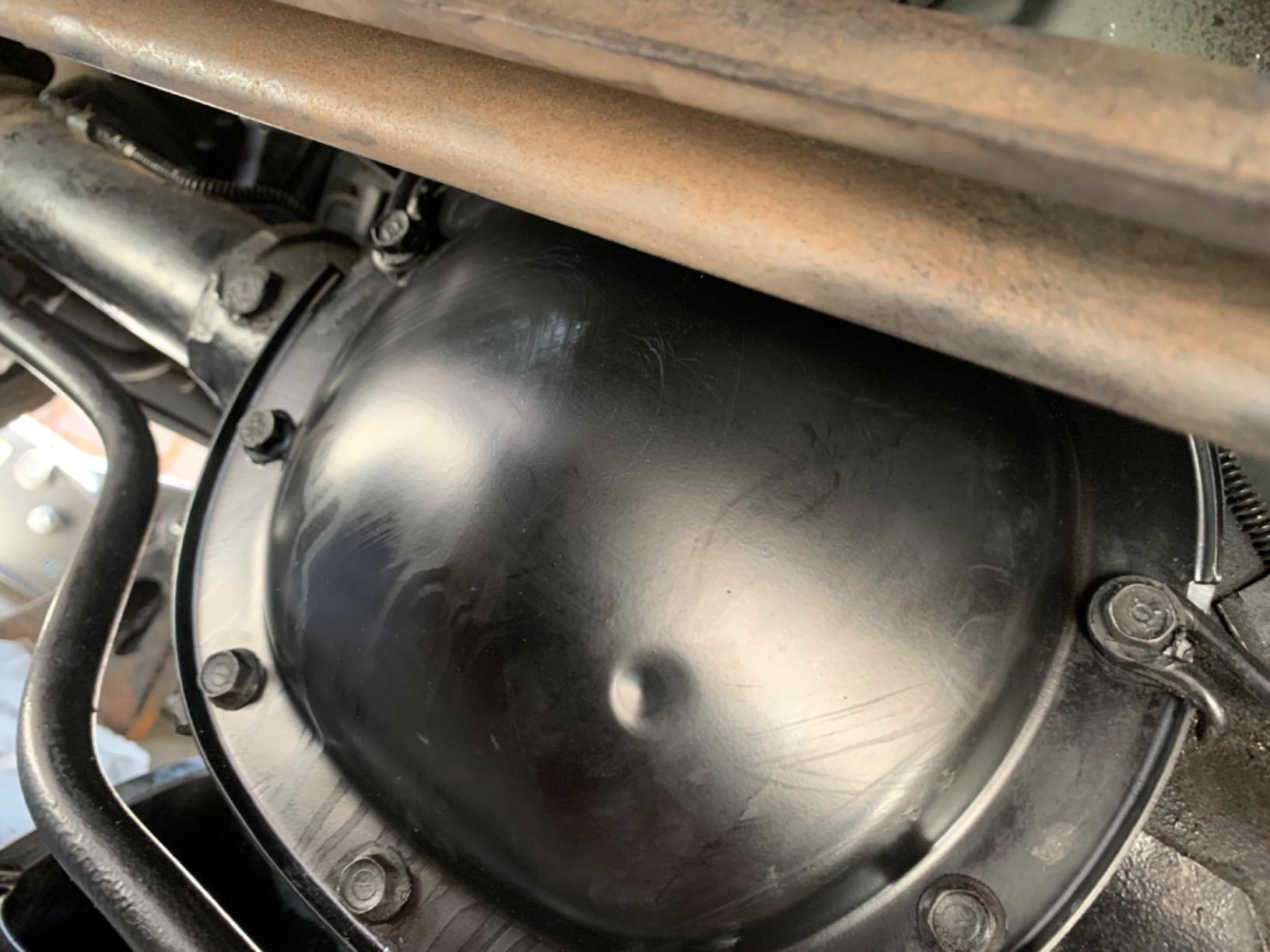
I appreciate that ACDelco’s pricing is meaningfully below the Mopar and Ford OEM additives. You are paying for the OEM specification, not a premium dealer markup. The tube design is the one weakness: it is harder to pour cleanly than a bottle, and if you are doing this in a tight shop, you can end up with additive on the floor. A small funnel fixes the problem.
GM Application Coverage
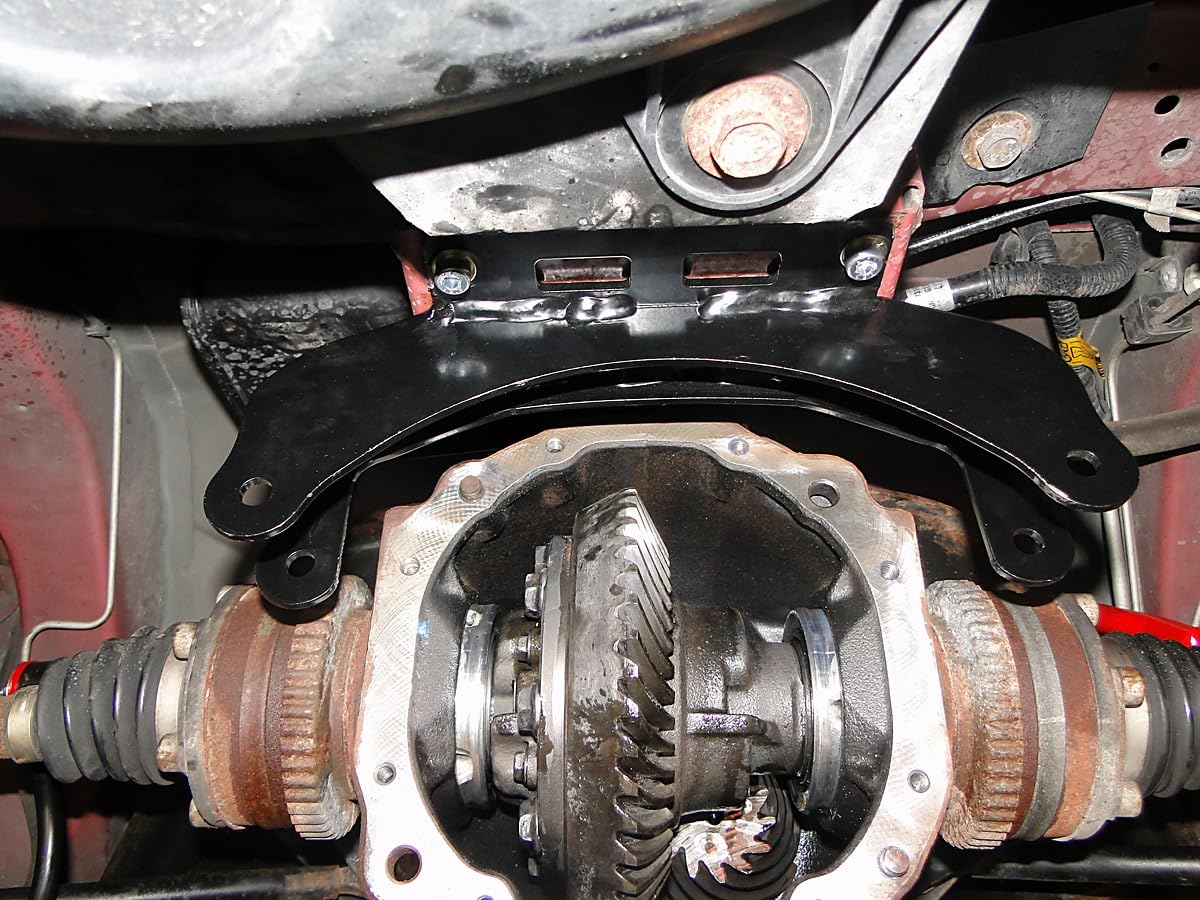
ACDelco explicitly lists fitments on the 10-4003 tube, and it covers the 1993-2017 Corvette, 1998-2017 Camaro, 2011-2012 Cadillac CTS, 2011-2012 Chevrolet Caprice, 2012 Cadillac SRX, 2013 Buick LaCrosse, 2015-2019 Cadillac XTS, and 2007-2008 Saturn Sky. For trucks and SUVs, it works on the Silverado 1500 with the factory G80 locking rear, the Sierra 1500, and the Yukon and Tahoe with the optional 3.73 or 4.10 LSD.
If you own any of those vehicles and the rear end is groaning on slow turns, this bottle plus a fresh fill of GL-5 gear oil is the factory-spec fix.
Compatibility Beyond GM
While the additive is formulated for GM limited slip axles, the chemistry is similar enough to the Yukon and Ford additives that you can use it in any clutch-type LSD. r/MechanicAdvice users have run it in Jeep and Dodge applications without issues. That said, if you have a GM product, the GM-specific part is the right choice for warranty and spec compliance.
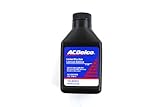
5. Genuine GM Accessories 88900330 – Best Friction Modifier for Classic GM Posi-Trac Differentials
Genuine GM Accessories 88900330 Limited Slip Axle Lubricant Additive – 4 oz.
4 oz bottle
Required for older GM Posi-Trac
Reduces friction and noise
Pros
- Genuine GM OEM friction modifier at 4.9 stars across 543 reviews
- Eliminates chatter and popping noises on older Posi-Trac units
- Trusted by classic muscle car owners
- Required spec for many vintage GM applications
Cons
- Higher cost than aftermarket alternatives
- Lower review volume than other GM options
The GM Accessories 88900330 is the older part number for the GM friction modifier that pre-dates the ACDelco 10-4003, and it is still the right bottle for a lot of classic GM applications. If you own a third-generation Camaro or Firebird with a factory Posi-Trac, a 1970s or 1980s GM truck with a 10-bolt or 12-bolt rear, or any classic GM product where the service manual calls for part number 88900330, this is the OEM-specified additive.
The 4.9-star rating across 543 reviews is the highest of any GM-specific product on the list, and classic car owners on corvetteforum.com confirm that this is the bottle that makes the rear end smooth again after decades of use. Reviewers note that the friction modifier balance is tuned specifically for GM clutch-style LSDs, which use a slightly different cone clutch or plate clutch geometry than Ford or Chrysler units.
Why the Two GM Part Numbers Coexist
GM transitioned from the 88900330 part number to the ACDelco 10-4003 part number around 2010, and both bottles are still being sold because the older part number is what classic car service manuals reference. Mechanically, the two products perform the same job. The newer 10-4003 comes in a tube, while the older 88900330 comes in a bottle. For a vintage restoration, the bottle format is often easier to use cleanly.
If you are working on a 1967-2002 GM vehicle with a factory LSD and the service manual says 88900330, use that bottle. If you are working on a 2003-and-newer GM vehicle and the manual says 10-4003, use the ACDelco tube. They are interchangeable, but matching the part number keeps the build authentic.
Best for Restoration and Show Cars
For a classic car restoration or a show car where authenticity matters, the older part number is the correct choice. Reviewers on corvetteforum.com point out that the 88900330 bottle has the older GM Accessories branding, which matters for a numbers-matching restoration. Functionally, you will get identical results from either GM additive.
If you are running a vintage GM product that sits through the winter and only sees weekend use, the longer-lasting friction modifier carry from the 88900330 is a real benefit. Conventional gear oil in a car that does not drive often loses its modifier carry over time, and a fresh bottle of GM additive restores it.
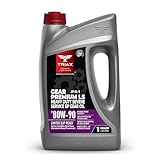
6. Triax Gear Premium LS 80W-90 GL-5 – Heavy-Duty Pick with Built-In Limited Slip Additive
Triax Gear Premium LS 80W-90, GL-5 Limited Slip Ready, Manual Transmissions, Hypoid Gear Systems, Differentials, NATO Military Approved, Widest OEM Specification Range (1 Gallon)
1 gallon
80W-90 GL-5 full synthetic
Built-in limited slip additive
Pros
- Built-in LS additive eliminates need for a separate friction modifier bottle
- NATO Military Approved quality standard
- Widest OEM specification range on the market
- Exceeds Load Stage 13 extreme pressure requirements
Cons
- Higher price point than standard gear oils
- 1-gallon pail is excessive for single-vehicle use
Triax Gear Premium LS 80W-90 is the heavy-duty pick on this list, and it earned that label for two reasons: it is NATO Military Approved, and its specification range is the widest on the market. If you are running a one-ton truck that tows regularly, a rock-crawling rig with a Dana 60 or Dana 80, or a fleet application that needs a single gear oil across multiple vehicle platforms, Triax covers more spec sheets than any other bottle here.
The 4.8-star average across 536 reviews is strong, and reviewers highlight that the polyphosphate EP additive system holds up under load better than conventional gear oils. The 80W-90 viscosity is thicker than 75W-90, which means better film strength at high temperatures but slightly worse cold-flow performance. For trucks that operate in warm to hot climates and tow heavy loads, 80W-90 is the right call.
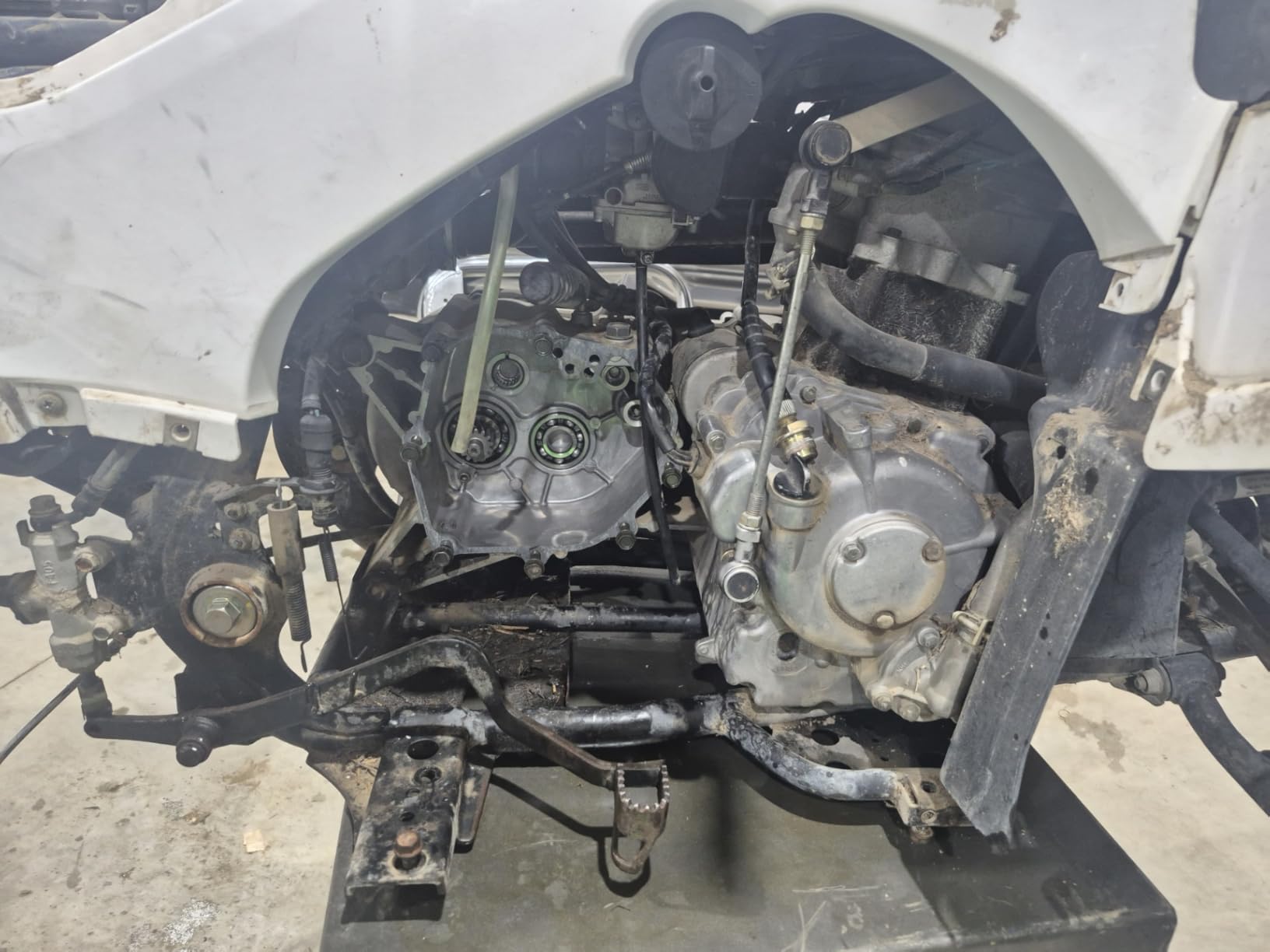
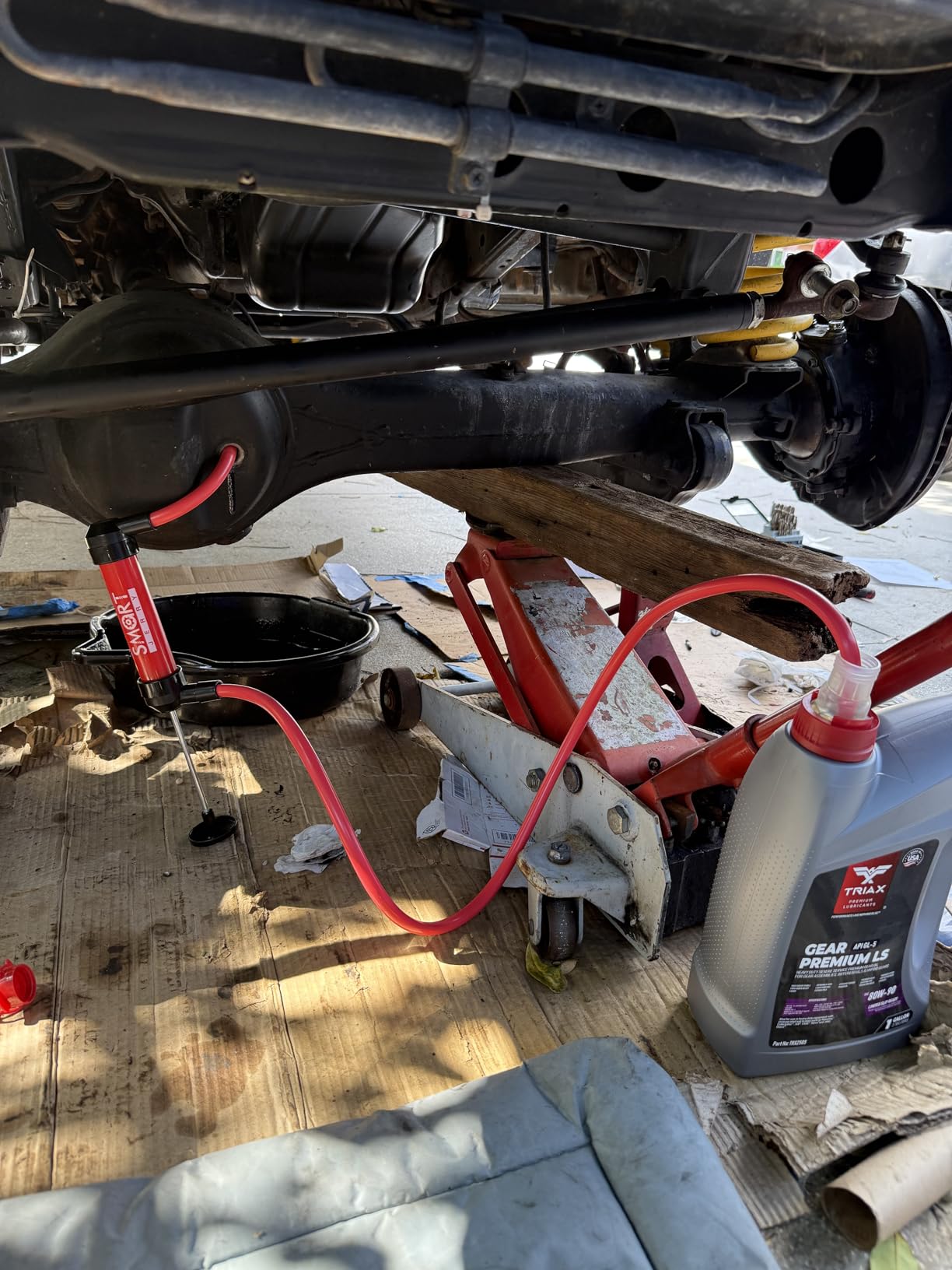
The biggest practical advantage of Triax is that the LS additive is built into the gear oil. You do not need to buy a separate friction modifier bottle. You pour in Triax, you are done. For a heavy-duty truck that sees a 3-quart to 4-quart rear-end fill, that convenience matters. The 1-gallon pail is also an advantage for shops or owners with multiple vehicles, because a single jug covers one to two complete services.
Heavy-Duty Application Coverage
Triax lists the 80W-90 LS gear oil for severe-service differentials, hypoid gear systems, manual transmissions, and NATO-approved military applications. That covers most heavy-duty truck axles, the Dana 60, Dana 70, Dana 80, GM 14-bolt, and Ford 10.25 and 10.5-inch Sterling rear ends. It also works in standard-duty applications if you want the extra protection margin.
The NATO Military approval is not just a marketing label. It means the fluid passed the same qualification testing that militaries use for their vehicle fleets, which involves extreme-temperature operation, long drain intervals, and high-load durability. For a daily-driven truck that occasionally tows 15,000 pounds, that headroom is valuable.
When 75W-90 is a Better Fit
If you live in a cold climate and your owner’s manual specifies 75W-90, the 80W-90 Triax will be slightly thicker at cold start than your spec calls for. The fluid will still flow and protect, but the slight viscosity mismatch can cause a brief noise on first start in extreme cold. For a truck in Maine or Minnesota, step down to a 75W-90 bottle. For a truck in Texas, Arizona, or Florida, the 80W-90 is correct.
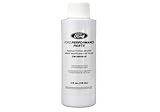
7. Ford CM19546A1 Friction Modifier – OEM Choice for Ford 8.8-Inch and 9-Inch Differentials
Ford Friction Modifier Additive, Clutch Type Limited Slip Differential, 3.80 oz Bottle, Each
3.80 oz bottle
Genuine Ford OEM friction modifier
For clutch-type LSD
Pros
- Genuine Ford OEM friction modifier at 4.8 stars across 531 reviews
- Effectively eliminates chatter and locking in Ford 8.8 and 9-inch rears
- Also effective in Jeep and other clutch-type LSDs
- Required spec for many Ford applications
Cons
- Strong
- unpleasant odor reported by multiple reviewers
- Small 3.80 oz bottle
- Vehicle-specific fit type may not suit all applications
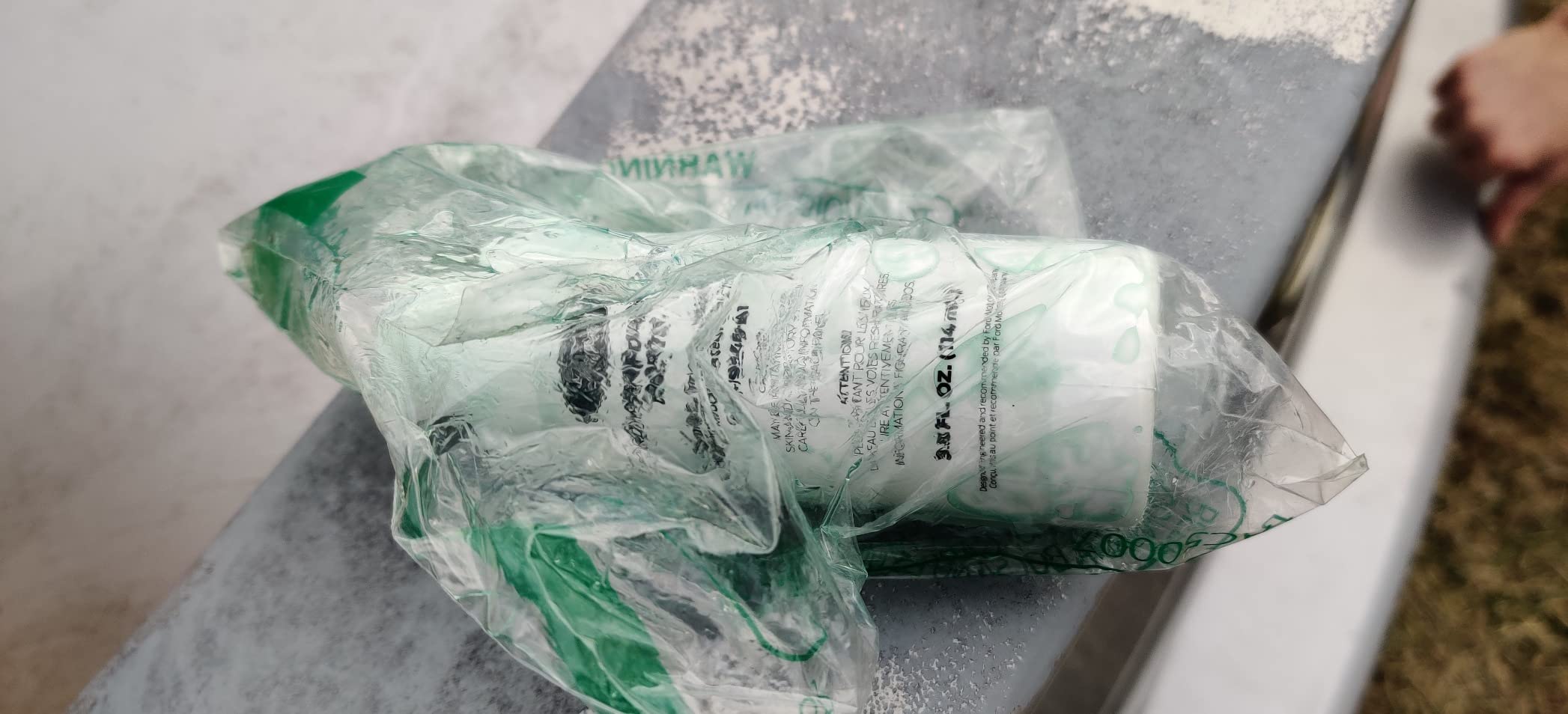
Ford’s CM19546A1 friction modifier is the OEM additive for Ford vehicles with factory clutch-type limited slip differentials. If you drive a Mustang GT with a factory TracLoc, an F-150 with the optional 3.55 or 3.73 LSD, an Explorer with a factory locking rear, or any Ford product where the service manual calls for part number CM19546A1, this is the bottle. The 4.8-star average across 531 reviews is strong, and reviewers on r/fordranger and Mustang forums consistently report that one bottle quieted chatter that had been driving them crazy.
The chemistry is similar to the Mopar and ACDelco additives, but Ford’s friction modifier carry is tuned specifically for the TracLoc and clutch-pack LSDs that Ford uses across its lineup. The result is smoother clutch engagement on slow turns and less aggressive lockup under throttle. Reviewers also note that the additive works in Jeep and other clutch-type LSD applications, so the Ford-specific part number is not as restrictive as it sounds.
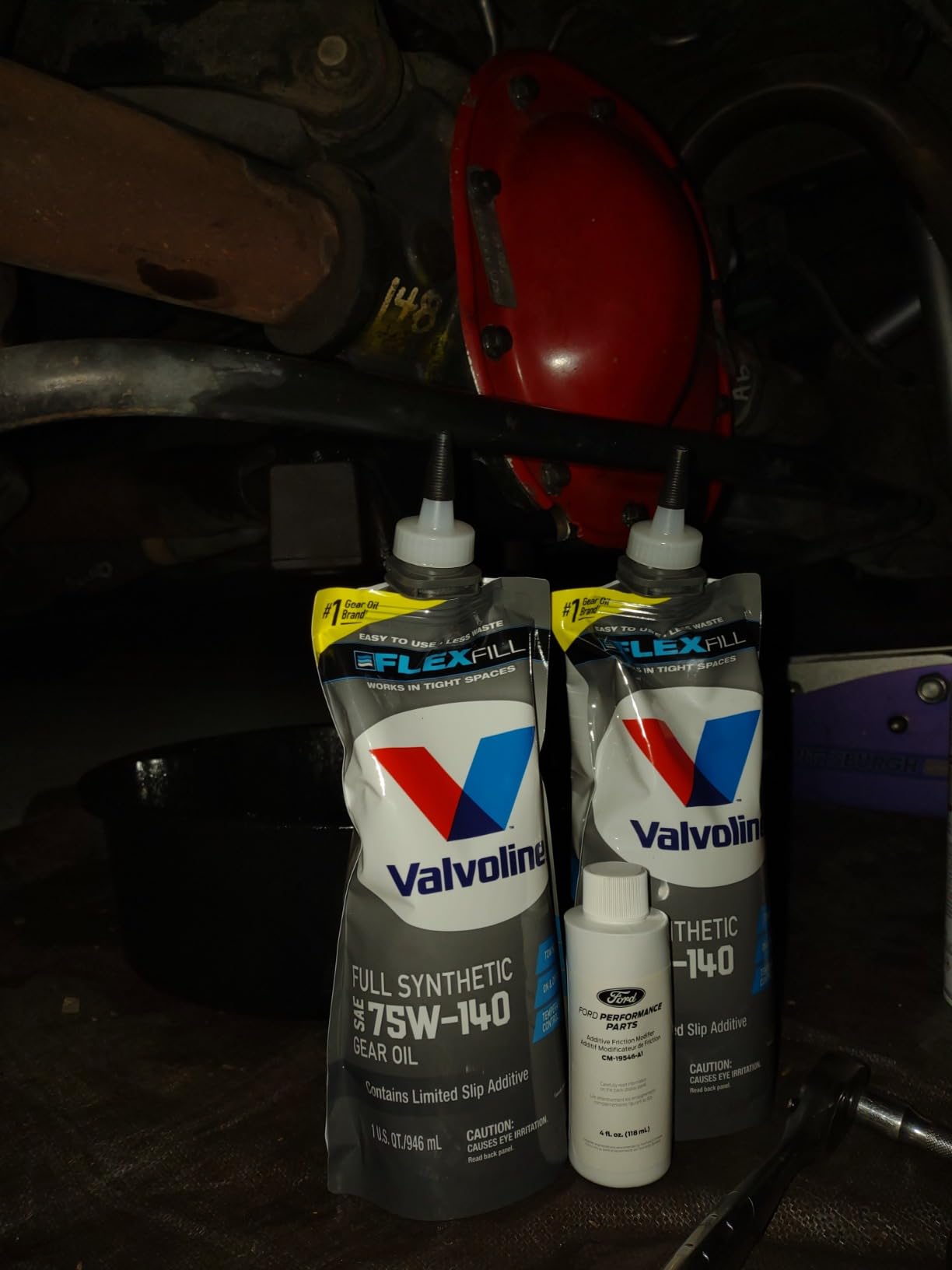
The honest call-out on this product is the odor. Multiple reviewers specifically mention a strong, unpleasant smell when pouring the additive. It does not affect performance, but if you are sensitive to petroleum smell, do the pour in a well-ventilated area. The other honest call-out is the small 3.80 oz bottle: it is enough for one fill on most Ford 8.8-inch rear ends (which hold about 2.5 quarts), but for a Ford 9-inch or larger, you will need two bottles.
Ford Application Coverage
The CM19546A1 part number is listed for the Ford Mustang GT and Cobra with TracLoc, the F-150 with the optional 3.55 or 3.73 LSD, the Explorer and Ranger with factory locking rear ends, and the Bronco with the Dana 44 or Dana 60 LSD. For a vintage Ford 9-inch rear end from the 1960s through 1990s, this is also the correct OEM-spec additive.
If you have a Ford product with a Torsen differential (rare in factory applications, more common in aftermarket conversions), skip this additive entirely. Torsen does not use clutch packs and the friction modifier can cause slip.
Why Ford Owners Prefer the OEM Bottle
For a Ford product still under powertrain warranty, the OEM additive keeps you spec-compliant with Ford’s published service procedures. For an out-of-warranty Ford, the Ford-specific part is also the right call because the friction modifier balance is tuned for Ford clutch geometry. Reviewers note that aftermarket additives sometimes leave Ford LSDs slightly more aggressive than the OEM-spec feel.
For a Mustang GT that sees occasional track days, the Ford friction modifier plus a synthetic 75W-90 GL-5 is the combination Ford’s own service manuals recommend. That combination will hold up under repeated hard launches better than a generic additive.
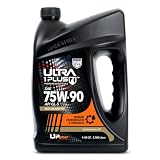
8. ULTRA 1PLUS SAE 75W-90 Full Synthetic Gear Oil – Best Budget Bulk Value
SAE 75W-90 Full Synthetic Gear Oil API GL-5 MT-1 Limited Slip 1 Gallon
1 gallon
Synthetic 75W-90 GL-5/MT-1
Built-in LS additive
Pros
- 1-gallon jug covers a complete fluid service plus reserve
- Engineered LS additives built into the gear oil
- API GL-5 and MT-1 rated for hypoid gears
- All-season reliability in extreme cold and hot
Cons
- Lower 4.7-star rating than other gear oils on this list
- Some users feel the viscosity is slightly thin
- Premium pricing per gallon
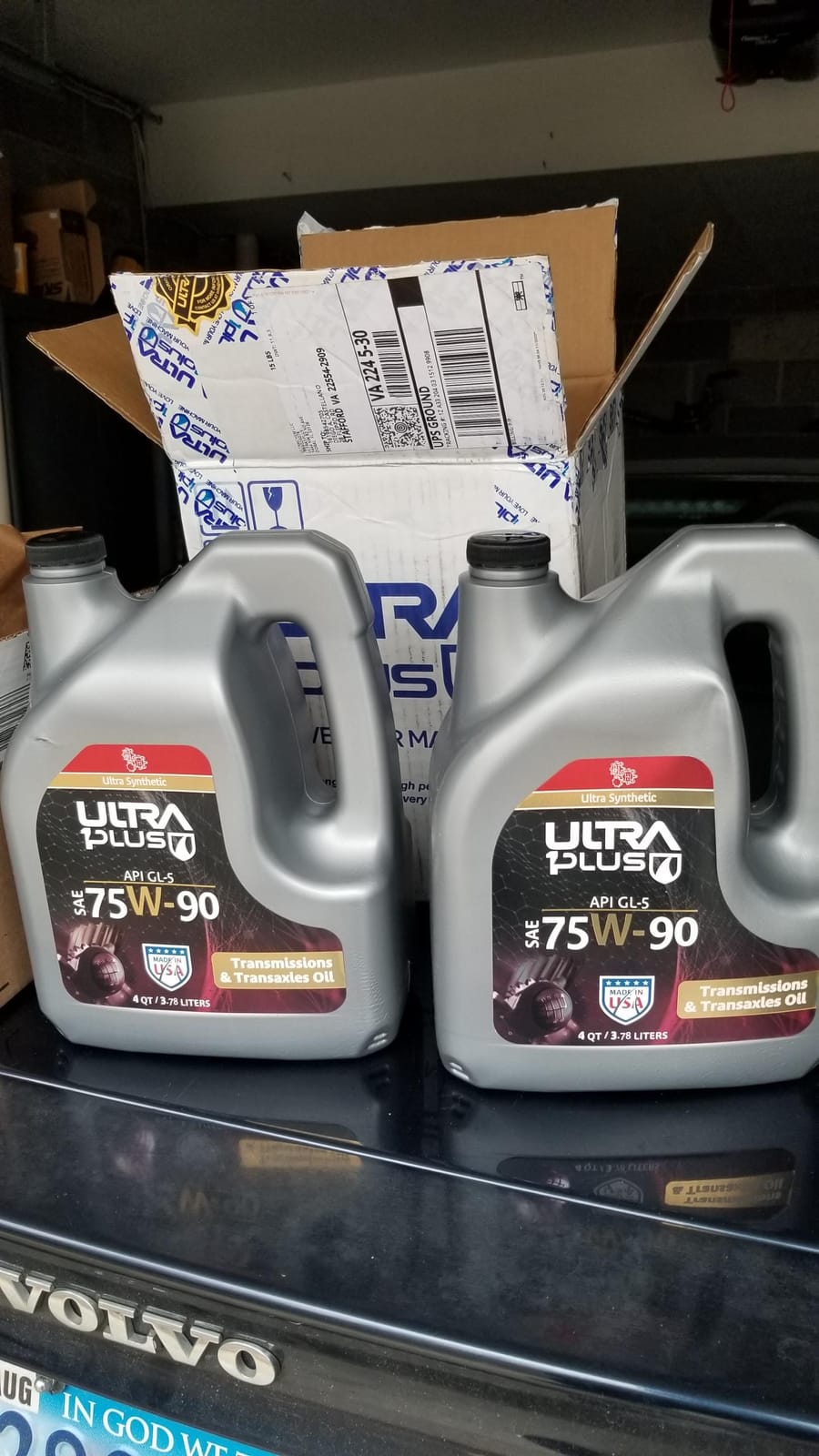
ULTRA 1PLUS SAE 75W-90 is the best bulk-value pick on this list, and the reason is the format. You get a full gallon of synthetic gear oil with the limited slip additive already built into the formula. For a typical rear differential that holds 2.5 to 3.5 quarts, one gallon covers a complete fluid service plus enough left over for a top-off or a second vehicle. For shops or owners with multiple vehicles, that is a significant per-quart savings over buying individual quart bottles.
The 4.7-star average across 525 reviews is slightly lower than the other gear oils on this list, but the bulk format and built-in LS additive compensate. Reviewers note that the fluid works well in towing applications, holds up in cold-start conditions, and quiets chatter that cheaper conventional gear oils had not solved. The API GL-5 and MT-1 ratings cover all hypoid gear applications including Ford 8.8, GM 8.5 and 8.6, Dana 44, and Chrysler 8.25 and 9.25.
I would reach for ULTRA 1PLUS on a work truck that needs a fluid service every 30,000 miles and sees occasional towing duty. The bulk format is also useful for a shop that services multiple LSD-equipped vehicles: one jug covers two or three complete fills. The viscosity is on the thin side compared to a 75W-140, so if you are running a heavy-duty truck that tows 15,000+ pounds regularly, step up to a thicker bottle.
When the Bulk Format Pays Off
If you own two or more LSD-equipped vehicles, the 1-gallon jug is the right format because it covers both services. Reviewers on r/MechanicAdvice point out that buying individual quart bottles for two vehicles costs meaningfully more than buying one gallon jug, even after accounting for the slightly higher per-gallon price of ULTRA 1PLUS.
For a single daily-driven vehicle, the gallon jug may be more oil than you need. If your rear end takes 2.5 quarts, you have 1.5 quarts of leftover oil that needs a storage plan. Sealed in the original jug in a cool, dry place, the oil will keep for years, but if you do not have that storage, consider a quart-format alternative.
Best for Fleet and High-Mileage Owners
If you run a small fleet, a farm truck operation, or an off-road shop, the bulk format is the right call for cost reasons alone. The built-in LS additive means you are not buying a second bottle per service, and the synthetic base means longer drain intervals (some users report 50,000 miles between changes). That combination is the definition of value at this price point.
If you are a weekend hobbyist with one project car, the Red Line 57904 quart bottles are a better fit because you only need one or two quarts per service and the per-quart cost is similar. For high-mileage and fleet use, ULTRA 1PLUS is the pick.
How to Choose the Right Limited Slip Differential Fluid?
Choosing the best limited slip differential fluid comes down to four decisions: your differential type, your OEM viscosity spec, whether you want a separate additive or a pre-additized gear oil, and your driving environment. Here is the decision framework I use when a customer brings me a noisy LSD.
Step 1: Identify Your Differential Type
Clutch-type LSDs use friction plates or cone clutches and need friction modifier in the fluid. They are the most common type in factory applications: Ford TracLoc, GM Posi-Trac, Chrysler Sure-Grip, Toyota LSD, and the clutch packs in many Jeep and Dodge applications. If your vehicle has a factory LSD and the owner’s manual calls for “limited slip fluid” or “friction modifier,” it is a clutch-type LSD.
Torsen and helical LSDs do not use clutch packs. They use worm gears or angled gears to transfer torque, and they do not need friction modifier. Adding modifier to a Torsen can actually cause slip and damage. If your vehicle has a Torsen (common on certain Audi Quattros, Toyota trucks with Torsen option, and some Subaru applications), use a standard GL-5 gear oil with no additive.
Step 2: Match Your OEM Viscosity Spec
75W-90 is the most common factory viscosity spec for light-duty trucks, SUVs, and passenger car LSDs. It flows well in cold weather and protects well in normal driving. 75W-140 is thicker and is specified for heavy-duty trucks, performance cars that run hot, and vehicles used for towing in warm climates. 80W-140 is the thickest common spec and is reserved for severe-service applications.
You can run a slightly thicker oil than spec for extra protection if you tow heavy loads regularly, but you should never run a thinner oil than spec. If your manual says 75W-140 and you pour in 75W-90, you risk metal-to-metal contact under high load. If your manual says 75W-90 and you pour in 75W-140, the fluid is just slightly more resistant and is generally safe.
Step 3: Choose Between Separate Additive and Pre-Additized Oil
Pre-additized gear oil (Red Line 57904, Triax LS, ULTRA 1PLUS) has the friction modifier built into the formula. You pour it in and you are done. It is more convenient, less chance of mixing the wrong ratio, and easier for a first-time DIYer.
Separate additive (Yukon, Mopar, ACDelco, GM 88900330, Ford CM19546A1) is mixed into a standard GL-5 gear oil at the time of fill. It gives you more control over the ratio, lets you top off modifier without changing the gear oil, and is often cheaper for a single service. It is also the right choice if your OEM spec is unusual and pre-additized options are limited.
Step 4: Match Your Driving Environment
Cold climates favor 75W-90 synthetics because they flow better at startup. Hot climates and towing applications favor 75W-140 or 80W-90 because the thicker oil holds film strength at high temperatures. Track day and racing applications favor full synthetics like Red Line because they resist thermal breakdown better than conventional oils.
Common Mistakes When Choosing LSD Fluid
The biggest mistake is adding friction modifier to a Torsen differential. Torsens use gear geometry to transfer torque, not clutch packs, and the modifier causes slip. Always check your service manual for your differential type before adding anything.
The second biggest mistake is over-treating with additive. Each bottle has a recommended ratio, and doubling it does not make the LSD smoother. It actually shifts the friction balance the wrong way and causes the clutches to slip under load. Follow the bottle ratio.
The third mistake is mixing synthetic and conventional gear oil without understanding compatibility. Most modern LSD additives are compatible with both, but if you are switching from conventional to synthetic mid-fill, you may notice a temporary friction change as the two fluids mix. It stabilizes after a few drive cycles.
Brand-by-Brand Verdict
AMSOIL Severe Gear and Red Line 57904 are the highest-performance options. They are full synthetics with built-in LS additive, and they hold up under repeated high-temperature operation better than conventional oils.
Mopar, Ford, ACDelco, and GM Accessories are the OEM-spec additives. They are the right choice for warranty compliance and for vehicles where matching the original factory friction modifier balance matters.
Mobil 1 and Royal Purple are excellent synthetics but did not make this list because they do not ship with the LS friction modifier built in. For a Mobil 1 or Royal Purple application, you would need to add a separate friction modifier bottle.
Frequently Asked Questions
What is the best additive for a limited slip differential?
For most clutch-type limited slip differentials, the Yukon Friction Modifier is the best overall additive. It has 2,145 reviews at 4.8 stars, works with any GL-5 gear oil, and quiets chatter in a single drive cycle. For OEM warranty compliance, use the manufacturer-specific additive: Mopar 4318060AB for Chrysler/Dodge/Jeep, ACDelco 10-4003 or GM 88900330 for GM, and Ford CM19546A1 for Ford vehicles.
What type of oil should I use for a limited slip differential?
Use a GL-5 rated gear oil in the viscosity specified by your owner’s manual, paired with a friction modifier additive if the oil is not pre-additized. The most common spec is 75W-90 synthetic for light-duty trucks and passenger cars, 75W-140 for heavy-duty trucks and performance applications, and 80W-140 for severe-service towing. Pre-additized options like Red Line 57904 or Triax LS include the friction modifier in the formula so you only need one bottle.
Which is better, 75W90 or 75W140?
75W-90 is the better choice for most daily-driven vehicles, light-duty trucks, and cold climates because it flows well at startup and protects adequately under normal driving. 75W-140 is the better choice for heavy-duty trucks, performance cars that run hot, and vehicles that tow regularly in warm climates because the thicker oil holds film strength at high temperatures. Always match your owner’s manual spec first. Thicker than spec is generally safe; thinner than spec risks metal-to-metal contact under load.
Can you add too much limited slip additive?
Yes, adding too much friction modifier is a real risk. The modifier lowers friction between the clutch packs, and over-treating shifts the balance so far that the clutches slip under load instead of locking. This causes poor traction, accelerated wear, and eventually differential failure. Follow the bottle ratio, which is typically 2 oz per quart of gear oil for most clutch-type LSDs. Start with the lower end of the range and only add more if chatter persists after a drive cycle.
Is there a 75W-90 synthetic gear oil that does not contain limited slip additive?
Yes. Most synthetic 75W-90 GL-5 gear oils do not contain LS additive out of the bottle. Red Line 75W90NS, Royal Purple Synchromax, and Mobil 1 Synthetic Gear Lube LS (note the LS suffix) all ship without built-in LS modifier. If you have a Torsen or helical LSD that should not receive friction modifier, or if you want to control the additive ratio yourself, these non-additized synthetics are the correct base oil. Add a separate friction modifier bottle only if your differential is a clutch-type LSD that needs it.
Do Torsen differentials need friction modifier?
No, Torsen differentials do not need friction modifier and adding it can cause damage. Torsen units use helical gear geometry or worm gears to transfer torque, not clutch packs. The friction modifier lowers the coefficient of friction between metal surfaces, and in a Torsen that causes the gear interface to slip under load. If your vehicle has a factory Torsen (common on certain Audi Quattros, some Toyota trucks, and some Subaru applications), use a standard GL-5 gear oil without any LS additive.
How often should I change limited slip differential fluid?
Change the fluid every 30,000 to 50,000 miles for conventional GL-5 gear oil, or every 50,000 to 100,000 miles for full synthetic gear oil. Towing, off-roading, and track day use shorten the interval: drop to 20,000 to 30,000 miles for conventional or 30,000 to 50,000 for synthetic under those loads. Change the fluid sooner if you notice dark color, a burned smell, or any metallic particles on the drain plug. Always replace the crush washer on the drain plug and torque it to the factory spec.
Final Verdict on the Best Limited Slip Differential Fluids
After comparing eight products, hundreds of real user reviews, and forum feedback across r/MechanicAdvice, r/fordranger, ih8mud, and BobIsTheOilGuy, the Yukon Friction Modifier is the best limited slip differential fluid pick for most clutch-type LSD owners. It is the most-reviewed additive on the list, it works with any GL-5 gear oil, and one 4 oz bottle quiets chatter that other bottles could not touch. For Dodge, GM, or Ford owners who want OEM-spec compliance, Mopar 4318060AB, ACDelco 10-4003, and Ford CM19546A1 are the matching OEM bottles. For performance applications, Red Line 57904 is the synthetic pick. For heavy-duty towing, Triax Gear LS 80W-90 is the workhorse.
Whichever bottle you pick, match your differential type, your OEM viscosity spec, and your driving environment, and follow the bottle ratio on the additive. Done correctly, a fresh fill of the right limited slip differential fluid will keep your rear end quiet for the next 30,000 to 100,000 miles. If the whole job has you thinking about the rest of the braking and drivetrain fluids, our Motul RBF 600 vs ATE Typ 200 brake fluid comparison and our best CVT fluid for import cars round out the rest of the chassis.