
Most falls from height do not kill because the drop is far. They kill because the worker had more room to fall than anyone planned for. A 6 foot shock absorbing lanyard needs roughly 18 feet of clearance below the anchor, and on a steep residential roof, a flat commercial deck, or inside a steel frame, that clearance often does not exist. The best self retracting lifelines solve that specific problem by cutting the free fall distance down to a few inches and the total clearance requirement to around 6 feet, which changes what jobs you can safely tie off for at all.
We spent weeks reading the spec sheets, markings, and buyer feedback on the 12 self retracting lifelines in this guide, then sorted them by the things that actually decide whether a device belongs on a given crew: leading edge rating, working length, housing material, connector type, and user weight range. Every unit here carries a printed ANSI Z359.14 marking and a working load range, which is the baseline for OSHA 1926.502 compliance rather than a nice-to-have.
One thing worth saying up front: none of the units below are leading edge rated for roof edge tie off. The Class 2 devices that solve that problem are a different and pricier category, and mixing a Class 1 unit into a roof edge plan is the single most common mistake crews make. Where our data supported it we have flagged it clearly in each review.
Table of Contents
Top 3 Self Retracting Lifelines (September 2026)

Guardian 10900 Halo Web 11 ft
- Class 1 web SRL
- Aluminum housing
- 360 degree swivel top
- Integrated fall clearance charts

YouProtect 11 ft Web SRL
- Reinforced polymer housing
- External shock absorber
- 360 degree swivel top
- ISO 17025 lab tested

RTOVZON 33 ft Cable SRL
- 33 ft alloy steel wire
- Locking under 0.65 ft
- ANSI Z359.14-2021
- 130-310 lb working load
Our top pick, the Guardian 10900 Halo, has the largest body of real-world feedback of anything on this list, which matters more than any spec sheet when a device is holding your life. The YouProtect 11 ft is the highest rated unit we reviewed, and the RTOVZON 33 ft is the option for crews who need long reach without a large budget.
Best Self Retracting Lifelines in 2026 at a Glance
| Product | Specs | Action |
|---|---|---|
| Guardian 10900 Halo Web SRL 11 ft |
|
Check Latest Price |
 Palmer Safety SRD 30 ft Cable SRL Palmer Safety SRD 30 ft Cable SRL |
|
Check Latest Price |
 KwikSafety Cobra 30 ft Cable SRL KwikSafety Cobra 30 ft Cable SRL |
|
Check Latest Price |
| RTOVZON 33 ft Cable SRL |
|
Check Latest Price |
| YouProtect 11 ft Web SRL |
|
Check Latest Price |
 Guardian 42001 Velocity 20 ft Cable SRL Guardian 42001 Velocity 20 ft Cable SRL |
|
Check Latest Price |
 AFP Demon 6 ft Twin Leg SRL AFP Demon 6 ft Twin Leg SRL |
|
Check Latest Price |
 KwikSafety Mamba 33 ft Cable SRL KwikSafety Mamba 33 ft Cable SRL |
|
Check Latest Price |
 SHEMIOR 33 ft Cable SRL SHEMIOR 33 ft Cable SRL |
|
Check Latest Price |
 WELKFORDER 30 ft Cable SRL WELKFORDER 30 ft Cable SRL |
|
Check Latest Price |
 Malta Dynamics Wild Boar 30 ft SRL Malta Dynamics Wild Boar 30 ft SRL |
|
Check Latest Price |
 3M Protecta Web SRL 11 ft 3M Protecta Web SRL 11 ft |
|
Check Latest Price |
Two patterns jump out of that table. Cable units dominate the long reach positions because steel cable resists cutting over sharp deck edges and around anchor points, while webbing units stay in the short reach positions where weight and snag resistance matter more. Every product listed works a 130 to 310 pound user range, which covers the overwhelming majority of workers including anyone wearing a winter suit or tool belt.
1. Guardian 10900 Halo Web SRL – 11 ft Class 1 with Swivel Top
Guardian 10900 Halo Web Personal Self Retracting Lifeline (SRL) | 11 ft | Carabiner Included | Swivel Top | Steel Snap Hook | Class 1 | ANSI and OSHA Compliant
11 ft web SRL
Class 1
1800 pound load
5 pounds
Aluminum housing
Swivel top with steel snap hook
Pros
- Largest review base of any SRL we examined
- Integrated fall clearance charts on the shock pack cover
- Lightweight aluminum housing
- QR code on housing label links to manuals and specs
Cons
- Not rated for leading edge or horizontal deployment
- Non-serviceable after a fall event
- Pullback tension can be strong for some applications
This is the unit we keep reaching for when the question is general purpose overhead work on a boom lift, a residential roof, or a maintenance platform. The 11 ft of webbing strikes the balance that most crews actually need: enough reach to walk a few steps from an anchor, short enough that the housing does not become dead weight on a harness all day.
What stands out once you have it in your hands is the swivel top. It turns a full 360 degrees, which sounds like a small detail until you spend a full shift on a roof and the alternative is a device that has twisted the webbing into a knot. The aluminum housing also keeps the unit at 5 pounds, noticeably lighter than the cable units on this list that run past 10 pounds.
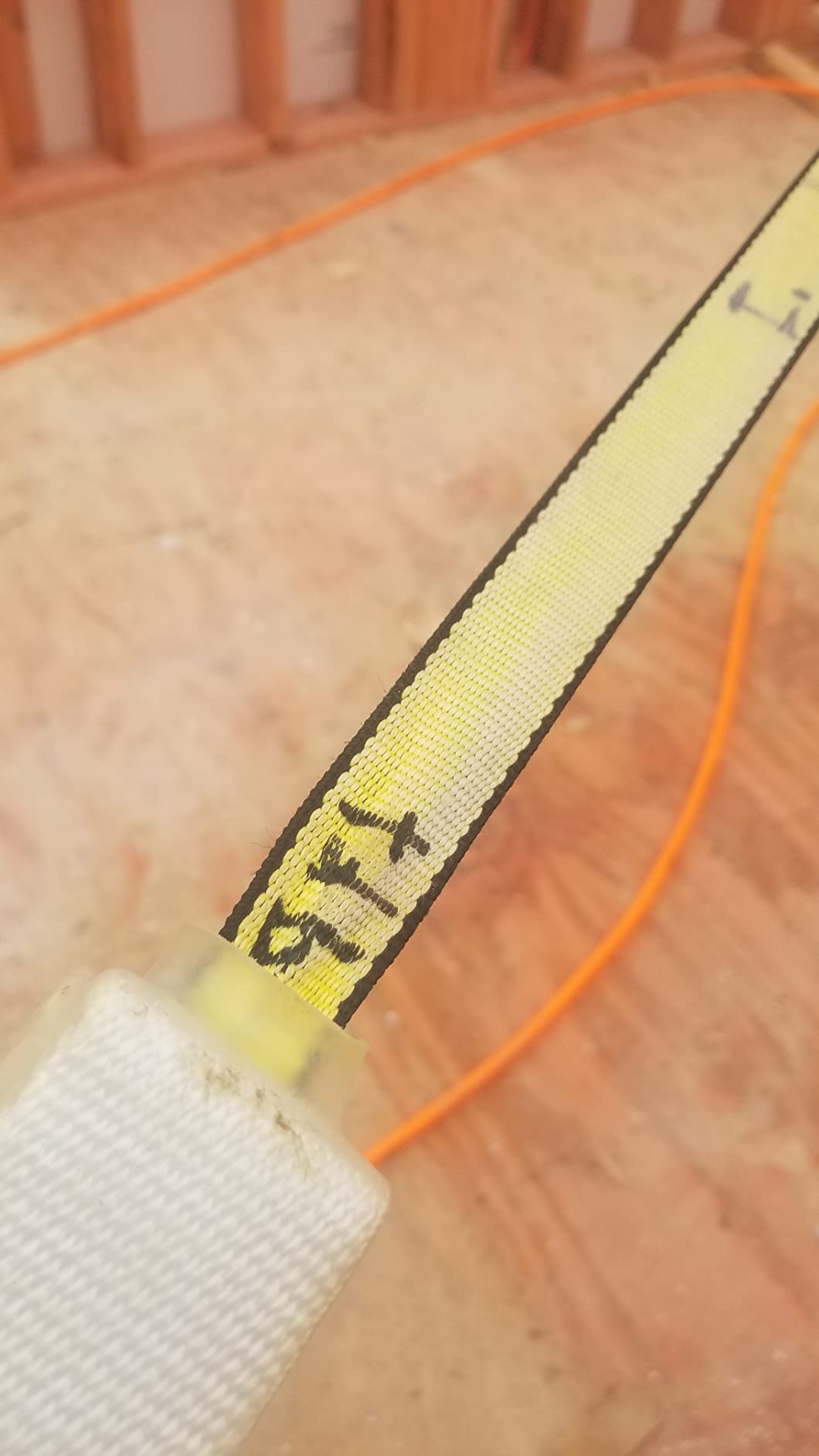
The detail that impressed us most is printed on the outside of the shock pack cover: fall clearance charts. A crew can work out required clearance in the field without a phone, a laptop, or a guess. Buyers also like that the housing carries a QR code linking to the manual and label, which speeds up training on new hires.
The limitation is real and it is not negotiable. This is a Class 1 device, rated for anchorage at or above the dorsal D-ring, and it is not rated for leading edge tie off or horizontal deployment. Buyers also point out that the retraction spring is on the firm side, which is comfortable for overhead work but noticeable when you are working close to a surface.
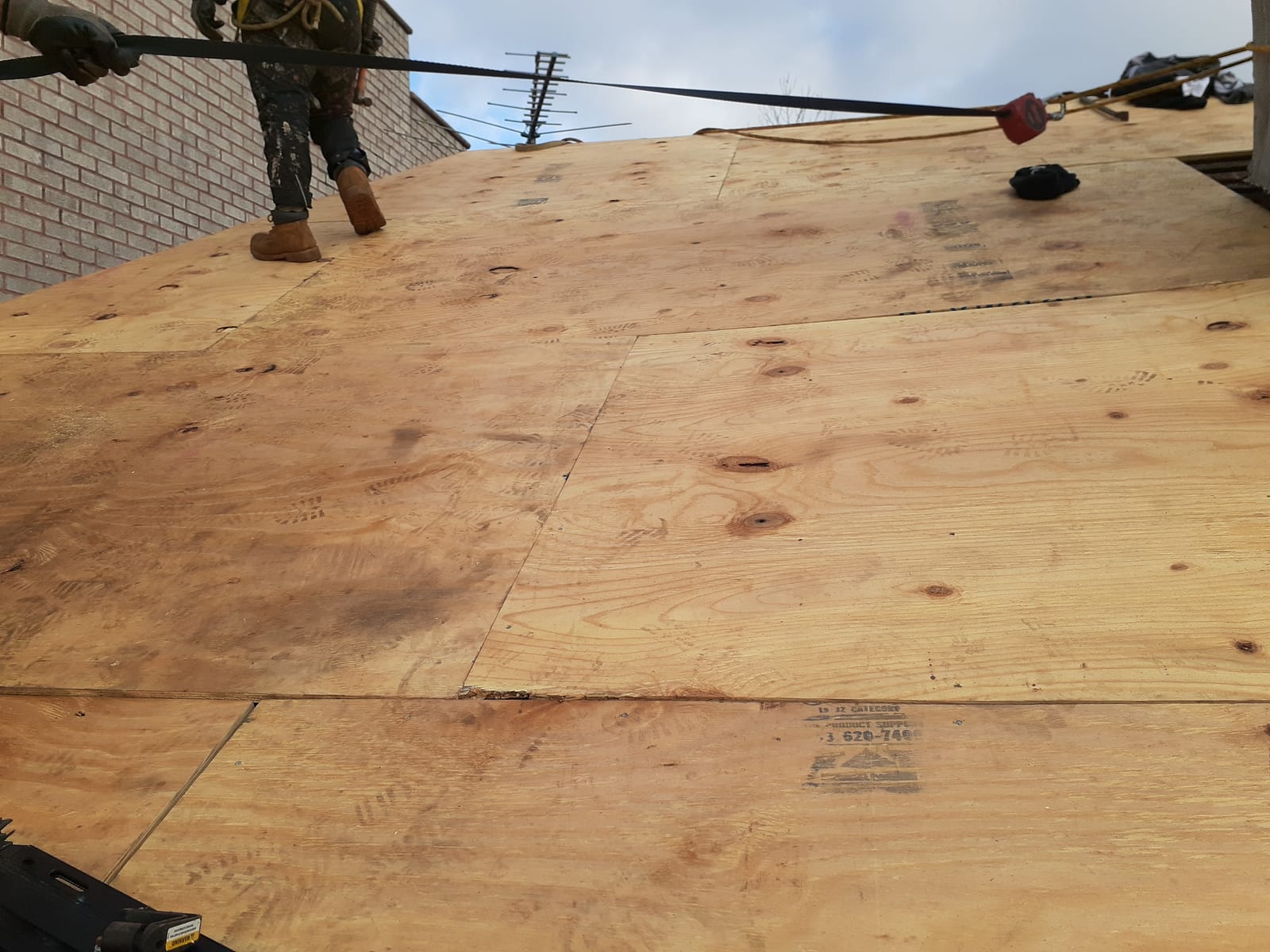
How it holds up on a real residential roof
Owners who use it for roofing and boom lift work report smooth, predictable behavior with no tangling even after repeated cycles. The 711 reviews averaging 4.6 stars is the deepest feedback pool of any product in this guide, and the recurring theme is that it simply does what a Class 1 web SRL is supposed to do without drama.
The other recurring theme is price per use rather than purchase price. Webbing wears, but it is far kinder to a housing and to a technician’s inspection routine than steel cable. For a small crew buying one or two units to cover a mix of overhead and low-level tie offs, that durability is where the value sits.
Where you should not use it
Do not put this on a roof edge, over a floor opening where the anchor sits below the D-ring, or on a horizontal lifeline. Those require a leading edge rated device, and no amount of webbing strength substitutes for the correct class rating. It is also non-serviceable after arresting a fall, so it comes out of rotation immediately.
Check your harness D-ring size before buying. The steel snap hook is a standard size, and on some lower-cost anchor straps the opening is too narrow for it, which is a more common problem in the field than buyers expect.
2. Palmer Safety SRD 30 ft Cable SRL – 30 ft of Galvanized Cable Reach
Palmer Safety SRD 30 FT. Self Retracting Lifeline I ANSI Z359.14-2021 Class 1 I SRL Device Swivel Top Galvanized Cable w/Small Steel Snap Hook I Fall Arrest Safety Yoyo
30 ft galvanized cable
Class 1
3300 pound load
13.14 pounds
Composite housing
Pros
- Thirty feet of reach from a single anchor
- Load indicator snap hook shows an impact event
- Swivel eye anchorage improves line orientation
- ANSI Z359.14-2021 Class 1 marked
Cons
- Composite plastic housing is the softest part of the unit
- Some buyers report units failing third party safety tests
- Heaviest build in the group at 13.14 pounds
When a single approved anchor point has to cover a wide area, reach becomes the design driver and this is the device to look at. Thirty feet of 3/16 inch galvanized steel wire rope in a durable composite housing, sold in multiple lengths, gives a crew the coverage that would otherwise mean carrying several lanyards.
The swivel eye at the anchorage end and the load indicator snap hook at the attachment end are both thoughtful. The load indicator is the piece that matters after the fact, because a device that has been loaded needs to come out of service whether or not anybody admits there was a fall.
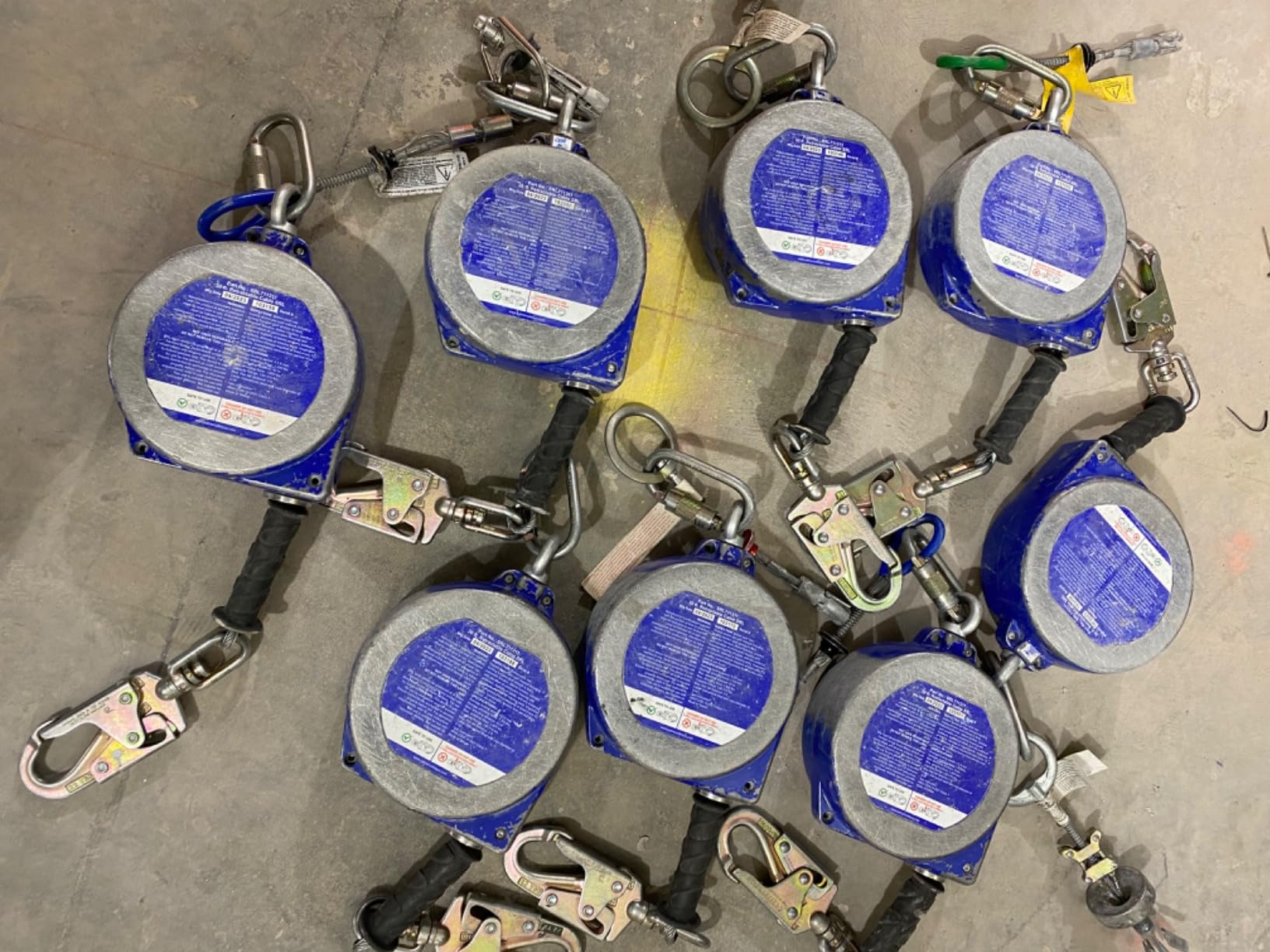
Spec sheet numbers are strong: 3300 pound load capacity, 3400 pounds tensile strength, and a clear ANSI Z359.14-2021 Class 1 marking. Most buyers describe it as reliable on roofs and easy to adjust, and several mention good customer service when a listing discrepancy came up.
Two things give us pause. The composite plastic casing is the component most exposed to a dropped tool or a fall off a ladder, and it is the piece we would scrutinize first during an inspection. More seriously, a small number of buyers reported units failing safety tests when a certified professional checked them, and no certification claim in a listing is worth more than the paper trail on your specific unit.
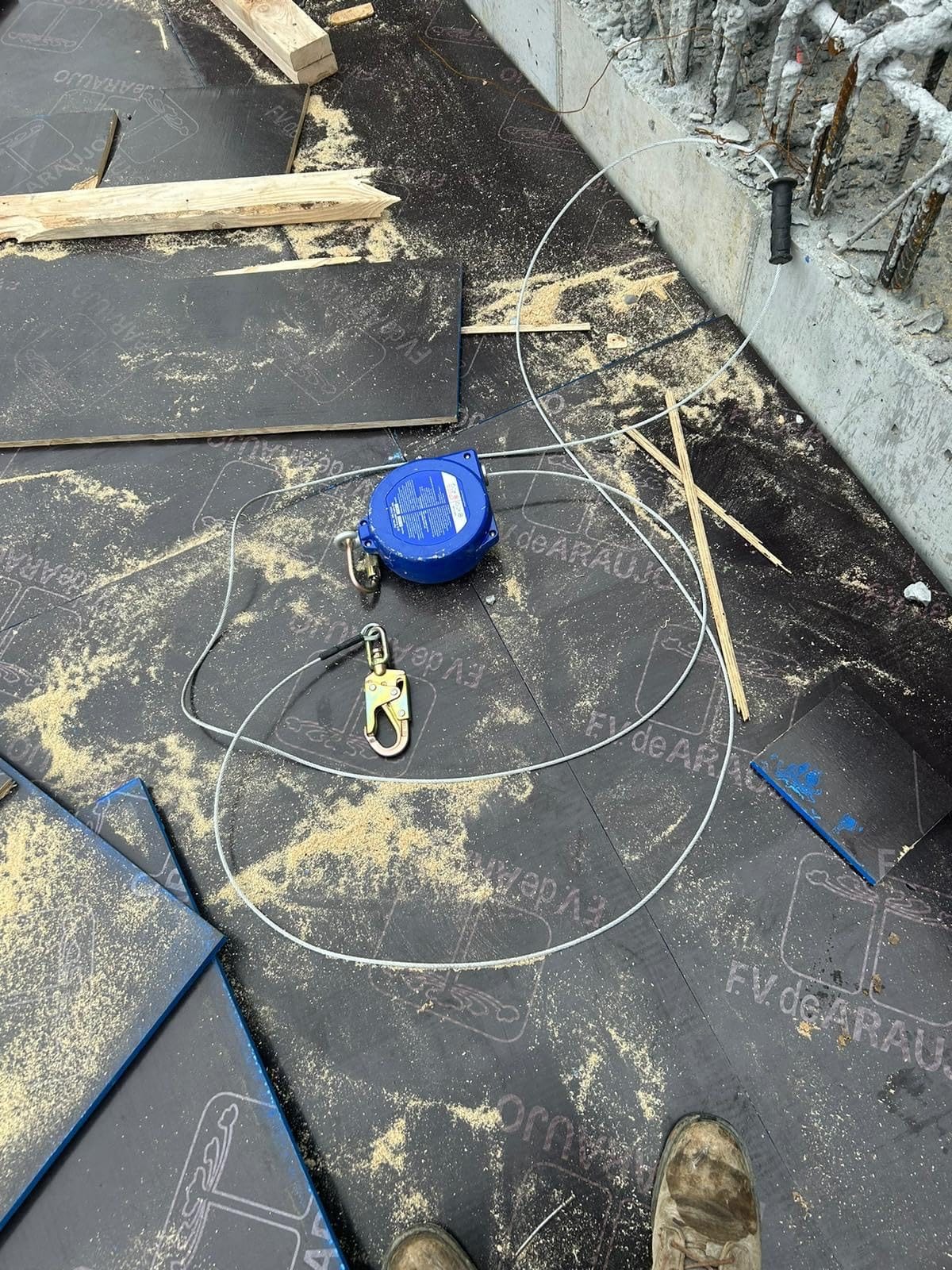
When 30 feet of reach is the right answer
Tree work, water tank work, and large open decks are the cases where this length pays for itself. One anchor, one device, and a worker can cover ground that would take three or four lanyard hooks with a swap every few feet. Reviewers working on roofs specifically call the line smooth and easy to manage.
Buyers also flag that the same reach comes at 13.14 pounds of unit weight, and that matters if the device hangs off a harness rather than a fixed anchor stanchion. Consider a vertical attachment when this length is your choice.
What to check before you tag it into service
Confirm the label carries the Class 1 marking and the user weight range before the device goes anywhere near a worker. Check the composite housing for cracks around the strap anchor, and look at the load indicator on the snap hook, which is the fastest way to tell whether a unit has ever been loaded.
Given the reported test failures in the review set, we would put every new unit through a documented pre-use check and keep the certification paperwork with the device. If you are buying several, buy from an authorized distributor rather than a marketplace reseller.
3. KwikSafety Cobra 30 ft Cable SRL – Heavy Duty Aluminum Housing
KwikSafety Cobra 30′ Self Retracting Lifeline ANSI Class 1 Cable SRL
30 ft steel cable
Class 1
3600 pound rating
Aluminum housing
Swivel top
Pros
- Aluminum housing tolerates the drops that crack plastic
- Non-fraying 3/16 inch stainless steel cable
- Includes both a snap hook and a twist lock carabiner
- Buyers report it survived a two story drop
Cons
- Born on date can shorten the usable compliance window
- Sits at the higher end of the cost range for a 30 ft cable SRL
- Some crews prefer newer systems over retractables
The Cobra is the answer when the housing gets hit. Its aluminum body is the reason it has a 4.5 star average across 151 reviews, and one of those reviews is a buyer describing it as still working after a two story drop, which is exactly the scenario that ends a plastic-cased unit.
Inside the housing is 3/16 inch non-fraying stainless steel cable. Steel cable handles sharp edges and abrasive deck surfaces far better than webbing, and if your work involves moving around a metal roof or a plant floor with cut hazards, that difference shows up on the inspection sheet.
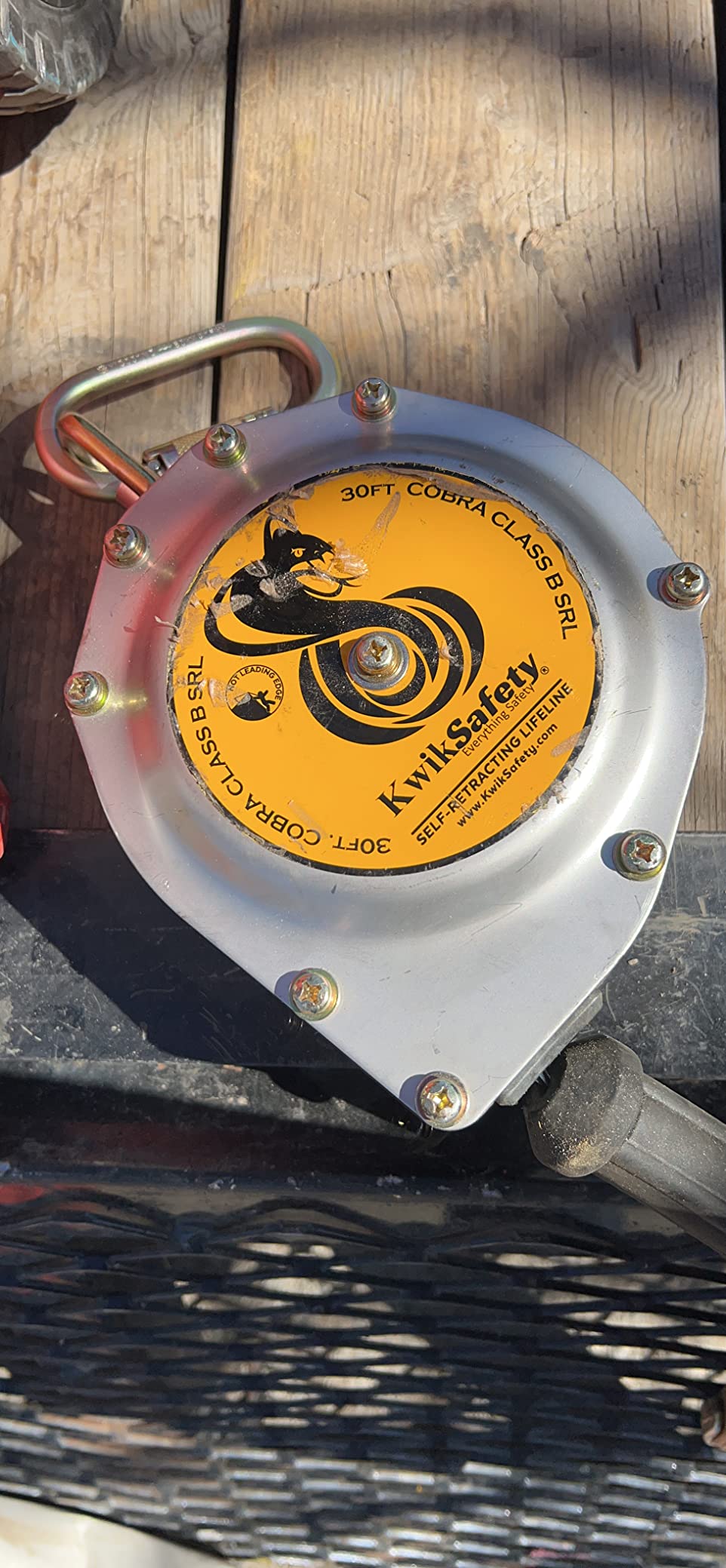
Hardware is thorough. You get a swivel top, a snap hook, and a twist lock connector in the box, which means it will mate with a D-ring harness and with a safety anchor strap without a separate purchase. Buyers mention it being well built and sturdy, and useful in confined space work where the compact profile helps.
The catch is administrative rather than mechanical. This is a device with a born on date, and several buyers flagged that the date on their unit left them with a shortened compliance window before the next service. Check the date the day the box opens, because you cannot add months back later. It also sits at the higher end of the cost range for a 30 ft cable unit.
How it performs on construction and roofing
Reviewers consistently describe it as not slowing down the work, and the OSHA compliant marking plus ANSI language on the listing covers construction, roofing, gutter cleaning, steep roofs, and inspection work. The retractable format keeps constant tension on the line during normal movement, which removes the slack trip hazard a traditional lanyard creates.
If you buy one, pair it with a document control habit. Photograph the label on day one, log the serial, and set the recertification reminder from the manufacture date rather than from the day you happened to open the box.
When a cable SRL is the wrong tool
It is the wrong tool at a roof edge, where you need a leading edge rated unit, and it is the wrong tool for confined space entry where a retrieval line serves a different purpose. It is also heavy, and crews working from a single overhead anchor day after day often prefer a lighter web unit.
Some of our readers argued that SRLs as a category are being replaced by newer systems. We would frame that differently: the category has not gone away, but the housing and connector standards got tighter, and a device with a documented born on date and a readable ANSI label is easier to defend than an unmarked import.
4. RTOVZON 33 ft Cable SRL – Budget Pick with Dual Locking Pins
33FT Self Retracting Lifeline, RTOVZON Retractable Safety Lanyard, Yoyo
33 ft alloy steel wire
3600 pound hook rating
ANSI Z359.14-2021
130-310 pound load
Pros
- Locking distance under 0.65 ft at a critical speed of 3.3 ft/s
- ANSI Z359.14-2021 marked with 1800 pound max arrest force
- Double shell resists wear and drops
- Multiple 33 ft class listings reviewed positively for smooth retraction
Cons
- Some buyers describe the build quality as cheap
- Hook opening may not fit smaller roof anchor points
- Listed tensile strength of 310 pounds is well below the cable rating
For a small crew, a maintenance team, or an occasional user who needs genuine long reach, this is the most accessible entry point on the list. Thirty three feet of multi-strand alloy steel wire, a double shell housing with a polypropylene outer layer and an aluminum alloy core, and dual locking pins that the manufacturer rates to engage at 3.3 ft per second within 0.65 feet of travel.
Those numbers are the reason we like it for the money. A short lock distance directly reduces fall clearance needed below the anchor, which is the entire reason crews reach for a self retracting device in the first place.
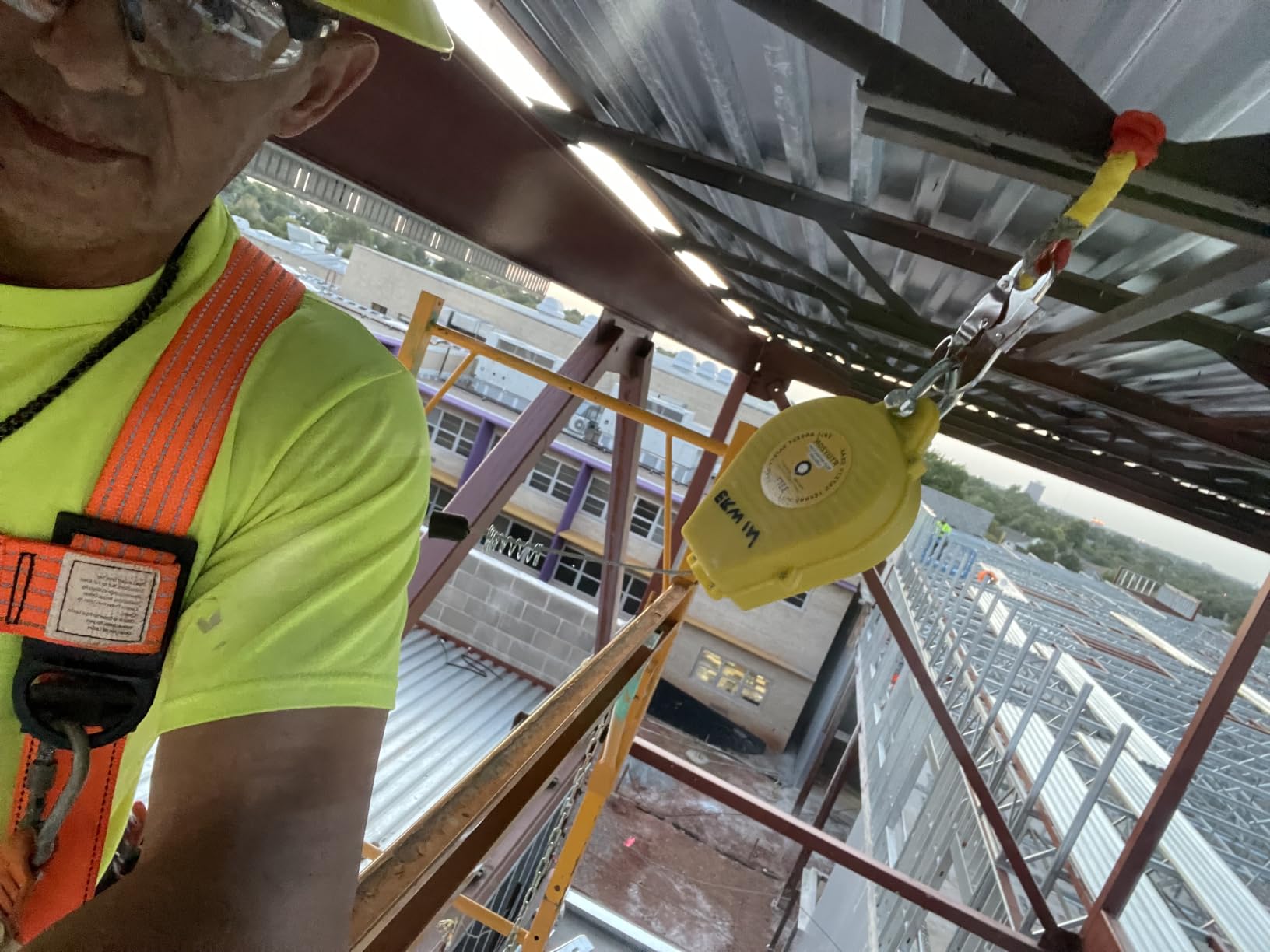
Buyers report smooth operation and reliable retraction through hundreds of cycles, with good cable tension and hardware that feels sturdy. The common feedback is that it does its job without fuss, and several note that it suits occasional use better than continuous daily wear.
Here is where we would be careful. The listed tensile strength figure of 310 pounds sits far below the hook rating of 3600 pounds, and any mismatch between published figures on a device is worth a call to the manufacturer before you rely on it. Buyers also mention the unit feeling cheap, and one recurring complaint is that the snap hook will not fit the opening on some smaller roof anchors.
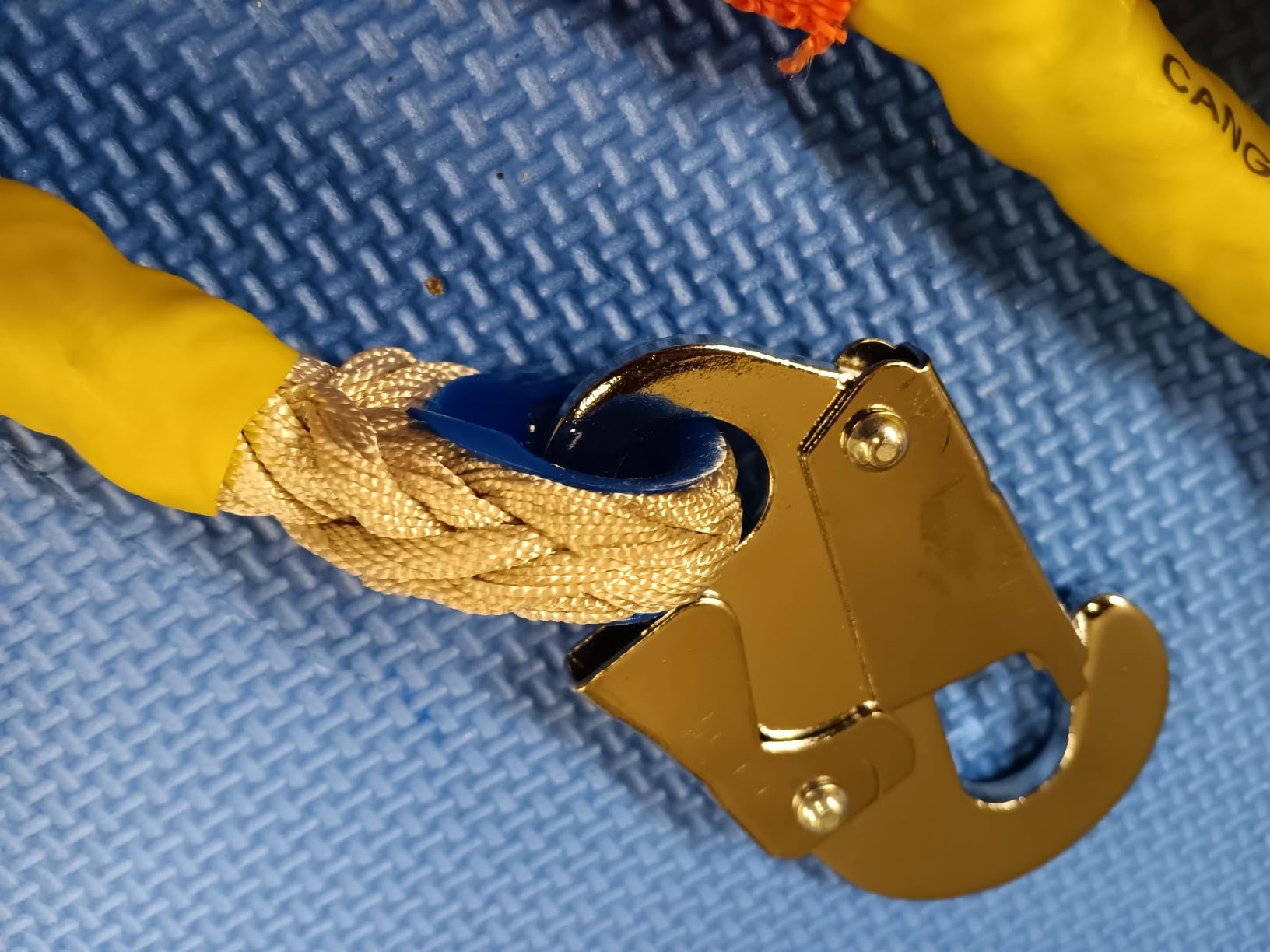
Best fit for occasional and moderate use
The ANSI Z359.14-2021 marking and a 130 to 310 pound working load range make this straightforward for a broad set of users. Multiple reviews describe it as good value and functional for occasional work, which matches the profile of a facility maintenance team doing overhead repairs rather than a roofing crew working an edge every day.
Because the housing and line are budget components, we would pair this device with a disciplined pre-use inspection and a documented competent person check on a fixed schedule. That habit is worth more than a step up in housing material.
Where the tradeoffs show up
The connector compatibility issue is the one that causes real problems in the field. If your anchors use small diameter D-rings, verify the hook opening physically before you issue the unit to a crew. It is a five minute check that avoids a device that cannot be connected at the moment it is needed.
It is also a Class 1 overhead style unit. Do not let the low cost and long reach tempt you into leading edge work, where a standard cable unit can be cut by the deck edge itself.
5. YouProtect 11 ft Web SRL – Top Rated with External Shock Absorber
11FT Self Retracting Lifeline Fall Protection Retractable Lanyard, Fall Arrest Safety Yoyo for Construction Industrial – OSHA/ANSI Compliant (Large Hook)
11 ft webbing
900 pound average stop force
Reinforced polymer housing
Swivel top
Pros
- Highest average rating on the list at 4.8 stars
- External shock absorber tested to handle over 5000 pounds
- Self locking hooks rated to hold a minimum of 5000 pounds
- Tested by an ILAC ISO 17025 accredited lab
Cons
- Newer brand with a shorter track record
- Only 96 reviews to average against
- Polymer housing is less resistant to impacts than aluminum
This is the highest rated unit we reviewed, at 4.8 stars across 96 reviews, and the number is not an artifact of a handful of ratings. Buyers describe a reinforced polymer housing that resists corrosion and high temperature, a 360 degree swivel top, and webbing they describe as tough and resistant to abrasion and aging.
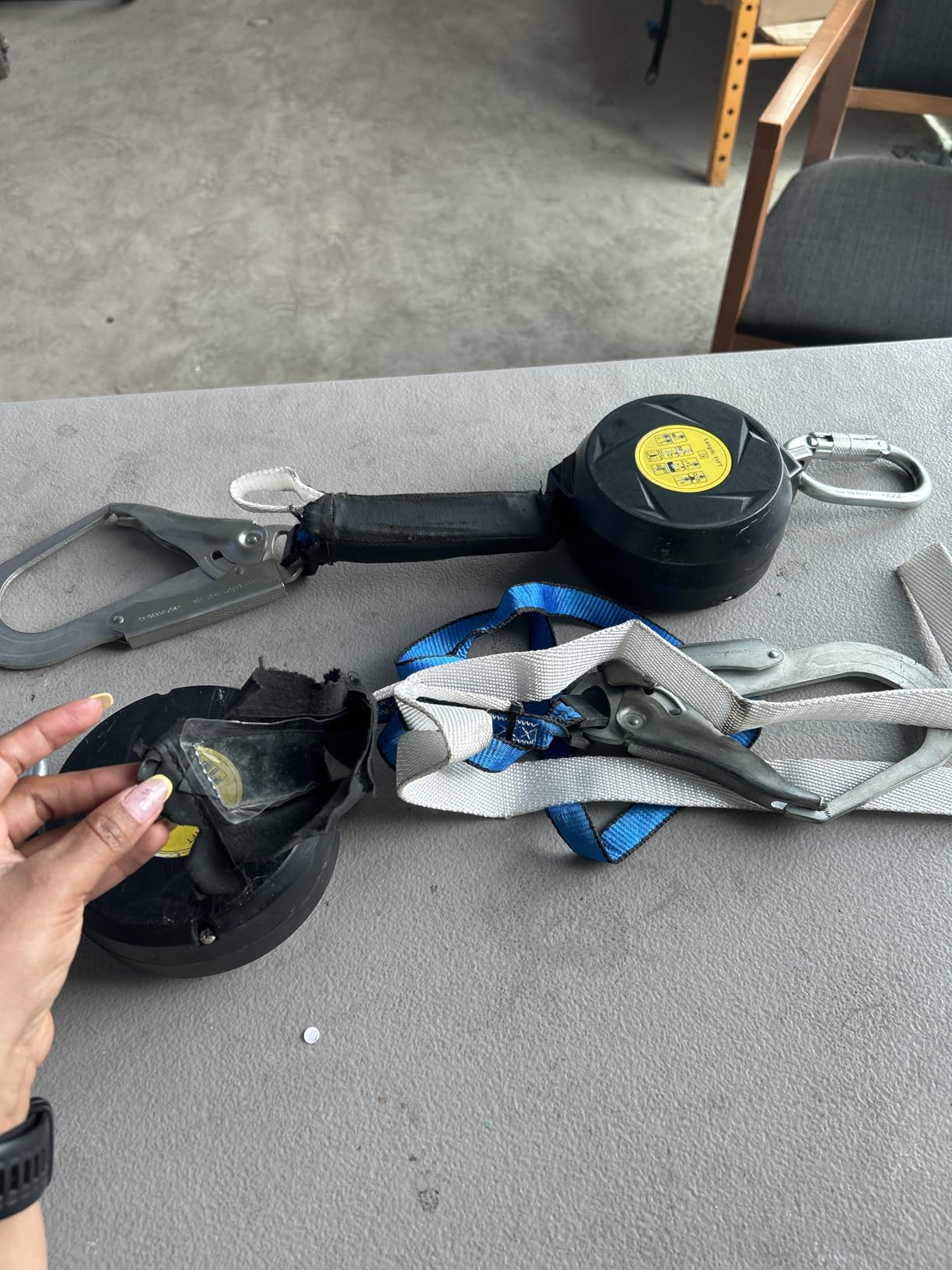
The distinguishing feature is the external shock absorber with a protective cover. It is described as tested to handle loads over 5000 pounds, and the housing label documents an average stop force of 900 pounds, which is a meaningful reduction compared with the 1350 to 1800 pound figures on the cable units here.
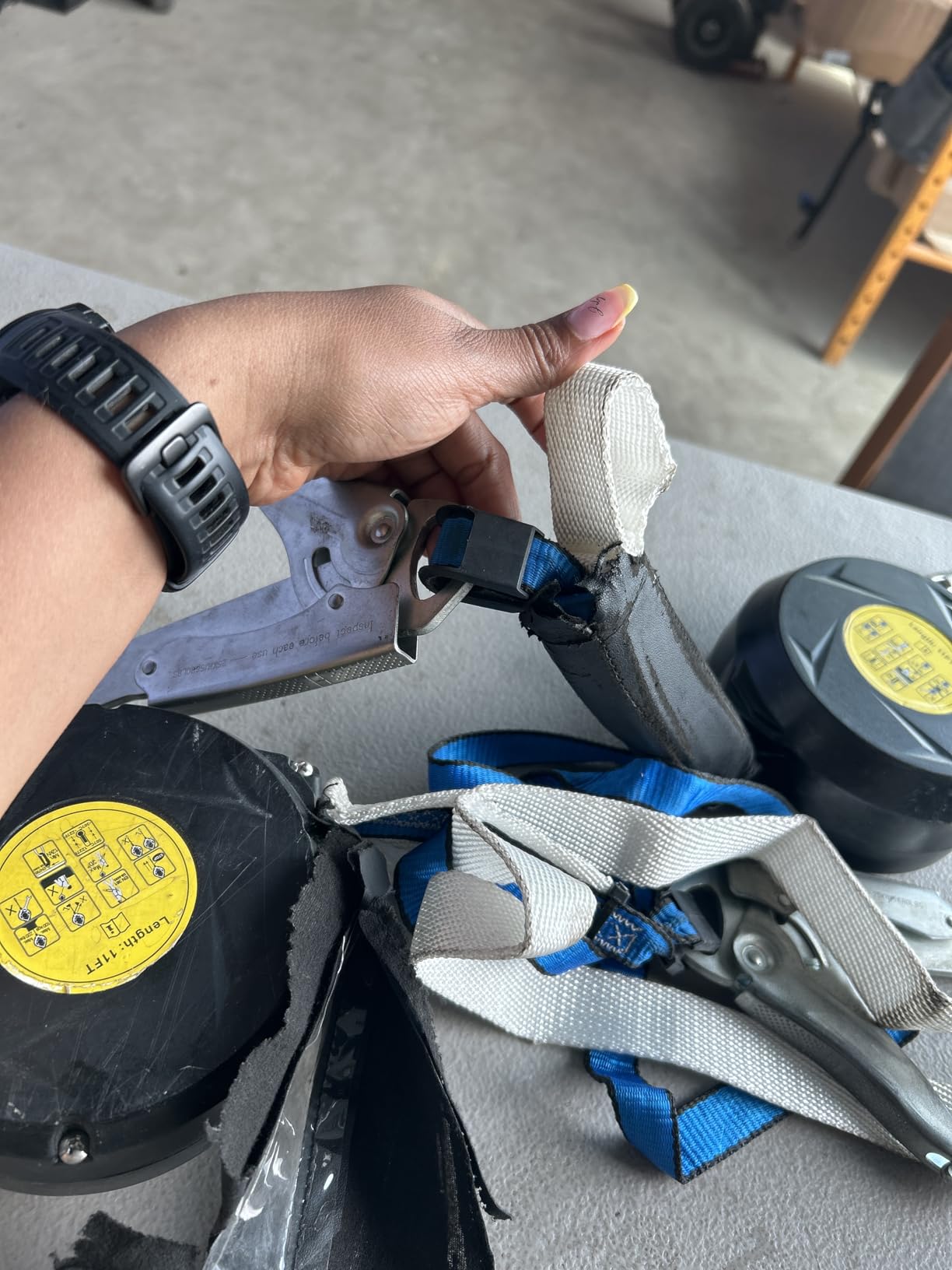
For a self retracting device, a lower average stop force means a softer landing. That is the number a safety professional will ask about first, because arrest force is what translates into rib and sternum risk on a real fall.
The honesty in the marketing is worth noting too. The listing states the unit was tested by an ILAC ISO 17025 accredited laboratory for OSHA and ANSI compliance, and names the reinforced polymer housing as the material. Test accreditation and named materials are two things you rarely see together on a budget product.
Who should buy this one
A 11 ft web unit with an external energy absorber suits overhead work where the anchor is well above the worker and the housing will not be dropped off things. It suits users with a larger clothing allowance in the 130 to 310 pound range, and it suits anyone who wants a lower average stop force than the cable units deliver.
Buyers also point to the 360 degree swivel top minimizing the risk of tangling, which matters in tight spaces. If your work happens in a mechanical room or inside equipment where the line would otherwise twist, that is a real quality of life gain.
What the shorter track record means for you
With 96 reviews, this brand has a smaller field history than the Guardian units on this list, and that is a fair concern for a safety device. Field history tells you how units behave after two seasons of rain, grit, and dropped tools, not how they behave on day one.
Our advice is to treat the first purchase as a monitored one. Document the pre-use check, log it, and have a competent person inspect it on schedule from the day it enters service rather than from the day somebody remembers it.
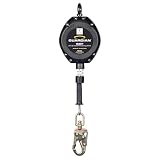
6. Guardian 42001 Velocity 20 ft Cable SRL – Fall Indicating Snap Hook
Guardian 42001 Velocity Class 1 Cable Self-Retracting Lifeline (SRL) with Carabiner | 20 ft | Class 1 | ANSI and OSHA Compliant
20 ft steel cable
Class 1
10.2 pounds
Thermoplastic housing
Fall indicating snap hook and carabiner
Pros
- Fall indicating snap hook shows when the unit has been impacted
- Double locking carabiner included
- Lightweight thermoplastic housing
- Available in 16 ft 20 ft 30 ft and 50 ft lengths
Cons
- One buyer reported the unit failed to lock during a fall
- Weighs 10.2 pounds
- Manufacturer reportedly declined a refund on a failed unit
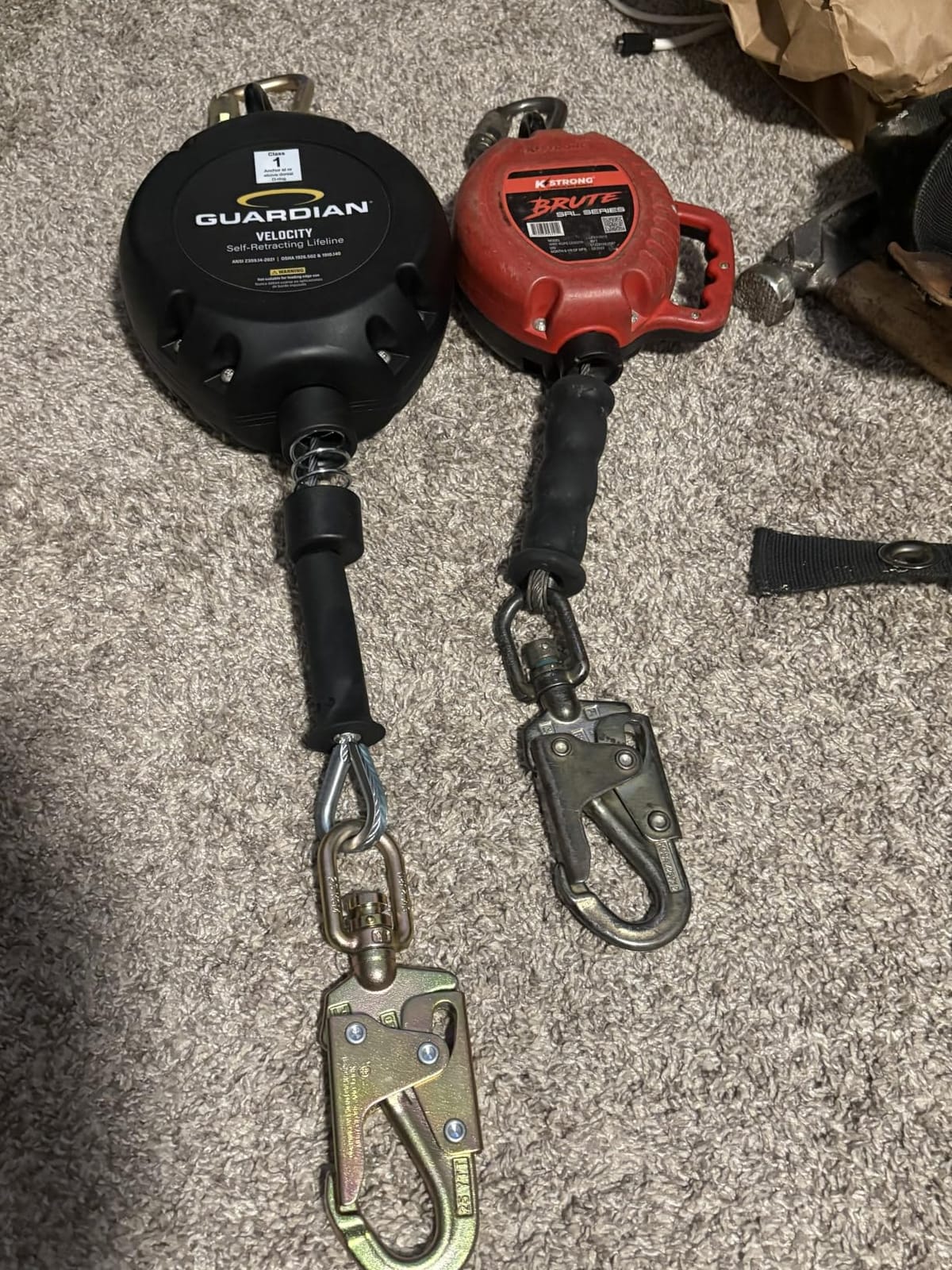
The Velocity is Guardian’s cable line, and the thing that separates it from most units on this list is the fall indicating swivel snap hook. The indicator shows if the device has been exposed to an impact, which removes the guesswork from the question of whether a unit is still fit for service after a near miss.
Twenty feet of steel cable sits between the short web units and the 30 foot reels, which makes it a comfortable middle for roof work where a worker walks a moderate span from a single anchor. The cable resists cuts and abrasion, which is the right choice on a surface with roofing nails and flashing edges.
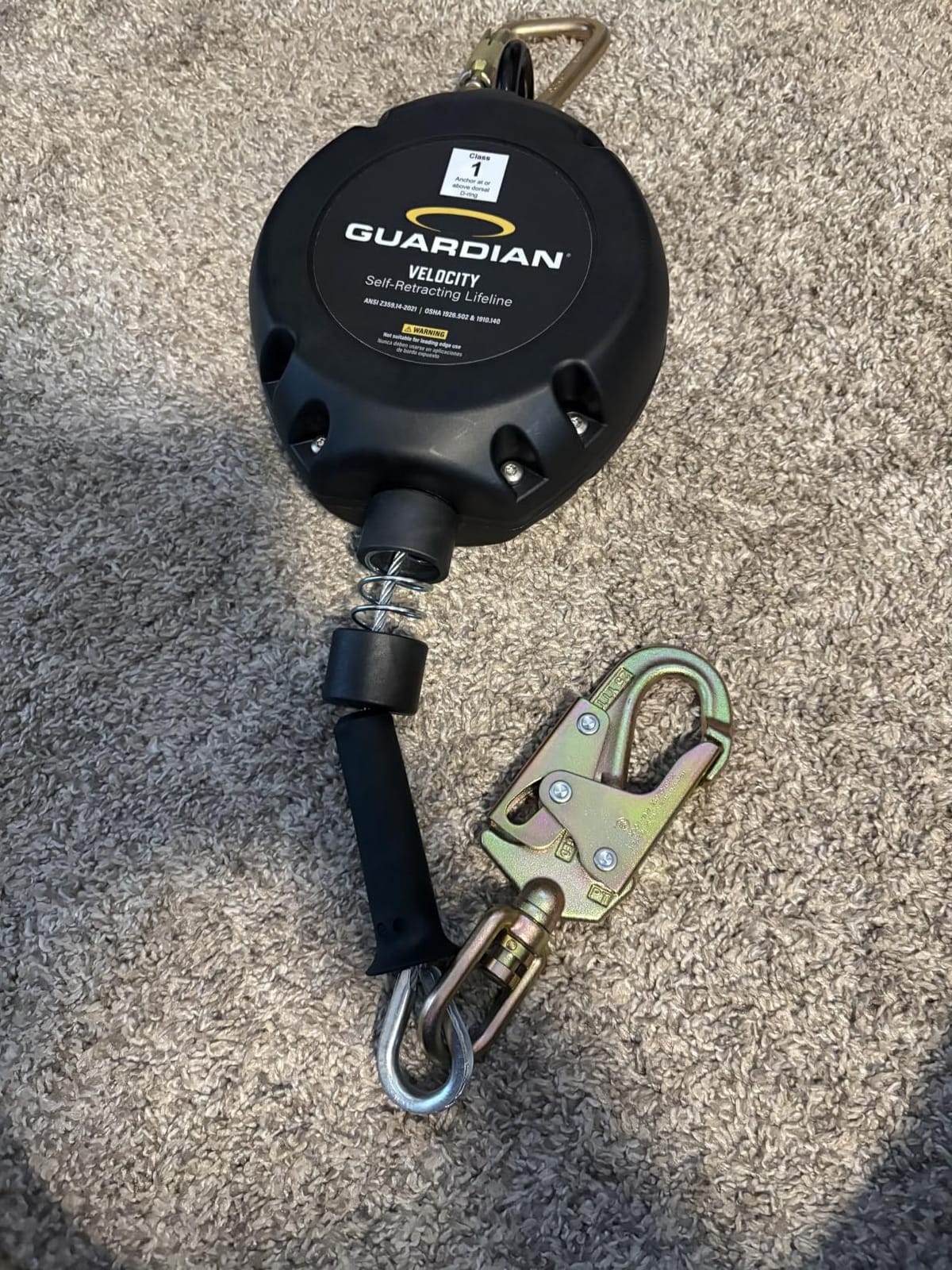
Two practical details we liked. The rubber lifeline stopper doubles as a hand grip, so pulling the line down to set your fall clearance is easier. And the housing is thermoplastic rather than heavy metal, which keeps the whole unit at 10.2 pounds, lighter than most cable devices of this length.
Now the part that has to be said plainly. Among 81 reviews there is a report of a unit failing to lock during a fall on a four story roof, along with a report that the manufacturer declined a refund on that unit. One report in 81 is not a verdict on the model, but it is the only review in this entire guide describing a lock failure, and on a fall arrest device that is exactly the failure mode you cannot afford.
What makes it a good roofing unit
Steel cable is the right material where the work surface can cut line, and the fall indicating hook is the right feature on a roof where falls are more likely and where a loaded unit needs to be pulled from service immediately. The swivel top and included double locking carabiner round out a complete package with no extra purchases.
Reviewers who use it for roofing and construction describe it as trusted and durable, and the range of available lengths means a crew can standardize on one model across several jobs.
What to do about the lock failure report
We would not skip this device over a single review. We would insist on a documented functional check at commissioning: a zero force test on the brake, a lock test under load, and a written record tied to the serial number. If your program cannot support that documentation, pick a unit from a manufacturer with a factory service network and a stated recertification process.
Also note the weight. At 10.2 pounds this is not a device you want hanging from a dorsal attachment all day, and the 20 foot length is short for a large residential roof where a worker needs to reach past the anchor line.
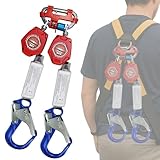
7. AFP Demon 6 ft Twin Leg SRL – 100 Percent Tie Off for Moving Between Anchors
AFP Demon 6 Foot Double Web Leg Self Retracting Lifeline Safety Yoyo, Shock Pack Absorber, Aluminum Rebar Pelican Hook & Aluminum Carabiner Fall Protection Arrest Limiter SRL | OSHA & ANSI Rated
Twin 6 ft web legs
5000 pound rating
Aluminum rebar pelican hooks
Impact indicator
Pros
- Two legs allow 100 percent tie off while moving between anchors
- Large aluminum rebar pelican hooks give plenty of connection options
- One leg can be removed for single use configuration
- ISO 17025 accredited lab testing documented
Cons
- Heavier than a simple shock lanyard setup
- No swivel joint between hook and strap as buyers report
- One buyer received a used unit listed as new
The Demon solves a problem no other unit on this list addresses. A standard SRL is a single point of connection, which means the moment a worker unhooks to move between anchors there is a gap with no protection. A twin leg unit gives you 100 percent tie off because one leg stays connected while the other reaches for the next anchor.
That matters enormously in steel erection, tower work, and anywhere anchors are spaced further apart than a single leg can cover. For those trades, the two-leg format is not a nice extra. It is the difference between continuous protection and an unprotected moment on every reposition.
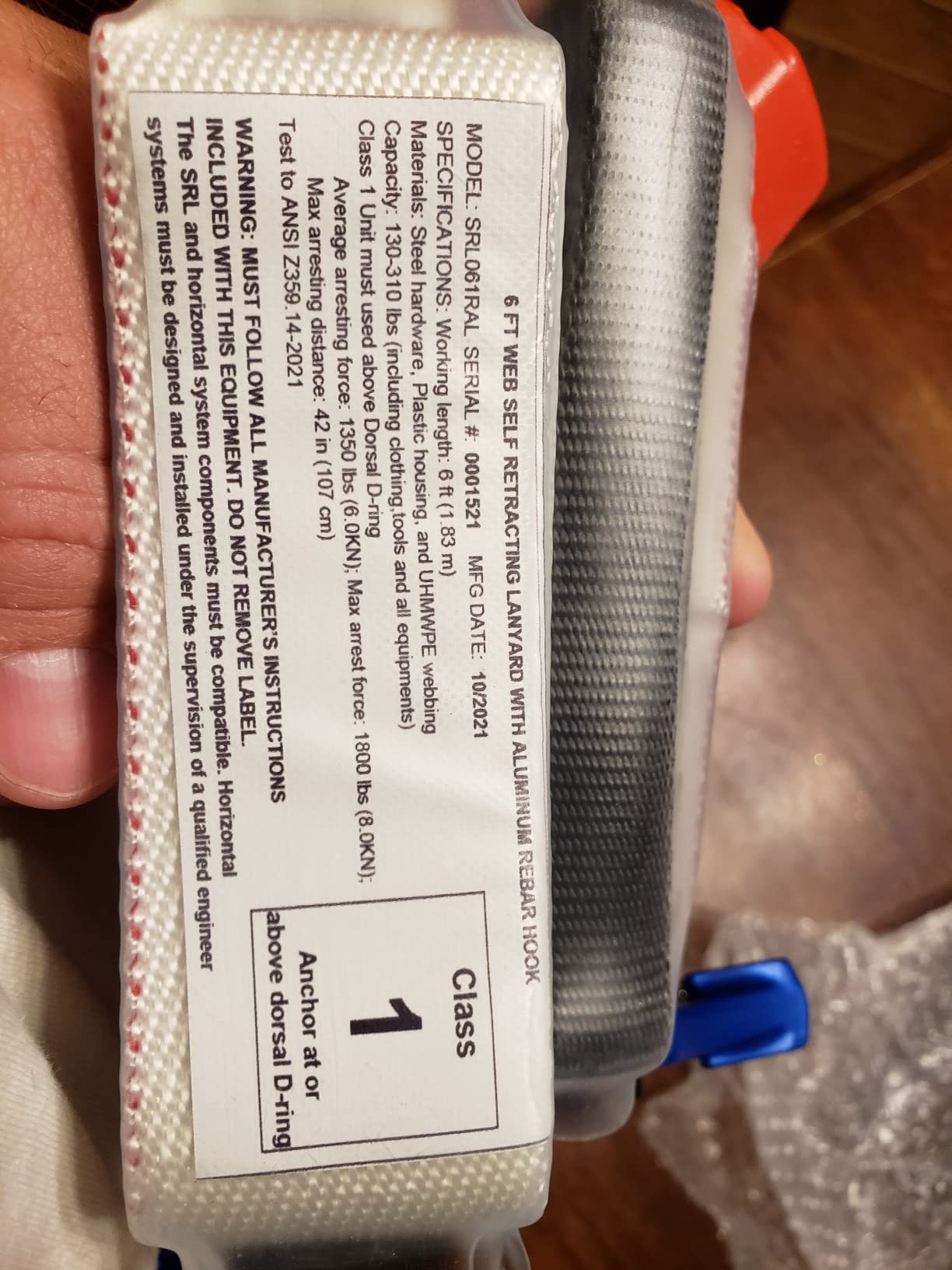
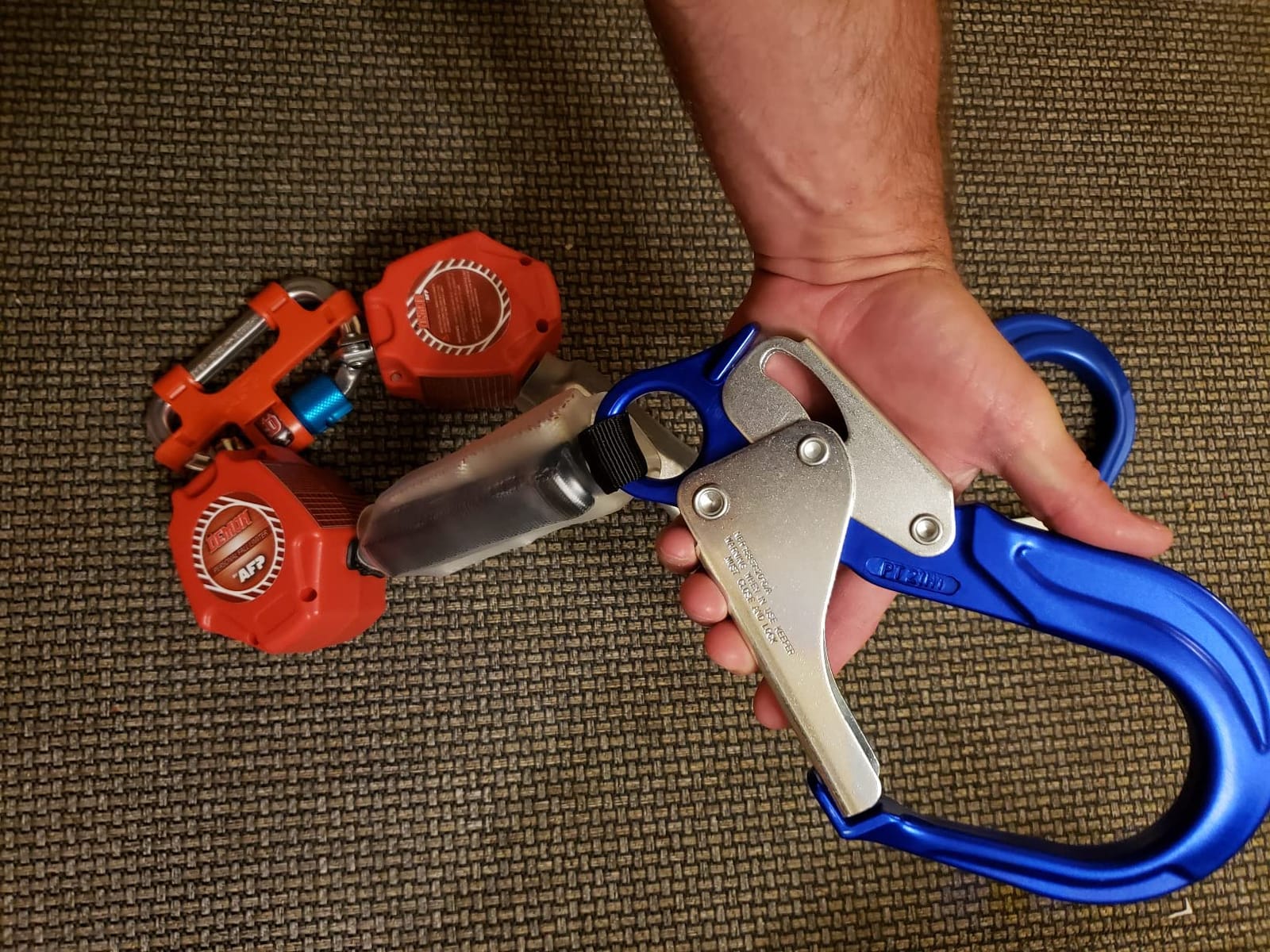
The hardware is the strongest part. Three heavy duty aluminum double locking gates per assembly, 5000 pound load capacity, and large aluminum rebar pelican hooks that accept a wide variety of anchor points. The aluminum also handles corrosion better than plated steel, which is worth something in wet climates and on water tower work.
The external energy absorber carries an impact indicator, so again there is a visible signal if the device has ever been loaded. Buyers like that one leg can be removed if a single leg configuration is what you need on a given day.
Where a twin leg is worth the extra weight
Steel erection and climbing trades are the obvious fits, and reviewers describing climbing and moving around a jobsite point the same way. At just under 7 pounds for a double leg unit, it is heavier than carrying a shock absorbing lanyard, but it is a single device rather than a spare, and it retracts rather than dragging.
The 6 ft leg length is short by design. Twin leg units exist for mobility between anchors, not for reach, so pair one with a longer device if the job needs both.
What buyers flag as drawbacks
The most reported complaint is the absence of a swivel joint between the hook and the strap, which can leave the leg working at an angle as you move. A few buyers also describe the unit as heavier than a simple shock lanyard setup, and one received a used unit that had been listed as new, which is a good reminder to inspect the packaging and the label on arrival.
With 60 reviews, the field history here is thinner than the leaders on this list, so document the first commissioning check carefully.
8. KwikSafety Mamba 33 ft Cable SRL – Integrated Handle and 54 Inch Arrest Distance
KwikSafety – Charlotte, NC – Mamba 33’ Self Retracting Lifeline [Carbonate + Integrated Handle] Class 1 Cable SRL ANSI OSHA Retractable Fall Arrest Safety Roofing Construction Gear
33 ft steel cable
Class 1
54 inch max arrest distance
Polycarbonate housing
Integrated carry handle
Pros
- Integrated carry handle makes a large unit easy to move
- Lightweight housing compared to heavier cable SRLs
- 3600 pound gate strength on the self locking snap hook
- Buyers report smooth cable retraction while walking and bending
Cons
- One verified buyer reported the unit failed within a month
- Manufacturer warranty reported as short at one month
- Longer 54 inch arrest distance than most units on this list
The Mamba is designed around an argument we have heard from crews: a self retracting lifeline that is too heavy to carry is a self retracting lifeline that gets left in the truck. The integrated handle on the housing is the answer, and the polycarbonate body keeps the whole 33 foot unit lighter than the aluminum-cased reels in this group.
Buyers mention the carry handle first, then the smooth cable retraction while walking and bending. That is the practical test that matters, because a cable that snags on every step is a cable a worker will try to work around rather than use correctly.
![KwikSafety - Charlotte, NC - Mamba 33’ Self Retracting Lifeline [Carbonate + Integrated Handle] Class 1 Cable SRL ANSI OSHA Retractable Fall Arrest Safety Roofing Construction Gear customer photo 1](https://www.minormania.com/wp-content/uploads/2026/09/B08LZX7949_customer_1.jpg)
Connector hardware is well specified. A self locking steel snap hook with a built in impact indicator and 3600 pound gate strength, plus a twist lock steel carabiner with a swivel top that prevents a twisting line. The twist lock carabiner is the piece to look for if you are pairing the device with a safety anchor strap rather than a harness D-ring.
One specification deserves your attention because it affects clearance math. This is a Class 1 unit with a maximum arrest distance of 54 inches, which is longer than the 42 inch figure on several other cable units in this guide. Longer arrest distance means more clearance below the anchor, and clearance is the number that decides whether the job is feasible.
![KwikSafety - Charlotte, NC - Mamba 33’ Self Retracting Lifeline [Carbonate + Integrated Handle] Class 1 Cable SRL ANSI OSHA Retractable Fall Arrest Safety Roofing Construction Gear customer photo 2](https://www.minormania.com/wp-content/uploads/2026/09/B08LZX7949_customer_2.jpg)
How it performs day to day
The recommended use list on the listing covers construction, industrial painting, inspection, maintenance, rigging, roofing, ship yards, water tanks, wells, wind turbines, and window washing. Buyers who put it to work report easy installation and a compact housing for a unit of this length, which is a genuine achievement at 33 feet.
For mobile crews moving between jobsites, a handled 33 foot unit is a meaningfully easier object to deal with than a reel, and that difference compounds across a week.
What gave us pause
There is a verified buyer report of a unit failing within a month, and a separate report of a manufacturer warranty of only one month on one account. Short warranty terms on a fall arrest device are worth checking before you standardize a crew on the model, because warranty length is a reasonable proxy for how the manufacturer expects the product to hold up.
Also run the clearance numbers with the 54 inch arrest distance included, and confirm the polycarbonate housing shows no stress marks around the strap anchor if the unit has been dropped.
9. SHEMIOR 33 ft Cable SRL – Alloy Steel Housing with Internal Shock Absorption
33FT Self Retracting Lifeline, Shemior Retractable Lanyard, Steel Cable SRL
33 ft galvanized cable
Alloy steel housing
4000 pound breaking force
900 pound arrest force
Pros
- Alloy steel housing resists drops
- corrosion and high temperature
- Aviation grade galvanized cable with 4000 pound minimum breaking force
- Patented internal shock absorber slows descent after the brake locks
- Handle doubles as a size free connector
Cons
- Standing cable tension runs higher than comparable units
- Documentation is unclear on the internal shock absorption claim
- One year manufacturer warranty
The SHEMIOR makes one argument the other units on this list do not: the housing should not be the weak point. Where most 33 foot units use a thermoplastic or polycarbonate case, this one uses an alloy steel shell described as drop resistant, corrosion resistant, and high temperature resistant.
If your device lives in the bed of a truck, on a steel deck, or in a plant where it gets knocked around, a steel housing is a defensible choice. Buyers describe the build as professional grade and the cable retraction as smooth and tangle free.
The cable is aviation grade galvanized steel at 0.2 inch diameter with a 4000 pound minimum breaking force, and the documentation is unusually specific. Max arrest distance of 39 inches, average arrest force of 900 pounds, and a third party claim of ANSI Z359.14-2021 compliance. The 360 degree swivel hook and twist lock carabiner are marked to ANSI Z359.12-2019 with a 3600 pound gate strength.
That brings us to the headline feature, which is a patented internal shock absorber. The description says that when a fall is detected the quick action brake locks immediately, then the line continues to descend very slowly for a short distance before stopping. That is a progressive arrest rather than an abrupt stop, and an average arrest force of 900 pounds is consistent with it.
Who it suits
Buyers like the manual. It is described as clearly written and translated, and it includes an inspection log section, which is not a common feature and saves real time during a competent person review. The 2 in 1 handle doubles as a size free connector for attaching the unit to varied building shapes with additional hooks or extenders.
Length options run from 20 to 33 to 50 to 66 feet, so a crew can standardize on one model across several reach requirements.
What to watch out for
Two cautions. The first is standing cable tension, which at least one reviewer describes as higher than comparable units, and high resting tension is tiring over a full shift. The second is a documentation gap: the internal shock absorption is advertised but not clearly stated in the written documentation, and on a safety device the paperwork should back up the claim.
With 34 reviews the field history is still short, and the warranty is one year.
10. WELKFORDER 30 ft Cable SRL – Visual Fall Alert and Heavy Steel Build
WELKFORDER Single Leg Self-Retracting Lifeline [Steel Cable] Internal Shock Absorber System Class 1 Retractable Lanyard with Quick-Action Brake ANSI&OSHA Compliant (30FT)
30 ft galvanized cable
1800 pound max arrest force
42 inch arrest distance
Fall alert indicator
Pros
- Impervious to sharp metal edges in buyer testing
- Visual fall alert indicator on the housing
- Swivel connectors stop the cable twisting during side to side movement
- Shear pin and ring make inspection checks straightforward
Cons
- Housing is noticeably heavy for a device carried on a person
- Manual offers minimal guidance on harness selection and placement
- One buyer rated it four stars citing cost against similar units
At 4.8 stars across 31 reviews with nothing rated below four, this is the tightest rating distribution of any unit we reviewed. The steel cable is the reason buyers single it out for metal roofing work, where the surface is full of standing seams, flashing edges, and fasteners that would cut webbing in a season.
Buyers report the quick action brake engaging instantly in drop tests and arresting within roughly a foot, which is a good result and keeps the clearance math friendly. The 360 degree swivel at both the top anchorage eye and the connector end is the detail that removes the constant twisting that makes cable units tiring to work with.
![Single Leg Self-Retracting Lifeline [Steel Cable] Internal Shock Absorber System Class 1 Retractable Lanyard with Quick-Action Brake ANSI&OSHA Compliant (30FT) customer photo 1](https://www.minormania.com/wp-content/uploads/2026/09/B0FJRLWMPR_customer_1.jpg)
The visual fall alert indicator on the housing is a nice practical touch, because the fastest possible inspection question is whether this device has ever been loaded. A visible indicator answers it in a second without needing to read a label or open the housing.
Numbers are published in a way we appreciate. Maximum arrest force 1800 pounds, average arrest force 1350 pounds, maximum arrest distance 42 inches, and a load capacity of 130 to 310 pounds. The snap hook and twist lock carabiner are marked to ANSI Z359.12 with 5000 pounds minimum tensile break strength and a 3600 pound gate rating.
![Single Leg Self-Retracting Lifeline [Steel Cable] Internal Shock Absorber System Class 1 Retractable Lanyard with Quick-Action Brake ANSI&OSHA Compliant (30FT) customer photo 2](https://www.minormania.com/wp-content/uploads/2026/09/B0FJRLWMPR_customer_2.jpg)
Where it earns its place
Metal roofing, industrial sheet work, and any environment with genuine cut hazards is where a galvanized cable SRL of this specification is the right tool. The reinforced nylon housing is described as resistant to high temperature, corrosion, impact, and water, which covers most outdoor and industrial conditions.
Buyers also mention the shear pin and ring on the snap hook as making inspection simple, and the large handle on the housing helps with a unit that is heavier than average.
The weight problem and the documentation gap
The most common criticism is weight. Reviewers accept it because of the amount of steel cable inside, and describe it as more of a worksite item than something carried on a person, which is a fair way to frame it. Anchor it to a structure rather than a harness if you can.
The manual is thin on harness selection and proper placement, and one buyer rated the unit four stars citing cost relative to similar units. With 31 reviews, treat it as a well regarded newcomer rather than a proven standard, and document the first commissioning check.
11. Malta Dynamics Wild Boar 30 ft SRL – Class 1 Overhead with Responsive Braking
Malta Dynamics Wild Boar 30’ Self Retracting Lifeline – SRL Fall Protection Lanyard with Steel Snap Hook for Construction Site Safety, OSHA and ANSI Compliant
30 ft galvanized cable
Class 1
1800 lbf max arrest force
42 inch arrest distance
Pros
- Every reviewer rated it five stars for build
- braking response and smooth cable feed
- Locking engages on even a slight sudden pull
- Eliminates the snagging and drag of traditional rope lifelines
- 30 foot and 50 foot variants in the same model
Cons
- Retraction spring can stall when the cable is released and springs back to the top
- Reel is larger and heavier than some buyers expected
- Class 1 overhead rating means it is not rated for leading-edge work
Every one of the 17 reviews for the Wild Boar came in at five stars, which is unusual enough to be worth examining. Reading them, the praise is consistent on three points: solid heavy duty construction, smooth cable feed with no jamming, and a sensitive brake that engages on even a slight sudden pull.
That third point is the one that matters. A brake that trips readily is more forgiving of the way real workers move, where the line goes taut suddenly during a step, a reach, or a stumble rather than in a textbook vertical drop. Reviewers describe the mechanism as telescopic and the braking as confident.
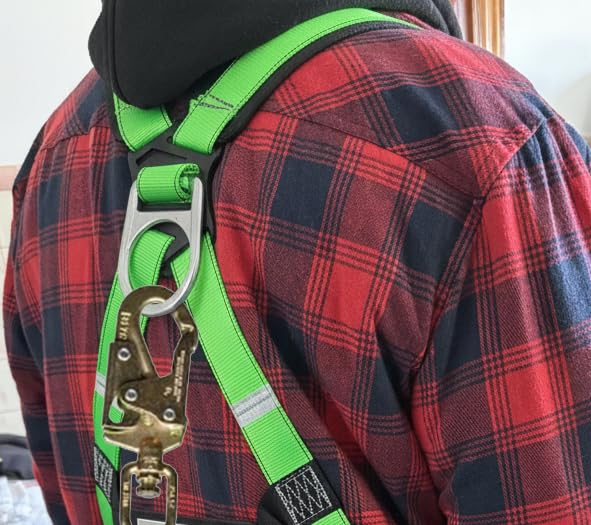
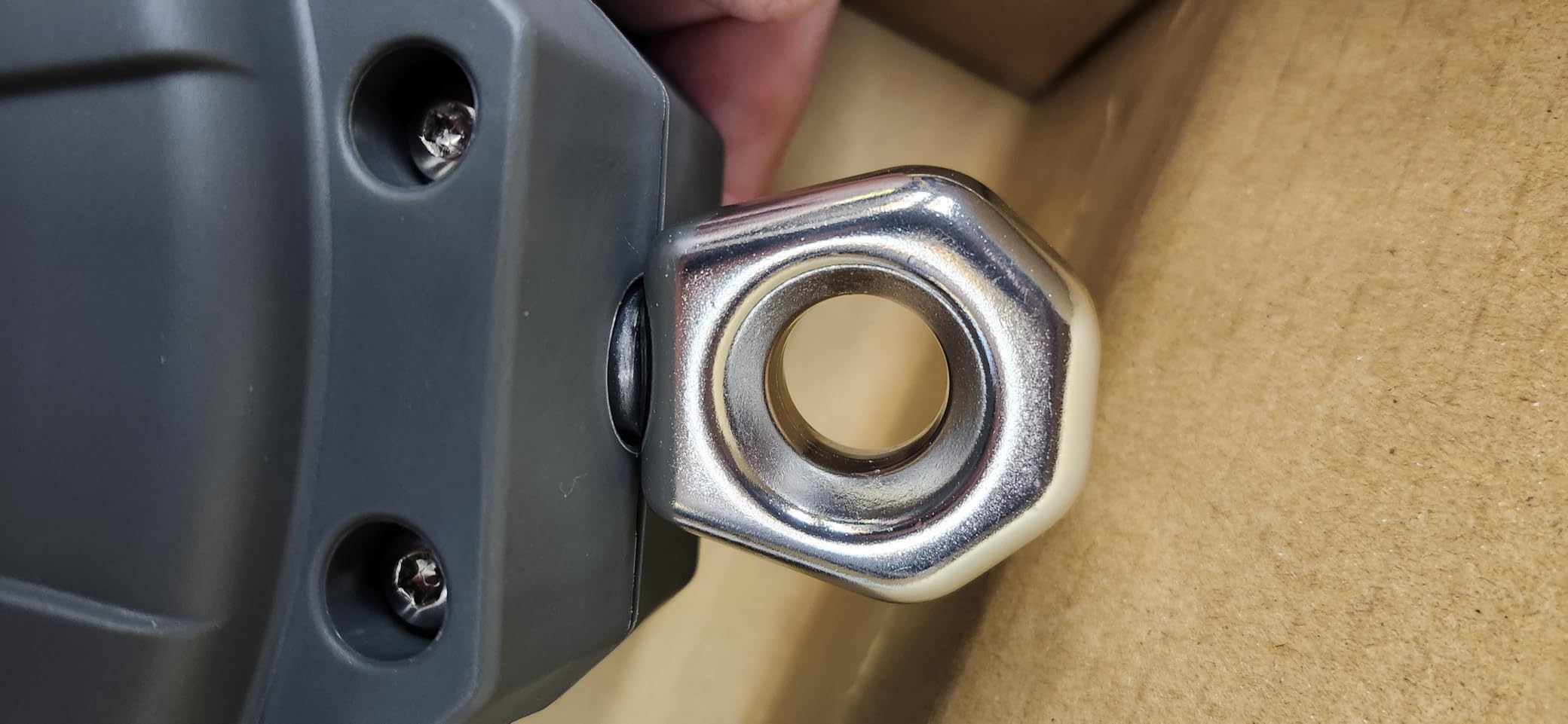
The specification sheet is straightforward. A Class 1 device rated for anchorage on a fall protection harness at or above the dorsal D-ring, 3/16 inch galvanized steel cable, impact resistant polymer housing, heavy duty steel snap hook and hardware, 1800 lbf maximum and 1350 lbf average arresting force, 42 inches maximum arresting distance, and a single user capacity of 130 to 310 pounds.
The line is marked to ANSI Z359.14-2021 and OSHA fall protection standards, and the same model is offered in 30 foot and 50 foot lengths, which makes it easy to standardize across a crew with different reach requirements.
Who should put this on the shortlist
Buyers highlight the smooth cable feed and retraction with no jamming and no unusual noise, and one notes the elimination of the snagging and drag of traditional rope lifelines. For crews coming off rope lanyards, that transition is often the difference between a device that gets worn and one that gets left hanging.
The 30 foot length covers a wide working area from a single anchor, which reviewers consistently call generous.
Where the class rating limits you
Be clear about the Class 1 overhead rating. This is an overhead tie off device and it is not rated for leading edge work, and one buyer specifically felt the product listing overstated leading edge capability. If your plan involves anchoring below the D-ring or working over an edge, this is the wrong category.
Two smaller notes from buyers: the retraction spring can stall when the cable is released and snaps back to the top, and the reel is larger and heavier than some buyers expected. With 17 reviews it is the thinnest feedback base here, so treat the perfect score as encouraging rather than settled.
12. 3M Protecta Web SRL 11 ft – Compact Overhead Unit from a Major Manufacturer
3M Protecta Self-Retracting Lifeline, Web, Steel Snap Hook, 11ft.
11 ft webbing SRL
4.99 pounds
Aluminum or thermoplastic housing
Self locking snap hook
Meets OSHA 1926.502
Pros
- Lightest handling weight of the cable and long reach units at under 5 pounds
- Built by an established industrial safety manufacturer
- Meets OSHA 1926.502 and OSHA 1910.140
- Compact housing at 13.2 by 9.5 by 3.9 inches
Cons
- One verified buyer reported a listed carabiner was missing from the box
- 11 ft length suits only low height anchor situations
- Marked for industrial and occupational use rather than consumer sale
The Protecta is the one unit on this list from a manufacturer that most corporate safety departments already have on their approved vendor list, and for organizations running a formal fall protection program that matters. The listing states it meets 29 CFR OSHA 1926.502 and OSHA 1910.140, and it replaces a legacy SKU that many industrial programs already have in their equipment records.
At 4.99 pounds it is the lightest device here, and the housing measures 13.2 by 9.5 by 3.9 inches. For a webbing unit tied off overhead where the worker is constantly moving, that combination of low weight and small footprint is the point of the product.
Where an 11 foot unit makes sense
Eleven feet of webbing with a self locking snap hook is a short reach device, and it suits low height anchor situations where the worker is close to the anchor point. Industrial maintenance, machine guarding work, and indoor elevated platforms are typical applications, and buyers report it performs as expected in that kind of service.
Webbing also resists sharp edges better than most people expect and does not corrode, so it holds up well indoors where condensation and chemicals are the bigger concerns.
What to check in the box
One verified buyer reported that a carabiner described in the listing was not included. That is a packing error rather than a design fault, but it is exactly the kind of thing that strands a worker on a job on day one, so count and identify the hardware against the manual before the unit goes into service.
Two more practical notes. The 11 ft length will feel short on any exterior roof work. And the unit is marked for industrial and occupational use, not for consumer sale or use, which is worth noting if anyone on your team is tempted to wear it recreationally. With 15 reviews the feedback base is small, so the manufacturer’s documentation is your best source for specifics.
How to Choose a Self Retracting Lifeline in 2026
The selection question is not which device is the best self retracting lifeline. It is which device is correct for the anchor position, the working surface, and the user in front of you. Here is how the decision actually breaks down.
How an SRL actually catches you
An SRL is a spring loaded drum with a line wound around it. As you move away from the anchor the drum pays out line and the spring keeps the line under tension, which is what removes the slack that causes trip hazards on a rope lanyard. When you move back toward the anchor the line retracts.
A fall changes the physics. Line acceleration climbs rapidly, and a centrifugal brake locks the drum within milliseconds, usually inside a foot of travel. The device then arrests you over a short distance with a controlled deceleration. This is why a self retracting lifeline needs about 6 feet of clearance below the anchor while a 6 foot shock absorbing lanyard needs roughly 18 feet.
SRL vs a shock absorbing lanyard: what changes
Both arrest a fall. The difference is how much room they need and how much slack they leave while you work. A shock lanyard stretches and tears its energy absorber during a fall, which keeps the arrest force survivable, but it needs the free fall plus the lanyard length plus the worker height plus a safety margin below the anchor.
An SRL engages almost immediately, so the clearance requirement drops to the device plus a small arrest distance. The trade is that a standard lanyard is lighter, cheaper per unit, and simpler to inspect visually, while an SRL is bulkier, heavier, and needs a competent person to inspect it on a documented schedule.
Do not combine a shock absorbing lanyard with an SRL. Stacking a second energy absorber below the device changes the arrest characteristics the device was tested for, and crews have been injured doing it. The SRL is the fall arrest element. The harness is the thing that distributes the force to your body.
Class 1 vs Class 2: the leading edge question
A Class 1 SRL is rated for anchorage at or above the dorsal D-ring on your harness. A Class 2 SRL is rated for leading edge work, which means it is approved to be anchored below the D-ring and to survive being dragged over a sharp edge such as a roof deck, a steel beam flange, or a concrete curb.
The physics behind the difference is what makes it non-negotiable. On a leading edge, the lifeline contacts a sharp edge before the brake has fully engaged, and that contact can cut the line or generate enough force to stop the drum without arresting. A standard Class 1 device can fail in exactly that scenario, and the failure is catastrophic rather than gradual.
Every unit in this guide is Class 1. None are appropriate for roof edge tie off. If your work involves anchoring below the D-ring or working over an edge, you need a leading edge rated device, and no amount of line strength substitutes for the correct class marking on the label.
Cable or webbing
Galvanized or stainless steel cable resists cuts, abrasion, heat, and chemicals, which is why it is the default for roofing and industrial work. It is heavier, it can tangle, and it transmits a sharp jolt through the harness on arrest. Webbing is lighter, softer on the body, quieter, and does not corrode, which makes it better for indoor and light duty work. It wears faster against sharp edges.
For most crews the honest answer is that you end up owning both. A webbing SRL for indoor and overhead platform work, and a cable SRL for anything with edges, nails, or abrasion.
The five factors to check before you buy
Anchor position. Anchor at or above the dorsal D-ring and a Class 1 device works. Anchor below the D-ring, at a roof edge, or into a horizontal system and you need a leading edge rated or horizontal rated device.
Working length. Buy the shortest length that covers your real work area. A shorter unit is lighter, and the fall clearance requirement scales with it. A 30 or 33 foot reel is for wide spans, not for a small platform.
Connector compatibility. Match the hook to your anchors physically. Small D-rings, large rebar hooks, and safety anchor straps accept different connectors, and a hook that will not close on your anchor is a device that cannot be used when it is needed.
User weight range. Almost all of these units are rated for 130 to 310 pounds, which covers most people including work clothing and tools. Anyone outside that range needs a different device, not a workaround.
Documentation. Look for a readable ANSI Z359.14 marking, a printed user weight range, a model number, a manufacture or born on date, and a manufacturer with a real recertification service. Marketplace listings with thin documentation are the cheapest place to buy a counterfeit device.
Inspection and recertification
A competent person should inspect each SRL before use and at documented intervals, checking the housing for cracks, the line for cuts, fraying, or heat damage, the brake function, the connectors, and the impact indicator. Any device that has arrested a fall comes out of service immediately, no exceptions, because the internal mechanism may be damaged in ways that are not visible.
Beyond routine inspection, these devices have a finite service life tied to the manufacture date, and recertification is a factory process rather than a shop process. That is a planning item for a buyer, not an afterthought: a device that is due for service the week your biggest job starts is a scheduling problem. Several manufacturers maintain regional service centers, and remote sites should plan for turnaround time into their equipment budget.
Accuracy matters in the rest of your kit too, and the same rule applies: check the specification before you buy. That is how we approached the [best self-leveling laser levels](https://www.minormania.com/best-self-leveling-laser-levels/) for layout and elevation work, the [best self-etching primers](https://www.minormania.com/best-self-etching-primers/) when coating prep is the weak link, and the [best self-propelled lawn mowers](https://www.minormania.com/best-self-propelled-lawn-mowers/) for grounds crews working alone on a slope.
Frequently Asked Questions
What are the OSHA requirements for self-retracting lifelines?
OSHA 1926.502 requires fall protection above 6 feet and sets the system performance limits, including a maximum arresting force of 1800 pounds and a maximum arrest distance of 24 inches for overhead SRLs, with allowances for leading edge units. The device itself must meet ANSI Z359.14, and the anchor must hold 5000 pounds per attached worker.
What is the maximum free fall distance for a self-retracting lifeline?
A Class 1 SRL is designed for a maximum free fall of 6 feet with up to 2 feet of deceleration, for roughly 8 feet of total clearance below the anchor before adding worker height. Individual devices vary: several units in this guide publish 39 to 54 inch maximum arrest distances, which is why the device label matters more than the standard.
What is the difference between a shock absorbing lanyard and a self-retracting lifeline?
A shock absorbing lanyard stretches an energy absorber during the fall and needs about 18 feet of clearance below the anchor for a 6 foot lanyard. An SRL engages within a foot or so and needs roughly 6 feet total. Lanyards are lighter and cheaper per unit. SRLs remove slack, reduce fall distance, and require documented periodic inspection.
What is a leading edge SRL?
A leading edge SRL, classified as Class 2 under ANSI Z359.14, is rated for anchorage below the dorsal D-ring and for contact with a sharp edge such as a roof deck or steel beam. A standard Class 1 device can be cut or disabled by an edge contact. Roofers working at the edge need a Class 2 unit, not a standard SRL.
How often does an SRL need inspection?
Inspect before every use, and have a competent person perform a documented inspection on a set schedule. Any device involved in a fall must be removed from service immediately. Devices also have a finite life tied to the manufacture date and require factory recertification, so track the born on date and plan service ahead of a busy season.
Can I use a standard SRL at a roof edge?
No. A standard Class 1 SRL is rated for anchorage at or above the dorsal D-ring only. Working at a roof edge puts the anchor below the D-ring and exposes the line to a sharp edge, which is the leading edge scenario. Use a Class 2 leading edge rated SRL, and confirm the fall clearance works with the additional drag distance across the edge.
Final Verdict on the Best Self Retracting Lifelines in 2026
The Guardian 10900 Halo is our pick for most crews. Eleven feet of webbing, a 5 pound aluminum housing, a swivel top that stops tangling, and fall clearance charts printed on the shock pack cover, backed by the largest review base of any device we examined. For a cable unit with a proven housing, the KwikSafety Cobra earns its place. For crews working under a moving anchor or between widely spaced anchor points, the AFP Demon twin leg is the only one on this list that gives you 100 percent tie off.
Check the class rating before anything else. Every unit here is Class 1 for overhead anchorage, and none of them belong at a roof edge. Once you have matched the device to the anchor position, the working length, and the connector on your anchors, the rest is maintenance discipline: inspect before use, document it, and plan the recertification before it lands in the middle of your busiest week.