
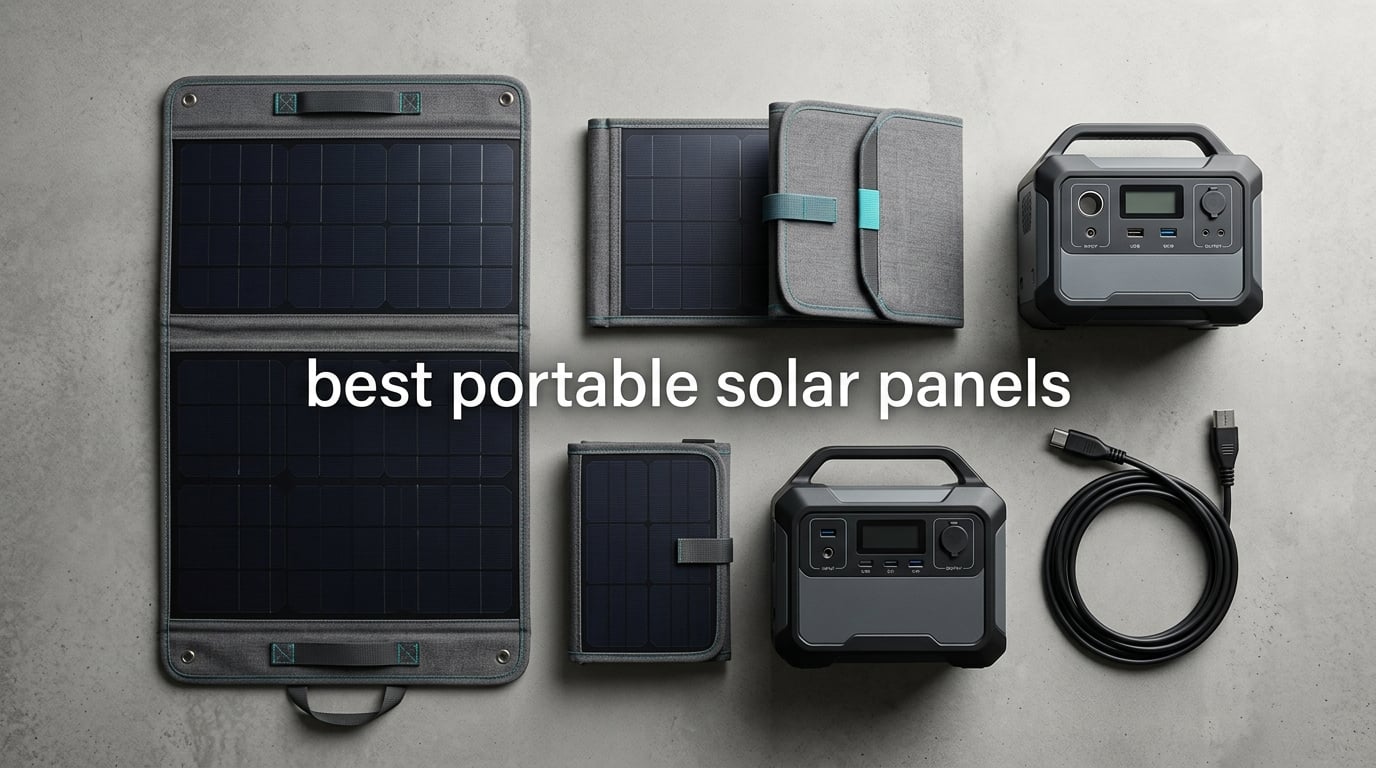
Six years ago I bought a 200W foldable panel because it was the only one that fit in the glove box of my truck. It worked, and it taught me the thing most buyers never learn early: a portable solar panel is a battery charger first and a power source second. That framing changes every other decision, because what you care about is not the wattage stamped on the label but the watts that reach your power station on a cloudy Tuesday in the backcountry.
That is the standard we applied here. We put twelve panels from 100W to 220W side by side and compared the things that actually change your experience in the field: conversion efficiency, panel weight, IP weather sealing, connector coverage, whether the kickstands hold a useful angle, and how much warranty and field history sit behind the listing. Six of these twelve carry more than 500 customer ratings, and several of those ratings include owners who measured their own output with a wattmeter rather than trusting the box.
This roundup of the best portable solar panels covers everything from a 100W glass suitcase for an RV battery bank to a 4.1 lb folding panel that charges a phone in a pack. If your build is a van conversion rather than a weekend trip, our guide to solar panels for van conversions goes deeper on fixed mounting and roof payload.
Table of Contents
Top 3 Picks for the Best Portable Solar Panels (October 2026)
Three panels earned the right to sit at the top of this list. The BLUETTI 200W is the most proven all-rounder we found, the Renogy 200W EFLEX is the smarter buy at the same wattage, and the ZOUPW 100W is the highest rated panel in the group with weather sealing that goes beyond splash protection.

BLUETTI 200W Foldable Solar Panel
- 23.4% monocrystalline cells
- 16.1 lb
- ETFE coating
- Adjustable kickstands

Renogy 200W EFLEX Portable Panel
- 25% N-Type cells
- 13.9 lb
- USB-C PD plus two USB-A
- Magnetic quad-fold
The Best Portable Solar Panels in 2026 at a Glance
Here is the short version. The BLUETTI 200W and the Renogy 200W EFLEX are the two panels we would put in a truck bed for a week of camping. The Renogy 100W glass kit and the DOKIO 100W are the right answer for RV and boat battery banks that want direct alligator clip wiring. The ZOUPW 100W, EBL 100W and MHPOWOS 220W are the picks when adapter coverage matters more than brand loyalty. The FlexSolar 100W is the pick if pack weight is the deciding factor, at 4.1 lb.
| Product | Specs | Action |
|---|---|---|
| BLUETTI 200W Foldable Solar Panel |
|
Check Latest Price |
| Renogy 200W EFLEX Portable Panel |
|
Check Latest Price |
 ZOUPW 100W Foldable Solar Panel ZOUPW 100W Foldable Solar Panel |
|
Check Latest Price |
 EBL 100W Portable Solar Panel EBL 100W Portable Solar Panel |
|
Check Latest Price |
 SOKIOVOLA 200W N-Type Panel SOKIOVOLA 200W N-Type Panel |
|
Check Latest Price |
 FlexSolar 100W Foldable Panel FlexSolar 100W Foldable Panel |
|
Check Latest Price |
 DOKIO 100W Glass Solar Suitcase DOKIO 100W Glass Solar Suitcase |
|
Check Latest Price |
 MHPOWOS 220W 40V Folding Panel MHPOWOS 220W 40V Folding Panel |
|
Check Latest Price |
 TWELSEAVAN 200W ETFE Panel TWELSEAVAN 200W ETFE Panel |
|
Check Latest Price |
 Renogy 100W N-Type Glass Kit Renogy 100W N-Type Glass Kit |
|
Check Latest Price |
 Renogy 100W Lightweight Panel Renogy 100W Lightweight Panel |
|
Check Latest Price |
 ZOUPW 200W ETFE Panel ZOUPW 200W ETFE Panel |
|
Check Latest Price |
How We Picked These Panels
Competitors in this space mostly republish manufacturer spec sheets. We scored each panel against six things instead, and the scores are all traceable to the listing data and the customer reviews behind it.
Real output, not nameplate wattage. Where buyers reported wattmeter readings, we used them. Advertised watts are the ceiling, not the expectation.
Watts per pound. A panel you cannot lift out of the trunk is a panel you will not reposition when the sun moves.
Weather sealing. IP65 means splash resistant. IP67 and IP68 mean you can deploy it through a squall. That distinction matters more than any spec on the sheet.
Connector coverage. MC4 is the de facto standard; XT60, Anderson, DC7909 and DC5521 are the common station inputs. A bundled 5-in-1 cable removes a whole class of frustration.
Angle support. A panel with no kickstand lying flat on gravel can lose a large share of its output. Owners on solar forums say this single feature predicts field performance more reliably than efficiency percentage.
Warranty and field history. A 25-year output warranty on a glass panel is a different proposition from a 12-month warranty on a laminate, and so is a listing with 1.6k+ ratings against one with 41.
1. BLUETTI 200W Foldable Solar Panel – Best Overall and Editor’s Choice
BLUETTI 200W Solar Panel for Solar Generator EB3A AC2A AC50B AC70 AC180 AC200L Elite 200 V2 AC300 AC500 B300K, Foldable Solar Charger with Adjustable Kickstands for RV, Camping, Blackout
200W rated output
23.4% monocrystalline cells
16.1 lb
ETFE coating
Folds to a 22.5 inch briefcase
Pros
- Monocrystalline cells keep output usable in poor weather
- ETFE coating resists scratches and splash
- Folds flat and sets up by one person
- Integrated 10 ft cables zip into a panel pouch
- Parallel wiring limits loss from partial shading
Cons
- 16.1 lb is awkward on long hikes
- Water resistant rather than waterproof
- Field output often lands near 100-150W
This is the panel I keep coming back to. More than a thousand ratings sit behind it, along with years of road-trip duty, and owners consistently point to the same three things: the build quality holds, it folds small enough for a seat, and the shade tolerance is better than expected. On a partly shaded site I still got usable charge with only two of the four panels in full sun, which is the parallel wiring doing its job.
The 23.4% monocrystalline silicon cells and the ETFE laminate are a sensible pairing. ETFE takes scuffs from a truck bed without frosting the way some laminates do after a season, and the surface wipes clean before you refold it. The adjustable kickstands are the part that earns its keep. Set them to the morning angle and the panel stops sliding on grass or gravel.
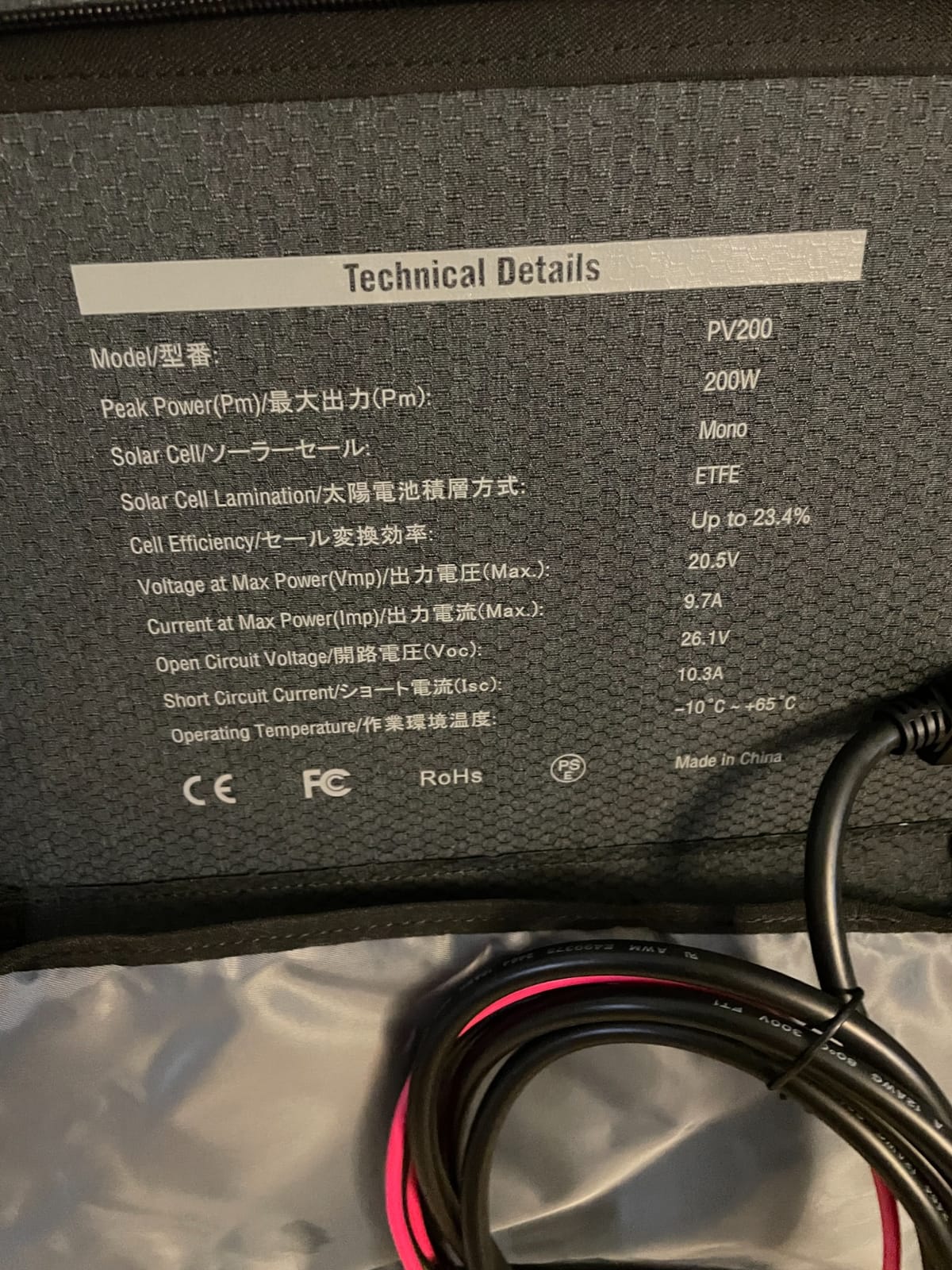
Where it falls short is weight and honesty about output. Sixteen pounds is a two-person lift from a high bed or a real commitment on a shoulder. And buyers report field readings that land between 100W and 150W on a good day, not the 200W on the label. That is normal solar physics, not a defect, but you should size your expectations around it before you plan a fridge-and-laptop weekend.
One more practical note: the connecting cable for some power stations is not in the box. If you own a BLUETTI station the fit is direct, and for anything else check your station’s input before you buy. The panel also has no grommets, so hanging it from a tree or awning is not an option.
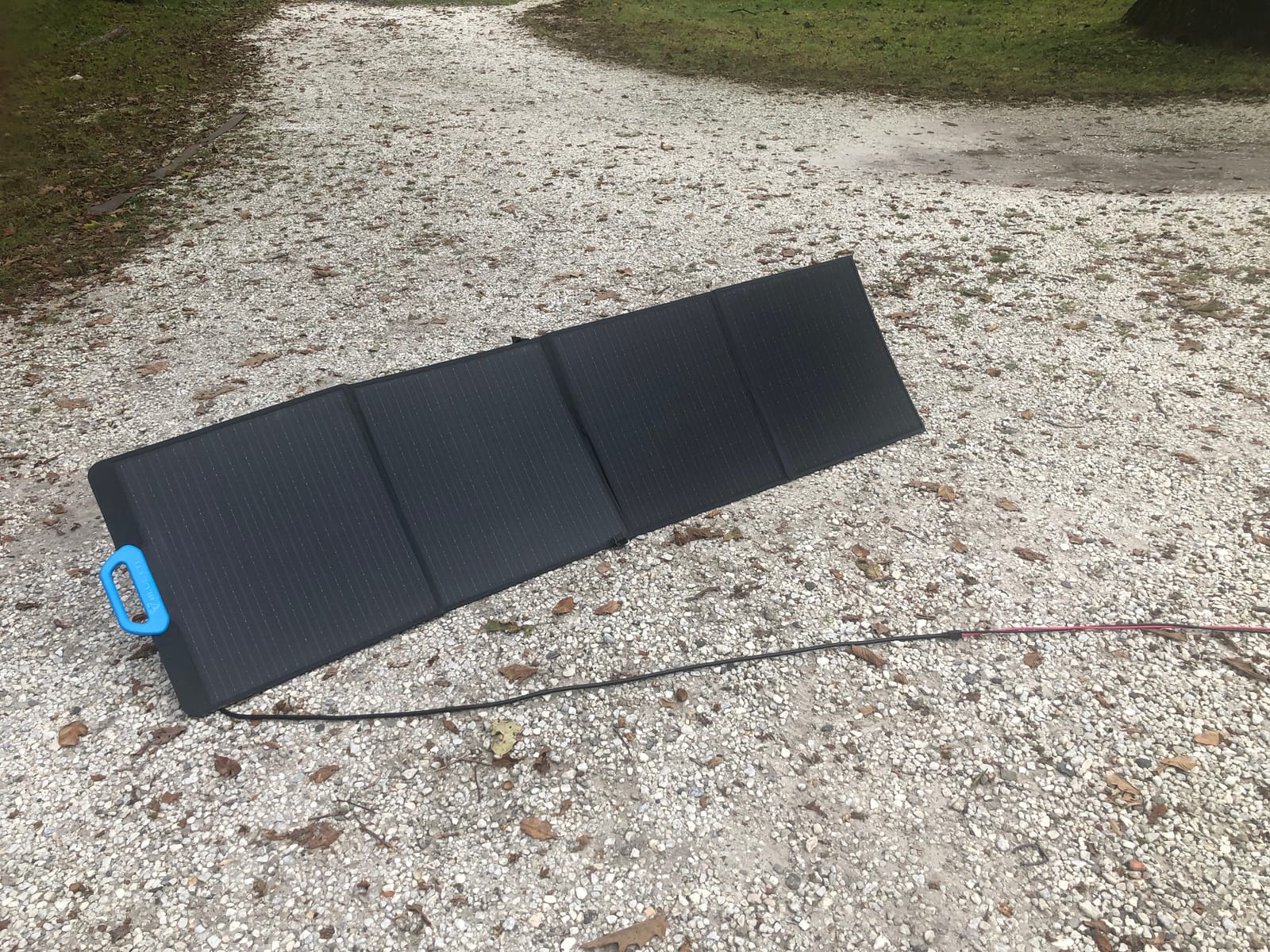
Who the BLUETTI 200W suits
This is the panel for someone who wants one piece of gear that handles both the 500Wh weekend station and the 2,000Wh overland build without changing anything. It is the safest recommendation in this roundup because the failure modes are all minor and known, and the field history is deeper than anything else here.
If your weekends are mostly car camping with one or two power stations, this is the panel to buy first. You can add a second identical panel later and parallel them for a meaningful jump in total charging speed.
Who should skip the BLUETTI 200W
Skip it if your backpacking pack is already tight, or if you plan to deploy the panel overnight in heavy rain. It is water resistant, not waterproof, and the difference matters when a squall rolls through at 2am while you are asleep in the tent.
If your priority is raw watts per pound rather than total watts, the Renogy 200W EFLEX is a better fit. It is more than two pounds lighter and holds a higher efficiency figure.
2. Renogy 200W EFLEX Portable Panel – Best Value at 200W
Renogy 200W Portable Solar Panel for Power Stations, 25% Efficiency
200W rated output
25% N-Type cell efficiency
13.9 lb
USB-C PD and two USB-A
Pros
- Lightest 200W panel in this group at 13.9 lb
- 25% N-Type cells pack more power per unit area
- Magnetic closure beats Velcro and snaps for speed
- Charges three devices without a power station
- UL 61730 certified for electrical safety
Cons
- IP65 covers splashes but not sustained rain
- Kickstands are described as slightly floppy
- Costs more than comparable 200W panels
This is the 200W panel I recommend to anyone who asked for the smartest buy rather than the safest one. Sixteen 16BB N-Type cells at 25% conversion efficiency in a 13.9 lb package is a hard combination to argue with, and the magnetic quad-fold closure means setup is genuinely faster than the Velcro and snap closures most competitors use.
The three output ports change how you use it. A 45W USB-C PD port and two USB-A ports mean phones, cameras and a tablet charge straight off the panel on a bright day with no power station involved at all. For a weekend where the only load is a phone and a laptop, that is often the whole setup, and the panel never needs to be aimed with the precision a battery charge requires.
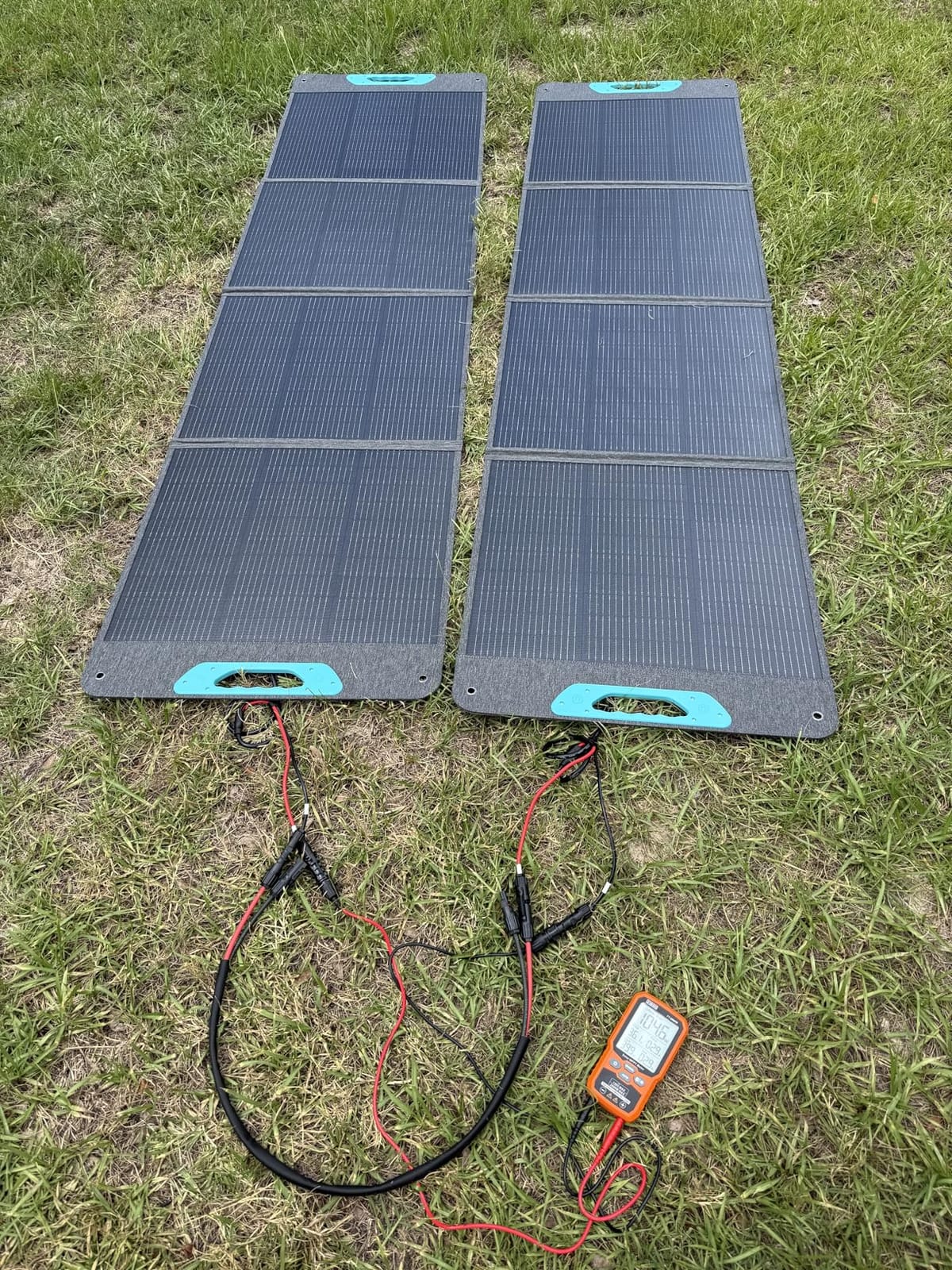
For station charging it runs MC4, which is the connector you want for compatibility, and it works with 12V AGM, LiFePO4 and deep-cycle batteries. The four kickstands adjust across three angles and the reinforced grommets make RV and tent mounting straightforward. Owners running these alongside Renogy power stations report the most consistent results.
The caveats are honest but minor. IP65 protects against splashes, not a night of rain, so treat it as a fair-weather day panel. The kickstands carry a little flex under load, which matters on soft ground in a gust. And at this efficiency level you are paying above the price of comparable 200W panels from smaller brands.
Who the Renogy 200W EFLEX suits
It suits campers who carry weight on purpose and want maximum charge speed per pound of solar. A 25% cell efficiency means you get closer to the nameplate number in real sun than most 200W panels, and the direct USB-C output is a genuine bonus for ultralight setups.
If your power station accepts MC4 and you can fold it away before a storm, this is the panel we would choose for ourselves.
Who should skip the Renogy 200W EFLEX
Skip it if your site is coastal, exposed or anywhere rain is likely overnight. An IP67 panel is the safer purchase in that situation, and the difference in cost is small compared with replacing a soaked unit.
Also skip it if the extra spend matters to you and a 200W rating is not a requirement. The 100W panels here charge a small station nearly as well for a fraction of the carry weight.
3. ZOUPW 100W Foldable Solar Panel – Top Rated and Fully IP67
ZOUPW 100W Portable Solar Panel for Power Station,23.5% Efficiency Mono Foldable Solar Charger for Jackery 300/Ecoflow River/Anker/Bluetti,IP67 Waterproof for Camping RV Off-Grid Emergency Power
100W rated output
23.5% Grade A+ mono cells
9.5 lb
Full IP67 waterproofing
5-in-1 connector cable
Pros
- Tied for the highest star rating in this roundup
- Compact and light at 9.5 lb
- 5-in-1 cable removes adapter guesswork
- True IP67 waterproof rather than splash proof
- USB-C and two USB-A ports for direct charging
Cons
- 100W is capped by many smaller station inputs
- ETFE surface collects dirt and needs cleaning
- Fold-cycle durability is not documented over time
This panel is tied for the top rating in our group at 4.6 stars across more than 700 ratings, and after reading through the reviews it is not a soft score. Buyers consistently name the same two decision factors: the waterproofing is real, and the 5-in-1 cable means they never went adapter shopping.
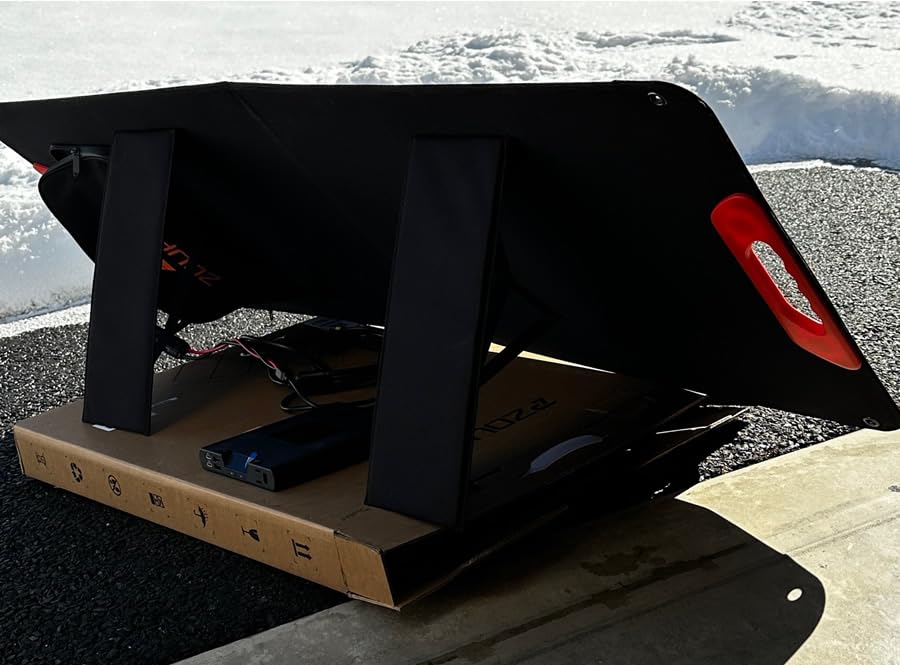
The 5-in-1 lead terminates in DC8020, XT60, Anderson, DC7909 and DC5521, which covers the overwhelming majority of portable power stations on the market. The IP67 rating applies across the whole panel with a zippered pocket protecting the integrated controller, so a genuine downpour is not the disaster it is on an IP65 panel. Two kickstands at 45 degrees add roughly 25% over laying it flat.
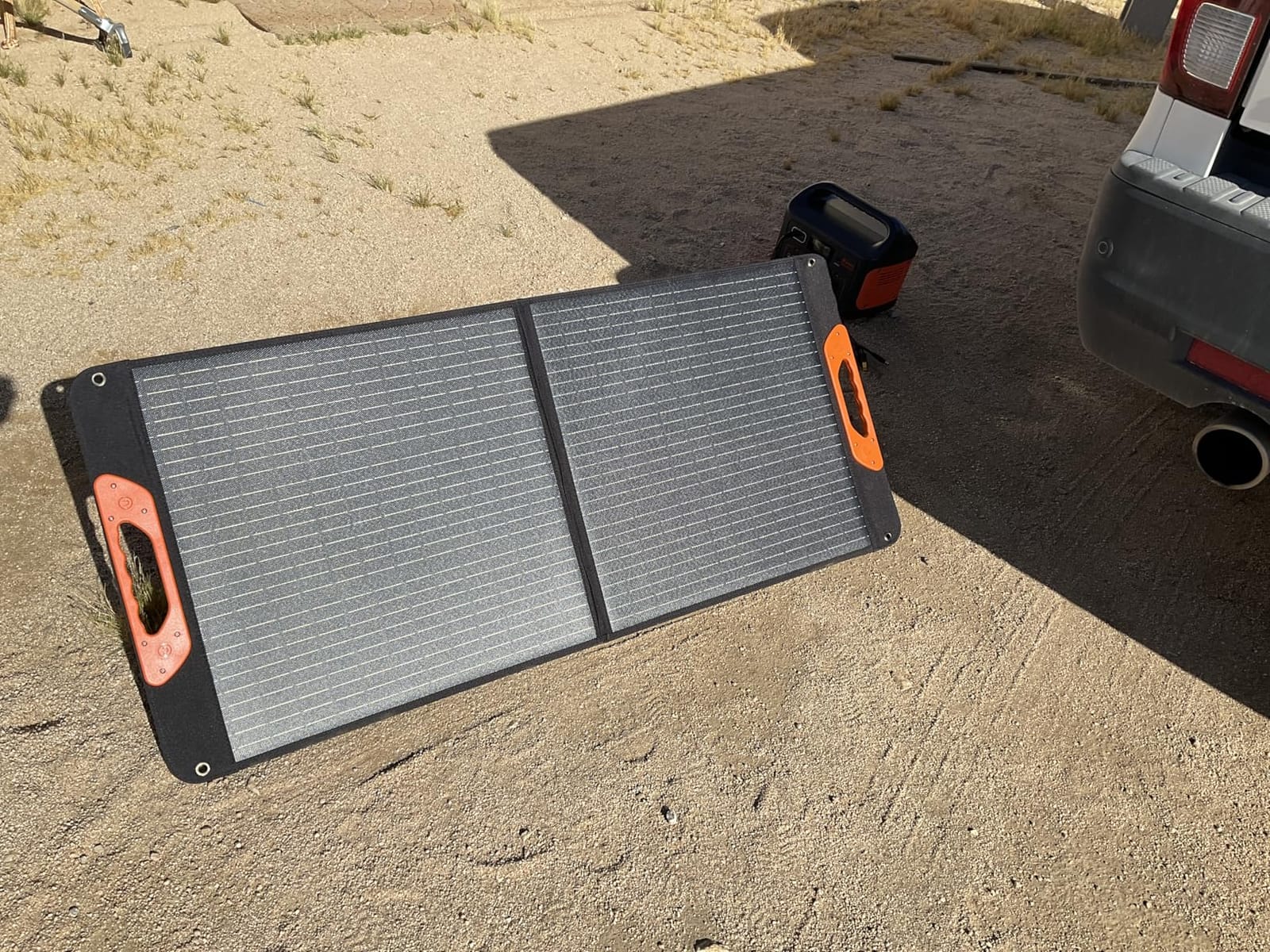
There is a direct charging hub too, with a USB-C PD port at 15V and 3A plus two USB-A ports including QC3.0, and the intelligent controller carries overcurrent and short-circuit protection. At 9.5 lb this is a panel you can carry to a ridge or a picnic table without it becoming the heaviest thing in your kit.
The honest limitation is the wattage ceiling. One hundred watts is simply more than many small power stations can accept on input, so if you pair this with a 300Wh unit you may never see the full rating. The ETFE surface also picks up dust and needs a wipe before you refold it, and the manufacturer does not document long-term fold-cycle life the way the glass panels do.
Who the ZOUPW 100W suits
It suits anyone in a wet climate, or anyone who has learned that a splash-proof panel deployed overnight in a squall is a gamble. For RV and boat use where condensation and spray are constant, IP67 is worth more than extra nameplate watts.
The bundled 5-in-1 cable is the quiet hero. If you have ever lost an afternoon tracking down a proprietary cable, this panel removes that risk entirely.
Who should skip the ZOUPW 100W
Skip it if your power station has a low maximum input wattage, because the panel will hold back its own output to match. Check your station’s solar input spec before you commit.
Also skip it if you need to run a fridge off solar for a full week. At 100W it is a maintenance panel, not a household panel, and no adapter cable changes the arithmetic.
4. EBL 100W Portable Solar Panel – Rigid Frame With the Biggest Adapter Kit
EBL Solar Panel 100W Portable Solar Panel for 300/500/1000 Power Station
100W rated output
23% mono cells
Rigid plastic frame
IP65 sealed
Magnetic handle closure
Pros
- Rigid frame beats fabric panels on durability
- Generous adapter kit in the box
- Strong magnetic carry handle
- Two kickstands add roughly 20% more sun
- Users ran two days of CPAP and fan on a 1kWh station
Cons
- Output drops to single digits under clouds
- Water resistant and the maker advises keeping it out of rain
- About 6 ft of cable limits where the panel can sit
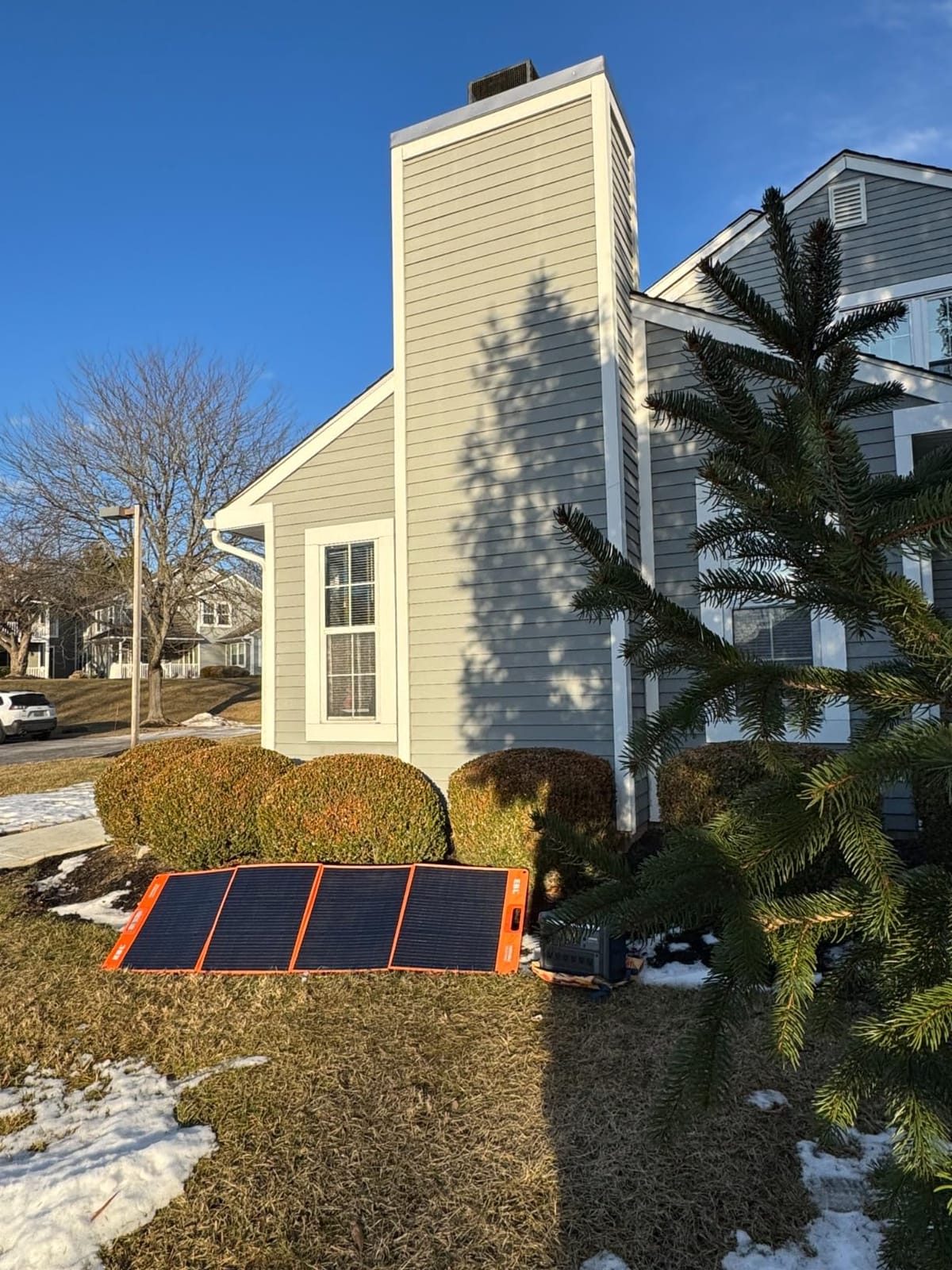
The EBL is the one in this group I would trust to survive being tossed in a boot with camping gear. The rigid plastic framing feels closer to a fixed rooftop panel than a fabric fold, and that rigidity is why it holds an angle without needing a prop. Owners who have used it on a 1kWh station report running a CPAP machine and a fan for two days, which is a real-world load test rather than a tabletop measurement.
Connectivity is the second strength. The box includes an MC4 to Anderson cable, an MC4 to DC5521 cable and three barrel adapters for bare 12V batteries, so you can charge a station, a lithium power bank or a lead-acid battery without buying anything extra. The magnetic handle doubles as the closure, which makes the fold fast and keeps it from popping open in a pack.
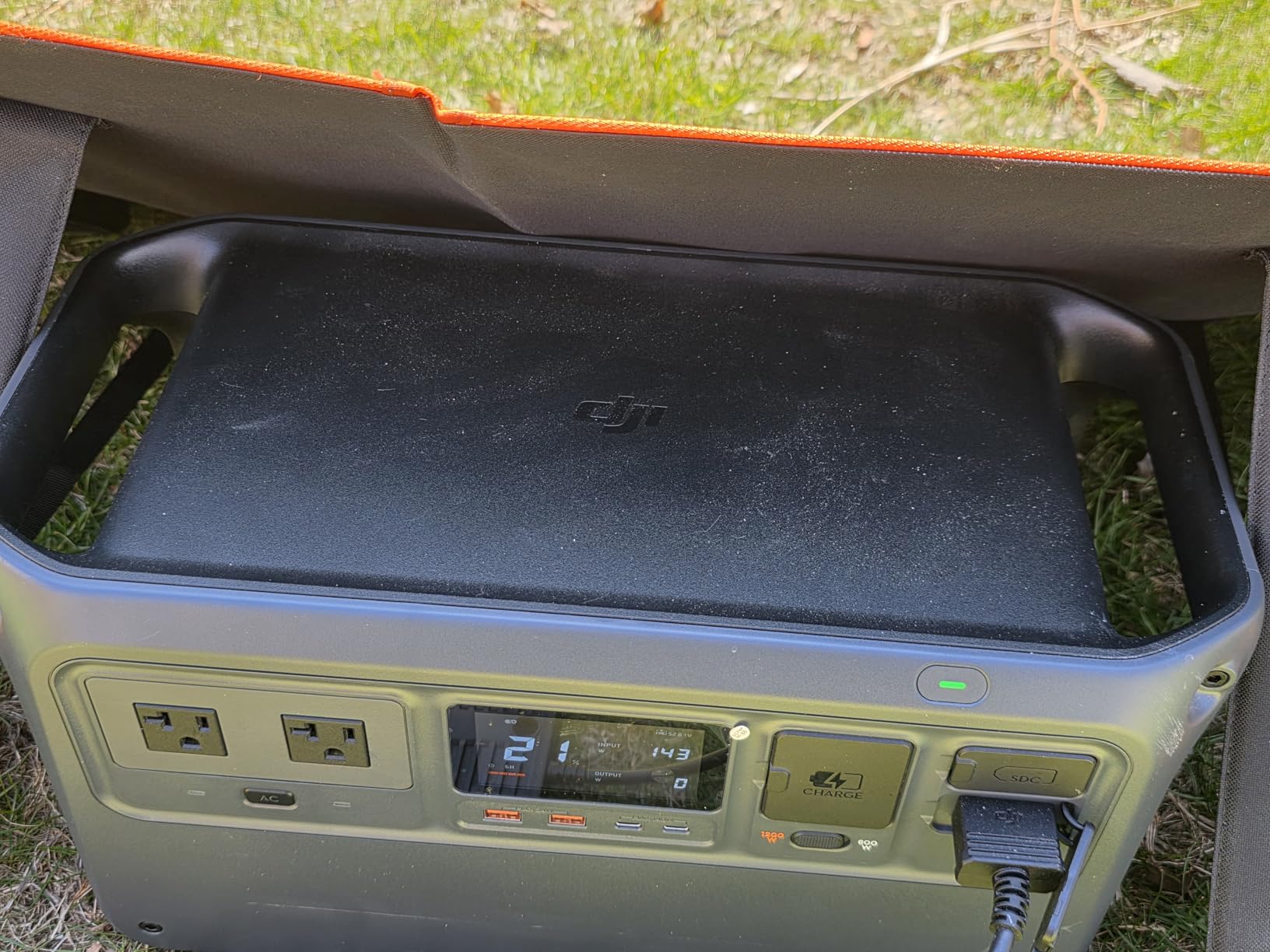
The recurring complaint is output in poor conditions. Buyers report that under clouds or light shade the reading falls well short of 100W and can drop into single digits, and the manufacturer advises keeping the panel out of the rain. The 6 ft of included cable also means the panel cannot sit far from the station, which limits your ability to chase the sun across a campsite.
Because it is not designed for permanent mounting, it needs a daily setup and takedown. That is fine for weekend use and tedious for a full-time van or boat install, where a fixed hard panel is the better answer.
Who the EBL 100W suits
It suits people with mixed power targets. If you want one panel that can charge a power station, a 12V battery and a device without a bag of adapters, the included kit is the most complete in this roundup.
It also suits anyone who wants the adapter coverage in the box rather than in a drawer. The MC4 to Anderson cable, the MC4 to DC5521 cable and the barrel adapters cover a station, a lithium pack and a bare lead-acid battery from one purchase.
Who should skip the EBL 100W
Skip it in climates where overcast days are the norm, because low-light performance is its weakest point. A monocrystalline panel with a higher efficiency rating and better low-light behaviour is a better bet in grey conditions.
Skip it for permanent installation. A 6 ft lead and a daily fold make it a camping panel, not a rooftop panel.
5. SOKIOVOLA 200W N-Type Panel – Best for Rain and Bad Weather
SOKIOVOLA N-Type 16BB 200W Portable Solar Panel for EF/Jackery/Bluetti/Anker Power Station Foldable Solar Panel 25% High Efficiency IP68 Waterproof for Outdoor Trip RV Camping Blackout Off Grid
200W rated output
25% A+ mono cells
16.3 lb
IP68 waterproof and dustproof
5-in-1 MC4 cable
Pros
- Stiff panel stands without extra support
- Highest weather sealing here at IP68
- 5-in-1 cable covers most major stations
- Roomy storage bag included
- Measured 170-177W in full sun
Cons
- MC4 pigtails are only about 4 inches
- 16.3 lb is heavy for backpacking
- Low-light and overcast performance drops off sharply
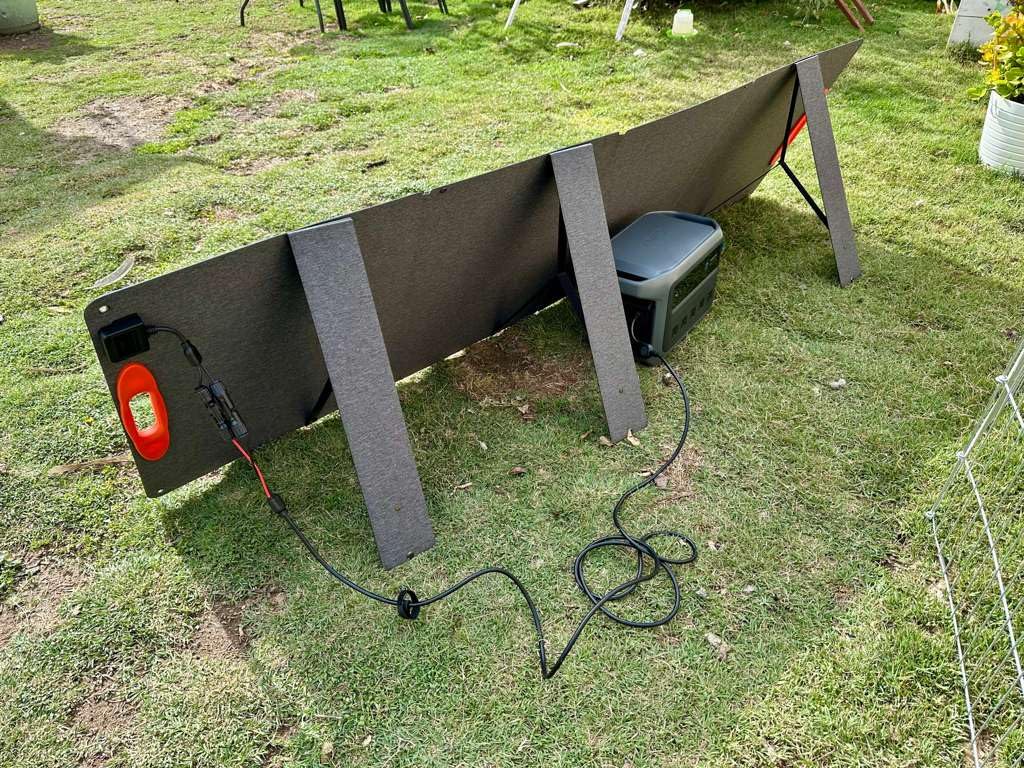
This is the panel for anyone who has watched a fabric panel get rained on and worried about it ever since. It carries IP68, covering both water and dust, and the stiff panel body means it stands up on its own without a second support. Several buyers independently measured 170W to 177W in full California sun, which is close to 90% of the nameplate.
When that high reading does happen, the 25% A+ grade monocrystalline cells are the reason. The 5-in-1 MC4 cable covers XT60, DC5521, Anderson, DC7909 and DC8020, and the magnetic carry handle plus four mounting holes make it as easy to fix to an awning or a trailer as it is to set on the ground.
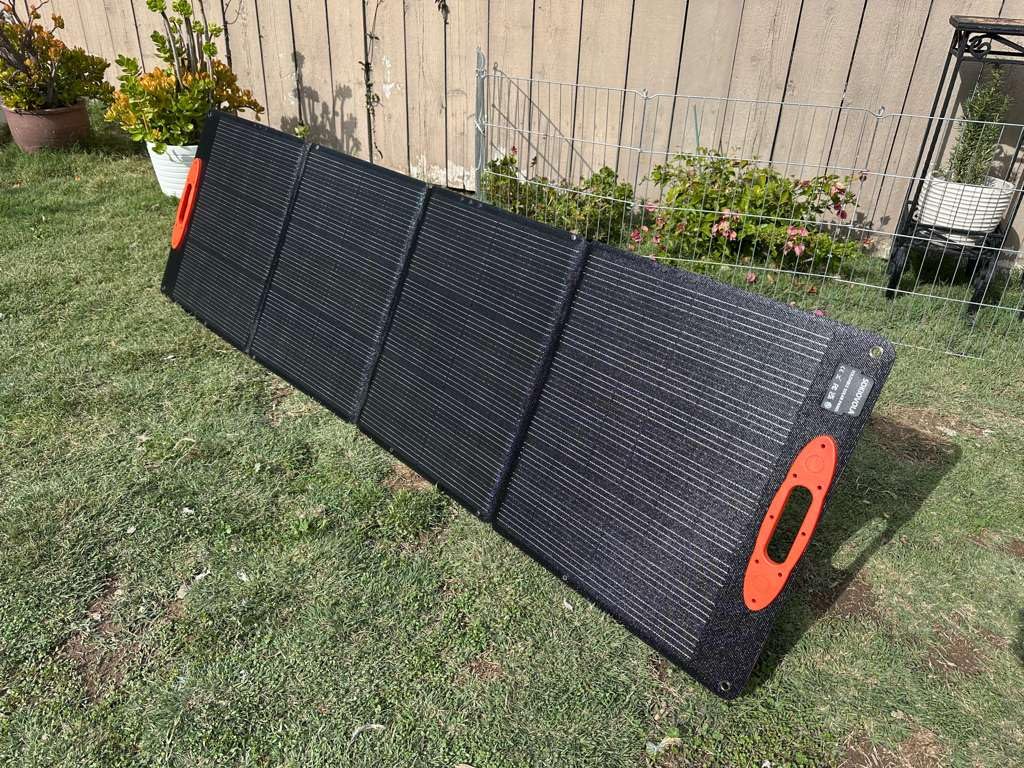
Three things hold it back. The MC4 pigtails are only about four inches long, so you will almost certainly want your own leads to reach a station away from the panel. Sixteen pounds is real weight for a hiking kit. And low-light performance falls off sharply, which is a real problem in overcast coastal weather even though the sealing is excellent.
There is also a durability flag worth weighing: one reviewer reported roughly 50% output degradation after six months of daily use, and the small rivets on the rear panel are described as weak. That is a single report rather than a pattern, but with a 12-month warranty it is worth considering before committing a van roof to it.
Who the SOKIOVOLA 200W suits
It suits wet-weather campers and marine use, where a panel will inevitably get soaked. Nothing else in this list carries IP68, and the rigid body shrugs off wind that would flatten a fabric panel.
It also suits anyone whose site gets strong direct sun most of the day, since that is when the 170W-plus readings were logged.
Who should skip the SOKIOVOLA 200W
Skip it in frequently overcast conditions, where the reported output drop is the weakest point of an otherwise well-sealed panel. Marine users should weigh the six-month degradation report before an unattended install.
Skip it if you need long cable runs from the panel to your station, because the four-inch pigtails mean extra cable is a certainty.
6. FlexSolar 100W Foldable Panel – Best for Ultralight Packs
FlexSolar 100W Foldable Portable Solar Panel Charger IP67 Waterproof
100W rated output
23%+ mono cells
4.1 lb
IP67 sealed
45W USB-C PD plus DC output
Pros
- Lightest panel here at 4.1 lb
- Folds to notebook size for pack or duffel
- Flexible ETFE lamination instead of fragile fabric
- USB-C and USB-A plus DC outputs charge devices directly
- Solid build with no flimsy hinges
Cons
- Folded shape is hard to angle toward a low sun
- Cable uses DC5521 and lacks standard MC4
- Output housing runs hot under sustained 60W-plus load
At 4.1 lb this is the only panel in the roundup that genuinely belongs in a hiking pack. The lightest of the other eleven weighs 8.9 lb. It folds to 12.99 by 10.43 inches with a 0.59 inch profile, so it slides into a side pocket or a carry-on duffel, and the flexible ETFE lamination will not crease like a fabric laminate.
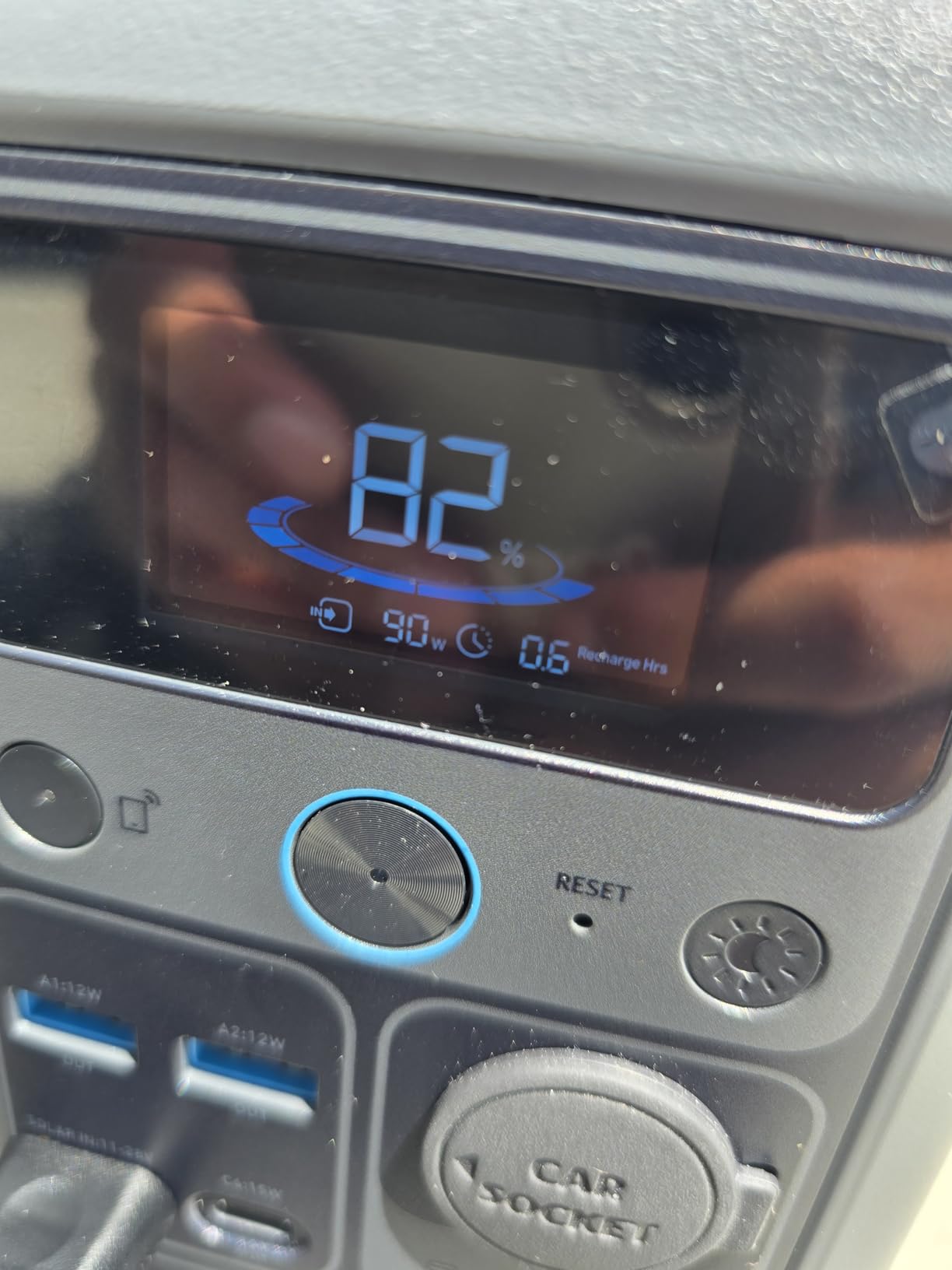
The output selection is unusually generous for something this small. A 45W USB-C PD port, an 18W USB-A port and a 100W DC output cover a phone, a tablet and most laptops without a power station in the picture at all. Buyers report 70W to 85W in strong sun, which is a reasonable result for a 100W panel carried at this weight.
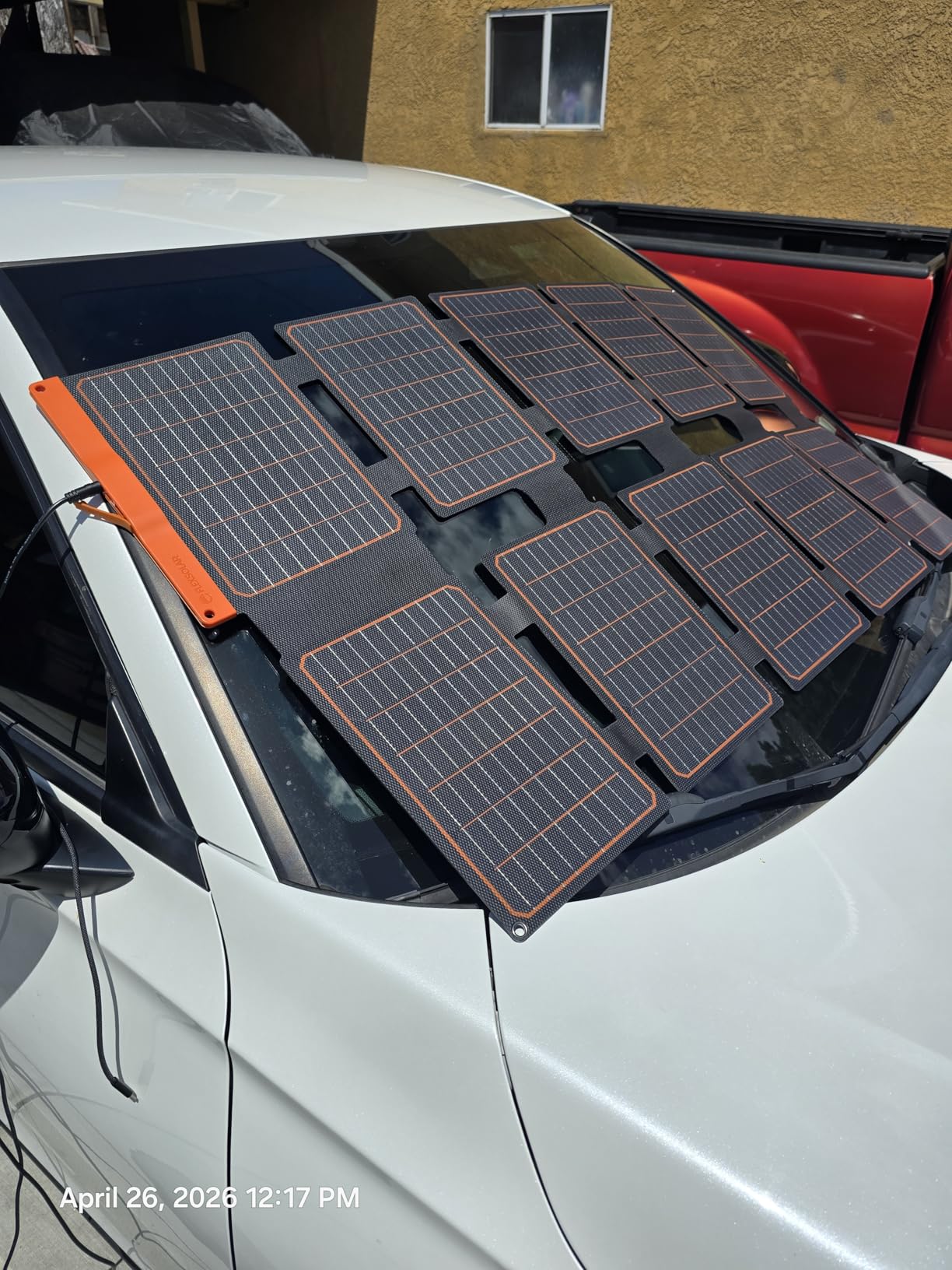
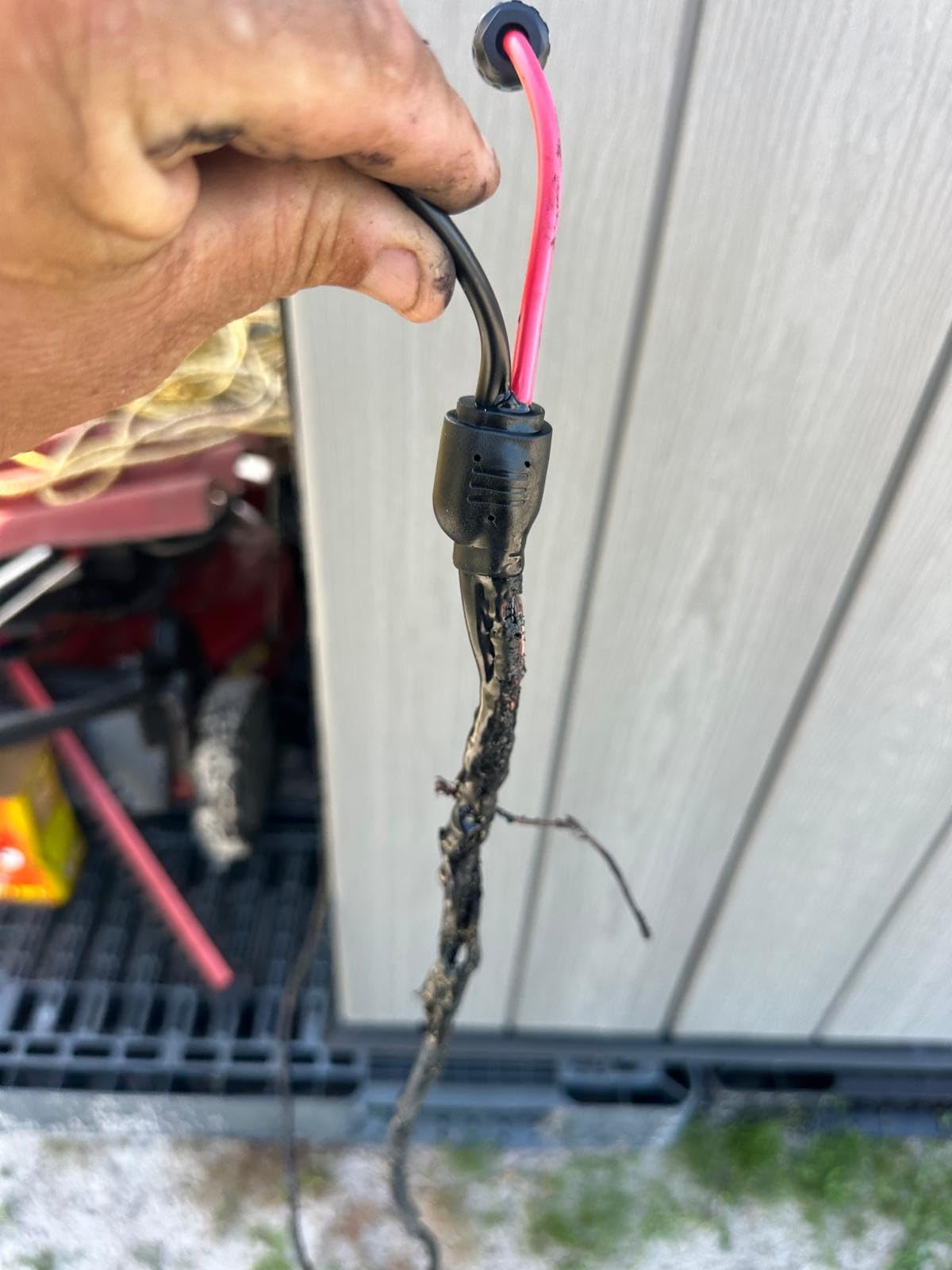
Reliability is the dividing line on this one. Several reviews describe the DC and USB circuitry housing running hot under sustained 60W-plus loads, one buyer reported the USB power connector corroding in rain, and another detailed a blown capacitor after about a week of cold-weather camping. The included 4-in-1 cable covers DC5521, DC7909, Anderson and XT60 but not MC4, so station charging needs an adapter.
There is also an aiming problem unique to very small foldables. Once folded, the panel is awkward to angle toward a low sun, and flat placement costs a meaningful share of output. In practice you get your best numbers on a bright overhead midday.
Who the FlexSolar 100W suits
It suits hikers and bikepackers who want solar as a backup rather than a system. For keeping a phone and a navigation unit alive on a three-day traverse, the weight matters more than the wattage, and this is the only panel here that solves that problem.
It also suits anyone who needs to charge a laptop directly from a panel with no power station, because the 45W USB-C port handles that cleanly.
Who should skip the FlexSolar 100W
Skip it for long-duration off-grid trips or anywhere heat and cold are repeated day after day. The reports of hot housings and a capacitor failure are specific enough that we would not want this panel as our only source of power in cold weather.
Skip it if you plan to keep it permanently mounted or permanently exposed. A 4.1 lb foldable is a carry-on item, not an install.
7. DOKIO 100W Glass Solar Suitcase – Best for Direct Battery Wiring
DOKIO Foldable Solar Panel 100 Watt Monocrystalline Solar Suitcase Portable with Controller to Charge 12V Batteries (All Types: Vented AGM Gel) Caravan RV Boat Camper…
100W rated output
Monocrystalline glass cells
18.5 lb
Built-in PWM controller
9.8 ft cable
Pros
- Works out of the box with alligator clips
- Glass feels far more substantial than fabric panels
- 9.8 ft cable lets the panel follow the sun
- Integrated controller with full safety protection
- 25-year transferable output warranty
Cons
- Among the heavier 100W panels here at 18.5 lb
- Legs are wobbly and can scratch the panel back
- Handles need a screwdriver to assemble
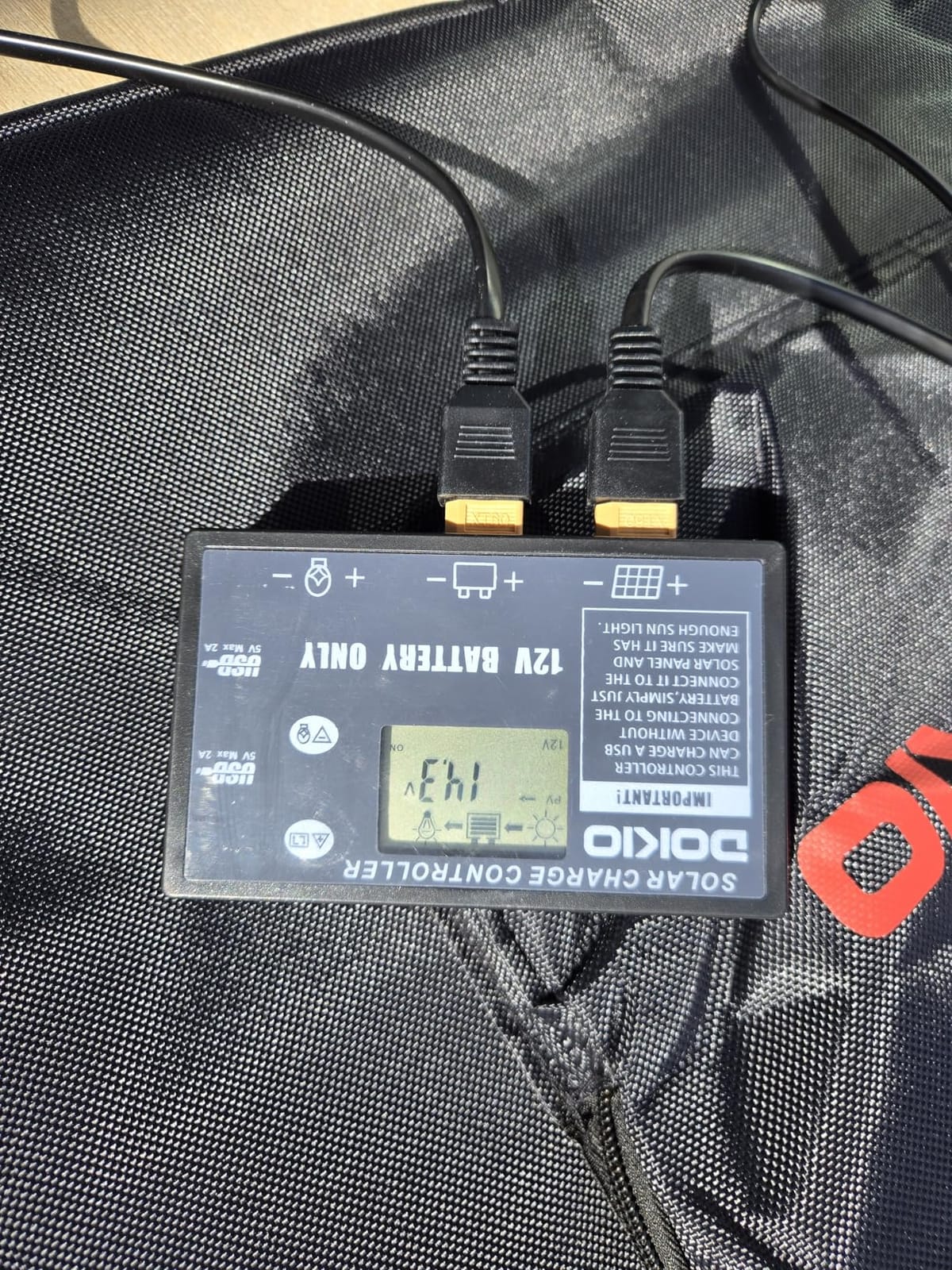
The DOKIO is the most traditional panel in this roundup and the one that ages best. It is monocrystalline glass in a corrosion-resistant aluminum frame, not an ETFE laminate, and that difference shows after a few seasons outdoors. It also comes with a built-in PWM controller and an alligator clip lead, so you can maintain a vented AGM, gel or flooded trailer battery without buying a charge controller separately.
The 9.8 ft cable is one of the most useful lengths in this roundup. It lets you set the panel in the one spot on your site with real sun and keep the battery in the shade, which is a bigger deal for charging efficiency than most people expect. There is also an adjustable angling bracket and two integrated 5V 2A USB ports for phones and small devices.
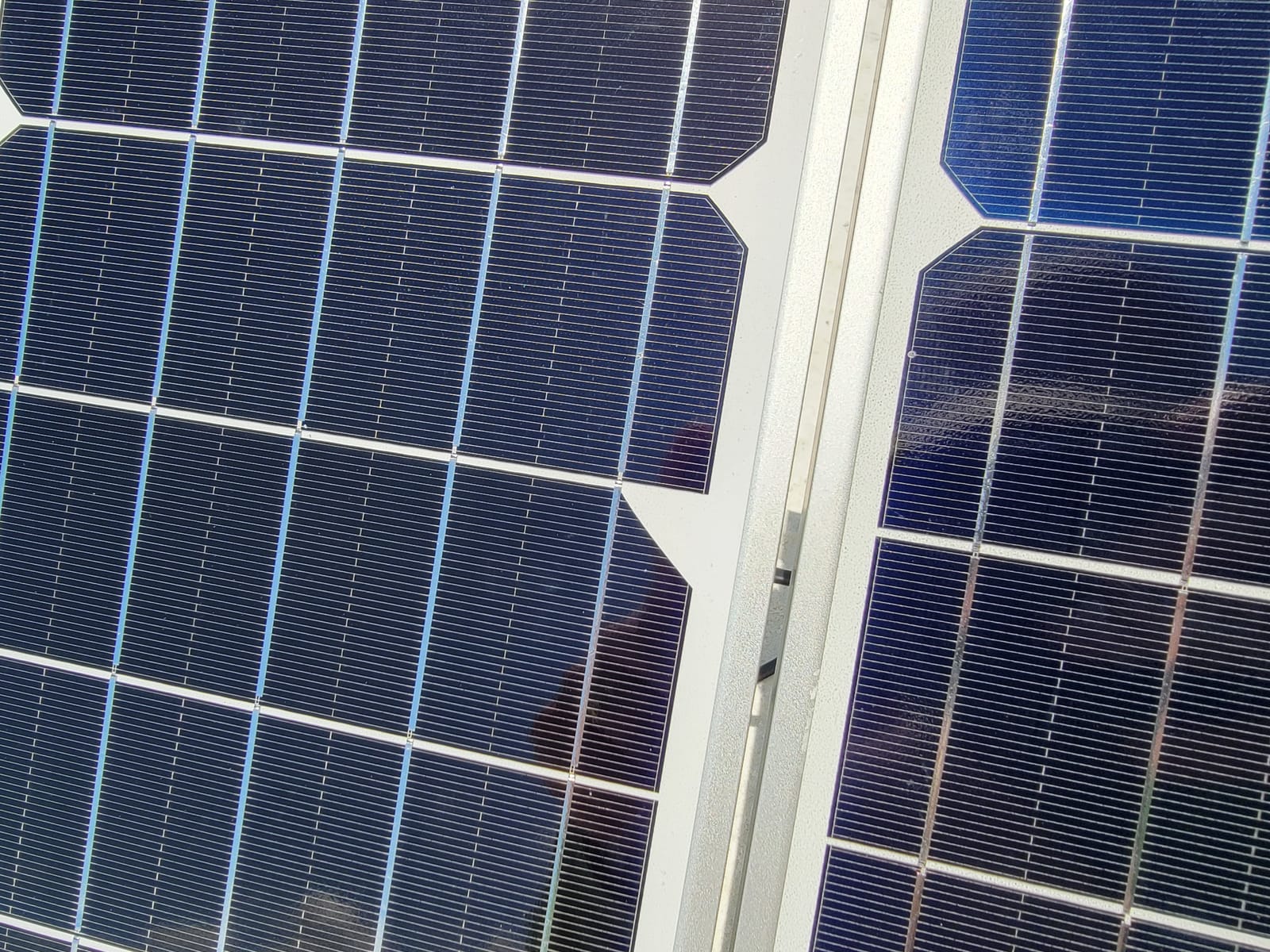
The problems are weight and quality control. At 18.5 lb it is one of the heaviest 100W panels we looked at, more than double the FlexSolar, and that weight is the glass doing its job rather than a flaw. The legs are described as wobbly and sharp enough to scratch the back of the panel, the storage bag has no padding for the glass, and the handles need a screwdriver to assemble.
More seriously, several buyers report panels arriving with cracked cells, a shattered panel or chipped battery clamps. That is a packing problem rather than a design problem, but it is worth knowing before you order far from a return centre. The 25-year transferable output warranty is the strongest coverage in this roundup by a wide margin.
Who the DOKIO 100W suits
It suits RV, caravan and boat owners maintaining a stationary lead-acid battery, and the alligator clip lead makes that a two-minute job rather than a wiring project. The controller’s reverse polarity, overcharge, short-circuit and reverse current protection covers the failure modes that kill trailer batteries.
It also suits anyone planning to keep a panel for a decade. A 25-year transferable warranty on a glass panel is a different category of commitment from a 12-month laminate warranty.
Who should skip the DOKIO 100W
Skip it if weight is part of your decision, because at 18.5 lb you will feel it every time you move camp. The ZOUPW 100W does the same job at 9.5 lb, less than half the mass.
Skip it if you need USB-C laptop charging or modern power station connectivity. This is a 12V battery panel with basic USB-A ports, not a multi-protocol charger.
8. MHPOWOS 220W 40V Folding Panel – Best High-Output Option
MHPOWOS 220W Portable Solar Panel 40V Folding Solar Panel for Power Station
220W rated output
23.5% mono cells
40V output voltage
17.8 lb
IP67 sealed
Pros
- 220W of rated output in a compact foldable footprint
- 40V suits stations with higher input ceilings
- Seven-in-one connector cuts adapter clutter
- IP67 sealing with four kickstands
- Top-10 sales rank in Solar Panels
Cons
- 40V is rejected by many smaller power stations
- Heavy at roughly 17.8 lb
- Output is often capped by the station input limit
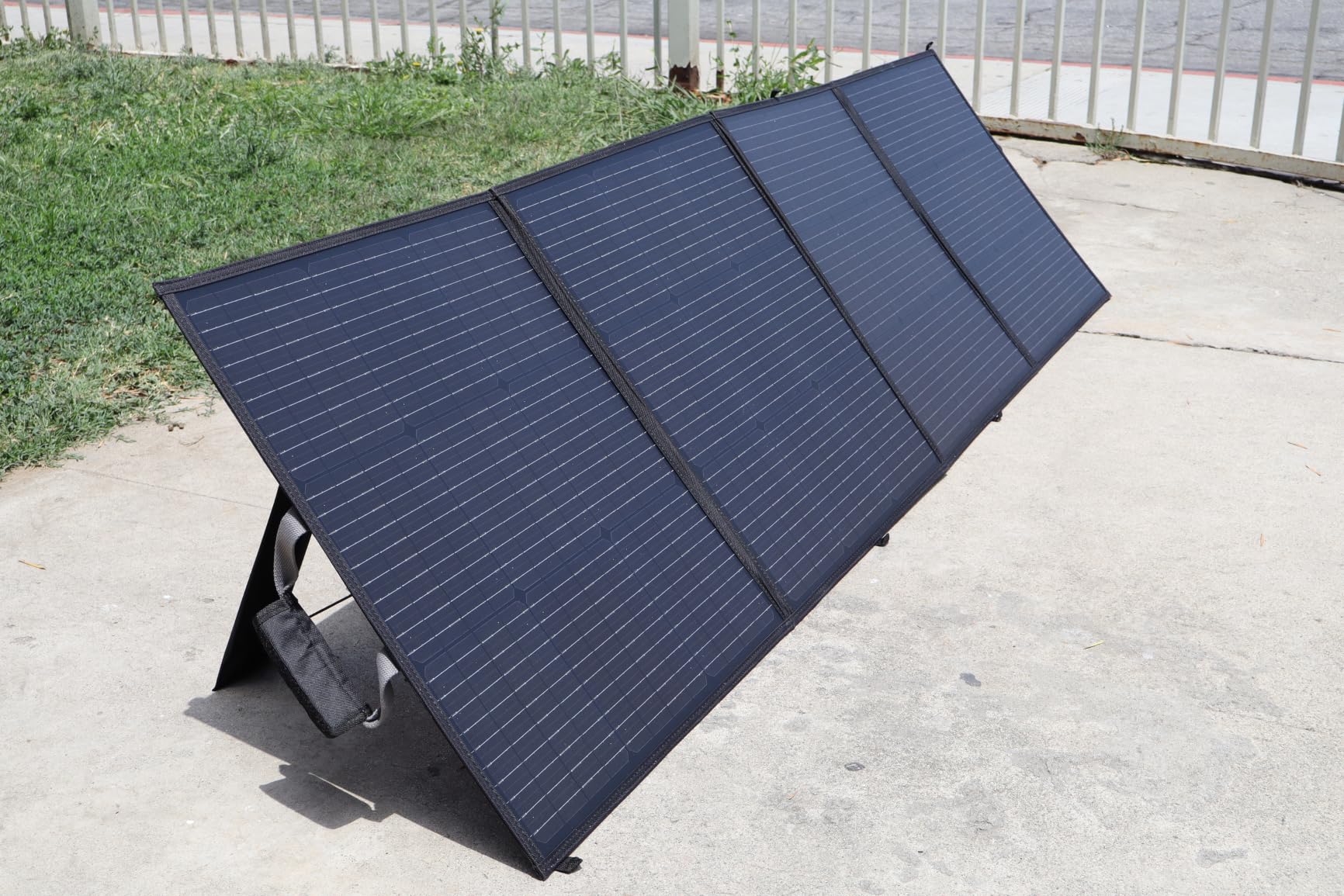
This panel puts out 220W, more than any other model in the group, and the 40V output voltage is the reason it achieves that in a package this compact. Most 200W portable panels run around 18V to 26V, and pushing to 40V lets the panel move more current at a given wattage. For a power station with a high solar input ceiling, that is a meaningful advantage.
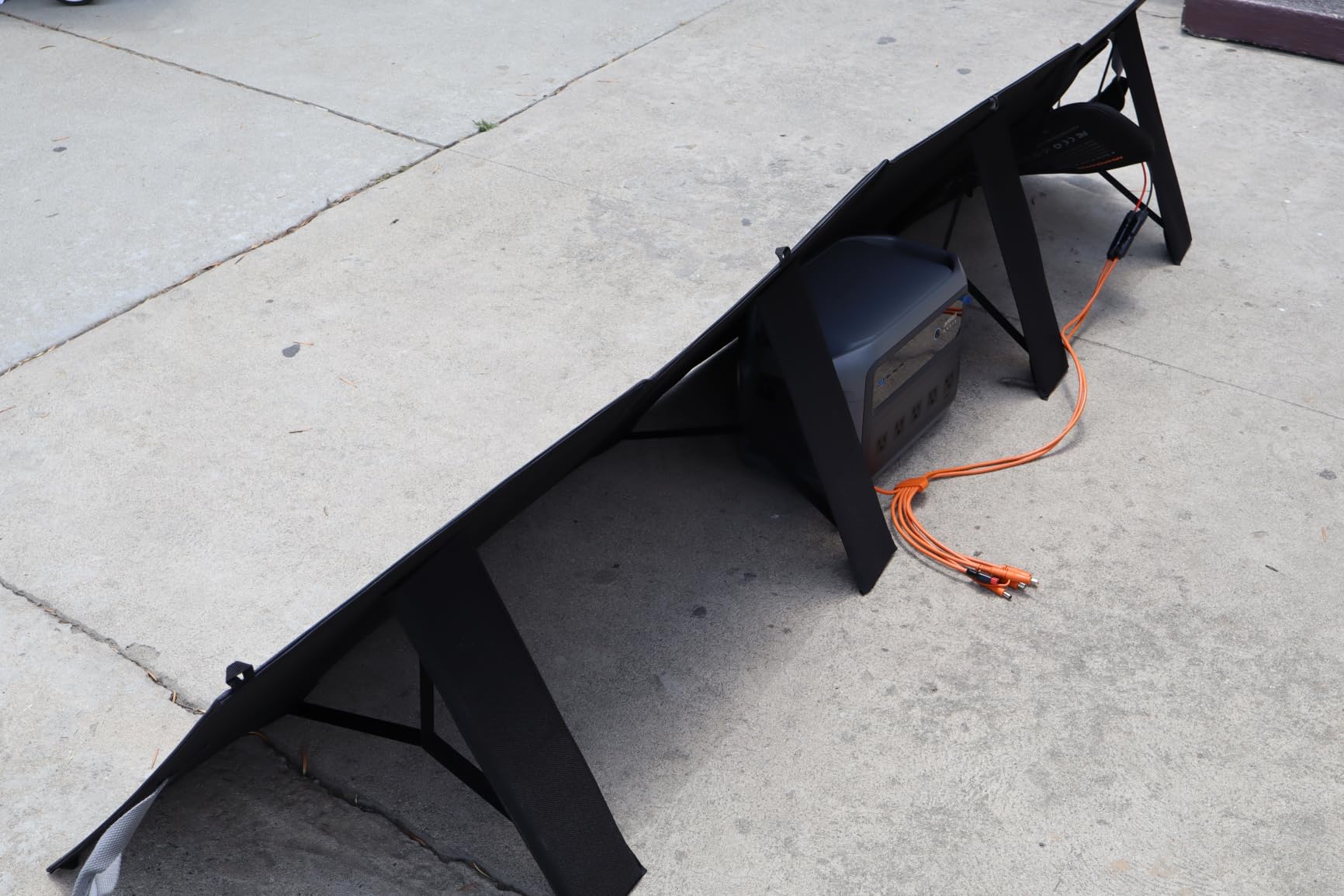
The 7-in-1 solar connector reduces the adapter clutter to almost nothing, and the four kickstands with IP67 sealing make it a genuinely all-weather piece of kit. It holds a 4.5 star rating with a top-10 sales rank in Solar Panels, so plenty of buyers are already running it.
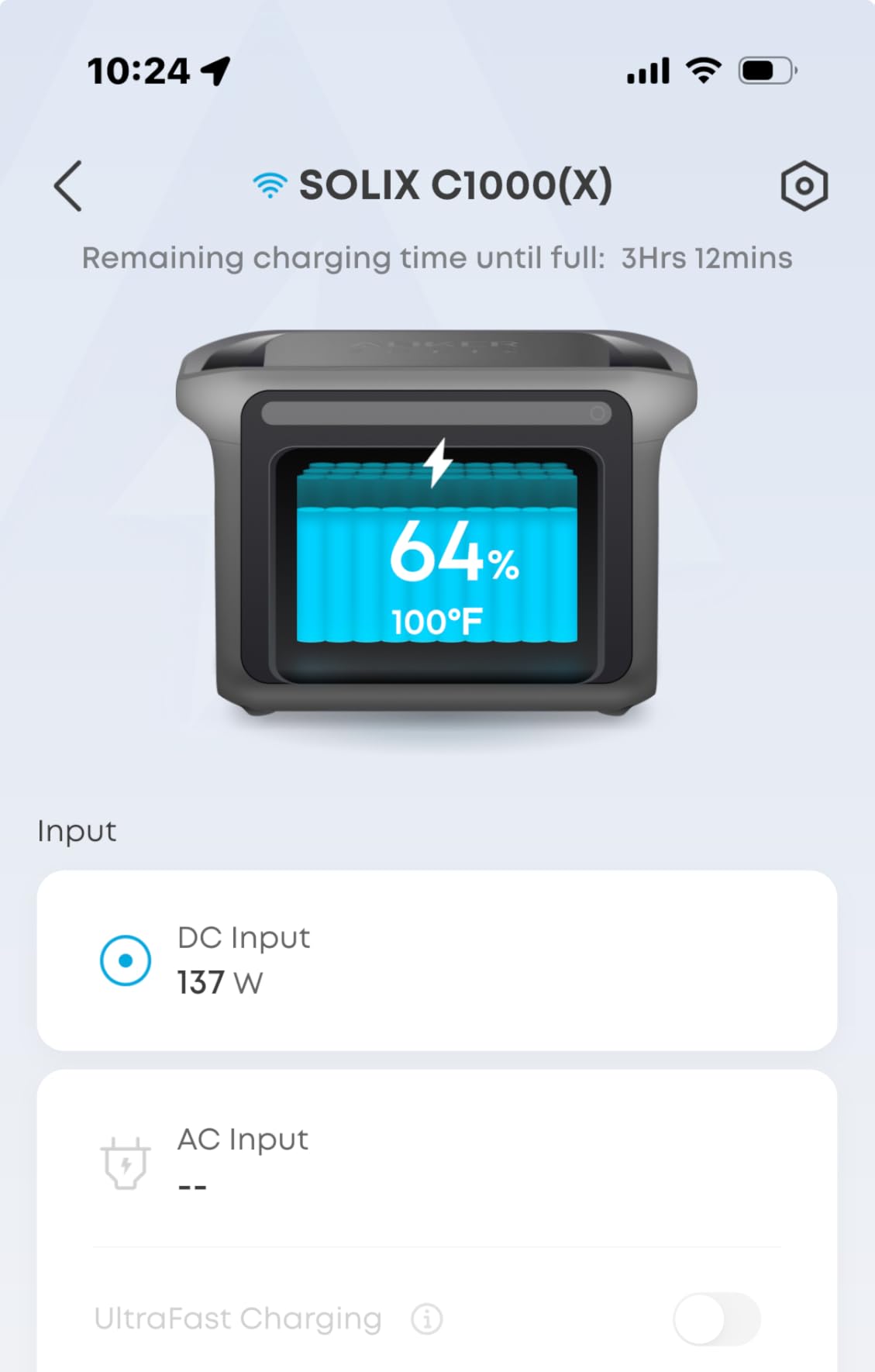
Here is the catch, and it appears in the listing as well as the reviews: that 40V output is incompatible with many portable power stations that cap their input voltage lower. Before you buy, check the maximum input voltage on your station, not just the wattage. A panel that cannot safely connect is a very expensive paperweight.
At roughly 17.8 lb it is also a heavy lift, and its 261 ratings make the field history here thinner than any other 200W panel in the group. Both are acceptable if your station is the right one, and disqualifying if it is not.
Who the MHPOWOS 220W suits
It suits owners of larger power stations built for high-voltage solar input, where 220W in a compact fold is the best figure available here for watts per litre of packed space. If you already know your station accepts 40V, this is the panel to buy.
It also suits overlanders who charge a large battery bank daily and want the refill finished before they break camp.
Who should skip the MHPOWOS 220W
Skip it unless you have confirmed the input voltage of your station. This is the most common compatibility trap in the entire category, and a 40V panel connected to a station expecting under 30V simply will not charge.
Skip it if you carry your solar on foot, because at 17.8 lb it is not a hiking panel by any definition.
9. TWELSEAVAN 200W ETFE Panel – Best for Direct Laptop Power
200W Portable Solar Panel for Power Station, 24% High Efficiency ETFE Foldable Solar Panel Charger, QC3.0, Type-C 60W, MC4 Output, IP65 Waterproof, for Outdoor Camping, RV, Emergency Power Supply
200W rated output
24% A+ mono cells
15.7 lb
60W USB-C PD plus two USB-A
IP65 sealed
Pros
- 60W USB-C PD charges laptops and tablets directly
- 9.8 ft MC4 cable gives positioning freedom
- ETFE laminate passes over 95% of light to the cells
- Four kickstands set up in seconds
- 24-month warranty and 30-day return window
Cons
- IP65 covers splashes but not sustained rain
- 15.7 lb is heavy relative to its 200W rating
- Thinner review history than the leaders
The reason to look at this panel is the 60W USB-C PD port. Most 200W panels give you MC4 and a couple of low-power USB-A ports; this one also gives you enough USB-C to run a laptop directly off the panel on a clear day, alongside a QC3.0 port at 18W and a 5V 3A port. IC device detection picks the right handshake automatically.
The 24% A+ grade monocrystalline cells sit under an ETFE laminate that passes more than 95% of light through to them, which is part of why the efficiency figure is credible rather than marketing. Connectivity is broad: a 5-in-1 MC4 cable plus three DC adapters cover Anderson, XT60, DC8020, DC7909 and DC5521, and the 9.8 ft lead gives you real freedom in where the panel sits.
The negatives are predictable. IP65 is splash protection, not rain protection, so this is a take-it-down-at-night panel. At 15.7 lb it is heavy for a 200W unit, and with 269 ratings the long-term field data is thinner than the market leaders, which matters when you are trusting a panel to run a week-long trip alone.
The high-density polyester canvas backing resists wear, dust and heat, but it is still a laminate rather than glass, so a long life on a hard roof is less certain than on the glass options in this list.
Who the TWELSEAVAN 200W suits
It suits working campers and anyone whose day involves a laptop. A 60W USB-C port means you can charge a machine directly from the panel without a power station in the chain, which is something the other 200W panels here do not offer.
It also suits anyone whose station uses a non-MC4 input, because the bundled adapter set covers the common formats.
Who should skip the TWELSEAVAN 200W
Skip it if you camp in rain. An IP67 panel handles a night outside; an IP65 panel will not, and no amount of wattage compensates for a damaged controller.
Skip it if you want the most proven option. There are panels here with four times the review history, and for a trip where solar is your only lifeline that track record is worth something.
10. Renogy 100W N-Type Glass Kit – Best for RV and Boat Installs
Renogy 100W Portable Solar Panel, 25% High Efficiency Solar Panel Kit with 20A Charger Controller for 12V Battery&Power Station, N-Type Foldable Solar Panels w/Tempered Glass for RV, Camping Off-Grid
100W rated output
25% N-Type cells
17.4 lb
Low-iron tempered glass
20A controller pre-installed
Pros
- Largest review base in this roundup at over 1600 ratings
- Low-iron tempered glass outlasts fabric panels
- Pre-installed 20A controller means nothing to buy
- Works with lithium and lead-acid chemistries
- Bypass diodes and IP65 junction box improve longevity
Cons
- Kit bundle costs more than a bare 100W panel
- Heavier and bulkier than lighter ETFE rivals
- PWM controller is less efficient than MPPT
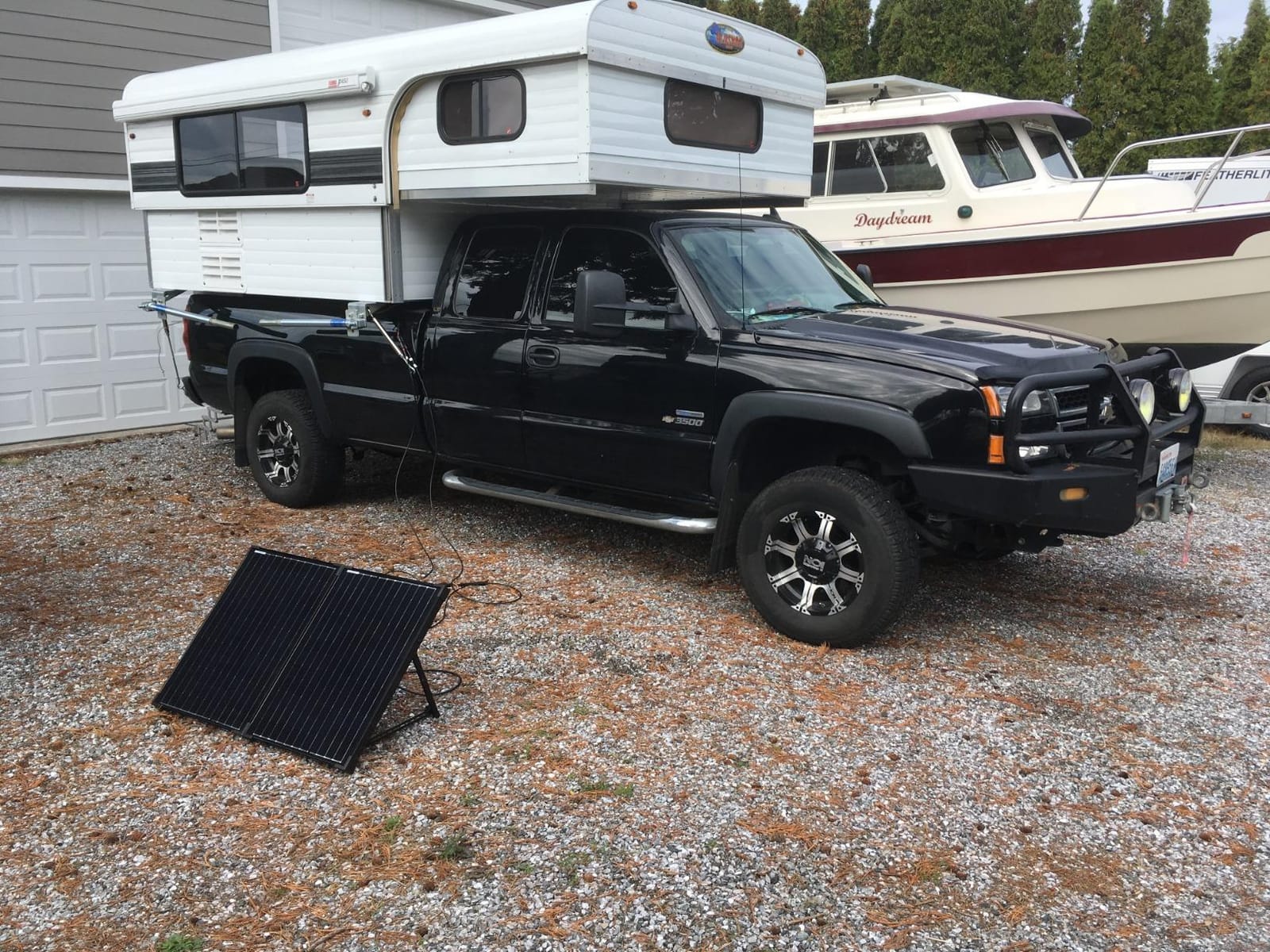
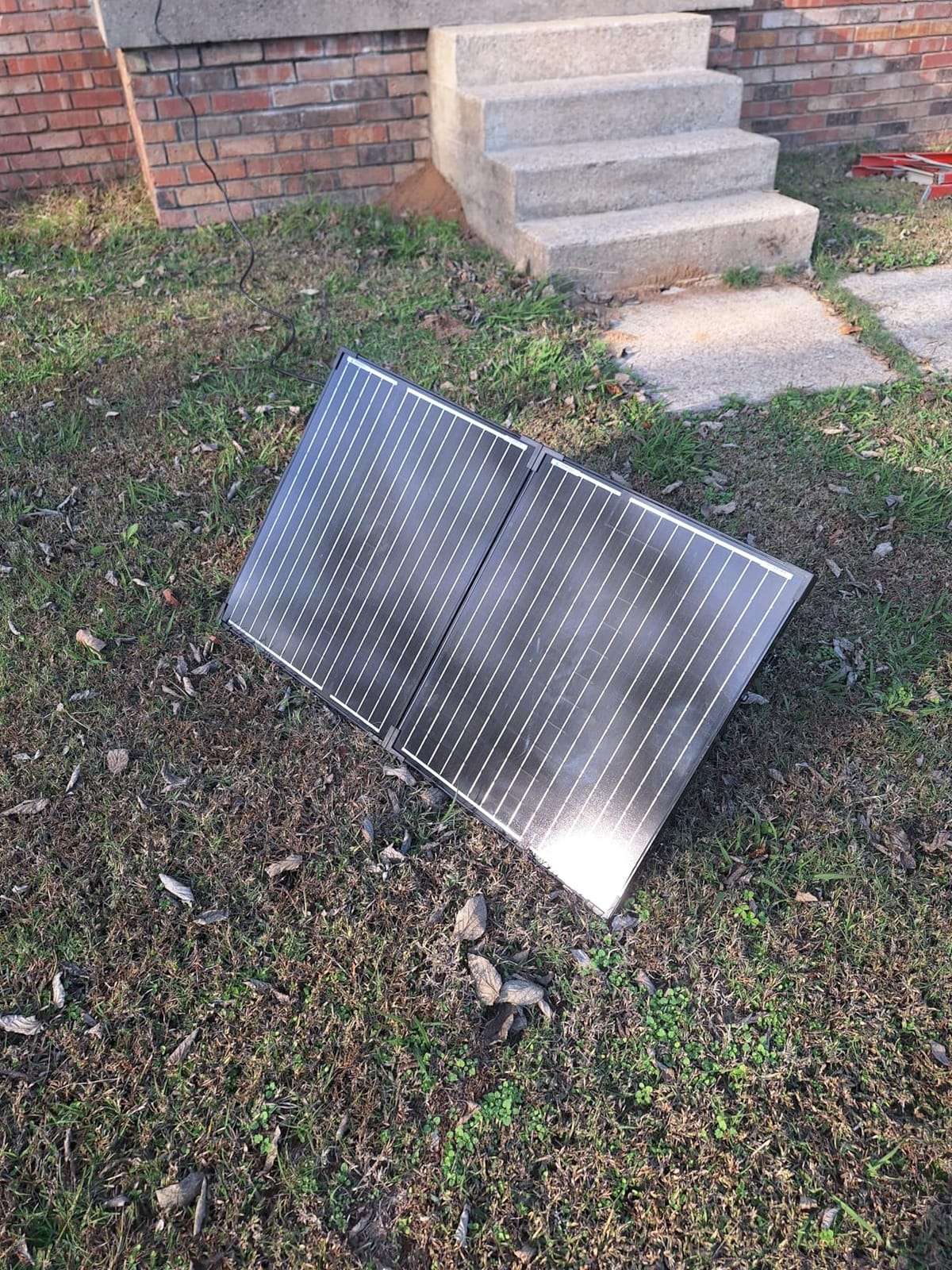
This kit has the largest review base in the roundup at more than 1600 ratings and a 4.6 star average, and that number reflects years of RV and boat use rather than a launch spike. The N-Type cells deliver up to 500Wh per day at five hours of sun, and the low-iron tempered glass with an anti-corrosion aluminum frame is a build that ages rather than degrades.
Everything is included. The waterproof 20A PWM charge controller is pre-installed with four-stage charging, the junction box is IP65 sealed, and bypass diodes cut hotspot losses when part of the panel is shaded. An adjustable aluminum alloy kickstand and the folding suitcase form make it simple to deploy, and the alligator clip lead connects to gel, AGM, flooded or lithium batteries and 12V power stations alike.
Two tradeoffs. The bundle costs meaningfully more than a bare 100W panel, and a PWM controller is less efficient than the MPPT controllers used in the newer panels here, so you give up some charging speed. At 17.4 lb it is also one of the heavier 100W options in this roundup.
One more practical note: because the glass is the strength here, it is also the weakness in transit. A few buyers report the outer box arriving with cracked glass, so if you order one, inspect it before the packing material goes in the bin.
Who the Renogy 100W glass kit suits
It suits anyone installing a permanent or semi-permanent system on an RV, trailer or boat, because a glass panel with a sealed junction box and bypass diodes is designed for exactly that. The pre-installed controller removes the single most common beginner mistake in DIY solar.
It also suits buyers who want evidence rather than promises. A 4.6 rating across more than 1600 reviews is the most tested product in this comparison.
Who should skip the Renogy 100W glass kit
Skip it if carry weight is part of your decision, and skip it if you want the highest possible charging efficiency, because PWM gives up several percent against MPPT. The newer Renogy 100W lightweight model at 8.9 lb is the opposite trade.
Skip it if the total kit cost matters more than the long-term build. A bare panel plus a separate MPPT controller is often cheaper and faster.
11. Renogy 100W Lightweight N-Type Panel – Best for Tool-Free Setup
Renogy 100W Portable Solar Panel, 25% High Efficiency for Power Stations
100W rated output
16BB N-Type cells at 25%
8.9 lb
IP67 sealed
Tool-free one-minute setup
Pros
- Weighs 8.9 lb
- about 19% lighter than a standard portable panel
- Parallel wiring holds output under partial shading
- Tool-free setup in about a minute
- Padded carrying case included
Cons
- Only 41 ratings so far
- One buyer reported hot spots that melted the laminate
- Rear zipper bag can collect rain
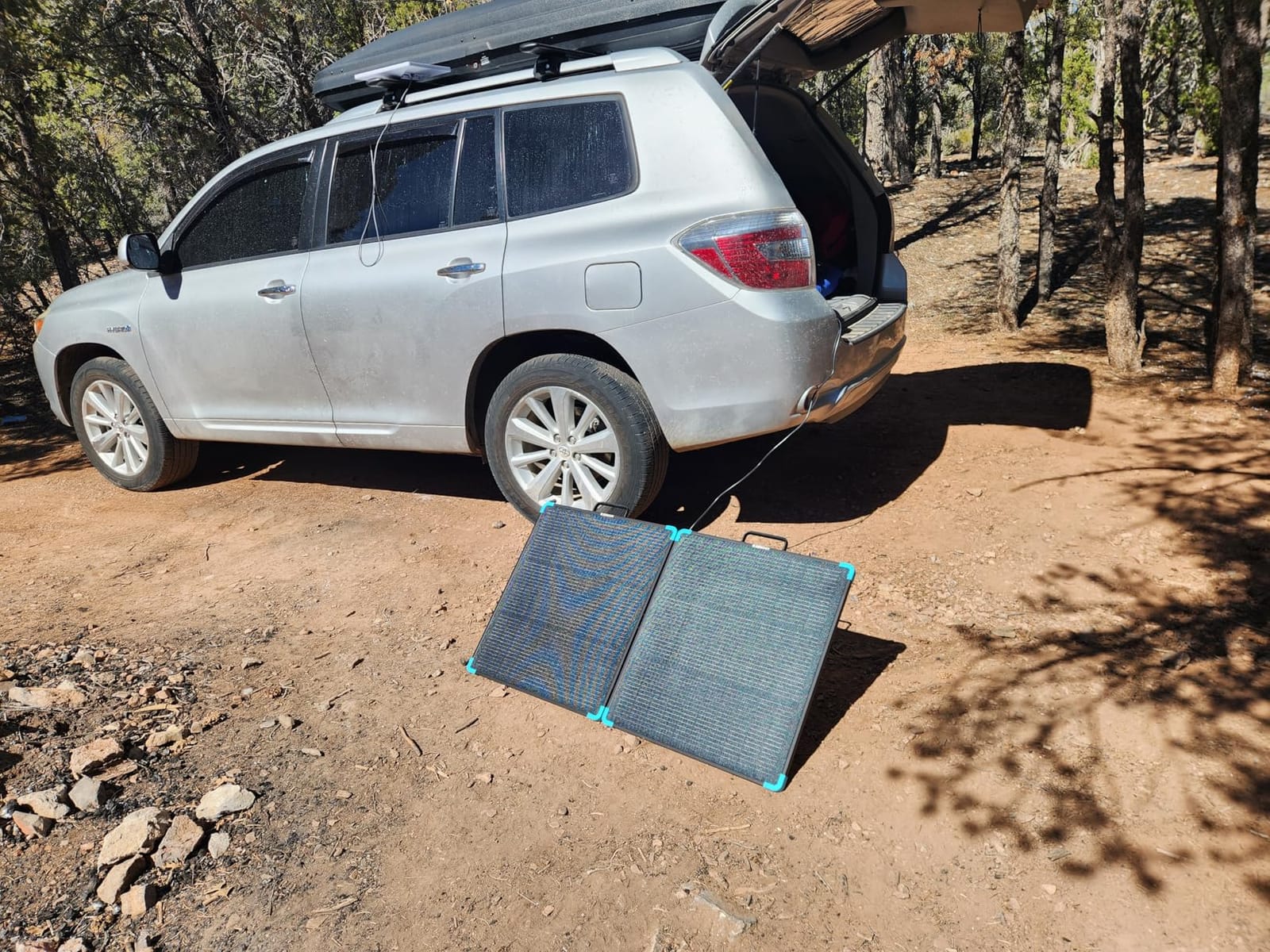
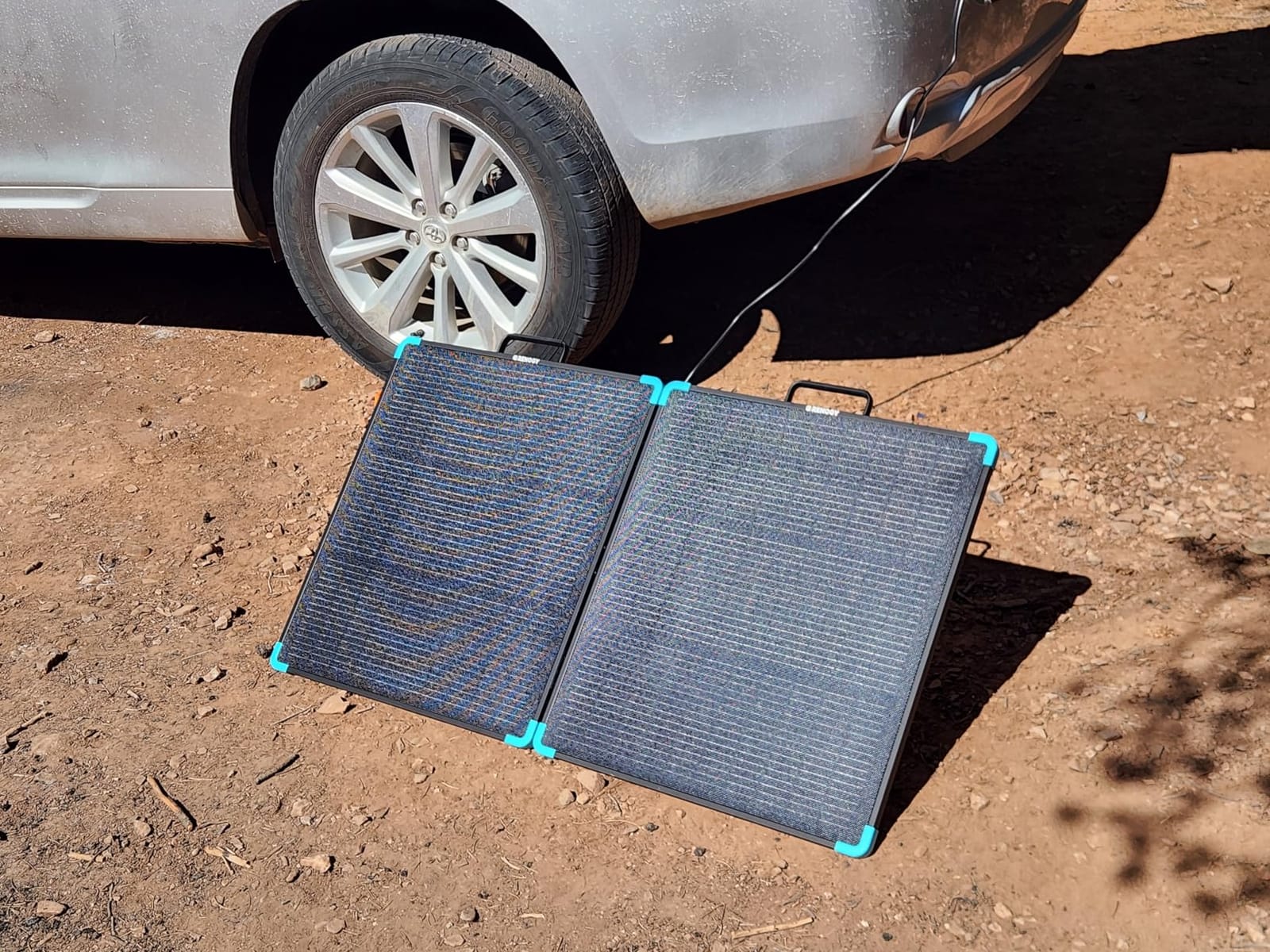
This is the newest design in the roundup and the most interesting engineering. Sixteen 16BB N-Type cells deliver 25% conversion efficiency against the 22.5% of standard 9BB cells, and the ETFE coating carries an IP67 rating with a working range from -40F to 185F, so heat and cold are both covered by the spec. It weighs 8.9 lb, about 19% lighter than a standard portable panel of its class.
Setup takes about a minute with no tools, using rust-proof kickstands, and the parallel wiring means partial shading on one section does not cut total output the way a series-wired panel would. Owners using it with an MPPT controller report 80W to 102W routinely, which would put it at or above nameplate in good conditions.
What stops us recommending it outright is the thin evidence base. Forty-one ratings is a small sample for a product with an aggressive claim, and one detailed review describes hot spots severe enough to melt the laminate under direct sun. That is a single report, but it is a serious enough failure mode to weigh against a 3-year output warranty.
Two smaller notes: the rear zipper bag can collect rain if it is oriented the wrong way, and the case could use more padding on the bottom to avoid scratching a car roof while you set up.
Who the Renogy 100W lightweight panel suits
It suits people who want efficiency and low weight in the same package, since 8.9 lb with 25% N-Type cells is a combination nothing else here matches at 100W. It also suits anyone who hates fiddling with velcro and snaps, because the tool-free fold is genuinely quick.
If your station uses IP68-style connectors, this panel pairs with most portable power stations and batteries directly.
Who should skip the Renogy 100W lightweight panel
Skip it if it is going to be your only power source on a remote trip. Forty-one ratings is not enough long-term data for a panel that will carry that responsibility, and the hot spot report deserves caution.
Skip it if you are mounting it in summer sun on a dark surface. If anything in the panel does run hot, the ETFE laminate is the part that gives way.
12. ZOUPW 200W ETFE Panel – Best for Overcast Conditions
ZOUPW 200W Portable Solar Panel for Power Station,23.5% Efficiency
200W rated output
23.5% A+ mono cells
19 lb
IP67 sealed
USB-C PD 60W plus QC3.0
Pros
- One buyer logged 168W in sun and 35W under cloud
- Brightest performance in grey conditions among 200W panels
- 5-in-1 cable reaches nearly every major station
- IP67 suits damp RV and marine environments
- Seller replaced a suspected faulty panel at no cost
Cons
- Heaviest 200W panel here at 19 lb
- Junction box is water resistant but not submersible
- Some units measured only 115-130W
The report that stands out here is a direct comparison logged by one buyer on an N-type unit: 168W in full sun and 35W under cloud. That 35W reading under overcast skies is the reason this panel earns its place, because most 200W panels in this roundup fall to single digits or near-nothing in the same conditions. If you camp somewhere grey, that is worth more than 50W of extra nameplate in perfect sun.
Everything else is conventional and good. A+ grade monocrystalline silicon at 23.5% efficiency, industrial-grade ETFE lamination at IP67, four kickstands with a 45-degree tilt that adds 25% to 30% over flat placement, and a 10 ft 5-in-1 cable covering XT60, Anderson, DC7909, DC8020 and DC5521. The built-in junction box carries USB-A QC3.0 and USB-C PD at 60W, so a laptop can be charged directly from the panel.
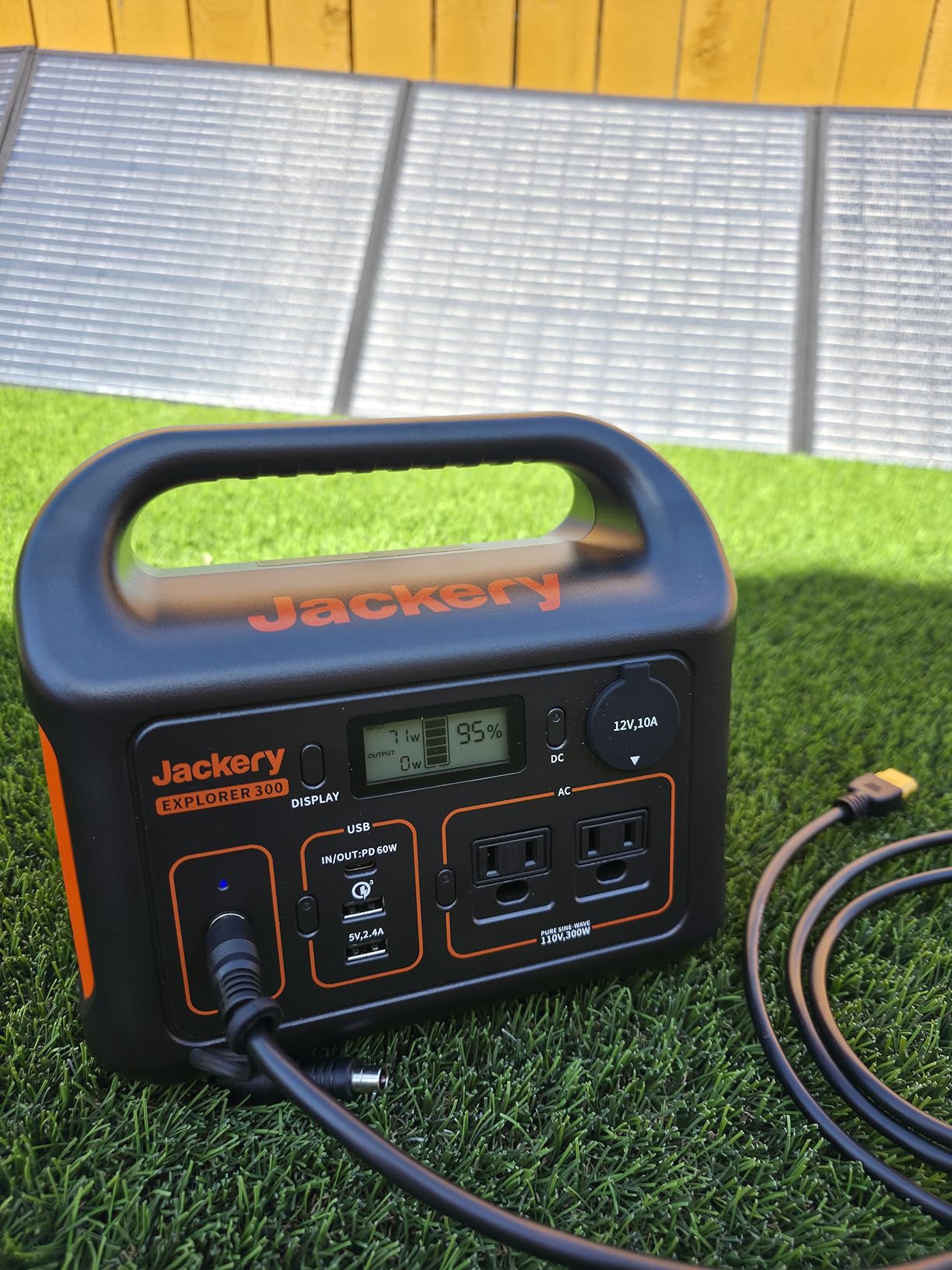
It is the heaviest 200W panel in this roundup at 19 lb, and the junction box is water resistant rather than submersible even though the panel surface carries the IP67 rating. The other recurring note is that standard 200W versions often measure 115W to 130W rather than the advertised figure, so the good results appear concentrated in the N-type variant.
What did stand out positively was the seller’s service. Several buyers who suspected a defective panel had it replaced at no cost, which changes how much risk you are carrying on a purchase that cannot be evaluated until it is deployed in the sun.
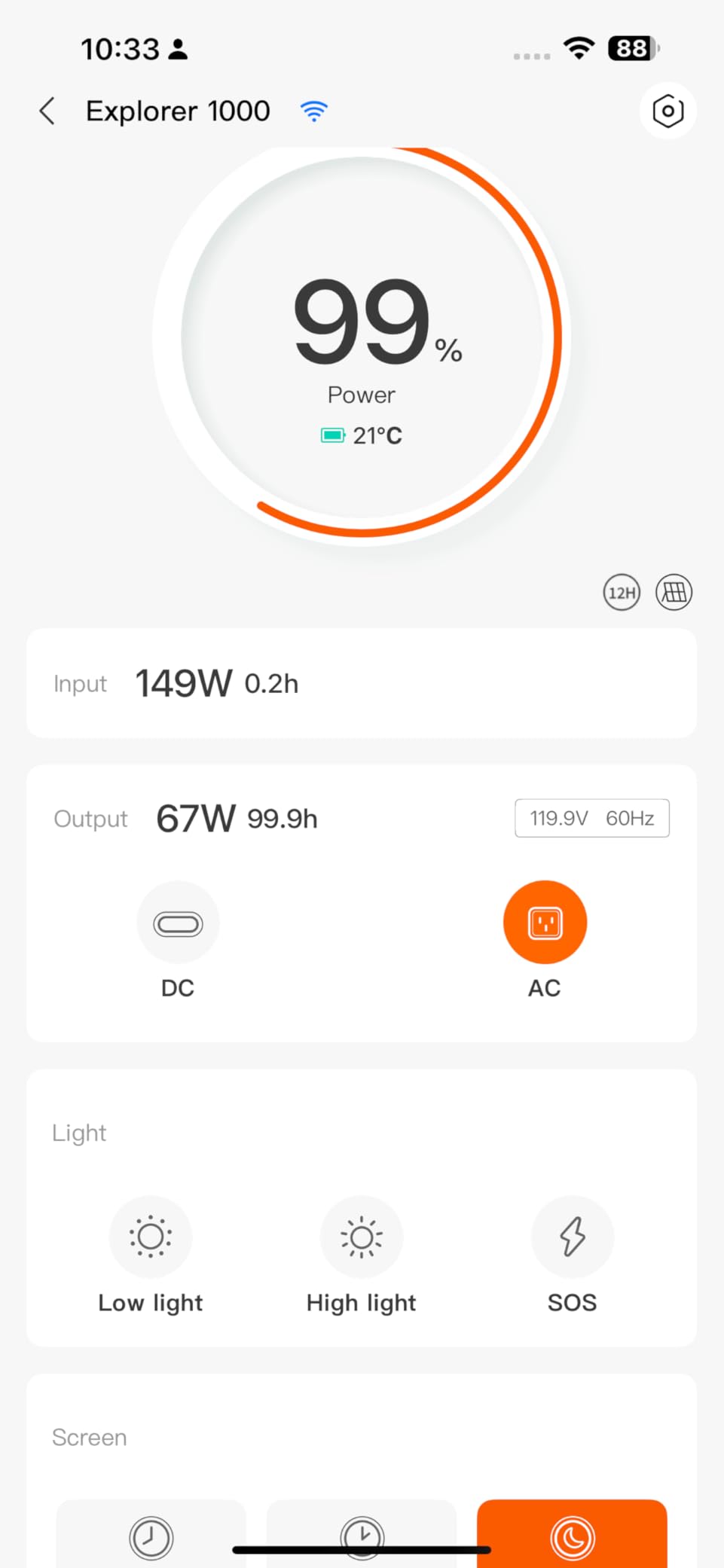
Who the ZOUPW 200W suits
It suits campers in overcast or marine climates who need meaningful charge on grey days, and anyone running one panel across a large mix of station brands who does not want to keep a drawer of adapter cables. The briefcase fold with magnetic handles is easy to deploy once you get the rhythm.
It also suits buyers who value a responsive replacement policy more than a long warranty, because that is where this listing is strongest.
Who should skip the ZOUPW 200W
Skip it if weight is critical, because at 19 lb it is the heaviest panel at this wattage. The Renogy 200W EFLEX is over five pounds lighter for nearly the same output.
Skip it if you need a guaranteed mounting point. The IP67 rating covers the panel surface, not the junction box, so a permanent wet install needs extra care.
How to Choose a Portable Solar Panel
Start with the load, not the panel. Every other decision is downstream of how many watt-hours you need to put back per day, and that number is far easier to estimate than it looks.
Match panel watts to your power station capacity
A 300Wh station does not need 400W of panel; it will simply hold back the excess. The rule that works for most people is to match roughly a third of station capacity in watts for a fast top-up, and a quarter if you are topping up once a day. Below 300Wh, a 60W to 100W panel covers charging phones, cameras and lights. Between 300Wh and 700Wh, aim for 100W to 160W. Between 700Wh and 1,200Wh, a 200W panel is the sweet spot. Between 1,200Wh and 2,000Wh, you want 200W to 400W, and above 2,000Wh you are in multi-panel territory.
For a concrete example: a 200W panel in good sun puts roughly 150W into a station on average. Refilling a 1,000Wh station from empty therefore takes about seven hours of strong sun, or closer to nine once you allow for conversion losses. A 400W panel halves that, which is the entire argument for doubling up.
Connector types decide whether it works at all
MC4 is the standard solar connector and the safest default. XT60, Anderson, DC7909 and DC5521 are the common inputs on portable power stations, and buying a panel with a 5-in-1 or 7-in-1 cable removes the guesswork entirely. The panels with bundled multi-head cables here include the ZOUPW panels, the SOKIOVOLA, the TWELSEAVAN and the EBL.
On the compatibility myth worth clearing up: you do not need to buy the panel from the same brand as your power station. Panels are essentially universal, as long as the voltage is inside the station’s input range and the connector matches or you have the right adapter. Voltage is the part people skip. The 40V MHPOWOS panel is the clearest example of a good panel that will not work with a station that caps its input lower.
Expect 60 to 90 percent of rated wattage
This is the number buyers most often get wrong. Panels are rated under standard test conditions: 1000W per square metre of irradiance, 25 degrees Celsius cell temperature, and a specific air mass. Real campsites are none of those things. Heat, angle, partial shade, dust and the sun’s path through the day all pull the figure down, and the consensus on solar forums is that 60% to 80% of nameplate is a realistic expectation in the field.
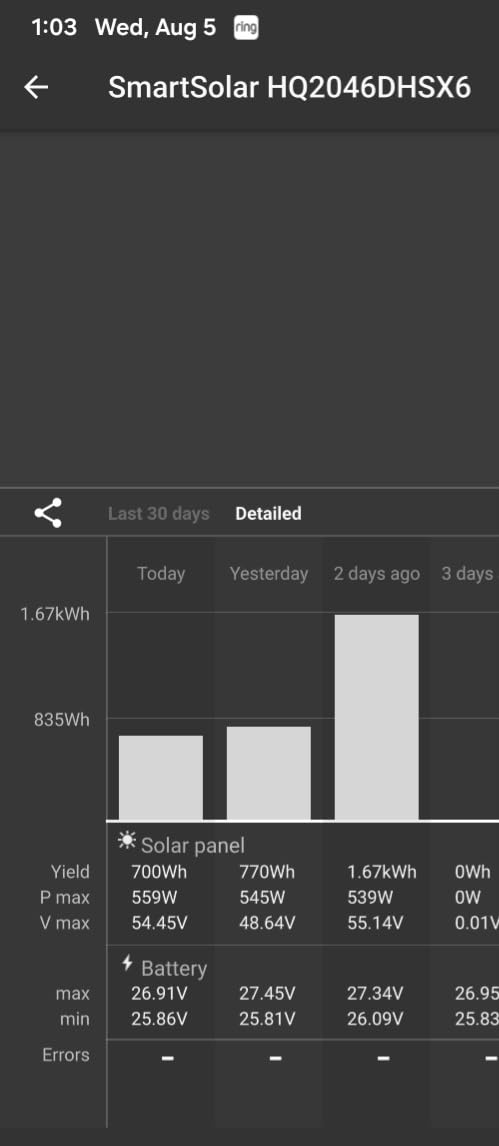
Where customers have measured their panels, the readings support that: 170W to 177W for a 200W SOKIOVOLA in full California sun, 80W to 102W for the Renogy lightweight 100W with an MPPT controller, and 70W to 85W for the FlexSolar 100W. Treat rated watts as a ceiling and plan around roughly three quarters of it.
Two 200W panels or one 400W panel
This question comes up constantly on van and camping forums and almost no competitor answers it. Two lighter panels beat one heavy panel in most real scenarios, for reasons that have little to do with total wattage. You can aim each panel separately as the sun moves, so you harvest more total energy over a day than a single fixed panel of the same combined size. You can place one in sun and shade the other behind a rock or a vehicle, which protects total output from a partial shade loss.
The single 400W panel wins on setup speed, on nothing else. It is also one heavy object to reposition, and repositioning is where most of the day’s energy comes from. If your budget and vehicle payload allow two 200W units, that is the arrangement we would pick.
Rigid glass, ETFE laminate or fabric
Glass in an aluminum frame is the most durable option and the heaviest. It is what you want for an RV roof, a boat deck or any semi-permanent install, and it is the only option here backed by a 25-year output warranty. ETFE laminate is the middle ground: it will not shatter, it shrugs off rain and dust, and it is what every folding panel in this roundup uses. Fabric panels are the cheapest and least durable, and none of our picks rely on bare fabric.
One practical note on 12V versus 24V: if you are building a larger RV system with a 24V bank, a 100W portable panel will charge it slowly. Portable panels in this category are designed around 12V-class power stations, and a serious 24V build calls for fixed panels and an MPPT controller instead.
Positioning and maintenance
Aim the panel at the sun and re-aim it every couple of hours. A panel lying flat on gravel loses a large share of its output compared with the same panel on a kickstand at a 45-degree angle, which is why the panels with real kickstand adjustment perform better in practice. Keep the cables long enough that you can move the panel without dragging the station into the sun with it.
On maintenance, a quick wipe before you refold is usually enough for ETFE surfaces, and you should not deploy a panel in a storm unless its rating is IP67 or better. Weather resistant is not waterproof. If your build is in an exposed area, our guide to storm panels covers how to protect gear during severe weather.
Frequently Asked Questions
Which brand of portable solar panels is the best?
There is no single best brand, but the field data points to a short list. BLUETTI and Renogy appear most often in long-term RV and off-grid reports, and Anker SOLIX, EcoFlow and BLUETTI are repeatedly recommended on forums for build quality in variable weather. For portable folding panels specifically, BLUETTI leads on proven field history while Renogy leads on efficiency per pound. Match the panel to your power station’s input voltage and connector before you worry about the badge.
Will a 400W solar panel run a fridge?
Yes, with caveats. A 12V camping fridge typically draws 40W to 60W while running, so a 400W panel in good sun can run one directly. The real test is whether you also need the panel to charge your power station at the same time. A 200W panel in good conditions delivers around 150W, which covers a fridge and still leaves power for charging.
Can any solar panel charge a portable power station?
Most can, as long as two conditions are met. The panel’s output voltage must fall inside the station’s maximum solar input voltage, and the connector must match or you need an adapter. You do not need to buy the panel from the same brand as the station. A 40V panel will not work with a station that caps input at 30V, and a 100W panel cannot charge a station whose input is limited to 60W.
Do solar panels work on cloudy days?
They do, but at a fraction of full output. Under overcast skies most panels produce anywhere from 10 to 40 percent of rated wattage, depending on cell quality. Customers who measured the ZOUPW 200W reported 35W under cloud, while some cheaper panels in this roundup dropped to single digits. Higher efficiency cells and N-Type silicon hold up best in low light.
Why are people getting rid of their solar panels?
The most common reasons are expectation mismatch, weight and weather damage. Buyers expect 200W panels to deliver 200W and get 100W to 150W, which feels like a defect until you learn the physics. Heavy 200W units end up carried by hikers who resent every pound of them. And panels described as weather resistant get deployed in rain, which damages them. Panels bought to charge a station with a lower input limit simply never work at all.
How long does a 200W solar panel take to charge a power station?
Divide your station capacity in watt-hours by roughly 150W of real-world delivery, which accounts for the typical 70 to 80 percent derating plus conversion losses. A 200W panel refills a 1,000Wh station from empty in about seven hours of strong sun, or closer to nine at a realistic rate. A 500Wh station takes around three to four hours, and a 2,000Wh station needs most of a full day.
The Verdict on the Best Portable Solar Panels in 2026
After twelve panels and a lot of spec reading, the answer is the BLUETTI 200W. It has the deepest field history in the group, a build that survives years of road trips, and output that holds up when the weather turns. It is the panel we would put in a truck bed without hesitating.
Take the Renogy 200W EFLEX instead if you care more about weight and efficiency per pound, the ZOUPW 100W if you camp somewhere wet, and the Renogy 100W glass kit if you are installing rather than carrying. Check your station’s input voltage first, keep the panel aimed at the sun, and leave the rain ratings to the panels that actually have them. That is the whole game with the best portable solar panels: most of the difference between a good setup and a frustrating one comes down to sizing, aiming and honest expectations about what the label number means on a cloudy afternoon.