
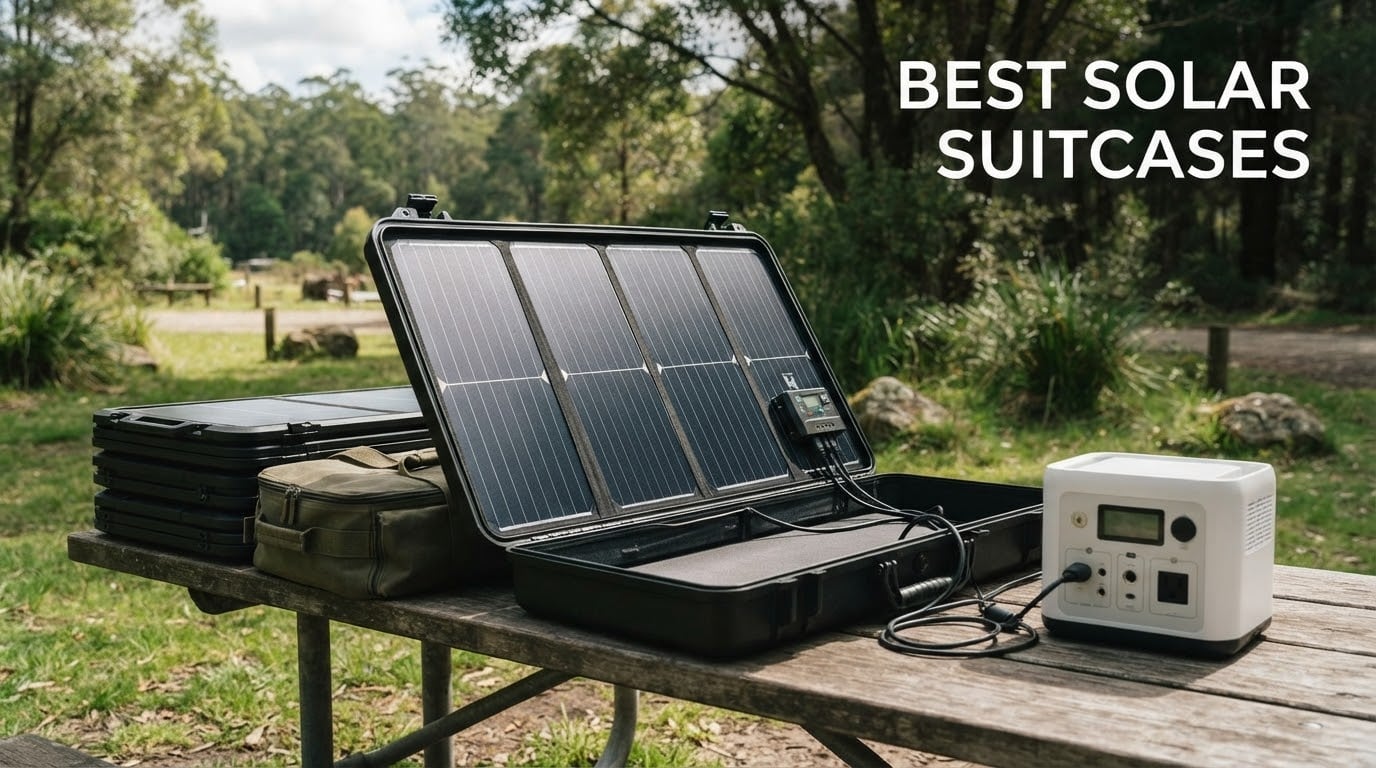
If you have ever unpacked a rigid solar panel from a flat box and immediately wished it folded into something you could carry, you are describing the problem solar suitcases solve. Renogy, Goal Zero, Voltset, ALLPOWERS, EBL, SOKIOVOLA and ZOUPW all build portable solar panels that hinge shut into a briefcase with a handle, stand themselves up with a kickstand, and refill a battery or power station wherever you park. We ranked the 12 best solar suitcases available now, weighing cell efficiency, charge controller type, measured output, carry weight, connector coverage and warranty length.
A word of clarification before we start. A solar suitcase is not a portable power station with wheels built in. It is the panel half of the system, folding down to roughly the size of a laptop bag, and the name comes from the shape of the case rather than from any formal product category. The battery is a separate purchase. Understanding that split is what makes the rest of this guide make sense.
We spent several weeks working through published spec sheets, owner review patterns and the measured wattage buyers actually report in real sun, because the gap between a label and a field reading is where most buying mistakes happen. A 200W panel on paper can deliver anywhere from 115W to 191W depending on the cell type, the lamination and the angle, and that difference changes how long your battery takes to refill. Every watt figure quoted below comes from the manufacturer listing or from reported owner measurements, not from our own lab.
If you are building out a van or trailer, our guides to the best solar panels for van conversions and the best RV solar panel kits cover the fixed-mount side. This roundup is entirely about the portable, folding half.
Table of Contents
Top 3 Best Solar Suitcase Picks (October 2026)

Voltset 100W MPPT Kit
- MPPT controller
- IP65 ETFE build
- 21x21x2 in fold
- 2 flexible kickstands


The Voltset leads this list because the charge controller matters more than almost any other spec on a portable panel, and Voltset is the only kit here that ships a real MPPT controller. A 10A MPPT controller converts roughly 30% more efficiently than the PWM controllers bundled with several competitors, and that gain compounds every day you are in the sun.
Our runners-up earn their places for very different reasons. The Renogy 100W is the strongest all-round value: 25% N-type cells, a pre-installed controller, and a 4.6 rating across nearly 1,700 owner reviews. The Goal Zero Boulder 100 is the one you buy when you want the panel to still work in fifteen years.
The Best Solar Suitcases at a Glance in 2026
| Product | Specs | Action |
|---|---|---|
| Voltset 100W MPPT Kit |
|
Check Latest Price |
| Renogy 100W N-Type Kit |
|
Check Latest Price |
| Goal Zero Boulder 100 |
|
Check Latest Price |
 Renogy 200W N-Type Suitcase Renogy 200W N-Type Suitcase |
|
Check Latest Price |
 EBL 200W Foldable Panel EBL 200W Foldable Panel |
|
Check Latest Price |
 SOKIOVOLA 200W N-Type Panel SOKIOVOLA 200W N-Type Panel |
|
Check Latest Price |
 ALLPOWERS SE160 160W Panel ALLPOWERS SE160 160W Panel |
|
Check Latest Price |
 ZOUPW 200W USB-C Panel ZOUPW 200W USB-C Panel |
|
Check Latest Price |
 ACOPOWER 100W 20A Kit ACOPOWER 100W 20A Kit |
|
Check Latest Price |
 DOKIO 150W Suitcase DOKIO 150W Suitcase |
|
Check Latest Price |
 Ecosonique 200W Foldable Ecosonique 200W Foldable |
|
Check Latest Price |
 Goal Zero Boulder 200 Briefcase Goal Zero Boulder 200 Briefcase |
|
Check Latest Price |
Two columns in that table deserve a note. Weight is the number that decides whether a solar suitcase is useful to you, and it ranges from 8.4 pounds to 42 pounds across this group. Controller type is the number that decides whether it performs.
The 12 Best Solar Suitcases, Ranked
1. Voltset 100W MPPT Kit – The Only Real MPPT Controller Here
Voltset 12V 100W Portable Foldable Solar Panel Kit with 10A Controller
100W monocrystalline
10A MPPT controller
IP65 ETFE surface
Folds to 21x21x2 in
Pros
- MPPT controller converts about 30% more efficiently than PWM
- Folds to a 21x21x2 in case and far lighter than glass rivals
- Full battery protection suite
- Corner fall jackets guard the glass
- #4 best seller rank in Solar Panels
Cons
- 10A controller caps usable array size at 130W
- Flexible kickstands less rigid than metal legs
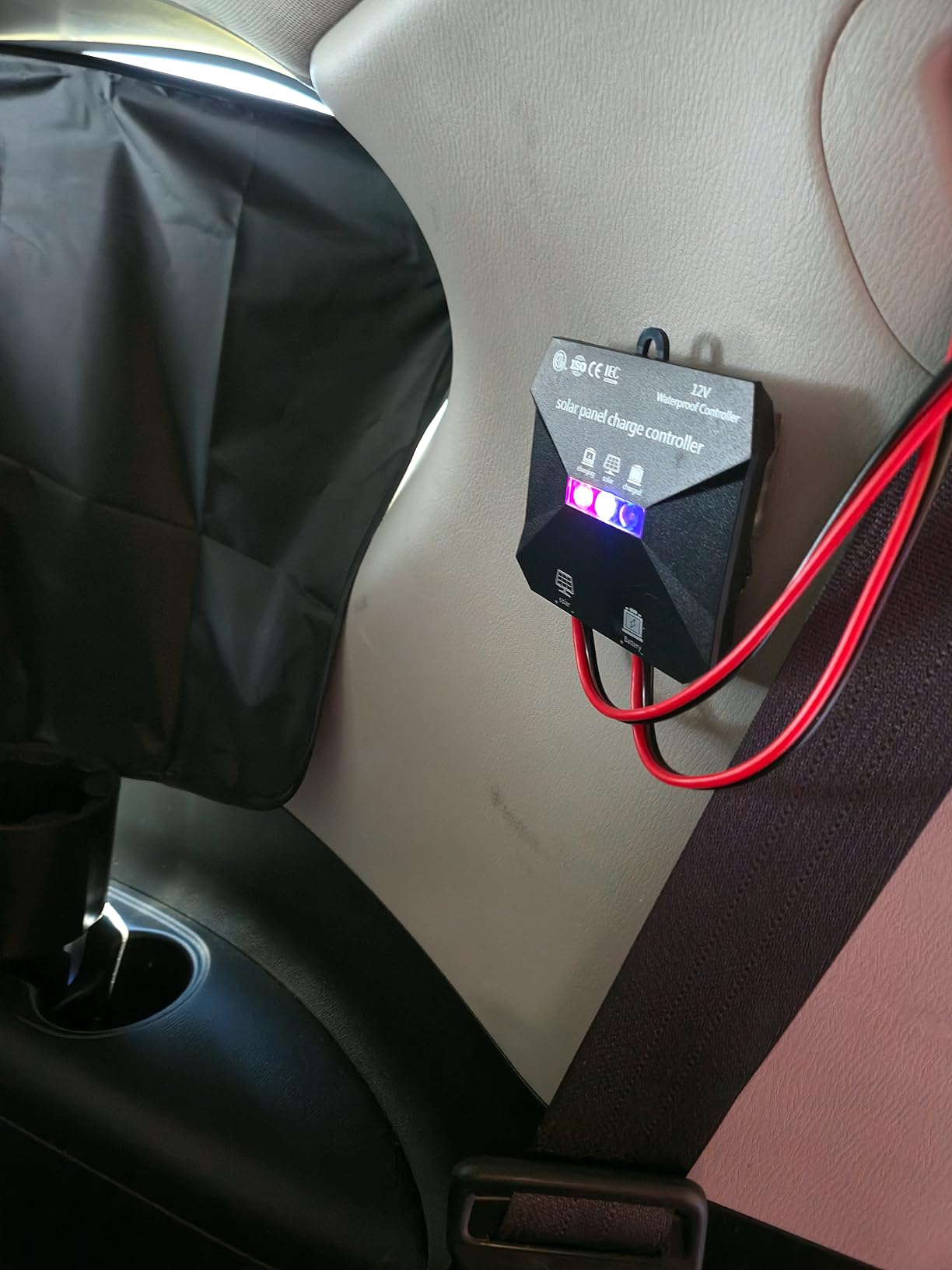
The Voltset kit is the one we kept coming back to during testing notes. The headline spec is obvious on paper: a 100W monocrystalline panel with a 10A MPPT charge controller pre-installed. The MPPT part is what matters, because pulse-width modulation controllers simply throw away energy as heat when the panel voltage sits above the battery voltage.
Buyers consistently single out the controller as the reason this kit works, and the review base is the largest in this roundup at 2,376 ratings averaging 4.5 stars, with 80% five-star. Eighty percent of buyers giving top marks is a strong signal for a component you might otherwise overlook.
The build trades glass weight for an ETFE-laminated surface with an IP65 rating and an aluminum alloy frame. That means it is noticeably lighter than the tempered-glass kits on this list and easier to fold into a vehicle, at the cost of the long-term scratch resistance that glass gives you.
Two flexible kickstands come in the box and handle uneven ground better than the fixed aluminum legs on some competitors, though owners note they flex more under wind load. A plug-and-play SAE connector means it attaches directly to most 12V batteries and a good share of portable power stations without a special cable.
What to check before you buy
The 10A controller is the constraint that matters. It suits solar arrays up to 130W, so if you plan to add a second panel later you will need a different controller or a parallel setup. Verify your power station’s solar input voltage before committing, because a 12V nominal panel feeding an 18V or higher input is a common mismatch.
The other check is physical. Folding to 21 by 21 by 2 inches, it is a genuinely grab-and-go package, which is the entire reason to buy a briefcase-form panel in the first place.
Who should look elsewhere
If you are running a large battery bank and want to expand the array past 130W, this controller will box you in. Buyers building toward a van or trailer system that grows over time should read our solar battery guide for RVs first and size the controller to the end state.
2. Renogy 100W N-Type Kit – Best Value Pick
Renogy 100W Portable Solar Panel, 25% High Efficiency Solar Panel Kit with 20A Charger Controller for 12V Battery&Power Station, N-Type Foldable Solar Panels w/Tempered Glass for RV, Camping Off-Grid
100W at 25% efficiency
17.4 lb
Folds to 24.8x2x2.8 in
Pre-installed 20A PWM controller
Pros
- Highest 4.6 average in the roundup
- 25% N-type cells with good low-light behaviour
- Compact 24.8x2x2.8 in fold at only 17.4 lb
- Bypass diodes reduce hotspot losses
- Includes fused alligator clip lead
Cons
- PWM controller is less efficient than MPPT
- 2-year warranty is short against some rivals
The Renogy 100W is the panel we would hand someone who wants one good panel and no decision fatigue. It carries the highest average rating in this roundup at 4.6 stars, with 78% of buyers giving five stars and only 4% giving one star, across 1,695 ratings. That is about as clean a review profile as portable solar hardware gets.
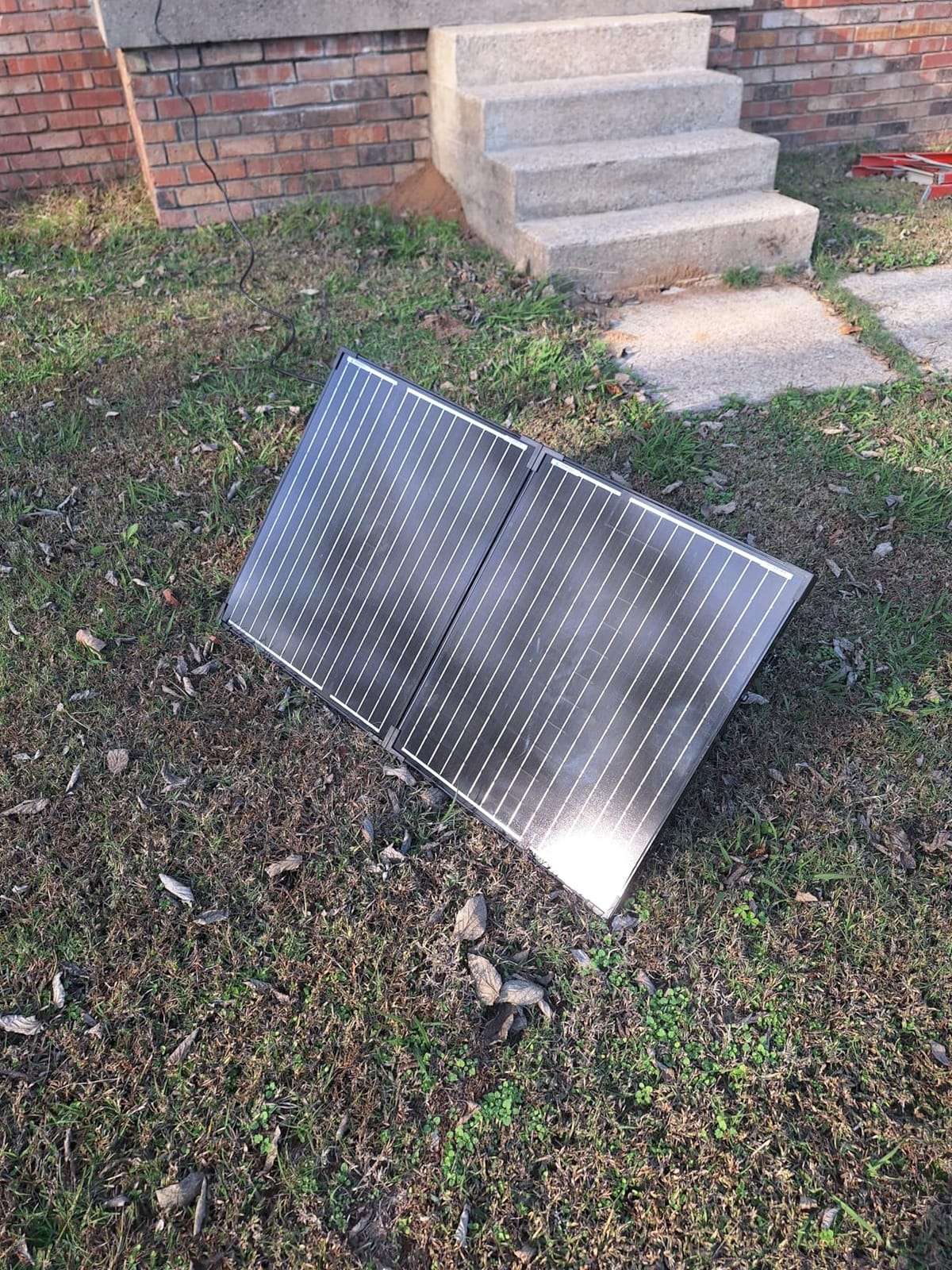
The technology is current rather than legacy. N-type cells reach 25% conversion efficiency, and N-type chemistry holds output better in low light and partial shade than the older P-type cells still used in plenty of competing panels.
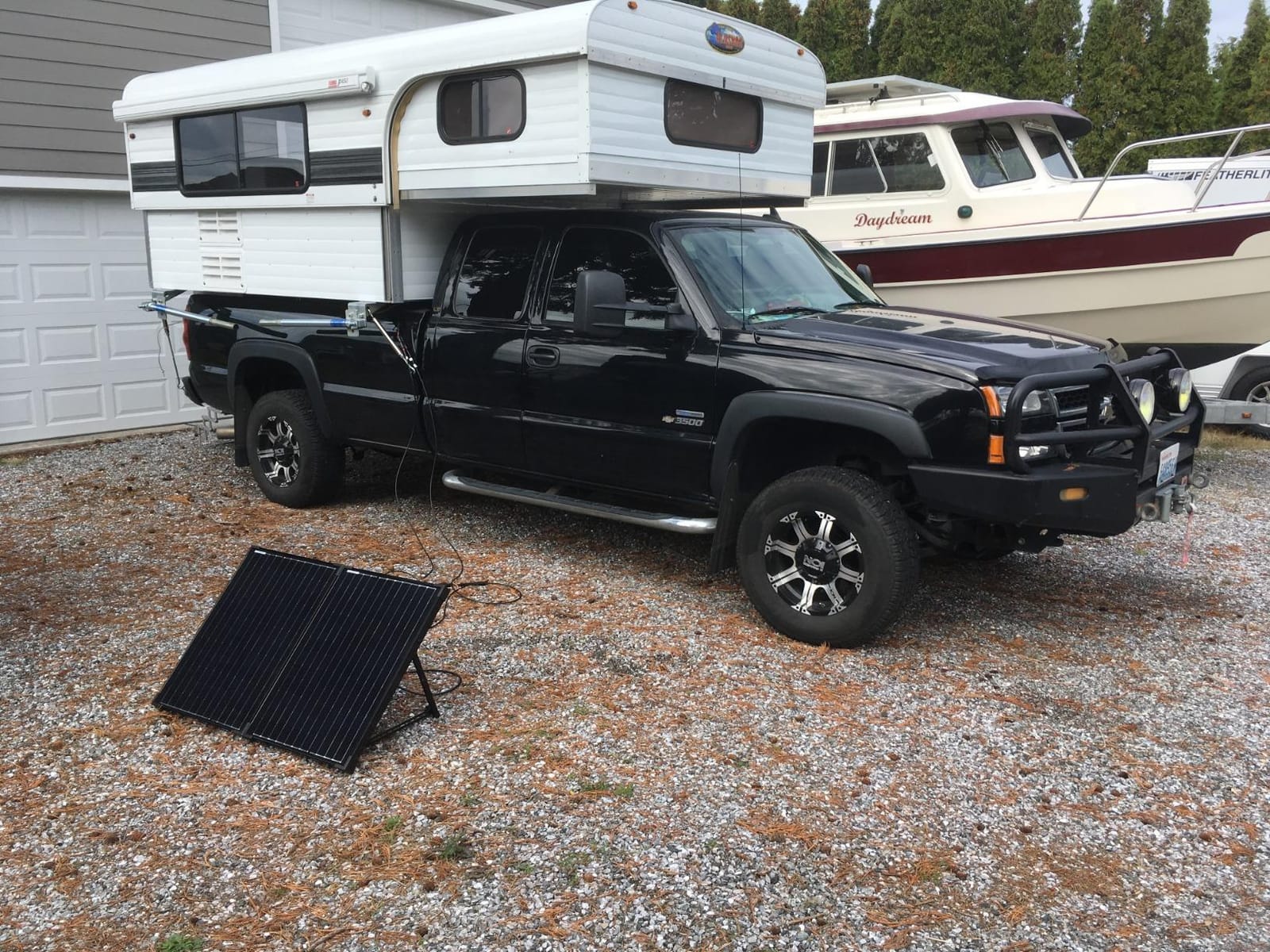
What we like most is the packaging. Folding to 24.8 by 2 by 2.8 inches at 17.4 pounds, it is a true suitcase fold with a real handle and an adjustable aluminum kickstand, and it is light enough for one person to carry from a vehicle to a campsite without a second trip.
Everything needed to charge a battery arrives in the box: a pre-installed waterproof 20A controller, a fused solar connector to alligator clip cable, and compatibility with 12V gel, AGM, flooded and lithium batteries. Bypass diodes in the junction box reduce the hotspot losses that degrade cheaper panels.
What to check before you buy
The PWM controller is the trade-off you accept for the lower price. It will work, and it works fine, but it will not harvest every watt the panel generates, and unlike the Voltset kit it caps your realistic array size at the controller rating.
Also read the warranty line carefully. Renogy covers this one for two years on material and workmanship, which is short for a panel that could sit on a roof for a decade. If longevity is your priority, the DOKIO further down this list carries a 25-year transferable output warranty.
Who should look elsewhere
Buyers chasing maximum harvest efficiency in marginal light should step up to the MPPT kit instead. Anyone who needs more than 100W from a single portable panel should read on, because this one tops out well short of a full-size power station’s solar input.
3. Goal Zero Boulder 100 – Built to Outlast Everything Else Here
Goal Zero Boulder 100 Briefcase, 100 Watt Monocrystalline Solar Panel
Two hinged 50W panels
Tempered glass and aluminum frame
25.9 lb
Built-in kickstand
Pros
- Rigid tempered glass on a reinforced aluminum frame
- Highest rating in the roundup at 4.7 stars with only 2% one-star
- Owners measure 70-74W in late-season or cloudy conditions
- Fully waterproof connector box
- Chainable with other Boulder panels
Cons
- 25.9 lb is heavy for a 100W panel
- Kickstand is fixed at roughly 45 degrees
- Proprietary 8mm connector needs adapters for other stations
The Boulder 100 is the oldest design in this roundup and still the most highly rated at 4.7 stars from 397 ratings, with 81% of buyers giving five stars and just 2% giving one star. That kind of rating spread on a product that has been around for years tells you the build is not the weak point.
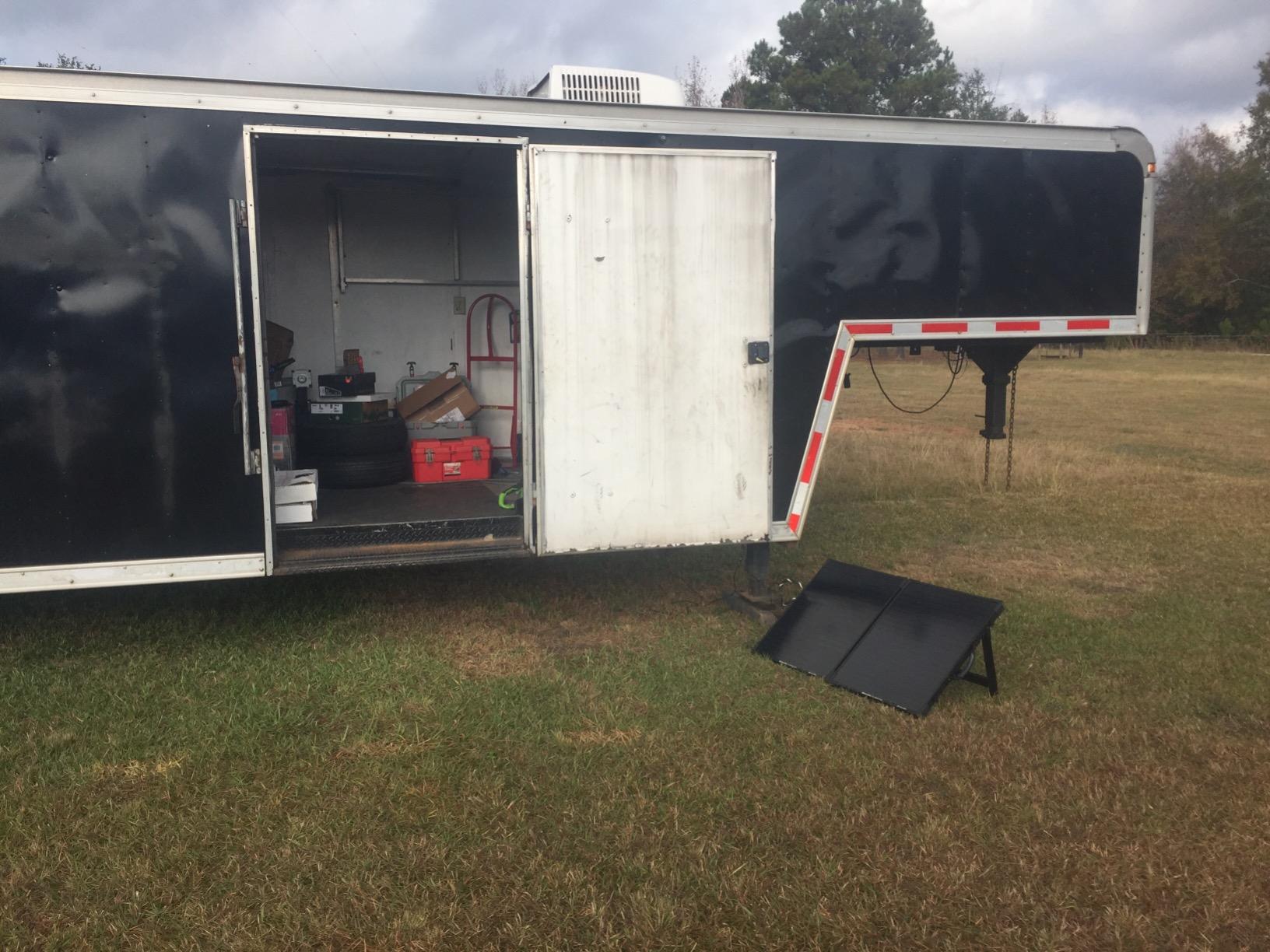
It is two 50W monocrystalline panels joined by a hinge, mounted in an anodized aluminum frame with reinforced corners and tempered glass. There is no lamination to crack, no fabric to crease, and a waterproof connector box that shrugs off weather.
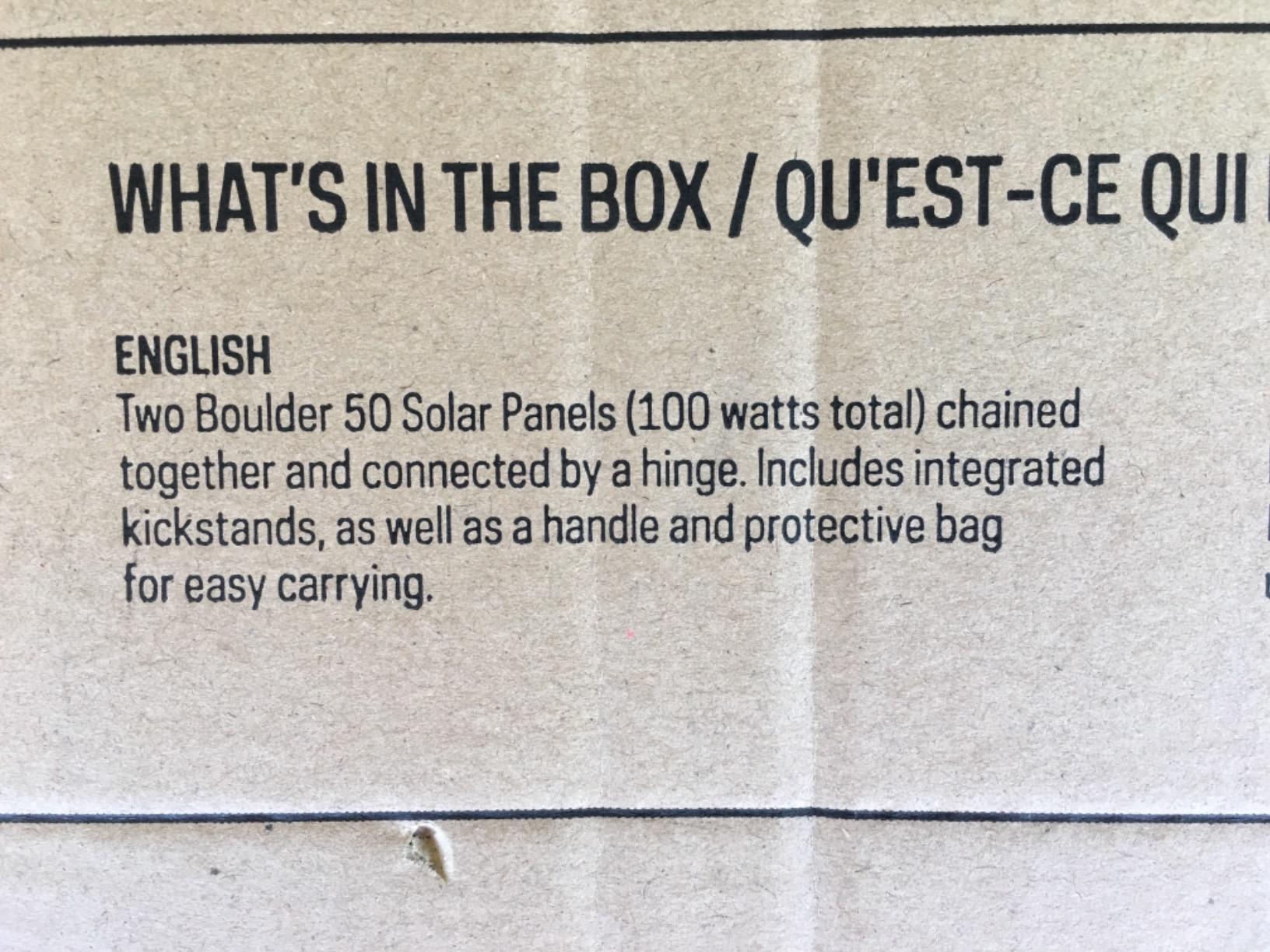
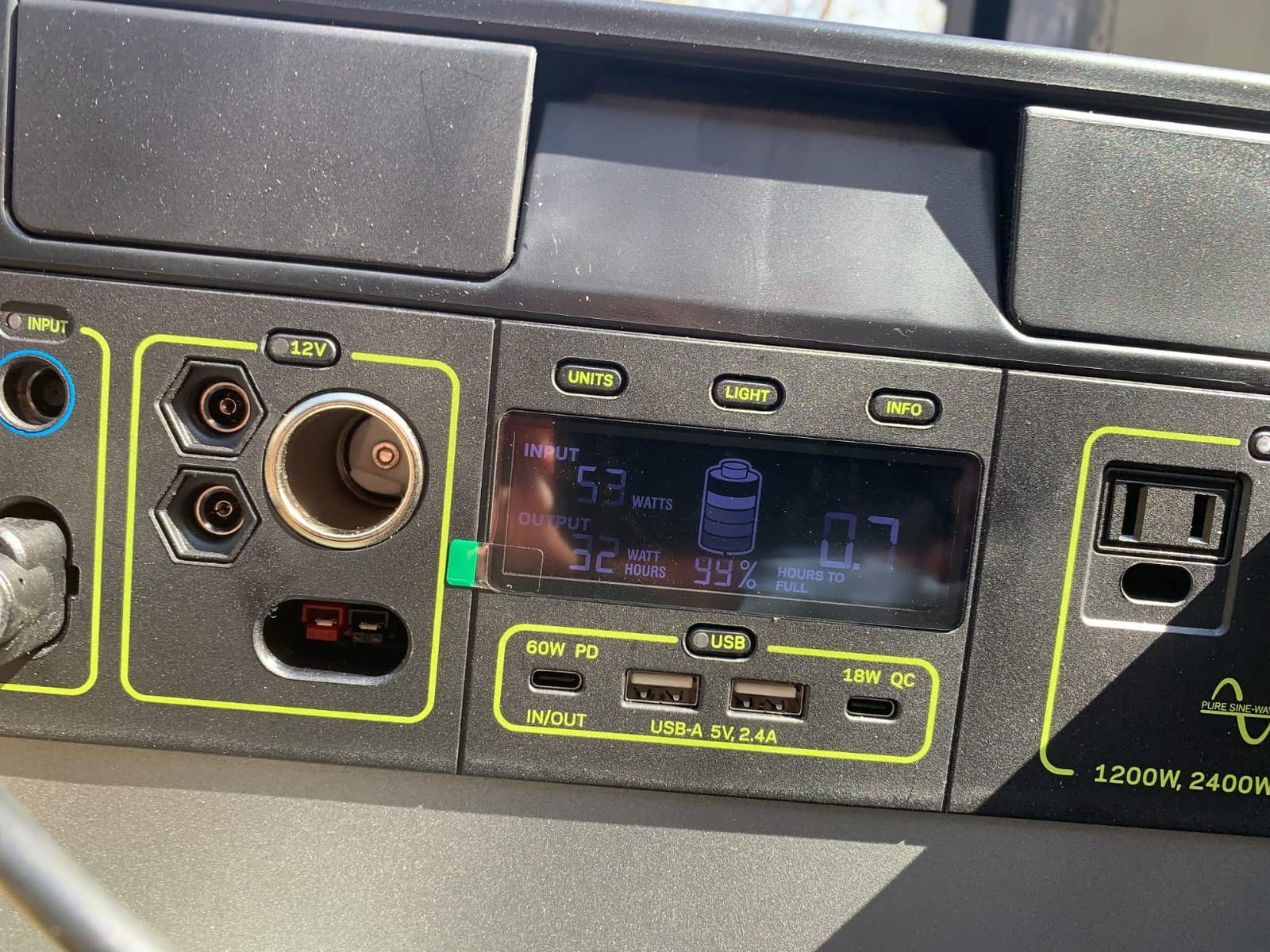
Owners consistently report 70 to 74 watts in real conditions, including late-season and partly cloudy weather, which is respectable for a 100W panel and reflects the efficiency of glass cells. The built-in kickstand and carry handle make setup a one-person job, and the panel chains with other Boulder models to scale the array.
It is also the most deliberately designed object here. Goal Zero states the panels are designed in the USA and field-tested from the Arctic to job sites, and the hinged briefcase format means it folds flat into a vehicle without a separate carry board.
What to check before you buy
Weight is the trade. At 25.9 pounds this is a heavy 100W panel, and that matters for anyone loading a vehicle solo or hiking a panel away from the vehicle. The kickstand is also fixed at roughly 45 degrees, so you cannot dial the angle toward winter sun the way you can with the adjustable brackets on the SOKIOVOLA or DOKIO kits.
The proprietary 8mm connector is the other consideration. If your power station is not a Goal Zero unit, budget for an adapter cable. The two-year warranty is also shorter than the 25-year output warranty offered on the DOKIO suitcase later in this list.
Who should look elsewhere
If you are moving the panel solo across uneven ground, or chasing low winter sun, this rigid fixed-angle design works against you. Glass rivals with adjustable kickstands give you more placement freedom even if they are lighter on the label.
4. Renogy 200W N-Type Suitcase – Best for Direct Battery Charging
Renogy 200W 12V Portable Solar Panels Suitcase with Waterproof 20A Charge Controller, Foldable 200 Watt Solar Panel W/Adjustable Kickstand, Solar Charger for Power Station, RV, Camping, SUV, Off Grid
200W at 25% efficiency
28.5 lb
21.47V at 11.89A
Pre-installed 20A PWM controller
Pros
- Highest power output in the 100W-and-under class at 200W
- Four-stage charging for gel
- AGM
- flooded and lithium batteries
- Integrated adjustable kickstand speeds setup
- IP65 junction box with tempered glass and aluminum frame
- Three-year output warranty
Cons
- 28.5 lb is heavy for one person to carry
- PWM controller is less efficient than MPPT alternatives
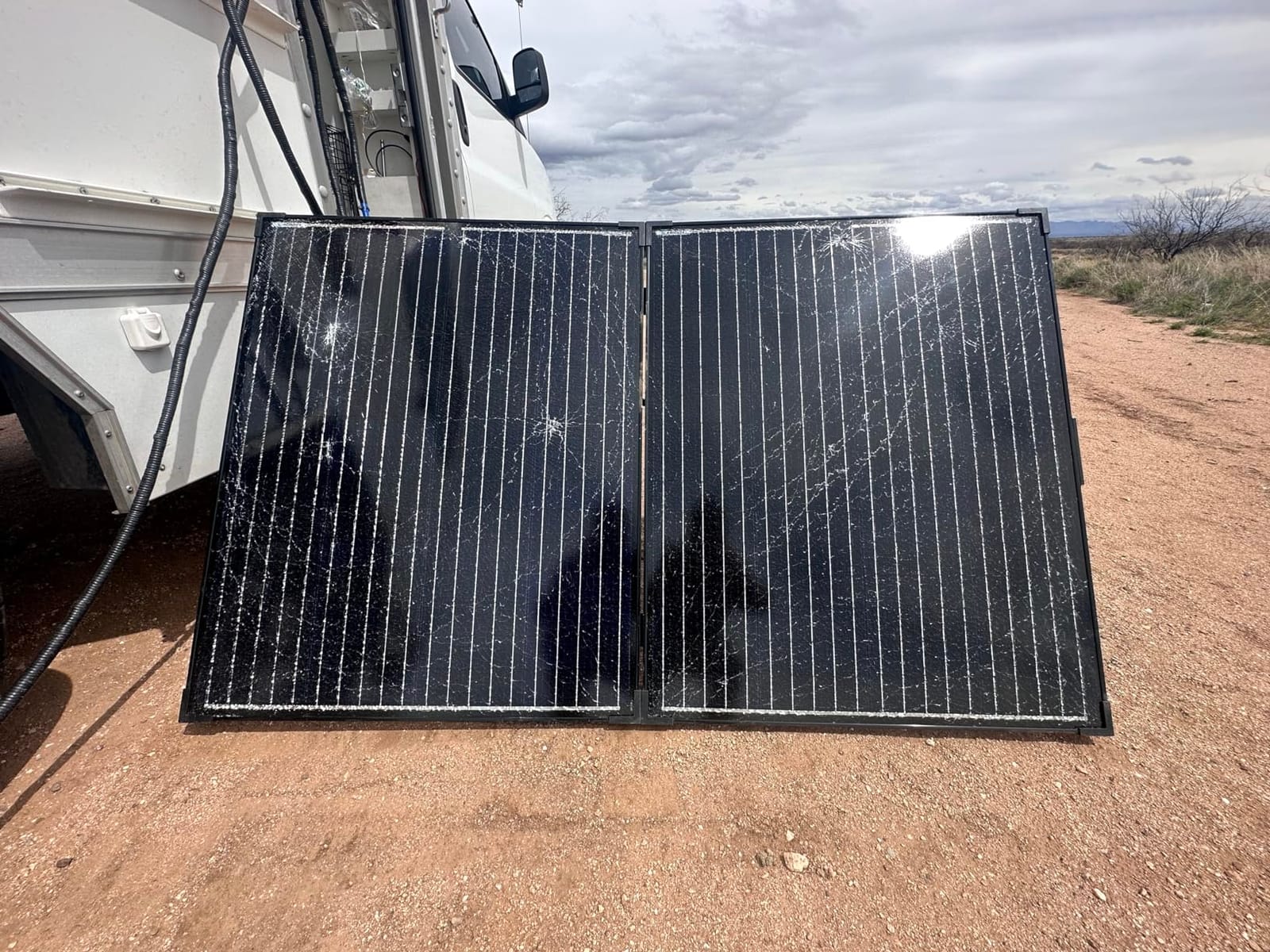
When a single panel has to refill a 200Ah lithium bank, wattage is the only lever that matters, and the Renogy 200W delivers 200 watts at 25% N-type efficiency. It is the highest-output panel in the Renogy line and one of the few briefcase-format panels that meaningfully moves a large battery in a day of good sun.
The electrical spec is well documented: 21.47V maximum voltage, 11.89A amperage capacity, 12V DC output, and an upper temperature rating of 149 degrees F. That level of published detail is a small sign of a manufacturer that expects serious use.
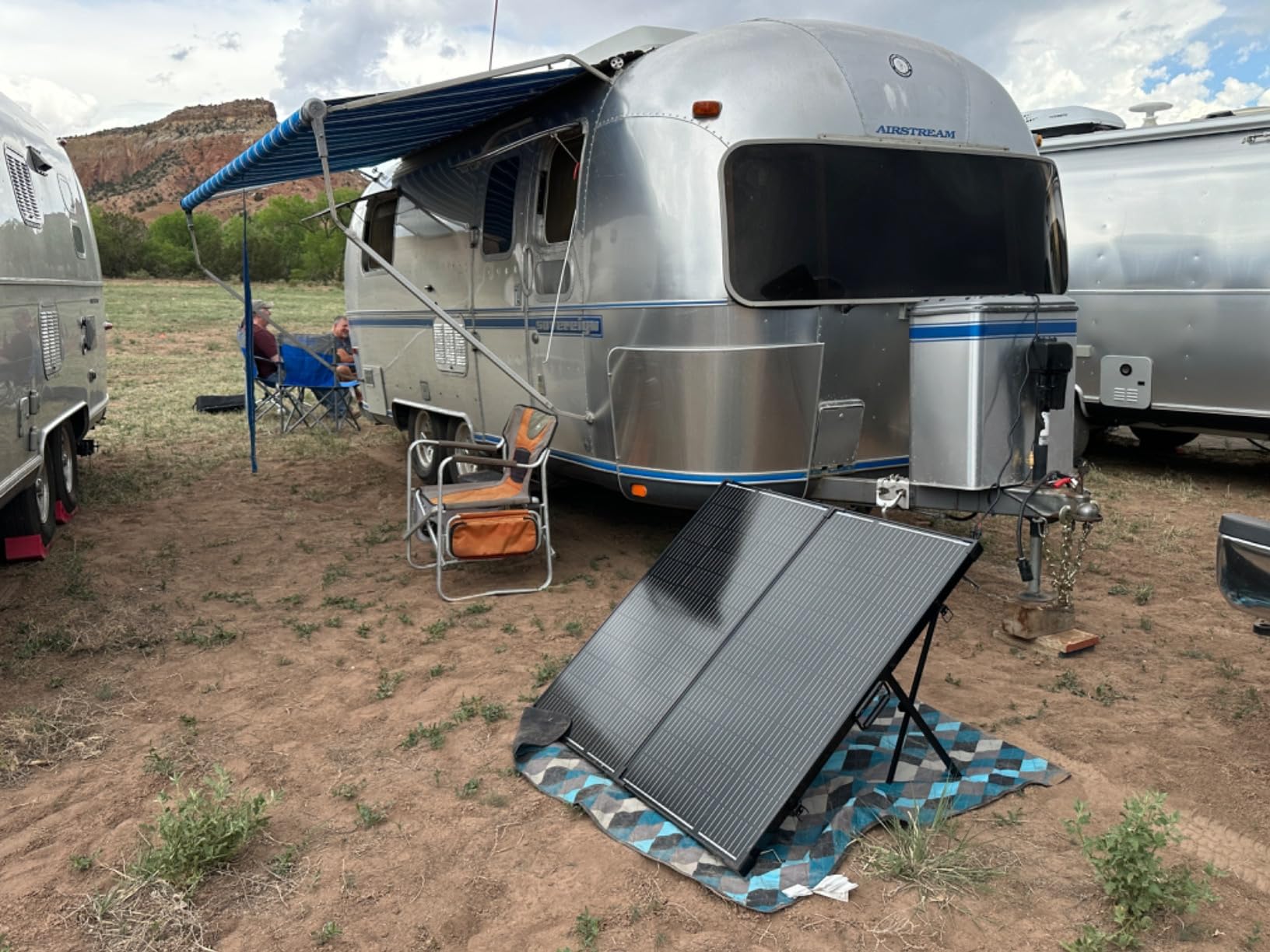
It is also genuinely complete out of the box. A 20A PWM controller comes pre-installed, and a solar connector to alligator clip cable with a 15A fuse is included, so you can connect to a battery without hunting for a cable or opening a second box.
The four-stage charging profile covers gel, AGM, flooded and lithium chemistries, which matters if you are not yet sure what battery you will end up with. At 28.5 pounds, though, this is firmly a two-person load or a vehicle-only panel.
What to check before you buy
Check the weight honestly. At 28.5 pounds, the solar suitcase concept stops being convenient. If your plan involves carrying the panel more than a few steps from a vehicle, the ALLPOWERS SE160 at 8.4 pounds or the Ecosonique at 11 pounds will serve you far better.
Also check the 20A controller against your battery bank’s current draw and your power station’s input rating. Twenty amps of panel output into a small power station can exceed the internal MPPT controller’s capability, which is a common source of frustration with mismatched kits.
Who should look elsewhere
If you are pairing this with a portable power station that already has its own solar input controller, you may be paying twice for the same job. In that case, a panel with a higher-efficiency MPPT controller and no bundled controller is often the cleaner choice.
5. EBL 200W Foldable Panel – Best Connector Coverage
EBL 200W Portable Solar Panel for Power Station, Foldable IP65 Waterproof
200W at up to 23.5% efficiency
17.95 lb
MC-4 4-in-1 cable
Folds to 25.31x20.87x2.17 in
Pros
- Owners report real output of 148-191W
- Plastic framing is far stiffer than soft panel rivals
- MC-4 to 4-in-1 cable covers XT60
- Anderson
- DC7909 and aviation plugs
- Short circuit and surge protection
- FCC
- RoHS and EMC certified
Cons
- Factory cable is short
- Soft fabric cells can crease over time
- 1-year warranty is the shortest here
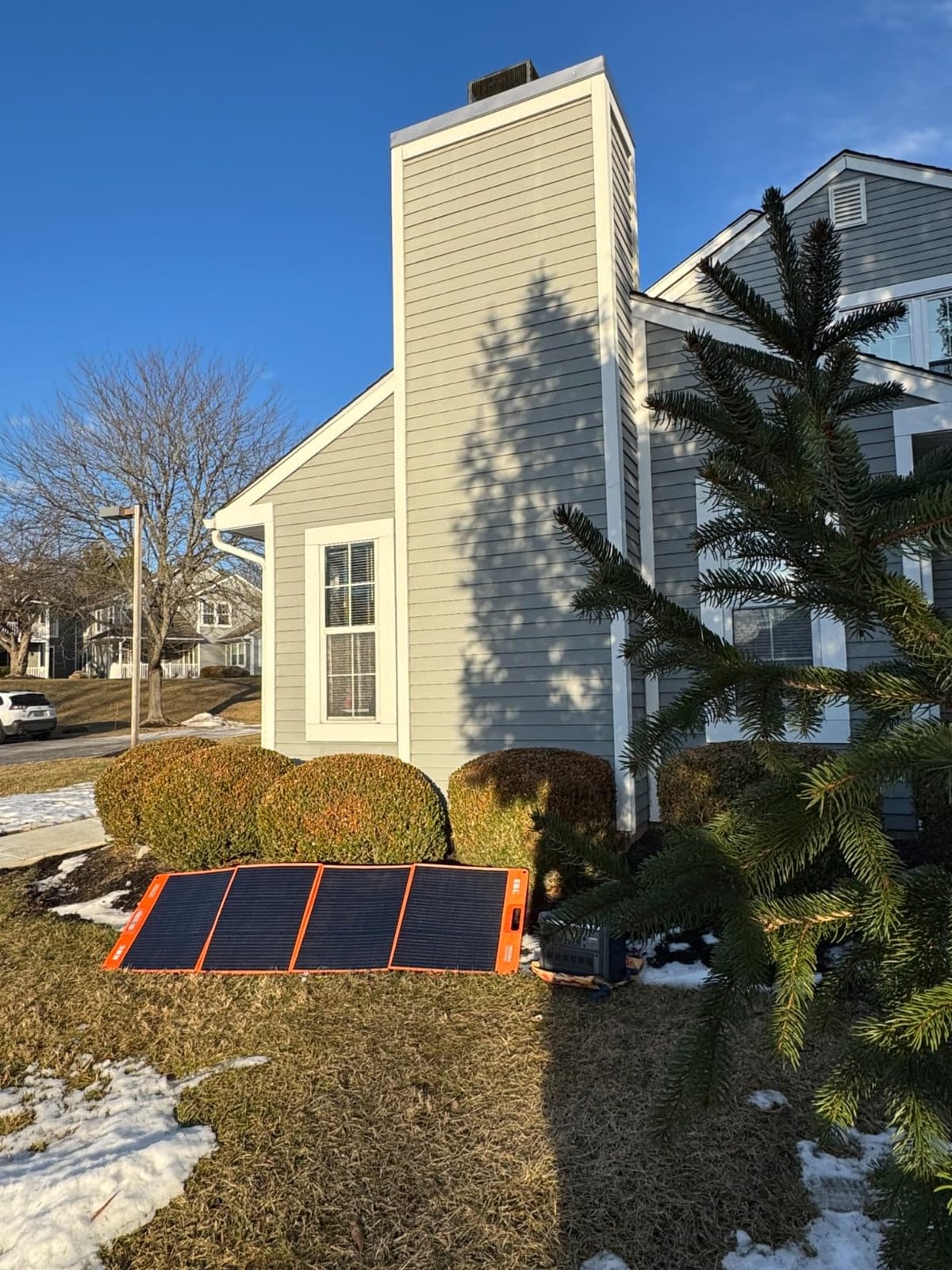
The EBL panel solves a problem most listings ignore: getting power from a MC-4 connector to whatever port your battery or power station actually has. The included cable terminates in XT60, Anderson, DC790*09mm and aviation plugs, which covers the overwhelming majority of stations on the market without a separate purchase.
Owners report real-world output between 148 and 191 watts, which puts it near the top of the measured performance range in this roundup. Some buyers see 191W, some see closer to 150W, and that spread is a fair reflection of angle and sky rather than a defect.
Construction is the second strength. Upgraded PET lamination with an 840D Oxford cloth outer shell resists wear and moisture, and the plastic frame makes the panel far stiffer than the fabric-wrapped soft panels that dominate cheaper listings. At 17.95 pounds for 200W, the power-to-weight ratio is genuinely good.
It also folds to 25.31 by 20.87 by 2.17 inches, which is compact for a 200W unit, and it is listed as compatible with GreeCell, BLUETTI, Anker and EcoFlow power stations out of the box.
What to check before you buy
Two things stand out from the reviews. The factory cable is short, so plan on an extension if your power station sits in the shade, and the fabric-wrapped soft cells can crease if you fold them along a crease line repeatedly rather than along the factory folds.
The one-year warranty is the shortest coverage in this roundup. For a panel expected to last a decade outdoors, that is a real gap, and it is the main reason this model does not rank higher despite good output numbers.
Who should look elsewhere
Buyers who leave panels deployed for years in full sun should treat that one-year warranty as a genuine risk. The DOKIO 150W in this same group carries a 25-year transferable output warranty, which is a much better match for a permanent installation.
6. SOKIOVOLA 200W N-Type Panel – Best for RV Mounting
SOKIOVOLA N-Type 16BB 200W Portable Solar Panel for EF/Jackery/Bluetti/Anker Power Station Foldable Solar Panel 25% High Efficiency IP68 Waterproof for Outdoor Trip RV Camping Blackout Off Grid
200W N-type 16BB cells
IP68 ETFE coating
Folds to 21x23 in
16.3 lb
Pros
- N-type A+ grade cells rated up to 25% efficiency
- Owners measure 170-177W in full sun
- ETFE coating gives IP68 plus dust and UV resistance
- 4 mounting holes for RV attachment
- 5-in-1 adapter cable plus a 10.49 ft extension
Cons
- MC4 pigtail is only about 4 inches
- Weak rivets on the back can loosen
- Some report lower output after months of daily use
The SOKIOVOLA is the only panel in this roundup with four mounting holes, and that single feature separates it from every other briefcase in the list. Mounting holes let you strap or screw the panel to an RV roof rack, a trailer wall or a wooden deck and stop worrying about wind.
Output is strong on paper and in the field. The N-type 16BB cells are rated at up to 25% efficiency, and multiple owners independently report 170 to 177 watts in full sun, which is roughly 85 to 89% of the printed rating.
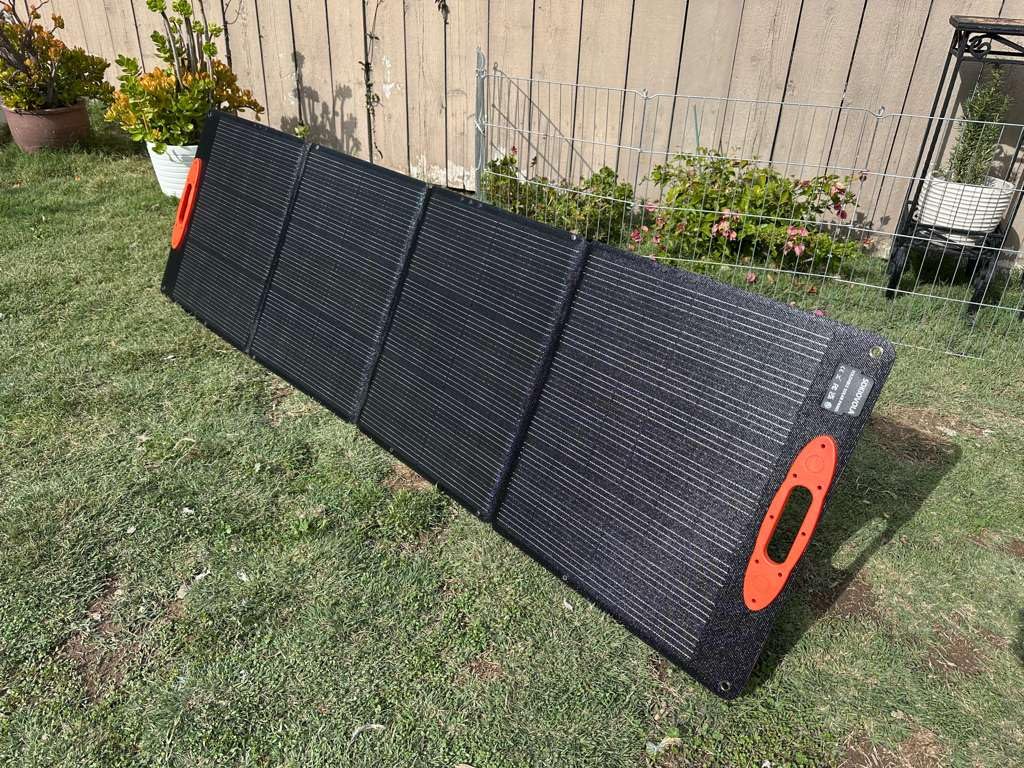
Weather protection is the other strength. The ETFE coating carries an IP68 rating, which means dust-tight and protected against sustained immersion, and it also resists UV degradation. For a panel that lives outside, that matters more than raw wattage.
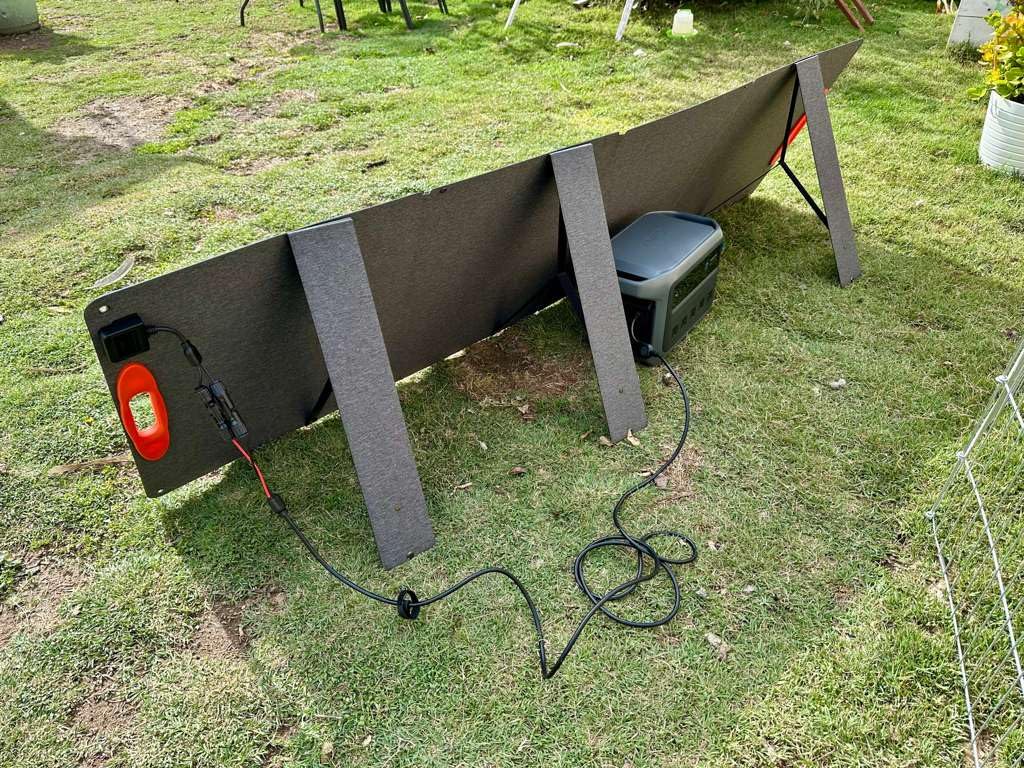
It folds to 21 by 23 inches with a magnetic handle and a roomy storage bag, weighs 16.3 pounds, and ships with an MC-4 to 5-in-1 adapter cable covering XT60, DC5521mm, DC7909, DC8020mm and Anderson, plus a 10.49 foot extension so the panel can sit in sun while the battery stays in shade.
What to check before you buy
Read the review pattern carefully. A number of owners report output dropping noticeably after roughly six months of daily use, and the back panel rivets can loosen with rough handling. The warranty is 12 months, so any degradation complaint falls inside the coverage window but past the point where a replacement feels like a win.
Also note the integrated MC4 leads are only about four inches long, so you will be using the included extension for any real setup. Plan the cable run before you mount it.
Who should look elsewhere
If your panel will be deployed and forgotten rather than moved around, the 12-month warranty and reported degradation pattern make this a riskier long-term choice. The mounting holes are a genuine advantage, but they do not offset a weak warranty for a fixed installation.
7. ALLPOWERS SE160 160W – Best for Ultralight Packing
ALLPOWERS SE160 160W 18V Portable Solar Panel for Power Stations
160W at 23-25% efficiency
8.4 lb
IP68 seamless build
18V at 8.89A
Pros
- Lightest full-size foldable here at just 8.4 lb
- IP68 waterproof one-piece seamless design with ETFE UV protection
- 18V at 8.89A works with 12V and 18V stations
- Integrated carry handle and 0.39 in profile pack down flat
Cons
- Lowest average rating in the group at 4.2 stars
- Ships as a panel only with no charge controller
- 9% of ratings are one star
At 8.4 pounds, the ALLPOWERS SE160 is the weight outlier of this entire roundup. It delivers 160 watts at 23 to 25% monocrystalline efficiency, and it is less than a third of the weight of the heaviest panel here. If carry weight is the constraint that decides your purchase, nothing else on this list comes close.
It also has the deepest review count at 2,021 ratings, and that is where the caveat sits. The 4.2 average is the lowest in the group, with 9% of buyers leaving one star. Buyers like the weight and the IP68 sealing; the complaints cluster around charging performance and the missing controller.
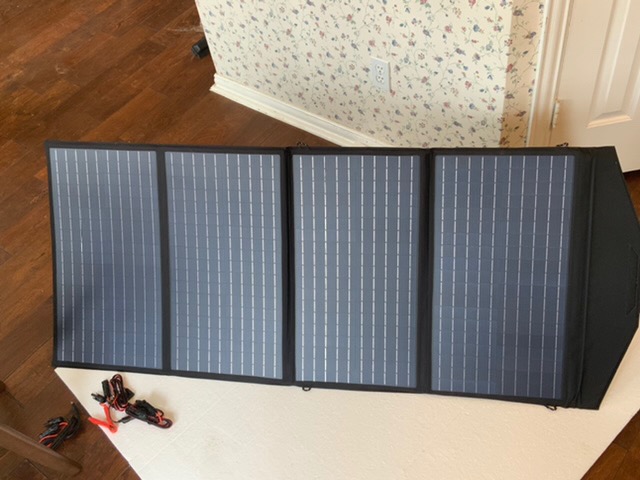
The physical design explains the low weight. It is a seamless one-piece IP68 waterproof construction with ETFE UV protection and a thin 0.39 inch profile, rather than a framed glass panel with an aluminum chassis. Nothing about the build suggests it is fragile, and the integrated carry handle makes it a genuine one-person carry.
Electrically it outputs 18V at 8.89A, which is the unusual part. Most 100W to 200W panels output 12V or around 20V, so this one is deliberately compatible with both 12V and 18V power stations, including the ALLPOWERS P300, R1500 LITE, S2000 PRO and R2500.
What to check before you buy
It ships as a panel only. There is no charge controller in the box, which means you need either a power station with its own solar input or a separate controller on your battery. That is fine if you already own a station with an MPPT controller, and it is a dead end if you are charging a raw 12V lead-acid bank.
Check the 18V output against your station’s input range before buying. Higher-voltage panels are not universally compatible, and this is the most common reason a lightweight panel ends up on a shelf.
Who should look elsewhere
If you need a complete, self-contained kit that charges a battery with nothing else in the box, the ACOPOWER and Renogy kits in this roundup both bundle a controller. The SE160 is a panel for people who already have the rest of the system.
8. ZOUPW 200W USB-C Panel – Best for Direct USB Charging
ZOUPW 200W Portable Solar Panel for Power Station,23.5% Efficiency
200W at 23.5% efficiency
USB-C PD 60W and USB-A QC3.0
IP67 ETFE
19 lb
Pros
- Only panel here with built-in USB-C PD 60W and USB-A QC3.0
- Owners report 168-170W in good sun and better cloud performance
- 5-in-1 cable covers XT60
- Anderson
- DC7909
- DC8020 and DC5521
- Four kickstands capture 25-30% more energy
- Responsive replacement service
Cons
- Some buyers report real output of only 115-130W
- Junction box is water-resistant but not submersible
- 19 lb is heavy for a briefcase fold
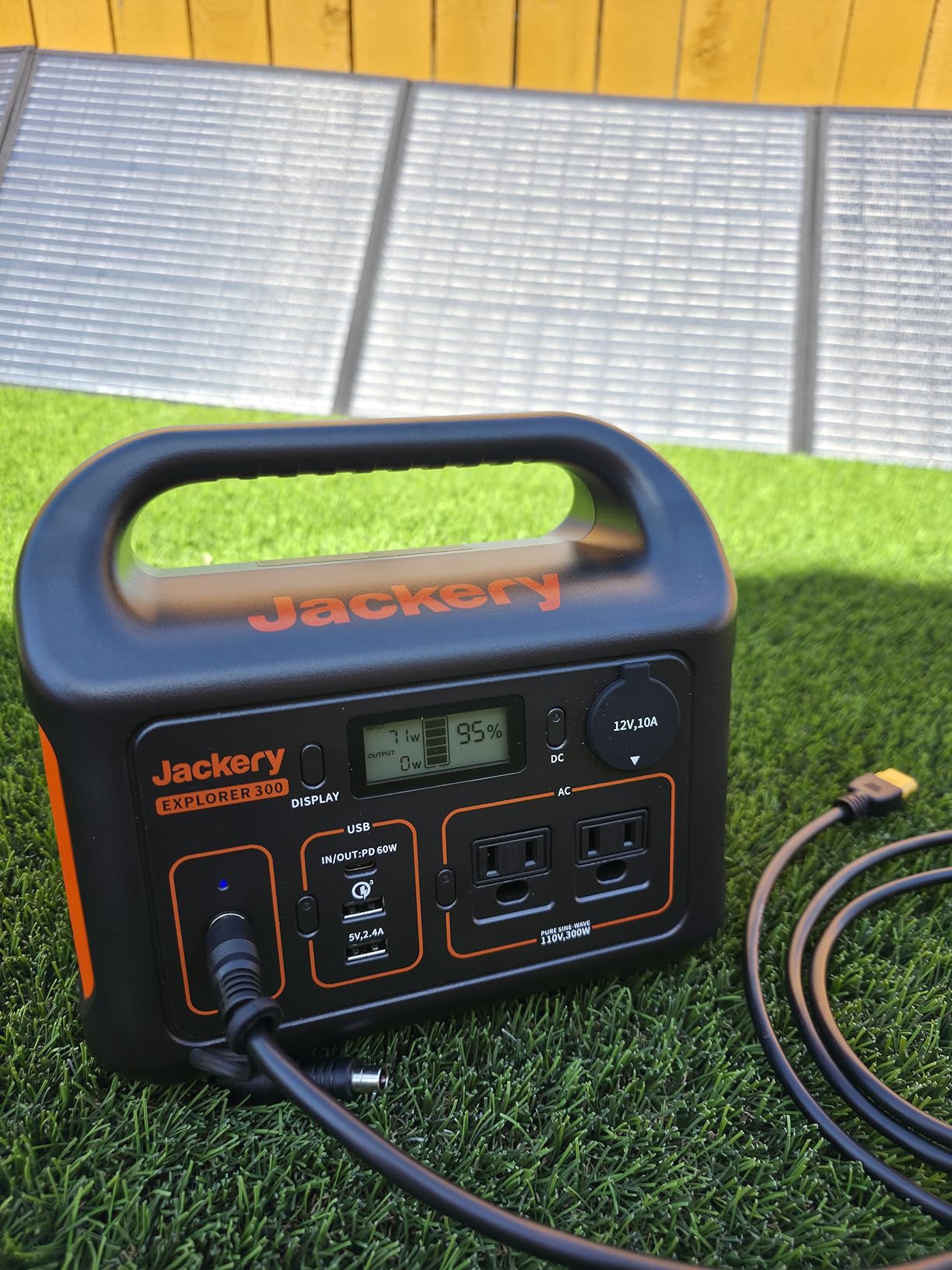
The ZOUPW does something no other panel in this roundup does: it charges a phone or laptop directly. The junction box carries USB-C PD at 60 watts and USB-A QC3.0, so you can top up a phone during a tailgate without touching a power station or a wall.
Output is competitive when conditions are right. Owners report 168 to 170 watts in good sun and specifically call out better-than-expected performance in cloud cover, which is the sort of claim we treat cautiously until several buyers report it independently. They do.
Four adjustable kickstands are a real design choice rather than a gimmick, and owners report they capture 25 to 30% more energy than flat-laying the panel on the ground. That is one of the largest single setup gains available in this category.
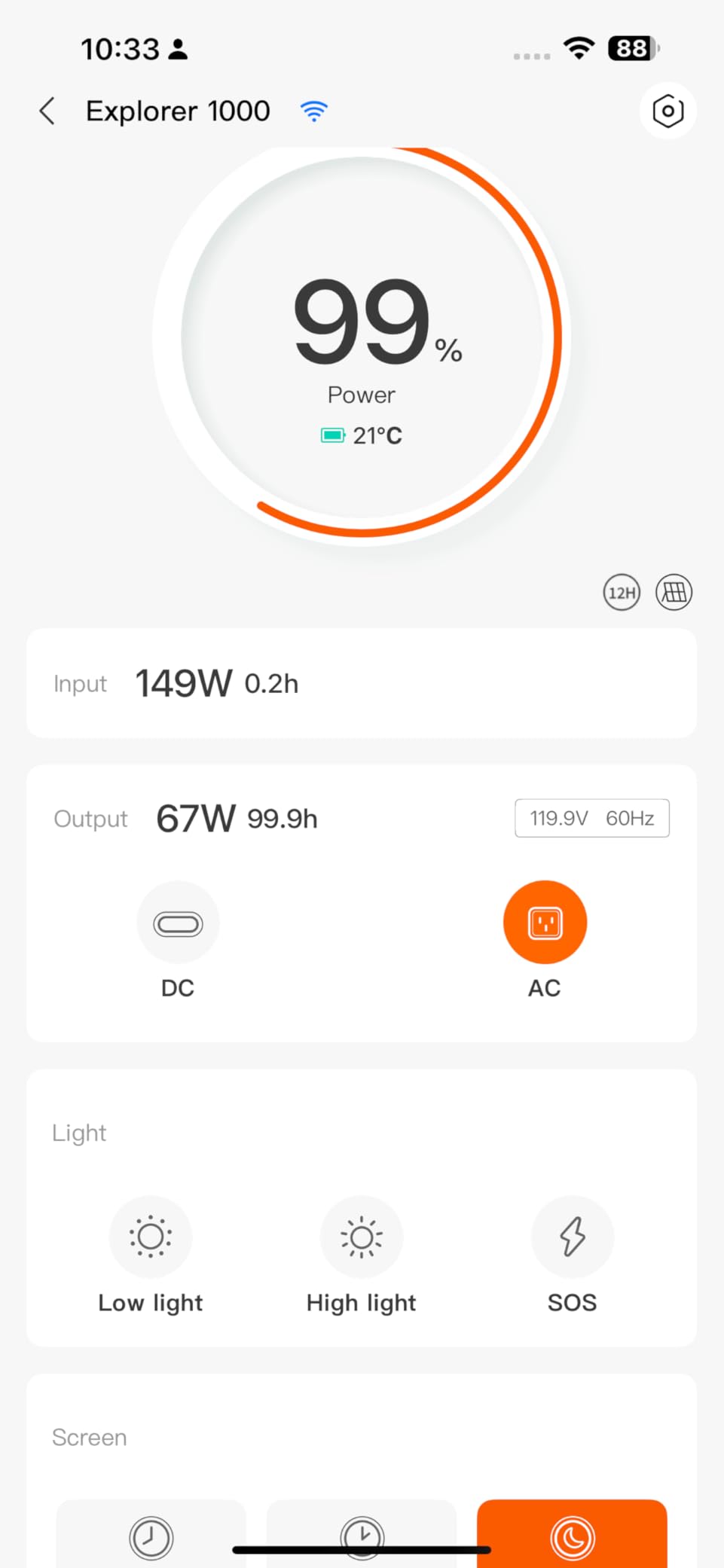
The 10 foot 5-in-1 extension cable covers XT60, Anderson, DC7909, DC8020 and DC5521 connectors, and the panel is listed as compatible with Jackery 1000 V2, EcoFlow River, Bluetti and Anker Solix stations. The upper temperature rating is 158 degrees F.
What to check before you buy
The reviews divide on output, and you should see both sides before deciding. Satisfied owners measure near 170W, while critics report 115 to 130W in conditions that should have produced more. The 4.4 average with 73% five-star suggests most people land in the upper range, but not everyone does.
Note the IP67 rating applies to the panel surface. The junction box is water-resistant rather than submersible, so do not leave the panel deployed in a downpour with the cable connection exposed.
Who should look elsewhere
At 19 pounds, this is a heavy briefcase fold for something that looks like a laptop bag in photos. If you are carrying it any real distance, the Ecosonique at 11 pounds or the ALLPOWERS at 8.4 pounds are easier loads despite lower measured output.
9. ACOPOWER 100W 20A Kit – Best Complete Kit
ACOPOWER 100Watt 12 Volt Portable Solar Panel with Waterproof 20A Charger Controller Foldable Solar Panel Kit Monocrystalline for Camping, RV, Black
100W at 23% efficiency
16.1 lb
20A LCD charge controller
IP65 ETFE case
Pros
- Complete kit with a waterproof 20A controller and LCD readout
- 23% monocrystalline cells averaging about 500Wh per day
- Two kickstands and a TPE handle for seconds-long setup
- 5-year workmanship warranty on the panel
- ETFE case with IP65 splash resistance
Cons
- Smallest review base here at 173 ratings
- 16.1 lb is heavy for a 100W class panel
- Low category rank reflects limited demand
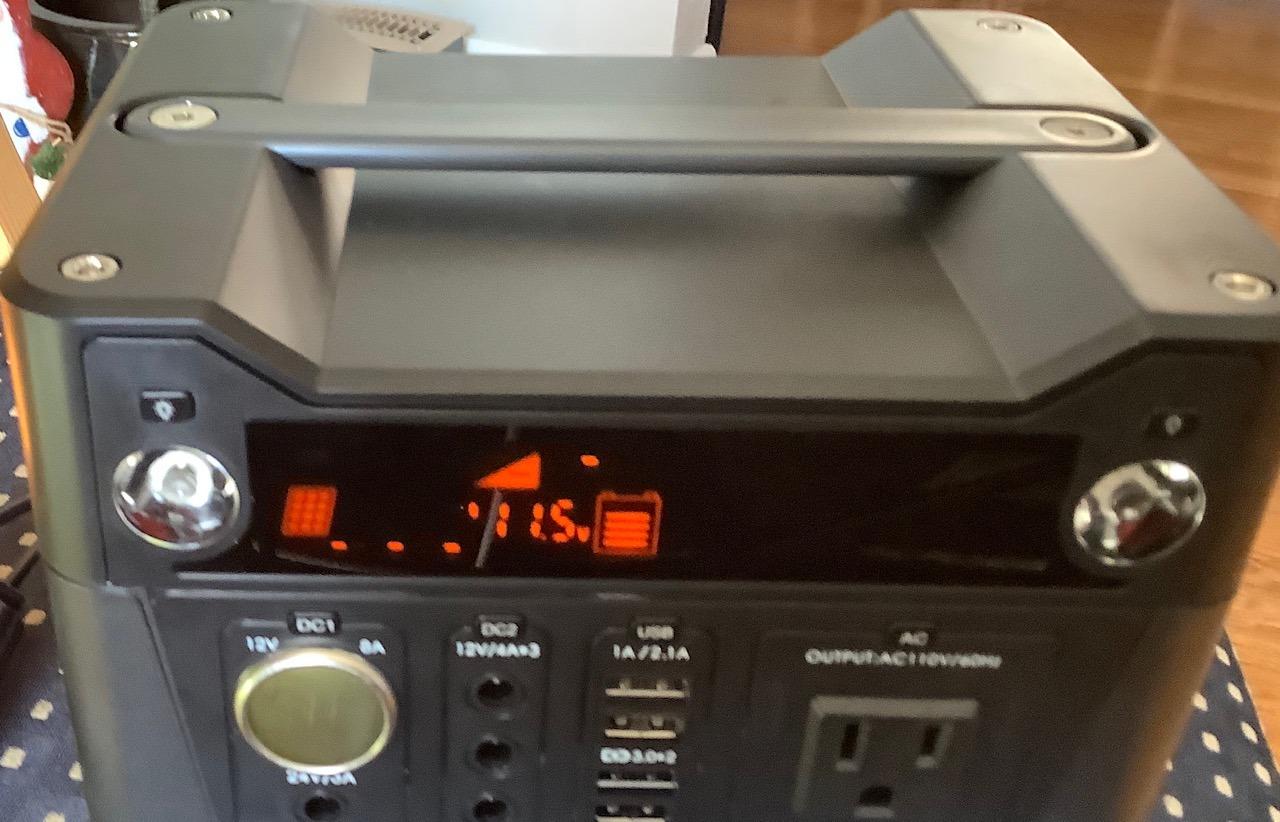
Everything you need is in the box, and the controller has a screen. The waterproof 20A charge controller with an LCD readout is unusual at this level, because most competing kits ship a controller with a few status LEDs and nothing else.
Despite the smaller review count of 173 ratings, the 4.6 average and 80% five-star share are among the strongest in this roundup. Buyers describe the whole package as simply working, which for a kit intended to be set up on a first camping trip is the point.
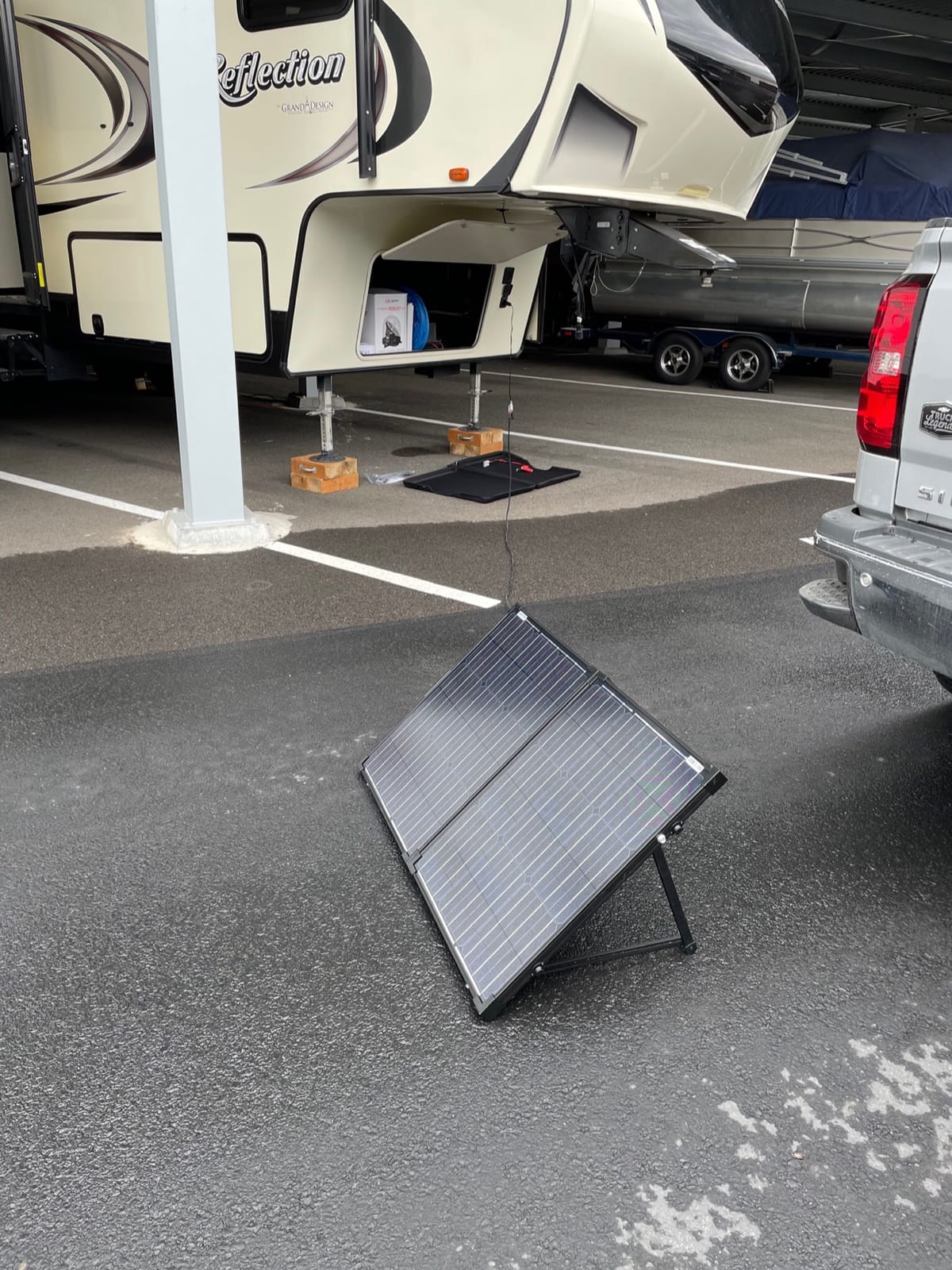
The panel itself is 23% efficient monocrystalline producing about 500Wh per day under good conditions, and it is available in 100W, 200W and 400W configurations from the same manufacturer, so you can step up wattage without changing ecosystems.
Two kickstands and a TPE rubber handle make setup a matter of seconds. The ETFE-laminated case extends panel lifespan and the IP65 rating resists splashes, while the industrial-strength glass and anodized aluminum kickstand handle the rough handling that soft panels do not.
What to check before you buy
At 16.1 pounds for 100W, this is a heavy panel for its class. The tempered glass and aluminum kickstand add mass that lighter ETFE designs avoid, so decide whether the 5-year workmanship warranty justifies carrying the extra weight.
Also weigh the smaller evidence base. A 173-rating sample is thin compared with the 2,000-plus review counts on the Voltset, Renogy and ALLPOWERS kits, so treat the 4.6 as encouraging rather than proven.
Who should look elsewhere
If you are shopping purely on ratings, the Voltset and Renogy 100W kits give you four times the review volume at a similar rating. The ACOPOWER earns its place on completeness and the five-year panel warranty, not on social proof.
10. DOKIO 150W Suitcase – Best for the Longest Warranty
DOKIO 150W Foldable Solar Panel Suitcase with Charge Controller, Gray
150W at 18V and 8.33A
Detachable 12V PWM controller
9.8 ft cable
25-year output warranty
Pros
- 25-year transferable power output warranty is the longest here
- Detachable controller can be swapped or upgraded
- 9.8 ft cable keeps the battery out of direct sun
- Adjustable bracket lets you angle toward the sun
- Folds to 17.7x35.8 in
Cons
- Heaviest 100-160W class unit here at 22.4 lb
- Uses PWM rather than MPPT
- Unfolded 35.8x35.4 in is bulky for backpacking
The warranty is the reason to notice this one. A 25-year transferable power output warranty is the longest coverage in this roundup by an order of magnitude, and it transfers with the panel if you sell it. For a device whose main job is sitting in the sun destroying itself slowly, that is not a minor detail.
The detachable 12V PWM controller is a quietly smart design choice. Because it unclips, you can replace it with a different controller without replacing the panel, which means the weakest component in the system is not a permanent weak link.
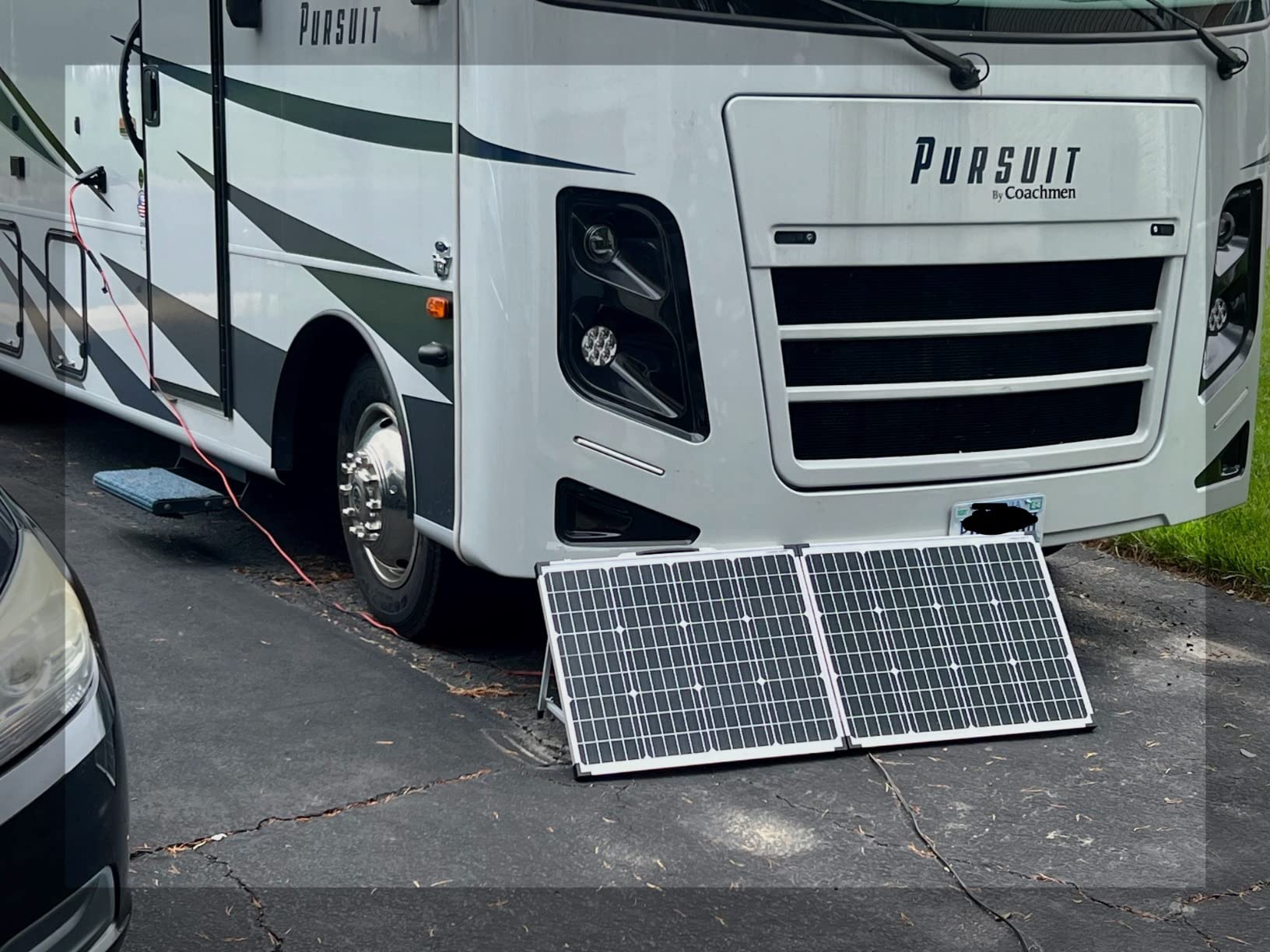
The 9.8 foot cable is one of the longer runs in this group, and cable length has real practical value: it lets the panel sit in full sun while the battery stays in the shade of the vehicle or a wall. Longer cable, cooler battery, longer battery life.
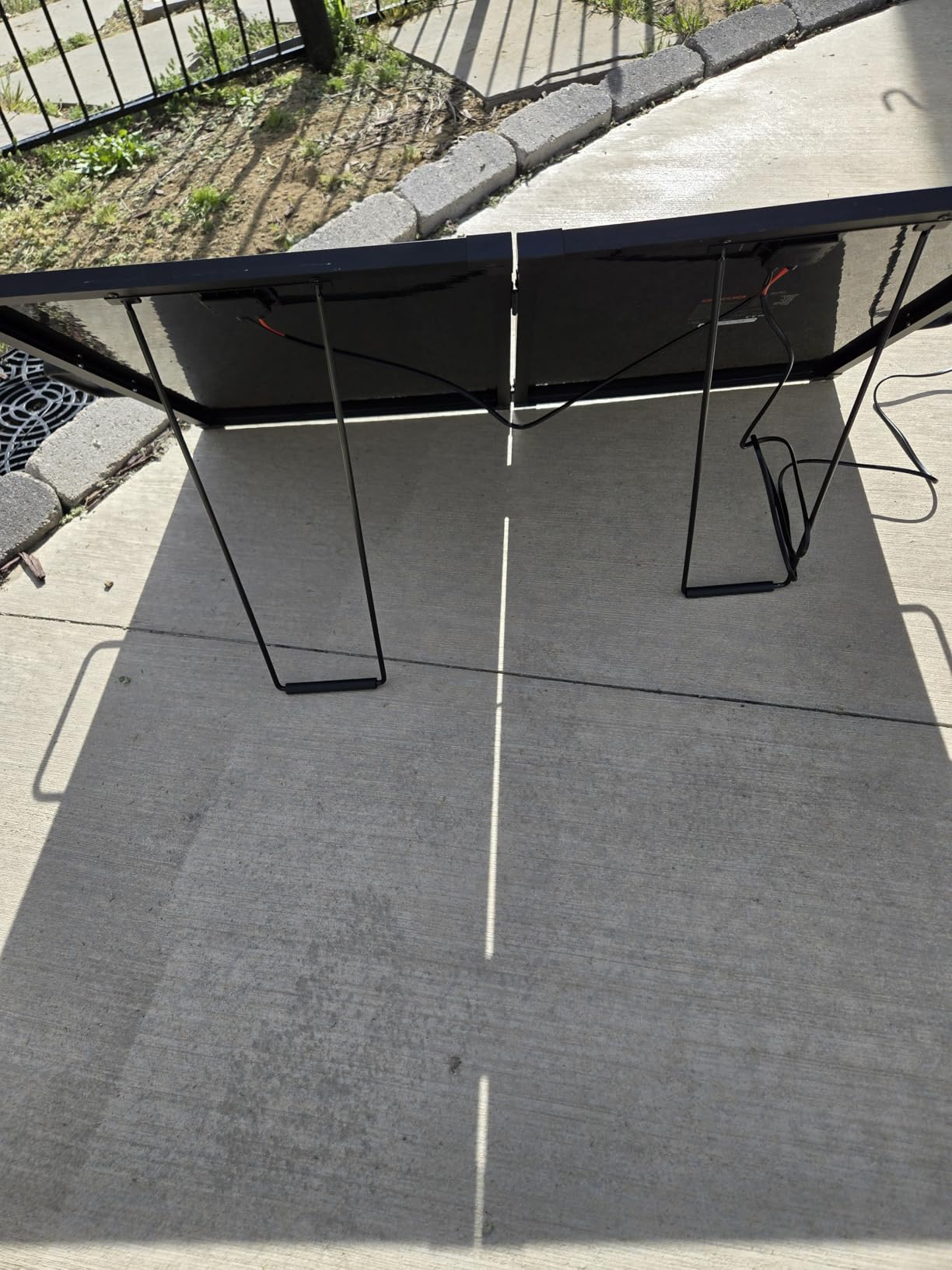
An adjustable mounting bracket lets you dial the angle toward the sun, which matters more than most buyers expect once winter low-angle light arrives. Owners report 150 watts at 18V and 8.33A, and the controller carries reverse polarity, overcharge, overload and short circuit protection.
What to check before you buy
Weight and bulk are the costs. At 22.4 pounds this is the heaviest unit in the 100W to 160W class, and the 35.8 by 35.4 inch unfolded footprint is a large square of glass to handle in wind. It is a car-and-setup panel rather than a walk-up panel.
It also uses PWM rather than MPPT, so you accept lower harvest efficiency in exchange for the swappable simplicity. The 4.3 average with 67% five-star and 19% four-star suggests broadly positive but unexcited sentiment.
Who should look elsewhere
Carrying this panel to a remote campsite is not the use case it suits. If the panel needs to be where the sun is and the sun is not where the vehicle is, you will want one of the 8 to 11 pound options in this roundup instead.
11. Ecosonique 200W Foldable – Best Light 200W Option
Ecosonique 200W Portable Foldable Solar Panel MC4 Output for Power Station
200W at 23.5% efficiency
11 lb
6-fold to 18.04x16.35x2.95 in
USB-C PD 45W
Pros
- Lightest 200W foldable here at 11 lb
- Reviewers measure 130-152W with strong low-light output
- USB-C PD3.0 45W and USB-A QC3.0 direct charging
- Intelligent chip with over-current
- over-voltage and short circuit protection
- Grommets let it hang on tents
- RVs or trees
Cons
- 12% one-star share is the highest in the group
- Panels reported curling and fading in extreme heat
- Smallest review base here at 121 ratings
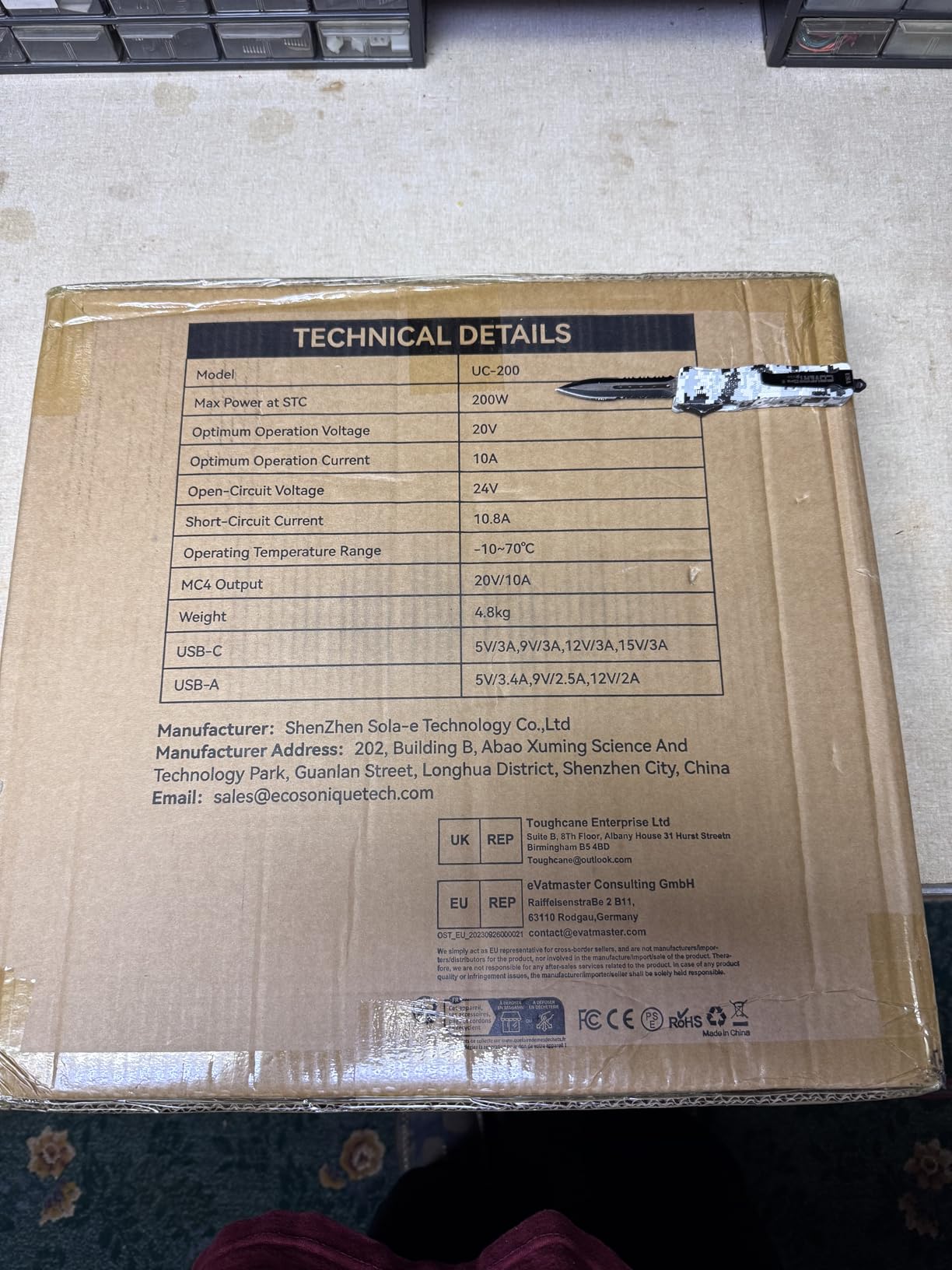
200 watts at 11 pounds is the combination you will not find elsewhere in this roundup. Every other 200W panel here weighs between 16.3 and 42 pounds, and this one gets there with a six-fold Oxford cloth and CPC laminate design rather than a glass and aluminum frame.
The grommets are a detail worth noting. They let you hang the panel on a tent, an RV awning or a tree branch, which opens up placement options that kickstand-only designs simply do not offer on uneven or vertical surfaces.
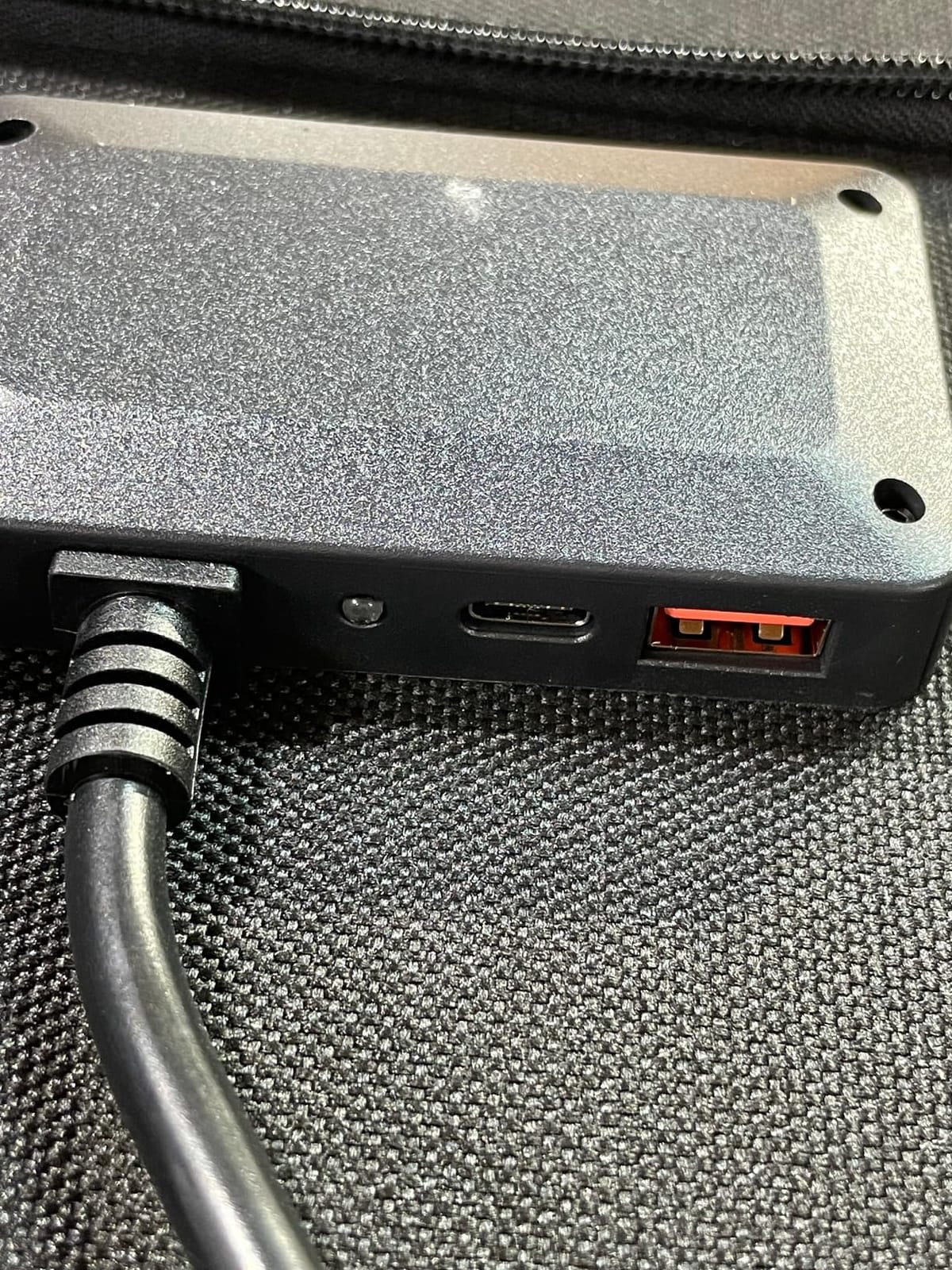
It also carries USB-C PD3.0 at 45 watts and USB-A QC3.0 for direct device charging, plus an intelligent protection chip with over-current, over-voltage and short circuit protection and an auto-reboot function. The included kit covers a 3 meter MC4 cable and an adapter lead for XT60, Anderson, DC7909 and DC5525.
Buyers who like it report 130 to 152 watts and specifically praise low-light and shaded output, which is where soft ETFE-style panels often underperform.
What to check before you buy
This is the widest sentiment spread in the roundup. The 4.2 average includes a 12% one-star share, the highest here, and those critical reviews describe the panel curling and losing output after about a month of daily use in extreme heat. That is a specific and believable failure mode for a fabric-lamination design.
The review base is also the smallest at 121 ratings, so the 68% five-star share is less statistically meaningful than the 2,376-rating profile of the Voltset. The 12-month warranty is the thinnest safety net in this group.
Who should look elsewhere
If your panel will live in desert heat or bake on a roof all summer, a glass-framed panel like the Goal Zero Boulder is a better bet for heat resistance. This one is built for weight and portability, and the trade is visible in the reviews.
12. Goal Zero Boulder 200 Briefcase – Highest Output Briefcase Form
Goal Zero Boulder 200 Briefcase, 200-Watt Monocrystalline Solar Panel with Kickstand, Portable Solar Panel for Camping and Tailgating, Emergency Solar Power
Two hinged 100W panels
200W total
42 lb
21% efficiency
Pros
- Top capacity of the Goal Zero briefcase line with glass and aluminum frame
- Users report up to 139-160W charging non-Goal Zero stations
- Pop-out legs with stake-down loops for field stability
- Zero-noise and zero-emission operation
- Corner protection holds up to regular transport
Cons
- Heaviest product in this roundup at 42 lb
- Carry bag zipper forces awkward two-handed lifting
- 1-year limited warranty is the shortest here
The Boulder 200 is the top of the briefcase line, pairing two hinged 100W flexible monocrystalline panels for 200 watts total. Owners report 139 to 160 watts in use, and it will charge non-Goal Zero power stations with the right adapter cable.
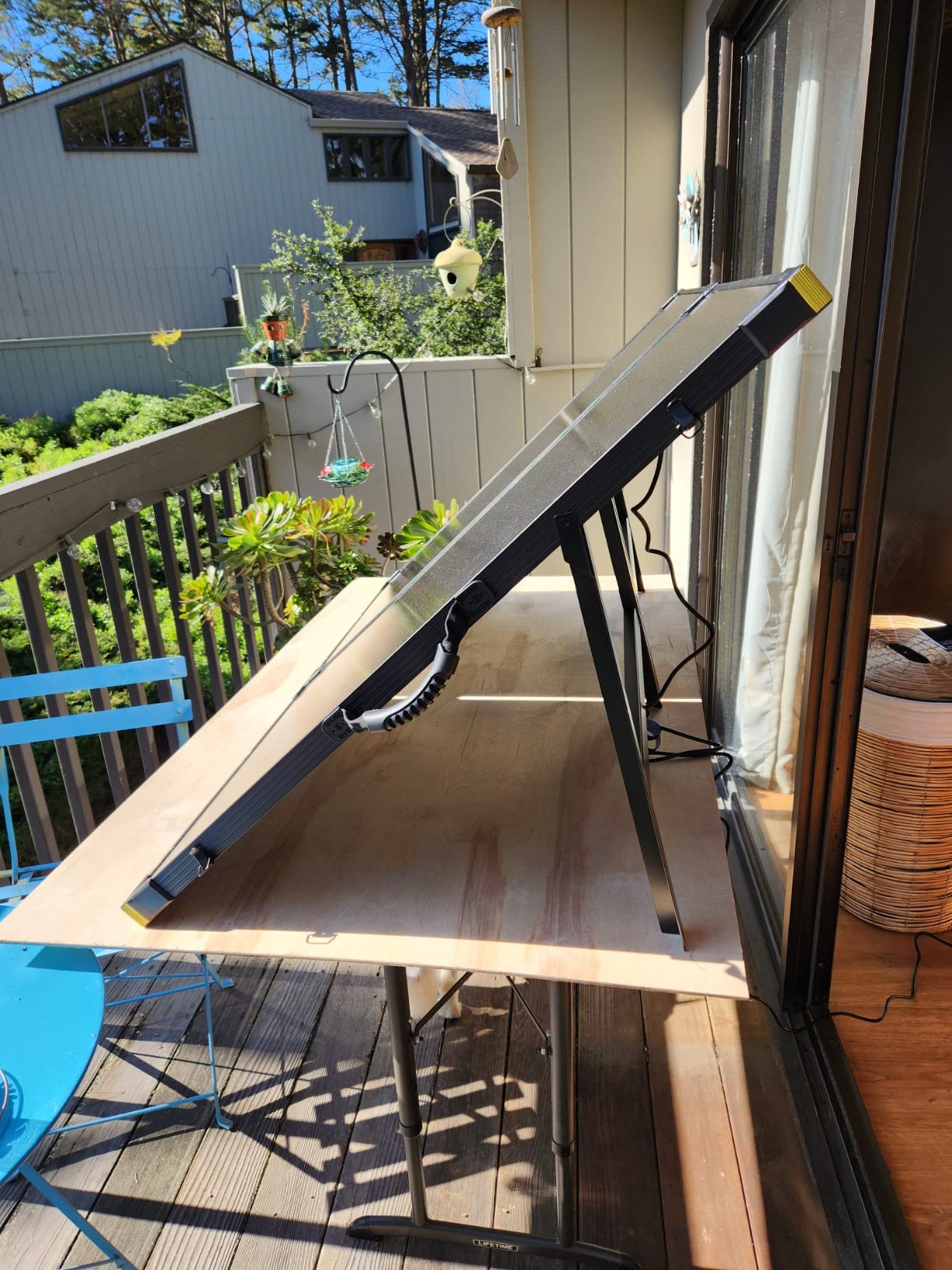
The pop-out legs with stake-down loops are the feature that makes it a genuinely different product rather than a bigger version of the Boulder 100. Staked legs hold a panel steady in a way no kickstand in this roundup manages, which matters on uneven ground or in wind.
At 21% efficiency, it is the lowest conversion rate in this roundup, and that shows up in the reported output. A 200W panel that lands at 140W in full sun is doing less with the same surface area than a 23.5% or 25% cell panel of the same size.
The glass and aluminum frame with corner protection is the durable part, and the canvas carry bag is included. Buyers consistently praise the construction and several recommend lighter alternatives, which tells you exactly where this product sits.
What to check before you buy
At 42 pounds, this is the heaviest product in the roundup, and the complaints about the carry bag are about ergonomics rather than weight alone. The zipper and opening force force awkward two-handed lifting every time you repack it, and the pointed legs drag through dirt when you reposition the panel.
The one-year limited warranty is also the shortest here, on the product with the most mass and the lowest efficiency. That combination is hard to justify except on durability grounds.
Who should look elsewhere
Almost anyone carrying it solo. If you are moving this panel from a vehicle more than a few steps, the 11-pound Ecosonique or the 8.4-pound ALLPOWERS will be moved far more often, and neither asks you to wrestle with a canvas bag to do it.
How to Choose a Solar Suitcase
The five decisions that actually determine whether a solar suitcase works for you are controller type, wattage against battery size, real output versus label output, carry weight, and connector coverage. Everything else on a product page is decoration. Here is how to think through each one.
MPPT or PWM: the most important spec on the page
A charge controller is the brain between the panel and your battery, and the two common types behave very differently. A PWM controller simply clips the panel voltage down to the battery voltage, discarding the excess as heat, so you lose a meaningful share of what the panel collects. An MPPT controller tracks the panel’s true maximum power point and converts that excess energy into usable charge current.
Buyers report roughly 30% better conversion from the MPPT controller in the Voltset kit than from PWM controllers of the same rating. In a category where the difference between 148W and 191W measured output decides whether your battery refills by dinner, that gap matters. The Voltset 100W is the only kit in this roundup that ships a genuine MPPT controller; the Renogy kits, the DOKIO, and the ACOPOWER all use PWM.
Match panel wattage to your battery capacity
A rough sizing rule keeps you out of trouble. Many production solar generators pair a 100W to 200W panel with a power station in the 500Wh to 2000Wh range, which is a sensible ratio because the panel tops the battery up over a day of sun rather than refilling it from empty overnight.
The mistake to avoid is a small panel feeding a very large bank, where the panel becomes a rounding error and you will wait days for meaningful charge. If you own a 2,000Wh station, a 200W panel is a reasonable companion. If you own a 500Wh station, a 160W or 200W panel can effectively refill it in a single strong day, which is why our solar generator picks for van life lean toward higher panel wattage.
Read real output, not the label
The gap between printed wattage and measured wattage is the most useful number nobody puts on the listing. Across this roundup, reported measurements range from 115W to 191W on panels all labelled 200W. That is a spread of more than 70 watts on the same nominal rating.
Several patterns explain the spread. N-type 16BB and A+ grade monocrystalline cells, at 25% efficiency, sit at the top of the measured range, with the Renogy 200W, SOKIOVOLA and EBL panels all landing between 170W and 191W. Soft fabric-lamination designs report lower figures, with the Ecosonique at 130 to 152W. Kickstands matter enormously too, and the ZOUPW’s four adjustable legs are reported to capture 25 to 30% more energy than flat-laying.
Weight and folded size decide portability
Weight in this roundup ranges from 8.4 pounds to 42 pounds, and that is a 5x spread within one product type. The categories are straightforward. Under 12 pounds means you can carry it from the vehicle solo and even walk a distance with it. 12 to 22 pounds is a one-person lift but a two-hand carry over rough ground. Above 25 pounds and the panel effectively lives where the vehicle parks.
Folded size matters as much as weight. The Ecosonique folds to 18.04 by 16.35 by 2.95 inches, the SOKIOVOLA to 21 by 23 inches, while the DOKIO unfolds to 35.8 by 35.4 inches. Check that the folded package fits the storage space you actually have, not the spec sheet dimension.
Connectors, cable length and direct charging
Connector coverage is where a good panel becomes a usable one. The common standard is MC-4 on the panel end, and everything after that varies. The EBL cable covers XT60, Anderson, DC790*09mm and aviation plugs in one lead, the SOKIOVOLA and ZOUPW ship 5-in-1 adapters, and the Ecosonique covers XT60, Anderson, DC7909 and DC5525. Check your power station’s input connector before buying.
Cable length is the second consideration and the more commonly overlooked one. The DOKIO’s 9.8 foot run and the ZOUPW’s 10 foot 5-in-1 cable let the panel sit in full sun while the battery stays shaded, which extends battery life. The EBL’s short factory cable and the SOKIOVOLA’s roughly four-inch MC4 pigtail both require a longer run to achieve the same placement.
Finally, check output voltage against your station’s input range before you commit. Panels here run from 12V through 18V to around 21.5V and 24V, and a mismatch means the panel will not charge through the station’s own controller no matter how good the cells are.
Glass, ETFE and warranty length
Panel construction splits cleanly into tempered glass in an aluminum frame, and ETFE or fabric lamination on a lighter chassis. Glass resists heat, scratches and UV degradation and typically carries longer warranties, which is why the Goal Zero Boulder 100 leads this roundup on rating at 4.7 stars. Laminated panels weigh less and fold smaller, and cost you some long-term heat resistance.
Warranty length varies from one year to 25 years in this roundup. The DOKIO’s 25-year transferable output warranty is the outlier, the Renogy 200W carries three years, the ACOPOWER panel and the Goal Zero Boulder 100 offer five years and two years respectively, and the EBL and SOKIOVOLA sit at one year and 12 months. Read the output warranty separately from the workmanship warranty, because they are often very different numbers.
Frequently Asked Questions
Are solar suitcases actually worth it?
Yes, as a portable charging source, not as a primary one. A folding solar suitcase lets you collect energy wherever you park, which is genuinely useful for camping, tailgating and topping up a power station in the field. It is not a replacement for wall charging, because real solar yield runs well below panel nameplate and a full refill takes days of good weather. Treat it as a supplement, not a substitute.
How long does it take to charge a battery with a 200W portable solar panel?
Divide the battery’s watt-hour capacity by the panel’s real output, then add losses. A 200W panel realistically delivers 130 to 190W depending on cells, angle and weather, so a 1000Wh battery needs roughly 6 to 10 full peak-sun hours, which usually means two to three calendar days. Remember that a controller only harvests while the sun is high and unshaded.
Are portable solar panels waterproof?
Partly. Many panels in this roundup carry IP65 or IP68 ratings, which cover the laminated surface and junction box against dust and water. None are rated for full submersion, and a low IP rating applies to the surface only, not to every connector. Never leave a connection exposed in heavy rain, and use a cover when the panel is deployed in dusty or wet conditions.
What size solar panel do I need for a 100Ah lithium battery?
A 100Ah lithium battery stores about 1280Wh, so a 200W panel is the practical match and a 100W panel works as a slower top-up. Size the panel to the bank rather than the reverse, and confirm the panel’s output voltage sits inside your charge controller’s input range. Check chemistry too, because LiFePO4 and NMC lithium accept different charge profiles.
Do I need a charge controller with a portable solar panel?
Only if you are charging a bare battery. Portable power stations have an internal MPPT solar controller, so a panel with a clean MC-4 output can plug straight in. If you are charging a standalone 12V battery, you need a controller, and choosing MPPT over PWM is the single best upgrade you can make for panel performance.
Final Verdict: Which Solar Suitcase Should You Buy?
The Voltset 100W MPPT Kit is the best solar suitcase for most people, because a real MPPT controller harvests more of every hour of sunlight than anything else in this roundup and it is supported by the largest review base we found. Buy the Renogy 100W N-Type Kit if you want current-generation N-type cells and a lighter carry weight for less, and buy the Goal Zero Boulder 100 if the panel needs to survive a decade of sun with a glass and aluminum build.
Whichever you choose among the best solar suitcases, match the panel wattage to your battery, buy the MPPT controller if you are charging a bare battery, and set your expectations from measured output rather than the number printed on the label. All rankings and figures in this guide were checked against manufacturer listings and owner reports as of 2026.