
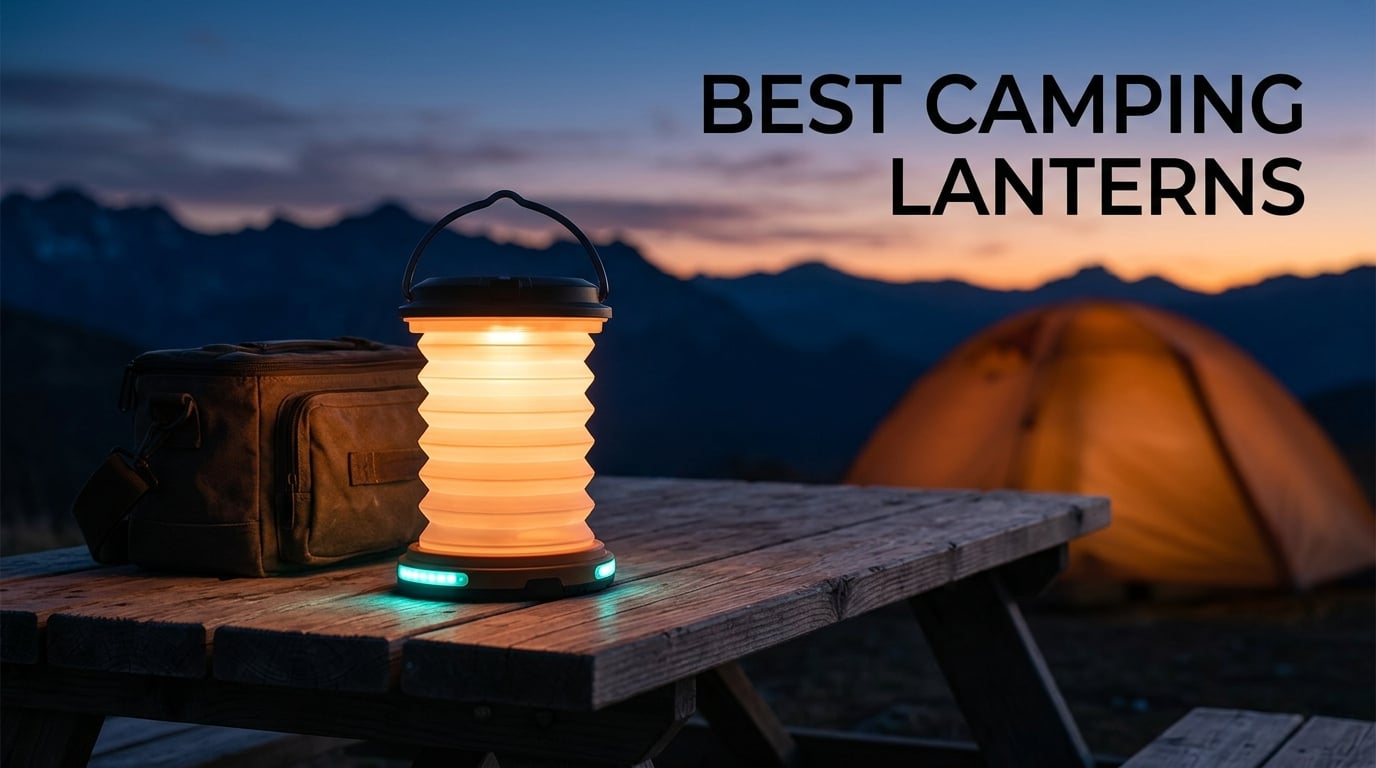
A camping lantern is a light that throws illumination in every direction instead of throwing a beam at one spot. That single difference is why a lantern lights a cooksite, a tent ceiling, or the path to the bathroom while a flashlight only lights the ten feet in front of your face. If you are building a kit, the lantern is the piece you will use every single night.
We spent weeks going through the best camping lanterns on the market, reading the fine print on runtime claims, weighing bodies in hand, and checking which ones still light up after a season in a garage. The list below covers twelve options across every budget and trip type, from a four-pack of AA-powered lanterns for a car trunk to a floating waterproof model built for rain.
One warning before you start shopping. Almost every “up to 150 hours” number you will read is measured on the lowest brightness setting, not the setting you actually use at dinner. We flag the per-mode runtimes throughout this guide so you can size the right lantern to the length of your trip.
Table of Contents
Top 3 Best Camping Lanterns of 2026
The Etekcity 4-Pack takes our top slot because it does the least amount of fussing for the most people: no charging cables, no dead built-in cells after two winters, and four units for the price of one premium lantern. The EZORKAS 2-Pack is the one to beat on features per dollar, with dual power and a magnetic base. The Streamlight Siege Compact is the durability answer, with a floating IPX7 body and a limited lifetime warranty.
Best Camping Lanterns in 2026: The Full Spec Sheet
Every lantern below is listed with its real maximum output, its stated runtime, and where the power comes from. Read the power source column first, because it decides how long the light lasts and what happens when it dies in the field.
A note on the table. The 1800-lumen AYL and the 1000-lumen models are built for a driveway, a garage, or a basecamp table where you need to light a wide area. For hanging inside a tent, the 75-lumen LuminAID and the 154-lumen Etekcity are far more usable, because a 1000-lumen bulb at head height will keep you awake all night.
1. Etekcity LED Camping Lanterns 4-Pack – The One Most People Should Buy
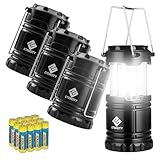
Etekcity LED Camping Lanterns, Battery Included, 4 Pack
154 lumens
3 AA batteries
50 hours
4 pack, 9.12 oz
Pros
- Collapses flat like a smartphone
- 30 LED bulbs with 360 degree output
- 50 hours on 3 AA cells
- storage compartment in the top for keys or spare cells
- no charging cable to lose
Cons
- Modest 154 lumen output
- no USB charging or power bank function
- brightness is set by lantern height not a mode button
This is the lantern we hand to friends who ask for a single recommendation. It runs on three AA cells, and AA cells are the one thing you can buy in any town on any road anywhere in the world, which removes the single biggest failure risk in a small lantern.
The design is a folding column of thirty LEDs. Pull it open and it turns on, collapse it and it goes off, and how far you extend the shaft sets the brightness. It takes about ten seconds to work out and then it becomes automatic.
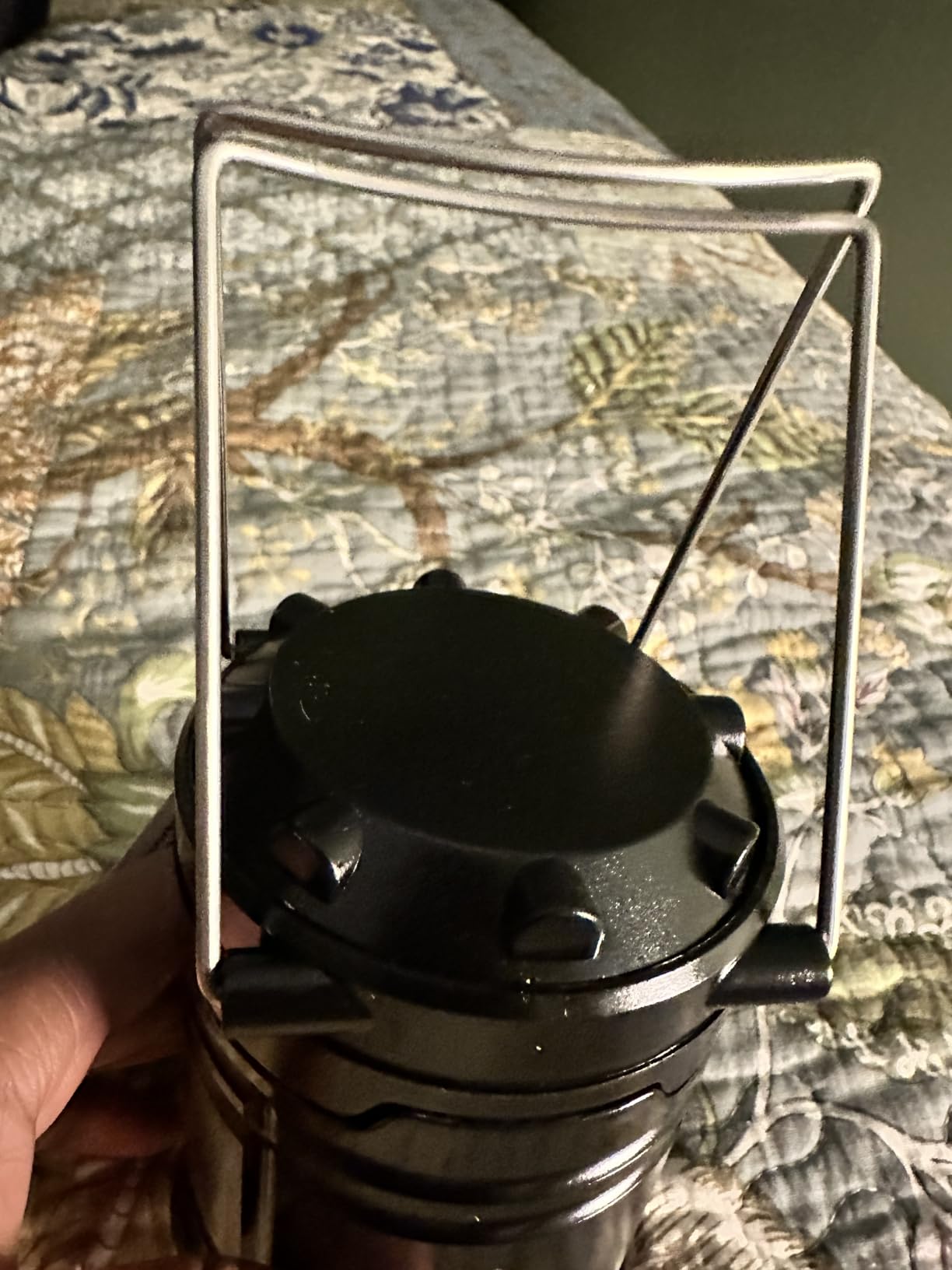
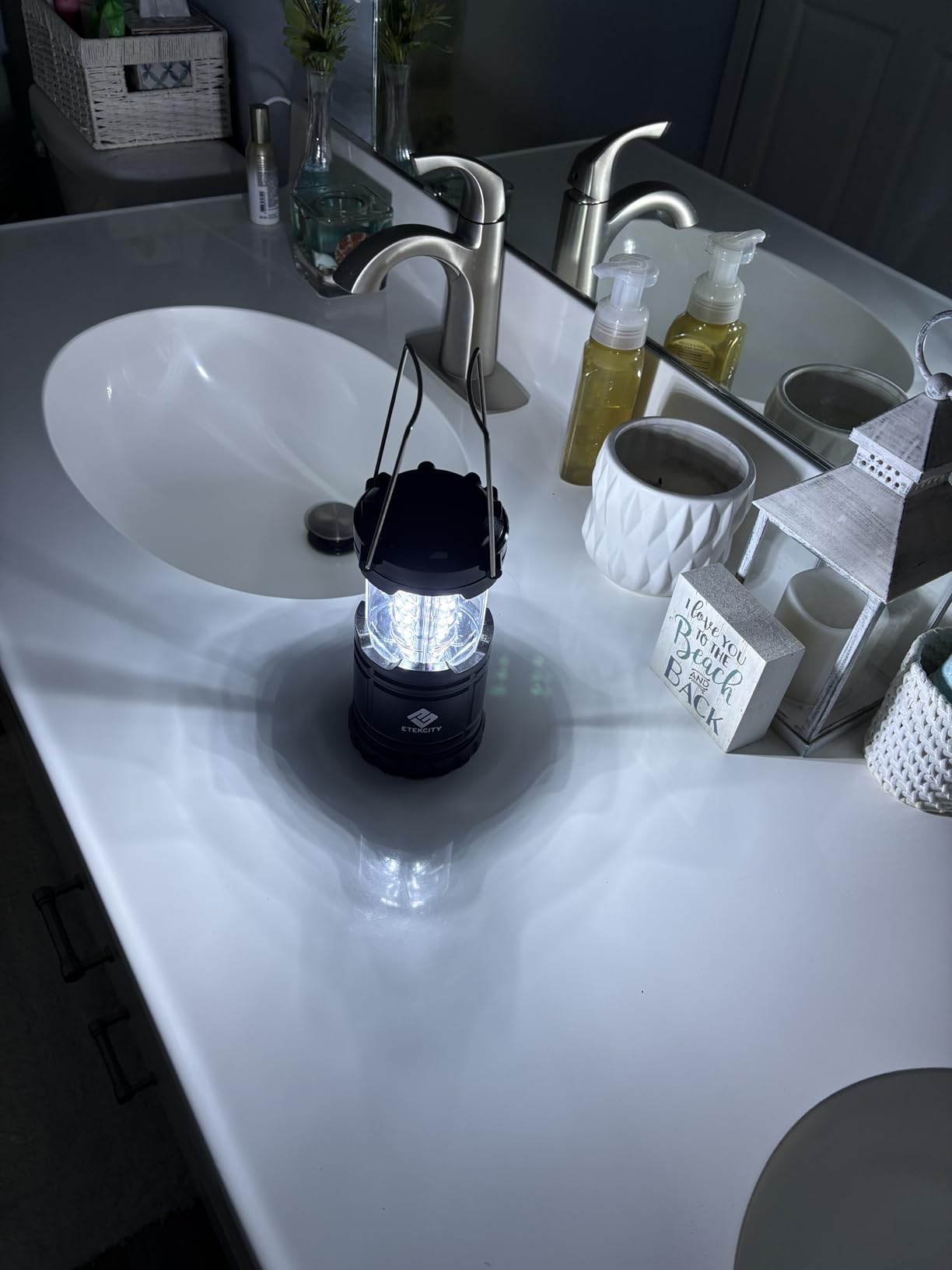
What you give up is raw output. At 154 lumens it will not light a whole basecamp, but it is more than enough for a table, a two-person tent, or a kitchen shelf. Reviewers consistently call the brightness adequate rather than impressive, and that is the honest description.
The four-pack format is the quiet advantage. One lives in the pack, one in the car, one in the cabin, and one gets left at home for a power cut. With 50k+ reviews behind it, the long-term failure rate on this pattern is low, and the replaceable cells mean it can outlive several rechargeable rivals.
When you should pack this one instead of something brighter
If your trips involve a car park or a gear room, choose this. There is no charging state to manage, which means it works identically on night one and on night five, and it works after six months sitting in a shed.
It is also the best value in this roundup by a wide margin when you count the four units. Spread them across a site and you have a boundary marker, a tent light, a table light, and a path light without buying anything else.
Where it falls short
The control scheme bothers people who expect a real mode button. Because brightness is tied to how far you pull the shaft open, fine adjustment is guesswork, and there is no warm light mode for reading.
It is also strictly battery powered, so it will not charge a phone during an outage. For a longer power cut, a lantern with a large built-in cell and a USB output is the better tool.
2. Lepro 1000LM Rechargeable Lantern – Bright Output With a Power Bank

Lepro 1000LM LED Camping Lantern Rechargeable, 4400mAh, 4 Light Modes
1000 lumens
4400mAh
Type-C power bank
IPX4
Pros
- 1000 lumens with 360 degree beam
- four modes including 3100K warm white
- stepless dimming on long press
- charges phones through Type-C
- hooks at both top and base for inverted hanging
Cons
- Only 6.5 hours at full 1000 lumens
- built-in battery cannot be replaced
- will not accept chargers above 5V
This is the one we reach for when a trip turns into a power cut, or when the campsite needs a light that can also top up a dead phone. The Type-C port runs both ways, so the same cable that charges the lantern charges a phone from it.
Four modes cover most situations: 6000K white, 3100K warm white, a combined setting, and a flash. The warm mode is the one campers notice most, because the cool default is the light that makes a tent feel like a hospital waiting room at 2am.
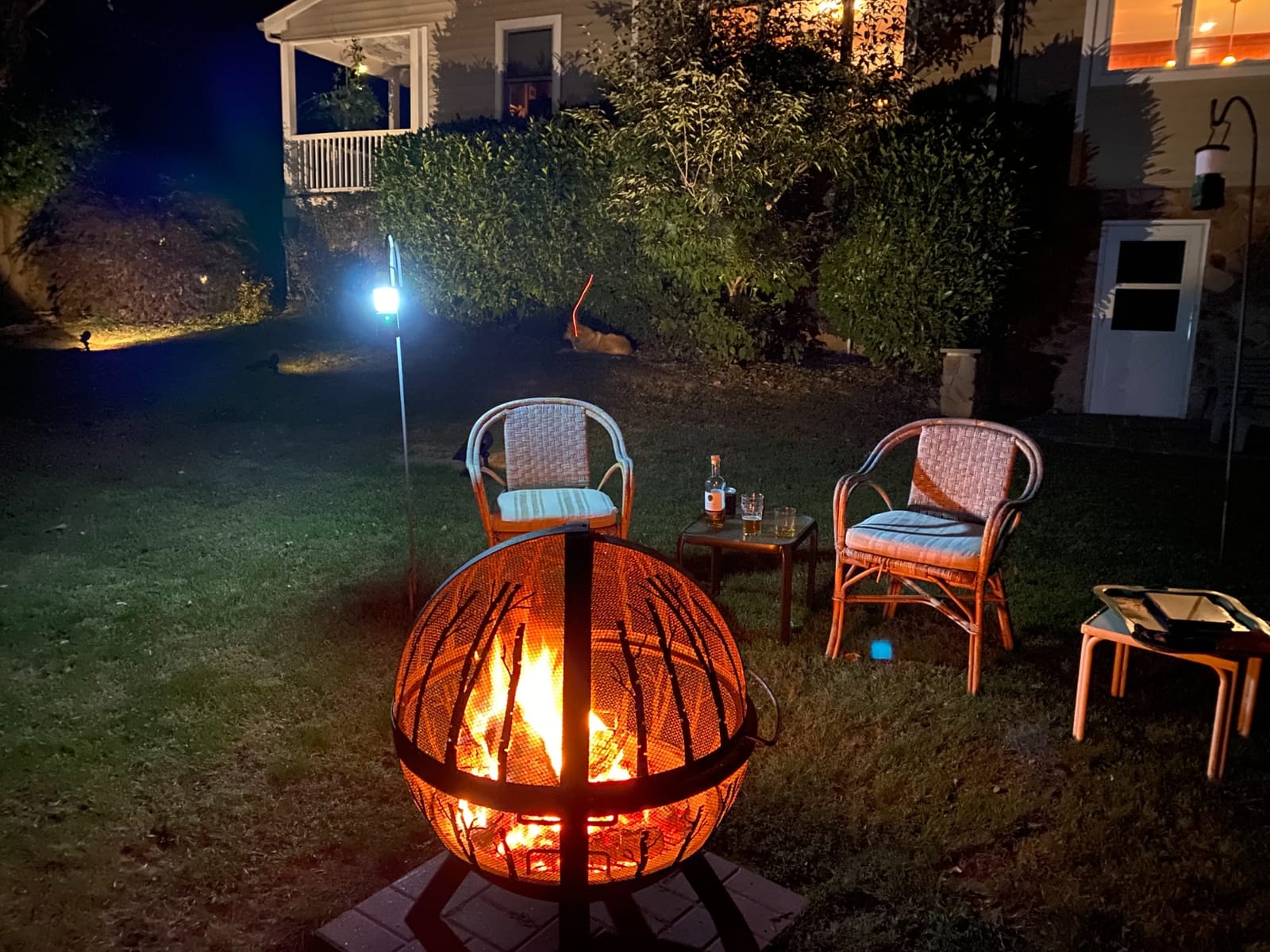
Runtime is the trade. Up to 12 hours on warm white, 8 hours on daylight, and about 6.5 hours on the combined 1000-lumen setting. If you plan to run it bright all evening, budget two nights of charging for a three-night trip.
The housing is plastic and rated IPX4, so light rain and splashes are fine but a downpour is not its friend. There is a 5V DC adapter not included, so bring your own cable if your wall plug pushes more than 5 volts.
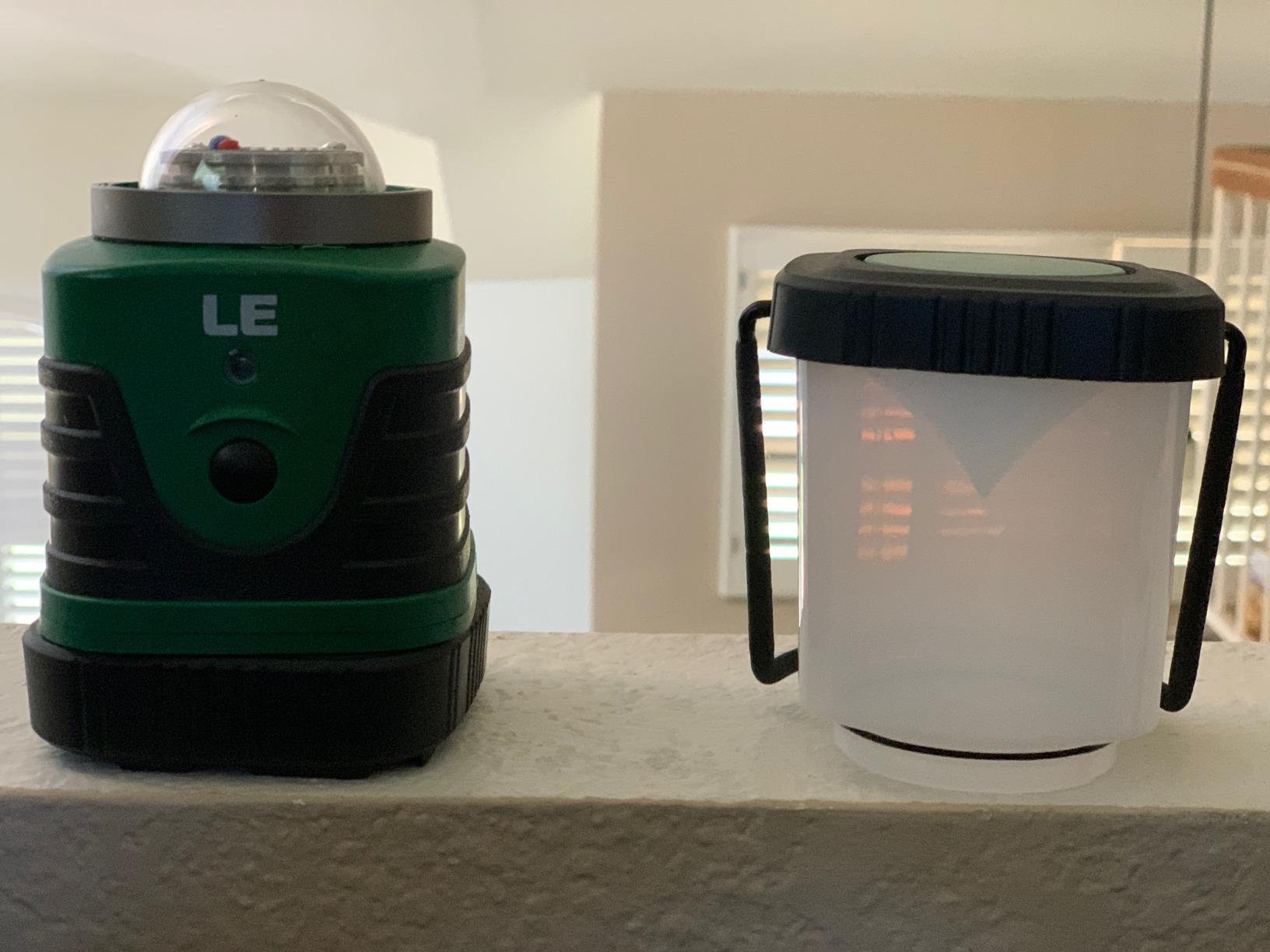
Who this lantern suits
Pick this if a single phone charge at camp is part of your plan, or if you want one device for cooking light, hanging light, and emergency signaling. The dual hooks let you hang it right side up or inverted depending on whether you need to light a ceiling or a floor.
Long-press dimming means you can set it to a level that lights a book without lighting your partner’s face. That single feature is worth more than the raw lumens for most tent campers.
Where it falls short
The 4400mAh cell is sealed inside the body. When it eventually degrades, which built-in lithium cells do after a few seasons of partial charge, there is nothing you can swap. That is the trade for the power bank function.
It is also one of the heavier units here at 550 grams, which is a real cost if you are walking it up a trail rather than carrying it in a trunk.
3. LE Rechargeable 1000LM Lantern – A Headlamp and a Lantern in One

LE Rechargeable LED Lantern, Camping Essentials, 1000LM, 5 Light Modes, IPX4 Waterproof, 3600mAh, Lantern Flashlight for Hurricane Emergency, Hiking, Home and More, USB Cable Included
1000 lm head plus 150 lm side
Cree XML LED
3600mAh
shoulder strap
Pros
- Combines a 1000 lumen headlight with a separate sidelight lantern
- power bank output charges a phone
- red flashing sidelight for emergencies
- shoulder strap plus carry handle
- five separate output settings
Cons
- Only about 2.2 hours at 1000 lumens
- bulky and heavy at 0.72 kg
- not a hanging lantern for a tent
Most lanterns force a choice: flood the area or point a beam down a trail. This one does both from a single body, with a Cree XML LED head rated at 1000 lumens and a side panel that glows outward for table and tent light.
The head settings are 1000 lumens for about 2.2 hours and 280 lumens for 4.6 hours. The sidelight gives 150 lumens for 6.3 hours, 70 lumens for 12.7 hours, and a red flashing mode for signalling.
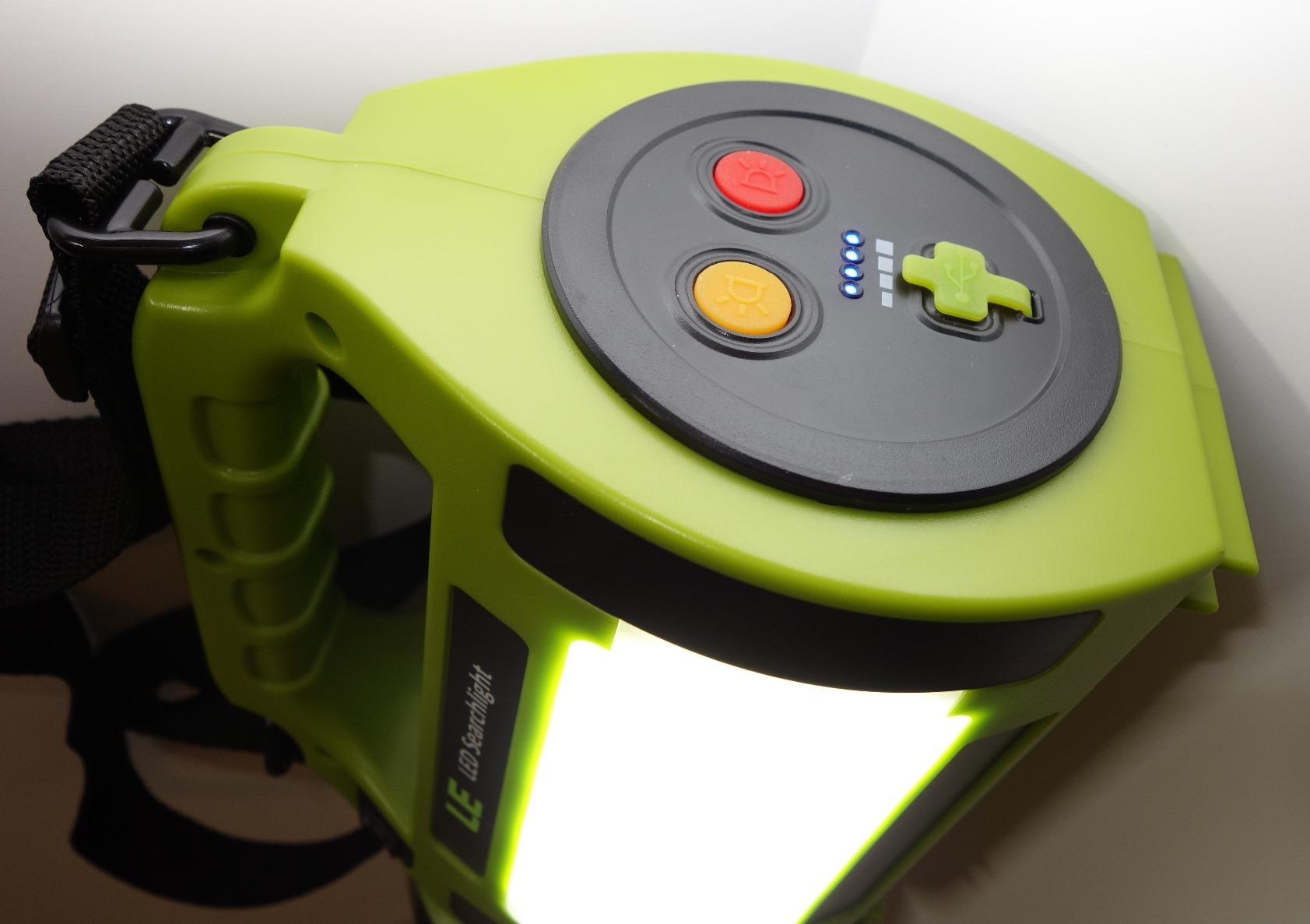
What we like is the shape of the light. A 500 meter beam distance on the head means you can check a switchback or find the trailhead without leaving the campsite, and the low 70-lumen sidelight is a genuinely gentle tent light.
The strap and handle are not decoration, either. This is the one lantern in the list designed to be carried across a site or worn over a shoulder, and reviewers say the strap is what makes it usable rather than awkward.
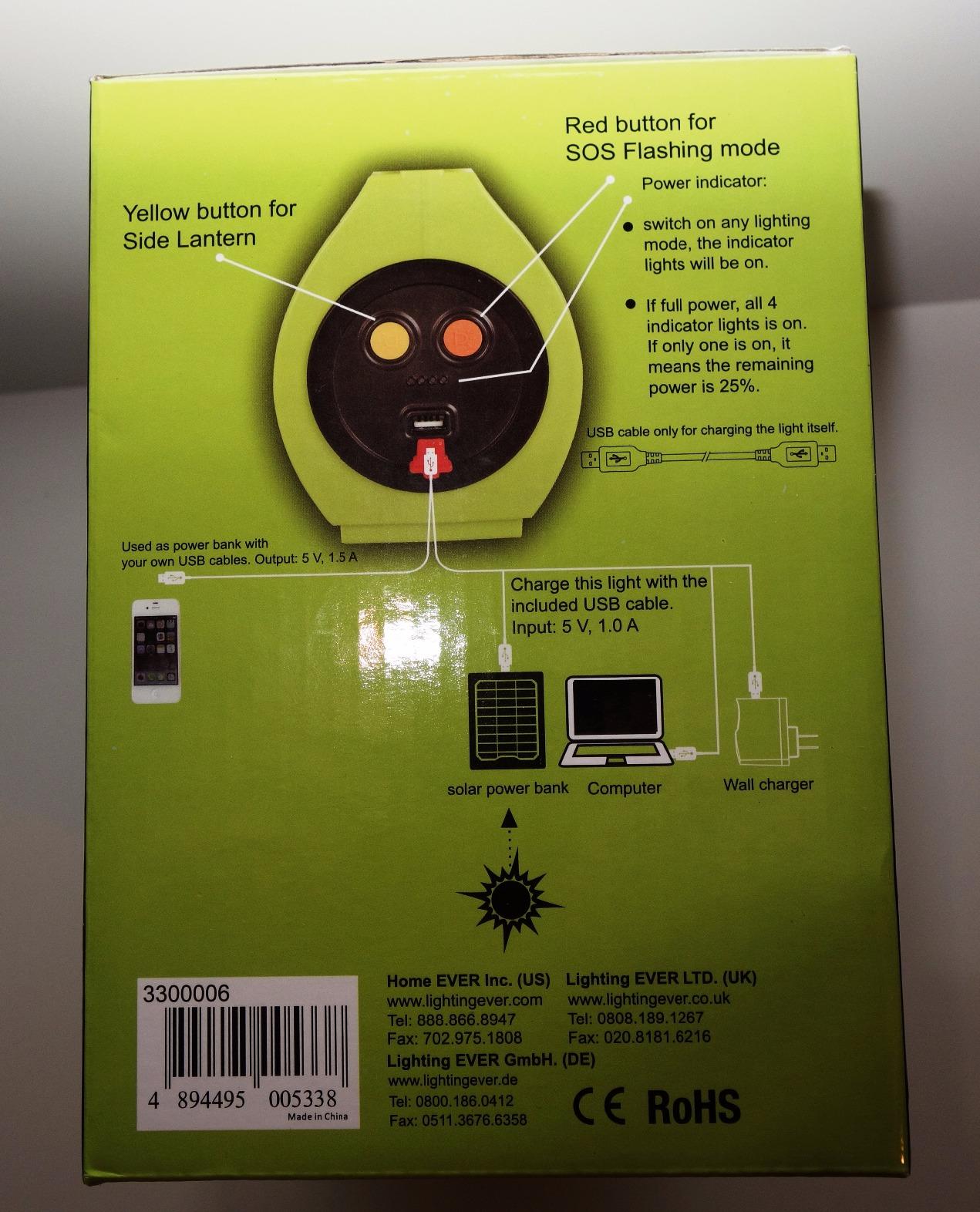
When this hybrid earns its place
Solo campers and hikers who move between tasks benefit most. Instead of a lantern and a headlamp taking two battery compartments, this does both, and the phone charging output covers the third item you would otherwise carry.
It also works well as an emergency light during a power cut, where the combination of area light and a beam lets you check a breaker panel or a basement without a second device.
Where it falls short
It is not a tent lantern. There is no proper hanging point on this body, and at 0.72 kg it is one of the heaviest units we looked at, which is hard to justify if you are on foot.
Two hours at full output is also the shortest realistic high-mode runtime in this roundup. Brightness on this class of light is a feature for a burst, not for an evening.
4. EZORKAS 2-Pack Rechargeable Lantern – The Best Feature Set Per Dollar
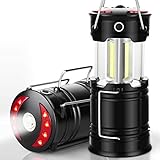
2 Pack Camping Lanterns Camping Essentials Tent Lights Camping Accessories
4 lighting modes
Rechargeable or 3 AA
3 base magnets
red strobe and SOS
Pros
- Rated 4.8 stars across 14k+ reviews
- runs on a built-in rechargeable cell or 3 AA batteries as backup
- three strong magnets on the base stick to any steel surface
- red strobe and SOS modes
- two lanterns and two USB cables in the box
Cons
- Switch is activated by pulling the handle
- AA backup cells not included
- water resistant rather than fully waterproof
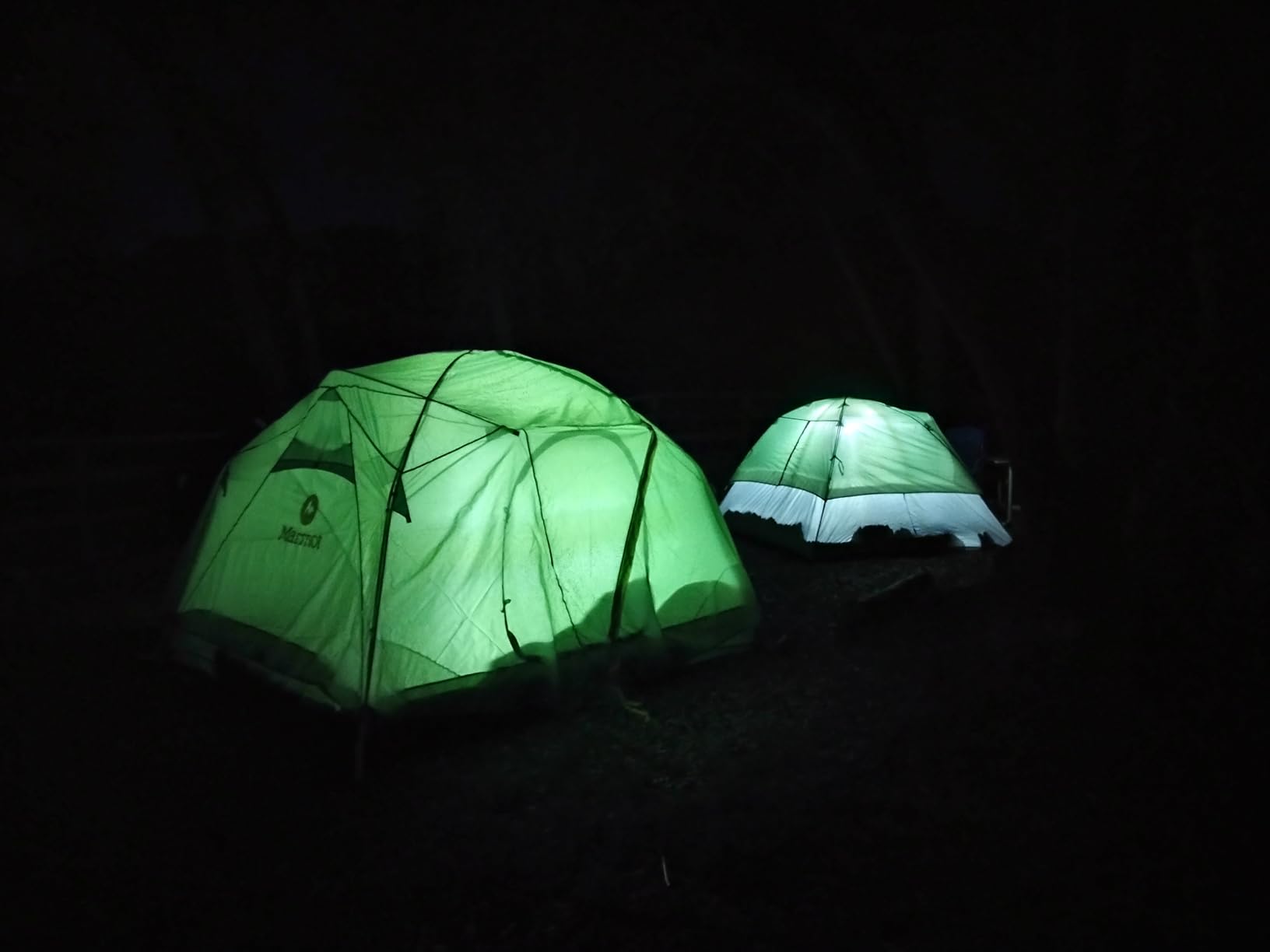
Dual power is the feature that separates this from everything else in the list. You can charge it over USB at home, top it up from a power bank in camp, and if the cell is flat, run it on three AA batteries instead of being stuck in the dark.
That redundancy changes how you pack. This is the lantern we would trust on a wet multi-night trip where a dead battery means a wet night, because there is always a second source inside the housing.
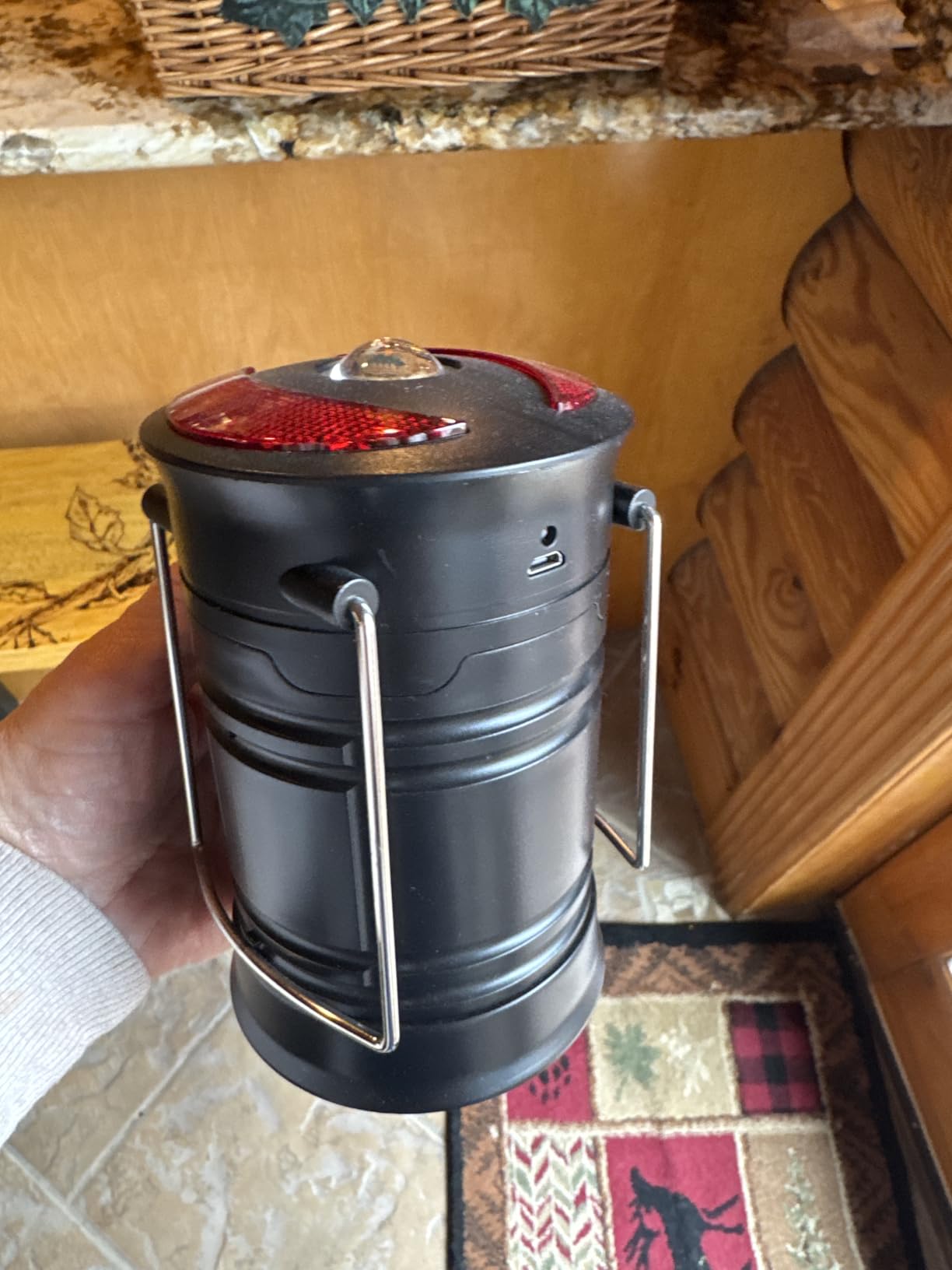
The magnets on the base are more useful than they sound. Stuck to a vehicle roof rail, a steel trailer frame, or the underside of a picnic table, the lantern hands you both hands for cooking, which is the whole problem with hand-held light.
Four modes cover normal white, low white, a warmer tone, and a red warning mode with strobe and SOS. You get two lanterns plus two USB cables in the pack, so one can live in each tent.
Why this one tests so well
It answers the question campers actually ask, which is what happens when the lantern dies. Most rivals go dark. This one takes AA cells and keeps going, and that is worth more than any amount of extra lumen.
The red warning mode also makes it a genuine safety light rather than only a comfort light, and a red mode preserves the dark adaptation you need if you are walking out to a latrine at night.
Where it falls short
The switch is the pull handle. It is genuinely confusing the first time, and a couple of reviewers describe setting the lantern down in a way that switches it off. Get used to it before you need it urgently.
It is water resistant, not waterproof, so it does not float and it should not be left in a downpour. The AA backup cells are not included either.
5. Lichamp COB Lantern 4-Pack – The Household Emergency Set

Lichamp LED Camping Lantern, 4 Pack Battery Powered Flashlight for Power Outages, Portable Collapsible Hanging Light Essential for Home, Outdoor, Emergency Lamp Survival Kit Gear for Hurricane, Gray
350 lumens
3 AA batteries
30 hours
4 pack, collapsible
Pros
- COB array gives soft even 360 degree light across about 97 square feet
- 30 hours per set of AA cells
- switchless pull-up handles
- body stays cool to the touch
- four lanterns for a house and car kit
Cons
- 350 lumens is well short of rechargeable models
- AA batteries not included
- no rechargeable cell or power bank function
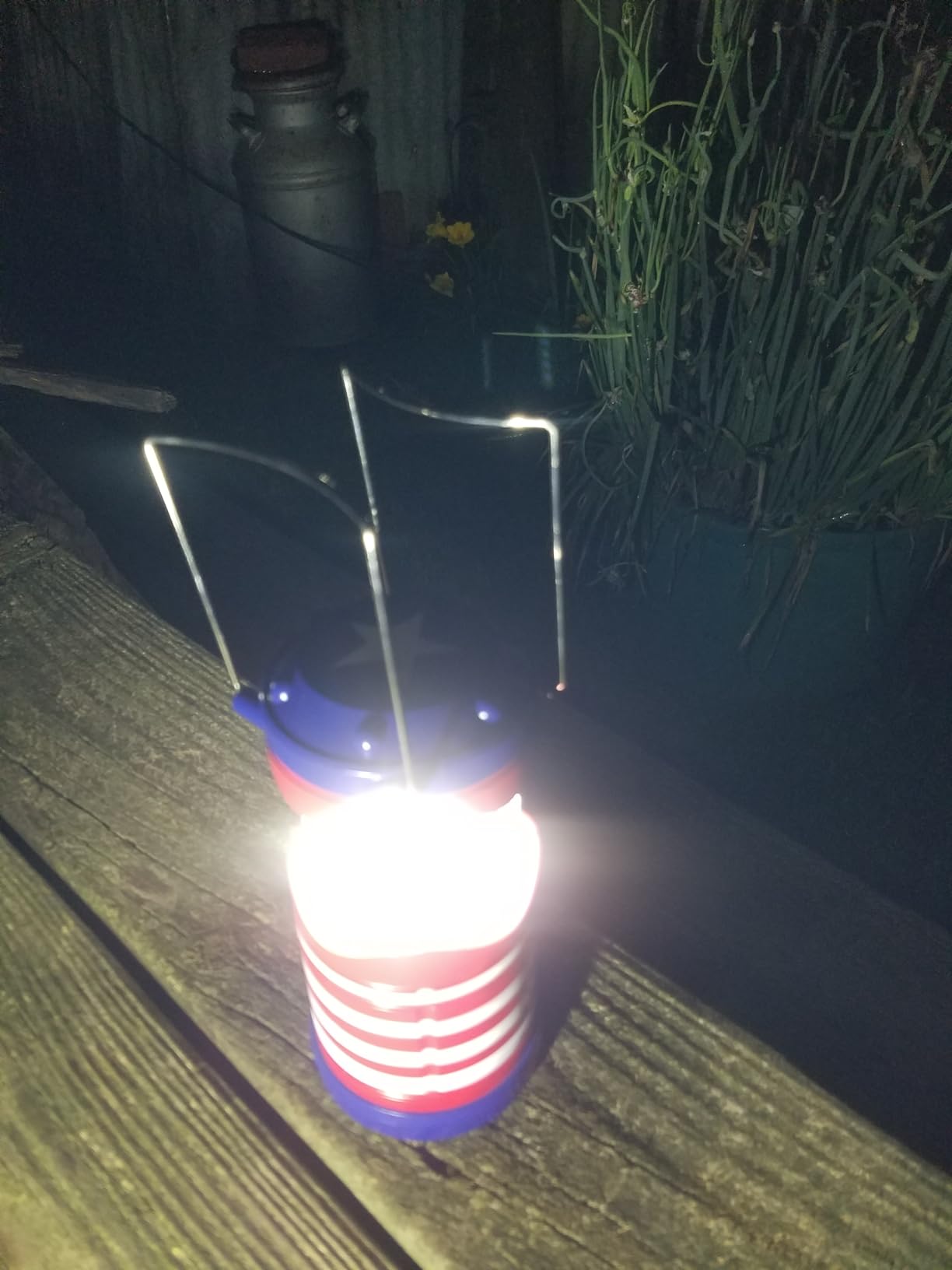
This is the one to put in a hallway closet rather than a backpack. Four collapsible lanterns, each running on three AA cells for about 30 hours, covers a blackout, a storm, or a car breakdown without anyone needing to charge anything.
The COB array is the reason the light feels different from a strip of individual LEDs. Instead of visible hot points you get one soft panel of light, which reads as much less harsh at 3am in a dark house.
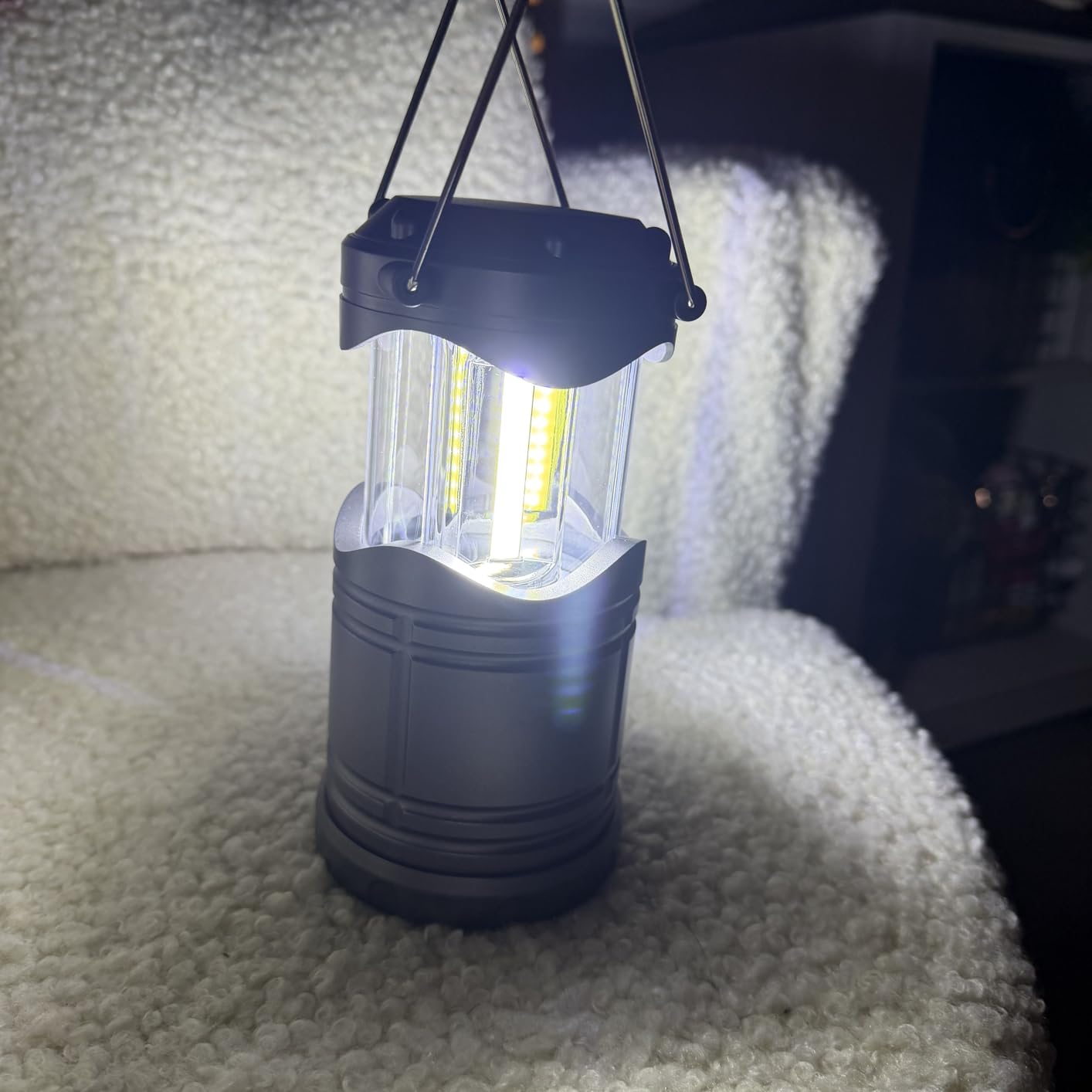
Operation is switchless. Pull the foldaway handles up to switch it on, extend them further to raise the brightness, and collapse it to turn it off. It is the same mechanical logic as the Etekcity and it works well in a panic when you are fumbling for a button.
Because the fixture stays cool while running, it can be handled or even held close to fabric without the worry that comes with a metal shade. Reviewers mention this more often than the brightness figure.
When this is the right buy
Buy this for preparedness rather than for camping. Put one in the car, one in the house, one in a go bag, and keep the fourth somewhere a neighbour can reach you.
It also suits a slow weekend at a campground where you want light near the picnic table but the site has no power and you would rather not carry a charger.
Where it falls short
At 350 lumens it will not light a campsite, and the listed weight of 1.09 kg for the pack means it is not a backpack item. These are room lights.
There is no rechargeable cell, no power bank, and no warm color mode. If you want one light that does everything, this is the wrong shape of product.
6. LuminAID Nova Inflatable Solar Lantern – The One to Carry on Foot

LuminAID Nova Inflatable Solar LED Lantern for Camping, Hiking & Travel
75 lumens
IP67 waterproof
5.3 oz
solar plus micro USB
Pros
- Only 5.3 ounces and packs down to almost nothing
- IP67 waterproof and dustproof and it floats
- shatterproof inflatable body
- up to 24 hours per charge
- recharges in about 10 hours of sun or 1 to 2 hours over micro USB
Cons
- 75 lumens is dim for a cooksite
- 120 degree beam is narrow for area light
- solar charging is slow compared with USB
Every other lantern on this list would be a significant weight decision. This one is 5.3 ounces and deflates into a pocket, which means you can carry it on a multi-day trail without rearranging your pack to make room.
It is also the most physically forgiving design here. The body inflates like a small pillow, it is shatterproof, and it is rated IP67, so it floats and survives being dropped in water. On a river trip or around children, that changes the risk calculus entirely.
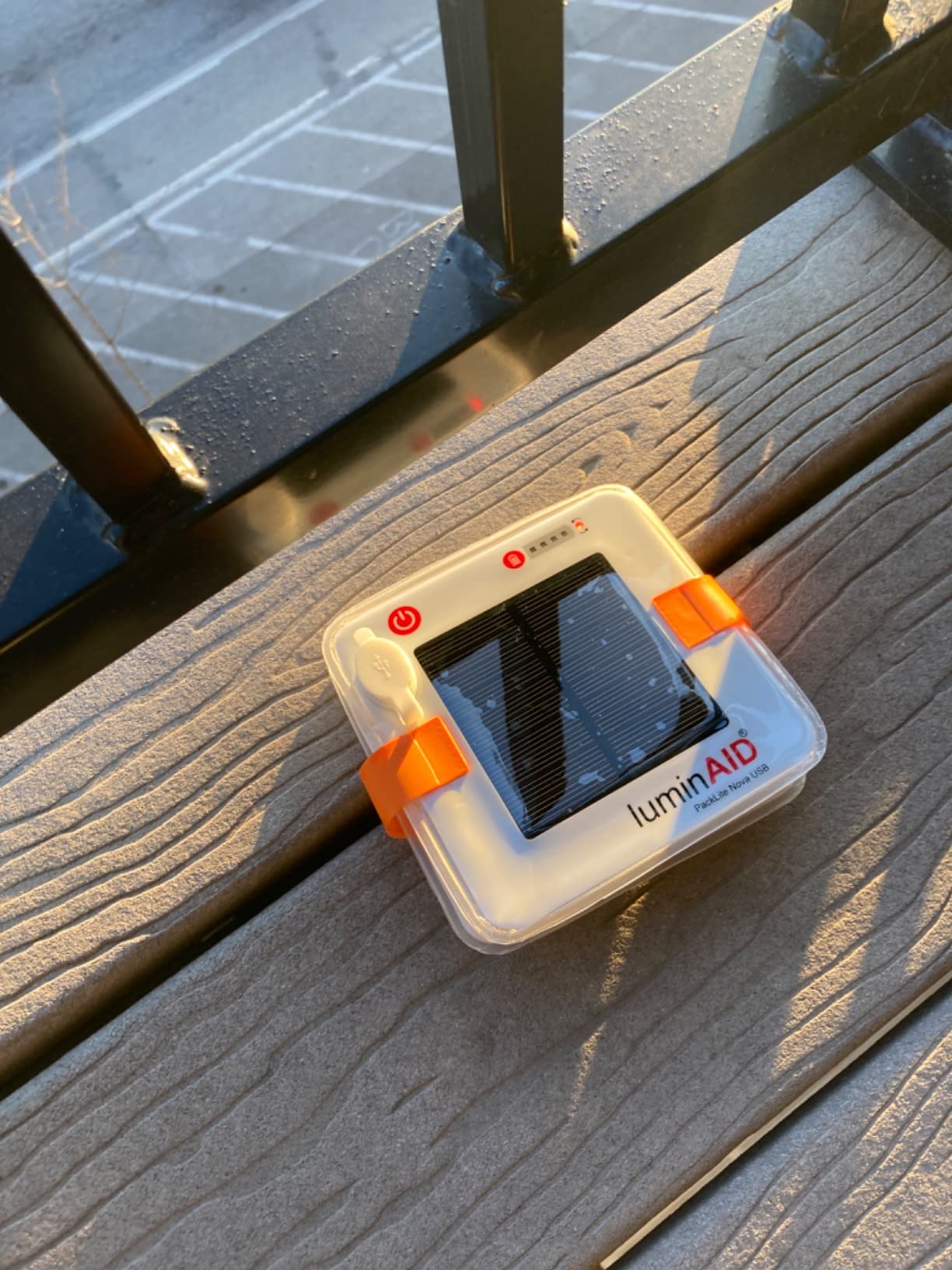
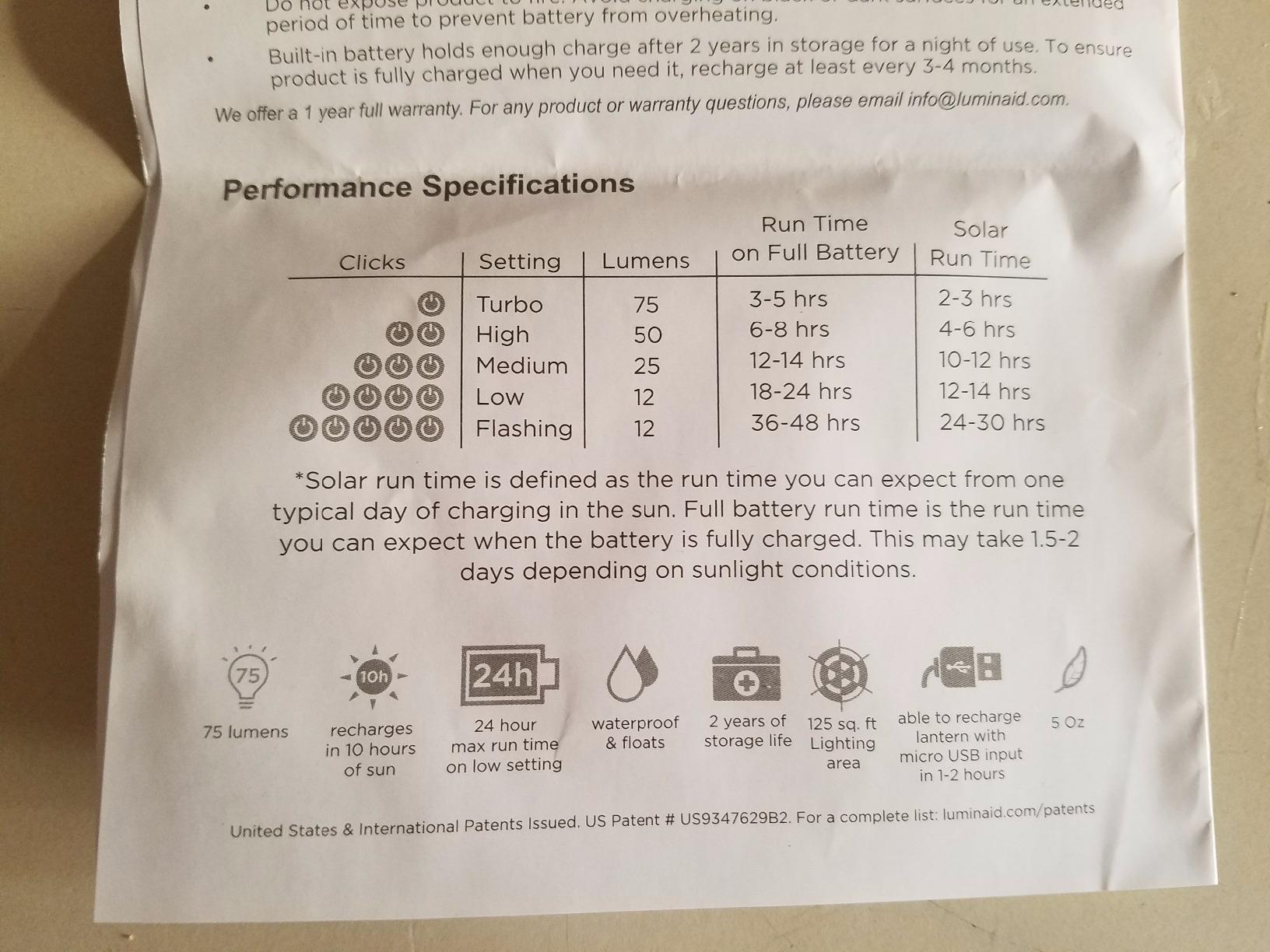
Charging is the honest part. Solar takes roughly ten hours of direct sun, which is a full day of walking for a full night of light. The micro USB route fills it in one to two hours, and that is the one you will actually use before a trip.
Forum users who pack LuminAID solar lanterns tend to be the same people who defend solar as a backup rather than a primary. On a clear week the panel keeps the lantern alive indefinitely.
What 75 lumens is actually good for
That is a reading light. It is a tent ceiling light low enough not to wake a partner. It is a marker for finding your own tent at a crowded site, and it is a small pool of light around a headlamp on a dark trail.
It is not a cook light. If you need to chop and cook for three people, bring a second, brighter light from this list and use the Nova for ambience.
Where it falls short
The 120 degree beam angle is narrow compared with the true 360 degree panels most rivals use, so you get a cone of light rather than a room of light.
Several reviewers note that solar is essentially a trickle charge and the unit is useless after a solid overcast day unless you have a USB cable with you. Plan on topping it up at home before departure.
7. Energizer WeatheReady PRO-360 – Built for a Power Cut

ENERGIZER WeatheReady LED Camping Lantern PRO-360, IPX4 Water Resistant Tent Light, Ultra Bright Battery Powered Lanterns for Camping, Outdoors, Emergency Power Outage
500 lumens
150 hours
3 D or 3 AA cells
IPX4
Pros
- Up to 150 hours of stated runtime
- 500 lumens on high setting
- works with either 3 D-cell or 3 AA cells
- impact resistant to 1 meter
- glow-in-the-dark switch you can find with no light at all
Cons
- Lowest rated in this roundup at 4.5 stars with a 6 percent one-star share
- no rechargeable cell or power bank
- D cells are heavy and not included
When the grid is down for two days, brightness matters less than endurance. The PRO-360 runs for a claimed 150 hours on high, which means a single set of cells covers an entire outage weekend in a typical household.
The flexible battery format is the smart part. It runs on three D cells for volume, or on three AAs if you are trying to keep weight down or use whatever cells you already own. Nothing about the lantern changes between the two.
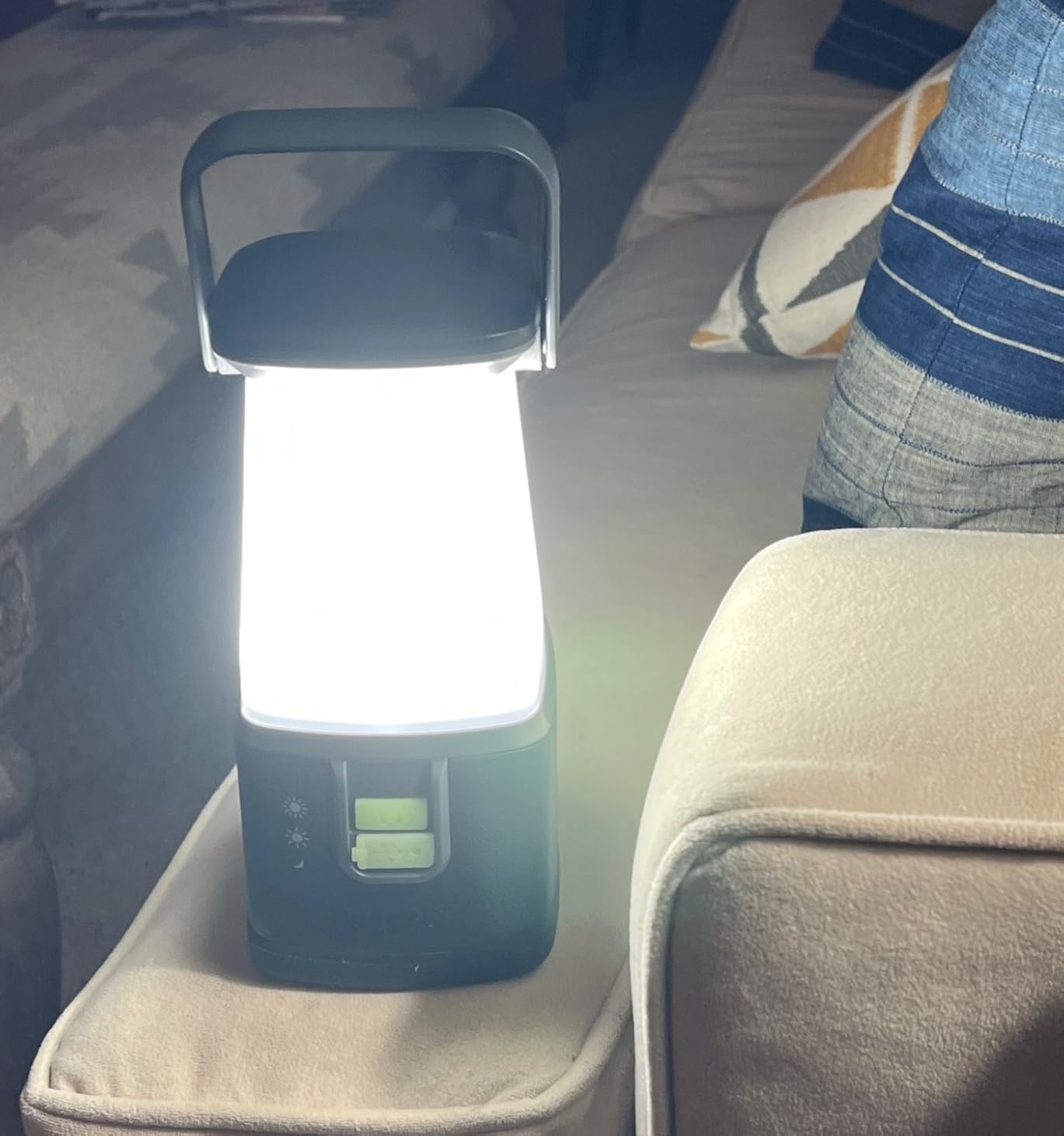
The glow-in-the-dark switch is a small design choice that earns its keep. When a storm takes the power out, the thing you need at 2am is not a beam of light, it is knowing which end of the lantern to pick up.
At 500 lumens on high it is genuinely bright enough to fill a room, and the IPX4 rating plus one meter impact resistance means a fall from a shelf is not the end of it.
Why preparedness buyers pick it
It needs no maintenance, no charging, and no proprietary cells, so a unit bought in 2026 still works in five years. That is the whole argument, and for a garage shelf it is a strong one.
It is also useful at camp as a supplementary site light, because 500 lumens on high is enough to reset a tent after dark without a separate flashlight.
Where it falls short
It carries the lowest average rating in this roundup at 4.5 stars, with a 6 percent one-star share, and the complaints concentrate on brightness control and value against newer rechargeable options. Expect two settings, not a dimmer.
There is no USB output at all, so it cannot help a phone during an outage, and three D cells are a heavy load if you are carrying it far from a car.
8. AYL 1800LM Rechargeable Lantern – The Brightest Option on the List

LED Camping Lantern Rechargeable, 1800LM, 4 Light Modes, 4400mAh Power Bank, IP44 Waterproof, Perfect Lantern Flashlight for Hurricane, Emergency, Power Outages, Home and More, USB Cable Included
1800 lumens
4400mAh
power bank
IP44, 10.25 in tall
Pros
- Brightest output in this roundup at 1800 lumens from 46 LED bulbs
- 4400mAh cell gives up to 12 hours of use
- charges phones and tablets
- four dimmable modes including a warm setting
- glare-reducing cover softens the output
Cons
- Runtime at 1800 lumens is far shorter than the 12 hour figure
- built-in battery cannot be replaced
- bulky at over 10 inches tall
When the question is how much light is available, this answers it. Forty-six LED bulbs rated to 1800 lumens, behind a glare-reducing cover that keeps the panel from being painful to look at directly.
It doubles as a power bank for phones and tablets, and the 4400mAh cell holds more charge than most power banks people carry on a day trip. The manufacturer note to recharge it every 3 to 6 months when stored is worth following.
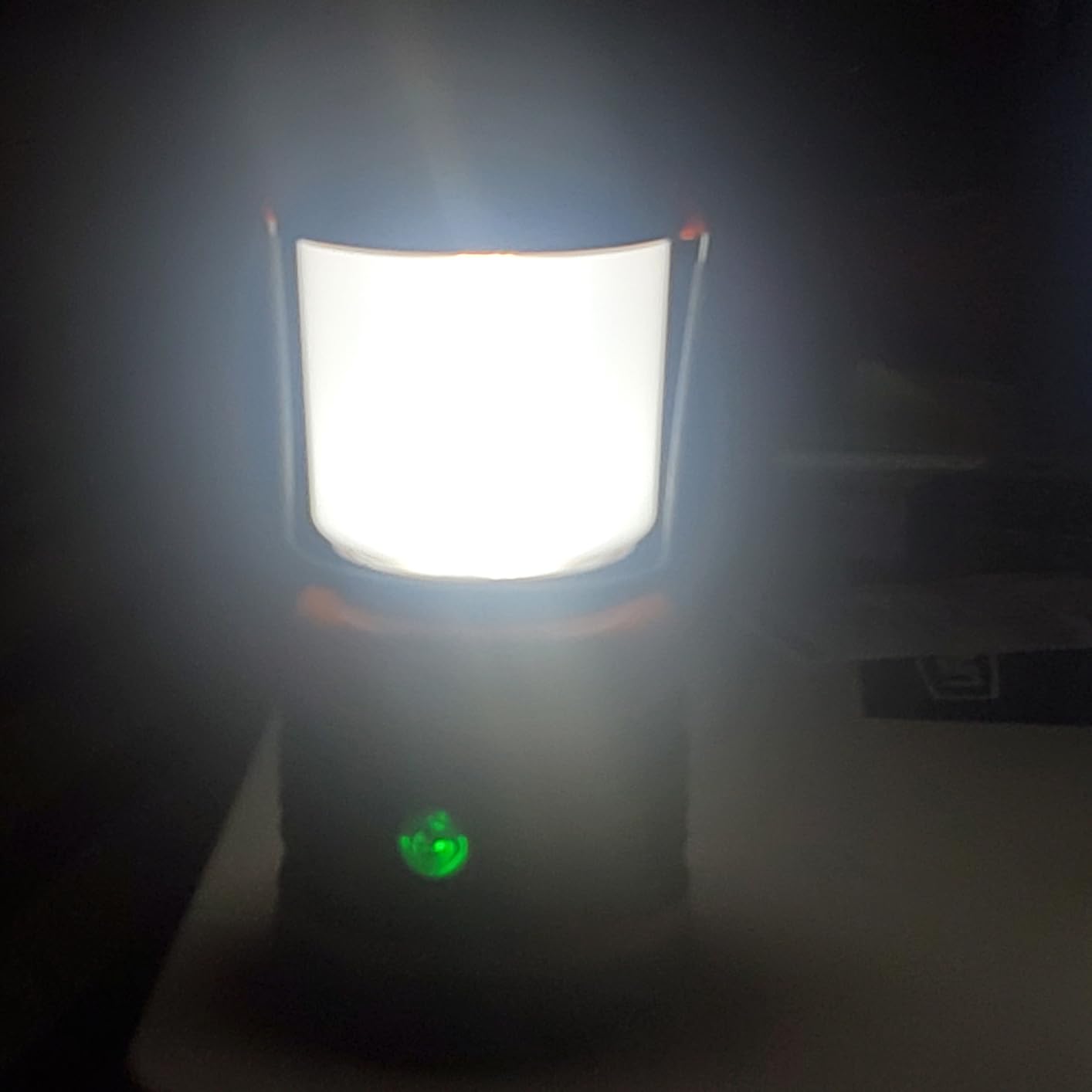
Four modes cover daylight white, warm white, both together, and flash. The warm mode is the one to use at a table, since 1800 lumens of cool light is a searchlight rather than a dining experience.
There is a slip-proof handle for hanging and hands-free use, and an IP44 rating that handles spray and drizzle around a campsite without drama.
Where maximum brightness actually helps
Car camping, a driveway, a garage, a long table at a tailgate, or setting up a site in daylight dusk. This is the lantern to grab when you need to light a whole area rather than a corner of it.
It is also the right pick for a storm response, where combined light plus a phone-charging output covers the two things households need first.
Where it falls short
The 12 hour figure is a low-mode number, and reviewers are clear that at full 1800 lumens the real runtime is much shorter. Treat the headline as a dim-setting claim.
It stands over 10 inches tall and weighs enough that it is a car camping item, and the sealed battery is the same long-term concern as the other rechargeable models here.
9. Consciot 1000LM Lantern 2-Pack – The Best Tent Ceiling Light
Consciot 1000LM Battery Powered LED Camping Lantern, 4 Light Mode, Dimmable
1000 lumens
3 D cells
12 hours
removable diffuser cap
Pros
- 1000 lumens through a translucent 360 degree reflector
- long press for stepless dimming
- up to 12 hours even on the full setting
- two-way hooks plus a removable diffuser cap that turns it into a downward ceiling light
- two lanterns per pack
Cons
- Needs 3 D cells that are not included and add weight
- no rechargeable cell or power bank
- D cells are costly to keep in a kit for a long trip
The removable diffuser cap is the feature that separates this from every other 1000-lumen lantern in this roundup. Pop it off and the LED array points downward instead of outward, so you get a soft ceiling light hanging inside a tent.
That is the difference between a lantern that glares at the fabric and one that lights the room. For a family tent where people are sitting up at a table, it is a genuine upgrade.
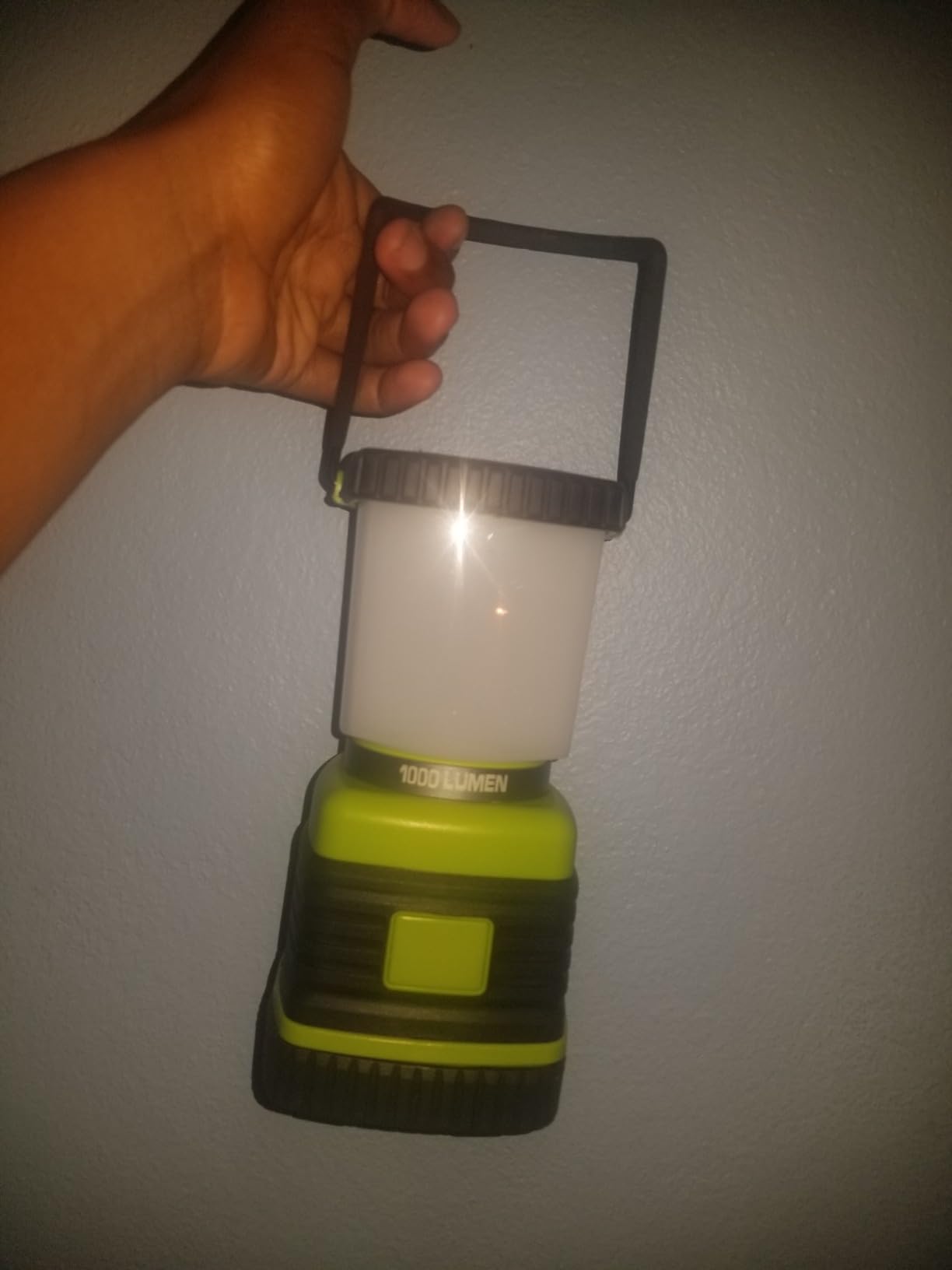
Brightness is fully adjustable. Four modes cover cool white, warm white, combined, and strobe, and a long press gives stepless dimming so you can bring it down to a level that will not wake someone at 3am.
The claim that it holds up to 12 hours even on the 1000 lumen setting is unusual for a D-cell lantern in this class, and it comes from the alkaline cells doing real work rather than an oversized headline number.
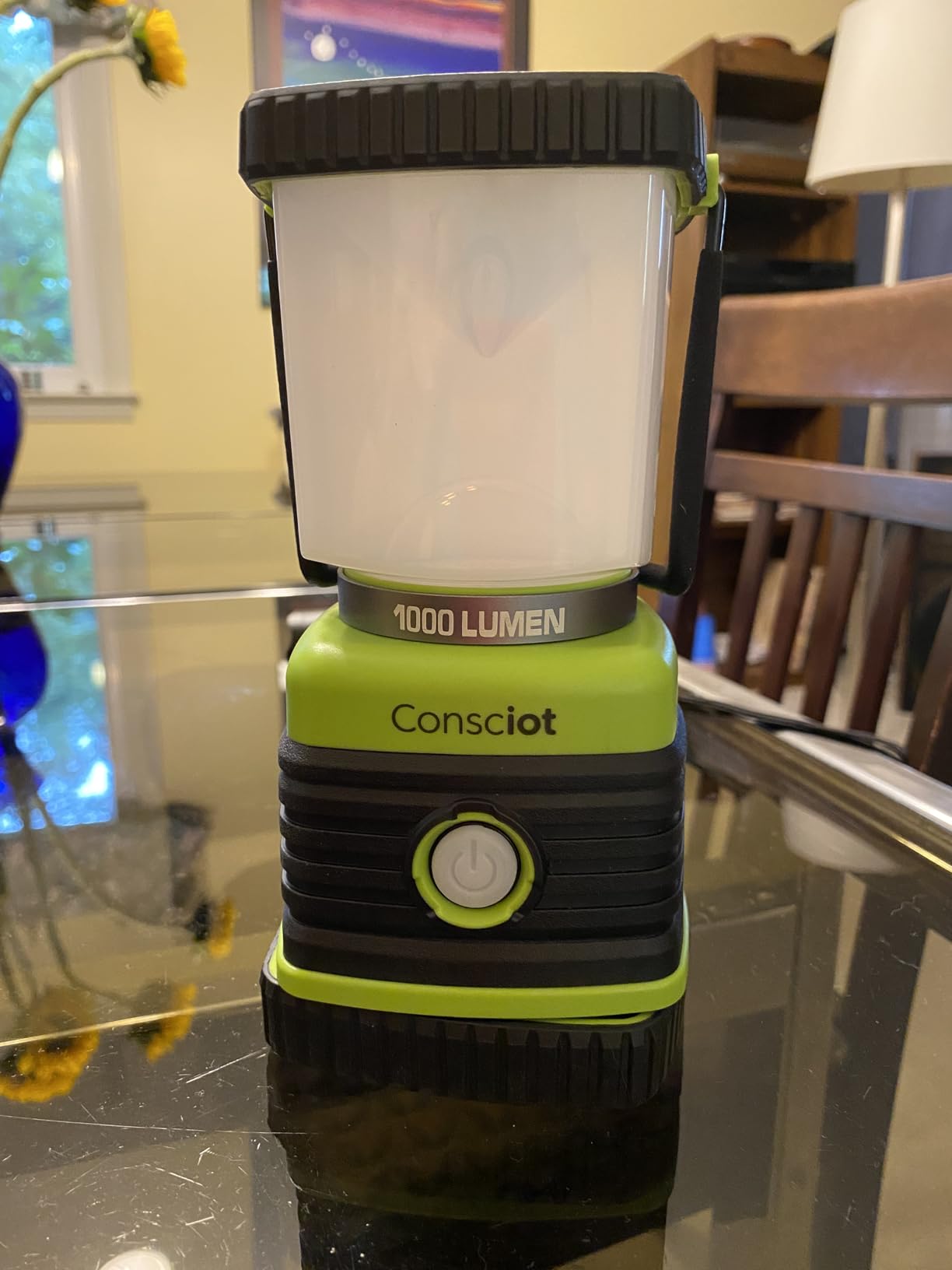
Why two lanterns is a smart bundle
A two-pack lets you put one in the main tent and one in a vehicle or a second tent without buying twice. For group camping, having a second light on the far side of the site is worth more than a brighter single one.
The two-way hanging points, a top handle and a recessed bottom hook, mean it works right side up on a table or inverted from a loop, which covers most tent and tarp arrangements.
Where it falls short
Three D cells are the recurring complaint across reviews. They are not included, they are heavy, and the cost of keeping a spare set in the pack adds up over a season of trips.
Like the other battery models here, it cannot charge a phone, and the build is rated IPX4 rather than submersible.
10. AlpsWolf 800LM Spotlight Lantern – Four Functions, One Body

AlpsWolf Camping Lantern Rechargeable, LED Flashlight Spotlight Lantern with 800LM, 3600 mAh, Strap Included Portable Bright Camping Light for Emergency, Outdoor Hiking, Power Outages
800 lumens
500 m beam
3600mAh
IP65, 0.8 lb
Pros
- Four in one design covering flashlight
- lantern
- spotlight and red emergency strobe
- 800 lumens reaching 1640 ft
- 3600mAh cell fully charges in 3 hours and runs up to 12 hours
- IP65 waterproof
- charges a phone in an emergency
Cons
- Sealed battery is not removable or replaceable
- 800 lumens is mid-range for the category
- recharge cable is not clearly listed as included
The spotlight is what makes this worth carrying. A 500 meter beam distance means it is not just a table light; you can check a dark lane, find a dropped key ring across a site, or light the path back from a shower building.
Everything else is competent rather than remarkable. It charges in three hours, runs up to twelve, and the IP65 rating handles being rained on or rinsed off at a tap without complaint.
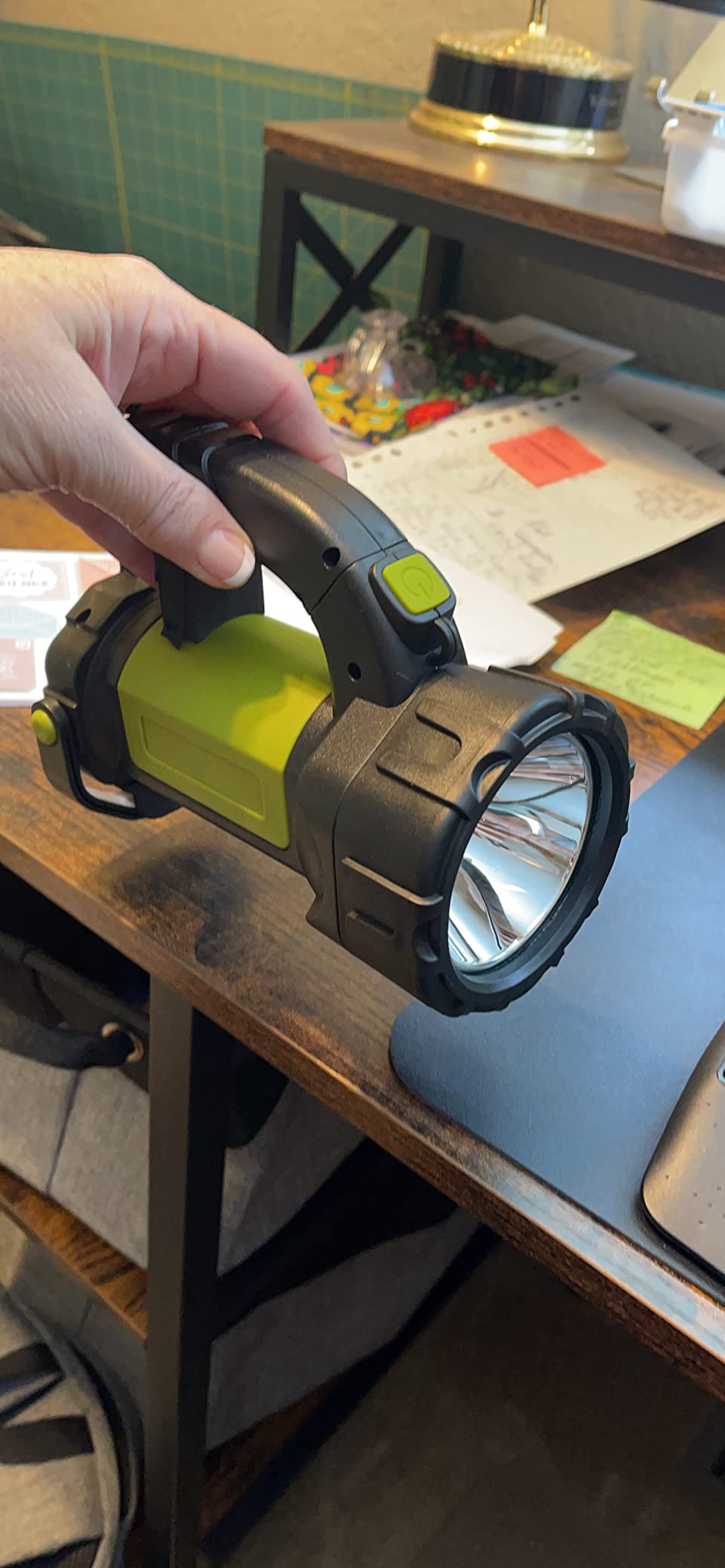
At 0.8 pounds it is one of the lighter rechargeable options, and the one-hand button control with a built-in battery indicator means you can check the state of it without switching it on.
The red emergency strobe is a small addition that matters on a long walk out. It draws attention without wrecking your night vision, which matters more than most buyers expect.
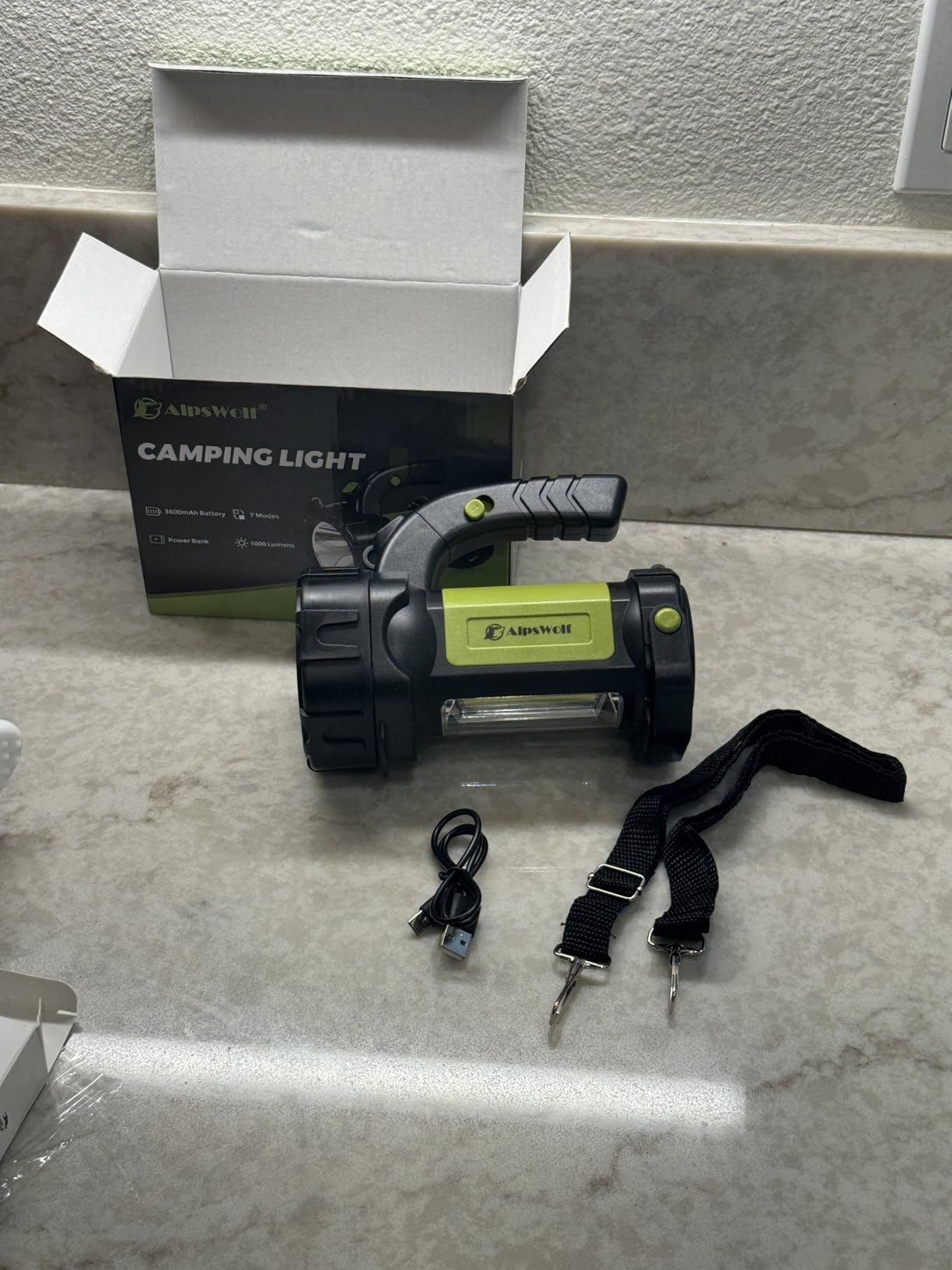
Who gets the most from this one
Car campers, families, and anyone who moves around a site after dark will use all four functions. One device replaces a lantern, a torch, and a signalling light in a glovebox.
Because it can charge a mobile phone, it works as a small emergency power source when paired with a car battery, which broadens its use well past a tent.
Where it falls short
The 800-lumen figure is mid-range, and for a large group site you will want the 1800-lumen model or the 1000-lumen pair instead.
Reviewers flag the sealed battery as the main long-term concern, and a few note the recharge cable is not clearly included in the box, so check the listing before you leave for the trailhead.
11. Streamlight Siege Compact – The Best-Built Lantern Here

Streamlight 44931 Siege Compact Lantern, Coyote
540 lumens
IPX7 floats
295 hours on low
limited lifetime warranty
Pros
- Rated 4.8 stars
- five modes including steady red and red SOS flash
- up to 295 hours on low for multi-night trips
- IPX7 waterproof and it floats
- removable globe switches between raw output and soft diffused light
- limited lifetime warranty
Cons
- Most expensive lantern in this roundup
- 3 D cells sold separately
- some reviewers report brightness below the 540 lumen claim
This is the one to buy if you will not replace it for a decade. Streamlight backs it with a limited lifetime warranty, and the reason is visible in the body: a polycarbonate thermoplastic shell, a recessed power button, and D-rings top and bottom.
It is the only lantern here rated IPX7, which means it resists immersion to one meter for thirty minutes and it floats. Rain, a river bank, a spill, a drop into a wash basin in the dark, none of it ends the trip.
The mode set is the most considered in this roundup: high, medium, low white, steady red, and red SOS flash. The red modes are not a gimmick, they are how you move around a site without losing your dark adaptation or waking anyone in the next tent.
Up to 295 hours on low makes it the endurance pick here by a distance, and the removable globe is a smart touch since you can run it raw for maximum output or diffused for a softer room.
Where the build quality shows
Three D cells mean a battery change takes seconds with no tools, and unlike the sealed rechargeable models, the lantern keeps working indefinitely if the cell ever fails. That is the buy-it-for-a-decade argument.
It also sits in two orientations. The handle and D-rings let you hang it upright or inverted, so it can light a ceiling in a tent or a work surface in a garage.
Where it falls short
It is the most expensive lantern we reviewed, and the D cells are sold separately, so the real cost is higher than the sticker.
Some reviewers also report brightness that falls short of the 540-lumen figure in real use, and one noted a brief flicker when the base is set down firmly. Neither is a dealbreaker, but both are worth knowing.
12. Coleman 400L LED Camping Lantern – The One You Already Own
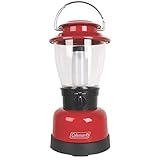
Coleman 400L LED Camping Lantern, Water-Resistant, Red
400 lumens
30 hours high 70 low
4 D cells
3 year warranty
Pros
- Classic Coleman build with a 3 year limited warranty
- 400 lumens of even light
- 30 hours on high and 70 on low
- bail handle with a carabiner for hanging in a tent or from a branch
- impact resistant to 1 meter
- lifetime LEDs
Cons
- Only high and low with no dimming or color modes
- four D cells add weight at 1.4 pounds and are not included
- bulky next to collapsible rechargeable lanterns
Most of us have owned a Coleman lantern for twenty years, and the reason is the warranty. Three years of limited coverage on a simple battery light is a reasonable bet for gear that lives in a damp shed half the year.
Runtime is the practical strength. Thirty hours on high and seventy on low from four D cells is honest, straightforward endurance, and the lifetime LEDs mean there is no bulb to replace in a decade.
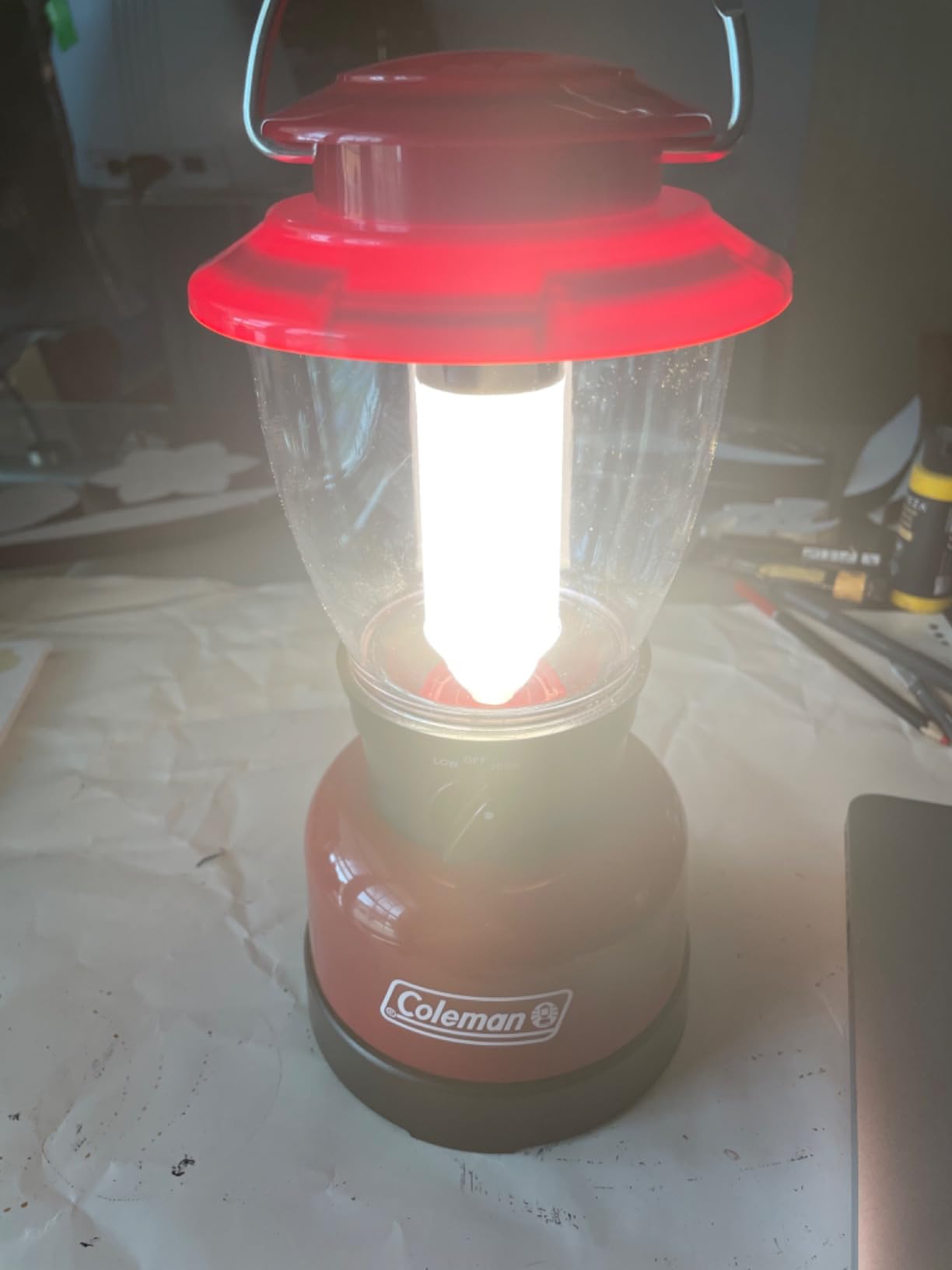
The bail handle with an integrated carabiner is the hardware detail that matters. It hangs from a tarp line, a tree branch, or the ceiling loop of a tent without any separate cord, and carabiners have a low failure rate compared with small plastic hooks.
It is also the simplest interface of the twelve, one button, two brightness levels, no modes to learn while packing in the rain.
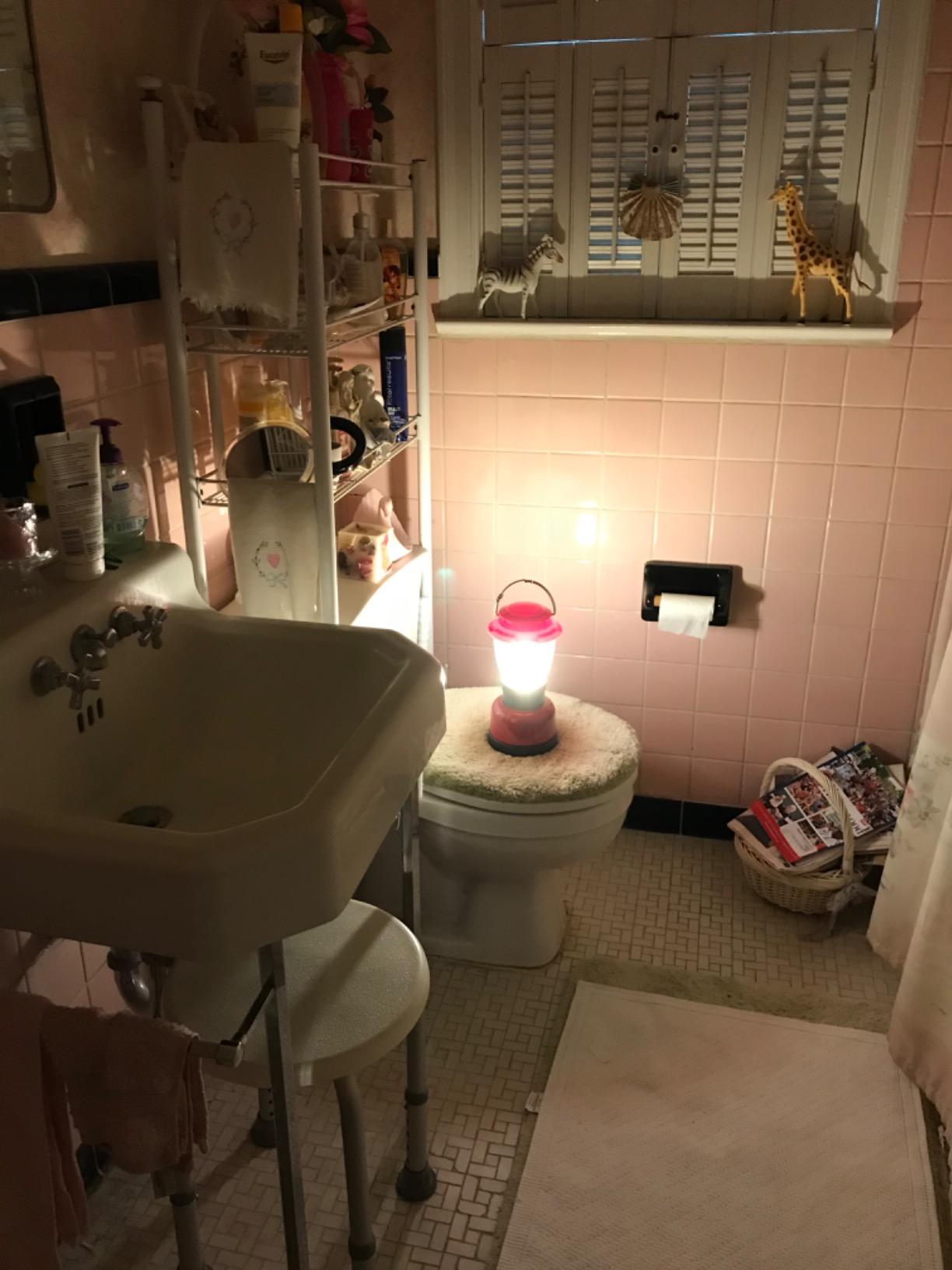
Why keep it instead of upgrading
If your trip type is weekend car camping with a site you drive up to, this is enough. Four D cells are a small fraction of what you are already carrying, and the light fills a table comfortably.
It is also the sensible second lantern, because you can run it in a different tent or a different part of the site without any concern about sharing a battery type with your main light.
Where it falls short
There is no warm mode and no dimming, so inside a tent you get either 400 lumens or a much lower step, and the lower step is not as gentle as a true dimmer.
At 1.4 pounds with four D cells that are not included, it is heavy for backpacking and it is the bulkiest design here beside the rechargeable towers.
How to Choose a Camping Lantern: Six Decisions That Matter
Every option above works in a pinch. The difference between a good night and a frustrating one comes down to six decisions, and you can make all six before you spend anything.
How many lumens do you actually need
Match the output to the job rather than to the largest number available. In-tent reading and marker light sit at 50 to 150 lumens, a table or cooksite sits at 200 to 400, a basecamp or driveway sits at 400 to 600, and anything above 600 is for group sites and work areas.
Is 1000 lumens too bright for a two-person tent? It is not dangerous, but it is uncomfortable. A lantern at head height with a downward diffuser or a warm low mode is the fix, and a 1000-lumen model with a removable diffuser cap handles it well.
Rechargeable, replaceable cells, or fuel
Rechargeable built-in cells are the lightest modern option and the most convenient, and they can charge your phone. The cost is that when the cell degrades, the lantern is finished, which is the number one long-term complaint we see about this category.
Replaceable AA and D cells are heavier and less clever, and they work forever. For multi-night trips in places where you can buy batteries, that reliability is worth more than the weight.
Propane and kerosene lanterns still have a place. They run for many hours on a small fuel load, they work in near-freezing conditions, and they do not care about a dead cell. The trade is weight, soot, glass breakage, and a real carbon monoxide risk. Never run a fuel lantern inside a tent or a vehicle, and do not hang one where fabric can touch the globe.
If you are also building out a site with longer-run power, our picks for the best portable power stations for camping cover the charging side of the same problem.
Read runtime claims the honest way
Any figure printed as “up to X hours” is measured on the lowest setting, and sometimes on a battery that is not included. The Energizer PRO-360 states 150 hours, the Streamlight Siege Compact states 295 hours on low, and the Coleman’s 70 hours is a low-mode figure.
For planning, take the low-mode number as your real endurance and halve it for a high-mode evening. If a lantern claims 12 hours overall, expect a fraction of that when you are running it bright.
What the IP rating means
IPX4 is splash resistant and covers most normal rain. IPX5 handles being sprayed with water. IPX7 means the lantern survives immersion to one meter for thirty minutes, and the Streamlight Siege Compact is the one here that actually floats.
IP67 adds dust protection on top of the waterproofing, which is the LuminAID Nova’s rating. For backpacking in sustained rain, IPX7 is the standard the flashlight crowd holds, and it is the number worth paying extra for.
Weight and hanging hardware
Backpackers should count grams the way they count everything else. The LuminAID Nova at 5.3 ounces is the only unit here that is genuinely optional rather than a tradeoff, and the Etekcity at 9.12 ounces is the next lightest.
Then check the hardware. A carabiner bail, a recessed bottom hook, and a handle with D-rings top and bottom all survive being carried. Small collapsed plastic hook loops on slim lanterns are the most common failure we hear about, and they fail while the lantern still looks fine.
Red light, warm light, and dark adaptation
If anyone on your trip is an early riser, a stargazer, or simply a light sleeper, red light mode changes the trip. Red wavelengths barely affect the rods in your eye, so you can walk to the bathroom or check a sky without losing the night vision you spent twenty minutes building.
The Streamlight, the EZORKAS 2-Pack, and the LE hybrid all have red modes. The Etekcity, the Lichamp, and the Coleman do not, so plan those for table and cooksite light rather than moving around in the dark.
Frequently Asked Questions
What is the best long-lasting camp lantern?
For raw endurance, the Streamlight Siege Compact runs for up to 295 hours on its lowest setting and uses replaceable D cells, so it keeps working indefinitely. The Energizer WeatheReady PRO-360 is close behind at a stated 150 hours and accepts D or AA cells. Remember that both figures are low-mode claims, so halve them to plan a high-output evening.
What is the best-rated rechargeable camping lantern?
The EZORKAS 2-Pack holds a 4.8 star average across more than 14,000 reviews and is the only rechargeable model here that also runs on three AA batteries, so it keeps working if the built-in cell is flat. The Etekcity 4-Pack is rated 4.7 across 50,000+ reviews and is the safest all-round choice, though it is battery powered rather than rechargeable.
How many lumens should I get for a camping lantern?
Aim for 50 to 150 lumens for a hanging tent light or reading, 200 to 400 lumens for a table and cooksite, and 400 to 600 lumens for lighting a whole basecamp. Above 600 lumens you are looking at a work light. Buying 1000 lumens for a two-person tent produces glare rather than useful light, so add a dimmer or a downward diffuser instead.
Are solar lanterns actually worth it?
As a primary charging method, rarely. The LuminAID Nova needs roughly ten hours of direct sun for a full charge, so a cloudy day leaves you short. As a backup that keeps a lantern alive over a long trip, absolutely. The same logic applies to hand-crank models, which produce only a small amount of power per minute of cranking.
How do I choose between a rechargeable and battery lantern?
Choose rechargeable if you will always have a charging cable with you and you value a power bank function, and choose replaceable cells if you camp beyond easy supply or want a lantern that survives a decade. The deciding factor is the sealed battery: built-in lithium cells degrade over time and cannot be replaced, which is the most common long-term complaint about this category.
The Best Camping Lantern for Your Kind of Trip
There is no single best camping lantern, but there is a right one for how you camp. For most people, the Etekcity 4-Pack is the pick: replaceable AA cells mean it works on night one and night five, four units cover every part of a site, and it never asks you to find a charger.
Walkers should take the LuminAID Nova at 5.3 ounces and accept the dimness. Anyone who needs raw area light or a phone charger should take the Lepro or the AYL, and anyone who expects rain should take the Streamlight Siege Compact, which floats and carries a limited lifetime warranty.
Whatever you choose, top up every rechargeable cell at home the week before you leave, carry spare cells for the battery models, and check the runtime figure against the setting you will actually run.