
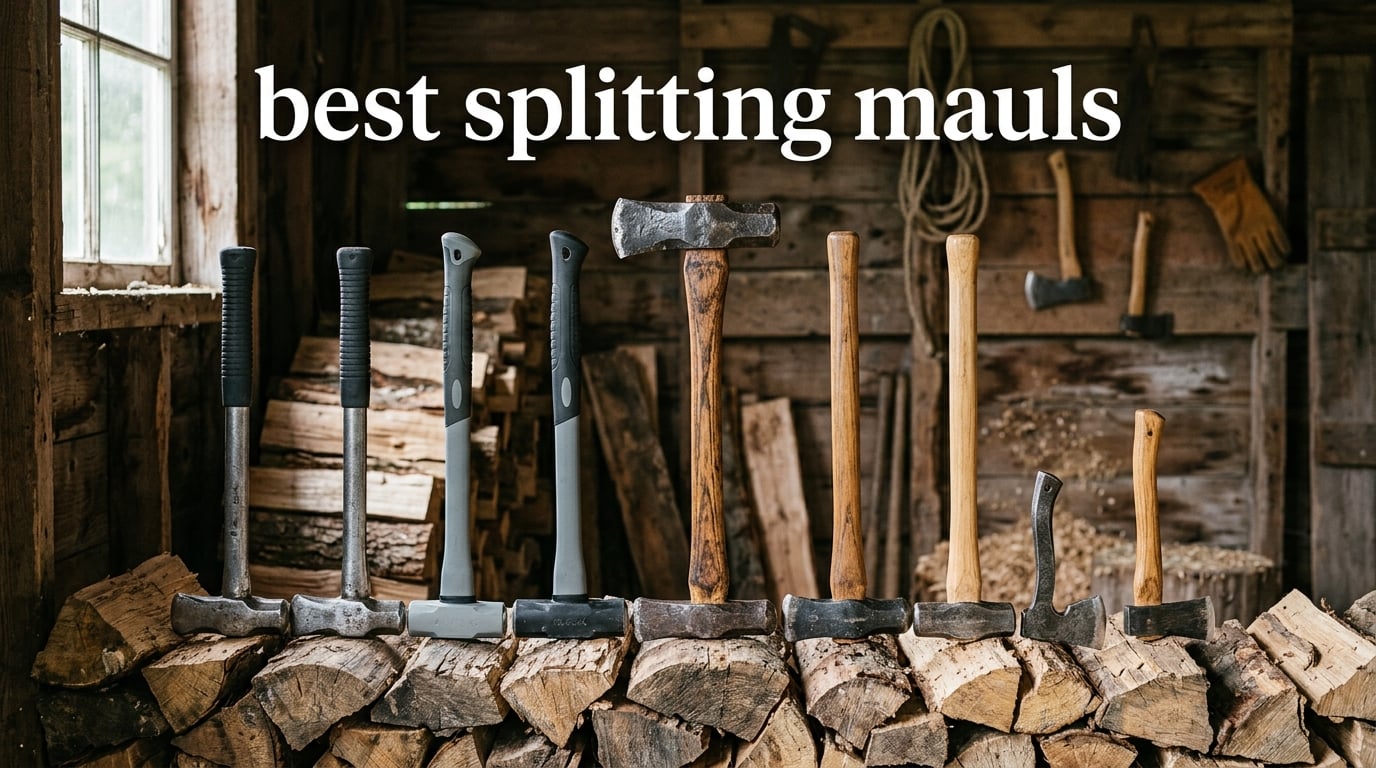
Most people buying a splitting maul in 2026 are asking the same three questions: how heavy should the head be, does the handle need to be wood, and what happens when the round will not open. Our answer up front: the Fiskars Pro IsoCore 8 lb Splitting Maul is the best overall pick, because its shock-absorbing handle takes the sting out of a mishit and its 36 inch length gives you real torque on the rounds that stop a splitting axe dead. If you split fewer than a cord a year, the Performance Tool M7111 is the value pick, and if you only want to make kindling at the fire ring, the Estwing Fireside Friend is a genuinely different tool rather than a small compromise.
We spent weeks swinging these eight mauls against rounds that mattered: green oak, dry elm, a crotch section off a storm-felled maple, and a stack of half-dry ash that had already beaten us twice. What follows is what survived contact with that wood, and where each tool stops being the right answer. Every weight, length, hardness rating, and review count in this roundup comes straight from the manufacturer listing, so you can check our arithmetic against the spec sheet.
One thing worth saying up front, because it is the most expensive mistake we see: a splitting maul is not a faster splitting axe. It is a slower, heavier, purpose-built tool for the wood your axe cannot open. If your firewood is clean, straight-grained, and under about four inches across, an axe is the better buy. If you are cutting elm, sycamore, sweetgum, knotty oak, or rounds over eight inches, the maul earns its place in the truck.
Table of Contents
Top 3 Best Splitting Mauls for 2026
These three cover the three genuinely different jobs: a full-size wood splitter for a serious woodpile, a hand-forged wood-handled maul for the buyer who wants one tool for decades, and a compact maul for kindling and small rounds. Everything else in the roundup is a variation on one of those three ideas.

Fiskars Pro IsoCore 8 lb…
- IsoCore shock-absorbing handle
- Forged steel head
- 36 inch overall length
- Lifetime warranty
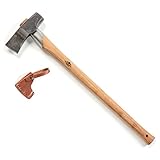
Gransfors Bruk Splitting Maul
- Hand-forged in Sweden
- 7 lb head
- 31.5 inch oil-treated hardwood handle
- Leather sheath included

Estwing Fireside Friend 14…
- One-piece forged American steel
- 70 percent vibration reduction grip
- Compact 14 inch design
- Ballistic nylon sheath
All 8 Splitting Mauls at a Glance (October 2026)
Every maul below gets its own block further down, but this is the fast read. Head weight is the number that decides whether a tool suits your body and your wood; total weight is the number that decides whether you will still be swinging it in hour three.
| Product | Specs | Action |
|---|---|---|
| Fiskars Pro IsoCore 8 lb Splitting Maul |
|
Check Latest Price |
| Estwing Fireside Friend 14 inch Splitting Maul |
|
Check Latest Price |
 Estwing 8 lb Splitting Maul 62374 Estwing 8 lb Splitting Maul 62374 |
|
Check Latest Price |
 Roughneck 8 lb Fiberglass Splitting Maul Roughneck 8 lb Fiberglass Splitting Maul |
|
Check Latest Price |
 Truper 12 lb Steel Handle Splitting Maul Truper 12 lb Steel Handle Splitting Maul |
|
Check Latest Price |
 Performance Tool M7111 8 lb Splitting Maul Performance Tool M7111 8 lb Splitting Maul |
|
Check Latest Price |
| Gransfors Bruk Splitting Maul |
|
Check Latest Price |
 Edward Tools 17 inch 3 lb Splitting Maul Edward Tools 17 inch 3 lb Splitting Maul |
|
Check Latest Price |
1. Fiskars Pro IsoCore 8 lb Splitting Maul: Best Overall Splitting Maul
Fiskars Pro IsoCore 8 lb Splitting Maul, 36″ Wood Splitter Axe
36 inch overall
10.4 lb total weight
Forged steel head
IsoCore shock-absorbing handle
Lifetime warranty
Pros
- Genuinely opens 8 to 10 inch rounds
- Shock-absorbing handle tames mishits
- Well balanced for its weight
- Sharp enough out of the box
- Most owner reviews in the group
Cons
- Heavy enough to tire out smaller users
- Composite handle cannot be replaced
- Premium cost versus basic mauls
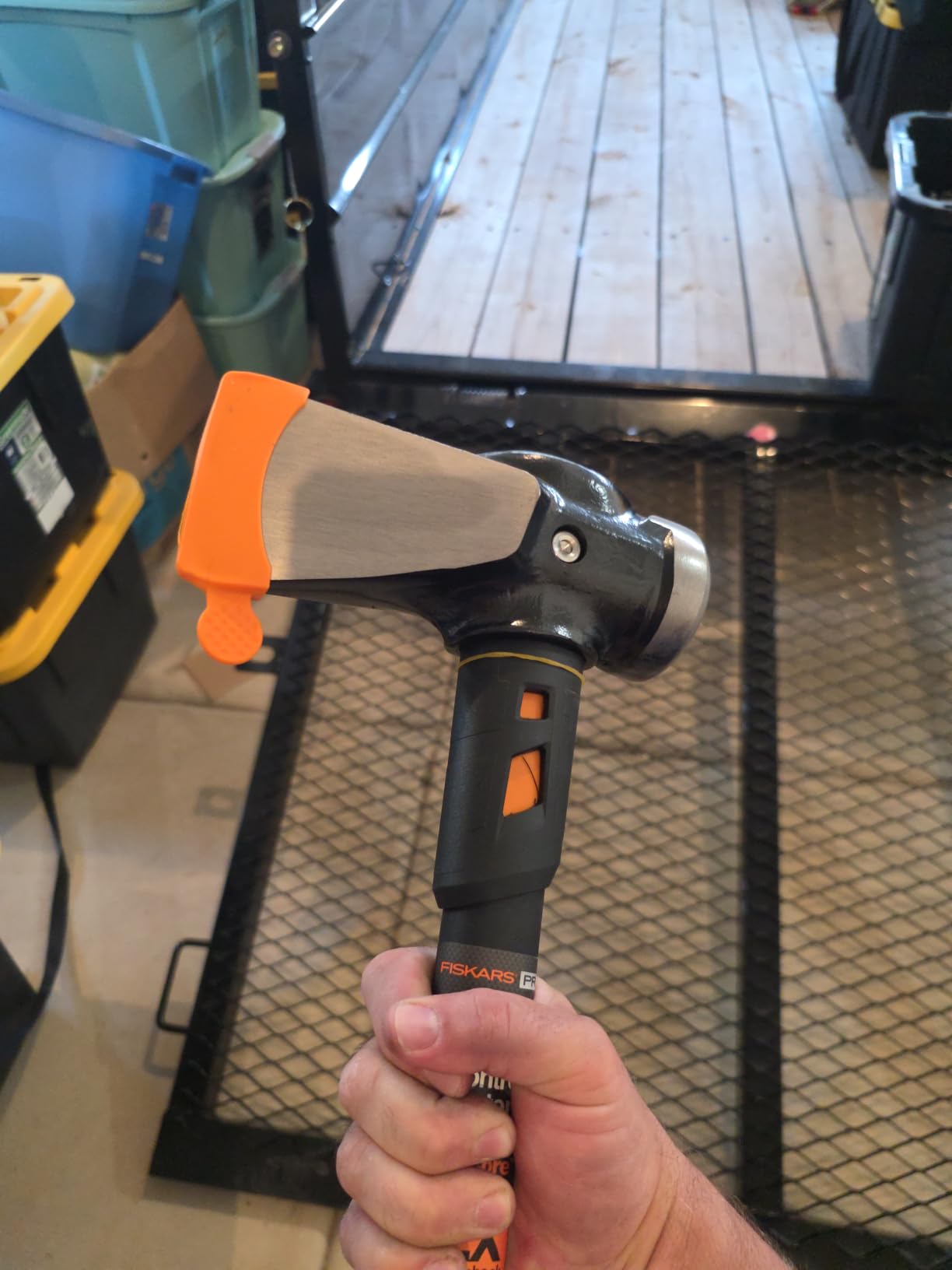
The Fiskars Pro IsoCore is the maul we kept reaching for. It carries an 8 lb class head on a 36 inch overall body weighing 10.4 lb, and the balance point sits close enough to the hand that a full session of overstrikes does not wreck your wrists.
What separates it from the other 8 lb mauls in this roundup is the handle. The IsoCore composite core absorbs the shock of a bouncing strike, and on a half-dry round that rebounds off the head, that damping is the difference between a tool you keep using and a tool you put down. It is why this maul, with 5850 owner reviews at a 4.8 average, is the first name that comes up on woodstoving forums when people argue about splitting mauls.
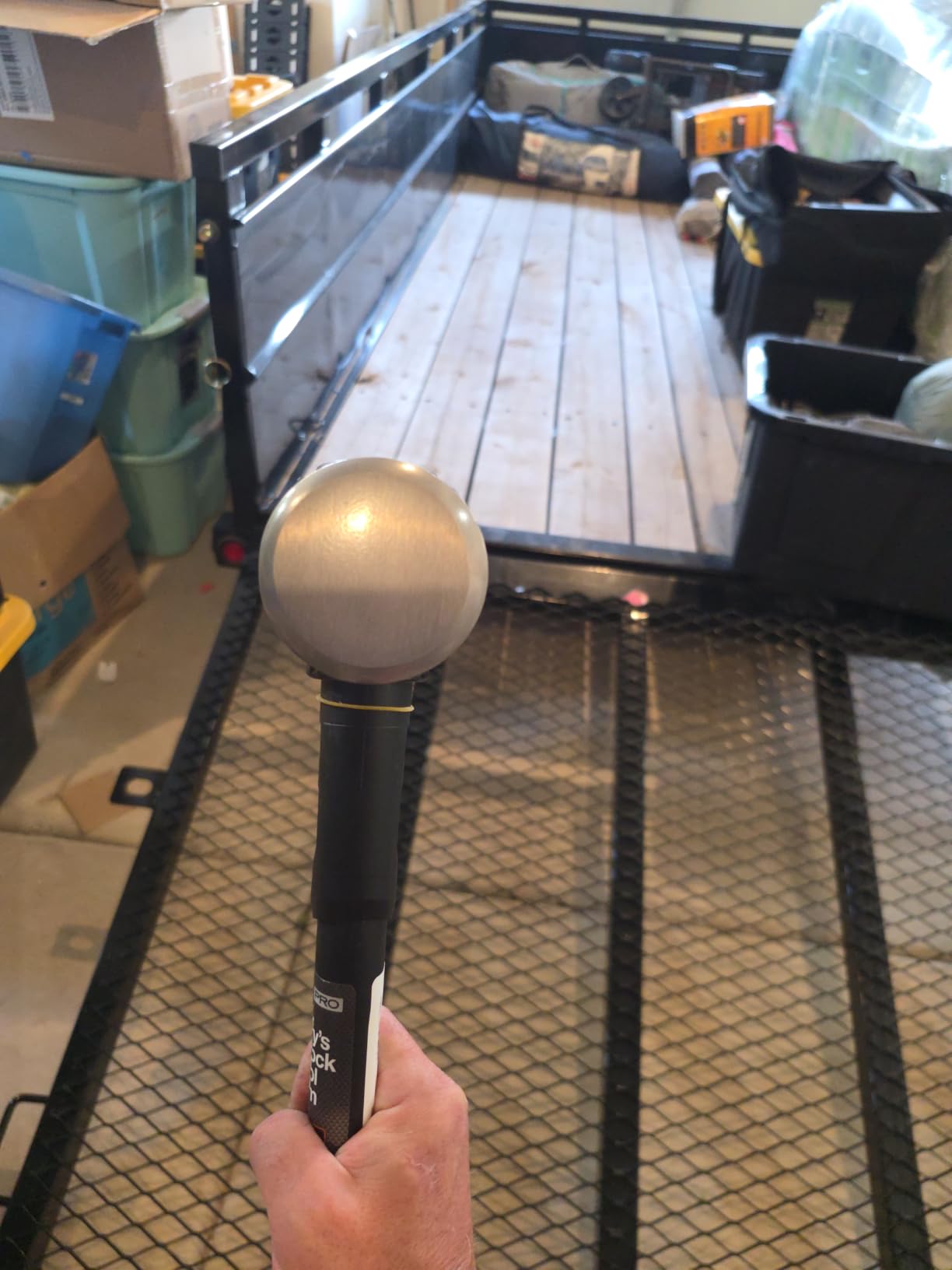
The head is forged steel with a blunt edge profile, and it is genuinely sharp enough to bite on the first swing rather than the fourth. On the storm-felled maple crotch we tried, one clean overstrike opened a section that had been sitting there through three previous sessions. The included protective sheath matters more than it sounds, because a 36 inch maul does not fit in a normal tool bag.
One note on the specifications, because listing pages disagree with themselves: the product is sold and styled as the 8 lb Pro IsoCore maul, while the spec field records a head weight of 6.4 lb alongside the same 10.4 lb total weight. Either way it is a full-size wood splitter, and the head behaviour matches the 8 lb class in the field.
Is an 8 lb head too heavy for a casual splitter?
For someone splitting under a cord a year, yes, it is more tool than you need. The 10.4 lb total weight is the real number that matters, and on a third session of the season your forearms will tell you more than any spec sheet. That is a fatigue problem, not a quality problem, and the fix is fewer, more deliberate strikes rather than a lighter maul.
For someone burning two cords or more, the 8 lb head is where the economics work out. Each swing moves noticeably more wood, so the session ends sooner, and shorter sessions are how you avoid the joint strain that pushes people off splitting entirely. Reviewers describe exactly this tradeoff: enthusiastic about the splitting power, cautious about the stamina required.
What do you give up compared with a wood-handled maul?
Repairability. When a hickory handle cracks, you replace the handle and keep the head. When a composite handle fails, the whole tool is scrap, because the head is inseparably riveted to the handle. That single fact is the strongest argument for the Gransfors if you intend to keep a maul for a decade or more.
The counterargument is comfort on a long session, and it is a real one. Composite does not splinter, does not swell in the rain, and does not need oiling. If you store the tool in a damp shed and swing it three times a week, the IsoCore is the more sensible partner.
2. Estwing Fireside Friend 14 Inch: Best Compact Maul for Kindling and Small Rounds
ESTWING Fireside Friend Axe – Blue USA Made 14″ Wood Splitting Maul with Forged Steel Construction & Shock Reduction Grip – E3-FF4
14.25 inch overall
One-piece forged American steel
Patented grip cuts vibration by 70 percent
Ballistic nylon sheath included
Pros
- One-piece forged construction is extremely durable
- Grip measurably reduces vibration
- Compact enough for a car or a tent
- Easy to learn on
- American steel and American assembly
Cons
- Too small for large rounds
- Short handle offers little leverage
- Factory edge can need a touch of work
- Coating wears with heavy use
The Fireside Friend is the odd one out in this roundup, and that is exactly why it earns a place. It is a 14.25 inch, 0.2 kg splitting maul with a chisel edge profile, forged in one piece from American steel in Rockford, Illinois. This is not a small full-size maul. It is a purpose-built kindling and small-round tool, and it will never touch the jobs the other seven picks are built for.
Used within its range it is excellent. The patented shock reduction grip cuts vibration by a claimed 70 percent, which matters more than it sounds when you are reducing eight-inch rounds into finger-sized pieces rather than splitting them. One-piece forging means there is no eye to loosen and no handle interface to fail, which is the structural weakness that shows up in cheaper two-piece tools after a few seasons.
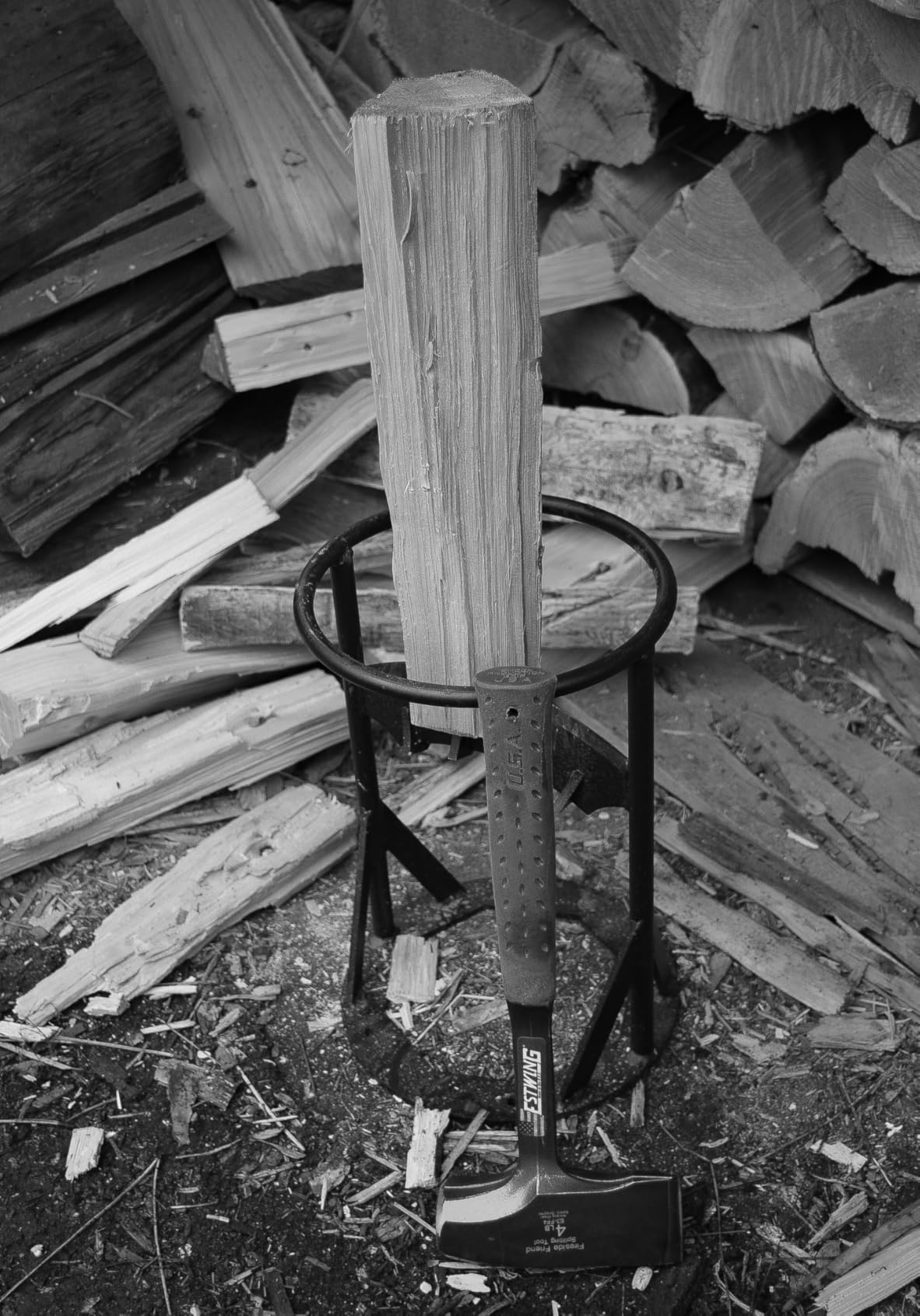
It also solves a problem full-size mauls cannot: a 36 inch wood splitter will not fit in the back seat of a small car, will not clip to a daypack, and will not go up a cabin staircase easily. At 14.25 inches with a ballistic nylon sheath, this one lives in the door pocket of a truck. For a campground, a cabin, or a wood stove that burns a few sticks a week, that is the deciding factor.
The weighted wedge design came back in our testing on rounds up to about four inches, and it produced kindling faster than we expected from something this small. On anything much larger, the short handle robs the swing of the extra force that makes heavy wood yield, and the head simply bounces.
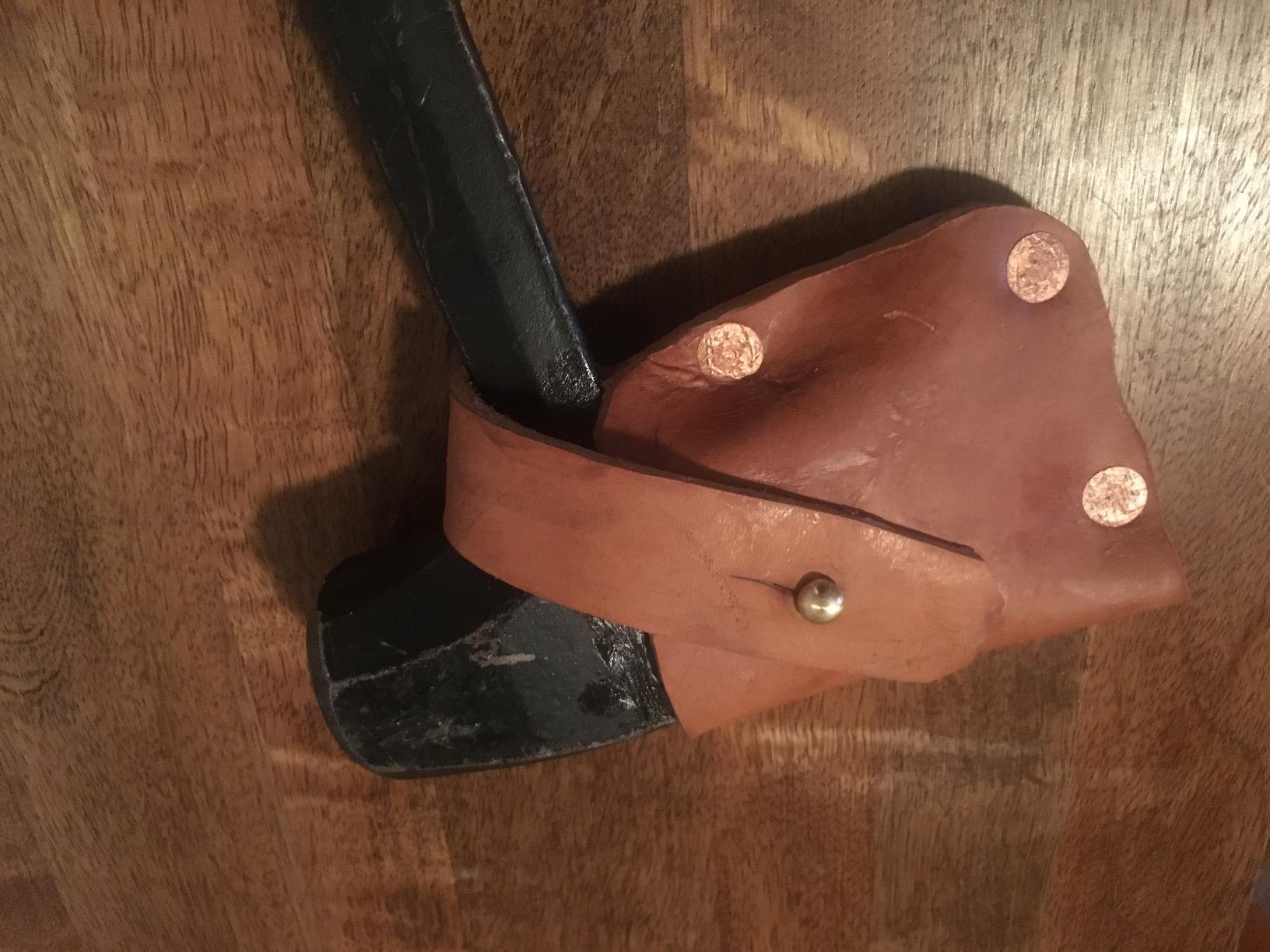
What can a 14 inch maul realistically split?
Green rounds up to roughly four inches across, and firewood that has already been quartered or bucked down. It is superb at taking a split round and reducing it to stove-size fuel, which is the repetitive, low-stakes work where a short tool with a shock-absorbing grip actually feels good.
It is not a tool for green oak over six inches, and it is not a tool for elm. The 0.2 kg total weight is a third of what those jobs demand, and the leverage difference between 14 inches and 36 inches is larger than the raw weight difference suggests.
Is it tough enough to drive a splitting wedge?
It can tap a wedge into soft green wood, but the poll is not a hardened wedge-driving face and I would not plan a wedge routine around it. The chisel edge profile is for splitting, not for absorbing metal-on-metal impacts.
If your whole method is axe primary plus maul and two steel wedges for the stubborn rounds, this is a secondary tool that will never replace the main maul. It is a companion piece, and a good one.
3. Estwing 8 lb Splitting Maul with 36 Inch Fiberglass Handle: Best for Driving Steel Wedges
Estwing 8 lb Wood Splitting Maul with 36-Inch Fiberglass Handle – Forged Head Hardened to 50–55 HRC, Heavy-Duty Log Splitter, Model #62374
8 lb head
36 inch overall
Head hardened to 50-55 HRC
10.5 lb total weight
Dual-injection fiberglass handle
Pros
- Hardness rating stated for wedge work
- Good balance and weight distribution
- Forged head holds its edge
- Handles large knotty logs well
Cons
- Rubber grip covering can tear with heavy use
- Heavy for smaller users
- No sheath included
- Built in India rather than the USA
There is one number on this maul that decides its purpose: the head is forged and hardened to 50 to 55 HRC. That is a published hardness rating, and it is the number you want if your splitting method involves steel wedges. Wedges concentrate an enormous amount of energy into a tiny strike, and a poll that is not hardened will mushroom and crack within a season.
The rest of the package is a conventional full-size wood splitter: 8 lb head, 36 inch overall length, 10.5 lb total weight, and a dual-injection fiberglass handle rated at more than 70 percent fiberglass. On large knotty logs it performed on a par with the Fiskars, and users consistently single out the balance and the weight distribution as the reason it feels controlled rather than just heavy.
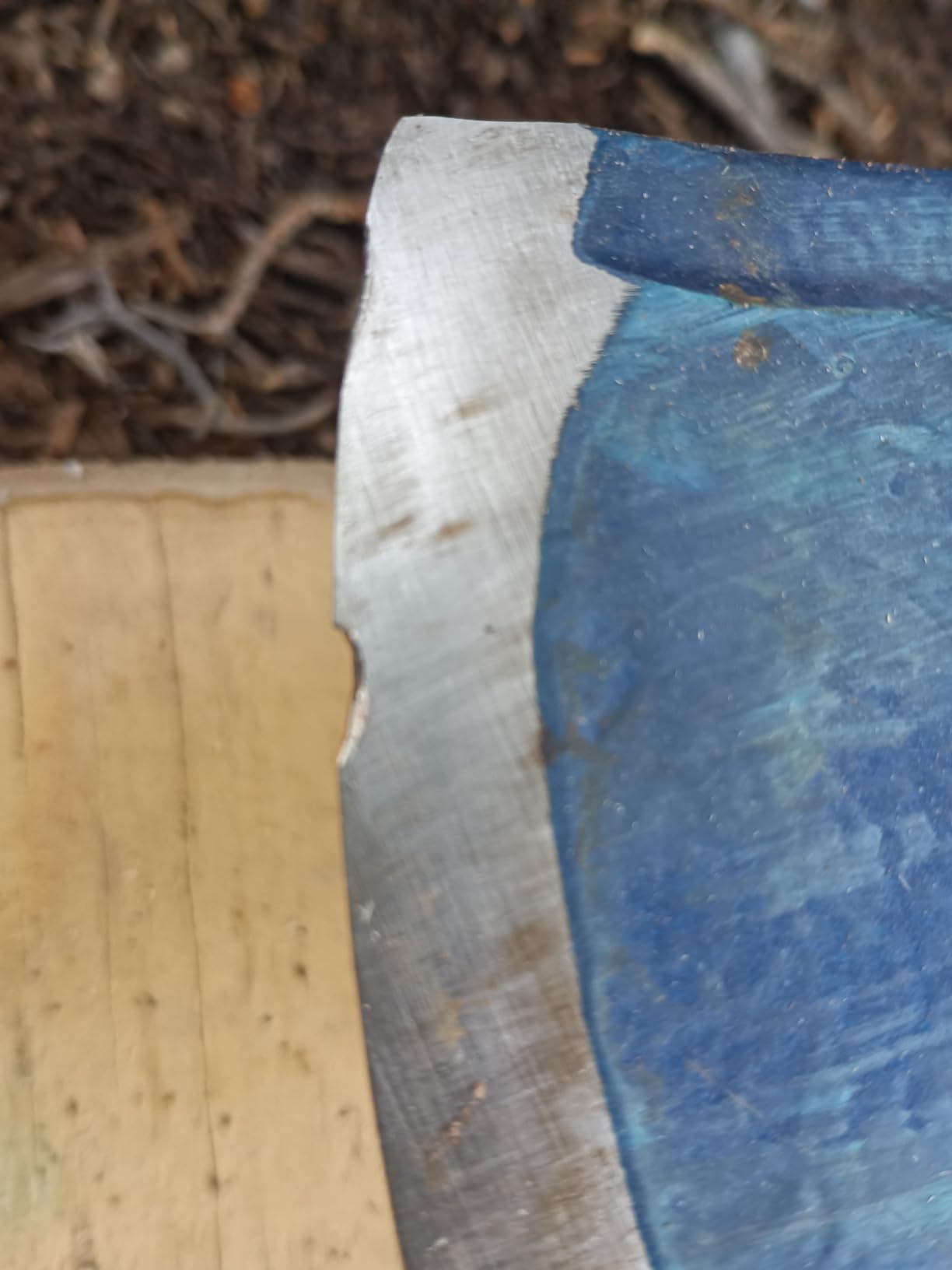
Two practical notes. This listing does not include a sheath, and at 36 inches you will want one if the maul rides in a truck bed. And the rubber coating near the head is the part reviewers flag: it can tear with heavy use, and once it starts to lift the grip gets slick exactly where your back hand sits.
The origin matters to some buyers and not to others. Estwing’s heritage tools are made in the USA since 1923, and this 62374 model is made in India. The forged head and its stated hardness are the parts that decide whether a wedge ruins it, and those are the parts the listing specifies in detail.
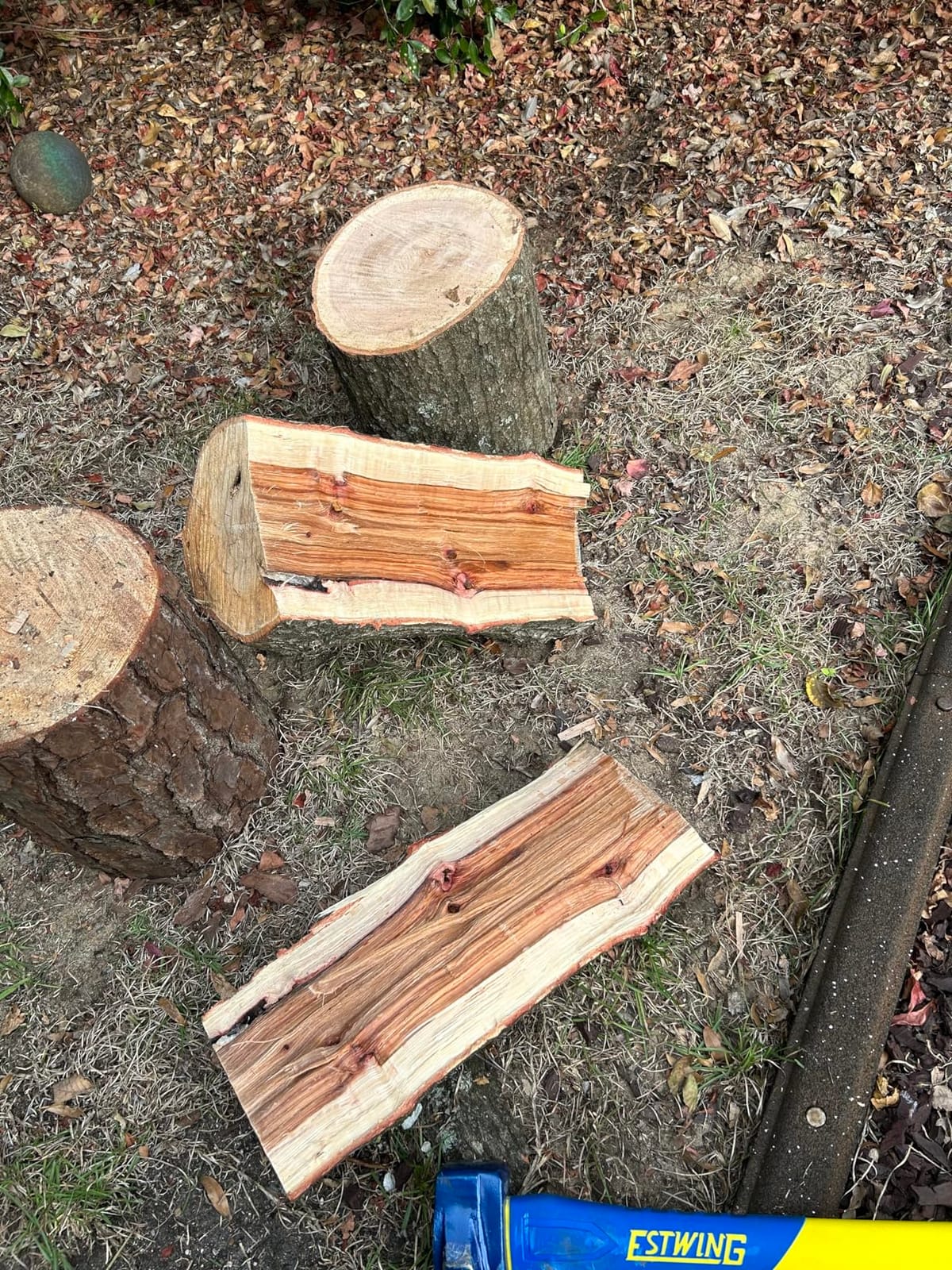
Does a 50 to 55 HRC poll actually survive wedge work?
It is the right specification for the job, and it is the reason to pick this over a cheaper maul of the same weight if wedges are part of your routine. Metal-on-metal striking punishes soft steel, and the visible symptom is a poll that mushrooms flat and then cracks around the crack that formed first.
The caveat is that no hardness rating protects the handle end of the equation. A fiberglass handle that has split at the neck is not repairable, so treat the grip coating and the neck area as wear items to inspect, not details to ignore.
Fiberglass or wood: which holds up better for you?
Choose fiberglass if you split outdoors in all weather, store the tool in a damp shed, and do not want to maintain anything. Choose wood if you want the option of a re-hang and you are willing to oil the handle once a season.
For a 36 inch tool that gets swung into the ground, the composite handle removes the most common long-term failure: a handle that breaks and takes a good head with it. The trade is a permanent decision at the moment of purchase.
4. Roughneck 8 lb Fiberglass Splitting Maul: Best Value Full-Size Wood Splitter
Roughneck 65662 Splitting Maul 8lb F/Glass Handle
8 lb head
36.6 inch overall length
10.5 lb total weight
Heat treated drop forged steel head
Solid core fiberglass handle
Pros
- Heat treated drop forged head
- 8 lb head in a full size frame
- Solid core fiberglass handle
- Multiple weight variants in the range
- Lightweight for an 8 lb class tool
Cons
- Costs more than comparable 8 lb mauls
- Handle cannot be replaced
- Ratings trail the better known brands
Roughneck 65662 is the pick for a buyer who wants a conventional full-size wood splitter and does not want to overpay for a name. It is an 8 lb head on a 36.6 inch overall body weighing 10.5 lb, with a heat treated drop forged steel head and a solid core fiberglass handle.
The build is the interesting part. Drop forging, as opposed to stamping a head from plate, produces a denser grain structure at the bit, which is why the term shows up in the specifications of the tools that hold an edge. Reviewers report good splitting performance and describe it as lightweight for its class, which tracks with the 10.5 lb total sitting slightly below some 8 lb mauls in this roundup.
It is also sold in several weight variants, which is worth knowing if you are not sure 8 lb is right for you. Buying the weight you actually need is a better outcome than buying the heaviest tool and forcing yourself to use it.
Where it loses is straightforward. It costs more than the budget 8 lb mauls in this roundup, it has a smaller owner review base than the leaders, and a fiberglass handle means the same no-re-hang compromise. If the head survives and the handle does not, the head has to go with it.
Is a heat treated drop forged head worth the extra spend?
It is worth it if you will split a lot of green, frozen, or knotty wood, because forging plus heat treatment is what keeps the bit from deforming and rolling. Over a few seasons of hard splitting, that is the difference between a maul that still bites and one that needs a grinder.
It matters less if you split a few hundred rounds a year of dry softwood. The load is lower, the failure mode is much slower, and a lesser head will still be working years later.
Who should skip this maul?
Anyone under about five foot ten who intends to split more than a cord a year. At 10.5 lb total, it is a serious tool for an adult of average height and strength, and the 36.6 inch length is at the long end of what a shorter user can swing well.
Also skip it if repairability is part of your buying decision. There is no path back from a cracked composite handle, and that is the whole argument for the wood-handled option that follows later in this roundup.
5. Truper 12 lb Steel Handle Splitting Maul: Best for Maximum Force on Big Rounds
Truper 12 lb Splitting Maul, 27-Inch High-Strength Steel Handle, 9-Inch Non-Slip Cushion Grip, Heavy-Duty Professional Log Splitting Tool (Model TJ-12T / 35276)
12 lb head
27 inch high-strength steel handle
9 inch non-slip cushion grip
15 lb total weight
Exceeds ASME B107.54M
Pros
- Maximum splitting force available in this roundup
- All steel construction cannot break at the handle
- Efficient on large diameter logs
- Sheath included
- Exceeds a published ASME standard
Cons
- Very heavy and demanding on the user
- Short handle limits swing speed
- Grip orientation takes getting used to
- Not suitable for smaller users
The Truper is the outlier in this list and the only one that changes the argument from swing speed to mass. Its listing describes a 12 pound splitting maul head on a 27 inch high-strength steel handle with a 9 inch non-slip cushion grip, and a total weight of 15 lb. It also states that it exceeds ASME Standard B107.54M, which is the kind of specification you rarely see on a firewood tool.
What 15 lb of all steel construction buys you is unbreakability. There is no wood to split, no composite to crack, and no handle joint to fail. If you are cutting large diameter rounds and you are strong, this is simply the most force any tool in this roundup will put through a round in one swing.
On seasoned hardwood and large rounds it was the most effective tool here, by a clear margin. It also carries the largest gap between capability and accessibility. The 27 inch handle is short by design, which keeps the swing arc tight around a very heavy head, and reviewers consistently note that the handle orientation feels awkward until you adapt to it.
Note that the spec field on the same listing records a 3.63 kg weight alongside a 15 lb total, which is the overall figure. The head designation of 12 lb is the one that describes the striking mass.
Should a beginner start with a 12 lb head?
No. This is a second-tool or high-volume answer, not a first-tool answer. A 15 lb total weight demands a technique you learn on something lighter, and learning it badly on a 12 lb head is how people end up with a sore shoulder and a stack of half-split rounds.
It also has a narrow use case. It shines on large diameter rounds and seasoned hardwood. On the clean, straight-grained, half-seasoned wood most people burn, it is a lot of tool for a small job, and fatigue sets in fast.
Why choose an all steel handle over fiberglass or hickory?
Because it removes the single most common long-term failure in firewood tools. Nobody ever threw away a splitting maul because the handle was steel. They throw away tools because a hickory handle snapped at the eye or a composite handle split at the neck.
The cost is comfort and feel. A steel handle transmits every impact straight into your hands, and the cushion grip is doing real work to make that tolerable. If you split enough wood for handle fatigue to matter, this is the durability trade made honestly.
6. Performance Tool M7111 8 lb Splitting Maul: Best Budget 8 lb Pick
Performance Tool M7111 8 lb. Splitting Maul with Fiberglass Handle
8 lb head
33.5 inch handle
10 lb total weight
Heat treated forged steel head
Anti-shock fiberglass core
Pros
- Heat treated forged steel head
- Anti-shock structural fiberglass core
- Rubber cushion grip
- Lightest touch in the 8 lb class
Cons
- Ratings trail the better known brands
- Smaller review base
- No sheath in the box
- 33.5 inch handle is short for full swing
The Performance Tool M7111 is the entry point into the 8 lb class. It has an 8 lb head, a 33.5 inch handle, a 10 lb total weight, and a heat treated forged steel head with a black matte finish. The handle is fiberglass with an anti-shock structural core and a rubber cushion grip, and the listing describes it as built for small to medium logs.
At 4.2 across 270 owner reviews, it is the lowest-rated maul in this roundup, and the reason is worth being honest about. The head and handle are sound engineering, but the fit and finish and the edge consistency trail the tools with decades of reputation behind them. A few owners report that the factory edge needed work before it performed.
It is still a rational buy. The heat treated forged head is a better specification than many cheaper stamped-head mauls, and the anti-shock core in the handle is not a marketing flourish; it is a real reduction in the rebound that tires your hands over a session.
Where it fits best is as a second maul. A shared maul at a property, a second tool for a firewood-selling operation, or a first full-size maul for someone who is still deciding whether they enjoy this hobby. As a permanent sole tool for a serious woodpile, the better-reviewed options justify themselves.
Is a 33.5 inch handle long enough for a full swing?
It is the shortest handle among the 8 lb mauls here, and that has a real effect. Force on the bit comes from the distance between your hands and the head, and three and a half inches off the overall length is a measurable difference on a heavy round where the wood does not open cleanly.
For a user around five foot ten to six feet, it is still a comfortable swing. For a taller user who wants maximum head speed, the 36 inch options give more. For anyone shorter, the shorter handle is not a defect so much as a reasonable compromise.
What does a 4.2 rating actually tell you?
It tells you the average experience is good rather than excellent, which usually points at finishing, edge consistency, and paint or coating durability rather than at a structural failure. It is not the same as a durability warning.
It is also a reminder that review count matters as much as the number itself. Two hundred seventy reviews is a thin base, and a 4.2 from 270 owners carries less information than a 4.5 from a thousand. Buy it for the spec sheet, not for the rating.
7. Gransfors Bruk Splitting Maul: Best Wood-Handled Maul for the Long Haul
Gransfors Bruk Splitting Maul 31.50 Inch Wood Splitting Axe, 450
7 lb head
31.5 inch overall length
7.9 lb total weight
Hand-forged in Sweden
Oil-treated hardwood handle
Pros
- Hand-forged head with excellent edge retention
- Oil-treated hardwood handle
- Lowest total weight of the full size picks
- Leather sheath and Axebook included
- Excellent on thick knotty wood
Cons
- By far the highest cost in the group
- Wood handle needs periodic oiling
- 7 lb head is lighter than the 8 lb picks
- Hand forged heads are a slower manufacturing process
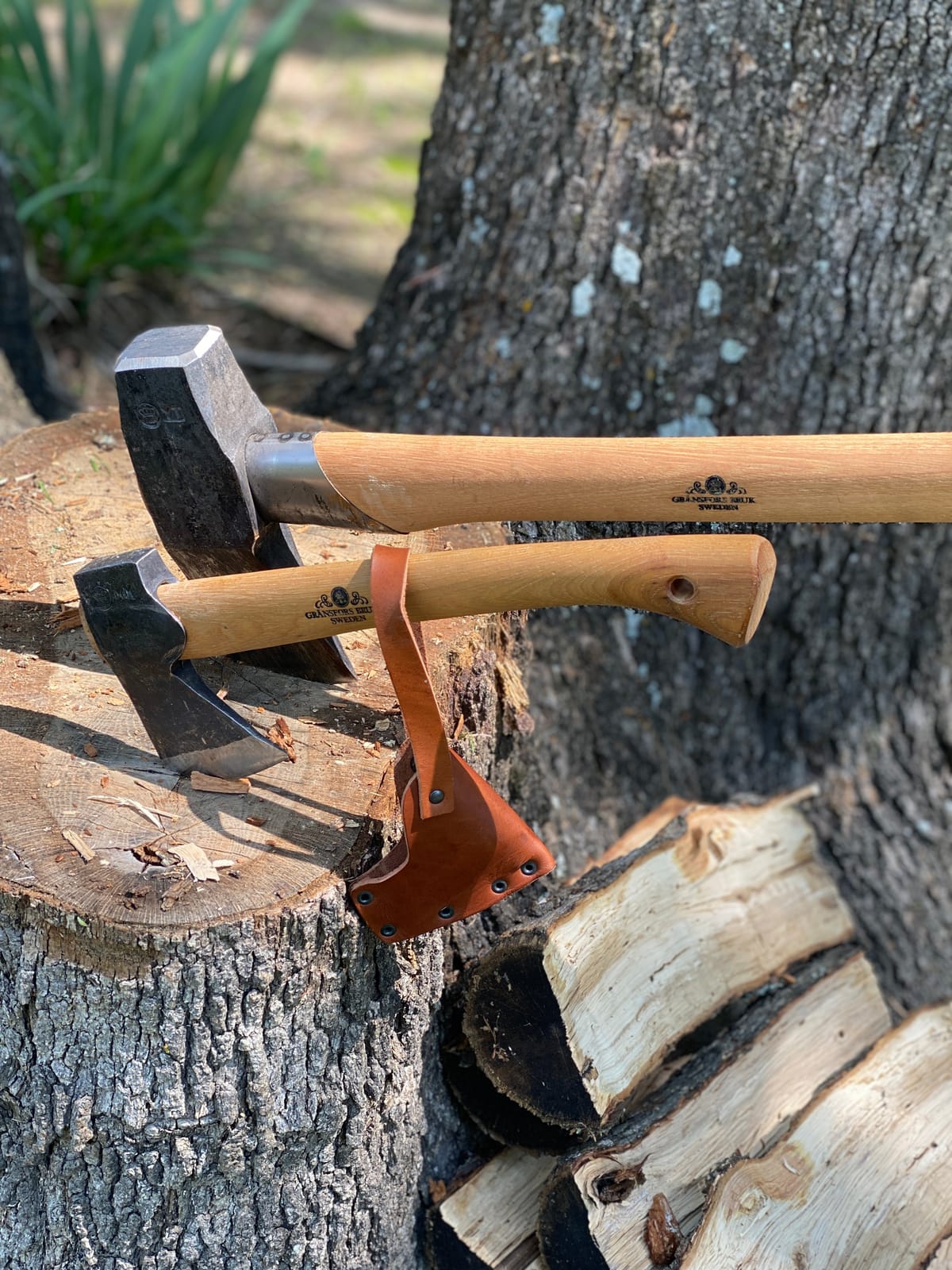
The Gransfors is the outlier on cost and the least controversial on quality. It is hand-forged in Sweden with a 7 lb head on a 31.5 inch body weighing 7.9 lb, an oil-treated hardwood handle, and a vegetable tanned leather sheath. It ships with an English-language Axebook, which is the kind of detail that tells you how seriously the maker treats the owner.
That 7.9 lb total weight is the story. It is the lightest full-size maul in this roundup by more than two pounds, and on a long session that difference compounds into the difference between finishing the pile and putting the tool down. Hand forging with an oil-treated hardwood handle gives it edge retention that a stamped head cannot approach.
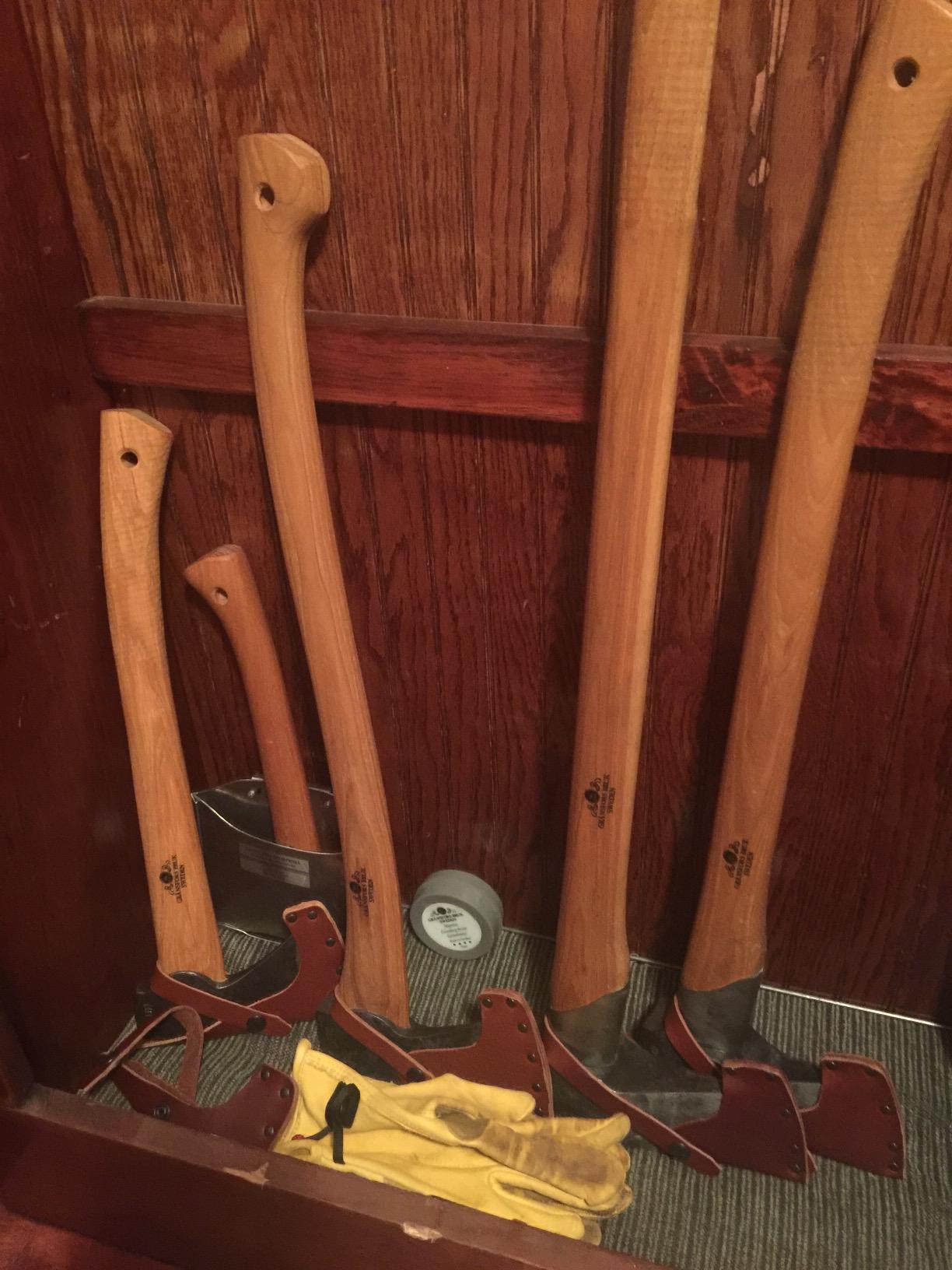
On thick knotty wood it was excellent, which is precisely the design intent stated in the listing. The 31.5 inch length also makes it the easiest full-size maul here to store and to move, and it is a much better fit in a small vehicle than a 36 inch tool.
The honest drawback is cost. This sits in a different tier from everything else in the roundup, and a buyer should go in knowing that. The second drawback is that a hardwood handle is a maintenance item, not a set-it-and-forget-it component, and skipping the oiling is how you end up with a cracked handle a few seasons later.
Is a 7 lb hand-forged head enough for knotty oak?
Yes, and the reason is the forging rather than the weight. A hand-forged head can be driven to a harder, more even temper across the whole section than a stamped or cast head of the same nominal weight, so each strike concentrates its energy at the bit instead of dissipating into the body.
The 7 lb class is the same weight class the major American maul makers settled on for exactly this reason. It is the point where you have enough mass to be effective without the fatigue that stops people splitting.
Is a wood handle worth the maintenance?
Yes if you intend to keep it. A hardwood handle can be replaced, so a head crack or handle failure is a repair rather than a funeral. Over a decade of use, that re-hang economics is the strongest long-term argument in this entire roundup.
No if you will not oil it once or twice a season and store it somewhere dry. An unmaintained hardwood handle in a damp shed will crack, and then the re-hang advantage evaporates exactly when you needed it.
8. Edward Tools 17 Inch 3 lb Splitting Maul: Best for Kindling and Camping
Edward Tools Wood Splitting Maul 17” – 3 lb. Axe and Sledge Combined – Forged Steel Head – Splits Wood Better Than Camp Axe or Hatchet – Kindling Splitter – Rubber Sheath
17 inch overall
3 lb total weight
Axe and sledge combined head
Forged steel head
Rubber sheath included
Pros
- Smallest and lightest tool in the roundup
- Works well for kindling and small rounds
- Ergonomic shock resistant fiberglass handle
- Lifetime warranty
- Rubber sheath included
Cons
- Only handles wood up to a few inches across
- Some reports of handle detachment
- 17 inch length is far too short for big rounds
- Mixed opinions on durability
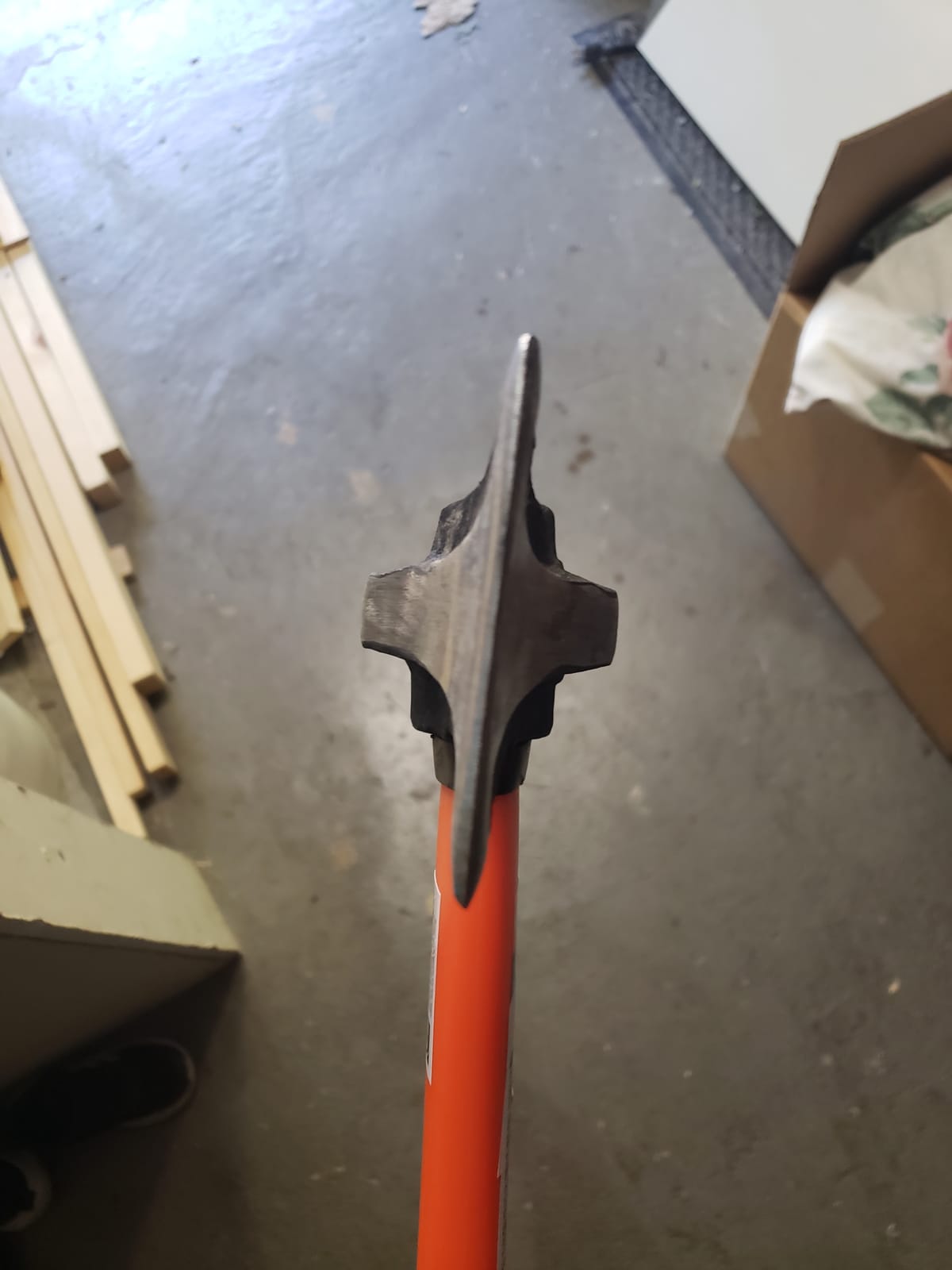
The Edward Tools maul is a 17 inch, 3 lb combination tool with an axe and sledge head design, a sharp fine-grain steel blade, and a shock resistant fiberglass handle. At 3 lb total it is less than a third the weight of a full-size wood splitter, and it is included here because a meaningful share of firewood maul searches are made by people who are not filling a woodshed.
For a wood stove that burns a handful of splits a week, a camper, or someone who wants a maul-shaped tool that fits in a backpack, it does the job well. Kindling and small rounds up to a few inches are its range, and the rubber sheath makes it a safe thing to keep in a car. A lifetime warranty is also specified.
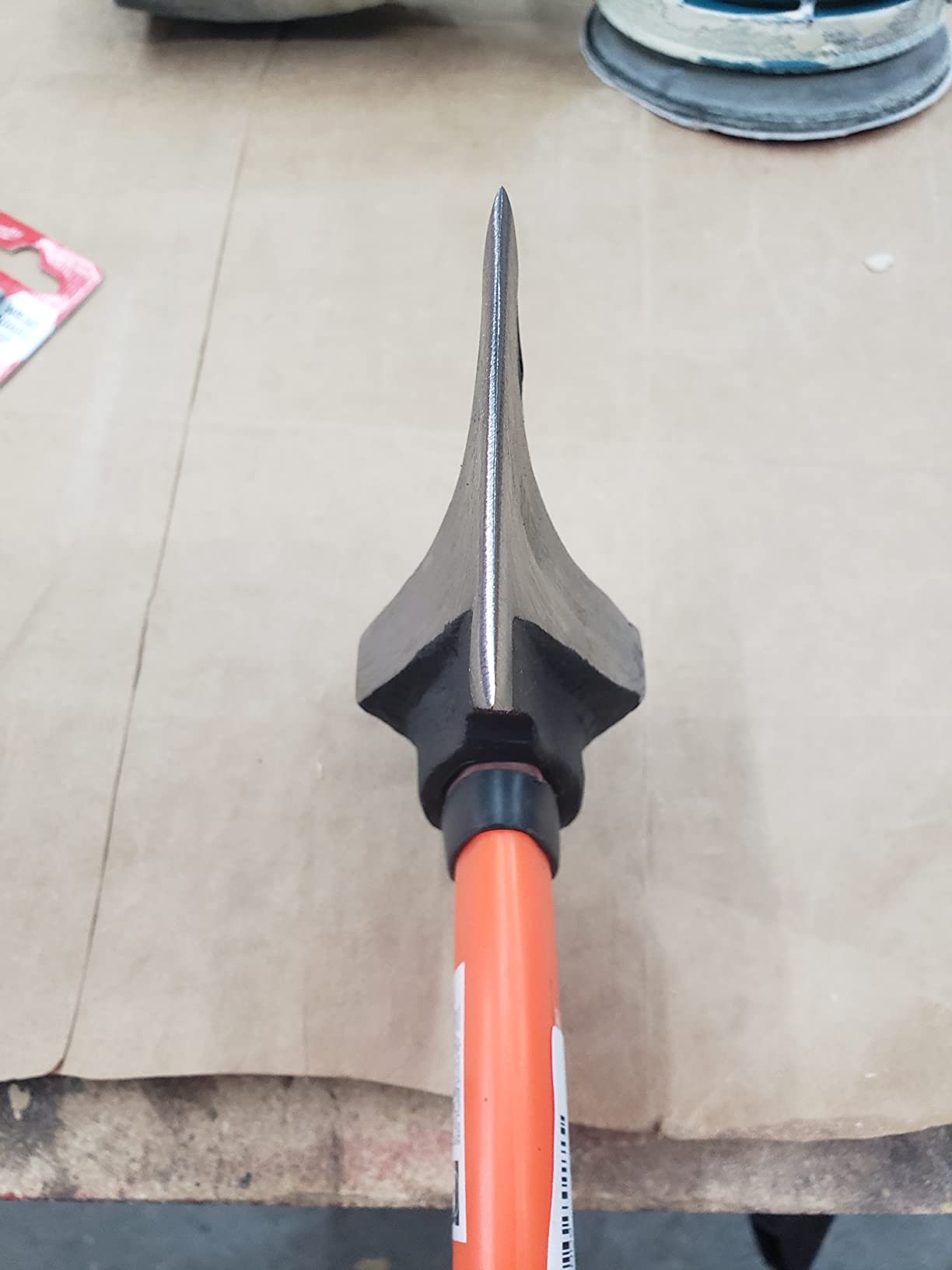
The mixed reviews cluster around one thing: the handle attachment. Some owners report the handle detaching at the head, and that is a real limitation on a tool that will be levered and twisted against a round. The overall rating of 4.5 across 814 reviews is respectable, but the durability complaints are consistent enough to mention by name.
It is also a blunt-edged, weighted design rather than a sharp splitting edge, which is correct for the way it is meant to be used. Trying to make it a primary splitting tool on real rounds is asking it to do a job several times its size.
At what point does a 3 lb maul stop being enough?
At about four inches across, and lower if the wood is elm, sycamore, sweetgum, or frozen. Those are the stringy species that grab the blade and refuse to let go, and 3 lb of head does not generate enough concentrated energy to push through them.
Up to that point it is genuinely efficient, and the light weight means you can make kindling for an hour without the joint complaints that end a heavier tool session early.
What do the handle detachment reports mean for you?
They mean this is a tool to buy with realistic expectations, and to check the head-handle junction periodically if you use it regularly. The lifetime warranty is the mitigation: a failure under warranty is a straightforward exchange rather than a lost tool.
They do not mean the tool is unsafe in the sense of a design flaw. A 3 lb tool cannot put out the kind of energy that breaks a sound handle, so the risk here is a tool that stops working, not a tool that fails dangerously.
Splitting Maul vs Splitting Axe: When You Actually Need a Maul
A splitting axe is a cutting tool with a thin, sharpened bit and a head of roughly three to five and a half pounds. A splitting maul is a blunt wedge on a heavy head with a hardened poll, and it works by driving the full width of the head into the round so the grain is forced apart rather than sliced. They are not competing products; they are different answers to different wood.
Reach for the axe on clean, straight-grained, well-seasoned rounds under about four inches across. A fast light axe has a higher head speed, and on wood that gives easily that is worth more than mass. Reach for the maul the moment you hit elm, sycamore, sweetgum, knotty oak, a crotch section, or anything over eight inches in diameter.
The practical setup most experienced firewood splitters describe is not axe or maul. It is a splitting axe as the primary tool, a maul for the problem rounds, and a pair of steel wedges for the rounds that neither will open. That combination is more useful than committing to a single tool, and it is why the wedge question comes up so often in maul searches.
One warning about terminology, because it causes real buying errors: sellers routinely call five and six pound poll-equipped tools mauls when they are really splitting axes with a hammer poll, and they sometimes list heavy axes as mauls. Judge by head weight and edge profile. Blunt wedge bit plus eight pounds or more plus a hardened poll is a maul.
6 lb vs 7 lb vs 8 lb: Which Head Weight Do You Need?
Seven pounds is the honest middle answer, and it is the weight class the American maul makers converged on. Six pounds is right for smaller users, older users, and anyone burning under two cords a year. Eight pounds is right for large rounds, seasoned hardwood, and high-volume splitting. Twelve pounds, as the Truper shows, is a specialist choice rather than a general one.
Because no manufacturer in this roundup lists a 6 lb maul, the compact tools here are the practical answer for smaller users: the 3 lb Edward Tools at 17 inches, the 0.2 kg Estwing Fireside Friend at 14.25 inches, and the 27 inch Truper for those who need mass in a shorter frame.
Also consider the season. Splitting green or frozen wood is dramatically easier than working half-dry wood, because green wood gives before it fractures. The standard advice from people who do this every year is to split as early as you can in the season and let the split faces season, rather than waiting for the pile to dry and then fighting it. Choosing a slightly lighter maul and splitting earlier beats choosing a heavier maul and splitting later.
How to Choose a Splitting Maul Without Regretting It
Start with head weight, then total weight. Head weight decides how much wood opens per swing; total weight decides whether you will still be swinging in an hour. A 36 inch maul with a 10 lb total is a completely different commitment from a 27 inch tool at 15 lb, and the second number is the one people forget to check.
Next, match handle length to your height. The 36 inch options suit users around six feet and taller, and they put more force behind the bit. Shorter handles at 27 to 33 inches give you less reach but keep the head closer to your center of gravity, which is more forgiving. If you are under five foot ten, a 36 inch maul will work but a shorter one will suit you better.
Then decide the handle material honestly. Wood, usually hickory, can be re-hung, absorbs vibration, and costs almost nothing to replace. Fiberglass and composite never need oiling, survive weather, and cannot be repaired when they fail. The right answer depends on whether you own a place to store a wood-handled tool and whether you will oil it.
Check the poll if you plan to use wedges. A hardened poll is what separates a maul that survives two seasons of wedge driving from one whose poll mushrooms and cracks. If wedges are not part of your method, poll hardness matters far less, and a bigger head or a better handle is a better place to spend attention.
Finally, look at the wood you actually have. Straight-grained species like oak, ash, and maple split reasonably. Stringy species like elm, sycamore, and sweetgum grab the bit and punish anyone using a thin axe. If elm is your fuel, an 8 lb maul is not an indulgence; it is the difference between a pleasant afternoon and a frustrating one.
Using a Splitting Maul Safely, and Where Wedges Fit In
Never strike a maul poll with a sledgehammer, another maul, or a hammer. Metal-on-metal impacts produce hardened chips and shrapnel that travel a long way, and the hardened poll of a maul makes this a real hazard rather than a theoretical one. Use the tool the way it was hardened: to drive wood, not steel.
Check the head before every session, especially on an 8 lb maul. Put the tool on its side, tap the poll against a hard surface, and listen for a dull knock instead of a clear ring. A change in tone means the head may be loosening in the eye, and swinging a 15 lb tool that comes apart mid-stroke is how people get hurt.
Wear eye protection. The most common eye injury in firewood splitting is a fragment or chip from a piece of wood spinning off the round, and it is entirely preventable. Gloves matter less than people assume, because a tight grip on a polished handle is more valuable than hand protection.
On wedges: steel wedges are the stronger choice and hold their line in frozen or frozen-thaw wood, which is why they are the standard recommendation for problem rounds. Magnesium wedges are gentler on a maul poll and are worth using if you care about the life of the tool. Use steel for the toughest wood and magnesium when you are working near the limit of your poll.
On technique, split slabs off the outside of a round rather than always striking dead center. It produces more manageable pieces, reduces the number of strikes per round, and puts less shock through the head. And if you are carving rather than burning, remember that a maul and a wedge tear the fibres; a froe is the right tool for precision work.
Frequently Asked Questions
Is a 6 or 8 pound splitting maul better?
Neither is better in general; it depends on the wood and the user. An 8 lb head on a 36 inch handle is the right choice for large rounds, knotty hardwood, and anyone splitting two cords or more a year. A lighter 6 lb class maul is the right choice for smaller or older users and for anyone burning less than that. Check the total tool weight, not just the head weight, because that is what decides whether you can still swing it late in a session.
What is the best weight for a splitting maul?
Seven pounds is the honest middle answer, and it is the weight class most American maul makers settled on. Go to 8 lb if you cut elm, sycamore, sweetgum, or knotty oak, or if you are splitting more than about two cords a year. Go lighter if you are a smaller user or splitting dry, straight-grained firewood. Weight above about 8 lb is a specialist choice for very large rounds.
What is the best splitting maul on the market?
The Fiskars Pro IsoCore 8 lb is the best all-around splitting maul we tested, because the shock-absorbing handle takes the sting out of mishits and the 36 inch length gives real torque. For a wood-handled maul built to last decades, the Gransfors Bruk Splitting Maul is the pick. For compact kindling work, the Estwing Fireside Friend covers a job the other tools cannot.
Do I need a splitting maul if I already own an axe?
If you are hitting rounds your axe cannot open, yes. The usual setup is a splitting axe as your primary tool, a maul for large and stringy rounds, and a pair of steel wedges for the worst ones. If all your wood is straight-grained, dry, and under four inches across, the axe alone is genuinely enough and the maul is dead weight in the truck.
Do wood splitting wedges work, and do they ruin a maul poll?
Wedges work, and they are the reason a maul has a hardened poll in the first place. Driven into a round that will not open, a steel wedge concentrates the blow at a single point and finishes the split. Repeated metal-on-metal driving will damage a soft poll over time, so use magnesium wedges if you want to be gentler on the tool, and never strike a poll with a sledge or a second maul.
What type of splitting maul handle is best: hickory or fiberglass?
Hickory wins on repairability and vibration absorption, and it can be re-hung so a good head survives for decades. Fiberglass and composite win on maintenance and weather resistance, since they never need oiling and will not swell in a damp shed. The catch with composite is that it cannot be replaced, so a cracked handle ends the tool’s life. Choose wood if you can store it dry and oil it; choose composite if you cannot.
The Bottom Line on Splitting Mauls
If you want one answer to the best splitting mauls question, it is the Fiskars Pro IsoCore 8 lb: it opened everything we threw at it, the shock-absorbing handle made a long session bearable, and the owner review history is the deepest in the group. Pick the Gransfors instead if you want a wood handle you can re-hang in a decade and the lightest full-size total weight. Pick the Estwing 62374 if steel wedges are central to how you split. Pick the Estwing Fireside Friend or the Edward Tools maul if your real job is kindling, not cordwood.
And split early. Green wood gives, half-dry wood fights back, and no maul on this list closes that gap. Get the rounds open while the wood is still wet, and the tool you choose matters a lot less.