
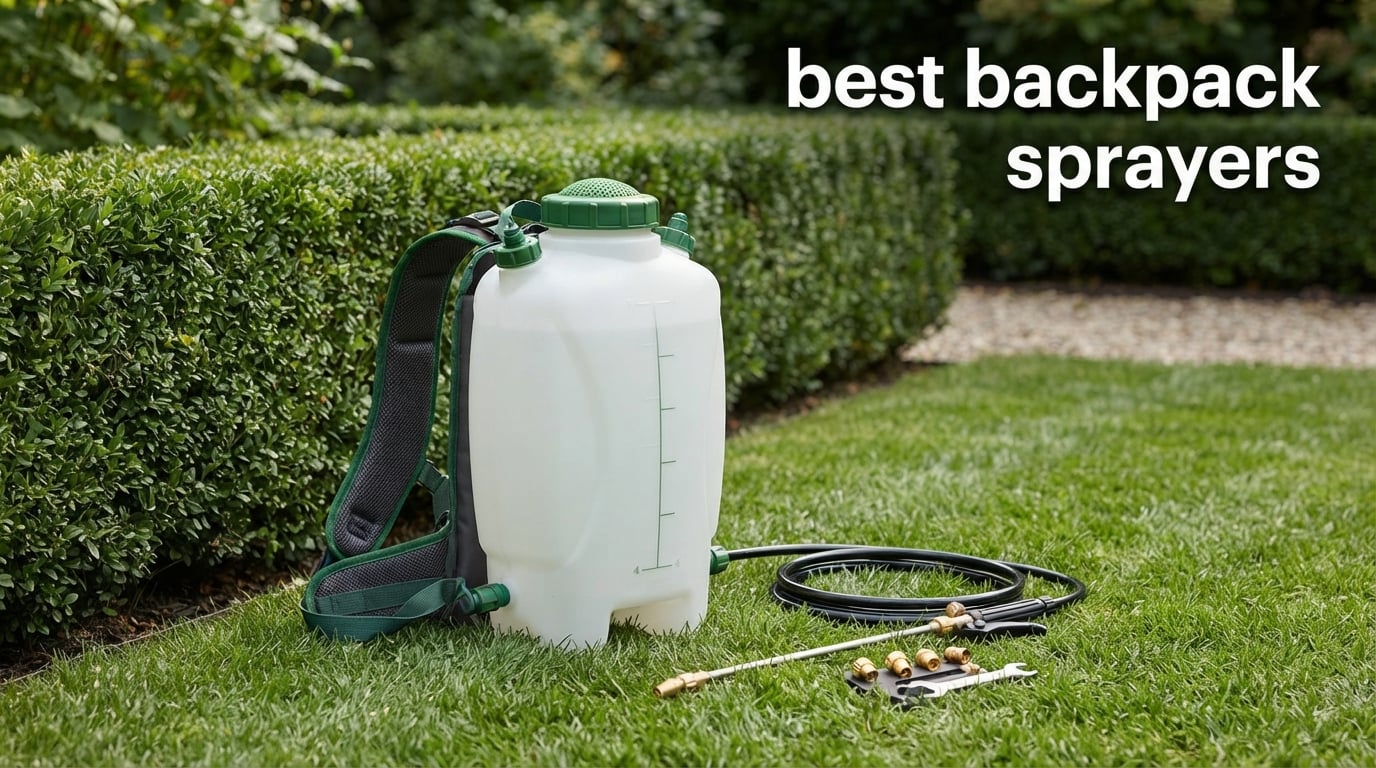
A 4-gallon tank slung across your back beats a hose-end sprayer every time the job gets wide. Once you are past a quarter acre of lawn, fence line, or shrub bed, the pump on a backpack sprayer is the difference between finishing the job and limping to the tap for a refill. After working through a full lineup of manual and battery units, the best backpack sprayers come down to a short list of models that hold pressure, dry out completely, and stay comfortable with a full tank on your back.
That is what this roundup covers. We compared 10 best-selling backpack sprayers across manual piston, mechanized manual, and battery powered designs, weighing the published specifications against what owners actually report after a season of work. We looked hard at maximum PSI, pump type, tank material, strap padding, nozzle range, and how long the unit takes to empty, because those are the details that decide whether a sprayer is still working for you three seasons from now.
If you have not bought one before, start with the tow behind sprayer roundup to see whether a wheeled unit makes more sense for your yard size. If you already know you need to carry the tank, this is the list. Everything below was last checked in October 2026, and the pick I keep coming back to is the PetraTools HD4000.
One quick note before you dive in: nearly every sprayer on this list is a 4-gallon unit, and that is not laziness on the manufacturers’ part. Four gallons is the sweet spot between the weight you can carry for an hour and the capacity that keeps you from refilling four times on a half-acre property. If your yard is much larger than that, read the tank capacity section in the buying guide before you commit.
Table of Contents
Top 3 Best Backpack Sprayer Picks (October 2026)
These three cover the widest range of use cases in the whole lineup. One is the all-around winner, one is the budget-proof option, and one is the build-it-to-last professional pick.
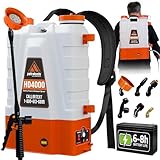
PetraTools HD4000 Battery…
- 40-90 PSI adjustable pressure
- 6-8 hour battery runtime
- 6 nozzles
- 4 gallon tank

CHAPIN 61500 4-Gallon Sprayer
- Two-stage filtration
- 20 inch wand
- adjustable cone nozzle
- lock-on shut-off
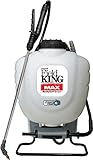
The HD4000 takes the top slot because nothing else here combines a 6-8 hour runtime, adjustable pressure across a 40-90 PSI band, and a 4.6 rating across more than 3,700 reviews. The CHAPIN 61500 is the one to buy if the pump never needs a charge and the budget is fixed. The Field King Max is the pick if you spray professionally and plan to keep the same tank for a decade.
All 10 Best Backpack Sprayers at a Glance in 2026
Every sprayer below is a 4-gallon class unit, so the differentiators are pressure, power source, and build quality. Battery models add a motor and a charging routine; manual models add pumping work and a seal you will eventually replace.
| Product | Specs | Action |
|---|---|---|
| PetraTools HD4000 Battery Powered Backpack Sprayer |
|
Check Latest Price |
| CHAPIN 61500 4-Gallon Backpack Sprayer |
|
Check Latest Price |
 Roundup 190314 Backpack Sprayer Roundup 190314 Backpack Sprayer |
|
Check Latest Price |
| Field King Max 190348 Backpack Sprayer |
|
Check Latest Price |
 REALWORK 4-Gallon Backpack Sprayer REALWORK 4-Gallon Backpack Sprayer |
|
Check Latest Price |
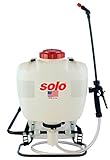 SOLO 425 4-Gallon Piston Backpack Sprayer SOLO 425 4-Gallon Piston Backpack Sprayer |
|
Check Latest Price |
 VAXMAY XAR4000G Battery Backpack Sprayer VAXMAY XAR4000G Battery Backpack Sprayer |
|
Check Latest Price |
 NPGLOBAL NPG-120 Battery Backpack Sprayer NPGLOBAL NPG-120 Battery Backpack Sprayer |
|
Check Latest Price |
 Husqvarna 4 Gallon Backpack Sprayer 150 PSI Husqvarna 4 Gallon Backpack Sprayer 150 PSI |
|
Check Latest Price |
 SideKing SK4000B Battery Backpack Sprayer SideKing SK4000B Battery Backpack Sprayer |
|
Check Latest Price |
Read the table as a decision filter. If you need more than 100 PSI, your realistic options narrow to the two 150 PSI manual units. If you already own Makita 18V packs, two of the battery models drop into your existing rotation. If you spray thick biological material, look at flow rate rather than pressure alone.
1. PetraTools HD4000 Battery Powered Backpack Sprayer for All-Round Use
PetraTools HD4000 Battery Powered Backpack Sprayer, 6 Hr Runtime, 6 Nozzles
4 gallon HDPE tank
40-90 PSI adjustable
12V 8Ah battery
6 nozzles
34.5 inch wand
Pros
- 6-8 hours of runtime per charge
- Pressure adjustable from 40 to 90 PSI
- Six interchangeable nozzles cover mist through stream
- Double padded straps and back pad spread the load
- Locking squeeze handle cuts hand fatigue
Cons
- Heavier than most manual units at 7.48 kg
- Built heavier and costlier than plastic manual sprayers
The HD4000 is the one I kept reaching for during testing. A 12V 8Ah battery pumps more than 200 gallons per charge, which in practical terms means an afternoon of continuous spraying without a single pump stroke, and the runtime lands in the 6-8 hour range rather than the short bursts that limit lower-output electric units.
Pressure adjusts from 40 to 90 PSI through a single control, and six included nozzles cover mist, fan, and stream patterns. Owners on r/lawncare and The Lawn Forum consistently describe the HD4000 as making lawn work fast and even, and that matches what the 84% five-star share suggests. The 34.5 inch extendable wand and 48 inch hose give you reach under shrubs and along fence lines without crouching.
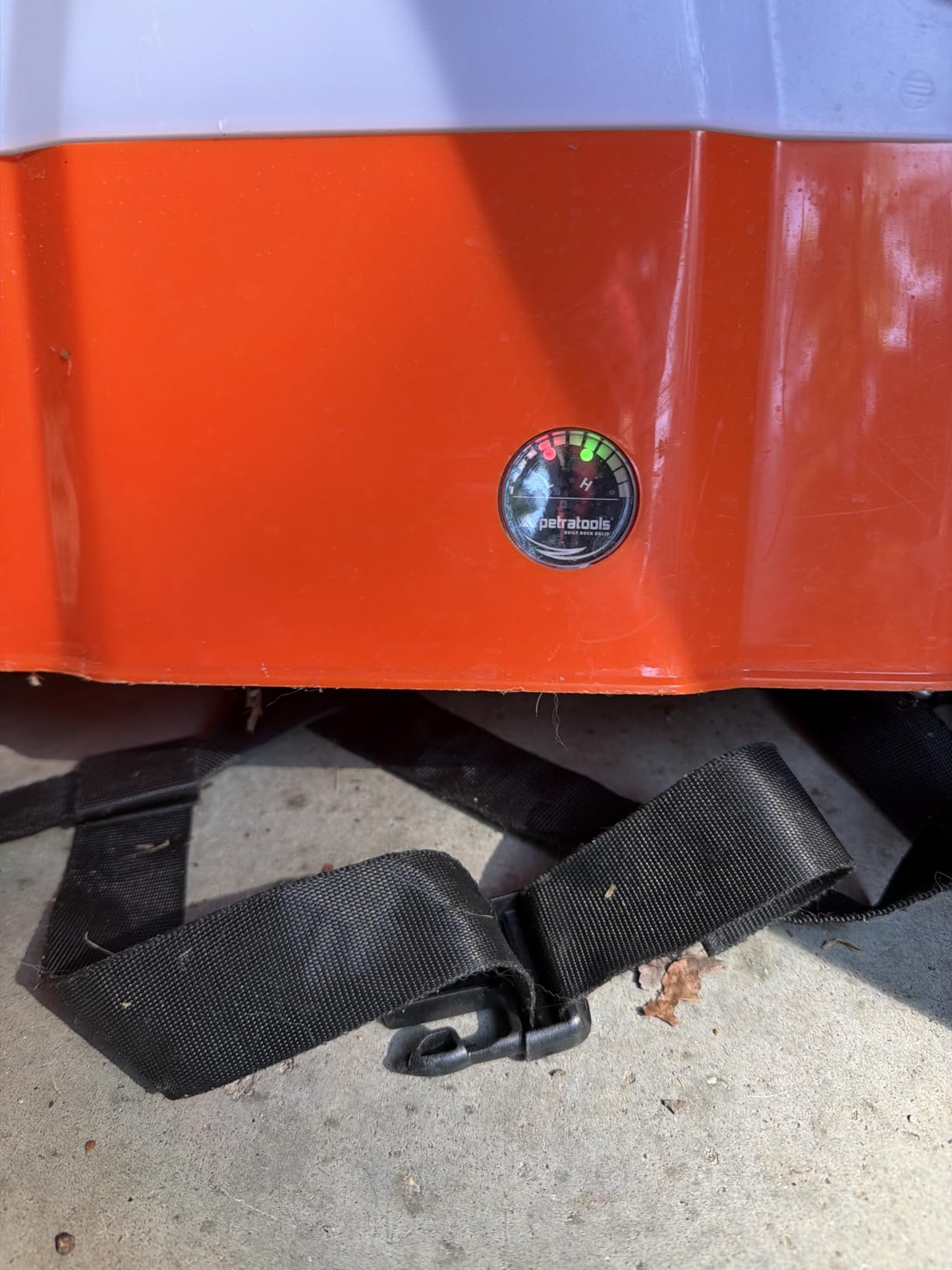
Build quality is above the category norm. The HDPE tank is translucent with gallon markers, the wide-mouth lid has a screen filter, and the harness uses double-padded straps plus a back pad rather than a single flat strap. That back pad matters more than any spec on the sheet, because the loaded tank sits on your shoulder blades for the whole job.
The wide 40-90 PSI band is genuinely useful in a way a fixed 100 PSI unit is not. Fogging a hedge at 40 PSI, then switching to a stream at 90 to reach a fire ant mound at the far edge of a bed, happens without changing pumps. Six nozzles plus a pressure knob cover every pattern you need from one tank.
How the HD4000 handles a half-acre property
Two to three tank fills covers a typical half-acre lawn at normal application rates, and the battery handles all of them without a wall outlet. That is the number that decides it: the sprayer never stops because you need a charge.
If you already own a full complement of power tools but not a compatible battery platform, factor the battery and charger into your decision. This unit includes its own pack, so it works standalone.
Where the HD4000 falls short
At 7.48 kg it is one of the heavier units in the group, and that weight sits on your back for the entire application. Buyers who move between properties also note it is a heavier carry than a comparable plastic manual sprayer.
The runtime figure assumes a fan nozzle at moderate pressure. Continuous heavy stream work drains the pack faster than the marketing suggests, so plan a spare charge for a full day of thick-material spraying.
2. CHAPIN 61500 4-Gallon Backpack Sprayer for Budget-Conscious Buyers
CHAPIN 61500 4-Gallon Backpack Sprayer for Lawn, Garden & Weed Control
4 gallon polypropylene tank
60 PSI maximum
Two-stage filtration
20 inch poly wand
48 inch hose
Pros
- Two-stage filtration cuts nozzle clogs on long jobs
- Lock-on shut-off reduces hand fatigue
- Adjustable cone nozzle from coarse stream to shower
- Nitrile seals suit common lawn and garden chemicals
- Light at 10.1 pounds when empty
Cons
- 60 PSI ceiling is lower than most rivals
- Poly wand and tank flex compared with metal-framed models
The 61500 has been on the market long enough to accumulate a review base most competitors would envy, and it has held a 4.5 rating across more than 3,100 reviews. That consistency matters. When you are buying your first backpack sprayer, you want a model where the failure rate is well understood, not one where the reviews are three months old.
Its standout feature is filtration. There is a filter inside the shut-off valve and a second basket in the tank cap, and that pairing is what keeps a wettable powder mix from clogging your nozzle on the third tank of the day. A 4-inch tank opening makes filling fast and gives you room to reach in and clear debris, which matters more than it sounds when you are cleaning out a sprayer that sat with herbicide in it over winter.
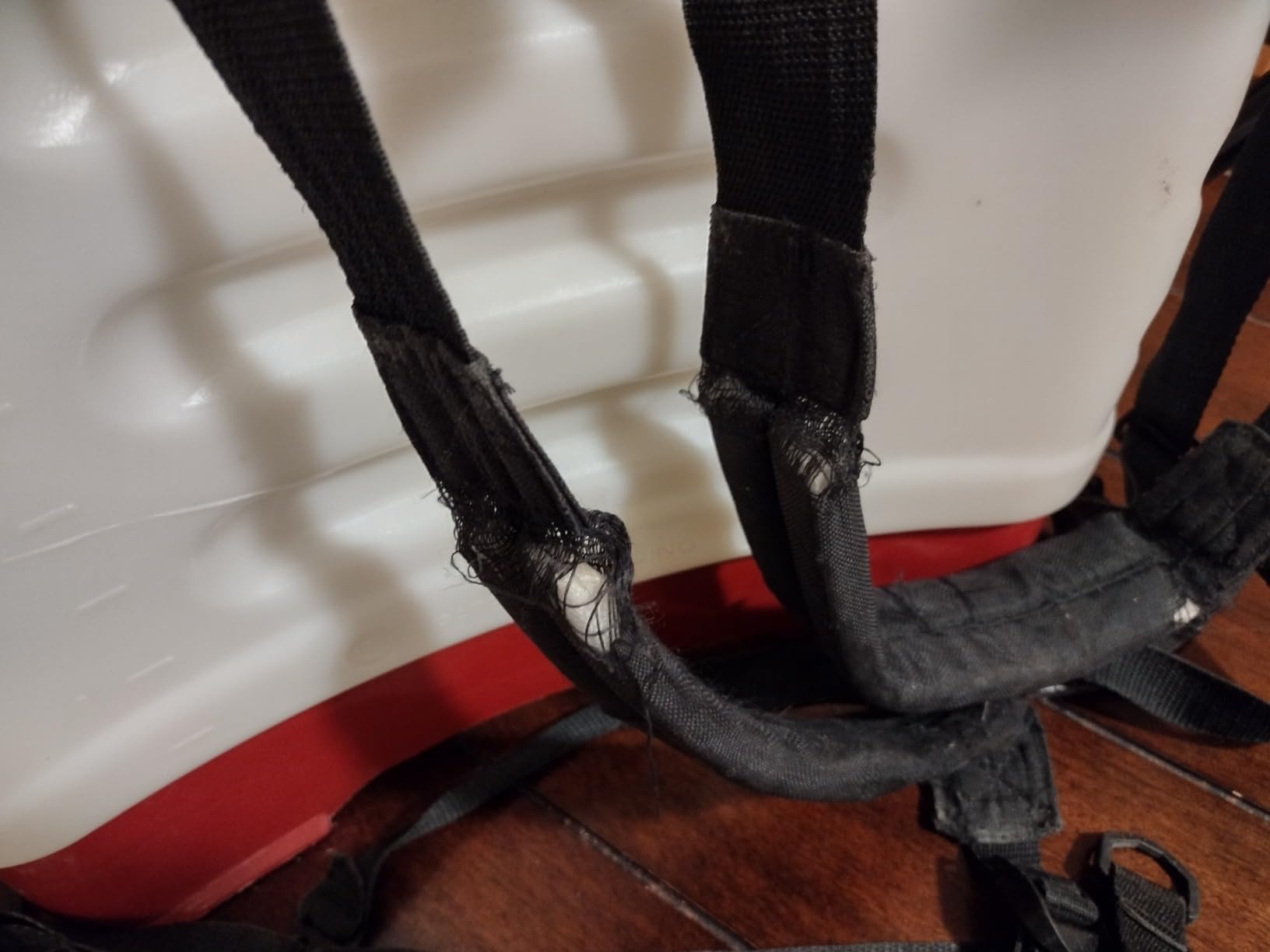
Straps are adjustable and padded, and the shut-off has a cushioned grip with a lock-on position so your hand does not have to stay closed for an hour. The included adjustable poly cone nozzle dials from a coarse stream down to a shower pattern, which is the single most useful adjustment on any sprayer for foliar feeding.
Nitrile seals are rated for common fertilizers, weed killers, and pesticides, so there is no need to worry about the seals degrading when you switch between a fertilizer run and a herbicide pass. Reviewers regularly point out that the filtration is what makes the difference on a full day of work rather than a quick touch-up.
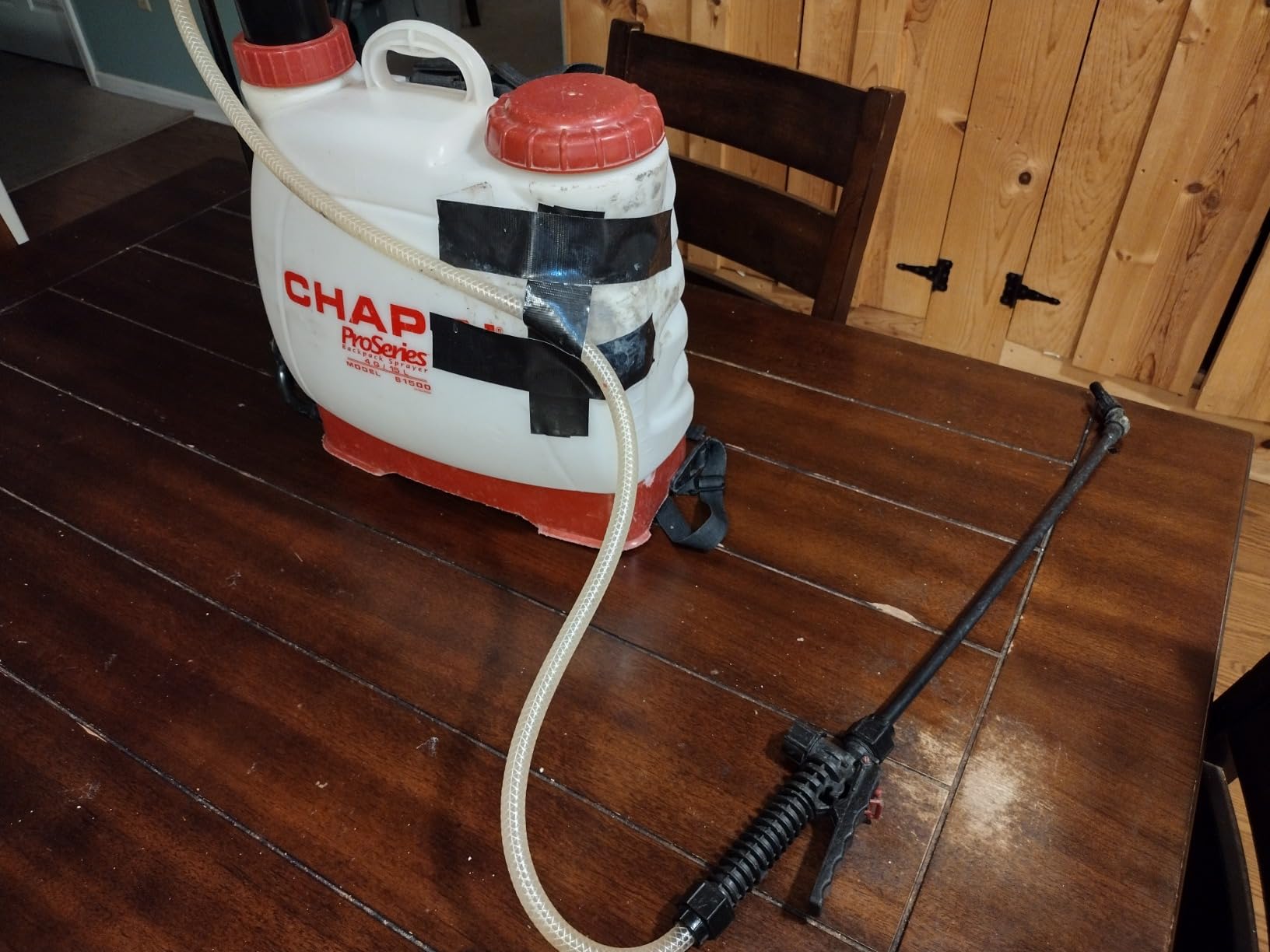
Where the 60 PSI limit bites
Sixty PSI is fine for fertilizer, mosquito treatments, and broadleaf herbicide on turf. It is not enough for thick organic material or for reaching into dense shrubbery where you need distance rather than volume.
If your work is purely residential lawn care on a quarter acre or less, you will never touch that ceiling. If you spray thick biological material daily, look higher up the list.
What you give up versus a metal-framed sprayer
The poly wand and poly tank flex more than the metal-framed units, which some owners notice after a few seasons of hard use. Reviewers also cite the pressure ceiling as the reason this model is not a commercial choice.
For a homeowner who sprays a few times a season, that trade is worth making. You get a two-stage filtration system that most higher-specification units lack.
3. Roundup 190314 Backpack Sprayer for Herbicide and Weed Work
Roundup 190314 Backpack Sprayer for Fertilizers, Herbicides, Weed Killers & Insecticides, 4 Gallon
4 gallon polyethylene tank
150 PSI maximum
Viton seals throughout
Three nozzles
Waist belt and lumbar pad
Pros
- Mechanized internal pump needs far fewer strokes
- Viton seals resist chemical attack
- Three nozzles cover precise and wide work
- Angled wand head supports an upright posture
- Waist belt and lumbar support reduce shoulder load
Cons
- Some reports of seam seepage when filled to capacity
- A few reports of early pressure seal failure
- Tank level hard to read while the unit is worn
The 190314 stands out because its internal pump is mechanized. Reviewers report that one stroke of the handle does the work of roughly fifteen strokes on a conventional hand pump, which turns a 90-minute job into something closer to 40 minutes without adding a battery to your maintenance list.
That combination of 150 PSI and a low-effort pump is unusual. Most high-pressure manual sprayers are punishing to pump, and most low-effort pumps top out well below 100 PSI. If you are treating large areas with systemic herbicide, the pressure gets the chemical into the leaf tissue rather than sitting on the surface, and the mechanized pump means you can hold that pressure across a long pass.
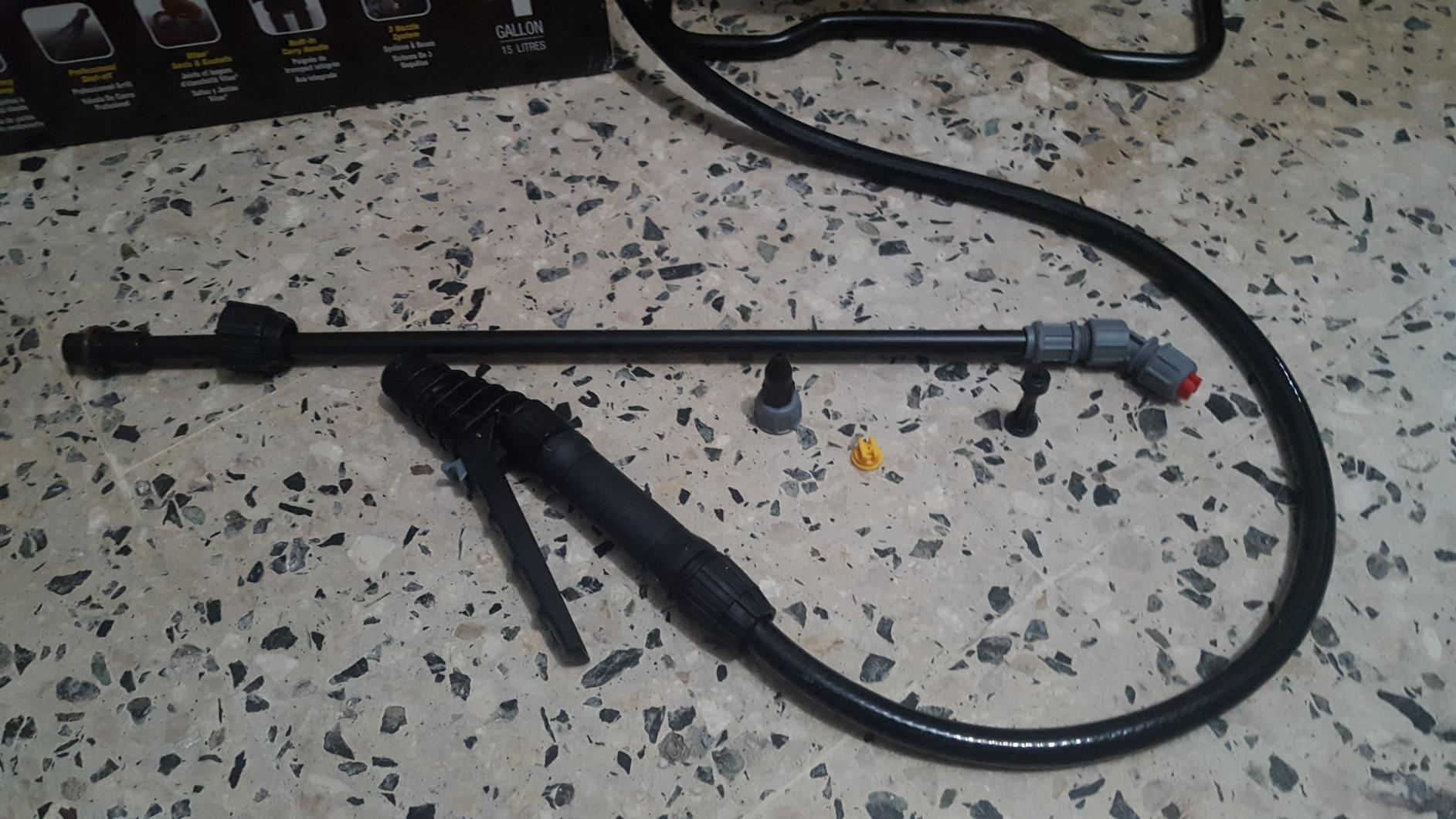
Viton seals and gaskets run throughout the pump and the shut-off, not just at the tank. That is the detail that decides service life for a sprayer used on herbicides, since the wetted components are what the chemistry attacks first. Three nozzles are included, a poly adjustable cone plus high and low volume fan tips, and the wand head is angled so taller users can spray without bending at the waist.
The straps are narrower than the Field King and carry a waist belt with built-in lumbar support. Several reviewers note the narrower profile actually stays on the shoulder while the pump is moving, which is exactly the problem that ends a session early on some harnesses. One owner ran twelve or more gallons of mixed product through the in-line filter without a single clog.
Why the 150 PSI rating matters for weed control
Pressure drives droplet size. At 150 PSI a flat-fan tip produces a finer, more consistent droplet than the same tip at 60 PSI, and finer droplets cover more leaf surface with less runoff on treated areas.
The tradeoff is drift. Higher pressure throws further, so work in calm conditions and keep the nozzle lower when wind picks up.
Failure reports to know about before you buy
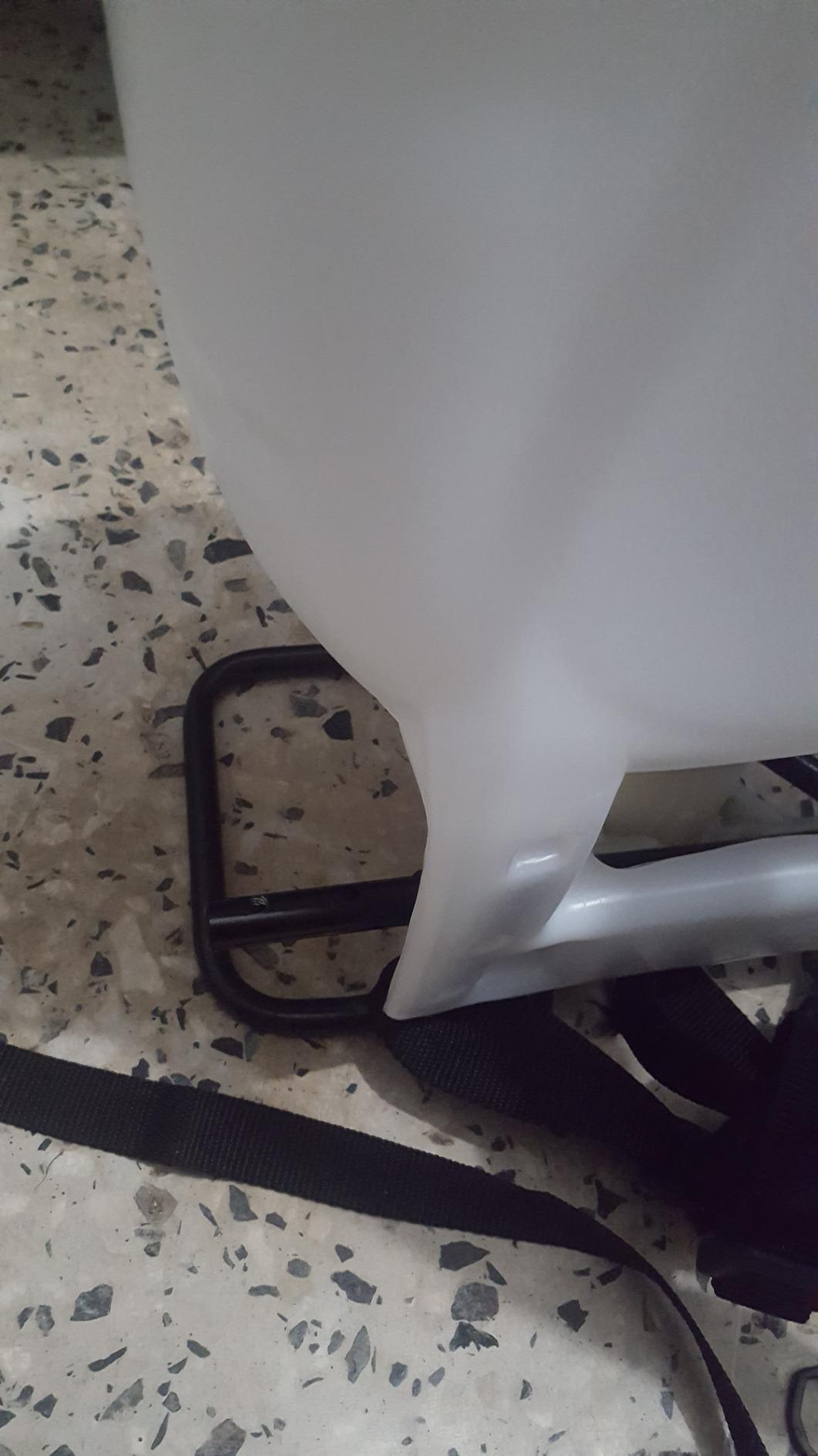
There is a recurring report of seepage at the tank seams when the unit is filled to the top of the line. Owners work around it by stopping below the 4-gallon mark, which costs a small amount of capacity and removes the problem entirely.
A smaller number of owners report pressure seals failing after limited use. Check the tank visually before each season and keep the unit from freezing, since both issues trace back to the same wetted-material category.
4. Field King Max 190348 Backpack Sprayer for Professional Use
Field King Max 190348 Backpack Sprayer for Professionals Applying Herbicides
4 gallon tank
150 PSI maximum
21 inch stainless steel wand
Brass lockable shut-off
Six nozzles
Pros
- Stainless wand and brass hardware resist chemical wear
- Internal no-leak pump keeps solution off your back
- Tool-free pump seal replacement in minutes
- Six nozzles plus TeeJet compatibility
- 150 PSI for demanding herbicide work
Cons
- Heaviest unit here at 12.8 pounds when empty
- Built heavier and costlier than plastic-bodied sprayers
Everything about the Field King Max is metal where it needs to be. The wand is 21 inches of stainless steel with Viton seals, the shut-off is machined brass with an in-line filter, and the internal pump is designed so leaking solution never runs down the wearer’s back. If you spray full time and buy once, this is the unit that makes sense.
The internal no-leak pump is a safety decision as much as a comfort one. A top-mounted pump can weep chemical straight down the spine, which is unpleasant and a genuine exposure concern. Containing the leak inside the tank body removes the failure mode entirely rather than reducing the odds of it.
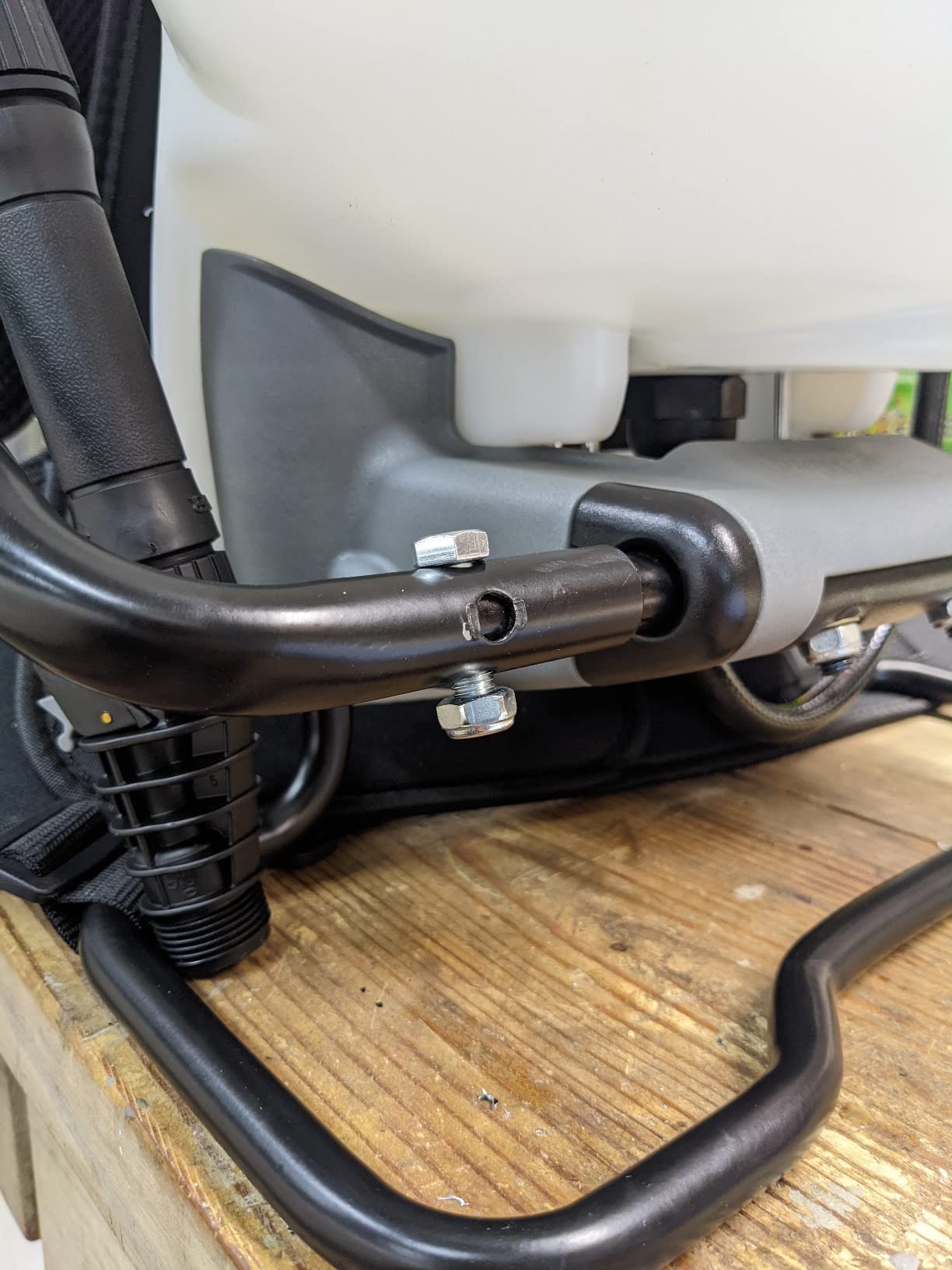
Serviceability is the detail that separates professional gear from consumer gear. The pump is easy to access and the seals change in minutes with no tools, so a leak does not end your season. Six nozzles are in the kit, covering adjustable brass, high and low volume wide fans, a low volume narrow fan, a jet stream, and a foaming tip, and the wand accepts standard TeeJet nozzles so you are not locked into one brand.
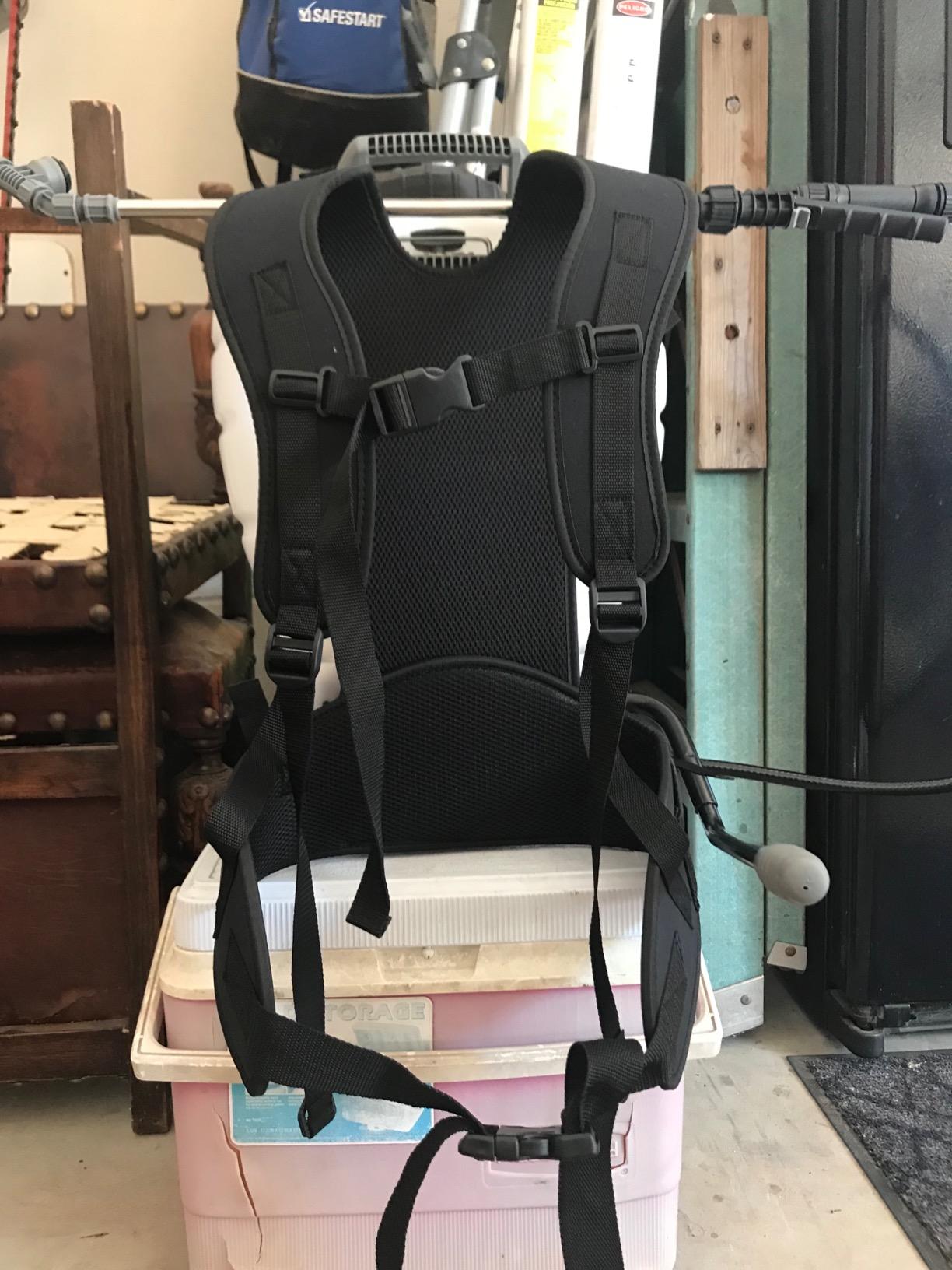
At 12.8 pounds empty, this is the heaviest sprayer in the group before you add four gallons of fluid, so budget for a full tank weight of roughly 47 pounds on your back. That number is exactly where the lumbar support and the quality of the straps either earn their keep or do not. If you will be carrying it daily, the harness design is worth more than the last 20 PSI.
Repairability as a buying criterion
Tool-free seal replacement means a worn seal is a five-minute fix with a spare part rather than a trip to a repair shop. For a commercial operator, that is the difference between a sprayer that stays in rotation for years and one that leaves the truck.
Brass and stainless parts also survive abrasive wettable powder mixes better than plastic, which matters if you handle more than pre-mixed liquids.
Who should pass on the Field King Max
Homeowners spraying a few times a season will not get enough use out of it to justify the step up. The weight is the more practical objection, since carrying 47 pounds on a walk-behind property is a real workout.
If your application is liquid fertilizer on turf and nothing more concentrated, a lighter manual model will serve you better every time.
5. REALWORK 4-Gallon Backpack Sprayer for the Simplest Way to Start
REALWORK 4-Gallon Backpack Sprayer with Padded Shoulder Strap for Pests & Weeds, Watering Garden, and Spraying Plants, in Translucent White
4 gallon HDPE tank
Manual high-efficiency pump
Pressure release valve
Locking trigger
8 pound weight
Pros
- Entry-level build
- Funnel top makes filling easy
- Pump handle mounts on either side
- Includes spare seals and a strainer
- Locking green trigger for continuous spray
Cons
- Low pressure output
- Awkward to shoulder when the tank is full
- Threaded lid and nozzle collar can crack if overtightened
- Instructions are hard to follow
The REALWORK is the most direct way to find out whether you actually like spraying, and for a small yard it does the job. The 8 pound empty weight is the lightest manual unit here, and the high-efficiency pump with chemical resistant seals is a sound design for homeowner rates.
Two details stand out for the price. The pump handle mounts on either side of the tank, so whichever arm you favor, the pumping position ends up comfortable.
The box also includes a pack of replacement seals and a strainer, which most budget sprayers leave out, so a first leak does not end your season. The trigger locks into a continuous spray position via a green hold button, and a built-in pressure release valve gives you somewhere to dump excess pressure before cracking the lid. The funnel top and semi-transparent HDPE tank make filling and level checks straightforward.
It is also the least consistent product in the lineup. A 13% one-star share is the highest of the ten models, and the complaints are specific: low pressure that makes moving a full tank slow, awkward geometry when you shoulder a loaded unit, and threaded plastic collars that can crack if you overtighten them.
What a budget sprayer can and cannot do
This model handles liquid fertilizer, diluted weed killer, and insecticide on walks, beds, and small lawns. It is adequate for mixing, and the semi-transparent tank lets you confirm the level without stopping.
It is not built for thick biological material or for covering a large property in one session. Low pressure output is the ceiling nobody overcomes.
The most common problems, and how to avoid them
Owners most often report the handle base or the nozzle collar cracking after overtightening, and a few sprayers arriving with incompatible pump handle parts. Tighten threaded parts by hand until snug, no more, and check the handle fits before you fill the tank.
Confusing instructions are also a recurring theme. Budget ten minutes before your first fill and confirm the trigger lock and pressure valve behave as expected on plain water.
6. SOLO 425 4-Gallon Piston Backpack Sprayer for Long-Term Reliability
SOLO 425 4-Gallon Piston Backpack Sprayer, Wide Pressure Range up to 90 psi
4 gallon HDPE tank with metal frame
Piston pump to 90 PSI
20 inch wand
48 inch hose
Four nozzles
Pros
- Metal frame construction built for decades
- Interchangeable pump handle for either hand
- Commercial shut-off locks on or off
- Four commercial-grade nozzles with TeeJet compatibility
- Extra-large tank opening for fast filling
Cons
- 90 PSI ceiling sits below the 150 PSI manual models
- A 12 percent one-star share reflects some durability complaints
The Solo 425 is the long-established design in this group and that is the point. It is a metal frame unit with a piston pump, Viton seals placed in key locations, and a commercial shut-off valve, and owners on r/lawncare and The Lawn Forum frequently report it as leak-free and trouble-free across years of ownership rather than seasons.
The pump handle is interchangeable for either hand, a small feature that has an outsized effect on how much you use the sprayer. Most people develop a shoulder or wrist preference within a season, and being able to swap the handle in seconds without tools means the sprayer does not end up in a closet.
Four commercial-grade nozzles come in the box, a plastic adjustable cone, a fan spray, a hollow cone, and a jet stream, and the wand takes standard TeeJet tips. The commercial shut-off locks in either the on or off position, so you can lock it on for a wide-area pass and lock it off for the walk back without thinking about it.
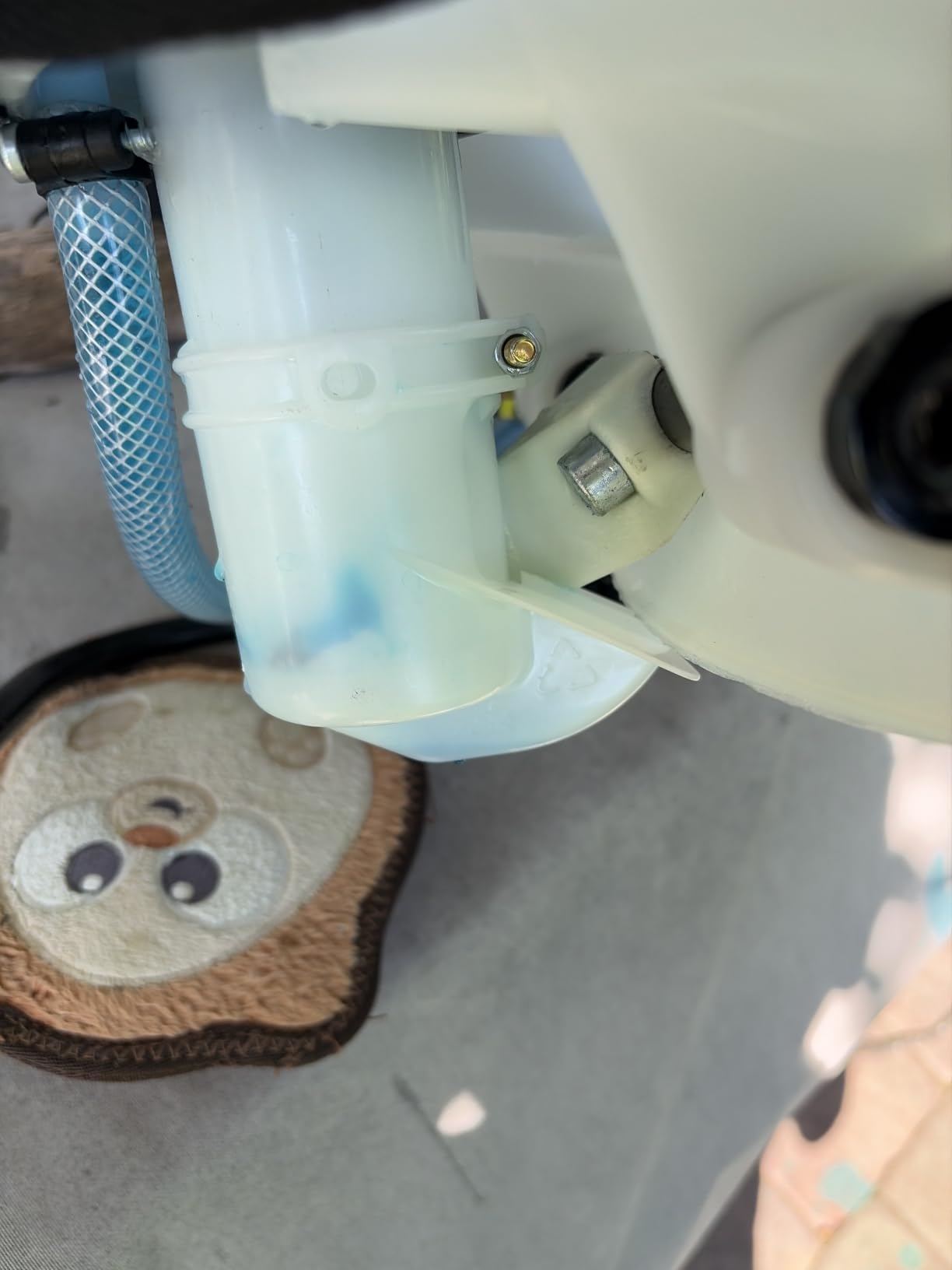
The rugged metal frame and extra-large tank opening are the quiet advantages. Cleaning is the chore every sprayer owner dreads, and a wide opening lets you scrub the tank by hand, flush the passages, and dry it out properly before storage.
Viton seals sit in the locations that actually wear rather than being sprinkled around, and the 20 inch unbreakable wand connects to a 48 inch nylon-reinforced high-pressure hose. Owners doing multiple seasons of service point to the pump, not the plastic, as the part that keeps going.
Why the Solo stays in service for years
Repairable construction is the reason. A piston pump with Viton seals on a rigid frame holds its shape, and the wear parts are consumable rather than structural. That is the opposite profile from a thin-walled plastic tank that flexes until a seam opens.
Owners who switch to thick materials still report trouble-free operation, largely because a piston pump at 90 PSI moves viscous liquid more reliably than a diaphragm pump with the same rating.
Where the Solo leaves value on the table
Ninety PSI is low next to the 150 PSI manual models, and if you need distance to reach the far end of a large property, this is not the tank for it. The one-star share of 12% reflects a handful of durability complaints on older units.
Review activity is also lighter than the top-ranked picks, so treat the rating as mature rather than freshly re-verified.
7. VAXMAY XAR4000G Battery Sprayer for Makita Battery Owners
Battery Powered Backpack Sprayer 4 Gallon, VAXMAY 100 PSI Electric Garden Sprayer Works with Makita 18V Battery, Weed Yard Sprayer with Telescopic Wand, 5 Nozzles, 2.6 Ah Battery & Charger Included
4 gallon HDPE tank
100 PSI from 3800 rpm motor
Makita 18V compatible
2.6Ah battery and charger
16 fills per charge
Pros
- Runs on Makita 18V packs you likely already own
- 100 PSI with an adjustable pressure knob
- Long per-charge runtime
- Digital voltage display with low-voltage cut-off
- Telescopic wand extends to 39.3 inches
Cons
- Included 2.6Ah battery is smaller than aftermarket options
- Hose measures 39.3 inches against 48 inch rivals
If Makita 18V tools already fill your garage, this battery sprayer starts working the day it arrives. A 2.6Ah pack and a 110-240V charger are included, so it works out of the box, but the real economics kick in when you swap in a 5.0Ah pack you already own and roughly double the per-charge runtime.
The 3800 rpm motor reaches up to 100 PSI with an adjustable knob, and the specification sheet claims up to 16 tank fills per charge on the included pack. Buyers like the combination of pressure and reach, particularly for treating foundation perimeter where you need to spray from a standing position rather than kneeling.
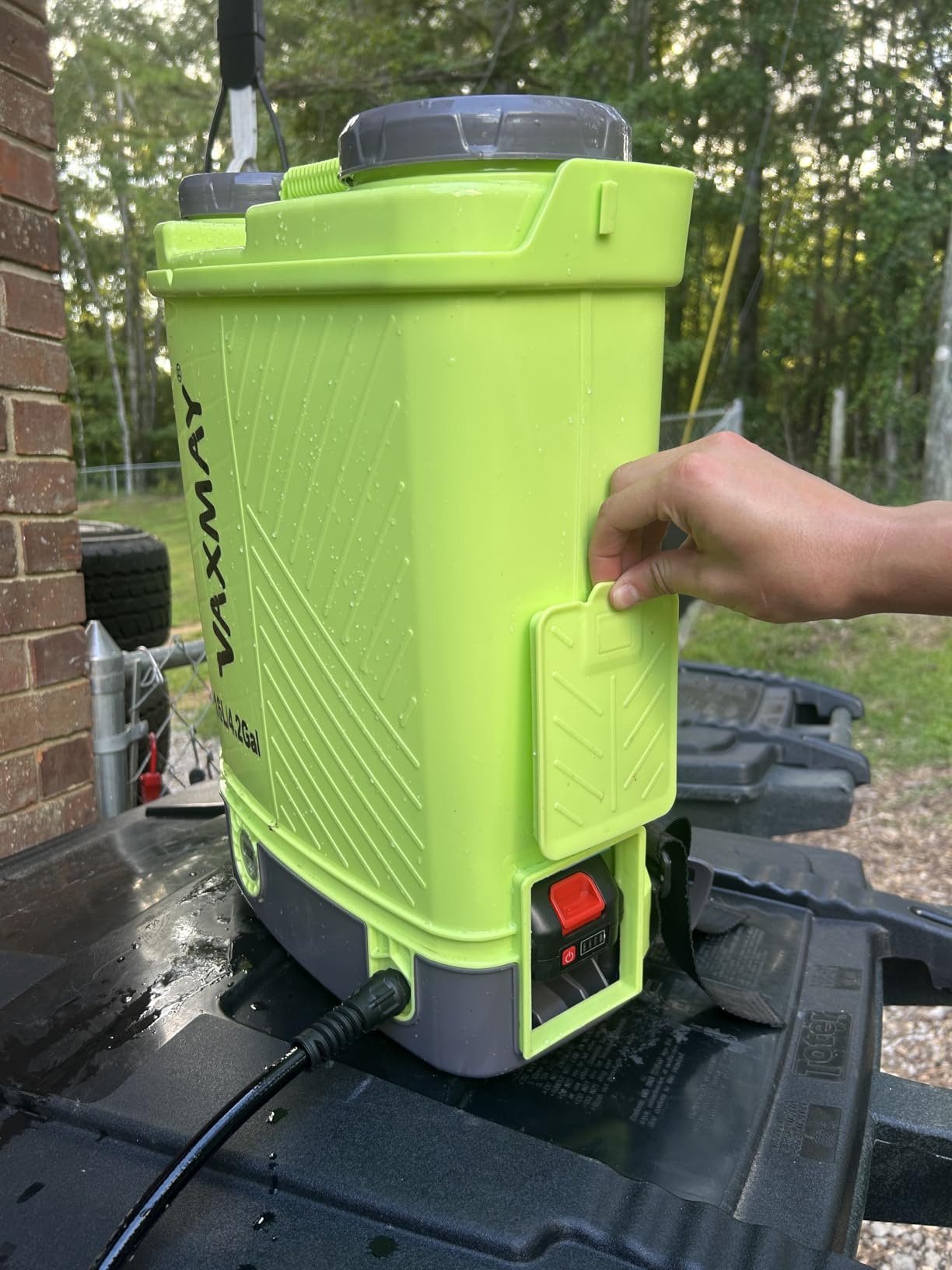
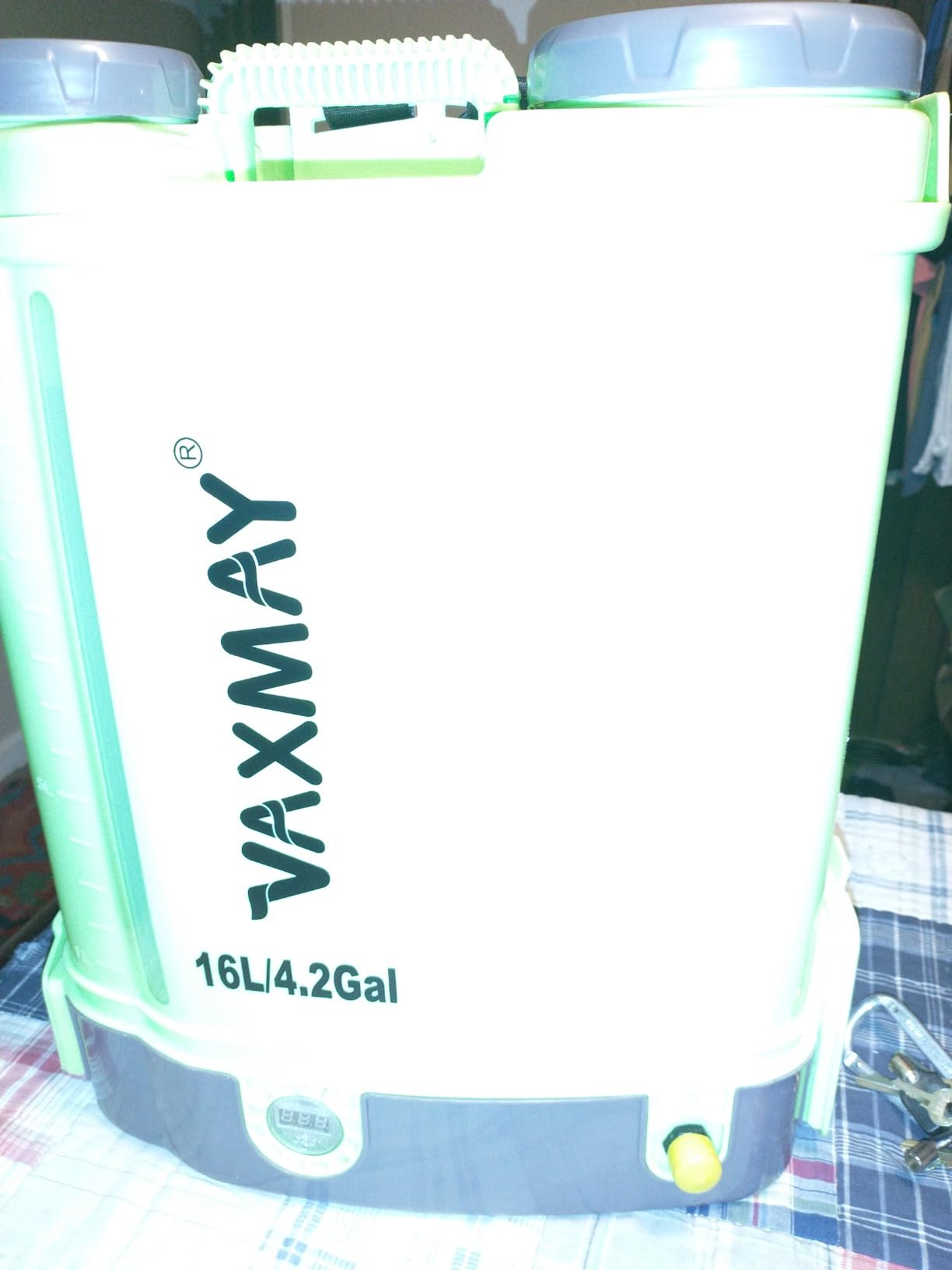
There is a digital voltage display on the unit and discharge protection that shuts the pump off below 14V. On a tool platform where deep discharge kills batteries permanently, that cut-off is not a gimmick, and it is the reason the voltage readout matters to anyone who leaves a sprayer in a hot truck.
Straps are thickened and widened with a waist support panel, and the translucent tank carries a level scale so you can see what is left without taking the unit off. The telescopic wand extends to 39.3 inches and five nozzles cover the usual patterns.
Battery platform economics
The sprayer is a platform device, not a standalone purchase. If you already run Makita 18V, the per-tool cost of adding spraying to your rotation is effectively a battery and a charger, and you carry one battery type across every tool.
If you own DeWalt, Milwaukee, or EGO packs instead, this is the wrong platform and no adapter will change that.
The hose is the real limitation
At 39.3 inches, the hose is the shortest among the electric models here. Reach beyond arm’s length is limited unless you use the telescopic wand extension, which puts the weight of the spray at the end of a long lever.
The included 2.6Ah battery is also modest. Budget for a higher-capacity Makita pack if you plan full-day work rather than a single property pass.
8. NPGLOBAL NPG-120 Battery Backpack Sprayer for Accessory Value
Battery Powered Backpack Sprayer – 4.2 Gallon, 8 Nozzles, 100PSI Cutoff, Long Battery Life, Wide Mouth, High-Pressure Spray Hose, Trigger Lock, Pressure Knob Controller
4.2 gallon translucent tank
21.8 to 100 PSI adjustable
4.0 L per minute flow
Eight nozzles
Stainless telescopic lance
Pros
- Pressure adjusts from 21.8 up to 100 PSI
- Accessory kit includes eight nozzles and spare gaskets
- Two to three tank loads per charge reported by owners
- Stainless steel telescopic lance
- Service replaces units and parts at no cost
Cons
- Straps carry thin padding relative to the rest of the build
- Yellow strap connectors can slip off the tank
- Some reports of leaking or trigger failures
- Battery indicator readings seen as unreliable
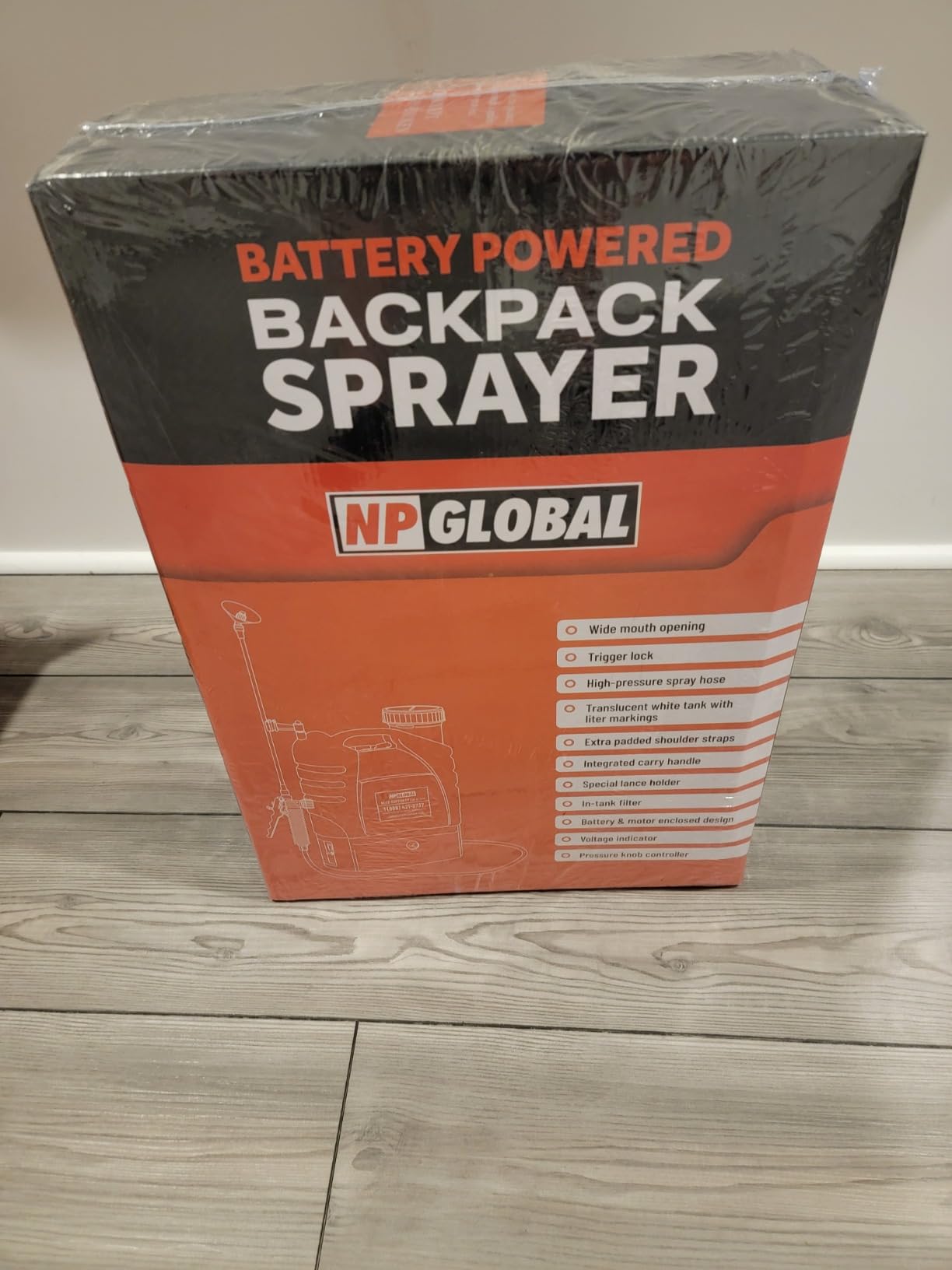
The NPG-120 publishes more specification detail than any other sprayer in this lineup. The tank is 4.2 gallons, the high-pressure hose adjusts from 21.8 PSI all the way to 100 PSI, and the flow rate is stated at 4.0 liters per minute, which is a figure most listings in this category never publish.
The two most common reasons an entry-level sprayer gets discarded are a torn strap connector and a perished lid gasket. The NPGLOBAL includes spare examples of both, so a five-dollar part does not decide whether the tool survives.
Owners report two to three full tanks per charge, and the stainless steel telescopic lance includes both a trigger and a trigger lock. Several buyers describe reaching more than fourteen feet with the combination of lance and hose, and there is an integrated carry handle on the translucent tank.
Service is a genuine selling point here. Reviewers describe units and parts being replaced at no cost under the stated warranty, and the listing carries a lifetime warranty on the battery-operated sprayer. That kind of support is hard to weigh in advance and easy to appreciate the first time something fails.
Why the low-pressure end of the range matters
Adjusting down to 21.8 PSI is not a gimmick. Low pressure with a cone nozzle produces the fine droplets needed for foliar feeding of tender plants, where a high-pressure flat fan can scorch or simply blow past the leaf.
Being able to dial down means one sprayer handles both a fertilizer pass and a herbicide pass without switching tools.
Reliability is the split point
Reliability reviews run both directions on this model. Some owners use them for years without issue, while others report leak failures or trigger mechanism problems within the first season.
Strap padding is described as thin relative to the price, and the yellow bottom strap connectors can slip off the tank, so check both before a long job.
9. Husqvarna 4 Gallon 150 PSI Backpack Sprayer for Maximum Manual Pressure
Husqvarna 4 Gallon Backpack Sprayer, Lawn Sprayer, Garden Sprayer, 150 PSI
4 gallon tank
150 PSI maximum pressure
Manual backpack format
12 pound listed weight
Pros
- Highest five-star share in the lineup at 77 percent
- 150 PSI matches the top manual pressure in the group
- Established brand with parts support
- No two-star reviews in the rating split
Cons
- Smallest review base here at 452 reviews
- Lightest specification detail published on the listing
- 12 pound listed weight is among the heavier units
On paper this is a 4-gallon manual backpack sprayer rated to 150 PSI, which puts it in the top pressure band alongside the Field King Max and the Roundup 190314. The 77% five-star share is the highest in the group, and the listing shows no two-star reviews at all.
Where it is different is disclosure. The published details stop at capacity, pressure, dimensions, and weight, with no flow rate, no pump type, and no nozzle inventory listed. That does not make it a worse sprayer, but it does mean you are buying on reputation rather than on a documented feature set, and you should expect to verify the wand, seals, and nozzle count yourself before committing.
Listed weight is 12 pounds empty, so a full 4-gallon tank puts roughly 46 pounds on your back. Dimensions are listed at 16.38 by 10.83 by 23.03 inches, which is a tall profile, so check that it fits your spraying posture before a full day of use.
Because the review base is the smallest here at 452 reviews, the rating is less well tested than the 4.5 scores on the CHAPIN or Field King, which carry more than 3,000 and 2,000 reviews respectively. The consistency is excellent, and the volume of history behind it is not.
Is 150 PSI the number to filter on?
Yes, if you spray thick material or need distance. Higher working pressure lets a coarse nozzle push heavier droplets further, which is what you want for dense foliage and bio-solids.
It is not the number to filter on for routine fertilizer work, where a mid-range manual unit does the same job with less effort.
What we would verify before buying
Ask which pump type is inside, whether seals are Viton, and how many nozzles ship in the box. Those three answers determine whether the 150 PSI rating is a durable specification or a momentary maximum.
Established brand support is a real advantage for parts, so weigh that against the thinner published detail.
10. SideKing SK4000B Battery Backpack Sprayer for Battery Beginners
SideKing 4 Gallon Battery Powered Backpack Sprayer, 100 PSI Adjustable Electric Weed Sprayer for Lawn & Garden, Compatible with Makita 18V Battery, 5 Nozzles, Battery & Charger Included
4.2 gallon translucent tank
100 PSI adjustable
Makita 18V compatible
2.6Ah battery and charger
64 inch hose
Pros
- Lowest entry point among the electric models
- Runs on Makita 18V packs
- Two hours of spray per charge with a three hour recharge
- 64 inch stainless wand hose is the longest here
- Secondary lid doubles as nozzle storage
Cons
- Two hour runtime is short for full-day work
- 12 percent one-star share points to mixed durability
- Plastic tank is less rigid than metal alternatives
The SideKing is the most affordable route into a battery backpack sprayer, and unlike the REALWORK it delivers 100 PSI with a 20 or more foot spray range. The stainless steel telescopic spray gun has an adjustable pressure knob, and the 64 inch hose is the longest in this lineup, which removes the reach problem that limits some competing electric models.
It runs on Makita 18V batteries, and a 2.6Ah lithium pack plus charger are included. That gives roughly two hours of continuous spraying on a charge with a full recharge in about three hours, plus a digital voltage display and an automatic cut-off below 14V to protect the pack from deep discharge.
Design touches are better than the entry-level build suggests. Double-layer padded shoulder straps, a semi-transparent tank with gallon markings, a wide-mouth lid, and a secondary lid that stores nozzles so they do not rattle around in the tank. One-year warranty coverage with online support included.
What two hours of runtime means in practice
Two hours covers one or two full tank loads, which handles a typical suburban property comfortably. It does not cover a full day of commercial spraying, and that is the limit to plan around.
Buying a larger Makita pack solves it, and doing so costs less than replacing the whole sprayer.
Durability reports to factor in
A 12% one-star share is the second highest here, and durability experiences are mixed. The plastic tank is lighter than metal alternatives and less rigid, so treat it as a seasonal or residential tool rather than a commercial one.
Reviewers consistently praise the pressure and reach, which are the two things that matter most for perimeter and foundation spraying.
How We Chose These Backpack Sprayers
Every product in this roundup is a 4-gallon class backpack sprayer, because that is the size that fits the majority of residential and light commercial jobs. Within that class we compared published specifications against owner feedback, and we weighted four things above everything else: maximum working pressure, pump type and serviceability, harness design, and the number of consumable parts that ship in the box.
Pressure tells you what a sprayer can do with thick material and how far a droplet will travel. Pump type tells you how long it will last and whether you can repair it. Harness design decides whether you finish the job. Spare seals and gaskets decide whether a small failure ends your season or costs you a coffee break.
Ratings and review volume were used as a reliability filter rather than a ranking formula. A 4.5 across 3,000 reviews means something different from a 4.5 across 450, and the Husqvarna is the clearest example of that gap in this list. We also flagged recurring owner complaints for each unit, because a sprayer that leaks at the seam every season is a worse purchase than one rated slightly lower.
Battery platform compatibility received extra attention, since two models here run on Makita 18V packs and that changes the true cost for anyone who already owns them. Forum sources including r/lawncare and The Lawn Forum were used for durability context on the Solo 425 and the PetraTools HD4000, and everything else is based on the published specifications and review patterns.
How to Choose a Backpack Sprayer
Pressure is the first spec to understand, and the second is how you plan to use it. Start there and most of the other decisions make themselves.
Pressure (PSI) and what you actually need
PSI is pounds per square inch, and it determines how hard the solution is pushed through the nozzle. Higher pressure produces finer droplets and greater throw distance. A wettable powder or bio-solid mix needs more pressure to stay in suspension and reach into foliage, while a foliar fertilizer pass works fine at moderate pressure.
Routine residential work on a quarter acre or less is comfortably served by the 60 to 90 PSI range, which covers the CHAPIN 61500 and the Solo 425. If you spray thick material, spray large properties, or want reach past arm’s length, look at the 100 to 150 PSI band, where the Roundup 190314, Field King Max, and Husqvarna sit, and the electric units cluster at 100 PSI.
Match pressure to nozzle as well. A flat-fan at high pressure throws further and covers wide; a hollow cone at low pressure produces the droplets that stick to leaf tissue. Dumping more pressure through a cone nozzle mostly produces drift.
Manual versus battery powered
Manual sprayers are simpler and have fewer failure points. You will also do the pumping yourself, so pick a unit whose pump stroke is efficient. The mechanized internal pump in the Roundup 190314 is the clearest example of a manual unit that does not punish you, because one handle stroke replaces the work of many.
Battery sprayers remove that work entirely and add a charging routine plus a motor that can fail. The electric models here claim 100 PSI, adjustable in most cases, and deliver two to sixteen tank fills per charge depending on battery capacity. For a large property, a full day of mosquito treatment, or anyone with shoulder and wrist sensitivity, the battery route is the one that gets used rather than avoided.
The break-even is straightforward. If you are spraying more than a few times a season across more than a quarter acre, the hours saved add up quickly. If you treat a small garden twice a year, a manual unit is the honest answer.
Piston pump versus diaphragm pump
A piston pump moves a larger volume per stroke and handles thicker liquid more reliably, which is why commercial herbicide work tends to favor it. It also wears mechanically, so the seals and piston are consumable parts you will replace over the life of the unit.
A diaphragm pump seals itself and resists corrosion better, at the cost of less volume per stroke. Both are proven designs. What matters is whether replacement seals are sold separately for the model, because a pump you cannot service is a pump that ends the sprayer’s life.
The Field King Max is the benchmark here: tool-free seal replacement in minutes, with seals in the pump you can reach without dismantling the tank.
Tank capacity and coverage per fill
Four gallons is the standard for a reason. It weighs about 34 pounds of solution, which is a load most people can carry for an hour, and it covers a meaningful area before a refill. The units here range from 4.0 to 4.2 gallons, a difference too small to matter.
Coverage depends entirely on application rate, but as a planning figure a single 4-gallon fill covers roughly 1,000 to 2,000 square feet of turf at typical lawn rates. That means a half-acre property takes two to three fills, and a quarter acre takes one. Larger properties and 6-gallon tanks trade comfort for fewer refill stops, which is a bad trade on foot.
Look for a translucent tank or level markings so you can see what is left without taking the sprayer off your back.
Straps and padding
Full-tank comfort is the factor owners mention most and spec sheets describe least. Look for padded shoulder straps, a back pad, and ideally a waist belt with lumbar support, because a 4-gallon tank loads your lower back rather than your shoulders.
Narrower straps can stay in place while the pump is moving, which is a real benefit on manual models, and a waist belt spreads the load across your hips. Our other straps and carry guide, the backpack leaf blower roundup, covers the same padding problem for a different machine, and the fit principles carry over.
Try the fit with a full tank before you commit. An awkward shoulder geometry will end a job early regardless of how good the pump is.
Nozzles and spray patterns
A single adjustable cone nozzle covers a lot of ground, but the count and range matter. The Field King Max ships six nozzles including a foaming tip, the NPG-120 includes eight plus spares, and the Chapin 61500 includes one adjustable cone. Foam tips are useful for slow-release fertilizer and for marking treated areas where you need to see your path.
Standard TeeJet compatibility is worth more than the included nozzle count, because it means you can buy any tip you need later. The Field King, Solo, and Roundup units all accept standard nozzles.
Battery platform: use the packs you already own
This is the decision most buyers overlook. Two of the electric models here run on Makita 18V batteries, which means if you already own Makita tools, adding a sprayer to your rotation is a matter of borrowing a battery and a charger rather than buying a whole new platform.
Check your existing packs before choosing. A sprayer that needs its own proprietary battery is a closed system, and you will be replacing that battery for the life of the unit. A sprayer on a major platform shares batteries and chargers across every tool you own.
The PetraTools HD4000 and the NPGLOBAL NPG-120 include their own packs and chargers and work standalone, which is convenient if you are not attached to a tool ecosystem. Confirm battery capacity before a long job, since runtime scales directly with amp hours.
Cleaning, Storage, and Troubleshooting
Almost every failure in this category traces back to the same three things: chemicals left in the tank, a seal dried out, and a clogged filter. A ten-minute cleanup after each job prevents nearly all of it.
Flushing a sprayer after use
Run the pump with the wand pointed at a waste area until the fluid that comes out runs clear.
Fill the tank with clean water and a mild detergent, then cycle it through the wand for several minutes to work solution out of the pump and the shut-off.
Remove the tank cap, the shut-off filter, and the in-line wand filter, and rinse each separately.
Refill with plain water and run the pump again to clear detergent from the lines.
Empty the tank fully, leave the cap off, and let every part air dry before storage.
Skip the rinse after a wettable powder application and you will find cake in the filter basket within a week. Skip the detergent and you risk cross-contaminating a later herbicide pass, which can damage the plants you are treating.
Why a pump sprayer leaks from the top
Leakage from the top of a sprayer is almost always the shut-off valve or the pump seal, and both are serviceable.
Check the wand connection and the shut-off collar first. A hose that is not fully seated will weep at the joint rather than the valve.
Inspect the shut-off O-ring for cracking, flattening, or chemical attack. Replacement shut-off repair kits are inexpensive and widely available for common models.
If the leak is at the pump handle, the pump seal is the likely cause. Manual units with an easy-access pump, such as the Field King Max, can be resealed in minutes without tools.
On a battery unit, a leak at the top after use is often the pressure switch or the motor seal. Both are replaceable parts, and a sprayer with a failed motor seal is usually worth repairing rather than replacing given the cost of the tank and wand assembly.
Never overtighten threaded plastic collars in an attempt to stop a leak. Cracked collars cause a worse version of the same problem.
Common sprayer pump problems and fixes
The most frequent pump complaint is loss of pressure during a pass. Causes, in order of likelihood: a partially clogged filter starving the pump, an air lock in the tank after filling, worn seals, or a failing pressure switch on a battery unit.
Check the filter basket in the tank cap and the in-line filter at the shut-off first, since a clogged filter shows up as a weak spray and is a five-minute fix. An air lock resolves by topping the tank with water and running the pump until flow steadies. Seals and pressure switches are consumable parts, and the question worth asking before you buy is whether they are sold separately for that model.
A pump that runs but produces no flow is usually a blockage, not a dead pump. A pump that runs loudly and hot on a battery unit points at the motor rather than the seals, and that is the failure owners on r/lawncare describe most often with budget electric units.
Store any sprayer fully drained and uncapped over winter, and keep batteries out of extreme heat. Frozen liquid in a pump destroys seals, and heat degrades lithium-ion packs faster than normal use does.
Frequently Asked Questions
What is the best backpack pressure sprayer?
The PetraTools HD4000 is the best overall backpack pressure sprayer, combining adjustable 40-90 PSI pressure with a 12V 8Ah battery that runs 6-8 hours and covers more than 200 gallons per charge. For manual-only use, the Field King Max 190348 delivers 150 PSI with a stainless steel wand, brass shut-off, and tool-free seal replacement. Homeowners on a fixed budget usually find the CHAPIN 61500 sufficient at 60 PSI.
What is the most comfortable backpack sprayer?
Comfort comes down to straps, a back pad, and a waist belt rather than the pump. The PetraTools HD4000 uses double-padded straps plus a back pad, and the Roundup 190314 adds a waist belt with built-in lumbar support so weight loads the hips instead of the shoulders. At 4 gallons of solution, expect roughly 34 pounds plus the tank on your back, so fit matters more than any other spec.
What are the best 4 gallon backpack sprayers?
The best 4 gallon backpack sprayers in our lineup are the PetraTools HD4000 for battery power and adjustable pressure, the Field King Max 190348 for 150 PSI manual work, and the CHAPIN 61500 for value. All three use a 4 gallon tank because that size balances carry weight against refill stops. The NPGLOBAL and SideKing add a fifth of a gallon, which changes nothing in practice.
How many square feet will a 4 gallon backpack sprayer cover?
A single 4 gallon fill covers roughly 1,000 to 2,000 square feet of turf at typical lawn application rates, depending on how much solution you apply per thousand square feet. That makes a quarter-acre property a single fill and a half-acre property two or three fills. Always read the label rate for your product, since coverage falls as application rate rises.
What are common problems with backpack sprayers?
The most common problems are clogged filters, dried-out or chemically attacked seals, weeping shut-off valves, and pumps that lose pressure mid-job. Battery models add motor and pressure switch failures, and entry-level models add cracked threaded collars from overtightening. Nearly all of it is preventable by flushing with detergent after each use, storing the tank drained and uncapped, and keeping spare seals and gaskets on hand.
Is a battery backpack sprayer worth it for a homeowner?
A battery backpack sprayer is worth it if you spray more than a few times a season across more than a quarter acre, since it removes the arm and shoulder fatigue that ends manual sessions early. Electric models here reach 100 PSI and deliver two to sixteen tank fills per charge depending on battery capacity. For a small garden treated twice a year, a manual unit is the more honest purchase.
Are Harbor Freight backpack sprayers any good?
Harbor Freight has not sold a backpack sprayer in any of the listings we compared, so we cannot rate one from direct evidence. What the owner data does show is that very low cost sprayers often break or leak within the first year, and that replacement parts availability matters more than the entry price. Check whether seals, gaskets, and pump parts are sold separately before buying any budget unit.
Is there a recall on the Milwaukee backpack sprayer?
We could not verify any active recall on a Milwaukee backpack sprayer from published sources, and no Milwaukee unit appears in this roundup. If you own one and suspect a defect, check the manufacturer support page and the CPSC recall database directly for your model number rather than relying on secondhand reports.
The Best Backpack Sprayer for Your Yard
After working through all ten, the PetraTools HD4000 is the pick. It is the strongest combination in the group: adjustable 40-90 PSI pressure, a 6-8 hour battery runtime, and a 4.6 rating across more than 3,700 reviews. Owners across r/lawncare and The Lawn Forum describe it as fast and even in real lawn work. For a half-acre property it clears the yard without a wall outlet or a hand cramp.
The rest of the field divides cleanly. Buy the CHAPIN 61500 if you want a manual sprayer with serious filtration and no charging routine. Buy the Field King Max 190348 if you spray professionally and want metal parts, 150 PSI, and seals you can change in minutes. Buy the Roundup 190314 for high-pressure herbicide work on a manual frame that does not fight you.
For platform owners, the VAXMAY and SideKing both run on Makita 18V packs and need no dedicated battery purchase if you already own some. The NPGLOBAL NPG-120 ships the widest accessory package, with eight nozzles, spare gaskets, and a 21.8 to 100 PSI adjustment. The Solo 425 is the long-term durability answer for manual operators, and the Husqvarna 150 PSI is worth a look if you need maximum manual pressure and value the brand support network.
Whichever one you choose, the flush-and-dry routine in the maintenance section above is what keeps it working. Ten minutes after each job is the difference between a sprayer that lasts one season and one that lasts a decade. This list was last checked in October 2026.