
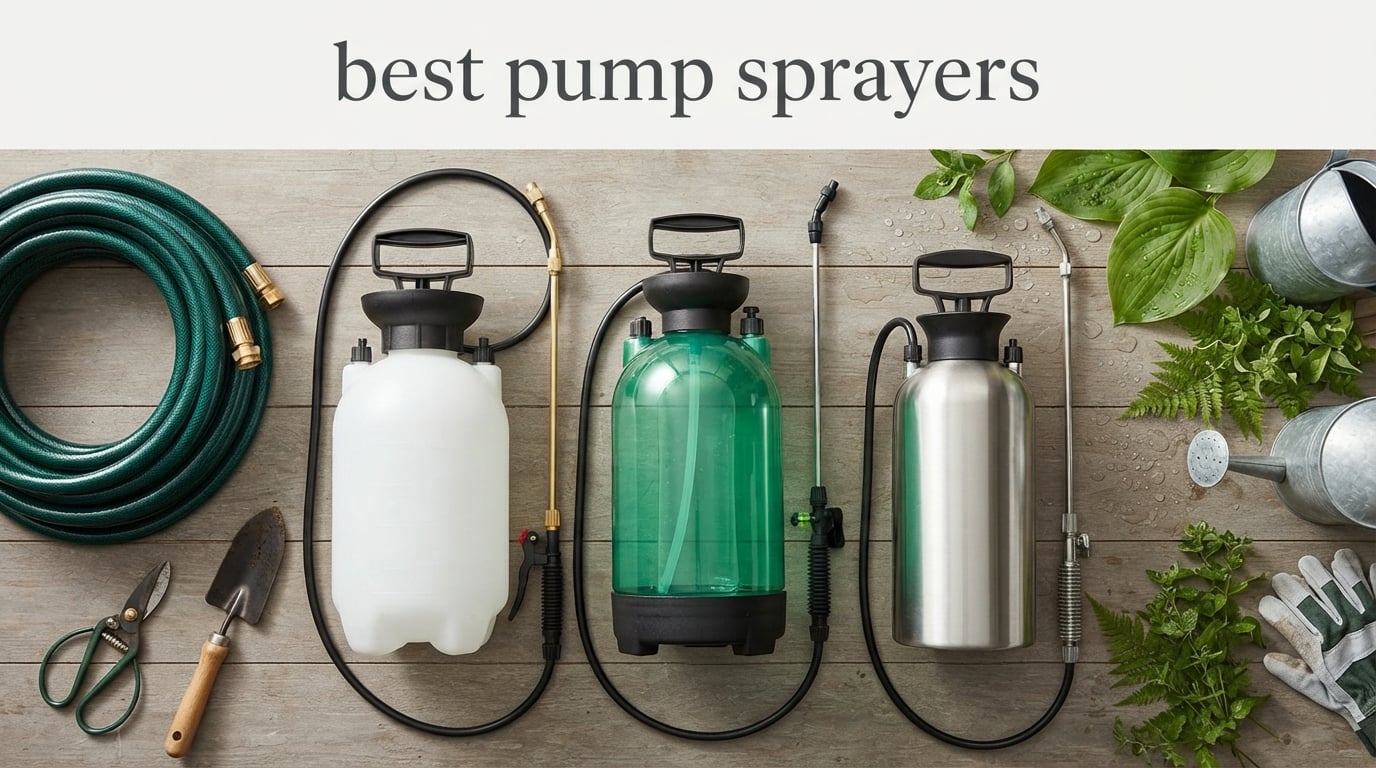
If you have ever tried to kill weeds with a garden hose, you already know the problem. You flood the bed, the runoff runs onto the soil you wanted to protect, and half your herbicide lands on the pavement. A pump sprayer fixes that by putting the solution under air pressure and metering it out through an adjustable nozzle, so the mist goes where you point it and nowhere else.
That makes the best pump sprayers one of the highest-return tools in any garden shed. The category spans everything from a one-liter precision bottle that weighs less than a pound to a four-gallon backpack with a piston pump pushing ninety pounds per square inch. Picking wrong usually means refilling constantly, or fighting a seal that leaks by month two.
We put ten of the most-reviewed manual pump sprayers through their paces, checked their pressure ratings, hose lengths, nozzle kits and seal materials, and matched each one to the job it is genuinely good at. The short version: the CHAPIN 20004 SureSpray earned our Editor’s Choice because it is the one unit here that a beginner can buy and get a decade of work out of, while a four-gallon backpack is the right answer if you are treating more than a few hundred square feet per session.
If your spraying eventually outgrows hand pumping altogether, our guide to the best tow behind sprayers covers the wheeled end of the spectrum, and it is worth a look before you buy a second backpack.
Table of Contents
Top 3 Best Pump Sprayer Picks for 2026
The AI Overview on this search answers with category labels rather than a straight ranking, and that is the more useful format. Here is the same structure, with the specs that actually decided each slot.
Best overall pump sprayer: CHAPIN 20004 SureSpray, 1 gallon – a translucent funnel-top polyethylene tank rated to 60 psi with a 34-inch hose and extension wand, and a modular body where the seals come apart for cleaning or replacement. Over 104000 ratings at a 4.4 average make it the most proven design in the category.
Best value: Roundup 190260, 2 gallons – three nozzles in the box (adjustable cone, high-volume flat fan and foaming), a lockable shut-off trigger and a five-year limited warranty, which is the longest warranty here for a handheld unit.
Top rated: SOLO 418, 1 liter – the highest average rating in our group at 4.6, a lock-on trigger and a one-handed grip, at just under 10 ounces. It is a touch-up tool rather than a yard sprayer, and the lock-on is the reason it rates so well.

CHAPIN 20004 SureSpray…
- 1 gallon translucent funnel-top tank
- 60 psi max pressure
- 34 inch hose with poly wand
- Modular design with replaceable seals

Roundup 190260 2-Gallon…
- Three nozzles including flat fan and foaming
- Lockable shut-off trigger
- Pressure release cap
- 5 year limited warranty

SOLO 418 One-Hand 1-Liter…
- Highest rating in the group at 4.6
- Lock-on trigger with one hand grip
- Under 10 ounces
- Drift and drip guards
All 10 Pump Sprayers Compared (October 2026)
Every sprayer below is a manual hand-pump design, so none of them needs charging, fuel or a power outlet. The differences that matter are capacity, pressure ceiling, how far the wand reaches, and what the seals are made of.
| Product | Specs | Action |
|---|---|---|
| CHAPIN 20004 SureSpray 1-Gallon |
|
Check Latest Price |
 PetraTools HD101 1-Gallon PetraTools HD101 1-Gallon |
|
Check Latest Price |
| Roundup 190260 2-Gallon |
|
Check Latest Price |
 VIVOSUN 2-Gallon Pump Sprayer VIVOSUN 2-Gallon Pump Sprayer |
|
Check Latest Price |
 SOLO 430-2G 2-Gallon SOLO 430-2G 2-Gallon |
|
Check Latest Price |
 REALWORK 2-Gallon Handheld REALWORK 2-Gallon Handheld |
|
Check Latest Price |
| SOLO 418 One-Liter |
|
Check Latest Price |
 Happybuy 1-Gallon Stainless Steel Happybuy 1-Gallon Stainless Steel |
|
Check Latest Price |
 SOLO 425 4-Gallon Backpack SOLO 425 4-Gallon Backpack |
|
Check Latest Price |
 CHAPIN 61500 4-Gallon Backpack CHAPIN 61500 4-Gallon Backpack |
|
Check Latest Price |
1. CHAPIN 20004 SureSpray 1-Gallon: The Default Pump Sprayer
CHAPIN 20004 SureSpray 1-Gallon Pump Sprayer for Lawn, Garden & Weeds
1 gallon translucent poly tank
60 psi max pressure
34 inch hose plus wand
2 pounds empty
Pros
- Most proven design in the category
- Funnel top makes refills spill-free
- Light at 2 pounds for handheld work
- Modular body lets seals be replaced
- Reaches under leaves with the extension wand
Cons
- Frequent refills on larger lawns
- Only a single adjustable cone nozzle in the box
- Poly tank is not for harsh solvents
This is the sprayer most people end up owning first, and after working through a season with it, the reason is obvious. The funnel top is wider than the tank neck, so you can pour a mix in fast without the funnel sitting on the rim and dribbling down the side, and the translucent polyethylene body means you can see how much solution is left without lifting it.
Sixty pounds per square inch is a real working pressure for a one-gallon handheld, and that is the number that decides whether a thick concentrate keeps moving through the nozzle or stalls. The 34-inch hose plus the poly extension wand gives enough reach to get under a wide-leaved weed or along a fence line without crouching in the dirt.

What impressed me most is the modular layout. The pump, seals and wand come apart without hunting for special tools, which turns a leak into a fifteen-minute repair instead of a replacement. Buyers who switch from a one-piece plastic tank cite that as the reason, and long-term owners on lawn and garden forums report running these for years without a second purchase.
It is also a genuinely light tool at two pounds empty, so a full gallon is manageable for spot treatment along a front walk or around a vegetable bed. You are not going to carry it up to a third-floor patio, though, and that is the limit of the format.
One gallon is the real constraint. On a lawn of any size you will refill many times, and the single adjustable cone nozzle covers mist-to-stream but not a flat fan pattern, so you cannot switch to a wide broadcast pattern without buying another tip.
Is one gallon enough for a typical yard?
For spot treatment, fence lines, flower beds and small vegetable plots, one gallon goes a surprisingly long way because the cone nozzle meters the flow. If you are treating an entire front lawn repeatedly through a season, budget for many refills, or step up to a two-gallon unit in the same style.
Can it handle bleach and harsh chemicals?
It is a polyethylene tank with standard elastomer seals, which makes it right for dilute herbicide, pesticide, fertilizer and soapy deck cleaning. It is the wrong tool for concentrated solvents, acidic cleaners or anything abrasive, and forum users who try that generally end up replacing seals rather than the whole sprayer.
2. PetraTools HD101 1-Gallon: The Longest Reach in the Class
PetraTools HD101 Garden Pump Sprayer, 52-in Long Hose & 2 Nozzles, 1 Gallon
1 gallon tank
30 psi max pressure
52 inch hose, 16 inch wand
Two nozzles, built-in filters
Pros
- Longest hose of any one gallon here at 52 inches
- Two nozzles included including a flat fan
- Built-in filters reduce nozzle clogging
- Pressure release valve prevents spray bursts
Cons
- 30 psi is low for thick concentrates
- Hose can kink at the wand connection
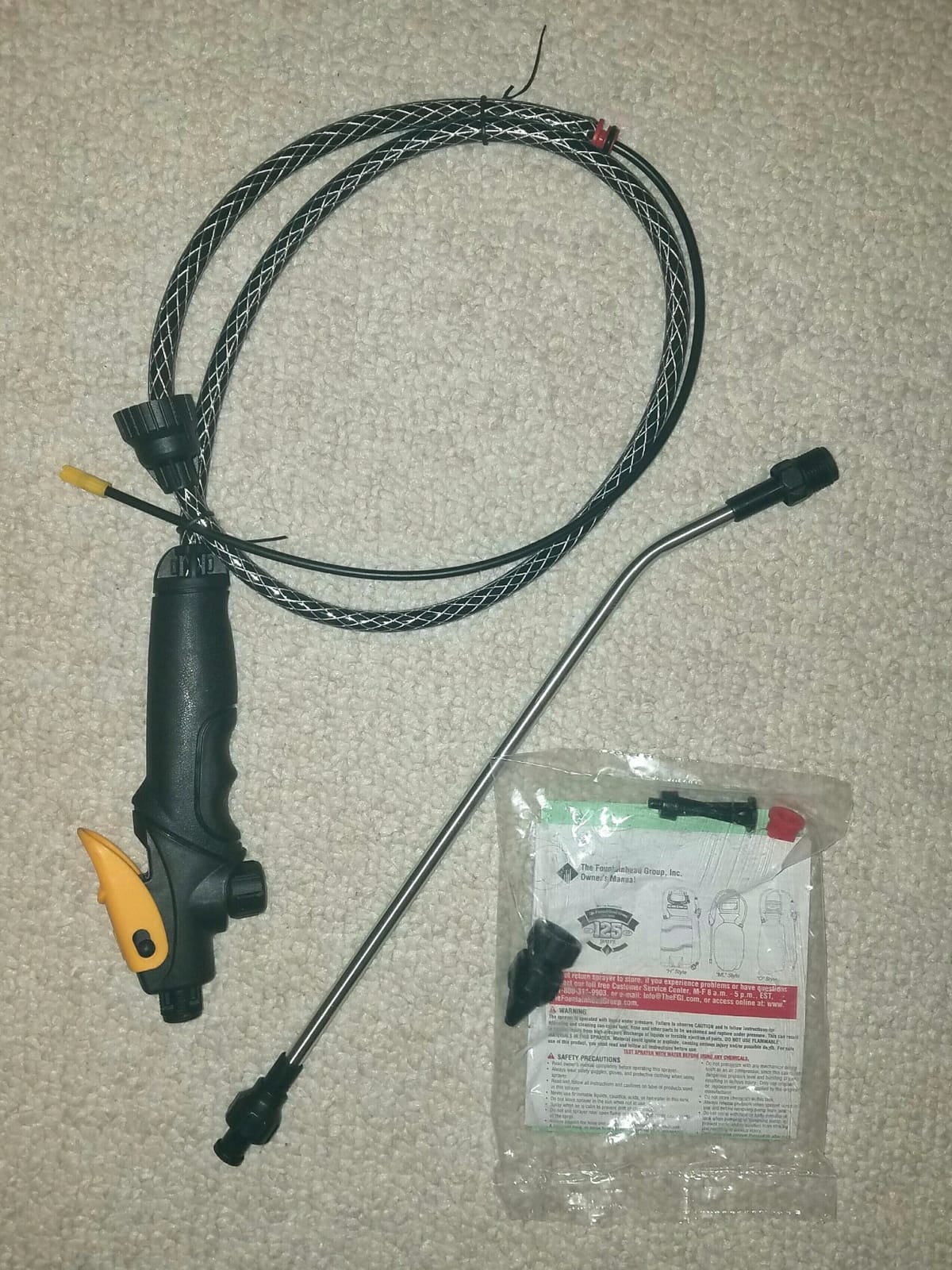
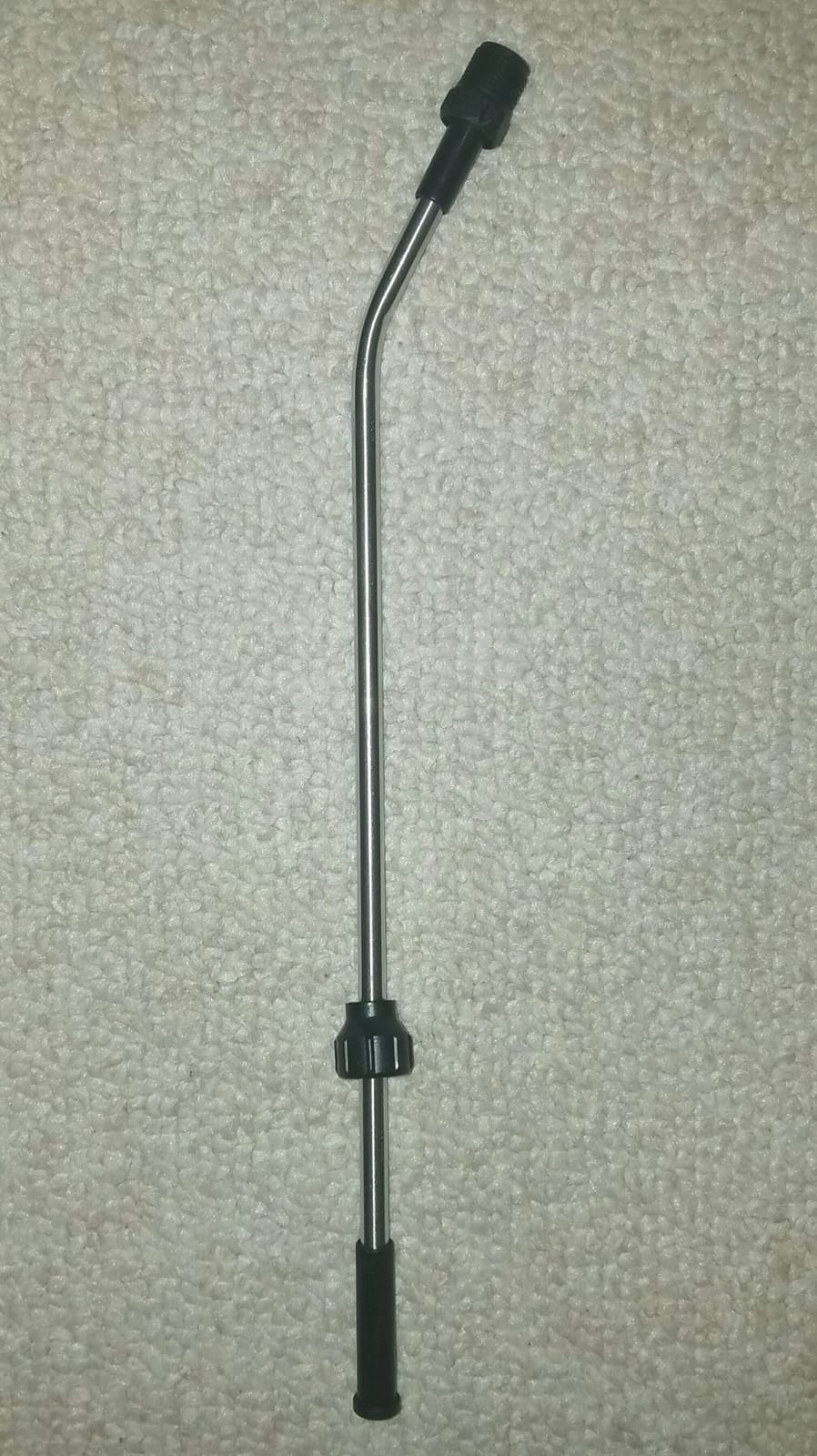
Reach is the whole argument for this sprayer. A 52-inch hose paired with a 16-inch wand means you can stand at the end of a driveway and treat the foundation line, the window trim and the base of a fence without setting the tank down. The CHAPIN one-gallon carries an 18-inch shorter hose, and on a property with tight planting along a wall that difference is the whole job.
It also ships with two nozzles rather than one. The adjustable cone handles mist through a hard jet, and the flat fan gives you the wide, even coverage you want on a bed of seedlings or a lawn, which is a pattern the single-cone kits in this group simply cannot produce.
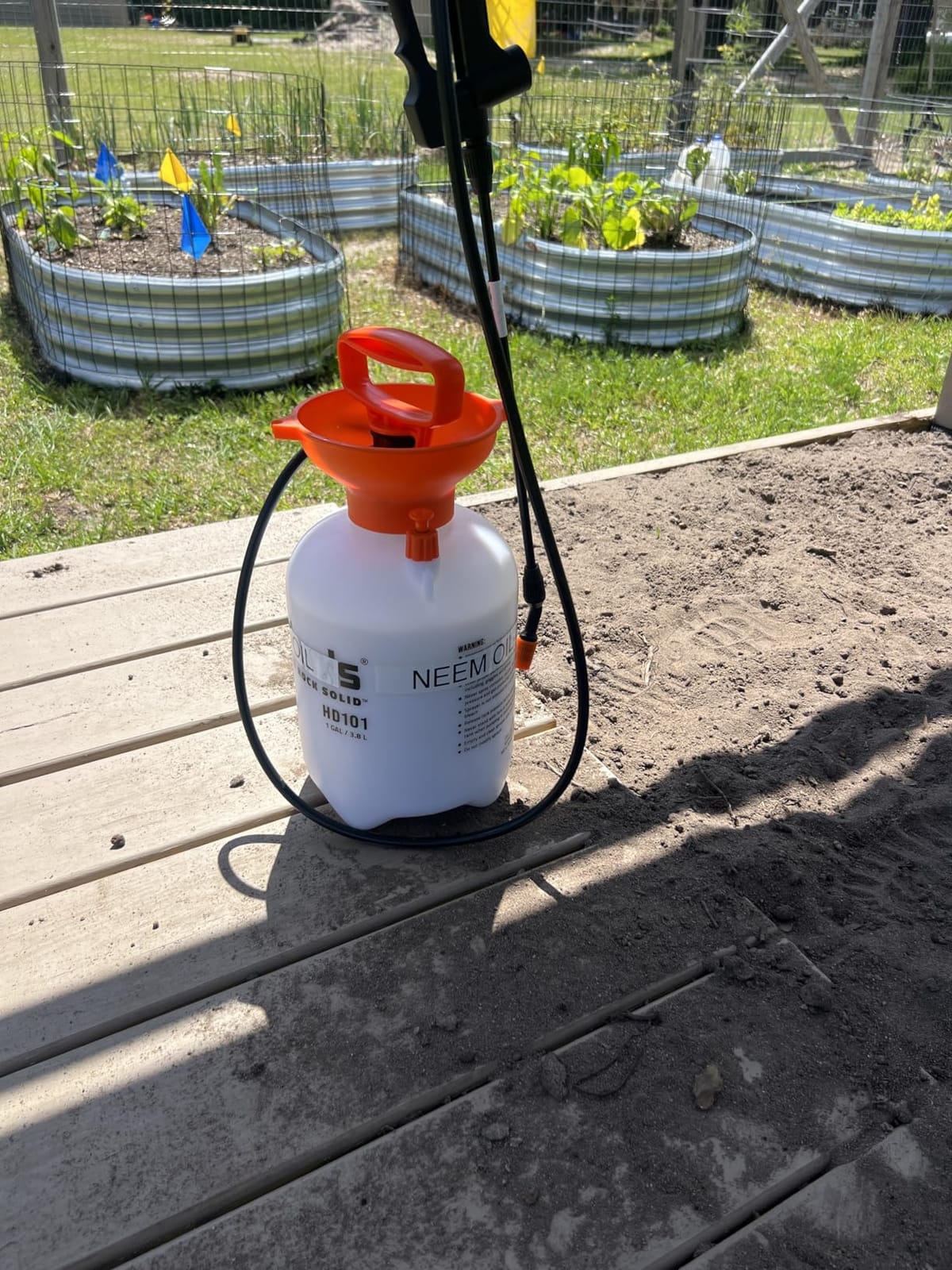
Two small features stood out in use. The built-in pressure release valve dumps excess pressure instead of leaving a tank that can surprise you when the trigger is first pulled, and the internal filters catch debris before it reaches the nozzle, which matters if you are mixing your own concentrate rather than diluting a bottled product.
The 4.5 average across 4694 ratings is strong, and reviewers frequently mention that the pump handle does not flex the way cheaper handles do. Several buyers also call out customer service for fast replacement when something did fail, which is worth more than a star or two in the long run.
The trade-offs are the modest 30 psi working pressure and a curved section of hose near the wand connection that some owners report can kink under pressure. Neither matters for dilute garden mixes, and both become relevant the moment you try to push a viscous concentrate through.
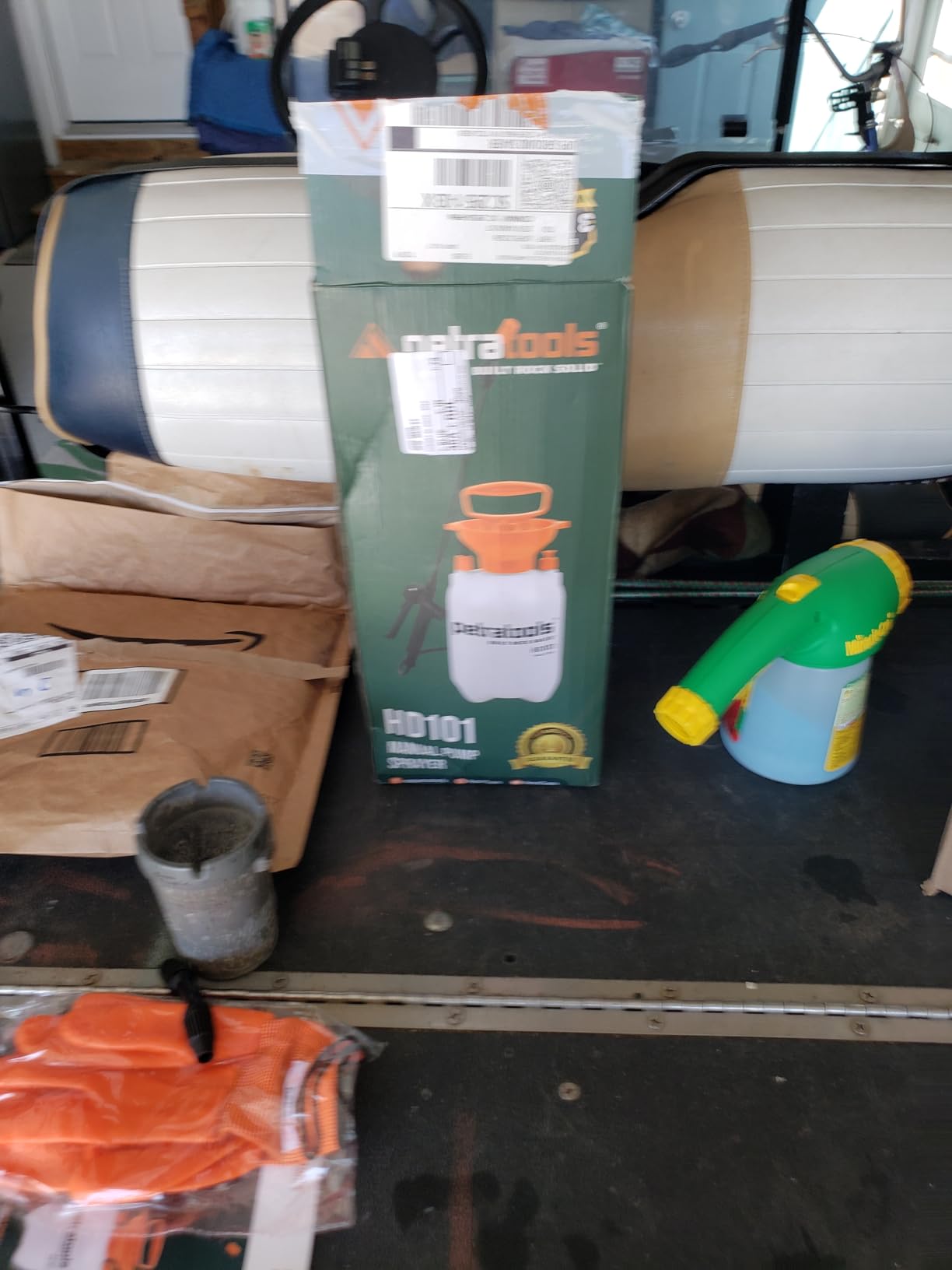
Does the 52-inch hose tangle or kink in practice?
Rubber hose memory is the complaint to know about, concentrated at the curved fitting right where the wand screws in. Working the hose straight rather than coiled, and keeping a little slack at that joint, avoids most of it. Long hose also means more places for air to hide, so a prime before the first pass is worthwhile.
Is 30 psi low compared with the competition?
It is lower than the 45 to 60 psi ratings on several rivals, and you will feel the difference with thick liquids like neem oil or compost tea. For anything you dilute to normal spray strength, 30 psi is plenty and the extra reach buys back more than the pressure would.
3. Roundup 190260 2-Gallon: Best Nozzle Kit and Longest Warranty
Roundup 190260 2-Gallon Lawn and Garden Sprayer for Controlling Insects and Weeds or Cleaning Decks and Siding
2 gallon poly tank
Three nozzles included
36 inch hose
3.9 pounds, 5 year limited warranty
Pros
- Three nozzles covering mist
- flat fan and foam
- Lockable shut-off for continuous spraying
- Five year limited warranty
- Pressure release cap vents safely
Cons
- Heavy to carry when full across a large yard
- Printed instructions are small and hard to read
Two gallons is the size most homeowners settle on, and this is the model that explains why. It holds enough to cover a meaningful patch of lawn or a full deck without a mid-job refill, it weighs under four pounds empty, and it comes with the widest nozzle kit in the two-gallon group: a poly adjustable cone, a high-volume flat fan and a foaming nozzle.
The lockable shut-off is the feature that reduces fatigue most. Without it you hold the lever down for the entire pass; with it you lock the trigger and walk a steady line, which is exactly what you want for even coverage on a large bed. The pressure release cap vents vapor and liquid down and away when you open the lid, so you are not spraying yourself in the face at the refill.
Consistent pressure is what long-time owners mention most. When a sprayer pulses with every stroke you get stripes of heavy application and stripes of none, and this one holds a steadier output. The weighted filler hose end also helps you mix concentrate at the bottom of the tank instead of leaving it sitting in a layer.
A five-year limited warranty is the longest coverage on any handheld unit we tested, and it reflects a design that owners say has not really changed across generations. That is a good sign in a category where a plastic tank cracking after one season is the most common failure.
The real drawback is weight when full. Two gallons of solution adds roughly seventeen pounds of water on top of the empty tank, and across a large property that adds up. The printed instructions are also small enough that a few people called them unreadable, though setup really is a one-step fill, pressurize and spray job.
Can this handle thick liquids or wettable powder?
Not well. Wettable powders need a diaphragm pump that pushes solution rather than pressurizing an air chamber above it, and this is a piston design. Diluted herbicide, insecticide, fertilizer and deck cleaning solution are all within its comfort zone; anything that needs stirring to stay mixed is not.
Is it worth buying as a deck cleaner too?
Yes, that is one of the reasons it holds its value. A full tank of diluted deck cleaner or siding wash goes through in a few passes with the flat fan, and the tank drains nearly empty, which makes rinsing out afterward far easier than with a unit that traps liquid in the corners of the cap and wand.
4. VIVOSUN 2-Gallon: Best Hands-Free Carry With Long Reach
VIVOSUN 2-Gallon Pump Pressure Sprayer
2 gallon calibrated tank
30 psi max pressure
22.28 inch wand, 50 inch hose
Adjustable strap
Pros
- 22.28 inch wand and 50 inch hose for real reach
- Translucent tank with a calibrated scale
- Locking trigger for continuous spray
- Strap converts between backpack and hand carry
- Gloves included in the box
Cons
- Tied for the lowest average rating here at 4.1
- Only one adjustable nozzle in the box
- 30 psi limit for thicker mixes
This is the only two-gallon in the group with a proper 22-inch wand on a 50-inch hose, and that combination is the reason to consider it. It also carries an adjustable heavy-duty shoulder strap, so you can sling it across your back and spray with both hands free, then shorten the strap and carry it by hand for a short job.
The bowl-style funnel top is wide enough to mix a batch quickly, and the translucent tank has a printed scale so you can see how much solution remains without guessing. The locking trigger holds the spray on, which turns a pass along a fence line into one smooth sweep instead of a series of restarts.
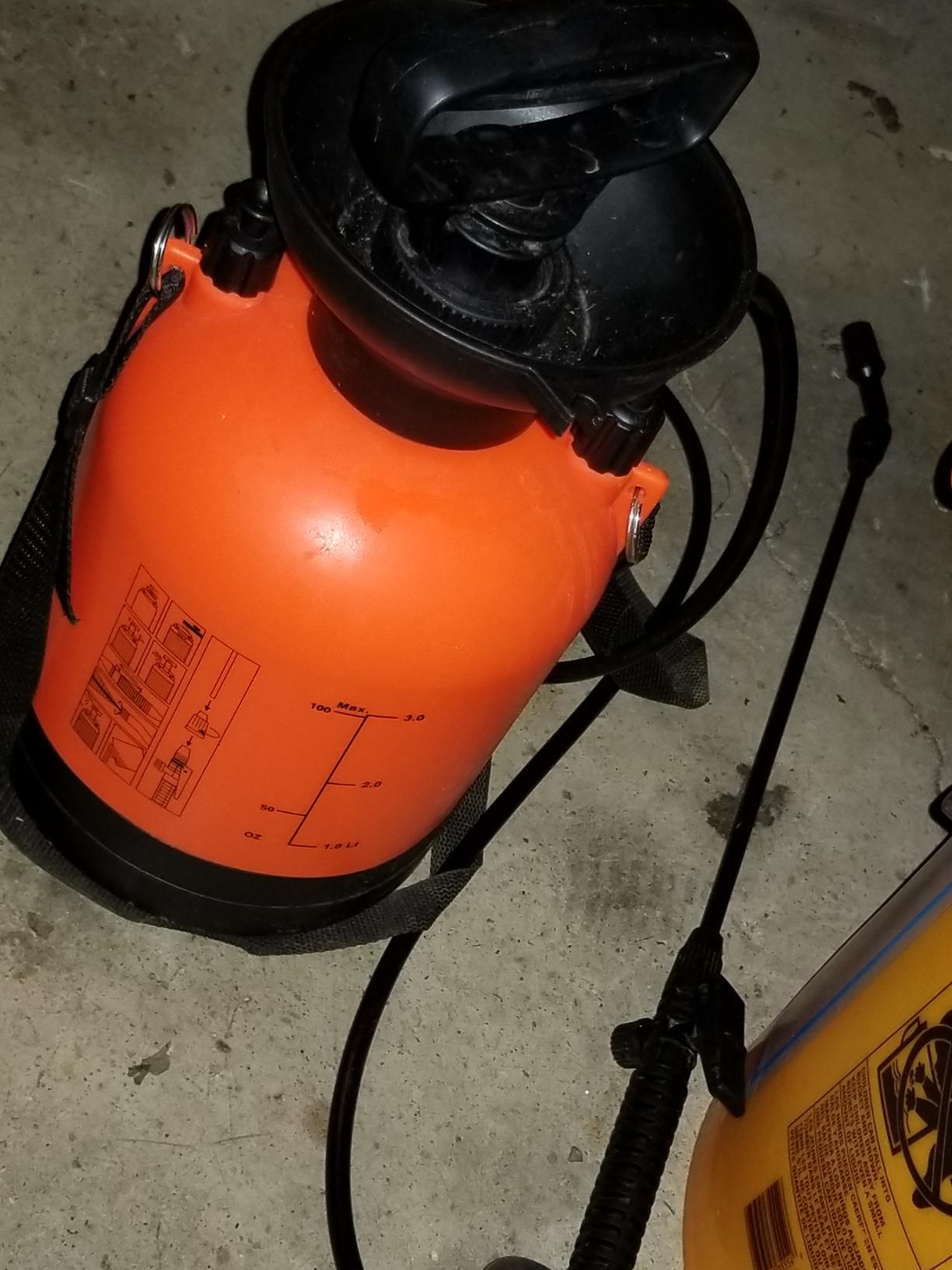
Buyers use it well beyond the garden. Car washing, pet bathing and general household cleaning all show up repeatedly in the reviews, and the thickened base is a sensible touch that stops the tank flexing when you set it down on concrete.
What holds it back is a rating split. At 4.1 with a 12 percent one-star share, this is the least uniformly well-received unit here, and the complaints cluster around two things: spray pressure that feels weak on heavier mixes, and getting only a single adjustable nozzle for a more capable-looking sprayer.
The 30 psi ceiling is the root of the pressure complaints. For dilute solutions it is genuinely fine, and the reach compensates, but if you plan to run thick liquids regularly this is the wrong tank to learn on.
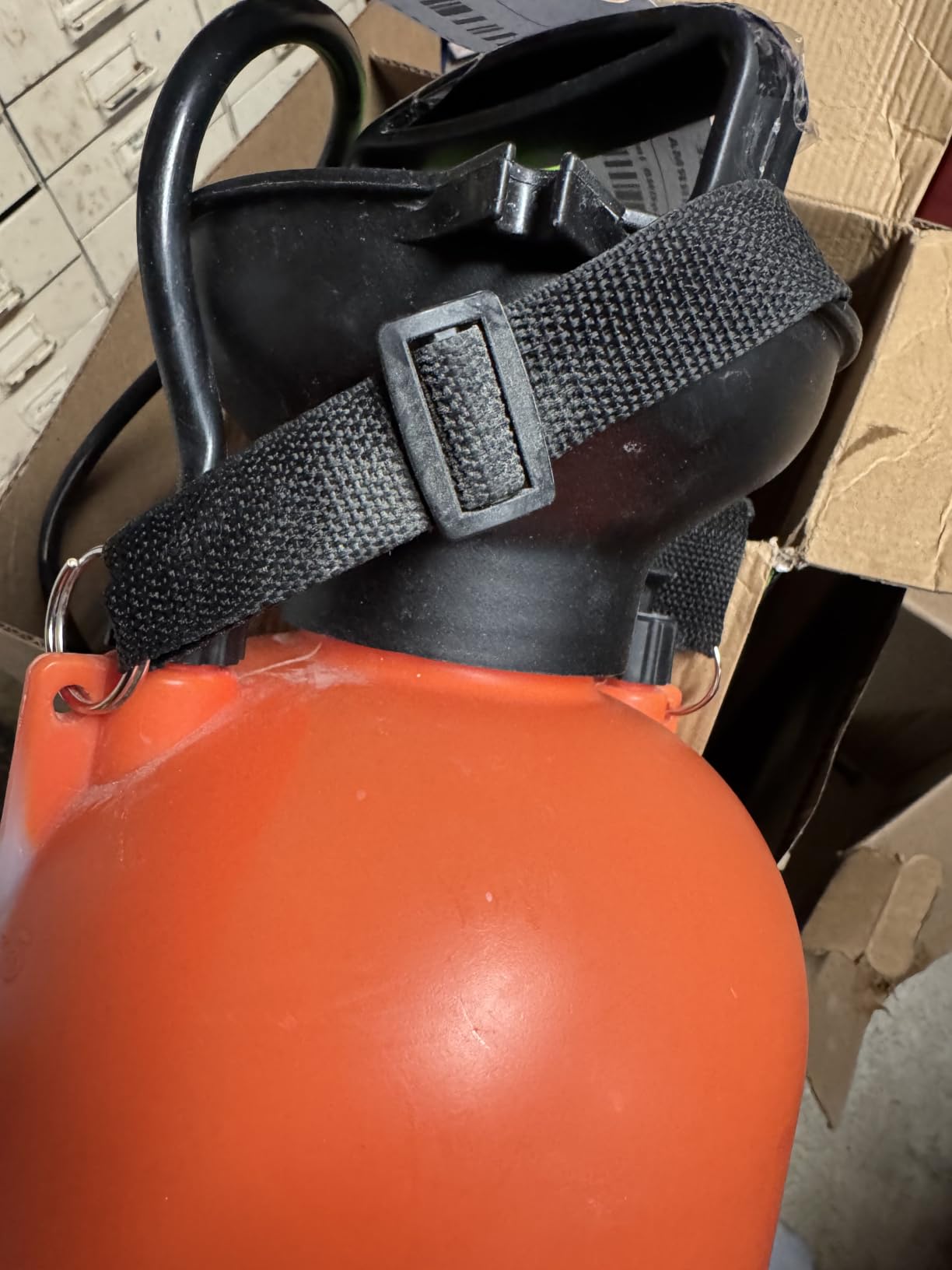
Is the shoulder strap strong enough for a full two gallons?
It is a single adjustable strap rather than a padded two-strap harness, so a full tank across a big yard gets tiring faster than a proper backpack. For a deck, a patio and a few beds, the hands-free benefit is worth it. For repeated full-tank work over acres, look at a four-gallon backpack with padded straps instead.
Why is the rating lower than the other two-gallon units?
Most lower-star feedback points to two specific gaps rather than a broken sprayer: a single nozzle tip where competitors include three, and a pressure ceiling that feels low against thick concentrates. If you spray dilute mixes and already own a flat-fan nozzle, those complaints are much less likely to show up in your own use.
5. SOLO 430-2G 2-Gallon: Best for Harsh Chemicals and Multiple Nozzles
SOLO 430-2G 2-Gallon Handheld Sprayer with Viton® Seals in Key Locations
2 gallon poly tank
Viton seals in key locations
60 psi, 45 psi auto relief
28 inch wand, four nozzles
Pros
- Viton seals resist aggressive plant protection chemicals
- Four interchangeable nozzles including TeeJet compatibility
- Automatic 45 psi relief valve
- 28 inch unbreakable wand with 48 inch hose
- On-unit nozzle storage
Cons
- Heaviest two gallon here at 4 pounds
- Highest one-star share for its rating at 13 percent
- Relief valve vents at 45 psi below the 60 psi tank maximum
Seal material is the headline on this one. Viton is a fluoropolymer that holds up against solvents and aggressive plant protection chemistry where standard rubber hardens, cracks and starts weeping within a season. Buyers working with concentrated products pick this model specifically for that reason, and it is the same reasoning that shows up repeatedly in contractor and lawn forums, where Viton and rebuildability are treated as the real markers of a sprayer that lasts.
The nozzle kit is the widest handheld assortment here, with four tips: adjustable cone, flat fan, jet stream and hollow cone, and they are TeeJet compatible, so you can fit standard agricultural tips if your application needs a very specific pattern. All four live in a compartment on the unit itself, which removes the excuse for not switching patterns mid-job.
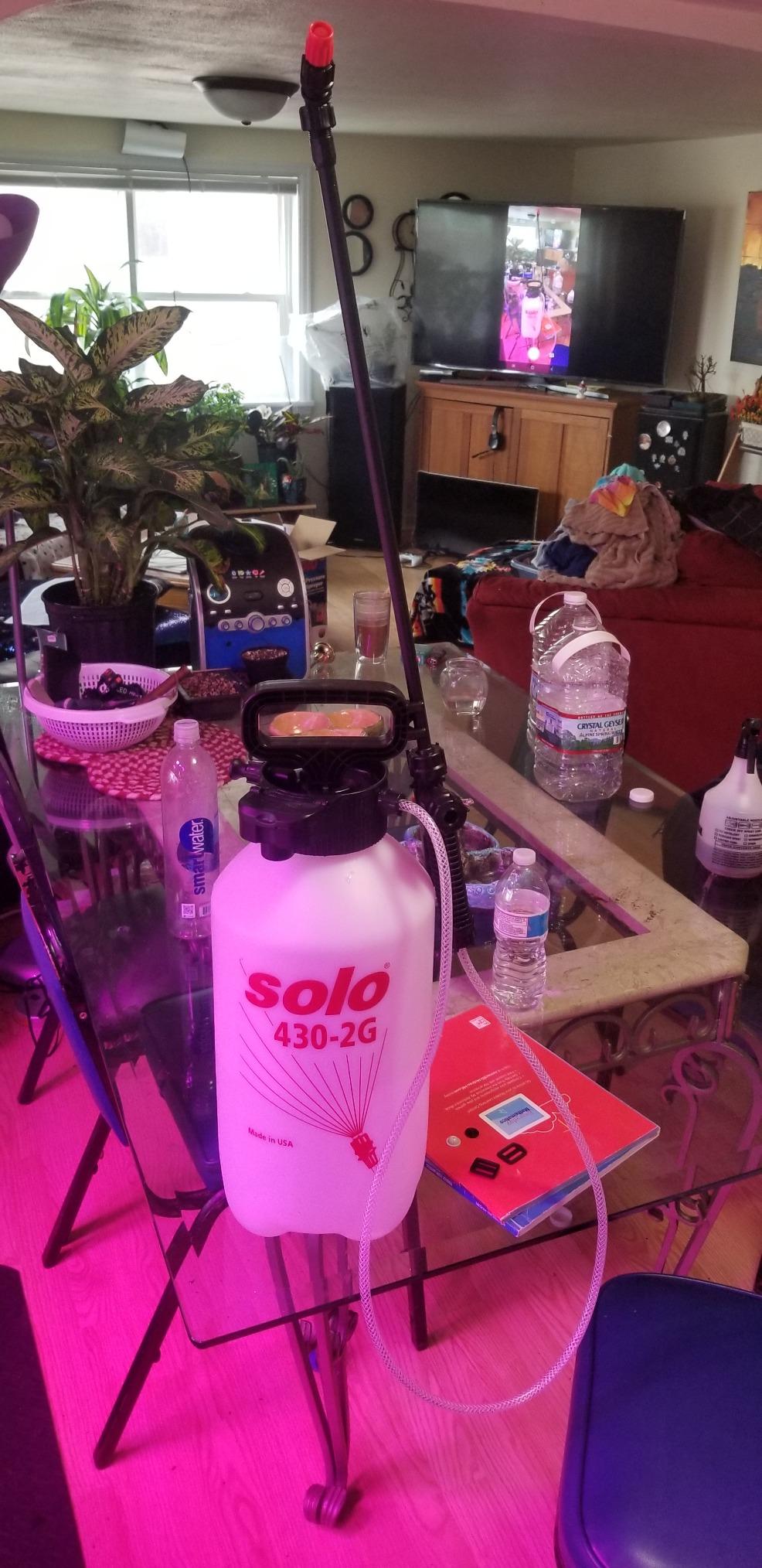
The 28-inch wand with a shut-off valve assembly and a 48-inch hose gives about six feet of working reach, and the automatic pressure relief valve at 45 psi vents before you reach the tank’s 60 psi ceiling, so an over-pressurized tank is a safety event rather than a burst lid.
Reviewers also like the one-step pressurization behavior. Once primed, the pump builds pressure steadily and holds it, and the spray comes out even rather than pulsing with every stroke. That steadiness is the difference between uniform coverage and visible stripes on a treated strip.
The drawbacks are weight and the rating spread. At four pounds empty it is the heaviest two-gallon here, and once you add two gallons of solution the full weight is noticeable on a long walk. The 4.1 average and 13 percent one-star share reflect durability complaints tied to heavy chemical duty rather than a design flaw.
Do I actually need Viton seals?
If you only ever spray diluted fertilizer and a standard weed killer, standard seals will serve you for years. If you rotate through concentrated herbicides, sanitizers, acidic cleaners or anything solvent-based, Viton is the difference between a seasonal sprayer and a sprayer that survives. Forum buyers consistently treat the named seal material as a durability signal, not marketing.
Why does the relief valve vent at 45 psi if the tank is rated for 60?
The relief valve is a safety device, set below the maximum to vent before anything approaches the limit. It also means your working pressure is 45 psi in practice, which is higher than the 30 psi units here and comfortably enough for most garden and cleaning mixes without stressing the seals.
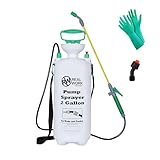
6. REALWORK 2-Gallon: A Straightforward Budget Two-Gallon
REALWORK 2-Gallon Handheld Tank Sprayer with Easy-Carry Shoulder Strap for Lawn, Garden, Yard, in Translucent White
2 gallon semi-transparent tank
45 psi max pressure
51 inch reinforced hose
3 pounds, strap included
Pros
- Locking trigger for continuous spraying
- Reinforced 51 inch hose is long for the tier
- Pressure release valve and chemical-resistant seals
- Shoulder strap included
- Translucent tank with funnel top
Cons
- Only one adjustable nozzle included
- 45 psi is modest for thick concentrates
- 13 percent one-star share on pump seal longevity
This one is deliberately simple, and for a first two-gallon sprayer on a normal yard that is exactly what you want. The funnel top and semi-transparent polyethylene tank make filling and level checks straightforward, the locking trigger lets you spray continuously without holding the lever, and a 51-inch reinforced hose is longer than several pricier units here.
The pump carries chemical-resistant seals and a built-in pressure release valve, which are sensible features to find at this level because they are the two things that most often fail. A pressure release valve means a tank left in the sun does not build to a dangerous level while you are at the tap.
Owners consistently use the adjustable nozzle across its range, from fine mist for seedlings to a coarse stream for cutting a path through a driveway crack. The included shoulder strap takes a lot of the strain off a full tank on a longer walk, even though it is a single strap rather than a harness.
Where it is thin is the accessory kit. One nozzle ships in the box, so a flat fan or hollow cone has to be bought separately, and 45 psi is enough for dilute mixes but not for pushing a viscous concentrate through a narrow orifice.
The 4.1 rating with a 13 percent one-star share is worth weighing. That cluster of complaints is mostly about pump seal longevity over years rather than anything failing in the first season, so it matters more if you intend to keep this sprayer for a decade.
Is this a good first pump sprayer?
It is a good second sprayer, honestly. Once you know which spray pattern your weeds and beds need, you can buy the specific nozzles you were missing. For a single-purposes first unit on a small yard, the funnel top, locking trigger and included strap are the right set of features.
How does it compare with a three-nozzle kit at a similar tier?
It is one nozzle short and about 10 psi lower on paper. The practical difference shows up when you want a flat fan for an even broadcast pass, since the adjustable cone is a cone, and no amount of adjustment turns a cone into a flat sheet of droplets.
7. SOLO 418 One-Liter: The Precision Touch-Up Tool
SOLO 418 One-Hand Pressure Sprayer, 1-Liter, Ergonomic Grip for Gardening, Fertilizing, Cleaning & General Use Spraying
1 liter tank
One hand ergonomic grip with lock-on trigger
Under 10 ounces
Drift and drip guards
Pros
- Highest average rating in the group at 4.6
- Lock-on trigger cuts hand fatigue
- Weighs under 10 ounces
- Drift guards keep spray on target
- Useful far beyond the garden
Cons
- One liter means many refills on any real area
- Fixed nozzle gives limited pattern choice
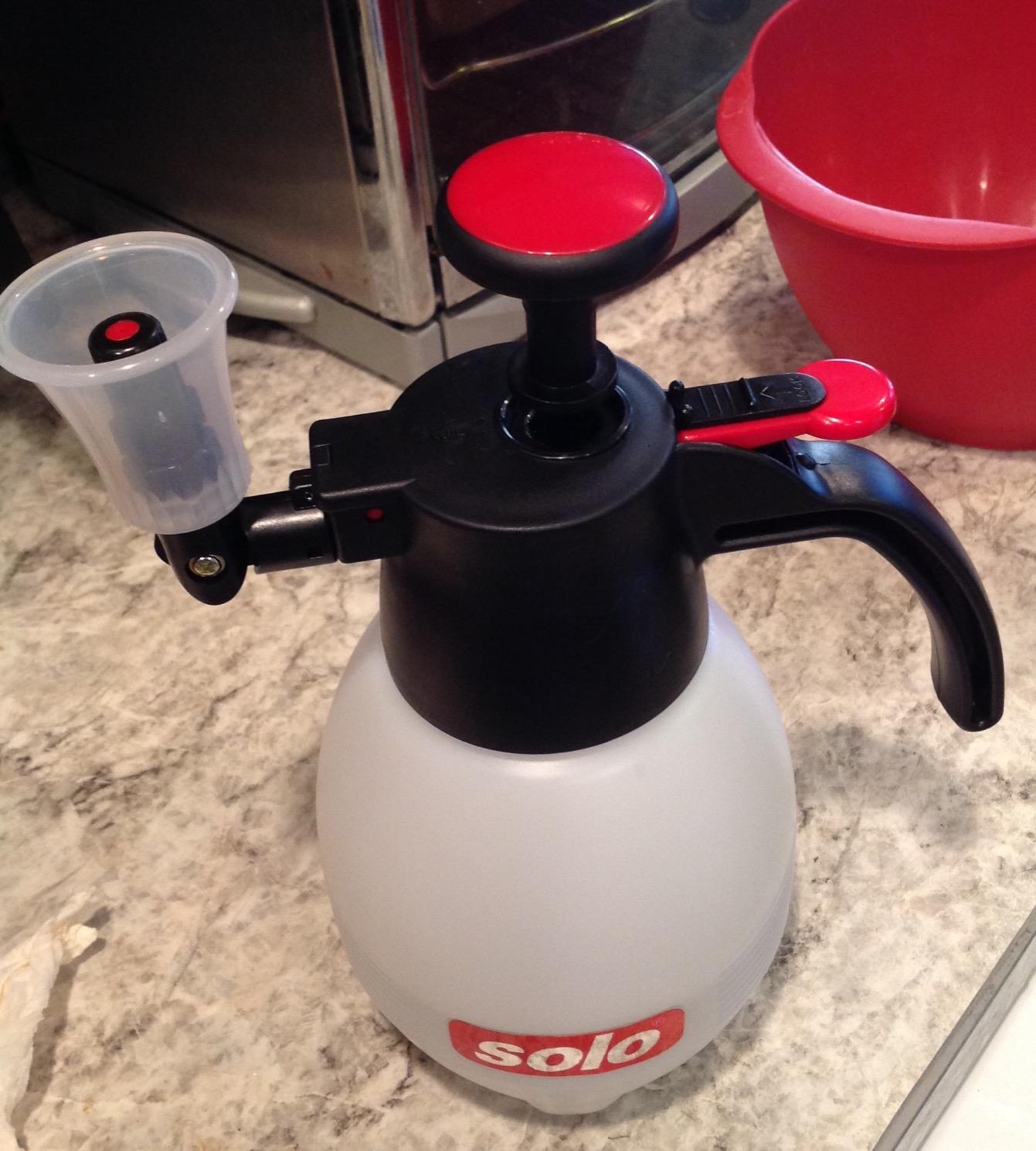
This is the best-rated unit here at 4.6, with 78 percent of ratings at five stars, and the reason is the grip. It pressurizes with one hand and the trigger locks on, so once you have built pressure you can carry it, aim it and spray with your other hand free. For spot treatment that is a genuinely better way to work than hauling a two-gallon tank to a single weed.
At under 10 ounces it lives in a pocket or a tool bag, and it goes well beyond the garden. Auto cleaning, mildew and algae control, spot treatment on a car, fertilizing houseplants and applying concentrated product to a single patch of lawn are all uses buyers describe.
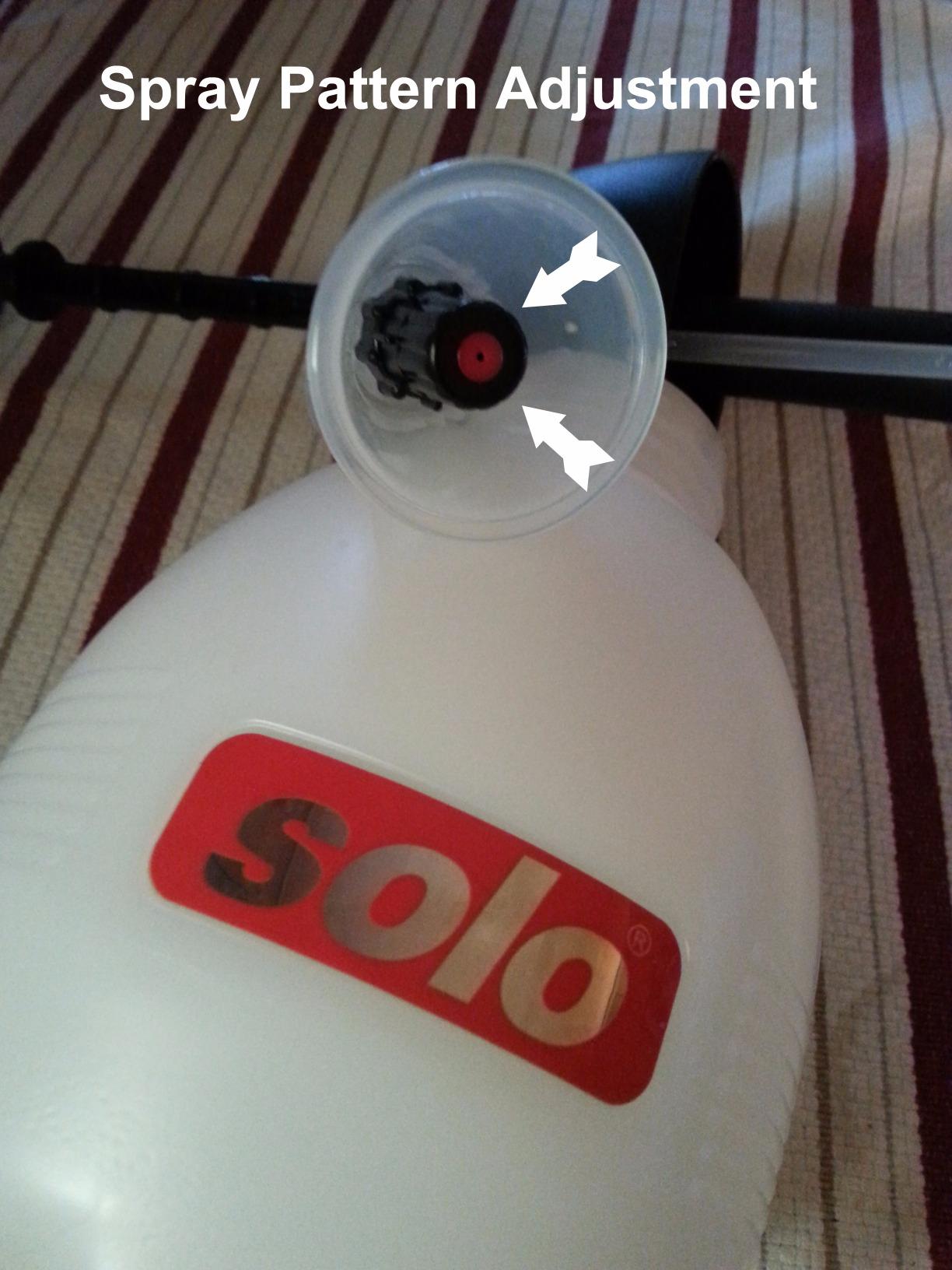
The drift and drip guards are the detail that earns the rating. On a young plant or a painted surface, a guard that shapes the output keeps the overspray where you aimed it, which is the entire reason to own a sprayer instead of a bottle with a trigger sprayer top.
It takes roughly 30 strokes to pressurize the one-liter tank, which is a short, pleasant job at this weight. The trade is that you cannot pump and spray at the same time, so you pre-pressurize, walk to the target and spray until the pressure fades.
The limitation is capacity, and it is absolute. A one-liter tank is a companion tool, not a lawn sprayer, and treating anything larger than a few square yards means refilling constantly. Buyers who expected a yard tool tend to end up with a second sprayer.
Is a one-liter tank too small to be worth owning?
It is worth owning as a second tool, not as your only one. The combination of one-handed pressurization, a lock-on trigger and under ten ounces means you can carry it anywhere and hit a target precisely, which no larger tank in this group can match. Most owners pair it with a two-gallon for larger work.
What can I safely put in it?
Garden chemicals diluted to normal strength, soapy cleaning solutions and water are all fine. The fixed nozzle and the low capacity make it a poor choice for anything that needs to sit and settle, or for a run where you would need the tank refilled between passes.
8. Happybuy 1-Gallon Stainless Steel: The Rebuildable Metal Build
Happybuy 1 Gallon Stainless Steel Pump Sprayer, 12″ Wand & 3FT Reinforced Hose, Pressure Gauge, Safety Valve & Adjustable Nozzle, Garden Weed Sprayer for Lawn, Gardening, Sanitizing
Stainless steel 1 gallon tank
87 psi max pressure
Brass adjustable nozzle
Pressure gauge, 12 inch wand
Pros
- Stainless tank and pump body
- rust-proof and rebuildable
- Brass nozzle outperforms plastic tips
- Pressure gauge plus safety valve
- Spare gaskets and seals in the box
Cons
- Manufacturer excludes strong acidic and alkaline solutions
- Pump can feel stiff as seals wear
- Only one nozzle included
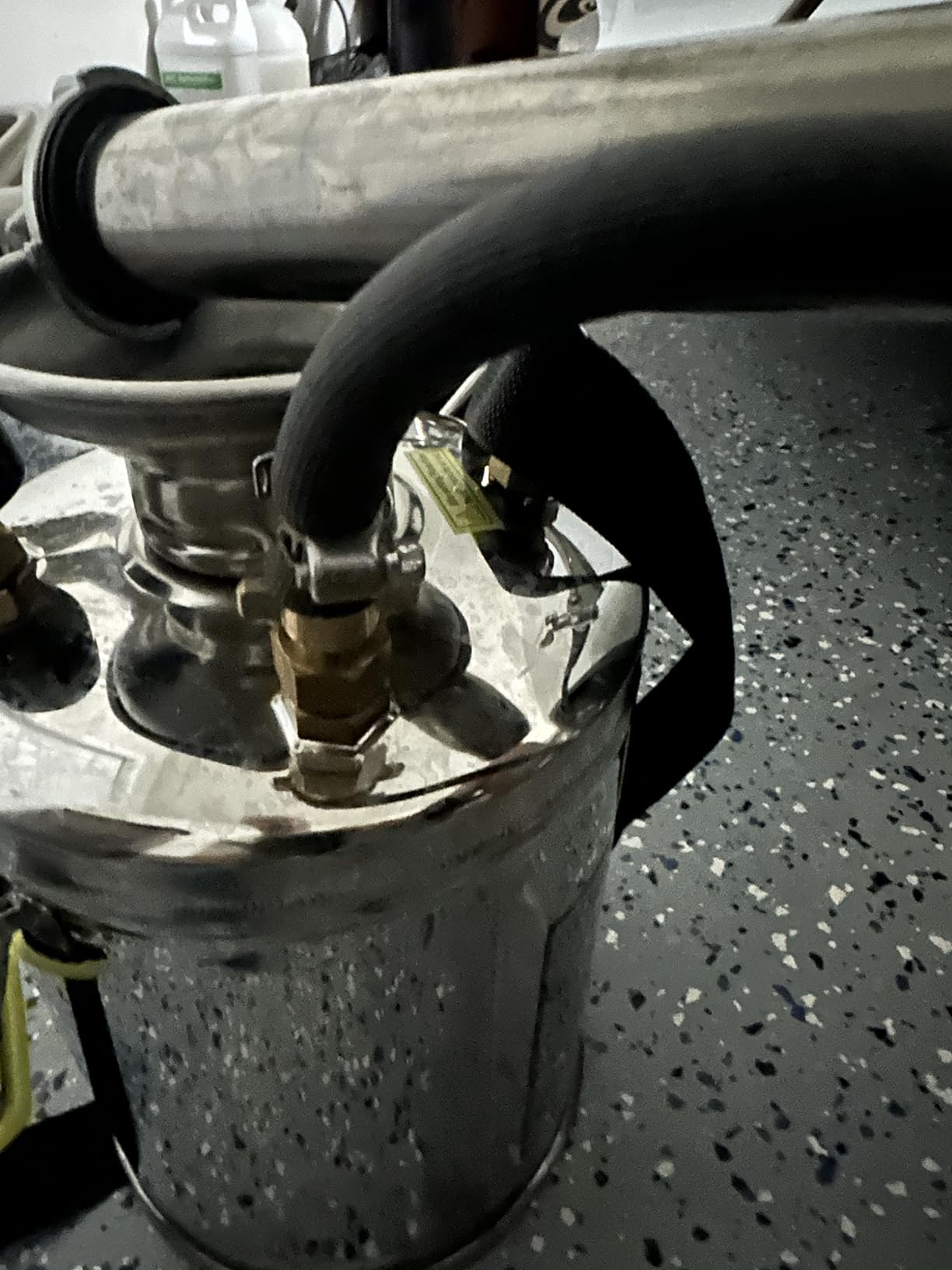
This is the sprayer for anyone tired of replacing disposable plastic tanks. The tank and pump body are stainless steel, which does not crack, does not go brittle under UV exposure and can be opened up when something fails. Spare gaskets and seals ship in the box, so the first repair does not require ordering a part, and that rebuildability is the trait forum owners prize above all else.
It is also the only unit in this group with a pressure gauge, so you can see the state of the tank instead of guessing by whether the trigger feels soft. The brass adjustable nozzle runs from a direct stream to a fine mist and holds its spray pattern far better than a molded plastic tip.
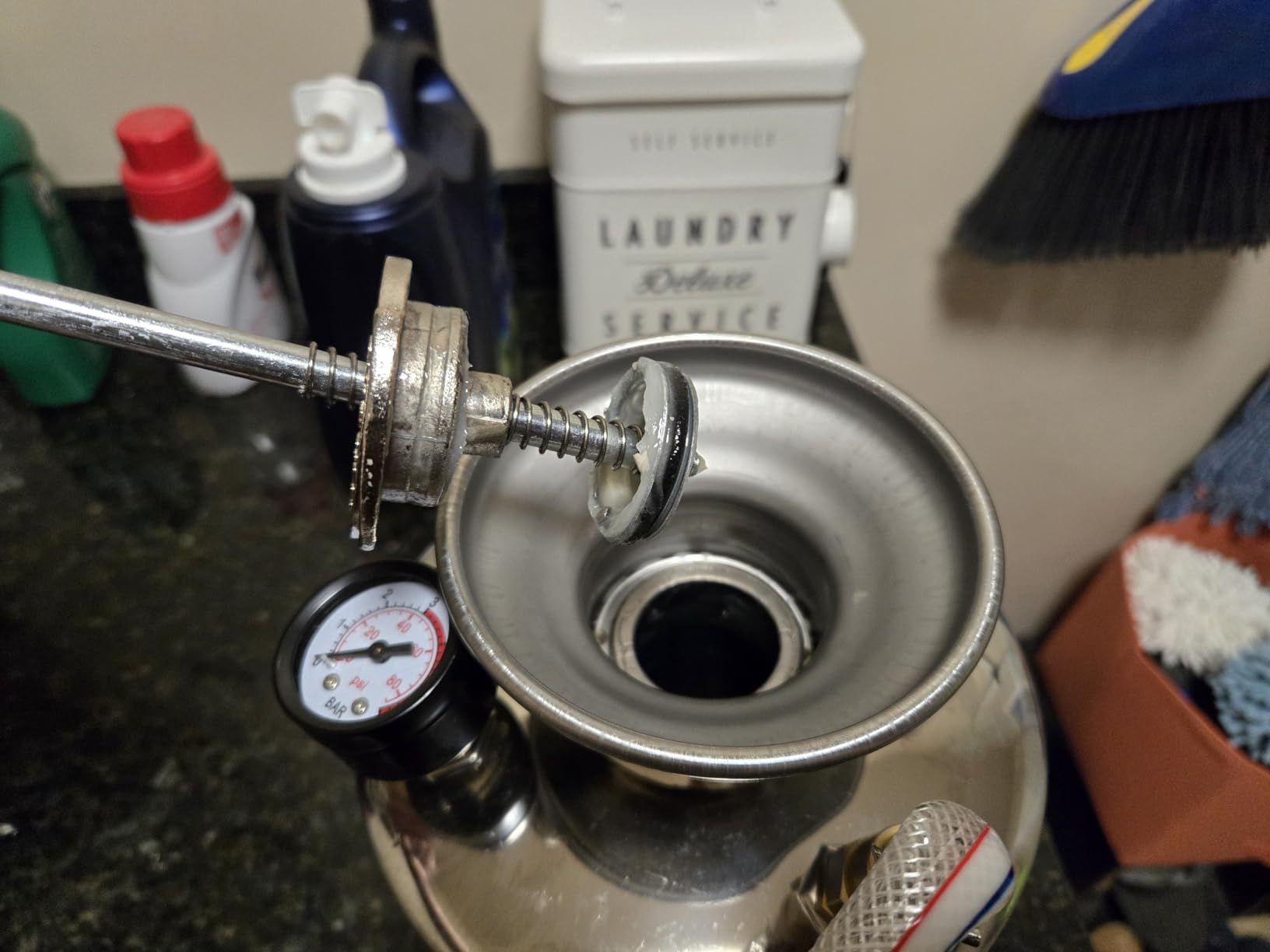
The reach is respectable rather than exceptional. A 12-inch wand on a 3-foot reinforced hose gives enough working distance to treat a shrub line or a fence without setting the tank down, and the bowl-shaped fill opening and adjustable shoulder strap make it comfortable to carry once it is full.
Owners who came from plastic tanks tend to describe the difference in plain terms, and several report using it for non-garden liquids such as diesel where a plastic tank would have been destroyed. At 87 psi, it has the second-highest ceiling among the handheld units here.
Read the compatibility note before you buy. The manufacturer states the rubber ring and internal design are not suited to strong acidic, corrosive or alkaline solutions, so it is a good sanitizing and general cleaning tool rather than a chemical drum. The other recurring complaint is a pump that feels stiff once the seals have worn in.
Is stainless steel worth it over a poly tank?
For longevity and repairability, yes. Polyethylene tanks are lighter and cheaper and can outlast a careless owner for many seasons, but they eventually craze, split at the seams or degrade under UV. A stainless tank with a spare seal kit is a tool you can keep rebuilding rather than replacing.
Can I put bleach in it?
Dilute bleach and soapy sanitizing solutions are fine and are the common uses owners describe. The manual rules out strong acidic, corrosive and highly alkaline solutions, so keep the concentration modest and rinse the tank promptly, which also protects the rubber ring from premature hardening.
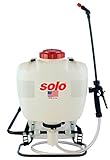
9. SOLO 425 4-Gallon Backpack: Best for Thick Liquids and Large Area Work
SOLO 425 4-Gallon Piston Backpack Sprayer, Wide Pressure Range up to 90 psi
4 gallon HDPE tank on metal frame
Piston pump up to 90 psi
20 inch wand, 48 inch hose
Four TeeJet nozzles
Pros
- 90 psi handles thicker liquids and larger acreage
- Four gallon capacity minimizes refills
- Pump handle interchangeable for either hand
- Locking commercial shut-off valve
- Metal frame with Viton seals
Cons
- Heavy at 9.9 pounds empty before you add solution
- Only a 1 year limited warranty
- Overkill for small gardens and spot work
This is the pressure answer. A piston pump rated to 90 psi is roughly three times the working pressure of the 30 psi hand pumpers in this group, and that is what lets it move viscous products, fertiliser concentrates and dense canopy work that stalls a low-pressure tank. It is also the only unit here where thick liquids are a genuine use case rather than a compromise.
Four gallons removes the refill problem entirely. On a large property you can cover a substantial area in one tank, which matters because a piston pump is only worth its effort if you are not constantly stopping to refill and reprime.
Two ergonomic details make long sessions possible. The pump handle is interchangeable for left or right hand, and the commercial shut-off valve locks on, so you are not squeezing a lever for the entire application. The 20-inch wand on a 48-inch nylon-reinforced high-pressure hose, plus four commercial-grade TeeJet-compatible nozzles, covers both precision and broadcast work.
Viton seals in the key locations and a rugged metal frame with an extra-large tank opening point to commercial intent. The wide opening is a real quality-of-life detail, because filling and cleaning a backpack through a small mouth is genuinely frustrating.
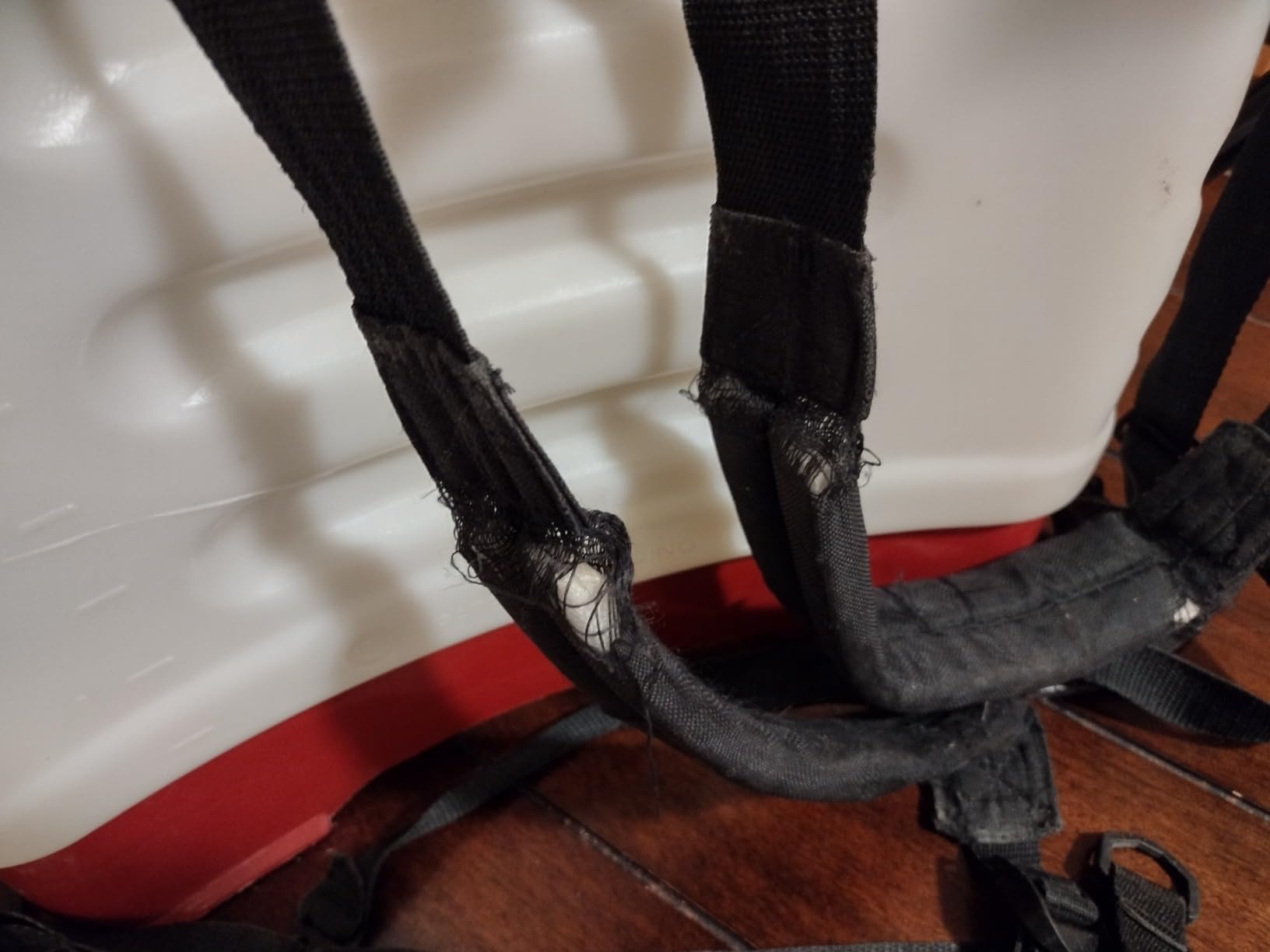
The honest drawback is the 9.9 pounds empty, before any solution. Full, this is a substantial load on your shoulders, and it is completely unnecessary for a small garden. The one-year limited warranty is also surprisingly short given the commercial positioning, and a minority of owners report early seal or fitting wear.
Is a piston pump better than a diaphragm pump?
They trade places. A piston pump delivers higher pressure and better thick-liquid performance, which suits concentrates and large jobs. A diaphragm pump pushes solution through rather than pressurizing air above it, which means it handles wettable powders and self-primes, and it will not be damaged by running dry. Most garden work is better served by the piston, powder mixes by the diaphragm.
How much area can one tank cover?
With a fan or flat cone on a properly calibrated sprayer, a four-gallon tank covers a large patch of lawn or an ornamental planting before you need a refill. The exact figure depends entirely on your walking pace and application rate, so calibrate over a measured square before treating a big area.
10. CHAPIN 61500 4-Gallon Backpack: Best for Large Gardens
CHAPIN 61500 4-Gallon Backpack Sprayer for Lawn, Garden & Weed Control
4 gallon translucent poly tank
60 psi max pressure
Two stage filtration
20 inch wand, padded straps
Pros
- Best rated 4 gallon option at 4.5 with 72 percent five star
- Two stage filtration cuts nozzle clogs
- Translucent tank with 4 inch filtered fill opening
- Padded adjustable straps and lock-on shut-off
- Nitrile seals rated for common lawn chemicals
Cons
- Heavy at 10.1 pounds empty before you add solution
- Only a single adjustable cone nozzle included
- 60 psi ceiling is well below the 90 psi piston unit
Where the SOLO 425 wins on pressure, this one wins on endurance over a full day. The two-stage filtration is the standout: one filter sits in the shut-off and a second basket sits in the tank cap, so debris is caught twice before it can reach the nozzle. On a long treatment session that is the difference between a smooth pass and stopping every few minutes to clear a tip.
The tank is translucent with a 4-inch opening and a filter cap, which makes both filling and level checks fast. Padded adjustable shoulder straps, a cushion-grip lock-on shut-off and a 20-inch wand on a 48-inch reinforced hose cover the ergonomics well for a loaded backpack.
Nitrile seals are rated here for the common lawn and garden chemistry, meaning diluted weed killers, pesticides and fertilizers. That is the bulk of what most people put in a backpack, and it means you are not trading seal life for a spec-sheet claim you will never use.
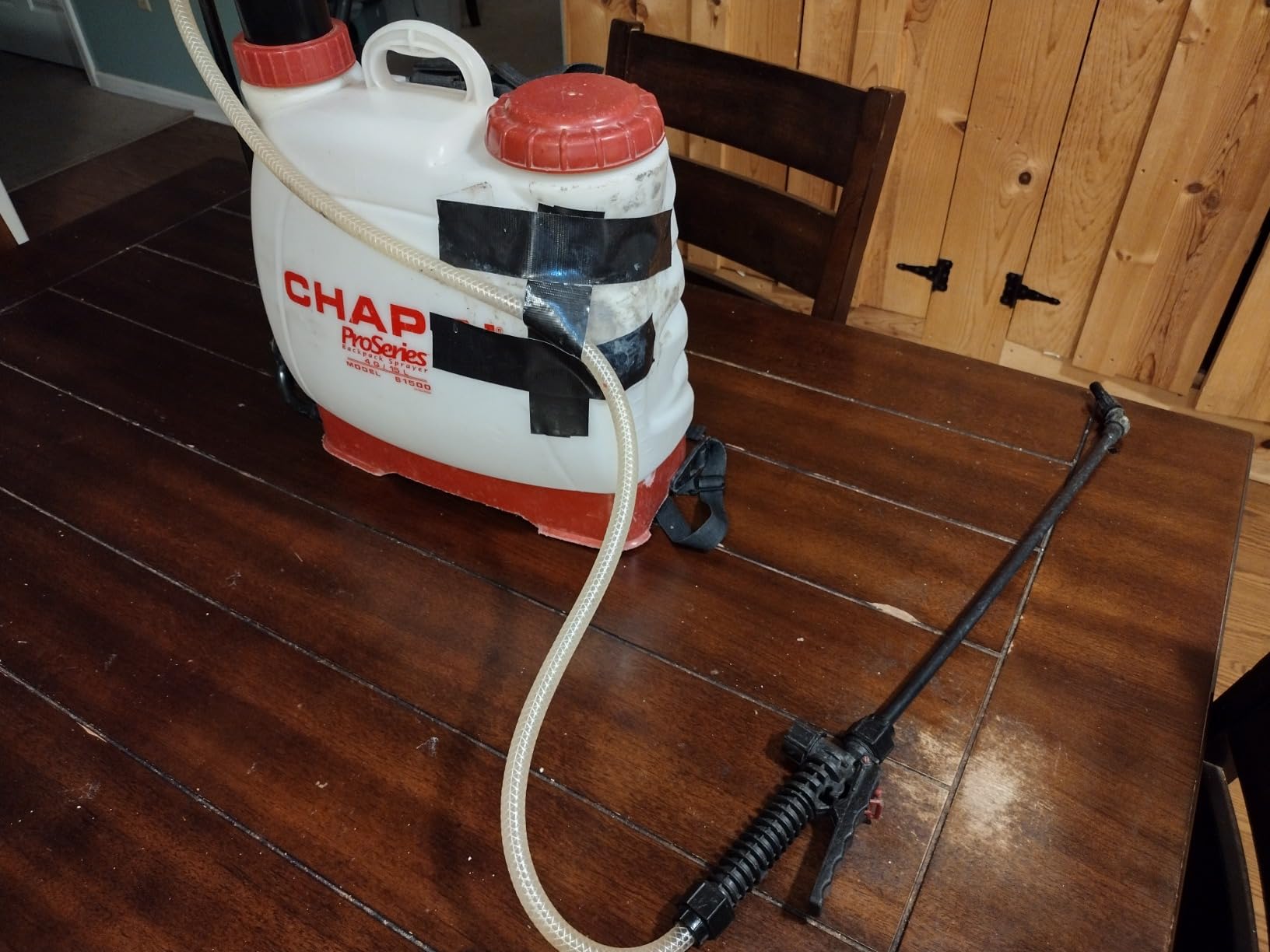
At 4.5 with 72 percent five-star ratings, this is the one reviewers recommend for treating large lawns and gardens. The complaint pattern is narrow and consistent: the loaded weight on your shoulders, and a single adjustable cone nozzle in a kit where you may want more.
The 60 psi ceiling is well below the 90 psi of the SOLO 425, and that is a real limitation if you intend to spray thick concentrates rather than dilute mixes. Choose it for comfort, filtration and capacity; choose the SOLO for pressure.
How much does a loaded four-gallon backpack weigh?
Four gallons of water is roughly 34 pounds before the 10.1-pound empty weight of the unit, so expect a load in the mid-forties on your shoulders and hips. Padded adjustable straps spread that across your shoulders, and the lock-on shut-off means you are not adding arm fatigue on top of it.
Does two-stage filtration really reduce clogs?
It does, and it is the reason this is the pick for long sessions over weedy ground. The in-tank basket catches leaves and grit before they circulate, and the filter in the shut-off catches what gets past. Either one alone helps; together they mean far fewer mid-pass nozzle blockages with homemade or thick mixes.
Pump Sprayer vs Hose-End Sprayer: Which Applies Better?
A hose-end sprayer treats everything within reach of the nozzle, and for a lawn that is genuinely faster. It connects to the spigot, dilutes as you go, and treats a broad area in a fraction of the time it takes to refill a hand tank. Once you are past a quarter acre, the comparison we run in our tow behind sprayer roundup is the one to read next.
A pump sprayer wins on precision. It meters the exact amount landing on a target, reaches under leaves and along fence lines where hose water floods the soil, and lets you stop exactly where you want to stop. It also works without a water supply, so it is the only option for a bed that is nowhere near a spigot.
For spot weed work, ornamental detail beds and fence lines, choose a pump sprayer. For treating a large open lawn uniformly, a hose-end unit or a wide-fan backpack is faster and the coverage difference is what you are paying for.
How to Prime, Calibrate and Set Pressure Before First Use
Almost every complaint about a pump sprayer traces back to skipping this. Five minutes of setup saves a season of uneven coverage.
Check the assembly. Confirm the wand is fully screwed into the shut-off, the hose is seated against the tank outlet and the pump shaft moves freely before you fill anything.
Fill and pressurize before aiming. Add your diluted solution, replace the cap and pump until the pump feels firm. Air in the line means a sputtering first spray no matter how good the nozzle is.
Prime the wand. With the nozzle pointed at a waste area, hold the trigger for a few seconds until the spray runs solid with no air bubbles.
Set the pressure. Pump to firm resistance, then open the relief valve to dump any excess. On units with a gauge, watch the needle rather than guessing at how hard the handle feels.
Calibrate over a measured area. Mark a 100 square foot patch, time how long a full tank lasts on it, and divide. That number is your real application rate and it tells you whether your tank is the right size for the job.
Choose the nozzle for the task. Cone for targeted work and thick mixtures, flat fan for even broadcast coverage, hollow cone and mist for seedlings and delicate foliage.
Calibrating in the field is a learned skill, not a manual step, and it is why long-term owners get consistent results from the same sprayer that casual users find patchy. If you are weighing a diaphragm unit for powder mixes, our walkthrough of vacuum pump basics covers the same pressure-and-flow thinking in a different application.
Pump Sprayer Buying Guide: Capacity, Pressure, Nozzles and Seals
What tank capacity do you need?
Size the tank to the largest single uninterrupted job you have. One gallon suits spot work and raised beds, a one-liter bottle is a precision companion, two gallons covers most suburban properties, and four gallons is for large lawns and repeated treatments where refilling would dominate your time.
As a rough guide, a well-adjusted one-gallon tank treats a meaningful patch of lawn or an entire flower bed, a two-gallon tank covers a full bed or a deck clean, and a four-gallon backpack handles several hundred square feet of turf per fill. The honest answer is that coverage depends on how fast you walk, so calibrate once and you will never guess again.
How much pressure do you actually need?
For diluted herbicide, pesticide and fertilizer, 30 to 45 psi is comfortable. Beyond that you are buying reach and thick-liquid capability rather than better weed killing, and the useful range for garden work tops out near 60 psi. The 90 psi units exist for concentrates and large-area commercial work.
Which pump type should you buy?
A piston pump, which pressurizes air above the liquid, is the standard in every handheld unit here and is the right default for garden spraying. A diaphragm pump pushes liquid directly and can handle wettable powders and self-prime, at the cost of lower pressure. A battery pump removes pumping effort entirely but adds charging, weight and a motor to maintain.
Forum advice lands consistently on this: choose a diaphragm when powders or very thick liquids are involved, and choose a piston for everything else. Running a diaphragm dry is hard on it, while a piston pump used briefly without liquid is generally survivable.
What does seal material actually change?
It decides how long the sprayer lasts with your chemistry. Standard elastomer seals are fine for dilute fertilizer, pesticide and herbicide. Viton is a fluoropolymer that resists harsh and concentrated chemicals where standard rubber hardens and cracks, and nitrile handles most common lawn chemistry well. Users consistently read a named seal material as a durability claim rather than a marketing line.
Do tank and wand materials matter?
Polyethylene and polypropylene tanks are light, translucent and effectively unbreakable in normal use, and they are the right choice for almost all garden work. They degrade with UV exposure over years, so store them out of direct sun. Stainless steel tanks are heavier and cost more, but they resist solvents, corrode far less and can be opened and rebuilt when a part fails.
Which features earn their space?
A lock-on trigger, a pressure release valve, a funnel top, an in-tank filter, a lockable shut-off and more than one nozzle pattern are the features that show up in real use. Features that rarely earn their cost are telescoping wands you do not use and pressure gauges you check once. A long hose and a translucent tank with a scale, however, are worth a lot on every job.
Cleaning, Storage and the Maintenance Rhythm
Rinse immediately after every use. Fill the tank with clean water, pump it, and spray the residual solution through the wand until it runs clear. Letting chemical sit in the tank between jobs is what destroys seals and eats tank walls.
For a deeper clean, fill with warm soapy water, pressurize and let it sit ten to fifteen minutes, then flush it through the nozzle. Run a separate pass with just water afterward, and pull the nozzle off to check the tiny orifice with a soft pick or an old toothbrush.
Never mix incompatible chemicals in the same tank. A bleach residue left in a tank and then combined with an acidic cleaner produces gas, and the tank is not designed to contain it. Two tanks, one for bleach and one for garden chemistry, removes the risk entirely.
Over winter, pump the tank dry, leave the cap off, and store it somewhere shaded and unfrozen with the seals relaxed. Leaving a sealed tank full of water in a freezing shed is how tanks crack, and leaving seals stretched under pressure is how they flatten.
Spraying Safety: Gear and Habits That Protect You
Wear chemical-resistant gloves, eye protection and long sleeves, and read the label on whatever you are applying rather than inferring from the product name. A pump sprayer puts the chemical into an aerosol you are standing directly behind, so exposure is more concentrated than with a hose.
Spray with the wind at your back, never into it, and avoid spraying in full sun on a hot day, when droplets vaporize faster and drift further than the label intends.
Keep children and pets out of the treated area until the product has dried, and rinse or cover anything that will be touched, walked on or eaten within the interval the label specifies. Rinse your sprayer with clean water only, never with a hose that later feeds a vegetable garden, and store all chemical products locked away.
Frequently Asked Questions
Which sprayer pump is the best?
For most homeowners the CHAPIN 20004 SureSpray 1-Gallon is the best all-round manual pump sprayer: a 60 psi ceiling, a translucent funnel top, a 34-inch hose with wand and a modular body whose seals can be replaced rather than replaced in whole. If you need more capacity, step up to a two-gallon such as the Roundup 190260, or to a four-gallon backpack if you treat large areas.
What is the best pump pressure sprayer?
Pressure matters most when you spray thick liquids or concentrates, not dilute garden mixes. Most handheld pump sprayers deliver 30 to 60 psi, which is plenty for diluted herbicide, pesticide and fertilizer. Above that, the SOLO 425 4-Gallon backpack pushes up to 90 psi and is the right choice for viscous products and large-area work.
Who makes the best sprayers?
SOLO and CHAPIN appear most often in hands-on recommendations for durability and rebuildability, and D.B. Smith is frequently named on contractor forums for the same reason. Roundup, PetraTools, REALWORK and VIVOSUN cover the value and mid tiers well. The deciding factor is less the badge and more whether seals and nozzles are replaceable and the tank is serviceable.
Which pump sprayer sprays the farthest?
Reach comes from wand length plus hose length, not pressure alone. Among the handheld units here the PetraTools HD101 pairs a 52-inch hose with a 16-inch wand, and the VIVOSUN 2-Gallon pairs a 50-inch hose with a 22.28-inch wand for the longest total. The SOLO 430-2G adds a 28-inch wand on a 48-inch hose, and the two four-gallon backpacks extend further still with 20-inch wands.
Can I use bleach in a pump sprayer?
Dilute bleach solution works in most poly tanks with nitrile or Viton seals, and stainless steel builds handle it comfortably. Avoid concentrated bleach, and never follow a bleach rinse with an acidic cleaner in the same tank, because the combination releases gas. Rinse the tank with clean water immediately after bleach work to protect the seals.
The Best Pump Sprayer for Your Yard in 2026
After working through all ten, the CHAPIN 20004 SureSpray remains the best pump sprayer for most people. It is light, it is easy to fill, it holds a useful 60 psi, and its modular body means a failed seal is a repair rather than a replacement. That combination of reach, rating and serviceability is why it holds the top spot for 2026.
Match the capacity to the job, not the other way around. One gallon or a one-liter precision bottle for spot work, a two-gallon for most suburban properties, four gallons when you are treating large lawns, and the 90 psi SOLO 425 only when thick concentrates or very large acreage make it worth the loaded weight.
Whichever you choose, prime it, calibrate it, and clean it out after every use. Those three habits do more for how long the sprayer lasts than any specification on the box.