
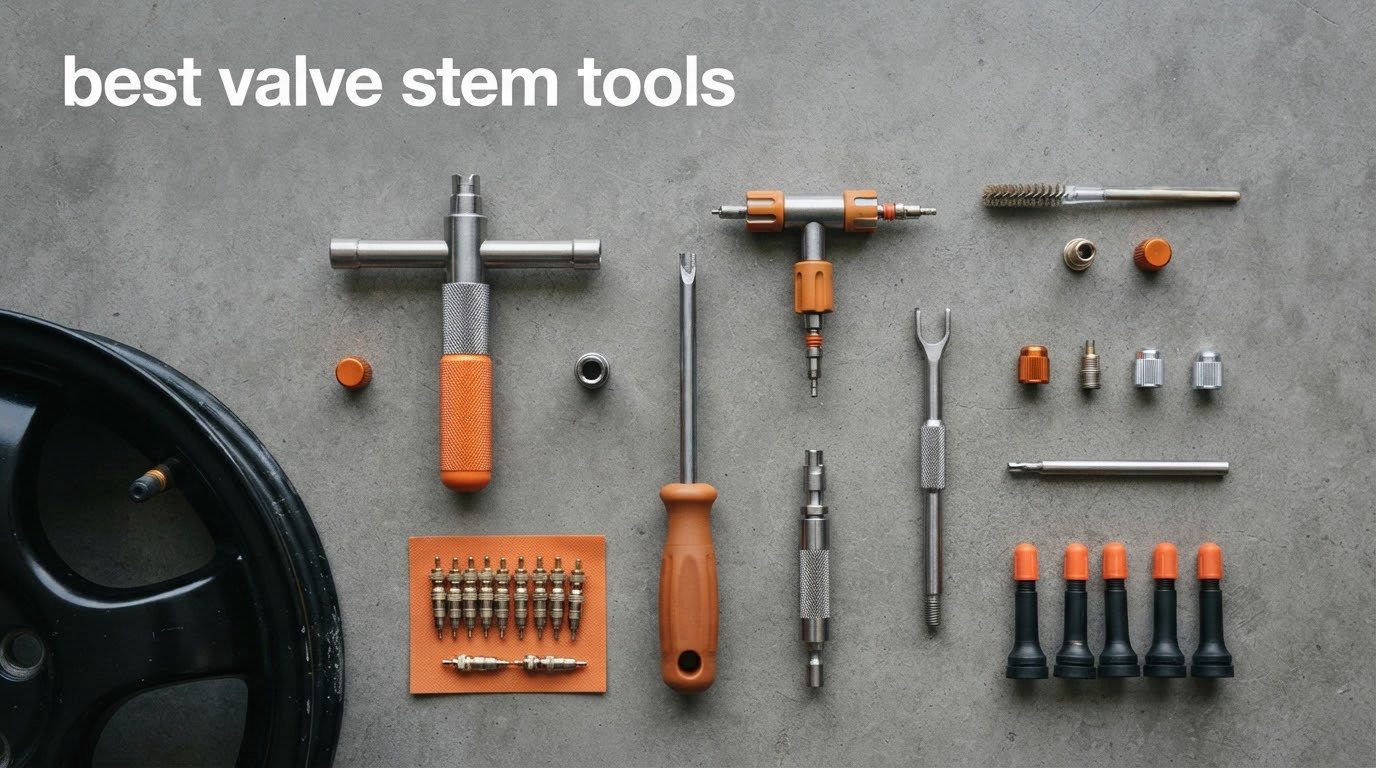
If you have ever found a tire losing pressure a pound a week and traced it back to a corroded brass core, you know how small the part is and how big the problem feels. The fix takes about two minutes with the right tool, and the wrong tool is what turns a two-minute job into an afternoon.
Before we get into picks, here is the distinction that trips up almost everyone. A valve core remover is a small screwdriver-style tool that engages the slot in the brass core and unscrews it. A 4-way valve tool is a multi-function head that removes and installs cores, reams and re-taps the valve interior threads, and cleans the external threads. A valve stem puller is a longer lever tool that grips the rubber snap-in stem at the rim and pulls the whole stem through the rim hole. Most kits sold as a valve stem tool kit contain core tools and very little pulling capability.
This guide covers the best valve stem tools for passenger cars, light trucks, motorcycles and bicycles, with a separate section on what to do when a core is genuinely seized. If you came here looking at engine-side valve work rather than tire-side valve work, those are different tools entirely, and you will want a valve spring compressor instead. If you are chasing an oil drain instead, the Fumoto valve is a different fix again.
One note on method, because plenty of roundup pages skip it. We worked from manufacturer specifications, fitment data and the pattern in thousands of customer reviews for each tool below, and we cross-checked the failure modes people actually describe. We did not bench-test all twelve in a tire shop this year, and we will not pretend otherwise. Where a tool is a proven professional design with a decade of shop use behind it, we say so. Where the reviews are the only evidence, we say that too.
Table of Contents
Top 3 Valve Stem Tools for Stubborn Cores and Clean Installs

Riseuvo Stem Puller and Installer Kit
- 35-piece kit
- 22 rubber stems in TR412 TR413 TR414
- 4-way and single-head core tools

ZHSMS 40-Pc Multi-Size Valve Kit
- 15 stems across three sizes
- Alloy lever puller
- Three core tools included
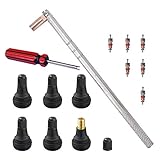
FEBRYTOLD 14-Pc TR412 Stem Set
- Compact 14-piece layout
- 6 TR412 stems with cores
- Single-head core tool
All 12 Best Valve Stem Tools Compared (October 2026)
Every pick below appears in this table with the job it does best. Read the tool type column first, because choosing the wrong family of tool is the most common and most expensive mistake here.
| Product | Specs | Action |
|---|---|---|
| Riseuvo Valve Stem Puller and Installer Kit |
|
Check Latest Price |
| FEBRYTOLD 14-Pc TR412 Stem and Core Set |
|
Check Latest Price |
| ZHSMS 40-Pc Multi-Size Valve Stem Kit |
|
Check Latest Price |
 Park Tool VC-1 Valve Core Remover Park Tool VC-1 Valve Core Remover |
|
Check Latest Price |
 Ken-Tool Valvecapper PRO Ken-Tool Valvecapper PRO |
|
Check Latest Price |
 CKAuto Valve Stem Puller with Rubber Boot CKAuto Valve Stem Puller with Rubber Boot |
|
Check Latest Price |
 Steelman Rubber Booted Stem Puller Steelman Rubber Booted Stem Puller |
|
Check Latest Price |
 Slime 20178 Valve Core Torque Tool Slime 20178 Valve Core Torque Tool |
|
Check Latest Price |
 Innovativ Tire Valve Stem Fishing Tool Innovativ Tire Valve Stem Fishing Tool |
|
Check Latest Price |
 Dr.Roc Tire Valve Stem Puller Tool Set Dr.Roc Tire Valve Stem Puller Tool Set |
|
Check Latest Price |
 Lisle 15190 Long Valve Core Tool Lisle 15190 Long Valve Core Tool |
|
Check Latest Price |
 Milton S-449 Valve Insertion Tool Milton S-449 Valve Insertion Tool |
|
Check Latest Price |
1. Riseuvo Tire Valve Stem Puller and Installer Kit
Riseuvo Tire Valve Stem Puller and Installer Tool Kit for Cars, Trucks
35 pieces
22 rubber stems in TR412 TR413 TR414
4-way and single-head core tools
Pros
- Covers every step of a snap-in stem replacement in one purchase
- Three stem sizes handle mixed fleets of cars trailers and lawn equipment
- 4-way tool doubles as an A/C valve core changer
- Highest review volume of any kit in this category
Cons
- Puller joint feels a little flimsy under heavy force
- Some supplied cores did not seat properly and leaked
- No torque control to protect TPMS sensor housings
This is the kit I keep reaching for first, and the reason is simple: it is the only one in the group that covers the full job without a second purchase. The puller and installer tool handles the stem, and the kit also carries 10 TR412, 6 TR413 and 6 TR414 rubber stems with 20 cores, plus single-head, double-head and 4-way core tools.
Owners running mixed equipment like the combined coverage. One reviewer described swapping stems on a snowblower, a zero-turn mower and a trailer wheel from the same box, which is exactly the scenario a single-size kit cannot handle.
Why it beats the single-tool options
Nothing else here pairs a lever puller with three different stem standards and a functioning 4-way head. The 4-way tool alone is worth the purchase because its reamer and re-tap function fixes the cross-threaded valve interiors that come from a stripped core, and it also works on A/C refrigerant valves.
Where it will disappoint you
The puller joint is the weak point. Owners report it flexing under load, which matters if you are pulling a freshly seated stem out of a hard wheel. The other recurring complaint is quality variance on the small cores; if a core will not seat by hand, skip it and use one from your own stock rather than inflating to find out.
Caution: there is no torque limiting here, so on a TPMS-equipped wheel, finger-tight plus a quarter turn is the rule rather than a wrench.
2. FEBRYTOLD 14-Pc TR412 Stem and Core Tool Set
FEBRYTOLD Tire Valve Stem Tool Remover & Installation, 6 Pcs TR412 Snap-in Valve Stems with Valve Stem Cores, 1 Pcs Single Head Tire Valve Core Remover Installer Tool (14 Pcs)
14 pieces
6 TR412 stems with cores
Single-head core remover
Fits 0.453 inch stems
Pros
- Compact enough to live in a glove box or small roll
- Works across cars motorcycles ATVs and trucks
- Fits standard 0.453 inch valve holes
- Removes and installs stems without scratching wheels
Cons
- Includes TR412 stems only so fit range is narrower
- Single-head core tool cannot re-tap threads
- No spare caps included
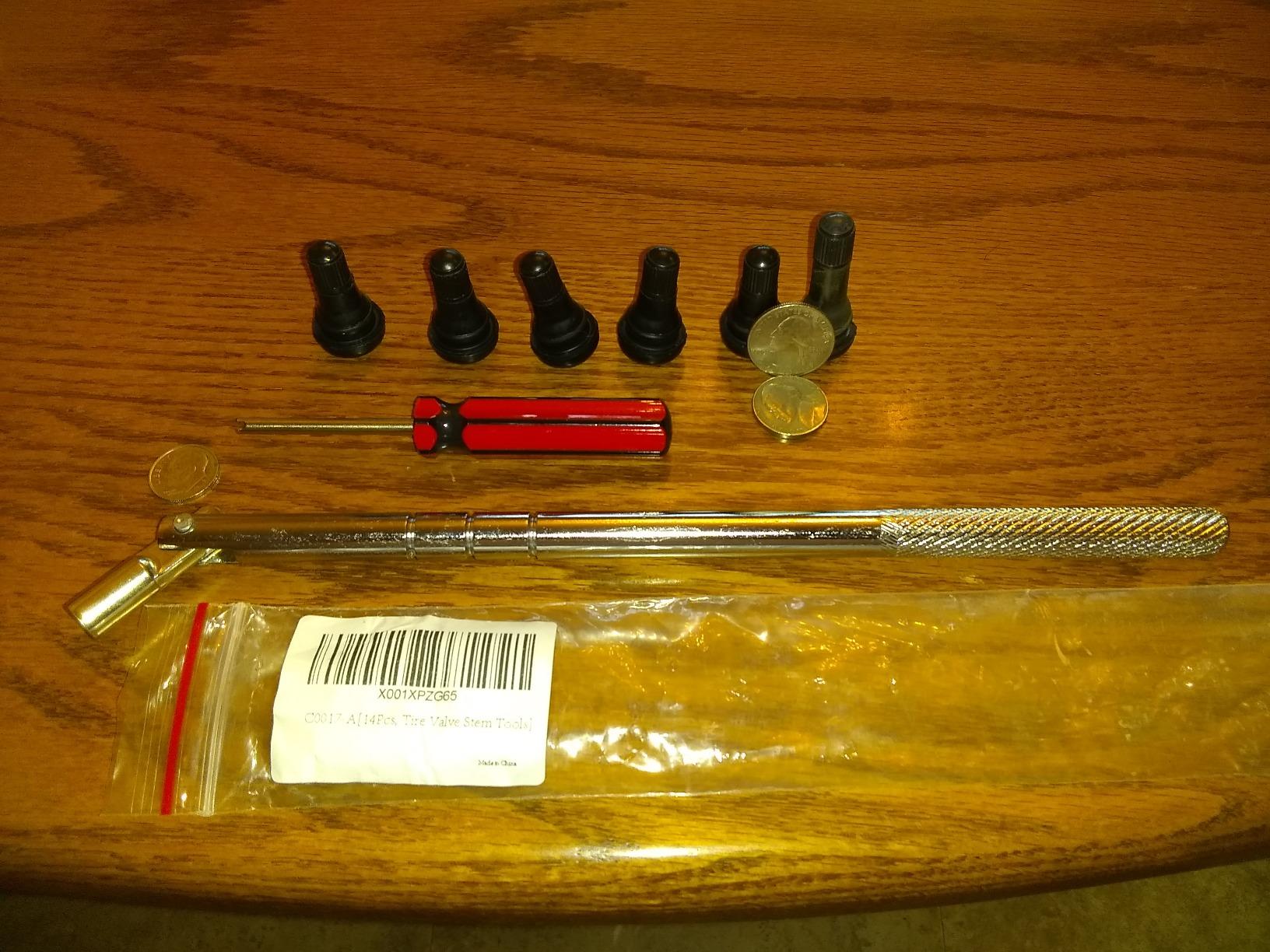
This is the pick if your priority is a kit that does not need its own box in the trunk. At 14 pieces it is a fraction of the volume of the 40-piece kits, and the fitment is clean: one puller and installer tool, 6 TR412 stems with 6 cores, and a single-head core tool.
The company lists fitment for motorbikes, passenger cars and trucks, and that matches what buyers report. It works on any wheel with a standard 0.453 inch valve hole, which covers the overwhelming majority of tubeless wheels on the road today.
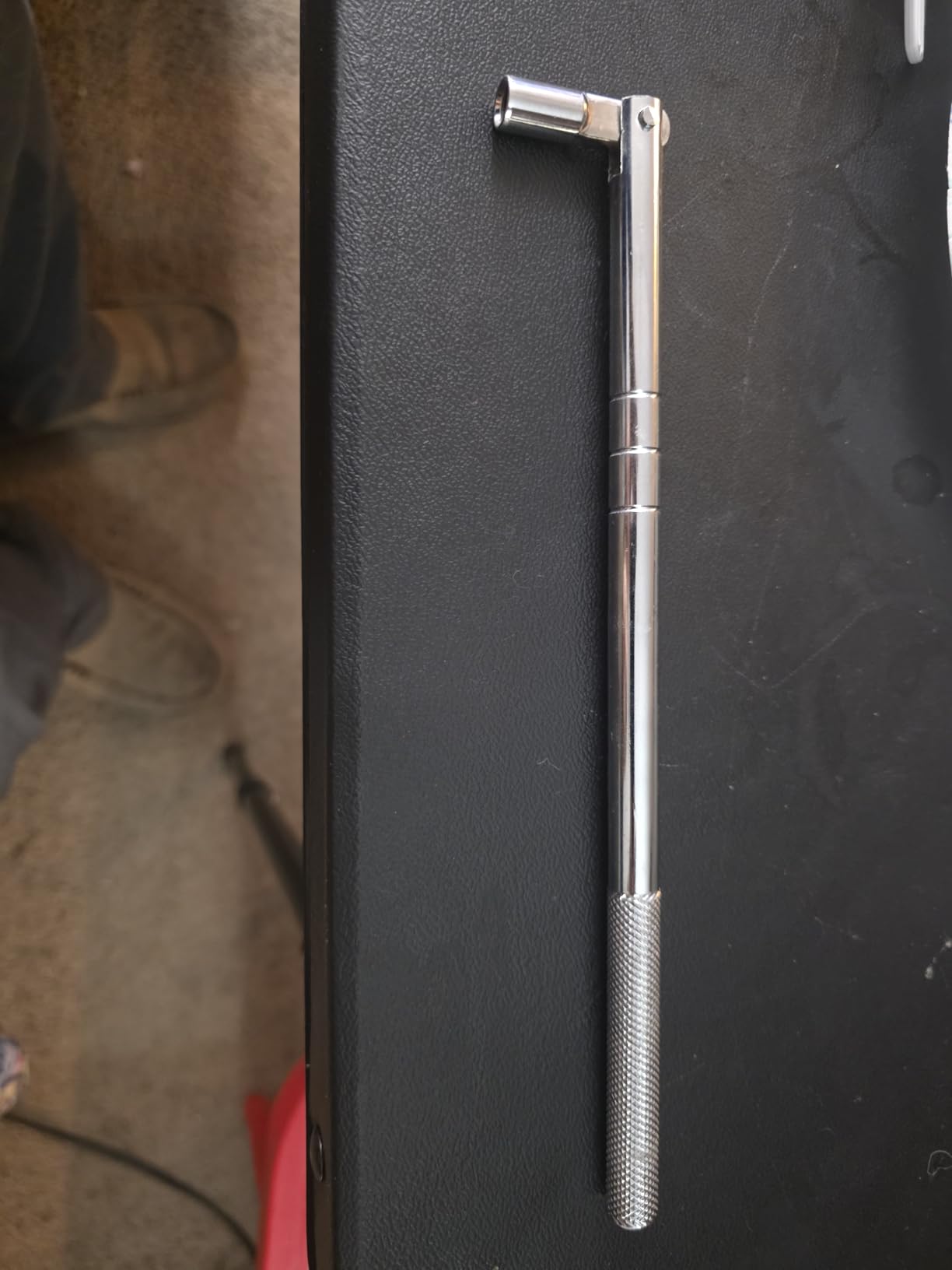
Best reason to buy it
Portability. A 40-piece kit is a garage tool. This one fits in a saddle bag, a motorcycle tool roll or the glove compartment, and it still lets you pull a stem and fit a replacement without a second purchase. For a rider or a roadside kit, that is the deciding factor.
Where it falls short
TR412 only. If you service a trailer, an SUV on TR414 stems, or anything with a 5/8 inch rim hole, the included stems will not fit. The single-head core tool also removes and installs cores but has no reamer, so it cannot rescue a valve whose internal threads are already damaged.
Caution: on spokes-heavy motorcycle wheels, check that your rim hole is 0.453 inch before buying, because some spoke wheels are narrower.
3. ZHSMS 40-Pc Multi-Size Valve Stem and Core Kit
ZHSMS Valve Stem Puller Installer Tool, 5Pcs TR412, 5Pcs TR413, 5Pcs TR414 Tire Snap in Short Rubber Valve Stem, 4 Way Valve Core Remover, Single Head Tire Valve Core Remover Installer Tool(40Pcs)
40 pieces
15 stems in three sizes
Alloy lever puller
10 valve caps
Pros
- Largest stem assortment here with TR412 TR413 and TR414 covered
- Leverage-based puller extracts stubborn snap-in stems
- Alloy puller and plated steel core tools feel durable
- Best pick for a shop or fleet running mixed vehicles
Cons
- Bulky 40-piece layout is far more than one stem swap needs
- Long thin package is awkward in a small toolbox
- Same lack of TPMS torque control as every kit here
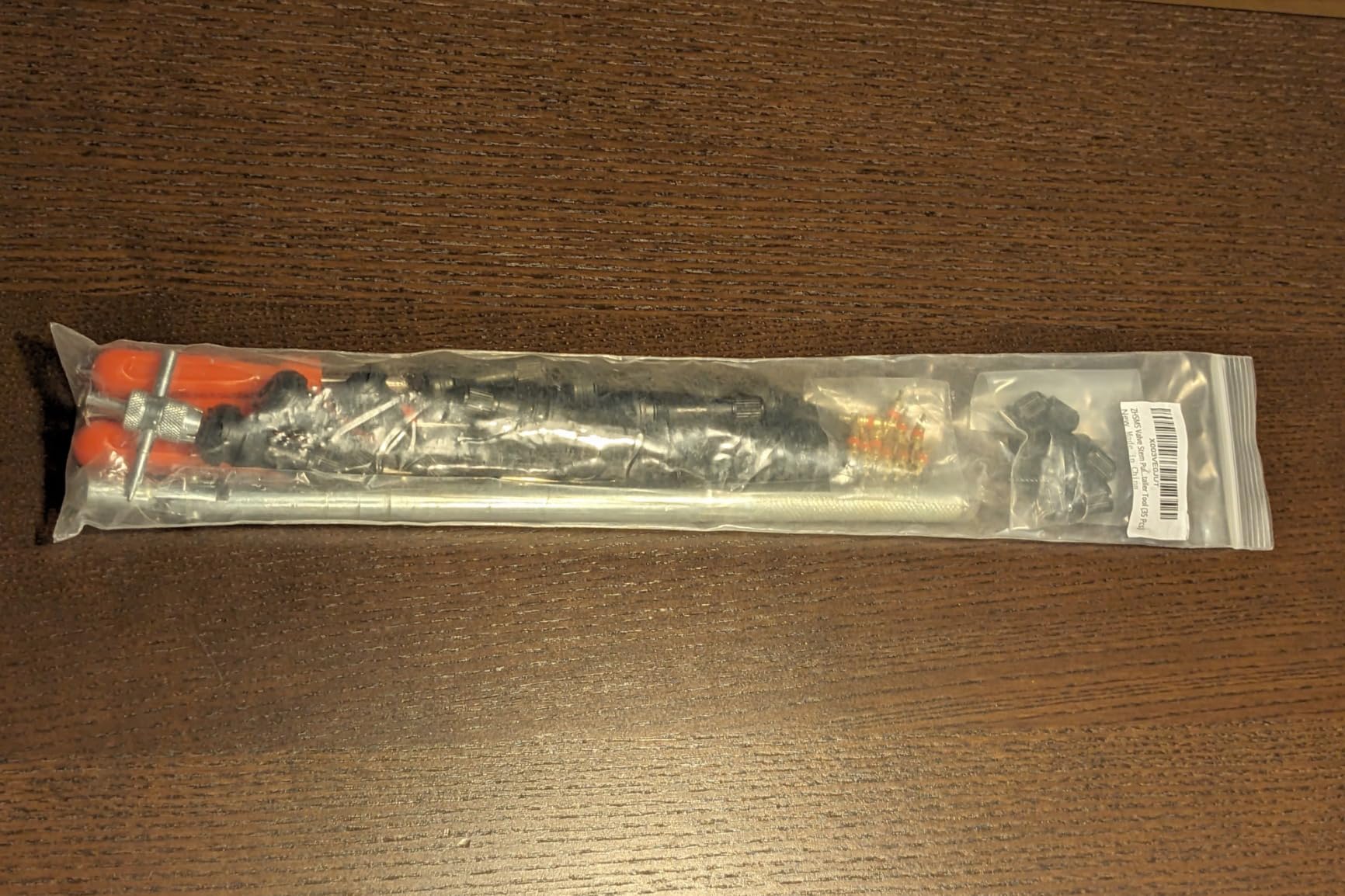
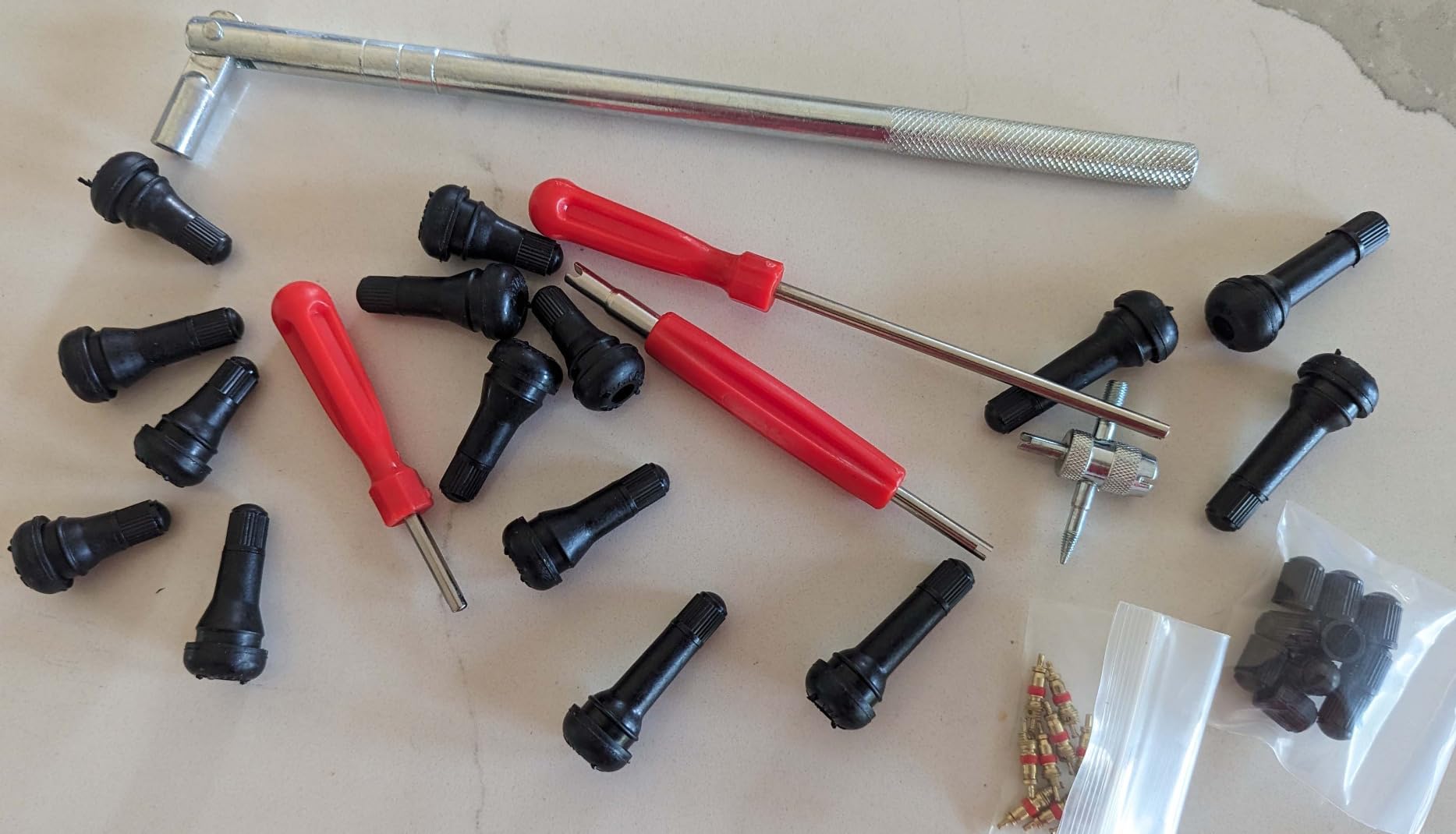
Where the FEBRYTOLD set is trimmed down, this one is built out. Fifteen rubber stems split evenly across TR412, TR413 and TR414, ten cores, ten caps, an alloy puller and installer, two single-head core tools, a double-head tool and a 4-way valve tool.
Tool material is listed as alloy, with the core tools using plated steel shafts and the valves using a zinc alloy core inside a rubber body. The puller uses leverage rather than raw force, which is why owners report it moving stems that a straight pull would stall on.
Where this kit earns its bulk
Fleet and shop work. If you turn stems across passenger cars, motorcycles, ATVs, off-road machines and trucks, having all three common sizes plus caps in one case means you are not ordering parts between jobs. For a single car owner the volume is honest overkill.
What to watch out for
The package measures 15.2 by 2.36 by 1.06 inches and weighs 14.4 ounces, so it is a long, thin bundle. It stacks fine on a shelf and slides badly into a standard socket drawer. Buyers also note the assortment is more than a single swap requires, which is the flip side of the same strength.
Caution: alloy pullers transfer force directly into the wheel. Cover the rim area with a rag before pulling a stem on a finished alloy face.
4. Park Tool VC-1 Valve Core Remover for Presta and Schrader
Park Tool Valve Core Remover
Removes and installs Presta and Schrader cores
Anodized aluminum body
9 inches long
Limited lifetime warranty
Pros
- Handles both Presta and Schrader cores in one tool
- Highest average rating in this group
- Clean machining and anodized finish
- Also works on Schrader cores in A/C valves
- Backed by a limited lifetime warranty
Cons
- Small enough to get lost in a crowded toolbox
- Not every Presta core can be removed even with this tool
- No key ring hole or tether
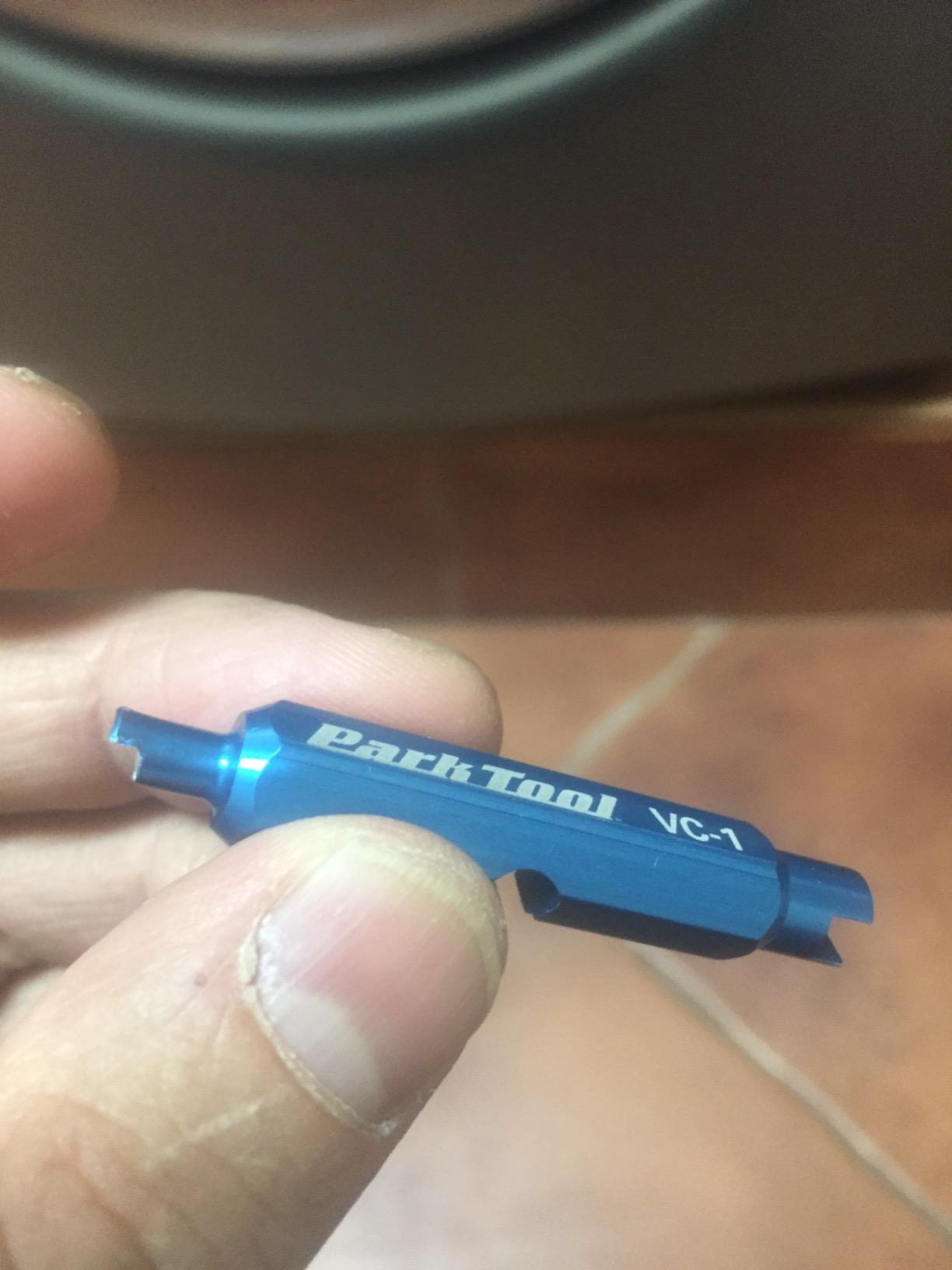
The Park Tool VC-1 is the bicycle tool that automotive owners discover and never give up. It is rated at 4.8 across more than 3300 reviews, the highest average in this group, and it handles both Presta and Schrader cores.
The body is anodized aluminum, 9 inches long, with 5 millimeter wrench flats that also let you fit Presta valve extenders. It will service Schrader cores on car and A/C valves too, which makes it a legitimate addition to a mixed tool roll rather than a bike-only purchase.
The case for a dedicated core tool
On a clean core, this is the fastest, cleanest option in the article. Engage the slot, turn, done. No re-threading, no cross-threading risk from a 4-way tool’s coarser head, and no risk of rounding a slot. Riders using tubeless sealant and tubeless-ready rims will use it constantly.
What it cannot do
It is a core tool only, with no pulling capability, and its small size is genuinely a problem. Several owners report losing it in a toolbox. If you keep one, tape it to a piece of tape inside a lid or carry it on a lanyard. Also expect that some Presta cores are simply not removable, regardless of tool quality.
Caution: the 5 millimeter flats are for Presta extenders and stems, not for leverage against a seized automotive core. If a core is frozen, go to the recovery steps further down.
5. Ken-Tool Valvecapper PRO Cap and Core Remover
Ken-Tool KEN29999 Valve Capper PRO Cap and Core Remover/Installer (ValvecapperPRO Cap and Core Remover/Installer)
4 tools in 1
11.5 inches long
Captures caps and cores
Metal construction
Pros
- Removes and installs both caps and cores
- Long reach works on recessed and covered valves
- Caps and cores stay captured inside the tool
- Good grip with dirty or gloved hands
Cons
- Narrow handle gets uncomfortable on long jobs
- Interior grip sleeve can wear with heavy use
- Isolated reports of the cap grip section breaking
Modern vehicles increasingly hide the valve behind a cover or a double seal cap, and on those cars a short core tool simply will not reach. The Valvecapper PRO is 11.5 inches long and built around that exact problem.
It is a 4-tools-in-1 design: it removes and installs caps and cores, it handles double seal caps, and both the cap and the core are captured inside the tool so nothing gets dropped into the rim well. Shop owners rate the grip highly even with gloves on.
Why the long reach matters more than it sounds
The alternative to a long tool is moving the car. On a covered valve, a short tool forces you to either crawl under the arch or reposition the vehicle just to reach the cap. For anyone swapping cores as part of a seasonal service, that is a real time saver on every single wheel.
Where it gets uncomfortable
The handle is narrow, and shop users report fatigue over long sessions when the same tool handles a full set of wheels. The internal grip sleeve is the part that wears, with isolated reports of the cap-grip section breaking under normal force. For occasional work it is durable; for daily shop use, expect to replace it eventually.
Caution: this tool addresses access, not leverage. It will not pull a snap-in stem, and the 11.5 inch length does not substitute for a proper puller.
6. CKAuto Valve Stem Puller and Installer with Rubber Boot
CKAuto Valve Stem Puller/Installer with Rubber Boot
12.5 inches long
Steel with rubber overmold
Off-set pivoting head
Knurled handle
Pros
- Rubber overmold protects aftermarket and alloy wheel surfaces
- 12.5 inch length gives real leverage on tight stems
- Off-set pivoting head clears recessed wheel designs
- Users report success on tight branded stems and TPMS swaps
Cons
- Rubber boot can slide out of position mid-use
- Cast metal end has a rough finish and can feel brittle
- Single-purpose tool with no core tooling included
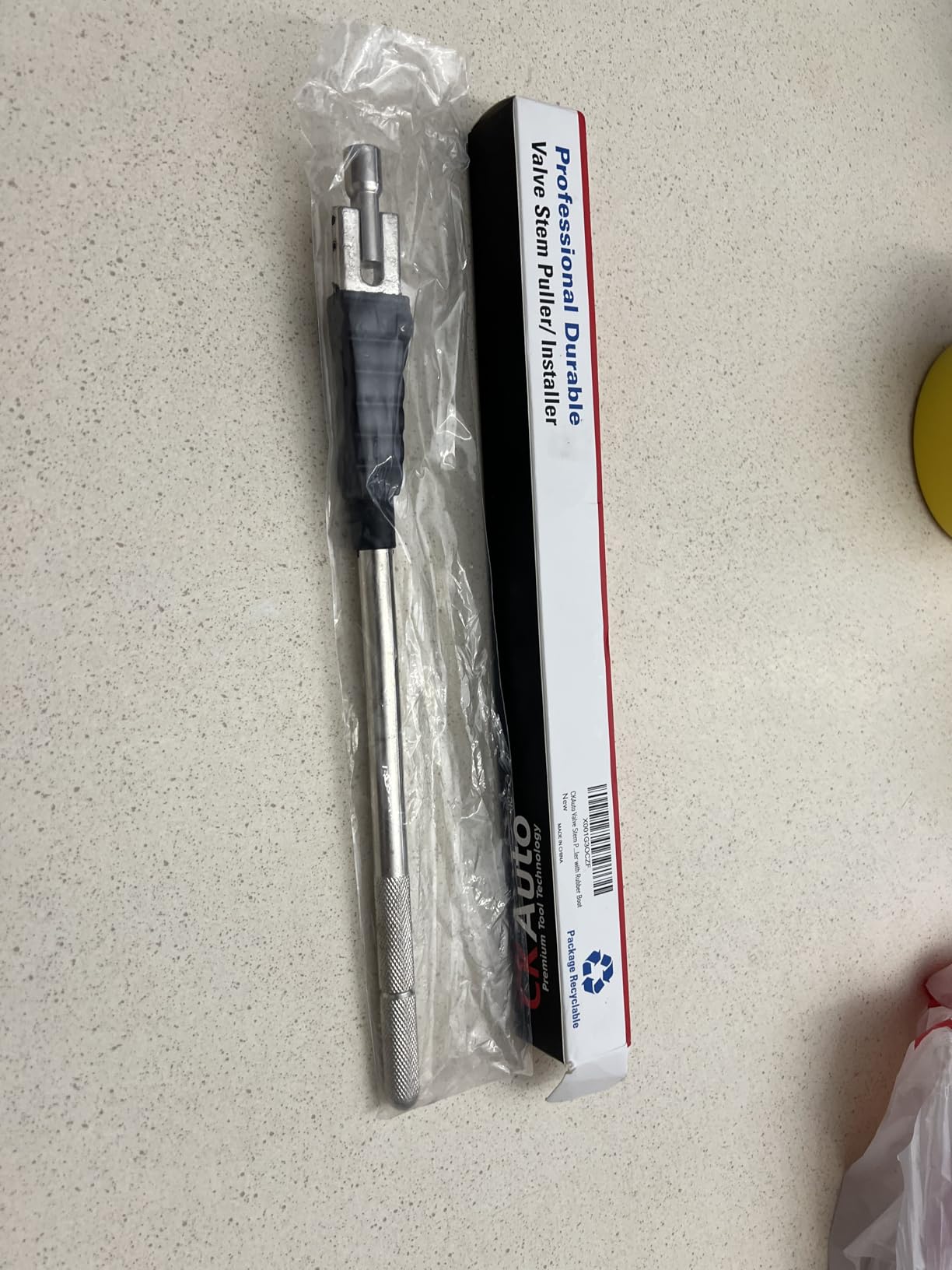
Rim damage is the reason this tool exists. The rubber overmold covers the part of the tool that bears against the wheel, so when you lever against a finished alloy face the boot takes the load instead of your paint. That single feature is what separates it from most pullers in this category.
The body is durable steel, 12.5 inches long with a knurled handle, and the off-set pivoting head is shaped to work with most aftermarket wheel and rim designs. Owners report success on tight-fitting branded stems and on TPMS sensor swaps on pickups.
When this is the correct tool
Expensive or aftermarket wheels, deep-dish designs, and any wheel where the valve sits in a tight recess where a straight-pull tool would slip. The head locks to hold the stem while you pull, which prevents the skinned and split stems that cause slow leaks later. It also handles dolly tires and lawn mower wheels.
What to look out for
Two recurring gripes. The rubber boot can shift out of position during use, so check it before you bear down on the handle. And the cast metal end has a rough finish that some owners find brittle under excessive force. Leverage comes from the 12.5 inch length, so use the handle rather than levering against the head.
Caution: a boot protects the rim from the tool, not from a slipping stem. Still mark the old stem position with tape before pulling so you can line the new one up straight.
7. Steelman Rubber Booted Valve Stem Puller and Installer
Steelman Rubber Booted Valve Stem Puller/Installer Auto Tool, Off-Set Pivoting Head, Threaded Head, Non-Slip Grip
12.5 inches long
Threaded swivel head
Rubber overmold
Knurled handle end
Pros
- Threaded head screws onto the cap thread so the core stays in place
- Off-set pivoting head clears most aftermarket wheels
- Rubber overmold shields rim surfaces
- Knurled handle end for a secure grip
Cons
- Tool only with no replacement stems or cores
- Older design with a lower sales rank than newer rivals
- Requires the cap to be present and in good condition
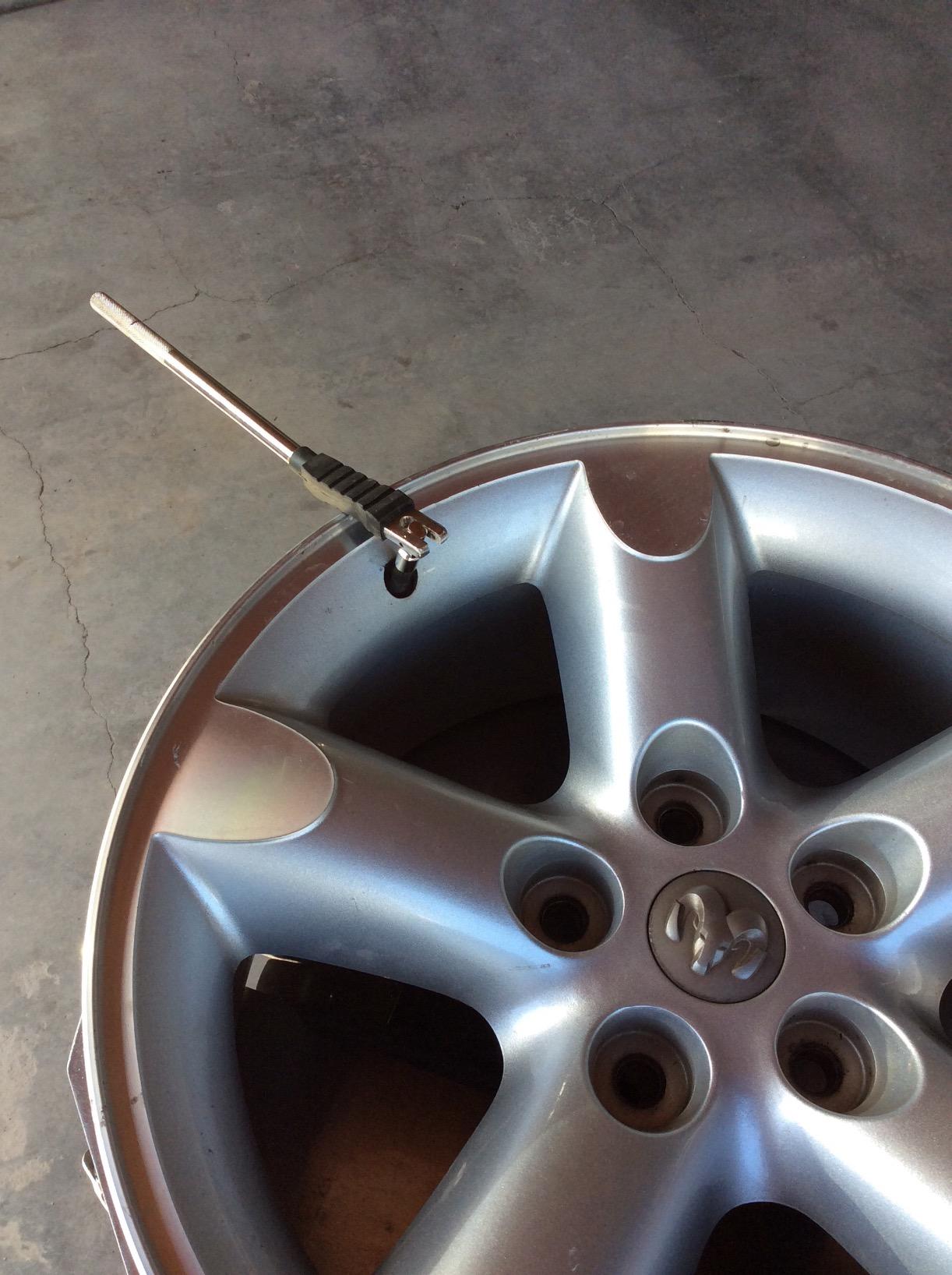
The Steelman shares the off-set pivoting head and rubber overmold idea with the CKAuto, but adds one detail that genuinely changes the workflow: the swivel head is threaded, so it screws onto the valve cap thread. You do not have to pull the core out first.
That matters in a specific situation. If you are replacing a stem on a wheel that is still holding air, or if the core is already showing corrosion and you do not want to disturb it, the Steelman lets you work around the core entirely. It is 12.5 inches long, steel bodied, with a knurled handle end for grip.
Why the threaded head is the deciding feature
Removing and reinstalling a core is extra steps with two opportunities to introduce a leak. Skipping the core means one less seal to reseat and one fewer reason to re-inflate and check. Owners on this tool consistently point to that convenience alongside the rim protection from the boot.
What you give up
This is a single-purpose puller. It ships as a tool only, with no replacement stems and no cores, so a stem replacement means a second purchase. It is also an older design with a lower sales rank than newer competition, which mostly reflects age rather than a build weakness. The threaded head also assumes your cap is present and its threads are clean.
Caution: if the cap thread is stripped or seized, the swivel head will not seat and you will be back to a conventional puller approach.
8. Slime 20178 Valve Core Torque Tool
Slime 20178 Valve Core Torque Tool, avoid TPMS Damage, Valve Core Removal and Installation Tool
Twist-til-click precision torque
Audible click at spec
Protects TPMS sensors
Screwdriver-style grip
Pros
- Torque control prevents both over-tightening and under-tightening
- Removes a top cause of slow leaks and false pressure readings
- Audible click removes guesswork from core torque
- Works on car truck and motorcycle cores
Cons
- Torque click takes a few extra turns which reads as a fault at first
- Core removal only with no stem pulling capability
- Small enough to be easy to lose
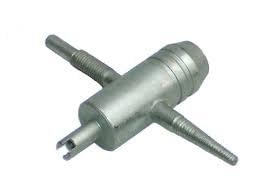
This is the one tool on the list built around a single specification. Valve cores should be tightened to 4 inch-pounds. Too loose and you get the slow leak and low pressure reading that sent you looking for a tool in the first place. Too tight and you can crack a TPMS sensor housing, which turns a minor job into an expensive one.
The Slime 20178 handles that with a twist-til-click mechanism. You keep turning past the point of seating and the tool adjusts the core to manufacturer specification, then gives an audible click. Owners across the reviews tie the click directly to fixing persistent slow leaks that other tools could not resolve.
Why the click matters more than the price
Feel is a poor torque gauge. A year of loose cores means a year of a valve core that is neither finger tight nor properly seated. This is the cheapest, simplest fix for that class of problem in the entire article, and it is also the most directly relevant to TPMS-equipped vehicles.
Where it stops
It is a core tool only. It does not pull or install stems, it does not ream threads, and it is small enough to lose in a door pocket. A few users also note the click takes longer than expected, which reads as a defect the first time you use it and as reassurance after that.
Caution: the click governs core torque only. It says nothing about stem seating, so do not treat a clicked core as proof the stem itself is properly installed.
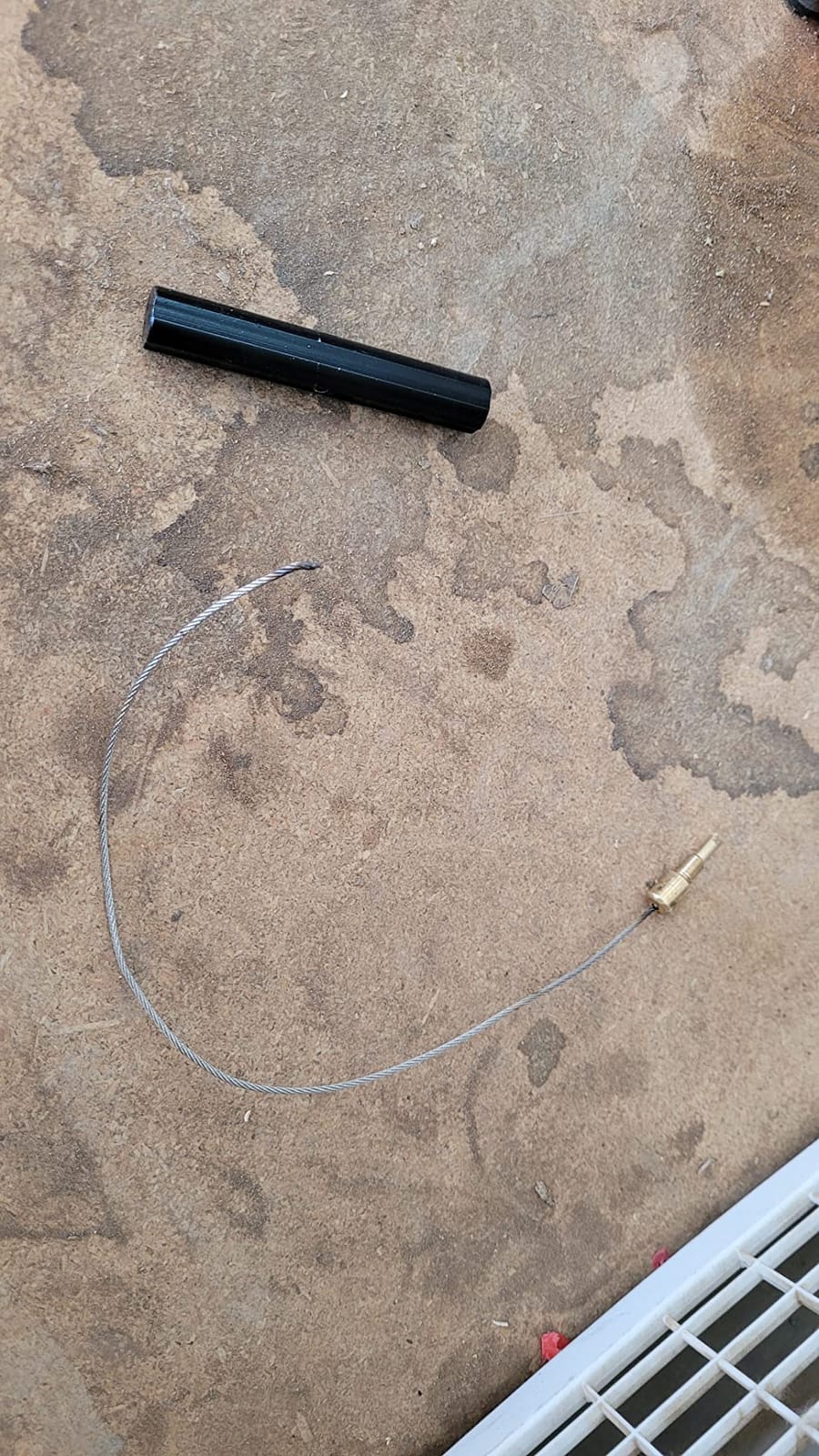
9. Innovativ Tire Valve Stem Fishing Tool
Tire Valve Stem Fishing Tool Puller (With Valve Core Remover) SAVE YOUR KNUCKLES While Installing Inner Tubes, Rim Locks & Off Road Tires on Adventure Motorcycles & Dirt Bikes
Guides inner tube stems through rim holes
Heavy duty stainless wire
Built-in core remover
Anodized aluminum handle
Pros
- Guides inner tube valve stems through rim holes without pinching fingers
- Low profile threaded tip passes through narrow spoke wheel holes
- Integrated valve core remover at the tip
- Cuts a multi-hour tube job down to roughly ten minutes
Cons
- Cable can kink as it twists during use
- Several reports of the cable detaching or breaking early
- Threaded tip may need trimming to clear an internal valve seat
- Not intended for snap-in tubeless automotive stems
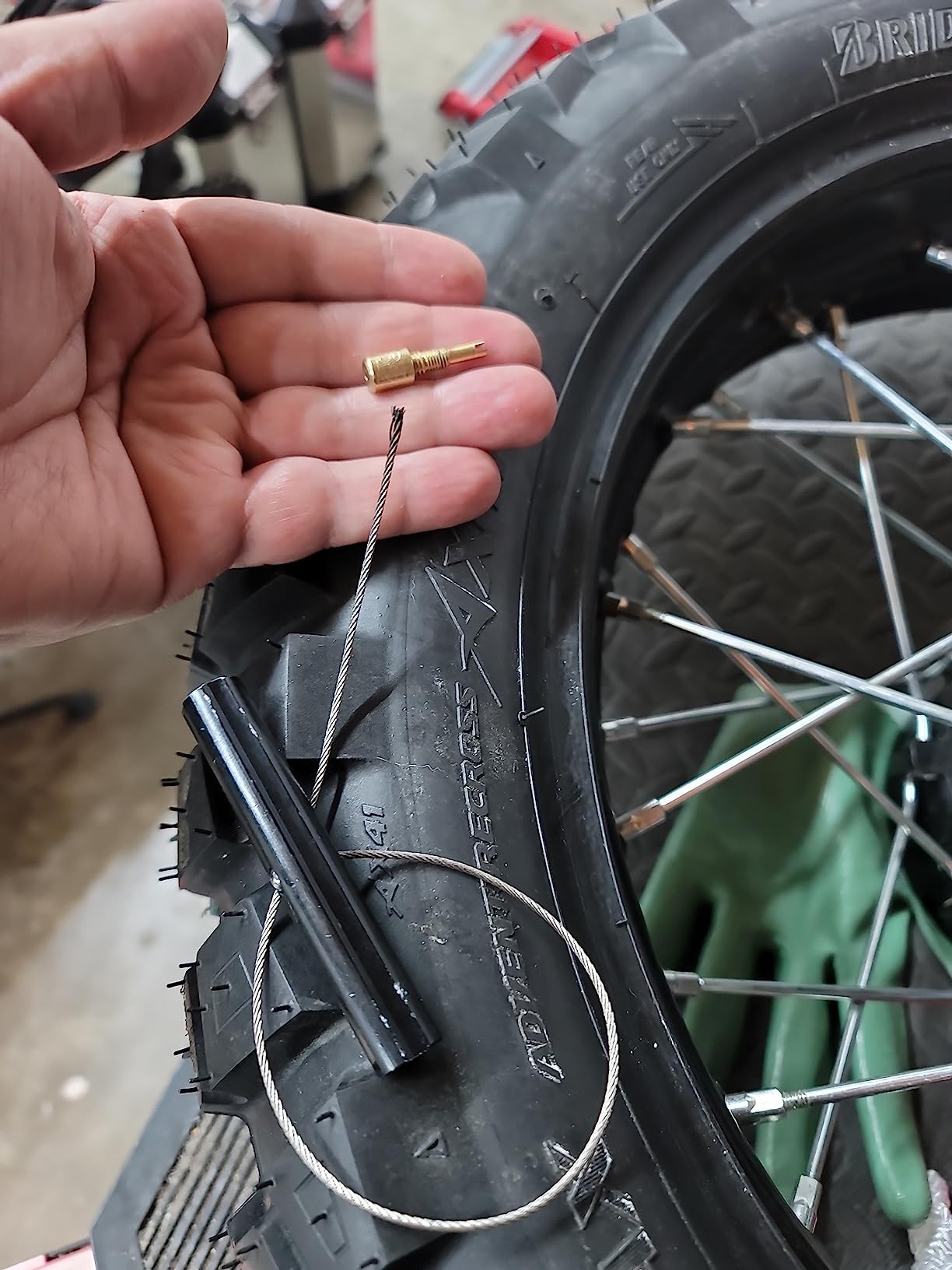
This is a specialty tool and it is worth including because no roundup covers it. When you mount an inner tube on a spoke wheel, you have to fish the valve stem through the rim hole and get the bead over it without the tube folding or pinching. Doing that with your fingers is how knuckles get hurt and how stems get skinned.
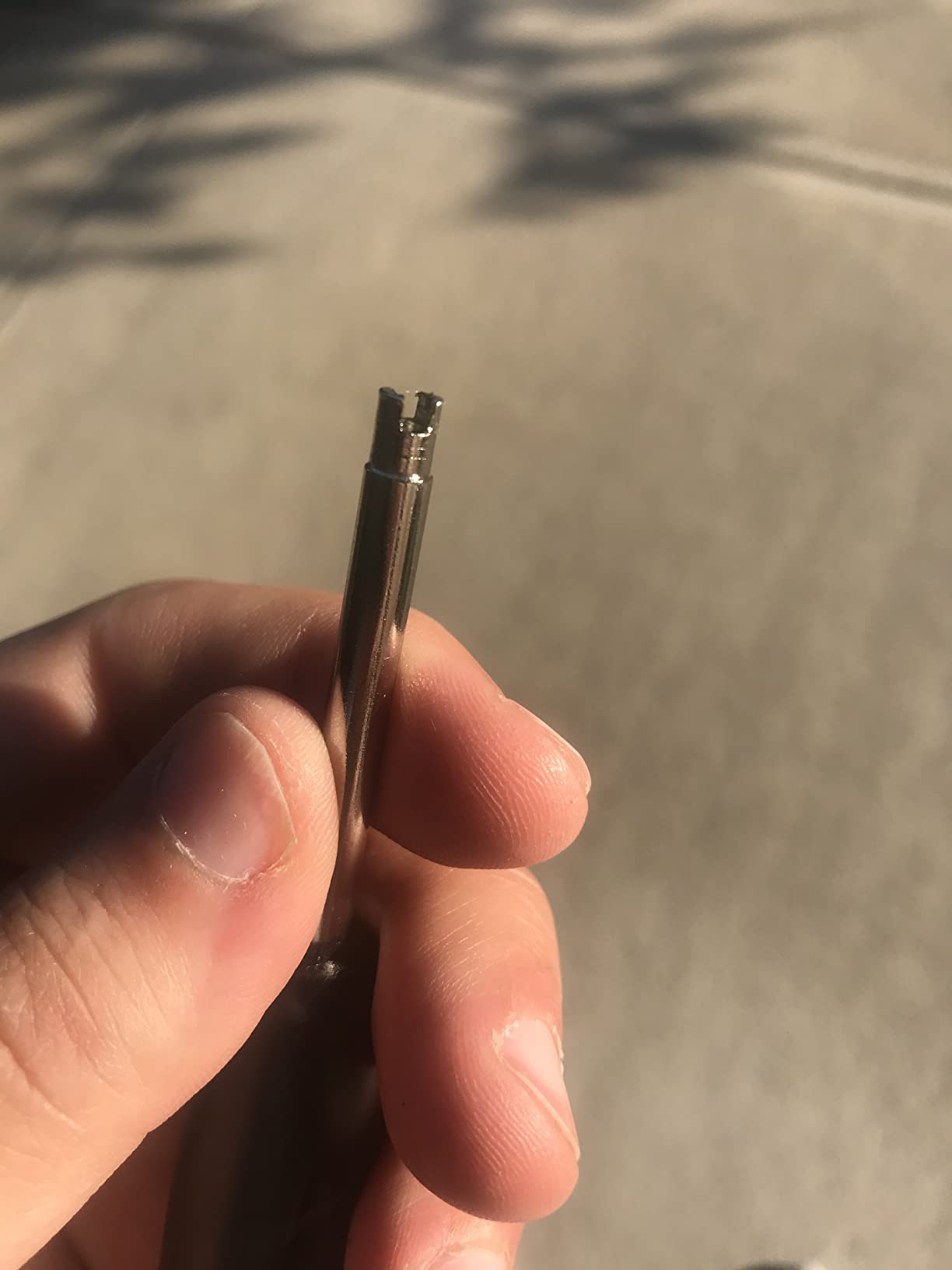
The threaded tip of this tool screws into the inside of the tube valve stem, giving you a rigid handle that slides through the rim hole and threads onto the spoke locknut. The wire is stainless steel, listed as roughly 60 percent thicker than competing designs, and there is a valve core remover integrated into the tip so you are not searching for a second tool after mounting the tube.
Best for adventure and off-road work
Riders report that on stiff tubed tires for adventure motorcycles, dirt bikes and ATVs, this turns an hours-long job into something closer to ten minutes. The anodized aluminum handle is comfortable and fits a compact tool roll. The low profile tip is what lets it pass through narrow spoke wheel holes that a full-width handle would not clear.
Durability is the real weakness
The stranded steel cable is the component that fails. Riders report it kinking as it twists during the screwing motion, and several report the cable pulling out of the handle or breaking early. Treat it as a consumable-adjacent tool and inspect the cable before each use. The threaded tip can also be too long on some stems, needing trimming to clear the internal valve seat.
Caution: this is not a snap-in tubeless automotive stem tool. Using it on a tubeless wheel will not do what you want.
10. Dr.Roc Tire Valve Stem Puller Tool Set
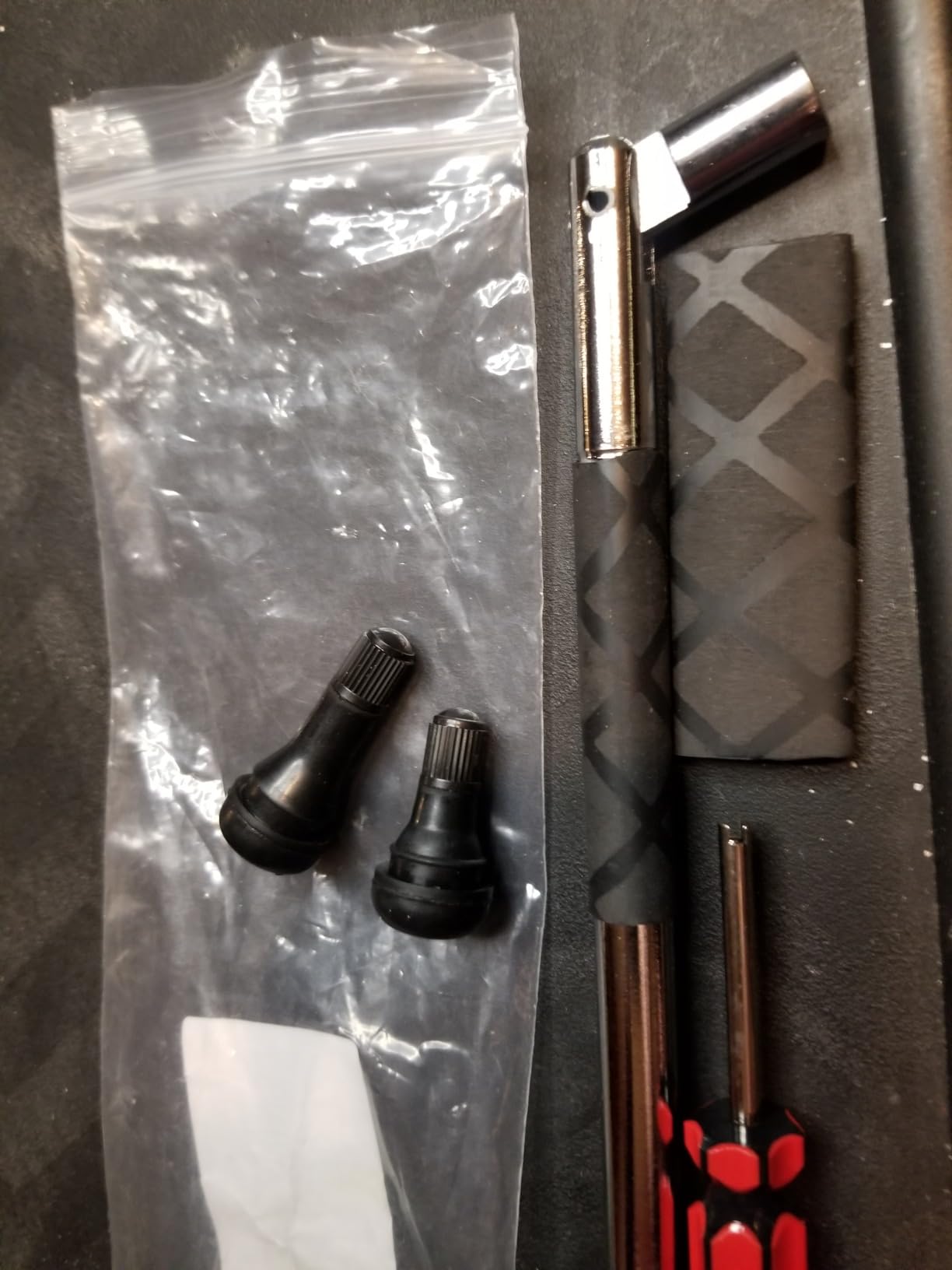
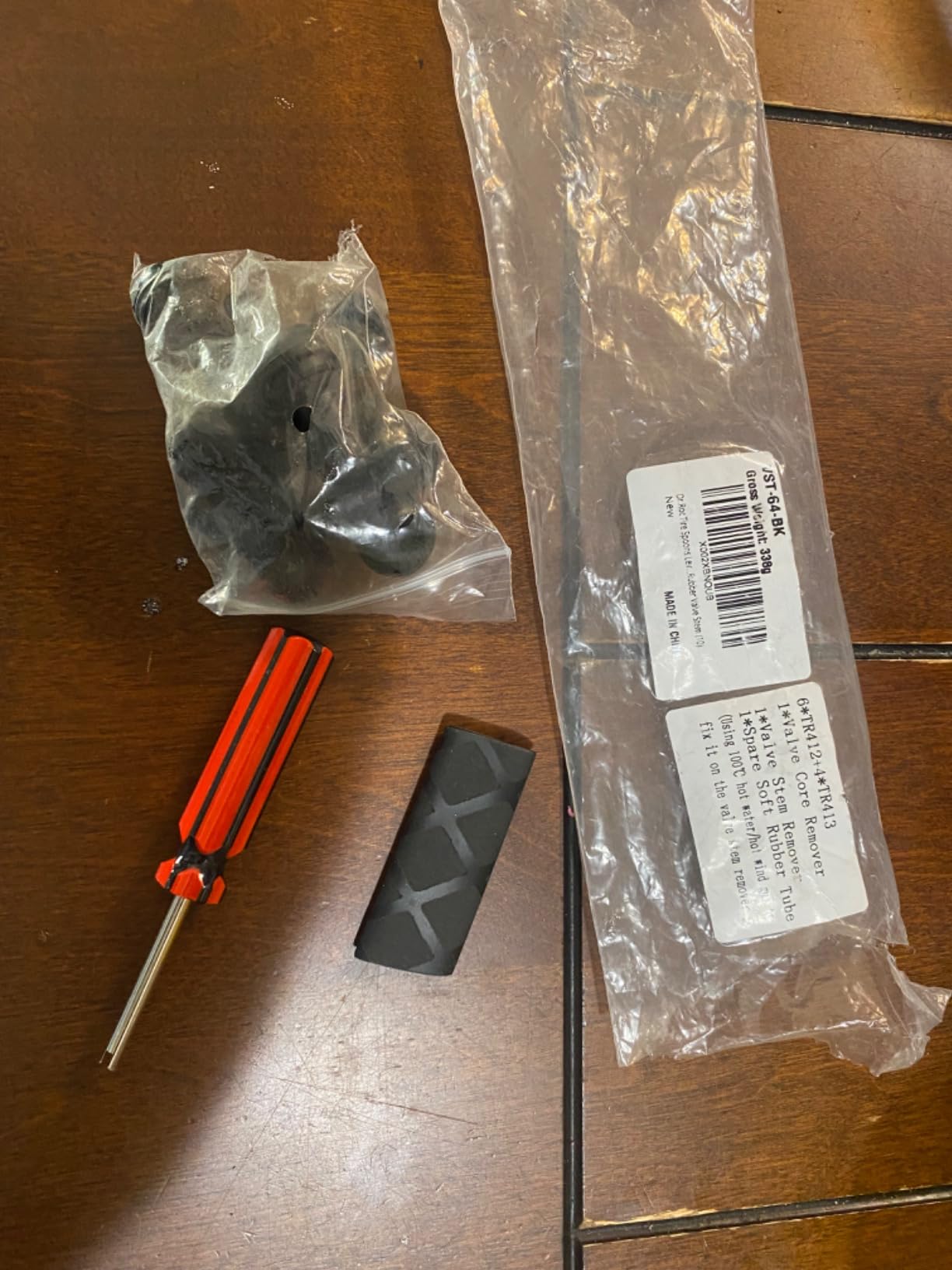
Dr.Roc Tire Valve Stem Puller Tools Set –1 x Valve Stem Installer, 10 x Brass and Ozone Resistant EPDM Snap-in Tire Valve Stem with Valve Cores (6 x TR412,4 x TR413), 1 x Valve Core Remover
10 leakage tested stems
Brass with EPDM rubber
Steel puller with rubber tube
Wide core remover
Pros
- Complete set covers stem replacement in a single purchase
- Stems are 100 percent leakage tested at the factory
- Rubber tube on the puller protects wheel and rim surfaces
- Core remover is wider and more stable than a basic 4-way head
Cons
- Stem assortment limited to TR412 and TR413
- Shorter body provides less leverage than the 12.5 inch pullers
- No TR414 or TR418 coverage
The Dr.Roc set is a middle path: fewer stems than the 40-piece kits, better documented build quality. You get a steel puller protected by a soft rubber tube, 10 snap-in stems, 6 TR412 and 4 TR413, each with a brass and ozone-resistant EPDM construction, and a wide-bodied core remover.
That leakage testing claim is the differentiator. Stems are described as 100 percent leakage tested, which matters more than it sounds on a slow leak hunt, because a cheap replacement stem is one of the few ways to swap a real leak for a different real leak.
Where it fits in a mixed kit
It covers dirt bikes, sport bikes, motorcycles, ATVs, UTVs, lawn mowers, cars and trucks, so it is genuinely broad for a small set. The wide core remover is another quiet advantage: it is more stable in the valve face than a narrow 4-way head, which means fewer cross-threaded installs on a wheel you are already working on.
What limits it
Size coverage stops at TR412 and TR413. If you service a light truck on TR414 stems, you will be ordering those separately. The shorter body also gives less leverage than the 12.5 inch pullers, so a tight, freshly seated stem is more of a fight. The rubber tube can roll out of position as you pull, so keep a thumb on it.
Caution: this is a snap-in tubeless stem set. It will not service a bicycle Presta or a motorcycle tube stem.
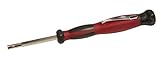
11. Lisle 15190 Long Valve Core Tool
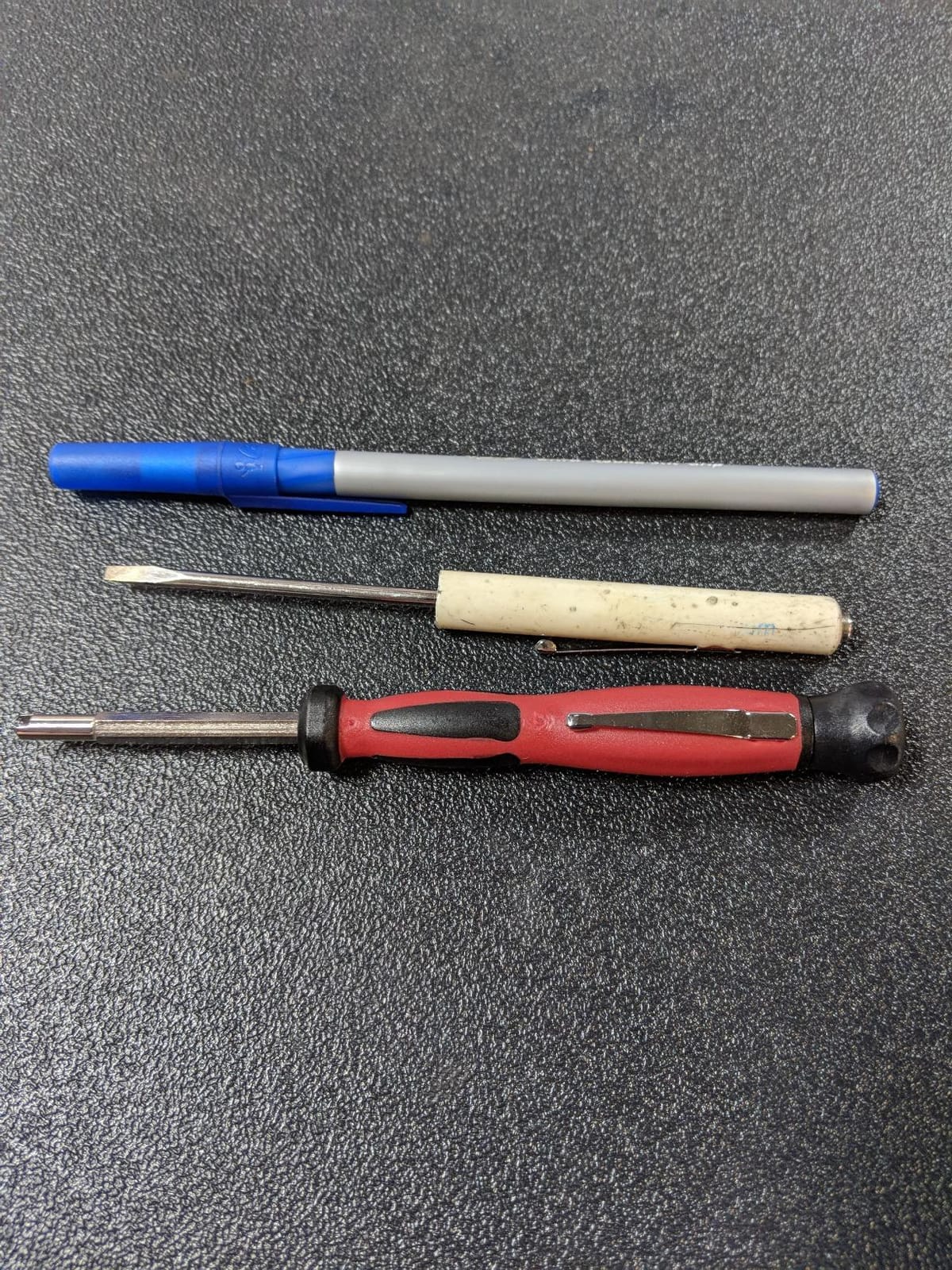
Lisle 15190 5.7 In Long Valve Core Tool
5.7 inches long
Alloy steel
Rotating knob
Dual durometer handle
Pros
- 5.7 inch length reaches inner dual wheel valve stems
- Rotating knob lets the tool spin smoothly under palm pressure
- Dual durometer handle is comfortable for larger hands
- Pocket clip keeps it in a shirt pocket
- Reported by tire shop technicians to hold up under daily use
Cons
- Pocket clip pops out and is easily lost
- Handle length can feel awkward in unusually tight locations
- Straightforward design with nothing for specialty valve work
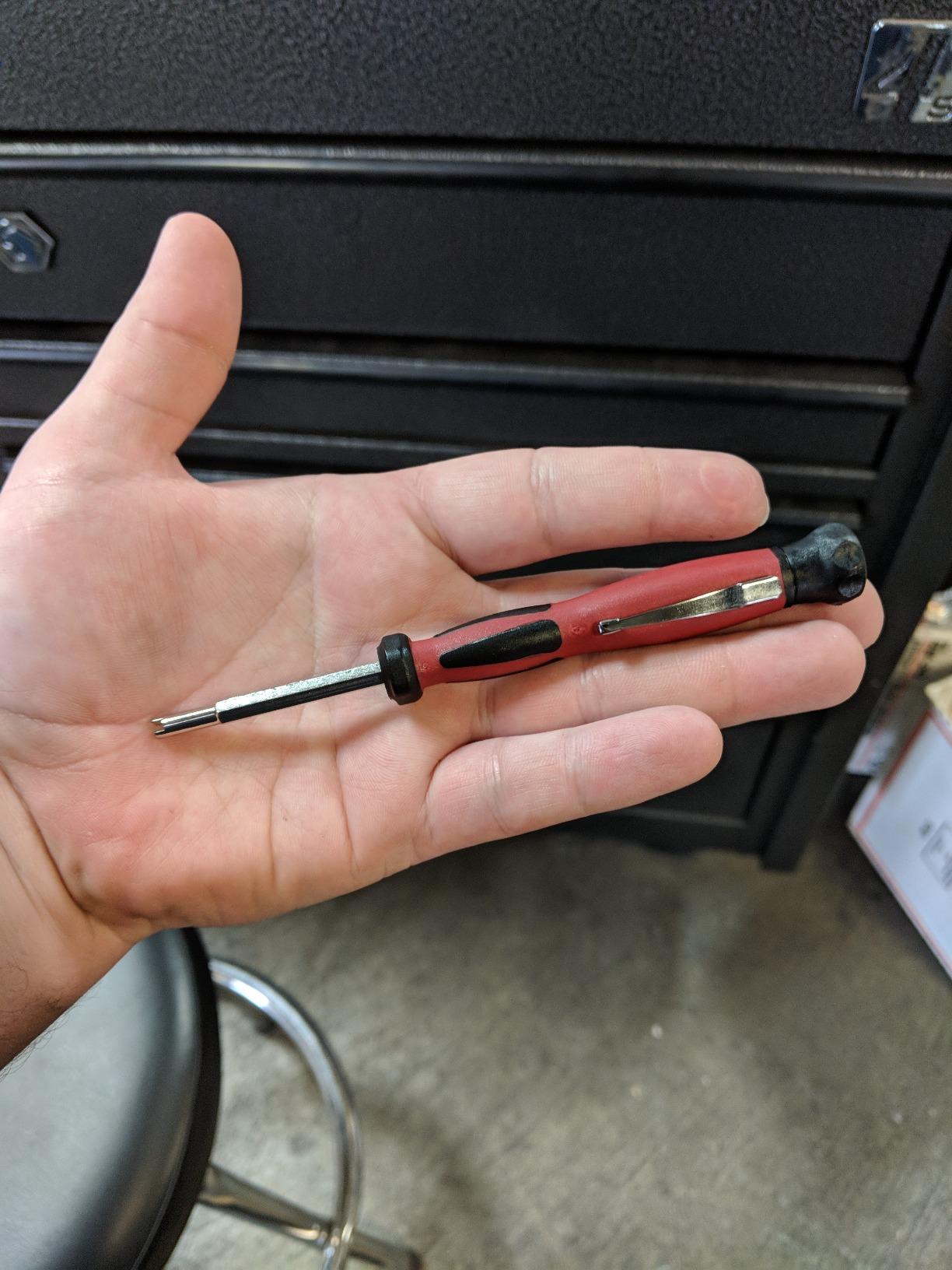
Owners call this the best basic valve core tool they have used, and that is a well-supported claim. The 5.7 inch body is the reason: it reaches valve stems on the inner wheel of a dual setup, where standard short core tools simply cannot get a purchase on the slot.
The alloy steel tip engages the core cleanly, and the head carries a rotating knob so the tool spins under your palm rather than turning against your wrist. The dual durometer handle is shaped for comfort with larger hands and for one-handed control. There is a lifetime warranty on the tool, with abuse excluded.
Why professionals keep coming back to it
Tire shop technicians report it holding up under daily use, and reviewers often compare it favorably to higher-priced Snap-on and Mac Tools equivalents. The pocket clip means it lives in a shirt pocket rather than a drawer, so it is on hand for a core swap between vehicles. For a shop, that availability is worth more than any feature.
The two things to know before buying
The pocket clip is the recurring complaint. Several owners report it popping out and being lost after repeated pocket use, so check it before you rely on it. And in extremely tight or unusual valve stem locations, the extra length that makes it great on duals can feel awkward.
Balance those two and it is still a strong pick.
Caution: it is a core tool. It will not pull a stem and it offers no torque control, so use the finger-tight rule on TPMS wheels.
12. Milton S-449 Valve Insertion Tool
Milton S-449 Valve Insertion Tool
Installs and removes snap-in tubeless valves
5 inch metal body
Compact and no-fuss
Pros
- Purpose-built for snap-in tubeless valve installation and removal
- Compact 5 inch metal body fits a toolbox or pocket
- Simple no-fuss design that suits routine tire service
- A long-standing standard tool in DIY and professional tire work
Cons
- Not designed for valve core removal at all
- Basic straight metal build with no rotating knob or dual durometer grip
- No rim protection
- No included stems or cores
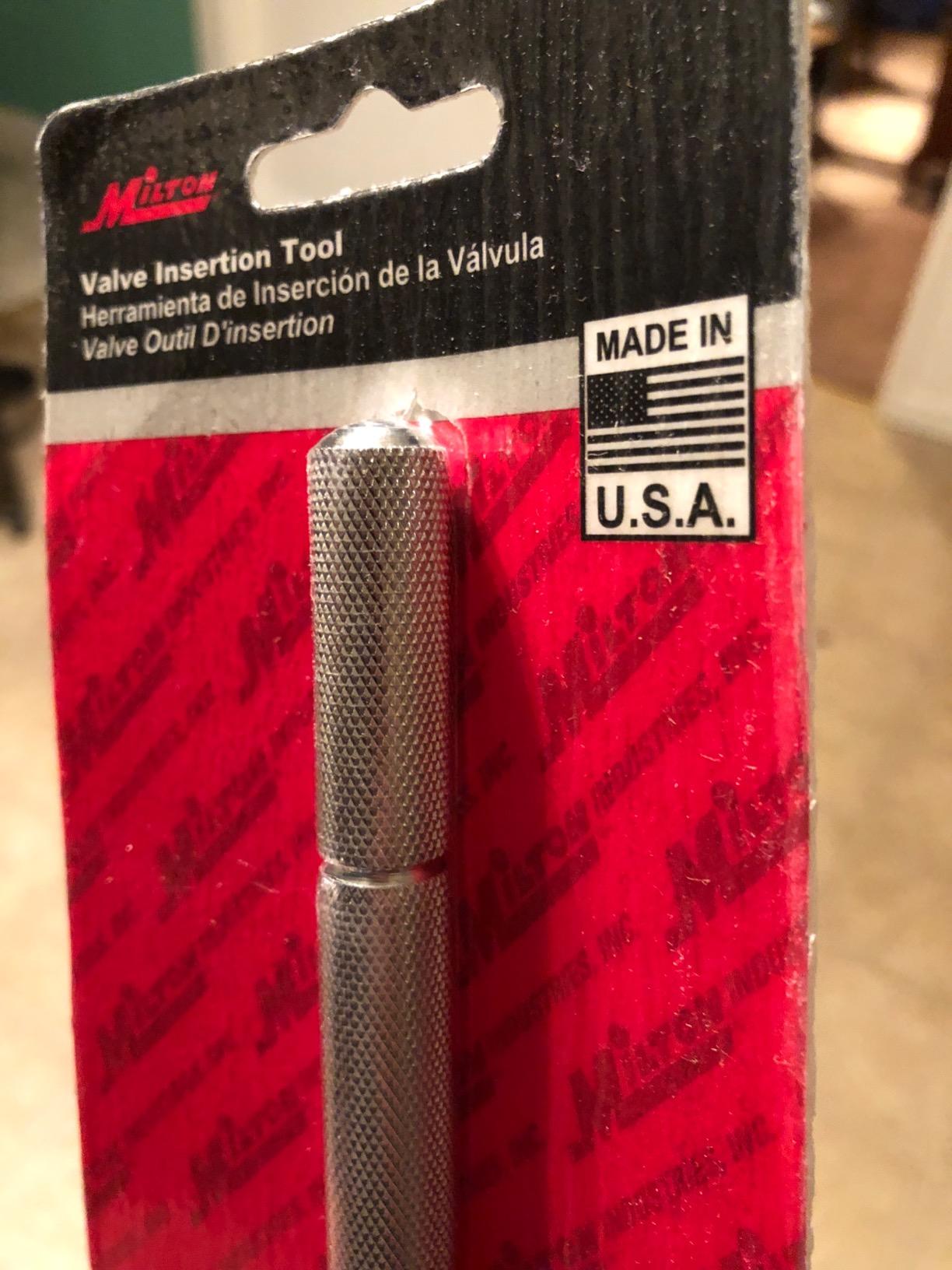
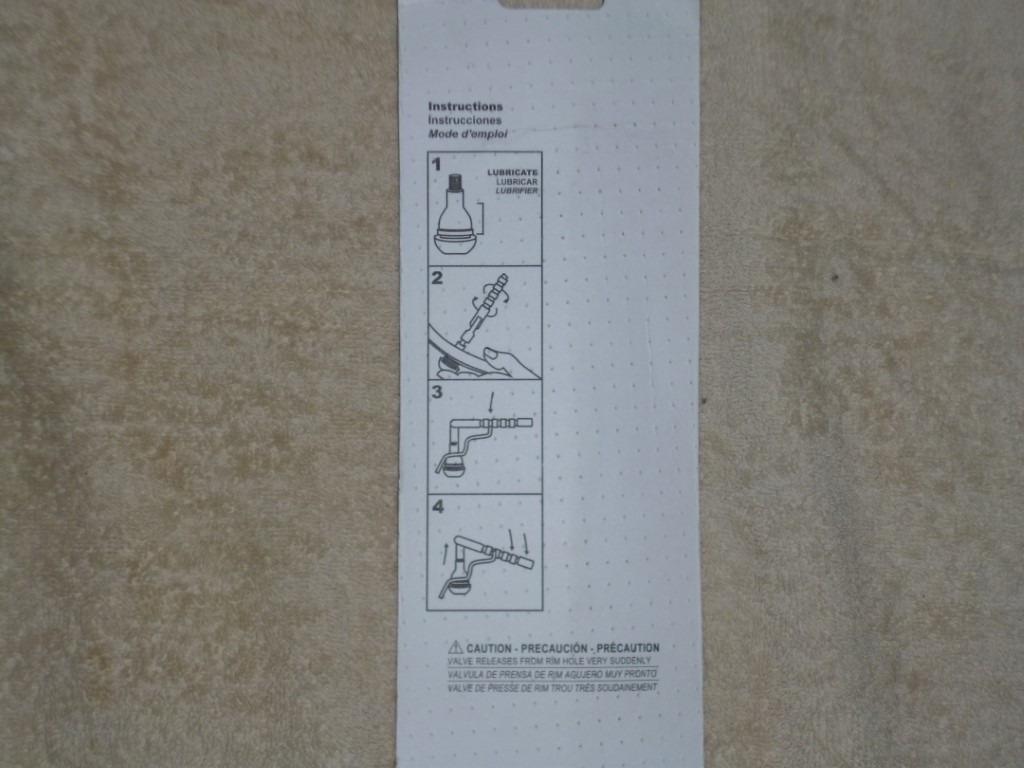
The Milton S-449 does one job: it installs and removes snap-in tubeless tire valves. Nothing more. If your work is putting new rubber stems into rims and pulling old ones out, this is the clean, no-fuss answer, and it has been a standard tool for long enough that you can find one in most tire shops.
The body is 5 inches of metal, light enough to sit in a pocket, with standard 0.5 inch thread size for tubeless valves. There is no mechanism to learn and nothing to adjust, which is the appeal for routine service work.
Where this tool earns its place
It is the piece you reach for when you are installing stems into bare rims, before a tube goes in, and when you need to swap a dry-rotted stem on a wheel you are already rebuilding. The small size means it fits into tight rim wells where a larger puller will not physically go, and the straight metal body resists the kind of side loading that bends a jointed tool.
Know its limits before you rely on it
This is not a valve core removal tool, and it has no threaded reamer or re-tap function. It also has none of the comfort or convenience features of higher-end core tools, and no rim protection of its own. Buyers are explicit that this is a basic tool rather than a full valve service tool, and for anyone doing regular core work, it is an addition rather than a replacement.
Caution: no rubber protection means support the wheel on a soft surface or protect the rim face with a cloth while pulling.
What to Do When a Valve Core Is Stuck
A seized core is the most common reason people end up in this category, and it is the question that comes up most across tire and mechanic forums. The mistake is escalating sideways straight to pliers. The sequence below moves from least to most aggressive, and it works.
Step 1: Fully deflate the tire. There is no reason to work against pressure, and a partially inflated tire can push air past a loosened core and hide your result. Deflate completely before touching anything.
Step 2: Soak it. A penetrating oil left on the valve for several hours, or overnight, does more for a corroded core than any tool. Repeat the application rather than rushing the next step.
Step 3: Use a 10 millimeter deep socket over the valve face. This is the technique experienced technicians describe most often. Slip the socket down over the stem so it seats on the valve face, then turn it. The face gives you enough surface to keep the stem centered while the socket drives the core out. It is simple, it works on a surprising number of stuck cores, and it costs almost nothing.
Step 4: Try a purpose-built core extractor. A stepped extractor bites into the slot and gets more bite as resistance increases, which is exactly what a small screwdriver lacks. This is the first purchase that makes sense if you do steps 2 and 3 and the core still does not move.
Step 5: Use an impact driver on low setting. A cordless impact with the correct core bit, turned down low, breaks the corrosion bond with a rapid tap rather than a large torque load. The risk is stripping the core slot, so treat this as a step, not a starting point.
Step 6: Replace the whole stem. Once you are past step 5, the honest answer is that the stem itself is usually compromised. A corroded core is a symptom of a corroded valve body, and the only lasting fix is pulling the stem and fitting a new one.
One thing to avoid entirely: heating the valve with a torch on a wheel that has a TPMS sensor. The sensor housing sits directly behind that valve on most modern vehicles, and the failure mode is a cracked housing and a very expensive afternoon.
How to Replace a Tire Valve Stem Step by Step
Replacing a snap-in rubber valve stem is more approachable than most people expect, and the tool list is short. Here is what you need and what to do.
Tools needed: a valve stem puller, a valve core remover, the correct replacement stem in your TR size, a torque wrench and wheel weights if the bead was broken, and a TPMS-aware core torque tool on modern vehicles.
Step 1: Break the bead at the valve position and deflate the tire fully. On a tubeless setup, the bead has to come off the bead seat at the valve.
Step 2: Mark the current position of the stem on the rim with tape or a grease pencil. This makes alignment of the new stem automatic.
Step 3: Remove the valve core with your core remover so air and sealant drain out through the stem hole rather than across the tire.
Step 4: Hook the puller under the stem flange at the rim face and lever it out. The wheel is off the car for this, and the rubber overmold type is worth having here to protect the rim face.
Step 5: Remove the old nut and grommet from inside the rim if you are changing valve type, then fit the new stem through the rim hole from the inside.
Step 6: Reinstall the wheel and inflate to seat the bead. The wheel must go back on the car for this, which is the step people forget.
Step 7: Deflate again so the stem drops to its natural position, then re-inflate and reinstall the nut and cap.
Step 8: Install the new core and tighten it to 4 inch-pounds, or use the twist-til-click tool so torque is right by feel. Then check pressure again after 24 hours.
That last step is the honest test. If the tire holds pressure the next day, the stem, the core and the seat are all good.
How to Choose a Valve Stem Tool
Six factors decide this purchase, and the first one settles most cases before you look at anything else.
1. Match the tool to the job
A core remover handles cores only. A 4-way valve tool adds external thread cleaning, internal thread reaming and re-tapping, and a stem hook for starting a pull. A stem puller is what actually extracts a rubber valve from a rim hole. The recurring forum complaint is people buying a kit labelled as a valve stem tool kit, finding only core tools inside, and learning this the hard way. If you have never replaced a stem, buy a puller.
2. Check valve type and size compatibility
TR412, TR413 and TR414 are the three you will meet constantly. TR412 is common on motorcycles and light trucks, TR413 on most passenger cars, TR414 on many SUVs and light trucks. TR418 appears on some heavy and truck applications. Presta is bicycle only. Then check the rim hole: the standard automotive hole is 0.453 inch, while 5/8 inch holes need a different tool entirely and are the single most common compatibility failure reported in reviews.
3. Look at handle length and mechanical advantage
Short 4-way tools are convenient and often lack the mechanical advantage to move a tight or freshly seated stem. A 12.5 inch puller is the reason the CKAuto and Steelman designs work on stubborn stems. Length is not a gimmick; it is the physics of the job.
4. Prioritise rim protection
A rubber overmold boot or a rubber tube on the puller is the feature that protects an aftermarket or alloy wheel from the lever load. Professionals stress this more than any other point. If you run anything other than steel wheels, treat rim protection as a requirement rather than a bonus.
5. Think about TPMS torque control
If your vehicles have tire pressure monitoring, a twist-til-click core tool is worth owning on its own. The 4 inch-pounds specification is not a suggestion, and a cracked sensor housing is a far bigger bill than any tool here. On non-TPMS vehicles, finger-tight plus a quarter turn is the working rule.
6. Decide car or garage
Compact sets earn their place in a glove box or a motorcycle roll. Bulk kits earn their place on a shop shelf. Splitting the two is more sensible than buying one compromise kit, and it is why the Lisle and Ken-Tool designs here pair well with a bulk kit rather than replacing it.
Two related jobs worth having the right tools for, even though they are different systems: if you are setting engine lash by the book, a feeler gauge set is the tool that matters, not a valve core tool. And if a diagnostic light points at a purge valve rather than a tire, start with our guide to diagnosing an EVAP leak and a stuck-open purge valve code.
Frequently Asked Questions
What is the best tool to open valves?
It depends which valve you mean. A valve core remover is the best tool for opening a tire valve to remove or install the brass core. A 4-way valve tool does that plus reams and re-taps damaged internal threads. A long-handled stem puller is the right tool for extracting a rubber snap-in valve stem from a rim hole. For most people, a kit that includes a puller, a 4-way tool and a core remover covers every tire valve job.
What tools are needed for valve stem replacement?
You need a valve stem puller to extract the old stem, a valve core remover to drain and refit the valve, the correct replacement stem in your TR size, and a core torque tool set to 4 inch-pounds if your vehicle has TPMS. If the bead is broken to reach the valve, add a torque wrench and wheel weights so the wheel can be reseated and retorqued correctly.
What to use instead of a valve stem tool?
For a core that is not fully seized, a small flat screwdriver or needle-nose pliers wrapped in a cloth will work. For a stuck core, the field substitutions are a 10 mm deep socket slipped over the valve face, a purpose-built core extractor, an impact driver on low, or penetrating oil left to soak overnight. Always deflate the tire fully first, and never use pliers directly on the valve face.
What are the best valve stems?
For most passenger cars, a TR413 brass snap-in stem is the right answer. TR412 fits many motorcycles and light trucks, and TR414 covers a lot of SUVs and light trucks. Look for brass and ozone-resistant EPDM rubber, and prefer stems that are leakage tested. Confirm your rim has a standard 0.453 inch valve hole, since 5/8 inch holes need a different stem and tool entirely.
Do I need a torque tool for TPMS valve cores?
It is worth having one. Valve cores tighten to 4 inch-pounds. Under-tightened cores cause slow leaks and erratic pressure readings, and over-tightened cores can crack the TPMS sensor housing that sits directly behind the valve on most modern vehicles. A twist-til-click tool such as the Slime 20178 stops at specification and gives an audible click so you are not guessing by feel.
Can a 4-way valve tool pull a valve stem?
Only partially. The hook or notch on a 4-way valve tool can catch a stem and start it moving, which is enough to free a stem that is only lightly seated. It does not have the mechanical advantage for a tight or newly seated stem in a hard wheel. For that you want a long lever puller of around 12 inches with an off-set head and rubber rim protection.
How do I remove a valve core without a special tool?
A small flat screwdriver that fits the core slot works on a clean core. The key is to press firmly so the tip does not slip and chew the slot, and to turn counter-clockwise to back it out. Once the core starts moving, remove all pressure from the screwdriver and spin it out by hand. If the slot rounds off during this, switch to a core extractor rather than forcing it.
Can these tools service bicycle and motorcycle valves?
Yes, with the right one. A Presta or Schrader core remover, such as the Park Tool VC-1, handles both bicycle valve types and also works on Schrader cores in car and A/C valves. For tubeless tubed motorcycle tires, a stem fishing tool guides the tube stem through the rim hole and saves a lot of knuckle damage. Snap-in tubeless automotive stem pullers are not interchangeable with either of those.
The Best Valve Stem Tools to Buy in 2026
For most people, start with the Riseuvo kit. It is the only pick here that pairs a real stem puller with 22 rubber stems across three sizes, a 4-way tool and single-head core removers, and it has the largest review base in the category backing it.
Buy smaller if your needs are narrower. The FEBRYTOLD 14-piece set is the one to keep in the car. The ZHSMS 40-piece kit is the one to keep in a shop. The Park Tool VC-1 covers Presta and Schrader cores for bikes, and the Slime 20178 is the cheapest real fix for both under-tightened cores and TPMS risk.
And if you have a core that will not move at all, do not keep escalating with pliers. Deflate, soak, then try a 10 mm deep socket over the valve face. That single trick solves more seized cores than any product in this guide.