
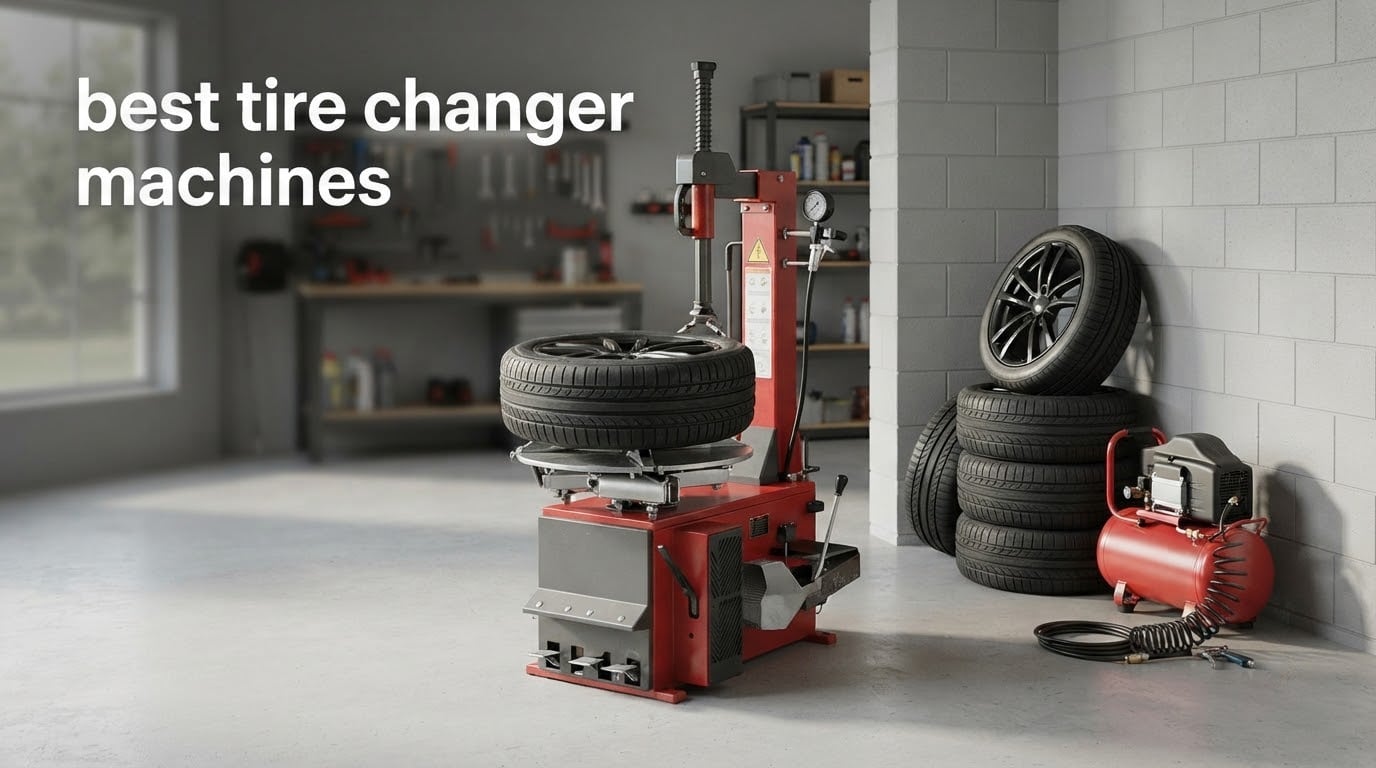
Motorcycle tires, truck tires and low-profile rubber all punish a tire iron. Bead breakers slip, sidewalls stretch, and the tenth seasonal swap in a year starts costing you real money in shop fees. That is why the best tire changer machines have moved from professional shops into serious home garages, and why we spent weeks sorting through ratings, specs and long-term owner reports to find the ones worth floor space.
What surprised us in this roundup is how wide the category has become. The list is not just rim-clamp car and truck machines; it also covers the dirt bike and street bike changers that turned out to be the highest-rated tools in the group, plus kits that solve a single problem extremely well. If you want the short version of where to start, jump to the top three below, then read the buying guide before you commit.
If your real question is narrower, our earlier guides cover the basics: the best tire changer for a home garage, the best portable tire changers, and how to read the date code and sizing on a tire sidewall so you know what your machine has to handle. For keeping pressure right after the swap, we also track the best cordless tire inflators and the best 12V tire inflators.
Table of Contents
Top 3 Best Tire Changer Machines for 2026

Rabaconda Street Bike Tire…
- 12-21 inch wheels
- 250mm tire width
- folding frame with carry bag
The 10 Best Tire Changer Machines at a Glance (October 2026)
| Product | Specs | Action |
|---|---|---|
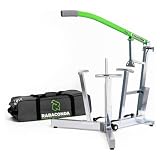
| Rabaconda Street Bike Tire Changer Starter Kit |
|
Check Latest Price |
| Rabaconda Dirt Bike Tire Changer 3MMC |
|
Check Latest Price |
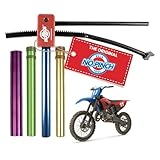 Baja No Pinch Ultimate Kit Dirt Bike Tire Changer Baja No Pinch Ultimate Kit Dirt Bike Tire Changer |
|
Check Latest Price |
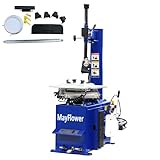
| Mayflower 950 Rim Clamp Tire Changer |
|
Check Latest Price |
 XK 2.0 HP 960 Rim Clamp Tire Changer XK 2.0 HP 960 Rim Clamp Tire Changer |
|
Check Latest Price |
 XK 988-690 Tire Changer and Balancer Combo XK 988-690 Tire Changer and Balancer Combo |
|
Check Latest Price |
 XK 960-690 Tire Changer and Balancer Combo XK 960-690 Tire Changer and Balancer Combo |
|
Check Latest Price |
 KATOOL KT-T830 and KT-B700 Combo KATOOL KT-T830 and KT-B700 Combo |
|
Check Latest Price |
 KATOOL KT-T810 Tire Changer with Bead Blaster KATOOL KT-T810 Tire Changer with Bead Blaster |
|
Check Latest Price |
 Motool ME-T500 and B620 Combo Motool ME-T500 and B620 Combo |
|
Check Latest Price |
1. Rabaconda Street Bike Tire Changer – Fastest Two-Minute Tire Change
Rabaconda Motorcycle Tire Changer, Street Bike Starter Kit 12-21 in Wheels
12-21 inch wheels
Tires to 250mm wide
Hubs 15-32mm
Folds into carry bag
Pros
- Turns a two-tire-iron job into roughly a two-minute task
- Plastic mounting head and covered tire iron keep rims scratch-free
- Build quality described as top notch and made in the EU
- Folds in seconds and packs for track days
- Wide adjustment range covers most street and adventure bikes
Cons
- Results depend on following the torque instructions
- Does not balance the wheel
- Very stiff tires can still take several attempts
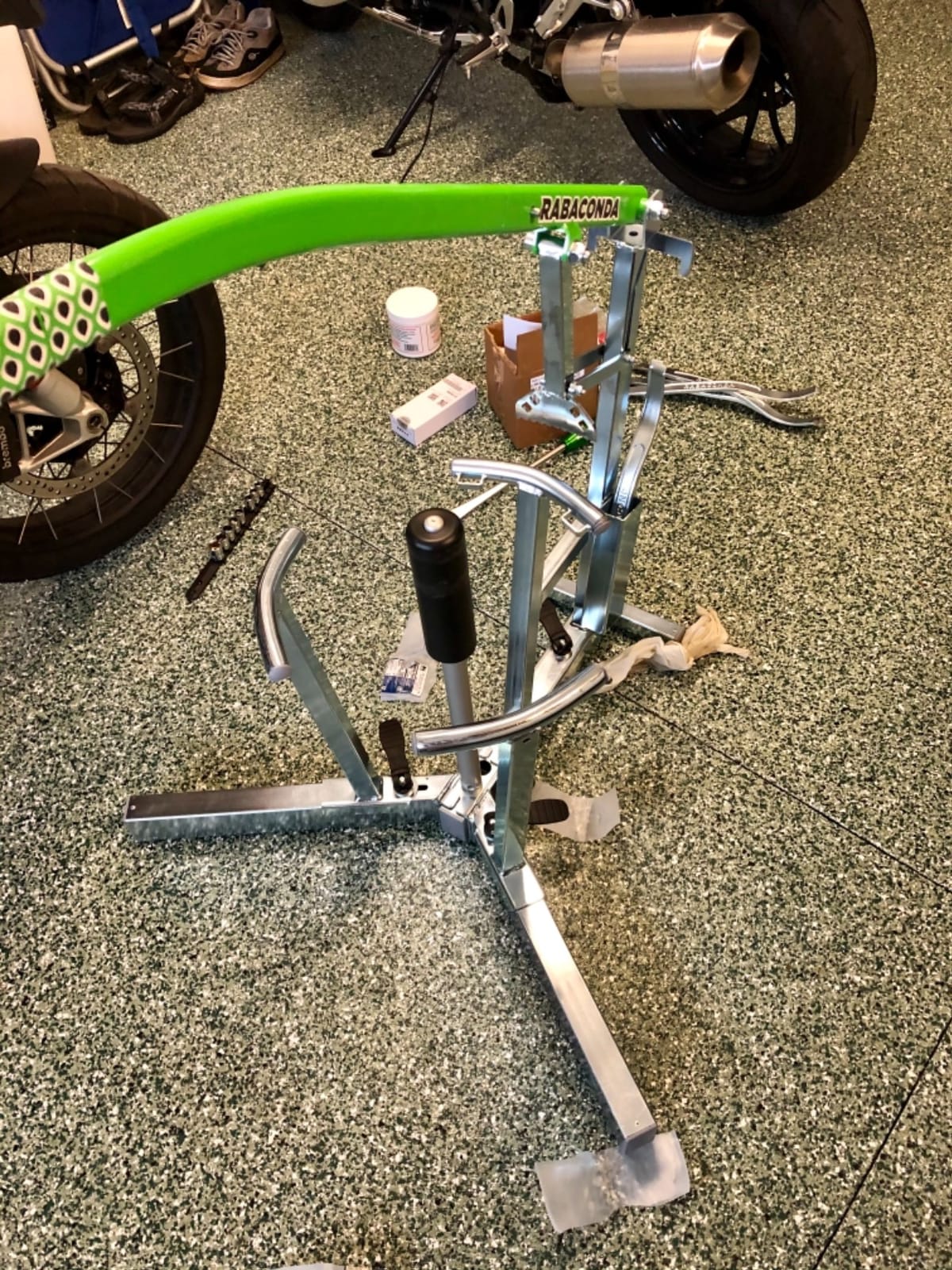
This is the tool that made me rethink what a tire changer machine has to look like. There is no turntable, no duckhead and no air line; it is a clamp that holds the wheel at an angle while a long lever breaks the bead and a plastic mounting head guides the tire on. Owners consistently describe the difference as night and day against traditional tire irons.
The wheel coverage is the headline number: 12 to 21 inch cast, forged and wire-spoked rims, tires up to 250mm wide, and hubs from 15 to 32mm. It fits single and double-sided swingarms, which covers VTwin, cruiser, touring, street and adventure bikes. Wider single-sided Ducati swingarms need the separately sold Big Hub Adapter.
Where it earns its reputation is rim protection. The plastic mounting head and the covered tire iron mean the metal never touches the rim edge, which is exactly the fear that stops a lot of riders from letting a helper near their wheels. Build quality is described as top notch and the frame is made in the EU.
Portability is the second surprise. The wide leg stance folds in seconds without tools and packs into the included carry bag, so it moves between the garage and a paddock without becoming a permanent fixture. A lifetime warranty applies outside wear and tear and consumables.
How long a break does it actually save
Reviewers put a full tire change at about two minutes once you know the sequence, against a much longer process with spoons and irons. The first mount is slower while you learn where the frame needs to sit and how much torque the joints want.
That learning curve is the honest catch. If you follow the torque figures exactly the parts stay put; owners who loosen off report components shifting mid-job, and very stiff motorcycle tires can still take multiple attempts.
What you still need alongside it
It does not mount and balance. A separate wheel balancer is required for a complete job, and that is the most common surprise for riders who assume one tool covers the whole swap.
Plan tire lube and drop-center technique into your first session, because bead seating is where most home changes fail on any machine. Our guide to reading tire sidewall sizing is worth a read before you order compound changes.
2. Rabaconda Dirt Bike Tire Changer 3MMC – Built for Paddocks and Shelters
Rabaconda Dirt Bike Tire Changer, 16-21 in Spoked Wheels, 20-27mm Hubs
16-21 inch spoked wheels
Hubs 20-27mm as supplied
20 inch working height
32 pounds
Pros
- Solidly built and reported to outlast cheaper stand-style changers
- 20 inch working height avoids kneeling on the garage floor
- Breaks beads and dismounts fast with the long lever
- Folds into the included Cordura carry bag
- Handles tubeless
- bib mousse
- tire balls and Tubliss setups
Cons
- 17mm axle bikes need a separately purchased spindle
- Refitting the folded machine into its bag is fiddly
- Tire spoons are not included
This is the second Rabaconda on the list and the older of the two designs, with 200 reviews behind it. Dirt bike, dual sport, enduro and motocross riders credit it with removing the worst part of a race weekend, which is the tire and mousse change in a shelter with wet feet.
It fits conventional wire-spoke wheels from 16 to 21 inches. The hub inner diameter runs 20 to 27mm as supplied, expandable to 12 to 30mm with optional center spindles, and quick-release bolts make size changes fast between a 17 and a 21 inch wheel.
The 20 inch working height is a genuine comfort feature that gets overlooked in photos. You are not kneeling on the garage floor or twisting your back over a wheel, and riders with older backs single that out as much as the speed itself.
It is built for the modern tubeless world too, working with tubeless setups, bib mousse, tire balls, Tubliss and tube configurations. At 32 pounds it is not a one-hand carry, but the folding frame and three rubber feet handle uneven paddock ground.
Check your axle size before ordering
Center spindle sizing is the recurring limit. Bikes with 17mm axles such as the KLR650 need a separately purchased spindle, and the same goes for anything outside the supplied 20 to 27mm range.
It is also not a street bike or cross-spoke machine, so BMW GS and GSA rims are outside its remit. Street and adventure riders should read the first section instead.
Where the ownership gripes show up
Packing the folded machine back into the Cordura 1000D carry bag takes experimentation, and one owner had a zipper fail shortly after purchase. Budget a few minutes of practice before a race weekend.
Tire spoons are not in the box. If you plan to work without a stand, add a set to the order rather than discovering the gap at the track.
3. Baja No Pinch Ultimate Kit – Lightest Fix for Pinched Tubes
Baja No Pinch Ultimate Kit Dirt Bike Tire Changer Tool Enduro Motocross
Mounting aid for tubes
16-21 inch wheels
20mm axle included
2.5 pounds
Pros
- Largely eliminates pinched inner tubes
- the main failure mode when mounting with spoons
- Light at 2.5 pounds and fits in a tool roll
- Aircraft-grade aluminum and black oxide steel construction
- Makes stiff rear tires easier once mastered
- Customer service sent a replacement axle after one bent
Cons
- Only helps with mounting
- not removal
- Push bar is described as only just long enough
- Success depends on getting the bead into drop center
With 322 reviews this is the most widely owned tool in the roundup, and the reason is simple: it fixes one specific failure. Pinched inner tubes are what turn a quick rear tire change into a trip home on the trailer, and this kit removes almost all of that risk.
It is a hand tool, not a powered or stand-mounted machine. The Ultimate Kit includes a handle, pushrod, bracket and a 20mm axle, and it suits 16 to 21 inch wheels. Construction is aircraft-grade aluminum alloy with black oxide treated steel, designed and assembled in California.
The mental model matters here. A normal dirt bike tire change has two halves, and this tool only helps with the mounting half. It pushes the bead over the rim edge without the lever pressure that pinches the tube against the rim.
What it does well and what it cannot do
Users confirm it makes mounting stiff rear tires noticeably easier and faster once the technique clicks. It also packs at 2.5 pounds, so it can live in a tool roll on a trail ride rather than a garage corner.
It does nothing at all for dismounting. If your main frustration is getting an old tire off, you need a lever-style changer instead, and no amount of technique will change that.
The technique requirements are strict
Owners who struggle share the same three reasons: the wheel is not positioned correctly, the bead is not sitting in drop center, or the tire is not lubricated. Get those three right and the tool behaves; get them wrong and it binds.
The included 20mm axle shaft does not fit every bike. Some 17mm axles need the larger version, so confirm your axle diameter before the box arrives.
4. Mayflower 950 Rim Clamp Tire Changer – Best Value Car and Truck Machine
Mayflower – 1.5 Horse Power Tire Changer Wheel Changers Machine Rim clamp 950 Bead Blaster / 1 Year Full Warranty
1.5 HP 110V motor
Outside clamp 10-20 inches
Inside clamp 12-24 inches
37 inch max tire diameter
Pros
- One owner reports over 1000 tires mounted and demounted with nothing broken
- Breaks beads on car
- truck
- ATV and lawn tractor rims
- Handles wide tires such as 265/75-16 and 32x11.5-16
- Setup takes about 20 minutes with video guidance
- Bead blaster included and pairs with a standard air compressor
Cons
- Instructions are minimal so tutorials are needed
- Bead breaker foot lever can stick without lubrication
- Needs a dedicated air supply and floor anchoring
This is the machine that convinced me a rim-clamp changer is genuinely useful outside a working shop. One owner in the reviews has logged more than 1,000 tires mounted and demounted with nothing broken, which is the kind of longevity you cannot fake in a short test.
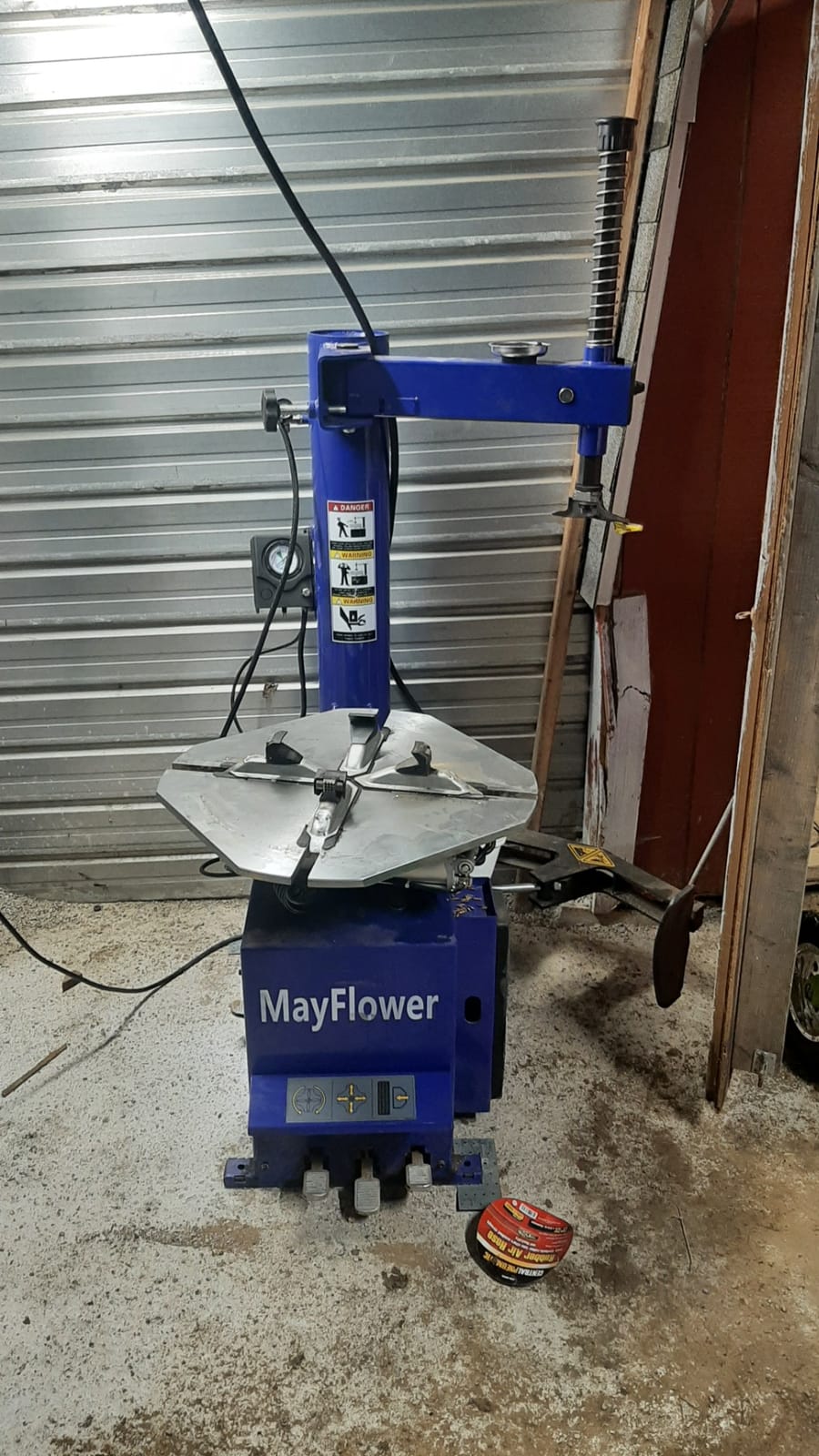
The numbers are unremarkable on paper and excellent in practice: a 1.5 HP 110V motor, outside rim clamping from 10 to 20 inches, inside clamping from 12 to 24 inches, a maximum tire diameter of 37 inches and a maximum wheel width of 12 inches. That covers a very large share of what a family drives.
Bead-breaking power is the standout. Owners mount it on car, truck, ATV and lawn tractor rims and specifically call out wide tires like 265/75-16 and 32×11.5-16 without drama. A bead blaster air blast and an air reserve tank are included in the box.
Setup took about 20 minutes for one owner following video guidance, which is a fair expectation given how thin the printed documentation is. It pairs with a standard gas-powered air compressor, which keeps the install simple.
What to check before you commit floor space
This is a heavy, bolted-down class of machine and it needs a dedicated air supply in the garage. Measure the footprint and confirm your compressor can hold pressure while the bead blaster fires, because that is where the air draw spikes.
Check your largest tire against the 37 inch diameter and 12 inch width limits. If you run a lifted truck on 35s or a trailer, this is not the machine for you.
The maintenance habit that matters most
The one consistent complaint is the bead breaker foot lever sticking. It is a lubrication issue rather than a design flaw, and owners who add grease to the pivot report it staying smooth across hundreds of tires.
Because the instructions are minimal, budget an afternoon with a video walkthrough before your first tire. That is a documentation problem, not a machine problem.
5. XK 2.0 HP 960 Rim Clamp Tire Changer – Built Around the Assist Arm
XK-2.0 Horse Power Tire Changer Wheel Changers Single Machine Rim Clamp 960 w/Auxiliary Arm and Air Bead Blaster Function, 12 Month Parts Replacement 110V
2.0 HP 110V motor
5600 lb bead break force
Dual foot pedal assist arm
10-20 inch outside clamp
Pros
- Strong 2.0 HP motor with 5600 lb bead break force
- Assist arm and bead blaster included in the package
- Clamp protectors and steel mount head for rim safety
- Seller and customer service described as helpful
- Works once set up and performs as described
Cons
- Assembly and operating instructions are unclear or effectively absent
- Not suited to 35s or commercial truck and golf cart sizes
- Requires substantial space and 120-145 psi air
The defining feature here is the dual foot pedal assist arm, and that single design choice explains both the strengths and the limits. You depress the arm as the turntable spins, which is the technique that makes run-flat and low-profile bead dismounting possible at all.
Underneath it is a 2.0 HP 110V motor with 5600 lb of bead break force from a pneumatic piston, clamping from 10 to 20 inches outside and 12 to 24 inches inside, with a 37 inch maximum tire diameter and 12 inch maximum wheel width. Operating pressure is 120 to 145 psi.
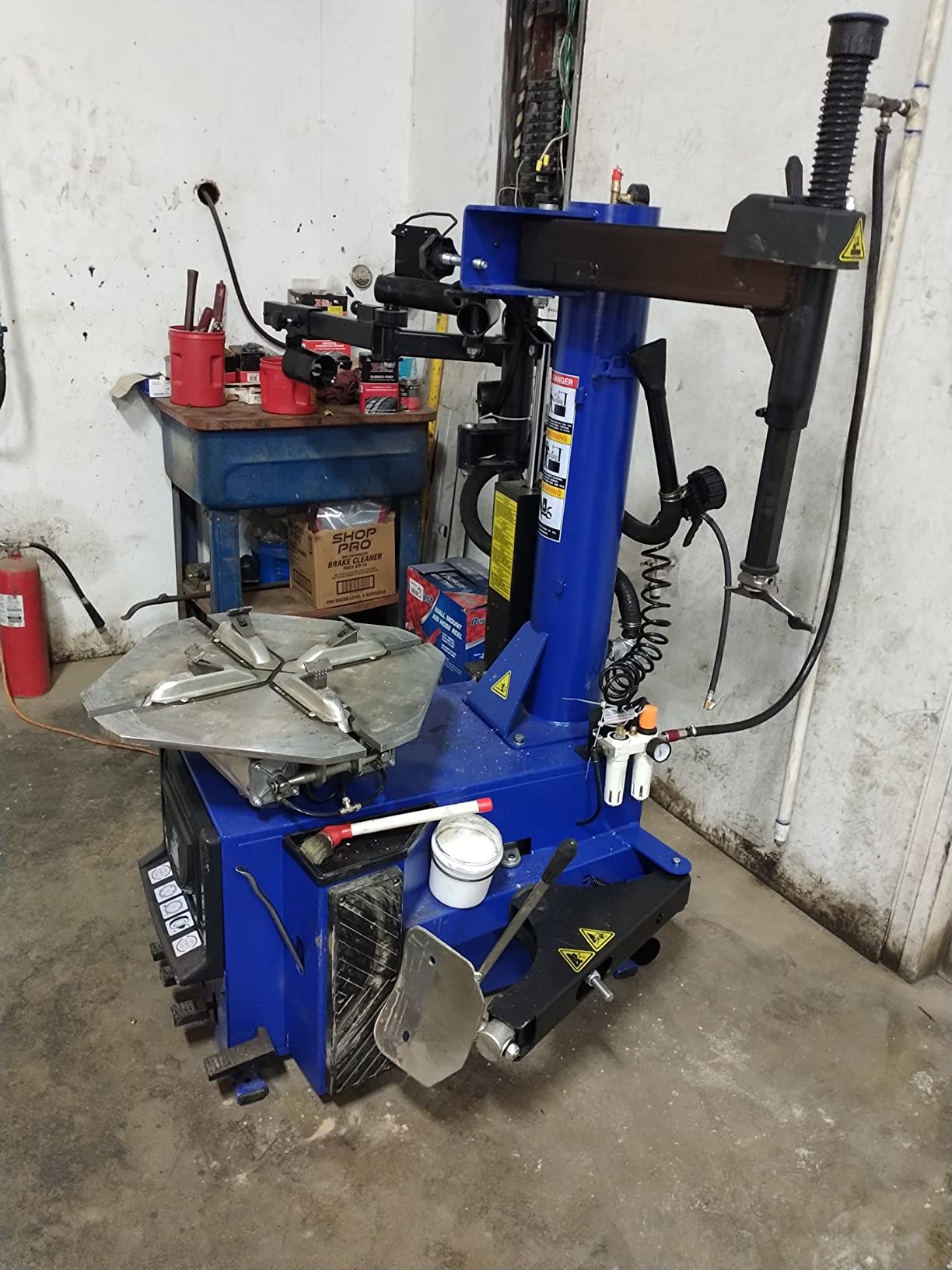
The package is generous for a single-machine listing: an air bead blaster on the arm column, an air reserve tank, four clamp protectors and a steel mount head, all in a blue powder coat finish. A 18 month parts replacement warranty is included.
Owners consistently report that customer service and the seller are helpful and responsive, which matters a lot when documentation is the weak point. Several note that once it is set up, it performs exactly as described.
Size limits you need to respect
Despite the 37 inch tire diameter rating, owners caution that this machine is not suited to very large tires such as 35s, nor to commercial truck and golf cart sizes. Treat it as a passenger car and light truck machine.
At 550 pounds with an 830 pound shipping weight, moving it is not a casual job. Plan the floor location before delivery and plan help on the day it arrives.
Documentation is the weak point
Assembly and operating instructions are described as unclear or effectively absent, with mechanics figuring the process out themselves. The arm lowering settings are also confusing without a walkthrough video.
It needs substantial space and compressed air at 120 to 145 psi, so this is a machine for a workshop bay rather than a corner of a two-car garage.
6. XK 988-690 Tire Changer and Balancer Combo – Best All-in-One Package
XK Tire Changers Machine and Wheel Balancer Combo,110V,988-690
988 changer with 690 balancer
2.0 HP 110V
41 inch max wheel diameter
155 lb max wheel weight
Pros
- Bead breaker handles reverse-lip
- low-profile and stretched setups
- Assist arms make low-profile work far easier
- Balancer calibrates simply and balances wide modern wheels
- Customer service replaces worn parts free
- Two-plus years of continuous small-shop use reported
Cons
- Instructions are poor and setup relies on videos
- Bead blaster fittings can leak and may need replacing
- High air consumption means a 60 gallon compressor helps
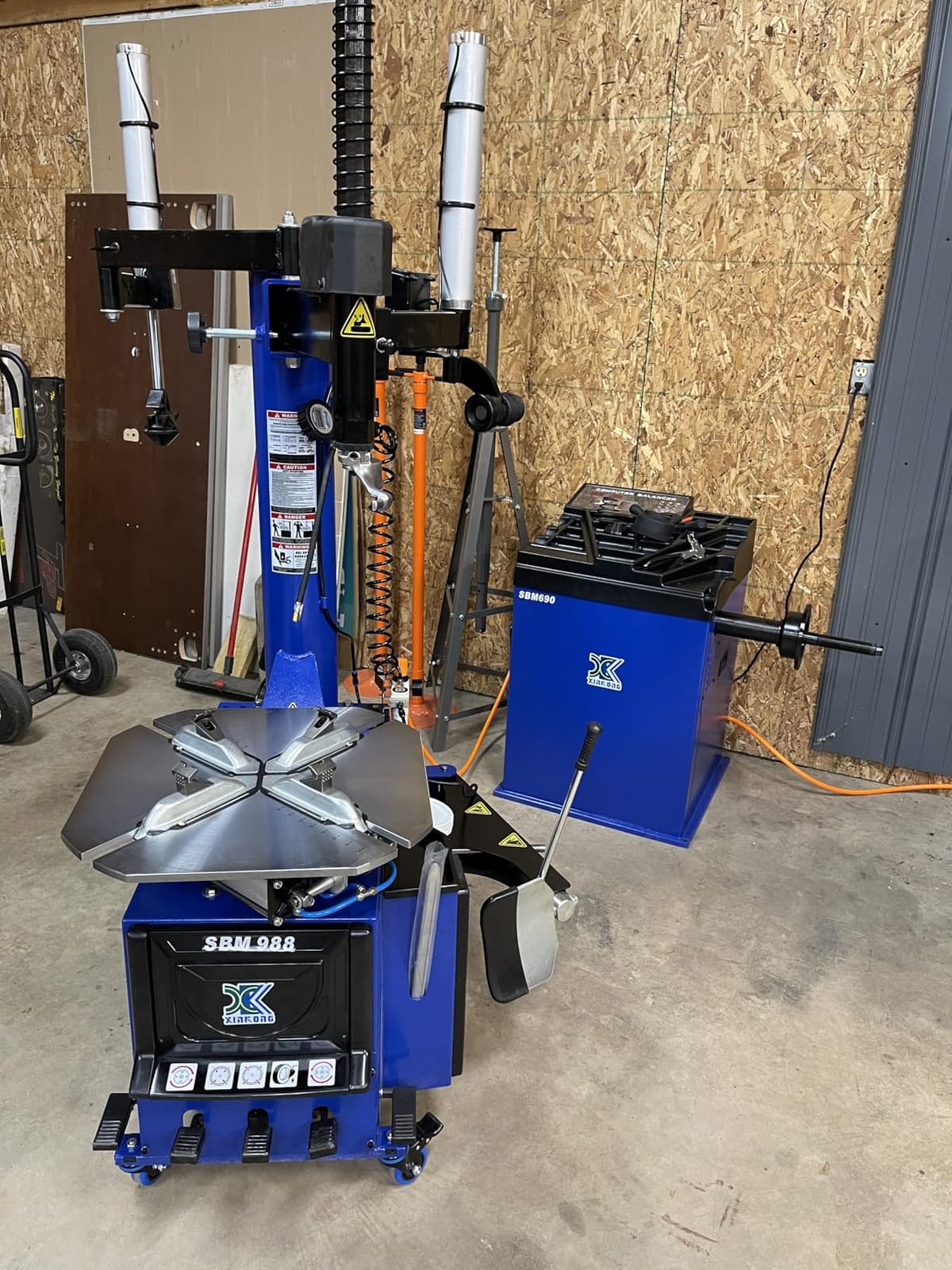
If you are setting up a shop, the bundled package is the argument. This pairs a 988 tire changer with a 690 wheel balancer so you are not sourcing two machines from two sellers and hoping the delivery dates line up.
The changer runs a 2.0 HP 110V motor with an air bead blaster, clamping 12 to 20 inches outside and 12 to 24 inches inside, with a 41 inch maximum wheel diameter and 12.5 inch maximum wheel width. Bead breaker force is 2,500 kgf at 6 to 8 bar operating pressure.
The 690 balancer takes 10 to 24 inch rims, rim widths from 1.5 to 20 inches, a maximum wheel diameter of 44 inches and a maximum wheel weight of 155 pounds. Cycle time is 4 to 7 seconds with accuracy from minus 1g to plus 1g, and it carries dynamic, static, alu 1-3 and motorcycle modes with four centering cones.
Owners running it for more than two years report no major failures, and they single out the bead breaker on reverse-lip and stretched setups. Several say the assist arms are the feature they would not give up, which matches our own read on low-profile work.
Plan your air supply before delivery
Air consumption is the most cited hidden cost. Owners recommend a 60 gallon compressor because the bead blaster and assist arm together will starve a small unit, and you end up blaming the machine for something the compressor caused.
Bead blaster fittings and air line connections can leak, and some owners needed replacement fittings. Inspect those connections during your first setup.
Handling and upkeep realities
Assembly and moving the machines is a two-person job at 397 pounds each, and owners recommend doing it on casters rather than dragging them across a floor.
Balancer wear items and the duck head need periodic replacement, and setup plus calibration rely on video rather than paperwork. Customer service is repeatedly praised for sending replacement parts at no charge, which softens that cost considerably.
7. XK 960-690 Tire Changer and Balancer Combo – Built for 14-Ply Work
XK Tire Changer and Balancer Combo 37 in Tire Machine, 110V,2.0HP,960-690
960 changer with assist arm
690 balancer
5600 lb bead break force
155 lb max wheel weight
Pros
- Changer side handles 14-ply and commercial 19.5 inch wheels reliably
- Assist arms suit run-flat and heavy truck tires
- Bead blaster on the arm column is well liked
- Strong package value for small shops
- 5600 lb bead break force handles tough beads
Cons
- Balancer is described as a guessing act needing tinkering
- Poor or absent assembly and setup instructions
- Air chuck may not be standard USA thread
- Support response to failures has been poor for some
This combo is the version to look at if your work includes commercial and 14-ply wheels, because that is where owners report it performing reliably over years rather than months. The changer half carries most of the praise on this list.
The 960 changer clamps 10 to 20 inches outside and 12 to 24 inches inside, with a 37 inch maximum tire diameter, 12 inch maximum wheel width, 5600 lb bead break force from a pneumatic piston and operating pressure of 120 to 145 psi at 110V only. A professional assist arm and an air bead blaster on the arm column are standard.
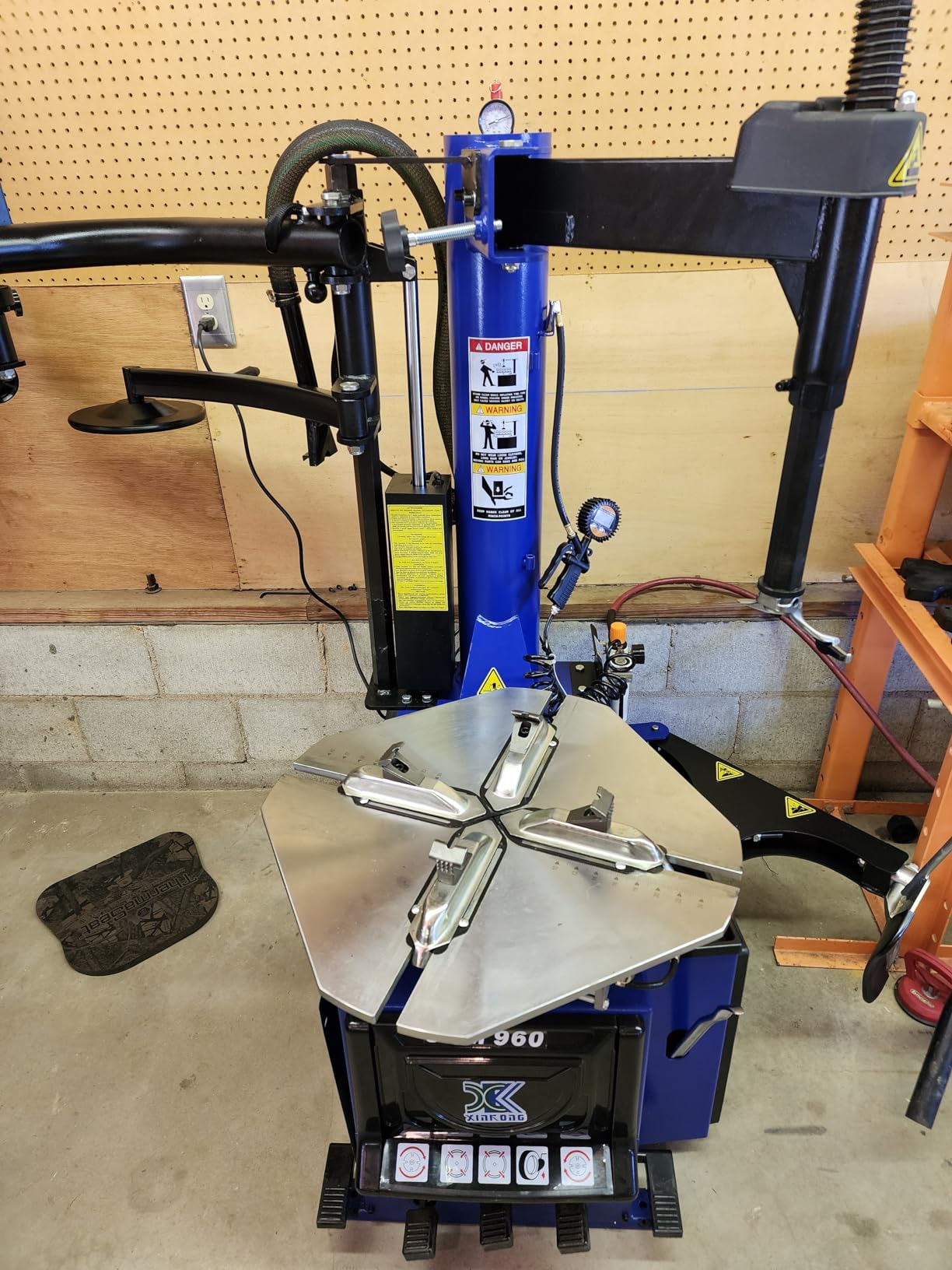
The 690 balancer handles 10 to 24 inch rims, rim widths from 1.5 to 20 inches, a maximum wheel width of 10 inches, a maximum wheel diameter of 44 inches and a maximum wheel weight of 155 pounds. Cycle time runs 6 to 9 seconds at minus 1g to plus 1g accuracy, with three centering cones.
Package value is the argument here. Buyers compare the total against professional-tier machines and conclude the changer alone justifies the bundle, particularly for 14-ply and commercial 19.5 inch work.
What to verify on arrival
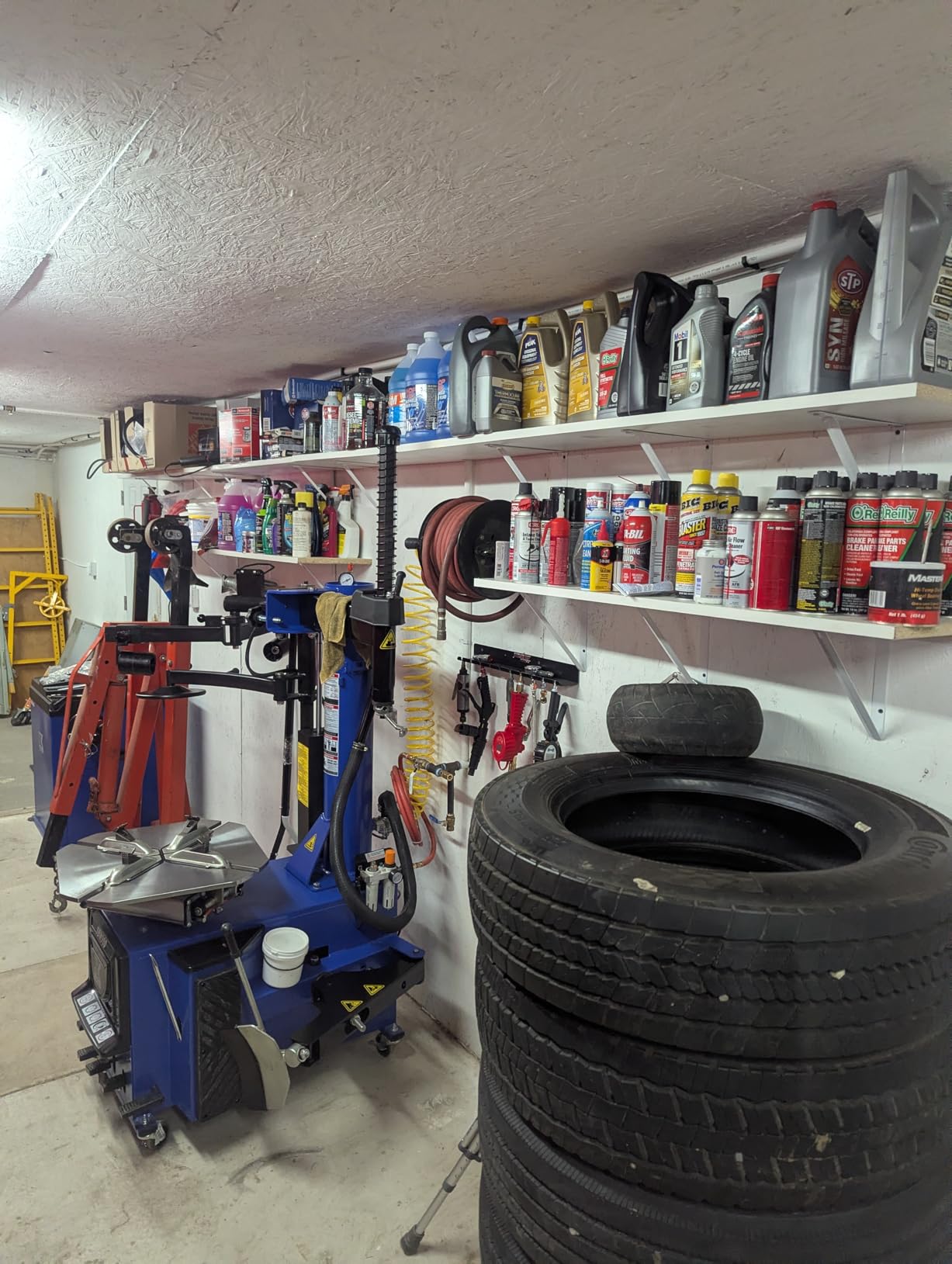
Some machines arrive with internal air hoses not fully hooked up, and the air chuck may not be standard USA thread. Check both before you power anything up, and add fittings to your parts list.
Assembly and setup instructions are poor or absent, so treat the first session as a learning day with a video reference rather than a job you can do blind.
Where owners lose patience
The balancer is the weak half. Several owners describe it as a guessing act that needs calibration and tinkering before it produces usable results, so factor that time into your setup.
Arm joints wear and the duck head arm loses firmness over time, and some buyers report poor support response when those parts eventually fail. That is the honest trade-off against the 988-690 in the previous section.
8. KATOOL KT-T830 and KT-B700 Combo – Best for Low-Profile and Stretched Tires
KATOOL 2.0HP Tire Changer Bead Blaster Wheel Balancer Machine Combo KT-T830+KT-B700 Tire Changer Machine Tire Machine, Outside clamp 12-24″ Inside clamp14–26″ with φ8 Inch Cylinder
KT-T830 changer with KT-B700 balancer
Two hydraulic assist arms
12-24 inch outside clamp
8 inch cylinder
Pros
- Handles everything from 35 inch truck tires to 17 inch low-profiles
- Extra hydraulic assist arms make low-profile work much easier
- No air leaks after swapping the regulator airline connection
- Balanced wheels road-tested at highway speed with zero vibration
- Build quality reported comparable to costlier brands
Cons
- Assembly instructions are essentially absent
- Two people recommended for assembly
- Balancer calibration normally needs a steel reference wheel
- Support for transit damage has been reported unresponsive
The two extra hydraulic assist arms are the decisive feature on this machine, and shop owners running high tire volumes point at them every time. They push the bead down while the turntable spins, which is the difference between a clean dismount and a sidewall fight on a low-profile.
Clamping is wide for a rim-clamp design, from 12 to 24 inches outside and 14 to 26 inches inside, driven by an 8 inch cylinder and a 2.0 HP motor. The mounting head is solution-treated stainless steel with polished interfaces and a plastic rim cover, mounted on fully closed bodywork that keeps dirt and grease off the internal parts.
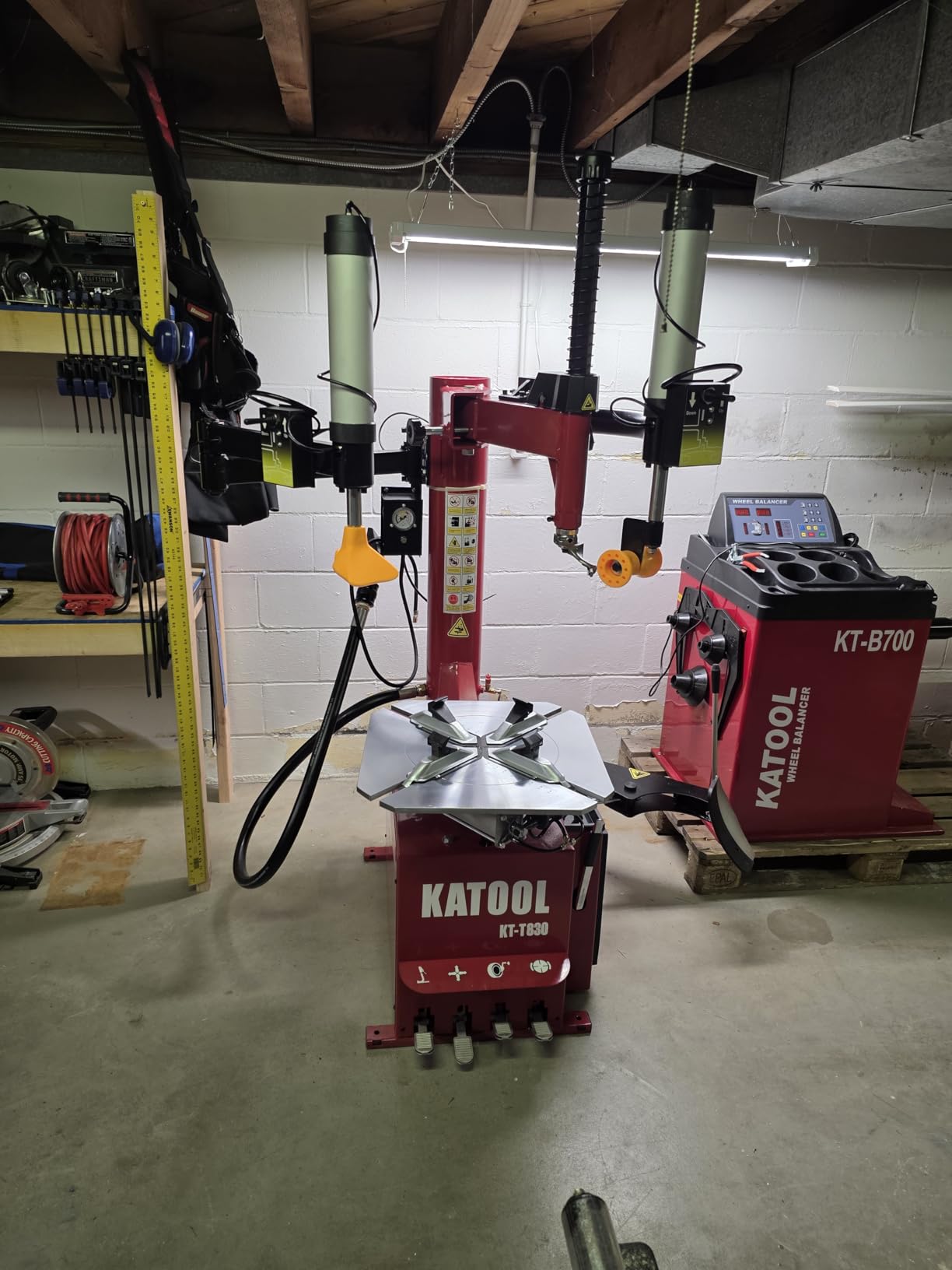
Jaw design gets attention too. The alloy steel jaws carry a 0.8 to 1.1mm carburized interface with full quenching and come with soft jaw covers, which is the combination that protects a factory alloy wheel through a shop’s week.
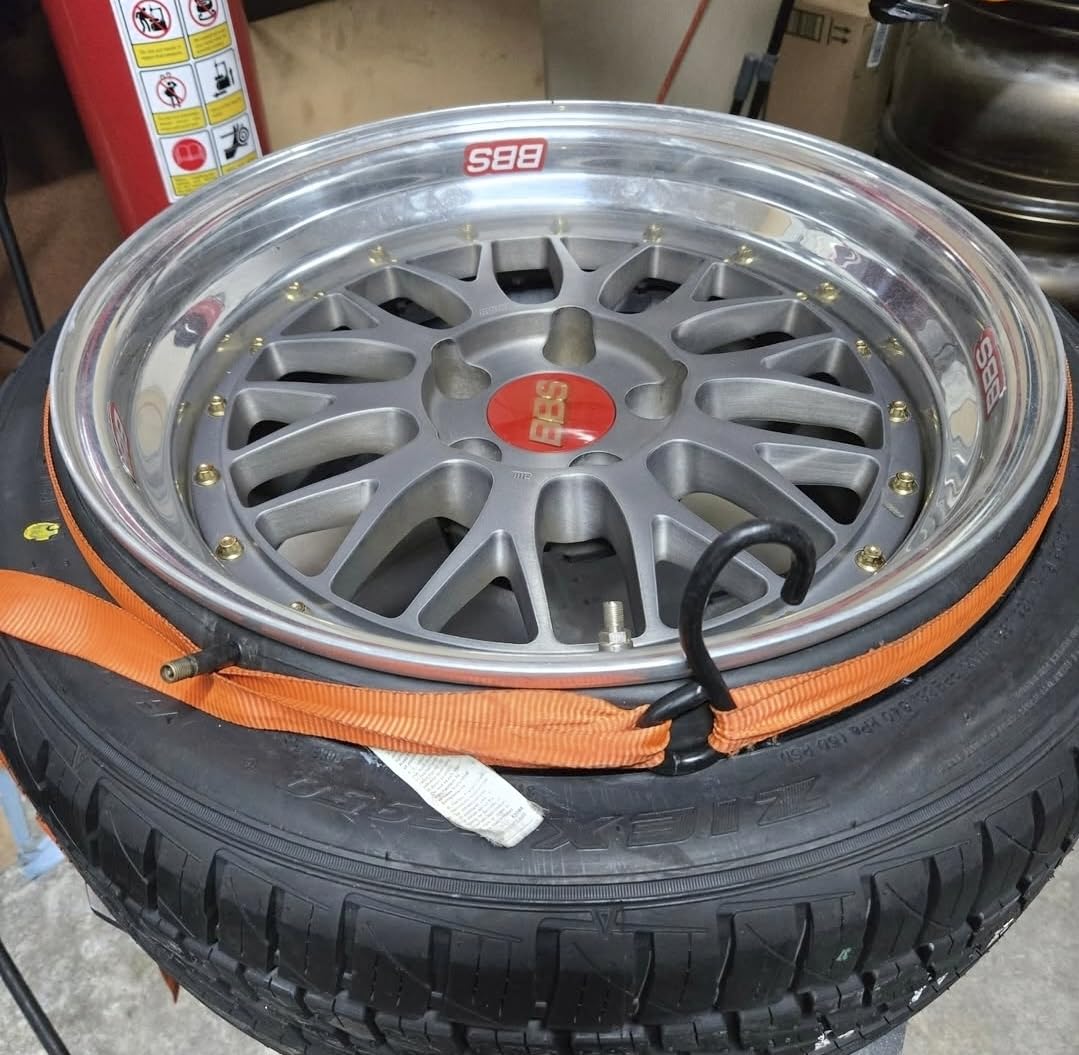
Range is genuinely wide in practice. Owners report everything from 35 inch truck tires down to 17 inch low-profiles and 285-section stretched setups going through the same machine, and one buyer reports no air leaks at any fitting after swapping the regulator airline connection.
What to sort out before the first tire
Assembly instructions are essentially absent, so video references and product photos are the only guide. Two people are recommended because of heavy, awkward parts, and a reference wheel for balancer calibration may not be in the box.
The KT-B700 is part of the package, so plan where it sits relative to the changer. A wheel that balances on one side of the room and gets mounted on the other is how shops lose time.
How it holds up over time
Build quality is reported as solid and comparable to costlier brands, and balanced wheels were road-tested at highway speed with zero vibration. For a shop doing dozens of tires a day that consistency is the point.
The one support issue worth flagging: buyers who reported damage in transit sometimes got an unresponsive response. Inspect the package carefully on arrival and photograph everything before you uncrate it.
9. KATOOL KT-T810 Tire Changer – Fastest Clamp Changeover
KATOOL 2.0HP Tire Changer Machine with Bead Blaster
2.0 HP 110V
6.1 RPM
Tool-free clamp changeover
Handles 41 inch wheels
Pros
- Tool-free switch between outside and inside clamping keeps workflow fast
- Double-side assist arm and post-tank bead blaster
- Thorough rim protection package with hardened jaw covers and spade cover
- Closed body with air filter and oil mist protection
- Stable precise operation below pro-tier price
Cons
- Requires a suitable compressed air supply
- Heavy floor-mounted unit that takes real space
- Some assembly required and instructions can be thin
Across 38 reviews it holds a 4.5 average, and the reason is a small detail that matters every single tire: you switch between outside and inside clamping with no tools at all.
The rest of the spec sheet is conventional and correct. A 2.0 HP 110V motor at 6.1 RPM, 0.8 to 1.0 MPa, clamping 12 to 22 inches outside and 14 to 24 inches inside, handling 41 inch wheels and 13 to 26.5 inch rims. The unit is 520 pounds and 45 by 30 by 34 inches.
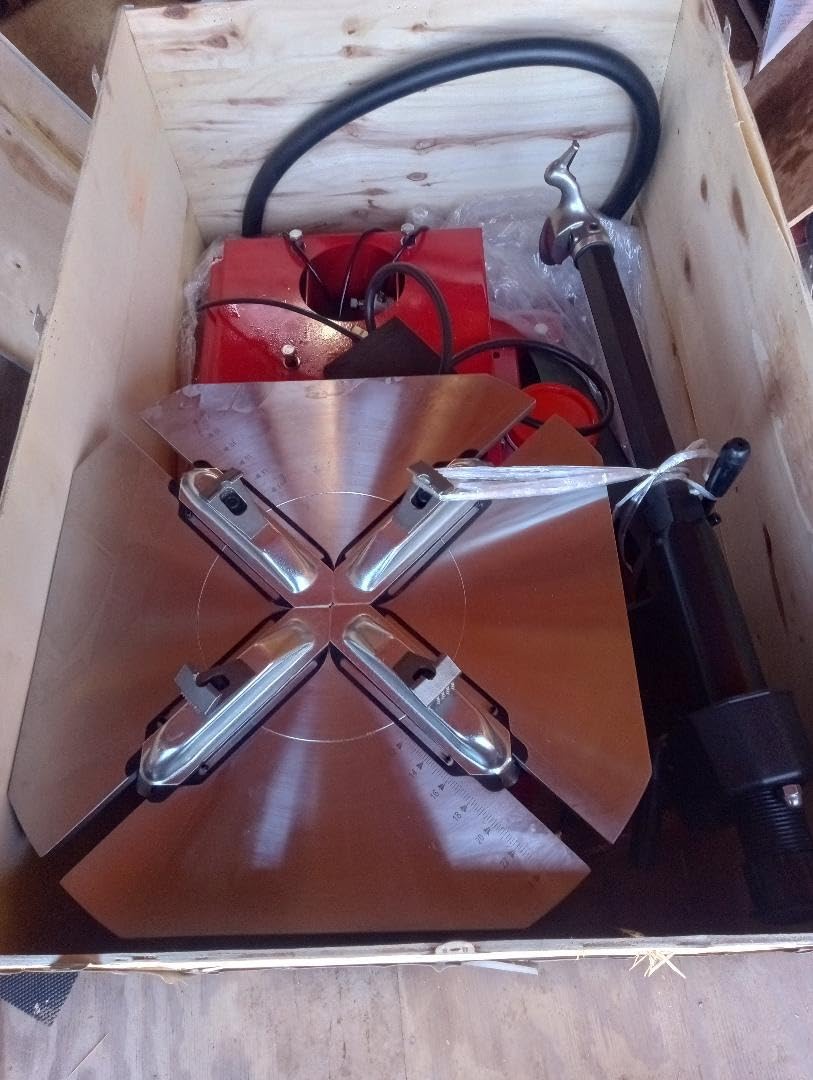
Rim protection is unusually thorough for the money. You get hardened jaw covers, a stainless steel mounting head with a plastic guard and a spade cover, and a double-side assist arm paired with a post-tank bead blaster for low-profile work.
The closed body with an air filter and an oil mist unit protecting the pneumatic system is the detail that extends machine life, and it is a sign the manufacturer thought about daily shop use rather than occasional garage duty.
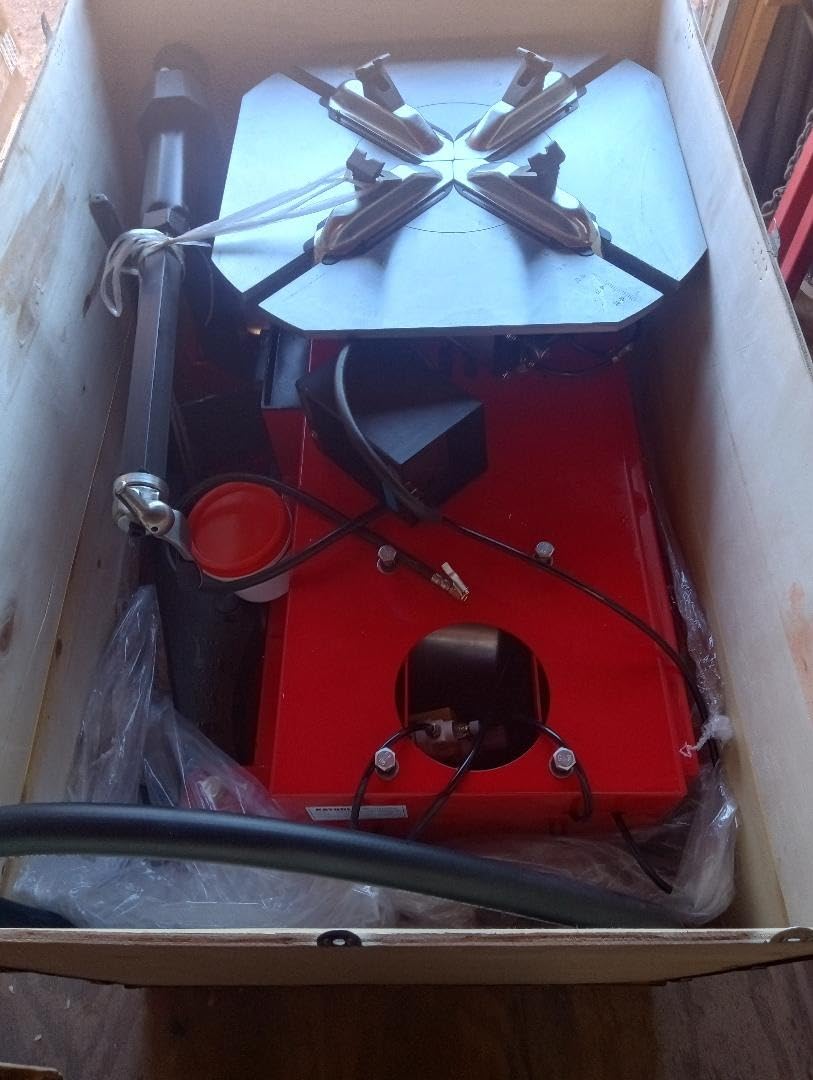
Why the clamp changeover speed matters
Every time a job moves from a steel wheel to an alloy, or a small car rim to a truck rim, the changeover happens. Doing it tool-free removes the single most common reason a shop wastes minutes mid-afternoon.
Buyers report stable, precise operation in a working shop setting, and that the machine performs like a higher-priced professional unit.
What you commit to with this one
It is a pneumatic machine, so a suitable compressed air supply has to be on hand before the first tire. Plan the air line into the install rather than discovering it later.
It is a heavy floor-mounted unit that takes real space at 520 pounds, and some assembly is required with instructions that can be thin. Give it a dedicated bay rather than a corner.
10. Motool ME-T500 and B620 Combo – Easiest First Machine to Assemble
Motool Technology 2.0HP Swing Arm 24″ Clamping Tire Changer Wheel Changer Machine Tires Machine Wheel Balancer Tire Changer Machine Combo (ME-T500+B620)
Swing arm changer, 24 inch clamp
2.0 HP
Bundled B620 balancer
Carburized alloy steel jaws
Pros
- Tire machine performs on par with a Coats unit according to experienced users
- Assembly is easy and obvious with only two parts to attach
- Handles 20-year-old tires on steel wheels and 235/45ZR18 low profiles
- One owner reports 65 sets of tires changed with zero issues
- Bundled changer and balancer was the lowest total DIY buyers found
Cons
- No built-in bead blaster so seating the bead is difficult
- Rotation labeled bidirectional but only spins one way
- Translated instructions are poor and partly garbled
- Balancer can fail to calibrate out of the box
This is the machine to buy if your first thought when you see a tire changer is where do I even start. Experienced users compare the changer favorably to used Coats and Hunter machines, and one owner has put 65 sets of tires through it with zero issues.
Assembly is the standout for beginners: only the swing arm stand and the tire shovel need attaching, and users describe it as easy and obvious. The changer clamps 12 to 20 inches outside and 14 to 24 inches inside, with a 24 inch swing arm design.
Build details suggest a machine designed with wear in mind. The jaws are alloy steel with a 0.8 to 1.1mm carburized and fully quenched interface plus protective covers, the mounting head is solution-treated stainless steel with a plastic rim cover, and the body is 3mm steel with 8mm base and side boards for pressure sensor stability. The motor uses pure copper winding for power and heat dissipation.
Which tires it genuinely covers
Owners report handling 20-year-old tires on steel wheels and 235/45ZR18 low profiles, and one did so without lubricant. That is a broad and useful range for a first machine.
There is an inflation gauge with pedal control, which is a small quality-of-life touch. Buyers note the bundled changer plus balancer was the lowest total they found as DIY buyers.
The three gaps to know about first
There is no built-in bead blaster, which makes seating the bead on the rim difficult. That is the single biggest workflow difference versus the machines with a post-tank blaster.
Rotation on the swing arm lever is labeled bidirectional but only spins one way, so plan your technique around one direction rather than fighting the lever. Translated instructions are poor and partly garbled, and some buyers report poor support response when the balancer failed or would not calibrate out of the box.
How to Choose a Tire Changer Machine
The machine that frustrates people is almost never the wrong machine; it is the right machine in the wrong room. Power, air, floor space and the largest tire you actually own decide more than any feature list.
Manual, Semi-Automatic or Fully Automatic
Manual changers are hand tools that do one job, like the Baja No Pinch kit. Semi-automatic and automatic machines clamp the wheel, break the bead and rotate the turntable for you, which is what makes a 41 inch tire physically manageable.
For a home garage doing four or more tire changes a year, a powered rim-clamp machine pays for itself in avoided shop fees. For a shop running dozens a day, an assist arm and a bead blaster are not optional extras.
Rim Clamp vs Center Post
Rim clamps grip the wheel from the inside edge, which is why every machine in this list is a rim-clamp design. Center post machines clamp from the post outward, are more common in heavy truck equipment, and are a different purchase entirely.
Check the clamping range against your rims. Most units here clamp 10 to 20 inches outside and 12 to 24 inches inside, which covers nearly every passenger car and light truck wheel.
Swing Arm vs Tilt-Back vs Leverless Tool Heads
A swing arm is the classic design and the least common to get wrong. A tilt-back arm pivots the head back for clearance on low-profiles, and a leverless duckhead is a premium design that reduces rim contact risk on expensive wheels.
Whichever head you get, the assist arm is the part that determines whether run-flats and low-profiles are routine or a fight. Several owners in this roundup say the arms are the feature they would not give up.
Matching Tire Size and Vehicle Type
Check maximum tire diameter and maximum wheel width against the largest tire you own. Most units here top out at 37 to 41 inches, which covers 35s on the very largest machines and nothing beyond that.
For motorcycles, the wheel and hub numbers change completely. Street bikes run 12 to 21 inch wheels and dirt bikes 16 to 21 inch spoked rims with specific hub bore requirements, so check axle diameter before you order. Our best portable tire changers guide covers that category in more depth.
Power, Air and Floor Space Requirements
Every powered machine in this list runs on 110V, so household circuits are fine, but the pneumatic ones need serious air. Units needing 120 to 145 psi, or drawing heavily through a bead blaster, benefit from a larger compressor.
Weight is the hidden variable. These machines range from 397 pounds to 880 pounds in shipping weight, they need bolting down, and moving one is a two-person job. Measure the bay before the machine arrives, not after.
One more decision people skip: whether you also need a wheel balancer. If you are mounting and demounting, you will want to balance. We cover the options in our cordless tire inflator and 12V tire inflator guides for the pressure side of the job.
Frequently Asked Questions
What is the best tire changer machine?
For most home garages the Mayflower 950 is the strongest balance of price, clamp range and proven longevity, with owners reporting over 1000 tires mounted and demounted. Shops should look at the KATOOL KT-T830 or KT-T810, whose assist arms and rim protection handle low-profiles and stretched setups. Motorcyclists get far more from a Rabaconda than from a car machine, because the whole tool is built around protecting the rim.
Is the Harbor Freight tire changer any good?
We did not include a Harbor Freight model in this roundup because we could not verify current availability or seller support, and we will not recommend a machine we cannot stand behind. Forum owners do report long-term success with a Harbor Freight 1.5 HP unit, with one 21 year ownership story, alongside complaints about bearings and a motorcycle attachment whose vertical rod diameter was too large for some bikes. Treat the general brand reputation as mixed and verify the exact model before buying.
What are people saying about the VEVOR tire machine?
The feedback we found on the VEVOR tire machine is genuinely mixed. Owners report it works great for street tires, while others warn that sidewalls on modern tires were too stiff to fit without help, and that after-sales service and missing parts were problems. The recurring theme is that the machine itself is capable and the support experience is the weak point, which is exactly the risk to weigh when a machine needs parts over time.
What are people saying about the ME-T500 tire changer?
The ME-T500 earns strong marks from DIY buyers who compare the changer favorably to used Coats and Hunter machines, and who praise how easy it is to assemble with only the swing arm stand and tire shovel attached. Reported gaps are consistent: no built-in bead blaster, rotation labeled bidirectional but only spinning one way, garbled translated instructions, and a balancer some buyers could not get to calibrate.
Is a Rabaconda worth it?
For motorcycle riders, frequently. The Rabaconda Street Bike Changer carries a 4.7 average across 163 reviews, with owners describing a change as roughly a two-minute job and praising the plastic mounting head that keeps rims scratch-free. It does not balance the wheel, and very stiff tires can still take several attempts, so it works best alongside tire technique and a separate balancer.
Conclusion
There is no single best tire changer machine, but there is a clear best machine for the job you actually do. Our top pick, the Rabaconda Street Bike Changer, is the highest-rated tool in this group and the fastest to a finished tire for anyone riding on rims they care about.
For car and truck work, the Mayflower 950 is the value pick, the KATOOL KT-T810 is the highest-rated standalone machine, and the KATOOL KT-T830 or one of the XK combos is the shop answer. Riders changing dirt bike tires get the Rabaconda 3MMC, and anyone who only needs to stop pinching tubes gets the Baja No Pinch kit for a fraction of the money.
Before you order, measure your bay, confirm your compressor, and check the maximum tire size against the biggest tire you own. If you are still narrowing it down, our home garage guide goes deeper on the tradeoffs, and our sidewall guide tells you exactly what tire sizes you will be feeding into whichever machine you choose.