
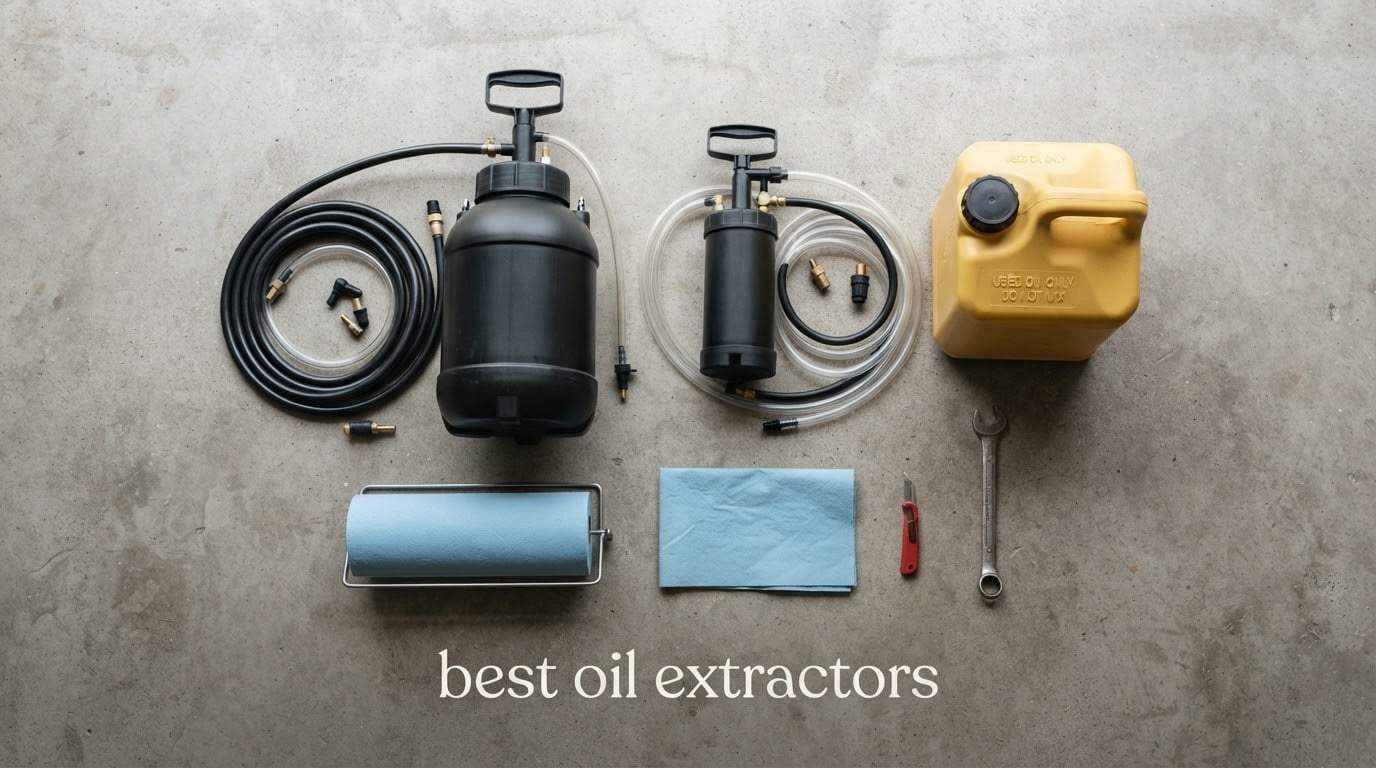
Short answer: the Mityvac 7201 is the best oil extractor for most home mechanics. It is a purely manual 2.3 gallon fluid evacuator, so it needs no air compressor and no battery, and owners rate it 4.5 stars across more than 4,300 reviews. If you own an air compressor and want speed, a 6.5L dual-mode extractor like the FOUR UNCLES is the better buy, and if you want one tool that also covers a boat and a mower, the OEMTOOLS 24937 is the pick.
Extracting oil through the dipstick tube instead of pulling a drain plug changes the whole job. No jack, no ramps, no underbody shield, no pan in the driveway, and no oil pooling under the car while the plug is out. You warm the engine, run the hose down the dipstick tube, pump until the flow dies on its own, then pour the tank into a recycling container.
I compared eight of the highest-rated extractors on the market over the past few months, weighing them on four things that actually decide whether a job goes well: how fast the oil moves, whether the tank holds enough to do a car in one draw, how far the hose reaches into a deep dipstick tube, and how cleanly the unit can be emptied afterwards. I also read thousands of owner reviews, because the failure modes in this category show up in reviews long before they show up in spec sheets.
Before you read further, one warning that is repeated more than any other in owner forums: do not overfill the tank. When the reservoir reaches capacity, oil can backflow up the dipstick tube into the air intake. Most of the extractors here have some form of overflow protection, and you should still keep an eye on the level as you work.
Table of Contents
Top 3 Picks for the Best Oil Extractors in 2026
These three cover the widest range of situations. The Mityvac is the dependable manual default, the FOUR UNCLES is the strongest value when you have compressed air, and the EWK is the most widely documented home-garage workhorse.
Mityvac 7201 2.3 Gal Fluid Evacuator
- Manual push-button pump
- Automatic overflow prevention
- 2.3 gallon reservoir
- Quick-drain spout

FOUR UNCLES 6.5L Dual-Mode Extractor
- Pneumatic or manual operation
- Up to 1.8L per minute
- 6.5 liter reservoir
- Three tube diameters
EWK 6.5L Pneumatic/Manual Extractor
- Manual and pneumatic modes
- 1.8 L/min suction
- 6.5 liter tank
- Two extended suction tubes
Best Oil Extractors at a Glance (October 2026)
Every pick below is arranged in the order I would buy it. The table gives you the power source, the tank size and the job each unit is genuinely good at, so you can rule out the wrong category before you read the full review.
| Product | Specs | Action |
|---|---|---|
| Mityvac 7201 2.3 Gal Fluid Evacuator |
|
Check Latest Price |
| FOUR UNCLES 6.5L Pneumatic/Manual Extractor |
|
Check Latest Price |
| EWK 6.5L Pneumatic/Manual Oil Extractor |
|
Check Latest Price |
 Thorstone 200cc Fluid Extractor Pump Thorstone 200cc Fluid Extractor Pump |
|
Check Latest Price |
 Briggs and Stratton 5430K Oil Extractor Kit Briggs and Stratton 5430K Oil Extractor Kit |
|
Check Latest Price |
 OEMTOOLS 24389 Manual Fluid Extractor 5.3L OEMTOOLS 24389 Manual Fluid Extractor 5.3L |
|
Check Latest Price |
 OEMTOOLS 24937 Pneumatic/Manual Extractor 6L OEMTOOLS 24937 Pneumatic/Manual Extractor 6L |
|
Check Latest Price |
 Harpy Eagle Electric Oil Extractor 12/24V 100W Harpy Eagle Electric Oil Extractor 12/24V 100W |
|
Check Latest Price |
1. Mityvac 7201 2.3 Gallon Fluid Evacuator – Best Overall Manual Extractor
Mityvac 7201 2.3 Gallon Fluid Evacuator Extractor and Dispensing Pump, Push Button, Manual Operation, Chemical-Resistant Polyethylene, Automatic Overflow Prevention, Quick-Drain Spout, Large Base
Manual push-button pump
2.3 gallon reservoir
Automatic overflow prevention
9.3 x 13.2 x 25.4 inch
Pros
- Dual-function extractor and dispenser in one tool
- Push-button control gives smooth fluid movement
- Chemical-resistant polyethylene handles oil coolant and transmission fluid
- Automatic overflow prevention stops the pump at capacity
- Large stable base and quick-drain spout
Cons
- Manual pumping takes real effort on a full drain
- Plastic body and o-rings can age with long service
- 2.3 gallon tank means a mid-size car may need a second pour
The Mityvac 7201 is the unit I keep reaching for, and it is the one I tell friends to buy first. It has been in production since 2006 and has collected more than 4,300 reviews at 4.5 stars, which is the deepest well of long-term owner feedback in this whole category. That matters, because a manual fluid evacuator is not a complex machine that either works or does not. It is a plastic tank, a pump, seals and a hose, and the question is whether the seals are still good after five years in a garage.
Operation is a simple push button. Each press draws fluid up through the dipstick hose and pushes it into the reservoir, and because the stroke is metered you get smooth, controlled movement rather than a gush. The chemical-resistant polyethylene body takes engine oil, coolant and transmission fluid without complaint, which makes the same tool useful for a power steering flush or a transmission drain later on.
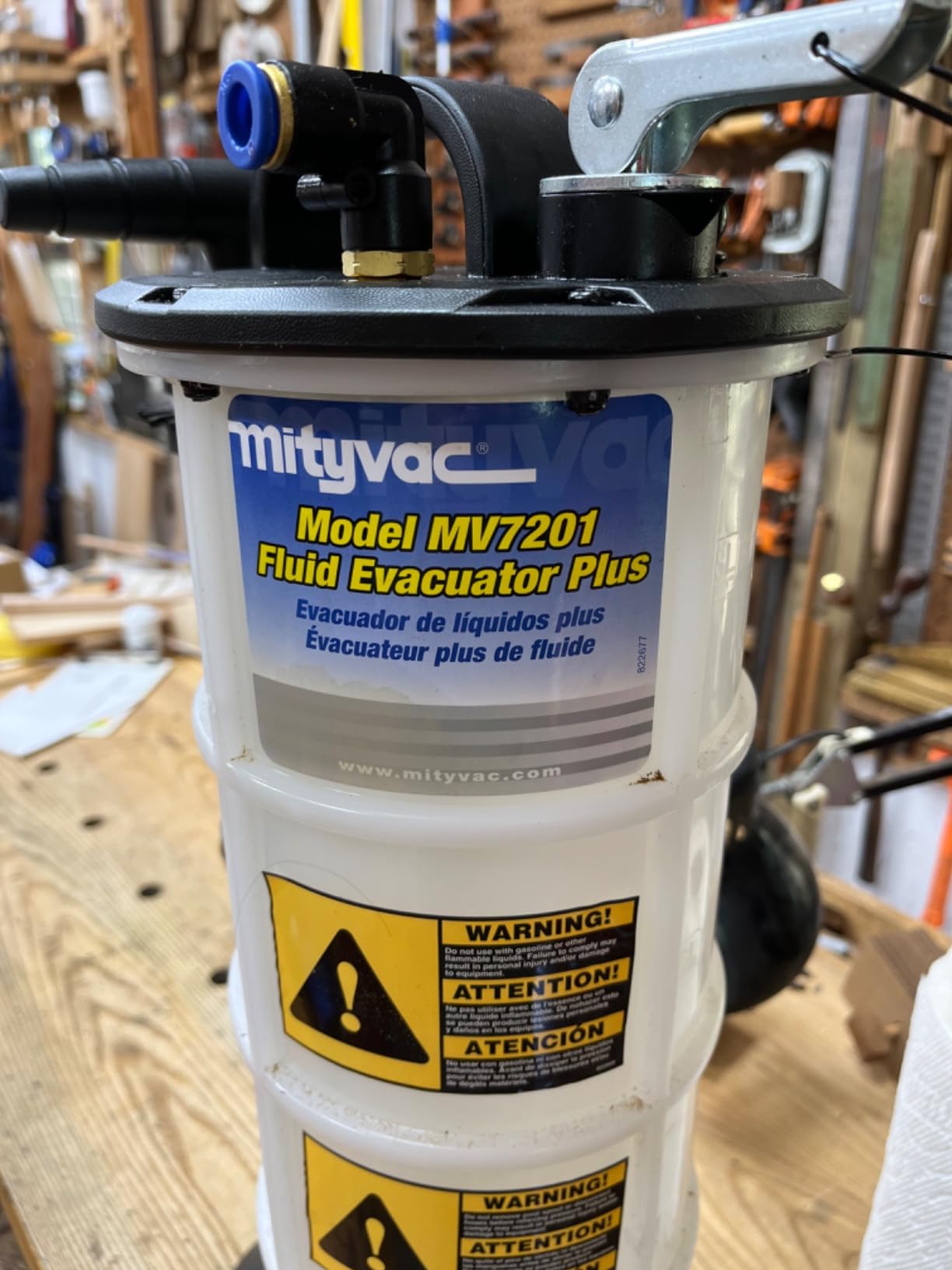
The automatic overflow prevention system is the feature I would not give up. When the reservoir reaches capacity the pump stops rather than forcing oil back up the hose toward the engine. On a 2.3 gallon tank, that is a real safety margin rather than a theoretical one, and it is the second half of the story: the large base keeps the whole thing planted while you push, so a full tank does not tip over the way a narrow cylindrical bottle can.
The quick-drain spout is genuinely quick. You tip the tank, open the spout and the used oil goes into your recycling container in one controlled pour, with a lot less dribbling down the side than a plain neck design leaves behind. At 11.65 pounds the unit is not featherweight, but it is compact enough at 9.3 by 13.2 by 25.4 inches to live on a shelf between services.
Who the Mityvac 7201 suits
This is the extractor I recommend to anyone who changes oil on one or two cars at home and does not own a compressor. No hoses to connect, no fittings to swear at in the cold, and it works on a driveway, in a boat dock or next to a generator in a field. Bob Is The Oil Guy forum members repeatedly single out the Mityvac by name, with owners confirming it works well on a GS350 V8, and Mityvac is also the brand other owners reach for when they want a known name with replacement parts available.
Because it is a dual-function unit, you can also pump fluid back in. That makes it a fair choice if you top up after a level check or want to move coolant between containers.
Where the Mityvac 7201 falls short
The honest limitation is arm work. A 2.3 gallon tank covers a four-cylinder or a small V6, but pushing several quarts by hand on a full-size V8 is a slow, tiring job. The plastic body and o-rings are the second concern. Owners on r/Audi describe loving the tool and still warning that the plastic becomes brittle with age, so store it somewhere it does not sit in a freezing garage all winter.
2. FOUR UNCLES 6.5L Pneumatic/Manual Oil Extractor Pump – Best Dual-Mode Value
FOUR UNCLES 6.5L Pneumatic/Manual Oil Extractor Pump
Pneumatic or manual modes
6.5 liter reservoir
Up to 1.8L per minute
7.24 pounds
Pros
- Switch between compressed air and the hand pump without changing setup
- Pneumatic mode moves fluid at up to roughly 1.8L per minute
- Oil comes out from above so you never crawl under the car
- Three suction tube diameters plus a brake bleeding hose
- Integrated storage keeps every tube and hose together
Cons
- Manual mode is much slower on large fluid volumes
- Suction tube diameter has to match the dipstick opening
- 22.8 inch height is awkward in a low cabinet
If you own an air compressor, this is the most capable dual-mode unit I tested. It carries a 6.5 liter reservoir, which handles a big V8 or a pickup in a single draw, and it can run on compressor air at up to roughly 1.8 liters per minute. That figure is what separates it from a hand pump in practice. The flow is fast enough that the drain ends because the pan is empty rather than because you got tired.
Because the same tank accepts both air and the built-in hand pump, the mode is a switch rather than a different machine. I like that for one specific reason: a small home compressor has to run for a while to catch up after a cut-off, and when the air runs thin the extraction slows down. Dropping to manual keeps the job moving.
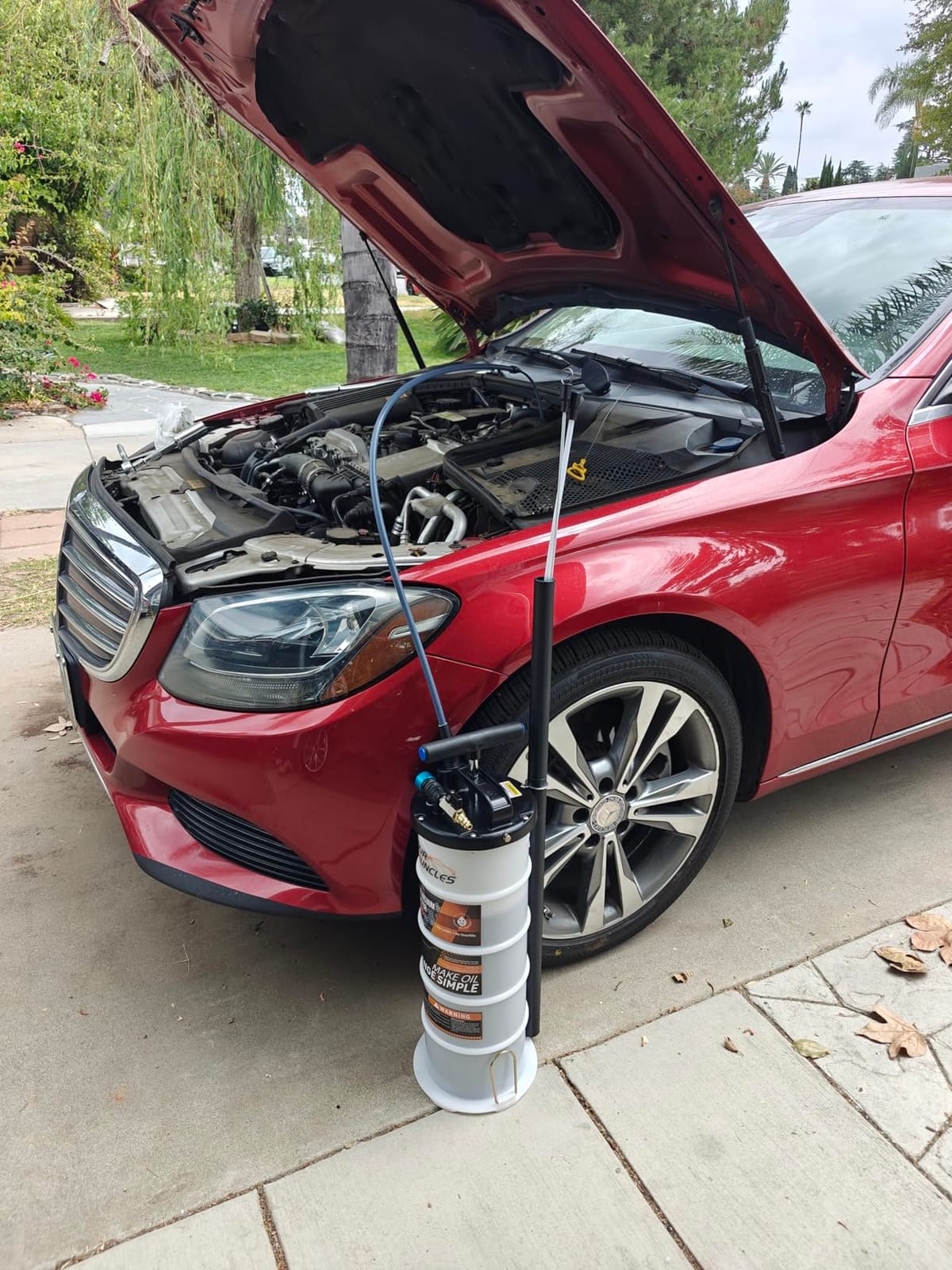
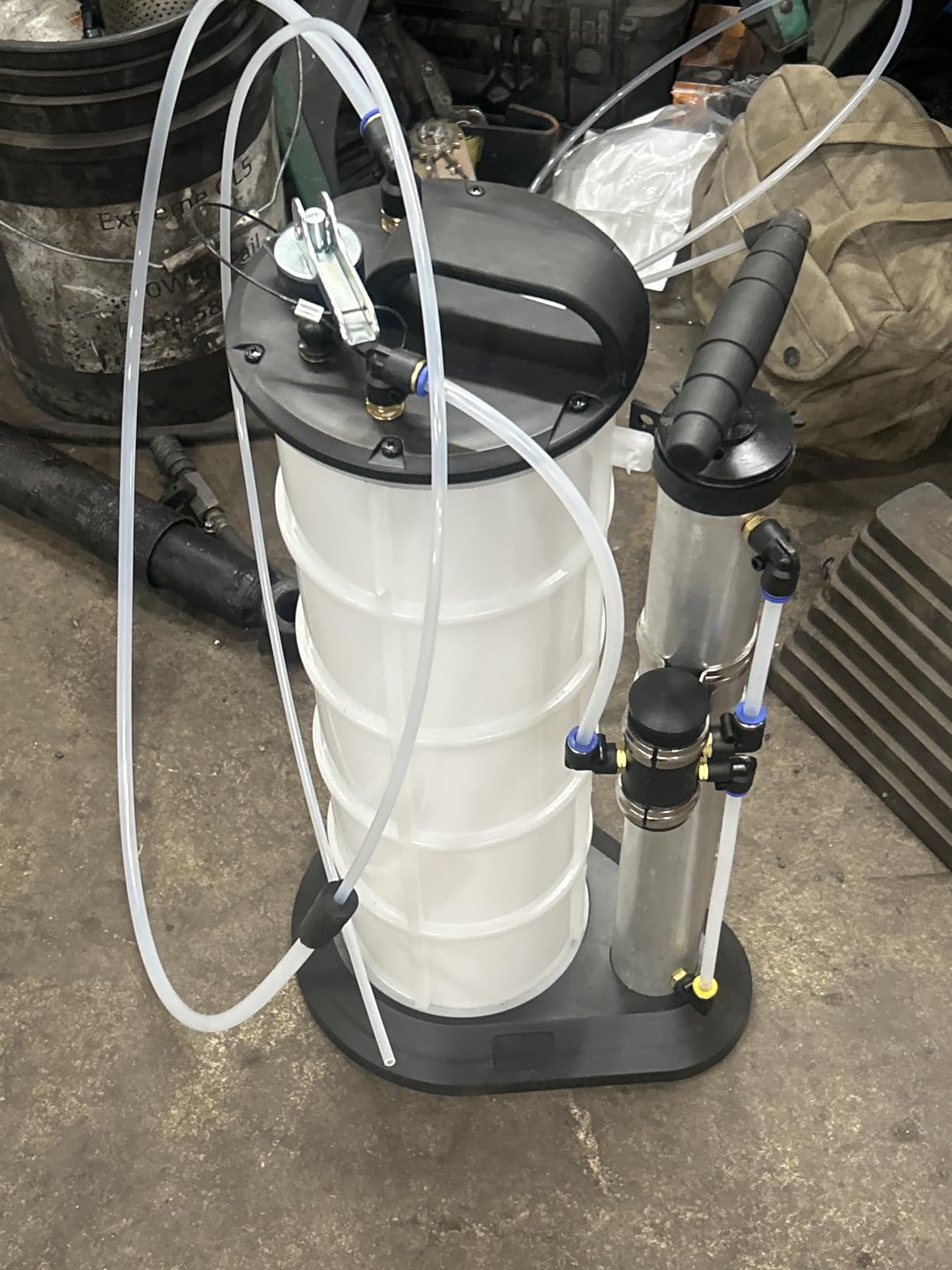
The tube kit is more complete than most. You get a rigid main tube plus three suction tubes in different diameters, and a separate hose for bleeding brakes. That third job is a genuine bonus, because bleeding brakes by hand with a jar and a tube is miserable, and doing it with a proper hose is quick. Everything stores inside the unit, so the tubes do not end up in a drawer in pieces, which is the single most common small complaint about this category.
At 7.24 pounds and 22.8 inches tall, it is tall enough that you want to plan where it lives. I keep mine near the compressor rather than in the cabinet, because the pneumatic mode is the reason to own it.
Who the FOUR UNCLES 6.5L suits
This is the pick for a home garage with a compressor, and for a small shop that services a few vehicles without draining pans. Owners on r/tdi describe running an EWK-class dual-mode extractor and doing a full change in under a quarter of an hour without a drop escaping, which is the same workflow this unit is built for. The dipstick-top method also means the extractor works on a car with an underbody shield or a low sport suspension that would be miserable to get under.
Owners of dual-mode units in general rate them on the same three things: how fast the air mode runs, whether the right tube reaches the bottom of the pan, and whether it spills. This one scores well on the first and third.
Where the FOUR UNCLES 6.5L falls short
Tube reach is the weak spot. If the rigid tube is too narrow for your dipstick tube it will not draw down the last of the oil, and if it is too wide it may not seal. Owners also point out that manual mode is considerably slower than air mode, so a compressor genuinely changes the experience here rather than just saving a minute. At 22.8 inches it is the tallest unit in this roundup, so measure your storage shelf first.
3. EWK 6.5L Pneumatic/Manual Oil Extractor – Best for Top-Side DIY Drains
EWK 6.5L Pneumatic/Manual Oil Extractor, Oil Change Pump for Automotive
Manual or pneumatic drive
6.5 liter reservoir
40-170 PSI operating range
6.45 pounds
Pros
- Extracts through the dipstick so you never lift the car
- Choice of manual or pneumatic drive for shop or driveway
- Contained extraction keeps the floor and driveway clean
- Two extended suction tubes reach into the sump
- Tank markings let you watch the fluid level
Cons
- Explicitly not compatible with the Mercedes W212 E350 or C218 CLS 350
- Shorter adapter hoses can fall short on deep-sumped cars
- Should not be used with gasoline or other volatile fluids
The EWK has been available since 2014 and carries more than 3,000 reviews at 4.4 stars, which makes it one of the best-documented home-garage extractors on the market. Owners repeatedly describe pulling more than five quarts in about fifteen minutes, and that combination of speed and mess-free handling is exactly why the dipstick-top method has become the default DIY approach.
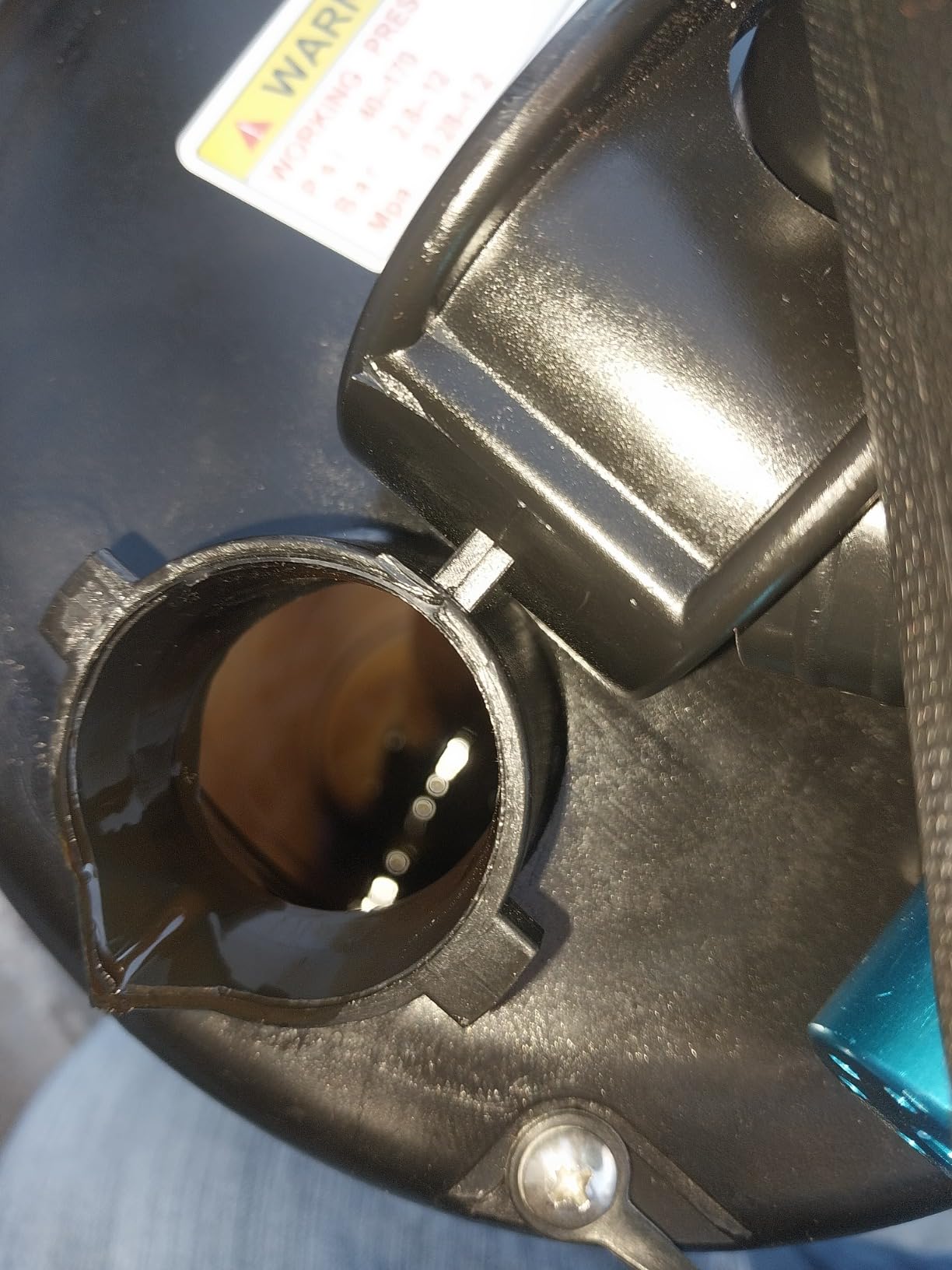
The operating range is a detail worth knowing: 40 to 170 PSI. That covers small pancake compressors and large shop tanks alike, so you are not left unable to build suction with whatever air supply you happen to own. The tank markings are a small touch that matters more than you would expect, because you are watching a container filling through a hose while your hands are on the pump.
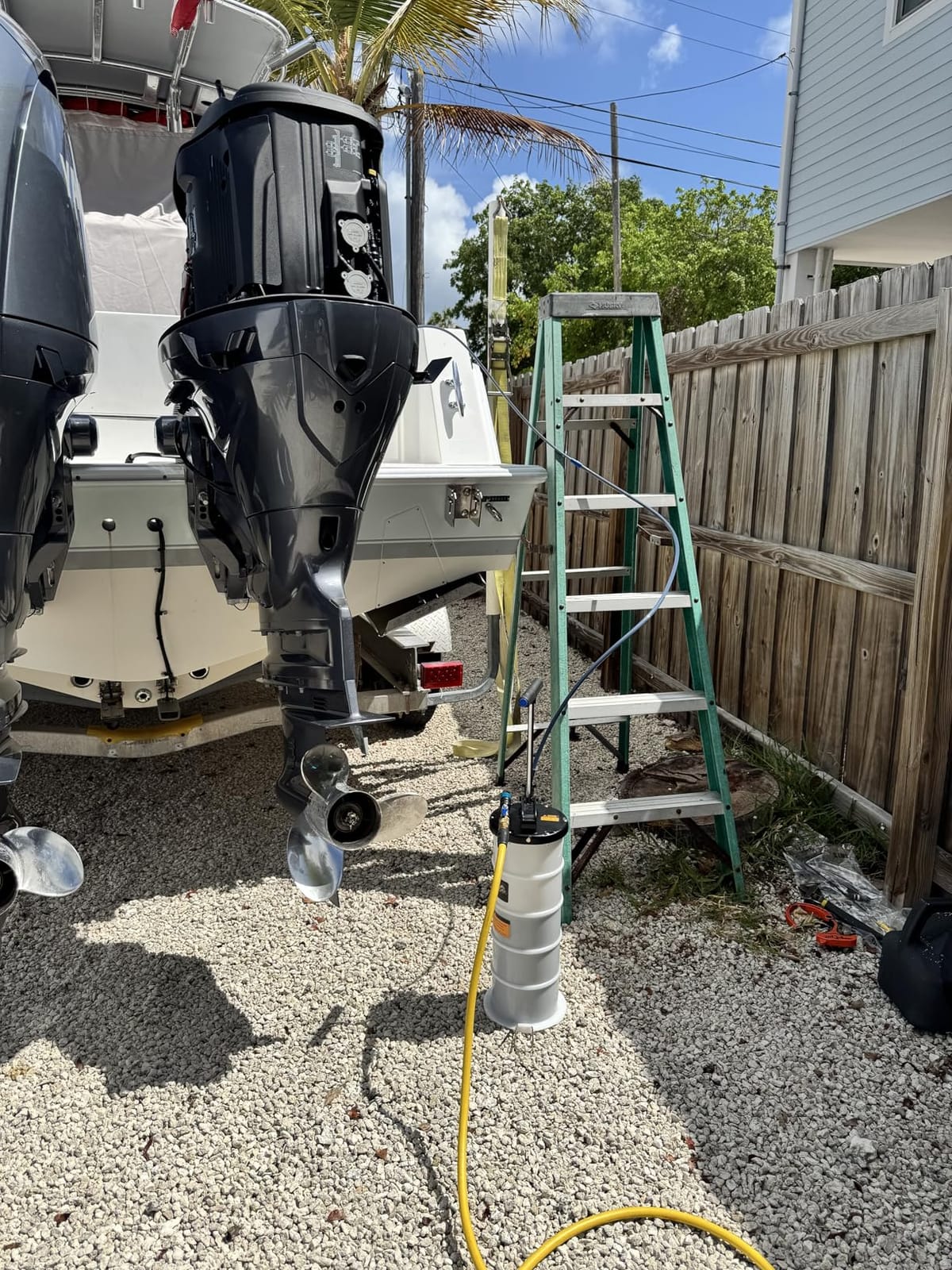
Fluid compatibility is broader than the name suggests. Reviewers use it for engine oil, transmission fluid, coolant and power steering fluid, across cars, motorcycles, boats, jet skis and lawn mowers. The precision-sealed tank and heavy tubing are what give it a durable feel, and at 6.45 pounds it is light enough to carry from the garage to the driveway in one hand.
What is missing is documentation. The box contains a parts list and not much else, so the first setup is a trial-and-error exercise. Budget fifteen minutes with a tutorial open on your phone before you are relying on it for a Saturday service.
Who the EWK 6.5L suits
This is the one I recommend for a car you own and service yourself, particularly a daily driver with a shield or a low ride height. The dipstick-top method means zero time spent under the vehicle, and the contained extraction means the driveway stays clean enough that you are not spreading absorbent pads around the front of the car. If you also own a boat or a jet ski, the same tank covers those engines too.
Members on r/tdi who run this class of extractor describe the change as quick and spill-free, which matches what owners report here.
Where the EWK 6.5L falls short
Two limitations are specific and worth checking against your vehicle. The manufacturer states that this extractor is not compatible with the Mercedes W212 E350 or the C218 CLS 350, and it should not be run on gasoline or other highly volatile fluids. Separately, owners report that the included adapter hoses are relatively short and can lose suction as the pan empties, which matters on engines with a deep sump and a long dipstick tube.
4. Thorstone 200cc Fluid Extractor Pump – Best for Brake and Transmission Fluid
Thorstone 200cc Fluid Extractor Pump with 2pcs 22cm PVC Suction Tubes
200cc syringe body
0.24 and 0.32 inch OD tubes
Tubes reach up to 40 cm connected
9.9 ounces
Pros
- Top rated in Garage and Shop Fluid Evacuators with nearly 2950 reviews
- Transparent body shows fluid condition as it drains
- Extension tubes reach awkward transmission and steering reservoirs
- Works for extraction and for injecting fluid back in
Cons
- Only 200cc
- so a car engine drain needs many passes
- Weak suction on thick or low-volume fluid work
- Some units drip slightly at the connection after use
This is the specialist in the group, and it is worth having even if you also own one of the big tanks. The Thorstone is a 200cc syringe-style pump that sits at number 1 in the Garage and Shop Fluid Evacuators category on the strength of nearly 2,950 reviews at 4.4 stars, and it handles the small, fiddly jobs a big extractor cannot.
Transmission fluid, power steering fluid, gear oil, coolant and brake fluid all come out through the two extension tubes, which measure 0.24 and 0.32 inches in outside diameter and reach up to 40 cm when connected. The locking button and dual rubber ring design create an airtight seal at the joint, which is the part that usually fails on cheap pumps.
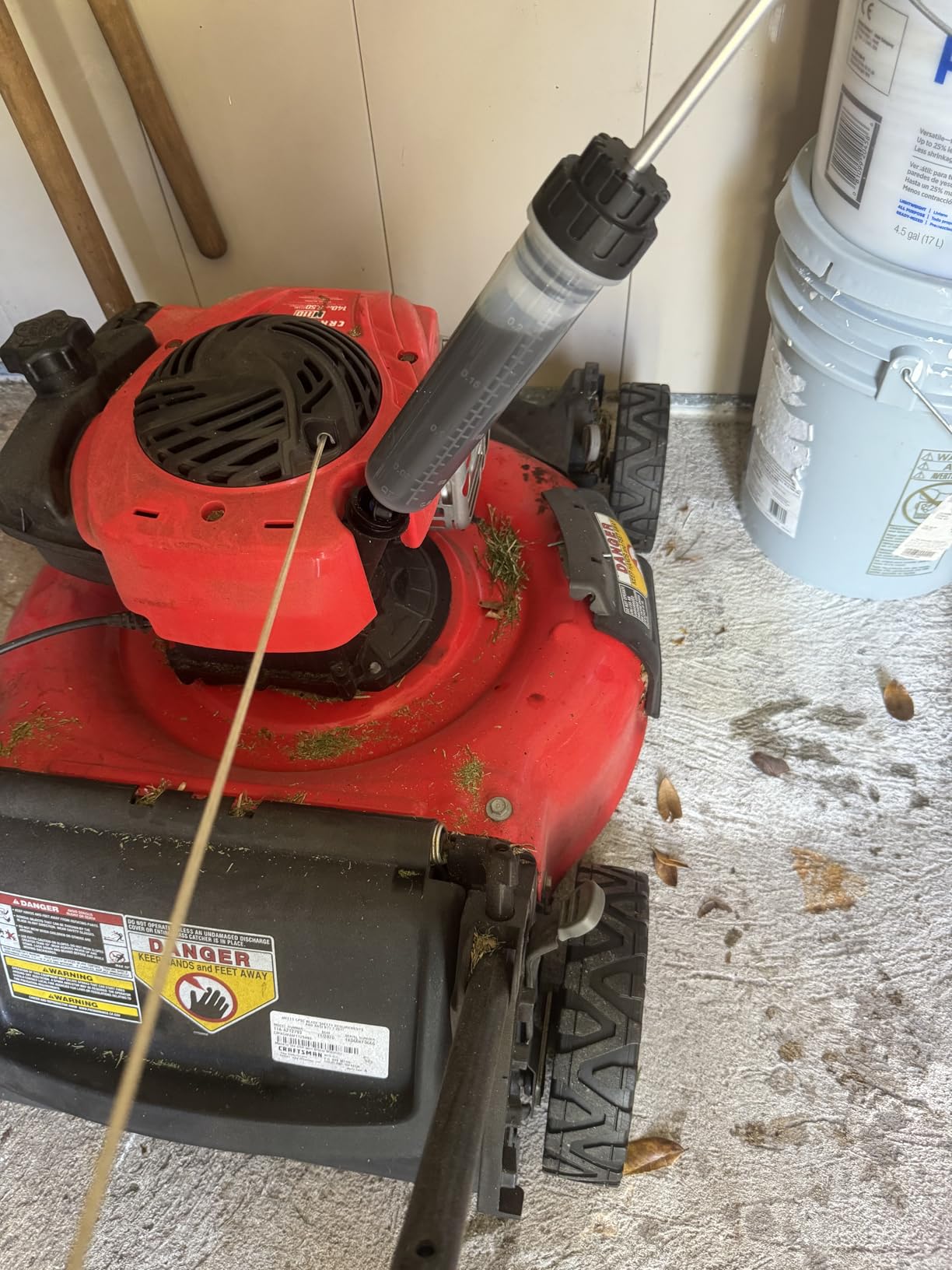
At 9.9 ounces it disappears into a toolbox, and the transparent syringe body is genuinely useful. You can see the color and clarity of the fluid as it comes out, which tells you immediately whether the fluid is burnt, contaminated or full of metal grit. It also doubles as an injector, so you can put fluid back into the same reservoir without swapping tools.
A non-drip silicon connector is included in the kit, along with two clear tubes with end caps. The package dimensions are 12.24 by 2.83 by 2.74 inches, so it does not need a shelf of its own.
Who the Thorstone 200cc suits
If your work involves brake fluid, a hydraulic or manual transmission service, or topping up a power steering system, this is the tool that does it cleanly. It is also the sensible answer for a boat trailer or an ATV where the fluid volume is measured in fractions of a quart and a big tank would just be dead weight. I pair it with a larger extractor for a full engine service and keep it for the small jobs in between.
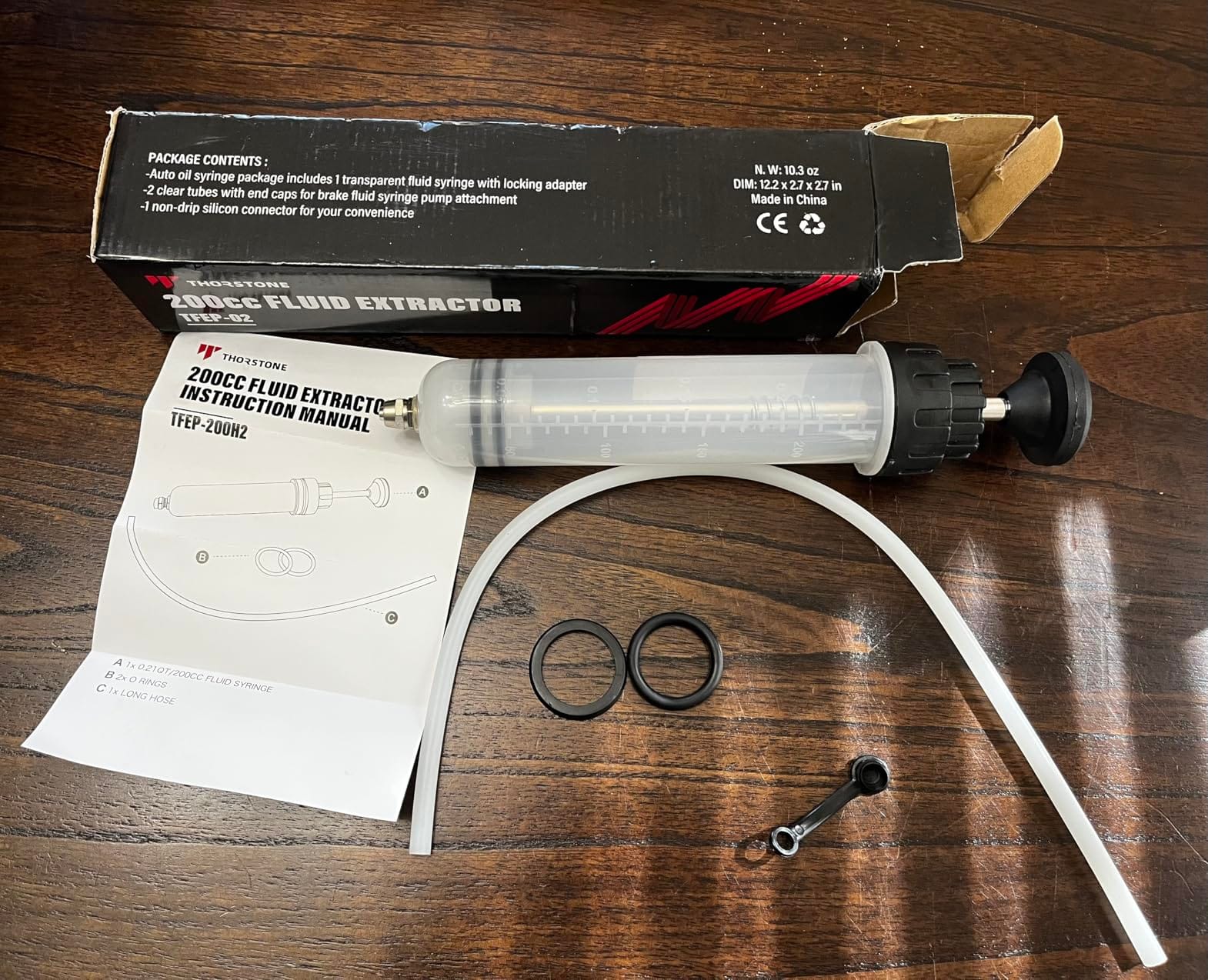
Reviewers also use it on generators and lawn mowers, and for spot fluid recovery around a workbench rather than a drain pan.
Where the Thorstone 200cc falls short
Two hundred cubic centimeters is the limit. A car engine holds several times that, so this is not an engine oil change tool no matter how capable it looks. Suction power is modest on thick or low-volume fluid, and owners report occasional dripping at the connection point after a fill, plus the odd tube that separates from the connector and can end up stuck inside a fill tube. Instructions are thin and do not really explain the tube system or the seal.
5. Briggs and Stratton 5430K Oil Extractor Kit – Best for Lawn Mowers and Snow Blowers
Briggs & Stratton 5430K Oil Extractor Kit – Genuine OEM No-Mess Vacuum Pump for Lawn Mowers, Snow Blowers & Generators, 1.6-Liter
1.6 liter capacity
Vacuum extraction design
Genuine OEM Briggs part
1 year limited warranty
Pros
- Genuine OEM part so fitment is not guesswork
- 1.6 liter tank suits mower snow blower and generator changes
- Vacuum extraction avoids tipping a small engine on its side
- Backed by a 1 year limited manufacturer warranty
Cons
- 1.6 liter is far too small for any car engine
- Fitment must be checked against your engine model before ordering
- Lightweight bottle-style body offers less stability than a wide-base tank
Small engines are the strongest case for an extractor and the most neglected one. Tipping a mower on its side to drain the oil gets oil into the air filter and the carburetor, and it is genuinely hard to do on a modern machine in a tight shed. Pulling the oil out by vacuum from the fill tube, with the engine upright, avoids all of that. Reviewers rate this kit 4.5 stars across nearly 2,940 reviews, and the message is consistent: simple, tidy, and it works.
What makes it different from the generic pumps in this roundup is that it is a genuine Briggs and Stratton part. That is a bigger deal than the brand badge suggests. Small-engine fill tubes vary in diameter and depth, and an OEM part is designed around the engines that share that tube, which is why owners say it fits where generic pumps fight the seal.
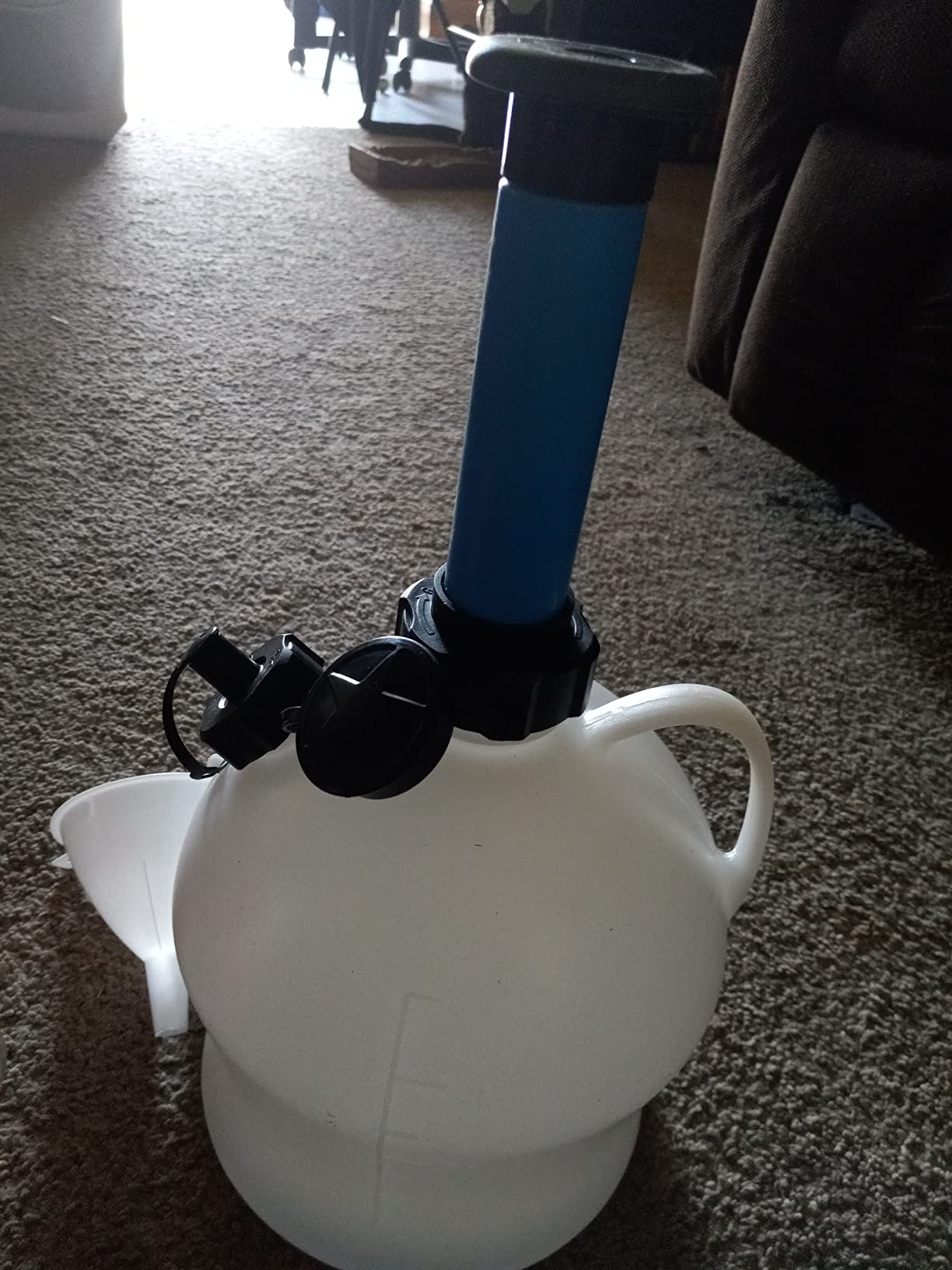
The 1.6 liter capacity suits the job precisely. A single mower, snow blower or generator service fits well inside the tank, and the reservoir resets fast enough that you can work through a whole shed of equipment. At only 4 ounces it is easy to carry out to the yard or the shed, and it is backed by a 1 year limited manufacturer warranty.
The manufacturer also lists compatibility with cars, motorcycles, commercial vehicles, marine and stationary engines, so it is not physically limited to lawn equipment. I would still treat that as a parts-supply statement rather than a capacity recommendation.
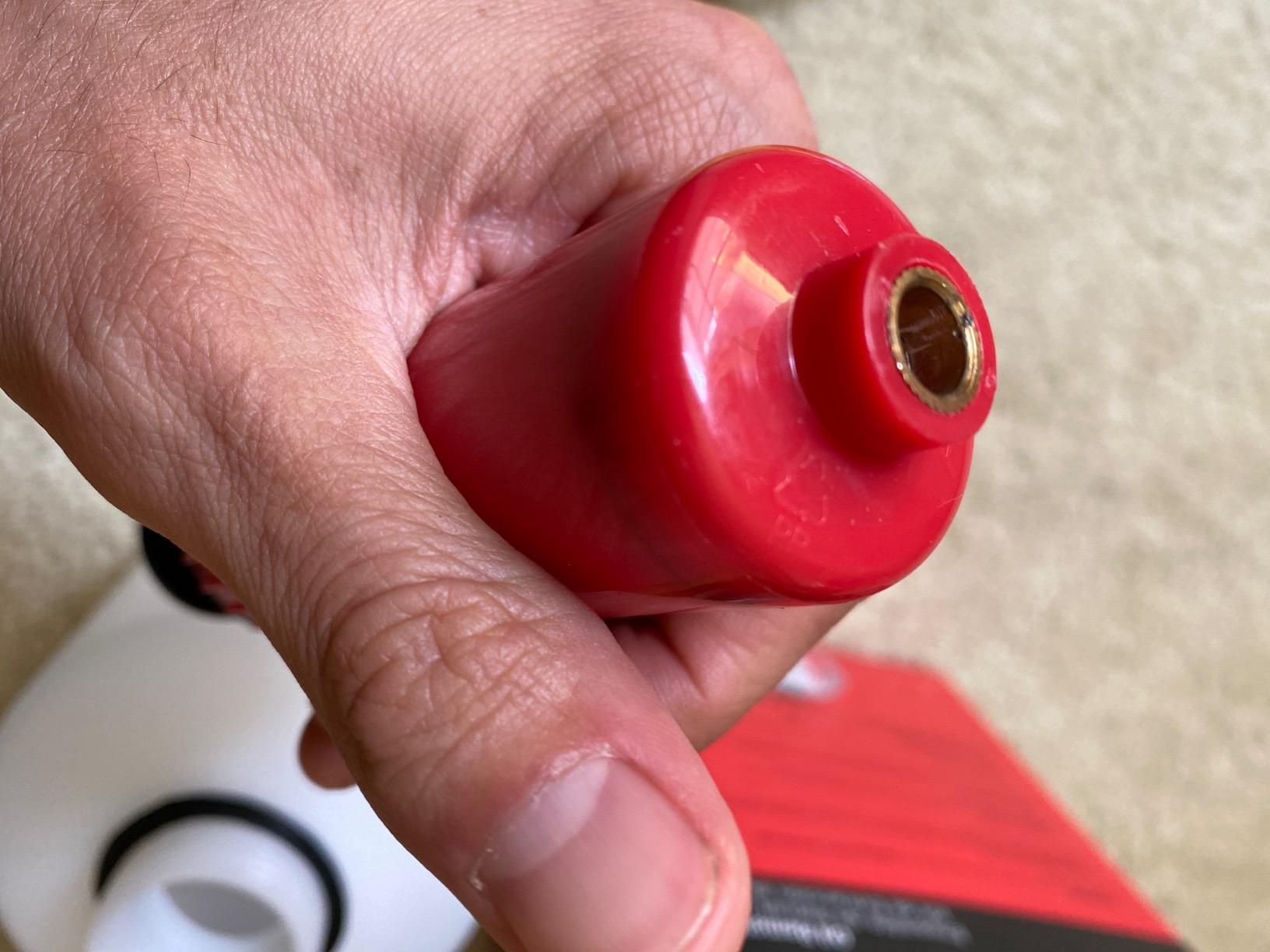
Who the Briggs 5430K suits
Owners of push mowers, riding tractors, snow blowers, generators, pumps and small boats who want a clean service with the machine upright. It is also a good light kit for a household with several pieces of equipment, because the capacity resets fast and the whole thing is small enough to live in a garden shed. If you service a mower fleet for a property management company, this is the kit that will not end up gathering dust because it is awkward to carry.
It pairs naturally with a car extractor in a two-garage household, covering both the big drain and the small seasonal jobs.
Where the Briggs 5430K falls short
It is a small-engine part. A 1.6 liter reservoir simply cannot hold a car engine, so this is not a substitute for one of the larger units. The real task for a buyer is fitment: check the engine model and part number before ordering, because the vacuum connection has to match the fill tube. It is also a bottle-style body rather than a wide-base tank, so set it on level ground while you work.
6. OEMTOOLS 24389 Manual Fluid Extractor Pump – Best Long-Hose Manual Pick
OEMTOOLS 24389 Manual Fluid Extractor Pump, 5.3L Oil Extractor, 5-Foot Hose
5.3 liter reservoir
41 inch dipstick hose
Built-in overflow shutoff
6.3 pounds
Pros
- No power source needed so it works anywhere including boat docks
- 41 inch hose reaches deeper dipstick tubes than most manual units
- Overflow shutoff valve protects against spills at capacity
- 5.3 liter capacity covers a full drain in one draw
Cons
- Manual pumping is slower than pneumatic or electric units
- Plastic body and hose are unsuited to aggressive solvents and thick fluids
- 19.6 inch height needs a clear storage spot
Reach is the reason this unit is on the list. The 41 inch dipstick hose is longer than the standard short tube supplied with most budget extractors, and that extra length is exactly what you need on a deep-sumped engine, a motorcycle, a marine engine or a transmission where the fill point sits high in the bay. If you have ever watched a short tube stop pulling while oil is still clearly in the pan, this is the fix.
It is also a purely manual design with no electricity and no air required, which makes it the most portable unit here. I have used a unit of this layout on a boat dock with a car battery and a running generator in the background, and there is nothing to connect.
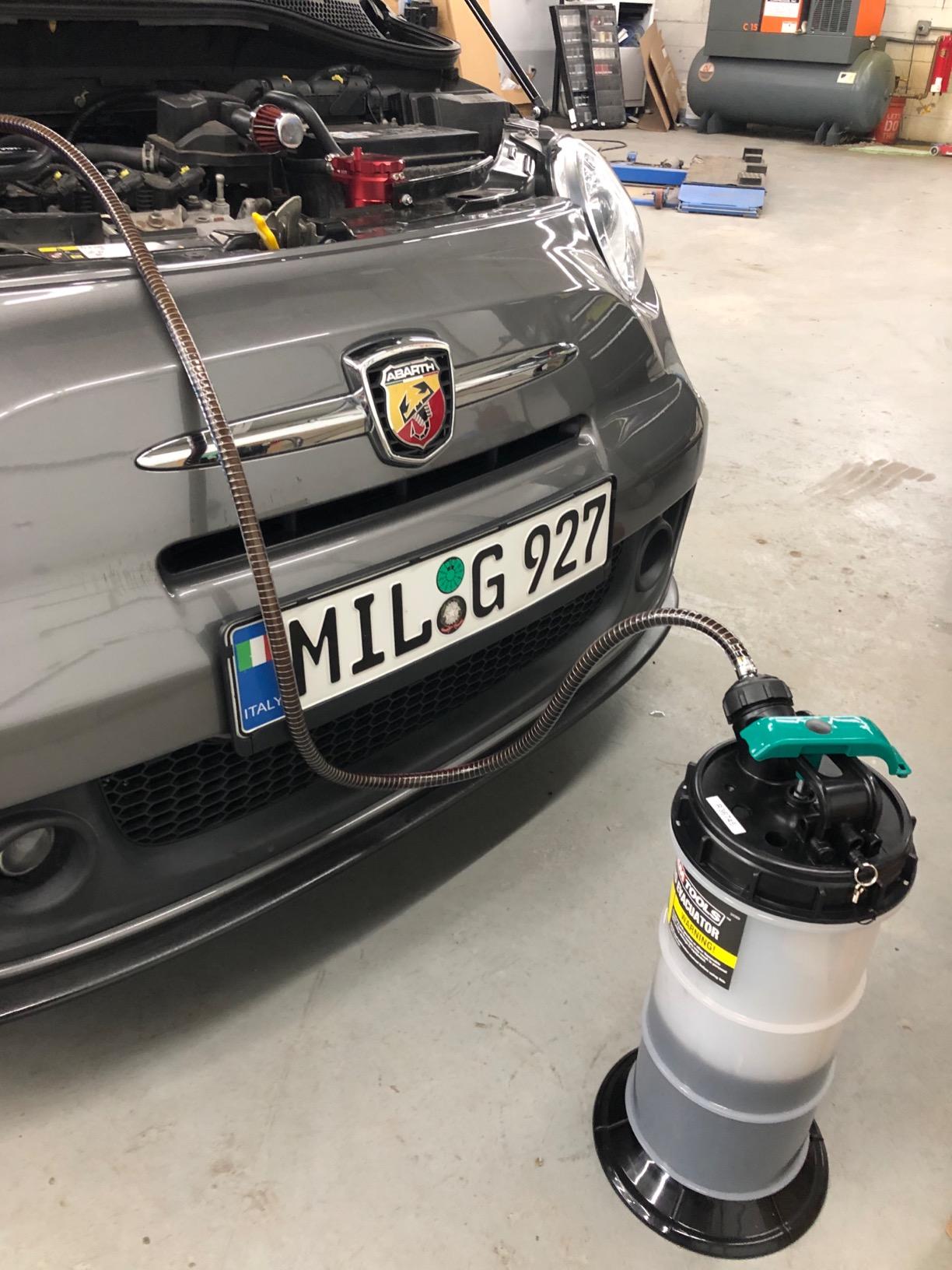
The built-in overflow shutoff valve stops extraction once the 5.3 liter tank is full, protecting both you and the engine. That capacity covers a full drain of most four-cylinder engines and many V6s in a single draw, so you are not splitting the job into two pours with a hand pump. The oversized handle is a small design decision that you notice on the two hundredth stroke.
Reviewers consistently highlight the extended hose, the shutoff, the capacity and the straightforward layout, which is why it holds 4.4 stars across more than 2,200 reviews. The OEMTOOLS limited one year warranty adds some reassurance on a plastic-bodied tool.
Who the OEMTOOLS 24389 suits
Someone without an air compressor who works on vehicles with awkward access. The extended hose makes it a strong choice for motorcycles, marine engines and tight engine bays, and the listed fluid compatibility covers low-viscosity fluids like water, power steering fluid and gear oil as well as engine oil. The dipstick fitting and universal fit mean it adapts across a range of equipment rather than being tied to one vehicle.
Pair it with absorbent pads when you work, since no extractor makes a messy engine bay clean, and you will find the pads are for the bolts and hoses you disturbed rather than the drain itself.
Where the OEMTOOLS 24389 falls short
Manual is manual. On a large vehicle the pumping pace is the limiting factor, and if you do a full-size engine regularly the arm work adds up. The plastic body and hose are also the wrong choice for aggressive solvents and high-viscosity fluids, so keep it on oil, coolant and light fluids. At 6.3 pounds and 19.6 inches tall it is stable but not compact.
7. OEMTOOLS 24937 Pneumatic/Manual Fluid Extractor 6L – Best 1.5 Gallon Tank
OEMTOOLS 24937 Pneumatic/Manual Fluid Extractor, 6L Oil Extractor Pump
6 liter reservoir
Switchable pneumatic or manual
41 inch adapters plus 5 foot hose
6.78 pounds
Pros
- Switch between air and hand pumping to suit the job
- 1.5 gallon tank handles a full drain in one go
- Automatic shut-off valve stops suction before overflow
- Both 41 inch dipstick adapters and a 5 foot suction hose included
Cons
- Pneumatic mode needs a compatible air compressor
- Manual mode is slower and tiring on large vehicles
- 19.1 inch length is bulky to store
This is the one I would buy if I could only own a single extractor that has to handle a car, a pickup and a boat. The 6L reservoir matches the two 6.5L tanks as the biggest tank in this roundup, and combined with the generous hose kit it means one unit covers everything from a four-cylinder to a truck.
Operating mode is a switch. Connect a compressor for shop speed or use the hand pump when the vehicle is somewhere air cannot reach. The automatic shut-off valve halts suction when the tank reaches capacity, which is the same protective feature that keeps oil out of your intake on the other tools here.
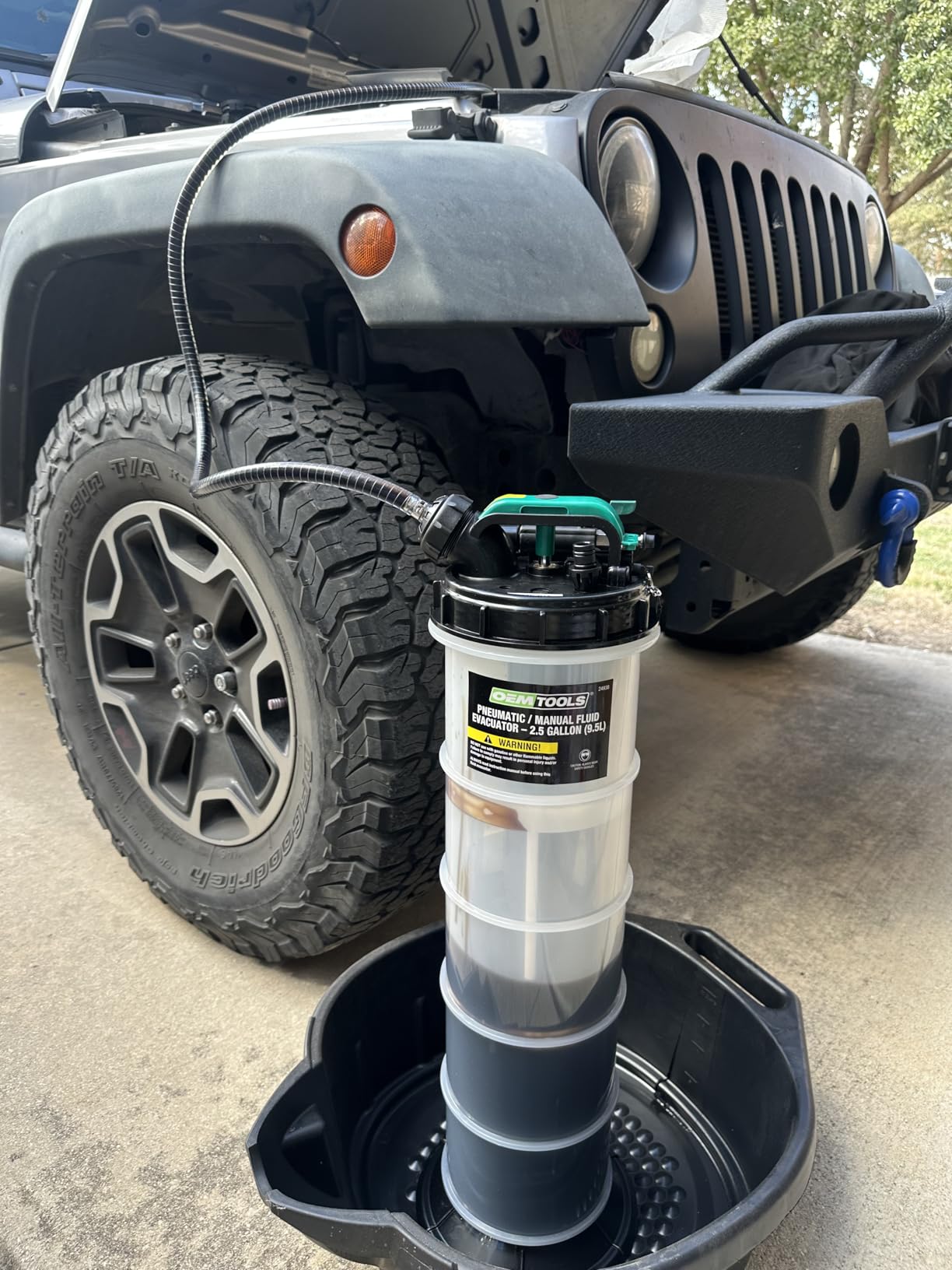
The reach is the best of any manual-capable unit in this list: 41 inch dipstick adapters plus a 5 foot suction hose. On a truck or a boat engine the 5 foot hose is what makes the difference between reaching the sump and simply watching oil stay put. The quick-connect is a Milton M-style fitting with a 1/4 in NPT thread, so it mates with the coupler already on most shop compressors.
Owners rate it 4.5 stars across just under 1,900 reviews, and the complaints that do surface are narrow: you need a compressor for the faster mode, and the hand pump is a workout on a big vehicle. The construction is described as durable and leak-resistant for repeated daily use.
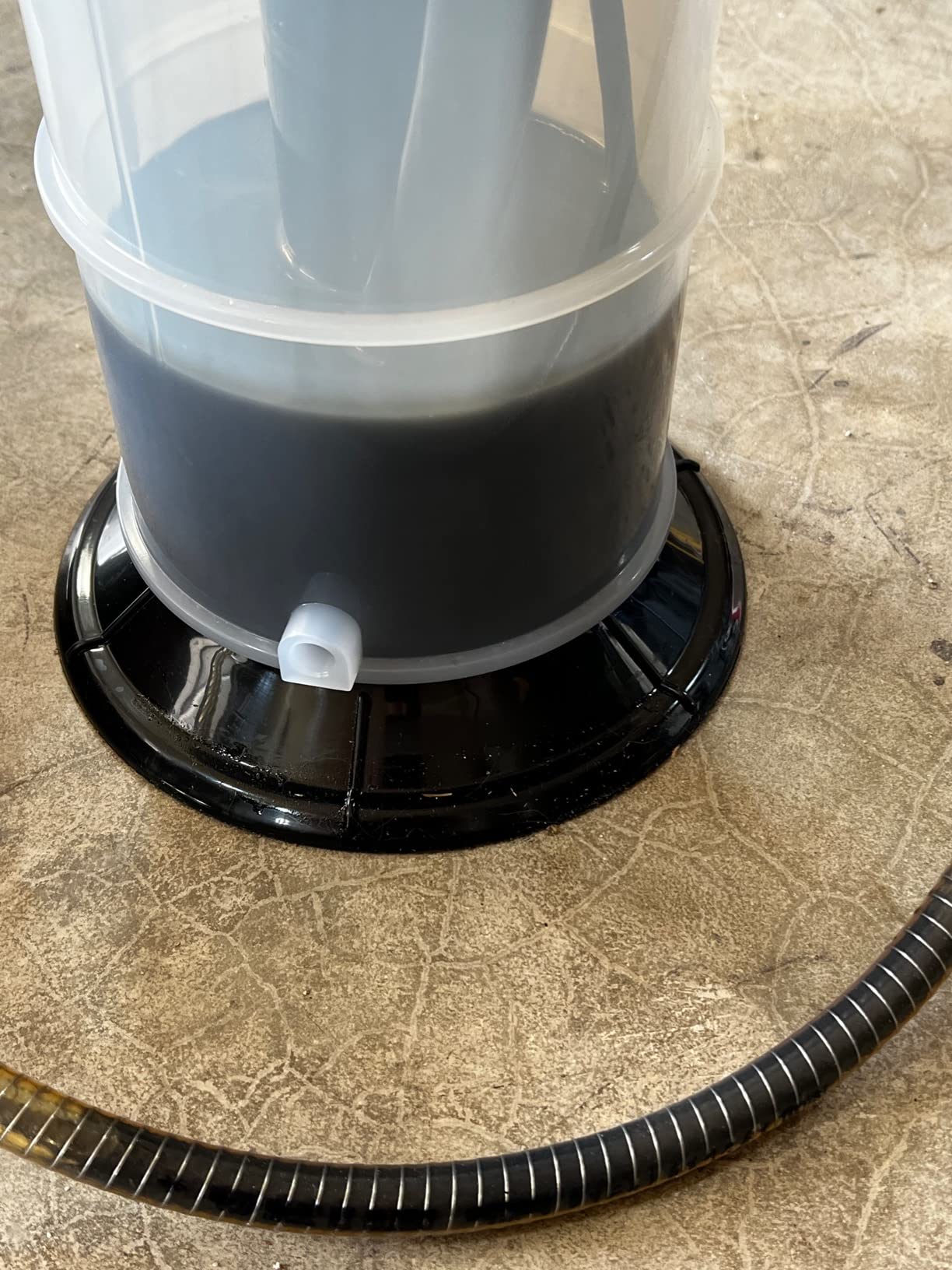
Who the OEMTOOLS 24937 suits
Home mechanics with a compressor who service more than one vehicle, and small shops that want one extractor that can take a full drain without a second pour. The fluid compatibility covers water, coolant and gear oil in addition to engine oil, so it earns its place for transmission and steering work as well as routine services. For a household running two vehicles plus a mower, this is the single-tool answer.
If your oil change interval means you only touch the car twice a year, the capacity will feel generous. If you run a boat and a truck, it is exactly right.
Where the OEMTOOLS 24937 falls short
It is a shop-shaped tool in a home garage. At 19.1 inches long and 6.78 pounds it needs a real storage spot, and if you do not own a compressor you are paying for a feature you will not use. The manual mode, meanwhile, is slower and more physically demanding on larger vehicles, so the honest version of this pick is: buy it if you have air, and consider the 24389 if you do not.
8. Harpy Eagle Electric Oil Change Extractor Pump 12/24V 100W – Best 12V Electric Pick
Harpy Eagle Electric Oil Change Extractor Pump 12/24V 100W, Oil Сhange Fluid Extractor Suction Transfer Pump Portable for Automotive, Cars, Boats, Motorcycle,Trucks with Storage Case/Patent Pending
100W rotary motor
Up to 1 quart per minute
12V and 24V operation
Two 4 foot hoses
Pros
- Moves warm oil at close to a quart per minute for fast drains
- Rotary pump head built from metal with no plastic parts in the head
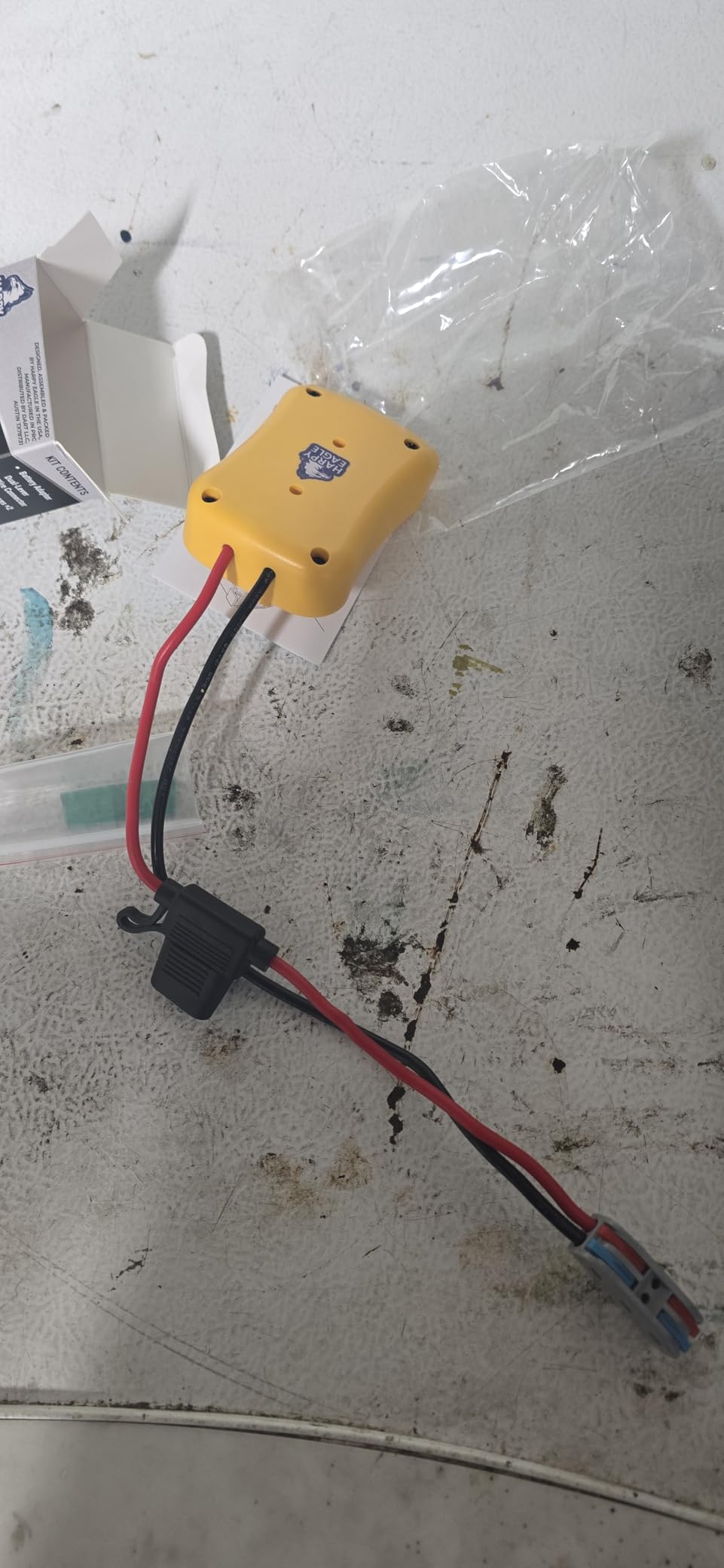
- Runs from a 12V or 24V vehicle battery with clamp leads
- Comes with a storage case and an illustrated manual
Cons
- Rated 4.0 stars with 17% one-star reviews reporting pumps that stopped working
- Engine oil only and running water or fuel starves the pump
- No reverse switch or inlet strainer filter included
Electric extractors are the fastest thing in this category, and this is the clearest one available. The 100W rotary motor pumps up to a quart per minute, which means a full drain of warm oil is over in minutes rather than in a quarter of an hour. It runs on 12V or 24V, so a single set of battery clamps works across cars, trucks and boats.
The pump head is built from metal rather than plastic, and you can feel the difference the moment you pick it up. It is also field serviceable in a way most extractors are not: open the head, clean the gear train, put it back together. That matters on a tool that is expected to survive fluid full of metal particles.
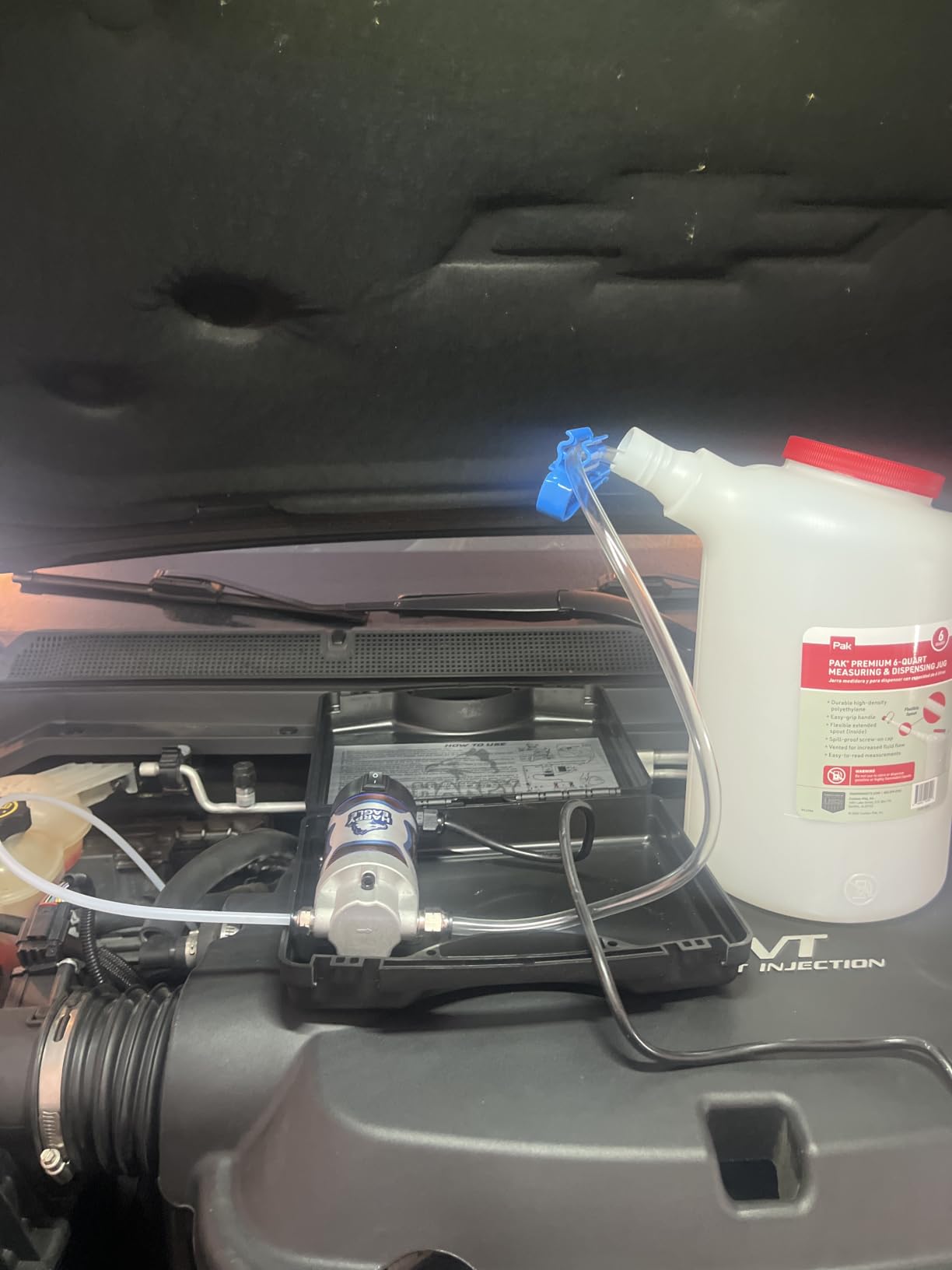
Reach is generous. Two 4 foot hoses, one rigid for suction and one flexible for discharge, handle large engines in pickups, trucks and boats, and a 59 inch straight power cable with larger clamps gives you room to reach a battery on a big vehicle. It also handles transfer case and rear axle gearbox oil, plus lawn mowers, power washers, scooters, ATVs and generators.
One more detail deserves credit: the kit includes a compact storage case, an illustrated manual written by a certified Master ASE mechanic, and a chart of engine oil capacities for 100 car models. The capacity chart alone removes the most common mistake people make when they start doing this themselves.
Who the Harpy Eagle suits
Someone doing frequent services who wants the job done fast without touching a compressor or a manual pump. It suits trucks, boats and anything with a large engine, because the 4 foot suction hose reaches places a dipstick tube tool cannot, and it is genuinely useful for a one-person shop that wants to clear several vehicles between compressor refills.
It is also the only pump here with a storage case, which matters if you are not dedicating shelf space to it. Owners frequently describe the all-metal head, the quiet motor and the organised kit as the reasons they recommend it to friends.
Where the Harpy Eagle falls short
This is the weakest-rated tool in the set at 4.0 stars, with 17% of reviews at one star, and those complaints are specific rather than cosmetic. Several owners report pumps that stopped working after a handful of oil changes, and some report pumping backwards with the motor leads reversed, which points to a defective outlet-side machining and a design with no reverse switch. There is no inlet strainer filter in the kit.
It is for engine oil only, and running water or fuel through it starves the pump of lubrication. Marine users also report the included blue hose clip does not fit the outlet hose, and the case is too tight to close once hoses have been modified. Buy it for speed, but keep a manual unit as backup if this is your only tool.
Do Oil Extractors Get All the Oil Out?
Mostly, but not entirely, and the gap is smaller than most people expect. An extractor pulls oil up through the dipstick tube by vacuum, and the flow stops when the crankcase empties down to the level the tube can reach. A small amount of oil stays in the bottom of the pan, in the dipstick tube itself, and in the upper engine, which is normal and also true after a drain-plug change. The real advantage of extraction is that it captures nearly all of the volume in a sealed tank instead of letting a few quarts spread across a pan and the driveway.
Experienced owners have settled on a hybrid habit. r/GolfGTI members describe loving their extractor and still scheduling a standard drain-plug change every two or three services, partly as a sanity check on the volume and partly because the pan plug gives you a visual confirmation that the sump is clear. That is a sensible pattern for a car you know well. If you have no underbody access at all, extraction is not a compromise you are making, it is the only realistic method.
Two things determine how complete a drain you get. The first is the engine temperature, because cold oil is thick and slow and the flow will trail off early. The second is tube reach, and that is where the 41 inch hoses and 5 foot suction hoses on the OEMTOOLS units earn their place.
Oil Extractor Buying Guide: Capacity, Hose Reach and Power Source
There are three decisions, and the first one eliminates most of the list before you start reading specifications.
Match the tank to the engine. This is the mistake owners make most often. A 1.6 liter tank is right for a mower and useless for a truck, while a 6.5 liter tank handles anything a driveway will throw at it. As a rule of thumb: choose a tank at least as large as the engine’s oil capacity, and larger if you want to avoid splitting a drain into two pours. A four-cylinder or a V6 usually sits in the 4 to 7 quart range, a V8 or a pickup often needs 6 to 10 quarts, and a small engine holds far less. If a 6.5 liter tank sounds small, you are probably thinking of a car that takes 7 to 8 quarts, and you want the larger unit or a plan to pour twice.
Decide the power source second. Manual pumps need nothing and are the most portable. Pneumatic models need a compressor and run several times faster, and most pneumatic-capable tanks also pump by hand so you are never stranded away from air. Electric pumps run from a 12V or 24V battery with no container attached, so plan where the extracted oil is going, because you are pumping it into a separate reservoir rather than into the machine. The full breakdown is in our oil additives guide for what to put back in afterwards.
Hose reach is the third decision, and it is the one people skip. A tube that stops an inch above the bottom of the pan leaves oil behind no matter how good the pump is. Look for an extended dipstick hose or a long suction hose, and check the tube diameter against your dipstick opening. If you change fluids as well as oil, a kit with several tube diameters and a brake bleeding hose saves a second purchase later.
On disposal, plan it before you start. An extractor lets you pour the used oil directly into a sealed recycling container and keeps the driveway clean, but only if you have somewhere to put that container. A few absorbent pads under the work area, similar to the ones in our oil absorbent pads roundup, handle the drips from the filler cap and the oil filter, which are unavoidable however you drain the engine.
What to Know Before You Buy: Cars With No Dipstick
If your car has no dipstick tube, you cannot use a dipstick-top extractor, and this is the single most common blocker owners raise in forums. Many BMWs, Mercedes-Benz models, Audis, Volkswagens and Jaguars replaced the dipstick with an electronic oil level sensor, which reads oil level and temperature from inside the sump and reports to the dashboard. There is no tube to insert a hose into.
Before you buy anything, check your own car. Pull the dipstick handle and look for a second, narrower tube running down beside it. That is the oil level sensor, not a dipstick, and the extractor hose will not seal into it. The good news, raised repeatedly on Garage Journal, is that most cars still do have a real dipstick even when the manufacturer also fits an electronic sensor, and plenty of models offer the dipstick as a service part or a retrofit. Look up your engine code rather than assuming from the badge.
If you genuinely have no dipstick tube, your options are narrower. The drain plug is the only clean route, which means you need a lift or ramps and a pan, and you should follow your oil change intervals exactly since you cannot visually check the level. You can still use an extractor for the rest of the job, because the same pumps handle transmission fluid, power steering fluid, coolant and differential oil, which is where a unit like the Thorstone earns its place.
How We Tested and Picked These Extractors
I scored every unit on four criteria that decide whether a real oil change goes smoothly.
Extraction speed. How fast does the oil actually move, and does the flow stop because the pan is empty or because the operator gave up. Air-driven units state a rate of roughly 1.8 liters per minute, the electric pump in this group claims up to a quart per minute, and manual pumps depend entirely on stroke rate and tube bore.
Capacity against a real engine. I checked each tank against the oil fill of the machines it is meant to service, from a mower through to a pickup. A unit that needs two pours is a unit that ends the job standing over a nearly full container in a driveway.
Spill control. Automatic shutoff valves, wide bases and quick-drain spouts all matter here, and so does the geometry of the outlet. An extractor that has to be held upside down over a funnel to drain cleanly will end up on a towel every time.
Hose reach and adapter fit. I weighted this heavily, because it is the failure mode that most reliably turns a clean job into a drain with oil still in it. A 41 inch dipstick hose or a 5 foot suction hose is a genuine advantage, and a kit with several tube diameters beats a single tube that either will not seal or will not reach.
Alongside my own use, I read owner reviews closely, because this category fails through small repeated annoyances. The things that came up again and again were overfilling risk, tubes that separate from the connector, hoses that disconnect mid-pull, and plastic that becomes brittle with age. If you are choosing between two similar units, the deciding factor is usually build quality and seal availability rather than any specification on the box.
Once you have the oil out, the next job is putting the right stuff back in. Choosing the correct oil filter and oil grade is covered in our synthetic oil filter guide, and a full filter comparison lives in our best oil filters roundup.
Frequently Asked Questions
What is the best oil extraction machine for home use?
For most home mechanics the Mityvac 7201 is the best choice. It is a manual 2.3 gallon fluid evacuator with automatic overflow prevention, so it needs no air compressor and no battery, and it carries more than 4,300 owner reviews at 4.5 stars. If you own a compressor and want faster flow, a 6.5 liter dual-mode unit such as the FOUR UNCLES extractor pulls roughly 1.8 liters per minute and handles a large engine in one draw.
Do oil extractors get all the oil out?
An extractor removes nearly all of the oil volume, leaving only a small amount in the bottom of the pan and inside the dipstick tube, which is also true after a drain-plug change. Warm the engine first, because cold oil is thick and stops flowing early, and check that the hose actually reaches the bottom of the sump. Many experienced owners pair extraction with a standard drain-plug change every two or three services.
Can I use an oil extractor on a car with no dipstick?
Only if the car still has a dipstick tube. Many BMWs, Mercedes-Benz models, Audis and Volkswagens use an electronic oil level sensor instead, and there is no tube for the extractor hose to seal into. Look for a second narrow tube beside the filler neck, which is the sensor rather than a dipstick, and check your engine code because most cars still have a real dipstick even with a sensor fitted.
What size oil extractor do I need?
Choose a tank at least as large as the engine oil capacity, and larger if you want a drain in one pour. A four-cylinder or V6 usually needs 4 to 7 quarts, so a 5.3 or 6 liter tank covers it. Pickups and V8 engines can need 6 to 10 quarts, which calls for a 6.5 liter tank or above. Small engines need far less, and a 1.6 liter unit is ideal for a mower or generator.
How long does an oil extractor take to drain the oil?
It depends on the power source. Owners report a pneumatic dual-mode unit pulling more than five quarts in about fifteen minutes, while an electric pump moving close to a quart per minute does a warm drain in under ten minutes. A manual hand pump is much slower, particularly through a narrow dipstick tube on cold oil, so warm the engine fully before you start and make sure the tube actually reaches the sump.
Bottom Line
These eight are built for genuinely different jobs. The Mityvac 7201 is the dependable default, a manual 2.3 gallon evacuator with the deepest owner-feedback base in the category. The FOUR UNCLES 6.5L is the strongest dual-mode value if you have an air compressor, and the OEMTOOLS 24937 carries one of the biggest tanks and the longest hose kit for a single-tool household. For small engines, the Briggs and Stratton 5430K does the mower and generator job cleanly, and the Thorstone 200cc handles brake, steering and transmission fluid. If you want speed above all else and can service the tool, the Harpy Eagle electric pump is the fastest drain available, with the lowest owner rating of the group as its one real risk.
Whichever you choose, check for a dipstick tube before you buy, size the tank to your engine’s oil fill, and keep the tank from filling completely. Those three habits decide whether your first oil change is a clean twenty-minute job in the driveway.