

Changing your own oil is one of those garage jobs that looks trivial right up to the moment the pan tips, the stream misses, and you are standing over a puddle on a concrete floor. A dedicated waste oil drain solves the collection half of that problem, and picking the right one is a decision about capacity, height, and how the oil gets back out again.
We spent 2026 season working through every shape of waste oil drain on the market, from 5-gallon steel sums to 23-gallon air-evacuated tanks. Our pick for most people is the ARKSEN 20 Gallon Waste Oil Change Tank: it holds ten to sixteen changes depending on your engine, its funnel adjusts through 45 to 72.5 inches, and it carries the highest rating in this group at 4.6 stars from 739 owners. If your garage is tight or your vehicle sits low, the low-profile pick at number 7 handles clearance far better.
Before we get into the picks, one thing worth naming. Used engine oil is regulated waste in the United States, and how you collect it matters almost as much as where you put it. A drain that pours clean into a sealed container is a completely different experience from one that makes you balance a 20-gallon tank on its casters in a parking lot. Every pick below is judged on both halves of that job.
If you are the type who likes a conventional oil change, a filter, and a quick wipe-down, our oil filter roundup and oil absorbent pad picks cover the rest of the job.
Table of Contents
Top 3 Picks for the Best Waste Oil Drains (October 2026)

Which oil drain pan is the best? It depends on clearance, not on brand. For most home garages the winner is a 15- to 20-gallon roll-under low-profile tank on swivel casters with a folding handle, because it clears a raised car, holds several changes, and rolls to the door for disposal. If you work under a two-post lift, pick an upright 18- to 23-gallon adjustable tank instead. If you only change oil twice a year, a simple 15-quart funnel pan is genuinely enough.
Best Waste Oil Drains at a Glance in 2026
Every drain below shares the same basic job, so the useful comparison is what each one does well and what it costs you in the awkward details. The table ranks all ten; the reviews that follow explain who should buy which.
| Product | Specs | Action |
|---|---|---|
| ARKSEN 20 Gallon Waste Oil Drain |
|
Check Latest Price |
 Lisle 11102 Oil Lift Drain 8 Gallon Lisle 11102 Oil Lift Drain 8 Gallon |
|
Check Latest Price |
 XtremepowerUS 23 Gallon Waste Oil Tank XtremepowerUS 23 Gallon Waste Oil Tank |
|
Check Latest Price |
 Lincoln 3601 Pneumatic 18 Gallon Drain Lincoln 3601 Pneumatic 18 Gallon Drain |
|
Check Latest Price |
 VEVOR 20 Gallon Air Operated Drain VEVOR 20 Gallon Air Operated Drain |
|
Check Latest Price |
 OEMTOOLS 18 Gallon Upright Oil Drain OEMTOOLS 18 Gallon Upright Oil Drain |
|
Check Latest Price |
 VEVOR 20 Gallon Low Profile Electric Pump Drain VEVOR 20 Gallon Low Profile Electric Pump Drain |
|
Check Latest Price |
 AAIN AO5 5 Gallon Steel Oil Drain AAIN AO5 5 Gallon Steel Oil Drain |
|
Check Latest Price |
 AAIN 8-Gallon Industrial Fluid Drain Tank AAIN 8-Gallon Industrial Fluid Drain Tank |
|
Check Latest Price |
 Garvee 20 Gallon Waste Oil Drain Tank Garvee 20 Gallon Waste Oil Drain Tank |
|
Check Latest Price |
1. ARKSEN 20 Gallon Waste Oil Drain – Best Overall
ARKSEN 20 Gallon Waste Oil Change Tank, Red
Capacity: 20 gallons
Height: 45-72.5 inch
Emptying: air pressure assist
Weight: 36.9 lbs
Pros
- Air assist empties straight into a heater
- drum or recycling container
- 45 to 72.5 inch height adjustment
- Vinyl sight tube shows oil level while collecting
- Smooth casters and handle
- Responsive warranty service on valves and regulators
Cons
- Occasional pinhole leak at the tank-to-hose weld
- Ball valve can seize after long storage
- Bottom drain plug is straight-threaded
This is the drain we ended up recommending to friends. It is a 20-gallon steel tank with a 10 PSI working pressure rating, a pressure gauge marked in half-PSI increments, and a vinyl sight tube so you can watch the level climb without lifting the lid. The air-assist feature is the part that changes daily life: instead of wrestling a full tank across a shop, you hook up a regulator and push the oil straight into a drum, a waste oil heater, or a recycling container.
Height adjustment runs from 45 to 72.5 inches, which covers everything from a sedan on a lift to a truck on a taller rack. Reviewers repeatedly single out the sight tube and the casters as the features that make it pleasant to work with. At 4.6 stars across 739 reviews, it matches the highest average in this group and is backed by far more owner history than anything else here.
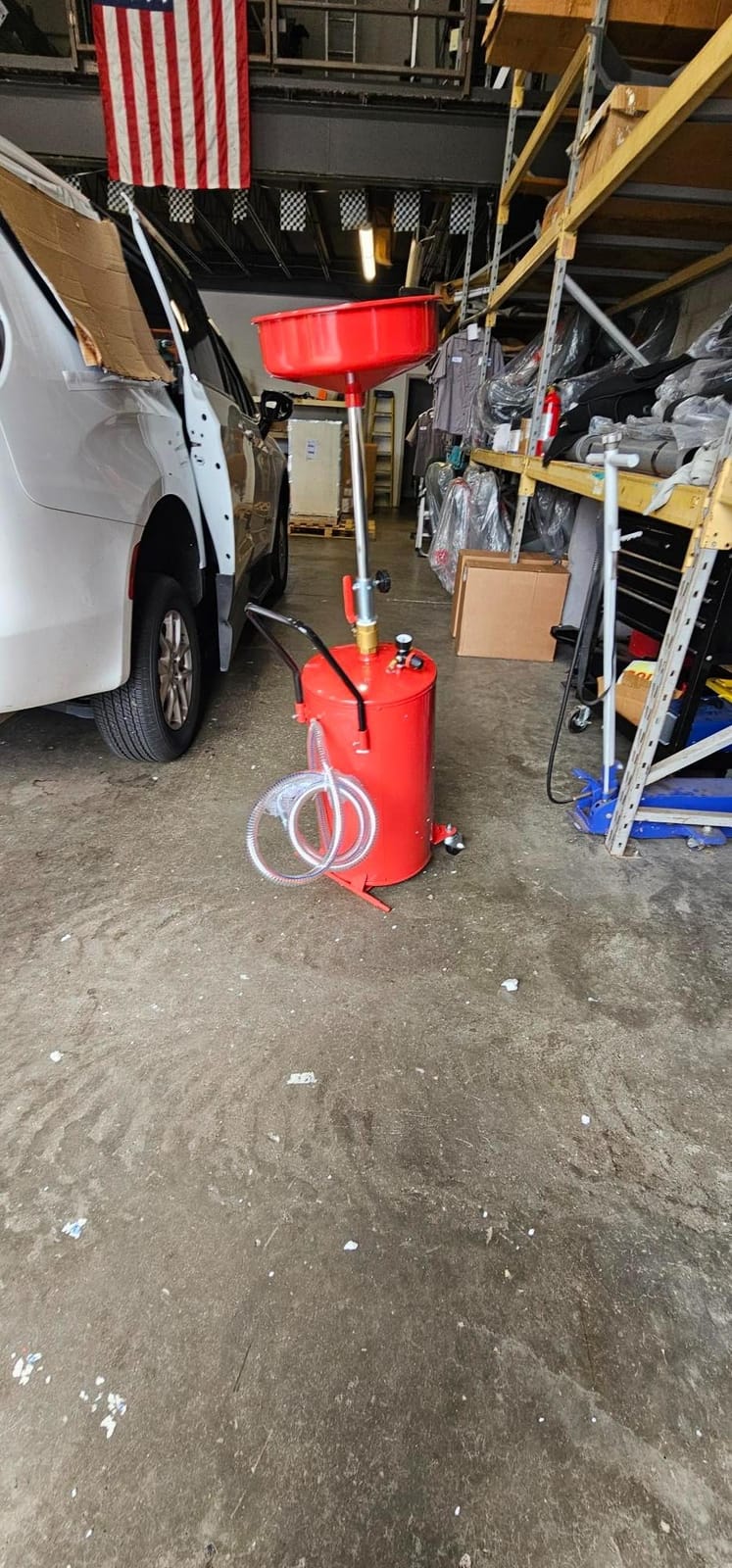
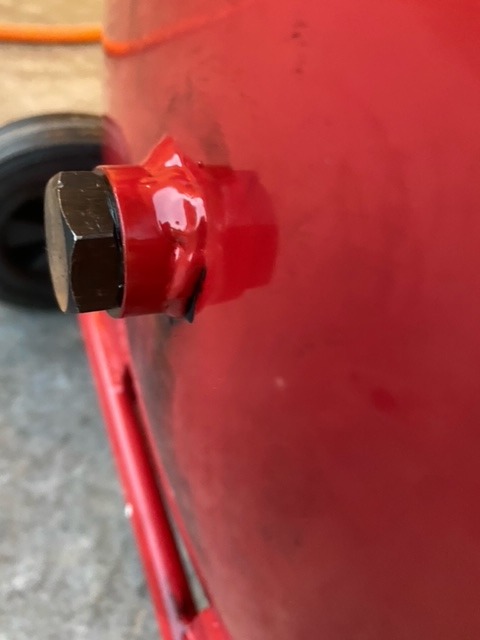
The honest weaknesses are quality-control details rather than design flaws. Some owners report a pinhole in the weld where the drain hose meets the tank, which needs a sealant and a return. The ball valve can also seize if the tank sits unused for months.
The bottom drain plug is straight-threaded, so a substitute brass plug is a sensible five-minute upgrade. None of these are deal breakers, and the seller’s warranty service comes up repeatedly in reviews as responsive.
It has been on the market since 2013, which tells you something about how long this design has been proven in real garages. If you want one unit that does the whole job and you have access to shop air, this is the one.
Is 20 gallons the right amount of capacity?
For a home garage doing four to eight changes a year, 20 gallons means you empty once or twice a year instead of every month. A typical passenger car change produces 4 to 5 quarts including the filter, so 20 gallons covers 80 quarts of oil. If you run a fleet or do daily service, step up to 23 gallons and plan to pump out every few days.
What do I need to empty an air-assisted tank?
A compressor and a regulator are the only real requirements. The unit includes a regulator, a drain hose, four wheels, and a 1/4 inch NPT air coupler, so a basic shop compressor and a 1/4 inch hose are enough. Apply thread seal tape to every threaded fitting before first use; the fittings are the most common source of weeping on any air-operated drain.
2. Lisle 11102 8 Gallon Oil Lift Drain – Top Rated
Lisle 11102 Oil Lift Drain – 8 Gallons
Capacity: 8 gallons
Height: 35-70 inch working range
Emptying: spout with threaded cap
Lifetime warranty
Pros
- Translucent jug shows oil level mid-drain
- 35 to 70 inch working range
- Quick-release height adjustment
- Four 2.5 inch ball-bearing swivel casters
- 15 inch funnel with built-in strainer
Cons
- 8 gallons fills up faster than larger tanks
- Plastic tank is less rigid than steel
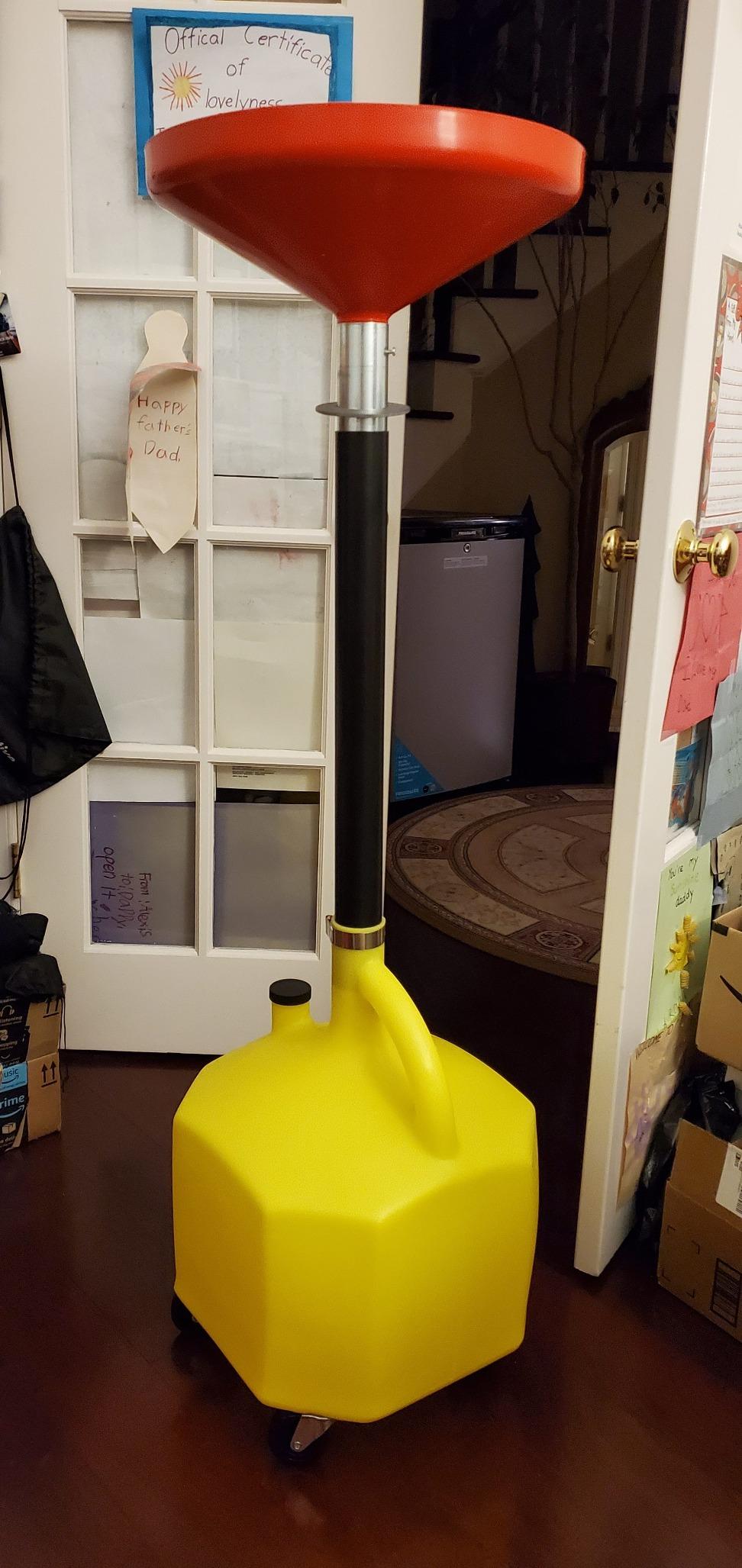
The Lisle 11102 is the recommendation we make most often to someone doing occasional home oil changes on a car that sits on stock suspension. It rates 4.6 stars from 647 owners, carries a lifetime warranty from a long-established lubrication tool maker, and it weighs just 16 ounces empty, which is why it moves around a garage so easily.
What makes it feel well made is the detail list. The 8-gallon jug is translucent, so you can see the oil level without guessing. The funnel has an integrated strainer that catches a dropped drain plug, which is a small thing that saves a very annoying afternoon. The four 2.5-inch ball-bearing swivel casters roll smoothly even when loaded, and the quick-release clamp makes height changes a one-hand job.

The limitation is arithmetic rather than quality. Eight gallons is roughly two full changes, so if you service more than one vehicle or forget to empty it after a few jobs, you will be pouring it out more often than you would like. The plastic jug is also less rigid than a steel tank, so it is not the choice for a shop that drags it around rough concrete every day.
Members of enthusiast forums have recommended this exact drain by model number for years, which is a decent signal that nothing about it has gone wrong. Buy it for a two-car household, keep the jug under a shelf, and it will outlast most of the tools you own.
Is 8 gallons too small for regular use?
Eight gallons covers about two standard oil changes on a passenger car. If you do one change a year, that is generous. If you do weekly service or run more than one vehicle, you will be emptying it constantly, and an 18 to 23-gallon tank from picks 1, 3, or 5 is a better fit for the same money over time.
Does the height really reach a car on a lift?
The stated working range is 35 to 70 inches, measured from the ground to the top of the funnel. That covers a car sitting on the floor and a sedan or light truck on a two-post lift. On a tall truck lift, measure your drain plug height first and pick a taller unit if you are within an inch or two of the limit.
3. XtremepowerUS 23 Gallon Waste Oil Drain Tank – Best for High Volume
XtremepowerUS 23 Gallon Portable Waste Oil Drain Tank, Air Operated Oil Drain with Adjustable Height Funnel, Heavy-Duty Rolling Used Oil Collector for Cars, Trucks, SUVs & Auto Repair Shops, Red
Capacity: 23 gallons
Emptying: pressurized self-evacuation
Weight: 42.1 lbs
Steel body
Pros
- 23 gallon reservoir cuts emptying trips
- Pressurized evacuation over standard shop air
- Large diameter adjustable funnel suits cars and light trucks
- Ergonomic push handle
- Seller replaces defective valves and parts
Cons
- Paint finish chips and rusts at welds and wheel brackets
- Upper ball valve can bind during height adjustment
- No anti-splash pad included
If you do multiple changes a week, the XtremepowerUS 23-gallon tank is the one to look at, and it carries the most reviews in this entire roundup at 815. It is a steel body on rigid and universal casters, with a large-diameter adjustable funnel and pressurized self-evacuation through a 1/4 inch NPT industrial interchange fitting, which means it connects to shop air that is already on your wall.
Twenty-three gallons is the biggest reservoir here, and that is the whole point for a shop. Fewer pump-outs per day means fewer opportunities to spill, fewer hose connections to leak, and more time actually working on vehicles. Owners also mention that the seller has a track record of shipping replacement valves and parts when something fails, which matters more than it sounds for a shop tool.
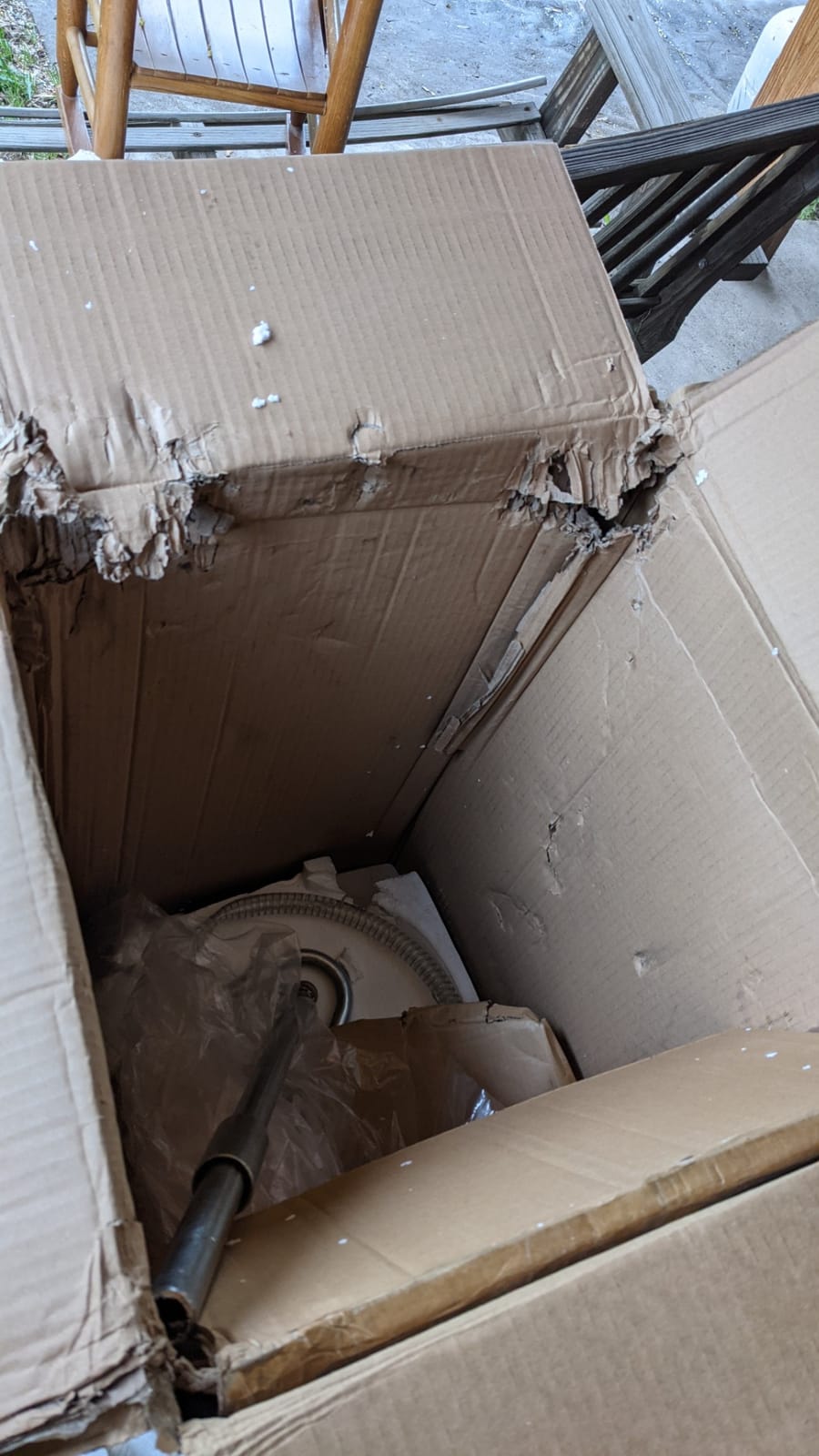
Do not expect showroom paint. Reviewers call out chipping and rust appearing at welds and wheel brackets, and pipe threads at the fittings that weep without generous thread seal tape. The large upper ball valve can also bind, which makes funnel height adjustment frustrating the first few times.
None of these affect function, but all of them are worth a tape roll and a wrench in your hand from day one.
It arrived in 2026 as a comparatively new design, but the layout underneath is the classic shop drain. If your pain point is constantly emptying, the extra three gallons over the 20-gallon units pay for themselves in saved trips.
How much air pressure does it need?
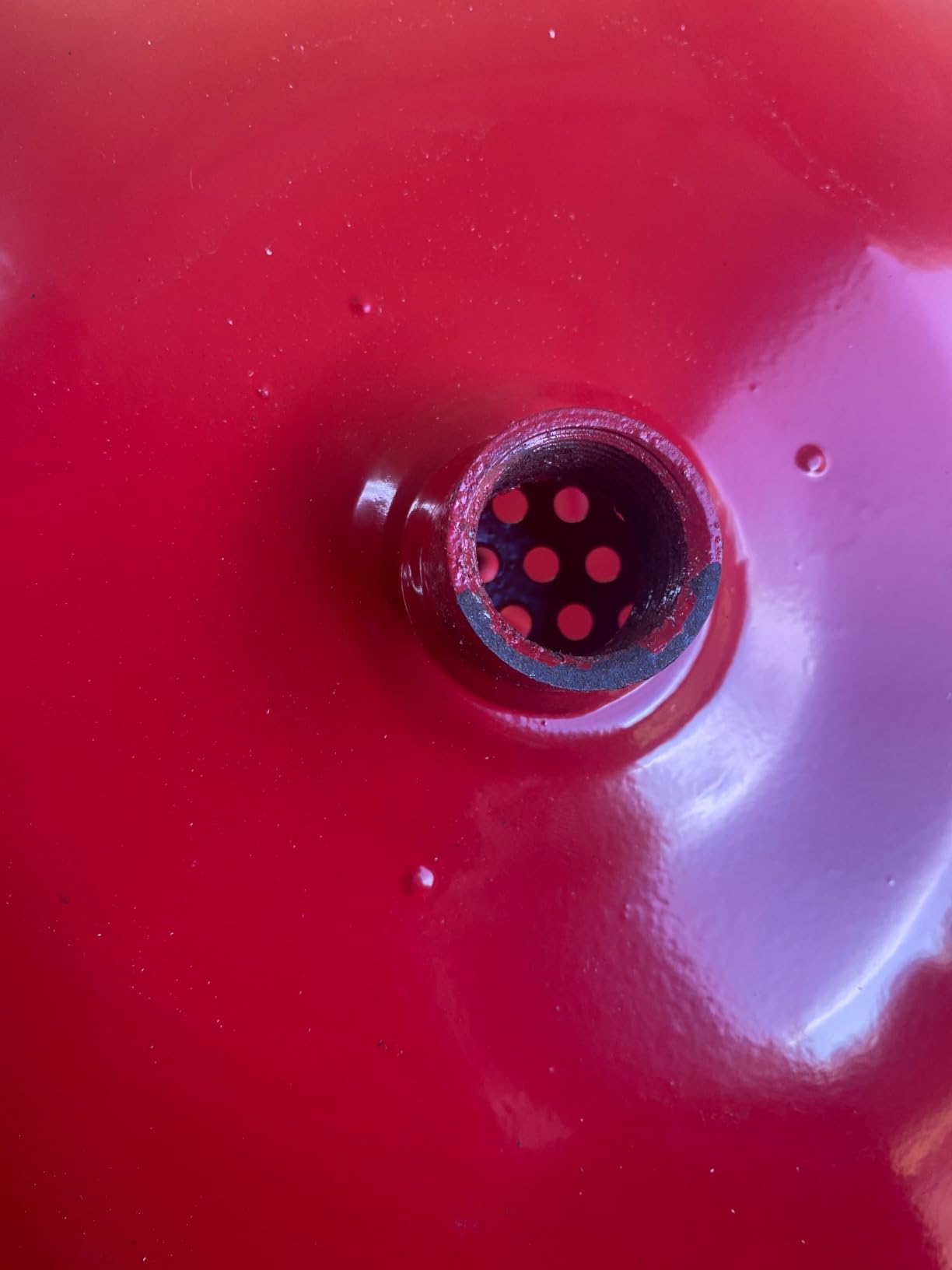
It uses standard shop air through a 1/4 inch NPT male industrial interchange fitting, so any shop compressor with a regulated line will drive it. Set the regulator low, add thread seal tape to every connection, and open the valve slowly. Aggressive pressure is what causes weeping at the fittings on any pressurized drain.
Is the extra 3 gallons worth it over a 20-gallon tank?
If you do more than one vehicle a day, yes, and the difference compounds. Three extra gallons is roughly half a day of collected oil, which can mean one fewer pump-out in a busy week. For a once-a-month home change, it makes no practical difference and a 20-gallon unit is the smarter buy.
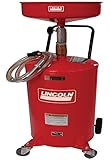
4. Lincoln 3601 Pneumatic 18 Gallon Drain – Best Heavy-Duty Steel
Lincoln 3601 Pneumatic 18 Gallon Pressurized Fluid Drain and Evacuation Tank, 45-72″ Adjustable Funnel Height, Fluid Level Indicator, 14″ Bowl, 150 PSI, 3″ Swivel Casters, Steel Construction, Red
Capacity: 18 gallons
Pressure: up to 150 PSI
Funnel: 45-72 inch
Weight: 58.5 lbs
Pros
- Thick alloy steel that resists flexing
- 150 PSI pressurization empties with no leaks
- 45 to 72 inch funnel adjustment
- 14 inch bowl with fluid level indicator
- 3 inch swivel casters roll the full tank
Cons
- Heaviest unit in the group at 58.5 pounds
- Air regulator failed early for a few owners
- No shut-off valve on the exit tube
The Lincoln 3601 is the tank you buy when the drain is going to be abused. At 58.5 pounds empty, it is the heaviest unit in this roundup, and that weight is the feature. Shop owners and dealers describe the alloy steel as thick-gauge and resistant to flexing, which matters when you are sliding it under a bus or a heavy truck and then dragging it across concrete.
Pressurization goes up to 150 PSI, far beyond the 10 PSI working pressure of the budget air-operated units, and shop owners report the evacuation runs with no leaks. The 14-inch bowl carries a fluid level indicator and an integrated drain valve, and the 3-inch swivel casters roll a loaded tank across a shop floor without complaint. The bowl diameter is large enough that alignment under the plug is forgiving.
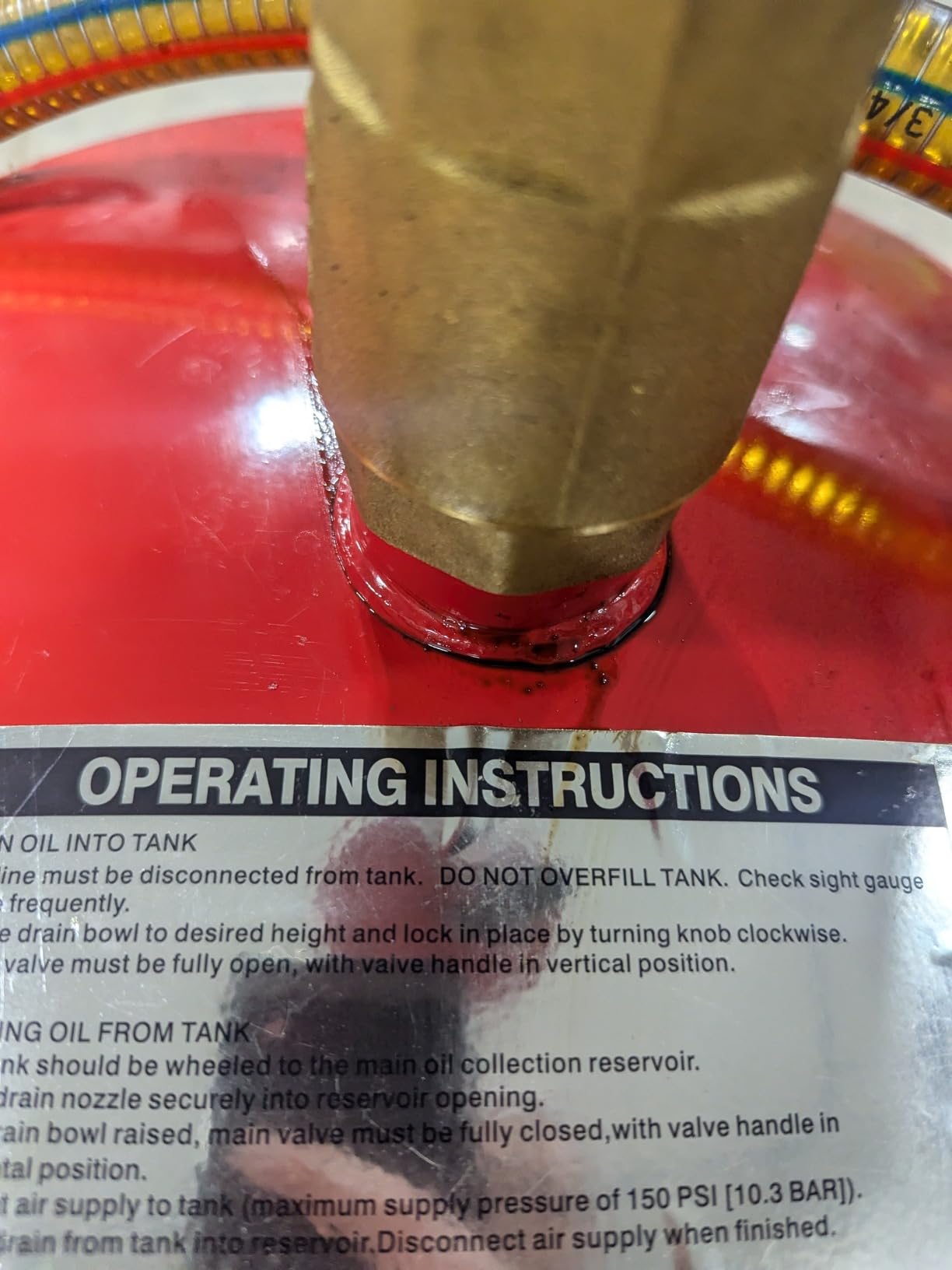
The criticisms are about the small stuff and the invoice. A few owners report an air regulator failing after only a few emptying cycles, one reported a leak at the fourth valve with limited warranty response, and there is no shut-off valve on the exit tube, so the hose eventually needs replacing. It also carries a one-year warranty on material and workmanship, which is shorter than the Lisle’s lifetime coverage.
Our advice is simple: if you are a home mechanic doing a handful of changes a year, this is overkill. If you run a shop, a fleet, or heavy equipment, paying up for steel that will not crack is cheaper than replacing a cracked tank every couple of years.
Is the weight a problem when moving it loaded?
At 58.5 pounds empty, this tank crosses 100 pounds when roughly half full, and a full 18-gallon tank comes close to 190 pounds. The 3-inch swivel casters are the reason that is manageable, because you roll it rather than lift it. Always empty it before lifting, and use the pressurized discharge rather than trying to tip it.
What does the fluid level indicator show?
The 14-inch bowl includes a fluid level indicator, so you can check how much oil is in the tank from the side without opening anything. It sits on the bowl rather than the tank, which means it is most useful during collection when you want to know whether you are near capacity before you start.
5. VEVOR 20 Gallon Air Operated Waste Oil Drain – Best for First-Time Buyers
VEVOR 20-Gallon Waste Oil Drain Tank, Air Operated Portable Oil Drainer with Adjustable Funnel Height, Fluid Fuel Transfer Drainage with Wheels, Oil Change Container for Auto Repair Shops, Garages
Capacity: 20 gallons
Height: 38-65 inch
Funnel: 15 inch
Pipe: 69 inch
Pros
- 20 gallon capacity handles up to 10 changes
- 38 to 65 inch height adjustment
- Four-wheel drive with mixed rigid and universal casters
- 15 inch splash-proof funnel
- 69 inch high-temperature oil pipe rated to 120 C
Cons
- Requires shop air to evacuate oil
- 30.9 pound body is bulky to reposition
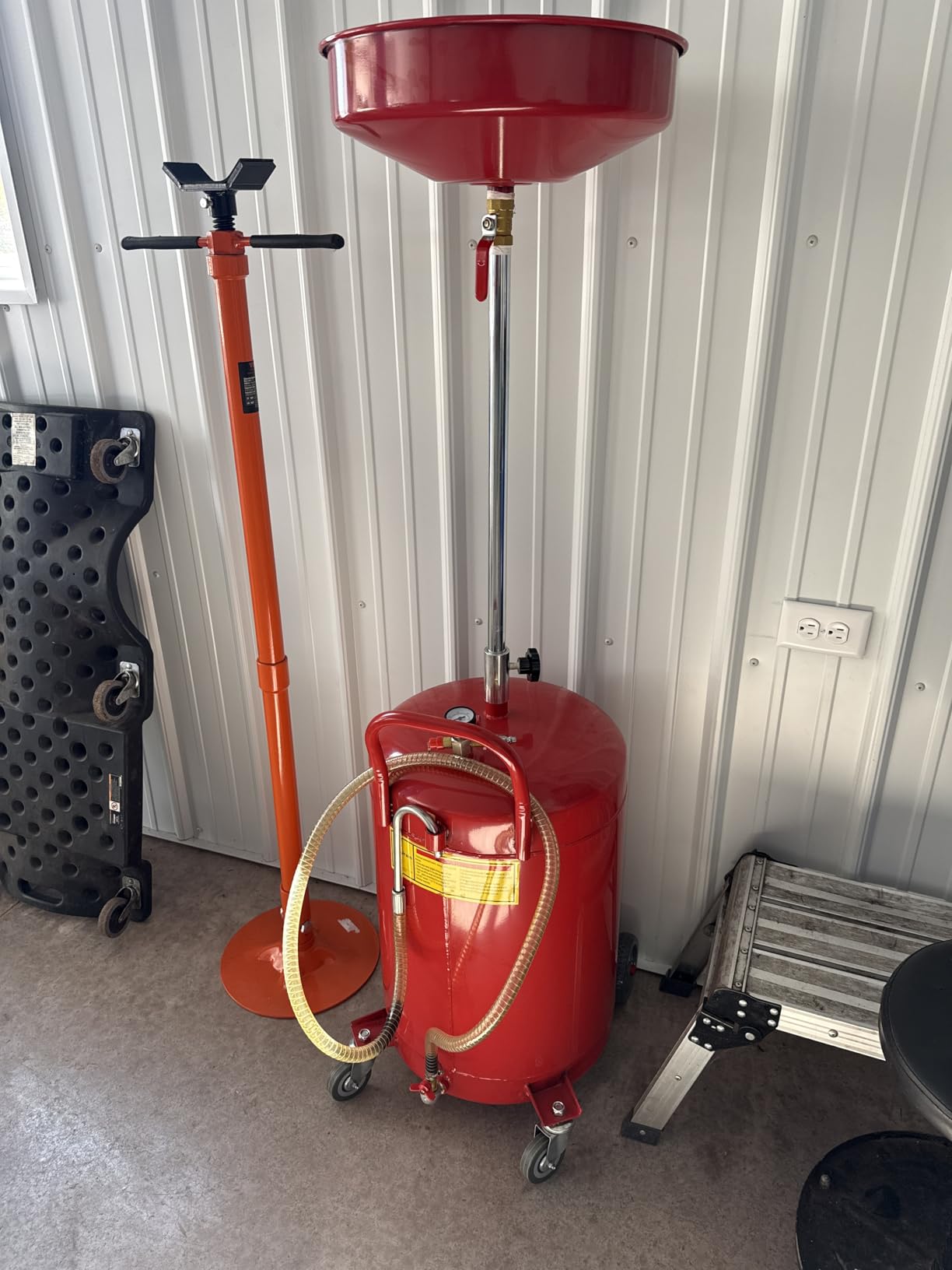
The VEVOR 20-gallon air-operated drain is the easiest first waste oil drain to buy and live with, and it is where we would send someone who has been using a funnel pan and wants an upgrade without overthinking it. It is powder-coated steel, it holds 20 gallons, and it rates 4.3 stars from 395 owners with 73 percent five-star feedback.
The wide 15-inch splash-proof funnel is the most-praised feature in reviews, and it makes sense: a larger funnel is easier to align under a drain plug, and anything that misses the funnel is less likely to be oil that misses the funnel. Height adjusts from 38 to 65 inches, which covers most cars on the ground and most vehicles on a lift. The discharge pipe is 69 inches of high-temperature reinforced tube rated for continuous use at 120 degrees C.
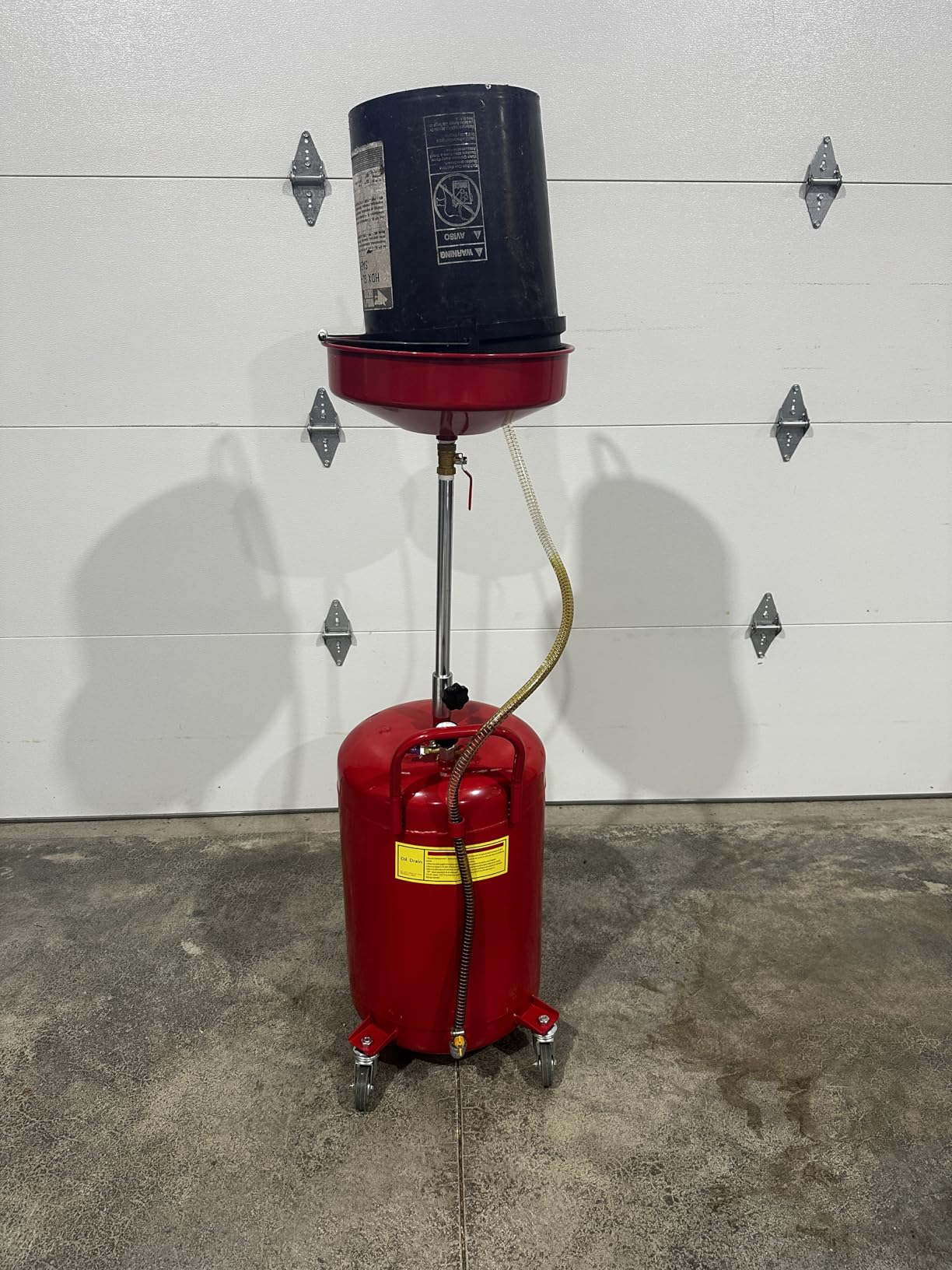
Two limitations are worth being honest about. It is an air-operated unit, so you need a compressor to empty it; if you do not own one, the electric-pump unit at pick 7 is a better fit. And at 30.9 pounds empty, it is a bulky object to reposition by hand, so use the wheels rather than lifting it.
It ships with the tank, the hose, the funnel, and a pressure gauge, which means there is nothing else to buy. That completeness is why it ranks so high for first-time buyers: fewer loose parts, fewer fittings to tape, fewer ways to get it wrong on day one.
Do I need a compressor to use this drain?
You need one to empty it. Collection is pure gravity through the funnel, so the tank fills fine with no compressor at all, but the discharge is air-driven. Any small shop compressor with a 1/4 inch line will do, and if you do not plan to own a compressor, choose an electric-pump or manual-pour model instead.
Will it fit under a raised vehicle?
At 20 gallons in a steel body, this is an upright tank rather than a flat roll-under, so clearance above the drain plug matters more than floor clearance. The 38 to 65 inch range covers a car on the ground and a vehicle on a two-post lift, but measure your plug height first if you are near the top of the range.
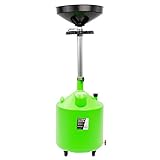
6. OEMTOOLS 18 Gallon Upright Oil Drain – Best for a Visible Oil Level
OEMTOOLS 18 Gallon Oil Drain Container, Upright Adjustable Oil Drain Tank
Capacity: 18 gallons
Height: 54-70 inch
Funnel: 18 inch
Translucent green tank
Pros
- 18 inch wide funnel captures oil with fewer spills
- Translucent green tank shows level at a glance
- Built-in drain valve and evacuation spout
- 54 to 70 inch height adjustment
- Four casters roll it easily
Cons
- Small casters catch on uneven floors and can tip it
- Height clamps need modification for repeated use
- Extension tube is often too short for high lifts
The OEMTOOLS 18-gallon upright tank solves a problem most drains ignore: you can see the oil level without lifting anything. The tank is translucent green, so you watch the level rise during a drain and know you are approaching capacity in real time. For someone who is new to changing oil and nervous about overfilling, that visibility alone is worth a lot.
The funnel is 18 inches wide, the widest in this roundup, and owners consistently mention that it captures oil efficiently with fewer spills. Height adjusts from 54 to 70 inches, so this is a lift-side unit rather than a roll-under, and the built-in drain valve plus evacuation spout make moving the oil out a straightforward job.
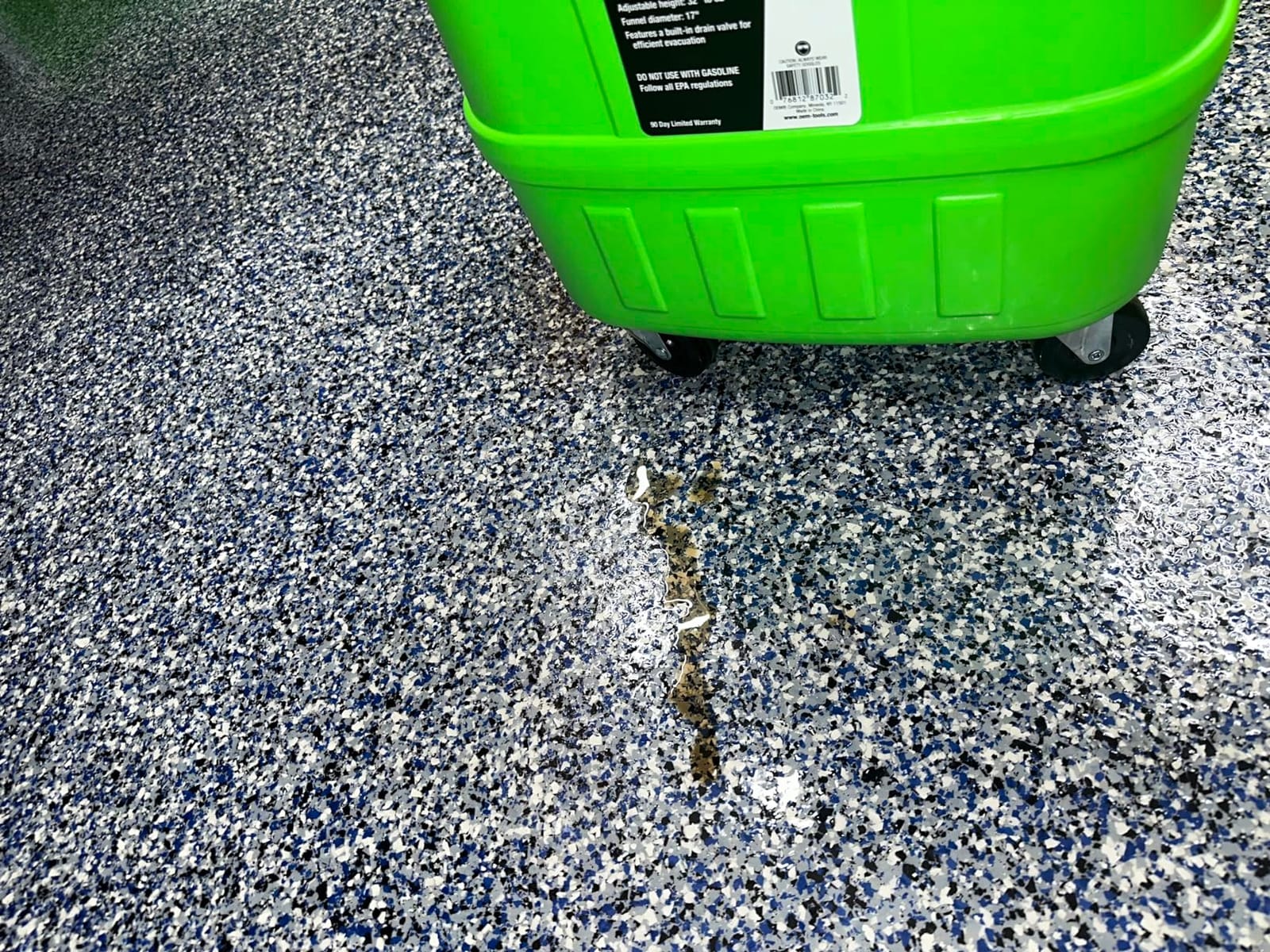
The recurring complaints are all about the frame rather than the tank. Small casters catch on cracked or uneven shop floors and can tip the unit, and the adjustment clamps need modification if you change height frequently. Several owners report the height extension tube arriving a few inches too short for their lift, which causes oil to splash out of the funnel during the last of the drain.
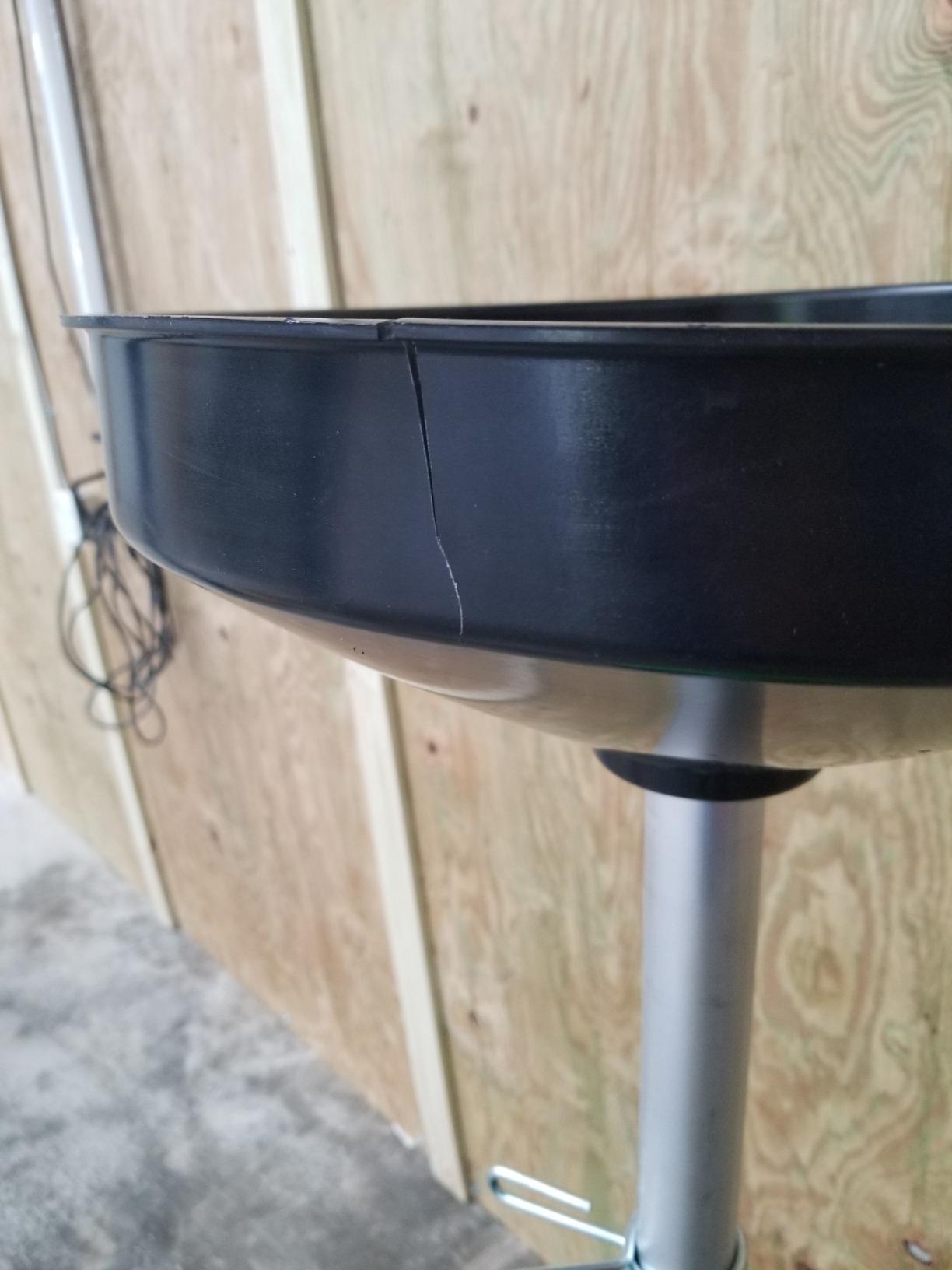
Check the tube against your plug height before you rely on it. One long-term owner also reported a hairline plastic crack near a wheel mount that leaked oil, so put the tank on a flat section of floor and inspect the base every few months.
Is a translucent tank better than a sight tube?
Both work, and a translucent tank is slightly better because it shows the full volume across the whole tank rather than one column. A sight tube on picks 1 and 3 is narrower but sits higher, so it is easier to read at a glance while you are under the vehicle. If you want to know how much oil is in the tank without walking around it, this is the one.
Will it fit under a low car?
No, and that is by design. This is an upright unit with a funnel that adjusts up to 70 inches, so it is built to sit beside a vehicle on a lift, not to slide underneath one. If you have a lowered sports car or a low sedan, you need a flat roll-under model such as pick 7 instead.
7. VEVOR 20 Gallon Low Profile Drain with Electric Pump – Best for Low Clearance
VEVOR Low Profile Oil Drain Pan, 20-Gallon Metal Oil Change Pan, Effective Oil Drain Cart with 180W Electric Pump, Wheels & Folding Handle, Oil Drain Tank for Cars, SUVs, Trucks, Buses, RVs
Capacity: 20 gallons
Pump: 180W electric
Funnel: detachable mesh
Handle: folding
Pros
- Slides under pickups
- semis and other high-clearance vehicles
- 180W electric pump drains a full tank quickly
- Folding handle keeps the profile low for storage
- Removable mesh filter reduces splash and blocks debris
- Lockable front casters keep it parked
Cons
- Several buyers report the electric pump smoking and failing
- Rear wheels can lock while moving
- Stock drain port can weep oil until PTFE tape is added
This is the low-profile pick, and it solves a complaint we heard repeatedly from people who own lifted trucks, semis, and lowered cars: nothing fits underneath. The tank is a wide, flat 20-gallon reservoir with a folding handle that keeps the profile down, so you slide it under the vehicle from the side and pull it back out after. No lift, no jack stands, no lying on a creeper in a puddle.
Unlike most drains in this category it empties with a 180W electric pump instead of shop air, which makes it the right pick for a home garage with a battery but no compressor. Reviewers like the capacity, the 180W pump speed, and the detachable mesh filter that reduces splash and catches debris. It also handles oil, coolant, and transmission fluid, so one tank covers more than just engine oil changes.
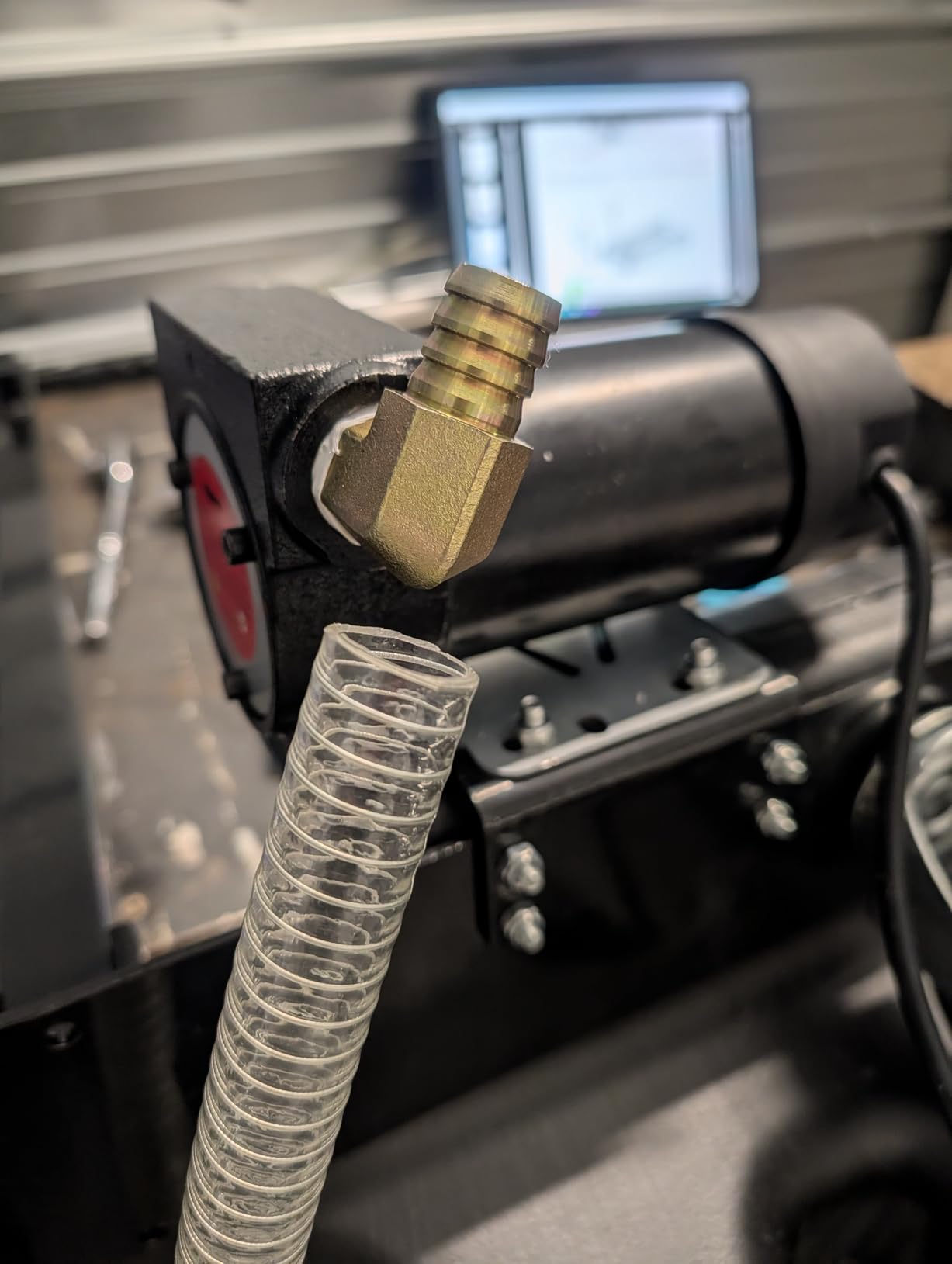
Be careful with the pump, because that is where the reviews concentrate. Several buyers report the 180W electric pump smoking and failing during warm or heavy oil, and the instructions are poorly written, with assembly described as annoying.
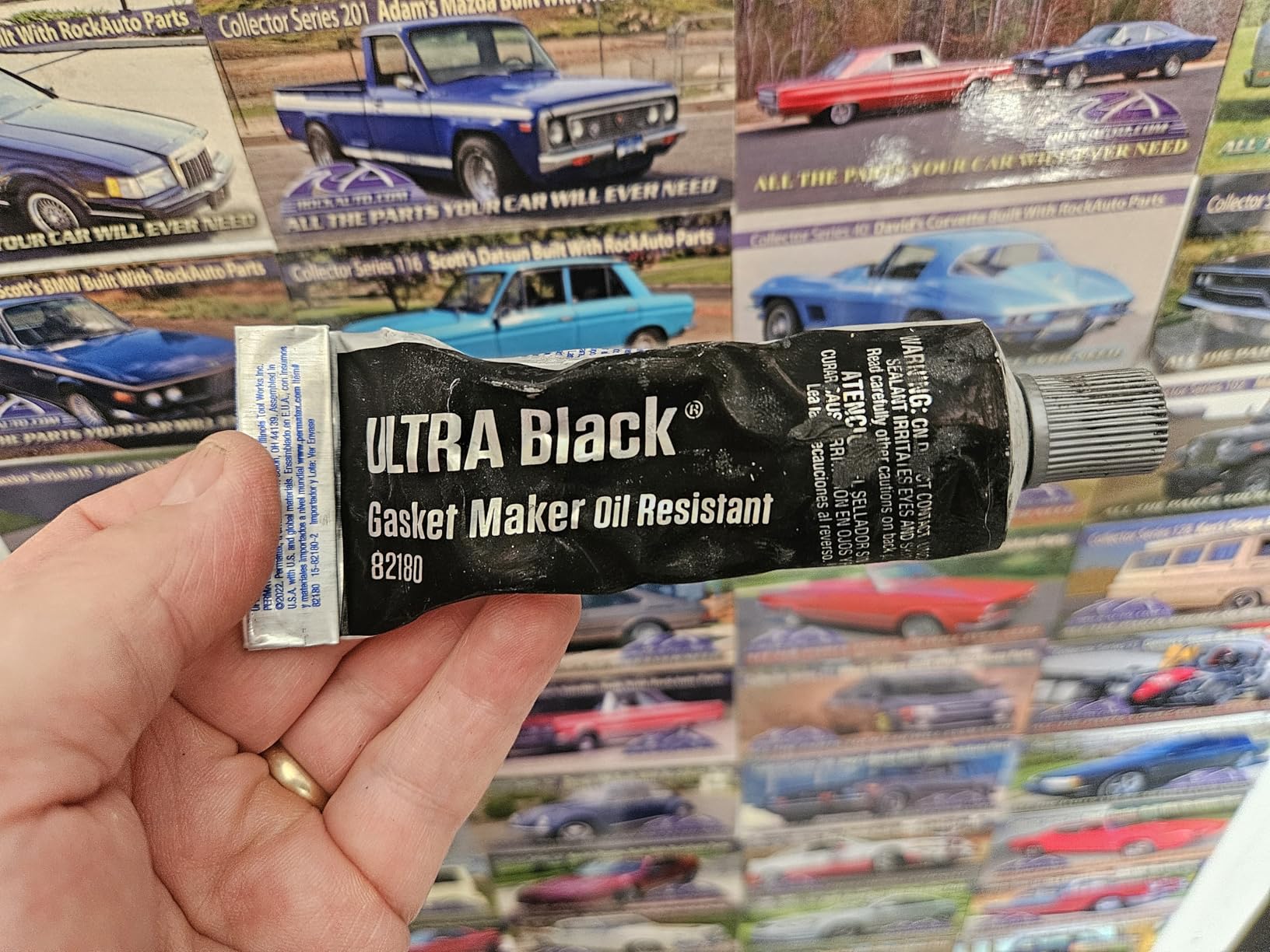
Two smaller fixes are worth doing on day one. Wrap the stock drain port with PTFE thread tape so it stops weeping, and swap the rear locking casters for non-locking ones, because multiple owners report them catching while rolling.
At 42.1 pounds empty and built from powder-coated carbon steel, the hardware does feel entry-level next to the Lincoln. For a garage where floor clearance rules out the upright units, this is the shape of drain that solves the problem, and it comes with a two-year manufacturer warranty.
Does a low-profile drain actually fit under a lowered car?
More often than an upright unit, yes, but check before you buy. Measure the lowest point of your exhaust, oil pan, and suspension, then measure the height of the tank with the handle folded down. A wide flat reservoir clears far more cars than a tall one, but a very low car on a very low exhaust may still need jack stands.
Is an electric pump as good as an air-operated one?
For a home garage, often yes, because a compressor is a far bigger purchase than a battery charger. Air pressure empties faster and moves more volume, but a 180W electric pump on this model handles a full tank in minutes with none of the fitting leaks that plague air fittings. Budget electric pumps do fail, so keep the drain hose ready as a backup method.
8. AAIN AO5 5 Gallon Steel Oil Drain – Budget Pick
AAIN AO5 5 Gallon Portable Steel Oil Drain, Heavy-Duty Waste Oil Drain Tank
Capacity: 5 gallons
Height: 40-67 inch
Funnel: 14 inch filtered
Weight: 22 lbs
Pros
- Smallest capacity in the group
- 40 to 67 inch height adjustment
- 14 inch polypropylene funnel with integrated filter
- Galvanized steel sump with pour spout
- Two 2-inch swivel casters
Cons
- Small caster-to-tank joint has been reported to weep oil
- Weld quality is inconsistent
- Does not fully empty before the flow stops
The AAIN AO5 is the entry point. It is a 5-gallon galvanized steel sump with a pour spout, a 40 to 67 inch adjustable down tube, a 14-inch high-impact polypropylene funnel with a built-in filter, and two 2-inch swivel casters. It weighs 22 pounds empty, which is light enough to move without thinking about it, and it rates 4.1 stars from 392 owners.
The funnel with an integrated drain pan filter is the detail that makes a small tank feel usable. A 5-gallon tank fills up fast, and the filter keeps the drain plug or a chunk of debris from ending up in the oil you are about to pour out. The height range means it works under a car on the ground and under a vehicle on a lift, which is more than a basic funnel pan offers.
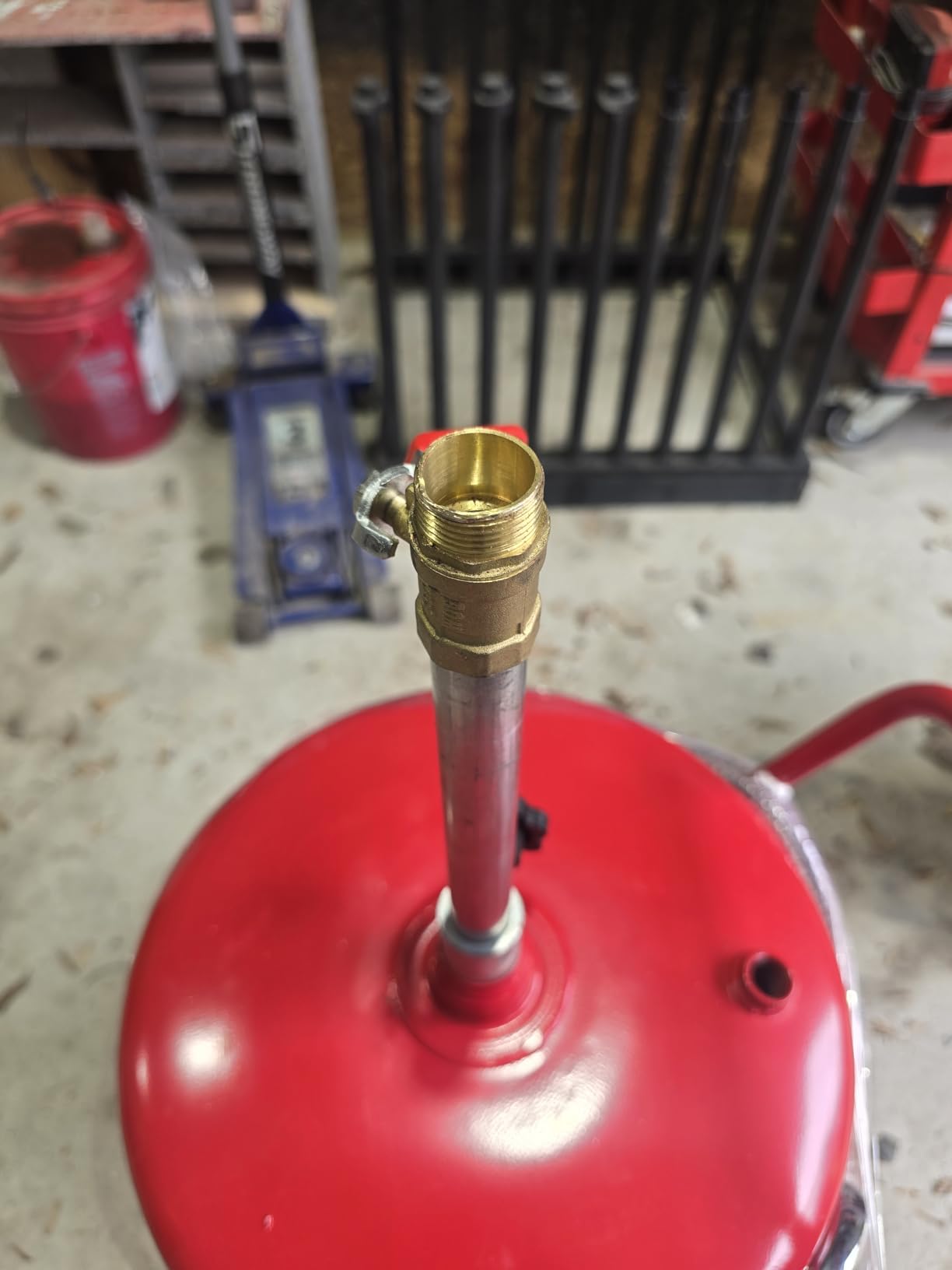
Quality control is the honest weakness. Owners report oil weeping at the small caster-to-tank joint, inconsistent weld quality with leaks under the pan on some tanks, and a sump that does not fully drain before the flow stops, leaving a slick film behind. A pressure regulator has also arrived broken and with non-US fittings. Inspect the welds and run a hose test into it before the first change.
Five gallons is roughly one full change on a passenger car, so this is a one-vehicle, occasional-change tool. If you want a bigger tank and a better warranty, pick 9 is the same idea with more capacity and air evacuation; if you want the same capacity for less, a 15-quart funnel pan is the alternative.
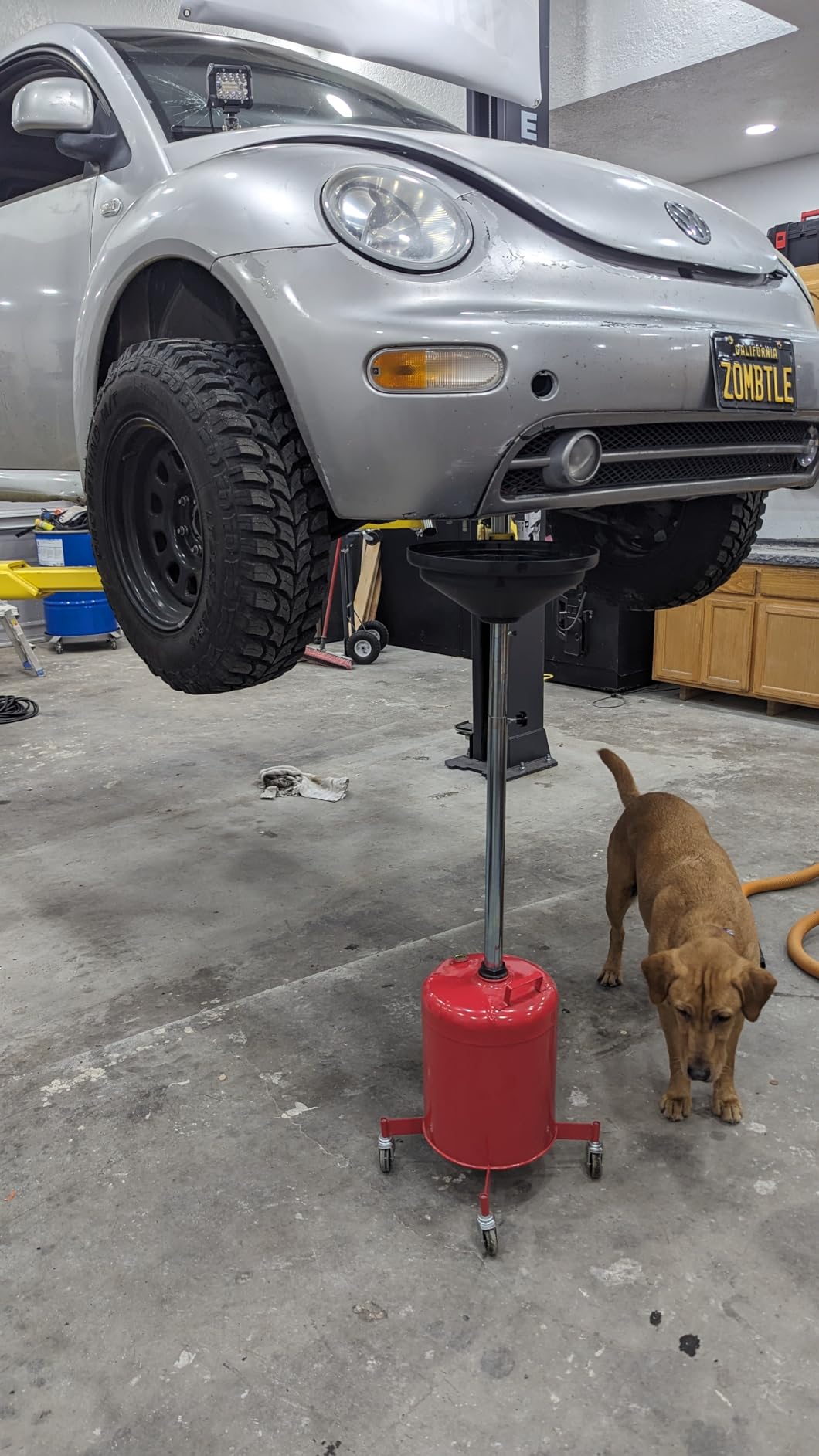
How many oil changes does a 5-gallon drain hold?
About one, sometimes two. A typical passenger car produces 4 to 5 quarts of used oil including what comes out of the filter, and 5 gallons is 20 quarts, so you get a change and a change, minus whatever stays in the sump. Plan on emptying after every service or every second service, and keep a funnel and sealed container ready so the transfer is painless.
Is galvanized steel thin or thick?
It is entry-level galvanized steel, and owners describe the welds as inconsistent rather than the plate as thin. The seams to watch are the caster mount and the joint under the pan, which is where reported leaks occur. A visible seam sealer on those two areas before the first use eliminates most of the risk.
9. AAIN 8-Gallon Industrial Fluid Drain Tank – Best for Light-Duty Vehicles
AAIN 8-Gallon Industrial Fluid Drain TanK
Capacity: 8 gallons
Height: 27.56-65 inch
Funnel: 16.5 inch
Pressure: 10 PSI
Pros
- Compact 8-gallon tank at 13.97 pounds empty
- Quick-adjustment valve from 27.56 to 65 inches
- 10 PSI working pressure with 1/4-18 NPT air inlet
- Four 2.5-inch heavy-duty casters included
- Bundles a 16.5-inch diameter funnel
Cons
- Funnel bottoms out at 27.56 inches
- so it will not clear a lowered car
- Light build for heavy repeated shop use
The AAIN 8-gallon industrial fluid drain tank is the middle ground between a funnel pan and a full shop tank. It weighs 13.97 pounds empty, which makes it easy to reposition, and it still gives you a 16.5-inch diameter funnel, a quick-adjustment valve, and 10 PSI air evacuation through a 1/4-18 NPT air inlet.
That combination suits someone servicing motorcycles, small engines, and light cars in a space where a 20-gallon steel tank is simply too big to maneuver. Reviewers like the adjustment range of 27.56 to 65 inches, the included casters, and the fact that the funnel comes in the box. At 4.2 stars from 107 reviews, the feedback is consistent and unremarkable in the best way.
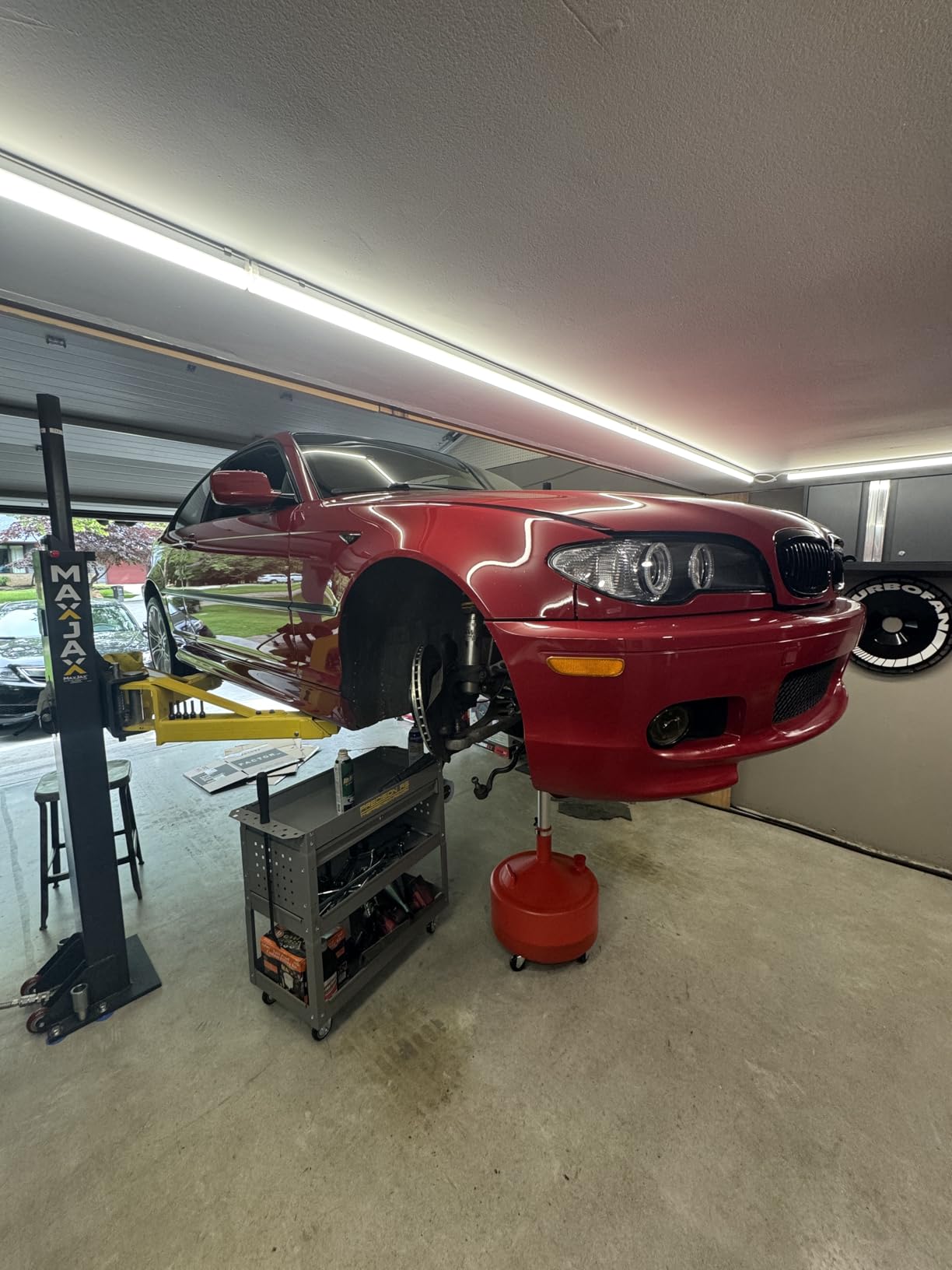
It has the smallest adjustment range of the group and the lowest capacity, which means it is limited to light-duty vehicles. At 13.97 pounds the steel feels light for repeated shop use, and a light tank gets moved around more casually, which is usually how tanks get damaged. If you are doing cars with 5 quarts of oil or more and more than a few changes a month, step up a size.
The package dimensions are 23 by 19 by 17 inches, so it stores in a corner easily, which is its own advantage in a home garage. Treat it as the small-job tank and keep a bigger unit for full services.
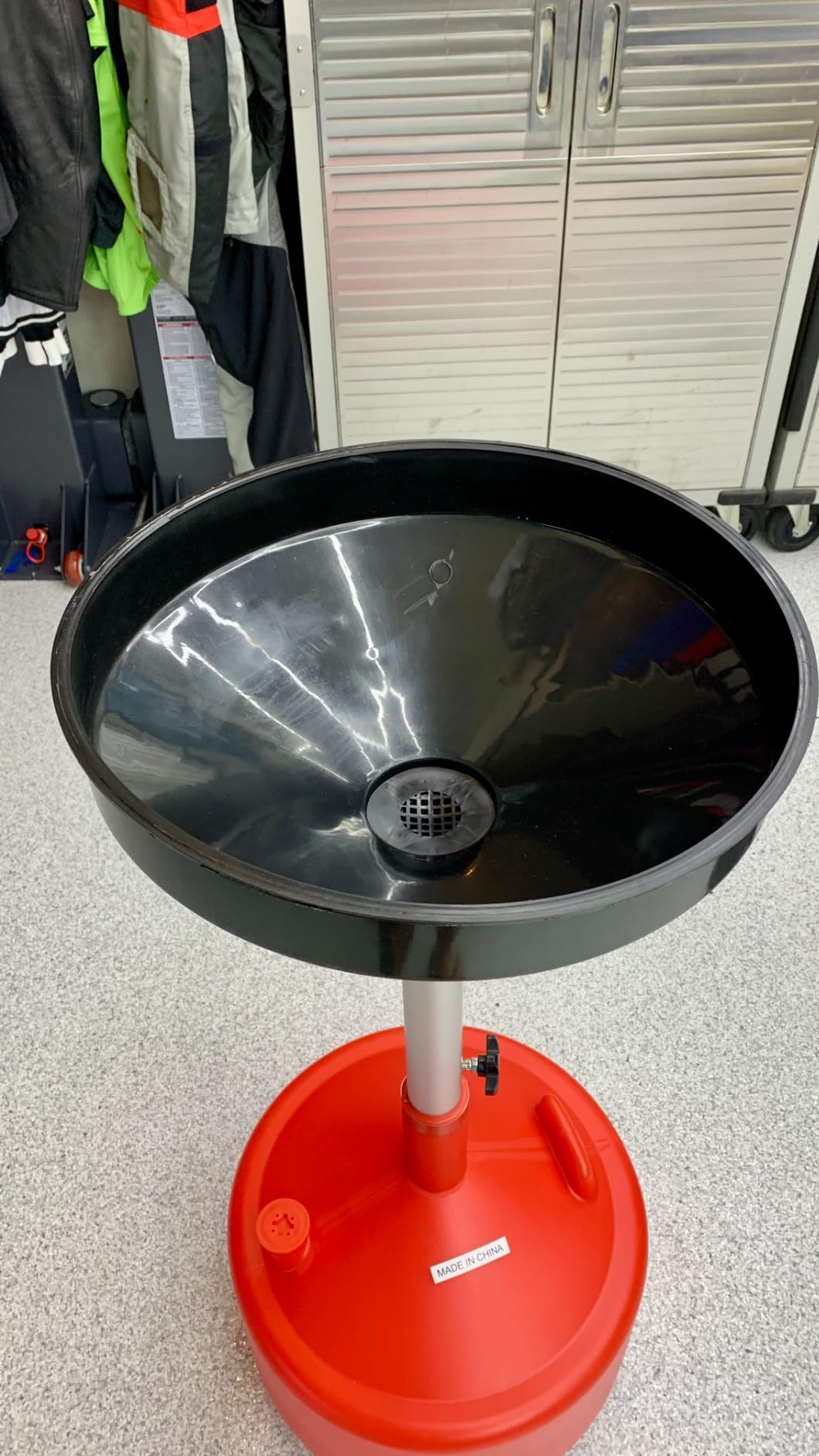
Is this tank strong enough for motorcycle and small engine work?
Yes, that is exactly its use case. A 16.5-inch funnel and a 10 PSI air inlet handle small engines comfortably, and at 13.97 pounds you can lift it fully loaded for pouring if you need to. For full-size car engines doing frequent service, its capacity and light frame are the limitation, not its strength.
Does the funnel adjust low enough for a lowered car?
The funnel drops to 27.56 inches, which is lower than the upright tanks in this roundup, but this is still a tank with a vertical tube rather than a flat roll-under design. It helps if your car is moderately low; it does not replace a purpose-built low-profile unit for a genuinely lowered vehicle.
10. Garvee 20 Gallon Waste Oil Drain Tank – Best All-in-One Kit
Garvee 20 Gallon Waste Oil Drain Tank, Air Operated Portable Oil Drainer with Adjustable Funnel, Fluid Fuel Transfer Drainage with Wheels, Oil Change Container for Automotive Workshops
Capacity: 20 gallons
Emptying: pneumatic
Funnel: 15 inch
Weight: 48.5 lbs
Pros
- 20 gallon capacity covers roughly 8 to 10 vehicles
- Pneumatic emptying moves oil out quickly
- 15-inch funnel diameter helps prevent spills
- Powder-coated steel resists rust and high temperatures
- Built-in tool box and leak-prevention plug
Cons
- 5.7-inch drain tube is far shorter than competing units
- 48.5 pound steel body is very heavy
The Garvee 20-gallon tank arrives with more of the shop experience already built in than the others. You get two rigid wheels plus two swivel casters, an ergonomic handle, a built-in tool box, and a leak-prevention plug, all on a powder-coated alloy steel body. It rates 4.1 stars from 127 reviews, with 63 percent five-star feedback.
Capacity is the headline: 20 gallons covers roughly 8 to 10 vehicles per fill, and the 15-inch funnel diameter helps reduce spills during collection. Pneumatic emptying moves the oil out quickly into a drum or recycling container, and owners like that the tool box keeps fittings and tape next to the tank instead of in a toolbox across the shop.
The one detail that gives us pause is the 5.7-inch oil drain tube. Competing 20-gallon tanks ship with 5 to 9 foot discharge tubes, and a 5.7-inch tube is barely longer than the fitting itself, which limits where you can position a receiving container. Confirm the reach you need before buying.
At 48.5 pounds empty, this is the second-heaviest body here, so plan on rolling it rather than lifting it. It carries a one-year warranty, which is shorter than the Lisle’s lifetime coverage but normal for the price tier, and worth remembering if you are comparing it against a specialist-brand steel tank.
Is the short drain tube a real problem?
It depends on your setup. If you are emptying straight into a container sitting directly beside the tank, a short tube is fine. If your drum, heater, or recycling container is more than a foot or two away, you will need a longer hose, and that extra cost and fitting is worth adding to your decision before you commit.
How does the built-in tool box help?
More than it sounds, in practice. Air fittings, thread seal tape, spare cotter keys, and drain plugs all get used on any pressurized drain, and having them stored on the tank means you are not walking to a toolbox in the middle of a job. Owners mention the tool box and the leak-prevention plug as features that make the unit feel finished rather than assembled.
What Is a Waste Oil Drain?
A waste oil drain is a container, usually between 8 and 25 gallons and mounted on wheels, that catches used engine oil as it leaves your vehicle and holds it until you can move the oil somewhere legal. You park the funnel under the drain plug, pull the plug, and gravity does the work. The oil sits in the tank until a pump, an air line, or a pour spout empties it into a sealed container for recycling.
Three numbers decide whether one works for you. Capacity tells you how many changes you can do before emptying, roughly one change per 4 to 5 quarts on a typical passenger car. Working height tells you whether the funnel can reach your drain plug. Emptying method tells you how much of a mess disposal will be.
Used engine oil is federally regulated as hazardous waste in the US. Pouring it on the driveway, into a storm drain, or down a floor drain is illegal, and roughly one quart can contaminate a very large volume of water. Having a drain with a plan attached to it is what makes a DIY oil change legal.
The Six Types of Waste Oil Drains and How to Choose
There are really only six shapes of waste oil drain, and every product in this roundup is one of them. Once you know which shape matches your job, the choice gets much faster.
1. Funnel pan. The 15-quart plastic bowl on a workbench. Best for two to four changes a year on a car with a normal oil pan, and the cheapest way to stop wearing a spot on your driveway. Weakness: you carry it out by hand and hope you have a lid.
2. Upright adjustable tank. A vertical tank on casters with a telescoping funnel that raises and lowers to reach the drain plug. Best under a two-post or four-post lift where clearance above the plug is generous. Weakness: the funnel sticks up, so it will not go under a low car.
3. Low-profile roll-under tank. A wide, flat reservoir you slide under the car from the side, usually with a folding handle so it stays low. Best for lowered cars, SUVs on a stock suspension, and anyone without a lift. Weakness: a folding tray or a high lift can take away the clearance advantage you paid for.
4. Air-evacuated drain. A pressurized tank that uses shop air to push the oil out through a hose. This is the shop standard because it empties in seconds into a drum or a waste oil heater. Weakness: you need a compressor, and fittings leak if you skip thread seal tape.
5. Electric-pump drain. Same job, but a 12V pump moves the oil instead of air. Best if you have a battery but no air compressor, or if you drain in a driveway. Weakness: budget electric pumps are the single most common failure in this category.
6. Closed-container drain pan. A sealed pan with a spout, so you fill it, cap it, carry it, and pour it out somewhere with a funnel. Best for people who want zero drips during transport. Weakness: small capacity by design.
Where pumps come in: the best oil drain pump is the one matched to your emptying method. Air pressure wins on speed and volume, an electric 12V pump wins on convenience and low noise, and manual pouring wins only when capacity is small enough to carry comfortably.
How to Drain Oil Without Spilling It
Spills are the complaint that comes up most often in every forum thread about oil drains, and most of them come down to four things: oil temperature, funnel alignment, drain plug control, and where your face is. The technique matters more than the tank.
1. Drain the oil warm, then wait. Oil that has just come off the engine is thin and runs fast, which is good, but a stream landing on a hot funnel can splash. Warm oil drains faster than cold oil, so start when the engine is warm, then let the car sit for 5 to 10 minutes before pulling the plug. That pause lets the oil in the filter and the top of the pan settle and come out with the main flow instead of running over the funnel edge later.
2. Position the funnel before you open the plug. Get the drain centered under the plug hole with the wide mouth fully under the pan, then confirm it from a crouching position before you touch a wrench. The 15 to 18 inch funnels on picks 1, 2, 5, 6, 7, 9, and 10 are much more forgiving here than a 10-inch pan.
3. Break the seal slowly. The plug sits in a tapered seat, and the last quarter turn is what releases the flow. Crack it a fraction, let the initial surge equalise, then back it out slowly. Removing the plug in one motion sends a slug of oil down the threads and out of alignment.
4. Use a screen, a funnel extension, or a pad. A filter screen in the funnel, a splash guard pad underneath, or a funnel extension are all cheap add-ons that fix most of the “oil creeps out during the last few minutes” complaints. Our oil absorbent pad picks handle the drips you did not plan for.
5. Open the filter housing. Most engines hold a quart of oil in the filter housing that never reaches the pan. Crack that plug or the filter cap over the funnel while the main flow is still running, and you capture oil that would otherwise drip for the next ten minutes.
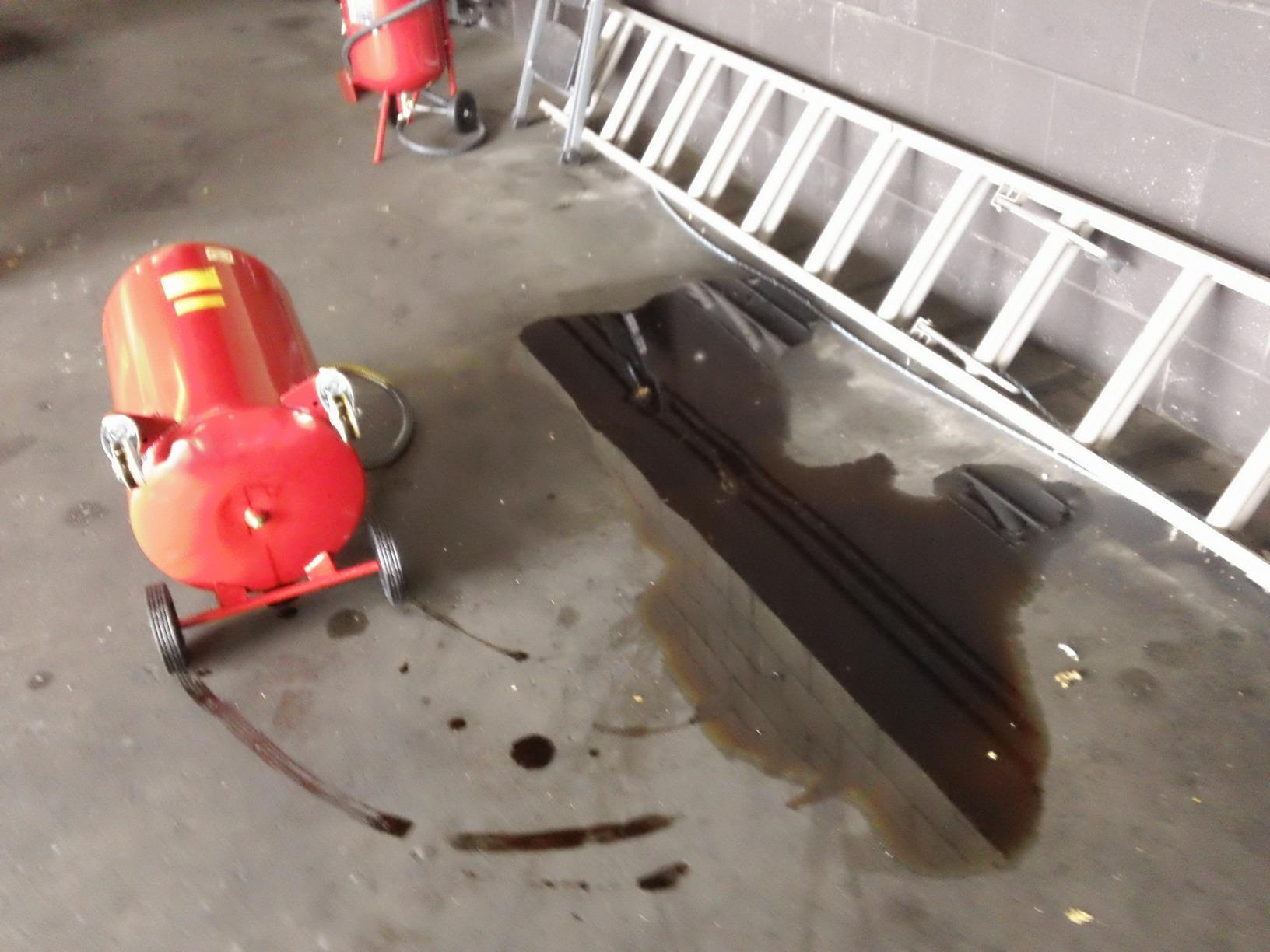
6. Let the last of it drain into a container, not the floor. When the flow slows to a trickle, move a smaller container under the plug and catch the remainder. Ten minutes of a slow drip onto concrete is what makes people say their drain leaks, when the drain is fine and the drip started after they put the pan away.
7. Cap it before you move it. If your tank has a spout cap or a sealed lid, use it. A tank that is 90 percent full has an inch of freeboard that becomes a slosh the moment you hit a threshold with casters, and that slosh is the most common cause of a stained garage floor.
One more habit worth building: keep a dedicated shallow pan and a roll of shop towels in the same spot as the drain. Every drain job produces some spill, and the difference between a ruined floor and a wiped floor is having somewhere to put the towel.
How to Dispose of Waste Oil Legally and Free
Most of the disposal problem is a volume problem. An auto parts store will take used engine oil for free, but they generally limit what you bring to a few gallons in sealed containers at a time, which is a very different thing from a full 20-gallon tank. Plan the route before you fill the tank.
Under 3 gallons: Seal it in the original auto parts store plastic jugs and take it to a retail auto parts store. This is free, and it is the route most home mechanics use. Keep the containers closed and upright in a box so a tipped jug in the trunk does not become your next problem.
3 gallons and up: Go to a municipal household hazardous waste facility or an oil recycling centre. They handle bulk volume and often accept other fluids. Search your city or county for a public works or sanitation drop-off site, since the hours are usually limited.
Mixed fluids: Keep transmission fluid, differential oil, power steering fluid, and coolant out of your engine oil tank. Many retail collection sites refuse a container that is not pure engine oil, and mixing fluids creates exactly the disposal problem that is hardest to solve. If you are draining a manual transmission, use a separate container.
High volume shops: A waste oil heater pays for itself in avoided trips. Instead of pumping oil into a drum and paying to haul it, you burn it for shop heat, and many shops connect the drain’s discharge hose directly to the heater inlet. The disadvantages are real: storage, permitting, fire code requirements, and an insurance conversation with your landlord if you rent the building.
Why you cannot dump oil back into the ground: it is illegal under both federal and state law, and it is genuinely destructive. A single quart of used oil can contaminate a large volume of groundwater, and used oil carries the heavy metals and carcinogens that come off a combustion engine. Storm drains usually lead straight to local waterways with no treatment at all. Fines for improper disposal routinely exceed the cost of doing it properly, and the clean-up liability can be worse than the fine.
The No-Pan Alternative: Fumoto and ValvoMax Drain Valves
There is a growing group of experienced DIYers who stopped using a drain pan entirely. Instead of replacing the drain plug with a magnetic Fumoto-style oil drain valve, you attach a short hose and let the oil run straight into a jug or a container on the floor. It removes the funnel, the alignment, and the pouring step in one move, and it is the most common answer on forums to the question of what to use instead of an oil drain pan.
The two names that come up most are Fumoto and ValvoMax, and the difference is in the sealing mechanism and the routing. A Fumoto-style valve uses a magnet-assisted seal that grips the drain port, and the hose threads onto the valve’s nipple or an adapter. A ValvoMax-style valve uses a spring-loaded ball mechanism that seals when you tighten it and opens when you loosen it, so the same fitting can be used closed for a normal oil change and open for draining.
Where the two diverge in practice is thread compatibility and hose routing. Fumoto-style valves come in common thread sizes for popular engines and rely on the magnet, which means the valve must be removed to change a filter on some vehicles. ValvoMax-style valves stay installed through the change and open on demand, which suits people who change oil often and never want to unbolt a plug. Neither works on every engine, so check your thread size and whether the valve interferes with your oil filter.
The trade-off is that this is a modification, not a tool. If you rent the vehicle, sell it, or want a stock drain port back, you are undoing work. For a daily driver where you know the thread size and do most of your own service, though, the mess reduction is genuinely large, and it is why experienced enthusiasts make the switch.
Buying Guide: Seven Things to Check Before You Buy
1. Capacity sizing math. Do the multiplication before you shop. Oil per change is roughly 4 to 5 quarts for a four-cylinder, 5 to 6 quarts for a V6, and 6 to 8 quarts for a V8 including the filter. Multiply by how many changes you plan between empties, then pick a tank one size up. A 20-gallon tank holds 80 quarts, which gives a four-cylinder driver room for roughly sixteen changes, more than a year for most households.
2. Measure your clearance, both ways. Measure the height from the ground to your drain plug on a car on the floor, and again on your lift. Then measure the height from the floor to the lowest part of the car you own. If your vehicle is lowered or sits on a large exhaust, you need a flat roll-under model, and no amount of height adjustment on an upright tank will help.
3. How the oil leaves matters as much as how it arrives. Air pressure empties fastest and suits shops that already have a compressor. An electric 12V pump suits a home garage with a battery. A pour spout suits small capacity and no power at all. A sealed spout on a closed container suits anyone who carries oil across a garage in a car. Decide this before capacity, because it rules out half the category.
4. Funnel width and splash control. A 15 to 18 inch funnel with a built-in screen or an anti-splash baffle is the single cheapest improvement available, and it is available on almost every unit in this roundup. A funnel extension and a splash guard pad are inexpensive add-ons that fix the most common complaint on owner forums.
5. Material, and the quality of the welds. Steel tanks survive being dragged across concrete and do not care about a dropped funnel, but they need sound welds. Poly tanks are lighter and more flexible, and a hairline crack in a poly tank near a wheel mount is a real failure mode reported on one of the units here. Look at the weld seams and the caster mounts on any steel unit, and run a hose test into a new tank before you trust it.
6. Wheels and handles. Loaded, a full 20-gallon tank can approach 200 pounds. Ball-bearing swivel casters, as on the Lisle, and 3-inch casters, as on the Lincoln, are the difference between rolling a tank and dragging one. A folding handle is what makes a low-profile unit storeable.
7. Gauges, fittings, and warranty. Mechanical level gauges on budget tanks are the most common arrival complaint, and a photo of a broken gauge is often the only way a seller will act. Prefer a tank with a sight tube or a translucent body. Every air-operated unit needs a regulator and 1/4 inch NPT fittings, and thread seal tape on each one. Finally, warranty length is a real durability signal: a lifetime warranty on a plastic tank versus a one-year warranty on a steel tank tells you what each manufacturer expects.
If you are also planning the rest of the service, our synthetic oil filter brand guide covers picking a filter that suits your oil, and our additive testing covers whether your engine needs anything in the sump at all.
Frequently Asked Questions
Which oil drain pan is the best?
For most home garages the best oil drain pan is a 15- to 20-quart plastic funnel pan, because it is cheap, wide enough to catch a steady stream, and easy to carry. If you want to stop carrying oil by hand, upgrade to a 15- to 20-gallon roll-under tank on swivel casters with a folding handle. Working under a two-post lift or a lowered car, choose a low-profile unit with a pump instead.
Which oil drain pump is the best?
The best oil drain pump is the one that matches how you already work. Air-operated pumps empty fastest and move the most volume, and they are the standard in shops that own a compressor. An electric 12V pump is better for a home garage with a battery but no compressor. Manual pouring works fine if your capacity is small enough to carry.
What to use instead of an oil drain pan?
The most common alternative is a magnetic Fumoto-style oil drain valve, or a spring-loaded ValvoMax-style valve, fitted in place of the drain plug with a short hose running into a jug or container. This removes the funnel, the alignment, and the pouring step entirely. Check your thread size first, because not every engine accepts these valves.
How long to let an engine sit before draining oil?
Let the car sit for 5 to 10 minutes after the engine is warm and before you pull the drain plug. Warm oil flows faster than cold oil, but a short settle lets the oil in the filter housing and the top of the pan drain out with the main flow instead of dripping onto your floor afterward. Draining completely cold takes far longer and leaves more oil in the engine.
How do I prevent oil from splashing when I drain it?
Center the funnel under the drain plug before opening it, use the widest funnel you can get, and break the plug loose a fraction of a turn first so the initial surge equalises. Keep a filter screen or a splash guard pad in the funnel, open the filter housing over the funnel while the main flow is still running, and trickle the last of the oil into a small container instead of letting it drip onto the floor.
The Best Waste Oil Drain for Your Garage
After working through all ten, the best waste oil drain for most people is the ARKSEN 20-gallon tank at number one. It holds ten changes on a V8 or sixteen on a four-cylinder, adjusts from 45 to 72.5 inches, and shows you the level through a sight tube. At 4.6 stars from 739 owners, it has the strongest combination of rating and owner history in this group.
It empties with shop air into whatever container you already have, which is what makes it easy to live with. Pick the Lisle 11102 instead if you change oil a couple of times a year and want something you can lift with one hand.
Pick the low-profile VEVOR at number 7 if nothing upright fits under your vehicle, and pick the Lincoln 3601 if you work on heavy equipment and want steel that will not crack. Whatever you choose, buy a funnel screen and a splash pad the same day, because most spilled oil is spilled in the last five minutes of a change.
Finally, decide your disposal route before you fill anything. Under three gallons goes to an auto parts store in sealed jugs, anything larger goes to a municipal recycling centre, and mixed fluids get their own container. That single plan is the difference between a clean garage floor and a cleanup bill. Last updated in 2026 as new models land.