
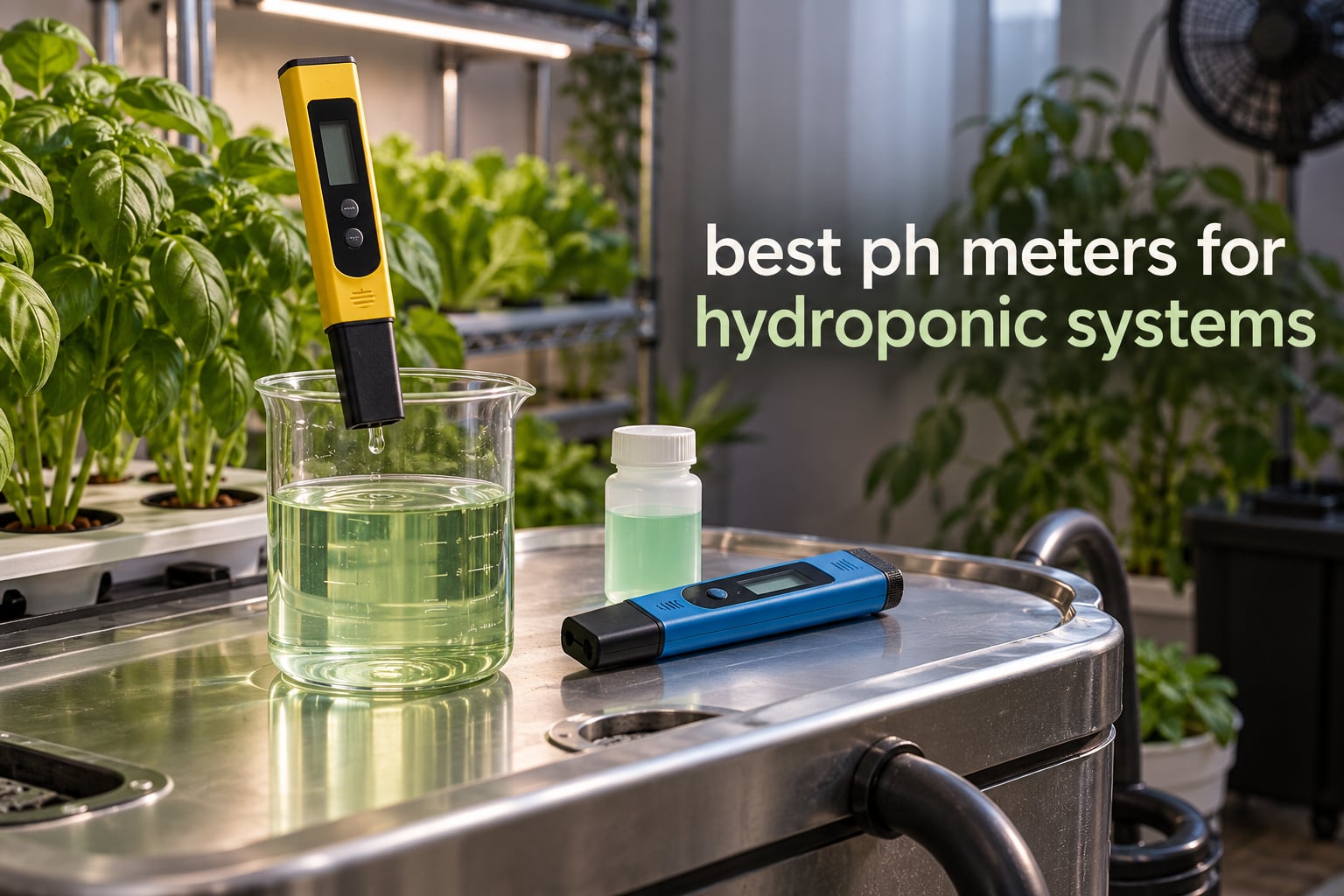
A nutrient reservoir can be full of every major element a plant needs and still starve the crop, all because of one number. That number is pH, and it decides whether iron, manganese, magnesium, calcium and phosphorus stay dissolved in the water where roots can absorb them. Getting it right takes one of the best ph meters for hydroponic systems, not a strip of coloured paper you dip and squint at.
If you want a single answer, the Apera Instruments AI311 Premium Series PH60 is the best ph meter for hydroponic systems overall in 2026. It reads to ±0.01 pH across a -2.00 to 16.00 range, accepts a replaceable glass probe, and the case arrives with ready-to-use calibration bottles, storage solution, batteries and a lanyard. Behind it sit the Bluelab pH Pen for growers who want the established hydroponic brand and a double-junction probe, and the Apera AI209 PH20 as the value pick that holds calibration between cycles.
This roundup covers twelve meters across the whole price ladder, from a pocket pen to fixed-installation monitors you leave submerged in a reservoir. We looked at stated accuracy, probe type, calibration points, temperature compensation, waterproofing and battery life, because those six things decide whether a reading you record at 6.2 is worth anything. We also put them through the routine a real grow demands: repeated reservoir checks, buffer calibration, storage between sessions and the inevitable dropped-in-reservoir moment.
Growers have argued about meter brands on r/Hydroponics and r/DWC for years, and the pattern is consistent. Bluelab and Hanna get described as expensive but worth it, with four-year-plus field use reported by owners. Budget pens get called accurate if you calibrate often enough, and criticised for drifting within months. The middle tier, where Apera and a handful of combo meters sit, is where most growers settle after the first season.
Table of Contents
Top 3 Picks for Best pH Meters for Hydroponic Systems (October 2026)
The shortlist below covers the three situations we see most often: one meter for a mixed indoor system, one meter for a grower who refuses to lose calibration, and one for a first reservoir. Every other meter in the article sits inside one of these tiers.
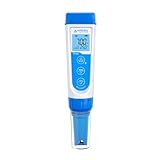
Apera AI311 PH60
- ±0.01 pH accuracy
- Replaceable glass probe
- 1-3 point auto calibration
- Storage solution included

Bluelab pH Pen
- Double-junction probe
- Two-point calibration
- 30-day calibration indicator
- Waterproof and floats

Apera AI209 PH20
- ±0.1 pH accuracy
- Buffer recognition
- ATC 32-122F
- pH 4 and 7 buffers included
The 12 Best pH Meters for Hydroponic Systems in 2026
Every meter below uses a glass or low-impedance electrode, measures a 0-14 range, and carries automatic temperature compensation. Where they split is accuracy, whether the probe can be replaced, and whether the meter is meant to be dipped in a cup or left sitting in the reservoir.
| Product | Specs | Action |
|---|---|---|
| Apera AI311 PH60 pH Pocket Tester |
|
Check Latest Price |
| Bluelab pH Pen |
|
Check Latest Price |
| Apera AI209 PH20 Waterproof Tester |
|
Check Latest Price |
 VIVOSUN pH TDS EC Meter VIVOSUN pH TDS EC Meter |
|
Check Latest Price |
 UIUZMAR 4-in-1 pH TDS EC Meter UIUZMAR 4-in-1 pH TDS EC Meter |
|
Check Latest Price |
 VIVOSUN PH-001 3-in-1 Tester VIVOSUN PH-001 3-in-1 Tester |
|
Check Latest Price |
 VIVOSUN pH TDS Soil Combo VIVOSUN pH TDS Soil Combo |
|
Check Latest Price |
 DANOPLUS KIB-245 Monitor DANOPLUS KIB-245 Monitor |
|
Check Latest Price |
 YINMIK YK-T4 Pro Meter YINMIK YK-T4 Pro Meter |
|
Check Latest Price |
 DANOPLUS KB0295 Monitor DANOPLUS KB0295 Monitor |
|
Check Latest Price |
 GIDIGI 4-in-1 Hydroponic Tester GIDIGI 4-in-1 Hydroponic Tester |
|
Check Latest Price |
 Ruolan Pre-Calibrated pH Pen Ruolan Pre-Calibrated pH Pen |
|
Check Latest Price |
What pH Should Hydroponic Water Be?
Most hydroponic nutrient solutions want water between 5.5 and 6.5 pH, and staying inside that window is the single highest-return habit in the grow. Below it, phosphorus, calcium and nitrogen become harder for roots to take up. Above it, iron, manganese and magnesium lock out, which shows up as yellowing between veins on new growth while the lights look fine.
The window is a starting point, not a law. Most leafy greens sit happily at the upper half of that range. Strawberries and many herbs prefer the lower end. Cannabis growers commonly hold the upper half of the range during peak vegetative growth and drop toward the lower half during flowering. If you are mixing your own nutrients, measure the pH of your incoming tap or reverse osmosis water before anything is added, because the source water often decides whether a solution lands in range at all.
Here is the part that catches people out. The same solution can read 6.0 at 68F and 5.7 at 78F, because the pH of water moves with temperature. That is what automatic temperature compensation corrects for, and it is why every meter in this roundup has it. A meter without ATC in a warm reservoir is not just less convenient, it is misleading.
Check the reservoir every day while plants are young and after every top-up or water change. Once a system is established and you are topping up with the same water source, checking two or three times a week is usually enough. Growers who spot a reading that will not settle will usually find a temperature difference, a stirring problem or a probe that needs rehydrating rather than a chemistry problem.
1. Apera Instruments AI311 Premium Series PH60 – Best Overall
Apera Instruments AI311 Premium Series PH60 Waterproof pH Pocket Tester Kit, Replaceable Probe, ±0.01 pH Accuracy, Lcd display
±0.01 pH accuracy
-2.00 to 16.00 pH range
Replaceable glass probe
32-122F ATC
Pros
- Highest rated meter in this roundup
- Replaceable probe extends instrument life
- Large LCD with three backlit colours
- Smiley icon flags a stable reading
- Case includes calibration and storage solutions
Cons
- Costs noticeably more than entry-level pens
- Several probe options so pick the right electrode
- Water droplets in the electrode cap on arrival confuse first-time buyers
This is the meter I keep coming back to when a grow needs one instrument it can trust for years. Accuracy is stated at ±0.01 pH across a -2.00 to 16.00 range, which is wider than any hydroponic reservoir needs but useful when you are chasing an unusual reading. Reviews rate it highest in the group, and the number of reviews behind that rating is high enough to trust.
The reason it lasts is the replaceable glass probe. When the electrode ages you unscrew it and fit a new one rather than buying a whole meter. That single design decision changes the running cost picture over a season or two, and it is the same reason the Apera AI209 sits further down this list rather than above it.
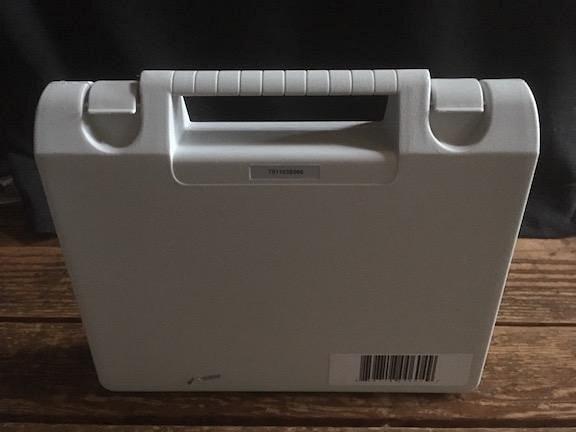
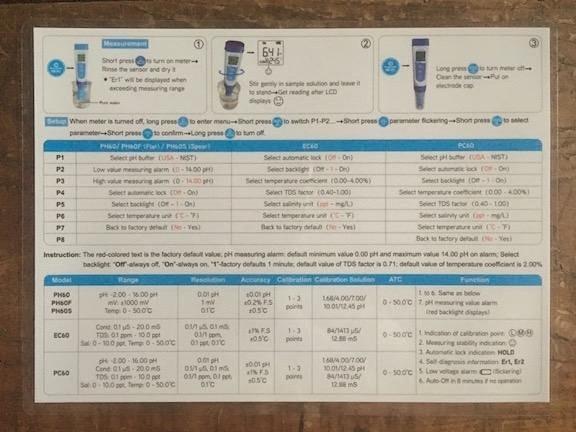
Calibration is automatic and recognises five buffer types, including 1.68, 4.00, 7.00, 10.01 and 12.46. You dip the probe, press a button and the meter recognises what it is in. The large LCD shows temperature and pH together and changes backlight colour, which matters when you are half asleep at the reservoir in the dark.
Auto power-off kicks in after eight minutes, so you will not flatten the four included AAA batteries by leaving it on the bench. The smiley icon is more useful than it sounds: it tells you the reading has stabilised, which removes most of the arguments about whether the number is finished settling.
Why it suits an established system
If you are running more than one reservoir, several tents or a propagation rack, the dual temperature and pH display saves you a second tool. Ready-mixed calibration bottles and included storage solution mean the meter can live in its case between checks, which is how the probe stays hydrated instead of drying out.
Where it falls short
The price jump from a combo pen is real, and the replaceable probe is only an advantage if you know which electrode to order. Several options exist, and the wrong choice for very pure or very dirty liquid will disappoint. Water droplets sitting inside the electrode cap on arrival are normal, but they send plenty of first-time buyers hunting for a fault that is not there.
2. Bluelab pH Pen – Best for Growers Who Want the Established Brand
Bluelab pH Pen – ± 0.1 pH Accurate – Durable Double Junction Probe
±0.1 pH accuracy
Double-junction glass probe
Waterproof and floats
30-day calibration indicator
Pros
- Double-junction probe resists contamination
- Backlit LCD with calibration reminder
- Waterproof and floats for wet reservoirs
- Automatic temperature compensation
- Long track record in grow applications
Cons
- More expensive than any other meter here
- Readings can be slow in very low dissolved-ion water
- 0.1 pH resolution is coarse for fine adjustments
Bluelab built its name in the grow room, and the pH Pen is the reason so many hobby growers stay with the brand for years. The double-junction probe is the headline. A second junction slows the path of contamination back into the glass, which is what separates a probe that lasts a few seasons from one that fogs over in a few months.
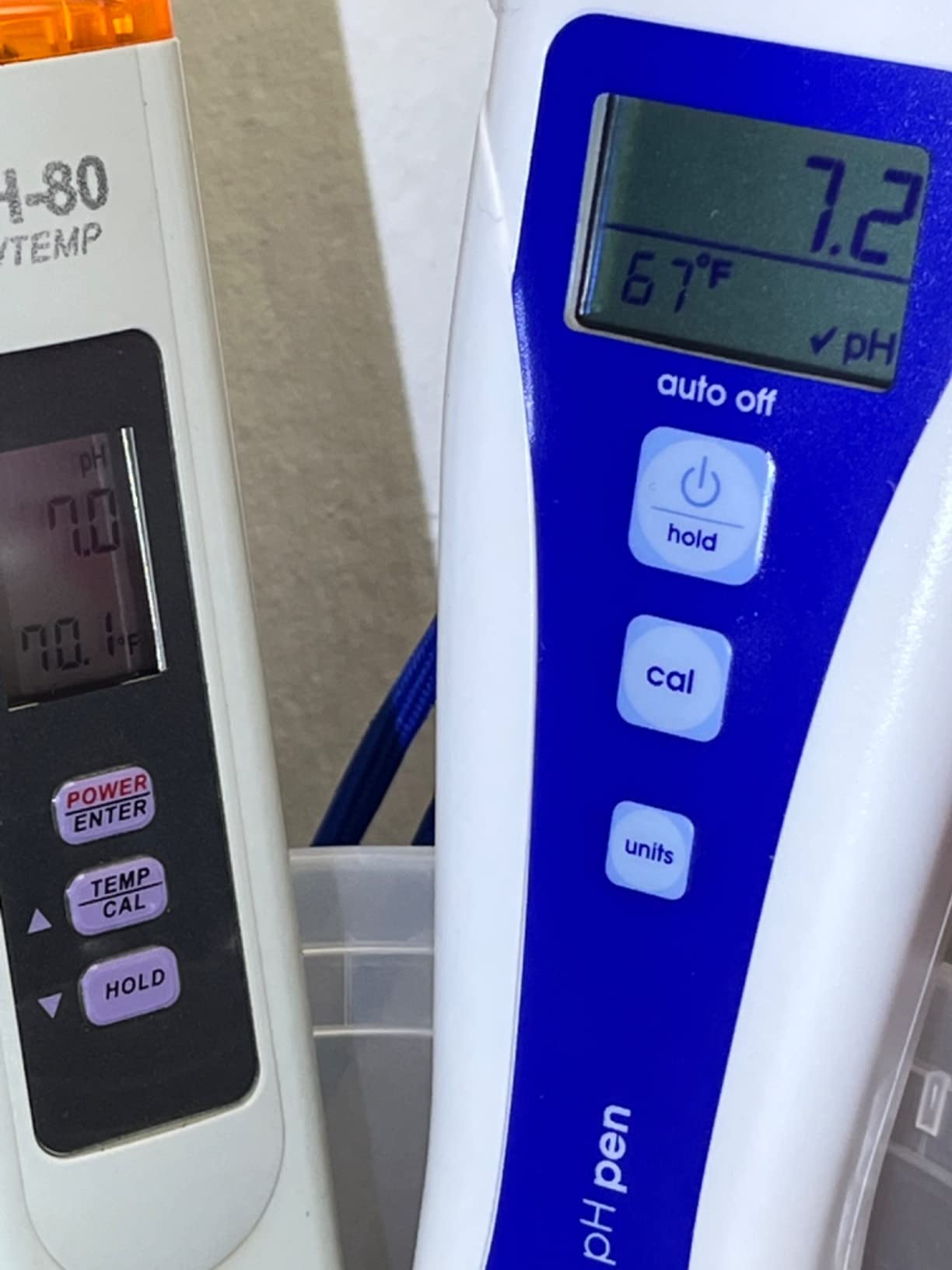
The backlit screen carries a 30-day calibration indicator, which sounds trivial until you have logged a week of work on a reading that turned out to be two-tenths out. Two-point calibration is standard here, and the meter is rated accurate to ±0.1 pH in 0.1 increments.
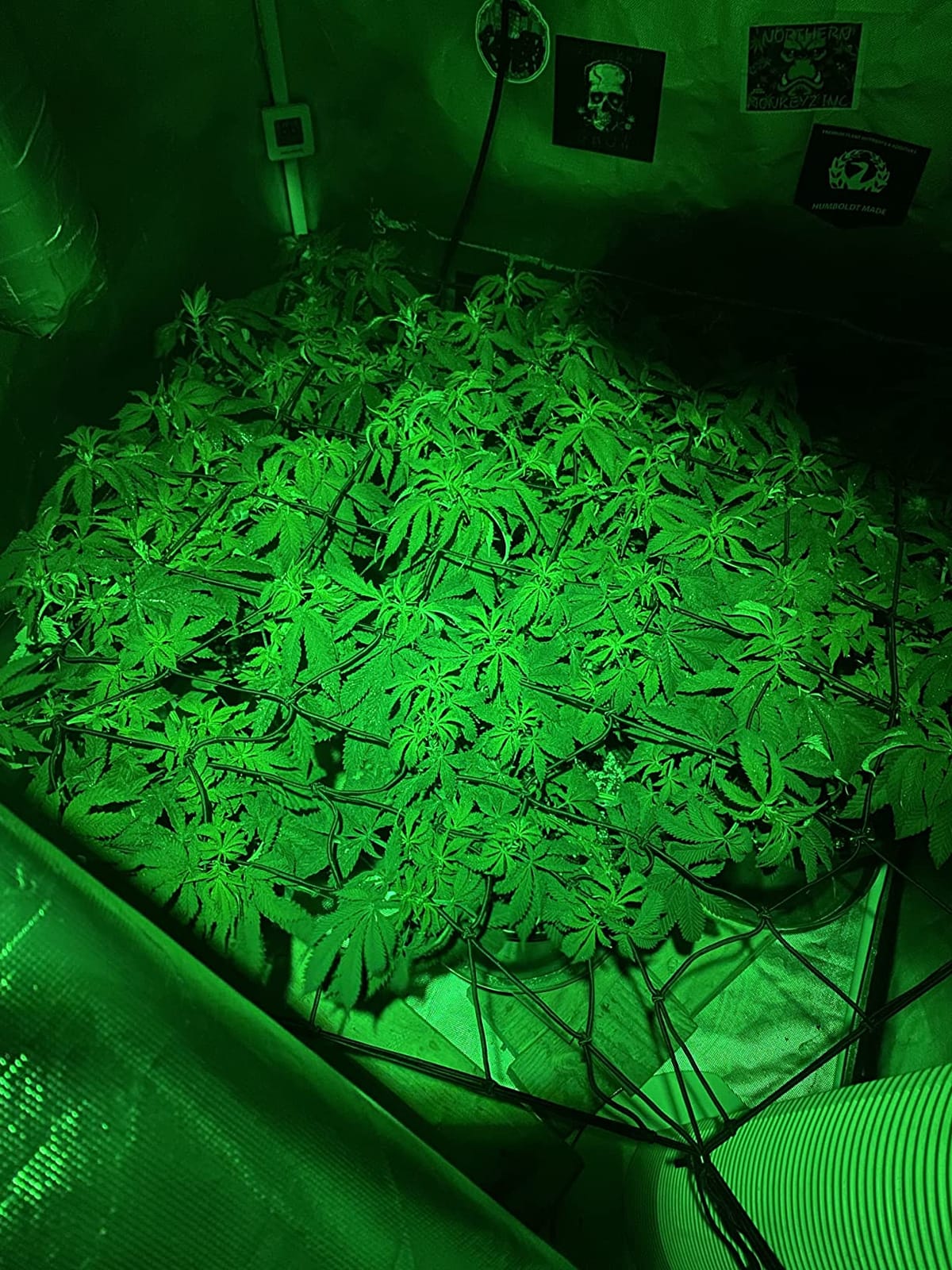
It is waterproof and floats, so dropping it in a reservoir is not the disaster it would be with a pen that leaks. Temperature compensation is automatic. The package includes pH7 and pH4 sachets plus KCL for hydrating the probe before first use, which addresses the single most common complaint growers have about new electrodes.
One documented limitation shows up repeatedly in reviews: in reverse osmosis or distilled water, where dissolved ions are extremely low, readings can be slow to settle or wander. In a nutrient reservoir that is not a problem, because the solution is full of ions. If you are testing pure source water, this is not the model I would reach for.
Why it suits a long-term grow
The double-junction probe and the calibration reminder both push in the same direction: fewer surprise corrections later in the season. For a grower who measures twice a week and wants the meter to still be accurate in year three, that is worth more than an extra decimal place.
Where it falls short
It is the most expensive meter in this roundup and it resolves in 0.1 steps. If you are chasing a tenth of a pH unit in a heavily buffered reservoir, a ±0.01 model with 0.01 resolution gives you more to work with. The 0.1 resolution is also why most Bluelab owners treat it as a trend instrument rather than a fine-adjustment tool.
3. Apera Instruments AI209 Value Series PH20 – Best Value
APERA INSTRUMENTS AI209 Value Series PH20 Waterproof pH Tester Kit, ±0.1 pH Accuracy
±0.1 pH accuracy
Waterproof casing
Buffer recognition with ATC
Up to 2000 hours on AAA
Pros
- Holds calibration between cycles
- Ready-mixed pH 4 and 7 bottles remove guesswork
- Sealed casing resists nutrient splash
- Long battery life on included AAA cells
- Rugged carrying case and lanyard included
Cons
- Calibration routine is clunkier than cheap pens
- Written instructions are poorly worded
- No backlight on the LCD
This is the model we recommend to anyone who has been burned by a drifting budget pen. Reviewers who cross-check it against laboratory-grade probes report that it stays on point and does not lose calibration the way entry-level meters do, and the review volume behind that claim is substantial.
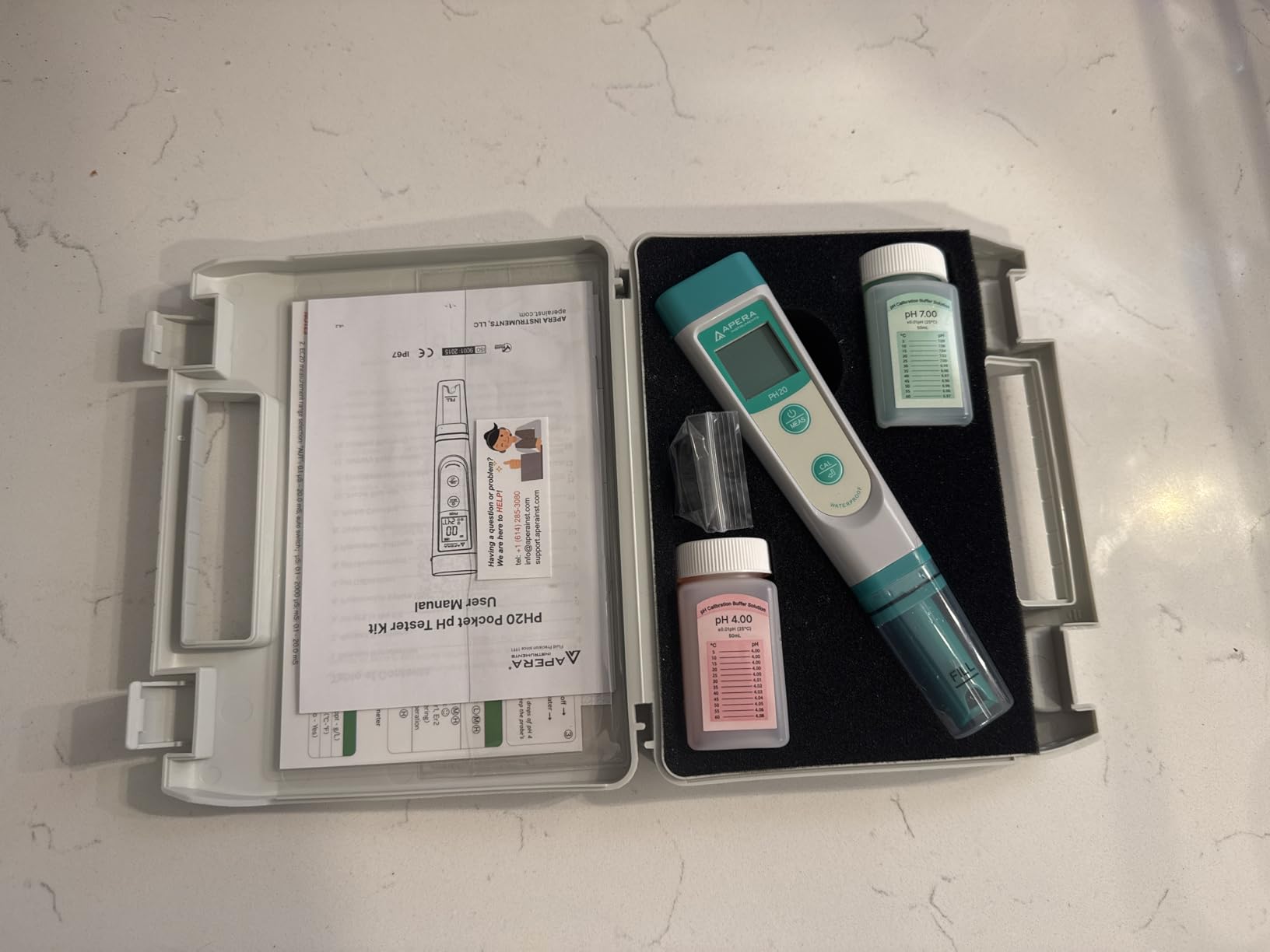
Accuracy is stated at ±0.1 pH with automatic temperature compensation from 32 to 122F. Calibration is automatic with buffer recognition, so you put the probe in the bottle, press the key and it figures out which buffer you used. Ready-mixed pH 4 and pH 7 bottles are in the case, which removes the most common beginner error of mixing powder by eye.
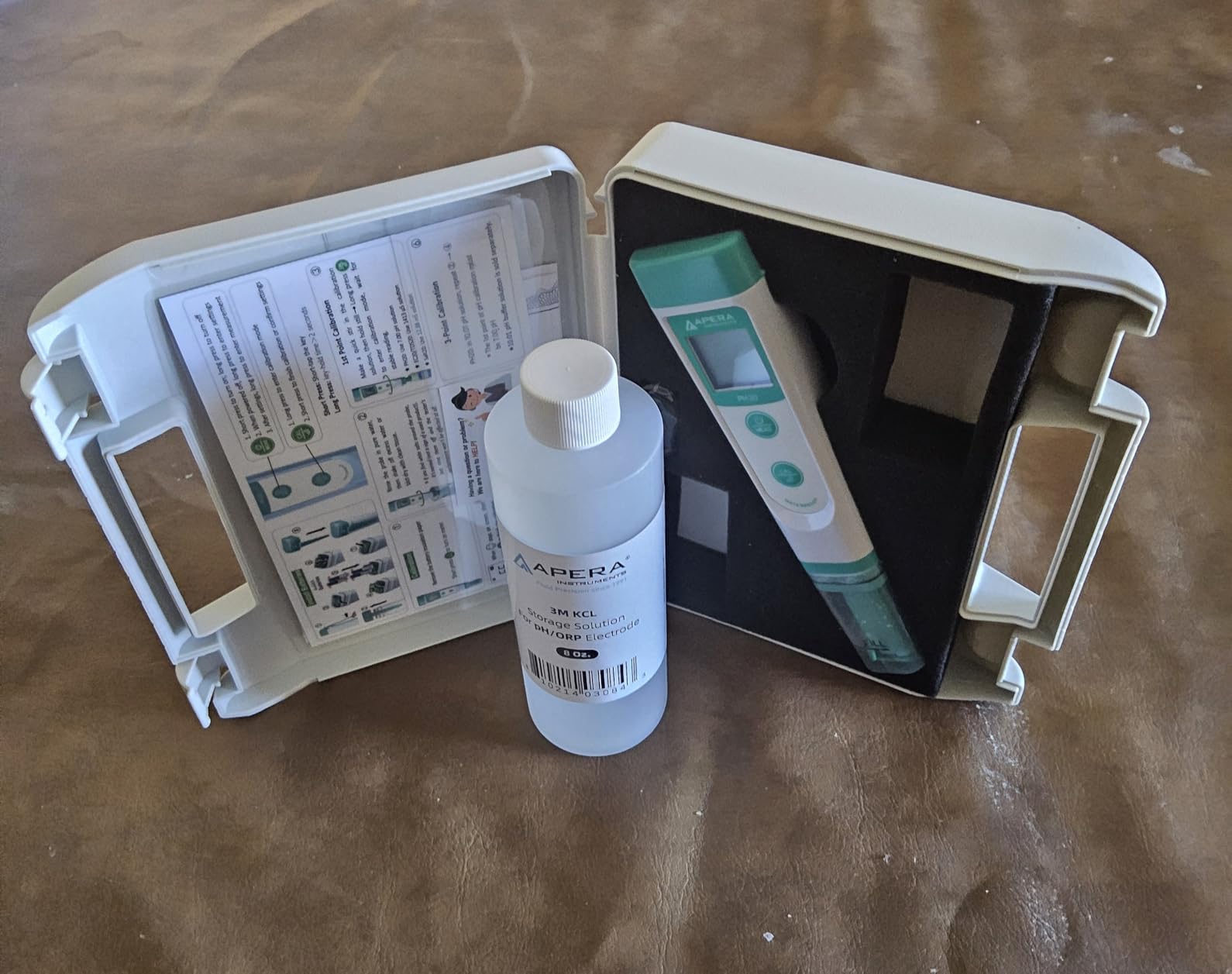
The sealed casing is the practical win in a grow room. Nutrient solution splash and humidity are what kill cheap electronics, and this one is rated for up to about 2000 hours of continuous operation on four AAA cells, so it will not be flat when the lights come on.
It is 21.8 cm long and weighs 3.9 ounces, which is a normal pen size. Apera includes a two-year limited warranty on the instrument and a six-month limited warranty on the electrode, so the probe is treated as a consumable rather than a permanent part.
Why it suits a grower upgrading from budget
If your current pen needs calibrating every few days and the number still moves, the jump to a sealed, buffered-recognition meter is the fix. You gain a stable reading and you stop guessing whether the drift is chemistry or the instrument.
Where it falls short
The calibration procedure takes more deliberate steps than a two-button budget pen, and the manual is the most common complaint in reviews, described as poorly worded and partly contradictory. The LCD has no backlight, so you will be squinting in a dark grow tent. The regular kit also omits a stand, a cleaning brush and storage solution, so budget for those separately.
4. VIVOSUN Digital pH Meter TDS EC Meter – Best Budget Combo
VIVOSUN Digital pH Meter TDS EC Meter for Water 0.01 Accuracy Hydroponics
0-14 pH range
±0.01 pH accuracy stated
TDS 0-9990ppm at ±2%
ATC and auto calibration
Pros
- Reads pH TDS and EC in one device
- Three calibration buffer powders included
- Protective case and spare batteries
- Easy-to-read LCD with hold function
- Far more convenient than manual test strips
Cons
- Build feels cheap and buttons are flimsy
- Readings can jump before settling
- Residual offset reported after calibrating
- Cannot test sea water
Few meters here have this many reviews, and that is exactly why it is worth looking at. At entry-level money you get a full 0-14 pH range, a stated accuracy of ±0.01 pH, a TDS reading from 0 to 9990 ppm at ±2 percent, automatic temperature compensation and automatic calibration in one handheld unit.
The combination matters in practice. Most growers check pH more often than EC, but when something looks off in the reservoir the EC number tells you whether nutrients were added or whether it is a pH problem alone. Having both on one device means one dip instead of two.
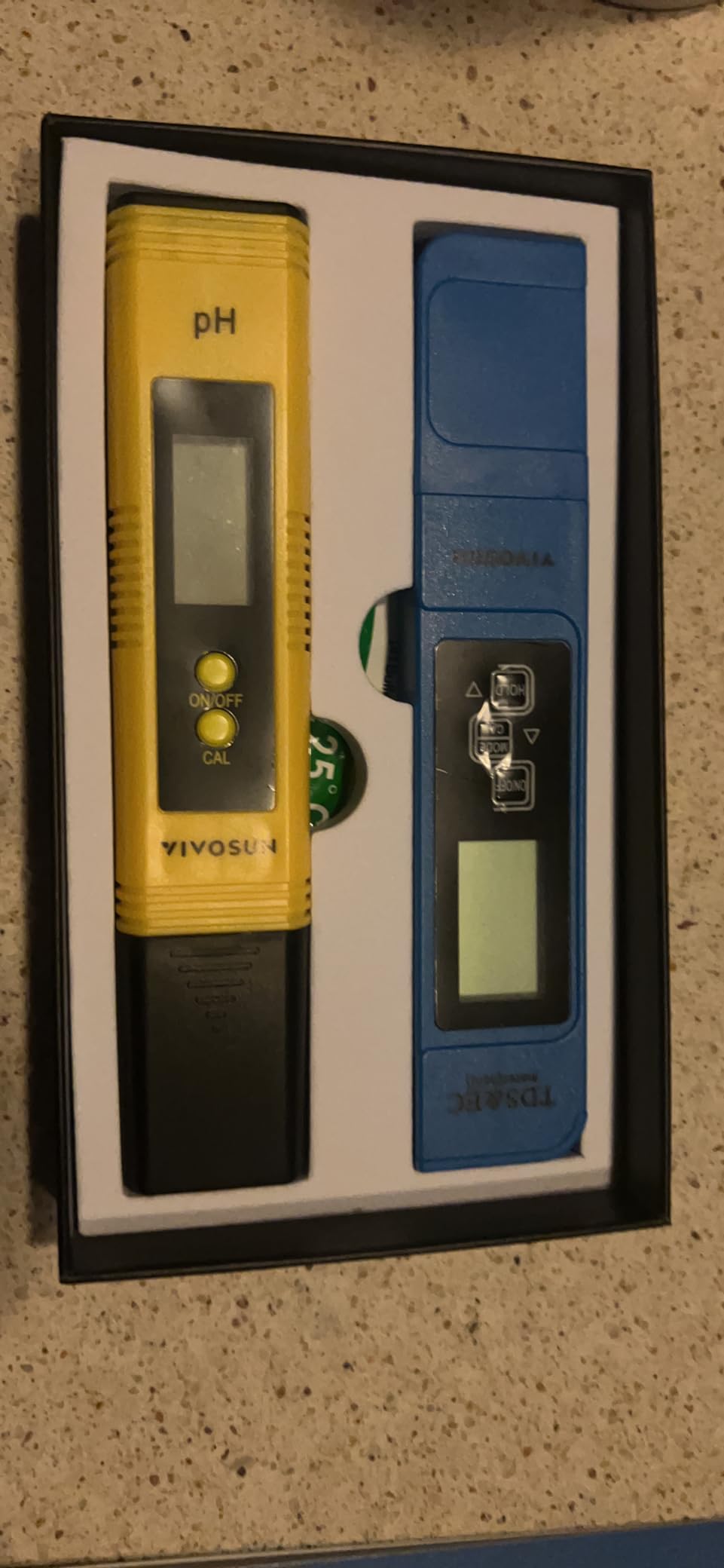
The package includes three calibration buffer powders at 6.86, 4.00 and 9.18, a protective case and spare batteries. That is a better starter box than most meters twice as expensive include, and it means you are not waiting on a delivery of calibration solution before your first check.
Now the honest part. Owners who compare against laboratory-grade probes report residual calibration offset, and a minority see readings that jump around and take time to settle in some samples. It cannot test sea water, and the TDS and EC modes can switch display unexpectedly if you catch a button wrong.
Why it suits a first reservoir
If you are mixing nutrients for the first time, this meter gives you both numbers that decide whether your mix is right, at a cost that does not matter if it gets dropped in the tank in year one. It is the fastest way to build a daily habit of measuring.
Where it falls short
The build feels inexpensive, with buttons that reviewers describe as flimsy, and that shows up in longevity. Drift within months is the pattern reported in longer use, so expect to calibrate more often than you would with an Apera or Bluelab. Treat it as a learn-the-ropes tool and upgrade when the system proves it will last.
5. UIUZMAR 4-in-1 pH TDS EC Meter – Best for Fast Stable Readings
UIUZMAR Digital pH Meter pH TDS EC Meter for Hydroponic Solution
4-in-1 pH TDS EC temperature
Three-point pH calibration
ATC from 32-122F
EC and TDS pre-calibrated
Pros
- Stabilises in one to two seconds
- Large backlit display readable in daylight
- Users cross-checking Apera and Bluelab report matching readings
- Calibration powders and storage box included
- Strong performance for the money
Cons
- Only one set of buffer powder included
- Some units fail early and cannot be recalibrated
- Probe is not easily replaceable
- Manual not supplied in English
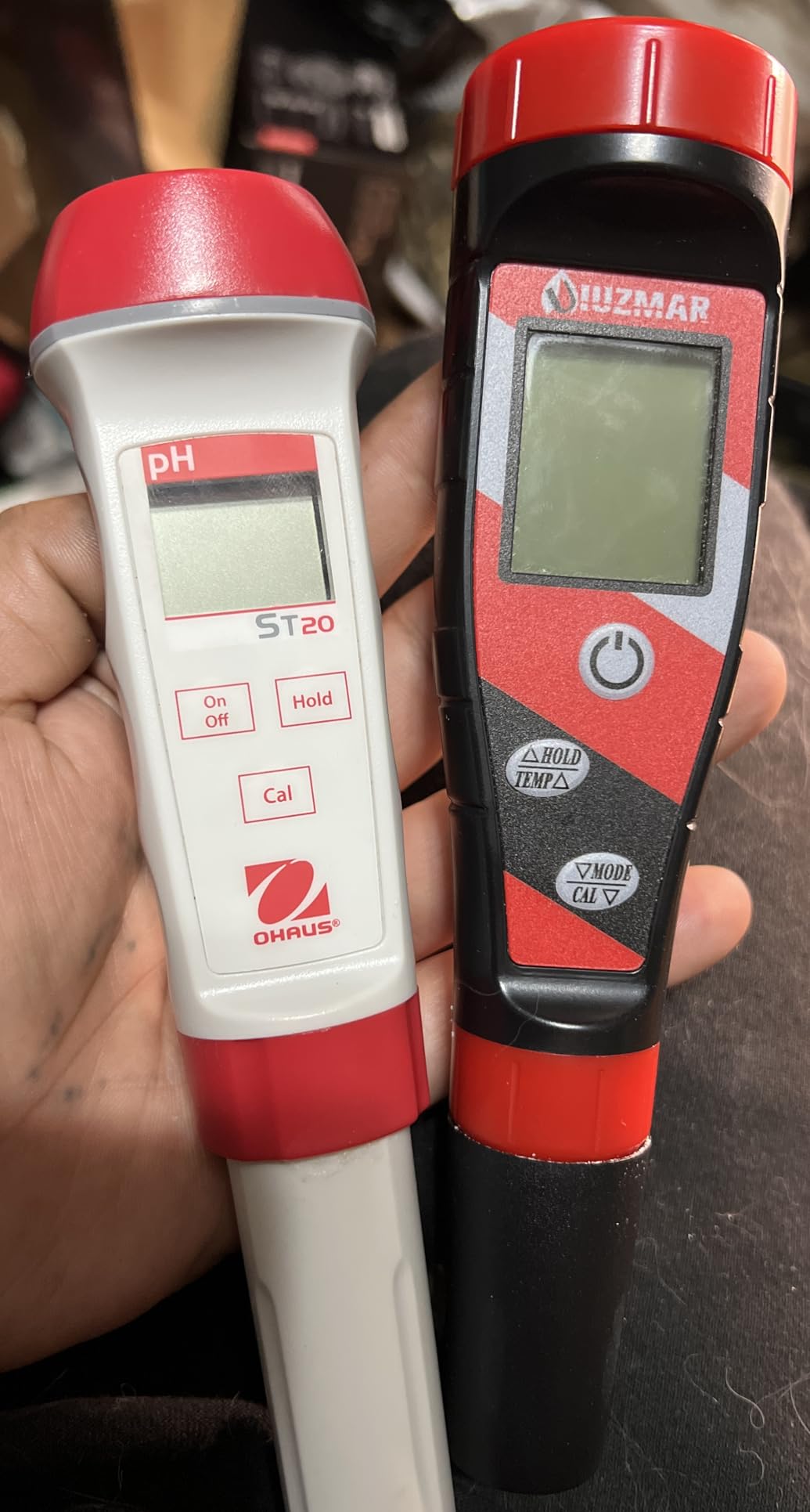
The thing you notice first with this meter is speed. Reviewers consistently report readings that stabilise in one to two seconds, which is far quicker than the typical budget pen and closer to the feel of a professional instrument. In a system where you are dipping four reservoirs twice a day, that difference adds up.
It measures pH, TDS, EC and temperature, with the conductivity channels factory-calibrated so they work straight out of the box. pH calibration is three-point at 4.0, 7.0 and 10.01, automatic temperature compensation covers 32 to 122F, and two sets of calibration powders are included. Reviewers who own Apera and Bluelab units report comparable readings at a fraction of the outlay.
The LCD backlight shuts off after thirty seconds, which is a sensible power-saving choice for a meter that spends most of its life on a shelf. Temperature and pH readings are shown clearly, and the whole unit weighs 7.7 ounces, so it is comfortable to hold with one hand while you stir the sample.
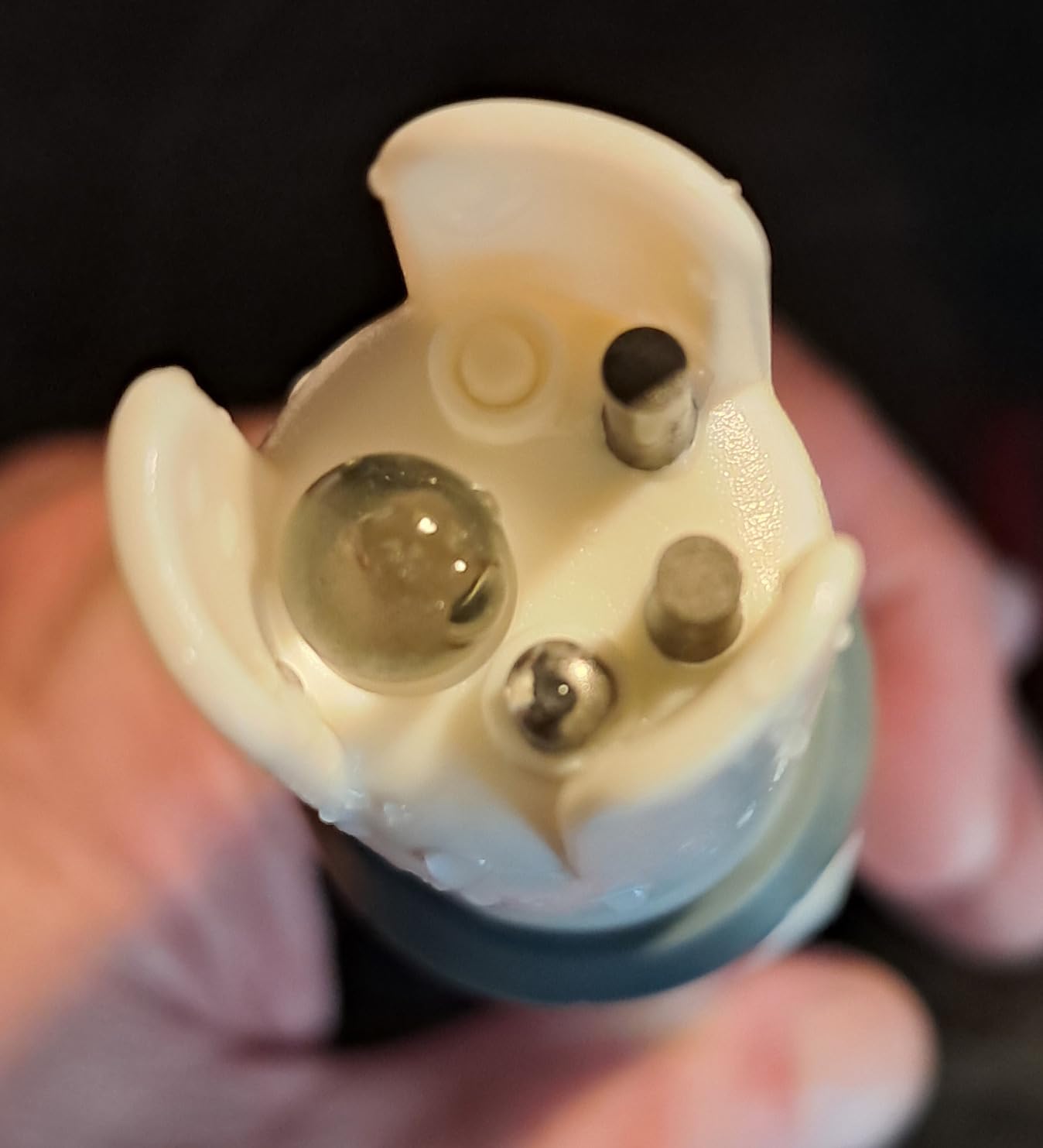
There are real limitations. Only one set of buffer powder is included, so a second calibration means either buying more powder or reusing the same solution carefully. The probe is not easily replaceable and can be damaged if screwed in too far, which is the main reason we do not rank it higher despite the strong rating.
Why it suits a busy multi-reservoir setup
When you are checking a seedling rack, a vegetative reservoir and a flowering tank in one session, a two-second response is worth more than a decimal place you will never chase. The pre-calibrated EC and TDS channels mean you can check feed strength in the same dip.
Where it falls short
A minority of owners report units failing after a short period with no way to recalibrate them, and the non-replaceable probe removes the usual escape route. The manual is not supplied in English or Dutch, which adds friction to calibration if you are not comfortable with the default language.
6. VIVOSUN PH-001 3-in-1 Tester – Best for a Backlit Readout
VIVOSUN 3-in-1 Digital pH Meter with ATC, ±0.1 pH Accuracy Water Quality Tester, 0-14.0 pH Measurement Range for Hydroponics, Household Drinking, Pool and Aquarium
0-14 pH at 0.01 resolution
Green backlit LCD
Three-point auto calibration
ATC from 32F to 140F
Pros
- Green backlit display reads well in any light
- Three-in-one pH TDS and temperature
- Sits between cheap pens and premium meters
- Automatic calibration recognises 4.01 6.86 and 9.18
- Pocket sized at 7.2 inches
Cons
- Durability complaints after a year or two
- Readings drift and need recalibrating over time
- EC calibration solution sold separately
- Plastic build feels basic
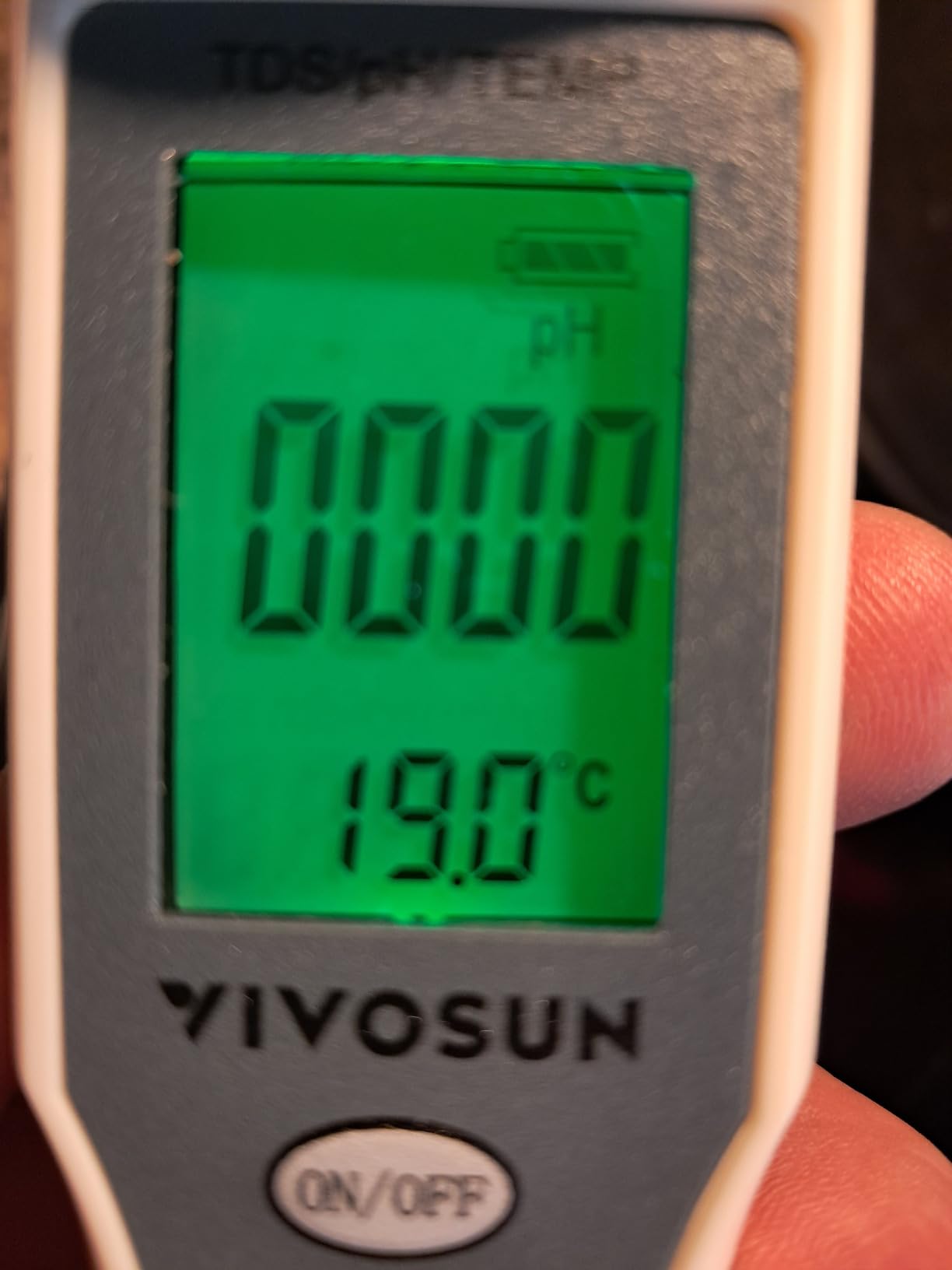
This is the model we would hand to someone who found the cheapest pens too hard to read. The green backlit display is the headline feature, and in a dim grow tent or a reservoir cabinet it makes a real difference compared with the unlit screens on most pens at this level.
Underneath, the specification is sensible for a mid-budget unit: a 0-14 pH range with 0.01 pH resolution, automatic temperature compensation from 32F to 140F, and three-point automatic calibration that recognises pH 4.01, 6.86 and 9.18 buffers. It also measures TDS and temperature in the same body.
Owners who cross-check it report a clear step up from the entry-level pens, and once you are used to the routine calibration is quick. At 7.2 inches long and 3.53 ounces it disappears into a pocket, which makes the daily habit easier to keep.
The recurring complaint in longer-term reviews is durability. Several owners report pens failing within a year or two, alongside readings that drift and need repeated recalibration. EC calibration solution is not included and has to be bought separately, which catches people out the first time they calibrate that channel.
Why it suits a grower who reads in bad light
If your reservoir sits in a shaded corner, or you test at night, a backlit screen removes the most common excuse for skipping a check. The three-point calibration and 0.01 resolution also make it more precise than the cheapest pens it replaces.
Where it falls short
Drift and build durability are the two issues that push owners toward Apera or Bluelab after a year or so. The plastic feels basic in the hand. If you expect to keep one meter across several seasons rather than replacing it, spend up.
7. VIVOSUN 3-in-1 pH TDS and Soil Tester Bundle – Best for Mixed Garden Work
VIVOSUN Digital pH Meter, 3-in-1 TDS/EC/Temperature Meter, 3-in-1 Soil Moisture/pH/Light Tester Combo for Home, Garden and Hydroponics, Yellow-Blue-Green
pH pen with ATC and backlight
3-in-1 TDS with titanium electrode
Bundled 3-in-1 soil tester
Auto shut-off and hold function
Pros
- Three instruments in one package
- Backlit display on the pH pen
- Titanium alloy electrode in the TDS channel
- Auto shut-off and hold function
- Handles home garden and reservoir testing
Cons
- Soil readings are indicative not laboratory accurate
- Entry-level accuracy against dedicated meters
- Multiple modes mean more buttons to learn
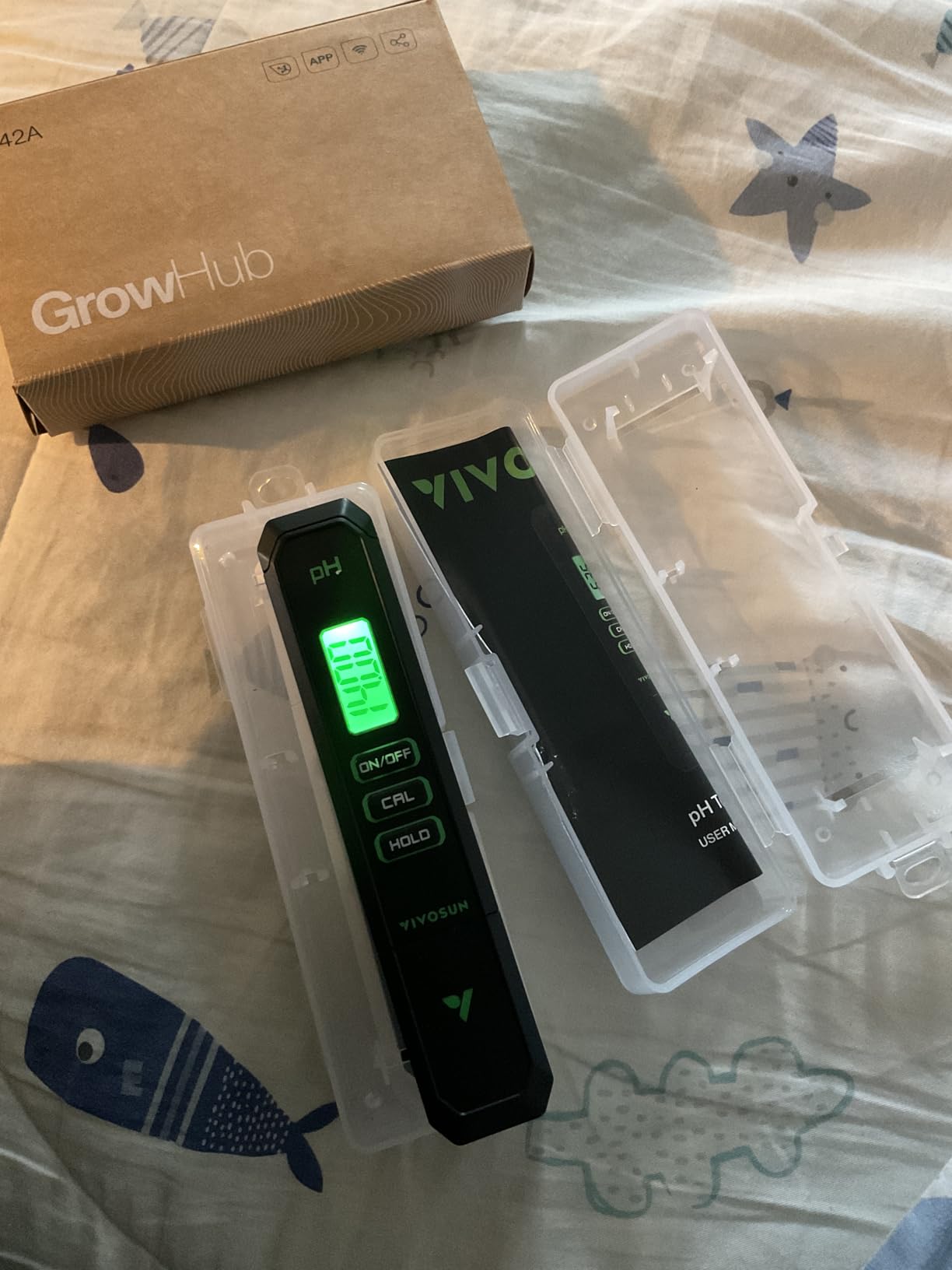
This bundle is not a specialist instrument, and it is worth saying that up front. It combines a pH pen with automatic temperature compensation and a backlight, a TDS meter using a titanium alloy electrode with auto shut-off and hold, and a separate 3-in-1 soil tester that reads moisture, light and pH.
For a grower who also has raised beds or containers, that combination covers the whole watering routine in one purchase. The pH pen handles the reservoir, the TDS channel checks feed strength, and the soil tester gives you a rough moisture and light reading without buying another instrument.
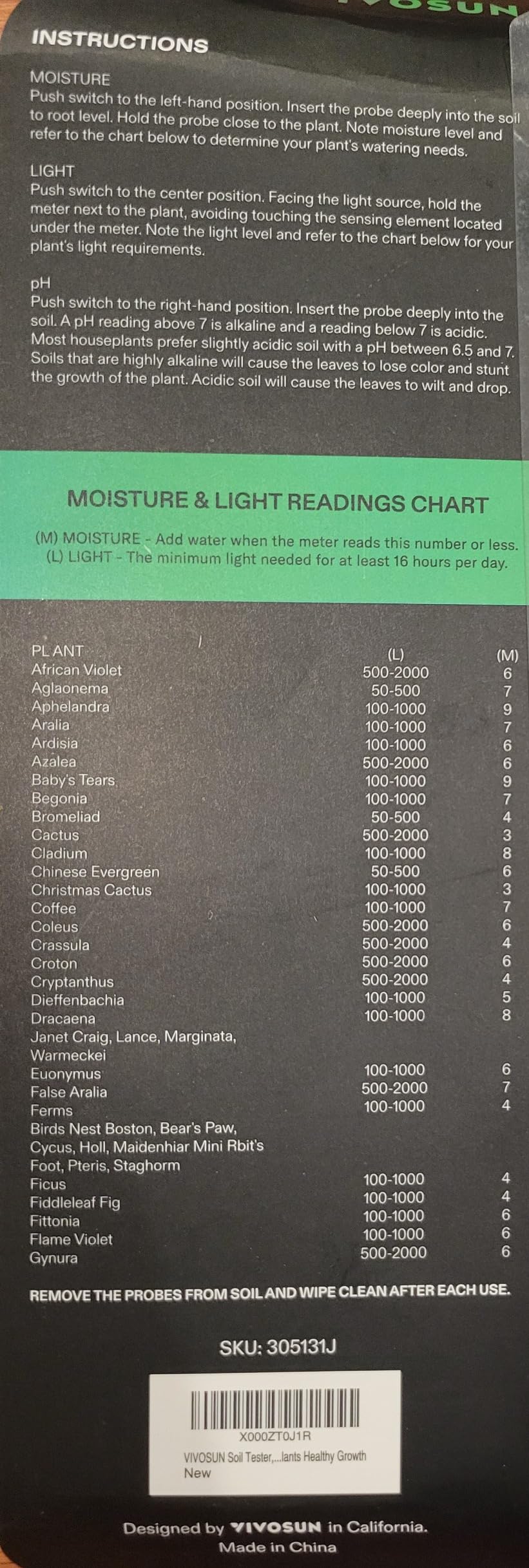
Both water instruments carry automatic temperature compensation, which is the spec you should insist on in any case. Auto shut-off protects the batteries, and the hold function freezes the reading so you can lift the pen out without losing the number.
The honest limitation is accuracy. Owners use the soil probe readings as indicative rather than as lab-grade values, and describe the water readings as entry-level next to dedicated meters. More modes also means more buttons to learn, and the extra soil tester takes up space you may not have in a small grow room.
Why it suits a mixed setup
If the same person waters a hydroponic reservoir and a soil bed, one package beats managing three devices with three calibration routines. The titanium alloy electrode in the TDS channel also resists the surface wear that flattens cheaper conductivity probes.
Where it falls short
If hydroponics is your only job, this is money spent on a tool you will never use. The soil readings in particular are not precise enough to adjust a nutrient schedule, and the water channels give up some accuracy compared with a dedicated pH meter at a similar or lower cost.
8. DANOPLUS KIB-245 Monitor – Best for Continuous Monitoring
2 in 1 Temperature & pH Meter, High-Precision pH Tester, PH Monitor with Replaceable BNC Probe, 0.00~14.00pH Measurement Range, ATC, Backlit Display and °C/°F for Fish Tank, Hydroponics & Pools
0.00-14.00 pH range
±0.1 pH accuracy
Replaceable BNC electrode
AC adapter included
Pros
- Shows pH and temperature continuously
- Replaceable BNC probe cuts maintenance cost
- Runs on batteries or the included 6V adapter
- Dual backlit display with C/F toggle
- Calibration takes seconds with included powders
Cons
- Single-position calibration screw
- Probes have arrived dry with no cap
- Batteries drain quickly when left monitoring
- Thin instructions on mounting and calibration
This is where the category changes shape. Instead of a pen you dip and put away, the KIB-245 is a small monitor you can leave near or in the reservoir, showing pH and temperature at the same time on a backlit dual display. For a system where pH moves overnight, that visibility is the whole point.
Temperature is not a secondary number here. pH shifts with water temperature, and seeing both at once tells you whether a reading that changed overnight is a chemistry event or simply a temperature event. The temperature range is 0 to 55C with readings accurate to plus or minus 1 degree Celsius.
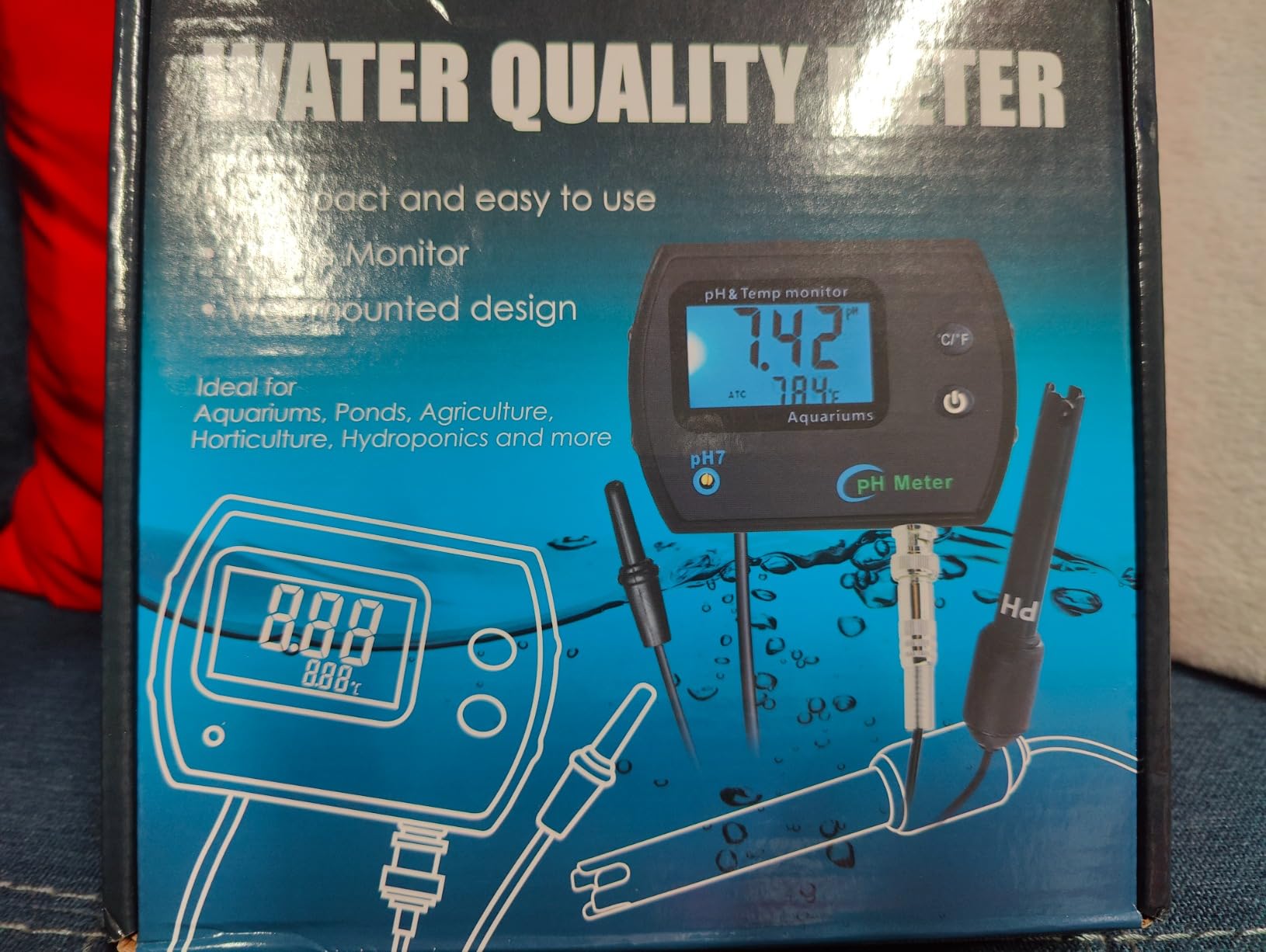
The BNC electrode is replaceable, so when probe life ends you replace a cable-style probe rather than the unit. It runs on four AG13 button cells for portable use or the included 6V DC adapter for continuous operation, and automatic temperature compensation corrects readings across 0 to 50C.
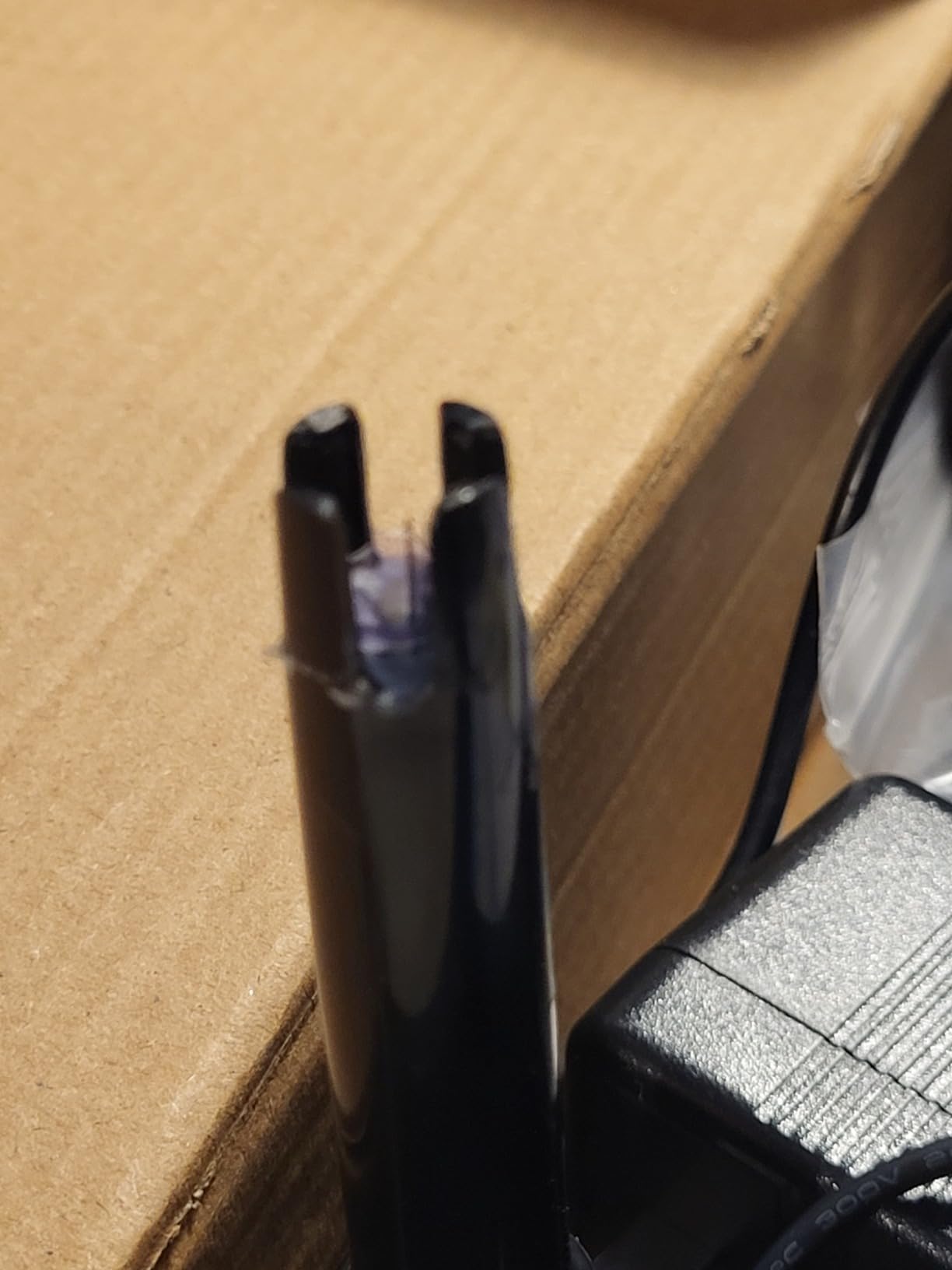
The weakness is calibration depth. A single-position calibration screw limits accuracy across the full pH range, and reviews also mention probes arriving dry with no cap on some units. Batteries also drained quickly when the unit was left monitoring continuously, which is exactly the use it is sold for.
Why it suits a long-running reservoir
If your plants drink water faster than you expect, a glanceable readout catches drift long before the plants show stress. The dual display also lets you log pH against temperature, which makes diagnosing a strange reading much faster later.
Where it falls short
Single-point calibration means this is not the meter for fine work, and a few owners report units that will not power from the DC adapter. The instructions are thin on mounting and calibration detail, so budget time to set it up properly rather than assuming it will just work plugged in.
9. YINMIK YK-T4 Pro – Best for Leaving in the Reservoir
YINMIK pH Meter for Hydroponics, 4 in 1 PPM EC Meter for Plant Nutrients
4-in-1 pH PPM EC temperature
Continuous immersion design
Stainless steel temperature electrode
Ready-mix pH 4 and 7 included
Pros
- Designed for hydroponic reservoirs rather than generic water
- Sits immersed for continuous monitoring
- Ready-to-use pH and EC calibration solutions
- Stainless steel electrode responds quickly
- pH and temperature visible together
Cons
- Newer listing with a smaller review base
- Replacement probe and solutions sold separately
- Review volume well below the category leaders
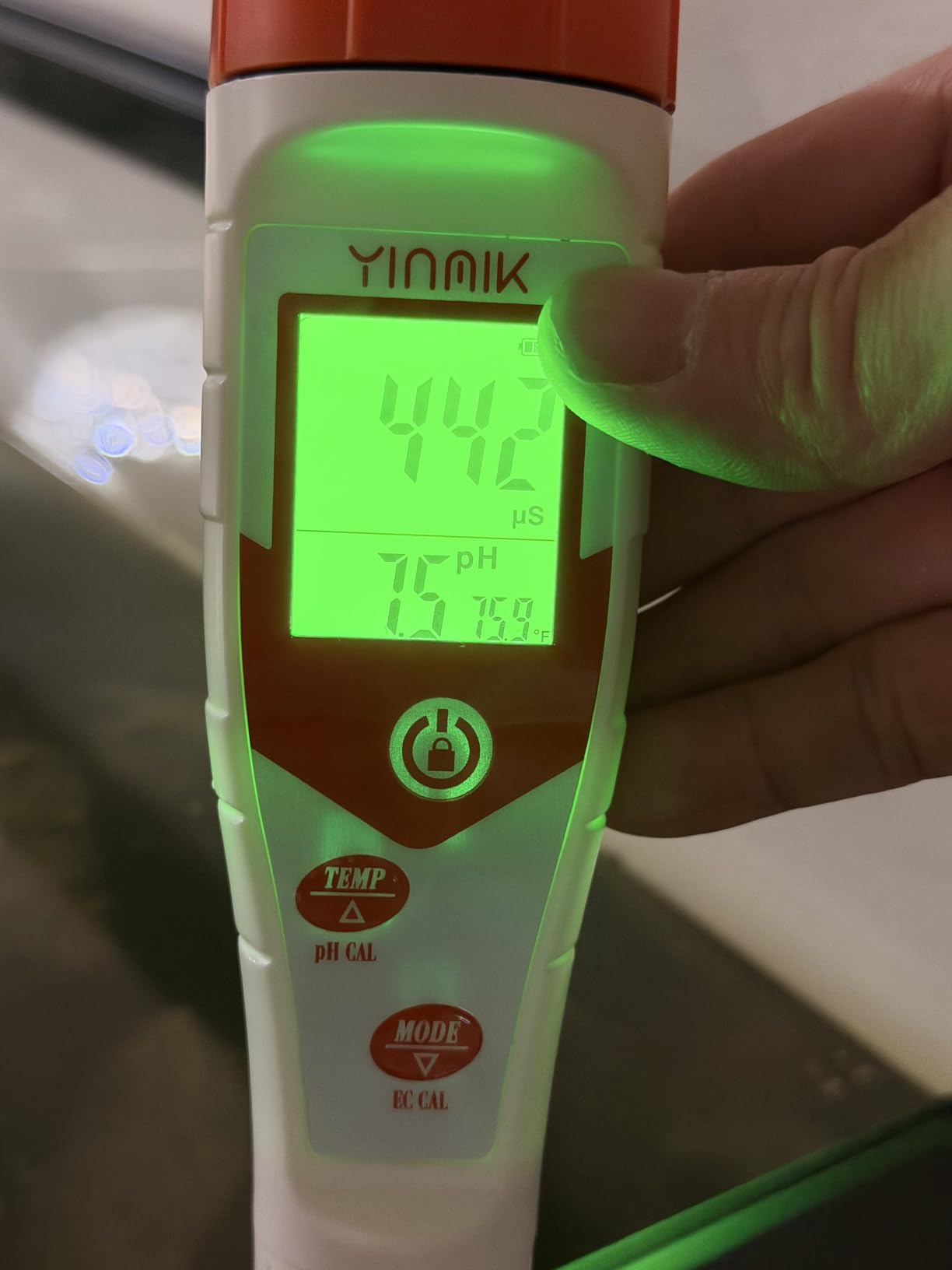
Where most combo meters are adapted from aquarium tools, this one is built for the job. It measures pH, PPM, EC and temperature in a single body, offers a basic ppm mode for plain reservoirs and an EC mode for full nutrient solutions, and is designed to sit immersed in a reservoir or nutrient tube for continuous monitoring.
The extended stainless steel temperature electrode is the detail that suits continuous use, since it is built to stay wet rather than survive occasional dips. pH and temperature are displayed at the same time, so you never have to switch modes to know what temperature you read at.
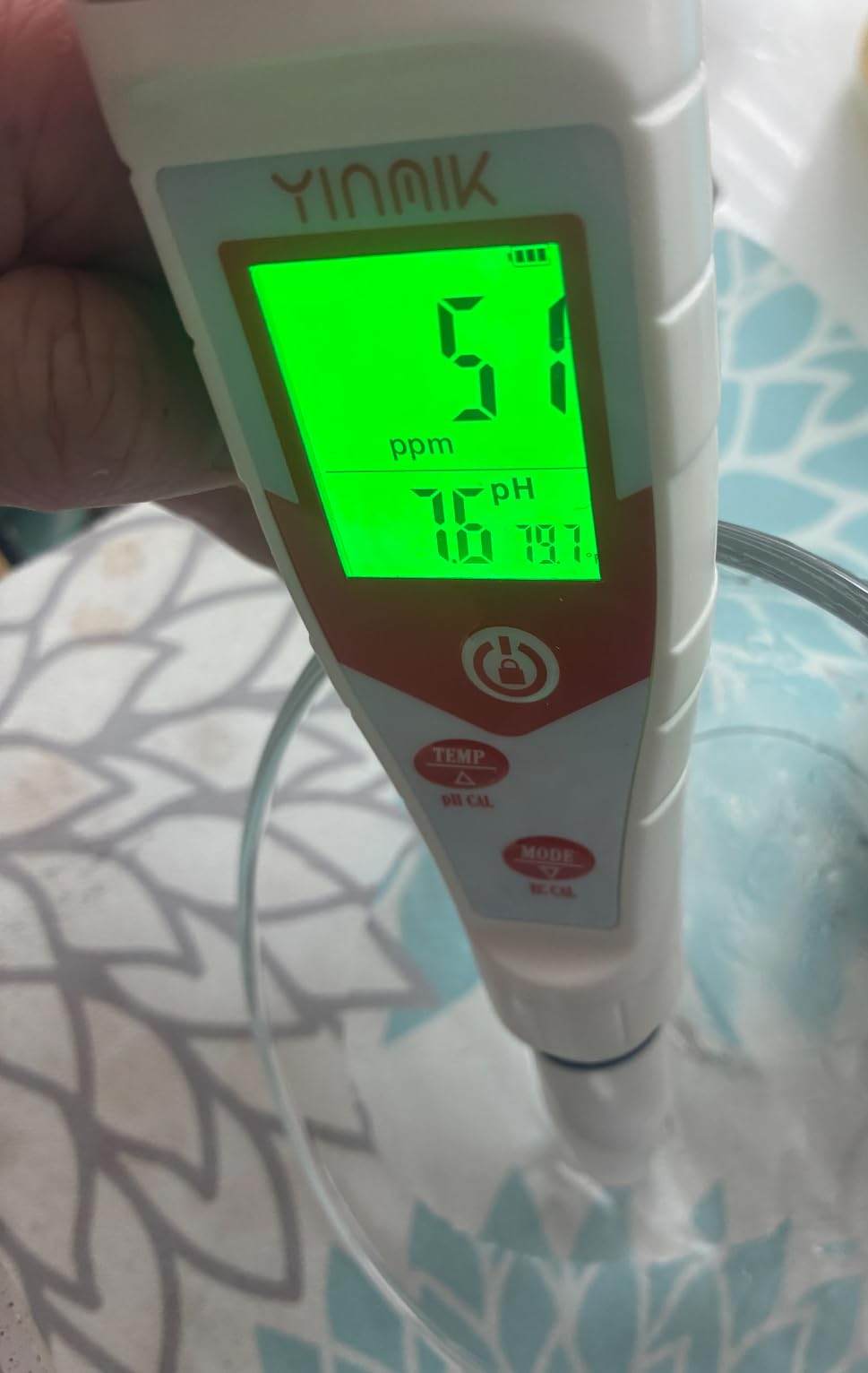
Calibration solutions arrive ready to use, including 4.00 and 7.00 pH and a 1413 microS/cm EC buffer. That removes the powder-mixing step, and it also removes the most common source of calibration failure, which is solution prepared too weak.
The honest caveat is evidence. With a newer listing and a smaller review base than the established brands, there is less long-term history to lean on. Replacement probes and calibration solutions come from the same brand and are bought separately, so check availability before committing.
Why it suits a monitored system
Leaving the unit in the nutrient tube means you see the trend rather than a snapshot, which is exactly what you need when a reservoir warms up during a lights-on period. The dual display and ATC for the EC reading make the output easier to trust.
Where it falls short
Fewer reviews means less evidence about how it behaves after a year of continuous immersion, and the accessories you will eventually need are not bundled. If you want a proven long-term record, the Bluelab or Apera options above carry larger review bases.
10. DANOPLUS KB0295 pH and Temperature Monitor – Best for Wall or Tripod Mounting
2 in 1 pH & Temperature Meter Digital pH Monitor Dual Display Water Quality Tester with ATC and Automatic Calibration Function, pH Tester for hydroponics, Aquarium, Pools, etc.
0.0-14.0 pH range
0.1 pH accuracy
One-key auto calibration
Replaceable BNC electrode
Pros
- Can stay submerged for 24-7 monitoring
- Dual backlit pH and temperature display
- Tripod hanging and wall mounting options
- Replaceable BNC electrode
- Readings reported accurate on cross-check
Cons
- Probe lasts roughly one to one and a half years
- Replacement probes cost as much as a new unit
- Display could be larger and brighter
- Powder buffers less reliable than liquid
This monitor answers a question the handheld pens cannot: where does the meter physically live? It is designed to be mounted, with three options listed for tripod holder, hanging and wall mount, so you can put the readout at eye level instead of dipping into a dark reservoir.
Calibration is one-key automatic with pH 4.00, 7.0 and 10.01 solutions. The pH range is 0.0 to 14.0 at 0.1 pH accuracy, and the temperature channel covers minus 5.0 to 60.0C at 0.5C accuracy with C and F switching. The electrode is a replaceable BNC type.
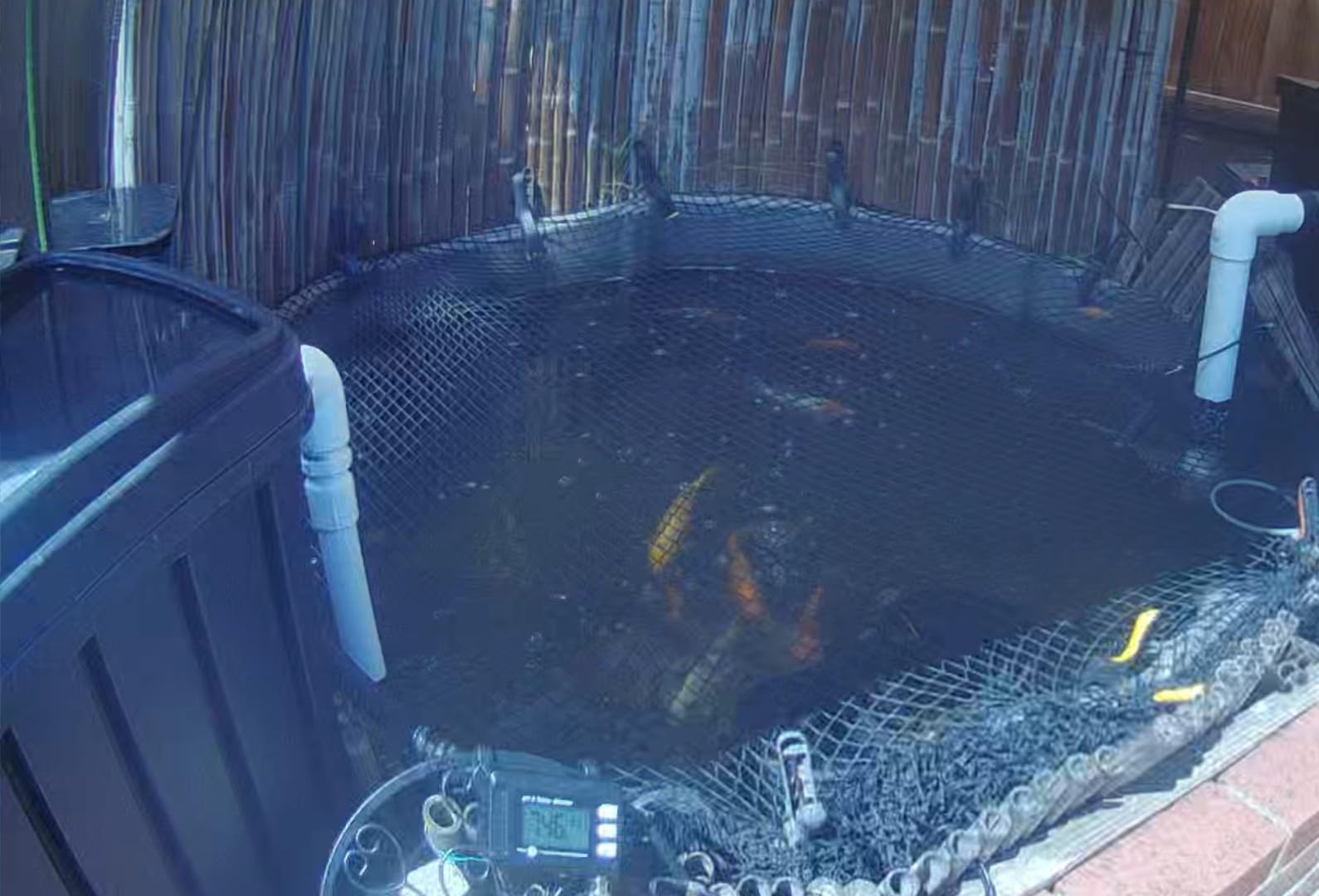
Owners report that readings hold up when cross-checked against a second method, and being able to leave it submerged for round-the-clock monitoring is the reason most people buy a monitor at all. The backlit LCD keeps the numbers visible in a dim room.
Expect to replace the probe. Reviews put service life at roughly one to one and a half years, and the replacement probes cost about as much as a new unit, which makes this a recurring cost rather than a one-off. A few owners also received units without the advertised tripod.
Why it suits a fixed installation
Mounting options mean you can put the screen where you check the reservoir without carrying a tool out there. The automatic calibration routine keeps the daily habit short even when you are only doing a quick morning glance.
Where it falls short
The replacement probe economics are the drawback, since a probe that costs nearly as much as the meter changes the value calculation over three years. Powder buffer solutions are also less consistent than factory-prepared liquids, and some units shipped without the mount named in the listing.
11. GIDIGI 4-in-1 Digital pH Tester – Best for First-Time Growers
GIDIGI Digital pH Tester for Water, pH Meter for Hydroponic Water
4-in-1 pH TDS EC temperature
pH 0.1-14.0 range
Simultaneous pH and ppm readout
ATC from 0 to 50C
Pros
- Shows pH and ppm together without mode switching
- Simple calibration and clear readings
- Green backlit display for low light
- Sponge cap keeps the electrode moist
- Durable enough for daily tower use
Cons
- Probe tip is not replaceable
- Some users recalibrate every use and still see drift
- No cleaning cloth included
- Does not match Bluelab or Apera accuracy
New growers describe this as the bridge between a five-dollar pen and a Bluelab or Apera meter. It measures pH, TDS, EC and temperature, and the feature that gets mentioned most is the simultaneous pH and ppm readout, which removes the button pressing that confuses newcomers on multi-mode meters.
The pH range is 0.1 to 14.0 with 0.1 resolution, the EC range runs 0 to 9990 microS/cm and 10.01 to 19.99 mS/cm, and the TDS range is 0 to 9990 ppm. Temperature is measured from 32.0 to 140.0F with automatic compensation across 0 to 50C.
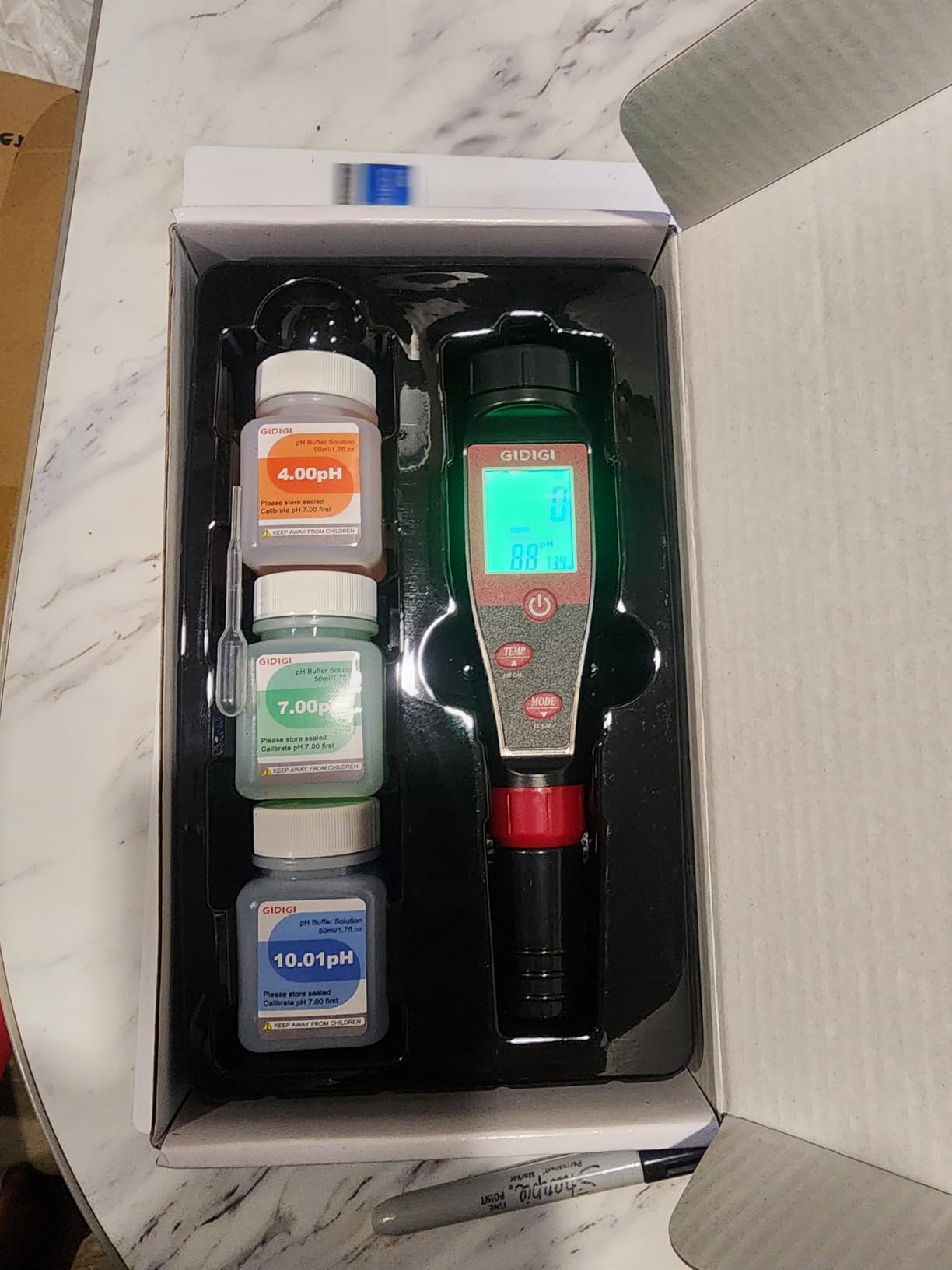
The sponge cap on the electrode is a thoughtful touch. Keeping the bulb moist between uses is the single best defence against probe drift, and this is one of the few meters in the roundup where that is built in rather than something you have to arrange yourself with storage solution.
The two recurring complaints are the non-replaceable probe tip and drift. Some users recalibrate before every use and still see readings wander by up to 0.6 pH, and there is no cleaning cloth in the box for the sensitive bulb. Accuracy also sits below the Bluelab and Apera models.
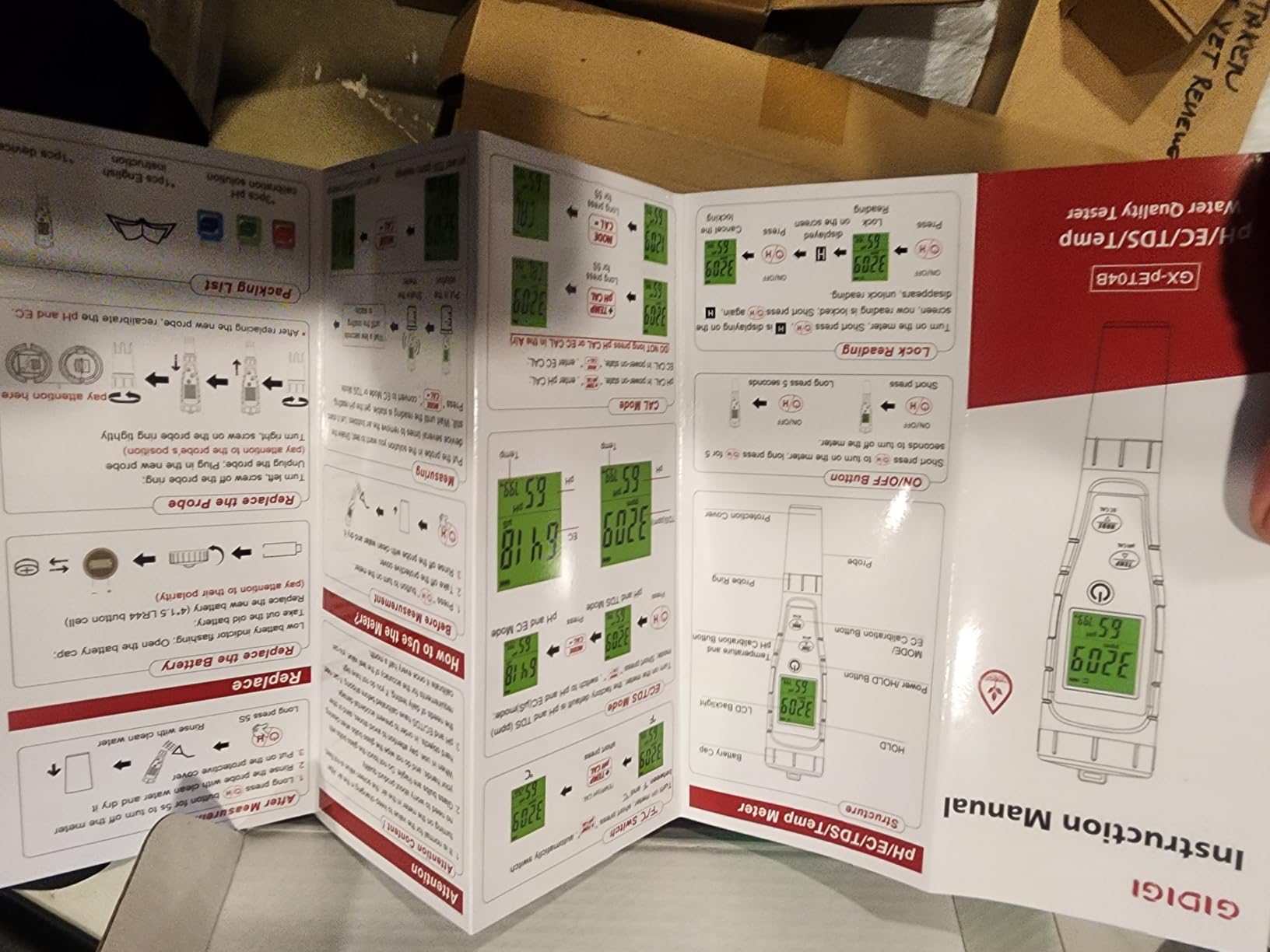
Why it suits someone learning the routine
Simultaneous readings mean you build the habit of measuring without a learning curve, and the backlit green display helps in a dark space. It is durable enough for daily use in a hydroponic tower, which is where most beginners start.
Where it falls short
When the probe ages, the whole unit goes with it. That is the deal-breaker for anyone planning to keep one meter for years, and it is the main reason we rate the Apera models higher despite their higher outlay.
12. Ruolan Pre-Calibrated pH Pen – Best for a First Test on a Budget
Digital pH Meter Tester Pen for Water, Pre-Calibrated, High Accuracy ±0.01, 0–14 pH Range, Pocket Size for Drinking Water, Pool, Aquarium & Hydroponics (Yellow)
0-14 pH range
Stated ±0.01 pH accuracy
Three-point calibration
Pocket size at 3.52 ounces
Pros
- Pre-calibrated and usable straight away
- Lowest-cost meter we tested
- Pocket size at 6.85 inches long
- Three-point calibration with included powders
- Also works for drinking water pools and RO systems
Cons
- Overall rating suggests consistency issues for some users
- Accuracy varies with temperature and dissolved ions
- Basic build quality typical of the budget tier
This is the pen for someone who wants to know what a hydroponic reservoir actually reads before spending more. It arrives pre-calibrated, so you can dip it in your reservoir on the same evening it arrives and get a usable number, which removes the most common reason beginners never start measuring at all.
Specification is 0-14 pH with a stated accuracy of ±0.01 pH, and three-point calibration runs in the order 6.86, then 4, then 9.18 using the CAL button. At 6.85 inches long and 3.52 ounces it is genuinely pocket sized and runs on a single CR2 battery.
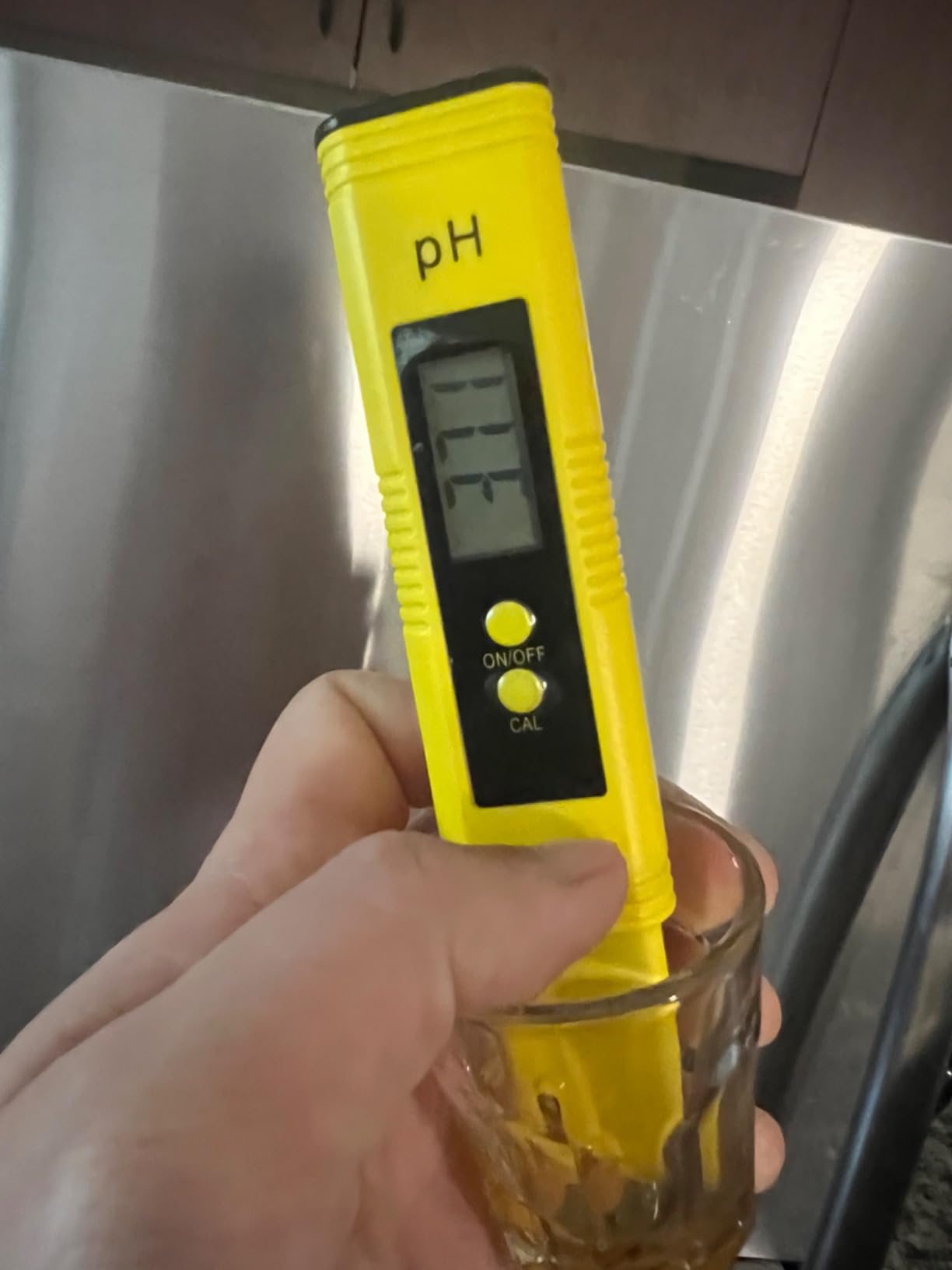
The process is simple: immerse the probe, stir gently and wait for the reading to stabilise. It also works on drinking water, aquariums, pools and reverse osmosis systems, so it is not a single-purpose tool if you test other water at home.
The rating of 3.9 across more than eleven thousand reviews is the honest signal here. Owners treat it as an inexpensive first meter and accept the trade-off, and reviews note that accuracy varies slightly with water temperature and dissolved ion content. Build quality is what you would expect at this price.
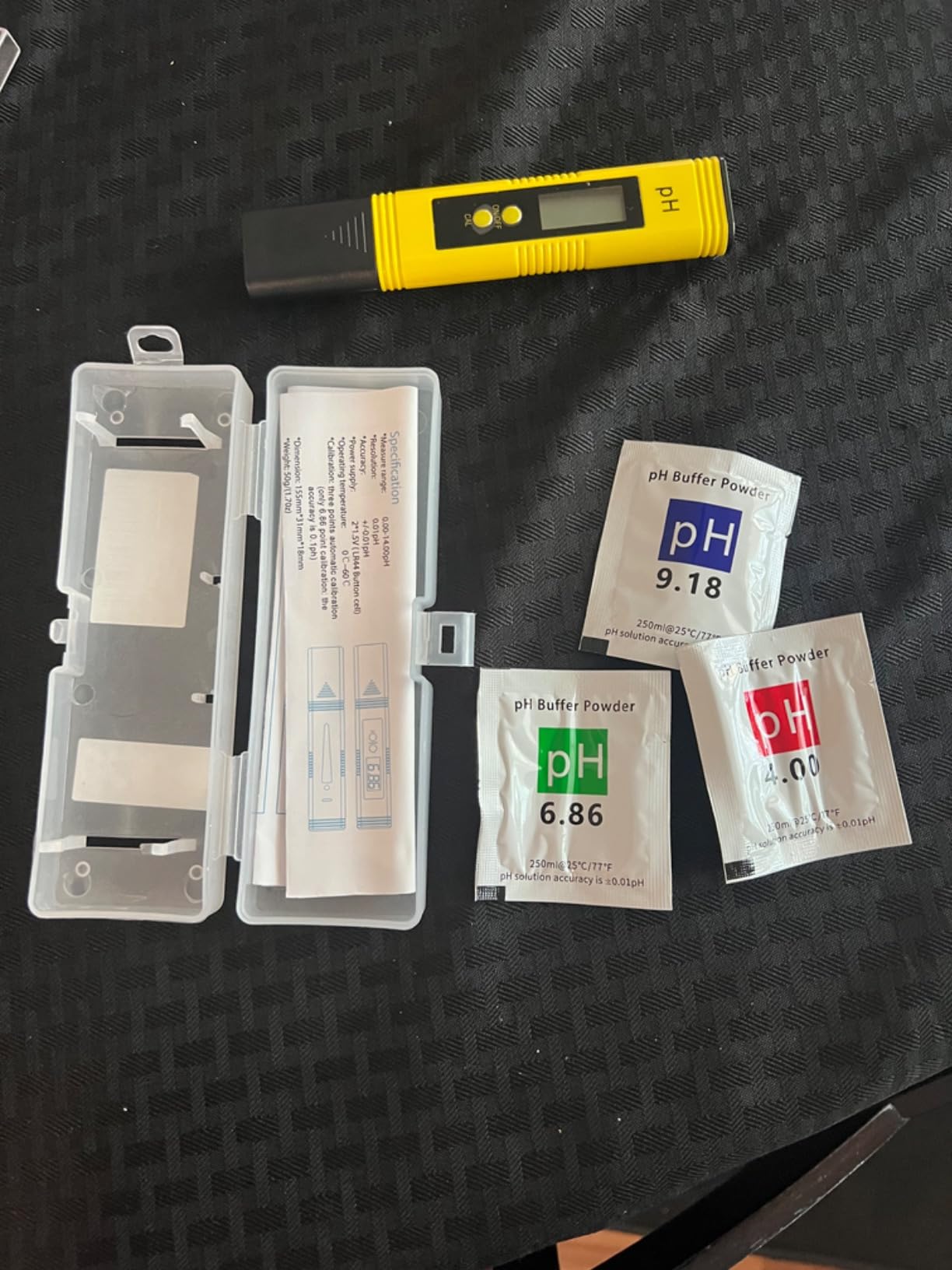
Why it suits a first measurement
Pre-calibrated out of the box means no buffers, no learning and no waiting. For a single shelf system or one reservoir, that is enough to tell you whether your tap water starts anywhere near the 5.5 to 6.5 window.
Where it falls short
An average rating just under four suggests consistency issues for some users, and there is no backlight and no data hold. Accuracy shifts with temperature and dissolved ions, so treat the reading as a starting reference rather than a number you dose nutrients against.
How to Choose: Buying Guide for Hydroponic pH Meters
Accuracy is the first filter, and the number users check before anything else. A meter claiming ±0.01 pH gives you finer resolution than one claiming ±0.1 pH, and in a strongly buffered reservoir that extra tenth is what lets you correct a problem before it locks nutrients out. It is not the only consideration, but it is a fair place to start.
Probe type is the second. Glass probes with a single junction are the budget default and the first thing to degrade. Double-junction designs slow contamination and last longer. Replaceable probes matter most over time, because a meter with a fixed probe ends when the probe ends.
Calibration setup decides how often you will actually maintain it. Two-point calibration at 4 and 7 is normal for hydroponics. Three-point adds a 10.01 or 9.18 buffer and helps if you run acidic or alkaline feeds. Automatic buffer recognition removes guesswork from the process and matters more than the point count.
Automatic temperature compensation is non-negotiable in a grow room. Reservoir temperature can swing several degrees between lights-on and lights-off, and without compensation the reading changes for reasons that have nothing to do with your nutrients. Every meter here has it, so use that as a quality signal on other brands.
Waterproofing and battery life decide how the meter lives in your setup. A waterproof body that floats is forgiving when it goes into the tank. A unit rated for long battery life means you are not recharging or swapping cells mid-cycle. Combo meters add TDS or EC channels that pay for themselves if you also track feed strength.
Brand reputation is the last factor, and it is a real one. Owners report four-year-plus field use from Bluelab and Hanna meters, while budget pens are described as drifting and needing replacement sooner. For anyone who also maintains other measuring instruments, our guides to the best moisture meters and the best clamp meters follow the same logic: buy the tool you will still own in three years.
Calibration and Probe Storage Schedule
Calibration frequency depends on usage, and growers asking this question usually want a number. The pattern most owners converge on: calibrate weekly for the first few weeks after a new probe arrives, then move to once a month or every two weeks as confidence builds. Check it before any reading you intend to act on if something looks off.
The procedure is the same on almost every meter in this roundup. Rinse the probe with distilled water, then immerse it in pH 7 buffer and let the reading settle before adjusting to 7.00. Rinse again, immerse in pH 4 or 4.01 buffer, and adjust again. A third point at 10.01 or 9.18 helps if you use strongly acidic or alkaline solutions.
Storage matters as much as calibration frequency. New probes often arrive dry and need soaking in KCL solution, ideally overnight, before first use. Between checks, keep the electrode in storage solution or in the cap with KCL so the glass bulb never dries out. A dried bulb is the most common reason a probe stops giving repeatable readings.
Water temperature also changes your calibration. Calibrating buffers and samples at similar temperatures reduces error, which is another reason not to calibrate with a cold bottle straight from a fridge next to a warm reservoir.
Troubleshooting Common pH Meter Problems
If readings drift or bounce around, the causes are usually in a fixed order of likelihood. Check that the probe is hydrated, then that the meter was calibrated recently at a similar temperature, then that the sample is mixed properly. Only after those should you suspect the instrument.
If a meter will not calibrate, the most common culprits are expired or contaminated buffer solution, a dirty or dried bulb, and insufficient soak time in the buffer. Fresh solution matters more than anything else here. Calibration powder that has been sitting open for months is a frequent cause of a meter that will not settle.
If the meter dies within months and the probe is not replaceable, there is no fix worth attempting. That is the moment to move up a tier to a meter with a replaceable probe, because the same failure will otherwise repeat with the replacement unit.
If a reading suddenly makes no sense, compare it against a second method before changing nutrients. A cross-check with another meter or a fresh calibration takes two minutes and stops you from correcting a problem that does not exist. Getting comfortable with that second reference is the same skill we cover in our guide to pH-neutral car shampoo for coated cars, where the same measurement decides whether a product is safe on paint.
pH Meter vs Test Strips vs Continuous Monitors
Test strips are fast and cheap, and growers point out they read roughly ±0.5 to 1.0 pH. That tolerance is wider than the entire hydroponic window most growers are trying to hold, which makes strips useful for a rough sanity check and unreliable for day-to-day correction.
A handheld pen such as the Apera or Bluelab models gives ±0.1 or ±0.01 accuracy and takes seconds once the probe is hydrated. It costs more than a strip, needs calibration and storage solution, and rewards the habit of checking at the same time each day.
A continuous monitor such as the DANOPLUS models logs pH and temperature while you do something else. It costs more, needs a replaceable probe on a one to one-and-a-half year cycle, and gives you overnight trends that a spot check can never show. Most growers we compared notes with start on a pen and add a monitor once the system is stable.
Frequently Asked Questions
What pH meter is best for hydroponic water?
The Apera Instruments AI311 Premium Series PH60 is the best overall for hydroponic water, with stated accuracy of ±0.01 pH across a -2.00 to 16.00 range, a replaceable glass probe, automatic temperature compensation and 1-3 point auto calibration. The Bluelab pH Pen is a strong alternative for growers who prioritise a double-junction probe and long probe life.
What is the best pH level for hydroponics?
Most hydroponic nutrient solutions perform best between 5.5 and 6.5 pH. Below that range phosphorus, calcium and nitrogen become harder for roots to absorb, while above it iron, manganese and magnesium tend to lock out. Check the pH of your source water before mixing, since tap water often decides whether a solution lands in range.
Which brand is considered the best for pH meters?
Bluelab has the longest track record in hydroponics, and owners commonly report four years or more of field use from its pH Pen. Apera is the most recommended mid-tier option, with the AI209 and AI311 covering value and premium needs. Budget brands from VIVOSUN and similar makers work well when calibrated often.
Are cheap pH meters accurate?
Cheap pH pens can be accurate for the day you calibrate them, but reviews commonly report drift within a few months and readings that jump before settling. A meter claiming ±0.01 pH is usually only that accurate right after calibration. If you need dependable numbers across a season, budget for a meter that holds calibration between checks.
How often should I calibrate my pH meter?
Calibrate weekly for the first few weeks with a new probe, then settle into once a month or every two weeks once readings look stable. Calibrate immediately if the number conflicts with what the plants are showing, or after the probe has been stored dry. Calibration at a temperature close to your reservoir reduces error.
What happens if my pH meter is not properly calibrated?
An uncalibrated meter gives numbers that look precise but sit consistently high or low, so you end up adding pH Up or pH Down to correct a problem that does not exist. The usual causes are expired or contaminated buffer solution, a dried or dirty glass bulb, and skipping the soak time in buffer before adjusting.
Which pH Meter Would We Buy in 2026
If you are choosing one ph meter for hydroponics in 2026, the Apera Instruments AI311 Premium Series PH60 is the pick. It is the highest rated meter in this roundup at 4.5 stars, it reads to ±0.01 pH, and the replaceable glass probe means a dead electrode does not mean a dead meter. The Bluelab pH Pen is the choice if probe longevity and the backlit calibration reminder matter more to you than decimal places, and the Apera AI209 PH20 covers most growers who want a sealed, low-maintenance meter without the premium tier.
Whichever one you settle on, the habits matter more than the hardware. Hydrate the probe, calibrate with fresh buffer, store it wet, and check the reservoir at the same time each day. Used that way, any of the twelve meters here will keep your solution where it needs to be.