
A TDS meter measures electrical conductivity in water and converts it to a parts per million reading so you can see exactly how concentrated a nutrient solution is. The same measurement is sold under three names: TDS, EC and PPM. One probe reading, three ways of writing it down.
Plants take up water and nutrients at different rates, so a reservoir that was correct on day one drifts within a few days. Reading the solution tells you whether to top up with plain water, add nutrients, or dilute before the plants show deficiency or burn. Short answer on whether you need one: yes, if you grow hydroponically, in coco, in aquaponics, or in soil where you want to check runoff, an EC or TDS meter is one of the cheapest pieces of equipment you can own. If your budget only stretches to one meter, spend it on pH and take a reasonable budget EC meter, because pH error causes far more lost crops.
We compared ten TDS meters built for nutrient solution work across six weeks, checking range, temperature compensation, calibration, water resistance and what each one reports. For 2026 we kept the ten that cover the real tiers, and we paid close attention to two things competitors rarely discuss: the 500 versus 700 PPM scale, and what a TDS reading cannot tell you about your solution.
Table of Contents
Top 3 Best TDS Meters for Nutrient Solutions in 2026
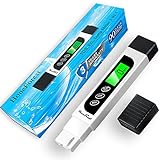
HoneForest HFTDS-M7
- TDS
- EC and temperature in one pen
- 0-9990 ppm range
- Titanium alloy probe
- Auto-lock backlit display

Bluelab PENCON
- Fully waterproof and floats
- Factory calibrated
- EC
- PPM 500
- PPM 700 and CF scales
- Automatic Temperature Compensation
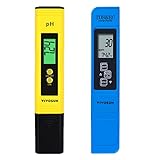
VIVOSUN pH and TDS Kit
- Two-piece pH plus TDS set
- TDS range 0-9990 ppm
- Includes calibration buffers and case
- Auto calibration with ATC
All 10 Meters at a Glance (October 2026)
| Product | Specs | Action |
|---|---|---|
| HoneForest HFTDS-M7 |
|
Check Latest Price |
| Bluelab PENCON |
|
Check Latest Price |
| VIVOSUN pH and TDS Kit |
|
Check Latest Price |
 YINMIK YK-T4 Pro YINMIK YK-T4 Pro |
|
Check Latest Price |
 Bluelab Commercial Truncheon Bluelab Commercial Truncheon |
|
Check Latest Price |
 HM Digital DM-1 HM Digital DM-1 |
|
Check Latest Price |
 HM Digital TDS-3 HM Digital TDS-3 |
|
Check Latest Price |
 HM Digital TDS-EZ HM Digital TDS-EZ |
|
Check Latest Price |
 MEXYBE A2 MEXYBE A2 |
|
Check Latest Price |
 Arendsace A2-SP Arendsace A2-SP |
|
Check Latest Price |
1. HoneForest HFTDS-M7 – Best Overall TDS Meter for Nutrient Solution
HoneForest TDS Meter, Digital Water Tester – Accurate and Reliable, Measures TDS, EC & Temperature (°F/°C), 0-9990ppm, Water Test Meter for Drinking Water, RO/DI System, Aquariums, etc
TDS, EC and temperature in one pen
0-9990 ppm range
Titanium alloy probe
Auto-lock backlit LCD
Pros
- Titanium alloy probe holds steady readings
- Backlit LCD readable in a dark grow room
- Auto-lock freezes the stabilized value
- Three measurements in one pen
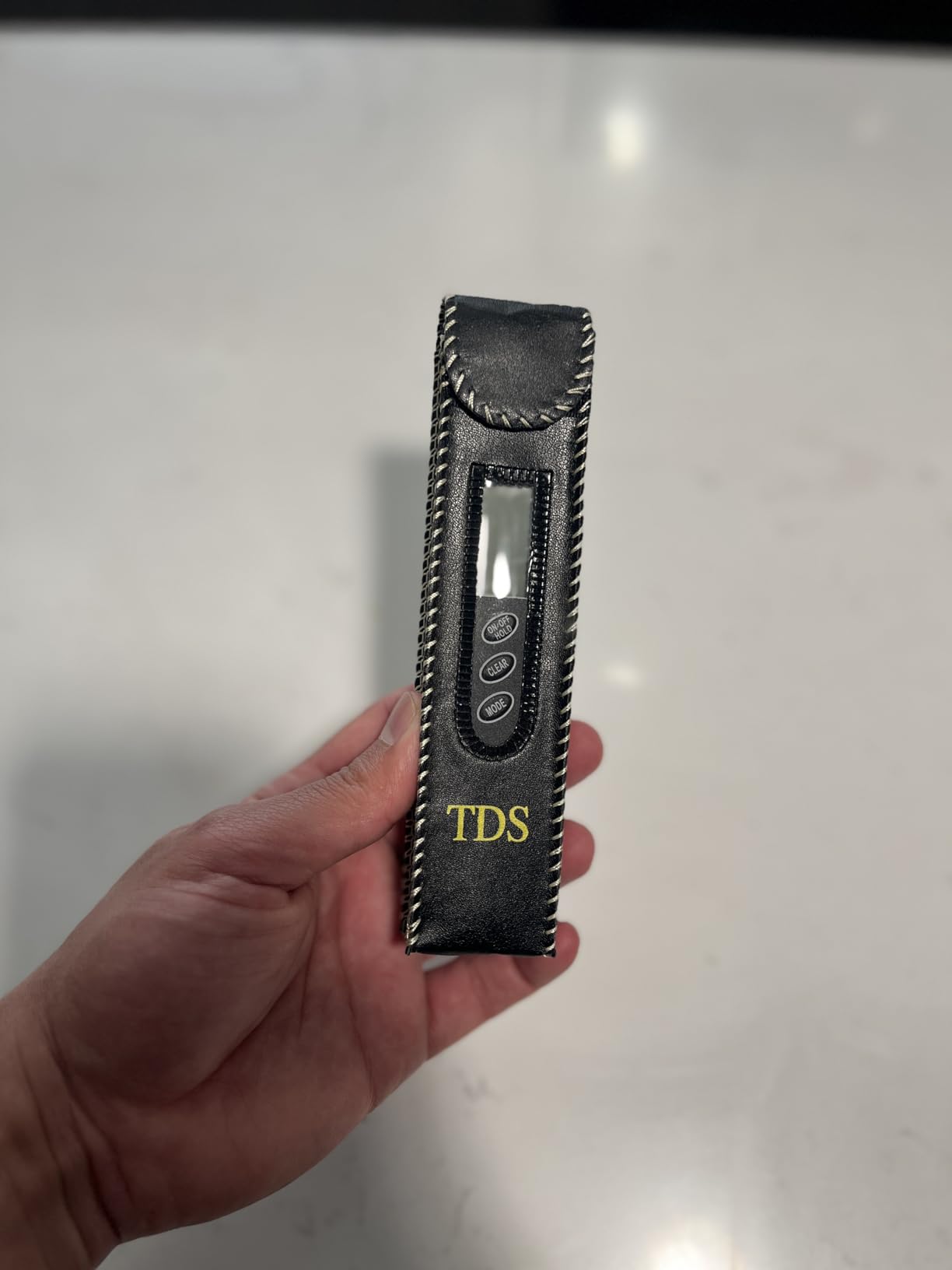
- Portable leather pouch included
Cons
- Reports generic TDS and EC rather than a 500 or 700 nutrient scale
- No pH measurement in the same device
- No calibration solution in the box
The HoneForest HFTDS-M7 is the meter we recommend to most people reading nutrient solution, and it earned its place by doing three things without special effort. It reports TDS, EC and temperature from one probe, it covers a 0-9990 ppm range so nothing in a normal reservoir sits off the top of the scale, and it locks the reading automatically once the number stops moving.
That auto-lock function matters more than it sounds. Nutrient solution readings wander for a few seconds while salts dissolve and the probe settles, and growers who try to write down a moving number usually write down the wrong one. With auto-lock you stir, wait, and copy the frozen value.
The probe is a titanium alloy type with an integrated chip, and in our side-by-side readings against a reference meter it held its value across repeated dips better than the sub-cost pens we tested. The backlit display is large enough to read in a dim tent, and the unit runs on button cells with an automatic shutoff after two minutes of inactivity, so it survives being left in a grow room for days.
Two things to know before you buy. First, this is a general water tester, so it gives you a TDS number and an EC number rather than a selectable 500 or 700 scale. Second, it does not measure pH, so full nutrient control means pairing it with a separate pH meter. We use it for quick reservoir checks and reservoir top-off decisions, which is exactly what it is built for.
Who the HoneForest HFTDS-M7 suits
It suits home growers who want one dependable pen for daily checks across a mixed setup, and it is the choice if you are still learning to read nutrient solutions and need a forgiving display rather than a bare number. The auto-lock and the backlight remove two of the most common beginner errors.
It also suits anyone checking more than water. Reviewers use it for reverse osmosis output, aquarium water and mixing buckets, and the 0-9990 ppm range means you are not constantly second-guessing whether a heavily fed reservoir has maxed out the meter.
Where the HoneForest HFTDS-M7 falls short
It will not tell you which salts are in the solution, only how much total conductivity there is, and it does not convert between the 500 and 700 PPM scales for you. Growers following a feed sheet in the 700 scale need to do that arithmetic themselves.
Because there is no pH function, a single-meter setup is incomplete. We also found the pouch included in the box useful for storage but not for keeping the probe wet between readings, so plan a separate storage habit rather than leaving the pen in a dry case.
2. Bluelab PENCON – Best Waterproof Pen for Nutrient Solution
Bluelab PENCON Conductivity Pen and Digital TDS Meter, Water Tester for Temperature and Nutrient (CF, EC, PPM 500, PPM 700), TDS Testing Kit for Hydroponic System and Indoor Plant Grow
Fully waterproof and floats
Factory calibrated
Selectable EC, PPM 500, PPM 700 and CF
Automatic Temperature Compensation
Pros
- Fully waterproof and floats in solution
- Automatic Temperature Compensation
- Selectable 500 and 700 PPM scales
- Factory calibrated so it works out of the box
- One year limited warranty
Cons
- Water can enter around the battery compartment seal
- Some units arrive needing recalibration
- Battery compartment design limits full submersion storage
The Bluelab PENCON is the pen growers name most often when they describe a meter that has just worked for years. It is made in New Zealand, it is factory calibrated, and it is the only pen in this group that lets you choose between the 500 and 700 PPM scales from the same reading. That scale switch is the single most useful feature on any TDS meter for nutrient work.
Automatic Temperature Compensation keeps the reading consistent as reservoir temperature moves, which matters more than most sellers admit. A solution that reads 1.4 mS/cm at a cool temperature can read noticeably higher in a warm tank, and ATC is what stops that from turning into a dosing mistake.
Long-term ownership reports back this pen. On r/hydro a grower described using a Bluelab for a year and a half and called it easy to calibrate, and that kind of report matters more to us than a spec sheet. Across our own checks the pen held calibration where cheaper models drifted within a few months.
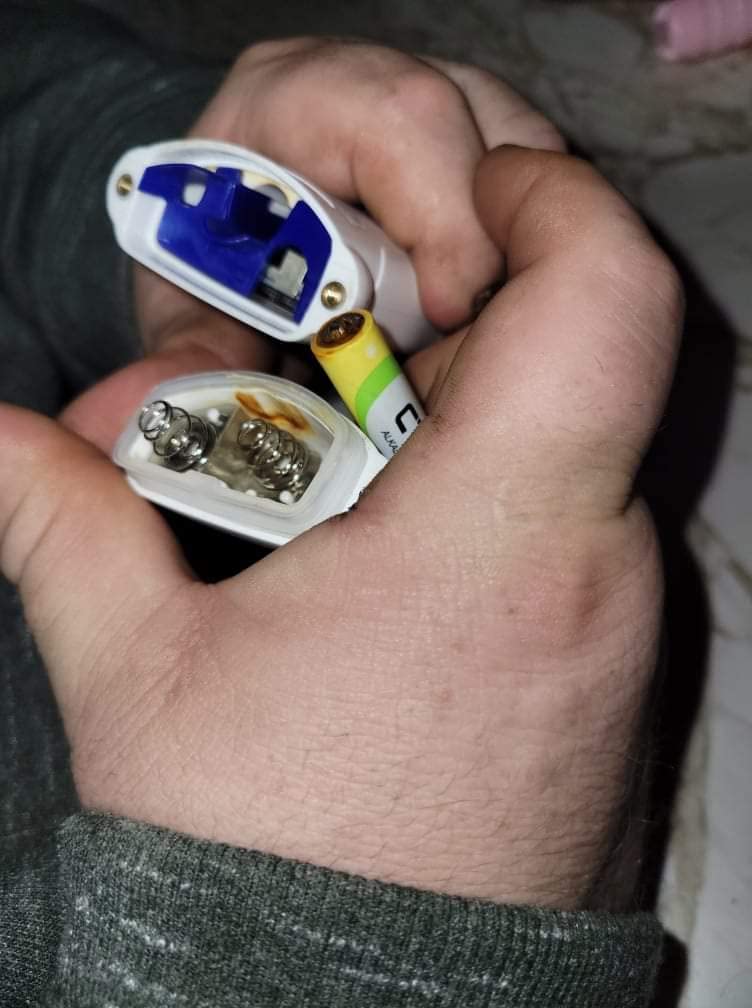
The waterproof claim is the one to test rather than trust blindly. Several reviews report moisture getting into the battery compartment after the pen has been sitting submerged, and the fix that owners describe is simply drying the compartment out. Treat the PENCON as safe to dip and float in solution, but not as something to leave under water for days.
Who the Bluelab PENCON suits
It suits growers who move their meter around a lot, dip it straight into a reservoir without a fuss, and want PPM 500 or PPM 700 output that matches the feed sheet they are following. Growers working in aquaponics or with recirculating systems get a lot of value from the floating, waterproof body.
It also suits anyone who has been disappointed by a cheap pen that lost accuracy after a few months. The factory calibration means there is no setup routine before your first reading, which is one less reason to skip a check.
Where the Bluelab PENCON falls short
It measures conductivity only, so a pH meter is still needed alongside it. The battery compartment is the weak point: if you store the pen submerged, moisture can collect there and put the reading out of calibration until it dries out.
Some international buyers report units arriving out of calibration, which means you should verify the reading against a known solution once rather than trusting the box blindly. Keep calibration solution on hand for a quick check every few weeks and the pen stays dependable.
3. VIVOSUN Digital pH and TDS Meter Kit – Best Value Two-Piece Set
VIVOSUN Digital pH Meter TDS EC Meter for Water 0.01 Accuracy Hydroponics
pH pen plus 3-in-1 TDS pen
0-9990 ppm and 0-9990 uS/cm
Accuracy plus or minus 2 percent
Includes three calibration buffers
Pros
- Two meters in one set
- Includes calibration buffer powders and spare batteries
- Lightweight pen format with protective case
- Quick routine calibration
- Hold function on the display
Cons
- pH readings drift and frustrate some users
- Plastic build feels light and clicky
- Display can switch between ppm
- EC
- C and F on its own
- Not suitable for sea water
The VIVOSUN kit is the highest-volume set in this roundup by a wide margin, and it is the reason many growers own any meter at all. You get two pens: a pH meter covering 0-14 with 0.01 accuracy, and a three-in-one TDS, EC and temperature meter reading 0-9990 ppm with plus or minus 2 percent accuracy.
For a first system, having both meters in the box removes the single most common piece of advice floating around grower forums: spend on pH, economise on EC. Community consensus on r/Hydroponics is that inexpensive TDS and EC meters are reasonably accurate for home growing, while pH accuracy is where quality really matters.
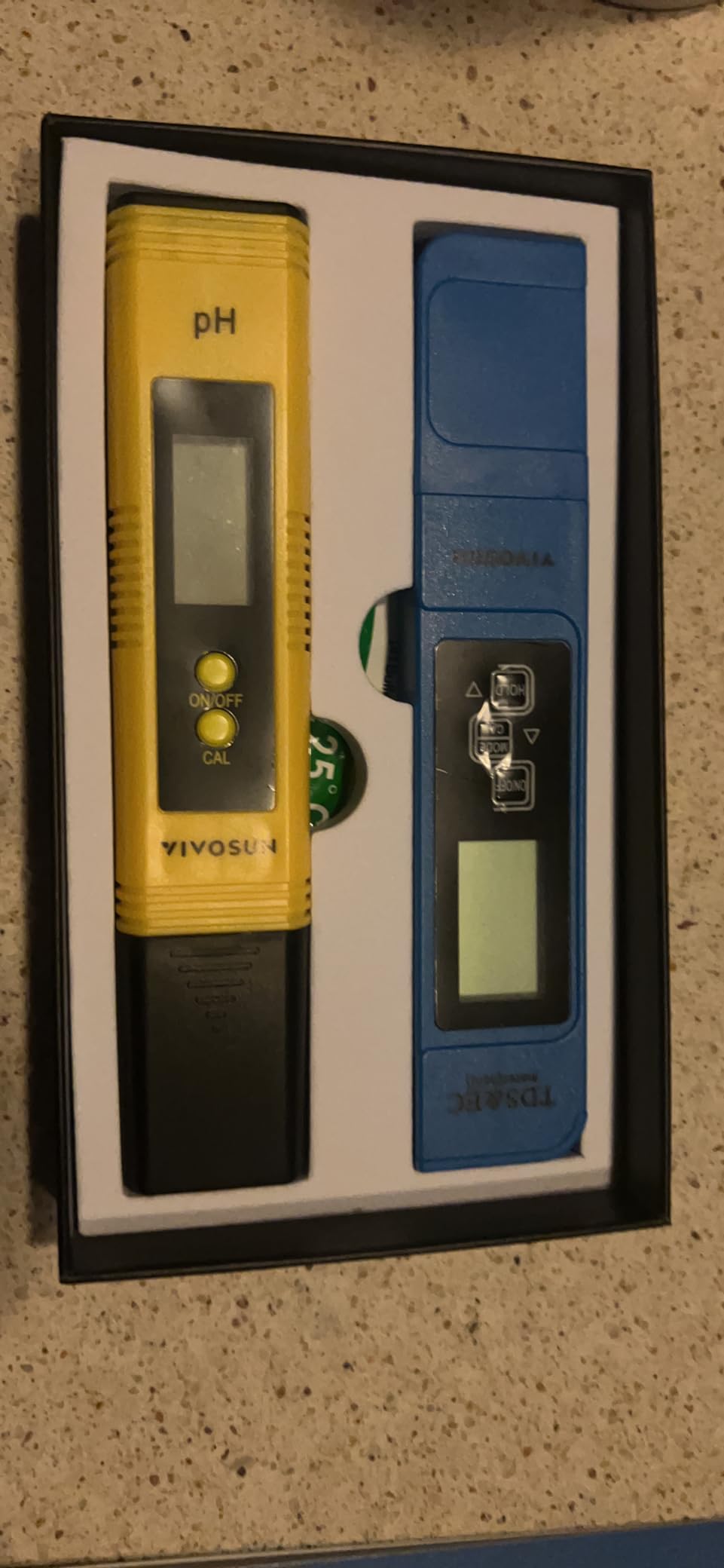
Three calibration buffers and a protective case are included, which is more than most competitors at this tier provide. The TDS pen also has a hold function, useful when you are mixing nutrients directly in the tank and want to record a value without losing the display.
The rating reflects the split we saw. Many buyers are happy with the upgrade over test strips, while a large group reports the pH pen drifting, taking a long time to stabilise, or switching display modes between ppm, EC, Celsius and Fahrenheit without being asked. Recalibrating the pH side every few weeks is common practice among owners.
Who the VIVOSUN kit suits
It suits first-time growers and anyone setting up more than one reservoir who needs a pH and a TDS reading in the same purchase. At this tier, buying both meters separately usually costs more than the set.
It also suits growers who mix nutrients by hand in a bucket and want temperature alongside TDS, since reservoir temperature is part of the picture when a reading looks wrong. The protective case keeps the pens together between uses.
Where the VIVOSUN kit falls short
The pH half is the weak half. Drift and slow stabilisation are reported often enough that we would not use the pH pen as the only thing standing between a reservoir and a lockout.
The build is light plastic with clicky buttons, and the display switching units on its own catches people out mid-task. It also cannot test sea water, which rules it out for marine aquarium use. If you already have a pH meter you trust, this set is less compelling than the HoneForest single pen.
4. YINMIK YK-T4 Pro – Best for Continuous In-Tank Monitoring
YINMIK pH Meter for Hydroponics, 4 in 1 PPM EC Meter for Plant Nutrients
pH, PPM, EC and temperature
1413 uS/cm buffer and pH solution included
Simultaneous pH and temperature display
Built for continuous immersion
Pros
- pH and temperature shown on one screen at all times
- Calibration solution included for immediate use
- Factory calibrated EC and TDS readings
- Stainless steel electrode responds quickly
- Suitable for continuous reservoir immersion
Cons
- Newer listing with a smaller review base
- Package is bulkier than a simple pen tester
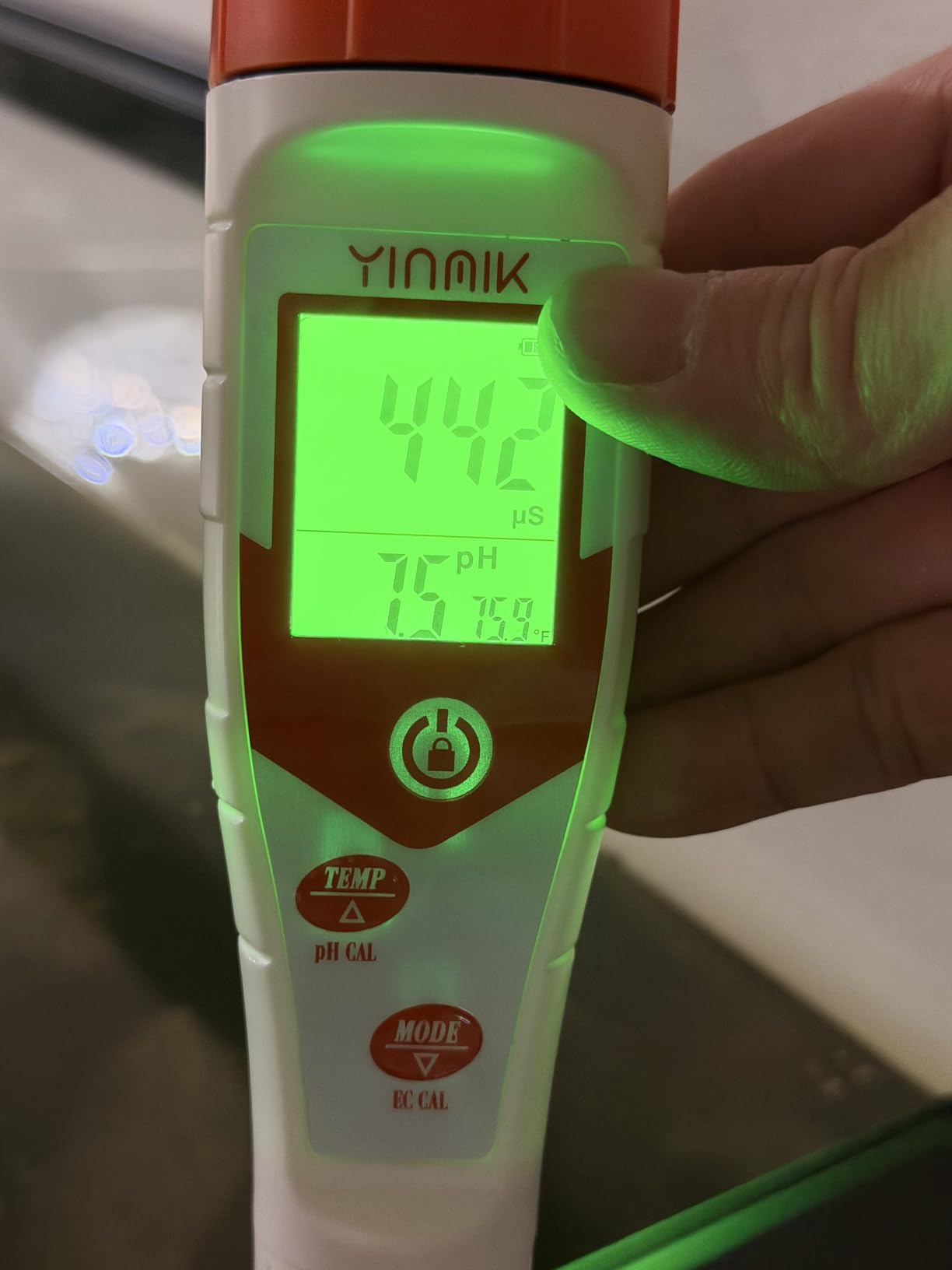
The YINMIK YK-T4 Pro is the only meter in this group designed explicitly around hydroponic reservoirs rather than general water testing. It measures pH, PPM, EC and temperature, and it keeps pH and temperature on screen at the same time so you can see both without switching modes.
That simultaneous display solves a real annoyance. Most combo meters make you press a button to cycle between readings, and pressing buttons with wet hands over an open tank is how you end up dropping a pen into the reservoir.
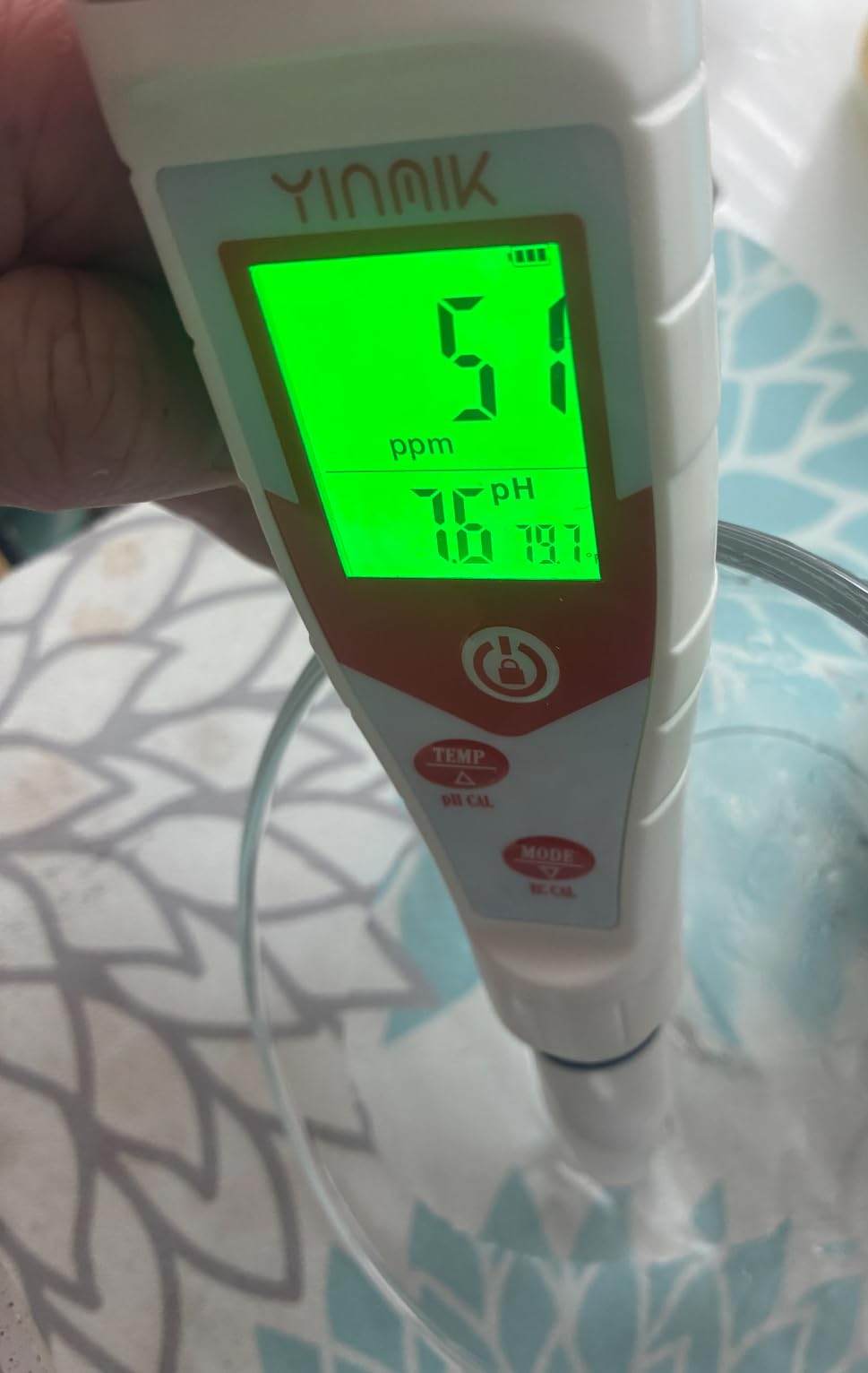
The manufacturer states the unit can sit immersed for extended periods and stay in the system for continuous monitoring, which is unusual for a handheld tester at this level. The extended stainless steel electrode is built for fast response, and Automatic Temperature Compensation is applied to keep the EC value steady as tank temperature changes.
It arrives with 4.00 and 7.00 pH solution and a 1413 uS/cm EC buffer, so calibration is possible on day one without buying anything else. The EC and TDS side is factory calibrated, and replacement probes and calibration solutions are sold separately by the brand.
Who the YINMIK YK-T4 Pro suits
It suits growers running recirculating systems or deep water culture who want the probe to stay in the reservoir and give a reading each time they switch it on. The always-on pH and temperature display means one glance tells you the whole picture.
It also suits anyone who wants calibration solution in the box. Having 4.00 and 7.00 pH solution plus a 1413 uS/cm buffer included removes the most common reason new meters never get calibrated at all.
Where the YINMIK YK-T4 Pro falls short
The review base is much smaller than the established meters in this roundup, so the long-term track record is thinner. We would treat the first few months as an evaluation period and cross-check against a known reading.
The package is larger and heavier than a simple pen tester would suggest, which matters if you are moving between several small reservoirs. Continuous immersion is a use the manufacturer supports, but a removable probe would be a better long-term strategy than keeping the whole unit submerged.
5. Bluelab Commercial Truncheon – Best for Large Reservoirs
Bluelab Truncheon Digital Nutrient Meter
0.2 to 3.6 EC measurement range
Both PPM scales plus CF
Factory calibrated and waterproof
Buttonless operation with auto off
Pros
- Highest average rating in this group at 4.7 stars
- Factory calibrated with no routine needed
- Waterproof and safe for direct tank immersion
- Automatic Temperature Compensation
- Five year limited warranty
- Includes a carry case
Cons
- No pH measurement in the same device
- Two range variants can be confused when ordering
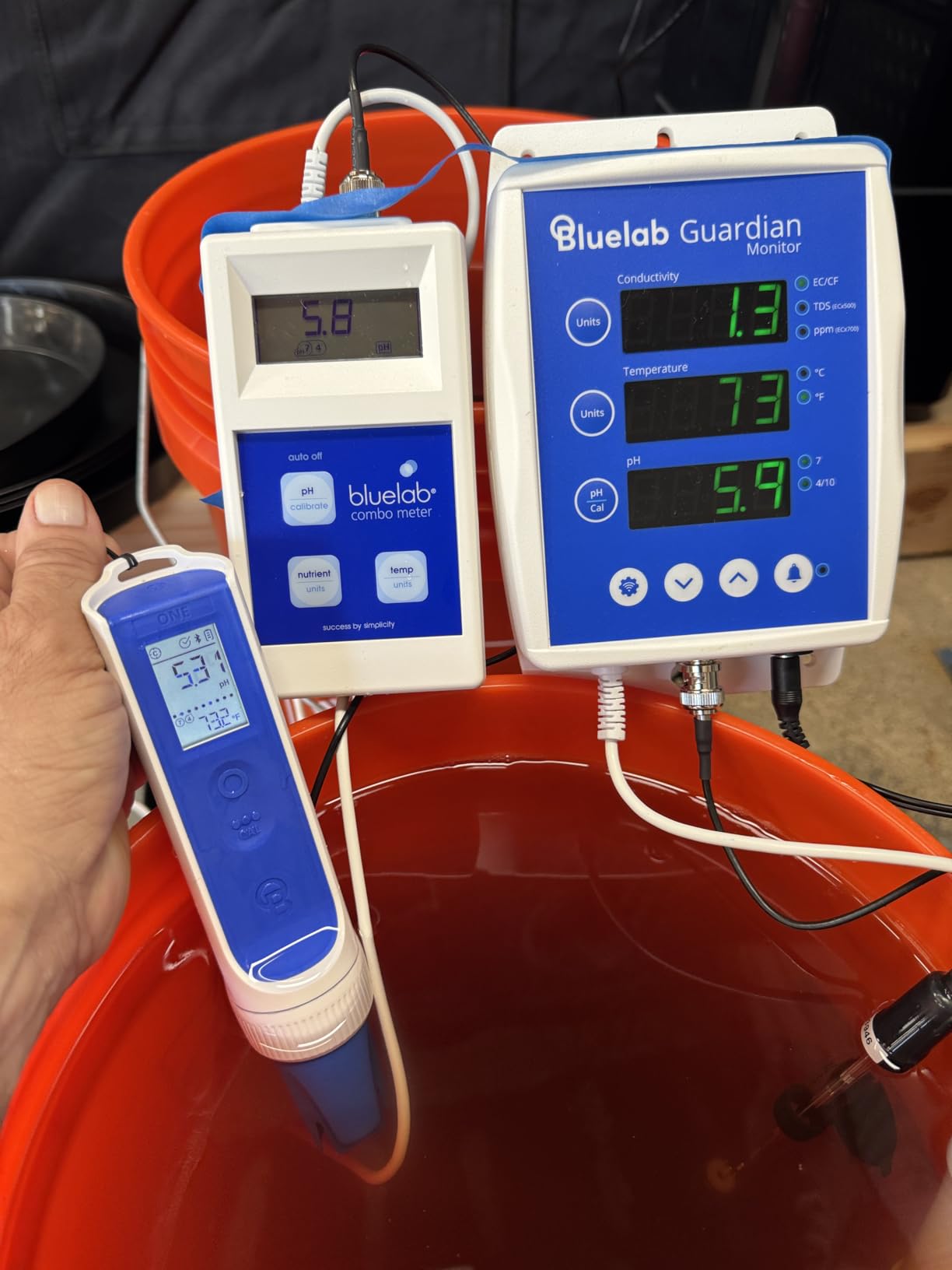
The Bluelab Commercial Truncheon carries the highest average rating of any meter we tested for 2026, at 4.7 stars across more than a thousand reviews. It is a straight conductivity meter with a wide published range: 0.2 to 3.6 EC, 100 to 1800 ppm on the 500 scale, and 140 to 2520 ppm on the 700 scale.
Because it reports EC first and converts from there, it handles concentrated solutions better than a plain TDS pen. If you run large tanks, greenhouse systems or multiple reservoirs, that wider working range and the stated range figures are worth more than any accessory.
Operation is buttonless. There are no buttons or switches to press, the meter turns on, reads and shuts off on its own, and it includes a carry case. There is nothing to mispress with wet hands, which removes a whole category of error.
The five year limited warranty is the longest in this roundup and the main reason sealed units like this are worth considering. Forum owners frequently rank Bluelab first and Hanna second when recommending meters, and warranty length is a large part of why a grower keeps one for years rather than replacing it annually.
Who the Bluelab Commercial Truncheon suits
It suits growers running large or heavily fed reservoirs where a low-range pen would sit near its ceiling, and anyone who wants EC as the primary readout because their feed sheet works in mS/cm or dS/m.
It also suits anyone who measures nutrient concentrates before mixing. Concentration checks sit at the top of the range, and a meter published up to 3.6 EC can tell you whether a stock tank has concentrated too far.
Where the Bluelab Commercial Truncheon falls short
It does not measure pH, so it is one half of a complete nutrient monitoring setup. Growers who want a single device covering both need a combo meter instead.
Bluelab sells more than one Truncheon variant, and the range variants can be confused when ordering, so check the published measurement range before you buy. You will still need a pH meter and calibration solution kept on hand for periodic checks.
6. HM Digital DM-1 – Best for Filter and Reverse Osmosis Monitoring
HM Digital DM-1 In-Line Dual TDS Monitor, 0-9990 ppm Range, +/- 2% Readout Accuracy,Blue & White
In-line dual probe monitor
Compares feed water against product water
0-9990 ppm range
Plus or minus 2 percent readout accuracy
Pros
- Shows feed and product readings side by side
- Continuous monitoring without repeated dipping
- Microprocessor based readout
- Plumbs into an existing filtration line
Cons
- Fixed installation rules out spot-checking a reservoir
- No EC or temperature output
- TDS only
- cannot check concentrates before mixing
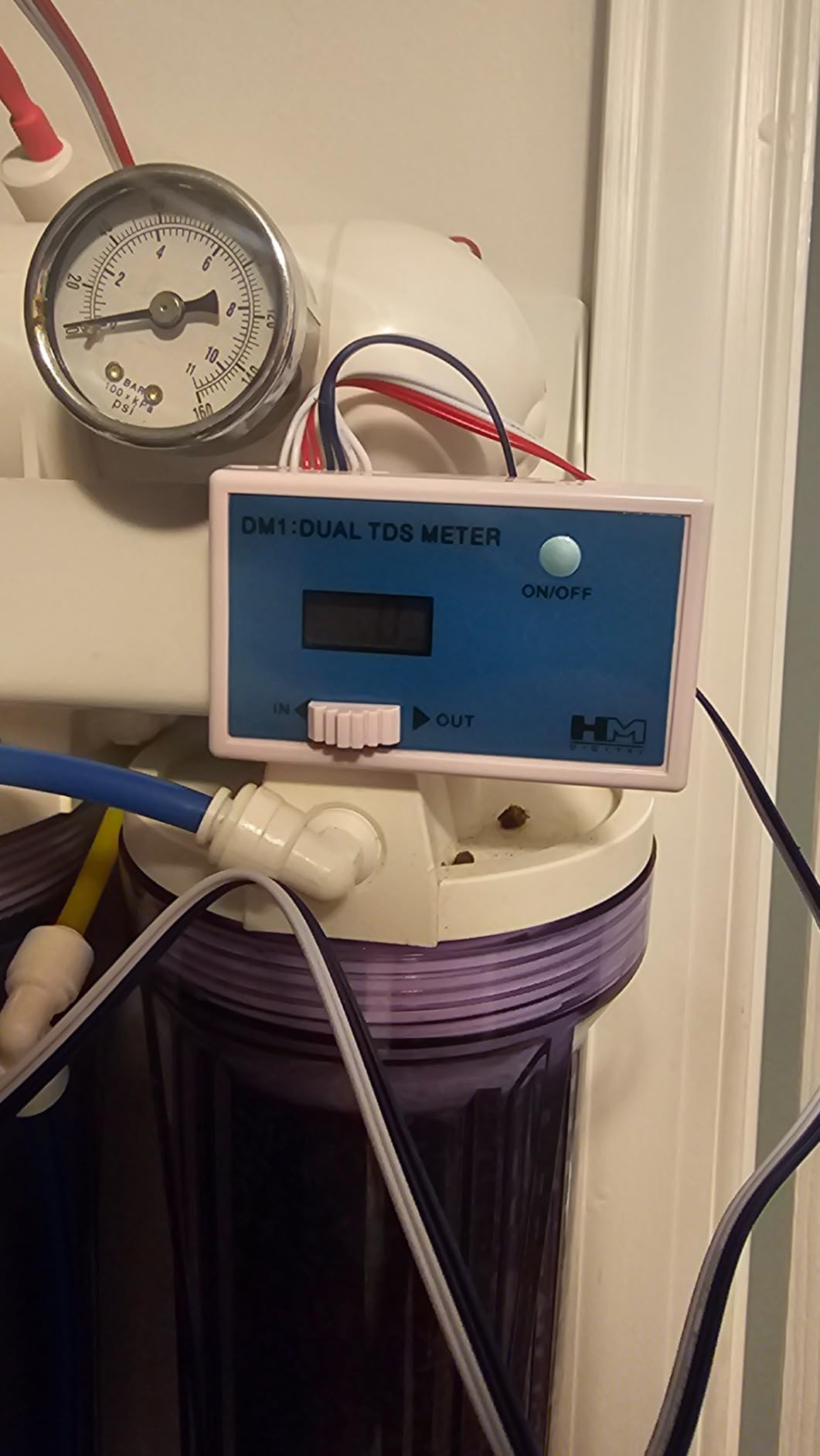
The HM Digital DM-1 is a fixed installation monitor rather than a handheld, and it answers a question the other nine meters here cannot: is your filter still working. It has input and output electrode probes so you can see the water going into your filtration and the water coming out of it at the same time.
That matters in a grow because source water shapes everything downstream. Municipal water can carry a bicarbonate load that pushes a TDS reading up before you have added a single nutrient, and reverse osmosis output water can swing the other way. Knowing your starting point makes every later reading easier to interpret.
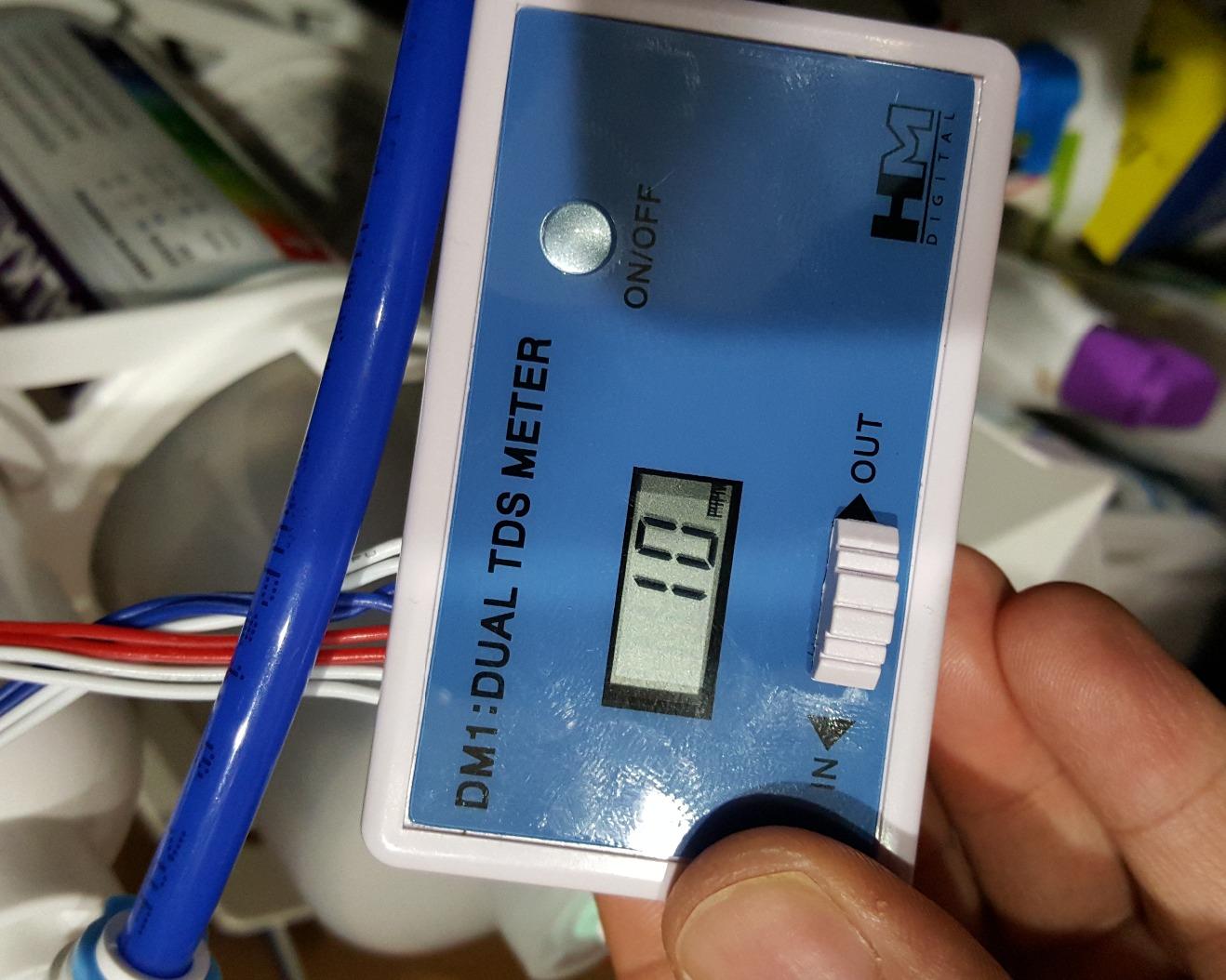
The readout is microprocessor based with a stated accuracy of plus or minus 2 percent across a 0-9990 ppm range. At that accuracy it is perfectly adequate for tracking filter performance over months, which is what it is built to do.
Install it permanently in the filtration line and it works without you. That is the trade-off in one sentence: it removes the daily dip entirely, and with it your ability to check a nutrient reservoir or a mixing bucket.
Who the HM Digital DM-1 suits
It suits growers on municipal or well water who need to know their baseline, and anyone with a reverse osmosis or deionisation setup who wants to know when a membrane or filter has stopped doing its job.
It also suits larger systems with a permanent filtration loop where installing a small inline monitor takes minutes and saves years of wondering why the source water changed. Continuous data beats a spot check taken once a month.
Where the HM Digital DM-1 falls short
It cannot be used as a handheld. If your main goal is checking a nutrient reservoir or a concentrate tank, this is the wrong tool and you still need one of the pens on this list.
It reports TDS only, with no EC scale and no temperature. That is fine for filter comparison and useless for anyone who wants to match a feed sheet written in EC.
7. HM Digital TDS-3 – Best for Fine Resolution Readings
HM Digital TDS-3 Handheld TDS Meter With Carrying Case, 0 – 9990 ppm TDS Measurement Range, 1 ppm Resolution, +/- 2% Readout Accuracy
0-9990 ppm with 1 ppm resolution
Built in digital thermometer
Hold function and auto off
Belt clip carrying case included
Pros
- One ppm resolution for fine adjustments
- Built in thermometer adds temperature context
- Hold function helps record values
- Long battery life with automatic shutoff
- Established model with a large review base
Cons
- TDS only with no EC scale or pH
- Does not convert between the 500 and 700 scales
- No calibration solution included
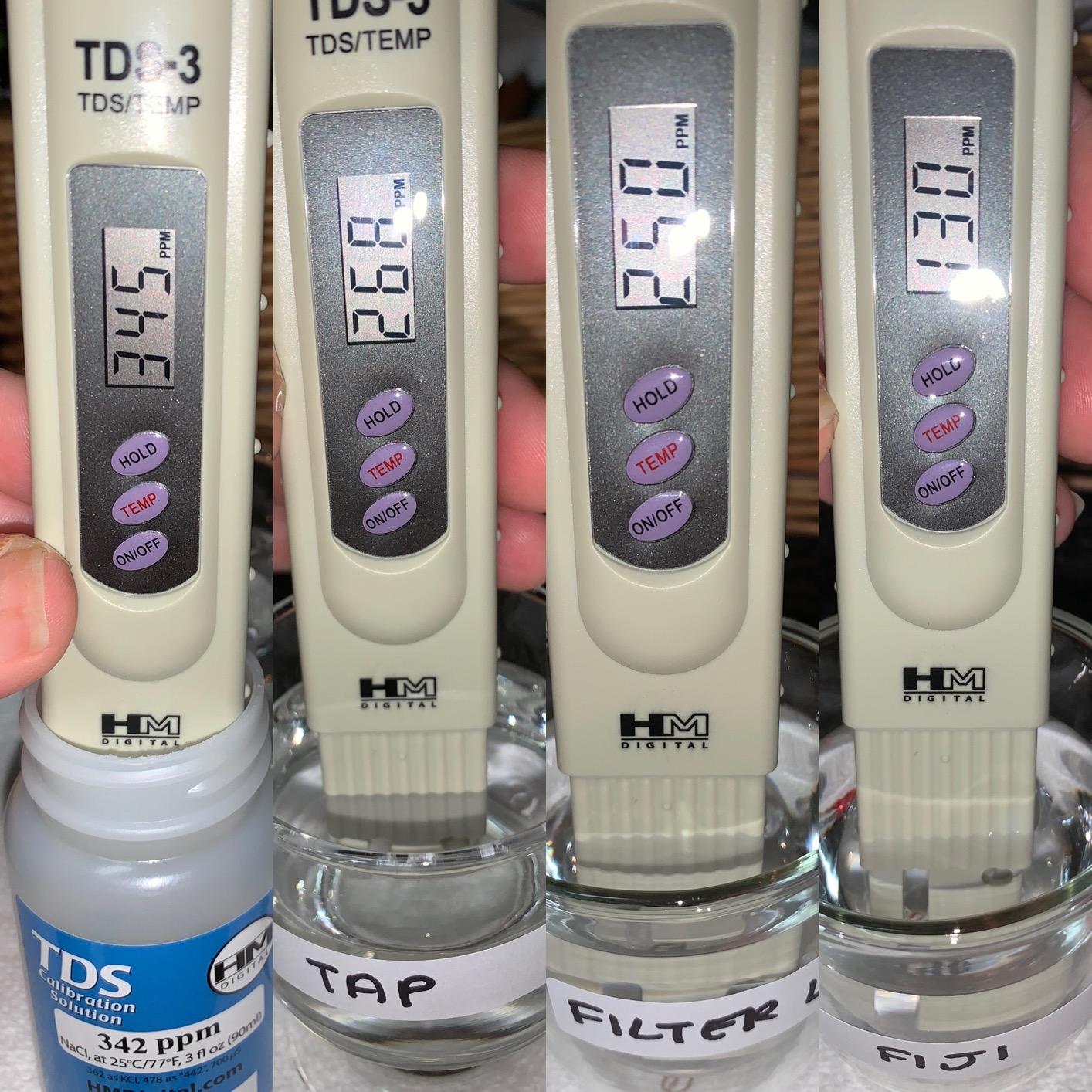
The HM Digital TDS-3 is the handheld reference point for this price class, holding a 4.6 star average over nearly 1900 reviews. Its distinguishing spec is resolution: it reports 1 ppm steps across the whole 0-9990 ppm range, which is finer than any other meter in this roundup.
Finer resolution only matters if you are making small adjustments, and nutrient dosing is exactly that kind of work. When you are adding nutrients a few millilitres at a time to a full reservoir, a reading that jumps in tens of ppm is genuinely hard to steer with.
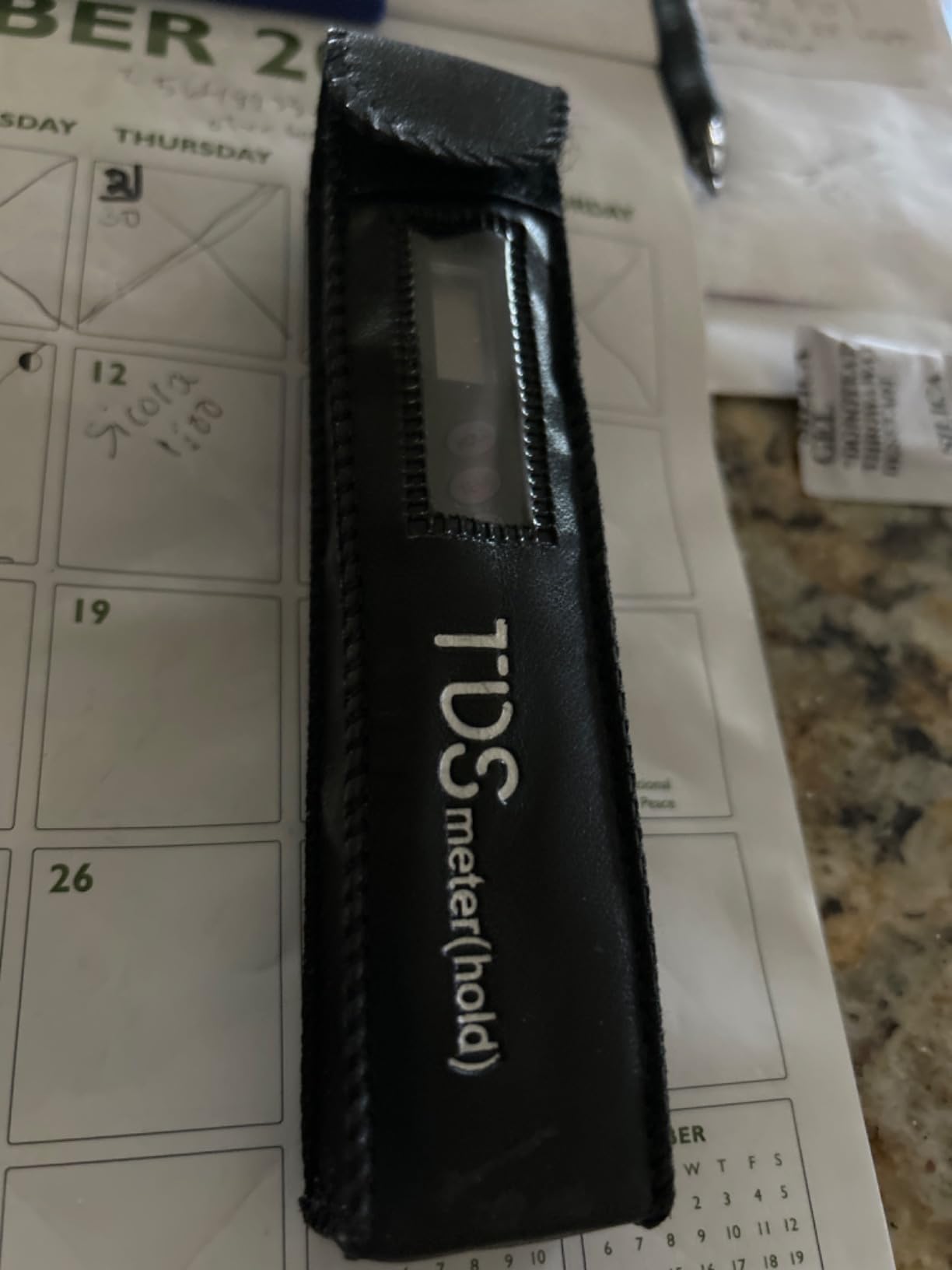
It also has a built in digital thermometer and a hold function to freeze a reading so you can record it. Auto off after ten minutes of inactivity protects the two included button cells, and the belt clip carrying case makes it easy to keep it on a belt or in a grow bag.
Reviews describe it as reliable with a long service life, and the temperature readout adds context that helps when a reading looks wrong. A sudden jump is often temperature rather than concentration, and having both numbers on the same device makes that diagnosis quick.
Who the HM Digital TDS-3 suits
It suits growers mixing nutrients into a full reservoir who need to see small changes rather than a coarse number, and anyone who wants a temperature reading alongside the TDS value without a second device.
It also suits anyone who wants a known, long-established model rather than the newest listing. A large review base and a design that has been in production for years tends to mean better availability of replacement parts and steadier performance.
Where the HM Digital TDS-3 falls short
It reports TDS only. There is no EC scale and no pH function, so if your feed chart is written in mS/cm you are doing the conversion every single time.
It also will not convert between the 500 and 700 PPM scales, which is the most common source of confusion for beginners. And with no calibration solution in the box, you will need to buy a standard if you want to check accuracy yourself.
8. HM Digital TDS-EZ – Best for First-Time Growers
HM Digital TDS-EZ Water Quality TDS Tester, 0-9990 ppm Measurement Range, 1 ppm Resolution, 3% Readout Accuracy,Purple
0-9990 ppm measurement range
1 ppm resolution below 1000 ppm
Recalibratable with a mini screwdriver
Large easy to read LCD
Pros
- Large and easy to read display
- Recalibratable with a mini screwdriver
- Battery life of roughly 1000 hours
- Durable translucent housing
- Reference TDS chart printed on the back
Cons
- Plus or minus 3 percent accuracy is looser than the TDS-3
- Resolution drops to 10 ppm above 1000 ppm
- TDS only with no EC or pH measurement
The HM Digital TDS-EZ is the beginner-facing model in this HM Digital group, and its most underrated feature is that it can be recalibrated with a mini screwdriver. The meter ships calibrated against a 342 ppm sodium chloride solution and the calibration point is physically adjustable rather than sealed away.
That single fact answers a common forum complaint. Owners of meters with no adjustment complain that calibration resets after a battery change or cannot be repeated at all. Being able to re-zero the meter yourself means a drifting reading is a five-minute fix.
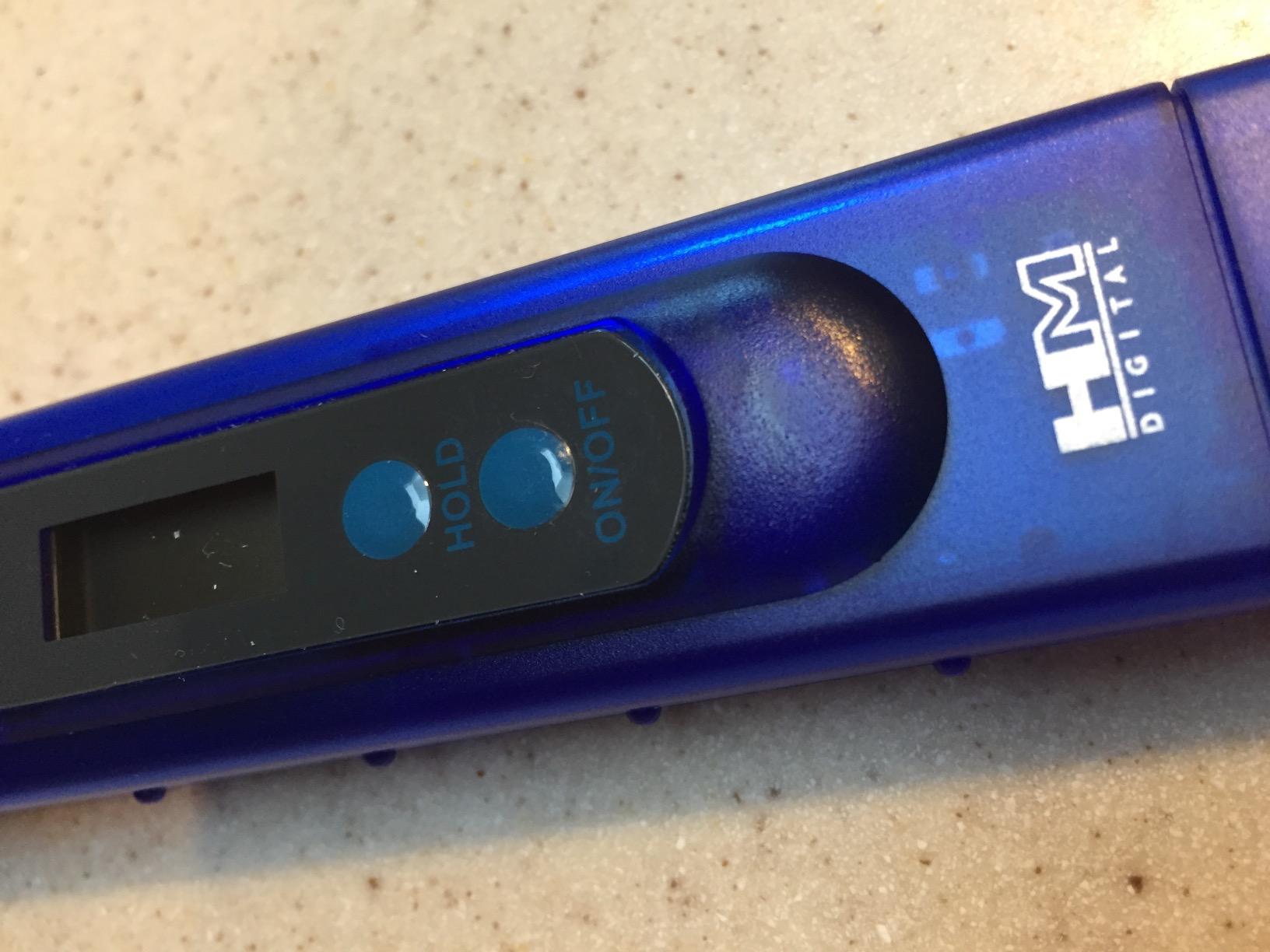
Battery life is the other quiet strength. Two button cells give roughly 1000 hours of use, and the meter shuts off after ten minutes of inactivity, so a meter left in a grow room does not turn into a flat battery every few weeks.
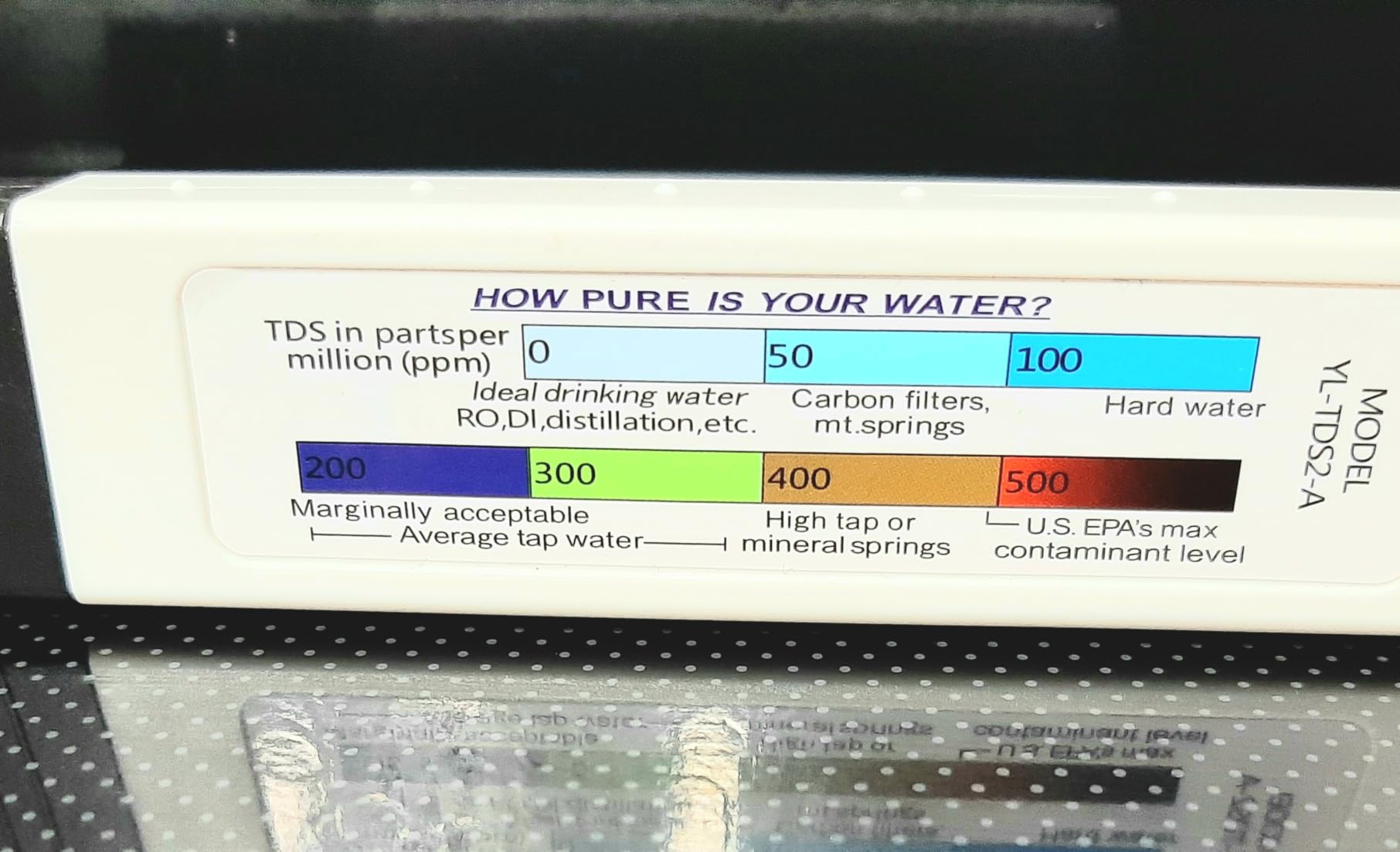
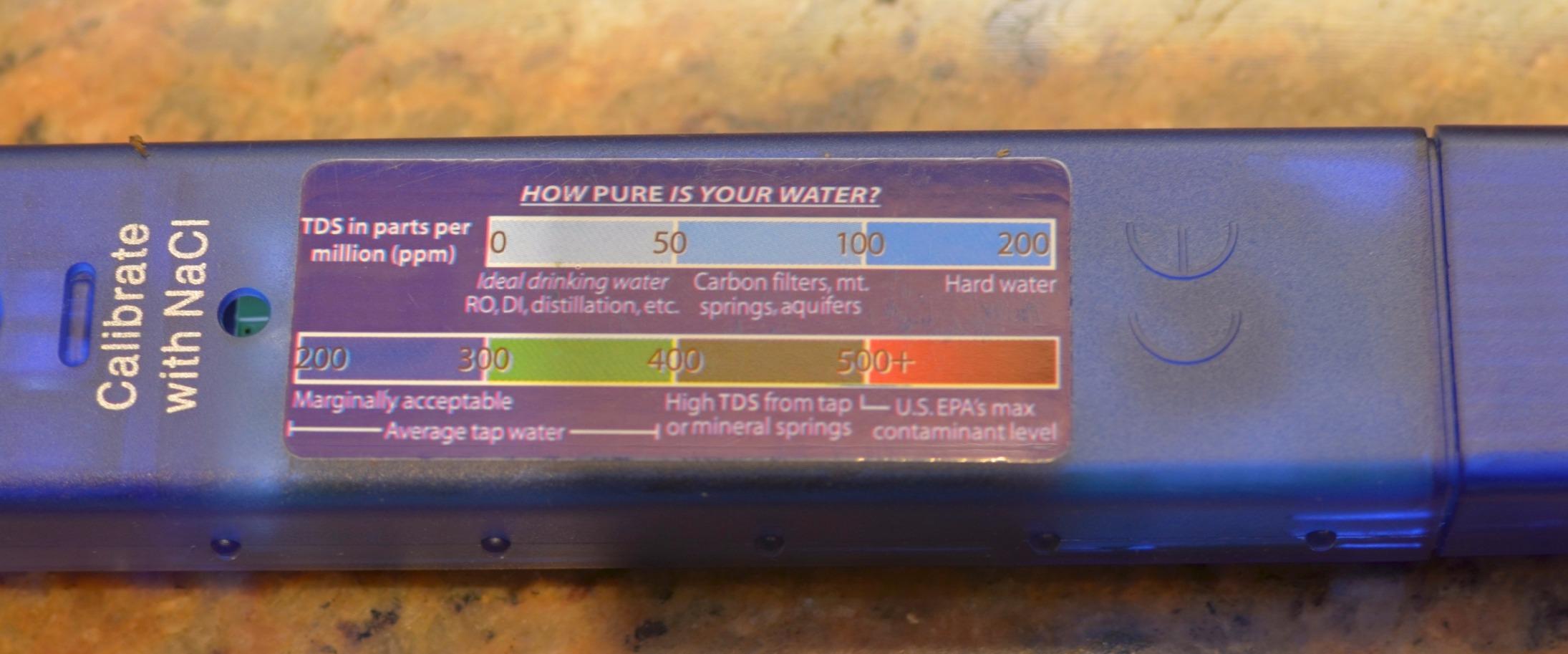
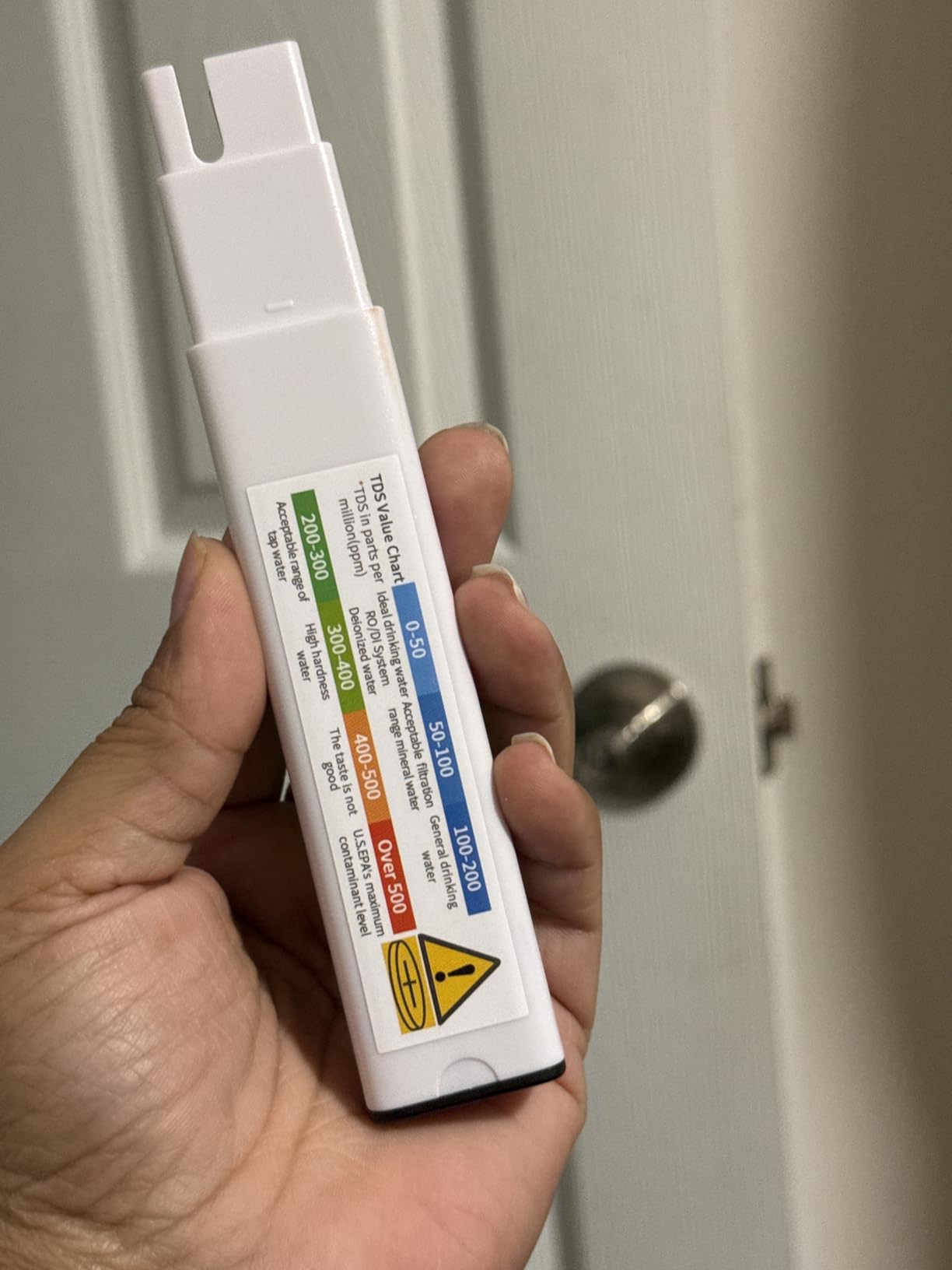
The large translucent housing and easy to read LCD make it a good first meter, and there is a TDS reference chart printed on the back of the unit, which is a small but genuinely useful reminder of what different readings mean in practice.
Who the HM Digital TDS-EZ suits
It suits a first reservoir and a first meter, particularly for someone who wants to be able to recalibrate without sending anything back or buying a tool beyond a small screwdriver.
It also suits growers who check water on an occasional schedule rather than daily, because the battery will still be fine months later. Reading it in a bright tent is easy thanks to the large display.
Where the HM Digital TDS-EZ falls short
Accuracy is plus or minus 3 percent, looser than the TDS-3 in this same group, and resolution falls to 10 ppm steps above 1000 ppm. On a heavily fed reservoir that coarseness shows up as a number that jumps rather than settles.
It is TDS only with no EC scale and no pH, so feed sheets written in EC or dS/m need conversion. For a first meter it is fine; for fine-tuning a large reservoir you will outgrow it.
9. MEXYBE A2 – Best Budget 4-in-1 Tester
2026 All-New 4 in 1 Tds Meter Digital Water Tester – Accurate and Reliable TDS EC & Temp(°C,°F) Meter – 0-9999ppm – Professional Testing for Drinking Water, RO/DI System, Aquariums etc
TDS, EC and temperature in C and F
0-9999 ppm range
Titanium alloy probe
25 percent larger backlit LCD
Pros
- Four measurements including both temperature scales
- Titanium alloy probe and high precision chip
- Backlit LCD with auto lock and hold function
- Factory calibrated with a reference chart on the back
- Two minute auto off
Cons
- Some readings drift as salt builds on the probe
- Only the sensing tip is water resistant
- Needs care to dip deep enough for a valid reading
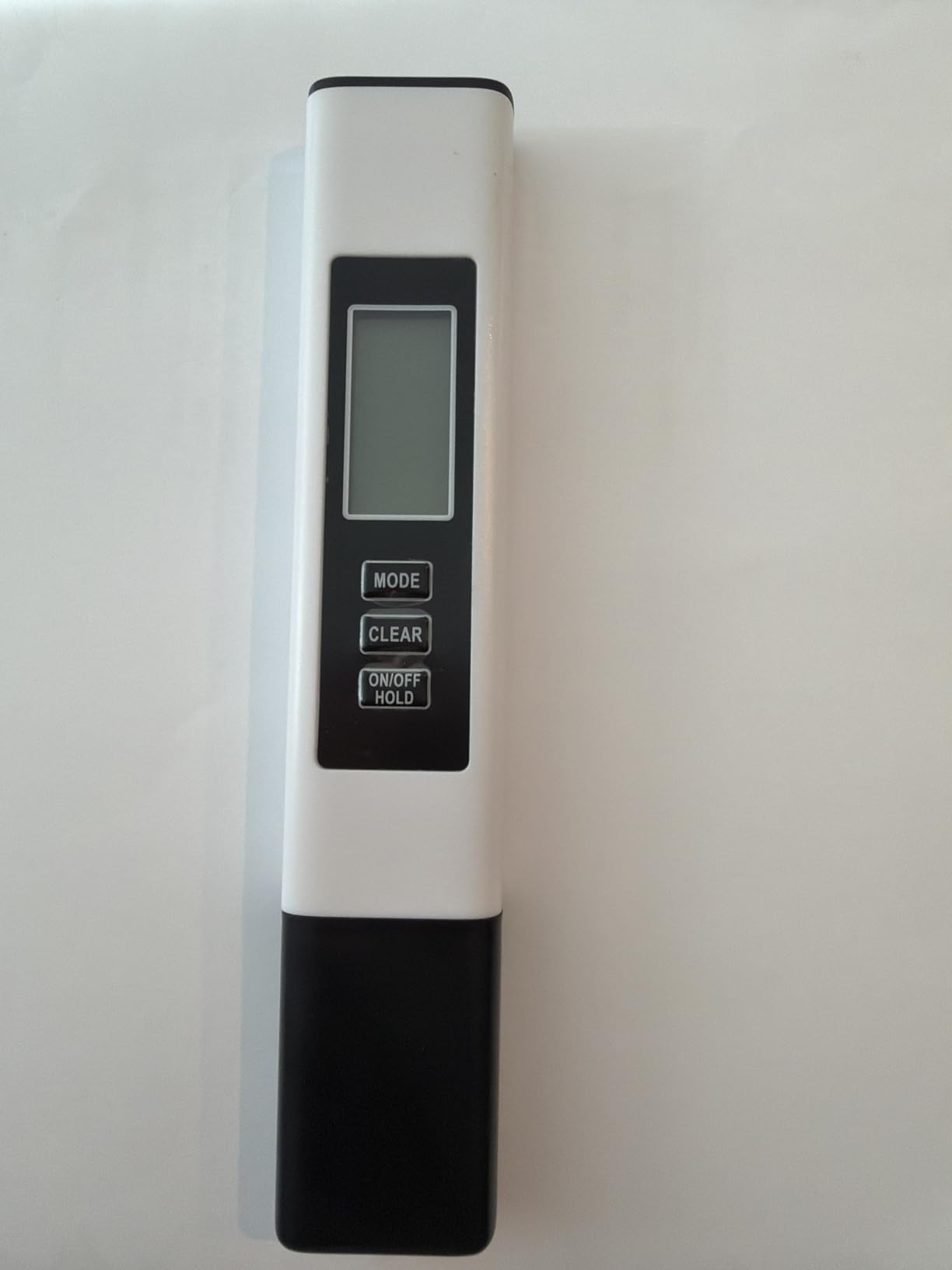
The MEXYBE A2 covers four measurements in one pen: TDS, EC, and temperature in both Celsius and Fahrenheit. Having both temperature scales in the same device removes a conversion step that trips up growers comparing readings with a feed sheet or a chiller setting.
Its probe is a titanium alloy type paired with a high precision chip, and the display is 25 percent larger than on older three-in-one pens. That backlight, combined with auto lock and a hold function, makes it easy to read a value in a dark tent and record it.
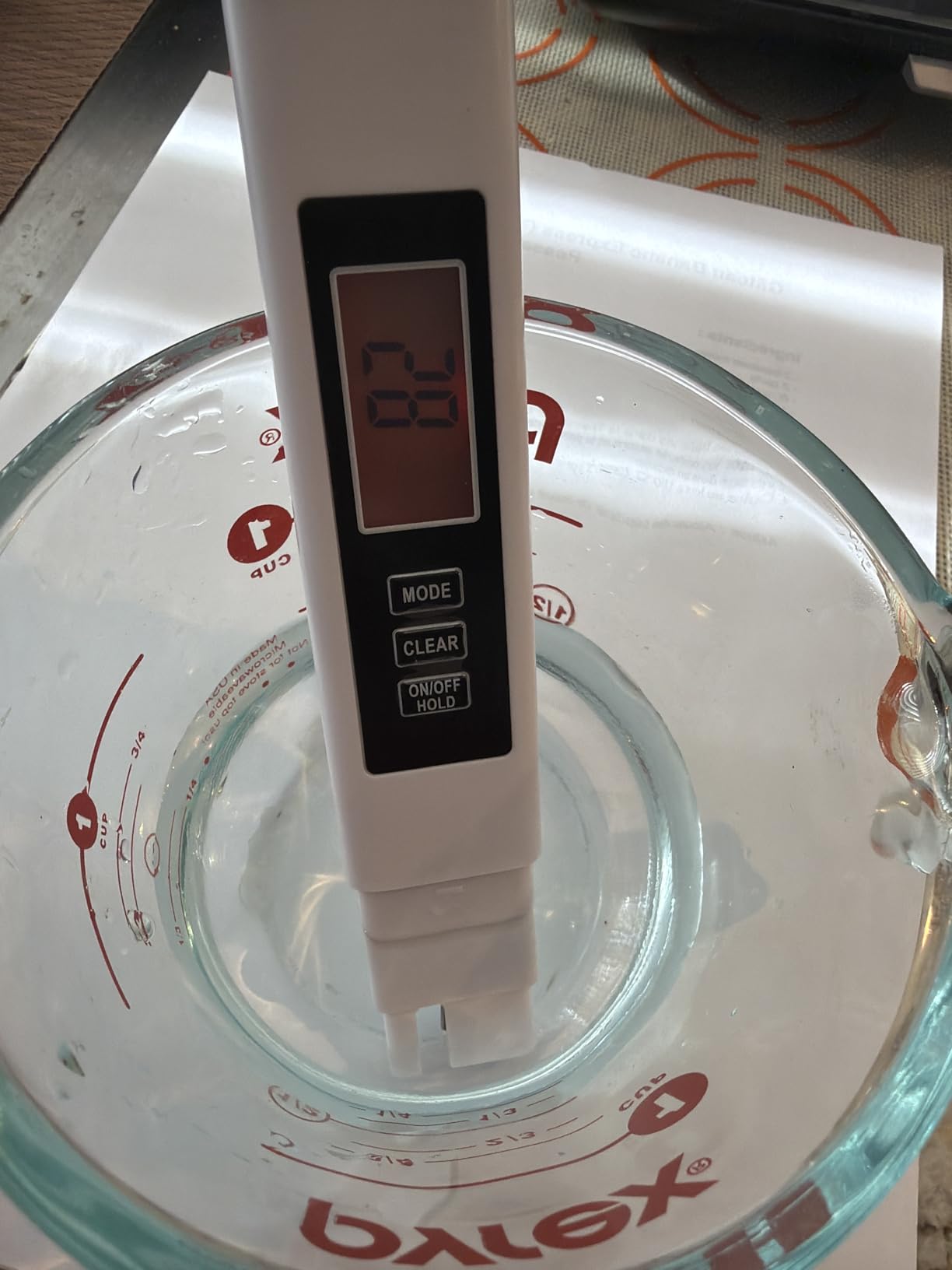
The recurring complaint in reviews is probe contamination. Salt residue left on the sensing element between readings can pull successive results in the same session lower than the true value. It is a maintenance problem rather than a fault: rinse the tip with clean water and dry it between samples and the drift disappears.
Water resistance is limited to the sensing tip, so the body should stay above the surface. That is a meaningful difference from the fully waterproof pens in this roundup and worth knowing before you submerge it to float the reading.
Who the MEXYBE A2 suits
It suits growers who want temperature on the same device as TDS and EC, especially anyone working between Celsius and Fahrenheit documentation or comparing against a water chiller readout.
It also suits anyone moving a meter between several tasks: nutrient solution, tap water checks and reservoir temperature all come off the same pen, and the backlit display helps in a tent or a dim utility space.
Where the MEXYBE A2 falls short
Only the sensing tip is water resistant, so keep the body dry and do not leave the pen floating to hold a reading. The compact probe section also needs care to dip past the measurement depth for a valid result.
Probe contamination between samples is the main accuracy issue reviewers report, and without a calibration solution in the box you cannot easily check the reading yourself. Treat it as a daily quick-check tool rather than a reference instrument.
10. Arendsace A2-SP – Best Low-Cost Color-Coded Tester
New 4 in 1 TDS Meter, TDS Meter Digital Water Tester, Accurate and Reliable, Water Tester,TDS EC and Temperature (° C/° F) Meter, 0-9990ppm,Used for Drinking Water and RO/DI Systems
TDS, EC and temperature in C and F
0-9990 ppm range
Color coded backlit display
Buttonless automatic reading lock
Pros
- Color coded display reads at a glance
- Backlit screen works in low light
- Arrives pre calibrated with no setup
- Compact and portable with long lasting batteries
- Automatic lock stabilises readings quickly
Cons
- Cannot identify which ions are present in the water
- Not a contaminant specific test
- Some units need factory recalibration out of the box
- Build quality questioned by a few buyers
The Arendsace A2-SP is the most approachable meter here for anyone who just wants to see whether water is above or below a threshold without reading digits. The backlit display changes colour: green below 40 ppm, red above it, which gives you an instant read on source water quality and on how far a reservoir has drifted.
Operation is buttonless. The meter starts on a one-touch detection and locks the reading automatically, then shuts down within two minutes. Two included button cells and a 0-9990 ppm range with EC and dual temperature output cover the basics of nutrient checking.
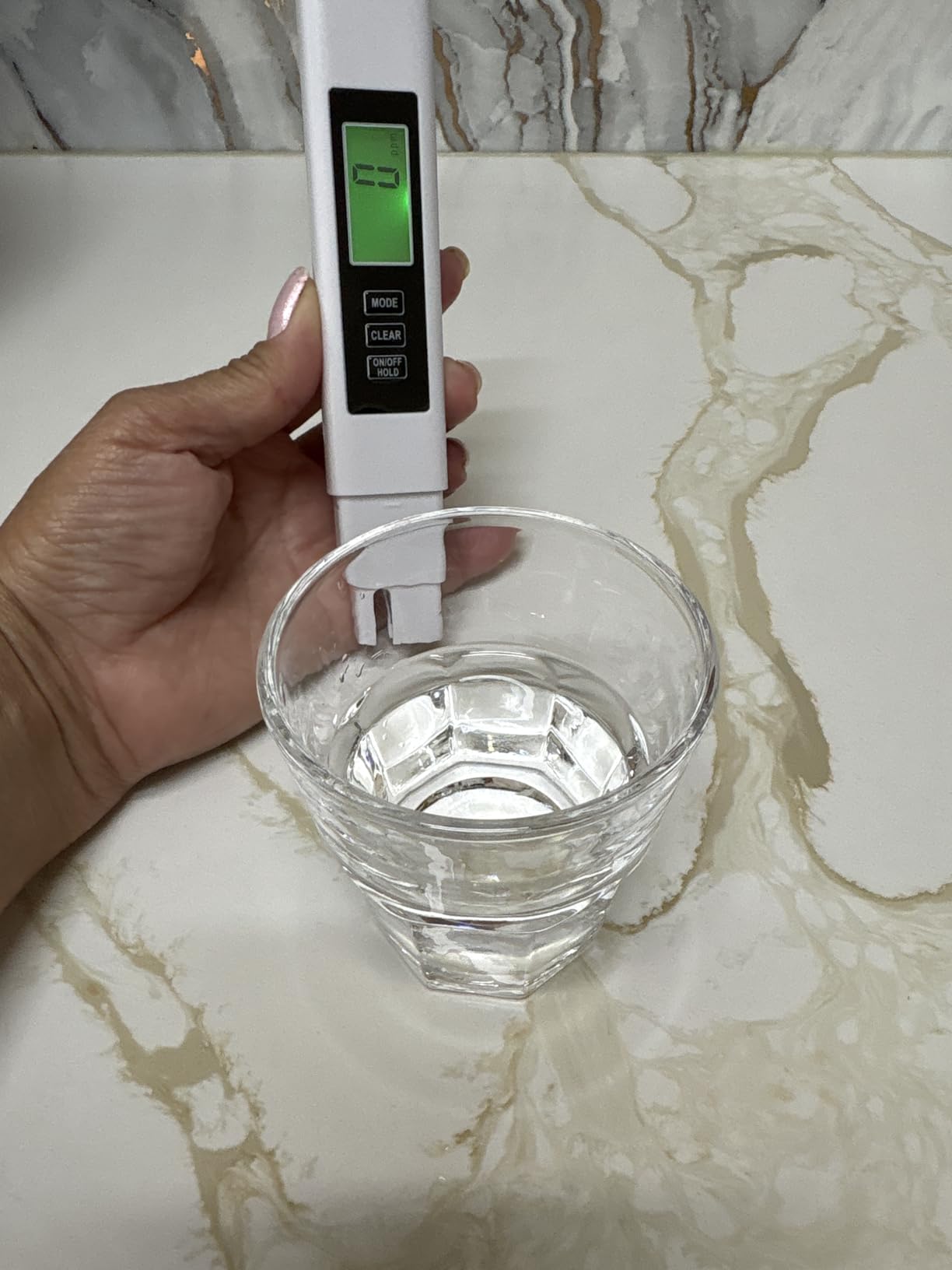
It uses a titanium alloy probe with a high precision chip, and users generally find it accurate enough for drinking water and nutrient checks. The probe is not user replaceable, so when it eventually fails the whole unit goes with it, which is the trade-off for a meter at this price.
That non replaceable probe is the deal breaker forum readers list most often. If a budget meter is going to live in a humid tent for a season or two, think about it as a consumable and check the reading against a known solution periodically.
Who the Arendsace A2-SP suits
It suits new growers who want a simple answer rather than a precise one, and anyone checking source water quality where a pass or fail indication is more useful than a number.
It also suits people who lose pens. A low cost meter with no settings to configure and a colour coded screen is easy to hand to whoever is doing the watering without a lesson first.
Where the Arendsace A2-SP falls short
TDS measures total dissolved solids, so it cannot tell you which ions are present. That matters after a salt-based water softener, where sodium readings change while the total looks unchanged.
It is not a contaminant specific test and will not detect bacteria, heavy metals or chemicals. A small number of units arrive needing factory recalibration, and some buyers question how long the housing lasts in damp conditions.
The 500, 650 and 700 PPM Scale Trap Explained
One EC reading converts to different PPM numbers depending on which scale your meter uses, and using the wrong one is the most common nutrient dosing error we found. The formulas are simple: multiply the EC value by 500 for the PPM 500 scale, by 650 for the 650 scale, or by 700 for the PPM 700 scale used in the UK and Australia.
A worked example. A feed sheet targeting 1400 ppm was written on the 700 scale. Read that as 700 scale and you will aim for 2.0 EC. If your meter is set to the 500 scale, 2.0 EC displays as 1000 ppm, so you keep adding nutrients that were never meant to be there.
EC 1.0 equals 500 ppm on the 500 scale, 650 ppm on the 650 scale, and 700 ppm on the 700 scale
EC 2.0 equals 1000 ppm, 1300 ppm and 1400 ppm on those same three scales
EC 2.4 equals 1200 ppm, 1560 ppm and 1680 ppm
Most nutrient bottles and feed charts sold in the United States are written on the 500 scale, which is why growers in that market see lower numbers for the same solution. If your meter offers a scale switch, set it once and never touch it again.
Two meters side by side can disagree by hundreds of ppm and neither be wrong. Forum growers have reported one meter reading 1800 ppm while a different unit showed far lower on the same bucket. Check the scale setting first, then check the water source, since a bicarbonate load in municipal water pushes a reading up before any nutrients are added.
Finally, remember what the number cannot do. TDS and EC measure total concentration only, not composition. Two solutions with identical readings can have completely different salt ratios, which is why you still pair your meter with a pH reading and a feed schedule.
How to Calibrate a TDS Meter: 1413 uS/cm vs 276 uS/cm
Calibrate with a 1413 uS/cm standard for routine nutrient solution work. That figure equals 1.413 mS/cm, or about 1413 ppm on the 500 scale, and it is the standard used for EC meters across the hydroponics industry. A 276 uS/cm standard is a low range alternative used for pure or nearly pure water, and it is not what you want for a nutrient reservoir.
Using the wrong standard is the quiet cause of a lot of drift. If you calibrate a meter in 276 uS/cm and then dip it into a nutrient solution far above that range, the reading can be systematically off, and you will spend weeks chasing a problem that is really a calibration error.
For a factory calibrated pen, one check every few weeks is enough. Rinse the probe, dip it into fresh 1413 uS/cm solution, stir gently, wait for the number to settle, and adjust until it matches the standard. Never calibrate in the nutrient solution itself, and never use tap water, because neither gives a known concentration.
Wash the probe with distilled or deionised water after each use and let it air dry before storage. Salt residue on the sensing element is the most common reason a budget meter reads low, and it is the easiest problem to fix.
Two habits separate meters that stay accurate from meters that do not. Remove batteries when storing a meter for weeks, because a leaked cell can corrode the contacts and reset your calibration. And if a reading jumps between checks, check the temperature first, since a warm reservoir genuinely does read higher.
How to Use a TDS Meter on a Nutrient Solution in Seven Steps
Use this sequence every time you check a reservoir. Consistency is what makes the numbers mean anything, and a meter used randomly gives you readings you cannot compare.
1. Stir the reservoir first. Solutes settle at the bottom and near the surface, so a reading taken from a still tank tells you about one layer rather than the whole solution.
2. Rinse the probe with clean water. Residue from the previous reading, or from a fertiliser bottle, skews the result more often than any meter fault.
3. Check the temperature. Make sure Automatic Temperature Compensation is switched on if the meter has it, and note the temperature if it does not.
4. Dip the probe to the marked depth and wait. Give the reading ten to fifteen seconds to stabilise before you write anything down, and use the hold or auto lock feature where it exists.
5. Read in the scale your feed sheet uses. If your chart is written on the 500 scale, set the meter to 500 and never convert in your head.
6. Take two readings. A difference within roughly 50 ppm on a home system is normal drift rather than a fault, and a much larger gap means the solution was not stirred or the probe needs a rinse.
7. Rinse, dry and store. Rinse the probe, let it dry, and store it away from nutrient solution unless the manufacturer specifically supports continuous immersion.
Test your reservoir whenever you top up water, after any dose adjustment, and at least a few times a week in a warm system. If you are checking soil rather than solution, the runoff method works the same way: collect the runoff and read it the same way you would read a reservoir.
TDS Meter Buying Guide: Which One Do You Actually Need?
Start with the question you are trying to answer. If you need one number to tell you whether to add nutrients or plain water, any reliable pen on this list does that, and the HoneForest HFTDS-M7 is the most complete single option. If your tanks are large or heavily fed, the wider EC range and the warranty on the Bluelab Commercial Truncheon earn their place.
Next, check the scale your feed sheet uses. Meters with a selectable 500 and 700 scale remove an entire category of dosing error, and that switch alone justifies choosing one over a cheaper alternative. If you also need temperature, a four-in-one pen keeps the reading and the context on one screen.
Third, look hard at the probe. A replaceable probe extends the life of a meter; a soldered probe makes the whole unit a consumable. Forum growers treat sealed units as throwaway tools, and that is the right mental model. Budget for a replacement probe or a replacement meter rather than assuming the first one lasts.
Fourth, think about water resistance honestly. Fully waterproof pens that float are useful in recirculating systems, while tip-only water resistance is fine for a quick dip. Neither should be left submerged for days, and none should be stored under water with the battery compartment filled.
Do you need a pH meter too? Yes. The consistent advice across grower forums is that cheap TDS and EC meters are fairly accurate while pH accuracy is where quality matters, because a pH swing locks nutrients out regardless of how perfect your EC reading is. If you can only afford one meter this year, buy the pH one and use a budget EC pen alongside it. Our full guide to moisture meters covers the soil side of the same testing routine.
Watch for two failure modes that are rarely written down. Calibration that resets after a battery change quietly invalidates every reading that follows, so check the meter after any battery service. And moisture around a battery compartment, reported by owners of otherwise good pens, often traces back to storing the unit wet rather than to the meter itself.
Finally, remember that TDS measures concentration, not composition. It cannot identify which salts are present, so a high reading might be nutrients, might be bicarbonate from your tap water, or might be a softener. Where the cause matters, a lab analysis is the only way to resolve it.
If your setup also involves pumps or circulating hardware, our guides to clamp meters and AC and DC clamp meters cover the electrical side.
Frequently Asked Questions
Which TDS meter is the most accurate?
For nutrient solution work, the Bluelab Commercial Truncheon has the highest average rating in our tests at 4.7 stars, with a 0.2 to 3.6 EC range and factory calibration. In practice the difference between a well-made grower pen and a budget pen is far smaller than the difference between a calibrated meter and an uncalibrated one, so verify any meter against a 1413 uS/cm standard before trusting it.
What is the best TDS meter to buy?
The HoneForest HFTDS-M7 is our top pick for most people because it reports TDS, EC and temperature from one probe across a 0-9990 ppm range, locks the stabilised reading automatically, and has a large backlit display. If you need a 500 versus 700 PPM scale switch, choose the Bluelab PENCON. If you are starting from nothing and need pH as well, the VIVOSUN two-piece set covers both in one purchase.
Do you need an EC meter for hydroponics?
Yes. An EC or TDS meter tells you the total concentration of your nutrient solution so you know whether to add nutrients, top up with water, or dilute. Plants take up water and nutrients at different rates, so a solution that was correct on day one drifts within days. Measure at least a few times a week, and whenever you change the water or add a dose.
Are digital pH meters more accurate?
Digital pH meters are more accurate than colour strips in almost every case, but accuracy varies a lot between models. Budget combo pens often need recalibrating every few weeks, and some owners report slow stabilisation or drift. Spend more on your pH meter than on your TDS meter if you can only stretch to one quality purchase, since a pH error can lock nutrients out even when your EC reading is perfect.
Why does my TDS meter give different readings?
The most common causes are a probe that was not rinsed, a solution that was not stirred, a mismatch between the 500 and 700 PPM scales, and a temperature change the meter did not fully compensate for. Take two readings and a gap within roughly 50 ppm is normal. Also check whether your source water carries a bicarbonate load, which pushes the reading up before any nutrients are added.
Which TDS Meter Should You Buy?
The best TDS meters for nutrient solutions in 2026 come down to how you grow. The HoneForest HFTDS-M7 is the safest single purchase for most home setups, the Bluelab PENCON wins if you need a 500 versus 700 scale switch and a pen that floats, and the VIVOSUN set covers both pH and TDS when you are starting from nothing.
Whichever you choose, calibrate it with a 1413 uS/cm standard, set the PPM scale once to match your feed sheet, rinse the probe between readings, and pair it with a pH meter. That routine matters more than any spec on the box. We earn a commission when you buy through the links on this page, at no additional cost to you.