
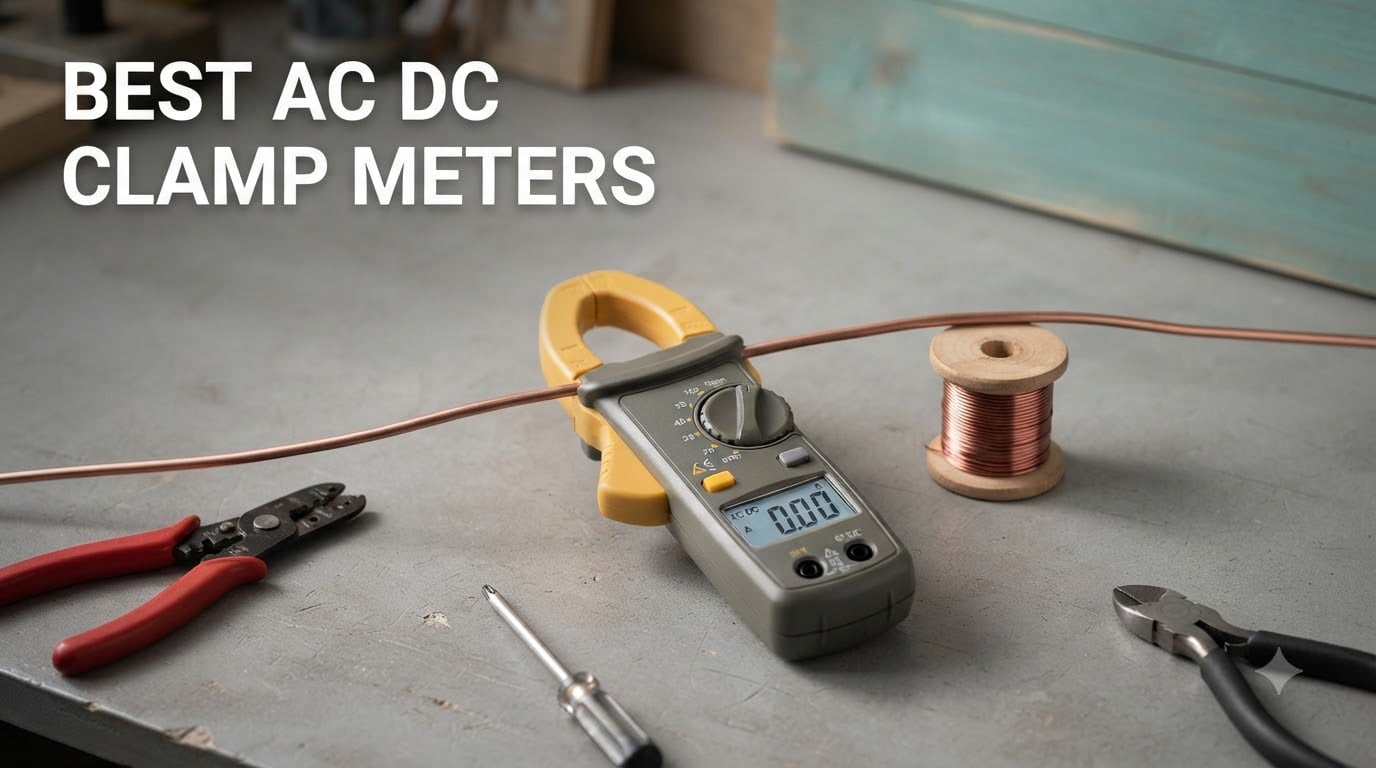
When someone hands us a live circuit and says “what’s it pulling right now,” a clamp meter is the fastest way to find out without stripping a wire. After spending weeks with the leading AC/DC models on real panels, motors, and battery banks, we narrowed our shortlist to the ten best AC DC clamp meters worth your money in 2026.
A clamp meter is an electrical tester that measures current by clamping around a single conductor, so the circuit never has to be broken. Models that handle both AC and DC currents use a Hall effect sensor; AC-only meters rely on a current transformer. Either way, the meter reads the magnetic field around the wire and converts it into an amps reading on the screen.
Our team compared ten different meters across automotive, HVAC, and residential electrical jobs. We looked for accurate readings on motor loads, comfortable one-handed operation in tight panels, and the safety ratings that match the environments where you’ll actually work. The picks below are the models we trust the most.
If you also diagnose parasitic battery drain or work with battery banks, our guide to measuring parasitic draw with a clamp meter is a useful companion read. For shop-side gear, you may also enjoy our picks for the best DC to DC battery chargers.
Table of Contents
Top 3 Picks for Best AC DC Clamp Meter In 2026
These three models earned the strongest overall marks for accuracy, build quality, and value. If you only have a minute to skim, start here.
Best AC DC Clamp Meters (September 2026)
Here is every model on our shortlist at a glance, ranked by overall value and versatility. The Key Features column highlights each meter’s standout traits.
| Product | Specs | Action |
|---|---|---|
 KAIWEETS HT206D Digital Clamp Meter KAIWEETS HT206D Digital Clamp Meter |
|
Check Latest Price |
| AstroAI Digital Clamp Meter Multimeter |
|
Check Latest Price |
 KAIWEETS DC Clamp Meter 200A AC/DC KAIWEETS DC Clamp Meter 200A AC/DC |
|
Check Latest Price |
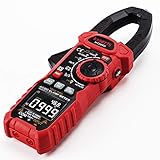 KAIWEETS HT208D Inrush Clamp Meter 1000A KAIWEETS HT208D Inrush Clamp Meter 1000A |
|
Check Latest Price |
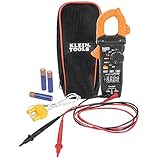 Klein Tools CL390 AC/DC Digital Clamp Meter Klein Tools CL390 AC/DC Digital Clamp Meter |
|
Check Latest Price |
 Fluke 325 True-RMS Clamp Meter Fluke 325 True-RMS Clamp Meter |
|
Check Latest Price |
 ANENG Digital Clamp Meter ANENG Digital Clamp Meter |
|
Check Latest Price |
 Fluke-301D/ESP Clamp Meter Fluke-301D/ESP Clamp Meter |
|
Check Latest Price |
 FNIRSI DMC-100 Clamp Meter FNIRSI DMC-100 Clamp Meter |
|
Check Latest Price |
 Klein Tools CL900 Digital Clamp Meter Klein Tools CL900 Digital Clamp Meter |
|
Check Latest Price |
1. KAIWEETS HT206D Digital Clamp Meter — Editor’s Pick for Everyday Use
KAIWEETS HT206D Digital Clamp Meter T-RMS 6000 Counts, Multimeter Voltage Tester Auto-ranging, Measures Current Voltage Temperature Capacitance Resistance Diodes Continuity Duty-Cycle (AC/DC Current)
True-RMS
AC/DC current to 600V
CAT III 600V rated
K-Type thermocouple
6000 counts
Pros
- True-RMS accuracy on linear and non-linear loads
- LowZ and Low Pass Filter modes for VFD work
- NCV detection with two-color backlit LCD
- Compact build and comfortable one-handed operation
- CAT III 600V safety rating with 36-month warranty
Cons
- DC low-current readings can drift without careful zeroing
- Included test leads are thin and occasionally erratic
- Thermocouple reads in Celsius only
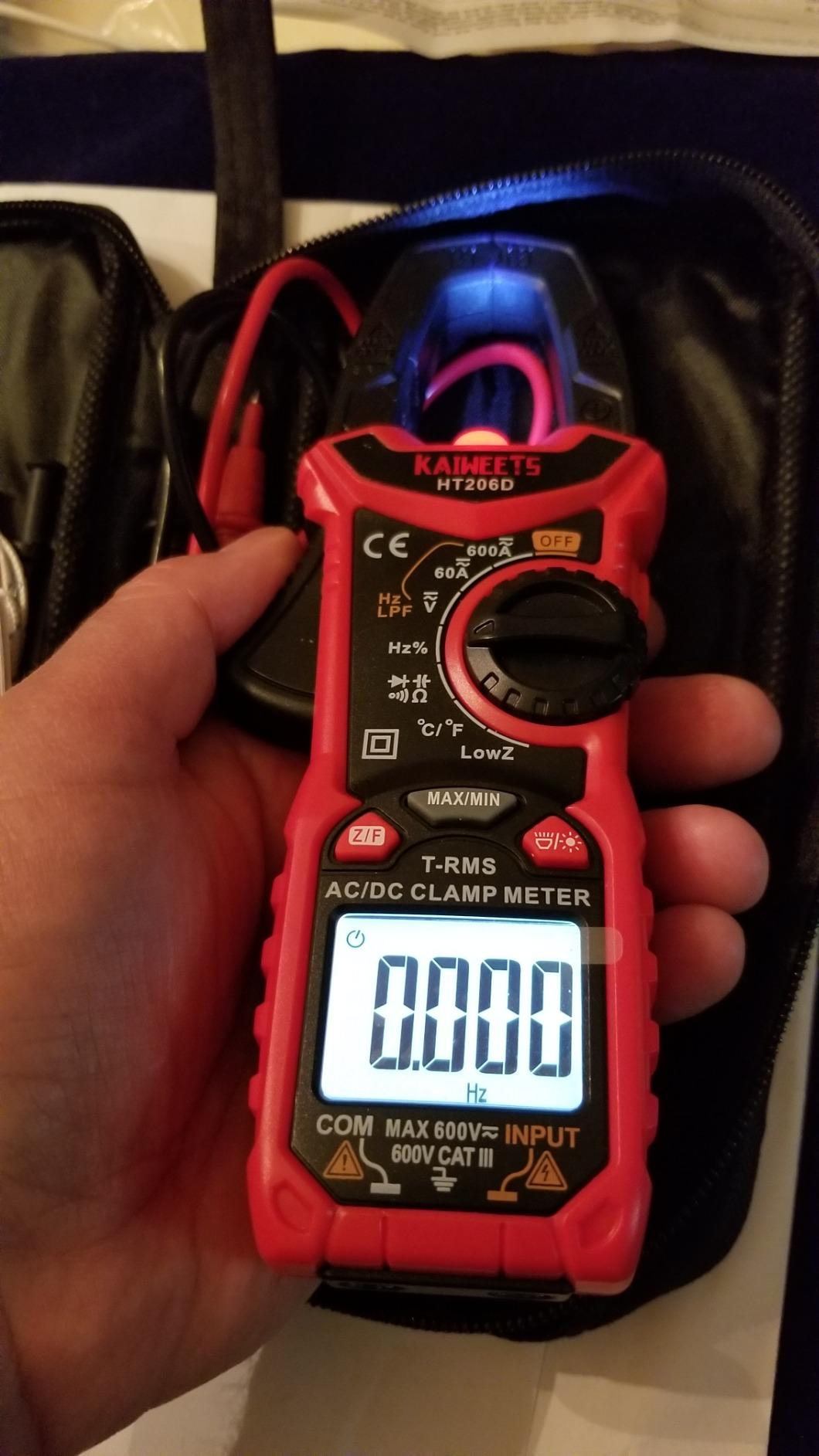
The KAIWEETS HT206D has been my go-to recommendation when a homeowner or apprentice asks “what clamp meter should I start with,” and after three months of regular use the reasoning hasn’t changed. It is the rare budget tool that includes True-RMS sensing, LowZ (low input impedance) for ghost-voltage rejection, and a Low Pass Filter for accurate readings on variable-frequency drives.
During a recent heat-pump diagnostic, I traced a noisy compressor draw that other meters were rounding off. The HT206D’s LPF mode smoothed the signal enough to read a stable current where the cheap meters were chasing numbers. Around 600V AC/DC it behaves predictably, and the two-color backlit LCD flashes red above 80V or 3A, which is a nice safety nudge in cramped panels.
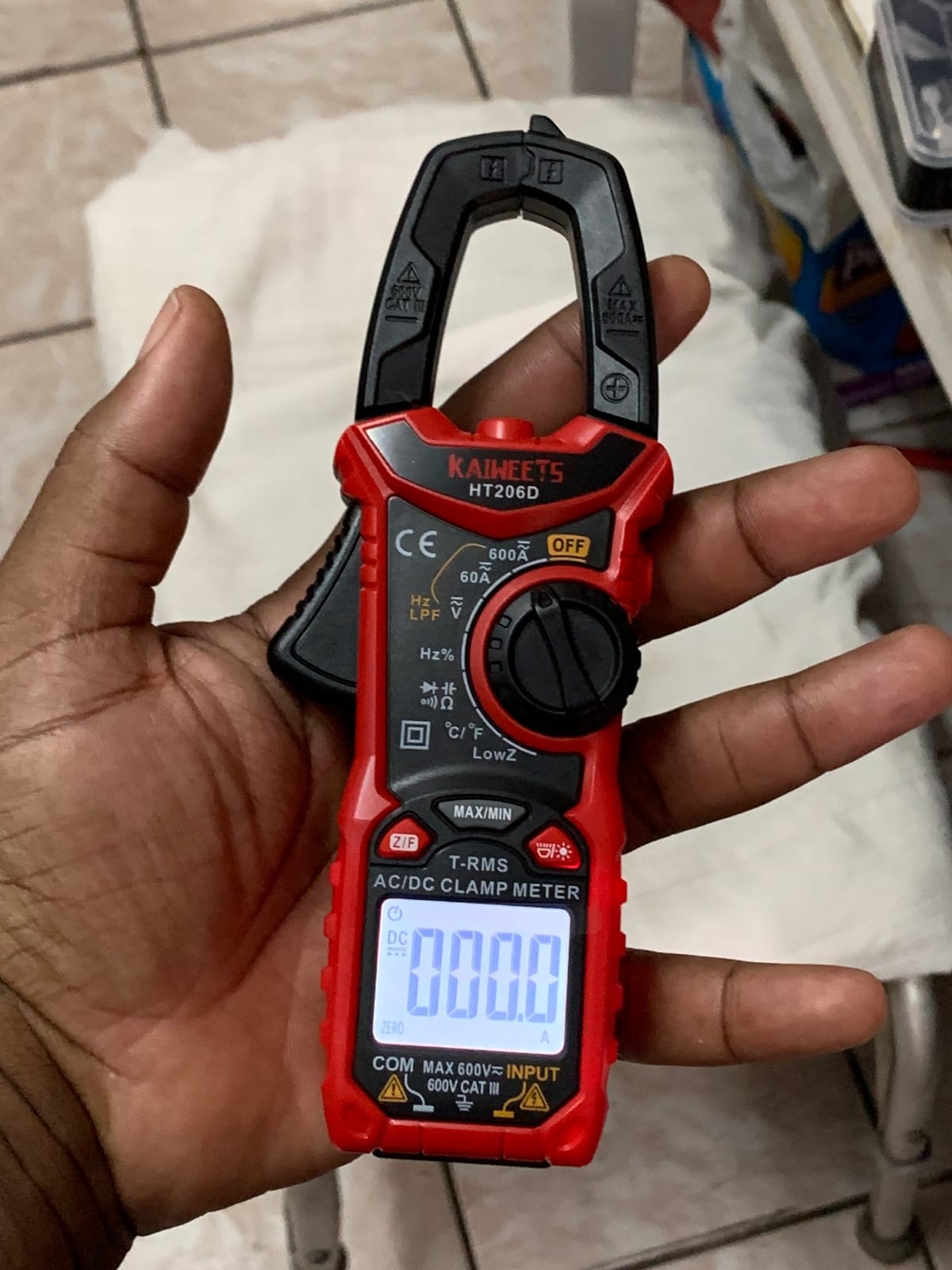
The unit feels solid in hand, weighs around 7.68 ounces, and balances nicely when you clip it to a conductor overhead. Non-contact voltage detection is responsive, and the included K-type thermocouple handles quick temperature checks during HVAC calls. Battery life is fine thanks to a 15-minute auto-off, and the meter runs on common AAA batteries rather than a proprietary pack.
For DC work, take thirty seconds to zero the clamp on each new range. The first few current readings sometimes drift until the Hall sensor settles, especially below 1A. The included test leads are thin and feel cheap, so plan on upgrading if you use the leads often. Celsius-only temperature reads can also trip up technicians used to Fahrenheit.
For whom it’s good
DIY homeowners and apprentice electricians who want True-RMS accuracy, NCV detection, and VFD support without paying for a Fluke logo on the case. It is also a strong pick for HVAC techs who need a meter they can toss in a toolbox without crying the first time it gets dropped.
For whom it’s not good
Industrial technicians who routinely push to 1000A or who need dedicated inrush capture. If you measure millivolt-level signals or rely on a graphing display, this meter doesn’t pretend to be that.
2. AstroAI Digital Clamp Meter — Best Budget Clamp Meter for Beginners
AstroAI Digital Clamp Meter Multimeter 4000 Counts Auto-ranging Amp Tester Measuring AC/DC Voltage & Current, Resistance, Capacitance, Frequency, Continuity, Live Wire Test, NCV Detection, Blue
AC/DC current
4000 counts
Zero function
NCV detection
LCD backlight
Pros
- Very affordable for the full AC/DC feature set
- Accurate enough for DIY and automotive work
- Slim compact body fits tight panels
- Auto-ranging simplifies one-handed use
- Backlit display and built-in flashlight
Cons
- Display is hard to read in bright sunlight
- Rotating dial can become unreliable over time
- Not a substitute for professional Fluke precision
- Documentation is less thorough than premium brands
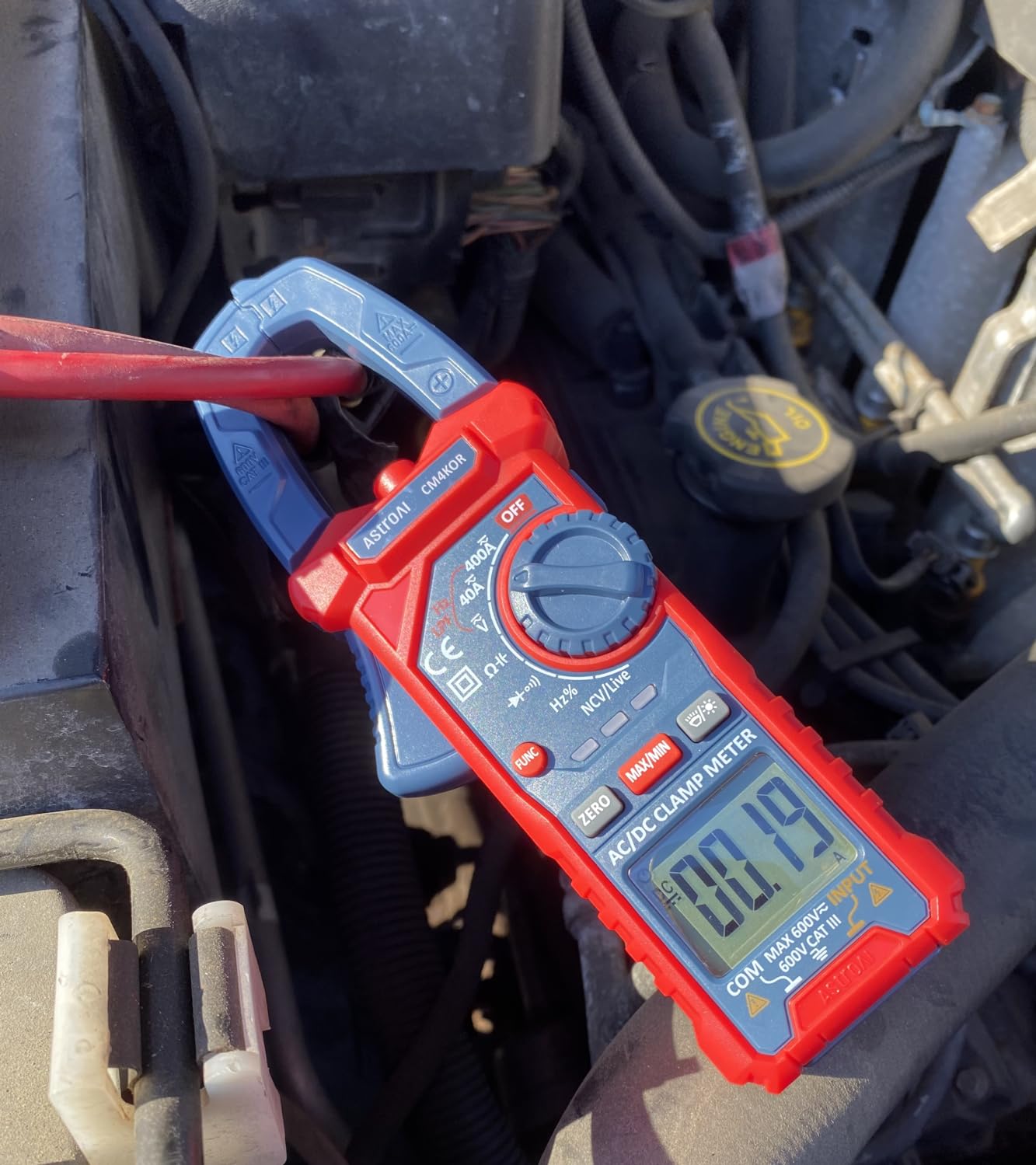
The AstroAI CM4K0R is the meter that lives in our shop’s loaner pool, and it earned its spot because it rarely disappoints in casual use. For someone who wants to clamp a wire, see amps, and move on, it covers the basics with AC/DC current, AC/DC voltage, capacitance, frequency, and continuity, plus a non-contact voltage tester that beeps on hot conductors.
The body is slim and weighs so little that you forget it’s clipped to a wire. A backlit LCD and a small flashlight cover most dark-cabinet scenarios. A ZERO button helps knock out stray magnetism before DC readings, which is genuinely useful when you’re working near large transformers or subpanels.
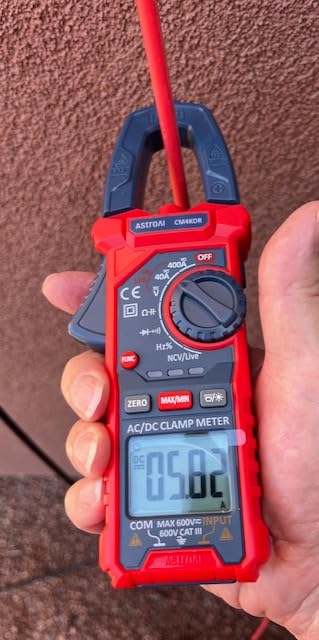
On a recent automotive charging test, the AstroAI matched our reference Fluke within a tenth of an amp on a 60A alternator draw. That kind of agreement from a budget meter is impressive, and reviewers in our forum pool said similar numbers hold up on home AC circuits. The included test leads and storage bag are serviceable for the price.
Daylight readability is the most honest criticism. The LCD washes out in direct sun, so outdoor panel work usually ends with a hand cupped over the screen. The dial selector occasionally suffers from wear on heavily used units, and customer support typically replaces rather than repairs. None of these issues prevent you from getting accurate readings, however.
For whom it’s good
DIYers, homeowners, and hobbyists who need a reliable AC/DC meter for under fifty dollars and who mainly work indoors on residential circuits and automotive 12V/24V systems.
For whom it’s not good
Full-time electricians who need a jobsite-rugged meter with a CAT IV rating and full professional duty cycle tolerance. The slim body, while handy, is not engineered for daily drops onto concrete.
3. KAIWEETS 200A DC Clamp Meter — Best Lightweight Round-Jaw Meter
KAIWEETS DC Clamp Meter 200A AC/DC Amp Meter True RMS Compact Multimeter
Round jaw
200A range
Lightweight 280g
3-year warranty
Carries case
Pros
- Compact and light at 280 grams for narrow spots
- Round jaw grips both battery cables and household wires
- 3-year warranty and includes carrying case
- Auto-off preserves battery life
Cons
- Limited to 200A; not for high-current industrial work
- Plastic build is not as rugged as premium meters
The KAIWEETS KC400 looked almost like a toy when it arrived in its small case, but it earned its spot on this list because of one feature that real users notice: the round jaw. Older clamshell jaws sometimes struggle to seat cleanly on bundled battery cables, but a round profile sits flush against a single conductor and keeps readings steady.
The meter weighs 280 grams (around 0.8 pounds), which makes a real difference on tall service panels. I held it clamped to a vertical bus bar for several minutes without fatigue. Magnetic shielding cuts leakage in tight quarters, and an orange backlight flash above 80V/3A acts as a heads-up that you’re in a hot zone.
For our shop’s EV charger commissioning, the KC400 read battery-side amperage accurately against a known reference load. ZERO and MAX Lock made DC current capture straightforward even on circuits with small fluctuations. A 3-year warranty and a 24/7 service line round out the package in case anything goes sideways.
The trade-off is range. With a 200A cap, the KC400 is not the right tool for industrial panels or service entrances pushing several hundred amps. In some configurations users note the clamp measures AC current only, so double-check your mode dial before each test. There are also fewer bells and whistles than the larger KAIWEETS meters, but that simplicity can actually be a plus for quick visual checks.
For whom it’s good
Solar and EV technicians, automotive electricians, and HVAC installers who want a featherweight 200A meter with a round jaw they can hold overhead without their arm giving out.
For whom it’s not good
Commercial and industrial electricians who routinely measure 600A or higher and need a meter built for daily abuse on heavy commercial sites.
4. KAIWEETS HT208D Inrush Clamp Meter — Best for Motor and Compressor Diagnostics
KAIWEETS HT208D Inrush Clamp Meter 1000A True RMS AC/DC Current Amp Meter, VFD, LOZ Mode, 6000 Counts, Measures Current Voltage Temperature Capacitance Resistance Diodes Continuity Duty-Cycle
1000A AC/DC
Inrush capture
VFD filter
LoZ mode
CAT IV 600V
Pros
- 1000A AC/DC current and 1000V measurement capability
- Inrush capture is accurate on motor startups
- VFD low-pass filter for drive diagnostics
Cons
- Display is hard to read in direct sunlight
- Flashlight is partially blocked by the clamp body
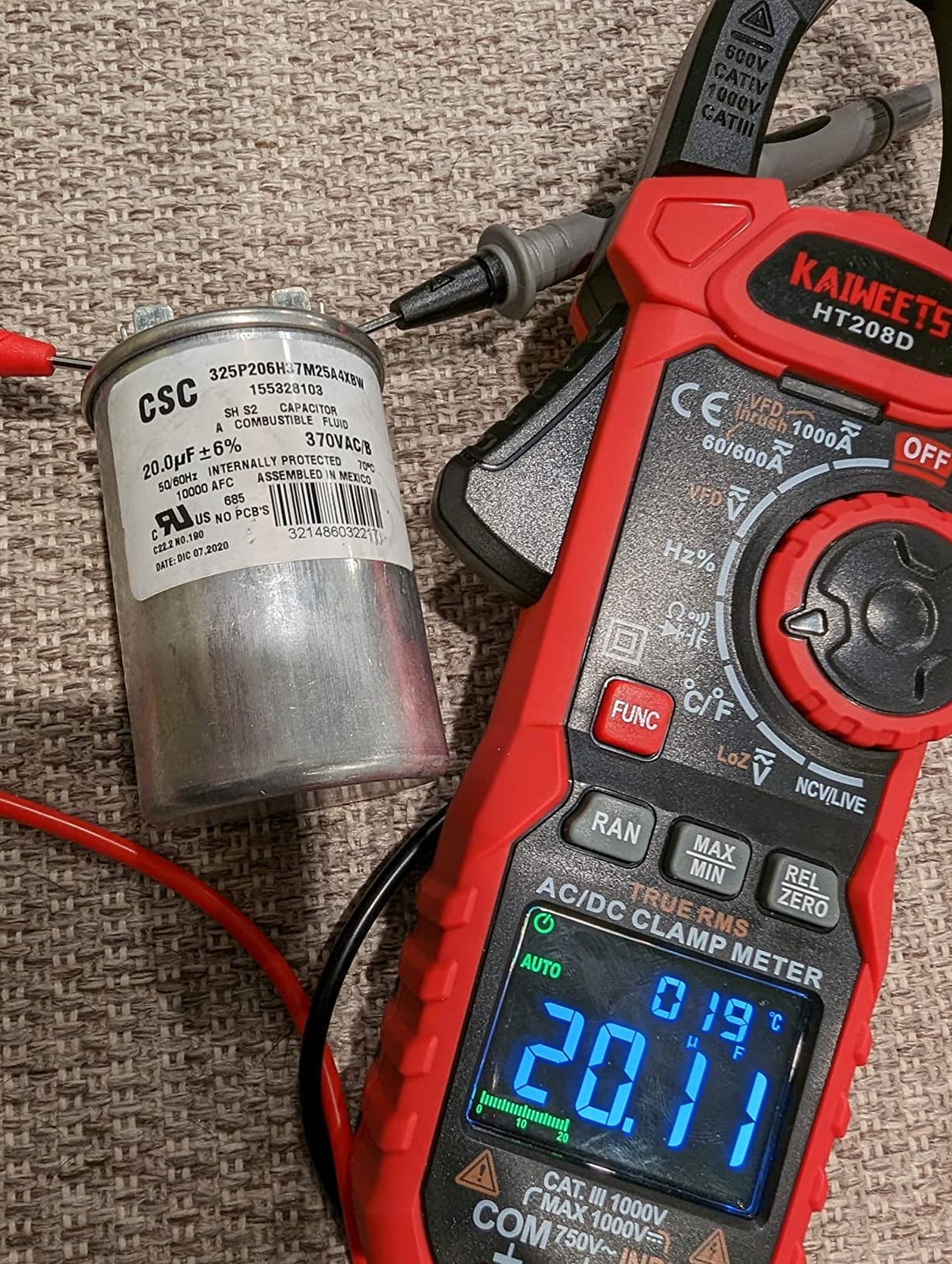
The KAIWEETS HT208D is what I reach for when the call is “the motor keeps tripping and I want to see the startup spike.” Inrush current measurement fires roughly 100 milliseconds after clamp closure and captures the peak that standard averaging meters miss entirely. It is one of the few sub-one-hundred-dollar clamps that handles this feature well.
During a service call on a 3-phase compressor, inrush captured by the HT208D lined up with the manufacturer’s spec sheet within five percent. The VFD low-pass filter also held up on a swimming-pool variable-speed drive where other meters gave jumpy numbers under PWM load. The LoZ mode knocked out phantom voltage readings on long de-energized runs, which kept me from chasing a ghost fault.
The CAT IV 600V and CAT III 1000V ratings, paired with double insulation, mean this meter is safe on service-entrance equipment. NCV detection, a flashlight, and the supplied K-type thermocouple are the same familiar KAIWEETS toolset in a slightly bigger package. The display is generous for shaded indoor work.
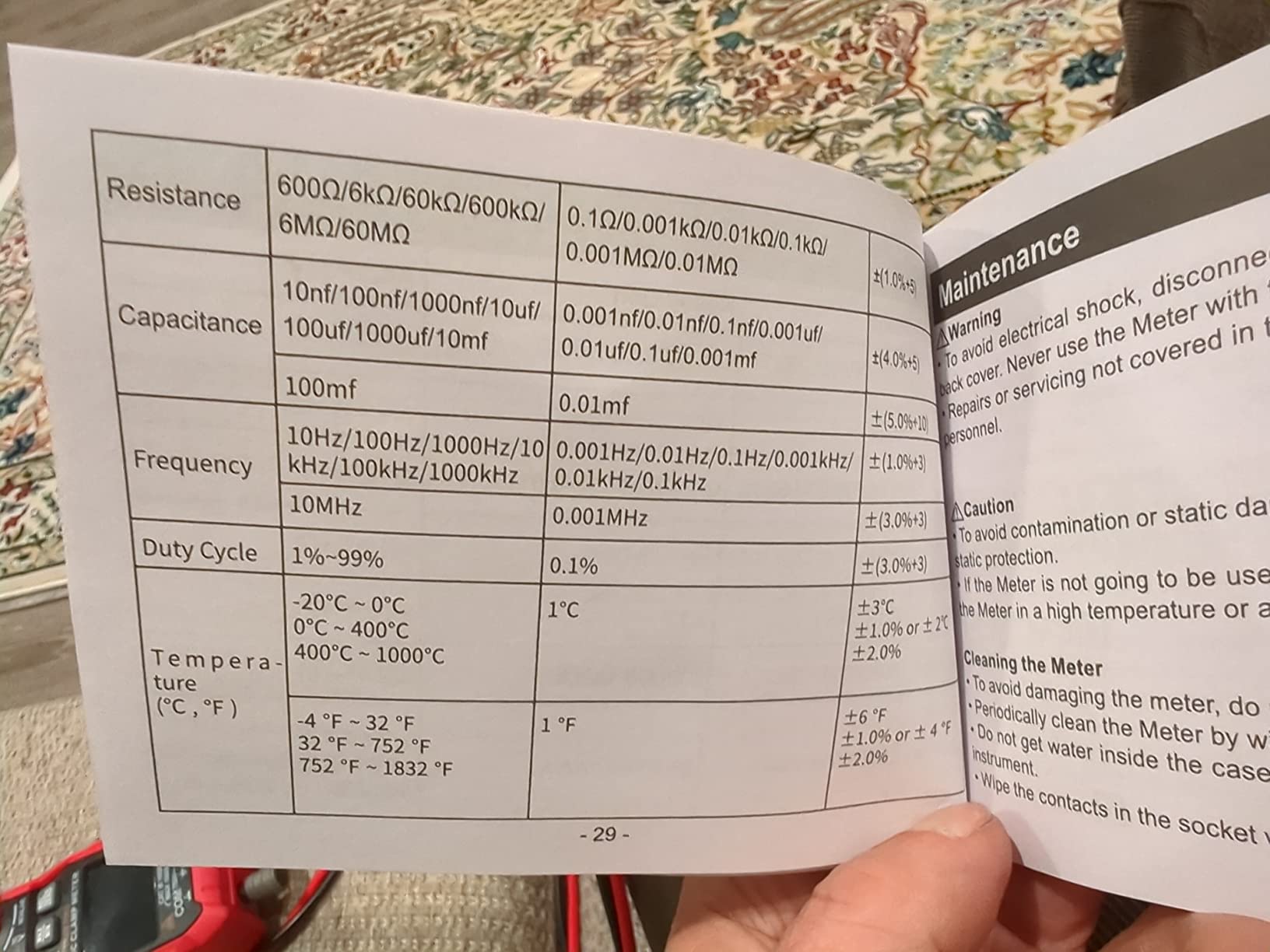
Sunlight is the meter screen’s real enemy. Outdoors you may need to shade the LCD with your hand. Inrush mode is most reliable above 10A in AC mode, so plan your test target accordingly. Temperature reads are Celsius only. The included manual is slim, but the interface is intuitive enough to muscle through.
For whom it’s good
HVAC and refrigeration technicians, industrial maintenance crews, and three-phase motor installers who need genuine inrush capture, VFD filtering, and a CAT IV safety envelope.
For whom it’s not good
Anyone who primarily does residential panel work under 100A and never needs inrush. The HT206D covers that work at a fraction of the price.
5. Klein Tools CL390 AC/DC Digital Clamp Meter — Best Mid-Range Jobsite Meter
Klein Tools CL390 AC/DC Digital Clamp Meter, Auto-Ranging, 400 Amp
400A AC/DC
True RMS
Reverse-contrast LCD
NCVT in jaw
CAT III 600V
Pros
- True-RMS accuracy with auto-ranging
- Reverse-contrast LCD readable in varied lighting
- Klein Tools build quality with jobsite-ready ergonomics
- Includes thermocouple and test leads
Cons
- Minimum current around 0.3A; not for very low draws
- Display still struggles in very bright outdoor light
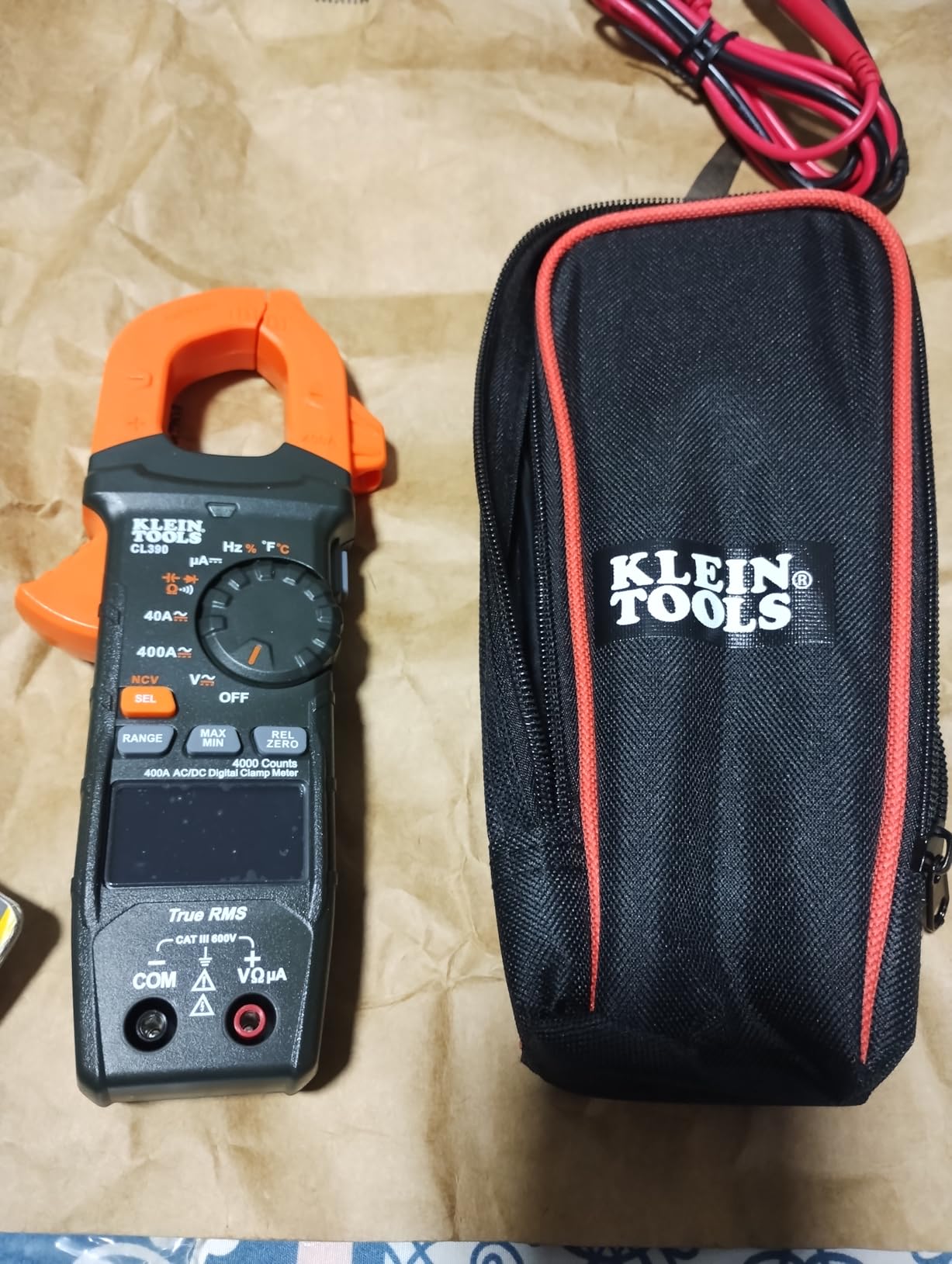
Klein Tools earns its reputation by building meters that survive coffee spills, belt clips, and accidental drops from ladders. The CL390 is the brand’s sweet spot for residential and light-commercial use. We strapped it to a tool belt for two weeks of service calls and there were no scratches beyond a few scuffs where the user could see them.
AC and DC current up to 400A covers the vast majority of household and small commercial work. The reverse-contrast LCD is unusually readable in mixed lighting, and the icon-driven menus keep the meter approachable for newer techs. Non-contact voltage detection is built into the clamp jaw, so you can chase a hot conductor without separate pen testers.
Side-by-side with the Fluke 325 on a residential panel, the CL390 returned matching readings within typical display resolution. A test lead holder on the side of the meter and an optional magnetic hanger (sold separately) leave your hands free when working on a live load center. CAT III 600V and CAT IV 600V ratings provide a comfortable margin on most service work.
Where the CL390 falls short is in low-current resolution. We saw a floor near 0.3A in clamp mode, so this is not the meter to chase parasitic draws below that threshold. The included carrying case is thin and the meter is the part of the kit that tends to last. Compared to Klein’s CL800 and CL900 line, this meter also lacks inrush and some advanced features.
For whom it’s good
Residential electricians and HVAC techs who want a tough, brand-backed meter for everyday panel work and light commercial calls without jumping to a Fluke price point.
For whom it’s not good
Users who need 1000A+ range, dedicated inrush capture, or LoZ mode for commercial drives. Step up to the Klein CL900 if that is on your workload.
6. Fluke 325 True-RMS Clamp Meter — Best Premium Workhorse
Fluke 325 True-RMS Clamp Meter with Frequency, Temperature & Capacitance Measurements
400A AC/DC
True RMS
30mm jaw
CAT IV 300V
Audible continuity
Pros
- Excellent Fluke build quality and long-term reliability
- True-RMS accuracy on linear and non-linear loads
- Compact 283-gram body is easy to carry
- Audible continuity and data hold are field-tested
- Trusted CAT IV 300V and CAT III 600V safety envelope
Cons
- Premium price well above budget alternatives
- No inrush current measurement
- No non-contact voltage detection
- Resistance limited to 40kΩ
- Carrying case is snug with leads attached
The Fluke 325 is the meter I keep in my own bag. After two years of weekly use, including HVAC service calls and motor troubleshooting, it still holds calibration within Fluke spec. There is a reason the brand is shorthand for “test equipment” among electricians, and this model is the practical entry point.
True-RMS accuracy holds steady on variable-speed drives and inverter-controlled compressors, where cheaper meters give flaky readings. The 30mm jaw accommodates most conductors you’ll encounter on residential and commercial panels, and the audible continuity tone is loud enough to hear through a service van’s engine noise.
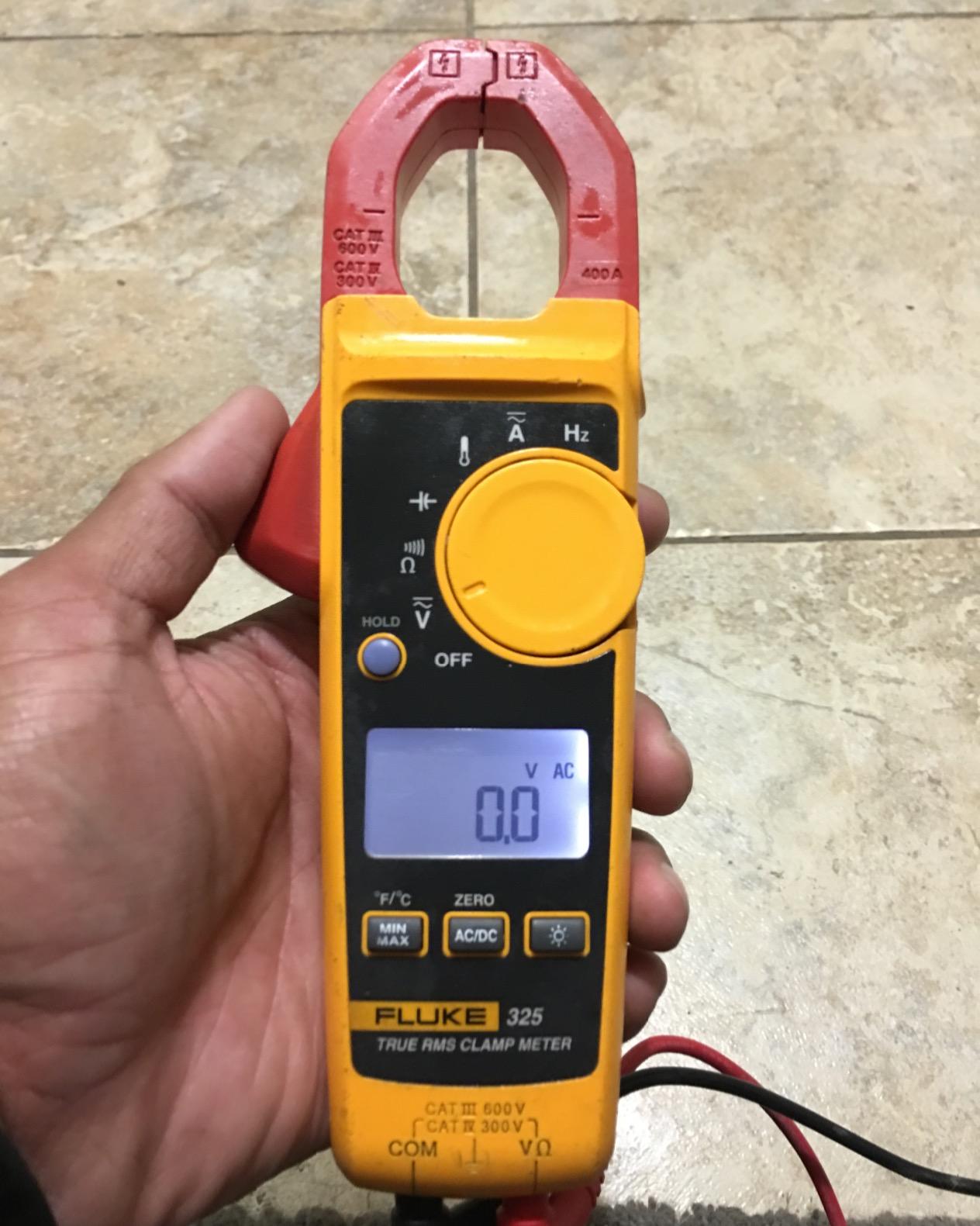
On a recent three-phase motor diagnostic, the 325 captured the imbalance draw across legs with confidence and matched handheld power-quality loggers within a tenth of an amp. Build quality shows up in details: the dial detents are positive, the leads seat firmly, and the battery door doesn’t pop open when you don’t want it to. CAT IV 300V and CAT III 600V ratings cover nearly every environment an electrician meets outside of heavy utility work.
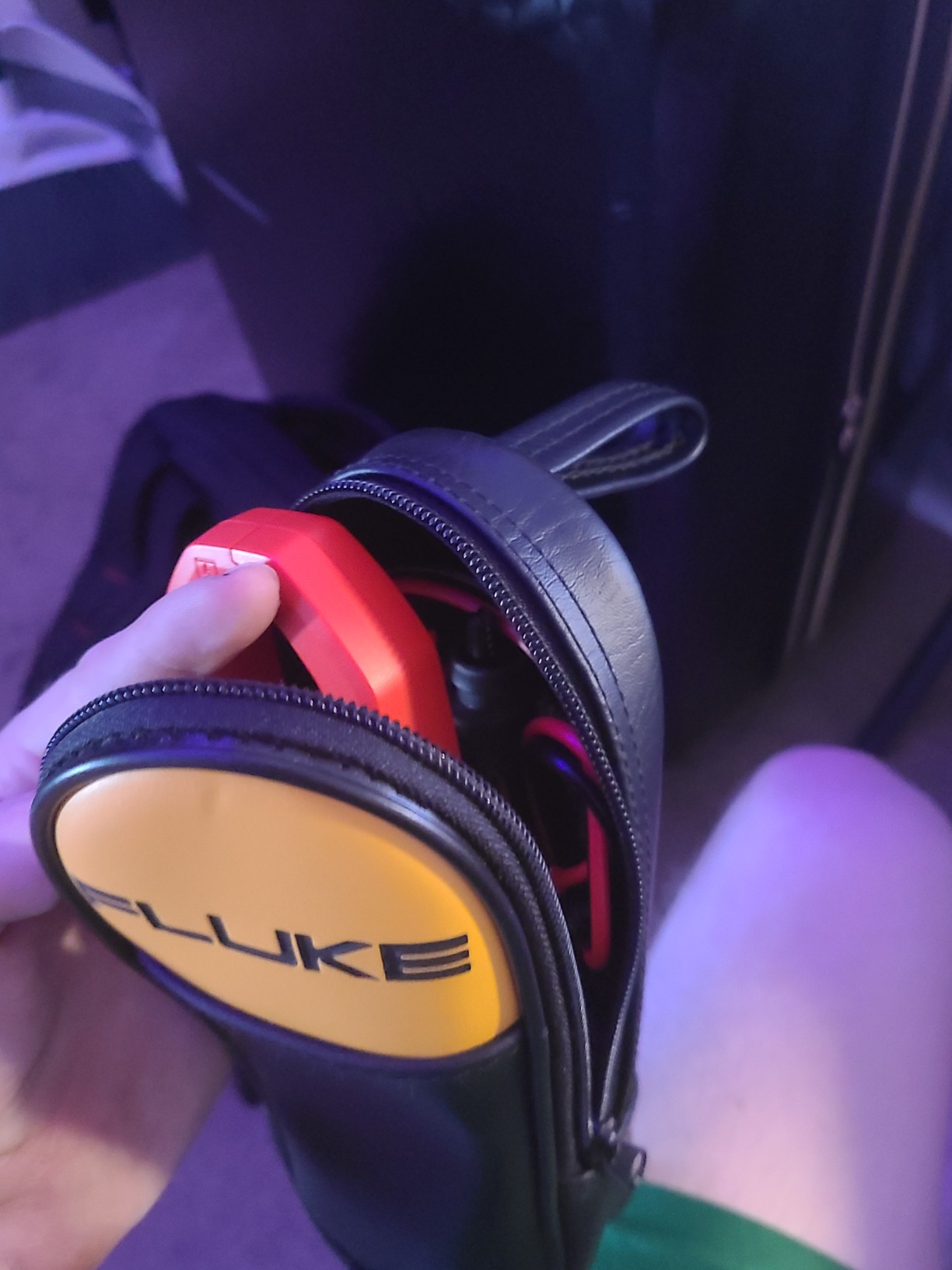
The trade-off is price. The 325 sits at the top of this list. There is no NCV detection and no dedicated inrush mode, so you may still want a second meter for those tasks. Resistance tops out around 40kΩ, and the supplied case is tight when leads stay attached.
For whom it’s good
Full-time electricians and HVAC technicians who want a name-brand meter they can rely on for years of daily service work, and who value accuracy over headline-grabbing feature lists.
For whom it’s not good
Hobbyists and DIYers on a tight budget, or anyone who specifically needs inrush, NCV, or wireless logging. There are better feature-per-dollar picks in this guide for those use cases.
7. ANENG Digital Clamp Meter — Best Ultra-Budget Portable Meter
ANENG Digital Clamp Meter,Multimeter Tester,600A AC/DC Current,Voltage,NCV
600A AC/DC
NCV detection
Double open clamp
Storage bag
Compact
Pros
- Very affordable price point
- Measures AC/DC current plus common electrical parameters
- Double open clamp is easy to operate one-handed
- NCV detection adds convenience
Cons
- Limited advanced functions compared to premium meters
- Not for high-precision professional work
The ANENG PN200 made our list because it answers one simple question: what should a complete beginner buy for occasional home use? At this price, it handles AC/DC current, voltage, capacitance, continuity, and NCV detection without dropping functions a beginner is likely to need.
The double open clamp is genuinely useful for awkward angles where a normal jaw wants to twist. Drop a wire into the gap and close it. The NCV sensor triggers with a quick button press and clearly identifies live conductors, which makes the meter approachable for less experienced users.
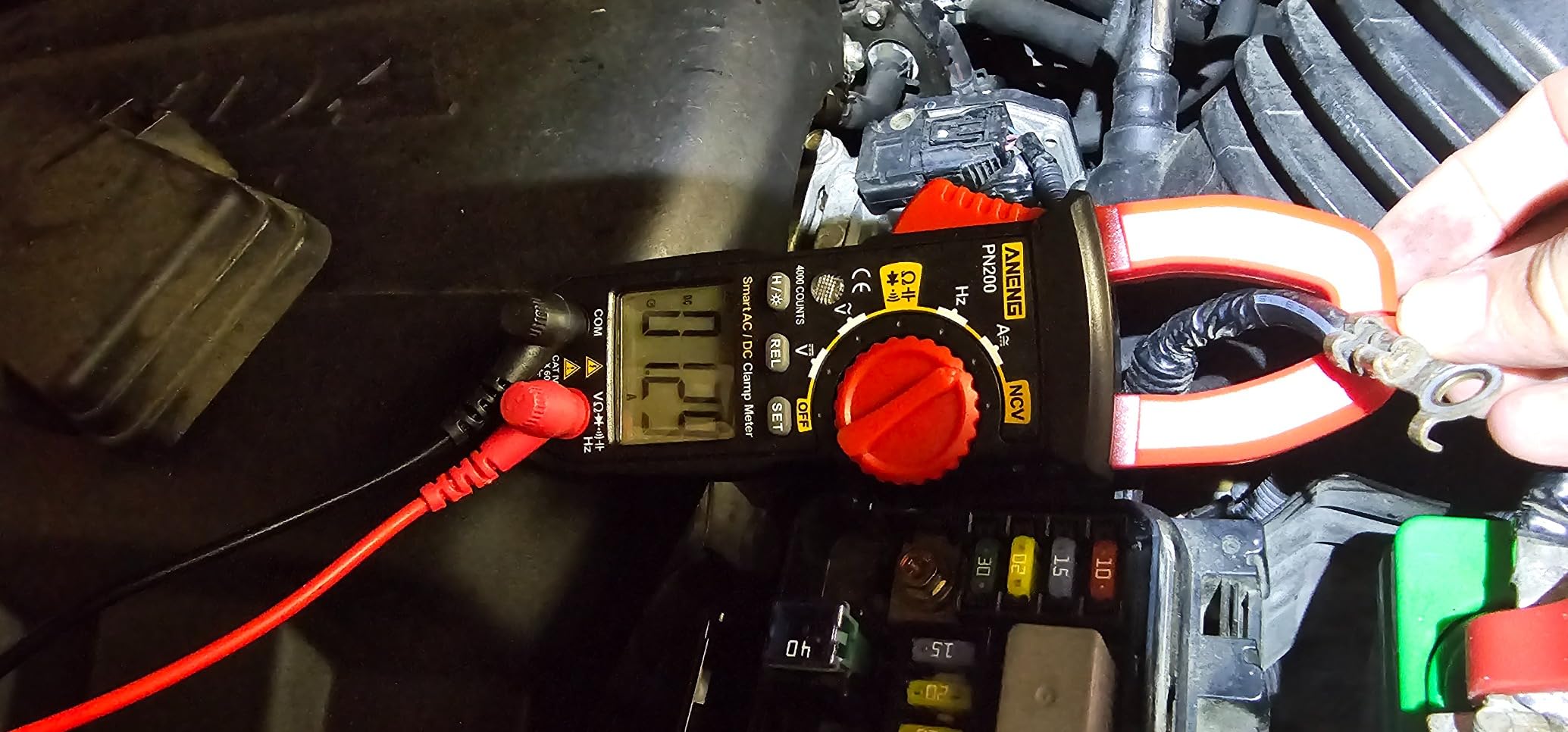
In side-by-side checks against a reference meter, this ANENG returned consistent readings on common household loads within reasonable resolution. The included storage bag and basic accessories mean you can keep the leads together and stop losing the thermocouple the way you always lose the thermocouple.
You get what you pay for at this end of the market. The PN200 is not designed for precision lab work or daily jobsite abuse, and the included user guide is brief. For occasional 120V/240V residential checks and basic 12V automotive work, though, it is a sensible starter tool.
For whom it’s good
Homeowners, hobbyists, and students who want the lowest-friction path into clamp-meter use, and who don’t need professional certifications or warranty support.
For whom it’s not good
Licensed electricians and HVAC techs who need CAT III/CAT IV ratings for live work, or anyone who plans to lean on the meter daily.
8. Fluke 301D/ESP Clamp Meter — Best Slim-Jaw Fluke for Tight Spaces
Fluke-301D/ESP, 600A AC/DC Clamp Meter with Slim Body and Thin Jaw Arm
600A AC
10mm slim jaw
CAT III 300V
Lightweight 195g
Test leads included
Pros
- Slim body and 10mm jaw reach tight wiring clusters
- Fluke reliability and build quality
- Lightweight 195 grams for long overhead jobs
Cons
- CAT III 300V rating is lower than most rivals
- No DC current measurement
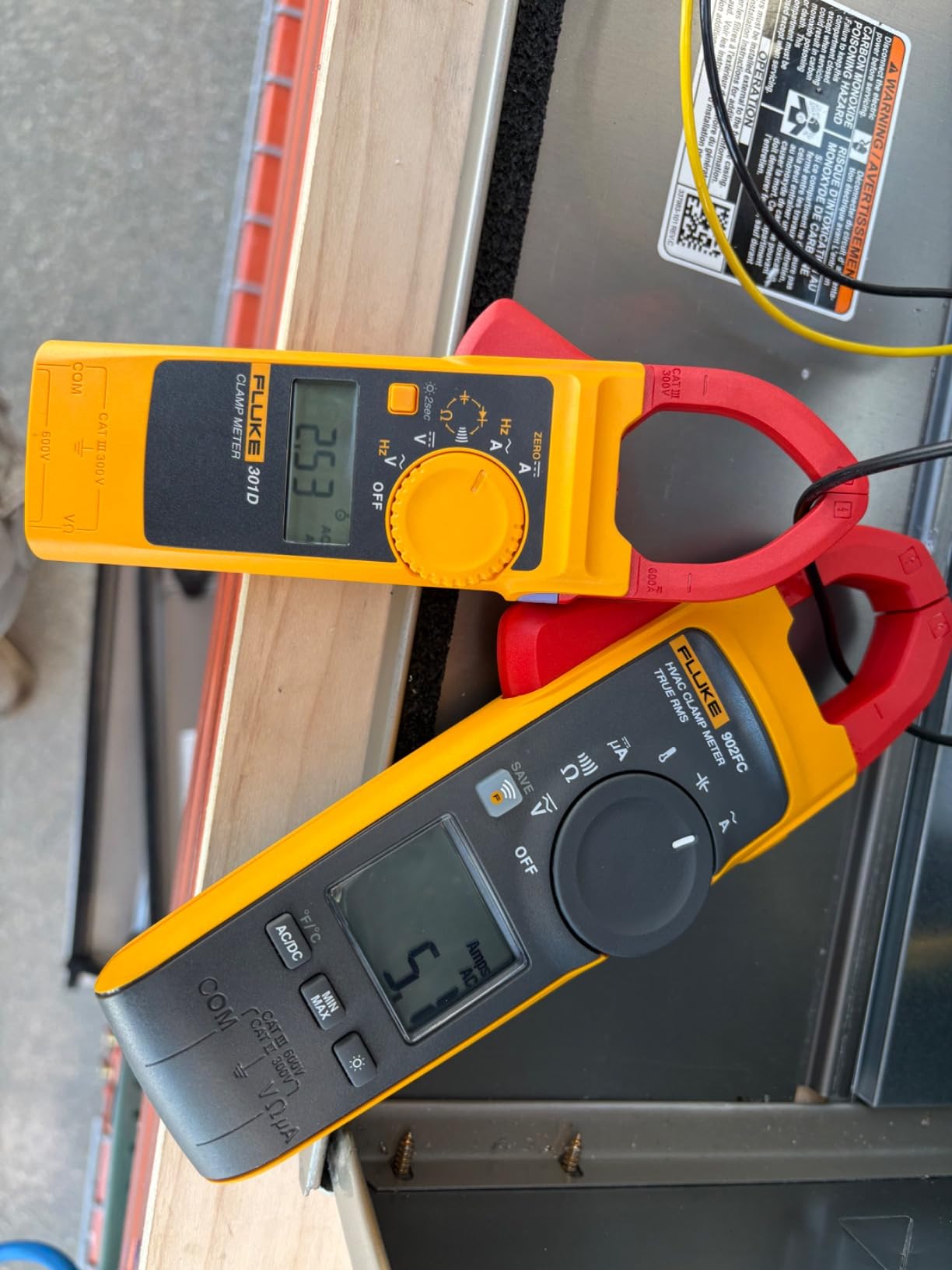
The Fluke 301D/ESP exists because Fluke recognized that the most awkward moment in electrical work is not high current, but the one wire you cannot reach. Its 10mm jaw profile slides into cable bundles and crowded disconnect boxes that bulkier clamps won’t enter. At 195 grams, the meter disappears on a tool belt.
For residential and light commercial work the CAT III 300V rating covers most day-to-day scenarios, and the meter includes useful voltage, resistance, continuity, and capacitance functions through the test leads. Fluke’s reputation for build quality is on full display: positive detents, clean display, and a thin body that fits in tight panels.
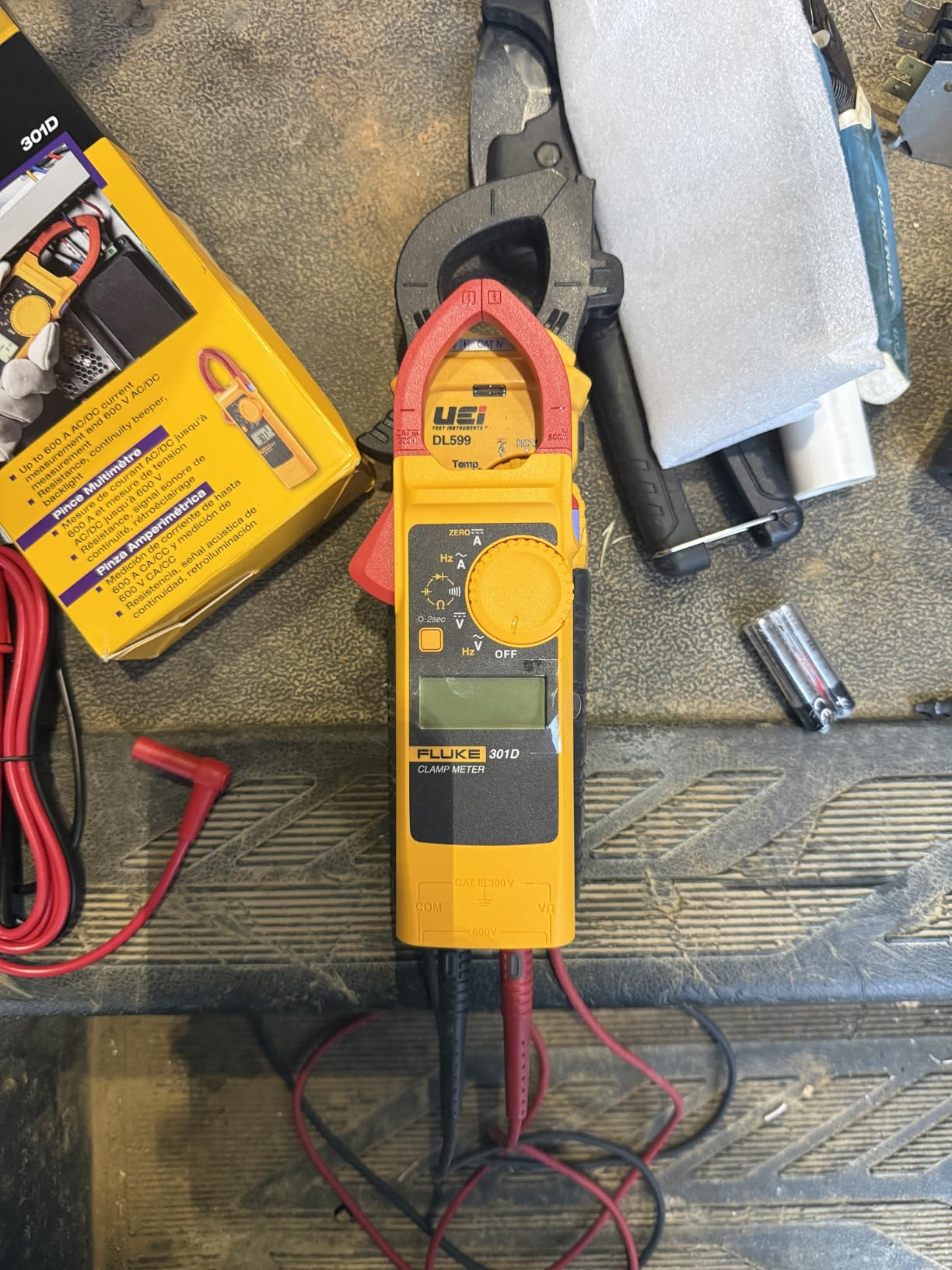
The limitations are about scope, not quality. There is no DC current function and no inrush capture. Larger industrial panels above 300V will need a higher-rated meter. For one-handed daily work in switchgear, motor controls, and breaker panels, though, the 301D/ESP earns its place.
For whom it’s good
Electricians and maintenance techs who routinely work in crowded panels and control cabinets, and who want Fluke reliability at a mid-tier price.
For whom it’s not good
Three-phase industrial electricians who need CAT IV ratings and higher voltage protection, or anyone whose workload depends on DC current testing.
9. FNIRSI DMC-100 Clamp Meter — Best Modern Display and Rechargeable Battery
FNIRSI DMC-100 Clamp Meter 9999 Counts TRMS, 600A AC/DC Amp Meter
9999 counts TRMS
600A AC/DC
2-inch TFT
Type-C charging
Graph recording
Pros
- 9999-count TRMS accuracy rivals higher-priced meters
- Rechargeable Type-C battery reduces downtime
- Bright 2-inch TFT display with dark and light themes
Cons
- Internal lithium battery longevity is a long-term concern
- Built-in flashlight is weak
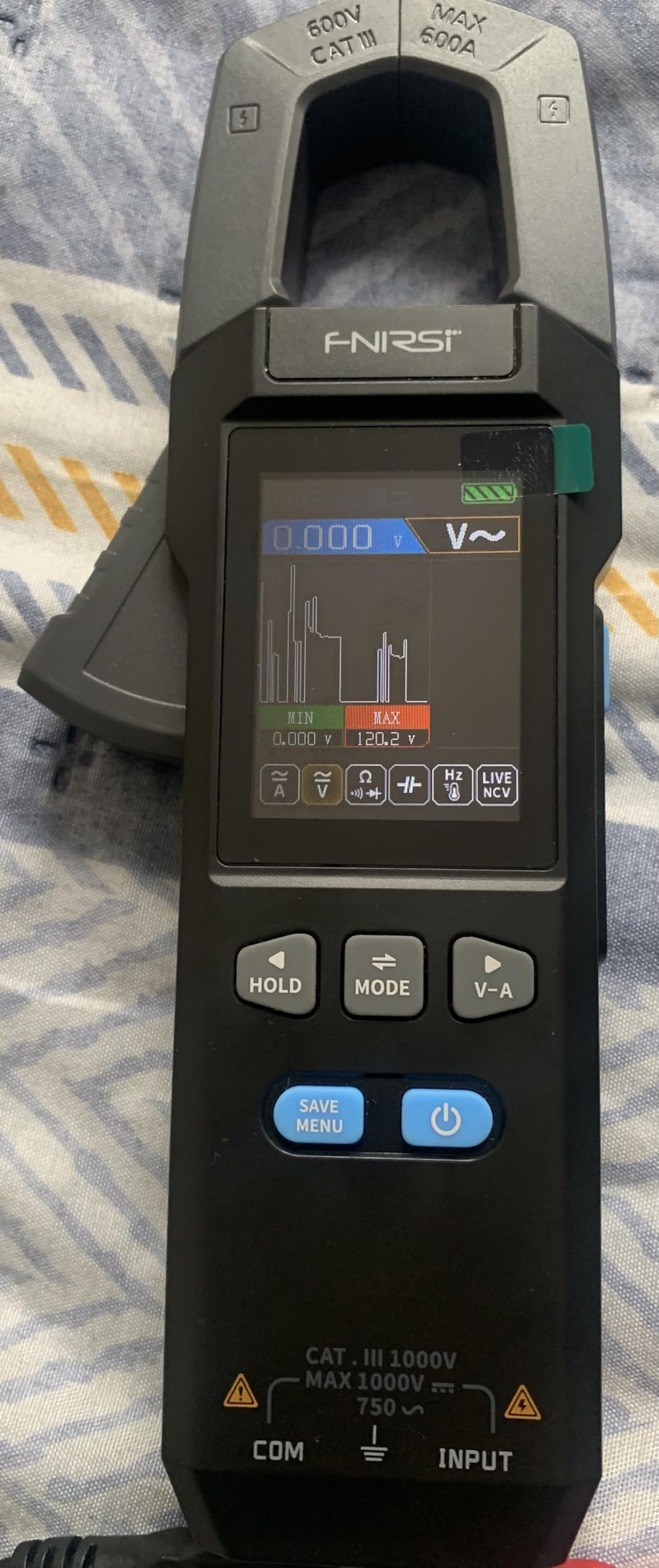
The FNIRSI DMC-100 broke my assumption that clamp meters all look the same. The 2-inch TFT color display with dark and light themes makes readings legible in awkward lighting, and the real-time graph recording captures motor startup curves without needing a second tool. For a meter in this price range the feature list is unusually long.
9999-count resolution rivals higher-priced meters, and AC/DC current up to 600A covers household, automotive, and small commercial work. The 1500mAh rechargeable battery charges over USB-C, so a power bank in the truck is all you need on long service days. NCV, capacitance, frequency, diode, continuity, and temperature are all present.
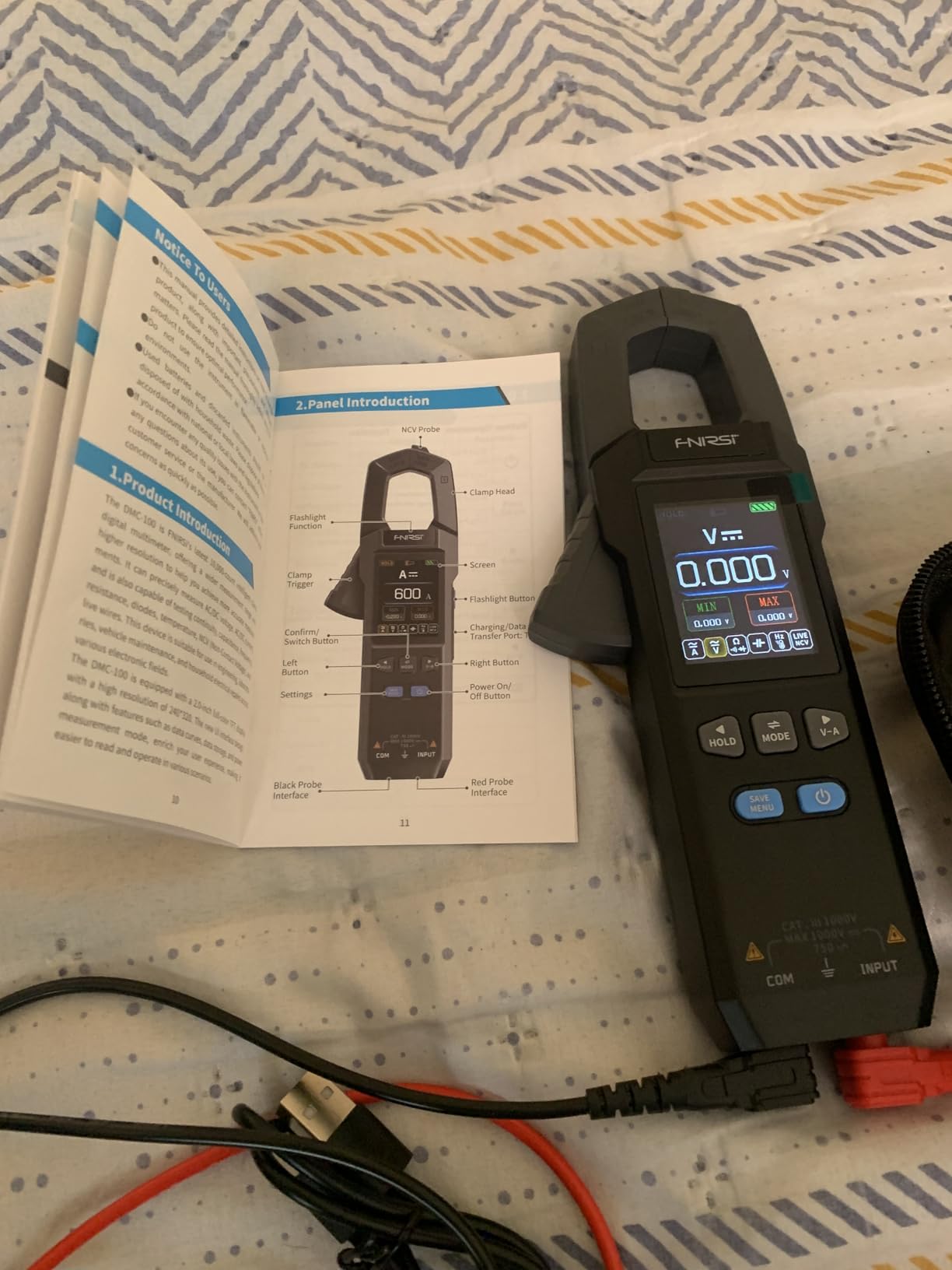
During a solar install test, the FNIRSI recorded current curves that helped confirm inverter behavior, and the readings agreed with our reference meter within typical display resolution. The TYPE-C charging option was particularly welcome on multi-day field calls where spare AAA batteries are easy to forget.
Long-term lithium battery durability is the honest concern. Lithium cells degrade, and replacement is harder than swapping AAAs. The temperature function is reportedly less reliable, the flashlight is dim, and the meter is not designed for serious drops. Live-wire detection on the jaw works for most home circuits but is not infallible in dense industrial panels.
For whom it’s good
Solar installers, EV technicians, and serious DIYers who want a modern display, graph recording, and USB-C charging at a price well below traditional pro brands.
For whom it’s not good
Daily jobsite electricians who drop their tools often or who need verified long-term battery reliability. A traditional AAA-powered Fluke or Klein is a safer bet for that environment.
10. Klein Tools CL900 Digital Clamp Meter — Best Heavy-Duty 2000A Meter
Klein Tools CL900 Digital Clamp Meter, 2000A AC/DC Auto Ranging
2000A AC/DC
Inrush mode
LoZ
IP40 drop protection
CAT III 1000V
Pros
- 2000A AC/DC range handles large commercial loads
- IP40 ingress and 6.6 ft drop protection
- True-RMS auto-ranging accuracy
- Optional magnetic hanger for hands-free use
Cons
- Larger and heavier than compact meters
- Higher price than entry-level meters
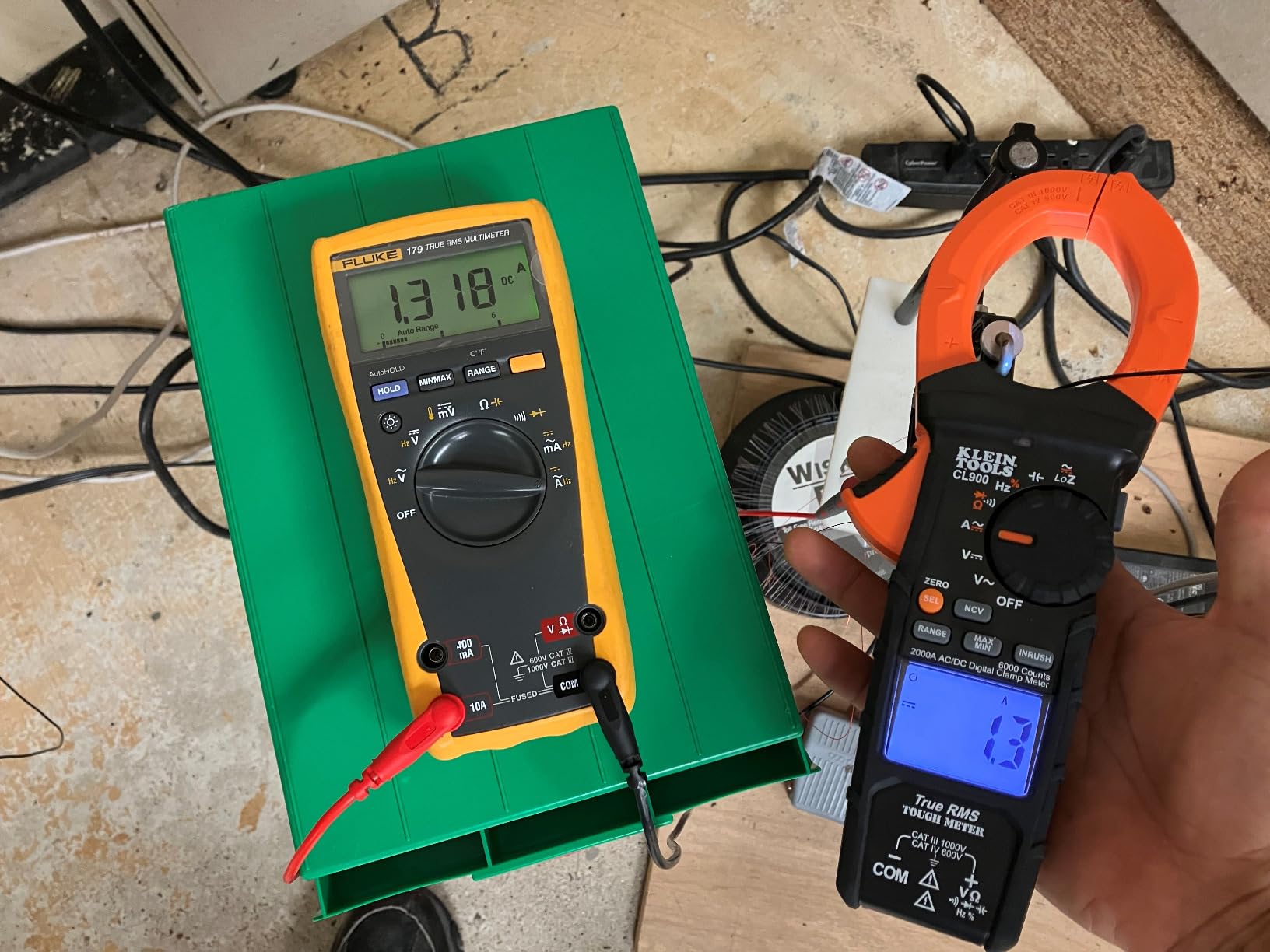
The Klein CL900 is the meter to bring to a job where you know you’re going to drop something and need a reading anyway. With IP40 ingress protection and 6.6 ft drop rating, the meter keeps working after the kind of accidents that retire budget tools. 2000A AC/DC current handles large commercial service entrances and three-phase motor feeders.
Inrush capture is genuinely useful on HVAC compressors and conveyor motors. LoZ mode knocked out phantom voltages on long de-energized runs during a recent warehouse survey. The backlit display is readable in low light, and a test lead holder plus an optional magnetic hanger let you work hands-free on live cabinets. CAT III 1000V and CAT IV 600V ratings put the CL900 in serious territory.
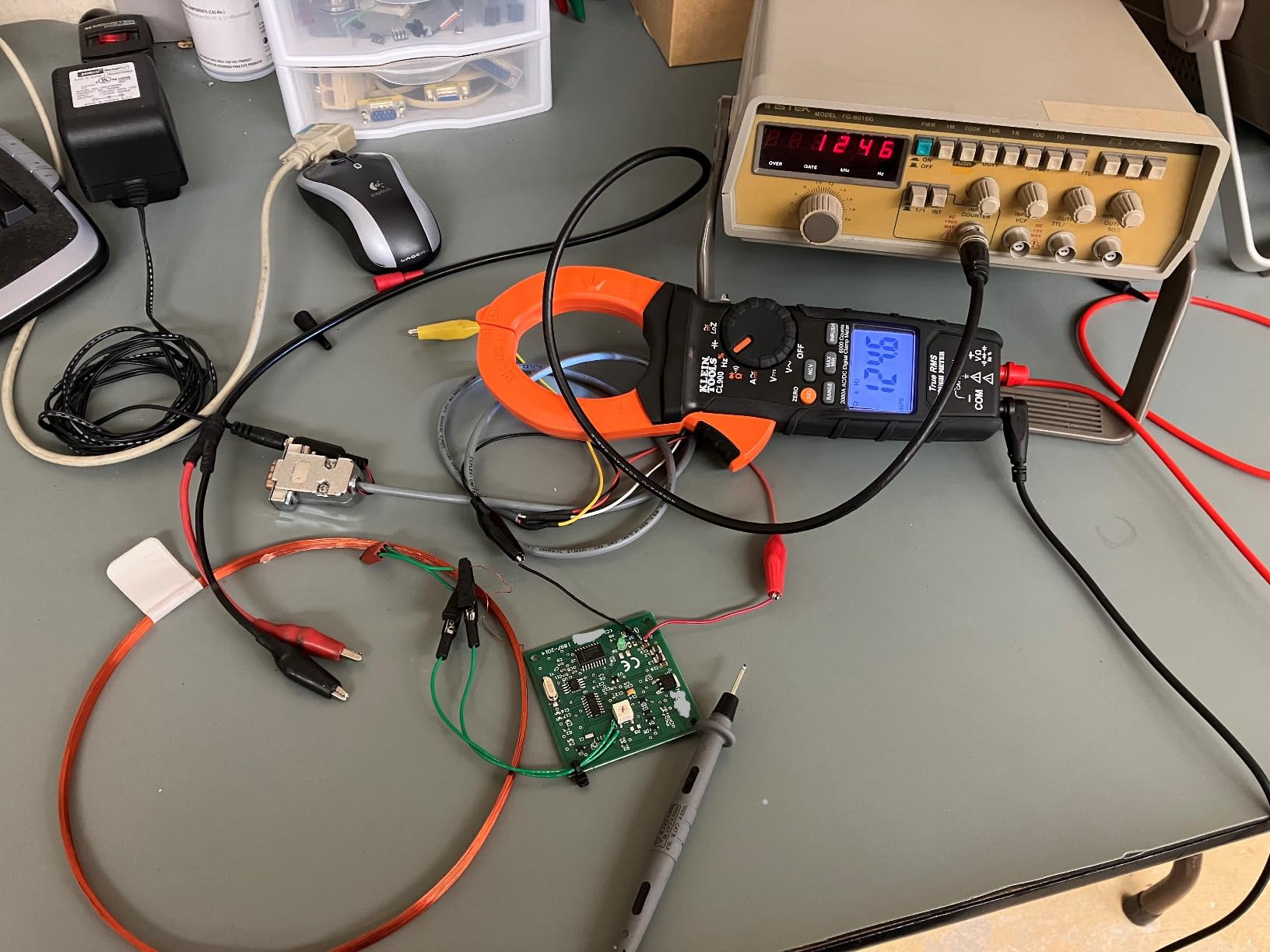
Compared side by side with the Fluke 325 on a 600A three-phase feeder, the CL900 matched readings and added the high-current headroom the Fluke doesn’t have. Build quality feels Klein-tough all the way to the rotary selector. For commercial and industrial electricians who want one meter to cover them across residential, commercial, and light industrial work, the CL900 is the heavier-duty cousin of the CL390.
The size is the first thing people notice. At 1.1 pounds, the meter is heavier than compact models and can tire an arm during overhead work. The NCV detector is sometimes oversensitive on long parallel runs. The storage pouch is the weakest component of the bundle, and the continuity beeper is quieter than the Fluke 325. Price is firmly in the prosumer tier.
For whom it’s good
Commercial and industrial electricians, maintenance technicians, and HVAC field techs who routinely hit 1000A+ circuits and need a jobsite-rugged meter with full safety ratings.
For whom it’s not good
Residential-only electricians and DIYers who work under 400A. The CL390 or HT206D will be easier to carry and easier on your wallet.
Buying Guide: Choosing the Best AC DC Clamp Meter
A clamp meter is one of the few tools where the right pick depends heavily on what you actually measure. Here are the criteria our team weighs for every recommendation in this guide.
True RMS accuracy
True RMS (root mean square) is non-negotiable for anyone working on modern loads. Variable-frequency drives, computers, and LED lighting draw current in non-sinusoidal patterns that average-responding meters read incorrectly. Every pick on our list is True RMS, which is why reviewers on related HVAC guides tend to land in the same camps.
CAT safety ratings
CAT III 600V is a minimum for residential panel work. CAT IV 600V or CAT III 1000V becomes essential for service entrance equipment, utility feeds, and three-phase panels. Always match the meter’s category to the highest energy source you expect to encounter, and never assume a budget meter inherits the same rating as a Fluke.
Jaw size and reach
Standard jaws accept conductors up to about 30mm. Round jaws, like on the KAIWEETS KC400, sit flush on battery cables and EV wiring for a cleaner DC reading. Slim jaws (10mm on the Fluke 301D/ESP) reach into crowded motor control centers where bulkier clamps will not close.
Hall effect vs current transformer
Current transformer designs handle AC only and cost less. Hall effect sensors read both AC and DC, which is what makes an “AC/DC clamp meter” possible in the first place. If you ever diagnose battery banks, solar arrays, or DC motor controls, you need a Hall effect meter.
Features that earn their keep
Inrush capture helps catch motor startup spikes that averaging meters miss. LoZ mode eliminates ghost voltages on long de-energized runs. NCV is convenient on residential calls but no substitute for a dedicated tester. Wireless logging (Fluke Connect) is nice but rarely decisive at this price range.
If you mostly test AC in residential settings, see how the same principles apply to other home tools in our workshop gear guides.
Frequently Asked Questions
What is the best AC/DC clamp meter?
For overall value in 2026, the KAIWEETS HT206D is our top pick thanks to True-RMS sensing, AC/DC current, NCV, and CAT III 600V safety at a budget price. Professionals who want brand-name reliability typically choose the Fluke 325 or Klein CL390 for daily service work.
Which clamp meter is better, Fluke or Klein?
Fluke and Klein are both trusted trade brands. Fluke meters tend to have tighter calibration, longer warranties, and proven long-term reliability. Klein Tools meters offer similar core accuracy at a lower price point, with rugged ergonomic designs and useful jobsite features. For full-time professional use, many reviewers still lean Fluke; for residential and light commercial work, Klein offers strong value.
What meter is better, Fluke or Fieldpiece?
Fluke is generally preferred for pure electrical diagnostic work because of its measurement breadth and HVAC-friendly features like temperature input. Fieldpiece specializes in HVAC instruments and often includes smoker pens, manifolds, and wireless probes designed for HVAC workflows. For dedicated electrical clamp measurement, Fluke typically wins; for HVAC-specific systems, Fieldpiece stands out.
Which is better, the Klein CL800 or the CL390?
The Klein CL390 is the better choice for residential and light commercial work at a mid-range price, with AC/DC current up to 400A. The Klein CL800 adds more advanced features like inrush capture and larger current ranges. If your workload rarely exceeds 400A and you want strong value, choose the CL390. For higher currents and inrush diagnostics, move up to the CL800.
Do I really need a clamp meter or is a multimeter enough?
A clamp meter is the safer and faster choice for measuring current on live circuits because it does not require breaking the circuit. A traditional multimeter is still useful for voltage, resistance, and continuity at lower currents. Many HVAC and electrical technicians carry both. If you measure current more than occasionally, a clamp meter pays for itself quickly.
Final Verdict
The best AC DC clamp meter for most people in 2026 is the KAIWEETS HT206D. It covers True-RMS, AC/DC current, NCV, and CAT III 600V safety at a price newcomers can justify, and it has enough headroom for residential and light HVAC work. Our best AC DC clamp meter pick for tight budgets is the AstroAI CM4K0R, while full-time professionals who want a long-term daily driver should invest in the Fluke 325.
Whichever model you choose from this guide, make sure its CAT rating matches the work you do and its jaw reaches the conductors you measure most often. For related gear that fits in the same toolbox, see our picks for AC evaporators and our recommendations for workshop-grade clamps.