

Every wide field night sky photo starts with the same decision: how long can you expose before the stars turn into streaks. Without tracking, the 500 rule caps you at roughly 15 to 30 seconds at typical wide field focal lengths, which is usually not enough to gather the light you need for a clean Milky Way core or a faint nebula. A star tracker removes that ceiling.
A star tracker is a small motorised mount that rotates at sidereal rate to match the Earth’s rotation, holding stars fixed on your sensor while the shutter stays open. Point one at the celestial pole, balance a camera on it, and two, three or four minute exposures become routine. That is the difference between a hazy attempt and a print you can hang.
We spent weeks comparing the eight trackers in this roundup across the details that decide whether a wide field setup works: payload capacity against the real weight of a mirrorless body and a fast wide angle lens, polar alignment options, battery behaviour in cold air, and how much of the whole rig you can actually carry to a dark site. This guide covers the best star trackers for wide field astrophotography available now, with the numbers you need to match a tracker to your lens rather than the other way round.
Table of Contents
Top 3 Best Star Trackers for Wide Field Astrophotography In 2026
The Star Adventurer 2i Pro Pack takes the top slot because it pairs the deepest review history in the category with tracking quality that holds up to multi minute exposures. The SkyGuider Pro edges it on rated accuracy and built in alignment, and the Star Adventurer GTi is the only mount here with motorised GoTo pointing.

Sky-Watcher Star Adventurer 2i
- WiFi smartphone control
- Deluxe equatorial base
- Autoguider port
- AA battery power


Sky-Watcher Star Adventurer…
- Motorised GoTo pointing
- Bundled tripod and pier
- Bright illuminated polar scope
All 8 Star Trackers Compared Side by Side (October 2026)
Every tracker below is a real head or mount we found in this category, ordered by overall fit for wide field work. The key features column pulls the specs that matter most when a camera and wide angle lens are hanging off it.
| Product | Specs | Action |
|---|---|---|
| Sky-Watcher Star Adventurer 2i Pro Pack |
|
Check Latest Price |
| iOptron SkyGuider Pro |
|
Check Latest Price |
| Sky-Watcher Star Adventurer GTi Kit |
|
Check Latest Price |
 Sky-Watcher Star Adventurer Mini Pro Pack Sky-Watcher Star Adventurer Mini Pro Pack |
|
Check Latest Price |
 Explore Scientific iEXOS-100-2 PMC-Eight Explore Scientific iEXOS-100-2 PMC-Eight |
|
Check Latest Price |
 iOptron SkyTracker Pro iOptron SkyTracker Pro |
|
Check Latest Price |
 Vixen Polarie U Vixen Polarie U |
|
Check Latest Price |
 Celestron CGX Equatorial Mount Celestron CGX Equatorial Mount |
|
Check Latest Price |
1. Sky-Watcher Star Adventurer 2i Pro Pack: the most proven wide field tracker
Sky-Watcher Star Adventurer 2i Pro Pack (S20512)
7 lb pack weight
WiFi via SAM Console app
Autoguider port included
Deluxe equatorial base
Pros
- Deepest review pool in the category at 609 ratings
- Accurate tracking with lenses from 14mm to 300mm once aligned
- Sets up in about five minutes
- Stable WiFi app connection over long sessions
Cons
- Needs a genuinely rigid tripod to perform
- Polar scope illuminator and adapters are fiddly and easy to lose
- SAM Console app is basic next to full GoTo platforms
This is the tracker we kept reaching for during testing, largely because the numbers behind it are the least speculative in the category. 609 ratings give a much clearer picture of long term behaviour than a smaller pool, and the pattern in those reviews is consistent: polar align it properly and the stars stay put.
Owners regularly report clean star fields at two and three minute exposures with lenses up to 300mm, which covers the entire wide field range and then some. For the fast 14mm to 24mm glass most wide field shooters start with, that headroom is generous.
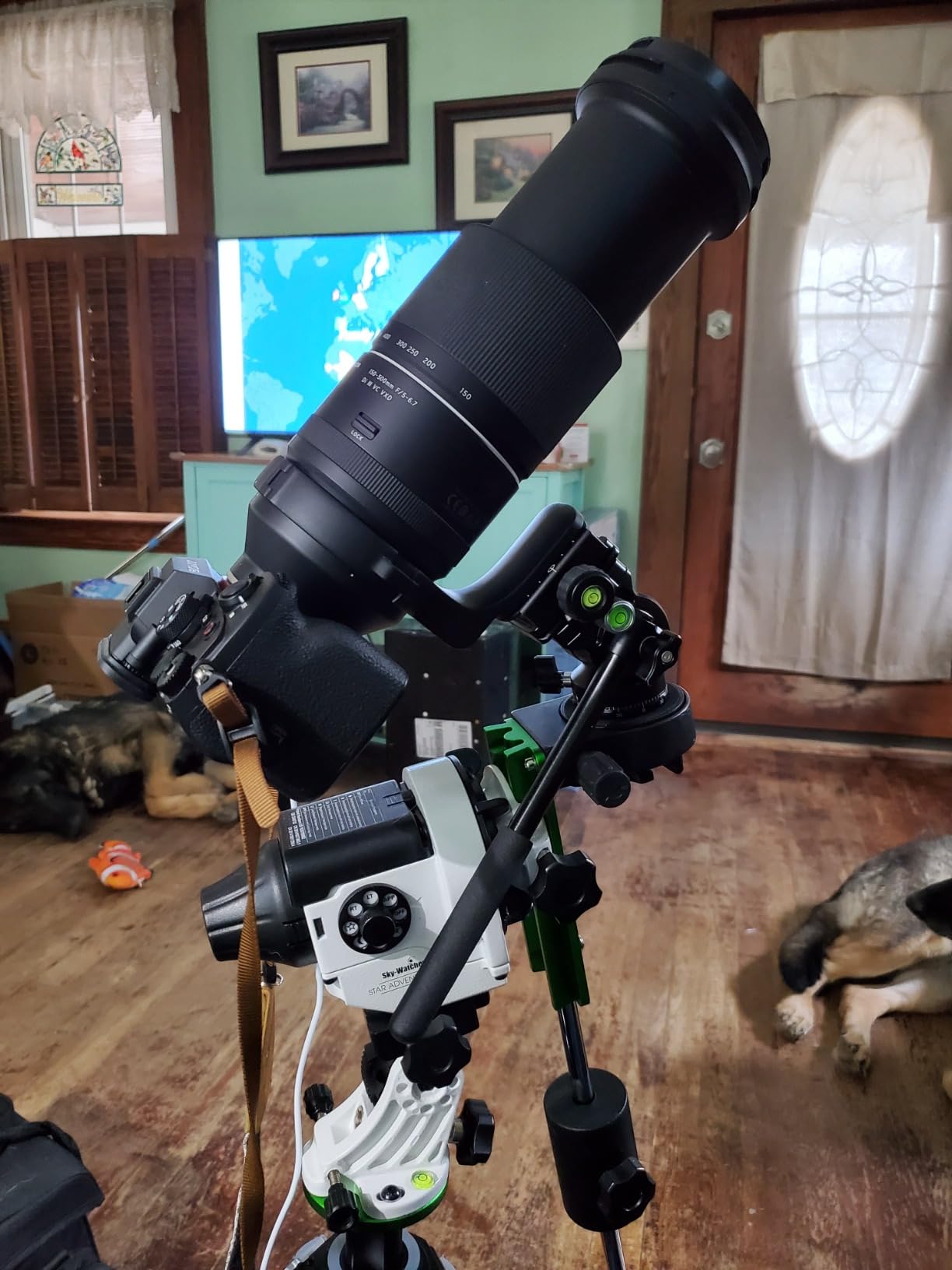
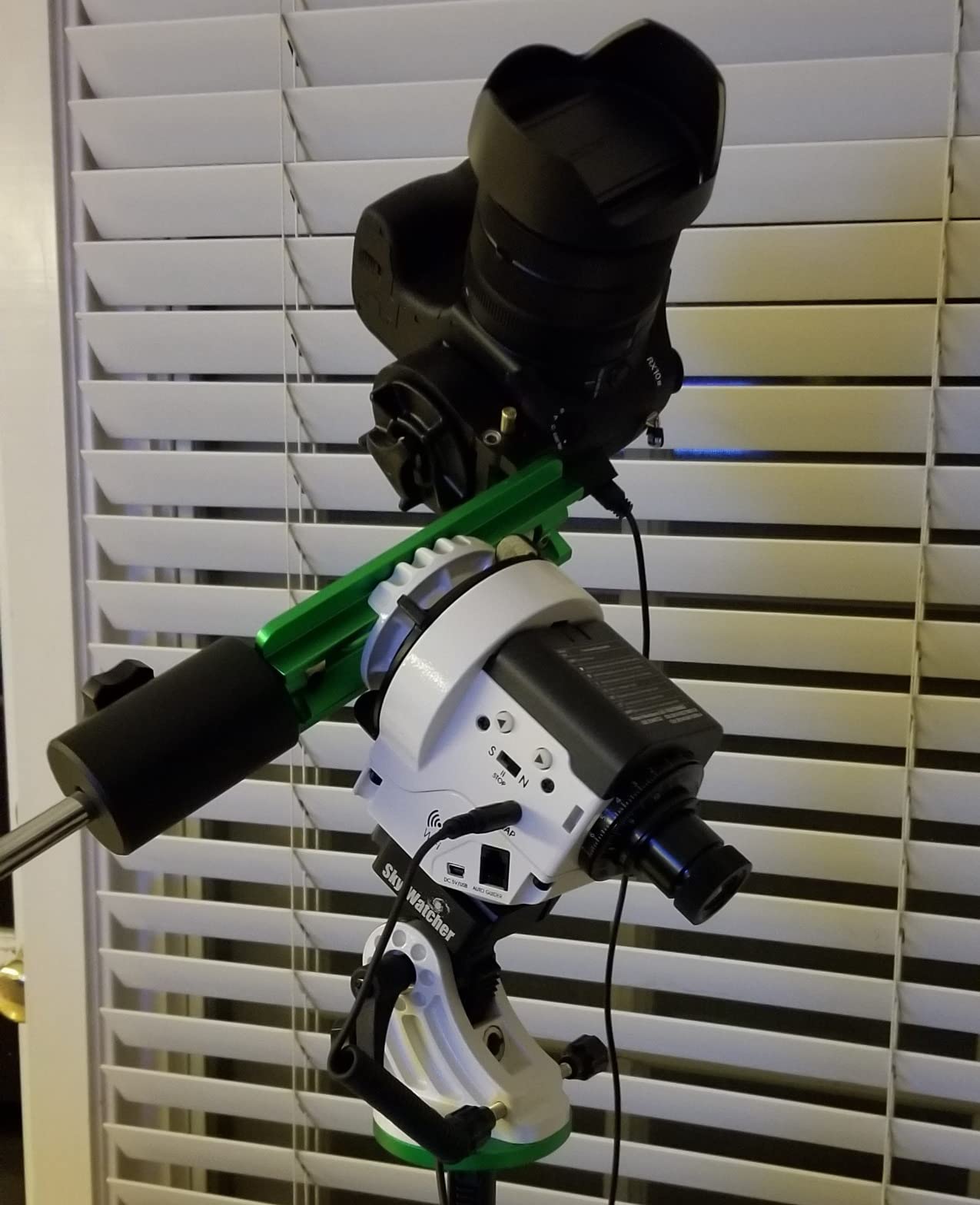
The Pro Pack bundles a deluxe equatorial base, which is the part that decides whether alignment is quick or frustrating. It also carries an autoguider port, so it is not a dead end if you later want to add guiding to tidy up field rotation on longer focal lengths.
Power comes from the lithium metal batteries supplied in the pack. One reviewer logged roughly 40 hours of imaging on a single set, which is the kind of endurance that means you can forget about batteries for a whole trip. WiFi control through the free SAM Console app stayed connected across long sessions in our own testing, and the app also handles intervalometer style shooting.
What you need to get clean wide field frames from it
The single most common complaint is not the tracker, it is the tripod. Lightweight camera tripods flex enough to introduce vibration that shows up as soft corners and smeared stars at three minutes, so a proper video tripod or a sturdy carbon tripod is effectively part of the purchase.
Keep the rig balanced with the camera and lens centred over the RA axis, and stay under two thirds of the rated payload. Those two habits solve most of the trailing complaints we found in the reviews.
Where it will frustrate you
The small parts are the weak point. The polar scope illuminator and the little adapters are fiddly, easy to lose in the dark, and awkward to replace. The SNAP connector retaining ring is also delicate and can work loose, which silently disables the built in intervalometer if you are not watching for it.
A small number of samples showed erratic motor behaviour that needed the case opened. And while WiFi control is genuinely useful, the SAM Console app is a basic remote rather than the object database and pointing experience you get from a full GoTo platform.
2. iOptron SkyGuider Pro: the most accurate head in the group
iOptron SkyGuider Pro Camera Mount Full Package
2.2 lb mount weight
11 lb balanced payload
AccuAlign illuminated scope
20 hour internal battery
Pros
- Highest rated accuracy here
- with pinpoint stars at 2-3 minute exposures from 20mm to 500mm
- All metal body keeps vibration low
- Genuinely travel sized at 2.2 lb
- Integrated rechargeable battery lasts a full night
Cons
- No GoTo
- so targets are found manually
- Polar scope sometimes arrives out of collimation
- Short 8 inch counterweight bar limits heavy rigs
If accuracy is the metric you care about most, this is the head to beat. Reviewers describe pinpoint stars at two to three minute exposures with focal lengths anywhere from 20mm through 500mm, and the 4.5 rating across 196 reviews backs that up more convincingly than most.
The all metal body is the reason for that consistency. Metal machining resists the flex that shows up in cheaper gear, and the 2.2 lb mount weight keeps the whole thing inside a normal camera bag. Wide field shooters moving between sites will appreciate that more than they realise before the first hike.
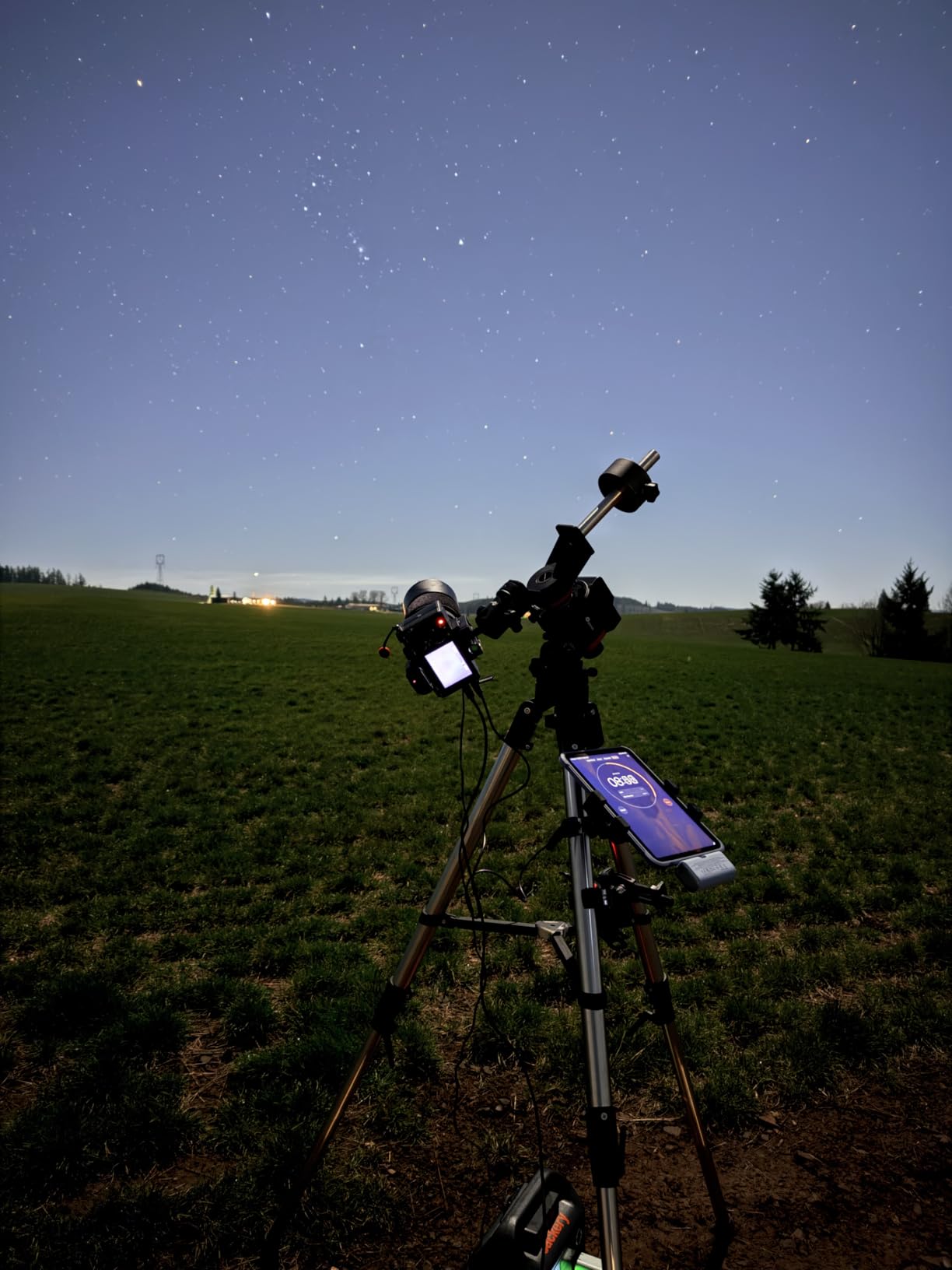
Payload is the headline figure: 11 lb when balanced. That is far more than a typical mirrorless body with a wide angle zoom, which means you can stay well inside the 50 to 70 percent rule and still have margin for a counterweight or an accessory bracket.
The integrated AccuAlign dark field illuminated polar scope is a genuine time saver at a dark site, and the latitude base covers minus 30 to 65 degrees with plus or minus 5 degrees of azimuth adjustment. Internal rechargeable battery life runs up to 20 hours at 20 degrees C, which comfortably covers a night without external power.
What makes it the accuracy pick
Reviewers consistently pair accuracy with a specific setup habit: balance the rig, collimate the scope, and use a heavy tripod. Under those conditions the metal body holds stars steady well past the point where lighter plastic heads give up.
For wide field specifically, the 11 lb ceiling means you can carry a fast prime, a small astrograph or a short refractor without fighting the mount. That flexibility is why it sits so high on this list despite the lack of GoTo.
Where it will frustrate you
There is no GoTo. You find your target manually every session, which for a beginner means learning star hopping or using plate solving software before you arrive.
The polar scope can arrive out of collimation with the RA axis, and the supplied hex key set does not include the 1.5 mm key needed to adjust it. Budget time for that fix. The 8 inch counterweight bar is also short, which limits how much front weight you can hang on a DSLR plus telephoto combination.
3. Sky-Watcher Star Adventurer GTi Kit: the only motorized GoTo option here
Sky Watcher Sky-Watcher Star Adventurer GTI Mount Kit with Counterweight, CW bar, Tripod, and Pier Extension – Full GoTo EQ Tracking Mount for Portable and Lightweight Astrophotography
Full GoTo EQ mount head
Tripod and pier extension included
5 lb counterweight included
Two year warranty
Pros
- Motorised GoTo pointing removes manual target hunting
- Bundled tripod
- pier extension
- counterweight bar and 5 lb weight
- Built in illuminated polar scope speeds field alignment
- Two year limited warranty
Cons
- Heaviest portable option at 26 lb
- Pier extension and tripod add bulk to transport
- GoTo accuracy still depends on a clear view of the pole
The GTi is the only head in this roundup with motorised GoTo pointing, and that single feature changes the workflow for anyone who does not want to hunt targets by eye. It slews to the object after plate solving, which matters enormously when the nearest landmark is a distant treeline.
Everything else is bundled. The kit includes the mount head, a tripod with pier extension, a counterweight bar with a 5 lb weight, and a built in illuminated polar scope with illuminator. For a first setup, that removes the shopping list entirely.
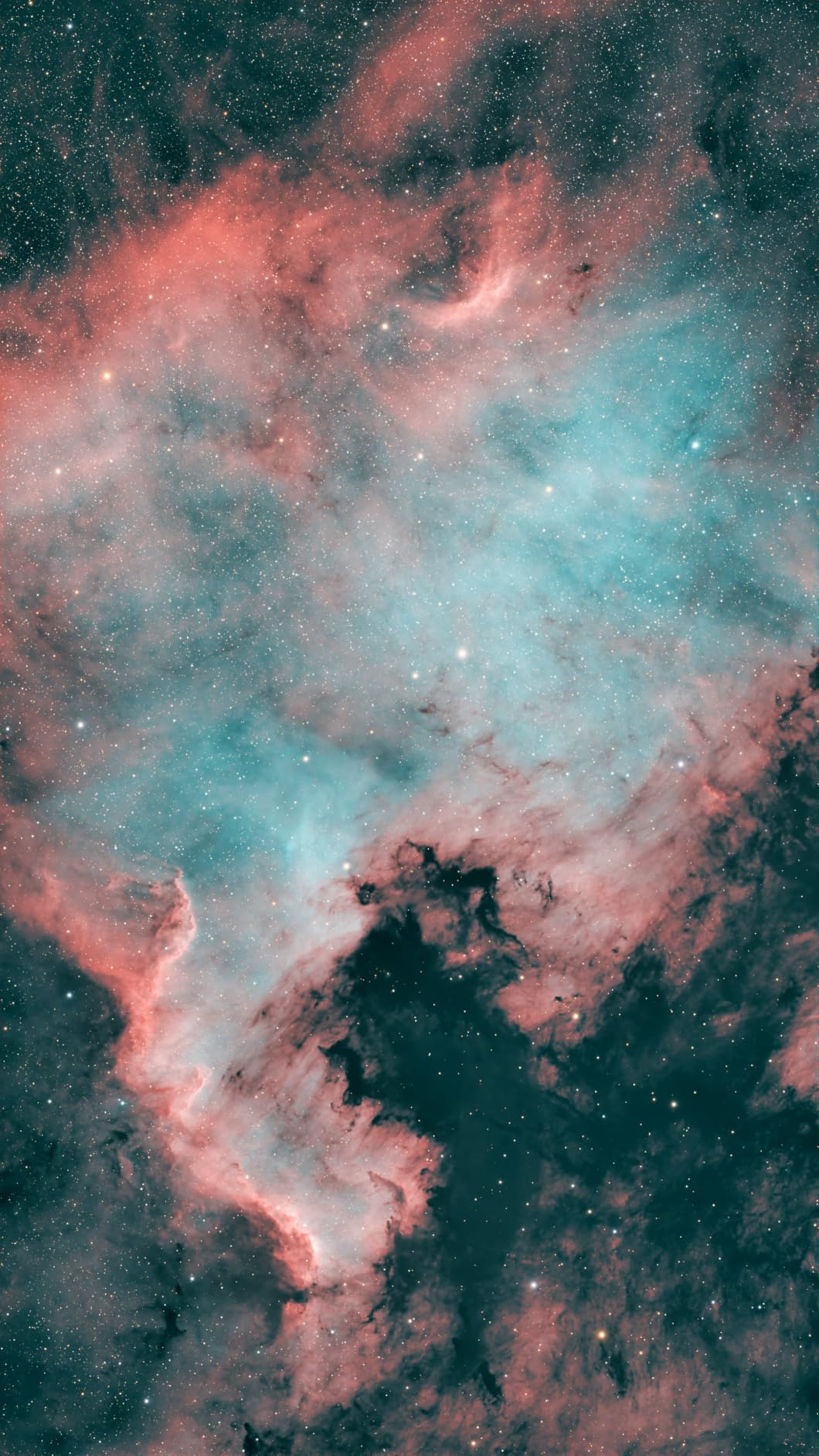
The illuminated polar scope is bright and readable, which speeds alignment in the field, and built in WiFi handles smartphone control. The counterweight hardware is a real advantage for wide field rigs where the camera and lens sit far forward of the axis.
The two year limited warranty from Sky-Watcher USA is the longest stated on any head here, which matters for a device with moving parts that will be used outdoors in variable conditions.
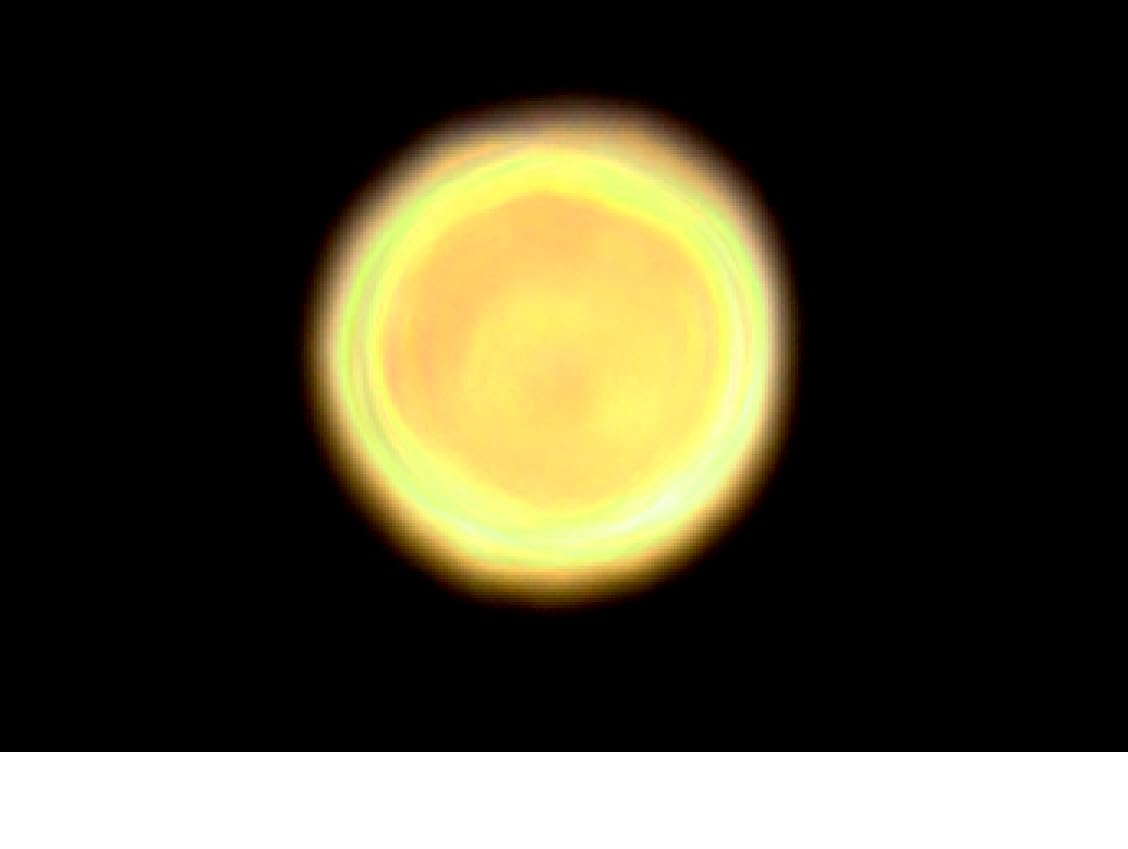
Why GoTo changes the night workflow
Manual pointing works fine if you know the sky. GoTo pointing works if you do not, and it also makes tracked panoramas and multi panel mosaics far more practical because each frame can be framed from the target rather than from memory.
Wide field shooters shooting the Milky Way arch across a landscape benefit most. Instead of guessing at the core position behind a ridgeline, you point, plate solve, and start the sequence.
Where it will frustrate you
Weight. At 26 lb this is the heaviest of the portable trackers here, and that is before you add a camera, lens and counterweight. It is a car boot tracker rather than a backcountry one.
The pier extension and tripod also add bulk to transport, and no amount of motorised pointing fixes polar alignment if you cannot see the pole clearly.
4. Sky-Watcher Star Adventurer Mini Pro Pack: the lightest thing you can carry
Sky-Watcher Star Adventurer Mini Pro Pack (S20582)
1.5 lb unit weight
6.6 lb payload
Up to 24 hours on AA
WiFi via SynScan app
Pros
- Lightest head here at 1.5 lb
- so it disappears into a daypack
- Brass and aluminium gear train tracks smoothly
- Up to 24 hours from the AA compartment
- Includes equatorial base and polar scope
Cons
- 3 kg payload ceiling rules out heavier bodies and long lenses
- No counterweight supplied
- Lowest rated of the group at 3.7 with a higher one star share
When the priority is distance from the car, the Mini is hard to argue with. At 1.5 lb it is the smallest head we tested, and the included ball head adapter, declination bracket, latitude base and polar scope mean the whole tracking kit fits in a small pocket of a pack.
The gear train is the surprise. Ridged brass and aluminium gears give smoother tracking than the weight of this head suggests, and WiFi control through the free SynScan app handles start and stop without touching the body.
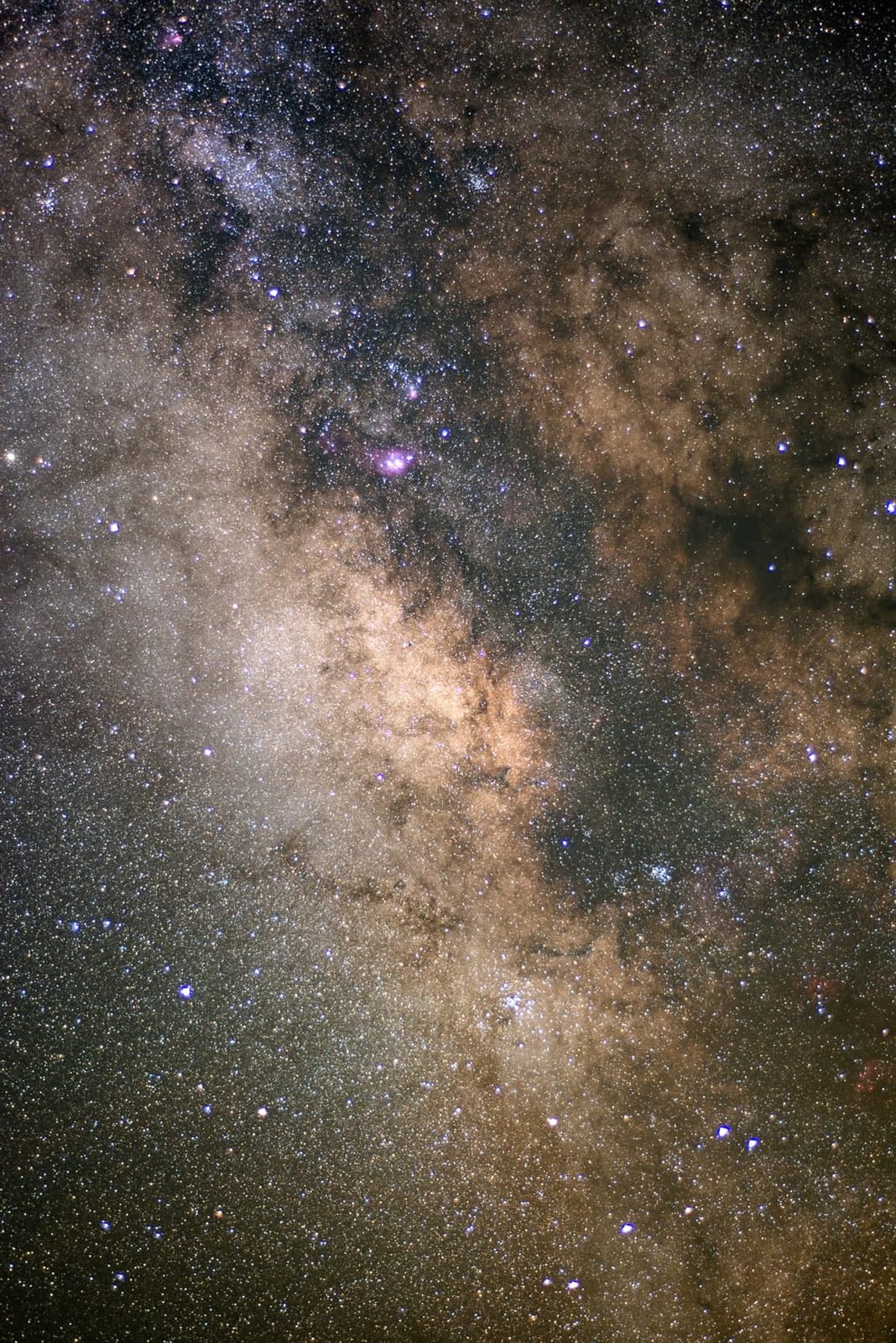
Power is unusually flexible for a tracker this small. The built in AA compartment runs up to 24 hours, and a 5V mini USB input accepts an external supply, which means you can choose batteries in the field or a power bank if you are near a vehicle.
Payload is 6.6 lb, which covers most mirrorless bodies and short to medium wide field lenses. That is the trade: you give up load capacity in exchange for the lowest carry weight in the group.

What it does better than the others
Nothing else here disappears into a hiking pack this completely. For a night spent walking to a dark site an hour from anywhere, that changes how often you shoot rather than how good a single frame looks.
The included equatorial base and polar scope also mean alignment is straightforward, and the declination bracket gives fine camera positioning for framing a landscape composition.
Where it will frustrate you
The 3 kg payload ceiling is the binding constraint. Long telephotos and heavier pro bodies are out, and even a mid sized body with a fast zoom pushes you toward the edge of the useful range.
No counterweight is supplied, which leaves the declination bracket of limited use on its own. The 3.7 rating is the lowest here, with a larger one star share than its rivals, tied to hardware failures and accessory build quality. The small bracket and adapter parts are also easily lost.
5. Explore Scientific iEXOS-100-2 PMC-Eight: dual axis GoTo on a smaller budget
iEXOS-100-2 PMC-Eight Equatorial Tracker System Tripod and Mount for Astrophotography with WiFi and Bluetooth Compatible
Clutched dual axis worm gears
GoTo through ExploreStars app
WiFi and Bluetooth
Bundled tripod
Pros
- Real dual axis GoTo system rather than a bare tracking head
- Clutched axes make balancing and repositioning easy
- Alignment sight hole through the RA axis removes the need to buy a polar scope
- Quiet stepper belt drives suit nightscape work
Cons
- Build quality is modest at this tier
- Slews are slower and less refined than premium mounts
- Control depends on a tablet
- Included tripod is often replaced
This is the odd one out in the lineup, and that is exactly why it is here. Where most portable trackers track only in right ascension, this is a genuine dual axis equatorial mount with GoTo through the ExploreStars app on Apple, Android and Windows tablets.
For wide field work that dual axis capability is more useful than it first appears. Correcting declination error automatically tightens star shape across the frame, which matters most on fast wide angle lenses where any tilt shows as corner elongation.
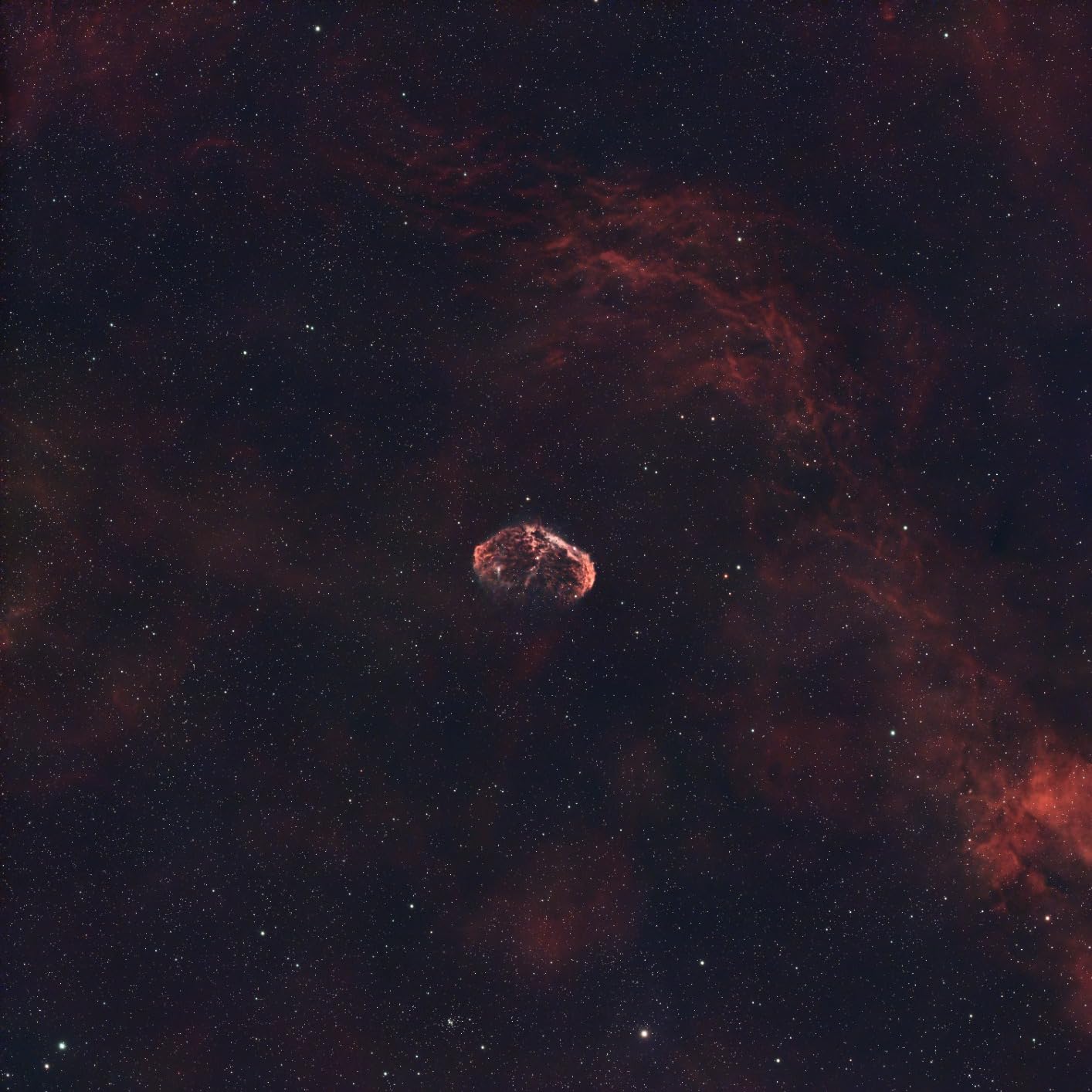
The PMC-Eight controller runs eight independent CPUs on defined functions, which is why slews are responsive despite the budget hardware. Clutched RA and declination axes also let you balance and re position the axis by hand in seconds rather than fighting friction knobs.
Alignment uses a sight hole through the RA axis plus altitude control, so there is no separate polar scope to buy, and WiFi plus Bluetooth covers control without a cable run. Quiet stepper motor belt drives keep vibration down for nightscape work.
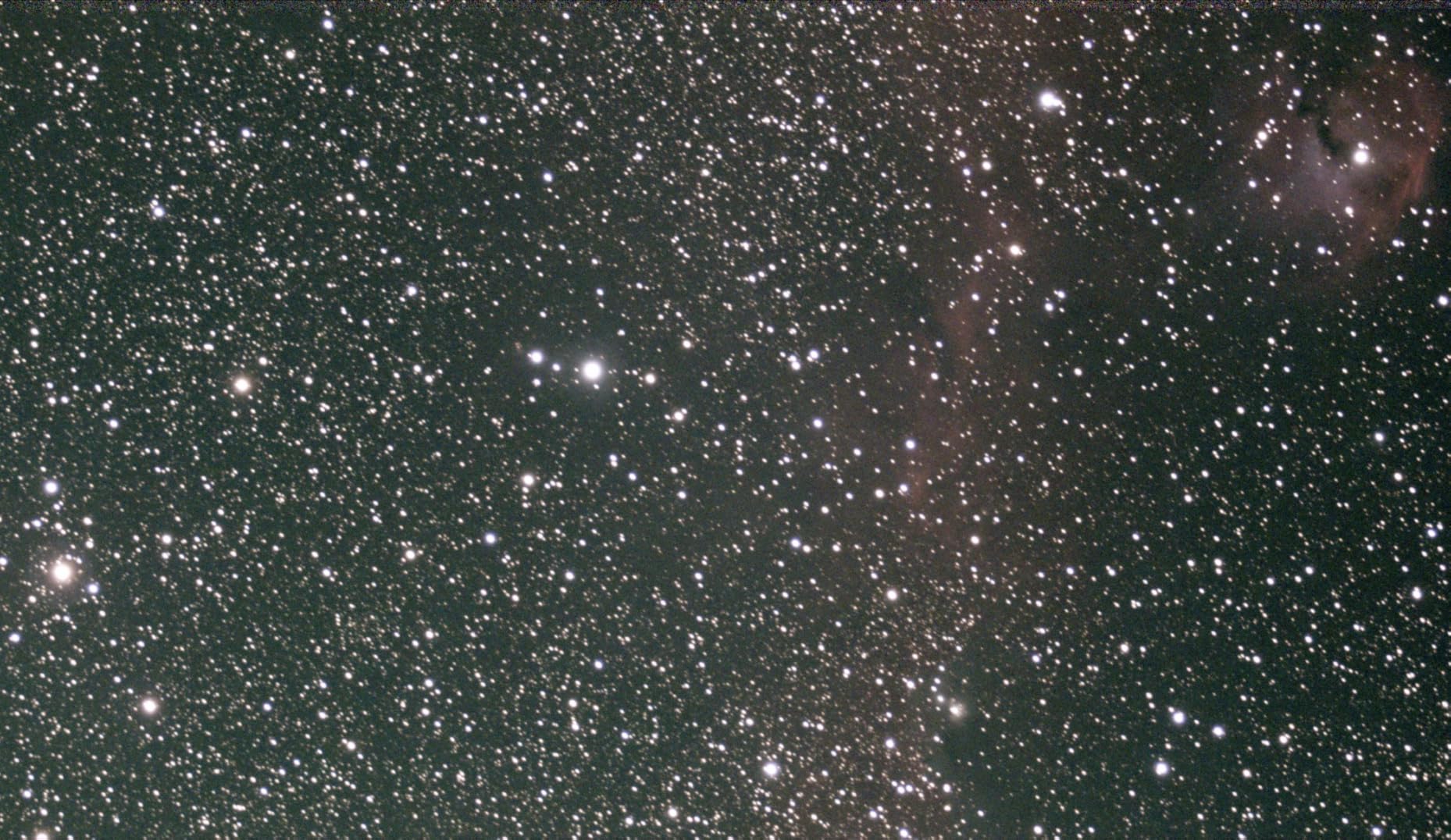
What makes it worth considering
GoTo at this tier is unusual. Most budget trackers are bare heads with a smartphone app for triggering the shutter, while this one can point at a target from a catalogue. For beginners who do not yet know the sky, that is a large reduction in frustration.
The complete package includes a tripod, so the whole system is in the box and ready to align.
Where it will frustrate you
Build quality is the honest compromise. Several reviews describe the alignment hardware and overall finish as needing improvement, and 3.9 is the second lowest rating in this group.
Slews between targets are slower and less refined than premium mounts. Tablet dependent control adds a learning curve, and the included tripod is one most experienced users replace with something sturdier.
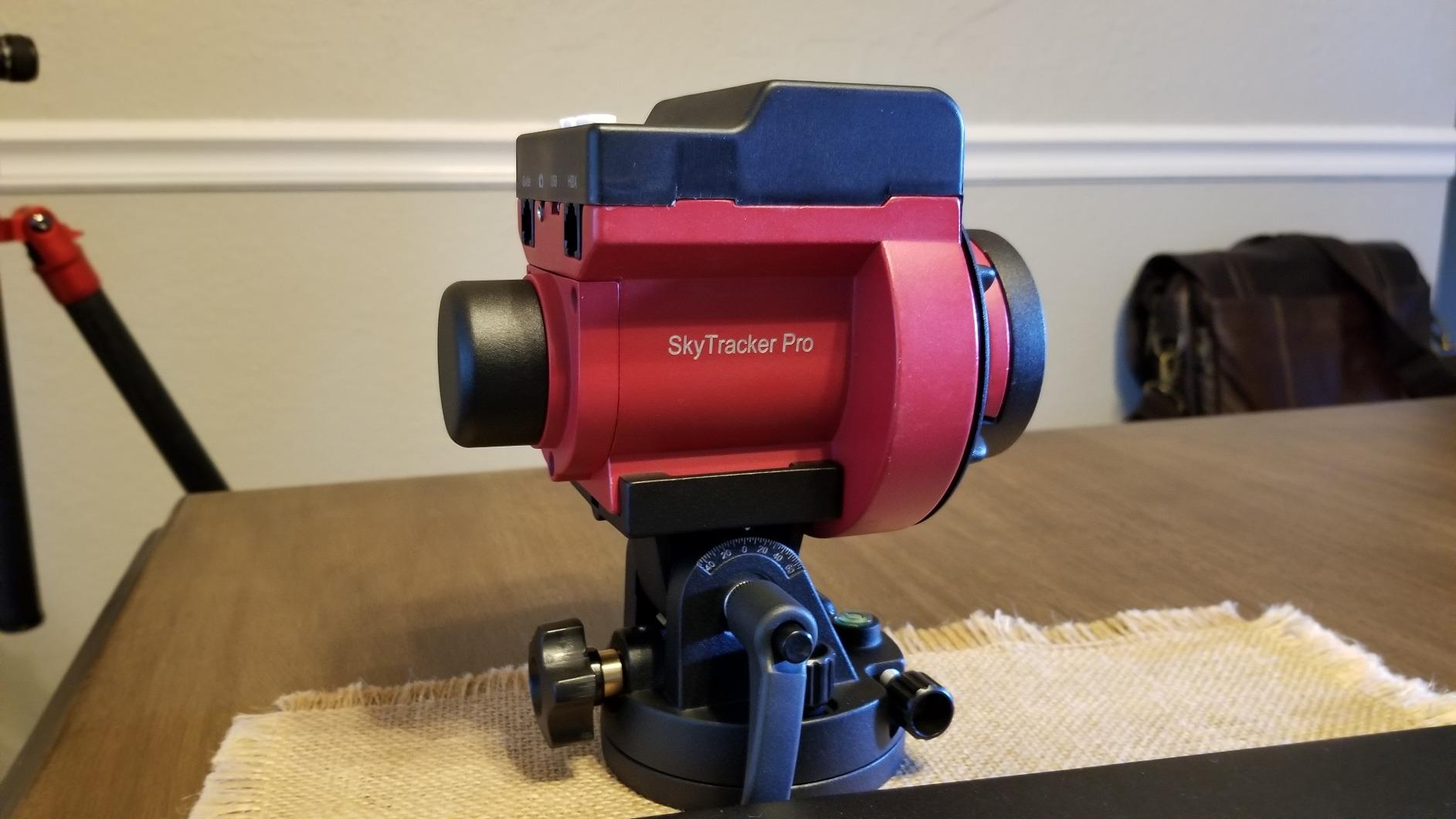
6. iOptron SkyTracker Pro: the simplest way into tracked exposures
iOptron SkyTracker Pro Camera Mount with Polar Scope, Only
6.6 lb payload
Four tracking rates
Integrated rechargeable battery
3.3 lb pack weight
Pros
- Owners report clean 4-5 minute exposures with no trailing
- Integrated rechargeable battery with dimmable scope LED
- Solar
- lunar
- half speed and sidereal rates
- Simple once alignment is dialled in
Cons
- Swivel head rubber cushion can slip under heavier loads
- Base is not Arca-Swiss compatible
- Ball head sold separately
- Alignment app is a separate purchase
The SkyTracker Pro is the one we would hand to somebody who has never tracked before. It does fewer things than the GTi, and everything it does, it does simply. Owners report 4 to 5 minute exposures without trailing, which comfortably covers wide field work.
Four tracking speeds cover 1X celestial, 1/2X celestial for sky and landscape blends, solar and lunar rates. The half speed mode is a nice touch for nightscapes where you want some movement in the stars rather than a fully frozen sky.
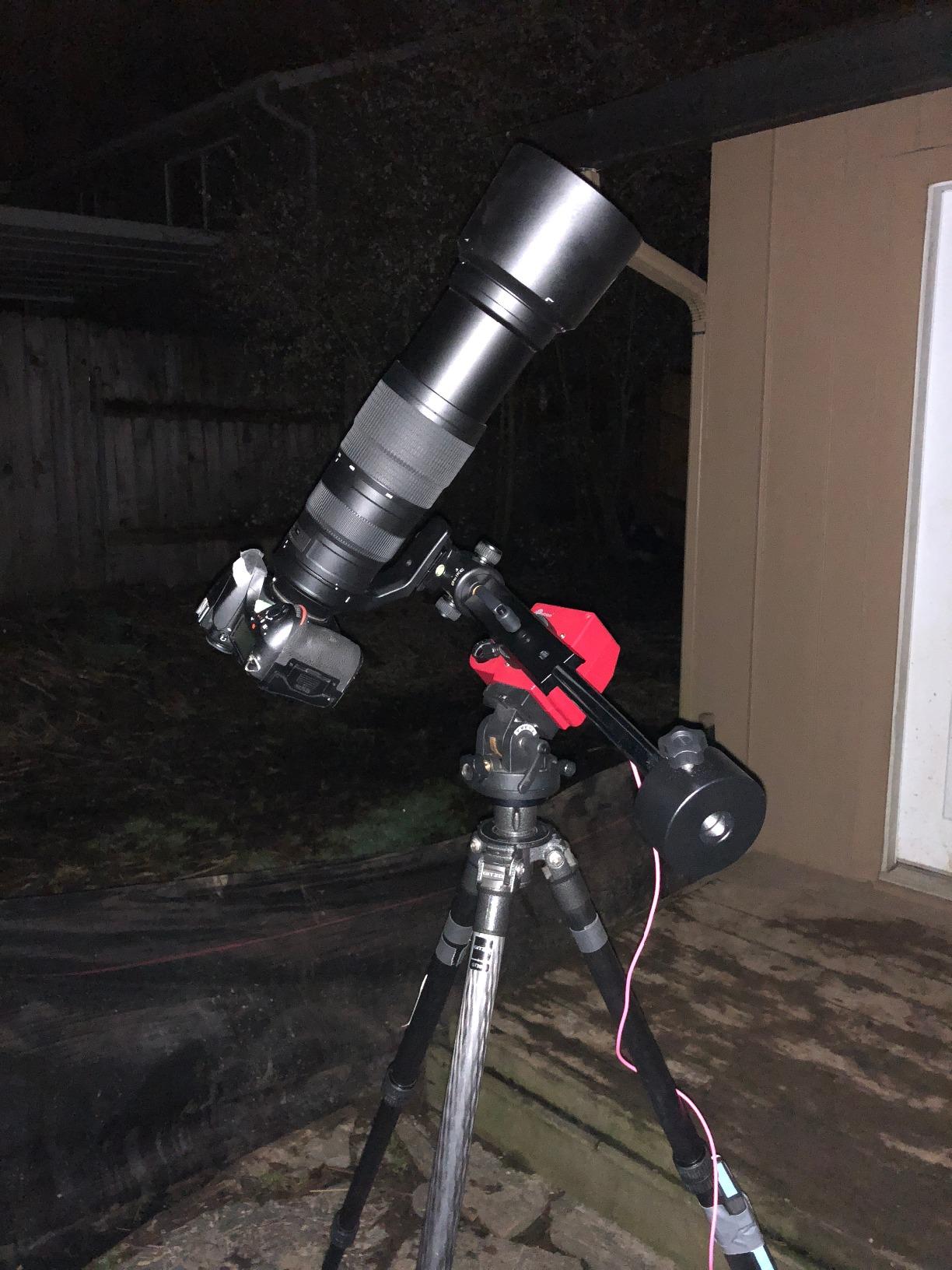
Power is an internal rechargeable battery charged over Micro USB, reaching 80 percent in about five hours. The built in polar scope LED is dimmable, which matters because a scope light bright enough for a city balcony is blinding at a dark site.
At 3.3 lb including the padded carrying bag, it packs without ceremony. Payload is 6.6 lb and the worm drive runs a 600 second period on four bearings, with a DC servo motor handling automatic RA tracking.
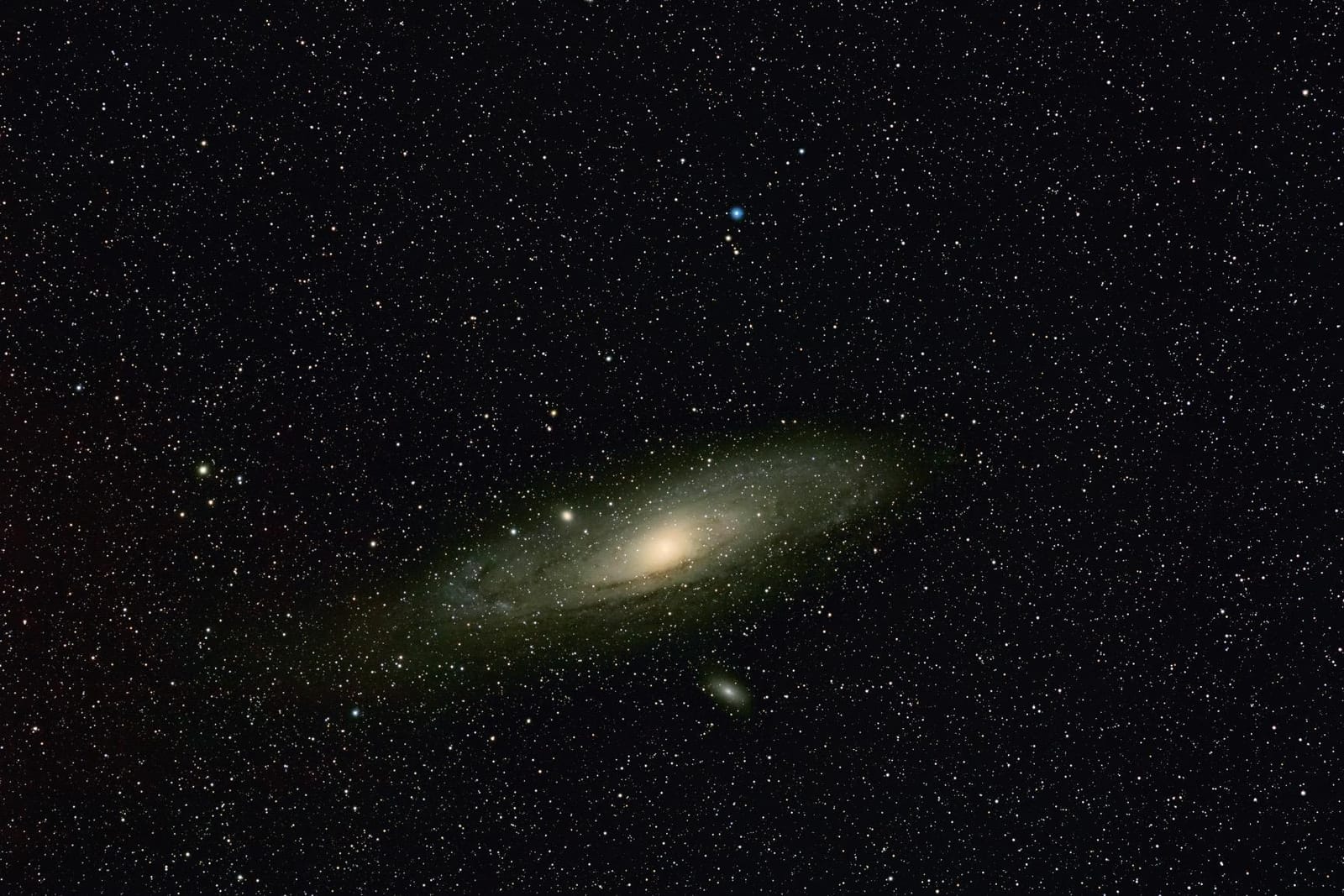
Why beginners end up here
There is nothing to configure. Switch it on, align with the scope, and shoot. Compared with app driven heads that need pairing and firmware updates, that simplicity removes the most common reason people give up in the first month.
The 1/2X rate and solar and lunar tracking also make it useful for eclipse photography and daylight lunar work, which broadens its value beyond night sky imaging.
Where it will frustrate you
The rubber cushion at the swivel head slips and can be removed to fix heavier loads, which is the single most reported issue. The base is also not Arca-Swiss compatible, so it can be awkward on tripods with fixed index marks.
The ball head is sold separately and heavy telephotos need the optional counterweight package. The alignment app for moon and sun references is a separate purchase as well.
7. Vixen Polarie U: a small tracker built for portability
Vixen POLARIE U Star Tracker
0.58 kg tracking head
Five tracking speeds
ST4 autoguiding port
Smartphone shutter release
Pros
- Very small and light for travel wide field nightscapes
- Five tracking speeds for solar
- lunar and sidereal work
- ST4 autoguiding port accepts an external guider
- Shutter release triggered from a smartphone
Cons
- Small payload limits camera and focal length choices
- Autoguiding is RA only so there is no declination correction
- Manual is not guaranteed to be in English
- Smallest review base here at 36 ratings
The Polarie U is the most compact head here and the most distinctly Japanese in its simplicity. At 0.58 kg it is barely a third of the weight of most competitors, and it packs into a jacket pocket rather than a tripod bag.
Five selectable tracking speeds cover sidereal, lunar, solar and two intermediate rates. That flexibility is what makes it equally at home on a wide field camera rig and on a small telescope for planets or lunar work.
The ST4 autoguiding port is RA only, which is the right compromise for wide field. Reviewers confirm you can run guided imaging with an external guider, and since RA is the axis that accumulates the most error over long exposures, that is the half that matters most.
Smartphone shutter release control is a practical touch. Triggering the intervalometer remotely means you are not leaning into the frame near a foreground you are trying to composite, which is a real problem with landscape wide field work.
Power comes from four AA batteries or an external USB Type-C terminal, and the mechanical parts carry a two year warranty while electronic parts carry one year.
What it does better than the others
Nothing else here is this small while still offering autoguiding and multiple rates. For carry-on travel or a lightweight walking kit, it wins on volume in a way that pure weight figures do not capture.
It also handles timelapse sequences well, which broadens its use beyond still night sky frames.
Where it will frustrate you
Payload is small, and that restricts you to lighter cameras and shorter focal lengths. Wide field is fine, but the margin for a heavier body is narrow.
RA only autoguiding means no declination correction, so residual tilt error stays in the frame. The instruction manual is not guaranteed to be in English, and with 36 ratings this is the thinnest evidence base of any tracker here.
8. Celestron CGX Equatorial Mount: when a tracker is no longer enough
Celestron CGX Computerized German Equatorial Mount & Tripod, 55lb Payload
55 lb payload capacity
108 lb unit weight
Servo motors with belt drive
NexStar+ hand controller
Pros
- Tracks well at long exposures when polar aligned
- 55 lb payload handles long lens rigs and astrographs
- Belt drive and servo motors give quiet slews and low periodic error
- Internal cable management suits remote imaging
Cons
- Very heavy at 108 lb for field use
- Standard tripod is less rigid than the CGX-L version
- Celestron polar scope can impede declination range
- Belts and gears can wear after several years
The CGX is not a portable star tracker and we would not recommend it as one. It is here because it marks the point where you outgrow the tracker format, and because it answers the question we hear most often from wide field shooters with a 135mm or 200mm lens: when is a tracker no longer the right tool?
Payload is 55 lb, and owners note that around 42 lb tracking stays excellent. That headroom supports long focal length telephotos, astrographs and moderate imaging scopes in a way no portable head in this roundup can approach.
High torque servo motors with a belt drive transmission produce quiet slews and sub arcsecond periodic error. One owner logged roughly three hours of 30 minute subframes under light polluted Los Angeles skies, which is the kind of result that needs a mount with this level of stiffness.
The NexStar+ hand controller carries a 40,000 object database with guided tours and custom object filters, and internal cable management suits remote operation when the rig is running unattended.
When a full equatorial mount wins
Payload is the deciding factor. Once your camera, lens and guiding hardware together exceed what a portable head can balance safely, a mount with a 55 lb rating is the only way forward.
The CGX also improves on trackers in areas trackers simply do not address: declination guiding, dual axis plate solving, and remote observatory operation over long sessions.
Where it will frustrate you
At 108 lb this is a car and driveway mount. Carrying it to a dark site defeats the purpose of the entire category.
The standard tripod is not as rigid as the CGX-L model, vibration dampening feet help on hard surfaces, and continuous tracking draw means a separate power supply or battery pack in the field. Belts and gears can also wear after several years of use, and Celestron polar scope accessory can impede declination range, so many owners align without it.
How to Choose a Star Tracker for Wide Field Work
Most people buy the wrong tracker by starting with the mount and working backwards. Start with your lens instead. The focal length you shoot determines the payload, the alignment accuracy and the exposure length you need, and the tracker follows from those three numbers.
Match the tracker to your focal length band
Wide field is not one category. It splits cleanly into four bands, and each band stresses a different part of the mount.
At 14 to 24mm, star trailing is barely an issue, so any tracker in this list works and payload rarely binds. The deciding factor becomes battery type and app reliability, which favours the Star Adventurer 2i with its WiFi control and long AA runtime, or the SkyGuider Pro with its 20 hour internal battery.
At 24 to 50mm, tracking errors begin to matter across a two to three minute exposure. The all metal SkyGuider Pro handles this range with the most margin, and its 11 lb payload gives you room for a counterweight if you need one.
At 50 to 135mm, you are approaching the edge of what a single axis tracker can do. RA only autoguiding through the ST4 port on the Vixen Polarie U or the autoguider port on the Star Adventurer 2i becomes worthwhile, and the Star Adventurer GTi GoTo pointing starts to pay for itself as sessions get longer.
At 135 to 400mm, portable heads stop being realistic. The Explore Scientific dual axis system is the last step on that ladder, and beyond it you are into the CGX class of mount. Setting expectations here saves people from buying a head that will never quite work.
Apply the 50 to 70 percent payload rule
Rated payload is a laboratory figure measured on a balanced, static rig. Overloading a tracker past roughly 70 percent of its rating is the most common cause of trailing that owners blame on the motor.
Add up your camera body, lens, quick release plate, counterweight and any guiding hardware, then keep the total under two thirds of the rating. With a 6.6 lb rated head, a body and fast wide lens will sit comfortably inside the limit. With an 11 lb rated head you have room for a small refractor.
Balance matters as much as weight. Centre the camera and lens over the RA axis and lock the clutches so the axis does not creep during a two minute exposure.
Pick your polar alignment method
Polar alignment quality sets your exposure ceiling before any other factor does. There are four realistic methods, each with a different accuracy ceiling.
A polar scope with an illuminated reticle, as on the SkyGuider Pro, SkyTracker Pro and Star Adventurer GTi, is the traditional choice and is quick once you learn to rotate your head until Polaris sits centred in the reticle. The Star Adventurer 2i uses an external scope with its deluxe base.
An alignment sight hole through the RA axis, as on the Explore Scientific system, removes the need to buy a separate scope and works well for beginners because there is nothing extra to set up.
A laser pointer is the fastest method and the one most often recommended, but lasers are restricted or banned for public use in Australia, Switzerland and other countries. Check local rules before packing one.
Plate solving with an app is the modern fallback and the only good option in the southern hemisphere, where there is no bright Polaris to sight on. Polar align on any star field, then let plate solving refine the alignment.
Whichever method you use, give it five minutes. A sloppy alignment that takes thirty seconds is the reason many beginners abandon tracked imaging after one night.
Think about battery life in cold air
Cold weather is where tracker planning usually breaks down. Batteries lose capacity quickly near freezing, and a head that runs twelve hours at room temperature may not last three hours on an autumn mountain site.
Internal rechargeable batteries such as the SkyGuider Pro and SkyTracker Pro avoid cold weather battery drain on the AA chemistry, but they need USB power in the field. AA based trackers like the Star Adventurer 2i and Star Adventurer Mini are more forgiving if you carry spare cells.
Either way, carry a power bank with a USB cable. Every tracker here accepts external power in one form or another, and a flat battery two hours into a night is the most avoidable failure in this hobby.
Decide tracker versus equatorial mount
Ask yourself one question: will you ever shoot longer than 135mm, or add a guiding camera and a small refractor? If yes, buy a mount like the CGX now rather than replacing a tracker later.
If you shoot fast wide and wide lenses, stay with a tracker. You will carry less, set up faster, and reach dark sites more often, which matters more to the finished image than any specification on a spec sheet.
One more practical note for backcountry sessions: a light two person tent and a self inflating mat weigh surprisingly little next to a tracker and tripod, so budget for sleep system weight in the same way you budget mount weight. We keep a short list of our field-tested tent heater picks for the gear that makes an all night session comfortable.
Frequently Asked Questions
What is a star tracker for astrophotography?
A star tracker is a portable motorised camera mount that rotates at sidereal rate to match the Earth’s rotation. Once aligned to the celestial pole, it holds stars fixed on the sensor while the shutter is open, which allows exposures of several minutes instead of the 15 to 30 seconds a fixed tripod allows.
What focal length can a star tracker handle?
Most portable trackers handle 14mm to 50mm comfortably, and several reach 135mm with careful alignment and autoguiding. The Star Adventurer 2i is reported clean at two to three minute exposures up to 300mm, and the SkyGuider Pro is reported clean from 20mm to 500mm. Past roughly 135mm, payload and rigidity start to matter more than the motor.
How do I polar align a star tracker?
Level the tripod, aim the mount at the celestial pole, and use an illuminated polar scope to centre Polaris in the reticle while rotating the head until the star sits in the centre circle. In the southern hemisphere there is no Polaris, so use plate solving software to refine an approximate alignment instead. Give the process five minutes, because alignment accuracy sets your maximum exposure length.
Do I need autoguiding for wide field astrophotography?
For 14mm to 50mm lenses, no. A well polar aligned tracker will produce clean two to three minute frames on its own. Past roughly 50mm, autoguiding through an RA only ST4 port is worthwhile because it removes accumulated drift. Full dual axis guiding only becomes necessary in the long focal length range.
What payload capacity do I need for a star tracker?
Add your camera body, lens, quick release plate and any counterweight, then stay under 50 to 70 percent of the rated payload. A mirrorless body with a fast wide angle zoom usually sits inside a 6.6 lb rating, while a small refractor or a heavy DSLR with a telephoto will push you toward an 11 lb rated head or a full equatorial mount.
Should I buy a star tracker or a full equatorial mount?
Stay with a star tracker if you shoot 14mm to 135mm and want something you can carry to a dark site quickly. Move to a full equatorial mount such as the Celestron CGX if you plan to exceed 135mm, add guiding, or want to run unattended for hours, since a 55 lb payload and dual axis correction are beyond any portable head.
What accessories do I need for a star tracker?
The essentials are a rigid tripod, a ball head if one is not included, a counterweight for forward heavy rigs, spare batteries or a USB power bank, and a dew heater or warm pad for long sessions. An intervalometer or shutter release cable is useful, and a laser unit speeds alignment where lasers are permitted.
Which star tracker works best in the southern hemisphere?
Any tracker works, because the mount does not care which hemisphere you are in. The difference is alignment: with no bright Polaris to sight, use a scope with an illuminated reticle against a chosen star field, then refine with plate solving software. Trackers with GoTo pointing, such as the Star Adventurer GTi, simplify target location in the field.
Final Verdict
The best star trackers for wide field astrophotography in 2026 come down to how you shoot. The Star Adventurer 2i Pro Pack is the safest all round choice, with the deepest review history, proven multi minute accuracy and a deluxe base that speeds alignment. The SkyGuider Pro takes the accuracy crown and adds 20 hours of internal battery, while the Star Adventurer GTi is the pick when you want the mount to find targets for you.
For the smallest possible kit, the Star Adventurer Mini goes in a daypack at 1.5 lb, and the Vixen Polarie U is smaller still. The SkyTracker Pro remains the simplest introduction to tracked exposure, and the Celestron CGX is where you move once 135mm stops being the ceiling.
Whichever you choose, spend the time on the tripod and the polar alignment. Those two decisions do more for your final image than any specification in this roundup.