

Most star tracker roundups rank mounts by what they can image. That is the wrong question if your tracker has to survive an airline seat, a hiking boot and a cold ridge. We spent weeks reading owner reviews on nine trackers and comparing what actually goes in the bag, because the gap between a 2 pound tracker head and a 26 pound complete rig is the gap between a weekend trip and a car boot full of gear.
This guide to the best portable star trackers for travel is organised the way the decision actually gets made. First the pack weight, then the payload, then how hard the alignment is in the dark, then what the battery does at two in the morning when the temperature has dropped. Every tracker here is a real product with real owner feedback behind it, and every weight, payload and run time quoted comes from the manufacturer’s specification or from the reviews themselves.
Two products get the strongest recommendation badges, and one of them is the least mechanical tracker on the list. If you want the short version, jump to the top three picks; if you want the reasoning, keep reading.
Table of Contents
Top 3 Best Portable Star Trackers for Travel (October 2026)
Our top three cover the three genuinely different ways people travel with a tracker: a full weekend of tracked nightscapes, a step up in build quality for a long telephoto, and a hike-in rig with no battery at all.

Sky-Watcher Star Adventurer 2i Pro Pack
- Built-in Wi-Fi SAM Console control
- Deluxe equatorial base with wide latitude range
- Autoguider port
- Li-metal battery included

iOptron SkyGuider Pro
- All-metal body
- 2.2 lb mount weight
- 11 lb balanced payload
- AccuAlign illuminated polar scope

Omegon MiniTrack LX3 Bundle
- Mechanical wind-up drive
- no battery needed
- Integrated optical polar finder
- 950 g total with OM8 ball head
All Nine Trackers at a Glance in 2026
This is the full lineup with the three numbers that decide a travel purchase: how much the head weighs, what it can actually carry, and how it is pointed at the pole.
| Product | Specs | Action |
|---|---|---|
| Sky-Watcher Star Adventurer 2i Pro Pack |
|
Check Latest Price |
| iOptron SkyGuider Pro |
|
Check Latest Price |
 Sky-Watcher Star Adventurer GTi Kit Sky-Watcher Star Adventurer GTi Kit |
|
Check Latest Price |
 Explore Scientific iEXOS-100-2 PMC-Eight Explore Scientific iEXOS-100-2 PMC-Eight |
|
Check Latest Price |
| Omegon MiniTrack LX3 Bundle |
|
Check Latest Price |
 iOptron SkyTracker Pro iOptron SkyTracker Pro |
|
Check Latest Price |
 Sky-Watcher Star Adventurer Mini Sky-Watcher Star Adventurer Mini |
|
Check Latest Price |
 Vixen POLARIE U Vixen POLARIE U |
|
Check Latest Price |
 Benro Polaris Astro Edition Benro Polaris Astro Edition |
|
Check Latest Price |
Read the payload column as a ceiling, not a target. A body plus a fast wide lens plus a battery grip can eat most of a small tracker’s rating before you have even balanced it.
What Is a Portable Star Tracker?
A portable star tracker is a small motorized equatorial mount that sits between your camera and tripod and turns at the same rate as the Earth. That single motor cancels star trailing, so you can shoot multi-minute exposures of the night sky with a camera and lens you already own, with no telescope involved.
Without tracking, stars start to trail after roughly 15 to 30 seconds at typical focal lengths, which is the rule of thumb known as the 500 rule: divide 500 by your full-frame equivalent focal length to get the longest untracked exposure in seconds. A tracker pushes that limit from seconds to minutes, and every extra minute of exposure is roughly a two-stop gain in signal. That is why a tracker changes the look of a Milky Way photograph, not just the sharpness.
Travel changes the equation in three ways. A tracker you will not carry is useless, so total packed weight matters more than any other spec. Setup happens in the dark, often alone, so alignment method matters more than the spec sheet suggests. And a cold night drains a small internal battery faster than a warm one, so power strategy becomes part of the kit.
One useful piece of vocabulary before the reviews: most portable trackers are single-axis. They correct only the right ascension axis, because declination error barely moves over a few minutes. Dual-axis mounts correct both, which is what you need for longer guided sequences.
1. Sky-Watcher Star Adventurer 2i Pro Pack: the tracker most people should buy
Sky-Watcher Star Adventurer 2i Pro Pack (S20512)
7 lb assembled
13.9 x 9.6 x 6.3 in
Built-in Wi-Fi with SAM Console app
Lithium metal battery included
Pros
- Widest review base in this roundup at 609 ratings
- Built-in Wi-Fi with the free SAM Console app
- Deluxe equatorial base covers a wide latitude range
- Autoguider port for guided runs
- Sets up in about five minutes
Cons
- Flimsy red-light plastic polar scope housing that will not fit once a camera is mounted
- 8 inch counterweight bar is tight with heavy telephoto bodies
- SAM Console app is basic
- Polar alignment has a real learning curve for first-time users
The Star Adventurer 2i Pro Pack is the one we keep coming back to, and the reason is the 609 ratings behind it. Nothing else in this list has that much history of real nights in real conditions, which means the complaints are well documented rather than hypothetical. Owners describe a tracker that holds a mirrorless body with a moderate telephoto at two to three minute exposures, which is squarely wide-field astrophotography territory.
Its wide polar alignment latitude range is the sleeper feature for travel. One owner reported getting roughly 40 hours of shooting from a set of batteries, and another described a full setup in about five minutes from a cold bag. For a traveller moving between latitudes, that removes a whole category of field problems.
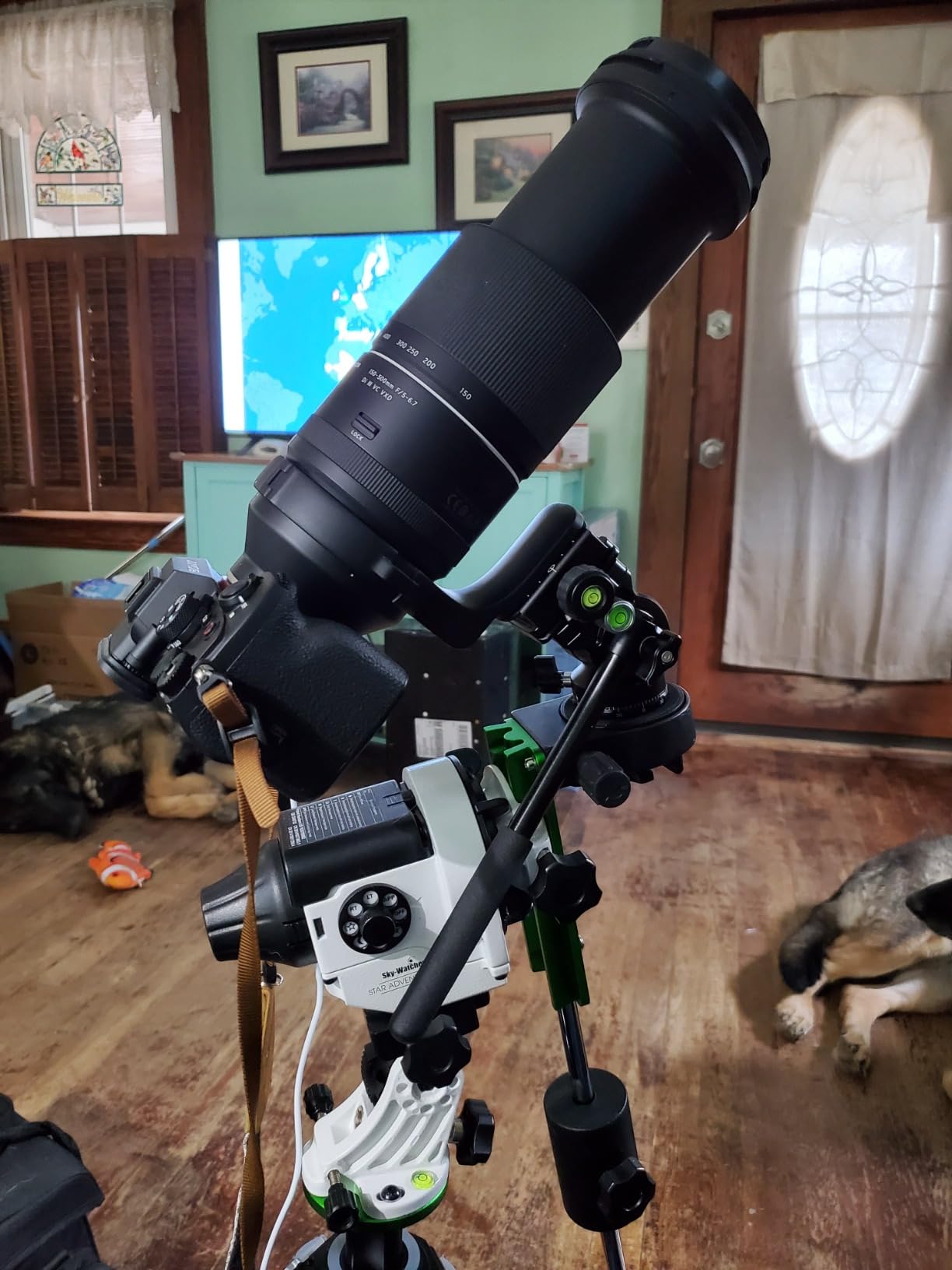
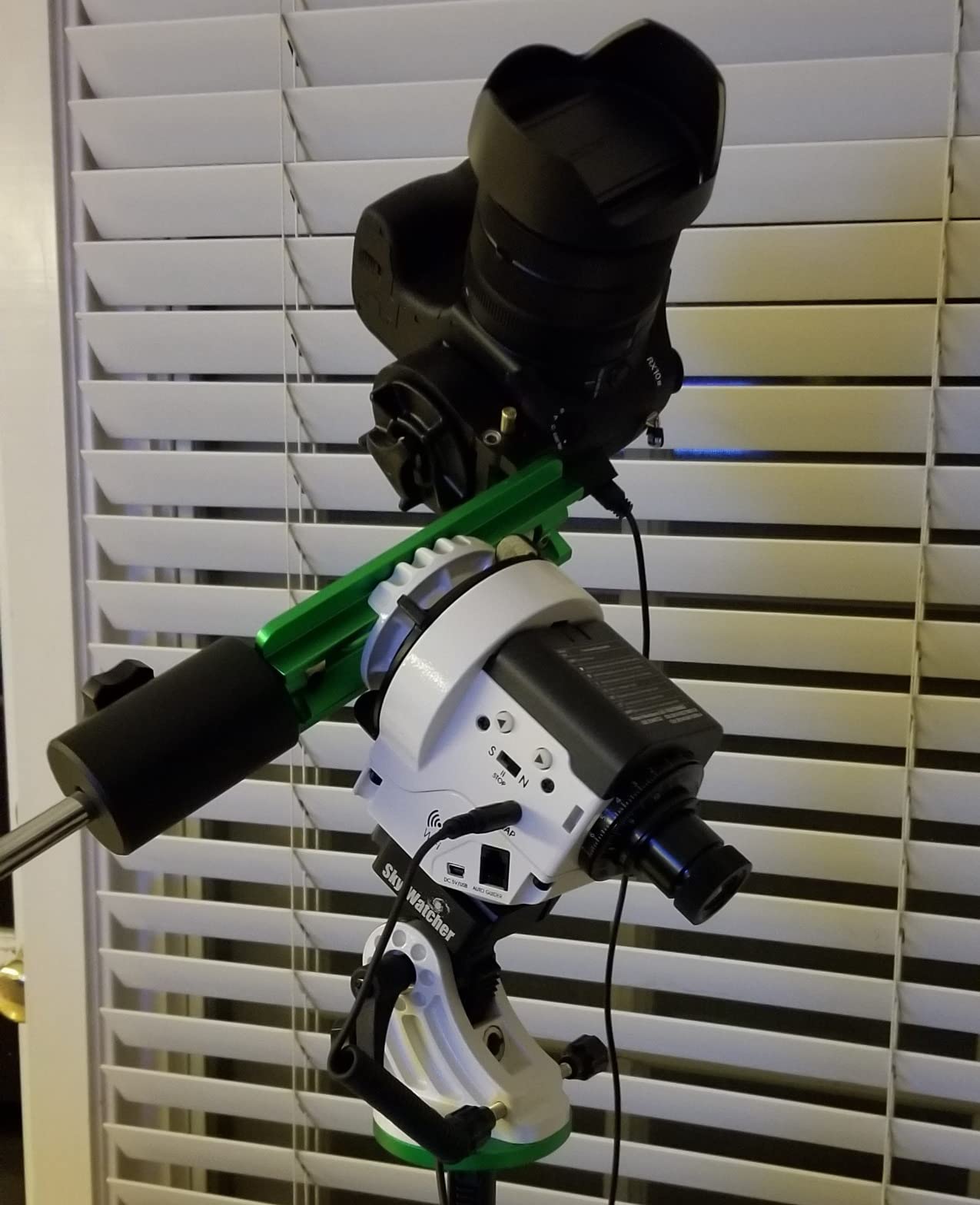
The weak points are small and plastic. The red-light polar scope housing is flimsy and the illuminator bracket does not fit once your camera is mounted, so many users align before the camera goes on. The 8 inch counterweight bar also runs out of room quickly if you pair a DSLR with a long lens. The SAM Console app does the basics and little else.
Balance is the real lesson here. Recurring advice across owner reviews is to balance the rig precisely, use a genuinely sturdy tripod rather than a light travel tripod, and budget real time for alignment. Most trailing complaints we found trace back to one of those three, not to the drive motor.
How the 2i Pro fits a travel bag
At 7 pounds assembled and 13.9 by 9.6 by 6.3 inches, this is a car-boot and carry-on friendly object, not a packable one. It pairs with whatever tripod you already own through its modular base, which means the total kit weight depends almost entirely on your tripod choice. Budget a carbon tripod rather than an aluminium one if you are driving to a site, because vibration from a heavy rig is what produces soft corners.
Who should buy and who should skip
Buy it if you shoot nightscapes and occasional wide-field deep sky with a mirrorless body and you want the widest latitude reach and the best support network. Skip it if your plan is a long telephoto or a small refractor, because the short counterweight bar and the payload ceiling will limit you.
2. iOptron SkyGuider Pro: the best build quality you can carry
iOptron SkyGuider Pro Camera Mount Full Package
2.2 lb mount head
11 lb balanced payload
30 degree latitude base
Up to 20 h battery
Pros
- All-metal body machined for low vibration
- 2.2 lb head fits a camera bag
- 11 lb payload when balanced
- Integrated AccuAlign dark-field illuminated polar scope
- Internal rechargeable battery recharges over USB
Cons
- Included counterweight bar is only 8 inches
- Polar scope often arrives out of collimation
- No GoTo so you locate targets yourself
- No tripod or separate equatorial head included
The SkyGuider Pro is the one to buy if you care about how the metal feels and how little the stars jitter. Owners repeatedly report pinpoint stars at two minute exposures with lenses as long as 500mm, which is beyond what most portable trackers in this list manage. The all-metal body, the brass worm drive and the rubber-toothed belt drive are the reasons, and they are visible the moment you pick it up.
At 2.2 pounds for the head and 10.1 pounds for the full package, it packs down to 3.74 by 4.53 by 5.24 inches, which is genuinely small. The AccuAlign illuminated polar scope is built in, so there is no separate scope to lose, and the internal rechargeable battery runs up to 20 hours at 20C on a charge over USB. Sidereal, lunar, solar and half-sidereal rates are all available, plus an autoguide port.
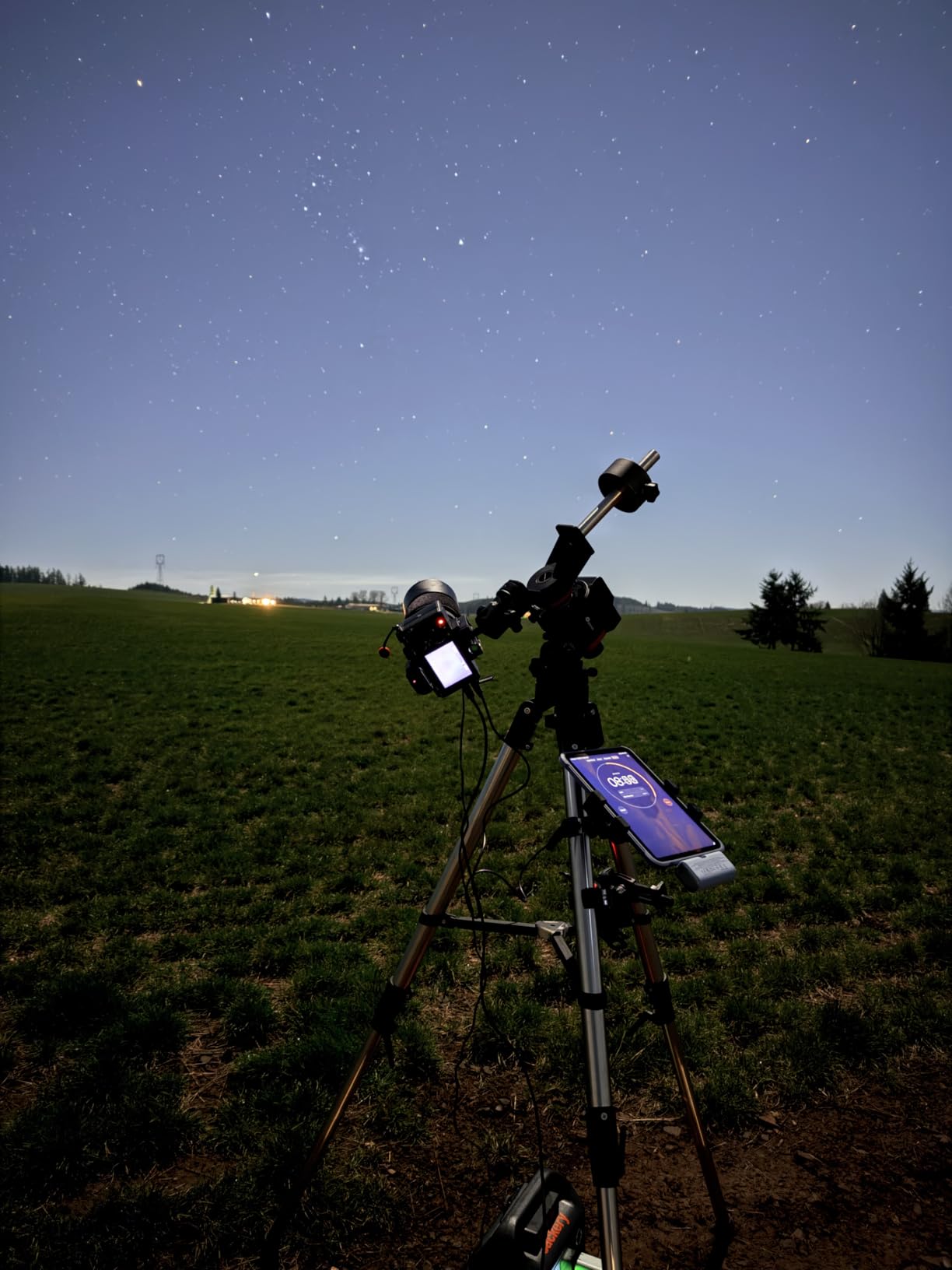
The honest drawback is the polar scope itself. Owners report it frequently arrives out of collimation with the right ascension axis and that the eyepiece wobbles, so plan a few minutes of adjustment before every session rather than trusting it out of the box. The 8 inch counterweight bar is also the limiting factor for DSLR plus telephoto combinations, and there is no GoTo, so you find targets yourself.
That last point matters more on an unfamiliar dark site than it does at home. If you plan to travel somewhere new, some kind of pointing aid is worth a lot. If you are returning to sites you know, the precision of this drive is worth more.
Payload headroom and what it really means
Eleven pounds is the balanced figure, not the number you can ignore. Keep your camera, lens, battery grip, plates and any filter wheel under about 60 percent of the rating, then balance on the counterweight bar. A DSLR slightly over the limit makes the motors work harder and the images warp, which is the most common payload complaint we found across owner reviews of this class of product.
Who should buy and who should skip
Buy it if you already own a decent tripod and want a mount head that disappears into a camera bag. Skip it if you need GoTo pointing, if you want a turnkey box, or if you want to travel with a full-frame body and a 200mm lens without a longer counterweight bar.
3. Sky-Watcher Star Adventurer GTi Mount Kit: everything in one box, at a weight
Sky Watcher Sky-Watcher Star Adventurer GTI Mount Kit with Counterweight, CW bar, Tripod, and Pier Extension – Full GoTo EQ Tracking Mount for Portable and Lightweight Astrophotography
26 lb complete rig
44.5 in max height
Two-year limited warranty
5 lb counterweight included
Pros
- GoTo pointing removes manual target hunting
- Complete kit with head tripod pier extension and counterweight
- Counterweight bar handles heavier telephoto payloads
- Built-in Wi-Fi smartphone control
- Two-year limited warranty
Cons
- Heaviest and bulkiest option here at 26 lb
- 44.5 in height needs real ground clearance on uneven terrain
- Bulkier than the non-GoTo Star Adventurer models
Read this one as a small equatorial rig rather than a portable tracker, because that is what the specification says. At 26 pounds and 44.5 inches tall, the GTi kit includes the mount head, a tripod, a pier extension, a counterweight bar and a 5 lb counterweight. You assemble it once at a campsite or a dark site and you have GoTo pointing, an illuminated polar scope and built-in Wi-Fi without buying anything else.
Owners treat it as the do-everything upgrade, and the ratings reflect that comfort, with a 72 percent five-star share. If your travel is road-trip based, where the kit lives in a car rather than on your back, the completeness is the argument. GoTo pointing also removes the single biggest time cost of a field session: finding a target in the dark.
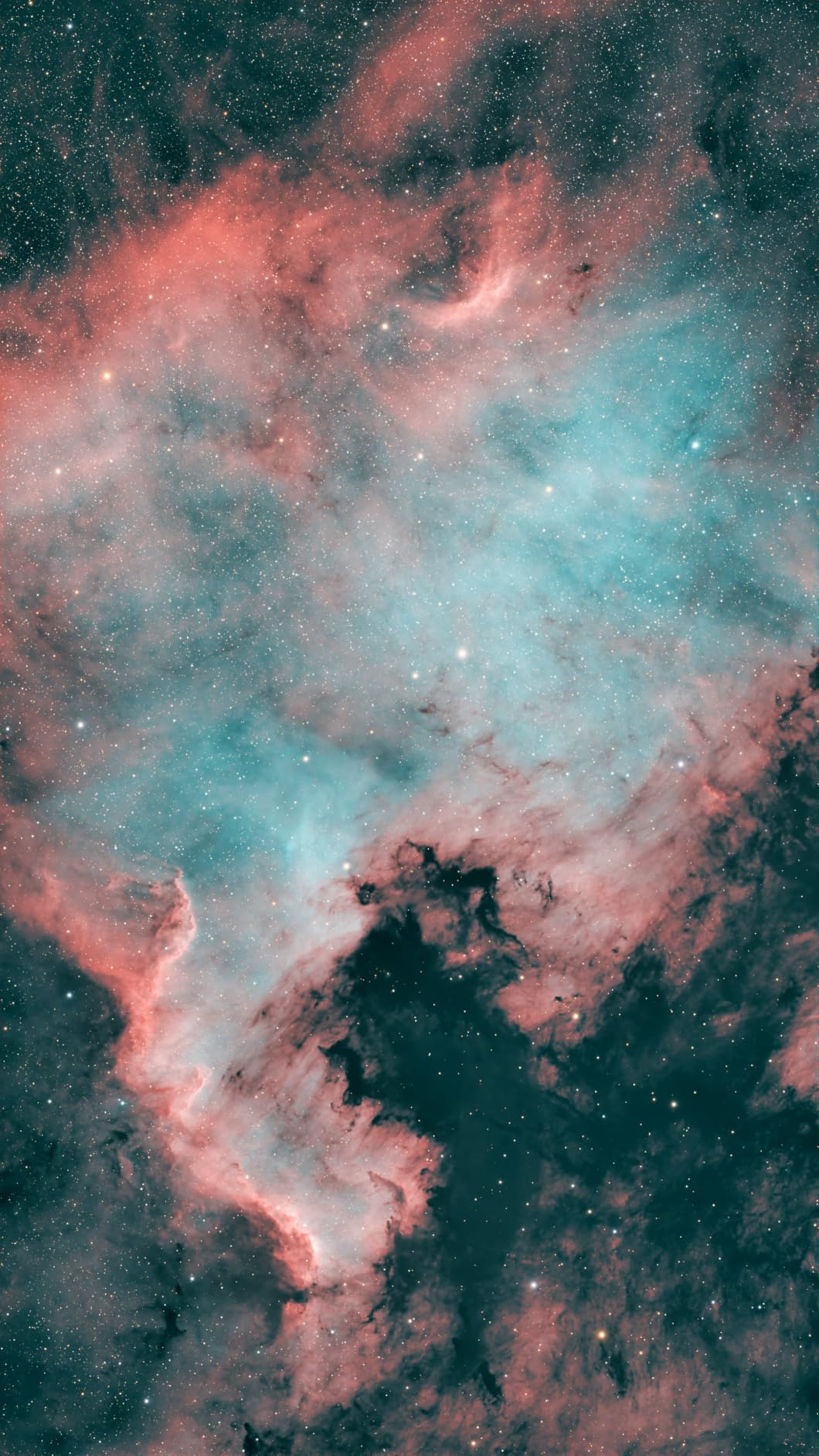
The counterweight bar and the 5 lb counterweight are what let this carry a heavier camera and telephoto combination than the smaller Sky-Watcher models. That is a genuine capability difference, not a spec-sheet trick. The two-year limited warranty is also the longest we saw in this group.
What you give up is portability in the strict sense. 44.5 inches of height needs real ground clearance, so a rocky ridge or a sloping bank becomes a problem. Reviewers aiming for ultralight travel consistently prefer the smaller Star Adventurer models over this one, and we agree for anyone who has to carry the kit.

Deciding between the GTi kit and the bare Star Adventurer
Choose the GTi if your destinations are reachable by car, if you are new to tracked astrophotography and want pointing without a red flashlight battle, or if you want a counterweighted bar for a telephoto. Choose the 2i Pro if every gram on your back counts, and if you are happy to frame wide-field targets manually.
Who should buy and who should skip
Buy it for car-camping, road trips and first-time tracked imaging. Skip it for backpacking, for flights with strict baggage limits, or for a kit that has to be carried more than a few hundred metres from the vehicle.
4. Explore Scientific iEXOS-100-2 PMC-Eight: two-axis tracking in a full system
iEXOS-100-2 PMC-Eight Equatorial Tracker System Tripod and Mount for Astrophotography with WiFi and Bluetooth Compatible
PMC-Eight control system
Eight operating CPUs
ExploreStars app for Apple Android Windows
Supplied tripod
Pros
- GoTo pointing through the ExploreStars app on three platforms
- Clutched dual-axis design makes balancing quick and repeatable
- Polar sight hole through the RA axis removes the separate polar scope
- Supplied tripod works as a complete system
- Quiet precision stepper belt drives
Cons
- Built around a full tripod rather than a travel tracker
- Steep first-run setup and software learning curve
- A 13 percent one-star share points to a meaningful cluster of reviews citing alignment or mechanical problems
- Usable only equatorially aligned so panoramas need reconfiguration
This is the only mount in the group that corrects both axes, and that is the reason to consider it. Dual-axis worm gears with clutched axes let you balance in minutes rather than sliding a counterweight, and a polar sight hole through the right ascension axis removes the separate polar scope from the kit entirely. Clutched axes are a genuine convenience when you are changing lenses in the dark.
The PMC-Eight control system runs on eight independently operating CPUs and speaks to the ExploreStars app on Apple, Android and Windows tablets, which is broader platform support than anything else here. GoTo pointing is a real advantage on a site you have never visited.
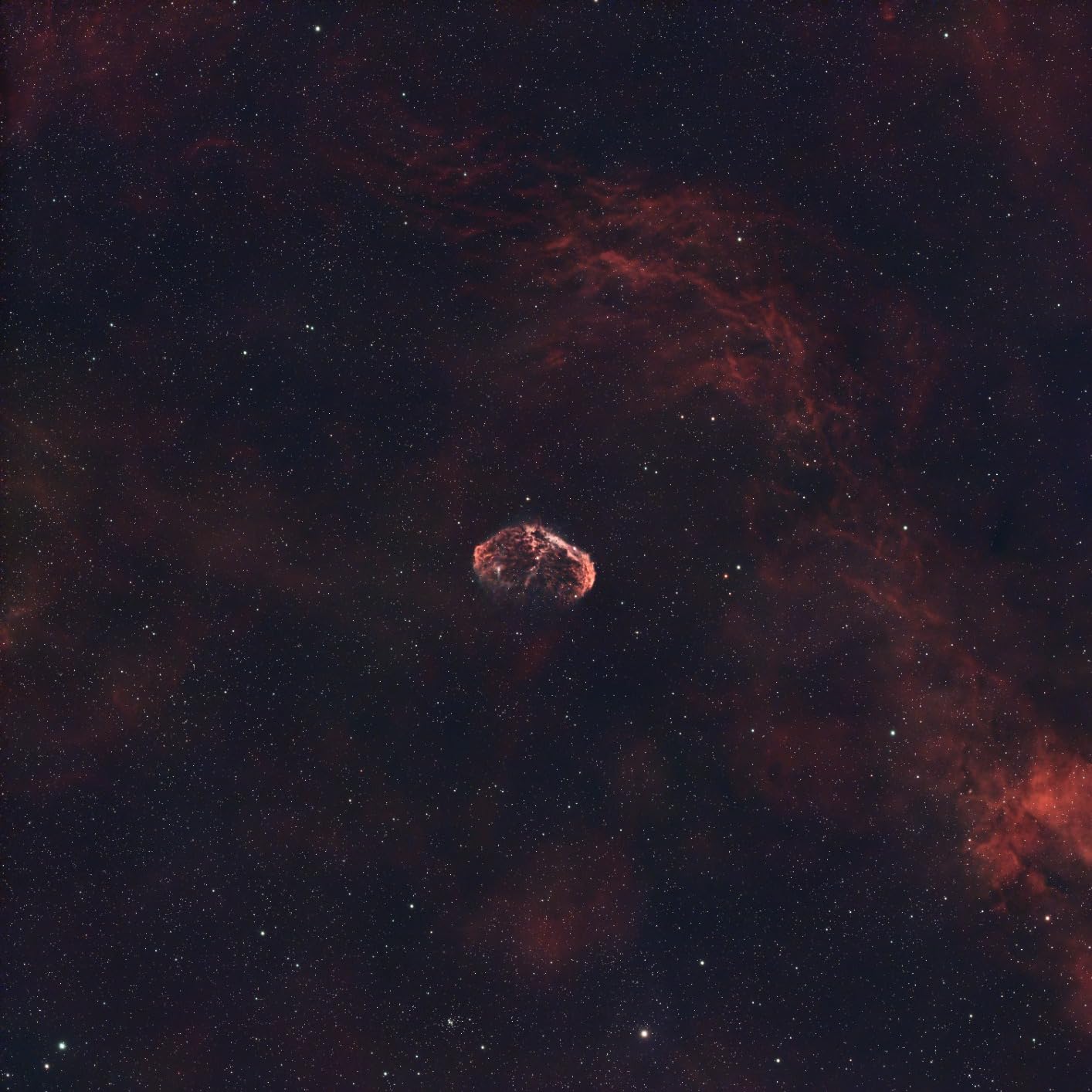
It is also the least portable item in the list. This is a tripod-mounted system, not a head that clips onto your existing legs, and the manufacturer does not publish a weight for the package. Owners who wanted something to hike with consistently picked the smaller trackers instead. The 13 percent one-star share is also the second highest in this lineup, and those reviews tend to reference alignment or mechanical issues, so allow time for support if something goes wrong.
One limitation catches travellers out: it only works when aligned equatorially, so tracked Milky Way panoramas need reconfiguration rather than a simple mode change. If panoramas are part of your plan, this is the wrong architecture.
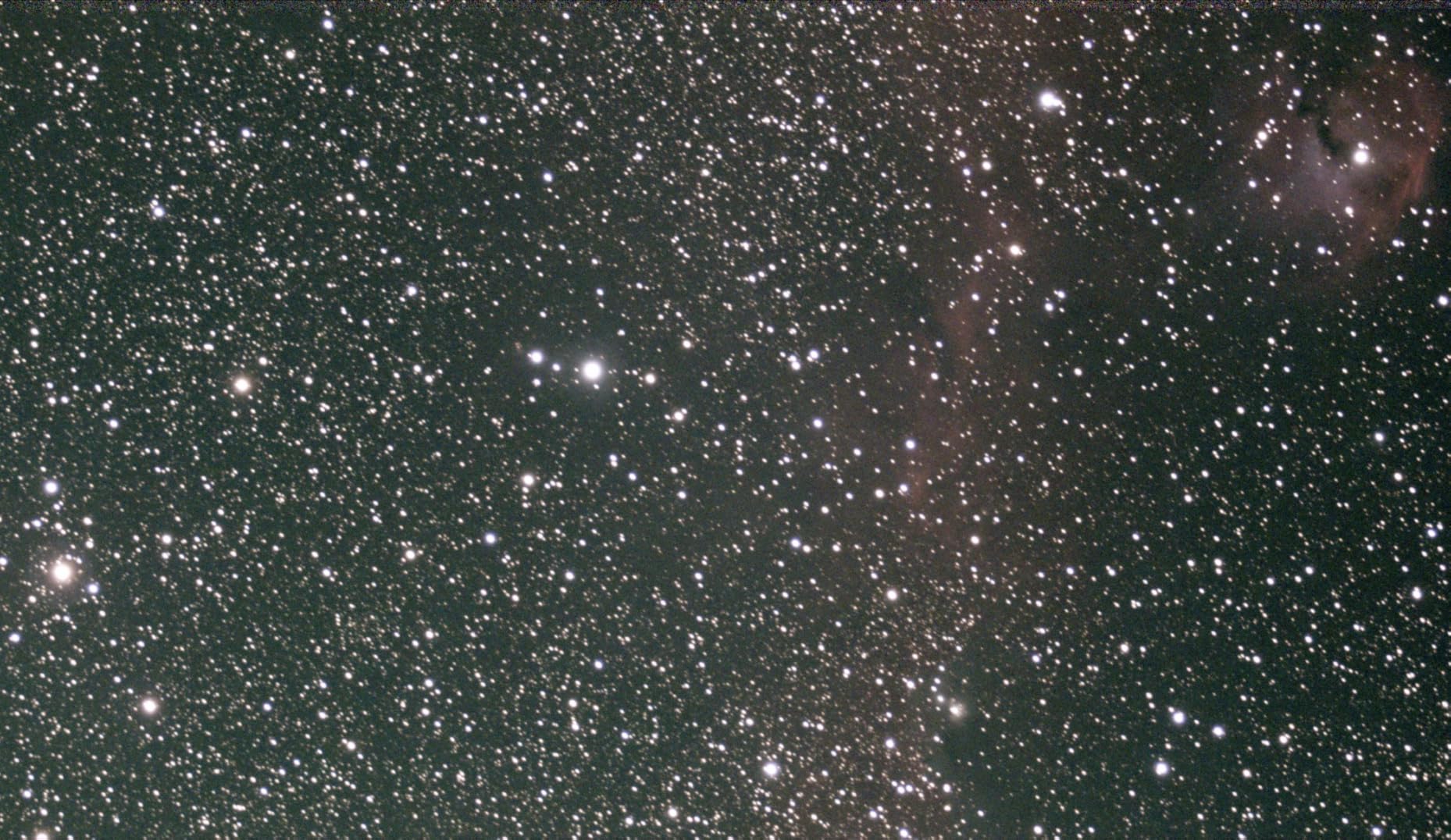
When two axes are actually worth it
Two-axis correction earns its keep when you are stacking long guided sequences on a long lens, or running unattended on a small refractor. For a three minute wide-field exposure, a well-aligned single-axis tracker is hard to distinguish from a dual-axis one. Most trailing we saw in owner reviews came from alignment and balance, not from missing a second motor.
Who should buy and who should skip
Buy it if your travel is car-based, you want GoTo, and you see yourself growing into guided imaging. Skip it if weight is the deciding factor, if panoramas matter, or if you want something you can assemble with one hand on a cold morning.
5. Omegon MiniTrack LX3 Bundle: the tracker with no battery at all
Omegon Mount Mini Track LX3 Bundle with Tripod Ball-Head Pro OM8
950 g with ball head
3 kg max load
Mechanical winding drive
100 mm focal length ceiling
Pros
- No battery and no electronics to charge or pair
- Integrated optical polar finder for gradated alignment
- Verified accuracy with 25 second frames stacking cleanly
- OM8 solid ball head included in the bundle
- Compact and genuinely portable
Cons
- Suggested focal length ceiling of about 100 mm
- No GoTo and no motorized slew
- Camera retaining screw is too short for a rigid fit
- Winding the ball head can shift camera alignment by about 15 degrees
The LX3 answers a question most roundups ignore: do you actually need a battery? This is a wind-up mechanical tracker, and one owner on Reddit described the practical benefit better than any spec sheet. Simplest and very lightweight, no batteries to fail in the cold, nothing to pair. At 950 grams for the tracker and the bundled OM8 ball head together, it is the lightest complete tracking solution in this roundup.
It is also accurate. Owners report verified tracking with 25 second frames stacking with sub-pixel drift, which is enough for wide-field Milky Way work and, with enough subs, a fair amount more. The integrated optical polar finder is the standout feature over the cheaper LX2, giving gradated rather than guesswork alignment.
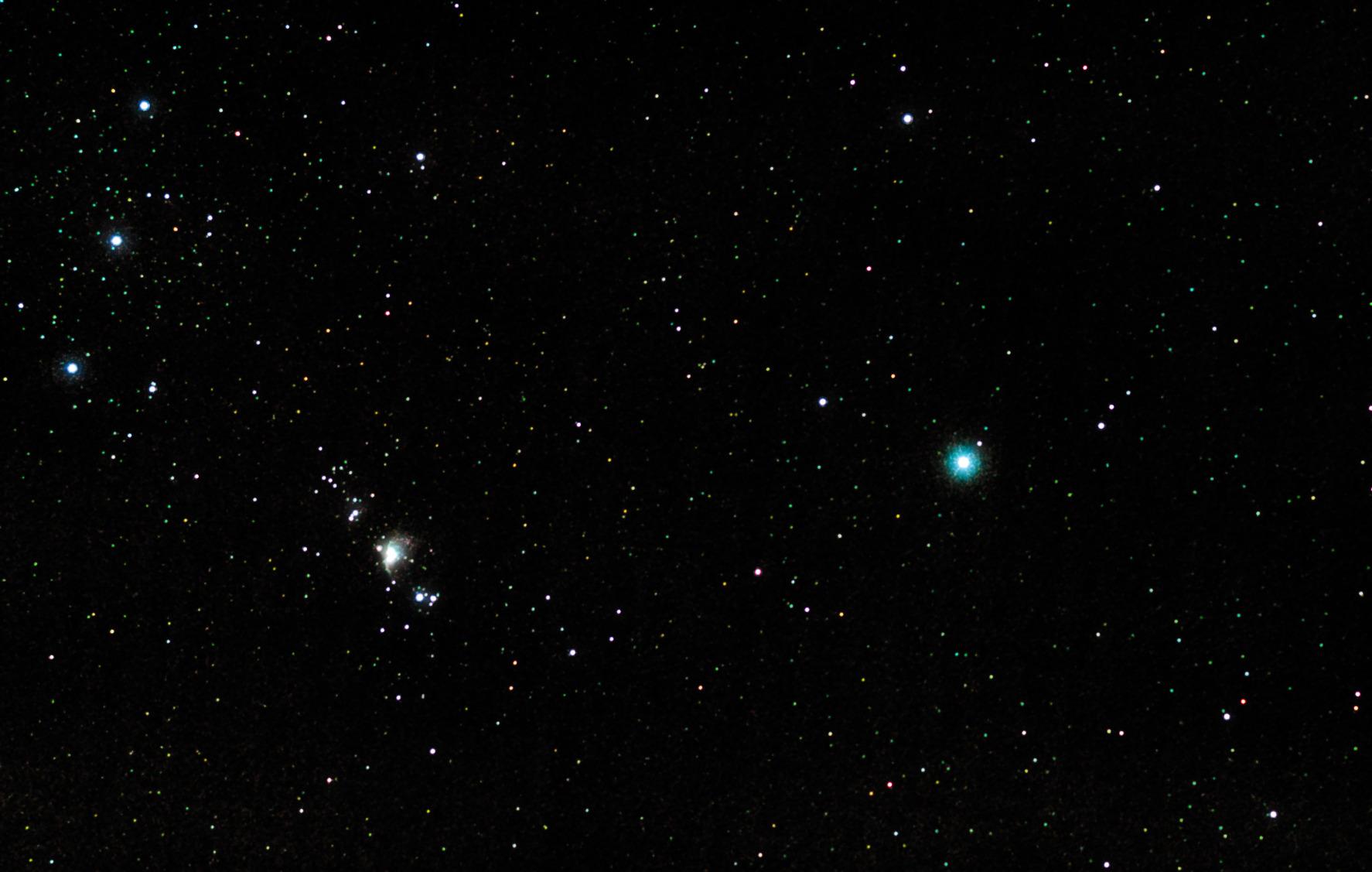
Two limits are worth knowing before you commit. The suggested focal length ceiling is around 100mm, so long lenses trail and this is a wide-field tool only. And the winding mechanism on the ball head can shift camera alignment by roughly 15 degrees, which is not documented in the manual and catches people out their first night. Check alignment after every wind, not just once at setup.
The camera retaining screw is also short enough to leave a camera slightly less rigid than you would like. Forum users consistently pair this tracker with a solid tripod, and that advice matters more here than with the motorised units because there is no second motor to smooth out flex.
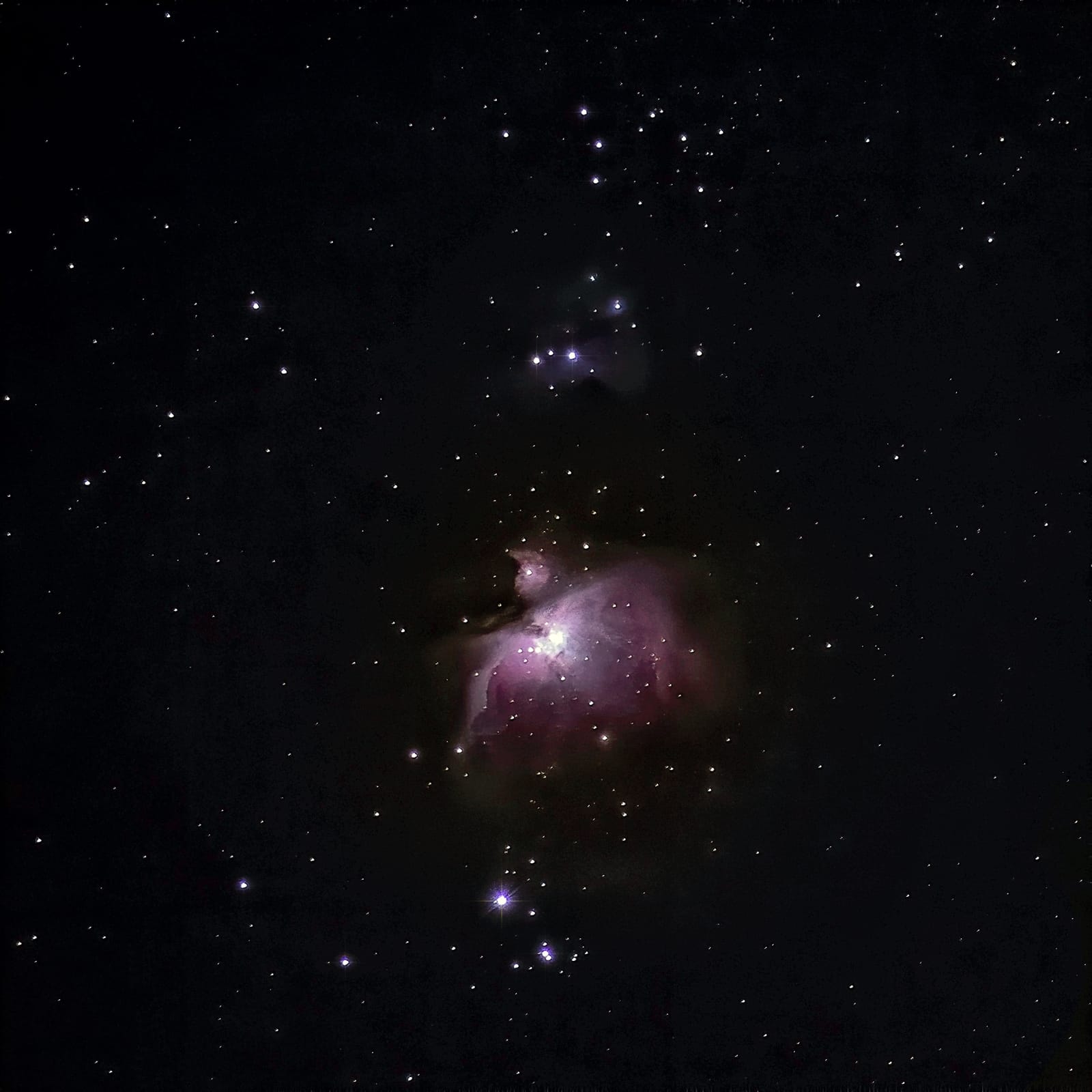
Wind-up versus electric on a long night
Electric trackers give you intervalometer control, exposure timers and app flexibility. The LX3 gives you something rarer: a device that cannot fail because its battery died at midnight in a desert. If you shoot wide fields at 20 to 30 seconds, that trade is easy. If you want programmable sequences, an intervalometer handles the timing and the wind-up drive does the tracking.
Who should buy and who should skip
Buy it if you hike, if you shoot with a prime wide lens, or if you simply distrust electronics in the field. Skip it if you want GoTo, if your lens is longer than about 100mm, or if you plan to run unattended sequences longer than a few minutes.
6. iOptron SkyTracker Pro: precise and compact, if you add a ball head
iOptron SkyTracker Pro Camera Mount with Polar Scope, Only
3 kg payload
3.3 lb packed weight
Folds to 115x115x95 mm
Micro USB, 80 percent in 5 hours
Pros
- Owners report clean 4 to 5 minute subs with pinpoint stars
- Dimmable LED polar scope in a small package
- Almost silent operation
- Many fine-tuning knobs make alignment fast
- Jog button helps with framing
Cons
- Heavy telephoto lenses need the separate counterweight package
- Ball head is not included and must be bought separately
- Alignment reference app is a separate purchase
- Swivel head rubber cushion slips under heavy loads
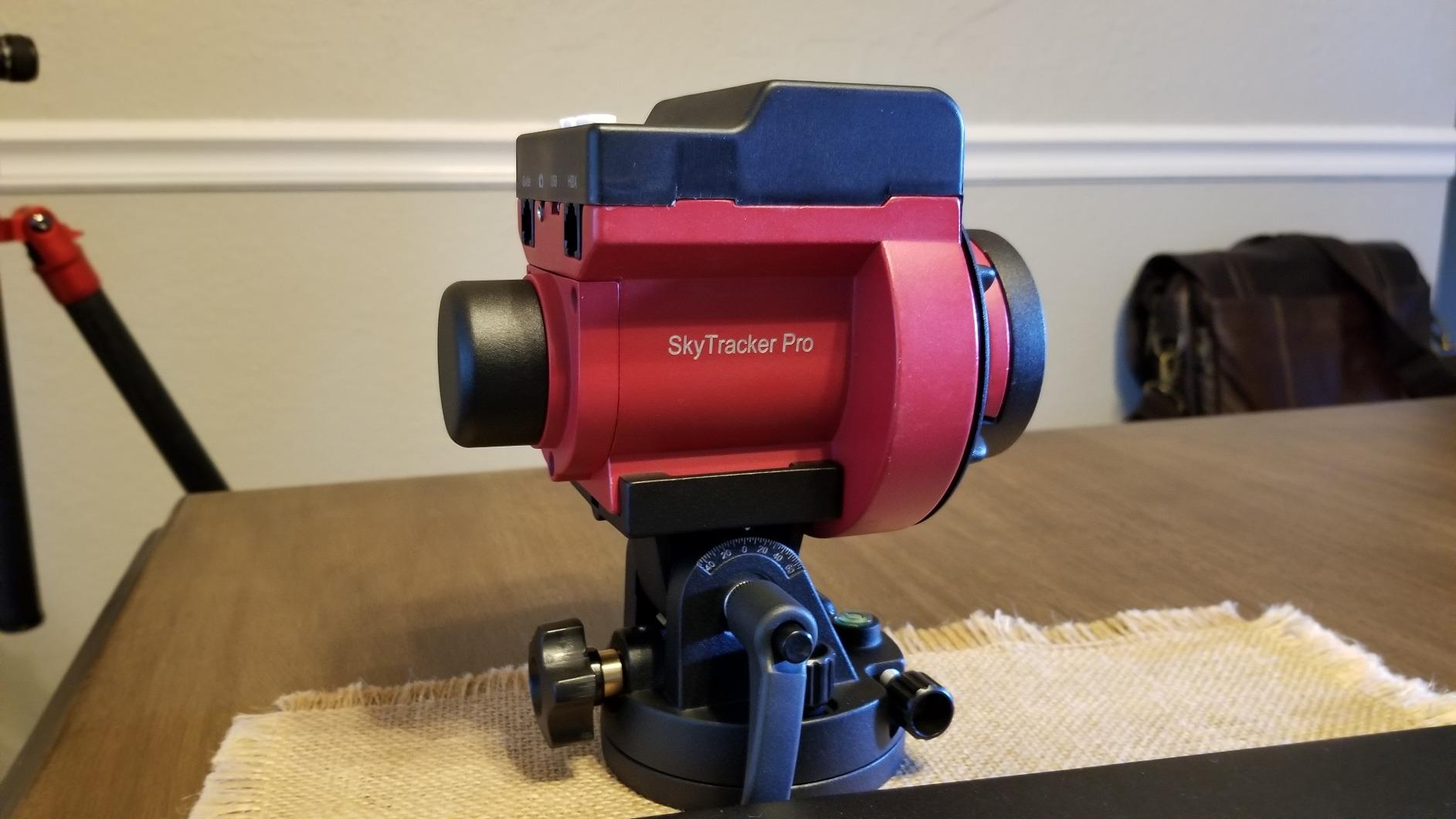
The SkyTracker Pro is the compact metal-ish middle ground, and its headline result is duration. Owners report 4 to 5 minute subs with pinpoint stars, which is the longest verified exposure in this group. That comes from a DC servo motor drive with a four-piece bearing assembly and a 600 second worm period, and it is the reason the drive is smooth enough to stack those frames.
At 3.3 pounds and folding to 115 by 115 by 95 millimetres, it is a genuine travel size. The dimmable LED polar scope is a nice touch for dark-sky work, since you can turn it right down and still see the reticle. Sidereal, half-sidereal, solar and lunar rates are all selectable, and micro USB charging reaches 80 percent in about five hours. A padded carrying bag is included.
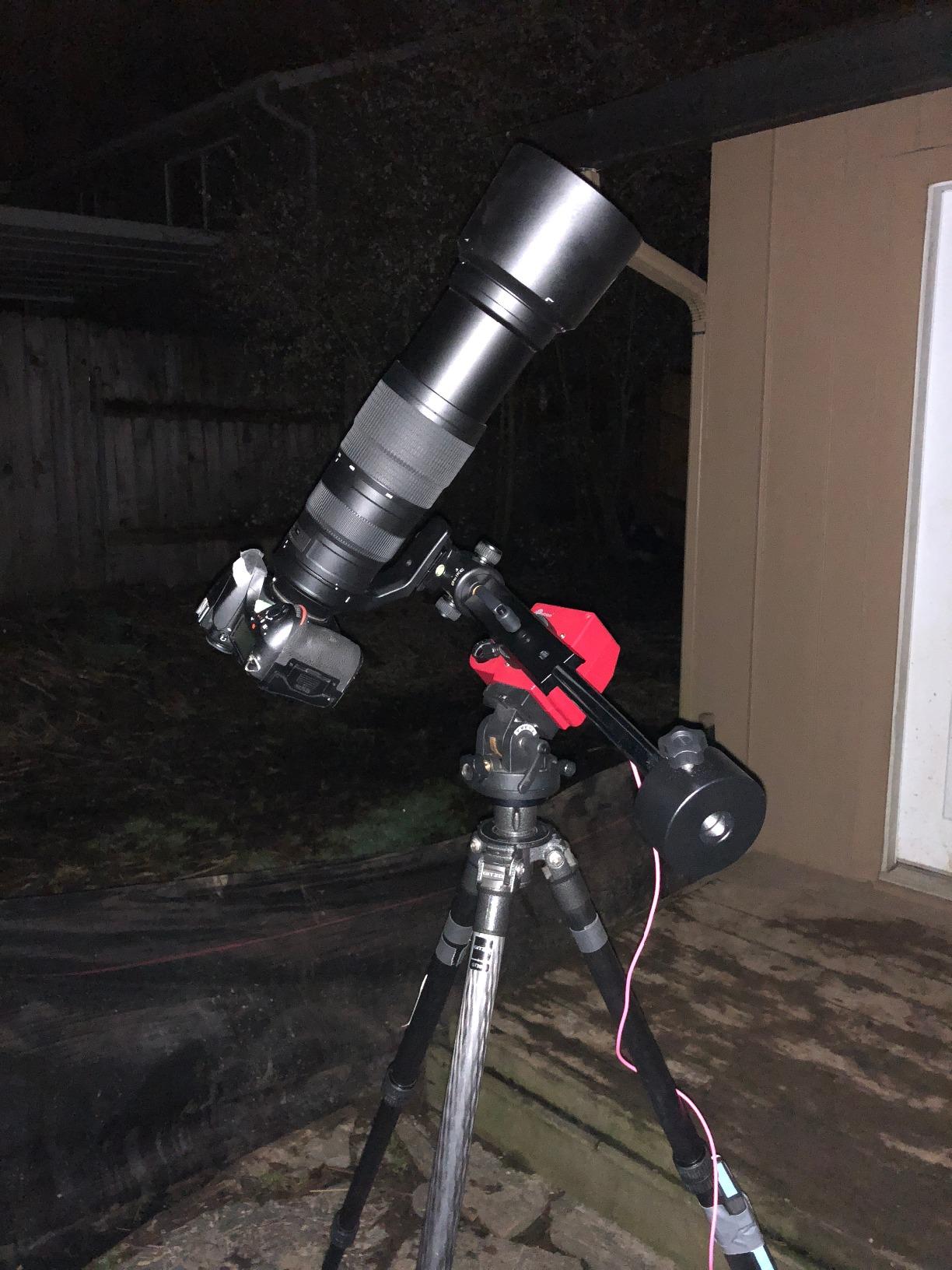
The catch is what is not included. The ball head is sold separately, as is the alignment reference app, so the real cost of this package is higher than the box suggests. Heavy telephoto setups also need the separate counterweight package to reach anywhere near the 3 kg ceiling. Owners flag the injection-molded plastic construction as less refined than the metal competitors, and the swivel head rubber cushion is hard to tighten once a heavy body is on it.
There is one compatibility wrinkle to check before you buy: the flat base will not mate with tripods that have a fixed polar index mark. If your current tripod has one, verify the fit first or plan on a wedge or adapter.
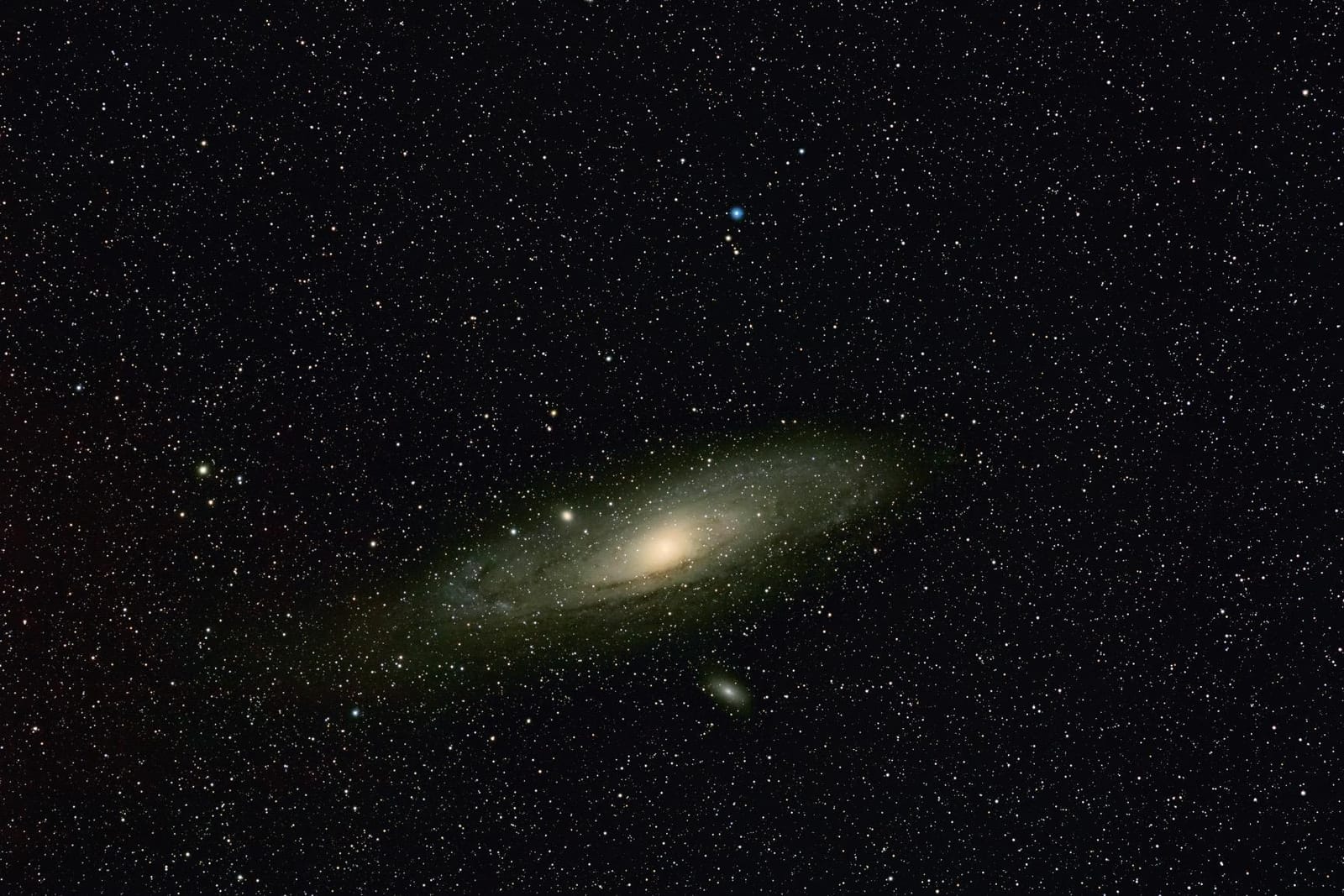
Judging a payload rating you will hit
The 3 kg figure is a limit, not a target. Add up your body, lens, battery grip, quick-release plate and any filter ring, and if you are close to the ceiling, the motors strain and frames warp. For wide-field work with a mirrorless body and a fast prime, you have comfortable room. For a full-frame body with a telephoto, budget for the counterweight package.
Who should buy and who should skip
Buy it if you want the longest clean exposures from a compact head and you already own a ball head. Skip it if you need the box to be turnkey, or if you want a body you can trust cold without checking the polar scope first.
7. Sky-Watcher Star Adventurer Mini: the smallest motorized pack
Sky-Watcher Star Adventurer Mini – Motorized DSLR Night Sky Tracking Mount For Nightscapes, Time-lapse, and Panoramas
1.5 lb head
6.6 lb payload
AA power up to 24 h, plus 5V mini-USB
6 x 6 x 5 in
Pros
- Smallest motorized tracker here at 1.5 lb
- Included illuminated polar scope makes alignment straightforward
- Works with any ball head through the included adapter
- AA compartment rated up to 24 hours plus USB external power
- Rugged brass and aluminum gears
Cons
- 6.6 lb payload limits it to lighter mirrorless kits
- Wi-Fi SynScan app adds a pairing step
- Still needs a tripod and ball head
- One-star share of 12 percent is the second highest in this group
The Star Adventurer Mini is bought for one reason: it is the smallest motorized tracker here, at 1.5 pounds in a 6 by 6 by 5 inch body, and the polar scope with illuminator is included. Owners pack it straight into a camera bag for nightscapes and time-lapse panoramas, then pair it with their own ball head through the included adapter. No extra head to buy.
Rugged brass and aluminum gears give it a smoother drive than plastic competitors of a similar size, and the AA battery compartment is rated up to 24 hours, with a 5V mini-USB input for external power if you carry a small power bank. Wi-Fi control through the SynScan app covers both Android and iOS.
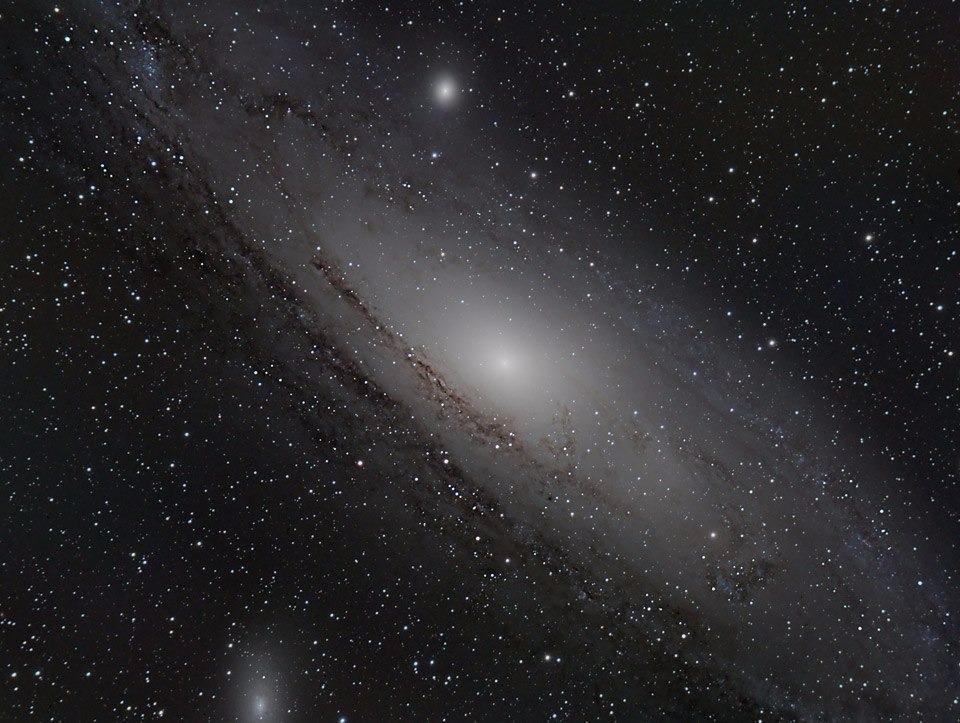
The payload ceiling of 6.6 pounds is the limit that shapes the whole product. That is enough for a lighter mirrorless kit with a wide or short telephoto lens, and not much more. The 12 percent one-star share in this listing is comparatively high, and it tends to reflect first-use setup friction and the realization that a tripod and ball head are still on your shopping list.
The SynScan app also adds a pairing step that purely mechanical trackers avoid, which matters if you are standing in the cold trying to fix a connection before astronomical twilight. Test the pairing at home, not at the site.
Choosing between the Mini and the 2i Pro
Both are Sky-Watcher platforms and both include a polar scope with illuminator, so the real question is payload and power. The Mini runs on AA cells, which many travellers prefer because spares are available anywhere, and its 24 hour rating covers several sessions. The 2i Pro runs on lithium metal power with a deluxe equatorial base and adds an autoguide port, at roughly three times the assembled weight.
Who should buy and who should skip
Buy it if you work with a light mirrorless kit, you want the smallest motorised option, and you value spares availability over lithium capacity. Skip it if you need a counterweight bar, a telephoto, or a guaranteed quiet app connection in the field.
8. Vixen POLARIE U: the travel tracker with an autoguide port
Vixen POLARIE U Star Tracker
0.58 kg
Five tracking speeds
ST4 autoguiding port on the RA axis
4 AA cells or USB-C external power
Pros
- Small and lightweight
- explicitly designed for travel
- Five tracking speeds for stars half-sidereal solar and lunar work
- ST4 port allows RA autoguiding with an external guider
- Smartphone shutter release removes the need for a separate intervalometer
Cons
- Thinnest review base in this lineup at 36 ratings
- Warranty is one year electronic and two year mechanical
- Autoguiding corrects the RA axis only
The POLARIE U is the most explicitly travel-designed mount in the group, and at 0.58 kilograms it is the second-lightest complete unit we recommend after the wind-up LX3. The dimensions are 4.53 by 2.83 by 3.48 inches, which means it fits into a jacket pocket rather than needing its own compartment. The supplied Super Plossl eyepiece has a 60 degree field of view and StarBright XLT coating, so polar alignment is done with the mount rather than an accessory.
Its distinguishing feature is the ST4 autoguiding port, which allows right ascension guiding with an external guider. Five tracking speeds cover stars, half-sidereal, solar and lunar rates, and the shutter release works from a smartphone, so an intervalometer sits in your pocket rather than your camera bag.
The evidence base is the thinnest here at 36 ratings, so long-term reliability is less well documented than for the Sky-Watcher and iOptron units. That said, the distribution is unusually clean: 63 percent five-star, 24 percent four-star, and no one-star ratings at all. Owners single out portability, the range of rates, the autoguide port and the app control.
Autoguiding here is right ascension only, so you correct the axis that dominates field error and leave declination alone. For wide-field work at short focal lengths that is a sensible trade. The warranty is one year on electronics and two years on mechanics, shorter than the two years Sky-Watcher offers.
Pocketable, but not the only thing in the bag
At 0.58 kg the mount itself is trivial to carry, but you still need a tripod, a ball head and power. Four AA cells or a USB-C external terminal covers that last part, and AA spares are the easiest battery to replace in a foreign country. The honest framing is that the POLARIE U makes the mount disappear, not the kit.
Who should buy and who should skip
Buy it if you want the smallest motorized setup with real hardware options, if you use an external guider, or if you prefer a mount with a physical eyepiece for alignment. Skip it if you want the widest range of owner feedback behind the product, or if you need a large payload rating.
9. Benro Polaris Astro Edition: a 3-axis smart head, not a tracker
Benro Polaris Astro Edition (3-Axis)(BR209)
7 kg payload
About 1.5 kg
IPX6 water resistance
24 hour average battery
Pros
- Only unit here with a motorized 3-axis head
- 7 kg payload is the highest capacity in this lineup
- Built-in Bluetooth app with remote preview and direct download
- 52 mm Arca-type base fits standard travel heads
- IPX6 sealing and a 24 hour average battery
Cons
- Lowest rating here at 3.4 with a 22 percent one-star share
- App-dependent control workflow adds friction
- Only 27 reviews so limited long-term field evidence
- Fixed-programmed automated modes rather than a true equatorial mount
The Benro Polaris is the one to understand before you buy. It is a motorized 3-axis smart head in CNC-machined aluminium and stainless steel, not a conventional equatorial tracking mount. It supports motion timelapse, panorama stitching, focus stacking, star tracking and crowd removal, controlled through a built-in Bluetooth app with remote preview and direct download to your phone. If your trip is as much about daytime panoramas and travel video as night sky, that range of modes has real value.
On pure specifications it is impressive where it counts. A 7 kg payload is the highest capacity in this roundup, the 52 mm Arca-type base fits standard travel heads, IPX6 water resistance handles drizzle and spray, and the average battery life is 24 hours with charging support. The head height is 4.3 inches.
The reason it sits at the bottom of our list is the reviews. At 3.4 with a 22 percent one-star share, this is the most divided product here, and 27 ratings is a very thin base on which to judge long-term field reliability. The star tracking mode is described by users as a fixed-programmed automated routine rather than a true equatorial tracking mount, which means it will not deliver the exposure discipline of a dedicated tracker on a long lens.
App dependence is the other real cost. If the connection is unreliable, you lose field time, and there is no mechanical fallback. That risk is higher in cold, wet conditions than the IPX6 rating alone would suggest.

When a smart head beats a star tracker
Choose it when you shoot daytime panoramas, motion timelapse and stacked focus shots as often as you shoot the night sky, and when you want one device to cover all of it. Choose a dedicated tracker when the night sky is the whole point and you want multi-minute exposures with predictable results. A 7 kg payload does not help if the axis is not equatorial.
Who should buy and who should skip
Buy it for mixed travel shooting and heavy rigs, and if you are comfortable debugging an app before a session. Skip it for pure astro imaging, for long lenses, or if you want the strongest track record of owner satisfaction in the group.
How to Choose a Portable Star Tracker for Travel
Work through these in order. The first two questions eliminate most of the list before you read a single specification.
1. What is your real packed weight? Bare tracker weight is marketing. Add the tripod, the ball head or wedge, the counterweight bar and weights, the camera and lens, the battery or spare cells, and a dew heater if you shoot in humid air. The LX3 at 950 grams and the POLARIE U at 0.58 kg are genuinely small additions to a kit. The GTi kit at 26 pounds is a complete system, not an addition to one.
2. Can you carry it from the car? Decide honestly whether you hike in, walk a kilometre from a road, or park beside the site. Everything under about 3 kg for the tracker head is a packable choice. Above that, you are carrying it in a bag and it belongs in a car.
3. How heavy is your actual payload? Body, lens, grip, plates and filters all count. Stay comfortably under the stated rating, ideally at 60 percent of it, because an overloaded motor produces warped stars before it produces an error message.
4. What focal length do you shoot? Wide-angle work up to about 100mm is what the LX3 and the small trackers handle. Around 200mm you want a stable drive and careful balance. Beyond that, or for small deep-sky objects, look for an autoguide port or step up to a compact equatorial mount.
5. How will you align in the dark? Options run from a mechanical optical polar finder with a gradated scale, through an integrated illuminated reticle you turn down low, to a laser or app-assisted routine. A small illuminated scope you can dim beats a bright one you cannot, and a mechanical finder beats a phone app when your hands are cold.
6. What power plan fits the trip? AA cells are easy to replace anywhere and add weight, lithium cells run longer and lighter but are less universal. Charge over USB where the mount allows it and carry a small power bank for the sites with no power. Plan for cold: internal batteries lose usable capacity in near-freezing air, so treat the quoted 20 hour figure as a warm-weather number.
7. Do you need pointing? GoTo saves real time on unfamiliar sites but adds app pairing, firmware and failure surface. If you are new, or visiting somewhere new each trip, that trade is usually worth it. If you return to known coordinates, a precise manual drive is better value.
Two more things that affect a travel kit more than most roundups admit. First, wind: a tall light tripod on a coastal ridge will vibrate enough to soften stars, so tripod stiffness matters more than a tracker’s headline spec. Second, moisture: if you are camping, a small dew heater band and a lens cloth protect more of your session than any alignment upgrade. For long drives to remote sites, our portable generator guide covers the other half of that kit, for multi-night camping trips our portable water tank picks are worth a look before you leave town, and if the trip runs long enough to need a proper wash, our portable shower reviews cover that end of camp setup.
Frequently Asked Questions
What is the best star tracker?
For most people shooting nightscapes and wide-field Milky Way work, the Sky-Watcher Star Adventurer 2i Pro Pack is the strongest all-round choice, with 609 owner ratings behind it, a wide polar alignment latitude range, built-in Wi-Fi and an autoguide port. If build quality and long exposures matter most, the iOptron SkyGuider Pro is the step up. If you need zero battery weight, the Omegon MiniTrack LX3 is the lightest complete option.
How accurate are portable star trackers?
A correctly polar-aligned and properly balanced single-axis tracker will hold pinpoint stars on exposures of 3 to 5 minutes with lenses up to about 200mm. The Omegon LX3 is documented by owners stacking 25 second frames with sub-pixel drift, and the iOptron SkyTracker Pro is reported clean at 4 to 5 minute subs. Nearly all trailing complaints in owner reviews trace to poor alignment or an unbalanced rig rather than to a faulty drive.
What is the best portable telescope mount for travel?
For travel, the deciding factor is total packed weight rather than payload or GoTo. Anything under about 3 kg for the mount head can be carried on a hike, while full tripod systems in the 20 to 26 pound range are car-based. The Vixen POLARIE U at 0.58 kg and the Omegon LX3 at 950 grams are the most packable complete units here, and both pair easily with a small travel tripod.
How do you polar align a star tracker in the field?
Set the tripod level, adjust the mount’s latitude and azimuth so the polar axis points at the celestial pole, then use the polar scope or finder to centre the pole star on the reticle. Integrated illuminated scopes such as the AccuAlign on the iOptron SkyGuider Pro and the included scope on the Star Adventurer Mini are dimmable, which protects night vision. Expect a learning curve on your first few sessions, and align before the camera is mounted when the illuminator bracket is in the way.
Can you use a star tracker with a mirrorless camera and a wide lens?
Yes, and that is the most common travel combination. A mirrorless body with a fast wide or short telephoto prime stays well within the payload rating of every tracker in this roundup, which is why most of them quote 3 kg to 7 kg ceilings. Check the body plus lens plus grip plus quick-release plate against the rating and stay near 60 percent of it, then balance the rig before you balance anything else.
Do I really need a star tracker for Milky Way photographs?
A tracker is what separates a noisy single wide frame from a clean stacked Milky Way. Without one, the 500 rule limits you to roughly 15 to 30 seconds at wide focal lengths, which forces high ISO and produces soft, noisy results. With one, three-minute subs collect far more light per frame. For some events, such as meteor showers or aurora, a tracker adds little and you are better off with a plain tripod and a fast wide lens.
Conclusion: The Tracker to Pack for Your Next Trip
The best portable star trackers for travel resolve into three clear answers. The Sky-Watcher Star Adventurer 2i Pro Pack is the one to buy for the widest range of travel nightscapes, backed by the deepest owner record in the group. The iOptron SkyGuider Pro is the better mount if your tripod is already good and you want a metal drive holding long exposures. The Omegon MiniTrack LX3 is the answer when the trip involves walking, cold and no power.
Everything else in the list is a specialist worth knowing: the GTi kit for car-based GoTo work, the Explore Scientific system for two-axis guiding, the SkyTracker Pro for the longest compact exposures, the Star Adventurer Mini for the smallest motorized pack, the POLARIE U for the autoguide port, and the Benro Polaris if your trip is about travel video as much as it is about the Milky Way.
Whichever you pick, align it at home, balance it at home, and check the app pairing at home. In 2026 that ten minutes of preparation is still the difference between clean stars and a night spent wondering what went wrong.