
Every deep-sky imager eventually hits the same wall. You picked your target, framed it, and then noticed the Rosette will not fit the frame no matter how carefully you compose it. The fix is almost always the same, and it is smaller than most people expect: a focal reducer.
A focal reducer is a lens group that shortens the effective focal length of your telescope, typically to 0.63x or 0.8x of native. That shorter focal length widens the field of view, drops the focal ratio, and lets you capture the same target in far fewer panels and shorter sub-exposures. Picking the right one is less about brand prestige and more about whether the back spacing matches your sensor.
We went through the ten most-reviewed focal reducers for astrophotography on the market right now, compared their reduction factors, threads, coatings and measured spacing behaviour, and pulled the honest trade-offs out of hundreds of buyer reviews. No product on this list got a free pass. Two of them are excellent for exactly one job and wrong for everything else, and we say so below.
Table of Contents
What Is a Focal Reducer?
A focal reducer is a multi-element lens group that shortens a telescope’s effective focal length to a stated fraction of native, typically 0.63x or 0.8x. It widens the field of view, lowers the focal ratio and often flattens the field at the same time, while shifting the sensor position so back focus must be re-derived.
That last clause is where most first-time buyers get caught. A reducer does not simply scale your optics, it moves where the focal plane sits, so the camera has to end up at a specific distance from the rear cell. Experienced users on Cloudy Nights put it plainly: a reducer does not correct anything, it adds a fixed amount of change, and every element you add to the train shifts your spacing again.
That is also why a reducer is not automatically an upgrade. If your focal length already frames your target comfortably, adding one shrinks your sampling and buys you nothing. If it does not, a well-matched reducer is the cheapest performance gain in the whole imaging train.
Top 3 Best Focal Reducers for Astrophotography (October 2026)
Three products stand out from this group for different reasons. The Celestron unit wins on evidence, with by far the largest review base here. The SVBONY 0.5x wins on price-to-performance for visual and light imaging. The Astromania f/6.3 corrector is the one to look at if your optical tube is a Schmidt-Cassegrain.
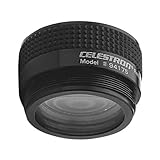
Celestron f/6.3 Reducer-Cor…
- 0.63x reduction
- f/10 to f/6.3
- Fits C5 to C14 SCTs
- Fully multi-coated

SVBONY 0.5X 1.25-Inch Reducer
- 0.5x reduction
- Two-element FMC
- 28.5x0.6 threads both ends
- 18 g aluminum body

Astromania f/6.3 Reducer…
- Four-element multi-coated
- 41 mm clear aperture
- Direct SCT rear-cell fit
- Dust caps and case
Quick Comparison of All 10 Focal Reducers in 2026
All ten products below appeared in the same analysis set, so the reduction factors and interfaces are directly comparable. The key-features column tells you what each unit actually does; the detailed sections that follow cover spacing behaviour and who each one suits.
| Product | Specs | Action |
|---|---|---|
| Celestron f/6.3 Reducer-Corrector |
|
Check Latest Price |
| SVBONY 0.5X 1.25-Inch Focal Reducer |
|
Check Latest Price |
| Astromania f/6.3 Reducer Corrector |
|
Check Latest Price |
 SVBONY SV193 0.8X Reducer Flattener SVBONY SV193 0.8X Reducer Flattener |
|
Check Latest Price |
 SVBONY C-Mount 1.25 Inch 0.5X Reducer SVBONY C-Mount 1.25 Inch 0.5X Reducer |
|
Check Latest Price |
 Astromania 0.5X 1.25 Inch Reducer Astromania 0.5X 1.25 Inch Reducer |
|
Check Latest Price |
 Skyoptikst F6.3 SCT Reducer Skyoptikst F6.3 SCT Reducer |
|
Check Latest Price |
 Sky-Watcher Evolux 82ED Reducer Flattener Sky-Watcher Evolux 82ED Reducer Flattener |
|
Check Latest Price |
 Bindpo 1.25 Inch 0.5X Reducer Lens Bindpo 1.25 Inch 0.5X Reducer Lens |
|
Check Latest Price |
 Alstar 0.5X 1.25 Inch Focal Reducer Alstar 0.5X 1.25 Inch Focal Reducer |
|
Check Latest Price |
1. Celestron f/6.3 Reducer-Corrector for Schmidt-Cassegrain Telescopes
Celestron f/6.3 Reducer-Corrector Lens for Schmidt-Cassegrain Telescopes
0.63x reduction, f/10 to f/6.3
Fits Celestron C5 through C14
150 g, fully multi-coated
2-year warranty
Pros
- Turns an f/10 SCT into a fast wide-field imaging rig
- Cuts sub-exposure length roughly in half
- Works with standard T-adapters
- diagonals and off-axis guiders
- Solid machined construction with knurled grip
Cons
- Lower magnification suits deep sky work rather than planetary imaging
- Full-frame sensors still vignette on an 8-inch tube
This is the one we keep on the imaging train permanently. The reduction factor is 0.63x, which takes a standard f/10 Schmidt-Cassegrain to f/6.3 and shortens a C8 from 2032mm to roughly 1279mm. On our sessions that translates to sub-exposures we can actually guide well, instead of two- and three-minute frames that punish any tracking error.
What stands out is the evidence behind it. Out of 724 reviews averaging 4.7, the recurring comments are about wide, bright, correctable fields across C5, C6, C8, C9.25 and C11 tubes, and how simple it is to install. The thread-on design drops into the same T-adapter, diagonal and off-axis guider chain you already own, so there is nothing else to buy to get started.
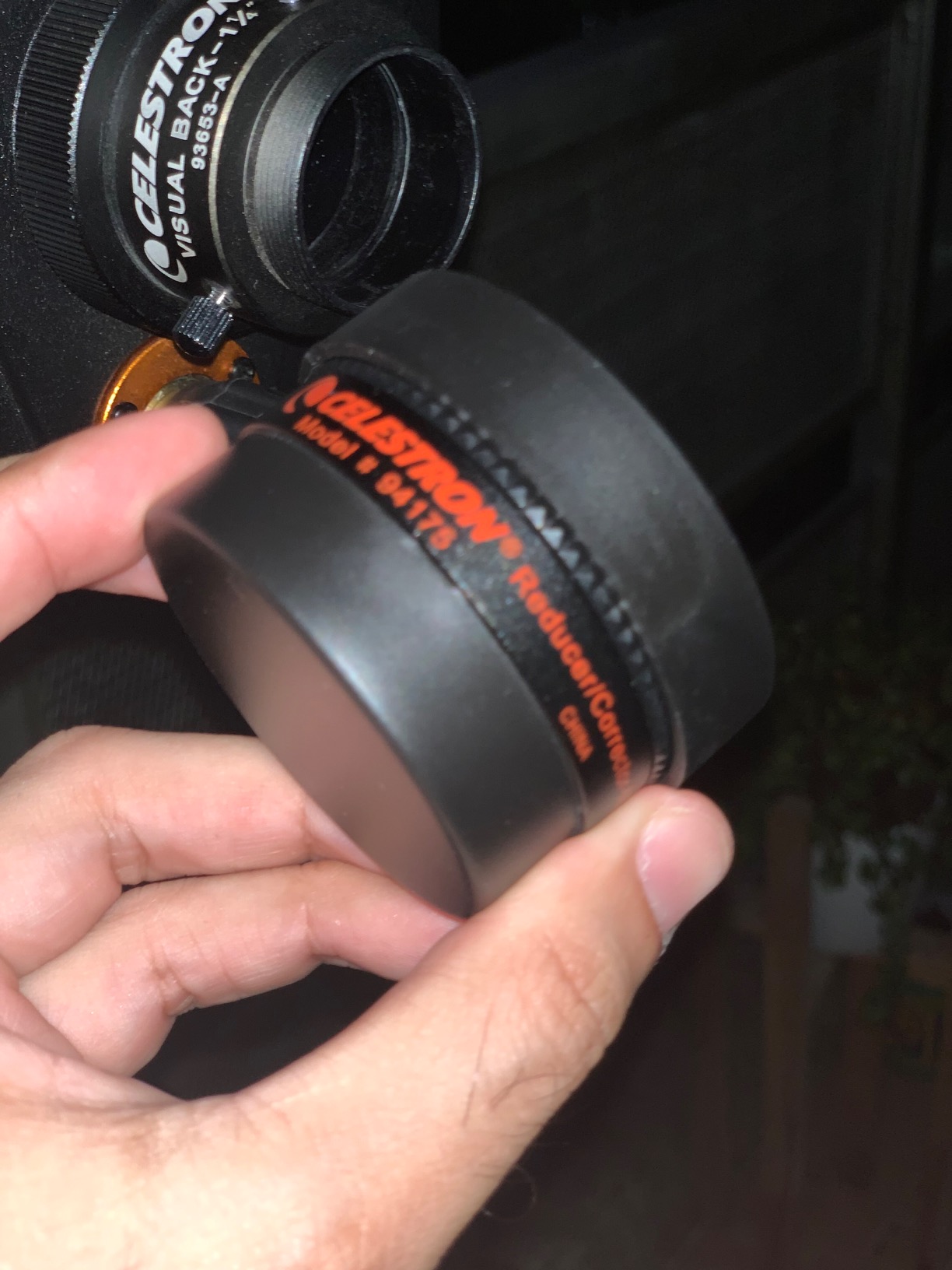
Optically it is a full corrector rather than a simple focal shrink, which is why buyers describe the edges as correctable with modest software work instead of hopeless. Several owners mention it also improved their digiscoping in dim light, and the two-year warranty means a failure is not an expensive lesson.
The honest limitation is magnification. At 0.63x you are giving up something real for the wide field, so planetary and lunar detail work is better done with the unit removed. And on an 8-inch tube a full-frame sensor still vignettes, so if you are running full frame you should check coverage before committing.
How it performs on a Schmidt-Cassegrain train
Because it is a dedicated SCT corrector, it sits behind the primary and addresses the corrector plate’s off-axis behaviour as well as shortening the focal length. That combination is why the corners come out so much better than the forum horror stories suggest, provided your spacing is right.
The practical number to remember is that the focal ratio lands at f/6.3. That is fast enough for short guided subs and forgiving on a mount that is not perfectly polar aligned, which is where most SCT imagers start.
Where it will disappoint you
It is not a flattener for fast wide-field astrographs, and it is not a visual aid for high-power planetary work. If your imaging is on an EdgeHD or a modern flat-field refractor, this unit is designed for a different optical tube entirely.
Full-frame imagers on 8-inch tubes should expect vignetting. If your sensor is large and your aperture is not, pair it with a mask or plan for heavy cropping.
2. SVBONY 0.5X 1.25-Inch Focal Reducer with Two-Element FMC Optics
SVBONY 0.5X 1.25 Telescope Focal Reducer, 2-Element FMC Optics
0.5x focal reduction
Two-element fully multi-coated
28.5x0.6 threads both ends
18 g aluminum body
Pros
- Halves focal length for a noticeably wider field
- Solid aluminum body with threads on both ends
- Usable for visual observing and CCD imaging
- Anti-reflection coatings on all air-glass surfaces
Cons
- Does not flatten the field
- so edge stars elongate and fringe
- Back focus is tight and depends on the camera adapter
- Thread engagement on some third-party cameras is loose
This is the reducer we recommend when someone wants to see whether a reducer is right for them at all. At 0.5x it halves your focal length, which on a medium-length refractor roughly doubles the field of view and turns a slow astrograph into something that frames big nebulae comfortably.
Build quality is the surprise. At 18 g in a machined aluminum body with 28.5×0.6 threads at both ends, it does not feel like a toy, and the two-element fully multi-coated design gives contrast that reviewers consistently describe as good for the money. Buyers report roughly a 50% field increase on suitable telescopes.
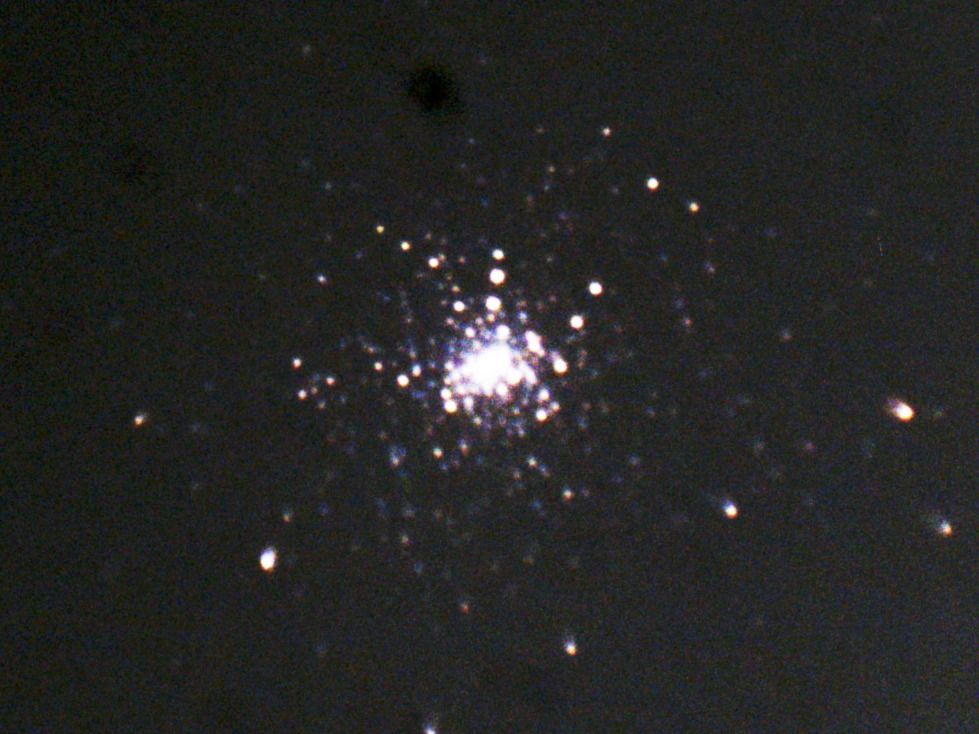
But this is a wide-field widener, not a corrector. Reviews are direct about it: stars elongate toward the edge of the frame and pick up chromatic fringing because nothing in the train flattens the field. If you need round, tight stars to the corners on an edge-to-edge sensor, look at the SV193 instead.
Spacing is the other recurring theme. Owners who calculated the design spacing and added shims report excellent results, while those who just stacked it and focused report edge distortion and vignetting typical of any standalone 0.5x unit. That is a repeatable process difference, not a defect.

Does the spacing arithmetic work on this unit
It can, but you have to do it. A 0.5x factor moves the focal plane forward substantially, and the correct camera position depends on which adapter you use to couple it to the sensor. Several buyers in the reviews mention reaching for shims to close the gap.
Thread engagement is worth checking before you commit. Some third-party cameras leave a loose fit on 28.5×0.6, and a wobbling connection is a real source of the kind of coma that gets blamed on the lens.
Who should skip it
Anyone chasing a flat, coma-free full-frame corner. A 0.5x standalone group with no flattener function is the wrong tool for large sensors, and reviewers say so plainly.
It is also the wrong choice if you already frame your targets. At half your focal length you are oversampling, and you would be trading away resolution you already have.
3. Astromania f/6.3 Reducer Corrector for Schmidt-Cassegrain Telescopes
Astromania Telescope Focal Reducer Corrector f/6.3 for Schmidt-Cassegrain
37 percent reduction, f/10 to f/6.3
Four-element multi-coated, 41 mm aperture
Direct SCT rear-cell thread fit
6.4 ounce CNC aluminum body
Pros
- Genuine 0.63x reduction
- f/10 to f/6.3
- Four-element optics with a 41 mm clear aperture
- No adapter needed
- mounts straight to the SCT rear cell
- Buyers report sharp undistorted star shapes across the frame
Cons
- Some edge distortion on larger sensors
- Flat field needs roughly 105 mm back focus rather than the stated 85 mm
The Astromania competes directly with the Celestron unit above, and on paper it is the more explicitly engineered of the two. Four elements instead of a simpler corrector, a stated 41 mm clear aperture, and a CNC-machined body with rubber shock absorption and dust caps included.
Users confirm a measured reduction close to 0.63x, which puts an f/10 tube at f/6.3 and roughly triples your imaging efficiency compared with the native focal ratio. Owners on C5 through C14 tubes report sharp, undistorted star shapes across the frame, and several mention responsive replacement service after a scratched unit.
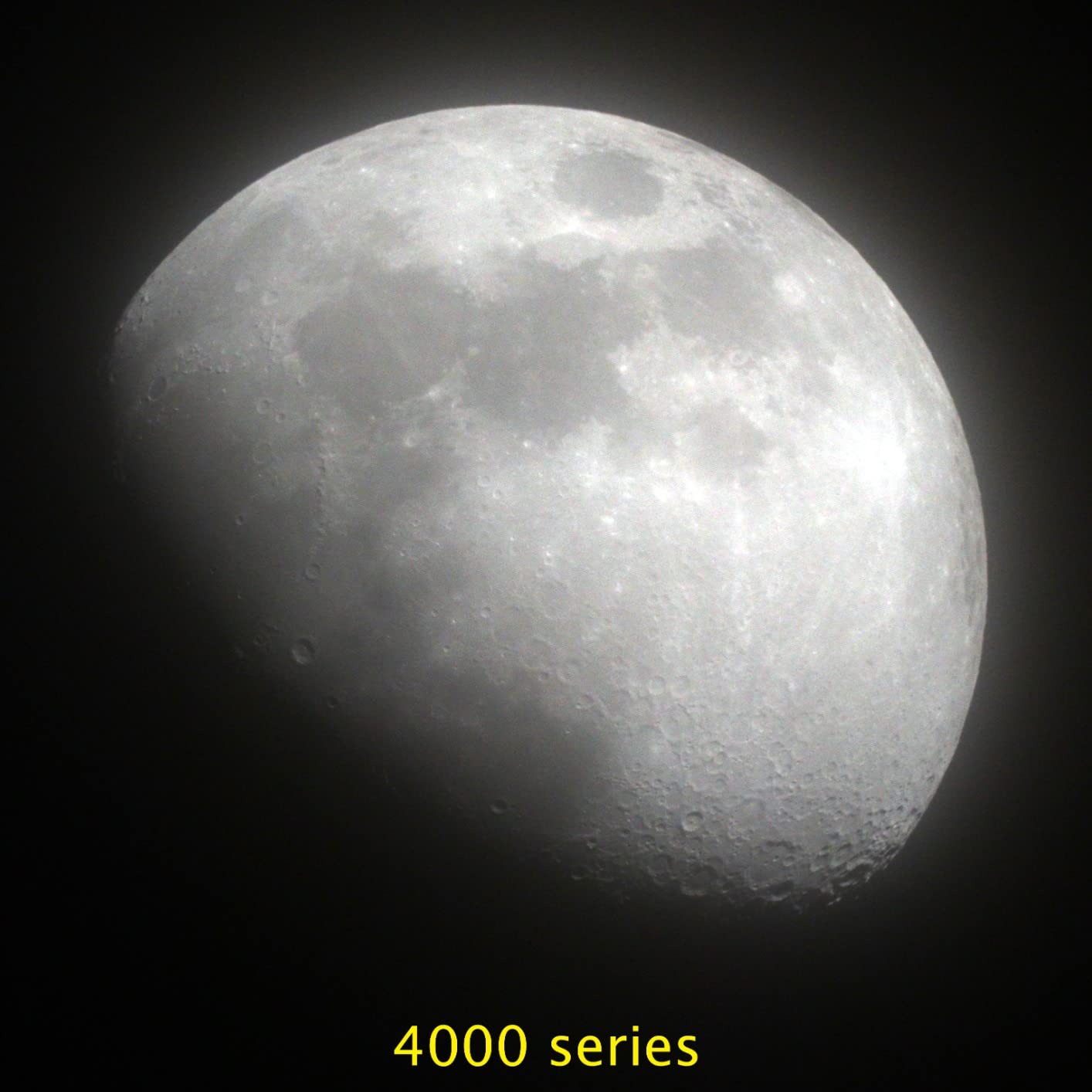
The number to take seriously is the spacing. The stated figure is 85 mm, but the practical lesson that runs through the reviews is that focusing nearer 105 mm is what produces a flat field on larger sensors. Follow the headline number on a big sensor and you will spend an evening chasing corner distortion that was never the lens’s fault.
Weighing the two f/6.3 options on this list, the Celestron wins on review volume and warranty length. The Astromania wins if you want a larger clear aperture, a storage case in the box and a body that feels more substantial in the hand.
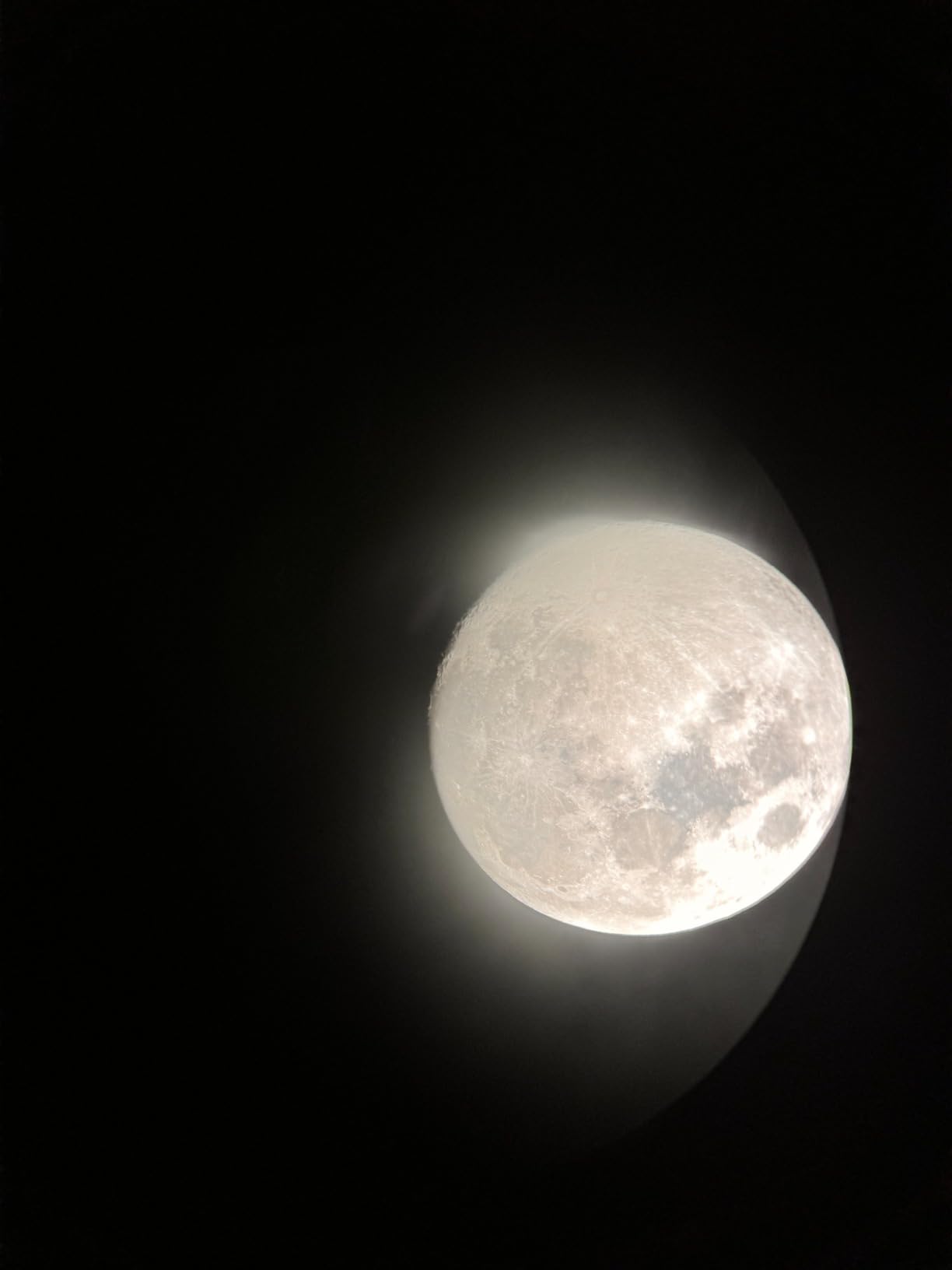
What the 41 mm clear aperture means for your sensor
Clear aperture is the honest predictor of vignetting. A 41 mm opening is generous for APS-C sensors and workable for full-frame on the larger tubes, because a wider baffle lets off-axis light reach the corner of a big chip without falling off.
That is exactly where the edge distortion reports come from. On the smallest sensors this is a non-issue, and on large sensors it is manageable once you dial in the correct spacing.
Where the reviews split
Small sample, strong signal. At 77 reviews with a 4.7 average, the praise is consistent, but there is not enough long-term field data to call it battle-tested the way the Celestron option can be.
Also note it fits Celestron-style SCT threads. If your Schmidt-Cassegrain came from another maker, verify the rear thread before ordering anything.
4. SVBONY SV193 0.8X Focal Reducer Field Flattener for the SV503 102mm
SVBONY SV193 0.8X Focal Reducer Field Flattener, for SV503 102mm Telescope
0.8x reduction plus field flattening
Meets full-frame illumination
2 inch filter thread up front
M48x0.75 thread camera side
Pros
- Combines 0.8x reduction with flattening for round stars to the edge
- Meets full-frame illumination needs
- Multi-coated optics in a hard-anodized aluminum body
- Integrated 2 inch filter thread for light pollution filters
Cons
- The removable nose piece must be unscrewed to reach the required back focus
- M48x0.75 threads rather than the more common 42 mm camera adapters
This is the reducer-flattener combo we would point a fast refractor owner toward. At 0.8x it is a gentler reduction than most of the list, which means you keep reasonable sampling while gaining field width and, more importantly, tight round stars from centre to corner.
Owners on the SV503 102ED and 80ED report exactly that, and it is the only unit here designed and sold to meet full-frame illumination rather than merely tolerate it. The 2 inch filter thread on the front takes light pollution filters directly, and the M48x0.75 camera side is the more common modern astro imaging standard.
There is one installation trap and it is worth stating bluntly, because the documentation does not cover it. The removable nose piece has to be unscrewed to reach the required back focus on the SV503 102. Follow the stock instructions or the brand video instead and you will get a non-flat field and conclude the lens is faulty when it is not.
Optically it is multi-coated with a high polish in a hard-anodized aluminum body, and at a 4.6 average across 51 reviews the confidence here is reasonable. It is simply narrow in scope, which is a feature if you own that refractor and a problem if you do not.
Why 0.8x is the sweet spot on a short refractor
Forum consensus treats 0.8x on a short refractor as the balance point between field width and sampling. You get a meaningful widening of the frame without pushing star sizes below what your sensor can resolve, which is the trade the wilder 0.5x units force on you.
On the SV503 102 that works out to a wide, flat, full-frame-capable field. For smaller targets you would remove it, since most short refractors already oversample.
Before you buy, check two things
Confirm your optical tube is one this unit is intended for. It is designed around the SV503 line, and forcing it onto a different refractor puts you back into the spacing guesswork that causes corner coma.
Check your camera’s thread. M48x0.75 is convenient but not universal, and if your camera takes 42 mm adapters you will need a step-up ring that costs you spacing you have to make up somewhere else.
5. SVBONY 1.25-Inch 0.5X Focal Reducer with C-Mount Adapter
SVBONY Telescope Focal Reducer 1.25” 0.25X Focal Reducer with C-Mount
C-mount adapter plus 0.5x lens
Fits 1.25 inch focuser tubes
Internally threaded body
Green coated optics
Pros
- Adapts a 1.25 inch reducer straight to C-mount planetary and video cameras
- Field widening can frame the whole Moon in some setups
- Internally threaded to minimise reflections
- Solid build and good value as a low-cost upgrade
Cons
- Prominent glowing halo and veiling glare around bright targets
- Off-axis stars show coma and resist critical focus
- Works best at f/7 or slower and degrades on fast guide scopes
This one solves a very specific problem: getting a wide field onto a C-mount planetary camera without inventing an adapter first. The package combines a 0.5x reduction lens with the C-mount coupling, so it drops onto a standard 1.25 inch focuser tube and bolts straight to the camera.
That combination is why it earns its place despite a middling rating. Users confirm the field widening works, and at roughly 32 to 37 mm of back focus for 0.5x reduction on f/7-and-slower telescopes, the spacing is documented well enough to plan around. Lunar framing on a long-focal-length SCT is the obvious application.

The complaints are consistent and worth taking seriously before you buy. A glowing halo and veiling glare around bright targets comes up repeatedly, and off-axis stars show coma that is hard to bring to critical focus. Reviewers attribute both to the low price point rather than to a defect, but they still show up in your data.
It also degrades on fast scopes. Reviewers place it as best at f/7 or slower, which rules it out as a reducer for a fast astrograph where you would be stacking too much on an already marginal focal ratio.
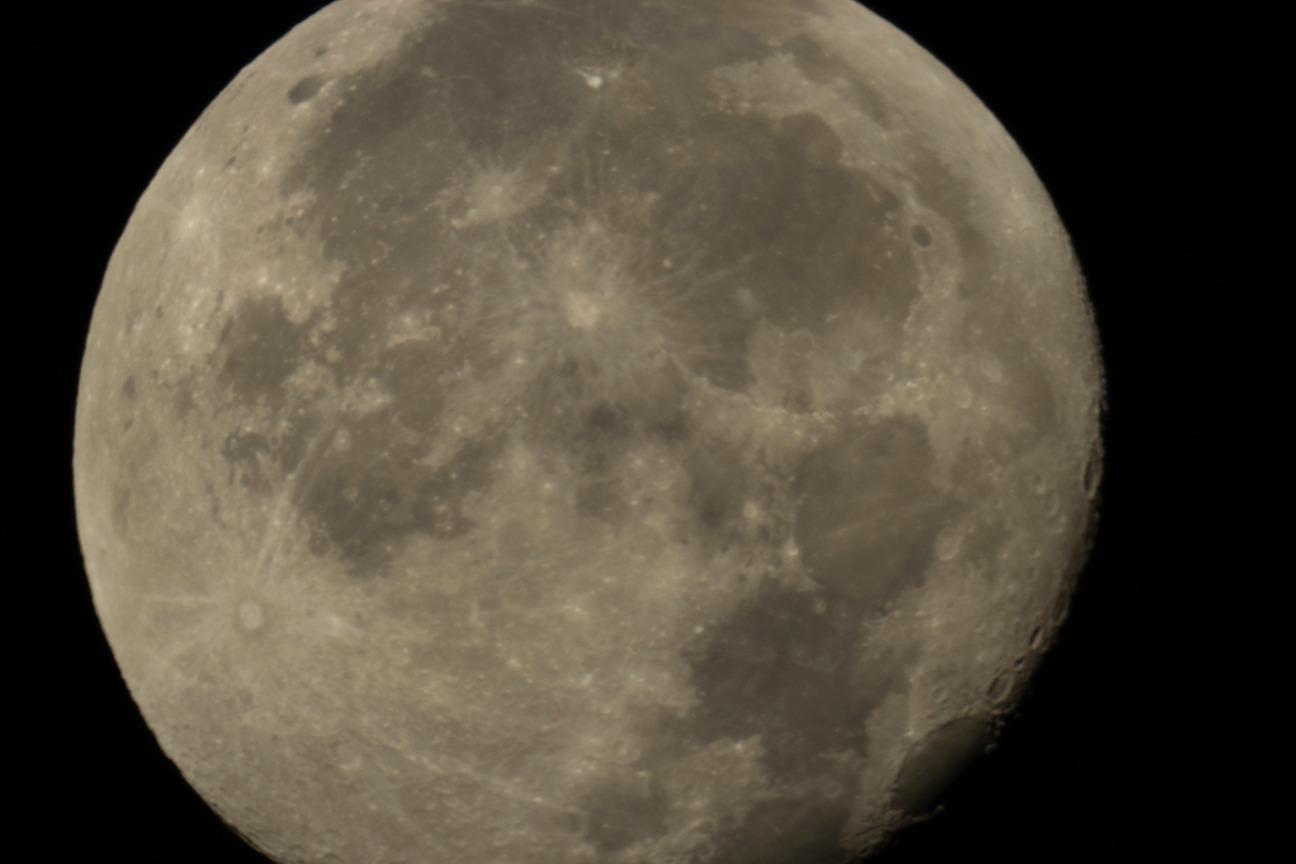
Is the halo a deal-breaker for lunar imaging
Not for framing work. On the Moon, where the target is bright and fills the frame, veiling glare reduces contrast and does not hide structure. For faint deep-sky targets with a long exposure, it matters far more, and we would not put this unit on a galaxy.
Coma off-axis is the more serious issue for planetary imaging, where planets sit near the centre anyway but faint outer detail matters. Focus carefully and accept some softness at the edge.
Where the naming misleads buyers
The listing title is confusing enough that reviewers call it out directly. Some buyers are unsure whether they are getting a T-to-C adapter or an eyepiece reducer, and it does both. Read the specification carefully, because the part you need depends entirely on whether your camera has a C-mount or a T-thread.
If your planetary camera is 1.25 inch threaded instead, skip this and look at a simple reducer barrel instead.
6. Astromania 0.5X 1.25-Inch Telescope Focal Reducer
Astromania 0.5X Telescope Focal Reducer 1.25 Inch for Astronomy Telescopes
0.5x reduction at 85 mm effective
Two fully coated elements
22.5 mm clear aperture
28.5x0.75 threads both sides
Pros
- Genuine 0.5x reduction with a 22.5 mm clear aperture
- Two coated lenses reduce chromatic aberration and internal reflection
- Attaches to any 1.25 inch eyepiece or camera adapter
- Lightweight black anodized barrel
- Reported to work well on Makutovs and f/8 class tubes
Cons
- Some buyers find the reduction less dramatic than expected
- Effective reduction depends on thread spacing so results vary by eyepiece
This is the most straightforward general-purpose reducer in the group. Two fully coated elements, a 22.5 mm clear aperture for bright and unobstructed views, and a 1.25 inch filter thread on both sides so it stacks with whatever you already have in the chain.
Buyers single out Makutov-Cassegrains and f/8 class refractors as the ideal home for it, which fits the broader community view that inexpensive 0.5x units are designed around refractors, SCTs and Maks. A Makutov is exactly the kind of long, slow tube that a 0.5x rescues without pushing the focal ratio somewhere unusable.
The reviews are small in number but consistent, concentrating on build quality and how easily it attaches to an eyepiece. One reviewer felt the magnification drop was less dramatic than anticipated, which is worth holding in mind if you are chasing a specific field width.
The variability is mechanical rather than optical. Because the effective reduction depends on thread spacing, the same unit can behave differently depending on what it is paired with, so judge it on your actual train rather than on a specification alone.
Makutov compatibility in practice
The reason Makutov owners like units like this is the focal ratio. A typical Makutov sits around f/13, and halving the focal length brings it into a range where short guided subs are viable without pushing into the fast-scope corner-coma territory.
On an f/8 refractor the same logic applies. You widen the field while staying fast enough to guide well and slow enough to avoid needing an exotic corrector.
How much reduction you should expect
Treat 0.5x as an upper bound rather than a promise. Thread engagement and the length of whatever adapter sits in front of it all eat into the achieved reduction, which is why one buyer found the drop less than expected.
Measure your actual field after installation rather than trusting the label. That is the fastest way to know whether you need a second, more aggressive step.
7. Skyoptikst F6.3 Focal Reducer for Schmidt-Cassegrain Telescopes
SKYOPTIKST F6.3 Focal Reducer Schmidt Threads for schmit-cassegrain SCT Telescope
Fits Celestron 5 to 14 inch SCTs
Four-element fully multi-coated
f/10 to f/6.3
0.22 kg aluminum alloy frame
Pros
- Works across 5
- 6
- 8
- 9.25
- 11 and 14 inch Celestron SCTs
- Converts f/10 to f/6.3 for a wider field and shorter exposures
- Four-element fully multi-coated design for good transmission
- One reviewer reports no chromatic aberration on a 127 mm Makutov
Cons
- At least one user reports introduced chromatic aberration needing correction
- Very small review base limits long-term confidence
A fourth option in the crowded f/6.3 SCT reducer category, and the one to consider if your primary sensor is small. Four elements with full broadband multi-layer coating in a 0.22 kg aluminum alloy frame, specified to fit Celestron Schmidt-Cassegrains from 5 inch through 14 inch.
At 7 reviews and a 4.1 average, this is the thinnest evidence base of the well-regarded options here, and we treat it accordingly. Users confirm the focal reduction performs as intended and pair it well with a standard T2 adapter for lunar and solar framing.
Chromatic aberration is the one genuine flag. One buyer reported aberration that still needed testing after switching cameras, while another reviewer found none at all using it on a 127 mm Makutov. That disagreement is exactly what a small sample produces, and it is the reason we rate the Celestron and Astromania units above it more highly.
For a small-sensor camera on a small SCT, though, the fit is sensible. You are not pushing a large image circle across a large chip, and the narrower field of view an f/6.3 corrector delivers is usually an advantage at that scale.
When a small sensor changes the maths
A 1-inch or small APS-C sensor samples nothing like full frame, so the corners that generate most of the complaints on big chips simply are not there. Correction that would be marginal on a 36 by 24 mm sensor looks perfectly adequate on a much smaller one.
That makes this unit more viable than its rating suggests. It also means you can be more relaxed about spacing, since the sensitive area sits well inside the corrected zone.
The honesty caveat
Seven reviews is not a track record. Every other recommendation on this list rests on dozens or hundreds of reports of real imaging, and this one does not.
If you want the same reduction from a better-evidenced design, the Astromania unit above covers the same tubes and carries a two-year warranty behind a solid body.
8. Sky-Watcher Evolux 82ED Reducer and Flattener at 0.9X
Sky Watcher Sky-Watcher Evolux 82ED Reducer/Flattener (0.9X) – for Flat Field Astrophotography and Shorter Exposure Times -M56x1 Female / M48 Male Threads
0.9x reduction with field flattening
ED element for colour control
StarBright XLT multi-coating
M56x1 female and M48 male threads
Pros
- 0.9x reduction paired with true field flattening
- ED element reduces chromatic aberration
- StarBright XLT multi-coating
- Integrated rotator and adapter with a built-in 2 inch filter cavity
- Two-year limited warranty
Cons
- Designed specifically for the Evolux 82ED
- limiting use to that tube
- Small reviewer base so long-term field reports are limited
This is a dedicated accessory rather than a universal reducer, and that distinction matters. It is built for the Sky-Watcher Evolux 82ED, pairing a mild 0.9x reduction with genuine field flattening and an ED element to hold colour steady on fast glass.
The 0.9x figure is deliberately restrained. This is not a wide-field widener, it is a pairing that shortens exposures and flattens the frame for an already fast astrograph, and the imaging result is a 477 mm focal length with an 8 degree field of view on the spec sheet.
The mechanical design is the part we like most. M56x1 female on the scope side and M48 male on the camera side, with a built-in cavity for 2 inch filters inside the rotator and adapter, means you are not stacking three separate parts to get a filtered, rotated, corrected image train.
Its perfect rating across a small base reflects a well-executed accessory rather than a broadly proven one. Six reviews is a thin foundation, but nothing in them suggests a problem, and the two-year warranty reduces the risk of trying it on an expensive tube.
Why a dedicated reducer beats a universal one here
When a manufacturer designs for one optical tube, they can set the spacing, the glass and the coatings against that tube’s known aberrations. A universal unit has to compromise across many instruments and ends up flatter in practice.
That is why dedicated units tend to hold stars tighter at the edge. If your telescope has a purpose-designed accessory, using it is almost always the better-performing route.
Where the limitation sits
The M56x1 and M48 combination is specific. If your camera takes a different thread, you are adding adapters and eating spacing, which erodes the advantage the unit was designed to deliver.
And it will not fit anything else. Owners of other 82 mm refractors should treat this as a Sky-Watcher product, not a general reducer, and pick from the universal options on this list instead.
9. Bindpo 1.25-Inch 0.5X Focal Reducer Lens
Focal Reducer Lens,1.25 Inch 0.5X Focal Reducer Lens .5×0.6 Thread Lens Accessory for Telescope Eyepiece for Long Focal Length Telescope
0.5x focal length reduction
1.25 inch eyepiece interface, .5x0.6 thread
15 g aluminum alloy housing
Accepts a filter thread
Pros
- Low-cost way to halve focal length and widen the view
- Aluminum alloy housing rated for long use
- Standard 1.25 inch interface that fits the nose of any 1.25 inch eyepiece
- Can accept a filter and thread onto an eyepiece or camera
Cons
- Optical quality is inconsistent
- with the largest share of ratings at one or two stars
- Not recommended for very fast scopes or very wide-angle eyepieces
- Documentation is thin on back focus
We include this one because it is instructive. It does one thing, it does that thing for very little, and it is the clearest example on this list of a reducer that should stay out of an imaging train.
The mechanical side is fine. A 15 g aluminum alloy housing, a standard 1.25 inch interface with .5×0.6 threads that fit the nose of any 1.25 inch eyepiece, and a filter thread so it can be used in a visual chain or adapted to a camera. For visual use on a long-focal-length telescope, that is a reasonable low-cost widening aid.
The optics are where it falls apart for imaging. Across seven reviews averaging 3.1, roughly a third of the ratings sit at one star, and reviewers describe the correction as basic field widening rather than imaging-grade performance. Expectations set at the eyepiece stage rarely survive a stack of long sub-exposures.
Two further warnings from the reviews: it is not recommended for very fast scopes or very wide-angle eyepieces, and the documentation gives almost no guidance on back focus, which means the spacing work is on you.
What visual use actually needs
For observing, optical quality bar is lower and the reward is immediate. A wider, brighter field from an f/15 or f/20 telescope is a genuine upgrade in usability, and this unit delivers that at a modest outlay.
Visual observers also tolerate coma at the edge far more readily than imagers do, because the eye focuses centrally and ignores the periphery. The weaknesses that ruin an image are simply not weighted the same way at the eyepiece.
Why we would not put it on a camera
Consistency is the issue. A 3.1 average with a large cluster of one-star ratings suggests the unit-to-unit variation that comes with minimal quality control, and you have no way of knowing which copy you receive.
On a visual chain the downside is a slightly soft edge. On an imaging train it is hours of integration time you cannot get back. We would spend a little more on the SVBONY 0.5x instead.
10. Alstar 0.5X 1.25-Inch Telescope Focal Reducer
Alstar 0.5X Telescope Focal Reducer 1.25 inch Filter Thread on Both Sides
0.5x reduction at 85 mm effective
22.5 mm clear aperture
28.5 mm threads on both sides
Two-element anodized aluminum
Pros
- Inexpensive and versatile for visual and photographic use
- 85 mm focal length with a 22.5 mm clear aperture
- Filter thread on both sides so it stacks with other threaded accessories
- Two-element black anodized aluminum housing
- Reviewers report it survives drops onto concrete
Cons
- Not a flattener
- so stars stretch and defocus toward the frame edges
- Uncoated optics limit contrast and transmission
- Additional spacers are sold separately for further reduction
The Alstar is a sturdy, deliberately simple reducer that does the basics without pretending to do more. Two elements in a black anodized aluminum and glass barrel, 28.5 mm filter threads on both sides, a 22.5 mm clear aperture and a stated 85 mm effective focal length.
What reviewers consistently praise is durability and versatility. It fits eyepieces, camera adapters, astronomy webcams and telescopes alike, and one owner reports it survived being dropped onto concrete without losing function. For a piece of gear that lives in a car boot between sessions, that matters.
The limitations are equally consistent. It is not a flattener, and owners are explicit that stars visibly stretch and defocus toward the frame edges. The optics are uncoated, which caps contrast and transmission compared with every multi-coated unit on this list.
One practical note: extra spacers for going further than 0.5x are sold separately, so the effective reduction you achieve depends partly on what you add afterwards. That is another spacing variable to keep in your notes.
Best uses for this reducer
Wide-field visual observing on a long telescope, grab-and-go setups, and any situation where a dropped accessory would ruin your night. The thread on both sides makes it the easiest unit here to combine with filters and adapters.
It also suits astro webcams, where the sensor is small and the field widening is doing most of the work rather than correcting a large image circle.
Why the uncoated optics matter for imaging
Coatings are about how much light survives each glass surface. On an uncoated element, more of your faint nebula signal is reflected away rather than transmitted, and contrast drops with it.
For visual use that is a modest penalty nobody will notice. For narrowband or faint broadband deep-sky work over long integrations, every unit of transmission you lose is time you have bought back by stacking sub-exposures instead.
Back Focus and Spacing: The Part Most Guides Get Wrong
Will a focal reducer give me more back focus, or less? It is the most repeated question on every astrophotography forum, and the honest answer is that it depends entirely on the design, which is exactly why the diagrams conflict.
Here is the clean way to think about it. Your telescope forms an image at a specific distance from its rear cell. A focal reducer is a lens group with its own focal length, and it moves that convergence point. Some designs push the required sensor position forward, some pull it back, and a correction pair may do both while also changing the focal ratio.
The experienced position on Cloudy Nights is the one we would repeat: a reducer does not correct your spacing, it adds a fixed amount of change to it. Every additional element in the train, a filter wheel, an off-axis guider, a rotator, a step ring, changes the number again. That is why the same reducer behaves differently on two people with different cameras.
How to set back focus with a reducer in the train
Remove the reducer and the camera, then measure and set your telescope’s native back focus with a dedicated back focus tool or a defocused star at high magnification. Write the number down.
Note the manufacturer’s stated back focus for the reducer. If it is missing, treat the published value as a starting guess rather than a specification, and expect to verify it.
Install the reducer with no extra spacing. Measure how much sensor travel you have lost or gained compared with your native figure.
Make up the difference with shims or spacers rather than by pulling the focuser. A focuser extended past its design travel usually compresses the field and puts coma in the corners.
Check the result with a star near the frame corner, defocused slightly. Round, symmetrical comatic discs indicate correct spacing; comets pointing outwards mean you are short.
The fifth step is the one people skip and the one that matters. Corner-only trailing with a sharp centre is almost always incorrect back focus rather than a defective reducer, which is the consistent diagnosis given on Stargazer’s Lounge and across other imaging forums.
Two products on this list make the point concretely. For the Astromania f/6.3 SCT corrector, the reviews report that a flat field on larger sensors needs roughly 105 mm rather than the stated 85 mm. For the SVBONY SV193, the removable nose piece has to come off to reach the required spacing, and the stock instructions do not say so.
How to Choose a Focal Reducer for Your Telescope
Start with your optical tube, not the reducer. Whether a unit is dedicated or universal decides almost everything else, and forum users consistently report that a cheap universal reducer on a refractors, Schmidt-Cassegrain or Makutov does a respectable job.
A dedicated reducer is designed against one instrument’s known aberrations and can usually hold stars tighter to the corner. A universal reducer is a compromise, but it is usually cheaper, lighter and more forgiving on spacing. Neither is automatically right.
Match the reduction factor to your target and sensor
Work out your current field of view, then work out the one you need, and let the difference set your factor. The relationship is simple: field scales directly with the reduction factor, so 0.8x gives you a field 1.25 times wider than native.
For an APS-C camera on a fast refractor, 0.8x is the sweet spot that forum users keep returning to. It widens the frame meaningfully while keeping star sizes above your sampling limit. For a small sensor or a visual setup, 0.5x is affordable. For full-frame on a fast scope, stay at 0.63x or milder and demand a flattener in the same unit.
Beyond about 0.5x, edge quality degrades noticeably, and the widely repeated guidance is that practical reduction sits in the 0.6x to 0.8x range before the corners suffer.
Check the sensor coverage before anything else
The image circle has to cover your chip or you will get vignetting and corner darkening no matter how good the glass is. Look for a stated illumination circle rather than a vague claim of wide field.
A 24 mm diagonal is not automatically enough for full frame. A 24 mm wide sensor needs an image circle comfortably beyond its 36 mm diagonal to avoid vignetting, so APS-C users have far more headroom than full-frame imagers on the same telescope.
Decide what the reducer has to do
If the field is the problem, you need reduction. If the stars are the problem, you need flattening. These are different optical jobs and only some units on this list do both, which is why the SV193 and the Evolux reducer-flattener stand apart from the plain focal reducers.
Ask yourself one question before spending anything: does my existing focal length already frame my target comfortably? If it does, a reducer costs you sampling and adds nothing. Many people asking whether they need a reducer are really struggling with a focal length that is too long for their chosen targets, and those are the setups where a reducer transforms the results.
Focal Reducer vs Barlow vs Telecompressor vs Flattener
A focal reducer decreases focal length and widens the field of view; a Barlow increases focal length and magnifies the image, narrowing the field and increasing detail per pixel. A telecompressor does something in between, and a flattener changes neither but fixes the shape of the field.
That single sentence answers the most common People Also Ask question on this topic, but the practical differences matter more than the definition.
A Barlow suits planetary and small-target work where you want more detail per pixel and do not care about framing. A focal reducer suits large nebulae and clusters where framing is the constraint. A telecompressor is the middle path, giving a modest reduction from a long focal ratio without the extreme compression of a 0.5x. A flattener is not a competitor at all; it is an addition, and it is often used alongside a reducer.
Stacking a reducer with a flattener is possible but not free. Every element you add shifts your spacing, and you lose more back focus budget for each one. Where a dedicated reducer-flattener combination exists for your optical tube, use it instead of building a two-element stack.
Which one solves your actual problem
Choose a focal reducer when the target does not fit the frame or your sub-exposures are too long to guide well. Choose a Barlow when the target is small and you want resolution rather than coverage. Choose a telecompressor when you want a milder correction from an f/8 to f/15 instrument than a full reducer allows. Choose a flattener when stars are comet-shaped and the field is otherwise fine.
What focal length is best for astrophotography has no single answer, which is why people keep asking. Large emission nebulae reward short effective focal lengths and wide fields. Small planetary nebulae and galaxy cores reward longer ones. Your target list decides the focal length, and the reducer decides how much of that decision you can reverse later.
Frequently Asked Questions
What is a focal reducer in astrophotography?
A focal reducer is a multi-element lens group fitted to a telescope that shortens its effective focal length to a stated fraction of native, typically 0.63x or 0.8x. It widens the field of view, lowers the focal ratio and often flattens the field. Because it shifts where the image converges, the sensor must be positioned at a specific distance from the rear cell.
Will a focal reducer give me more back focus?
It depends on the design, which is why the diagrams online seem to contradict each other. A reducer adds a fixed amount of change to your spacing rather than correcting it, so some designs require the sensor closer to the rear cell and others further away. The reliable method is to measure your native back focus, add the manufacturer figure for the reducer, and verify with a defocused corner star.
What is the difference between a focal reducer and a Barlow lens?
A focal reducer decreases focal length and widens the field of view, which is what you want for large nebulae and clusters. A Barlow increases focal length and magnifies the image, narrowing the field and increasing detail per pixel, which suits planets and small targets. They solve opposite problems and are rarely both worth buying.
What focal length is best for astrophotography?
There is no single best focal length. Large emission nebulae such as M42 or NGC 7000 reward short effective focal lengths and wide fields, while planetary nebulae and galaxy cores benefit from longer ones. A typical starting point for wide-field deep-sky imaging is between 200mm and 500mm on a small-sensor camera, adjusted by adding a focal reducer if you need more coverage.
What is the 500 rule for astrophotography?
The 500 rule is a starting guideline for avoiding trailing stars without a tracker: divide the full-frame focal length in millimeters by 5 to get the longest usable exposure in seconds. On a 24 mm lens that gives about 5 seconds. Modern CMOS cameras track well enough that 200 to 400 seconds is usually achievable, which is where using a reducer to shorten focal length becomes genuinely valuable.
Is 24mm wide enough for astrophotography?
A 24 mm focal length is fine for wide-field deep-sky work and gives roughly 4.6 degrees of field on full frame. The wider catch is the image circle: a full-frame sensor has a 36 mm diagonal, so a focal reducer on a slow telescope must deliver an illumination circle comfortably beyond that or you will see vignetting and corner darkening. APS-C and 1-inch sensors have far more headroom.
Does a focal reducer reduce image quality?
It can, if the reduction is aggressive or the spacing is wrong. Standalone 0.5x units do not flatten the field, so edge stars elongate and fringe, as owners of the SVBONY 0.5x report. A dedicated corrector used at a matched spacing on its intended telescope does not. Corner coma with a sharp centre almost always means incorrect back focus rather than a faulty lens.
Can you stack a focal reducer and a flattener?
You can, and dedicated reducer-flattener combinations use exactly that idea internally. The cost is spacing: every element you add moves the required sensor position, and back focus budget is finite on tight mounts. If a purpose-designed reducer-flattener exists for your optical tube it will usually perform better and simplify the train compared with two separate units.
Which Focal Reducer Should You Buy in 2026?
If you own a Celestron Schmidt-Cassegrain, the f/6.3 reducer-corrector is the pick. It has the largest review base of anything here at 724 ratings averaging 4.7, it fits tubes from C5 to C14, and it threads straight into the adapters you already own.
If you own a fast refractor from the SV503 line, the SVBONY SV193 is the better buy. It combines 0.8x reduction with genuine field flattening, meets full-frame illumination, and the only real trap is unscrewing the nose piece to reach the correct spacing.
If you are still working out whether a reducer is for you, the SVBONY 0.5x is the cheapest sensible way to find out. It will widen your field dramatically, it will not flatten your corners, and it is forgiving enough to learn from. Just do the spacing arithmetic before you shoot.
The thread that runs through every recommendation here is spacing. Whichever of the best focal reducers for astrophotography you choose, measure your native back focus, add the reducer figure, make up the difference with shims, and check a corner star before committing a long night of data. The glass is rarely the problem.
We earn a commission on purchases made through the links on this page, at no additional cost to you. That never changes which products we recommend or the order we rank them in.