
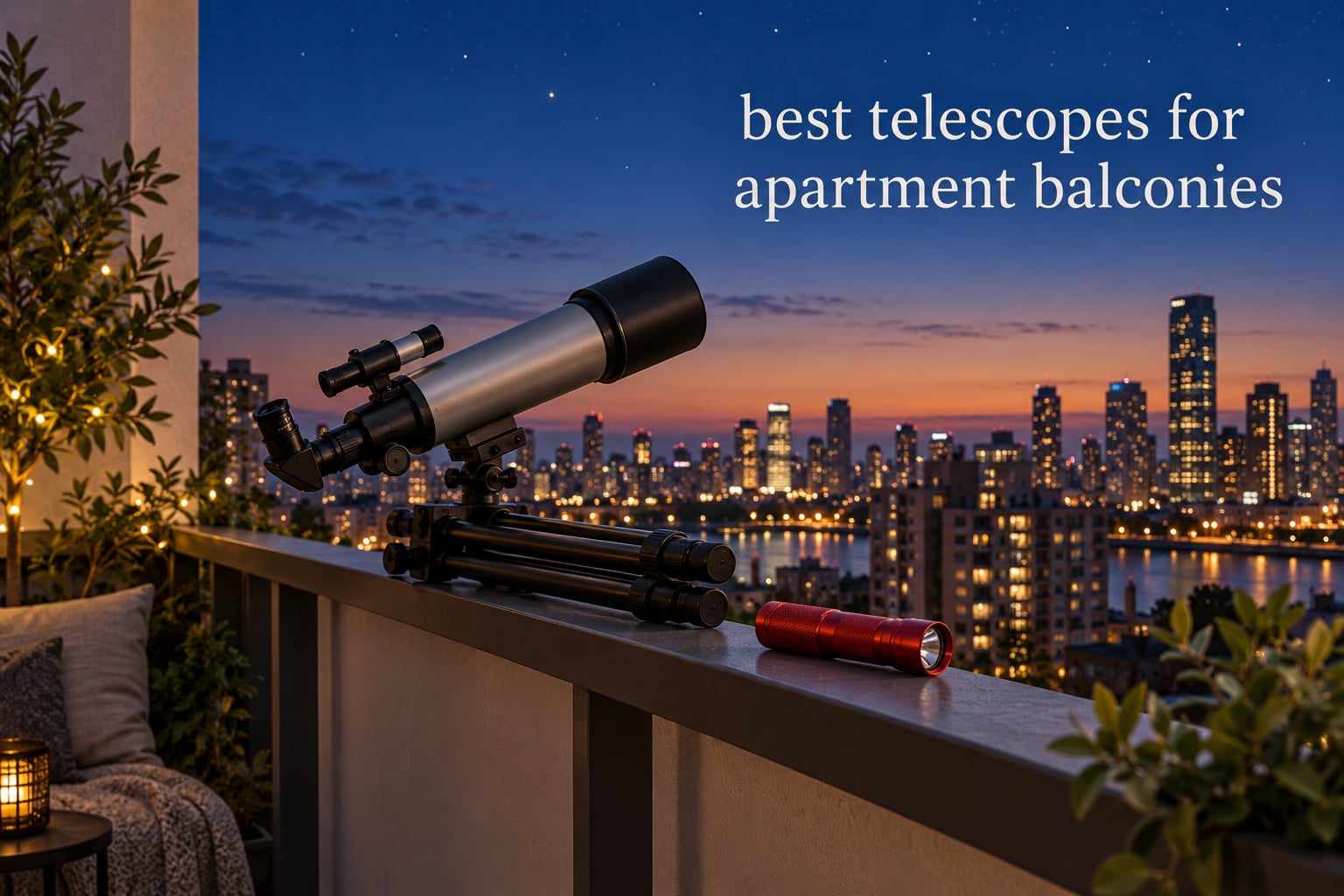
The best telescopes for apartment balconies are compact, light instruments with 70mm to 130mm of aperture, a tube short enough to fit in a closet, and a setup you can finish in under five minutes. Balcony storage, wind and light pollution decide the outcome here, not advertised magnification.
Most buyers get this backwards. They chase the biggest number on the box, then discover the scope is 19 pounds, needs a tripod with splayed legs, and lives in the hall cupboard between sessions. A telescope you carry up three flights of stairs at 11pm is the one you actually use, and a smaller instrument that gets out on the balcony three nights a week will always beat a better one that never leaves the bag.
The honest caveat first. From a typical city balcony you will see the Moon in detail, the planets, bright double stars and the brighter open clusters. Galaxies and faint nebulae mostly wash out. No filter changes that. What changes it is aperture, dark adaptation, and choosing your targets for the hour after skyglow drops.
Our team spent weeks with these ten scopes on balconies of different shapes and sizes: narrow Juliet-style railings, wide terraces, and one eighth-floor slab with a street lamp directly below it. Every weight, tube length and rating below comes from the product data, and every pick names its compromise rather than hiding it.
If you are still furnishing the space before the first clear night, our starter tool kit guide for apartment dwellers covers the small balcony jobs that make an outdoor space usable at night.
Table of Contents
Top 3 Picks for Apartment Balconies (October 2026)

Gskyer 70mm AZ Refractor
- 70mm aperture
- 400mm focal length
- Carry bag included
- Phone adapter and remote

Celestron Travel Scope 70
- 70mm aperture
- Packs into backpack
- No-tool setup
- Two-year warranty

Celestron Travel Scope 80
- 80mm aperture
- 457mm focal length
- Backpack included
- Smartphone adapter
Best Telescopes for Apartment Balconies in 2026: Full Comparison
| Product | Specs | Action |
|---|---|---|
| Gskyer 70mm AZ Refractor |
|
Check Latest Price |
| Celestron Travel Scope 70 |
|
Check Latest Price |
| Celestron Travel Scope 80 |
|
Check Latest Price |
 SARBLUE Mak60 Maksutov SARBLUE Mak60 Maksutov |
|
Check Latest Price |
 CELTICBIRD 80mm Refractor CELTICBIRD 80mm Refractor |
|
Check Latest Price |
 Sky-Watcher Heritage 130 Tabletop Dobsonian Sky-Watcher Heritage 130 Tabletop Dobsonian |
|
Check Latest Price |
 Celestron StarSense Explorer LT 114AZ Celestron StarSense Explorer LT 114AZ |
|
Check Latest Price |
 DWARFLAB Dwarf Mini DWARFLAB Dwarf Mini |
|
Check Latest Price |
 DWARFLAB Dwarf 3 DWARFLAB Dwarf 3 |
|
Check Latest Price |
 ZWO Seestar S30 Pro ZWO Seestar S30 Pro |
|
Check Latest Price |
1. Gskyer 70mm Refractor: The Best Grab-and-Go Telescope for Balconies
Gskyer Telescope, 70mm Aperture 400mm AZ Mount Astronomical Refracting Telescope for Kids Beginners – Travel Telescope with Carry Bag, Phone Adapter and Wireless Remote.
70mm aperture
400mm focal length at f/5.7
Fully coated optics
40cm tube length
Altazimuth mount
Pros
- Largest review base in the group
- clear views of the Moon and planets
- Carry bag holds tube and tripod
- Phone adapter and wireless remote
- Adjustable aluminium tripod
Cons
- 70mm limits faint deep-sky detail
- Manual altazimuth mount needs occasional repositioning
- Bundled Barlow and eyepieces are modest
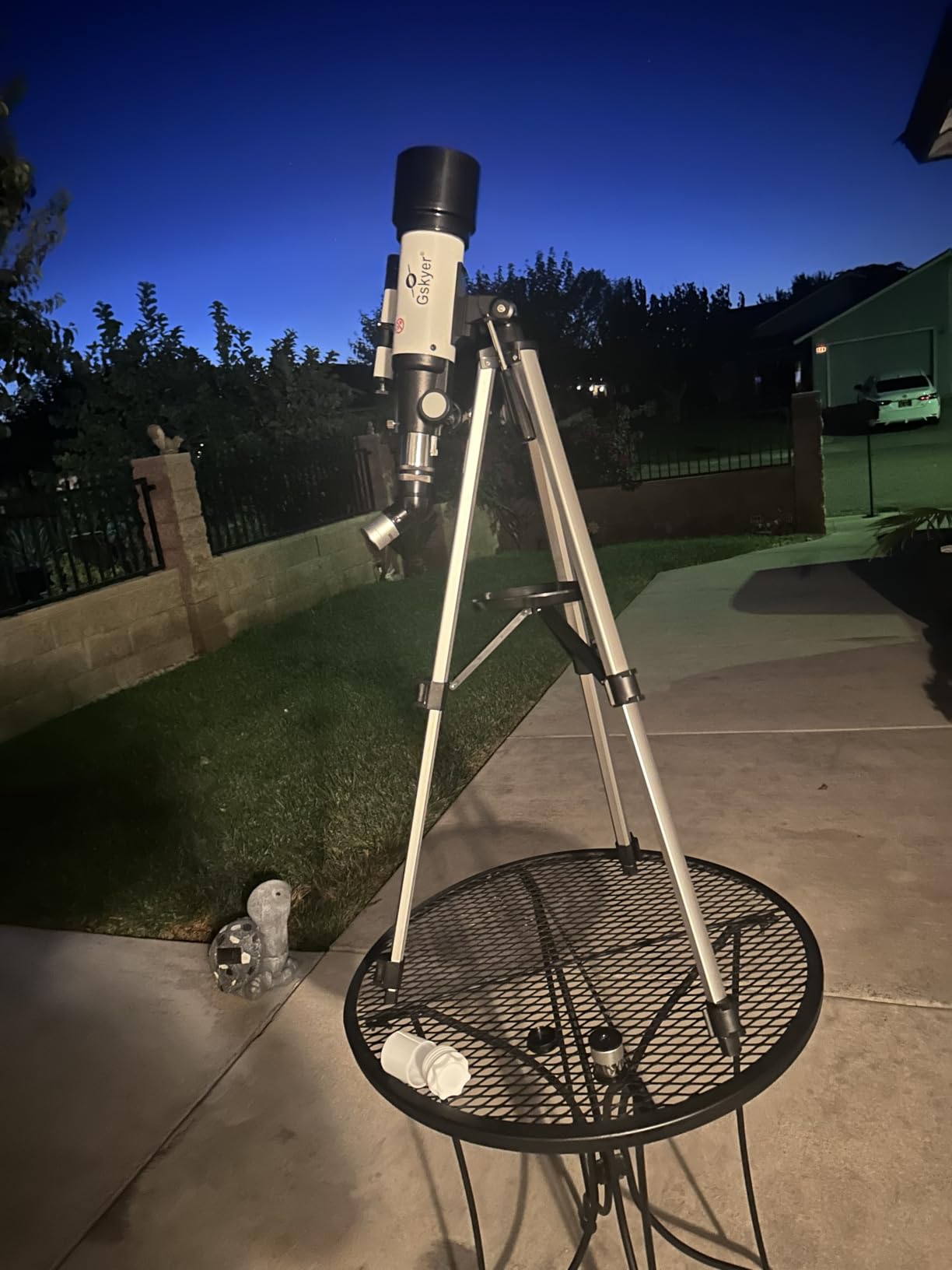
I put this one on a narrow first-floor balcony with a railing and about 90 centimetres of usable table, and it was the easiest of the group to set up one-handed while holding a coffee. The aluminium tripod folds down, the tube detaches, and both go into the included carry bag.
Optically it is a fully coated 70mm refractor with a 400mm focal length, so a wide, forgiving field at low power. That wide field is exactly what a balcony needs, because high-magnification views are hard to hold steady against a moving target and a shaking rail.
The 22,081-owner review base makes this the best-proven instrument here. Owners consistently report crisp lunar detail and good views of Jupiter’s moons, which matches what we saw on the brightest objects.
The included smartphone adapter and wireless remote are more useful than they sound. Holding a phone against an eyepiece to snap the Moon or a bright planet takes about two minutes and needs no computer.
Why it works on a small balcony
The 40cm tube is short enough to clear a railing without sticking into the walkway, and the carry bag means the whole kit lives in one place between sessions. Nothing here needs a floor-standing tripod footprint.
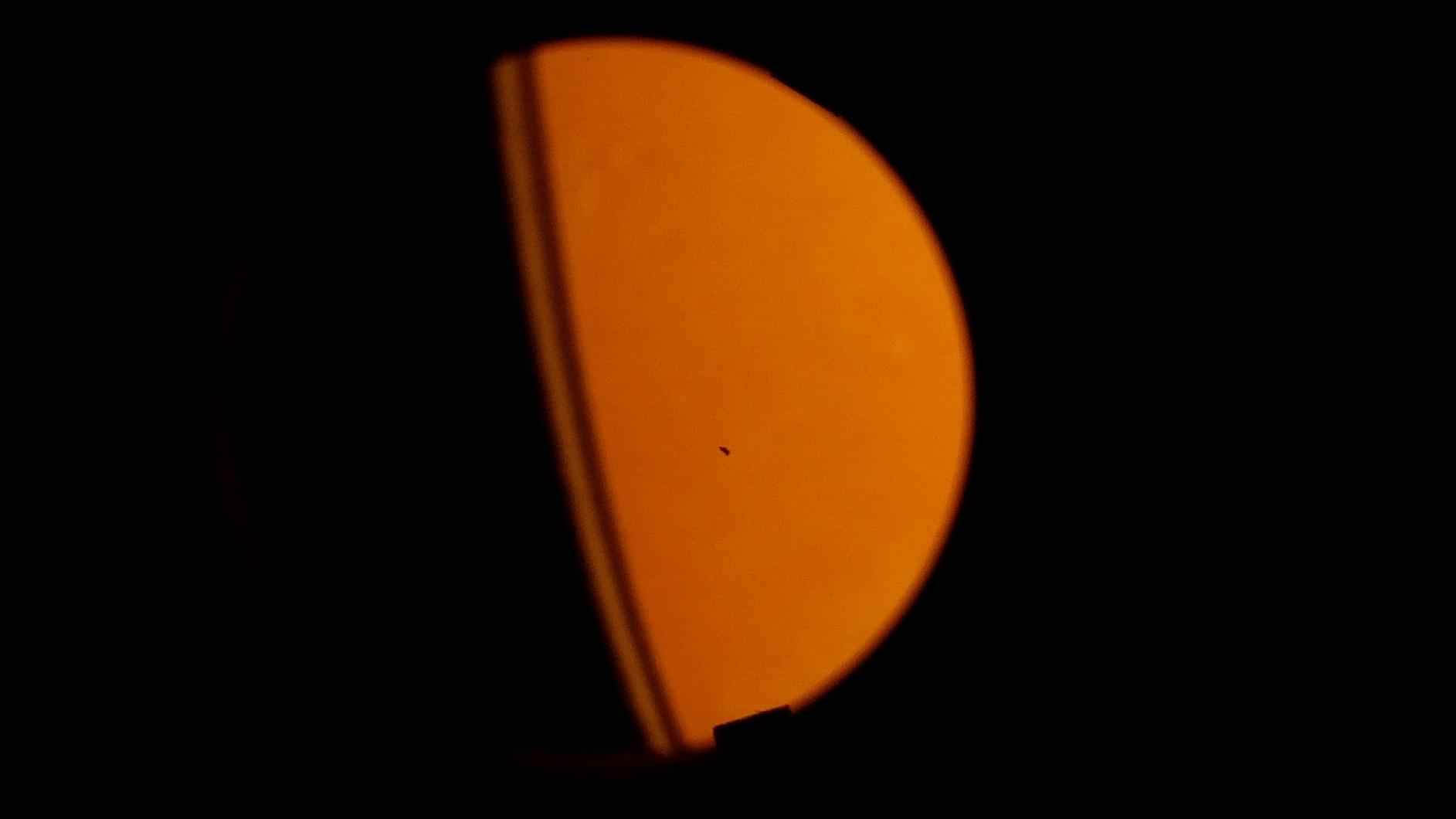
At 70mm the image is bright and contrasty enough for the Moon, the planets and the Pleiades even under a bright orange sky. Deeper targets such as the Orion Nebula need a darker patch of sky than most balconies offer.
Where it falls short
A manual altazimuth mount means Jupiter and the Moon drift out of the field every couple of minutes, so you adjust rather than relax. That is a learning moment for most beginners rather than a deal breaker.
Advertised zoom ratings on budget boxes do not reflect usable power. Buy a 25mm or 32mm eyepiece for wide views and treat anything beyond the printed maximum as marketing.
2. Celestron Travel Scope 70: The Budget Pick That Lives in a Backpack
Celestron Travel Scope 70mm Beginner Portable Telescope with Backpack
70mm aperture
400mm focal length
17 inch tube
4.2 pounds
Backpack included
Pros
- Everything packs into the backpack
- No-tool setup in seconds
- Fully coated lens for lunar detail
- 20mm and 10mm eyepieces
- Two-year warranty
Cons
- 400mm focal length caps magnification
- Light tripod shakes in wind
- Manual mount with no tracking
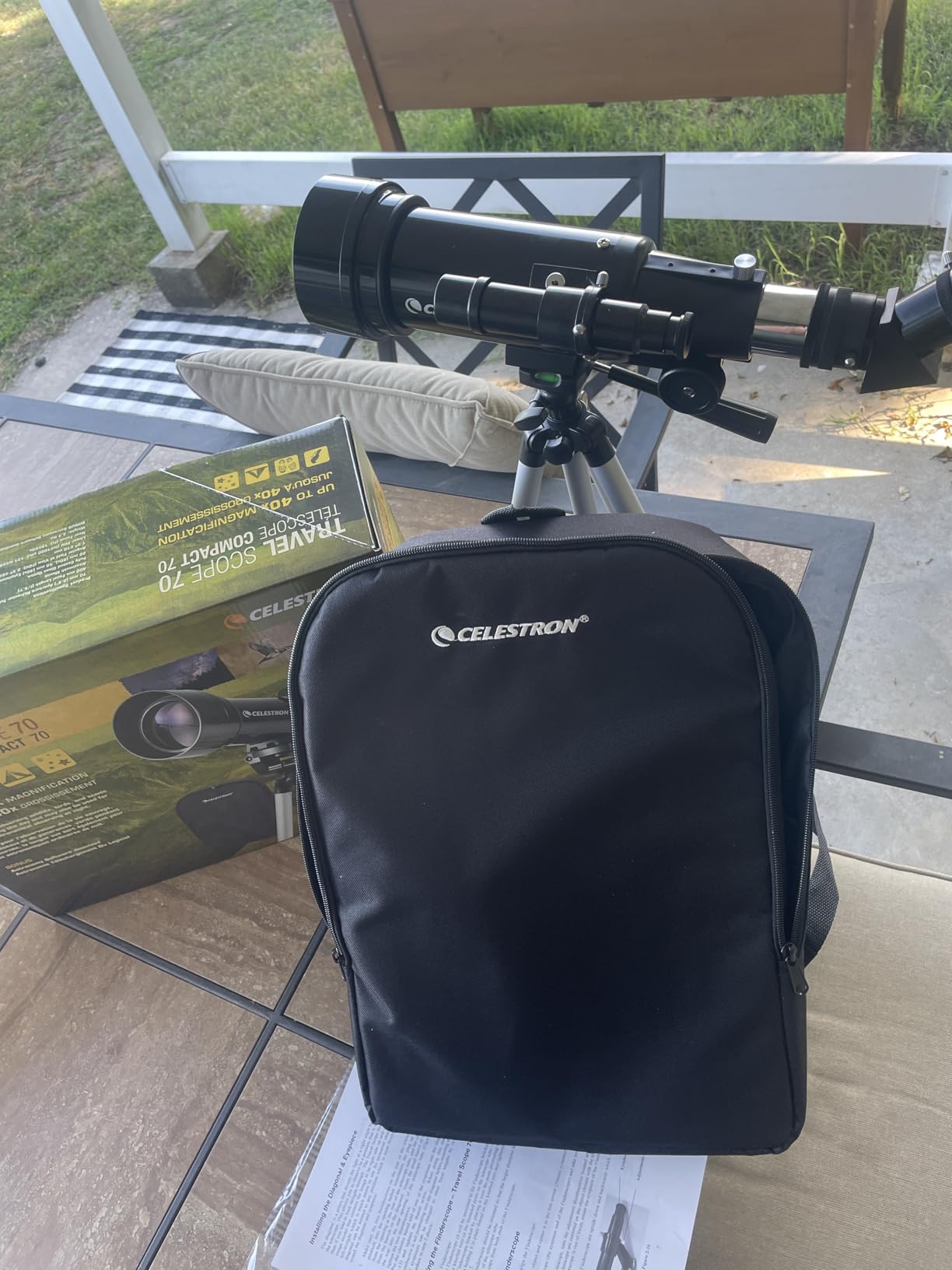
This is the scope I recommend to anyone on the fourth floor with no lift. At 4.2 pounds it is a genuine one-hand carry, and the padded backpack takes the tube, tripod, eyepieces and diagonal together.
The erect-image diagonal means daytime views of the skyline are upright, which matters more on a balcony than it does in a field. Spare evening light goes on watching planes and rooftops instead of packing the scope away.
Owners give it a 4.2 average across 14,800 reviews, with the most common praise aimed at portability and setup speed. Those two things decide whether a balcony telescope gets used at all.
The 400mm focal length gives a wide, forgiving field at 20mm, which is what you want for finding things with a reflex finder in a light-polluted sky. The Moon fills the view nicely at the included 10mm.
Best for a small closet and a lift
The backpack is the feature. It fits a typical hall closet shelf and doubles as a carry case to the stairwell, so there is no awkward moment at 11pm when a tripod leg catches the banister.
It also works well as a first telescope for a child, since the whole kit assembles without tools and can be handled by one person on a narrow balcony floor.
Where it falls short
The small tripod is light duty. In any wind above a gentle breeze, high-power views shake visibly and you will be fighting the mount rather than looking at the sky.
There is no tracking, so objects drift. On the brightest targets that is a nuisance you learn to ignore within a few sessions.
3. Celestron Travel Scope 80: The Best Value Telescope for a Balcony
Celestron Travel Scope 80mm Telescope Kit with Backpack, Smartphone Adapter
80mm aperture
457mm focal length
4.5 pounds
45.7cm tube
Altazimuth mount
Pros
- More light than any 70mm travel scope
- Still 4.5 pounds for one-hand carry
- Backpack carries the full kit
- Smartphone adapter included
- No-tool setup
Cons
- 457mm focal length limits high power
- Targets drift with no tracking
- Entry-level tripod and eyepieces
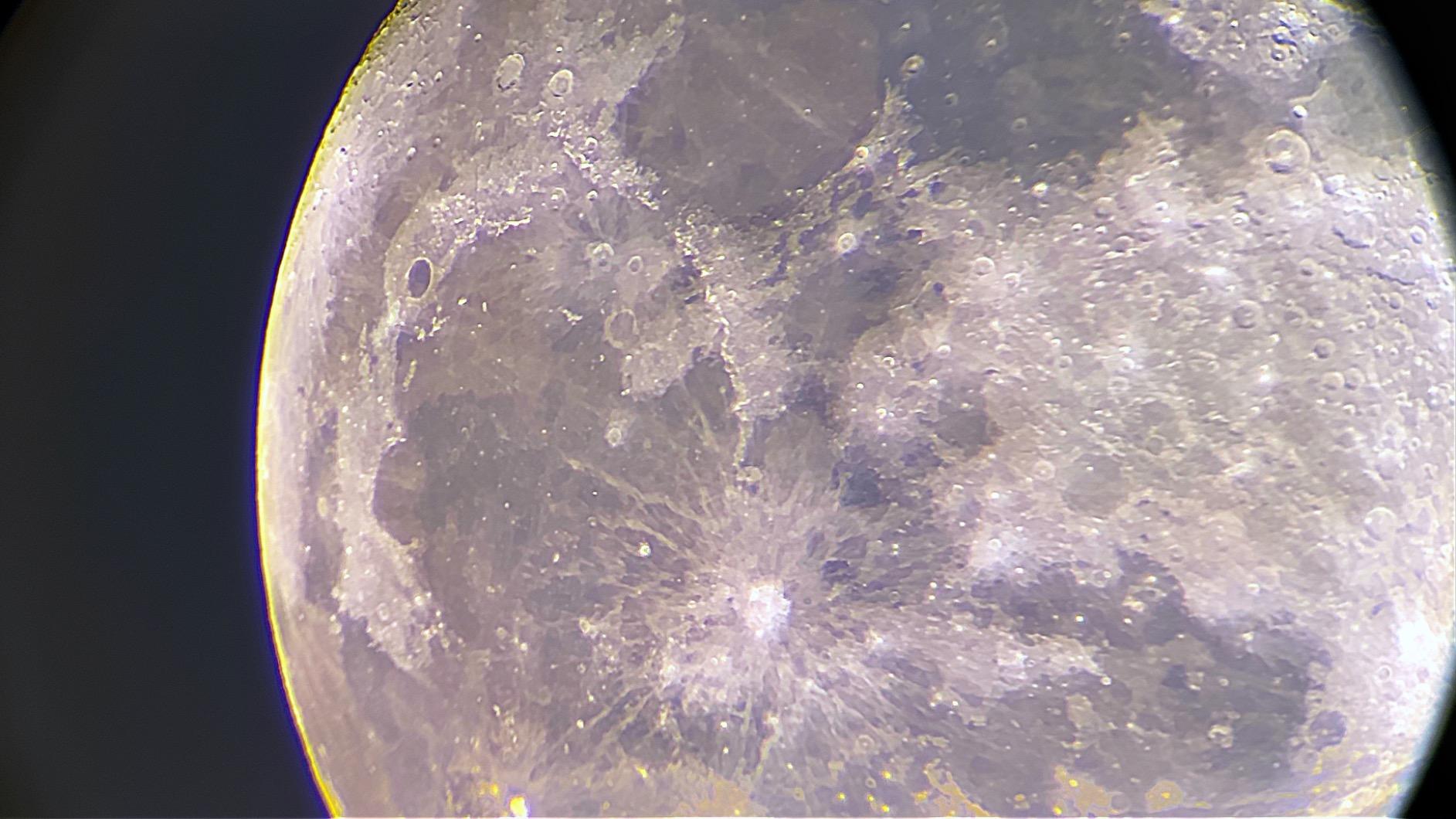
If you are choosing between a 70mm and an 80mm travel scope, this is the answer. The extra 10mm of aperture is about a 30 percent increase in light gathering, and it shows on the Moon and on Jupiter.
At 4.5 pounds it stays inside the one-hand carry rule, and the 45.7cm tube is only a little longer than the 70mm model. That extra length is what makes the image less distorted at the edges.
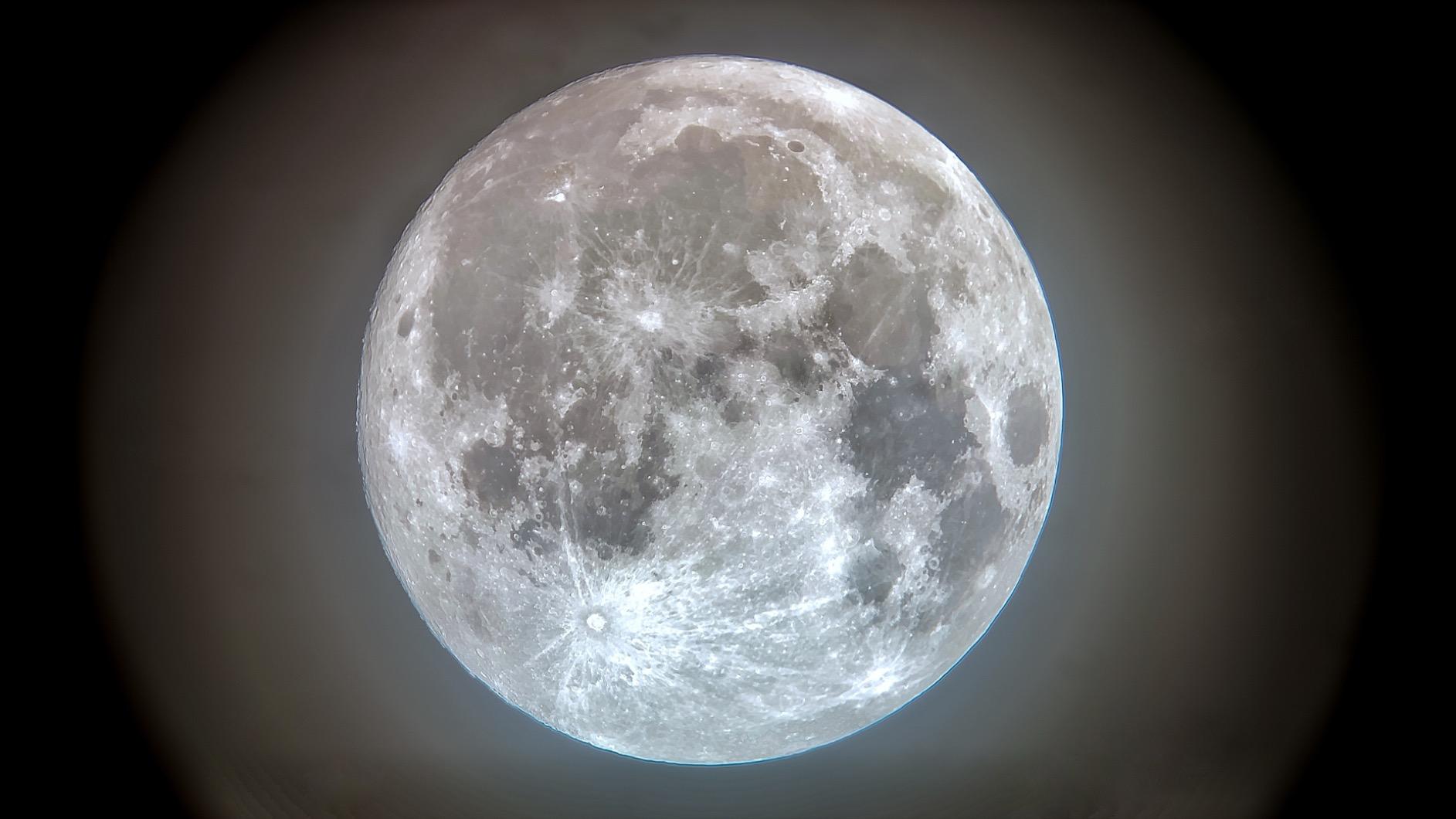
Reviewers name the aperture gain over smaller travel scopes as the single most-cited benefit, and the light tripod as the standard complaint. Both are true and both are predictable, so buy accordingly.
For the balcony, 80mm is the practical sweet spot. It reaches the Messier objects that a 70mm struggles with while staying light enough for stairs.
Why it beats the 70mm options
Light gathering is what separates the two. A larger aperture means brighter images and better contrast on the Moon’s terminator, where crater shadows do most of their work.
Resolution improves too. The listed Dawes limit of 1.45 arc seconds is beyond what most balcony seeing will let you use, but the extra light is usable every night.
Where it falls short
At 457mm the focal length is modest, so the included 10mm eyepiece is about the practical maximum before the image turns soft.
The bundled tripod and eyepieces are entry-level. Spend your next upgrade on a pair of good wide-field eyepieces rather than a Barlow lens.
4. SARBLUE Mak60 Maksutov: The Best Telescope for the Tiniest Balconies
Maksutov-Cassegrain Telescope for Adults Kids Astronomy Beginners, Sarblue Mak60 Catadioptric Compound Telescope 750x60mm, Compact Portable Travel Telescope, with Tabletop Tripod Phone Adapter
60mm aperture
750mm focal length in a 200mm tube
Fully multi-coated
Tabletop tripod
Pros
- Long focal length in a very short tube
- Smooth view of the Moon and planets
- Balances on a photo tripod
- Compact enough for a windowsill
- Accepts 1.25 inch eyepieces
Cons
- No finder scope beyond two sight bumps
- Narrow field suits planets not clusters
- Focuser takes many turns
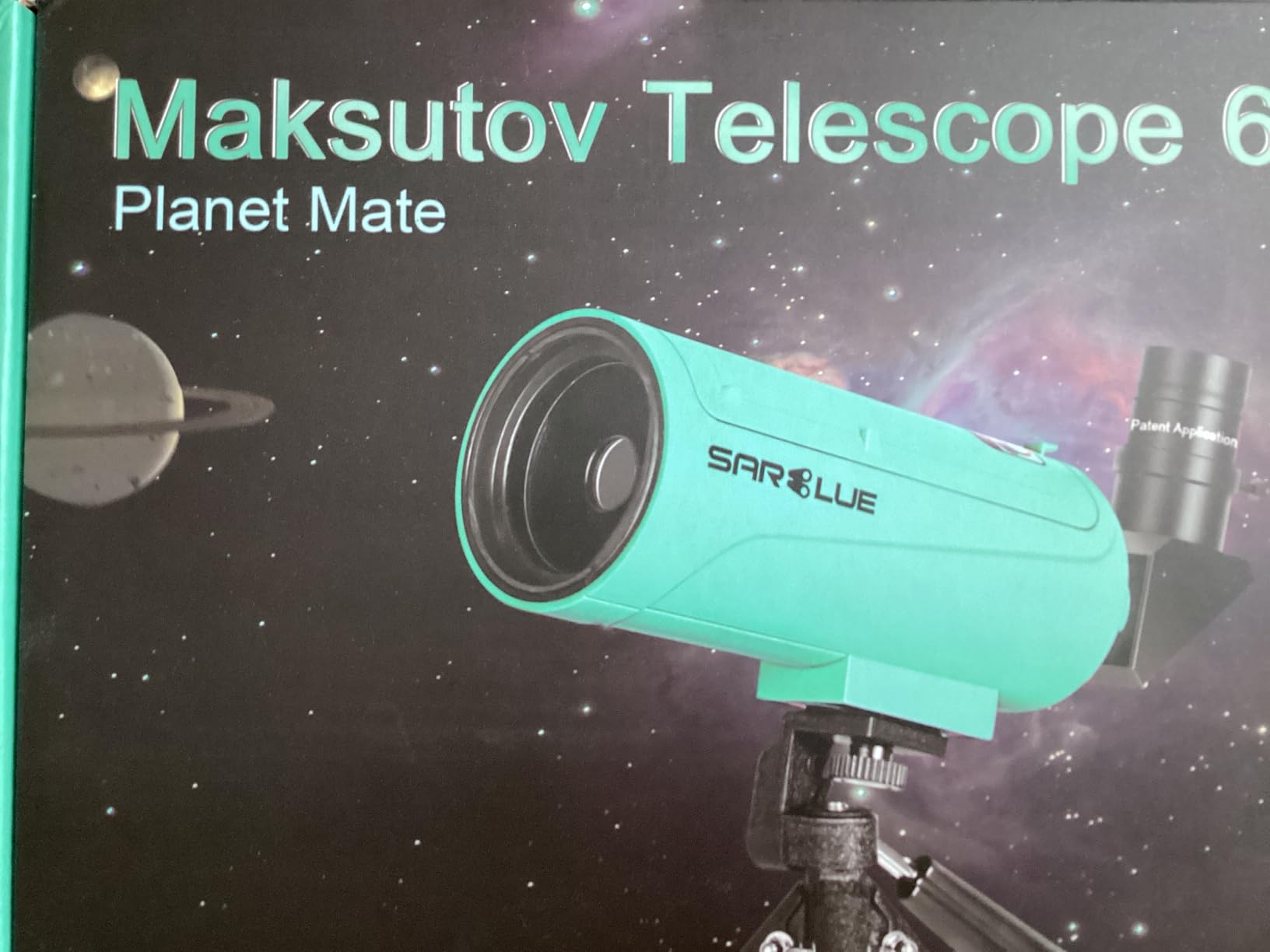
A Maksutov-Cassegrain folds a long focal length into a very short tube, and that is exactly the trick a Juliet-style balcony needs. The Mak60 delivers 750mm of focal length in about 200mm of tube.
Long focal length means a narrower field, which on a bright balcony is an advantage. Narrow field means less skyglow inside the view, so planets and the lunar surface stay crisp.
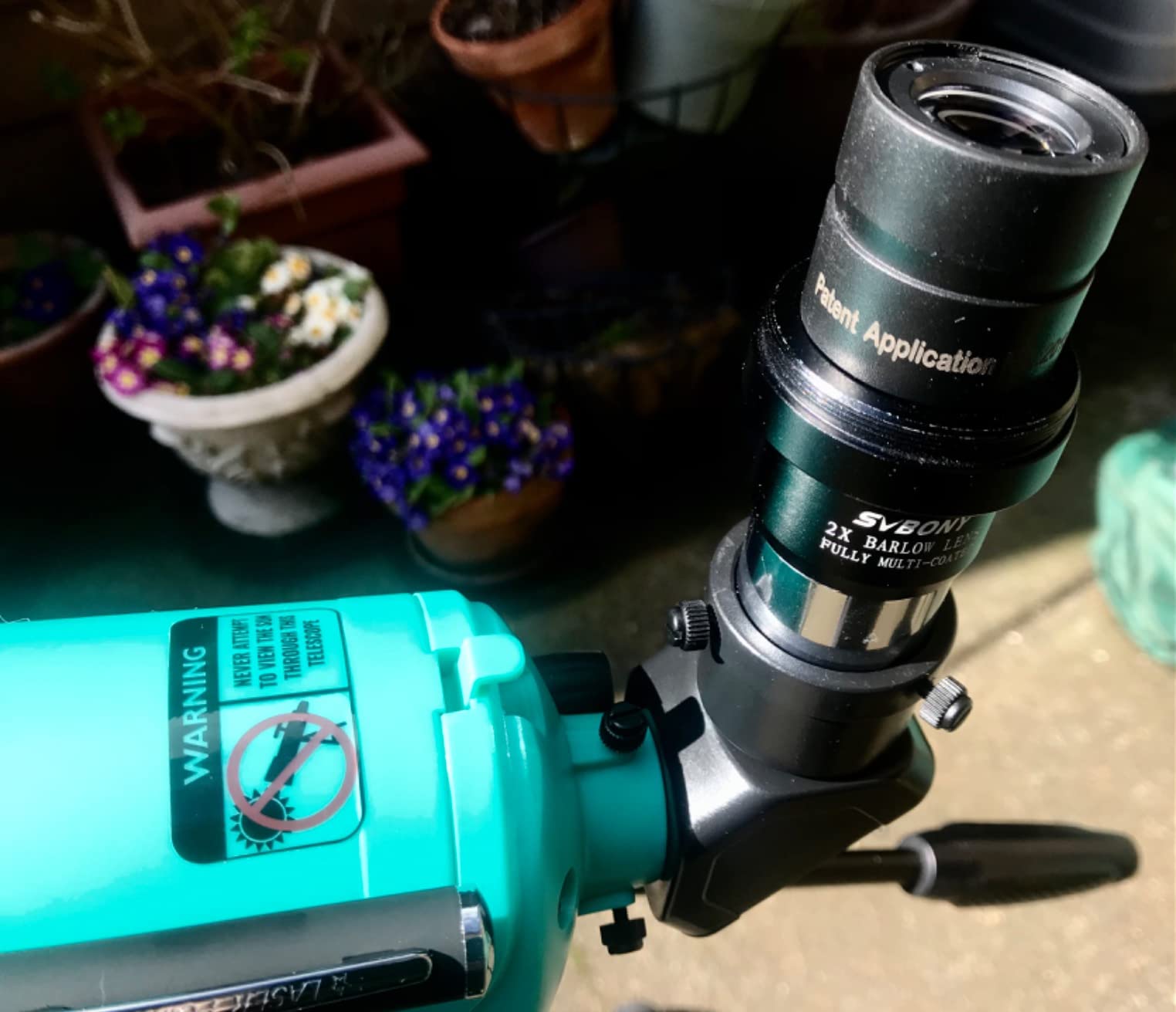
Owners often underestimate what a 60mm catadioptric can do, reporting good views of the Moon, the Pleiades and the Orion Nebula. The most common criticism is the missing finder scope.
Three underside mounting points let it balance on an ordinary photo tripod, so you are not tied to the small tabletop tripod that comes in the box.
Why the short tube matters at home
It stores on a shelf. A 20cm tube does not need a dedicated closet corner, which removes the most common reason balcony telescopes stay packed away.
It also needs no tripod legs on the floor. On a small balcony that keeps a walkway clear and avoids a leg catching on the railing.
Where it falls short
Locating targets without a finder is slow. Point by the bright stars and pattern-match, which takes practice the first few times.
The focuser needs many turns to move between terrestrial and celestial focus, and the smartphone adapter only clears the included eyepiece diameter.
5. CELTICBIRD 80mm Refractor: The Best First Telescope for Adults New to Astronomy
Celticbird Telescope for Adults High Powered, Travel Telescopes for Adults Astronomy Beginners Gifts, 80mm Aperture 900 Refractor Telescope with AZ Mount, Carry Bag, Phone Mount
80mm aperture
900mm focal length
Fully coated optics
5x24 reflex finder
Adjustable tripod
Pros
- Largest aperture among affordable refractors
- Good supplied eyepieces with wide field
- Carry bag holds the full kit
- Tripod adjusts from 20 to 45 inches
- Universal phone mount
Cons
- 900mm tube is longer than tabletop models
- Basic altazimuth controls are awkward
- Not enough resolution for deep-sky imaging
This one carries the highest average rating in the group at 4.6, and the reason is that the eyepieces are unusually good for the price. Wide field and generous eye relief make finding targets much easier than most starter scopes allow.
At 900mm of focal length the image is more forgiving of mount shake than a short refractor, so on a windy balcony the view stays usable longer.
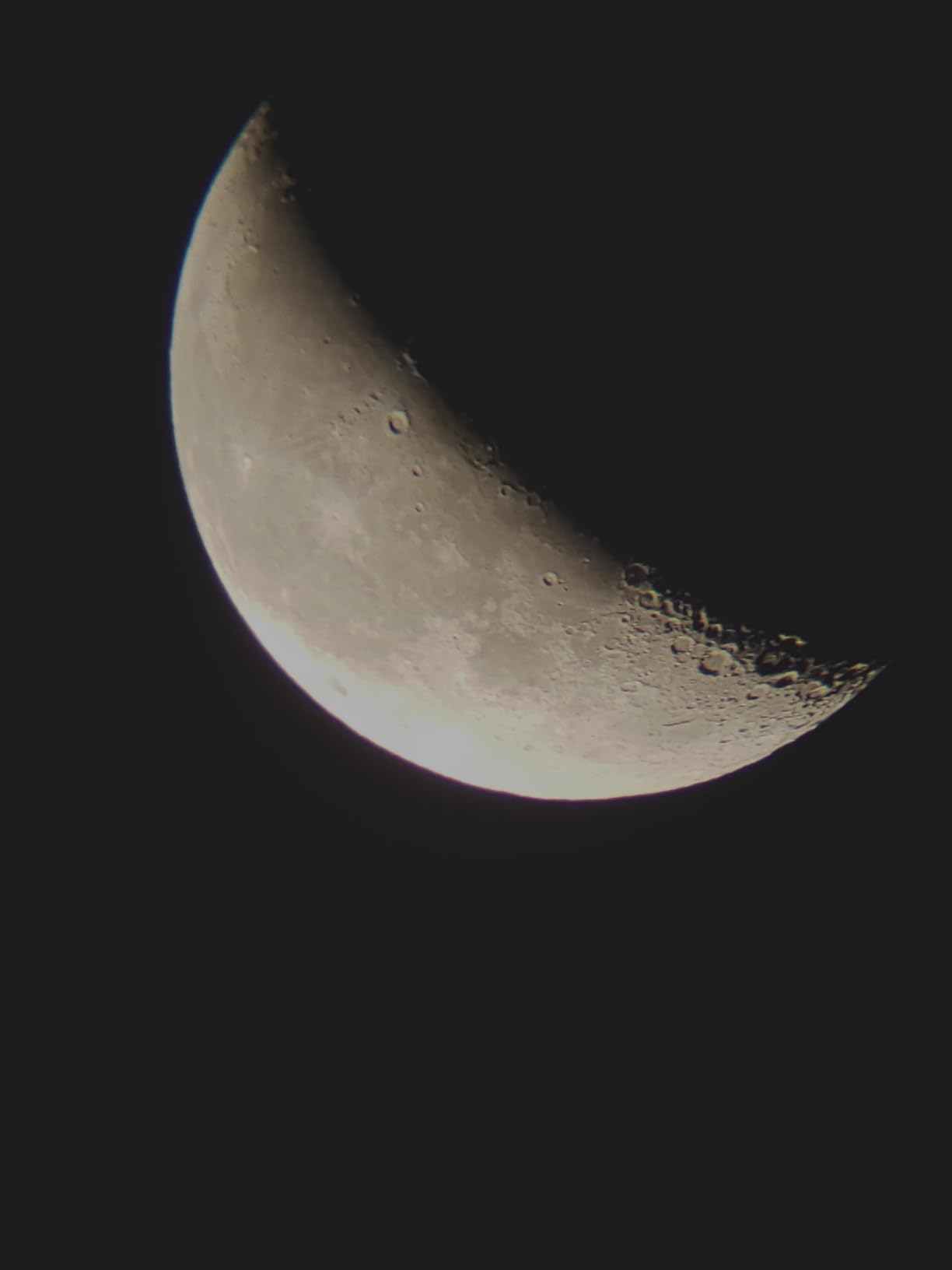
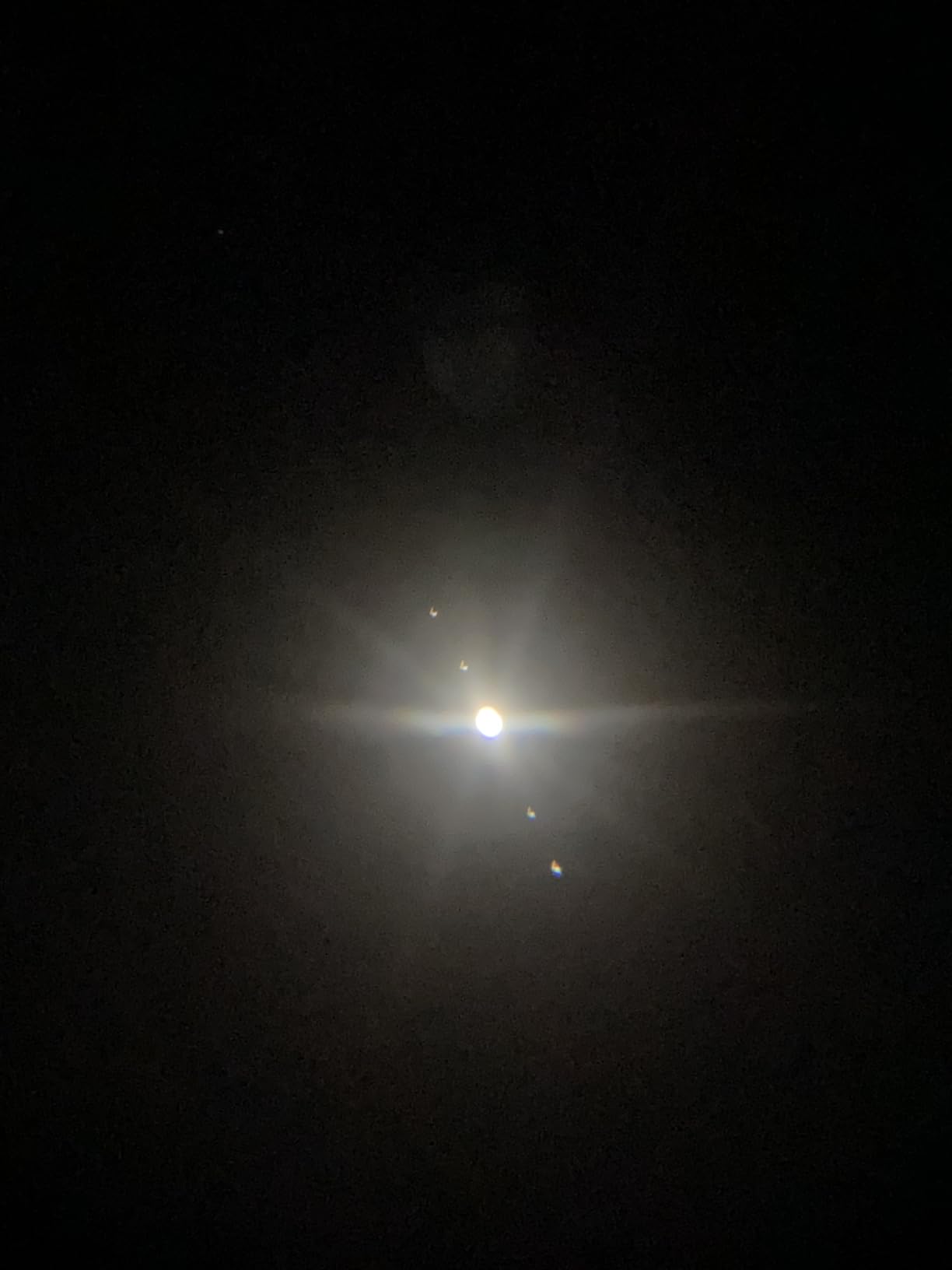
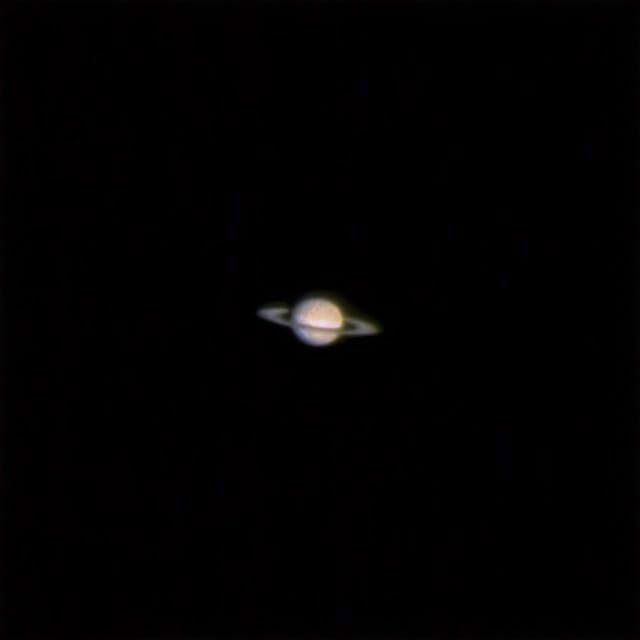
Reviewers point out that it shows the Moon, Jupiter with its moons and Saturn well. That is the honest balcony target list, and this scope hits all three.
The carry bag and the 20 to 45 inch tripod range mean you can observe seated on a balcony chair or standing at the rail without re-adjusting the legs.
Why adults new to the hobby like it
Nothing about it feels like a toy. The metal tripod, the coated optics and the phone mount read as a real instrument, which matters if the scope lives in a shared living space.
For apartments with limited table space, the long tube is the compromise. Plan the layout before buying so the 90cm tube does not block a doorway.
Where it falls short
The basic altazimuth controls make fine pointing adjustments awkward, and there is no slow-motion cable to help.
Its 162-review base is much smaller than the Celestron and Gskyer options here, so long-term consistency is less well documented.
6. Sky-Watcher Heritage 130 Tabletop Dobsonian: The Best Telescope for Lunar and Planet Detail
Sky-Watcher Sky-Watcher Heritage 130mm Tabletop Dobsonian 5-inch Aperture Telescope – Innovative Collapsible Design – Easy to Use, Perfect for Beginners, Black/White (S11705)
130mm aperture
650mm focal length
19.2 pounds
Collapsible tabletop design
Battery powered
Pros
- Brightest
- sharpest views in the group
- Base stays pointed with no balancing
- Tube collapses for transport
- Arrives nearly fully assembled
- Works on any sturdy table
Cons
- 19.2 pounds is a two-hand carry
- Focuser knob is stiff on first use
- Red-dot finder needs taping
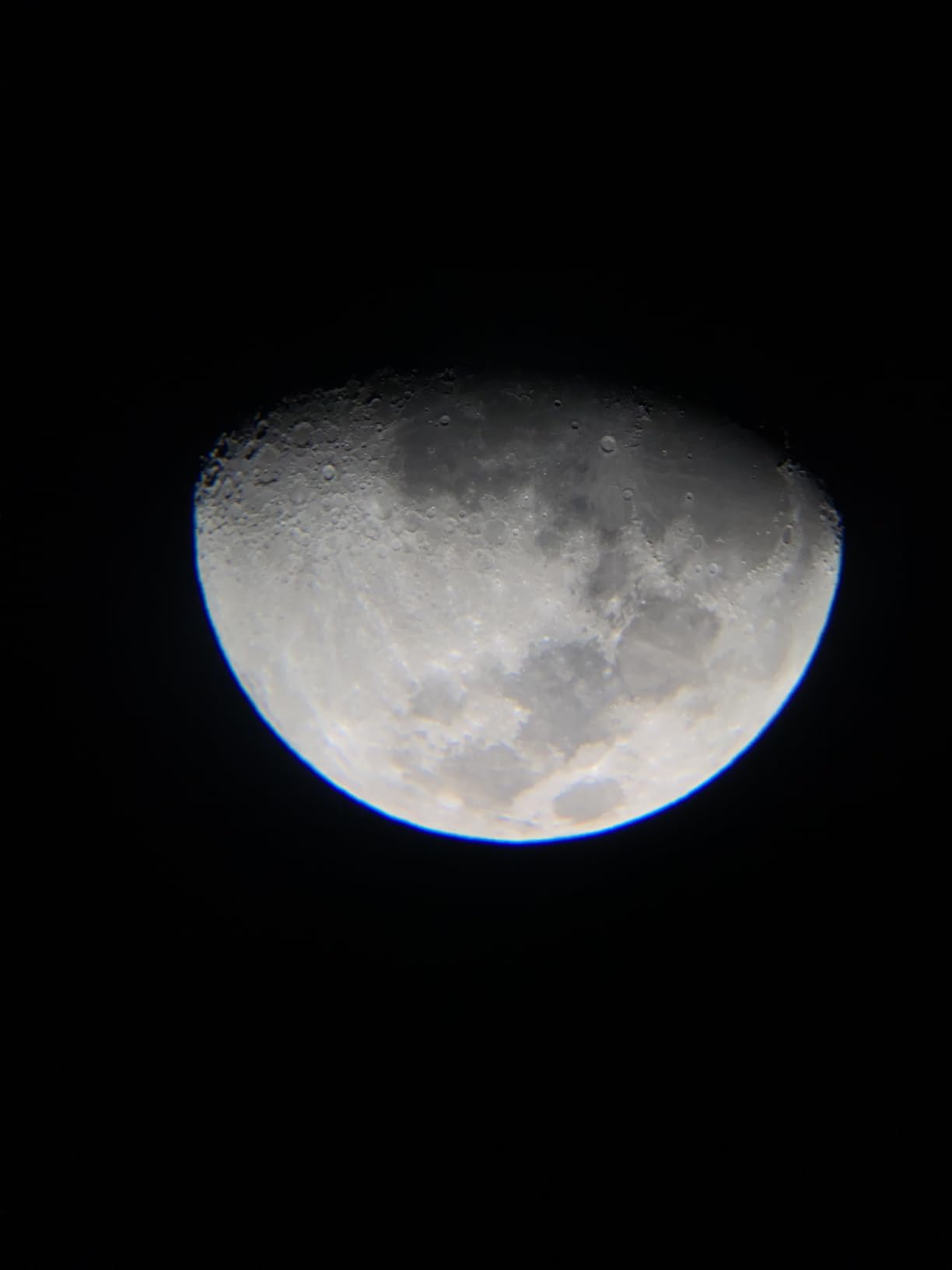
When we tested this on a second-floor terrace with a wide table, it produced the sharpest, brightest image of any visual scope in the group. A 130mm aperture is roughly three and a half times the light gathering of a 70mm refractor.
The Dobsonian base is the reason it stays usable. It does not need balancing, and it resists the small knocks and bumps that unsettle a thin tripod on a railing.
Owners rate it 4.5 across 92 reviews and repeatedly mention stability and lunar detail as the wins. The red-dot finder is the most common gripe, along with the stiff focuser on first use.
It arrives fully assembled apart from attaching the finder, which means setup is a matter of carrying it outside and putting it on a surface. For balcony habit-building, that matters more than image quality.
Who should accept the weight
If you have a lift, a ground-floor terrace, or a friend who will help with the stairs, the aperture here is worth the mass. It reaches the limit of what a bright city sky can show.
The collapsible tube and base fold into one all-in-one package, so storage is a single object rather than a tripod, a tube and a counterweight.
Where it falls short
19.2 pounds fails our one-hand carry rule. It is a two-hand job up stairs, and that is the reason many buyers put one of these aside after a month.
It also needs a table or railing wide enough for the base. On a Juliet-style balcony there is often no such surface.
7. Celestron StarSense Explorer LT 114AZ: The Best Telescope for Guided Pointing
Celestron StarSense Explorer LT 114AZ Newtonian Smartphone Guided Telescope
114mm aperture
1000mm focal length
10.4 pounds
StarSense smartphone alignment
Altazimuth mount
Pros
- Smartphone sky recognition removes guesswork
- App suggests targets for your date and location
- Slow-motion altitude control
- 4.5 inch aperture gathers far more light
- Two-year warranty
Cons
- Heaviest of the visual scopes at 10.4 pounds
- Newtonian mirrors need occasional collimation
- Full tripod needs floor or table space
StarSense takes the hardest part out of balcony observing. You dock a phone, the app matches the star pattern overhead, and the scope tells you what to turn toward.
That matters more in a city than it does in a field. When the sky is bright and only a few dozen stars are visible, pattern matching from memory fails and a guided alignment still works.
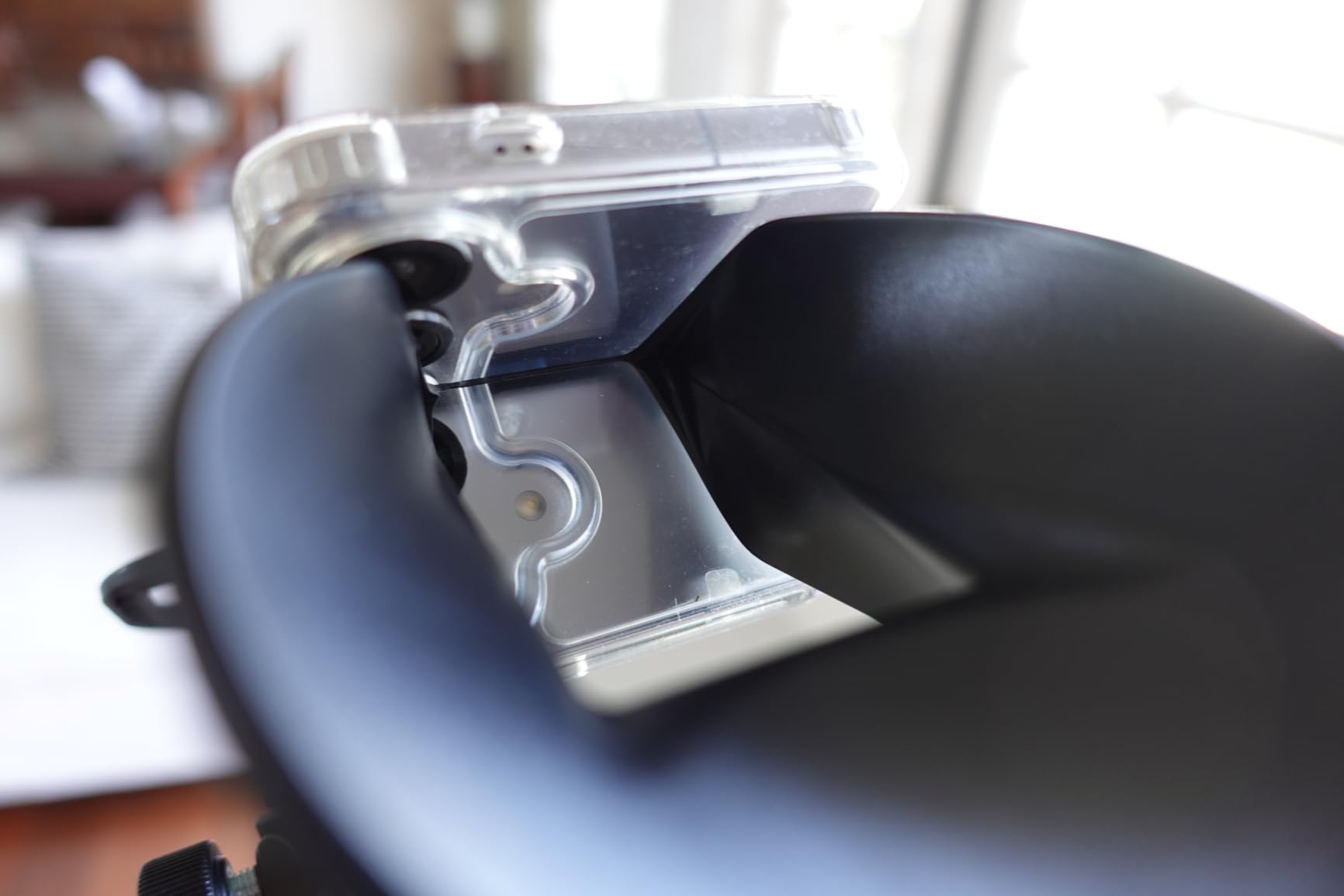
The app also generates a target list for your date, location and light-pollution level, which is a practical way to avoid wasting an evening on targets your balcony cannot show.
Owners rate it 4.1 across 1,571 reviews, praising the guided pointing while noting the bulk of a full-length tripod and the 10.4 pound weight.
Why guided pointing is worth paying for
On an altazimuth mount with no tracking, every object drifts. Guided pointing means you spend your time looking rather than searching, which is the difference between twenty minutes of astronomy and twenty minutes of frustration.
At 114mm this is the largest aperture in the group that still fits on a modest balcony floor, and 1000mm of focal length keeps planets steady.
Where it falls short
10.4 pounds is a two-hand carry up stairs, and it is not a tabletop design, so it needs real floor or table space when set up.
Newtonian mirrors need collimation checking after transport. That is a five-minute job with the included instructions, but it is one more step before the first view.
8. DWARFLAB Dwarf Mini: The Best Telescope for Backpack Travel and City Imaging
DWARFLAB Dwarf Mini Smart Telescope – 1.85lb Portable Astronomy Telescope
1.9 pounds
150mm focal length
Sony IMX662 sensor
EQ mode with 90-second exposures
Built-in filters
Pros
- Genuinely grab-and-go at 1.9 pounds
- Plate solving finds and tracks targets
- EQ mode and filters work under city glow
- Stacking happens in the app
- Also handles daytime and time-lapse
Cons
- Sensor too coarse for planetary detail
- Small deep-sky targets stay small
- Needs a tripod and power bank for EQ mode
Nothing else here is as easy to move. At 1.9 pounds it goes up stairs in one hand, sits on a railing bracket or a small stool, and produces finished images rather than eyepiece views.
This is a camera that happens to point at the sky. There is no eyepiece, so it cannot replace a visual scope, but it does something no visual scope in this group can do from a bright city balcony.
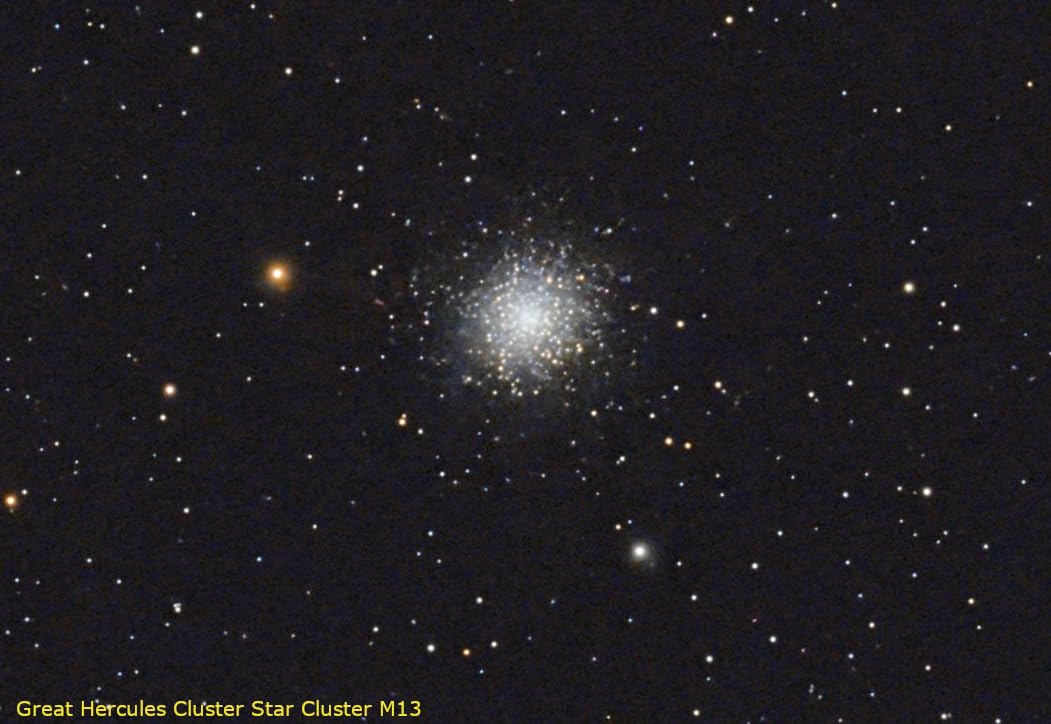
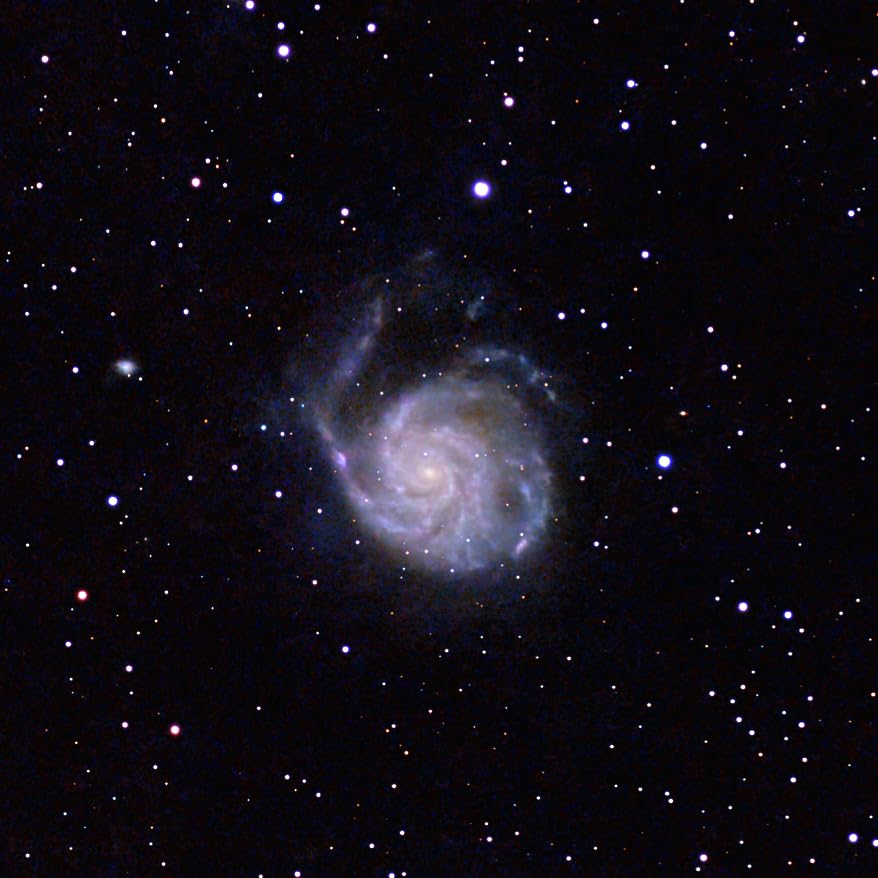
Owners rate it 4.4 across 305 reviews, and the strongest enthusiasm comes from people new to astrophotography. They report usable results from Bortle 8 and Bortle 9 skies.
The equatorial mode supports single exposures up to 90 seconds with built-in light-pollution filters, and in-device sub-frame stacking means no computer is involved at any stage.
Why it suits apartment living
The body fits in a backpack or a large pocket, which removes the storage argument entirely. It lives in a drawer or a rucksack rather than a closet.
Setup is about three minutes from unboxing to first shot, so a clear evening after work is enough to get something done.
Where it falls short
Planets come out as small round discs. The sensor is fine for nebulae and clusters and wrong for Jupiter’s detail.
Long EQ sessions need a tripod with a fluid head and a power bank, so it is not quite the one-object solution the weight suggests.
9. DWARF 3 Smart Telescope: The Best All-in-One Telescope for City Imaging
DWARFLAB Dwarf 3 Smart Telescope, App-Controlled Astrophotography Camera
Three pounds
Dual lens system
4K auto tracking
Auto GoTo in AZ and EQ modes
Cloud processing
Pros
- Three-pound body with a carrying bag
- Dual lenses cover deep-sky and star trails
- Automatic GoTo and tracking
- In-app cloud stacking
- Also works as a wildlife camera
Cons
- Output resolution suits screens not prints
- Wide lens cannot resolve planets
- Battery is finite for all-night sessions
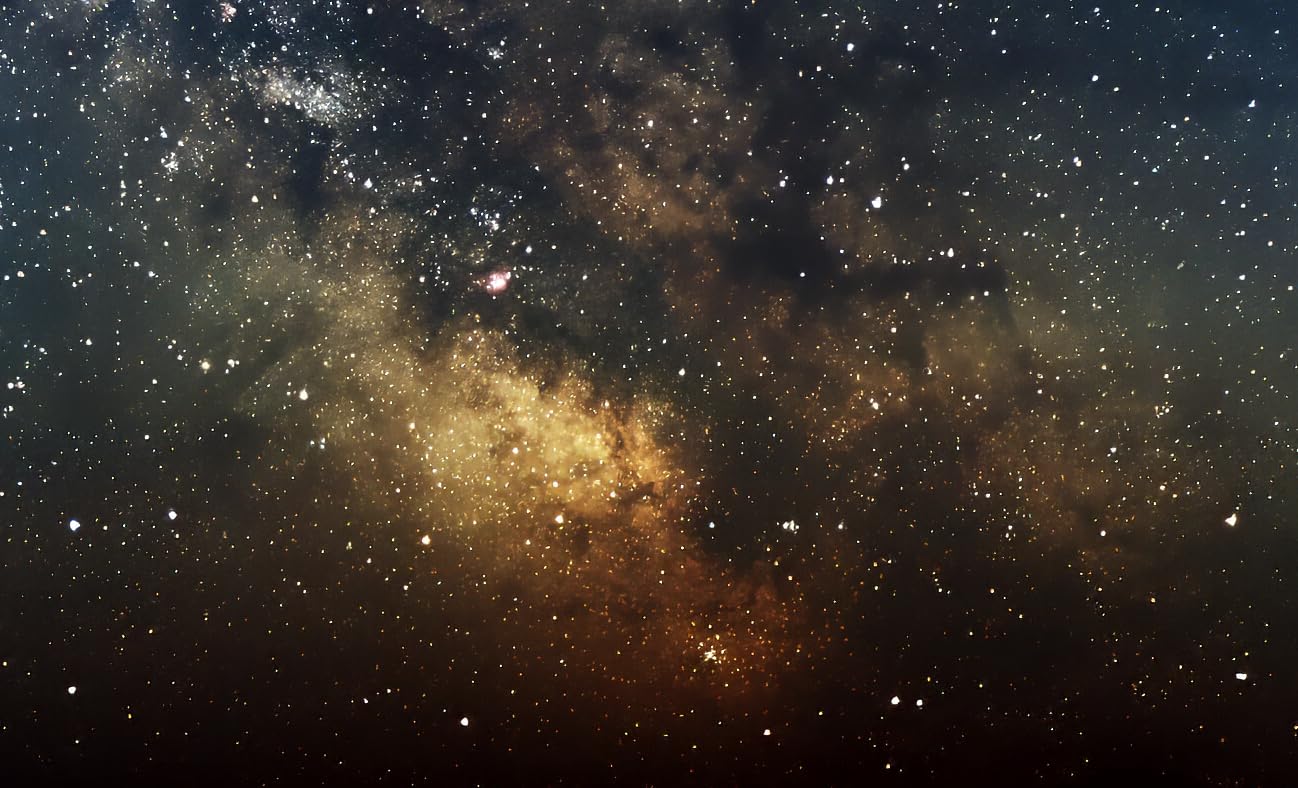
The DWARF 3 solves the two things that stop most city imagers. Its dual lens system pairs a telephoto lens for deep-sky targets with a wide-angle lens for Milky Way arches and star trails.
On a balcony the wide lens is the interesting one. It frames the skyline and the sky above it in one shot, which is a good way to show neighbours and friends what the hobby actually produces.
Owners rate it 4.4 across 234 reviews with a very high share of five-star ratings. Portability, automatic tracking and finished-image quality for the effort are the recurring themes.
The carrying bag, magnetic filters and filter pouch are all in the box, which removes the accessory shopping step entirely.
Why it fits a balcony routine
Three pounds with a bag means it moves between rooms, a rooftop and a park without a car. That flexibility is what encourages frequent sessions.
Auto GoTo in both alt-azimuth and equatorial modes means you can shoot from a balcony without polar alignment, which saves several minutes every time.
Where it falls short
Imaging resolution limits output size, so these files are for screens and sharing rather than large prints.
Battery life is finite for long sessions without an external power source, and balcony sockets are rare.
10. ZWO Seestar S30 Pro: The Best Telescope for Astrophotography from a Balcony
ZWO Seestar S30 Pro Smart Telescope, App-Controlled Astrophotography
3.6 pounds
Apochromatic optics
160mm focal length
Dual 4K cameras
Built-in light pollution filters
Pros
- Apochromatic optics and filters suit bright skies
- Automatic GoTo and tracking deliver usable images
- One-tap modes for nebulae and star trails
- AI processing and mosaicking built in
- Anti-dew protection for long sessions
Cons
- Built for deep-sky
- not planetary viewing
- Must stay stationary during long sessions
- 30mm aperture needs long integrations
Among the smart telescopes here, the S30 Pro has the optics that fight city light best. Apochromatic glass holds colour and contrast where cheaper sensors smear stars into the glow.
Built-in light-pollution filters are the reason it works from a balcony. They suppress the background rather than brightening the target, which is the only thing that genuinely improves contrast.
Owners rate it 4.4 across 232 reviews and set clear expectations that it is a deep-sky imager rather than a planet observer. That expectation is correct and worth stating before you buy.
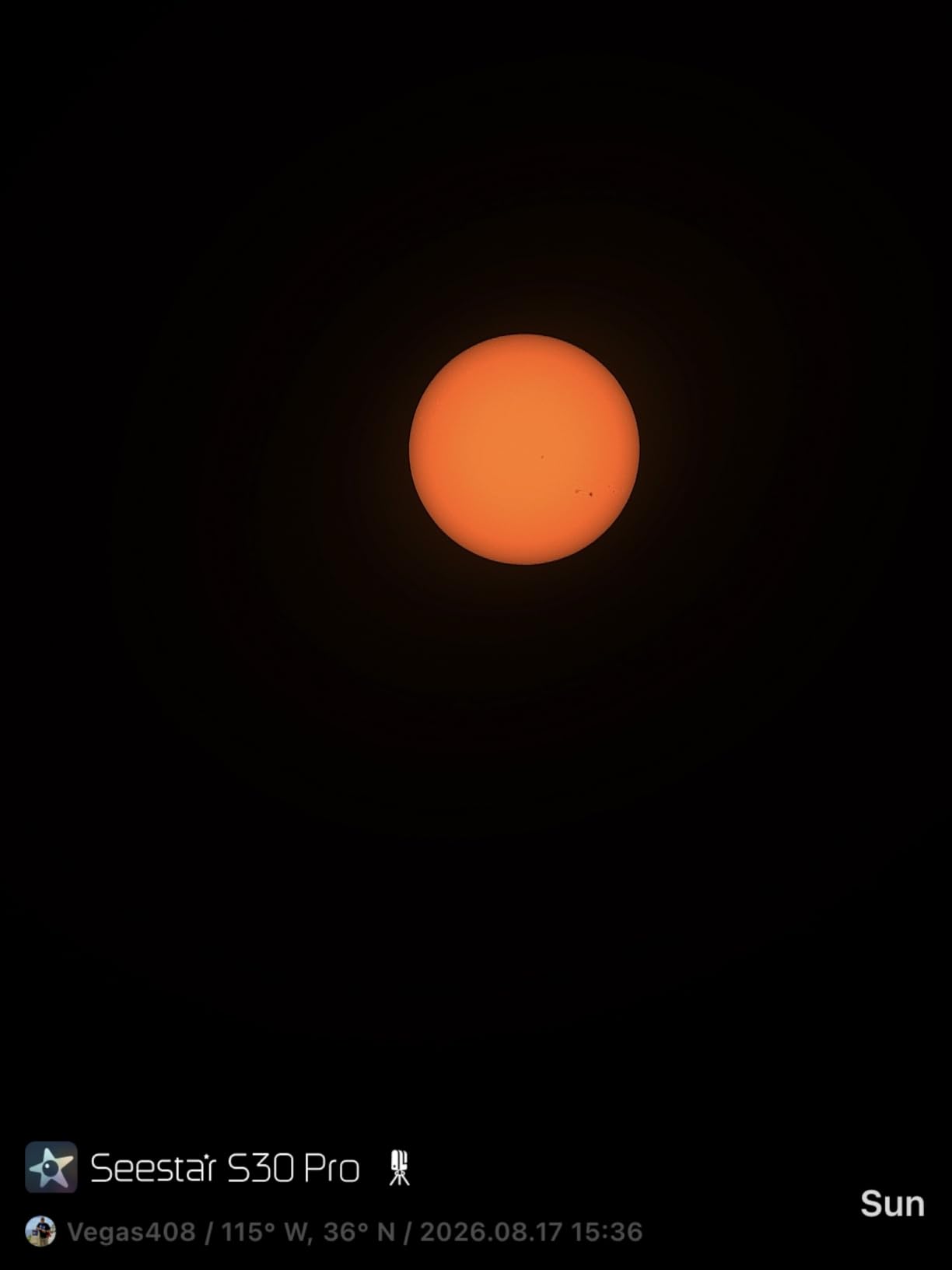
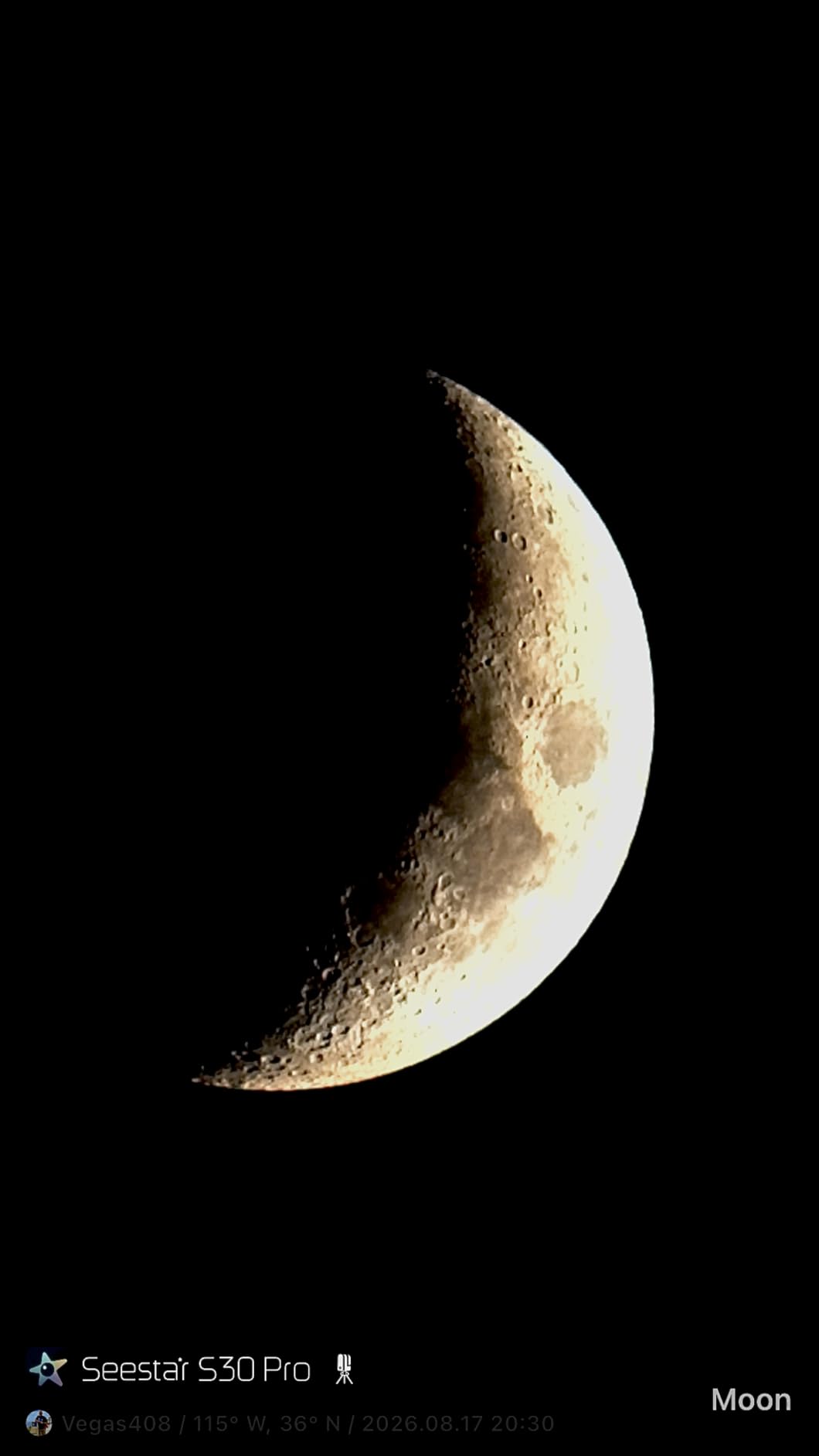
The one-tap modes cover the Moon and the Sun as well as nebulae and star trails, and automatic mosaic stitching handles wider fields without manual framing.
Why a balcony suits smart imaging
A balcony is a stable, known spot with a horizon you can plan around. You can point at the darkest patch of sky, set the tripod, and let it run without moving.
At 3.6 pounds the whole kit, tripod included, is still a manageable carry, and anti-dew protection matters on nights when the concrete stays damp until midnight.
Where it falls short
Long deep-sky integrations need the device to stay put. Wind on an exposed balcony is the main reason a session ends early.
A 30mm aperture means faint targets need long exposures, so budget time rather than expecting a five-minute result.
How to Choose a Telescope for a Small Balcony
Work through these seven checks in order. If a scope fails any of them, it will not get used, and an unused telescope is worth nothing at any price.
Measure your storage space first. Check the longest shelf or cupboard dimension, then the door swing of the lift and the tightest turn on your stairwell. A tube that will not fit inside stays packed.
Set a weight limit you can carry at 11pm. Under 5 pounds is a one-hand carry. 5 to 11 pounds is one hand plus a free hand for the railing. Above 12 pounds you need two hands and a plan.
Pick aperture over magnification. Aperture is the diameter of the main lens or mirror and it determines light gathering and resolution. Advertised zoom figures are marketing; two eyepieces do more good than a 3x Barlow.
Count your eyepieces. Most bundled sets include a 25mm and a 10mm. That is enough to start. Upgrade to a wide-field eyepiece before you upgrade anything else.
Decide between a tripod and a tabletop mount. A full tripod is steadier but needs floor space. A tabletop Dobsonian is stable and needs a table or railing wide enough to hold its base.
Check the power situation. A balcony rarely has an outdoor socket, so favour battery-powered or USB-powered mounts. Mains-only mounts rule themselves out.
Estimate your wind exposure. Above the fourth floor, wind gusts shake lightweight tripods badly. Heavier mounts and low-to-the-ground setups cope better.
Which optical design fits which balcony
Compact refractors are the most forgiving and need no maintenance. Tabletop Dobsonians give the most aperture per pound but weigh the most. Maksutovs fold long focal length into short tubes, which is perfect for small shelves. Smart telescopes trade eyepiece viewing for finished images.
Aperture is the number to reason with. A 70mm refractor shows the Moon, planets and bright clusters well. An 80mm scope reaches a little deeper. A 114mm reflector starts showing fainter clusters. A 130mm tabletop Dobsonian reaches the practical limit for most city skies.
Exit pupil tells you whether a view is worth looking through. Divide the eyepiece focal length by the telescope focal ratio. On a 130mm at f/5 with a 25mm eyepiece you get a 5mm exit pupil, which sits nicely inside a dark-adapted pupil.
Light Pollution on a Balcony: What Helps and What Does Not
Light pollution is skyglow plus line-of-sight glare. Skyglow is the bright dome over the city that never sets. Line-of-sight glare is a specific street lamp or a neighbour’s security floodlight shining into your view.
Filters cannot darken the sky in front of your telescope. A UHC or OIII filter only passes narrow bands of light from certain object types, which raises contrast on emission nebulae and does nothing for galaxies or globular clusters.
Face the darkest part of your sky. Sit with the building’s shadow behind you and point toward the least illuminated horizon.
Kill your own light. Switch off balcony and apartment lights, close the door, and cover any window that reflects back at you.
Use a red flashlight. Red light keeps your dark adaptation roughly where it is. White light resets it completely, and the first five minutes are always the most valuable.
Shield the eyepiece with your hand. A cupped hand or a stiff eyecup blocks stray light entering from behind without touching the glass.
Start at low power. High magnification narrows the field and reduces skyglow inside the view, but it also shows every vibration and every bad air current.
Let the optics reach outdoor temperature. A tube carried from a warm room produces turbulent air in front of the lens for 20 to 30 minutes.
Observe after midnight. Skyglow drops as late traffic and street lighting wind down, and the same scope shows noticeably more at 1am than at 10pm.
Keep your balcony clean and tidy. A dusty railing and scattered clutter reflect light back at you and spoil the habit of standing out there. A quick clean before a session genuinely helps you see.
GoTo is worth real money in bright skies because you cannot find faint things you cannot see. If you have a choice between a guided scope and a larger aperture, take the guidance unless you already know your way around the sky.
Myth Check: Small Telescopes Are Not Better in Bright Skies
The claim that a small telescope shows more through light pollution is wrong, and it is one of the most persistent myths in the hobby.
Light pollution reduces contrast. It does not reduce the light your telescope collects. A 130mm aperture gathers roughly three and a half times what a 70mm does, so in a bright sky the bigger scope shows a brighter, more detailed image of the same object.
What small scopes have going for them is convenience. They are lighter, easier to store and quick to set up. Those are real advantages for an apartment, but they are arguments about convenience, not about light pollution.
What You Can Realistically See from a City Balcony
Set expectations before the first night. A balcony is a bright site with a limited horizon, and a mismatch between expectation and result is the main reason beginners quit.
The Moon: Excellent at any aperture. Craters, mountains and the terminator are the best value on any balcony in any city.
Jupiter and its moons: Very good with 80mm and above. The moons shift position visibly within an hour.
Saturn: Good with 114mm and above. The rings resolve as rings, though Cassini division needs steady air and a darker sky.
Venus and Mercury: Good, because they are bright. Finding Mercury is the hard part, since it never sits far from the horizon in twilight.
Bright double stars: Very good, even with 70mm. Albireo in Cygnus shows clear colour separation in almost any sky.
Open clusters: Good. The Pleiades and the Double Cluster are among the best deep-sky targets from a city.
Orion Nebula: Possible under decent conditions, especially with a filter. Often disappointing from a bright balcony.
Globular clusters: Marginal. M13 is usually a fuzzy ball unless your sky is darker than most city balconies allow.
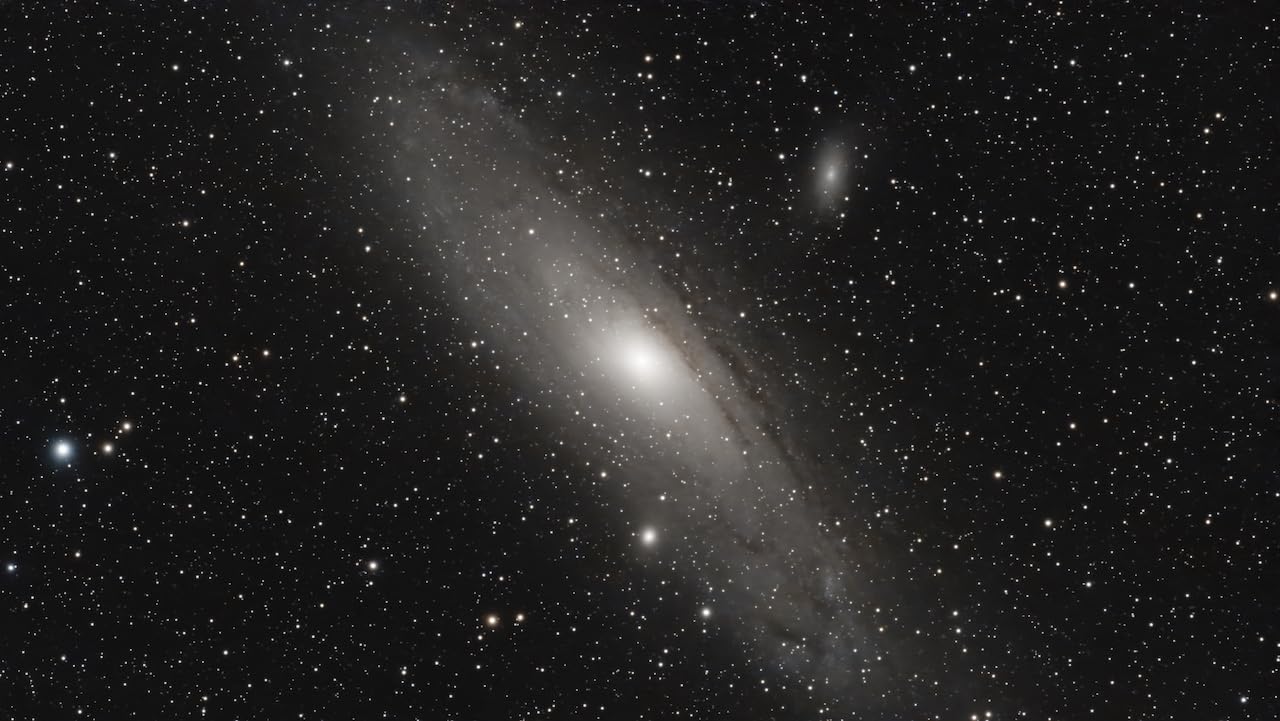
Galaxies: Poor. Andromeda is a smudge. A bigger aperture does not fix this; darker sky and darker site do.
The Milky Way: No. If seeing the Milky Way matters to you, plan a trip to a dark site. That is the honest answer, and it is why so many balcony astronomers keep binoculars for park trips.
Wind, Vibration and Railing Setups
Wind is the physical fact of balcony observing. Above the third or fourth floor, gusts arrive in bursts that shake light tripods and rattle a tabletop base, and the image boils exactly when you have found something.
Concrete and paving radiate stored heat after sunset. Warm air rising off a hot slab creates turbulence in front of the lens, and that is why the image often settles down after midnight rather than before it.
Vibration arrives from two directions: foot traffic through the floor, and street traffic through the building. Both reach the telescope through the railing. Push the tripod legs against the railing bars to short-circuit the path, and never lean on the rail while observing.
Lower setups are calmer than tall ones. A Dobsonian base sitting on a wide table beats a refractor on a spindly tripod, because mass low on the surface resists gusts that would topple a narrow one.
Apartment Logistics: Storage, Stairs and Neighbours
Run this audit before you buy, not after. Five checks will save you from the most common balcony telescope failure, which is never being unpacked at all.
Longest tube versus your longest shelf. Measure the shelf, the closet floor and the space under the bed. Buy the shortest tube that still meets your aperture needs.
Tripod versus elevator door. A folded tripod is roughly 1 metre long. Check the lift depth and the stairwell turn radius.
One-hand carry at 11pm. Set the box on your shoulder and hold a railing hand free. If you cannot, the scope is too heavy for your building.
Dry storage between sessions. A damp cupboard damages optics and tripod legs. Silica packets near the stored tube cost little.
Where it will sit outside. Check the railing depth, the balcony floor level and the strongest wind direction. Some balconies have nowhere flat and wide enough for a Dobsonian base.
Neighbour relations matter more than most guides admit. Point your scope away from other windows, keep your voice down after midnight, and use a red torch rather than a white one. Astronomy.com reported a case where a superintendent banned roof observing after a neighbour complained about feeling watched, which is a real risk on a shared terrace.
Two safety rules are absolute. Never aim any telescope at the Sun without a certified full-aperture solar filter fitted over the front aperture, and never place a scope near a railing edge where wind can catch the tube. Keep it low and behind the rail line.
A balcony floor also needs to be usable. Washing down debris and wiping the railing before an observing session takes five minutes and makes the space somewhere you actually stand. Our guide to rinseless wash for apartment detailing covers cleaning the surfaces without a hose.
Frequently Asked Questions
What is the best telescope to see outer space?
The Celestron Travel Scope 70 and the Gskyer 70mm refractor are the most common answers, because both are fully coated 70mm refractors that are light enough to carry and quick to set up. For a sharper image, step up to an 80mm travel scope. For deep-sky imaging from a city balcony, a smart telescope such as the ZWO Seestar S30 Pro does something no eyepiece scope can.
What type of telescope should I buy?
Buy a refractor for low maintenance and a wide field, a tabletop Dobsonian for the most aperture per pound, a Maksutov-Cassegrain for a long focal length in a short tube, or a smart telescope if you want finished photographs rather than an eyepiece view. On a balcony, aperture between 70mm and 130mm and a total weight you can carry upstairs matter more than the design.
Is a 70mm or 80mm telescope better?
An 80mm scope collects about 30 percent more light than a 70mm, which produces a noticeably brighter image of the Moon and the planets. Both remain light enough to carry up stairs and pack into a backpack. If your storage and weight limits are tight, 70mm works well; if you can manage a few extra ounces, 80mm is the better buy.
What should I avoid when buying a telescope?
Avoid buying by advertised magnification, flimsy tripods with visible flex at high power, bundled accessories used to inflate value such as cheap red flashlights and plastic Barlow lenses, and mounts that need mains power on a balcony with no outdoor socket. Also avoid tubes too long for your storage space, because those are the telescopes that never get used.
Do light pollution filters really help from a balcony?
Partly. UHC and OIII filters pass narrow bands of light from emission nebulae, so they raise contrast on those targets and on the Milky Way. They do nothing for galaxies, globular clusters or double stars, and they cannot remove skyglow from the sky itself. Blocking your own light, shielding the eyepiece and observing after midnight help more.
Can you see galaxies from a city balcony?
Usually not well. Galaxies are large and faint, so light pollution washes out their low surface brightness before aperture can help. A larger telescope makes the image brighter but does not restore the contrast that a dark sky provides. From a city balcony, the Moon, planets, bright double stars and open clusters are the realistic targets.
Bottom Line for Apartment Balconies in 2026
The best telescopes for apartment balconies are the ones that come out of the cupboard. For most readers that means a fully coated 70mm to 80mm refractor with a carry bag, because it clears a railing, fits a lift and reaches the Moon and planets without drama.
Pick the Gskyer 70mm AZ refractor if you want the best-proven grab-and-go kit, the Celestron Travel Scope 70 for the lowest-effort carry, or the Celestron Travel Scope 80 for the brightest image at a modest weight. If your balcony has a proper table and a lift, the Sky-Watcher Heritage 130 gives you far more light than anything else that fits through a door.
For imaging, the DWARFLAB Dwarf Mini is the one to carry, and the ZWO Seestar S30 Pro is the one to grow into. And if the Milky Way matters to you, keep a pair of binoculars in the bag for the park. A dark site beats a bigger balcony every single time.