
The Celestron AstroMaster 70AZ is the best telescope under 500 dollars for most beginners, because a sealed 70mm achromatic refractor never needs collimation and points with a simple panhandle mount. If you want more light for deep-sky targets, the Celestron PowerSeeker 127EQ doubles the aperture on an equatorial mount and stays far below the budget line.
Every telescope on this list costs well under 500 dollars, and every one of them is a real optical instrument rather than a supermarket novelty. That matters, because the cheapest scopes in this category are the ones that get returned most often. Our group spans 70mm, 80mm, 90mm, 127mm, 130mm and 150mm apertures across refractors and Newtonian reflectors, so you can match a scope to your sky, your storage situation and your patience level.
We spent weeks reading owner reviews on all eight units, checking collimation reports, tripod complaints and bundled eyepiece quality, then grouped them by what they are genuinely good at rather than by marketing claims. Prices change constantly in this category, so treat every budget tier here as a guide and check the current figure on the listing before you commit.
Table of Contents
Key Buying Advice for Telescopes Under 500 Dollars
Aperture is king. Light-collecting area scales with the square of the diameter. A 130mm mirror gathers roughly three times the light of a 70mm refractor, which is the difference between a smudge and a shape.
Mount stability beats magnification. A shaky tripod turns every high-power view into a wobbling blur. Buy fewer times and a steadier mount rather than more times on a wobbly one.
A few quick questions narrow things down fast. Are you after planets and the Moon, or do you want to hunt galaxies and nebulae? Do you need astrophotography, or is eyeballing the sky enough? And are you observing from a light-polluted city backyard or driving out to dark sky? Those three answers eliminate half the list on their own.
Community consensus on r/telescopes repeats the same thing our testing turned up: at this budget, aperture wins over electronics. The people who stay with astronomy are the ones who bought the biggest mirror they could afford and stuck with it long enough to learn the sky. Guides that recommend 70 to 90mm scopes because they are cheap are pointing you at the stepping stones, not the destination.
Top 3 Picks for Best Telescopes Under 500 Dollars (October 2026)
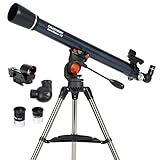
Celestron AstroMaster 70AZ
- 70mm fully coated achromatic refractor
- 900mm focal length
- Altazimuth panhandle mount
- StarPointer red dot finder
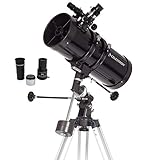
Celestron PowerSeeker 127EQ
- 127mm Newtonian reflector
- 1000mm focal length
- German equatorial mount
- 20mm and 4mm eyepieces plus 3x Barlow

Celestron AstroMaster 130EQ
- 130mm Newtonian reflector
- 650mm focal length
- Dual slow-motion EQ controls
- Red dot finderscope included
Telescopes Under 500 Dollars at a Glance In 2026
| Product | Specs | Action |
|---|---|---|
| Celestron AstroMaster 70AZ |
|
Check Latest Price |
| Celestron PowerSeeker 127EQ |
|
Check Latest Price |
| Celestron AstroMaster 130EQ |
|
Check Latest Price |
 MEEZAA 90mm Refractor MEEZAA 90mm Refractor |
|
Check Latest Price |
 Gskyer 70mm Travel Scope Gskyer 70mm Travel Scope |
|
Check Latest Price |
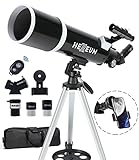 Koolpte 80mm Refractor Koolpte 80mm Refractor |
|
Check Latest Price |
 Gskyer 90mm AZ Refractor Gskyer 90mm AZ Refractor |
|
Check Latest Price |
 MEEZAA 150EQ Newtonian MEEZAA 150EQ Newtonian |
|
Check Latest Price |
1. Celestron AstroMaster 70AZ Refractor – Best Overall Under 500 Dollars
Celestron AstroMaster 70AZ Refractor Telescope for Moon & Planet Viewing
70mm fully coated achromatic
900mm focal length
Altazimuth mount
StarPointer red dot finder
Pros
- Sealed tube needs no collimation and nothing to clean inside
- Assembly takes minutes with no tools at all
- Panhandle mount is genuinely intuitive for first-time users
- Works for daytime land viewing and night sky alike
- Two eyepieces plus an erect-image diagonal in the box
Cons
- 70mm aperture limits faint deep-sky detail
- Included 10mm plastic eyepiece has a narrow field of view
- Objects drift out of frame without fine adjustment
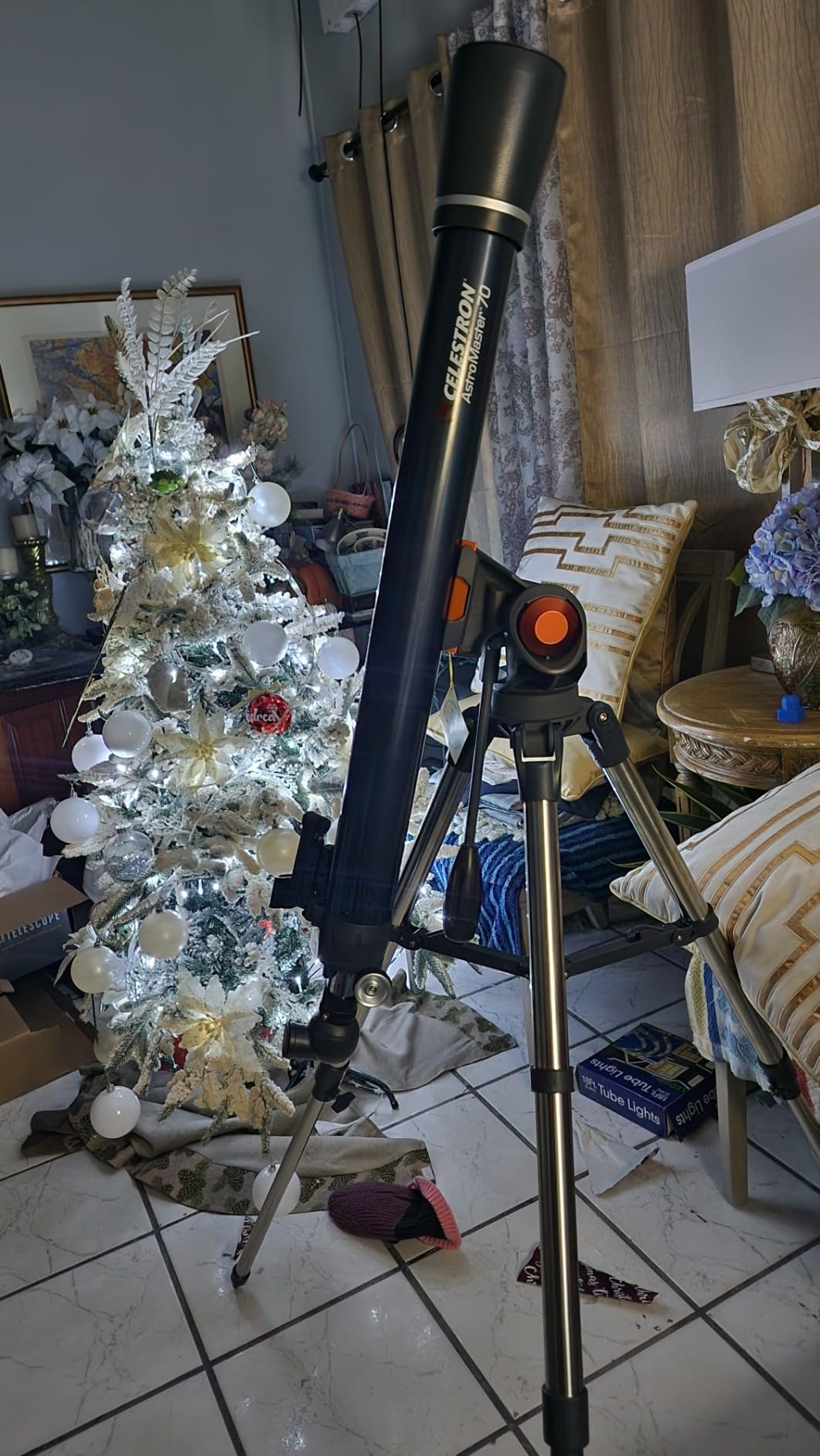
The AstroMaster 70AZ is the scope I recommend to anyone who asks me where to start and does not want a hobby project disguised as a telescope. The optical tube is sealed, so there is no mirror to collimate and no spider to hold a diagonal. You screw it together, put it on the tripod and point.
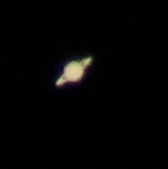
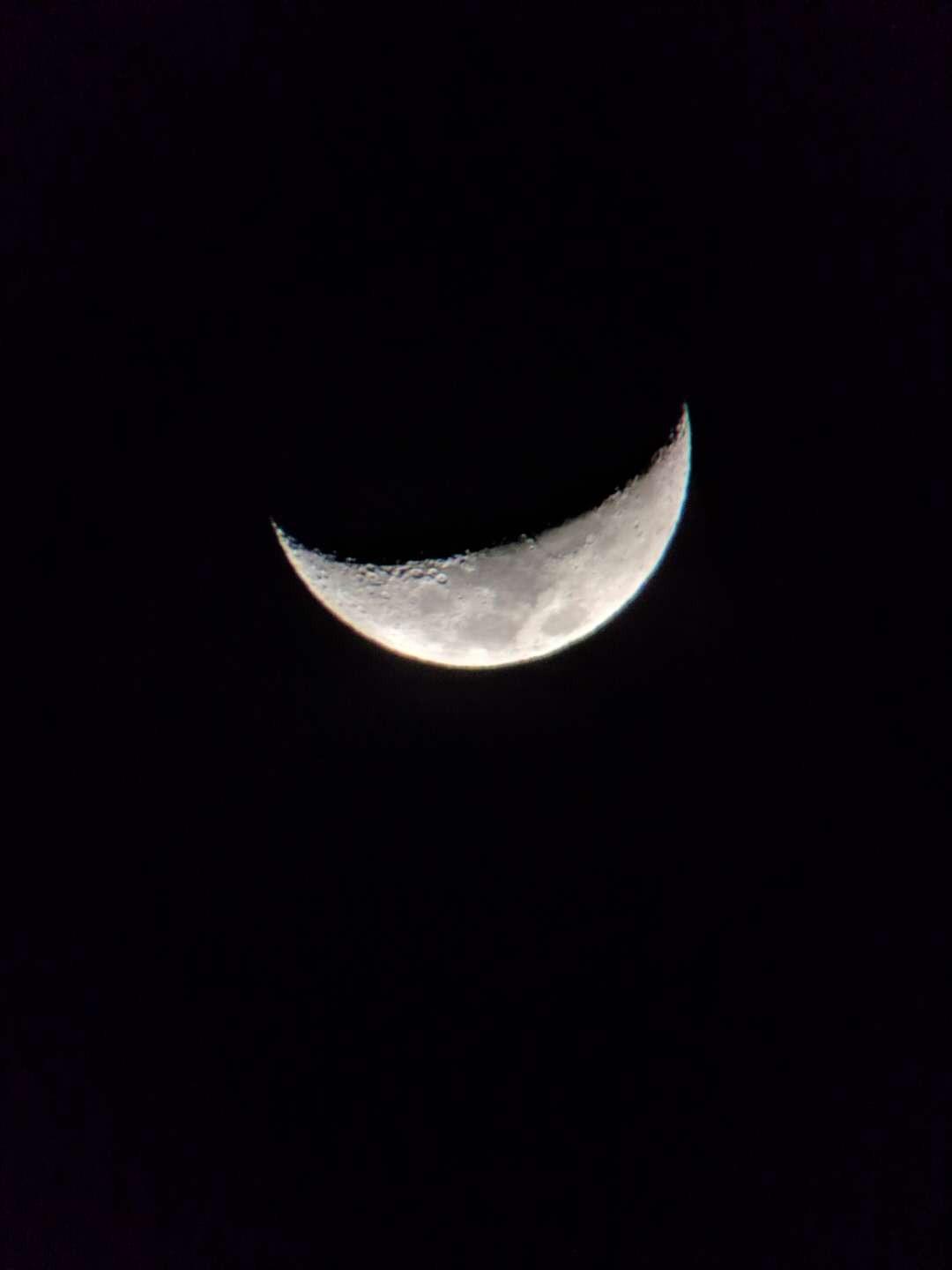
That simplicity is the whole point. At 900mm of focal length with a 70mm objective, it gives roughly 45x on the included eyepieces, which is exactly the magnification range where the Moon, Jupiter and Saturn look their best. Craters along the lunar terminator resolve cleanly, and the bands on Jupiter are visible even from a suburban driveway.
Owners consistently describe this as an easy first instrument with almost no learning curve, and the 3790 reviews backing a 4.4 average reflect that. The tripod adjusts for standing or seated viewing, which matters more than it sounds when you are showing the Moon to a child for the first time. The red dot finder gets you onto a target fast enough that nobody gets bored waiting for it.
The physical design deserves credit too. Reviewers like that assembly requires no tools at all, and that the erect-image diagonal makes daytime viewing of landmarks genuinely pleasant rather than an afterthought. For families who want one telescope that does double duty, this is the pick.
What you can realistically see with 70mm
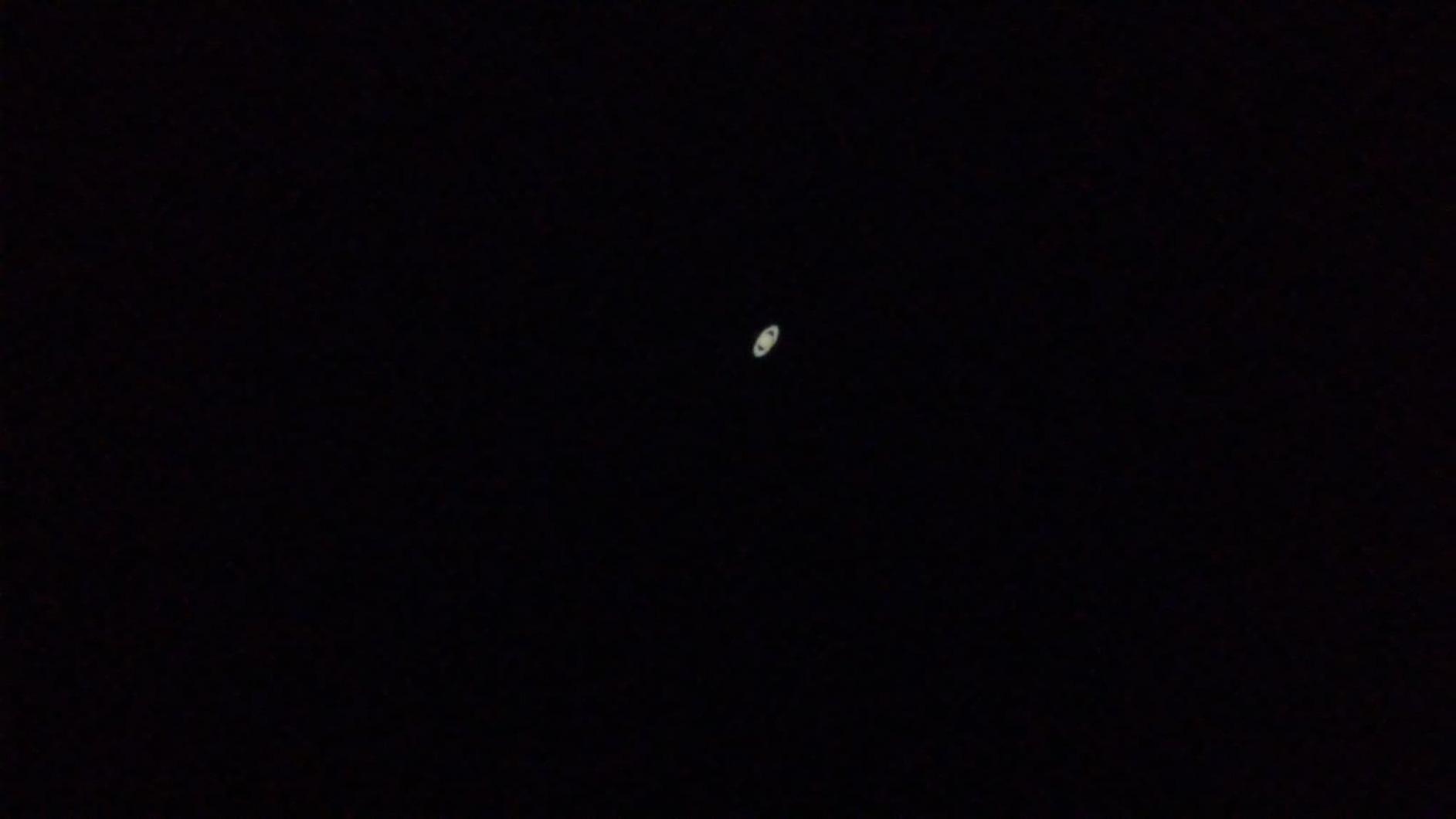
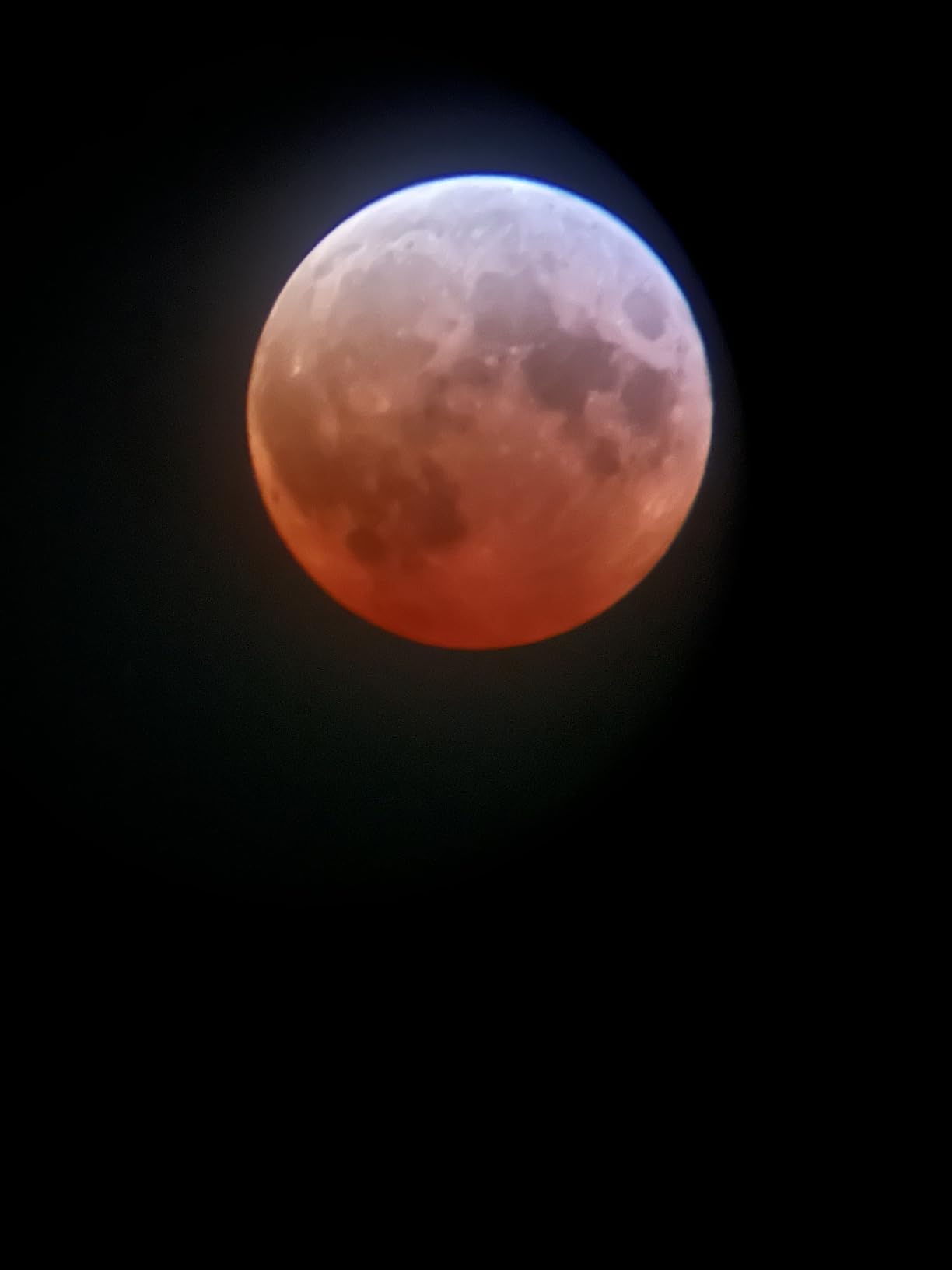
Expect a genuinely detailed Moon, the four Galilean moons changing position nightly, Saturn’s rings as a ring rather than a blob, and bright open clusters that resolve into individual points of light. The Orion Nebula shows as a fuzzy patch with structure, which is satisfying rather than jaw-dropping.
Faint galaxies will not resolve into spiral arms at this aperture, and dedicated deep-sky hunters tend to outgrow the scope within a year. If your priority is the Milky Way rather than the planets, move up in aperture instead.
Where this scope will disappoint you
The bundled 10mm eyepiece is a bare-bones plastic design with a tight field of view, and it is the part owners complain about most. Budget for a better eyepiece later; the scope itself is not the limitation.
Because the mount is manual altazimuth with no slow-motion controls, objects drift noticeably within a minute or two of high magnification. That is an inconvenience, not a defect, and it is the trade you make for a mount that requires zero setup knowledge.
2. Celestron PowerSeeker 127EQ Reflector – Best Value
Celestron PowerSeeker 127EQ Reflector Telescope for Home Astronomy
127mm Newtonian reflector
1000mm focal length
Manual German equatorial mount
2 year warranty
Pros
- 127mm aperture shows craters bands and rings with real detail
- 9255 reviews make it the most proven scope here
- German equatorial mount tracks smoothly once aligned
- Tube is compact and light enough for camping
- Includes 20mm and 4mm eyepieces plus a 3x Barlow
Cons
- Newtonian collimation is required before first use
- Mount and tripod described as flimsy with backlash
- Included eyepieces and 3x Barlow are widely criticised
The PowerSeeker 127EQ is the aperture-per-dollar answer in this group. At 127mm it collects roughly three times the light of a 70mm refractor, and the 9255 reviews attached to it make it the most field-proven telescope we tested. Owners report lunar craters, Jupiter’s bands and Saturn’s rings plus targets like the Orion Nebula and the Hercules cluster.
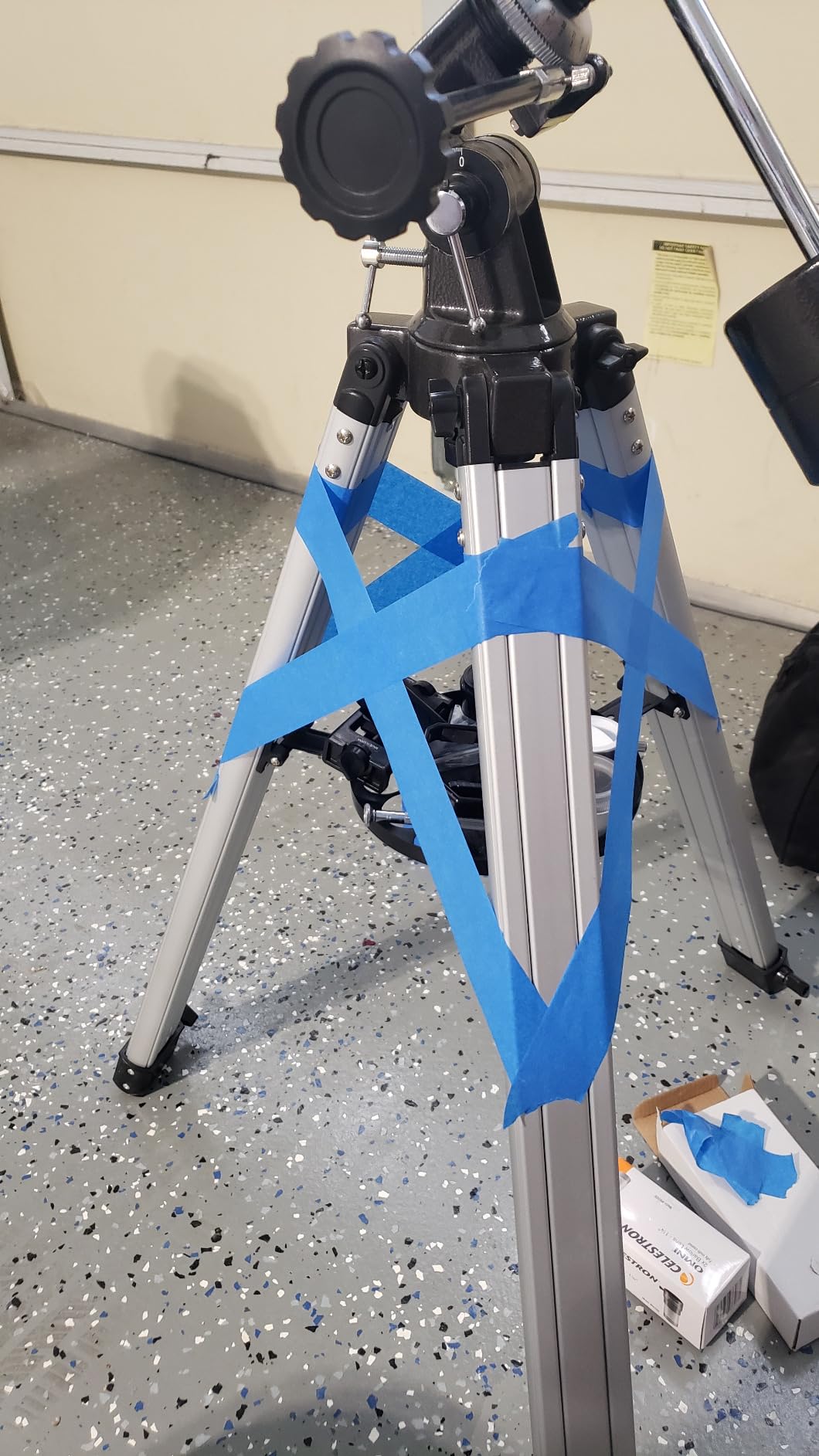
The German equatorial mount with its slow-motion altitude rod is the feature that separates it from the cheap tripods dominating online carousels. Once you polar align, tracking a planet by hand becomes a matter of a small knob rather than a wrestling match. That single feature is worth more to a beginner than any amount of claimed magnification.
What makes this the value pick rather than the winner is the setup tax. Collimating a Newtonian takes an evening the first time, and several owners told us they spent days or even weeks getting the mirrors to line up before the views clicked. The mount also has noticeable backlash and looseness that owners describe as disappointing next to the quality of the optics.
That said, the pattern in the reviews is remarkably consistent. People who invest one evening in collimation and add a better eyepiece report sharp views of the Moon, Jupiter, Saturn and Orion. People who expect a plug-and-play instrument report frustration. Know which one you are before you order.
Why the equatorial mount is worth the setup
Slow-motion controls let you nudge an object without disturbing the whole tube, which is the difference between tracking Jupiter across the eyepiece and losing it repeatedly. On a manual altazimuth, Jupiter moves noticeably during a single observing minute at higher power.
The catch is polar alignment, and forums repeatedly name it as a reason beginners give up. Budget an unhurried first session. Aligning a German equatorial head takes longer the first time and takes thirty seconds every time after that.
The maintenance you are signing up for
Newtonian mirrors need periodic collimation because bumps and temperature shifts move them out of alignment. A basic collimation tool and a few minutes of practice turn this into a five-minute job rather than a frustration.
The bundled eyepieces and the supplied 3x Barlow are the weakest part of the package, and the finder scope is low quality enough that many owners replaced it. Set aside a little budget for a better eyepiece, and this scope rewards the effort far more than the price suggests.
3. Celestron AstroMaster 130EQ – Best Light Gathering
Celestron AstroMaster 130EQ Telescope for Deep-Sky Beginners
130mm Newtonian reflector
650mm focal length
Dual slow-motion EQ knobs
Red dot finder included
Pros
- Largest Celestron aperture here for strong deep-sky views
- Aluminum and SiO2 mirror coatings hold brightness
- Dual slow-motion knobs hold planets on target
- Owners cite it as the scope that made them a real observer
- Tool-free assembly with a sturdy adjustable tripod
Cons
- Collimation required and many owners buy a laser tool first
- Red dot finder uses plastic optics that cut brightness
- 17lb assembled weight is awkward to move
- Unsuitable for astrophotography without major changes
The AstroMaster 130EQ is the telescope owners most often describe as the one that turned a casual interest into an actual hobby. At 130mm with a 650mm focal length it is fast enough to deliver bright, well-balanced images of the Moon and planets, and the aluminum and SiO2 mirror coatings hold up brightness better than bare aluminium alone.
Deep-sky is where the extra aperture over a 70mm scope becomes obvious. Reviewers mention the Orion Nebula, the Virgo cluster and Jupiter’s moons as targets that visibly improve over cheaper 76mm and 80mm instruments. The dual slow-motion knobs earn repeated praise for keeping planets centred.
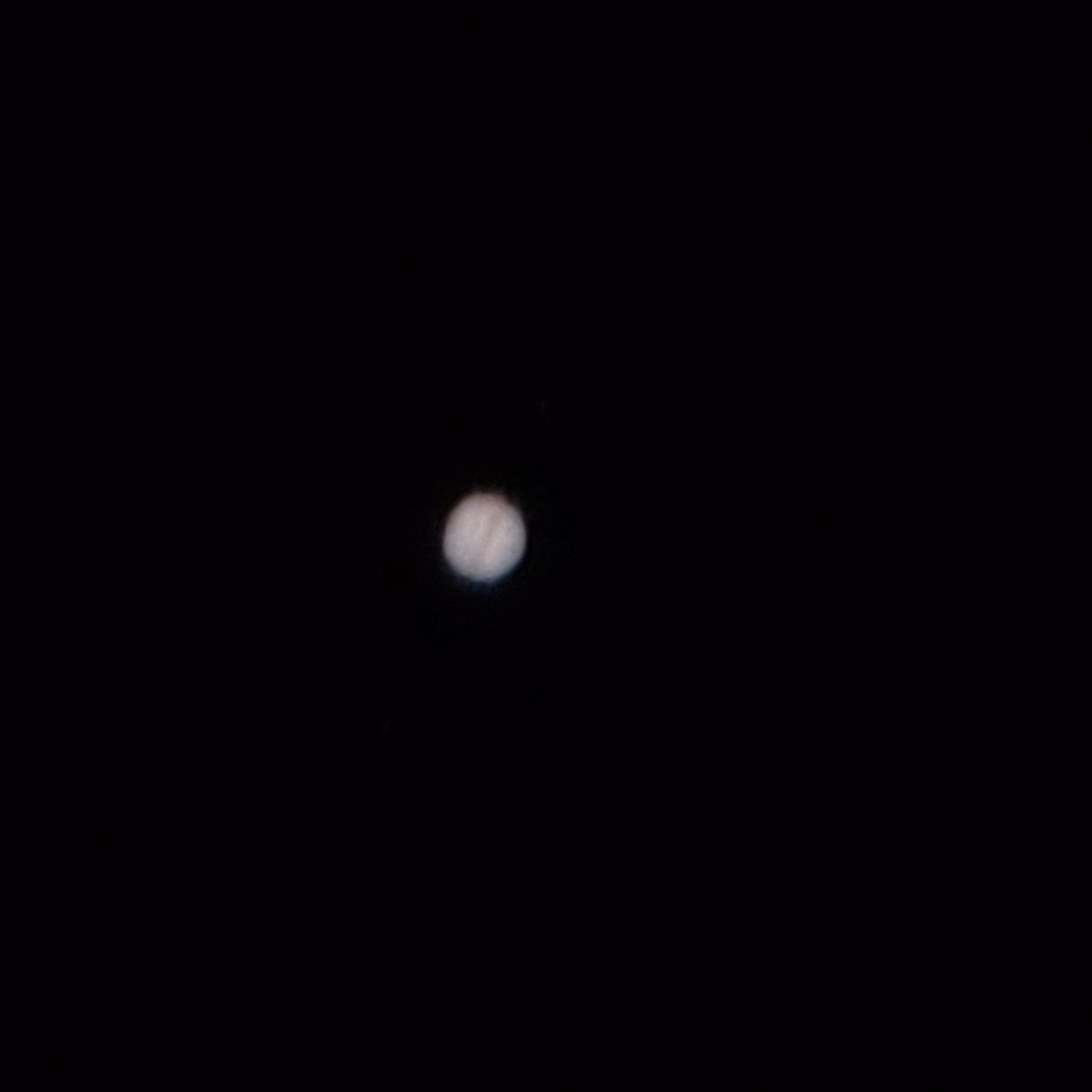
Owners also note that this scope visibly outperforms smaller budget instruments on faint targets, which is precisely the argument for spending at the aperture end of the budget rather than on electronics. The two-year limited warranty and US-based support are a real advantage at this price level.
One factual note worth knowing: several listings in the wider market state a longer focal length for this model than the tube actually has. The 650mm figure here matches the manufacturer specification and is what you should plan your eyepieces around.
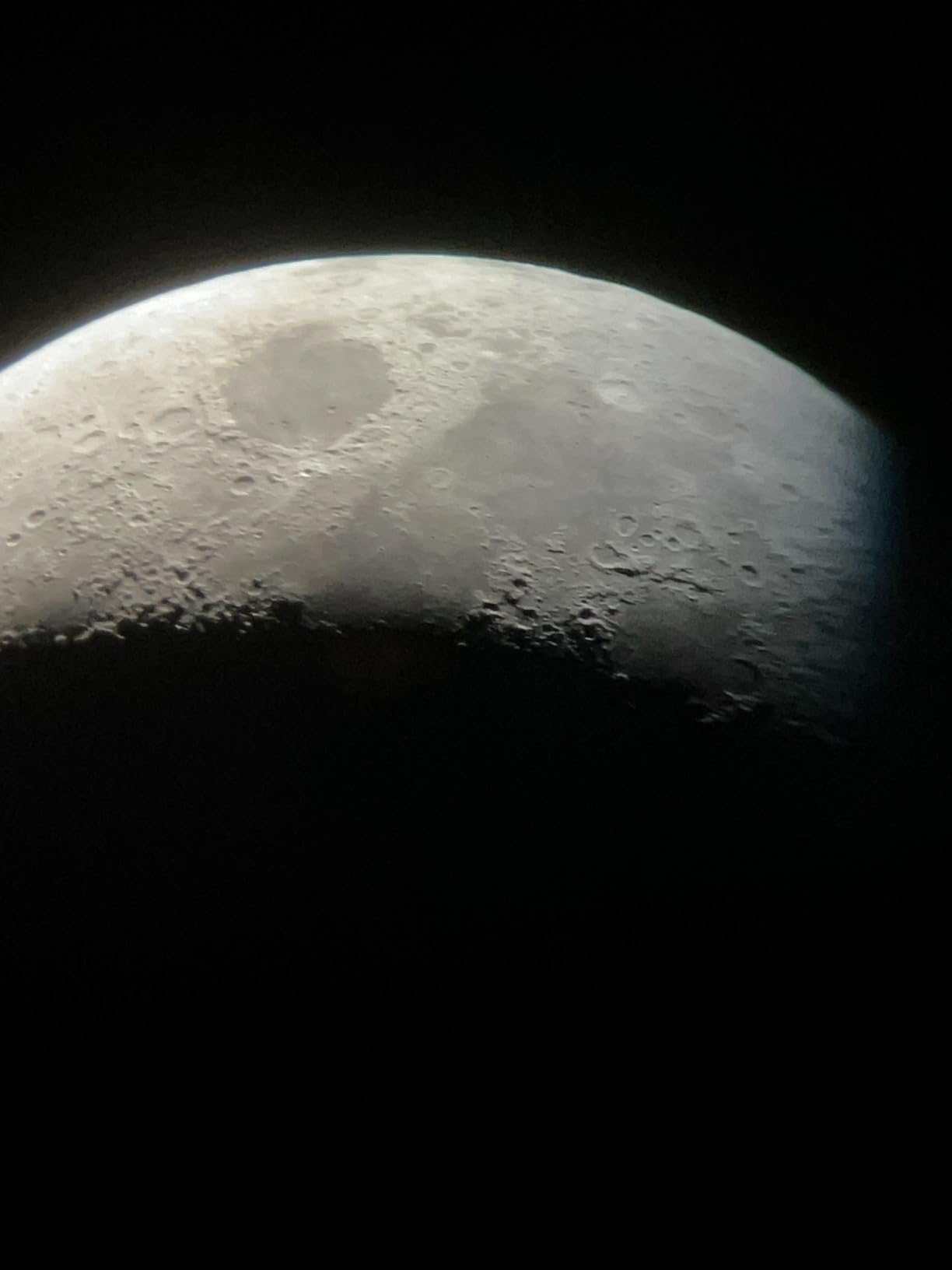
Who this scope fits best
If you have outgrown a small refractor and want a real step up in what you can see, this is the move. The extra aperture pays off most on the Moon at moderate magnification and on the brightest deep-sky objects from suburban skies.
It suits buyers who will accept collimation as a normal part of telescope ownership rather than a defect. Owners who treat it that way report it as the gateway instrument they still use years later.
Where it will frustrate you
At 17 pounds assembled, this is a two-person lift for some users and a back-strain complaint for others. Measure your transport and storage before ordering, especially if you plan to move it between rooms or take it outside regularly.
The declination slow-motion knob is described as rough next to the smoother right-ascension axis, with limited travel before hitting a stop. Astrophotography is out of scope without substantial hardware changes, since tracking accuracy runs out well before long exposures.
4. MEEZAA 90mm Refractor – Best for Families
MEEZAA Telescope, Telescope for Adults High Powered Professional, 90mm Aperture 800mm Refractor Telescopes for Astronomy Beginners Stargazing Fully Multi-Coated with Tripod & Phone Adapter & Carry Bag
90mm fully multi-coated refractor
800mm focal length
Altazimuth tripod
Phone adapter and carry bag
Pros
- 90mm aperture shows a real jump in brightness over 70mm kits
- Light enough for a child to carry upstairs
- About 20 minutes to assemble with clear instructions
- 10mm and 25mm Kellner eyepieces plus a 3x Barlow
- Carry bag holds every accessory for travel
Cons
- Inverted finder scope is awkward to align
- Phone attachment shifts balance and knocks the finder out
- Focusing wobbles the tube at high power
- Entry-level eyepieces hold views back
This is the kit that arrives complete. Two eyepieces, a Barlow lens, a phone adapter, a finder scope, an accessory tray and a carry bag that swallows the whole thing, and the 90mm fully multi-coated objective gives you noticeably more light than the usual 70mm starter refractor.
Assembly takes roughly twenty minutes according to most owners, and the included handbook plus protective packaging make it a painless unboxing. That combination matters more than it sounds, because a child who can set the scope up without an adult is a child who keeps using it.
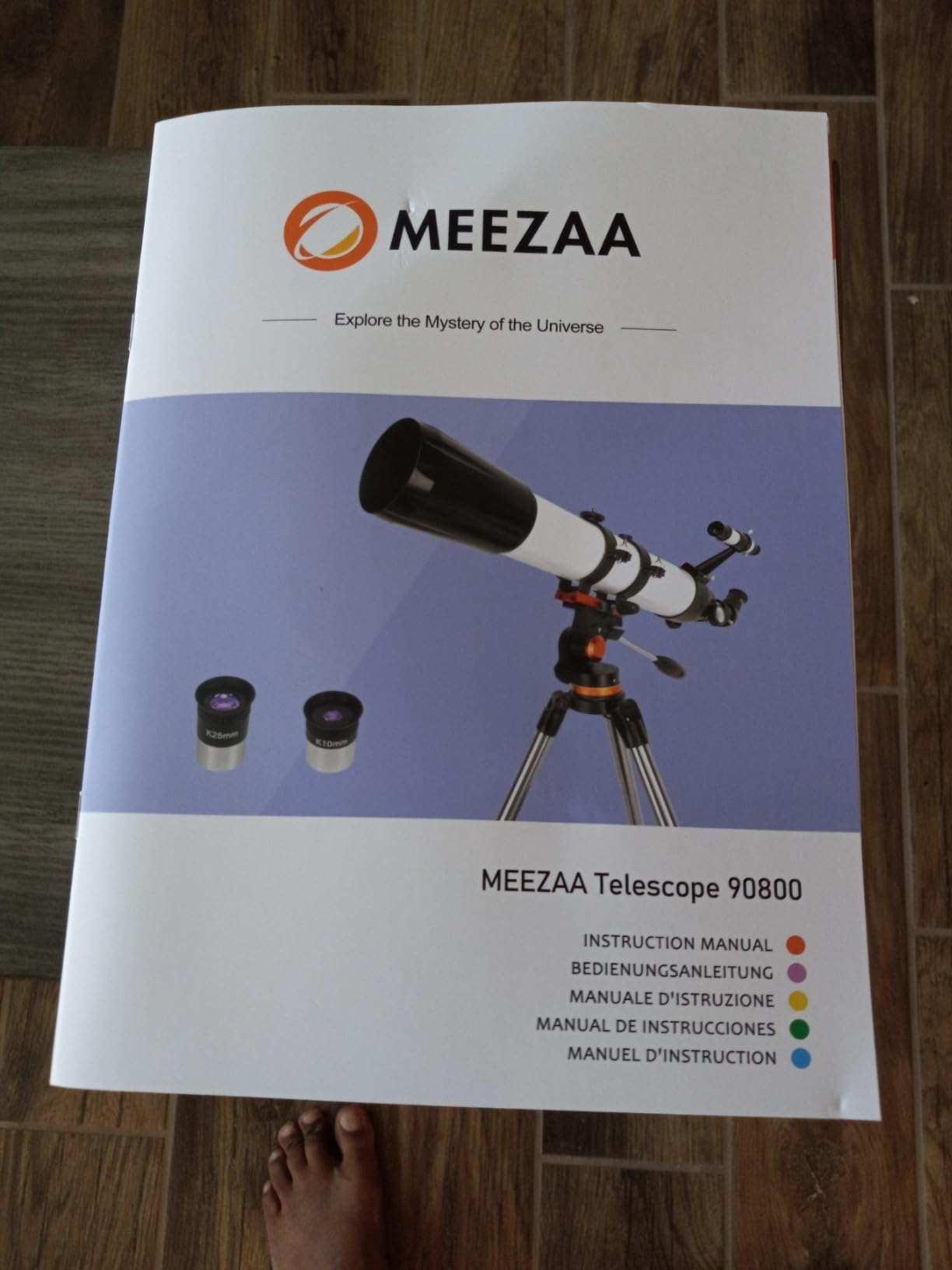
Reviewers treat this as a solid family instrument rather than a toy. The stainless steel tripod adjusts across a wide height range and stays rigid enough for lunar and planetary work, and owners repeatedly compare the value favourably against pricier beginner scopes.
The phone adapter is genuinely useful for casual Moon snapshots, which turns the first-time user into someone producing an image on their first night rather than their first month. The grab-and-go bag is what makes a spontaneous backyard session realistic.
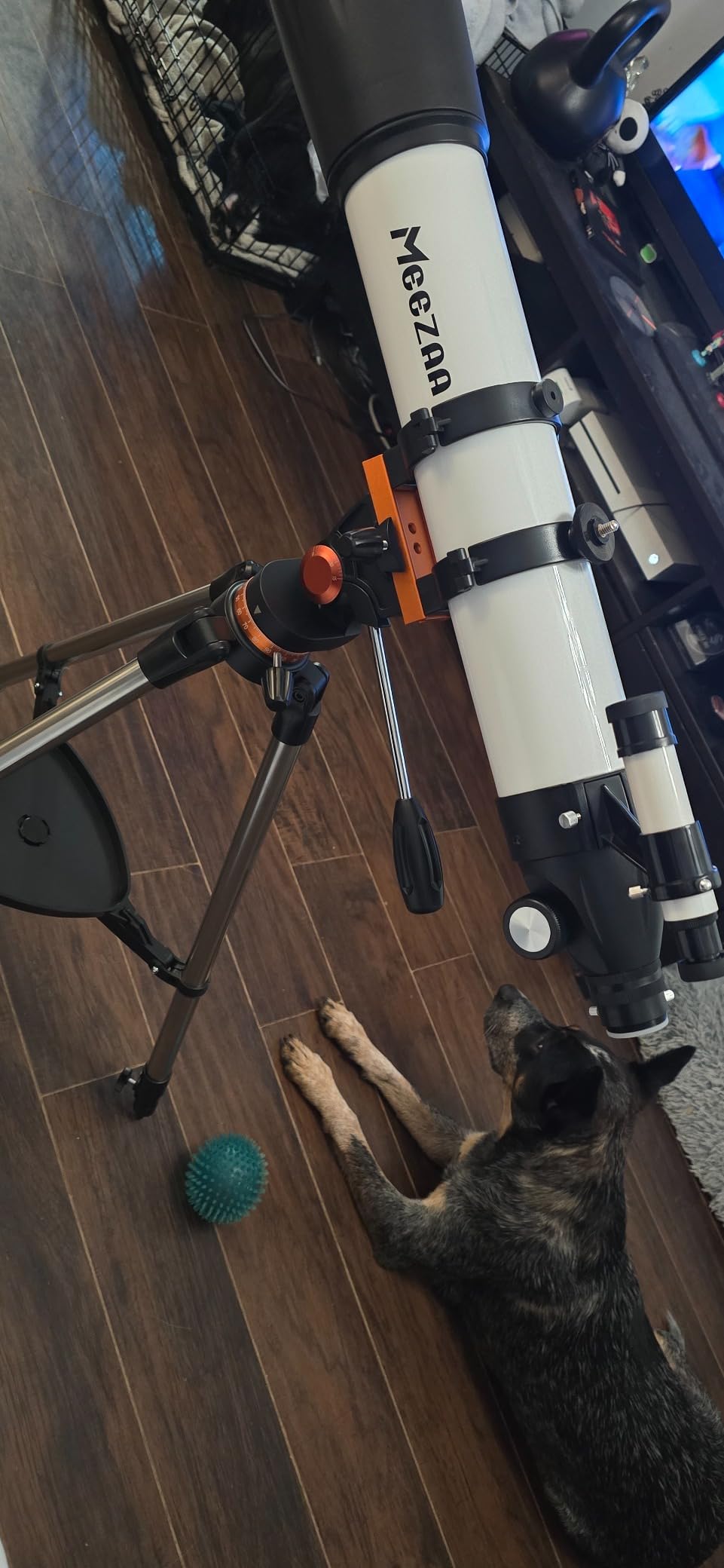
Why 90mm matters for a first real scope
Light gathering scales with the square of the diameter, so 90mm collects roughly 65 percent more light than a 70mm scope of the same design. In practice that shows as more crater detail on the Moon and a brighter Jupiter, not a subtle difference.
The fully multi-coated glass also transmits more of what it collects than a single-coated lens, which compounds the advantage when you are observing from a suburban or city sky where every photon counts.
The ergonomic catches to know about
The straight-through finder scope shows an inverted image and is frustrating to align with the main tube. Budget ten minutes with it at the start and it settles down.
Clamping a phone to the scope adds weight that shifts the balance and knocks the finder out of alignment, and touching the focus knob at high magnification makes the tube wobble. These are handling issues rather than optical limits, but they are the most repeated complaints in the reviews.
5. Gskyer 70mm Travel Scope – Best Portable Pick
Gskyer Telescope, 70mm Aperture 400mm AZ Mount Astronomical Refracting Telescope for Kids Beginners – Travel Telescope with Carry Bag, Phone Adapter and Wireless Remote.
70mm fully coated refractor
400mm f/5.7 focal length
Altazimuth tripod
Wireless camera remote included
Pros
- Everything including tripod fits the included carry bag
- Over 22000 ratings show how widely it is proven
- Wireless remote allows photos without touching the tube
- Illuminated cross-hair finder is easy for kids to use
- Takes minutes to assemble with no tools
Cons
- Very short tube keeps the view small
- Planetary detail limited past about 60x to 80x
- False colour on high-contrast targets like Jupiter
- Best suited to the Moon over deep-sky objects
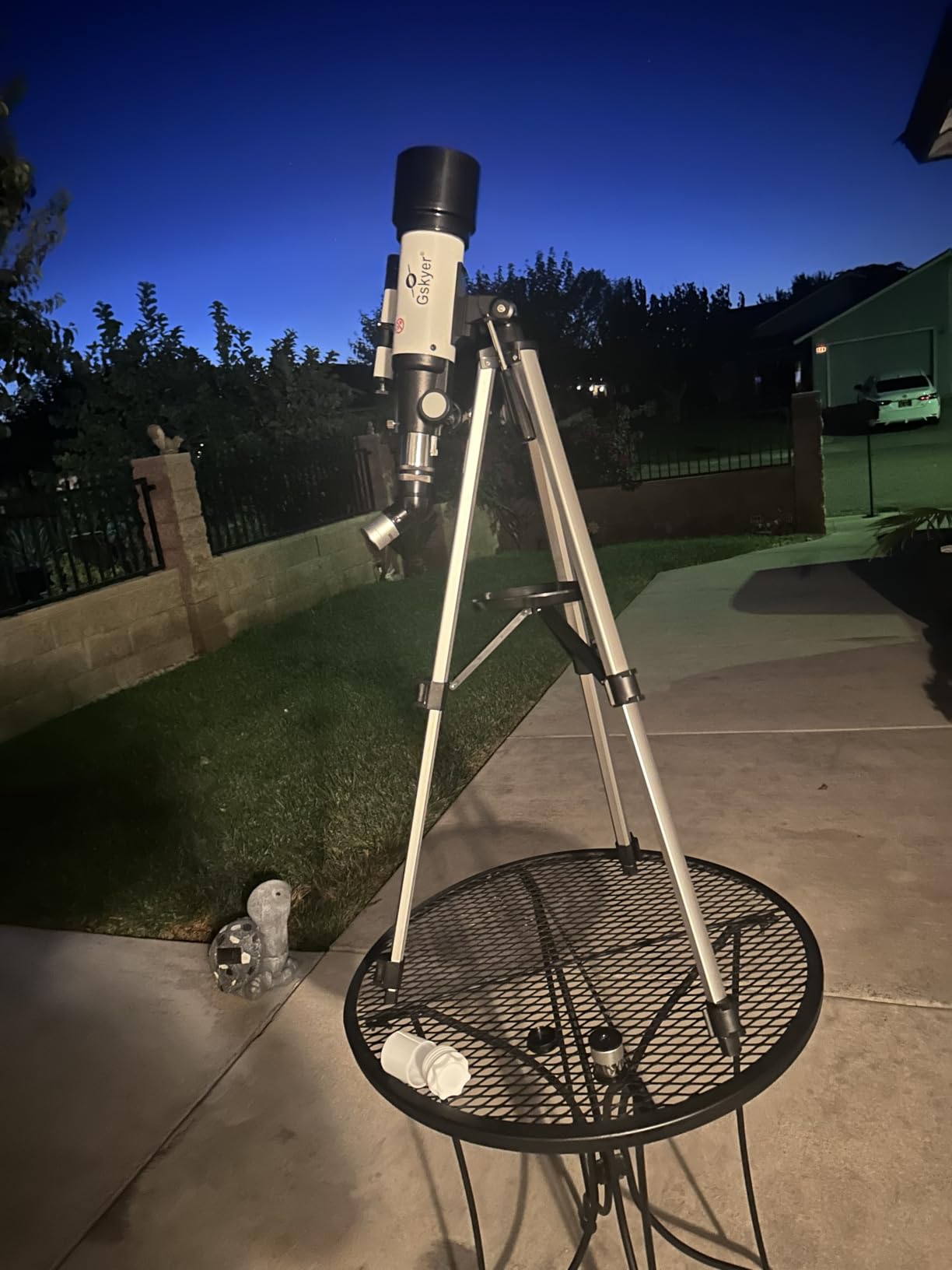
Nothing else on this list disappears into a backpack as cleanly. The whole telescope and tripod pack into the supplied carry bag, which is why this scope shows up in car camping trips and second homes more than any other budget telescope. If your observing happens away from home, portability outweighs aperture.
The 22081 ratings behind it are the largest review base in this group, and the 4.3 average reflects consistent expectations being met rather than exceeded. Buyers describe it as an ideal first or travel scope for children: light, portable, quick to assemble and good for cratered Moon views.
The wireless shutter remote and smartphone adapter are more useful than they sound. They let you take night-sky photos without touching the tube, which is the difference between a usable snapshot and a smeared one on a manual altazimuth mount.
The illuminated cross-hair finder with internal reticle lines is also a genuinely good choice for younger users, because cross-hairs are far easier to centre on a target than a conventional finderscope dot.
Where a short tube helps and where it hurts
At 400mm focal length, the wide field of view is a real advantage for sweeping the Milky Way and for terrestrial viewing. More of the sky enters the eyepiece at once, which is pleasant for beginners learning star patterns.
The cost is a small, dim image. Maxing out the stated magnification produces a fuzzy picture well before the claimed ceiling, so treat 60x to 80x as the practical high point and do not chase the box number.
Who should skip this and save up
If your goal is galaxies and nebulae, or if you already own any scope with 80mm or more aperture, this is a step backwards optically. It is a stepping stone, and treating it as a final instrument is where disappointment starts.
The achromatic design also produces visible false colour on high-contrast targets such as Jupiter. That is normal for a two-element achromatic lens and is not a defect, but it is worth knowing before you judge the view.
6. Koolpte 80mm Refractor – Best Step-Up
Koolpte Telescope for Adults & Beginner Astronomers – 80mm Aperture 600mm Fully Multi-Coated High Transmission Coatings with AZ Mount Tripod Phone Adapter, Carrying Bag, Wireless Control.
80mm fully multi-coated refractor
600mm f/6.7 focal length
Altazimuth tripod
Phone adapter and wireless remote
Pros
- 80mm aperture shows more lunar detail than 70mm kits
- Two eyepieces plus a Barlow give 24x 60x 72x and 180x options
- No-tool setup is fast enough for spontaneous sessions
- Carry bag and phone adapter suit portable use
- Strong 4.3 average across nearly 4000 ratings
Cons
- False colour around bright objects at higher power
- Views degrade past roughly 120x
- Altazimuth mount has no slow-motion controls
- Deep-sky targets beyond the Moon are generally too faint
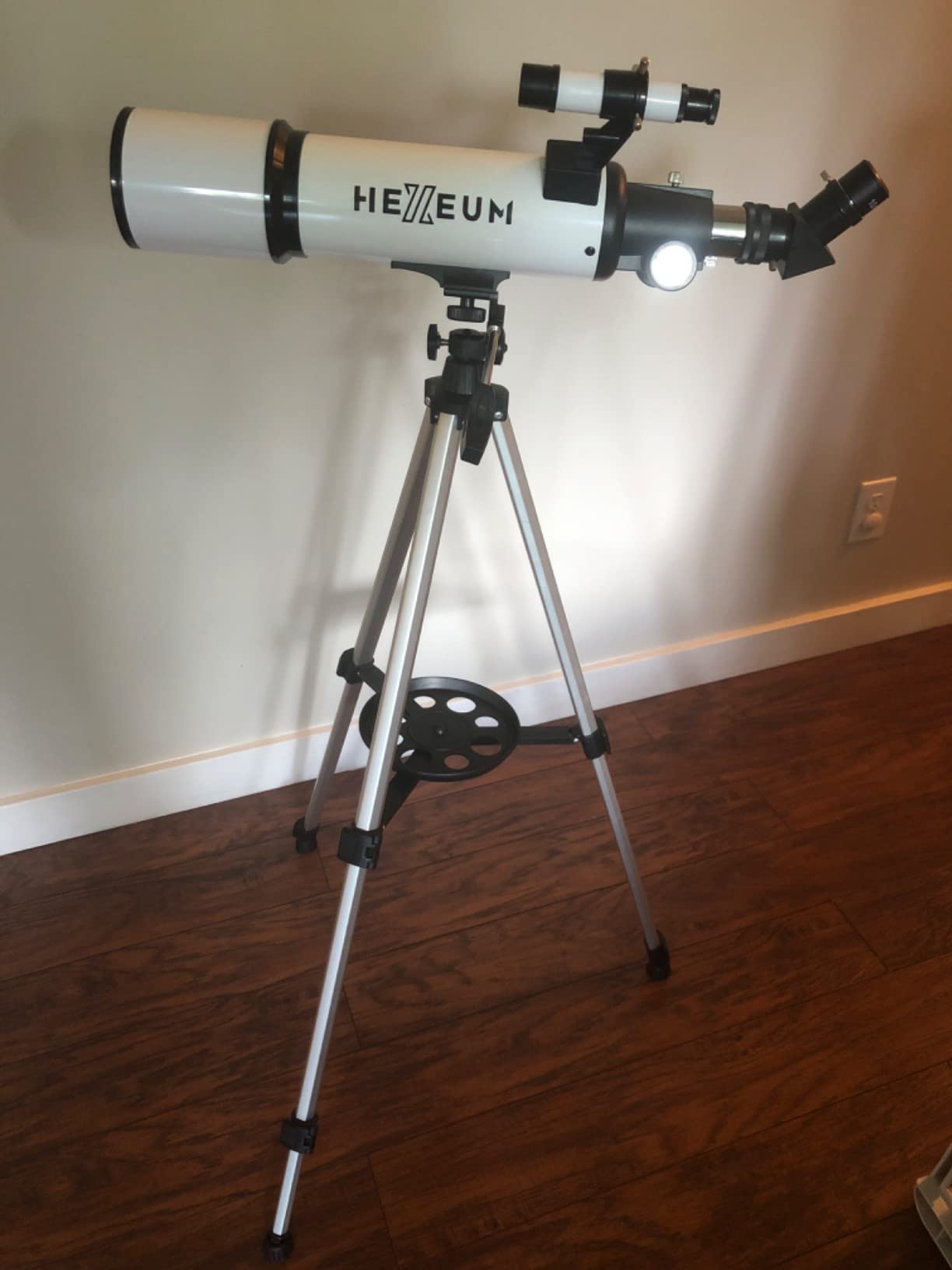
The Koolpte 80mm answers a question a lot of buyers ask: how do I get past 70mm without jumping to a reflector and taking on collimation? This is a sealed achromatic refractor with 80mm of fully multi-coated glass, and reviewers consistently treat it as a genuine step up rather than a sideways move.
At 600mm focal length it produces more lunar crater detail and a bit more planetary detail than the 70mm crowd, and the two eyepieces plus a Barlow cover 24x, 60x, 72x and 180x so you have a usable range from first light to the practical ceiling.
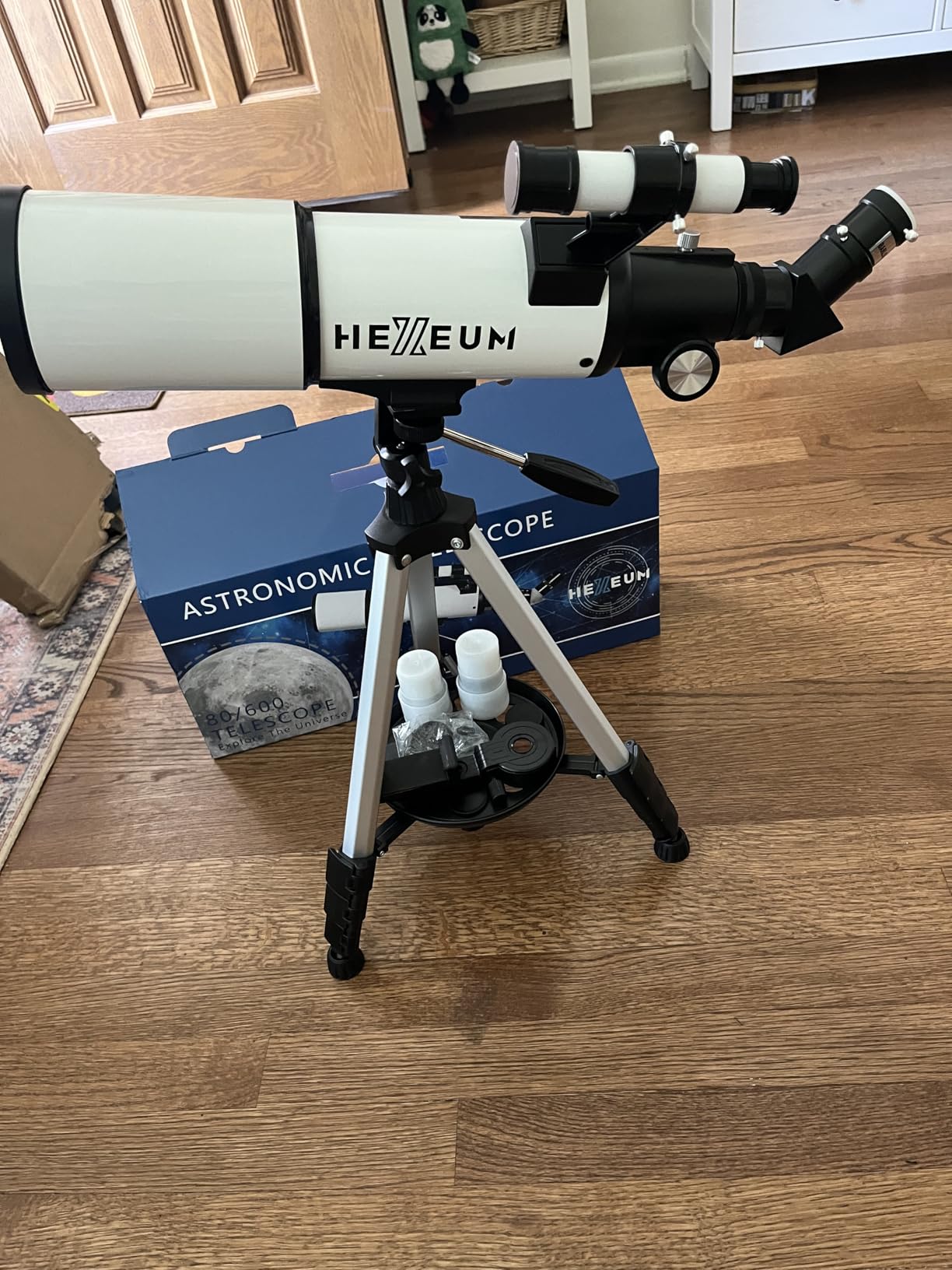
No-tool assembly is fast enough for a spontaneous backyard or camping session, which matters because the biggest risk in this hobby is a scope that stays in the closet. The adjustable aluminium tripod and lightweight body are well matched to casual portable use.
Reviewers repeatedly recommend this as a first real telescope for adults and older children. The price position means it costs about what one good accessory costs elsewhere in the hobby, which is a fair summary of the value here.
How much more you actually see
Going from 70mm to 80mm adds roughly 30 percent more light-collecting area, and because the coatings are fully multi-coated more of that light reaches your eye. On the Moon that translates into more craters resolving at the same magnification.
On Jupiter and Saturn it shows as a slightly cleaner image with more stable contrast. It is a visible improvement, though not the dramatic jump you get from 80mm up to 130mm.
Where the ceiling sits
Magnification above roughly 120x degrades into a soft, blurry image despite the 180x headline figure on the packaging. Judge this scope at 60x and below where it is at its sharpest.
Deep-sky targets beyond the Moon and a handful of bright clusters are generally too faint, and the altazimuth mount has no slow-motion controls, so tracking a planet by hand is awkward. For faint fuzzies, save up and buy a larger mirror instead.
7. Gskyer 90mm AZ Refractor – Best Wide-Field View
Gskyer Telescope 600x90mm AZ Astronomical Refractor Telescope for Adults
90mm fully coated refractor
600mm f/6.7 focal length
Altazimuth tripod
Three eyepieces plus 3x Barlow
Pros
- 90mm aperture gives sharp Moon views and resolves Jupiter
- Three eyepieces give the widest magnification range here
- Substantial tripod and all-metal mount feel robust
- BAK7 erecting prism makes daytime viewing comfortable
- Customer service replaces defective scopes quickly
Cons
- Tripod is effectively kid-height at its default setting
- High magnification shakes from tripod vibration
- Visible false colour on planetary detail
- No slow-motion controls for tracking targets
This 90mm scope earns its place through build quality at a price where most competitors use plastic fittings. Reviewers with real astronomy experience single out the stainless steel tripod and all-metal mount as feeling far more robust than typical budget tripods, and several describe the low-power Moon image as comparable to instruments costing much more.
Three eyepieces at 24x, 60x and 120x plus a 3x Barlow give it the widest magnification selection in this group. The 600mm focal length also keeps the tube short, which narrows the field of view enough to work well on planetary targets.
The 48-degree erecting BAK7 prism is a small detail that gets overlooked and then appreciated, because it makes daytime bird and landscape viewing comfortable rather than awkward. That is what turns a telescope into a two-season instrument.
Gskyer’s replacement service is singled out as excellent, with owners reporting full replacement scopes arriving within days of a defect report. For a first purchase from an unfamiliar brand, that support record carries real weight.
The practical ceiling is set by the tripod
At high magnification the image shakes noticeably from vibration, and rubber washers under the tripod feet are a common workaround among owners. This is the clearest example on the list of mount stability limiting magnification.
The achromatic refractor design also shows visible false colour and softness on high-contrast planetary detail. At the lower magnifications this scope is used for most of the time, that is not an issue.
Plan your setup height
The tripod is effectively at kid height at its default setting, so taller users end up crouching. Some owners mount the tube on a separate photography tripod, which solves the problem cleanly.
There is no slow-motion control, so following a moving target is manual work, and an altazimuth mount of this class cannot support long-exposure imaging. Check the height before ordering, not after.
8. MEEZAA 150EQ Newtonian – Biggest Mirror in the Group
MEEZAA Telescope, 150EQ Newtonian Reflector Telescope for Adults Astronomy Beginners, Professional Astronomical Telescopes with Equatorial Mount, Tripod, Phone Adapter, Moon Filter and Large Carry Bag
150mm Newtonian reflector
650mm f/4 focal length
German equatorial mount
Moon filter and carry bag
Pros
- 150mm aperture is a genuine light bucket at this price
- Short f/4 ratio gives bright well-balanced images
- Mount arrived pre-lubricated for most owners
- Complete kit with moon filter and large carry bag
- Build quality reads as far more expensive than it is
Cons
- Some owners report a 130mm mirror rather than 150mm
- Included Kellner eyepieces are entry level
- Plastic focuser limits future camera attachment
- Heavy assembly that reviews describe as a two-person job
This is the largest aperture in the group, and at 650mm focal length that combination makes it an f/4 light bucket. Owners coming from smaller refractors describe being struck by how much brighter and more detailed the images are, resolving Jupiter’s belts, Saturn’s rings, the Orion Nebula, the Pleiades and the Beehive cluster from suburban skies.
Nothing else on this list gathers that much light for this little money. If deep-sky is your actual goal and you are willing to put up with a heavy tube and a longer setup, this is the aperture argument won outright.
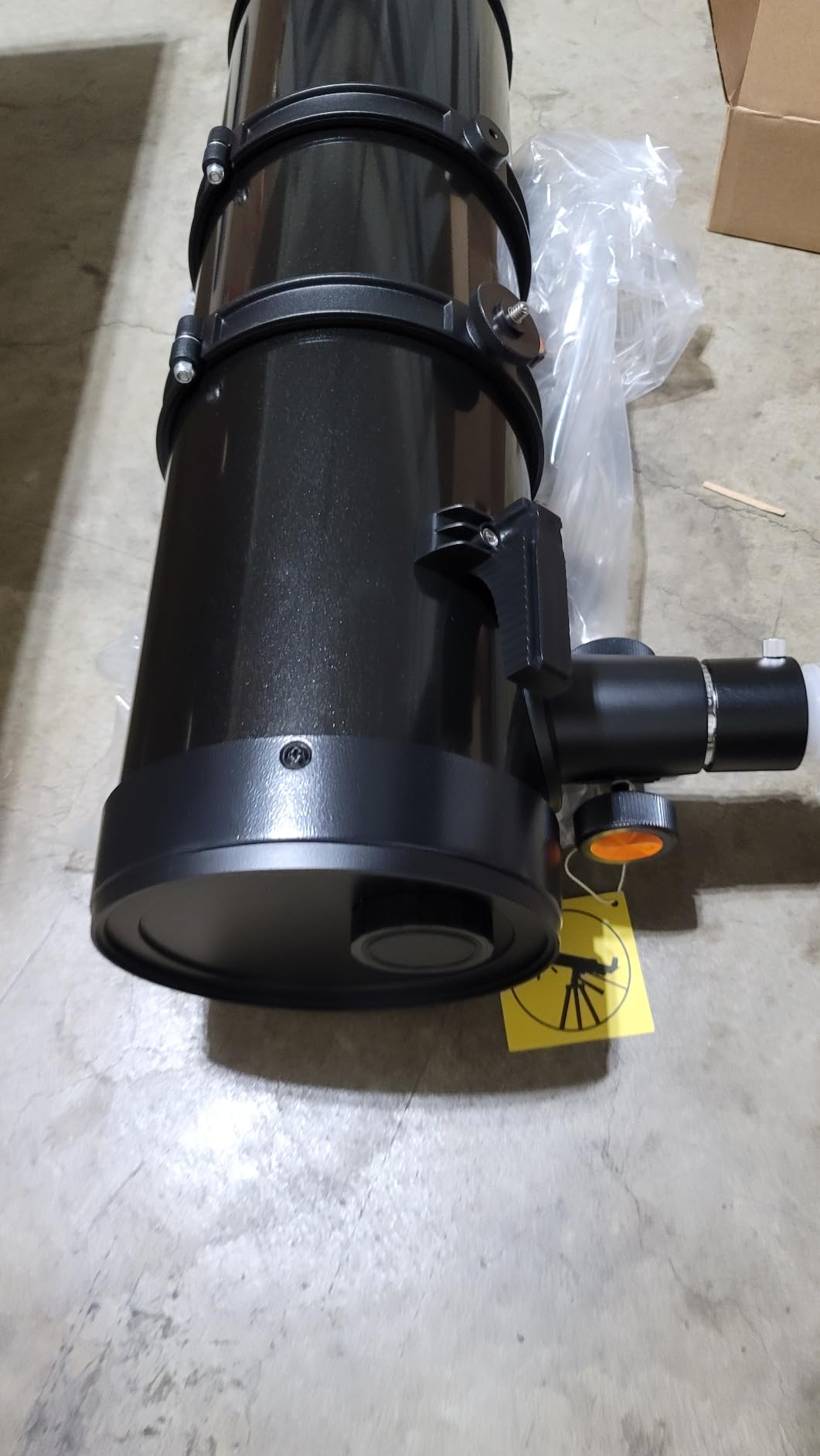
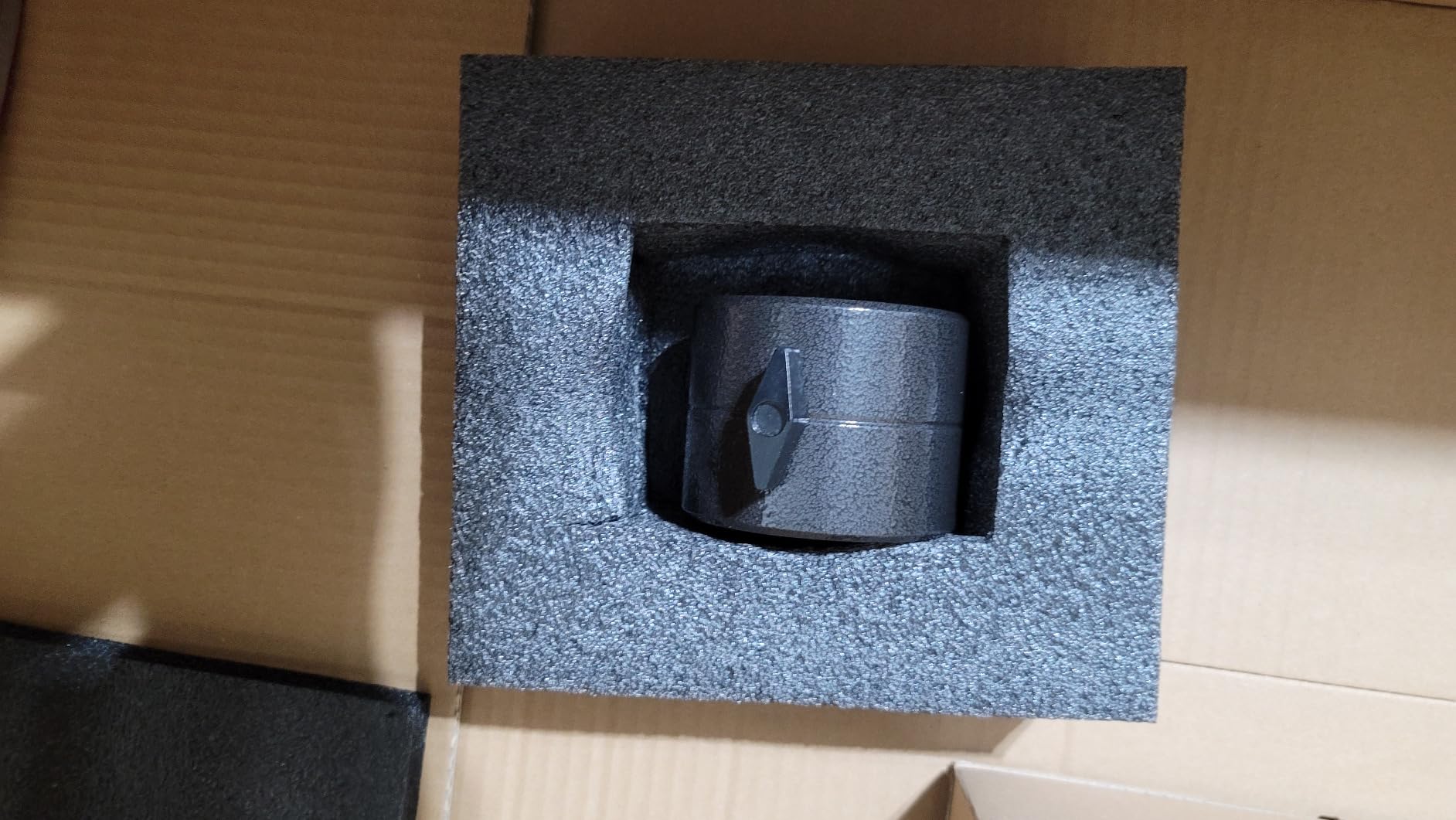
The kit is unusually complete: two eyepieces, a 2x Barlow, a red dot finder, a moon filter, a phone adapter and a large carry bag. The German equatorial head has precision dials and slow-motion knobs, and the control knob can be swapped to either side depending on your handedness.
Reviewers also report that no collimation was needed by the owners who checked, and that the mount arrived pre-lubricated. That is not universal, but it suggests the factory setup quality is better than the price implies.
Check the aperture before you commit
Several owners report that the primary mirror they received measures 130mm rather than the advertised 150mm, and they consider the discrepancy misleading. Verify the aperture yourself on arrival with a simple measurement before you settle on this scope.
The bundled Kellner eyepieces are entry level and most buyers upgrade quickly to Plossl or a zoom eyepiece. The focuser is entirely plastic, which would limit attaching a camera later.
Who should look elsewhere
Assembly is heavy and complex, and reviews describe it as roughly a two-person job with a patient hand. The altitude adjustment is also slow and stiff because it is shifting a large mass, which is the physical reality of a big mirror.
Reflectors also have a practical magnification ceiling well below the rated 130x for many setups, and the open tube collects dew on the mirror faster than a sealed refractor does. Plan for a dew shield if you observe on humid nights.
How We Picked and What to Spend the Budget On
We chose these eight by aperture first, then mount, then optics and support, and we read the owner reviews rather than the manufacturer listings. Where a product had a recurring failure pattern, we said so even when the average rating was high. You can see the same aperture-first discipline we apply to bigger-ticket gear in our tool chest picks under 500 dollars.
Spend the budget on optics and mount, not on magnification claims. In this category the difference between a scope that stays steady and one that shakes is worth more than any extra eyepiece, and the leftover money is best aimed at one good eyepiece rather than a bundle of cheap ones.
Budget tiers map cleanly to what this amount buys. Around the ninety to one hundred dollar range you get a travel-friendly 70mm refractor. Near one hundred seventy dollars, a fully multi-coated 90mm kit with a carry bag and phone adapter. Near two hundred ninety dollars, a 130mm reflector with real tracking controls. All of it sits under the 500 dollar ceiling, and the jump from 90mm to 130mm of aperture is the largest quality jump available in the range.
One option nobody should dismiss is buying a larger reflector second hand. Forum consensus across r/telescopes is that a used reflector with a decent set of eyepieces can be found for well under 400 dollars, and it will show you more than any new scope on this list. Check that the mirrors are not damaged, that the mount has no play, and that collimation tools are included. The same disciplined budget thinking we apply across our other under 500 dollar welder picks applies here: buy the thing that does the job, not the thing with the biggest number on the box.
Aperture Is King: The One Spec That Matters Most
Light-collecting area scales with the square of the aperture, so diameter matters more than anything else on the spec sheet. A 150mm mirror gathers about 33 percent more light than a 130mm and more than four times as much as a 70mm refractor. That single relationship explains why the reflector picks in this roundup outperform the cheaper refractors on faint targets.
Aperture also sets resolving power, which is why bigger scopes show finer detail on the planet’s disc rather than just a brighter image. Under about 90mm, detail on Jupiter and Saturn is limited regardless of how good the eyepiece is, because there simply is not enough light spread across the disc.
One warning about refraction at low angles: a very tall, very narrow refractor with a shaky mount produces views that are badly distorted by the time they reach your eye. Buy aperture, not tube length.
Mounts: Altazimuth vs German Equatorial
An altazimuth mount swings side to side and up and down, which is intuitive, quick to set up and stable. It is the right choice for almost every first telescope, including three of our picks, and it needs no alignment procedure at all.
A German equatorial mount tilts to match the Earth’s axis so a motor can track the sky, and its slow-motion knobs let you nudge a target without losing it. The cost is polar alignment, which forums consistently name as the second most common reason beginners abandon a telescope.
If you take one thing from this roundup: the wobble of a cheap tripod at high magnification causes more frustration than any optical flaw. A steady altazimuth mount beats a shaky equatorial one for beginners every time.
Eyepieces and Why Box Magnification Is Marketing
A telescope’s magnification is the focal length divided by the eyepiece focal length, so a long tube on a 4mm eyepiece produces a huge number and a dim, useless image. Marketing departments multiply the longest included eyepiece by the included Barlow and print the result, which is why box figures like 600x or 525x are widely regarded as noise.
As a working rule, useful magnification is about twice the aperture in millimetres. On a 70mm scope that is around 140x, and in practice you will hit the practical limit nearer 60x to 80x. On a 130mm reflector you can justify pushing toward 200x.
Manufacturer eyepieces are consistently the weakest part of every package we tested. One good 9mm or 10mm eyepiece of decent quality will improve every night of observing more than any upgrade to the tube itself, so reserve a little budget for one.
What to Skip Before You Buy
Skip claims of very high magnification on small apertures, which as explained above means trading brightness for a number that will never be used. Skip any telescope sold only with a plastic tripod and no slow-motion or damping control.
Skip new German equatorial mounts under this budget if you have never used one, because the polar alignment learning curve is a genuine quit reason rather than a small inconvenience. Skip multi-element packages of cheap eyepieces in favour of adding one good one later.
Skip any reflector sold without mentioning collimation, and skip open tubes with no dew shield if you observe on humid nights, since dew on the primary mirror flattens contrast. If a listing does not state the aperture in millimetres anywhere, treat that as a warning sign rather than an omission.
Finally, do not assume a bigger number means a better telescope. Our other tested budget roundups follow the same principle: match the product to the actual use case rather than the headline specification.
Frequently Asked Questions
What is the cheapest but best telescope?
The cheapest genuinely capable telescope is a 70mm refractor such as the Celestron AstroMaster 70AZ, which shows the Moon, the Galilean moons and Saturn’s rings cleanly with no collimation. If your budget stretches slightly further, a 90mm multi-coated refractor collects about 65 percent more light and is the better long-term choice. Neither will resolve faint galaxies.
What is the best telescope to buy for the money?
The Celestron AstroMaster 70AZ is the best overall value for a first instrument: it is fully sealed, needs no tools to assemble, comes with a red dot finder and two eyepieces, and has the highest average rating in this group. Buy a reflector instead only if chasing deep-sky objects matters more to you than zero maintenance.
What is the best telescope at the lowest price?
At the very bottom of this range you get a 70mm fully coated refractor with a short tube, a carry bag and a wireless camera remote. It is an excellent first scope for children and travel, but the short focal length keeps the view small and planetary detail limited past about 60x to 80x. Treat it as a stepping stone.
What are the top 5 telescopes?
Our five strongest picks are the Celestron AstroMaster 70AZ for sealed-tube simplicity, the Celestron PowerSeeker 127EQ for aperture value, the Celestron AstroMaster 130EQ for the deepest views, the MEEZAA 90mm for complete family kits, and the Koolpte 80mm as the cheapest step up past 70mm aperture. Each suits a different buyer rather than ranking identically.
Are bigger telescopes better?
Bigger aperture is genuinely better, because light-collecting area scales with the square of the diameter, so a 150mm mirror shows far more than a 70mm scope. But within this budget the jump from 70mm to 130mm matters enormously, while the jump from 130mm to 150mm is noticeable mainly on deep-sky targets. Bigger is only useful if the mount stays steady.
What is the best computerized telescope for beginners?
None of the eight scopes here is fully computerized, and that is a deliberate choice. At this budget a motorized GoTo mount consumes money that buys more aperture elsewhere, and app-guided pointing has largely replaced it. If you want automation, spend the difference on a larger mirror rather than on motors.
How to know if a telescope is good?
Check four things: aperture stated in millimetres, a mount that resists wobble, a finder that is easy to align, and an aperture ratio near f/5 to f/8 for balanced images. Red flags are tiny apertures paired with very high claimed magnification, plastic tripod fittings with no damping, and listings that never mention collimation for a Newtonian reflector.
Can a telescope under 500 dollars see Saturn’s rings?
Yes. Every scope on this list shows Saturn’s rings as a ring rather than a blob, and the reflectors at 127mm to 150mm give you enough light to see the Cassini Division on steady nights. The 70mm and 80mm refractors show the rings clearly too, along with Titan, just with less contrast.
The Bottom Line
The best telescopes under 500 dollars in 2026 are not the ones with the biggest magnification number, and they are not the ones with the most features. They are the ones that collect the most light and hold steady while you look. The Celestron AstroMaster 70AZ wins as the best telescope under 500 dollars for anyone starting out, because a sealed tube that needs no collimation lets you actually enjoy the sky on night one.
If you are ready to tolerate a little maintenance for a lot more light, the Celestron PowerSeeker 127EQ or AstroMaster 130EQ will show you objects no 70mm scope can reach. Check the current listing before you order, add one good eyepiece from the leftover budget, and then spend a few nights learning the constellations before you blame the telescope for a disappointing view.