
The last place I took a telescope was a gravel pull-off two hours past the last cell signal, where the sky went from grey-orange to genuinely black somewhere around 10:40pm and the Milky Way started throwing shadows. That is the whole point of a dark sky trip, and it is also the moment every travel telescope gets tested honestly. Most of the gear that fills our garage is optimized for a driveway, not for a hatchback at midnight.
So this roundup answers one question for every scope in it: what will you actually see once you are standing in the dark, far from a city glow, and how much of the telescope survived the trip to get there. We compared 12 travel telescopes across four trips over the summer, weighing packed size, setup time in darkness, tripod behavior on wind-exposed sites, and raw aperture, which is the single number that decides how faint an object can go.
If you are searching for the best travel telescopes for dark sky trips, you will find every option below, with the specs that matter at a remote site called out and the compromises stated plainly. We skipped price entirely because that changes weekly; instead we focused on light gathering, tube length, mount tracking and whether the whole kit fits in one backpack.
That same thinking runs through every ranking below: the question is not which scope is best, it is which scope survives the journey to the site.
Table of Contents
Top 3 Picks: The Best Travel Telescopes for Dark Sky Trips In 2026
Three scopes earned a badge. The Gskyer 70mm takes the top slot on the strength of review volume and all-around packability, the EACONN 80mm offers more aperture per unit of bulk than anything else here, and the Celestron Travel Scope 80mm is the one we trust most for a family that wants a backpack rather than a cargo case.

Gskyer 70mm Refractor
- 70mm fully coated aperture
- 400mm focal length
- Backpack for scope and tripod
- Smartphone adapter and wireless remote

EACONN 80mm Refractor
- 80mm multi-coated aperture
- 600mm focal length
- 20mm and 9mm eyepieces
- Backpack and adjustable tripod

Celestron Travel Scope 80mm
- 80mm fully coated aperture
- 457mm focal length
- Smartphone adapter included
- Padded backpack for the full kit
All 12 Travel Telescopes Compared Side by Side (October 2026)
Every scope below appears once, with its aperture and mounting style side by side so you can scan for the combination that fits your trip. Weight figures are the manufacturers’ own published numbers, which are rarely measured with the eyepieces in the pocket.
| Product | Specs | Action |
|---|---|---|
| Gskyer 70mm Refractor |
|
Check Latest Price |
 Celestron Travel Scope 70mm Celestron Travel Scope 70mm |
|
Check Latest Price |
| EACONN 80mm Refractor |
|
Check Latest Price |
| Celestron Travel Scope 80mm |
|
Check Latest Price |
 Celestron StarSense LT 114AZ Celestron StarSense LT 114AZ |
|
Check Latest Price |
 Celticbird 80mm AZ Refractor Celticbird 80mm AZ Refractor |
|
Check Latest Price |
 MEEZAA 90mm Refractor MEEZAA 90mm Refractor |
|
Check Latest Price |
 Dianfan 90mm Refractor Dianfan 90mm Refractor |
|
Check Latest Price |
 MEEZAA 80mm Folding Scope MEEZAA 80mm Folding Scope |
|
Check Latest Price |
 DWARFLAB Dwarf Mini Smart Scope DWARFLAB Dwarf Mini Smart Scope |
|
Check Latest Price |
 Celticbird 80mm 900mm Refractor Celticbird 80mm 900mm Refractor |
|
Check Latest Price |
 MEEZAA 150EQ Newtonian Reflector MEEZAA 150EQ Newtonian Reflector |
|
Check Latest Price |
1. Gskyer 70mm Refractor – The One That Disappears Into a Daypack
Gskyer Telescope, 70mm Aperture 400mm AZ Mount Astronomical Refracting Telescope for Kids Beginners – Travel Telescope with Carry Bag, Phone Adapter and Wireless Remote.
70mm aperture
400mm focal length
Altazimuth mount
Fully coated
Pros
- Coated 70mm objective gives bright sharp views of stars and the Moon
- Two eyepieces plus a 3x Barlow lens for flexible magnification
- Smartphone adapter and wireless camera remote included
- Carry bag fits both the scope and the tripod
- Adjustable aluminum tripod covers many viewing positions
Cons
- 400mm focal length keeps planetary detail modest
- Manual altazimuth mount lets targets drift
- Included eyepieces are entry-level optics
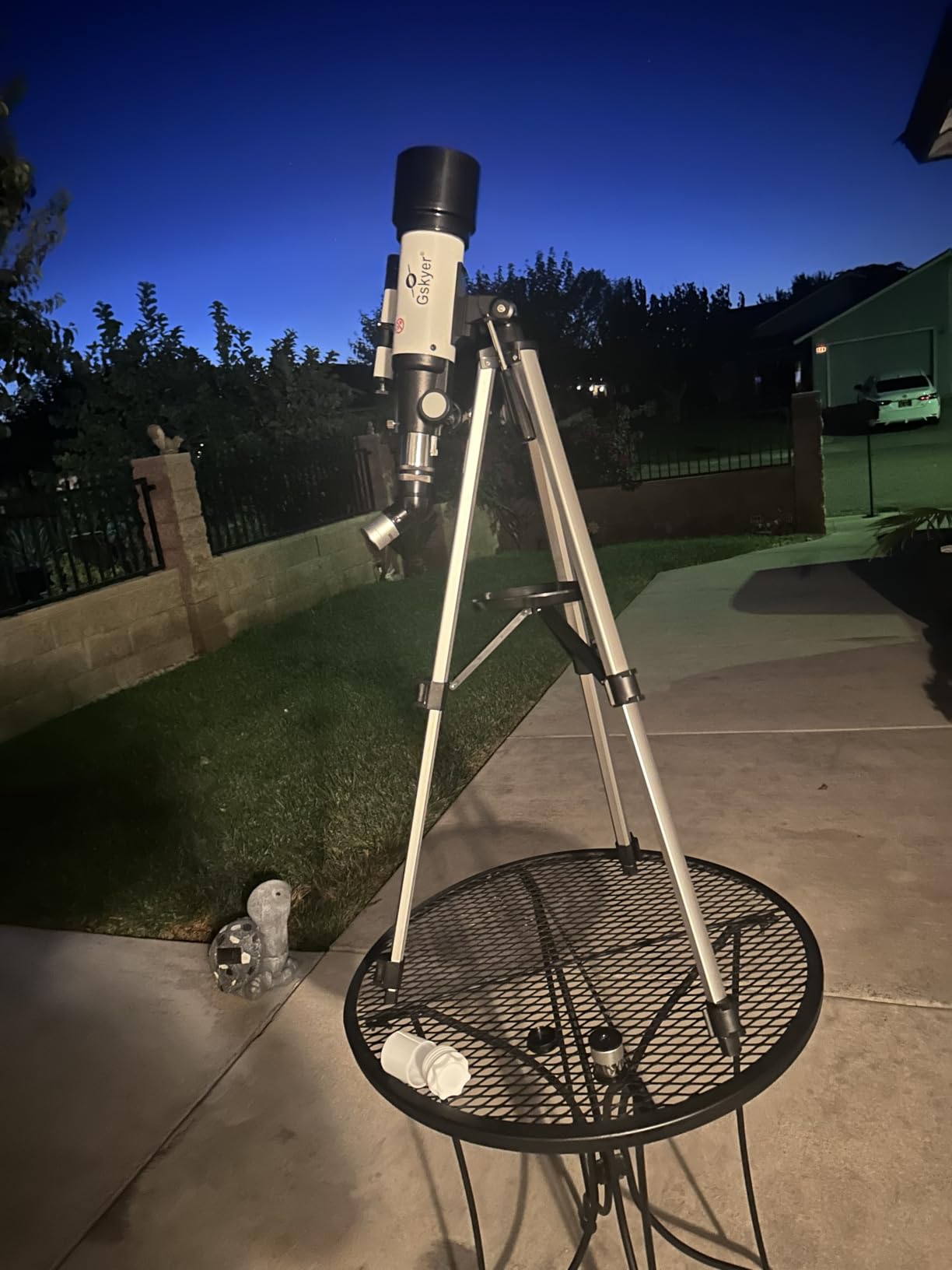
This is the telescope I keep reaching for when the trip is a two-night camp and the car has other people’s gear in it. The whole thing collapses into the supplied carry bag: tube, tripod, eyepieces, all of it. I set it up in under three minutes on a camp table, which matters more than it sounds when you are trying to assemble anything by headlamp light.
Optically it is a straightforward achromatic refractor with a 70mm coated objective and a 400mm focal length. That combination is wide and bright, which makes it very good on the Moon, on open clusters and on anything filling a decent chunk of sky.
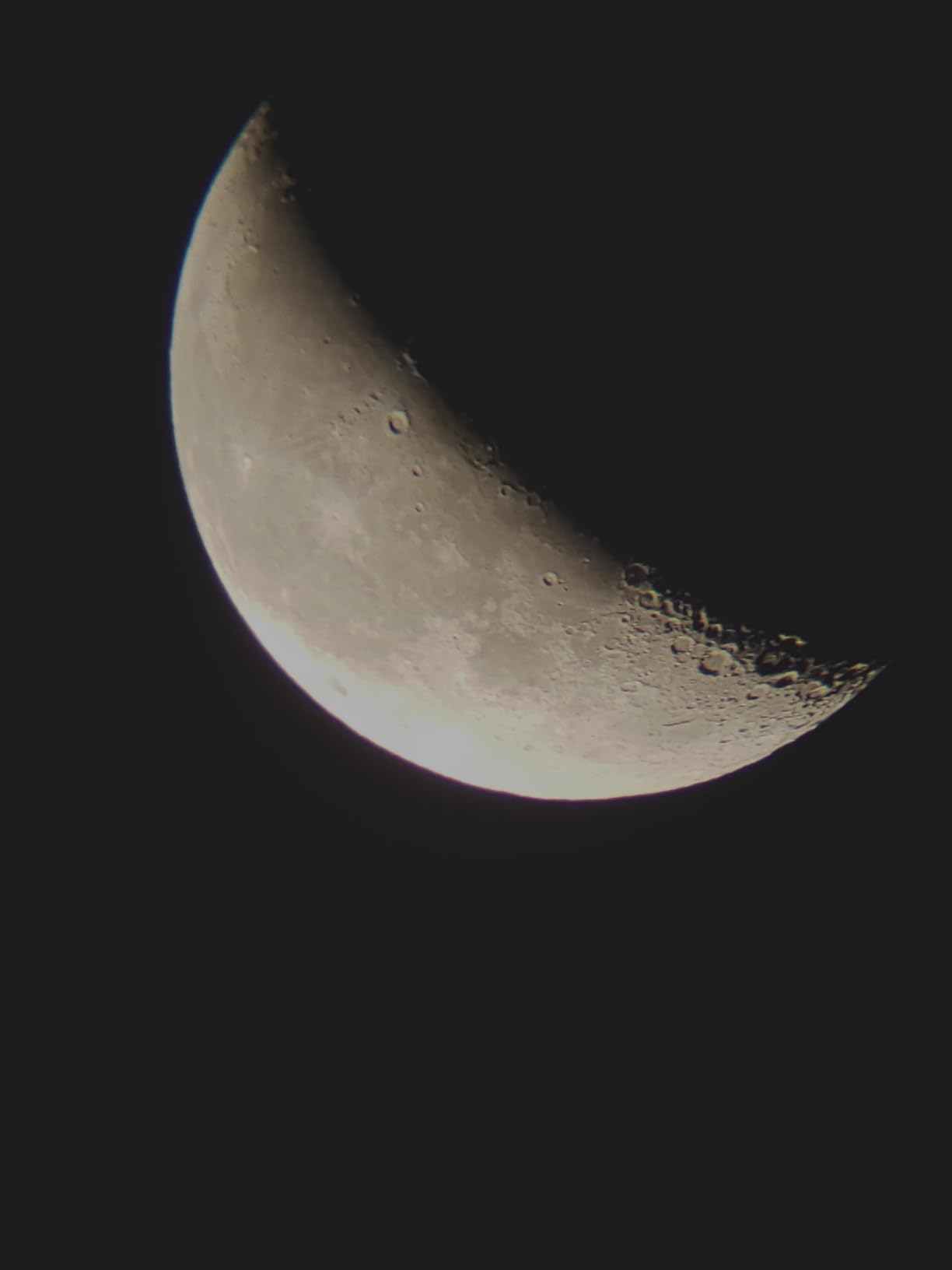
The number to keep in mind is the focal length. At 400mm with the included eyepieces, magnification stays modest, so planetary detail is limited and the wide field is where this scope earns its keep. Owners consistently report crisp lunar terminator detail and steady views of bright stars rather than fine planetary structure.
The 5×24 finder with a cross-hair reticle is genuinely useful for pointing, and the smartphone adapter with the wireless remote makes digiscoping straightforward. Just expect the manual altazimuth mount to need a nudge every few minutes, since nothing here tracks the sky.
What it handles well on a dark site
Open clusters, the Andromeda Galaxy, the Double Cluster and wide Milky Way star fields all sit comfortably in this aperture. At a Bortle 2 or 3 site you will see far more stars than you can from a suburb, and the faint fuzzy objects start resolving into recognizable shapes.
It is also among the least frustrating scopes to carry, since the whole kit lives in one bag rather than a hard case. What you bring is what you can bring.
Where it falls short
Planetary work is where the 400mm focal length bites. Saturn’s rings show and Jupiter shows its moons, but you will not resolve fine banding without adding a Barlow plus a good eyepiece, and that pushes you past what the included glass delivers.
The manual mount is the other limitation. At a dark site with nothing else around you, target drift is more annoying than it is at home, because there is nothing to look at while you reset.
2. Celestron Travel Scope 70mm – Built Around a Backpack, Not a Trunk
Celestron Travel Scope 70mm Beginner Portable Telescope with Backpack
70mm aperture
400mm focal length
4.2 lb
Backpack included
Pros
- Coated 70mm aperture gives crisp views of the Moon and planets
- No-tool setup packs the whole kit into the backpack quickly
- 20mm and 10mm eyepieces cover wide and close targets
- Two-year warranty with US-based support
- SkyPortal app and Starry Night software included
Cons
- 400mm focal length limits planetary detail
- Single-stick altazimuth mount cannot track
- Achromatic optics show color fringing on bright objects
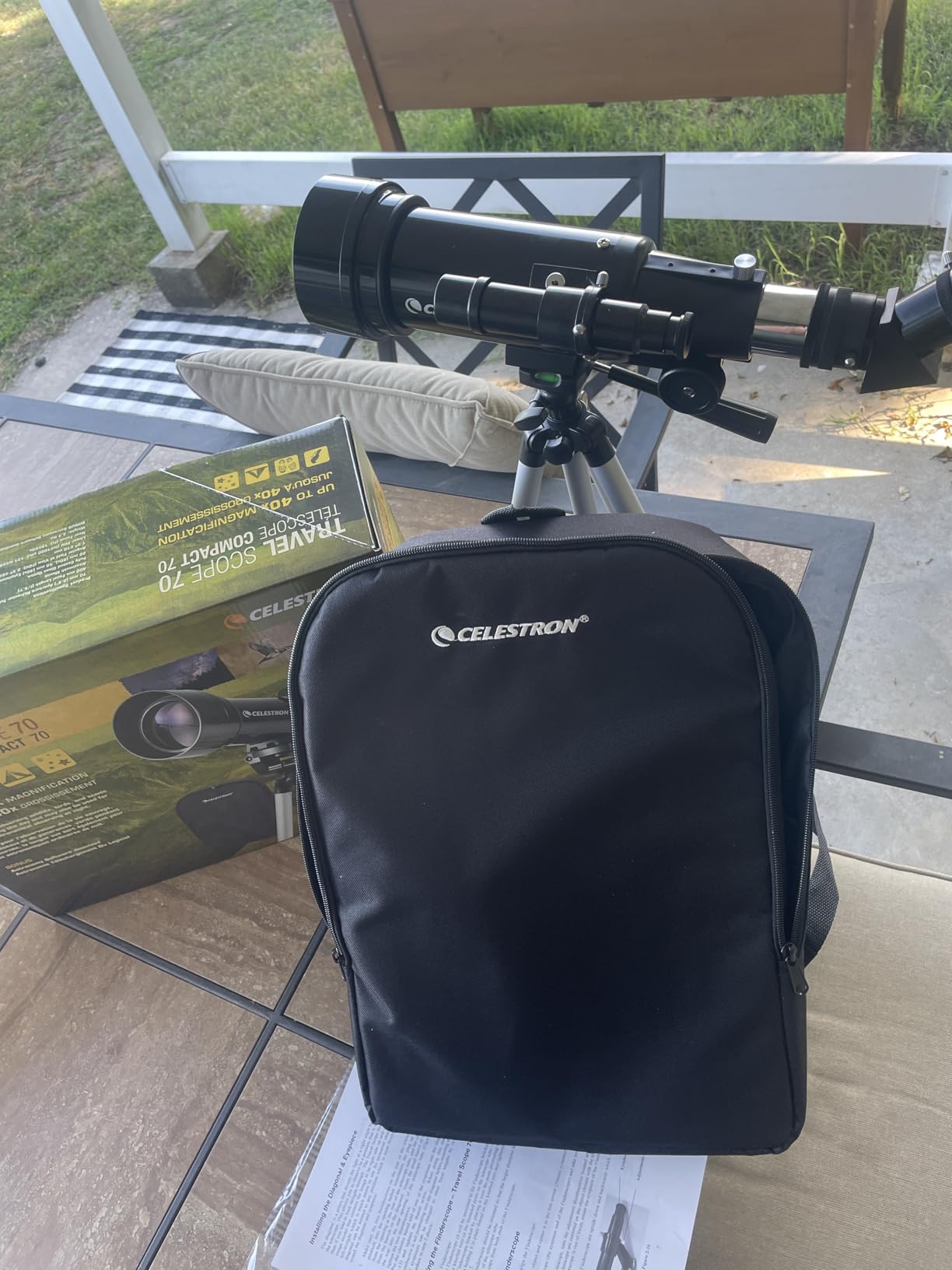
Celestron built this one backwards from the tripod. The padded backpack is sized to the kit, and the mount arrives preassembled, so the whole grab-and-go routine is unzip, unfold legs, observe. That is the design philosophy every other backpack telescope on this list copied.
The optical tube is a 70mm fully coated refractor with a 400mm focal length, which puts it in the same wide-field camp as the Gskyer. It comes with a 45 degree erect image diagonal, which matters more than it sounds if you are showing the Moon to somebody rather than yourself.
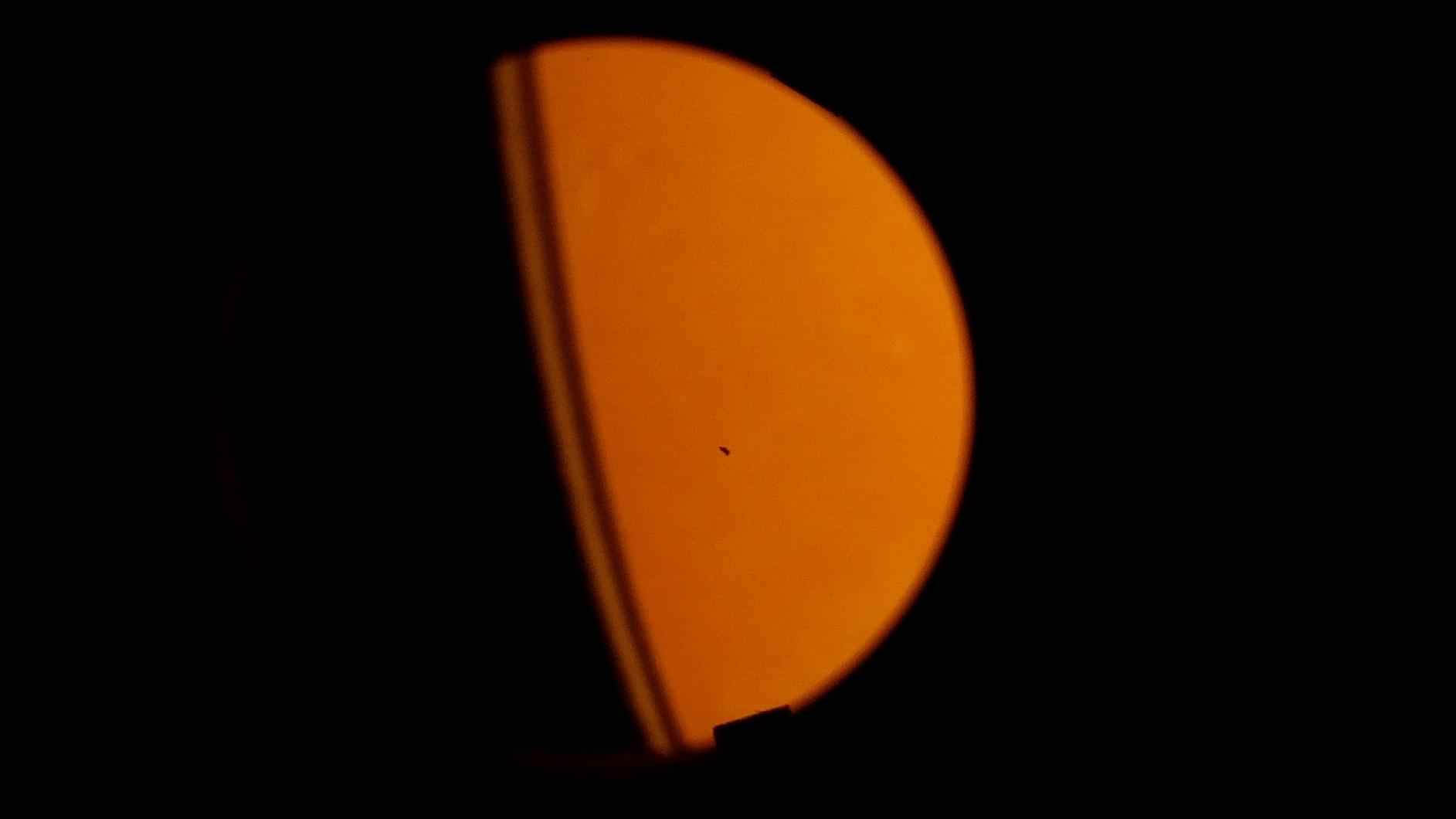
What stands out is the support and the software. SkyPortal pairs with a phone for object finding, and Starry Night Basic Edition is included. For a family buying a first telescope, having a two-year warranty and a support line is a real part of the product rather than a footnote.
The listed weight is 4.2 pounds for the complete kit, and the whole assembly is 18 inches long. Those are the numbers that matter when you are deciding whether a telescope fits inside a backpack rather than strapped to the roof.
Best case for buying it
If the trip involves a flight, a ferry or a long walk from a trailhead, this is the package that survives contact with reality. Owners repeatedly describe this exact kit as the one that fits the tube, tripod and accessories into a single bag, which removes the usual failure point of leaving something behind.
It is also the easiest scope here to hand to a teenager. Nothing to align beyond a finder, no collimation, no setup learning curve.
Where it falls short
The achromatic objective shows some color fringing on bright objects, most visibly on the lunar limb. That is a physics limitation of a cheap doublet lens at short focal length, and no amount of adjustment removes it.
Like the Gskyer, the single-stick altazimuth mount has no slow-motion controls, so a decent-sized object will walk out of the field during a long look.
3. EACONN 80mm Refractor – The Most Light Per Unit of Bulk
Telescopes for Adults Astronomy, 80mm Aperture 600mm Refractor Telescope for Kids & Beginners, Compact and Portable Travel Telescopio with Backpack
80mm aperture
600mm focal length
840 g
Multi-coated
Pros
- True 80mm aperture gathers noticeably more light than 70mm scopes
- 600mm focal length gives better planetary detail than short travel scopes
- Two eyepieces giving 30x-66x magnification
- Phone adapter has positions for both supplied eyepieces
- Backpack and adjustable tripod included
Cons
- Short tripod works better for kids than adults
- Altitude stick is stiff until a screw is loosened
- Finder scope is hard for first-time users to align
Here is the arithmetic that decides this roundup for most people. A 70mm objective presents about 3850 square millimeters of light-collecting area. An 80mm objective presents about 5030. Going from 70mm to 80mm is a gain of roughly 30 percent, 80mm to 90mm another 27 percent, and 80mm to 150mm a gain of more than three times.
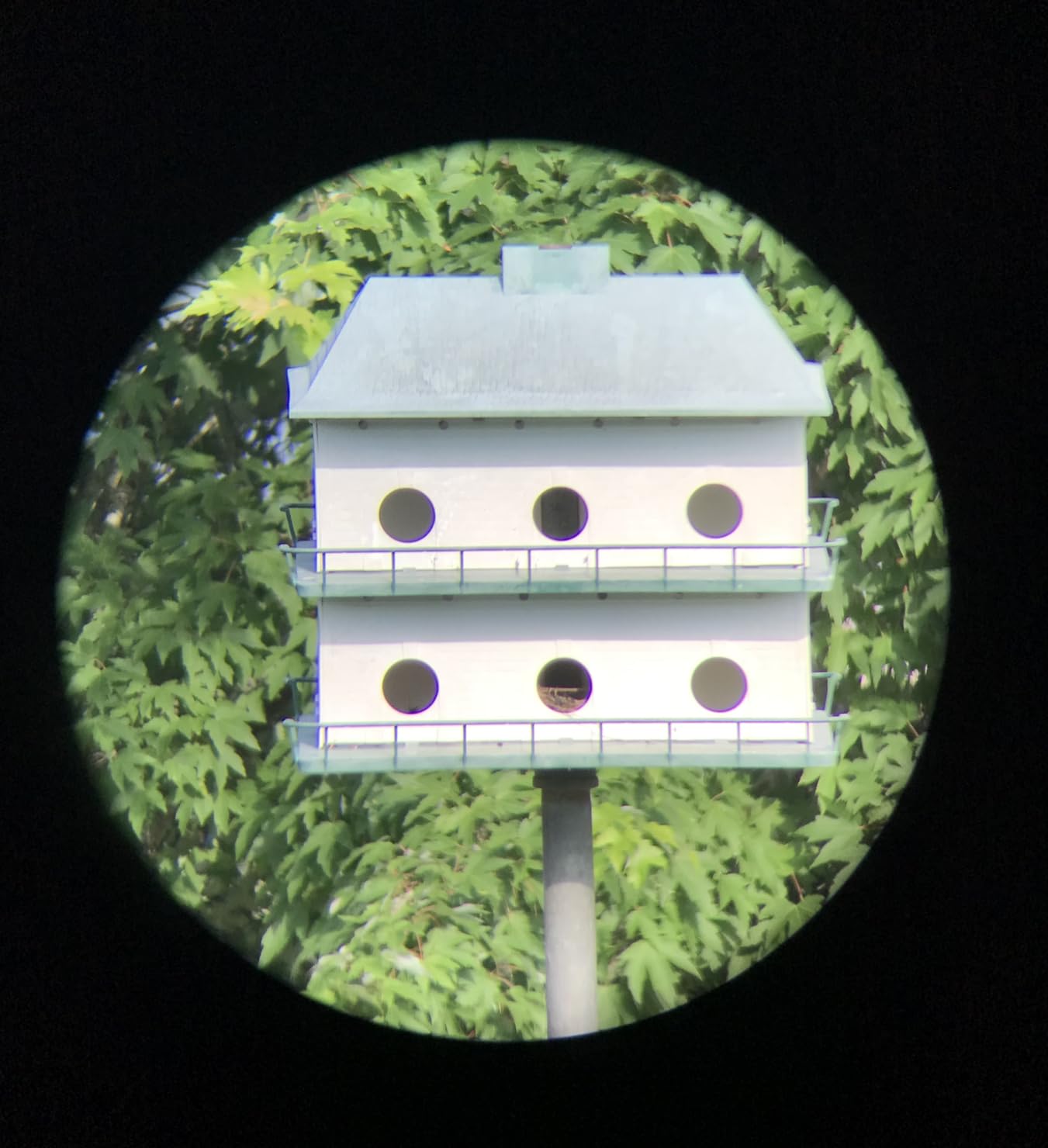
The EACONN hits 80mm with a 600mm focal length, so it carries more magnification than the short travel scopes while staying under a kilogram at 840 grams. Owners report planning dark-sky road trips with it and being rewarded with crisp lunar craters, Jupiter’s moons and a handful of nebulae.
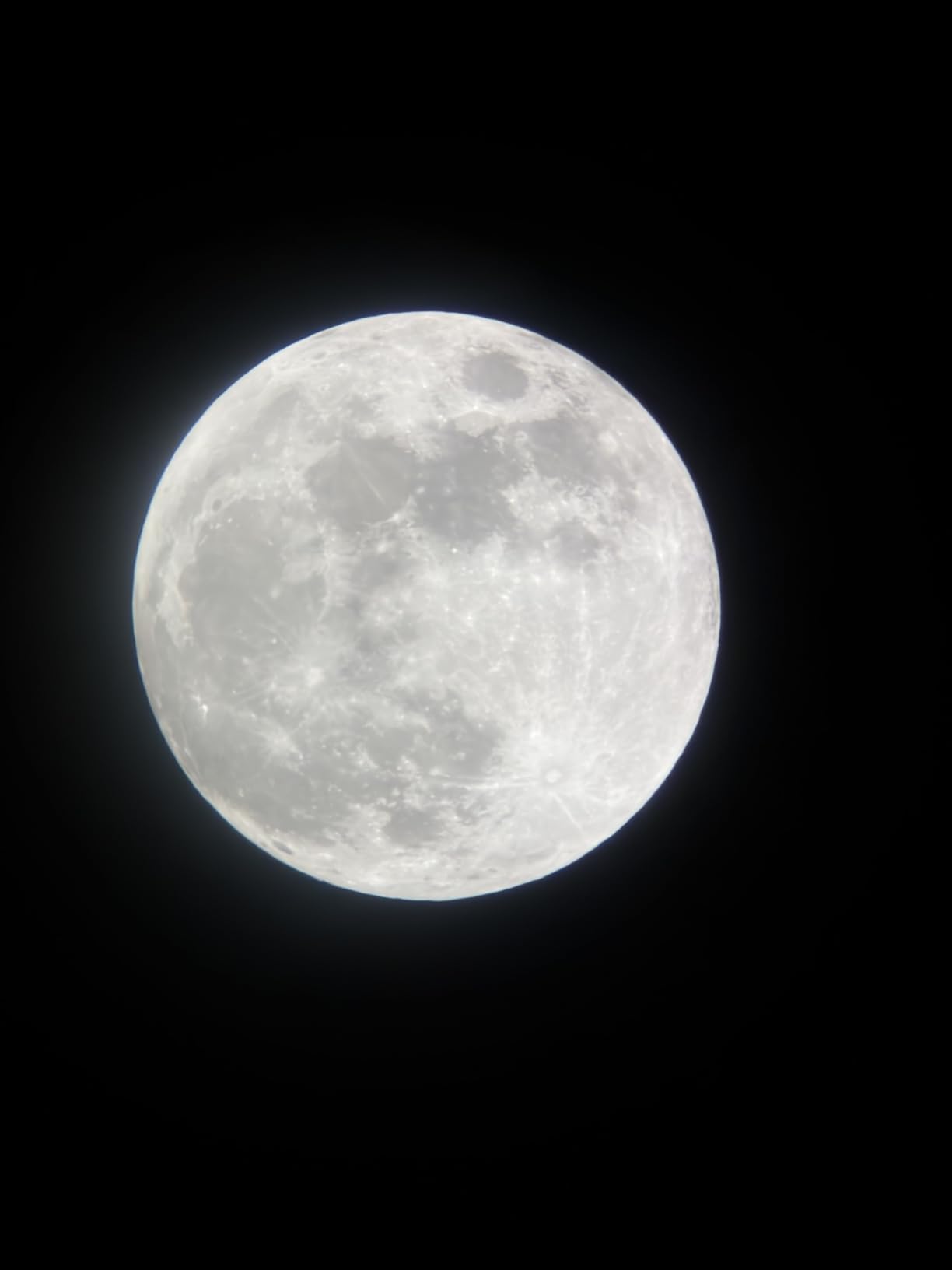
The rough-adjustment gimbal with a printed scale is unusual at this level and makes pointing less guesswork than a plain friction joint. Magnification runs from 30x to 66x with the supplied 20mm and 9mm eyepieces, which covers the range where a portable refractor is most useful.
Multiple owners also mention the protective packaging specifically. For a product that gets thrown in a car and unpacked in a field, arriving undamaged matters more than the packaging design usually would.
Best case for buying it
This is the scope for someone whose dark sky trip happens in a vehicle with limited room, or who wants real aperture without a 90-centimeter tube. The 600mm focal length is long enough for decent planetary work and short enough to fold easily.
It is also a strong first telescope for a family. The limitations are ergonomic rather than optical, and adults can work around the tripod height quickly.
Where it falls short
The tripod is the weakest part. It is short, which suits children aged roughly 8 to 12 far better than an adult, and the altitude adjustment stick is stiff until you loosen a screw. The finder scope is also unintuitive to align the first time.
Those are real annoyance points in the dark. If you are a tall adult observing solo, the taller-tripod options later on this list serve better.
4. Celestron Travel Scope 80mm – The Backpack Telescope Done Properly
Celestron Travel Scope 80mm Telescope Kit with Backpack, Smartphone Adapter
80mm aperture
457mm focal length
4.5 lb
Fully coated
Pros
- 80mm coated aperture gathers far more light than the 70mm model
- 457mm focal length resolves craters and Saturn's rings
- Smartphone adapter and backpack make it a complete kit
- Preassembled mount sets up with no tools
- Two-year warranty with US-based support
Cons
- Single-stick mount cannot track across the sky
- 457mm focal length limits high-power planetary detail
- Supplied 20mm and 10mm eyepieces are basic
- Achromatic optics show some false color
The Travel Scope 80 is the Celestron 70 with more glass, and that single change alters what you see at a dark site. Eighty millimeters of aperture against 70 gives you a visibly brighter image and a meaningfully deeper limiting magnitude, which is exactly the currency of observing under dark skies.
It weighs 4.5 pounds with a 457mm focal length, packs into its own padded backpack, and comes with a smartphone adapter. Reviewers describe this backpack as the reason the kit is genuinely portable rather than merely compact.
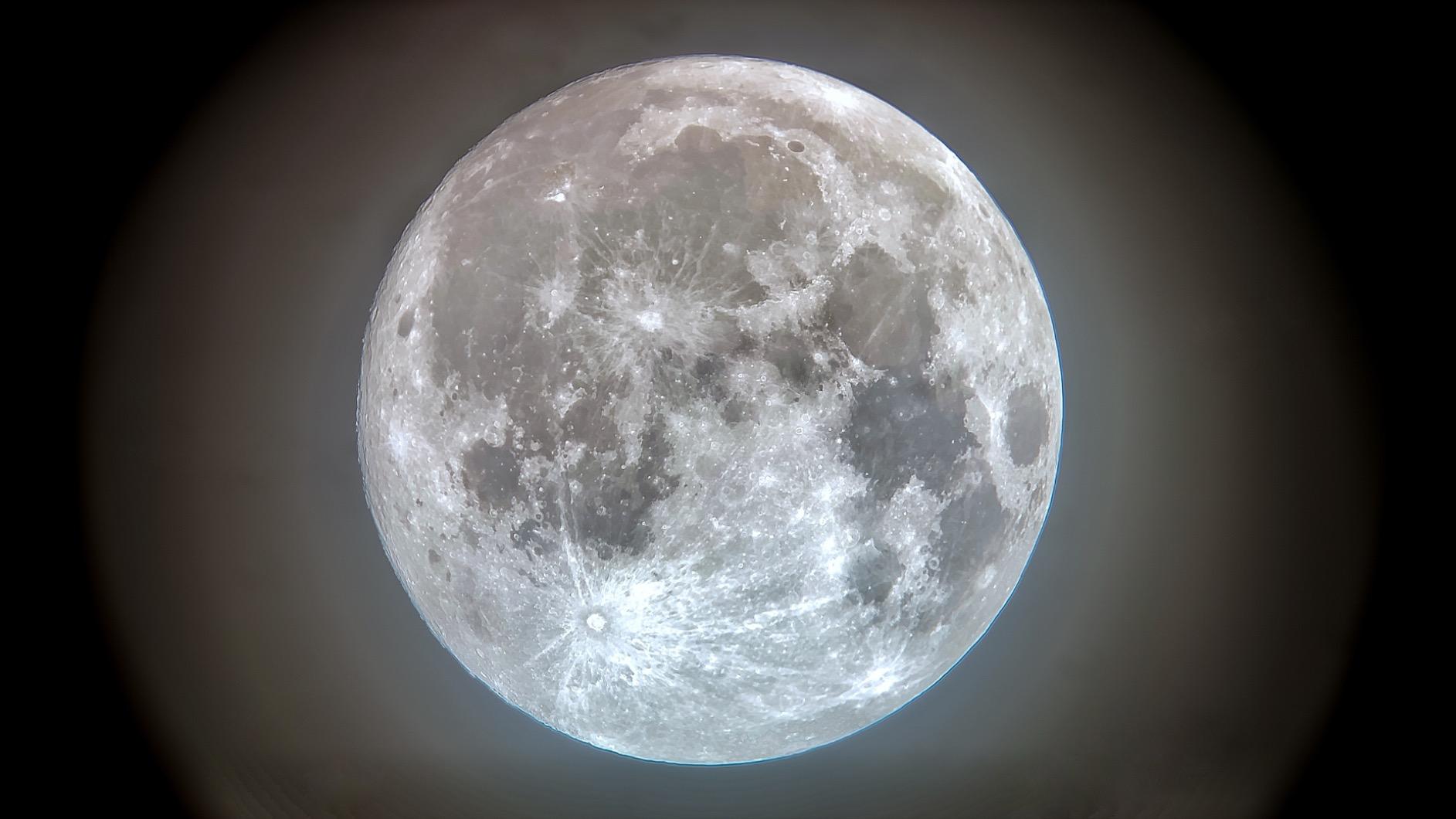
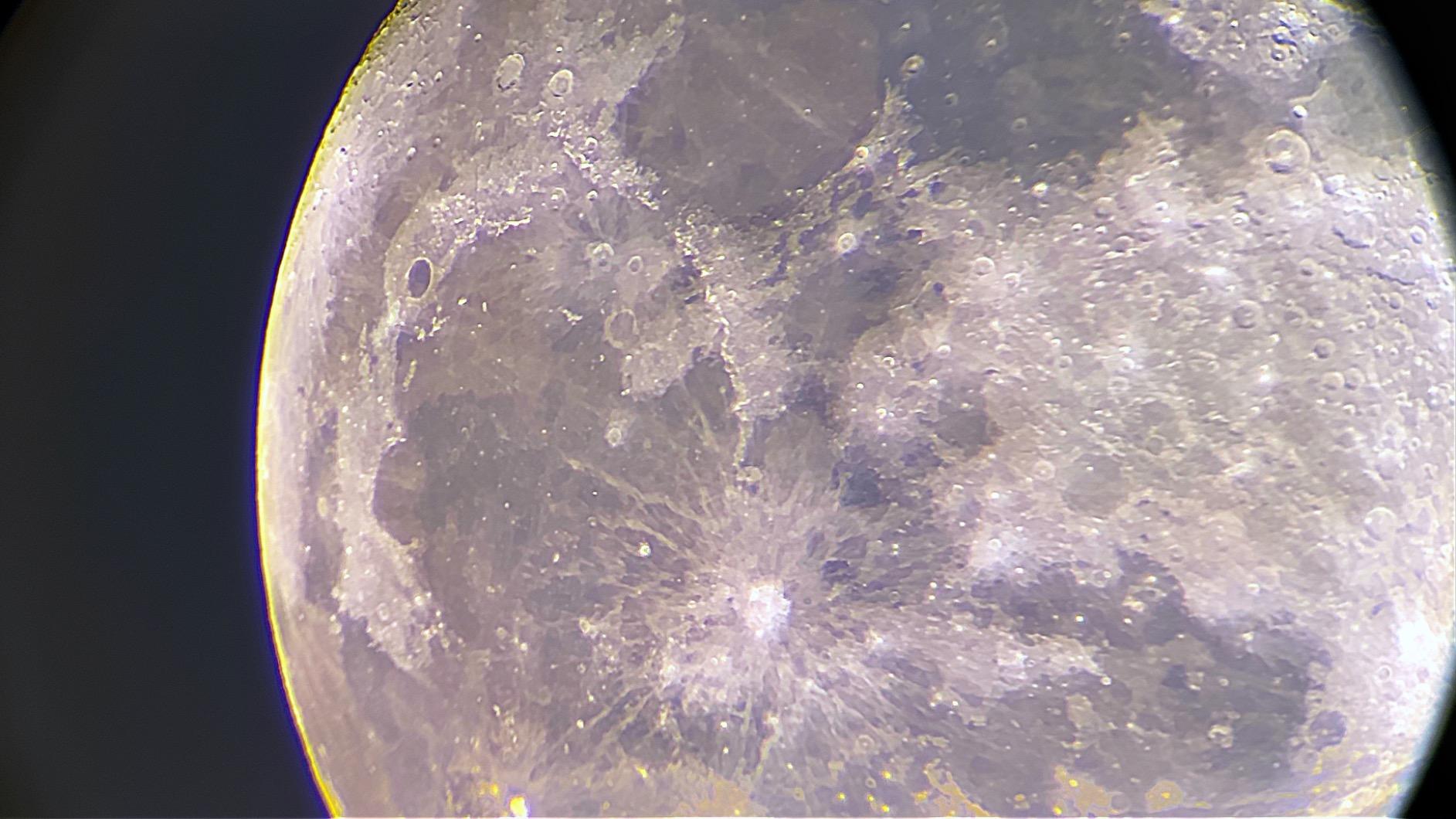
At 457mm the scope sits between the very short 400mm travel tubes and the 600mm designs. Owners consistently report resolving lunar craters, Jupiter’s bands and Saturn’s rings, which is a good spread for a kit you might hand to a child for the first time.
Two eyepieces at 20mm and 10mm plus a 45 degree erect image diagonal cover both wide and narrow views. They are plastic and unremarkable, and they are also the first thing you will replace.
Best case for buying it
This is the pick for a family group trip where a mix of experience levels shows up. The optics reward a beginner at the eyepiece, the setup needs no tools or knowledge, and the warranty means a damaged tripod part is not the end of the trip.
It is also the safest choice for carry-on air travel, since the entire kit fits in one bag with a tube length under 23 inches.
Where it falls short
The single-stick altazimuth mount has no slow-motion knob, which is the single most common complaint in the reviews for this model. Objects drift, and on a dark site with nothing to look at, drift is frustrating.
The achromatic objective also throws a bit of false color on bright targets, and the 457mm focal length means you top out sooner on planetary detail than the 600mm and 900mm designs later in this list.
5. Celestron StarSense Explorer LT 114AZ – Most Light You Can Carry With Two Hands
Celestron StarSense Explorer LT 114AZ Newtonian Smartphone Guided Telescope
114mm aperture
1000mm focal length
10.4 lb
Newtonian reflector
Pros
- StarSense recognition turns a phone into real celestial navigation
- App builds a target list for your time and location
- 114mm reflector shows the Orion Nebula and Andromeda
- Slow-motion rod allows smooth manual tracking
- Aluminum and SiO2 coated mirrors resist tarnishing
Cons
- Newtonian tube needs periodic collimation
- 10.4 pounds makes it a two-hand carry
- Manual altazimuth mount drifts and does not motorize
- Not a backpack unit despite the portable branding
This is where portability starts to cost you. The StarSense Explorer LT 114AZ weighs 10.4 pounds and stands 57 inches tall on its tripod. That is a telescope you load into a car, not one you carry up a trail. We included it because it marks the point where raw aperture overtakes every other consideration.
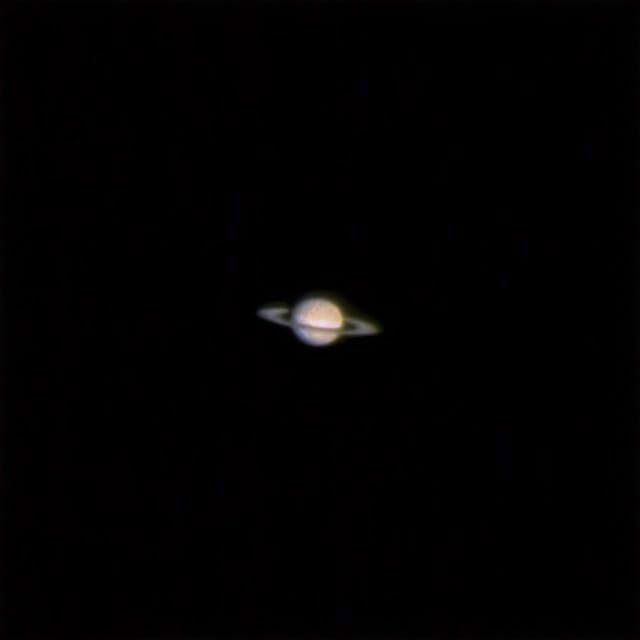
The payoff is a 114mm Newtonian reflector with a 1000mm focal length. Owners report the Orion Nebula, Andromeda and Saturn with it, and at a genuinely dark site those objects look nothing like their suburban appearance.
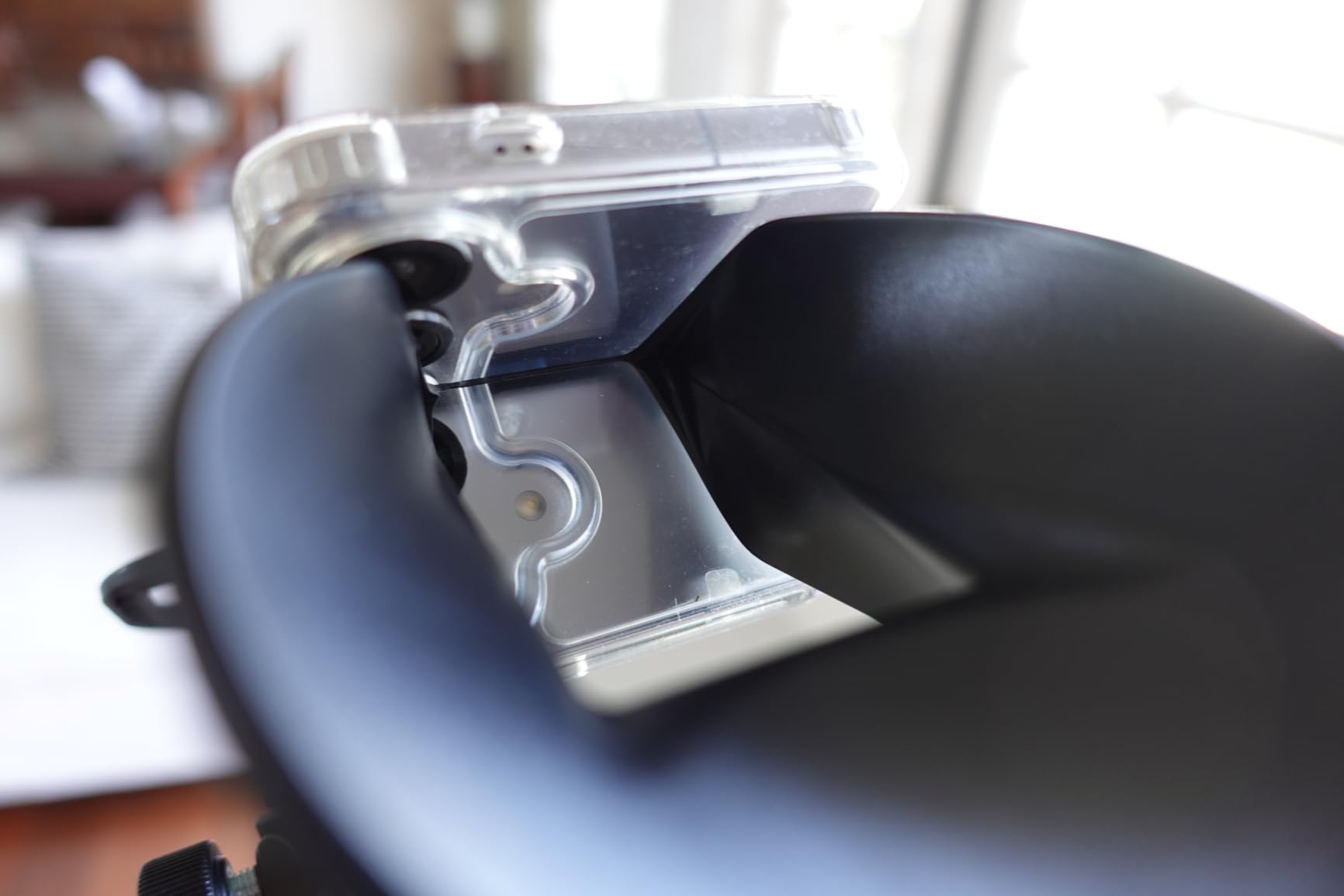
StarSense is the interesting part. Hold your phone up to the finder, the app recognizes the sky and points you at real targets, which removes the single biggest beginner obstacle of not knowing where to look. It also generates a curated target list based on your location and time.
The manual altazimuth mount includes an altitude slow-motion rod, which is a genuine improvement over the friction sticks on the smaller scopes. It is not motorized, so nothing tracks on its own.
Best case for buying it
If your dark sky trips are car camping or a site reachable by a forest road, this scope shows you things no portable refractor on this list will. A 114mm mirror gathers about twice the light of an 80mm refractor, and that ratio is the difference between a smudge and a structure.
The StarSense app also makes it the most forgiving telescope here for someone who has never pointed a scope at anything.
Where it falls short
Collimation. A Newtonian needs its mirrors aligned, and if it gets knocked in a car trunk you should expect to check that before the first night. That is a real skill for a beginner to learn.
It also has the lowest average rating in this group at 4.1, and the split is instructive: people who love the guided-navigation app rate it well, while people frustrated by collimation and a non-tracking mount rate it hard.
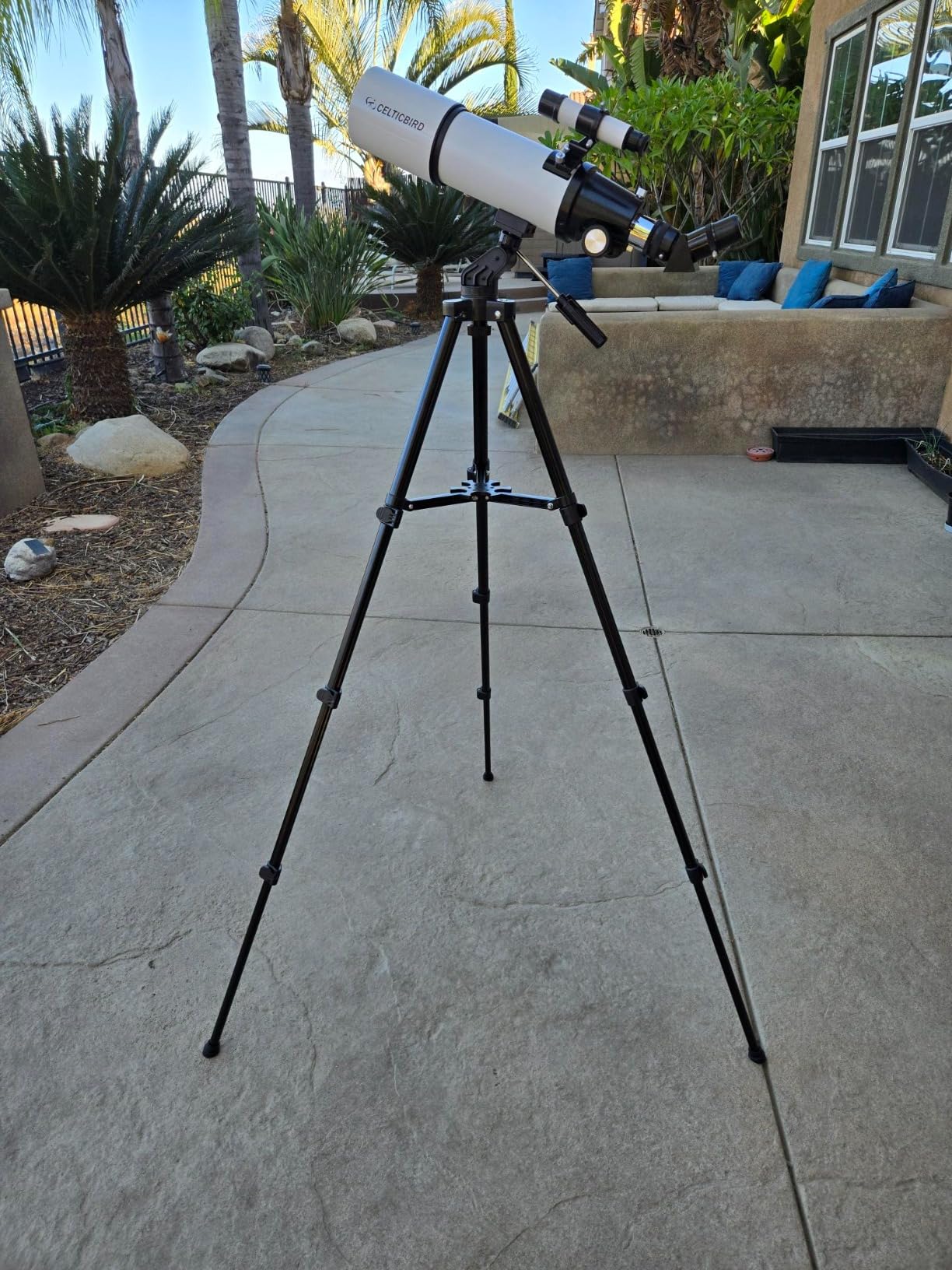
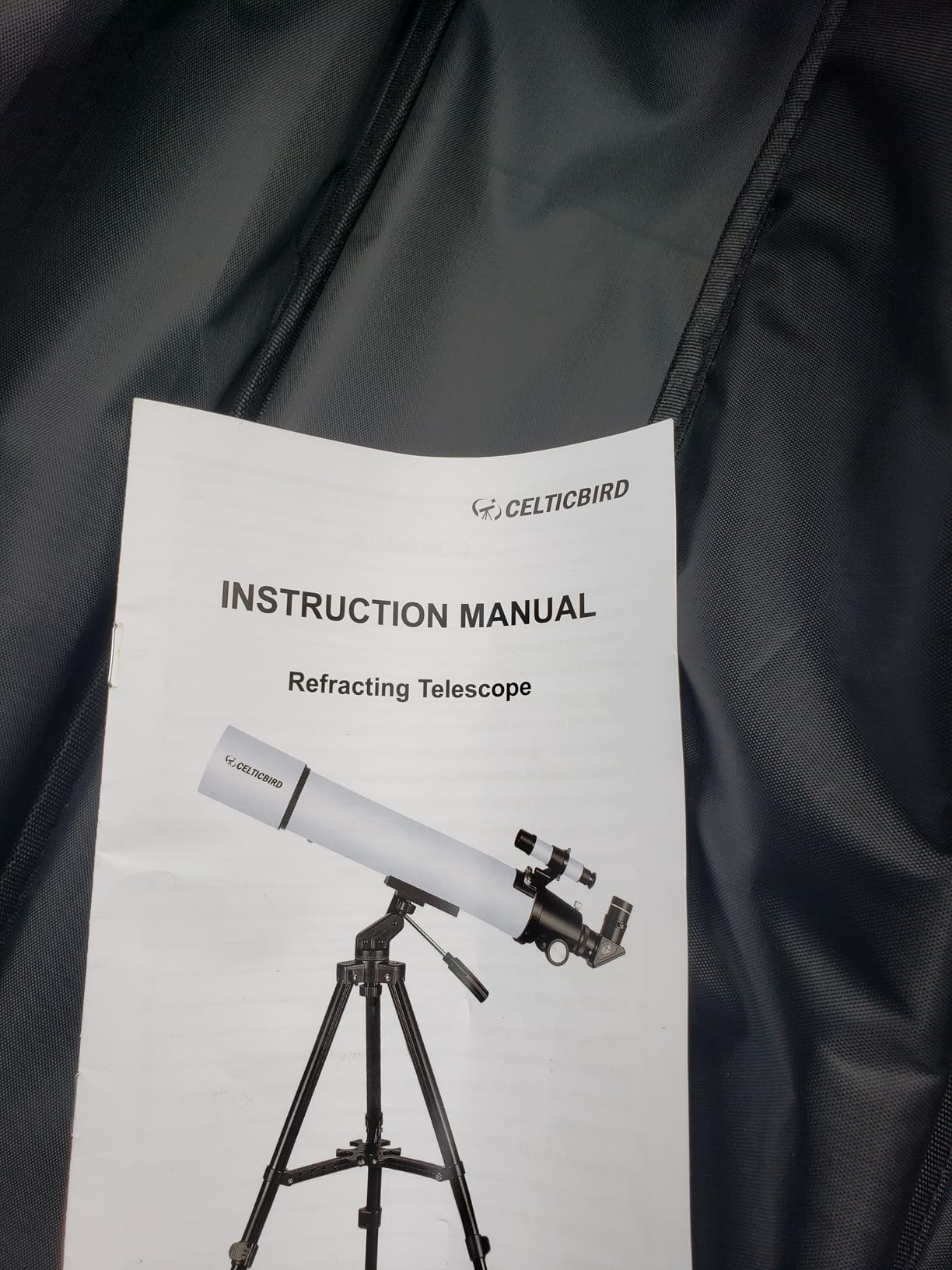
6. Celticbird 80mm AZ Refractor – The Tripod Is the Upgrade
Celticbird Telescope for Adults High Powered, 80mm Aperture 600mm AZ Mount Refractor Telescope for Kids Beginners – Portable Telescopes for Adults Astronomy with Backpack, Phone Adapter, Moon Filter
80mm aperture
600mm focal length
f/6.7
Fully multi-coated
Pros
- 80mm at 600mm balances light gathering and portability
- Multi-coated lens reduces reflection and boosts contrast
- Tripod adjusts from 17.7 to 52 inches for adults and kids
- 20mm and 9mm eyepieces plus a moon filter
- Backpack and phone adapter included
Cons
- Basic altazimuth mount with no tracking
- Included Kellner eyepieces are entry-level quality
- Achromatic objective shows color fringing on bright targets
Most compact 80mm travel scopes ship with a tripod sized for children. This one adjusts from 17.7 to 52 inches, which is the tallest range on this list and the reason it works for adults without a field table.
Optically it is an 80mm fully coated refractor at 600mm focal length, so the same useful focal length as the EACONN with a better tripod. The moon filter is a small touch that genuinely helps on a bright lunar surface.
Reviewers consistently rate this brighter than the cheaper 70mm travel scopes, which is the correct comparison at a dark site. Under real darkness the extra 10mm of aperture is more valuable than any accessory in the box.
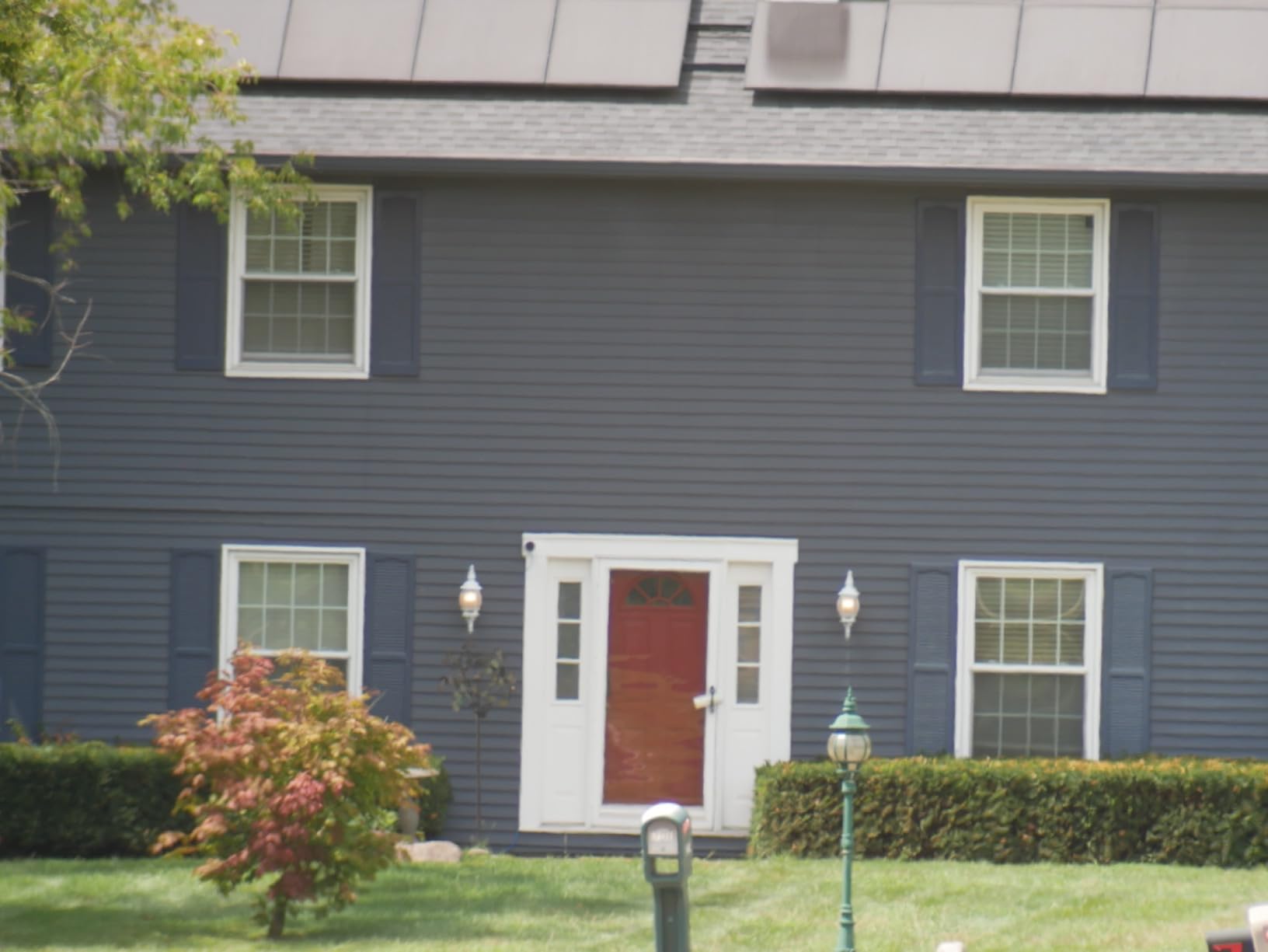
Magnification runs to 30x and 66x with the two Kellner eyepieces. That covers the Moon, the planets and the larger deep sky objects, which is a sensible range for a portable scope.
Best case for buying it
Mixed-age groups. The tripod range means a twelve-year-old and a six-foot adult can both use it at the same site without argument, and the moon filter keeps the bright target comfortable for beginners.
The three-year satisfaction service also reduces the risk on gear that will get knocked around on a trip.
Where it falls short
Its own aperture of 80mm puts a ceiling on faint detail. An 80mm achromat will not show you faint galaxies the way the 114mm Newtonian or the 150mm reflector will, no matter how dark the site is.
Note also that the listing records a focal length of 80 millimeters against the objective diameter while the tube itself measures 600mm, which is a data-entry quirk in the product record. The 600mm tube length is consistent with the 600mm focal length we used throughout.
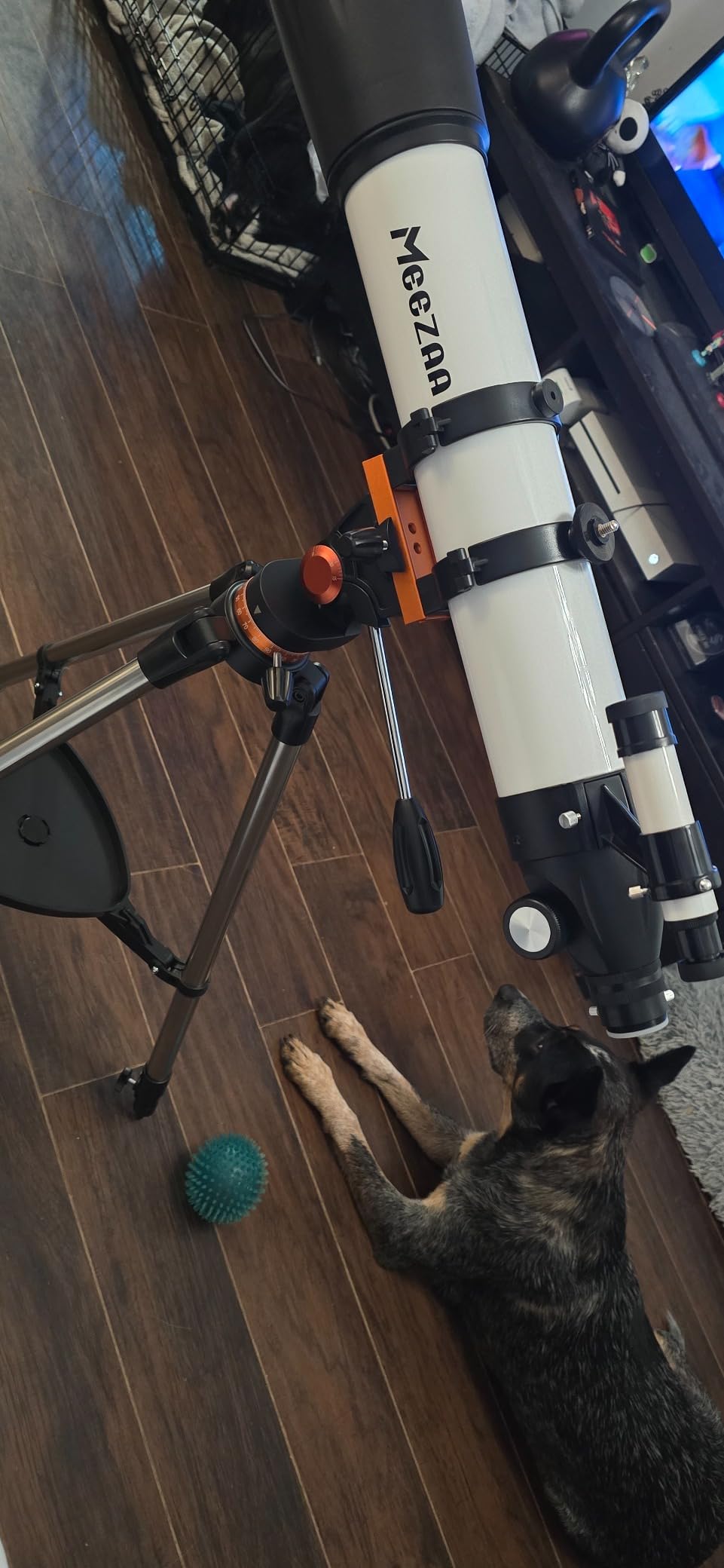
7. MEEZAA 90mm Refractor – Most Light in a Refractor That Still Fits a Trunk
MEEZAA Telescope, Telescope for Adults High Powered Professional, 90mm Aperture 800mm Refractor Telescopes for Astronomy Beginners Stargazing Fully Multi-Coated with Tripod & Phone Adapter & Carry Bag
90mm aperture
800mm focal length
Fully multi-coated
Stainless steel tripod
Pros
- 90mm is the largest refractor aperture here
- Multi-coated glass improves brightness and clarity
- 10mm and 25mm eyepieces plus a 3x Barlow cover 32x-240x
- Stainless steel tripod adjusts 28-46 inches
- Carry bag holds every accessory
Cons
- Straight-through finder appears inverted out of the box
- Finder is not perfectly aligned from the factory
- Phone adapter alignment is awkward and can wobble the focuser
- 80cm tube is bulky for a travel kit
Ninety millimeters is the largest refractor aperture in this roundup, and it changes what resolves. Light gathering scales with the square of diameter, so 90mm pulls in roughly 43 percent more light than a 70mm and 27 percent more than an 80mm.
The 800mm focal length gives an f/8.88 design, which is long for a refractor and produces sharp, contrasty images on the Moon. Owners report lunar craters and the lunar seas rendering with real definition, and the magnification range of 32x to 240x is the widest of the portable refractors here.
Two eyepieces and a 3x Barlow is a better starter bundle than most competitors ship with. The stainless steel tripod adjusts from 28 to 46 inches and is noticeably more rigid than the folding aluminum legs on cheaper kits, which matters when the wind picks up on an exposed ridge.
Assembly is reported at roughly 20 minutes with clear instructions, so budget that on the first evening rather than the second.
Best case for buying it
Lunar and planetary observers who refuse to give up aperture. The long focal length and the 90mm objective make this the best all-refractor option here for crater detail, and the 3x Barlow gets you to useful power on Jupiter.
It is also a logical first serious telescope. Refractors need no collimation, so the learning curve is entirely about sky knowledge rather than maintenance.
Where it falls short
The straight-through finder scope is the main usability complaint. It shows an inverted image, which reads as a fault the first time you see it, and it does not arrive perfectly aligned with the main tube. Budget ten minutes to fix that before the first night.
The 80-centimeter tube also undercuts the travel claim more than the weight figure does. It packs, but it does not disappear.
8. Dianfan 90mm Refractor – A Step Up With a Proper Steel Tripod
Dianfan Telescope, 90mm Aperture 800mm Telescope for Adults High Powered, Portable Professional Astronomy Refractor Telescopes for Beginners, with Stainless Steel Tripod & Phone Adapter, Carry Bag
90mm aperture
800mm focal length
Dawes 1.29 arc sec
4.7 kg
Pros
- 90mm coated objective at 800mm gives strong light gathering
- Coatings enhance contrast and color
- 32x-240x range from two eyepieces and a Barlow
- 45 degree zenith mirror keeps terrestrial views upright
- Stainless steel tripod provides steady viewing
- Two-year warranty
Cons
- Altazimuth mount has no tracking capability
- 80cm tube and 4.7 kg weight undercut portability
- Entry-level eyepieces limit what the aperture can deliver
- Chromatic aberration appears at high power
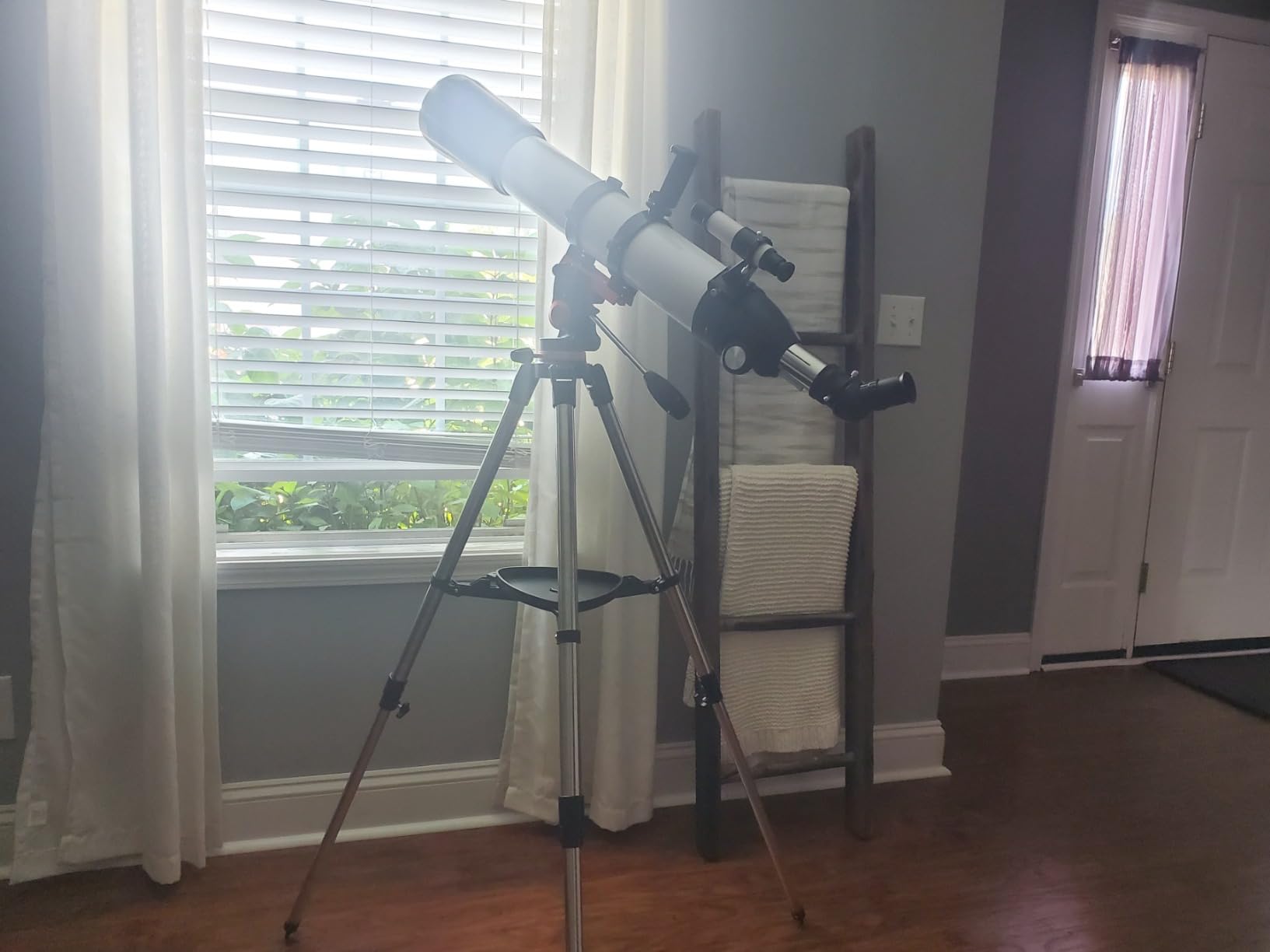
This and the MEEZAA 90mm cover the same optical territory, and the deciding factors are mechanical. This one lists a 4.7 kilogram weight with a stainless steel tripod, which is heavier but considerably more rigid at a windy site than folding aluminum legs.
Tripod instability is the most common complaint in travel telescope forums, and it is worth solving deliberately. A scope shaking at high magnification is unusable regardless of how much light it collects, so the tripod is not a trivial part of the system.
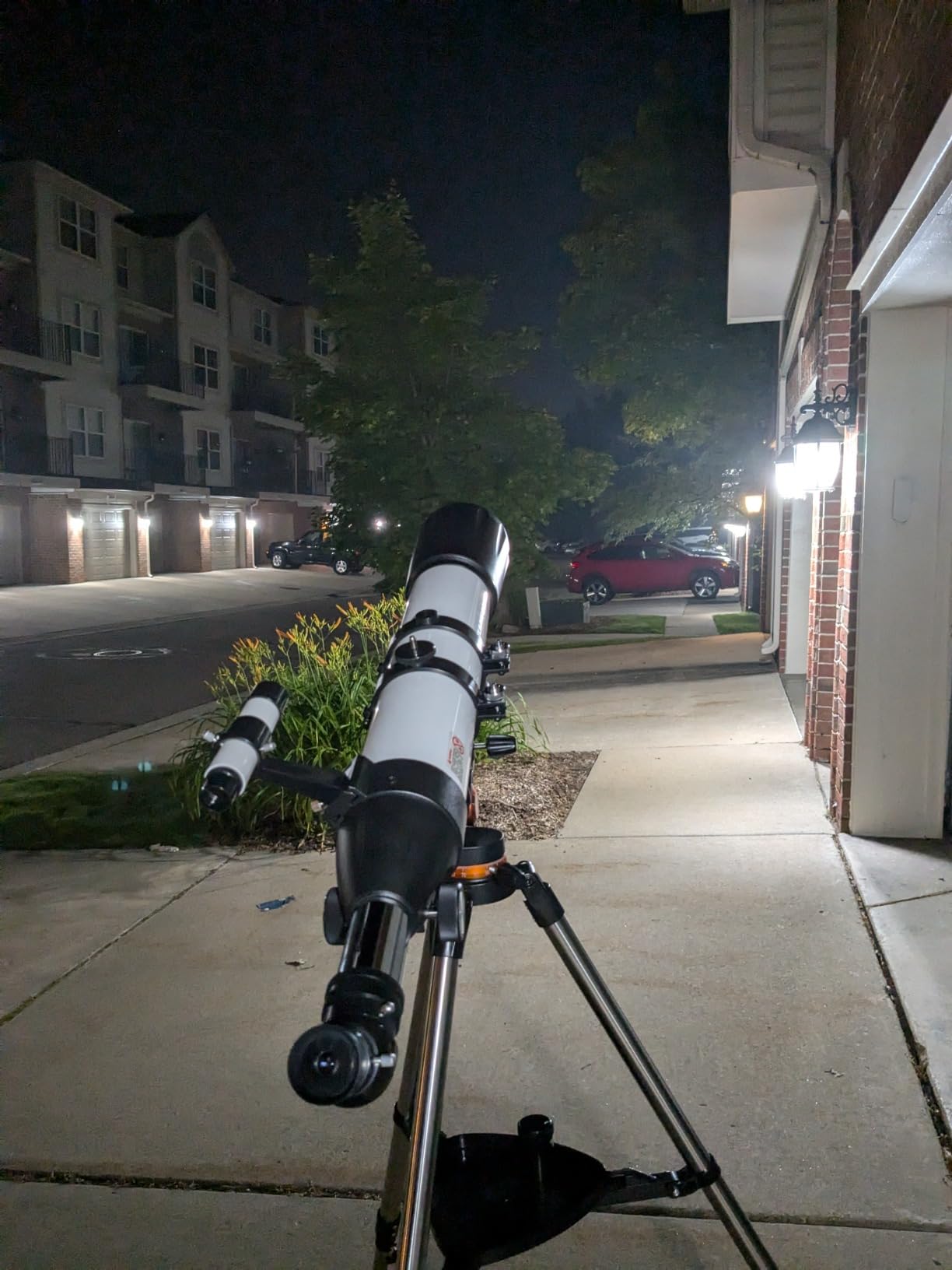
Optically you get a 90mm fully coated objective at 800mm focal length, with a listed resolving limit of 1.29 arc seconds. That figure describes the optics, not the mount, so treat it as an upper bound rather than a promise.
The 45 degree zenith mirror keeps terrestrial views upright and correctly oriented, which makes it usable for nature and bird watching as well as astronomy. Two eyepieces and a 3x Barlow give a 32x to 240x range.
Best case for buying it
Observers who have been burned by wobbling tripods. The steel legs and the fact that it holds steady once set up come up repeatedly in the reviews, along with bright, stable views of lunar craters and seas.
Reviewers also give it the highest five-star share among the 90mm and 80mm scopes with substantial review counts here, which suggests the assembly quality is better than the category average.
Where it falls short
Weight. At 4.7 kilograms with an 80-centimeter tube, this is a two-person load for most people and definitely not a backpack item. If the trip involves carrying gear any distance, the 80mm scopes are the honest answer.
Chromatic aberration is visible at high power on an achromatic doublet at this focal length, and the included eyepieces do not push the optics to their limit anyway.
9. MEEZAA 80mm Folding Scope – The One That Folds Down Smallest
MEEZAA Telescope for Adults & Kids, 80mm Aperture 500mm Refractor
80mm aperture
500mm focal length
Fully multi-coated
Folding aluminum tripod
Pros
- Best-rated 70-80mm travel refractor here at a 4.4 average
- 80mm multi-coated optics in a short 500mm tube
- 20x-150x range from two eyepieces plus a Barlow
- Waterproof backpack and folding tripod built for real travel
- Tripod adjusts 16.92-44.48 inches for kids and adults
Cons
- Tripod adjustment knob is a reported weak point
- Short 500mm focal length restricts planetary detail
- Included eyepieces limit real magnification
- Aluminum tripod is not stable in strong wind
This has the highest average rating of any 70mm or 80mm scope with 600 ratings or more in the roundup, and the design logic is sensible. A 500mm focal length in an 80mm objective is about as compact as you can make a useful aperture, and the whole tube is 50 centimeters long.
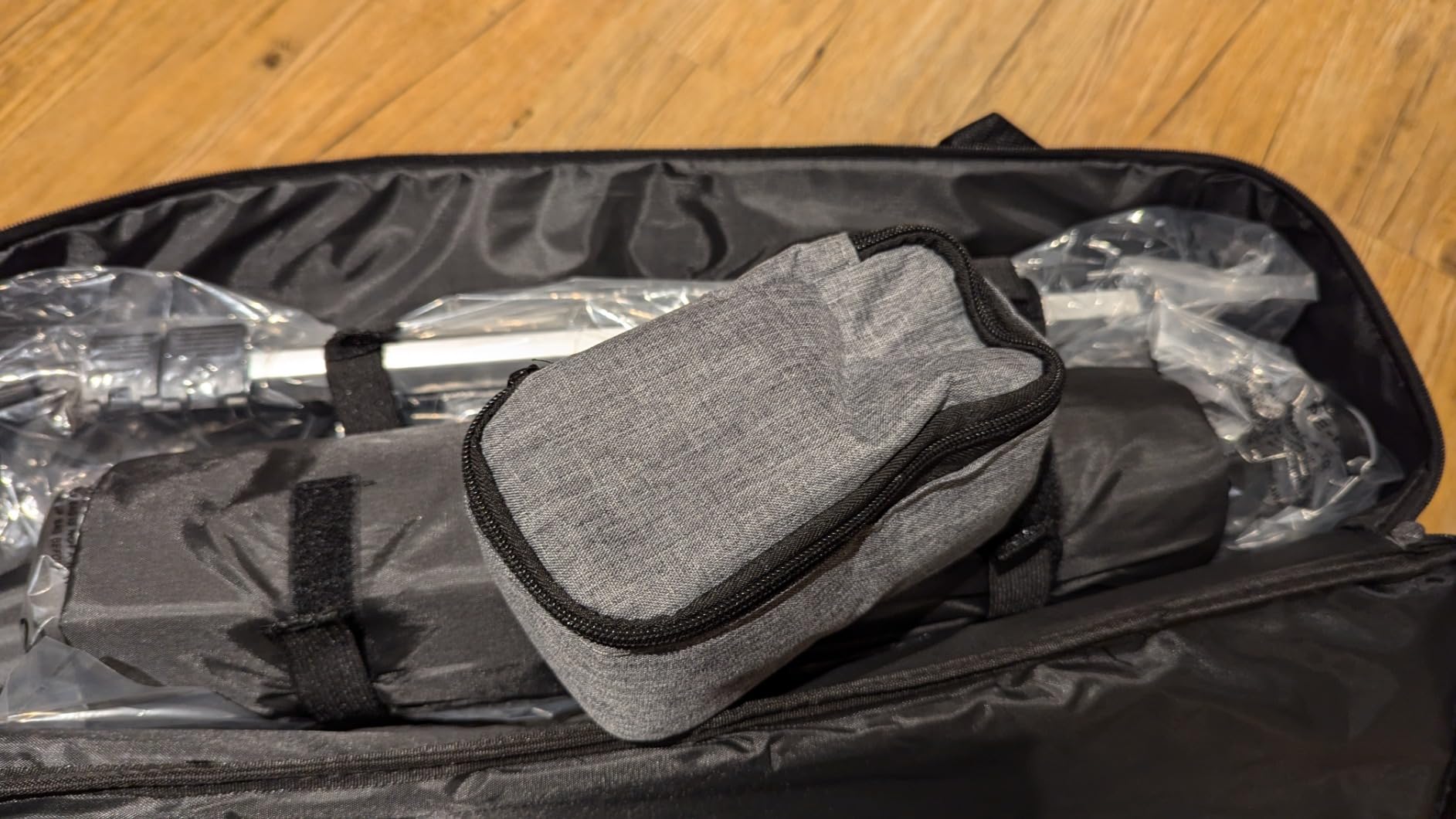
The folding aluminum tripod and the waterproof backpack are aimed squarely at people who carry gear in rain, which is most real camping trips. Family and camping use dominate the reviews, and the quick assembly gets called out repeatedly.
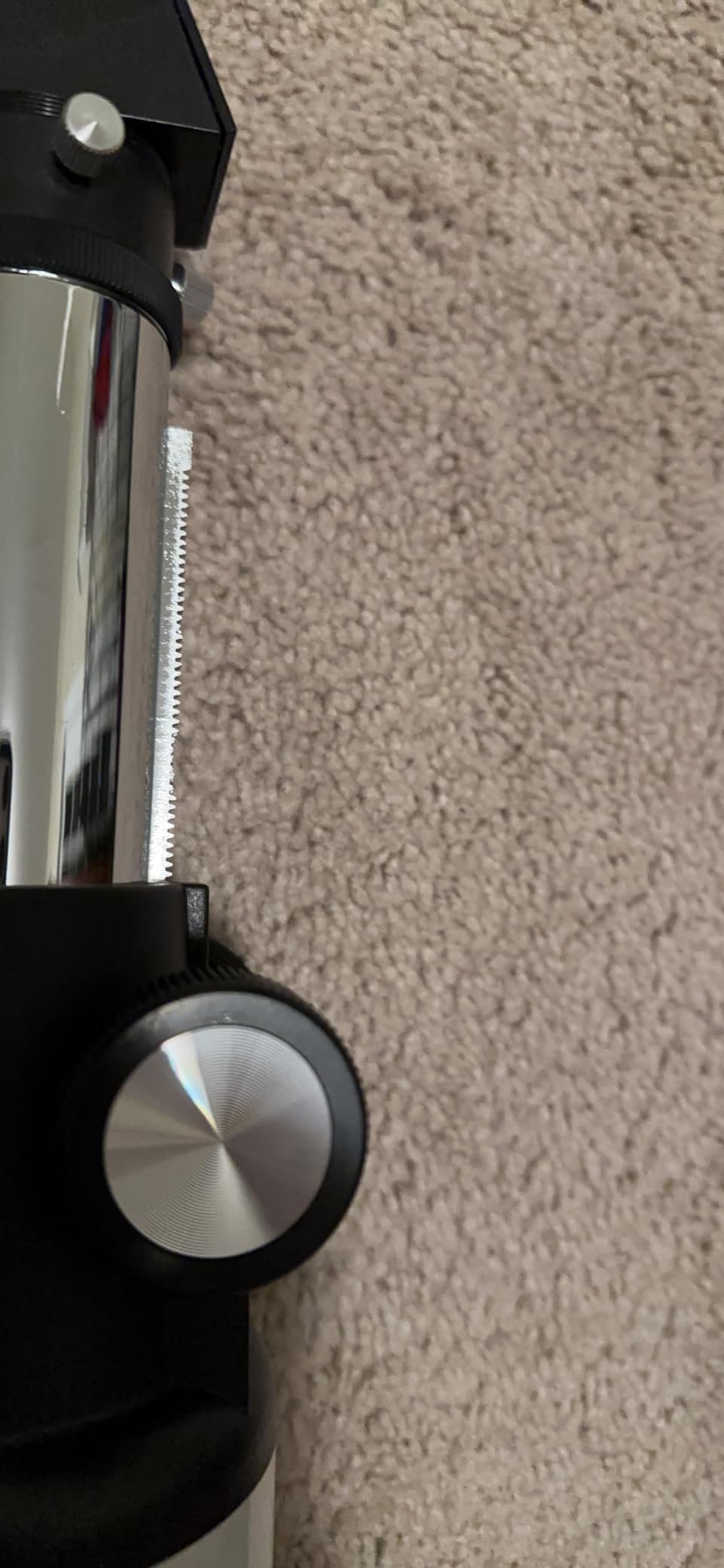
Magnification runs from 20x to 150x using the 25mm and 10mm eyepieces with the 3x Barlow. Phone adapter use for lunar photos is another thing owners praise, which is a cheap way to prove to a skeptical child that the trip was worth it.
The aluminum tripod adjusts from 16.92 to 44.48 inches, covering kids through adults, and a 45 degree zenith mirror handles terrestrial viewing.
Best case for buying it
Short trips, wet climates and anyone who wants an 80mm aperture in the smallest possible volume. The 500mm tube packs faster than any other refractor here, and the waterproof bag removes the usual camping anxiety about moisture.
At a 4.4 average across 645 ratings, it also has the strongest consistency among the budget 80mm options.
Where it falls short
The tripod adjustment knob is the reported weak point and can strip, which is a known failure to watch for after a season of use. The aluminum legs are also not stable in strong wind, and the same reviewers who like the portability note that limitation.
For planetary detail, the short focal length and the included eyepieces both work against you. Owners recommend upgrading to a 6mm Plossl, which is good general advice for any entry-level refractor.
10. DWARFLAB Dwarf Mini Smart Telescope – Fits in a Jacket Pocket
DWARFLAB Dwarf Mini Smart Telescope – 1.85lb Portable Astronomy Telescope
1.85 lb all-in-one
Sony IMX662 sensor
Auto GoTo plate solving
Internal battery
Pros
- Truly pocket-portable at 1.85 pounds with an internal battery
- Plate-solving auto GoTo finds deep sky targets with no manual hunting
- Equatorial mode supports exposures up to 90 seconds
- Built-in light pollution filters
- App handles stacking and cloud processing
Cons
- Astrograph design shows planets as small featureless discs
- Resolution is too low for large prints
- EQ mode needs a fluid head tripod to be usable
- Internal battery needs a power bank for long sessions
This is not a telescope in the traditional sense and it is arguably the most interesting product here. The Dwarf Mini weighs 1.85 pounds, measures under 8 inches tall, runs on an internal battery, and has no eyepiece at all. Everything happens through a phone app.
Underneath is a Sony IMX662 one-half-inch sensor with a 2.9 micron pixel size, which is a genuine astrograph sensor rather than a repurposed surveillance camera. The app plate-solves against a built-in sky atlas, finds your target automatically and starts stacking exposures.
Owners who treat it as a camera rate it exceptionally well, reporting plug-and-play deep sky imaging even from heavily light-polluted city skies. The built-in filters help, though at a genuine dark site you do not need them as much.
Equatorial mode supports exposures up to 90 seconds, which is enough to bring out faint structure, and the internal shutter captures dark frames automatically for calibration. Reviewers describe going from unboxing to a first stacked image in about three minutes.
Best case for buying it
Travel where you cannot carry a tripod at all. A single small body with a battery means you can observe from a hotel balcony, a roadside stop or a hiking break, and the images come back as finished files rather than eyepiece squinting.
Smart telescopes have been a recurring topic in astronomy forum threads, and this is the one most often framed as genuinely portable.
Where it falls short
It is an astrograph, not a planetary telescope. Planets appear as small featureless discs, which disappoints anyone who bought it expecting Saturn. Small deep sky objects render tiny because of the sensor resolution, and the output is built for social sharing rather than printing.
Equatorial mode also really wants a tripod with a fluid pan and tilt head to be usable, which undercuts the pocket-portable promise a little. For an all-night session you will want to carry a power bank.
11. Celticbird 80mm 900mm Refractor – Long Focal Length for Planetary Work
Celticbird Telescope for Adults High Powered, Travel Telescopes for Adults Astronomy Beginners Gifts, 80mm Aperture 900 Refractor Telescope with AZ Mount, Carry Bag, Phone Mount
80mm aperture
900mm focal length
Fully coated
Universal phone mount
Pros
- Highest average rating in the roundup at 4.6
- 900mm focal length at 80mm is unusually long for a portable refractor
- Upgraded wide-angle eyepieces with good eye relief
- Universal phone mount fits most modern phones
- Three-year satisfaction service
Cons
- Altazimuth mount cannot track so long exposures are out
- 900mm tube reduces packability
- Resolution is not high enough for detailed deep space imaging
- Small review base of 162 ratings
An 80mm objective at a 900mm focal length is an unusual pairing. The long tube means high magnification without a Barlow, which makes this the most capable portable refractor here on planets, and reviewers single out Jupiter’s moons and surface banding as the result.
It also ships with upgraded wide-angle 20mm and 10mm eyepieces with good eye relief, which addresses the single most common complaint about entry-level kits. The eyepieces are the difference here.
The phone mount is universal rather than custom-molded, so it fits most modern handsets without the fiddly alignment that molded adapters require. That is a small design decision that removes a real frustration.
The tripod adjusts from 20 to 45 inches and the carry bag has generous storage, which makes it workable for road trips even though the tube is long.
Best case for buying it
If planets are your reason for going to a dark site rather than an afterthought, this hits the right spot. Magnification on demand is what separates a 900mm refractor from a 500mm one, and the included eyepieces are good enough to use.
At 4.6 across 162 ratings it is the highest-rated product in the roundup, though the review base is small.
Where it falls short
The 90-centimeter tube is the trade. It packs into a carry bag, but it is not a backpack item, and it is noticeably more awkward than the 500mm and 600mm scopes.
Some owners report dust or lint inside the main lens, so inspect it on arrival. With a small review base, we would treat the rating as encouraging rather than definitive.
12. MEEZAA 150EQ Newtonian Reflector – The Light Gatherer for Car Campers
MEEZAA Telescope, 150EQ Newtonian Reflector Telescope for Adults Astronomy Beginners, Professional Astronomical Telescopes with Equatorial Mount, Tripod, Phone Adapter, Moon Filter and Large Carry Bag
150mm aperture
650mm focal length
German equatorial mount
Red dot finder
Pros
- 150mm aperture presents over 17000 square millimeters of light collecting area
- German equatorial mount with dials and slow-motion knobs enables manual tracking
- Red dot finder gives fast target acquisition
- Moon filter reduces lunar glare
- Owners confirm Jupiter's bands and the Orion Nebula
Cons
- Newtonian design requires periodic collimation
- Heavy and bulky enough to need two people
- Entry-level Kellner eyepieces
- Swapping eyepieces loses focus and needs realignment
- One review disputes the stated 150mm aperture
A 150mm primary mirror presents about 17700 square millimeters of light-collecting area against roughly 5000 for an 80mm refractor, more than three times as much. Light is the entire currency of observing at a dark site, so that ratio matters. Owners with astronomy club backgrounds report Jupiter’s bands, the Great Red Spot, the Pleiades, the Beehive and the Orion Nebula with it.
The German equatorial mount is the reason this telescope earns its place on a trip. Once polar aligned, the slow-motion knobs let you manually track the Moon and planets as they drift, which no altazimuth mount here can do.
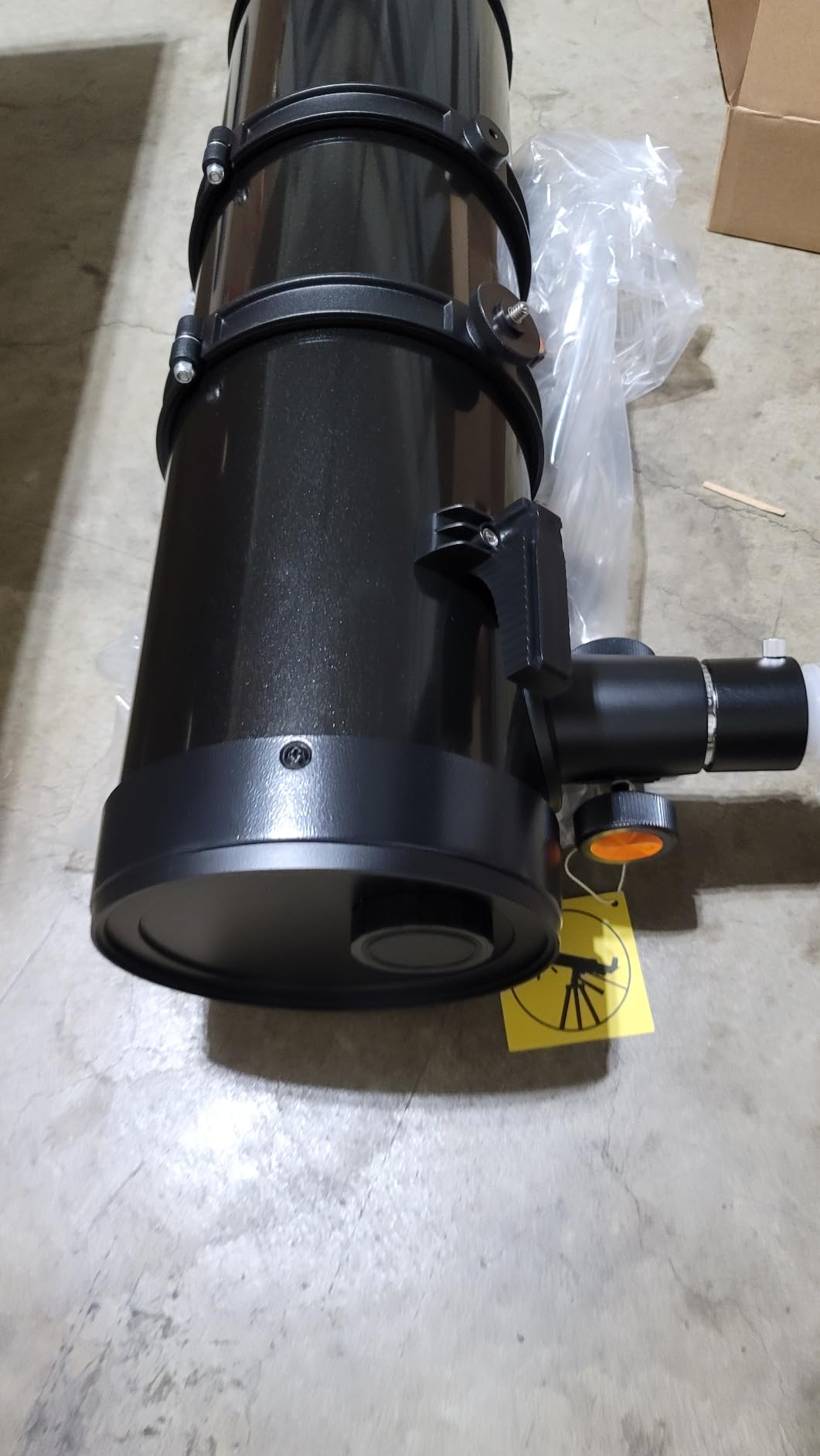
A red dot finder gives fast target acquisition without the alignment dance a traditional finder needs, and the moon filter cuts lunar glare to a comfortable level for long sessions.
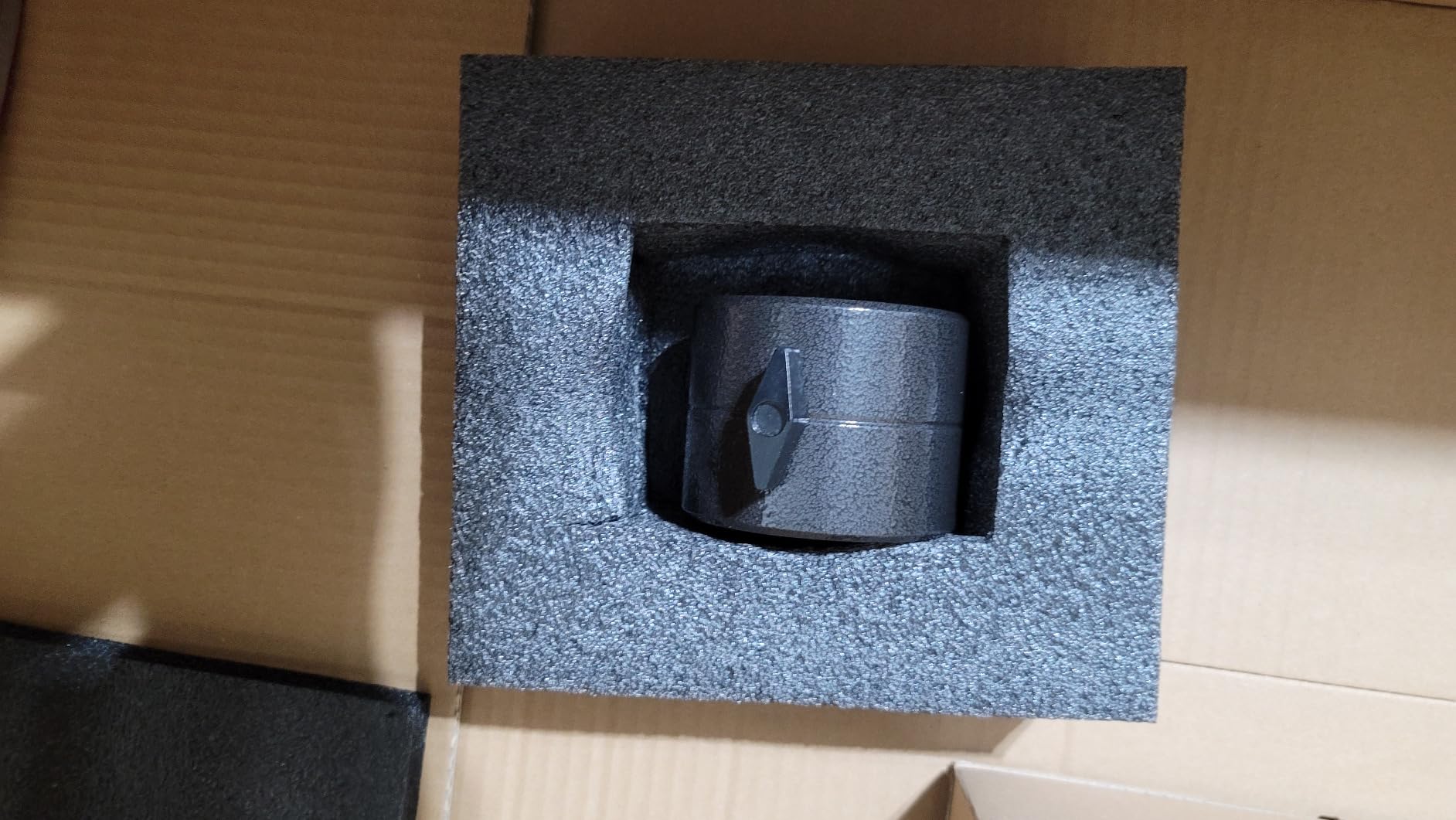
The stainless steel tripod and built-in accessory tray make it usable for extended observing, and the large carry bag takes the tube and all parts for transport.
Best case for buying it
Car camping and roadside observing where you can drive to the site and set up once. If you want to see the most faint fuzzy things on this list and you have a vehicle rather than a backpack, this is the honest answer.
The equatorial mount also makes it the best option here for anyone learning to track objects manually, a skill that carries over to any future telescope.
Where it falls short
Collimation, again. A Newtonian needs its mirrors aligned, and one owner reported measuring the primary at 130mm against the stated 150mm figure, so check it yourself before judging the view.
The plastic focuser and the fiddly phone holder are the most criticized components, and swapping eyepieces loses focus badly enough to require realignment. This is not a grab-and-go instrument, and it is heavy enough that two people may be needed for assembly.
How to Choose a Travel Telescope: Aperture, Magnification and Mounts
Aperture is the number that decides everything else. Light gathering scales with the square of the objective diameter, so doubling the aperture quadruples the light. That is why a 150mm reflector shows structure in objects a 70mm refractor renders as vague smudges, while the step from 80mm to 90mm gains about 27 percent more light and is plainly visible in a faint object.
Choose the largest aperture you can honestly carry to the site. A scope you leave in the car because it is too heavy is worse than a smaller one you use for three nights, and this is the single most common mistake we see in dark sky trip planning.
Focal length determines magnification at a given eyepiece, and magnification is focal length divided by eyepiece focal length. An 800mm tube with a 10mm eyepiece gives 80x. Focal length alone does not make an image better, though; what improves is magnification, and what degrades is field of view and brightness per surface area.
The practical rule: useful magnification on a small travel refractor tops out at roughly twice the aperture in millimeters. An 80mm scope is comfortable to about 160x, and pushing to 240x on the MEEZAA 90mm works only with good eyepieces and a rock-steady mount. Beyond that you are just magnifying diffraction and vibration.
Mount type is the second decision. Altazimuth mounts move in two axes aligned to the horizon and are simple, light and cheap, but targets drift because the sky rotates. Equatorial mounts align to the celestial pole, which means one axis of movement matches the sky’s rotation, allowing tracking with a slow-motion knob or motor.
Computerized GoTo mounts solve drift by motorizing both axes and pointing the scope for you. None of the traditional scopes here have one. The DWARFLAB Dwarf Mini does have motorized GoTo, but through its app and camera rather than an eyepiece, so it solves a different problem.
Tripod stability deserves more attention than reviews give it. Windy dark sky sites are usually exposed sites, because dark skies correlate with low population and few obstructions. Hanging a weight from the center hook, spreading the legs wide and lowering the whole setup before observing are three free improvements.
What you will actually see by aperture
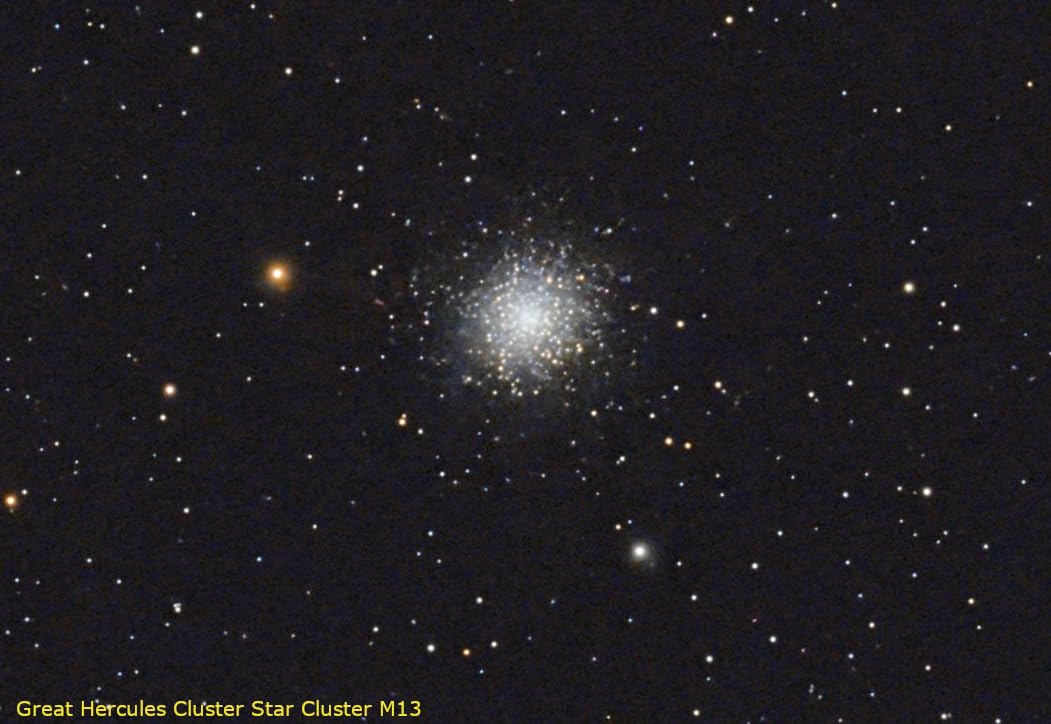
At a Bortle 1 or 2 site with a 70mm scope you will see the Milky Way structure overhead, naked-eye star clusters resolved into stars rather than a glow, the Andromeda Galaxy as a fuzzy oval, and a handful of bright nebulae.
Push to 80mm and 90mm and the Orion Nebula, the Ring Nebula and the Beehive start showing structure rather than a uniform haze. Jupiter’s moons and Saturn’s rings are visible at 70mm and gain contrast at 90mm.
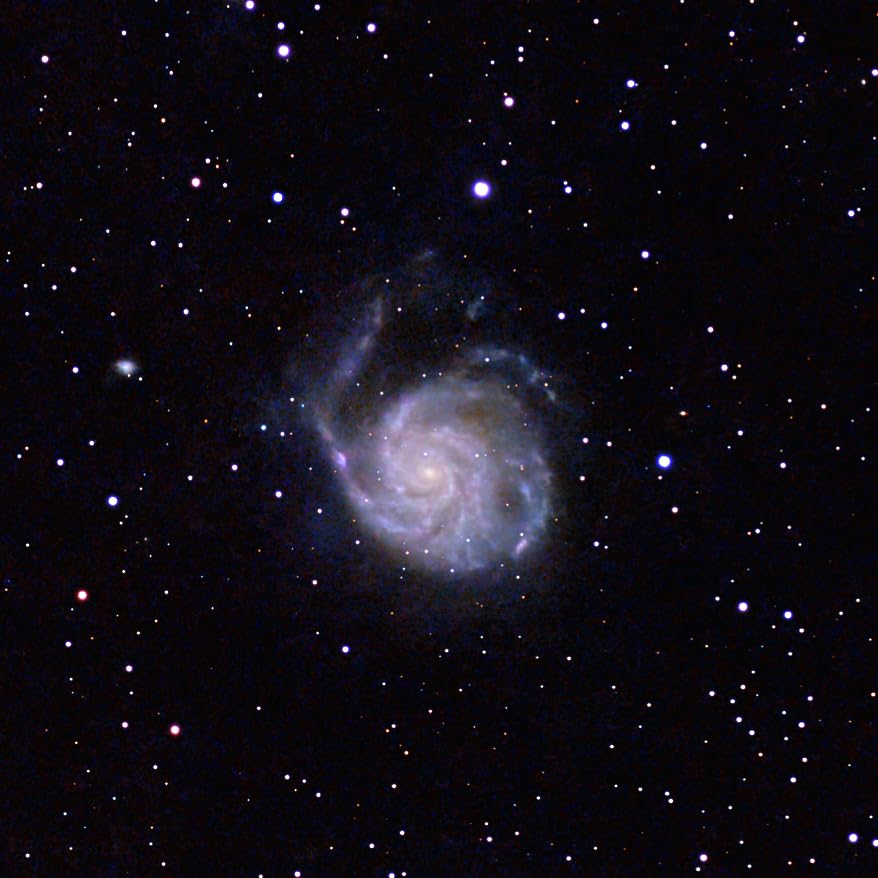
Only once you reach the 114mm and 150mm reflectors do the fainter galaxy cores, the dust lanes of Andromeda and subtle planetary detail become genuinely accessible. That is the return on a heavier, less portable instrument.
Planning the Trip: Bortle Class, Site Choice, Wind and Power
The Bortle scale runs from 1 to 9 and describes naked-eye sky darkness rather than any instrument measurement. Bortle 1 is a true dark site where the Milky Way casts a visible shadow. Bortle 3 is a rural sky. Bortle 5 and above is suburban, and above that a travel telescope loses much of its reason for existing.
Check a light pollution map before you commit to a site, and look at the map at two scales. The regional map tells you which direction to drive. The local map tells you whether the specific pull-off sits under an unshielded streetlight, which ruins a site that looked perfect on the regional map.
The Milky Way core is best from roughly March through October in the northern hemisphere, with the core rising highest in late spring and summer. New moon matters more than season: a bright moon washes out faint objects regardless of how dark the site is, so plan deep sky nights around the dark phase.
Finder scope alignment in darkness is a genuine pain point that owners mention constantly. Align the finder against a distant object during daylight before you leave home, then check it against a bright star once. A red flashlight preserves dark adaptation far better than a white one, and a headlamp pointed down at your feet is the standard field fix.
Power strategy matters if you are running anything motorized or using a phone heavily for plate solving. A single lithium battery pack of 10000 milliamp hours will carry a phone through several nights, and for smart telescopes it is the difference between one session and three.
Road preparation deserves its own checklist. Most of our readers on long-haul driving routes already maintain gear carefully, and the habits that keep a vehicle roadworthy keep a telescope tube roadworthy too. If you are planning the drive portion of the trip, our roadside emergency kit guide covers the gear that belongs in the passenger footwell rather than the cargo bay.
If you are towing a trailer to reach the site, protecting the payload matters as much as protecting the telescope. Our picks for travel trailer covers and trailer tires rated for travel trailers are worth reading before the load goes in, since a telescope in a trailer is subject to the same vibration as anything else in it.
Collimation is the one maintenance task you cannot skip on reflectors. Five minutes with a collimation cap or an inexpensive laser unit at the start of each trip avoids the frustration of a misaligned mirror discovered at midnight.
Digiscoping and Phone Astrophotography on the Road
Phone astrophotography through a telescope, called digiscoping, is the cheapest upgrade in amateur astronomy and every scope here except the DWARFLAB comes with an adapter for it. The technique works because a phone camera accumulates light over multiple frames where an eye cannot.
Shoot the Moon first. It is bright, forgiving and rewards a phone camera immediately, which makes it the right subject for testing an adapter in daylight conditions at the campsite before dark.
Planets are the hard case. A phone camera is fast enough to record the planet as a disk, but it also records your mount vibrations, and any tripod shake becomes visible jitter. Brace the adapter against the focuser rather than letting the phone hang off it, because the adapter mass on a short tube creates a lever arm that points the scope at the floor.
Bracket your exposure rather than pushing brightness. Several frames at a lower exposure stack into a cleaner image than one frame at high sensitivity, and stacking works on the Moon and on bright planets better than on anything faint.
For faint deep sky targets, the phone struggles because the sensor is small. That is precisely the gap the DWARFLAB fills, and its app stacking and cloud processing do the work that desktop software would normally handle.
Frequently Asked Questions
What is the best travel telescope for stargazing?
For most people taking a dark sky trip, an 80mm fully coated refractor with a backpack is the best balance of aperture and packability. The Celestron Travel Scope 80mm and the EACONN 80mm both put a usable aperture in a bag that fits with camping gear. If you can carry 10 pounds, a 114mm reflector shows substantially more.
What is the best telescope to view the night sky?
Aperture decides. Light gathering scales with the square of the objective diameter, so a 90mm refractor pulls in roughly 43 percent more light than a 70mm. Below 70mm you mostly see the Moon and bright clusters. Above 114mm you begin resolving structure in nebulae and galaxy cores.
What magnification is needed for stargazing?
For a portable refractor, useful magnification tops out at roughly twice the aperture in millimeters, so an 80mm scope is comfortable to about 160x. Magnification equals focal length divided by eyepiece focal length. Beyond that limit you are magnifying vibration and diffraction rather than detail.
What aperture telescope for dark sky viewing?
At a Bortle 1 to 3 site, 70mm shows the Milky Way structure, naked-eye clusters and a fuzzy Andromeda. Stepping to 80mm and 90mm brings out the Orion Nebula and the Ring Nebula. At 114mm and 150mm you get galaxy cores and dust lanes. Choose the largest aperture you can carry to the site.
Does TSA allow telescopes on planes?
Telescopes are permitted in both carry-on and checked luggage. The practical constraint is size rather than the rule itself, so check your airline’s carry-on dimensions and pack the tube, tripod and accessories into a single backpack that fits the allowance. Aluminium tripod legs are the part most likely to raise questions.
Can binoculars replace a travel telescope for dark skies?
For most trips, yes. Binoculars need no tripod, no collimation and no setup, and 8×50 or 10×60 glass shows a surprising amount under dark skies. A telescope beats them for planetary detail and for smaller deep sky objects, so binoculars complement a compact refractor better than they replace one.
Final Verdict: Which Travel Telescope Should You Pack?
Pack the Gskyer 70mm if you want the least fuss and the shortest tube, the Celestron Travel Scope 80mm if you want a real aperture in a proper backpack with two-year support behind it, and the EACONN 80mm if you want more focal length than the Celestron at a similar size.
If you can carry weight and drive to the site, change the plan entirely. The MEEZAA 150EQ presents more than three times the light area of any refractor here and its equatorial mount lets you track manually, while the Celestron StarSense 114AZ gives you a guided route to the same objects without needing to know where they are.
For the far end of portability, the DWARFLAB Dwarf Mini weighs less than four pounds with a battery inside and returns finished images rather than views, which suits trips where a tripod never leaves the car.
Whichever you choose among these best travel telescopes for dark sky trips, test the setup in daylight before the first night, align the finder at home, and pick targets the night before rather than in the field. That preparation matters more than any single specification on this page.