
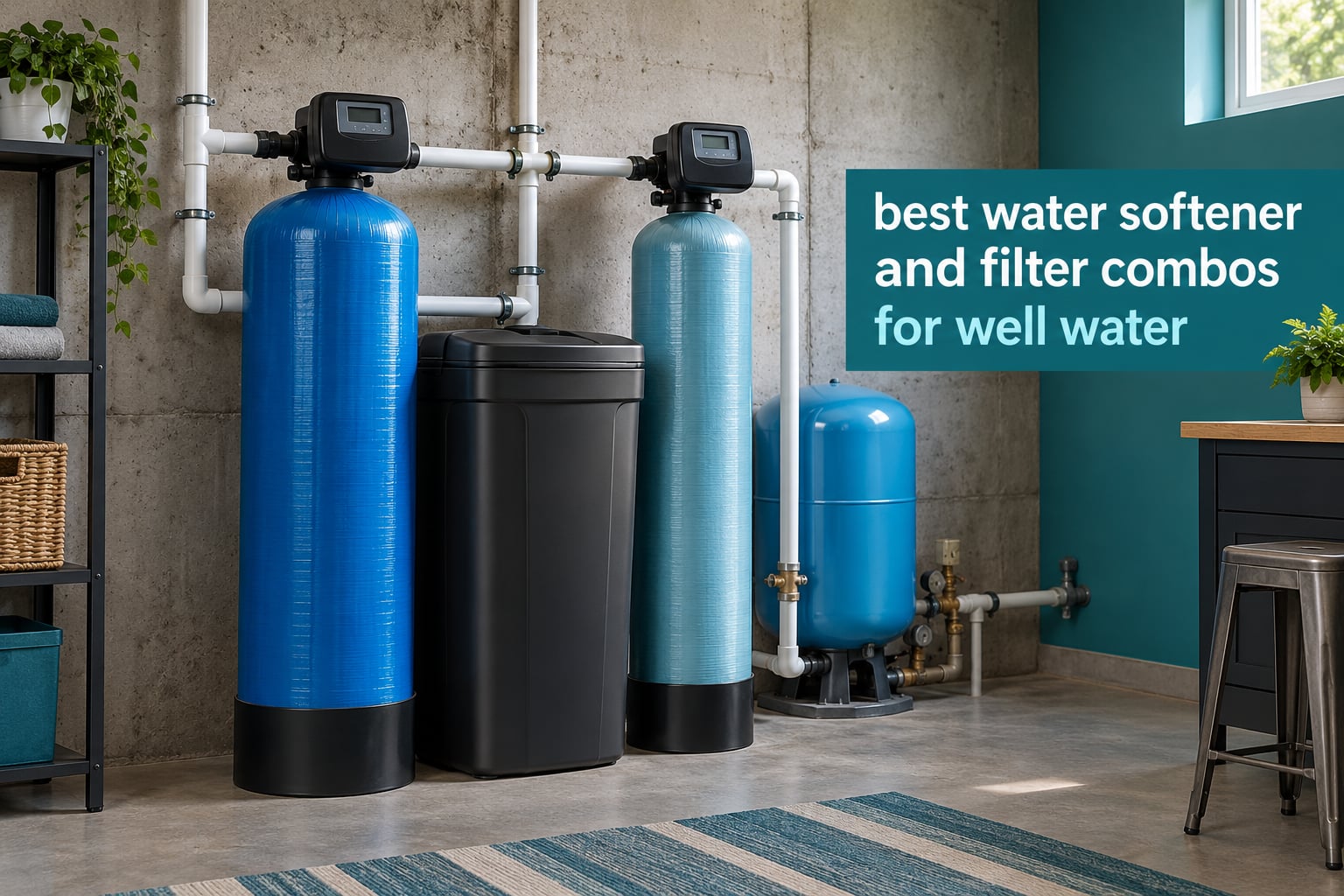
Yes, there is a water filter and water softener combo, and on a private well you almost always want one. A combo bundles an ion-exchange softener that strips hardness minerals with a filtration stage that traps the things a softener cannot touch, mainly iron, manganese, sediment, sulfur odor and chlorine taste. City water needs a softener and a carbon filter. Well water needs both plus whatever your test report says is coming out of the ground.
We spent six weeks reading through owner reviews on 11 of the highest-rated whole house bundles on the market, comparing control valves, grain capacity, iron limits, flow rates and warranty terms. What surprised us most is how few sellers publish a real iron removal number. Several of the bundles below soften the water beautifully and still leave orange stains in the bathtub, because iron coats the resin beads and stops them working. Those are flagged clearly in every section.
The systems are ranked by how well they handle the contaminants that actually show up on rural wells. If your water is cloudy, has a rotten egg smell or leaves black specks, start at the top of this list and read the section for your situation. If you are still deciding what problem you have, get a full panel test first. If the pump side of your setup is also due for attention, our shallow well pump roundup covers that end of the system.
Everything below was written for 2026 shoppers. Ratings, warranty terms and configuration counts change, so treat the numbers as a snapshot and re-check them before you order.
Table of Contents
Top 3 Picks for Well Water Combos (October 2026)
Three systems stood out. The Iron Pro 2 has the deepest review base in the group, the DuraWater Fleck unit is the strongest dedicated iron performer, and the Aquasure bundle is the one most families end up buying because it includes drinking water filtration.

AFWFilters Iron Pro 2
- 64k grain softener and iron filter in one tank
- Fleck 5600SXT metered valve
- Iron and manganese up to 6 ppm
- 5-year warranty
DuraWater Fleck Iron Blaste…
- 48k grains with fine mesh resin
- Handles heavy well water iron
- 250 lb brine tank
- 60-month warranty

Aquasure 48k Bundle with…
- 48k grain whole house softener
- 75 GPD reverse osmosis drinking stage
- Aquatrol digital metered head
- For homes with 3-4 bathrooms
Best Water Softener and Filter Combos at a Glance in 2026
Here is the whole field in one place. Read the key features column against your water test results before you read any single review.
| Product | Specs | Action |
|---|---|---|
| AFWFilters Iron Pro 2 Combo |
|
Check Latest Price |
| DuraWater Fleck Iron Blaster 48k |
|
Check Latest Price |
| Aquasure 48k Bundle with 75 GPD RO |
|
Check Latest Price |
 Aquasure 72k Whole House Bundle Aquasure 72k Whole House Bundle |
|
Check Latest Price |
 Aquasure Harmony 70k Fine Mesh Aquasure Harmony 70k Fine Mesh |
|
Check Latest Price |
 Kenmore Elite 520 Hybrid Kenmore Elite 520 Hybrid |
|
Check Latest Price |
 EcoPure EP42 Softener EcoPure EP42 Softener |
|
Check Latest Price |
 PRO+AQUA Elite 5-Stage Well Bundle PRO+AQUA Elite 5-Stage Well Bundle |
|
Check Latest Price |
 NU Aqua 4-Stage Salt Free NU Aqua 4-Stage Salt Free |
|
Check Latest Price |
 AFW Fleck 48k with Upflow Carbon AFW Fleck 48k with Upflow Carbon |
|
Check Latest Price |
 Kind Water Systems E-3000UV Kind Water Systems E-3000UV |
|
Check Latest Price |
1. AFWFilters Iron Pro 2 Combo 64k – the Best All-Round Well Water Combo
AFWFilters Iron Pro 2 Combination Water Softener Iron Filter Fleck 5600SXT Digital Metered Valve 64,000 Grain – High Flow for Whole House Use – Removes Hardness, Iron, Manganese, Sediment, Rust
64k grain capacity
Iron and manganese up to 6 ppm
Fleck 5600SXT metered valve
5-year warranty
Pros
- Softener and iron filter in one vessel
- 483 reviews give the deepest field history here
- Fleck valve is repairable with parts still sold
- Pre-filled resin tank saves setup time
Cons
- Setup documentation is thin on detail
- Does not reduce total dissolved solids
- Resin tank is heavy at 119.2 lbs
This is the unit we keep coming back to, and the reason is the review count rather than the spec sheet. With 483 owner reviews at a 4.4 average and a 72 percent five-star share, it has more real-world evidence behind it than anything else in this roundup. That matters for a well, because a softener problem does not announce itself politely.
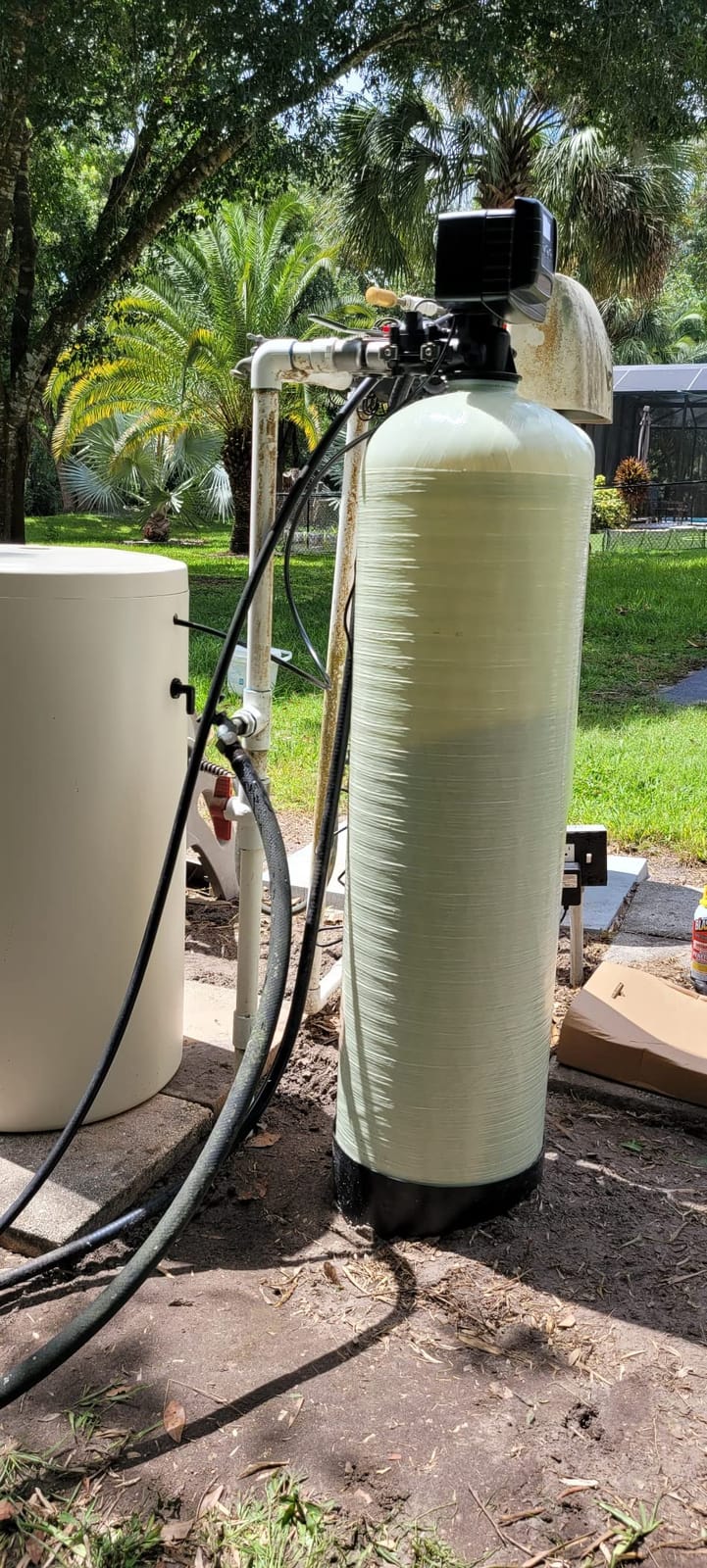
Everything happens in one vessel. The resin is specced to clear iron up to 6 ppm and manganese up to 6 ppm alongside hardness, rust and sediment, and the Fleck 5600SXT digital metered valve regenerates on measured use rather than a clock. Owners report tests coming back at zero immediately after a single regeneration cycle, which is not a claim we could reproduce ourselves but is repeated often enough to trust.
The real story in the reviews is money saved. Multiple households describe replacing contractor quotes in the thousands with this single unit, and the metered valve means the ongoing salt bill tracks what the family actually uses. The 64,000 grain capacity also gives you headroom, which matters if you are planning to add fixtures or a well pump upgrade later.
The honest weakness is documentation. Buyers consistently report that the paperwork is thin and that they had to hunt down clearer install guides or videos before the first regeneration. The resin tank arrives pre-filled, which saves time but also means you are handling a 119-pound component on a wet basement floor.
Will it handle iron above 3 ppm on a well
That is the exact band this unit is built for, and 6 ppm is a solid published ceiling rather than a vague claim. If your panel reads higher than that, or if you have hydrogen sulfide alongside the iron, look at the units with a dedicated oxidation stage further down.
One more caveat worth repeating from the reviews: it will not lower total dissolved solids. A buyer who tested TDS before and after on hard municipal water reported it reading higher afterward. If dissolved solids are your concern, that is a reverse osmosis question, not a softener question.
Is it worth buying over two separate stages
For most wells, yes, because the media is already combined and the bypass plumbing is pre-assembled. You give up the ability to size filtration and softening independently, and you lose the separate sediment pre-filter that protects the resin long term.
On r/WaterTreatment the recurring advice is to assemble stages separately so you can match media to your test results. That advice is sound for unusual water. For a normal hard well with moderate iron, this bundle removes most of that complexity for most people.
2. DuraWater Fleck 5600SXT Iron Blaster 48k – Best for Heavy Well Water Iron
DURAWATER Fleck 5600 SXT Iron Blaster 48,000 Grain Water Softener
48k grain capacity
Upgraded fine mesh resin
Fleck 5600 SXT metered valve
Brine tank about 250 lb of salt
Pros
- Fine mesh resin tuned for well water iron
- Best star distribution among the Fleck salt units here
- Owners report years of trouble free service
- Metered regeneration backwashes only as needed
Cons
- Does not clear existing iron and sulfur load alone
- Uses a fair amount of salt
- Warranty support chain is frustrating to navigate
This one earned a 4.5 with a 76 percent five-star share across 374 reviews, one of the strongest star distributions among the salt-based units here. The difference from the Iron Pro 2 is the media. DuraWater upgraded to a fine mesh resin specifically specced for well water carrying elevated iron, and owners with genuinely bad water say it shows.
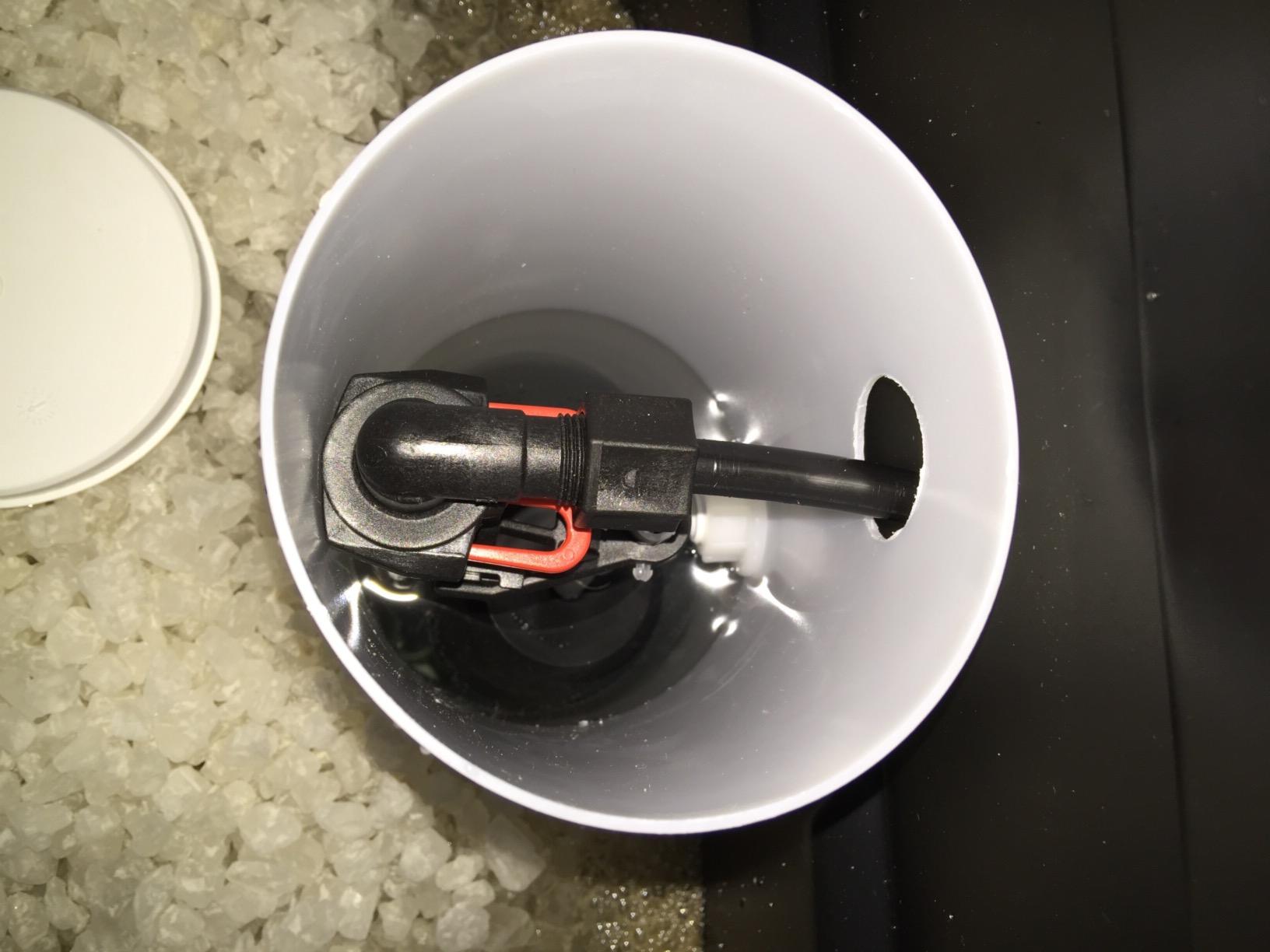
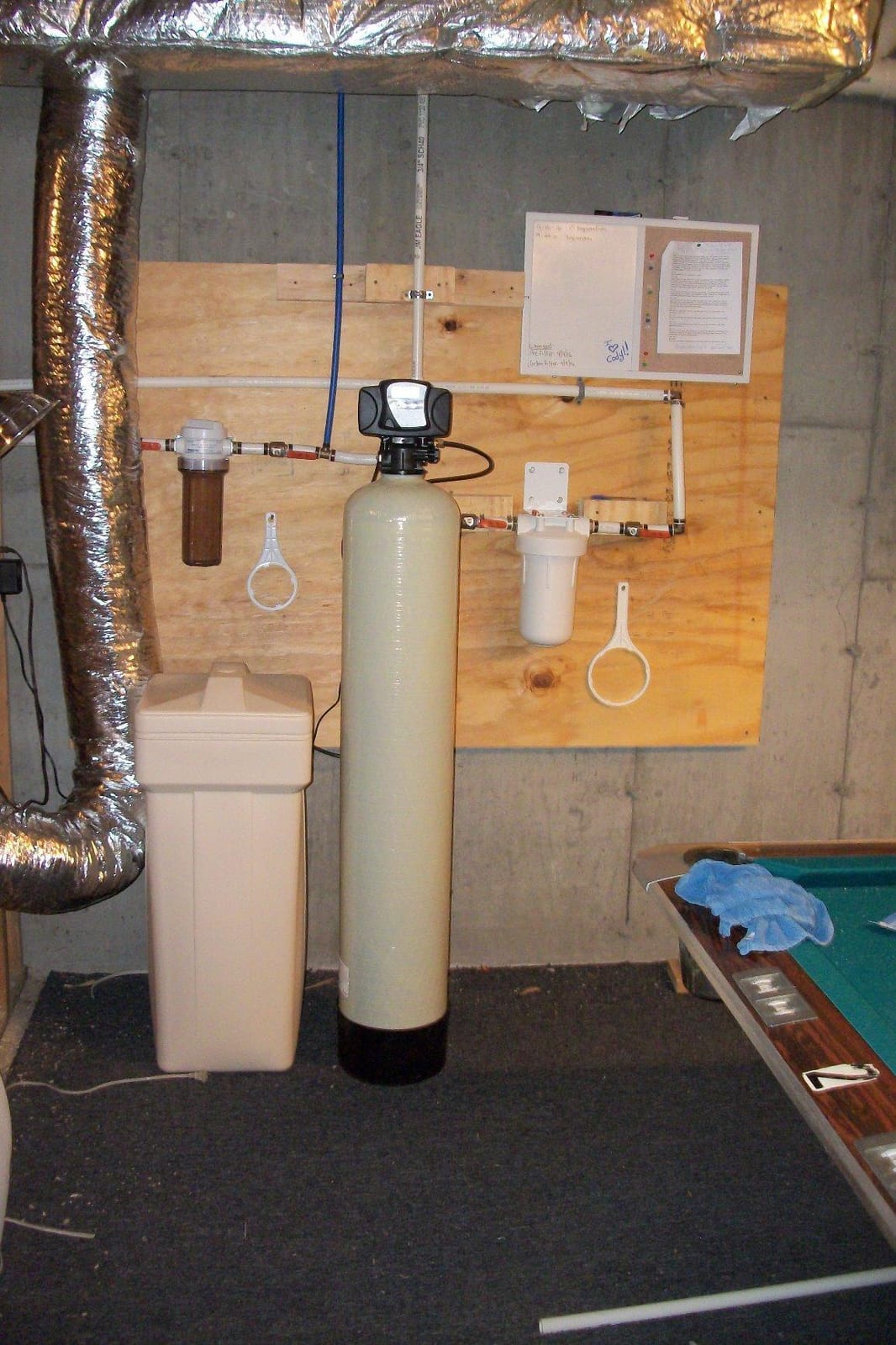
No orange toilets, no metallic taste and no sulfur odor are the phrases that recur most. Several owners report six years of continuous service, and multiple reviewers describe replacing professional quotes in the high thousands. The 10 by 54 inch mineral tank and 14 inch square brine tank with a safety float hold roughly 250 pounds of salt with overflow drain protection.
Regeneration is metered, so it backwashes only when the water volume demands it rather than on a fixed clock. That is the single biggest operational difference between a modern Fleck unit and the timed heads that forum users complain about most.
What it does not do is clear an existing iron or sulfur load on its own. Several owners added a companion pre-filter or treated the well periodically to get odor and staining fully under control. Salt consumption is on the higher side compared with the metered economy claims you will see from twin-tank systems.
How does fine mesh resin compare to standard resin
Fine mesh resin has smaller beads with more surface area per cubic foot, so it holds more iron before it needs service. On a well with iron plus sediment it stretches the interval between resin replacement, and it is the reason this unit can promise iron removal in the same vessel as softening.
The trade is pressure drop. Finer media means slower service flow, so this system suits a home that is not running three showers and a dishwasher at once. Maximum supported TDS is listed at 15 ppm, which is far lower than some competitors state.
What happens when the control head fails
That is the most cited negative across 374 reviews and it is worth confronting before you buy. Warranty service routes through Pentair and Oceanic, and owners describe the process as slow and frustrating to navigate.
The offsetting fact is repairability. Fleck 5600SXT parts, including the circuit board and paddle kit, remain widely sold years after purchase. Forum regulars treat that as the deciding factor over any warranty length, and it is a fair point.
3. Aquasure 48k Bundle with 75 GPD RO – Best Value Combo
Aquasure 48,000 Grains Whole House Water Filter Bundle with Automatic Digital Metered Control Softener and 75 GPD RO Reverse Osmosis Drinking System | Removes Hardness | Ideal for 3-4 bathrooms
48k grain whole house softener
75 GPD reverse osmosis drinking system
Automatic digital metered control
Rated for 3-4 bathrooms
Pros
- Softened whole house water plus drinking water RO
- Aquasure tech support responds fast by email and photo
- 4.4 rating across 323 reviews
- Available in 32k 48k and 64k grains
Cons
- RO water strips TDS to about 16 ppm
- RO faucet hardware breaks for some owners
- Feed water adapter not included
Ask most well owners what they wished they had bought and the answer is drinking water filtration, because no amount of softening fixes the taste of well water. This bundle hands you both: a 48,000 grain metered softener for the whole house and a 75 GPD reverse osmosis system for the kitchen tap.
The Aquatrol control head has a backlit programmable display, and the package is rated for homes with three to four bathrooms and up to four people. Maximum flow is listed at 15 gpm and supported TDS at 2,000 ppm. Buyers treat it as the value pick against a professionally installed equivalent, often citing savings in the thousands.
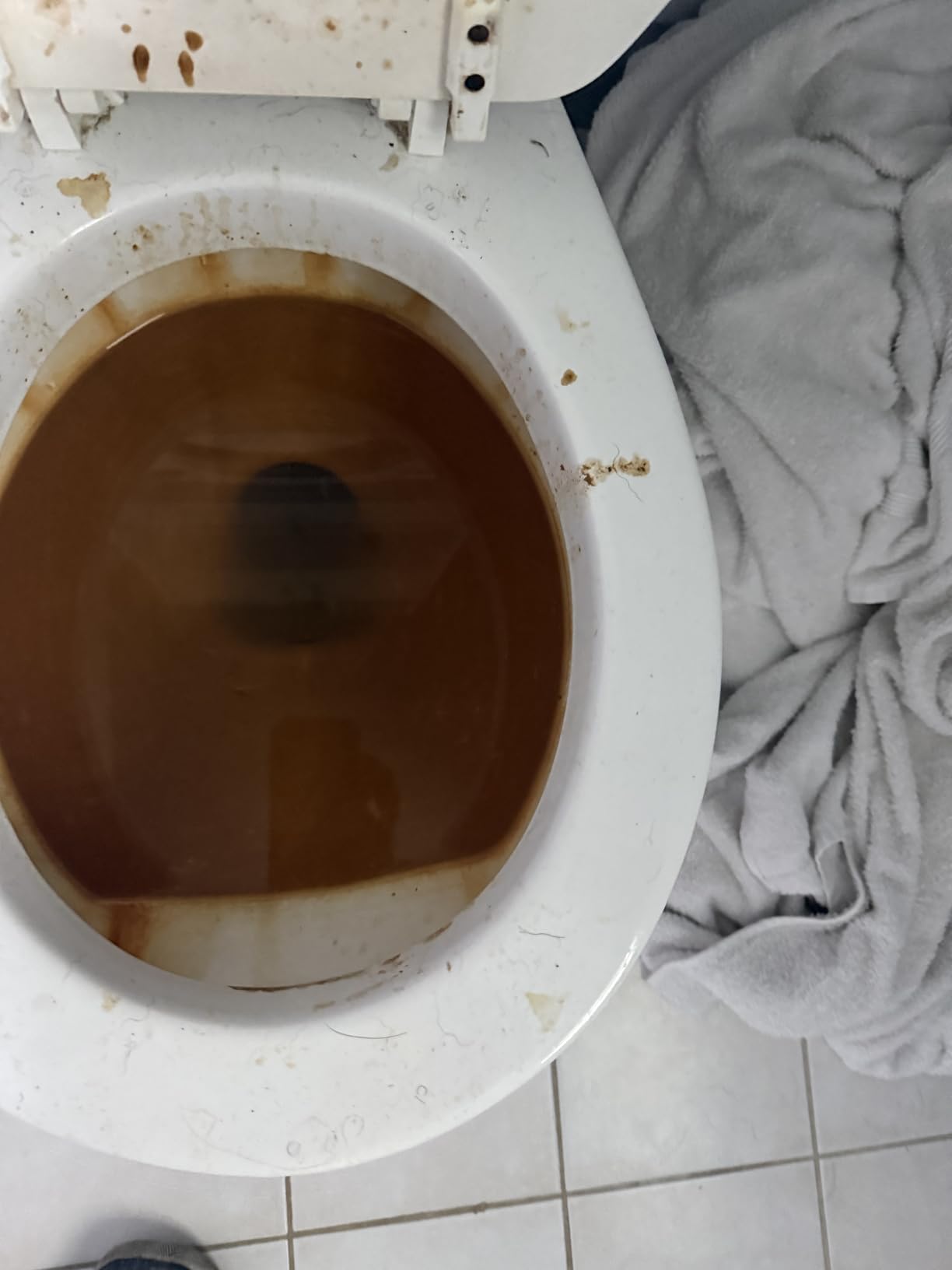
Support is a genuine strength. Aquasure resolves filter and RO faults quickly by email and photo, and one owner had a fault closed out in under half an hour from a set of emailed photographs. That kind of responsiveness is rarer than it should be in this category.
The complaints all cluster around the RO half rather than the softener. Reverse osmosis strips dissolved solids down to roughly 16 ppm, which some buyers find too flat to drink. The faucet becomes a wear part, and the correct feed water adapter is not included so you will source that yourself.
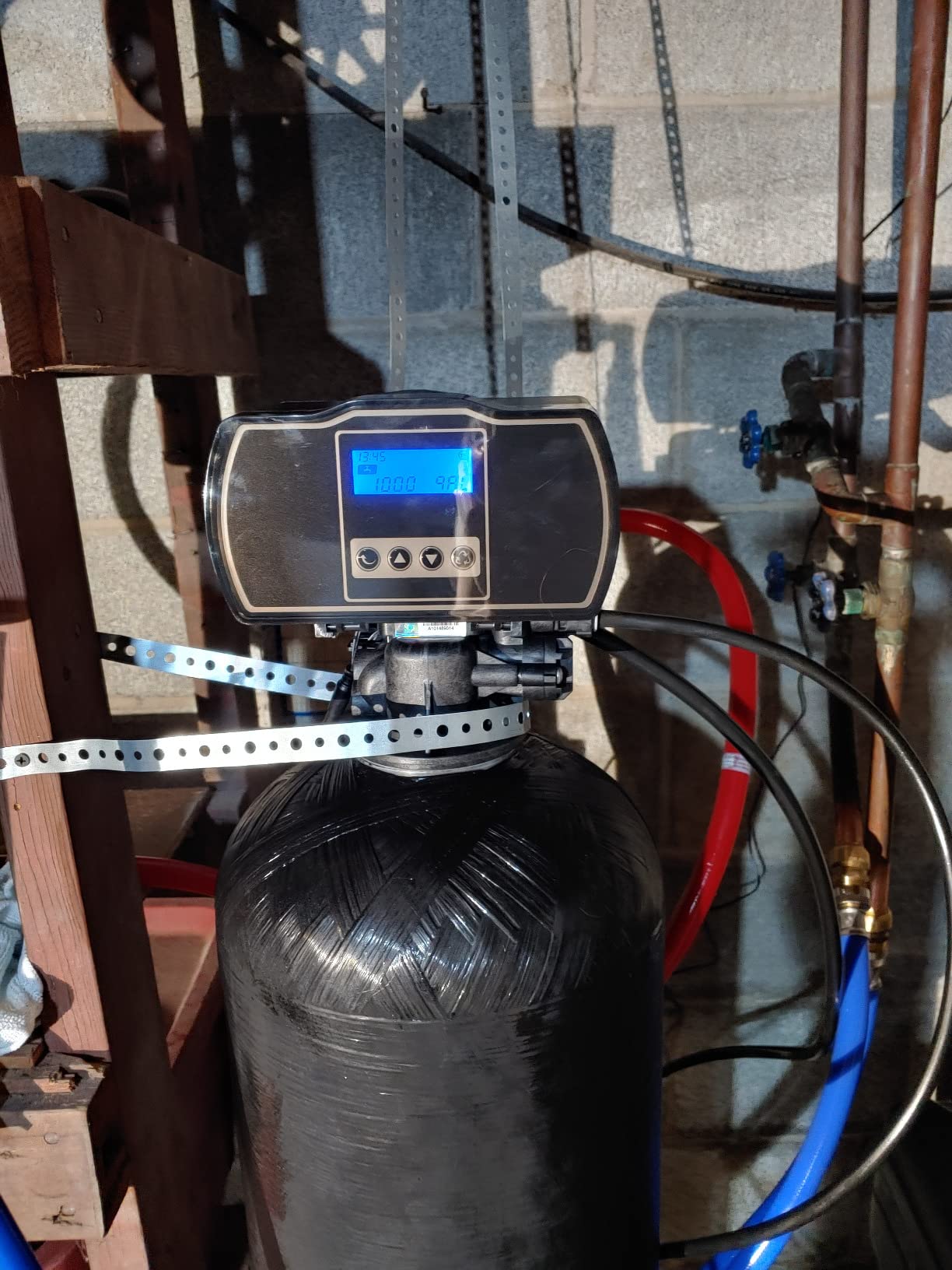
Does adding reverse osmosis complicate the install
It adds a second plumbing run under the sink plus a tee on the softened feed, which is a straightforward addition for anyone comfortable with a compression fitting and about an extra hour of work. It does mean two sets of filters to change instead of one.
Feed water to an RO membrane needs a maximum TDS well under what this system handles, so the softener in front is doing useful work. With the softener upstream, the membrane scaling problem largely goes away.
Will this handle iron as well as it handles hardness
Not as well. This listing describes hardness removal, chlorine reduction and the drinking stage, but it does not publish an iron capacity figure, so we cannot tell you the ceiling. If iron staining is your main complaint, the Iron Pro 2 or the Iron Blaster are the safer buys.
That said, most owners with moderate iron report acceptable results, because the softener does pass iron at low levels while the resin stays functional. High iron above 3 ppm needs a dedicated stage ahead of the resin.
4. Aquasure 72k Whole House Bundle – Best All-In-One Package
Aquasure Whole House Water Filtration Bundle w/Water Softener, 75 GPD RO System & Dual Purpose Sediment/GAC Pre-Filter (72,000 Grains)
72k grain softener
Triple purpose sediment GAC and zinc pre-filter
75 GPD four stage RO
Fiberglass lined polyethylene tank
Pros
- Most complete package in the roundup
- 72k grains suits large homes
- Owners report years of trouble free running
- Tech support closed an RO fault in 30 minutes
Cons
- Install is a five hour job for some owners
- 80 to 100 lbs of salt bought separately
- RO output can taste fizzy
- RO faucet durability is mixed
This is the one we would describe as the most complete single purchase here. You get a 72,000 grain softener, a triple-purpose pre-filter targeting chlorine, VOCs, odors, sediment, rust and heavy metals, and a four-stage 75 GPD reverse osmosis drinking system. It carries a 4.5 across 267 reviews with a 76 percent five-star share.
Owners running it one to four years report no problems beyond salt top-ups. The pre-filter is the piece reviewers single out, because it measurably improved chlorine taste where the softener alone did not. The tank is fiberglass lined polyethylene with a durable bypass valve and prefilled resin.
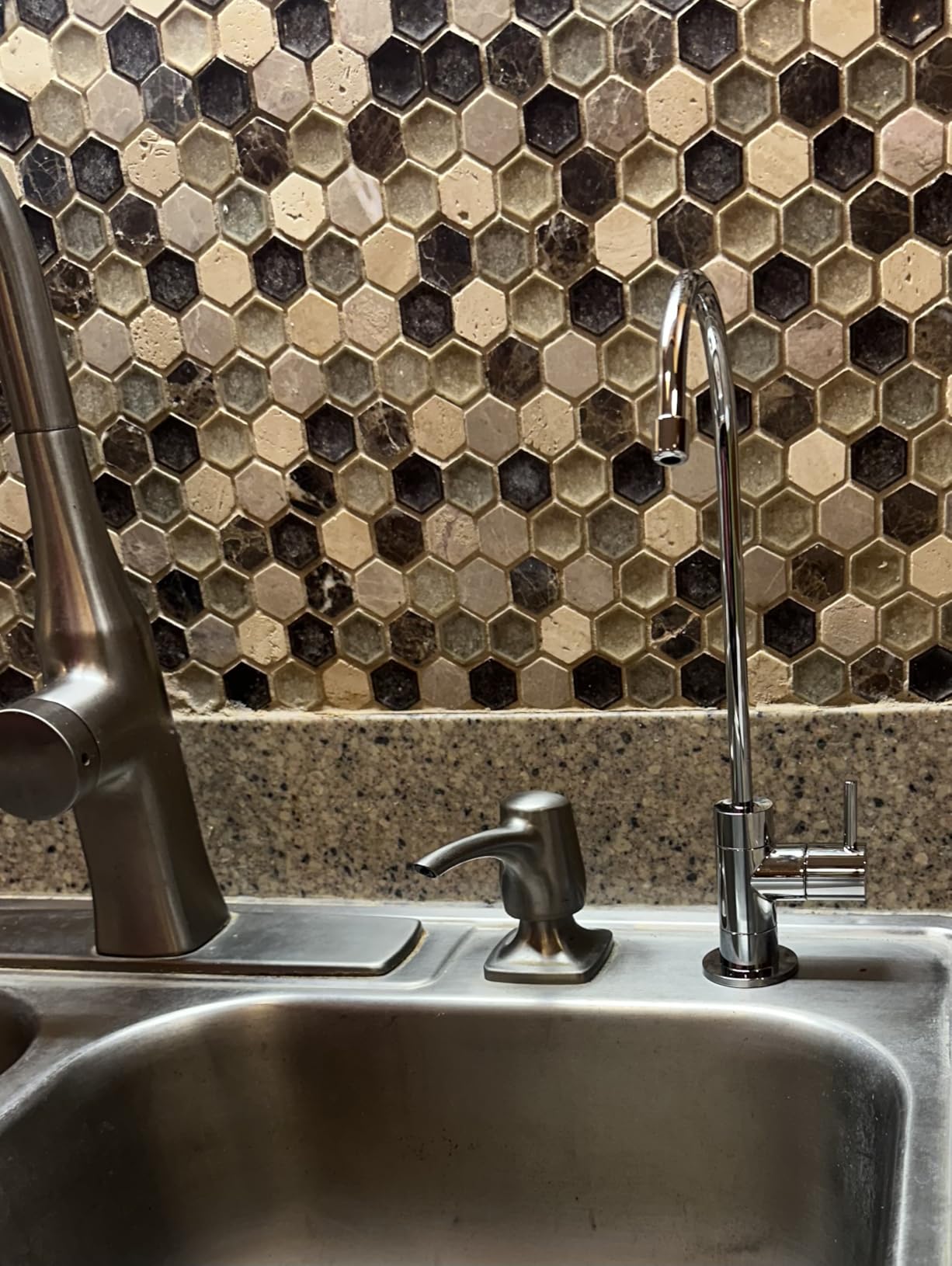
What separates this from the cheaper Aquasure bundle is capacity and the pre-filter stage. At 72,000 grains it covers a larger home without splitting into two softening tanks, and the zinc and carbon media in the pre-filter do real work on taste and odor.
Plan for a real install. One owner budgeted roughly five hours of plumber labor for this setup, and between 80 and 100 pounds of salt has to be purchased separately without that being called out prominently on the box.
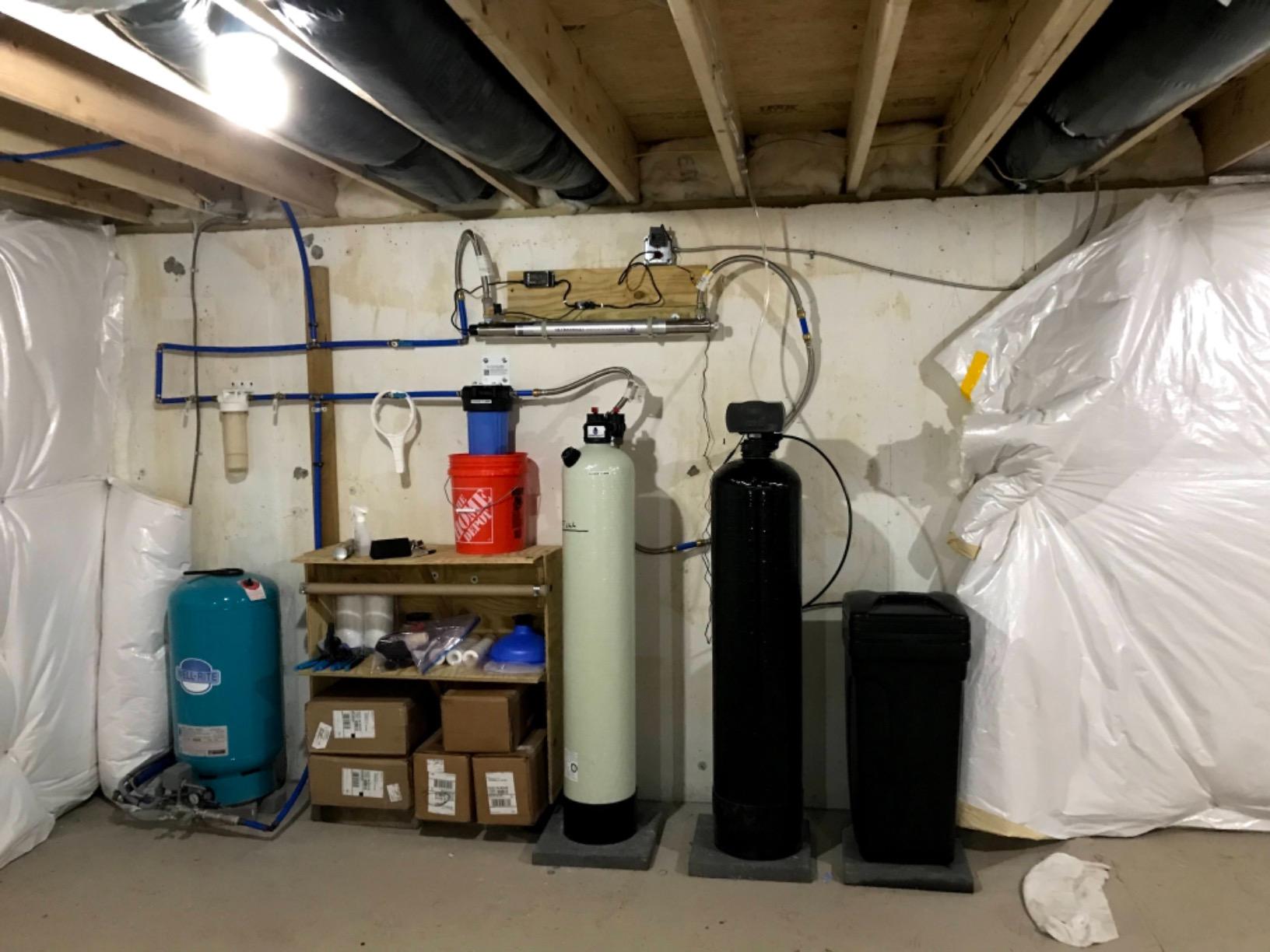
Is one purchase cheaper than buying stages separately
For this configuration, usually yes. A 72,000 grain metered softener, a carbon and sediment pre-filter and a 75 GPD RO bought individually land close to the bundle price, and you save on freight and on sourcing parts that do not quite match.
Where bundles become a markup is when the seller pads the package with stages your test results do not justify. Ask for the media name and contaminant capacity in writing. If they cannot tell you, that is the same upsell pressure well owners describe on r/homeowners.
What does the 5-year warranty actually cover
The extended warranty runs on activation, and it comes with lifetime US tech support. In practice support is responsive and photograph based, which one owner used to clear an RO fault in half an hour.
The catch is that the warranty starts when you register, not when it arrives. Set aside five minutes the day it comes out of the box, because unregistered systems are the ones owners complain got slow answers.
5. Aquasure Harmony 70k Fine Mesh – Best for Large Homes with Iron
Aquasure Harmony Series 70,000 Grains Whole House Water Softener with Automatic Digital Metered Control Head | Fine Mesh Resin for Iron Removal, Reduces Hardness & Improves Water | for 4-6 bathrooms
70k grain capacity
Pre-filled fine mesh resin
Iron reduction up to 10 ppm
Programmable backlit metered head
Pros
- 70k grains in a single tank for 4-6 bathrooms
- Published iron figure of 10 ppm
- Programmable head tunes regeneration to real usage
- Widest size range from 30k to 70k grains
Cons
- Lowest rated of the Aquasure units at 4.3
- Single tank means no separate filtration stage
- Stainless tank adds weight and cost
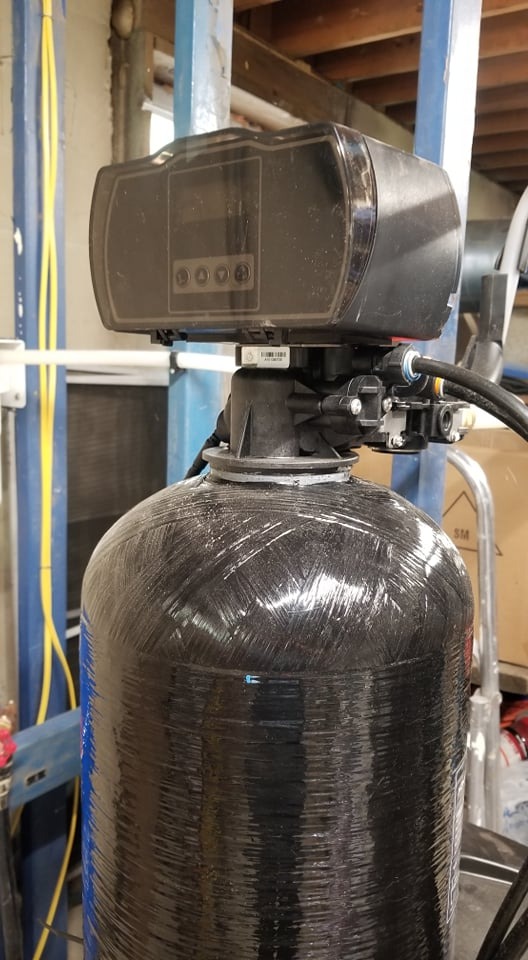
Capacity is the reason to look here. At 70,000 grains sized for four to six bathrooms, this covers a large home in one tank rather than forcing a duplex setup, and the fine mesh resin is prefilled and rated to reduce iron up to 10 ppm.
A published figure of 10 ppm covers the mid range of what most wells present, which makes it the pick if your test report shows iron but not extreme iron. The programmable backlit digital head lets you set custom auto-flush intervals, and the stainless steel construction comes with a durable bypass valve.
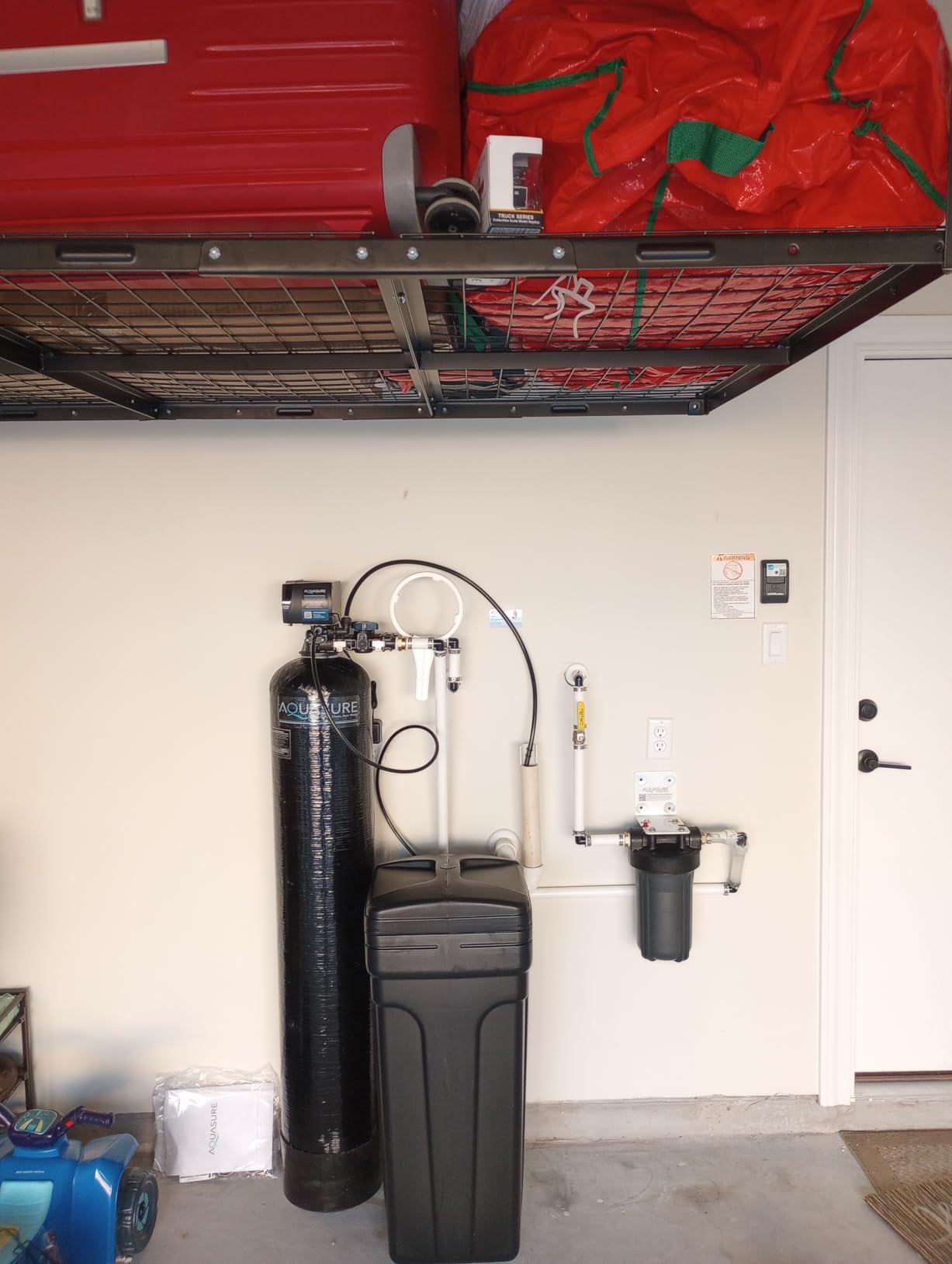
Being clear about what this is: it is a softener with an integrated pre-filter, not a softener plus a dedicated oxidation stage. The triple-purpose pre-filter handles 99 percent of chlorine, VOCs, pesticides, odors and heavy metals, and the resin handles hardness and low-level iron in the same vessel.
The 4.3 rating across 127 reviews is the lowest of the Aquasure group, with a 7 percent one-star share. Buyers like the capacity and the head, and rate it lower than the bundles because it is a smaller package. It is also the only stainless tank in the set, which adds weight.
When is one 70k tank better than a twin tank setup
When floor space is tight and your household water use is steady. A single large tank handles four to six bathrooms on a normal daily pattern and leaves room in a mechanical area a duplex pair would eat up.
A twin tank or duplex system keeps soft water flowing during regeneration, which matters if anyone showers at 6 am while the other half of the house is getting ready. This unit regenerates in place, so there is a short window of hard water each cycle.
Can it handle sulfur as well as iron
No. Hydrogen sulfide needs oxidation and a dedicated media bed sized for it, and this listing makes no sulfur claim. The one-tank fine mesh approach works well on ferrous iron because the resin can exchange the dissolved particles.
If you have a rotten egg smell, do not let capacity tempt you into skipping a sulfur stage. Put an oxidation filter ahead of the softener instead, and this unit can still handle the hardness behind it.
6. Kenmore Elite 520 Hybrid – Best Compact Cabinet Combo
Kenmore Elite 520 Hybrid Water Softener & Whole House Filtration System – NSF-Certified 2-in-1 Softener + Filter – Great Tasting Drinking Water
Softener with built-in carbon filtration
IntelliSoft metered regeneration
NSF certified
1-inch valve rated to 8 gpm
Pros
- Carbon stage built in so no filter cartridges
- IntelliSoft learns usage and regenerates on demand
- 10-year tank warranty among the longest here
- Compact cabinet fits a tight utility area
Cons
- 3.8 rating with 22 percent one-star reviews
- 8 gpm is the lowest published flow here
- Built-in carbon cannot be replaced in the field
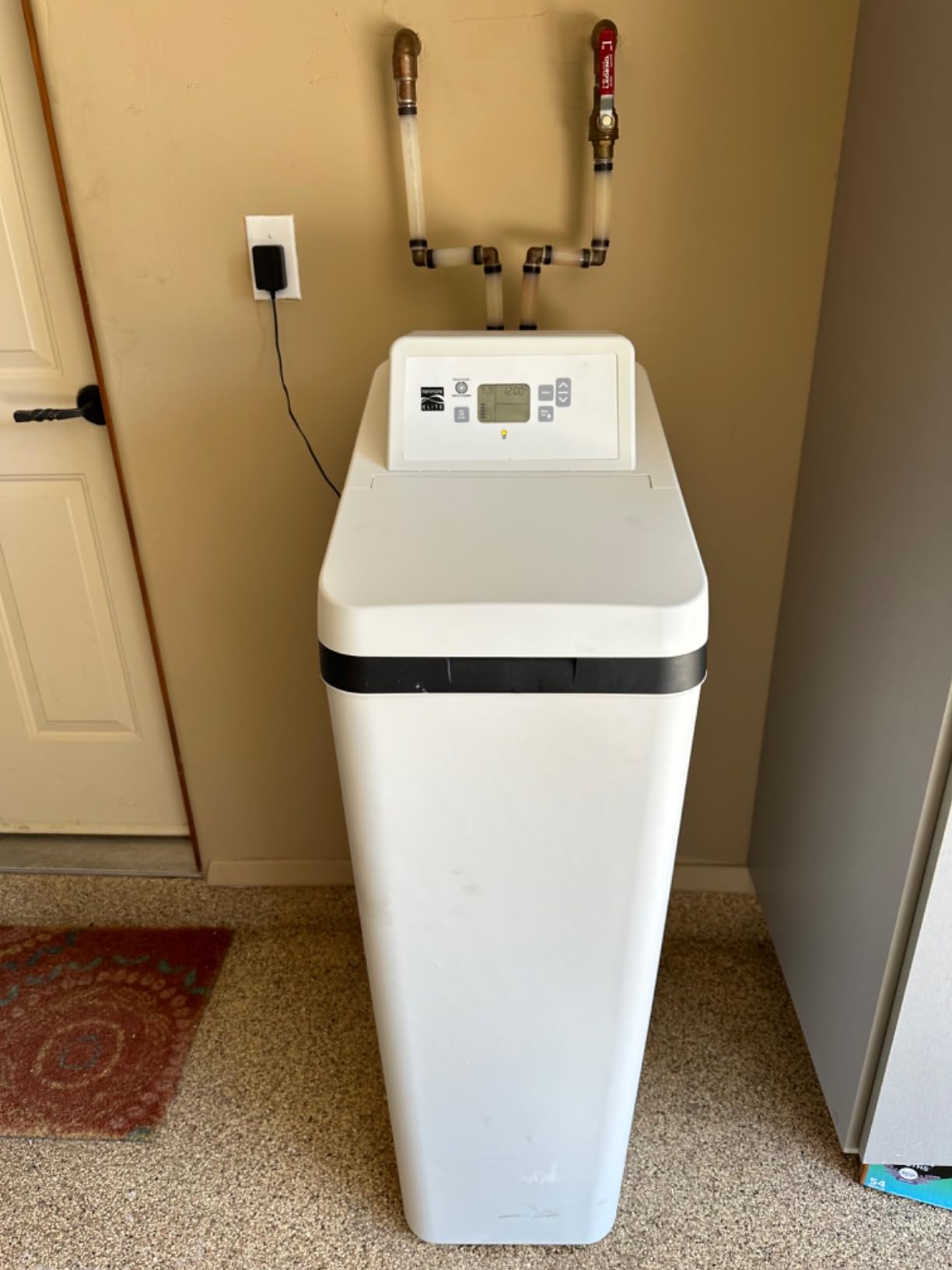
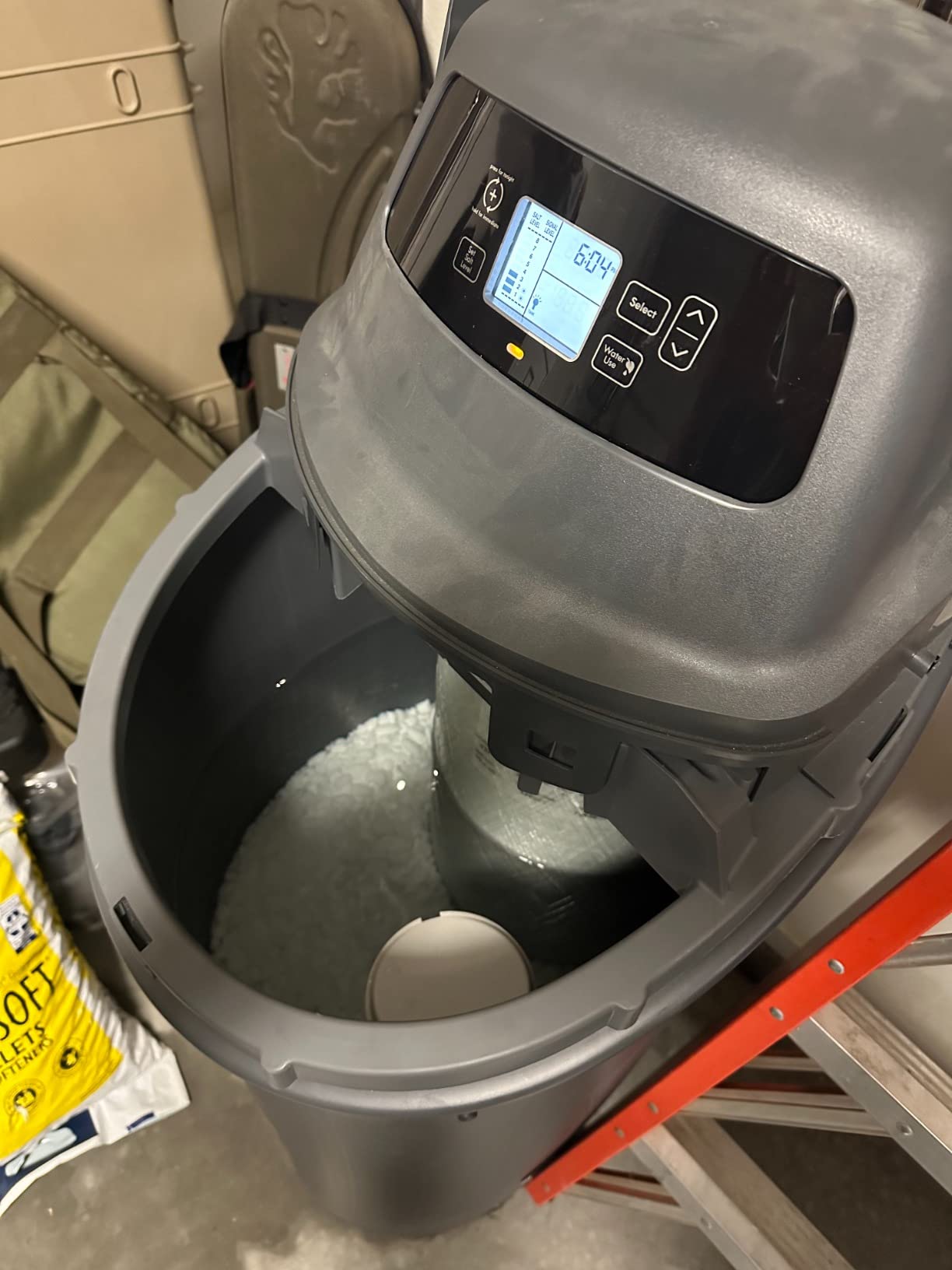
The Kenmore 520 does something none of the other units here do. The carbon filtration is self-cleaning and built into the cabinet, so there are no replacement cartridges to buy and no separate pre-filter to plumb. For a small mechanical area or a rental where simplicity wins, that is a genuine advantage.
IntelliSoft regeneration learns your household usage pattern and triggers only when capacity is used up. It is NSF certified, handles clear-water iron plus chlorine taste and odor, and runs through a 1-inch high-flow valve rated at 8 gpm. Operating range is 20 to 125 psi.
We are including it with a clear warning. At 3.8 stars across 132 reviews it is the lowest rated product in this roundup, and 22 percent of reviewers gave it one star. That is the largest negative share in the entire set, and no amount of brand recognition changes that spread.
The design decision that causes most of that friction is the sealed carbon media. Once the carbon is exhausted there is no field-replaceable cartridge, so the cabinet needs a technician rather than a swap. The 8 gpm rating is also the lowest here and can feel slow in a busy house.
Is the one-star share a defect problem or a fit problem
Reading the reviews, it looks like both. Some describe a core group of owners who love the no-replacement design and the smart regeneration, while a sizeable second group hit problems in a cabinet that does not come apart the way they expected.
Fit is the bigger variable. In a home where several fixtures run at once, the 8 gpm ceiling is the most likely reason for disappointment, more than the softening chemistry itself.
What does the warranty actually include
One year full warranty, three years on electronics and ten years on the tank. That ten-year tank warranty is the longest offered by any unit in this roundup and it matters, because the tank is the part that eventually fails rather than the electronics.
Contrast that with the EcoPure below, which shares the same cabinet format and warranty split but has a much thinner review base. Both are built to fit over older Kenmore plumbing, which is the main practical reason to consider either.
7. EcoPure EP42 42k – Best for Ferrous Iron on City or Well
EcoPure EP42 42,000 Grain Water Softener – Whole House Hard Water & Iron Reduction System – NSF-Certified – AutoSense Salt & Water Saving Technology – City or Well Water
42k grain capacity
Clear water iron up to 11 ppm
AutoSense salt and water control
NSF certified
Pros
- AutoSense trims salt and water use
- Same footprint as older Kenmore units it replaces
- Iron reduction to 11 ppm covers typical wells
- One owner had a warranty tank replacement honored
Cons
- Several reports of resin tank and pump failures
- Fittings almost always need extra adapters
- Bypass valves do not match older Kenmore parts
- Review base of 84 is on the thin side
The EP42 targets ferrous iron specifically, which is the dissolved invisible form most common on private wells, and it publishes a ceiling of 11 ppm. That is the highest iron figure in this roundup, above the Aquasure Harmony and the AFWFilters units.
AutoSense is the feature installers like. It calculates the exact salt and water needed for each regeneration rather than guessing, and owners report lower consumption than the timed controls they replaced. The compact dark gray cabinet fits the same plumbing footprint as the older Kenmore 300 and 420 series.
It is listed for professional installation and rated for both municipal supply and private well water. The warranty is one year full, three years on electronics and ten years on the tank, extendable to five years using EcoPure Water Softener Cleanser.
Our caution here is the durability record. One owner had a resin tank burst at the neck after three years and flood a garage. Another had an error code, a cracked pump and resin leaking into the brine tank after about a month. Those are serious failures at this end of the rating scale.
Will it fit my old plumbing without changes
Not exactly. Owners report buying extra one-inch adapters and adding a pex coupler almost universally, and the bypass valves do not match older Kenmore parts even though they look identical. Budget an hour and a hardware store trip before you start.
That same compatibility is why people buy it. If you are replacing a legacy Kenmore 300 or 420 in a tight cabinet, the physical footprint lines up far better than a tall 54 inch mineral tank would.
Is 11 ppm iron removal realistic in practice
The published figure is a ceiling under controlled conditions. On a well with high sediment or manganese alongside the iron, resin coating happens faster and you would be regenerating against fouled media rather than against hardness.
If your iron sits near the ceiling, put a sediment filter ahead of it. The softener can then spend its regeneration budget on hardness and iron rather than cleaning out trapped grit.
8. PRO+AQUA Elite 5-Stage Well Bundle – Best Multi-Stage Well Treatment
PRO+AQUA Elite 5-Stage Whole House Water Softener and Filter Bundle System for Well Water | Reduces Heavy Metals, Iron, Sulfur, Sediment, Chlorine, and More | Ideal for 3-4 Bathrooms (+ RO System)
Three serially plumbed stages
Targets metals iron sulfur and sediment
Auto-regeneration
RO drinking stage included
Pros
- Deepest filtration chain of any system here
- Six years of accumulated iron cleared for one family
- Flow and pressure improved after old lines flushed
- Service support described as excellent
Cons
- Several one-star reviews say sulfur is not resolved
- Replacement media is proprietary and frequent
- Needs a regeneration drain planned in advance
- Weighs about 325 lbs across three vessels
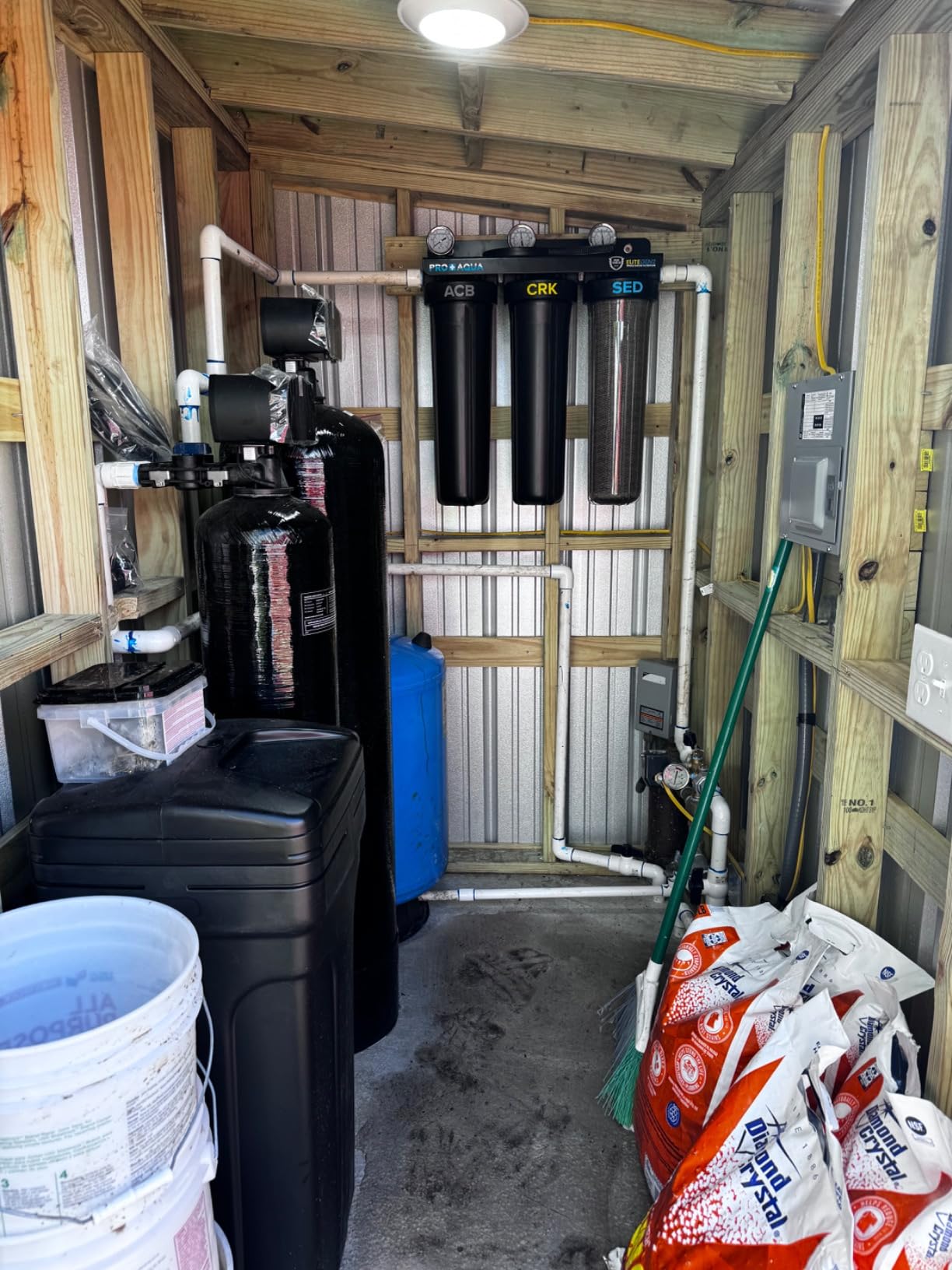
This is the only system in the roundup built as a genuine treatment train rather than a softener with an add-on. Three vessels are plumbed in series: a PRO-100-E, a PRO-WELL-1E and a PRO-S-80E, targeting heavy metals, iron, sulfur, sediment and chlorine for well water specifically.
Maximum flow is listed at 10.31 gpm, and both the well and softener stages auto-regenerate for low maintenance. The Home Bundle with RO configuration adds a reverse osmosis drinking stage, and there is a five-year warranty alongside lifetime technical support.
Satisfied owners on genuinely bad water describe it as transformative. One family used it to clear six years of accumulated iron and sediment out of their household piping, and reported better flow and pressure afterwards. Others replaced professional systems quoted at a small fraction of that figure.
It is also the most polarizing entry here. Several one-star reviews say it does not resolve sulfur odor, which is exactly the complaint the stage is supposed to address. The rating spread between satisfied owners and that group is the widest of any product in this list.
Is a three-stage train worth it on ordinary well water
Usually not. If your panel shows iron in the normal range, one good combined unit will do the same job with less to maintain. A serial train earns its keep when you have multiple confirmed contaminants or a long history of staining and odor.
The serial design also has a cost. Each stage adds a fitting that can leak, and a regeneration drain you have to plan a route for before the plumber arrives.
What happens if sulfur is your main complaint
Test it before you buy. Owners with iron problems are delighted, and owners whose primary symptom is a rotten egg smell are not. Hydrogen sulfide behaves differently from iron, and a filtration chain tuned for metals does not automatically clear it.
If you do have a sulfur problem, insist on the stage that names sulfur removal capacity in writing. Generic claims like heavy metals and contaminants are not enough, and that is exactly what well owners on r/homeowners say they got sold.
9. NU Aqua 4-Stage Salt Free System – Best Salt-Free Combo
NU Aqua 4-Stage Salt Free Water Softener Whole House Water Filter System
20 in x 4.5 in sediment filter
KDF and GAC carbon stages
Salt free softening media
Carbon block final stage
Pros
- No salt and no brine discharge ever
- No electricity and no backwashing
- Keeps calcium and magnesium in the water
- 4.6 rating with an 83 percent five-star share
Cons
- Prevents scale rather than removing hardness
- Review base of 40 is small
- Replacement cartridges need servicing
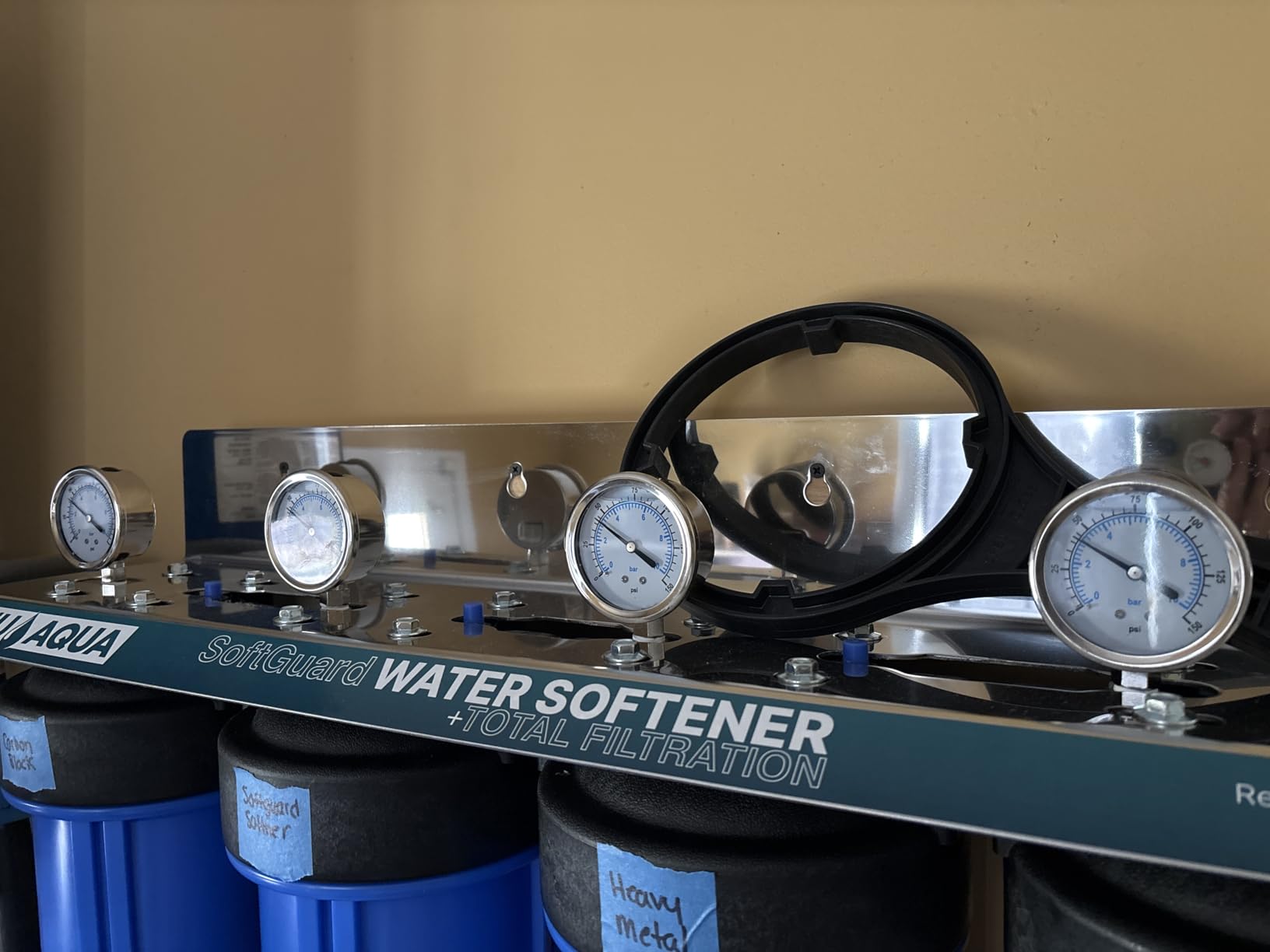
Salt-based systems are restricted or banned in a number of communities, and for a lot of people the salt simply is not worth dealing with. This four-stage point-of-entry system runs on nothing but water pressure. No electricity, no backflushing, no brine discharge.
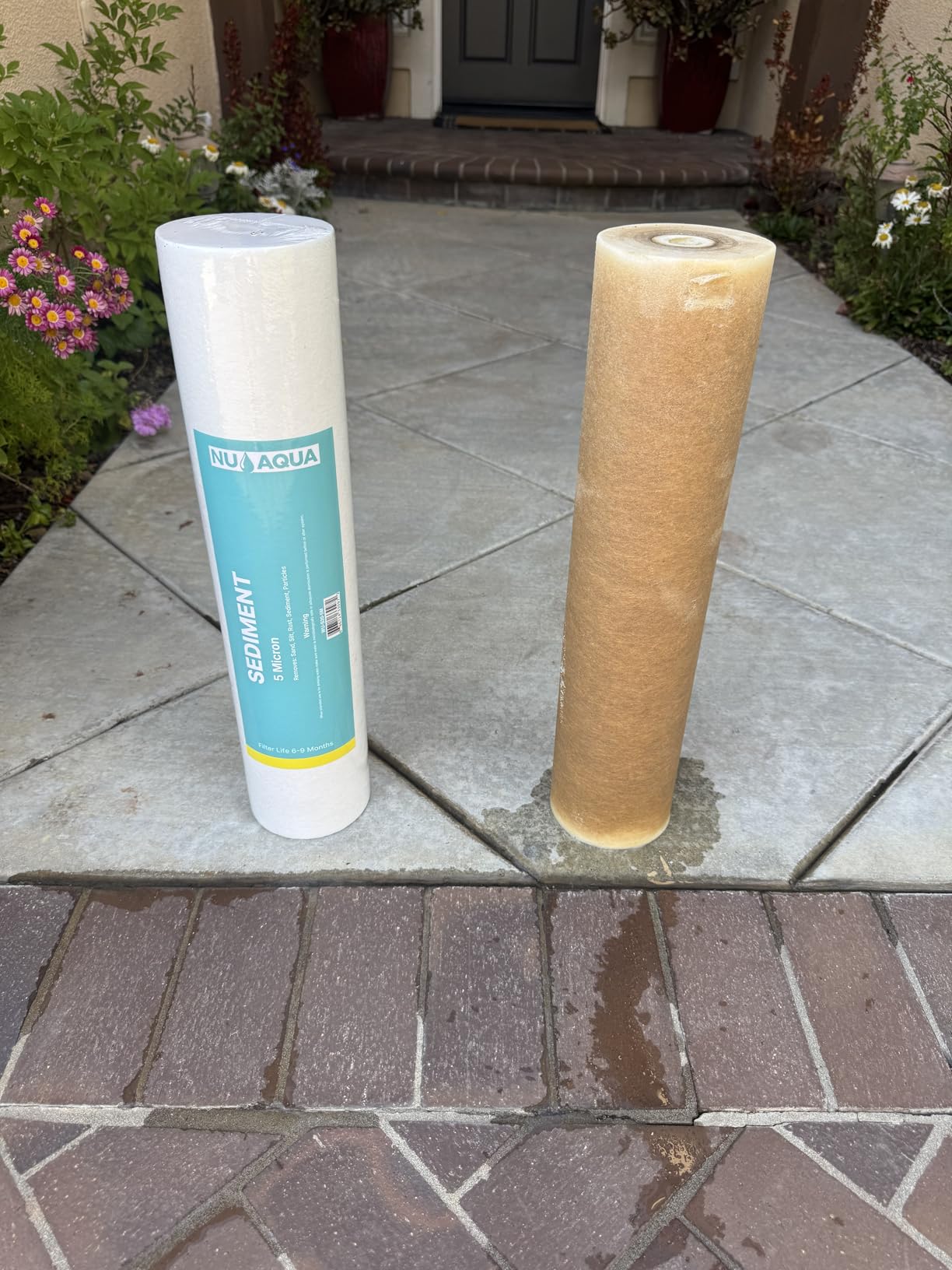
The chain is a 20 inch by 4.5 inch sediment stage, KDF and GAC carbon, salt-free softening media and a carbon block. It is rated to reduce lead, mercury and arsenic alongside chlorine, VOCs, odors and taste, and it serves bathrooms, kitchens, laundry and outdoor spigots.
At 4.6 across 40 reviews with an 83 percent five-star share, it sits at the top of the rating table. Owners buy it for a reason that no salt-based system can offer: there is nothing to refill, nothing to drain and nothing to haul in.
Now the honest part. Salt-free media prevents scale and conditions the water, but it does not perform ion exchange. The calcium and magnesium stay in the water rather than being swapped for sodium, which is genuinely better for you and means the water is not technically softened.
What does salt-free softening actually do
It keeps hardness minerals in solution in a crystal form that will not adhere to pipes and heater elements. Scale stops building. Soap lather improves. But if you measure grains per gallon before and after, the number barely moves.
That is the trade. You get scale protection and no salt handling, and you give up the actual removal of hardness. If your goal is appliance longevity and stain prevention, that is usually enough.
Is 40 reviews enough evidence to trust it
It is thin. Every other salt-based unit here has hundreds of reviews across years of service, and this one has a short field history. The design principles are proven, but this specific assembly is new.
It is worth testing on one tap area first if you can. If the pipes in your house are already scaled, a salt-free unit will not clean those deposits out, and you would still want a softener behind it.
10. AFW Filters Fleck 48k with Upflow Carbon – Best No-Drain Carbon Stage
AFW Filters Built Fleck 5600SXT 48,000 Grain Water Softener with Upflow Carbon Filter (10% Resin with Carbon)
48k grain softener on Fleck 5600SXT
1.5 cu ft upflow carbon
Service flow up to 12 gpm
5-year head and 10-year tank warranty
Pros
- Upflow carbon filters without backwashing
- No drain line and no electricity on the carbon stage
- Install kit includes sanitizer and test strips
- Fleck head and tank carry long warranties
Cons
- Interconnect hoses are not included and are hard to source
- Review base of 17 is very small
- Carbon replacement interval is not stated
Most whole house carbon stages need a drain line and periodic backwashing. This one does not. The 1.5 cubic foot high-activity coconut-shell carbon runs upflow, which means it filters without producing wastewater, without a drain route and without electricity. On a well with no convenient floor drain, that is the whole reason to choose it.
The softener half is a Fleck 5600SXT digital meter valve on a 48,000 grain tank with upgraded 10 percent resin, rated for service flow up to 12 gpm for households of two to five people. Carbon targets chlorine, chloramines, pesticides, herbicides, organics, MTBE and THM.
Owners on sulfur-smelling, discolored well water report that it fixed it, and buyers mention large savings against competing contractor quotes. The package includes an install kit with a sanitizer pack, silicone lubricant and hardness test strips.
What is the catch with upflow carbon
Two things. It does not backwash, so it needs replacing on a schedule, and the manufacturer does not state that interval anywhere in the listing. You are guessing without a clear number.
The second is physical. The package does not include the connecting hoses needed to join the carbon filter to the softener tank, and those hoses are reported as hard to source locally. Order them before you start the install, not during it.
Is 17 reviews enough to rank it this high
Thin, and we would rather say so than pretend otherwise. Every reviewer rated it three stars or better, with none at one or two stars, and a 48 percent five-star share. A small sample with no strong negatives is worth something, just not the same weight as 483 reviews.
It also lacks published iron figures, so treat it as a taste and odor solution. If iron staining is your complaint, use one of the units with a stated iron ceiling instead.
11. Kind Water Systems E-3000UV – Best Combo with UV Disinfection
Kind Water Systems E-3000UV Whole House Salt-Free Water Softener & Filter Combo with UV
Sediment carbon salt-free and UV stages
Targets 95 percent of sediment
UV neutralizes up to 99.9 percent microorganisms
120-day guarantee
Pros
- Four treatment stages in one cabinet
- One owner verified bacteria free water in 72 hours
- No brine discharge and no dual-tank footprint
- Backed by a 120-day satisfaction guarantee
Cons
- Installation trips up first time DIYers
- Not all parts included and hardware runs needed
- Salt free stage leaves some bowl rings
- One owner saw no hard water improvement
If your well has tested positive for coliform or any other bacterial concern, this is the only system in the roundup with a UV stage in the box. Four stages run in a single compact unit: sediment filtration, carbon block, salt-free softening and ultraviolet disinfection.
The UV chamber is claimed to neutralize up to 99.9 percent of common waterborne microorganisms chemically. One owner who tested with a bacteria kit found the water bacteria-free within 72 hours, against a bottled water control that tested positive. Sediment reduction is rated at up to 95 percent with 155 chemical contaminants targeted.
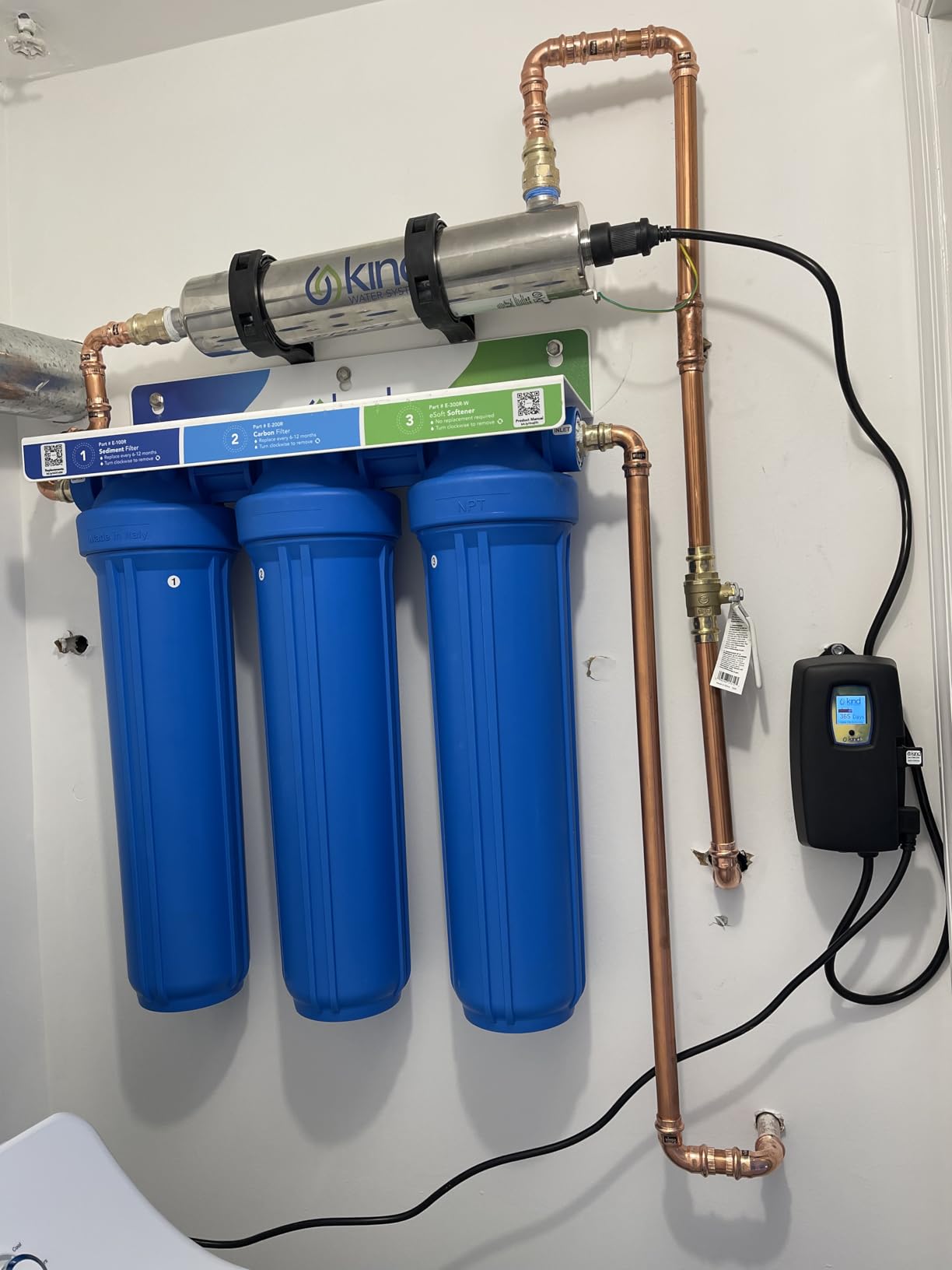
The compact cabinet form is what separates it from the tank-based units above. Where a Fleck system needs a mineral tank, a brine tank and floor space to drain, this runs against the wall in roughly the footprint of a small cabinet, which suits wells with tight mechanical rooms.
Backed by a 120-day satisfaction guarantee, it is also the least committed purchase in the roundup. Owners who tested bacteria-free and liked the taste report it does what the listing says, and those whose problem was hardness report the salt-free stage left bowl rings in place.
Is UV worth the extra complexity on a private well
Only if a test has told you it is needed. UV kills organisms, it does not remove them, so any sediment ahead of the chamber matters. Where bacteria are a known problem, a UV stage replaces the need for chlorine injection and its chemical handling.
Where no test has ever come back positive, this is money spent on a problem you do not have. A one-off panel test is a fraction of the cost of adding this unit.
How hard is the install really
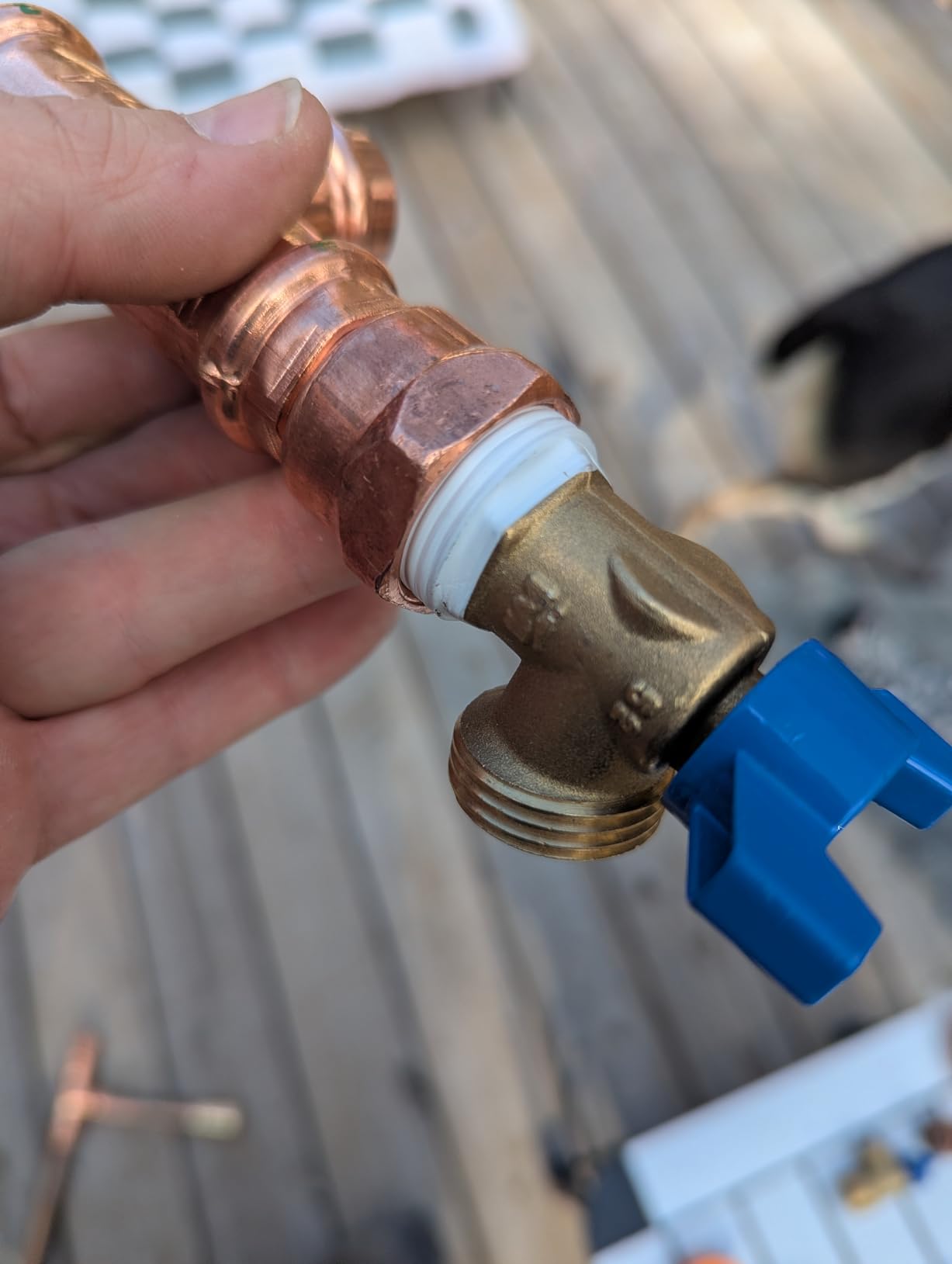
Harder than the packaging implies. Reviewers itemize four specific traps: oversized canister gaskets, the UV O-ring seating, thread sealing and the general assumption that you already know your way around plumbing. Several owners had to make hardware store runs for missing parts.
On performance, the salt-free stage is the open question. It leaves some toilet bowl rings in place for owners, and at least one reports the system did not resolve hard water at all. Buy it for the UV and the filtration, not for softening.
How to Choose a Water Softener and Filter Combo
Start with the test, not the product. A full well panel tells you hardness in grains per gallon, iron, manganese, pH, TDS, coliform and nitrate in one lab report, and each number decides which stage you actually need. Buying a bundle before that report arrives is how well owners end up paying twice.
What your water test result means
Each number maps to one treatment decision. Iron above 0.3 mg/L is past the EPA secondary standard for taste and staining. Manganese above 0.05 mg/L produces black specks. Nitrate above 10 mg/L is a health concern no softener touches.
Hardness above 20 GPG classifies water as very hard by USGS standards and is the trigger for a real ion exchange softener. Between 8 and 12 GPG is moderately hard and often tolerable. Below that, you may need iron filtration only and no softener at all.
Hydrogen sulfide shows up as odor rather than a number, and it needs oxidation media ahead of the resin rather than a bigger softener. Tannins above 5 ppm turn water tea colored and need dedicated tannin media. Coliform results mean disinfection, and UV is the cleanest option at a wellhead.
Sizing by grain capacity and service flow
Take your hardness in GPG and multiply it by average daily household gallons to get the grain load per day. Then add a reserve so the softener is not regenerating every single night in a house with heavy use.
Multiply hardness in GPG by your household’s average daily gallons to get the grain load your water puts on the softener. A family of four using 400 gallons a day on water at 25 GPG puts 10,000 grains a day through the resin.
A 48,000 grain tank holds roughly four to five times that daily load, which means it regenerates every four or five days at typical usage. Families of four are generally well served between 48,000 and 64,000 grains. Larger homes need 70,000 grains or a duplex pair.
Service flow is the number people skip. Add up the flow of every fixture that could run at once, typically 5 gpm for a house with two showers, a dishwasher and laundry. Pick a valve and tank rated above that total, or you will see low pressure every regeneration.
Salt-based, salt-free or TAC conditioning
Salt-based ion exchange is the only option that genuinely reduces hardness. Resin beads swap calcium and magnesium for sodium, grain capacity is a real measured number, and the result is water that behaves like rainwater.
Salt-free media, template assisted crystallization included, keeps hardness in solution instead of removing it. You get scale protection and no salt handling, and you do not get softened water. That is a fair trade in a restricted area and a poor trade if soap lather and glassware clarity are your goals.
Restricted or outright banned salt softeners exist in a number of counties in California, Texas, Massachusetts and New York, so check your local rules before choosing. Where salt is not an option, budget for replacement cartridges and accept that hardness stays in the water.
Install the stages in this order
Well pump, then pressure tank, then sediment pre-filter, then iron or sulfur oxidation filter, then the softener, then a carbon post-filter, then into the house. This is the sequence that keeps media from being fouled and it is the single most commonly miswired part of a well treatment setup.
Iron must be removed upstream of the resin. Dissolved iron coats the resin beads, and once they are coated they stop exchanging hardness, so the softener slowly dies while looking perfectly clean. The same applies to sediment, which clogs the resin bed from the front.
Do not put the softener before the pressure tank and expect clean water out of the other end of the plumbing. Anything that sheds debris should be downstream of the tank so it is caught before it reaches your fixtures.
Running cost and total cost of ownership
The softener half is easy to estimate. A family of four on a 48,000 grain unit uses roughly 400 pounds of salt a year. Carbon pre-filters on these bundles commonly run a six month replacement cycle, and UV lamps are an annual item.
Where bundles usually win is fit and fittings. Buying three stages separately means sourcing compatible connectors between them, and mismatched fittings are the single most common install complaint across the reviews we read, including the one product in this roundup that does not include its interconnect hoses.
Where bundles cost you more is media. The PRO+AQUA system uses proprietary replacement filters that owners report buying often and sourcing awkwardly. Ask any seller what the replacement media part number is and what it runs per year before you commit.
Frequently Asked Questions
What is the best whole house water softener and filtration system for well water?
The best system is the one matched to your water test. For a hard well with iron below 6 ppm and no sulfur, the AFWFilters Iron Pro 2 pairs a 64,000 grain softener with iron removal in one vessel. Wells above 3 ppm iron need an oxidation stage ahead of the resin, and wells with bacterial results need UV or another disinfection method. Test first, then match capacity to hardness in grains per gallon.
Is there a water filter and water softener combo?
Yes. A water softener and filter combo packages an ion-exchange softener together with one or more filtration stages in a single order, usually plumbed in series ahead of the water heater. City water homes typically need a softener plus a carbon filter. Private well homes need the same, plus whatever the water test shows, because iron, manganese, sulfur and sediment are all common on rural wells.
What type of water softener is best for well water?
A metered, fine mesh resin softener is the best type for most private wells. Fine mesh resin holds more iron before fouling, and a metered control valve regenerates on measured use instead of a fixed clock. Avoid timed regeneration, which wastes salt and water. If your iron reading is high, add an oxidation filter upstream so iron never reaches the resin in the first place.
What type of water filtration system is best with well water?
Start with a sediment pre-filter, then add an oxidation filter if iron or manganese exceeds 0.3 and 0.05 mg/L respectively, a sulfur stage for hydrogen sulfide, and tannin media for tea-colored water above 5 ppm. Add UV disinfection if coliform has appeared in a test. A carbon post-filter polishes taste and odor after the softening stage.
Do I need a filter and a softener together?
Usually yes, because they solve different problems. A softener exchanges calcium and magnesium for sodium and does nothing about sediment, iron bacteria or sulfur. Filters remove those contaminants but leave hardness untouched. On well water the two are complementary, and buying a combo package is often simpler than assembling stages yourself.
Can a water softener remove sulfur smell from well water?
Rarely on its own. Hydrogen sulfide is a gas that needs oxidation, which converts it into a form media can trap. A softener with fine mesh resin will not clear a rotten egg smell, so you need a dedicated oxidation or sulfur filter installed ahead of the softener. Several owners of the multi-stage bundle in this roundup report exactly that problem persisting.
Final Verdict
The AFWFilters Iron Pro 2 is our pick for the best water softener and filter combo for well water in 2026, because 483 reviews at a published 6 ppm iron ceiling give it more evidence behind it than any other bundle we looked at. Heavy iron sends you to the DuraWater Fleck Iron Blaster instead, and restricted areas should look at the NU Aqua salt-free system.
Whatever you buy, get the test panel first and install the stages in order. Those two decisions matter more than the model you end up with.