
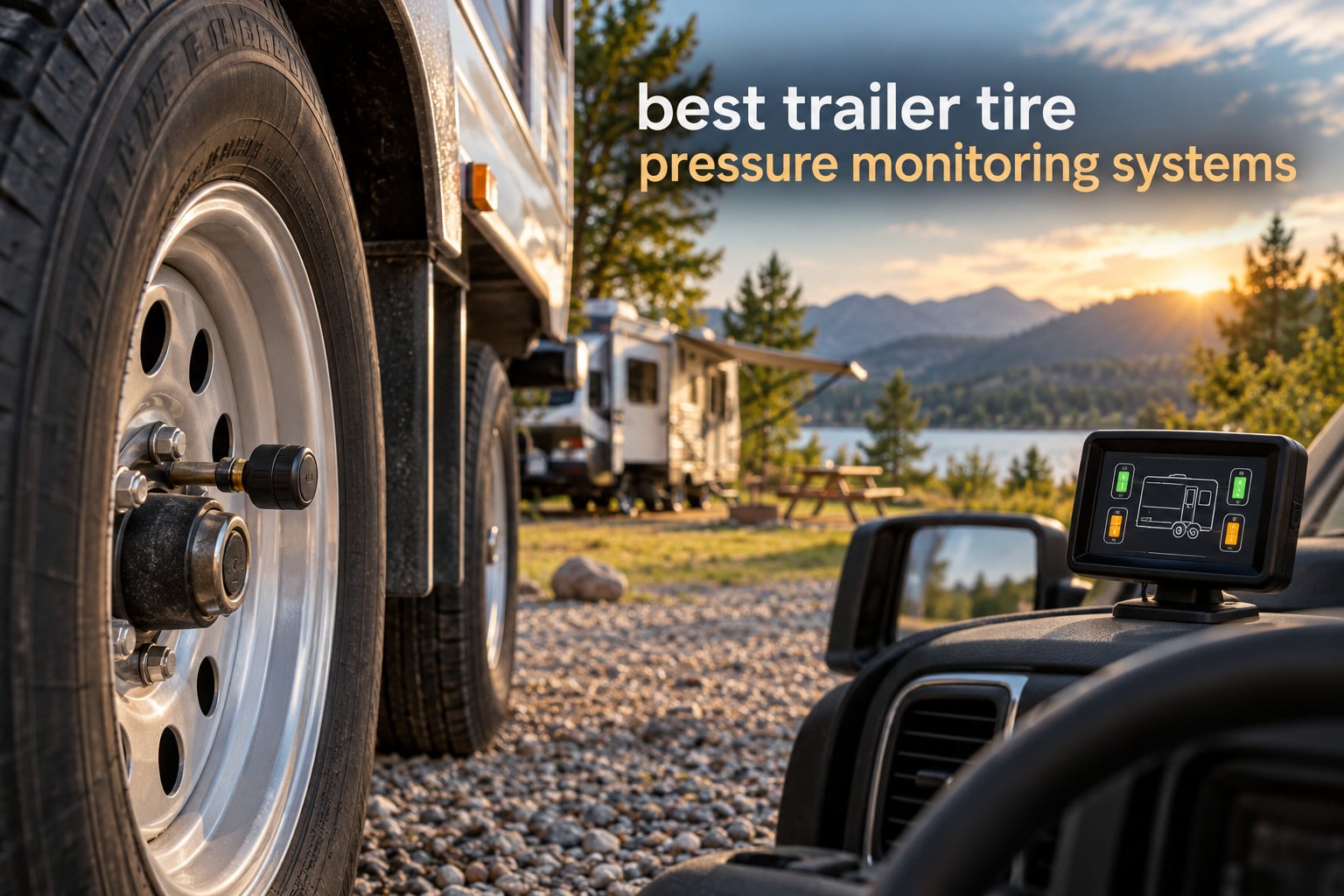
A trailer tire pressure monitoring system screws sensors onto your trailer’s valve stems and wirelessly reports pressure and temperature to a display in your tow vehicle, warning you about slow leaks, fast leaks and overheating before a tire gives out. For most trailer owners in 2026, the Tymate TM7 is the best overall pick, and the TireMinder i10 is the stronger long-term buy.
Trailer tires are the least attended tires on the road. A travel trailer or fifth wheel sits for weeks between trips, and a slow leak from a nail, a bead or a valve core turns a tire that looked fine on departure into a low tire that runs hot for 200 miles. Heat is what kills sidewalls, and heat is what a tire pressure monitor is actually watching. A TPMS catches the trend hours before the tread gives up.
It is also worth being clear about what these systems cannot do. One MyGrandRV thread describes a blowout on a rig where the tire and its sensor were destroyed before anything could be reported, and the owner drove on for hours with no alarm. A pressure monitor reads pressure and temperature. It does not see a shredded sidewall, a wheel-end bearing starting to cook, or a brake drum problem. Treat it as an early-warning system, not a substitute for walking the rig before you pull out of the campsite.
Everything below is scoped to trailers, fifth wheels, boat trailers and cargo trailers. We deliberately left out car and daily-driver systems to keep the comparison honest. Every pick is based on published specifications, manufacturer documentation and aggregated long-term owner reports from RV forums, not on a single weekend of testing. If you want the broader picture first, start with our general guide to tire pressure monitoring systems and our RV tire pressure monitoring system roundup.
Table of Contents
Top 3 Picks for the Best Trailer Tire Pressure Monitoring in 2026
The TM7 wins on adoption, setup speed and sensor accuracy. The i10 wins on precision and the booster in the box. The GT30 wins when you are running more tires than a single axle pair.

Tymate TM7 TPMS
- Pre-paired 4 sensor kit
- Plus or minus 1.5 PSI
- 0-144 PSI range
- Six alarm modes

TireMinder i10 RV TPMS
- Plus or minus 1 PSI accuracy
- 6-second checks
- Up to 40 tires
- Booster included

GUTA GT30 with 10 Sensors
- Up to 46 tires
- 10 tires per screen
- CR2032 cells up to 4 years
- 12-14 day monitor battery
All 10 Trailer Tire Pressure Monitoring Systems Compared in October
Every system in the table is trailer-capable. Read across the features column for the sensor count, pressure ceiling and power method, then jump to the full review below.
| Product | Specs | Action |
|---|---|---|
| Tymate TM7 TPMS Set of 4 Sensors |
|
Check Latest Price |
| GUTA GT30 with 10 Sensors |
|
Check Latest Price |
 GUTA GT80 Flow-Through Sensor TPMS GUTA GT80 Flow-Through Sensor TPMS |
|
Check Latest Price |
 GUTA GT20 with 4 Sensors GUTA GT20 with 4 Sensors |
|
Check Latest Price |
 Masoll M13 with 4 Sensors Masoll M13 with 4 Sensors |
|
Check Latest Price |
| TireMinder i10 with 4 Transmitters |
|
Check Latest Price |
 TireMinder Smart TPMS 10 Transmitters TireMinder Smart TPMS 10 Transmitters |
|
Check Latest Price |
 LETOURWM M12-3 with 6 Sensors LETOURWM M12-3 with 6 Sensors |
|
Check Latest Price |
 Lippert Tire LINC Alert Indicator Lippert Tire LINC Alert Indicator |
|
Check Latest Price |
 Flydew 6-Wheel TPMS with 6 Sensors Flydew 6-Wheel TPMS with 6 Sensors |
|
Check Latest Price |
How We Picked
Each system was checked against its manufacturer listing, published specification sheet and warranty terms, then read against what owners report in RV communities. Ratings and review counts are the live figures shown on the product listing, not our own scoring. Where owners repeatedly report the same problem, such as a display that fades in direct sun or a sensor that drops off the far end of a long trailer, that complaint appears in the cons rather than being smoothed over.
We also weighted warranty length and whether the booster is in the box. Forum owners consistently treat three years as the quality benchmark, and a system that needs a separately purchased repeater to work on a fifth wheel is not really a complete system.
1. Tymate TM7 – Best Overall Trailer TPMS for Most Rigs
Tymate TM7 RV Tire Pressure Monitoring System, TPMS Set of 4 Sensors
PSI range: 0-144
Accuracy: plus or minus 1.5 PSI
4 pre-paired sensors
Repeater needed past 36ft
Pros
- Pre-paired sensors running in about 5 minutes
- 0-144 PSI range at plus or minus 1.5 PSI
- Six alarm modes including fast leak and signal lost
- Color LCD with adjustable backlight
- Cigarette lighter power plus two USB ports
Cons
- Repeater sold separately for trailers 36ft and longer
- Requires metal valve stems
- Sensor coin cells still need replacing
The TM7 is the one I keep coming back to because of the ratio of owner history to moving parts. It carries 2567 reviews at 4.2 stars, the largest owner base of anything in this roundup, and the design is deliberately plain: four pre-paired sensors, a color LCD, a cigarette lighter plug and a bracket.
Accuracy is stated at plus or minus 1.5 PSI or plus or minus 3F, and the reported range runs from 0 to 144 PSI. That covers every trailer tire on the market, including a light truck tire run at 80 PSI, without the display throwing a range error the way an 87 PSI ceiling system can.
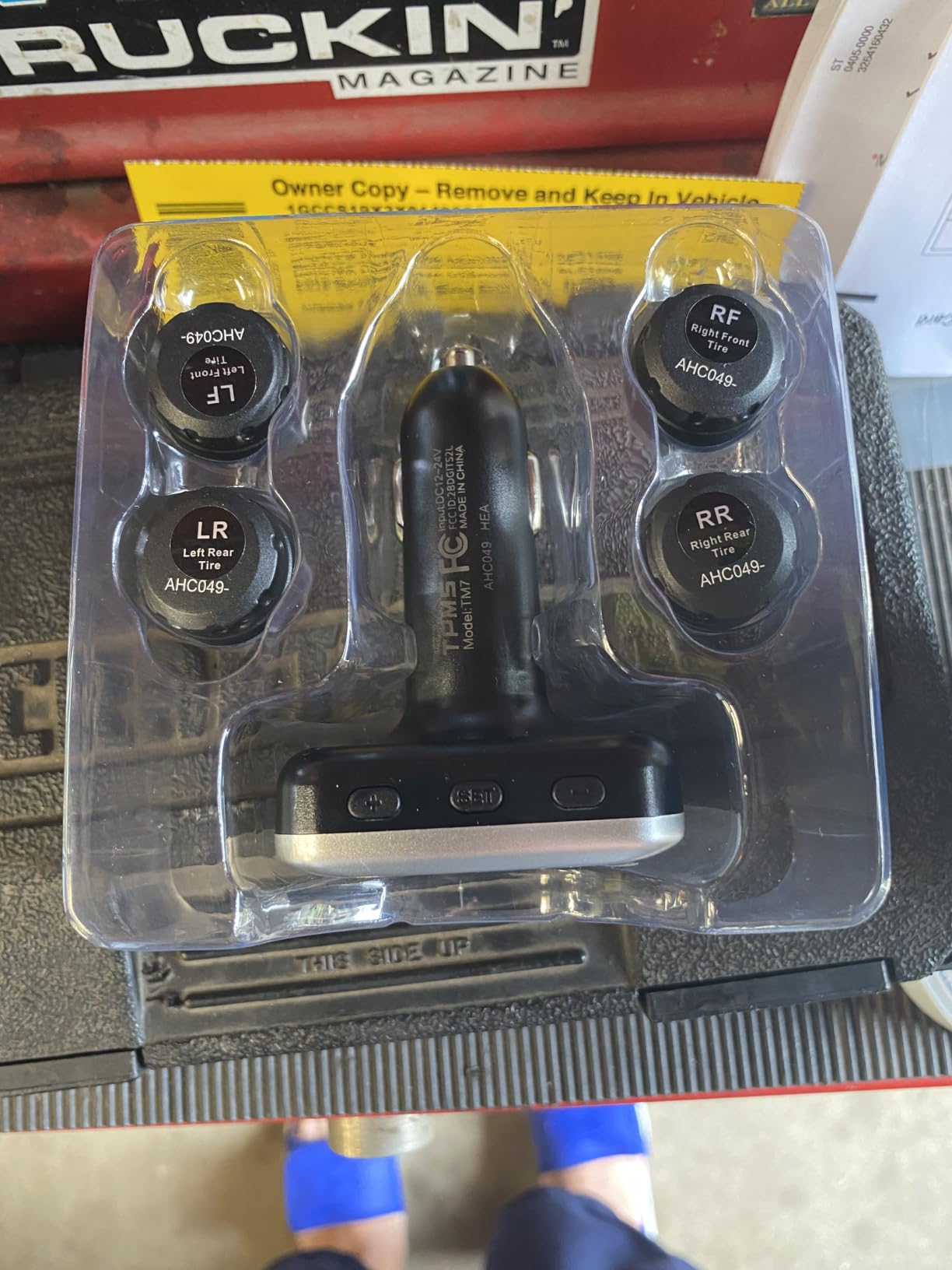
Setup is genuinely quick. The sensors arrive paired to the monitor, so you are numbering caps onto stems rather than programming anything, and the whole install is a hand-tool job with no wiring. Dual USB ports on the monitor are a small touch that most people in this price bracket skip, and they are useful if your tow vehicle has no working outlet on the second seat.
Temperature can be shown in C or F and pressure in BAR or PSI, which matters if you cross a border or borrow the rig. The backlight is adjustable rather than automatic, so set it once for night driving and leave it.
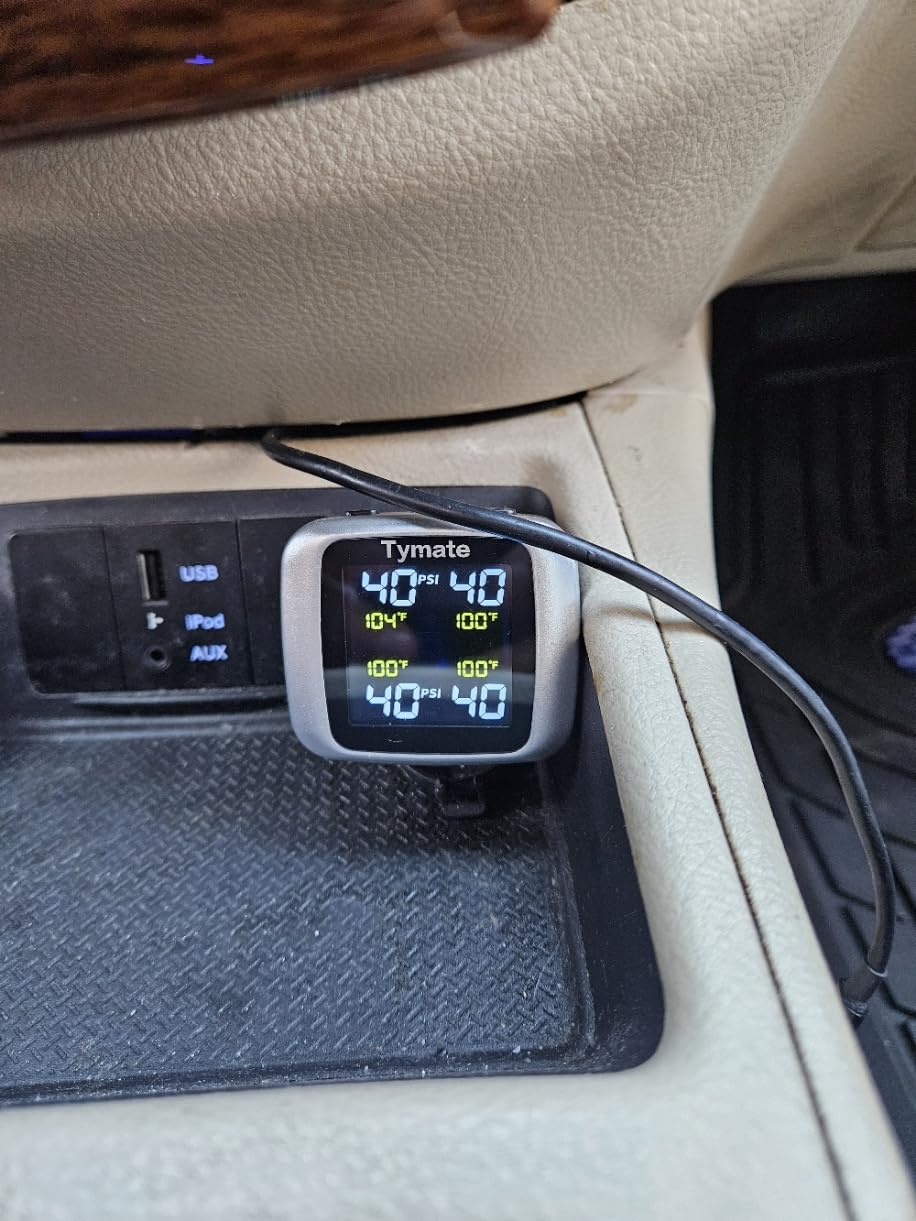
Why the TM7 earns the top spot
The six alarm modes cover high and low pressure, fast leakage, high temperature, low sensor battery and lost signal. Lost-signal alerts are the one most budget systems skip, and they are the difference between a tire dropping off quietly and the display telling you it dropped off.
Around 12 percent of its reviews are one star. Reading them, the recurring theme is not accuracy but hardware attrition: coin cells needing replacement sooner than hoped, and the occasional sensor that needs a re-seat. Both are manageable if you check pressure with a digital tire pressure gauge every few months anyway.
Where the TM7 is the wrong choice
It is the wrong pick above 36 feet. Manufacturers recommend a repeater at that length, and the TM7 does not include one. On a 40-foot fifth wheel the rear-most tire is the first to vanish, and chasing that with a monitor that cannot see it leads to exactly the false confidence the system is supposed to prevent.
It also needs metal valve stems. If your trailer rolled out of the factory on rubber stems, budget for a stem swap before install, and check that the caps clear a tire inflator chuck before you tighten anything.
2. GUTA GT30 – Best for Multi-Trailer Households and Large Fleets
GUTA GT30 Trailer Tire Pressure Monitoring System, RV TPMS with 10 Sensors
Up to 46 tires
PSI range: 0-188
10 sensors included
CR2032 batteries up to 4 years
Pros
- Monitors up to 46 tires with 10 sensors in the box
- Large screen shows 10 tires per page
- CR2032 sensor cells rated up to 4 years
- Built-in monitor battery runs 12 to 14 days
- Anti-theft sensor design and booster compatibility
Cons
- Monitor housing is large for small dashboards
- Rubber valve stems not recommended
- Occasional sensor connectivity drops reported
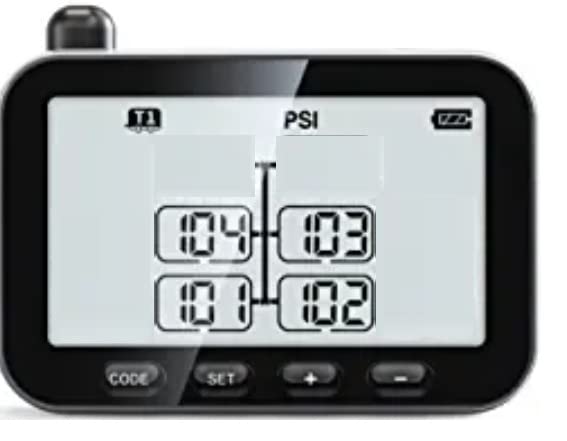
The GT30 exists for people who have outgrown four tires. It holds up to 46 tires in total, with 10 sensors in the box and up to 34 active at once, which covers a motorhome toad, a fifth wheel and a utility trailer in one display. That capacity is the reason it lands on this list despite a 617-review base.
The screen shows 10 tires per page and auto-switches between the front and rear sections of the trailer, so you are not tapping through menus to find the tire you care about. Pressure range goes to 188 PSI and temperature to 185F, both comfortably above anything a trailer tire reaches.
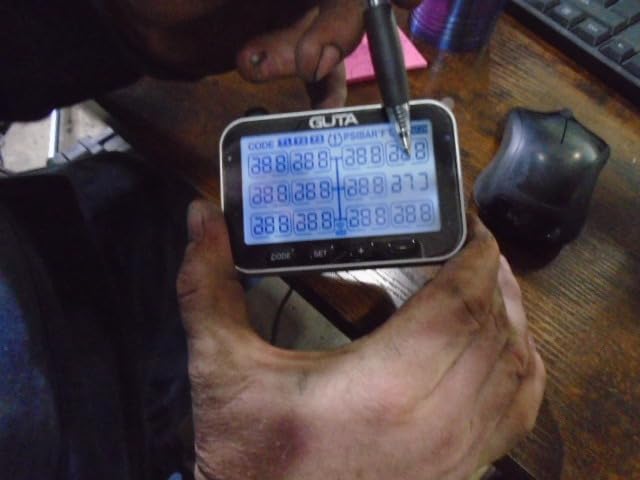
Sensor programming is wireless, so you set pressure references without an inflation sequence. That matters more than it sounds: reference pressure is the baseline your alerts measure against, and getting it right at setup removes most of the false alarms owners complain about later.
Sensor batteries are CR2032 and user replaceable, with a stated life of up to 4 years. The monitor itself has a built-in rechargeable lithium battery that runs 12 to 14 days per charge, so a weekend trip does not need the truck running to keep the display alive.
What the GT30 handles well
Multi-trailer households are the clear win. Owners on RV forums talk about moving between a truck profile and a trailer profile constantly, and a display that can hold several configurations beats bolting on a second monitor and a second power lead.
Customer service is one of the stronger points in owner reports, which matters for a system you will keep for years. When a sensor fails at month three, you want a company that answers, not a marketplace listing.
Where the GT30 asks you to compromise
At 11.62 by 8.86 inches the monitor is big, and the 24-volt specification means it wants a stable supply. It is not a unit you stick to a windshield in a small truck without checking that you have somewhere to mount it.
It is booster compatible rather than booster included, so a long rig still means a second purchase. And at 617 reviews it has a thinner field history than the TM7, so the reliability story rests more on the spec sheet than on years of owner data.
3. GUTA GT80 – Best for Owners Who Want to Inflate Without Removing Sensors
GUTA GT80 RV Tire Pressure Monitoring System, 10 Flow-Thru Sensors TPMS
Flow-through sensors
0-188 PSI
22 tires per page
Booster included
Pros
- Flow-through sensors let you inflate without removing caps
- Full-color vertical touchscreen showing 22 tires
- Signal booster included in the box
- Five vehicle type profiles
- CR2032 sensor batteries are user replaceable
Cons
- Flow-through sensors require metal valve stems
- Newer model with a small owner base
- Touchscreen can be awkward to use with gloves
The GT80 is the newest idea in this category and the only one here with genuine flow-through sensors. Air passes through the sensor body, so you can top off a tire with an inflator without pulling a cap off first. For anyone who checks pressure before every leg, that removes the single most annoying step in the whole routine.
It is also the highest-rated listing in this group at 4.5 stars, but that number comes from 118 reviews. Read it as a promising score rather than a proven one, and give it a year of owner history before you assume it matches the GT30’s reliability.
The vertical full-color touchscreen is a real step up in readability, and it holds 22 tires on one page with five vehicle type profiles for switching between rigs. Sensors arrive pre-paired and pre-labeled, so the same no-programming setup applies here.
Power saving mode kicks in after 10 minutes without vibration, which is the wake trigger most of these systems use. Firmware updates are available through the manufacturer’s site, and CR2032 sensor cells are user replaceable rather than sealed.
Why flow-through changes the routine
Cap sensors have to come off for every pressure check, and a knurled cap on a dirty trailer wheel is a small daily friction that compounds. Flow-through sensors remove it. You also stop losing the tiny O-ring that lives under the cap every single time.
Because air still flows through the sensor, the unit reports the same pressure a shop gauge would, and a top-off at a gas station takes the time it takes to open the chuck.
Where the GT80 holds back
Flow-through bodies are longer than cap bodies, so they need metal valve stems and enough clearance between the cap and the tire bead. On a wheel with a deep dish, check that the sensor body clears the rim edge before you crank it down.
Touchscreens and gloves do not mix, which matters in winter. And with 118 reviews, there is not yet the long-term data that would justify putting it above the GT30 for an owner who plans to keep the rig for a decade.
4. GUTA GT20 – Best Value System With a Booster in the Box
GUTA GT20 Trailer Tire Pressure Monitoring System, TPMS with 4 Sensors
0-188 PSI
Temperature -40F to 221F
Range to 100ft with booster
Custom thresholds
Pros
- Booster extends range to about 100 feet
- Monitors up to 24 tires
- Thresholds adjustable from minus 15 to plus 25 percent
- 0-188 PSI and -40F to 221F coverage
- Rechargeable monitor runs about 15 hours
Cons
- Four-sensor kit does not include the booster
- Rubber valve stems not recommended
- Some owners report false alerts
The GT20 is the mid-range GUTA and the one with the most useful spec sheet for a normal trailer. Pressure range to 188 PSI, temperature from -40F to 221F, and up to 24 tires on one system, which covers a dually fifth wheel without a second display.
The threshold controls are the part worth paying attention to. You can set alerts anywhere from 15 percent below to 25 percent above your reference pressure, which is far more flexible than a fixed 25 percent high and 15 percent low rule. Owners who set their own band report fewer nuisance alarms.
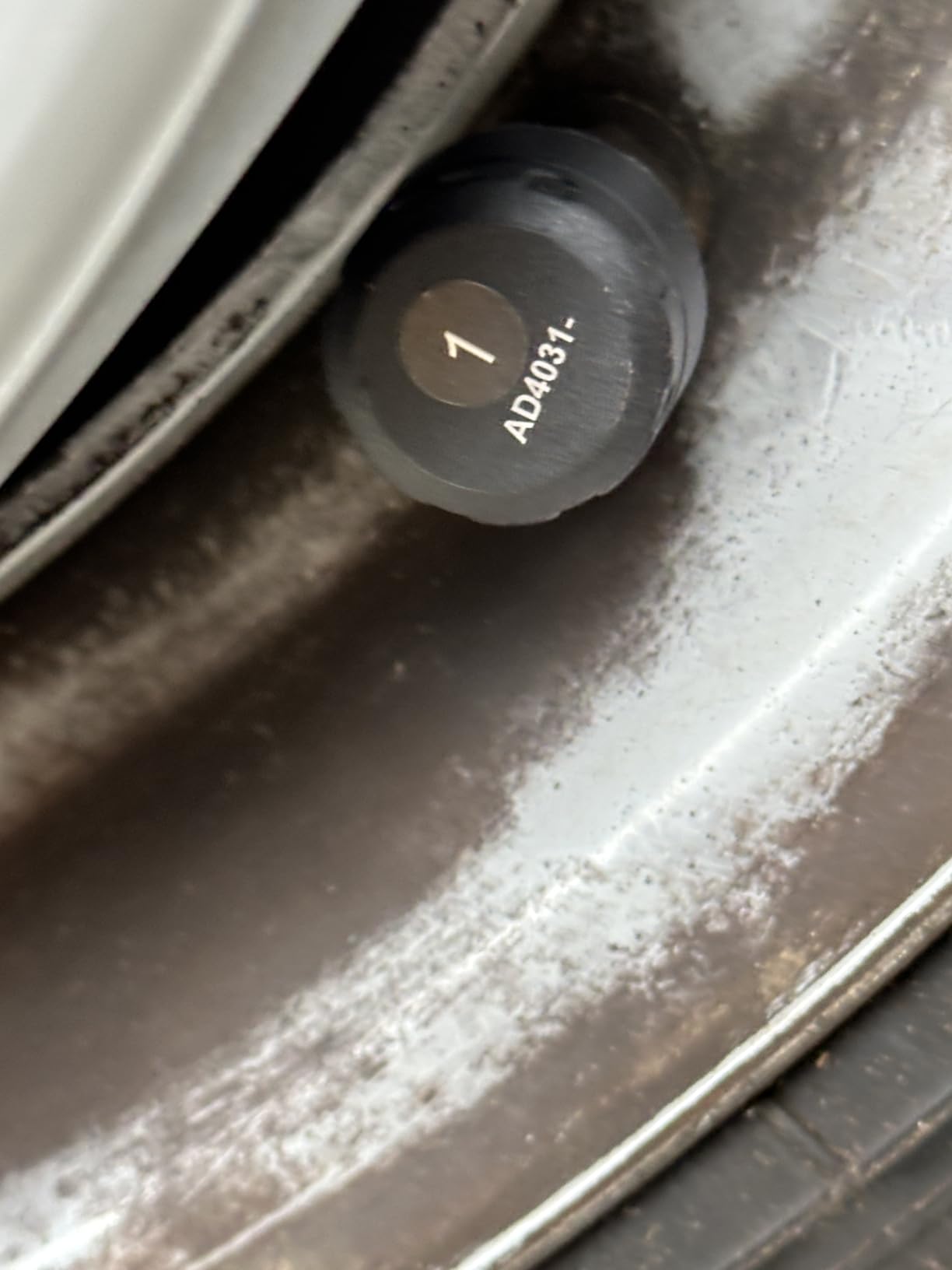
The large color LCD has an adjustable backlight, and the monitor runs about 15 hours on its internal rechargeable battery before it wants power. It also sleeps after 15 minutes without vibration, so it is not draining the tow vehicle battery at a campsite.
PSI and BAR plus C and F are both selectable, and sensors arrive factory pre-paired. Note the listing carries the model number GT40, which is worth having in hand if you go looking for documentation.
Where the GT20 gives you the most per sensor
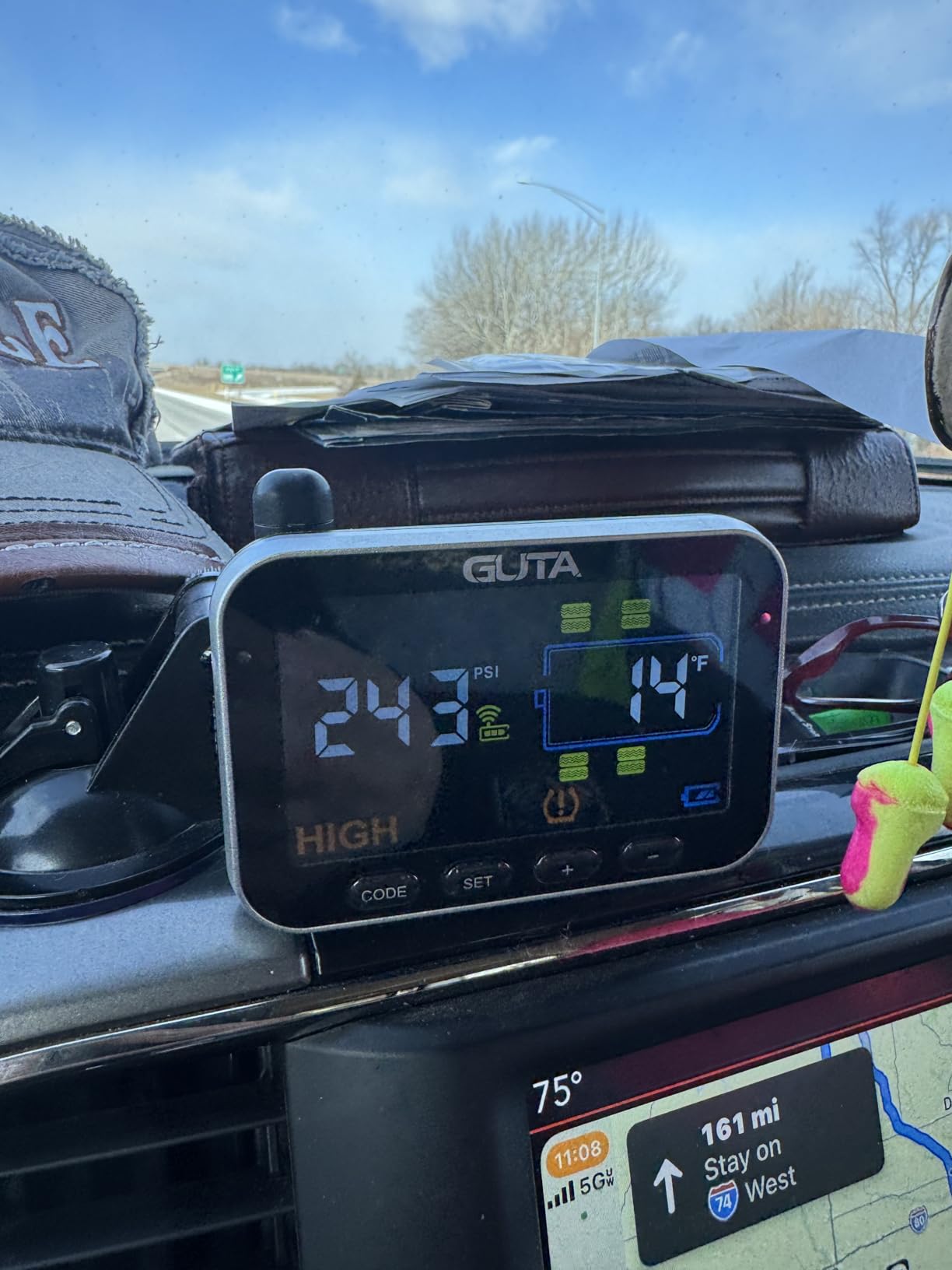
The booster is the story here. With it, the stated range reaches about 100 feet, which is the difference between seeing your back tires on a 38-foot trailer and losing them. Several GUTA kits include it, so compare what actually lands in the box rather than comparing model names.
Three-step setup with pre-paired sensors and a 15-hour monitor battery means the unit is usable the moment it is plugged in, which suits weekend rigs where the monitor spends more time unplugged than plugged in.
Where the GT20 needs help
It is booster compatible but the four-sensor kit is the exception, so on a long trailer this is two purchases. Place the repeater at the midpoint of the trailer, not in the nose, or the front tires will read cleanly while the rear axle drops out.
Rubber valve stems are not recommended, and some owners report false alerts when thresholds are left at factory defaults through a temperature swing. Ten minutes of setup saves a year of muting the alarm.
5. Masoll M13 – Most Versatile for Trailers Under 38 Feet
Masoll M13 Tire Pressure Monitoring System, RV/Trailer TPMS with 4 Sensors
0-87 PSI range
Plus or minus 1.5 PSI
Solar charging
CR1632 batteries included
Pros
- Solar charging with overheat and overcharge protection
- Auto alarm calibration sets thresholds with no manual math
- Anti-reflective color LCD with auto backlight
- CR1632 sensor batteries included
- One-year monitor warranty
Cons
- 87 PSI ceiling is low for heavier trailers
- Booster recommended above 38ft and sold separately
- Sensors carry only a 6-month warranty
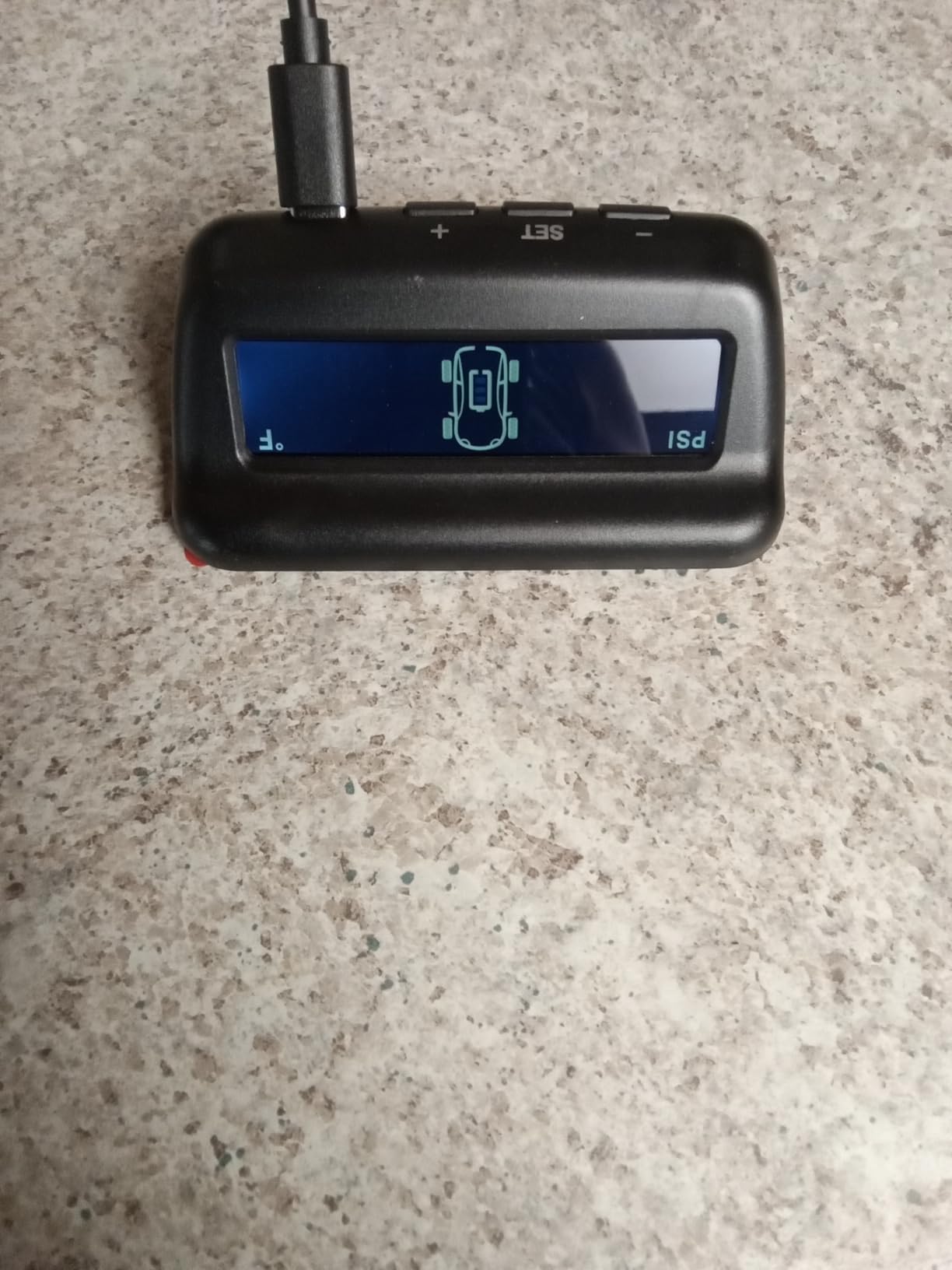
The M13 is the simplest system here and the one that asks the least of you at install. Solar charging with overheat and overcharge protection means the display keeps itself alive on the dash, and auto wake and sleep handle the rest. There is no charging cable to lose.
Its 603 reviews at 4.3 stars put it mid-pack for reliability, and the auto-calibration routine is genuinely the friendliest part. Inflate to your placard pressure, and the system captures that as your reference and sets alerts 25 percent high and 15 percent low automatically.
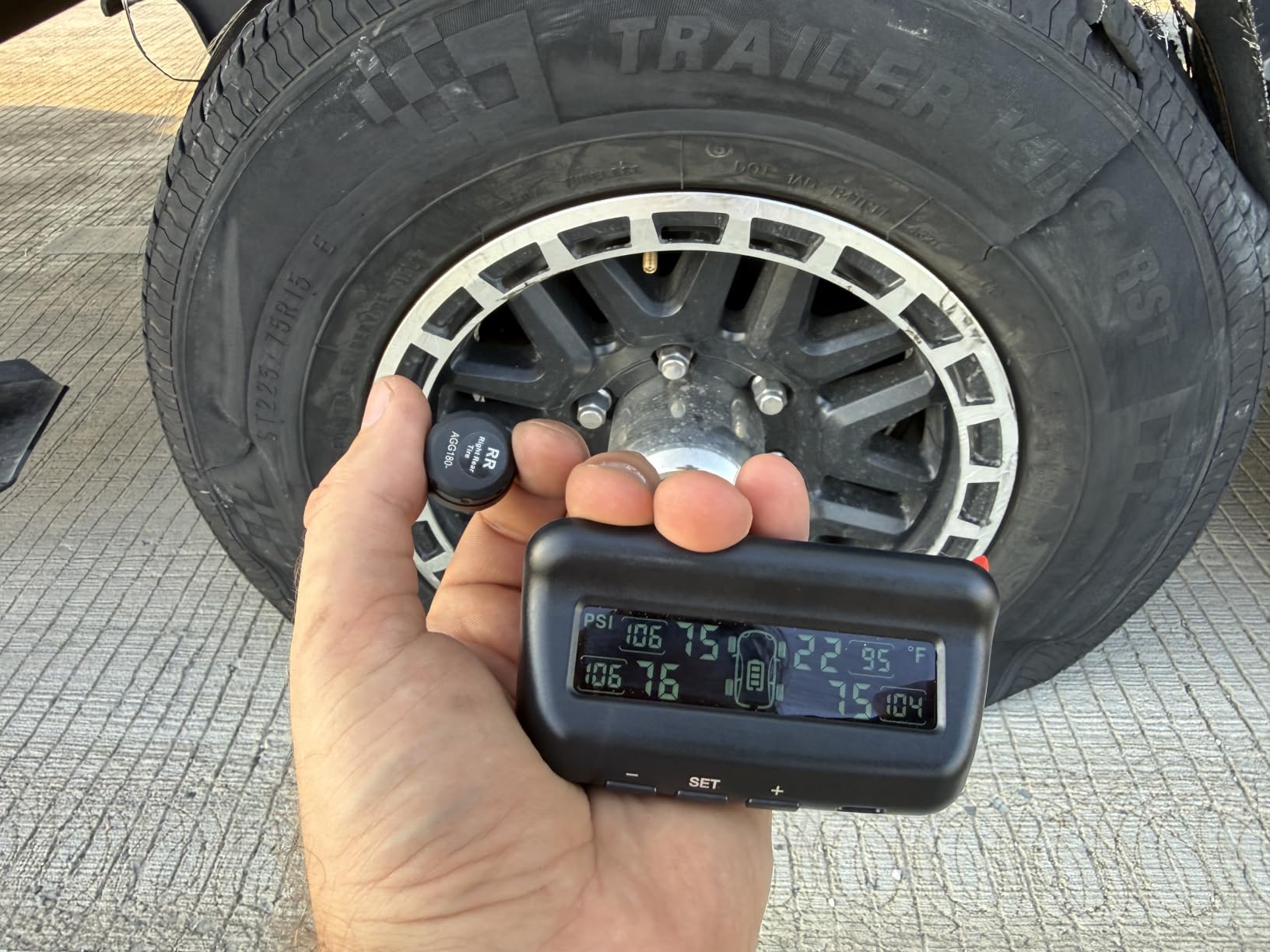
Accuracy is stated at plus or minus 1.5 PSI, matching the TM7. The color LCD has an anti-reflective coating plus auto backlight, which is a better answer to direct sun than the fixed backlight on some systems at twice the price.
Four CR1632 cells are included, and the sensors are user replaceable, so the first battery change is a two-minute job with a coin cell rather than a return shipment. The monitor carries a one-year warranty.
What makes the M13 easy to live with
Auto calibration is the quiet winner. Most false alarms on a trailer come from thresholds set against a warm tire instead of a cold one, and a system that derives the reference from your own inflation removes the most common cause of owner frustration.
Solar plus auto sleep also means a trailer sitting in a storage lot for six weeks is not slowly draining anything, and the unit wakes on movement when you finally tow it again.
Where the M13 runs out of room
The 0 to 87 PSI ceiling is the hard limit. It is fine for a travel trailer on ST tires and tight for anything running higher, so check your placard before you buy, and note that a dually setup may push past it on a lightly loaded axle.
Signal booster is recommended past 38 feet and sold separately, and the sensor warranty is 6 months against a one-year monitor warranty. That split is worth weighing against a system with longer sensor coverage if you plan to keep the rig a long time.
6. TireMinder i10 – Top Rated for Long-Term Owner Confidence
TireMinder i10 RV TPMS with 4 Transmitters, Black
0-199 PSI
Accuracy plus or minus 1 PSI
Checks every 6 seconds
Booster included
Pros
- Plus or minus 1 PSI accuracy across a 0-199 PSI range
- Checks every tire every 6 seconds
- Rhino signal booster included in the kit
- Monitors up to 40 tires
- Large color LCD shows PSI and temperature together
Cons
- Only 4 transmitters in the kit
- Expanding past four tires needs add-on transmitters
- Eight lithium batteries power the monitor
The i10 is the one owners name most often when the question is which brand still works after several seasons rather than after the first month. It holds 4.4 stars on 1050 reviews, and the iRV2 consensus in our research names TireMinder alongside the TST 507 as the most frequently endorsed systems in this category.
Accuracy is the headline number: plus or minus 1 PSI across 0 to 199 PSI, which is the tightest specification in this roundup and the widest pressure ceiling. The monitor checks for slow leaks, rapid leaks, blowouts, low and high pressure and high temperature every 6 seconds.
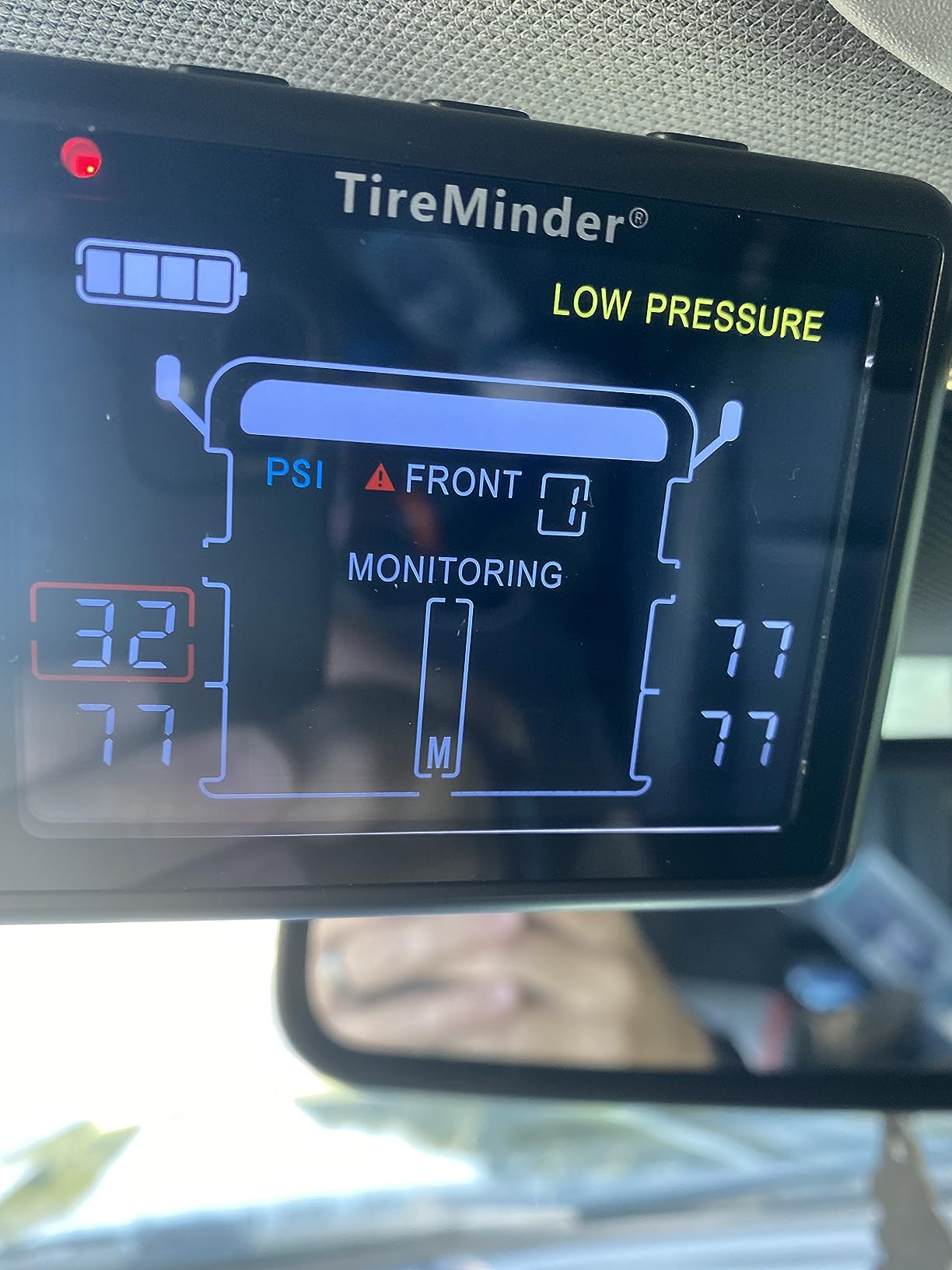
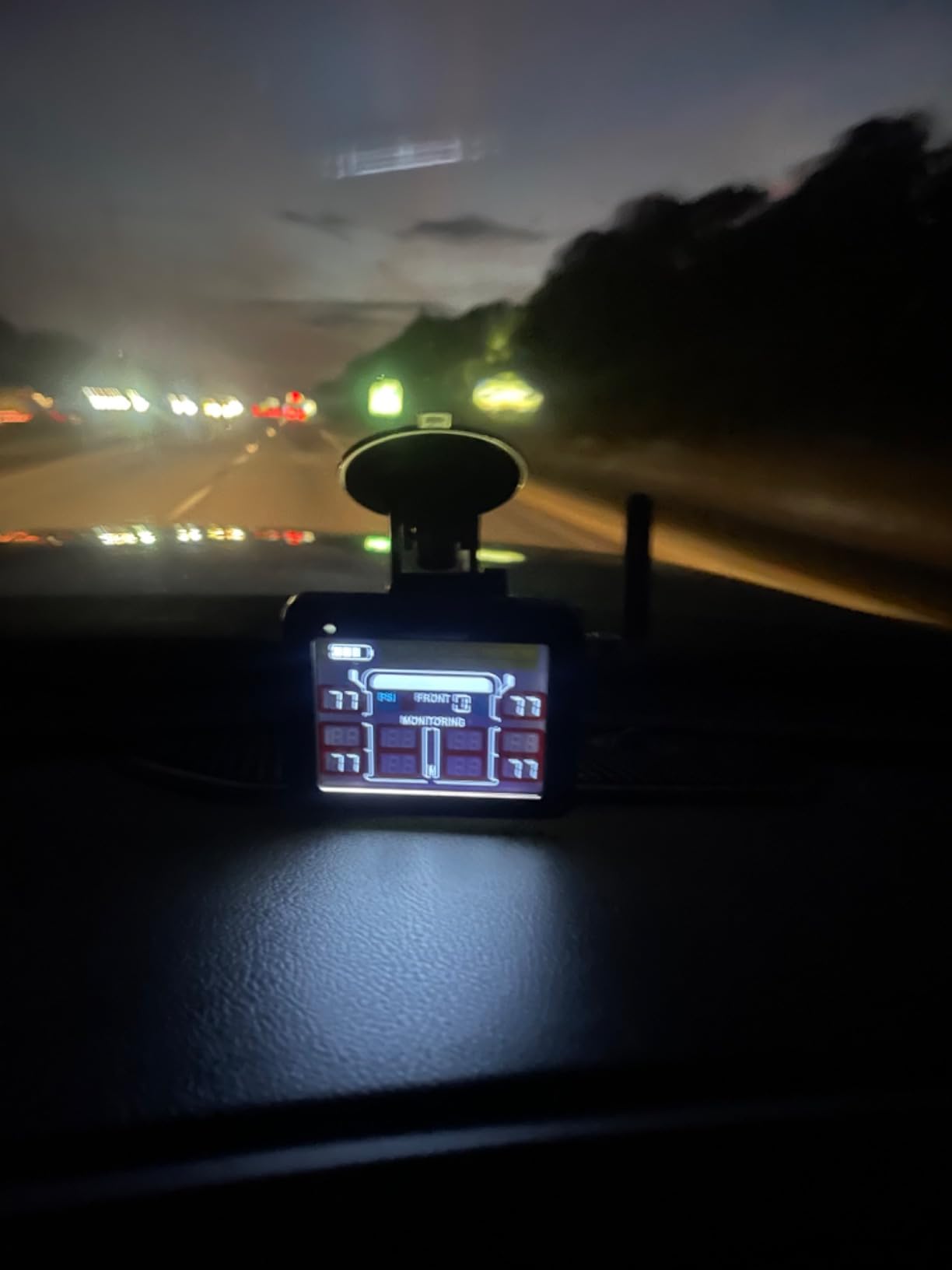
The 3.15 inch color LCD shows PSI and temperature at the same time, so you are not switching views to understand what a reading means. The display alone weighs under a pound and the whole unit is 4.15 by 4 inches, which mounts cleanly on a dash or console.
The Rhino signal booster is in the box, not a separate line item. For a fifth wheel or motorhome, that is the difference between a complete system and a project, and it is the single most common complaint owners raise about kits that omit it.
Why long-term owners keep recommending the i10
Multi-profile support is repeatedly mentioned by owners who move between a truck and a trailer, and TireMinder is also noted for working with CarPlay. For households running two rigs, one display that switches beats two systems to maintain.
Expandability to 40 tires means the same monitor covers a toad later without a purchase. Owners who plan to keep the RV a decade tend to value that path more than they value a cheaper first season.
Where the i10 needs extra hardware
Four transmitters are included, and a dually or a fifth wheel with a tag trailer needs more, which is an add-on purchase per pair. Budget for that when you compare against systems that ship with ten sensors.
The monitor runs on eight lithium metal batteries, so it is eight cells to keep in stock and a periodic swap rather than a permanently wired unit. The 3.15 inch screen is also modest for owners who want readings visible from the driver’s seat without leaning in.
7. TireMinder Smart TPMS 10 Transmitters – Best for Phone-Based Monitoring
TireMinder Smart TPMS with 10 Transmitters for RVs, MotorHomes, 5th Wheels, Motor Coaches and Trailers
10 transmitters
433MHz to Bluetooth adapter
Smartphone app
6-second checks
Pros
- Ten transmitters cover a dually and a toad
- Phone app replaces a separate dashboard display
- 433MHz to Bluetooth adapter and booster both included
- Twenty CR1632 cells and ten locking nuts in the kit
- One-year warranty and a carrying pouch
Cons
- Bluetooth adapter disconnects and powers down at the plug
- App has gone years without updates
- Not supported outside the US and Canada
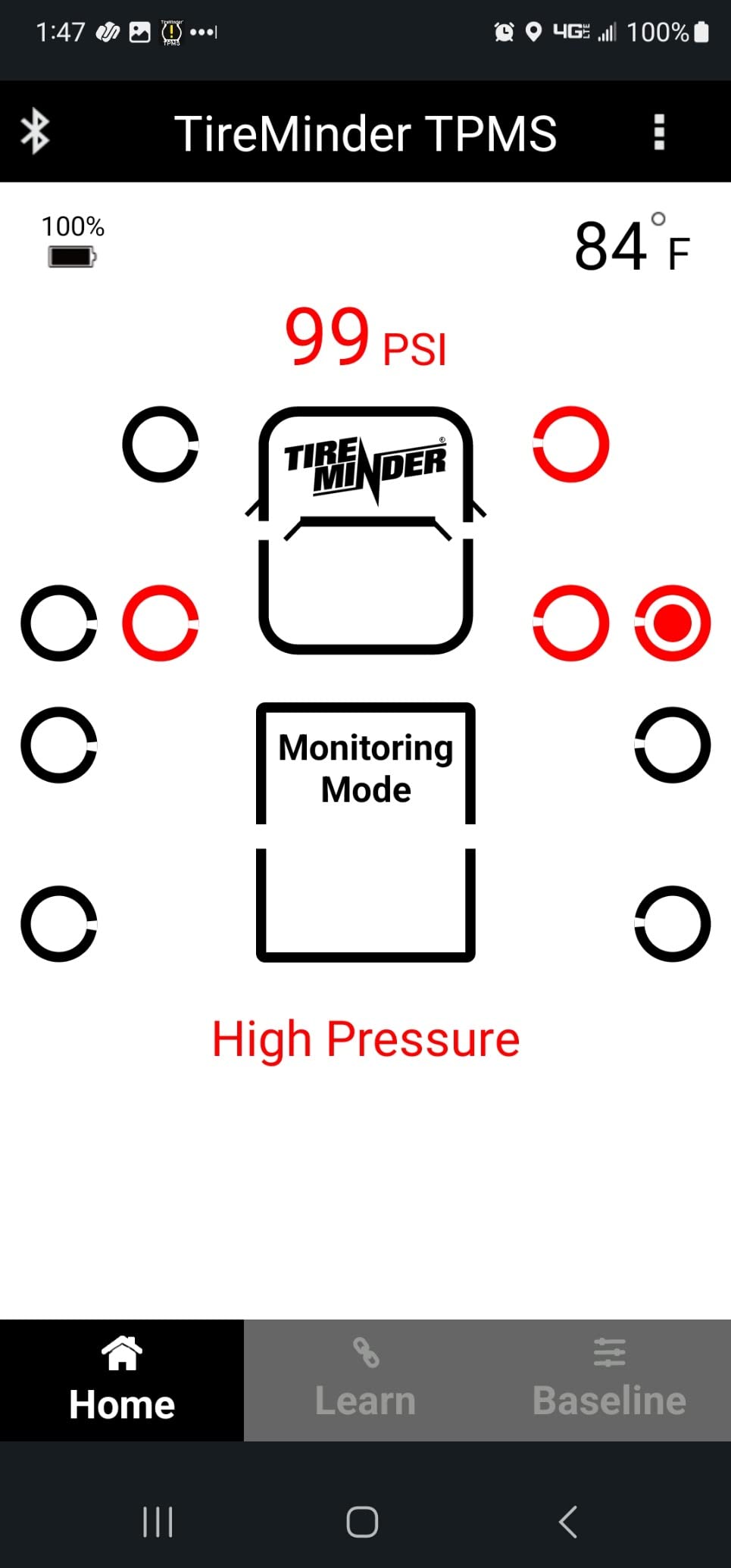
This is the only phone-first system in the roundup and it splits the crowd cleanly. Sensors transmit on 433 MHz to a small adapter that bridges to Bluetooth, then your phone runs the display. No dash unit to mount, no power lead, and the same hardware works on any vehicle you drive.
Ten transmitters are included, plus 20 CR1632 cells, ten O-rings, ten locking nuts, a locking wrench, a carrying pouch and a warranty card. That is a genuinely complete kit, and the locking nuts are a real answer to the theft problem RV owners report at trailheads.
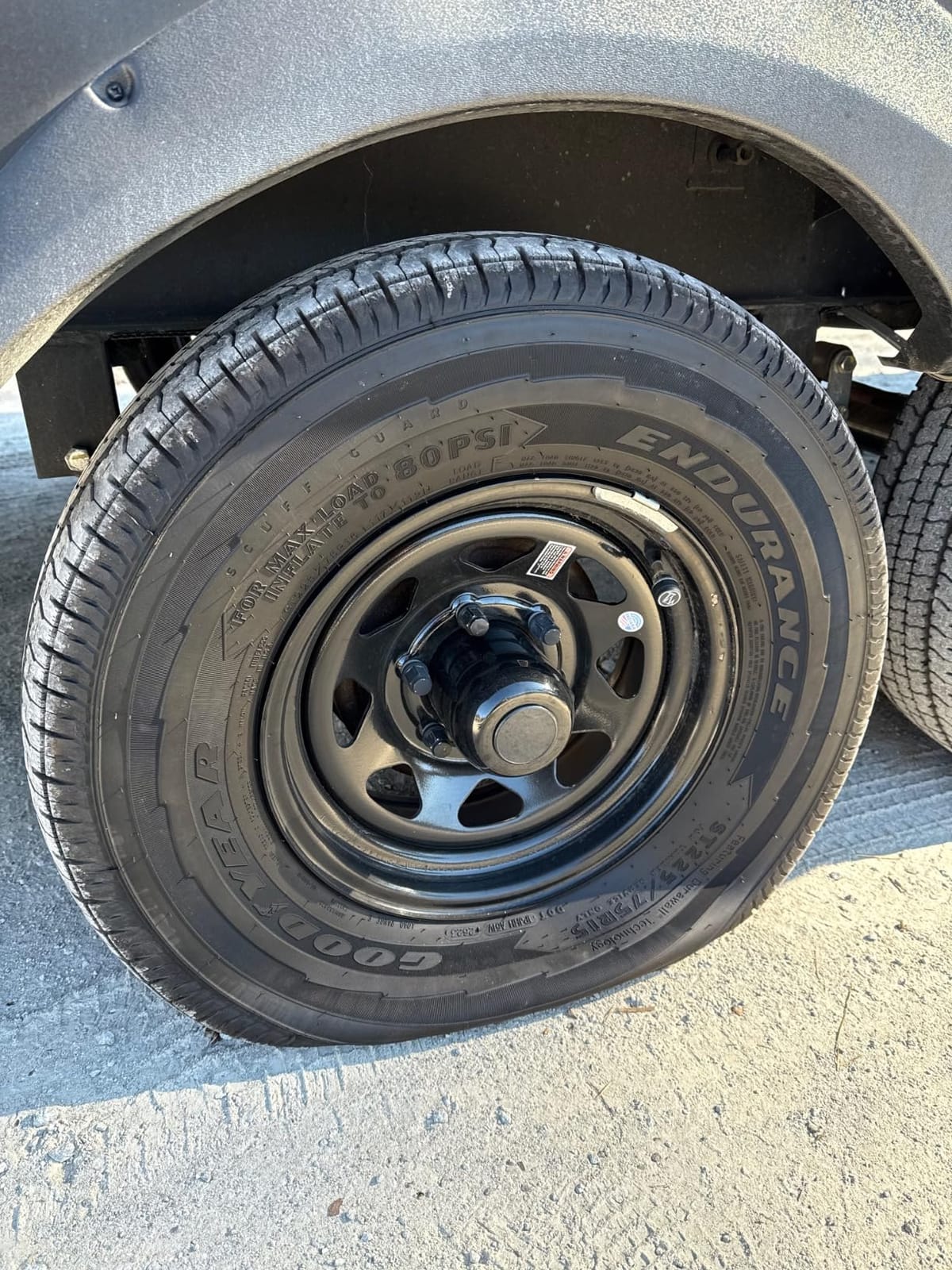
Checks happen every 6 seconds, the same interval as the i10. If you already navigate by phone and glance at it at stops, the tradeoff is defensible. If you want alarms that reach you at highway speed with the phone in a pocket, it is not.
It is also a 16-ounce kit with a one-year warranty and metal and plastic construction, which is a fair bill of materials for what is essentially a sensor farm plus a receiver bridge.
Where the phone-first approach shines
Carrying it between rigs is effortless. The pouch holds everything, and swapping from the fifth wheel to the truck to the boat trailer is a two-minute job rather than a rewiring exercise.
It is also the only system here with ten transmitters as standard, which makes it the shortest path to covering a motorhome plus a toad plus a tag trailer without a second purchase.
Where the Bluetooth link disappoints
Owners report the adapter disconnecting and, more pointedly, powering off when it is plugged in. That is the failure mode that matters most: a receiver that sleeps while you are driving leaves you with no warning at all.
The app has not been meaningfully updated in years, the status light is dim enough that owners miss it, and the sensor battery clips have solder joints that reviewers describe as fragile. Support is also limited to the US and Canada, with metric and left-hand-drive issues elsewhere. Owners frustrated with a factory system often land here, and the recommendation from forums is to test the Bluetooth link on a long tow before committing.
8. LETOURWM M12-3 – Best Six-Sensor Set for Dually Setups
RV Tire Pressure Monitoring System -TPMS Tire Pressure Monitor with 6 Sensors,M12-3 TPMS Solar Charge & USB Color LCD Display, 0-9.9BAR/144PSI Range, 6 Alarm Modes for RV/Trailer/Truck IP67
6 sensors included
0-144 PSI and 0-9.9 BAR
IP67 sensors
65ft range
Pros
- Six sensors cover dually and tag-along layouts
- Solar plus USB dual charging
- IP67 rated sensors for rain and washdowns
- Voice broadcasting alerts work hands-free
- Jam nuts and a wrench are included
Cons
- One owner reported a blowout that went unreported
- Intermittent sensor drops and display flicker
- 65 foot range is short for a long trailer
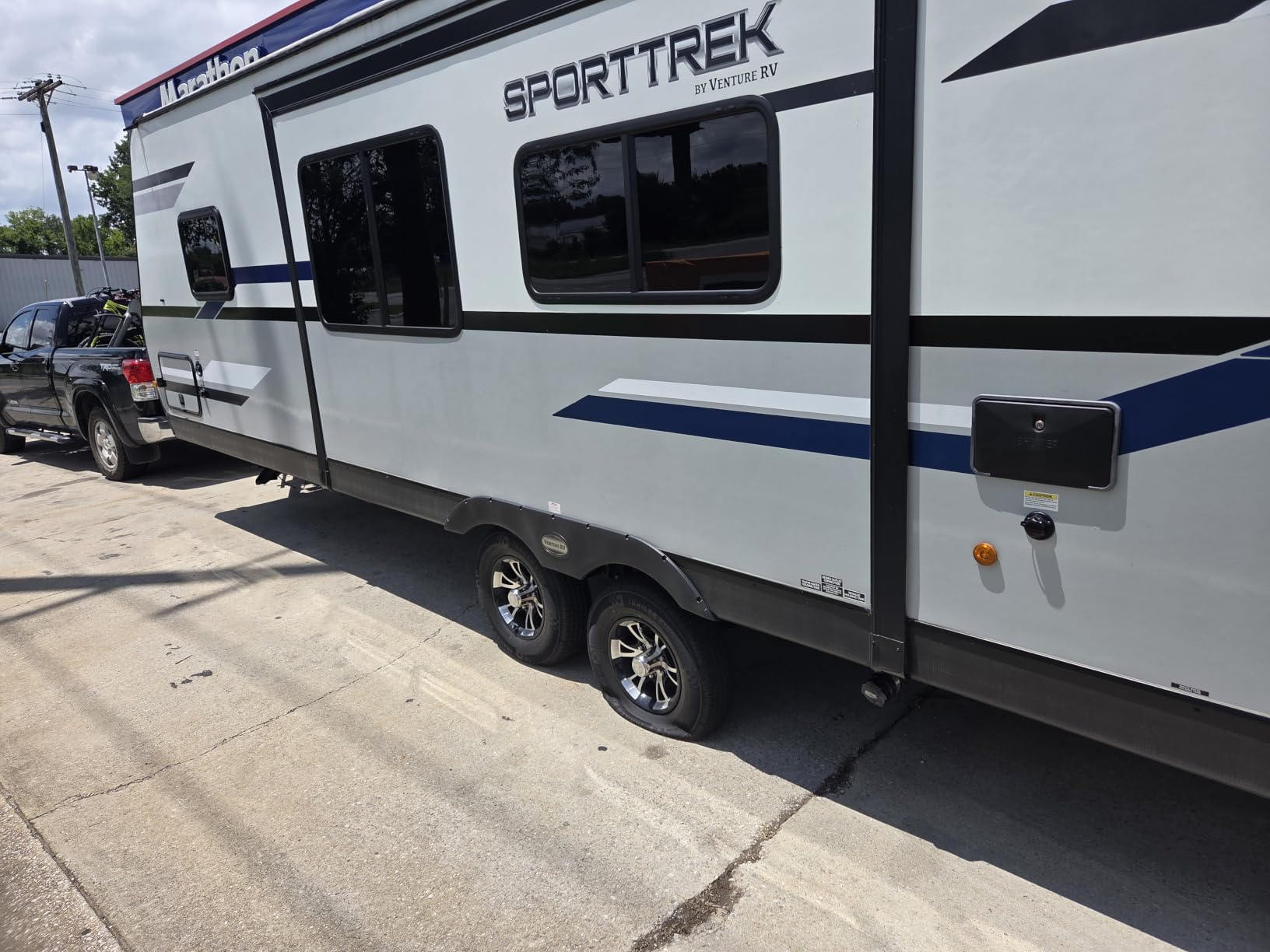
The M12-3 is the only budget kit here with six sensors, and that is worth more than it sounds. A dually is eight tires, a tag trailer adds four, and a boat trailer with a spare carrier can hit ten. Six sensors plus the four-sensor variant means you can cover unusual layouts without a second system.
Sensors are IP67 rated, which matters more than the rating suggests for a boat trailer or anything that gets washed down at a ramp. Solar and USB charging cover the display, and voice broadcasting reads alerts aloud so you do not have to look down.
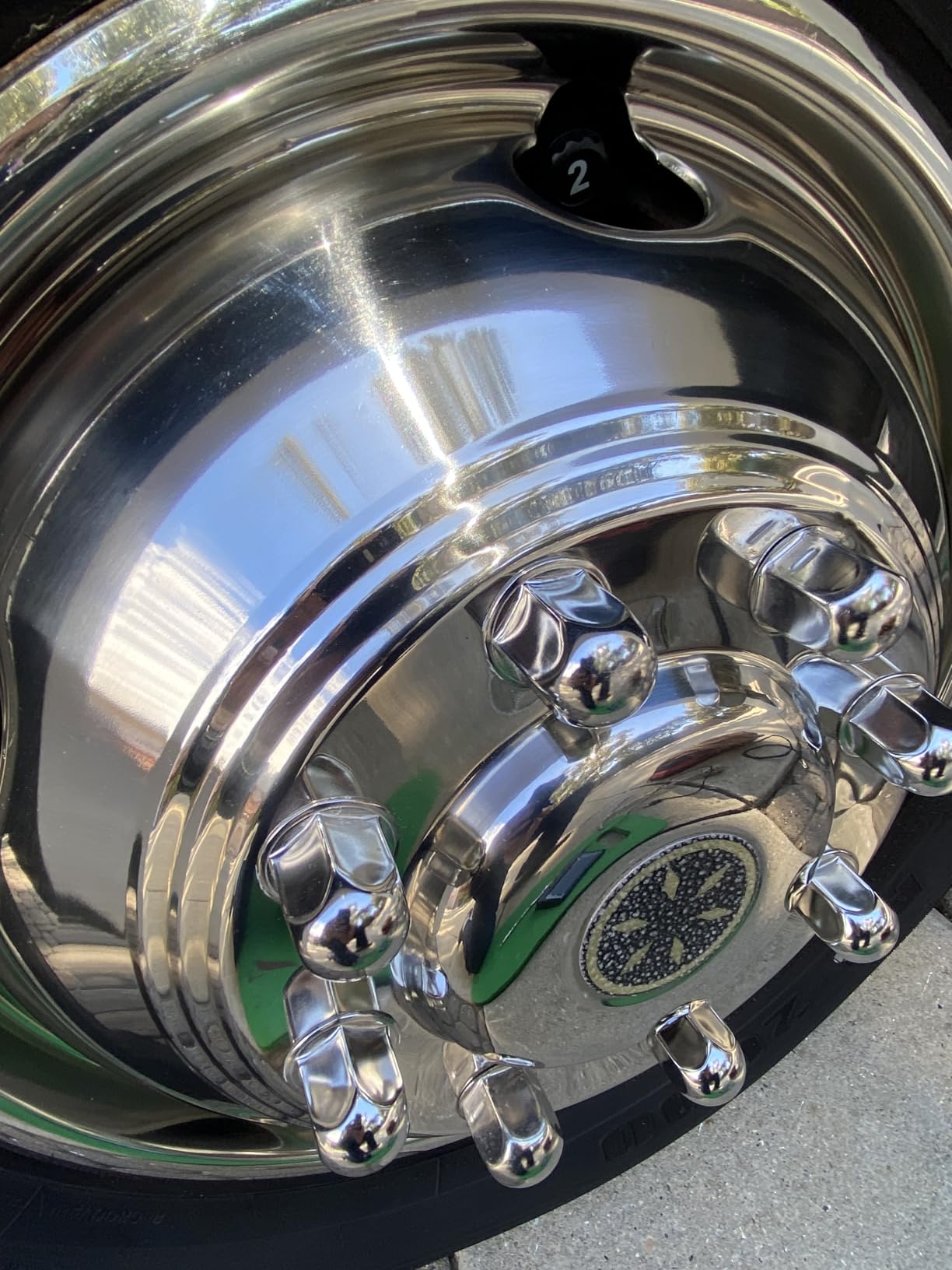
Install is genuinely two minutes: the sensors arrive pre-paired and labeled 1 through 6, and the kit includes jam nuts and a wrench so the caps stay tight. Pressure range is 0 to 144 PSI or 0 to 9.9 BAR, and six alarm modes cover high and low pressure, high temperature, fast and slow leaks, sensor failure and low battery.
The auto-brightness LCD is a 3.7 by 3.3 inch plastic and stainless steel unit weighing just over half a pound. Light, portable, and easy to move between a truck dash and a console.
What six sensors get you
Dually and tag-along coverage is the headline. If your rig does not fit a four-sensor kit and does not justify a 24-tire system, this is the narrow middle that most roundups skip entirely.
Voice alerts are genuinely useful on a boat ramp or a jobsite where your hands are busy, and the solar panel means you are not running a cable to a trailer that is not connected to the truck that week.
Where the M12-3 falls short
Reliability is the concern. About 20 percent of its reviews are one or two stars, and the complaints cluster around intermittent sensor drops, display flicker and sensors that fail within a few months. It is not a system to trust as your only warning on a long desert run.
One owner reported a blowout that the display never flagged, reading 86 PSI on a flat tire. That is the failure this entire category cannot rule out, and it is a reminder that no sensor reading substitutes for a walk-around. The 65-foot transmission range also means a long trailer needs a closer look at signal before you commit.
9. Lippert Tire LINC Alert Indicator – Best Addition for Factory OneControl Rigs
Lippert Tire LINC Tire Pressure and Temperature Monitoring System Alert Indicator for RVs and Tow Vehicles, Compatible with OneControl, No App Required, Always-on Notifications – 26240
Works with Lippert OneControl
Requires Tire LINC sensors
Green red yellow status
8.8 ounces
Pros
- Green red and yellow status readable at a glance
- Beeps for 10 seconds on the first alert
- No app needed for basic warnings
- Plugs into the existing OneControl ecosystem
Cons
- Requires separate Tire LINC sensors and a repeater
- OneControl app still needed for detail
- Not a standalone system
Be clear about what this is. The Tire LINC Alert Indicator is not a tire pressure monitoring system you can buy on its own. It is a dash indicator that pairs with Lippert’s Tire LINC sensors and repeater, and it only makes sense if your RV already has that hardware or you intend to buy it.
What it adds is a warning you do not have to look for. A green signal means pressures and temperatures are within limits, red means a tire event occurred, yellow means the indicator is out of range of the repeater, and a blinking red means the issue is still there. It beeps for 10 seconds the first time an issue appears.
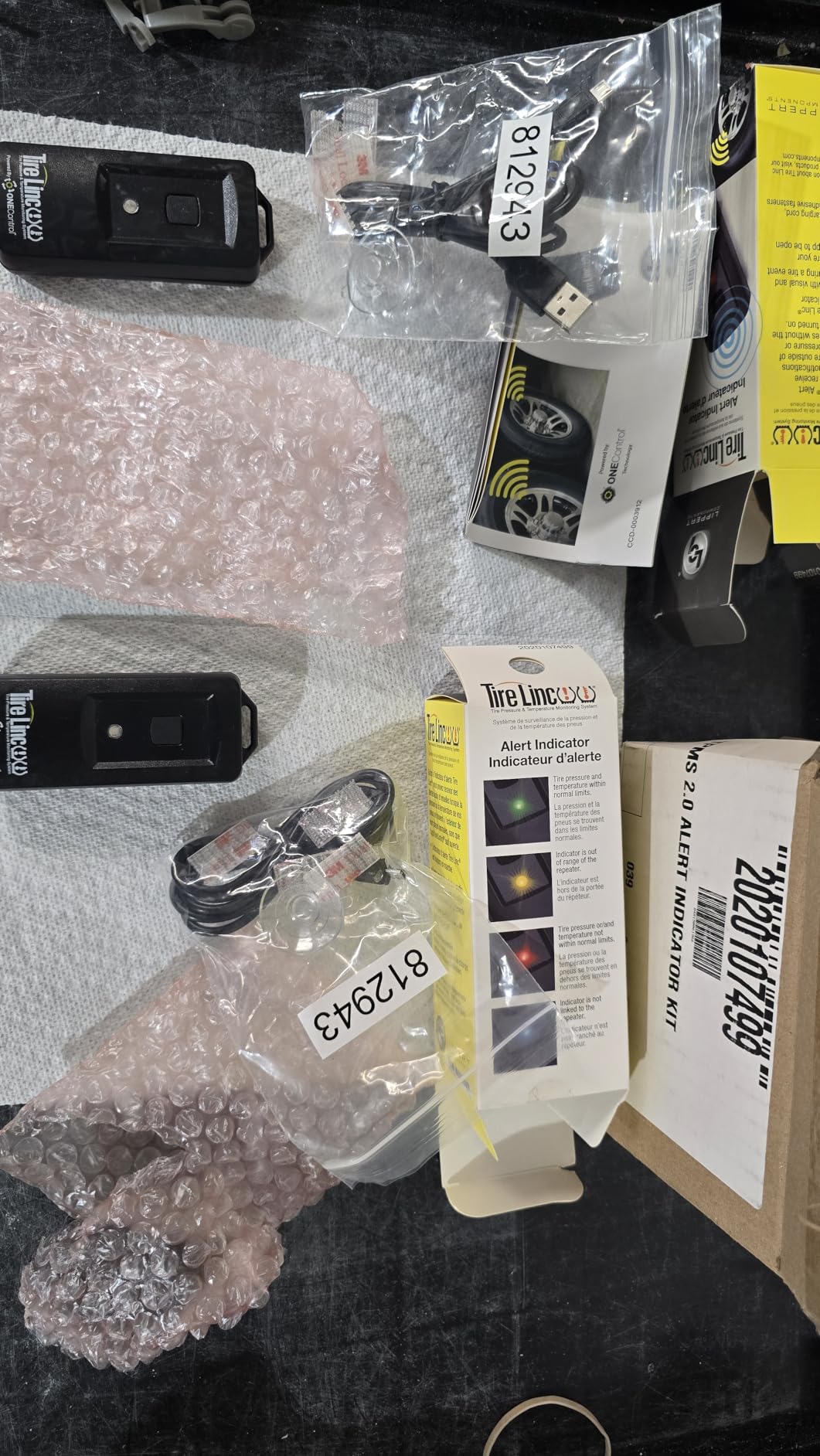
That last detail is the point. On an RV that came with a factory system, the common complaint is that the app is somewhere in your phone and the warning is silent. This puts a colored light in the dash and a beep in the cabin, at 8.8 ounces and 7.13 by 2.25 inches.
It sits inside the OneControl ecosystem, so it fits owners already running Lippert’s RV control app rather than adding a second vendor’s interface to the cockpit.
What the Tire LINC indicator does well
It solves the notification problem, not the monitoring problem. Owners who keep factory systems often keep them for exactly this reason, and adding an indicator is far cheaper than replacing the sensors that are already on the wheels.
Because it is always on, it also tells you when it has lost the repeater, which is the first sign that the chain downstream is failing rather than the tires.
Where Tire LINC is not a full system
You still need Tire LINC sensors, and detailed diagnostics still run through the OneControl app. If you are starting from scratch with no factory system, this is the wrong door to walk through.
It also carries the category’s usual OEM complaints: systems arriving incorrectly wired, sensors losing connection after cold weather, and support tickets that sit unanswered. Our research found owners who gave up on factory units and moved to a standalone system, and at 122 reviews this listing is thin enough that you should read the recent owner posts before you commit. If you are shopping from scratch, our RV TPMS roundup covers standalone options in detail.
10. Flydew 6-Wheel TPMS – Best for Owners Who Want Fully Custom Alert Limits
Flydew 6-Wheel RV TPMS with Custom Pressure Alerts, 0-144 PSI
0-144 PSI
0.3 second sensor updates
Thresholds set in real PSI
3-year warranty
Pros
- Thresholds set in exact PSI rather than percentages
- 0.3 second sensor update rate
- Solar panel plus USB-C charging
- Hex nuts for a vibration-proof seal
- Three-year warranty
Cons
- Only 6 sensors included
- Launched in 2026 so long-term history is thin
- CR1632 cells still need periodic swapping
The Flydew does one thing differently from everything else here: alert thresholds are entered in real PSI numbers rather than as a percentage of your reference. If you want a low alarm at 78 PSI instead of whatever 15 percent below reference happens to be, you can type it in.
That is a small feature on paper and a meaningful one in practice. Percentage thresholds drift as your reference pressure changes, which is a root cause of the false high-pressure alerts owners report on sustained grades when tires heat up and the baseline moves.
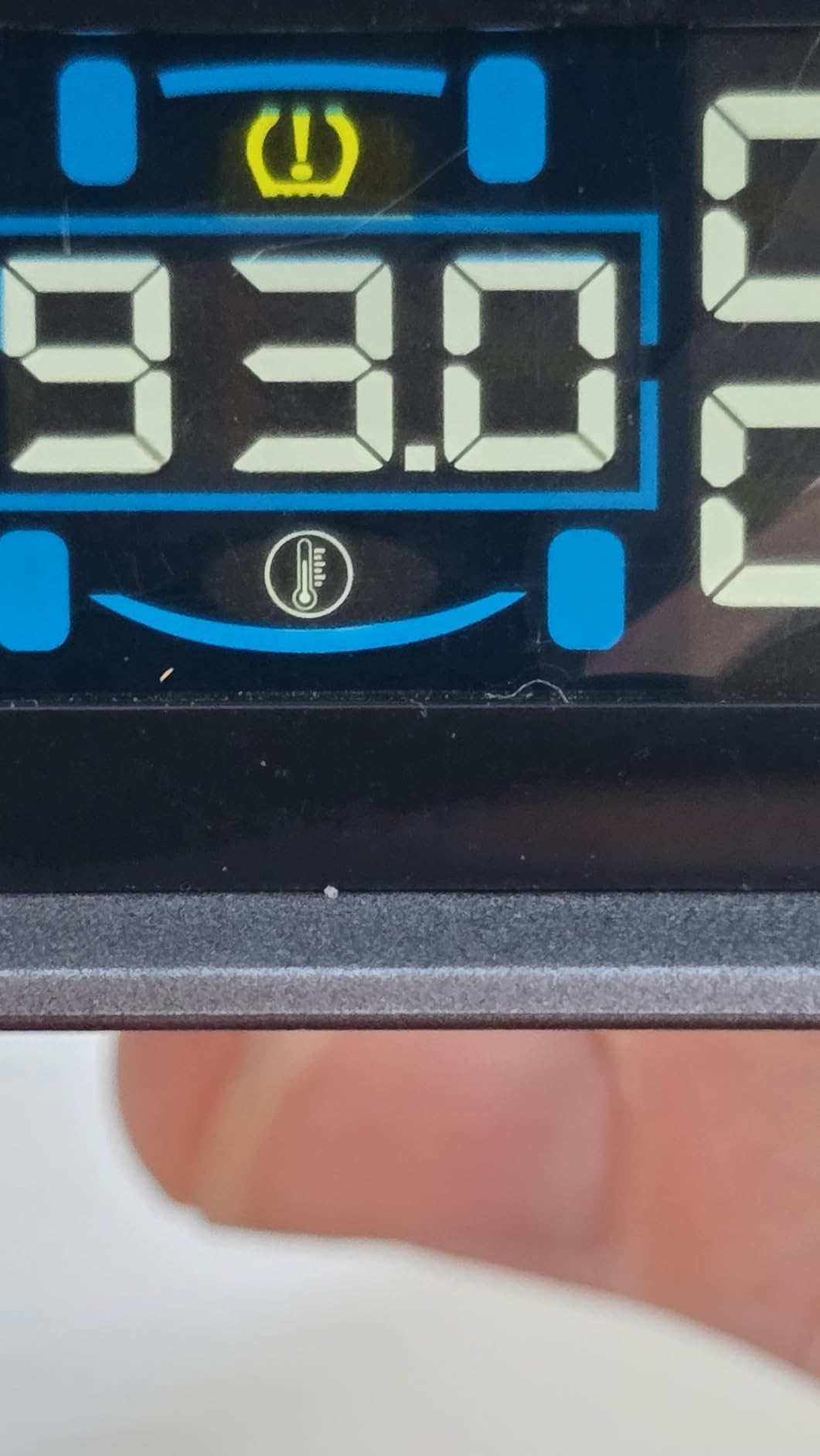
Sensor update rate is 0.3 seconds, roughly three times the standard interval, with the LCD refreshing every 6 seconds. Whether you notice that difference in real use is debatable, but for a fast leak the math favors having it.
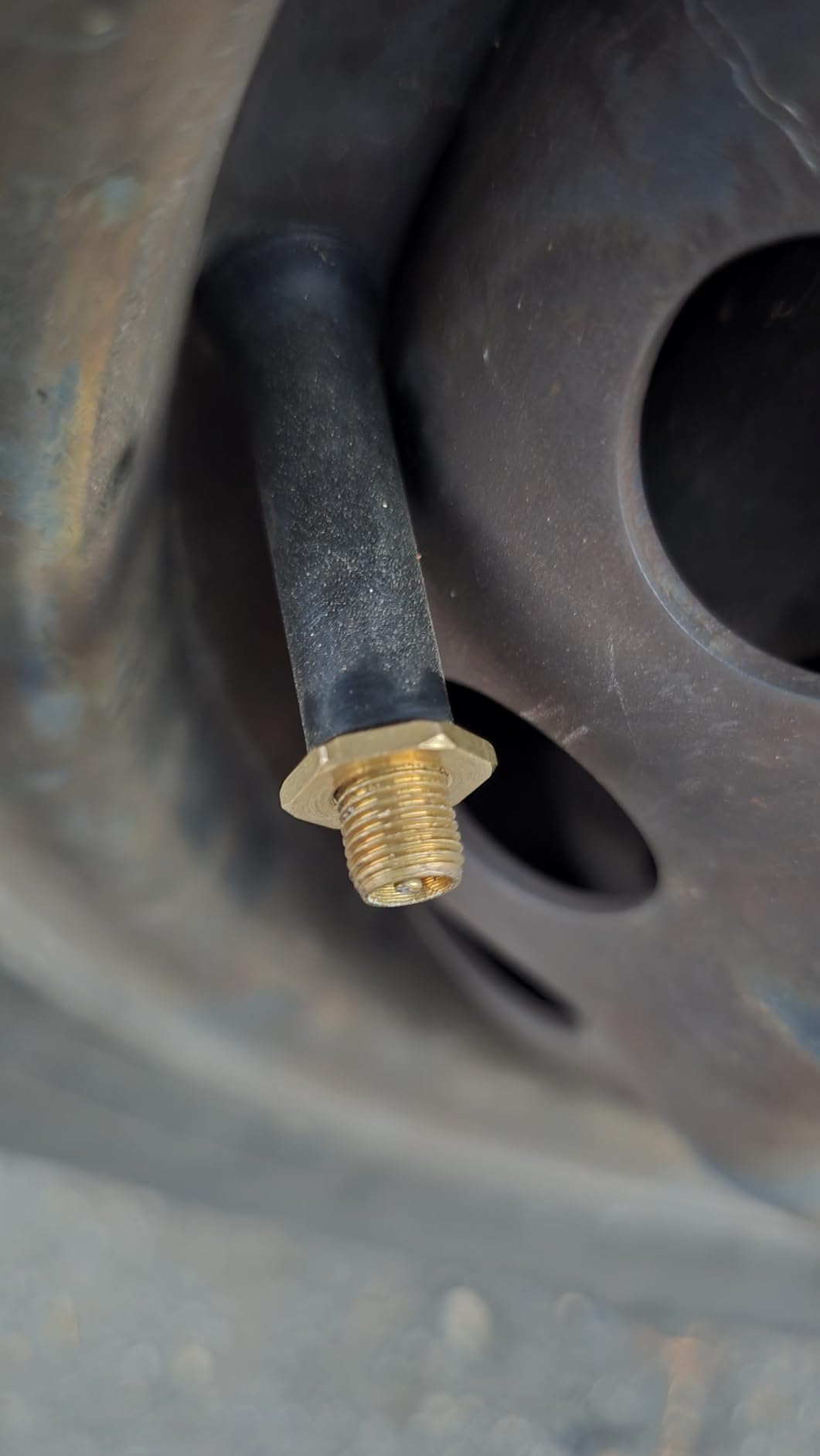
Power is a solar panel plus USB-C, sensors use replaceable CR1632 cells, and the included hex nuts are described as vibration-proof and leak resistant, which matters on a boat trailer or a gravel forest road.
What the custom-threshold design solves
Absolute PSI limits stop moving with the tire. A trailer tire at 100 PSI cold is not the same tire as one at 100 PSI after two hours at highway speed, and a fixed percentage band cannot tell the difference. Owners who tow loaded rigs will feel this more than anyone.
Install is three steps: power on, mount the pre-coded sensors 1 through 6, tighten the nuts. The auto-dimming color LCD handles the glare problem that trips up fixed-backlight screens.
Where the Flydew is unproven
This listing launched in March 2026 and carries 109 reviews, so there is no long-term data at all. The three-year warranty and a support response time quoted at 24 hours are encouraging, and 3 years is the length owners treat as the real quality benchmark, but a warranty is a promise rather than a track record.
Six sensors is the ceiling, which means no dually coverage without a second kit, and the brand has far less history in this category than TireMinder or GUTA. Treat it as the interesting option to watch rather than the one to bet a season on.
How to Choose a Trailer Tire Pressure Monitoring System
Cap sensors, flow-through sensors, or internal sensors
Cap sensors screw onto the existing valve stem and report through the cap body. They are the standard on all ten systems here, cheap, replaceable and easy to move between wheels. The tradeoff is that you pull the cap to check pressure, and you can lose the O-ring doing it.
Flow-through sensors keep the cap form factor but let air pass through the body, so you can inflate without removing anything. The GUTA GT80 is the only one here that does this, and it is a real convenience for anyone who checks pressure before every leg. Internal sensors sit inside the wheel and are rarely offered for aftermarket trailers.
Signal range and when you need a repeater
Sensors transmit on radio, and the signal weakens with distance and through the steel structure of a trailer. Manufacturers give clear thresholds: the Tymate recommends a repeater at 36 feet, the Masoll at 38 feet, and the GUTA GT20 states roughly 100 feet of range with its booster. Rules of thumb from owners put the drop-off point around 30 to 36 feet without help.
Count your towables before you buy. A truck alone is four tires. Add a travel trailer and you are at eight. Add a dually and a toad and you are past 20, which is where the GT30 and GT80 stop being overkill. Install the repeater at the midpoint of the trailer, never in the nose, or the front axle will read perfectly while the back drops out.
How to set your alert thresholds so they stop lying to you
Read the cold inflation pressure off the placard on the trailer frame, not off the sidewall maximum. That number is your reference. Then set your low alert about 10 to 15 percent below it and your high alert 15 to 25 percent above it.
Why the wide band? Because tire pressure rises as the tire heats up, and a loaded rig climbing a grade can climb 5 to 8 PSI above cold. Set a tight threshold and the system will alarm correctly every time, which trains you to ignore it. The Flydew lets you enter exact PSI values if you would rather track a specific number than a percentage.
Power: solar, USB, or 12 volt
Cigarette lighter power is the most reliable option for full-time towers, since it charges whenever the truck runs. Solar panels, on the Tymate, Masoll, LETOURWM and Flydew, are excellent for weekend rigs that spend more time parked than towed. USB and USB-C ports add a backup layer, and the TireMinder and Masoll monitors carry internal rechargeable batteries that run 12 to 15 days per charge.
Full-timers should still favor a wired power source. Solar on a dashboard in winter, behind a windshield with low winter light, is the weakest configuration in this list.
Sensor batteries and what they cost you each year
Most sensors here run user-replaceable coin cells: CR1632 in the Tymate, Masoll, Flydew, LETOURWM and the TireMinder phone kit, and CR2032 in the GUTA GT30 and GT80. That distinction matters more than it sounds, because a sensor you can open and service yourself is the difference between a two-minute fix and a return shipment.
Stated life runs from a few seasons to the GUTA’s four years, but owners on RV forums report losing signal from a low sensor battery well before the headline figure. Treat yearly checks as part of the pre-trip routine, and consider a nitrogen inflation setup if you want to cut pressure drift as a variable, which our guide to nitrogen tire inflation systems covers in detail.
Metal versus rubber valve stems
Almost every brand in this roundup specifies metal valve stems, and the GUTA GT80 flow-through sensors require them. Rubber stems flex under a cap sensor and can leak slowly at the seat, which shows up as a slow pressure drop that looks like a puncture and is not.
Make this a pre-purchase checklist item, not an install-day surprise. If your trailer has rubber stems, price the swap before you buy the system rather than after, and confirm the sensor bodies clear your wheel rims.
Factory-installed systems: keep or replace
If your RV came with a factory TPMS, you have three real options. Keep it and add an always-on alert indicator, which is what the Lippert Tire LINC unit is for. Keep it and fix the wiring and support problems, which owners do report solving. Or replace it with a standalone system you control.
Our research found owners who abandoned factory units after frustration with wiring, cold-weather sensor dropouts and unanswered support tickets, and who moved to TireMinder or a TST system instead. If you are already fighting the factory system, the honest advice is that a standalone unit with a booster in the box will be less annoying to live with.
What a Trailer TPMS Will Not Tell You
It will not report a catastrophic blowout in most cases, because the tire and often the sensor are destroyed at the same instant. The MyGrandRV account of a TST 507 rig driving for hours after an unreported blowout is the clearest example. No system on this list can catch that.
It also will not tell you about a failing wheel bearing. Tire temperature rises as a bearing starts to cook, but the readings are indirect and often too late, which is why some owners run separate axle temperature probes alongside a tire monitor. If bearing risk is your main concern, on a boat trailer or a heavy horse trailer, treat the tire monitor as one layer and a walk-around with an infrared thermometer as the other.
It will not tell you about sidewall damage that has not yet changed pressure, and it will not replace a pre-trip walk. The most valuable habit is still ten minutes with a gauge before you pull out, with the monitor handling the hours in between.
Moving Sensors to New Wheels or a Second Trailer
Cap sensors move easily in theory. In practice, the display needs to relearn which sensor sits at which position, and that process differs by brand. On most systems here you delete the old pairing, physically move the caps, and pair the new positions from the monitor menu with the tires inflated to your reference pressure.
The catch that catches people is cross-generation compatibility. Owners on RV forums report that upgrading a display within the same brand can leave existing sensors unusable, so check whether your specific model supports re-pairing old sensors before you plan a move. The GUTA’s wireless sensor programming and the Masoll’s auto-calibration are the two workflows in this roundup that make relocation least painful.
For a second trailer, check total tire capacity rather than sensor count. The GUTA GT30 at 46 tires and the TireMinder i10 at 40 tires are the two here with room for a household running multiple tows; the four-sensor kits are not, and a second monitor is the cheaper answer.
Frequently Asked Questions
What is the best tire pressure monitoring system for travel trailers?
For most travel trailer owners, the Tymate TM7 is the best overall pick. It ships with four pre-paired sensors, reports 0-144 PSI at plus or minus 1.5 PSI, covers six alarm modes including fast-leak and signal-lost warnings, and has the largest owner base in our roundup at more than 2500 reviews. Trailers longer than 36 feet should add a repeater. Owners who want tighter accuracy and a booster in the box tend to pick the TireMinder i10 instead.
Which brand of TPMS sensor is considered the most reliable?
TireMinder is the brand owners name most often for reliability measured in seasons rather than months, and the iRV2 consensus in our research names it alongside the TST 507 as the most frequently endorsed systems. The i10 holds 4.4 stars on 1050 reviews with plus or minus 1 PSI accuracy and a six-second check interval. Budget brands like Tymate, Masoll and GUTA are widely described as working adequately for the money.
Do I need a signal booster for my trailer TPMS?
Above roughly 30 to 36 feet, yes. Manufacturers give these thresholds: Tymate recommends a repeater at 36 feet, Masoll at 38 feet, and the GUTA GT20 states about 100 feet of range with its booster. Without one, the rear-most tire is usually the first to drop off the display. Install the repeater at the midpoint of the trailer rather than the nose, or the front axle will read cleanly while the rear axle disappears.
How long do trailer TPMS sensor batteries last?
Stated sensor battery life ranges from a few seasons up to the GUTA’s four years for CR2032 cells, but owners on RV forums report losing signal from a low sensor battery sooner than the headline figure. Most systems here use user-replaceable coin cells: CR1632 in the Tymate, Masoll, Flydew, LETOURWM and the TireMinder phone kit, and CR2032 in the GUTA GT30 and GT80. A sensor you can open yourself is a two-minute fix rather than a return shipment.
Can a TPMS detect a bearing failure?
Not reliably. A trailer tire pressure monitoring system reads pressure and temperature at the valve stem, so a failing wheel bearing produces only an indirect and often late temperature signal. None of the ten systems here reports bearing condition directly. On a boat trailer or a heavy horse trailer, run the tire monitor as one layer and pair it with a walk-around using an infrared thermometer, plus separate axle temperature probes if the risk warrants it.
How do I set TPMS alert thresholds on a trailer?
Read the cold inflation pressure off the placard on the trailer frame rather than the sidewall maximum, and treat that as your reference. Set the low alert about 10 to 15 percent below it and the high alert 15 to 25 percent above. The wide band matters because tire pressure rises 5 to 8 PSI when a loaded rig heats up on a sustained grade. A tight threshold alarms correctly every trip and trains you to ignore it. The Flydew lets you enter exact PSI values instead of percentages.
Final Verdict: Which Trailer TPMS Should You Buy?
The Tymate TM7 is the best trailer tire pressure monitoring system for most people in 2026. It has the largest owner base we found, the shortest setup, the widest accuracy band of the budget tier, and alarm modes that actually tell you when a sensor has dropped off. Buy metal valve stems and a repeater if your trailer runs past 36 feet, and you are set.
Move up to the TireMinder i10 if you want plus or minus 1 PSI accuracy, six-second checks and a booster in the box, and you can live with adding transmitters later. Choose the GUTA GT30 for multiple trailers, the GT80 if inflating without removing caps matters to you, and the Masoll M13 for the simplest solar setup under 38 feet.
Whatever you pick, set your thresholds from the cold placard pressure, walk the rig before every departure, and remember that no monitor reports a blowout it never got to see. For the rest of your trailer setup, our trailer hitch guide covers the other end of the same safety chain.