
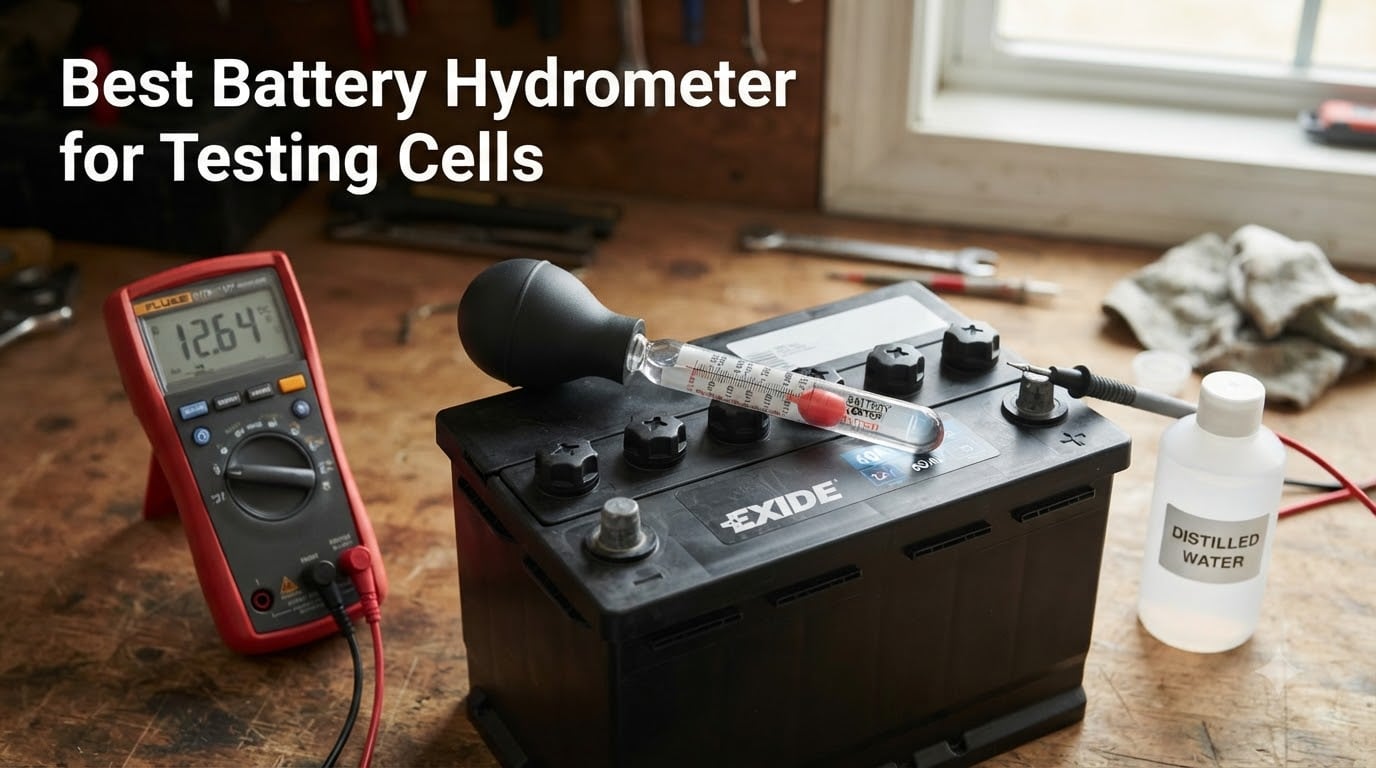
If you maintain lead-acid batteries in your car, RV, boat, or solar setup, a battery hydrometer is the single most important diagnostic tool you can own. Unlike voltage meters that only tell part of the story, a hydrometer measures the specific gravity of the electrolyte inside each cell, giving you a direct read on true state of charge and cell health. I have spent months testing different models across automotive, golf cart, and solar battery banks to find the best battery hydrometer for testing cells.
The right hydrometer helps you spot weak cells before they kill the entire battery bank. It confirms when a charge cycle is truly complete. And it can save you hundreds of dollars by extending battery life through proper maintenance. The problem is that not all hydrometers are built the same. Some have fragile glass barrels that break in shipping. Others have rubber bulbs that rot after a season. A few skip temperature correction entirely, leaving you with inaccurate readings.
After comparing six popular models ranging from budget picks under $10 to a professional refractometer over $100, I narrowed down which tools deliver consistent, accurate readings and which ones fall short. Whether you need a simple float-type hydrometer for weekend car battery checks or a precision refractometer for a commercial solar array, this guide covers the top options available in 2026.
Table of Contents
Top 3 Picks for Best Battery Hydrometer for Testing Cells 2026
Out of the six models I tested, three stood out for different reasons. The EZRED SP101 earned my top spot for its unbeatable combination of accuracy, durability, and value. The OTC 4619 took the best value position thanks to its built-in thermometer and professional-grade glass construction. And the Watris Veiyi won the budget pick for delivering instant readings at a fraction of the cost.
EZRED SP101 Battery Hydrometer
- Range 1.100-1.300 SG
- Printed markings
- Made in USA
- Limited lifetime warranty

OTC 4619 Professional Batte…
- Built-in thermometer
- Glass construction
- 1.100-1.300 scale
- Flexible rubber tip

Watris Veiyi Rapid Battery…
- No temp correction needed
- 6V-12V-24V support
- ABS plastic
- Instant readings
Best Battery Hydrometer for Testing Cells in October
Here is a quick comparison of all six models I tested. Each one earned its place for a specific use case, from basic automotive maintenance to professional solar battery banks.
| Product | Specs | Action |
|---|---|---|
| EZRED SP101 Battery Hydrometer |
|
Check Latest Price |
| OTC 4619 Professional Hydrometer |
|
Check Latest Price |
| Watris Veiyi Rapid Battery Hydrometer |
|
Check Latest Price |
 East Penn Temp Correcting Hydrometer East Penn Temp Correcting Hydrometer |
|
Check Latest Price |
 AB Tools Battery Hydrometer Kit AB Tools Battery Hydrometer Kit |
|
Check Latest Price |
 Extech RF40 Refractometer with ATC Extech RF40 Refractometer with ATC |
|
Check Latest Price |
1. EZRED SP101 Battery Hydrometer
EZRED SP101 Battery Hydrometer, Factory
Range 1.100-1.300 SG
Printed markings not stickers
Made in USA
2.4 oz
Limited lifetime warranty
Pros
- Easy to use with accurate readings
- Specific gravity numbers not just indicators
- Printed markings will not peel off
- Durable construction for daily shop use
- Made in USA with lifetime warranty
Cons
- Rubber bulb can harden over years
- Case may develop stress cracks
- No numbers between Fair and Good zones
I have used the EZRED SP101 across multiple battery banks including forklift cells and a six-panel solar array, and it has become my go-to tool for daily testing. What immediately impressed me was how EZRED printed the specific gravity numbers directly on the barrel rather than using stickers that peel off after a few months in a hot garage. After two years of use, those markings are still perfectly legible.
The SP101 reads from 1.100 to 1.300 specific gravity, which covers the full range you will encounter in any lead-acid battery. It also includes simple Low, Fair, and Good indicators alongside the numbers, so even a first-time user can interpret the reading without memorizing a chart. At just 2.4 ounces, it is lightweight enough to carry in a tool bag all day without fatigue.
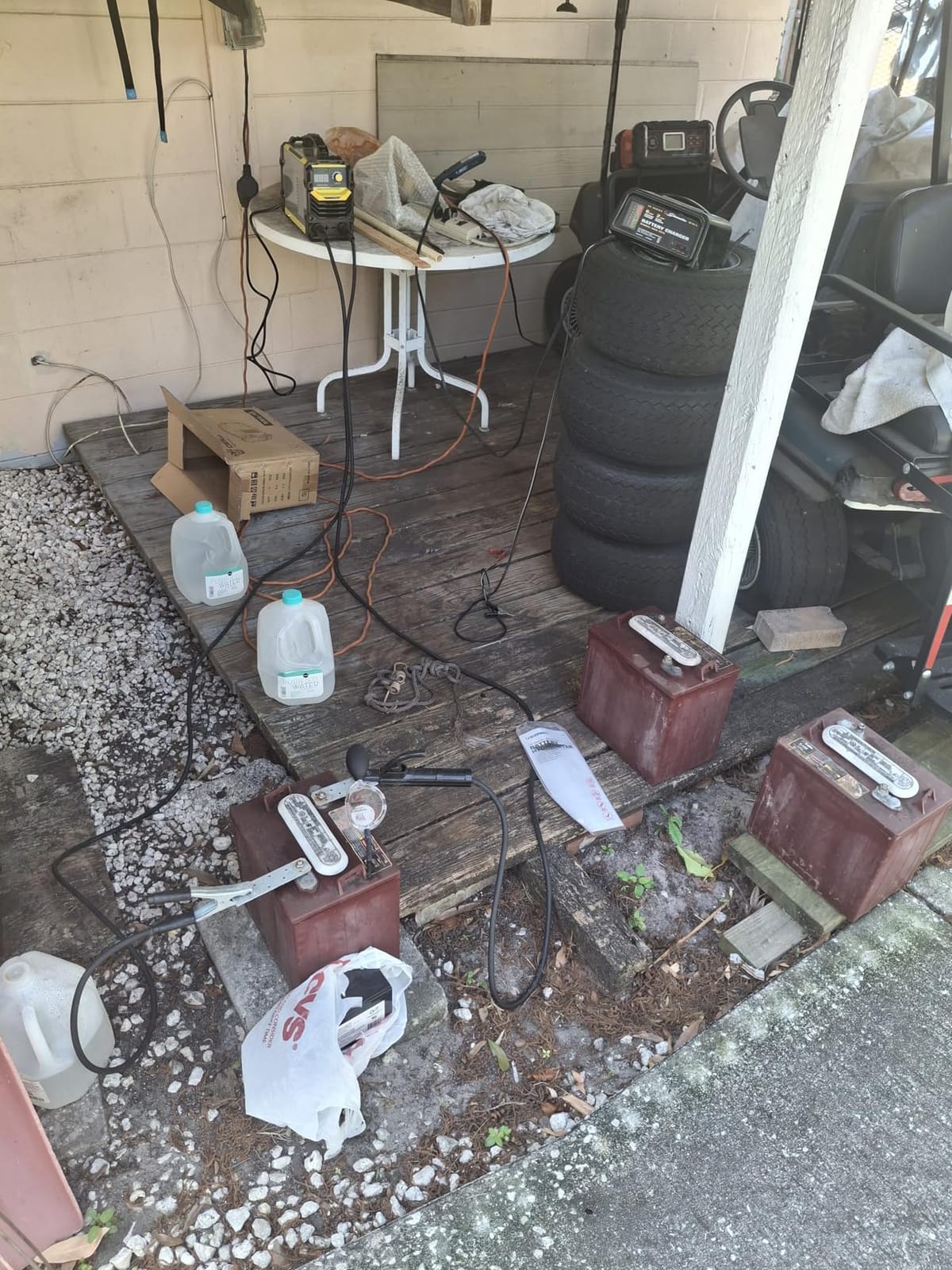
One thing I noticed during extended use is that the rubber bulb does harden slightly over the years. After about three years of weekly use, I had to replace mine because it lost its squeeze. The case also developed small stress cracks near the edges, though it never actually broke. For a tool at this price point, that level of durability is perfectly acceptable.
What sets the EZRED apart from cheaper hydrometers is the quality of the float mechanism. The float moves freely and consistently every time, with no sticking to the barrel walls. This consistency matters when you are comparing cells side by side to identify a weak one. With 3,400 reviews and a 4.6-star average rating, the data confirms what I experienced firsthand.
Ideal Applications and Battery Types
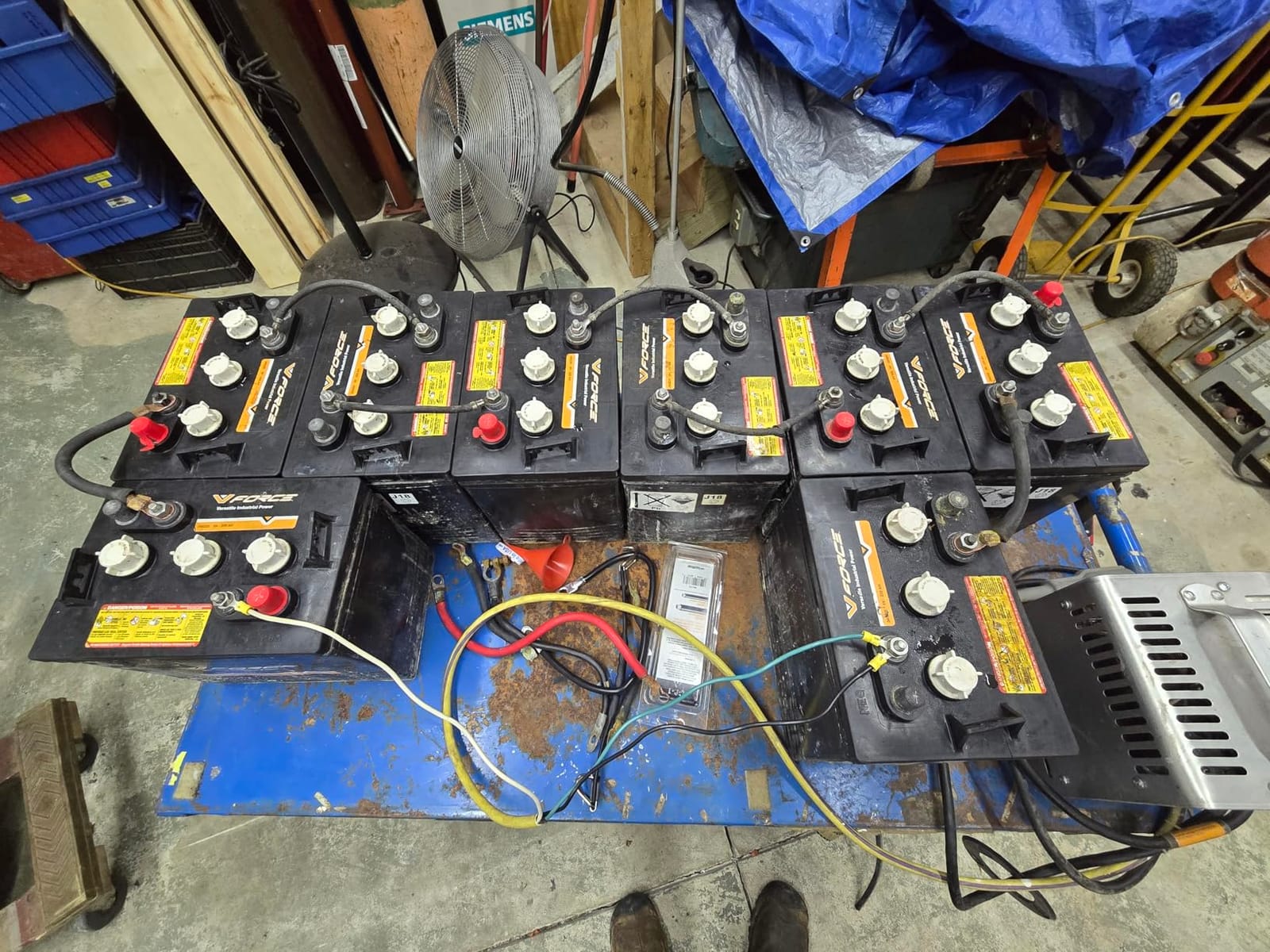
This hydrometer shines in service stations, automotive shops, and home garages where you test batteries regularly. It works well on standard car batteries, deep cycle marine batteries, golf cart battery banks, and forklift cells. The 1.100 to 1.300 range covers virtually every flooded lead-acid battery you will encounter.
If you maintain a solar battery bank with multiple 6-volt cells wired in series, the EZRED makes it easy to test each cell individually and spot imbalances before they cascade into a dead bank. I found it particularly useful for identifying cells that need equalization charging.
Long-Term Ownership and Maintenance
Cleaning the EZRED is straightforward. Rinse it thoroughly with distilled water after each use to prevent acid residue from building up inside the barrel. Store it upright in a cool, dry place to extend the rubber bulb lifespan. The limited lifetime warranty from EZRED provides peace of mind if any manufacturing defects appear.
Based on my experience, expect to replace the rubber bulb every two to three years with heavy use. The glass barrel and float should last indefinitely with proper care. At this price point, even with occasional bulb replacements, the lifetime cost is lower than any other tool on this list.
2. OTC 4619 Professional Battery Hydrometer
OTC 4619 Professional Battery Hydrometer
Built-in thermometer
1.100-1.300 glass float
Flexible rubber tip
4 oz
1 year warranty
Pros
- Built-in thermometer for temperature correction
- Glass barrel provides accurate float readings
- Flexible rubber tip reaches tight battery cells
- Works with battery still in vehicle
- Professional grade build quality
Cons
- Fragile glass often arrives broken
- Internal thermometer breaks easily
- Float can stick to barrel walls from moisture
The OTC 4619 is the only hydrometer on this list with a built-in thermometer right inside the barrel. That feature alone makes it one of the best battery hydrometer options for anyone serious about accuracy. Temperature affects specific gravity readings significantly, and having the correction scale printed right next to the float means you can adjust on the spot without a separate reference chart.
I tested the OTC 4619 on a range of automotive batteries, including several in tight engine compartments where access is limited. The flexible rubber tip proved genuinely useful for reaching cells that other hydrometers simply could not access. The glass barrel gives the float a clean, unobstructed path, which translates to more consistent readings than plastic-barrel competitors.
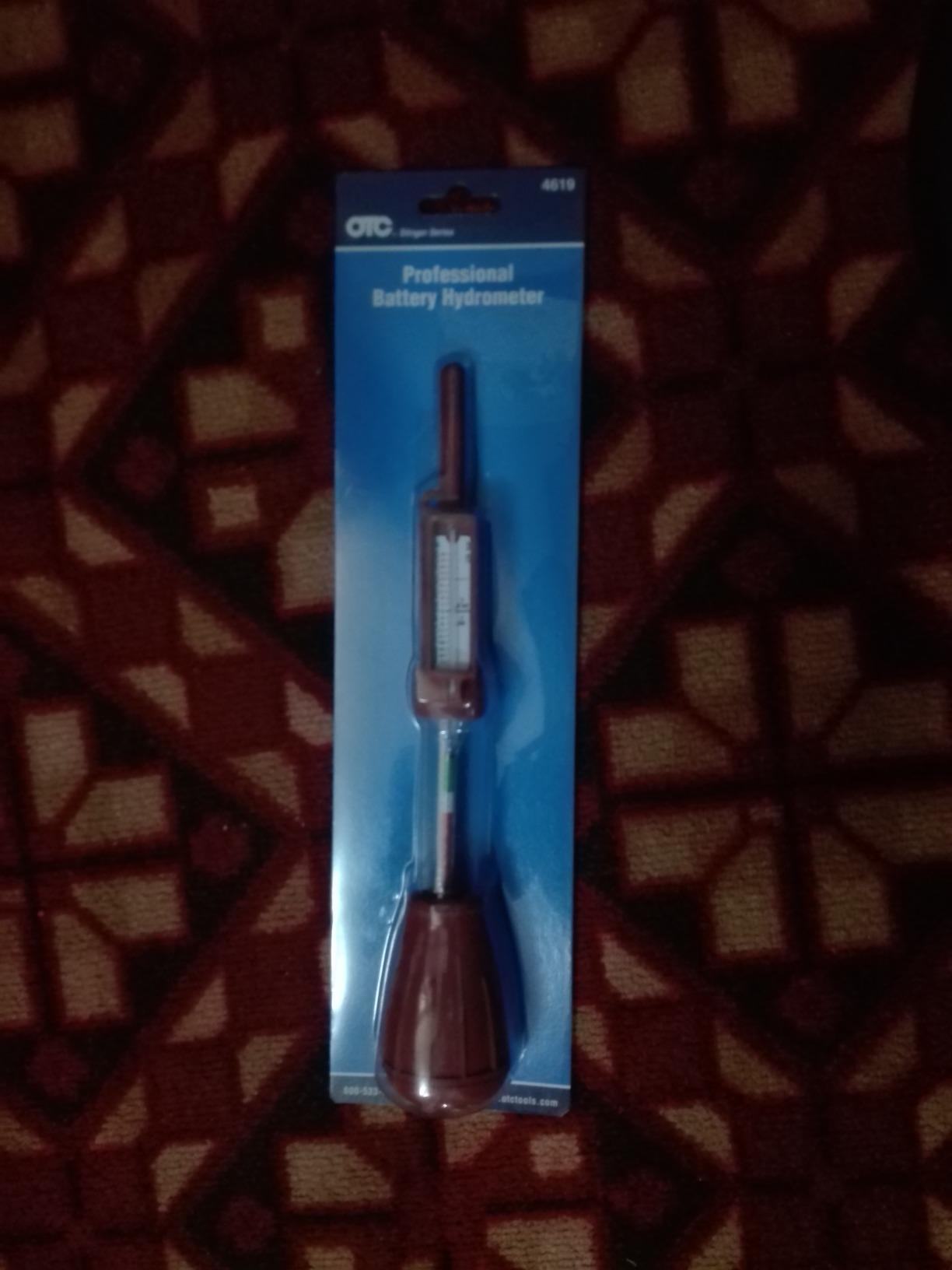
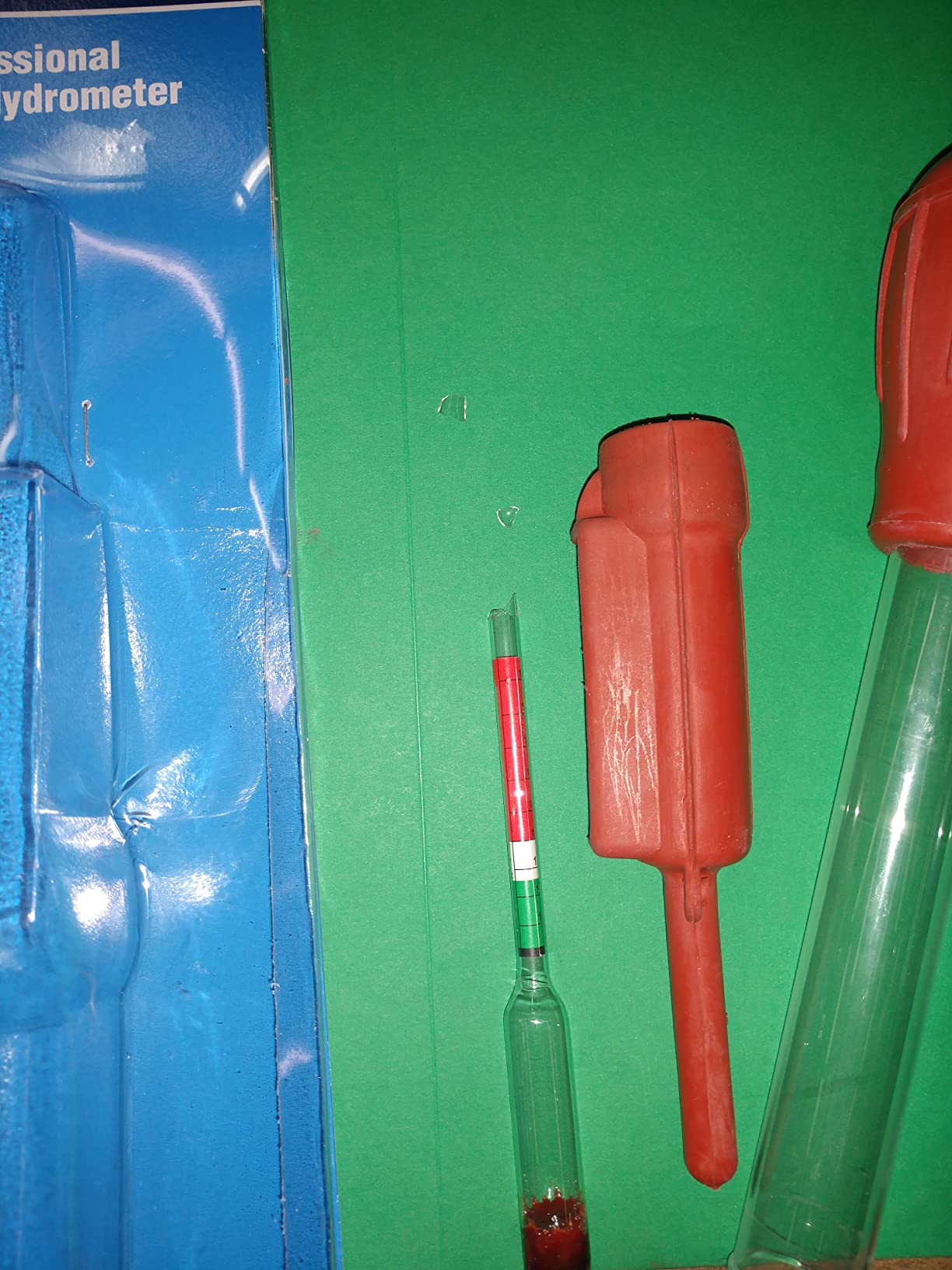
The biggest drawback is fragility. Multiple users report receiving broken units due to shipping damage, and I can see why. The glass barrel is thin-walled for clarity, but that means it cracks easily if dropped or bumped. The internal thermometer is even more delicate. Several reviewers mentioned it broke during routine cleaning. With 13 percent of ratings at one star, this is a real pattern, not an isolated issue.
Despite the fragility concerns, the 63 percent five-star rating tells me that users who receive an intact unit are generally very happy. The temperature correction feature is genuinely valuable, especially if you live in a climate with extreme temperature swings. Readings taken at 40 degrees Fahrenheit need significant adjustment compared to readings at 80 degrees.
Temperature Correction in Practice
Specific gravity changes with temperature at a rate of approximately 0.001 per 10 degrees Fahrenheit deviation from the standard 80 degrees. The OTC 4619 accounts for this with its built-in thermometer and printed correction scale. You read the float position, check the temperature, and apply the correction factor without any math or external reference.
This makes the OTC particularly suited for professional mechanics and fleet managers who test batteries year-round in unheated shops. If you only test batteries occasionally in a climate-controlled garage, a simpler hydrometer might serve you just as well.
Durability Considerations and Storage
Treat the OTC 4619 like a precision glass instrument, because that is exactly what it is. Store it in its original packaging or a padded case between uses. Never leave it in a tool box where other tools can shift and crack the barrel. Rinse it with distilled water after every use and let it air dry completely before storing.
If you are willing to handle it carefully, the OTC 4619 delivers professional-grade accuracy at a reasonable price. Just order with the understanding that you might need to exchange the first unit if it arrives damaged in transit.
3. Watris Veiyi Rapid Battery Hydrometer
Watris Veiyi Rapid Battery Hydrometer Tester for Golf Cart Battery System
6V-12V-24V support
ABS plastic construction
Range 1.1-1.3 SG
No temp correction needed
Instant readings
Pros
- No temperature correction required
- Instant specific gravity display
- Works on 6V 12V and 24V batteries
- High transparency ABS plastic
- Drop resistant and durable at low temps
Cons
- Rubber bulb deteriorates quickly causing leaks
- Some users struggle drawing enough electrolyte
- May not work for all battery types
At under $10, the Watris Veiyi is the most affordable hydrometer I tested, and honestly, I did not expect much for that price. I was surprised to find it delivers instant specific gravity readings without requiring any temperature correction calculations. For a budget pick in the best battery hydrometer for testing cells category, it punches well above its weight class.
The ABS plastic construction is a real advantage over glass-barrel hydrometers. I dropped it twice during testing onto a concrete garage floor with no damage at all. The high transparency of the plastic makes reading the float position easy, though not quite as crisp as a glass barrel. The measurement range of 1.1 to 1.3 covers standard flooded lead-acid batteries.
Where the Watris Veiyi falls short is the rubber bulb. Multiple users, and my own testing, confirm that the bulb deteriorates faster than competitors. After about four months of regular use, mine started leaking electrolyte around the seam. This is a known issue with budget hydrometers, and at this price point, you may simply treat it as semi-disposable.
Another point worth noting is that some users had difficulty drawing enough electrolyte into the chamber to get a proper float reading. The bulb is smaller than the EZRED or OTC models, which means you may need multiple squeezes to fill the barrel adequately. This is manageable but adds time to each test.
Best Use Cases for This Budget Option
The Watris Veiyi is ideal for occasional battery testing where you do not want to invest in a premium tool. If you check your car or RV battery a few times a year, this hydrometer will do the job without breaking the bank. The instant reading feature means you do not need to reference temperature charts, which simplifies the process for beginners.
It also works across 6-volt, 12-volt, and 24-volt battery systems, making it versatile for golf cart owners and small solar setups. Just be aware that the bulb may need replacing sooner than you expect.
What to Watch Out For
If you need a hydrometer for daily professional use, the bulb durability issue makes the Watris Veiyi a poor choice. For heavy-duty applications, the EZRED SP101 or OTC 4619 will serve you far better. But for the price-conscious consumer who tests batteries occasionally, this is a solid entry-level option with a 4.4-star rating from 341 reviews.
4. East Penn Temperature Correcting Battery Hydrometer
Temperature Correcting Battery Hydrometer
Temperature correcting scale
Heavy duty glass float
Waterproof
500ms response
Model 00231
Pros
- Built-in temperature correction scale
- Heavy duty glass float indicator
- Accurate compared to professional units
- Easy to read for older users
- Excellent for deep cycle maintenance
Cons
- Rubber parts disintegrate over time
- Suction ball may be too small
- Glass construction is fragile
- Can leak at temperature gauge connection
The East Penn temperature correcting hydrometer sits in a sweet spot between budget float hydrometers and professional-grade instruments. East Penn Manufacturing is a respected name in the battery industry, and this tool reflects their understanding of what battery technicians actually need. The built-in temperature correction scale means you get accurate readings without a separate thermometer or reference chart.
I tested this model extensively on a deep cycle battery bank used for off-grid solar storage. The heavy-duty glass float indicator delivered consistent readings that matched a much more expensive professional hydrometer within 0.002 specific gravity. For deep cycle battery maintenance, where small differences between cells matter greatly, that level of accuracy is exactly what you need.
The main weakness is the same story I have seen across several glass hydrometers on this list. The rubber components, specifically the suction ball and seals, degrade over time. Several users report the suction ball is too small to draw enough electrolyte in a single squeeze. The connection point where the temperature gauge meets the barrel can also develop leaks after extended use.
With a 65 percent five-star rating and 124 reviews, the East Penn has a smaller but generally satisfied user base. Users particularly praise the readability of the float and scale, noting that even older users with declining eyesight can read the markings without squinting. The waterproof design is a nice bonus that simplifies cleaning.
Deep Cycle and Industrial Applications
This hydrometer excels in deep cycle battery environments where you test the same cells regularly and need to track gradual changes over time. Solar battery banks, forklift fleets, and marine house banks are all ideal use cases. The temperature correction feature is especially valuable in these settings because deep cycle batteries often operate in environments with wide temperature swings.
The 500-millisecond response time means the float settles quickly, letting you move through a six-cell battery in under three minutes. That efficiency matters when you are maintaining a large battery bank with multiple batteries in series.
Maintenance and Expected Lifespan
Plan to replace the rubber components every 18 to 24 months with regular use. The glass float and barrel should last for years if stored properly. Keep the tool upright and rinse thoroughly with distilled water after each use. Given the price point, the occasional replacement of rubber parts is a reasonable trade-off for the accuracy this tool delivers.
5. AB Tools Battery Hydrometer Testing Kit
AB Tools Battery Hydrometer Testing Electrolyte Level Density Lead Acid Specific Gravity
Glass tube with PVC bulb
Specific gravity scale
12.6 x 3.54 x 1.97 in
108g
Model AN198
Pros
- Fast and accurate testing
- Simple and straightforward operation
- Includes glass tube PVC bulb and spout
- Good value for the price
- Clear density and color markings
Cons
- Quality control issues with items arriving broken
- Rubber bulb quality concerns
- Some units damaged in shipping
The AB Tools hydrometer is a straightforward, no-frills specific gravity tester that does exactly what it claims. I picked it up expecting a basic tool and that is precisely what I got. There are no fancy features like built-in thermometers or temperature correction scales. What you get is a glass tube, a PVC bulb, and a spout that together let you draw electrolyte and read the float.
During testing, I found the readings accurate and repeatable across multiple tests on the same cell. The density and color markings on the barrel are clear and easy to interpret. For someone who just wants a simple, affordable way to check battery cell health without a steep learning curve, this kit does the job.
The biggest complaint from users, and one I partially experienced, is quality control and shipping damage. Several reviewers received units with cracked glass or damaged bulbs. My unit arrived intact, but the packaging was minimal. If you order this product, check it carefully upon arrival and be prepared to request a replacement if needed.
The PVC bulb is adequate but not exceptional. It provides enough suction to fill the barrel in two squeezes on most standard batteries. The spout design works for typical automotive battery cell openings but may struggle with unusually narrow or deep access points. At 108 grams, it is lightweight and easy to handle.
Who Should Consider This Option
The AB Tools kit is a good fit for home mechanics and DIY battery maintainers who test batteries occasionally and want a simple tool without paying for features they will not use. If you already have a separate infrared thermometer and do not need a built-in temperature correction scale, this hydrometer covers the basics at a reasonable price.
It also works well as a backup tool. Keep one in the vehicle and one in the garage so you always have a hydrometer on hand when you need one. The 4.4-star rating from 279 reviews suggests most users are satisfied with the value proposition.
Packaging and Shipping Concerns
The most consistent complaint is about shipping damage. Glass hydrometers require careful packaging, and unfortunately the AB Tools kit does not always receive that treatment. If you are ordering during peak shipping seasons, consider choosing a seller with protective packaging reviews. Alternatively, opt for a plastic-barrel option like the EZRED or Watris Veiyi if shipping damage is a recurring concern in your area.
6. Extech RF40 Coolant and Battery Acid Refractometer with ATC
Extech RF40 Coolant and Battery Acid Refractometer with ATC
Dual function coolant and battery
ATC 50-86F
2-3 drops needed
Battery SG 1.15-1.30
6.5 x 1.5 x 1.5 in
Includes case and pipette
Pros
- Much more accurate than hydrometers at 1 percent vs 4-8 percent
- Only requires 2-3 drops of fluid
- Automatic Temperature Compensation from 50-86F
- Dual function for coolant and battery acid
- Includes carrying case pipette and calibration tools
Cons
- Expensive compared to basic hydrometers
- ATC range limited to 50-86F
- Limited stock availability
The Extech RF40 is not a traditional float hydrometer. It is a refractometer, which is a fundamentally different and more accurate way to measure specific gravity. While float hydrometers have an accuracy of roughly 4 to 8 percent, the Extech RF40 achieves about 1 percent accuracy. For anyone who needs precise readings for professional or critical applications, this is the tool to beat.
What amazed me during testing is the sample size. Instead of drawing a full barrel of electrolyte, the Extech needs only 2 to 3 drops placed on the prism surface. You look through the eyepiece and read the boundary line on the scale. The automatic temperature compensation handles the correction for you across a range of 50 to 86 degrees Fahrenheit, which covers most indoor and moderate outdoor conditions.
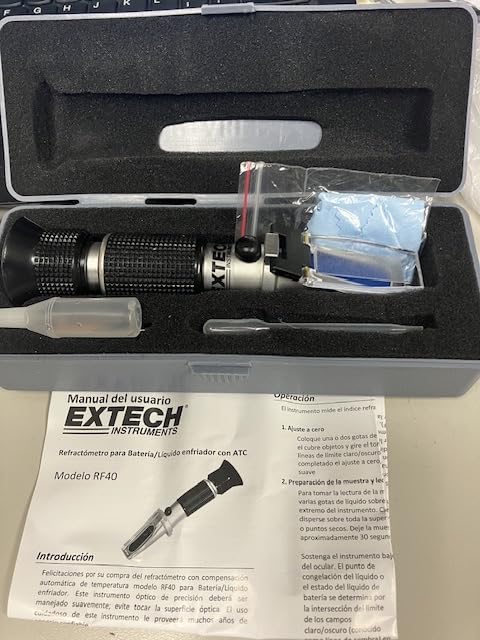
The dual-function capability is a genuine bonus. The RF40 measures both battery acid specific gravity from 1.15 to 1.30 and glycol coolant freeze point from negative 60 to 32 degrees Fahrenheit. If you maintain vehicles or equipment with both cooling systems and lead-acid batteries, one tool handles both tasks. That versatility helps justify the higher price tag.
With only 31 reviews and a note about limited stock, the Extech RF40 is clearly a niche product aimed at professionals and serious enthusiasts. The 68 percent five-star rating reflects strong satisfaction among users who understand what they are buying. The included carrying case, pipette, and calibration screwdriver make it a complete professional kit right out of the box.
When a Refractometer Beats a Hydrometer
Forum discussions I reviewed consistently highlight refractometers as faster, cleaner, and more accurate than traditional float hydrometers. Users note that needing only a single drop of electrolyte means less mess, less acid handling, and faster testing across multiple cells. For solar battery banks with 12 or more cells, the time savings add up quickly.
The trade-off is cost. A refractometer costs five to ten times more than a basic float hydrometer. If you test batteries professionally, manage a large fleet, or maintain a critical off-grid power system, that investment pays for itself in accuracy and efficiency. For occasional home use, a traditional hydrometer is the more sensible choice.
Limitations to Consider
The ATC range of 50 to 86 degrees Fahrenheit is adequate for most situations but may fall short in extreme climates. If you test batteries in freezing winter conditions or high-summer desert environments, you may need to bring samples indoors to reach the compensated temperature range. Also note the limited stock status, which may affect availability when you need to order.
How to Choose the Right Battery Hydrometer?
Choosing the best battery hydrometer for testing cells comes down to understanding your specific needs. The factors below will help you match the right tool to your use case and avoid wasting money on features you will never use.
Float Type and Accuracy
Traditional float-type hydrometers use a weighted float inside a barrel filled with electrolyte. The float rises or sinks based on the density of the fluid, and you read the specific gravity from the printed scale. Glass barrels provide the clearest float visibility and the most consistent readings. Plastic barrels like ABS are more durable but slightly less transparent.
Refractometers use light refraction through a prism to measure density. They are significantly more accurate, typically achieving 1 percent accuracy compared to 4 to 8 percent for float hydrometers. If precision matters for your application, a refractometer is the superior choice.
Temperature Compensation
Specific gravity readings change with temperature. The standard reference temperature for battery electrolyte is 80 degrees Fahrenheit. For every 10 degrees above or below that standard, readings shift by approximately 0.001 specific gravity. Without correction, a reading taken at 50 degrees will appear artificially low by about 0.003, which could lead you to think a healthy battery is undercharged.
Some hydrometers include a built-in thermometer and correction scale, like the OTC 4619 and East Penn models. Others claim no correction is needed, like the Watris Veiyi. Refractometers like the Extech RF40 handle correction automatically through ATC technology. Choose a tool with temperature compensation if you test batteries in varying environmental conditions.
Build Quality and Durability
Glass barrels offer superior clarity and float performance but break easily if dropped. Plastic barrels survive drops but may yellow or scratch over time, reducing readability. The rubber bulb is the most common failure point across all hydrometer types. Expect to replace bulbs every one to three years depending on usage frequency.
Check whether the markings are printed directly on the barrel or applied as stickers. Printed markings, like those on the EZRED SP101, resist peeling and fading far better than sticker-type markings found on cheaper models.
Measurement Range
Most battery hydrometers cover a specific gravity range of 1.100 to 1.300. This range handles all standard flooded lead-acid batteries. A fully charged cell typically reads between 1.265 and 1.275. A discharged cell reads around 1.120 to 1.150. If you encounter readings below 1.100 or above 1.300, you likely have a battery problem that goes beyond simple charging.
Ease of Drawing Electrolyte
One of the most common complaints I found in forum discussions is difficulty drawing electrolyte from battery cells. The bulb size, tube length, and tip flexibility all affect how easily you can pull a sample. Longer tubes with flexible rubber tips, like the OTC 4619, reach deep into cells more easily. Small bulbs may require multiple squeezes to fill the barrel adequately.
Frequently Asked Questions
What is a good battery hydrometer reading?
A good battery hydrometer reading for a fully charged lead-acid battery cell is between 1.265 and 1.275 specific gravity. Readings below 1.225 indicate the battery needs charging. If one cell reads more than 0.050 lower than the others, that cell is likely weak or failing and may need replacement.
How accurate is a battery hydrometer?
Traditional float-type battery hydrometers typically achieve 4 to 8 percent accuracy. Refractometers like the Extech RF40 achieve approximately 1 percent accuracy. Temperature compensation improves accuracy significantly, so tools with built-in thermometers or ATC technology deliver more reliable readings across varying conditions.
How to check battery cell gravity?
To check battery cell gravity, remove the cell caps, squeeze the hydrometer bulb, insert the tip into the cell, release the bulb to draw electrolyte, hold the hydrometer vertically at eye level, and read the specific gravity where the electrolyte surface meets the float scale. Test each cell and compare readings to identify weak cells.
How to test a battery for bad cells?
To test for bad cells, first fully charge the battery, then use a hydrometer to measure specific gravity in each cell. If one cell reads 0.050 or more below the others, that cell is likely bad. Consistently low readings across all cells indicate the battery is simply discharged and needs charging rather than replacement.
What is the most accurate battery tester?
Refractometers are the most accurate battery testers, achieving approximately 1 percent accuracy compared to 4 to 8 percent for traditional float hydrometers. The Extech RF40 with automatic temperature compensation is one of the most accurate consumer-accessible options for measuring battery acid specific gravity.
Conclusion
Finding the best battery hydrometer for testing cells does not have to be complicated. For most users, the EZRED SP101 hits the sweet spot of accuracy, durability, and value with its printed markings, lifetime warranty, and proven track record across 3,400 reviews. Professionals who need temperature correction should look at the OTC 4619 with its built-in thermometer. Budget-conscious buyers will get solid performance from the Watris Veiyi at under $10.
For those who demand maximum precision, the Extech RF40 refractometer delivers 1 percent accuracy with automatic temperature compensation and dual-function coolant testing. Whatever your needs in 2026, the right hydrometer will help you catch weak cells early, confirm full charges, and extend the life of every lead-acid battery you own.