
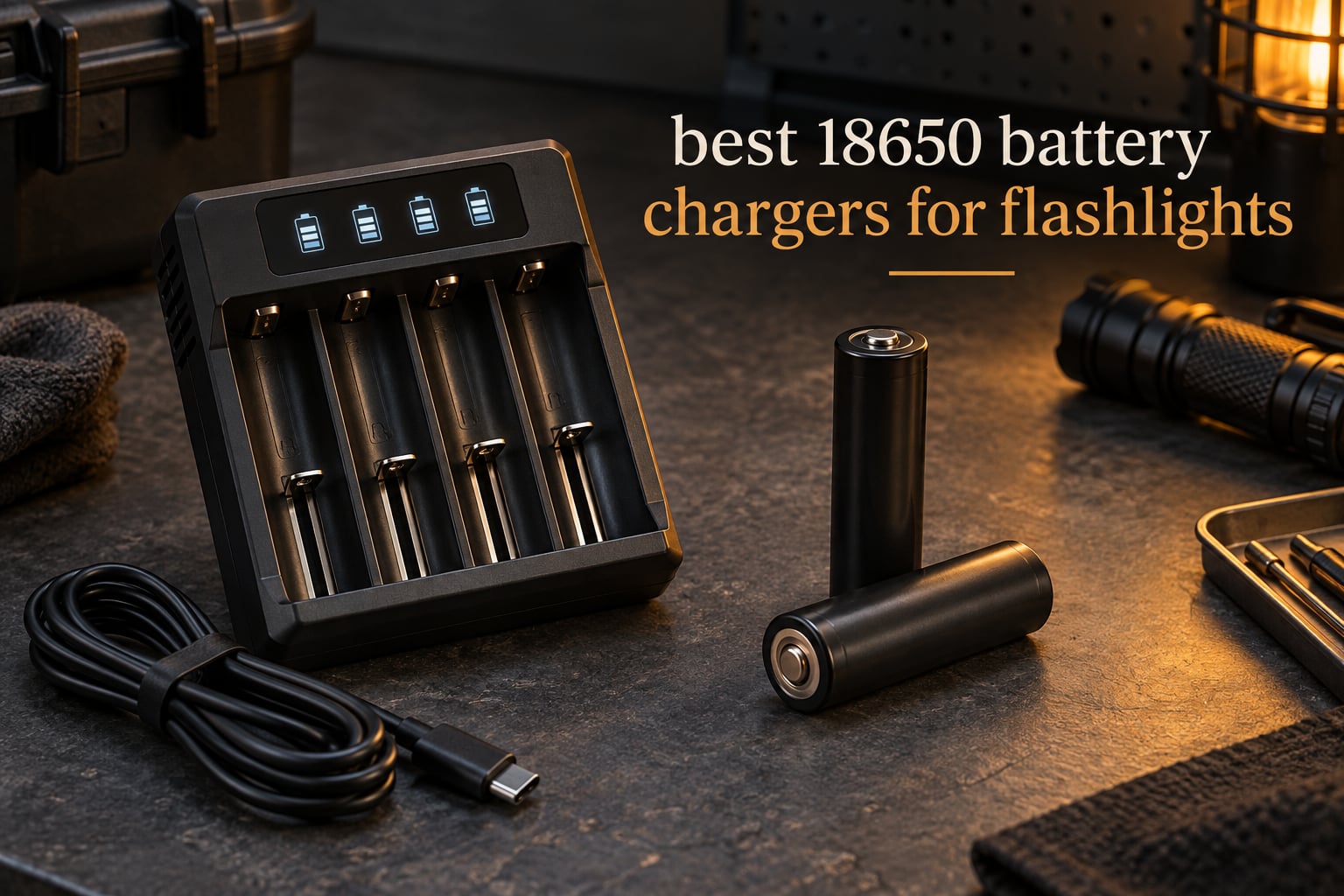
If you run more than one 18650 cell, the charger matters as much as the flashlight. A charger that terminates badly, runs hot, or cannot tell a good cell from a dead one will shorten the life of the exact cells you depend on for a duty bag, a work light, or a weekend EDC rotation. After working through twelve multi-bay and single-bay units side by side, these are the best 18650 battery chargers for flashlights, and the Snado SW-2 is the one most owners should start with.
The search results for this topic are full of battery roundups and vape accessory pages, and almost none of them review the charger itself. So we looked at the details that decide whether a charger treats a flashlight cell well: charge termination, per-slot current control, whether protected button-top cells physically fit, and whether the display can tell you a cell is finished rather than leaving you to guess from a blinking LED.
Table of Contents
Top 3 Picks for Best 18650 Battery Chargers for Flashlights in 2026
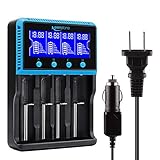

Nitecore UMS2 Dual-Slot USB-C Charger
- 2 slots
- up to 4000mA
- health and capacity readout
- case
All 12 Best 18650 Battery Chargers for Flashlights in October
| Product | Specs | Action |
|---|---|---|
 Snado SW-2 Universal 2-Bay Smart Charger Snado SW-2 Universal 2-Bay Smart Charger |
|
Check Latest Price |
| Keenstone 4-Bay LCD Smart Charger |
|
Check Latest Price |
 Tokeyla 4-Bay USB Li-Ion Charger Tokeyla 4-Bay USB Li-Ion Charger |
|
Check Latest Price |
| Nitecore UMS2 Dual-Slot USB-C Charger |
|
Check Latest Price |
 Nitecore UMS4 4-Slot QC Charger Nitecore UMS4 4-Slot QC Charger |
|
Check Latest Price |
 XTAR VC4 4-Bay LCD Charger XTAR VC4 4-Bay LCD Charger |
|
Check Latest Price |
 Nitecore UI1 Single-Slot USB Charger Nitecore UI1 Single-Slot USB Charger |
|
Check Latest Price |
 WISSBLUE LCD-4 4-Slot Charger WISSBLUE LCD-4 4-Slot Charger |
|
Check Latest Price |
 WANGDAJIEDIAN EL-4 4-Bay USB-C Charger WANGDAJIEDIAN EL-4 4-Bay USB-C Charger |
|
Check Latest Price |
 Swanlake 2-Bay Intellicharger Swanlake 2-Bay Intellicharger |
|
Check Latest Price |
 MIEKLALE S8 8+2 Bay Charger MIEKLALE S8 8+2 Bay Charger |
|
Check Latest Price |
 TRAELY Single-Slot USB Charger TRAELY Single-Slot USB Charger |
|
Check Latest Price |
1. Snado SW-2 Universal 2-Bay Charger: Best Overall 18650 Charger for Flashlights
Snado 18650 Battery Charger, Universal Smart Charger for Li-ion NiMH AA AAA
2 bays
USB-C input
2A current
Li-ion plus Ni-MH
Ni-Cd AA AAA
Pros
- Charges two chemistries and sizes at once with no dial to set
- LCD and dual LEDs make progress visible
- Reverse polarity and overheat protection
- USB-C runs from a wall adapter power bank or car outlet
- Two-year manufacturer warranty
Cons
- Two bays means repeated rounds for a large rotation
- Batteries are not included
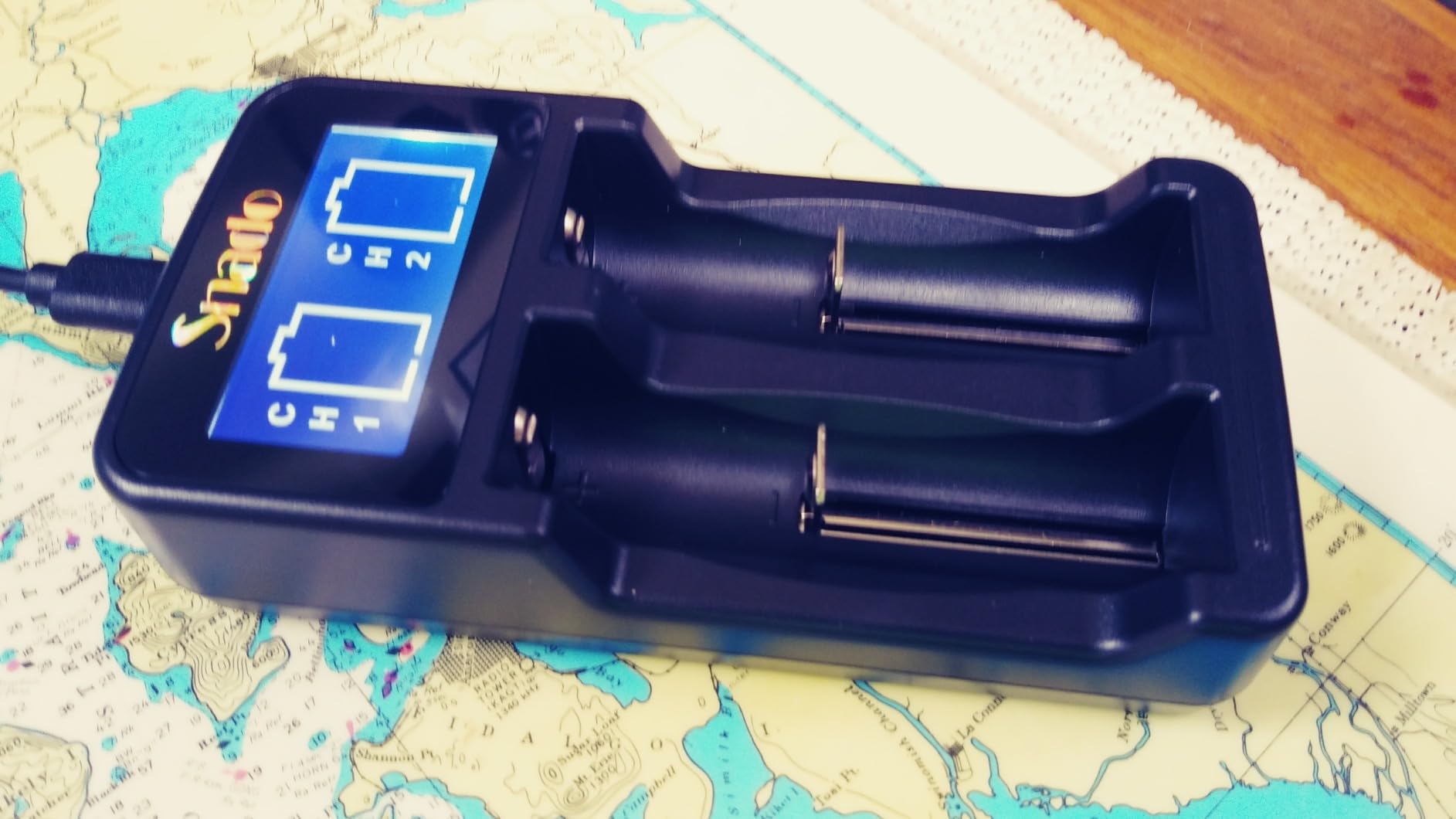
The Snado SW-2 is the charger I recommend to anyone starting a flashlight rotation. It handles two bays independently, and each bay auto-detects what you put in it, so you can charge a 18650 in one slot and an AA Ni-MH in the other without touching a setting. That flexibility is what makes it a good fit for a mixed kit of torch cells and headlamp cells.
Input is USB-C at 5V, and the rated output is 2A with a 4.2V charge termination for lithium-ion. The listing measures it at 3.8 ounces and just under 6.5 inches wide, so it disappears into a pocket or a desk drawer. It also runs from a power bank or a car outlet, which matters when your rotation is spread across a duty bag and a nightstand.
What convinced me is the volume of real use behind it. This is the most reviewed charger in the group at more than 8000 ratings, and the five-star share sits at 75 percent. Owners consistently point to the same three things: automatic voltage detection, a visible charging display, and two cells handled at once. The reviewer complaint that comes up most often is not about safety or accuracy, it is throughput.
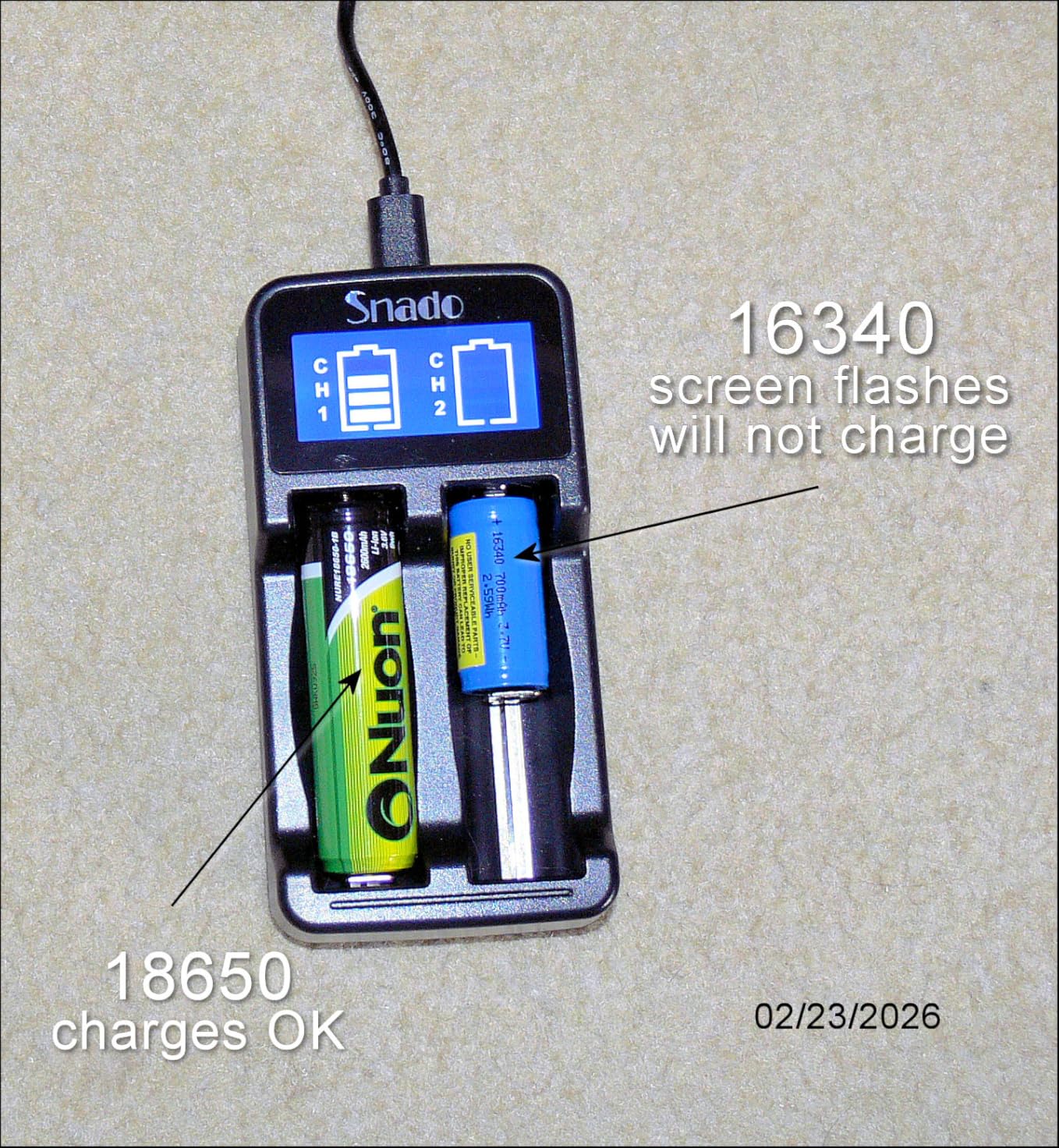
Cell compatibility is broad. The bay accepts 3.6V and 3.7V lithium-ion in 18650, 18490, 18500, 18350, 17670, 17500, 16340, 14650 and 14500, plus 1.2V Ni-MH and Ni-Cd in A, AA and AAA sizes. Two of those lithium sizes are worth noting for flashlight people, because 14650 is the short cell used in compact tube lights and 16340 is the RCR123 that some high-output torches accept in a pinch.
Who the Snado SW-2 suits
It suits the owner of two or three cells who wants one device to do everything, and it suits anyone whose AA Ni-MH cells are part of the same kit. The protection set is the sort you want around unprotected cells: overheat protection, automatic stop when full, and reverse polarity protection that shuts the bay down instead of doing something unpleasant to the cell.
Where it falls short
Two bays is the whole limitation. A duty rotation of six or eight cells means three or four rounds, and a 3500mAh cell on a 2A input still takes a while to reach full. If your collection is large, look at the four-bay units further down. Cells are not included either, so budget for the batteries themselves.
2. Keenstone 4-Bay LCD Smart Charger: Best Per-Slot Voltage and Current Readouts
Keenstone 18650 Battery Charger, Smart Universal Charger LCD Display for Rechargeable Batteries Ni-MH Ni-Cd AA AAA Li-ion LiFePO4 IMR 10440 14500 16340 RCR123A 26650
4 independent bays
AC powered
500mA or 1000mA
Per-bay V mA and time
Pros
- Four bays charge mixed sizes and chemistries at once
- Per-slot voltage current and time readouts sort old cells well
- Selectable 500mA and 1000mA current
- Protections for overcharge short circuit and reverse polarity
- Long list of safety certifications
Cons
- AC plug makes it less portable than USB models
- Fully charged cells rest in the bay and slowly lose charge
- Manual does not clearly explain the full-charge signal
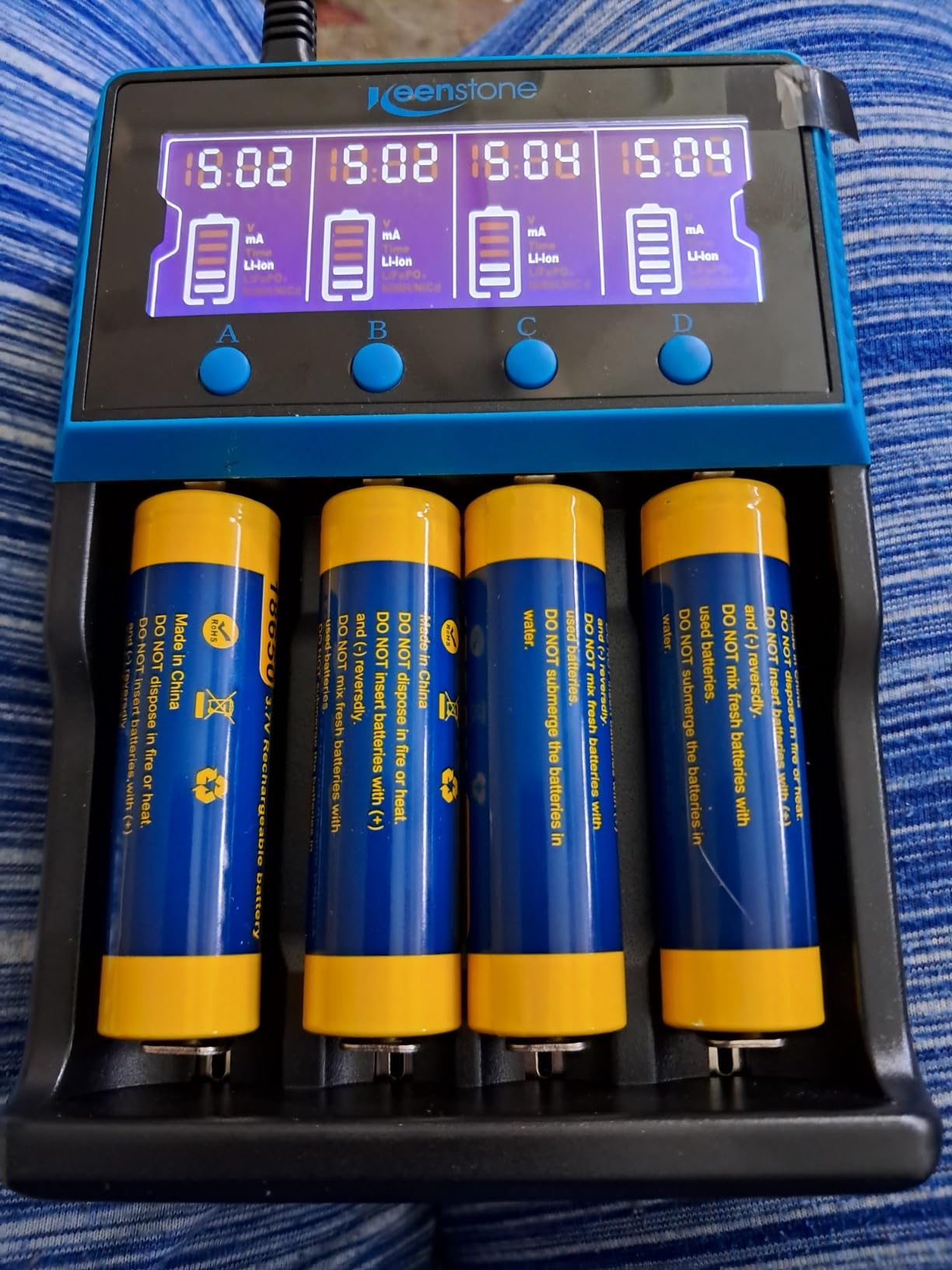
The Keenstone is the charger I reach for when the job is triage rather than just filling. Each of the four bays has its own readout showing voltage, current in milliamps, and elapsed time, and the A, B, C and D buttons let you check them one at a time. That is exactly the information you need to sort a mixed drawer of cells into the ones worth keeping and the ones that should be retired.
Current is selectable at 500mA or 1000mA, which is a saner ceiling for long-term flashlight cell health than the 2A and 3A options on some rivals. A 1000mA charge on a 3000mAh cell is roughly a 0.33C charge, slow enough to be gentle and quick enough to top a rotation up overnight. Chemistry coverage is the broadest in this group, covering Li-ion, LiFePO4, IMR, INR and ICR cells in 25500, 22650, 18650, 18490, 18500, 18350, 16340, RCR123A, 14500 and 10440, plus Ni-MH and Ni-Cd in A, AA, AAA, AAAA and SC.
Reviewers describe years of daily use and an 81 percent five-star share across more than 4600 ratings, which is the highest five-star share of any charger here. The most common use we see described is as a battery tester: the voltage and current numbers expose dead cells, and owners report reviving older 18650 packs that other chargers had written off. That revival behaviour matters for flashlight users because a cell that reads healthy is often a cell that was merely sitting below the charger’s detection threshold.
Protection covers overcharge, over-discharge, short circuit and reverse polarity, and the unit carries UL, cUL, CE, TUV, GS, PSE, FCC, RoHS and C-TICK certifications. Output termination is 4.2V for lithium-ion. It measures 4.13 by 5.91 by 1.57 inches, so it is a desk unit rather than a packable one.
Who the Keenstone suits
It suits anyone with a mixed battery drawer, and specifically anyone whose flashlight cells sit alongside AA Ni-MH. The AAAA and SC support covers small cells that most four-bay units skip. It also suits people who like seeing numbers instead of guessing, because a cell sitting at 4.18V and drifting is a cell you can watch instead of one you trust blindly.
Where it falls short
It has an AC plug, so it lives at a desk and does not travel to a campsite with you. Two documentation issues come up repeatedly: the manual does not clearly explain how to tell when a cell is finished, and cells left in a full bay slowly lose charge, so you should pull them rather than park them. The one-year warranty is also the shortest among the units with real certifications.
3. Tokeyla 4-Bay USB Li-Ion Charger: Best No-Frills Four-Bay for a Cell Rotation
18650 Battery Charger 4 Bay Smart Universal Charger for 3.7V Rechargeable Lithium Li ion Batteries Compatible 18650 26650 21700 10400 14500 16340 16650 18500 Battery Charger (Only USB Charger)
4 independent channels
USB 5V input
Li-ion only
Red and green LEDs
Pros
- Charges four 18650 cells at once from any USB source
- Adjustable bays span 18650 through 26650 lengths
- Compact enough to live on a desk permanently
- Protections for reverse polarity short circuit and overcharge
Cons
- Red indicator can stay lit after charging finishes
- USB only so speed depends on your wall adapter
- Only a 30-day warranty
The Tokeyla does one job: it puts four lithium-ion cells on charge at once from any USB port, and it does it for very little money. The four channels are independent, so two dead cells will not slow down the other two. For someone with a straightforward 18650 rotation and no AA cells, that is genuinely all the complexity you need.
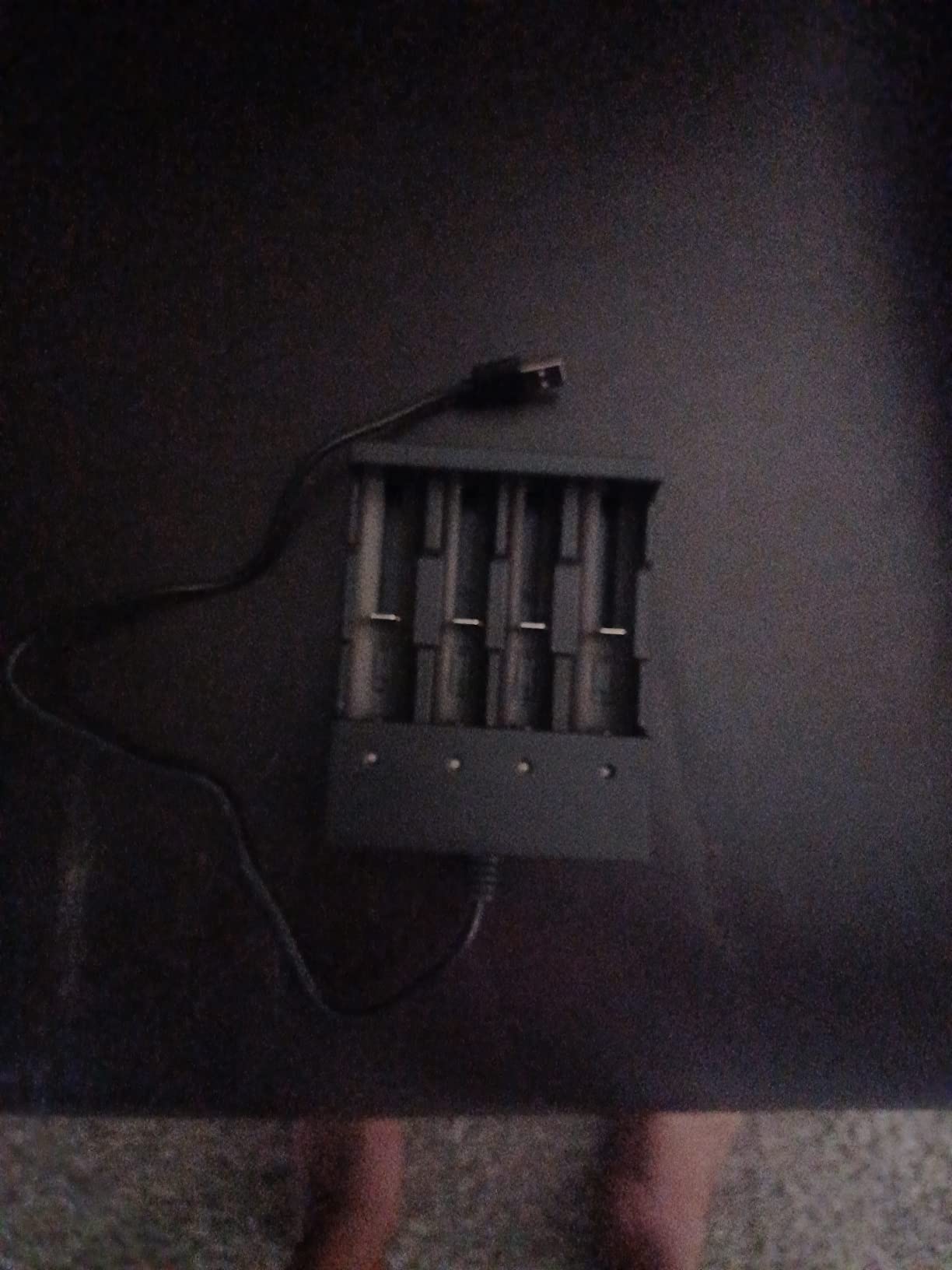
It is lithium-ion only, covering 3.7V cells in 18650, 26650, 22650, 21700, 14500, 16340, 10440, 17670, 18490, 17500 and 17335. There is no Ni-MH support at all, so if your kit includes rechargeable AA or AAA cells you will still need a second charger. Input is 5V USB, which means it runs from a laptop, a power bank or a travel adapter, and the adjustable bays handle cells from 18650 up to 26650 lengths.
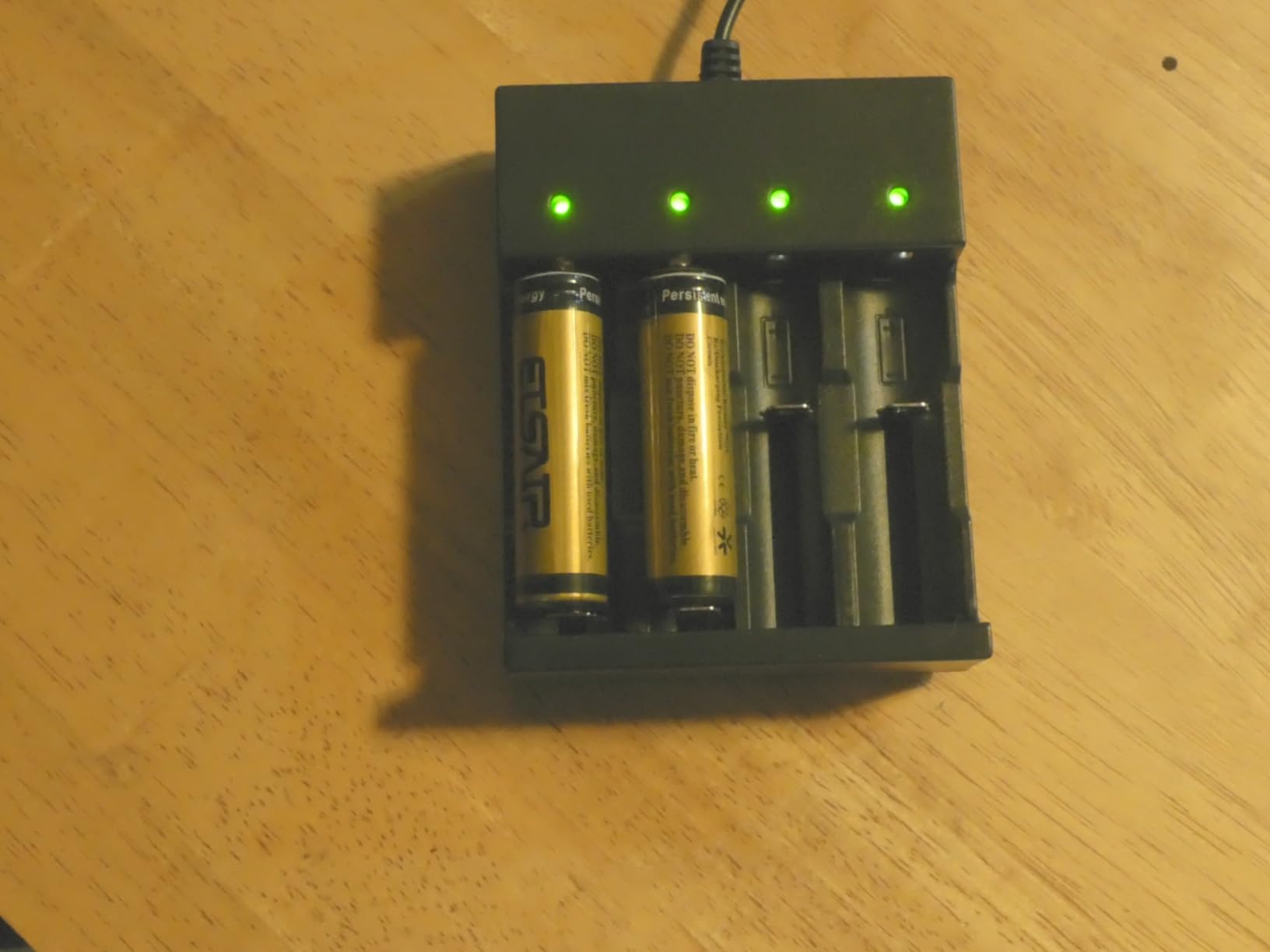
Feedback splits neatly between the layout and the indicator. Owners like the four simultaneous bays, the compact footprint at 1.4 by 3.7 by 5.8 inches, and reports of reviving flashlight cells that had been sitting unused. The most repeated criticism is the status light: the red charging indicator can stay lit after the cell is finished, which leaves you with no reliable full-charge signal. Several buyers describe using voltage readings from a separate meter to confirm instead.
Ratings sit at 4.4 across roughly 1479 reviews with a 71 percent five-star share, which is a reasonable score for a no-frills unit. The protection circuit covers reverse polarity, short circuit, overcharge, over-discharge and over-current, and output termination is 4.2V. The warranty is 30 days, the shortest here, and that is the main reason I would not build a long-term rotation on it alone.
Who the Tokeyla suits
It suits a first 18650 charger, or a second charger for a work bag where you only carry lithium cells. The 21700 and 26650 bay range also makes it useful for people whose flashlights have moved to the larger formats. Reviewers mention security cameras and flashlights as the two things they use it with most.
Where it falls short
Two limits matter. There is no chemistry detection because there is only one chemistry, and there is no clear full-charge indication, so you have to judge completion yourself. Because it is USB only, charge speed is entirely at the mercy of the adapter you plug into it, and a weak adapter will trickle all four bays at once.
4. Nitecore UMS2 Dual-Slot USB-C Charger: Best 2-Bay Charger for Travel and EDC
Nitecore UMS2 Intelligent Dual-Slot Quick USB-C Battery Charger for Li-Ion/Ni-MH/Ni-Cd/IMR 16340 14500 18650 21700 20700 AA AAA and More Batteries, with Organizer
2 slots
USB-C
up to 4000mA combined
LCD with health data
Includes case
Pros
- Fast 1.5 to 2 hour charges on a suitable adapter
- Detailed LCD with elapsed time capacity and health
- Spring-loaded bays handle mixed cell lengths
- Organizer case included
- Automatic detection with manual override
Cons
- No internal power supply so a good USB-C adapter is a separate buy
- Display stays lit when idle
- Fast charge claims need a QC2.0 source
The UMS2 is the two-bay charger I would put in a bag. It is the smallest unit here that still gives you a genuinely informative screen, showing battery health, charge status, charge mode, elapsed time, capacity delivered and charge rate. That is more data than most flashlight owners expect from a travel charger, and it is the data that tells you whether a cell is worth carrying.
Speed is the headline. With a 9V QC2.0 or better source, the two slots share up to 4000mA and a single slot can take 3000mA. From an ordinary 5V 2A adapter you get 1000mA per slot instead. Owners describe 1.5 to 2 hour charges against the 2 to 3 hours of older dual-slot units, which is the practical difference between topping up before bed and topping up before a shift.
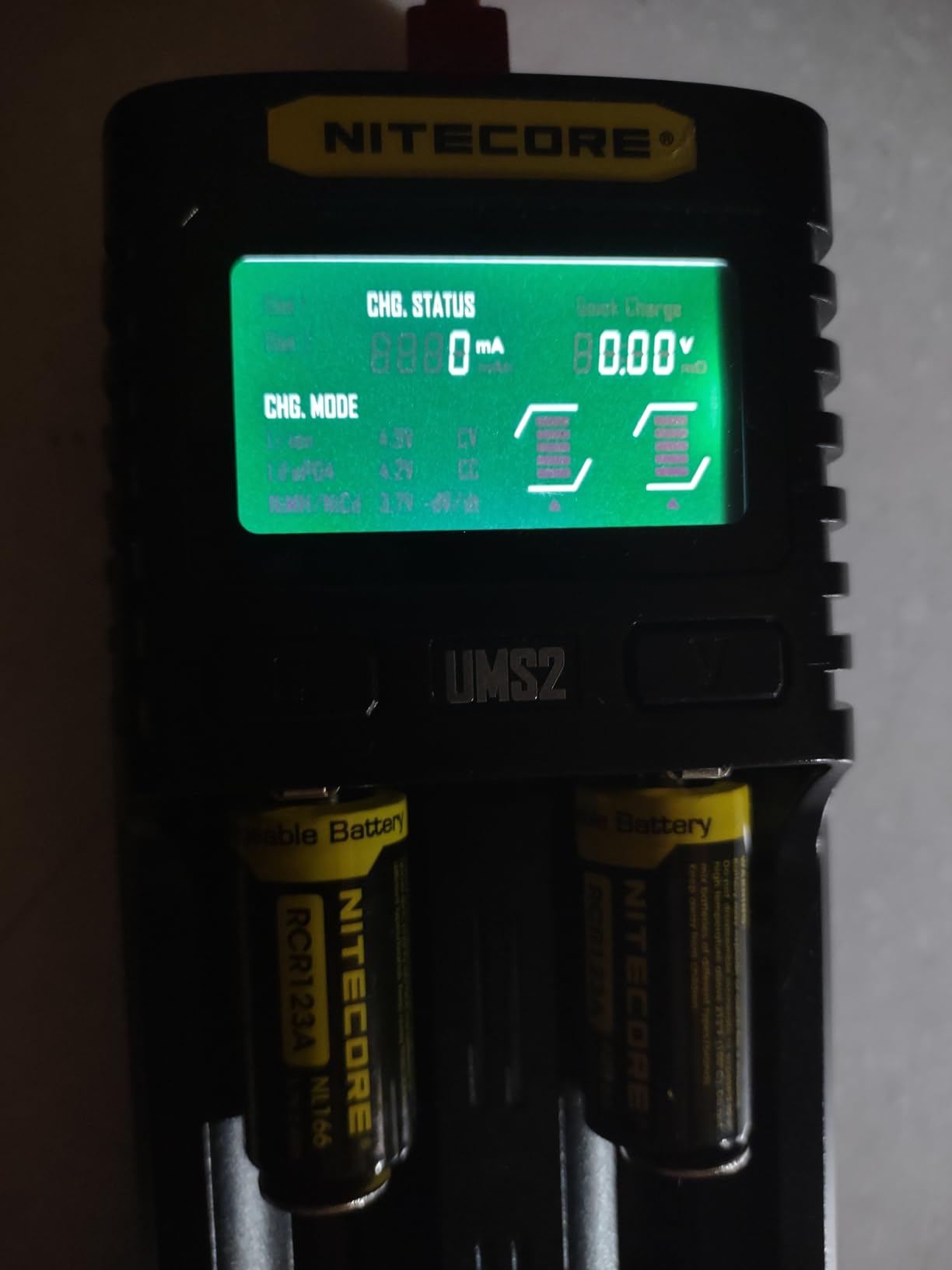
Chemistry support is wide: Li-ion, IMR and LiFePO4 from 10440 through 26700, covering 18650, 20700 and 21700, plus Ni-MH and Ni-Cd in AA, AAA, AAAA, C and D. The spring-loaded bays adjust to different cell lengths, so a short 16340 and a long 21700 can go in at the same time. A two-cell organizer case is included, which is a small thing that matters when the cells are loose in a pocket.
The 4.5 rating across 852 reviews comes with a 76 percent five-star share, and long-term Nitecore owners single out the build quality. The dependency buyers flag most is power: there is no internal power supply, so what the charger can actually deliver depends on the USB-C adapter you bring. There is also a smaller cluster of complaints about the display never fully switching off, which some people find distracting in a dark room.
Who the UMS2 suits
It suits the EDC owner who wants real diagnostic data without a bench full of gear, and the person whose kit mixes 18650 and 21700. The included case and the USB-C input make it the easiest unit here to pack. It is also a good pick if you charge AA or AAA Ni-MH alongside your torch cells and want one device instead of two.
Where it falls short
The headline speed is conditional. Without a QC2.0 or better source, output drops to 1000mA per slot, and the adapter is not included. The display is bright and does not go fully dark when idle. For a large rotation the two slots are the obvious ceiling, and any cell in a bay that has finished will sit there until you pull it.
5. Nitecore UMS4 4-Slot QC Charger: Best for Cell Health and Internal Resistance
NITECORE UMS4 Intelligent QC 4-Slot Quick Battery Charger for Li-Ion/IMR/LiFePO4/Ni-MH/Ni-Cd 14500 16340 18350 18650 20700 21700 AA AAA with NITECORE Tag
4 slots
3000mA single slot
Internal resistance readout
CC CV and dV/dt
Pros
- Roughly 55 minutes to 80 percent on a 3500mAh cell
- Health and internal resistance readouts identify worn cells
- Auto-detects chemistry and picks the charge mode
- Wide bays fit 18650 through 21700
- Can recondition some tired over-discharged cells
Cons
- Screen is bright enough to notice in a dark room
- USB-C input only with no adapter included
- Highest cost among the four-bay smart chargers here
The UMS4 is the most capable diagnostic charger in this roundup, and the one I would choose if your flashlight cells are expensive or hard to replace. Its LCD reports battery health as Good or Poor, internal resistance, current, voltage, charged volume and elapsed time. Internal resistance is the number that actually predicts whether a cell will still hold up under a high-output turbo mode, and almost no other charger at this tier shows it to you.
Charging is fast. Total output is 4000mA with 3000mA available to a single slot, which works out to roughly 55 minutes to 80 percent on a 3500mAh cell. That speed needs a QC-capable adapter, and it is worth saying plainly that a 3A charge is not what most flashlight cells want on every cycle. The good news is that the UMS4 auto-detects the cell and selects between CC, CV and minus-dV/dt termination modes, with manual override if you want to be deliberate about it.
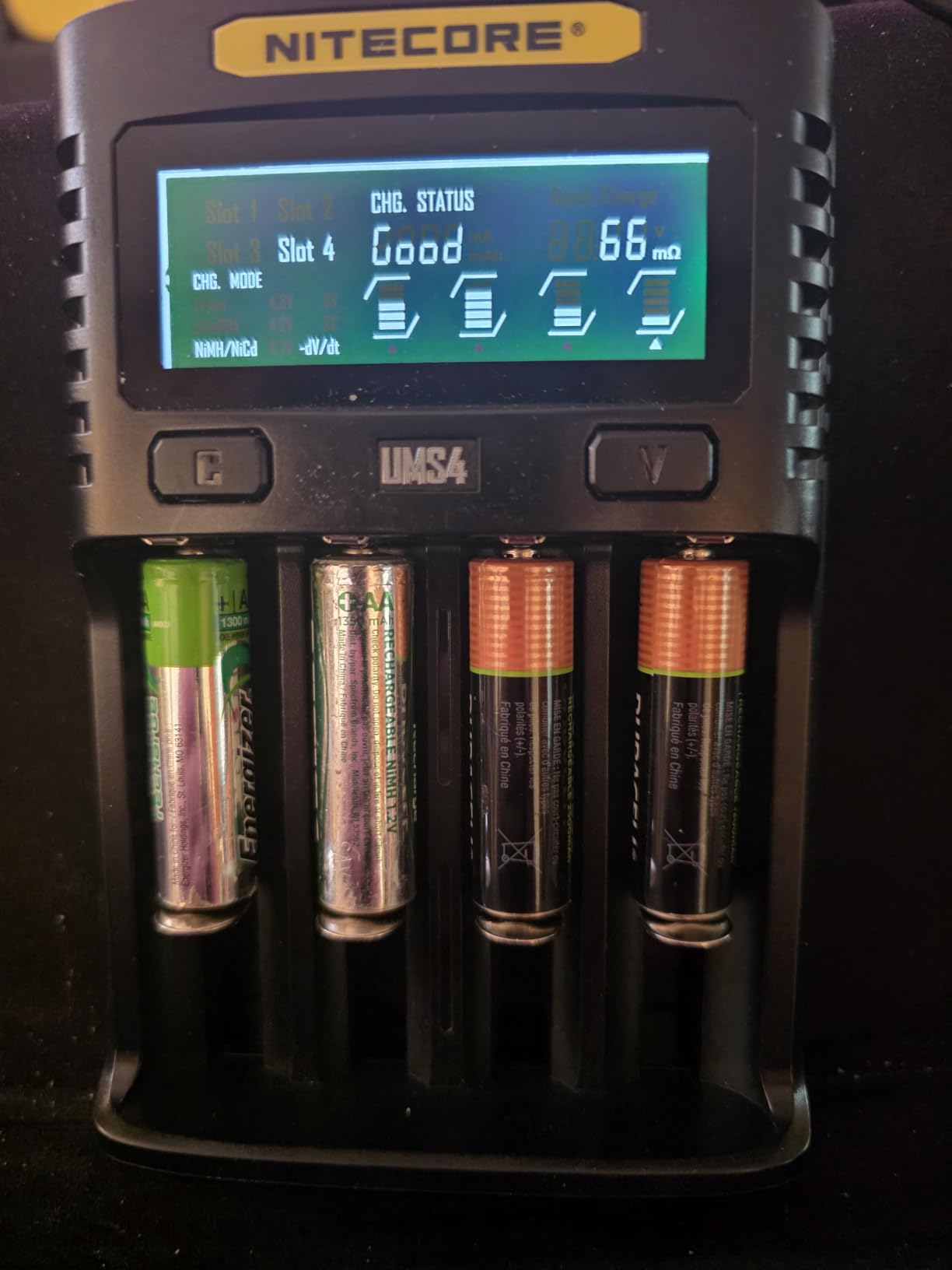
Chemistries include 3.6V and 3.7V Li-ion, 3.8V Li-ion, 1.2V Ni-MH and Ni-Cd, and 3.2V LiFePO4, which means it handles the 3.65V charge cutoff correctly rather than pushing LiFePO4 cells to a lithium cutoff. The protection set covers anti-short, reverse polarity, overtime, over-discharge activation and IMR restoration, and the fire-retardant PC body has built-in temperature regulation. Bays are wide enough that 21700 cells sit comfortably, which is a common upgrade path owners mention.
The 4.6 rating is shared with only 176 reviews, the thinnest sample among the four-bay smart units here, so treat the score with some care. Within that sample the five-star share is 80 percent, and the recurring comments are about charge speed and diagnostic quality rather than build. Reservations are minor and mostly practical: the screen is bright, and the USB-C adapter is a separate purchase.
Who the UMS4 suits
It suits owners of high-output flashlights where runtime and voltage sag under load actually matter, and anyone maintaining a rotation they paid real money for. If you keep cells for months between uses, an internal resistance reading tells you which ones to retire before they strand you on a night trip. The LiFePO4 support also makes it a fit for the safety-first crowd.
Where it falls short
It is the most expensive four-bay smart charger in this list, and the speed advantage evaporates if you only have a basic USB wall adapter. A bright screen and a permanently lit display are poor companions for a bedside charger. And with 176 reviews, the long-term track record is shorter than the numbers on the cheaper units competing with it.
6. XTAR VC4 4-Bay LCD Charger: Best for Mixed Chemistries and Big Collections
XTAR VC4 Universal Battery Charger – LCD Display, 4 Slots for 18650 Batteries
4 bays
0.1A to 1A auto current
Per-cell LCD
two-year warranty
Pros
- Per-cell voltage type current and capacity readout
- Reported to restore cells other chargers flagged as dead
- Auto-selects charge current from 0.1A up to 1A
- Fire-retardant PC housing with full protections
- Two-year warranty with a box authenticity check
Cons
- Cannot charge protected 20700 or 21700 cells
- Runs noticeably warm during use
- Barrel power connector instead of USB-C
The VC4 is the enthusiast value pick, and it is the XTAR model that comes up most often when flashlight people talk about affordable chargers. On CandlePowerForums, users repeatedly recommend XTAR as a brand at the enthusiast tier, naming the top-tier XTAR chargers as worthy alongside Nitecore, Liitokala and Opus. The VC4 is where that advice is easiest to act on, because it gives you a per-cell readout at a price that undercuts the Nitecore four-bays.
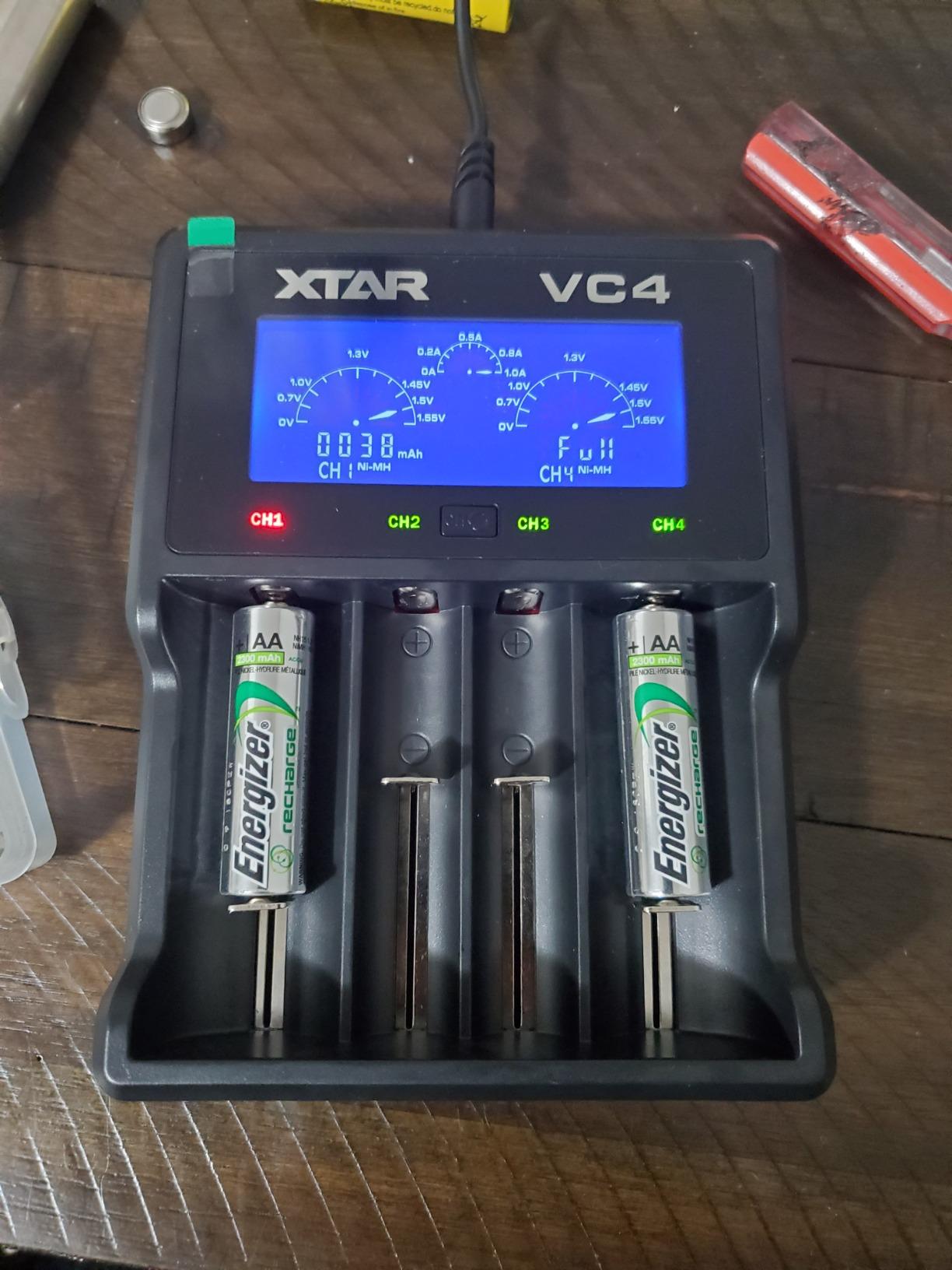
Each bay reports voltage, cell type, charge current and charged capacity independently on the LCD. Charge current is auto-selected from 0.1A up to 1A, with 500mA and 1000mA selectable and up to 1000mA available on bays 1 and 4. The low 0.1A trickle option is genuinely useful for over-discharged cells that a smarter charger would simply refuse, which is a common problem when cells sit in a flashlight body for months.
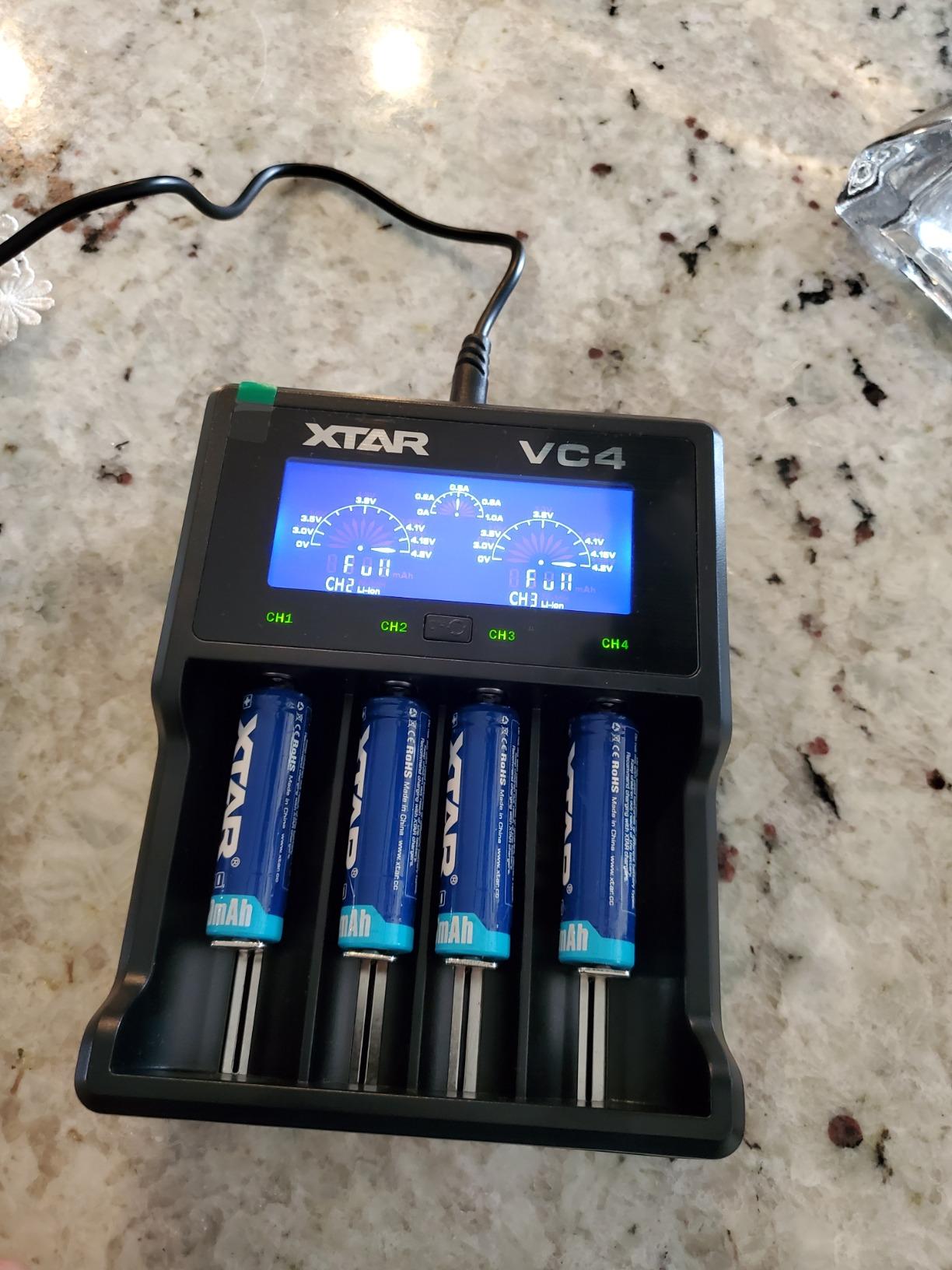
Bay coverage runs from 10440 and 14500 through 16340, 18350, 18650, 25500 and 32650, plus Ni-MH AA and AAA and C and D cells, all simultaneously. The housing is fire-retardant PC with overcharge, over-discharge, short-circuit and reverse-polarity protection, and it carries a two-year warranty with a scratch-off authenticity check on the box. It measures 7.36 ounces and includes a carry pouch, cable and manual, though the power cable uses a barrel connector rather than USB-C.
At 4.4 across 622 reviews with a 71 percent five-star share, the review pattern is consistent. Owners report reviving 18650 cells that pricier chargers had written off, and several describe switching from Nitecore units without regret. The documented weaknesses are heat, which owners notice during use, and the inability to charge protected 20700 or 21700 cells, which XTAR steers buyers away from toward other models in the range.
Who the VC4 suits
It suits owners with a mixed bag of lithium-ion and Ni-MH cells who want per-cell data without stepping up a tier. It also suits anyone with tired over-discharged cells, because the 0.1A minimum is a repair current that many competitors do not offer. The two-year warranty is the longest among the multi-bay units here.
Where it falls short
Do not buy it for protected 20700 or 21700 cells; it will not accept them. It runs warm under load, which is not ideal if you are charging cells you care about over long unattended periods. The barrel power connector is an ageing choice, and if that cable goes missing you will have more trouble replacing it than a USB-C one.
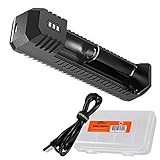
7. Nitecore UI1 Single-Slot USB Charger: Best Single-Bay 18650 Charger for EDC
Nitecore UI1 Single-Slot Intelligent Lithium-ion Battery USB Charger for 18650, 18350, 20700, 21700, 16340, 14500 and More, and Organizer
1 slot
800mA max
1.43 oz
Under 5 inches long
Includes case
Pros
- Small and light enough to run from a power bank on a trip
- Accepts flat-top 18650 and long protected button-top 21700 cells
- Runs cooler than larger chargers
- Handles 18650 18350 20700 21700 16340 and 14500
Cons
- Only one slot so cells charge one at a time
- Micro-USB connector on this version
- 800mA ceiling means long waits for big cells
The single-bay question comes up constantly on flashlight forums, and the UI1 is the answer most people land on. It weighs 1.43 ounces and is under 5 inches long, which is genuinely pocketable in a way the two- and four-bay units are not. It also runs cooler than the bigger chargers, and cooler is a real advantage if you are the kind of person who leaves cells charging overnight.
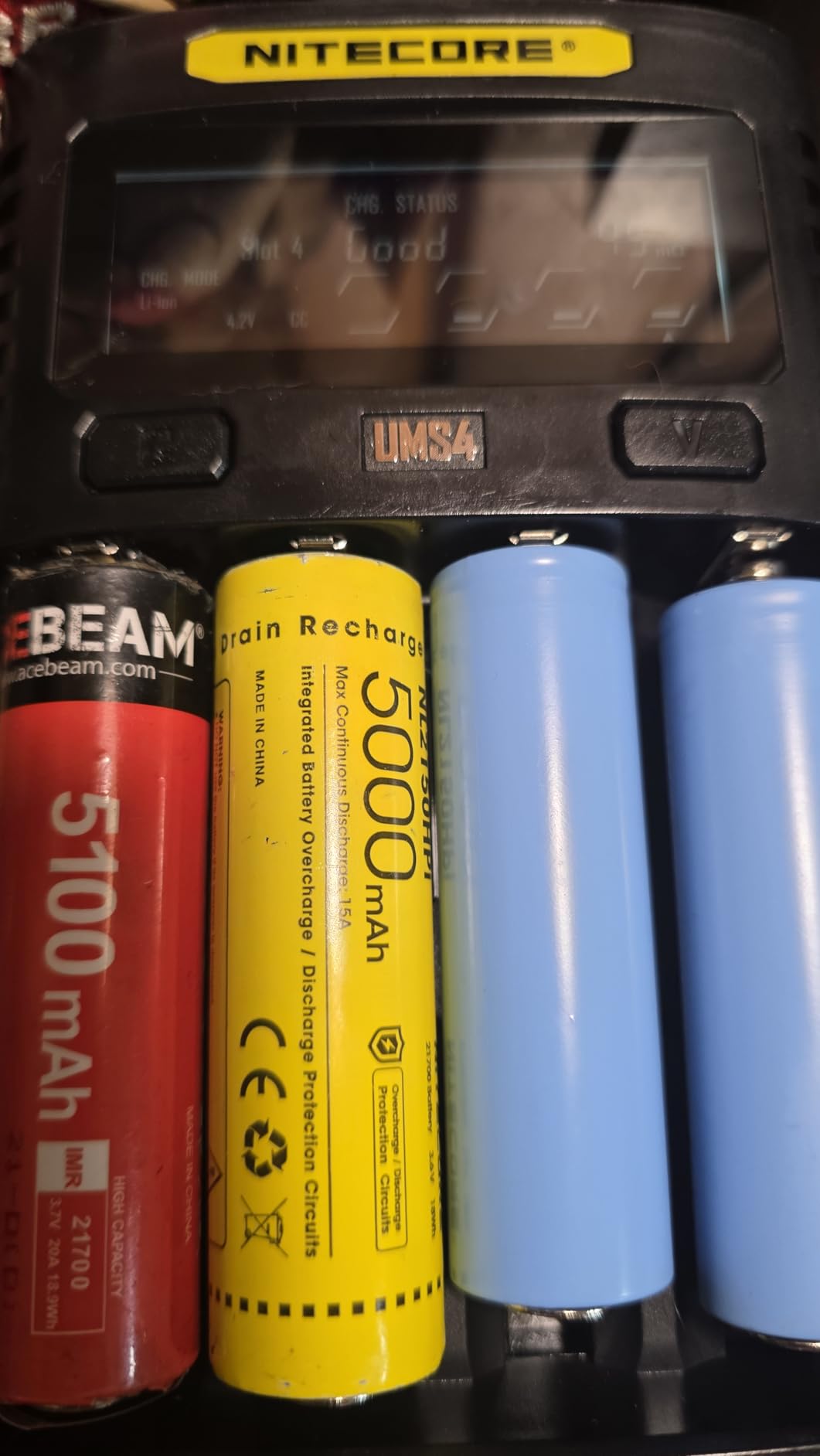
Cell fit is the standout feature. It accepts lithium-ion and IMR cells from 10340 through 26650, including 18650, 18350, 20700, 21700, 16340 and 14500, and reviewers specifically call out that it handles long protected button-top 21700 cells that many single-slot chargers physically cannot seat. For a flashlight buyer, that matters more than the spec sheet suggests, because protected button-top cells are exactly what ships with many stock lights.
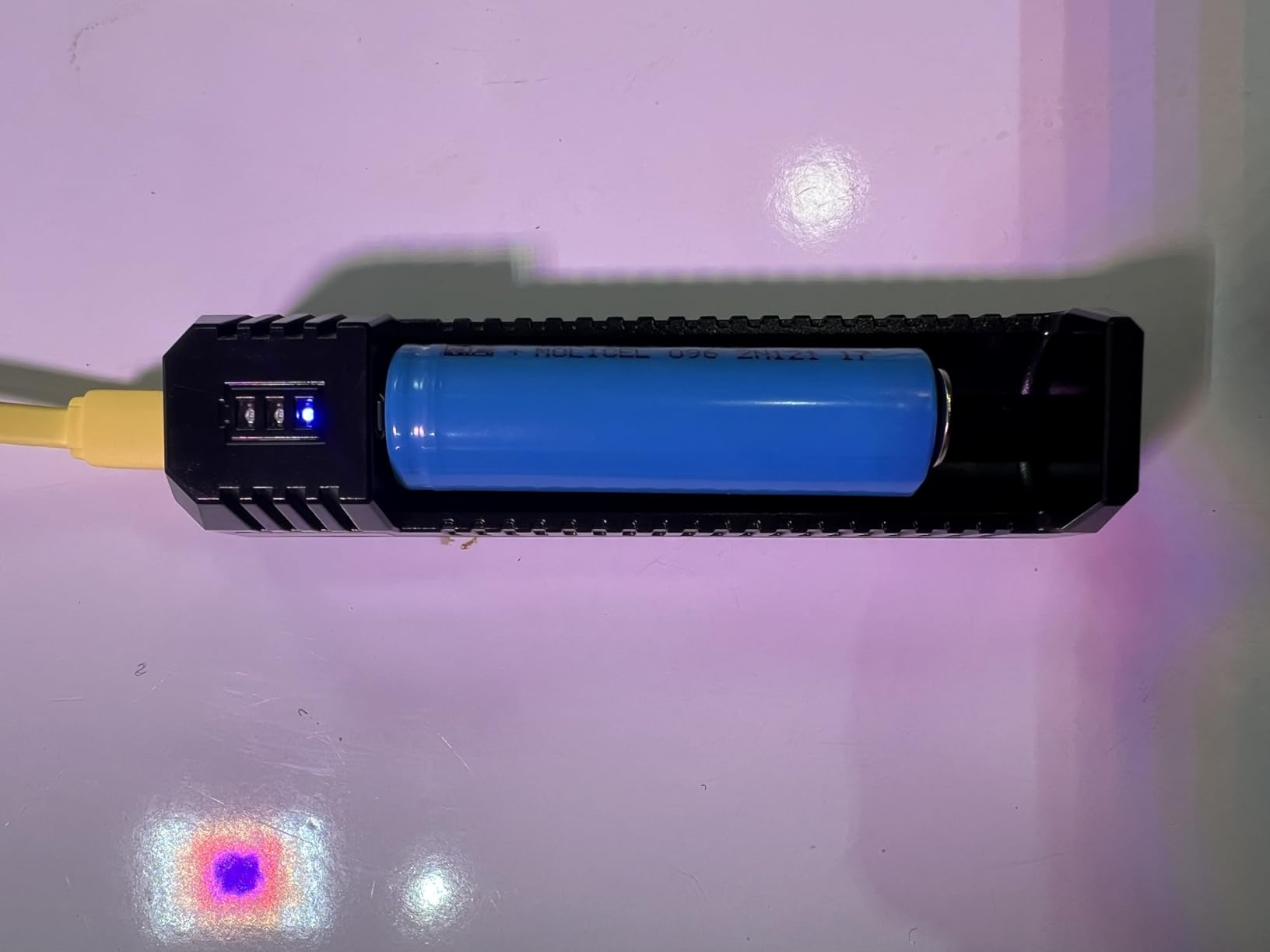
The single slot delivers up to 800mA on 3.7V cells with automatic charge mode selection, and it runs off solar panels, USB adapters or power banks. Output termination is 4.2V and it is UL and CE certified. A USB cable and a small battery and cable case are included, which is more than many single-bay chargers bother with. The 4.6 rating comes with an 80 percent five-star share across 457 reviews, and several owners report buying a second unit for a second bag.
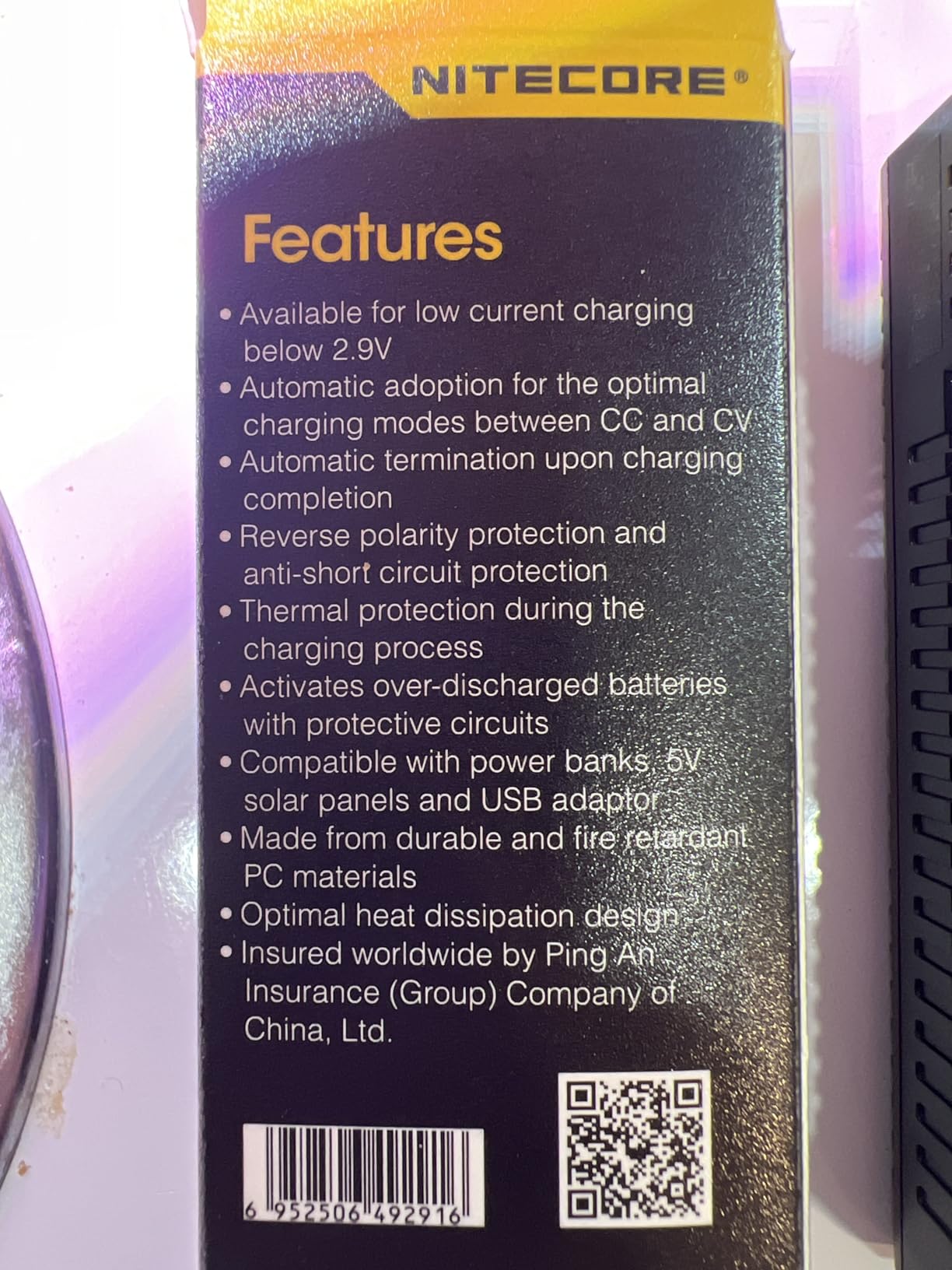
What people like: the size, the cool running, the rubber feet that hold a heavy cable steady, and reports of bringing tired cells back to life. What they do not: one slot means one cell at a time, and an 800mA ceiling means a 3000mAh cell takes several hours. The blue charge LED is also bright with no way to dim or disable it, which is unwelcome in a dark tent. This version uses a micro-USB connector rather than the USB-C found on later revisions, and it is the oldest design decision in this roundup.
Who the UI1 suits
It suits a traveller, a hiker, or anyone who wants one charger for one light and weighs every gram. It suits owners of protected button-top cells, which are the cells most likely to arrive with a flashlight. It also works as a bench companion next to a bigger charger, running the odd cell that a multi-bay unit struggles to seat.
Where it falls short
One slot is one slot, and 800mA is slow for the 3000mAh and 3500mAh cells that high-output torches now ship with. There is no display at all, so completion is signalled by an LED and nothing else, which means you are trusting the charger rather than checking it. And micro-USB in 2026 is a cable you will eventually have to replace.
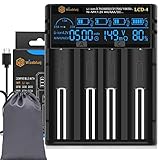
8. WISSBLUE LCD-4 4-Slot Charger: Best for Manual Charge Current Control
WISSBLUE 18650 Charger, Universal 26650 Battery Charger with LCD Screen Can Display Capacity, Adjustable Charging Speed, Suitable for Li-Ion Battery and 1.2v Ni-Mh/Ni-Cd AA AAA Battery
4 slots
0.5A 1A or 2A selectable
LCD data display
Discharge function
Pros
- Three charge speeds let you match current to the cell
- LCD shows voltage capacity progress and elapsed time
- Wide 29mm to 75mm cell length range
- Discharge function reduces cell stress
Cons
- Multi-button interface takes practice to navigate
- Some reports of units stopping early or behaving inconsistently
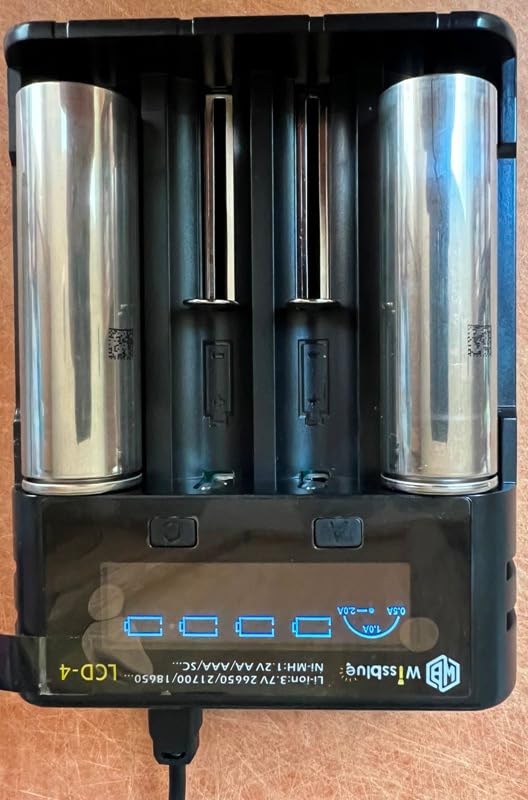
The WISSBLUE LCD-4 is the charger for people who like to think about charge current. Button A selects between 0.5A, 1A and 2A, and that single control is the difference between charging a 2600mAh high-drain cell sensibly and charging a 3500mAh capacity cell sensibly. The same button area also gives you a discharge function, which most chargers at this tier leave out and which is useful for conditioning a rotation rather than just filling it.
The screen is data-dense. Button C cycles through charge time, charged capacity, voltage, progress percentage, battery type and charge speed, so you can watch a cell’s actual delivered mAh rather than trusting a printed label on the wrapper. That is a good way to catch a rewrapped or counterfeit cell, which otherwise tends to show up as a mysterious failure in a flashlight months later.
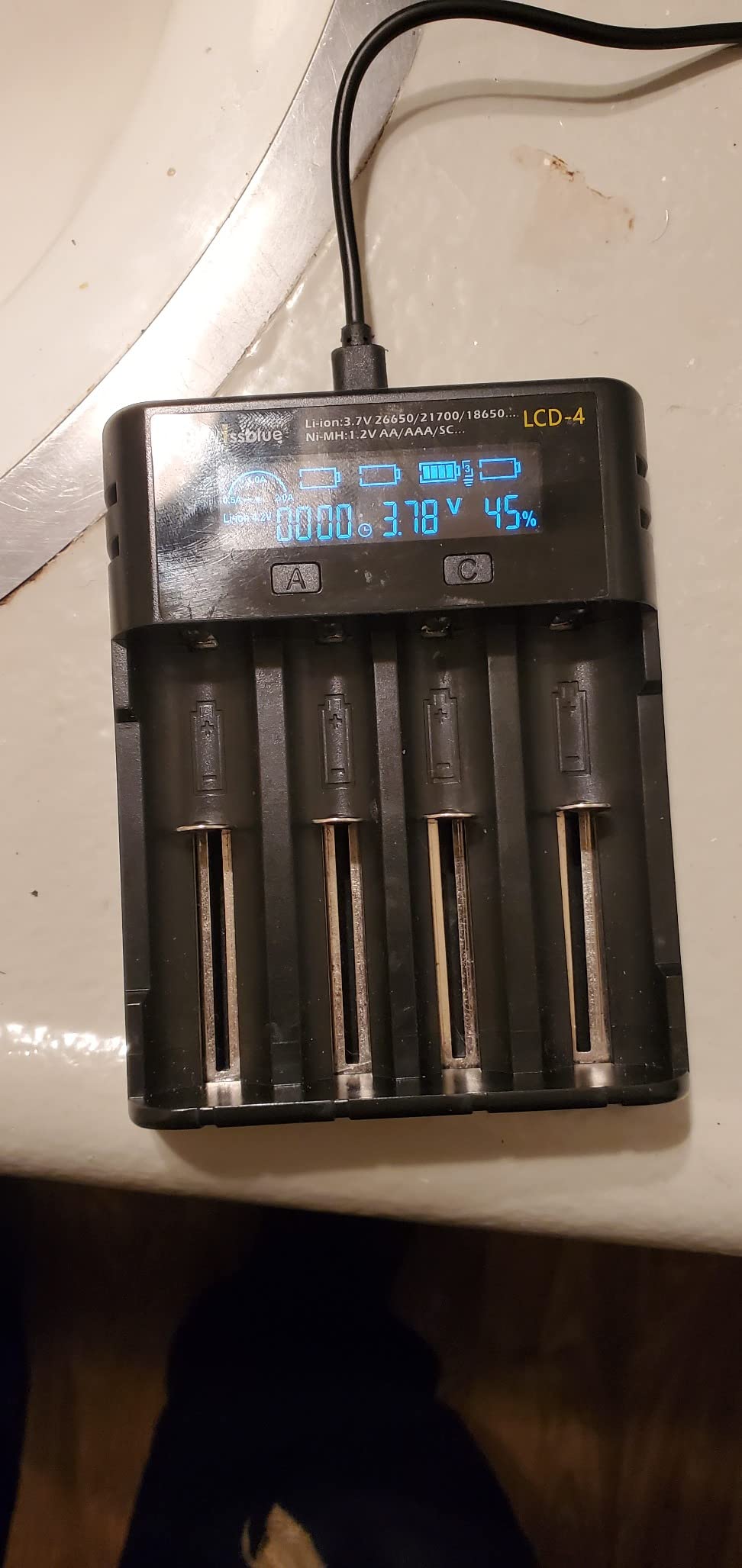
It auto-detects 3.7V lithium-ion and 1.2V Ni-MH and Ni-Cd AA cells, and the 29mm to 75mm supported length covers everything from short cells up to 26650. Four independent slots charge four different cells at once. Published charge times include a 3400mAh NCR18650B in 2 hours and a 2500mAh LG HE2 in 1.5 hours at 1A, which are reasonable figures for a charger at this output. Protection covers short circuit, overheat, overvoltage and overdischarge, with 4.2V output termination.
The 4.3 rating is the lowest average among the multi-bay chargers here, and 7 percent one-star reviews reflect real complaints about units stopping early or behaving inconsistently. The other recurring note is that the multi-button interface takes practice. Buyers do settle into it, and once you know that Button A is current and Button C is data, it is a fast interface. But it is not the plug-and-forget choice the Snado is.
Who the WISSBLUE suits
It suits owners of mixed cell sizes who want to be deliberate about current rather than let the charger decide, and anyone who wants to see delivered capacity in mAh. The discharge function makes it useful for balancing a rotation where some cells are clearly weaker than others. Its 75mm length range also covers the larger cells without an adapter.
Where it falls short
The interface is fiddly for a first-time charger, and there is no per-bay screen, so you check one port at a time rather than all four at once. The 4.3 average reflects a small but real reliability cluster, so it is a charger I would keep on a desk rather than depend on in the field. Buttons and ports share a small surface, so the layout is tight.
9. WANGDAJIEDIAN EL-4 4-Bay USB-C Charger: Best Four-Bay Screen That Is Easy on the Eyes
18650 Battery Charger,4 Bay 3.7V Li-ion Battery Charger with Smart LCD Display 2A Fast Charging for Rechargeable Batteries Lithium NI-MH NI-Cd AA AAA C 18650 18350 18700 21700 26650 14500 16340
4 bays
USB-C input
2A for Li-ion
Per-slot LCD
Auto-detect
Pros
- Independent per-bay charging with separate readouts
- Brightness adjustable and dims after 30 seconds idle
- Auto-detects chemistry and size across 29mm to 70mm
- Compact enough to run from a USB-C power bank
Cons
- No wall adapter included
- Some units reported failing on first use
- Cannot hold four 26650 cells at once
The EL-4 solves one problem better than most four-bay chargers: the screen. Brightness is adjustable by touch, and the display dims after 30 seconds of inactivity. On a charger you keep on a nightstand, that is the difference between a display you can live with and one that lights up the room every time you check a cell before bed.
Otherwise it is a competent four-bay unit. Each slot independently reports voltage, current, charge status and battery type, and the charger auto-identifies 3.7V Li-ion and 1.2V Ni-MH and Ni-Cd AA cells across a 29mm to 70mm length range. It covers 18650, 21700, 21750, 18700, 26650, 25500, 18500, 18350, 17650, 17500, 17335, 16340, 14500 and 10440, plus AA, AAA and C. Output is up to 2A for lithium cells and up to 300mA for AA and AAA Ni-MH or Ni-Cd, which is the right order of magnitude for those.
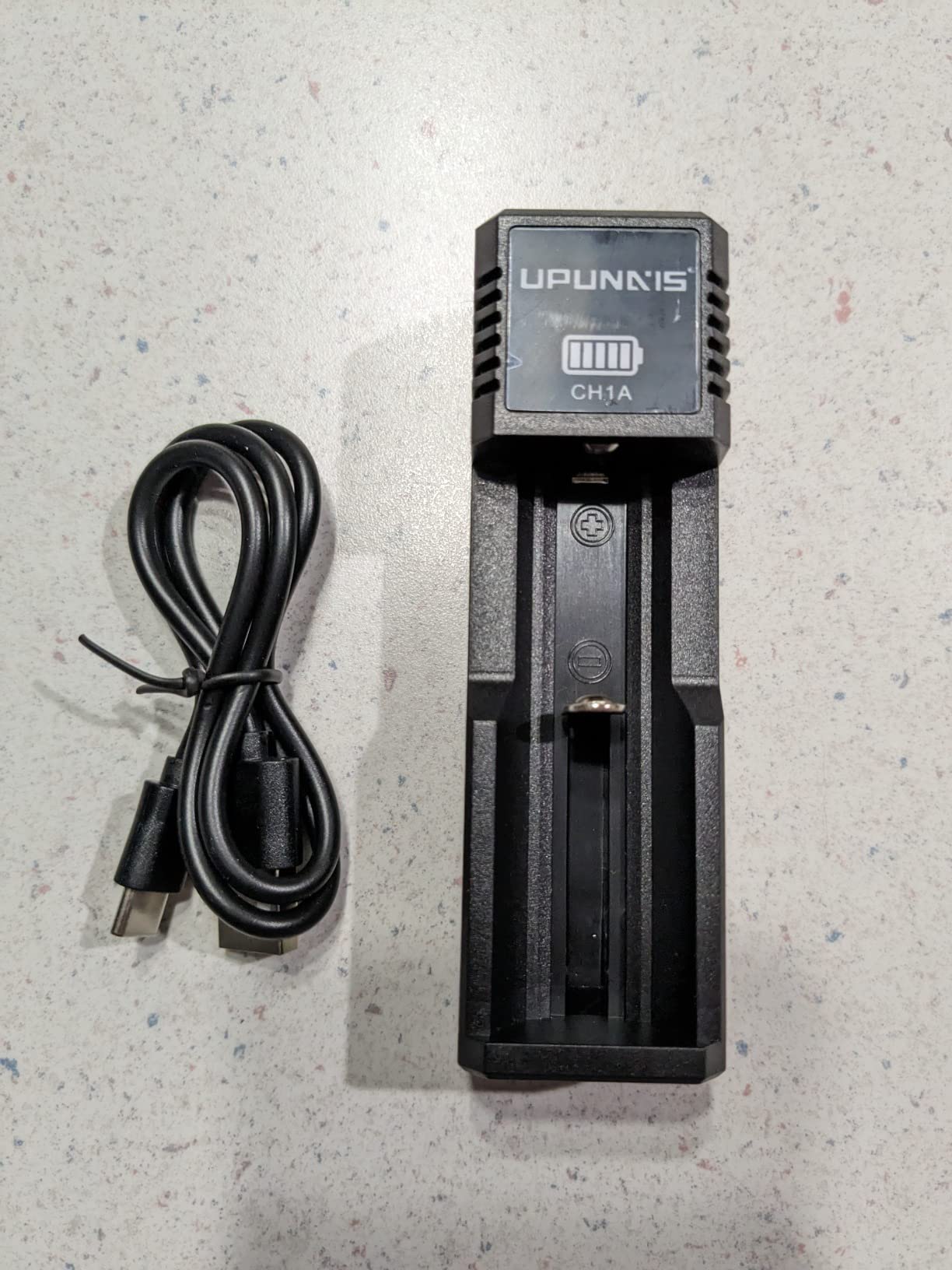
The body is flame-retardant PC with heat dissipation, and a USB-C cable and manual are included. Ni-MH and Ni-Cd compatibility is a genuine advantage over the lithium-only four-bays, since rechargeable AA cells are standard issue in headlamps and work lights. The 4.3 rating across 400 reviews comes with a 69 percent five-star share, the lowest five-star proportion in this roundup, and 9 percent one-star reviews, so the build is not the strongest here.
The power caveat is the one to plan around. No wall adapter is included, and even with the right 5V 2A source, you cannot expect 2A into all four bays simultaneously. There is also a small cluster of first-use failures where the display shuts off and the unit stops responding, plus the practical note that four 26650 cells will not all fit at once in a 70mm bay. There is no repair or recondition function either.
Who the WANGDAJIEDIAN suits
It suits someone whose charger lives beside the bed or on a workbench and who finds bright displays genuinely annoying. It suits mixed kit owners because of the Ni-MH and Ni-Cd support alongside lithium, and USB-C input means one cable for the charger, the phone and everything else in the bag.
Where it falls short
Multi-bay speed is adapter-dependent, so a cheap adapter drags on four cells. Reliability is the other weak point, with a small but real group of chargers failing early. It also has no capacity or internal resistance readout, so it cannot do the cell triage that the Nitecore UMS4 and MIEKLALE S8 are built for.
10. Swanlake 2-Bay Intellicharger: Best Two-Bay LCD Readout
18650 Battery Charger,LCD Display Charger for 3.7V Li-ion Battery 18650,26650,21700,18500,18350,16650 1.2V LiFePO4 Ni-MH Ni-Cd A AA AAA Rechargeable Batteries(Battery not Included)
2 bays
Selectable 0.5A 1A or 2A
Large LCD
2-year warranty
Pros
- Large easy-to-read LCD with voltage current time type and percentage
- Selectable 0.5A 1A and 2A for lithium cells
- Two bays charge independently without interfering
- Automatic chemistry detection between Ni-MH and Li-ion
- Two-year warranty and compact footprint
Cons
- Adjustable current applies to lithium only and Ni-MH is fixed at 0.5A
- Only two bays for larger collections
- Batteries are not included
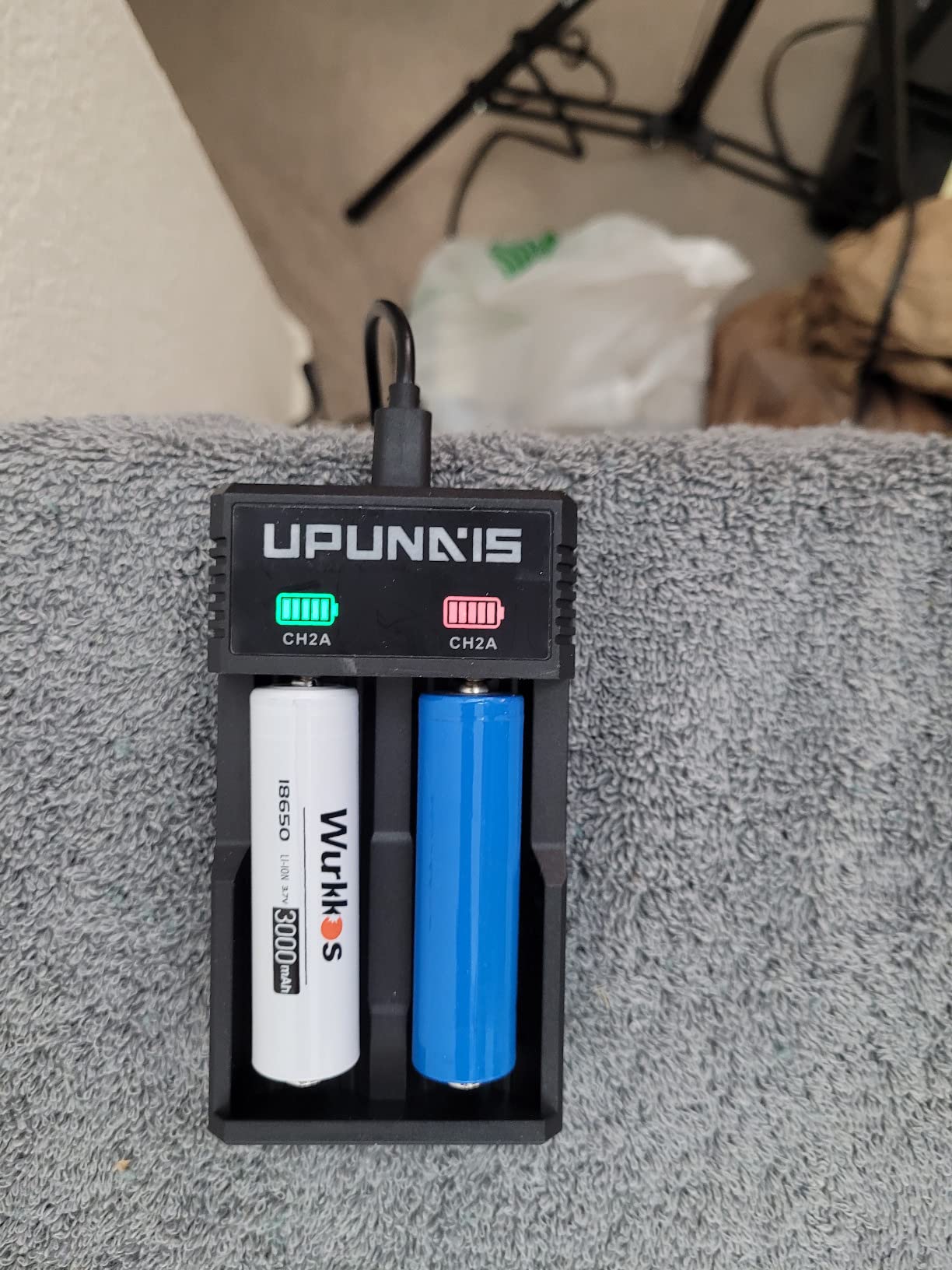
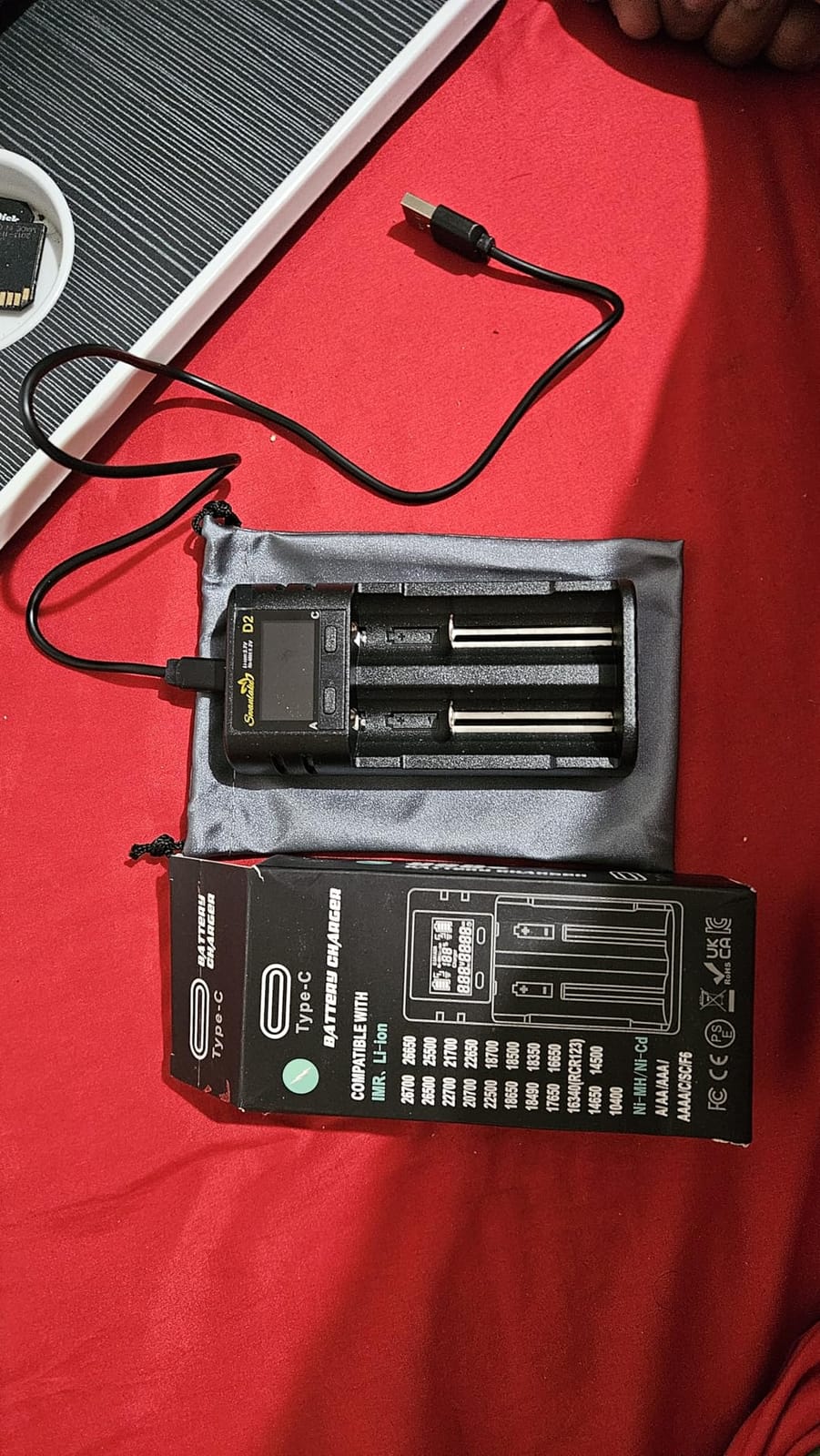
The Swanlake answers the request that comes up on flashlight forums more than any other: one charger for everything in the bag, with a screen big enough to read at a glance. The LCD shows voltage, current, charging time, battery type and power percentage for the selected bay. At two bays it is a compact unit measuring 4.82 by 2.34 by 1.1 inches, and it is low profile enough to sit in a drawer rather than occupy a shelf.
Current is selectable at 0.5A, 1A or 2A for lithium cells, and chemistry detection is automatic between 1.2V Ni-MH and 3.6 and 3.7V Li-ion. It covers 18650, 26650, 21700, 20700, 18500, 18350, 16650, 14650, 14500, 16340 and 10440, plus 1.2V AA, AAA, AAAA, SC, C and F6 cells. Two bays charge independently without interfering, with automatic full-charge stop and automatic chemistry judgement. The 14650 and 16650 support is worth noting for owners of very compact tube lights.
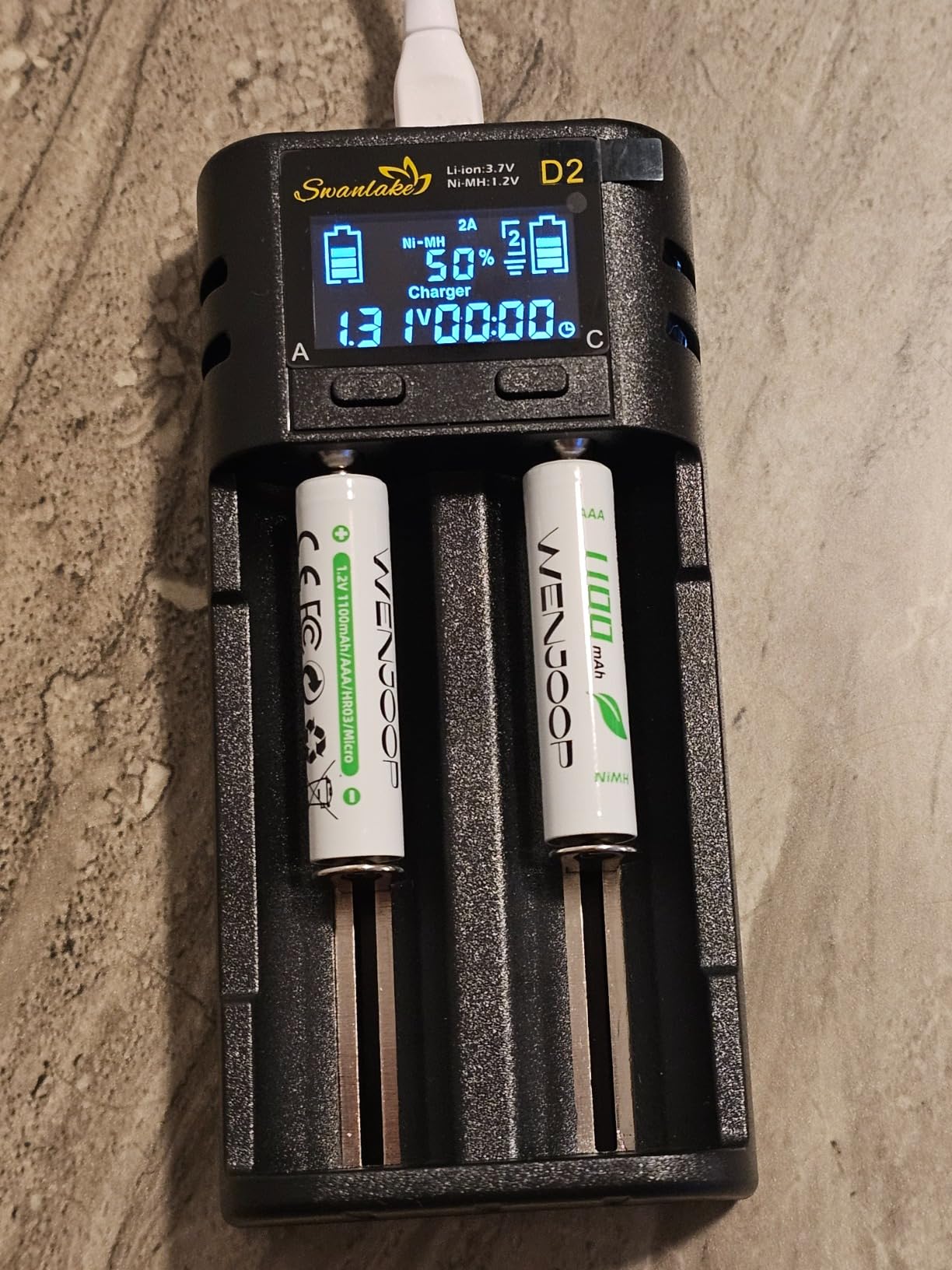
The body is fire-resistant PC and ABS with heat, low-temperature and scratch resistance, and there is built-in short-circuit and overvoltage protection. It carries a UL specification mark and a two-year warranty, which is the joint longest here alongside the XTAR VC4. A charging cable and manual are included; cells are not, which is worth remembering when you add it to a kit that has no spares yet.
The 4.6 rating is backed by an 82 percent five-star share, the highest in this roundup, across 263 reviews. Reviewers point to the readable display, the dial-in charge speed, and automatic chemistry detection as the reasons it works for mixed 18650 and AA collections. The limitations are structural rather than quality related: two bays, and the adjustable current only applying to lithium cells, with Ni-MH fixed at 0.5A.
Who the Swanlake suits
It suits owners of a two-cell EDC rotation who also carry Ni-MH AA or AAA cells and want one device instead of two. The large screen and percentage readout help when you are charging at night or in a vehicle, where squinting at a small display is the wrong use of your attention. A two-year warranty also makes it a low-risk buy for a first serious charger.
Where it falls short
Two bays is a real throughput ceiling for anything larger than a weekend rotation. If you own protected button-top cells, check the bay depth carefully before committing, because a unit this slim is not automatically going to accept every protected cell. And Ni-MH charging is locked at 0.5A, so a large AA rotation will take a while.
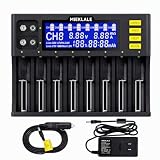
11. MIEKLALE S8 8+2 Bay Charger: Best for Large Battery Fleets
MIEKLALE 18650 Battery Charger,8+2 Bays Battery Charger with LCD Display
8 cylindrical plus 2 9V bays
12V/4A adapter included
LCD with mAh and internal resistance
Pros
- Highest bay count here with eight cylindrical and two 9V bays
- Auto-detects cell type and voltage for mixed chemistries
- Single screen shows internal resistance and mAh capacity
- 12V/4A adapter and car cord included
- Five selectable current levels up to 2A per channel
Cons
- Eight cylindrical bays only hold four C cells
- Only bays 1 and 8 deliver the full 2A
- Menu takes practice and empty bays show a null readout
The MIEKLALE S8 exists for a specific situation: you own too many cells for four bays to be practical. Eight cylindrical bays plus two dedicated 9V bays is the highest capacity here, and for a work light rotation, a set of RC packs, or a household with AA cells everywhere, it removes the queue entirely. Cells up to 72mm long are accepted, which covers 18650, 26650, 14500 and 10440.
The single LCD screen reports voltage, current, charge time, capacity in mAh, energy percentage and internal resistance, so it delivers the same diagnostic information as the much smaller Nitecore UMS4. Five selectable current levels go up to 2A per channel, and the charger auto-detects each cell’s type and voltage so mixed chemistries charge correctly side by side. That covers Li-ion, LiFePO4, RCR123, 9V, and Ni-MH and Ni-Cd AAA and AA. It does not charge 1.5V lithium AA or AAA cells.
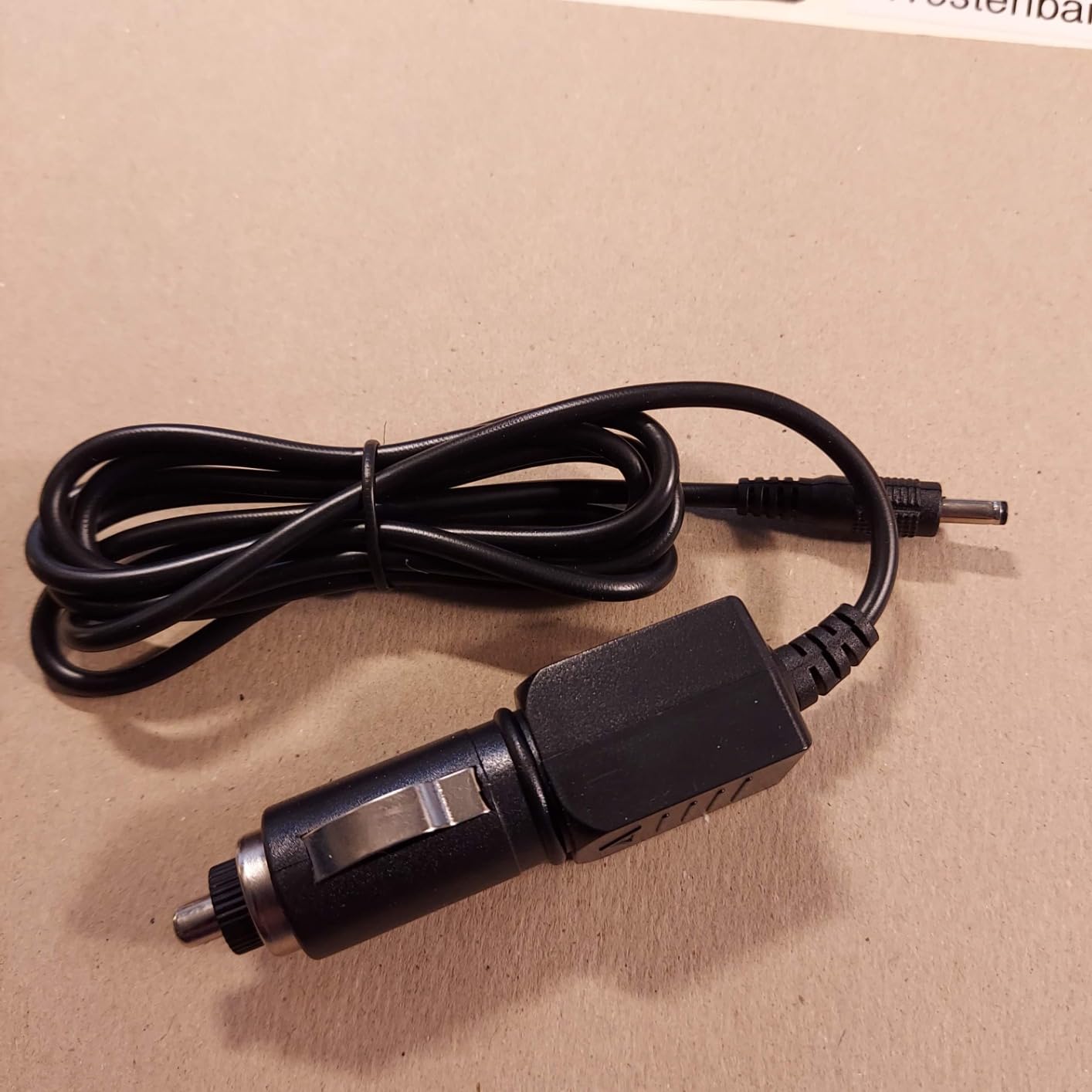
One practical advantage stands out. A 12V 4A power adapter and a car power cord are both included, so there is no separate adapter purchase and the unit can run from a vehicle, which is the setup that works for someone whose rotation lives in a truck rather than on a desk.
The 4.4 rating comes from 208 reviews with a 70 percent five-star share. Owners with large mixed fleets value the bay count and the depth of data on one screen, and report that it runs fast without producing noticeable heat on the cells. The recurring gripes are about the marketing rather than the charging: the eight cylindrical bays physically hold four C cells, not eight, and only bays 1 and 8 deliver the full 2A, with the rest capping at 1A.
Two other honest limitations. The menu takes a little while to learn, and empty bays show a cryptic null readout that is easy to mistake for a fault. More importantly, one owner reports that it does not flag a genuinely dead lithium-polymer cell and can show 100 percent for a battery that will not hold a charge, so treat its bad-battery detection as a prompt to check rather than a verdict. At 7.6 by 5.5 by 1.3 inches it is a shelf unit, not a packable one, and the build feels lightweight next to the premium chargers.
Who the MIEKLALE S8 suits
It suits anyone who has moved past charging cells one rotation at a time and wants everything back in a single session. It suits owners who need internal resistance readings across a big fleet so they can retire tired cells systematically, and anyone who wants mains and vehicle power from the same box. The included adapter and car cord remove the most common complaint about USB-only chargers.
Where it falls short
It is a large, fixed unit that will not fit a pocket or a small duty bag. The uneven per-slot current means your two fastest slots are the only ones that hit 2A, which matters if you were counting on a fast full fleet. And the dead-cell detection limitation means you should confirm suspicious cells with a separate check rather than trusting the percentage alone.
12. TRAELY Single-Slot USB Charger: Best Budget Backup Charger
18650 Battery Charger for 3.7V/3.6V Li-ion Batteries 26650 18650 21700 14500 16340(RCR123), Ni-MH/Ni-Cd AA AAA C Batteries-Upgraded
1 slot
2A
Adjustable holder 18650 to 26650
Charges Ni-MH AA AAA and C
Pros
- Very low cost for a charger handling several cell sizes
- Size-adjustable holder fits 18650 21700 and 26650
- Compact and light enough for a tool bag or travel kit
- Charges AA AAA and C as well as lithium cells
- UL CE FCC and IEC certified with a one-year warranty
Cons
- Single slot so cells charge one at a time
- One user reported a brief glitch on first insertion
- Minimal feature set with no charge data display
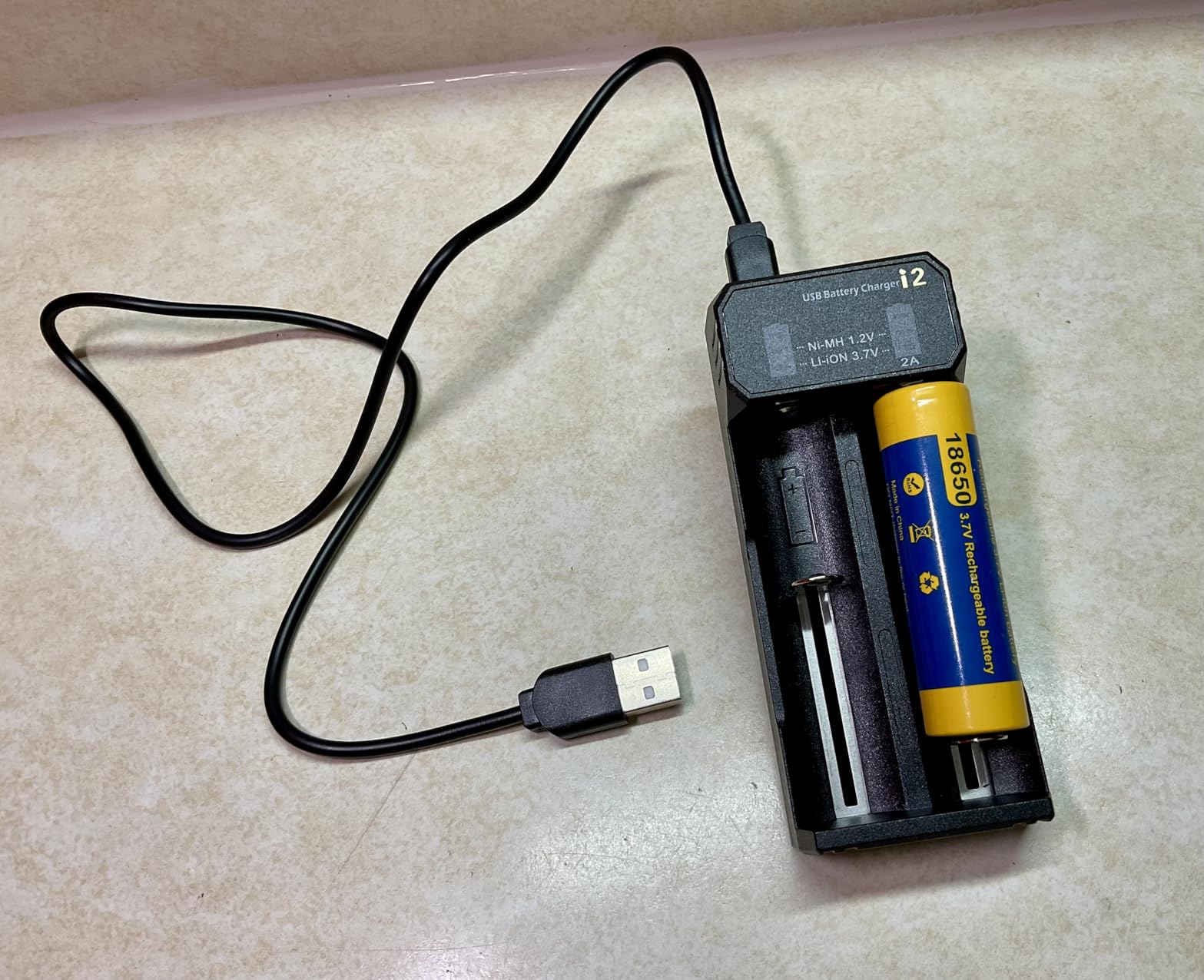
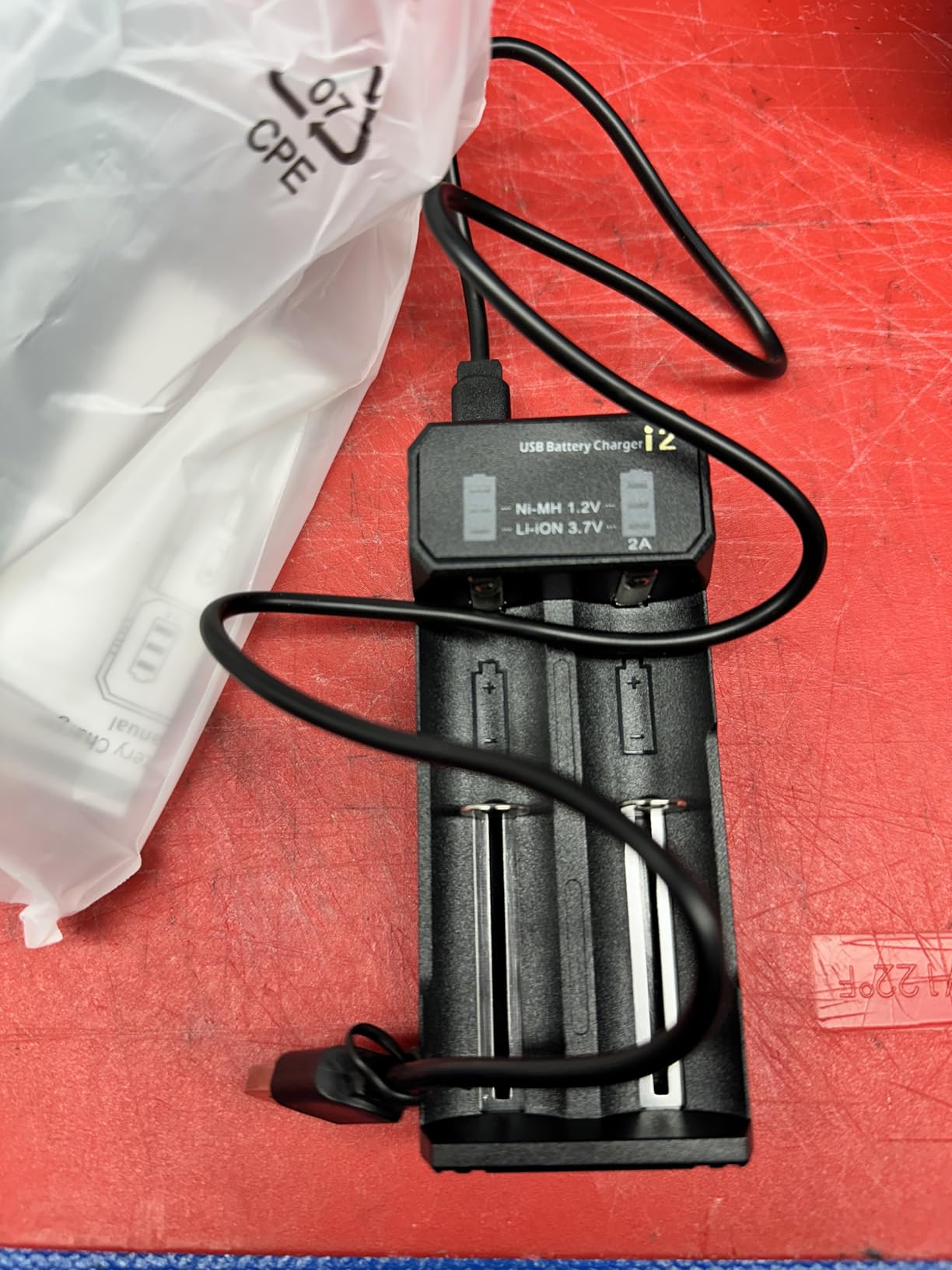
The TRAELY is the one to keep in a second bag. It is a single-slot charger with a size-adjustable holder that fits 18650, 21700, 26650, 14500 and 16340 cells, and it also handles Ni-MH and Ni-Cd in AA, AAA and C. That combination is unusual at this cost, and it means one cheap unit can cover a torch cell, a headlamp cell and a remote-control cell.
Size is what makes it packable. It measures 1.5 by 2.55 by 5.2 inches and weighs 100 grams, and the single holder adjusts to the cell you insert rather than demanding a fixed bay size. That is the opposite design choice from the multi-bay units above, and it is why the charger can stretch from a short 14500 to a full-size 26650 without an adapter. There is no display at all, so the only feedback you get is an indicator light and your own judgement about when to pull the cell.
Output is rated at 2A with 4.2V termination and automatic stop at full. Protection covers over-charge, over-voltage, short circuit and over-current. It is USB powered, so it runs from power banks, laptops and car adapters with the included cable, and the 100g fireproof ABS shell has heat-dissipation holes. It is certified to UL, CE, FCC and IEC, which is a better certification story than most units at this level, and it carries a one-year warranty.
At 4.6 across 89 reviews, the sample is thin, so I would treat the score as a reasonable signal rather than a settled verdict. Owners describe it plainly: simple, quick for the money, and small enough to carry. One reports charging a nearly depleted cell in about an hour. The recurring negatives are the obvious ones, a single slot, no real data display, and one report of a brief glitch when a cell was first inserted.
One thing to check before it goes in the glovebox is the source you will feed it. The 2A rating is only reached on a capable 5V supply, so on a laptop port or a low-output power bank it will still charge a cell, just more slowly. Set against that, the automatic full-charge stop and the over-charge, over-voltage, short-circuit and over-current protections are exactly the safeguards you want running unattended, which is the whole reason to own a second unit in the first place.
Who the TRAELY suits
It suits a traveller, a hiker, or anyone who wants a backup that costs almost nothing and fits in a pocket. It suits owners of larger cells such as 21700 and 26650 who need a slot that stretches. And it suits anyone with a mixed household battery drawer, because charging AA, AAA and C from the same device as the 18650s removes a whole category of clutter.
Where it falls short
One slot, and 89 reviews, which is not enough history to plan around for a primary charger. There is no display, so you are trusting the charger entirely, and a unit this simple will not tell you a cell is on its way out. Treat it as the charger that lives in the glovebox, not the one that manages your rotation.
How We Evaluated These 18650 Chargers
Every charger here was assessed against the same criteria, chosen because they change how a flashlight cell ages rather than because they look good on a spec sheet. We also weighted flashlight-specific fit heavily, since most competing roundups cover batteries rather than chargers.
First, charge termination and accuracy, because a charger that keeps pushing past full or stops early directly costs you cell life. Second, per-slot independence, so one faulty cell cannot stall a rotation. Third, charge current control, both the range of selectable currents and the maximum available, since 500mA and 3000mA are very different propositions for a 3000mAh cell.
Fourth, physical cell fit, particularly whether protected button-top cells seat properly in the bays. Fifth, chemistry and size coverage, including whether Ni-MH side-load cells are supported so you are not forced to own two chargers. Sixth, diagnostics, meaning whether the unit reports voltage, current, elapsed time, capacity or internal resistance well enough to identify a worn cell before it fails you in the field.
Seven, power sourcing, which is where a lot of confusion comes from. USB-only chargers are only as good as the adapter you supply, and a multi-bay unit will not deliver its headline current into every bay at once. And eight, build and protection circuitry, covering reverse polarity, overcharge, over-discharge, short circuit, temperature control and the fire rating of the housing. We read the listed certifications rather than assuming marketing copy is accurate.
How to Choose an 18650 Charger for Flashlight Use
The right charger depends less on brand and more on three questions: how many cells you rotate, what kind of cells they are, and whether you need to know which ones are still good. Work through those and the shortlist makes itself.
How many bays do you need?
A single bay is for a traveller with one light. Two bays covers a weekend EDC rotation where you charge while you sleep. Four bays covers a duty bag with a spare cell per light. Anything above that is for a household or a work fleet where you want everything back in one session. A recurring forum question is whether to buy one travel charger or one home charger, and the honest answer from people who own both is that they end up owning both, because they solve different problems. What charge current should you use?
Match the current to the cell, and the cell is usually the bigger one. A 0.5C charge is a good target: roughly 1500mA for a 3000mAh cell and 1000mA for a 2000mAh cell. Small high-drain IMR cells are happy at 1A to 2A because they are designed to be charged fast. LiFePO4 cells want 1A or less and a 3.65V cutoff rather than 4.2V. Pushing a 3A charger at a 3500mAh capacity cell every cycle is the fastest way to shorten its life, which is why the auto-detection and manual override on the Nitecore UMS4 are worth having.
Which chemistries must the charger handle?
For a pure 18650 rotation, lithium-ion support is enough. The moment you add rechargeable AA or AAA cells, you need Ni-MH or Ni-Cd support, and ideally a charger that detects chemistry per bay so you can mix them. Only one charger here is lithium-only. If you use LiFePO4 cells, confirm the charger has a 3.65V termination mode, because charging them to 4.2V is unsafe.
Will protected button-top cells physically fit?
This is the question that catches new flashlight owners out, and it is worth checking before anything else. Protected button-top cells are longer than flat-top cells, and a charger with tight or short bays will refuse them even when the model name says it accepts the size. The XTAR VC4 is the clearest example: it will not take protected 20700 or 21700 cells at all, and the manufacturer says so. Measure the bay length against the longest cell you own before you order.
Do you want capacity and internal resistance testing?
If you keep cells for months between uses, yes. A voltage readout alone will not tell you a cell is degrading, because a cell at rest reads close to full even when it has lost half its capacity. Internal resistance is the better indicator, and only the Nitecore UMS4 and MIEKLALE S8 report it here. A capacity or discharge test, available on the WISSBLUE LCD-4, is the next best thing and catches rewrapped or counterfeit cells that report a healthy voltage but collapse under load.
Does USB-C input matter, and where does the power come from?
USB-C is the sensible default in 2026, mainly because it is one cable for everything in your bag. The more important question is where the power comes from. Most capable chargers in this roundup have no internal power supply, so they need a USB-C or micro-USB wall adapter, and several do not include one. A multi-bay charger also needs a genuinely capable source: the units rated at 2A per bay need a proper 5V 2A or better supply, and a weak adapter is the single most common reason people conclude a charger is slow. If you would rather not think about it, the Keenstone has an AC plug, and the MIEKLALE ships with both a mains adapter and a car cord.
Frequently Asked Questions
What is the best charger for 18650 batteries?
The Snado SW-2 is the best all-round choice because it charges two bays independently, auto-detects lithium-ion and Ni-MH cells, and has reverse polarity and overheat protection. For cell diagnostics specifically, the Nitecore UMS4 reports internal resistance and health, which is what tells you a worn cell is on the way out.
Do 18650 batteries need a special charger?
Yes, 18650 cells need a smart multi-bay charger with a 4.2V CC and CV termination for lithium-ion, and a 3.65V cutoff if you use LiFePO4 cells. Never use a charger designed for 1.5V lithium AA cells or a LiPo balance charger. Look for reverse polarity, overcharge and temperature protection.
What amps should you charge an 18650?
Aim for roughly 0.5C, which is about 1500mA for a 3000mAh cell and 1000mA for a 2000mAh cell. Small high-drain IMR cells handle 1A to 2A well. Keep LiFePO4 cells at 1A or less. Sustained 3A charging shortens the life of high-capacity flashlight cells.
What is the best charger for flashlight batteries?
For a mixed kit, look for a charger that auto-detects chemistry per bay and accepts protected button-top cells. The Nitecore UMS2 handles lithium-ion from 10440 to 26700 plus Ni-MH and Ni-Cd in AA to D, and it includes an organizer case. For a single-light traveller, the Nitecore UI1 accepts protected 21700 cells and weighs 1.43 oz.
Why won’t my charger charge my 18650?
Common causes are an over-discharged cell sitting below the charger’s detection threshold, a protected button-top cell too long for the bay, reversed polarity, or a counterfeit cell with unusually high internal resistance. Chargers with a trickle or repair mode, such as the XTAR VC4 down to 0.1A, can recover deeply discharged cells. Measure the cell first before blaming the charger.
Final Verdict: Which 18650 Charger to Buy in 2026
The Snado SW-2 is the best 18650 battery charger for flashlights overall, because it handles two chemistries at once, runs from USB-C, and has a 4.5 rating across more than 8000 reviews. Buy the Keenstone if you want four bays with per-slot voltage and current readouts, and buy the XTAR VC4 if you want that same information at a lower tier with a trickle mode for tired cells.
For a single travelling charger, the Nitecore UI1 accepts protected button-top cells and weighs 1.43 oz. For cell health, the Nitecore UMS4 is the only unit here reporting internal resistance in a compact footprint. Whatever you pick, match the bay length to your longest cell, buy a decent USB-C adapter, and check whether your kit needs Ni-MH support.