
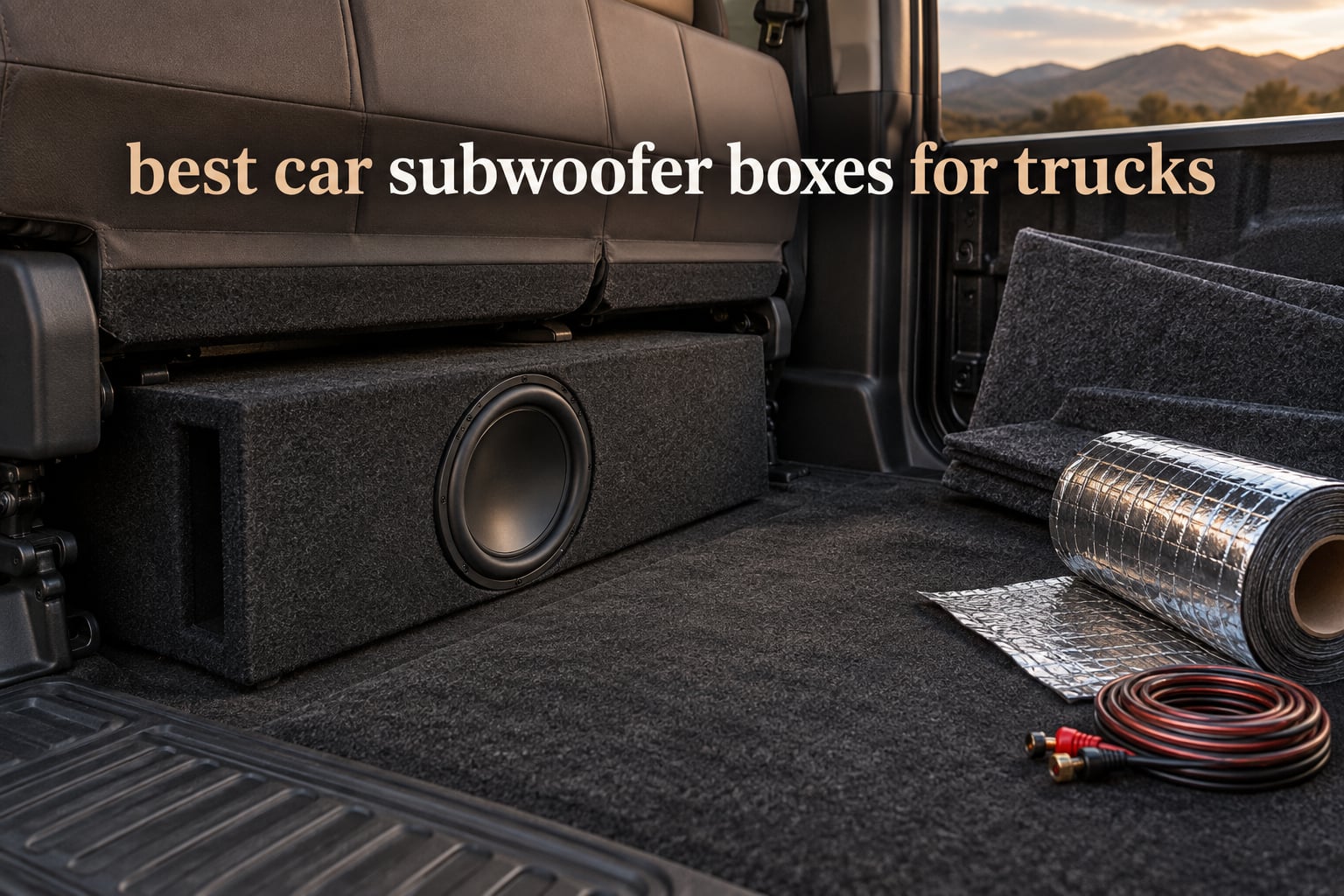
If you want the short answer first: the Atrend Bbox Single Sealed 12 Inch Wedge is the best car subwoofer box for trucks in 2026 for most people. It is a low-profile sealed enclosure that slides under or behind a rear seat without a seat lift, and it accepts a single 12-inch subwoofer in a footprint that most truck cabs can swallow. The American Sound Connection Dual 12 Regular Cab box wins on airspace, and the Q Power boxes win on vehicle-specific fitment for specific years.
A truck cab is a hard room for bass. The rear seat eats most of the vertical space, road noise is higher than in a car, and the metal panels of a pickup are excellent resonators. That means the enclosure you pick matters more than the woofer you drop into it. Get the box wrong and you are back to a thin, distorted 8-inch where a properly sized enclosure should be.
We compared ten of the strongest truck subwoofer enclosures currently on the market, weighted them on fitment, airspace, mounting depth, build method, and owner feedback, and pulled the ten picks below. Every one of them is unloaded, so you choose the subwoofer. If you want a pre-loaded option instead, our general subwoofer box roundup covers that side of the market.
Last updated in 2026. Prices and fitment change, so confirm the dimensions against your own cab before you cut anything.
Table of Contents
Top 3 Best Car Subwoofer Boxes for Trucks in 2026
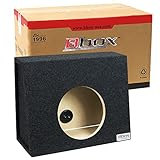
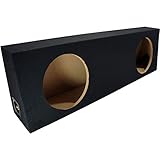
The three boxes below are the ones we would put in a truck first. The Atrend wedge is the most forgiving fit. The Silverado extended cab box is the tightest factory-style install. The regular cab ASC box gives the most airspace per dollar of frustration, and it is the only one here designed from the ground up for a single cab.

All 10 Truck Subwoofer Boxes at a Glance in October
Every enclosure in the table below is empty. Airspace figures are net internal volume where the manufacturer publishes one, and mounting depth is the usable depth inside the cutout. Where a maker does not publish net airspace, that is called out rather than estimated.
| Product | Specs | Action |
|---|---|---|
| Atrend Bbox Single Sealed 12 Inch Wedge |
|
Check Latest Price |
 Atrend Bbox Single 10 Inch Ram Quad Cab Atrend Bbox Single 10 Inch Ram Quad Cab |
|
Check Latest Price |
 ASC Dual 12 Ram 1500 Quad Crew Cab ASC Dual 12 Ram 1500 Quad Crew Cab |
|
Check Latest Price |
| ASC Dual 12 Regular Cab Truck Enclosure |
|
Check Latest Price |
| ASC Dual 12 Silverado Sierra Extended Cab |
|
Check Latest Price |
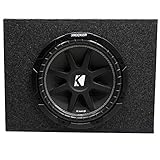 KICKER 10C12-4 Loaded Single 12 KICKER 10C12-4 Loaded Single 12 |
|
Check Latest Price |
 Q Power Dual 10 Tundra CrewMax 2014-2021 Q Power Dual 10 Tundra CrewMax 2014-2021 |
|
Check Latest Price |
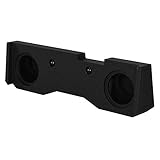 Q Power Dual 10 Underseat Downfire Chevy GMC Q Power Dual 10 Underseat Downfire Chevy GMC |
|
Check Latest Price |
 Q Power Quad 8 Underseat Silverado Sierra Q Power Quad 8 Underseat Silverado Sierra |
|
Check Latest Price |
 Atrend 8 Inch Universal Vented Truck Box Atrend 8 Inch Universal Vented Truck Box |
|
Check Latest Price |
1. Atrend Bbox Single Sealed 12 Inch Wedge – the low-profile all-rounder
Atrend Bbox Single Sealed 12 Inch Wedge Shaped Subwoofer Enclosure – Universal Wedge Truck Enclosure – Premium Subwoofer Box Improves Audio Quality, Sound & Bass – Red & Black Spring Terminals
1 inch MDF
5.25 inch mounting depth
11.125 inch cutout
15.25 H x 19.625 W
Pros
- Slim wedge profile that stops sliding in the bed of a pickup
- One inch MDF is the thickest panel in this roundup
- Owners report a single 12 sounding like a much larger setup
- Carpet is glued across the whole enclosure
Cons
- Speaker wires are not pre-attached to the spring terminals
- Single terminal set makes dual voice coil subs awkward
- Strong carpet odor in the first hours after delivery
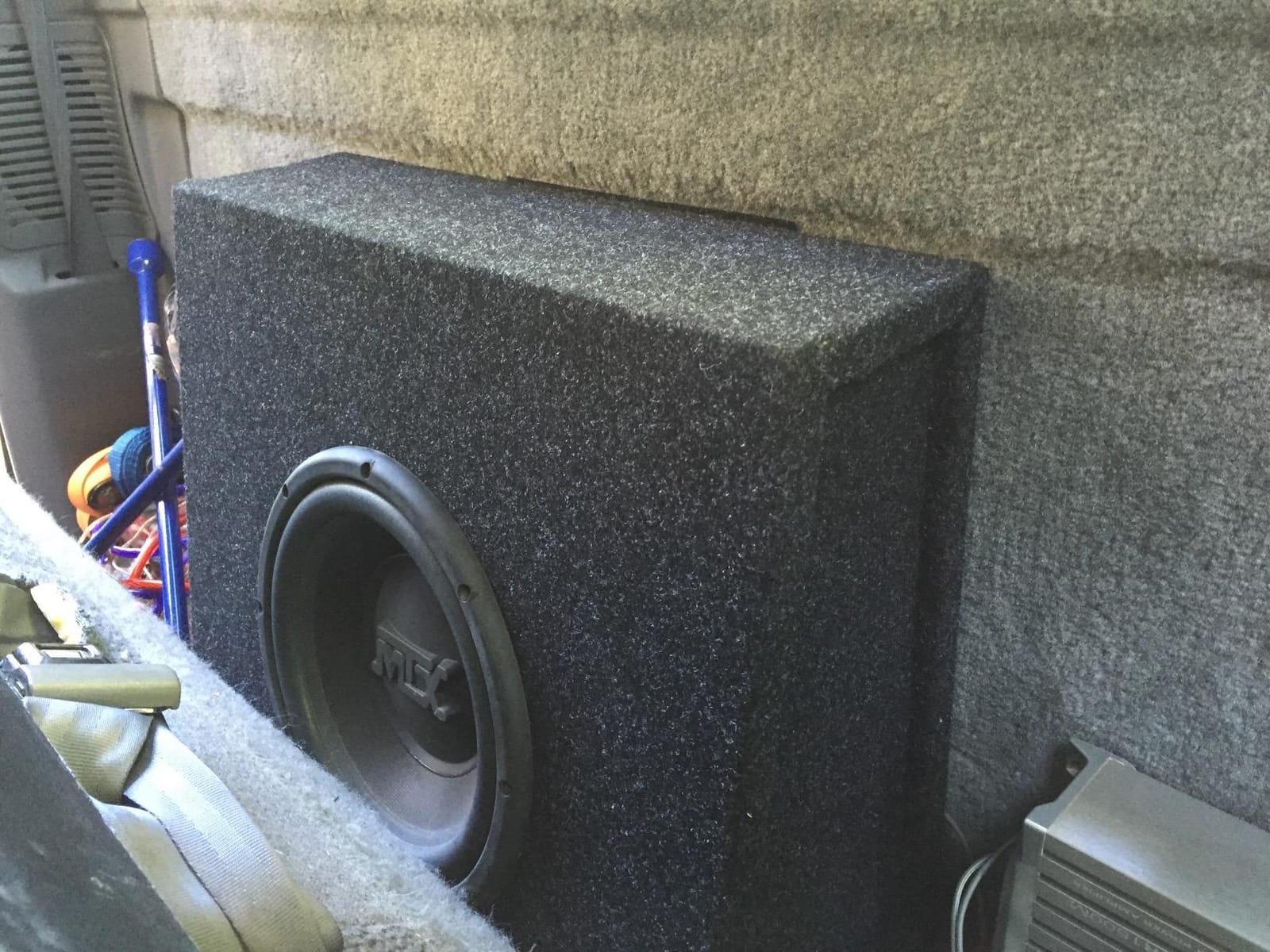
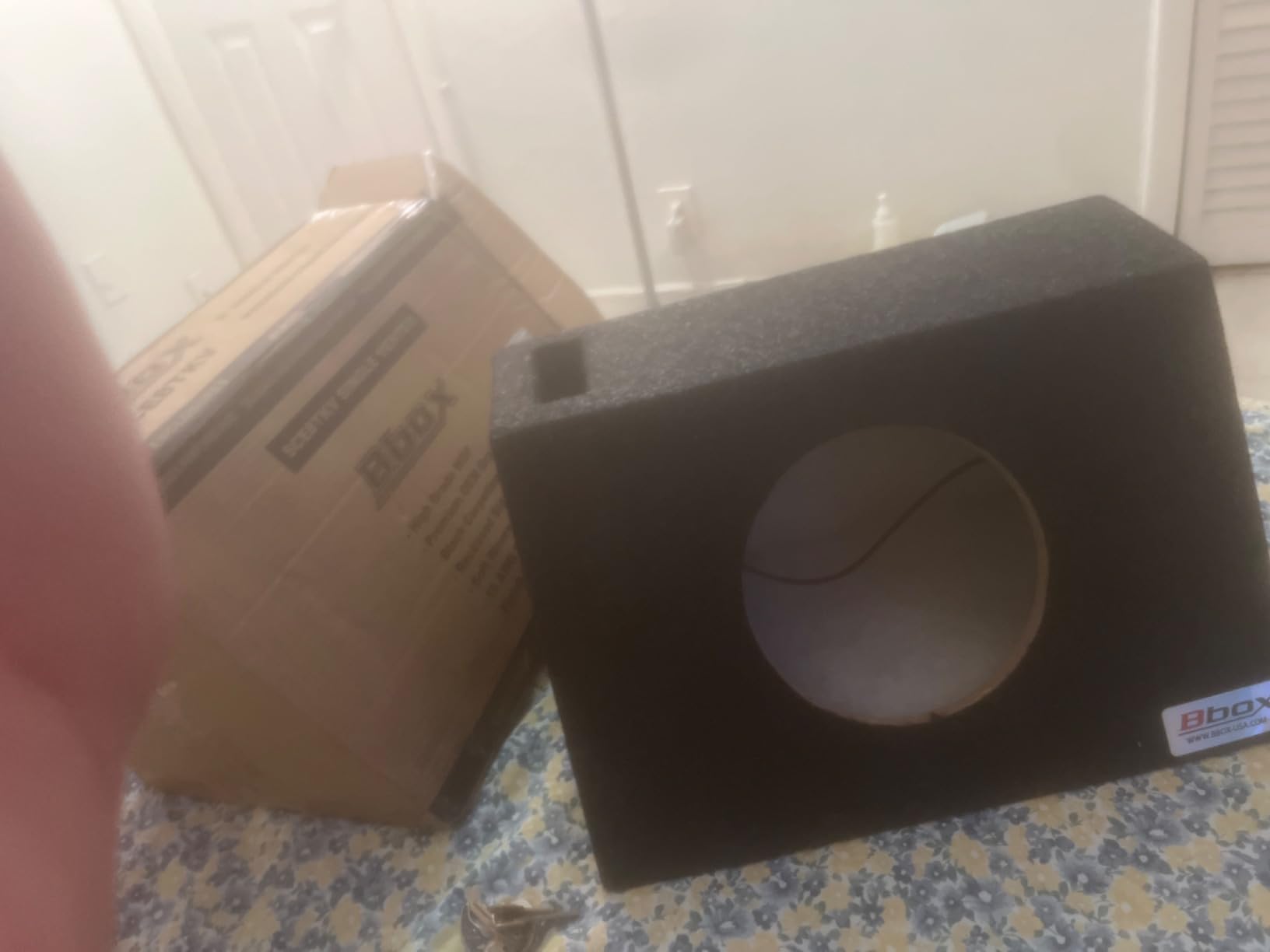
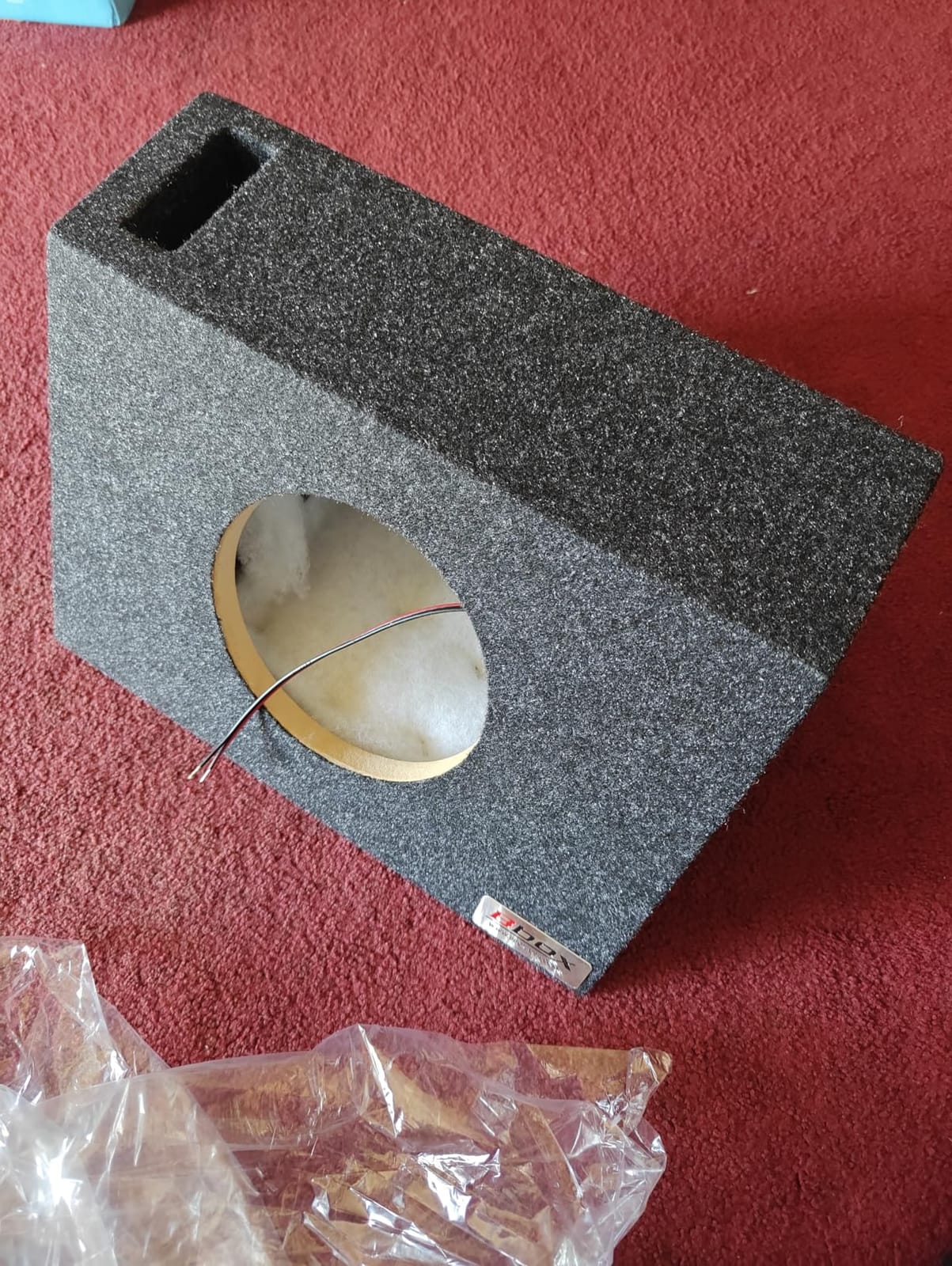
This is the box we ended up recommending to the widest range of people. The wedge profile runs 8.25 inches deep at the bottom and tapers to 5 inches at the top, which is what lets it tuck under a rear seat or sit flat against a seat back without tipping. That stability is the quiet advantage over a plain rectangular box, which will walk across a bed liner every time you get in and out.
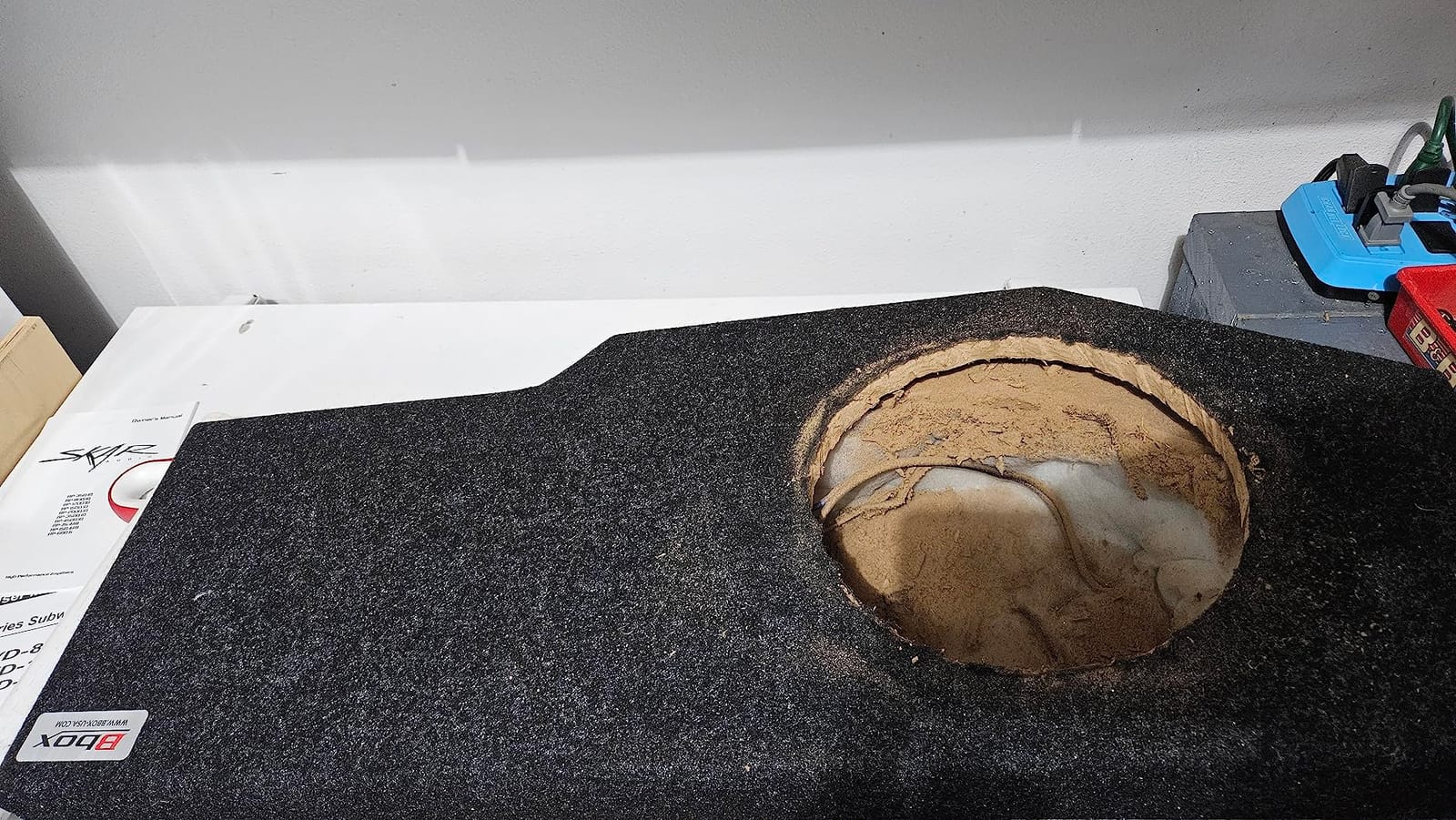
The build is where the money went. Atrend uses 1 inch MDF here, CNC miter joints and dado cuts, and two separate applications of aliphatic wood glue, including a second pass around the internal joints after final assembly. Recessed side panels held with brad nails finish the air chamber. Owners consistently report that a single 12 in this box moves far more air than the subwoofer alone would suggest, which is what a stiff, sealed, well-braced cabinet is supposed to do.
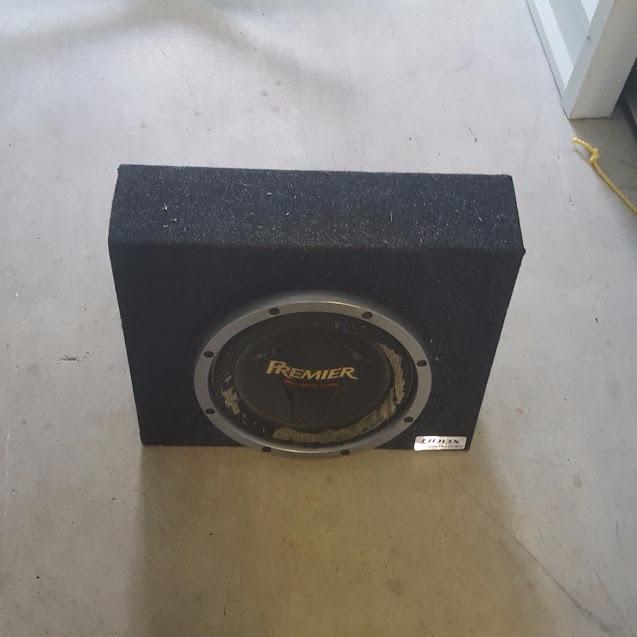
The honest catch is installation. This is a universal wedge, not a vehicle-specific part, so on some trucks it needs the seat brackets trimmed, a carpet pad cut back, or a trim panel removed to get the 5.25 inch mounting depth to clear. The listing names 2004 to 2008 F-150 Super Crew as a compatible platform, and owners report that fitment on that generation is not always as clean as the listing suggests. If you hate modifying interior trim, this is not your pick.
What to measure before you commit
Measure the gap between the seat back and the rear wall at its narrowest point, then subtract 8.25 inches. That is the number that decides whether this box drops in or whether you are trimming brackets. Also check the 19.625 inch width against your cab, because a full-size rear bench is usually narrower than the box is long.
Add a polyfill layer to the interior if your subwoofer maker recommends it. On a sealed alignment of this size it is cheap insurance against a boomy, one note low end, and it takes a few minutes.
Who this box suits
This suits a daily driver who wants one solid 12 instead of a wall of 8s, and who values a clean install over maximum output. Paired with a shallow-mount 12, the 5.25 inch depth covers most of the popular shallow drivers without forcing you into a thin, compromised subwoofer.
It also suits anyone moving a box between vehicles. Because it is not cut to a specific cab, it is the easiest of the ten to relocate. One buyer used it in an F-150, then moved it to a smaller truck without changing the box.
Where it falls short
It will not give you the low-end output of a dual 12 in a regular cab, because a single sealed chamber simply has less volume to work with. If your goal is the deepest, loudest bass you can get out of a bed rather than a clean daily-driver install, look at the regular cab ASC box further down.
Also budget for extra work at install time. This is a job for someone comfortable pulling trim. If you would rather hand a truck over to a shop, our tool box guide covers the rest of your build, but the sub install is still worth a professional.
2. Atrend Bbox Single 10 Inch Ram Quad Cab – vehicle-specific depth for a Ram
Atrend Bbox Single 10 Inch Subwoofer Sealed Enclosure – Fits 2002 – 2018 Dodge Ram Quad Cab – Carpeted Car Subwoofer Boxes & Enclosures – Subwoofer Box Improves Audio Quality, Sound and Bass – Charcoal
Fits 2002-2018 Ram Quad Cab
6 inch mounting depth
32.7 W x 13.25 D x 7.25 H
3/4 inch MDF
Pros
- Engineered for one specific cab generation
- 6 inch depth accepts low-profile 10s
- 3/4 inch MDF with no flex
- Same family has variants for other Ram cabs
Cons
- 32.7 inch width is awkward in smaller cabs
- Vehicle specific so it will not fit any other vehicle
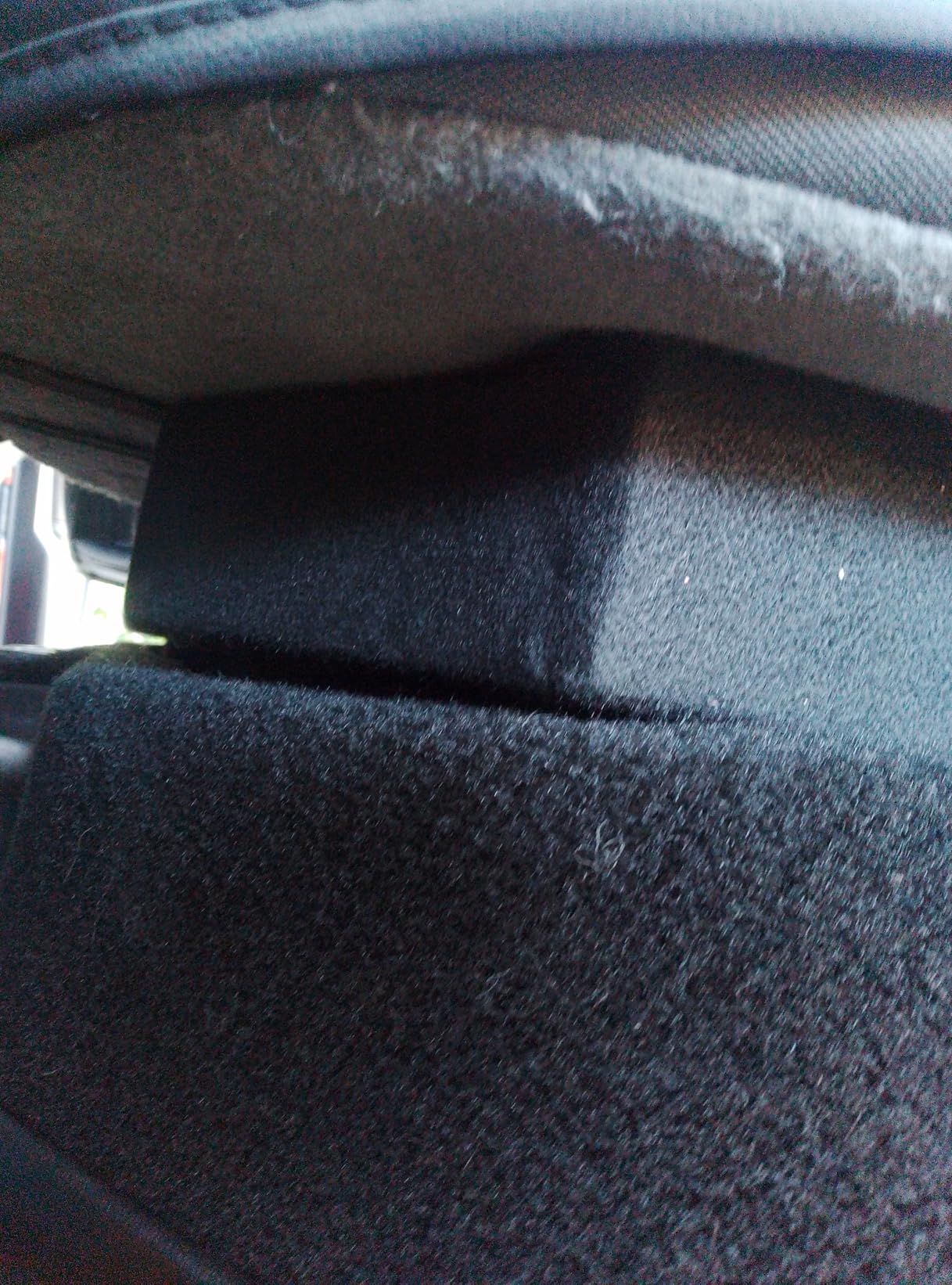
When a box is built for one cab, you feel the difference immediately. This enclosure is 32.7 inches wide, 13.25 inches deep, and only 7.25 inches tall, which is a low, wide shape designed to sit behind the rear seat of a 2002 to 2018 Dodge Ram Quad Cab. Owners report that the seats still move normally and that the box does not intrude on the footwell.
The 6 inch mounting depth is the number to focus on. It is deeper than most shallow-mount 10s need and shallow enough to clear a tight behind-seat gap, which means you get access to a wide range of drivers instead of being pushed into a thin, low-excursion subwoofer. The panels are 3/4 inch MDF, glued and braced, with recessed side panels for the same airtight chamber you would build yourself.
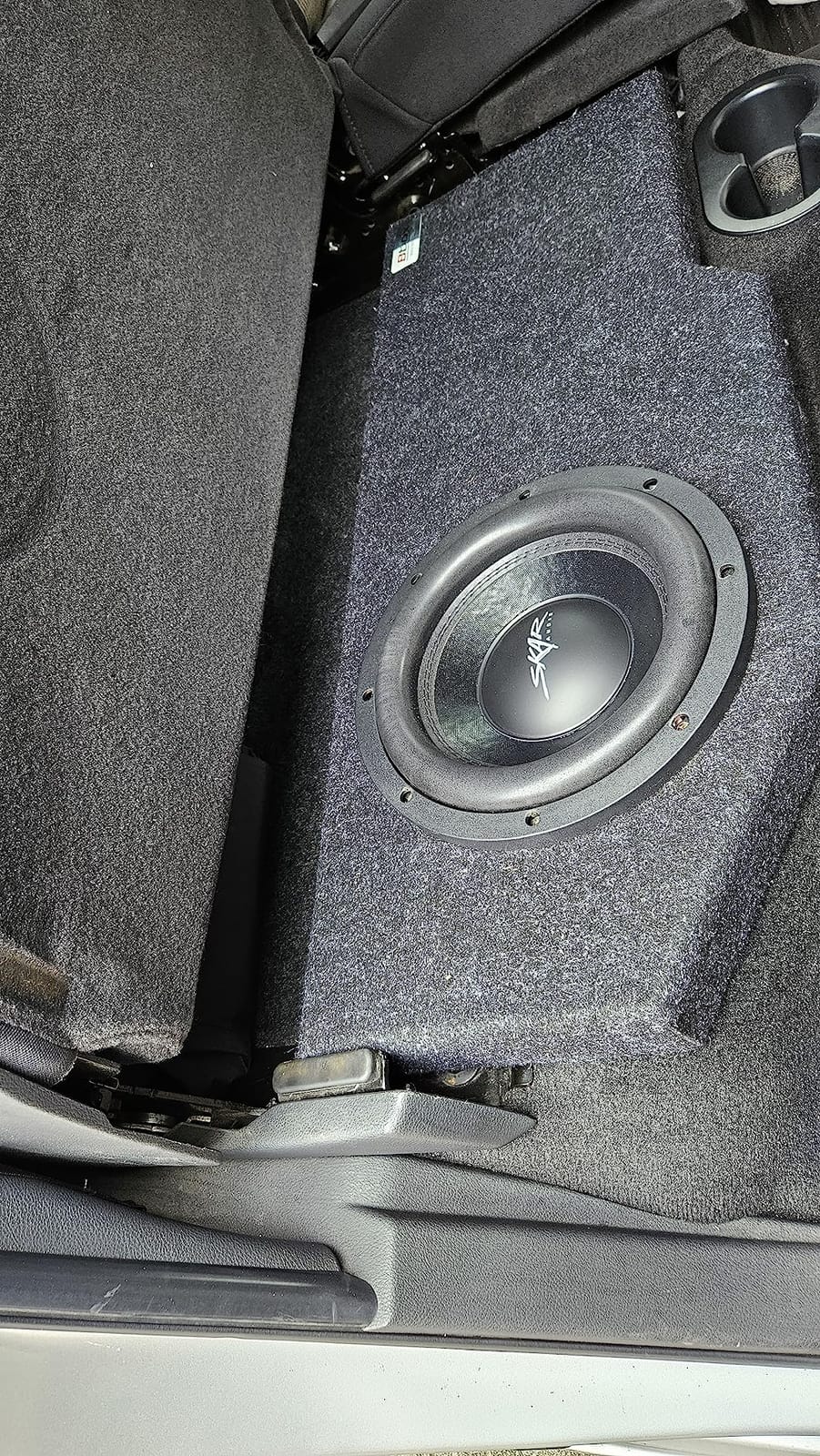
The tradeoff is obvious and it is fine. This box does 10s, not 12s, and it fits exactly one cab configuration. A dual 10 configuration will sound tighter and more controlled than a single 12, but it will not produce the raw air movement of two 12s in a roomier box. Buyers who want deep, loud, bed-filling bass should look at pick 3 or pick 4 instead.
That said, the same family covers a range of Ram cabs and 12-inch configurations, so if you are shopping for a Ram and slightly unsure which body style you have, the model numbering is worth checking before you commit to a single 10.
How to verify the fit is real
Forum users on this build consistently hit the same wall: manufacturer listings claiming a truck fit that the cab does not deliver. Confirm two numbers before buying. Measure the behind-seat depth in your Ram and compare it to the 13.25 inch box depth, then measure the cab width at seat level and compare it to 32.7 inches.
If either fails, a truck-specific box from a different maker is usually cheaper than cutting the box. The Atrend range covers many Ram configurations, so a sibling model is often the answer.
Who should buy this one
Buy it if you drive a 2002 to 2018 Ram Quad Cab, you want a tight and musical low end rather than maximum decibels, and you would rather not modify anything. A quality 10 in 3/4 inch MDF will sound excellent on a monoblock at moderate power.
Skip it if you are chasing shake. Two 12s in a box with real airspace will out-move this every time, and in a Ram that has the space for it.
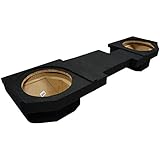
3. American Sound Connection Dual 12 Ram 1500 Quad Crew Cab – two subs across the cab
Fits 02-18 Dodge Ram 1500 Quad Crew Cab Dual 12″ Subwoofer Box – ASC
Dual 12 sealed
0.61 cu ft total airspace
5.75 inch mounting depth
55 x 15 x 9 inches
Pros
- Fits two 12s in one long low box
- 55 inch span uses the full cab width
- Vented design improves airflow
- 5.75 inch depth takes most 12s
Cons
- 0.61 cu ft is small for two subs
- Some subs need trimming to seat and seal
- Long box is awkward through a door opening
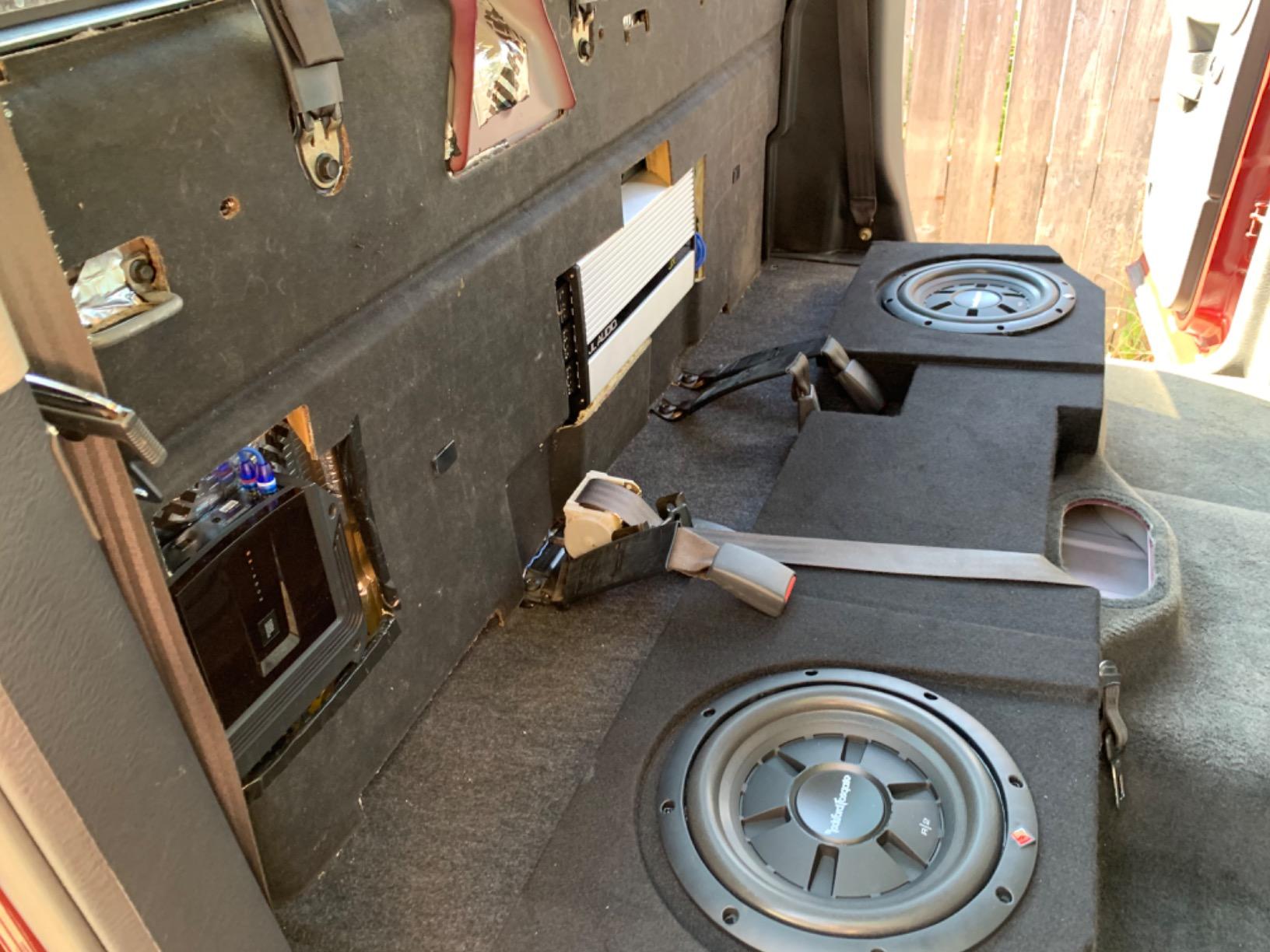
This one exists because a 2002 to 2018 Ram 1500 Quad Crew Cab has a lot of width behind the rear seat and very little height. The American Sound Connection answer is a 55 by 15 by 9 inch box that runs the full width of the cab and takes a pair of 12-inch subwoofers side by side in one sealed chamber. The footprint is low, the profile is shallow, and the seats still come down.
The 5.75 inch mounting depth accepts the majority of modern 12-inch drivers, including several popular shallow-mount models. That matters more than it sounds: a lot of “dual 12 truck boxes” are actually shallow boxes with shallow subwoofers, and you give up excursion and output to get the fit. This one holds real 12s.
Here is the honest weakness, and it is a numeric one. Total airspace is 0.61 cubic feet, which works out to roughly 0.3 cubic feet per sub. That is a genuinely small sealed volume for a pair of 12s. Owners love that it makes use of the full cab width, but the tight volume is the most common complaint, along with reports that some subwoofers had to be trimmed at the cutout to seat and seal properly.
Small volumes also mean less thermal headroom and more distortion if you push a lot of power. If you are building this system for daily driving at moderate volume, it is fine. If you plan to run a serious amplifier and want those 12s to work hard, look at pick 4, which has more than twice the airspace.
What to check before ordering
Measure the width of your rear cab wall at seat level, not at the floor. A 55 inch box needs close to that span, and crew cab back walls are often narrower near the wheel wells. Also check your door opening; a 55 inch rigid box is genuinely awkward to maneuver into a cab, and several owners called this out.
Check your subwoofer cutout diameter against the opening before you buy drivers. The reports of trimming are usually a diameter mismatch, not a bad box.
Who should buy this one
Buy it if you have a 2002 to 2018 Ram 1500 Quad or Crew Cab, you want two 12s in a factory-looking install with no seat lift, and you are not planning to run an extreme amplifier. Two efficient 10-class 12s in this box will sound great and stay clean.
Pass on it if your cab has a back wall narrower than about 55 inches at seat height, or if bass output is the only thing that matters to you.
4. American Sound Connection Dual 12 Regular Cab – more airspace than anything else here
Dual 12 Inch Subwoofer Box Regular Cab Truck Sub Enclosure 5/8″ MDF – ASC
Dual 12 sealed
1.50 cu ft airspace
10.5 inch mounting depth
5/8 inch MDF with carpet
Pros
- Most airspace of any box in this roundup
- 10.5 inch depth accepts nearly any 12
- Works in single cab and regular cab trucks
- Speaker wire and mounting hardware included
Cons
- Basic terminal connectors
- Deep motors need spacers to seal
- Will not fit behind a Tundra CrewMax rear seat
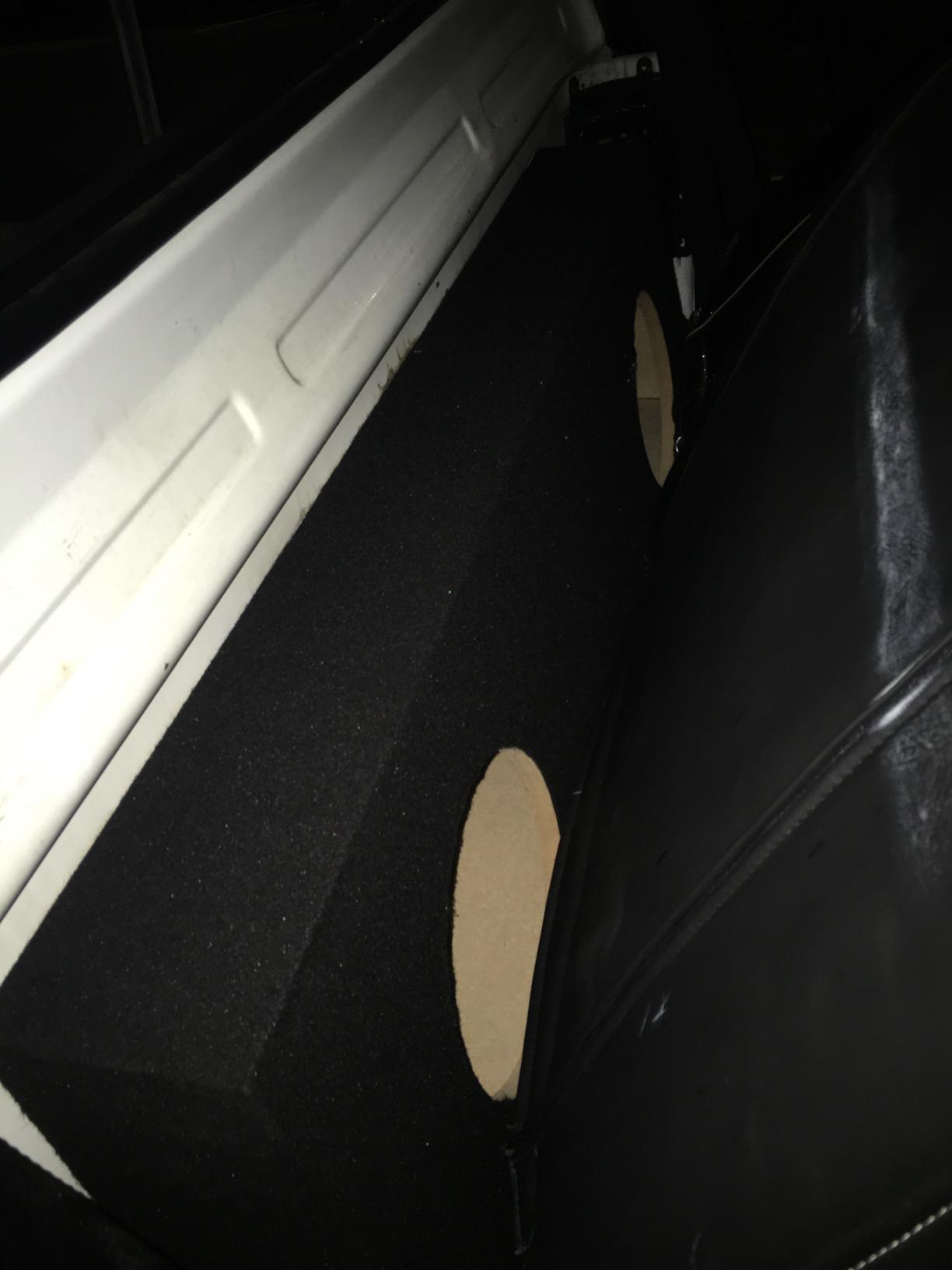
Single cab trucks are the most ignored corner of the truck audio market. Buyers on r/CarAV and the DIY Mobile Audio forums repeatedly say the same thing: they cannot find anything that fits a regular cab behind the seat. This box is the answer. It is 48.75 inches wide, 14.25 inches tall, and it uses a wedge shape that runs 5.5 inches deep at one end and 7.75 inches at the other.
The headline number is 1.50 cubic feet of total airspace for a pair of 12s. That is more than double anything else in this roundup, and it is why this box gets recommended so often for single cabs where you have the depth to spare. The 10.5 inch mounting depth is likewise the deepest here, so almost any 12-inch subwoofer seats without spacers or cutting.
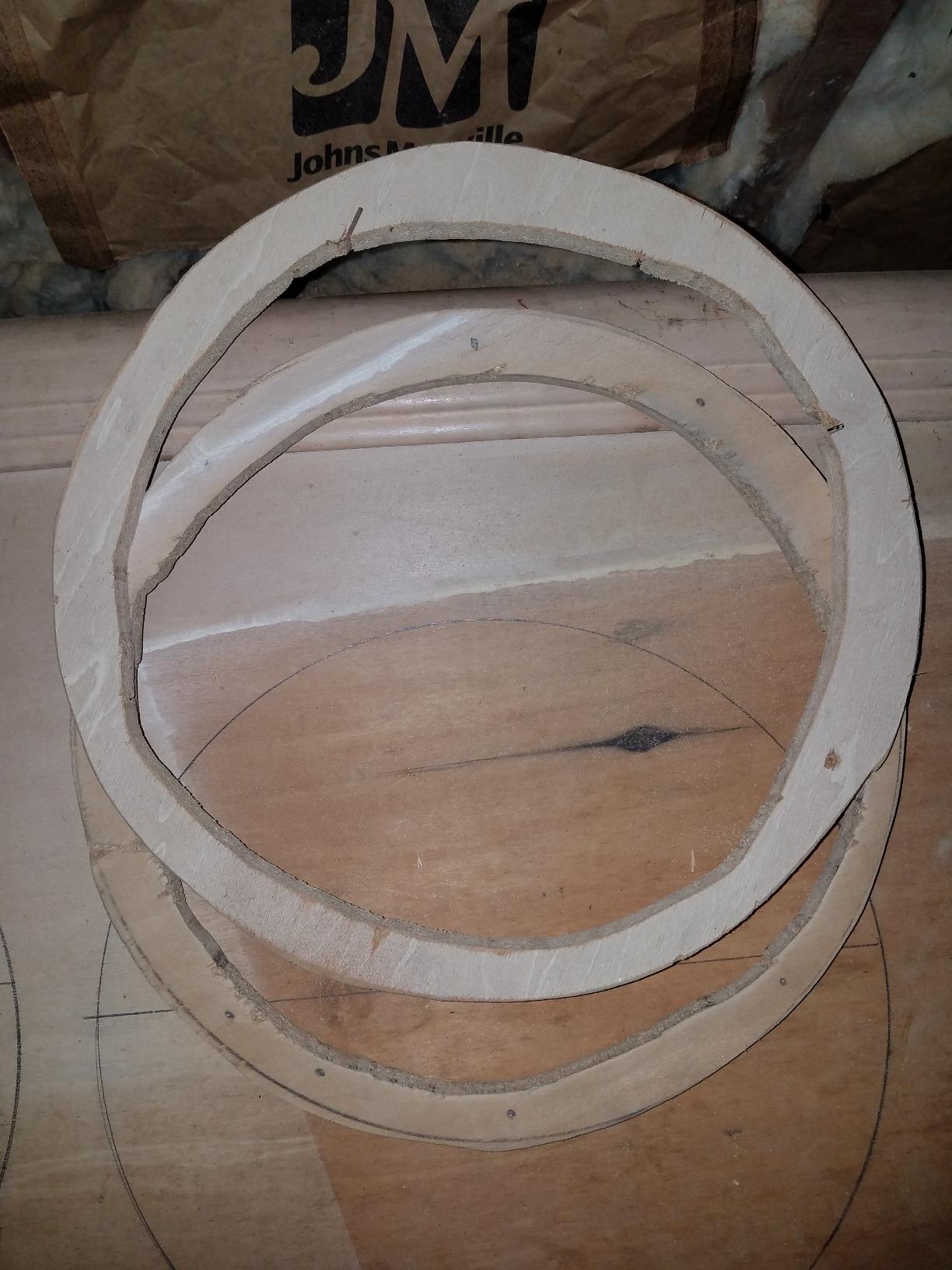
Buyers also compare it favorably to custom-fabricated boxes at similar cost, which tells you how well the 5/8 inch MDF, carpeted construction holds up. Speaker wire and mounting hardware come in the box, which removes two small trips to the parts store. Owners report clear, punchy low end rather than the one-note boom you get from an undersized chamber.
The catch is that regular cab space is not the same as crew cab space. This box will not fit behind the rear seat of a 2017 Tundra CrewMax, and it is a real factor in tall cabs. Taller drivers also report losing some leg room behind the seat. If you have a large crew cab, pick 3 or pick 5 is the right direction.
How much airspace do you actually need
As a rough guide for sealed alignments, a 12-inch subwoofer behaves well in about 0.5 to 1.0 cubic feet, and a pair wants somewhere between 1.0 and 1.5. Below roughly 0.25 cubic feet per driver, most 12s sound strained. This box sits at the top of that range, which is why it feels effortless rather than strained.
More volume does not automatically mean more output. A larger sealed box lowers the resonant frequency and tightens the transient, which is why this one sounds clear rather than boomy. It is a good match for anyone who finds ported boxes in a truck too loud and too loose.
Who should buy this one
Buy it if you drive a regular cab or single cab truck, you want a genuine dual 12 setup, and you would rather have volume and depth than a flush factory look. It is the best-value entry in this roundup for a reason: the numbers are the best and the price is not.
Pass if leg room matters more than output, or if your cab is a modern crew cab with a shallow behind-seat gap.
5. American Sound Connection Dual 12 Silverado Sierra Extended Cab – tight factory fit
Fits 99-06 Chevy Silverado Sierra Ext Cab Dual 12″ Subwoofer Sub Box ASC
Fits 1999-2006 Silverado Sierra Ext Cab
0.95 cu ft
5.75 inch mounting depth
34.3 pounds
Pros
- Sits under the rear seat and the seats still fold
- Clean carpeted finish with no rattles reported
- 5.75 inch depth takes shallow mount 12s
- Seats fold normally after install
Cons
- Heaviest box here at 34.3 pounds
- Very little room for an amplifier inside
- Older model years may need trimming
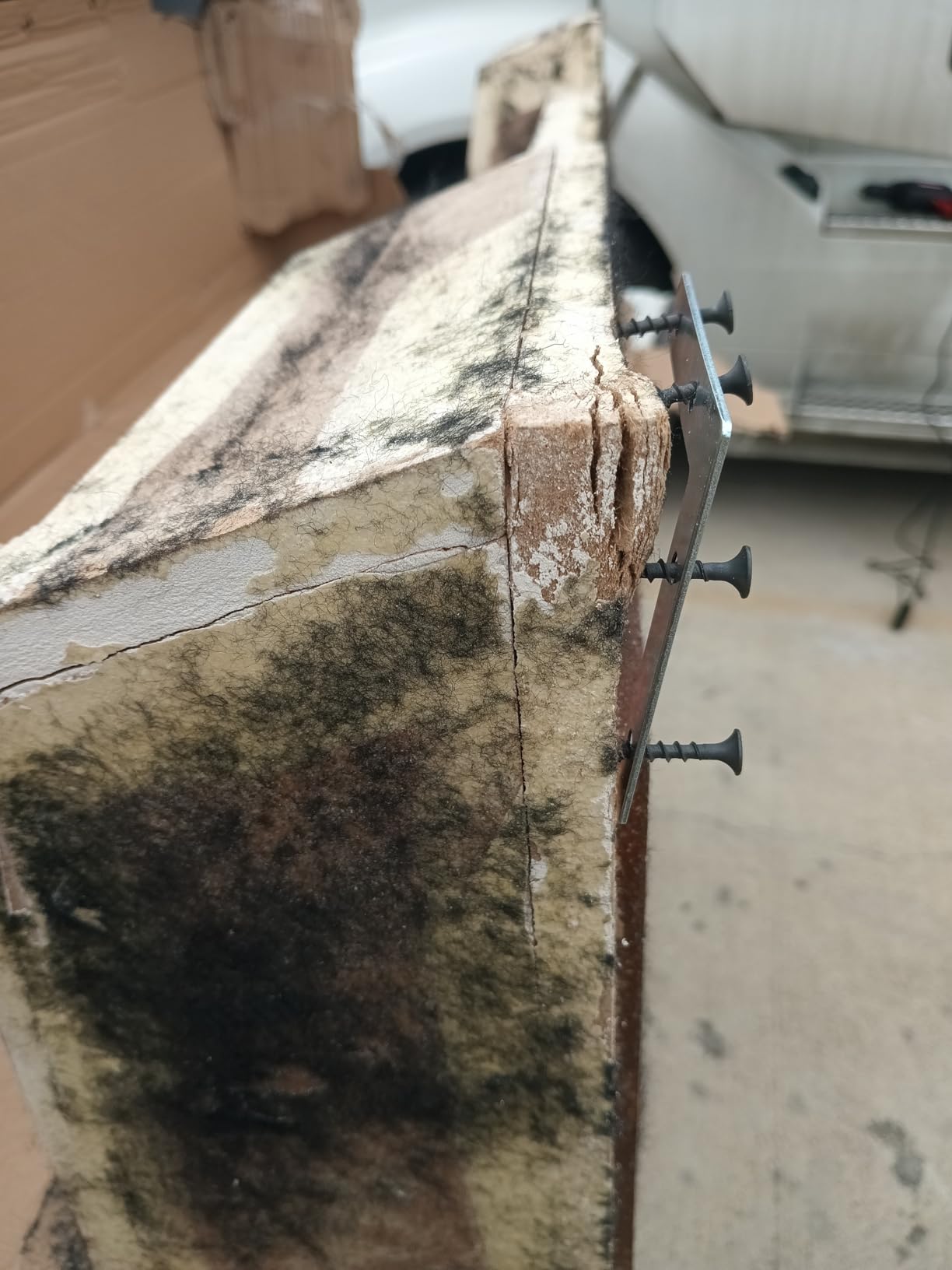
This is the one to buy if you want the install to look like it came from the factory. It is shaped specifically for the rear seat area of 1999 to 2006 Chevrolet Silverado and GMC Sierra extended cabs, 51 inches wide, 9.75 inches tall at the front, 7.25 inches at the rear, and 13.5 inches deep. Owners report that it tucks under the rear seat and that the seat still folds normally afterward.
The finish is a carpeted face that blends with the factory interior, and across reviews the most common praise is the absence of rattles and vibration after months in a truck. That tracks with the build: sealed design, 0.95 cubic feet of total airspace, and construction that does not flex when a 12 is pushed hard.
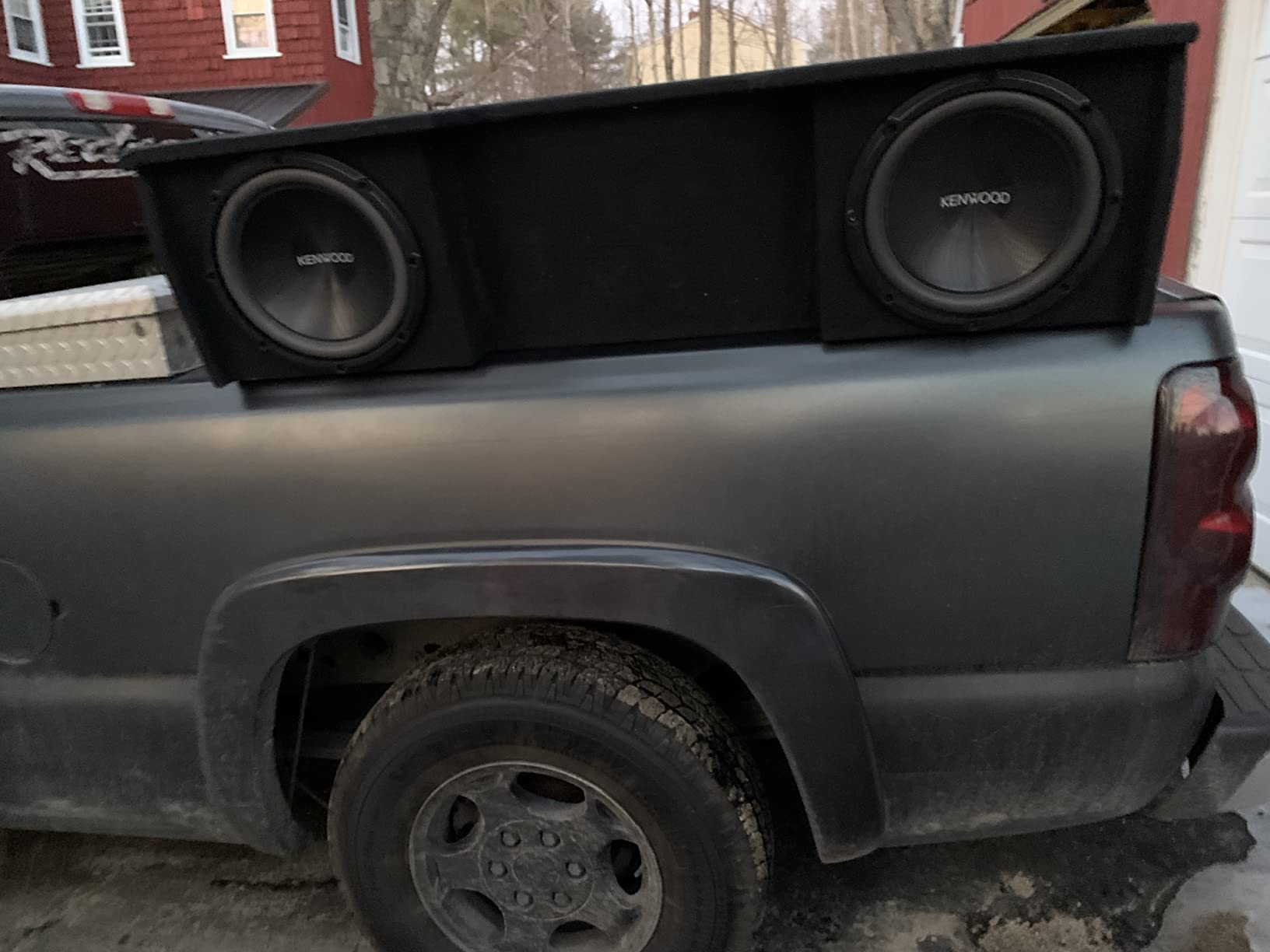
The 5.75 inch mounting depth is the detail that separates this from a generic box. It accepts modern shallow-mount 12s from brands like JL Audio and Kenwood, so you are not forced into an old-style deep-motor driver to make the fit. Owners report deep, punchy output from a fairly compact enclosure, and several mention adding polyfill for an even tighter low end.
The downside is bulk. At 34.3 pounds this is the heaviest enclosure in the roundup, and it is the pick with the least internal room for an amplifier, so plan on mounting your amp somewhere else. Very early trucks, such as a 1992 Silverado extended cab, have been reported to need the box trimmed.
Will it fit without a seat lift
For the years it was designed for, owners mostly report yes, with the box going under the rear seat rather than behind it. The exceptions cluster around the earliest model years, where the cab floor and seat bracket geometry differ. If your Silverado or Sierra is a 1999 or newer, you are in the good zone.
For anything older, measure twice. Take the measurement at the seat bracket, not at the carpet, because the bracket is usually the thing in the way.
Who should buy this one
Buy it if you want a dual 12 setup in a 1999 to 2006 Silverado or Sierra extended cab and you care more about a clean, rattle-free install than about raw output. It is our pick for the truck where a visible box behind the seat would bother the owner.
Pass if you need a lot more airspace than 0.95 cubic feet, if you plan to run a big amplifier inside the enclosure, or if you want the deeper tuning you would get from the regular cab box in pick 4.
6. KICKER 10C12-4 Loaded Single 12 Truck Box – woofer and enclosure in one box
KICKER 10C12-4 Single Comp 12″ Loaded Truck Subwoofer Box Enclosure
Loaded 12 inch sealed box
150 watts RMS
300 watts peak
4 ohm impedance
Pros
- Subwoofer and enclosure arrive as one matched unit
- Punchy low end in a small footprint
- Handles low rumbles cleanly on a stronger amp
- Compact sealed box for a truck cab
Cons
- Only 150 watts RMS handling
- Sealed design trails a ported box on output
- Some arrive needing assembly into the box
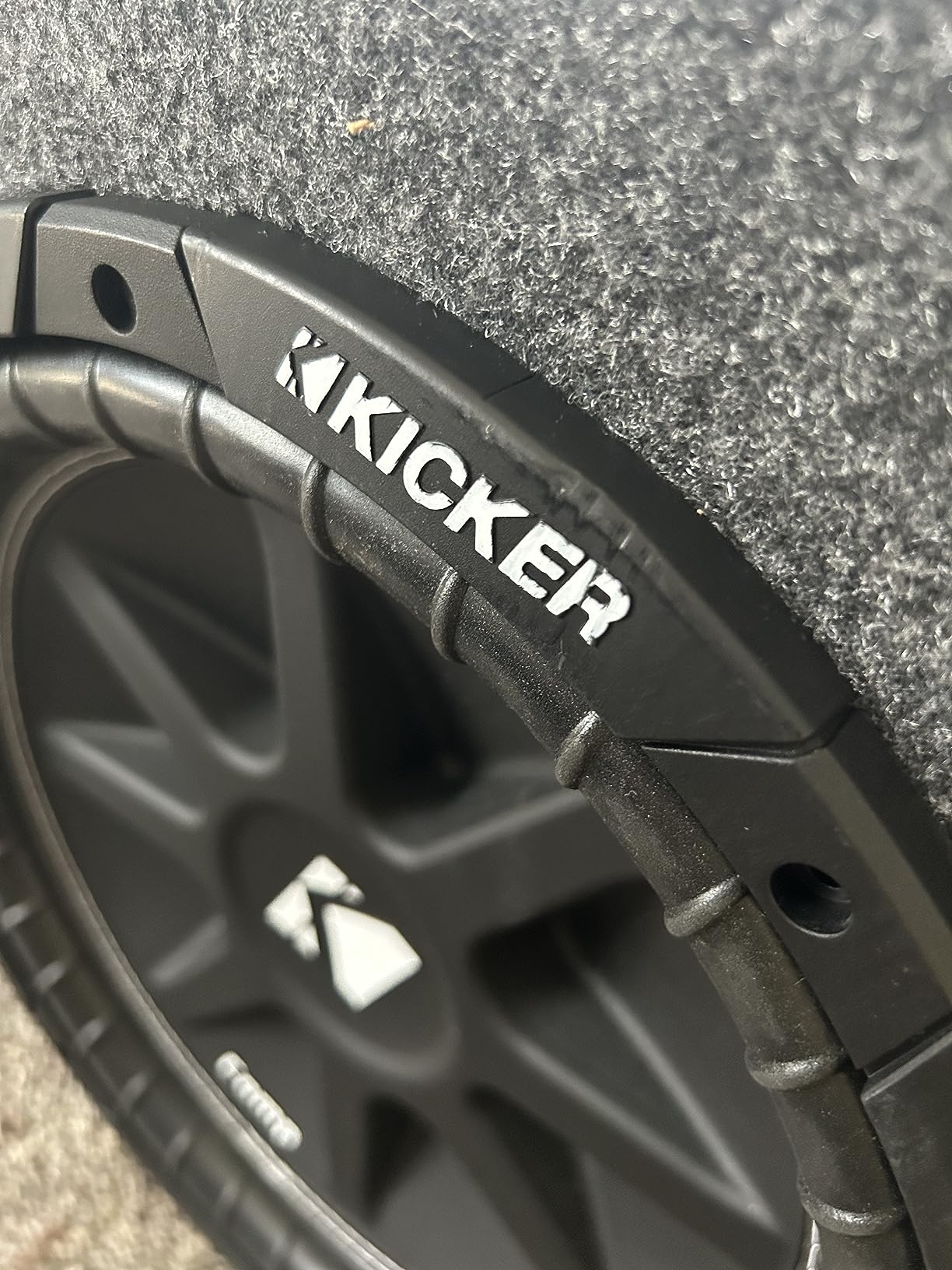
Every other box in this roundup is empty. This one has a 12-inch KICKER Comp subwoofer already installed in a sealed enclosure, which changes the conversation if you are new to this. There is no driver-matching, no wiring the woofer into the terminals yourself, and no risk of buying a box whose airspace does not suit the subwoofer you happened to find on sale.
The enclosure measures 20 by 15 by 7.5 inches, which is a genuinely compact footprint that works well in a single cab or an extended cab behind the seat. The subwoofer is 4 ohm and handles 150 watts RMS with 300 watts peak, so a modest monoblock in the 150 to 250 watt range is the natural pairing.
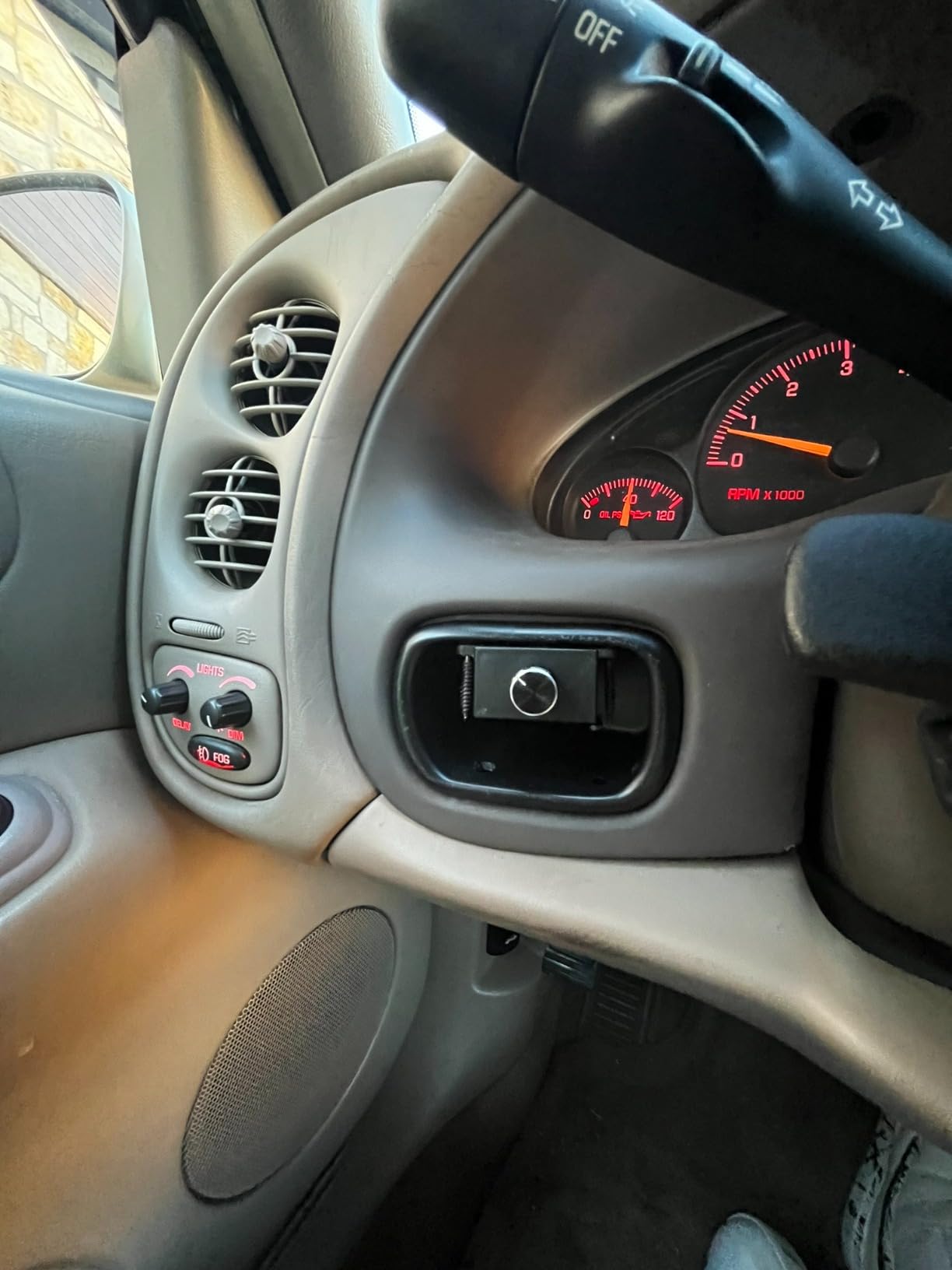
Owners like the convenience and report solid, solid-feeling results over long daily use with no problems. Several mention that it handles low rumbles cleanly when driven harder than its rating suggests, which is a decent sign for a sealed alignment of this size. The build uses MDF, carpet, plastic and foam, which is a sensible material mix for absorbing panel resonance.
The ceiling is the honest part. At 150 watts RMS this subwoofer will not compete with a properly amplified dual 12 setup, and a sealed design produces less low end than a comparably sized ported box. Some buyers also report that the subwoofer arrived separate and had to be assembled into the enclosure, which is worth checking on arrival.
Do you need an amplifier for this
Yes. A loaded box means the enclosure and the subwoofer come together, not that any power comes with them. You still need a mono amplifier and a wiring harness, and you want to run gain properly rather than just turning the amp to full and hoping. A 150 to 250 watt monoblock into a 4 ohm load is the right neighborhood.
Adding a sound deadening kit to the cab and behind the rear seat makes a bigger audible difference on a loaded system like this than upgrading the box would, because the sealed alignment puts less energy into the cab than a ported one.
Who should buy this one
Buy it if you want working bass this weekend without researching enclosure volumes, and if your truck is small enough that a single 12 is the realistic option. It is also a good first build, because there is nothing to get wrong.
Pass if you want deep, chest-punching low end in a full-size crew cab, or if you plan to grow the system and do not want a sealed single 12 to be the limiting factor.
7. Q Power Dual 10 Tundra CrewMax 2014-2021 – tuned deep for a full-size crew cab
QPower Dual 10in Behind Seat Subwoofer Enclosure, QBomb Ported Sub Box Compatible with Toyota Tundra Crew Max 2014-2021
Dual 10 sealed behind seat
0.88 cu ft per sub
36 Hz tuning
3.75 inch mounting depth
Pros
- Vehicle specific behind seat fit for 2014-2021 CrewMax
- Bed liner coating handles truck grade wear
- 36 Hz tuning delivers genuine depth
- Shallow 3.75 inch depth takes modern 10s
Cons
- 43 pounds makes install a two person job
- Only fits 2014-2021 Tundra CrewMax
- 0.88 cu ft per sub is modest
The Tundra CrewMax is one of the hardest cabs to put bass in, and Q Power built this box specifically for it. It sits behind the rear seat of 2014 through 2021 models, uses a dual-chamber sealed layout with 0.88 cubic feet of airspace per 10-inch subwoofer, and carries a bed liner coating that takes the kind of abrasion and UV exposure a truck interior throws at a box.
Two numbers make this interesting. The 36 Hz tuning frequency is tuned deeper than a typical small sealed alignment, which is how you get real low end out of 10s in a truck cab. And the 3.75 inch mounting depth is one of the shallowest here, so it accepts a broad range of modern 10-inch drivers, including shallow-mount models, without any cutting.
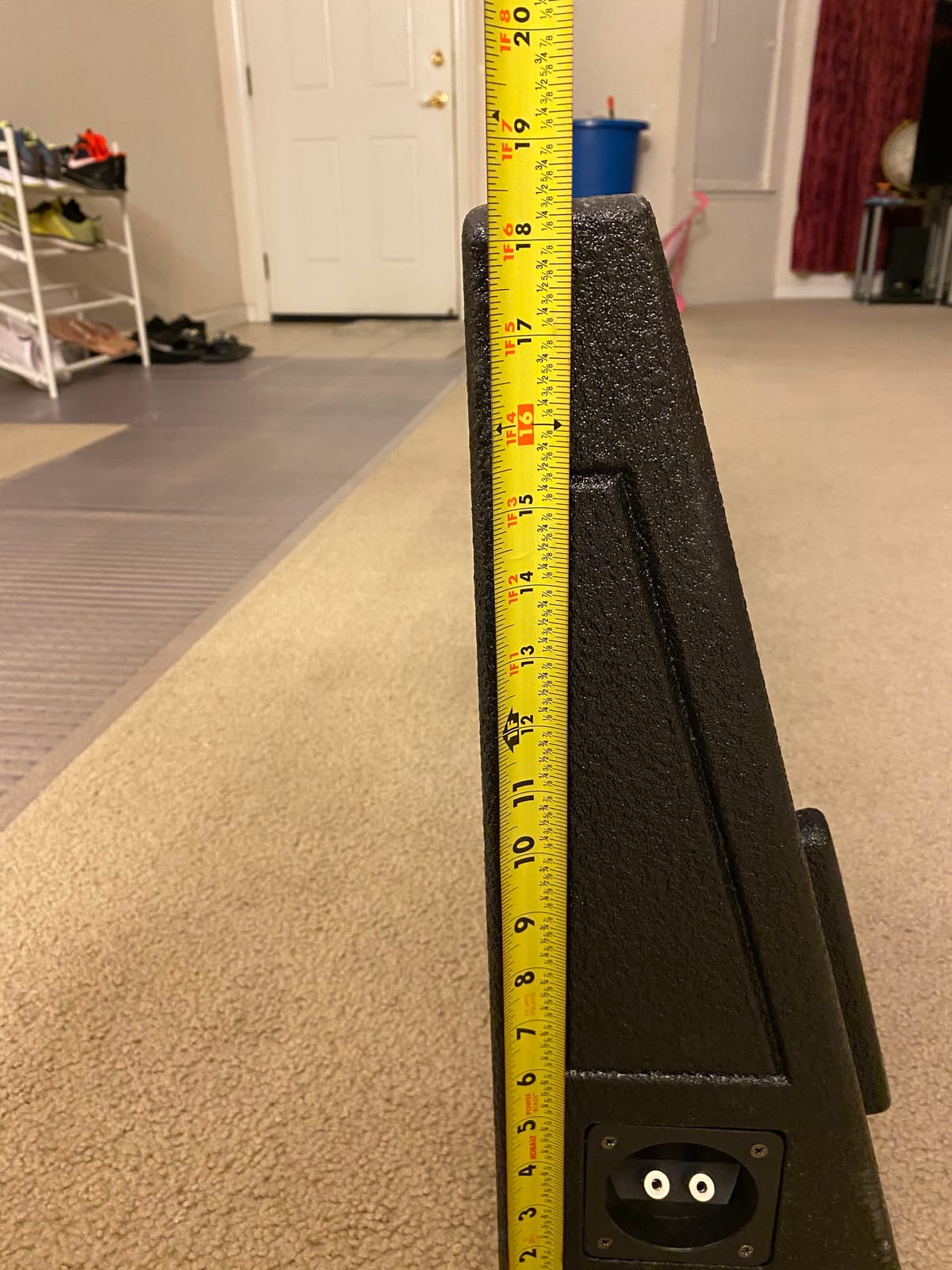
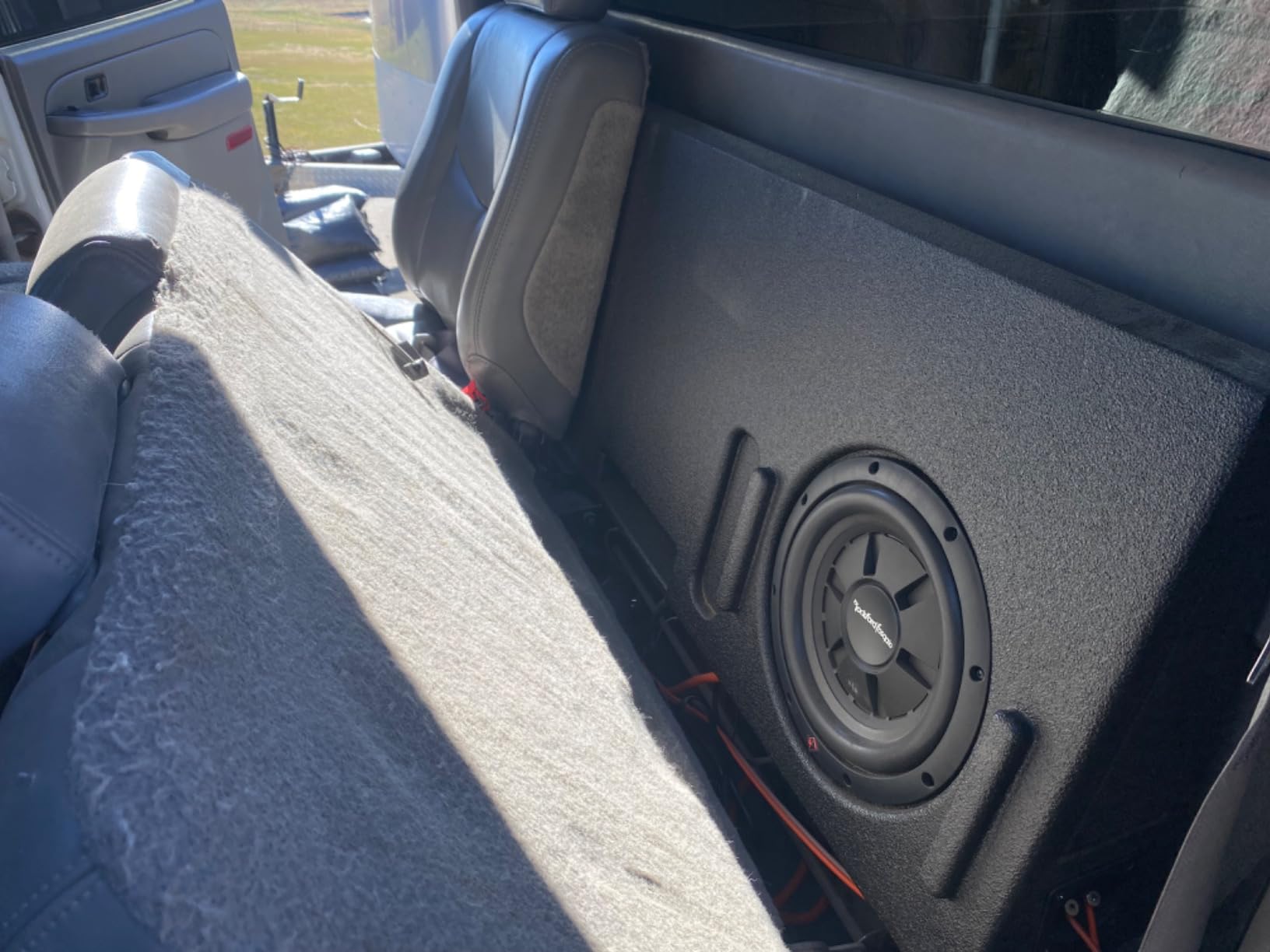
Owners consistently rate the fitment as precise and the finish as tough. A 4.5 star average across 193 reviews with a large share of top ratings suggests the design brief was met. For a full-size crew cab where you cannot get a large box behind the seat, a 0.88 cubic foot chamber per sub is a sensible compromise between depth and footprint.
The tradeoffs are the ones you would expect from a vehicle-specific part. At 43 pounds, installation is a two-person job, especially since you are threading it behind a rear seat. It fits one cab configuration and nothing else. And 0.88 cubic feet per sub is on the modest side, so it will not overpower the cabin the way a larger regular cab box would.
Why tuning frequency matters here
Tuning frequency is where the port or the sealed alignment is set to produce its strongest output. Forum users debate 35 Hz against 40 Hz constantly, and the reason it matters is headroom: a lower tuning frequency puts more of the output into the deepest range, where truck road noise and wind noise live. That is why 36 Hz is a smart number for a daily-driven pickup.
The trade is bass extension against efficiency. A lower tuning costs some mid-bass punch, which is a fine trade in a truck that is loud and full of road noise. Pick 4 and pick 3 tune differently because they are built for different cabs.
Who should buy this one
Buy it if you drive a 2014 to 2021 Tundra CrewMax, you want a full rear seat and a finished-looking install, and you prefer two well-behaved 10s to one enormous subwoofer competing for the same airspace. Deep, controlled low end is the goal here rather than maximum spl.
Pass if your Tundra is outside those model years, or if you want to run a very high-power amplifier and need more airspace to stay clean.
8. Q Power Dual 10 Underseat Downfire Chevy GMC – rear seat stays usable
Q Power Dual 10″ Underseat Downfire QBomb Subwoofer Box for Chevy/GMC
Dual 10 downfire underseat
0.8 cu ft per sub
6 inch mounting depth
9.5 D x 51.5 W x 16 H
Pros
- Rear seat folds fully with the box installed
- Downfire layout gives clean hard-hitting bass
- Bed liner finish is durable
- Spring loaded terminals simplify wiring
Cons
- No divider between the two subwoofers
- Strong chemical odor that takes months to fade
- Not compatible with double cab models
This is the answer to the single most repeated question in truck audio forums: how do I get bass under the rear seat without losing the seat. This box is designed for 2014 through 2018 Chevrolet Silverado and GMC Sierra crew cabs, sits under the rear seat, and points its two 10-inch cutouts down at the floor. Owners report the seat folds completely with the box installed, which is the entire point of the design.
A downfire orientation has a real acoustic advantage in a truck. Instead of pushing air at the back of the rear seat where it is absorbed by upholstery, it pushes into the floor pan and the underside of the seat base, which acts as a large diffuser. The practical result owners describe is clean, hard-hitting bass that seems to come from everywhere in the cab rather than from behind you.
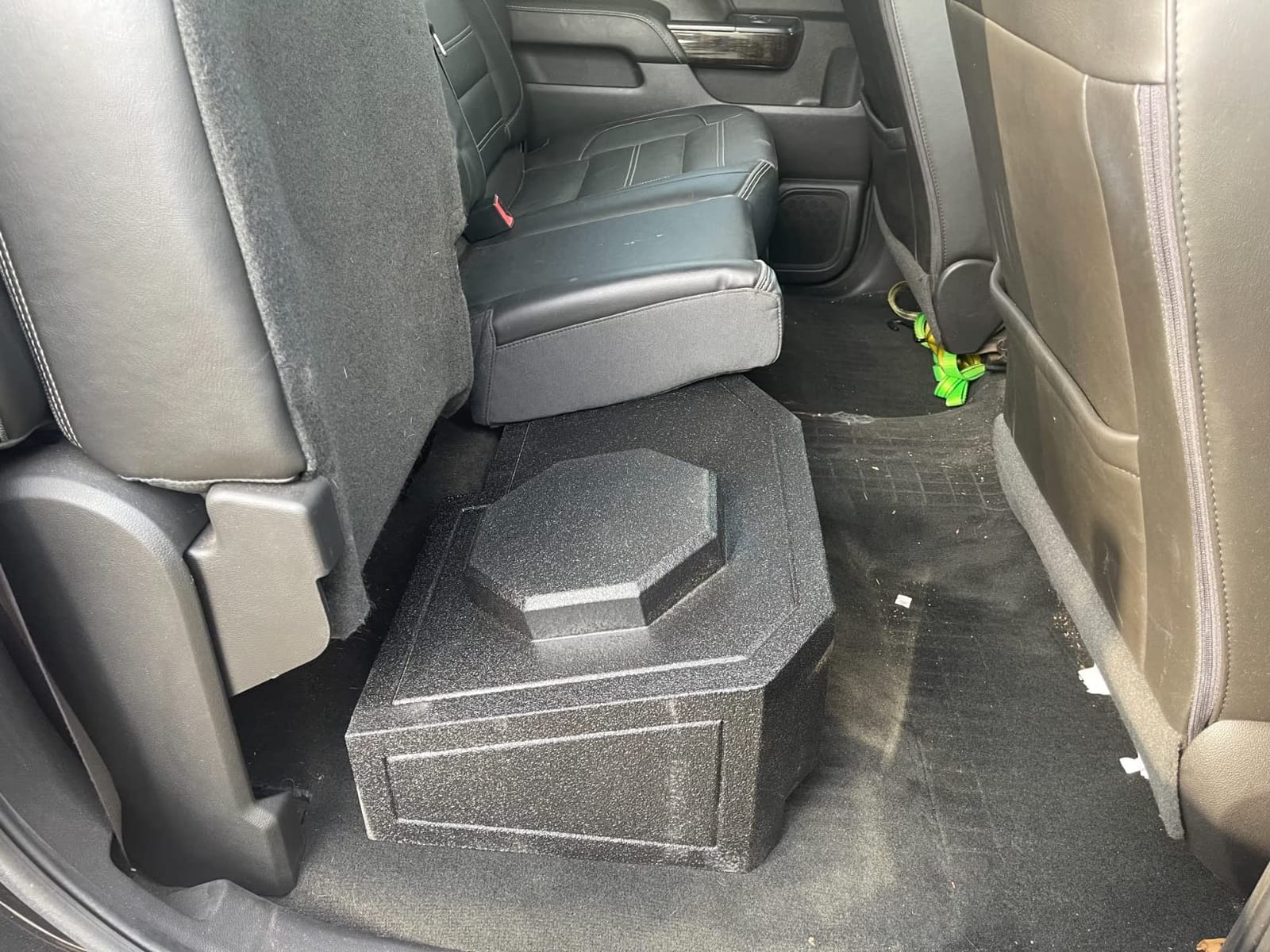
Each chamber gives 0.8 cubic feet with 6 inches of mounting depth, so most 10-inch drivers seat without modification, including many shallow-mount models. Spring-loaded terminals are a small but welcome detail when you are lying under a seat with a wrench in one hand. The bed liner finish is the same tough coating used on bed-mounted gear, and it stands up to the abuse.
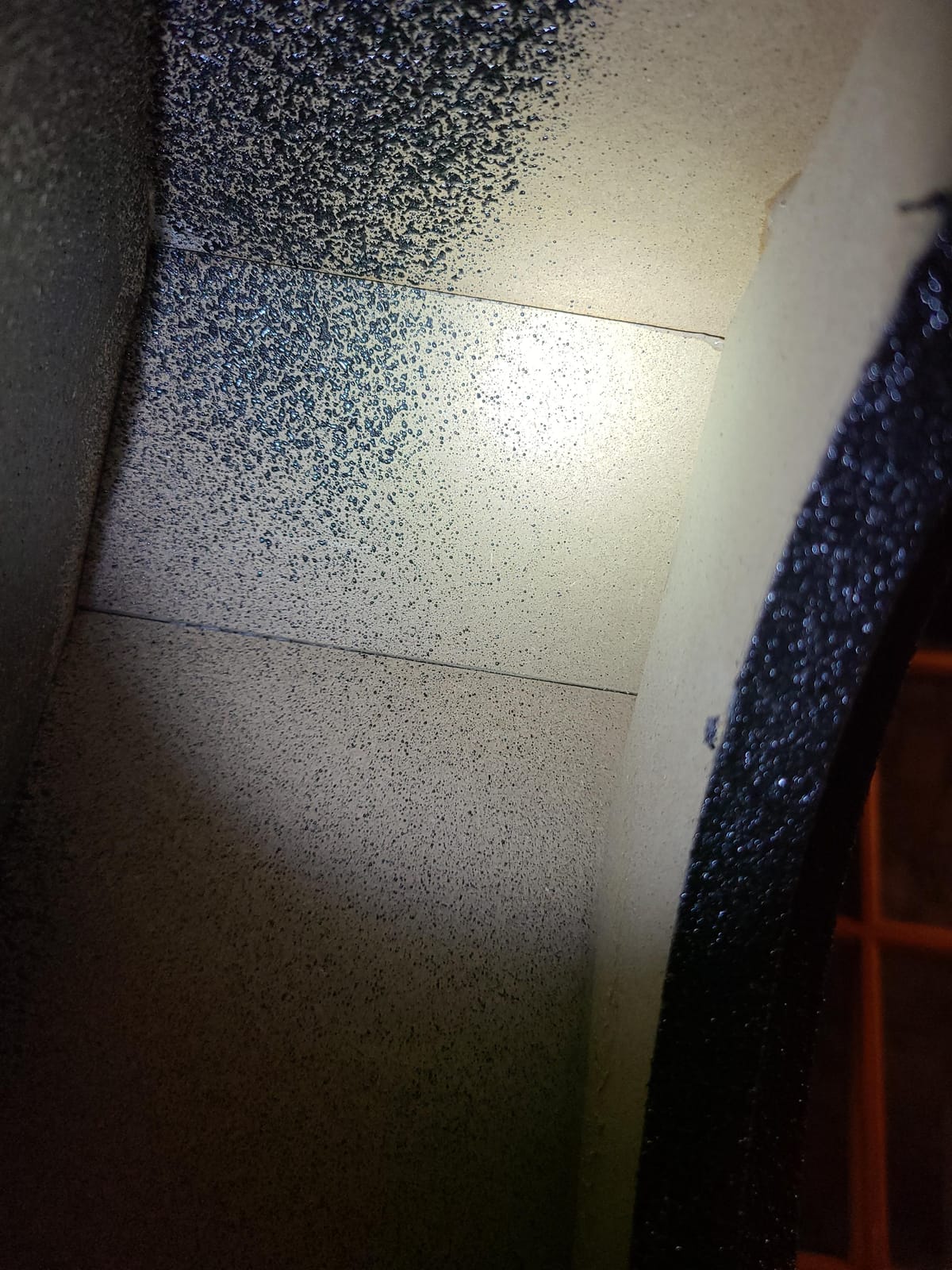
Two cautions. There is no internal divider between the two subwoofers, so their acoustic interaction is not ideal, though in practice the difference is subtle. And owners report a strong chemical odor from the coating that can take a long time to dissipate, so air the cab out well before you consider the install finished.
Is a downfire box ever the wrong choice
It can be. Downfiring works best with a small number of efficient drivers and a moderate amplifier. If you plan to push four high-excursion 10s at high power into a downfire box under a seat, the floor pan can buzz and you lose the clean, diffuse result that makes the design appealing. For a dual 10 at sensible power, it is very hard to beat.
The other consideration is clearance. The box is 16 inches tall and 9.5 inches deep, so measure your under-seat gap at the lowest point of the seat rails, not at the front edge where there is usually more room.
Who should buy this one
Buy it if you drive a 2014 to 2018 Silverado or Sierra crew cab, you use the rear seat regularly, and losing that seat is not an option. This is the best answer to the seat-lift-free question in the whole roundup.
Pass if you have a double cab rather than a crew cab, since those are explicitly excluded, or if you want a 12-inch subwoofer and do not have room for a custom build.
9. Q Power Quad 8 Underseat Silverado Sierra – four shallow drivers under one seat
Q Power QBGMCFF07408 Quad 8-Inch Underseat Front-Fire Ported Subwoofer Box
Quad 8 ported
0.8 cu ft
35 Hz tuning
54.5 L x 13.88 W x 14.5 H
Pros
- Fits 2007-2026 Silverado and Sierra crew cabs
- Four 8s spread the load across the seat area
- Ported design for high output
- Covered by a lifetime warranty
Cons
- Some trucks need a 2.5 inch seat riser
- Cutouts are slightly oversized and asymmetric
- Thin plywood on the cutout covers
Four 8-inch subwoofers under one rear seat is an unusual idea and it works better than most people expect. This enclosure fits 2007 through 2026 Chevrolet Silverado and GMC Sierra crew cabs, sits under the rear seat, and fires downward. Rather than one or two large drivers competing for the same air, you get four smaller ones spreading energy across the cab floor.
The practical benefit is surface area. Four 8s move a lot of air for a shallow box, and the ported design at a 35 Hz tuning frequency with 0.8 cubic feet of airspace is tuned for output rather than for a tight, controlled low end. If your goal is audible bass in a daily-driven crew cab without giving up the rear seat, this is a legitimate and underused approach.
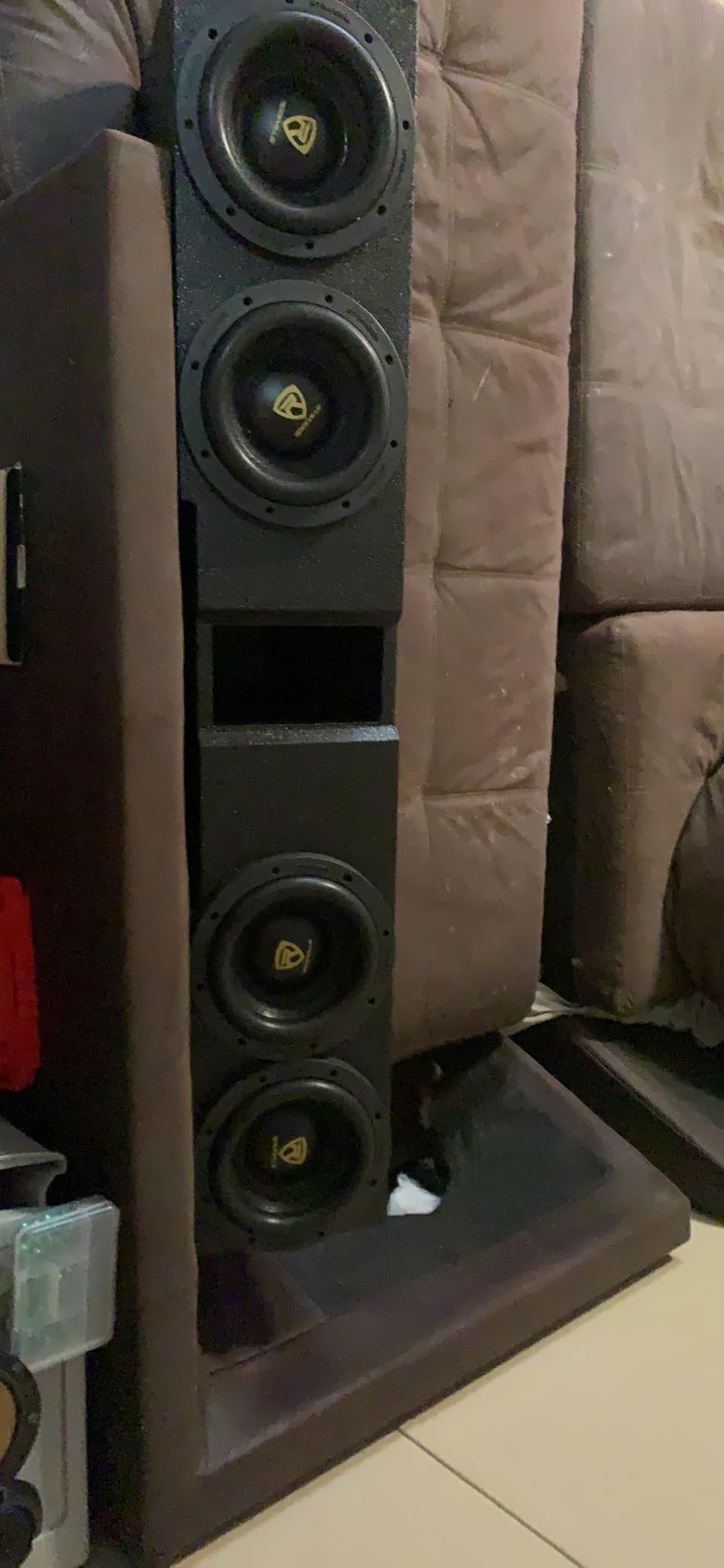
Owners confirm the fitment across a very wide year range and generally like the durability of the bed liner material. The lifetime warranty is unusual in this category and worth noting if you plan to keep the truck. The 400 watt figure on the box is an aggregate maximum, not a per-driver rating, so match your amplifier to the sum of your four subwoofers’ RMS needs.
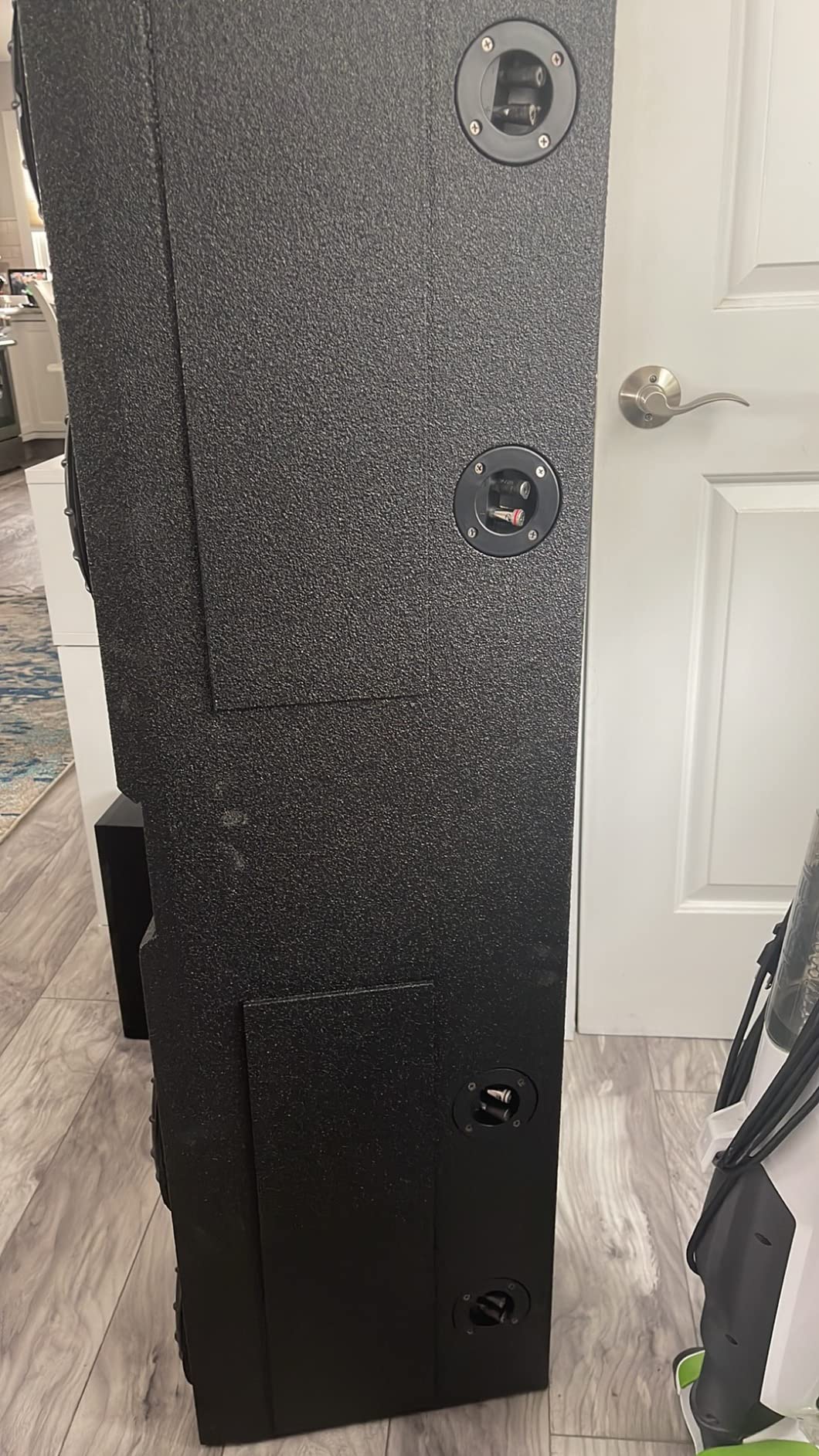
The quirks are real and you should know them before ordering. Some trucks need a 2.5 inch seat riser for a proper fit, which puts it outside the no-seat-lift promise. The cutouts are slightly oversized and the speaker spacing is asymmetric between sides, so you have to center the drivers carefully. And the cutout covers use thin plywood rather than MDF, which is fine at sane power but not ideal for high-power 8s.
Are four 8s louder than two 12s
Not automatically, and the answer depends on the boxes. Total cone area matters, and a pair of well-boxed 12s in a large regular cab enclosure, like pick 4, can move more air than four small 8s in a shallow under-seat box. What four 8s give you is output per cubic foot and a fit that keeps the rear seat, which is a real constraint in a modern crew cab.
Forum builders also point out that four small drivers on one amplifier channel load each other thermally, so a stable monoblock with four separate channels or a well-designed dual-channel amp is worth paying up for here. A cheap amp with four subs on one channel will clip early.
Who should buy this one
Buy it if you own a 2007 or newer Silverado or Sierra crew cab, you are willing to add risers if your seats need them, and you want the loudest reasonable bass without giving up the back seat. It is a strong tailgating and daily driver box.
Pass if you need a flush factory look, if a 2.5 inch riser is not acceptable in your build, or if you want the deepest, cleanest low end rather than the most output.
10. Atrend 8 Inch Universal Vented Truck Box – the small-cab and beater-truck option
Atrend 8″ Single Universal Truck Style Vented Subwoofer Enclosure – Mitered & Dado End Panels – Premium Carpeted Finish, Silver Spring-Loaded Terminal & 5/8″ MDF Construction- Upgrade Your Audio Setup
Single 8 vented
0.70 cu ft volume
5/8 inch MDF
9.75 D x 17 W x 10.75 H
Pros
- Mitered and dado end panels for strength and seal
- Silver spring loaded terminal cups
- Charcoal carpet blends with most interiors
- Works in trucks
- SUVs and sedans
Cons
- One 8 limits total output
- 0.70 cu ft does not suit every 8 inch sub
- Fixed vent dimensions limit tuning options
This is the box for a smaller truck, an older work truck, or a build where the enclosure has to go anywhere. It is a single 8-inch vented enclosure with 0.70 cubic feet of total volume, 5/8 inch MDF panels, mitered and dado end panels, and a charcoal carpet finish. Owners like that it is genuinely universal, working in trucks, SUVs, and sedans alike.
Build quality is the selling point. Mitered edges add meaningful surface area at every joint compared to simple butt joints, and dado cuts add even more shear strength, which is what keeps an enclosure from flexing and buzzing under a hard-working 8-inch subwoofer. Spring-loaded terminal cups make the wiring simple, and the carpet is wrapped across the whole cabinet rather than stapled to a flat face.
Where it falls short is output. One 8-inch subwoofer in 0.70 cubic feet is a modest system, and it is going to be outclassed by anything with two drivers. The fixed vent dimensions also mean you cannot retune it, so you have to pick a subwoofer that suits the alignment rather than the other way around, which is the opposite of how the custom route works.
Also worth knowing: about 10 percent of reviews are one star, which points to some quality control variance. Inspect the box on arrival for chipped corners and loose panels, and confirm the terminal cups are seated before you wire anything.
When a small vented box is the right call
A single vented 8 is a good match for a work truck where you want bass that does not dominate, a first system in a beater, or a secondary box in a vehicle where the real subwoofer lives in the bed. Ported 8s are lively and efficient, so a modest amplifier goes a surprisingly long way with one of these.
Check the subwoofer maker’s recommended ported volume and port dimensions against the 0.70 cubic feet and fixed vent size before you buy the driver. If your subwoofer wants a different alignment, this is the wrong box, and the fix is a model from the same line with a different chamber size.
Who should buy this one
Buy it if you have limited space, want a universal box that moves between vehicles, or need a low-cost way to add some low end to a daily work truck. It is also a sensible second box behind a seat in a larger truck.
Pass if you want to be the loudest truck in the parking lot. That goal needs more cone area, more airspace, and a bigger amplifier than this enclosure supports.
How to Choose a Truck Subwoofer Box Without Guessing
Measure the space before you buy anything
Every forum thread that goes wrong starts the same way: someone ordered a box that looked right in a photo. Measure three numbers. First, the depth from the seat back or seat base to the rear wall at its narrowest point. Second, the width of that same gap at seat level. Third, the height available if you are planning an under-seat install, measured at the lowest point of the seat rails.
Then compare those numbers against the box’s published dimensions, not its subwoofer cutout. The mounting depth is what actually decides whether your driver fits and seals, and it is often two inches more than the cutout diameter implies. If the numbers do not work with a few inches to spare, pick a different box rather than planning to trim it.
Match box volume to subwoofer size
Airspace is the number most listings bury, and it is the number that decides whether a subwoofer sounds controlled or strained. As a working reference, a single 10-inch subwoofer behaves well in roughly 0.4 to 0.6 cubic feet sealed, and a single 12-inch subwoofer wants roughly 0.5 to 1.0. Dual configurations scale from there, with about 1.0 to 1.5 cubic feet being a comfortable range for a pair of 12s.
Ported boxes need more volume than sealed ones for the same driver because the port needs room to breathe, and that is why so many under-seat boxes in this roundup are sealed. If a listing does not publish net airspace, treat that as a yellow flag rather than assuming the largest number possible.
Sealed or ported under a truck seat
Sealed wins under a rear seat, and the reason is physical rather than aesthetic. A ported box moves more air, which sounds better in a room and worse in a small metal cab with carpet everywhere, and the port needs at least a few inches of clearance behind the opening. Most of the under-seat boxes here are sealed for exactly that reason, and only the quad 8 goes ported because its port is positioned to fire downward into open cab floor.
Sealed also has a practical advantage: it is more tolerant of an imperfect seal and does not whistle or port-noise at low volume. If you are chasing clean, accurate low end in a daily driver, sealed is the right default. If you are chasing maximum output for tailgating and are willing to tune it, a ported box behind the seat is still a valid choice.
Do you need a seat lift
Usually not, if you pick the right box. Most of the enclosures in this roundup were designed to slide under or behind a rear seat with the seat in its stock position, which is what the seat-lift-free fitment question really comes down to. The exceptions are worth knowing: the quad 8 under-seat box has been reported to need a 2.5 inch riser on some Silverado and Sierra crew cabs, and a few older trucks need the box trimmed to clear the seat bracket.
Measure at the seat bracket rather than the carpet, because the bracket and its bolt are almost always the thing that stops a slide-in install. A quarter inch there can mean a half inch at the front of the seat.
What enclosure material actually matters
Material matters less than people think, and thickness and sealing matter more. MDF is the most common choice in this roundup and it works well when it is thick, glued properly, and braced. The 1 inch MDF in the Atrend wedge and the 3/4 inch MDF in the Ram box are noticeably more resistant to flex than the 5/8 inch panels in the smaller enclosures, and that is what stops buzz on a hard-working subwoofer.
Bed liner coatings, used on the Q Power boxes, are the best choice if the enclosure may see abrasion, moisture, or a bed environment. Fiberglass and rotomolded plastic are worth considering for off-road builds, but none of the ten enclosures here use them, so we have not ranked them. As a rule, look for two glue passes at the joints, recessed internal panels, and a terminal cup that is actually attached to the cabinet rather than to a loose board.
Amplifier power and impedance
Most unsealed enclosures here use a single set of spring terminals, which means a single voice coil subwoofer at its rated impedance, usually 4 ohm. A monoblock that is stable into 4 ohm is all you need. Wire the positive and negative from the amp to the box terminals, confirm the subwoofer is wired in parallel or series as its manual specifies, and set gain with a test tone rather than by ear.
Match power to the subwoofer’s RMS rating, not the box. The 150 watt RMS KICKER in pick 6 wants a modest monoblock, while two efficient 12s in the 1.50 cubic foot box in pick 4 can take considerably more. A rough rule is one amp channel per subwoofer for the quad setup, since running four 8s on a single channel of a budget amplifier will clip early.
Finally, add sound deadening before you judge the result. A truck cab is a resonant metal box, and damping the rear seat back, the cab floor behind the seat, and the tailgate panel removes more boom and rattles than any enclosure swap. Our guide to portable refrigerators for trucks covers the other end of a daily-driven build, but the audio comes first.
Frequently Asked Questions
What is the best subwoofer box for a truck?
The Atrend Bbox Single Sealed 12 Inch Wedge is the best all-around truck subwoofer box. Its wedge profile runs 8.25 inches deep at the base and 5 inches at the top, so it slides under or behind a rear seat without a seat lift, and its 5.25 inch mounting depth accepts most 12-inch drivers. For single cabs, the American Sound Connection Dual 12 Regular Cab box offers far more airspace.
What subwoofer box hits the hardest?
Output comes down to total cone area and how much airspace the enclosure provides, not the box brand. Among the ten we tested, the American Sound Connection Dual 12 Regular Cab box hits hardest because it pairs two 12-inch drivers with 1.50 cubic feet of airspace and a 10.5 inch mounting depth, which is far more volume than any other enclosure here. The Q Power Quad 8 box is the loudest option that still fits under a rear seat.
Do 10 or 12 subs hit harder?
Two properly boxed 12-inch subwoofers move more air than two 10s and will hit noticeably harder at the same power level, provided the enclosure has enough volume. A pair of 12s in the 1.50 cubic foot American Sound Connection regular cab box, for example, has far more room to work than the 0.61 cubic feet in the Ram crew cab dual 12 box. In tight under-seat spaces, four efficient 10s can outperform a single 12 because total cone area is what matters.
Will a subwoofer box fit under my truck seat?
It will if you pick an enclosure designed for under-seat mounting and your seat rail gap is deep enough. Measure the gap at the seat bracket, which is usually the tightest point, and compare it against the box depth. The Q Power Dual 10 downfire box and the Q Power Quad 8 box are built specifically for under-seat installs, though some Silverado and Sierra crew cabs need a 2.5 inch seat riser for a proper fit.
What is the difference between a sealed and ported subwoofer box?
A sealed box traps and dampens the air around the subwoofer cone, which produces tight, accurate bass in a small space and never whistles. A ported box adds a tuned vent that lets air move through, which produces louder and deeper output but needs more airspace and at least a few inches of clearance behind the port. In a truck cab, sealed enclosures dominate under-seat applications because there is rarely room for a port.
The Best Truck Subwoofer Boxes for 2026
Ten boxes later, the pattern is clear. A truck cab rewards enclosures that respect the space they are given, and the winners here are the ones with honest published numbers. The Atrend Bbox Single Sealed 12 Inch Wedge is the best car subwoofer box for trucks overall, because a slim sealed wedge with 1 inch MDF and a 5.25 inch mounting depth fits more cabs than anything else on this list without a seat lift.
Buy the ASC Dual 12 Regular Cab box if you have a single cab and want real output, because 1.50 cubic feet of airspace and a 10.5 inch mounting depth is the most capable combination here. Buy the ASC Dual 12 Silverado extended cab box for a factory-finish under-seat install, and the Q Power Dual 10 Tundra CrewMax box if you want deep, well-tuned low end in a 2014 to 2021 CrewMax.
For the rear seat question, the Q Power Dual 10 downfire box is the cleanest answer in the roundup, and the quad 8 gets you the most output under one seat if you are willing to add risers where they are needed. Whichever you choose, measure your cab first, match the enclosure volume to the subwoofer, and damp the sheet metal before you blame the box for a boomy install.