
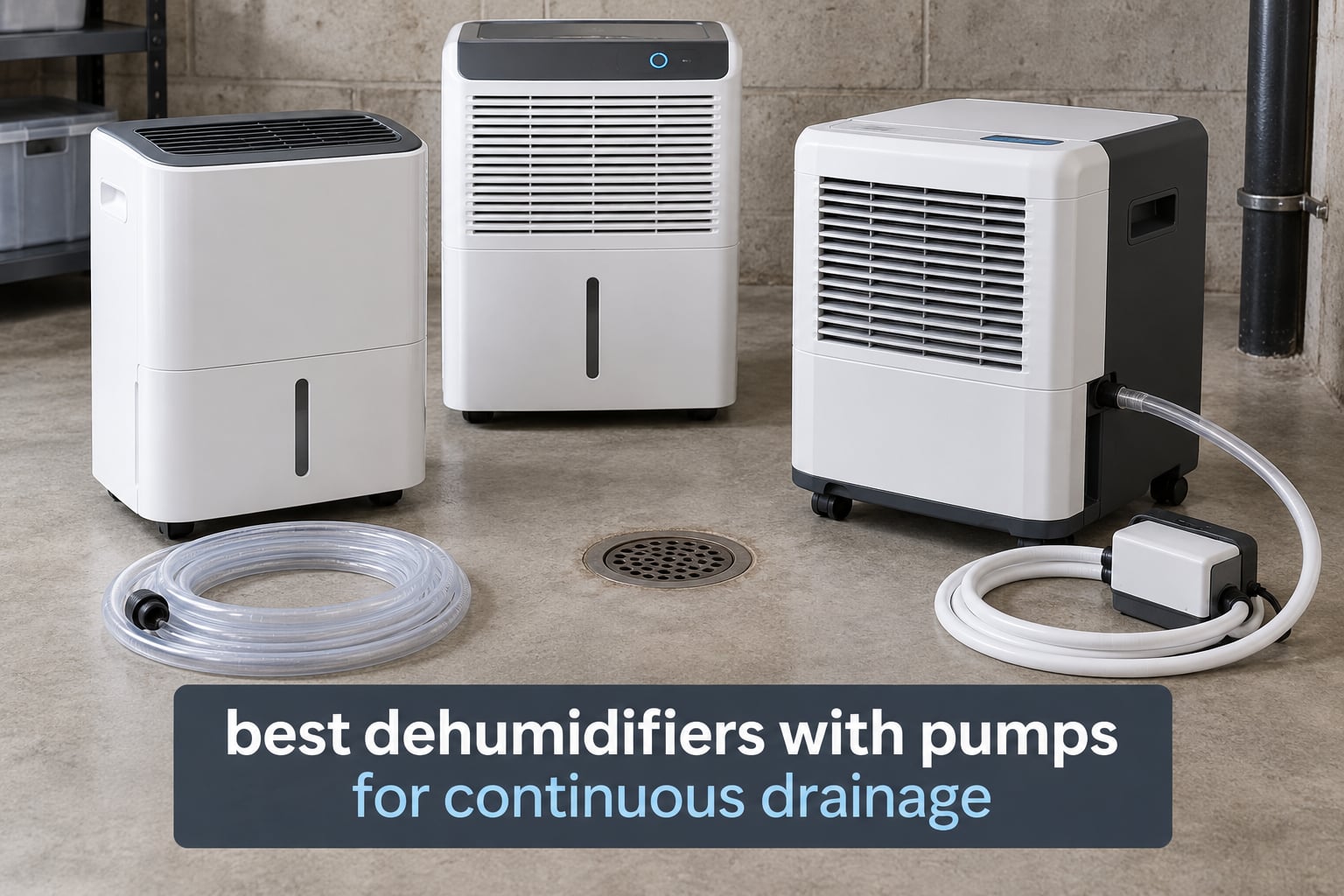
The best dehumidifiers with pumps for continuous drainage do one job quietly for years: pull water out of the air, then push that water out of the room on their own. A dehumidifier with a built-in pump collects condensate in a tray the way every model does, then a small pump moves the water through a drain hose so you never have to carry a bucket to the sink. That single feature is what separates a unit you empty twice a day from a unit you install once and forget.
That distinction matters most in basements, crawl spaces, finished storage rooms and post-leak drying jobs where the nearest drain sits above the machine or does not exist at all. If your floor drain is below the unit and the run is short, a gravity-drain model does the same job for less money. We explain how to tell which camp you fall into before you spend anything.
We put eight pump-equipped models side by side for this roundup, from a 50-pint residential unit with Wi-Fi to a 190-pint commercial machine built for water damage restoration. For each one we looked at pump lift, whether a hose is actually included and how long it is, tank size against rated output, power draw, noise claims and the review history behind it. We also built a full buying guide covering sizing tiers, the built-in pump versus external condensate pump tradeoff, a seven-step continuous drainage setup and the safety rules that keep a wet machine out of trouble.
One note before we start: the coverage numbers printed on retail listings are measured at conditions far milder than a real June basement. Treat them as marketing ceilings, not sizing advice. We size by pints per day and by the space you actually control.
Table of Contents
Top 3 Best Dehumidifiers With Pumps for Continuous Drainage in 2026
Three models stood out after we weighed rating against review volume, pump lift and whether a drain hose is bundled. The hOmeLabs HME1004 takes the top slot on the strength of the largest review base in the group and a pump that simply works with the app-driven controls.

hOmeLabs HME1004 50 Pint
- Built-in pump and Wi-Fi
- 50 pints/day with 120 pint max
- 1.6 gallon tank with three modes

Yaufey 150 Pint JD026R-150PM
- Three drainage paths in one unit
- 150 pints/day
- 16.4 ft pump hose included

Waykar 125 Pint AFW2.0DPM
- 16.4 ft vertical lift
- Metal casing for crawl spaces
- Both pump and gravity hoses included
Yaufey’s 150-pint JD026R-150PM is the one we would pick if the drain destination is awkward, because it offers pumped upward drainage, tank drainage and gravity drainage in the same chassis and includes both hoses. The Waykar 125-pint AFW2.0DPM goes the other way: a metal body and a 16.4 ft pump lift built specifically for tight crawl spaces where humidity needs a lot of control and the hardware gets knocked around.
Best Dehumidifiers With Pumps for Continuous Drainage in October
| Product | Specs | Action |
|---|---|---|
| hOmeLabs HME1004 50 Pint Pump |
|
Check Latest Price |
| Yaufey 150 Pint Pump |
|
Check Latest Price |
| Waykar 125 Pint Crawl Space |
|
Check Latest Price |
 Waykar 150 Pint Commercial Waykar 150 Pint Commercial |
|
Check Latest Price |
 avylo ADC018 90 Pint avylo ADC018 90 Pint |
|
Check Latest Price |
 Yaufey 158 Pint Metal Yaufey 158 Pint Metal |
|
Check Latest Price |
 LUKO 190 Pint Commercial LUKO 190 Pint Commercial |
|
Check Latest Price |
 GoveeLife H7152 Smart Pump GoveeLife H7152 Smart Pump |
|
Check Latest Price |
1. hOmeLabs HME1004 — Best Overall Dehumidifier With a Built-In Pump
hOmeLabs Dehumidifier 7,500 Sq Ft 50 Pint with Pump 120 Pint 95°F, 90% RH
50 pints/day,120 pint max
Built-in pump with Wi-Fi
1.6 gallon tank
Pros
- Largest review base in the group
- Integrated pump plus continuous mode
- Wi-Fi control for unattended setups
- Turbo and Comfort modes
- Auto shutoff and auto defrost
Cons
- Control panel takes time to learn
- Plastic body less rugged than metal models
- Tank still needs emptying in tank-only mode
This is the unit I keep coming back to for residential basements. The HME1004 removes up to 50 pints per day at 80°F and 60% relative humidity and pushes to 120 pints at 95°F and 90% relative humidity, which is the kind of headroom you want on a muggy stretch in July.
The built-in pump handles continuous drainage and the app lets you change modes or check the humidity reading without walking downstairs. Three modes cover most situations: Comfort for everyday use, Turbo for maximum extraction and Continuous for running flat out on a schedule.
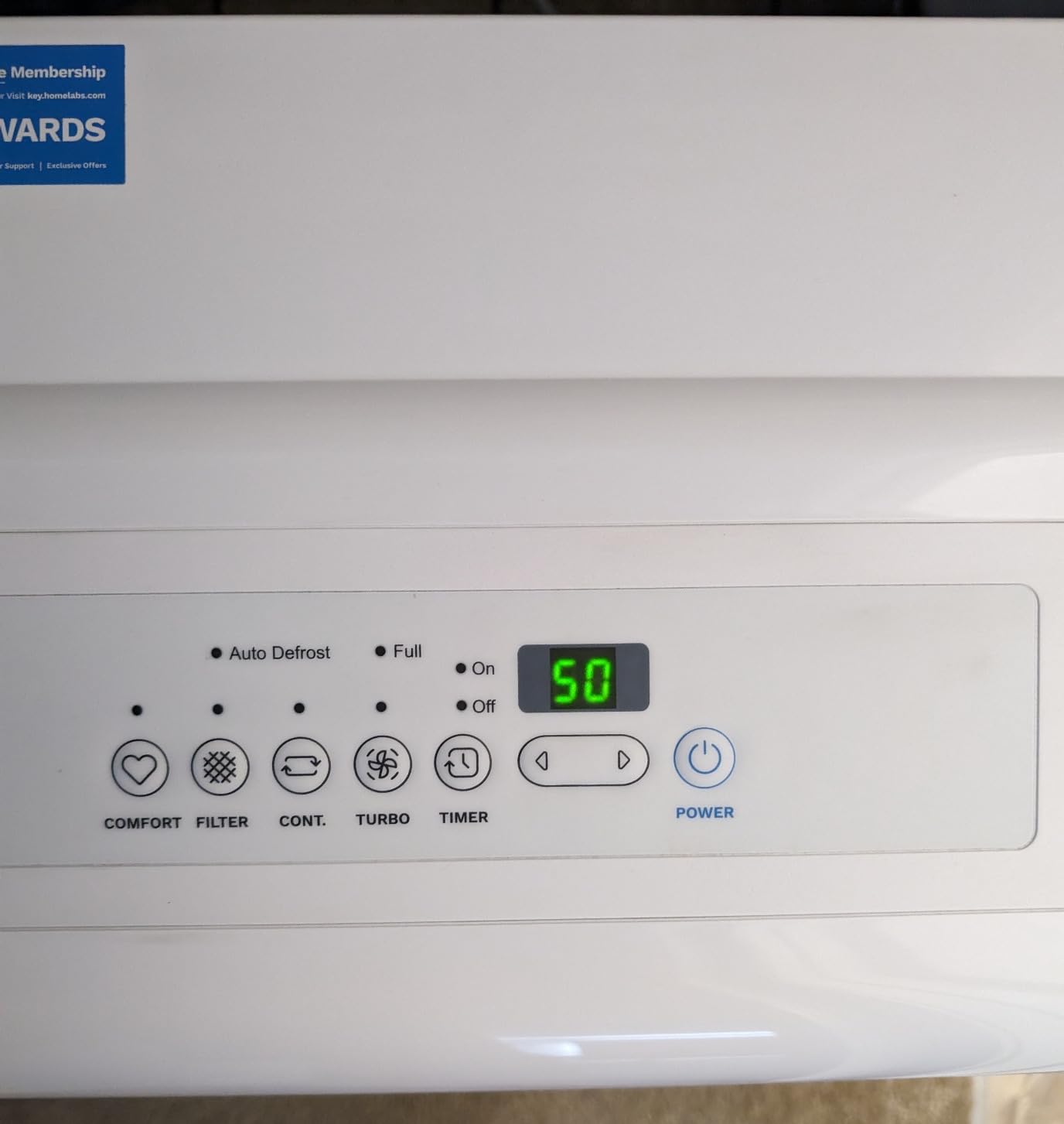
What stands out is the size of the pump’s following. At more than 15,000 reviews with a 4.6 average and a 77 percent five-star share, this is the model where long-term owner feedback actually exists. Buyers consistently single out the pump-driven drainage as the reason they stopped emptying buckets, and the Wi-Fi control as the reason they can watch a basement from upstairs.
The physical numbers are reasonable for moving around a basement: about 30.5 pounds, a footprint roughly 15 inches wide and 24 inches tall, and airflow that reaches 218 CFM in Turbo mode and 188 CFM in Standard mode. Airflow that high is what pulls moisture out of the far corner of a long, low-ceilinged room.
What makes it the easiest to live with
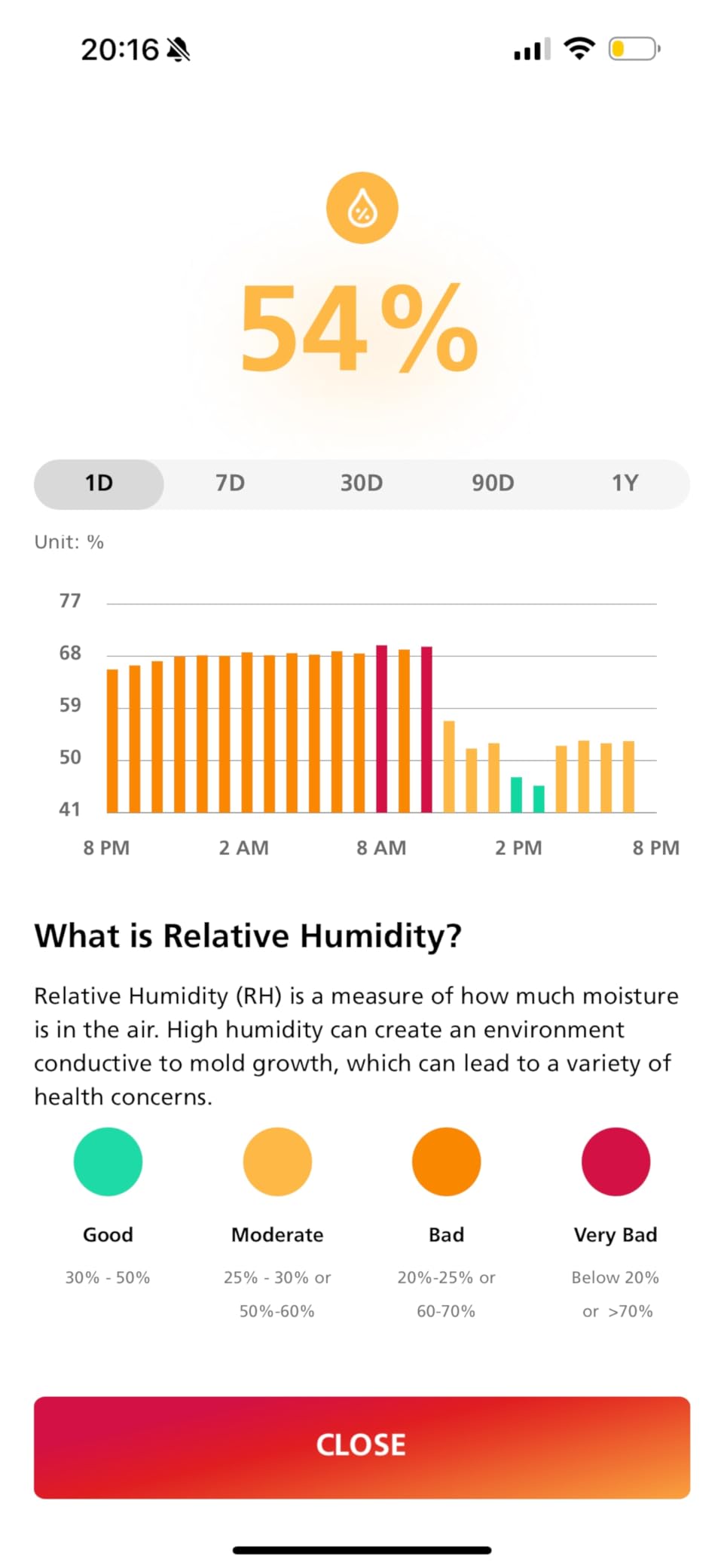
A washable filter with a check-filter indicator means you are not guessing when to service it, and the panel gives you an actual humidity readout rather than a dial you have to interpret. Auto shutoff stops the compressor when the tank is full, and auto defrost keeps the coil from icing in a cool basement.
At 1.6 gallons the tank is on the small side for a 50-pint machine in raw conditions, which is fine because the pump is the intended operating mode. It also means the fallback, if the pump ever fails, is a short walk rather than a heavy lift.
Where it falls short
The plastic casing will not survive a garage or a job site the way a metal chassis will, and dents show. The three-mode control scheme plus the app takes a little setup time, and reviewers mention a learning curve on the digital panel.
There is no Wi-Fi here in the sense of a physical control you can reach in a crawl space, and the 7,500 square foot coverage figure is a laboratory maximum rather than a realistic control area. In a space that large you would be waiting on this unit constantly.
2. Yaufey 150 Pint JD026R-150PM — Best Three-Way Drainage Setup
Yaufey 150 Pint Dehumidifier with Pump for Basement 8500 Sq. Ft.
150 pints per day
Three drainage options
16.4 ft pump hose included
Pros
- Pumped
- tank and gravity drainage in one unit
- Both hoses bundled
- 30 to 80 percent RH range below the usual floor
- 1.85 gallon tank with visible water level
- Rotary compressor design
Cons
- Two hoses to route and secure
- Plastic body less rugged than metal models
- Only three fan speeds
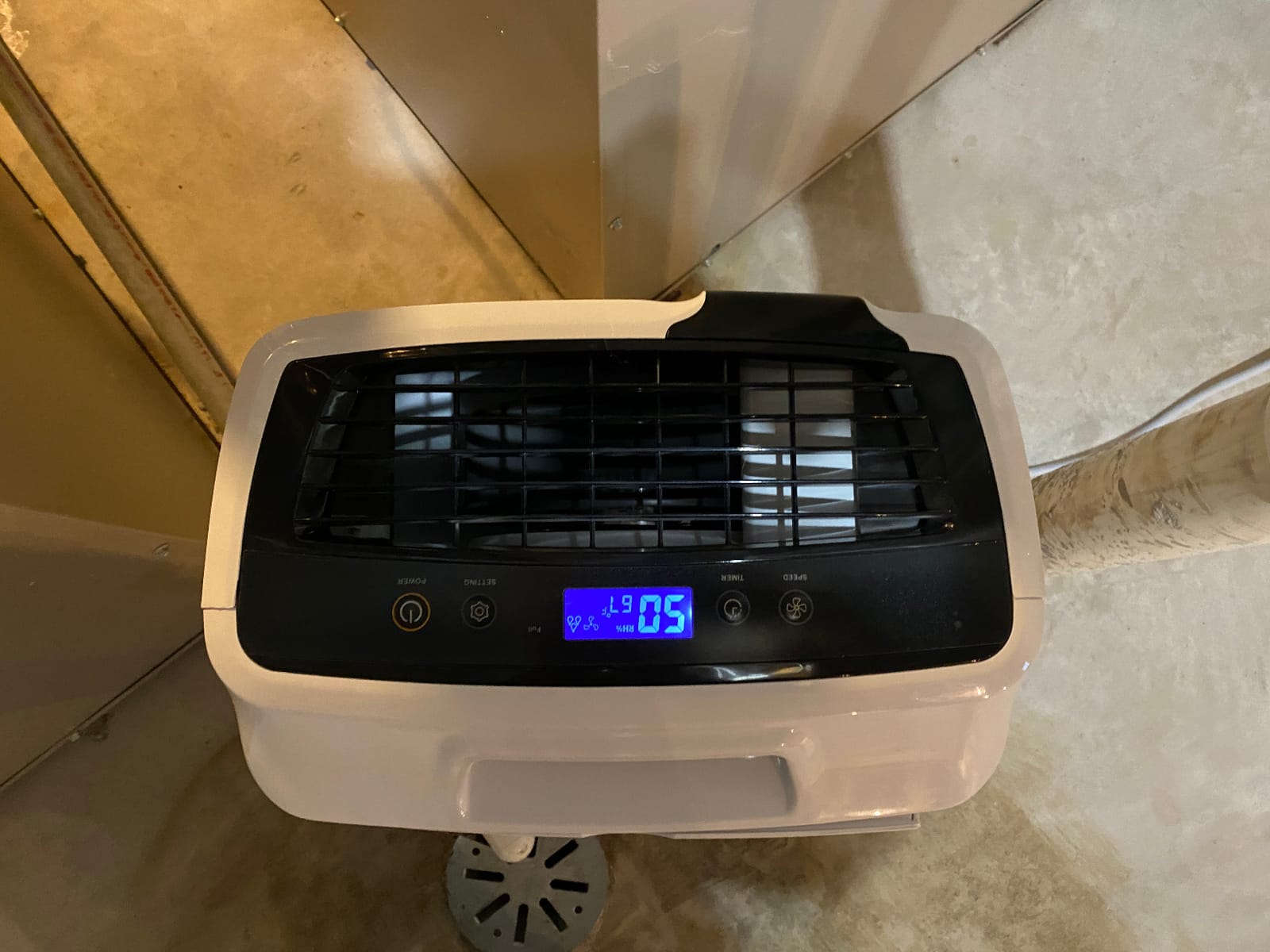
Rarely does a residential dehumidifier offer three separate drainage paths in one chassis. This Yaufey pumps water upward through its included 16.4 foot pump hose, fills the 1.85 gallon tank when you want to monitor collection by eye, and falls back to a short gravity run using the included 3.28 foot hose.
Having all three means the unit adapts to your drain situation instead of the other way around. If the drainage destination changes, or the pump gives you trouble, you have a working alternative instead of a dead machine sitting in a wet basement.
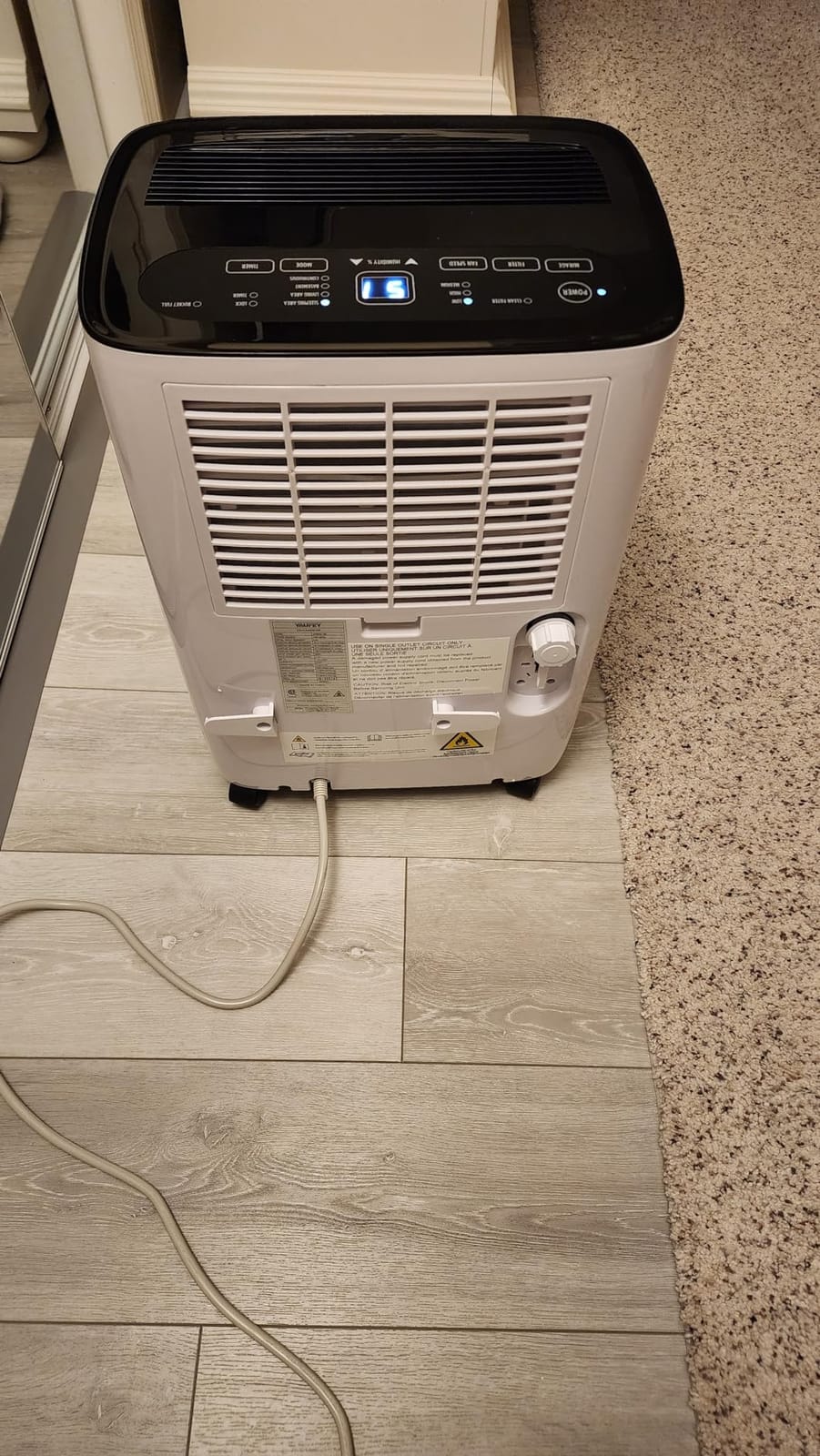
The humidity range goes from 30 to 80 percent in five-point steps, which is wider than the 40 to 80 percent most home models offer. That matters in a crawl space or a storage room where you want to hold the space drier than a living area requires. A full-tank alert with auto shutoff handles the overflow risk in tank mode.
Under the hood is a high-efficiency rotary compressor with copper tubing and hydrophilic aluminum foil, plus temperature and humidity sensors with auto-defrost, power-off memory, a timer, a button lock and overload protection. Power draw is about 500 watts and the unit weighs 39.7 pounds.
Why the three-way drainage is worth it
In practice, the gravity option is what saves you. Pump first, and if it stops after a few years, you raise the unit on a platform, run the short gravity hose to a floor drain or a furnace condensate pump and keep running. Homeowner forums describe exactly that sequence more often than they describe replacing a failed built-in pump.
The 30 percent lower floor on the humidity range is the other quiet advantage. On a spring shoulder season when outdoor air is near saturation, being able to command 40 percent rather than being limited to 50 changes how much water the unit pulls over a week.
Where it falls short
Two hoses in the box means two routing jobs, and a kink in either one turns into a wet floor. Reviewers flag the setup of the drain lines more than anything else on this model.
The fan has three speed settings against five on some competitors, and the plastic body is lighter and less rugged than the metal commercial units. Rated coverage of 8,500 square feet assumes ideal conditions and should not drive your sizing decision.
3. Waykar 125 Pint AFW2.0DPM — Best for Tight Crawl Spaces and High Drain Points
Waykar 125 Pint Crawl Space Dehumidifier with Pump & Drain Hose for Basements, Commercial & Water Damage Spaces up to 6500 Sq. Ft., Compact, Strong Dehumidification, 5-Year Quality Coverage
125 pints per day
16.4 ft vertical lift
Metal casing, both hoses in box
Pros
- 16.4 ft of vertical pump lift
- Metal casing built for harsh spaces
- Both drain hoses included
- 10 to 90 percent RH range
- Five-year compressor warranty
Cons
- Only one fan speed
- Remote control sold separately
- Nearly 50 pounds is a two-person lift
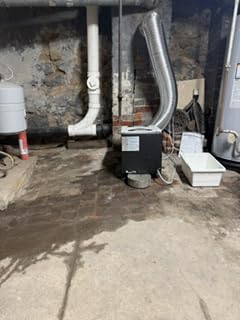
Crawl spaces reward the details. This Waykar has a high-strength metal casing instead of plastic, a rectangular footprint of 19.29 by 12.6 by 13.58 inches that fits where a tall tower unit will not, and a built-in pump rated for vertical drainage up to 16.4 feet.
That lift figure is the reason to buy it for a crawl space or a raised finished floor. When your drain point is twelve feet above the machine, a nine-foot lift stops short and the unit overflows. This one does not have that problem.
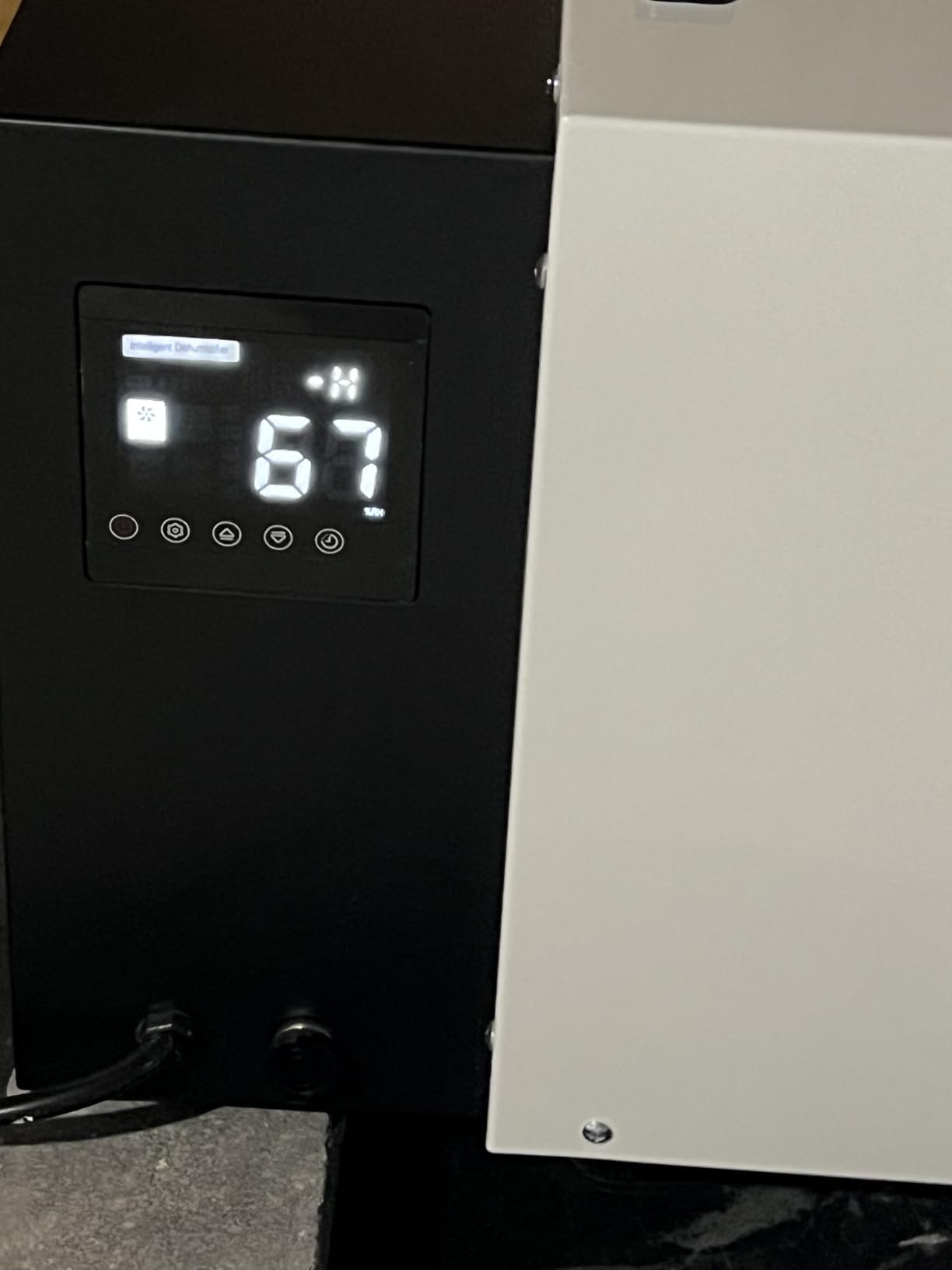
Both hoses are included: a 16.4 foot pump hose for the vertical run and a 6.6 foot gravity hose as a backup path. Rated output is up to 125 pints per day at 95°F and 90% relative humidity, with 176.47 CFM of airflow across a 6,500 square foot area.
It also supports 5.9-inch pipe-mounted exhaust vents for tighter layouts, and the adjustable feet are listed to cut noise and vibration by as much as 30 percent, which matters when the unit sits under a floor you walk on. The touchscreen panel handles the settings, and a service reminder prompts filter maintenance.
What makes it work in a crawl space
The 2+3-layer condenser is listed to improve heat exchange efficiency by 20 to 30 percent, and the rotary compressor carries TUV certification with a five-year compressor warranty. The humidity range of 10 to 90 percent gives you fine control, which is what you want when the space holds wood framing.
The mounting hardware is unusually complete for a residential unit: sturdy hooks, ergonomic handles and adjustable feet. Combined with the metal shell, it is the model in this group least likely to be damaged by a crawl space environment.
Where it falls short
There is one fan speed, so the unit runs at full output or it does not run. That is fine for a dedicated crawl space and wrong for a space where you would want moderate extraction at night.
The remote control is sold separately, and it reaches 32.8 feet, which is useful but not included. At 49.8 pounds it is a two-person job to reposition, and one-star reviews sit at 14 percent in this lineup, with noise and vibration the most common complaint.
4. Waykar 150 Pint YDZ-150PM — Best for Large Basements
Waykar 150 Pint Commercial Dehumidifier with Pump & Drain Hose for Basement
150 pints per day
Energy Star certified
9.84 ft pump lift
Pros
- 150 pint capacity with 212 CFM airflow
- Energy Star certified with self-drying and auto defrost
- Tank empties in place by handle
- Casters and top handle for moving between rooms
- Auto and continuous modes
Cons
- 9.84 ft lift is shallower than some rivals
- Pump setting lost after an unplug during shutdown
- Maximum rated temperature is 90F
This is the portable take on a commercial machine. The YDZ-150PM pulls up to 150 pints per day under 95°F and 90% relative humidity, moves 212 CFM of air, and weighs 38.6 pounds with casters and a storable top handle so you can roll it from one finished area to another.
Unlike most of the metal-bodied machines in this group, this one is a mixed metal and plastic build. That keeps the weight manageable and the price down while still handling basement duty.
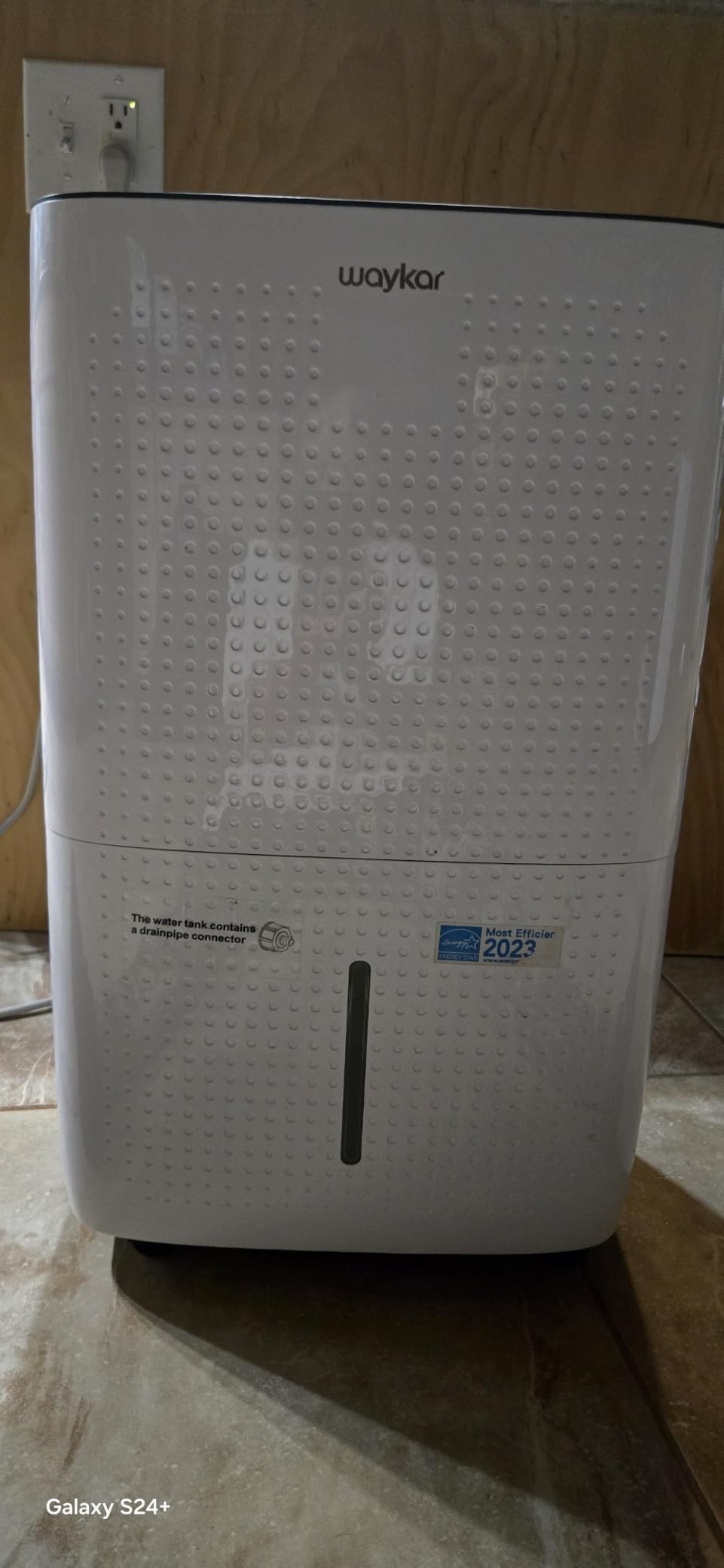
It is Energy Star certified, which matters when the unit runs every hour of every day, and the self-drying and auto-defrost cycles help keep the coil from developing mold and ice over a season of unattended operation. The humidity range adjusts from 30 to 80 percent.
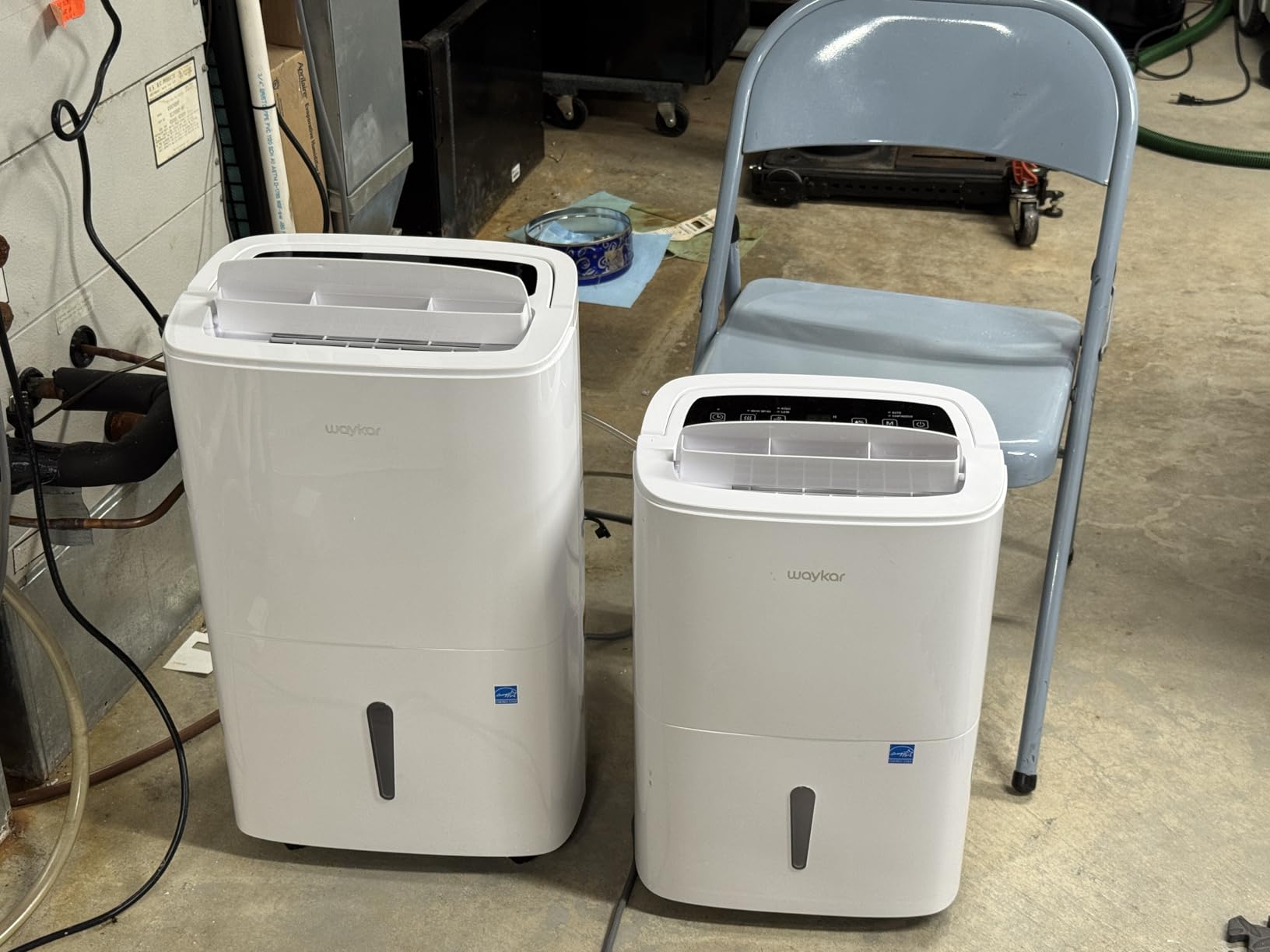
Drainage is genuinely flexible: pumped upward to 9.84 feet, straight into a floor drain, or through the included 3.3 foot gravity hose into the 1.85 gallon tank, which removes through a built-in handle without moving the machine.
Why it suits a whole-basement job
At 150 pints per day and 212 CFM, this is enough extraction to keep up with a large damp basement during a rainy stretch rather than merely slowing the growth. Our guide to the best garage dehumidifiers covers the sizing math for other large spaces.
The 24-hour timer, memory restart and automatic swing louver mean you can program it and leave. The cord storage column is a small touch that matters more than it sounds when the outlet is in an awkward spot.
Where it falls short
The 9.84 foot lift is shallower than the 16.4 foot units in this roundup, so it will not reach a high wall outlet drain. Check your vertical distance before committing.
More importantly, the memory restart does not restore the pump setting after an unplug during a normal shutdown, so you may need to re-engage the pump after a power event. The 90°F maximum operating rating is also the lowest ceiling among the high-capacity models here, which rules it out of a garage that gets brutally hot.
5. avylo ADC018 — Lowest Power Draw and a 41 dB Floor
avylo Dehumidifier for Basement with Pump and Hose, Max 90 Pints/D, White
90 pints per day
235 watts, Energy Star Most Efficient
15 ft pump lift
Pros
- Lowest power draw in the group at 235 W
- Energy Star Most Efficient certified with EER 2.05
- Noise reduction to 41 dB
- Built-in pump with 15 ft lift and 15 ft hose
- Child lock and safety protections
Cons
- Smallest capacity in the group
- Plastic body
- No floor drain pipe included
- Empty the tank before first setup
If you are going to run a dehumidifier around people, energy and sound matter more than raw pint capacity. The avylo ADC018 draws 235 watts, the lowest figure in this lineup, and its fan design is listed to run as low as 41 decibels with a key-controlled sound and light off.
It carries an Energy Star Most Efficient certification with an EER of 2.05 L/kWh, which is the number to look at if your unit will run twenty-four hours a day in a finished basement or a bedroom closet.
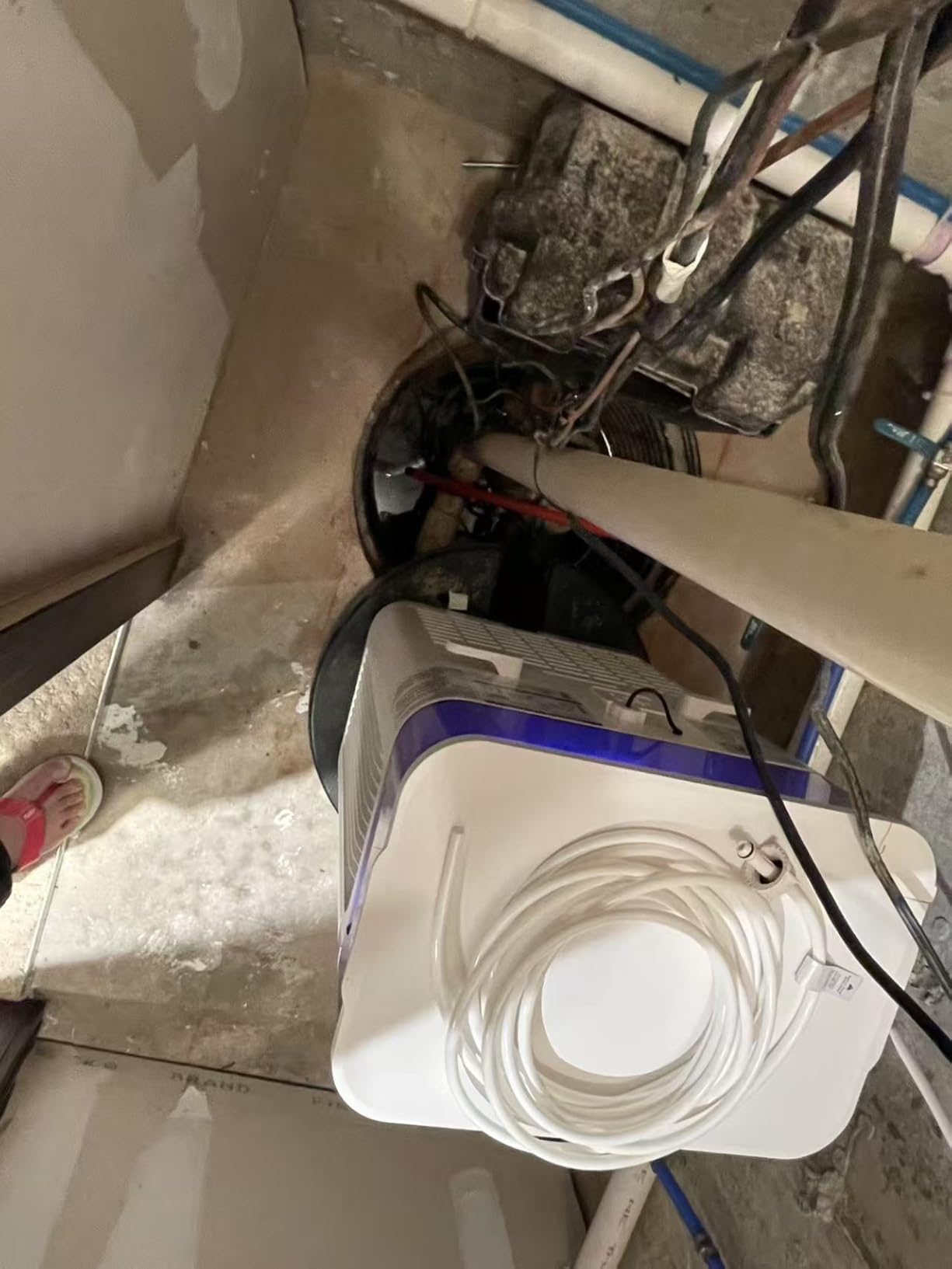
The pump lifts water 15 feet vertically and the 15 foot drain hose is included. Rated output is 90 pints per day at 90°F and 90% relative humidity across a 4,500 to 5,000 square foot area, which is the smallest capacity here but still ample for a normal basement or a mid-size garage.
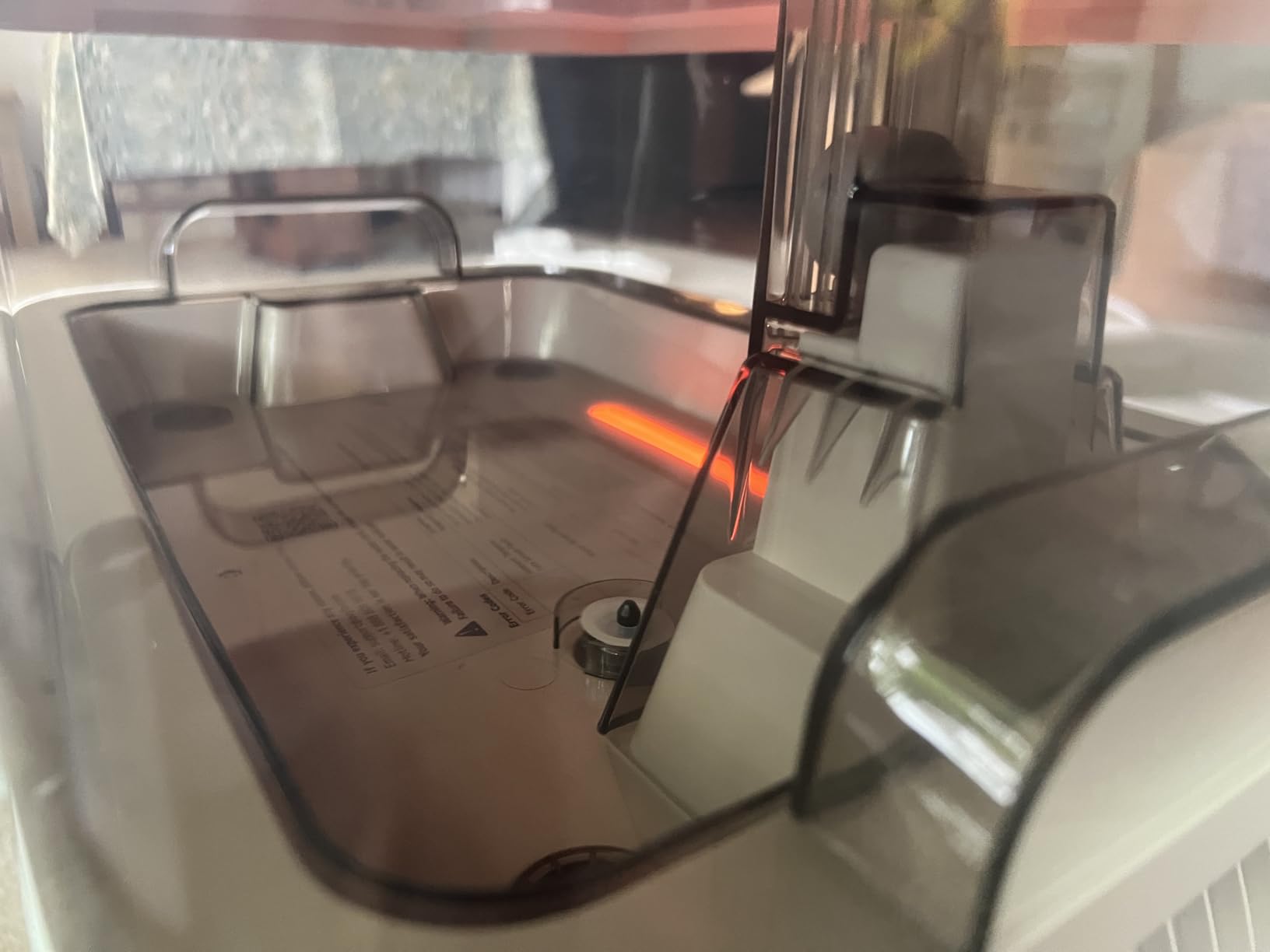
The top-mounted 2.11 gallon tank is the largest plastic tank in this group, with a full-tank reminder and auto shutoff to prevent overflow. When you run gravity or pumped drainage, water bypasses the tank and goes straight through the hose, which avoids filling and draining the reservoir on every cycle.
Why the efficiency numbers are the story
Over a year of continuous operation, the wattage gap between a 235 watt machine and a 530 watt machine is the single largest running cost difference in this roundup. The manufacturer publishes a low daily running cost estimate for the ADC018, and the certification backs up the claim rather than just asserting it.
Safety protections cover compressor overheat, overload and leakage, and the unit meets DOE, CEC, FCC, TSCA, CA65 and UL standards. The child lock matters if the unit lives in a playroom or a shared laundry area.
Where it falls short
Ninety pints per day and 4,500 square feet of rated coverage are the smallest figures in this lineup. In a genuinely wet space after a leak, a larger machine will finish the job in a fraction of the time.
The floor drain pipe is not included, so you are buying the hose yourself or routing to a sink. Owners also note that you should empty the tank once before first setup to avoid leaks during the initial run.
6. Yaufey 158 Pint AYD2.5D — Metal Build with Auto-Defrost for Cold Spaces
Yaufey 158 Pints Commercial Dehumidifier with Pump for 7500 Sq.Ft. Crawl Space, Basement, Industrial Area, 10-90% RH Humidity Control, 24/7 Running Continuous Drainage, TUV Certified, 5-Yr Coverage
158 pints per day
All-metal housing
16.4 ft pump lift, auto defrost
Pros
- 16.4 ft pump hose and vertical lift
- All-metal corrosion-resistant housing
- Auto defrost for cold crawl spaces
- Auto restart after a power outage
- 10 to 90 percent RH range
Cons
- Heaviest unit here at 65.7 pounds
- Only one fan speed
- Smallest review base among the higher-rated models
Two features separate this from the residential models: an all-metal, corrosion-resistant shell and auto-defrost for low-temperature operation. Both matter in an unheated basement or a crawl space in a cold climate, where a plastic chassis cracks and a coil without defrost cycles ices over within hours.
Output is up to 158 pints per day at 95°F and 90% relative humidity with 205.9 CFM of airflow across a 7,500 square foot rated area. The humidity control spans 10 to 90 percent, a wider band than home models typically offer.
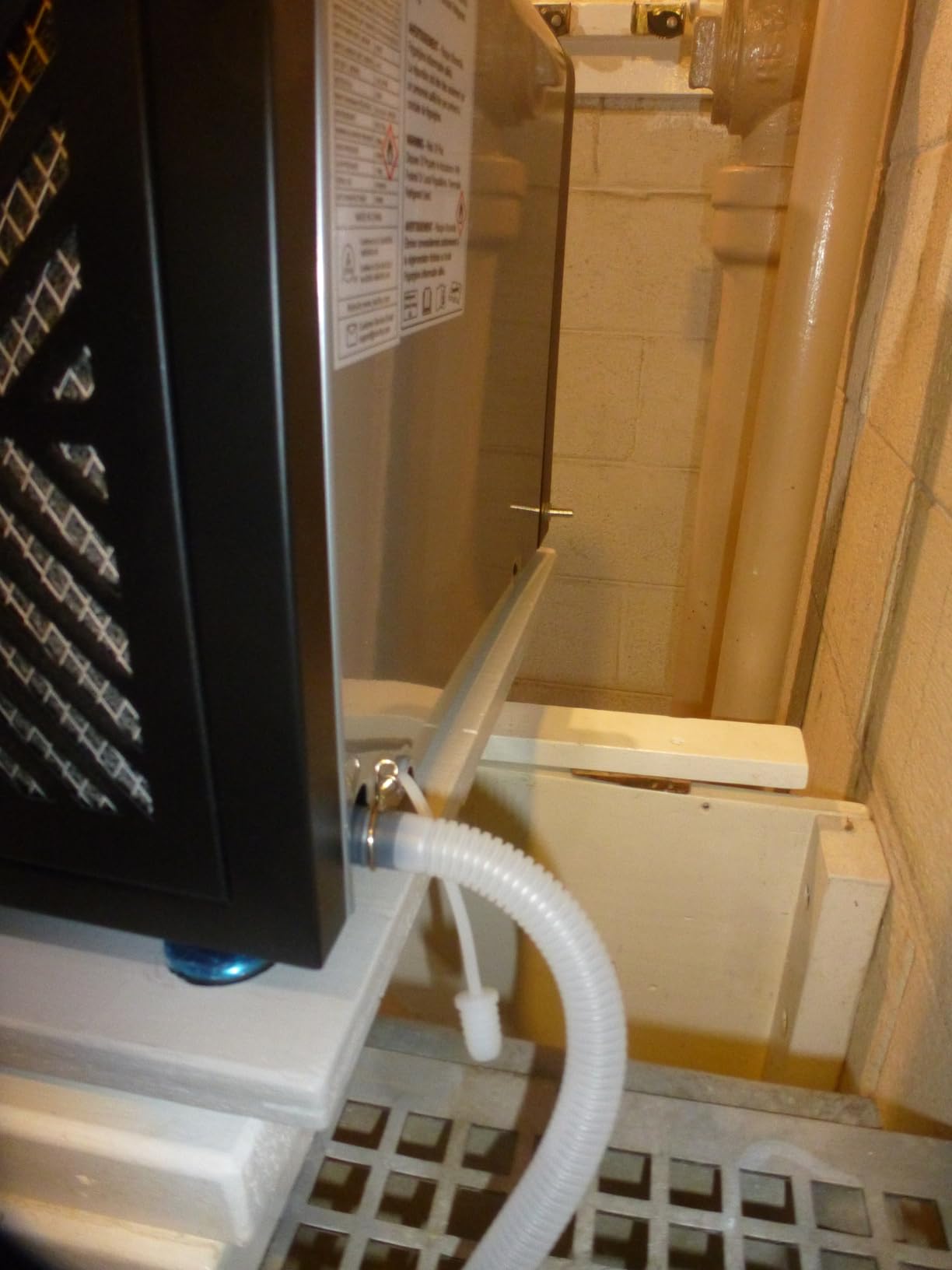
Drainage is dual mode: an integrated pump with a 16.4 foot vertical lift hose for the main run, plus a 6.56 foot gravity hose as the fallback. Auto-restart resumes operation at the preset humidity level after a power outage, which is the feature that matters most for an unattended space.
The unit uses R32 refrigerant, has anti-spill and a three-minute compressor delay, and includes a washable filter, a timer and overheat protection. Coverage runs one year standard, two years extended and five years on the compressor.
Why auto-defrost changes the decision
Freeze-up is the failure mode that kills basement and crawl space dehumidifiers. When the coil ices over, extraction stops, water backs up and the unit shuts down. A unit with auto-defrost cycles the compressor to clear the ice and keeps pulling moisture in a space that sits near the operating minimum.
All-metal construction takes the same logic a step further. Crawl spaces get wet, dusty and occasionally flooded. Plastic housings crack when they freeze while damp; metal does not. Our crawl space dehumidifier guide goes deeper on the temperature thresholds.
Where it falls short
At 65.7 pounds this is the heaviest model here, and getting it into a crawl space hatch takes two people. It is a permanent installation, not something you reposition weekly.
There is a single fan speed, and the 212-review base is the second thinnest in this roundup, which limits how much long-term owner evidence exists. One-star reviews sit at 12 percent, mostly around the weight and the single-speed fan.
7. LUKO 190 Pint OL-R180P — Highest Capacity for Water Damage Restoration
LUKO 190 Pints Commercial Dehumidifier with Pump & Drain, 8000 Sq Ft Large Capacity Industrial Dehumidifier for Basement, Efficient Water Damage Restoration, Flood Clean-Up (classic R190)
190 pints per day at saturation
386 CFM airflow
15 ft drain height
Pros
- Highest capacity and airflow in the group
- 17 ft wrinkle-free drain hose included
- Job-hours readout with inlet and outlet temperature
- Auto restart and auto defrost
- Handles up to 8000 square feet
Cons
- One-year warranty is the shortest here
- Plastic body among metal commercial models
- Listed weight is not published
- Smallest review base in the lineup
This is a restoration machine rather than a comfort appliance. The LUKO OL-R180P moves 386 CFM of air and removes up to 190 pints of water per day at saturation, which is the highest airflow and the highest extraction figure of anything in this roundup.
That volume matters when you are drying out a flooded basement after a storm or shutting down a wet structure. A 50-pint residential unit would take days to reach the same point; this one exists specifically to move the water faster.
The internal heavy-duty condensate pump handles 15 feet of drain height, and a 17 foot wrinkle-free hose comes with the unit, which is the longest included hose here and matters when the discharge point is at the far end of a wet basement.
For monitoring, the LCD shows the humidity level, inlet and outlet temperature and accumulated job hours, so you can track drying progress rather than guessing. Auto-restart on power failure and auto-defrost reduce the supervision a drying job needs.
Where it earns its place
Post-flood and water damage work is the scenario where a 190-pint machine pays for itself in time saved. It also covers whole-basement applications up to 8,000 square feet and industrial or warehouse spaces that residential machines cannot touch.
The compact design with a rugged handle is aimed at moving between job sites, and the unit carries cETL electrical safety certification. The dimensions are listed at 18 by 15 by 25 inches.
Where it falls short
The one-year warranty is the shortest coverage in this lineup, which matters if you are running the machine hard for months on a restoration job. It is also a plastic body in a category where metal is more common.
The published weight is missing, so you cannot plan a stairs carry from the specification sheet alone. At 180 reviews this is the smallest evidence base of the eight, so buyer feedback is thinner than the capacity figures suggest.
8. GoveeLife H7152 — Five Modes, App Control and a 16 ft Hose
GoveeLife Dehumidifier with Pump for Home 4,500ft², 137 Pints, Drain Hose
50 pints per day at 65F
Built-in pressurized pump
16 ft hose included
Pros
- Pressurized and tank-to-floor pump drainage
- 16 ft drain hose in the box
- Five operating modes including Sleep and Drying
- Shutdown pump draining and evaporator drying
- Copper tube evaporator and ETL certified
Cons
- Highest wattage here at 860 W
- Lowest average rating in the lineup
- Needs 8 inches of clearance behind the intake
- 91.4F rated ceiling
The GoveeLife H7152 is the most app-forward unit in this roundup, with voice and app control plus the widest mode selection we found. Auto, Comfort, Drying, Maintain and Sleep modes cover everything from a drying job to a bedroom you are trying to sleep in.
Drainage is the more interesting part. It combines proactive pressurized drainage with tank-to-floor pump drainage, and the 16 ft external hose extends the run well past the length most units include.
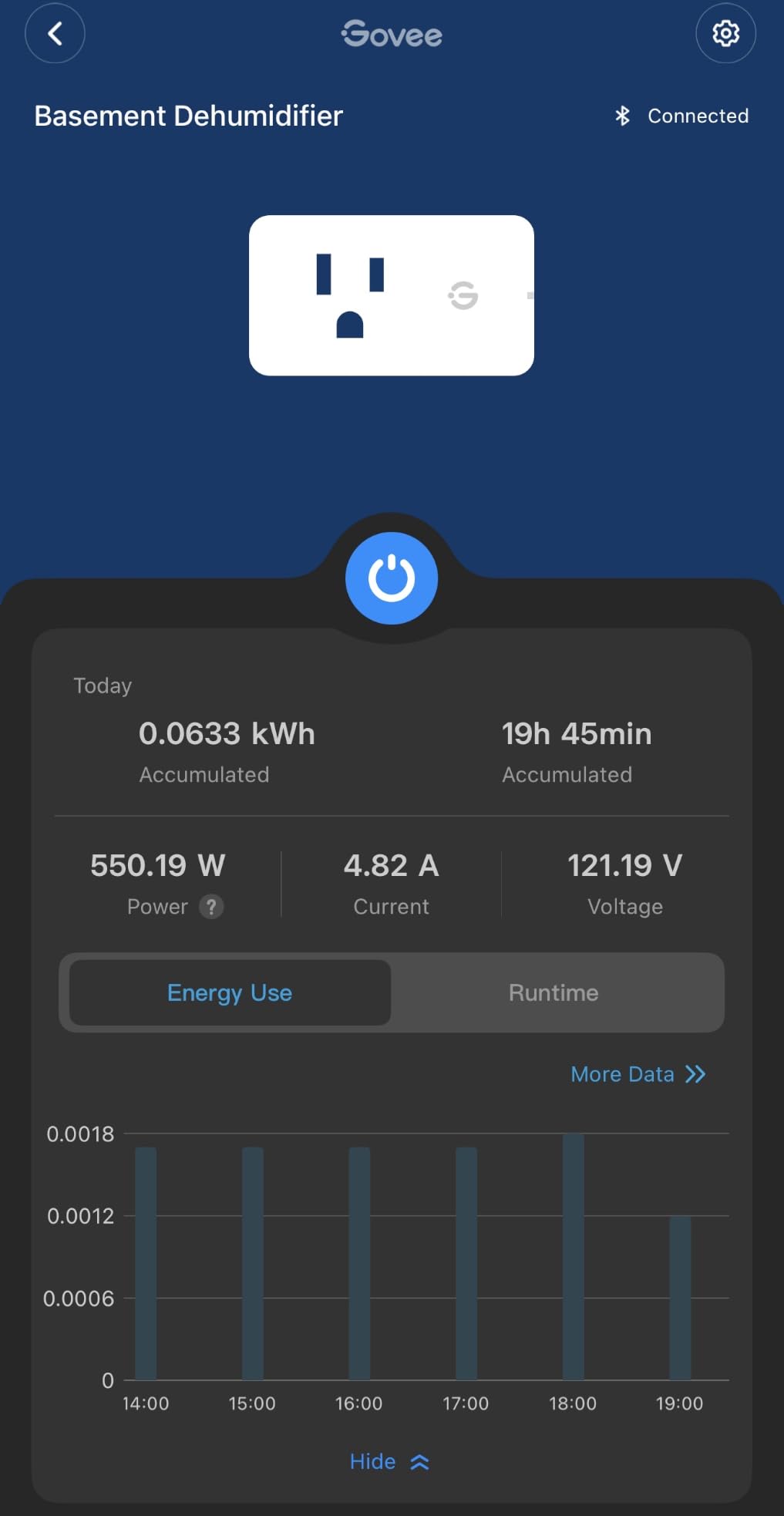
Extraction is rated at 50 pints per day at 65°F and 60% relative humidity over a 24 hour period across up to 4,500 square feet. Note that this is the standard test condition rather than the extreme-condition figures the larger units advertise.
The shutdown pump draining and drying cycle empties residual pump-tank water and dries the evaporator after you stop the unit, which is a real service-life benefit for a machine that cycles often. The copper tube evaporator resists corrosion better than aluminum, and the unit is certified to ETL, FCC, CP65 and DOE standards.
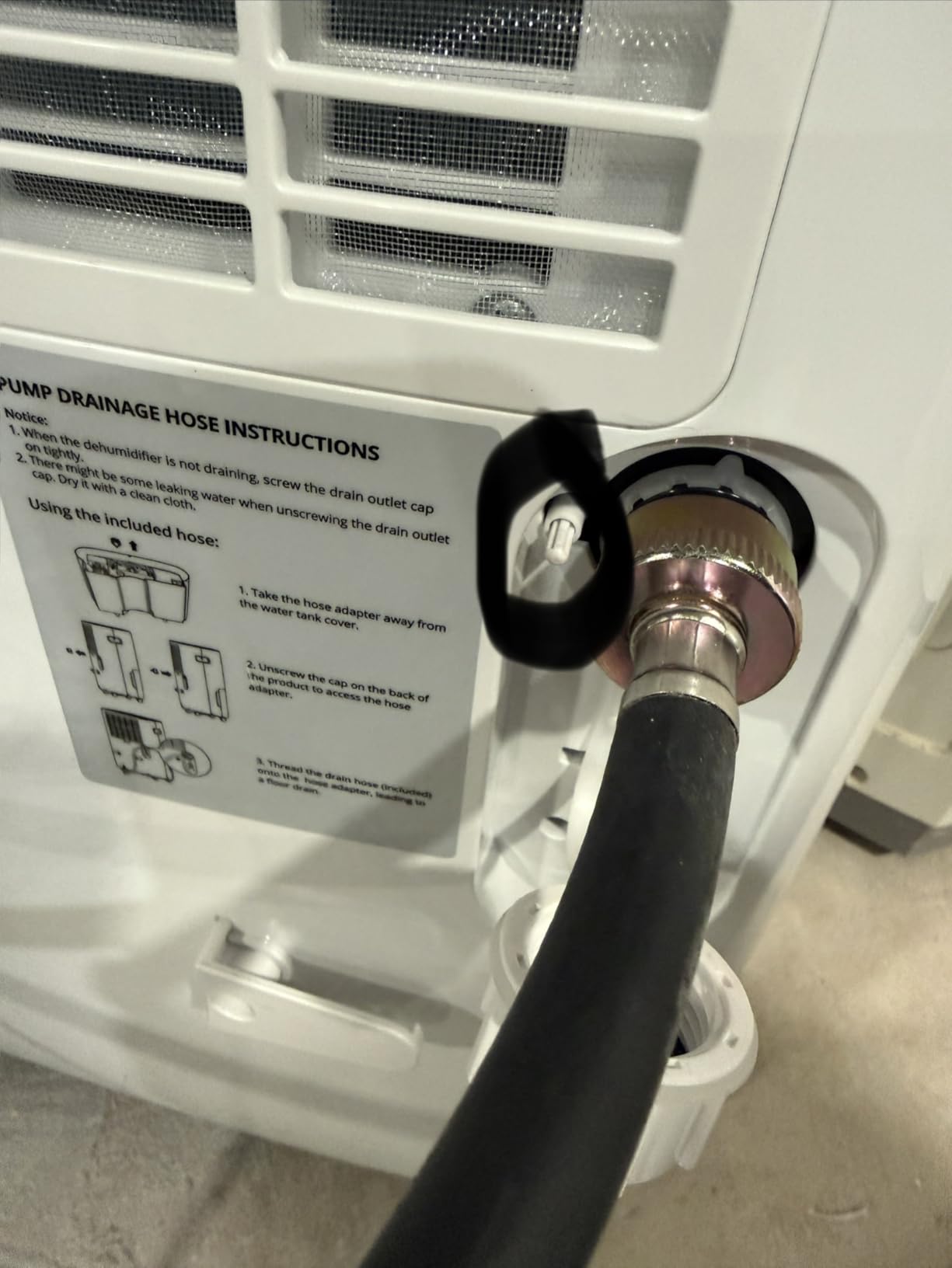
Why the mode selection is genuinely useful
Sleep mode is the practical one. A unit running next to a bed or a workspace at full output is hard to live with, and a dedicated low-output mode lets you hold humidity down without living with the noise. The Drying mode is the equivalent for a room you are actively drying out.
The built-in sensor sets the humidity target based on current temperature, so the unit adjusts rather than overshooting in cooler conditions. The 1.8 gallon tank reduces how often you need to intervene.
Where it falls short
At 860 watts this is by far the highest power draw in this lineup, and it directly affects what a year of continuous operation costs you. It also produces more heat and noise than the low-wattage machines.
The 4.0 average rating is the lowest here, with a 61 percent five-star share and a 16 percent one-star share, the highest in the roundup. The unit needs at least eight inches of clearance behind its intake grille, and its 91.4°F rated ceiling limits very hot spaces.
How to Size a Dehumidifier With a Pump
Size by the moisture you are dealing with, not by the square footage on the box. Capacity ratings across this group run from 50 pints per day in mild conditions to 190 pints at saturation, and the gap between those numbers reflects temperature and humidity far more than room size.
A useful rule: a 30 to 35 pint unit covers a bedroom, laundry room or small utility space under about a thousand square feet. A 50 to 60 pint unit handles a typical residential basement in the 1,000 to 2,000 square foot range and is the most common starting size for pump units.
A 70 to 130 pint unit is the right tier for a large basement, a garage or a workshop where you have real dampness to remove. Above 150 pints you are into commercial territory for whole-basement work, post-leak drying and crawl spaces with heavy ground moisture.
Buy one size above what the math suggests if you can move it. Reviewers and our own guides to the best basement dehumidifiers consistently favor the higher capacity, because it finishes drying cycles faster and runs less often once the space is under control.
Two rules of thumb for target humidity: 40 to 50 percent for finished living space, and 50 to 60 percent for a crawl space where you want air movement and mold prevention without pulling in outside air through the vents.
Pump Drain vs Gravity Drain vs an External Condensate Pump
A built-in pump is the most convenient option and the most expensive failure point. The pump sits inside the unit, and when it dies you are looking at a repair or a replacement depending on the warranty terms. Owners report replacing internal pumps within a couple of years, and when the pump stops the tank fills with no alarm until it is already full.
A gravity drain is the most reliable because there is no pump to fail. The requirement is purely physical: the disposal point must be lower than the outlet, and the hose has to fall continuously the whole way with no sags that trap water.
An external condensate pump is the third option and the one most often overlooked. You buy a standard gravity-drain dehumidifier and pair it with a small condensate pump rated for the lift you need. Any pump designed for this duty can sit in the sump pit or a utility sink while the dehumidifier drains into it by gravity. Our guide to the best utility pumps covers the pump categories.
Framing it as total cost changes the calculation. A built-in pump unit costs more up front and gives you the cleanest installation with one hose and one power cord. A gravity unit plus an external pump costs less, gives you a replaceable component, and still fails safe: if the pump dies, the dehumidifier keeps filling its tank and shutting off rather than overflowing.
How to Set Up Continuous Drainage in 7 Steps
This is the walkthrough none of the major roundups give you, and it is the part that decides whether the install works.
Pick the destination first. The end point determines everything else. A sink, a sump pit, a utility sink drain and an exterior wall line all have different constraints, so choose before you unbox the machine.
Measure the vertical lift. Compare the height of the drain point with the pump outlet on the unit. The lift figures in this roundup range from 9.84 feet to 16.4 feet, and you want margin above your actual measurement rather than exactly matching it.
Check whether the hose is included. Included hose length varies widely, from 3.3 feet on one of these models to 17 feet on another. If the supplied hose is far longer than you need, cut it rather than coiling the excess, since coiled hose traps water and creates air locks.
Attach and secure the run. Push the hose fully onto the outlet and secure it with a clamp. Support the line along its whole length so the weight does not work the fitting loose, and avoid kinks and sharp bends.
Prime and test the pump. Run the unit with the tank empty until water flows steadily through the hose and reaches the destination. Confirm the water actually clears the line instead of sitting in a low spot.
Set your target humidity. Forty to 50 percent for a finished basement, 50 to 60 percent for a crawl space. Setting it too low makes the unit run constantly without improving comfort, since outdoor air will always supply some moisture.
Build the maintenance habit. Check the tank weekly for the first month even with a hose attached, and clean the washable filter on the schedule your unit indicates. Schedule a look at the hose every few months in case a section sags after settling.
If it is not draining continuously, work down this list: a kinked or trapped hose, an unsecured connection, a clogged filter slowing airflow, a tank that has not been fully seated, or a pump that has stopped. If the unit is running but nothing reaches the destination, the problem is almost always in the line rather than the pump.
What Running a Pump Dehumidifier 24/7 Actually Costs
Power draw is the number that decides your long-term bill, and it varies more across this roundup than any other spec. The avylo ADC018 runs at 235 watts. The Yaufey 150-pint and Waykar 150-pint sit around 500 to 520 watts. The Waykar 125-pint and Yaufey 158-pint are listed at 530 watts. The GoveeLife H7152 draws 860 watts, more than three and a half times the lowest figure here.
Multiply your unit’s wattage by 24 hours by 365 for a full year of continuous operation and multiply that total kilowatt-hours by your local rate. The gap between the low-wattage and high-wattage machines in this list is meaningful enough to influence the decision if the unit will run year-round.
The avylo’s Energy Star Most Efficient certification and 2.05 L/kWh EER is the clearest signal in the group that the manufacturer measured efficiency rather than asserting it. The Waykar 150-pint is also Energy Star certified, with self-drying and auto defrost to reduce parasitic operation.
Noise follows power closely. The low-wattage models are also the ones that fit beside a bedroom or a workspace, and a dedicated sleep or low mode is worth more than raw capacity when the machine sits inside living space.
Set a filter cadence rather than reacting to performance. A clogged filter chokes airflow, lowers extraction and raises compressor run time. On continuously operated units, a monthly rinse with potable water is a reasonable baseline, and the filter-change indicators on the hOmeLabs and avylo models remove the guesswork.
Safety, Clearance and Crawl Space Rules
Plug any of these directly into a GFCI-protected outlet. Basements and crawl spaces are wet locations, and a pump plus water plus mains power is the combination you do not want to test.
Do not use an extension cord. Cord runs under a door or across a floor are a trip hazard and a heat source under a compressor that runs continuously. If you cannot reach an outlet, move the unit rather than extending its cord.
Give it the clearance the manual specifies, which on some models means eight inches behind the intake grille. Blocked intake is the most common cause of both overheating and short-cycling.
For crawl spaces, choose a unit with auto-defrost and a wide humidity range rather than a standard basement machine. A regular residential unit in a space that drops below its operating minimum will ice up, stop extracting and can fail early. Check minimum operating temperature against your coldest recorded space temperature before you buy.
Use a crawl space-rated unit if the space has vents to the outside, since a sealed crawl space is a different humidity and air exchange problem from a vented one.
Before You Buy: Find the Moisture Source First
A dehumidifier treats symptoms. If the source is still feeding the space, the unit runs continuously and the musty smell comes back every time you clean the coil. Five checks take an afternoon and can save you from owning the wrong machine for years.
Walk the grade. Stand outside and look at the wall. Soil sloping toward the foundation drives water in every time it rains, and no dehumidifier fixes that.
Check for a vapor barrier. Basement walls and crawl space floors need a polyethylene or spray barrier behind the framing. Without one, ground moisture moves straight through.
Look for active leaks. Plumbing, a cracked drain line, a leaking window well. Active water is a plumbing problem before it is a dehumidifier problem.
Confirm your sump works. If you have a sump pump, make sure it runs and the discharge clears. A failed sump floods the space faster than any unit can remove the water.
Inspect ducts and gutters. Uninsulated ductwork running through humid air condenses inside the metal and wets the framing around it. Gutters that dump at the foundation do the same thing from outside.
Homeowners with a musty basement and no visible leak often find the answer in one of these five. Fix the source first, then size the machine for what remains, and you will spend far less time running the dehumidifier than you expected.
Frequently Asked Questions
What is the difference between a continuous drain dehumidifier and one with a pump?
A continuous drain option means the unit can drain through a hose by gravity, so the disposal point must be lower than the machine and the hose must fall the whole way. A pump-equipped dehumidifier adds a small condensate pump that pushes water up to a higher drain point, such as a sink, a sump pit or an exterior line. The lift figures in this roundup range from 9.84 feet to 16.4 feet.
Do I need a built-in pump dehumidifier for my basement?
You need a pump if there is no floor drain near where the unit will sit, or if the nearest drain point is higher than the unit’s outlet. If you have a floor drain a short distance below the machine, a gravity drain works and costs less. You can also pair any gravity-drain unit with an external condensate pump instead of buying a built-in pump.
How high can a dehumidifier pump water?
Pump lift varies by model. In this roundup the Waykar 125-pint AFW2.0DPM and the Yaufey 158-pint AYD2.5D rate a 16.4 foot vertical lift, the avylo ADC018 rates 15 feet, the LUKO OL-R180P rates 15 feet of drain height, and the Waykar 150-pint YDZ-150PM rates 9.84 feet. Measure your actual height difference and leave margin above it.
How long do built-in dehumidifier pumps last?
Owners report a range, with some replacing an internal pump within a couple of years and others running the same unit for years without touching it. Because failure is silent and the unit simply stops draining into the hose, check the tank weekly for the first month of any new installation. Keeping the unit in pumped mode with a properly secured line reduces the strain on the pump.
Why is my dehumidifier not continuously draining?
Work down this order: a kinked or trapped hose, an unsecured connection at the outlet, a clogged filter reducing airflow, a tank that is not fully seated, or a stopped pump. If the unit runs normally and the tank fills but nothing reaches the destination, the problem is almost always in the line rather than the pump. Cut and re-route excess coiled hose, which traps water and causes air locks.
Where do you drain a dehumidifier in a crawl space?
Most crawl space installs route the drain hose to a sump pit, an interior drain line or out through the foundation wall to an exterior drain. Because crawl spaces have no floor drain of their own, a pump unit with enough vertical lift is normally required. Use a unit with auto-defrost and a wide humidity range, and verify the hose cannot be crushed or kinked in the tight space.
Is 70 percent humidity too high for a crawl space?
It is high. Most crawl space guidance points to 50 to 60 percent relative humidity, and wood framing and sheathing sustain mold growth above that range. Set the unit to hold the space between 50 and 60 percent rather than chasing an impossible number, and fix ground moisture sources with grading and a vapor barrier so the dehumidifier is not working against runoff every storm.
What is the best dehumidifier for continuous use?
For most residential basements the hOmeLabs HME1004 is the strongest all-round choice, combining a built-in pump, Wi-Fi control and the largest review base in this roundup. For awkward drain routing, the Yaufey 150-pint JD026R-150PM offers pumped, tank and gravity drainage with both hoses included. For crawl spaces and cold spaces, choose a metal-bodied unit with auto-defrost and the lift you need.
Which Dehumidifier With a Pump Should You Buy?
For a typical residential basement with no convenient floor drain, buy the hOmeLabs HME1004. It is the strongest combination of pump, app control and long-term owner feedback in this roundup, and the built-in pump plus continuous mode means you install it once.
If your drain destination is higher than the unit or you want a fallback path, the Yaufey 150-pint JD026R-150PM handles pumped, tank and gravity drainage with both hoses in the box. For a crawl space or a cold unheated space, pick a metal-bodied unit with auto-defrost: the Waykar 125-pint AFW2.0DPM or the Yaufey 158-pint AYD2.5D, both with a 16.4 ft lift.
If running cost matters more than capacity, the avylo ADC018 draws the least power here at 235 watts and carries the Energy Star Most Efficient certification. For flood cleanup or a very large damp area, the LUKO 190-pint moves the most water fastest.
Whatever you choose from this list of the best dehumidifiers with pumps for continuous drainage, confirm the vertical lift before you order, check the tank weekly for the first month, and fix the moisture source before you blame the machine. 2026