
An eye wash station is emergency equipment that flushes both eyes with a steady stream of clean or preserved water so that a chemical splash, dust or debris leaves the eye before it does lasting damage. OSHA requires quick drenching or flushing wherever employees handle corrosive materials, and the standard you are really shopping against is ANSI/ISEA Z358.1-2014 (R2020).
The first ten to fifteen seconds after a splash decide how bad the injury is. That is why the best eye wash stations are judged on flow, reach and activation speed rather than on how many bottles are in the box. I read through the spec sheets and customer reviews for all twelve models below, sorted them by type, and flagged exactly where a unit is a real flushing station and where it is only a personal first-aid bottle that happens to come with a bracket.
Everything here was checked for 2026, and the picks split into three clear groups: personal twin-bottle boards, portable gravity-fed tanks that deliver a real 15-minute flush, and one plumbed stainless unit for a fixed workshop. If your interest is consumer-side rather than workplace compliance, jump to the home workshop section, because most of the compliance language does not apply to you.
Table of Contents
Top 3 Picks for Eye Wash Stations in 2026
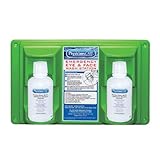
The PhysiciansCare board takes the top slot because it is the only unit here that arrives ready to use, with sterile solution already in the bottles and the highest rating in the group. The CGOLDENWALL kit is the one most people actually end up with, and the Yeipower board is the cheapest way to get a signed-off bracket on a wall.
All 12 Best Eye Wash Stations Compared (September 2026)
| Product | Specs | Action |
|---|---|---|
| PhysiciansCare 2-Bottle Wall Station |
|
Check Latest Price |
 CGOLDENWALL Eyewash Station Kit CGOLDENWALL Eyewash Station Kit |
|
Check Latest Price |
 Yeipower Portable Eyewash Kit Yeipower Portable Eyewash Kit |
|
Check Latest Price |
 Yzzwer Portable Eyewash Kit Yzzwer Portable Eyewash Kit |
|
Check Latest Price |
 Yeipower Dual-Nozzle Eyewash Kit Yeipower Dual-Nozzle Eyewash Kit |
|
Check Latest Price |
 Magula 17 oz Twin Bottle Kit Magula 17 oz Twin Bottle Kit |
|
Check Latest Price |
 Yzzwer 8 Gallon Portable Station Yzzwer 8 Gallon Portable Station |
|
Check Latest Price |
 MAASTERS 8 Gallon Station MAASTERS 8 Gallon Station |
|
Check Latest Price |
 Yeipower 14 Gallon Station Yeipower 14 Gallon Station |
|
Check Latest Price |
 Magula 9 Gallon Station Magula 9 Gallon Station |
|
Check Latest Price |
 Honeywell Fend-All Double Bottle Honeywell Fend-All Double Bottle |
|
Check Latest Price |
 304 Stainless Steel Wall Eyewash 304 Stainless Steel Wall Eyewash |
|
Check Latest Price |
1. PhysiciansCare Wall-Mountable Eyewash Station – Best Overall
PhysiciansCare Wall-Mountable Eyewash Station with 2 Bottles of Eye Wash Solution, 16 Oz Each
Wall mount bracket
2 x 16 oz sterile bottles
22.55 in tall
3.8 lb
Pros
- Sterile isotonic solution already in the bottles
- Wall mounting takes minutes
- Highest rating in this group at 4.7 stars
- Works in salons garages and workshops
Cons
- Thin plastic bracket can flex or crack
- Bottles held by friction with no retention
- Single use bottles with a dated expiry
This is the one I keep coming back to, because the two 16 oz bottles ship filled with sterile isotonic buffered solution. That single design decision removes the failure mode that trips up almost every other kit in this roundup, where the station arrives as empty bottles and the flushing fluid is a separate purchase.
Installation is genuinely a two-screw job. The bracket is 12.25 inches wide by 4.15 deep and the whole assembly stands 22.55 inches tall, which puts the nozzles close to face height for someone standing at the wall.
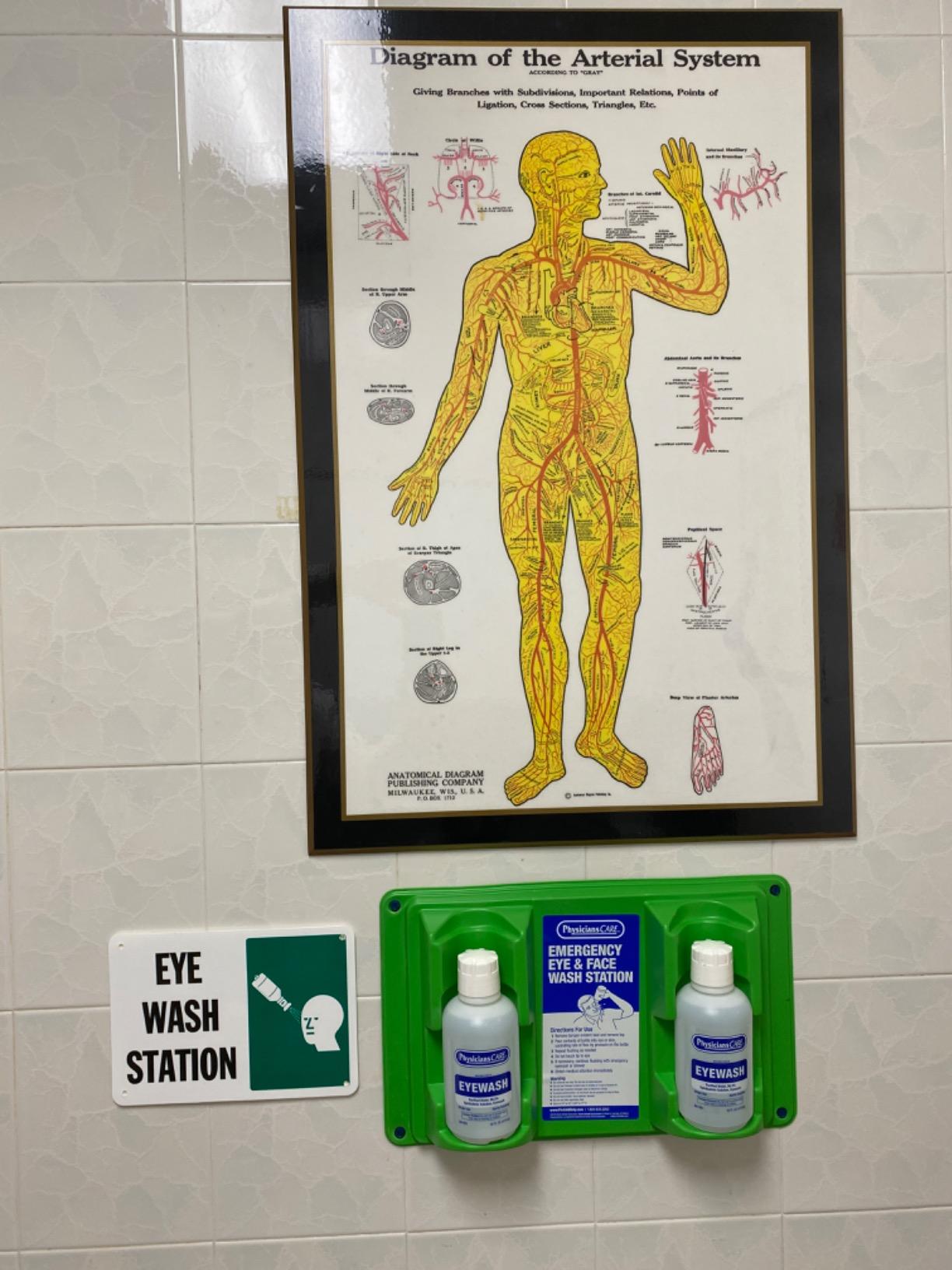
What you are giving up is hardware quality. Reviewers repeatedly mention that the plastic bracket is thin and flexible, and that the bottles sit in the cradle by friction alone rather than a positive clip, so a knock can send a bottle to the floor.
Worth knowing before you buy: the solution has a shelf life, so this is a recurring replacement cost rather than a one-time purchase, and each bottle is single use. If the unit is going to sit in a hot garage, check the printed date on both bottles when it arrives.
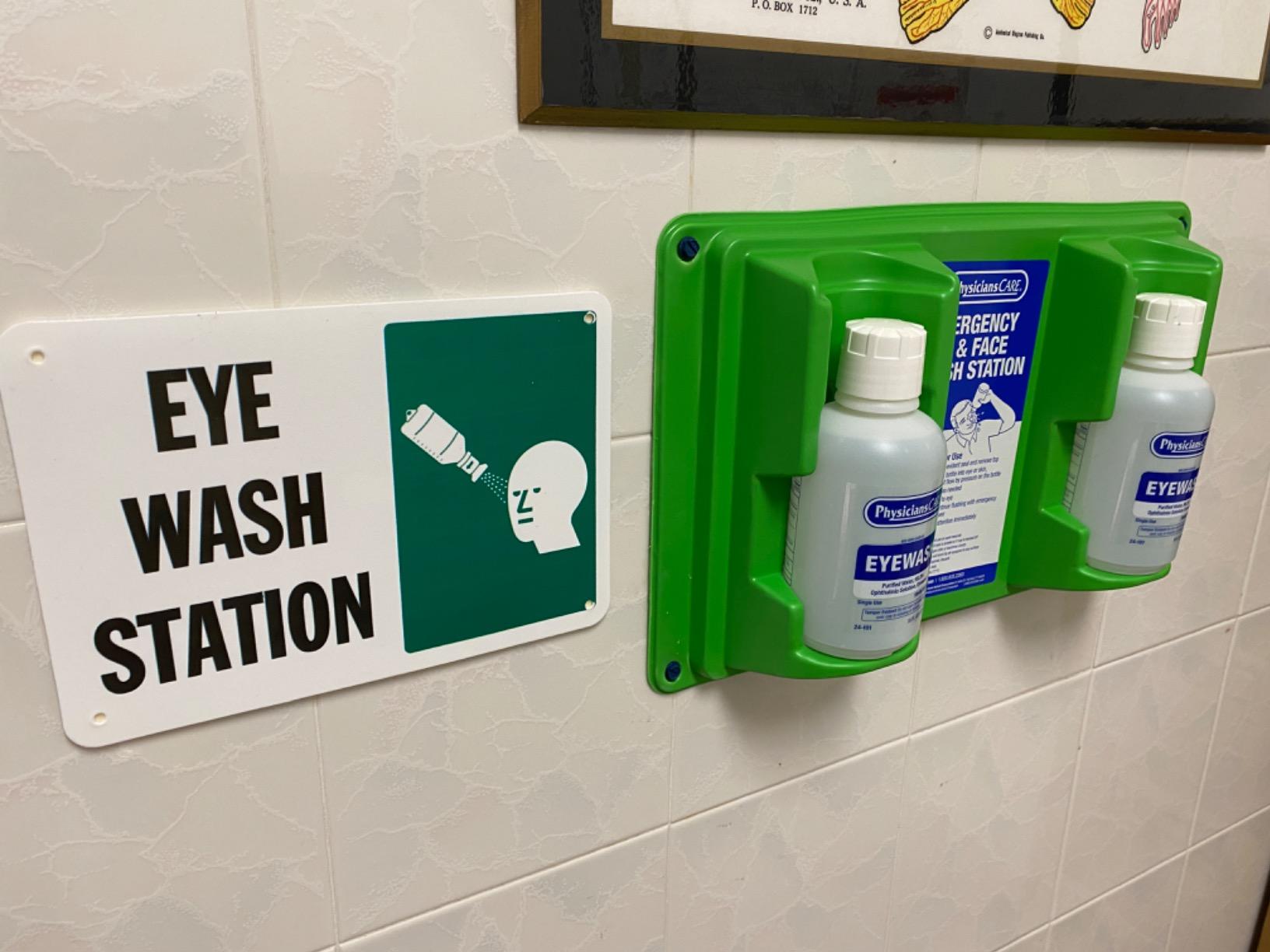
Check the solution date before you mount it
Two full 16 oz bottles of sterile solution is a meaningful amount of flushing fluid, but it is still a fixed quantity with a printed date. Compare that against the capacity claims of the portable tanks further down, which refill with plain water instead.
If your exposure risk is real chemical splash rather than dust and debris, a mounted bottle board is a supplement rather than a substitute. It is the right call for a small shop that handles a few bottles of thinner per week.
Watch the bracket if the wall gets bumped
The bracket complaints cluster around impact, not age. A workbench area where carts and doors swing into the wall is where a flexible plastic cradle earns its bad reviews, so mounting it out of traffic matters more here than with a metal unit.
For a workshop that also handles paint, solvents or battery acid, treat this as your backup unit rather than the one you rely on. I would pair it with a plumbed or gravity-fed station if the hazard is corrosive.
2. CGOLDENWALL Eye Wash Station Kit – Best Selling Board
CGOLDENWALL Eye Wash Station Portable Emergency Eye Wash Kit, Wall Mounted Eyewash Station OSHA Approved, 2 * 16.9oz Bottles, with Mirror & Emergency Sign, Safety Material, NO Solution
2 x 16.9 oz bottles
Mirror and sign
Polyethylene
1.87 lb
Pros
- Top seller in the eye wash category
- Mirror and emergency sign in the box
- Holder fastens bottles so they do not fall
- Walls up or carries by hand
Cons
- Arrives empty with no flushing fluid
- You fill and maintain the solution yourself
- Some users still want tighter bottle security
The CGOLDENWALL kit sits at the top of the eye wash category by sales volume, and the reason is simple: it is the most complete personal station you can assemble in one order. You get two 16.9 oz bottles, a mounting bracket, a mirror, a sign and the fasteners.
The mirror is the feature I did not expect to care about. During a flush you need to hold your eyelids open and check that the fluid is actually reaching the eye, and having a mirror at the station is the difference between a 15-second rinse and a proper flush.
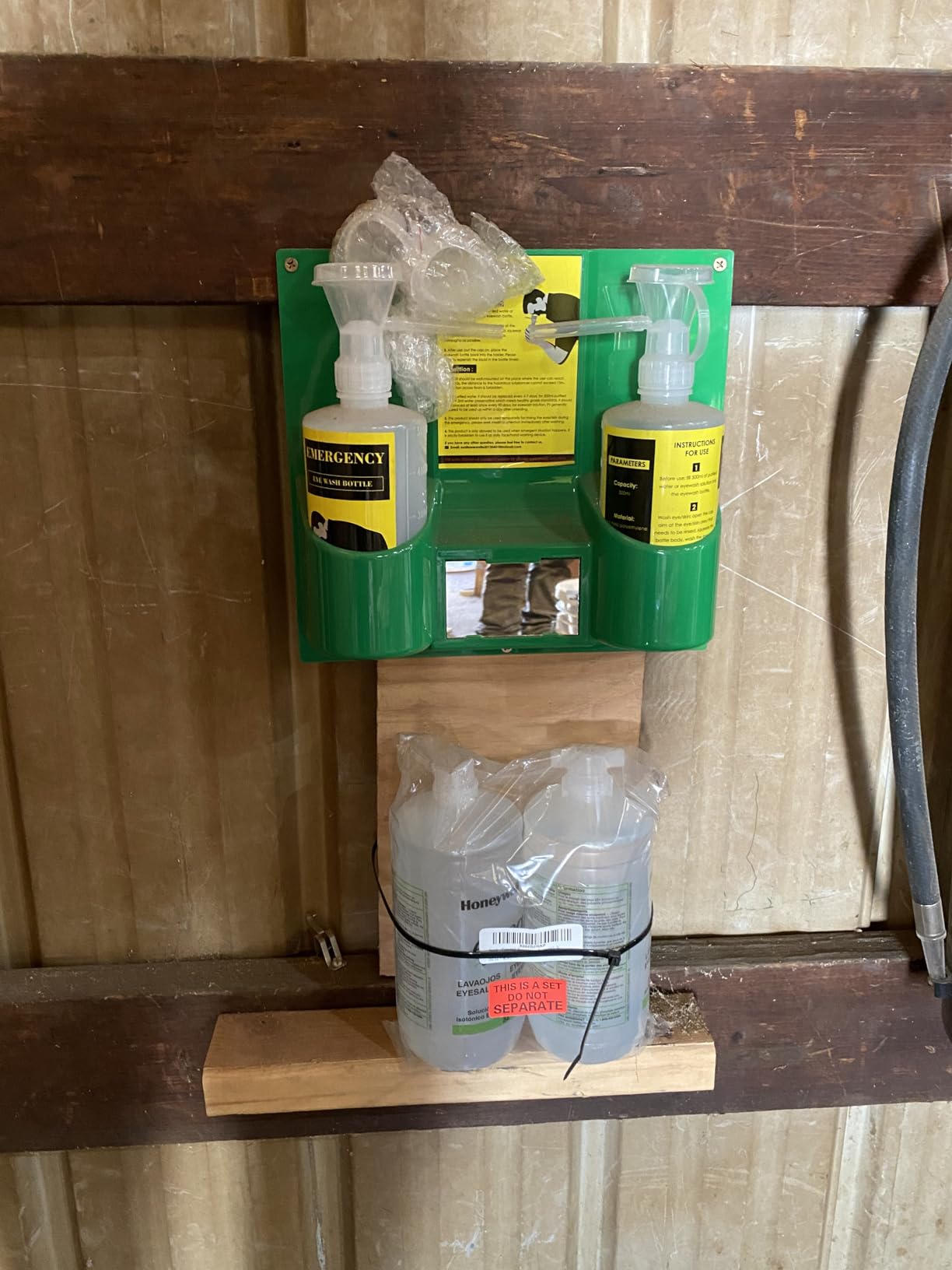
The bottles are chemical-resistant polyethylene, and the design uses a soft bottle with a drain pipe so used solution runs away from the face instead of down the neck. That is a small detail that shows the designer thought about the actual ergonomics of a squeeze.
The catch is the obvious one. The kit does not include eye wash solution, so you are buying sterile fluid separately and taking responsibility for keeping it sterile and in date. Budget for two replacements a year if it sits in a working shop.
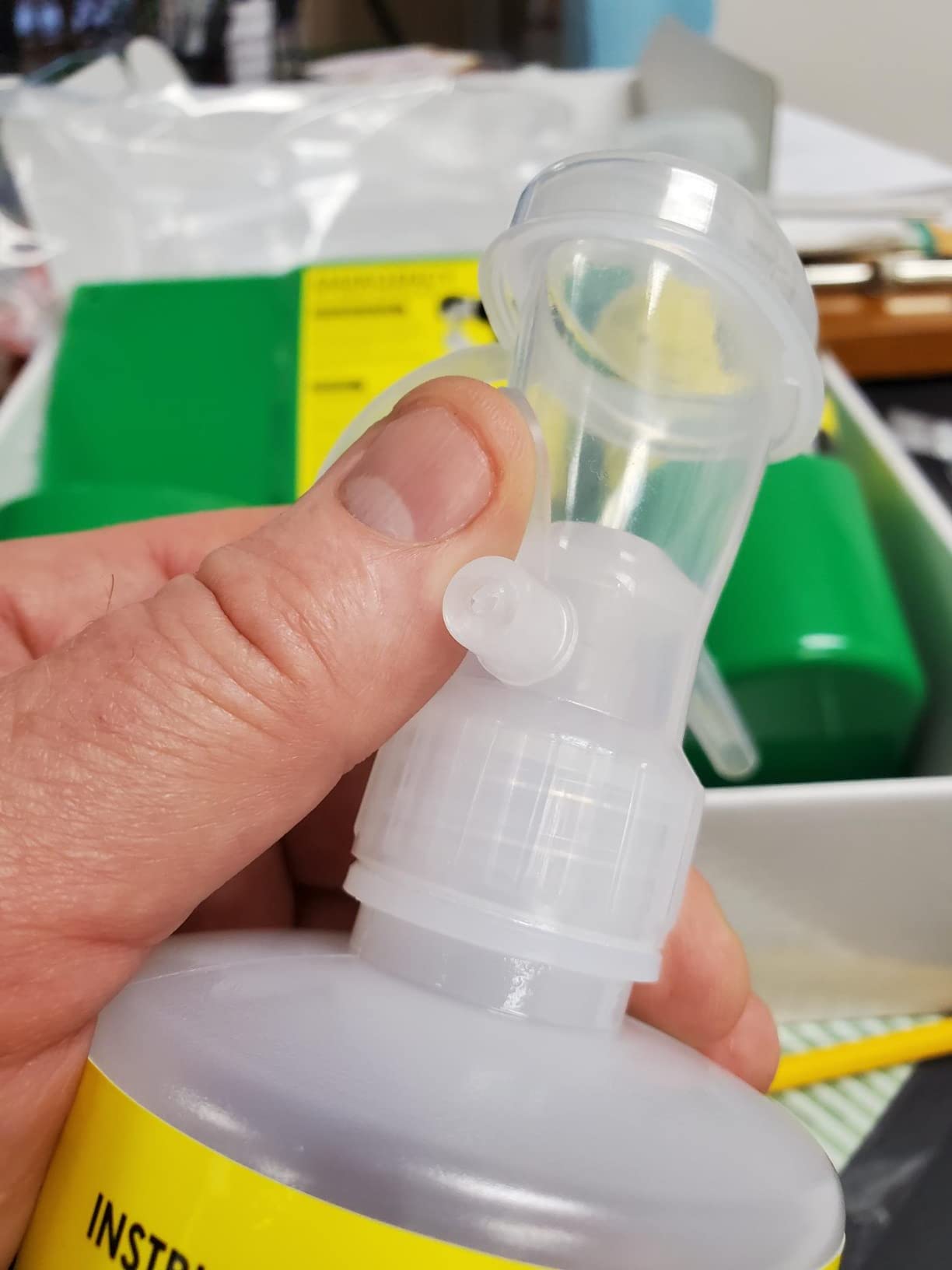
Better for dust, grit and low-volume splash
This is a personal wash station in the true sense. It handles sawdust, paint overspray, concrete grit and the small chemical splash that happens once in a while, and it does that job well for a fraction of what a tank unit costs.
It will not deliver a 15-minute continuous flush of corrosive material. Two 16.9 oz bottles give you a short, directed stream, and the whole value of this kit is speed of access rather than volume of fluid.
Plan for the solution you have to buy
Owners consistently flag the empty-bottle situation as the main surprise. Order a case of sterile buffered solution at the same time as the station, and write the refill date on the bracket with a paint pen so the next person knows when it was last changed.
For anyone without a real chemical hazard, this is the sensible buy. It is the kit I would put in a garage, a salon or a school art room, and it is the reason this category has so many reviews at all.
3. Yeipower Portable Eyewash Station Kit – Most Versatile
Portable Eyewash Station Kit OSHA-Approved – Yeipower Emergency Eye Wash Flush Bottles Wall Mounted 16oz No Solution
2 x 16 oz bottles
PE wall bracket
Mirror and sign
1.61 lb
Pros
- Build quality rivals costlier named brands
- High visibility sign and mirror included
- ANSI Z358.1-2014 claim on the listing
- Weighs 1.61 lb for the full kit
Cons
- No flushing fluid in the box
- Dust covers can get in the way
- Not a 15-minute continuous flow station
This is the pick when the budget is the first constraint. Reviewers repeatedly say the build feels more substantial than the low ticket price suggests, and the bracket and bottles hold up on a workshop wall.
You get the same core package as the CGOLDENWALL kit: two 16 oz bottles, a PE mounting bracket, a mirror and an eyewash sign, all in 1.61 lb. The listing carries an ANSI Z358.1-2014 and OSHA compliance claim, which is worth noting but worth reading carefully, as covered below.
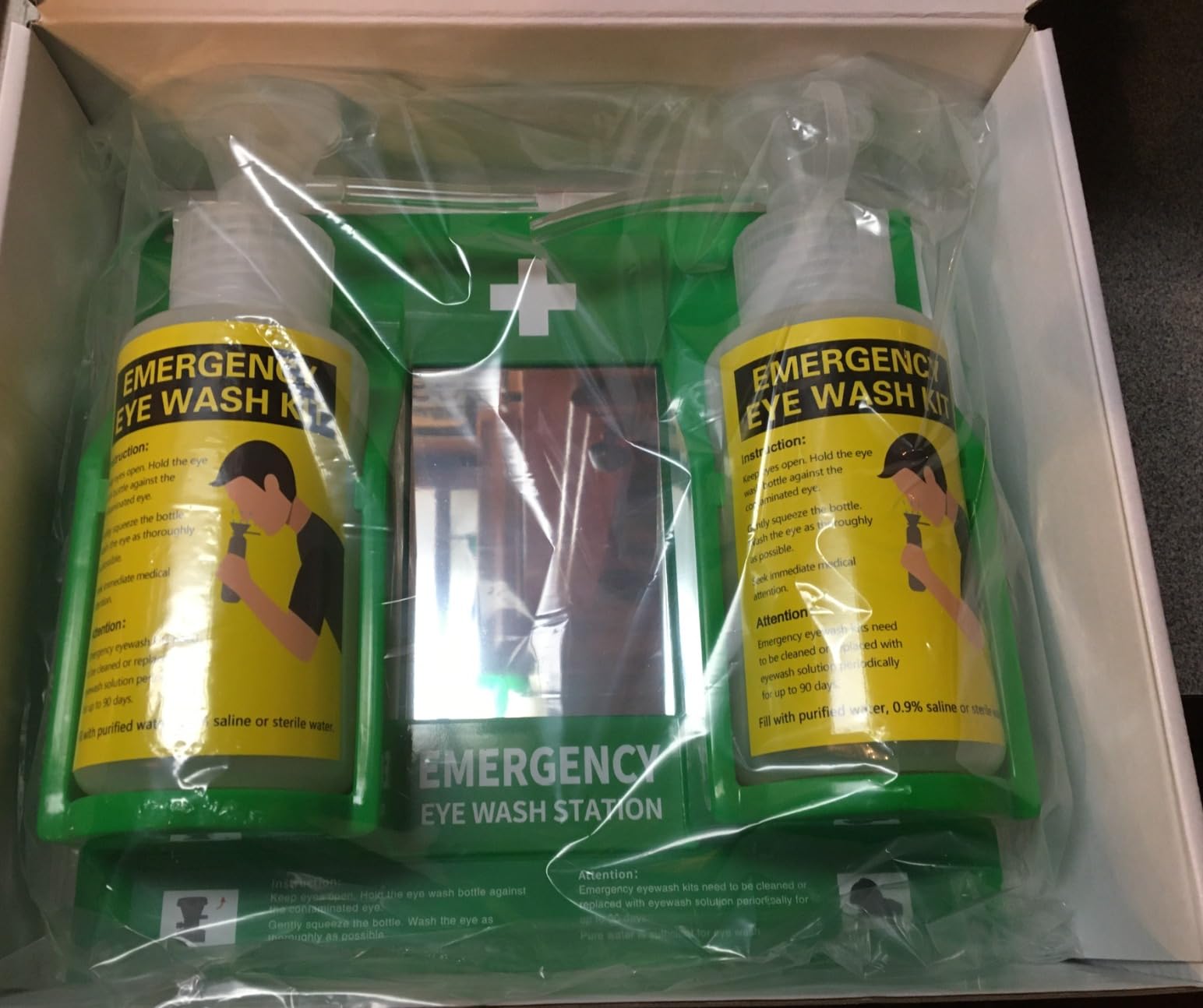
The specific complaints are about small things. Dust covers can sit in the way at the moment you need the bottle open, there are no tamper-proof tabs to show the bottles are untouched, and the mirror does not tilt so you may have to stand at an angle to see.
None of those are deal breakers for a personal station, and all of them matter more if the unit is meant to be a formal compliance answer rather than a piece of kit in a garage. This is a supplemental unit by design, not a primary station.
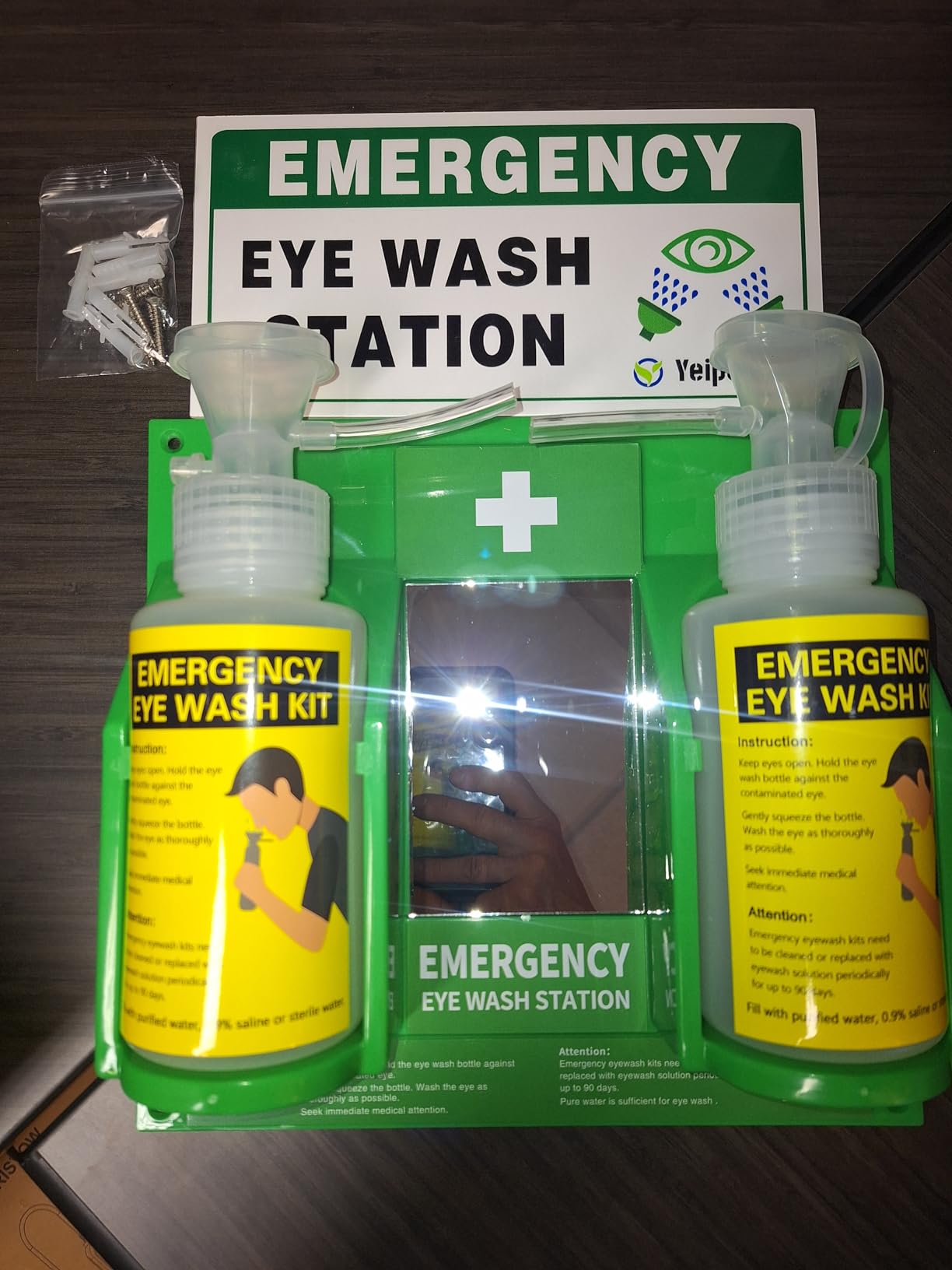
Best value for a shop with modest chemical use
Where this fits is a small fabrication shop, a cleaning closet or a maintenance room that occasionally handles a solvent or a cleaning chemical. The unit is visible, reachable and takes seconds to deploy.
I would not deploy it as the only eyewash in a lab where strong caustics are decanted. The 16 oz bottle format simply does not hold enough fluid for a full flush, and nothing in the hardware changes that.
Understand what the ANSI claim covers
Several listings in this category print an ANSI or OSHA approval mark on a squeeze-bottle board. The standard sets a 15-minute flush at 0.4 gallons per minute, and a personal bottle cannot meet that, so treat the mark as a marketing claim about the product category rather than a certified performance rating.
For documentation, an inspector cares about the type of equipment and whether it matches the hazard, not the badge on the box. If you need a defensible answer, buy a tank or plumbed unit and keep the record.
4. Yzzwer Portable Eyewash Station Kit – Best for a Home Workshop
Yzzwer Portable Eyewash Station OSHA-Approved – Wall-Mounted Emergency Eye Wash Flush Bottles Kit 16oz Without Eyewash Solution
2 x 16 oz bottles
PE safety material
Mirror and logo
1.63 lb
Pros
- Gentle flow reviewers call comfortable
- Corrosion resistant anti-aging PE
- Logo sticker makes it easy to spot
- After-sales support answers within 12 hours
Cons
- No solution included in the pack
- No dip tube so the head tilts back
- No dust covers on the bottles
Of the budget twin-bottle kits, this is the one I would put in a home shop. The reviews single out the flow as comfortable rather than punishing, and for someone who has never used a squeeze bottle before that matters more than any spec on the carton.
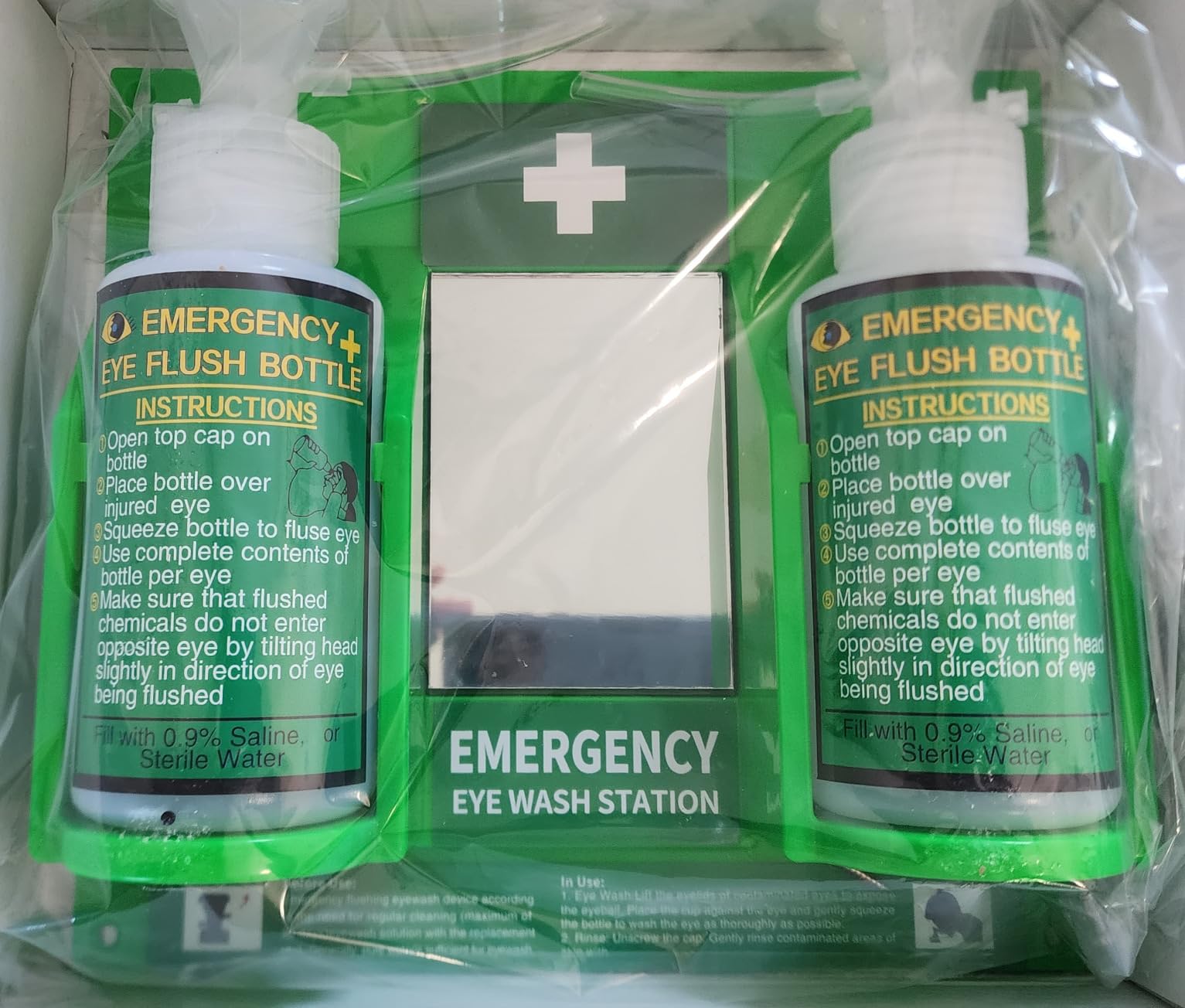
Construction is PE safety material described as corrosion resistant and anti-aging, which is the right material for a garage with solvent cans and battery work nearby. The kit weighs 1.63 lb and includes the mirror, the logo sticker and the bracket.
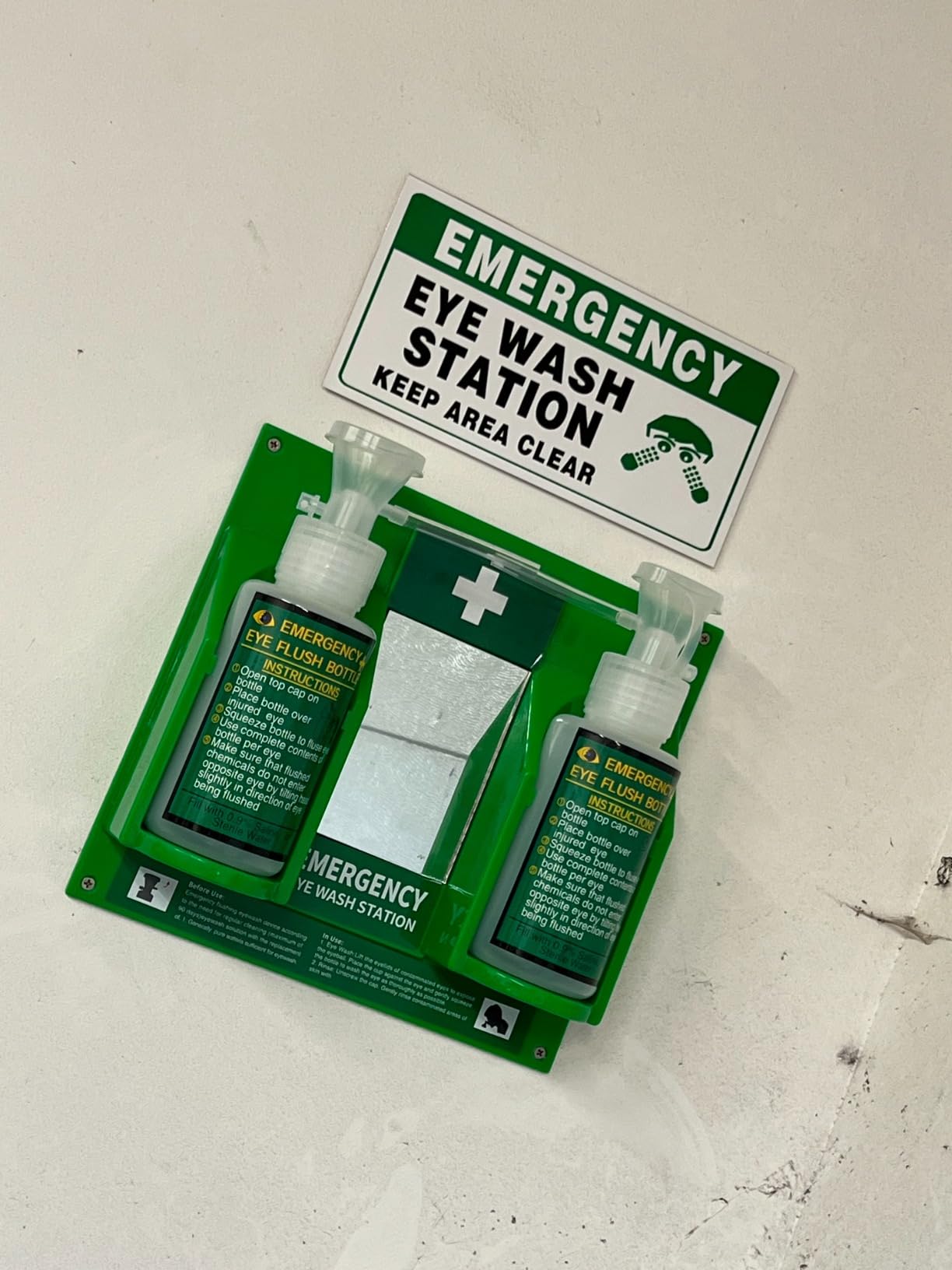
There is no dip tube, so the technique is head tilted back with the bottle above the eye rather than the more familiar cheek-level squeeze. Some users find that awkward on the first attempt, and it is worth practising before you need it.
There are also no dust covers, which matters more in a dusty garage than it does in a clean lab. A bottle sitting for months under a workbench will collect grit, so keep it capped in a bag when not in use.
Right call for paint solvents and car battery work
Home workshop exposure is usually small volume and low frequency, which is exactly the profile a personal station fits. Lead solder splashes, paint thinner, brake cleaner and battery acid mist are all things you can wash out in a short directed flush.
Keep it near the bench, not in a cupboard. The 10-second reach rule exists because the distance between a splash and a station is what turns a minor irritation into a trip to urgent care.
Not the answer for bulk decanting
If you are mixing large quantities of aggressive cleaner or stripping chemicals, a personal bottle will not carry the flush. Move up to a 9-gallon or 14-gallon tank, both of which are further down this list.
My honest read is that this is the best-value pick for a hobbyist and one of the weaker picks for a facility that has to document its compliance. Know which one you are.
5. Yeipower Dual-Nozzle Eyewash Kit – Best for Both Eyes at Once
Yeipower Portable Eyewash Station OSHA-Approved – Upgraded Emergency Eye Wash Bottles Flush Kit Clean Both Eyes Simultaneously Wall Mounted 16oz (No Solution)
2 x 16 oz dual nozzle
PE wall bracket
Mirror and sign
1.52 lb
Pros
- Dual nozzles flush both eyes simultaneously
- Newest design in this group
- Compact and sturdy for its size
- Safety caps and mirror included
Cons
- No solution in the box
- Open sided cup may not suit every face
- Printed instructions are small
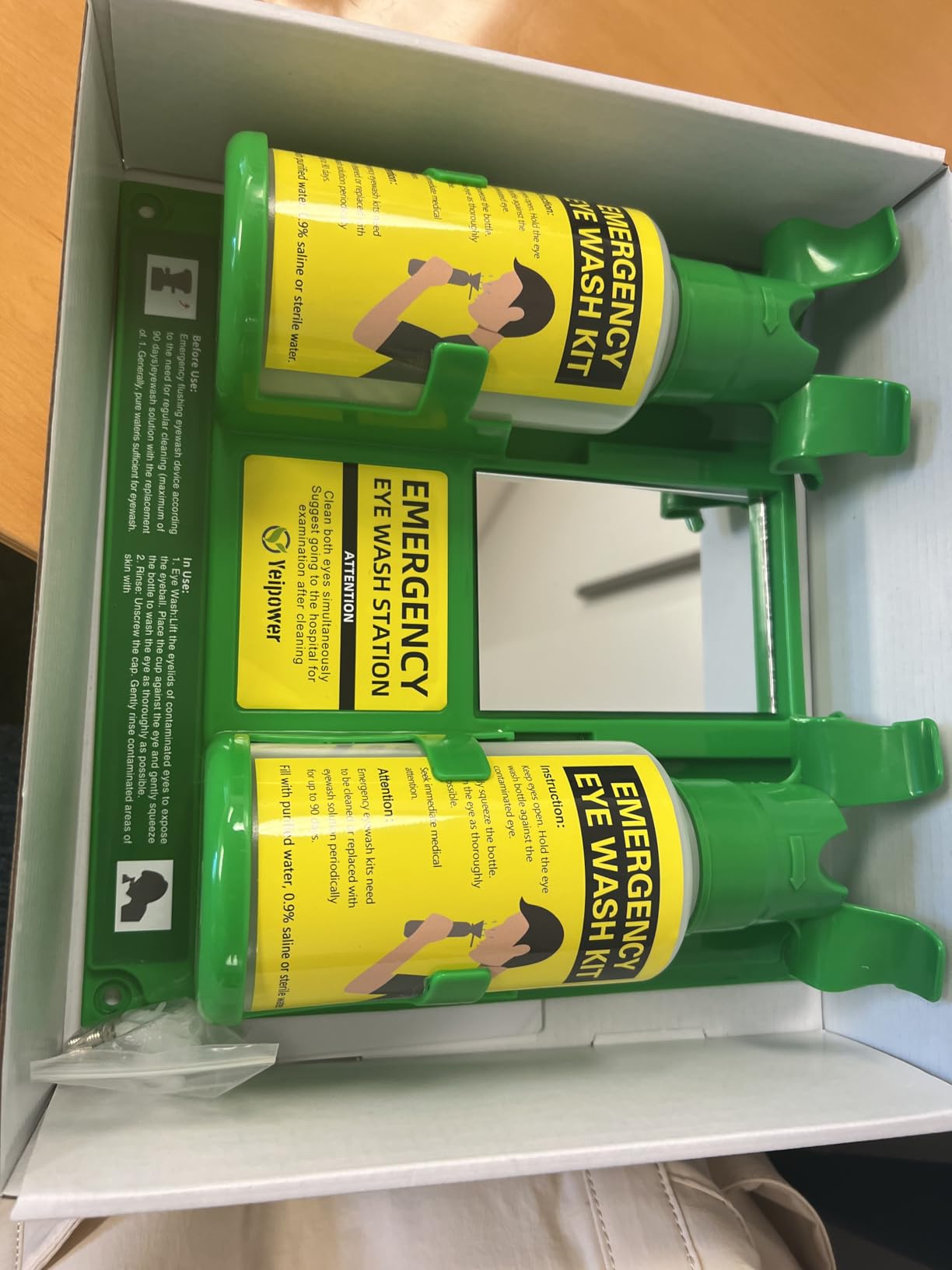
This is the newer take on the twin-bottle format, and the difference is the nozzle. Instead of one jet per bottle aimed at one eye, the dual-nozzle design sprays both eyes at the same time from each bottle.
That is a real ergonomic gain when you only have one free hand, and it is the reason I prefer this board for a solo operator working alone. The kit is 1.52 lb, includes safety caps, a mirror and a sign, and it is the newest listing in this group by a wide margin.
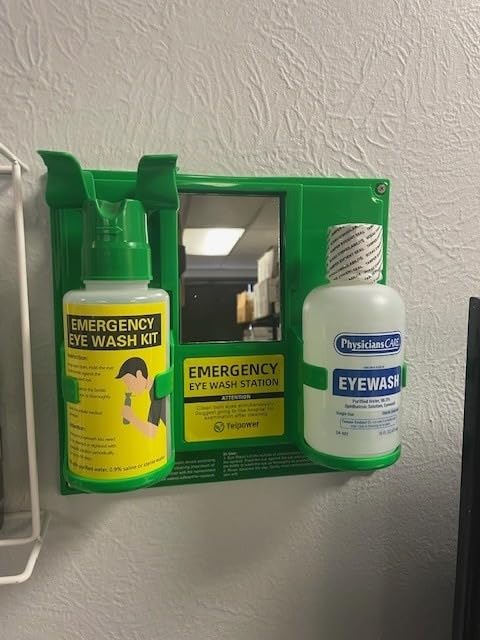
The trade-off is the open-sided eye cup. Reviewers note that the design does not fit every face shape, and people wearing glasses or with different eye spacing can find the fit awkward, which is a strange thing to discover during an emergency.
Like the other budget boards here, there is no dip tube, so the bottle is used inverted with the head tilted back. There are no dust covers either, and both bottles hang on a single bracket.
Why dual nozzles help more than the spec sheet suggests
Most people fumble the first ten seconds of a flush because they are trying to aim a single stream. Spraying both eyes at once removes the aiming step, and it also halves the time before fluid is actually running over the surface of the eye.
That is the argument for this design over a conventional twin-bottle board, and it costs nothing extra. If you have ever practised with one of these, you know the aiming is the hard part.
Check the cup fit before you need it
Put it on the wall where it will live and try it while you are calm. If the cup sits badly on your face, you will know now rather than during a splash, and you can decide whether to keep this board or move to a tank unit with adjustable heads.
At 112 reviews this has less owner history than the leaders, so treat the fit question as the thing to verify yourself. The rating is strong at 4.5, but the sample is younger.
6. Magula 17 oz Twin Bottle Kit – Best for Splash Control
Magula 17oz*2 Portable Eye Wash Station OSHA-Approved,BPA Free, Wall-Mounted First Aid Eye Wash kit with Empty Bottles & Mirror,Emergency Eyewash, No Eye Wash Solution
2 x 17 oz bottles
Cup shaped mouth
Deflector tube
1.3 lb
Pros
- Deflector tube keeps used fluid off the face
- BPA free plastics
- Weighs 1.3 lb for two large bottles
- Mirror and logo sticker included
Cons
- Bottles arrive empty with no solution
- Smaller review base than the leaders
- You must fill and maintain sterility yourself
The idea I like most in this kit is the bottle mouth. Instead of a simple neck, it uses a cup-shaped opening with a deflector tube, so the used liquid runs down the tube and away from the face rather than onto the neck and chest.
That sounds minor until you are holding your eyelids open with two hands and trying not to breathe in runoff. Two 17 oz bottles give slightly more fluid than most of the budget boards, and the whole kit is 1.3 lb.
The materials are BPA free, the listing carries an OSHA and ANSI Z358.1-2014 compliance claim, and the box includes a wall bracket, a mirror and an emergency logo sticker. There is also 24-hour customer support, which is unusual at this end of the market.
Best when the spill runs down your face
Runoff control is the deciding factor here. A person who has been splashed in the face is already uncomfortable, and fluid running into the mouth or down the shirt is a fast way to end a flush early.
For a school lab, a hospital prep room or anywhere the person using it may be wearing a face shield and glasses, that deflector path is genuinely useful. It is the reason this kit gets a place on this list despite a smaller review base.
Judge it on its review count, not its rating
At 74 reviews the sample is thin compared with the 1271 behind the PhysiciansCare board. The 4.5 rating is real, but there is less owner history telling you how the plastic ages or how the deflector holds up over a year of shop use.
There are no customer photos yet for this listing, so verify the bracket fit on your own wall before you commit. My advice is to pair it with a case of sterile solution ordered at the same time, because empty bottles in a garage are an accident waiting to happen.
7. Yzzwer 8 Gallon Portable Station – Best Compliant Portable
Portable Eyewash Station OSHA-Approved Emergency – Yzzwer 8 Gallon Wall Mounted Eye Wash Irrigation Kit Ansi Certified
8 gal gravity tank
Dual nozzle
Wall mount hardware
11.9 lb
Pros
- Rated for 15+ minutes of continuous flow
- Gravity fed so no plumbing is needed
- Inspection tag and sign in the box
- Works wall mounted or carried
Cons
- 11.9 lb before you add water
- Some reviewers call the build generic
- Concrete hangers may not suit your wall
This is where the article changes gear. The units above are personal wash bottles, and this one is a station: 8 gallons of water, a gravity-fed dual nozzle, and a rated flush time of more than 15 minutes, which is the number the standard actually cares about.
Gravity fed means no supply line, no plumber and no drain connection. You fill the tank, hang it or set it down, and pulling the cover sends water to both nozzles until the tank empties.
The box includes the mounting hardware, an emergency sign and an inspection tag, which is exactly the paperwork an inspector asks to see. It is portable enough to move to whichever end of the shop the hazard is on today.
The right pick when a real hazard needs flushing
At 8 gallons this carries enough water for a genuine chemical exposure rather than a splash. That makes it the smallest unit in this roundup I would be comfortable pointing at a corrosive handling area.
No plumbing means you can also use it outdoors, on a loading dock or in a temporary work area where a fixed unit could never go. That flexibility is the reason portable tanks exist at all.
Weight and hardware are the real trade-offs
It weighs 11.9 lb empty, and a full tank is a two-person lift. Plan the refill path before you commit, because the station has to come down, get carried, drained and refilled on a schedule or the compliance value disappears.
Reviewers also question the build quality and the documentation, and the supplied hangers are concrete anchors. On a block wall or a steel stud you may need different fasteners, and thin documentation is annoying when someone asks you to prove the spec.
8. MAASTERS 8 Gallon Portable Station – Best for Fast Setup
MAASTERS 8 Gallon Portable Eye Wash Station, OSHA-Compliant, Wall-Mounted
8 gal tank
Dual nozzles
Sign and mirror
10.18 lb
Pros
- Sets up in minutes on a shelf or a wall
- Includes sign pull sign and mirror
- 15 minutes of continuous flow
- Portable or wall mounted
Cons
- Reviewers report seam and hinge leaks
- Hinge screw can strip over time
- Awkward to lift once filled
This 8-gallon tank is the one I would deploy in a hurry. The listing claims setup in minutes, wall mounted or shelf placement, and the package includes an emergency sign, a pull sign, hanging hooks and a mirror.
The hooks are a small touch that earns its keep. A towel or a pair of nitrile gloves hung within reach of the station is the difference between a person managing a flush alone and a person who has to stop and go find them.
Dual spray nozzles cover both eyes, and the rated runtime is 15 minutes of continuous flow, which puts it in the same compliance class as the Yzzwer 8-gallon unit at 10.18 lb empty.
Good for a mobile crew or a trailer
Job trailers and temporary work areas are where a portable tank earns its cost, because there is no supply line to connect. Set it on a shelf, pull the panel, and the water is running.
If your work moves between sites, this is the sort of unit you load in a van. Just remember that a full tank is a lot of water to lift, so plan for two people or a cart.
Seams and hinges are where reviews complain
Several reviews report leaking, mostly at the seams and around the hinge screw, and some report the hinge screw stripping with use. Over time, a slow weep from a seam is the failure mode to watch on any plastic tank.
That makes regular inspection more important, not less. Check for dampness under the tank each week, and if you see water staining on the shelf, the seam is going and the tank should be swapped rather than topped up.
9. Yeipower 14 Gallon Portable Station – Best for High Capacity
Portable Eyewash-Station Emergency OSHA-Approved Yeipower – Wall Mounted Eye Wash First Aid 14 Gallon Eye Irrigation Equipment
14 gal tank
Pull down activation
Polyester vinyl
21.6 lb
Pros
- Largest tank capacity in this roundup
- 15+ minutes of flushing time
- Gravity fed with no plumbing
- Carry handles aid transport
Cons
- 21.6 lb before any water is added
- Flow feels softer than a plumbed unit
- Drain releases onto the floor
When you want one unit to cover a large workshop or a multi-hazard area, capacity is the deciding number. This 14-gallon tank is the biggest in the roundup, and 14 gallons comfortably covers a 15-minute flush with water to spare.
Activation is a pull-down front panel that releases the water by gravity, so there is nothing to prime and no supply line to connect. The polyester vinyl shell is described as corrosion and UV resistant, which suits an outdoor pad or a sunlit loading area.
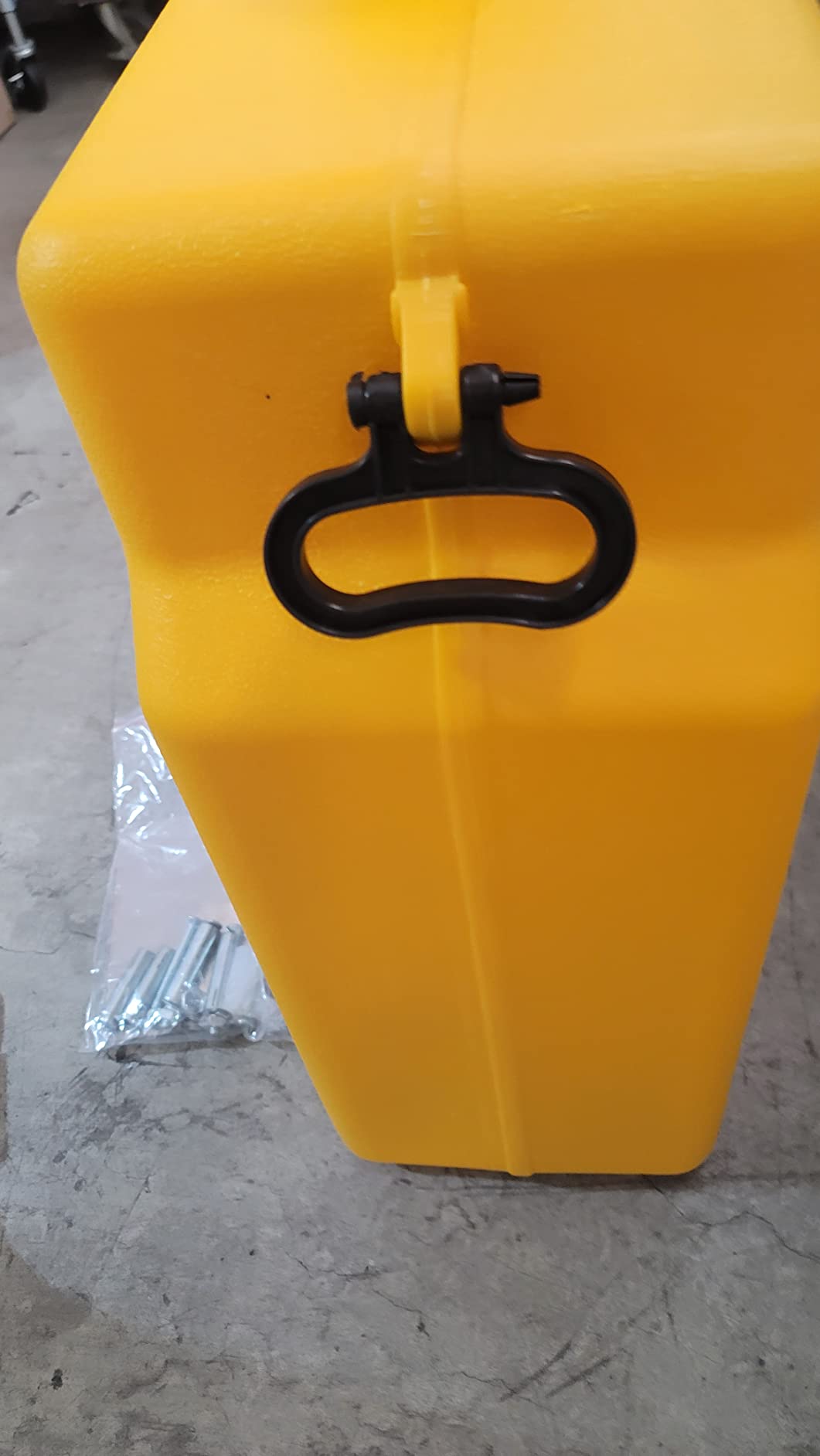
You need to plan the refill, because the listed weight is 21.6 lb before a drop of water goes in. A full unit is a heavy lift for one person, and that is the single most common complaint in the reviews.
Flow pressure is also softer than a plumbed station, which is a fair trade for portability. A bucket or a floor drain under the station handles the runoff, since the drain releases rather than draining away on its own.
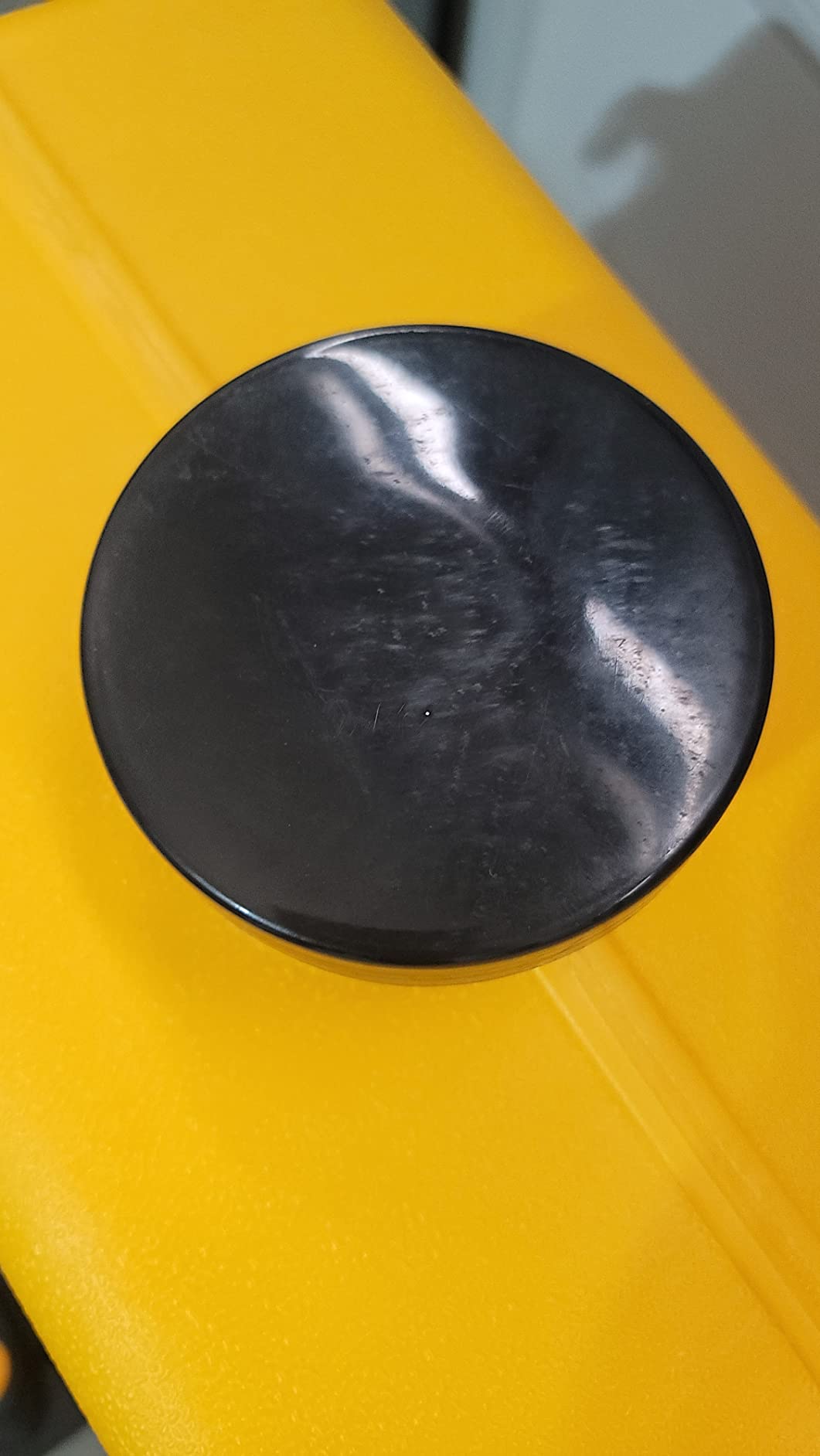
Where the extra gallons actually matter
The big tank is for sites with more than one person at risk, or where a longer flush is the prudent choice. If two people are splashed at once, or the hazard is a strong caustic, the smaller 8-gallon units get you through a standard flush with nothing spare.
Storage temperature matters here. The manufacturer guidance is to use the station above 32F, and reviewers note that water sitting in direct sun can heat up enough to be uncomfortable, so shade the unit if it lives outdoors.
Accept the weight and plan around it
There are reports of cracking and leaking over time, so treat the tank as a consumable that needs checking rather than a permanent fixture. A monthly glance at the seams is enough to catch a problem early.
My rule for this size: put it on a low shelf or a trolley so nobody has to lift it overhead to fill it. The moment a 14-gallon tank lives in the wrong place, it stops getting refilled.
10. Magula 9 Gallon Blow Molded Station – Best Against Leaks
Magula 9 Gallon Portable Eye Wash Station OSHA-Approved,Wall Mounted Emergency Eyewash Station with Dual Spray,Ansi Certified First Aid Eye Wash Units,15 Minutes Eye Washing Station
9 gal blow molded tank
Gravity dual spray
Third party rated
9.18 lb
Pros
- One piece tank with no spliced seams
- Third party inspected and rated
- Lifetime warranty and 24 hour support
- Lightest large tank in the group
Cons
- Water or saline not included
- Use above 32F only
- Regular water replacement required
The reason I picked this 9-gallon unit over its rivals is the construction method. It is blow molded as one piece rather than spliced from panels, which removes the seam that plastic tanks most often fail at.
Leaking seams are the top complaint across the portable tanks in this roundup, so a design with no seam to fail is a genuine engineering answer rather than a feature-sheet claim. The pull-down cover releases the solution by gravity and a dual spray covers both eyes.
It is also the lightest of the larger tanks here at 9.18 lb, and the listing adds third-party inspection, a lifetime warranty and 24-hour support, which is unusual at this price band.
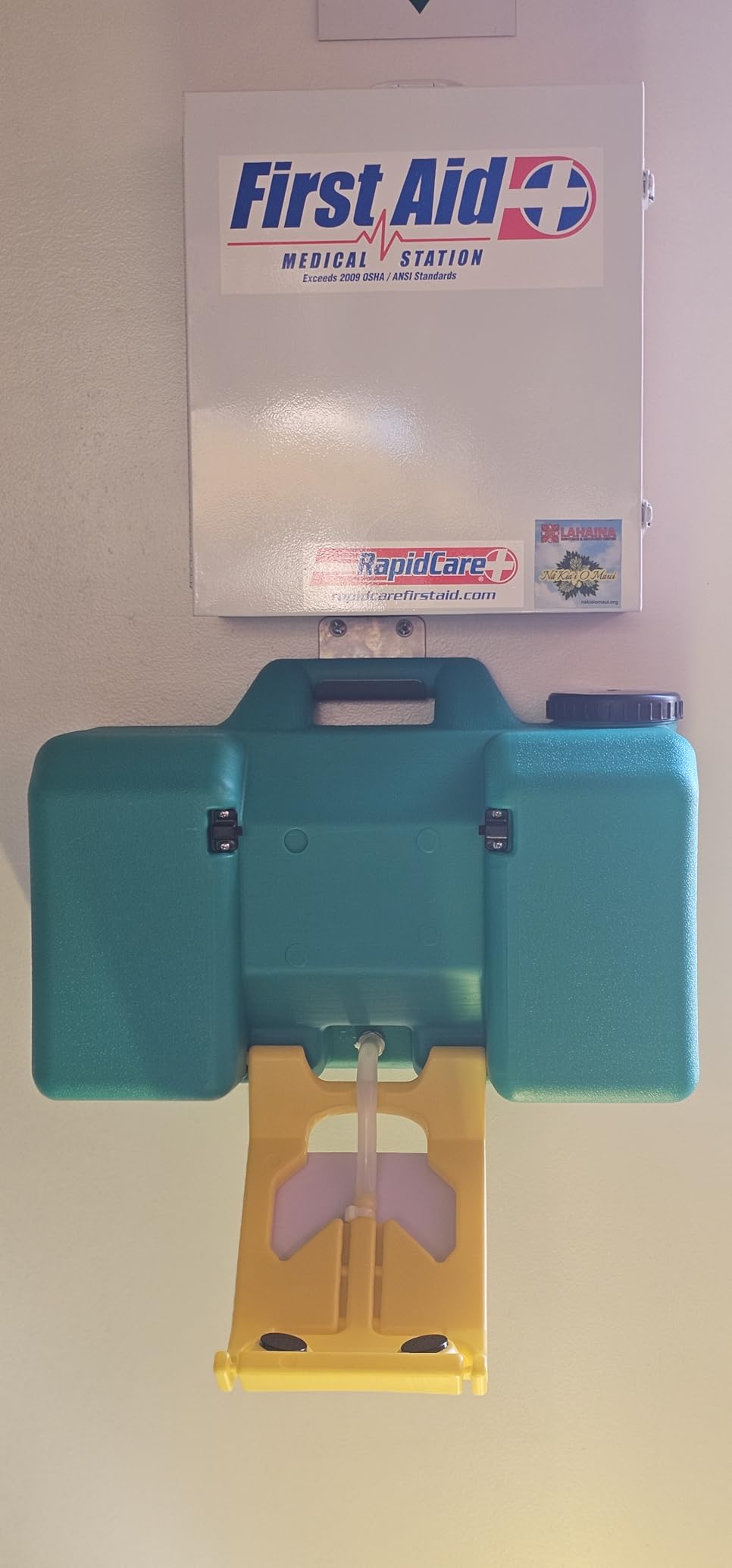
The runtime is quoted at 15 minutes of continuous use, and there are 9 gallon and 15 gallon variants if you want more headroom. Capacity is not the reason to hesitate with this one.
The catch is temperature and maintenance. Guidance is to use it above 32F and take anti-freeze measures below that, and the purified water or saline is not included, so you are filling it yourself.
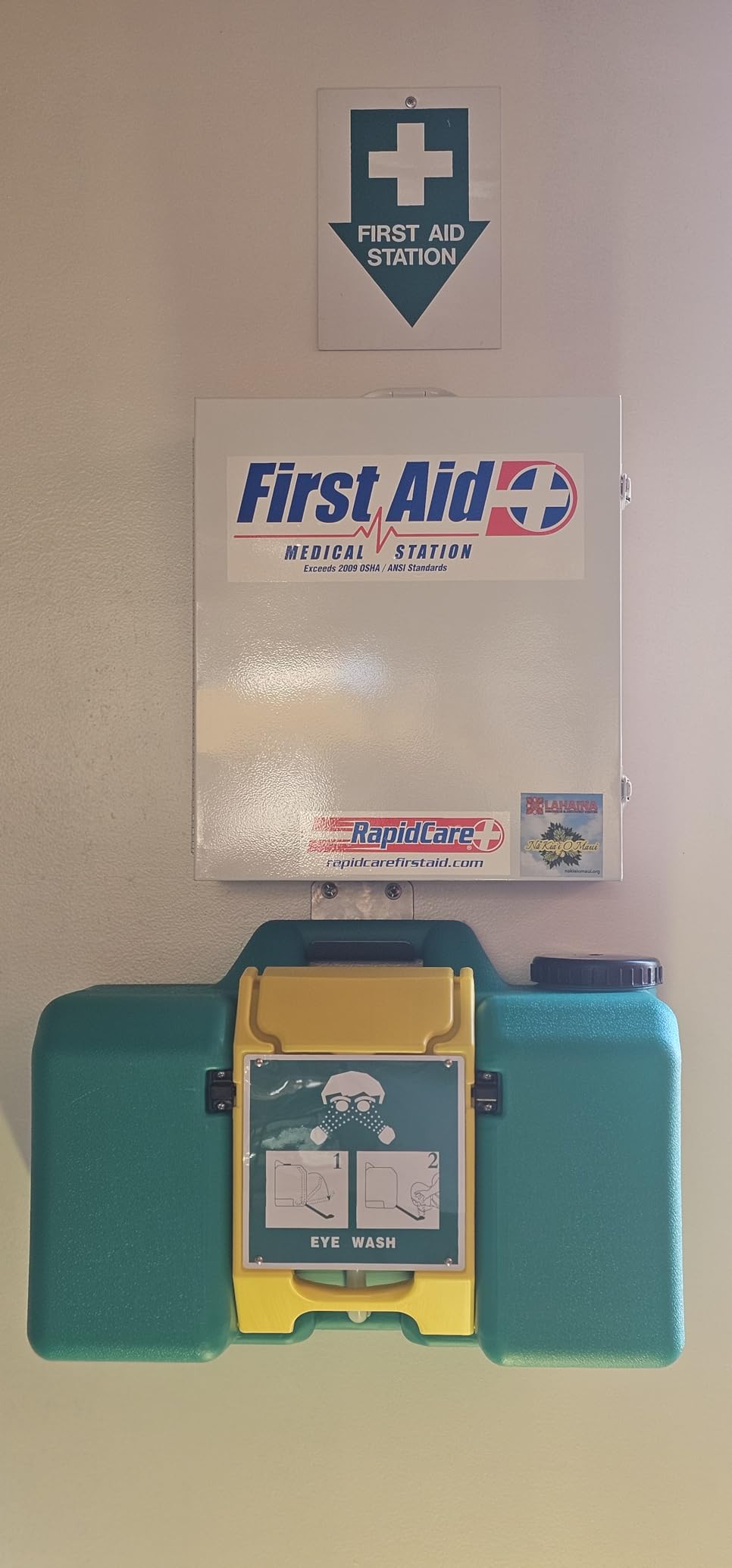
Best pick for a cold or unheated space
None of the portable tanks on the market are freeze proof, so in an unheated shed the choice is between a freeze-resistant plumbed unit and accepting that a tank has to be drained over winter. In that situation the one-piece shell at least fails less often than a spliced one.
If you are in a genuinely cold climate, spend your budget on heat-traced supply or a freeze-resistant cabinet instead, and keep this one indoors. The 32F guidance is a hard limit, not a caution.
Budget for water and the replacement rhythm
Purified water or saline is not included, and regular water replacement is on you. A 90-day replacement cycle keeps microbial growth down and matches the inspection habits most facilities are already running.
With only 32 reviews behind it, this is a young listing, but the one-piece design and the lifetime warranty are the reasons I would try it first for a permanent spot in a shop.
11. Honeywell Fend-All Double Bottle Station – Best Known Brand
Honeywell HON32-000462-0000 Fend-all 32 oz. Double Bottle Eyesaline Sperian Sterile Eye Wash Wall Station, English, 15.34 fl. oz. Volume, Plastic, 1″ x 1″ x 1″
32 oz double bottle
Wall mounted plastic
English labelling
1 lb
Pros
- Recognised brand that satisfies safety buyers
- Compact wall mounted footprint
- Simple to install and load
- Clear English labelling on the unit
Cons
- Many buyers report bottles not included
- Plastic holder described as flimsy
- Lowest star rating in the group at 4.1
The Honeywell Fend-All is the name people recognise, and for some buyers that matters more than anything else on the spec sheet. It is a compact wall station holding a double 32 oz bottle arrangement, using sterile saline eyesaline.
When a station is supplied with its bottles, owners are happy with it. The wall mount is simple, the footprint is small at 14.88 by 11.61 inches, and the English labelling is clear enough for anyone to work out in an emergency.
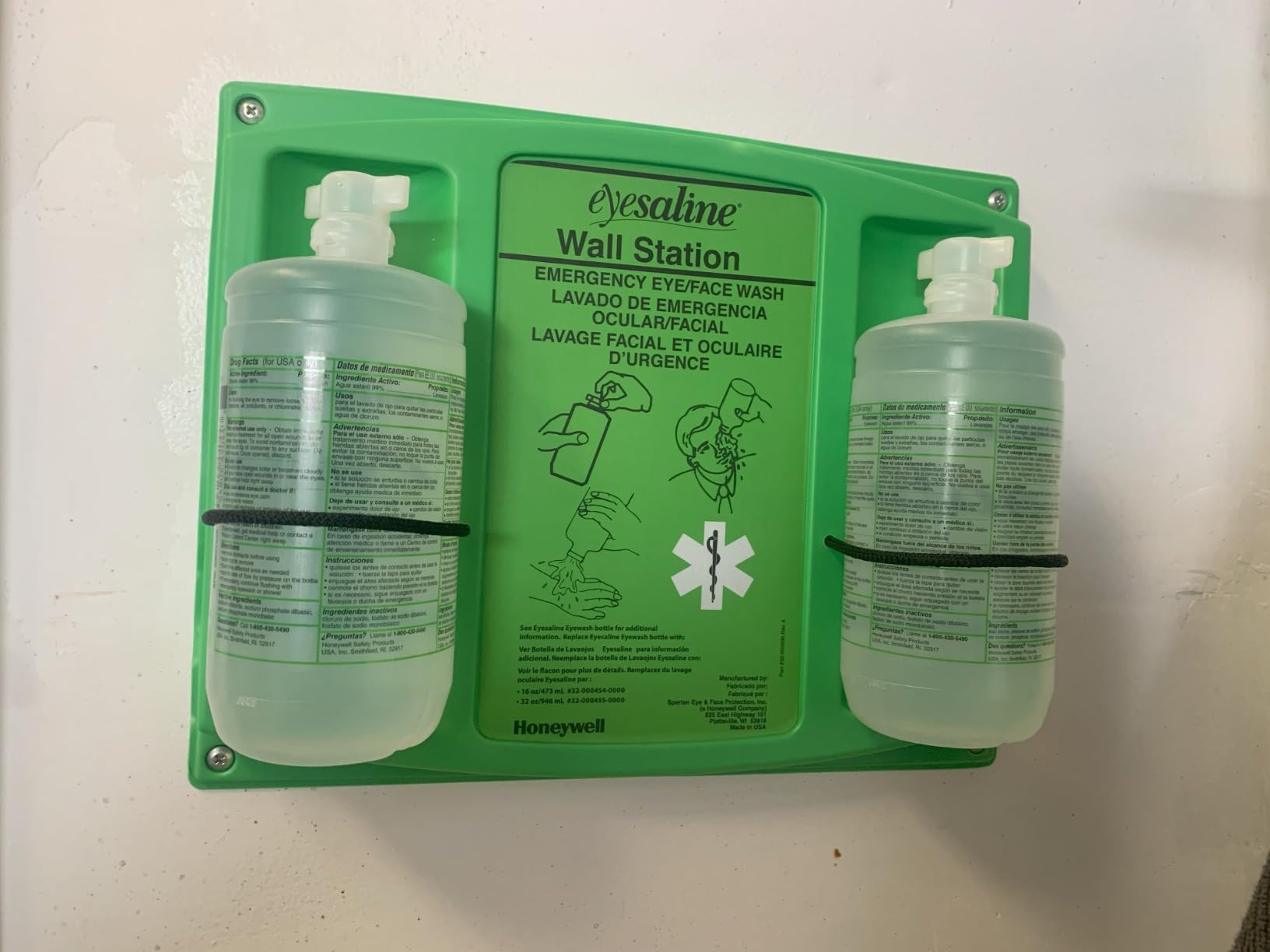
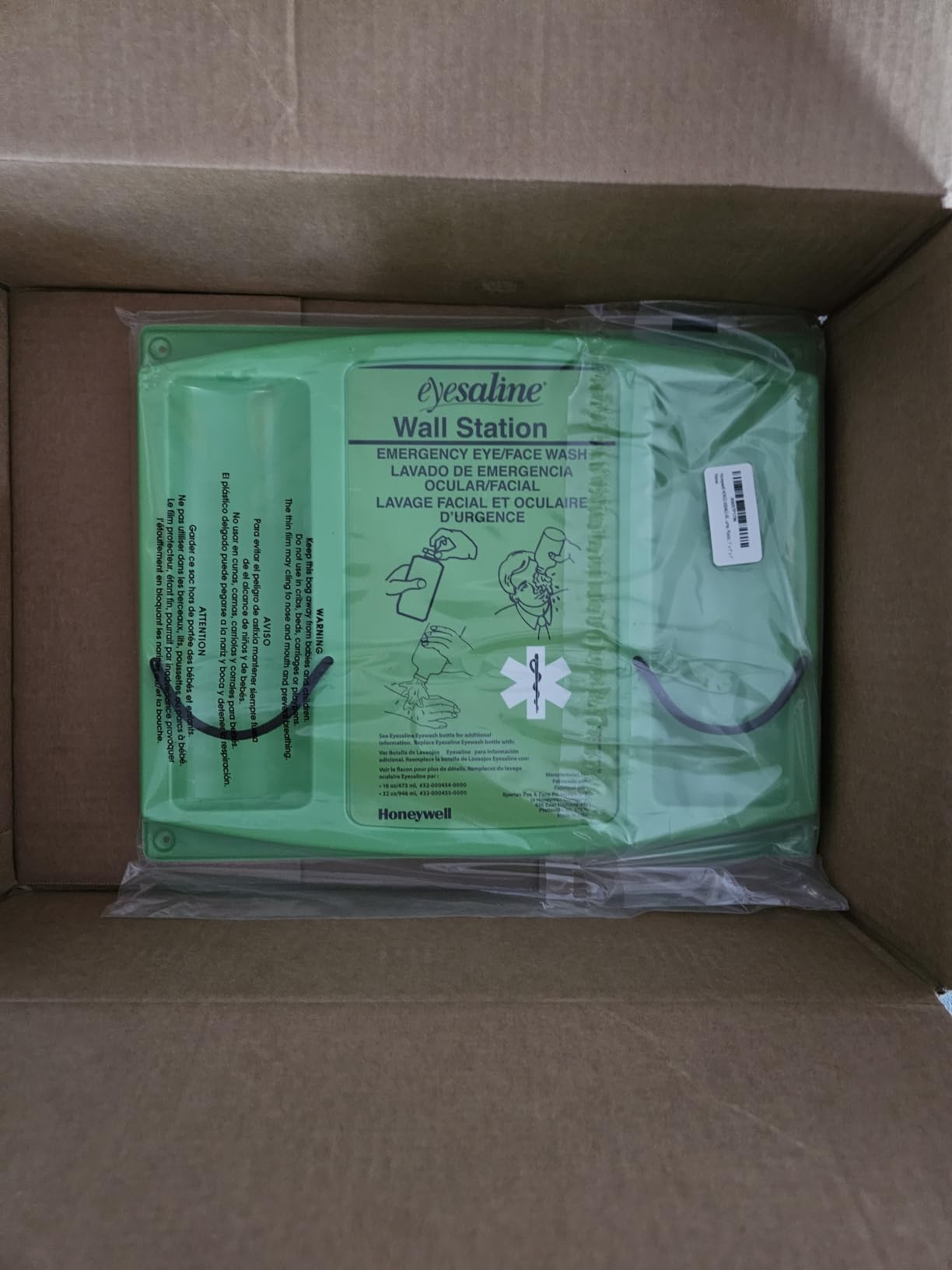
That is where the problems start. Multiple reviews state that the saline bottles are not included even though the description implies they are, and buyers describe the plastic holder as flimsy. Some report holders arriving damaged.
It is the lowest rated product here at 4.1, and the reason is mostly expectation rather than build. The bracket works; the surprise of an empty box does not.
Buy it for the name, not the packaging
There is a real argument for a recognised brand in a workplace. Safety managers, auditors and insurers recognise Honeywell, and that reduces the conversation you have when someone asks whether the equipment was specified properly.
Just confirm in writing what is in the box before you order, and buy the sterile bottles at the same time. This is a listing problem, not a product problem, and it is avoidable.
Where it does not fit
It is a personal wash station, so the same 15-minute limit applies as with the other bottle boards. If your hazard involves caustics that need a sustained flush, this is the wrong tier entirely.
Given the 4.1 rating and the inclusion confusion, I would only choose it over the CGOLDENWALL or PhysiciansCare boards if the brand name specifically matters to your documentation. Otherwise one of those is a better buy.
12. 304 Stainless Steel Wall-Mounted Eyewash – Best Plumbed Pick
Onedaful Cuzofu 304 Stainless Steel Eye Wash Station, Wall-Mounted Emergency Eye Washer- Multifunctional Nozzle, OSHA Approved, Eyewash Kits & Enlarged Basin
304 stainless basin
26 cm bowl
Push valve
4.6 lb
Pros
- Stainless basin resists acid and alkali
- Push valve runs hands free
- Dust cover opens with the water flow
- Half inch female inlet fits standard lines
Cons
- Needs a plumbed water supply
- Thread quality sometimes needs re-threading
- May not satisfy a professional OSHA review
This is the only permanently mounted unit in the roundup, and it works on a completely different principle from everything above. It connects to a water line, so there is no tank to fill and no consumable fluid to replace.
The 304 stainless basin is 26 cm across, acid and alkali resistant, and the multifunctional nozzle has multi-layer filtration with an integrated dust cover that opens automatically when water starts flowing. The push switch valve gives hands-free operation with a claimed 15-minute continuous flow.
It weighs 4.6 lb, the inlet is a half inch female thread and the outlet is one and a quarter inch internal, which are standard plumbing sizes.
The right pick for a fixed bench with a nearby tap
If you have a sink or a supply line within a few feet, a plumbed unit removes every maintenance task on the list. No water to change, no shelf to leak, no inspection tag to expire.
It also solves the temperature problem partly, since you can run tempered supply water, and stainless will not crack in a freeze the way a plastic tank will. The installation is quoted at about ten minutes once the water is there.
Get the plumbing right the first time
Reviewers report thread quality issues that needed re-threading by a plumber, and some describe the finish as cheap. Buy a wall bracket that supports the weight properly and have the connection made properly rather than hand-tightened into a stud.
There is also genuine doubt about professional OSHA standing on this listing, so if a facility has to document compliance, check the certification with the supplier first. For a home workshop where the tap is already ten inches away, it is a solid fit.
What Actually Makes an Eye Wash Station ANSI Compliant
An eye wash station is a device for flushing the eyes with clean or preserved water after exposure to a hazardous material. The performance standard is ANSI/ISEA Z358.1-2014 (R2020), and the OSHA rule that triggers the requirement is 29 CFR 1910.151(c), which obliges employers to provide quick drenching or flushing where employees are exposed to injurious corrosive materials.
Here is what a compliant station actually has to do, and it is worth reading before you spend anything.
Fifteen minutes of flushing. The standard calls for a 15-minute flush, which is where the 0.4 gallons per minute number comes from.
Enough flow to sustain it. 0.4 gallons per minute, or 1.5 litres per minute, for an eyewash. An eye and face wash needs 3.0 gallons per minute, or 11.4 litres per minute.
Ten-second reach. The station has to be within 10 seconds of travel, roughly 55 feet, of the hazard.
Correct mounting height. The spray head sits between 33 and 53 inches above the floor, with at least 6 inches of clearance from the wall or any obstruction.
Single-motion, hands-free activation. One push or pull with one hand, no tools, no fine motor work, and it must stay open once activated.
Tepid water. Between 60 and 100F. Below 60F people abandon the flush early, and above 100F you damage the eye.
That last point is where most buying guides go quiet and where real behaviour matters. Users routinely stop flushing at five minutes or less because cold water is uncomfortable, and a partially flushed eye is where the residual chemical damage happens. If you are specifying a plumbed unit, a tempering valve is not an accessory, it is the difference between the standard being met and being ignored.
What is not a substitute
Three things get mistaken for a compliant station. Squeeze-bottle personal wash kits are supplemental by design and cannot deliver 15 minutes of flow, whatever the box says. A cold tap or a sink is a flushing fluid source but it fails the hands-free activation and reach requirements. Safety glasses prevent a splash but do nothing once fluid reaches the eye.
Maintenance is also part of compliance, not an optional extra. A station with no signed, dated inspection record and an unused or expired tag is the unit an inspector will fail you on, regardless of how good the hardware is.
Portable vs Plumbed Eye Wash Stations: How to Decide
Every station in this roundup is one of two types, and the choice comes down to whether you have a water line near the hazard.
A plumbed unit runs continuously, never runs out, and needs a drain. It costs more to install than it does to buy, because you are paying for a plumber, a tempering valve, a drain line and the wall work, and in some cases for containment of the wastewater if the hazard is a regulated material.
A portable tank is self-contained. You fill it, you move it, you replace the water, and in a cold climate you have to keep it above freezing. The reward is that you can place it anywhere, including outdoors and on temporary sites, and no one has to cut into a wall.
Permanent indoor work area with a nearby tap. Go plumbed. The running cost and the maintenance load both drop to near zero.
Job site, trailer or outdoor pad. Go portable. There is no supply line to reach, and a tank is the only realistic option.
Hazard that moves around the building. Go portable, or plumb two units in fixed positions and accept the second cost.
Small shop with light chemical use. A mounted personal board is defensible as a supplement, but a 9-gallon tank is what you want if anyone can be cited for the requirement.
Cold or unheated space. Plumbed with heat-traced supply, or a freeze-resistant cabinet. A water tank in a shed below 32F is not a station.
The practical tie-breaker is the refill habit. A plumbed unit is only as good as the drain it empties into, and a portable tank is only as good as the person who remembers to change the water. Whichever you choose, put it on a written schedule.
How to Use a Twin-Bottle Eye Wash Station
Nobody teaches this, and the sequence matters more than the product. These are the steps for a mounted personal eye wash station with two bottles.
Get to it in under ten seconds. Walk the route from your normal work position so you know it without looking. The distance is part of the standard, not a detail.
Pull the bottle free and uncap it. On kits with dust covers or safety caps, flick them off with the same hand. Practice this until your hand finds them without looking.
Tilt your head back and open both eyes. Most of these bottles have no dip tube, so the eye has to come to the bottle rather than the other way around.
Squeeze steadily and aim at the inner corner. Start at the inner corner and sweep outward so you flush the surface of the eye, not the eyelid skin.
Hold your eyelids open with your fingers. This is the step people skip, and it is why an eye keeps the chemical in. Fingers on the lid, not on the eyeball.
Keep squeezing until the bottle is empty. On a personal board that is about 20 gentle squeezes. Then swap to the second bottle and repeat.
Remove contact lenses if you can, early. Lenses trap fluid against the cornea. Take them out during the flush rather than after, and do not reinsert them.
Afterwards, get medical attention for anything beyond dust or grit. A chemical splash with pain, blurred vision or light sensitivity is an emergency, and the flush buys time for help rather than replacing it.
Do You Need an Eye Wash Station at Home?
Short answer: OSHA does not cover your house, and no federal rule requires a station in a residential garage or hobby workshop. The 1910.151(c) trigger is about employees and corrosive materials in a workplace, so a home user is choosing on risk, not on regulation.
That said, the household hazard profile is not trivial. Solvents, paint strippers, drain cleaner, battery acid and brake fluid all feature in a normal garage, and the difference between a 15-minute flush and a wet rag is measurable in how much corneal damage happens in the first minute.
For a home user I would keep it simple. A mounted twin-bottle board near the bench handles dust, overspray, solder flux and small splashes, and the Magula or Yeipower dual-nozzle kits are both sensible choices for the money. If you mix larger quantities of aggressive chemicals, move up to a 9-gallon or 14-gallon tank and keep it in the same room as the mixing.
Since you are already set up for the kind of careful washing most people skip, our guide to soap for a two bucket wash and our picks for the best wash mitts cover the less glamorous half of keeping a garage clean after a messy job. Washing down a chemical spill properly matters as much as the flush that came first.
Two things are worth adding to any home setup. First, a bright sign so a panicked person can find the station in a dark garage, and second, a bottle of clean water stored next to it, because the first thing anyone does is run for the tap. If a spill has already reached the paintwork, our waterless wash picks are the fast way to deal with it without dragging a hose across the floor.
Eye Wash Station Maintenance and Inspection Schedule
Inspectors want signed, dated records, and a station with no record is a station that does not exist as far as your documentation is concerned. The routine is short.
Weekly, visual walk. Confirm the unit is where it was, visible from the hazard, and not blocked. Check the spray heads are capped and the sign is still up.
Weekly, activation on plumbed units. Run the water briefly to clear sediment and prove the valve still opens. On a portable tank, confirm the level is where it should be.
Monthly, inspect portable tanks. Look at the seams, hinges and base for dampness, and confirm the nozzles are not blocked.
Every 90 days, replace the water. Drain, rinse and refill portable tanks. Standing water grows organisms, and a bacteriostatic preservative helps but does not replace the change.
Every 90 days, check solution dates on bottle boards. Replace sterile fluid that is out of date, and dispose of opened bottles.
Annually, full documented inspection. Test the full flow, verify runtime against the 15-minute requirement, check spray head height and reach, and sign and date the tag.
After every use. Refill immediately. A station that has just been used and left empty is the most common failure an inspector finds.
On contamination specifically, the organisms named in reference guidance include single-cell amoebae, Pseudomonas and Legionella, all of which can survive in stagnant water or old preserved fluid. Refreshing the water on a schedule is the whole defence, and a station that has sat untouched for a year is a liability rather than an asset.
Keep the record somewhere the safety lead can find it. A clipboard on the wall works better than a shared drive, and a dated inspection tag on the unit itself is the fastest thing to show an inspector. Our guide to grit guards for wash buckets covers the same instinct from a different corner of the shop, and our roundup of the best car wash soaps helps you pick one that will not film over a freshly washed panel.
How to Choose: Five Checks Before You Order
Match the class to the hazard. Dust and grit need a personal board. Corrosive liquids need a tank or plumbed unit that can actually deliver 15 minutes. Buying up is cheap, buying down on a caustic hazard is not.
Measure the reach. Walk the ten-second route from the hazard to the proposed wall position. Include door swings, machinery and the corner you turn.
Sort out water and drainage before delivery. A portable tank needs somewhere to drain and a plan for refilling. A plumbed unit needs a supply line, a drain and, ideally, a tempering valve.
Check the temperature environment. Anything stored below 32F needs a freeze-resistant cabinet or heat-traced supply. Tanks in direct sun need shade, because the water heats up.
Confirm what arrives in the box. Bottles or no bottles, sign included or not, mounting hardware for your wall type or not. The Honeywell listing shows why this is worth reading, and the same trap catches empty-bottle kits everywhere else on this list.
Add signage and an alarm if the area is loud. A buzzer or horn that sounds when a shower or eyewash is activated is the cheapest way to summon help during the fifteen minutes when the person affected cannot shout, and it is often a far smaller purchase than a second station.
Frequently Asked Questions
What is the eye wash station for?
An eye wash station flushes both eyes with a steady stream of clean or preserved water to remove chemicals, dust or debris after an exposure. The goal is to reach the eye within about ten seconds and keep flushing for a full 15 minutes, because the first minute is where most permanent eye damage happens. It is a piece of emergency equipment, not first aid in the treatment sense.
What is the OSHA rule for eye wash stations?
The rule is 29 CFR 1910.151(c), which requires employers to provide quick drenching or flushing facilities wherever employees are exposed to injurious corrosive materials such as caustics, acids or caustics. The performance standard everyone specifies against is ANSI/ISEA Z358.1-2014 (R2020), which sets a 15-minute flush, 0.4 gpm flow, 10-second reach and hands-free activation. Home and hobby use is not covered.
What are the two types of eye wash stations?
The two main types are self-contained units and plumbed units. Self-contained units hold their own water, either as sealed squeeze bottles or a gravity-fed tank, and need no supply line. Plumbed units connect to a building water line, run continuously and need a drain. Personal squeeze-bottle kits are a third, supplemental category that cannot deliver a 15-minute flush.
Is there a substitute for an eyewash station?
No. Squeeze-bottle personal wash kits are supplemental and cannot deliver the required 15 minutes of flow. A cold tap or a sink can flush chemicals but fails the hands-free activation and reach requirements. Safety glasses prevent a splash reaching the eye but do nothing once contact occurs. An empty or expired unit is also not a substitute, which is why weekly activation and dated records matter.
How long should you flush after a chemical splash?
Fifteen minutes, without stopping, starting within ten seconds of the exposure. Most people stop well short of that, often within five minutes, and cold water is the main reason. Tepid water between 60 and 100F keeps people flushing long enough to remove the chemical. Hold your eyelids open with your fingers and remove contact lenses during the flush, then get medical attention for pain, blurred vision or light sensitivity.
How much does an eye wash station cost?
Personal twin-bottle boards sit at the entry level of the market, and the large portable gravity-fed tanks that actually deliver a 15-minute flush cost several times more because of the tank volume and hardware. Plumbed stainless units cost the least in hardware but the most once you add a plumber, a tempering valve, a drain and containment. The running cost then flips, since a plumbed unit uses water only when it is activated.
Final Verdict: The Best Eye Wash Stations to Buy in 2026
The best eye wash station for most people is the PhysiciansCare wall board. It ships with sterile solution already in the bottles, it has the highest rating and the largest review base in the group, and it mounts in minutes. If you want the complete kit with a mirror and sign, the CGOLDENWALL unit is the one most buyers end up with, and the Yeipower board is the cheapest sensible version of the same idea.
For a real chemical hazard, the tier changes. The Magula 9-gallon one-piece blow molded tank is my pick for a permanent shop spot, because the lack of seams removes the leak failure that dominates reviews on plastic tanks. The Yzzwer 8-gallon is the smaller and cheaper option, and the Yeipower 14-gallon covers sites with more than one person at risk.
Whatever you choose, buy it for the hazard you actually have, put it within a ten-second walk of that hazard, and put the refill on a written calendar. A station that is full, unblocked and recently inspected is worth more than a better model in a cupboard.