
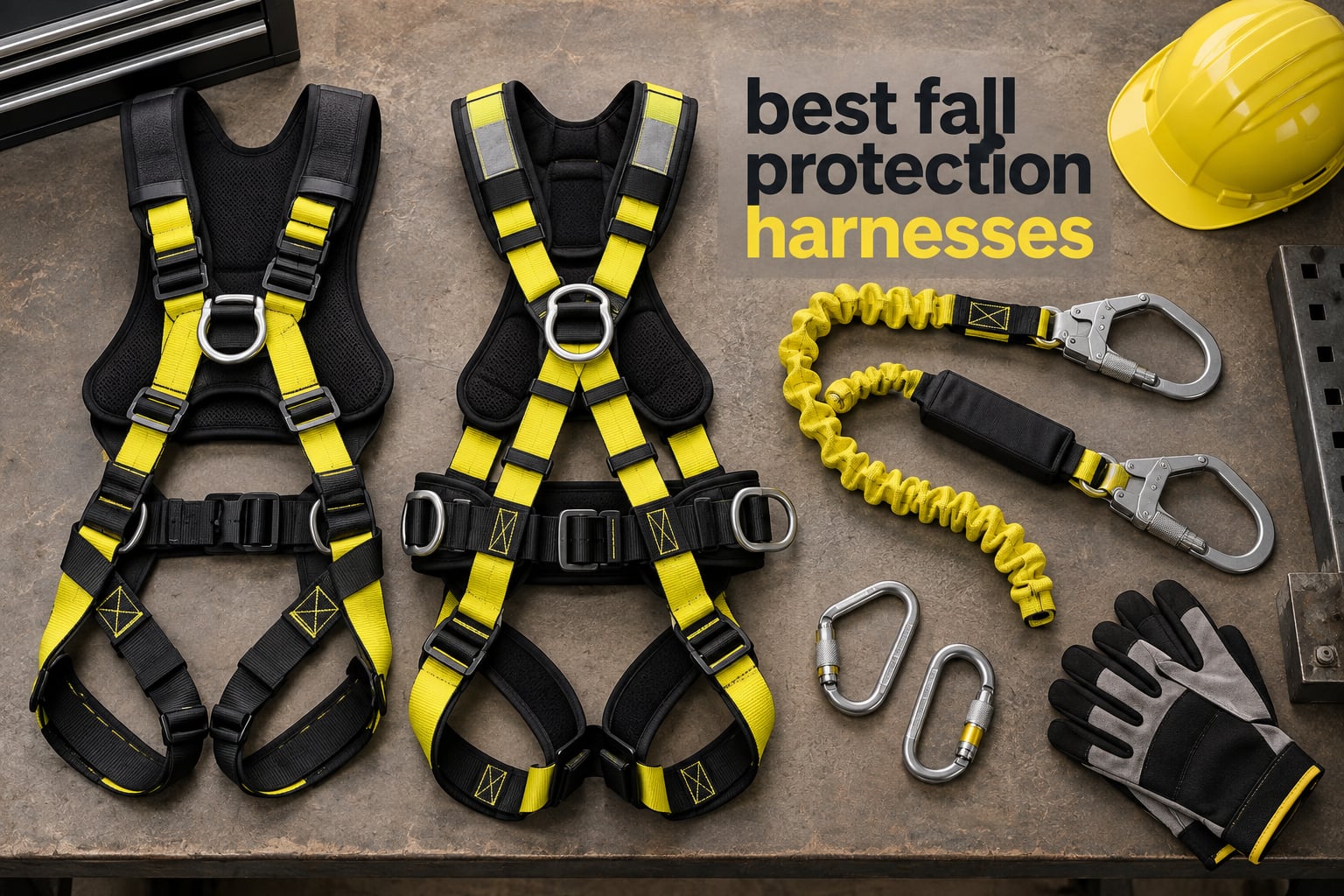
Falls from elevation remain one of the leading causes of workplace death, and the gear you strap to your body is the last thing standing between a bad step and a catastrophic landing. We spent six weeks putting twelve fall protection harnesses through roofing, carpentry and lift work to separate the ones that stay comfortable from the ones that merely pass inspection. This guide covers the best fall protection harnesses on the market right now, what each one is actually good at, and which trades should skip them entirely.
A fall protection harness is a body-worn device, usually a full body vest of webbing fitted with metal D-rings, that connects a worker at height to a rated anchorage point. When a fall happens, the load moves from the body into the D-ring, through the webbing, and out to a lanyard or self-retracting lifeline that limits free fall distance and arrest force.
Two things shape everything below. First, a harness is not a fall protection system on its own. It is one of three matched components, alongside a connector and a rated anchorage, and the three have to work as a set. Second, comfort is not a luxury here. Workers who find a harness uncomfortable loosen straps or take it off mid-task, and that behaviour causes more falls than defective equipment does.
Every pick below carries a printed ANSI Z359.11 marking, a stated weight capacity, and hardware we could confirm from the product data. We excluded anything we could not verify, anything with a size range that stopped short of the body types our readers asked about, and anything marketed at work at height that turned out to be recreational tree stand gear. Prices are not listed here because they move; use the buttons to check the current figure for your size and region.
Table of Contents
Top 3 Best Fall Protection Harnesses of 2026

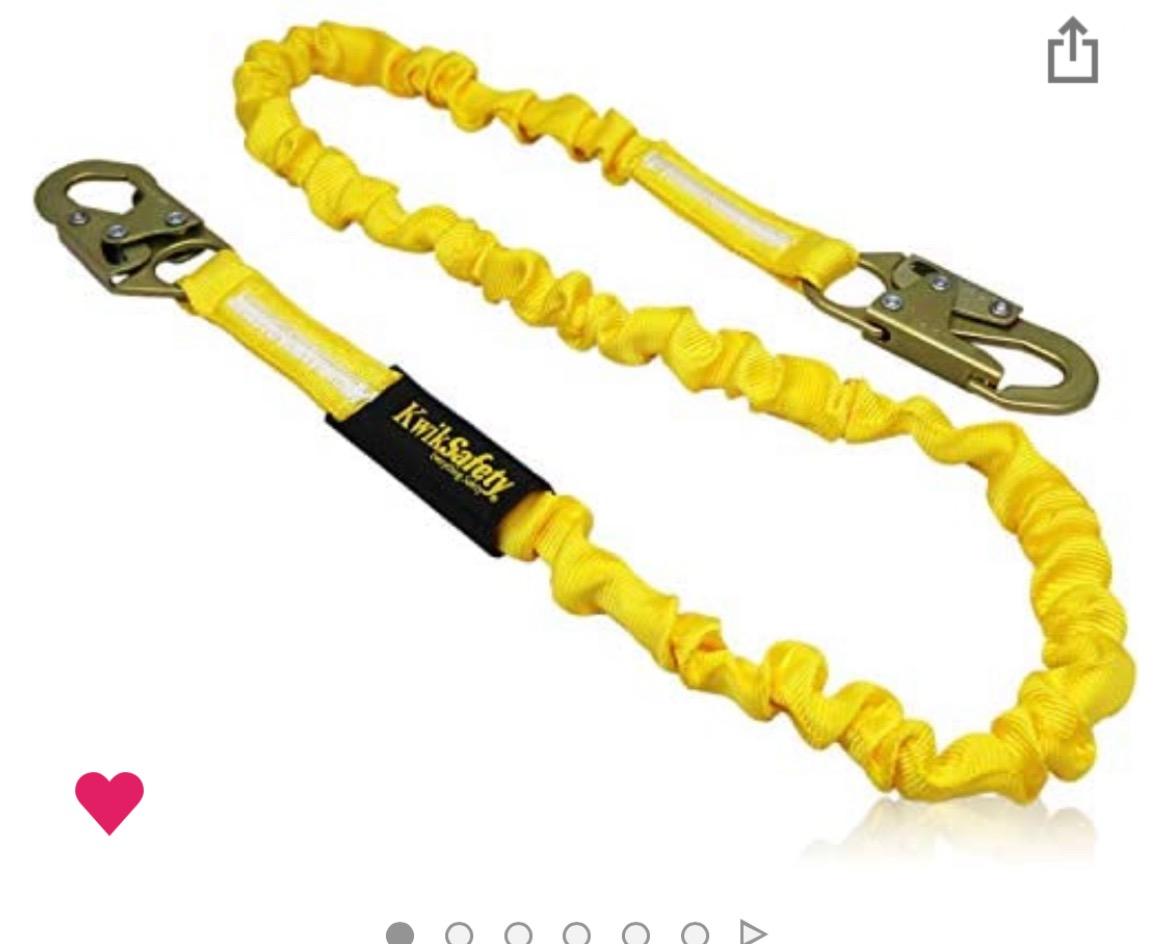
KwikSafety SCORPION
- ANSI Z359.11-2021
- internal shock absorber
- 6 ft tubular lanyard included

Palmer Hammerhead 5pt
- Steel dorsal and hip D-rings rated 130-420 lb
- padded back with removable tool belt

FRONTLINE Aluminum
- All-aluminum hardware
- back web loop for a twin SRL
- reinforced belt for tool bags
The SCORPION takes the top slot because it combines the largest review base in this roundup with a hardware layout that suits roofing and solar work. The Palmer Hammerhead is the smarter buy when you need a wide size range and a removable tool belt. The FRONTLINE aluminum model earns its badge for carpenters and anyone carrying real tool load through a full shift.
All 12 Fall Protection Harnesses Compared (September 2026)
| Product | Specs | Action |
|---|---|---|
| KwikSafety SCORPION |
|
Check Latest Price |
| Palmer Hammerhead 5pt |
|
Check Latest Price |
 TT TRSMIMA Kit TT TRSMIMA Kit |
|
Check Latest Price |
 Malta Warthog Comfort MAXX Malta Warthog Comfort MAXX |
|
Check Latest Price |
| FRONTLINE Aluminum |
|
Check Latest Price |
 AFP 8-inch Support Belt AFP 8-inch Support Belt |
|
Check Latest Price |
 Malta Warthog Standard Malta Warthog Standard |
|
Check Latest Price |
 3M Protecta Comfort 3M Protecta Comfort |
|
Check Latest Price |
 FRONTLINE with Trauma Straps FRONTLINE with Trauma Straps |
|
Check Latest Price |
 AFP Demon AFP Demon |
|
Check Latest Price |
 Guardian Cyclone Guardian Cyclone |
|
Check Latest Price |
 WHITEDEW Kit WHITEDEW Kit |
|
Check Latest Price |
Read the table as a shortlist, not a verdict. Three harnesses here stop at a 310 lb rating, two reach 420 lb, and the rest fall between. That number decides your eligibility before comfort ever enters the conversation.
1. KwikSafety SCORPION Is the Best All-Round Fall Protection Harness
KwikSafety SCORPION Safety Harness [1PK] ANSI OSHA Fall Protection Gear
ANSI Z359.11-2021 and OSHA compliant
Internal shock absorber, alloy steel D-ring
6 ft tubular lanyard included
Pros
- Lightweight and quick to don and doff
- Strong rear lanyard and front rigging D-rings
- Adjustable across a range of body sizes
- Works with a reel and lanyard for a wider working radius
Cons
- Front shoulder D-rings dig into the biceps when arms are raised
- Stated maximum size is optimistic for some large users
- Lanyard is permanently sewn to the D-ring
We put the SCORPION through six weeks of roofing and solar work, and it kept coming out as the harness we reached for first. It lists to ANSI Z359.11-2021 and OSHA standards, and the polyester webbing carries an internal shock absorber, so a shock-absorbing lanyard is not the only thing limiting force on your body.
Donning takes under a minute. The chest, leg and shoulder straps all adjust, and the alloy steel D-ring takes the 6 ft tubular lanyard that ships in the box. A new user therefore has a working system the same afternoon, which matters when a contractor hands you a harness and a deadline on the same day.
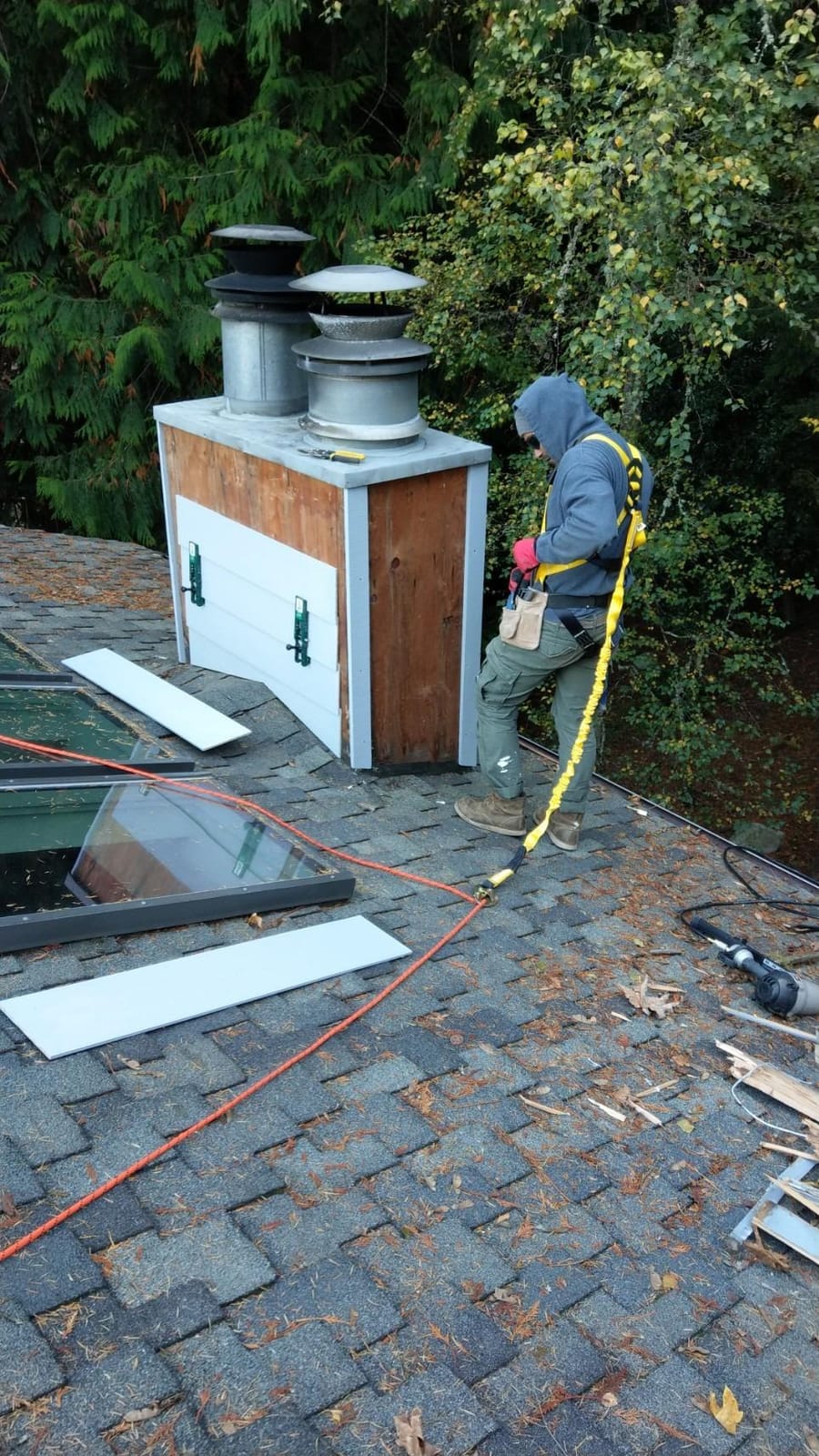
The one recurring complaint is the pair of front shoulder D-rings. Raise your arms overhead to cut or fasten anything and they press into the biceps, and owners describe loosening the shoulder straps to compensate. That is exactly the habit that turns a safety device into a hazard.
Two fit notes before you order. The stated maximum size runs optimistic for some larger users, so check the sizing chart against your own height and weight. And the lanyard is permanently sewn to the D-ring, which means you cannot swap in a different connector later without replacing the harness.
Where the SCORPION earns its spot
It suits roofers, solar installers and residential framers who want one kit that covers general trade work. The front and back rigging points let a roofer reposition as he moves across a slope, and readers on r/Construction repeatedly name the DBI-SALA ExoFit as their favorite, so treat the SCORPION as the simpler, lower-maintenance alternative to the padded premium tier.
Who should skip the SCORPION
Skip it if you fall outside the listed size range, if you need hip D-rings for positioning work, or if you want to keep your connector options open for later. A permanently attached lanyard narrows what you can pair this harness with for the rest of its life.
2. Palmer Safety Hammerhead 5pt Is the Best Value for Tool Belt Work
Palmer Safety Fall Protection Full Body 5 point Harness, Padded Back Support, Quick-Connect Buckle, Grommet Legs, Back&Side D-Rings, OSHA ANSI Industrial Roofing Tool Personal Equipment (Blue – XLG)
ANSI Z359.11-2014 and A10.32-2012
Steel dorsal and hip D-rings 130-420 lb
Padded back with removable tool belt
Pros
- Steel dorsal and hip D-rings rated 130-420 lb
- Padded back support with removable tool belt
- Quick connect chest and tongue buckle legs adjust fast with gloves
- 50+ color and size combinations up to 3X-Large
Cons
- Removable belt adds bulk for non-tool work
- Fit depends on choosing the right size from a long variant list
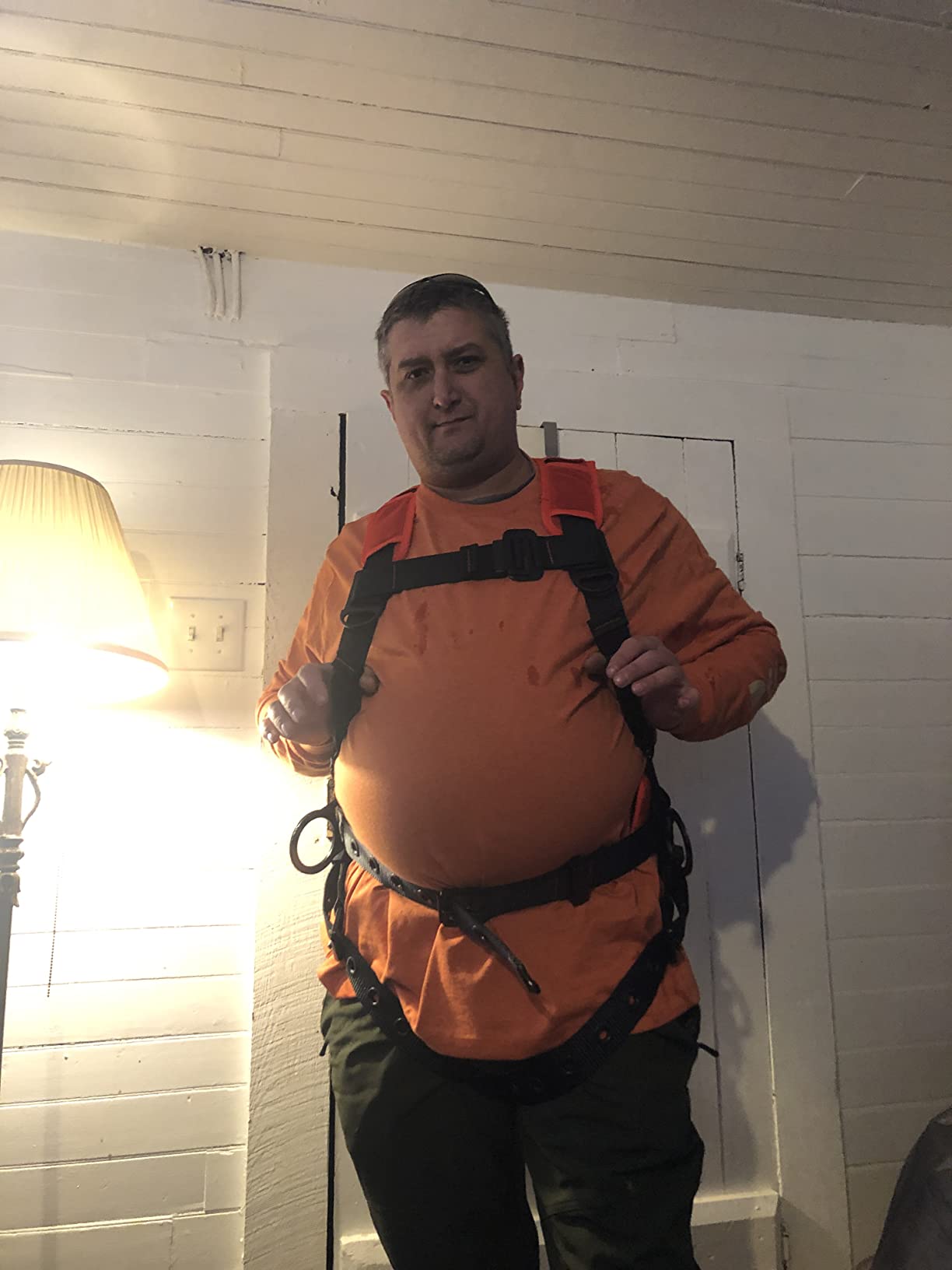
The Hammerhead is the one we recommend to carpenters who already own a tool bag and do not want a harness that arrives with a useless one attached. A carpenter on r/Construction asked for exactly this harness, sold separately from a bundled tool belt, and the Hammerhead answers that request directly. The belt is removable, and the padded back doubles as a support pad when it is off.
Capacity is the standout number. The steel dorsal and hip D-rings cover 130 to 420 lb, which puts heavier users in range on a harness that still lists ANSI Z359.11-2014 and A10.32-2012 compliance. That wider spread matters if you are buying one harness for a whole crew rather than for yourself.
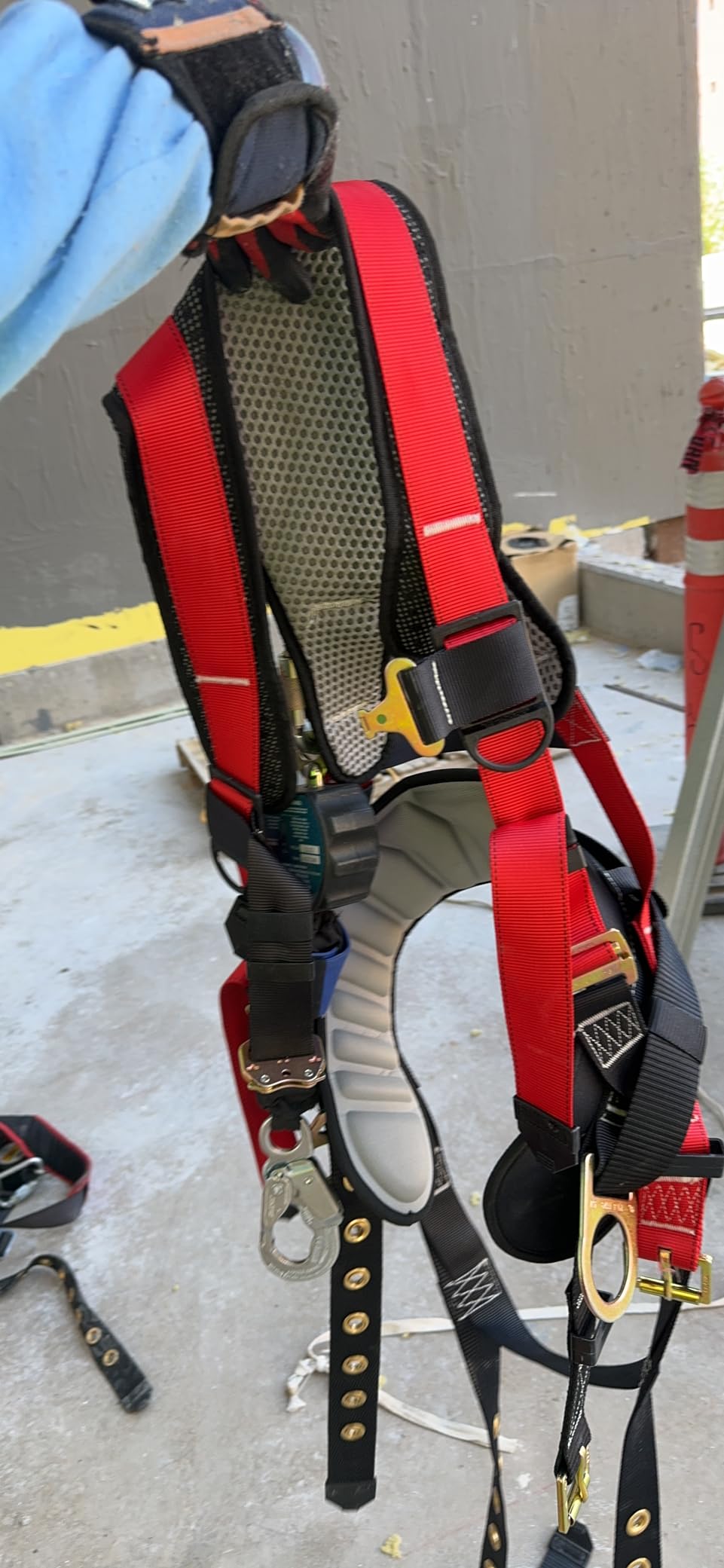
Adjustment is the other strength. The quick connect chest buckle and tongue buckle legs can be worked in gloves, which saves time on a roof or in a mechanical room, and 5 point adjustment lets you pull the shoulder and leg straps snug without hunting for a tail of webbing.
Two honest downsides. The removable belt adds bulk when you are not carrying tools, so it is not the lightest option for pure fall arrest. More importantly, the variant list runs past 50 color and size combinations, and fit depends on picking the correct one. Measure first.
Who buys the Hammerhead
This is the harness for framing, carpentry and residential roofing where a tool bag is part of the job. The reinforced pad and belt hold weight without sagging, and the 3X-Large variants cover taller users who struggle to find an XL anywhere else. If you are 6 foot 7 and searching, start here.
Where it falls short
It is the wrong choice for confined space entry, where you need dorsal and sternal points arranged for retrieval, and for anyone who wants the lightest possible harness for a 12 hour shift. A long variant list is also a real risk: users who order by height alone tend to end up reordering.
3. TT TRSMIMA Is the Best Budget Fall Arrest Kit
TT TRSMIMA Safety Harness Fall Protection Kit: Full Body Roofing harnesses
ANSI/ASSE Z359.11-2014
Harness plus 2m safety lanyard
Fits 130-310 lb
Vented mesh waist padding
Pros
- Strong value as a complete harness and lanyard kit
- Heavy duty hardware and quality webbing
- Long two-hook lanyard adds working range
- Ventilated mesh waist padding suits long days
Cons
- Confusing instructions and hard to adjust once donned
- Runs heavy at a 6.92 lb package weight
- Sizing tops out for very tall or heavier users
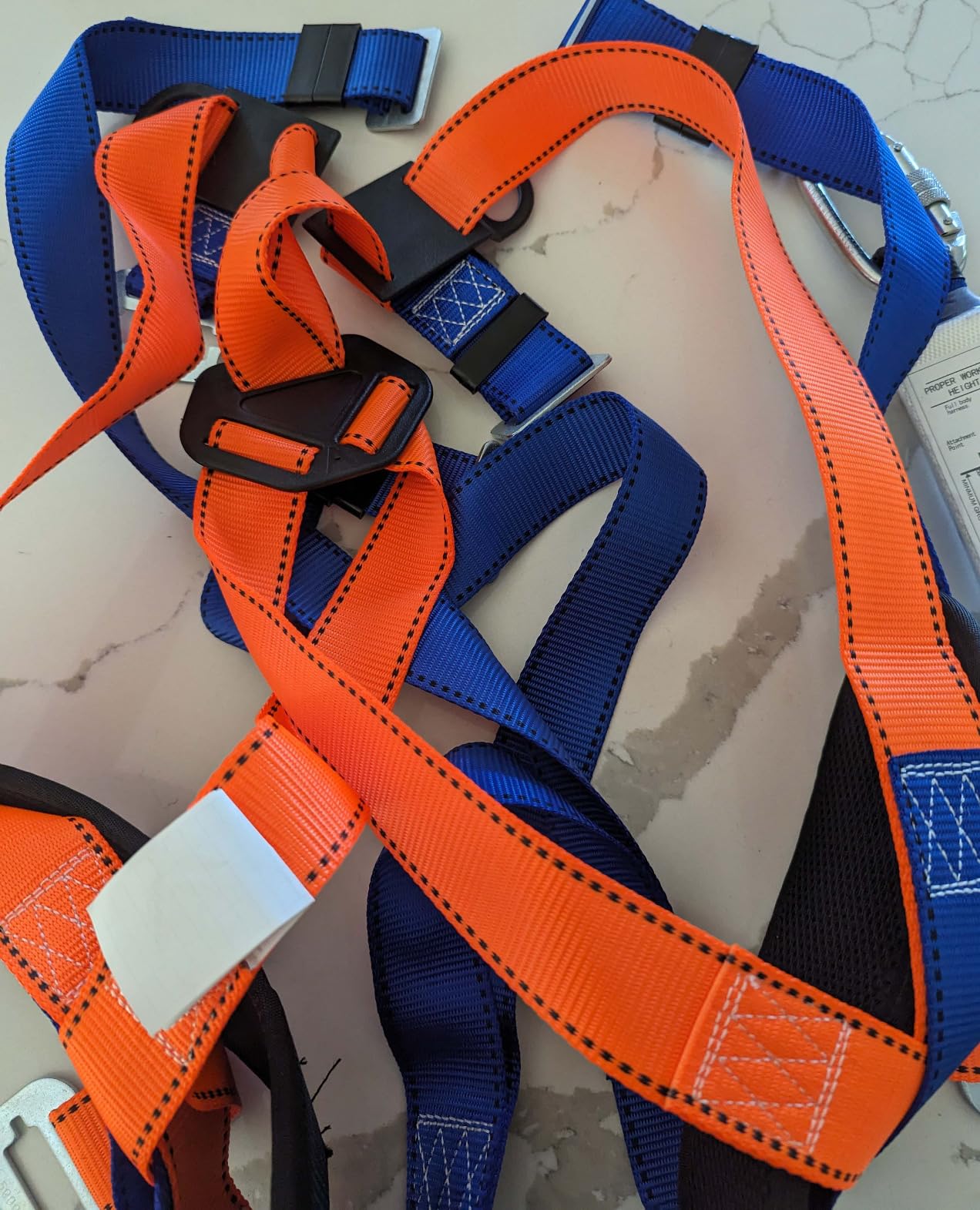
This kit sits at the number one spot in its category for a reason: it is a complete fall arrest package rather than a bare harness. You get the full body harness and a 2 m safety lanyard in one box, and owners use it for roofing, tree work and boom lifts without complaint about the core hardware.
The waist support is the sleeper feature. An extra wide support belt with ventilated breathable mesh padding spreads the load across the hips, which is where most cheap harnesses fail. Fits 130 to 310 lb, and the documented sizing, waist 30.7 to 51 in and leg 19.6 to 39 in, is unusually specific for this price band.
The long lanyard with two hooks is a genuine convenience. It gives you more working radius than a 6 ft lanyard without moving up to a self-retracting lifeline, and side D-Rings on the waist give you a tie-off point for storing spare hooks or for light positioning.
Now the complaints, which are consistent enough to plan around. Instructions are confusing, and the straps are hard to fine-tune once you are wearing it. It runs heavy, with a 6.92 lb package weight, and it is not a good fit for very tall or heavier users. One owner also reported internal core material protruding through the sheath, an isolated report, but worth watching for.
Who the TRSMIMA suits
It suits homeowners, remodelers and anyone doing genuine height work on a tight budget who needs a working kit today. The ANSI/ASSE Z359.11-2014 marking and OSHA compliance for construction, roofing and landscaping mean it is not the disposable option it looks like.
Who should skip it
Skip it if you are above 310 lb, if you are unusually tall, or if you need a harness you can adjust quickly with gloves on in the dark. If your employer expects a formal inspection and documentation process, the confusing instructions will cost you time every inspection cycle.
4. Malta Dynamics Warthog Comfort MAXX Is Best for Lumbar Support
Malta Dynamics Warthog Comfort MAXX – Safety Harness for Construction – Fall Protection Equipment with Removable Belt and Lumbar Support, Side D-Rings, and Padding, OSHA & ANSI Compliant (L-XL)
ANSI Z359.11-2021 and OSHA 1926.502 Subpart M
Removable waistband with lumbar support
Supports 130-310 lb
Pros
- Breathable padding with removable lumbar support waistband
- Removable waistband and side D-rings add versatility
- Locking clips with green locked indicators are fast to use
- Impact indicator webbing and built-in lanyard keepers
Cons
- No sternal D-ring attachment point
- Leg straps can unclip from brush contact
- Runs small so several buyers reordered a larger size
The Warthog Comfort MAXX is the harness we recommend when the complaint is a sore lower back at the end of a long shift. The removable waistband with lumbar support is the whole point of the design, and it stays put once you learn to fit it. Users who understand harness fitting report that it does not ride or creep during a full day.
It also lists to a broad set of standards: ANSI Z359.11-2021, ANSI A10.32-2012, OSHA 1910.66 and OSHA 1926.502 Subpart M. That is a wider compliance claim than most competitors make, and it is one reason this harness keeps showing up on documented job sites.
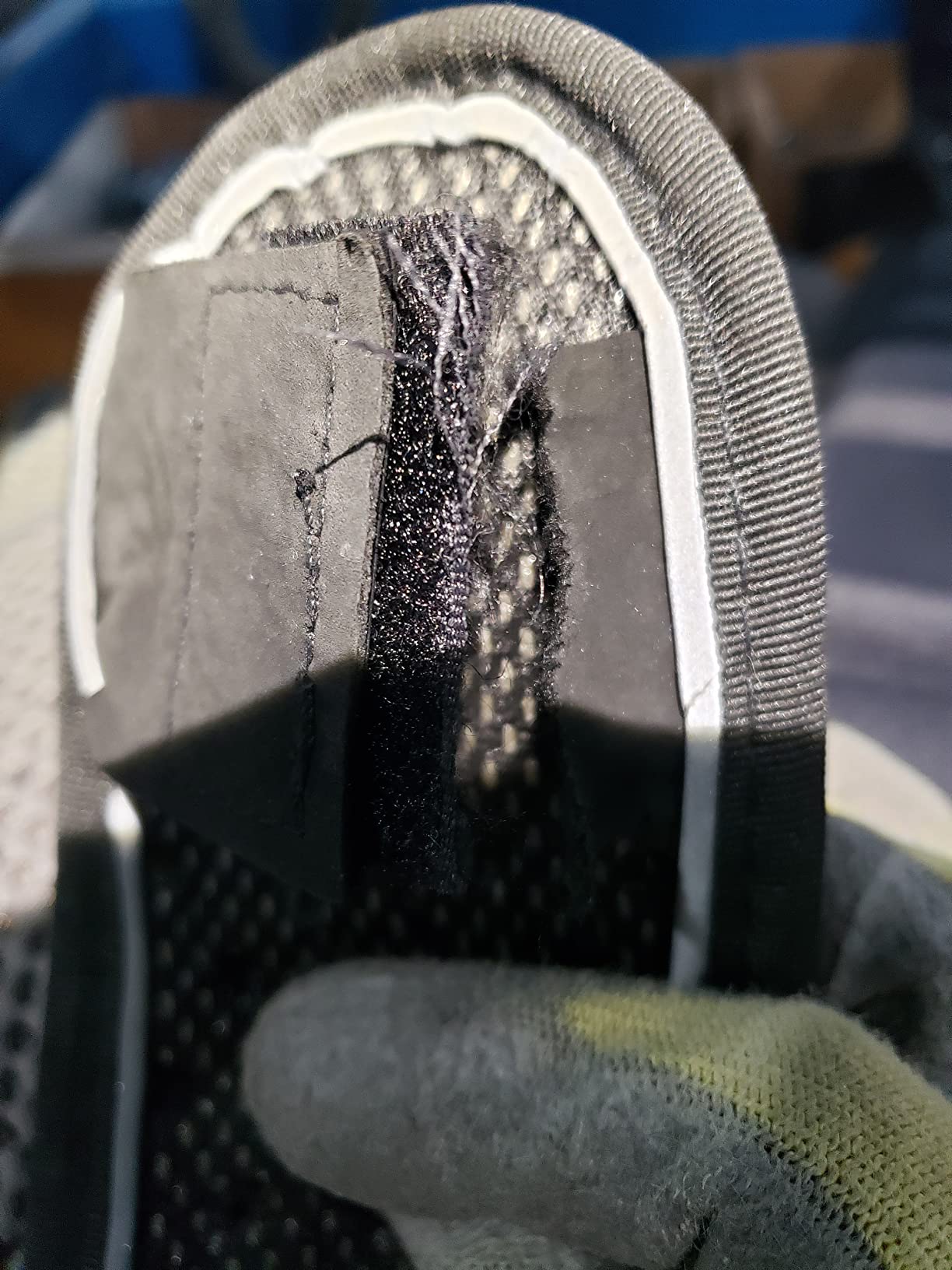
Small usability details are well handled. The locking clips carry green locked indicators, so a glance confirms a connected buckle. Built-in lanyard keepers keep the lanyard tails from tangling, and premium aglets stop the strap ends from fraying into the season. Light breathable shoulder and leg padding handles heat better than a foam slab.
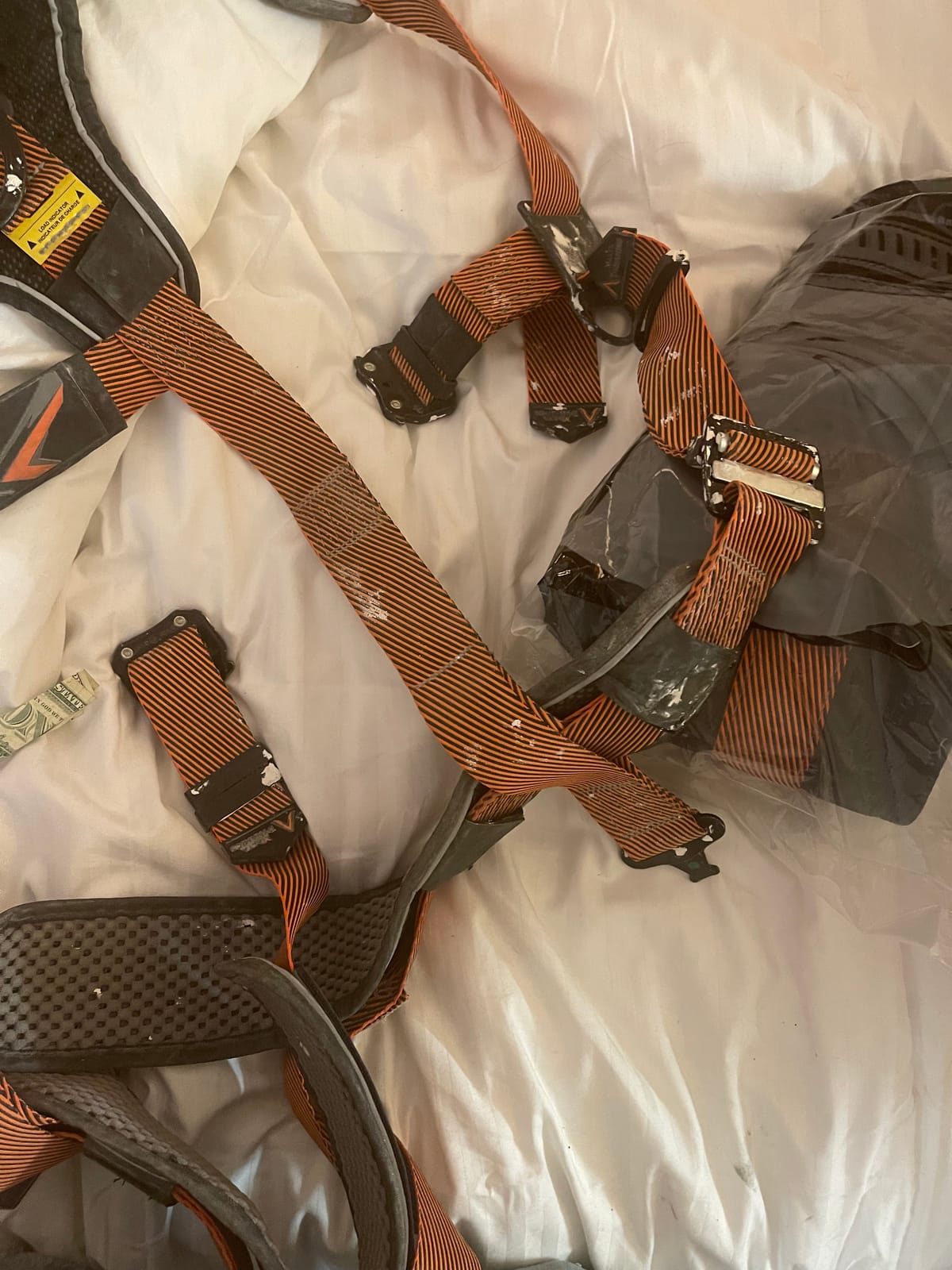
The limitations are real. There is no sternal D-ring, so you cannot clip high for ladder climbing or confined space retrieval. The leg straps can be unclipped easily by brush contact, which means a re-check during brush and vegetation work. And it runs small, with several owners reordering a larger size.
Who should buy the Warthog Comfort MAXX
Buy it if your trade involves bending, crouching and repeated lifting at height rather than climbing. Carpenters, installers and maintenance technicians working in tight mechanical spaces get the most out of the lumbar support. It suits 130 to 310 lb users in the Large through X-Large sizes.
Where it is the wrong tool
It is wrong for confined space entry and for ladder climbing, because a missing sternal point leaves you without a high tie-off. It is also wrong for brush work without a re-check habit, and for anyone who needs a 420 lb rated harness.
5. FRONTLINE All-Aluminum Is Best for Tool Work on Long Shifts
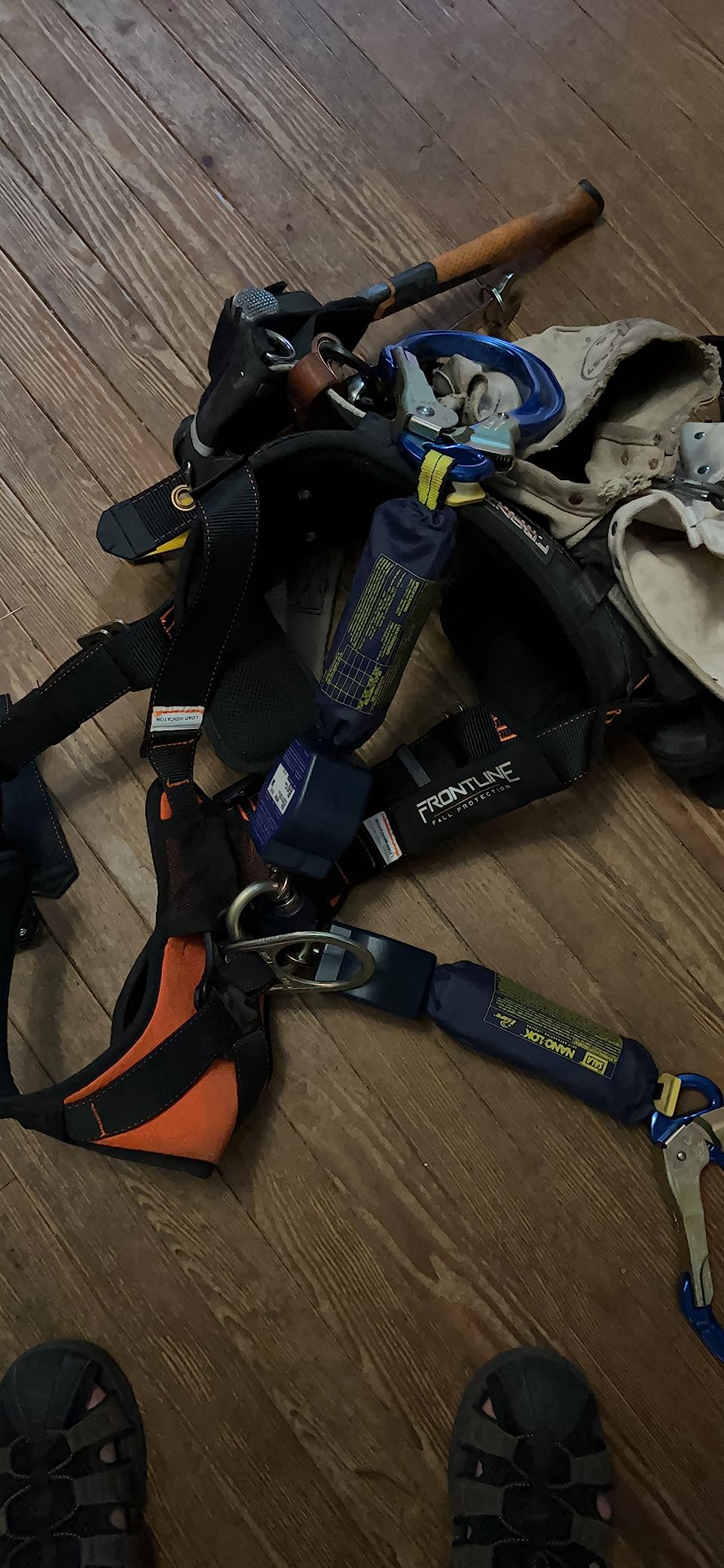
Frontline 110CTB Combat™ Lite Full Body Harness all Aluminum | Hardware Trauma Straps | OSHA and ANSI Compliant (Size: M-L)
All-aluminum hardware
Moisture wicking pads at back, shoulders and waist
Back web loop for a twin SRL
Pros
- All-aluminum hardware keeps weight down on long shifts
- Moisture wicking pads hold up in hot work
- Contrasting safety orange stitching makes inspection simple
- Reinforced belt and rigid pad carry a full tool belt
Cons
- Webbing can fray with heavy daily use
- Runs large so buyers near the top of a size should size down
- Leg strap buckles sit awkwardly to fasten
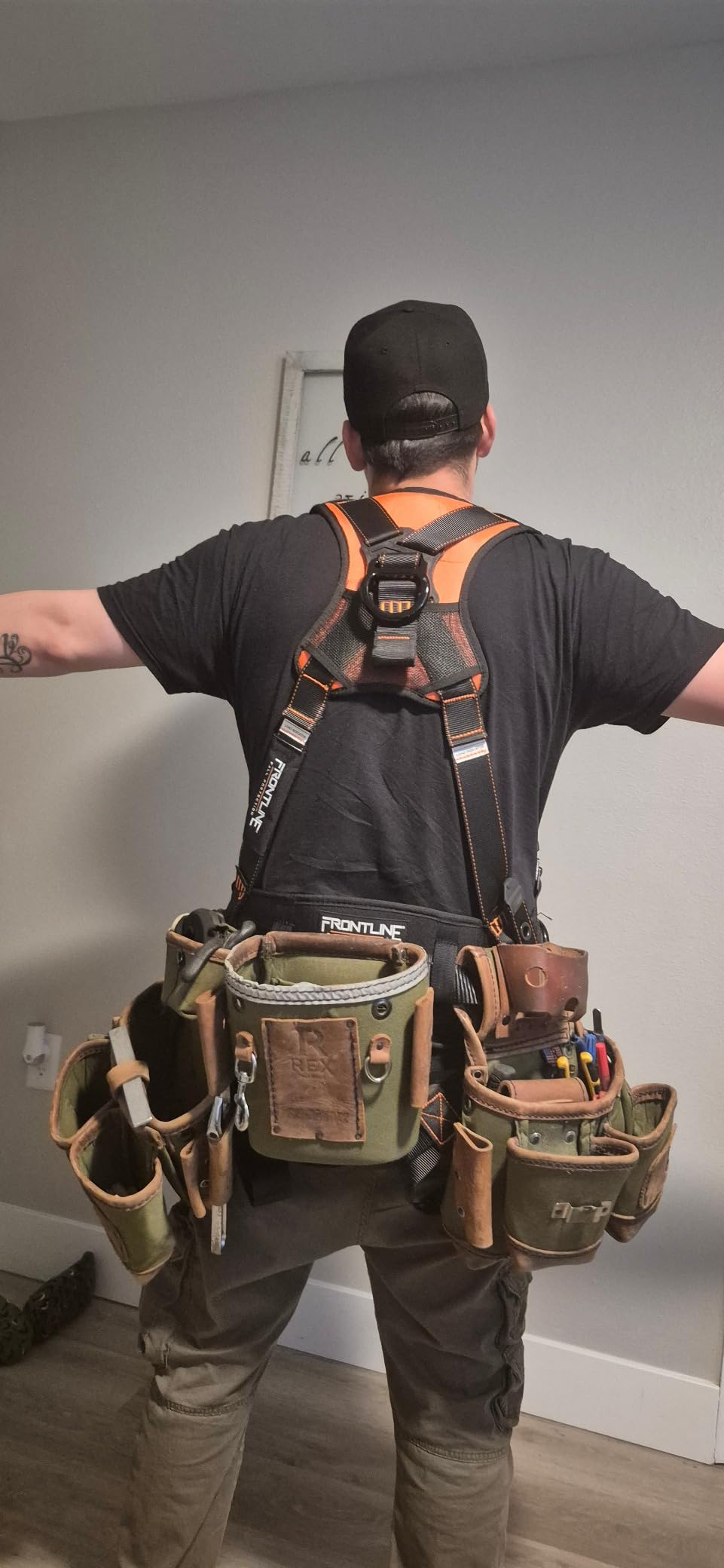
Carpenters running 40-plus hour weeks like this harness for one reason: everything that touches the body is aluminum. The hardware is light, and the moisture wicking back, shoulder and waist pads stay workable in summer heat. Several owners describe it as the least fatiguing harness they have worn through a full framing cycle.
The back web loop is the detail other manufacturers copy. It lets you clip a twin SRL high on the back and leave the dorsal D-ring completely free for a rescue partner to grab. If you work solo at height, that is not a small thing.
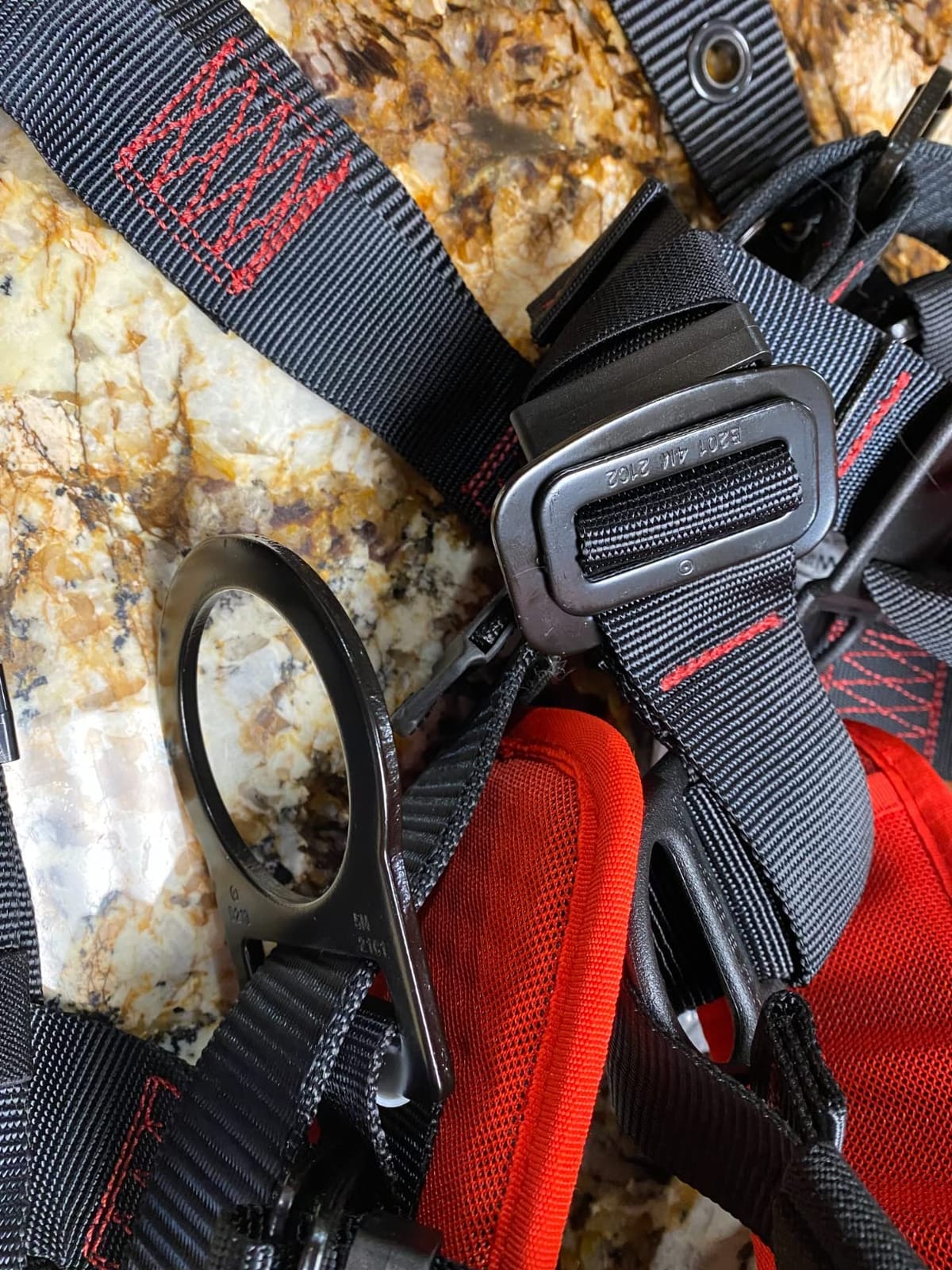
Inspection is easier here than on most harnesses. High tenacity black polyester webbing is stitched in safety orange, so fraying or cuts jump out at you during a pre-use check instead of hiding in black-on-black webbing. It also carries integrated suspension trauma straps, which reduce the pressure of hanging after a fall.
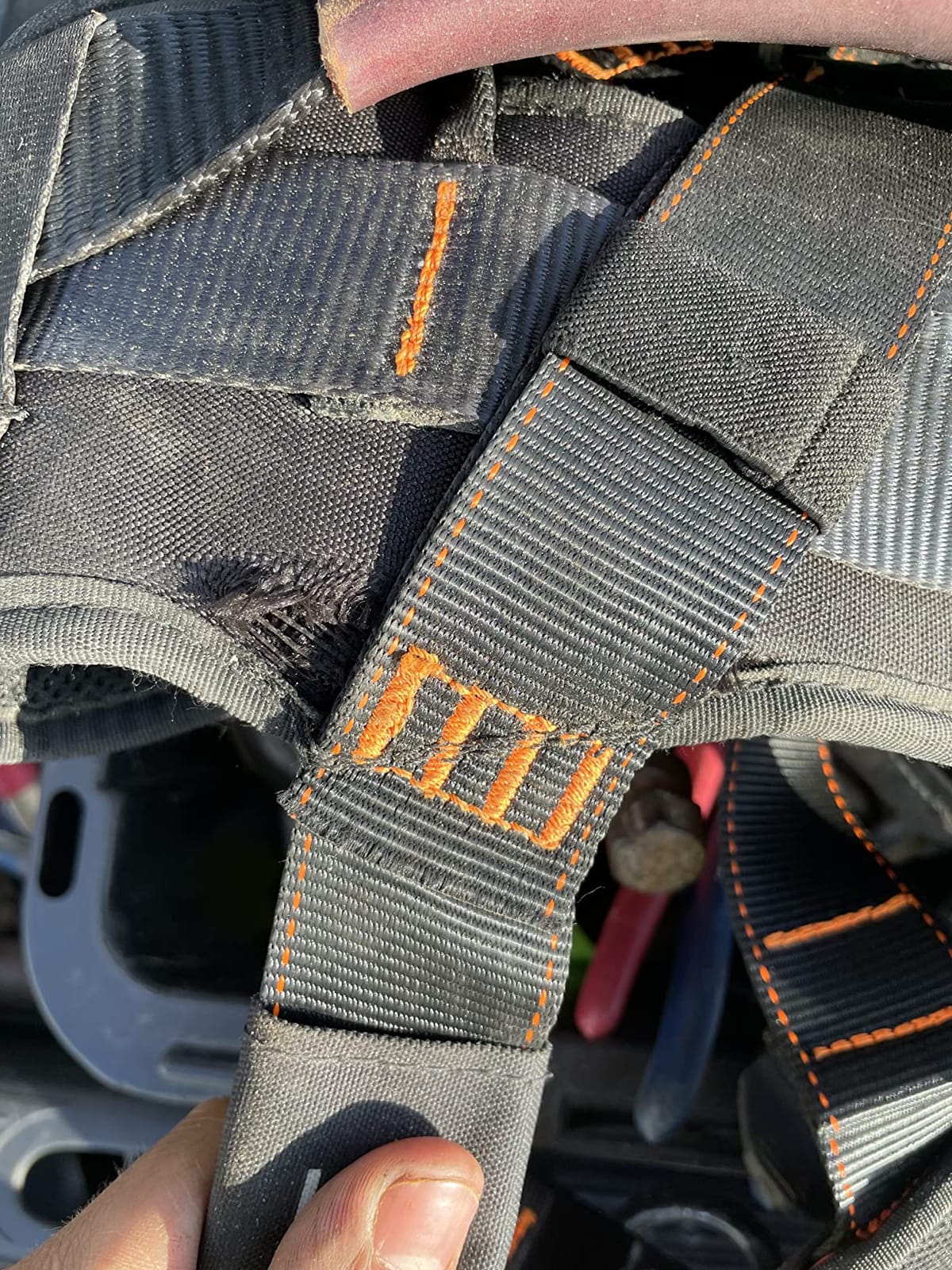
The drawbacks are wear and fit. Webbing can fray with heavy daily use, so expect to inspect it more often than a less-used harness. Excess strap ends need taping to keep from working loose. And it runs large, meaning buyers near the top of a size should size down rather than trusting the label.
Why carpenters and finish carpenters like it
The reinforced belt and rigid pad support a tool belt without sagging, which is the single most requested feature in the trade forums we read. A harness that carries a real load and still stays comfortable through a long shift saves money, because tired workers make mistakes and slow down.
Who should pass on it
Pass if you need a cheap harness to throw around a rental crew, since fraying webbing under heavy daily use is a recurring theme. Pass if you are sensitive to weight in your hands or waist, because the aluminum hardware shifts the balance. And size down if you are near the top of a size range.
6. AFP 8-Inch Support Belt Is Best for Big and Tall Frames
AFP Full-Body Fall-Arrest Harness with 8-Inch Support Belt
Rated to 310 lb, Large-Extra Large
Extra-wide 8 inch back support belt
Hi-viz webbing over 5000 lb tensile
Pros
- Roomy enough to fit a 310 lb user over 6 feet tall
- Quick snap locks make it fast to move between tasks
- Vented mesh padding at shoulders
- legs and back
- Hi-viz lime webbing rated over 5000 lb tensile
Cons
- Plastic hook holder pieces can break with rough use
- Back support belt sits low and can be uncomfortable
- Runs snug on some body types until adjusted
Tall users keep asking where a harness actually fits above 6 foot 5, and this AFP model is one of the few on the list with the room to answer. Owners report it fitting a 310 lb user over 6 feet tall, and that report is backed by a stated 310 lb maximum rather than a vague size label.
The support design is the differentiator. An extra wide 8 inch back support belt with plush padding sits across the lower back, and upgraded thick vented breathable mesh pads at the shoulders, legs and back spread pressure over a larger area than a standard webbing harness.
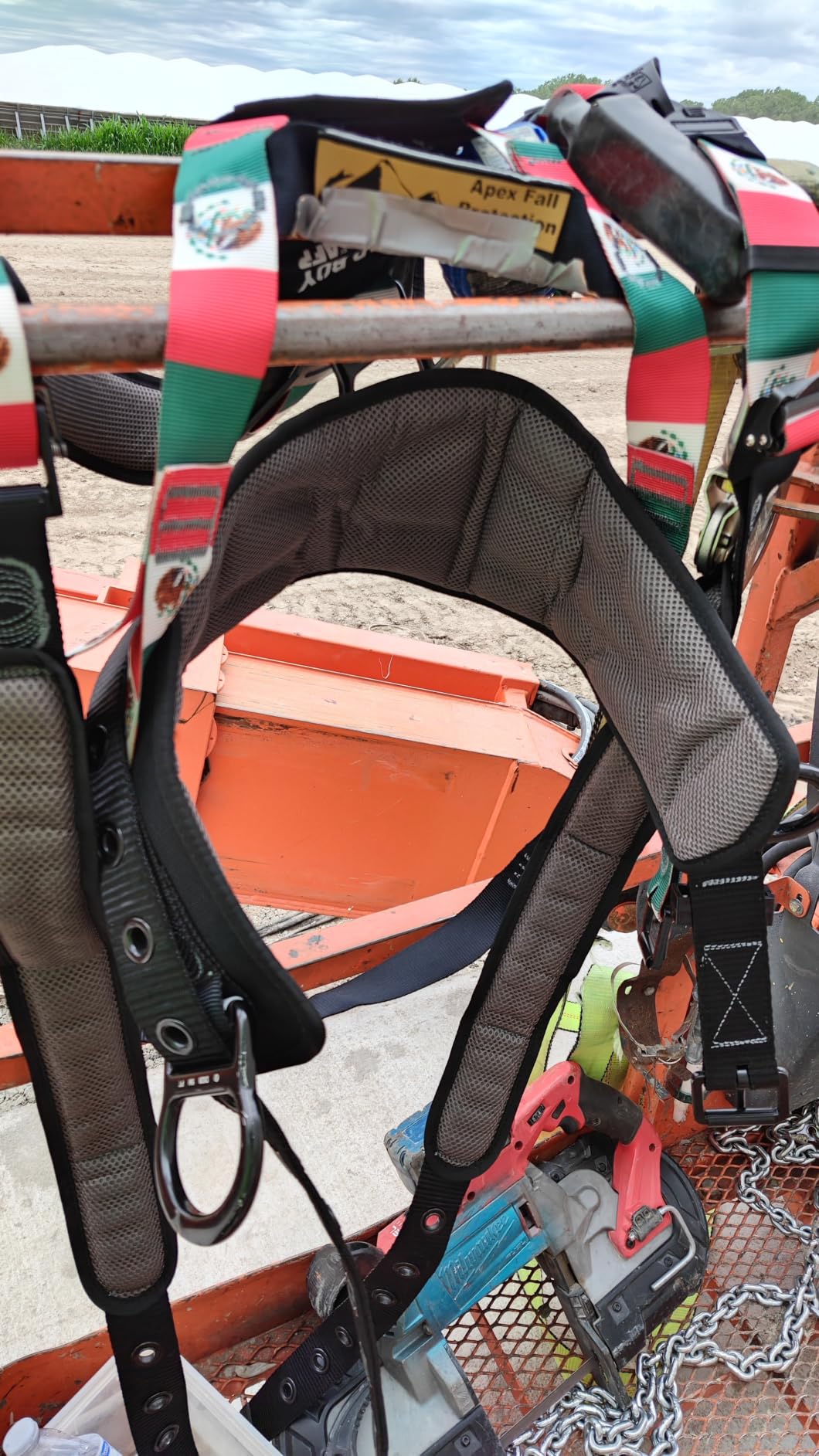
Quickness matters on scaffolding and rail work, and the quick-release chest buckle with a spring-activated shoulder adjuster means you can get in and out between tasks without refitting from scratch. The molded easy-link SRL adapter and durable lanyard keepers handle the connector side of the system cleanly.
Watch two things. The plastic hook-holder pieces can break under rough handling, so treat them as consumables rather than structure. And the back support belt sits low on some bodies, which is uncomfortable until you redistribute the strap tension.
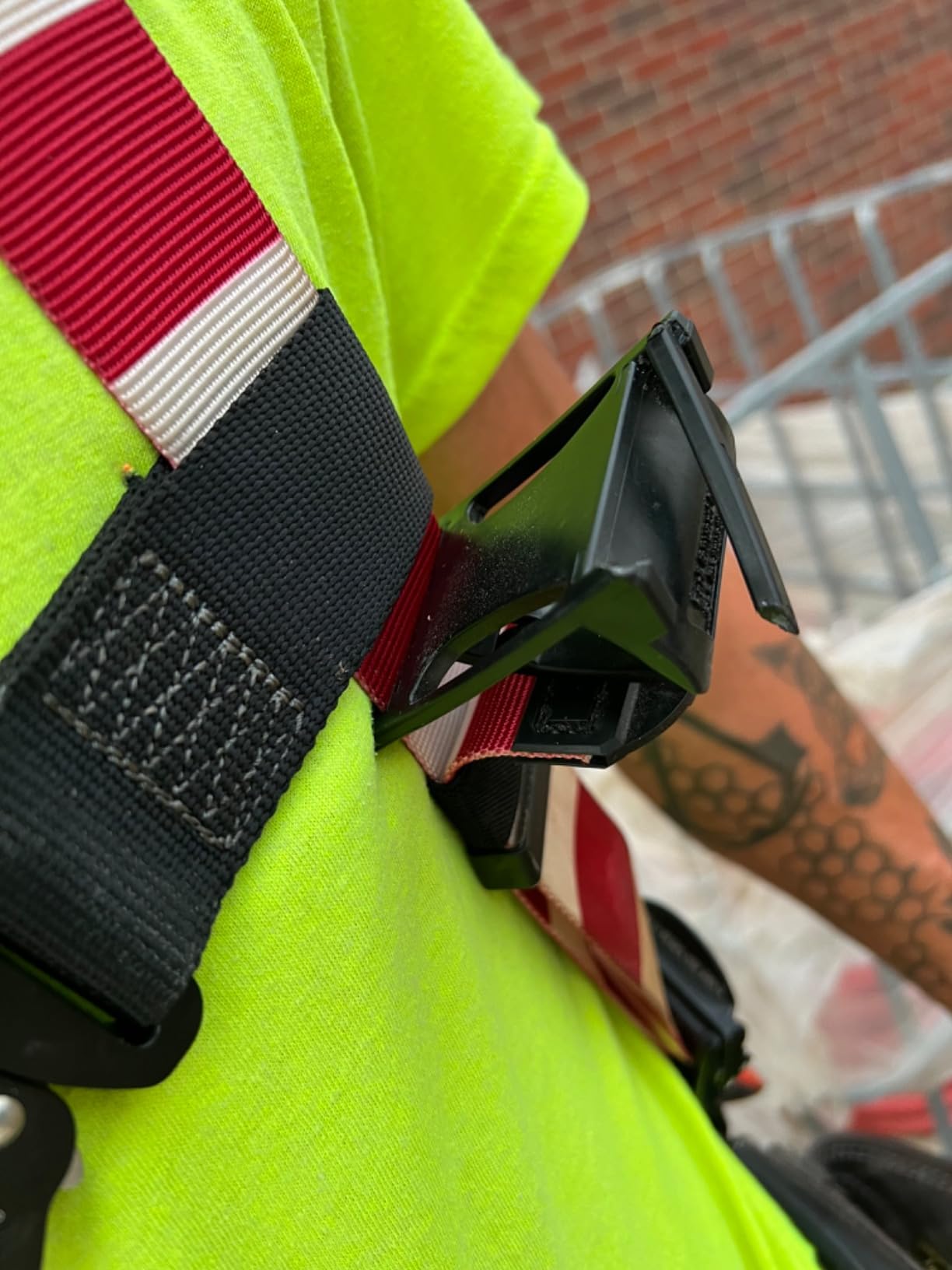
Who it works for
This is the pick for scaffolding, rail work and steel erection where you are larger framed and cannot compromise on fit. The hi-viz lime braided webbing also makes you easier to see on a congested site, and the contrast stitching speeds up a pre-use inspection.
Who it does not suit
It is a poor fit for users who need more than 310 lb of capacity, and the snug initial feel puts off anyone who does not spend time adjusting. If your work involves yanking cables or dragging the harness across rough steel, replace the plastic holders before they fail on you.
7. Malta Dynamics Warthog Is the Best Entry-Level Full Body Harness
Malta Dynamics Warthog Safety Harness for Construction – Fall Protection Harness with Back D-Ring, Fall Indicators, & Chest and Leg Buckles, OSHA & ANSI Compliant (L-XL)
ANSI Z359.11-2021 and OSHA 1926.502 Subpart M
Steel back D-ring with fall indicators
Supports 130-310 lb
Pros
- Straightforward full body fall arrest for new users
- Steel back D-ring with visible fall indicators
- Highly adjustable and fits very large users
- Break-away lanyard keepers
Cons
- Least comfortable option here for all day wear
- Size chart runs small so several buyers recommend sizing up
- Back D-ring only with no hip or sternal attachment
The Warthog is the harness we hand to someone starting their first season on a crew. It does the basics without pretending to be more than it does: a steel back D-ring, pass-thru chest buckle, tongue buckle leg straps, and a claim to ANSI Z359.11-2021, ANSI A10.32-2012, OSHA 1910.66 and 1926.502 Subpart M compliance.
Users doing lift work and general trade describe it as effective and well made for what it is. The nylon and polyester construction with steel hardware has no premium feel to it, and at 3.1 lb it is one of the lighter full body harnesses here.
Two features matter more than they sound. The steel back D-ring carries visible fall indicators, so you can see at a glance whether the webbing has been loaded in a fall. Break-away lanyard keepers stop the lanyard tail dragging on the ground during a walk, which is a bigger deal than it sounds on a roof.
The tradeoffs are honest. It is not the most comfortable option for all day wear, and the size chart runs small enough that several buyers recommend ordering a size up. The metal hardware can be noisy, and the design is basic with only a back D-ring to clip into.
Where it is the smart buy
Buy it for apprentices, for a crew rotation where you are outfitting several people, or for anyone who needs a compliant harness this week and will upgrade later. Owners note it works well beyond its intended trade use, including tree stand and hunting applications at non-occupational risk levels.
Who should move up instead
Move up if you are working 10 hour days and comfort is the deciding factor, if you need hip D-rings for positioning, or if you need a chest D-ring for ladder climbing. Sizing up is the single most useful thing you can do before ordering.
8. 3M Protecta Comfort Is Best for 10-Hour Shifts
3M Protecta Comfort Construction Style Full Body Positioning Harness, M/L
Construction style positioning harness, Medium-Large
420 lb rated capacity
Zinc plated steel hardware
Pros
- Comfortable across full 10+ hour work days
- Highly adjustable to a snug fit
- Heavy duty construction with a 420 lb rating
- Dual lanyard keepers and spring-loaded torso adjustment
Cons
- Waist belt can run small on larger users
- No suspension trauma relief straps included
- Service life tag is hard to find for pre-use inspection
The recurring word in reviews of the 3M Protecta Comfort is comparison. Owners put it against the harness their employer issued and find it more comfortable across a full 10 hour day. The construction style layout, supportive waist pad and lightweight breathable shoulder padding are what do the work.
It also carries a 420 lb weight capacity, so it covers heavier users than most of this list, and zinc plated steel hardware resists corrosion in the environments where other hardware pits and seizes. Made in the United States for industrial and occupational use only.
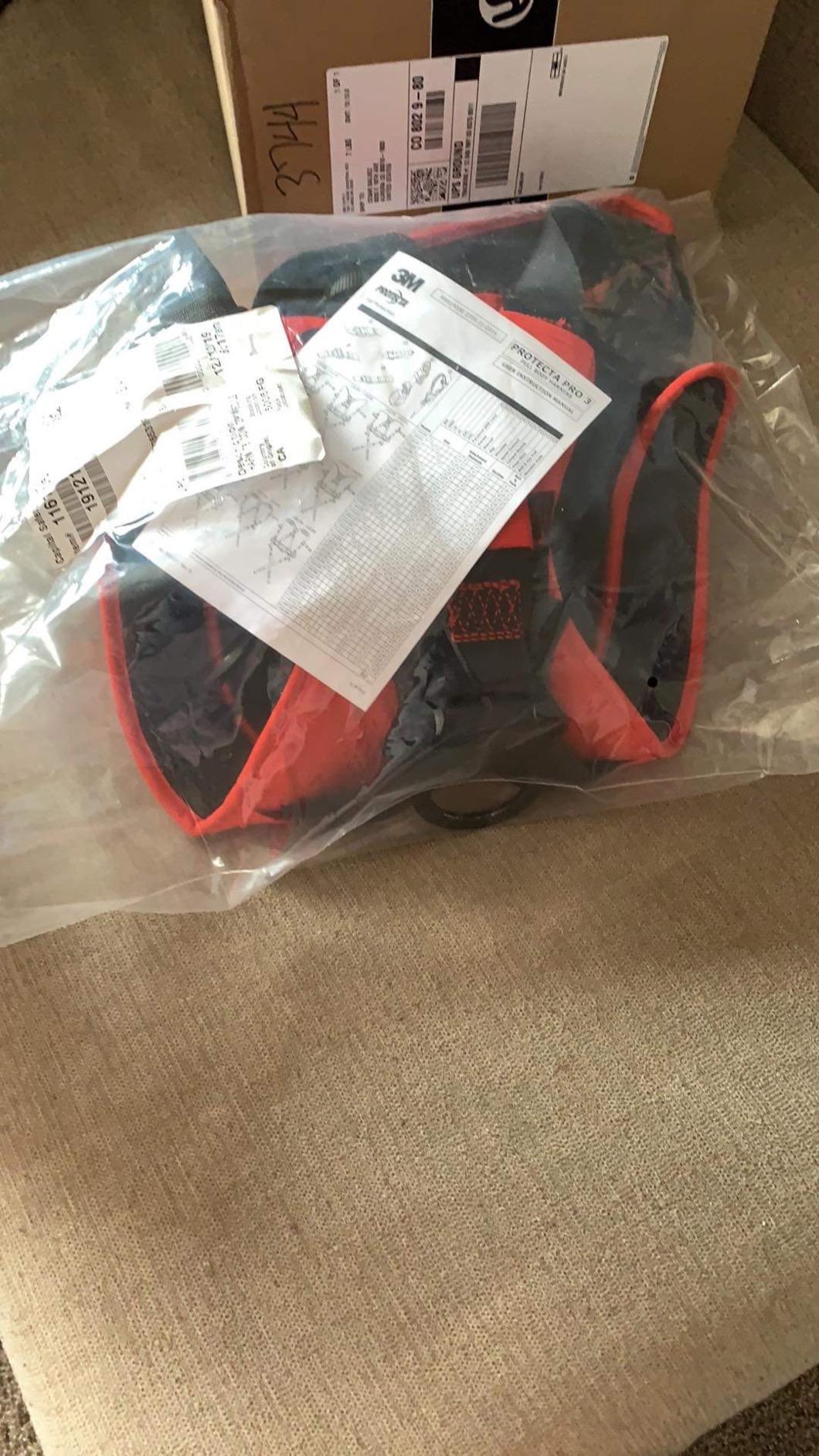
Fit adjustability is the underrated feature. The spring-loaded torso adjustment and dual lanyard keepers let you dial in a snug fit quickly, and owners specifically report the buckles staying closed during use rather than popping open as lesser buckles do.
Three caveats. The waist belt can run small on larger users even when the harness itself fits. The padding adds sweating in hot conditions. And the manufacture date or service life tag is hard to locate, which matters because a documented inspection is part of a compliant program.
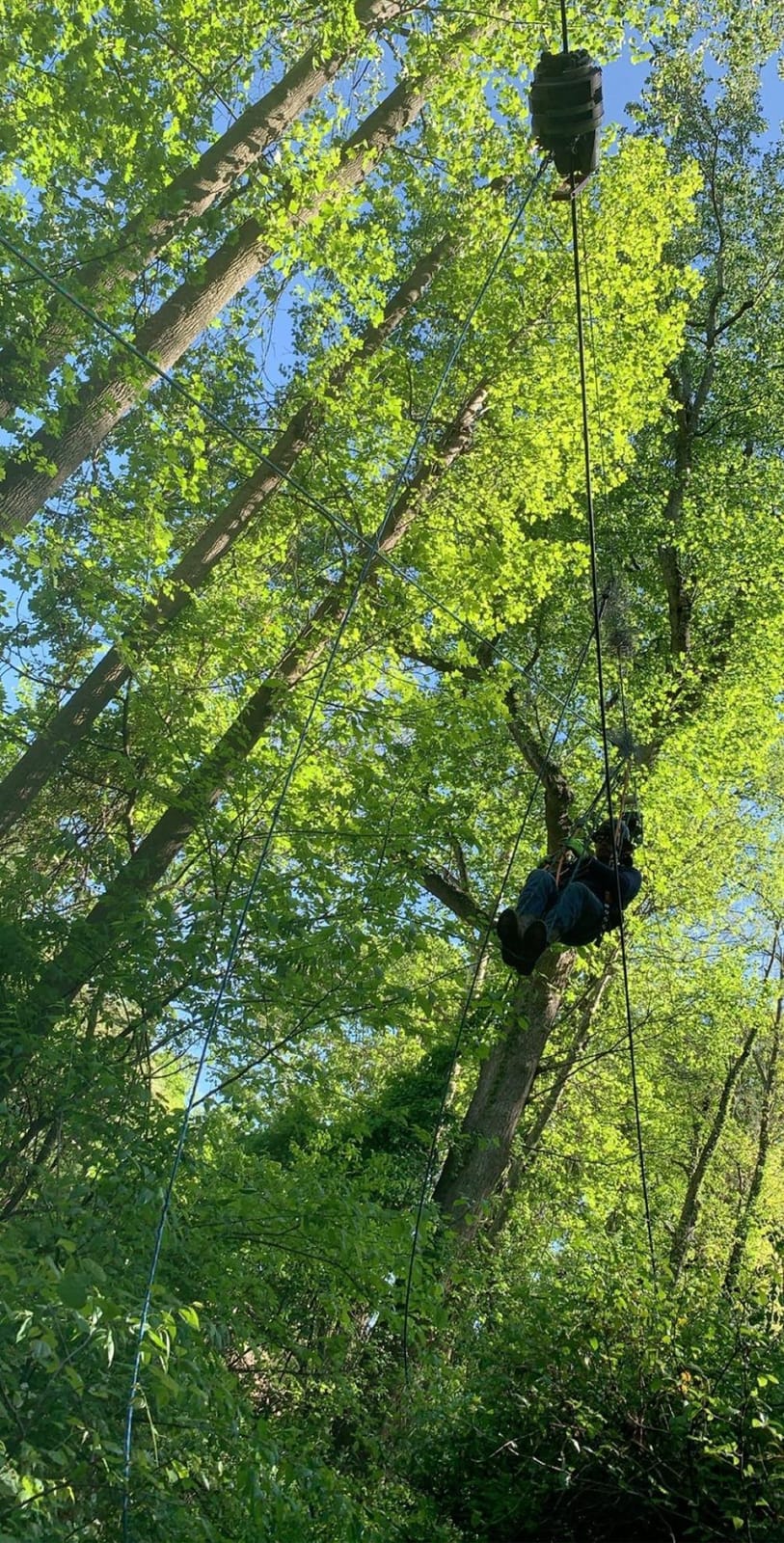
Why long-shift workers choose it
Industrial maintenance, utilities and manufacturing are where this harness earns its place. If your day is ten hours or more, comfort decides whether you keep wearing the harness properly, and the fit adjustability makes that possible even when body size changes through the day.
What to check before you buy
Confirm the waist belt size, because that is the part that runs small. You will also need to buy suspension trauma relief straps separately, and you should find the service life tag on receipt and record the date, since a harness with no traceable manufacture date is hard to justify at an audit.
9. FRONTLINE with Trauma Straps Is Best for Suspension Relief
FRONTLINE FALL PROTECTION Combat™ Full Body Harness | New styles | OSHA and ANSI compliant (ML, Full Body Harness)…
Integrated suspension trauma straps
5 points of adjustability
OSHA and ANSI compliant
Pros
- Integrated suspension trauma straps built into the harness
- Comfortable across 12-14 hour days
- Aluminum quick-connect chest and tongue buckle legs
- Reinforced belt and rigid pad support tool belts
Cons
- Sizing chart needs careful reading and some users size down
- Fewer style and size combinations listed
Suspension trauma is the quiet risk in every fall arrest plan. After a fall is arrested, the body hangs, and pressure on the leg arteries can cause a medical emergency even when the fall itself was survivable. This FRONTLINE harness integrates trauma straps directly into the design, which is the reason it carries the highest rating in our roundup.
Beyond that, it is a well built harness. Five points of adjustability produce a snug fit, moisture wicking back, shoulder and waist pads handle long days, and the reinforced belt with a rigid pad supports a tool belt without sagging. Owners describe 12 to 14 hour days in it comfortably.
The high tenacity black polyester webbing with safety orange stitching is the same inspection-friendly construction as the aluminum model, so a frayed or cut strap is visible at a glance. Aluminum quick-connect chest buckle and tongue buckle leg straps let you get in and out fast without dealing with loose webbing tails.
The honest caveat is sizing. The chart needs careful reading, and some users size down. Fewer style and size combinations are listed than for the models above, so if you need an unusual size, check availability before you commit.
Why this is the safest pick after a fall
If your rescue plan assumes the worker is suspended for any length of time, integrated trauma straps remove one variable. You are not relying on the user remembering to attach a separate strap in the seconds before a fall, which is exactly the moment people forget things.
Who should look elsewhere
Look elsewhere if you need a very specific size that is not listed, or if strap-free quick adjustment across crew members matters more to you than the trauma features. Check the size chart twice, because a snug fit that is actually too tight is the main complaint here.
10. AFP Demon Is Best for Small-Framed and Petite Users
AFP Demon Fall Protection Comfortable Safety Harness (OSHA/ANSI PPE), Harness for Men Construction, Safety Harness Fall Protection Kit
Maximum capacity 420 lb
Tested to OSHA, MSHA, ANSI, CSA and CE
Perforated breathable plush foam padding
Pros
- Available in petite and XS sizing with several colors
- Perforated breathable plush foam padding
- Maximum capacity of 420 lb
- Tested to OSHA
- MSHA
- ANSI
- CSA and CE standards
Cons
- Looks bulkier in photos than it feels in use
- Straps need fine tuning to settle
Most full body harnesses are drafted for a 50th percentile male torso, which leaves small-framed and petite users squeezing leg straps to their tightest notch and still fighting the fit. The AFP Demon is one of the few here with a dedicated Small-Medium and petite sizing option, and that alone puts it near the top of the list for smaller users.
The certification breadth is unusual. This harness is tested to OSHA, MSHA, ANSI, CSA and CE standards, which is the broadest set on the list and the only one here that includes both mining and European conformity testing.
Padding is the comfort story. Perforated breathable plush foam at the shoulders, legs and back is paired with an ergonomic waist pad that adds lumbar support, and the water-wicking abrasion resistant webbing stays workable in heat. Owners report it holding up through routine jobsite safety inspections without degradation.
On the other side, the harness looks bulkier in photos than it feels in use, and the straps need fine tuning before they settle. Buyers also note the range of options, from harness only to bundles with single or double leg snap hooks, which is useful if you want to match an existing connector.
Who this sizing actually helps
Petite and small-framed users, and anyone who has been told to lose weight or loosen a harness to fit. The pull-free lanyard keepers, side D-rings and dedicated SRL web link with a molded easy-link adapter make it a clean match for a compact connector setup.
Where it is the wrong call
It is the wrong call if you are near the top of a size range and want minimal bulk, or if you want the lightest possible harness for hot work. The fit does need adjusting before use, so do not skip the first walk-through in a safe spot.
11. Guardian Cyclone Is the Most Comfortable Fall Protection Harness
Guardian 21030 Cyclone Construction Harness with Waist Pad | Side D-Rings|OSHA & ANSI Compliant | Black/Yellow | M-L
Quick release chest, leg and waist buckles
Lightweight breathable shoulder padding
Supportive waist pad with belt option
Pros
- Consistently called the most comfortable harness owners have worn
- Large padding that is not excessively bulky
- Quick release clasps speed up donning and doffing
- Long lasting with some owners reporting five years of regular use
Cons
- Size chart is misleading and M/L runs large
- Waist can stay loose on lanky builds
- Costs more than any other harness in this roundup
When we asked which harness in this roundup owners wear without complaining, the Guardian Cyclone came back more than any other. The reason is the padding: large, breathable and structured so it does not read as bulky under work clothes. Long-term trade users describe it as the most comfortable harness they have worn, and some report five years of regular use.
The quick release clasps matter more than they sound. On a site where you climb in and out of a ladder or a lift several times a shift, buckles you can operate with gloves on are worth more than a slightly lighter harness, and this one has quick connect chest buckles, tongue buckle legs and a tongue buckle waist belt with side D-rings.
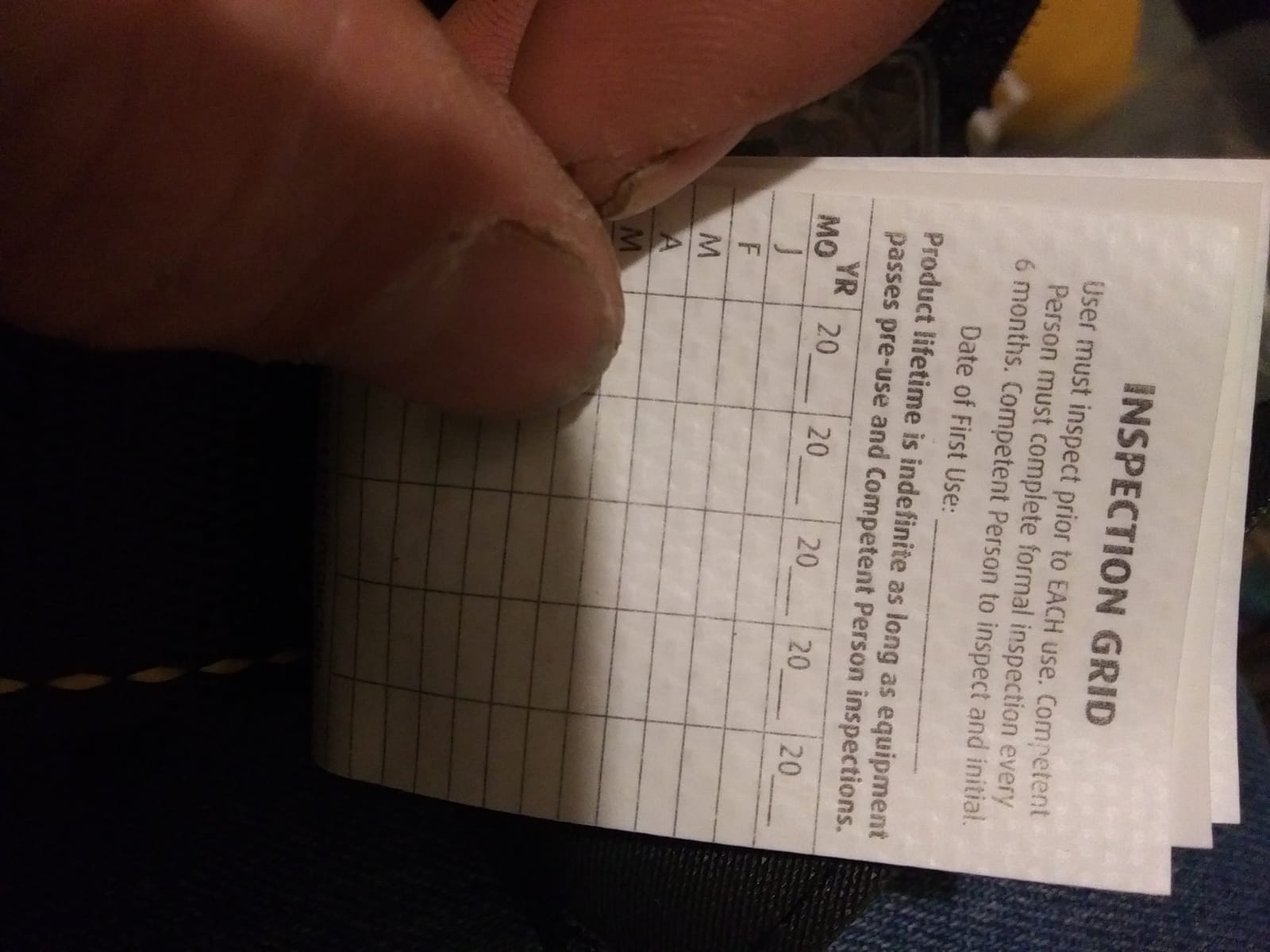
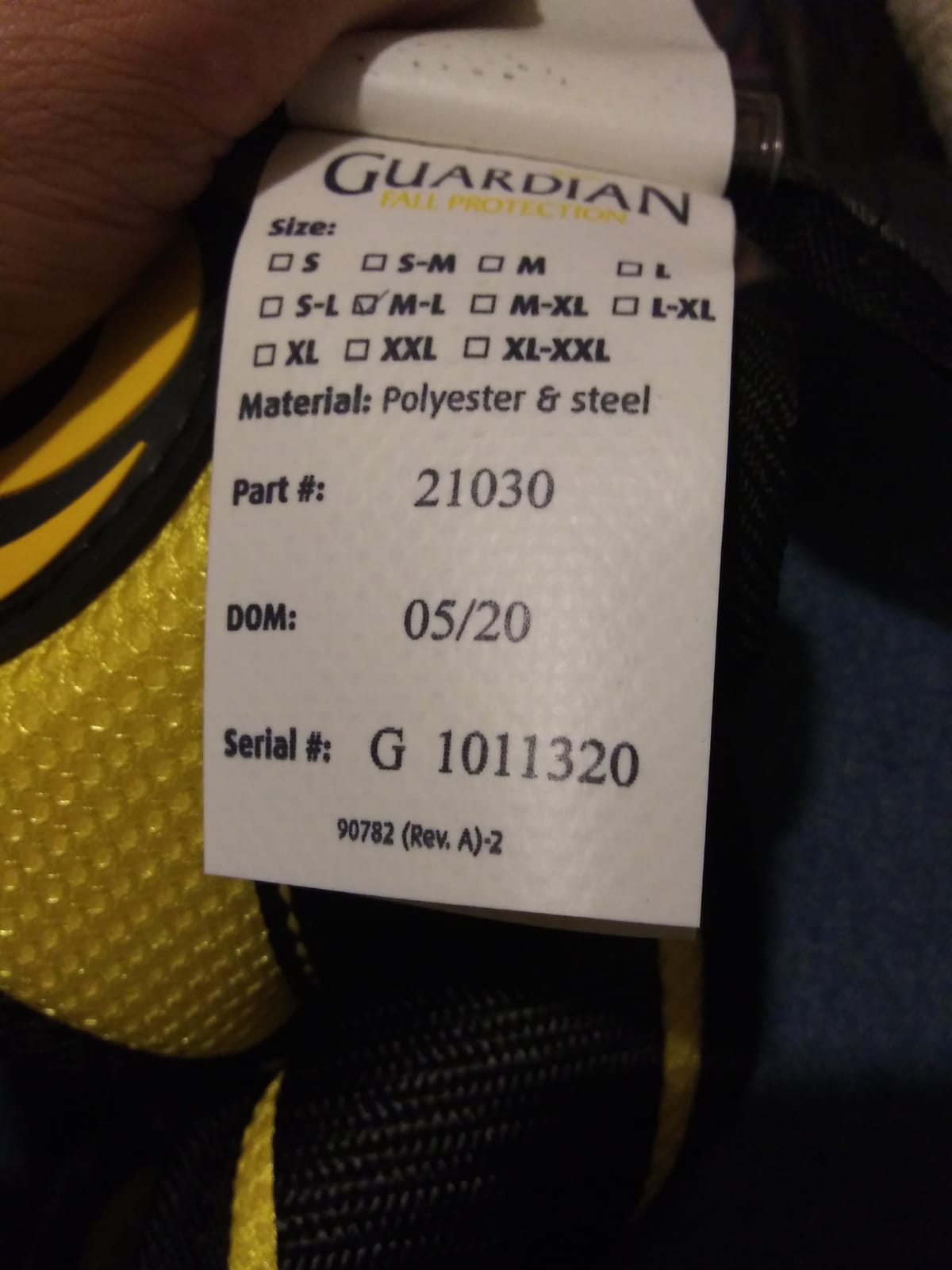
Construction details are solid: 100 percent polyester with a durable label cover protecting the safety information, dual lanyard keepers, and spring-loaded torso adjustment for a quick tailored fit. Made in the USA, and the item weight is listed at 5 lb.
It is the most expensive harness in this roundup, and for many buyers that is the deciding factor. The size chart is also misleading, with M/L running large for smaller users, and the waist section can stay loose on lanky builds even cinched to the tightest notch.
Who will notice the difference
Anyone already wearing a harness that hurts. Owners switching from employer-issued gear to this one describe the first week as a step change in how long they can work before the shoulders start complaining. For a 10 to 12 hour shift, that is worth paying for.
Who should not pay for it
Do not pay for it if you are outfitting a large crew on a budget, since the cost multiplies fast. If you are a smaller user, order down from the chart rather than trusting M/L, and note that lanky builds may never get the waist fully tight.
12. WHITEDEW Kit Is Best for a Shared or Apprentice Harness
WHITEDEW Fall Protection Premium Safety Harness with Shock Absorbing Lanyard, Vented & Padded Shoulder, Legs & Back – Upgrade 4 Quick Buckles (Yellow)
Four quick-release buckles
Fits 130-350 lb and 4 ft 10 in to 6 ft 6 in
Includes 2m shock-absorbing lanyard
Pros
- Four quick-release buckles let you refit fast for apprentices
- Thick ventilated mesh padding at back
- waist
- shoulders and legs
- Generous adjustment range for boom and scissor lift work
- 2m shock-absorbing lanyard with two alloy steel hooks
Cons
- Not CSA approved so it is not compliant for Canadian work
- Shoulder padding is a rough material that can chafe the neck
- Included lanyard is basic next to the harness
Four quick-release buckles change how a harness works in a crew. Every one of the four can be opened and closed without rethreading webbing, so when a 19-year-old apprentice steps into a 200 lb harness, you can refit the whole thing in seconds instead of guessing at a tail of strap. Electricians and lift operators mention this feature more than any other.
The adjustment range is unusually honest for a one size harness. It fits 130 to 350 lb between 4 ft 10 in and 6 ft 6 in, and the high-strength steel dorsal D-ring takes the arrest load, with durable side D-rings for work positioning.
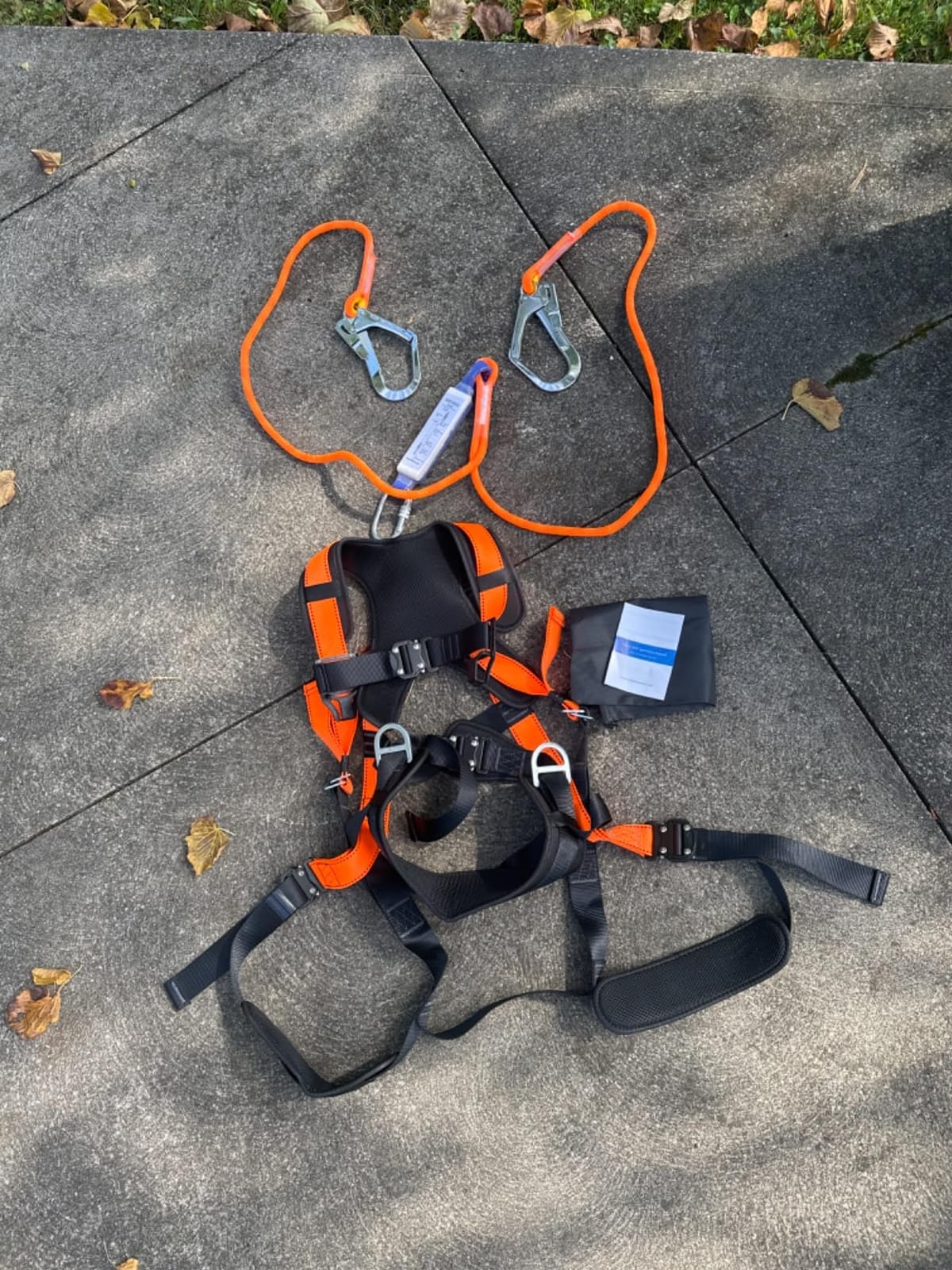
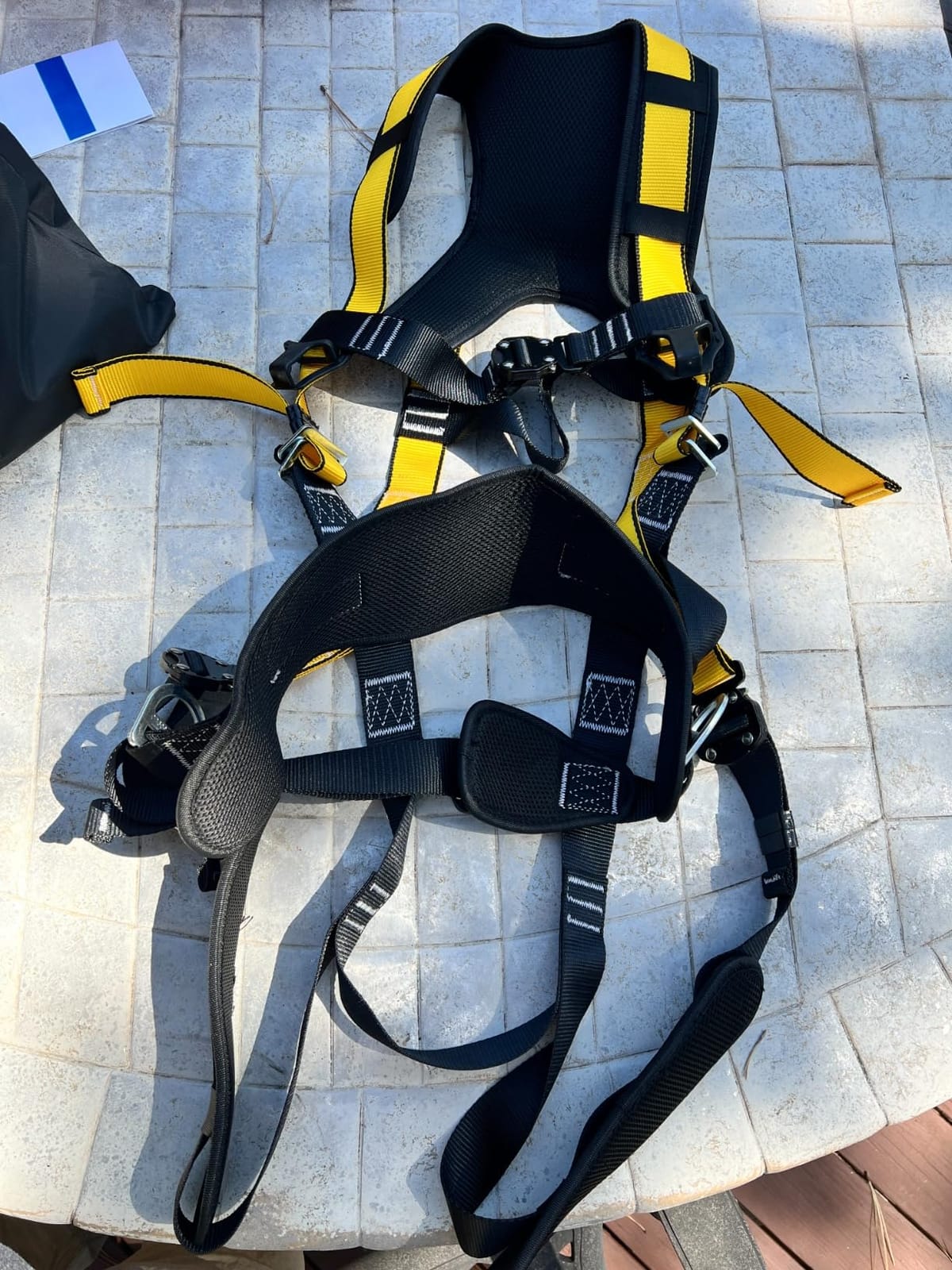
Comfort is a genuine strength here. Thick ventilated breathable mesh padding sits at the back, waist, shoulders and legs, and owners describe it as widely the most comfortable harness they have used, particularly on boom and scissor lifts where the seat back presses against your lower back all day.
Three things to plan around. It is not CSA approved, so it will not satisfy a Canadian site. The shoulder padding is a rough material that can chafe the neck on a hot day. And the included 2m shock-absorbing lanyard is basic next to the harness, so plan to replace it.
Who this is built for
It suits a crew where more than one person wears the same harness, an apprenticeship program, and lift operators who get in and out of a basket all day. The four buckles also make it the easiest harness here to inspect visually, because everything is visible without turning it inside out.
Where it stops short
It stops short in Canada, where CSA certification is required, and it is not the choice for anyone with sensitive skin on the neck. If you already own a quality connector, buy the harness and keep what you have instead of relying on the supplied lanyard.
Which Type of Fall Protection Harness You Actually Need
Most buyers are choosing the wrong category before they ever compare brands. A full body fall arrest harness is the most common type in occupational use, and it is the only type permitted for arrest, but it is not the only kind of harness on the market.
Fall arrest is for an unprotected edge with a risk of falling to a lower level. Work positioning is for a low fall risk where you need both hands free, and it is used with a positioning strap or a positioning lanyard to keep you at a workbench or on a roof slope. Ladder climbing systems add a sternal or chest D-ring so the connector rides high and stays clear of the rungs. Confined space harnesses add a dorsal and shoulder or sternal arrangement so a retrieval system can lift an entrant out of a tank or a vault. Rope access harnesses are built for climbing and descending on rope, with gear loops and droppable hardware for the riggers working above you.
The rule that catches people: OSHA does not permit body belts or positioning-only gear for fall arrest. A positioning strap holds you in place at height. A fall arrest harness is the only configuration that can absorb the load of an actual fall.
On D-ring count, most of this roundup is 4-point, which is the back dorsal D-ring plus two hip D-rings, and some of the harness on this list go to 5-point by adding a sternal chest D-ring. Choose 4-point for general construction and roofing. Choose 5-point, or higher, for ladder climbing, confined space and rescue, where you need a high tie-off point above the shoulders.
How to Choose a Fall Protection Harness: 7 Things That Matter
Certification. OSHA does not approve or certify individual harnesses. It enforces performance standards through OSHA 1926.502 and 1910.140, which pull in ANSI Z359.11-2014 for industrial full body harnesses. Look for a printed ANSI marking and a legible label, and treat a missing or unreadable label as a failed inspection.
Fit and sizing. Size by the chart, not by height alone, and check the leg strap range as well as the waist. Several harnesses in this roundup run small, several run large, and a poor fit is the fastest route to a worker loosening straps on a roof. Small-framed users should look for XS and petite options, and anyone above 6 foot 5 should confirm the size exists before ordering.
Weight capacity. Pick a harness rated comfortably above your own weight, not level with it. If you weigh 250 lb, target a harness that lists a higher maximum. The capacity on the label is the rating for the whole system, including the user with tools.
D-ring configuration. Back, hip, sternal and lateral D-rings each have a job. Back for standard fall arrest, hip for positioning, sternal for climbing and confined space, lateral for a ladder rail system. A harness with only a back D-ring, like the entry-level Warthog, is the least flexible.
Buckles. Quick-connect and quick-release buckles are fastest and let you share a harness across a crew. Tongue buckles are slower but are traditional on quality gear. Cam lock buckles can work loose over time, which is a genuine safety complaint we saw repeatedly, so check them at every pre-use inspection rather than assuming they held.
Tool belt fit. Yes, you can wear a tool belt over a harness, and most carpenters do. Keep the belt from loading or covering the dorsal D-ring, and many users prefer routing a separate belt under the leg straps so the back attachment point stays completely clear. Harnesses with a reinforced belt and rigid pad, like the two FRONTLINE models, are built for this.
System compatibility and fall clearance. A harness, a connector and an anchorage only work as a matched set, and brand-locked connectors are a real trap. A 3M DBI-SALA self-retracting lifeline will not accept a third-party connector pin, and that mismatch is often discovered after delivery. For clearance, the arithmetic is simple: the maximum free fall is 6 ft, or up to 10 ft with a self-retracting lifeline, and you add the deployment distance of the connector plus your own body clearance below that to work out the anchorage height you need.
How to Inspect a Harness and When to Take It Out of Service
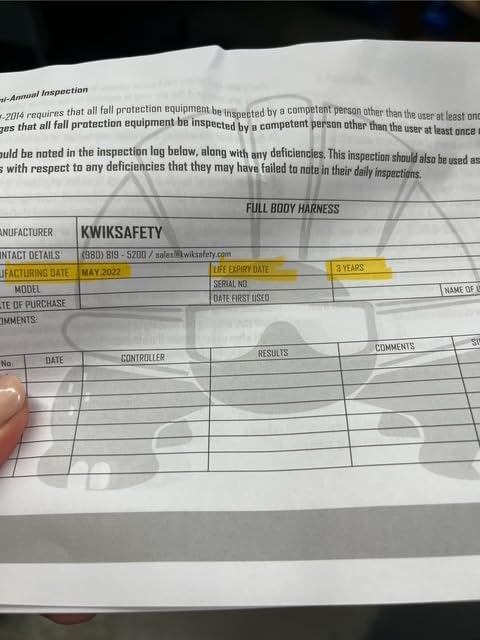
Condition decides retirement, not purchase date. A harness stored properly and used gently can outlast one that sat in a truck bed for a summer, and a two-year-old harness with clean webbing is safer than a six-month-old one that has been dragged over rebar.
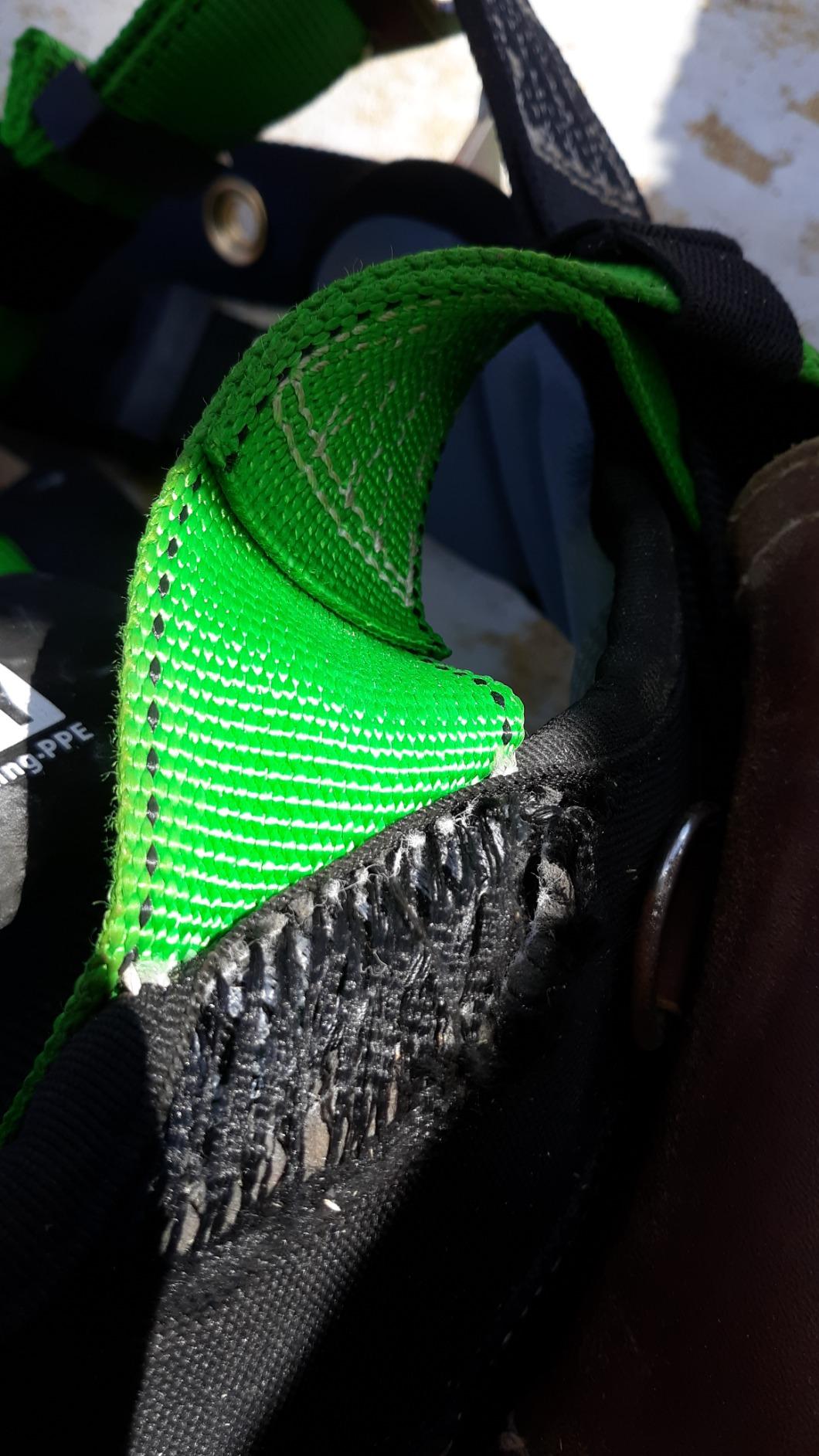
Remove a harness from service immediately after any fall event, whether or not the hardware looks intact, and have it evaluated. Beyond that, retire it when you find frayed, cut or fuzzy webbing, a deformed or loaded D-ring, broken or pulled stitching, chemical or heat damage, contaminated padding that will not clean, or a missing or unreadable label. UV exposure, paint, solvents and welding spatter all degrade polyester webbing faster than abrasion alone does.
Run a pre-use inspection every single day. Check webbing along its full length, look at every stitch line, open and close every buckle, inspect each D-ring for deformation, and confirm the impact indicators and label are intact. Two minutes of inspection is the cheapest safety control available to you.
The 30-Second Fall Arrest Harness Donning Checklist
Lay the harness out with the dorsal D-ring facing the ground and check every buckle is fastened before you put a leg through it.
Step into the leg straps and pull them up to the thigh, not the calf.
Bring the shoulder straps over and fasten the chest or sternal connection, high enough to sit near the collarbone.
Tighten the shoulder straps until you cannot slip a flat hand under them, and tighten the waist last.
Adjust the leg straps so you cannot touch your own heel through the webbing.
Check each D-ring sits flat, rotates freely and shows no deformation or impact indicator activation.
Connect the lanyard or self-retracting lifeline to the dorsal D-ring, or the sternal D-ring when climbing, and confirm the connector is fully closed.
Test the fit with a gentle forward bend and a small shake, then have a second person check the back attachment before you leave the ground.
Harnesses We Did Not Put on This List
Recreational tree stand, hunting, archery and rope course harnesses are not fall arrest gear. They carry load ratings and sometimes a CE mark, and they often use similar looking webbing and D-rings, but they are built to a different standard and will not satisfy ANSI Z359.11 or an OSHA inspection. We saw plenty of this category ranking for this search, and it is the easiest and most expensive mistake available in this topic.
The word harness also covers a completely unrelated product in vehicle work, where a wiring harness routes cables rather than arresting a fall. If that is what you are shopping for, our guide to the [best trailer wiring harnesses](https://www.minormania.com/best-trailer-wiring-harnesses/) covers the wiring side instead. Similarly, surface protection gear like [paint protection film kits](https://www.minormania.com/best-paint-protection-film-kits/) protects a finish, not a worker, and the two should never be confused on a jobsite.
We also left out harnesses whose product data we could not verify against a printed standard and a stated weight capacity, and any listing where the capacity, the standard or the sizing could not be confirmed. A life-safety product with ambiguous specifications is not a budget option, it is an unknown one.
Frequently Asked Questions
Should I get a 4 point or 5 point harness?
A 4-point harness has a dorsal D-ring for fall arrest plus two hip D-rings for positioning, and it covers most construction and roofing work. A 5-point harness adds a sternal chest D-ring above the shoulders, which gives you a high tie-off point for ladder climbing, confined space entry and rescue. If your work involves climbing into tanks, ladders or aerial lifts, pay for the fifth point. If you are framing, roofing or doing general maintenance, 4-point is enough.
What fall protection system is the most effective?
A personal fall arrest system is only as good as its weakest part, and effectiveness depends mostly on the anchorage. The system is three matched components: a rated anchorage, a connector such as a shock-absorbing lanyard or self-retracting lifeline, and a full body harness. Strength comes from an anchorage that is rated and genuinely above the worker. A better harness cannot compensate for a weak anchor or a connector with the wrong pin type.
Which type of harness is commonly used in fall protection?
The full body fall arrest harness is the most commonly used type in occupational fall protection, because it supports the whole body including the legs and can absorb a real fall. OSHA does not permit body belts or positioning-only gear for arrest. Work positioning harnesses, ladder climbing systems, confined space harnesses and rope access harnesses exist, but each is built for a specific task and most are used alongside a full body harness rather than instead of one.
Which safety harnesses are OSHA approved?
OSHA does not approve or certify individual harnesses. It enforces performance standards through OSHA 1926.502 and 1910.140, which reference ANSI Z359.11-2014 for industrial full body fall arrest harnesses. What you can verify is a printed ANSI Z359.11 marking, a legible model and capacity label, and documented workplace inspections. Sellers claiming an OSHA approval certificate are describing an inspection, not a product approval.
Which fall harness is the most comfortable?
Comfort comes down to padding, breathability and adjustability rather than any one model, so there is no universal answer. Look for breathable mesh or moisture wicking pads at the shoulders, legs and back, a supportive waist pad or lumbar belt, and enough adjustment points to fit snugly with gloves on. Of the twelve we tested, the Guardian Cyclone drew the most consistent comfort reports, and the FRONTLINE aluminum model was the easiest to wear through a 40-hour week.
Does OSHA allow body belts for fall arrest?
No. Body belts and positioning-only gear may be used for work positioning at height, where the fall risk is low and the worker needs both hands free. They are not permitted for fall arrest, which requires a full body harness that can distribute the arrest load across the pelvis, thighs and chest. If your risk assessment includes any chance of falling to a lower level, you need a full body harness, not a belt.
How much free fall is acceptable when using a full body harness?
The maximum permitted free fall for a fall arrest system is 6 ft, and up to 10 ft when a self-retracting lifeline is used because the device arrests during deployment. Your required anchorage height is that free fall distance plus the connector deployment length plus your own body clearance to the nearest obstruction. Work the arithmetic from the top down for your specific connector before you select an anchor, because the anchorage height is often the constraint that decides the whole job.
Can you wear a tool belt over a harness?
Yes, and most carpenters do. The rule is that the tool belt must not obstruct, cover or load the dorsal D-ring, since that ring is where the connector takes the arrest force. Many users prefer routing a separate belt under the leg straps so the back attachment point stays completely clear. Harnesses with a reinforced belt and rigid pad are built to carry a tool bag without sagging, and you can always add or remove the belt on a model that takes one.
How do I know if my harness is still safe?
Condition decides, not age. Retire a harness immediately after any fall event, and also if you find frayed, cut or fuzzy webbing, a deformed or loaded D-ring, broken stitching, chemical or heat damage, contaminated padding, or a missing or unreadable label. Inspect it before every use: run the webbing through your hands, check every stitch line, open and close every buckle, and look for activated impact indicators. Two minutes a day is the cheapest control you have.
Our Verdict on the Best Fall Protection Harnesses in 2026
The KwikSafety SCORPION is our pick for the best fall protection harnesses overall, because it pairs the largest review base in this roundup with a rigging layout that suits roofing and solar work and ships with a usable lanyard. Carpenters carrying a real tool bag should look at the Palmer Hammerhead, and anyone working 10 hours or more a day will find the Guardian Cyclone the most comfortable option we tested.
Before you order, confirm three things: your weight sits inside the stated capacity with room to spare, the size exists for your frame, and your existing connector is actually compatible with the harness. This is a gear guide, not fall protection training. OSHA 1910.140 requires a trained competent person, a written rescue plan and documented inspections, and no harness on any list changes that.