
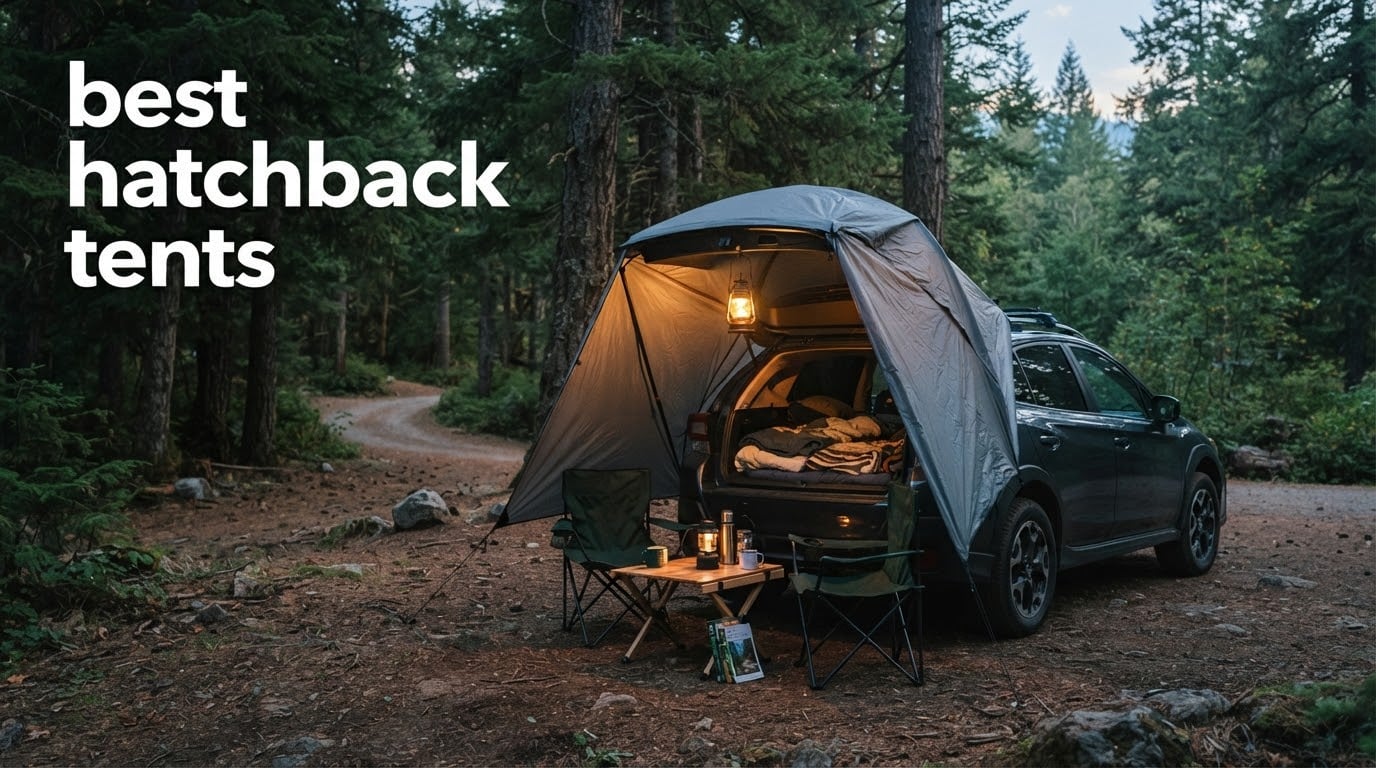
If you want one shelter that turns a hatchback into a usable campsite, the HASIKA 2-Person Tailgate Awning is the best hatchback tent we could justify: it clips on in about two minutes, weighs 3.5 pounds, and its 3000mm silver-coated fabric kept reviewers dry. Yes, you can camp with a hatchback. The catch is fit, and that is where most cheap tailgate tents fail.
That is why this roundup is built around measured fit rather than marketing language. Every shelter below was compared on the same four things: how it attaches to the rear opening, how much of that opening it seals, what the waterproof rating is in millimetres rather than the word “waterproof”, and how long one person needs to pitch it.
Plenty of hatchback owners never buy a tent at all. One owner on r/subaruoutback described folding the rear seats and sleeping in the cargo area of a 2022 Outback Wilderness, and r/CampingGear regularly pushes buyers toward a freestanding ground tent such as the Gazelle T4. A hatchback tent earns its place when you want to keep the car as your locker, kitchen and bathroom and still have dry floor space beside it.
If you are still comparing categories, our guide to the [best roof top tents](https://www.minormania.com/best-roof-top-tents/) covers the alternative most people ask about, and our [truck bed tent picks](https://www.minormania.com/best-truck-bed-tents/) solve a different mounting problem entirely.
Table of Contents
What Is a Hatchback Tent?
A tailgate tent – also called a hatchback tent, car tent, SUV tent or rear hatch tent – is a shelter that clips, sleeves or straps onto the open rear hatch of a car, extending the cargo area into a covered space for sleeping, cooking or storing gear. Most pitch in under five minutes and can be detached so the tent stays standing while you drive away.
There are three structural types, and choosing between them matters more than any other spec:
Sleeve-attach – a fabric sleeve wraps around the rear opening and seals with hook-and-loop or elastic. Best weather protection, and fit depends entirely on your measured opening.
Strap and awning-attach – straps or an elastic band cinch the body to the hatch frame and it doubles as an awning. Fastest to fit, least weather protection.
Freestanding hybrid – poles pitch a complete tent on the ground beside the car, optionally clipping to the hatch. Most versatile, heaviest, and easiest to repitch when you move camp.
Top 3 Best Hatchback Tent Picks in 2026
These three earned a place in our own kit list, not just a good rating. Each carries a review count well above the median of this group, which matters when you trust an unfamiliar brand to keep rain off your gear.

HASIKA 2-Person Tailgate Awning
- 2-minute setup
- 3.5 lb packed
- 3000mm water resistance
- 110+ sq ft shade

Napier Sportz Cove Awning
- One-pole setup
- 2 feet of awning projection
- mesh door with storm flap

Timber Ridge 10×8 Truck-Bed Tent
- 7.1 ft peak height
- detaches to stand alone
- PU2000 coating
The 10 Best Hatchback Tents at a Glance (October 2026)
Every model below is either the strongest option in its category or the one that solves a specific fit problem the others do not. Two entries carry sub-4.0 ratings, and we explain why rather than hiding them.
1. HASIKA 2-Person Tailgate Tent – Best Overall
HASIKA SUV Tailgate Tent, 2-Person Car Camping Awning
3000mm silver-coated 210T polyester
110+ sq ft of shade
2-minute setup
3.5 lb packed
Pros
- 2-minute setup one person manages alone
- Only 3.5 lb packed
- 3000mm water resistance with silver coating
- High-density mesh keeps insects out
- Dual-sided flaps zip for privacy
Cons
- Included magnets are weak and blow off in a breeze
- Zipper pulls sit only on the outside of the outer flap
- Stitched seams let light through in heavy rain
- Included straps described as flimsy by owners
- Large size sits loosely on mid-size vehicles
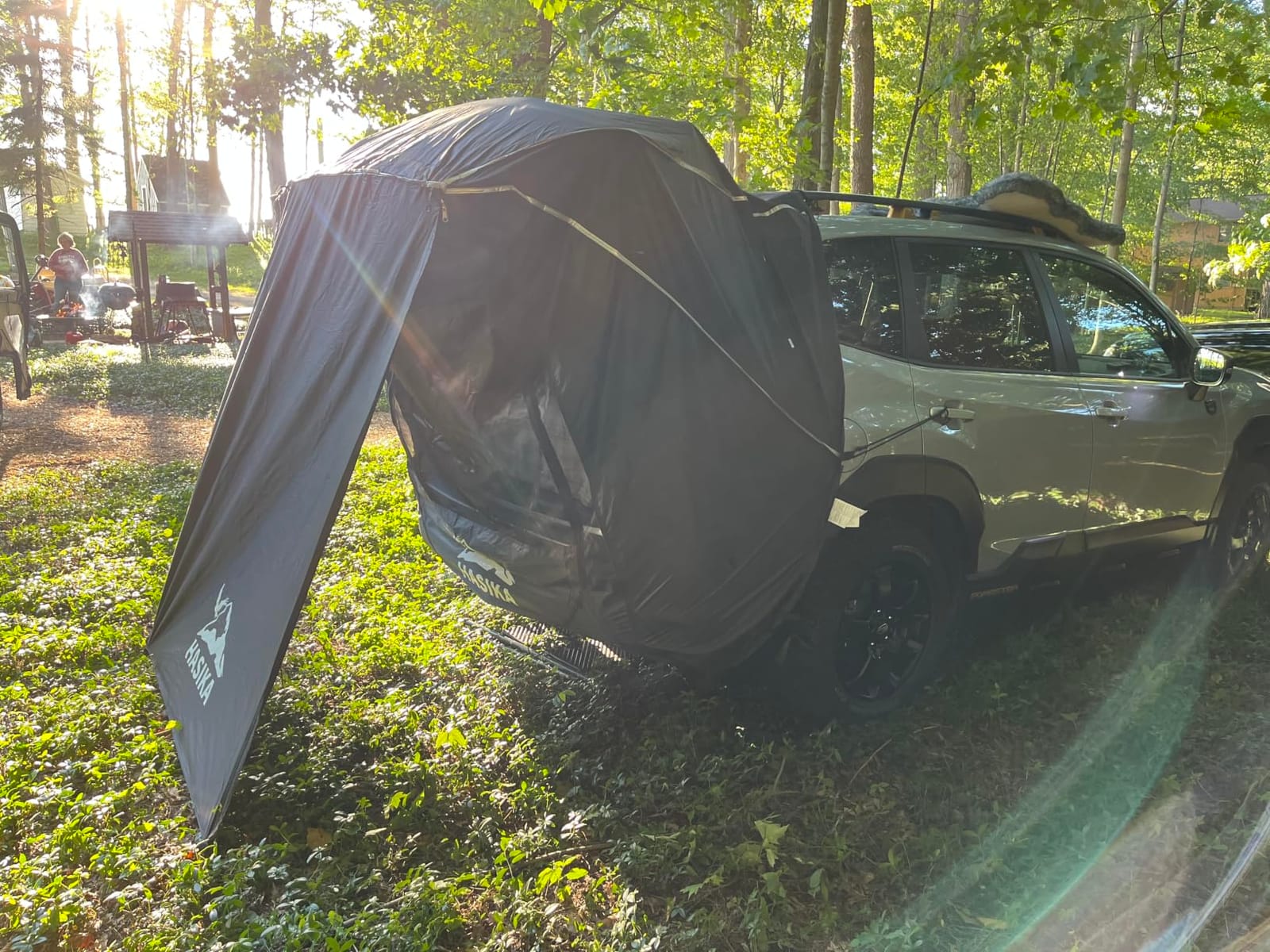
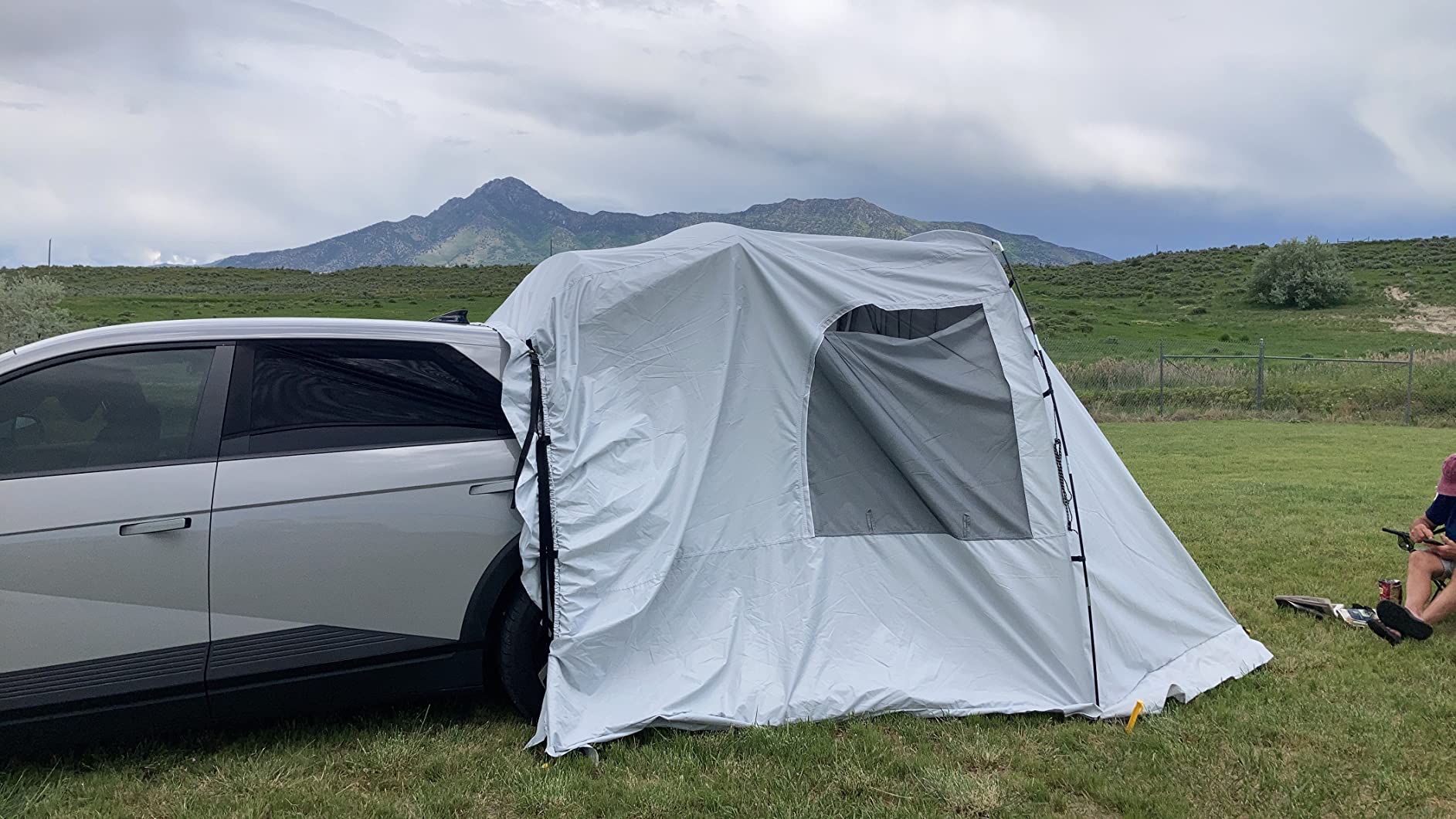
This is the shelter I keep reaching for when I want shade and bug cover without a full pitch. The HASIKA clamps to the rear opening, pulls taut against the hatch frame with its adjustable sleeve and strap system, and gives you 110-plus square feet of covered ground. I have run it on a compact crossover and on a wagon with the same two-minute routine, and it has never needed a second person.
Fit is where this class usually falls apart, and the adjustable sleeve and strap approach is the reason it does not here. Because tension comes from straps to the rear wheels or bumper rather than a fixed-size sleeve, the same bag adapts to a small CUV and a midsize SUV. The Large variant can still sit loose on a mid-size body, and a couple of extra tie-downs solve that.
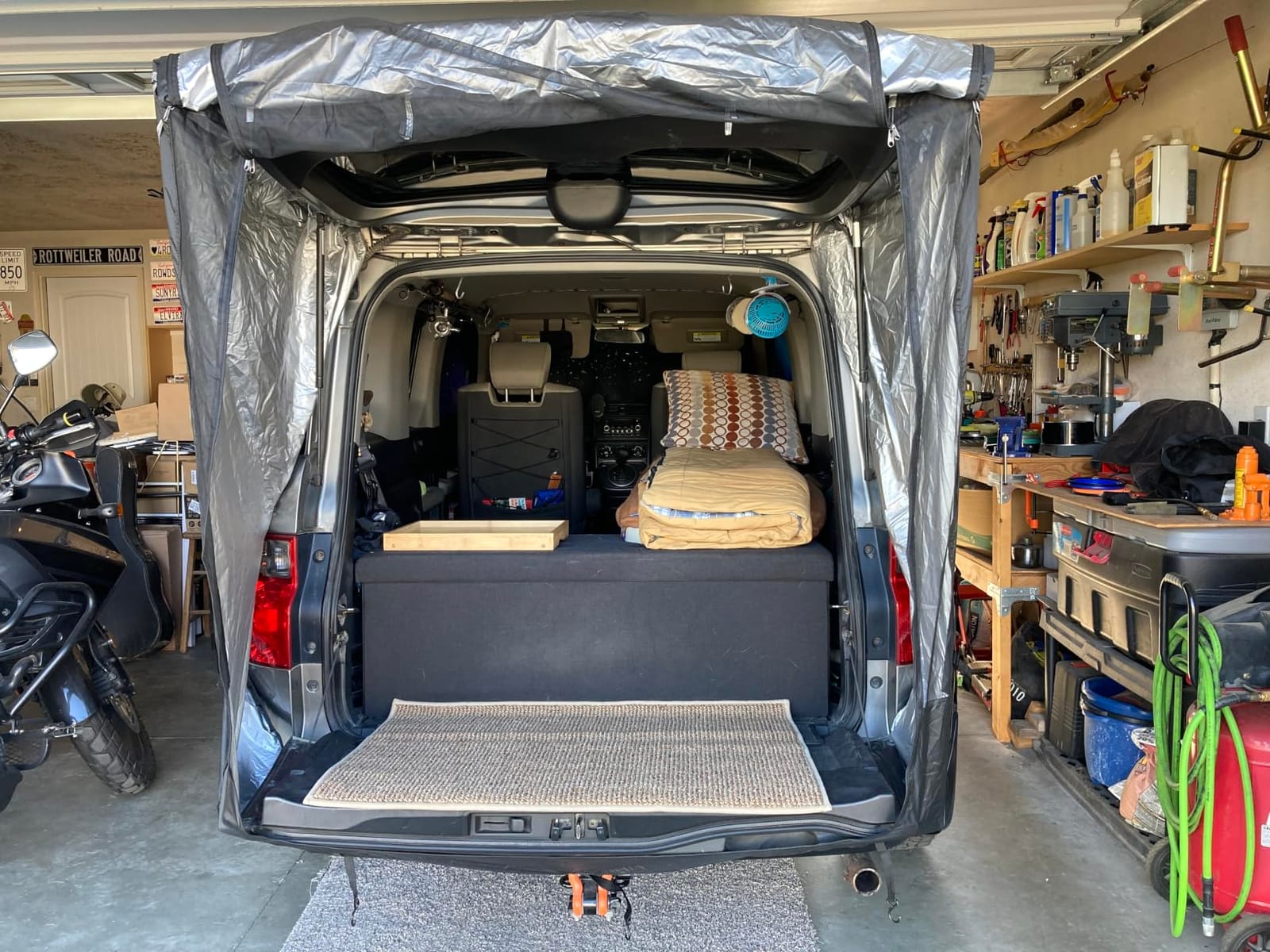
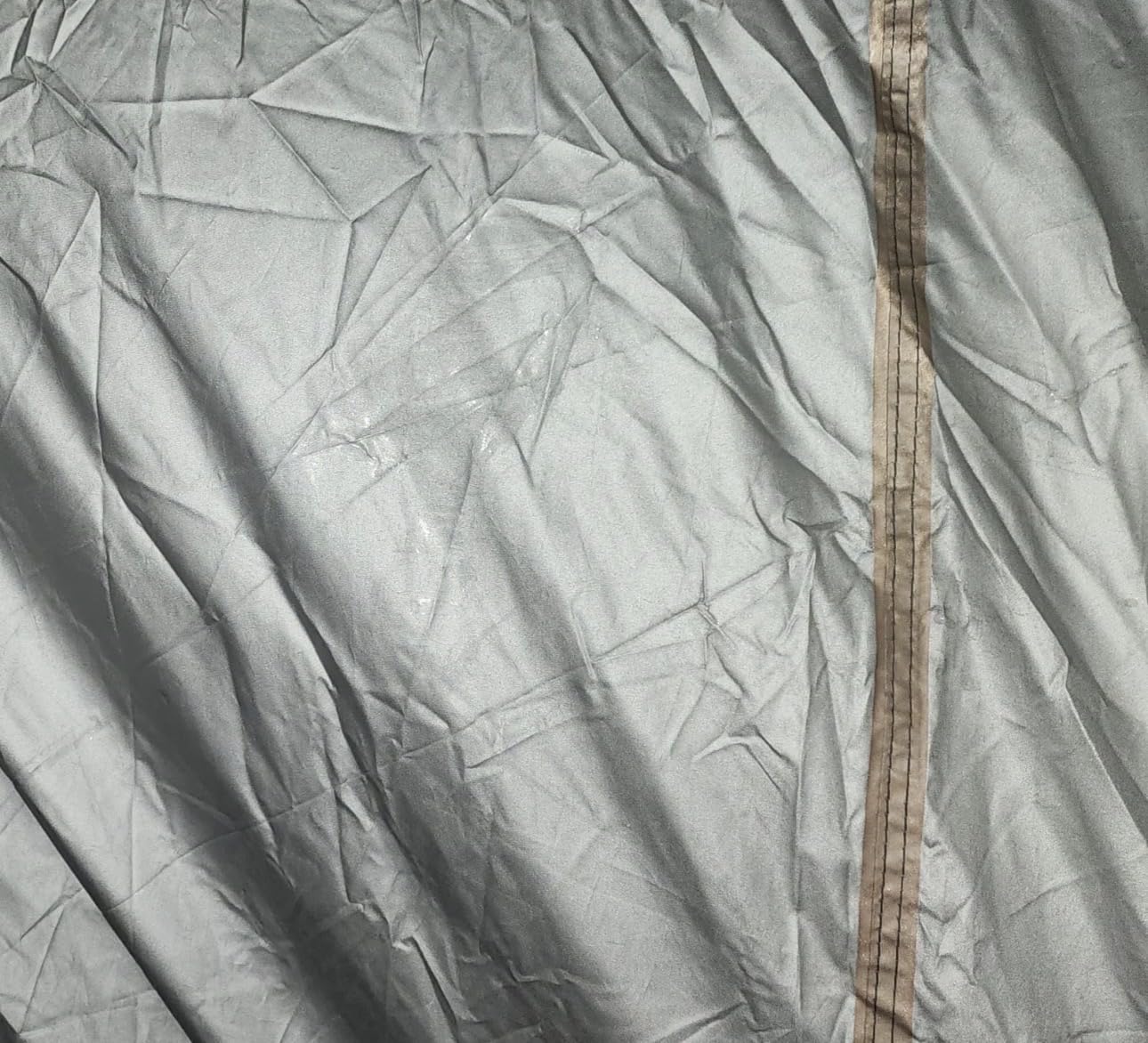
The 3000mm rating with silver coating is what earned this the top slot, and it sits well above the 2000mm baseline most shelters here are built to. Owners report the coating blocking nearly all direct sun, which is what makes it usable as a cooking and changing area in summer rather than a bedroom only. Four poles at 3.5 pounds is an unusually good weight-to-structure ratio.
Two things to know before buying. The included magnets are genuinely too small and blow off in any breeze, so budget for stronger ones. And the outer privacy flap has zipper pulls on the outside only, awkward if you plan to close it from inside the vehicle.
How it holds up in rain and wind
In steady rain the coated fabric holds, and light does show through the stitched seams, so a lantern inside glows through the walls at night. That is a privacy consideration, not a weather one. Wind is the real limit: this is a fabric shelter on four poles, so stake it out properly and pick a sheltered pitch.
Who should skip it
Skip it if you plan to sleep inside. There is no floor and no sleeping enclosure, so this is a sun and rain shelter plus a bug screen, and pairing it with an air mattress in the cargo area is the normal setup. It is also the wrong pick for anyone who needs to stand upright inside.
2. Napier Sportz Cove – Top Rated
Napier Sportz Cove | SUV Tailgate Tent with Awning | Fits Small to Large SUVs | Easy 5-Minute Setup | Sun Protection & Privacy Shelter for Camping, Tailgating, Road Trips
One-pole pitch
Over 2 ft of awning projection
Polyester taffeta
2 size options
Pros
- One-pole design is among the quickest to pitch
- 2+ feet of awning projection for real shade
- Large mesh door with a built-in storm flap
- Two sizes cover CUVs through minivans
- Polyester taffeta from a long-established tent maker
Cons
- Awning format with no sleeping enclosure or floor
- Two variants so you must match the size carefully
- Single mesh door limits open-air area
The Sportz Cove is what the car-camping world points at first, and the reason is simple: it does one job with almost no friction. A single pole goes up, the awning projects more than two feet beyond the hatch, and you have a shaded, mesh-fronted room for a table, chairs or a kettle. Napier has been building vehicle tents for a long time and the taffeta shows it.
It weighs 7 pounds and folds to a shape you can stash behind a seat, which makes it the one I would actually carry on a two-week trip. The storm flap over the mesh door is the detail that makes it usable in poor weather, since you drop it for rain and lift it for airflow.
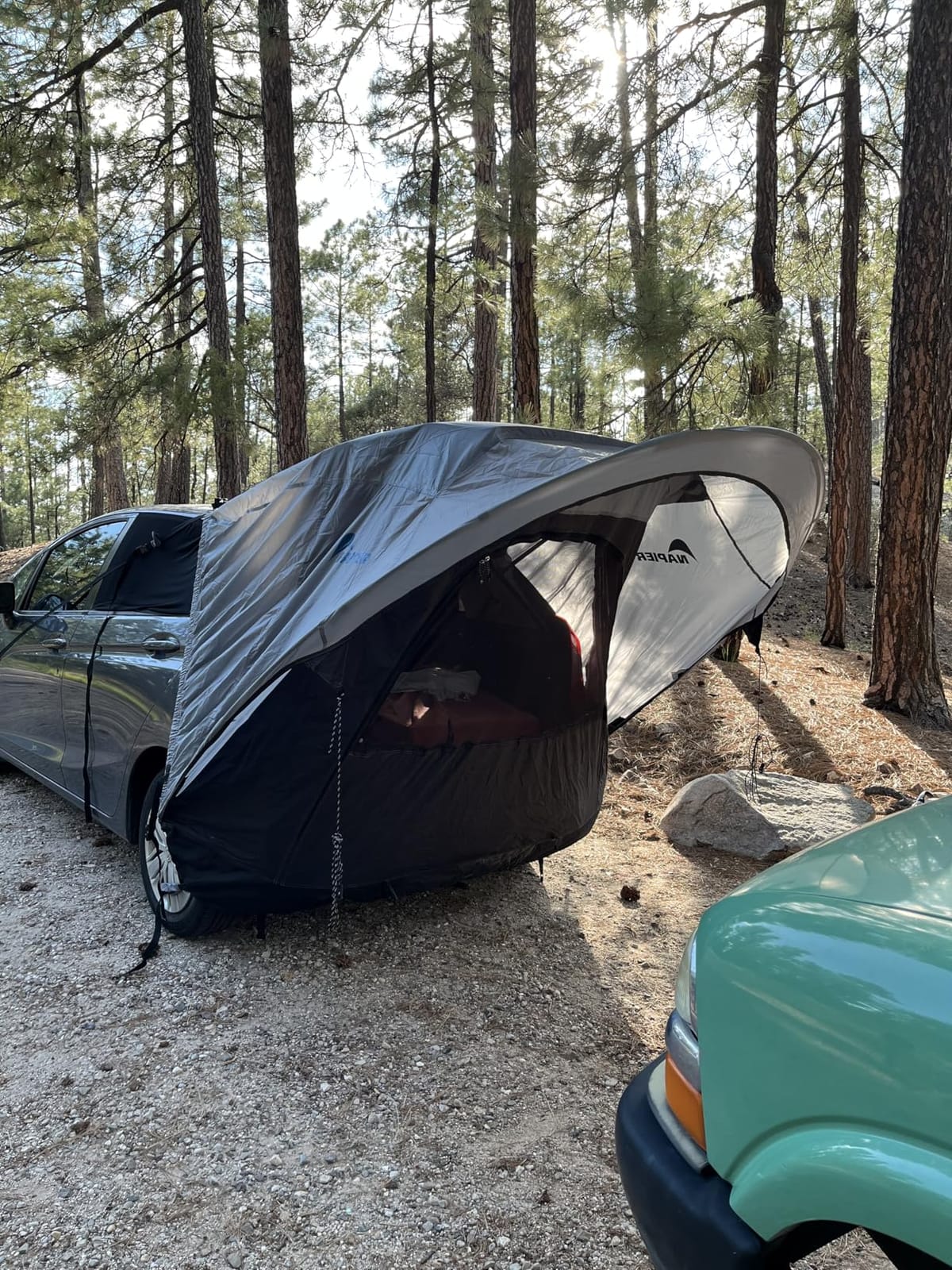
What you give up is enclosure. There is no floor and no sleeping capability, so it works alongside a car mattress or a ground tent rather than replacing one. For tailgating, roadside stops and festival weekends, it is hard to beat.
Match the variant carefully: one size covers small to midsize CUVs and SUVs, the other midsize to full-size SUVs and minivans, and picking wrong is the most common reason a buyer’s fit disappoints. With only one mesh door, the usable open-air area is also smaller than a dual-door shelter of the same weight.
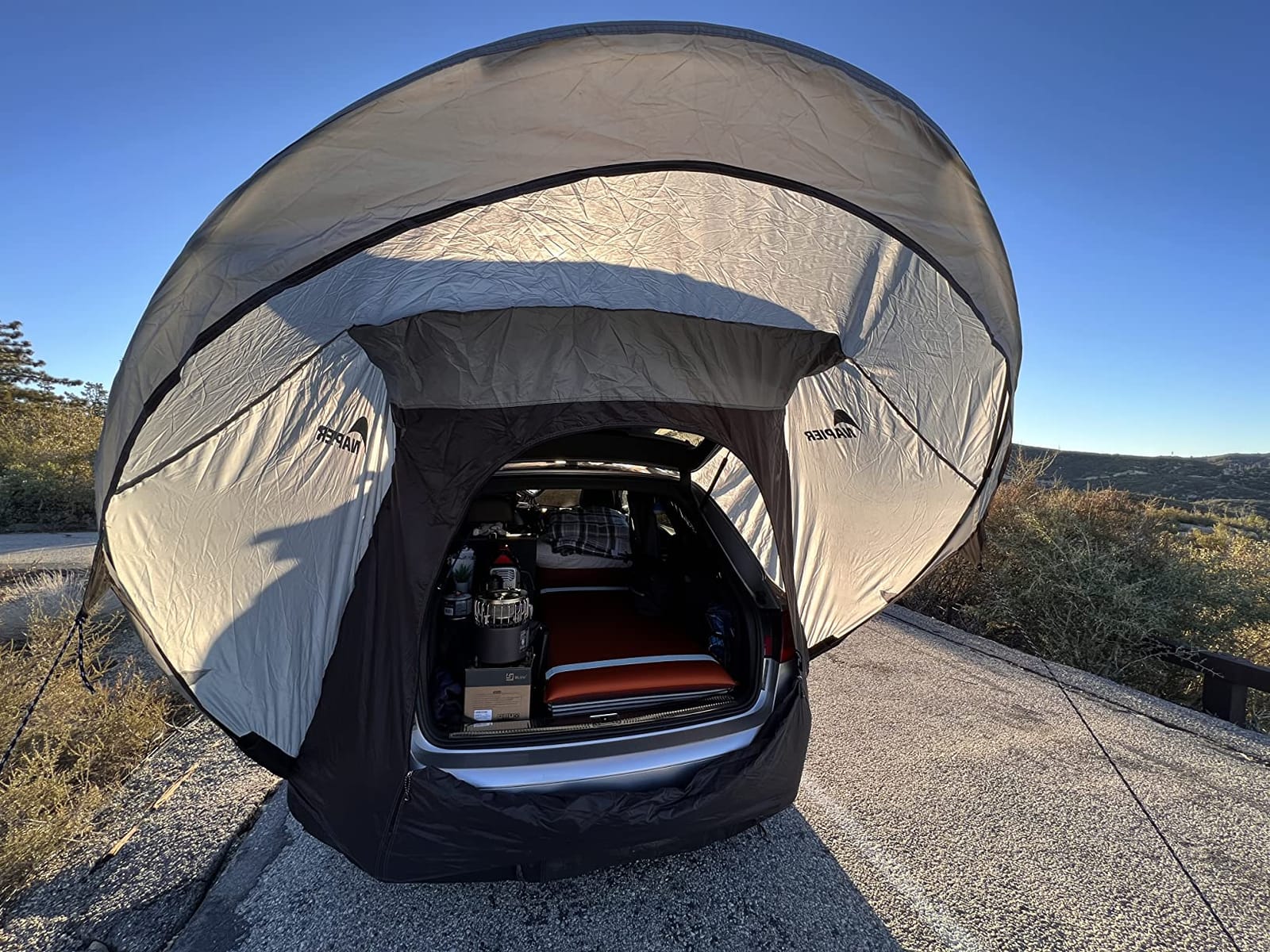
What makes it a Napier
Polyester taffeta rather than the thin coated mesh used on budget imports, a one-year warranty, and a review count above 1500 that gives you a real read on long-term behaviour. In a category dominated by unbranded listings, that track record is worth more than an extra spec line.
Where it falls short
It is not a hatchback tent in the sleeping sense and it will not seal your rear opening, so wind-driven drizzle gets into the shaded area. If staying dry overnight is the goal rather than sitting in shade by day, move to the Timber Ridge or the Napier 8×8 below.
3. Timber Ridge Truck-Bed-Tent – Most Versatile
TIMBER RIDGE 5 Person Truck-Bed-Tents SUV Camping Tent
10 x 8 ft floor with 7.1 ft peak height
PU2000 coating
Detaches to stand alone
E-port for power
Pros
- Genuinely spacious 10 x 8 ft interior with 7.1 ft of height
- Unzips from the vehicle and works as a stand-alone tent
- PU2000 coating on polyester taffeta
- E-port passthrough for powering devices
- Top mesh skylight plus two mesh windows
Cons
- Single door so access is one-sided
- Only two mesh bags of interior storage in 80 sq ft
- Bulkier than hatchback-specific models
- Fiberglass sections can shed splinters
This is the only shelter in the roundup where adults can stand up and move around inside, and that single fact changes what you can do with it. The 10-by-8-foot floor at over 7.1 feet of peak height is living space rather than a sleeping slot, which is why it is the one we would use for a week of weather rather than one weekend.
It connects through a tight trunk seal, so you can leave the hatch open and walk between cargo area and tent without breaking the weather barrier. The E-port passthrough is a detail overlanders care about: you can run a power cable from the vehicle to a device inside. The top mesh skylight means lying back under rain protection and seeing stars.
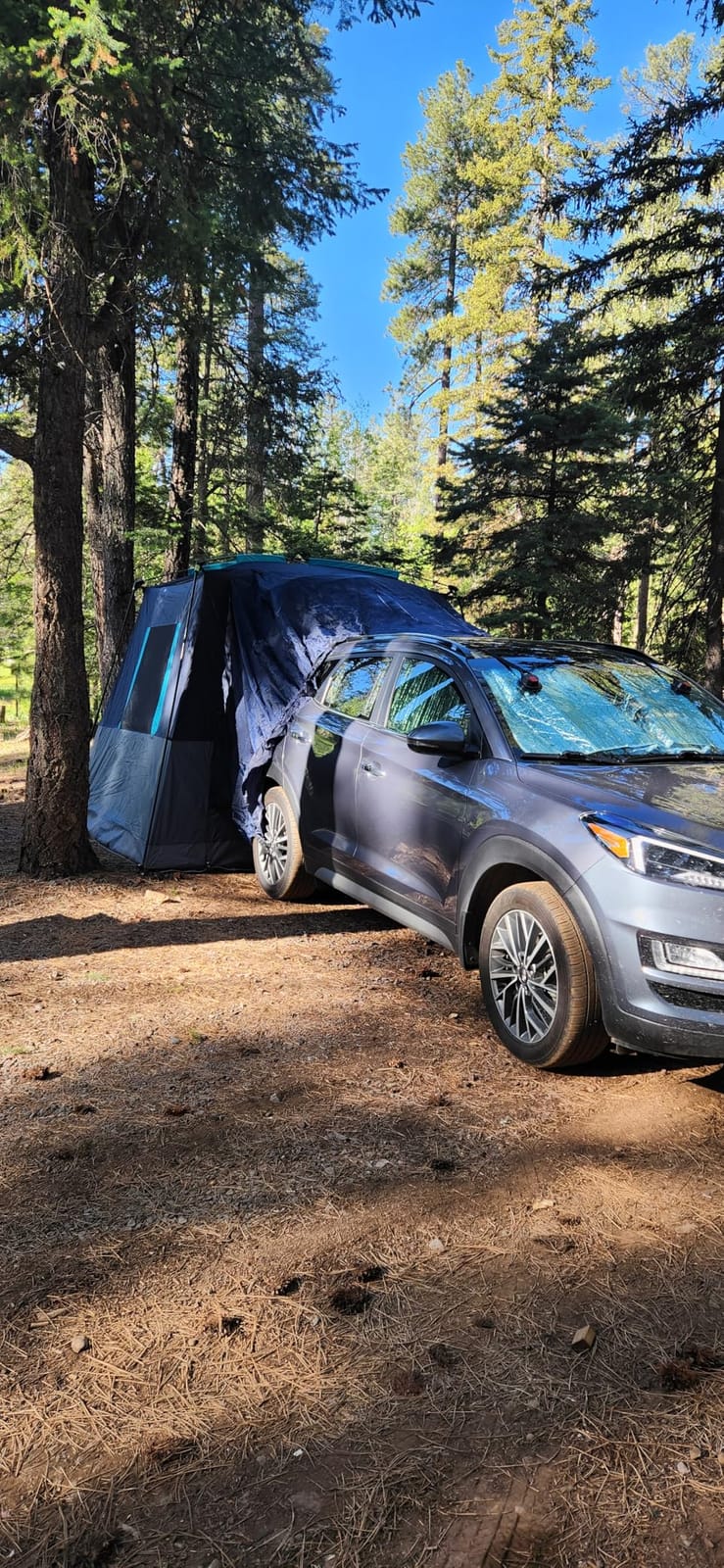
The standout capability is detachment. Unzip it from the vehicle and it stands alone on its own poles, so you can drive into town for coffee and come back to camp still standing. It packs into a 31-inch carry bag, and the listed build includes two long fiberglass poles, four steel leg poles, a rainfly, 12 stakes and wind ropes.
Two honest limits. A single door means one-sided access, which is mildly annoying when three people share 80 square feet. And at 10 by 8 feet it needs a real vehicle to connect to, so measure before committing.
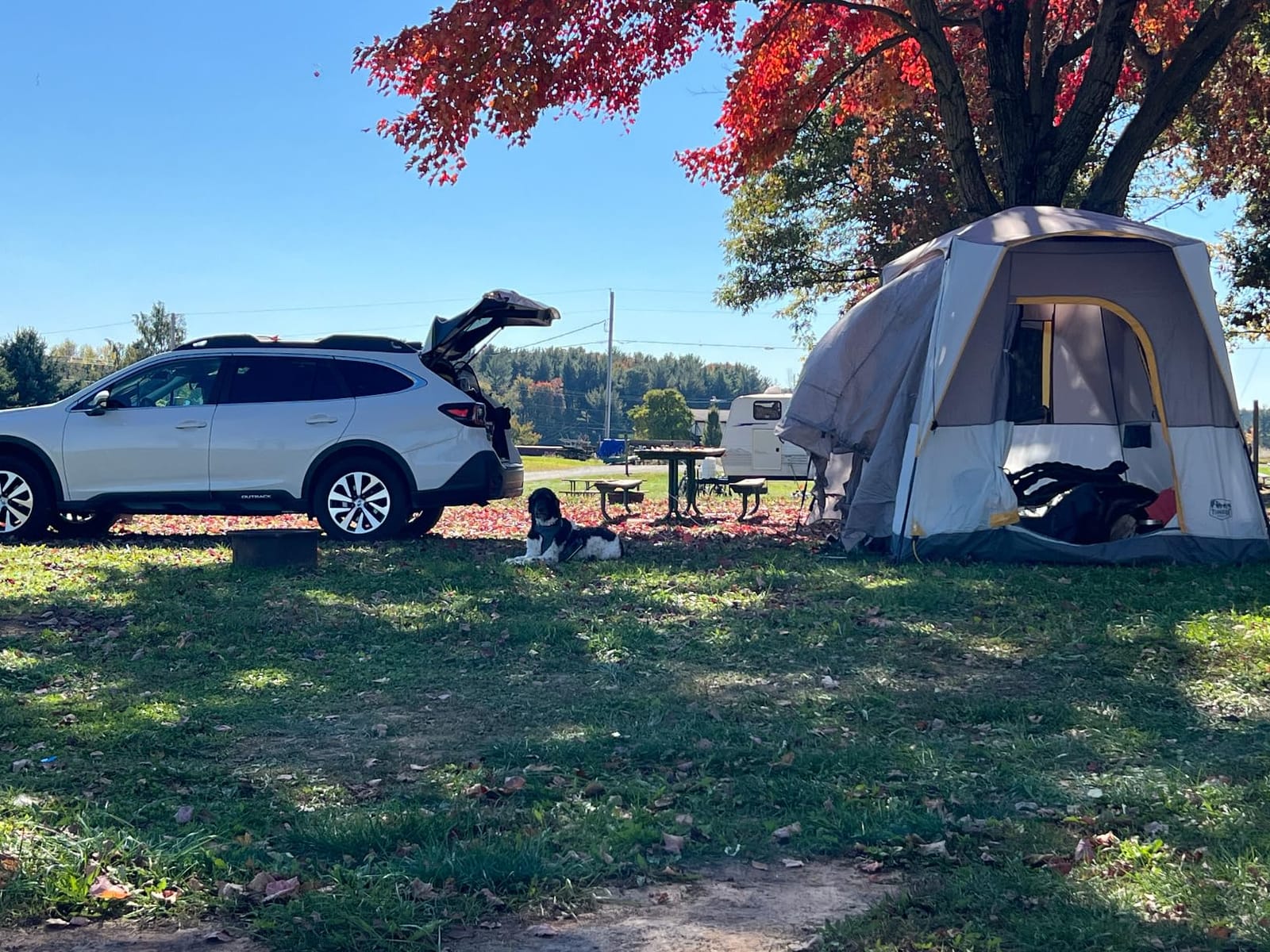
Headroom and floor area
Over 7.1 feet of peak height clears the threshold where you stop crouching to cook or change. Listed dimensions are 120 by 96 by 86 inches with 80 square feet of floor, which comfortably sleeps five on camping gear. Because it detaches, it doubles as a normal ground tent when the car stays at home.
Who should look elsewhere
Anyone on a subcompact hatchback with a narrow rear opening, and anyone who values a sub-5-pound carry weight. The floor area that makes it comfortable also makes it the bulkiest option here, and the fiberglass sections can splinter at the joints if handled roughly in cold weather.
4. Alvantor 6 x 6 ft Pop-Up Tailgate Tent – Best for Instant Setup

Alvantor® Tailgate SUV Tent for Cars – 6x6x6.6ft Waterproof & UV-Resistant Car Camping Tents with Full Mesh & PVC, Fits SUV, MPV – Portable Instant Setup Tent for 2-3 People
Tool-free pop-up in under 30 seconds
6 x 6 x 6.6 ft
Full mesh and clear PVC
UPF 50+ fabric
Pros
- Genuinely instant tool-free pop-up frame
- Full mesh side walls for 360-degree airflow
- Clear PVC panels keep a view and light in the rain
- Waterproof PVC floor plus a removable PE mat
- Confirmed fits on RAV4
- CR-V
- Model Y and Escape
Cons
- Clear PVC windows have no privacy covers
- 18.5 lb is heavy for solo campers and older users
- Awkward fold from the circular pop-up design
- Included magnets blow off in wind
- Zippers reported as poorly made on some units
We pitched this one on a lawn in under half a minute after taking it out of the bag, and that is the whole point. The spring frame needs no poles, no sleeves and no instructions, and it collapses back down in roughly three minutes. For solo campers and anyone who finds tent poles genuinely difficult, that is worth more than any spec on this list.
The fabric strategy is sensible too. Full-side breathable mesh gives airflow and insect protection across every wall, while clear PVC panels hold off rain without turning the interior into a cave. The waterproof PVC floor and removable PE mat handled ground moisture well, with one reviewer in snake country specifically praising the floor.
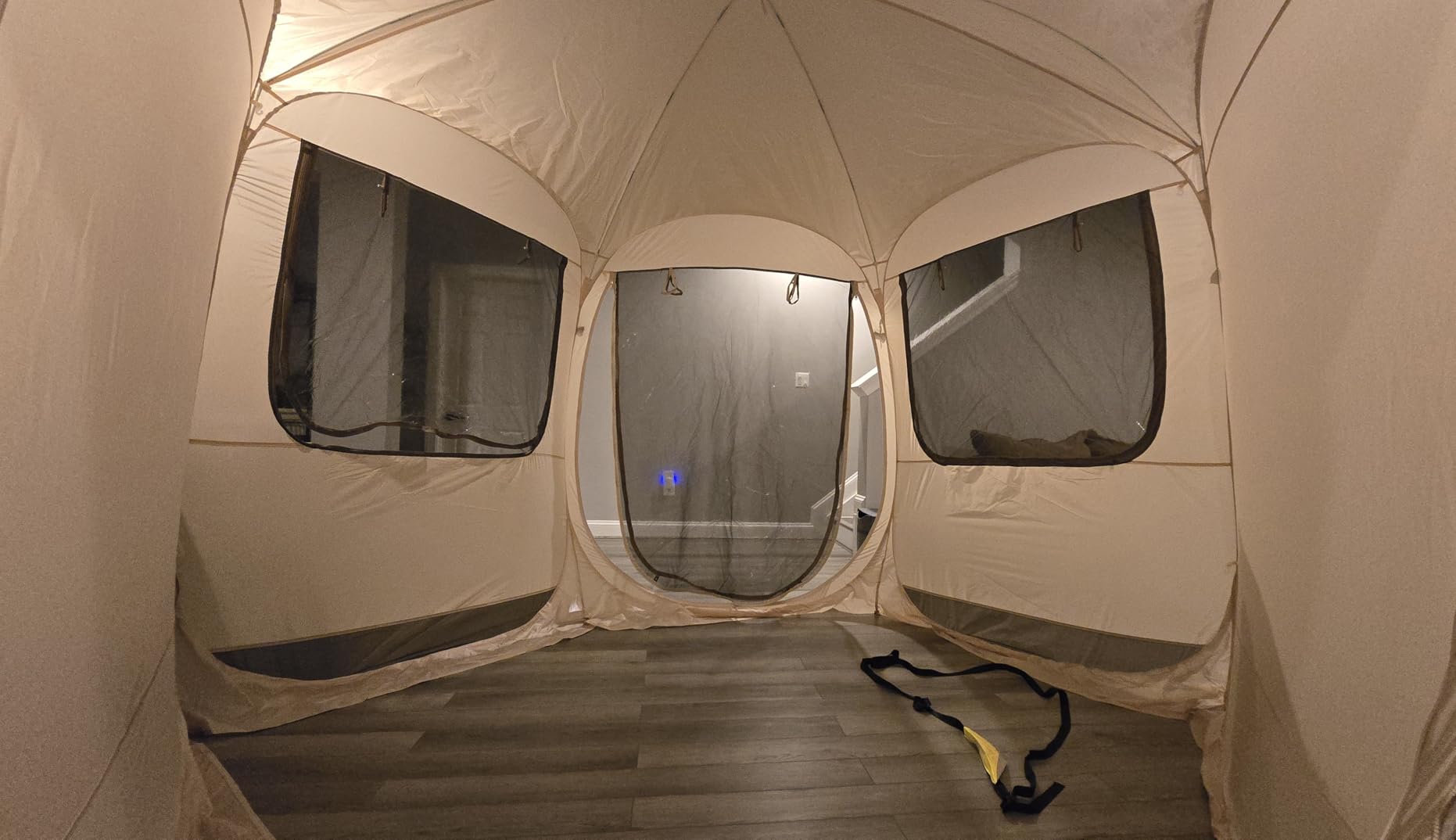
Fit is tighter than most in this category, and owners confirm it clamps down well on a Rivian R1S, Toyota RAV4, Honda CR-V, Tesla Model Y and Ford Escape. Six included magnets help seal fabric gaps, though as with the HASIKA you may want stronger ones.
The clear PVC windows have no privacy covers, and several buyers treat that as a dealbreaker for changing use. You get a view and daylight in exchange for being visible from outside. The 6 by 6 by 6.6 foot interior suits 2 to 3 adults, and the listed 18.5-pound weight is real cargo.
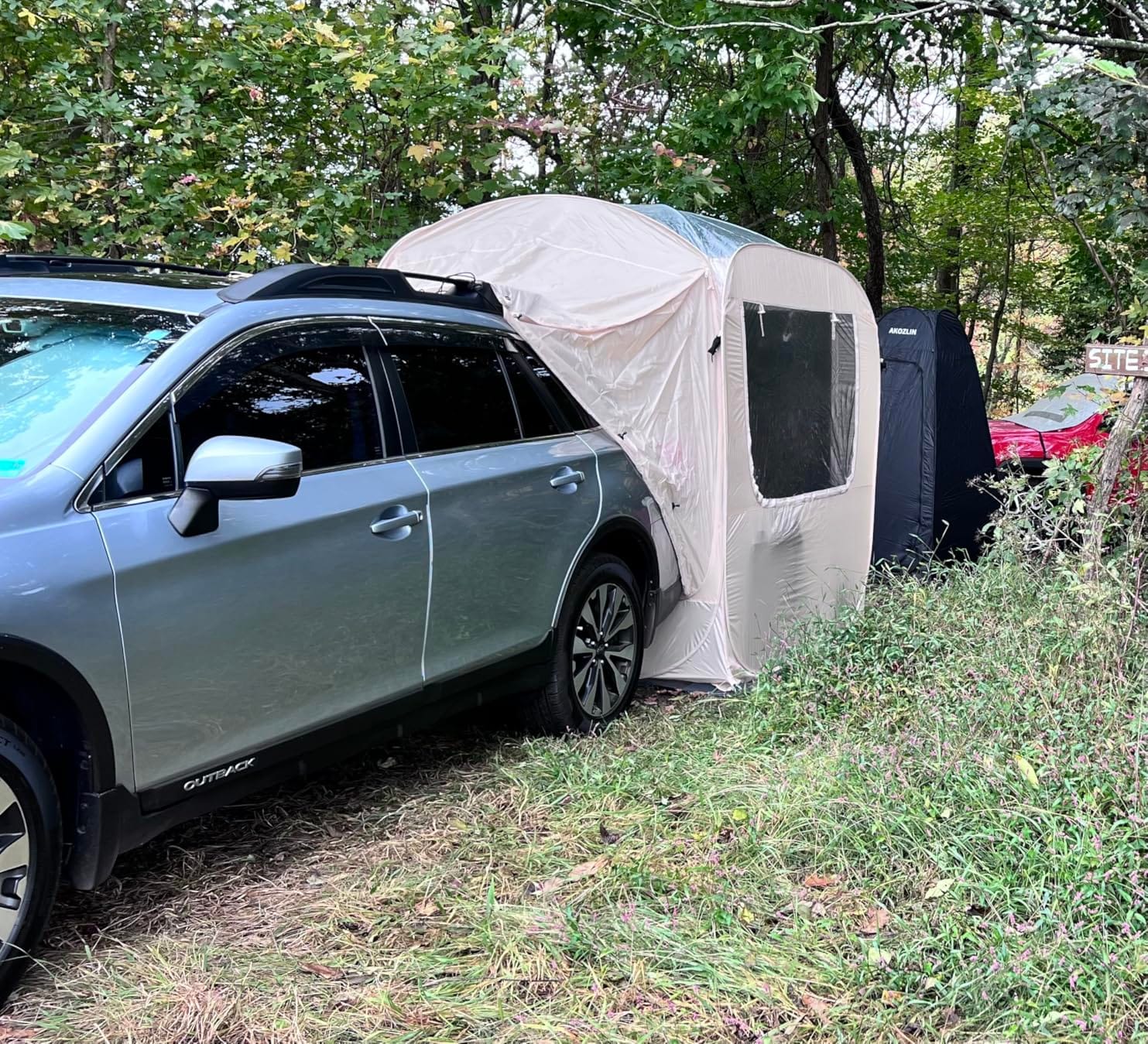
Who it suits
Solo campers, older buyers, families who need a bug-proof sitting room in seconds, and anyone who wants a shelter they can fold and repitch without hunting for pole sections in the dark. The interior holds standing room for two to three adults and their gear.
When to pick something else
Skip it if you need privacy, if 18.5 pounds is a struggle to carry, or if you camp in exposed sites, since a pop-up frame lacks the guy-out points of a pole tent. Several owners also report the circular design makes refolding confusing at first.
5. VEVOR 6 x 6 ft Pop-Up Screen House – Best Value

VEVOR SUV Tailgate Tent, 6 x 6 ft Pop-Up Screen House Canopy for 4–6 Person, Portable Screened Shelter with Carry Bag, for Car Camping, Backyard, Patio, Outdoor Activities
Spring steel pop-up frame
6 x 6 x 7.2 ft
36 sq ft floor
3-in-1 design
Pros
- True spring-loaded pop-up that folds flat in seconds
- Works as tailgate tent
- standalone tent or screen room
- Large high-density mesh panels for airflow and views
- Curved roof sheds rain and prevents pooling
- Stayed dry inside during a reported rainstorm
Cons
- Traps summer heat in afternoon sun
- Not built for strong wind
- Printed folding instructions do not match reality
- 22.1 lb is heavy to lift
- No enclosed side panel nearest the vehicle
The 3-in-1 design is what makes this the value pick: the same unit works as a tailgate tent attached to the car, a freestanding tent, or a screened shelter pitched beside the vehicle. Owners report fitting five camping chairs, a table, an electric cooler and a stand-up fan inside the larger variants, which makes it a gear garage more than a bedroom.
A 66-year-old solo user described setup as effortless and folds it flat in seconds, and the curved roof sheds rain instead of pooling it. It stayed dry inside during a rainstorm with no leakage reported, and two hooks can be released so you can drive away and leave camp set up.
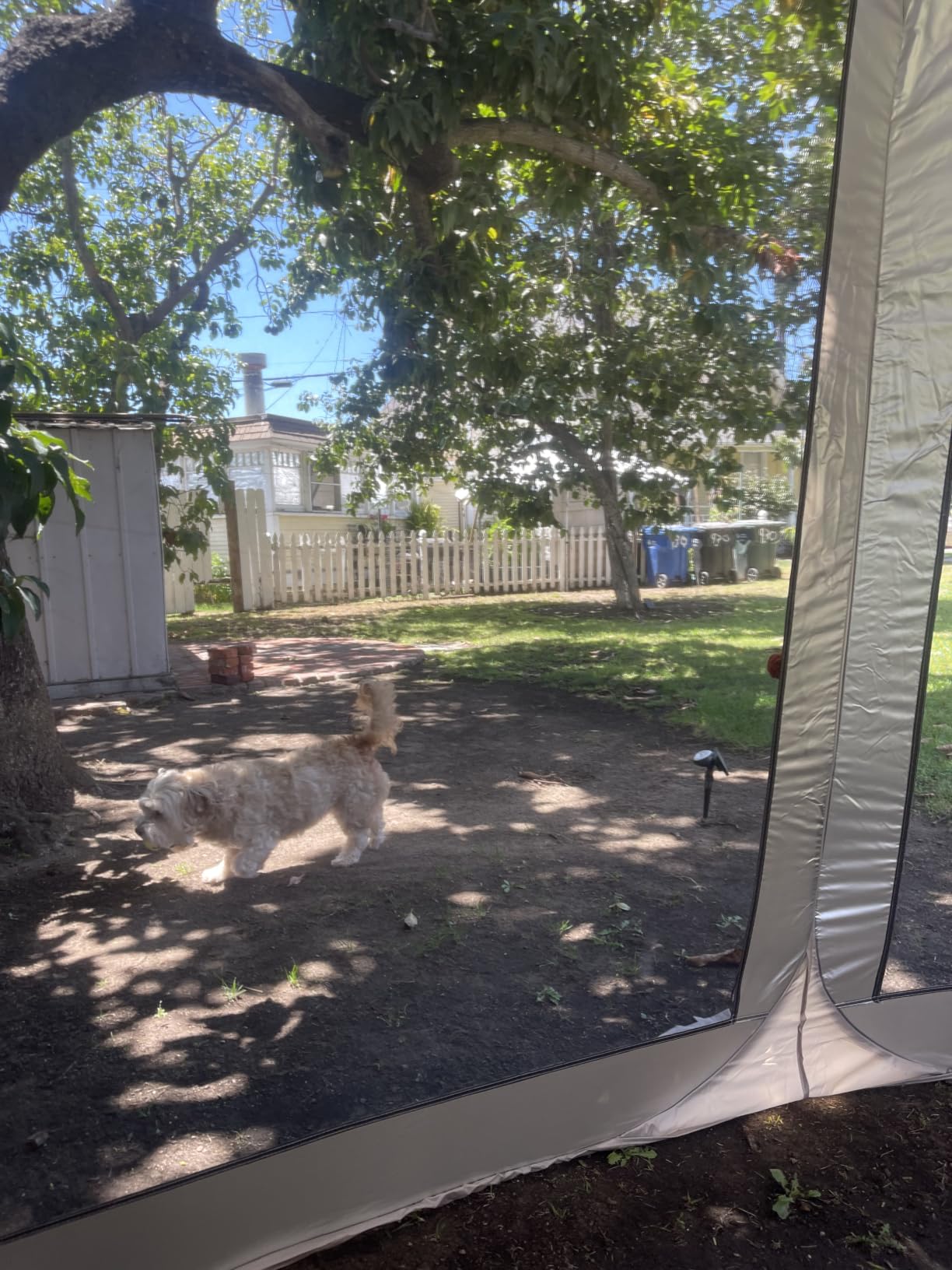
Two caveats dominate the negative feedback. It traps summer heat, with multiple owners reporting uncomfortable afternoon temperatures in high humidity, so ventilation matters more here than in a mesh-only shelter. And the written folding instructions do not match reality, the working method being to fold it in half and twist the sides together.
Wind resistance is limited, so it wants a calm campsite or a backyard rather than an exposed ridge. At 22.1 pounds it is the second-heaviest option here, and a ground cover is not always included, so a separate footprint is often needed.
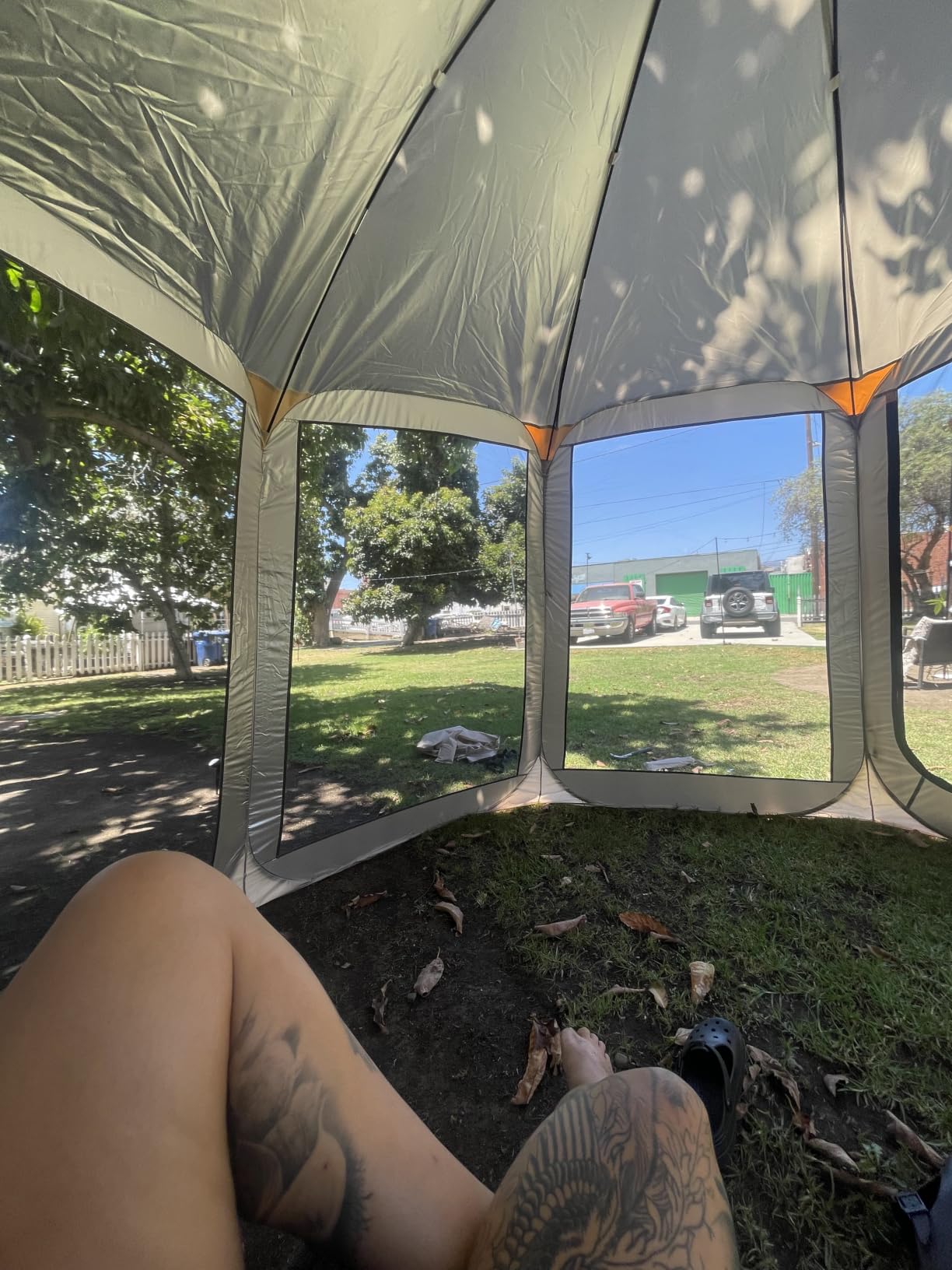
Sizing and ceiling height
This 6 by 6 by 7.2-foot variant lists 36 square feet of floor, a 6-foot minimum ceiling rising to 7.2 feet. Larger variants reach 10 by 9.2 and 12 by 11 feet, but the 8-foot-peak versions need a stepladder to assemble. The accessory kit is unusually complete: support poles, ground cloth, stakes, ropes, fiberglass poles, strap, storage bags and a manual.
Where it stops working
It is not an enclosed changing area, because there is no solid panel on the side nearest the vehicle. And if your trips are in midsummer heat, the trapped warmth will push you toward a mesh-only shelter such as the Alvantor.
6. Napier Sportz Hatchback Tent 8×8 – Best for Compact Hatchbacks

Napier Sportz Hatchback and Small CUV Tent 8’x8′ Waterproof Camping Tent with Awning 4 Person Blue/Grey Car Tent
8.5 x 8.5 ft with 7 ft headroom
Sleeps 4
Freestanding conversion
1200mm rating
Pros
- Roomy 8.5 x 8.5 ft interior with 7 ft of headroom
- Sleeps four adults with full cargo access from inside
- Converts to a freestanding ground tent when unzipped
- Two doors and three mesh windows for airflow
- Optional 6 x 6 ft awnings extend over the doors
Cons
- Fiberglass poles fray and snap after limited use
- Zippers frequently criticised for breaking or binding
- 1200mm rating is the lowest here
- Will not fit larger vehicles like a full-size SUV
This is the smallest hatchback-specific shelter we would trust with a full night’s sleep, and the design logic is sound. A two-pole hub design sets up in under 10 minutes, often by one person, and the 96 by 96 by 80.4 inch footprint gives a 7-foot ceiling with room for four adults.
The feature we value most is access. The tent connects to the vehicle and you walk from the sleeping area into the cargo area without going outside, so wet boots stay in the car and the car stays your locker. Two doors and three mesh windows make that interior workable rather than stuffy.
Owners report good fits on crossovers and hatchbacks including the Subaru Forester, Baja, Tesla Model Y and Dodge Carvan. When a ground pitch is called for instead, unzipping the vehicle sleeve converts the whole thing into a freestanding tent, which is rare in this category.
Here is the honest part. The listed water resistance technology is 1200mm, the lowest figure in this roundup, and the seams are not factory-sealed, so several owners recommend applying seam sealer before serious wet weather. The included fiberglass poles are the most-criticised component, with shock-cord and elastic keepers fraying and snapping after limited use. Zippers are also criticised as low quality.
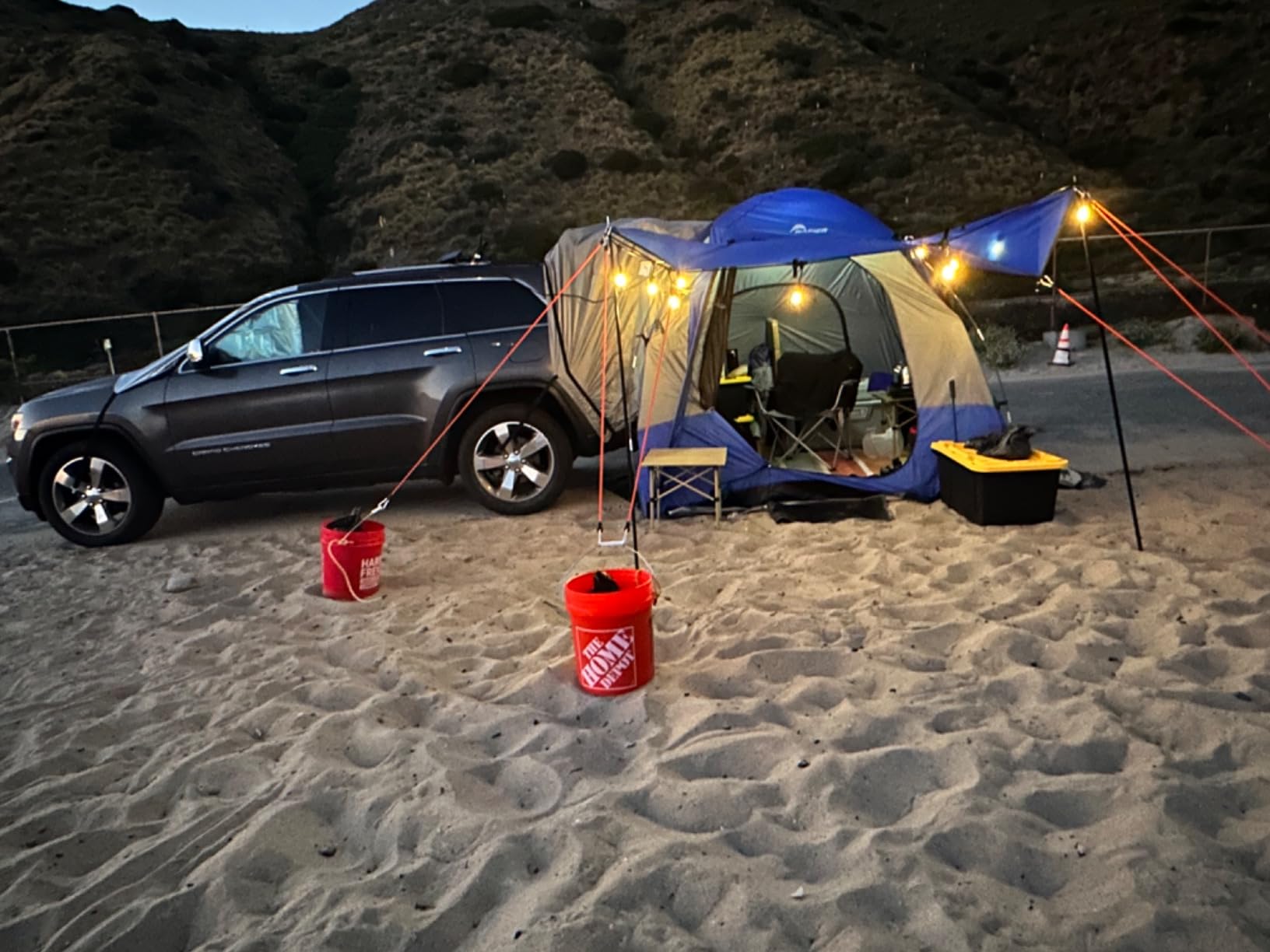
Measuring for the sleeve
The sleeve is a fabric loop that wraps your rear opening, so fit depends on your measured width and height. A small gap remains where the sleeve meets the trunk on cars with unusual rear shapes, which allows some airflow and some weather ingress. Reviewers confirm it is built for hatchbacks and small CUVs, not larger vehicles like a Nissan Pathfinder.
What to do before a wet trip
Budget ten minutes to run seam sealer along the fly seams and tape the fiberglass pole keepers. Done once, that converts this from a fair-weather shelter into a genuine wet-weather one. The optional 6 by 6 foot awnings, which need a set of awning poles, extend cover over each door for showers and cooking.
7. HREFEU 2-Person Tailgate Tent – Budget Pick

HREFEU SUV Tailgate Tent with Awning, 2-Person Hatchback Tent for Camping
1 kg packed
4-minute attachment
PU2000 210D polyester
Mesh bug screen
Pros
- Attaches in about 4 minutes by one person
- Only 1 kg packed into a small carry bag
- 210D silver-coated polyester with PU2000 coating
- Mesh screen gives airflow and zips closed for privacy
- Elastic universal-fit straps adapt to many vehicles
Cons
- Support poles are not included in the package
- Universal fit means covered area varies by vehicle
- Will not work with side-hinged or double side doors
- Not compatible with a rear-mounted spare tire
This is the lightest thing in the roundup by a wide margin, and at roughly 1 kg it is the one you can genuinely keep in the car permanently. Attachment is a two-step process taking about four minutes once you have done it once, and the whole thing folds into the small storage bag it came in.
The fabric is not the flimsy stuff. It is 210D tear-resistant polyester with a silver coating and a PU2000 water protection treatment, which puts it on the same waterproof footing as shelters costing several times more. The mesh screen gives airflow with bugs excluded and zips closed when you want privacy.
Read the package contents before you buy. Poles are not included, so you need to source or buy your own support poles, and that is the most repeated caveat across reviews. The bag contains the tent, two ground stakes, four guylines, a storage bag, a carrying bag and a user guide.
Elastic universal-fit straps stretch across SUVs, vans, CUVs and MPVs, which is convenient and also means the covered area differs vehicle to vehicle. It is incompatible with vehicles that have double side doors, side-hinged rear doors, or a rear-mounted spare tire, so check that before ordering.
What you can and cannot expect
At 55 by 45 by 66 inches this is a compact add-on rather than a full tent body. It works as a sun shelter, a bug screen or a zipped privacy enclosure, and is paired with a car mattress rather than replacing one. Two-person capacity is realistic for sitting, not for two adults sleeping with gear.
Who should buy it
Anyone who wants a permanent tailgate add-on for a small hatchback and already has poles, or who wants a mesh screen for cooking and bugs without spending much. Just factor in sourcing poles before the first pitch.
8. JOYTUTUS Tailgate Tent with Roof Canopy – Best for Rain Cover

JOYTUTUS SUV Tailgate Tent with Awning Shade, Car Roof Canopy and Poles, Water Resistant Camping Tent, Outdoor Travel Preferred, Universal Fit Most SUV- Green
Roof canopy to the windshield
150D oxford with PU2000
Seats 4-6
8-minute install
Pros
- Roof canopy extends coverage to the windshield
- Allows rear windows cracked in rain
- Seats a table and chairs for 4-6
- Pole sections lock with an internal spring
- Fits crossovers including the RAV4 and CR-V
Cons
- Canopy and door are the same panel
- Awning flaps loudly in wind
- Seams need user-applied seam sealant
- Side gaps need magnets to close
- Folding back into the case is awkward
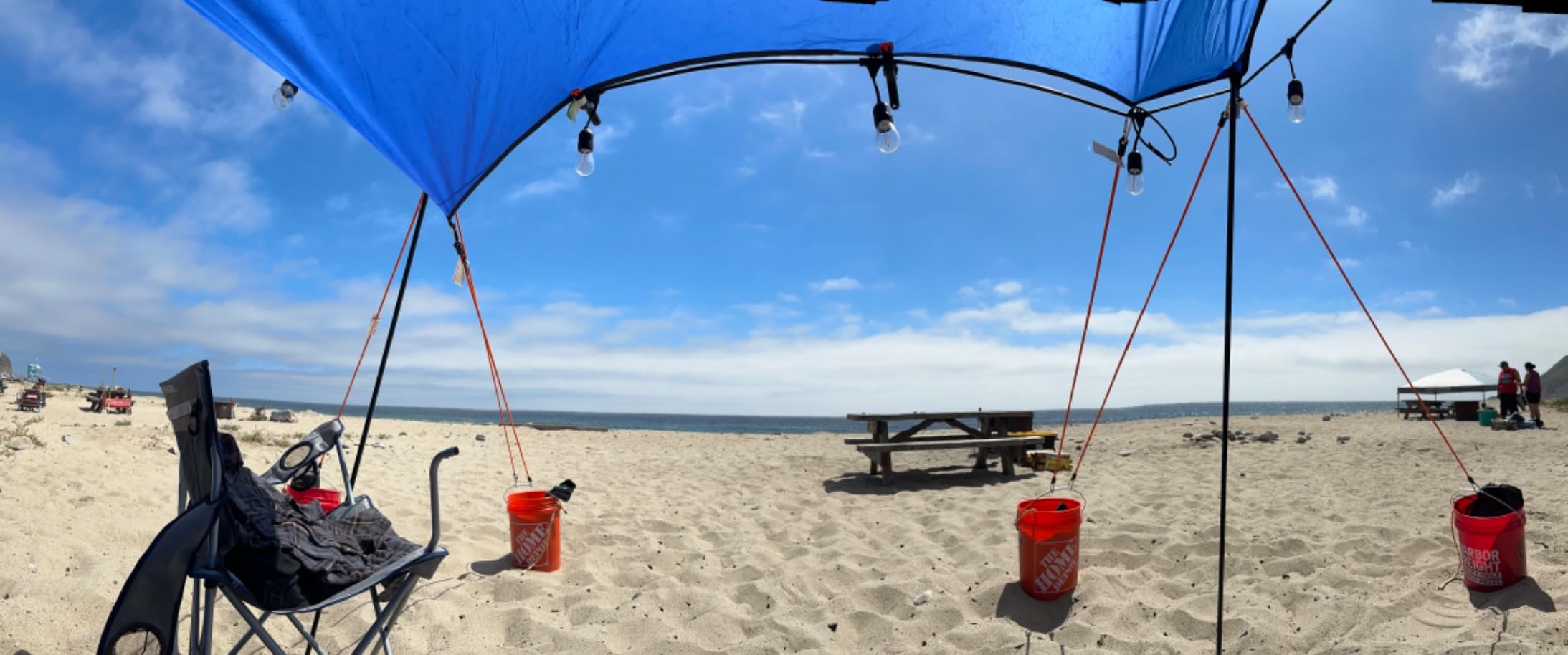
The roof canopy is the feature nobody else at this level offers. The fabric runs over the top of the car to the windshield, so awning and roof form one continuous waterproof surface and you can keep the rear windows cracked in rain for ventilation without water coming in.
Owners report it fitting mainstream crossovers well, naming the RAV4, CR-V, Outback, Tucson, Passport and Plug-in Prius Liftback specifically. The awning seats a table and chairs for 4 to 6 people and can be zipped down as a privacy curtain, and the adjustable elastic rear band with mirror and wheel straps seals better than a plain strap.
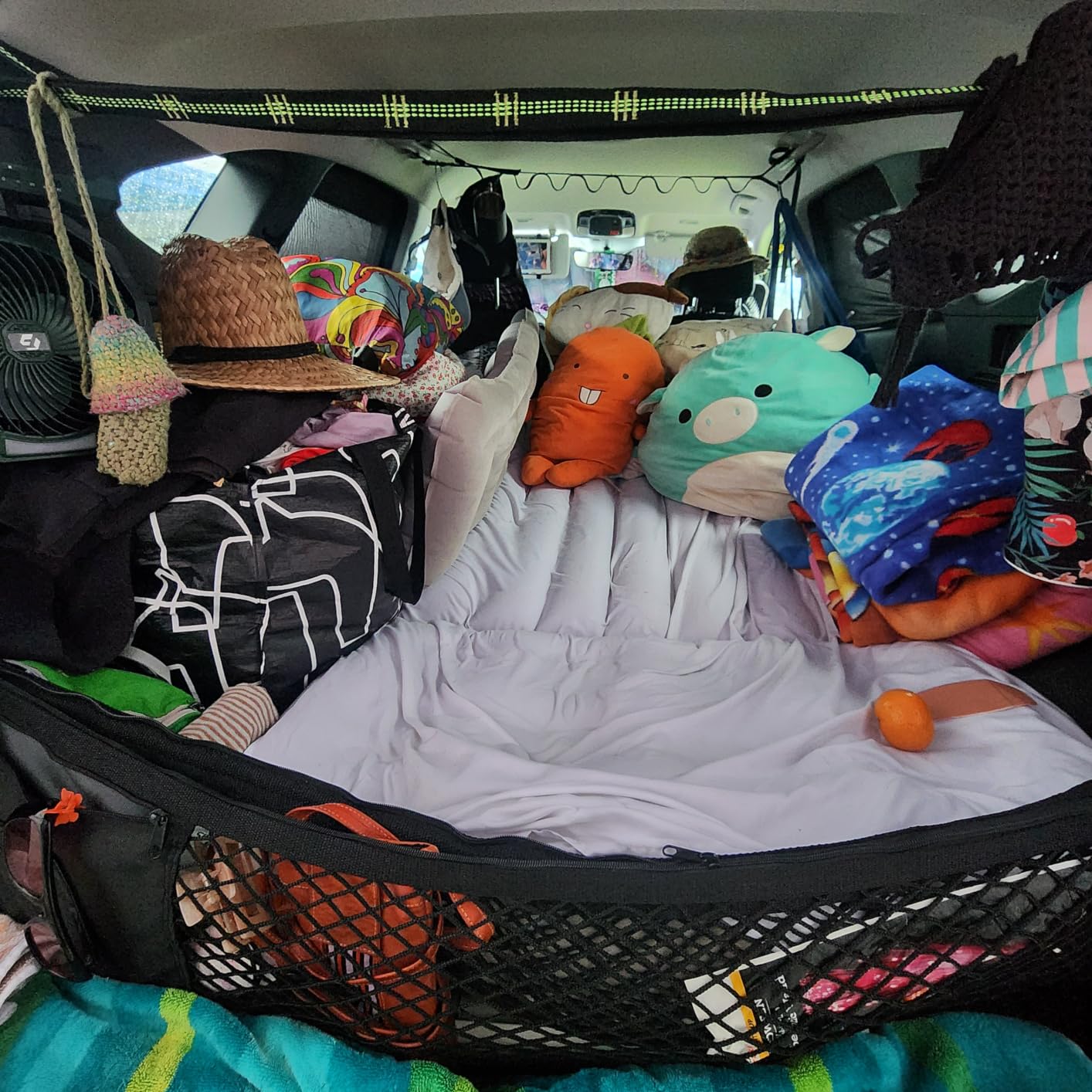
Build details are good for the money. Pole sections lock together with an internal spring so they stay connected rather than pulling apart mid-pitch, and the fabric is 150D polyester oxford with a PU2000 coating. Buyers report staying dry through torrential rain with the awning raised, and the mesh kept insects out.
There is a real compromise in the canopy being the same panel as the door, so poles must come down to open or close the entrance. In wind the awning is loud enough to disturb sleep, seams are not factory-sealed and need sealant before sustained rain, and small side gaps remain where owners add magnets.
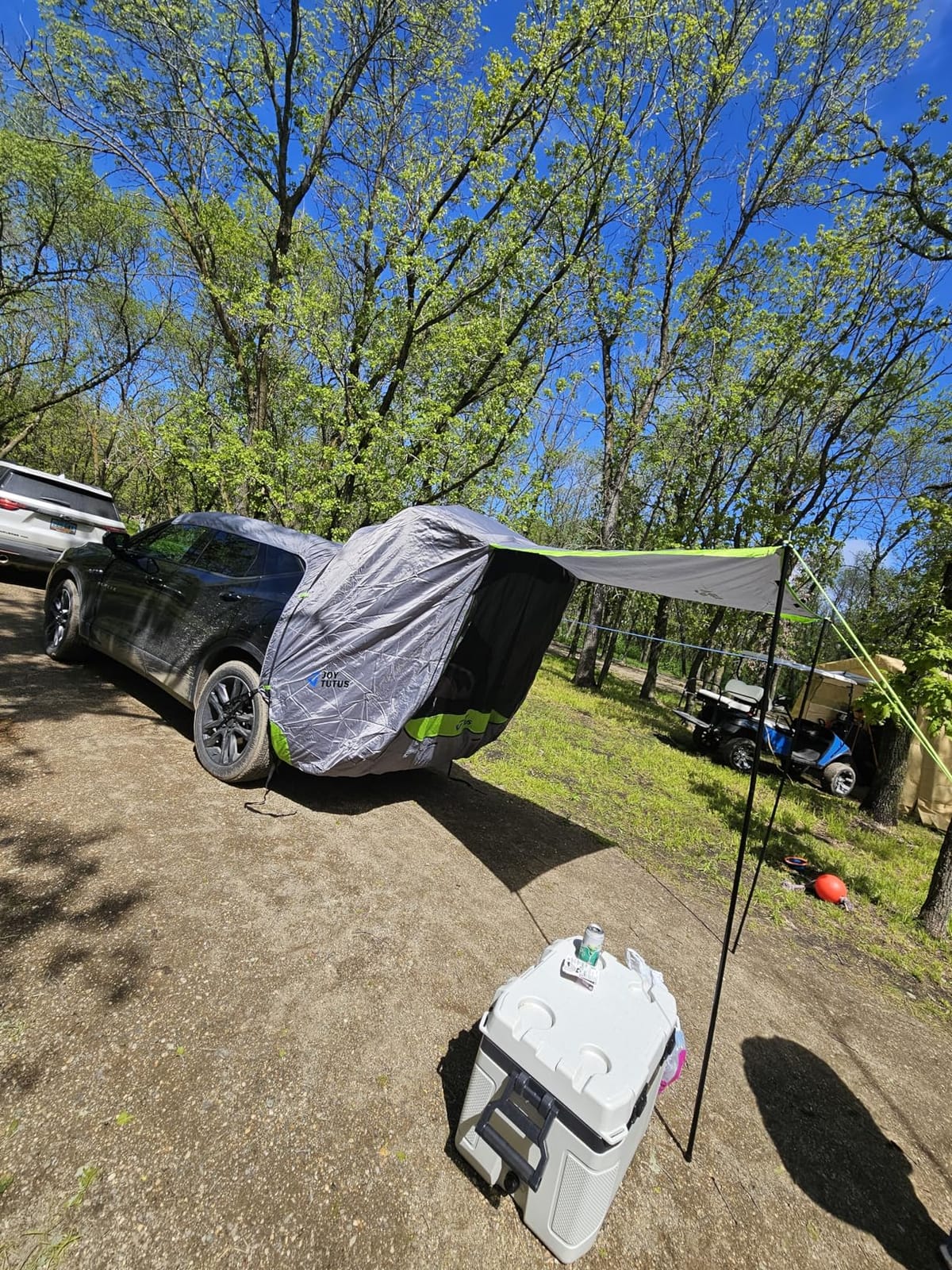
Setup and packing reality
Installation is an eight-minute, three-step process: wrap through the tailgate, cover the roof, hook the tail straps to the wheels. One person can do it in calm conditions. Packing it away is the other common frustration, since folding it back into the nylon case is genuinely difficult, and the tailgate cannot be closed with the poles in place.
Best use case
Wet-weather cooking and sitting. This is the pick when the forecast is the deciding factor, because roof coverage beats every other awning here when rain comes from above rather than behind. Swap the included pegs for sturdier ones before you head out.
9. VEVOR 8 x 8 ft Double-Layer Tent – Best for Large Groups

VEVOR SUV Camping Tent, 8′-8′ SUV Tent Attachment for Camping with Carry Bag, Waterproof PU2000mm Double Layer Truck Tent, Accommodate 6-8 Person, Rear Tent for Van Hatch Tailgate
8 x 8 ft for 6-8 sleepers
PU2000 double layer
120g sewn PE floor
Force 5 wind rated
Pros
- Works attached to a vehicle or fully stand-alone
- PU2000 double layer with a fully sewn 120g PE floor
- 8 x 8 ft footprint sleeps 6-8
- Streamlined profile rated for force 5 wind
- Wraps around the vehicle floor so water does not flow in
Cons
- Lowest rating in this group at 3.8
- Thin tear-prone fabric that owners tape up
- Zippers bind and stretch the stitching
- Supplied rain cover is too small to be effective
- A 2022 Outback would not allow the hatch to open fully
We include this one with reservations, and you should read them. It is the largest footprint here at 8 by 8 feet with a listed 94 by 94 by 91 inch profile and 5.76 square meters of floor, rated to sleep 6 to 8. The genuine strength is dual use: owners call working both attached to a vehicle and fully stand-alone a real two-in-one.
The construction has merit. A PU2000 rating with double-layer fabric, a fully sewn 120g polyethylene floor and a wrap-around profile that stops water flowing in under the vehicle edge are the right choices. A 66-year-old owner reports setting it up solo in under 30 minutes and repacking it every trip.
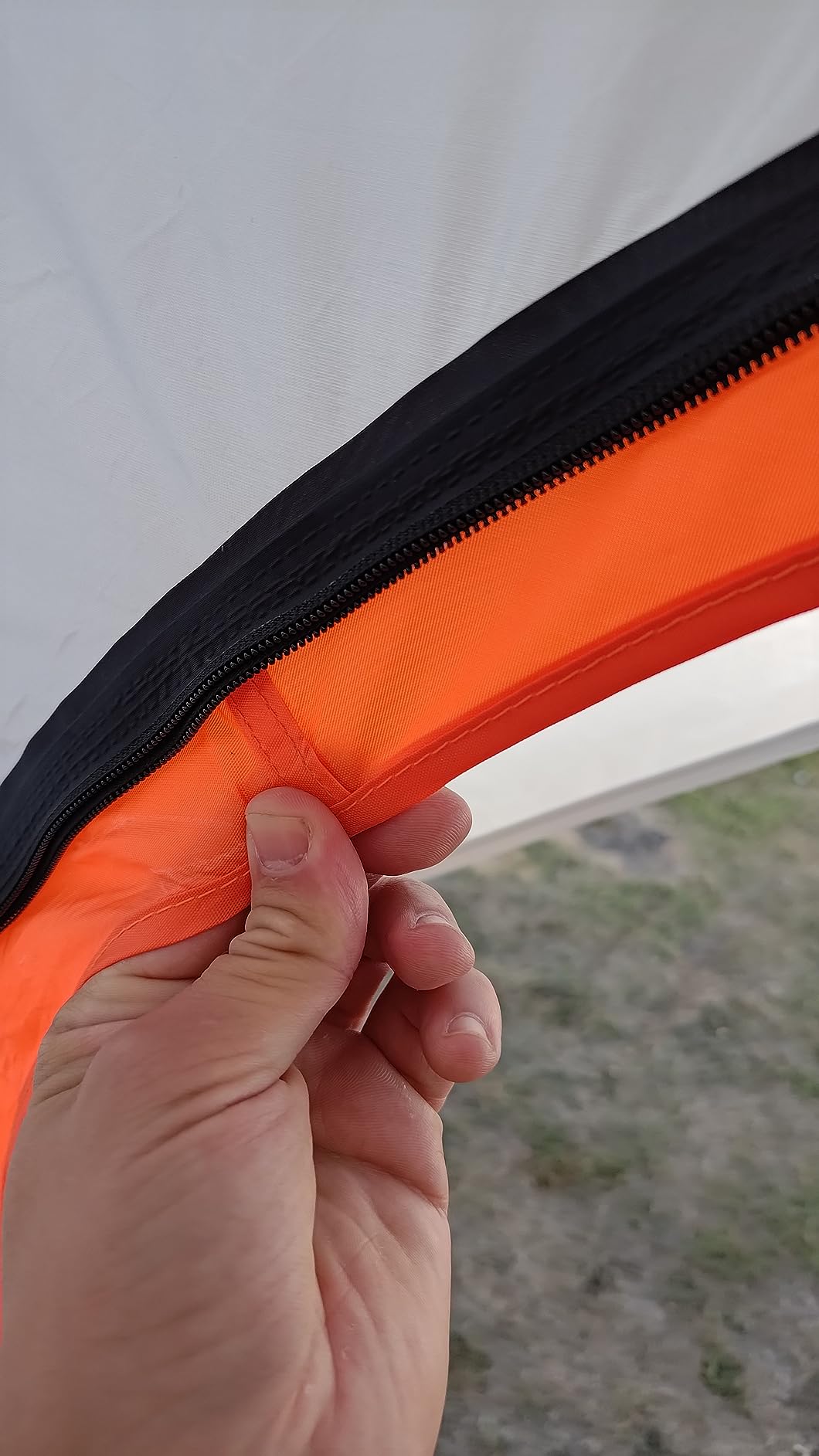
Now the problems, which are consistent and specific. Zippers bind up and stretch the stitching attaching them. The fabric is thin and tears easily, with several owners recommending taping it. The supplied rain cover is too small and the metal pegs bend easily. The low door means you duck to enter and it can catch a foot, with one reviewer reporting a fall.
The 3.8 average with 12 percent one-star reviews is the lowest here, and it tracks a pattern of fittings or straps failing after a single trip. Instructions are poor with no setup video. One owner reports a 2022 Subaru Outback would not let the hatch open fully, a concrete warning for hatchback buyers.
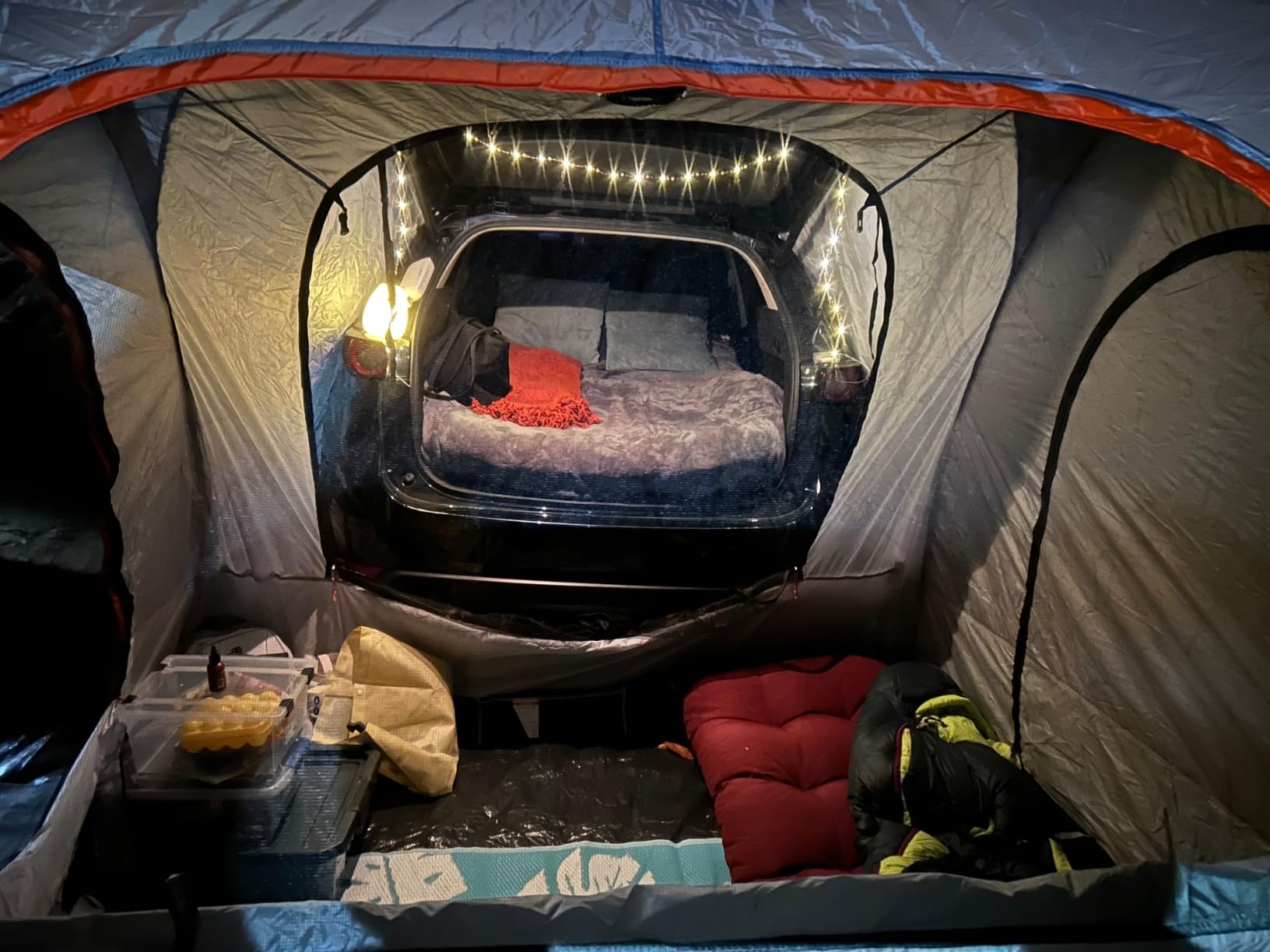
Where the 3.8 rating comes from
The distribution tells the story: 51 percent five-star and 15 percent three-star. Buyers needing occasional dry-weather capacity who value the stand-alone conversion are satisfied. Buyers expecting serious weather performance find thin fabric, binding zippers and an undersized rainfly, and that mismatch is the source of the one-star share.
When it still makes sense
If you need genuine sleeping capacity for six to eight and only camp in fair conditions, the room is hard to find elsewhere at this level. It is also one of the few here listed as compatible with hatchbacks that works as a normal tent when the car is elsewhere, so a group travelling in one vehicle is well served.
10. KAMPKEEPER SUV Car Tent – Best for Festivals
KAMPKEEPER SUV Car Tent, Tailgate Shade Awning Tent for Camping
Single aluminium pole
110+ sq ft shade
PU800mm 150D fabric
10-minute install
Pros
- Single-pole design installs in about 10 minutes
- 110+ sq ft of shade over a table and chairs
- Mesh side window gives airflow and a wide view
- Zips closed for privacy when changing
- Works across sedans
- SUVs
- minibuses and 4WDs
Cons
- 800mm water-repellent rating is the lowest here
- One pole gives limited wind resistance and rigidity
- Listing dimensions conflict with the stated floor area
- Most polarized rating spread in the group
This is the festival and day-use pick, and the reasoning is straightforward. One aluminium pole installs in about 10 minutes with no prior experience, and 110-plus square feet of shade covers a table, chairs and gear. If you are not sleeping in it, that is all the shelter you need.
The construction is seam-sealed 150D fabric with an 800mm water-repellent treatment and an interior silver coating for UV protection. A mesh side window gives ventilation and a wide view of whatever you are watching, and the zip-up awning provides privacy when you need to change.
Understand the 800mm figure. It is a water-repellent treatment rather than a hydrostatic head rating and sits well below the PU2000 and PU3000 shelters elsewhere here, so treat it as sun and light-drizzle cover, not rain cover. Single-pole support also gives less wind resistance than a multi-pole enclosed tent.
The listing metadata is internally inconsistent. The stated dimensions of 28 by 11 by 8.2 inches appear to be the packed size rather than the deployed footprint, and the floor area is given as 110 square meters in one place and 110 square feet in another. We have gone with square feet because it matches the shade description.
Who should buy it
Festival campers, roadside stop shelters, and anyone who wants a shaded sitting area at a sports event or a picnic. The broad compatibility claim across sedans, SUVs, minibuses and 4WDs makes it the least fussy attachment here, because it does not need to seal your rear opening.
Why the 3.9 rating
The distribution is the most polarized we saw: 45 percent five-star but 16 percent three-star. That pattern usually means a product meets a basic brief cleanly without exceeding it, which is exactly what a festival shelter should do and exactly what a camper expecting rain protection should not settle for.
How to Choose a Hatchback Tent
Fit beats every other consideration, and it is the one thing you can settle in five minutes with a tape measure before you spend anything. The thresholds below come from how these products actually failed in reviews, not from spec sheets.
Measure the rear opening. You want at least 110cm of width for a standard sleeve and 120cm for a full-size one, and at least 85cm of height. Below that, gaps open at the tailgate seal. This is the most common real-world complaint, and the canonical example is a Crosstrek owner on r/carcamping whose generic tailgate tent fit badly and left gaps all over.
Check the water rating in millimetres. A rating of 2000mm is the practical minimum and 3000mm is better for multi-night or shoulder-season trips. Below 2000mm, expect damp floors after roughly eight hours of drizzle. Only three options here reach 3000mm, and one – the KAMPKEEPER at 800mm – is a sun shelter rather than a rain shelter.
Prefer a separate rainfly and taped seams. Single-wall construction collects condensation against your back and untaped seams drip. Where a manufacturer has not factory-sealed the seams, budget ten minutes with a seam sealer before your first wet trip.
Look at how it attaches, not just whether it fits. Adjustable sleeves and strap systems that anchor to the rear wheels adapt to more body styles than a fixed elastic band. If you can unhook the vehicle and leave the tent standing, you can drive away from camp without repacking.
Set your own setup limit. Under five minutes for one person is the practical bar, and the shelters at or under 10 minutes are the ones people actually use on short weekend trips. If you want extra dry space around the car while you work rather than a full pitch, our [portable workshop tent guide](https://www.minormania.com/best-portable-workshop-tents/) covers a related problem.
Safety, battery and leaving your car
Never run a stove, heater or any combustion appliance inside an enclosed car tent, because carbon monoxide accumulates once the vehicle seal is closed. Cooking belongs in the open awning area, which is exactly what the HASIKA and JOYTUTUS are built for.
The battery question comes up constantly on r/Outback_Wilderness and r/carcamping and no competitor answers it. Yes, an open tailgate draws power, because the infotainment unit, tailgate lamp and interior electronics stay live. The fix is a portable DC power station or a deep-cycle battery for anything you run overnight, and a battery isolator on the alternator for extended trips.
One more note for leaving camp: if a screen room or large tent is still attached, anyone walking past sees your gear. Zip the car and keep valuables in the cargo area with the hatch closed rather than in a visible tent pocket.
Drying and storing
Dry the tent before packing it, because wrapping wet polyester into a bag for a week causes mildew and coating separation that no amount of sun will fix. Hang it open and let both tent and floor mat dry fully.
Store poles separately from fabric where you can, and re-tension attachment straps every few trips, since elastic and webbing stretch and permanently lose the seal that made the fit good in the first place.
Does It Fit Your Hatchback?
Yes, there are tents designed to attach to hatchback cars, and the answer for your vehicle comes down to two measurements. For a standard sleeve you want a rear opening of at least 110cm wide and 85cm tall, and at least 120cm wide for a full-size sleeve. Measure before you buy, because below those figures gaps open at the tailgate seal and rain comes in sideways.
Here is the routine. Open the tailgate fully and measure the width of the opening at its narrowest point, between the body panels rather than across the bumper. Measure the height from the top of the opening down to the load lip. Then check those two numbers against the sleeve range in the listing, not against the vehicle class the product is marketed to.
Third, test the tailgate travel. Several full tent bodies here need the hatch to open through a wide arc, and at least one owner reports a 2022 Outback would not let the hatch open fully with the 8-by-8 model attached. This is where a hatchback tent fails and a roof tent would not.
As a general guide by body style: a subcompact hatchback is usually under the 110cm threshold and is better served by a strap and awning shelter than a sleeve. A compact hatchback or small wagon generally works with a compact sleeve. A midsize crossover or small SUV has room for a full tent body, and anything larger suits a 10-by-8-foot tunnel tent such as the Timber Ridge.
Sedan owners should skip this category almost entirely, and a rear-mounted spare tire or side-hinged rear doors rule out the small elastic-fit shelters.
Hatchback Tent vs. Rooftop Tent vs. Ground Tent
Car-camping forums lean hard toward ground tents, and that view deserves a straight answer. On r/CampingGear the common recommendation is that a Gazelle T4 is the best car camping option, roomy enough for two adults and two dogs and not much more. For a weekend at a proper campsite that is often correct, because a good ground tent is more spacious, easier to ventilate, and you are not paying to solve a problem you do not have.
A hatchback tent earns its place in three situations: when you arrive late and want shade without a full pitch, when you want to sleep in the vehicle while the tent becomes a covered gear area and kitchen, and when you want the car to stay your locker so the interior remains usable.
A rooftop tent is a different proposition. It needs crossbars that most hatchback owners do not have, adds weight and wind resistance, and is by far the most expensive option. Our [rooftop tent roundup](https://www.minormania.com/best-roof-top-tents/) covers that category if you already have a rack. A Mazda 3 hatchback owner asking about mounting one revealed how live that objection is, and the honest answer is that the rack requirement is what stops most hatchback drivers.
If your trips are mostly weekends at established campgrounds, buy the ground tent and skip everything here. If you are working from the car or moving camp regularly, a hatchback shelter is the better tool.
Frequently Asked Questions
What is a tailgating tent called?
A tailgate tent is also called a hatchback tent, car tent, SUV tent or rear hatch tent. It attaches to the open rear hatch of a vehicle, either through a fabric sleeve, adjustable straps or its own freestanding frame, and extends the cargo area into a covered space for sleeping, cooking or gear storage.
Are there tents that can be attached to hatchback cars?
Yes. Nearly all of the shelters in this roundup are designed for hatchbacks, crossovers, wagons and small SUVs. The deciding factor is your measured rear opening rather than the vehicle class: aim for at least 110cm of width and 85cm of height for a standard sleeve, and check that the tailgate can still open through its full travel once the tent is attached.
Does camping with the tailgate open drain the battery?
Yes, an open tailgate does draw power, because the infotainment unit, tailgate lamp and interior electronics remain live. For overnight trips, run anything you need from a portable DC power station or a deep-cycle auxiliary battery rather than the vehicle. For longer trips, a battery isolator on the alternator stops charging from the vehicle while the engine is off.
Do hatchback tents leak in the rain?
It depends entirely on the rating and the seams. Look for 2000mm as a practical minimum and 3000mm for multi-night or shoulder-season trips. Check whether the seams are factory-sealed, because unsealed seams drip regardless of the fabric rating, and apply seam sealer before your first wet trip. Awning-style shelters give shade and rain cover without sealing your rear opening.
How long does it take to set up a hatchback tent?
It ranges from under 30 seconds for a true pop-up frame to about 20 minutes for a full 8-by-8-foot tent body. Strap and awning shelters attach in two to eight minutes, one-pole designs take about ten minutes, and larger pole tents run ten to twenty. If setup friction is what stops you camping, weight the fast-attaching options most heavily.
The Best Hatchback Tent for Your Vehicle
For most people the HASIKA tailgate awning is the right answer: the best balance of weight, weather rating, review depth and setup speed in this roundup, and the one we would put in a car permanently. If your priority is shade and privacy for cooking rather than weather protection, the Napier Sportz Cove is the established-brand option with a long manufacturing history behind it.
Match the shelter to the job instead. Compact hatchbacks should look at strap and awning designs and skip anything needing a full-size sleeve. Anyone who wants to stand up inside, or camp for a week rather than a weekend, should go for the Timber Ridge, which detaches and stands alone. Solo campers who cannot manage poles have two genuinely instant options in the Alvantor and the VEVOR pop-up, at the cost of weight and heat build-up.
And if you are camping at proper sites most weekends, a good ground tent is still the better purchase, as the comparison above explains. Measure your rear opening first, then pick from the best hatchback tents on this list and you will not be the owner on r/carcamping with gaps all over.