
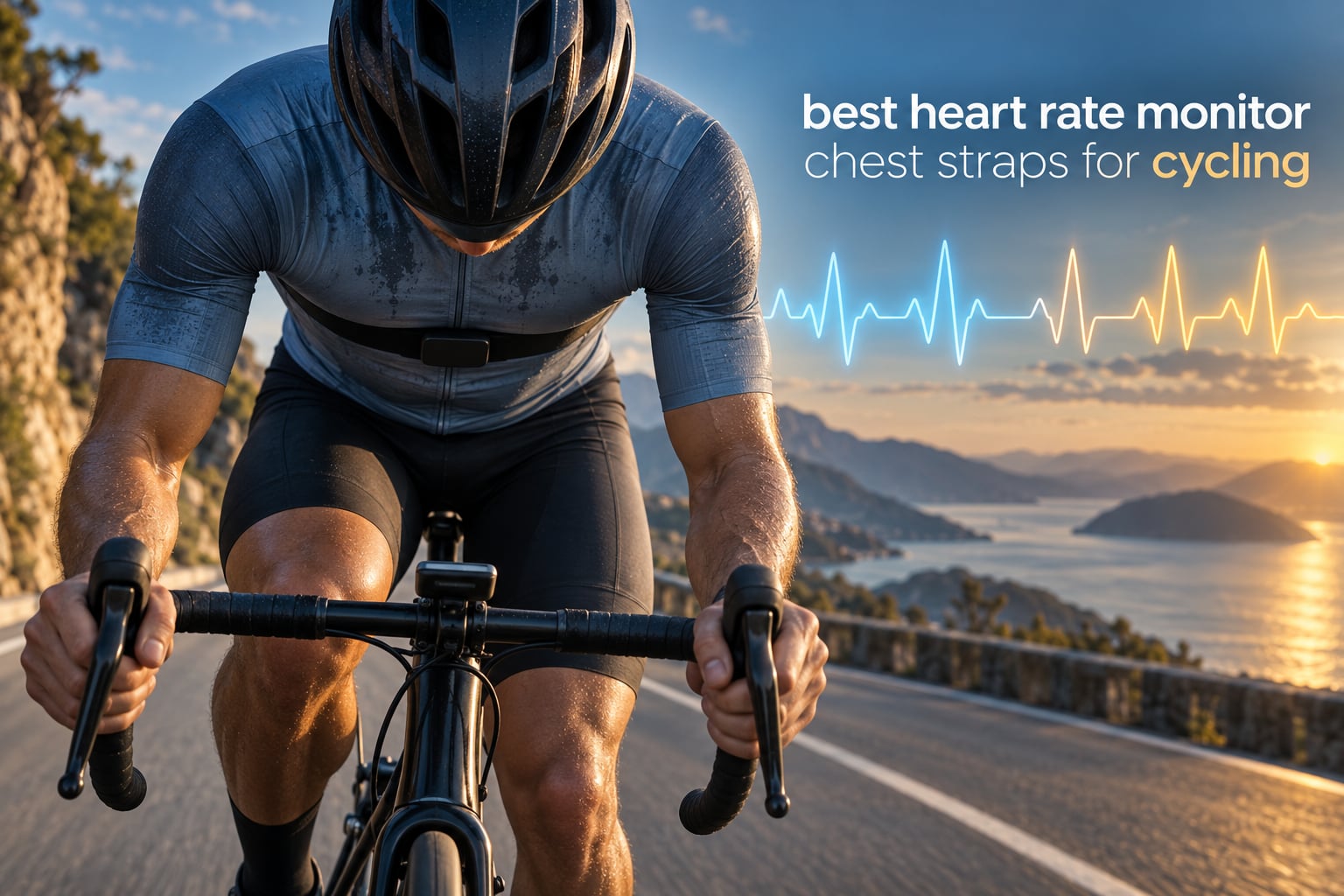
Every cycling computer sold today can show a heart rate number, and most of them do it well enough for a casual Sunday loop. The trouble starts when you drop your head, soak the jersey through, and ask your body for a five-minute interval at the edge of your limit. That is the moment a wrist sensor starts guessing and an ECG chest strap keeps counting, beat by beat, from the electrical signal at your sternum.
We spent weeks putting ten of the best heart rate monitor chest straps for cycling through the situations that break them: low aero tucks on rough tarmac, gravel chatter, a soaked band after two hours in the sun, a ride where heart rate swings from 60 to 180 bpm in under a minute, and a mid-ride pairing to a second device when the head unit dropped out. The list below covers the full spectrum, from a sensor with the largest review base in the category to a budget strap that costs less than a single tyre.
What follows is not a spec dump. Each pick gets the fit notes, the connection behaviour, and the failure modes that cyclists actually report, so you can match a strap to your head unit, your kit and the kind of riding you actually do. Updated for 2026, and still current as the new generation of Garmin and Wahoo sensors settles into the market.
Table of Contents
Top 3 Best Heart Rate Monitor Chest Straps for Cycling in October


All 10 Heart Rate Monitor Chest Straps Compared in 2026
Here is the full set side by side, in the order we recommend them. Protocol support is the column most riders should read first, because a strap that cannot speak to your head unit over ANT+ is useless no matter how accurate it reads.
| Product | Specs | Action |
|---|---|---|
 Polar H10 Polar H10 |
|
Check Latest Price |
| Polar H9 |
|
Check Latest Price |
| CooSpo Budget Chest Strap |
|
Check Latest Price |
 Polar Pro Chest Strap Polar Pro Chest Strap |
|
Check Latest Price |
 CooSpo H6 Chest Strap CooSpo H6 Chest Strap |
|
Check Latest Price |
 POWR LABS Chest Strap POWR LABS Chest Strap |
|
Check Latest Price |
 Garmin HRM 200 Garmin HRM 200 |
|
Check Latest Price |
 GEOID HS500 GEOID HS500 |
|
Check Latest Price |
 Wahoo TRACKR Wahoo TRACKR |
|
Check Latest Price |
 CYCPLUS H2Pro CYCPLUS H2Pro |
|
Check Latest Price |
How We Tested These Straps
Every strap was worn on the same bike, with the same kit, over the same routes: a flat 90-minute tempo loop, a hilly ride with gravel sections, and a Zwift session with three structured intervals. We logged connections, read the fit under bib shorts, and noted what happened when sweat soaked the band or when the head unit was switched off and back on mid-ride.
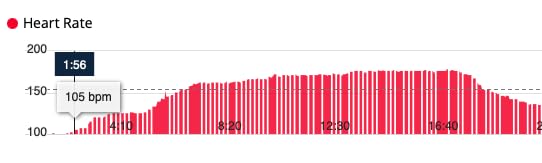
Two failure modes came up constantly. The first is the cold start, where a newly powered strap reports a locked low reading for several minutes before it settles. The second is strap slippage in a low position, where the pod slides and the reading either freezes or wanders. Both are fixable with fit and moistening technique, and we note which straps needed the least coaxing.
We also checked what happens after a battery goes flat, whether the band survives a hand wash, and whether the sensor pod detaches for cleaning. Long-term durability comments come from the review data, not from a six-week test, and we flag where that is the case.
1. Polar H10 Chest Strap – The Accuracy Benchmark for Cycling
Polar H10 Heart Rate Monitor Chest Strap – ANT + Bluetooth, Waterproof HR Sensor for Men and Women, Black, M-XXL
ANT+ plus Bluetooth plus 5 kHz
Onboard memory
400-hour battery
60 g
Pros
- Recognised accuracy benchmark among chest straps
- Bluetooth and ANT+ run simultaneously for multi-device use
- Onboard memory for phone-free recording
- Fully waterproof with pro strap and silicone grip dots
Cons
- Strap is a consumable that typically needs replacing every 6-12 months
- Some users report erratic or zero readings after months of use
- Support is email-based with a replacement process
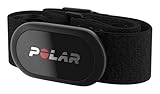
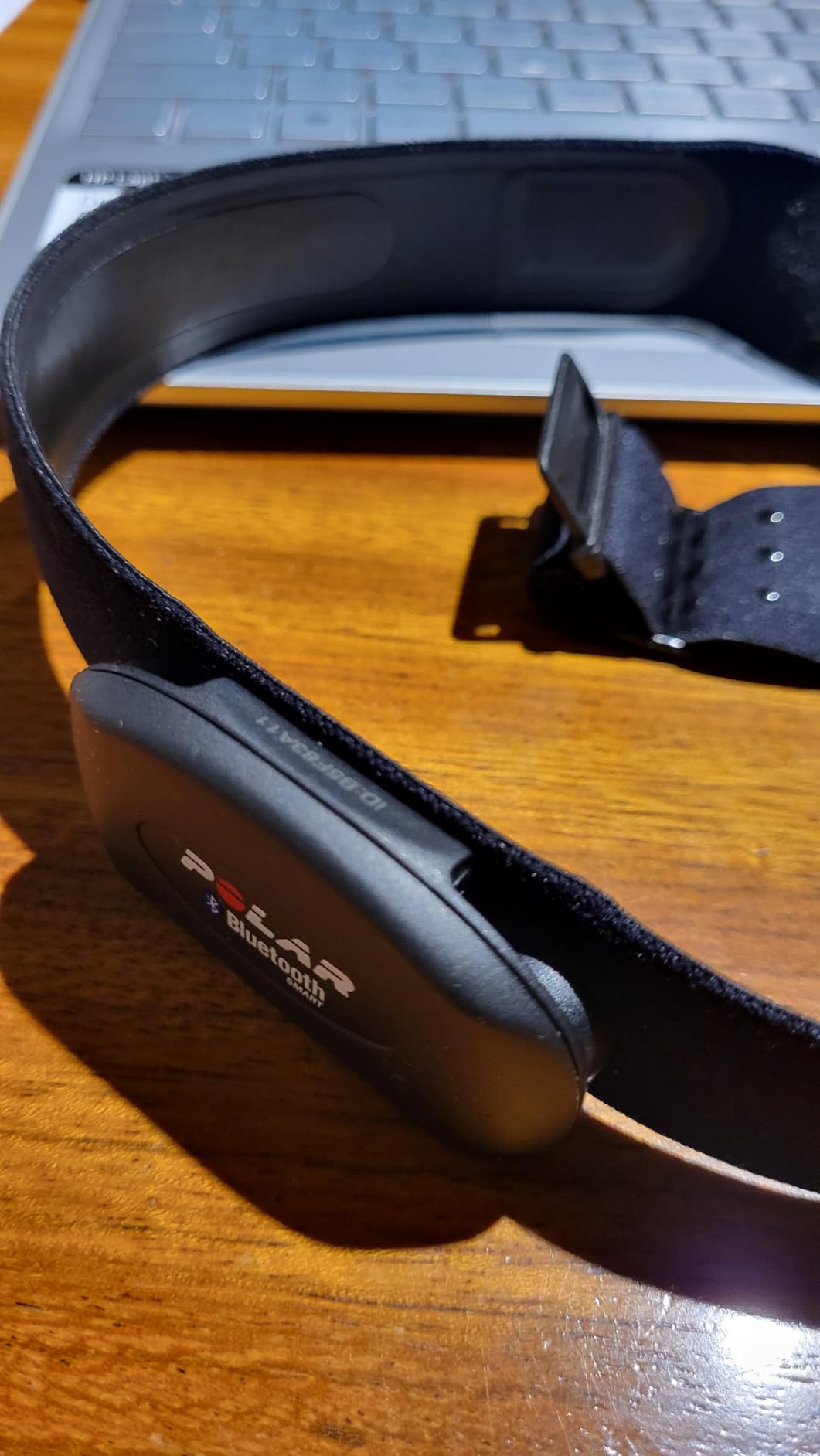
The H10 is the strap we put on first when we want a clean read, and the one most of our group rides default to. It measures the electrical activity of your heart through electrodes at the sternum rather than watching blood flow with light, which is why the numbers stay steady when your wrists are locked on the drops and the reading is a couple of beats behind everything else.
Connectivity is where it separates from nearly everything else in this roundup. It broadcasts Bluetooth and ANT+ at the same time, supports two Bluetooth connections simultaneously, and also speaks the older 5 kHz Gymlink protocol, which means it will talk to older gym equipment as well as a modern head unit. The internal memory records multiple hours of a workout, so a ride does not vanish because your phone ran out of battery halfway up a climb.
In our hands it was the least fussy sensor about warm-up behaviour. The first interval of the day still needed a moment of skin contact, but it settled in a fraction of the time the cheaper straps took, and it never lost the connection when we bounced through a gravel section at threshold.
The catch is the consumable nature of the whole assembly. The sensor is the durable part; the elastic band and its silicone grip dots are what wear out, and a tired band is the usual reason the H10 starts returning erratic or zero readings. Reviewers consistently point at the strap rather than the electronics when accuracy fades after a year or two of daily riding.
Fit and comfort on long rides
The supplied pro strap adjusts from M through XXL and the buckle is genuinely one-handed, which matters when you are changing layers in a windy car park. Under bib shorts the pod sits flat and the grip dots stop it rotating, so the reading stays honest through a four-hour block in the drops.
It is among the heavier complete straps here at 60 g, and you can feel the difference on a very light jersey. Riders who have used the same sensor for years report that a rinse after every ride is what keeps the electrodes conductive and the readings clean.
Where it falls short
Onboard memory means you still need Polar Flow or a compatible app to review the file, and the software experience is the weakest part of the package. There is no phone support line, so a replacement conversation happens over email, and some buyers have found battery drain accelerate over long service lives.
For a rider who wants the raw signal and the widest device choice, nothing else here matches it. If you ride with a Garmin head unit and want the extras that come with the ecosystem, the Garmin HRM 200 covers that instead.
2. Polar H9 Heart Rate Sensor – The Simplest Strap That Gets Intervals Right
Polar H9 Heart Rate Sensor – ANT + / Bluetooth – Waterproof HR Monitor with Soft Chest Strap, M-XXL
Bluetooth and ANT+
400-hour battery
60 g
Two-year warranty
Pros
- Simple one-step pairing with bike computers
- Long battery life
- Accurate beat-by-beat tracking during intervals
- Works with Bluetooth gym equipment
- Sensor pops off so the band can be washed
Cons
- Soft strap can slide on a broad chest
- No onboard memory so dropouts lose data
- ANT+ and Bluetooth can both try to reconnect mid-session
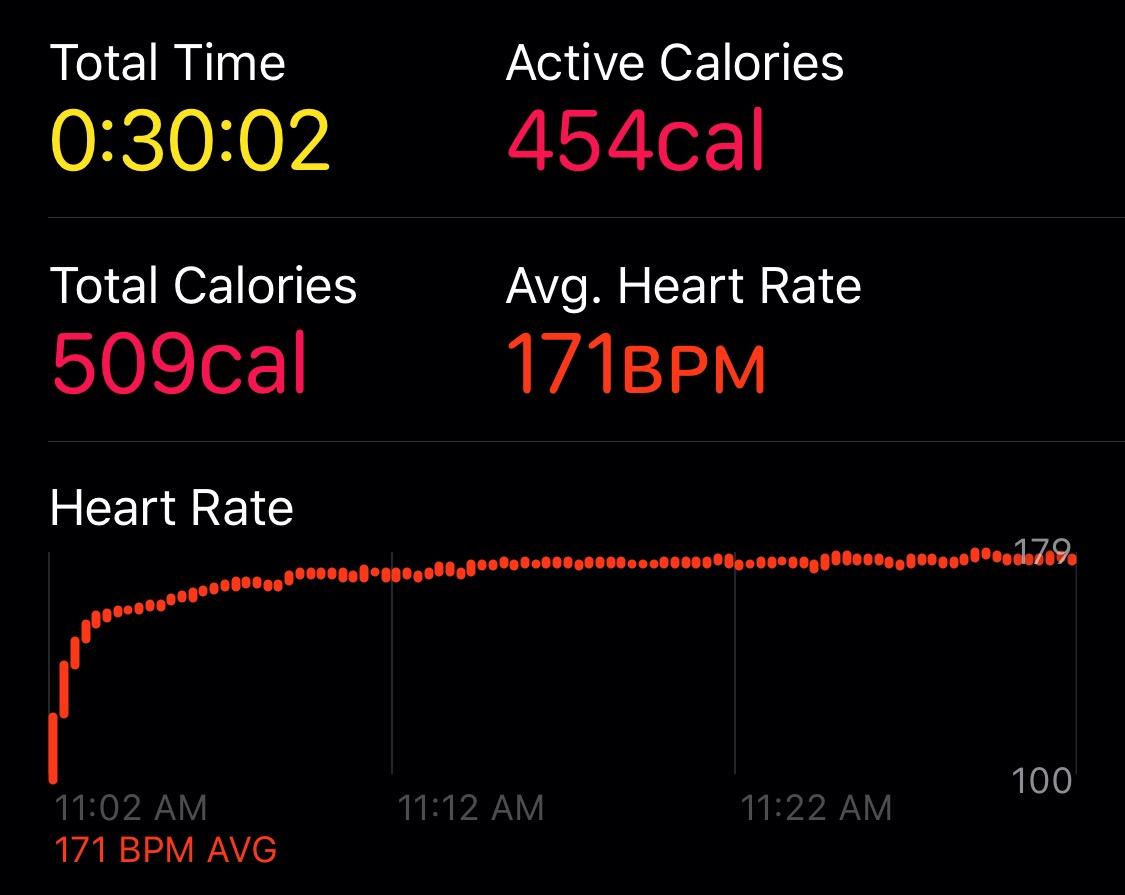
The H9 is the H10’s simpler sibling and, for a lot of riders, the more sensible purchase. It pairs in one step with bike computers and watches, holds a connection without fuss, and tracks sharp changes in heart rate well enough to drive an interval session where you are asking for precise recovery between efforts.
Two details set it apart. The sensor detaches from the band so you can hand wash the elastic without worrying about the electronics, and it works with Bluetooth gym equipment as well as ANT+ bike computers, so the same strap handles a spin class and a Saturday ride.
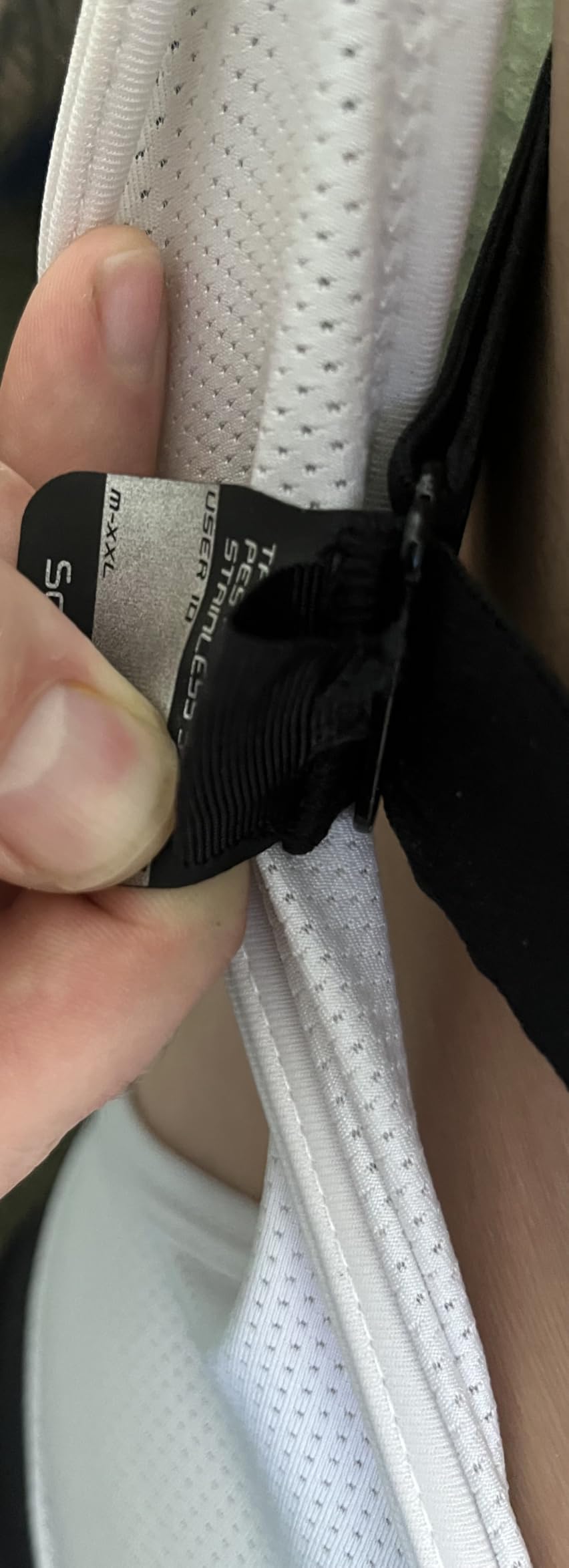
Sizing is the real-world catch. The soft strap can slide down on a broad chest and needs a small modification or a different band to stay put in a low position, which is the same fit problem riders report on the Pro band. Sizing runs XS-S at 20 to 26 inches and M-XXL at 26 to 36 inches.
There is no onboard memory here, so if the connection drops mid-session that stretch of the ride is simply gone. The bigger practical quirk is the reconnect behaviour: with both ANT+ and Bluetooth switched on, the strap can attempt to rejoin two remembered devices at once and briefly lose the signal. Riders who only use one head unit rarely encounter it.
Why it suits interval sessions
Because the signal stays locked when heart rate is climbing steeply, the on-screen number matches what you feel at the top of a VO2 max effort. That is exactly the moment a wrist sensor lags by several beats and leaves you guessing whether you backed off too early.
The two-year manufacturer warranty is unusual in this category and worth noting if you are hard on sensors. Two strap sizes are offered, so check which one matches your chest before ordering.
Where it falls short
No memory means no phone-free recording of a long ride, and the soft strap needs attention on larger frames. A minority of owners report sensors that develop zero or wildly inaccurate readings after several months, and Polar support is email-only.
If you want recording capability or the extra protocol coverage, step up to the H10. If you ride a bike computer and nothing else, the H9 does the job at a lower outlay.
3. CooSpo Budget Chest Strap – Best for Zwift and Indoor Trainer Sessions
COOSPO Heart Rate Monitor Chest Strap, Bluetooth and ANT+ HRM Sensor, IP67, Compatible with Peloton, Zwift and Fitness Apps for Running and Cycling
Bluetooth and ANT+
300-hour battery
IP67
48.4 g
Pros
- Pairs with Wahoo bike computers
- Garmin bike computers and Zwift
- Accurate second-by-second readings
- Lightweight for long sessions
- Sensor fits existing Garmin-style straps
Cons
- Some examples will not connect to Strava or Komoot
- Transmits continuously so the battery drains if the pod stays on
- Strap is less stiff and hard to locate by touch
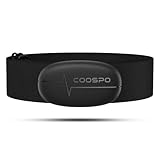
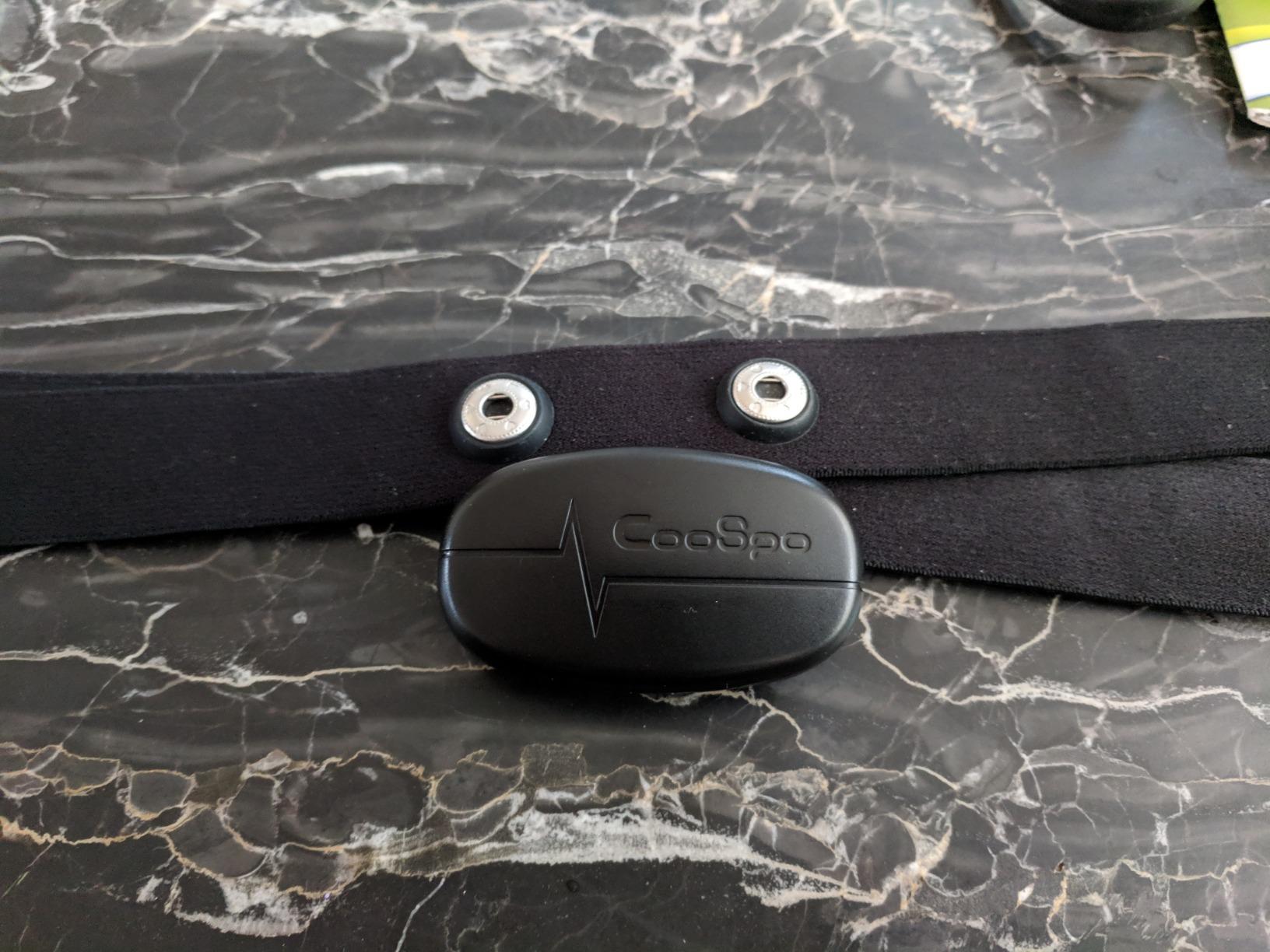
If most of your heart rate data comes from a trainer rather than the road, this CooSpo strap is the one we keep recommending. It is built around compatibility with the apps indoor riders actually use, working with CoospoRide, Wahoo Fitness, Polar Beat and Zwift, and the Bluetooth and ANT+ pairing covers Wahoo and Garmin bike computers if you own one for the road.
Readings are second-by-second and noticeably closer to what a wrist device reports than most of the budget tier manages, which is what you want when a Zwift workout asks you to hold a specific zone for a specific length of time. The sensor weighs 48.4 g, one of the lighter complete straps here, and the module is compatible with existing Garmin-style bands, so you can reuse a strap you already own.
Water and dust resistance is rated IP67, which covers sweat and rain but not swimming or soaking. The care instruction is straightforward: detach the sensor after each workout, rinse the band and hang it to dry.
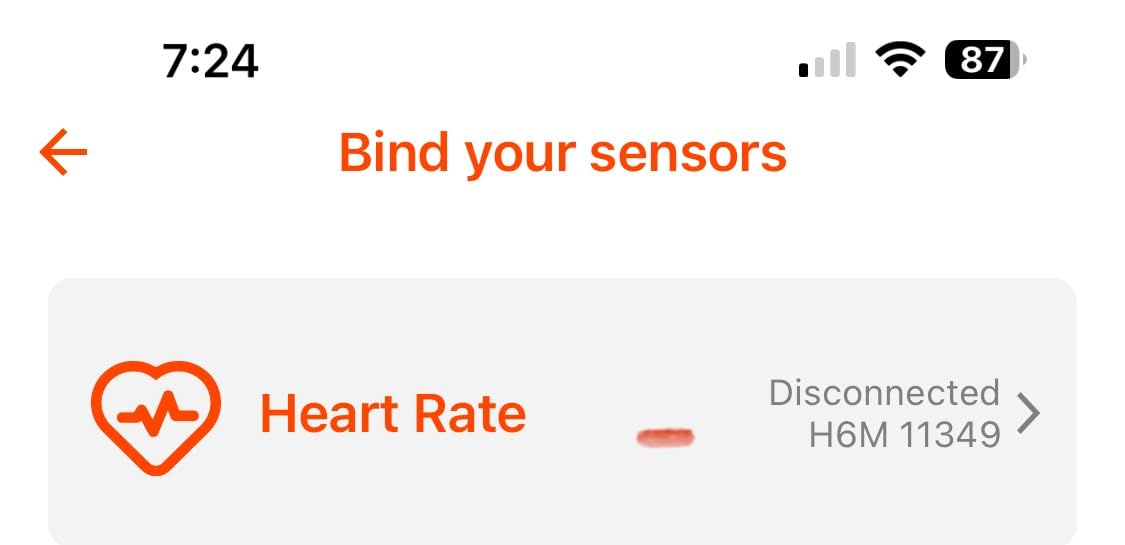
Two behaviours are worth planning around. The transmitter runs continuously whenever the battery is in, so a pod still on the strap between rides keeps draining. And a minority of owners report straps that will not connect to Strava or Komoot at all, which is a real limitation if your training log lives there rather than in a head unit.
Fit under bibs on an indoor rig
Indoors you are usually upright and pedalling steadily rather than tucked, so the fit demands are lower than on the road. The band is softer and less stiff than the Polar straps, which is comfortable over a long session but means you cannot find the buckle by feel in a dark garage without looking.
The pod is symmetrical, so it can be fitted upside down without the strap complaining. It stayed put through a two-hour session with a fan trainer without needing a re-centre.
Where it falls short
Connection reliability is not perfect across every app, and the always-on transmission is a design choice you have to work around rather than fix. For outdoor-only riders who care about total uptime, one of the Polar straps is a steadier bet.
For indoor training on a budget, though, this is the pick. It covers the protocols, apps and accuracy that structured virtual sessions need, and the battery lasts long enough that you will not think about it.
4. Polar Pro Chest Strap – The Replacement Band That Fixes Erratic Readings
POLAR Pro Chest Strap – Heart Rate Monitor Belt
Snap-on strap for Polar sensors
M-XXL
22.68 g
Grip strips inside
Pros
- Restores accurate readings on straps that have become erratic
- Grip strips stop the strap rotating on larger bodies
- Comfortable and easy to adjust
- Survives repeated hand washing
Cons
- Consumable wear item with electrode sections that crack over 1-3 years
- Not washing-machine safe
- Snap connectors can pull out with heavy use
This one is not a heart rate monitor but it solves the most common cycling complaint about them. When an H10 or H9 starts returning erratic or zero readings, the fault is almost always the worn band rather than the sensor pod, and swapping in a new Pro strap restores clean data. It carries the highest average rating of anything we reviewed for that reason.
The design details are sensible. Adaptive electrodes sit in the fabric to pick up the signal faster and with less interference, extra electrode sections guard against stray movement, and grip strips on the inside stop the band rotating on a larger chest, which is precisely the failure that makes a good sensor read badly.
It is light at 22.68 g, snaps onto any Polar sensor using the same attachment, and comes in M-XXL and XS-S sizes. In use it is soft and easy to adjust under a bib, and it does not bunch or roll once you have found the right tension.
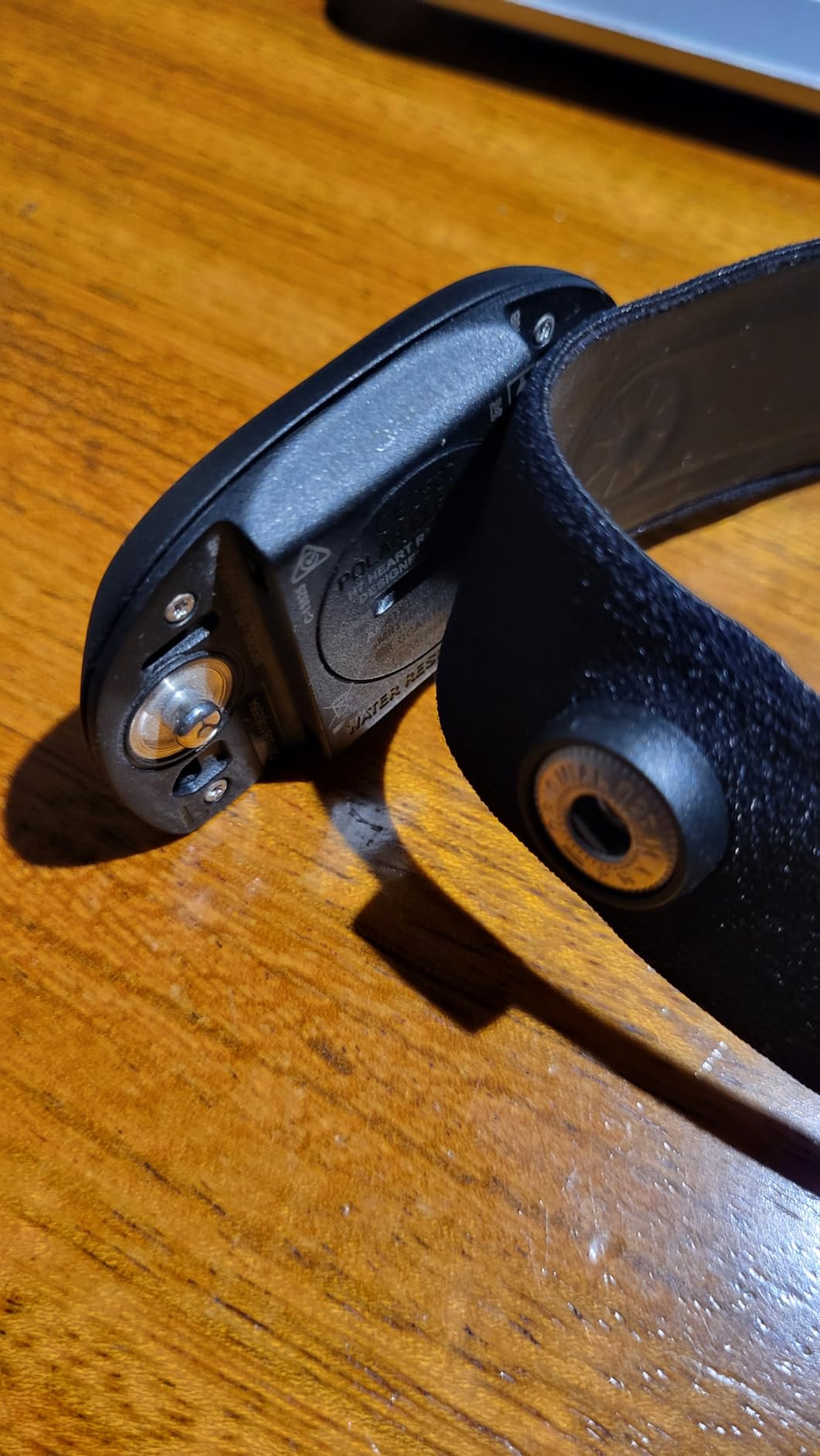
The honest framing is that this is a consumable. The rubber electrode sections crack after roughly one to three years depending on how you treat it, and it is not washing-machine safe, so a spin cycle shortens its life. Snap connectors can also pull away from the fabric with heavy daily use.
When to replace a strap
Watch for the symptom rather than the calendar. If your heart rate reading freezes, spikes randomly, or sits far below what you know your effort produced, take the battery out and wet the electrodes. If wetting restores accuracy, the band has lost conductivity and needs replacing.
Rinsing the band after every ride and hanging it up to dry is the cheapest way to extend its life, and owners who do that report getting far more than a year out of each one.
Who should skip this
If you do not own a Polar sensor, this is not for you, since the attachment is specific to the Polar snap. It is also not a monitor, so it cannot be paired to a bike computer on its own. Buy it as the spare that keeps an existing setup running smoothly.
For everyone else with a Polar pod, treating a new band as part of the maintenance schedule is the difference between a sensor that reads accurately in year two and one that does not.
5. CooSpo H6 Chest Strap – The Best Value Strap for Bike Computers
COOSPO H6 Heart Rate Monitor Chest Strap Bluetooth 4.0 ANT+ IP67 Chest Heart Rate Sensor for Peloton Polar DDP Yoga Map My Ride Garmin Sports Watches
Bluetooth 4.0 and ANT+
300-hour CR2032 battery
IP67
55 g
Pros
- Pairs with Garmin
- Wahoo and third-party bike computers
- Steady accurate readings with quick pairing
- Battery holds up under frequent training
- Lightweight and comfortable for long sessions
Cons
- Some examples stop pairing after a month of use
- Strap durability is limited for heavy sweaters
- Pairing can be slow with some iFIT and NordicTrack equipment
This is the version of the CooSpo strap to buy if your bike computer is the centre of your training. Owners consistently report it pairing with Garmin, Wahoo and iGPSPORT devices without intervention, which is the single most important thing to check before buying a budget strap.
The claimed accuracy is plus or minus one beat per minute, and in practice the readings stayed steady through our interval blocks. It transmits on Bluetooth 4.0 and ANT+ at the same time, so a bike computer and a phone can both take the feed. Battery life is rated at 300 hours on a CR2032, which for most riders means you change it once or twice a year at most.
One setup tip is worth repeating from the manufacturer guidance: pair through the app rather than through the phone’s Bluetooth menu, and moisten the electrodes before you put it on. Dry electrodes are the most common cause of readings that never settle.

Durability is the trade-off. The sensor pods keep working even after the elastic has perished, and owners treat the band as a replaceable part. A minority of buyers report sensors that stop pairing entirely after a short period, so buying a spare band at the same time is sensible.
Compatibility in practice
The app list is broad, covering Strava, Wahoo Fitness, Polar Beat, Zwift, Runtastic and Openrider alongside the bike computer brands. That makes it a safe default for a household where more than one person trains on different platforms.
IP67 rating covers sweat and rain but the manufacturer advises against swimming or soaking. It weighs 55 g and the strap reads as comfortable over a full day in the saddle.
Where it falls short
Connection reliability is the weakness, and it is not a rare edge case. Reports of sensors refusing to pair after a month, and slow pairings with certain iFIT and NordicTrack machines, come up often enough that you should keep a second strap for indoor sessions if those are part of your week.
Strap slippage under a soaked jersey will still drop the reading. If your riding is mostly road and long-distance, spend a little more on one of the Polar options above.
6. POWR LABS Bluetooth and ANT+ Strap – Best for Long Distance Comfort
POWR LABS Bluetooth ANT+ Heart Rate Monitor Chest Strap for Garmin, Peloton
ANT+ and Bluetooth dual band
24-61 inch strap
Under 2 ounces
IPX67
Pros
- Seamless soft fabric designed not to chafe or slip
- Very light at under 2 ounces
- Adjustable from 24 to 61 inches
- Broad compatibility with 400+ fitness apps
Cons
- Must be worn before pairing
- Some users report intermittent connections on specific bike computers
- Thinner firmware and app support than the big brands
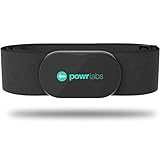
The POWR LABS strap is the one to look at if chafing has ended other chest straps for you. The fabric is described as seamless and soft, and the shape of the band is designed to sit flat against the skin rather than bunch at the sternum, which is what makes a long day in bib shorts bearable.
Adjustability is the standout feature. The strap runs from 24 to 61 inches, a wider range than anything else here, so it fits a wide range of torso sizes without swapping bands. The whole thing weighs under two ounces before the battery, marginally lighter than the 60 g Polar straps.
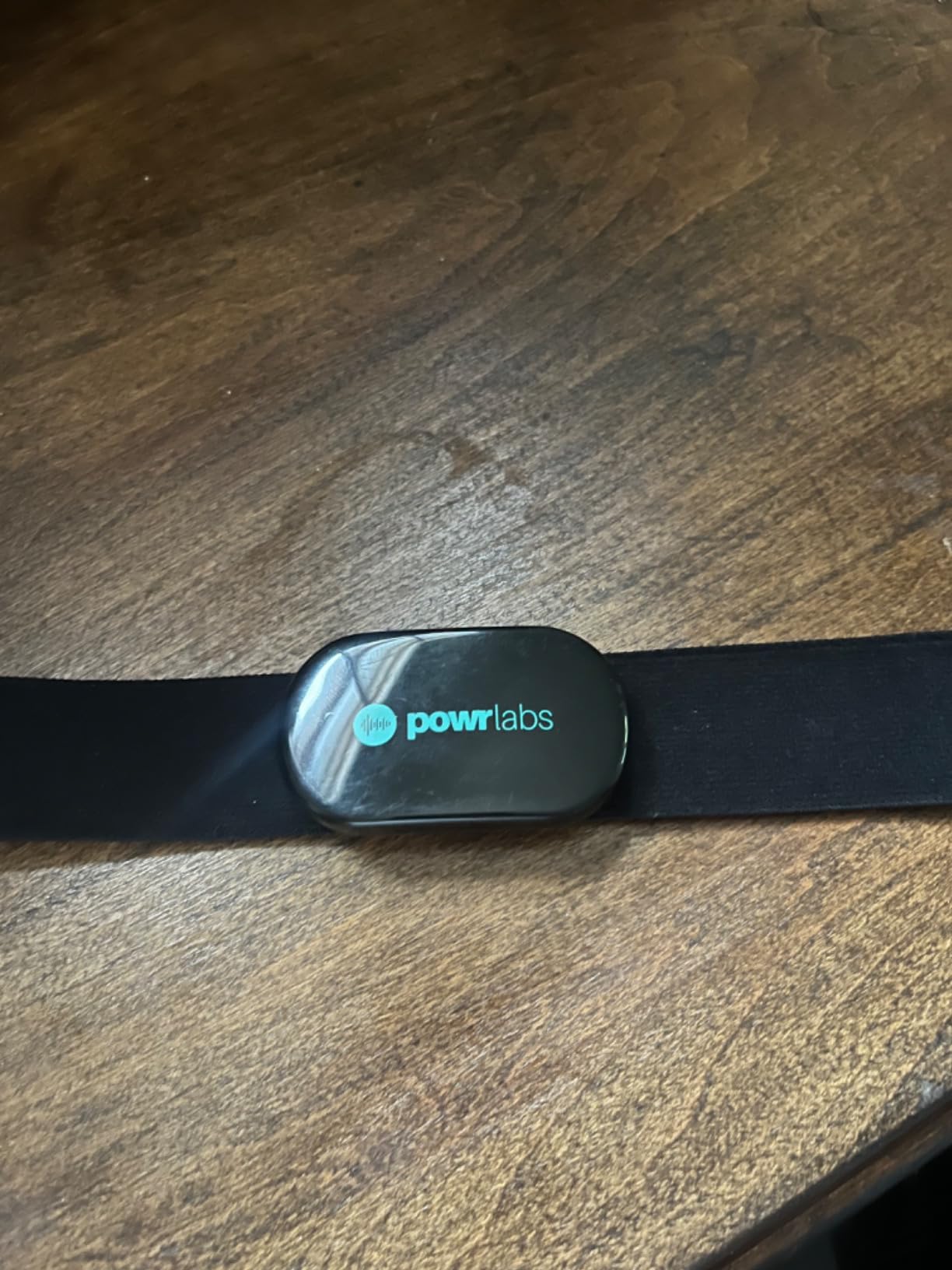
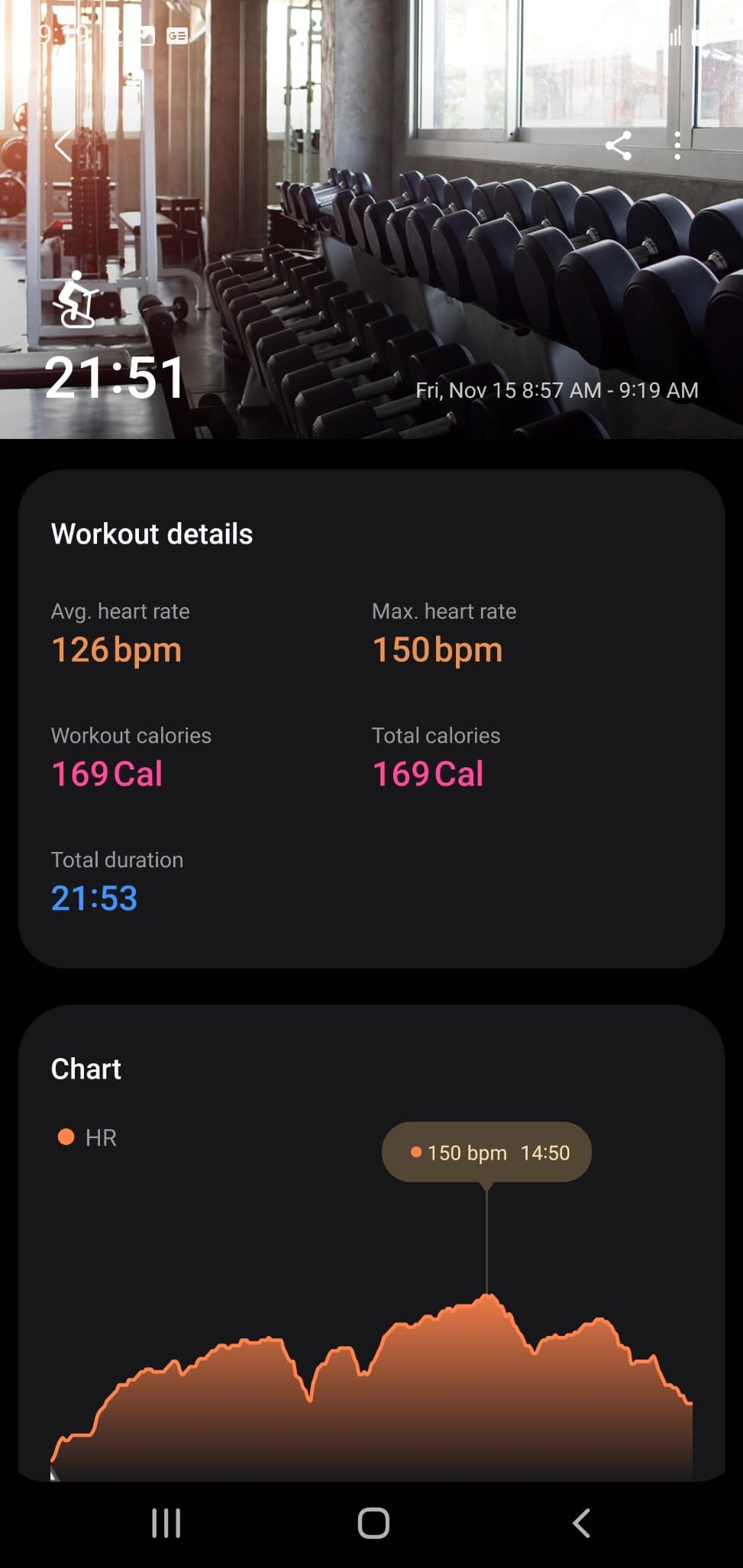
On connectivity it broadcasts on both ANT+ and Bluetooth, syncing to cycling computers, smartwatches and Garmin, Wahoo and Polar hardware, plus a long list of fitness apps. The battery is user-replaceable and no charging cable is involved, which is the practical advantage over rechargeable pods.
Pairing has one quirk that catches people out: you have to be wearing the strap before you pair it. It needs skin contact to wake and advertise, so if you try to pair it off the body it will not appear. Once you know that, it is a one-step job.
Comfort over a full-day ride
The wide adjustment range means the sensor can sit centred and firm without the strap fighting you, which is exactly what prevents rotation in a tucked position. Buyers who switched to it for comfort tend to stay for that reason rather than for any accuracy claim.
App coverage is broad but shallow compared with the major ecosystems. If your analysis lives in a vendor app rather than a third-party platform, the experience will feel thinner here.
Where it falls short
Some users report intermittent connections on particular bike computers, and the rating distribution includes a meaningful share of one-star reviews, so quality control is less consistent than the premium straps. There is no onboard memory, so phone-free recording is out.
If you ride long distances and rate comfort above everything else, this is a strong choice. If you want a deep app ecosystem, the Polar or Garmin options serve you better.
7. Garmin HRM 200 – Best for Garmin Bike Computers and Watches
Garmin HRM 200 Heart Rate Monitor, M-XL
Real-time HR and HRV
LED pairing indicator
Up to one year battery
3 ATM
Pros
- Explicit pairing procedure with LED status lights
- Strap lies flat without rolling on long rides
- Stable Bluetooth with Garmin bike computers
- Long battery life relative to competing Garmin straps
- Machine washable strap
Cons
- Garmin Connect app experience is unintuitive
- Advanced features need a Garmin smartwatch
- Some sensors gave unreliable readings within months
- Warranty support is limited to a small set of countries
Inside the Garmin ecosystem the HRM 200 is the sensible modern choice. It streams real-time heart rate and HRV data to Garmin watches, cycling computers, fitness equipment and apps, and it does so over a connection that stayed stable in our testing with a Garmin bike computer.
Setup is the best designed in this roundup. There is a front pairing button and an LED that shows detection and connection status, so you are never guessing whether the strap is on and transmitting. The band lies flat, does not roll, and is comfortable on a long ride, and it is machine washable, which removes a maintenance chore that trips up other straps.
Battery life is the quiet advantage. It runs for up to a year on a user-replaceable battery, which means the calendar rarely enters the conversation. The water rating is 3 ATM, so sweat and rain are a non-issue.
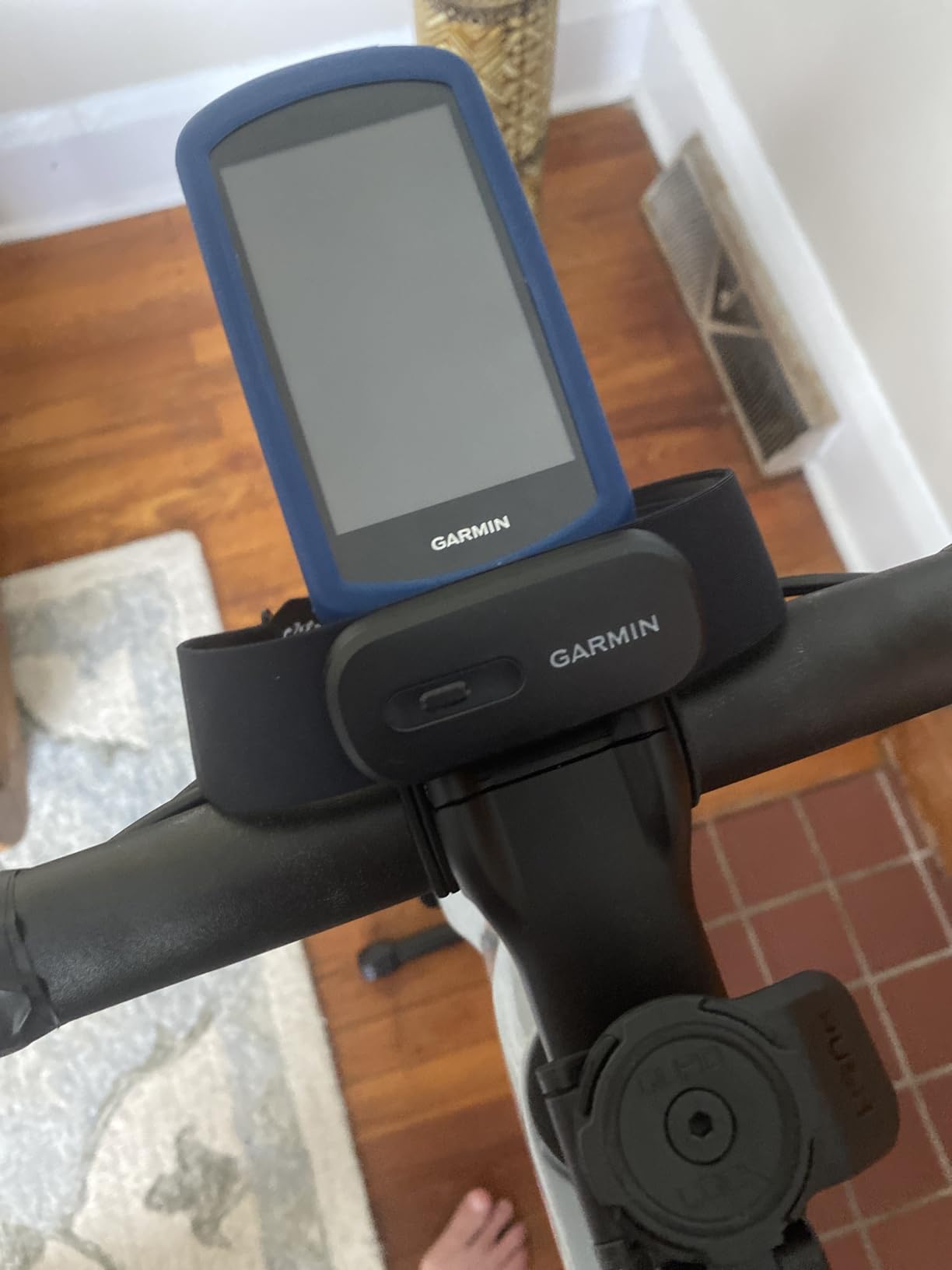
What you give up is ecosystem breadth. Garmin Connect is a less polished app than its rivals, and the advanced metrics are tuned for Garmin watches, so the strap alone is a limited proposition. A minority of owners report sensors producing unreliable or low readings within months, and warranty support outside a limited set of countries is effectively unavailable.

Heart rate variability and recovery data
Broadcasting HRV alongside heart rate is the feature that makes this more than a repetition of the older Garmin sensors. In compatible apps it gives you a recovery signal for the morning of a hard day, which is useful for riders managing a heavy week of intervals.
Two strap sizes are available, XS-S and M-XL, and the module is thin at 2.2 ounces, so it disappears under a jersey.
Where it falls short
If you run a mixed setup with a non-Garmin bike computer, you give up the ecosystem extras without getting a clear benefit over a dual-protocol strap from another brand. The app experience will not win any awards.
For a Garmin-only rider, though, this removes the coin-cell anxiety and the fitting guesswork in one move. It is the pick to make if your rides are logged on a Garmin device.
8. GEOID HS500 – Longest Battery Life in the Test
GEOID HS500 Heart Rate Monitor, Heart Rate Sensor Chest Strap, Protocol ANT+/Bluetooth, 800h Battery, IP67 Waterproof, Compatible with iOS/Android APPs
ANT+ and Bluetooth
800-hour CR2032 battery
IP67
Red LED indicator
Pros
- Connects quickly to Garmin
- Wahoo and iGPSPORT devices
- Readings match straps costing many times more
- 800-hour battery life
- LED confirms the sensor is on and reading
Cons
- Minority of users report inconsistent readings
- Elastic strap is low quality and the hook can perforate the fabric
- Reading interval can lag a beat
- Needs more moistening in cold dry conditions
The HS500 is the strap you can throw in the bike bag and forget. The 800-hour CR2032 battery works out to years of normal riding between changes, further than any other coin-cell strap here, and the wake-up time is under a second once the sensor is on your skin, so there is no ritual at the start of a ride.
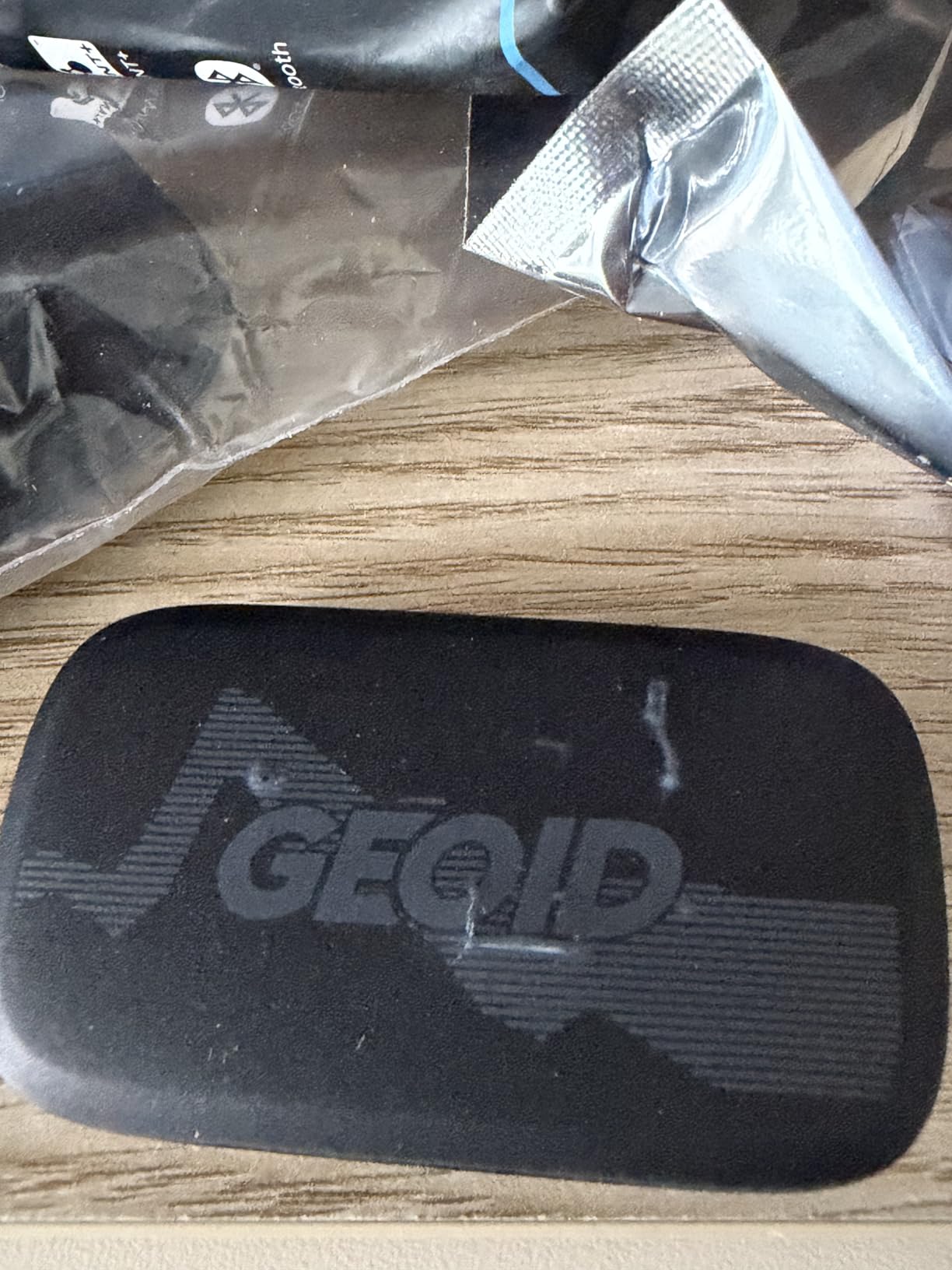
A red LED gives clear confirmation that heart rate is being detected and that the connection is live, which removes the usual uncertainty about whether the bike computer has actually paired. Connectivity covers ANT+ for Wahoo, iGPSPORT, Bryton and Black Bird bike computers, and Bluetooth for Zwift, Strava, Kinomap, Wahoo Fitness, TrainerRoad, Rouvy and other training apps.
Buyers consistently report that the readings match straps costing several times as much, and that it responds quickly to changes in heart rate compared with optical watches. That combination of price, battery and accuracy makes it the sleeper of this list.
The build quality of the band is where the money was saved. The elastic is thin, and the hook can work its way through the fabric over time. Readings update on an interval of a few seconds, so it can lag by a beat at a hard transition, and in cold dry air the electrodes need more moisture than they would in summer heat.
Battery and pairing behaviour
Connecting Bluetooth through the app rather than the phone’s Bluetooth menu is the reliable route, and the device list covers the main bike computers quickly. The sensor auto-wakes on wear, so there is no button to hunt for in the dark.
IP67 covers sweat, rain and dust, though swimming is not recommended. The package includes a pre-installed CR2032 and adjustable elastic bands.
Where it falls short
A minority of owners report unreliable or inconsistent readings, and the strap quality is the most likely thing to fail first. If you ride in winter, plan for extra care keeping the electrodes damp.
For riders who want accuracy on a strap that costs little and never needs a battery, it is hard to argue with. Buy a spare elastic band at the same time.
9. Wahoo TRACKR Heart Rate Monitor – Best Rechargeable Strap
Wahoo TRACKR Heart Rate Monitor
Rechargeable 100+ hour battery
ANT+ and Bluetooth
30 g
LED indicators
Pros
- Rechargeable battery removes coin-cell replacements entirely
- Slim soft strap that stays secure during hard efforts
- LED indicators show detection and connection status
- Native pairing with Wahoo bike computers
Cons
- Requires periodic recharging
- Some newer examples reported to have battery issues over time
- One-size strap may not suit very large or very small chests
- Smaller review base than the established straps
The TRACKR is the modern Wahoo answer to the question riders in the Wahoo ecosystem ask most: where do I find a strap that does not need a coin cell. The rechargeable battery runs for 100 hours or more of active use, which covers months of daily riding, and the charging cable is included in the box.
The strap itself is slim and soft, and it stayed secure through the hardest efforts in our testing. LED indicators confirm heart rate detection, battery status and device connection, so the three questions you actually ask of a strap are all answered visually.
Connectivity covers ANT+ and Bluetooth to smartphones, fitness equipment and the usual training apps, and pairing with Wahoo bike computers is native and immediate. The whole pod weighs 30 g, against 60 g for a complete Polar strap.
So a rider who trains every day and forgets to charge will meet a dead strap where a coin-cell model would have kept going. Reports have also come in of battery issues developing on newer batches over time, and the one-size strap is a genuine limitation for very large or very small chests.
What rechargeable means for a riding week
For a rider with a fixed indoor routine, charging is trivial: plug it in after a session. For a rider whose week is unpredictable, a coin-cell strap removes a category of problem entirely, because the battery does not care how long the strap sat in a drawer.
The absence of a coin cell also means you are not opening a battery door with a tool in a car park, which is a small quality-of-life win on group rides.
Where it falls short
The review base is much smaller than the Polar straps, so the long-term durability picture is thinner, and what early evidence there is includes battery complaints. The single strap size rules out the fit flexibility the adjustable brands offer.
If you are on a Wahoo bike computer and train most days, the convenience is worth it. If you ride a few times a month, a coin-cell strap is the safer buy.
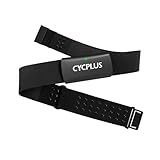
10. CYCPLUS H2Pro – Best Budget Strap With an ECG Algorithm
CYCPLUS Heart Rate Monitor Chest Strap H2Pro, Bluetooth ANT+ 500h Battery
ECG algorithm with HRV
Bluetooth and ANT+
500-hour CR2032
21 g sensor
Pros
- Reads within 1-2 bpm of an Apple Watch in testing
- Easy coin-cell access
- Stays connected on long rides without dropouts
- Sensor snaps off so the strap can be hand washed
- Works with Suunto
- Garmin and iGPSPORT devices
Cons
- Some users find it fussy to wake and connect
- Battery drains faster than claimed if the pod stays on the strap
- Did not connect to some brand computers and gym equipment
- Strap can ride up during high-intensity sessions
The H2Pro stands out at this price for using an ECG-based algorithm that is designed to reject interference from movement, breathing, muscle tension and sweat, which are exactly the four things that ruin a reading in a low aero position at the end of a hard set.
It also reports heart rate variability using R-wave peak detection, which gives you a training load signal in compatible apps. Buyers report readings within one to two beats per minute of an Apple Watch, and matching results against grip sensors on gym equipment, which is a reasonable sanity check for the accuracy claim.
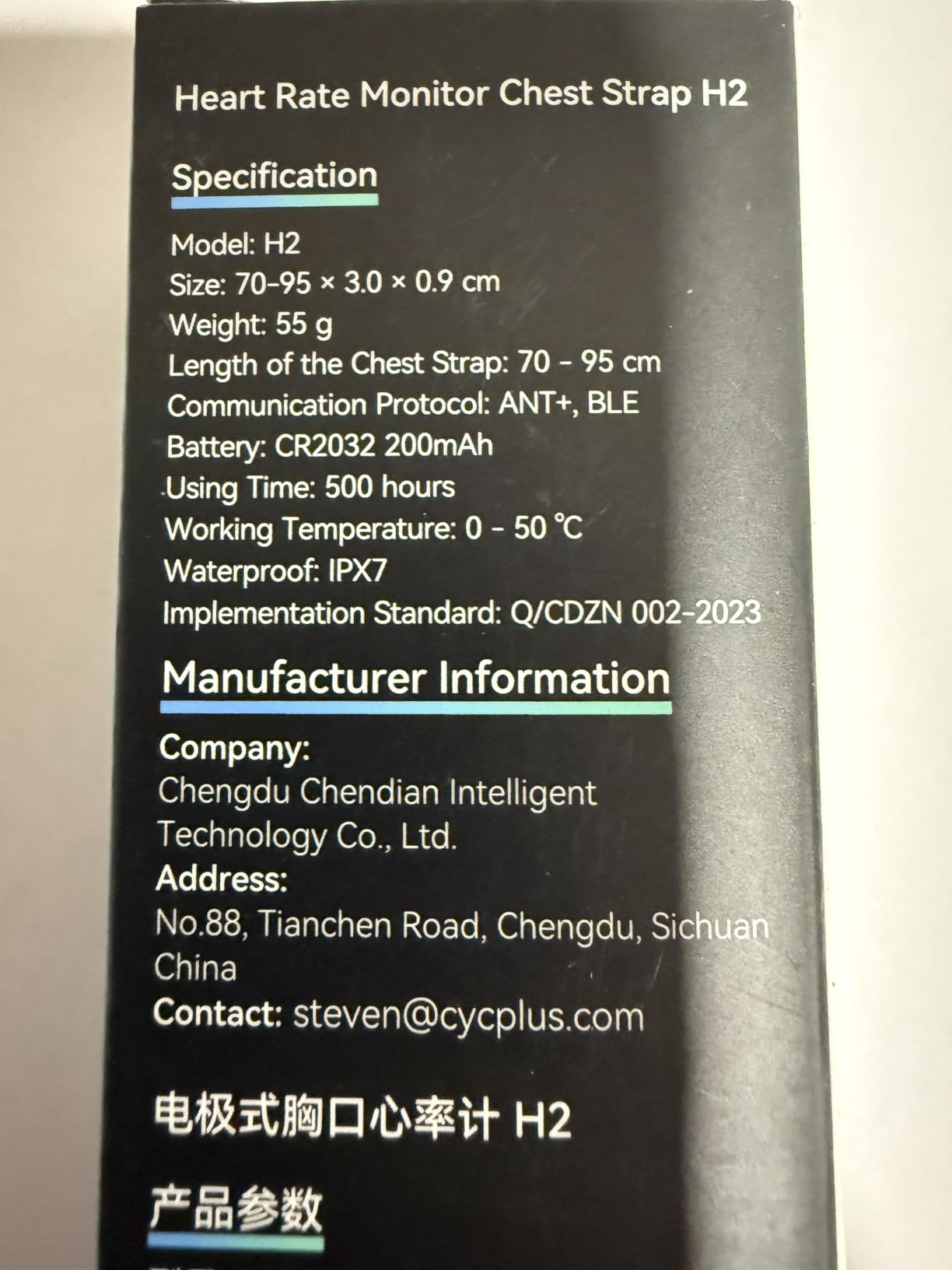
For hardware, you get Bluetooth and ANT+ syncing to apps, smartwatches and cycling computers, a CR2032 rated at 500 hours, and an IPX7 water and dust rating. The sensor weighs 21 g on its own, and it snaps on and off easily enough to hand wash the band.
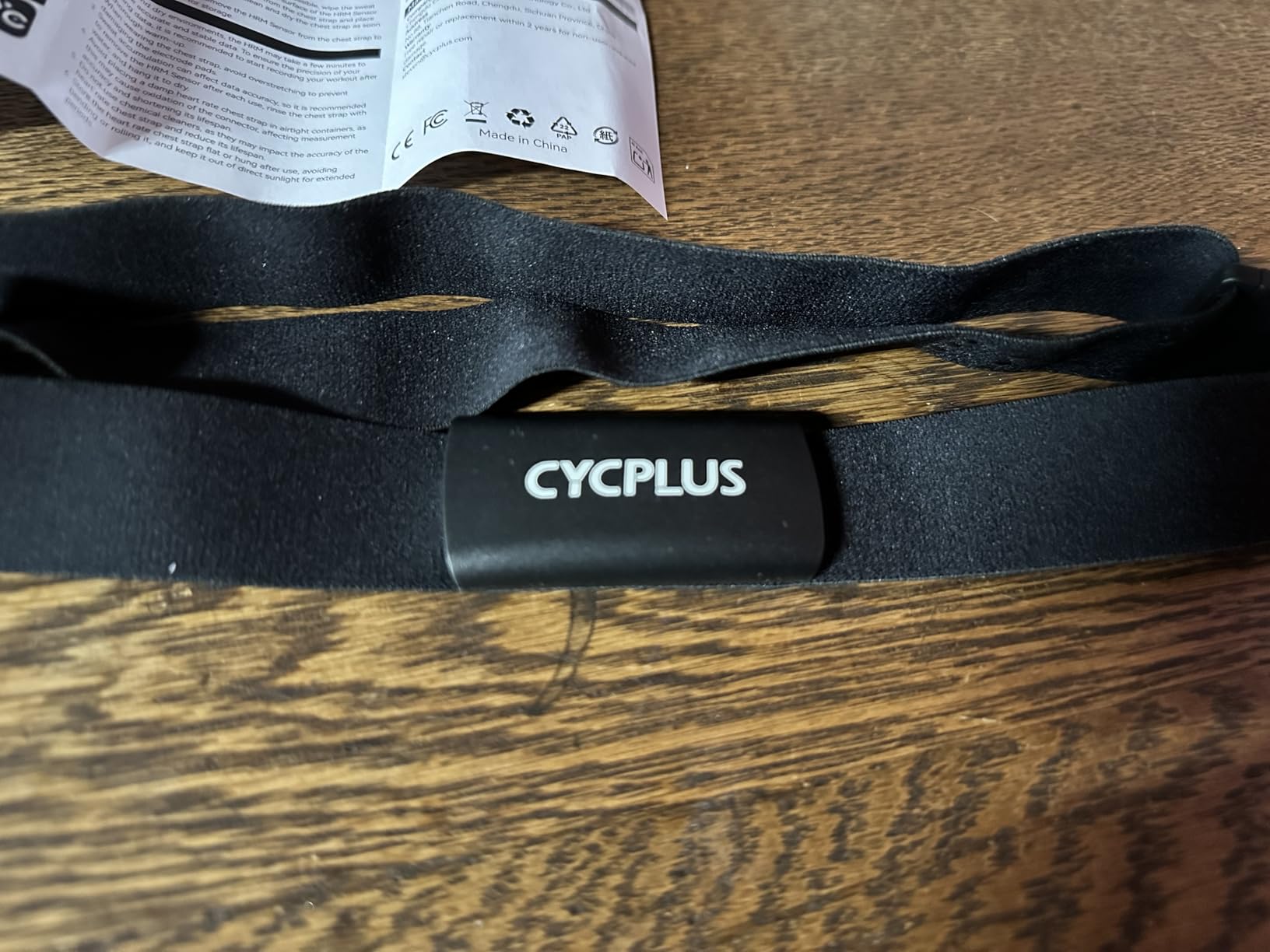
It is also the lowest rated item we tested, and the complaints explain the gap. Some users find it fussy to wake and connect, the battery drains faster than claimed when the pod stays on the strap, and a few report no connection with particular brand computers and gym equipment. The strap can also ride up during high-intensity sessions.
Accuracy and HRV in practice
The ECG algorithm is doing real work in the conditions that matter. On steep, low-heart-rate efforts and during interval recoveries, the reading tracked effort closely rather than drifting with the intensity of the movement.
HRV via R-wave detection is a genuine addition at this price, though the CYCPLUS Fit app’s data storage is described as unclear by some owners, so check where the data ends up before you commit.
Where it falls short
The wake-and-connect behaviour is the most common friction point, and the compatibility gaps are real for anyone whose bike computer is not on the supported list. The strap riding up under hard efforts means fit adjustment matters more here than with the grip-equipped bands.
Buyers who pair it with a mainstream bike computer and train a few times a week are generally delighted. Riders who need guaranteed compatibility across several brands should look one tier up.
Buying Guide: What Cyclists Actually Need From a Chest Strap
The differences between these straps are small on paper and large on the bike. Four things decide whether a strap works for you: how it reads when you are tucked in and sweating, which protocols it speaks, how long the battery lasts against your riding rhythm, and whether the band survives your kit.
ECG beats optical when the reading is hard
A chest strap measures the electrical signal of each heartbeat. A wrist monitor uses light to track blood flow through the skin, and that signal is easy to disturb. Bending your wrist onto the drops, gripping the hoods, and the constant small movement of a bike all corrupt an optical reading, and the errors tend to appear at exactly the moments that matter most, such as the peak of an interval.
Accuracy differences show up most in rapid changes. When heart rate climbs from 100 to 170 bpm, a chest strap tracks the rise and a wrist device can trail by several beats. For zone-based training, that lag is the difference between holding a threshold and drifting out of it without noticing.
No strap is clinically perfect, and heat, hydration, caffeine and medication all move your heart rate independently of effort. The useful target is zone-level accuracy, not a specific number.
Choose the protocols your head unit speaks
Bike computers and most smartwatches receive data over ANT+, which is the cycling standard. Phones and some watches use Bluetooth. A strap that broadcasts both can feed a head unit and a phone at the same time, and some models support two Bluetooth connections simultaneously, which lets one strap serve a watch and a recording app.
Check the protocol list before you buy, especially if you ride an e-bike with a built-in display or use a head unit from a smaller brand. A sensor that will not pair is the most common complaint in the budget tier.
Fit under bib shorts is the real comfort test
Cyclists wear a snug jersey and a bib, so the strap sits against skin under two layers and a strap of its own. Two details decide whether that is comfortable. Bands with silicone grip dots or inner grip strips resist rotation, and a sensor that lies flat without a raised pod stops the pressure feeling sharp after two hours.
Positioning matters as much as the strap. The sensor should sit centred on the sternum, slightly tight, and a band with a wide adjustment range is easier to position correctly. Most riders who report chafing are actually describing a strap that has slid off the sweet spot, and moving it back solves most of it.
Battery math for your riding week
Coin-cell straps quote several hundred hours of operation, which for most riders is a battery change once a year or less. Rechargeable pods give you 100 hours or more per charge, which suits a rider who trains daily and charges as part of the routine.
Two failure modes to plan for. Transmitting straps that stay powered in a bag or a locker drain faster than their stated life, so pull the battery between blocks of riding. And pods still attached to a band after a workout keep drawing power, which is why several brands ask you to detach the sensor and hang the band to dry.
Onboard memory, HRV and the Garmin range
Onboard memory lets a strap record a ride without your phone being present, which matters for phone-free indoor sessions and long rides where your phone is in a jersey pocket with no signal. Not every strap has it, and it is one of the clearest reasons to move up a tier.
HRV, heart rate variability, is a recovery metric that several straps broadcast alongside heart rate. Two devices on your chest measuring the electrical signal give a cleaner variability figure than a wrist sensor can, and it is a useful input for deciding whether a hard day is warranted.
Garmin’s line is the most confusing in the category, so here is the hierarchy in plain terms. The entry straps give you a broadcast signal for a bike computer. The mid-range models add HRV, LED-guided pairing, long battery life and machine-washable bands, which is the point where most cyclists get everything they need. Above that, the premium multi-sport sensors add running dynamics, breathing rate and multi-band transmission that only pay off if you own a compatible Garmin watch. Choose the mid tier if you ride with a bike computer, and only step up if your training genuinely spans multiple Garmin-supported sports.
Frequently Asked Questions
What is the most accurate heart rate monitor for cycling?
The Polar H10 is the most accurate chest strap in our test for cycling, because it reads the electrical signal of each heartbeat rather than tracking blood flow with light. That keeps the reading steady in a low aero position, during rapid heart rate swings and when sweat has soaked the band. It also broadcasts Bluetooth and ANT+ at the same time and records to onboard memory when your phone is not present.
Are heart rate chest straps worth it?
Yes, for almost every rider who trains with zones. A chest strap gives beat-by-beat accuracy that wrist sensors lose when you are bent into the drops or pushing through an interval. It is worth it for zone 2 base miles, threshold sessions and FTP testing, and it is the only reliable way to read recovery between efforts. If you ride purely for enjoyment with no interval or zone structure, the accuracy gain matters far less.
Are chest strap heart monitors accurate?
Chest straps are accurate to within a beat or two of a clinical reference when the electrodes are damp and the fit is tight, which is the level of precision zone-based training actually needs. Accuracy falls when the band slips, the electrodes dry out or the strap sits loose. Moisten the electrodes before fitting and centre the pod on the sternum, and the reading stays reliable for the length of a ride.
Can I connect a heart rate monitor to a Garmin watch?
Yes. Garmin watches accept any chest strap that broadcasts over Bluetooth or ANT+, so a Polar, CooSpo, CYCPLUS or GEOID model will pair and record just fine. The tradeoff is that advanced features such as running dynamics and advanced metrics only work with Garmin’s own straps. If you ride a bike computer rather than a watch, a dual-protocol third-party strap gives you the same training data for less.
What is the difference between the Garmin heart rate monitors?
Garmin’s range runs from basic broadcast sensors to premium multi-sport units, and the differences are battery life, memory, protocols and the Garmin-only extras. Entry models send heart rate to a bike computer. Mid-range models such as the HRM 200 add HRV, LED-guided pairing, a one-year replaceable battery and a machine-washable band. Premium models add running dynamics, breathing rate and multi-band transmission, which only pay off on a compatible Garmin watch.
How long does a heart rate strap battery last?
Most coin-cell straps in this roundup are rated between 300 and 800 hours, which works out to a battery change roughly once a year for typical weekly riding. The Wahoo TRACKR is rechargeable and runs 100 hours or more per charge. Note that a strap still powered in a bag, or still attached to the band after a workout, drains much faster than its stated figure, so switch it off between blocks of riding.
Final Verdict: The Best Heart Rate Monitor Chest Straps for Cycling
The Polar H10 is our pick for the best heart rate monitor chest straps for cycling, and the margin is not close. It is the most reviewed sensor in this roundup, it broadcasts on every protocol a cyclist is likely to meet, and its onboard memory means a ride is never lost to a flat phone. Pair it with a fresh Polar Pro band each year and it stays accurate.
For a simpler setup, the Polar H9 covers the essentials. On a budget, the CooSpo H6 for bike computer pairing and the GEOID HS500 for endurance mileage both punch well above their outlay. The Garmin HRM 200 is the pick if your training lives entirely inside the Garmin ecosystem, and the Wahoo TRACKR is the simplest option if you would rather never change a battery again.
Whichever you choose, dampen the electrodes, centre the pod on your sternum and fit it slightly tighter than feels natural. Those three habits do more for your data than any upgrade in this list.