
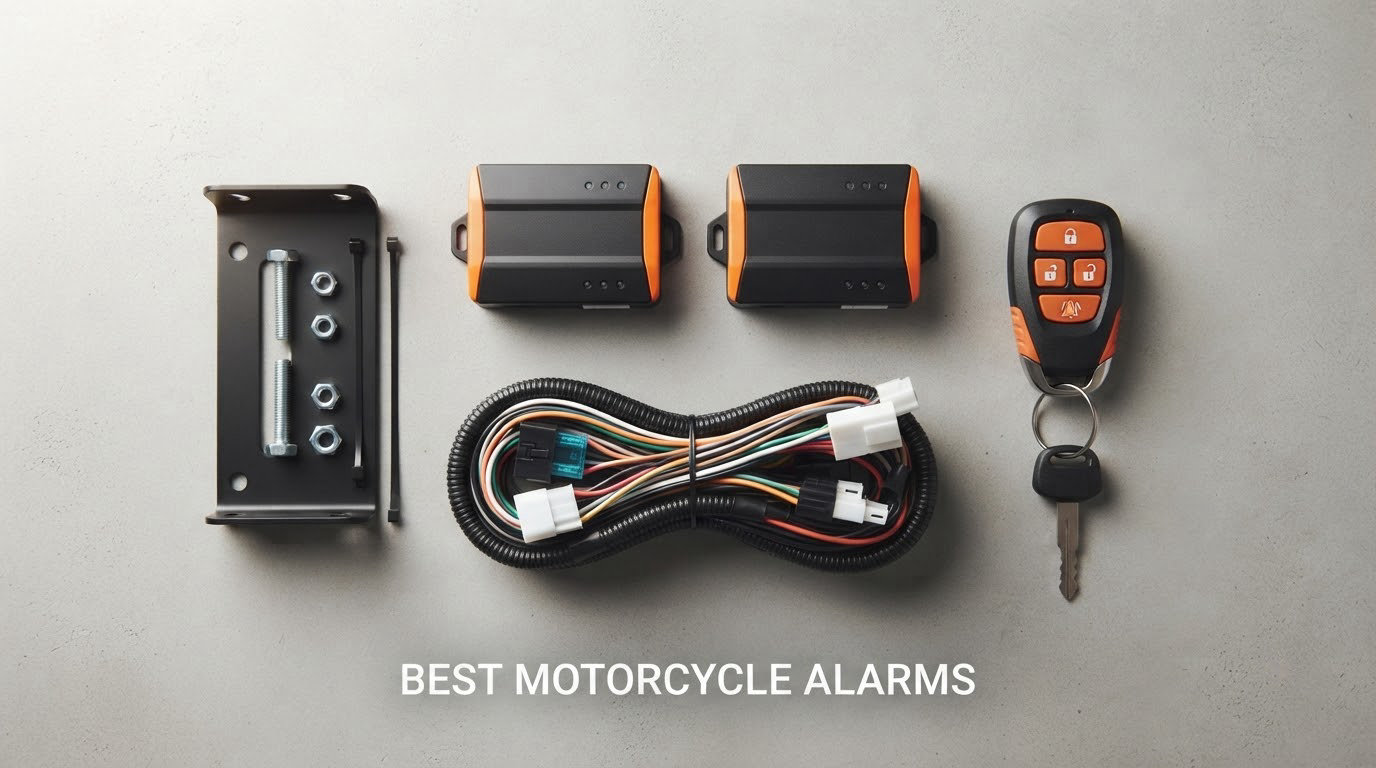
Every motorcycle alarm on this list makes the same promise: make enough noise that somebody gives up. The difference between a small plastic puck and a machined alloy disc lock is not really about volume, though volume matters. It is about how the alarm is triggered, what it does when it fires, and whether it is still working three winters from now.
That is why the best motorcycle alarms are not a single category. A vibration siren taped inside a tail pocket is a completely different tool from an alarmed disc lock through your brake rotor, and both are a different tool again from a hardwired system with an immobilizer relay. Picking the wrong one usually means either false alarms every time a truck passes, or a device that dies quietly in a storage unit.
We went through ten of the highest-reviewed alarms available for motorcycles, e-bikes and scooters, then sorted them by detection method, output, serviceability and the failure modes owners actually report. The winners cover three distinct jobs: a hide-anywhere siren, a two-layer disc lock, and a serviceable premium lock. If your bike spends the winter outside, the cover matters as much as the alarm, and you will want to read our motorcycle cover picks alongside this list.
Table of Contents
Top 3 Best Motorcycle Alarms For 2026
Three picks carry the most weight for most riders. The first is the most-reviewed and most flexible siren here. The second is the physical lock that also makes noise. The third is the one to buy once and stop thinking about.
Quick Picks: All 10 Best Motorcycle Alarms (October 2026)
All ten options below were tested against the same criteria: how they detect tampering, how loud they are, what they run on, how they mount, and what owners say goes wrong. Every one of them is a self-contained unit with no subscription and no app, which is a deliberate choice given how much rider discussion centres on phone-only alerts that stop working the moment you walk out of Bluetooth range.
| Product | Specs | Action |
|---|---|---|
 Wsdcam 113dB Bike Alarm with Remote Wsdcam 113dB Bike Alarm with Remote |
|
Check Latest Price |
 YOHOOLYO Alarm Disc Lock 110dB YOHOOLYO Alarm Disc Lock 110dB |
|
Check Latest Price |
 KRASER WA6Y Alarm Disc Lock KRASER WA6Y Alarm Disc Lock |
|
Check Latest Price |
 Fosmon 113dB Bike Alarm with Remote Fosmon 113dB Bike Alarm with Remote |
|
Check Latest Price |
 AGPTEK Disc Lock with Alarm AGPTEK Disc Lock with Alarm |
|
Check Latest Price |
| URBAN UR6 Hi-Tech Disc Lock |
|
Check Latest Price |
 Mathtoxyz Alarm Disc Lock Mathtoxyz Alarm Disc Lock |
|
Check Latest Price |
 WSDCAM Bike Alarm 2 Pack WSDCAM Bike Alarm 2 Pack |
|
Check Latest Price |
 USUPERINK Bike Alarms 2 Pack USUPERINK Bike Alarms 2 Pack |
|
Check Latest Price |
 RADIKAL RK9 Disc Lock with Alarm RADIKAL RK9 Disc Lock with Alarm |
|
Check Latest Price |
What Type of Motorcycle Alarm Should You Buy?
There are four device types, and they solve different problems. Match the type to how and where you park before you look at brands.
Standalone siren with remote. A self-contained vibration unit with a key fob, usually mounted on the frame, under a seat or inside a cover pocket. No wiring, no battery connection to the bike, works on anything with a frame. Best for daily street parking and for bikes you already lock.
Alarm disc lock. A physical lock that clamps your brake rotor and screams if the bike is moved. This is the only type on our list that physically prevents a theft at the moment of contact. Best for overnight outdoor parking and for riders who want one device instead of two.
Hardwired system with immobilizer. Splices into the wiring loom, draws from your battery, and can cut power to the starter so the engine will not run. This is the type insurers tend to take seriously, and the only type that needs a proper install. Best for premium bikes, long-term parking and anyone whose insurer requires a fitted alarm.
GPS tracker. Does not make noise. It reports position to a phone or pager so you can call the police with a location rather than a description. Best as a recovery layer rather than a deterrent.
All ten devices on this list fall into the first two categories, because that is what riders on r/motorcycles and manufacturer forums actually buy. Installed systems and trackers are worth money, but they are a different purchase with different costs and a different installer.
Are Motorcycle Alarms Worth It?
Yes, with one condition: an alarm is a noise and notification device, not a lock. A siren makes a theft attempt expensive in time and public attention, and an alarmed disc lock physically resists a tow while it screams. Neither replaces a good physical lock or a ground anchor, and anyone selling you an alarm as a replacement for a lock is selling you the wrong product.
Rider consensus treats alarms as the third layer. The community advice that repeats across r/motorcycles threads is a serious disc lock or chain first, an anchor or alarmed lock second, and an alarm third to make the attempt loud and slow.
There is one practical habit that changes everything for street-parked bikes, and it comes straight from owner reports rather than spec sheets: put the siren under the cover. A rider noted that the cover has to come off before anyone can reach the alarm, and the cover itself sets it off on the way. If you are pairing an alarm with a cover, our guide to motorcycle covers is worth a read first, because a loose cover flap is also the single most common false-alarm trigger reported by owners.
1. Wsdcam 113dB Bike Alarm with Remote – The Best All-Rounder
Wsdcam 113dB Bike Alarm Wireless Vibration Motion Sensor Waterproof Motorcycle Alarm with Remote
113dB siren
7 sensitivity levels
IP55 waterproof
66ft remote
113g
Pros
- Loud enough to be heard from inside a home
- Seven sensitivity levels tame passing traffic
- Easy to hide in a frame or pannier
- Long-lived AAA batteries
- Simple remote with vehicle search bells
Cons
- Fob plastic can crack on a key ring
- Settings cycled through buttons rather than a switch
- Fragile plastic opening tool
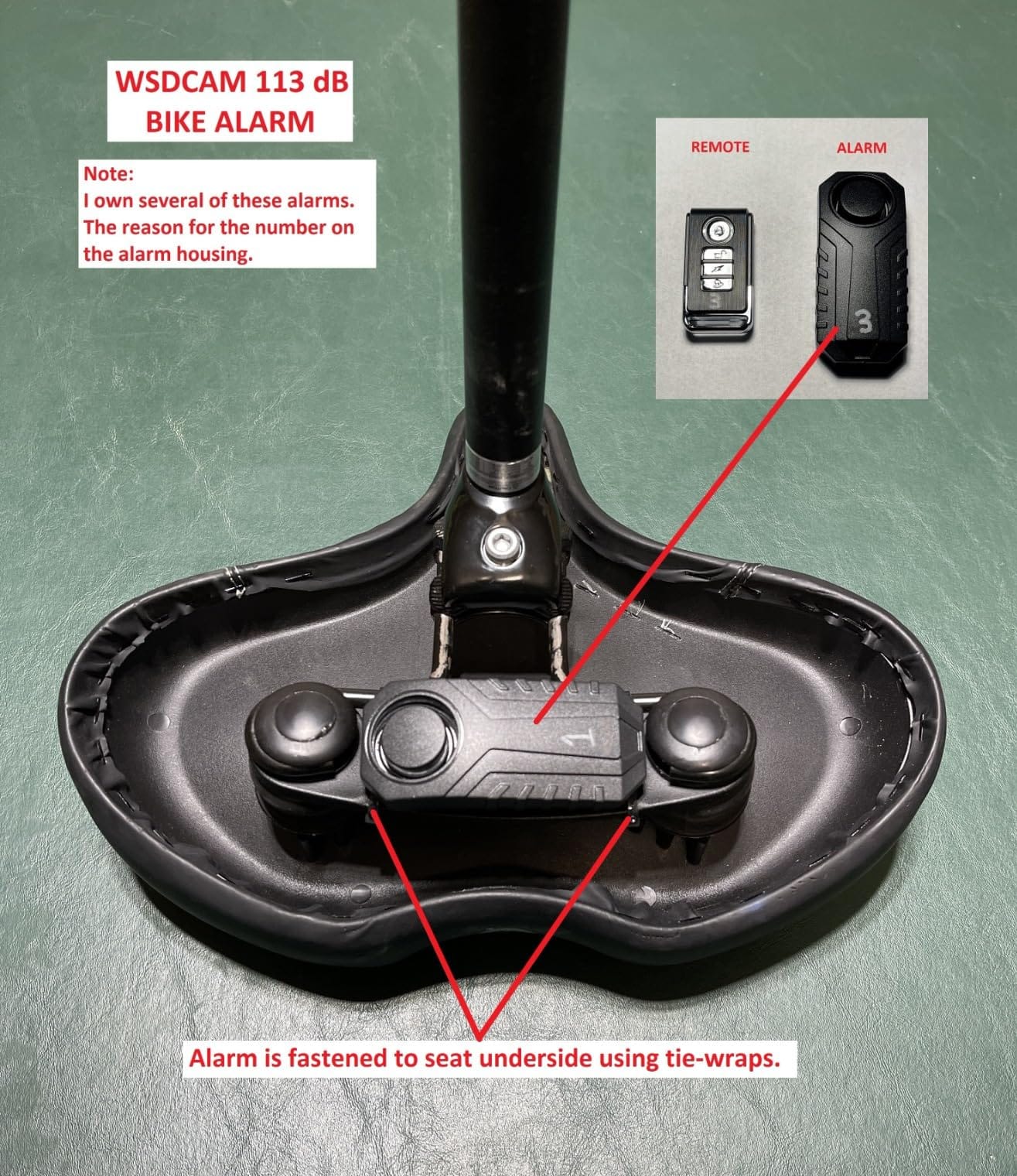
This is the alarm we keep coming back to. It carries the highest review count in the roundup at more than 18,000 ratings, and after reading through owner feedback the reason is consistent: it is loud, it is adjustable, and it disappears when you want it to. At 113 grams it is small enough to lose in a tail pocket if you try, which is exactly the point.
The seven sensitivity levels are the feature that separates it from simpler units. Owners parking on busy streets report stepping down two or three notches to ignore the vibration of passing lorries while still catching a real hand on the handlebar. That single dial is the difference between an alarm you keep and an alarm you disable in your head.
The vehicle search function is a small touch that earns its place. The remote can play one of three bell tones, so in a sea of identical black motorcycles in a supermarket car park you chirp your own alarm rather than walking the row touching every bike. It is a gimmick until the first time it saves you ten minutes.
Power is three AAA batteries, which means nothing is wired to your bike and nothing drains your starter battery. Owners report years between battery changes. The IP55 housing handles rain and road spray without complaint, and the same design also works on bicycles, e-bikes, scooters and motorcycles, so a two-bike household can share the same remote routines.
Is it loud enough to matter?
113dB is not a marketing number here. Owners repeatedly describe hearing it from inside a house with windows closed, which is the only test that matters for street parking. In a quiet residential street it is effectively impossible to ignore from two doors away.
The one context where it struggles is heavy ambient traffic noise on a major arterial at rush hour. If you park beside six lanes of moving traffic, no portable siren at this output level will reach the pavement. The sensitivity dial does not help there, so for that parking style a disc lock is the better buy.
Where it falls short
The remote fob is the weak point. The plastic shell can crack if you carry it loose on a key ring, and several owners attach it to a lanyard or a zipped pocket instead. It is a cheap part to lose and a cheap part to replace, but it is an annoyance nobody designed around.
Settings are cycled with buttons rather than a physical mode switch, so changing sensitivity takes four deliberate presses in the right order. It is a two-minute learning curve at the start of ownership and then never a thought again. The included plastic opening tool is also flimsy, so keep it or use a coin instead.
2. YOHOOLYO Alarm Disc Lock 110dB – Best Value Two-in-One
YOHOOLYO Alarm Disc Lock Motorcycle Disc Brake Lock Anti-Theft Waterproof 110 dB 7mm Pin 5ft Reminder Cable for Motorcycles Bike Scooter Carry Pouch (Black)
110dB alarm
All-metal body
7mm pin
5-second delay
12.32 oz
Pros
- All-metal body resists prying and cutting
- 110dB triggers reliably when the bike moves
- Five-second delay stops self-triggering
- Spare batteries and two keys included
- Lifetime warranty
Cons
- Reminder cable is required to ride
- 7mm pin will not fit thicker rotors
This is the pick for anyone who wants one device instead of two. It is a real metal disc lock that goes through your rotor, and the alarm is built into the lock body. That combination is why it holds a top seller position in Powersports Alarms and Anti-Theft with more than 11,000 ratings.
The 5-second delay after locking is the detail that makes daily use bearable. Lock the disc, walk to the key, unlock the disc, and the alarm never fires. Budget alarm locks without a delay force you to disarm first, which is exactly how people end up setting off their own alarm in a quiet car park at midnight.
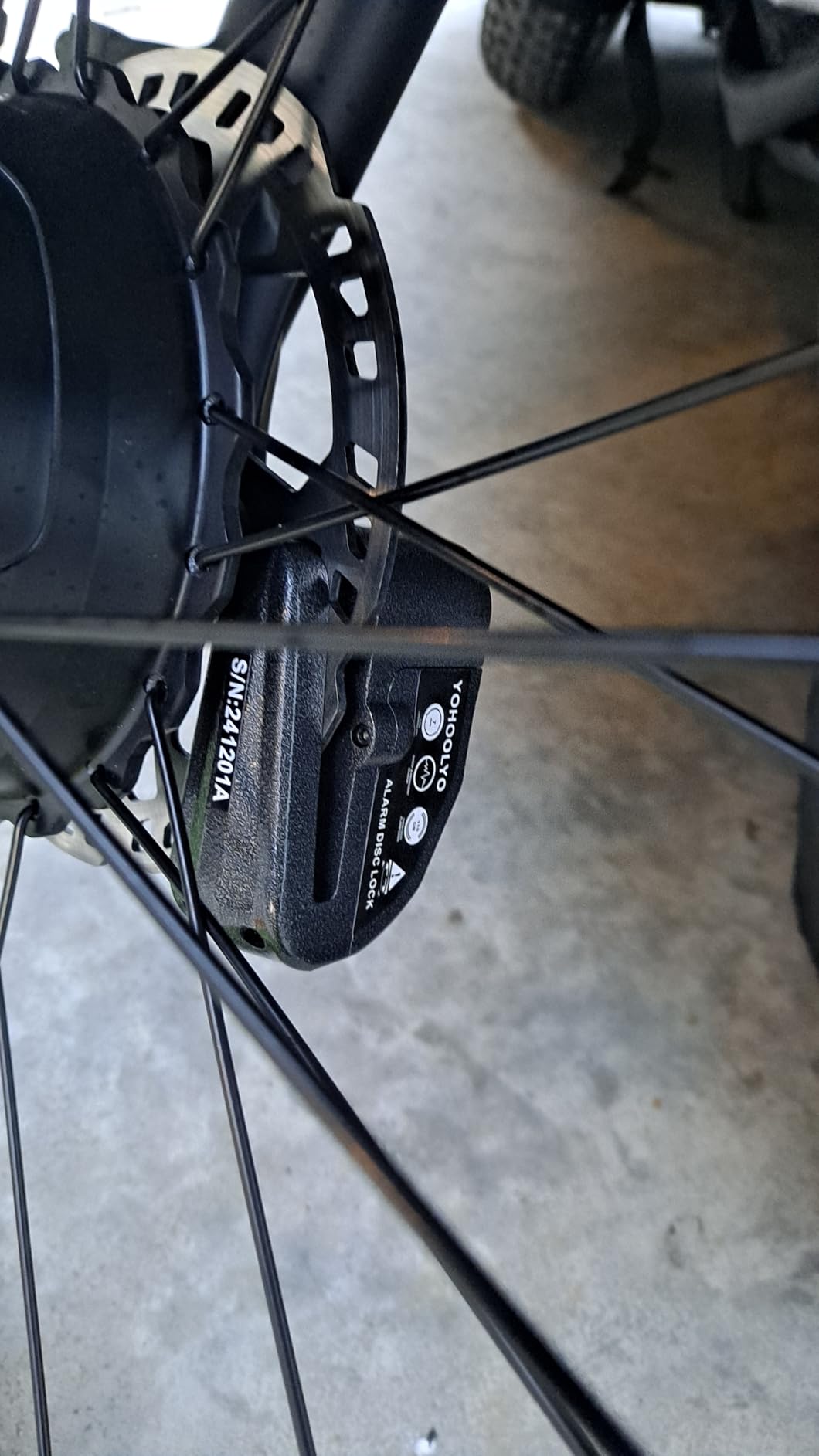
Redundancy is where this one outdoes the field. It ships with six internal batteries plus six spares, two unique security keys, an Allen key, a five-foot reminder cable and a carry pouch. The spare cells matter more than they sound: a dead alarm module discovered during a theft is the classic failure mode for this category.
The body is all-metal and rust-treated, and the 7mm pin repositions through 360 degrees so it fits most disc rotors. At 12.32 ounces it is genuinely portable, and the included pouch is what makes it realistic to move between a street lock and a track-day bag.
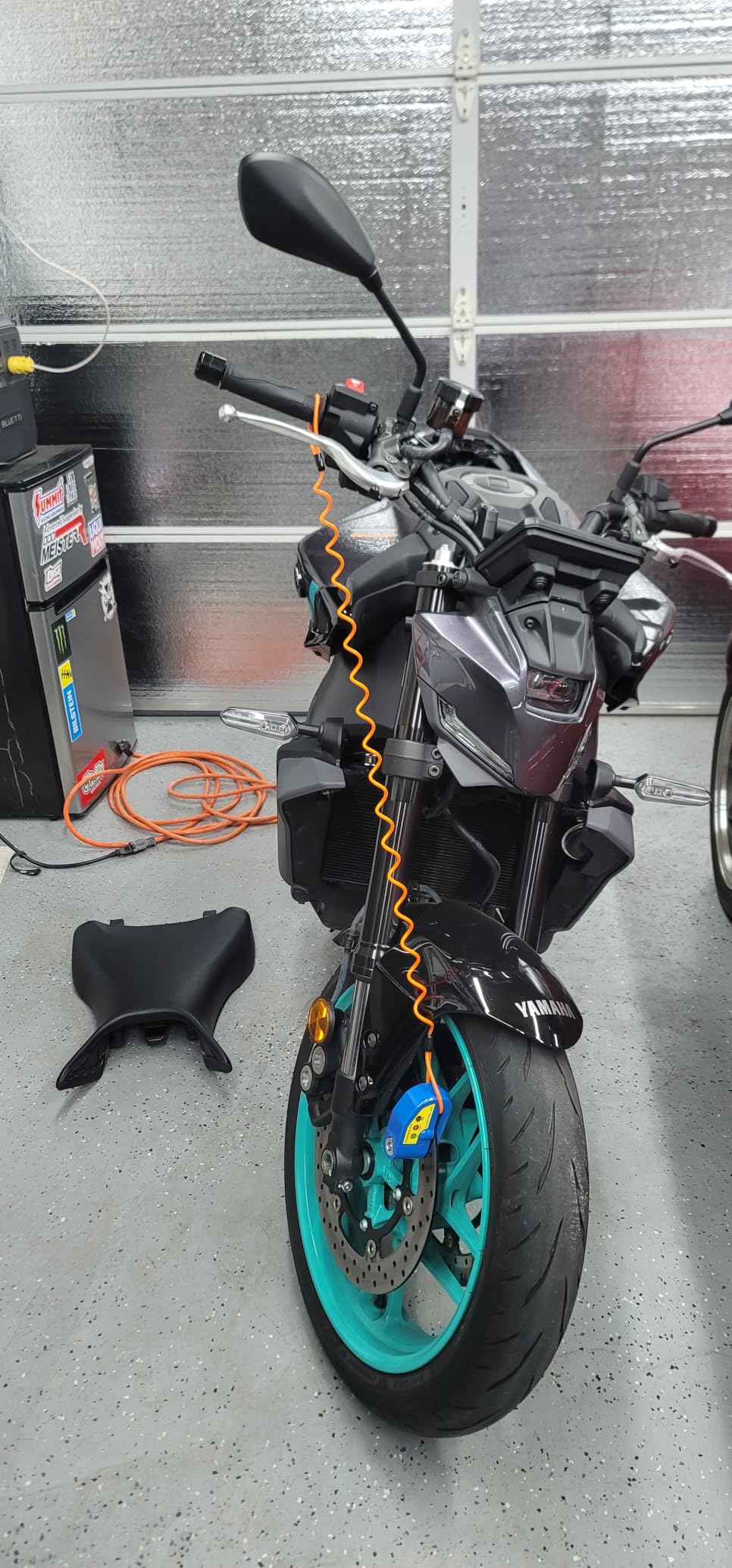
Will the pin fit your bike?
This is the only question that matters here, and the answer is usually yes. The 7mm pin is the standard size across the vast majority of motorcycle discs, and the 360-degree repositioning handles a wide spread of rotor designs.
Check your rotor before you order if your bike is older, a large touring model or anything aftermarket. Thicker or unusual rotors will not accept a 7mm pin, and that is a compatibility issue rather than a quality issue. The same warning applies to e-bike and scooter discs in some cases.
What about the reminder cable?
The five-foot cable is there so you cannot ride away with the lock fitted through your disc. It is a thin steel loop that goes from the lock to your key, and it is easy to carry in a top box or a backpack strap.
Be honest about what it is: a reminder, not a security device. Against bolt croppers the cable offers nothing, and we would not claim otherwise. Its entire value is that it stops the most embarrassing mistake a new owner makes, which is setting off down the road with a locked disc.
3. KRASER WA6Y Alarm Disc Lock – Three Keys and a Bright Finish
KRASER WA6Y Alarm Disc Lock, Reinforced Disc Brake Lock with 3 keys (others 2), Heavy Duty Anti-Theft Motorcycle Lock with Alarm,110dB, Weather-Resistant, Reminder Cable, Pouch, Motorbike Moped E-Bike
110dB alarm
Three-beep pre-warning
6mm shackle
3.54 x 2.36 x 1.57 in
Pros
- Three keys instead of the usual two
- Three-beep warning lets you disarm in time
- Bright yellow finish is visible and deters
- Compact enough for a backpack
- Spare battery pack included
Cons
- Yellow paint fades in prolonged sun
- Key mechanism can be stiff on first turn
- Cable strength against croppers is uncertain
The KRASER solves a specific problem that the rest of the category does not: key loss. Three security keys ship in the box rather than the usual two, which means one lost key does not automatically mean buying a new lock. For someone who parks a bike in a city and carries the key loose, that redundancy is worth more than any spec line.
The three-beep pre-warning is the second thoughtful detail. When the shock sensor trips, you get three warning beeps before the full 110dB alarm sounds, giving you a few seconds to reach the fob and disarm. Riders report this is the difference between a nuisance siren in a residential street and a manageable chirp.
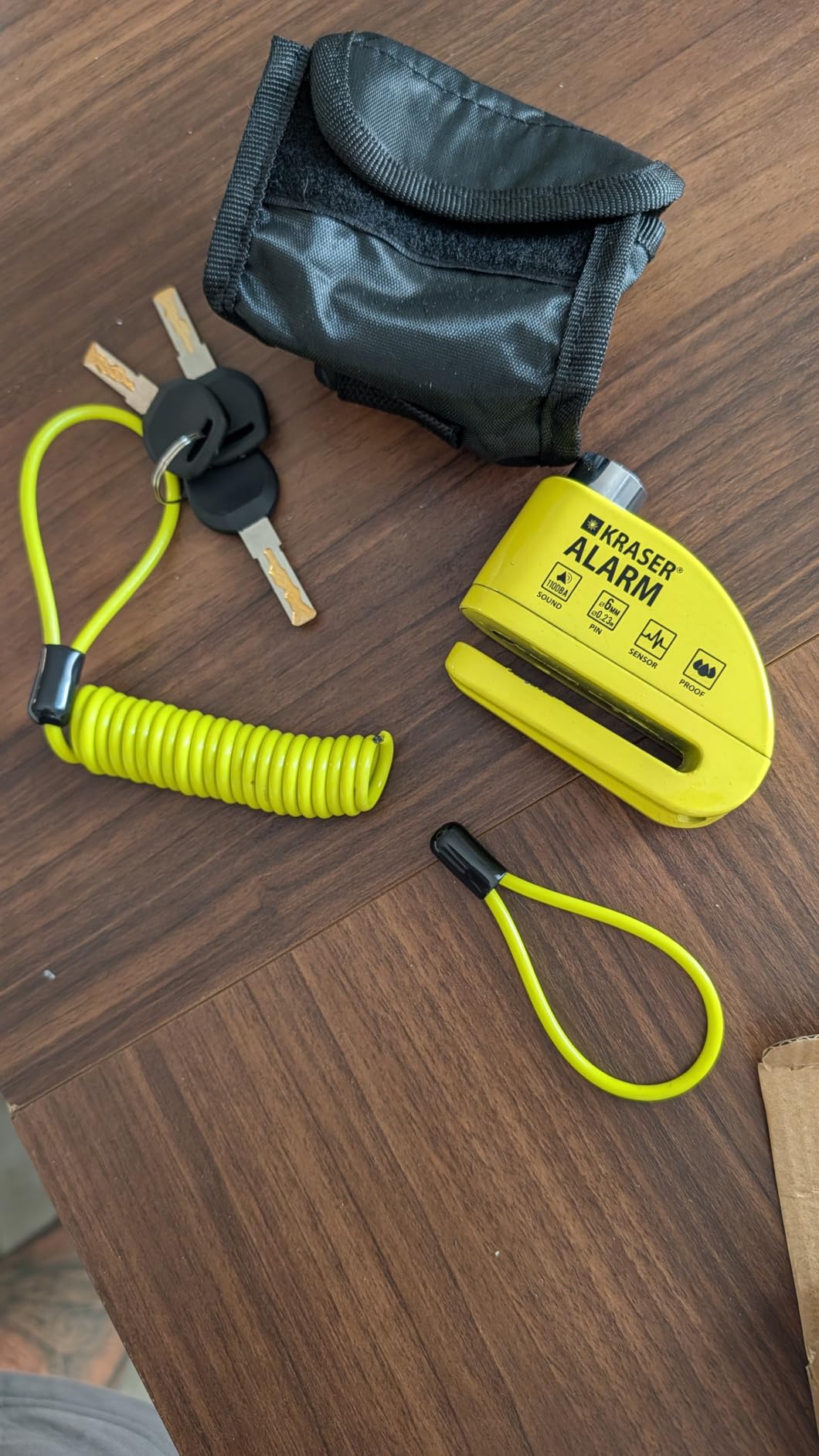
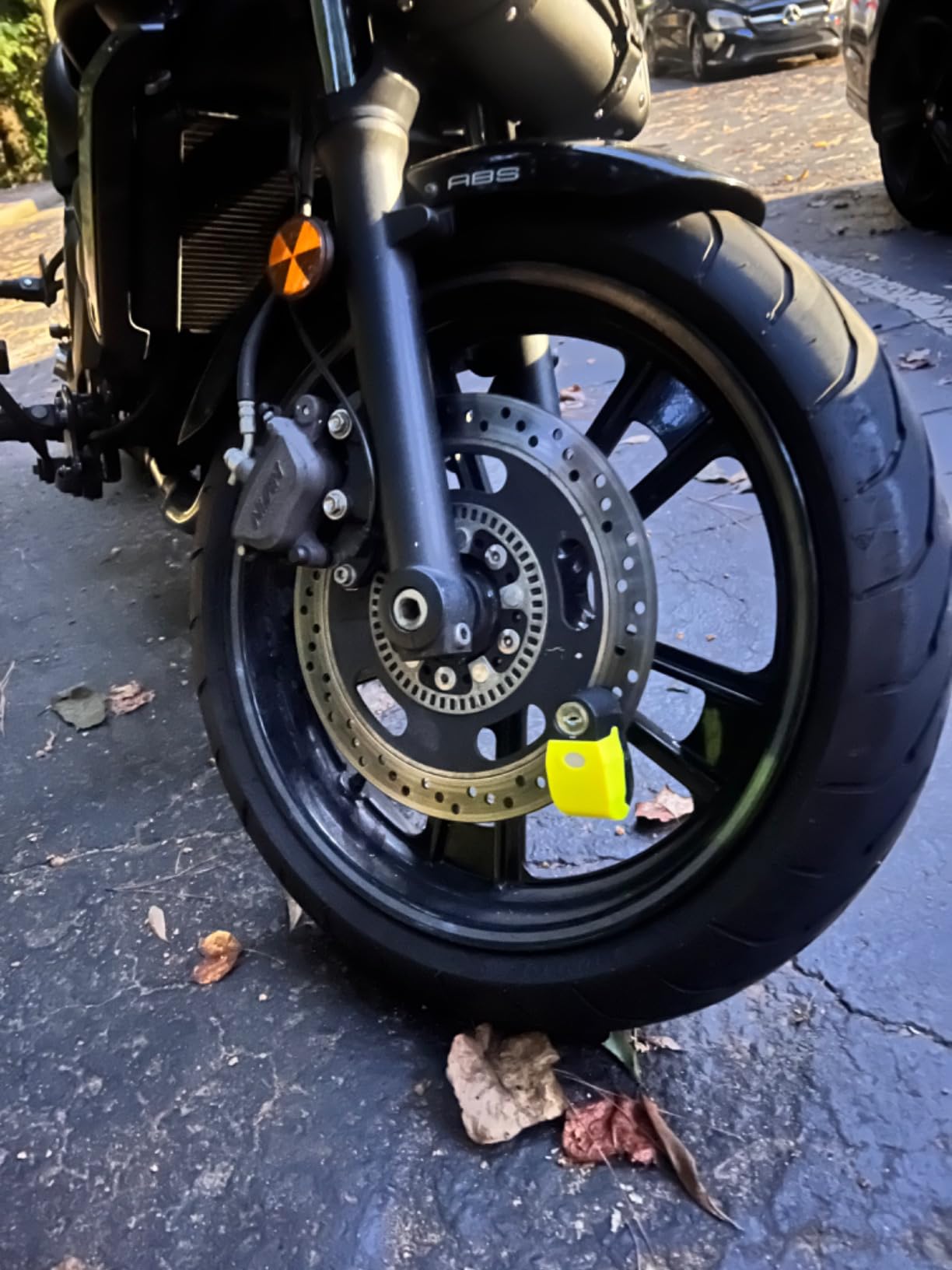
The yellow and black finish is a deliberate security feature rather than a style choice. A bright lock is visible on a parked bike from a distance, and opportunistic thieves are looking for the easy grab first. Owners mention that the colour has drawn comments, which is the point.
Push-button engagement means no key is needed to lock it, so the daily sequence is fast. The 6mm shackle is a universal fit across motorcycle, scooter and e-bike discs, and the whole unit measures 3.54 by 2.36 by 1.57 inches, small enough to sit in a backpack between rides.
Is three keys better than two?
Yes, and the reason is arithmetic. With two keys you have one spare. Lose the spare in a car park and the next loss is a replacement purchase, which for an alarmed disc lock is an afternoon of hunting for a matching blank or a new unit.
With three keys, one lives on your keyring, one lives in a safe at home, and one travels in a pannier on touring trips. Owners across multiple countries single out the three-key bundle as the main reason they would buy again, and we agree that redundancy beats a marginal spec improvement.
Any drawbacks to know about
The yellow paint fades with prolonged sun exposure, and owners in hot climates mention it as a cosmetic issue after a couple of seasons. It does not affect the lock, but do not buy it expecting the finish to stay factory-fresh.
The key barrel can be stiff on the first turn, occasionally enough that owners report needing a second attempt. The included cable is described as good for reminders but uncertain against croppers, which is the same honest limitation we flagged on the YOHOOLYO. Treat any alarm lock cable as a memory aid.
4. Fosmon 113dB Bike Alarm with Remote – Best for Hidden, Flexible Mounting
Fosmon 113db Bike Alarm with Remote, Motion Sensor Bicycle SOS Alarm, IP65 Waterproof Anti Theft Alarm System, Wireless Siren for E-Bike, Motorcycle, Scooter, Cart, Trailer
113dB siren
7 sensitivity levels
SOS tilt at 45 degrees
IP65
4 oz
Pros
- Loud across a parking lot
- Default sensitivity ignores jostling neighbours
- Installs in under ten minutes
- Very discreet and easy to hide
- Also works for trailers and doors
Cons
- Small housing screw is easy to lose
- One unit did not sound until reseated
- Battery powered with no USB charging
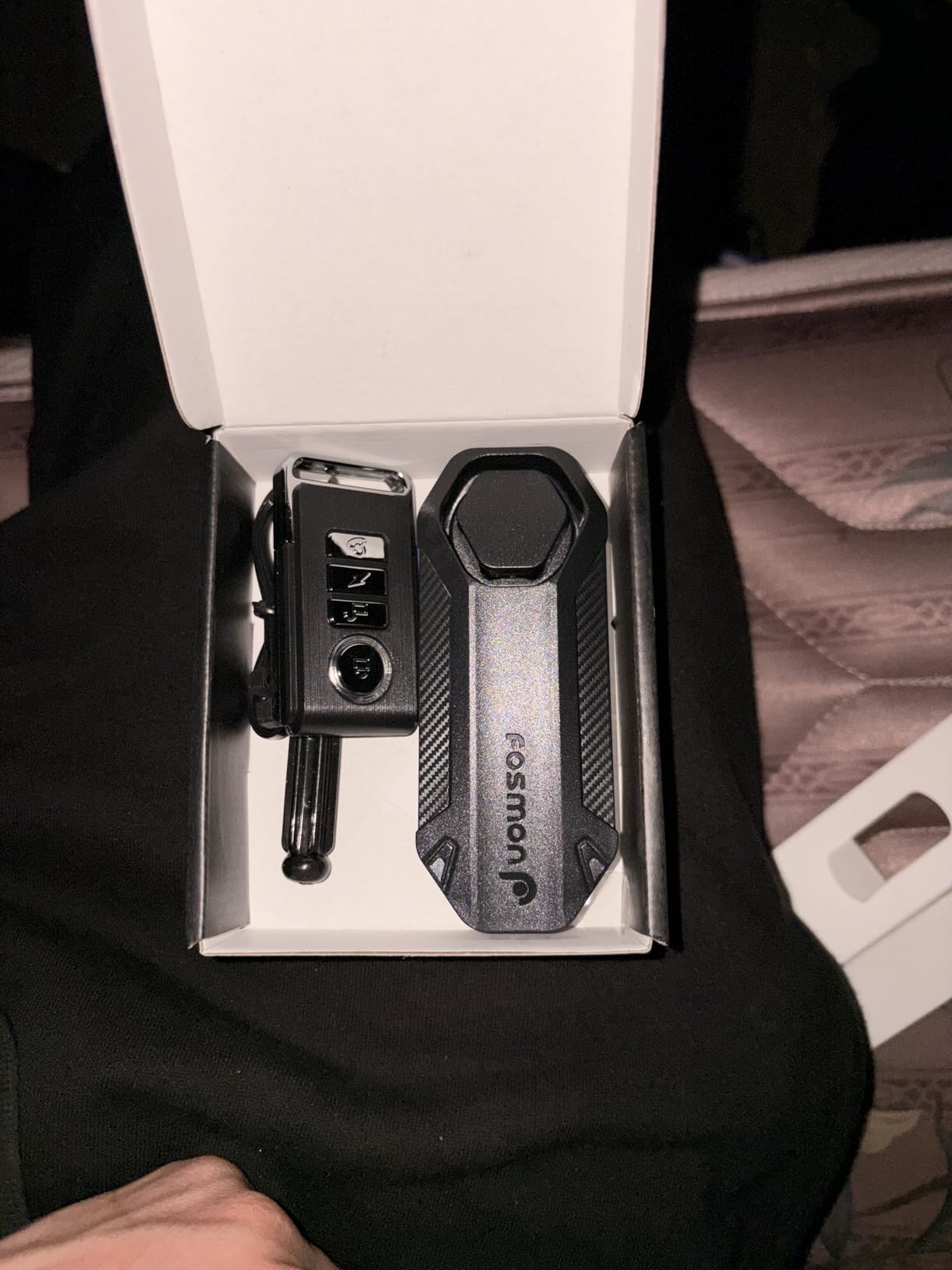
The Fosmon stands out on remote range, and that is what separates it. The remote reaches 90 feet against 66 feet on the comparable units, which means you can disarm the alarm from inside a house or across a small car park rather than walking toward a screaming motorcycle.
The SOS tilt function is unusual at this level. If the unit is tipped past 45 degrees, it triggers the alarm separately from the vibration sensor, which is a genuine second detection path when a bike is being lifted rather than rocked. Mounted in a tail case, it also covers the case itself.
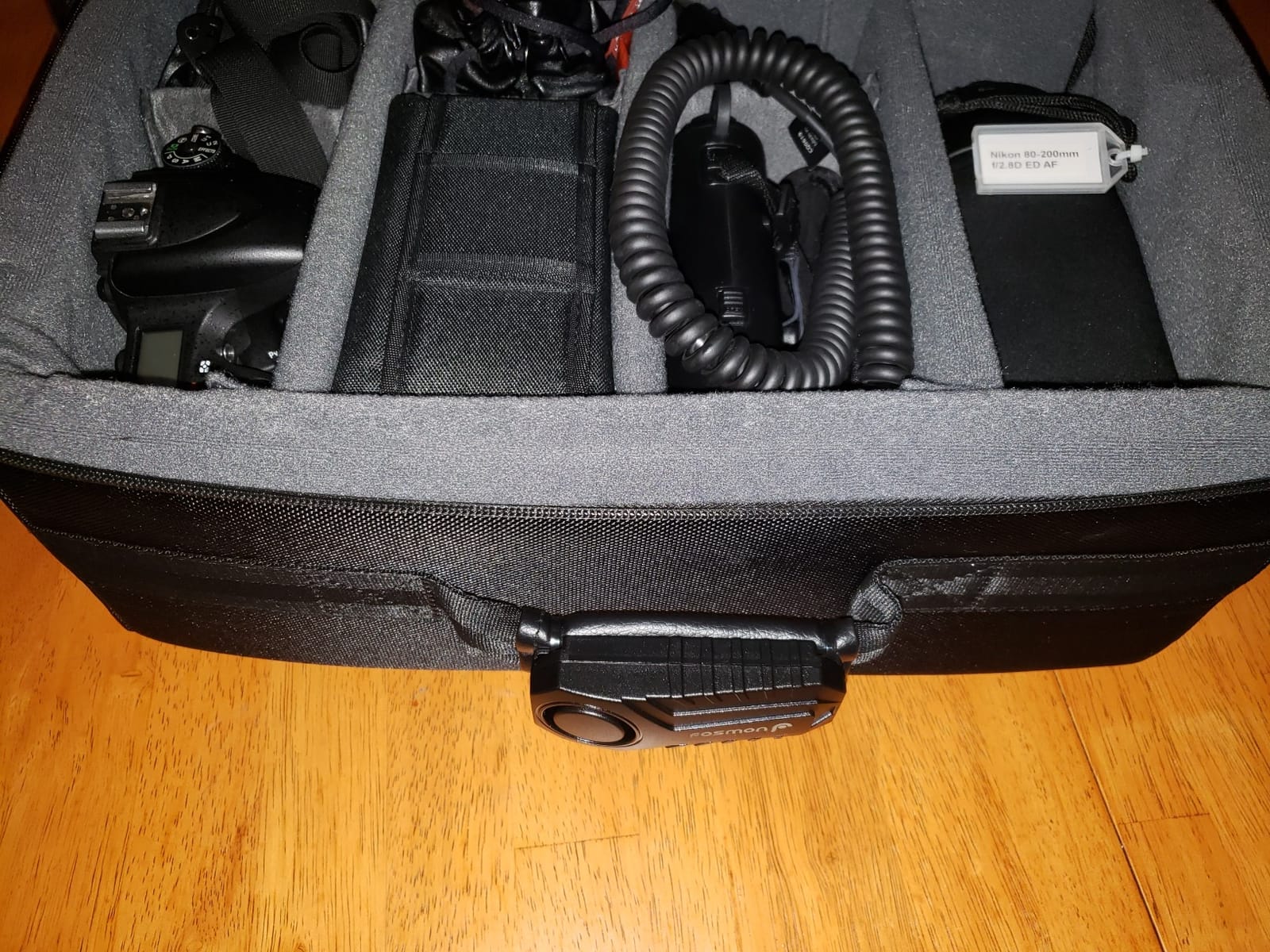
At four ounces it is one of the lighter units in the roundup, and mounting options are genuinely flexible: adhesive, cable ties or the supplied brackets. That means it works as a bike alarm, but it is equally at home on a bicycle, an e-bike, a scooter, a cart, a trailer or a door, which several owners use it for.
One remote can pair with up to eight separate alarms, so a household with multiple bikes or a mix of bikes and e-bikes arms everything from one fob. There is a limited lifetime warranty, which in this category is better than most.
Is the 90ft remote range a real advantage?
It is the feature we would keep if we could only keep one. A 66ft remote is fine if you are standing at the bike, but 90ft lets you confirm the arm state from a doorway or find a parked bike in a large lot without walking the whole row. The vehicle search bells use the same radio link.
It is still radio, not Bluetooth, so the alerts are tied to the fob rather than your phone. That is a feature in our view, because phone-based alerts stop the moment you leave Bluetooth range, which is a limitation riders complain about repeatedly in forum threads.
What could go wrong
The small housing screw is fiddly and easy to lose during initial setup. If you drop it on a concrete car park, plan on buying the unit again, and open the packaging over a surface where you can find it.
At least one owner received a unit that did not sound until the internals were reseated, which is a straightforward quality-control miss rather than a design problem. Check it works in your hand before you rely on it. It also runs on batteries with no USB charging option, so there is no way to top it up between rides.
5. AGPTEK Disc Lock with Alarm – Best for High-Alert Parking
AGPTEK Motorcycle Disc Lock with Alarm, Anti-Theft Disc Brake Lock, Green
110dB alarm
5.2ft reminder cable
Zinc alloy body
0.35 kg
Pros
- Siren heard from inside a house
- Long 5.2ft reminder cable
- Green finish is easy to spot on a parked bike
- One owner reports four-plus years of daily use
- Doubles as a helmet or accessory lock
Cons
- Very sensitive in wind and rain
- Some owners want more volume in traffic
- Not a substitute for a main lock
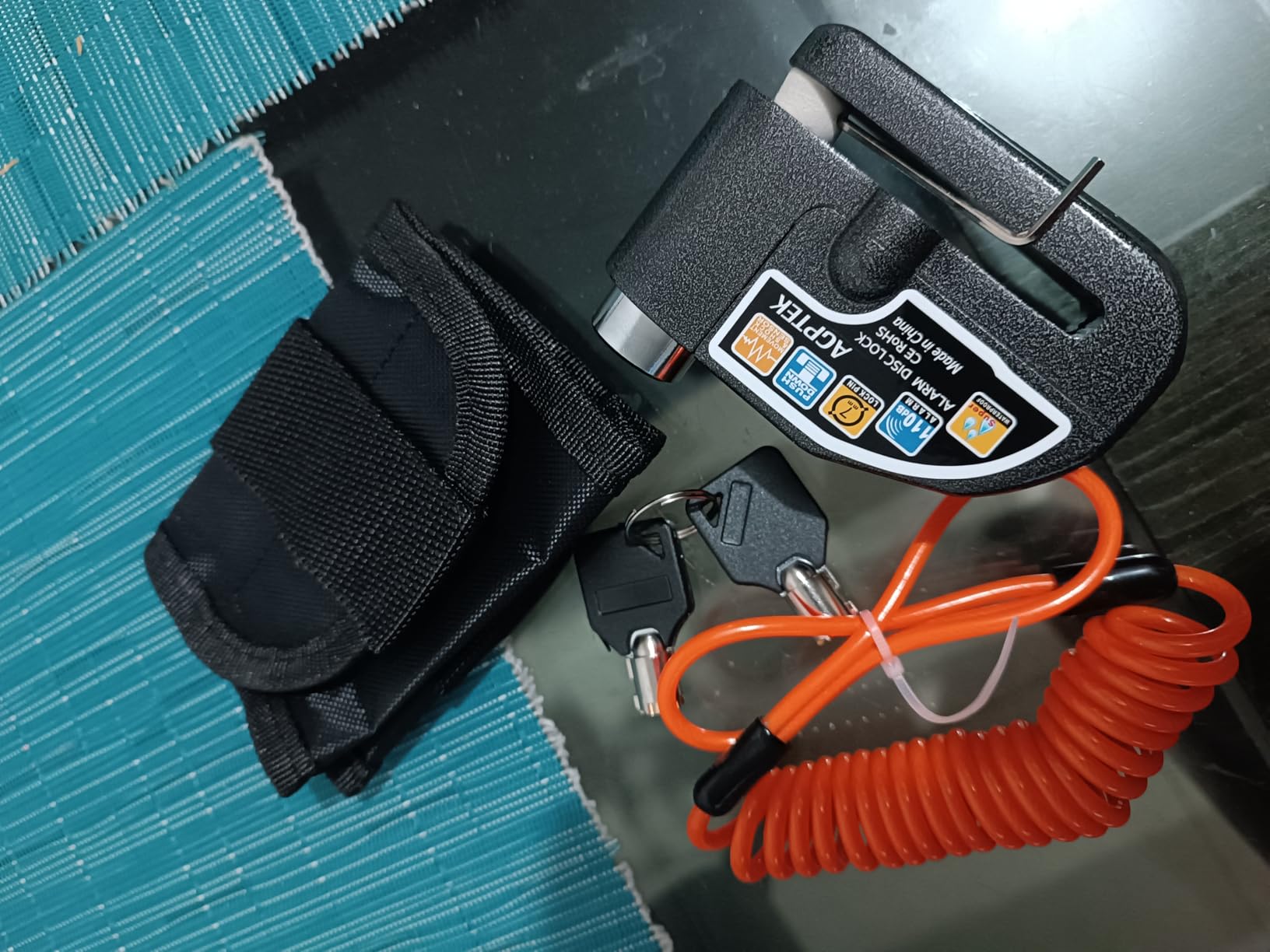
This lock does one thing loudly and without much judgement, and for certain parking situations that is exactly what you want. The 110dB alarm fires on movement or shock with no delay to tune, and multiple owners describe it being heard from inside a house.
One owner reports four-plus years of daily use with nothing replaced except a coin cell. That is the kind of longevity figure that matters more than any datasheet line, because alarm disc locks are usually condemned for electronics that corrode long before the body gives up.

The 5.2ft reminder cable is longer than what most comparable locks supply, which is usually five feet, and that extra length is the difference between a cable that fits across a tank and one that does not. The bright green finish makes the lock visible on a parked bike, which is a deterrent in its own right.
It is a zinc alloy body rated waterproof, cut-resistant and corrosion-resistant, with a key lock and auto-lock engagement. The pack includes the disc lock, two keys, a carry bag, an Allen key and a manual. The cable can also be used separately to lock a helmet or a small accessory.
Is over-sensitivity a feature here?
In this case, yes. The shock sensor is deliberately over-eager, triggering in wind, rain and on a mere touch, and owners consistently treat that as a benefit. One owner credits the alarm with deterring an actual attempted tow-and-steal, which is the outcome every rider hopes for and few ever get to report.
That same eagerness is why we would not pair it with a flapping cover in an exposed car park. If your parking spot is windy, a sensitive unit plus a loose cover plus a passing lorry is three triggers stacked on top of each other, and you will be disarming it weekly.
Where it is the wrong choice
Owners on busy roads report wanting more output, because 110dB competes with traffic noise in a way that 120dB does not. If your usual spot is beside a main road, this is not the lock for you even though the durability story is excellent.
Be clear about its role. It is a second layer, not a main lock, and while the zinc body resists casual attack it is not hardened steel. Owners use it alongside a chain or U-lock in exactly the way that makes sense.
6. URBAN UR6 Hi-Tech Disc Lock – The Premium Pick You Can Service
URBAN UR6 Hi-Tech Motorcycle Disc Lock with Smart Alarm | Best Value | 120dB, LED, Warning, A+ Sensitivity, Truly Waterproof, Long-Life CR2 Battery, Carried Locked, Bike Anti Theft Wheel Brake Locks
120dB siren
Replaceable sealed module
CR2 battery
A+ sensitivity
500g
Pros
- 120dB ties the highest output we tested
- Replaceable sealed module instead of a whole new lock
- CR2 lithium battery good for two to three years
- Beeps replace the reminder cable
- Holds up in heavy rain and storage
Cons
- Sensitivity very high
- Alloy body is not hardened steel
- Heavier at 500g than budget locks
This is the one to buy once. It carries a joint-highest rating in the roundup at 4.6 across more than 4,200 ratings, and the reason is not raw loudness alone. It is that the electronics are serviceable, which almost nothing else in this category manages.
Most alarm disc locks are sealed units. When the battery dies or the module fails, the entire lock is scrap. The UR6 uses a patented replaceable, hermetically sealed UR24MA alarm module, so a dead battery becomes a two-minute swap rather than a replacement purchase. That single design decision is worth more than any spec line on the box.
The 120dB siren ties the highest output in our group, and it comes with a six-beep warning pre-alert plus an LED signal so you can see its state in the dark. A+ sensitivity adjustment with a light signal means you are not blindly pressing buttons in a dark car park wondering whether it armed.
The CR2 lithium battery is rated for two to three years under normal use and tolerates cold weather far better than alkaline cells, which matters for a lock that lives on a bike through winter. The body is hermetically sealed and anti-rust treated, and a long-distance touring owner documents a full season of heavy rain and 10,000-plus miles with no issues.
Why does the replaceable module matter so much?
Because every alarm lock in this category eventually has an electronics problem, and it is almost always the battery rather than the mechanics. A sealed unit turns a two-minute job into a lost lock, and owners lose bikes in the sense that the deterrent is gone while the lock body sits useless in a drawer.
Serviceability also means you can keep the lock indefinitely. Metal disc lock bodies outlive several generations of cheap alarm modules, and the UR6 is designed on the assumption that you will replace the module rather than the lock. There is a two-year manufacturer warranty as well.
Is the sensitivity too aggressive?
It can be. Owners report a box dropped about 12 feet away producing a beep, which tells you how reactive it is. The A+ adjustment brings it down, but it takes deliberate dialling to find the right setting for a city street rather than a private drive.
The other trade-off is weight at 500 grams and an alloy rather than hardened steel body, so this is not a cut-proof lock. For most riders the correct read is that you are buying a very well-made, serviceable alarm lock, and you should still anchor the bike properly.
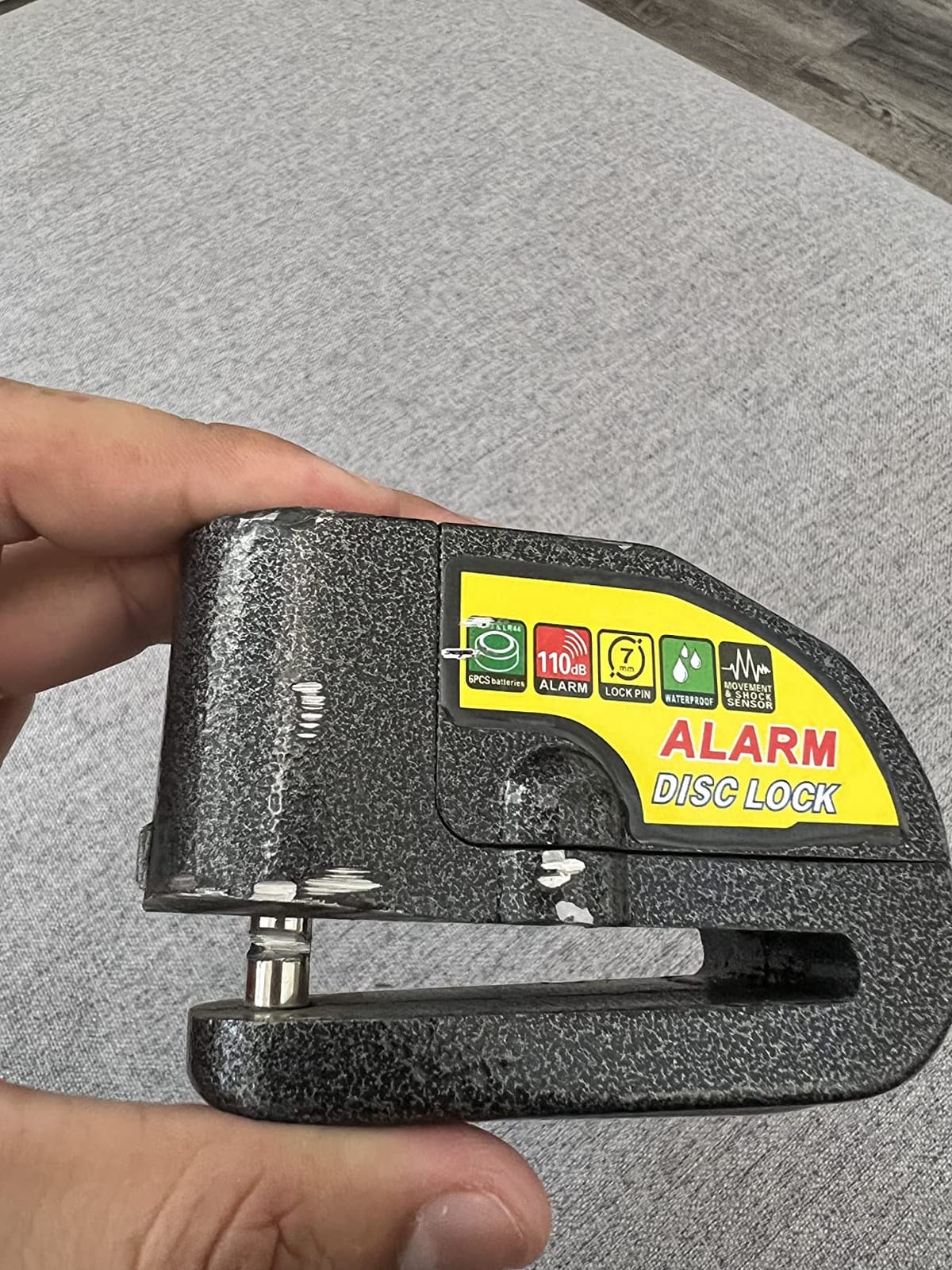
7. Mathtoxyz Alarm Disc Lock – Most Versatile for Low False Triggers
Motorcycle Alarm Disc Brake Lock, Motorcycle Locks Anti-Theft Security Wheel Disc Lock Waterproof 110dB Alarm Sound with 5ft Reminder Cable Keys and Carry Pouch for Motorbike Bike Scooter
110dB alarm
5-second arming delay
Replaceable battery
30-second alarm cycle
Pros
- Strong build and loud alarm at this price tier
- Algorithms cut the false triggering of cheaper locks
- Replaceable battery instead of a sealed cell
- Reminder cable included
- Popular as a second lock on e-bikes
Cons
- No sensitivity adjustment at all
- Range limited by street noise
- Awkward to align while crouched
This one is interesting because it has no sensitivity control at all, and owners still rate it at 4.6. The absence of a dial means the trigger was tuned once by the manufacturer, which removes the most common cause of owner frustration: a bike that cries wolf until you stop arming it.
Reviewers consistently single out the low false-trigger rate as the standout quality compared with similar locks at this level. The 5-second arming delay after you press the button gives you time to stand up, and the alarm runs a fixed 30-second cycle before stopping or releasing with the key.
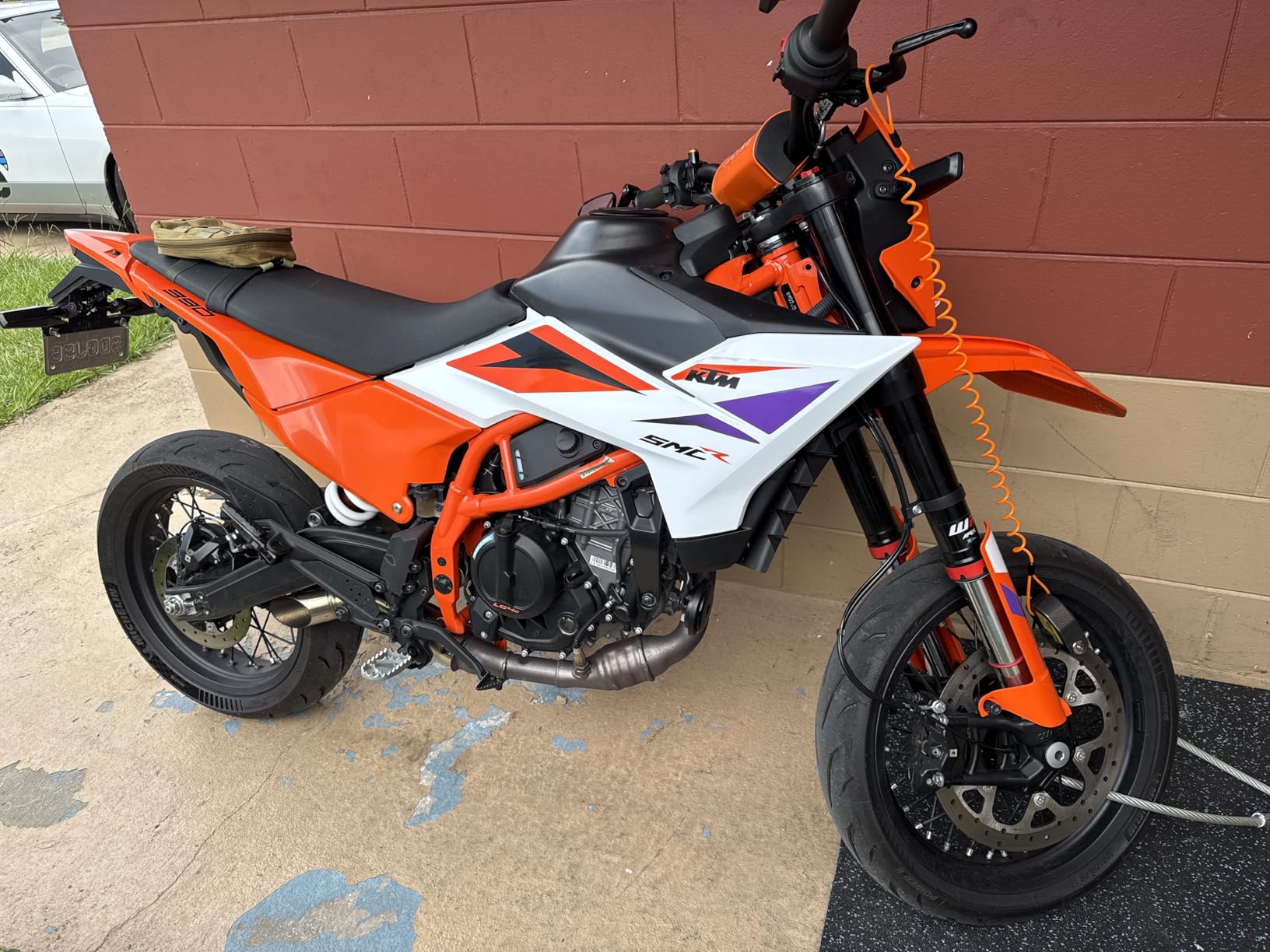
The replaceable battery is accessed with the supplied hex key, which puts it ahead of sealed designs at the same level. The aluminium alloy body is waterproof and weather resistant, and the whole package includes a 1.5 metre reminder cable, two keys and a carry pouch.
Owners overwhelmingly treat it as a second layer rather than a standalone solution, commonly pairing it with a chain or U-lock on e-bikes and scooters. That is the honest use case, and we would rather say so than oversell it as a complete answer.
Why is having no sensitivity adjustment a plus?
Because sensitivity adjustment is really a compromise. Turned up, it catches more; turned down, it misses more. A fixed, well-tuned trigger gives one behaviour you can learn, and the majority of owners find that behaviour appropriate for street parking without fiddling.
The trade-off is that you cannot adapt it. If you park somewhere with heavy wind, heavy footfall or a flapping cover, this lock has no dial to turn down. Check the parking spot before you buy if your usual spot is exposed.
What about the fitting process?
It fits rotors under 7mm thick that have holes, which covers the mainstream of motorcycle discs. The pin alignment is straightforward but happens at disc height, so it means crouching down and sighting the hole, which owners with knee or back problems describe as the real difficulty rather than the lock itself.
Audible range is also the honest limitation. At 110dB in heavy ambient street noise the alarm reaches a limited distance, and no adjustment exists to change that. Choose it for a quiet street or a covered car park rather than a main road.
8. WSDCAM Bike Alarm 2 Pack – Best for Two-Vehicle Households
WSDCAM Bike Alarm with Remote 2 Pack, 113dB Wireless Anti-Theft Vibration Motorcycle Bicycle Alarm Vehicle Security Alarm System (Black)
Two 113dB units
One shared remote
7 sensitivity levels
IP55
Pros
- Two alarms share a single remote
- 113dB stops a parking-lot conversation
- Strong adhesive holds on racks and trikes
- Small enough to hide under a rear rack
- Batteries still good after two-plus years
Cons
- Remote test button is far quieter than the real alarm
- Remote is one-way and does not confirm arming
- Included zip ties are too thin to be useful
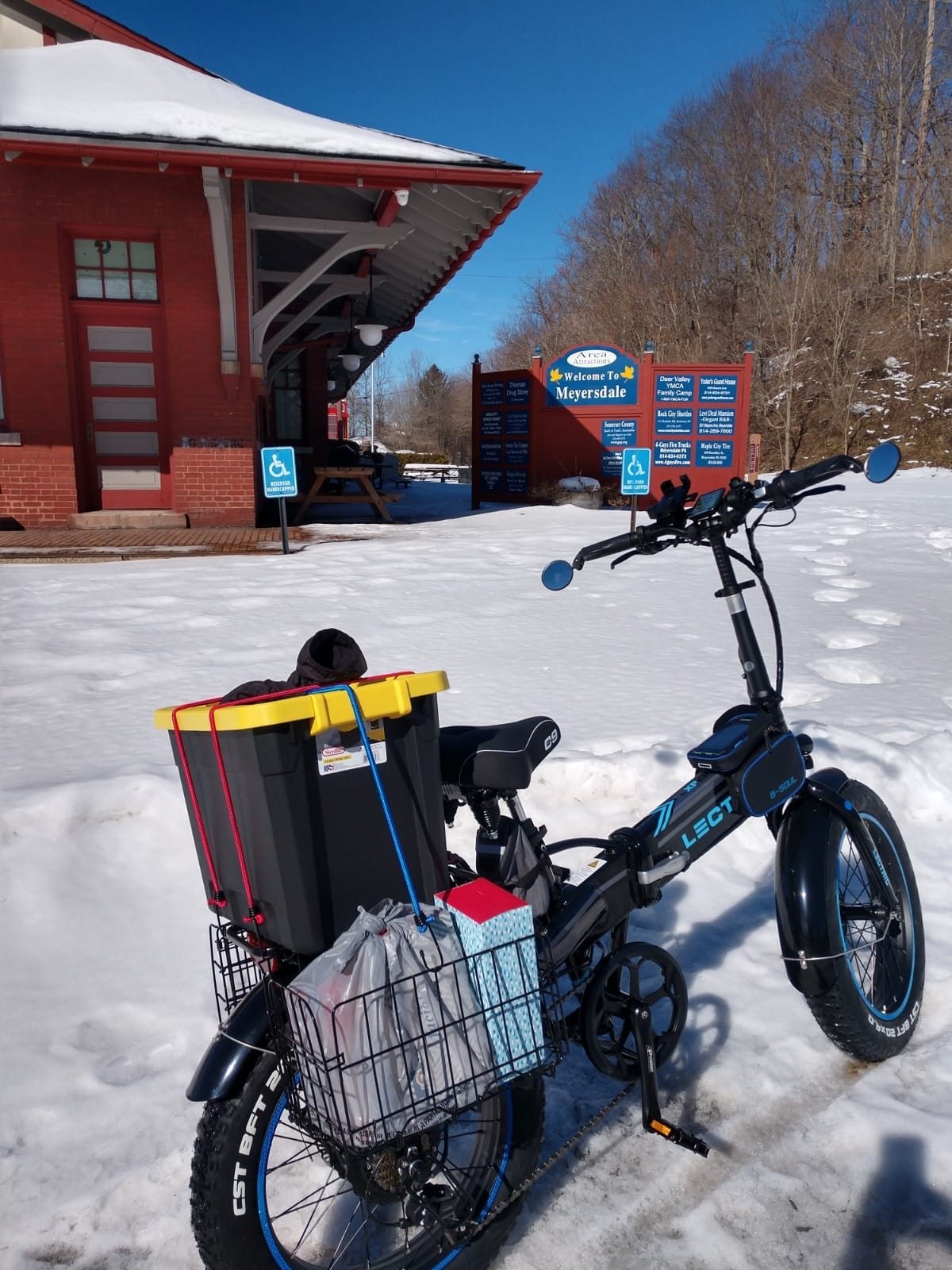
Everything the single Wsdcam does, but in pairs. The selling point is not two alarms, it is one remote driving both of them. A household with a motorcycle and an e-bike, or a rider with a bike in two locations, arms and disarms the whole setup from one fob.
Because the two alarms can sit in different places, you get layered coverage rather than duplicated coverage. One under the seat, one in the tail case, means a thief has to find and defeat two separate points before the bike moves. Owners describe mounting on trikes, cargo boxes and roof boxes with the supplied double-sided tape, and the adhesive is strong enough to hold on a racked or mounted machine.
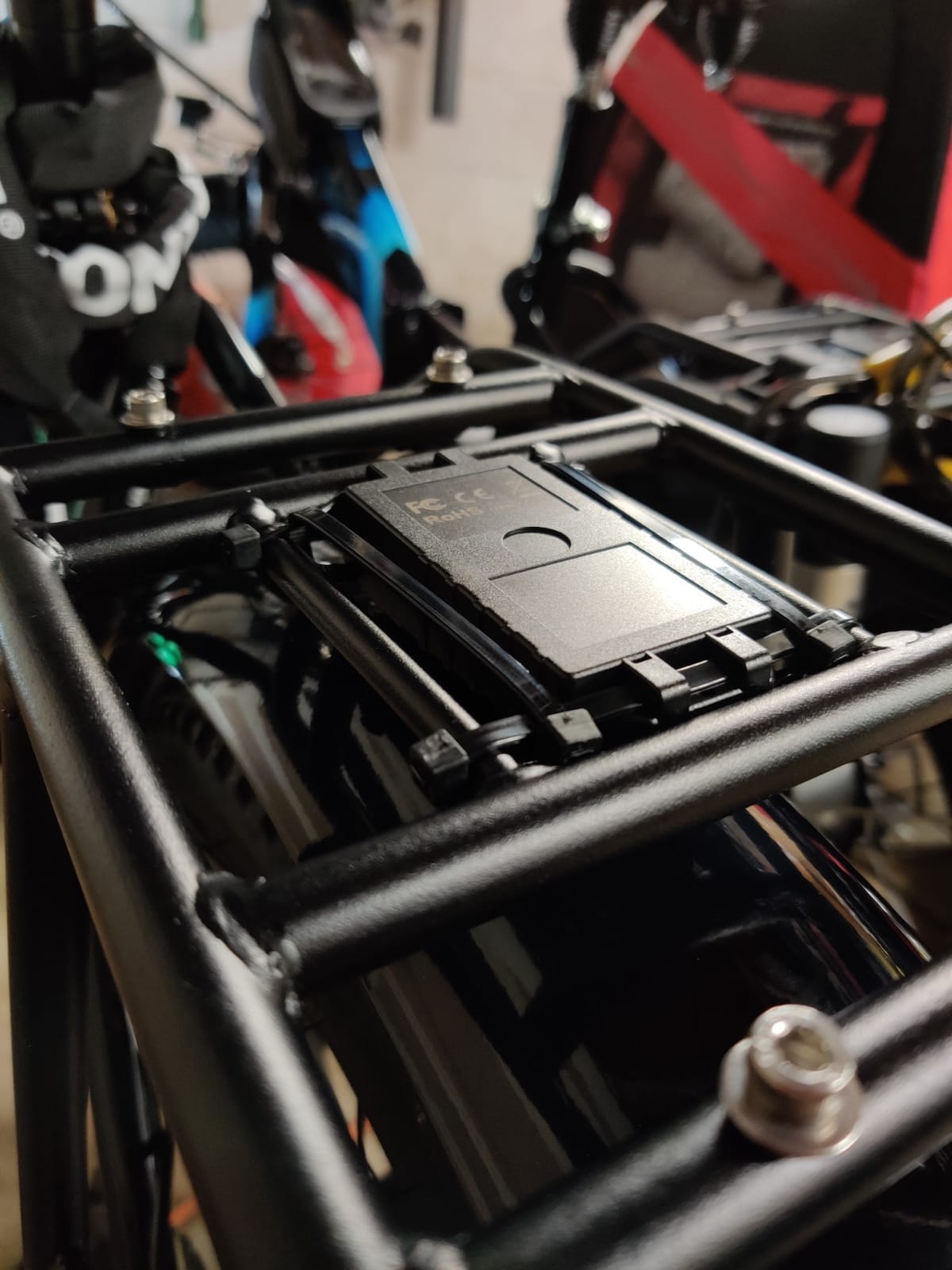
The sensitivity and volume controls are the same as the single unit, with seven sensitivity levels and three volume levels, and 113dB output is enough to end a parking-lot conversation from a couple of doors away. It also covers cars, trailers, luggage, doors and windows, which is why owners keep finding new uses for the second alarm.
One owner reports batteries still holding up after more than two years on a pair of Harleys, which is consistent with the AAA platform’s service life. It is an IP65 housing with a strap or tape install, and nothing is wired to either vehicle. The included zip ties are too thin to be useful on a bike rack, so use the supplied tape or a proper strap instead.
Are two alarms better than one loud alarm?
For layered coverage, yes. One unit in the frame and one in the luggage means an attacker who silences the first still has a second to deal with, and a bike that is being moved triggers both as the shock travels through the chassis.
For pure volume, no. Two alarms at the same 113dB are not meaningfully louder than one in the same position. The value of the pack is coverage across locations and the shared remote, not extra decibels, and it is worth being clear about that difference.
Any remote issues to plan around
The test button on the remote is far quieter than the actual triggered alarm, which surprises people the first time. Do not judge the unit by the test sound, judge it by remembering the 113dB figure.
The remote is also one-way, so it sends commands but receives nothing back. It will not confirm that arming succeeded. Get into the habit of arming, then walking away, and treat the lack of confirmation as a minor inconvenience rather than a fault.
9. USUPERINK Bike Alarms 2 Pack – Best for Scooters and E-Bikes
USUPERINK Bike Alarms for Ebikes, 2Pcs Wireless Bike Alarm with Remote
113dB siren
SOS emergency mode
7 sensitivity levels
3.7 x 1.6 x 0.8 in
Pros
- One owner caught three people touching a parked e-bike
- Chirps on a first bump then escalates
- Compact body fits inside a pannier
- Two alarms cover two vehicles or two weak points
- Also works on doors and cargo compartments
Cons
- Programming sensitivity takes trial and error
- Maximum volume falls short for some owners
- Instructions not available in French
This is the most interesting fit for scooters, e-bikes and small bikes, mainly because of the documentation behind it. One owner reports catching three separate people touching a parked e-bike, and another stopped a would-be thief at a shopfront. Those are real interventions rather than theoretical deterrence, and they are rare in owner feedback for this category.
The behaviour is a chirp-then-escalate design. A first bump produces a warning chirp, and only sustained movement brings the full 113dB alarm. For a lightweight scooter or e-bike that gets bumped by pedestrians and wind, that escalation is much kinder than an instant full-volume siren.
At 3.7 by 1.6 by 0.8 inches the body is small enough to disappear inside a pannier or under a frame rail, and it mounts with double-sided sticker or a strap with no wiring at all. It is IP65 rated, so rain and road spray are not a concern, and the remote reaches 66 feet with vehicle search bells.
Two alarms per pack means you can cover a scooter and an e-bike, or place two on one bike at opposite ends. Owners repurpose them for RV cargo doors, pannier bags and even a car, which stretches the value of the pack considerably. The pair covers more ground than the same money spent on one louder alarm.
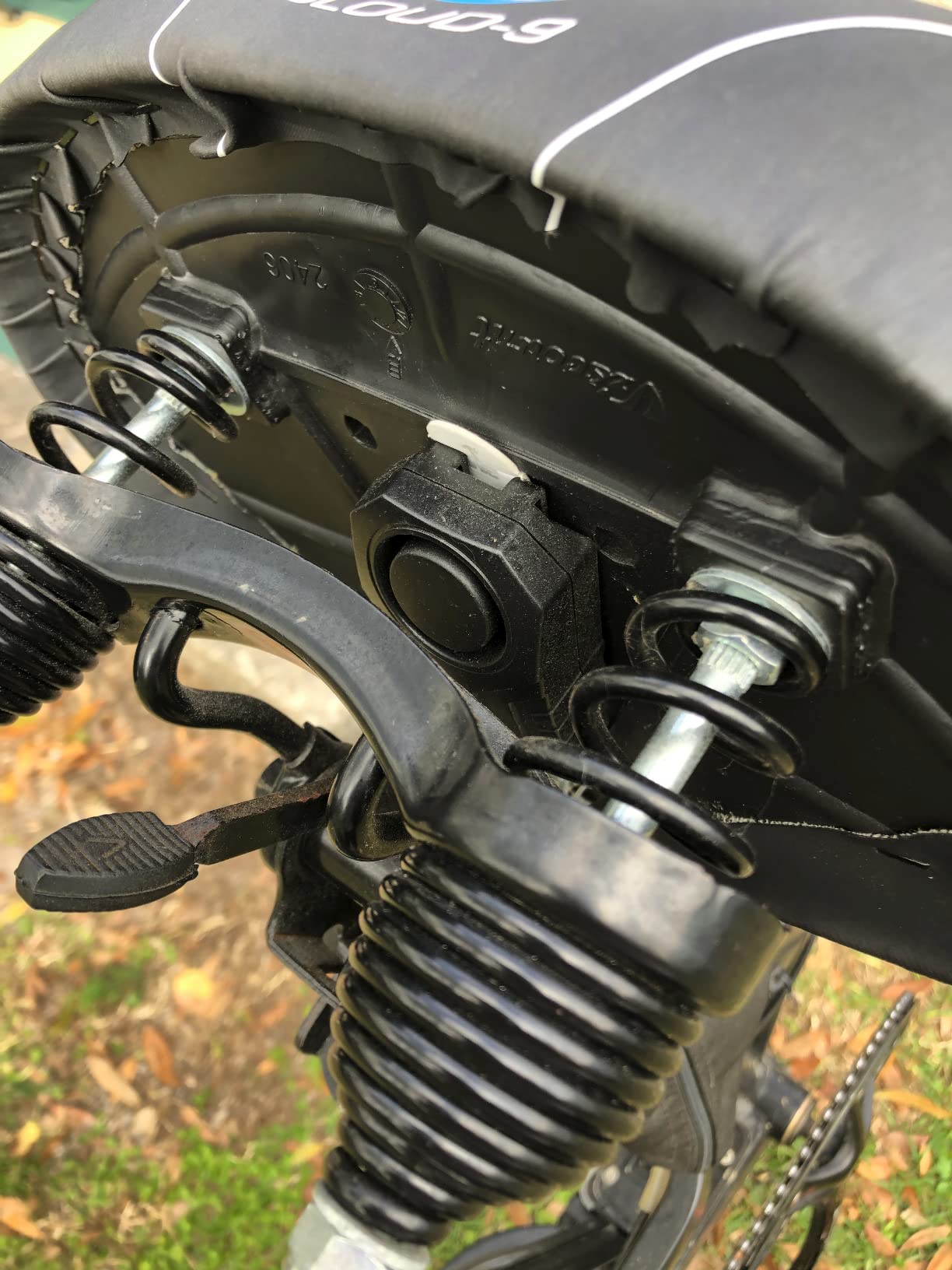
Is the SOS mode actually useful?
It functions as a separate trigger path rather than a panic button, which is worth understanding before you rely on it. The sensitivity programming is the part that takes patience, and owners describe it as a process of trial and error rather than a single switch.
Budget ten minutes on day one, in the parking spot you actually use, stepping the sensitivity up and down until the alarm responds to a hand on the bike and ignores a passing footfall. Get that wrong and you will be disarming it constantly, which is worse than not having it.
Where the output falls short
Some owners find the maximum volume short of expectations, particularly in urban environments with constant background noise. The 113dB figure is genuinely loud, but perceived loudness depends heavily on the surroundings and a quiet residential street is where these alarms earn their keep.
The instructions are only available in English, which is a genuine accessibility problem for a lot of owners. If programming the sensitivity with button presses in an unfamiliar language sounds painful, the Fosmon or single Wsdcam are friendlier because the adjustment is simpler.
10. RADIKAL RK9 Disc Lock with Premium Alarm – Hardened Steel
RADIKAL RK9 Disc Lock with Premum Alarm 120db ON/Off, LED Night Alert, Warning Pre-Alarm, 100% Waterproof, Full Metal Heavy Duty Brake Lock Universal Anti Theft Device for Motorcycle, E-Bike, Bicycle
120dB alarm
Hardened steel body
LED night alert
CR2 battery
ON/OFF button
Pros
- Hardened steel is a real step up from alloy locks
- 120dB with a pre-alert that lets you disarm
- LED night alert finds the lock in the dark
- Pouch and hex key included
- European build with insurer recognition
Cons
- Quality-control misses reported on arrival
- Lock and key can stick in the first few dozen cycles
- Module screw needs re-checking after long rides
This is the only hardened steel lock in the group, and that is a genuine materials upgrade over the zinc and aluminium bodies everywhere else on this list. Steel resists bolt croppers in a way that cast alloy does not, and the full-metal body and cover carry an anti-oxidation finish.
The 120dB alarm comes with a warning pre-alert, and the ON/OFF button lets you run the lock silently as a plain physical lock when you are somewhere quiet and do not want any noise at all. The LED night alert solves the genuinely annoying problem of finding a lock on a dark disc at 11pm.
The electronics are serviceable too, using a long-life CR2 battery with a replaceable RK24MA alarm module, and the unit measures 2.76 by 2.36 by 1.18 inches. It is made in Europe and carries insurer-recognised certifications in French and UK markets, which matters if your policy asks for a recognised device.
It is also the one pick here with genuine quality-control complaints in its review history, and they are worth weighing rather than skipping. That record, plus the smallest review base in the group, is why it sits at the bottom of our ranking despite the best materials.
Is hardened steel worth the trade-offs?
If your parking spot is exposed and your bike is worth a determined thief’s time, then yes. Bolt croppers defeat an alloy disc lock in seconds, and no amount of alarm output changes that once the tool is through the body. Alarm noise matters most against a quick opportunistic grab, not a prepared thief.
For most riders, the alloy and zinc locks elsewhere on this list are adequate for street parking, and the extra spend here buys insurance and certification advantages rather than a different everyday experience. Check whether your insurer requires a recognised lock before deciding.
What do the negative reviews say?
They cluster around manufacturing and assembly rather than design. One unit arrived with a key that would not turn the full 180 degrees, and another arrived with a depleted CR2 battery that failed to trigger at all. Test the alarm the day it arrives, before you depend on it.
Lock and key can stick after light use and reportedly ease after about 30 cycles, and on one bike a module screw loosened under road vibration, costing the electronic top. That vibration point is worth heeding: mount it where the frame is solid rather than on a thin panel, and re-check the screw after the first long ride.
Why You Need More Than One Layer of Security
Ranked by how well each layer works alone, in descending order, this is the order we would build a setup in.
1. A physical lock or anchor. The only layer that stops a theft at the moment it happens. A disc lock through the rotor or a chain through the frame and a secure anchor does more than any alarm, which is why the recurring recommendation on r/motorcycles is a serious lock from a known brand first.
2. An alarmed lock or in-bike alarm. Turns a quiet, fast theft into a slow, noisy one. The community layering advice treats this as the second layer precisely because it changes the timing of an attempt rather than the outcome.
3. A tracker. Does nothing to stop a bike, and everything to get it back. Small trackers like the Minimoto 9 are praised in owner threads for triggering a loud phone alert reliably, though effective range is limited and it is a recovery tool.
4. Visibility. A bright lock, a disc lock on show, or a cover that makes a thief work in the open all reduce the pool of bikes worth touching. This sounds trivial and it is not.
None of the four replaces the others, and a bike protected only by a lock and by visibility is one we would think twice about leaving outside in a high-theft city.
How to Choose a Motorcycle Alarm
Detection method first. Shock and motion sensors cover movement and being lifted. A tilt sensor catches a bike being laid down. Perimeter or microwave sensors detect a hand approaching before contact, and current-sense triggers catch the ignition being switched on. The forum consensus from manufacturer-specific groups is that tilt sensor and anti-hijack are the two features worth insisting on in a fitted system.
Decibel output. Output in this group runs from 110dB to 120dB, and that difference matters more than it sounds. 110dB covers a quiet residential street, while 120dB is what you want beside a main road. None of these numbers are measured in the same way, so treat them as relative rather than absolute.
Power source and parasitic draw. Every unit on this list runs on its own batteries and touches nothing electrical, so there is no drain on your bike and no install. A hardwired system draws a small constant current while armed, which is the parasitic draw that matters for storage and the reason transport mode exists.
Subscription and app costs. All ten of these run with no subscription and no app. That is not a feature omission; it is a design decision. Phone-app alerts are a recurring complaint in owner threads because Bluetooth range is short, and a siren that works without a phone is a siren that still works in a basement car park.
Mounting surface. This is the single most-skipped decision and the most common cause of false alarms. Owners report modules fixed to vibrating plastic panels rather than the frame, and those setups re-trigger constantly. Mount on a solid frame rail, close to the centre of mass, away from anything that flexes.
Serviceability. Check whether the battery or alarm module can be replaced. Sealed units mean a dead cell costs you the whole device, which is the difference between the URBAN UR6 and cheaper locks that share the same basic design.
How To Stop False Alarms On Any Motorcycle Alarm
An alarm you disable is worse than no alarm, because you paid for protection and got an annoyance. Work through these five steps in order, because the sequence matters: the cheapest and most common causes sit at the top.
1. Check power first. A weak or inconsistent battery supply is the most common trigger cause, and it also explains alarms going off on their own after about 45 seconds. For a portable unit, swap the cells. For a hardwired system, check resting battery voltage and the charging system before touching any settings.
2. Read the trigger record. Most modules log why they fired. If the codes point to tilt, you are dealing with a bike being leaned on. If they point to shock, something is hitting it. Guessing at settings without reading the code is the most common wasted hour in this whole process.
3. Lower sensitivity in controlled steps. Change one level at a time and test at the location you actually use. Dropping two levels in one go leaves you with an alarm that is too insensitive to be useful and you will not know which change caused it.
4. Fix the mounting. Move the module off plastic panels, off luggage and off anything that flexes or flutters. Strap it to a frame rail or bracket it solid. A cover pocket that flaps is a trigger source, and owners who moved the unit out of the pocket solved the problem permanently.
5. Remove the environmental causes. Wind through a wheel, a cover lifting, a passing lorry, a cat on the seat, a leaf blower. If the trigger only happens in one spot, that is your answer. This is also the point at which a better-fitted cover saves you the cost of a replacement alarm.
If the alarm continues to misfire after all five, the mounting is on a flexing part, and the power is clean, then the module itself is the problem and replacement is the sensible answer rather than more adjustment.
Installation and Setup Tips
All ten alarms here need no wiring and no tools, which is the point of the category. Budget ten minutes per unit and you are done. That makes the install decision simple: you do not need a dealer, and you do not need a mechanic.
Portable sirens go on the frame, under the seat, inside the tail case or in a cover pocket. Adhesive is fine on a clean flat surface, but strap or bracket mounting survives vibration and road spray better, and owners who used tape report it holding for years as long as the surface was cleaned first.
Disc locks need no fitting skill beyond lining up a hole, but the ergonomics matter if you have a knee or back problem. Test the height and angle before you rely on it daily. A lock you struggle to use is a lock you leave off.
Worth noting for the storage side of things: if you are working on a bike over a long weekend, having a proper stand makes the difference between a pleasant job and a backache. Our motorcycle jack picks cover the centre-stand and lift options, and the ramp guide is what you want for anything with a wheel off the ground.
For hardwired systems the calculation is different, and we would hand that to a professional. A clean install on a modern bike with a complex factory loom is not a beginner job, and a botched splice can cause warranty problems with both the alarm and the bike.
Battery Drain, Winter Storage and Transport Mode
The portable alarms on this list cannot drain your bike, because they run on their own cells and are not connected to anything electrical. That is a meaningful advantage for anyone storing a motorcycle over winter, and it is worth more than it first appears.
For a portable unit, storage advice is simple: remove the batteries before you put the bike into storage. Even a good AA cell slowly self-discharges, and owners who have left an alarm armed through a winter come back to a silent device with no way to know how long it has been in that state.
Hardwired systems are the ones that need transport mode or sleep mode. An armed system draws a small constant current, and over three months of storage that is enough to flatten a battery. Most modules have a transport mode that disables the alarm entirely, and using it is not optional if the bike is on a charger-less storage plan.
For the bikes themselves, battery health during storage is a bigger issue than most alarm buyers expect. If your alarm is stealing a small amount of current, your starting battery has less margin, and the marginal difference between a healthy and an old battery suddenly matters. Our guides to motorcycle batteries and lithium motorcycle batteries cover that side in detail.
Frequently Asked Questions
What is the best anti-theft alarm for a motorcycle?
For most riders the best anti-theft alarm is a self-contained 113dB vibration siren with a remote and adjustable sensitivity, mounted on the frame. It needs no wiring, runs on its own batteries, and makes a theft attempt loud and slow. Pair it with a physical disc lock, since an alarm deters but does not physically stop a theft.
What is the best anti-theft device for a motorcycle?
It depends on the job. For a deterrent, an alarmed disc lock is the strongest single device because it physically resists the bike being moved while making noise. For coverage, a standalone siren with a remote covers more locations. For recovery after a theft, only a GPS tracker helps, and that is a separate purchase with an ongoing service cost.
Are motorcycle alarms worth it?
Yes, as long as you treat them as one layer. An alarm makes a theft attempt loud, slow and public, which defeats opportunistic thieves, but it does not physically secure the bike on its own. The strongest setups combine a serious physical lock, an alarmed lock or in-bike siren, and a tracker for recovery, with visibility helping throughout.
What is the best disc lock alarm for a motorcycle?
The URBAN UR6 is the strongest overall disc lock alarm here, with 120dB output, a replaceable sealed alarm module and a long-life CR2 battery, so a dead cell does not cost you the whole lock. If you want the same idea for less, the YOHOOLYO and KRASER locks both ship with spare batteries and multiple keys at a lower tier.
What is the most effective theft deterrent for motorcycles?
A serious physical lock anchored to a fixed object ranks first, because it is the only layer that stops a theft outright. An alarmed disc lock ranks second by making a lift slow and noisy. Visibility and a good parking spot reduce the pool of bikes worth touching, and a GPS tracker only matters after a theft has already happened.
Why does my motorcycle alarm go off for no reason?
The usual causes are a weak or inconsistent battery supply, sensitivity set too high, a module mounted on a vibrating plastic panel, and environmental triggers like wind, a flapping cover or a passing lorry. Work through power, then the trigger record, then sensitivity in small steps, then mounting, then environment. An alarm that false triggers gets disabled, which leaves you with no protection at all.
The Verdict For 2026
Ten alarms, one clear winner. The Wsdcam 113dB Bike Alarm with Remote is our editor’s choice because it has by far the highest review count in the group at more than 18,000 ratings, 113dB of output, seven sensitivity levels that genuinely solve false triggers, and a form factor small enough to hide in a tail pocket. It is the pick for daily street parking on a bike you already lock properly.
Buy the YOHOOLYO if you want one device instead of two, since a real metal disc lock with a 110dB alarm and spare batteries covers both jobs. Buy the URBAN UR6 if you intend to keep the lock for years, because the replaceable sealed alarm module is the difference between servicing a device and replacing it.
Whatever you choose, tune the sensitivity in your actual parking spot before you walk away, and mount the module on a solid frame rail. An alarm that false triggers gets switched off, and a switched-off alarm is not protection. That is the whole lesson from reading thousands of owner reviews, and it is the reason these best motorcycle alarms work in practice rather than just on a spec sheet.