
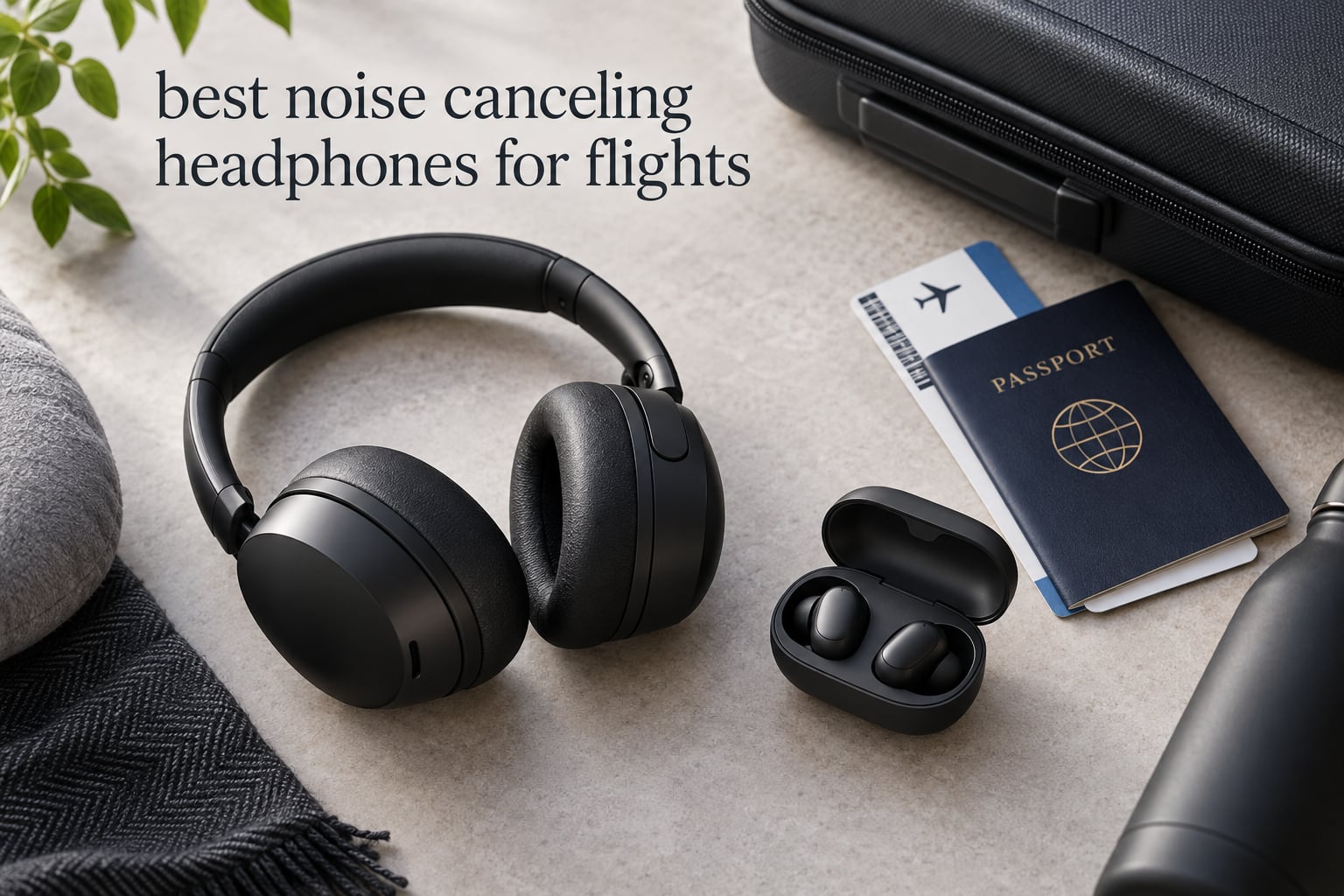
Best overall: the Soundcore Q20i — 40-hour battery, hybrid ANC, multipoint and a 3.5mm jack, which makes it the best noise canceling headphones for flights without a second thought. For the strongest cancellation against engine drone, go with the Sony WH-1000XM6; for the most comfortable pair over 12 hours, the Bose QuietComfort.
Aircraft cabins sit at roughly 75 to 85 dB once the doors close, and most of that energy is low-frequency rumble from the engines and the air-conditioning packs. Active noise cancellation is built precisely for that band, which is why a good pair changes how a long-haul feels rather than just how it sounds. You stop turning the volume up to fight the drone, your ears stop working overtime, and the flight stops being something to survive.
We compared ten current-generation pairs for exactly that job: seven over-ear, three in-ear, spanning budget picks to flagship. The two editorial pages already ranking for this query are thin and badly out of date, so this is a straight comparison of manufacturer specifications, published review volumes and what frequent flyers and crew actually report about wearing these for twelve-plus hours.
A note before we start: nothing here involves our own instrumented measurements. Every attenuation and battery figure quoted comes from the manufacturer or from owner reviews, and we say so where it matters. If you want the softer context for a red-eye, we have a guide to the best pillows for overnight flights that pairs well with any pick below.
Table of Contents
Top 3 Picks for Best Noise Canceling Headphones for Flights in 2026
All 10 Noise Canceling Headphones for Flights at a Glance in October
Quick Picks: the ten sets below, ordered by how well they handle a cabin. Battery figures are manufacturer-stated with ANC engaged where that is stated separately.
| Product | Specs | Action |
|---|---|---|
| Soundcore Q20i |
|
Check Latest Price |
 Sony WH-1000XM6 Sony WH-1000XM6 |
|
Check Latest Price |
 Bose QuietComfort Bose QuietComfort |
|
Check Latest Price |
 Bose QuietComfort Ultra 2nd Gen Bose QuietComfort Ultra 2nd Gen |
|
Check Latest Price |
 Sennheiser Momentum 4 Sennheiser Momentum 4 |
|
Check Latest Price |
 Beats Studio Pro Beats Studio Pro |
|
Check Latest Price |
 JLab JBuds Lux ANC JLab JBuds Lux ANC |
|
Check Latest Price |
 Soundcore Space A40 Soundcore Space A40 |
|
Check Latest Price |
 JBL Tune Flex JBL Tune Flex |
|
Check Latest Price |
 Soundcore P30i Soundcore P30i |
|
Check Latest Price |
1. Soundcore Q20i — Best Overall for Flights
Soundcore by Anker Q20i Hybrid Active Noise Cancelling Headphones, White
Hybrid ANC with 4 mics
40-hour battery
3.5mm jack
Multipoint
Pros
- Hybrid ANC from four built-in microphones
- 40-hour battery plus a 5-minute top-up for 4 more hours
- Multipoint across laptop and phone
- 3.5mm wired mode with hi-res certification
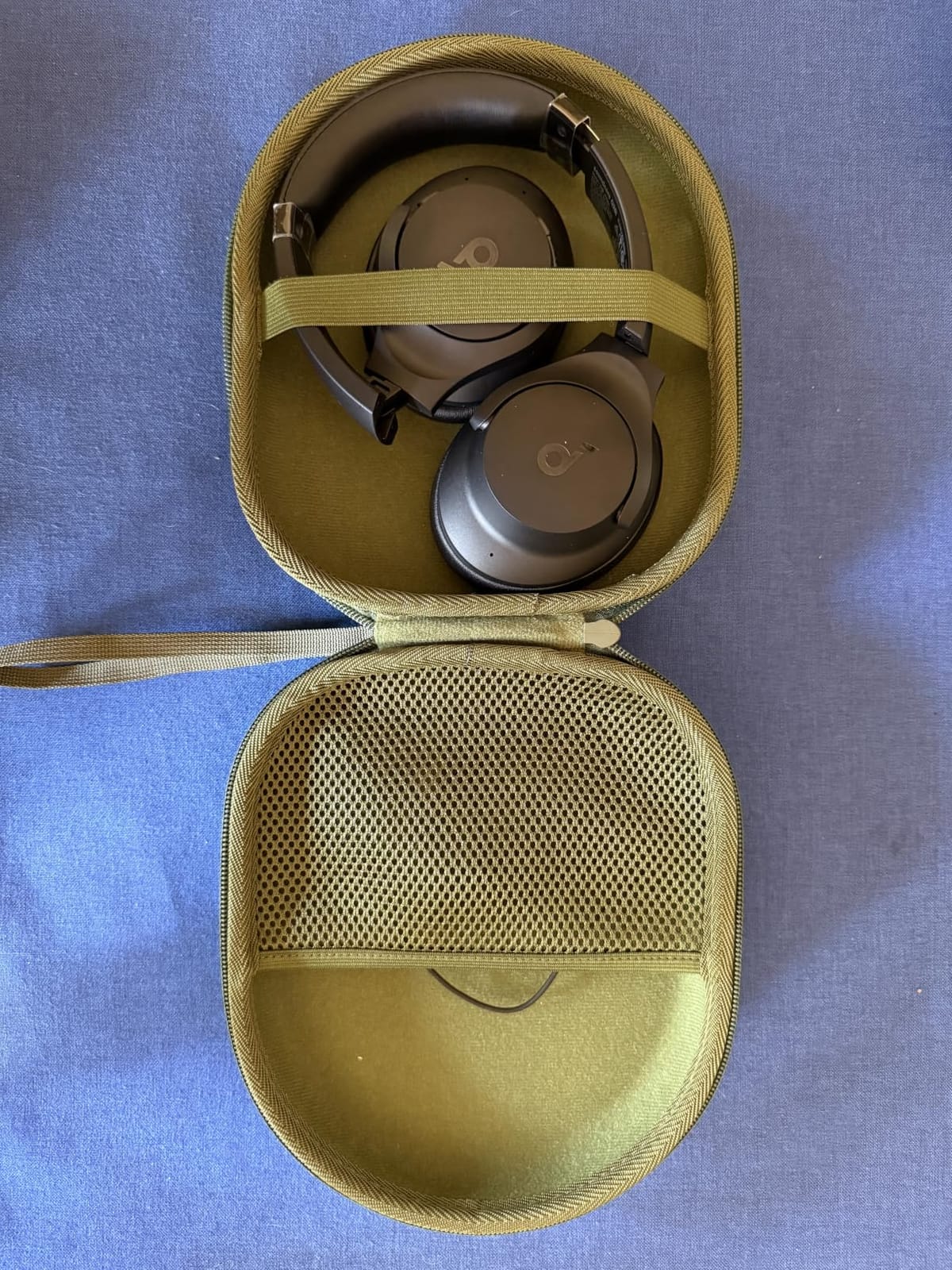
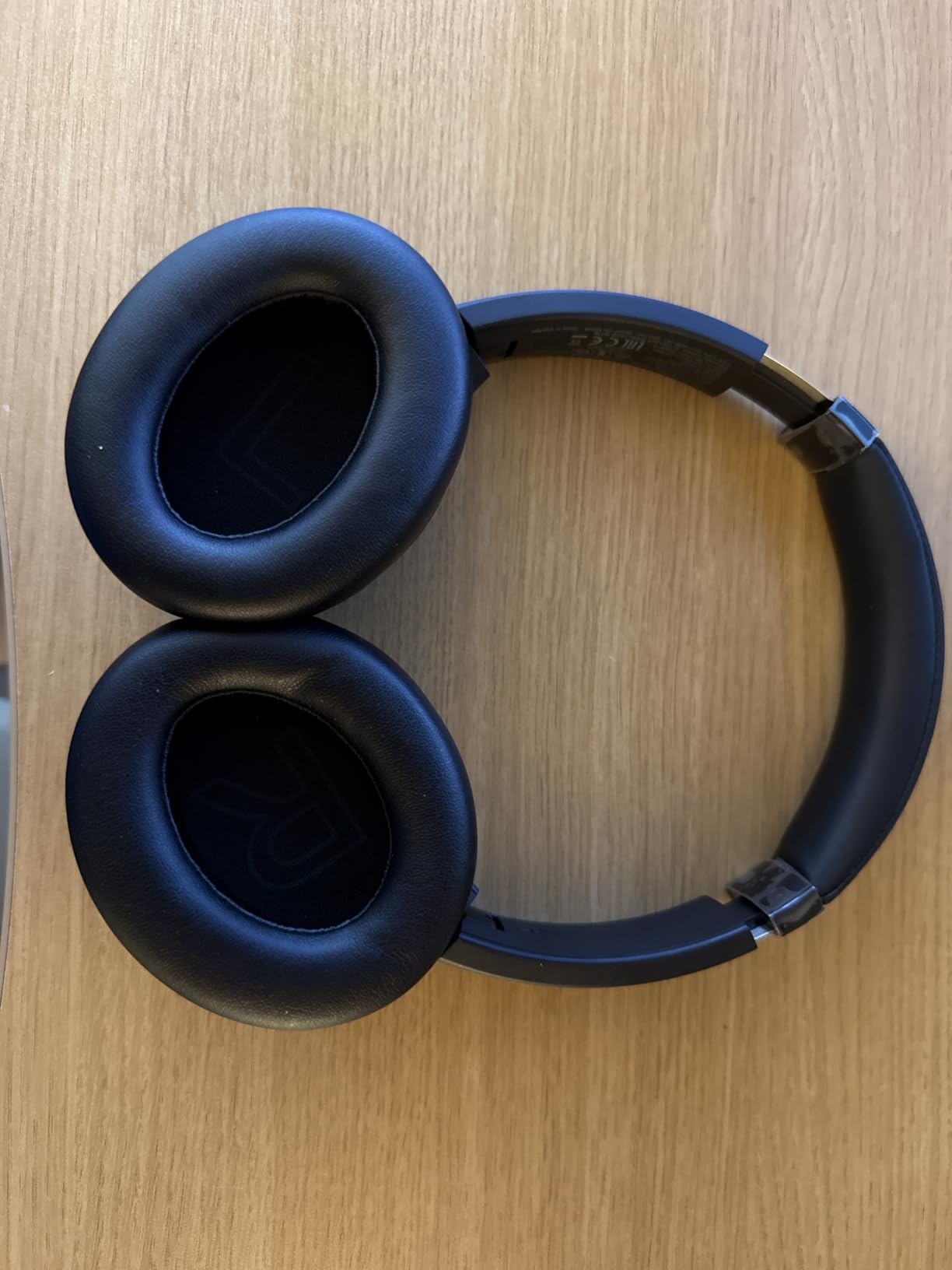
- Folds flat for a carry-on
Cons
- ANC on thins the sound noticeably
- Mids and highs go muddy at higher volumes
- ANC unavailable in wired AUX mode
At 8.64 ounces and 40 hours of stated battery, the Q20i answers the two questions that matter most at the gate: will it last the itinerary, and will it fit in the bag. It folds flat, carries a 3.5mm jack for the seat-back screen, and switches between two devices without re-pairing. Very few pairs at this tier do all three.
The cancellation is hybrid with four microphones, which is enough to take a real bite out of cruise rumble. Owners who fly regularly describe it as holding up against engine drone rather than only muting general cabin wash, which is exactly what you want at 35,000 feet.
The honest weakness is audio fidelity. Turning ANC on noticeably reduces the sound, and reviewers report muddy mids and highs at higher listening levels. BassUp tuning covers the low end, and the app EQ helps, but this is not a pair for judging recordings.
Two quirks catch people out. The Q20i does not remember your last ANC or transparency setting, so it starts fresh every power-on. ANC is also unavailable in AUX-in mode, so the wired connection is for battery-dead emergencies, not for cancelling while watching a film.
Why the Q20i works for flights
Forty hours of battery covers the longest realistic itinerary with room to spare, so battery anxiety on a 16-hour sector is a non-issue. The 5-minute top-up that returns four hours means a forgotten charge in a hotel room is recoverable. Fast Fuel is the feature that turns the rating from good to stress-free.
The wired jack matters more than it used to. Airlines increasingly require Bluetooth in airplane mode, and pairing through a seat-back entertainment system can be fussy. A 3.5mm cable bypasses all of it, and this is one of the cheapest pairs here that still has the connector.
Where it falls short
If your priority is the sound signature rather than the cabin, look elsewhere. The Q20i thins out noticeably with ANC engaged and the tuning is bass-forward in a way that will not please anyone who listens critically at altitude.
Glasses wearers should know that the seal is good but not exceptional. Frames through the cushions can shave a little of the passive isolation, though the four microphones keep working regardless.
2. Sony WH-1000XM6 — Best for Engine Noise
Sony WH-1000XM6 The Best Noise Cancelling Wireless Headphones, Black
QN3 processor with 12 mics
30-hour battery
30mm drivers
LDAC
Pros
- Adaptive ANC via 12 microphones and the QN3 processor
- Adaptive NC Optimizer adjusts for air pressure and fit
- 30-hour battery with 3-minute quick charge for 3 hours
- Six-mic AI beamforming for calls
- Compact magnetic case and foldable design
Cons
- Highest cost in the roundup
- 10 percent of ratings are 1-star on fit or cancellation
- Not water resistant
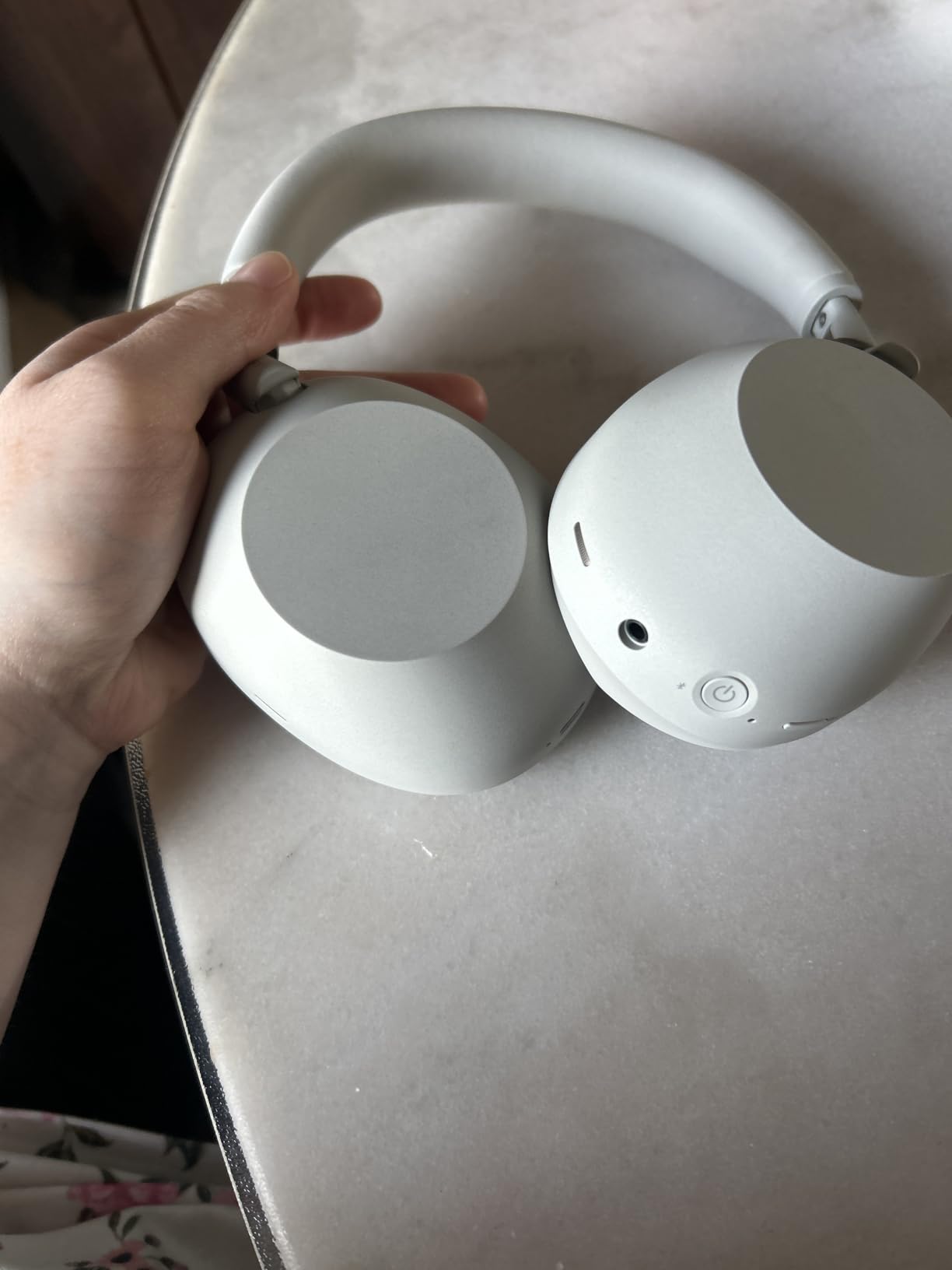
This is the pair that blocks the most cabin drone. The QN3 processor and twelve-microphone adaptive system are the most aggressive hardware here, and the Adaptive NC Optimizer adjusts the cancellation to air pressure and wearing style, which matters in a cabin where pressure is already shifting.
Battery is 30 hours at 8.96 ounces, with a three-minute quick charge returning three hours of playback. For a 14-hour sector that leaves plenty of margin, and LDAC high-resolution wireless is supported for anyone who wants more detail than the codec default.
Call quality is the other strength, with six-microphone AI beamforming handling a cabin full of background noise. If you plan to take work calls at 30,000 feet, that matters as much as the cancellation itself.
The 4.2 average across more than 3,700 ratings is the lowest among our top three, and about 10 percent of ratings are one-star. Buyers at this level tend to expect near-perfection, and a portion feel the cancellation or fit does not justify what they paid.
Why the XM6 works for flights
This is the model to pick if the engine is what bothers you most. On a rear-engine or older narrow-body the drone is deeper and more present, and adaptive cancellation with twelve microphones tracks changes in that rumble better than any other set we list.
The carrying case is compact and magnetic, and the headphones fold, which is the one thing several rivals here fail to do. At 254 grams the weight is noticeable in a bag but fine on a head.
Where it falls short
Cost is the obstacle. It is the most expensive pair in the roundup by a wide margin, and the fit is not adjustable enough for every head shape, which is where a slice of those one-star ratings come from.
Not being water resistant rules it out for anyone who also wants to use them at the gym. It is a travel pair, not a gym pair.
3. Bose QuietComfort — Best for Comfort
Bose QuietComfort Headphones – Wireless Bluetooth Headphones, Active Over Ear Noise Cancelling and Mic, USB-C Charging, Deep Bass, Up to 24 Hours of Playtime, Black
Active plus passive ANC
24-hour battery
238 g
3.5mm jack
Pros
- Combines active and passive noise cancellation for steady cabin quieting
- Plush over-ear cushions spread pressure well
- Multipoint between laptop and phone
- Wired listening when the battery is flat
- Adjustable EQ in the Bose app
Cons
- 24-hour battery is the shortest among over-ear picks here
- Does not fold flat
- No spatial audio on this model
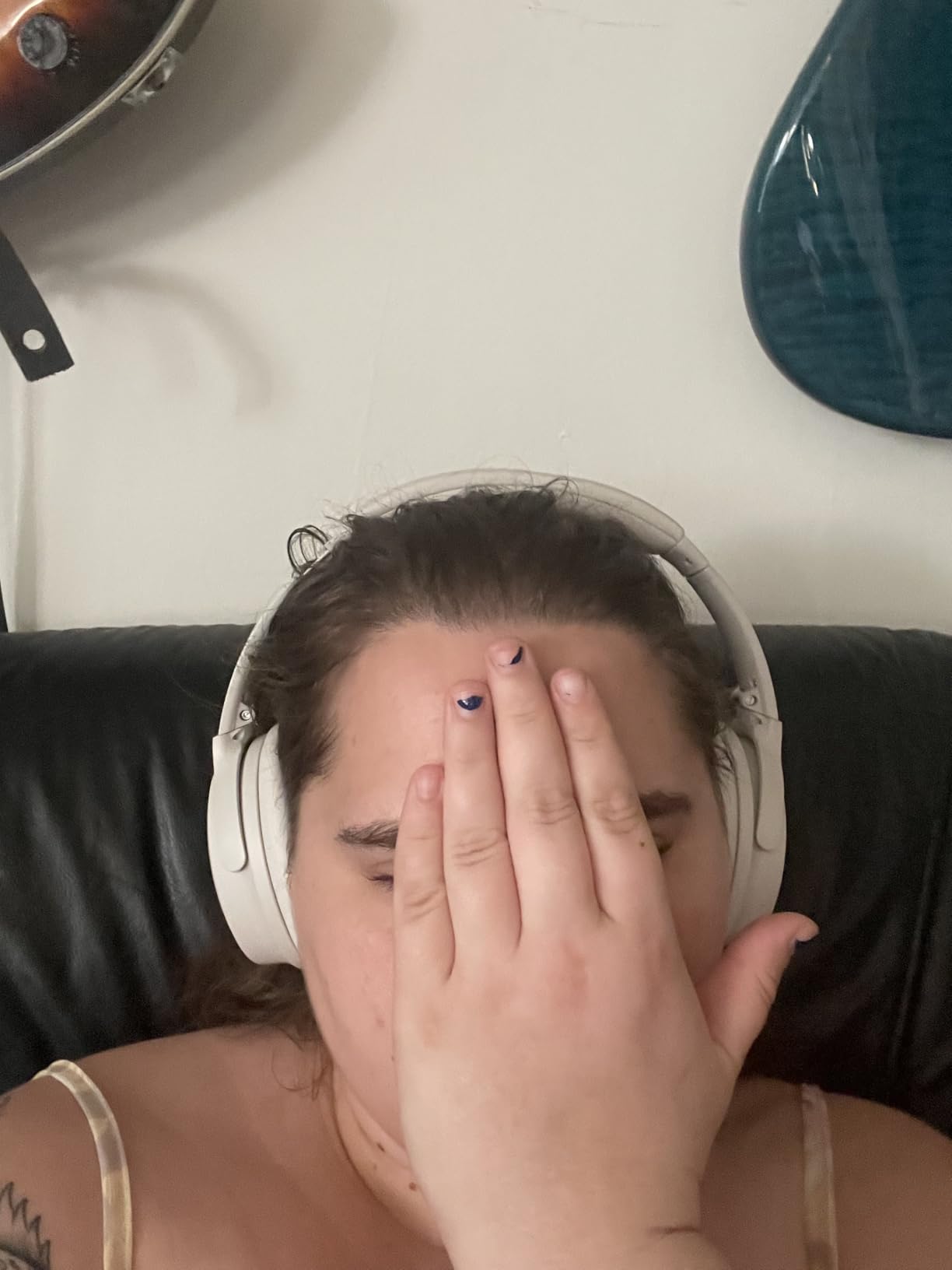
Comfort is the whole argument here. At 238 grams with plush over-ear cushions and a padded headband, these are the pair we would put on for a 14-hour sector when the headband clamp is the thing that usually ends the trip early. Roughly 79 percent of ratings are five-star, and comfort is the reason cited most often.
The cancellation combines active and passive isolation, which is the right architecture for a cabin. Passive isolation handles the mid-range wash from galley carts and conversation, and the electronics handle the low end. Two listening modes, Quiet and Aware, cover the rest.
Multipoint means you can stay connected to a work laptop and a phone without re-pairing, and a 15-minute USB-C charge returns 2.5 hours. The 3.5mm jack with in-line mic means the wired option exists when the battery runs out or the airline wants airplane mode.
Twenty-four hours of battery is the real limitation. It covers a long-haul in one direction with margin, but a round trip on one charge is tight, and battery life is the most common upgrade request in owner reviews.
Why these work for flights
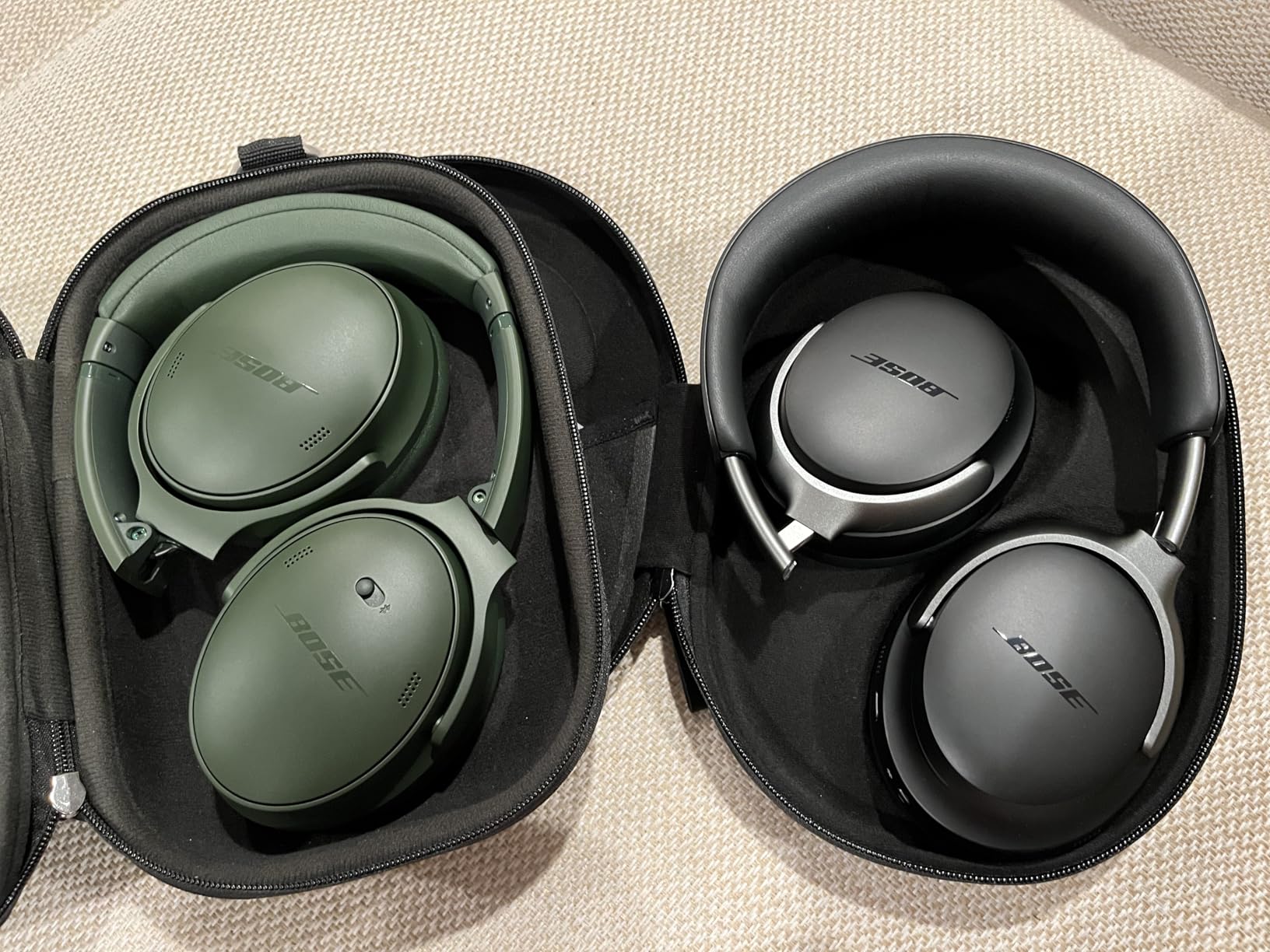
The seal and the pad depth distribute clamping force across a wider area than shallow cups, which is why they stay wearable when cheaper pairs start to hurt. If you wear glasses, the thick cushions also give the frame somewhere to sit without pressing straight through the seal.
They do not fold flat. The case is bulky, so budget for a small personal item rather than a seat pocket.
Where they fall short
Twenty-four hours beats nothing but loses to every other over-ear pick here. Sennheiser’s 60 hours is the outlier and the JLab and Beats options both run longer, which is exactly what the battery section below sets out.
There is no spatial audio or head tracking on this model, and the tuning is deliberately plain. If you want a cinematic film on a long flight, the QuietComfort Ultra is the one to buy instead.
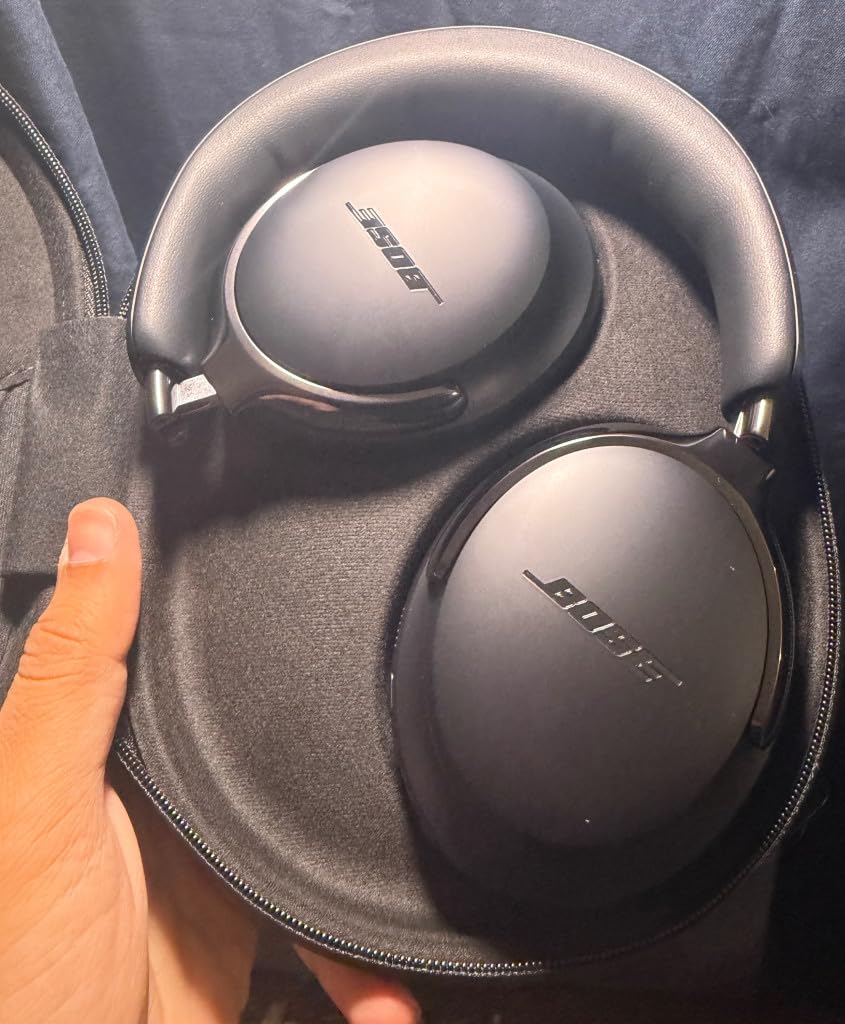
4. Bose QuietComfort Ultra (2nd Gen) — Best for In-Flight Movies
Bose QuietComfort Ultra Bluetooth Headphones (2nd Gen), Wireless Headphones with Spatial Audio, Over Ear Noise Cancelling with Mic, Up to 30 Hours of Play time, Black
Quiet, Aware and Immersion modes
30-hour battery
Cinema Mode
3.5mm jack
Pros
- Three listening modes including Immersive Audio
- Cinema Mode tuned for long film sessions
- CustomTune personalises sound to ear shape
- 30-hour battery
- 23 hours with Immersive Audio on
- Metal headband spreads clamping pressure
Cons
- Battery drops to 23 hours with Immersive Audio enabled
- Plastic enclosure rather than metal
- Not water resistant
Pick these when the seat-back screen is the main event. Immersion mode and the new Cinema Mode are built for watching a two-and-a-half-hour film with ANC on, and reviewers consistently single out the immersive audio as the reason they keep the pair.
CustomTune measures your ear shape on first pairing and adjusts the sound to fit, which is genuinely useful with over-ear cups because seal and pinna shape both affect the low end. The metal headband also spreads pressure better than plastic, which helps on long sectors.

Battery is 30 hours, but that drops to 23 with Immersive Audio running. On a long-haul in Immersion mode you are spending more battery per hour, so check the number against your itinerary rather than the headline figure.
Noise cancellation runs in Quiet and Aware modes alongside Immersion, with built-in noise-rejecting microphones for calls. Bluetooth 5.4 keeps a stable connection, and the Bose app handles updates.
Why these work for flights
Cinema Mode is the differentiator for anyone who watches on the plane. The seat-back experience is compressed and tinny, so a spatial mode that widens the soundstage makes a mediocre film far easier to sit through.
The 3.5mm jack means you can wire in and skip the pairing dance with the seat-back system entirely, which is a real advantage when the entertainment screen does not enumerate your headphones.
Where they fall short
Immersive Audio costs you seven hours of battery. That trade is fine for a film but wrong for a full overnight sector, where you want quiet and endurance rather than a wide soundstage.
The enclosure is plastic where the XM6 and other flagships use metal, and about 9 percent of ratings are one-star, most often about fit and features that sit behind the app.
5. Sennheiser Momentum 4 — Best for Battery Endurance
Sennheiser Momentum 4 Wireless Headphones, ANC, 60 Hr Battery, Black/Copper
60-hour battery
42mm drivers
aptX Adaptive
3.5mm jack
Pros
- 60-hour stated battery
- the longest in this roundup
- 42mm transducers with aptX Adaptive
- Adaptive ANC plus adjustable transparency mode
- Foldable and lightweight for the class
- Airplane adapter included in the box
Cons
- ANC rated below Bose and Sony by reviewers
- Touchpad controls trigger accidentally
- 13 percent of ratings are one-star
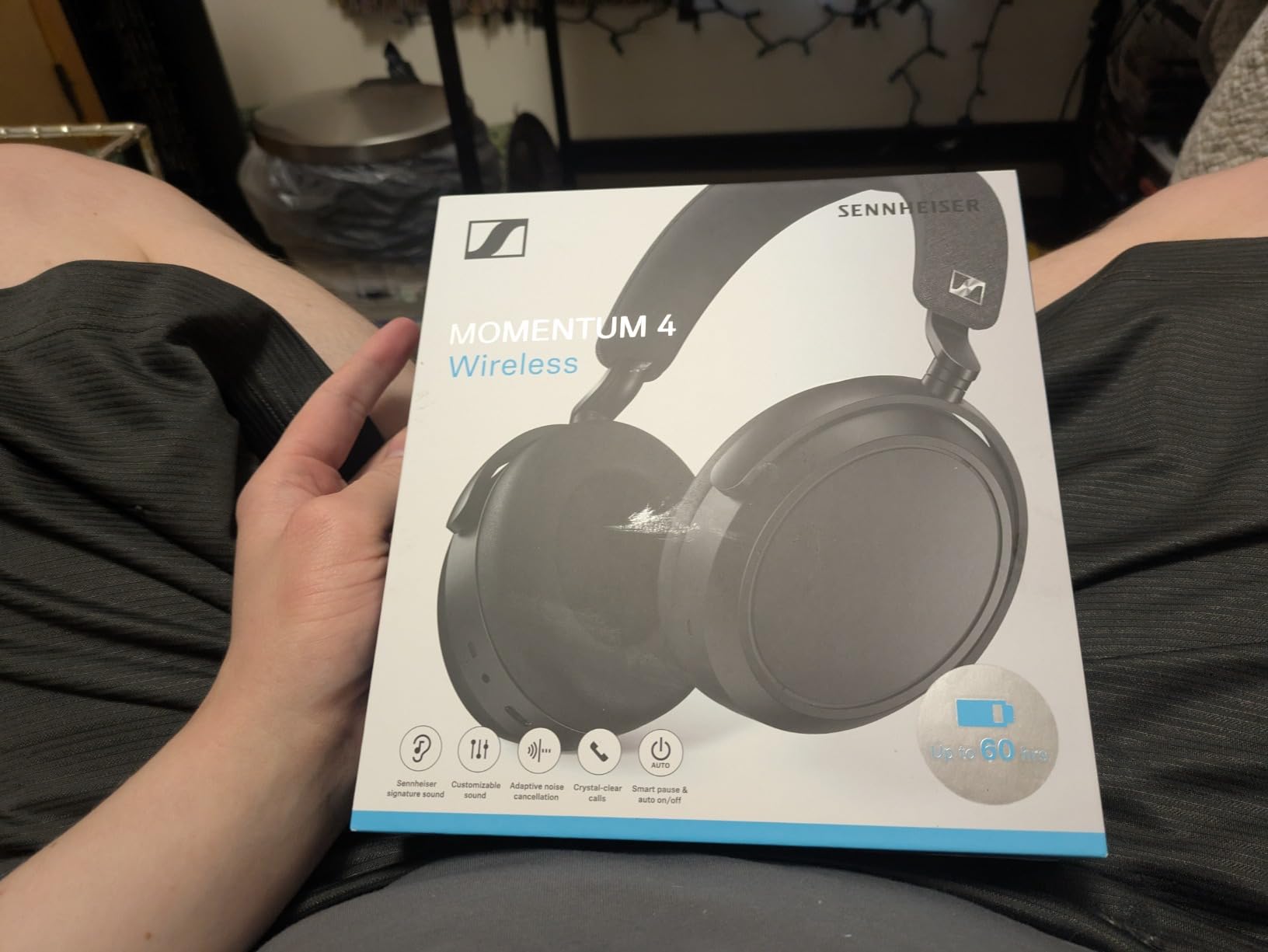
Sixty hours is the number that changes the planning. At 10.3 ounces these are among the lighter over-ear sets here, and with that battery you can fly an entire long-haul round trip, including the connection, without a charger in your bag.
Sound is the other argument. The 42mm transducers and aptX Adaptive are aimed at people who care how music sounds, and the frequency range runs from 6 Hz to 22 kHz. On a long flight that matters more than most buyers expect.
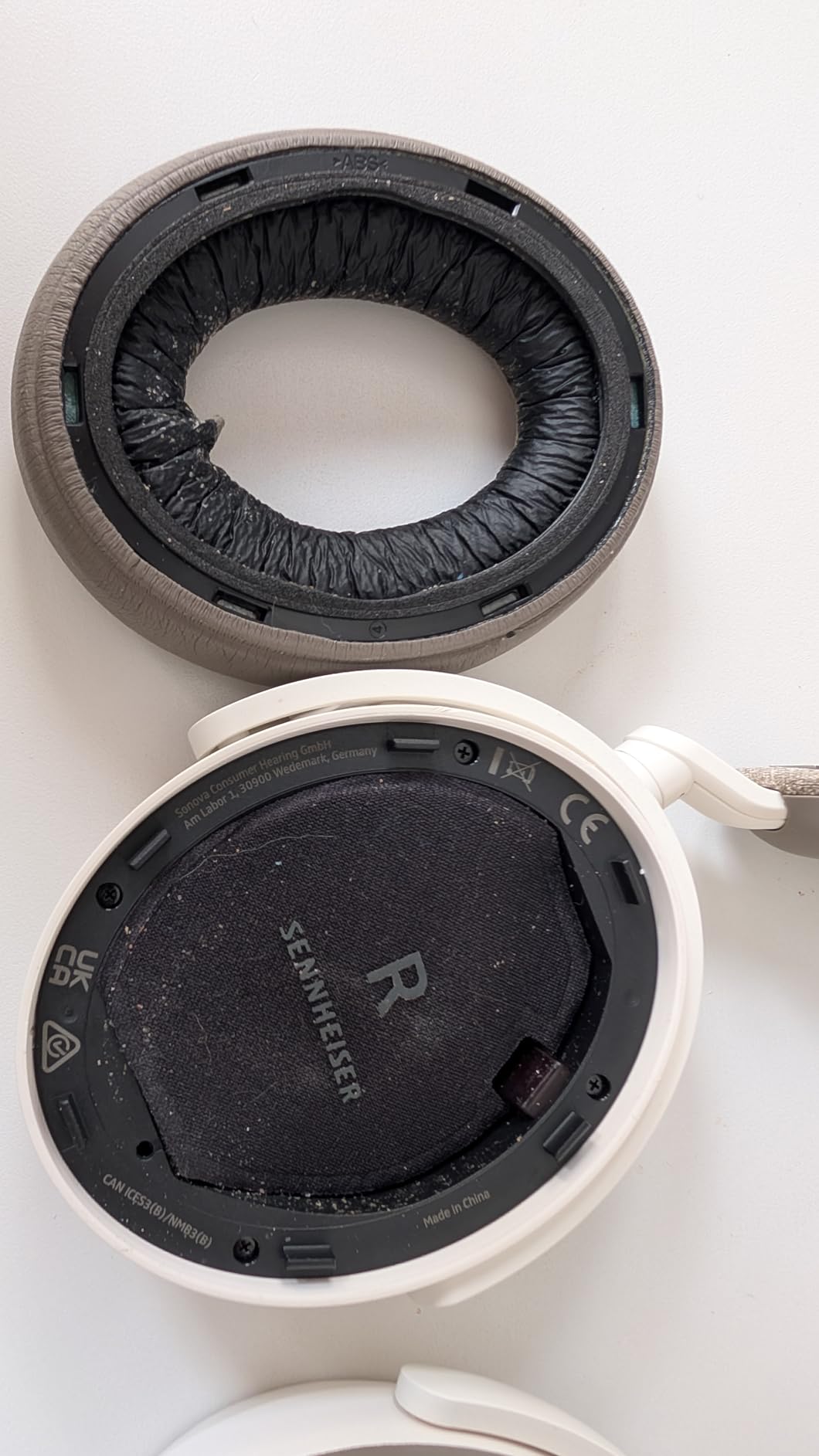
Crew and frequent flyers single this model out repeatedly because the battery removes the anxiety. A commenter on a flight-attendant forum thread recommended it as their overall pick specifically on the strength of the 60-hour figure and app-based sound profile customisation.
Adaptive noise cancellation is present and the transparency mode is adjustable, but reviewers are consistent that it sits behind Bose and Sony in raw cancellation strength. That is a fair trade if engine drone is not your primary complaint.
Why these work for flights
Battery-to-weight is the best ratio in the list. You get 60 hours from 10.3 ounces, so the flight does not dictate when you can listen. That single advantage outranks everything else on overnight itineraries.
An airplane adapter is included, which is a small sign the design was aimed at flying. The foldable design and carry case keep it manageable in a bag.
Where they fall short
Thirteen percent of ratings are one-star, the highest share of any over-ear pick here, and the complaints cluster around cancellation strength and the touchpad firing commands when your hand rests on it in a sleeping position.
The 4.0 average is the lowest rating in the roundup. If you want the quietest cabin rather than the longest battery, this is not the pair.
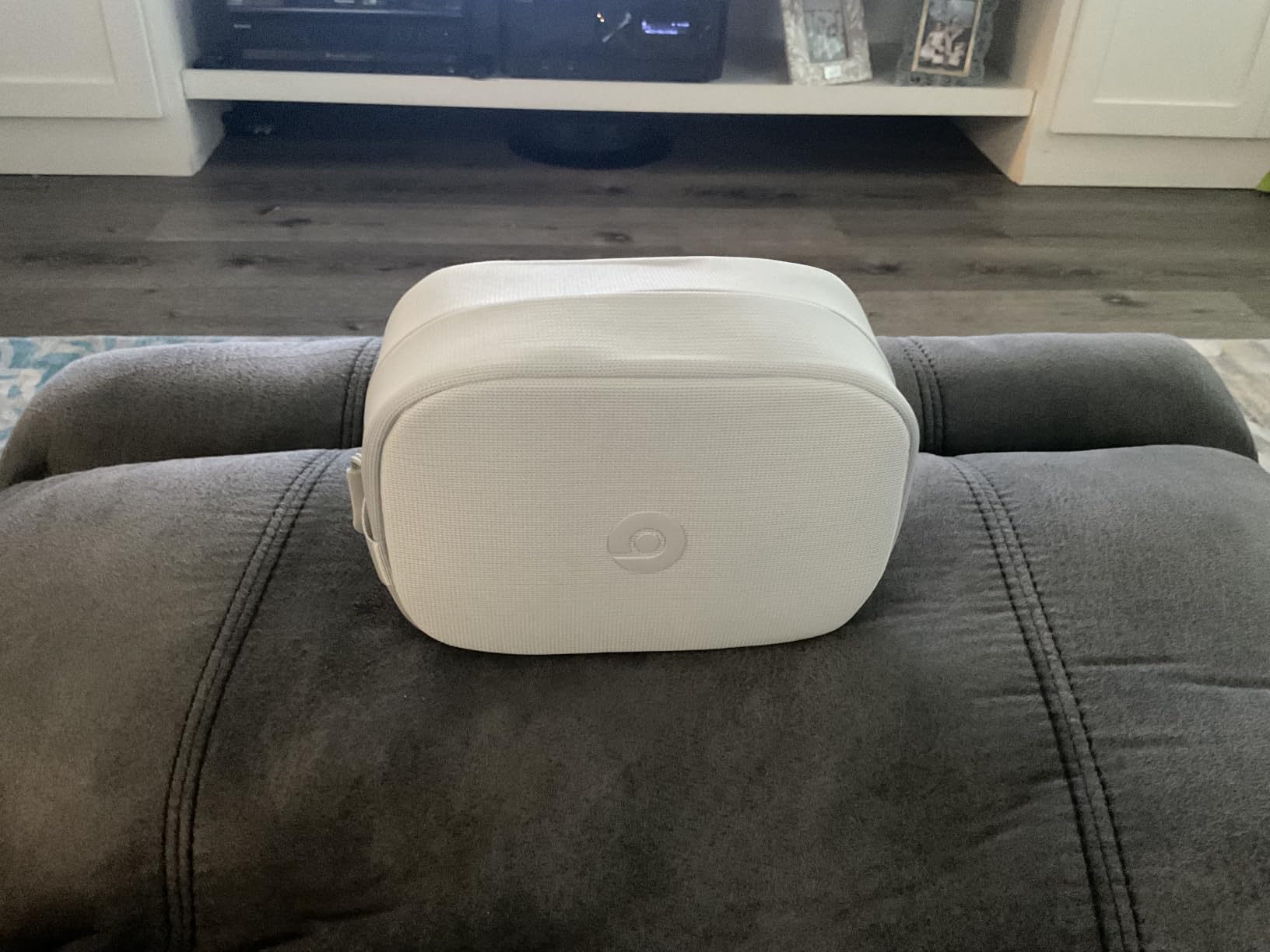
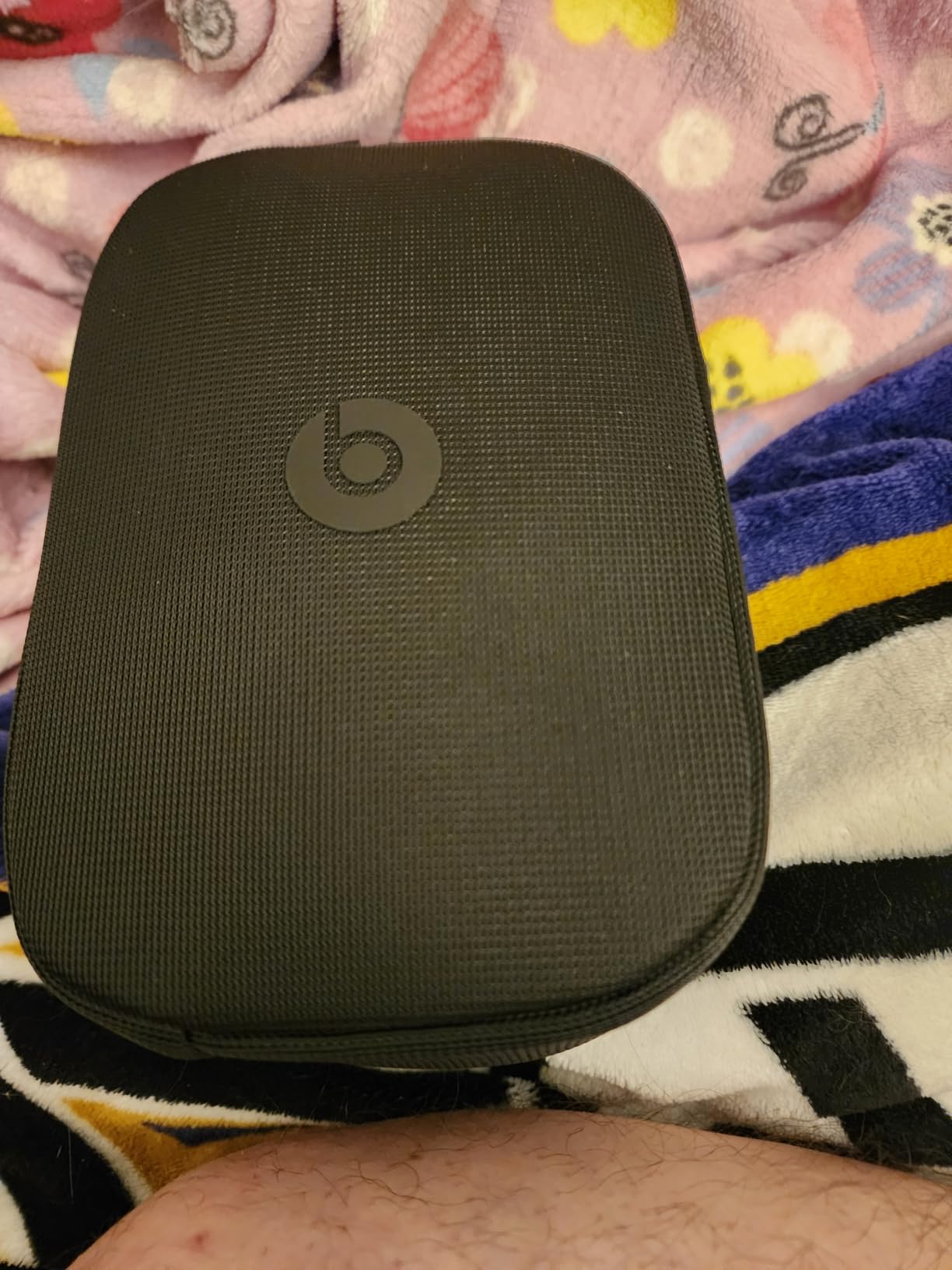
6. Beats Studio Pro — Best for Apple Devices
Beats Studio Pro Premium Wireless Over-Ear Headphones- Up to 40-Hour Battery Life, Active Noise Cancelling, Great for Travel & Commuting, USB-C Lossless Audio, Apple & Android Compatible – Sandstone
Up to 40-hour battery
ANC and transparency
USB-C lossless
0.26 kg
Pros
- 4.5 average across more than 28000 ratings
- 40-hour battery with Fast Fuel giving 4 hours from 10 minutes
- USB-C lossless audio and Class 1 Bluetooth stability
- Personalised spatial audio with head tracking
- UltraPlush cushions suit long wear
Cons
- Bass-forward tuning rather than neutral
- Heaviest over-ear pick in the roundup at 0.26 kg
- Android users see less seamless device switching
With more than 28,000 ratings at 4.5, this is the most broadly liked pair in the roundup. Owners praise battery life, comfort and value, and 40 hours plus Fast Fuel means ten minutes in a terminal gives you four more hours.
USB-C lossless audio is a genuine advantage if you fly with a laptop and want to leave Bluetooth out of the picture. Class 1 Bluetooth also holds a stable connection, and spatial audio with dynamic head tracking makes films feel wider on a seat-back screen.
The catch is tuning. The signature is bass-forward rather than neutral, and a minority of owners find the active cancellation merely average next to Sony or Bose. If engine drone is the thing you are trying to remove, that is worth weighing carefully.
At 0.26 kg these are the heaviest over-ear pair here. Over eight hours that weight adds up on the top of your head, and it is the main reason they sit at five in our ranking rather than higher.
Why these work for flights
UltraPlush cushions and a 40-hour battery are a solid long-haul combination, and one-touch pairing is faster than any menu when boarding. Fast Fuel is the practical feature: it turns a forgotten charge into a non-event.
For Apple users the integration is the selling point. Android owners report less smooth switching between devices, which is the trade-off for that polish.
Where they fall short
The weight and the bass. Neither is a dealbreaker, but both push this pair behind the Sony and Bose picks when the goal is specifically cabin quieting.
If you fly often and mostly want silence, your money is better placed on cancellation strength than on spatial audio.
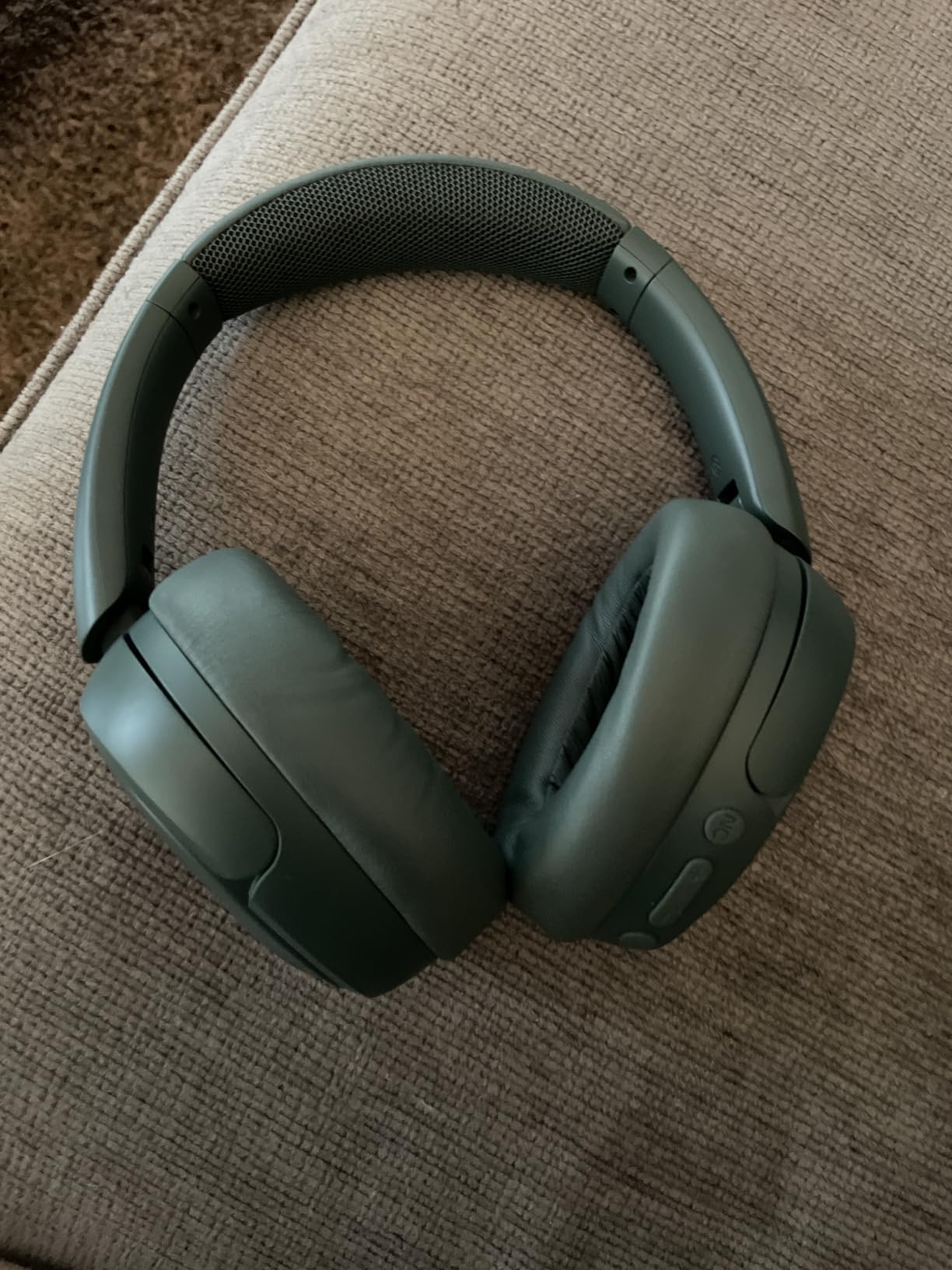
7. JLab JBuds Lux ANC — Best Budget Endurance
JLab JBuds Lux ANC Wireless Over-Ear Headphones, Limited Edition Navy
40+ hours with ANC on
Hybrid ANC up to 35 dB
40mm drivers
Multipoint
Pros
- 70+ hours total playtime and 40+ hours with ANC engaged
- Hybrid ANC rated at up to 35 dB
- 40mm drivers with Dolby Atmos and Windows Sonic
- Cloud Foam ear cushions
- Two-year warranty
Cons
- No 3.5mm jack for wired in-flight use
- Heavier build than typical budget ANC
- Weaker against low-frequency rumble than premium sets
Forty-plus hours of ANC is the headline. Nobody else in this price range gets close, and only two sets in the entire roundup exceed it. For a traveller who books four long-hauls a year and refuses to carry a charger, that is the deciding number.
Hybrid ANC is rated at up to 35 dB of reduction, which is a real figure rather than a marketing shrug, and the Cloud Foam cushions are padded enough for extended wear. Only 3 percent of ratings are one-star.
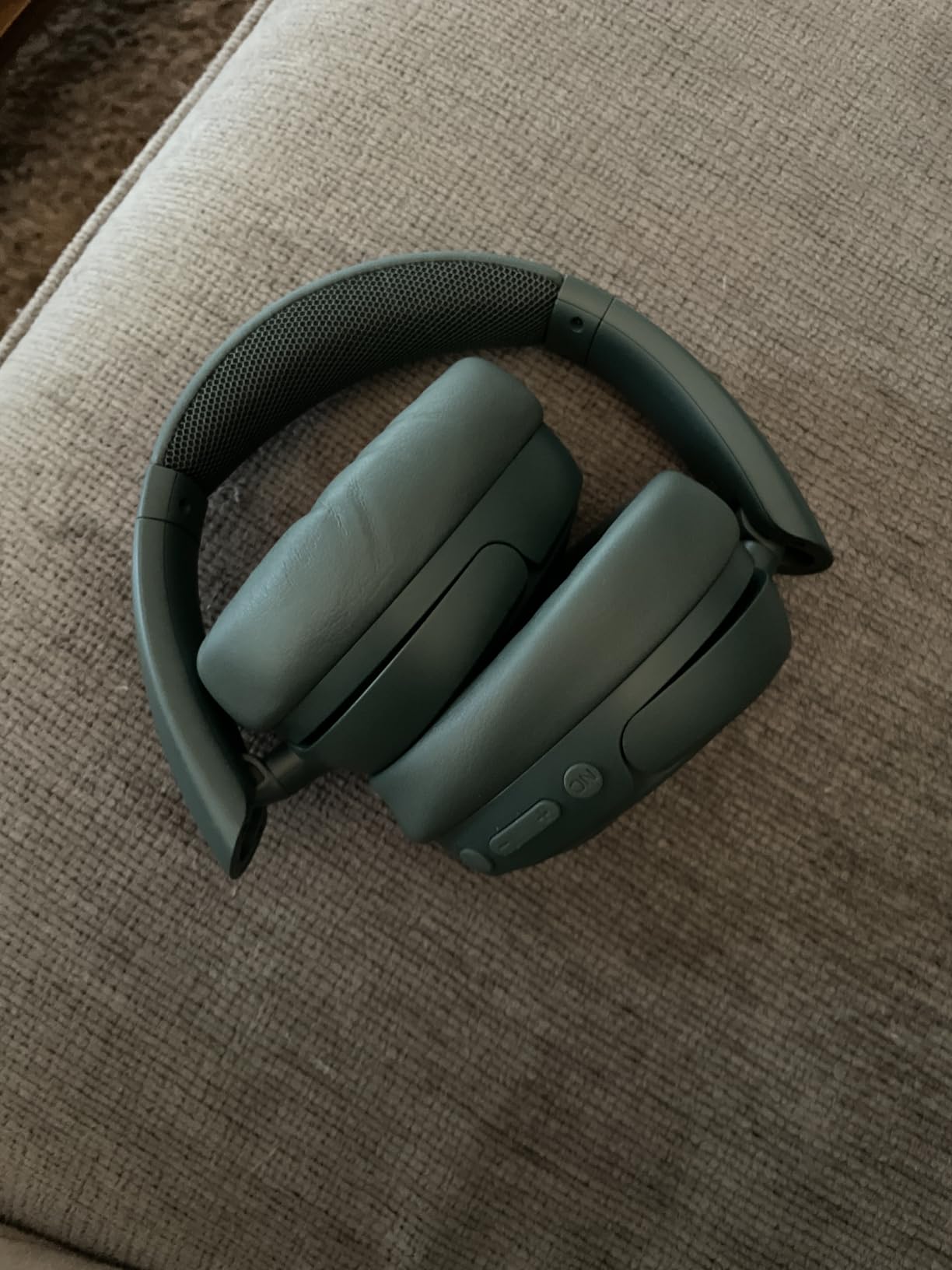
The gap is refinement. Reviewers consistently note that the cancellation gives ground on low-frequency rumble compared with premium sets, which is precisely the sound a jet engine makes. Mid-range cabin chatter is handled better than the flagship pairs handle it.
The JLab app exposes EQ, ANC levels and remappable touch controls, which means the tuning is adjustable rather than fixed.
Why these work for flights
Battery math is simple: 40 hours of ANC covers any single long-haul sector twice over. It is also one of the few pairs here rated water resistant, so it doubles for a holiday rather than living in a bag.
The two-year warranty is longer than most competitors offer and matters if you are buying this set to last.
Where they fall short
No 3.5mm jack. If your airline requires airplane mode or the seat-back system will not pair, you are relying on Bluetooth alone. That single omission keeps it out of the top tier for travel specifically.
Low-frequency rumble is where flagship cancellation earns its money, and this is the set to buy if you can accept a little more drone in exchange for endurance and value.
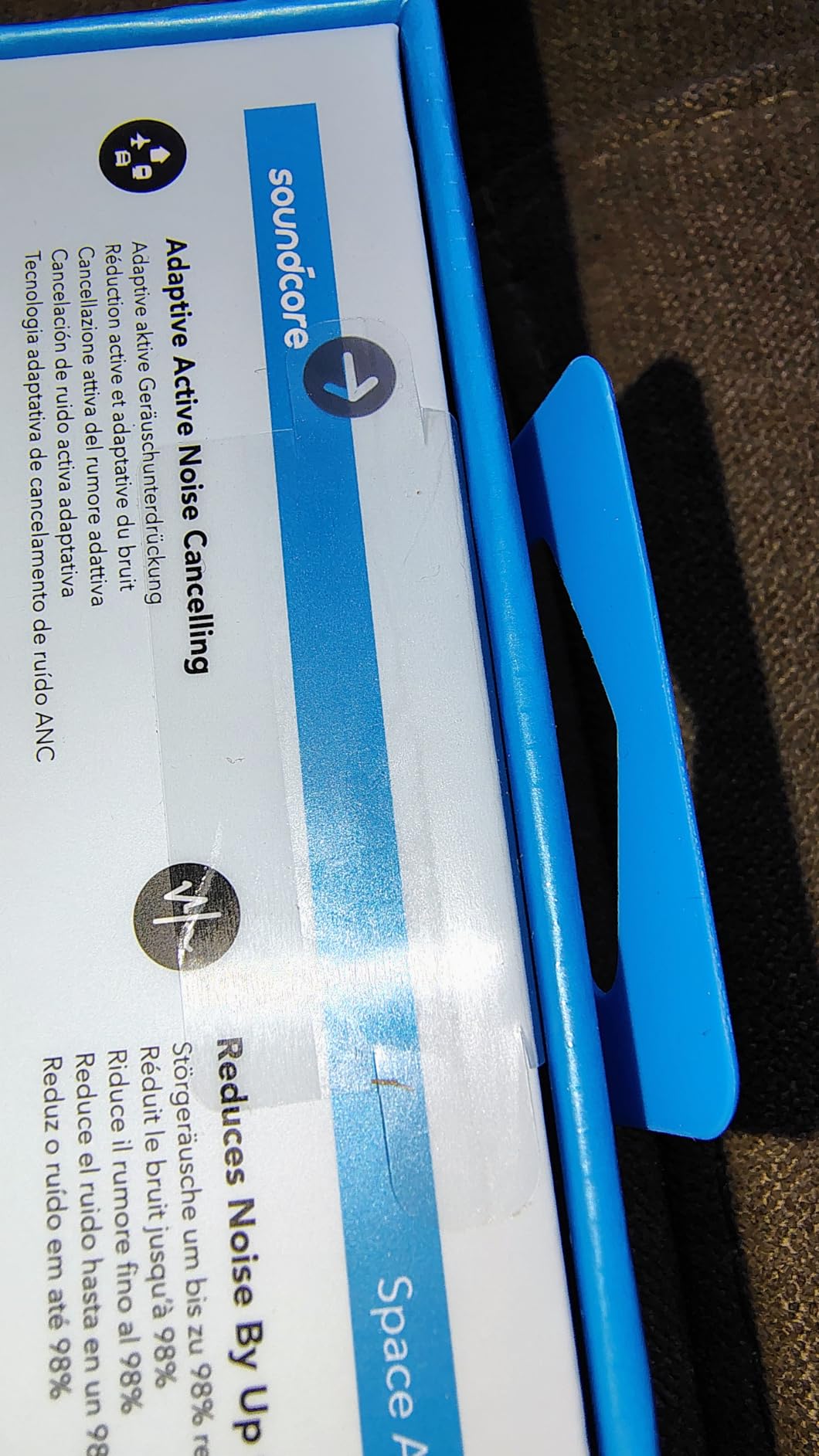
8. Soundcore Space A40 — Best In-Ear for Sleeping
Soundcore by Anker Space A40 Adaptive Active Noise Cancelling Earbuds
Adaptive ANC
50 hours with case
18 g per bud
LDAC support
Pros
- 18 g per earbud
- light enough to sleep in
- Adaptive ANC that tunes itself to surroundings
- 50 hours total with the case
- 10 minutes of charging adds 4 hours
Cons
- Touch controls mis-register taps
- Low battery voice prompt cannot be disabled
- Bass is lighter than older Soundcore earbuds
- IPX4 only
This is the pair to take if you plan to actually sleep. At 18 g per bud there is almost no weight in your ear, which is the whole problem with earbuds on long flights, and adaptive ANC tunes its depth to whatever the cabin is doing without you touching anything.
Battery is 10 hours per charge and 50 with the case, so a 16-hour sector needs one top-up in the middle. Ten minutes of charging adds four hours, which is enough to recover after a nap.

Sound quality is good for the class with double-layer diaphragm drivers and LDAC support, and multipoint means your phone and laptop both stay connected. Transparency mode is praised by owners for being natural rather than synthetic.
Recurring complaints are about controls rather than sound. Touch controls mis-register taps, the low battery voice prompt cannot be disabled, and the case can launch the buds if it is dropped. Owners also note ANC does not fully remove voices.
Why these work for flights
Packability is unbeatable. A case the size of a coin changes the packing decision entirely, and on a budget or a short trip you may just not bring over-ear headphones at all.
For sleep specifically, low weight and no clamping force make these the clear choice. Nothing presses on your temple or the back of your skull, and they stay in place when you turn your head.
Where they fall short
Sealed in-ears create a pressure sensation that becomes uncomfortable over several hours, and this is the complaint that appears most often in long-wear wear. It is the main reason over-ear sets win for overnight trips.
There is no wired option, so once the battery dies the trip is silent.
9. JBL Tune Flex — Best for Warm Ears and Sweaty Passengers
JBL Tune Flex – True Wireless Noise Cancelling Earbuds (Black), Small
4.8 g per bud
32 hours total
IPX4 rated
12mm drivers
Pros
- 4.8 g stick-format earbuds are barely noticeable
- IPX4 sweat and water resistance
- 32 hours total battery with Speed Charge
- Four microphones with VoiceAware for calls
- JBL Pure Bass tuning
Cons
- ANC is milder than Bose or Sony flagships
- Only 6 hours of playback with ANC on
- No wireless charging or multipoint listed
The stick form factor is why these stay comfortable for hours. A 4.8 g bud with no silicone tip is far less noticeable in the ear canal than a sealed in-ear, and the IPX4 rating means sweat and rain are not a concern. It is the most physically forgiving set here for warm cabins.
Smart Ambient and TalkThru handle announcements and quick conversations, and four microphones with VoiceAware keep calls clear. Speed Charge gives two hours from ten minutes.
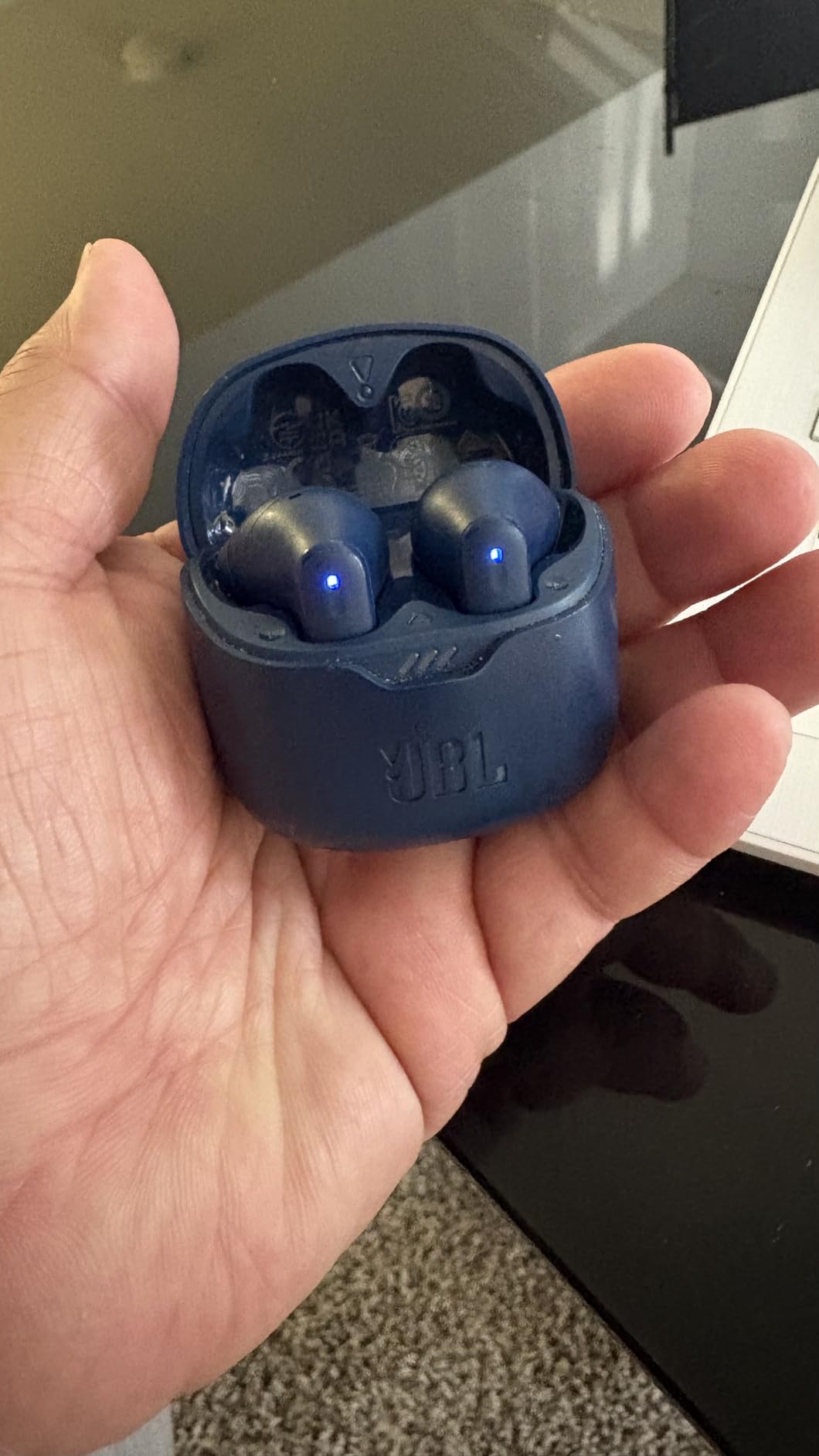
The 4.1 average is the second lowest in the roundup, and the reason is the cancellation. A notable share of reviewers feel the noise cancelling is modest for what it costs, and with ANC on you get six hours per charge, which is genuinely short.
There is no multipoint and no wireless charging listed. For a traveller who only ever connects to one device that is fine; for anyone switching between a laptop and a phone it is a friction point.
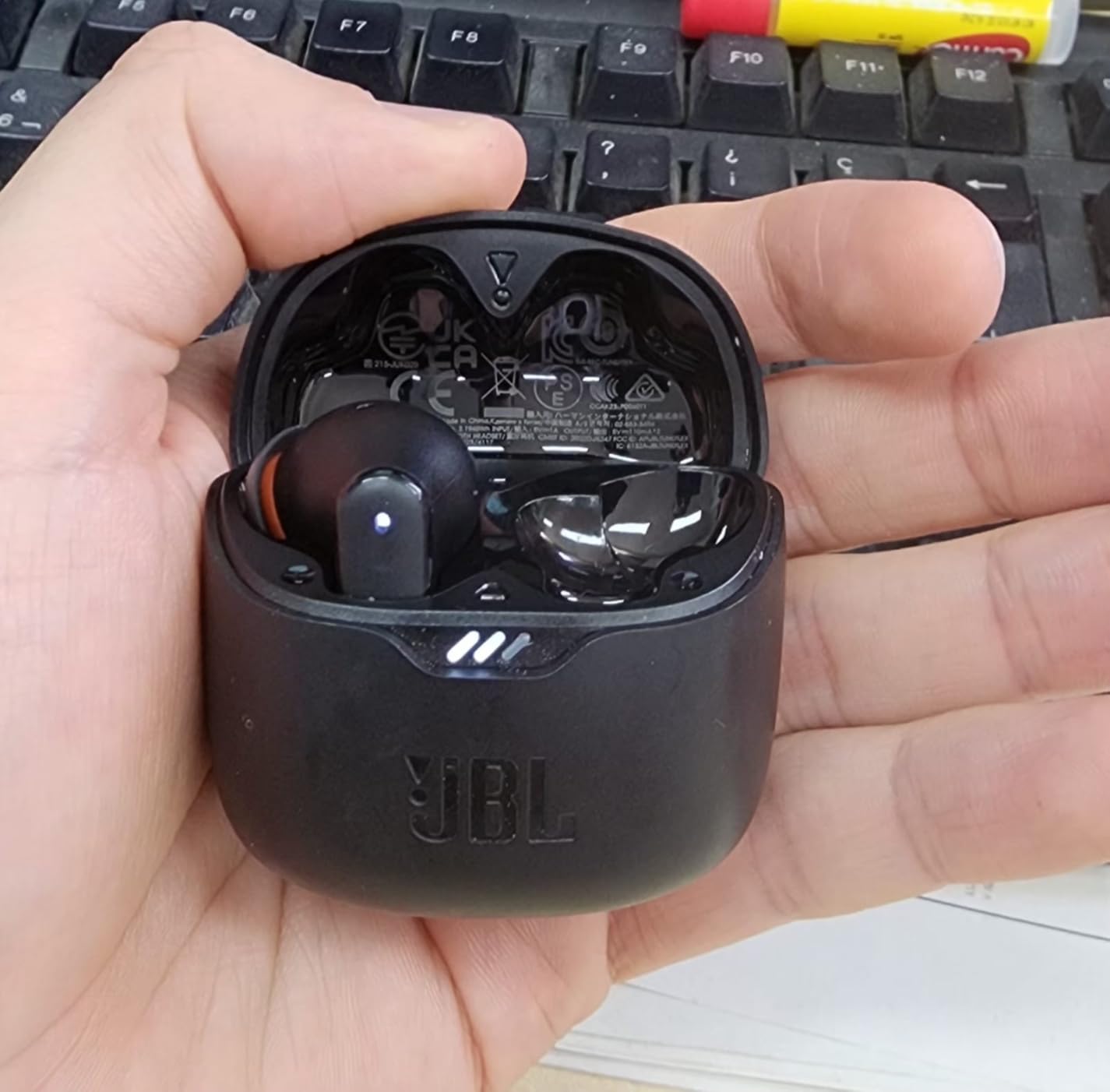
Why these work for flights
Because nothing seals your ear canal, there is no pressure build-up over a long sector. That single fact makes them one of the few in-ear picks that can be worn from boarding to landing without a break.
They also disappear into a pocket. No case bulge, no over-ear cups crushed into a seat pocket, no pressure point on your jaw.
Where they fall short
Six hours with ANC on is the number to plan around. That is fine for a short-haul or a nap, but a long-haul needs two full case charges.
The cancellation is mild against engine rumble compared with the flagship over-ear sets. If the drone is your main problem, spend more or choose an over-ear.
10. Soundcore P30i — Best Budget In-Ear with a Phone Stand
Soundcore P30i by Anker Noise Cancelling Earbuds, Hands-Free Viewing
42 dB adaptive ANC
45 hours with case
2-in-1 case
10mm drivers
Pros
- Adaptive noise cancelling rated up to 42 dB
- Case doubles as a phone stand for watching films
- 45 hours total and 25 hours with ANC
- Four-mic AI calls with one-step Bluetooth 5.4 pairing
- BassUp tuning with app EQ
Cons
- ANC is inconsistent on voices and sharp sounds
- Fit varies and small ears may need adjustment
- Transparency mode sounds artificial
- No battery indicator on the case
The 2-in-1 case is the reason this one is on the list. It props up your phone, so if the airline has no screen or you have already watched the film, you have a stand rather than a handful of earbuds and a craned neck. That is a real travel feature rather than a gimmick.
Noise cancelling is rated up to 42 dB with adaptive technology, and reviewers praise it specifically for rumble and engine noise. Battery is 10 hours per charge, 45 with the case, and 25 hours with ANC running.
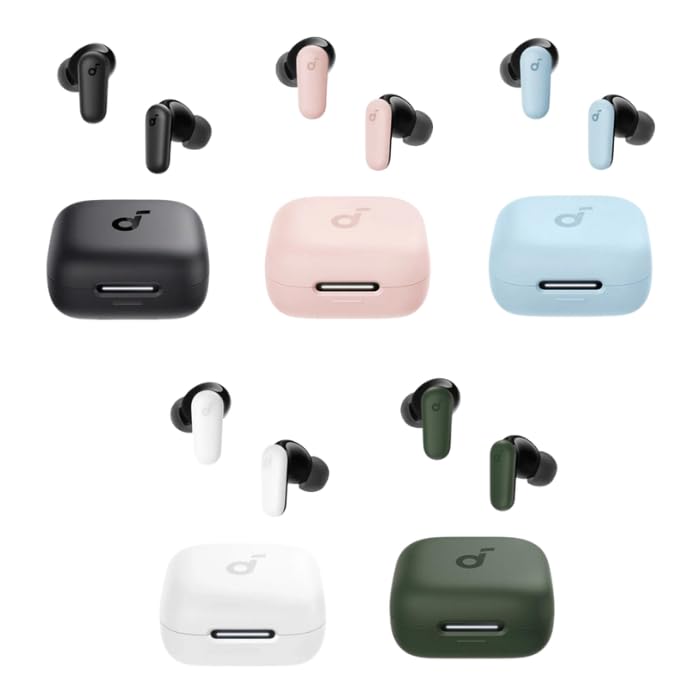
With more than 42,000 ratings at 4.3, it holds its value well. Owners use it for commuting and travel and describe the rumble handling as better than the price suggests, which is exactly the argument for it on a plane.
The weaknesses are familiar from cheaper earbuds: bass-heavy tuning that muddies vocals, an artificial transparency mode, and a seal that varies. Small ears in particular report needing to readjust constantly.
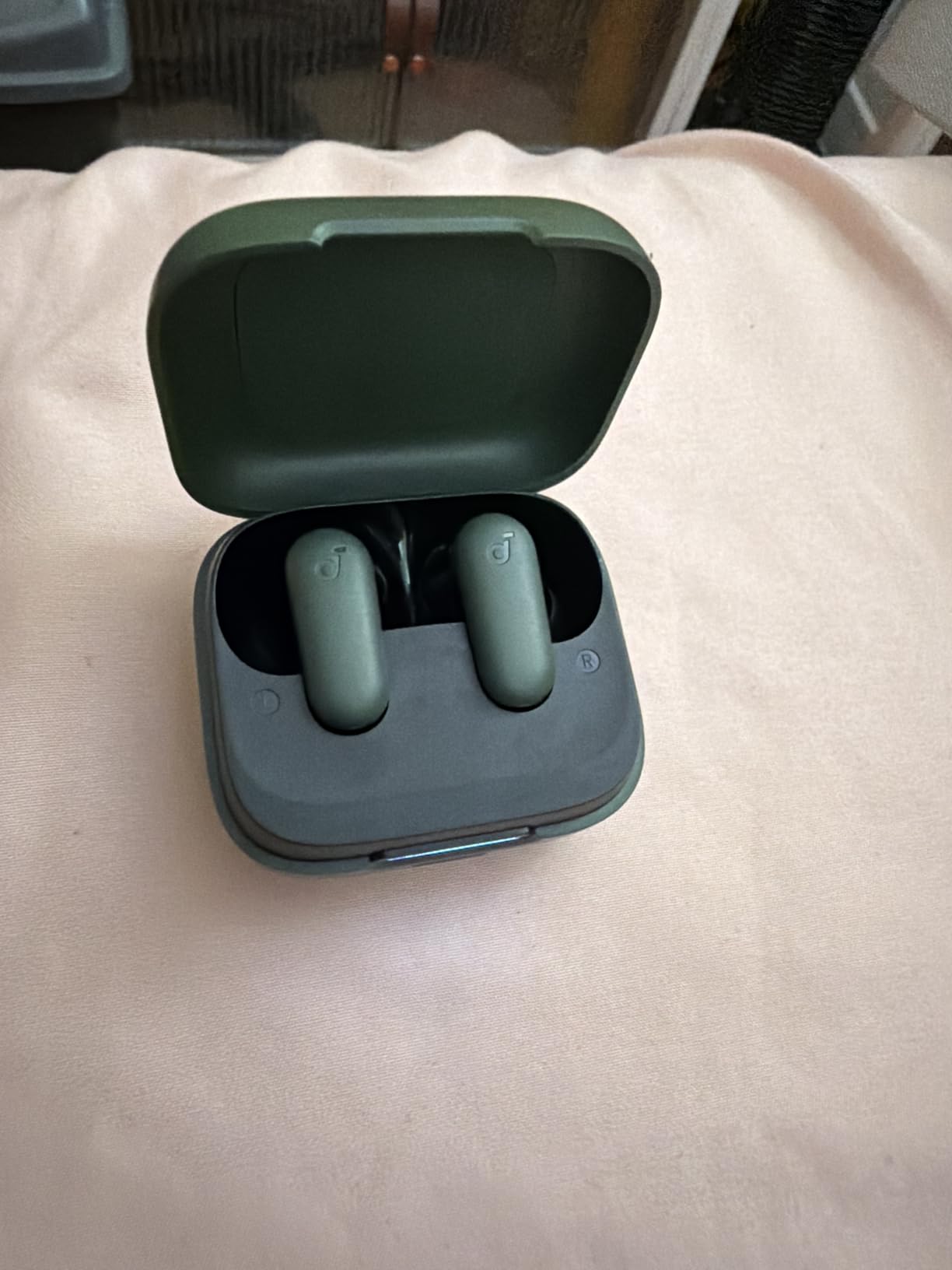
Why these work for flights
Twenty-five hours of ANC covers even a 16-hour sector with margin, and the case has a 700 mAh battery to do it with. When you are packing light, that is the whole travel kit in one object.
The phone stand turns the earbuds into a small entertainment system, which matters on budget carriers where the seat-back screen is optional at best.
Where they fall short
The ANC struggles with voices and sharp transients, so a crying baby or a chatty neighbour is not going away. That is a physical limit of in-ear cancellation, not a defect, but it is the complaint owners raise most.
Fit is the other issue. A poor seal kills passive isolation and the noise cancelling cannot compensate, so spend a minute finding the right tip size before you fly.
Over-Ear vs In-Ear on a Plane
Over-ear wins for long flights, in-ear wins for everything short. That is the honest answer to the question, and the reason is physical rather than preference.
Over-ear cups give you passive isolation as well as active cancellation, and the seal plus the cavity volume is what removes cabin rumble. They also spread clamping force across a wider area, which is what lets them stay on your head for twelve hours. The cost is bulk, heat around the ears, and a case that eats space in a personal item.
In-ear sets are the opposite. Nothing seals your ear canal, so there is no pressure build-up, and the whole thing fits in a pocket. The cancellation is weaker because there is less passive isolation to combine with the electronics, and voices survive it far more effectively than engine drone does.
Our rule of thumb: over-ear for anything over six hours, in-ear for short hops, red-eyes where you will sleep, and anyone who wears glasses and finds frames plus cushions break the seal.
Ear Pressure and Cabin Pressure: What ANC Cannot Fix
Noise canceling headphones do not help with the pressure in your ears during take-off and landing. This is a persistent misconception and worth stating plainly.
Cabin pressure is a physical pressure differential across your eardrum as the aircraft ascends and descends. It is managed by opening the Eustachian tube, which you do by swallowing, yawning, chewing, or the Valsalva manoeuvre of closing your nostrils and gently pushing. No headphone can open that tube for you, and no amount of cancellation changes the air on the other side of your eardrum.
What ANC does do is remove the ambient noise that makes you strain to swallow comfortably in the first place. In a loud cabin people tense up and their jaw clenches, which makes equalisation harder. Quieting the cabin indirectly helps, but the pressure itself stays.
If your ears block or hurt during descent, start swallowing and yawning before the aircraft is on final approach, not after. Waiting until it is too low for your ears to pop is the common mistake.
The pressure you feel with ANC on is a different thing entirely, and it comes from the cups sealing. A mild blocked-ear sensation is normal and harmless. With in-ears worn for many hours it can become genuinely uncomfortable, and that is a fit problem rather than a fault.
Battery Life vs Flight Length
Match your battery hours to your longest sector, then add three hours of margin. That is the whole calculation, and it is simpler than most buyers make it.
For a two-hour hop, almost anything works. For a six-hour sector, anything rated at 24 hours with ANC on gives you comfortable headroom. For a 12 to 14-hour long-haul, you want 30 hours or better so you are not charging in the lavatory.
For overnight sectors of 16 hours or more, the Sennheiser Momentum 4 at 60 hours and the JLab JBuds Lux at 40-plus hours with ANC are the two that remove the question entirely. Among the rest, the Bose QuietComfort Ultra, the Sony WH-1000XM6, the Beats Studio Pro and the Soundcore Q20i all sit between 30 and 40 hours, which covers a single long-haul comfortably.
The Bose QuietComfort at 24 hours is the one to think hardest about. It covers one direction of a long-haul with margin, but a round trip means one charge in the bag. The Sennheiser at 60 hours makes the total set an over-ear pair with 10.3 ounces, a light load for a full round trip.
Two features reduce battery anxiety more than raw capacity. Quick charge changes a hotel-room forgotten charge into a two-minute problem on the Sony, Bose Ultra, Beats, JLab and Soundcore Q20i. And a wired 3.5mm option means you can watch the seat-back screen with a flat battery, which the Q20i, Sony, Bose, Bose Ultra, Sennheiser and Bose QuietComfort all support.
How We Picked These 10 Headphones
There is no lab behind this article, so here is exactly how the list was built. Nothing was measured in an anechoic chamber; every figure below traces to a manufacturer specification or to owner review volumes, and we tell you which.
We started with the products that dominate this SERP and the review data, then filtered hard for flight-specific attributes: a stated ANC architecture rather than a vague claim, battery hours with ANC engaged, a weight figure, and a wired 3.5mm option where one exists. We dropped anything not current-generation.
Beyond the specification sheet, we weighted two things reviewers repeatedly raise. The first is comfort past the two-hour mark, which is where clamping force shows up. The second is whether you can hear your alarm and a safety announcement with cancellation on, which is a genuine safety concern raised by crew rather than a minor preference.
One caveat worth stating: no competitor covering this query publishes a visible last-updated date or a method. If you are comparing our list against another, freshness is the easiest thing to check.
How to Get the Most Out of ANC on a Plane
Five steps make a noticeable difference, and most of them cost nothing.
1. Get the seal right before you fly. Worn or crushed pads leak, and a leaking seal can halve the effective cancellation. If your cushions feel flat, replace them before the trip.
2. Choose the strongest mode, not the quietest preset. Apps often default to a mid-level setting that is gentle on battery. Switching to maximum on boarding is free cancellation you are leaving on the table.
3. Take your glasses off for the first ten minutes if you can, or use frameless contacts. Frames break the over-ear seal more than most people expect, and the loss is bigger than the comfort gain.
4. Run the app’s ANC calibration or ear-scan feature before departure. Sony’s Adaptive NC Optimizer and Bose’s CustomTune both need a still moment to do this properly, and doing it at the gate while boarding queues move is too late.
5. For in-ears, get the tip size right before you leave home. A small seal leaks sound into the ear and the electronics cannot compensate for it.
One habit to build for long sectors: take the cushions off and let your ears dry for five minutes every couple of hours. Heat build-up behind over-ear pads is the thing that ends many trips early, not clamping force.
Buying Guide: What Actually Matters for Flights
Five criteria decide this purchase, and only one of them is sound quality.
Cancellation against low-frequency noise. Jet engines and air-conditioning are low-frequency, which is the band ANC is designed to cancel. Any ANC set will improve on no ANC, but flagship adaptive systems with more microphones track changes in the drone better. Check how many microphones the system uses.
Battery against your longest sector. Add three hours of margin to your flight time, then confirm the figure is with ANC on. Manufacturers quote the best case, and the difference between ANC-on and ANC-off hours can be seven on the Bose Ultra.
Comfort past eight hours. Weight is a proxy but not the whole story. Look at clamp described by owners over long sessions, cushion depth, and whether the headband distributes pressure. The Bose QuietComfort and Sony fold-flat designs differ here more than the weight numbers suggest.
Wired 3.5mm for in-flight entertainment. Airlines generally require Bluetooth in airplane mode, and many seat-back systems will not pair reliably. A wired jack bypasses both problems. Half the pairs in this roundup have one; the JLab, both Soundcore earbuds and the JBL do not.
Awareness mode quality. You need to hear announcements and your own alarm. Check that transparency or awareness mode exists and sounds natural, because some budget implementations sound artificial enough that you will distrust them.
Packability. Fold-flat matters for a personal item. The Sony, Q20i and Sennheiser fold; the Bose QuietComfort and Bose Ultra do not fold flat, which means a bulkier case in your bag.
And a non-obvious one: if you fly often, replaceable ear pads and long-term durability outrank small spec gains. A set that survives years with pad replacements only is worth more than a lighter set that ages badly.
One last option to weigh honestly. For two or three flights a year, foam earplugs cost almost nothing, cause no battery anxiety, and block more cabin noise than many mid-priced ANC sets. They also have no clamping force, no electronics and no app. If you are an occasional flyer, that may be the right answer, and our budget ANC picks are for everyone else.
Frequently Asked Questions
Do noise canceling headphones work on an airplane?
Yes, and they work best on exactly the sound a cabin produces. ANC inverts sound waves to cancel low-frequency noise, and engine drone sits squarely in that band, so the reduction you get against cruise noise is much greater than the reduction you get against voices or a crying baby.
Is it better to wear headphones or earbuds on a plane?
Over-ear for long flights, in-ear for short ones. Over-ear cups add passive isolation on top of active cancellation and spread clamping force, which is what makes twelve-hour sessions survivable. In-ear sets pack to nothing, create no pressure build-up, and suit sleeping on a plane, but they let voices through far more than they block engine rumble.
Do noise cancelling headphones help with airplane pressure?
No. Cabin pressure is a physical pressure differential across your eardrum, and headphones cannot change it. You manage it by swallowing, yawning, chewing or the Valsalva manoeuvre during take-off and landing. Quieting the cabin helps indirectly because a loud cabin makes you tense your jaw, which makes equalisation harder.
Why do I feel pressure when using ANC?
A sealed ANC cup creates a mild blocked-ear sensation, similar to the pressure after swimming. It is normal and harmless with over-ear sets worn for a few hours. With sealed in-ears it can become genuinely uncomfortable over many hours, and that is a fit problem rather than a fault. It is often mistaken for cabin pressure, which is a different mechanism entirely.
Is it safe to sleep wearing noise canceling headphones on a plane?
Wearing them to sleep is the point for many travellers, but crew advise against full cancellation with both ears sealed, because you may not hear your alarm or a safety announcement. Use a single earbud, or switch to transparency or awareness mode, and keep one ear free. Set your alarm and keep a backup vibration alarm as well.
Conclusion: Pick by Trip Length
The Soundcore Q20i is our best noise canceling headphones for flights because it does everything a cabin trip needs: 40-hour battery, hybrid ANC from four microphones, multipoint, a 3.5mm jack and a fold-flat design, at 8.64 ounces. It is the pair we would put in a bag without thinking.
Buy the Sony WH-1000XM6 instead if the engine drone is your specific problem and cancellation strength is worth the premium. Buy the Bose QuietComfort if twelve hours of wear is the deciding factor, and the Bose QuietComfort Ultra if the seat-back screen is what you will actually use.
Go Sennheiser Momentum 4 for the 60-hour battery on overnight itineraries, JLab JBuds Lux for the same endurance at a lower tier, and the Soundcore Space A40 if you plan to sleep in them. For trips under six hours, take whichever of these fits in your pocket.
Whatever you choose, match the battery to your longest sector, take three hours of margin, and keep one ear free if you plan to sleep. That last habit costs nothing and it is the one crew repeatedly ask travellers to do.