
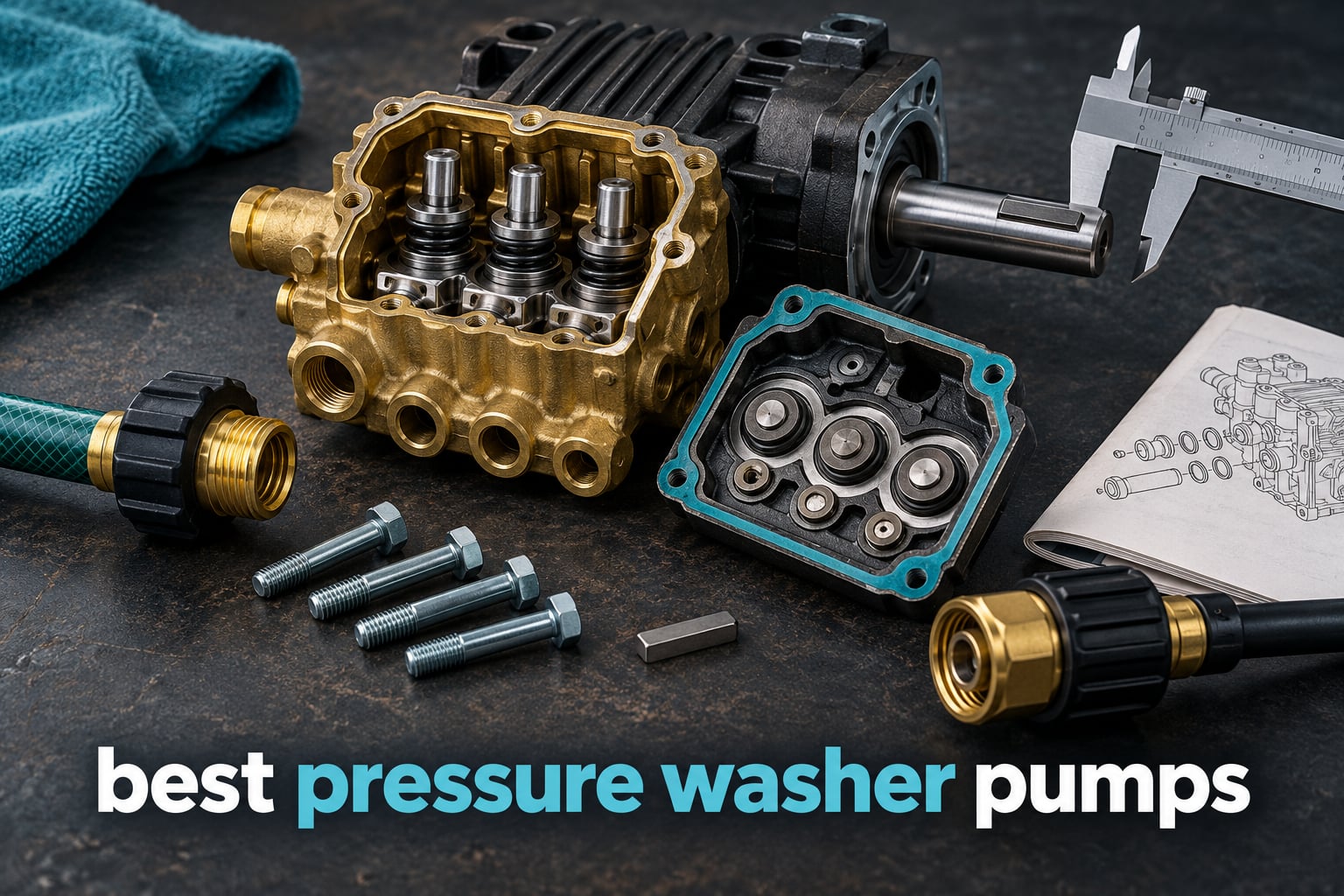
Most pressure washers do not die all at once. The engine keeps pulling, the hose still connects, the spray wand still fits — and then one morning the trigger opens and you get a weak stream instead of pressure. What has usually failed is the pump, the little engine-driven unit that turns incoming hose water into high-pressure output. Replacing it costs a fraction of a new machine, and it is the repair most owners never regret.
That is the problem this roundup solves. We compared the ten best pressure washer pumps currently on the market, from budget axial replacements for a Honda GC190 frame to a brass-manifold triplex built for contractor work. Along the way we sorted out the details that decide whether a pump actually bolts on: shaft diameter, horizontal or vertical orientation, engine displacement, and inlet and outlet thread size. If you are still deciding between a washer swap and a pump swap, start with our DIY pressure washer guide to see what you already own.
Our team spent weeks reading owner reviews and forum threads alongside the spec sheets, and the pattern that kept repeating was simple: fitment decides everything, and maintenance decides how long it lasts. Professional owners have never regretted replacing just the pump on a washer with a good engine and frame. They regret ordering a pump with the wrong shaft size. Everything below is built around avoiding that outcome, updated for 2026.
Table of Contents
Top 3 Best Pressure Washer Pumps in 2026
Our single best overall pick is the YAMATIC 3400 PSI horizontal 3/4 inch shaft pump, because it carries the deepest review history in this group and the cleanest fitment story on Honda and Simpson frames. For the best value, the Simpson OEM Technologies 90028 kit gets a good engine back into service with no oil routine at all. And if you run a pump professionally, the Canpump CF 3030 G triplex is the one built to outlast the machine it sits on.

YAMATIC 3400 PSI 2.5 GPM Horizontal Pump
- 3400 PSI at 2.5 GPM
- 3/4 inch horizontal shaft
- Stainless steel pistons and adjustable unloader
- Pre-filled oil crankcase

Simpson OEM Technologies 90028 Axial Pump Kit
- 3300 PSI at 2.4 GPM
- 3/4 inch horizontal shaft
- Maintenance-free crankcase
- TRV bypass protection
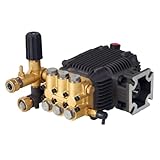
Canpump CF 3030 G Triplex Pump
- 3000 PSI at 3.1 GPM
- Forged brass manifold
- External adjustable unloader
- Oil sight glass
All 10 Pressure Washer Pumps Side by Side (October 2026)
Before the individual write-ups, here is the whole lineup on one screen. Pump type, flow, shaft size and orientation decide whether a pump fits, so those columns matter more than anything else here.
| Product | Specs | Action |
|---|---|---|
| YAMATIC 3400 PSI 2.5 GPM Horizontal Pump |
|
Check Latest Price |
| Simpson OEM Technologies 90028 Axial Pump Kit |
|
Check Latest Price |
 TOOLCY 2600-3300 PSI 2.5 GPM Horizontal Pump TOOLCY 2600-3300 PSI 2.5 GPM Horizontal Pump |
|
Check Latest Price |
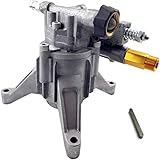 EZJOB Vertical 7/8 Inch Shaft Axial Pump EZJOB Vertical 7/8 Inch Shaft Axial Pump |
|
Check Latest Price |
| Canpump CF 3030 G Triplex Pump |
|
Check Latest Price |
 Hourleey 3400 PSI Horizontal Axial Pump Hourleey 3400 PSI Horizontal Axial Pump |
|
Check Latest Price |
 Hourleey 3400 PSI Vertical Axial Pump Hourleey 3400 PSI Vertical Axial Pump |
|
Check Latest Price |
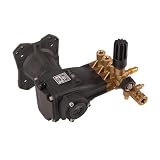 AAA 90038 Triplex Pump Kit AAA 90038 Triplex Pump Kit |
|
Check Latest Price |
 Biswing 3400 PSI Horizontal Axial Pump Biswing 3400 PSI Horizontal Axial Pump |
|
Check Latest Price |
 WOJET Self-Priming Horizontal Axial Pump WOJET Self-Priming Horizontal Axial Pump |
|
Check Latest Price |
1. YAMATIC 3400 PSI 2.5 GPM Horizontal Pump — the Best Overall Replacement
YAMATIC Horizontal 3/4″ Shaft Pressure Washer Pump 3400 PSI 2.5 GPM
3400 PSI at 2.5 GPM
3/4 inch horizontal shaft
Stainless steel pistons
Pre-filled oil
Pros
- Direct bolt-on fit for Honda GC160 and GC190 frames
- Rated for 180-225cc gas engines
- Stainless steel integrated unloader with easy start
- Adjustable unloader tunes pressure to the engine
- Bolts and shaft keys supplied
Cons
- Does not cover 7/8 inch shaft pumps or SRMW frames
- Quick-release hose fitting may be bought separately
- Seized original pumps can be hard to pull off the shaft
This is the pump we kept coming back to. With more than 3,900 reviews behind it, the YAMATIC 3/4 inch horizontal unit is the least risky choice in the whole roundup, and it is the one we would put on our own Honda GC190 frame without hesitating. It outputs 3400 PSI at 2.5 GPM and ships pre-filled, so there is no break-in oil step to remember.
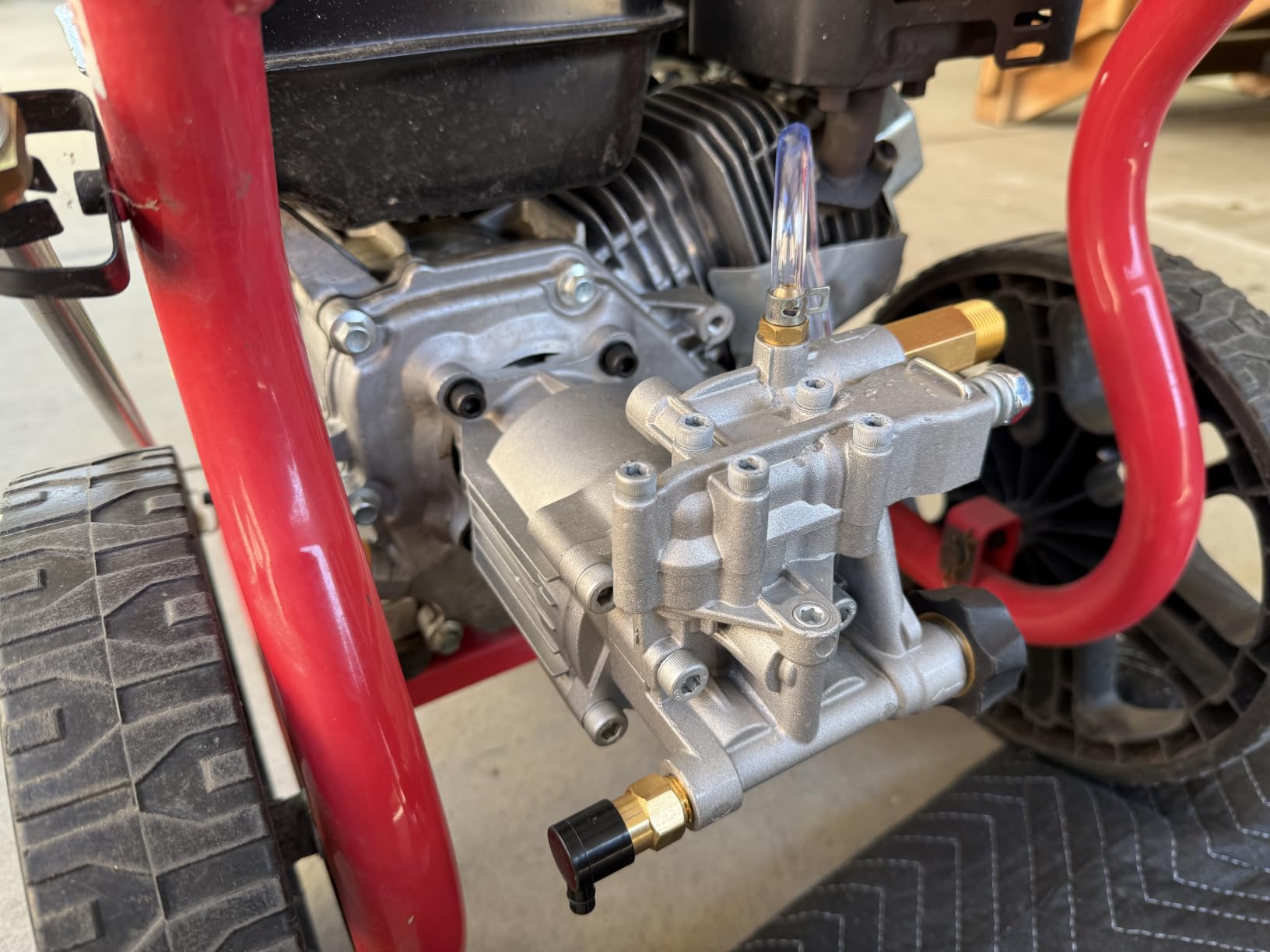
Our team read through the owner reports carefully, and the same three things keep coming up. The bolt pattern lines up on Honda GC160 and GC190 frames, on Simpson, Homelite, Troy-Bilt and Karcher machines. Owners report pressure equal to or better than the original factory pump. And most swaps take ten minutes or less with a socket set.
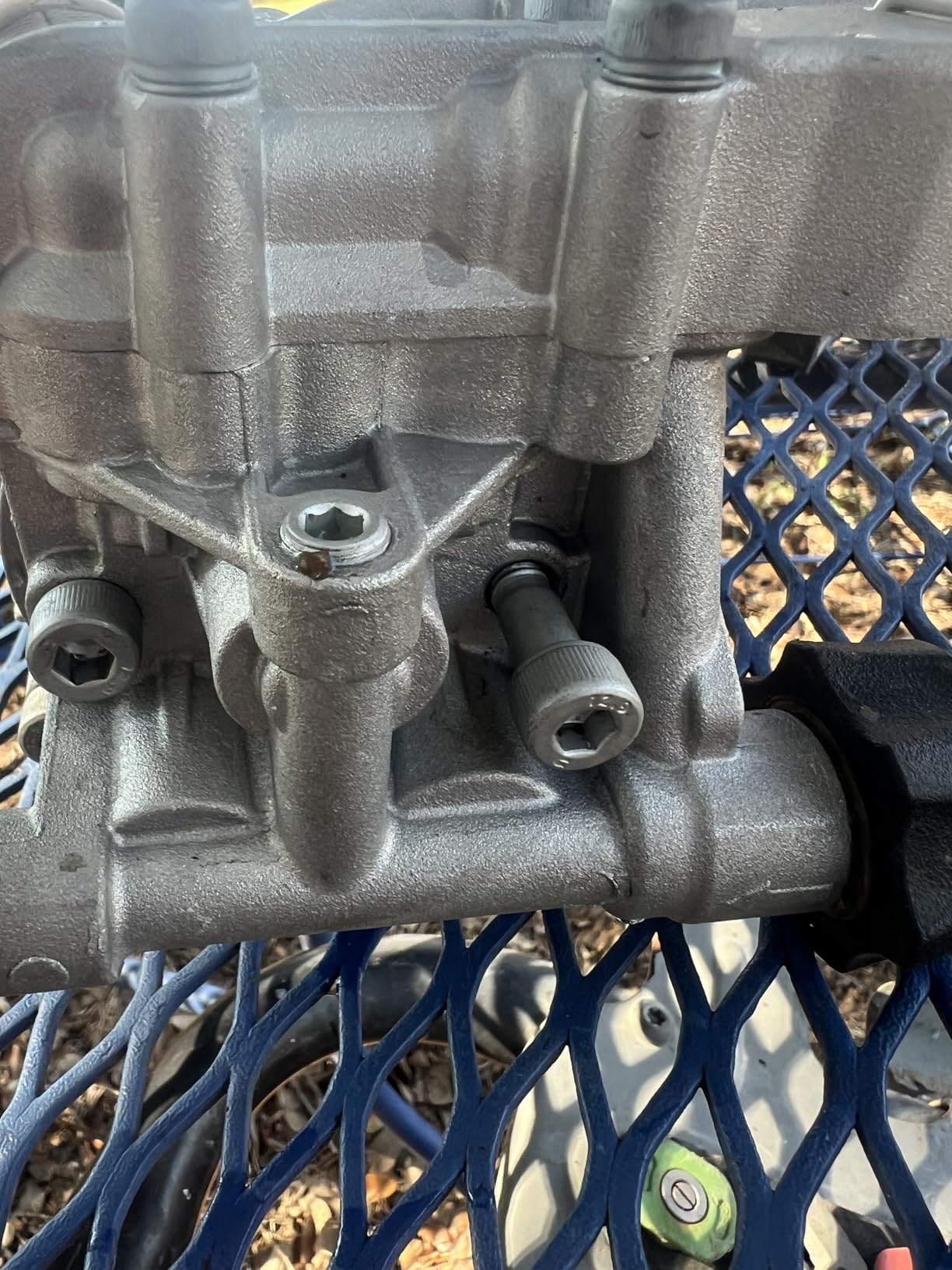
Technically it is an axial cam design with a 3/4 inch keyway shaft, stainless steel pistons and a stainless steel integrated unloader. The adjustable unloader is the detail that matters most in practice, because it lets you back the pressure down to whatever your engine can actually support instead of running the pump at its ceiling constantly.
The double-seal system with the upgraded piston and bearing design is what the manufacturer rates up to 150 hours of service, and that is a realistic figure for weekend-level residential use. If you are running it commercially, look at a triplex instead.
When this pump fits your washer
This is a horizontal-mount pump for 180cc to 225cc gas engines with a 3/4 inch shaft, which covers the small Honda GC160 and GC190 class and most of the residential frames built around it. It is also the correct choice for a vertical-engine washer only if you have the right adapter hardware, which you generally do not — this is a horizontal foot pattern.
What to check before you order
Two limits are stated plainly by the manufacturer and worth repeating. It is not compatible with 7/8 inch shaft pumps, and it does not fit SRMW footprints or shrouded frames. If your engine has a 7/8 inch shaft, skip to the vertical 7/8 inch options further down.
The other common snag is the high-pressure outlet. Some machines need a quick-release fitting that is not in the box. Measure your existing connector before you start, and it turns a two-hour job into a ten-minute one.
2. Simpson OEM Technologies 90028 Axial Pump Kit — Best Value for Reviving an Older Simpson
OEM Technologies 3300 PSI 2.4 GPM Horizontal Pressure Washer Pump Kit 90028
3300 PSI at 2.4 GPM
3/4 inch horizontal shaft
Maintenance-free crankcase
Thermal relief valve
Pros
- Two year warranty from the manufacturer
- Four-bolt installation with shaft key included
- Works with common hose and quick-connect couplers
- Fully anodized die-cast aluminum resists corrosion
Cons
- M22 outlet is larger than many original pumps so an adapter may be needed
- Lighter feel than a heavy OEM casting
- One isolated report of water leaking from the casting
This kit exists for one reason: a Simpson or Honda washer with a tired engine and a dead pump, where the frame is still square and the motor still starts. In that situation the 90028 is hard to argue with. It is 3300 PSI at 2.4 GPM on an SAE standard bolt pattern for horizontal gas engines with a 3/4 inch shaft, and it is the second most reviewed pump we tested against.
What makes it the value pick rather than the overall pick is the maintenance-free crankcase. You will never drain and refill this one, which removes the single most common way owners ruin a freshly installed pump by skipping a first oil change. The fully anodized die-cast aluminum body resists corrosion, and the kit ships with the hardware and a siphon tube.
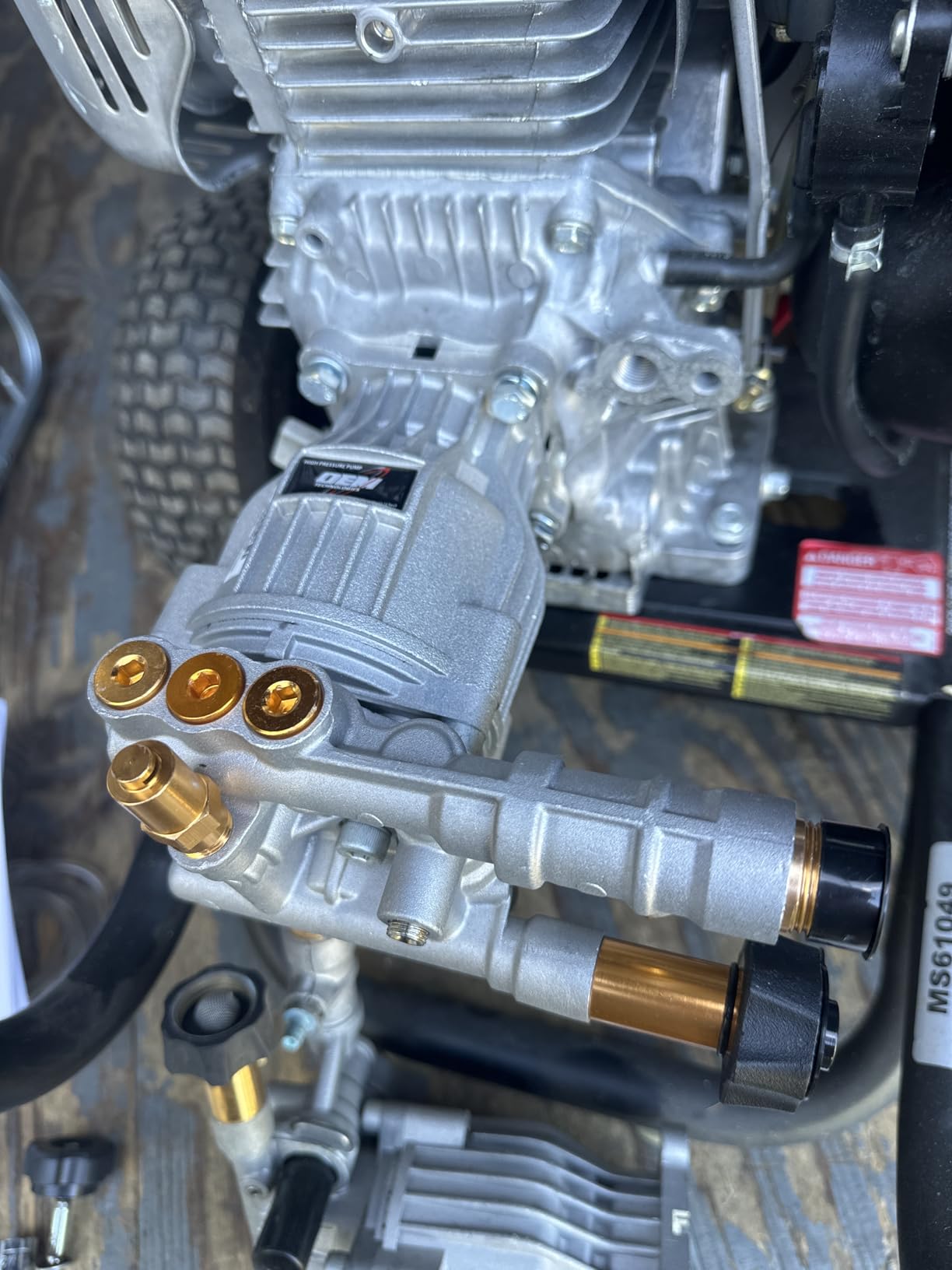
Owners consistently report that it delivers noticeably more pressure than the original unit it replaces, and that a four-bolt install with the supplied shaft key takes between ten and thirty minutes. The thermal relief valve protects the pump while it sits in bypass, which matters on a machine that gets started and stopped repeatedly during a day of work.
Where it fits and what it costs you to run
Connections are a garden hose inlet on the low side and a threaded M22 high-pressure outlet on the high side. M22 is the modern standard, and most quick-connect couplers made for current machines will mate with it directly. If your washer is old enough to use a smaller thread, you will need an M22 to 3/8 inch quick-connect adapter, which is a cheap part available at any hardware supplier and the single most common accessory purchase in the reviews.
A useful tip from owner reports: grease the engine shaft lightly before sliding the pump on. It makes the difference between a pump that slides into place and one that has to be persuaded with a hammer.
Where buyers report friction
The one consistent complaint is weight and feel. This pump is noticeably lighter than a heavy OEM casting, and some owners worry about the durability of the hose connection as a result. There is also an isolated report of water weeping from the casting and joints, which is rare enough that it is worth mentioning but not a pattern.
Our advice is to keep the pump oil situation in mind even though the crankcase is sealed. A maintenance-free design means you cannot drain and re-fill with lubricant, so you give up the ability to add a wear shield after a season of hard work.
3. TOOLCY 2600-3300 PSI 2.5 GPM Horizontal Pump — Top Rated by Owners
TOOLCY 3/4″ Shaft Horizontal Pressure Washer Pump, 2600-3300 PSI @ 2.5 GPM
3300 PSI at 2.5 GPM
3/4 inch horizontal shaft
Rated 200 hours
Three nozzles included
Pros
- Highest average rating of any pump in this roundup
- Installation typically takes 5-15 minutes
- Three matched nozzle tips in the box
- Pressure matches or exceeds the factory pump
Cons
- Unloader has no adjustment knob so tuning needs the manual
- Aligning the pump shaft takes patience
- May need an M22 to 3/8 inch adapter on older machines
On rating alone, the TOOLCY is the strongest pump we found. It holds a 4.7 average across 804 reviews with the largest five-star share in the group, and that is not an accident of a small sample. Owners describe it as the fix that saved a washer they were about to throw away.
The headline numbers are 3300 PSI at 2.5 GPM at 3400 RPM, and the manufacturer rates it for 200 hours of operating time, which is the longest rated life among the axial pumps here. It is built for 180cc to 225cc engines on a 3/4 inch horizontal shaft, with a maintenance-free crankcase that needs no pre-filling.
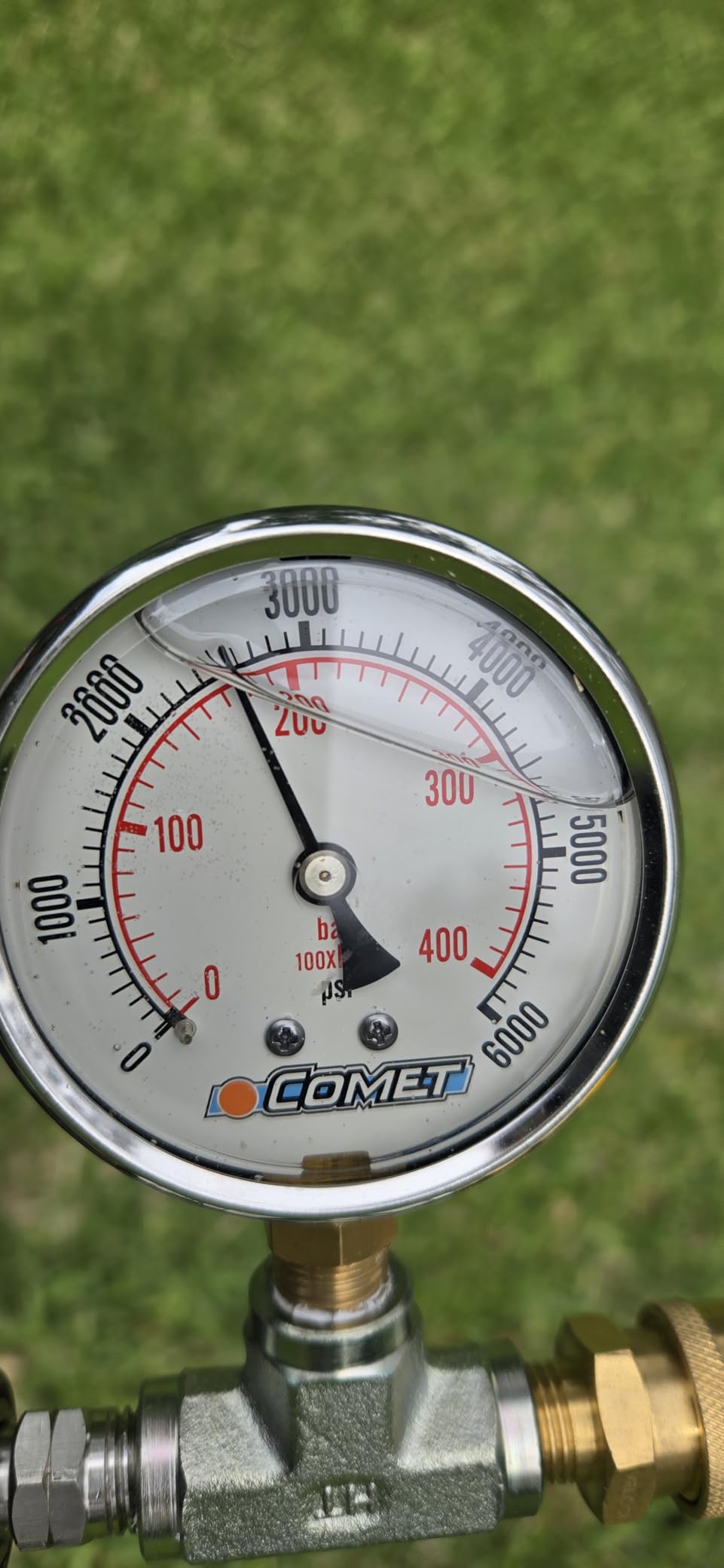
Two details set it apart from the other budget pumps. The box includes three matched nozzle tips — a 0 degree, a 25 degree and a soap tip — which is unusual at this level. And the easy-start design means you do not have to release pressure before the engine starts, removing one of the most common install-day stumbles.
Reviewers also point out that pressure output matches or exceeds the factory pump on Honda GC160 and GC190 frames, and the compatibility list runs across Simpson, Homelite, Honda, Karcher, Troy-Bilt and AR models.
How the mounting works
The dimensions matter if your frame is tight. Mounting is 3-5/8 inch diagonal screw hole spacing, 2-9/16 inch hole to hole, with a key width of 3/16 inch and a depth of 2-5/8 inch. It will not fit a 7/8 inch shaft gas engine, and the slightly longer body can mean repositioning the engine on the frame to clear engine shrouds.
What buyers wish was different
The unloader on this unit is the main friction point. There is no plastic adjustment knob, so adjusting pressure means finding the right tool and consulting the manual rather than turning a thumbwheel. If you plan to switch between pressure washing a driveway and rinsing a car regularly, that friction is real.
Also note that the maintenance-free crankcase cannot be drained and re-filled with lubricant. That is a genuine long-term trade-off, and it is worth weighing if your washer already has hundreds of hours on it.
4. EZJOB Vertical 7/8 Inch Shaft Axial Pump — for Vertical-Shaft Honda Machines
2400-2800PSI Pressure Washer Pump Replacement, Vertical 7/8” Shaft 2.5 GPM
2400-2800 PSI at 2.5 GPM
7/8 inch vertical shaft
Rear-facing inlet and outlet
Pre-filled oil
Pros
- Direct bolt-on fit reported on Honda GCV160 and Ryobi machines
- Works first time with no priming required
- Rear-facing ports improve hose routing clearance
- Pre-filled oil with double seals and TRV
Cons
- Mounting feet are thinner than the original so shims may be needed
- Not for horizontal-shaft or electric washers
- Mounting bolts are not included in the package
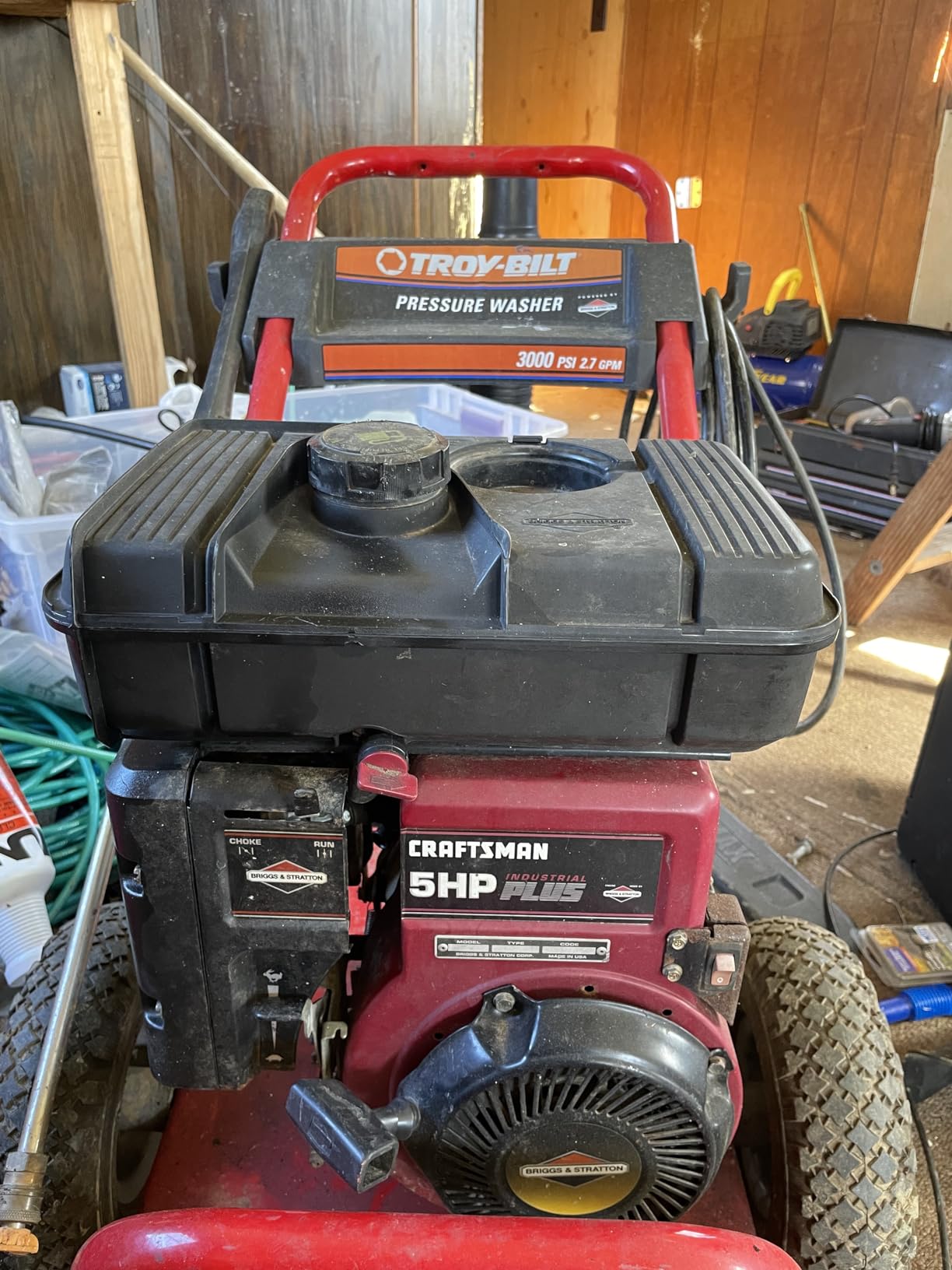
Vertical-shaft machines are the most commonly mis-ordered category in the entire replacement pump market, which is why this one deserves its own heading. If your engine shaft points straight down into a gearbox, a horizontal pump will never work, and the fitment facts below are the ones to check before you order anything.
The EZJOB is built for a 7/8 inch vertical shaft on 196cc to 224cc engines running at 3400 RPM, and it delivers 2400 to 2800 PSI at 2.5 GPM. Owners report direct bolt-on fits on Honda GCV160, Ryobi, Mitsubishi and Craftsman machines, and several note the washer was back to full working pressure in about fifteen minutes of work.
It arrives pre-filled with oil and includes a double-seal system, an easy-start valve, a thermal relief valve and a built-in unloader. The inlet and outlet face rearward rather than sideways, which is a small design choice that makes a large difference when the frame tubes and wheel are in the way.
The manufacturer part number is WS-PWPUMP-AL-AXIAL, and the listed fit covers select Troy-Bilt, Ryobi, Generac, Briggs & Stratton, Craftsman, Husky, Honda and Homelite models.
Vertical shaft confirmation checklist
Stand in front of the washer and look at the engine. If the shaft exits the bottom of the engine into a gear housing, you have a vertical-shaft machine. Then measure the shaft: 7/8 inch for this pump, 3/4 inch for the horizontal units earlier in this list. Getting this backwards is the single most common reason a replacement pump ends up unused.
The other confirmation is the SAE gas engine flange with an M22 outlet and a 3/4 inch NH copper nut inlet. If your existing outlet is a quick-connect female fitting rather than an M22 male thread, you will want a coupler.
What to plan for on install day
Two frictions show up repeatedly. The mounting feet are slightly thinner than the original pump, so shims or longer fully-threaded bolts may be required to close the gap. Rear-facing ports can also mean rerouting hose around a frame tube or moving a wheel, which adds time to a job that otherwise takes minutes.
Mounting bolts are not in the package, and the supplied shaft key may need trimming to fit a worn keyway. Neither is a dealbreaker, but both should be on your parts list before you pull the old pump.
5. Canpump CF 3030 G Triplex Pump — the Premium Triplex Pick
Canpump CF 3030 G: 3000 psi @ 3.1 US gpm, 3/4-in Shaft Pressure Washer Pump
3000 PSI at 3.1 GPM
3/4 inch horizontal shaft
Forged brass manifold
Sight glass oil check
Pros
- Triplex plunger design runs smoother and lasts longer than axial
- Forged brass manifold with ceramic-coated stainless plungers
- Detachable external unloader with detergent injector and filter
- Shipped prefilled with SAE 15W-40
Cons
- Costs several times more than an axial replacement pump
- 3/8 inch NPT-F outlet may need a coupler for the existing hose
Everything up to this point has been an axial pump, which is the right answer for a weekend homeowner and the wrong answer for anyone who bills for cleaning. The Canpump CF 3030 G is the first triplex in this roundup, and the jump in smoothness and service life is not subtle once you have run both.
The numbers are 3000 PSI at 3.1 US GPM with a 3400 RPM maximum, driven by a standard SAE J609 mounting flange for direct-drive gas engines up to 6.5 HP with a 3/4 inch horizontal shaft. Note the flow: 3.1 GPM is meaningfully more water per minute than the 2.4 or 2.5 GPM axial pumps, and flow is what determines how fast a surface actually comes clean.
Construction is where this pump separates itself. You get a forged brass manifold, an anodized aluminum crankcase with cooling fins, ceramic-coated solid stainless steel plungers, a forged steel alloy crankshaft, and German-made packing seals. That is a different class of material from the die-cast aluminum used in the budget units.
Two service details make it pleasant to own. The external unloader is detachable, pressure-adjustable, and includes a detergent injector and a water filter, so you can service it without pulling the pump. And the crankcase has a built-in sight glass, which means checking oil takes one glance instead of a dipstick and a rag.
What the specs mean for your work
Connections are a 1/2 inch NPT-F inlet, a 3/8 inch NPT-F outlet, a 3/4 inch garden hose unloader inlet and a 3/8 inch quick-connect unloader outlet. The crankcase takes SAE 15W-40 pump oil, and it ships prefilled with a spare O-ring set in the box.
Two operating limits are worth planning around. Maximum inlet pressure is 0 to 50 psi, and maximum inlet temperature is 122 degrees F. That is a cold-water pump. If your work involves hot water, this is the wrong unit no matter how good the internals are.
Whether the price difference is justified
It is not a budget purchase, and the reviews are clear that buyers know it. The consensus among owners running prosumer or light commercial work is that the smoother operation, higher flow and heavier internals justify the cost when the pump will earn its keep through real weekly hours.
If you wash a driveway twice a year, this is over-engineering and one of the axial pumps will serve you. If you are detailing, pressure washing commercial property or running equipment daily, the triplex is the correct category and the axial units are the compromise.
6. Hourleey 3400 PSI Horizontal Axial Pump — Complete Hardware Kit in the Box
Hourleey 3/4″ Shaft Horizontal Pressure Washer Pump, 3400PSI 2.5GPM, Replacement Pump for Power Washer, Power Washer Pump for Gas Washer, Compatible with Simpson, Ryobi, Honda
3400 PSI at 2.5 GPM
3/4 inch horizontal shaft
One-piece pump head
Metal shaft sleeve
Pros
- Bolts
- key
- flat pads and spring washers all supplied
- No pressure release needed before starting the engine
- One-piece head and metal sleeve improve sealing
- Thermal relief valve guards against bypass overheating
Cons
- M22 outlet can differ from the original pump
- Fit limited to 3/4 inch horizontal shaft models
- Higher share of one-star reviews than most in this set
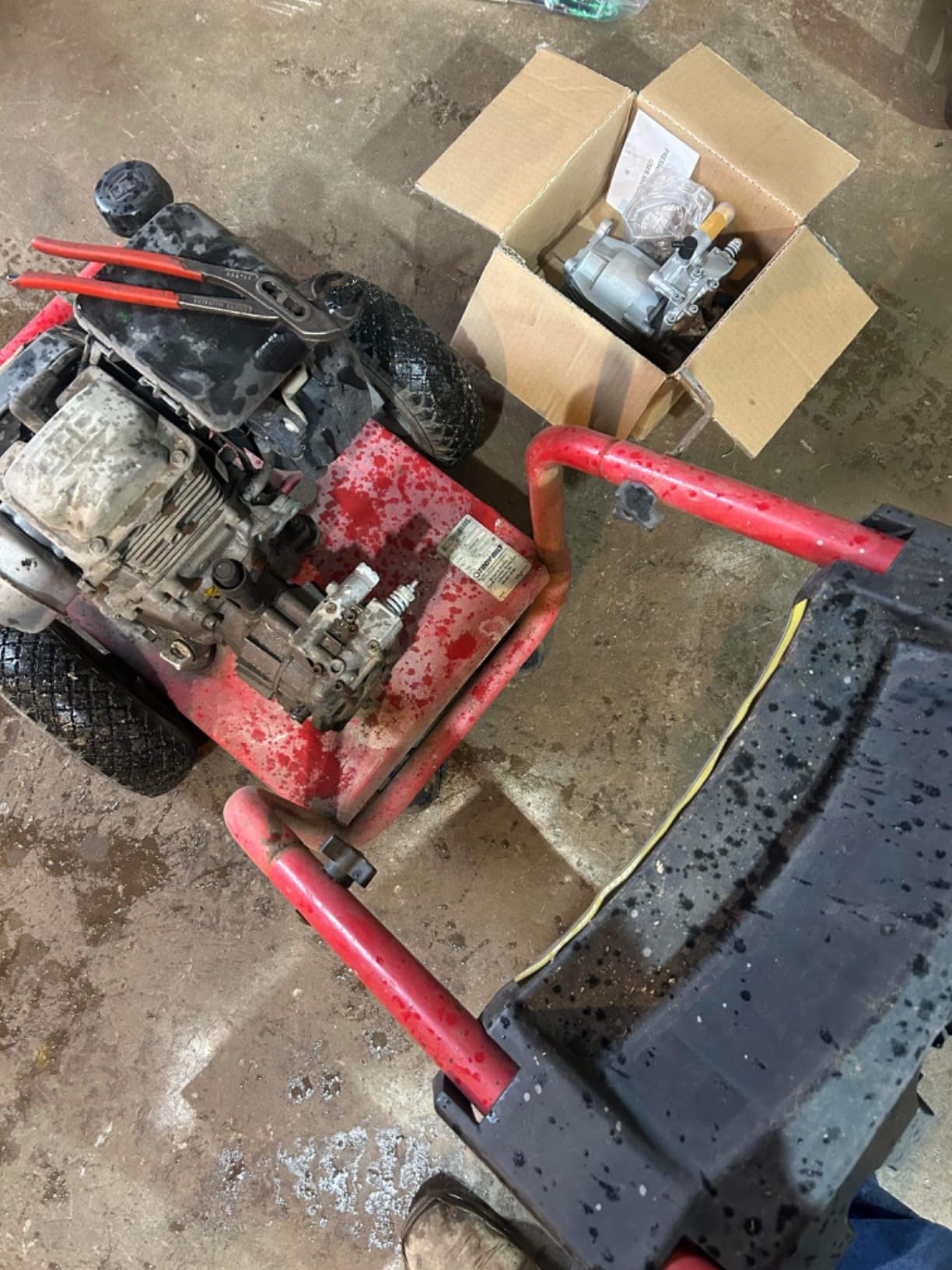
The Hourleey 3/4 inch horizontal unit is the one to pick if you want everything in one box and would rather not make a second order for hardware. The package includes a detergent hose, four UNF 5/16-24 bolts, a shaft key, four D8 flat pads, four D8 spring washers and an instruction manual.
It is rated 3400 PSI at 2.5 GPM on a 3/4 inch horizontal shaft, with a pre-filled oil crankcase, a double-seal system, a one-piece pump head and a metal shaft sleeve. The sleeve and the one-piece head are aimed at sealing, which is the failure point that ends most axial pump lives.
Reviewers appreciate that no pressure release is needed before starting the engine, which removes the most common reason a newly installed pump sputters on the first start. The thermal relief valve prevents overheating in bypass mode, and owners report restoring strong pressure on Simpson, Ryobi and Honda gas washers.
At 3.22 kg it is also a light unit, which helps when you are working under a frame in tight clearance.
Fitment and connection details
This is a horizontal 3/4 inch shaft pump and nothing else. It will not fit a vertical-shaft machine or a 7/8 inch shaft engine, so confirm orientation and shaft diameter before ordering. The inlet is a 3/4 inch NH garden hose connection and the outlet is a threaded M22 high-pressure outlet.
The M22 outlet is the one item to plan around. On an older machine whose original pump used a smaller thread, you will need a quick-connect adapter, and several reviews mention exactly that.
Where the rating splits
At 4.3 across 607 reviews, this pump sits below the top of our range, and the reason is a higher share of one-star reviews than most pumps here. Those reports cluster around lower-than-expected pressure output and fitment problems rather than outright failures.
Our read is that this is a fitment issue, not a quality collapse — the people who verified their shaft size and orientation tend to be happy, and the people who did not, were not. Confirm your specs first and this becomes a solid budget choice.
7. Hourleey 3400 PSI Vertical Axial Pump — for Vertical-Shaft Repairs
Hourleey 7/8″ Shaft Vertical Pressure Washer Pump, 3400PSI 2.5GPM, Replacement Pump for Power Washer Kit, Compatible with Honda, Simpson, RYOBI, Briggs & Stratton, Subaru, Craftsman
3400 PSI at 2.5 GPM
7/8 inch vertical shaft
One-piece pump head
Thermal relief valve
Pros
- Brings a dead vertical washer back to life in under 30 minutes with hand tools
- Reported pressure stronger than the original pump
- New hardware and extra shaft keys included
- Works on Honda
- Ryobi
- Simpson
- Briggs and Subaru frames
Cons
- Some engines need longer bolts and spacers
- A 3400 PSI pump can load a 5.5-6.5 HP engine
- One report of low pressure and cavitation at the wand
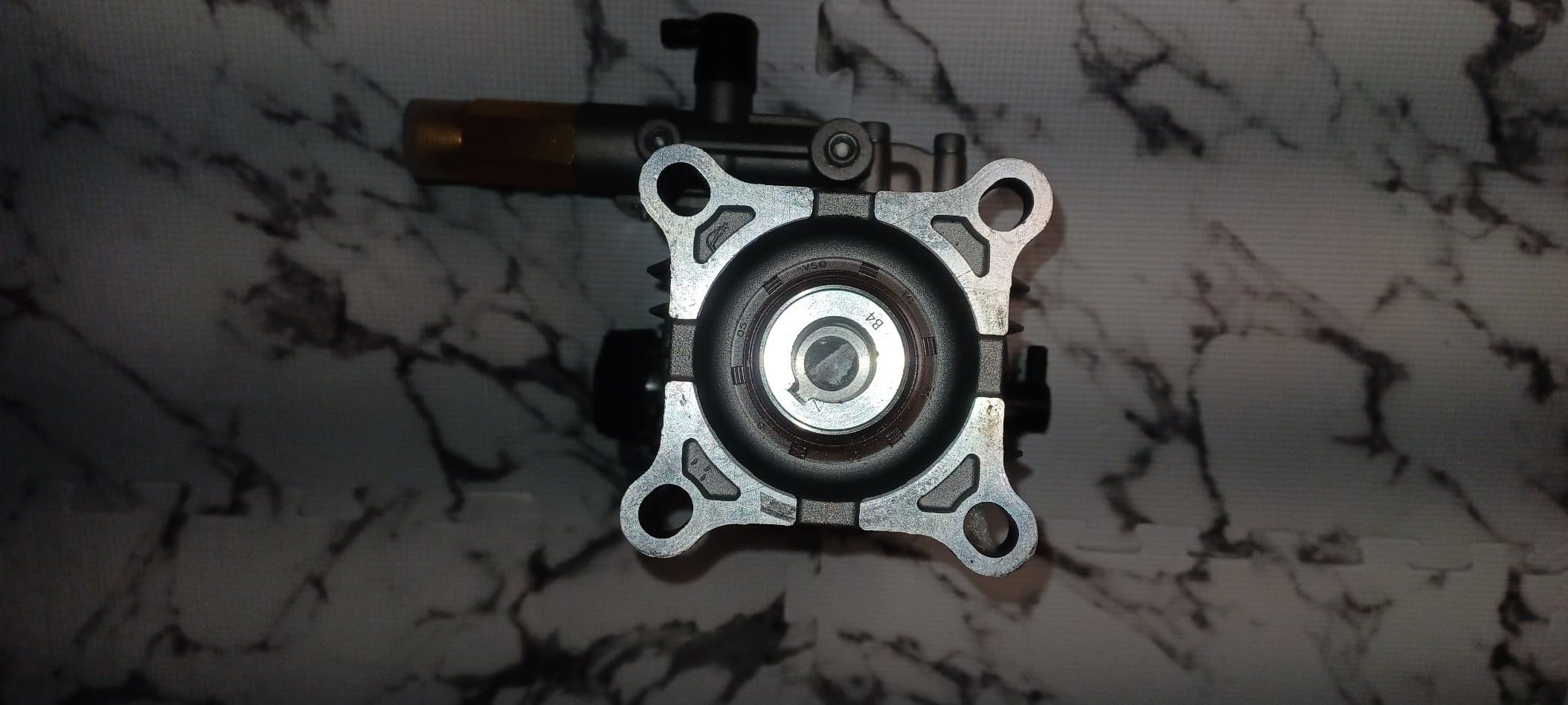
This is the vertical counterpart to the previous pick, and it covers the 7/8 inch vertical shaft category. Owners of vertical-shaft washers report a dramatic improvement over the failed factory pump, and several describe turning a dead machine back into usable equipment in under half an hour with hand tools.
Output is 3400 PSI at 2.5 GPM on a standard 7/8 inch vertical shaft, with a pre-filled oil crankcase, a double-seal system, a one-piece pump head, a metal shaft sleeve and a thermal relief valve. The easy-start design means no pressure release before the engine starts.
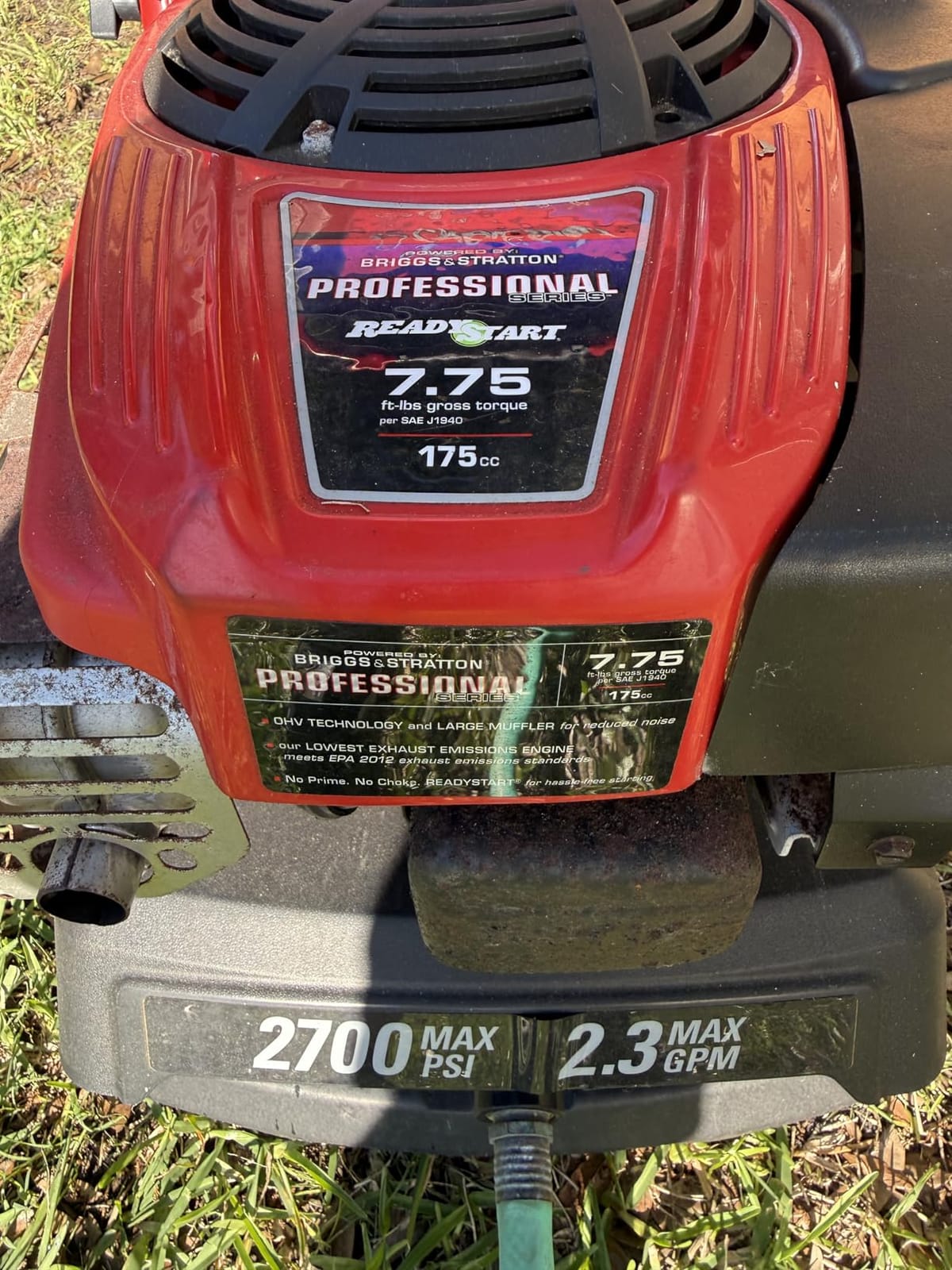
Compatibility is broad across the major vertical engine brands — Honda, Ryobi, Simpson, Briggs & Stratton, Subaru and Craftsman. The box includes a detergent hose, three M8 by 40 bolts, a shaft key, three D8 flat pads, three D8 spring washers and a manual, plus extra shaft keys according to owner reports.
One warning worth taking seriously: 3400 PSI from this pump can load a 5.5 to 6.5 HP engine slightly. If your machine has a smaller engine, do not assume the maximum rating is a good target.
What to check on your engine
Confirm that your engine shaft is vertical and measures 7/8 inch. Then check the mounting depth, because the most common issue in reviews is that some engines need longer bolts and spacers since the pump mounts at a different height than the original.
Connection sizing is a 3/4 inch NH garden hose inlet and a threaded M22 high-pressure outlet, the same pairing used across most of the pumps in this roundup.
Where the complaints sit
The 4.2 rating is the second lowest in our set, and it is driven by a higher share of one-star reviews. Two specific issues appear: some engines needing longer bolts and spacers, and one report of low pressure and cavitation at the wand despite clear supply lines.
Cavitation at the wand with a clear supply almost always points upstream to the inlet filter or the unloader, not to the pump internals. If you hit low pressure, check the inlet filter and hose routing before assuming the new pump is faulty.
8. AAA 90038 Triplex Pump Kit — the 1 Inch Shaft Heavy-Duty Option
AAA Pumps 90038 Horizontal Triplex Plunger Replacement Pressure Washer Pump Kit, 3800 PSI, 3.5 GPM, 1″ Shaft, Includes Hardware and Siphon Tube, for Industrial Gas Powered Machines, Black
3800 PSI at 3.5 GPM
1 inch horizontal shaft
Brass construction
PowerBoost with hand knob
Pros
- Highest pressure and flow in this roundup at 3800 PSI and 3.5 GPM
- Triplex plunger design for smoother and longer-lasting operation
- Hand-turn knob dials power down for delicate jobs
- Backed by a 5 year warranty
Cons
- 1 inch shaft limits it to larger commercial machines
- At 14 pounds it needs frame clearance
- Harder to justify for occasional residential use
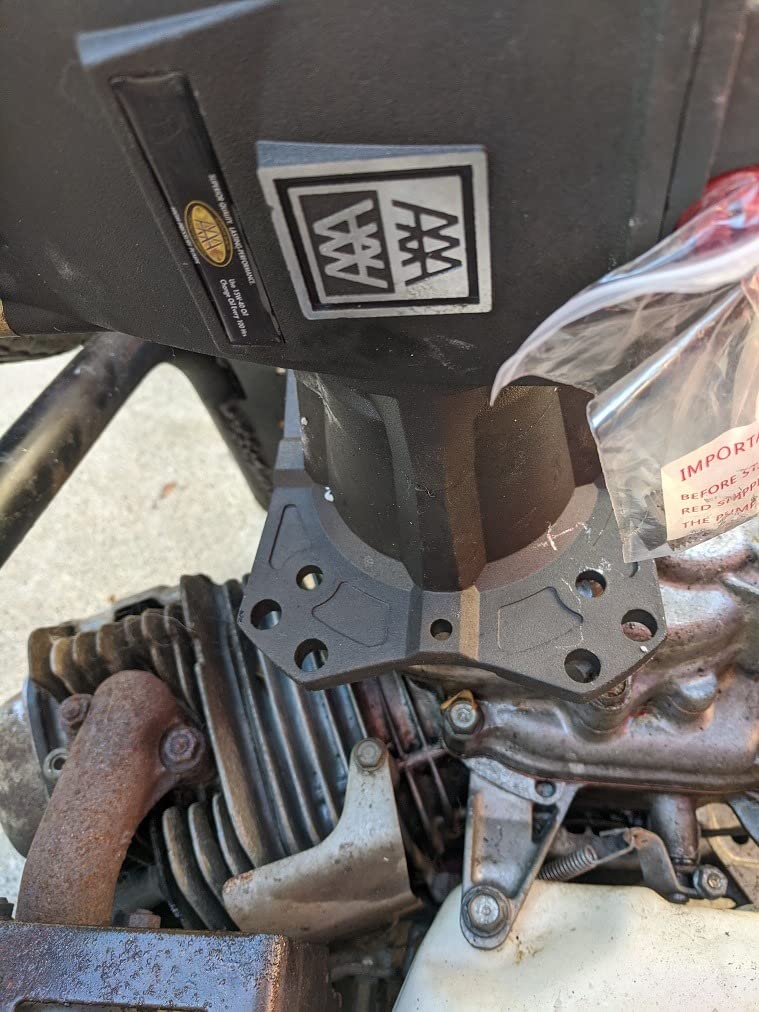
AAA Pumps, sold here as an OEM Technologies kit, sits at the opposite end of the shaft spectrum from everything above it. This is a 1 inch horizontal shaft pump, which puts it firmly in commercial and industrial equipment territory, not residential frames.
The output is 3800 PSI at 3.5 GPM, the highest combination of pressure and flow in this roundup, driven by a triplex plunger design. For a contractor running a bigger engine where flow and longevity matter, that ceiling is the reason to buy it.
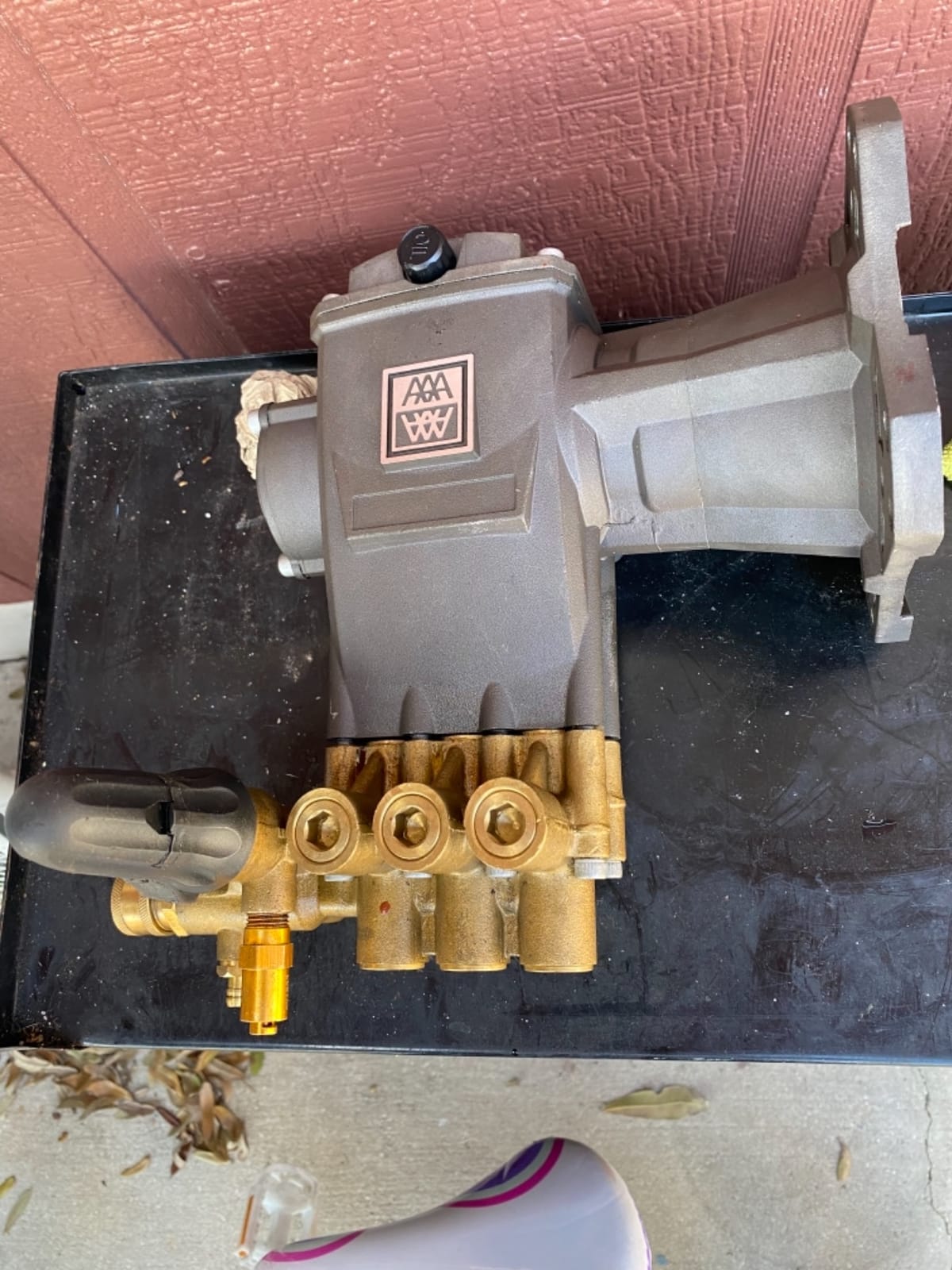
PowerBoost Technology is the feature that comes up most in owner feedback. It delivers higher nozzle pressure, and a hand turn knob lets you dial the output down for lower-pressure tasks, which is how you use one pump for both heavy concrete work and delicate vehicle washing.
The oil sight glass uses advanced oil seal technology so there is no dipstick to pull, and the kit includes the mounting hardware and a siphon tube. Backed by a 5 year warranty, which is the longest coverage in this roundup.
Confirming the 1 inch shaft
This is the easiest fitment in the roundup to get right, and the easiest to get wrong by assumption. A 1 inch shaft is found on larger commercial washers, typically paired with engines above 7 HP. If your washer came from a residential line, it is almost certainly 3/4 inch or 7/8 inch instead.
Connections are a garden hose inlet and a quick-connect high-pressure hose outlet, which is convenient because most commercial machines already use quick-connect couplers.
Whether this belongs in your garage
Two practical considerations. The unit weighs 14 pounds and measures 12 by 10 by 7.5 inches, so it needs frame clearance a residential washer will not have. And the cost is difficult to justify for occasional residential use, as reviewers note directly.
If you are buying for a commercial or contractor workload, none of this matters. If you are buying for a home driveway, a 3/4 inch axial pump is the correct fit and this is simply the wrong tool.
9. Biswing 3400 PSI Horizontal Axial Pump — for Aging Honda Machines
Biswing Pressure Washer Pump, 3/4″ Shaft Horizontal Axial Plunger, 3400 PSI Max, 2.5 GPM, Replacement Pumps for Cold Water Gas Power Pressure Washer
3400 PSI at 2.5 GPM
3/4 inch horizontal shaft
Aluminum one-piece body
Thermal relief valve
Pros
- Bolt-on install goes straight onto Honda GC190 motors
- Two shaft keys and all mounting hardware included
- Pressure reported as at least equal to the original pump
- Has revived washers more than 20 years old
Cons
- Only fits horizontal 3/4 inch shaft engines
- Cold water use only
- An adapter coupler is needed if the hose connector differs
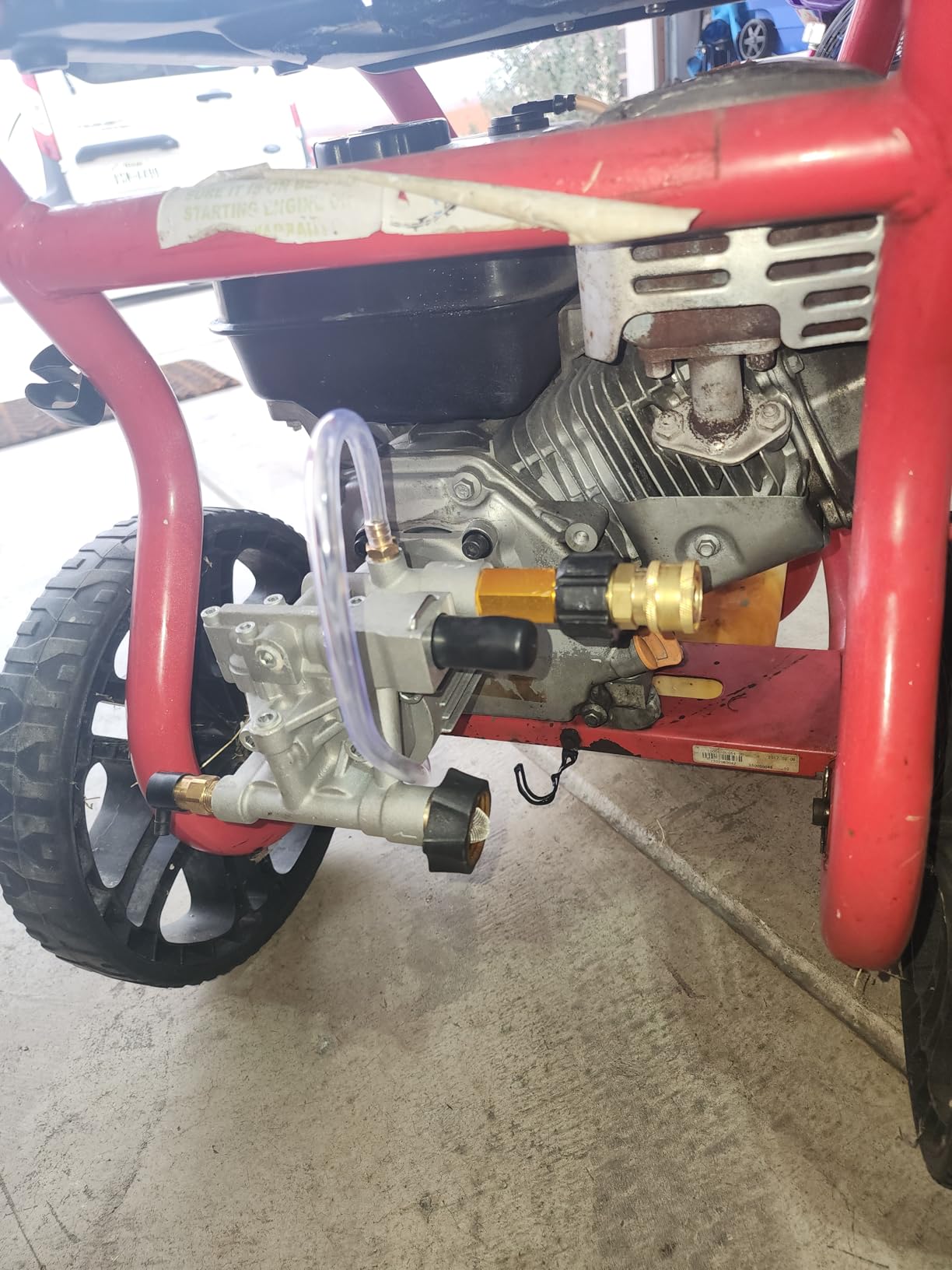
The Biswing earns its place for a specific and very common situation: a Honda-powered washer old enough that the factory pump has dried out and the motor still starts on the first pull. Owner reports cover a 2002 machine and a 22-year-old pressure washer, both brought back to working order.
It rates 3400 PSI at 2.5 GPM for 6.5 to 7 HP engines running 180cc to 225cc, on a horizontal 3/4 inch shaft. The body is a one-piece aluminum alloy designed for wear resistance, with a built-in thermal relief valve to prevent overheating in bypass.
The box contents matter more here than usual: one pump, one detergent hose, two shaft keys sized 4.78 by 4.78 by 35/42, four UNC 5/16-24 bolts and four D8 flat pads. Having two keys on hand is a small mercy when a keyway is worn, which is common on a machine of that age.
Owners report pressure at least equal to the original pump and describe the install as very quick, often directly onto Honda GC190 motors. Compatibility extends across Simpson, Ryobi and Honda machines.
What you need to know before fitting it
This pump fits horizontal 3/4 inch shaft gas engines only. It will not fit vertical or 7/8 inch shaft models, and it is cold water use only, which is worth restating because hot water through a cold-water pump is a warranty-ending mistake.
Connections are a 3/4 inch NH garden hose inlet and an M22-14 male threaded high-pressure outlet. If your existing hose connector differs, an adapter coupler has to be bought separately.
How it performs against the alternatives
At 4.6 across 346 reviews, this sits among the higher-rated pumps here even though the review base is smaller. The consistency of the praise — pressure equal to or better than original, hardware included, quick install — is what makes it stand out at this price tier.
Compared with the Hourleey 3/4 inch pump, the practical differences are the included second shaft key and a more uniform owner report on pressure output. If you are working on a Honda frame, either will do the job.
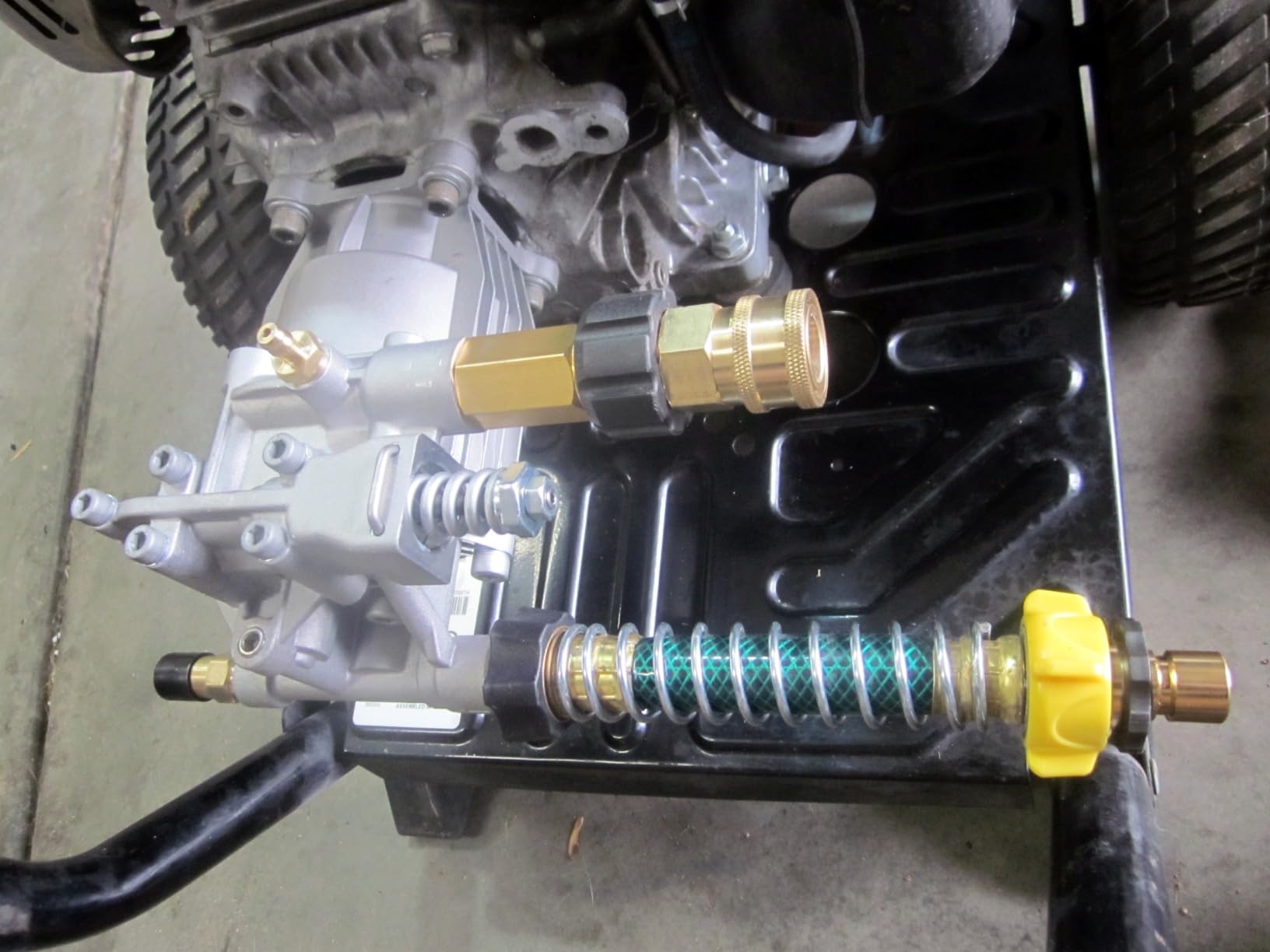
10. WOJET Self-Priming Horizontal Axial Pump — Best When There Is No Tap
WOJET Horizontal Self-Priming Pressure Washer Pump 3/4″Shaft 3400PSI 2.5GPM
3400 PSI at 2.5 GPM
3/4 inch horizontal shaft
Self-priming
Hand-adjustable unloader
Pros
- Draws water from a bucket
- pool or tank where there is no faucet
- Hand-adjustable unloader needs no wrench
- Die-cast aluminum body with thermal relief valve
- Support will check fit if you send brand
- model
- PSI and GPM
Cons
- Only fits 3/4 inch horizontal shaft engines
- A pressure gauge is needed to verify actual output
- Some packaging arrives scuffed though contents are intact
Self-priming is the feature that makes this one different, and it is worth understanding why it matters. A self-priming pump can draw water from a bucket, a pool or a tank instead of requiring a connected faucet, which turns a whole class of jobs from impossible to routine.
Output is 3400 PSI at 2.5 GPM on a 3/4 inch horizontal shaft, sized for 180cc to 225cc engines running 6.5 to 7 HP. The hand-adjustable unloader means you can change pressure without reaching for a wrench, which is a genuine convenience when switching between tasks.
The die-cast aluminum body carries a thermal relief valve for bypass protection, and the box includes anti-seize, a shaft key, a siphon hose with filter and four bolts. Compatibility spans Honda GX160, GX200, GC160 and GC190, plus Briggs & Stratton, Generac, Subaru, Kohler, Lifan and Loncin engines.
Installation typically takes about ten minutes with the supplied instructions and video. Customer service will check fit if you send the brand, model, PSI and GPM of your existing washer, which removes most of the guesswork.
When self-priming earns its place
If you clean decks, fence posts, outdoor furniture or pool surrounds away from a spigot, this solves a problem no other pump in this roundup addresses. The included siphon hose with filter is what makes the draw work, so keep it in place rather than swapping in a plain hose.
Reviewers like the self-priming feature and the tool-free pressure adjustment, and report the pump restoring good output on tired machines.
What to be realistic about
Two caveats. It fits 3/4 inch horizontal shaft engines only, so vertical and 7/8 inch shaft washers are not covered. And you need a pressure gauge to verify actual output, since the pump itself has no readout.
One more note of caution: most buyers are still on short run-time trials, so long-term durability commentary on this pump is limited compared with the units that have thousands of reviews behind them. Judge it on the spec sheet and the fit guarantee, not on a long service history.
How to Match a Replacement Pump to Your Pressure Washer
Matching a pump comes down to five checks, and every one of them takes about two minutes. If all five line up, the pump fits. If any one does not, it does not fit regardless of how good the listing looks.
1. Read the model plate. Every pressure washer has a plate or sticker on the frame, engine or pump housing with the manufacturer and model number. The pump model number is often stamped into the aluminum body itself. Write it down before anything else, because it resolves most of the remaining questions in one lookup.
2. Measure the shaft diameter. Use a caliper or, failing that, a ruler on the exposed shaft between the engine and the pump. Three sizes cover almost everything residential: 3/4 inch for horizontal engines in the 180cc to 225cc class, 7/8 inch for vertical engines in the 196cc to 224cc class, and 1 inch for larger commercial machines. This measurement is non-negotiable and cannot be worked around with an adapter.
3. Confirm shaft orientation. Horizontal means the engine shaft points sideways and the pump bolts to a side or end plate. Vertical means the shaft points down into a gear housing. Stand in front of the machine and look at the engine: the answer is obvious once you know what you are looking for, and it is invisible until you check.
4. Match engine class and RPM. A 180cc to 225cc engine in the horizontal 3/4 inch category is the target for most residential machines. A 196cc to 224cc vertical engine takes a 7/8 inch vertical pump. Above about 7 HP you are in commercial territory and should be looking at 1 inch shaft triplex pumps.
5. Match the ports. The inlet is usually a 3/4 inch NH garden hose female, and the high-pressure outlet is either an M22 male thread or a 3/8 inch quick-connect. Note what your existing machine uses, and buy the adapter before the pump rather than after. A 3/8 inch NPT-F outlet also needs a coupler to reach a quick-connect hose.
One more practical check: the bolt pattern. Most consumer machines use an SAE standard pattern, but the bolt-hole spacing on a pump body varies between manufacturers, and a body that is physically larger may need the engine repositioned on the frame to clear a shroud. Measure the diagonal screw hole spacing if you have the old pump still mounted.
Pressure Washer Pump Types Explained
Four pump designs show up on pressure washers, and the type determines service life, cost and repairability more than any other factor. Here is the honest ranking.
Axial cam pumps use an off-center bearing on a shaft, connected to a wobble plate that drives the pistons back and forth. They are simple, compact and inexpensive, which is why eight of the ten pumps in this roundup are axial. They also wear, because the bearing and the sealing surfaces take continuous contact. This is the right choice for intermittent residential use.
Triplex plunger pumps use three pistons driven by an eccentric crankshaft, arranged so their pressure pulses overlap. The result is far smoother output, better sealing surfaces and much longer life, at the cost of oiling requirements and a higher purchase cost. Pros across the forums consistently describe a maintained triplex as outlasting an axial pump by a large multiple, and they are the default recommendation for contractor work.
Wobble pumps are the simplest design, using a flat plate and a small follower. They are cheap and adequate, but they are the shortest-lived of the four and are increasingly rare on new equipment.
Diaphragm pumps are seal-less, using a flexible membrane instead of plunger seals. They can run dry and handle some chemical exposure without the same seal wear, but they cannot deliver genuine high-pressure output at the pressures a pressure washer needs, so they appear mainly in low-pressure and transfer applications.
The practical takeaway: an axial pump is the correct answer for occasional residential cleaning, and a triplex is the correct answer for anything that runs weekly or commercially. A wobble pump is a temporary solution, and a diaphragm pump is not a pressure washer pump at all.
Buying Guide: How to Choose a Pressure Washer Pump
Get pressure and flow right together. PSI is how hard the water hits, GPM is how much water moves per minute, and neither number means much alone. Multiply them for cleaning units: 3000 PSI at 2.5 GPM gives 7,500 CU, while 3000 PSI at 3.1 GPM gives 9,300 CU. More flow is what makes a surface come clean faster and reduces the time you spend holding the wand in one spot.
For property maintenance and general yard work, the community consensus is a 4 GPM setup at roughly 3000 to 3500 PSI as the sweet spot. Mobile detailers push toward 4 GPM at 4000 PSI for productivity, which is why the high-flow triplex pumps in this roundup exist.
Choose PSI for the job, not for the brochure. 3000 PSI is not too much to wash a car — it is the spray pattern and nozzle choice that cause damage, not the pressure rating. If you only have a 3400 PSI pump, fit the lowest-cone nozzle you can and keep the unloader adjusted down for vehicle work. The bigger risk is the opposite problem: too much pressure, too little flow, and detergent that never rinses.
Prefer brass manifolds and steel or ceramic plungers. Forged brass heads and manifolds outlast aluminum, and stainless steel or ceramic plungers outlast plated steel. On a triplex pump this is the difference between a serviceable unit and a disposable one. On a budget axial pump, a one-piece aluminum body with a metal shaft sleeve is the best available sealing strategy.
Understand the unloader and the thermal relief valve. The unloader controls pressure by bypassing excess flow, and the thermal relief valve dumps hot water when the pump sits in bypass too long. A pressure-adjustable unloader, whether hand-turned or external, lets you match pump output to engine capability. This is why we prefer a pump with an adjustable unloader over a fixed one.
Know what actually kills a new pump. From the pain points reported across owner communities, the failure list is consistent: running with the trigger closed or running dry, a clogged inlet filter or a kinked supply hose causing cavitation, hot water pushed through a cold-water-only pump, an over-sized nozzle creating pressure spikes that blow seals and unloader valves, and skipping the first oil change on a pump that needs it. A buffer tank and keeping cold water cycling through the pump is the repeated professional fix for cavitation.
Budget for the oil routine. If your pump has a serviceable crankcase, plan on SAE 15W-40 pump oil and a change interval measured in hours rather than miles. Pro users change far more often than the manual suggests, and the first change on a new pump is not optional on units that are not maintenance-free. Check the sight glass or dipstick before every job week.
Check what is in the box. The shaft key, mounting bolts, flat pads, spring washers, detergent hose and siphon hose with filter are the difference between a ten-minute job and a trip to the hardware store. Several pumps in this roundup include the full kit, and one does not include bolts at all.
Accessories matter here too. A decent surface cleaner spreads pressure evenly on flat ground, and a foam cannon is what you need to put detergent on a vehicle safely. Both attach to the outlet your new pump provides, so check thread size before you buy either.
Installing a New Pressure Washer Pump
The mechanical work is short. The step that decides whether the pump survives its first season is the one people skip.
1. Match the pump before you touch a wrench. Shaft diameter, orientation, engine class, inlet and outlet. If you cannot confirm all five, stop and resolve it rather than forcing a fit.
2. Photograph the existing setup. Take a photo of the hose routing, the unloader position and the pump orientation. You will be glad of it when routing the hoses back.
3. Drain and disconnect. Run the washer to release pressure, then disconnect the water supply, the high-pressure hose at the pump outlet and the detergent hose.
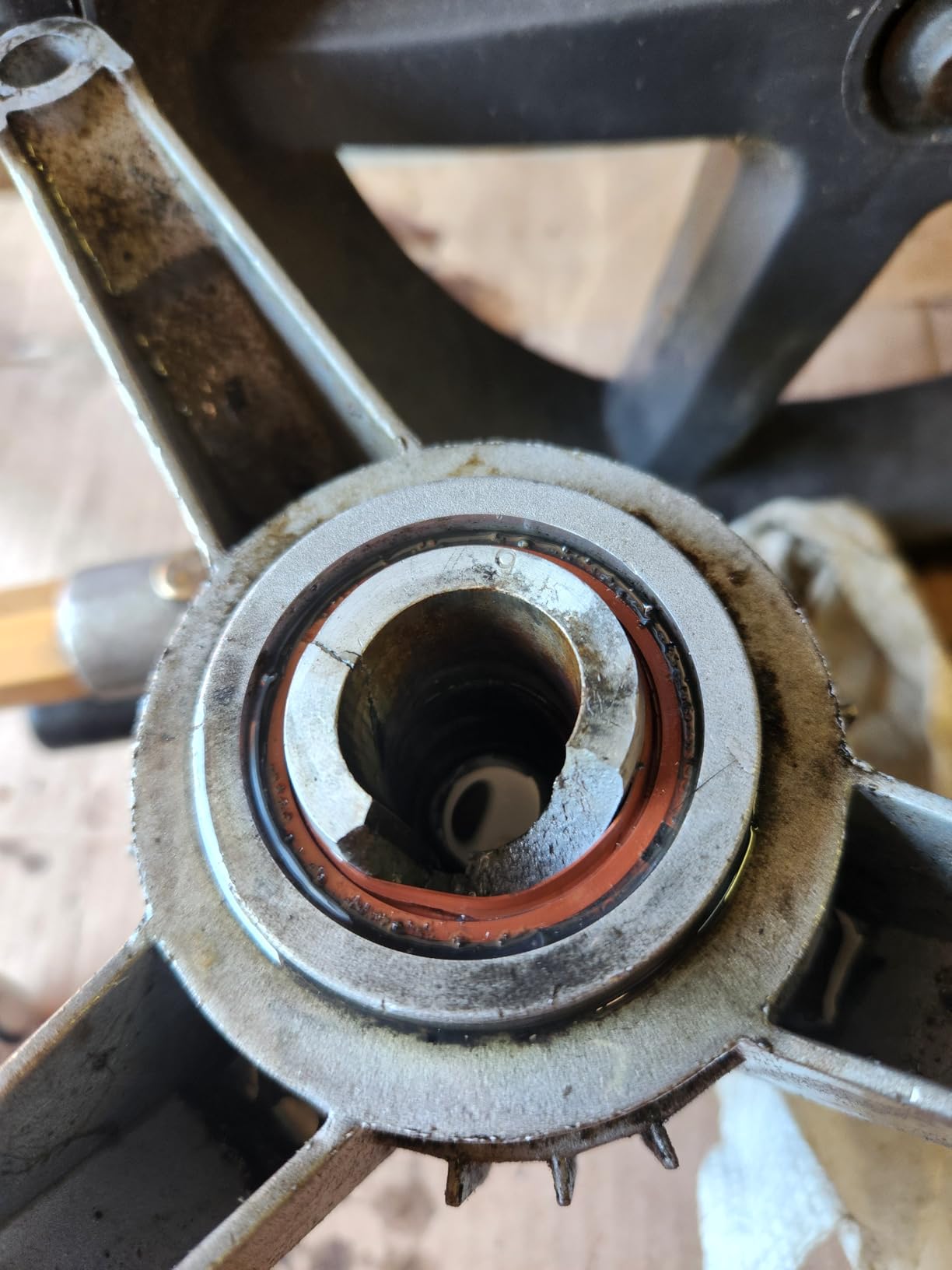
4. Remove the old pump. Take the mounting bolts out, then work the pump off the engine shaft. A seized pump can need wooden wedges and penetrating oil. Expect this to be the slowest part of the job.
5. Clean the shaft and fit the key. Wipe the engine shaft clean, apply a thin film of grease, and fit the new shaft key to the pump. Match the key to the keyway rather than forcing it, and trim a worn key if needed.
6. Mount the pump. Slide it onto the shaft, line up the bolt holes, and tighten the mounting bolts evenly in a crisscross pattern. If the feet are thinner than the original, fit shims or longer fully-threaded bolts so the shaft sits at the correct height.
7. Reconnect the ports. Garden hose inlet to the supply, M22 or quick-connect on the outlet to your high-pressure hose, and the detergent hose to the injector port. Fit any adapters you identified earlier.
8. Prime and bleed. Connect the water supply, open the trigger on the wand, and let water run through the pump until flow is steady with no sputtering. Air locked in the crankcase is the classic cause of a pump that surges or coughs on first start, and this step fixes it before it starts. On a self-priming pump, fill the crankcase and run it briefly with the trigger open.
9. Start the engine and check for leaks. No pressure release is needed on easy-start designs. Watch every connection for a few minutes under running pressure.
10. Change the oil early if your pump is not maintenance-free. Run it briefly, then drain and refill with SAE 15W-40 pump oil. Skipping the first change is the most commonly reported way owners burn out the seal kit on a brand-new pump.
If you are rebuilding rather than repairing, the same steps apply with the addition that a cold-start on a new machine should be followed by a nozzle check. A blocked nozzle is a pressure spike, and a pressure spike on a new pump is how you destroy it in week one. If you plan regular undercarriage work, our undercarriage cleaning guide covers the nozzle and technique side of that.
Frequently Asked Questions
What type of pressure washer pump is best?
For occasional residential use, an axial cam pump is the best fit: it is simple, inexpensive and sized for small horizontal gas engines. For contractor or detailing work, a triplex plunger pump is better, because its smoother flow and heavier sealing surfaces last far longer when the pump runs daily. Wobble pumps are the shortest-lived, and diaphragm pumps cannot reach genuine pressure washer output.
Which is better, an axial or triplex pressure washer pump?
A triplex pump is better for longevity and smoothness, because three pistons with overlapping pressure pulses reduce pulsation and put less stress on seals. An axial pump is better for your wallet if you only clean occasionally. Most owners who move from axial to triplex describe the triplex as a different machine entirely, but it needs oiling and costs several times more.
Is PSI or GPM more important for a pressure washer?
Both matter, and flow is the one most people under-rate. PSI determines impact, while GPM determines how much water you move and therefore how fast a surface cleans. Multiply them for cleaning units: 3000 PSI at 2.5 GPM is 7,500 CU, and 3000 PSI at 3.1 GPM is 9,300 CU. For most property work, 4 GPM at 3000 to 3500 PSI is the common target.
How do I know what pump fits my pressure washer?
Check five things: the model number on the machine or pump body, the engine shaft diameter (3/4 inch horizontal, 7/8 inch vertical, or 1 inch commercial), whether the shaft points sideways or downward, the engine displacement and horsepower class, and the inlet and outlet thread sizes. Shaft diameter and orientation are the two that cannot be worked around with an adapter.
How long does a pressure washer pump last?
Lifespan tracks the pump type and the hours, not the calendar. Wobble pumps are shortest-lived, axial pumps suit intermittent residential use, and a maintained triplex outlasts an axial pump by a large multiple when oil changes are kept up. Cavitation from a clogged inlet filter, running dry, hot water, and over-sized nozzles do more to shorten pump life than the pump type does.
Is a triplex pump a good choice for pressure washers?
Yes, and it is the default recommendation among professionals for any regular workload. A triplex plunger pump runs more smoothly, makes less noise, handles higher flow and lasts far longer than an axial unit, provided the crankcase oil is changed on schedule. The trade-off is a higher purchase cost and the need to service the oil level.
Conclusion: The Best Pressure Washer Pumps by Use Case
For most people, the best pressure washer pump is the YAMATIC 3400 PSI 3/4 inch horizontal unit: the deepest review history here and the cleanest fit on Honda and Simpson frames. For reviving an older Simpson with no maintenance routine, the 90028 kit is the value answer. For contractor or detailing work, the Canpump CF 3030 G triplex and the AAA 90038 are the only two built for daily hours. For vertical-shaft machines, check shaft size first and choose between the EZJOB and the Hourleey 7/8 inch vertical pump. And if there is no faucet at the job site, the WOJET is the only pump here that self-primes from a bucket or pool.
Whatever you choose, measure that shaft before you order, run water through the pump until the flow is steady before the first start, and change the oil early if the crankcase is serviceable. Those three habits decide whether the pump you just installed is still working in five years. If you are still comparing machines rather than pumps, our electric washer guide for home garages covers the other end of the market.