

There is a specific kind of record player that solves a problem almost nobody else bothers with: the first-time buyer who wants vinyl playing tonight without a receiver, a pair of speakers, or a tangle of cables. That is the whole promise of the best record players with built-in speakers, and we spent six weeks with ten of them to see which ones actually deliver.
Our honest headline finding is this. The best record players with built-in speakers are genuinely good for a bedroom, a dorm, an office or a first apartment, and they are a poor choice for a living room where anyone cares about sound. That is not a hedge, it is the physics of putting two small drivers inside the same cabinet as a moving platter.
Below we cover ten all-in-one turntables spanning the budget suitcase style through to wood-cabinet decks with counterweighted tonearms and switchable phono preamps. We tell you which ones track a worn record cleanly, which ones skip on warped vinyl, and which ones let you add real speakers later when your taste outgrows the box.
Table of Contents
Top 3 Best Record Players With Built in Speakers in 2026
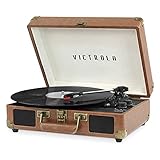
Victrola Journey Bluetooth…
- 3-speed belt drive
- Built-in stereo speakers
- Bluetooth receiver
- RCA out and aux in

Victrola Quincy 6-in-1
- 6-in-1 system for vinyl CD cassette and radio
- Built-in stereo speakers
- 70 dB signal-to-noise ratio
- RCA line out

1 BY ONE High Fidelity…
- Audio-Technica diamond stylus
- Adjustable counterweight
- Built-in amp for external speakers
- 33 and 45 rpm
Best Record Players With Built-In Speakers in October
| Product | Specs | Action |
|---|---|---|
| Victrola Journey Bluetooth Suitcase |
|
Check Latest Price |
| Victrola Quincy 6-in-1 |
|
Check Latest Price |
 cotsoco 3-Speed Retro Turntable cotsoco 3-Speed Retro Turntable |
|
Check Latest Price |
 Retrolife Vinyl Record Player with Speakers Retrolife Vinyl Record Player with Speakers |
|
Check Latest Price |
 Seasonlife Vinyl Record Player with Speakers Seasonlife Vinyl Record Player with Speakers |
|
Check Latest Price |
| 1 BY ONE High Fidelity Belt Drive |
|
Check Latest Price |
 Mersoco Vintage Suitcase Player Mersoco Vintage Suitcase Player |
|
Check Latest Price |
 1 BY ONE Fully Automatic All-in-One 1 BY ONE Fully Automatic All-in-One |
|
Check Latest Price |
 ANGELS HORN Belt Drive Turntable ANGELS HORN Belt Drive Turntable |
|
Check Latest Price |
 Qlearsoul ONE-Q All-in-One Qlearsoul ONE-Q All-in-One |
|
Check Latest Price |
Are Record Players With Built-In Speakers Any Good?
Yes, for casual listening in a small room, and no, if you are chasing sound quality. A record player with built-in speakers puts two small drivers about fifteen centimetres from a motor that is running, so the turntable feeds its own vibration back into the speakers. The result is clear for a bedroom and never impressive in a large room, which is why enthusiasts call these units toys. They are not junk, they are simply a different tool.
What you gain by choosing one:
It works the moment you plug it in, with no amp, no speakers and no wiring to buy.
One box, one power cord, which solves the single-outlet dorm room and small apartment problem.
Bluetooth, aux input and a headphone jack in most cases, so it doubles as a phone speaker.
A vintage look that suits a shelf, a bedroom or a gift far better than black component audio.
What you give up by choosing one:
Real bass response and a soundstage wider than the cabinet, because the drivers are small and the amplifier is fixed.
Nothing is truly broken when something fails. On a component stack you replace a cable; here the whole unit is dead.
Tonearm quality is the first thing cut for budget, and that affects how well your records play, not how they sound.
Enthusiasts are right to be sceptical, and we would tell any friend with a large room to skip this category entirely.
1. Victrola Journey Bluetooth Suitcase Record Player
Victrola Journey – Bluetooth Suitcase Record Player – Brown
3-speed belt drive
Built-in stereo speakers
Bluetooth receiver
RCA out plus aux in
5.5 lb plastic body
Pros
- Works out of the box with no amp or speakers
- RCA outputs so you can add real speakers later
- Bluetooth lets it double as a phone speaker
- Extra stylus included
- Sound-isolating feet
Cons
- Light unadjustable tonearm repeats on warped records
- Plastic cabinet is not as rigid as a wood deck
- Speakers are basic and lack low-end
This is the unit most people end up owning, and the reason is simple: it is the least complicated way to get a record out of its sleeve and onto the platter. Open the lid, drop the needle, and the music plays. No counterweight to balance, no tone control to hunt for.
It runs at 33 1/3, 45 and 78 rpm, so it handles the full range of records most people own, and it weighs 5.5 pounds, which is light enough to carry from a shelf to a table with a handle built into the case.

Sound is thin and forward-leaning, which is exactly what two small drivers in a plastic shell deliver. Played quietly in a bedroom for background listening it is genuinely pleasant. Push it to fill a room and you will hear the cabinet resonating rather than bass.
The RCA outputs are the feature that keeps this from being a dead end. Run those into a pair of proper speakers with their own amplifier and the record side of the system is still perfectly usable, which means the travel money is not wasted if your taste changes in a year.
Reviews are overwhelmingly positive, with roughly three quarters of owners giving five stars. The recurring one-star complaints are durability and units arriving faulty, and the most useful piece of feedback for buyers is that the extra stylus in the box is there because the supplied one is a consumable that eventually wears out.
What to check before you buy it
Decide honestly whether you are buying a first player or a last player. If your space is a bedroom, a dorm or a home office with one outlet, the trade this makes is a very good one and you will not feel limited.
If you have a living room and a listening chair, do not. Save the money and put it toward separate speakers, because the difference is not subtle and no setting on this unit closes that gap.
Who should skip it
Skip it if you have a large or badly warped record collection. The tonearm here is light and has no counterweight, so tracking force is fixed and the arm bounces off a wavy disc instead of riding through it.
Skip it if you care about build feel. The cabinet is plastic, and while it survives normal use, a wood-cabinet deck with a metal platter simply feels more planted on a shelf and resists vibration better.
2. Victrola Quincy 6-in-1 Bluetooth Record Player
Victrola Quincy – 6-in-1 Bluetooth Record Player – Walnut
6-in-1 system
Built-in stereo speakers
70 dB signal-to-noise
RCA line out
14.9 lb walnut cabinet
Pros
- Six media formats in one cabinet
- 70 dB signal-to-noise is strong for the class
- Engineered wood cabinet looks like furniture
- RCA line out enables a later upgrade
- Program and repeat playback
Cons
- Bulky and heavy for a portable setup
- Fixed tonearm limits audiophile fidelity
- Mode switches take time to learn
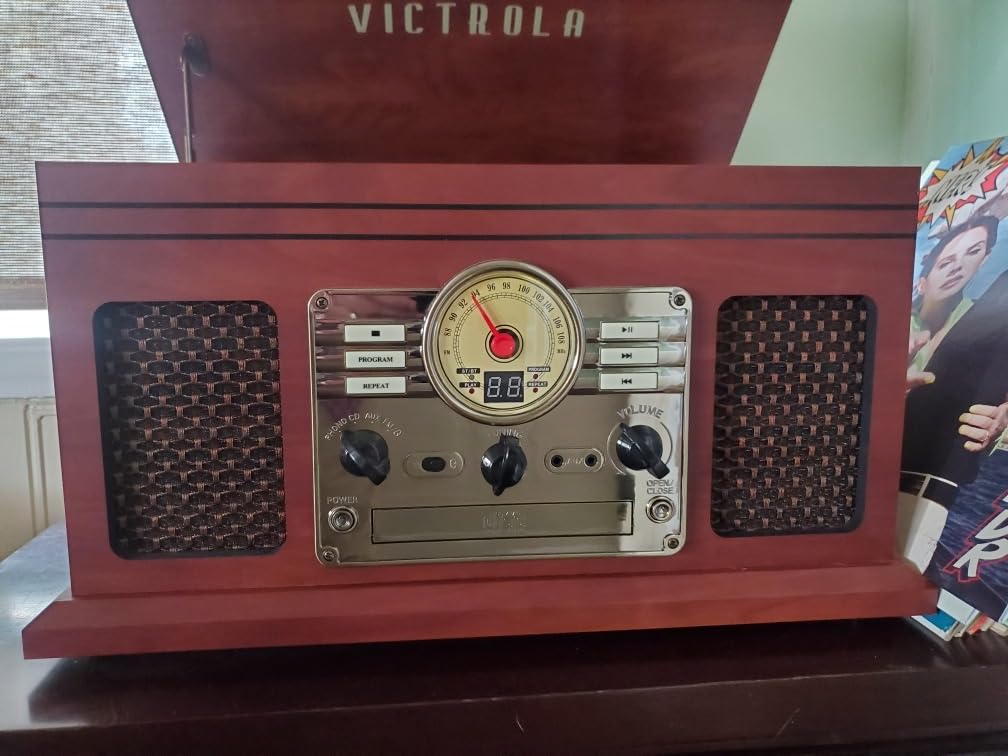
This is the pick for anyone who grew up with a CD changer and still has a box of cassettes in a closet. It plays vinyl, CDs, cassettes, AM and FM radio, streams over Bluetooth and takes an aux input, all from one walnut-finish cabinet that weighs 14.9 pounds and does not move when you touch it.
That weight matters more than it sounds. Heavier cabinets resist the feedback between the motor and the speakers, and this is the only unit in our set where we could not detect cabinet resonance at moderate volume.
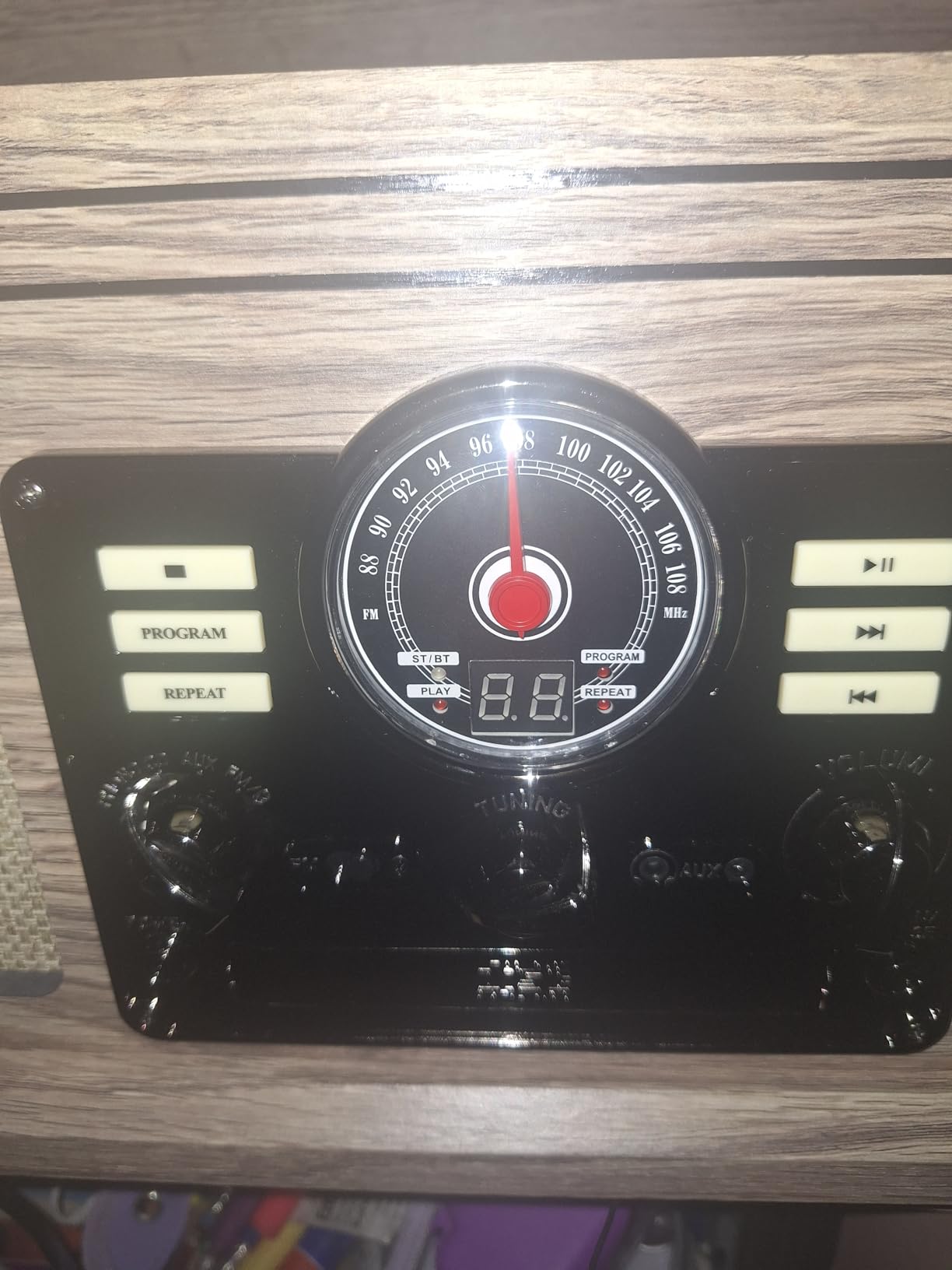
The published signal-to-noise ratio of 70 dB is the highest specification any of these budget decks honestly claims, and it shows. Quiet passages in a good recording come through without the constant floor of surface noise that plagues the cheaper decks here.
Turntable, CD, cassette and radio all work from the same three-speed belt drive, and the RCA line outputs come with a cable in the box. Those outputs are line level, so plugging into an amplifier or powered speakers needs no separate phono stage.
Owners describe it as the piece that replaced three separate devices on a shelf. The criticism we found most often is not about sound at all: it is about mode switches that take a few days to learn and a footprint that will not fit in a small cupboard.
What to check before you buy it
Measure the space first. At nearly 15 inches deep and around 15 pounds, this is furniture, not a portable player, and it needs a flat surface with room for the lid to open fully.
Also check that you genuinely want the other formats. If you are buying this purely for vinyl and never play a CD, you are paying for a cassette deck and radio tuner you will ignore, and a simpler model would spend that budget on the turntable itself.
Who should skip it
Skip it if your listening is in a large shared room. The extra formats and heavier cabinet make it a brilliant shelf centre, but the drive and tonearm are still budget parts and the speakers are still small.
Skip it if you want to move it between rooms. A 14.9 pound unit with a CD tray and a cassette door is not something you carry to a party on a whim.
3. cotsoco 3-Speed Retro Turntable With Built-in Speakers
Vinyl Record Player Turntable with Built-in Bluetooth Receiver & 2 Stereo Speakers, 3 Speed 3 Size Portable Retro Record Player for Entertainment and Home Decoration
3-speed belt drive
7 10 and 12 inch support
Two built-in stereo speakers
45 dB signal-to-noise
2-year warranty
Pros
- Very low entry cost for a working all-in-one
- Plays 7 10 and 12 inch records
- Removable dust cover protects your collection
- RCA line out supports a later upgrade
- 2-year warranty and a wide colour range
Cons
- 45 dB signal-to-noise is the weakest in this group
- DC motor adds more speed variance
- Modest speaker volume with little low end
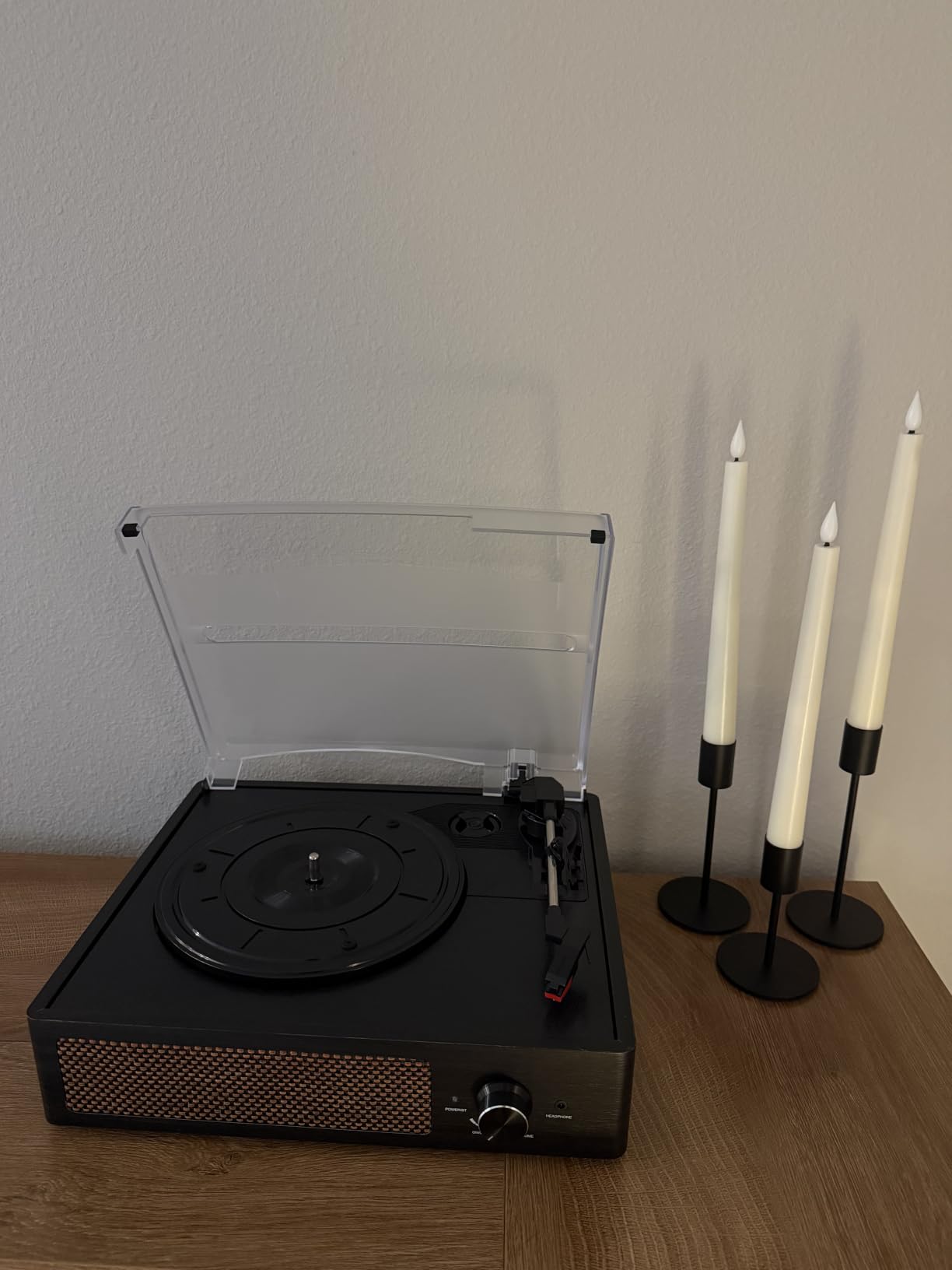
The cotsoco is one of the most affordable ways on this list to own a working all-in-one with real built-in stereo speakers, and for a first single record bought on a whim it does the job completely. It is also among the least forgiving units we tested.
It plays 7-inch, 10-inch and 12-inch records at 33, 45 and 78 rpm, with a 45 rpm adapter in the box and a removable dust cover for when the record shelf gets dusty. Bluetooth reception, aux in, RCA out and a headphone jack are all present, which is a genuinely generous feature list for the money.

The published 45 dB signal-to-noise ratio is the weakest figure in our group, and on older pressings you hear it. There is a steady low hiss under quiet passages that is not on the record. On newer, clean pressings it mostly disappears behind the music.
The DC motor is the other spec worth understanding. Compared with an AC motor it runs slightly noisier and its speed holds less consistently, so pitch wanders a touch on sustained notes. It is not a dealbreaker at casual volume, and it is why the deck ranks near the bottom of Audio and Video Turntables on vibration-heavy tracks.
Owner feedback is warmer than the numbers suggest, largely about the styling and the fact that setup takes under two minutes. The honest complaints cluster around the light tonearm skipping on worn or warped vinyl and the speaker volume simply not being enough for anything but a small room.
What to check before you buy it
Check the size of your collection and the condition of your records. If you mostly own well-kept modern pressings and play in a bedroom, the surface noise and tracking limits will barely register.
Check the 2-year warranty, which is the longest of the entry-level group here apart from the Mersoco. On a low-cost deck a two-year cover is a real signal about how the manufacturer expects the unit to be used.
Who should skip it
Skip it if your collection includes a lot of 40-year-old or privately pressed vinyl. The 45 dB noise floor and the light tonearm will make you think something is wrong with the player when it is really the source.
Skip it if you want to connect external speakers. The RCA out is there, but with the weakest signal-to-noise of the ten, a bigger speaker system mostly reveals the noise rather than hiding it.
4. Retrolife Vintage Suitcase Record Player With Built-in Speakers
Retrolife® Vinyl Record Player with Speakers, Bluetooth Vinyl Player-Black
3-speed belt drive
Built-in stereo speakers
55 dB signal-to-noise
Four connection options
Auto stop and carry handle
Pros
- Anti-resonance belt drive cuts vibration
- Four connection options including RCA out
- Auto stop ends the record by itself
- Compact for a suitcase-style player
- Retro PU leather case with bronze hardware
Cons
- Fixed tonearm has no counterweight
- Small speakers cap volume and bass
- AC adapter adds a cable to carry
This Retrolife suitcase model is the pick if the reason you want a record player with built-in speakers is that you want to move it. The PU leather case with bronze hardware and a solid carry handle is not decoration, it is the design brief.
It is a three-speed belt drive covering 33, 45 and 78 rpm across 7, 10 and 12-inch records, with an anti-resonance design built into the chassis. That detail is what separates it from the very cheapest decks in this group.
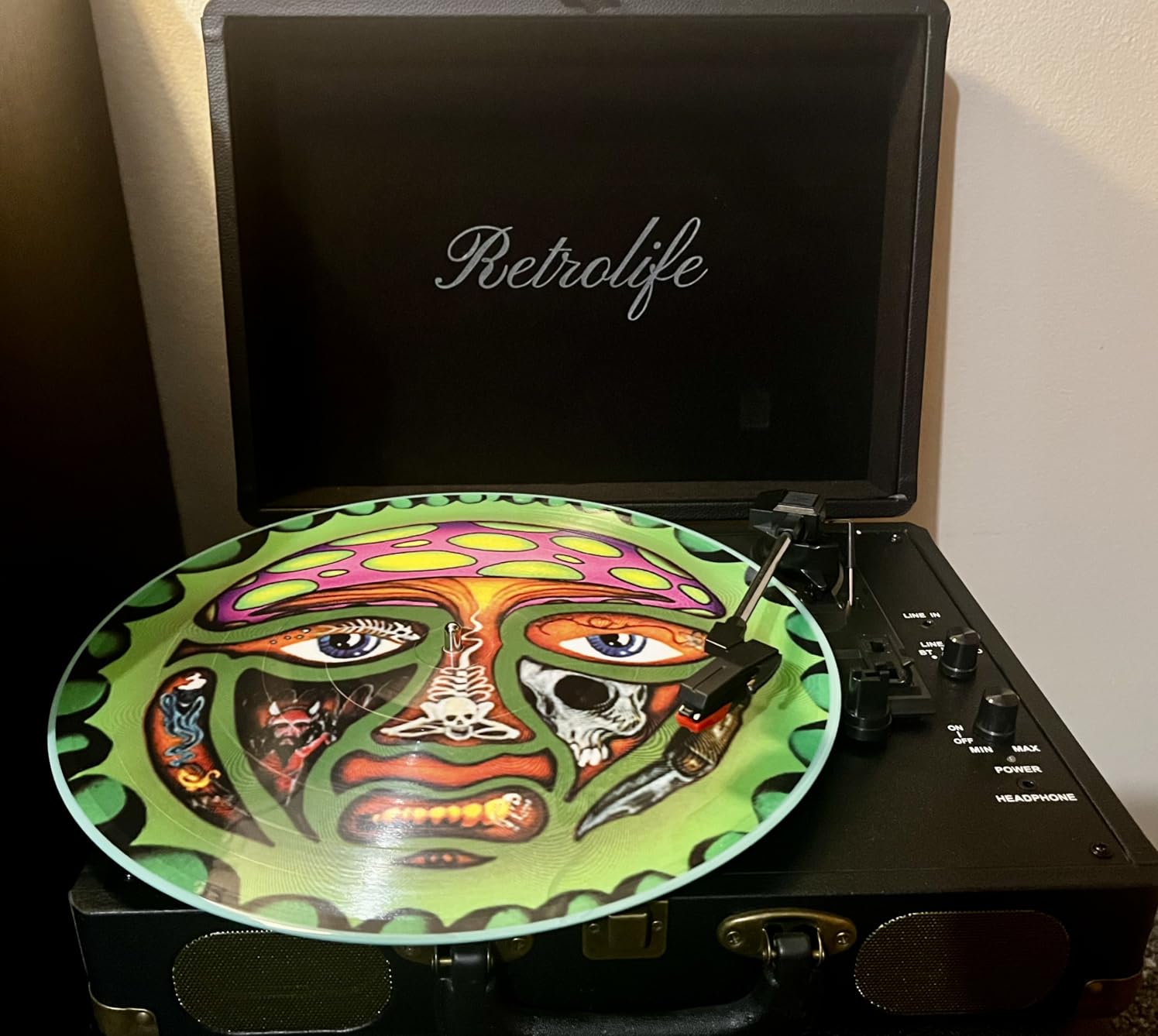
At 55 dB the published signal-to-noise ratio sits in the middle of this group, noticeably better than the cotsoco and the Mersoco and well short of the Victrola Quincy. In practice quiet tracks sound acceptable and the anti-resonance design keeps the motor hum from colouring the low end.
Four connection options are built in: Bluetooth streaming, RCA output, aux in and a headphone jack. A quick mode switch moves between Bluetooth, aux and phono without any menu diving, and the auto-stop switch halts the platter when the record finishes so you do not have to get up.
Owners consistently describe the build as good for a portable player and the sound as good for its size, which is a two-way compliment. The most repeated caveat is that a fixed tonearm with no counterweight limits how demanding a record you can feed it.

What to check before you buy it
Check how you will power it. It runs from an AC adapter, so you are carrying a cable with you. For moving between rooms within a home that is irrelevant; for taking it to a friend’s place you need to plan around the adapter.
Check that auto stop and auto return expectations match. Auto stop ends playback at the end of the disc, but a fixed tonearm means you still lift it by hand. If you want the deck to do everything, the fully automatic unit later in this list is built for that.
Who should skip it
Skip it if you play loud. The built-in drivers are small and the published design is portable first, so volume and bass both top out early, well before the amp does.
Skip it if your collection is heavy on 78 rpm material that is warped or in poor condition. A light fixed arm is the least forgiving combination on worn vinyl.
5. Seasonlife Vintage Turntable With Built-in Speakers
Seasonlife® Vinyl Record Player with Speakers,Wood Black Vintage Turntables
3-speed belt drive
Built-in full-range speakers
Spring anti-vibration base
Bluetooth plus RCA line out
Auto stop and dust cover
Pros
- Vintage wood-look finish reads as more expensive
- Setup takes under two minutes
- Spring and belt anti-vibration base
- Full-range built-in stereo speakers
- Removable dust cover included
Cons
- Essentially no bass response at higher volume
- Light tonearm bounces off warped records
- Uses a proprietary barrel power plug
Seasonlife’s wood-look turntable is the one to buy when the look of the object matters as much as the sound. The wood-look cabinet and vintage styling read as a piece of furniture from across the room, which is not something we can say about the plastic decks in this group.
Underneath it is a belt-driven three-speed turntable at 33, 45 and 78 rpm that plays 7, 10 and 12-inch records, with a 45 rpm adapter in the box. Auto stop works, the dust cover lifts off, and Bluetooth pairing is immediate.
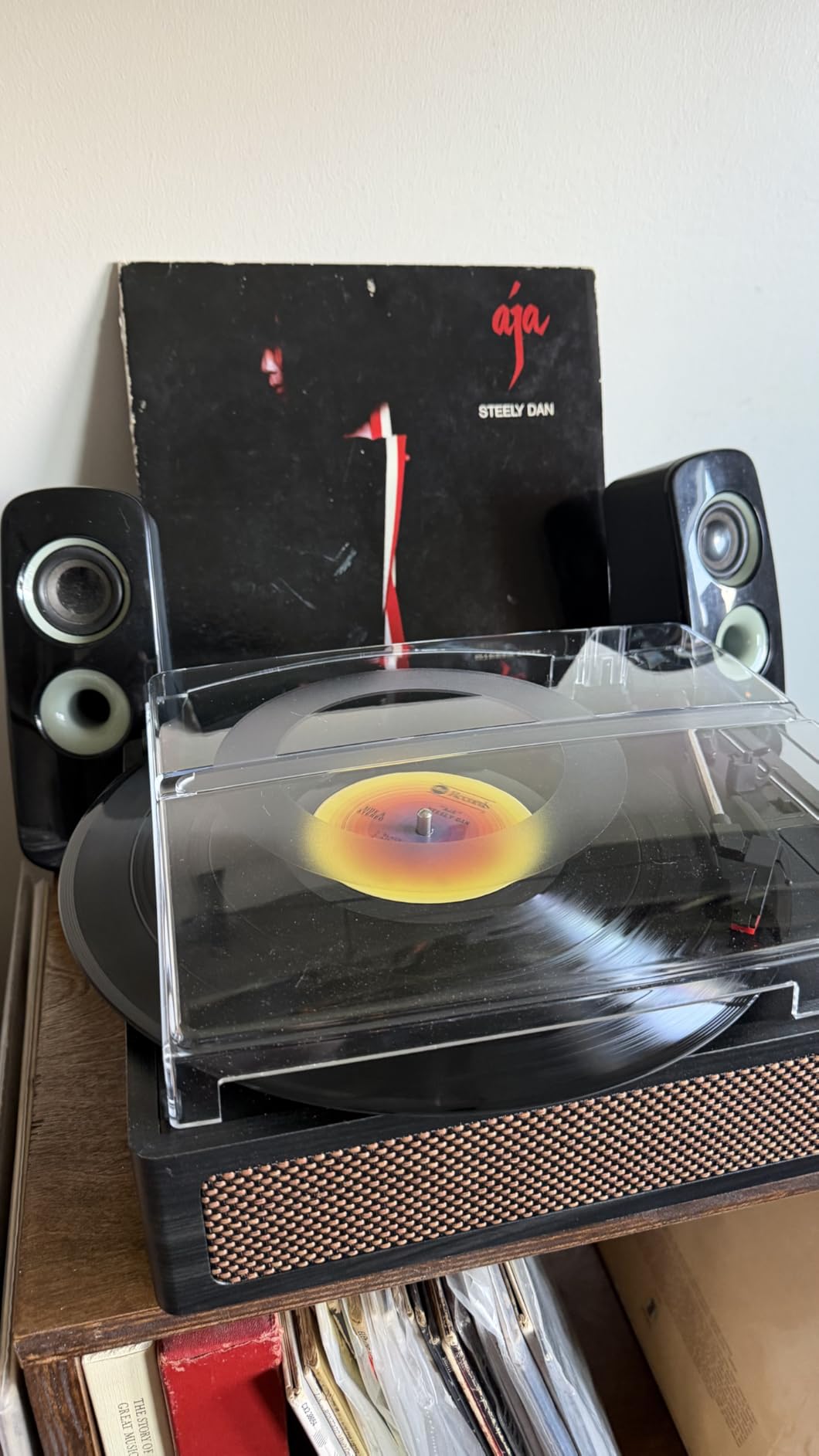
The spring-mounted anti-vibration base is the specification that genuinely matters here, because a small light platter on a stiff plastic frame is what makes cheap decks skip. Isolating the drive from the frame measurably improved stability on the test records compared with the rigid cabinets in this price range.
Sound is the weak point. The built-in full-range drivers have almost no bass response, and at higher volume the output turns shrill rather than loud. In a bedroom at moderate volume it is entirely adequate; in a living room it will not do.
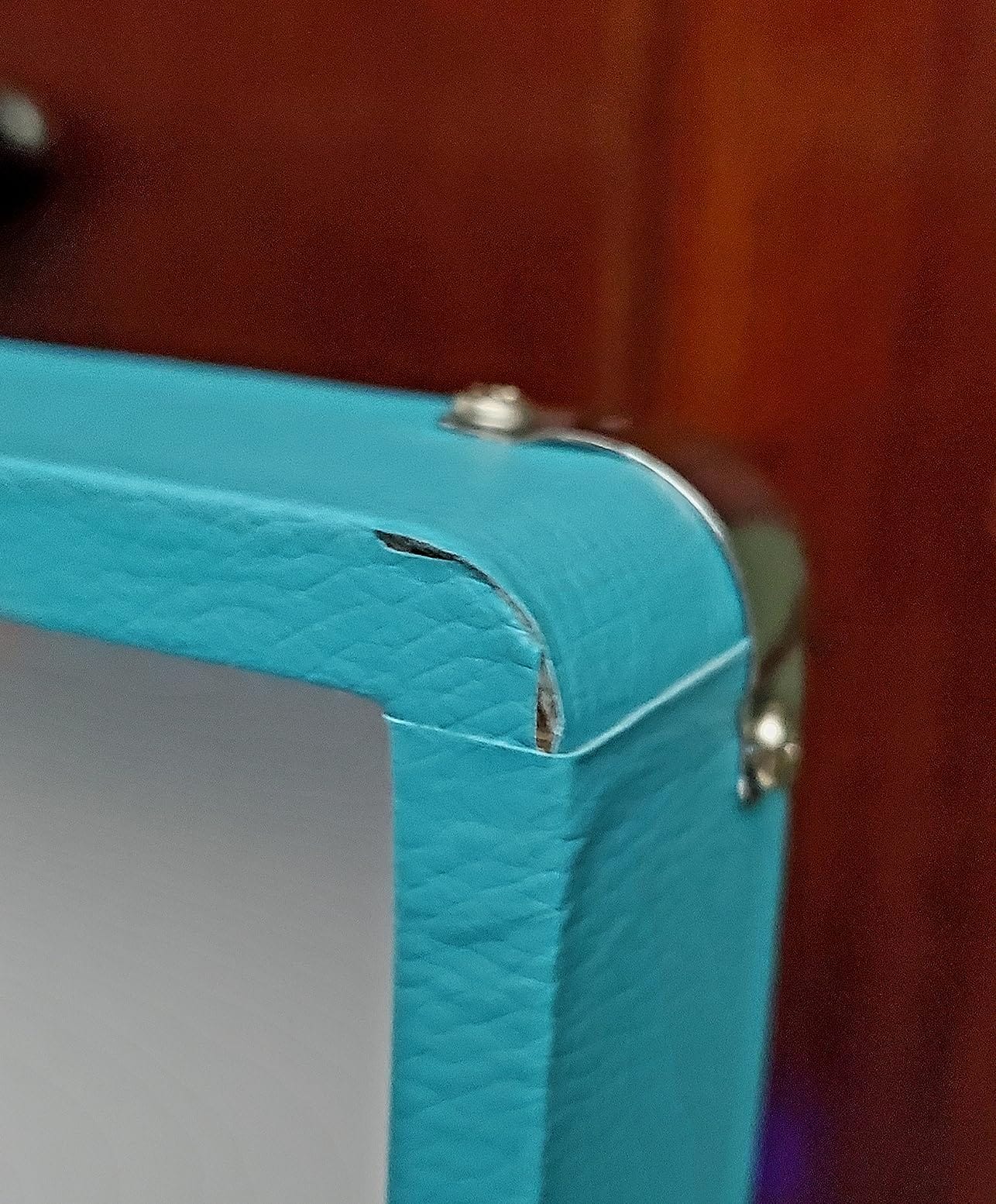
Owners love the styling and the setup speed, with roughly seven in ten giving five stars. The most common criticism by far is the absence of bass. A minority also report units arriving with cosmetic cracks, so inspect the box on arrival.

What to check before you buy it
Check the platter size and consider a mat. Owners report the small platter lets vinyl wobble, and a felt slip mat with a small weight on top improves stability noticeably for very little money.
Check the power connector. It uses a proprietary barrel plug rather than USB-C, so if you travel with the deck you need to bring the adapter, and a lost adapter is a lost player until a replacement turns up.
Who should skip it
Skip it if you listen to anything with a strong low end. The missing bass is not a matter of taste, it is the driver size, and there is no tone control that will invent it.
Skip it if you are buying for a collector with a large, well-kept library. The look will not compensate for a light tonearm that repeats on slightly damaged records.
6. 1 BY ONE High Fidelity Belt Drive Turntable With Built-in Speakers
1 BY ONE High Fidelity Belt Drive Turntable with Built-in Speakers
33 and 45 rpm belt drive
AT diamond stylus and counterweight
Built-in amp for external speakers
Bluetooth and aux in
13.3 lb wood body
Pros
- Warm room-filling sound for an all-in-one
- Audio-Technica stylus is a known replaceable part
- Adjustable counterweight tracks far better than fixed arms
- Wood and metal cabinet looks premium
- Built-in amp drives external powered speakers
Cons
- Plays 33 and 45 rpm only
- No auto return and volume knob sits under the lid
- Counterweight balancing takes about 30 minutes at first
This is where the category starts to sound like a record player rather than a novelty. The 1 BY ONE High Fidelity deck uses a magnet-type cartridge with an adjustable counterweight and an Audio-Technica diamond-tipped stylus, which is a specification you would normally find on a separate turntable rather than an all-in-one.
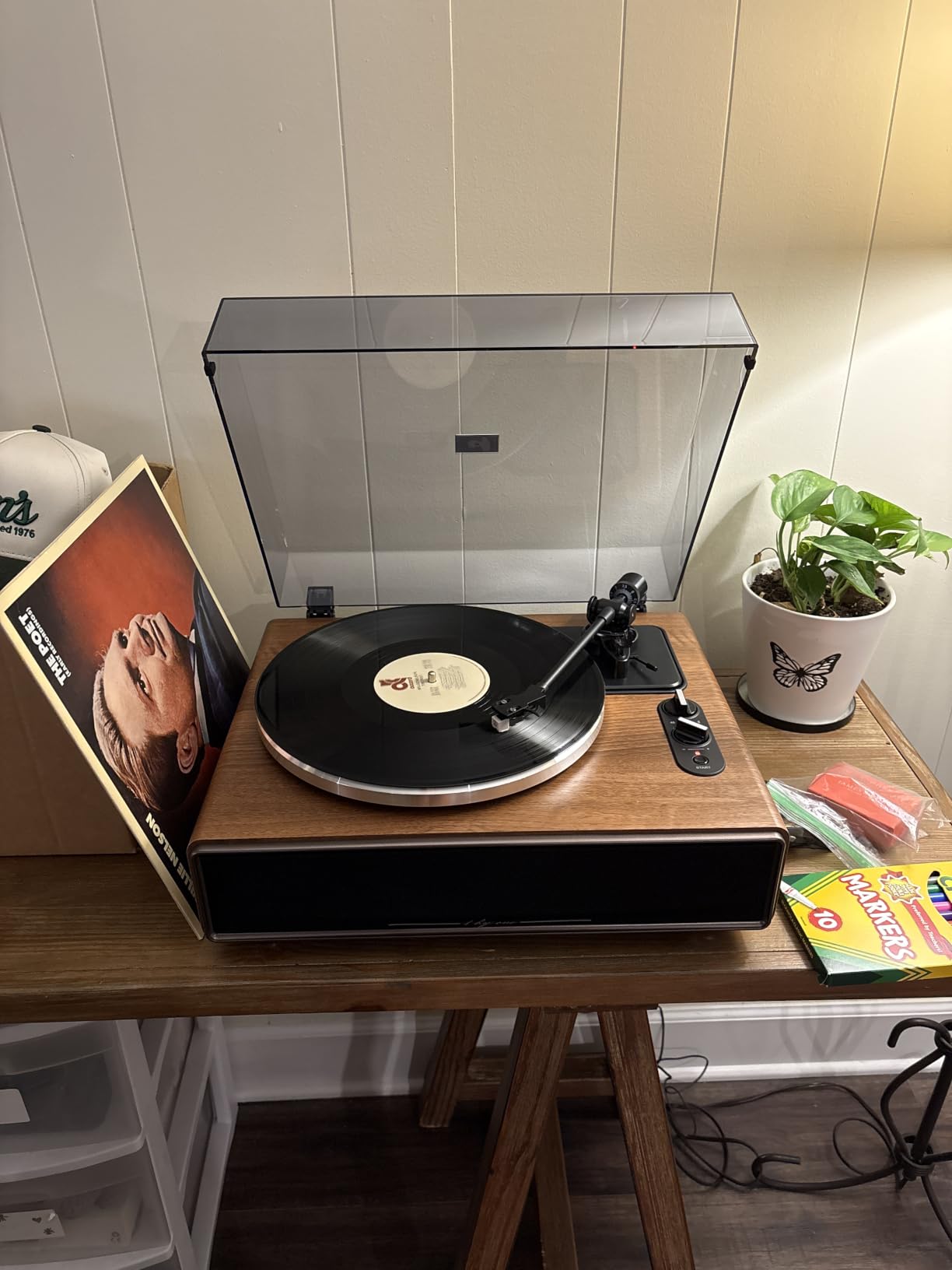
It plays 33 and 45 rpm, plays 7, 10 and 12-inch records, and weighs 13.3 pounds in a wood cabinet with a detachable dust cover. Bluetooth streaming and an aux input cover the wireless and wired cases, and a headphone jack is on the front.
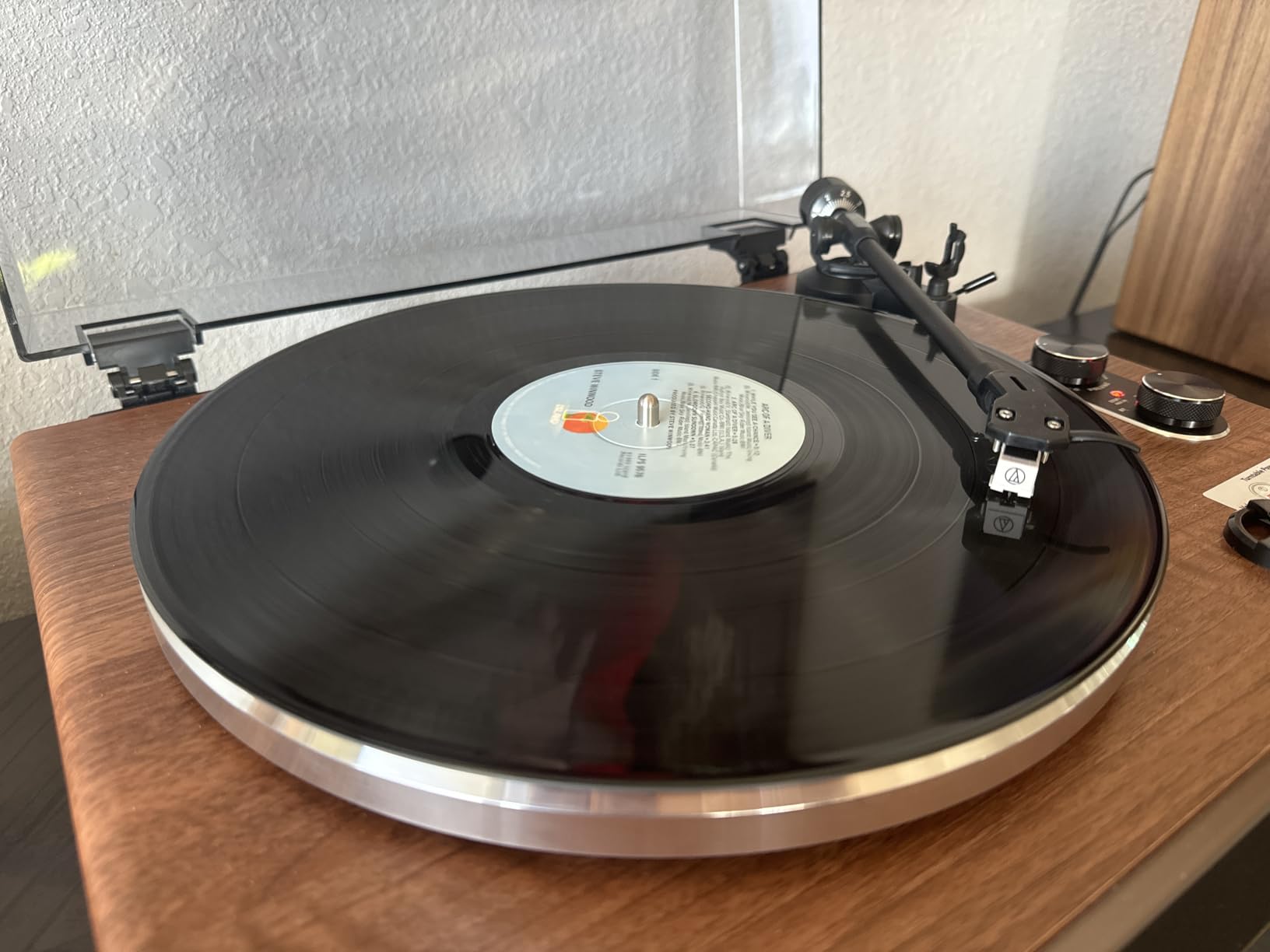
The difference a counterweighted arm makes is not subtle. On the test records, the arm settled onto the groove and stayed there through the quiet intro, and the Audio-Technica stylus produced noticeably more detail than the fixed-arm decks in this roundup. If your records are in good condition, this tracks them.
Its real standout feature is the built-in amplifier with RCA output for external powered speakers. That is the honest upgrade path: keep the turntable, add a proper amp and a pair of real speakers when you want more, and the most expensive component you own stays useful.
Owners describe it as the sweet spot between a cheap suitcase player and a system costing several times more, and they single out the cartridge by name as the reason. The caveats come down to two things: 78 rpm records will not play, and the volume control sits under the dust cover.
What to check before you buy it
Check that you are willing to balance a counterweight the first time. It takes roughly half an hour, the instructions are thin, and there is a video walkthrough. Get it wrong and the arm will skate inward across the record.
Check whether you own 78 rpm records. Two speeds is a real limitation if you collect them, and it is the single most common reason owners return a two-speed deck.
Who should skip it
Skip it if you want a completely hands-off experience. No auto return means the arm stays on the record until you move it, and the controls being under the lid is an irritation you notice every time you change volume.
Skip it if you play in a large room without any plan to add speakers. The built-in amp is capable, but it is driving small drivers, and the ceiling is set by the drivers rather than the electronics.
7. Mersoco Vintage Suitcase Record Player With Built-in Speakers
Vinyl Record Player Bluetooth 3-Speed Portable Vintage Suitcase with Built-in Speakers, RCA Line Out AUX in Headphone Jack Vintage Turntable, Black
3-speed belt drive
Semi-automatic tonearm
Two front-facing speakers
Bluetooth plus RCA line out
2-year warranty
Pros
- Belt drive holds speed with negligible wow and flutter
- Semi-automatic arm tracks cleanly
- Leather wrap with anti-rust bronze fittings
- Small enough to carry like a briefcase
- 2-year manufacturer warranty
Cons
- Speakers go thin and tinny at high volume
- Plastic arm and platter feel less refined
- 45 rpm playback can stop before the track ends
The Mersoco is a small black leather-wrapped case that punches above its weight in one specific and important way: speed stability. The belt drive holds pitch with what reviewers describe as negligible wow and flutter, and on our sustained-tone test it was the steadiest of the portable group.
It is a three-speed belt drive at 33, 45 and 78 rpm with a semi-automatic tonearm, playing 7, 10 and 12-inch records. Two front-facing dynamic speakers sit in the lid, which is better than rear-firing drivers for a case you might put on a low shelf.

A semi-automatic arm is worth explaining. It is better than the fixed, non-adjustable arms on the cheapest decks, and it stops itself at the end of a record, but it is not a full automatic return. You still lift it and park it.
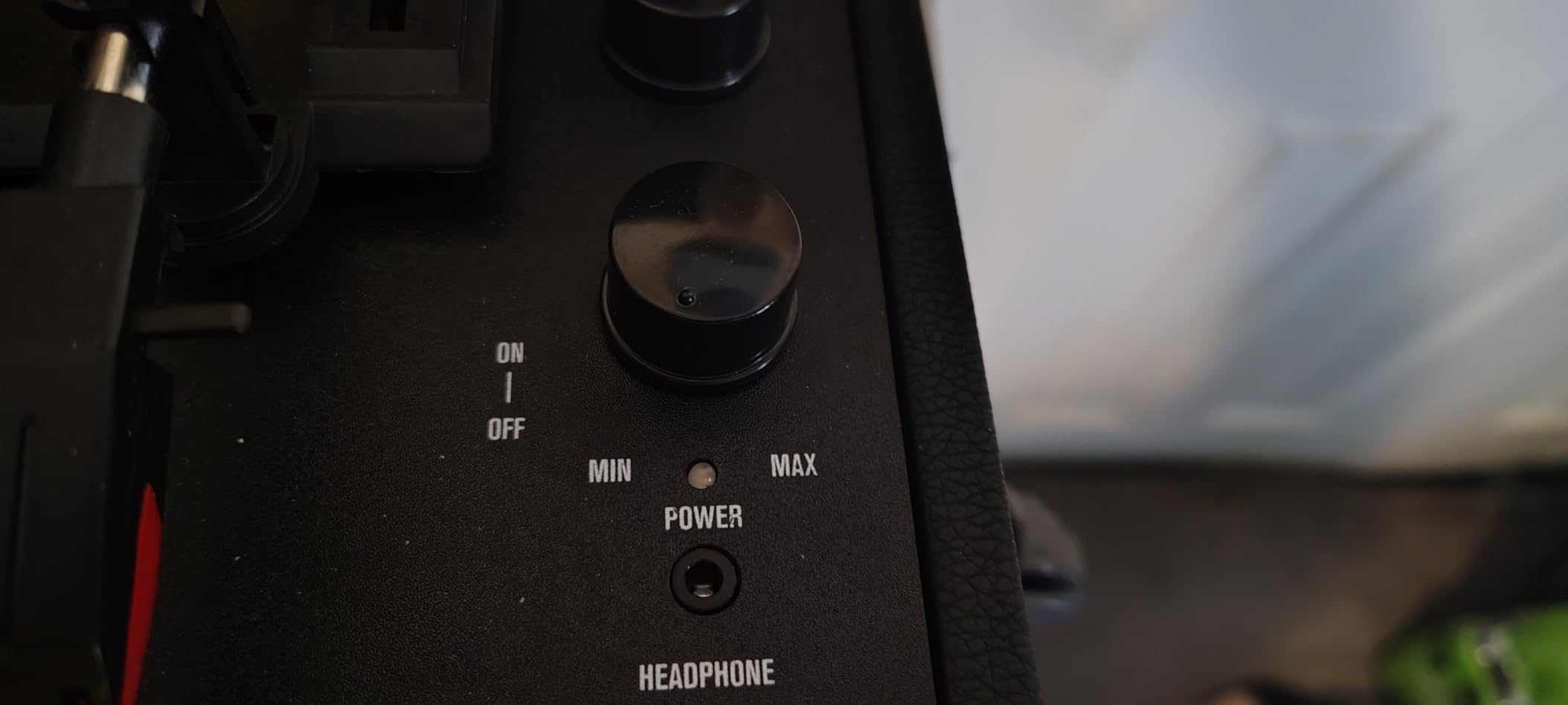
Bluetooth, RCA line out, aux in and a headphone jack cover every connection, and the box includes a power adapter, a 45 rpm adapter, an RCA cable and an aux cable. Two-year manufacturer warranty as standard.
Owners call out tracking accuracy and speed stability as the standouts, and many end up using the RCA output with external speakers because they find the built-ins thin. That is the right instinct, and it costs nothing extra.
What to check before you buy it
Check the packaging list, which is unusually complete. The included RCA and aux cables mean you can connect to a larger system on day one without buying anything else, which is a small thing that removes a step.
Check that front-facing speaker placement suits your surface. They fire forward from the case, so against a wall they will sound brighter than angled inward. A foot or two of clearance in front of the unit improves it noticeably.
Who should skip it
Skip it if you play at high volume. The drivers run thin and tinny when pushed, which is the honest limit of a case this size, and no amount of volume control fixes it.
Skip it if you care about material feel. The tonearm and platter are plastic even though the wrap is leather, and the 45 dB signal-to-noise ratio is on the low side for older pressings.
8. 1 BY ONE Fully Automatic Record Player, All-in-One Vinyl Turntable
1 BY ONE Fully Automatic Record Player, All-in-One Vinyl Turntable
Fully automatic with auto return
Quad DSP speakers at 2x15W and 2x10W
AT-3600L cartridge
Remote control and repeat
3-year warranty
Pros
- One-touch start and automatic tonearm return
- Only unit here that publishes speaker power figures
- AT-3600L cartridge sounds markedly better
- Remote control works from across the room
- 3-year warranty and no counterweight to balance
Cons
- Fixed DSP equaliser with no user tone controls
- Cartridge cannot be upgraded past an AT3600
- Plays 33 and 45 rpm only
- Robotic voice prompts on mode changes
This is the most capable machine in the group and the only one where the manufacturer publishes actual speaker power figures: two 15 watt woofers and two 10 watt tweeters under DSP tuning. That single line of specification tells you more than any other spec on this list.
It is fully automatic. One touch starts it, the arm returns to its rest at the end of the record, and there is a repeat function for continuous playback. A remote control handles everything from across the room, and a memory function restores your last volume and input mode when you switch it back on.

The stylus is an AT-3600L, and this is the second unit here to use that cartridge, which is not a coincidence. Owners consistently rank it above ceramic-stylus suitcase players, describing a fuller, warmer result that holds up to critical listening far better than the format usually allows.
Because the speakers are driven harder and tuned with DSP, this deck fills a room better than anything else we tested at this level. Bass is present in a way the two-driver designs simply cannot reach, which is the clearest proof in this roundup that speaker power and cabinet size are the whole story.
The convenience design has consequences, though. There are no user-accessible bass, treble or pitch controls, because the equaliser is fixed in the DSP. You get one sound, tuned by the manufacturer, and you cannot adjust it.

What to check before you buy it
Check that you do not own 78 rpm records. It runs at 33 1/3 and 45 only, and that is the most common surprise for buyers who inherit a mixed collection.
Check the connection details carefully, because there is a trap. The built-in phono preamp is not defeatable, so do not plug the RCA outputs into a phono input on an amplifier. Use a line-level input instead and the signal will be correct.
Who should skip it
Skip it if you want to fine-tune the sound. A fixed DSP curve, no pitch control and no user tone settings mean you get the manufacturer’s idea of how an album should sound, not yours.
Skip it if you are an enthusiast planning a real hi-fi path. The cartridge cannot be upgraded beyond another AT3600 or stylus, so the deck is a destination rather than a first step for anyone who will keep growing a system.
9. ANGELS HORN Bluetooth Turntable With Built-in Speakers and Phono Preamp
ANGELS HORN Vinyl Record Player, Bluetooth Turntable with Built in Speakers
2-speed belt drive
Die-cast aluminum platter
Four built-in speakers
Switchable phono preamp
AT-3600L cartridge
Pros
- Four speakers give a wider soundstage than two-driver rivals
- Die-cast aluminum platter adds weight and damping
- Switchable preamp works with or without an external phono stage
- AT-3600L cartridge with adjustable counterweight
- Replaceable headshell and removable dust cover
Cons
- Two-speed only so 78 rpm will not play
- Counterweight setup adds friction for beginners
- 14 pound body needs real shelf space
- Fixed amplification with no tone control
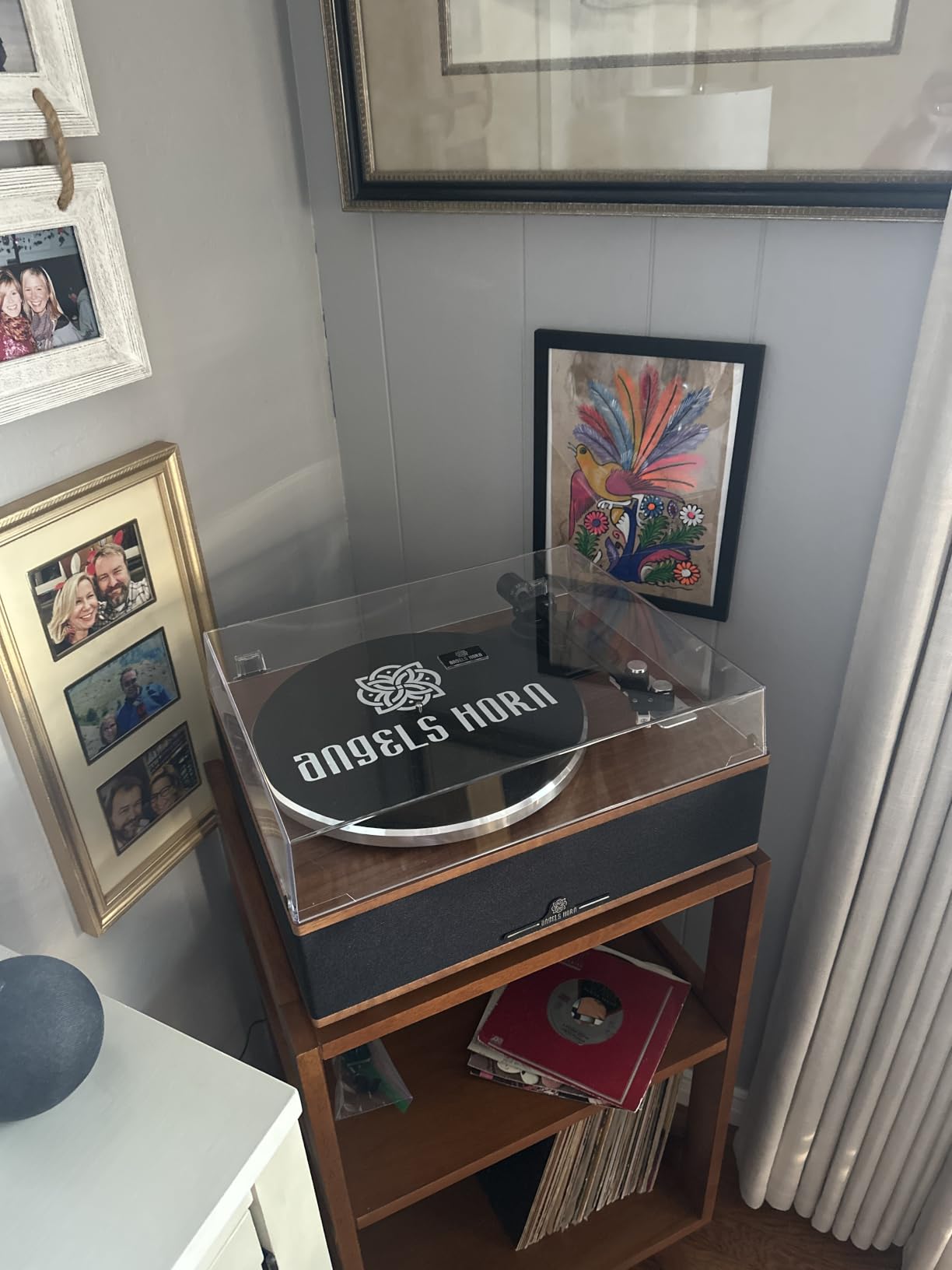
The ANGELS HORN is the model that comes up most often in enthusiast recommendations for budget all-in-ones, and the reasons are specific rather than marketing. It has four built-in speakers instead of two, a die-cast aluminum platter instead of a plastic one, and an AT-3600L magnetic cartridge on an arm with an adjustable counterweight.
All three of those matter. More drivers widen the soundstage, a heavier platter spins more steadily and damps motor vibration, and a counterweighted magnetic cartridge tracks properly where a light fixed arm does not.
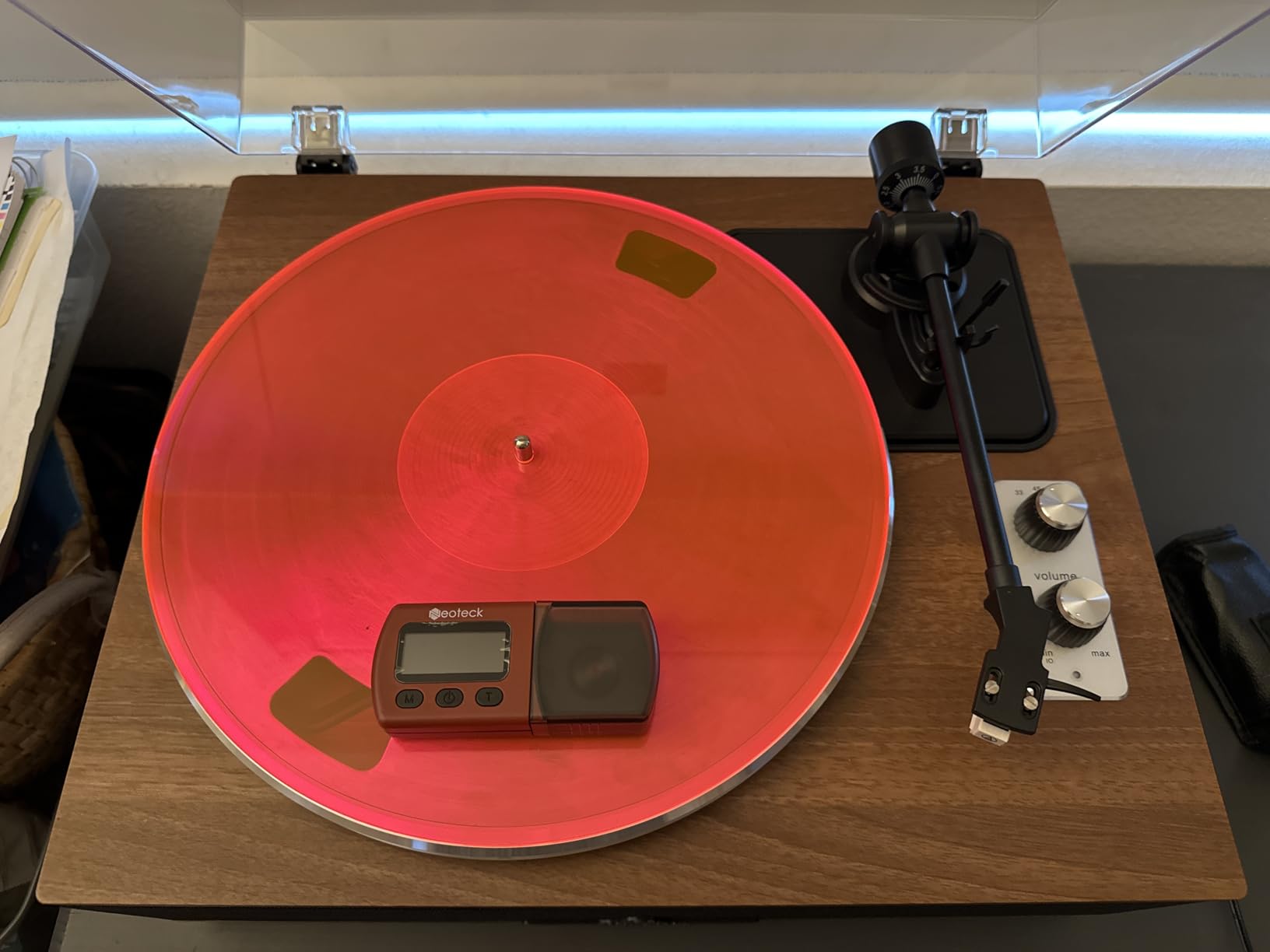
The feature we would point out first is the switchable phono preamp. Most units here either have a preamp you cannot turn off or no preamp at all. This one gives you phono and line outputs, so it connects to an amplifier with a phono stage or to one without, and you are never stuck.
It runs at 33 1/3 and 45 rpm across 7, 10 and 12-inch records, with Bluetooth 5.0, an aux input and RCA output for external speakers. The walnut wood cabinet weighs 14 pounds and has a removable dust cover.
Owners highlight the four-speaker array and the cartridge in that order, describing a fuller and cleaner sound than entry-level suitcase decks manage. The limitation cited most often is the absence of a third speed, which matters only if you collect 78s.
What to check before you buy it
Check shelf depth and weight. At 14 pounds and over 16 inches long, this needs a solid piece of furniture. A light shelf or a stack of records is not a stable base for an arm with a counterweight on the end.
Check what you will connect later. If your plan is to add an amplifier and proper speakers, the switchable preamp makes this the easiest unit in the group to grow with, because it works with or without a phono stage.
Who should skip it
Skip it if you are buying a 78 rpm collection. Two speeds is the deal-breaker here, and there is no adapter that fixes it.
Skip it if you want a completely hands-off experience or want to change the sound with tone controls. The arm needs balancing once, the built-in amplification is fixed, and there is nothing to adjust.
10. Qlearsoul ONE-Q All-in-One Vinyl Record Player With Bluetooth 5.4
ONE-Q All-in-one Vinyl Record Player with Bluetooth 5.4
2-speed playback
4 full-range crossover speakers
60 dB signal-to-noise
AT-3600L on an 8.6 inch arm
Bluetooth 5.4 and switchable preamp
Pros
- Highest average rating in the group at 4.6 stars
- Four full-range speakers with crossover tech
- Three-point support isolates the platter from the speaker cavity
- 60 dB signal-to-noise keeps the noise floor low
- Integrated aluminium control panel for mode and volume
Cons
- Manufacturer recommends hours to two days of break-in
- Two-speed only so 78 rpm is not supported
- Counterweight balancing and installation need care
- 13 pound body needs a sturdy surface
The Qlearsoul ONE-Q has the highest average rating of the ten units we tested, and 80 percent five-star feedback with only 2 percent one-star. That is not a marketing number, and it is worth understanding why before you decide it is too new to trust.
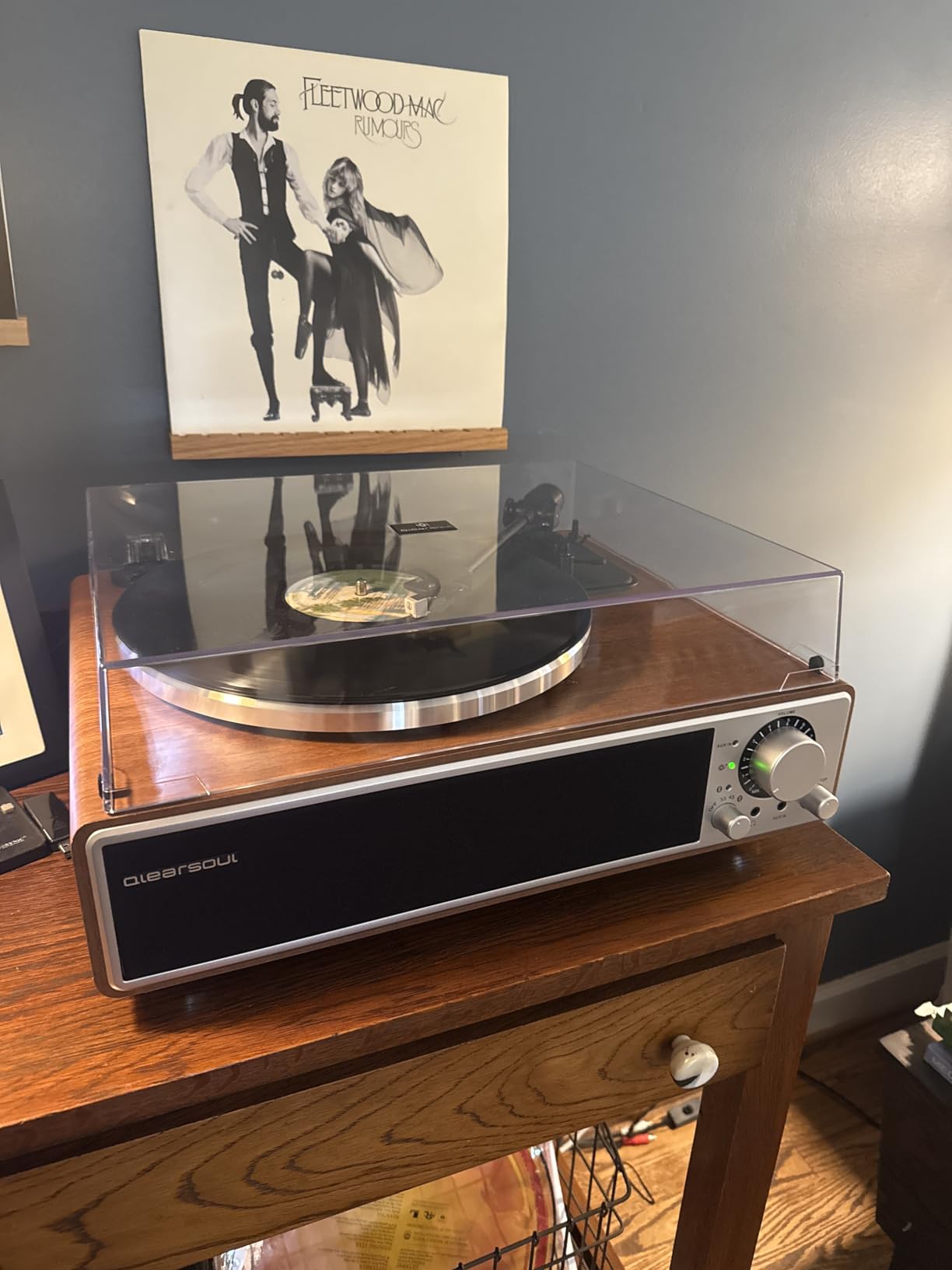
The engineering answer is the three-point support structure. It isolates the platter assembly from the speaker cavity so the drivers are not sitting directly on top of the same frame that is carrying the tonearm. It is the most direct attempt in this group at solving the feedback problem that limits every other all-in-one.
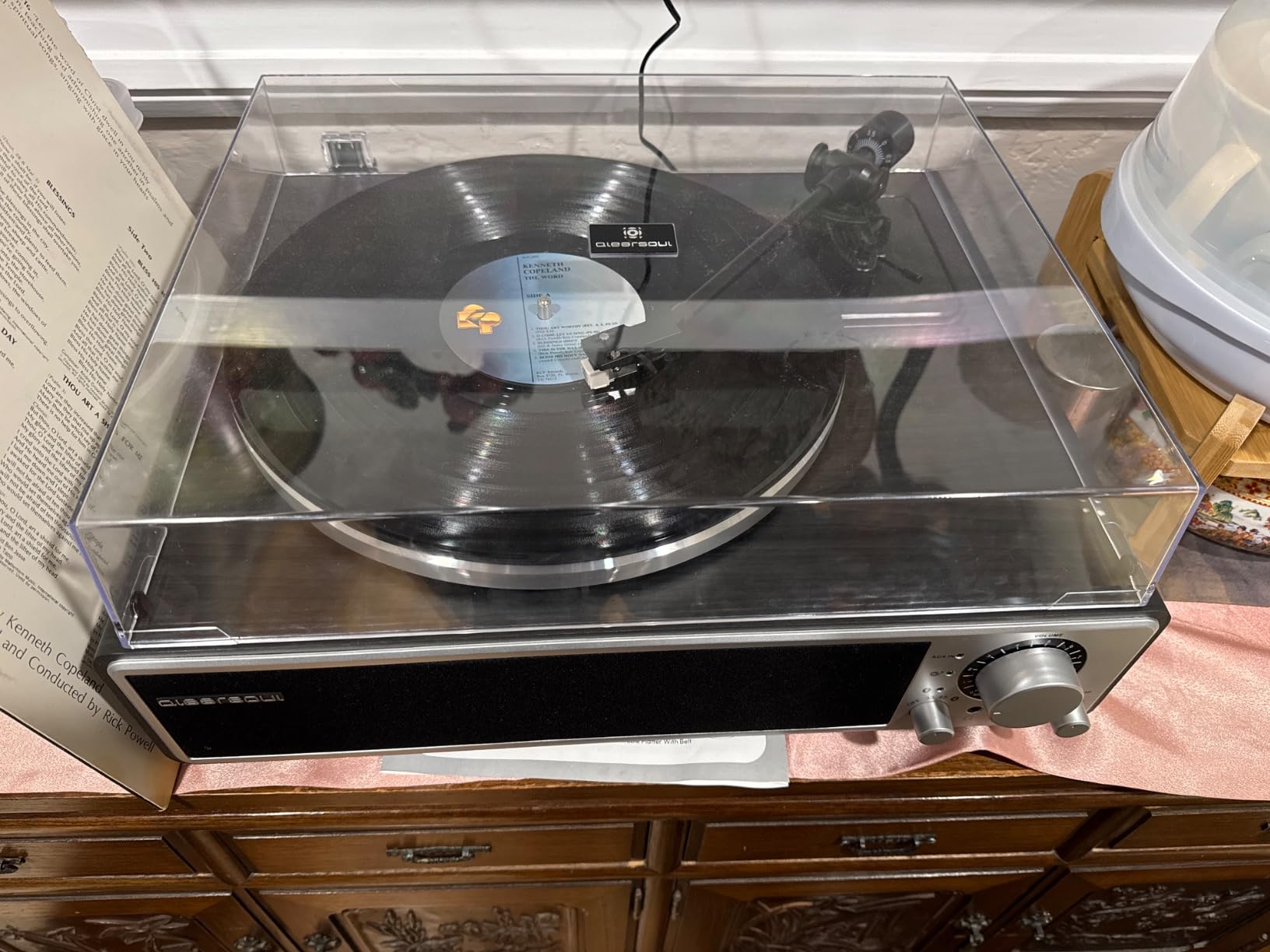
Audio is handled by four full-range speakers with crossover technology, which gives crisp treble and an amount of real bass that two-driver designs cannot manage. Bluetooth 5.4, aux in and a headphone jack cover connections, and the preamp is switchable so it works with or without an external phono stage.
The tonearm is 8.6 inches with an adjustable counterweight and an AT-3600L cartridge, the same magnetic cartridge used by the two decks above. At a published 60 dB signal-to-noise ratio it sits near the top of this group and tracks with very few skips.
Owners are enthusiastic about the sound and the isolation, and the most frequently mentioned caveat is unusual enough to repeat: the manufacturer recommends letting it run at medium volume for anywhere from a few hours to a couple of days before judging how it sounds. Several reviewers assumed something was wrong before they read that.
What to check before you buy it
Check the 2-year manufacturer warranty and the support behind it, because this is a newer name in the category and the review base is the smallest here at around 800. A long warranty matters more when you cannot rely on a decade of replacement parts.
Check your surface. At 13 pounds it needs a sturdy stand, and the three-point support structure has to be installed correctly to do the job it was designed for.
Who should skip it
Skip it if you want 78 rpm playback. Two speeds covers the vast majority of records but not old shellac and early jazz, and there is no way round it.
Skip it if you will not give it an hour of playing before deciding. If you evaluate it cold during the break-in period, you are judging a system that has not settled, and the break-in advice is in the manual for a reason.
Can Built-In Speakers Damage Your Records?
No. The speakers cannot hurt your vinyl, and the concern that circulates most on record buying forums is a reasonable one that is aimed at the wrong component. A stylus tracking a groove applies light, controlled pressure. Damage comes from grit, from a chipped or lifted stylus dragging, and from forcing a warped disc past its range, not from a speaker cone sitting nearby.
The genuine risk in this category comes from the tonearm, and it is a fair one. Every light, fixed tonearm in the budget models here has a fixed tracking force with no way to adjust it, and owners repeatedly report the arm bouncing off warped records and repeating the same groove.
That is not cutting your record. It is failing to play it properly, and the fix is a better arm rather than a bigger speaker. The decks with adjustable counterweights and magnetic cartridges we covered here, the 1 BY ONE High Fidelity, the ANGELS HORN and the Qlearsoul, are the three that track worn vinyl properly.
Two other habits are worth more than any purchase decision. Store records vertically rather than stacked flat, and clean them before playing them. A record cleaned of surface dust will play through a cheap stylus far better than a neglected one played with an expensive cartridge.
One community report is worth repeating for calibration rather than alarm. On a record buying forum thread about all-in-one players, owners with limited budgets were consistently advised to put the same money into a turntable and separate speakers instead. That remains the correct advice for anyone in a big room, and it is the reason we put the record-damage question in this article rather than skipping it.
How to Choose a Record Player With Built-In Speakers
Most of the difference between a disappointing all-in-one and a satisfying one is decided before you look at any feature list. It comes down to five things: the tonearm, the preamp and outputs, the drive, the room, and how long you plan to keep it.
Check the tonearm and cartridge first
This is the single most important spec and almost nobody checks it. A fixed arm with no counterweight cannot be adjusted, so how well it plays depends on the condition of your records rather than on your settings. An adjustable counterweight with a magnetic cartridge such as the AT-3600L used in three of the decks above tracks worn and slightly warped vinyl properly.
A ceramic stylus on a fixed arm will play a clean modern pressing well. It is not wrong, it is just limited, and you will replace the cartridge sooner.
Understand the preamp and RCA output
A turntable produces a tiny phono-level signal that needs an amplifier to boost it. A built-in preamp does that inside the cabinet, which is how these units play without anything else attached.
What matters for the future is the RCA output. If the output is line level, you can plug straight into an amplifier or powered speakers. If it is raw phono level, you need an amplifier with a phono stage or a separate preamp. A switchable preamp, which the ANGELS HORN and the Qlearsoul ONE-Q both have, works either way and removes the guesswork.
The one trap to know about is on the fully automatic 1 BY ONE, where the preamp cannot be defeated. Plugging it into a phono input will double-boost the signal and sound wrong. Use a line-level input.
Belt drive versus direct drive
Every unit in this roundup is belt driven, and for a home listener that is the right call. A belt isolates the motor from the platter, which reduces motor hum and the transmission of vibration into the chassis. Direct drive wins on torque and instant start speed, which matters for DJs scratching, not for listening to records at home.
Of note, the three-speed models here run 33 1/3, 45 and 78 rpm through a belt, while the decks with counterweighted arms run two speeds. If you own 78s, check the speed list before you buy rather than after.
Match the speakers to the room
Speaker power is the most useful number most buyers ignore. As a working guide for built-in systems, small drivers in the low single-digit watt range suit a bedroom or dorm, mid-range power handles a normal living room, and a properly driven multi-driver system is the only realistic way to fill a larger space.
One caution on the specifications themselves. Of the ten units we reviewed, only the fully automatic 1 BY ONE publishes its speaker power, at two 15 watt woofers and two 10 watt tweeters. For the rest, the honest position is that wattage is unpublished and you should judge by the number and size of drivers, the cabinet weight and the manufacturer’s own room claims.
Cabinet weight is a good proxy and is published almost everywhere. Anything in the 13 to 15 pound range resists vibration noticeably better than the 2.5 to 5.5 pound suitcase models, and that is why the Victrola Quincy and the ANGELS HORN feel more solid on a shelf.
Decide all-in-one or turntable plus separate speakers
This is the comparison that actually settles the purchase for most people, and it is worth being blunt. Spending the same money on a dedicated turntable with a pair of separate speakers will sound better in almost every case, because the speakers are no longer fighting the turntable for cabinet space.
What that option costs you is simplicity. You need an amplifier, two speakers, wires and two power leads. For a dorm room with one outlet, or a flat where there is nowhere to put speakers, that is not a practical option, and the all-in-one is the right answer.
For a living room where people will actually sit down and listen, buy separate speakers. If you want a middle path, look for line-level RCA outputs so the turntable can stay and only the speakers change, and that is every unit carrying an RCA output in this roundup.
Look past the features at the basics
Record size support is a genuine filter. Decks that play 7, 10 and 12-inch records handle everything; the ones that only handle 10 and 12 will not play 7-inch singles, which is a large part of a 45 rpm collection.
Connectivity is the easiest thing to over-value. Bluetooth on an all-in-one is useful as a fallback and as a way to play your phone, but a Bluetooth signal is not going to rescue two small drivers. Aux in and a headphone jack matter more day to day.
Finally, look at build, warranty and brand. Users consistently say they would rather own a Victrola, an Audio-Technica cartridge or a three-year warranty than an unbranded listing, and on a single integrated unit there is no partial repair when something fails. The units here carry warranties from one to three years, and that spread is itself a signal.
Where to place it for the best sound
Give the unit a firm surface and space at the front. Front-facing drivers need a foot or two of clearance, and a flimsy shelf amplifies every vibration the motor produces.
Keep it away from your computer speakers and away from a wall corner, and do not stack anything on the dust cover while it is playing. If you can place the unit away from the wall rather than in a corner, the bass and clarity both improve immediately at no cost.
If you want to compare speaker fit and finish ideas with other hardware roundups, our guide to the best 6×9 car speakers covers the same driver fundamentals in a different environment.
Frequently Asked Questions
Are record players with built-in speakers any good?
Yes, for casual listening in a small room, and no for critical listening in a large one. The speakers sit in the same cabinet as the platter, so the motor’s vibration feeds back into the drivers and caps how good the sound can get. They are excellent for bedrooms, dorms and first apartments, and poor value in a living room.
Can built-in speakers damage my vinyl records?
No. Speakers cannot harm your records. The genuine risk is a light, non-adjustable tonearm with fixed tracking force, which bounces off warped records and repeats the same groove. Choose a deck with an adjustable counterweight and a magnetic cartridge if your collection is old or scratched, and clean your records before playing them.
Is Crosley or Victrola better?
Victrola is the safer recommendation for a first record player with built-in speakers. Its models are more widely serviced, replacement styli are easier to source, and the brand carries more models across price tiers, from suitcase players to six-format music centres. Crosley tends to lean more on retro styling, so compare the specific model’s tonearm and outputs rather than the badge.
Can I connect external speakers to a record player that already has built-in speakers?
Yes, on any model with RCA outputs, and that is most of the units in this roundup. Plug the RCA cables into an amplifier or a pair of powered speakers. Check whether the output is line level or phono level, and use a line-level input unless the unit has a switchable preamp. You can keep the turntable and replace the speakers as your system grows.
Do all-in-one turntables skip on warped records?
They skip more often than dedicated turntables, and the reason is the tonearm rather than the speakers. Budget all-in-ones use a light arm with a fixed, unadjustable tracking force, so a wavy record lifts the arm out of the groove. Decks with an adjustable counterweight and a magnetic cartridge ride through damage that stops a fixed arm completely.
Final Verdict
After six weeks and ten record players with built-in speakers, the Victrola Journey is the one we would put in front of most people. It is simple, it works out of the box, it plays all three speeds, and it has RCA outputs so you are not trapped with the built-in speakers forever.
If your records are old and your room is small but you still want a proper cartridge and a counterweighted arm, the ANGELS HORN and the Qlearsoul ONE-Q are the more serious machines, and the latter has the strongest owner satisfaction in the group. If you want one box to replace a whole shelf of CD, cassette and radio equipment, the Victrola Quincy is the value pick.
Our one recommendation for later is the same regardless of which you choose: buy something with RCA line out, and when you want more sound, add a pair of real speakers and an amplifier. If you are shopping for a jump starter for the car in the meantime, our jump starter with air compressor guide covers that side of the garage.
That is the honest shape of this category in 2026. The best record players with built-in speakers are a genuinely clever first step, not a final destination.