
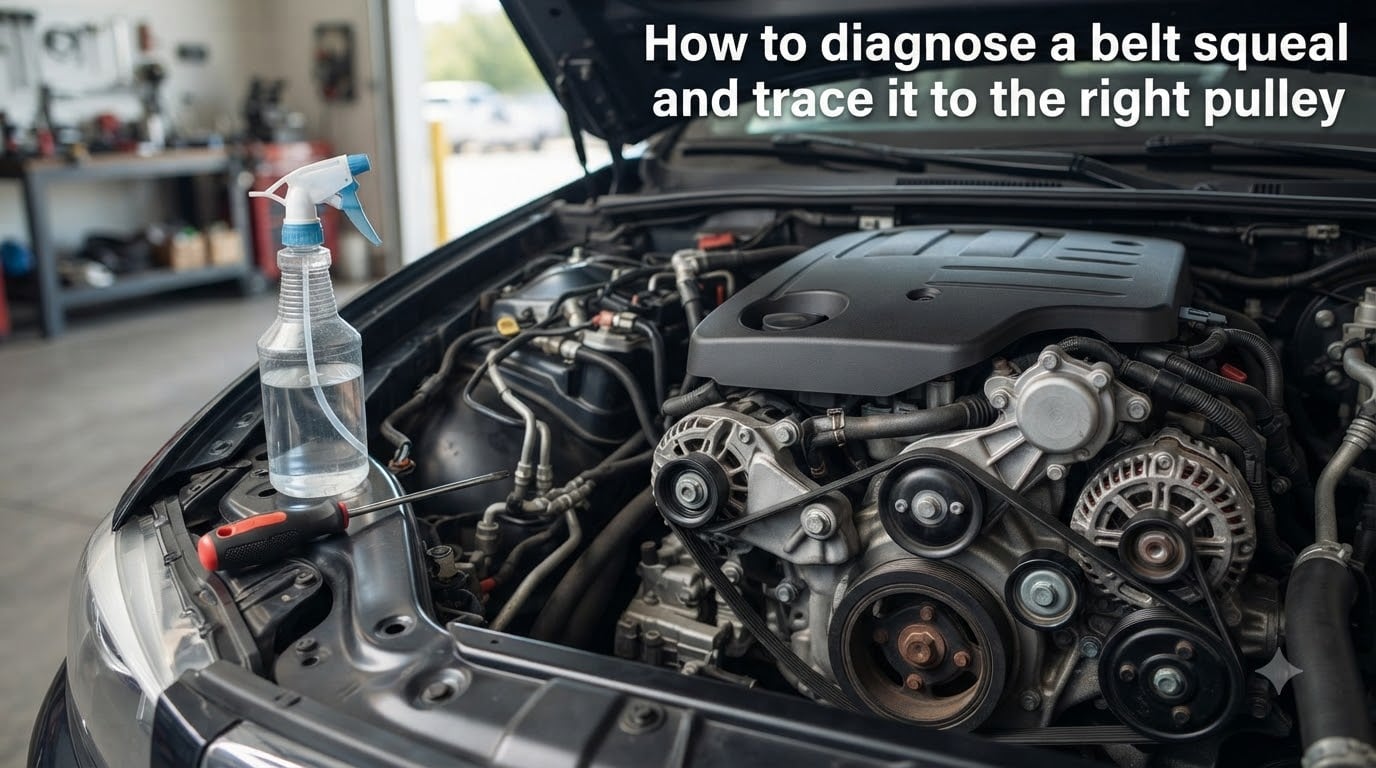
That high-pitched shriek from under your hood is not something to ignore. A belt squeal is one of the most common and frustrating noises a vehicle can make, and getting the belt squeal diagnosis right saves you from throwing parts at the problem.
I have spent years tracking down mysterious engine noises, and the truth is that most people replace the serpentine belt when the real culprit is a worn tensioner, a bad bearing, or a misaligned pulley. The noise comes back within a week.
Here is what you will learn in this guide: how to tell the difference between a chirp and a squeal, how to run the water spray test in under a minute, and how to trace the noise to the exact pulley causing the problem.
Let us walk through this step by step so you can fix the right thing the first time.
Table of Contents
Belt Chirp vs Belt Squeal: Identifying the Noise
Before you touch a single tool, you need to know what sound you are actually hearing. Belt noise falls into two main categories, and they point to completely different problems.
A belt chirp sounds like a rhythmic squeak that changes with engine RPM. It is usually caused by a misaligned pulley. The belt enters and exits the pulley at a slight angle, and each rib makes a sharp snapping sound as it rubs against the pulley groove. The result is that telltale chirp-chirp-chirp.
A belt squeal is a continuous, high-pitched scream. It happens when the belt slips on a pulley because of insufficient tension, fluid contamination, or a glazed belt surface. Squealing often shows up on startup, during hard acceleration, or when you first turn on the AC.
Here is a quick way to tell them apart. Chirp is rhythmic and speed-dependent. Squeal is continuous and loud. If the noise sounds like a bird trapped under your hood, that is chirp. If it sounds like someone stepping on a cat’s tail, that is squeal.
What Causes Each Noise
Chirp causes: pulley misalignment, bent bracket, improperly seated belt, worn harmonic balancer, or a pulley that has shifted position over time.
Squeal causes: weak tensioner, belt glazing, oil or coolant contamination, incorrect belt size, worn accessory bearings creating drag, or a belt that is simply old and hardened.
Understanding this difference is the foundation of your entire belt squeal diagnosis. Once you know which noise you have, you can narrow down the cause fast.
The 30-Second Water Spray Test
This is the single fastest diagnostic trick for belt noise, and mechanics on forums swear by it. You need nothing more than a spray bottle filled with water.
Step-by-Step Water Spray Test
1. Start the engine with the hood open. Let it idle so the belt is rotating at a steady speed.
2. Listen to the noise and note its character. Is it a chirp or a squeal?
3. Spray a small stream of water onto the ribbed side (the grooved underside) of the serpentine belt while it is spinning.
4. Listen carefully to what happens next.
How to Read the Results
If the noise gets louder or stays the same after water hits the belt, you are dealing with a squeal caused by belt slip. The water temporarily reduces friction, and if the noise persists, the belt is slipping badly enough that even water cannot help it grab.
If the noise goes away or gets quieter for a moment, you are dealing with a chirp caused by misalignment. The water acts as a temporary lubricant between the belt and the pulley, silencing the friction-based chirp.
This test takes 30 seconds and immediately cuts your list of suspects in half.
Safety warning: Keep your hands, tools, and loose clothing well away from all rotating components. Wear eye protection. Do not lean over the engine bay while it is running.
Step-by-Step Belt Squeal Diagnosis
Once you have identified the noise type and run the water test, it is time to do a thorough inspection. Follow these steps in order to avoid missing anything.
Step 1: Visual Inspection of the Belt
Shine a flashlight on the entire length of the serpentine belt. Look for cracks across the ribs, missing chunks of rubber, glazing (a shiny, glass-like surface), or fraying edges. A belt with more than three cracks per inch is overdue for replacement.
Feel the belt with the engine off. A healthy belt feels slightly tacky and flexible. A hardened, glossy belt has lost its grip and will squeal no matter what else you fix.
Step 2: The Screwdriver Stethoscope Technique
This old mechanic trick pinpoints exactly which pulley has a bad bearing. With the engine running, place the metal tip of a long screwdriver against the stationary metal housing of each accessory (alternator body, power steering pump case, AC compressor body, idler pulley bracket). Press your ear against the handle.
A healthy bearing produces a smooth, low humming sound. A failing bearing produces a grinding, growling, or rasping noise that is unmistakable. Compare each pulley to the others and the bad one will stand out clearly.
Warning: Never touch the screwdriver tip to moving parts, belts, or pulleys. Only press it against stationary metal housings. Keep the tool away from spinning components at all times.
Step 3: Tensioner Evaluation
The automatic belt tensioner keeps constant pressure on the serpentine belt. Over time, the internal spring weakens and the tensioner stops applying enough force. This is one of the most common causes of belt squeal that people overlook.
With the engine off, push on the longest unsupported span of the belt between two pulleys. It should deflect about half an inch with moderate thumb pressure. If it moves much more than that, your tensioner is likely weak.
Watch the tensioner while the engine idles. If the tensioner arm is vibrating or bouncing rapidly, the damper inside is worn out. A bouncing tensioner will cause the belt to slip intermittently and squeal under load.
Step 4: Spin Each Pulley by Hand
Remove the belt and spin each pulley by hand. A good pulley spins freely and silently. A pulley with a bad bearing will feel rough, gritty, or noisy when you spin it. You may also feel side-to-side play, which means the bearing is shot.
Check the idler pulley and the tensioner pulley first, since these are the most common bearing failures and the cheapest to replace.
How to Trace the Noise to the Right Pulley?
This is where most guides stop and most people get stuck. You know there is a problem, but which pulley is it? Here is a pulley-by-pulley breakdown to help you zero in on the culprit.
Crankshaft Pulley (Harmonic Balancer)
The crankshaft pulley drives everything. If the rubber isolation ring between the inner and outer portions of the harmonic balancer deteriorates, the outer ring can slip or wobble. This causes a squeal that gets worse under load and is nearly impossible to fix without replacing the balancer. Inspect it visually for separation or wobbling while the engine runs.
Alternator Pulley
Alternator bearings take a beating because the alternator spins fast and handles heavy electrical loads. A failing alternator bearing produces a whining or grinding noise that changes with electrical demand. Turn on every accessory (headlights, rear defrost, blower motor) and listen for the noise to get louder. If it does, the alternator is your prime suspect.
Power Steering Pump Pulley
Turn the steering wheel lock to lock while the engine idles. If the squeal gets louder when you crank the wheel, the power steering pump is under load and may have a worn bearing or internal drag. A pump that is low on fluid can also cause the belt to squeal from the sudden resistance.
AC Compressor Pulley
Turn the AC on and off while listening to the belt. If the squeal appears only when the compressor clutch engages, the compressor is creating excessive drag. This could mean a failing compressor clutch bearing or an internal compressor problem. The clutch bearing can also fail independently, making noise even with the AC off.
Idler and Tensioner Pulleys
These are the most common culprits and the easiest to rule out. Spin them by hand with the belt off. If either feels rough, makes a grinding noise, or wobbles on its shaft, replace it. These pulleys are inexpensive and fail frequently because they do nothing but spin and support the belt all day.
Water Pump Pulley
A failing water pump bearing produces a grinding or whining noise and often allows coolant to leak from the weep hole under the pump housing. If you see dried coolant streaks below the water pump and hear a grinding noise, replace the water pump before it fails completely and leaves you stranded.
How to Check Pulley Alignment
Misalignment is the leading cause of belt chirp, and it only takes a tiny offset to create noise. A pulley that is out of position by just two or three degrees will make the belt chirp on every rotation. Here is how to check alignment accurately.
The Straight Edge Method
Remove the belt and place a sturdy straight edge (a steel ruler works well) across the face of two adjacent pulleys. The straight edge should lie flat against both pulley faces simultaneously. If you see a gap between the straight edge and one pulley, that pulley is misaligned.
Work your way around the entire front of the engine, checking each pair of adjacent pulleys. This method catches gross misalignment caused by a bent bracket, a wrong-size replacement pulley, or a pulley that has shifted.
The Laser Alignment Tool Method
For a more precise check, use a laser alignment tool designed for belt drives. These tools clip onto one pulley and project a laser line onto the adjacent pulley. Any deviation shows up as a visible gap between the laser line and the pulley face.
Laser tools catch misalignment down to fractions of a degree. If you work on vehicles regularly, this is a worthwhile investment that saves hours of trial-and-error diagnosis.
Common Causes of Misalignment
Bent accessory brackets from previous repairs or impacts. Wrong replacement pulley with a different offset. Loose mounting bolts that have let a bracket shift over time. Worn harmonic balancer that has allowed the outer ring to walk outward. Any of these can cause a chirp that will not go away until you correct the alignment.
Common Causes of Belt Squeal (and What to Do)
Let us map the most frequent causes to their solutions so you can act quickly once you have completed your diagnosis.
Worn or Weak Tensioner
This is the number one cause of persistent belt squeal. The spring inside the tensioner fatigues over time and stops applying enough pressure. The belt slips, especially under load. Replace the tensioner assembly entirely. Do not try to adjust it manually if it is an automatic tensioner.
Glazed or Cracked Belt
A belt that has been slipping for a while develops a hard, glossy surface that cannot grip the pulleys no matter how much tension you apply. If the belt looks shiny on the contact surface or has cracks every few millimeters, replace it. A new belt should feel slightly tacky to the touch.
Worn Accessory Bearings
Any accessory with a failing bearing creates drag that makes the belt slip. Use the screwdriver stethoscope technique to find the noisy bearing. Replace the accessory or the bearing if it is serviceable.
Fluid Contamination
Oil, coolant, or power steering fluid on the belt destroys its grip. Look for leaks around the front crank seal, water pump, valve cover gasket, and power steering pump. Clean the belt with brake cleaner as a temporary test. If the noise disappears briefly and returns, you have contamination. Fix the leak first, then replace the belt.
Cold Weather Squealing
Many vehicles squeal on cold mornings and quiet down as the engine warms up. Cold rubber is harder and less grippy. EPDM belt material resists this better than older belt compounds, but even EPDM gets stiff in freezing weather. If the squeal only lasts for the first minute or two on cold starts and your belt and tensioner check out fine, this may be normal behavior for your climate.
However, if the cold-weather squeal is new or getting worse, your tensioner is likely getting weak. It works fine when warm but cannot overcome the stiffer cold belt. Replace the tensioner before it fails completely.
Why Does My Belt Still Squeal After Replacement?
This is one of the most common questions on mechanic forums. You replaced the belt and the noise came right back. Here is why.
Wrong belt size. A belt that is slightly too long will not let the tensioner apply enough force. Always verify the part number against your vehicle’s specifications, and compare the new belt length to the old one before installing.
Weak tensioner not replaced. If your old belt was squealing and you only replaced the belt, the weak tensioner is still there. A new belt on a worn tensioner will start slipping again within days.
Misalignment not addressed. A new belt on a misaligned pulley will chirp just like the old one. Belt replacement does not fix alignment problems. You must identify and correct the misalignment separately.
Belt routing error. It is easy to route a serpentine belt incorrectly around one of the idler pulleys. An incorrectly routed belt can squeal, wear rapidly, or even come off. Compare your routing to the underhood diagram before starting the engine.
Contamination during installation. If you handled the new belt with oily or greasy hands, you transferred that oil to the belt surface. Always install a new belt with clean, dry hands.
FAQs
How to tell if a belt or pulley is squeaking?
To tell if a belt or pulley is squeaking, spray water on the ribbed side of the belt while the engine runs. If the noise gets louder, it is a belt slip squeal. If the noise goes away, it is a misalignment chirp from a pulley. Then use the screwdriver stethoscope technique: press a long screwdriver tip against each pulley’s metal housing and listen through the handle to find a grinding or rough bearing.
How to check for correct pulley and belt alignment?
Remove the belt and place a straight edge across the faces of two adjacent pulleys. The straight edge should contact both pulley faces evenly with no gap. Check every pair of pulleys around the engine. For more precision, use a laser alignment tool that clips onto a pulley and projects a line onto the next one. Any visible gap indicates misalignment.
What does a misaligned pulley sound like?
A misaligned pulley produces a rhythmic chirping noise that changes with engine speed. It sounds like a bird chirping or a repetitive squeak, not a continuous scream. The chirp happens because the belt enters the misaligned pulley groove at an angle, causing each rib to snap against the groove edge as it contacts and exits the pulley.
How to test serpentine belt squeal?
Run the water spray test: start the engine, spray water on the grooved underside of the belt, and listen. If the noise gets louder or persists, the belt is slipping due to weak tension or glazing. If the noise temporarily disappears, you have a chirp from misalignment. Follow up by checking tensioner deflection, spinning each pulley by hand, and using the screwdriver stethoscope method to find bad bearings.
Wrapping Up Your Belt Squeal Diagnosis
Tracking down a belt squeal does not have to mean throwing parts at your engine and hoping for the best. Start by identifying the noise type. Run the water spray test to confirm whether you have a chirp or a squeal. Use the screwdriver stethoscope to find bad bearings. Check alignment with a straight edge. And always replace the tensioner when you replace the belt.
Follow this belt squeal diagnosis process in order, and you will trace the noise to the right pulley the first time. Your ears and a spray bottle of water are the best tools you own for this job.