
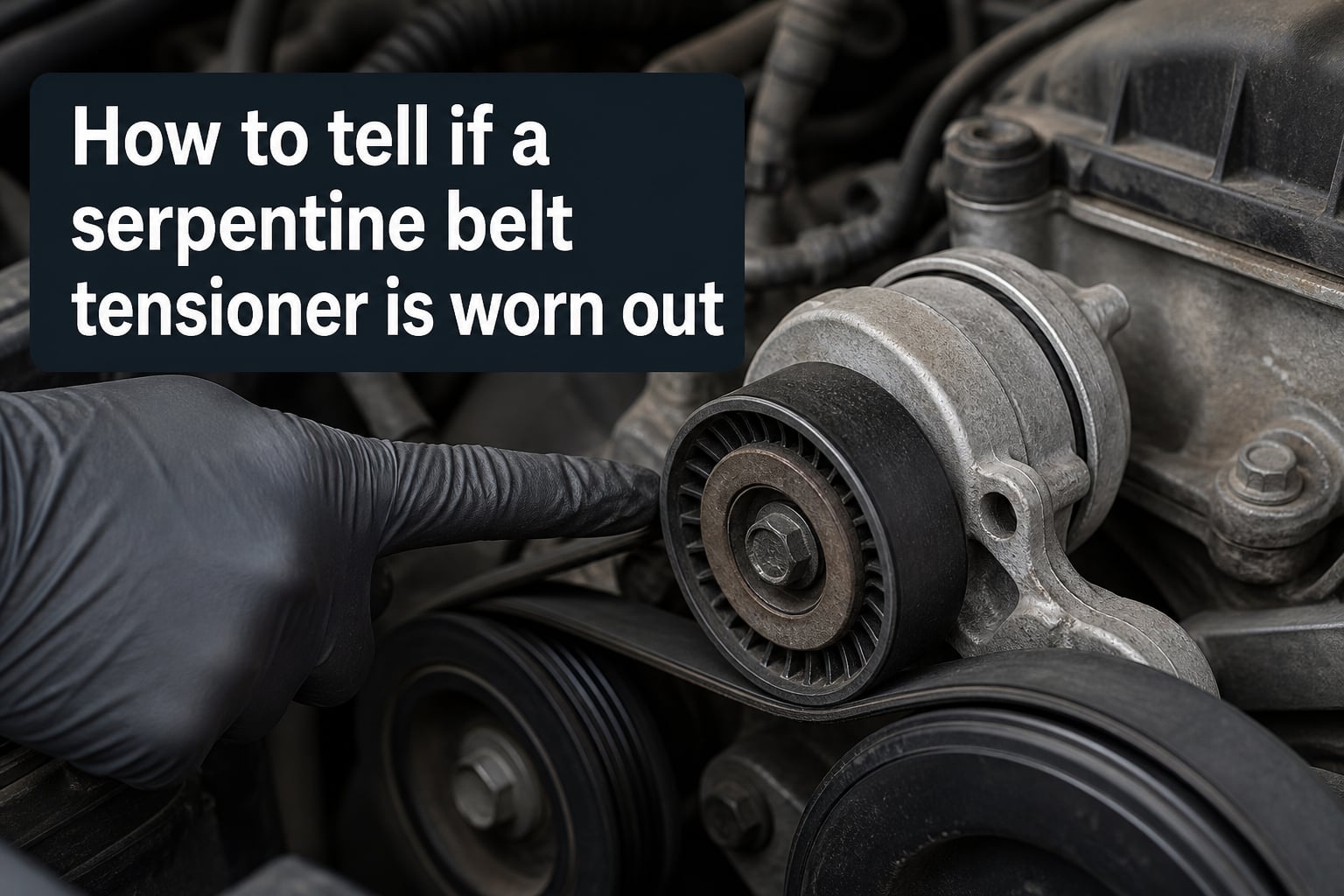
If your engine suddenly sounds like a flock of angry birds at startup, the serpentine belt tensioner might be the part to blame. A worn tensioner is one of those parts that fails quietly at first, then all at once, often stranding you on the side of the road.
I have dealt with this twice on my own vehicles and once helping a friend diagnose a problem his mechanic missed. In all three cases, the warning signs were there weeks before the failure. This guide walks you through how to tell if a serpentine belt tensioner is worn out, the sounds and sights to watch for, and the simple tests you can run in your driveway in under 15 minutes.
By the end, you will know exactly what a bad tensioner feels, looks, and sounds like, plus when it makes sense to replace it before it strands you somewhere inconvenient.
Table of Contents
What Is a Serpentine Belt Tensioner and What Does It Do?
A serpentine belt tensioner is a spring-loaded or hydraulic device that keeps steady pressure on your drive belt. The belt winds around the crankshaft pulley, alternator, power steering pump, water pump, air conditioning compressor, and idler pulleys, and the tensioner is what keeps it tight against all of them.
Without the tensioner, the belt would slip, throw, or wear unevenly the moment it stretched a little. Belts do stretch over time, so the tensioner has to constantly adjust to keep things snug. Most tensioners also include a built-in pulley that the belt runs across, so when people say “tensioner pulley” they are usually talking about the same part.
The tensioner matters because every accessory driven by the belt depends on it. Lose tension and your alternator stops charging, your power steering goes heavy, your AC stops blowing cold, and your engine can overheat when the water pump slows down. A bad tensioner takes out multiple systems at once.
Types of Belt Tensioners Used in Modern Engines
Three designs show up under most hoods, and each fails in its own way. Knowing which type your car uses helps you predict what will go wrong first.
Spring-loaded mechanical tensioners are the most common. A coiled spring pushes against a pivoting arm, holding the belt at a set tension. They are simple, cheap, and reliable, but the spring can fatigue after 80,000 to 100,000 miles and the internal bushing wears out.
Hydraulic tensioners use engine oil pressure to keep the belt tight. You find them mostly on European vehicles and some V6 engines. They apply more consistent tension than springs, but they can leak oil internally, lose pressure when the engine is hot, and seize up if the oil passages clog.
Manual pivot tensioners are older designs that you adjust with a wrench or socket. They are rare on modern cars but still show up on some trucks and older imports. They usually fail because owners forget to check them, not because the design is bad.
8 Common Signs of a Worn Serpentine Belt Tensioner
Here are the eight symptoms I look for first, in roughly the order they tend to show up as a tensioner wears out.
Loud squeal or chirp at startup that fades after a few seconds. This is the classic sign of a tensioner that has lost its spring tension overnight.
Squealing noise when accelerating, especially in cold or wet weather. The belt slips because the tensioner cannot keep up with the sudden load.
Chattering, rattling, or knocking from the front of the engine at idle. The pulley bearing is starting to fail or the tensioner arm has excess play.
Visible wobble in the tensioner pulley when the engine is running. A good pulley spins true, a worn one wobbles side to side.
Belt tracking problems where the belt rides off-center on the pulleys or looks glazed on one edge. The tensioner is no longer holding the belt in line.
Battery warning light or overheating gauge that comes and goes. The alternator and water pump slip intermittently as tension varies.
Tensioner arm feels loose or sticky when you press on it with a gloved hand (engine off). Healthy tensioners move smoothly with steady resistance.
Visible oil seepage around a hydraulic tensioner, or cracks and rust on the tensioner body itself.
If you only notice one or two of these signs, you likely have time to schedule a repair. If you notice three or more, the tensioner is close to failure and I would not take a long trip until it is replaced.
Noise Differentiation Guide: Squeal vs Growl vs Chatter
One thing the major guides skip is teaching you to tell the difference between the noises. The sound itself points to which part of the tensioner is failing, and that changes what you do next.
High-pitched squeal that changes with engine speed almost always means belt slip. The tensioner has lost the ability to maintain pressure. You will hear it most at cold startup, in rain, or when you turn the wheel hard while parking.
Low growl or rumble that gets louder with RPM points to the pulley bearing itself. The bearing has lost its grease and is starting to wear. This is more serious than a squeal because metal-to-metal contact is happening inside.
Chatter or rapid clicking at idle, especially when the AC kicks on, usually means the tensioner arm has excess play. The bushing is worn and the arm is bouncing against its stop as the load changes.
Single loud chirp on cold start that goes away after 30 seconds is usually just a dry belt, not a bad tensioner. If a new belt still chirps, the tensioner is suspect.
How to Diagnose a Worn Belt Tensioner: Step-by-Step
You can do a complete check in your driveway with a flashlight and about 15 minutes. Engine off, key out, transmission in park. Here is the procedure I use.
Open the hood and locate the tensioner. It sits on the belt path, usually near the alternator or crankshaft pulley. Look for a pulley on a spring-loaded arm.
Visually inspect the tensioner body. Look for cracks in the casting, oil seepage, rust bubbling up under the paint, or any fluid residue around the pulley.
Check the pulley for wobble. Grab it and try to rock it side to side. Any play beyond a millimeter or two means the bearing is shot.
Spin the pulley by hand. It should spin freely and quietly for several seconds with a slight rumble. Grinding, catching, or rough spots confirm bearing failure.
Test tensioner arm movement. Use a long-handle breaker bar on the tensioner pulley bolt and apply gentle pressure. The arm should move smoothly through its range with steady spring resistance. A sticking, notchy, or sloppy arm has failed.
Start the engine and observe. Look at the belt path from the side. The belt should run centered on every pulley. Watch the tensioner for any wobble or jerky movement.
Listen at idle with the engine warm. Rev the engine briefly. Any chirp, squeal, or growl points to tensioner or bearing problems.
If steps 3, 4, or 5 fail, replace the tensioner. If only step 7 reveals problems, the issue may be the belt itself, which usually gets replaced along with the tensioner anyway.
Visual Signs of a Worn Tensioner
Some of the best clues show up before you ever start the engine. A visual inspection catches about half of bad tensioners before they make a sound.
Look for cracks radiating out from the pulley bolt hole. The arm takes constant flexing stress and eventually the metal fatigues. Even hairline cracks mean the tensioner is done.
Check the pulley face for pitting, glazing, or uneven wear. A good pulley has a smooth, slightly rubber-coated surface. A bad one looks shiny in spots, pitted in others, or worn at an angle.
Look for rust bleeding out from under the tensioner housing, especially on vehicles from the rust belt. Rust means water has gotten inside and corroded the bearing.
On hydraulic tensioners, look for wet oil around the base. Hydraulic units seal engine oil inside, and any seepage means the tensioner cannot hold pressure anymore.
When to Replace Your Belt Tensioner
Tensioners are not on a strict mileage schedule like spark plugs, but most technicians replace them preventively between 80,000 and 100,000 miles. By that point the spring has lost roughly a third of its tension, the bushing has measurable play, and the bearing grease has broken down.
If your vehicle is past 60,000 miles and you have never replaced the tensioner, add it to your next service interval. The cost of a preventive replacement is far less than a tow truck.
Replace the tensioner immediately if any of these are true: visible wobble at idle, loud chirping that does not go away, belt that has jumped a pulley, oil leaking from a hydraulic unit, or any cracking in the tensioner body. None of these get better with time.
When you replace the tensioner, replace the belt and idler pulleys at the same time. They all wear together, and doing them separately means paying labor twice.
What Happens If You Keep Driving With a Bad Tensioner
The honest answer is you can usually drive for a little while, sometimes a few days, sometimes a few hundred miles. The problem is you do not get to pick when it finally fails, and you do not get a warning when it does.
When a tensioner finally lets go, the belt usually falls off or shreds. The instant that happens, you lose your alternator, power steering, water pump, and AC compressor at the same time. The car may keep running on battery power for a few minutes, but steering gets heavy and the engine starts climbing in temperature fast.
On a forum thread I followed, a Jeep owner had his tensioner bearing literally pop out at highway speed. The belt shredded, the water pump stopped, and he cooked the engine before he could pull over. The repair bill was over $4,000. The tensioner itself cost $140.
If you have to drive a short distance to a shop with a suspect tensioner, keep the engine RPM low, avoid using the AC, and watch the temperature gauge. Do not take a highway trip or a long commute. The risk is not worth it.
FAQs
How to test if serpentine belt tensioner is bad?
With the engine off, grab the tensioner pulley and try to rock it side to side. Any play means the bearing is worn. Spin the pulley by hand and listen for grinding or roughness. Use a breaker bar to move the tensioner arm through its full range; it should move smoothly with steady spring tension. Any sticking, notchy movement, or wobble confirms the tensioner needs replacement.
How long do serpentine belt tensioners last?
Most serpentine belt tensioners last between 80,000 and 100,000 miles. Spring-loaded units tend to wear out from spring fatigue and bushing wear, while hydraulic units can fail earlier from internal oil leaks. Many technicians recommend preventive replacement around 80,000 miles along with the belt and idler pulleys.
What does a bad serpentine belt tensioner sound like?
A bad tensioner typically makes a high-pitched squeal at startup, a chirp that changes with engine speed, a low growl from a failing bearing, or a chatter or rattle at idle. Squeal points to lost tension, growl points to bearing wear, and chatter points to a worn bushing in the tensioner arm.
What happens if a belt tensioner goes bad while driving?
When a tensioner fails, the serpentine belt usually comes off or shreds. The instant that happens, the alternator, power steering, water pump, and AC compressor all stop working. The engine loses charging capacity, steering becomes heavy, and the engine can overheat within minutes. Towing and major engine damage are common outcomes.
How long can I drive with a bad belt tensioner?
You can usually drive a short distance, sometimes a few days, but you do not get to choose when the tensioner finally fails. Keep engine RPM low, avoid using the AC, and watch the temperature gauge. Do not take long trips or highway drives. The cost of a tow and major engine damage far exceeds the cost of replacing the tensioner early.
Final Thoughts on Spotting a Worn Serpentine Belt Tensioner
The serpentine belt tensioner is a small part that does a big job, and it almost never fails without warning if you know what to listen and look for. The eight symptoms above cover the most common failure modes, and the seven-step driveway test takes less time than filling up your gas tank.
If your vehicle is past 80,000 miles and the tensioner has never been replaced, schedule a preventive replacement along with the belt and idler pulleys. If you are hearing new noises, seeing wobble, or seeing the battery or temperature light flicker, get it inspected this week. The cost of catching a bad tensioner early is a service appointment. The cost of catching it late is a tow truck and a much bigger repair bill.
For 2026, our team recommends treating the tensioner as a 90,000-mile maintenance item alongside the belt itself. It is one of the cheapest ways to avoid one of the most expensive roadside failures.